A crochet tartan footstool cover can turn a plain piece of furniture into one of the most noticeable handmade details in a winter room. Traditional reds, forest greens, black, cream, navy, and heathered neutrals immediately suggest heritage textiles, while granny squares and visible crochet texture keep the finished piece firmly within a grannycore decorating style.
Not every useful tutorial below is an exact tartan footstool pattern. True furniture-cover tutorials are included for understanding fit, top shape, side depth, and how a cover stays on the stool. Tartan, plaid, and gingham tutorials provide different ways to build the patterned surface. The ideas combine those concepts editorially rather than pretending a blanket tutorial already contains instructions for fitting a particular piece of furniture.
That distinction is important. A beautiful plaid rectangle still needs to fit the actual stool, and a fitted ottoman cover still needs deliberate color planning before it becomes tartan. Measure first, decide how removable the cover needs to be, and use the credited tutorial for its exact construction rather than assuming dimensions can be transferred from one piece of furniture to another.
Quick List
- Crochet Granny-Square Heritage Tartan Footstool Cover
- Crochet Woven Plaid Country Footstool Cover
- Crochet Graph-Style Tartan Footstool Cover
- Crochet Woven Gingham Footstool Cover
- Crochet Tunisian Heritage Check Footstool Cover
- Crochet Three-Tone Gingham Footstool Cover
- Crochet Small-Check Country Footstool Cover
- Crochet Half-Double-Crochet Plaid Footstool Cover
- Crochet Chunky Buffalo-Tartan Footstool Cover
- Crochet Modular Patchwork Plaid Footstool Cover
- Crochet Velvet Plaid Padded Footstool Cover
- Crochet Fitted Square Tartan Ottoman Cover
- Crochet Round Tartan-Accent Stool Cover
- Crochet Farmhouse Plaid Rectangular Footstool Cover
Fit the Footstool Before Planning the Tartan
Furniture covers have a practical requirement that blankets do not: they need to stay where they are placed.
Start with the actual top shape. A square ottoman, long rectangular footstool, and round padded stool need different approaches even if all three use the same plaid colors. Measure the top after any existing upholstery or padding is in place, then note how far the cover needs to extend down the sides.
A removable cover usually needs enough security that normal use does not make it shift excessively. Depending on the construction, that may come from fitted sides, stretch in the fabric, a shaped lower edge, or another closure method demonstrated by the source tutorial.
Avoid making the cover so loose that fabric gathers under a person’s feet or hangs onto a walking path. If the footstool is actually used for sitting as well as supporting feet, remember that the crochet surface will experience more compression and abrasion than a purely decorative cover.
Decide Whether You Want True Tartan, Plaid, or Gingham
These terms often get used interchangeably in craft styling, but the visual effects are different.
Tartan usually suggests intersecting horizontal and vertical bands with multiple color relationships. Plaid is a broader category and can include large blocks, stripes, and woven-looking grids. Gingham creates a regular check from related light, medium, and dark values.
For a grannycore winter room, all three can work. A granny-square tartan feels collected and handmade. Woven plaid can look closer to an old wool textile. Buffalo check is larger and bolder, while a fine gingham can keep a small footstool from looking visually heavy.
The size of the pattern matters almost as much as the color. One large check across a small stool top produces a graphic statement. Several smaller checks create a busier, more traditional textile effect.
Choose Yarn for Furniture Use, Not Just Blanket Softness
A footstool cover experiences friction, pressure, and repeated handling. Very soft yarn may feel pleasant but can behave differently under feet than a firmer yarn with stronger stitch definition.
Consider how easily the finished fabric can be cleaned according to the yarn manufacturer’s instructions. Pale cream can be attractive in a heritage tartan, but a footstool used daily may show soil sooner than a medium brown, charcoal, dark green, or heathered shade.
Texture is another trade-off. Raised bobbles, plush velvet, and prominent seams give grannycore character, but a flatter surface may be more comfortable if the stool is used frequently. Sample the actual stitch and yarn combination before producing a fitted cover.
1. Crochet Granny-Square Heritage Tartan Footstool Cover
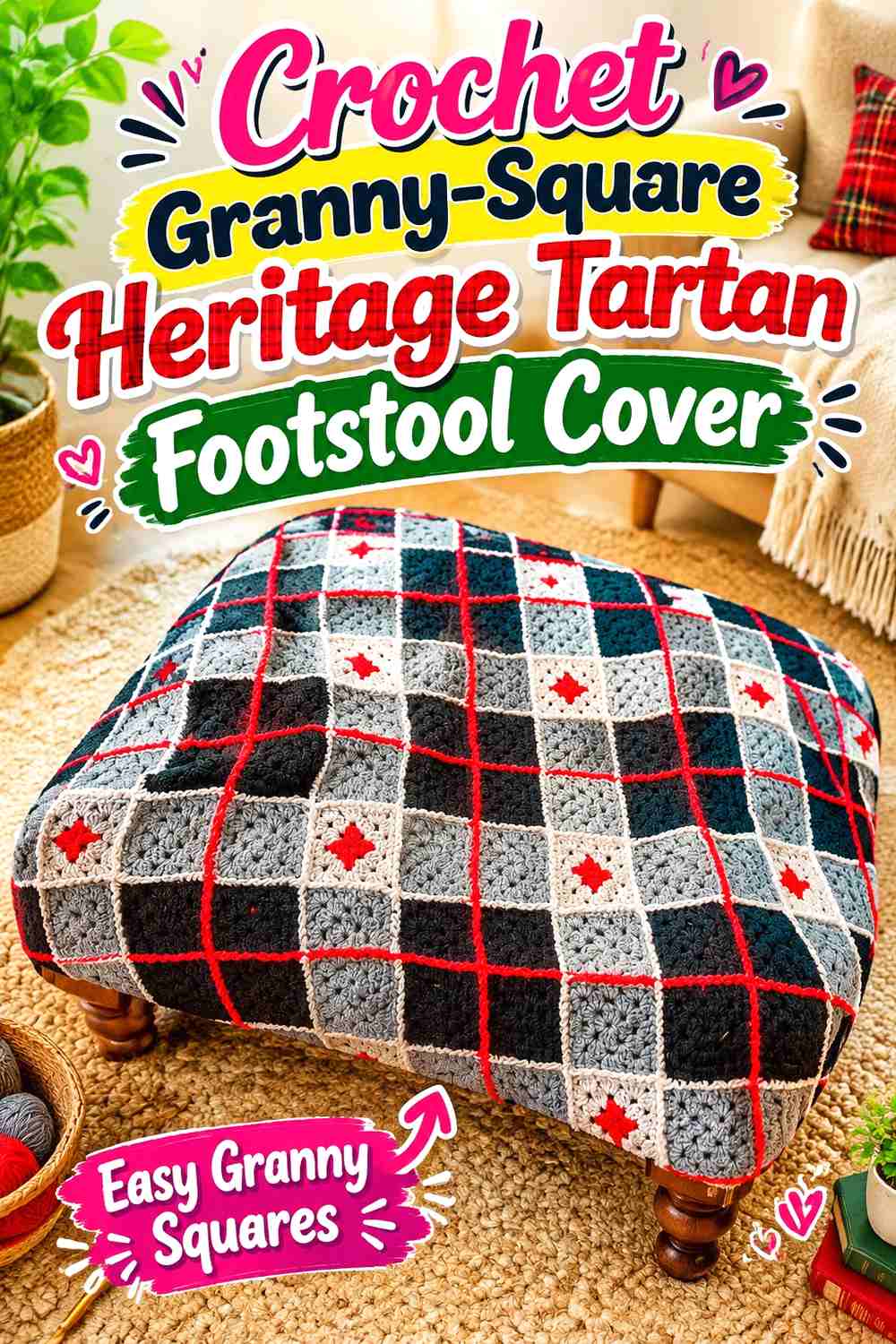
This idea builds the tartan look from granny squares rather than continuous colorwork. The supporting tutorial creates tartan through carefully arranged squares and contrasting joins, making it especially appropriate for a grannycore room.
For a square or rectangular footstool, the concept can be adapted into a top panel whose motif grid is planned around the furniture’s actual dimensions. The sides can then be handled with an appropriate fitted-cover construction rather than assuming the blanket’s full layout belongs on a much smaller object.
Granny Squares Make the Heritage Look Unmistakably Handmade
Tartan fabric can sometimes look formal. Breaking the color grid into granny squares changes the mood immediately.
Visible clusters, joins, and small differences between motifs create the collected quality associated with grannycore interiors. This works particularly well beside floral cushions, patchwork quilts, old wooden furniture, and other layered textiles.
Measure Finished Squares Before Designing the Top
Do not plan the grid from an unblocked first round or from the yarn label.
Finish a representative square using the yarn and hook you intend to use, allow it to settle appropriately, and measure it. Then compare that measurement with the actual stool top to determine whether a balanced grid is realistic.
Let the Joining Colors Form Part of the Tartan
In this style, seams are not merely structural. Their colors help create the larger plaid relationship.
Lay several completed squares together with the proposed joining shades before committing to the entire cover. On a small furniture surface, one strong joining color can have more visual impact than it does across a full blanket.
Creator Credit: Sooz In The Shed
2. Crochet Woven Plaid Country Footstool Cover
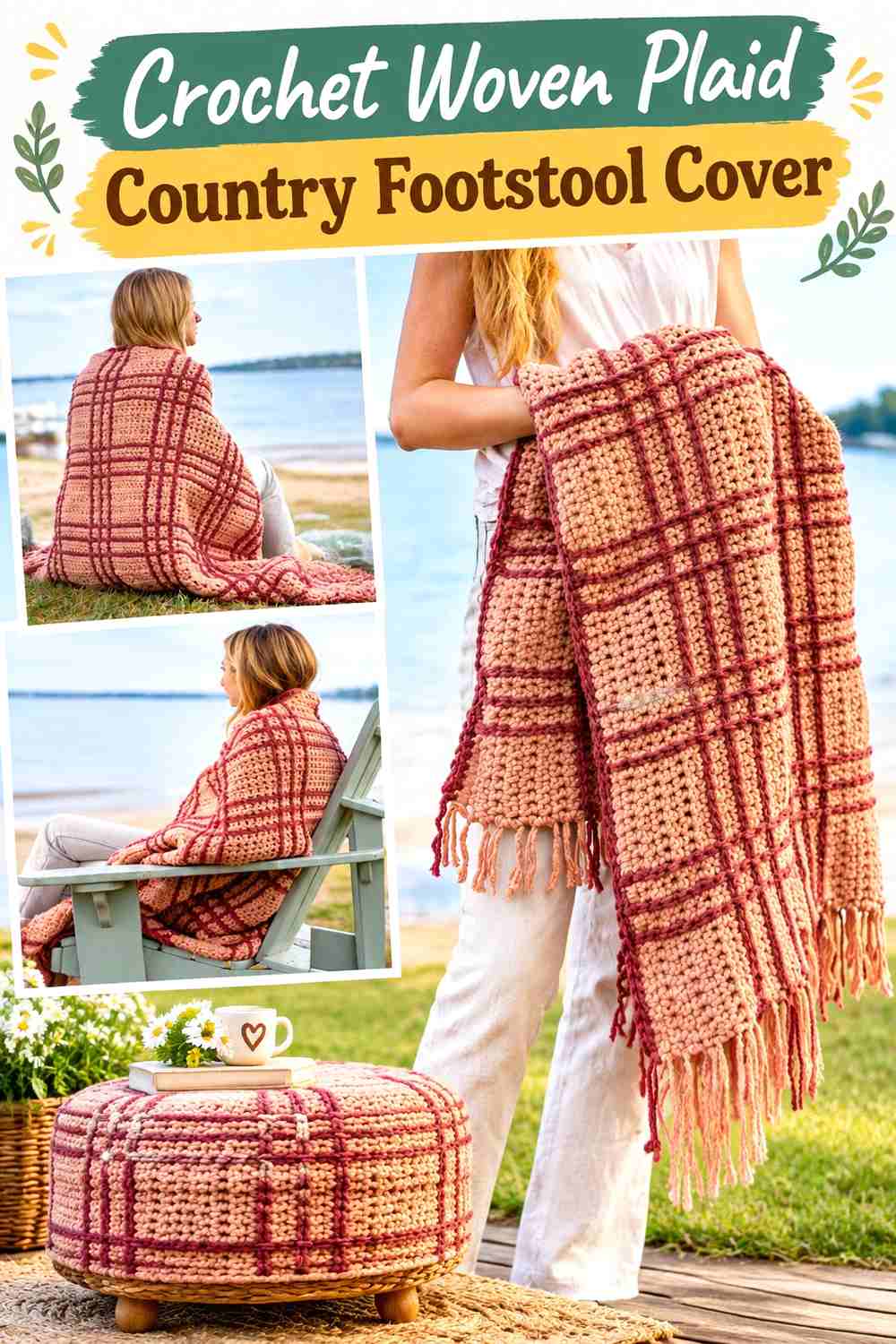
A woven-look plaid is useful when you want a heritage footstool that resembles an old textile more than a patchwork blanket. This construction develops part of the pattern through crochet and adds crossing strands to complete the plaid effect.
A compact footstool top can show the intersecting lines particularly clearly because the pattern is viewed as one concentrated decorative surface.
Woven Lines Give the Plaid Extra Definition
Adding vertical elements to a crocheted base creates a different result from ordinary carried-color checks.
The crossing lines can make the finished cover resemble woven cloth, which suits rooms with antique wood, wool throws, baskets, and other heritage materials.
Keep Added Strands Relaxed Across the Top
Any woven or surface-applied lines should follow the crochet fabric without pulling it out of shape.
Test a small section flat before applying the idea across the entire footstool top. If the background begins puckering, the overlay is working against the fabric rather than decorating it.
Consider How the Plaid Continues Over the Edge
A footstool creates a strong visual break between its horizontal top and vertical sides.
You can treat the top as the complete plaid statement and make the sides quieter, or deliberately continue selected lines downward. Decide that relationship before finishing the top so the pattern does not appear accidentally interrupted.
Creator Credit: Originally Lovely
3. Crochet Graph-Style Tartan Footstool Cover
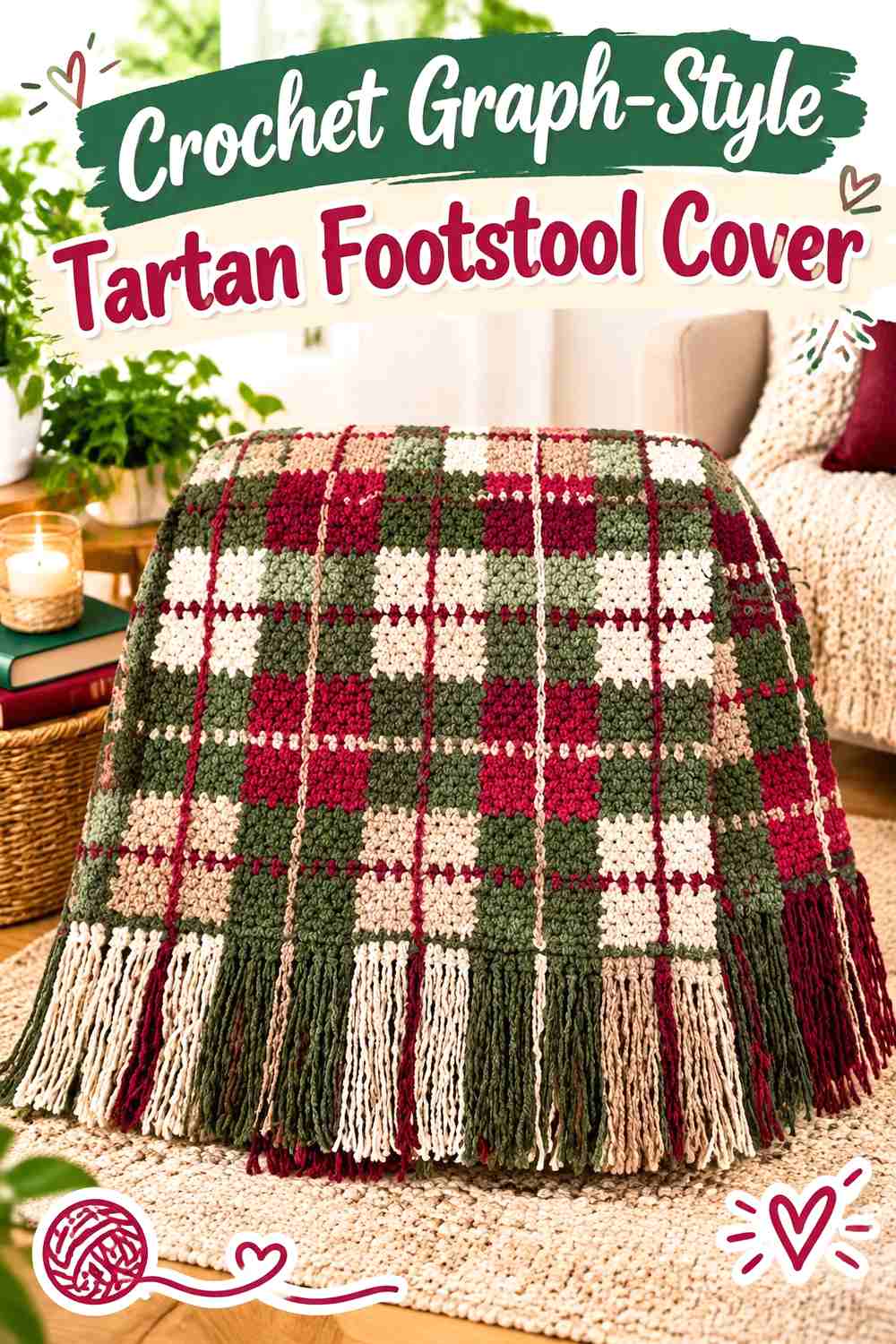
Graph-style plaid gives you close control over where individual color blocks land. That makes this idea useful for a square footstool whose top needs a deliberate central arrangement rather than a repeating pattern that happens to stop wherever the furniture ends.
The technique can produce a more tailored heritage look than randomly arranged granny squares.
Center the Plaid Before Crocheting the Full Panel
A furniture top is viewed as one framed shape.
If the plaid is noticeably off-center, the stool edges make the imbalance more obvious. Plan which color block or stripe should occupy the middle before calculating the surrounding repeats.
Multiple Working Colors Need Organization
Graph-style crochet may involve several active yarn sections.
For a smaller cover, that complexity can be manageable, but it still helps to keep each working yarn separated so color changes do not create unnecessary tangles behind the piece.
Surface Lines Can Make a Simple Grid Look More Tartan
A block pattern can gain much more heritage character when thinner crossing lines are introduced.
Keep those lines proportional to the stool. Very thick overlays can dominate a small top, while narrow contrasting lines can provide the tartan effect without hiding the underlying checks.
Creator Credit: The Crochet Crowd
4. Crochet Woven Gingham Footstool Cover
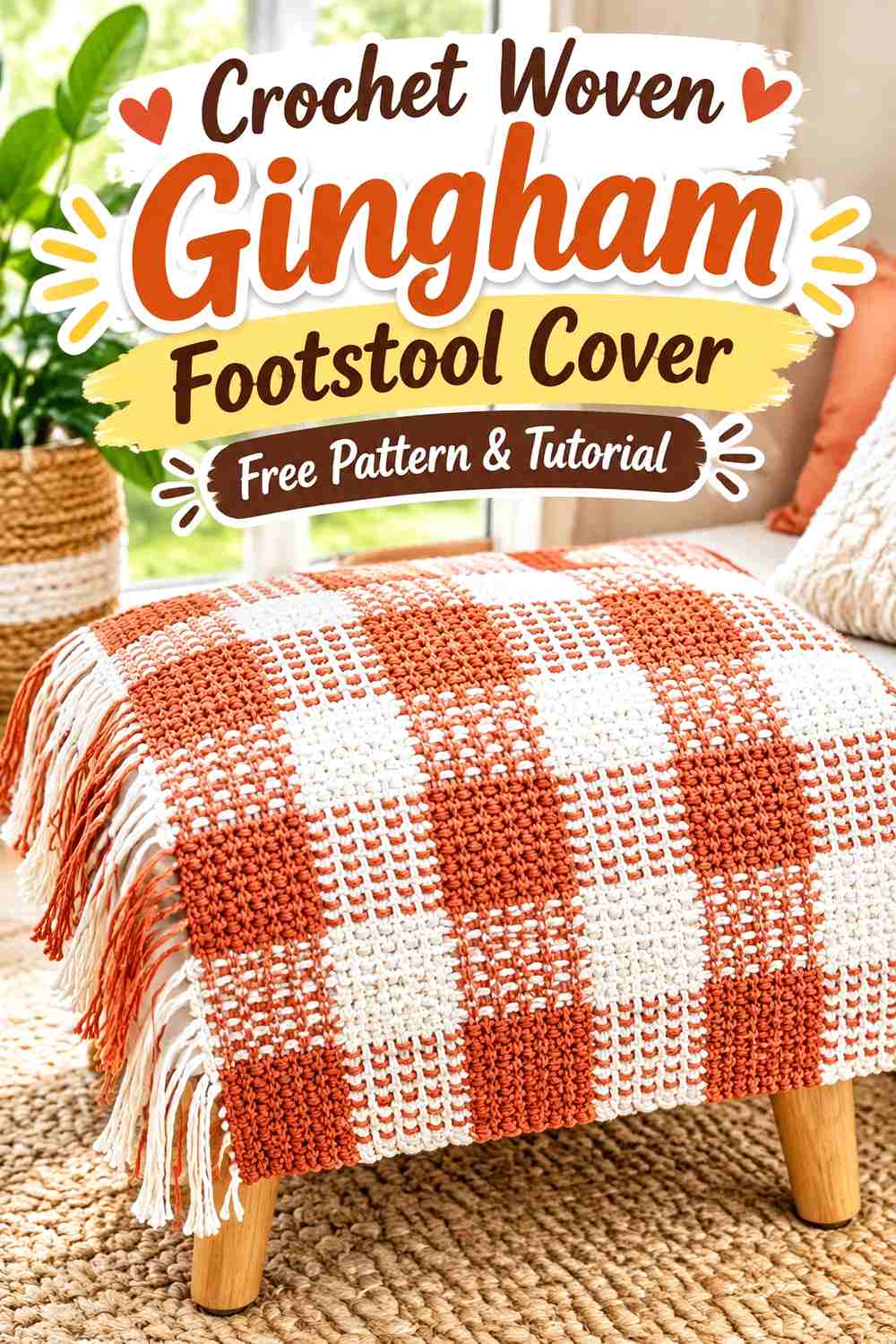
This construction creates a crochet grid and then weaves additional yarn through the openings to form the finished checks. It offers an appealing route when you like woven tartan texture but would rather build the vertical pattern after the main crochet fabric is complete.
On a footstool, the woven grid can become a concentrated decorative top with comparatively simple sides.
The Base Grid Must Fit Before the Weaving Begins
The woven strands will not correct a panel that is already the wrong size.
Check the base against the footstool top before adding the final crossing elements. The finished grid should already have appropriate proportions for the furniture.
Woven Checks Can Use a Softer Heritage Palette
Gingham does not have to be pink, blue, or springlike.
Cream with camel, oatmeal with forest green, or heather gray with muted burgundy can shift the same check concept toward a winter room.
Watch Abrasion on Raised Woven Strands
A stool cover receives more friction than a wall hanging or decorative blanket.
If the woven elements sit noticeably above the crochet base, consider how the footstool will actually be used. A decorative stool can support more surface texture than one that constantly receives shoes or heavy everyday use.
Creator Credit: Delia Creates
5. Crochet Tunisian Heritage Check Footstool Cover
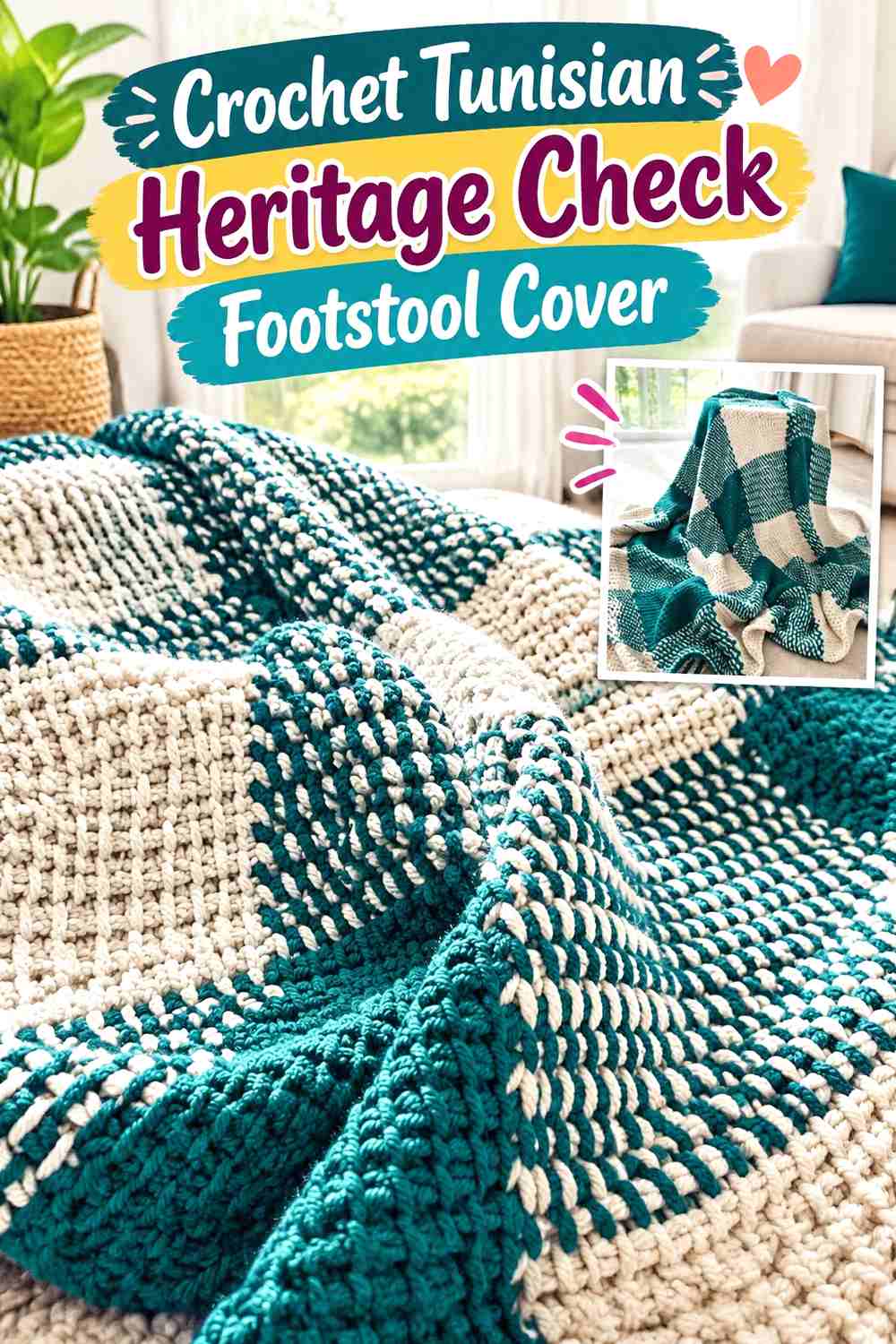
Tunisian crochet gives this idea a denser, more cloth-like surface. The supporting tutorial uses panel-based gingham construction, making it an interesting reference for a substantial footstool cover that needs less of the open texture associated with traditional granny crochet.
The result can work especially well in a room that mixes grannycore accessories with heavier lodge-style furniture.
Tunisian Fabric Changes the Surface Character
The distinctive texture looks different from standard single or double crochet and can make the cover feel closer to a woven furnishing textile.
That can be useful if the room already contains several open granny-square pieces and you want the footstool to provide visual contrast.
Panel Construction Can Help With Rectangular Furniture
A long footstool may be easier to plan as sections rather than one enormous continuous piece.
The trade-off is alignment. Corresponding checks should meet intentionally across panel joins so the tartan effect does not suddenly shift at a seam.
Check Curl Before Final Assembly
Some Tunisian fabrics naturally behave differently at their edges from conventional crochet.
Follow the source’s finishing guidance and assess the completed panel before attaching it to fitted sides. A top panel should lie as intended rather than relying on the furniture to force it flat.
Creator Credit: Exquisite Crochet UK
6. Crochet Three-Tone Gingham Footstool Cover
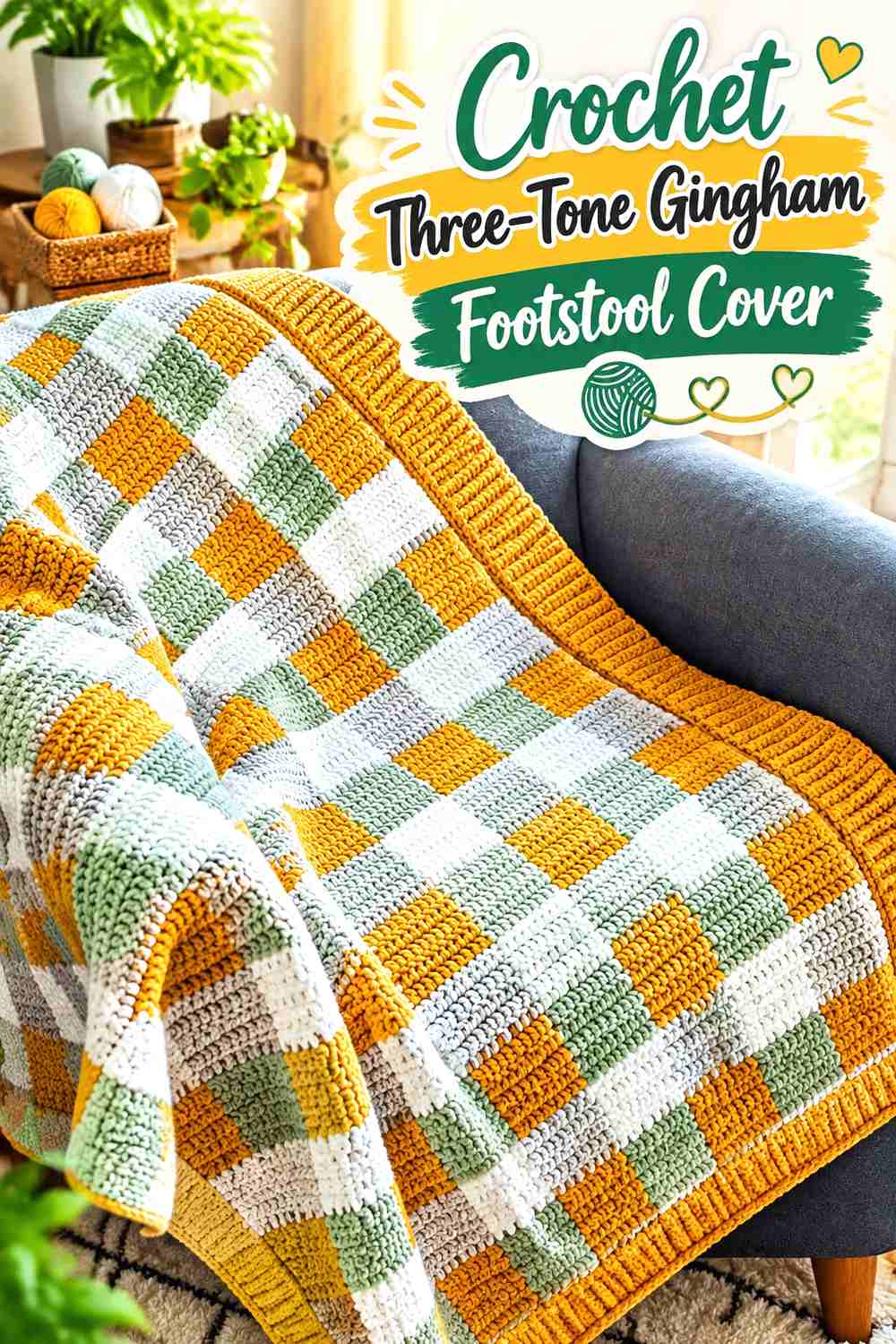
A three-tone gingham gives a footstool a softer heritage check than a high-contrast tartan. The light, medium, and dark relationships create the pattern, which makes color selection particularly important.
This is a strong option for grannycore rooms where floral prints, books, quilts, and decorative objects already provide plenty of detail.
Value Differences Build the Check
Three attractive yarn colors do not automatically produce readable gingham.
Place the proposed shades together before starting. You need enough distinction for the lighter and darker blocks to remain visible, especially when the finished cover is viewed from several feet away.
Smaller Checks Suit Compact Footstools
Large buffalo blocks can overwhelm a small stool top.
A finer gingham repeat produces more pattern within the same area and can make the cover feel closer to an old kitchen textile or country-house furnishing.
Keep the Side Treatment Simpler Than the Top
A small checked top already contains repeated color changes.
Solid or lightly striped sides can provide visual rest and make the tartan-inspired upper surface feel intentional rather than wrapping every inch of the stool in competing blocks.
Creator Credit: Hooked by Robin
7. Crochet Small-Check Country Footstool Cover
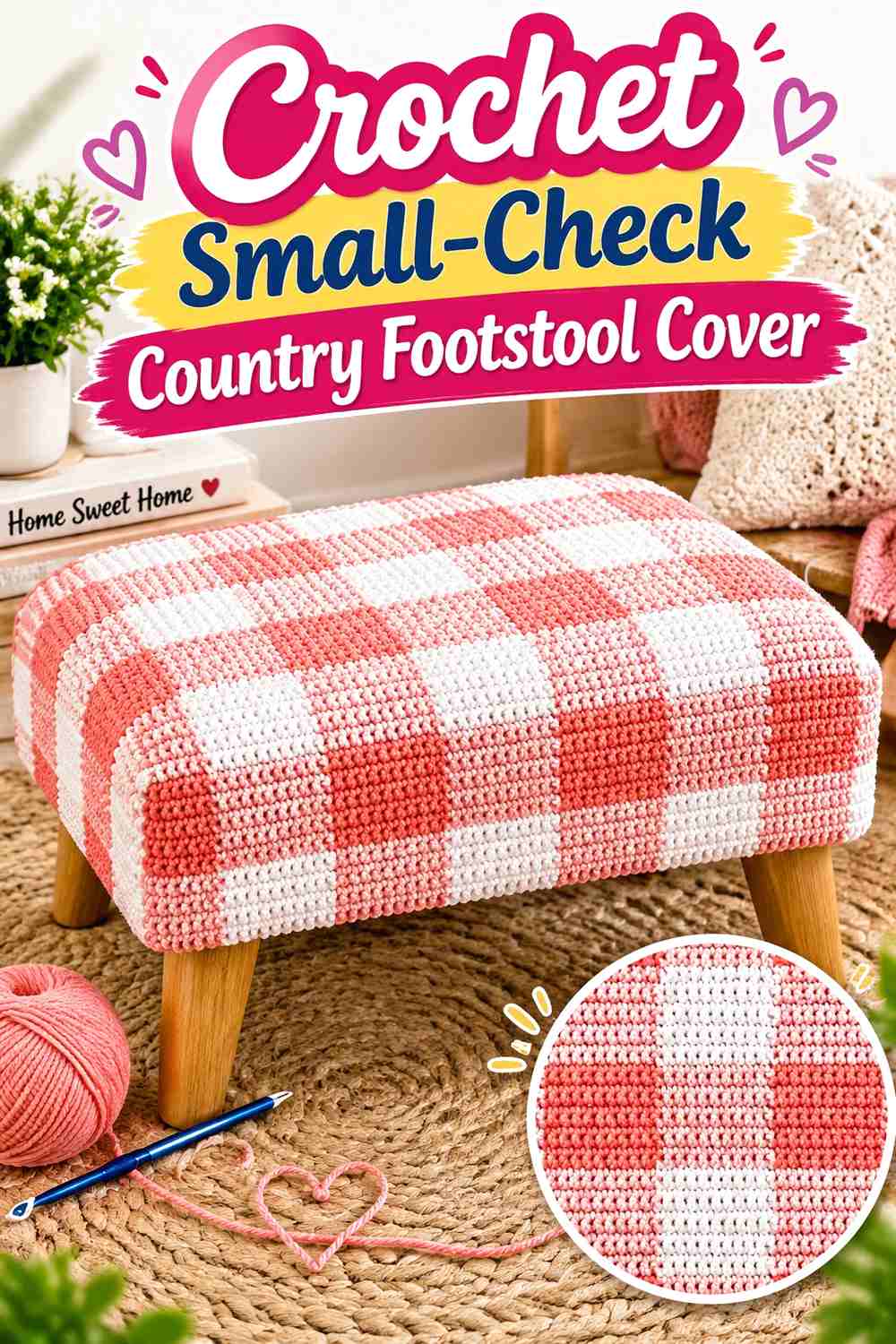
This direction uses a compact gingham technique that can translate well to a small upholstered stool. The regular checks create a tidy country effect without the broad scale of buffalo plaid.
For a winter grannycore room, use a muted three-color family rather than relying on bright seasonal contrast.
Fine Checks Read Like Household Textile
Small gingham has associations with table linens, aprons, quilts, and country fabrics.
That makes it an effective way to make a footstool feel collected rather than newly matched to a furniture set.
Carried Yarn Changes the Thickness
Colorwork may place more yarn within the fabric than a simple one-color swatch suggests.
Test a meaningful section before deciding whether the resulting thickness is comfortable underfoot. The cover should suit the stool’s actual use, not only its appearance.
Straight Pattern Lines Reveal Fit Problems
Checks make distortion easy to see.
If a cover is stretched much more strongly in one direction, the squares may become visibly rectangular. Fit the top with enough control that the pattern remains reasonably balanced.
Creator Credit: Daisy Farm Crafts
8. Crochet Half-Double-Crochet Plaid Footstool Cover
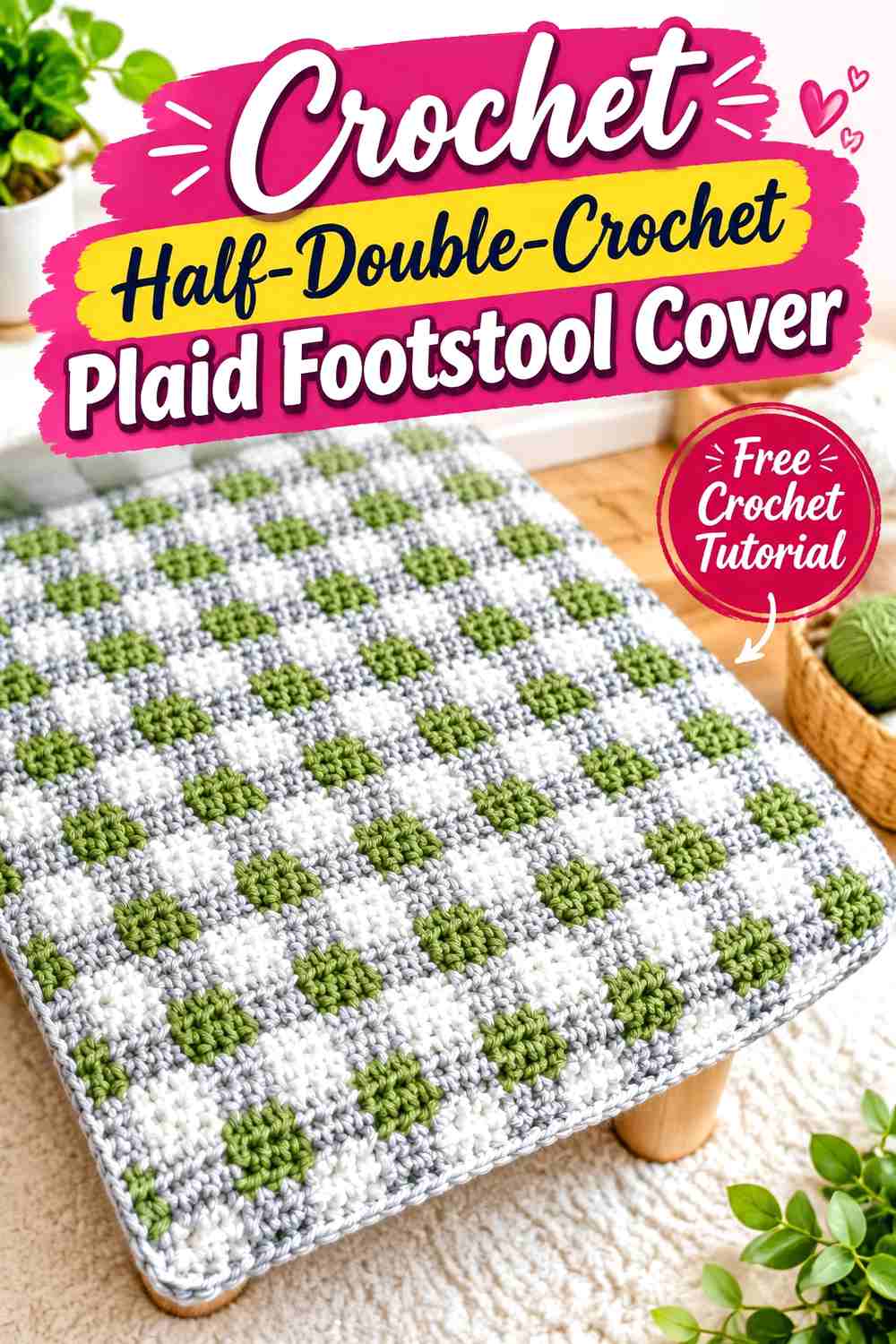
Half double crochet gives this plaid idea a fuller surface than very compact single crochet while remaining less open than granny clusters. That middle ground can work well on furniture because the stitches provide texture without creating large holes.
A rectangular stool can showcase several complete blocks across the top while using the same palette in a quieter side section.
A Fuller Stitch Can Soften Strong Plaid
Very crisp color blocks can look graphic.
The texture of half double crochet softens those edges slightly, which can make a red, cream, green, or charcoal palette feel more comfortable in a layered grannycore room.
Plan the Top Around Complete Blocks
Do not let the stool dimensions accidentally cut through the color repeat at an awkward point.
Work from a representative sample and determine whether the pattern can be centered with balanced partial or complete blocks along opposite edges.
Side Depth Changes the Overall Color Balance
A fitted cover includes more than its top panel.
If the stool has deep upholstered sides, the side color may become almost as visible as the plaid itself. Choose that portion deliberately rather than treating it as leftover background fabric.
Creator Credit: HanJan Crochet
9. Crochet Chunky Buffalo-Tartan Footstool Cover
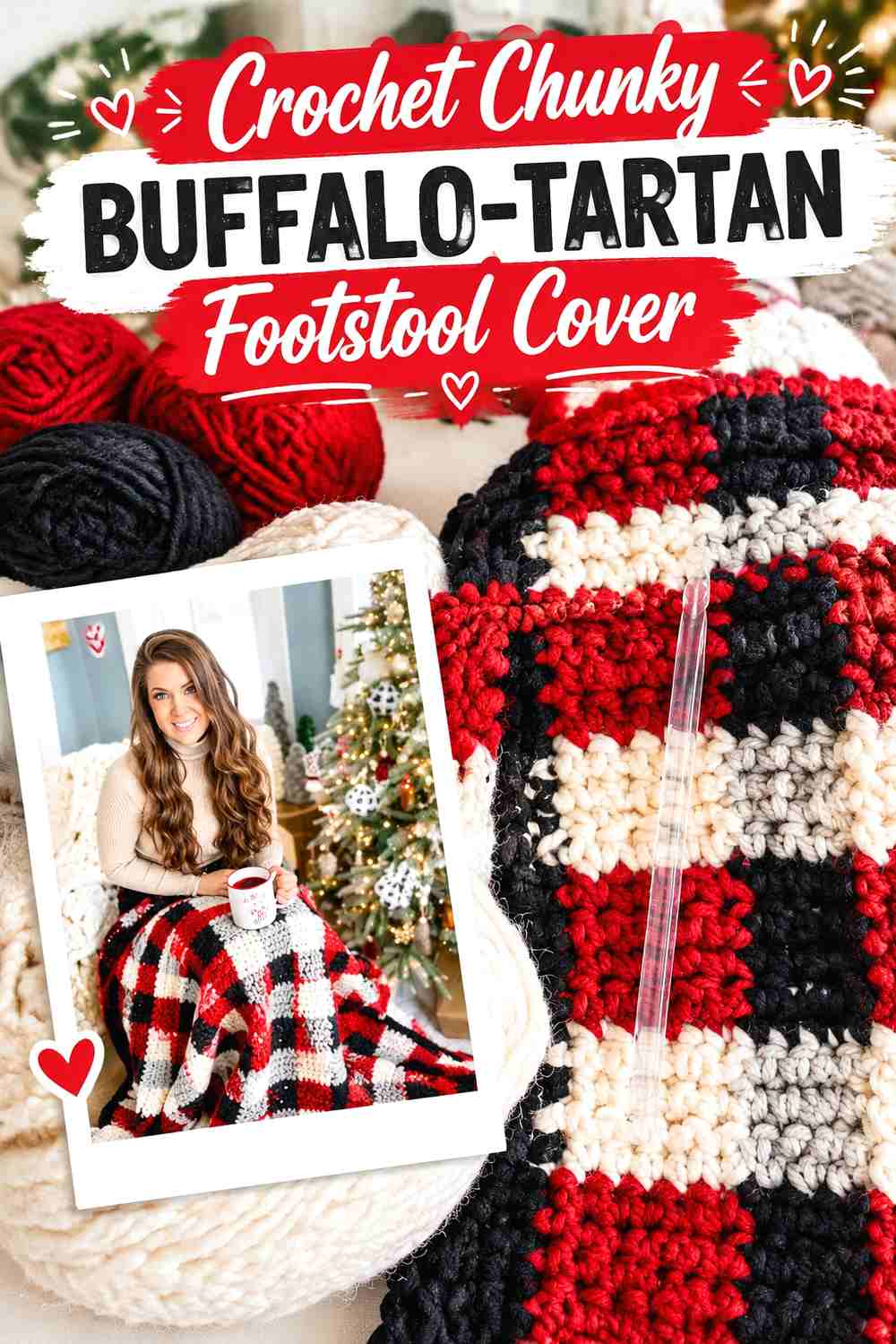
Large buffalo checks create one of the boldest options in the collection. The supporting tutorial uses substantial yarn and broad color blocks, making the technique useful for an oversized ottoman or sturdy lodge-style footstool where a tiny tartan could look fussy.
A black, cream, and gray version feels graphic, while forest, brown, oatmeal, and burgundy can push the same idea toward a traditional winter room.
Large Blocks Need Enough Furniture Surface
Pattern scale matters.
On a very small stool, a buffalo check may show only a few blocks and lose the rhythm that makes the pattern recognizable. This direction makes more sense when the top is large enough to display several transitions.
Thick Yarn Adds Physical Bulk
A chunky blanket construction can become especially substantial when converted into a fitted furniture cover.
Sample the material over the stool before committing to the whole project. Consider how the added thickness affects comfort, edges, and the way the cover meets the legs or base.
Bold Plaid Can Replace Other Winter Pattern
If the footstool becomes the room’s main check, surrounding textiles can stay quieter.
A solid throw, floral cushion, or neutral rug may support the buffalo plaid better than adding multiple large tartans within the same small seating area.
Creator Credit: MJ’s Off The Hook Designs
10. Crochet Modular Patchwork Plaid Footstool Cover
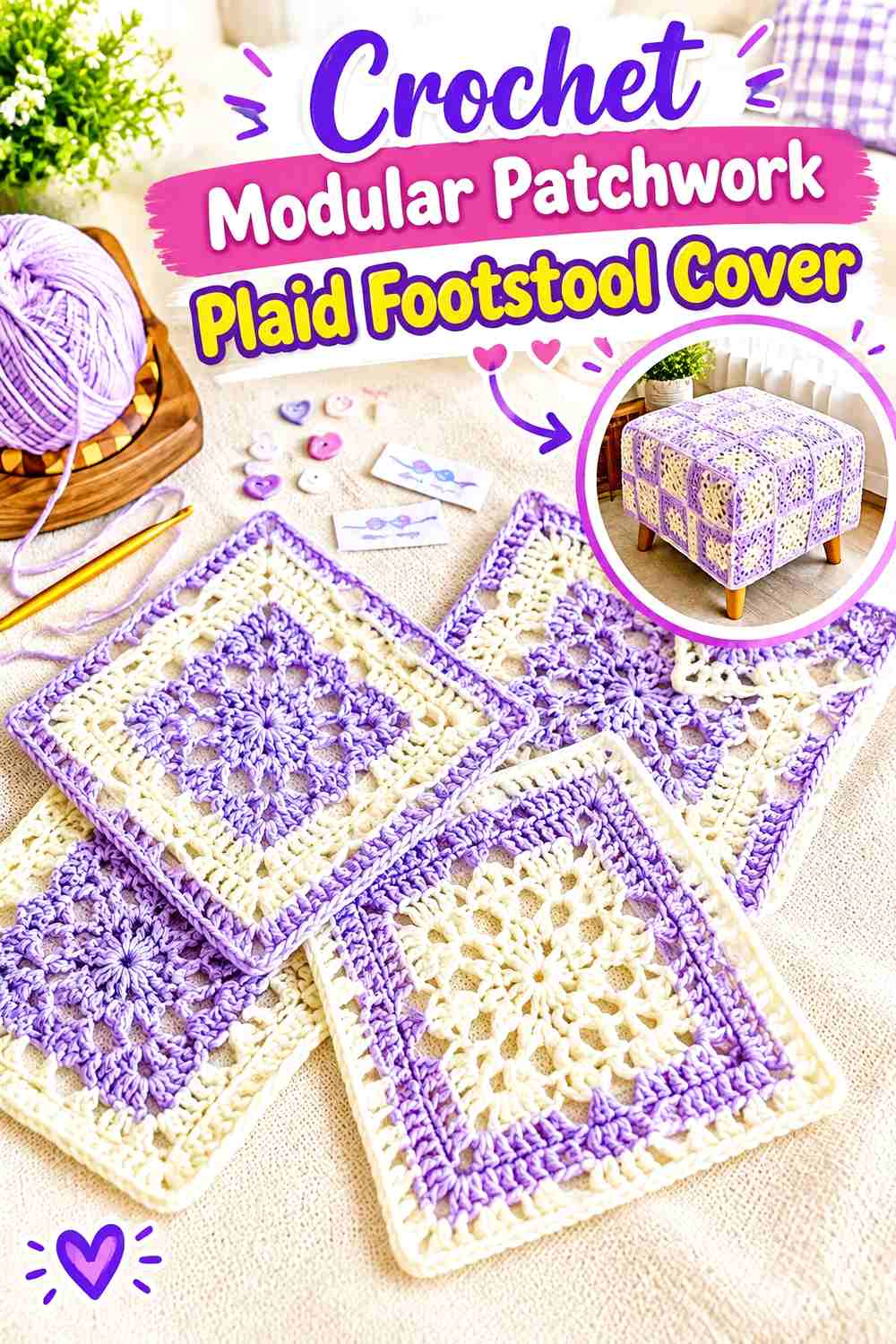
A modular plaid uses repeated sections to create the check, giving you a useful opportunity to rearrange the surface before final assembly.
That is valuable on a footstool because a small change in color placement can dramatically alter which block becomes the focal point.
Modular Pieces Make Color Planning Flexible
Arrange completed sections directly over the stool top before joining them.
This lets you compare several layouts and decide whether the darkest blocks should sit in the center, at the corners, or in a repeating diagonal arrangement.
Consistent Modules Matter on a Fitted Surface
A blanket can sometimes disguise a slight variation because it drapes.
A footstool top is flatter and more constrained, so uneven modules may create bumps or irregular seams. Compare completed pieces throughout the project rather than saving all size checking for assembly.
Patchwork Works Naturally With Grannycore Rooms
Visible modular construction fits an interior filled with handmade objects.
Use leftover-compatible colors if you like a collected appearance, but repeat enough shades that the surface still reads as an intentional plaid rather than unrelated squares.
Creator Credit: Majovel crochet
11. Crochet Velvet Plaid Padded Footstool Cover
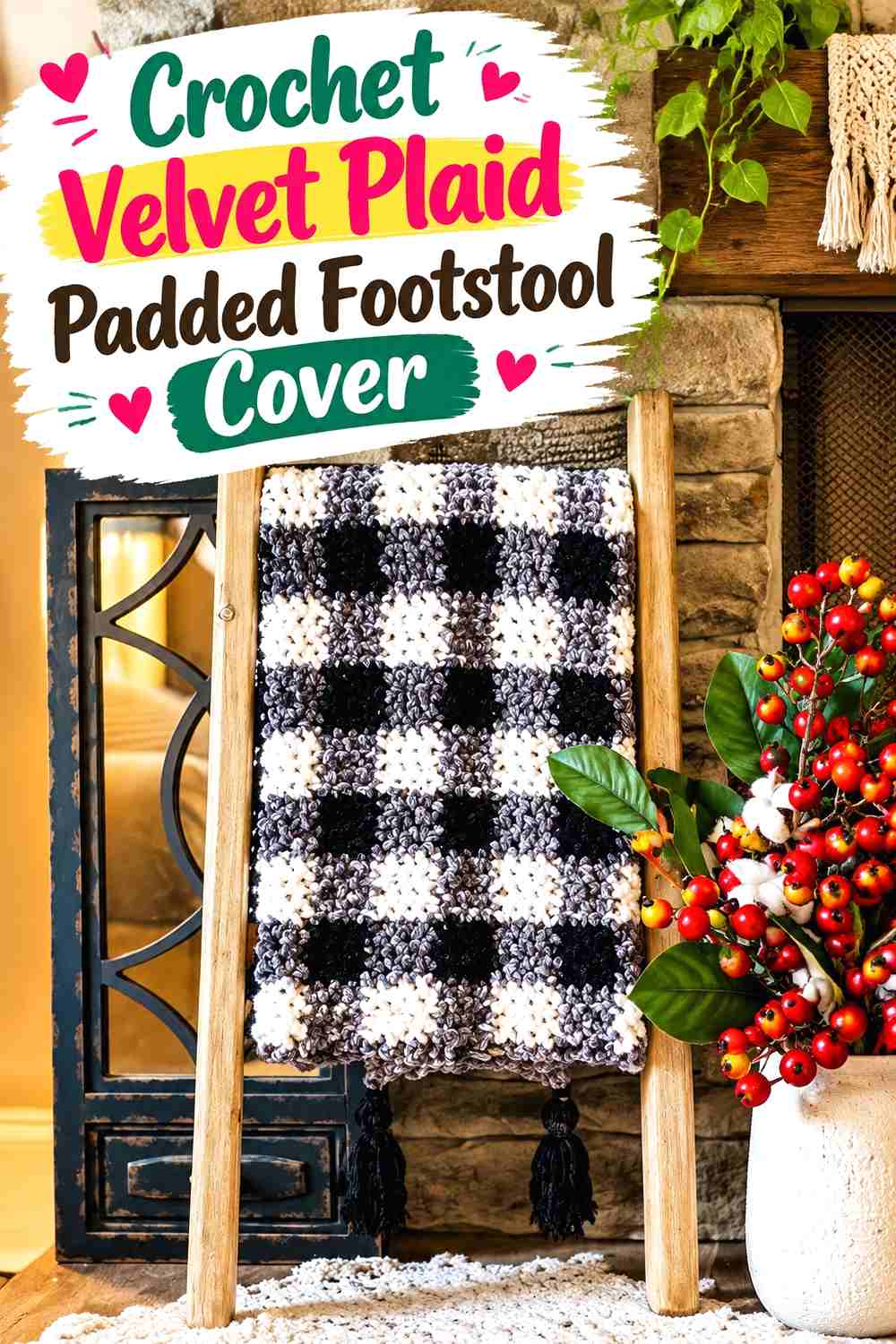
Velvet yarn gives plaid a very different character. Instead of emphasizing crisp heritage texture, it creates a plush surface with softened color transitions.
That makes this idea particularly appropriate for a padded bedroom footstool or decorative ottoman where softness matters more than recreating the appearance of woven wool.
Velvet Softens the Graphic Pattern
The yarn’s surface can blur individual stitch definition while allowing larger blocks to remain visible.
For this reason, broad plaid generally suits plush yarn better than tiny intricate tartan lines.
Check Whether Plush Fabric Suits Daily Foot Traffic
A luxurious-feeling fiber is not automatically the most practical material for every footstool.
Consult the yarn’s care information and consider whether the stool is mainly decorative, used with stockinged feet, or exposed to shoes and frequent abrasion.
Skip Extra Trim if the Surface Already Feels Rich
Tassels and fringe can be attractive on blankets, but they behave differently on furniture.
A fitted footstool generally benefits from a clean lower edge that stays clear of the floor and nearby walking space. Let the plush plaid provide the decorative impact.
Creator Credit: love.life.yarn. by Amanda Saladin
12. Crochet Fitted Square Tartan Ottoman Cover
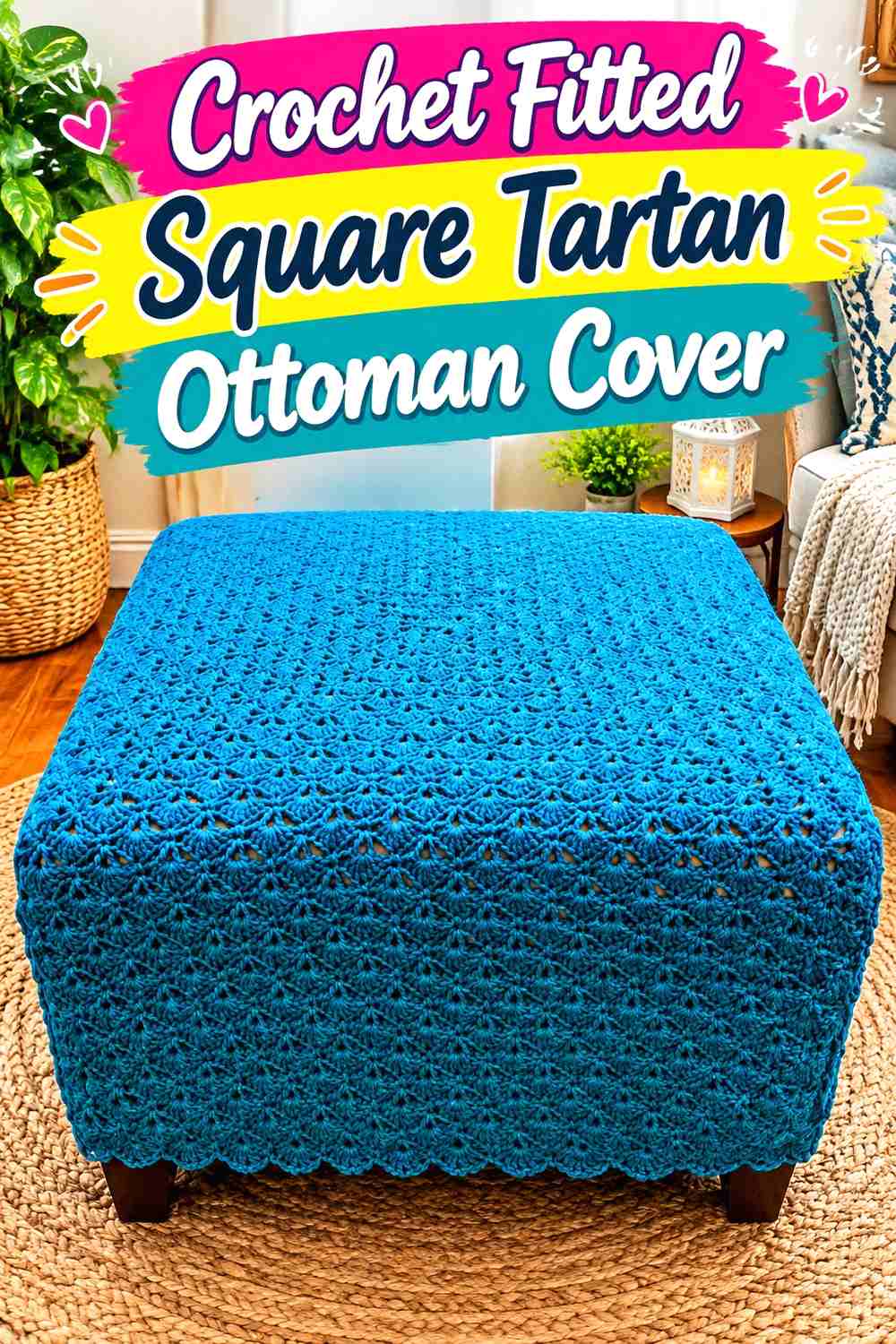
This project starts from the furniture end of the problem. The supporting tutorial demonstrates a square ottoman cover, making it especially useful for understanding how a crocheted top transitions into sides around a boxy piece of furniture.
The tartan element can then be developed on the top panel through your chosen compatible colorwork rather than assuming the source itself is plaid.
Fit Is the Main Lesson From This Construction
A square top creates clear corners that need to sit in the correct position.
Measure the stool instead of relying on nominal furniture size. Padding, rounded upholstery, and existing fabric can all affect the dimensions the crochet actually has to cover.
Separate the Pattern Decision From the Cover Shape
It can be useful to solve the two problems independently.
First determine how the cover fits the furniture. Then decide whether the tartan top will use carried color, woven lines, modular squares, or another technique compatible with the required dimensions and fabric behavior.
A Slightly Tighter Top Can Look More Tailored
Excess fabric on a square ottoman can collect near the corners and interrupt straight tartan lines.
Follow the creator’s fitting guidance rather than assuming a blanket-like drape is desirable. The goal is a cover that remains positioned correctly during normal use.
Creator Credit: Katia Creates
13. Crochet Round Tartan-Accent Stool Cover
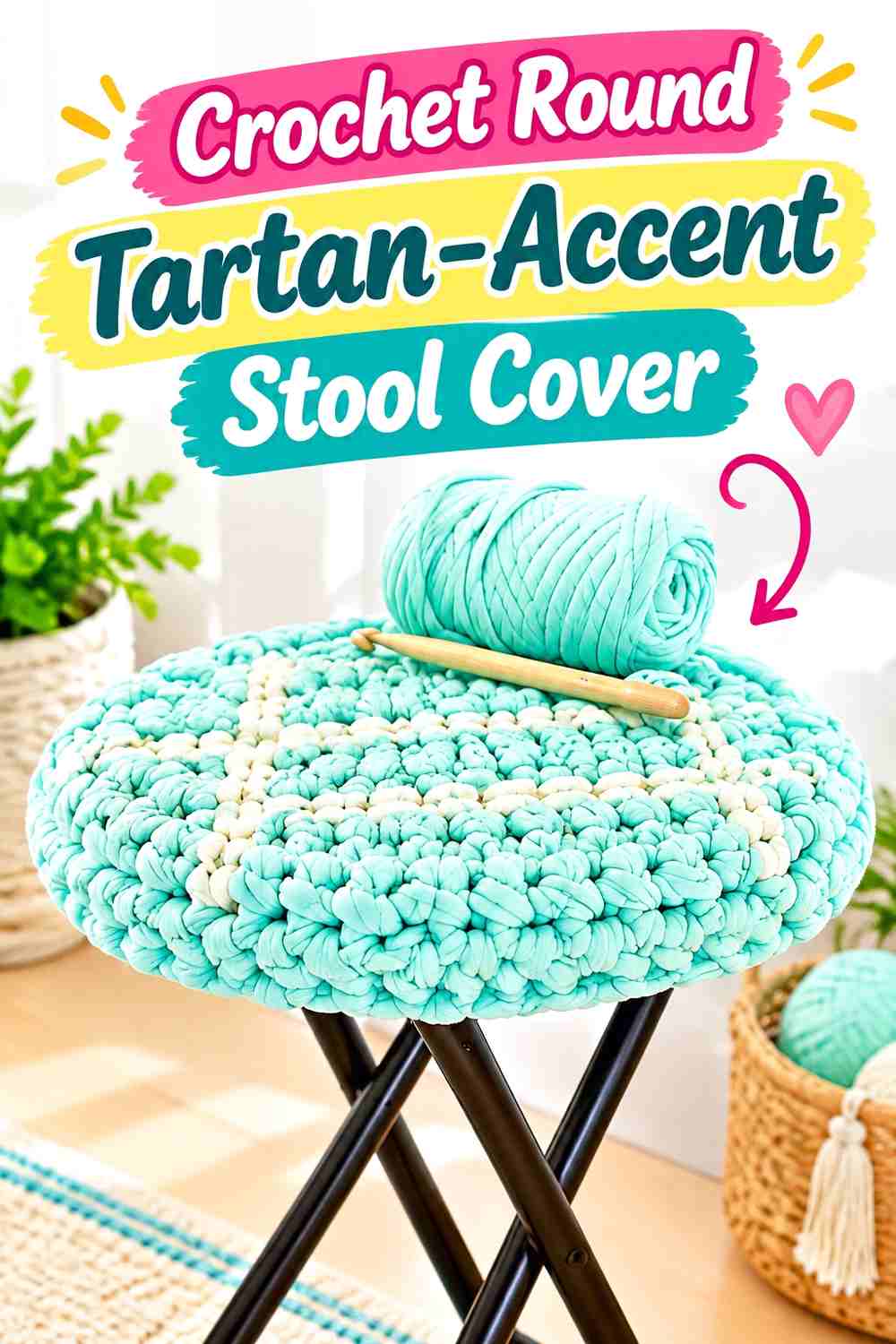
A round stool offers a challenge that makes this idea meaningfully different: conventional tartan is based on straight intersecting lines, while the furniture surface is circular.
Instead of forcing a rectangular plaid grid awkwardly around the entire stool, use the supporting fitted round-cover construction and introduce heritage color through concentric checks, tartan-inspired bands, or a coordinated plaid accent concept.
Round Furniture Needs Its Own Pattern Logic
A square grid naturally favors straight edges.
On a circle, trying to maintain identical squares toward the outer edge can create distortion. Preserve the round fitting method and treat the heritage color scheme as an adaptation rather than pretending conventional tartan geometry remains unchanged.
Bobbled Texture Adds a Grannycore Counterpoint
The supporting stool design includes raised texture, giving the finished surface a handmade character even before heritage colors are introduced.
That means the cover can use a restrained palette rather than needing complex plaid everywhere.
Secure the Lower Edge Before Adding Decoration
A stool cover should stay in place during normal use.
Resolve the fit and lower edge first. Decorative bands are secondary if the cover rotates, bunches, or lifts whenever the stool is used.
Creator Credit: Amelia Makes
14. Crochet Farmhouse Plaid Rectangular Footstool Cover
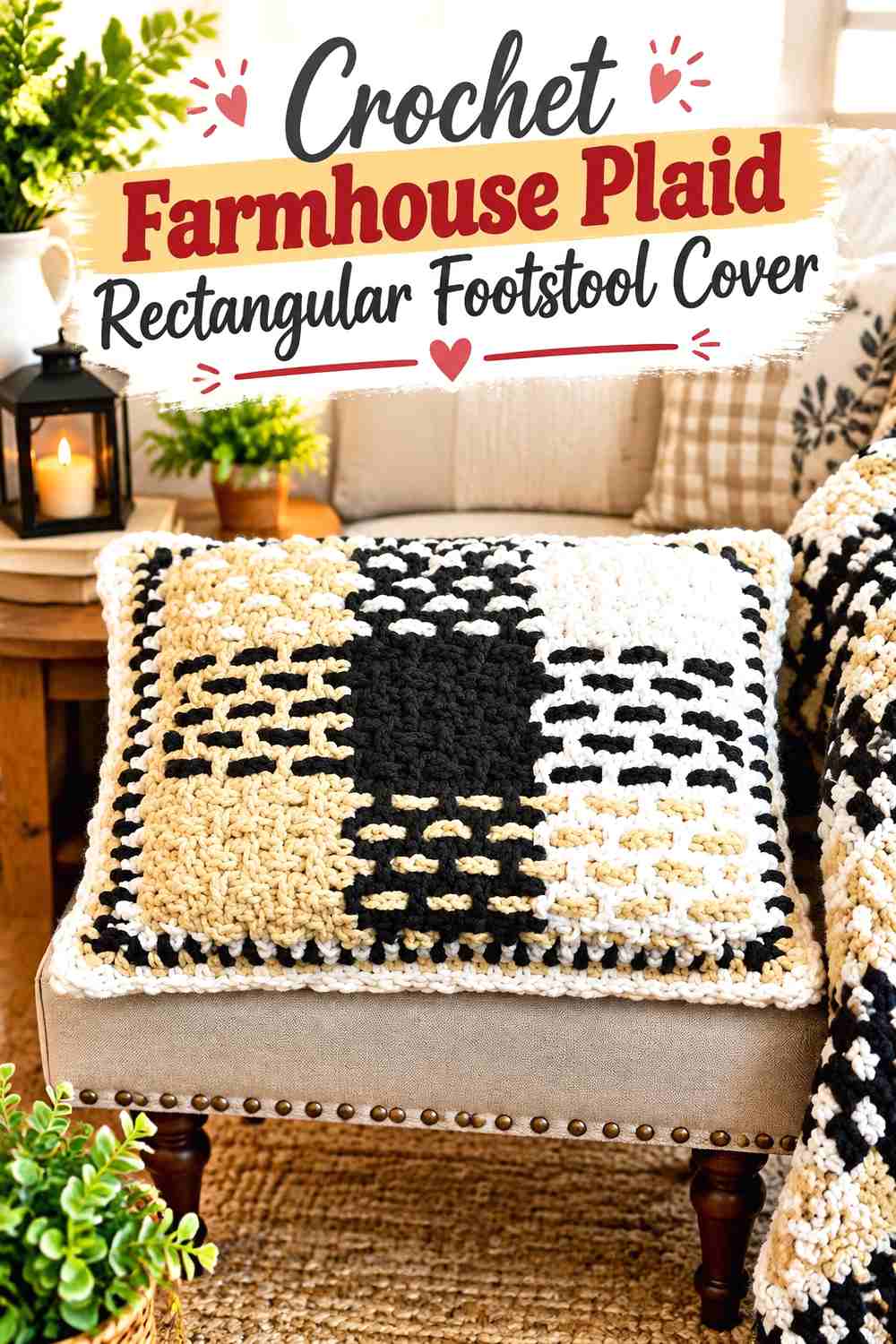
A long rectangular footstool can borrow surface ideas from a plaid cushion because the proportions are more similar than those of a square stool. The supporting tutorial creates a farmhouse plaid pillow cover, providing a useful reference for working the check across a compact rectangular home-decor surface.
The footstool itself still needs a suitable furniture-cover fitting method, but this tutorial can guide the visual treatment of the top.
Long Rectangles Suit Horizontal Plaid Rhythm
A rectangular top gives wider stripes room to travel across the furniture.
Use that length deliberately. A plaid that feels oversized on a small square stool may look balanced on a longer bench-style footstool.
A Cushion Technique Does Not Automatically Become a Stool Cover
Pillow covers and furniture covers handle tension differently.
Do not copy the pillow dimensions or closure and assume they will secure the crochet to furniture. Use the plaid tutorial for its surface treatment and an appropriate fitted construction for the actual footstool.
Farmhouse Plaid Can Be Shifted Toward Heritage Color
Black, cream, and beige create one look; burgundy, forest, navy, camel, and oatmeal create another.
For a grannycore winter room, slightly softened heritage shades often combine more easily with floral textiles and vintage furniture than stark modern contrast.
Creator Credit: I-crochet
Which Tartan Footstool Cover Style Works Best?
| Cover Direction | Main Visual Effect | Construction Issue to Check | Good Match For |
|---|---|---|---|
| Granny-square tartan | Strong grannycore heritage | Motif dimensions and joins | Vintage layered rooms |
| Woven plaid | Traditional textile look | Overlay tension | Country and cottage rooms |
| Graph-style plaid | Controlled pattern placement | Yarn management | Tailored square stools |
| Woven gingham | Light woven check | Base must fit first | Smaller footstools |
| Tunisian check | Dense, cloth-like surface | Panel alignment | Heavier winter decor |
| Fine gingham | Small traditional checks | Color value | Compact furniture |
| HDC plaid | Soft structured checks | Complete block placement | Everyday footstools |
| Buffalo plaid | Bold lodge look | Pattern scale and bulk | Large ottomans |
| Modular plaid | Patchwork character | Consistent components | Strong grannycore rooms |
| Velvet plaid | Plush winter surface | Care and abrasion | Decorative padded stools |
| Fitted square cover | Tailored furniture fit | Corner positioning | Box ottomans |
| Round fitted cover | Softer heritage accent | Circular pattern adaptation | Round stools |
| Farmhouse plaid panel | Long horizontal pattern | Separate fit from surface | Rectangular footstools |
The granny-square tartan is the clearest choice when grannycore character matters most. Woven and graph-style plaids feel more like traditional furnishing textiles, while gingham provides a softer country interpretation.
For furniture used heavily, prioritize fit, cleaning, and a reasonably flat surface. For a decorative bedroom ottoman, plush velvet, raised texture, and more elaborate patchwork can play a larger role.
Conclusion
A successful crochet heritage tartan footstool cover has to solve two problems at once: it needs to look like part of a cozy winter room, and it needs to behave like a furniture cover.
Start with the stool itself. A square ottoman can support centered tartan grids, granny-square patchwork, or fitted graph-style colorwork. Long rectangular stools suit broader horizontal plaid, while round stools call for a more flexible interpretation of heritage color rather than forcing straight tartan geometry onto a circle.
Then choose the surface according to the room. Granny squares give the strongest grannycore character. Woven plaid feels traditional and textile-like. Fine gingham works well on smaller furniture, buffalo plaid suits larger pieces, and velvet creates a softer decorative option.
Make a representative sample before adapting any blanket or cushion tutorial to furniture. Check the pattern scale, thickness, stretch, stitch definition, and color balance against the actual stool. Use the original creator tutorial for the featured technique, and use an appropriate fitted-cover construction when the source was designed for a blanket or pillow rather than furniture.
Frequently Asked Questions
Can I use a tartan blanket tutorial to make a footstool cover?
You can use it as a reference for the tartan surface, but a blanket tutorial does not automatically provide the shaping needed for furniture. The plaid panel still needs to be sized to the actual stool and combined with a suitable method for fitting the sides and securing the cover.
Should a crochet footstool cover be tight or loose?
It should fit securely enough for its intended use without excessive bunching or distortion. The correct amount of stretch depends on the yarn, stitch pattern, stool shape, padding, and cover construction. Follow a furniture-cover tutorial for fitting guidance rather than applying a universal amount of negative ease.
What tartan scale works on a small footstool?
Smaller checks or a reduced motif grid generally allow more of the pattern to appear within a compact surface. Very large buffalo checks can work, but a tiny stool may display so few blocks that the overall plaid becomes difficult to read.
Are granny squares practical for a footstool cover?
They can be, particularly for decorative or lightly used furniture, but the joins, openings, yarn choice, and surface texture should suit how the stool is used. Measure finished motifs carefully and consider whether prominent seams will be comfortable under feet.
How can I make a tartan footstool look grannycore instead of lodge-style?
Use visible handmade construction such as granny squares or decorative joins, and combine heritage colors with softer vintage shades. Cream, faded red, moss, mustard, dusty blue, brown, and heathered neutrals can feel more collected and grannycore than stark black-and-red buffalo plaid.
What yarn should I choose for a crochet footstool cover?
Start with the yarn requirements of the construction you are following, then consider abrasion, stretch, stitch definition, finished thickness, and care. A decorative stool has different needs from one used daily with shoes or as additional seating.
Can I add fringe or tassels to a tartan footstool cover?
You can add decorative trim when it does not interfere with safe use, but long fringe near the floor can catch on feet, furniture, or cleaning equipment. For frequently used footstools, a tidy fitted lower edge is often more practical.
How do I keep plaid lines straight on a fitted cover?
Begin with a top panel that fits without extreme stretching. Strong directional tension can distort checks and turn squares into rectangles. Check the panel on the furniture before completing the sides, and address fit problems before relying on the final edging to correct them.