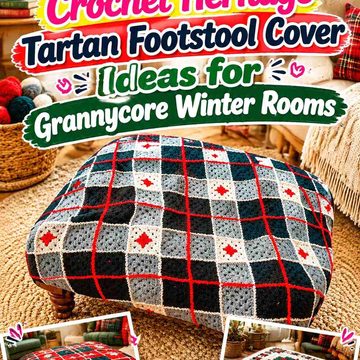
November is a natural fit for crochet plaid. Deep checks, soft gingham, vintage granny squares, and woven-looking colorwork all work comfortably with the layered, collected feeling of grannycore interiors.
The useful distinction is construction. Some of these tutorials create literal plaid, gingham, checkerboard, or argyle fabric. Others use complete granny-square and patchwork blanket constructions that can be given a plaid-inspired November palette without pretending the original tutorial is a plaid pattern. That second group is especially useful if you want the nostalgic look of individual motifs rather than the flatter appearance of carried-color plaid.
Before choosing by color alone, consider how much yarn management, joining, texture, and visual density you want. A continuous gingham blanket behaves very differently from a pile of granny squares, and a woven plaid has different finishing work from planned-pooling argyle.
Quick List
- Crochet Warm-Neutral Gingham November Throw
- Crochet Chunky Buffalo Plaid Cabin Throw
- Crochet Surface-Line Heritage Plaid Throw
- Crochet Patchwork Gingham Grannycore Throw
- Crochet Cottage Colorwork Gingham Throw
- Crochet Tunisian Gingham November Throw
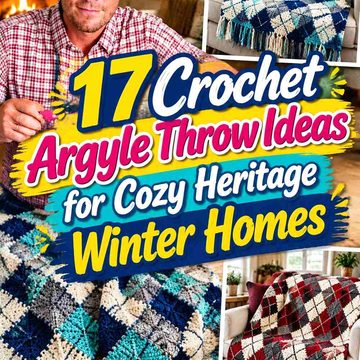
- Crochet Planned-Pooling Granny Argyle Throw
- Crochet Classic Plaid Afghan Throw
- Crochet Woven Cottage Plaid Throw
- Crochet Woven Gingham Heritage Throw
- Crochet Paragon Plaid One-Piece Throw
- Crochet Plush Checkerboard Grannycore Throw
- Crochet Windowpane Granny Plaid-Style Throw
- Crochet Quilt-Star Patchwork Plaid-Style Throw
- Crochet Giant Granny Check-Stripe Throw
- Crochet Motif-Grid Grannycore Plaid-Style Throw
- Crochet Infinity Granny Plaid-Stripe Throw
Choose the Plaid Method Before Choosing the November Colors
Several crochet techniques can produce a checked result, but they do not create the same fabric.
Carried-color gingham builds the checks while the blanket is crocheted. It gives you a clear repeating grid but requires attention to color changes and the yarn being carried through the fabric. Checkerboard crochet can simplify that visual language to two alternating colors.
Woven plaid starts with a crochet base and introduces some of the intersecting lines afterward. It can look particularly close to woven household textiles, but the finishing stage becomes an important part of the project rather than a small final detail.
Planned pooling uses the color sequence already present in suitable yarn to organize an argyle-like design. Granny-square and patchwork blankets take another route entirely: the plaid impression comes from arranging motifs and colors across a larger grid.
Choose the technique you actually want to work on for the length of a throw, not simply the finished photograph you like most.
Build a November Palette With Enough Contrast
Grannycore does not require every blanket to use bright vintage scraps. For November, combinations such as oatmeal, rust, olive, mustard, brown, burgundy, charcoal, dusty blue, and muted cream can create a quieter collected look.
The important issue is value contrast. If every yarn is equally dark or equally pale, individual checks can disappear from normal viewing distance. Lay candidate skeins beside one another and, when possible, make a small sample before committing to a full throw.
For gingham, three related values can create a convincing layered check. For granny-square adaptations, one repeated joining or background color can unify several accent shades. For traditional-looking plaid, varied stripe widths and stronger intersections generally create more complexity than a simple two-color checkerboard.
Plan Motif Size, Joins, and Finished Weight Early
Modular grannycore blankets give you tremendous control over layout, but every square introduces edges that eventually need to meet. Compare completed and blocked motifs before building the entire grid. Small size differences become much more obvious when several straight rows are joined together.
Continuous colorwork avoids hundreds of separate motifs, but carrying additional yarn can create a denser fabric. Plush and super-bulky checks can also become substantial simply because of yarn scale.
If you substitute a different yarn, verify the creator’s sizing, gauge, and material information rather than assuming the original dimensions or yarn requirements will transfer unchanged.
1. Crochet Warm-Neutral Gingham November Throw
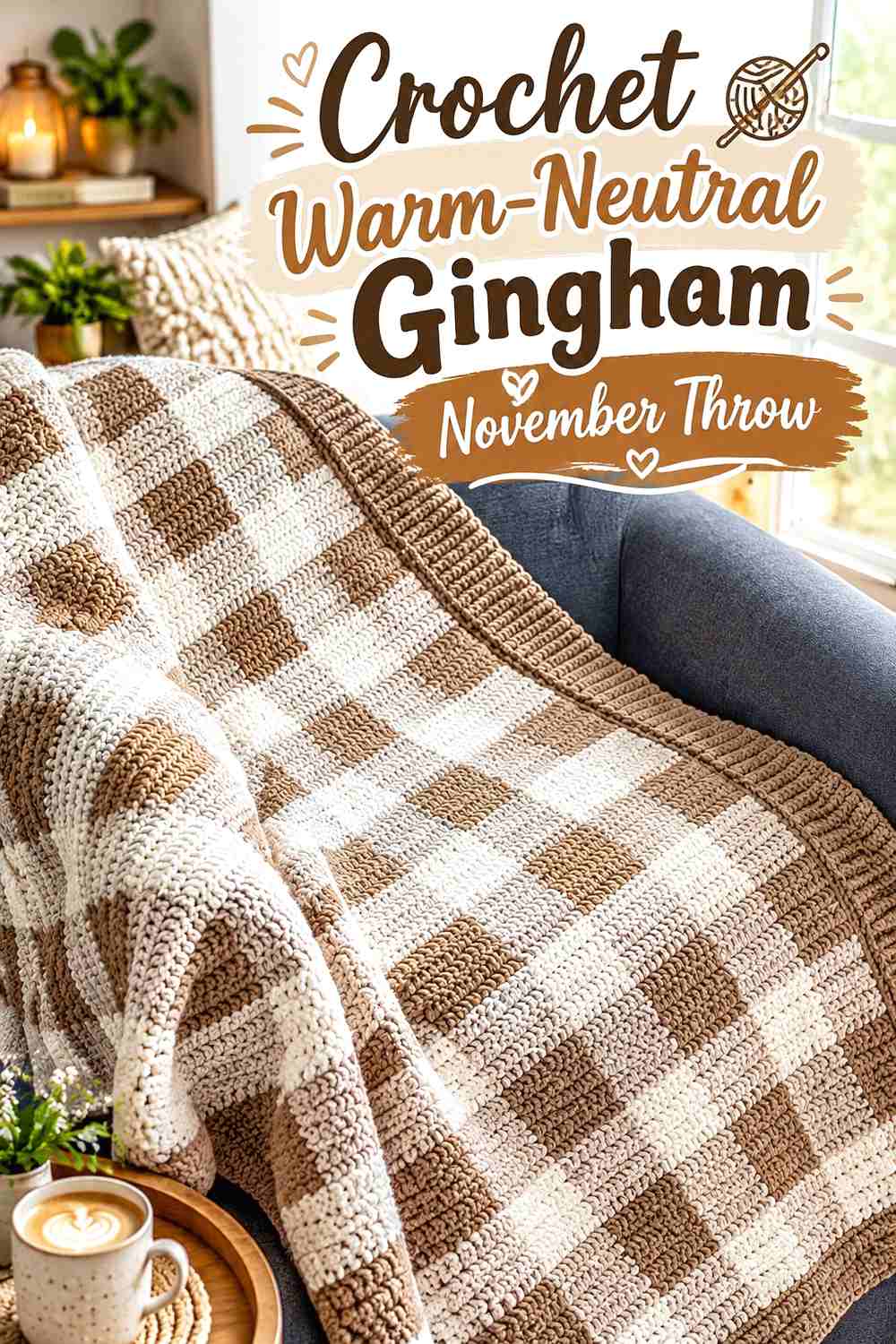
Hooked by Robin’s gingham blanket tutorial is built around a three-color check and explains how the color relationships, carried yarn, and block proportions work together. The tutorial is designed so the underlying method can be adjusted for different yarn and blanket choices rather than being tied only to one fixed sample.
For a grannycore November room, this construction is particularly effective in cream, camel, tobacco, muted gold, olive, or faded brick combinations. The checks remain orderly, while the warmer palette keeps the blanket from feeling too crisp or nursery-like.
Test the Three Colors as a Group
Picking two attractive colors independently does not guarantee that the overlap shade will read correctly. Put all three yarns together before starting and check whether you can distinguish the light, middle, and dark areas from several feet away.
A middle shade that is too similar to either neighbor can flatten the gingham effect.
Carried Yarn Changes the Fabric
Because another strand travels through the work, a gingham fabric can feel different from a comparable single-strand blanket.
If you change yarn type, make a sample and judge not only its appearance but also its drape and density. A November throw should still fold and settle comfortably where you plan to use it.
Creator Credit: Hooked by Robin
2. Crochet Chunky Buffalo Plaid Cabin Throw
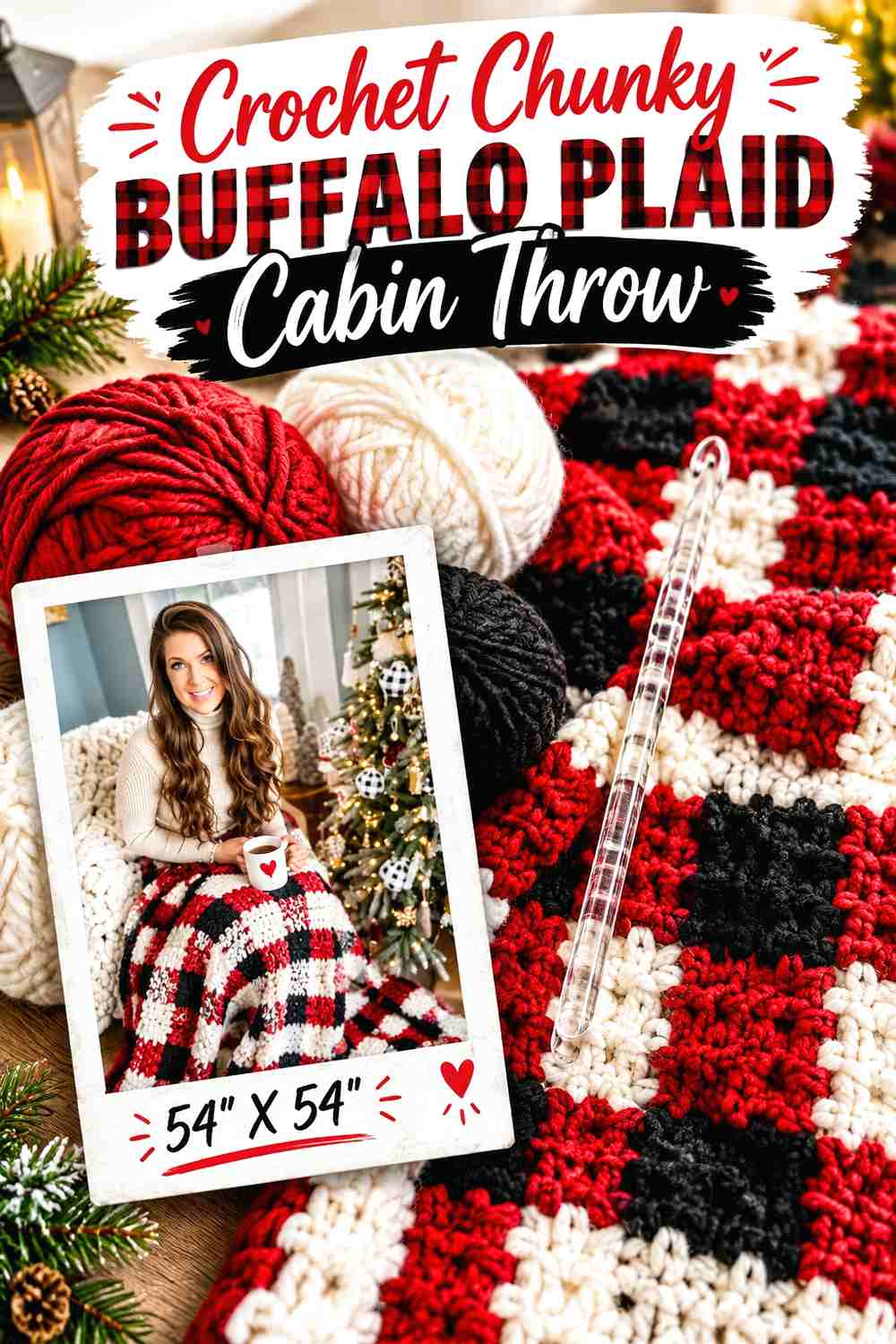
MJ’s Off The Hook Designs uses super-bulky yarn and carried-color work to produce a bold buffalo-plaid throw worked in rows. The larger yarn scale makes the individual checks visually substantial and gives the finished blanket a very different presence from finer gingham.
This is the direction to consider when you want plaid to function as a major room element rather than a small-scale background pattern.
Large Checks Need Enough Visual Space
A bold buffalo check can dominate a small chair or narrow bench. That may be exactly what you want, but consider the scale of nearby cushions, rugs, and upholstered patterns.
If the room already contains several strong prints, a lower-contrast palette can preserve the large check without making every surface compete.
Chunky Yarn Magnifies Color Changes
With larger stitches, transitions between shades are easier to see. Pay attention to the creator’s color-change technique and inspect the fabric as it grows.
Changing to a dramatically different yarn weight may also alter the balance between the check size and the overall throw, so verify the pattern information before substituting.
Creator Credit: MJ’s Off The Hook Designs
3. Crochet Surface-Line Heritage Plaid Throw
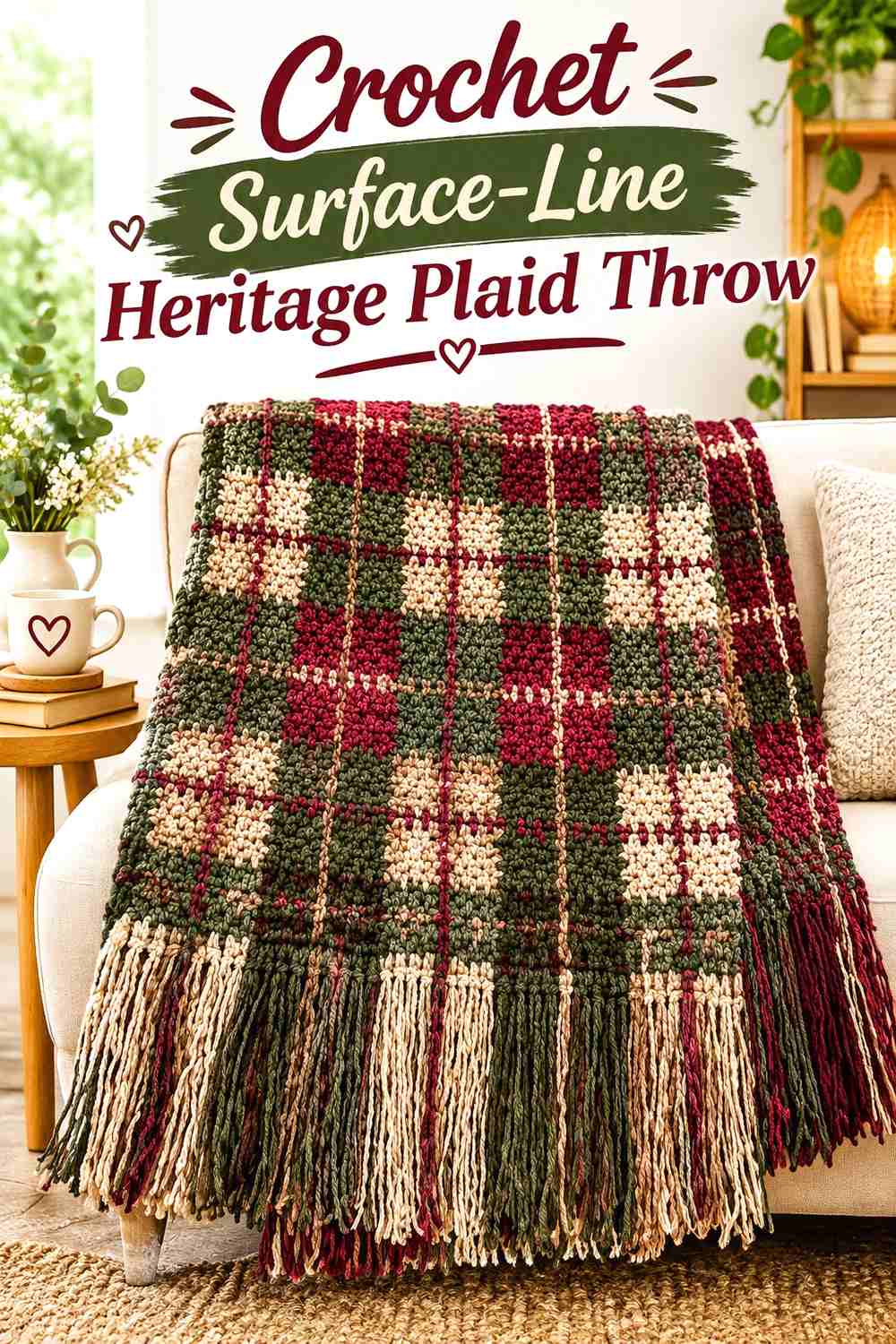
The Crochet Crowd’s plaid blanket tutorial takes a more layered colorwork approach: the base establishes much of the plaid structure, and vertical surface lines are added to strengthen the intersecting effect. The result is visually different from a straightforward checkerboard because the added lines help suggest woven cloth.
That structure suits a grannycore room inspired by old wool blankets, cabin textiles, and collected vintage furnishings.
Added Vertical Lines Change the Final Look
Do not judge this style only from an unfinished base. Part of its plaid identity arrives later through the surface treatment.
When planning your colors, think about which lines should quietly blend and which should define the grid. A strong overlay color can become one of the most noticeable elements in the finished throw.
Fringe Can Push the Design Toward Heritage Styling
Fringe reinforces the woven-blanket impression, while leaving it off creates a cleaner edge.
Choose based on how the throw will be used. Decorative fringe can suit an armchair or blanket ladder, while a simpler edge may be preferable if the throw will be moved, washed, and used frequently.
Creator Credit: The Crochet Crowd
4. Crochet Patchwork Gingham Grannycore Throw
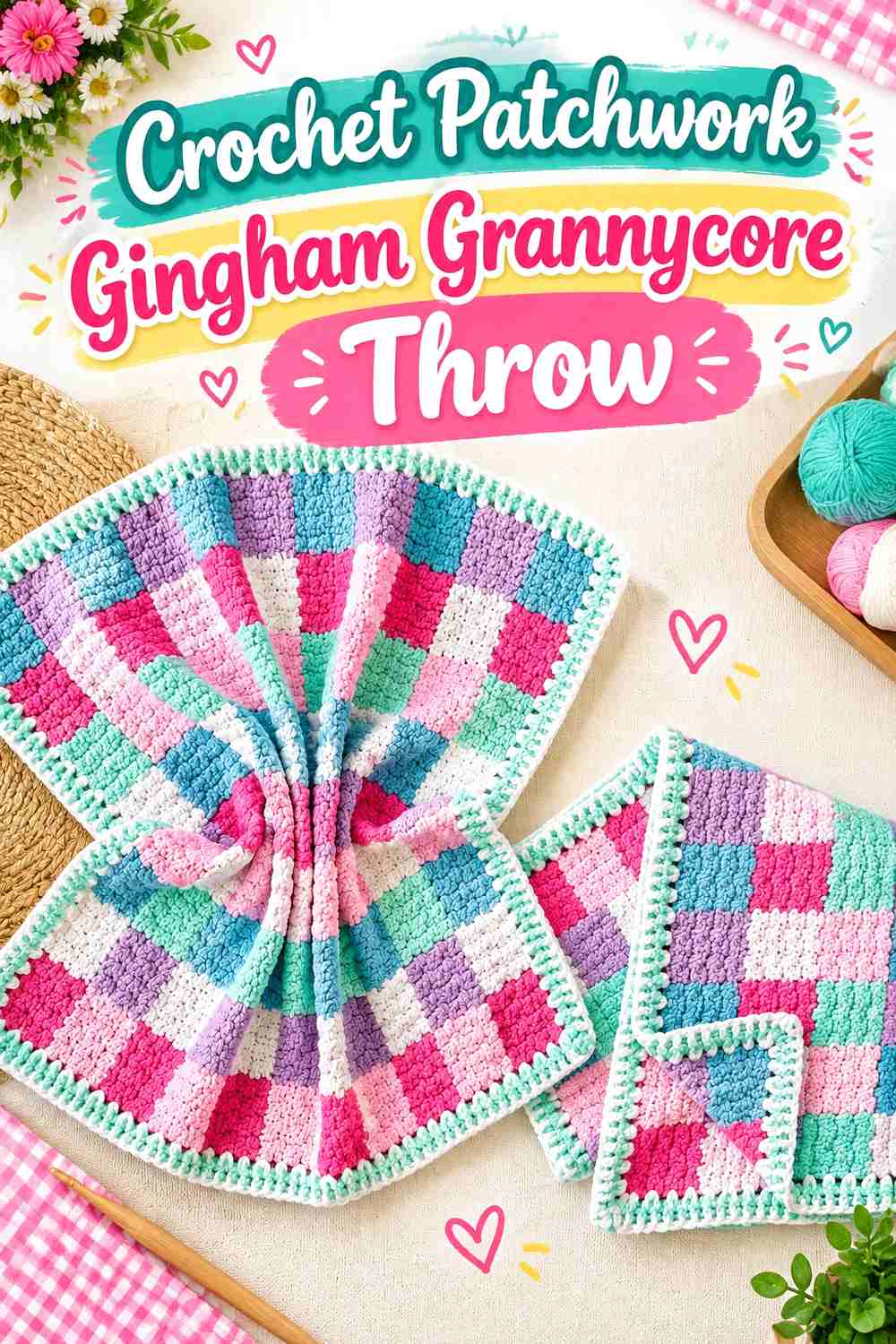
Daisy Farm Crafts’ patchwork gingham tutorial combines a checked appearance with a patchwork-oriented layout and demonstrates carried yarn and clean color switching. It offers a useful middle ground between uninterrupted gingham and visibly joined granny motifs.
For November styling, this approach can look especially effective in soft brown and cream, faded green and oatmeal, or muted berry tones rather than high-contrast seasonal red.
Patchwork Rhythm Can Feel Softer Than Formal Plaid
A perfectly rigid tartan can look tailored. A patchwork check feels more domestic and handmade, which is often a better fit for grannycore.
Keep enough repetition for the blanket to read as an intentional grid, but let the crochet texture remain visible instead of trying to make it imitate factory-woven fabric.
Watch the Edges While Carrying Color
Carried-color work can develop tension differences if the inactive yarn is pulled too tightly.
Pause periodically and lay the fabric flat. Correcting persistent drawing-in early is easier than expecting a border to straighten a distorted body later.
Creator Credit: Daisy Farm Crafts
5. Crochet Cottage Colorwork Gingham Throw
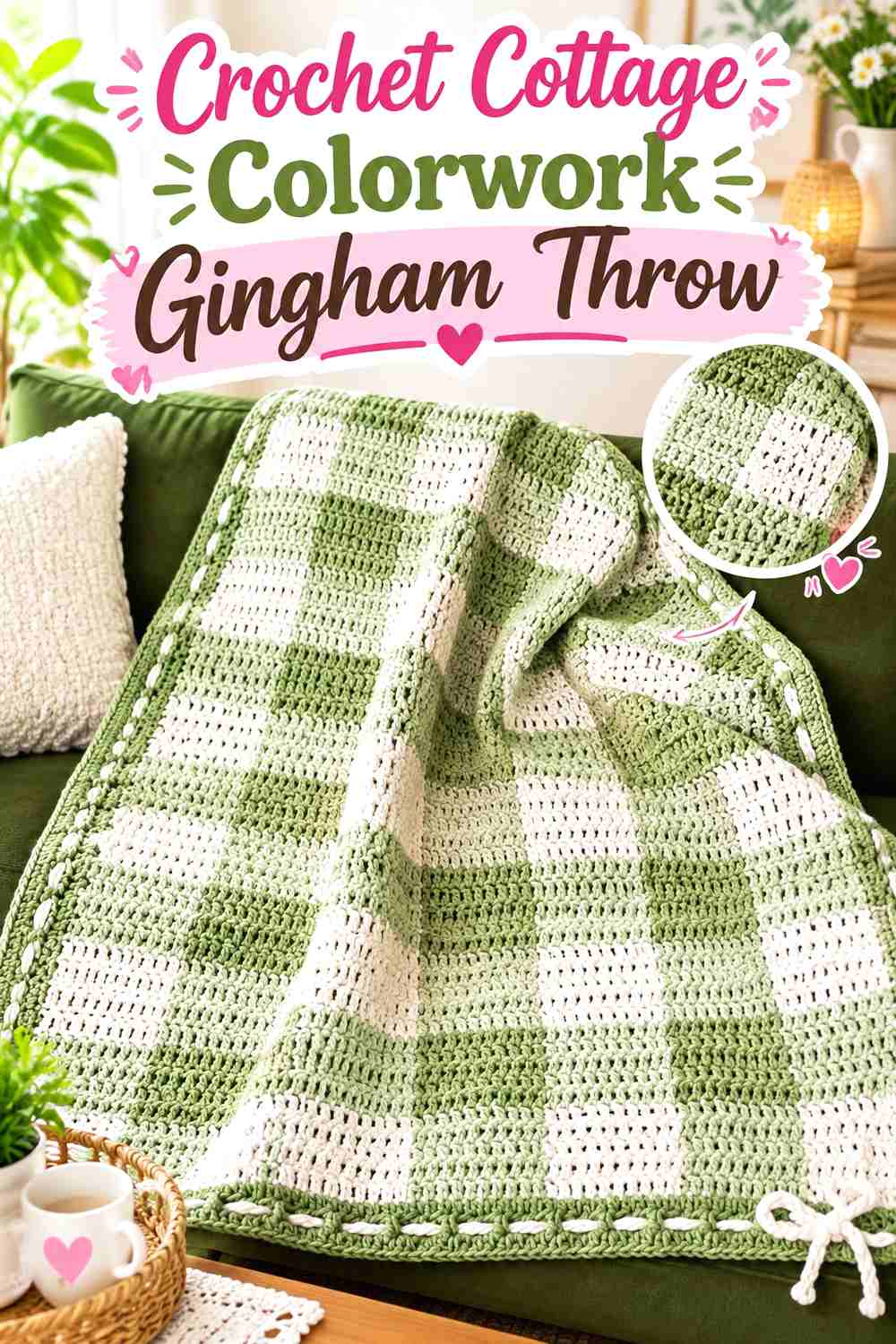
Ophelia Talks Crochet demonstrates a complete gingham blanket built through repeated colorwork, including the finishing around the main checked fabric. The continuous construction makes this a useful choice for readers who like the appearance of a regular grid but do not want to assemble a large collection of separate motifs.
A restrained November palette can make the regular checks feel more like an old cottage textile than a modern graphic blanket.
Repetition Makes Small Tension Changes Accumulate
Gingham depends on repeated blocks lining up over a large area. If one color is consistently worked tighter than another, the distortion can repeat across the blanket.
Compare the width of the work after several color sections rather than waiting until the entire throw is complete.
Give the Border a Clear Role
A border can either quietly frame the checks or become another decorative feature.
If your center already contains strong contrast, a calmer edging often keeps the plaid as the focus. If the body uses closely related shades, a more defined outer edge can give the throw a clearer visual boundary.
Creator Credit: Ophelia Talks Crochet
6. Crochet Tunisian Gingham November Throw
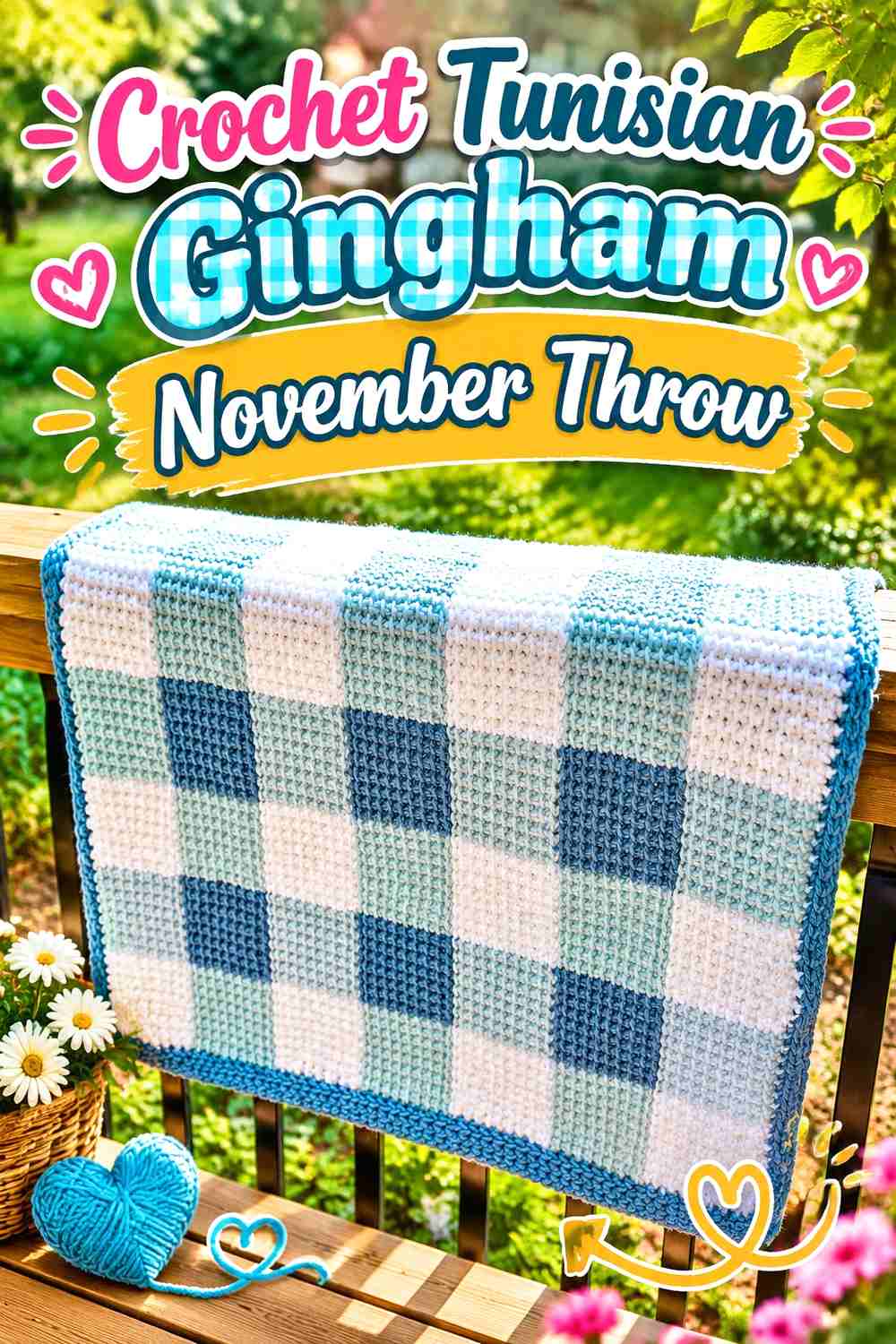
Needy Cat Crafts uses Tunisian crochet to create a gingham blanket, giving the checked surface a different stitch character from standard carried-color crochet.
This makes the project valuable if you like plaid but want a flatter, more grid-oriented appearance. It also introduces a genuinely different construction route rather than simply changing the colors of another conventional gingham blanket.
Tunisian Fabric Deserves Its Own Sample
Do not assume your tension will match your ordinary crochet tension. Work enough of a test piece to evaluate the checked proportions and the behavior of the fabric.
This is especially important if you are choosing the project specifically for a sofa throw, where stiffness or excessive curling would affect how comfortably it drapes.
A Muted Grid Can Feel More Vintage Than High Contrast
Strong black-and-white checks can look contemporary. Tobacco with cream, moss with oatmeal, or dusty blue with a warm neutral can soften the geometry.
The technique still gives you a definite grid, but the palette determines whether it reads as modern checkerboard or worn-in grannycore.
Creator Credit: Needy Cat Crafts
7. Crochet Planned-Pooling Granny Argyle Throw
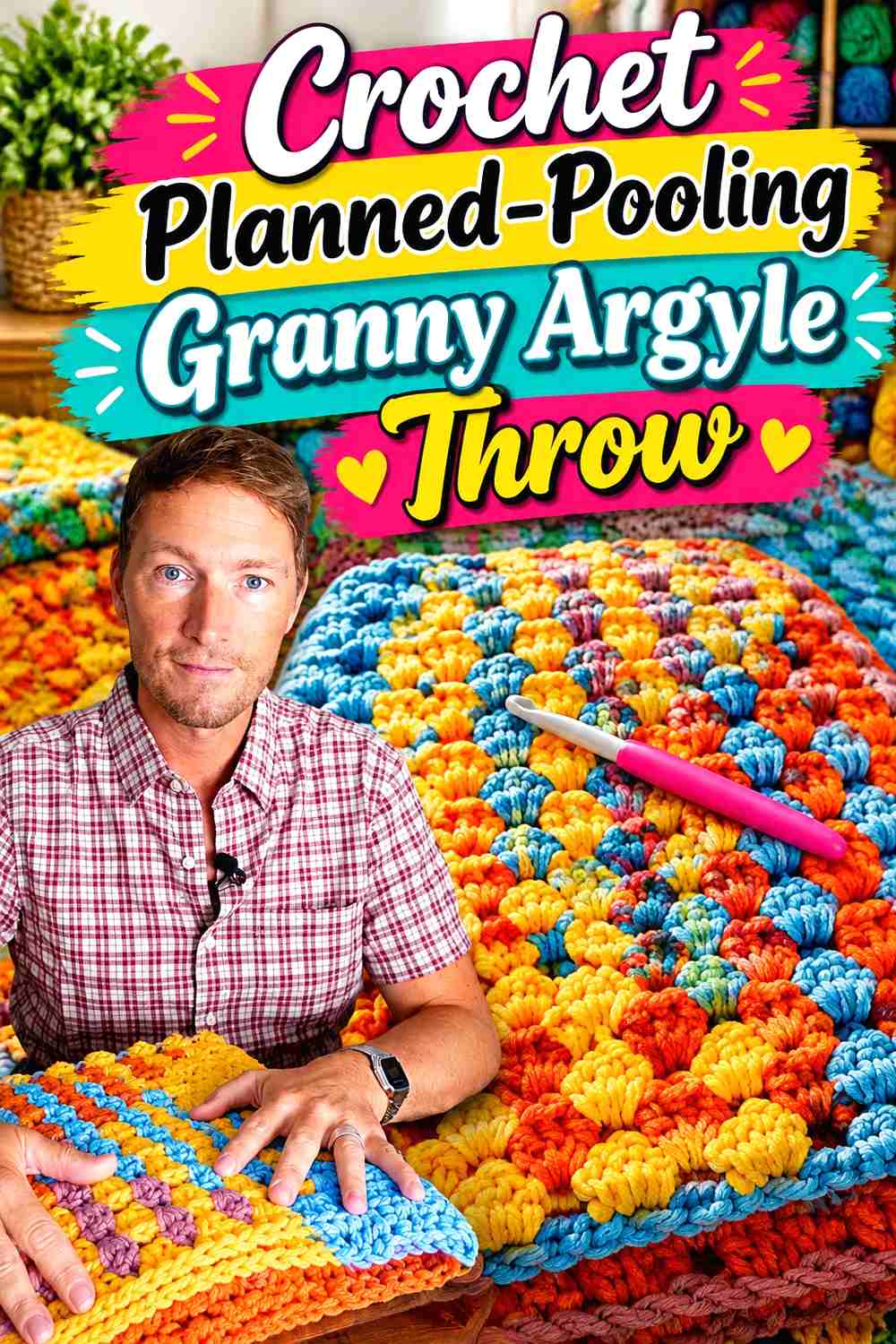
Nick & Andrew | URBAN FARMBOYS use granny stitch with planned pooling to turn suitable color-changing yarn into an argyle blanket. The tutorial covers the planned-pooling logic and works through the blanket rather than treating the effect as a decorative afterthought.
This is one of the most distinctive options in the collection because the yarn’s color sequence helps generate the pattern instead of separate solid-color balls defining every check.
Yarn Choice Is Part of the Structure
Planned pooling is not a technique where any variegated yarn automatically produces the same result. The color sequence and repeat need to cooperate with the stitch pattern.
If you want this particular route, choose yarn based on its suitability for pooling rather than selecting a pretty multicolor skein first and assuming it will form argyle.
Argyle Gives Granny Stitch a Tailored Look
Granny stitch normally has an openly nostalgic character. Organizing its colors into diagonal argyle changes that personality dramatically.
That combination works well for grannycore because the stitch remains recognizable while the overall blanket gains the orderly appearance of an old patterned textile.
Creator Credit: Nick & Andrew | URBAN FARMBOYS
8. Crochet Classic Plaid Afghan Throw
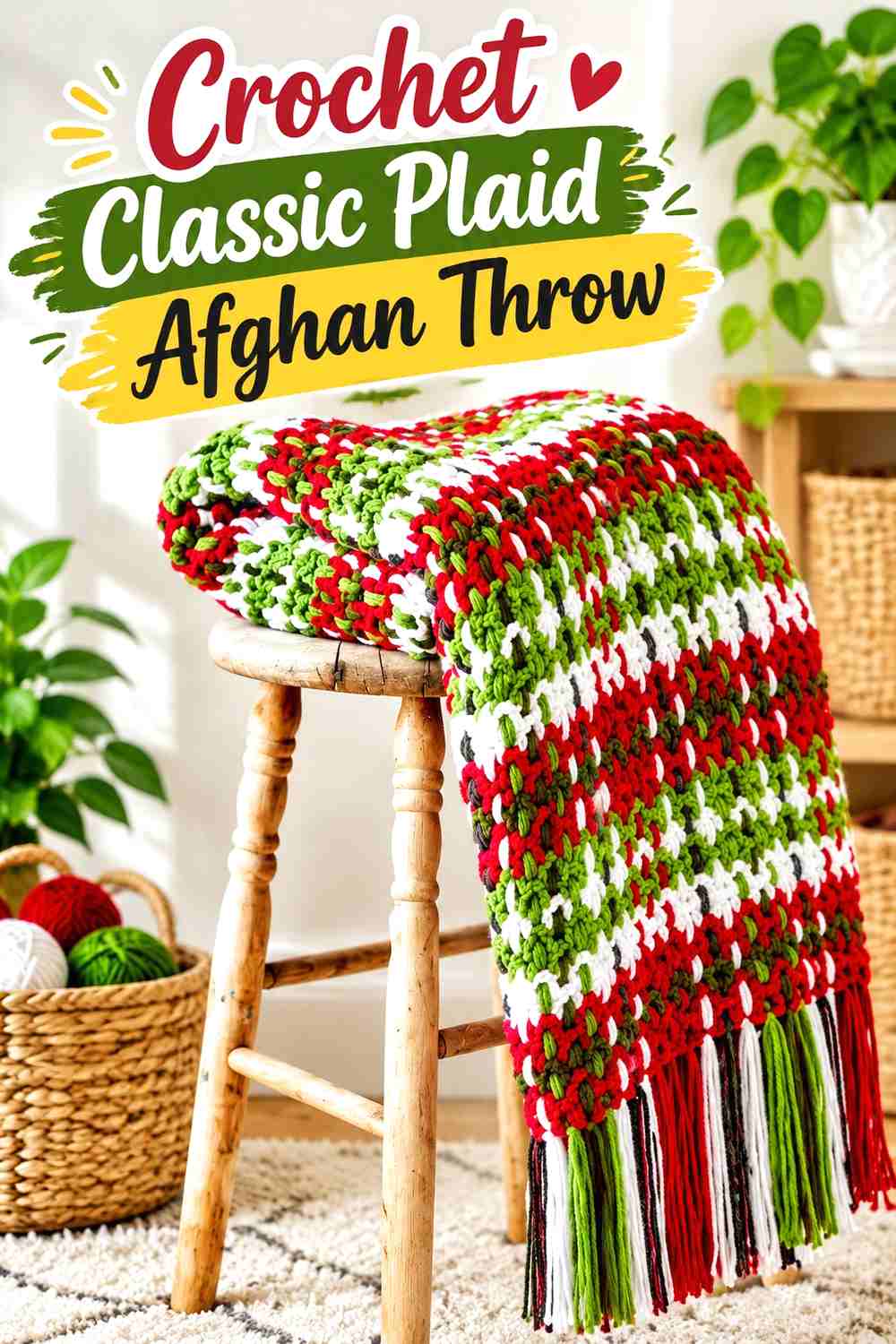
Yarnspirations’ plaid afghan tutorial focuses on a traditional checked blanket rather than a motif-based adaptation. It is a useful option when the goal is unmistakable plaid first and grannycore styling second.
Use the room’s existing colors to move this construction away from a strictly traditional scheme. A combination of muted plum, brown, cream, and olive can make a familiar plaid structure feel more collected and November-oriented.
Traditional Plaid Benefits From Unequal Visual Emphasis
Not every stripe or intersection needs equal contrast. One dominant dark, a quieter middle shade, and a light background can produce more depth than several equally intense colors.
Before beginning the full throw, arrange the yarn together and decide which shade should visually lead.
Consider the Blanket From Folded and Open Views
A large plaid can look very different when spread flat versus folded over the back of a sofa.
If the throw will normally be folded, make sure the colors you most want visible are repeated often enough that one small section still communicates the plaid design.
Creator Credit: Yarnspirations
9. Crochet Woven Cottage Plaid Throw
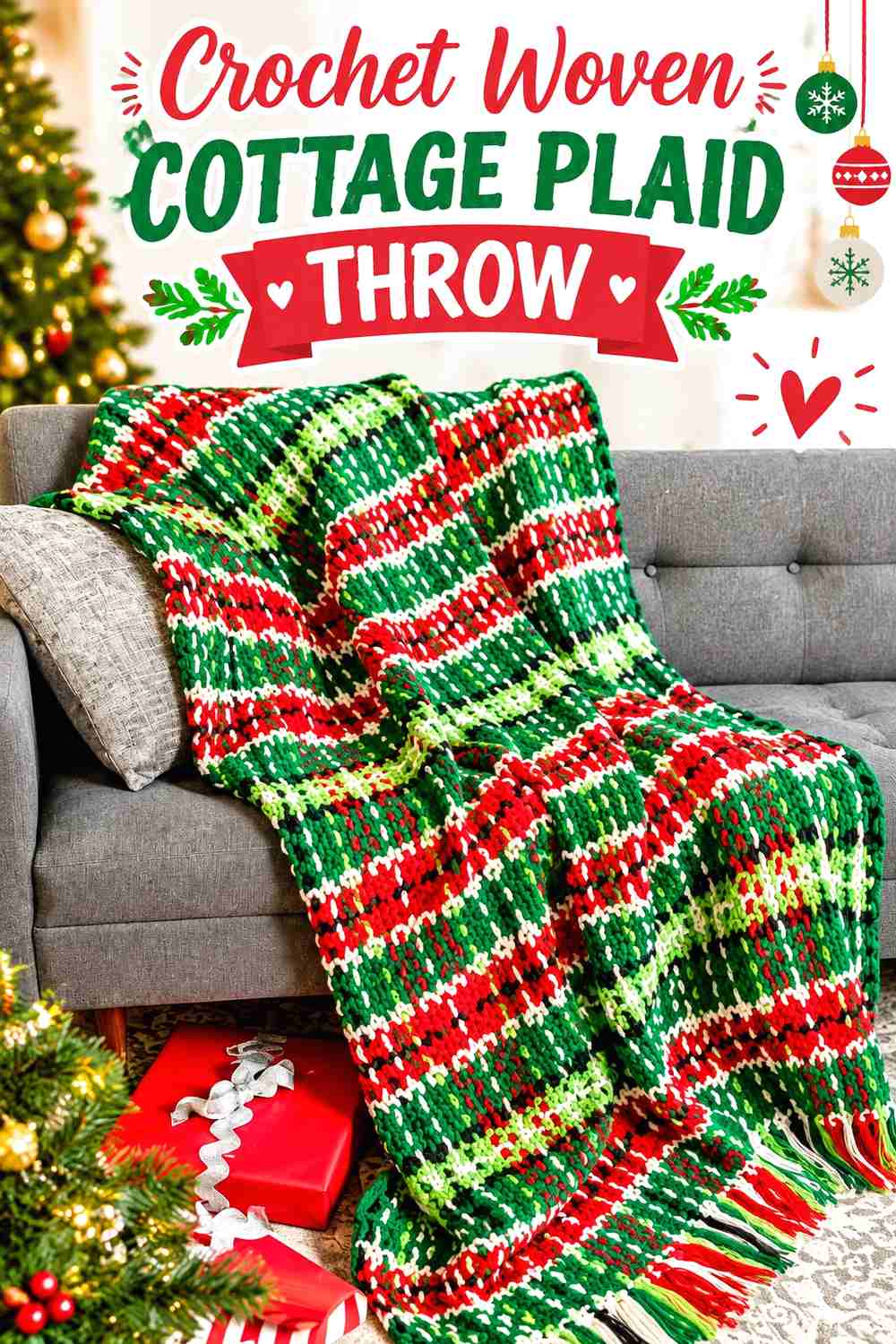
Marly Bird’s plaid afghan uses a crochet mesh base followed by crocheted chains woven through that structure. This two-stage method produces intersecting lines in a way that is fundamentally different from carrying multiple yarns through every row.
Although the source project uses a holiday-oriented palette, the construction can move easily toward November grannycore by changing the color story while keeping the creator’s underlying method intact.
The Base Is Only Half of the Visual Story
A mesh blanket can look surprisingly plain before the woven chains are introduced.
Plan the base and woven colors together. If the vertical additions are too close in value to the background, much of the plaid definition can disappear.
Woven Finishing Rewards Careful Spacing
Because the vertical elements are added later, consistency during that stage affects how straight and textile-like the finished intersections appear.
Work with the blanket supported on a large surface when possible so you can regularly compare one woven section with the next rather than judging each strand in isolation.
Creator Credit: Marly Bird
10. Crochet Woven Gingham Heritage Throw
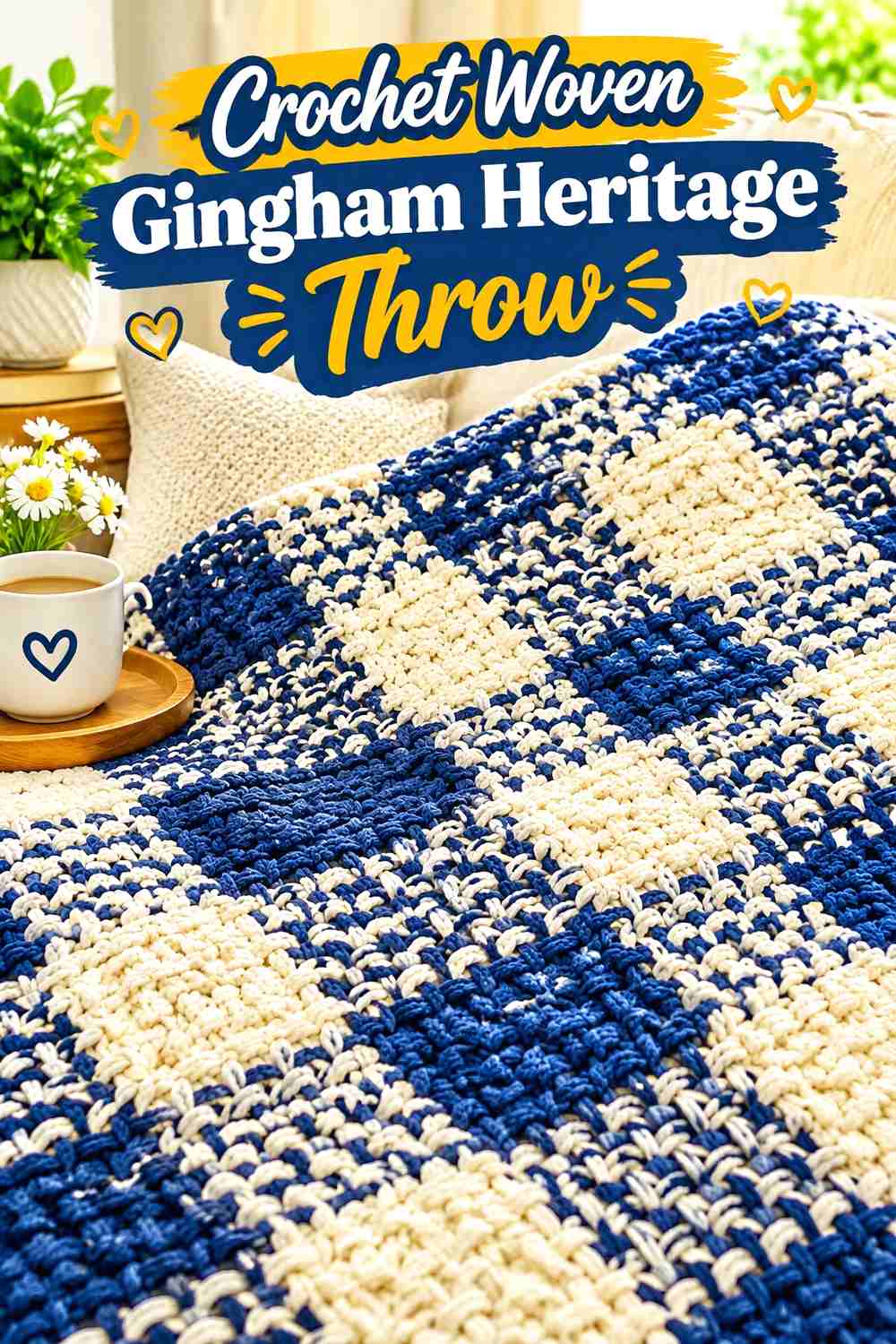
Fiber Spider’s woven gingham blanket is another post-worked approach to checks, presented as a complete throw tutorial. The method produces gingham through a combination of crocheted structure and woven visual lines rather than relying solely on conventional block-by-block color changes.
This is appealing for grannycore interiors because the visible interlacing can make the blanket feel closer to an old household textile.
Woven Checks Add Surface Dimension
A woven treatment creates a different surface from flat intarsia or tapestry colorwork. Those additional strands can become part of the tactile appeal.
If you prefer a very smooth blanket, compare this texture with the flatter gingham options before choosing solely on color.
Keep the Weaving Relaxed Enough for the Base to Lie Flat
Added strands should not pull the underlying crochet inward.
As you work across a long throw, spread the fabric out occasionally and check that the added lines follow the base without gathering it. A small tension difference can become more noticeable over a large distance.
Creator Credit: Fiber Spider
11. Crochet Paragon Plaid One-Piece Throw
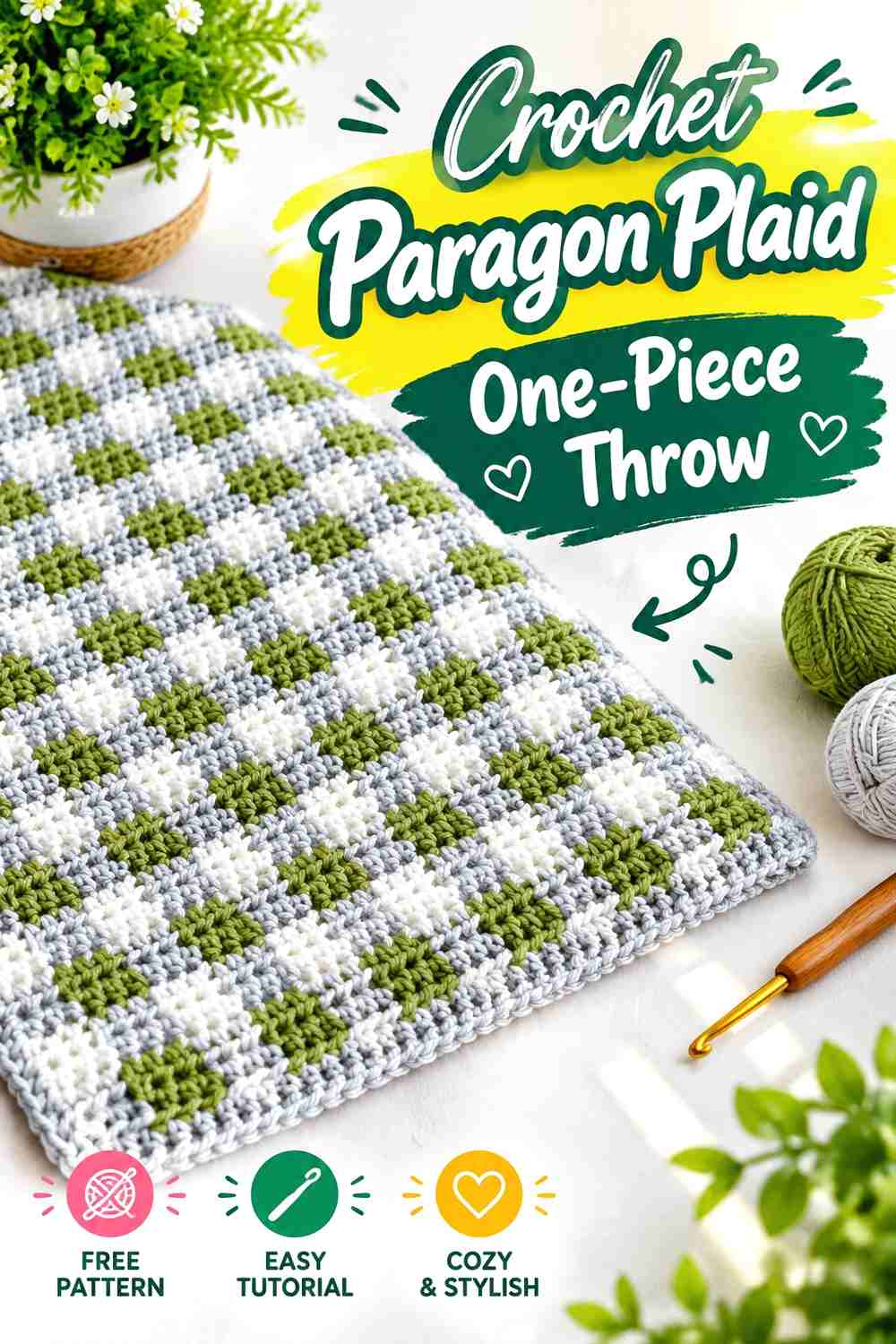
HanJan Crochet’s Paragon plaid blanket is worked as one piece, with the design using a limited number of active colors per row and carried yarn to build the check. The source includes multiple blanket-size options and a dedicated video tutorial for the blanket and its colorwork.
This is a useful choice for someone who wants an orderly plaid without motif assembly.
One-Piece Construction Removes the Joining Stage
For some crocheters, avoiding dozens of seams is a major advantage. The trade-off is that the entire blanket stays attached as it grows.
Think about where you crochet most often. A large continuous throw may be less portable than a bag of granny squares, particularly late in the project.
Three Colors Can Still Create Plenty of Depth
A grannycore blanket does not need a large scrap palette. A dark neutral, a soft background, and one earthy accent can create a strong November plaid while remaining easy to coordinate with existing furniture.
The limited palette also makes it easier to see whether the check sequence remains consistent.
Creator Credit: HanJan Crochet
12. Crochet Plush Checkerboard Grannycore Throw
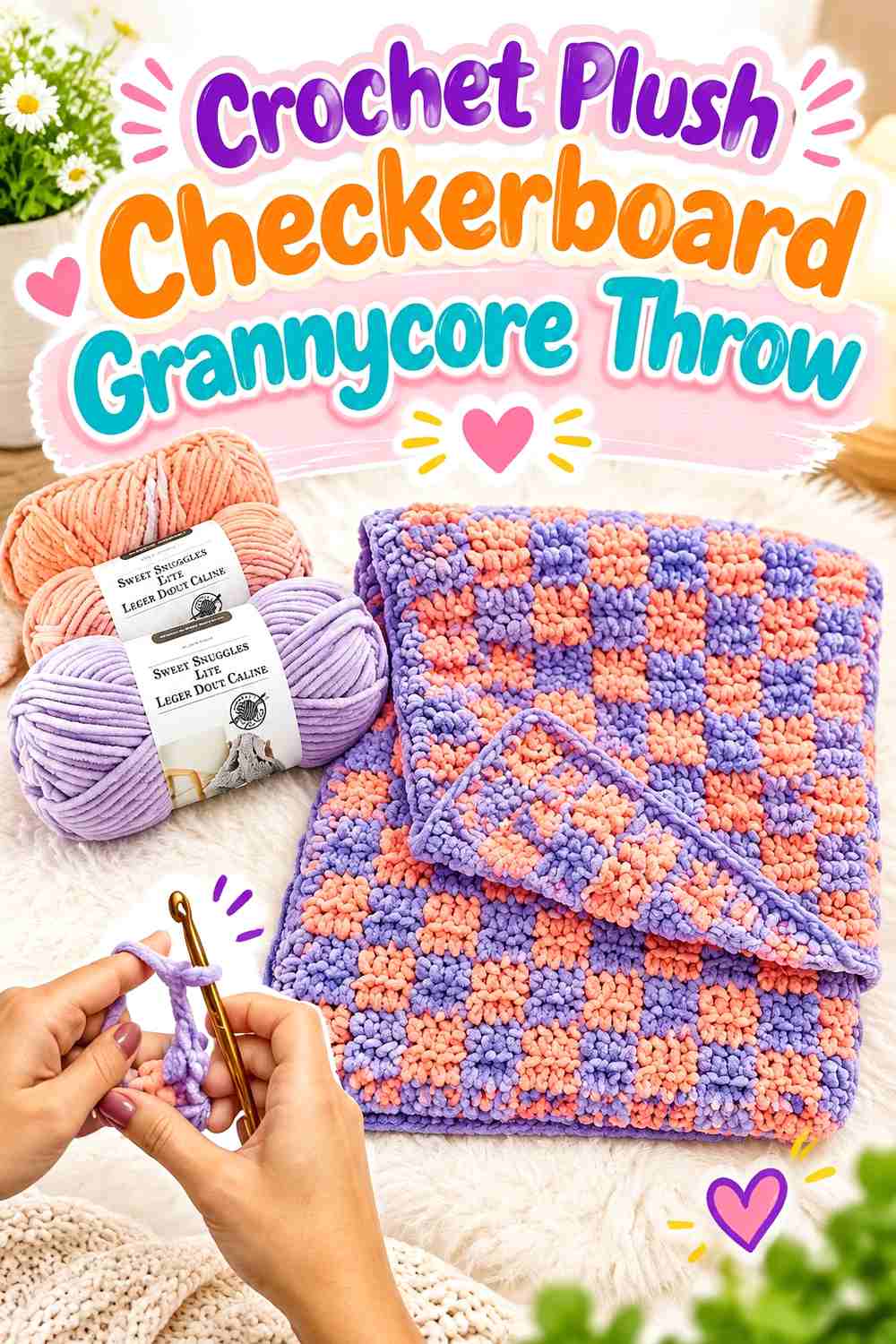
Christine Rosen’s iKNITS checkerboard blanket uses super-bulky plush yarn and a two-color check, with the pattern supporting both smaller blanket and throw applications.
The simplified checkerboard is less intricate than tartan, but that is precisely why it can work in a room already filled with granny squares, floral cushions, baskets, or vintage prints.
Two Colors Make Scale the Main Design Feature
Without extra plaid lines, the size of each check becomes much more noticeable.
Broad plush blocks make a strong statement. For a subtler grannycore version, choose neighboring autumnal shades rather than maximum contrast.
Plush Yarn Can Soften Geometric Edges
Very smooth yarn tends to emphasize clean check boundaries. A soft, fluffy surface visually blurs them.
Decide whether you want crisp geometry or a cushioned, almost pixel-like grid. The same two-color layout can feel remarkably different depending on yarn texture.
Creator Credit: iKNITS
13. Crochet Windowpane Granny Plaid-Style Throw
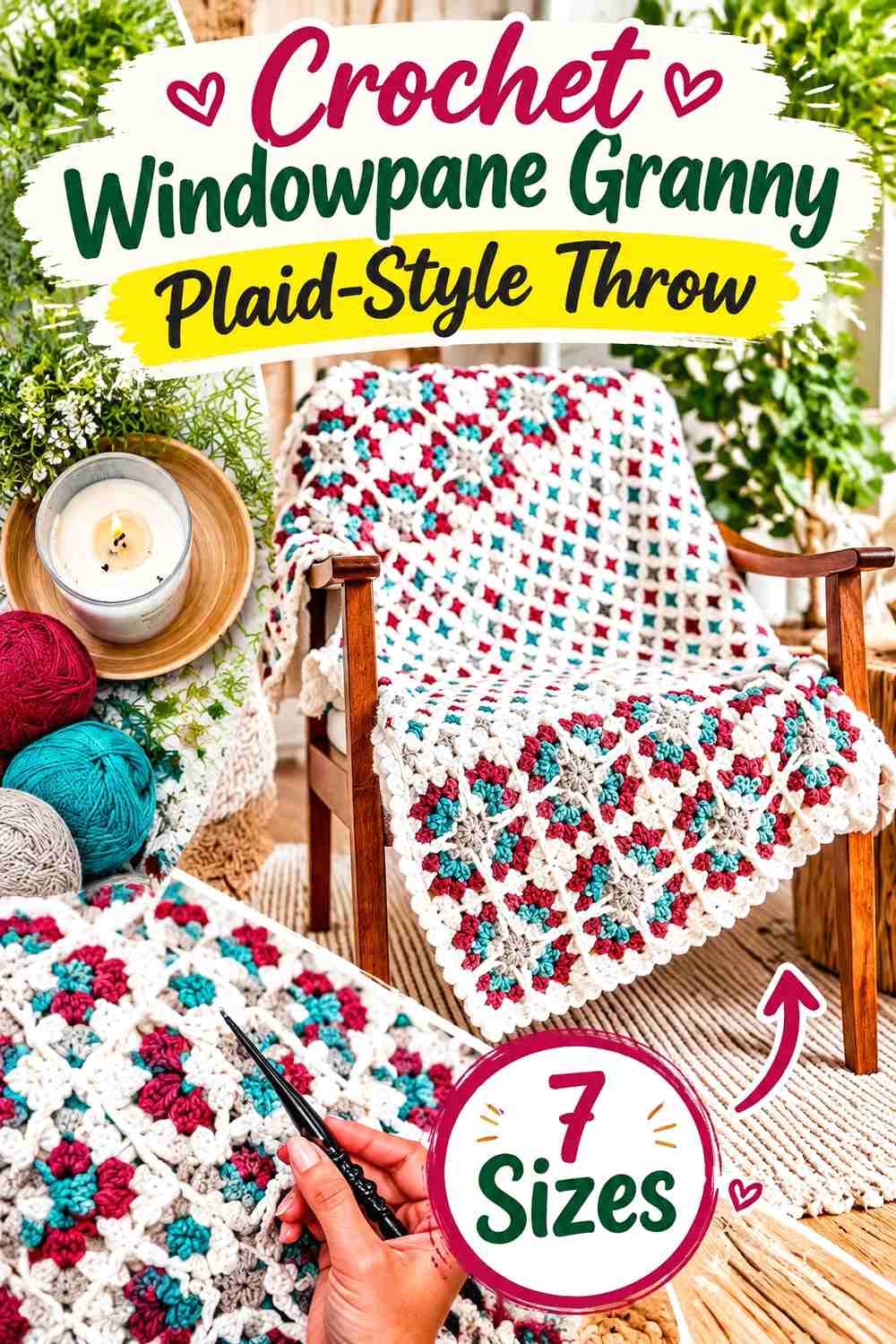
Briana K’s tutorial is a windowpane granny blanket rather than a literal plaid pattern. Its construction combines windowpane granny-square sections with a central granny-stitch section, making it a strong adaptation base when you want grannycore to remain more obvious than the plaid reference.
For a plaid-style version, organize the existing construction with a restrained November palette rather than altering the tutorial’s stitch structure.
Let the Windowpane Sections Carry the Check Reference
You do not need to force every inch of a granny blanket into a tartan grid.
Use the windowpane portions as the strongest geometric element, then let the central granny section provide quieter visual relief. That contrast can make the finished throw easier to use in a pattern-heavy room.
Repeat Colors Deliberately Across Separate Sections
When a blanket contains more than one construction style, repeating the same anchor shades helps the sections look related.
Choose the palette before making large sections independently. Otherwise, it is easy to end up with individually attractive panels that do not feel like one planned throw.
Creator Credit: Briana K
14. Crochet Quilt-Star Patchwork Plaid-Style Throw
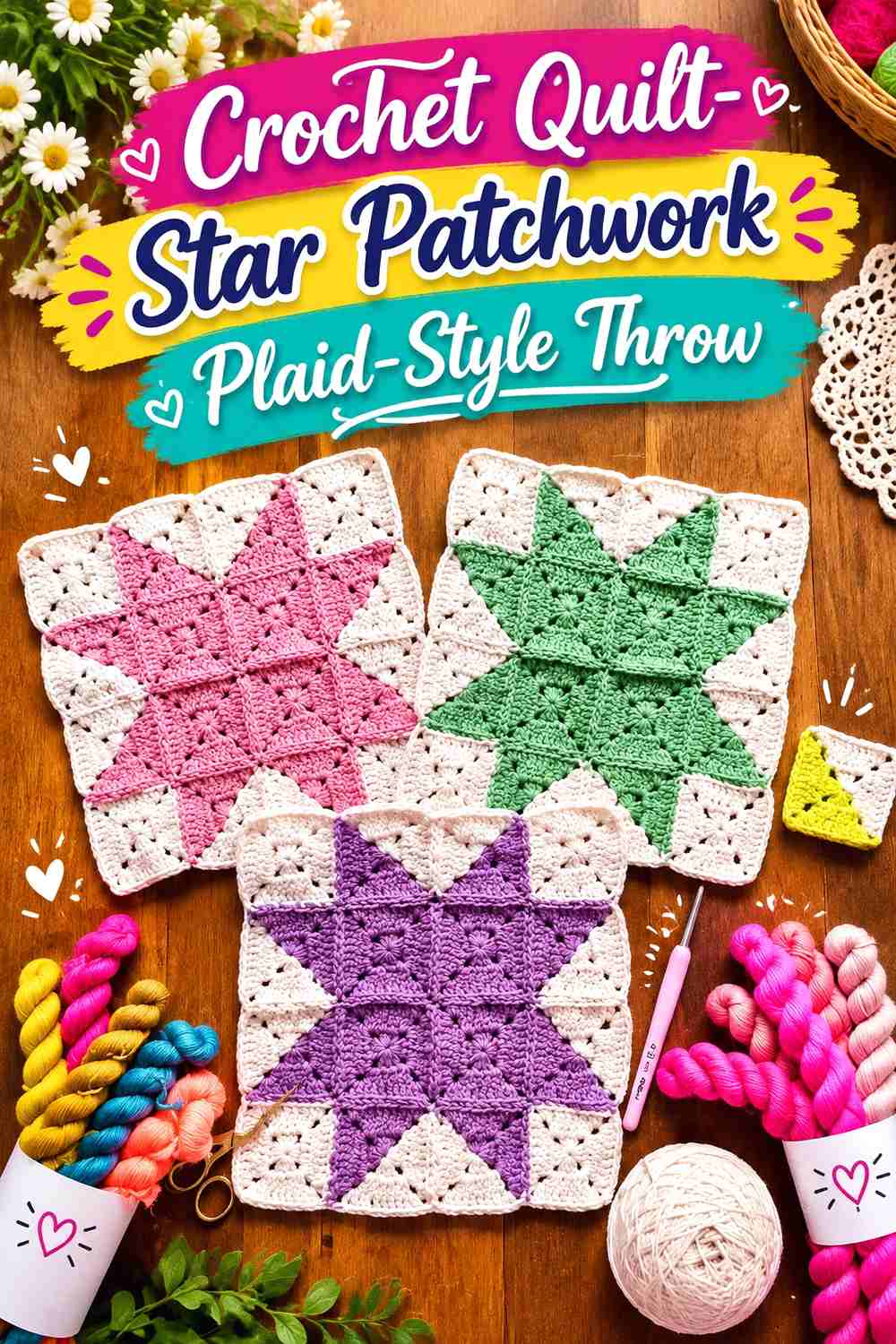
Moara Crochet’s tutorial builds a quilt-like star from full and half-and-half granny squares and explains how the patchwork units can extend into blanket construction. The source is patchwork rather than literal plaid, so the grannycore plaid effect here comes from color planning and repeated grid placement.
This is one of the strongest ideas for a home where vintage quilts are as influential as traditional tartan.
Half-and-Half Squares Add Diagonal Movement
Most plaid is dominated by horizontal and vertical lines. Introducing split-color granny units changes the rhythm and makes the blanket feel closer to pieced quilting.
If you still want a recognizable plaid connection, keep the palette narrow and repeat the same colors across neighboring star units.
Lay Out Complete Stars Before Joining
Patchwork designs are especially sensitive to orientation. Place all the components for a larger unit on a flat surface before joining.
Photographing the planned arrangement can provide a useful reference if the pieces are moved while you work.
Creator Credit: Moara Crochet
15. Crochet Giant Granny Check-Stripe Throw
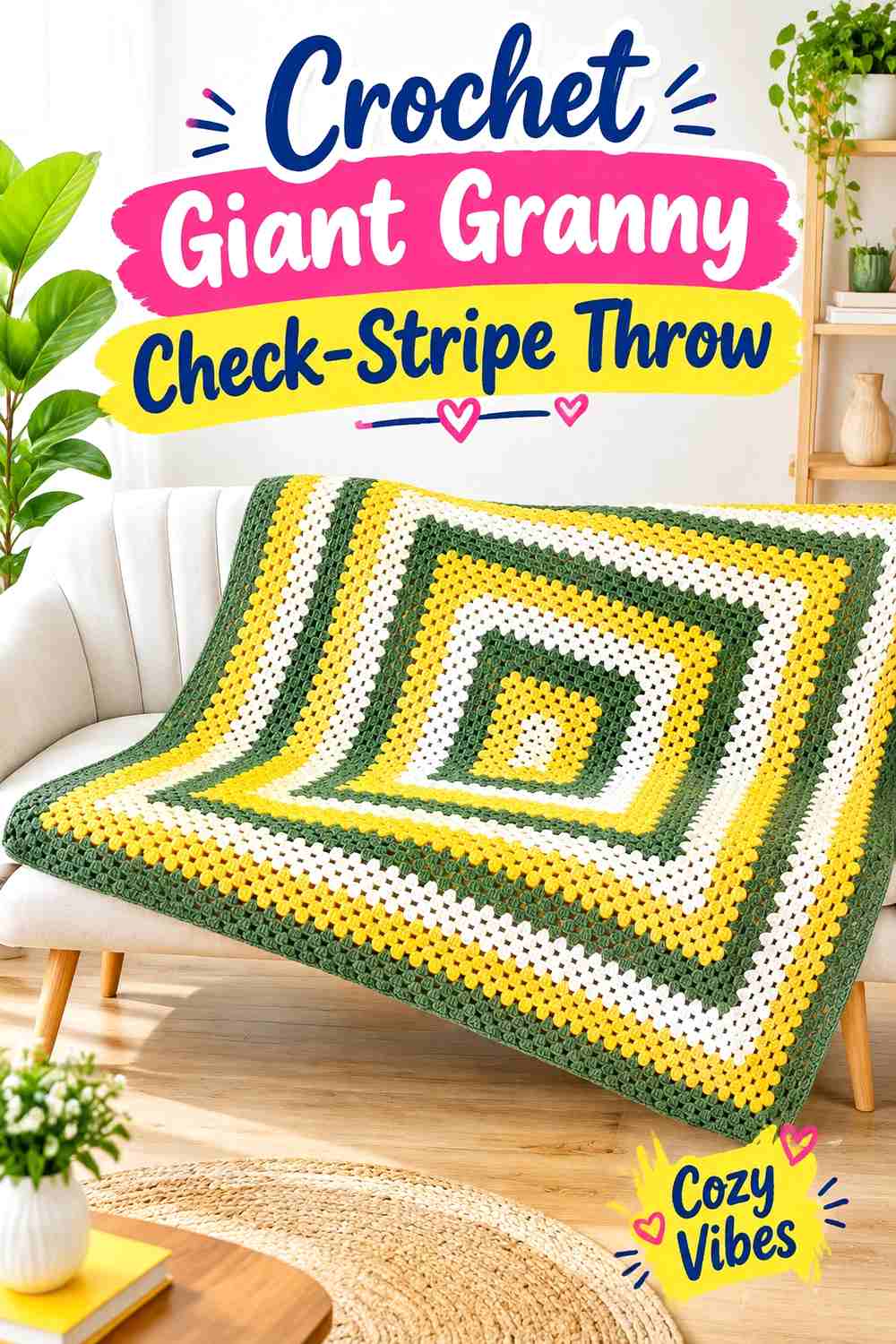
The Secret Yarnery’s tutorial creates a large rectangular granny-style blanket with a solid center and continuing construction rather than joined individual squares. It is not an exact plaid pattern, so this idea uses the complete blanket construction as a base for a deliberately repeated check-inspired color sequence.
This can suit someone who loves granny stitch but does not want the finishing work associated with a large motif blanket.
Broad Color Bands Work Better Than Random Scraps Here
A continuous granny construction naturally creates expanding bands. Repeating a limited set of November shades in a planned order can suggest old checked textiles without claiming to reproduce literal tartan.
A random stash sequence would produce a different, more eclectic effect.
Continuous Construction Makes Size Easy to Judge Visually
Because the blanket remains one piece, you can periodically lay it over the sofa or bed where it will be used and evaluate the developing proportions.
If you alter the original size, use the tutorial’s construction guidance and confirm your own yarn requirements rather than relying on the sample’s quantities.
Creator Credit: Secret Yarnery
16. Crochet Motif-Grid Grannycore Plaid-Style Throw
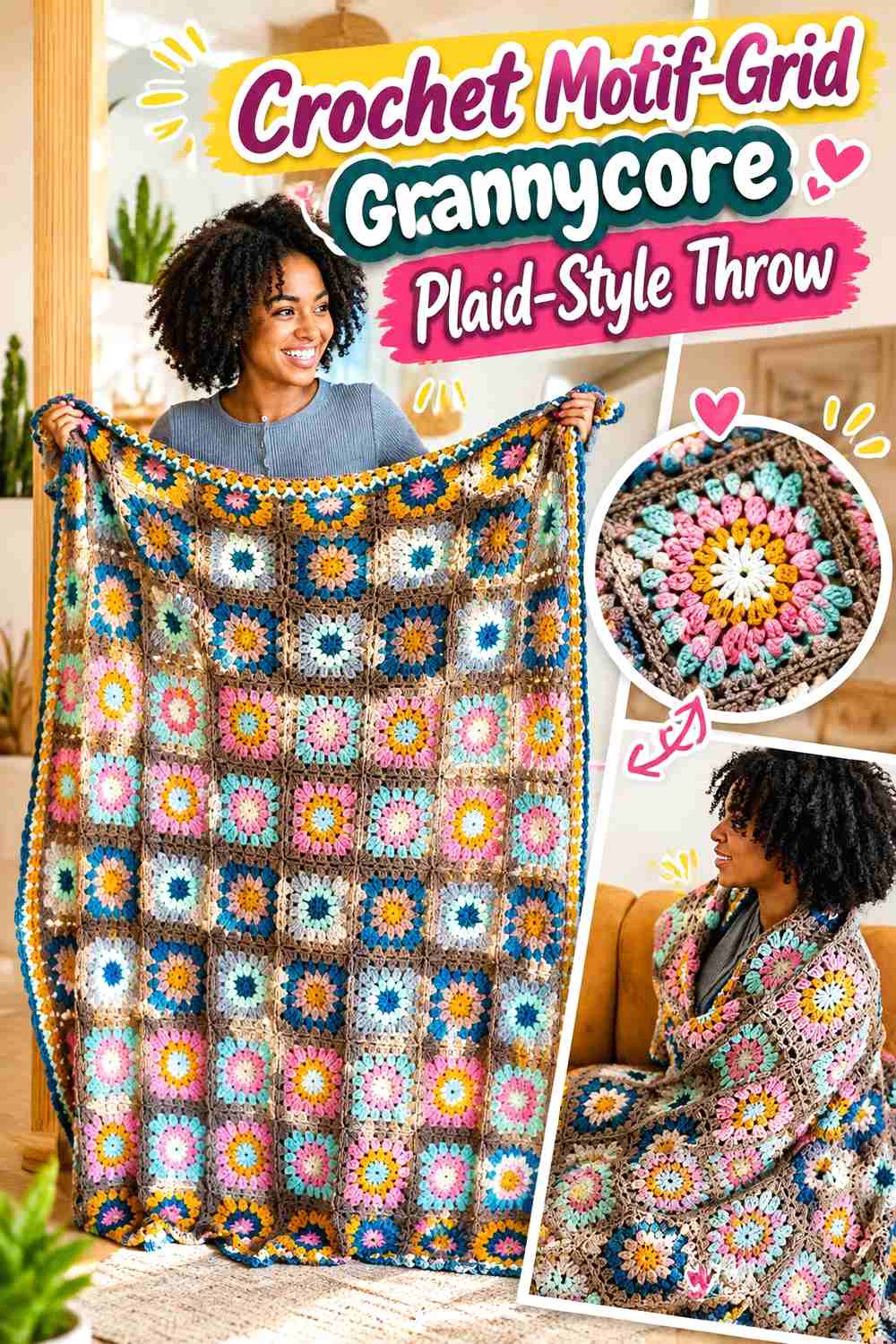
TL Yarn Crafts’ Woodstock granny blanket uses repeated granny-square motifs, multiple colorways, a planned layout, joining, and a border. The 2026 tutorial shows the complete project rather than only an isolated square.
It is not presented as plaid, but its modular grid is particularly useful for a grannycore plaid adaptation because color placement can be planned before joining without changing the motif construction.
Use the Floor Layout as Your Plaid Planning Stage
Separate motifs give you a major advantage: you can rearrange the color distribution before committing to seams.
For a plaid-inspired layout, repeat dark and light motifs along consistent rows or columns rather than scattering every color evenly.
One Joining Color Can Stabilize a Busy Palette
Several vintage shades can quickly become visually fragmented.
A recurring neutral in the outer rounds, joins, or border can act like the background lines in woven plaid and help the full grid read as one blanket rather than unrelated squares.
Creator Credit: TL Yarn Crafts
17. Crochet Infinity Granny Plaid-Stripe Throw
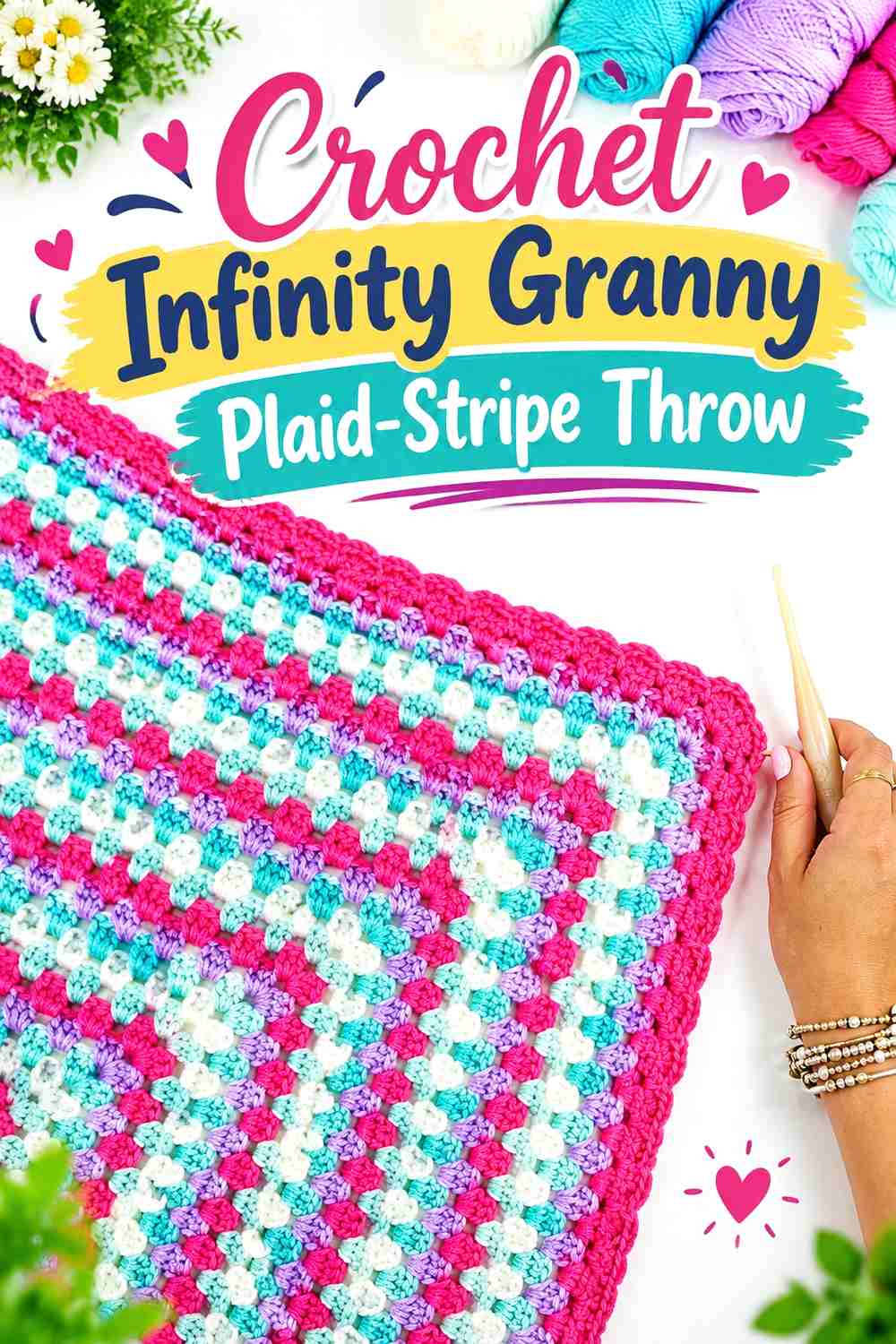
Bella Coco’s tutorial creates a multicolor giant granny-square blanket, covering the continuous granny construction, color changes, and border. This final idea is another plaid-style adaptation rather than an exact plaid tutorial: the November character comes from organizing the tutorial’s color changes into a deliberately restricted heritage palette.
It is a good option when you want unmistakable granny crochet with only a suggestion of flannel and plaid.
Concentric Color Changes Create a Different Kind of Check
Traditional plaid intersects lines. A giant granny square instead places colors in expanding frames.
Using repeated rust, cream, olive, brown, and charcoal bands can still connect the throw to plaid-filled November decor while preserving the construction’s true identity.
Border Choice Determines How Finished the Color Story Feels
A strongly contrasting border creates a clear final frame. A border drawn from an existing shade lets the expanding color sequence remain dominant.
Decide which effect you want before using the last of an important yarn color elsewhere in the blanket.
Creator Credit: Bella Coco
Which Crochet Grannycore Plaid Throw Fits Your November Home?
| If you prefer… | Start with… | Main consideration |
|---|---|---|
| Classic three-color gingham | 1, 4, or 5 | Managing carried yarn and consistent blocks |
| Bold buffalo-style checks | 2 | Large pattern scale and heavier fabric |
| Traditional woven-looking plaid | 3, 9, or 10 | Additional surface or weaving work |
| Tunisian checks | 6 | Fabric tension and drape |
| Argyle with granny character | 7 | Choosing yarn suitable for planned pooling |
| Straightforward traditional plaid | 8 or 11 | Maintaining the color sequence |
| Plush checkerboard | 12 | Yarn bulk and check scale |
| Strong grannycore with plaid influence | 13, 15, 16, or 17 | Planning color repetition rather than literal tartan |
| Quilt-inspired patchwork | 14 | Motif orientation and joining |
For the clearest plaid statement, choose one of the first twelve projects, where checks, gingham, argyle, or woven lines are part of the source construction. If the word grannycore matters more to you than producing technically literal plaid, the windowpane, patchwork, motif-grid, and continuous-granny options let classic crochet remain visible while a November palette supplies the flannel-inspired mood.
Conclusion
The strongest crochet grannycore plaid throw is the one whose construction suits both your decorating style and the kind of project you actually enjoy making.
Choose the carried-color gingham and plaid options when you want a clear repeating fabric without assembling motifs. The woven constructions are better when the intersecting lines and heritage-textile appearance are the attraction. Planned-pooling argyle offers a completely different challenge, while the checkerboard option simplifies the look into broad graphic blocks.
For a more obvious grannycore home, the final five projects keep granny stitches, modular squares, quilt-like patchwork, and visible joins at the center of the design. Their plaid character comes from thoughtful color placement rather than pretending they are tartan tutorials.
Whichever route you choose, verify the original creator’s tutorial for exact construction, yarn, gauge, sizing, joining, and finishing details before making major substitutions.
Frequently Asked Questions
What makes a crochet throw look grannycore rather than simply plaid?
Grannycore usually becomes stronger when the handmade structure remains visible. Granny clusters, joined motifs, patchwork layouts, warm vintage colors, textured borders, and slightly nostalgic combinations can all move plaid away from a polished contemporary look. You do not need every one of those elements in the same blanket.
Is gingham the same as plaid in crochet?
They are related visual ideas but not identical. Gingham normally uses a regular check with a simpler color relationship, while plaid can include more colors, different stripe widths, and intersecting lines. In crochet, the terms are sometimes used loosely, so look at the actual construction rather than relying only on the project name.
Should I choose a granny-square plaid throw or a continuous colorwork throw?
Choose granny squares when you value portability, rearrangeable layouts, and visible motif character. Choose continuous colorwork when you prefer to avoid a large joining stage. Neither automatically requires less work; the effort simply appears at different points in the project.
How can I keep a November plaid palette from looking like Christmas?
Reduce the dependence on bright red, emerald, and stark white together. Rust, burgundy, tobacco, oatmeal, moss, mustard, dusty navy, charcoal, and faded cream can create an autumn-to-winter transition without immediately reading as holiday decor.
Why can carried-yarn plaid feel denser than an ordinary crochet blanket?
An additional yarn strand is incorporated through portions of the fabric, so the resulting material can behave differently from comparable crochet worked with a single active strand. Yarn weight, stitch choice, hook size, and personal tension all affect the result, which is why a sample is useful before committing to a large throw.
Do granny squares need to be blocked before arranging a plaid-style blanket?
Blocking can be helpful when motif dimensions or edges differ enough to interfere with a straight grid. Compare the completed squares before joining. A plaid-inspired layout makes misaligned rows especially noticeable, so correcting inconsistent motif size before assembly is usually easier than trying to disguise it afterward.