A medieval-inspired crochet sweater vest can sit somewhere between everyday winter clothing and fantasy wardrobe styling. A long laced tabard can suggest a traveling mage, a hooded textured vest can lean toward ranger clothing, and diamond or checkerboard colorwork can borrow the visual language of heraldry without pretending to reproduce historical dress.
That distinction matters. These projects are not presented as historically accurate medieval garments. One tutorial directly teaches a fantasy tabard suitable for Renaissance-fair styling, while several others teach modern sweater vests whose silhouettes, closures, texture, or colorwork make useful foundations for medieval-inspired outfits.
For winter layering, choose the garment structure before deciding how medieval you want the styling to become. Hoods add upper-body volume, lace-up sides can emphasize a tunic or corset influence, dense ribbing can suggest chainmail visually, and open armholes need enough space for the shirt, blouse, tunic, or lightweight sweater worn underneath.
Quick List
- Crochet Long-Laced Witch Tabard Sweater Vest
- Crochet Granny-Laced Court Corset Vest
- Crochet Cable-Hooded Knight Sweater Vest
- Crochet Ribbed Ranger Hooded Vest
- Crochet Bulky Gatekeeper Hooded Button Vest
- Crochet Chainmail-Look Ribbed Crewneck Vest
- Crochet Court-Tunic V-Neck Sweater Vest
- Crochet Harlequin Checkerboard Sweater Vest
- Crochet Heraldic Argyle Sweater Vest
- Crochet Cropped Archer Layering Vest
- Crochet Guild-Collar Sweater Vest
- Crochet Village-Patchwork Medieval-Style Vest
- Crochet Large-Diamond Heraldic Sweater Vest
Start With the Medieval Silhouette, Not the Decorations
A vest does not become convincingly medieval-inspired simply because it is brown, green, or burgundy.
Start with shape. Long side-split or laced garments naturally suggest tabards and tunics. A substantial hood can move a vest toward ranger, monk, or traveler styling. A close laced front or side treatment can create a corset-like direction, while a high or structured neckline can feel more defensive and armor-inspired.
Short conventional sweater vests can still work, but the medieval character will depend more heavily on the underlayer and surface design. A cream blouse with generous sleeves creates a different context from a modern T-shirt, just as a large diamond front feels more heraldic than a plain pastel vest.
Avoid adding every fantasy detail at once. Hood, oversized collar, lace-up sides, belt, large buttons, contrasting trim, and multicolor motifs can compete. Choose one or two defining features and allow the underlying crochet construction to remain visible.
Leave Enough Armhole Room for Winter Layers
A vest intended for winter should be evaluated over the clothing you actually expect to wear underneath it.
A fitted shirt needs relatively little additional space. A blouse with fuller sleeves, thermal top, or lightweight sweater requires more room around the upper chest and armhole. Simply increasing the whole vest size can create unwanted shoulder width or neckline changes, so compare the tutorial’s finished measurements or adjustment method rather than sizing up automatically.
The shoulder line deserves attention too. A wider shoulder can create a tunic-like or armor-like silhouette, but too much width may push the armhole downward and change where the vest sits.
When possible, check the developing garment over a representative winter underlayer before completing all borders and closures.
Use Texture and Color to Suggest Medieval Materials
Crochet cannot become actual chainmail, leather, brocade, or armor, but its surface can suggest those materials visually.
Dense gray ribbing can create a chainmail-inspired impression. Cables and raised stitches can suggest padded or decorated armor. Large diamonds work well for heraldic styling, while checkerboard can move toward a motley or courtly look when the palette is controlled.
For a quieter winter wardrobe, consider combinations such as charcoal and pewter, forest and brown, burgundy and oatmeal, deep blue and gray, black and tarnished gold, or moss and cream.
Any chainmail or armor reference in this article is purely visual. Crochet clothing is not protective equipment and should never be relied on for combat, impact, blade, heat, or reenactment protection.
1. Crochet Long-Laced Witch Tabard Sweater Vest
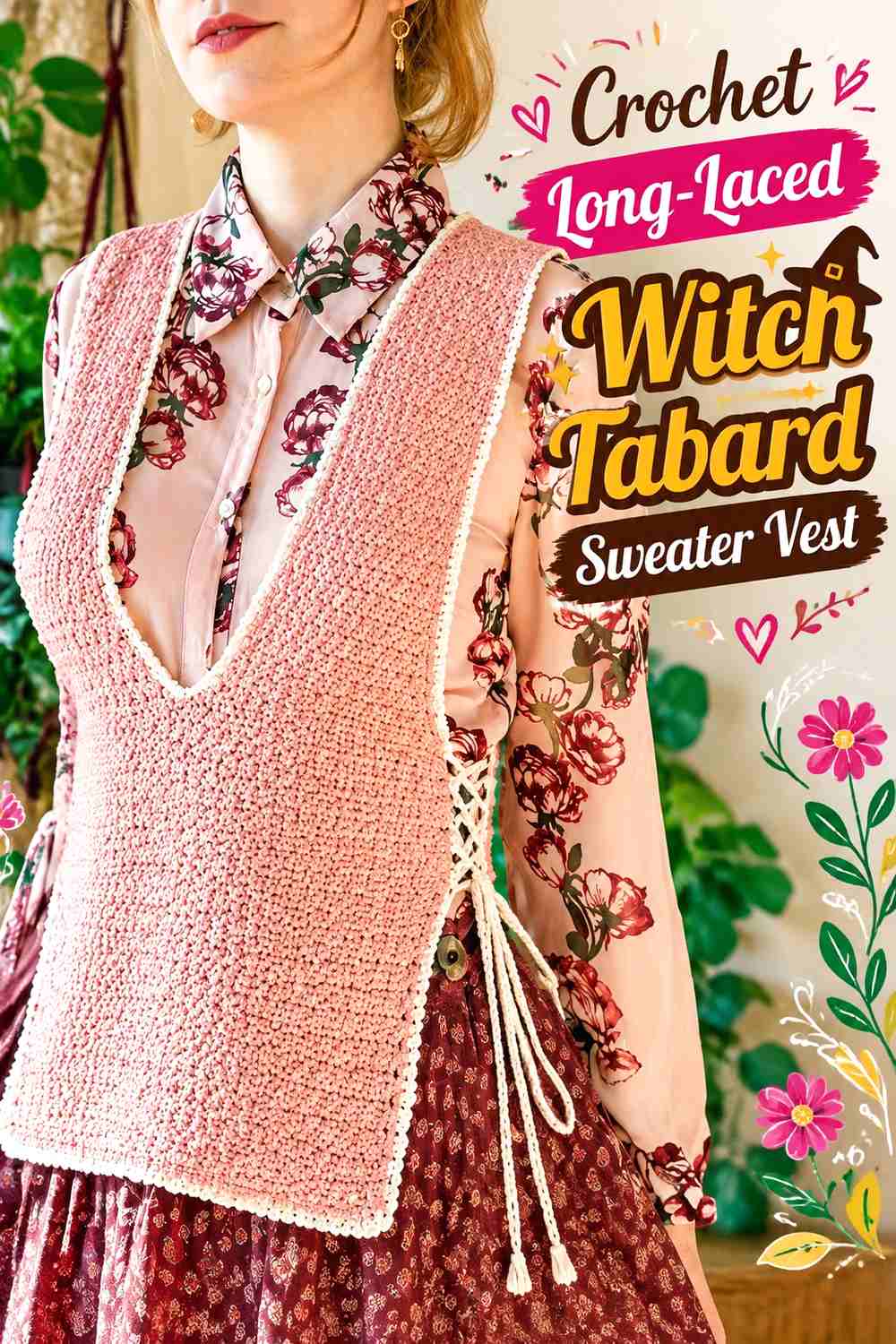
This is the strongest direct medieval-fantasy match in the collection. Iriecchi’s Satella-inspired project is explicitly a crochet tabard with lacing, and the creator discusses wearing the finished piece for Halloween or a Renaissance Faire. It is made to measure and can be worked in shorter or longer versions, making the construction particularly useful when you want something that reads more like a fantasy tunic than a conventional sweater vest.
Longer Length Creates the Strongest Tabard Effect
A longer body changes the entire silhouette. Instead of ending around the usual sweater-vest hem, the garment can extend into the visual territory of a tunic.
Before increasing length, think about how the vest will interact with belts, skirts, trousers, and coats. A long tabard can look impressive worn freely but may bunch differently beneath fitted outerwear.
Lacing Can Provide Medieval Character Without Heavy Trim
The corded closure already gives the garment a strong fantasy cue.
That means you may not need elaborate appliqués or multiple contrasting borders. A restrained palette can let the side or front lacing, long silhouette, and crochet texture carry most of the theme.
Check Ease With the Intended Under-Tunic
Made-to-measure construction still requires a layering decision.
Measure and test the vest with the type of blouse, shirt, or thin sweater you expect underneath. A close fit over a tank may not provide the same movement once a fuller winter layer is added.
Creator Credit: Iriecchi
2. Crochet Granny-Laced Court Corset Vest
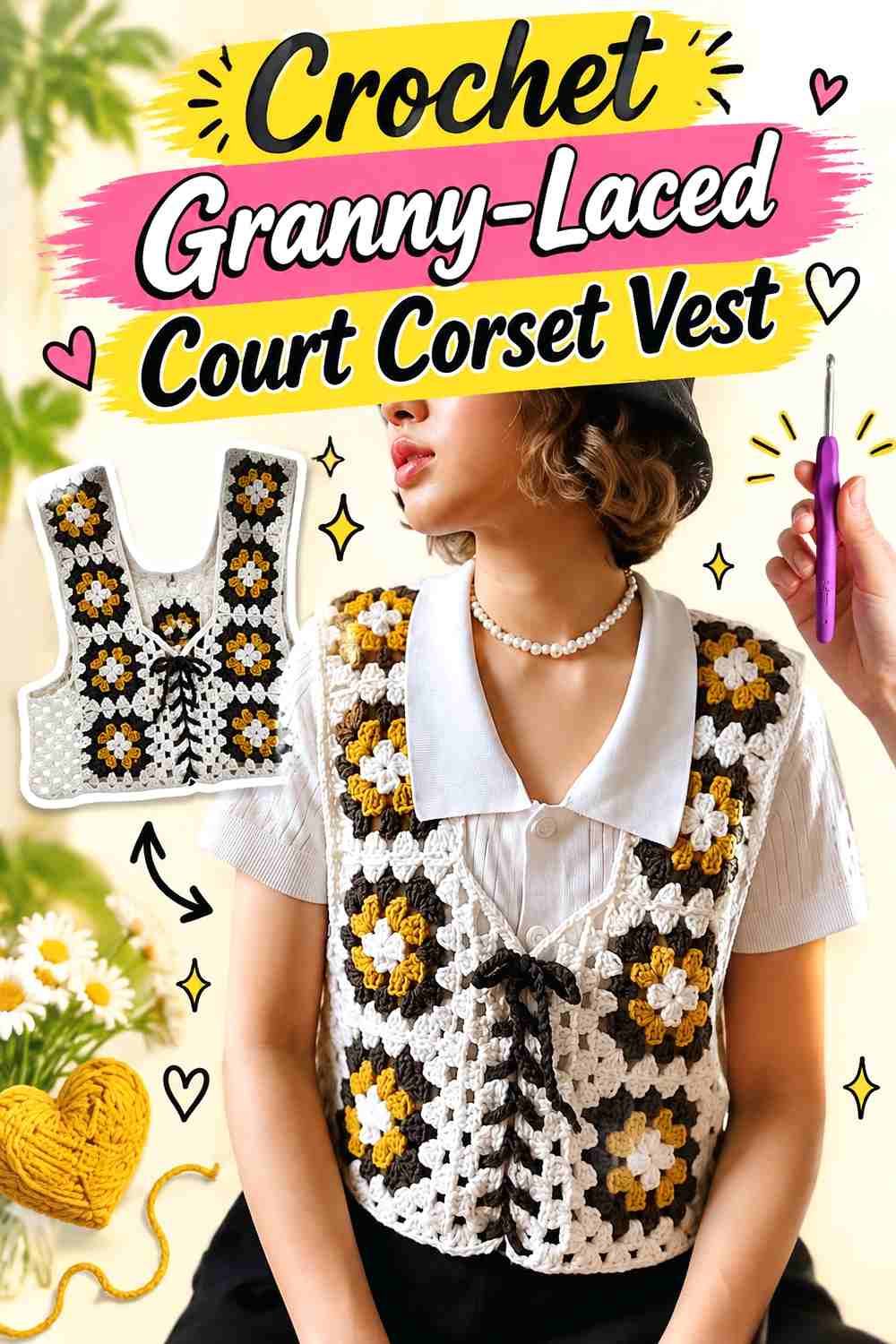
OHMYHANH’s tutorial combines granny-square construction with a corset-style vest and crochet lacing. The creator also uses a made-to-measure approach, so the project offers a distinctly different route from the long tabard: the medieval influence comes through fitted proportions, modular crochet, and visible lacing rather than length.
Granny Squares Make the Vest Feel More Textile-Like
Motifs create natural visual divisions across the garment.
For a courtly or tapestry-inspired version, limit the palette and repeat colors deliberately rather than treating every square as an independent scrap project. Deep jewel tones with one repeated neutral can create a richer, more composed surface.
Lacing Makes Fit More Visually Important
A laced opening attracts attention to how the two sides of the garment relate.
Before adding the final cord, compare both edges and check that the garment sits as intended over the winter layer underneath. Lacing should not have to compensate for a substantial sizing mismatch.
Motif Size Controls the Final Proportions
When squares become part of a wearable, small dimensional differences can multiply across a panel.
Check the completed motif size before committing to the whole layout, particularly if you change yarn or hook size from the source.
Creator Credit: OHMYHANH
3. Crochet Cable-Hooded Knight Sweater Vest
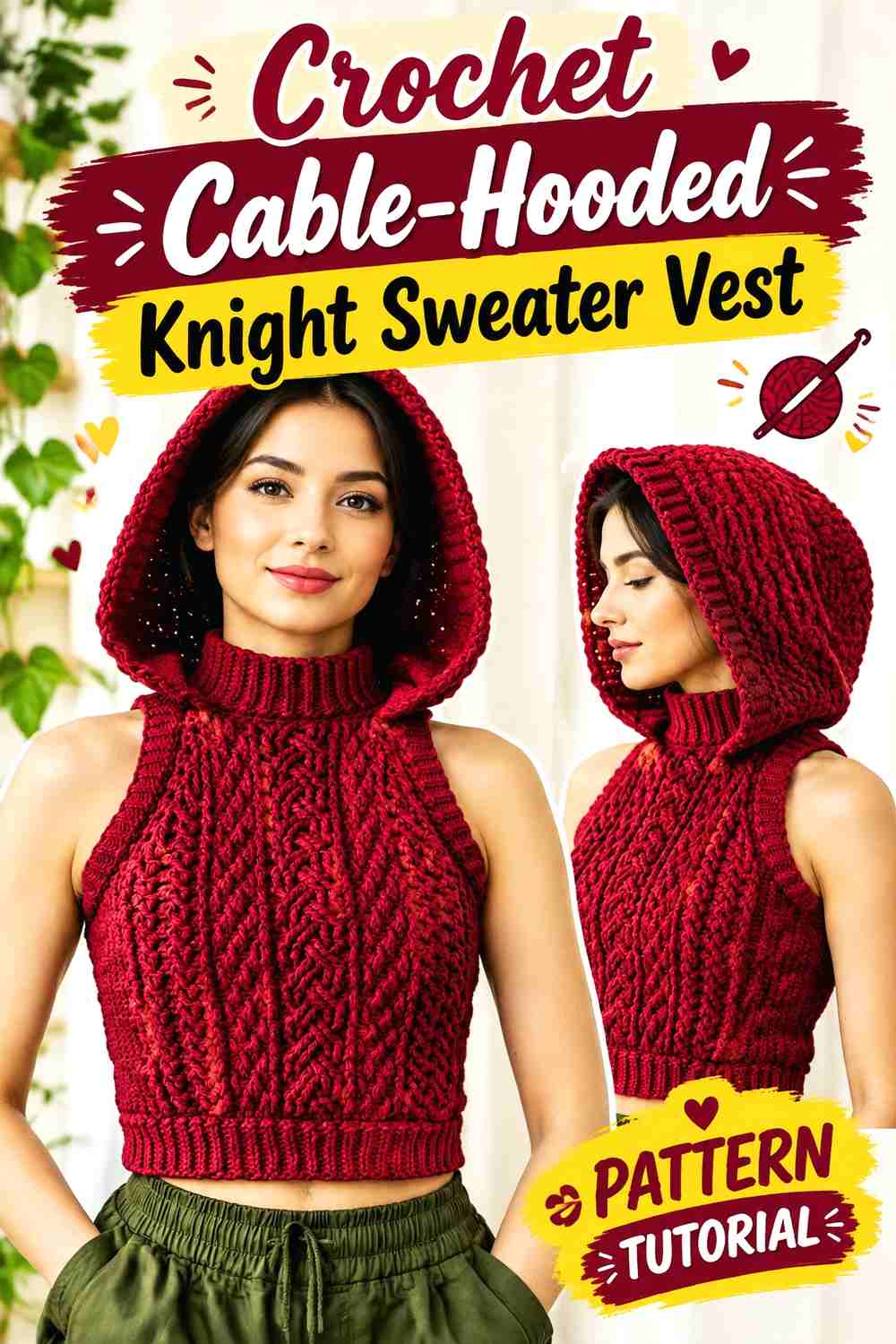
TCDDIY’s source construction combines a sleeveless vest with a substantial hood, cable detail, and additional textured stitching. The pattern is described as made to measure, with the source providing a complete video tutorial alongside written support. Those raised textures make it an especially useful base for a knight, guard, or fantasy-armor interpretation.
Cables Can Suggest Armor Without Added Appliqués
Raised vertical texture already creates strong surface structure.
In charcoal, iron gray, dark brown, or muted silver, the cable work can provide enough visual complexity that extra heraldic motifs are unnecessary.
The Hood Changes the Back Silhouette
A hood adds volume behind the neck and upper shoulders, so the vest no longer reads like an ordinary sleeveless pullover from the back.
If you expect to add a cloak or heavy coat, think about how those layers will stack. A large hood beneath another structured collar can become bulky quickly.
Let One Texture Remain Dominant
Cable detail, an Alpine-style hood texture, contrast trim, and medieval accessories can create a busy combination.
If the crochet already has significant depth, a solid color often lets the construction make the fantasy statement more clearly.
Creator Credit: TCDDIY
4. Crochet Ribbed Ranger Hooded Vest
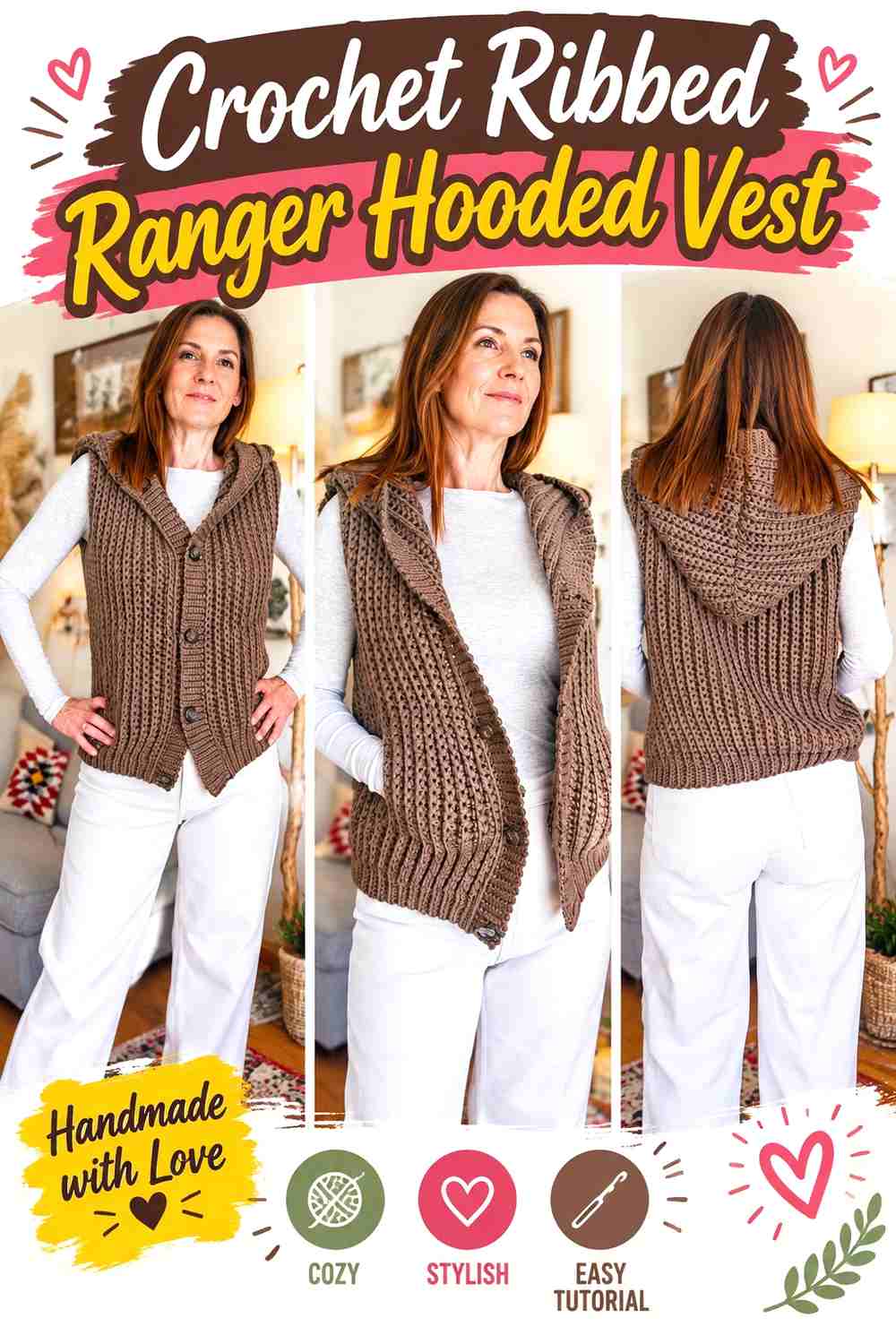
BCNcrochet’s chunky hooded vest includes a front opening, buttons, pockets, and knit-look English rib texture. The source garment has a generous fit and is constructed as a substantial sleeveless layer rather than a close sweater vest.
That combination makes it a useful ranger-style direction: the medieval impression can come from the hood and long vertical ribbing while the buttons and pockets keep the garment practical for modern wear.
Vertical Ribbing Creates a Long, Protective Line
Strong vertical texture can make the front panels appear longer and more structured.
For a ranger interpretation, earthy charcoal, lichen, brown, deep olive, or stone can reinforce that effect without requiring explicit costume motifs.
Buttons Can Replace Decorative Lacing
Not every medieval-inspired vest needs cords.
A line of understated wood-look, dark, or metal-toned buttons can create a quieter closure. Confirm button size and placement with the actual crochet fabric rather than choosing closures purely for theme.
Interior Pockets Keep the Front Less Busy
If you want the garment to feel more like a travel layer than a modern utility vest, less visible pocket construction can help preserve the clean front line.
That can leave room for a belt, brooch, cloak clasp, or other styling element without overcrowding the torso.
Creator Credit: BCNcrochet
5. Crochet Bulky Gatekeeper Hooded Button Vest
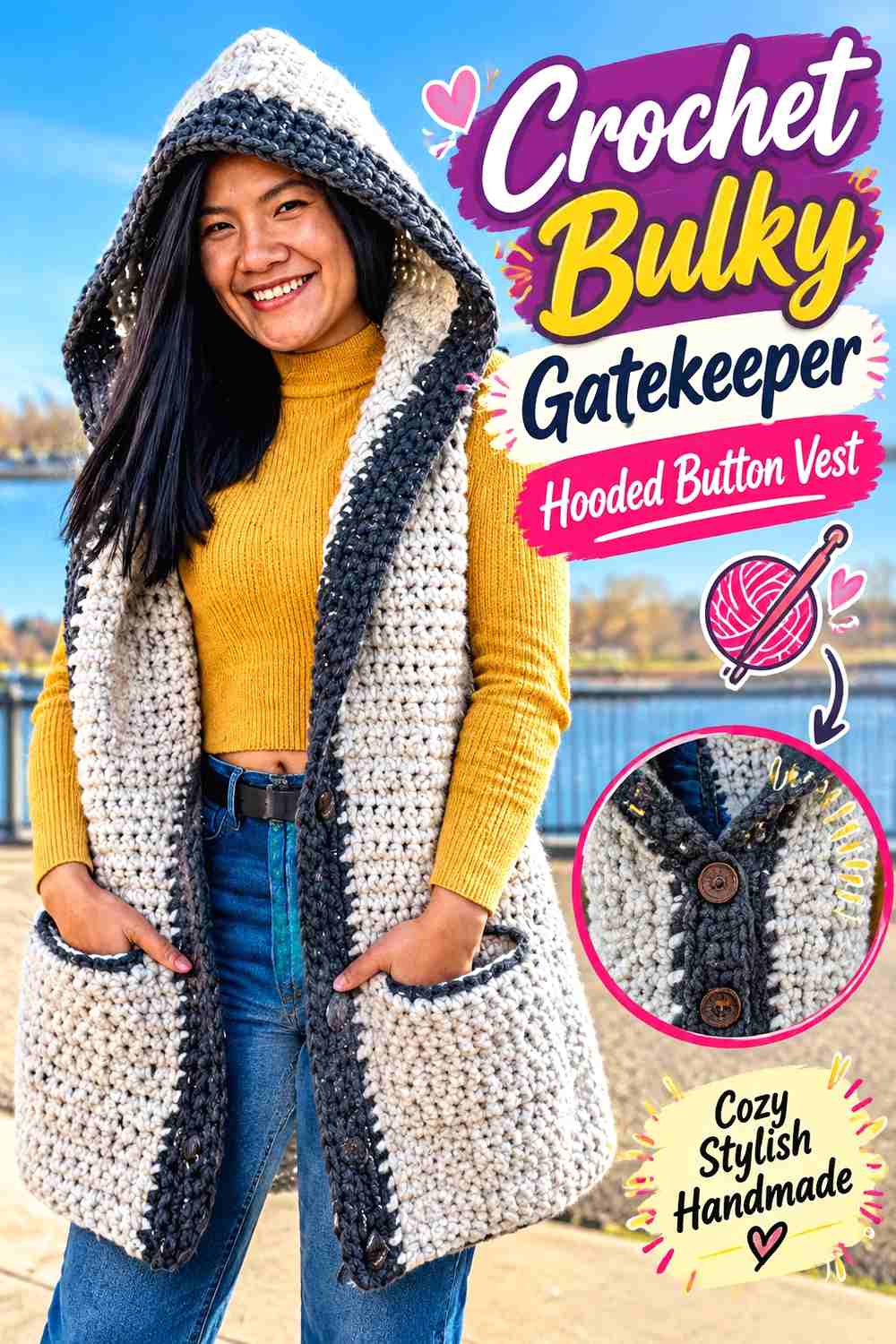
KnitcroAddict’s sweater vest combines a hood, front opening, pockets, optional buttons, contrasting edging, and super-bulky yarn. The published source covers multiple sizes and constructs the body as a substantial cold-weather layer.
This is the heaviest-looking hooded option in the roundup, making it a useful starting point for a gatekeeper, guard, traveler, or rugged fantasy-village silhouette.
Bulky Yarn Makes the Vest Feel Closer to Outerwear
Thick fabric occupies more visual space around the torso.
If you also add a very strong contrast border, large decorative buttons, or extra surface motifs, the garment can quickly become visually heavy. Decide whether the silhouette or the trim should lead.
Contrast Edging Can Mimic Bound Armor Panels
A dark border around a lighter body—or the reverse—can visually outline the front, hood, and armholes.
For a medieval-inspired adaptation, that framing effect may be more effective than placing small motifs randomly across the vest.
Pocket Placement Matters With a Belt
Fantasy styling often includes a waist belt, but front pockets may occupy the same area.
If you expect to belt the garment, compare the intended belt position with the finished pockets before planning the complete outfit.
Creator Credit: KnitcroAddict
6. Crochet Chainmail-Look Ribbed Crewneck Vest
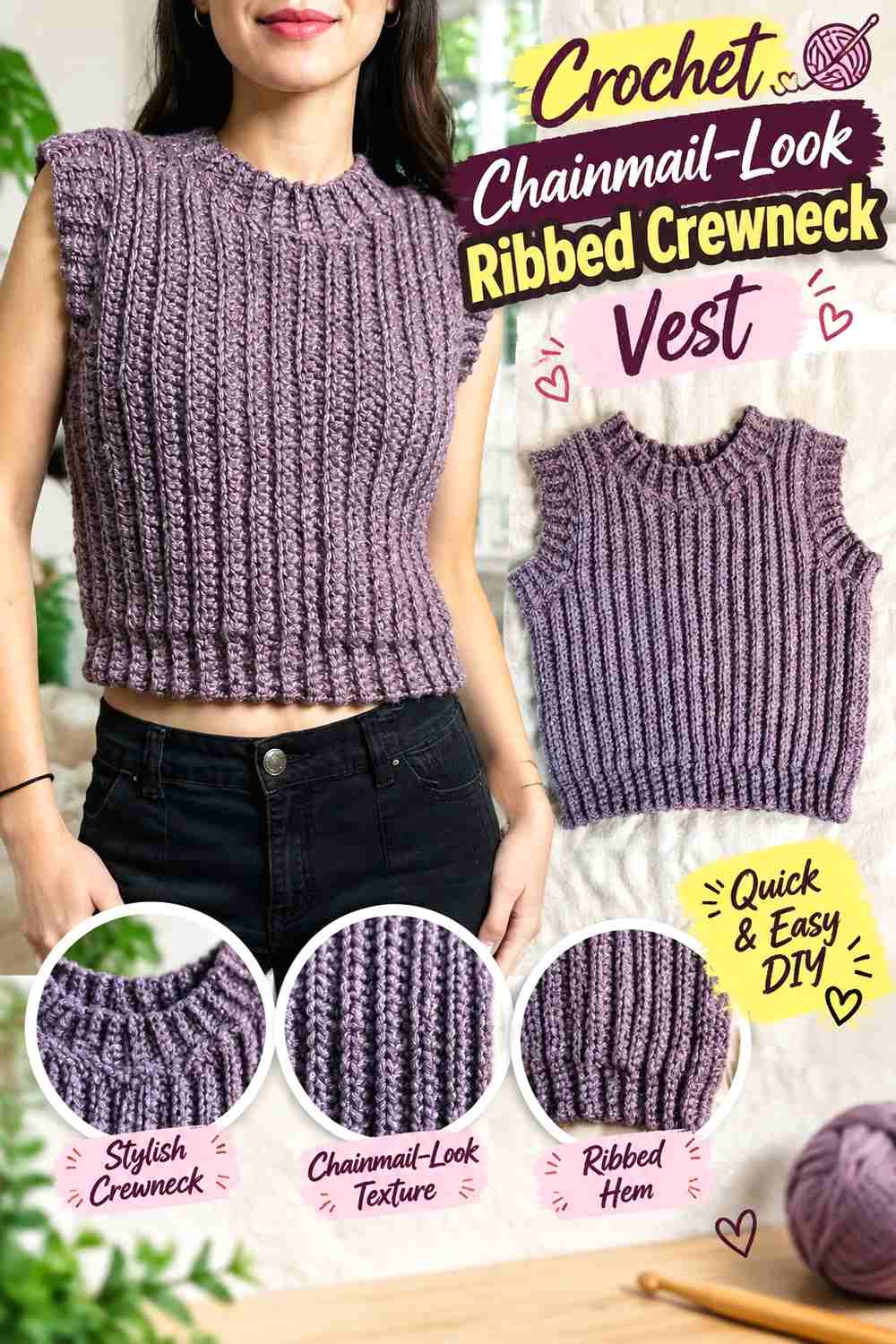
VivCrochets’ ribbed sweater vest uses a crewneck and strong vertical ribbing across a sleeveless garment. The tutorial includes adjustment guidance for changing the size, while the raised linear texture makes this plain vest particularly adaptable for a chainmail-inspired winter layer.
This is not a chainmail tutorial, and the finished crochet is not protective. The value here is visual: gray or pewter ribbing can suggest rows of armor while retaining the comfort and construction of a normal sweater vest.
Gray Does Not Need to Be Completely Flat
A single uniform medium gray can work, but a heathered charcoal, smoky silver, or subtle tonal yarn may provide more depth.
Avoid assuming metallic yarn is necessary. Strong rib texture can create enough shadow on its own.
Crewneck Coverage Supports the Armor Illusion
A higher neckline leaves more continuous crochet across the upper chest than a deep V-neck.
That makes it easier to create an uninterrupted mail-like surface, particularly when worn over a black, brown, or cream long-sleeved base layer.
Keep Armholes Practical for the Underlayer
An armor-inspired silhouette is less useful if the armholes pinch the shirt underneath.
Check the vest over the actual winter layer you plan to wear and follow the creator’s adjustment guidance rather than increasing only the body width.
Creator Credit: VivCrochets
7. Crochet Court-Tunic V-Neck Sweater Vest
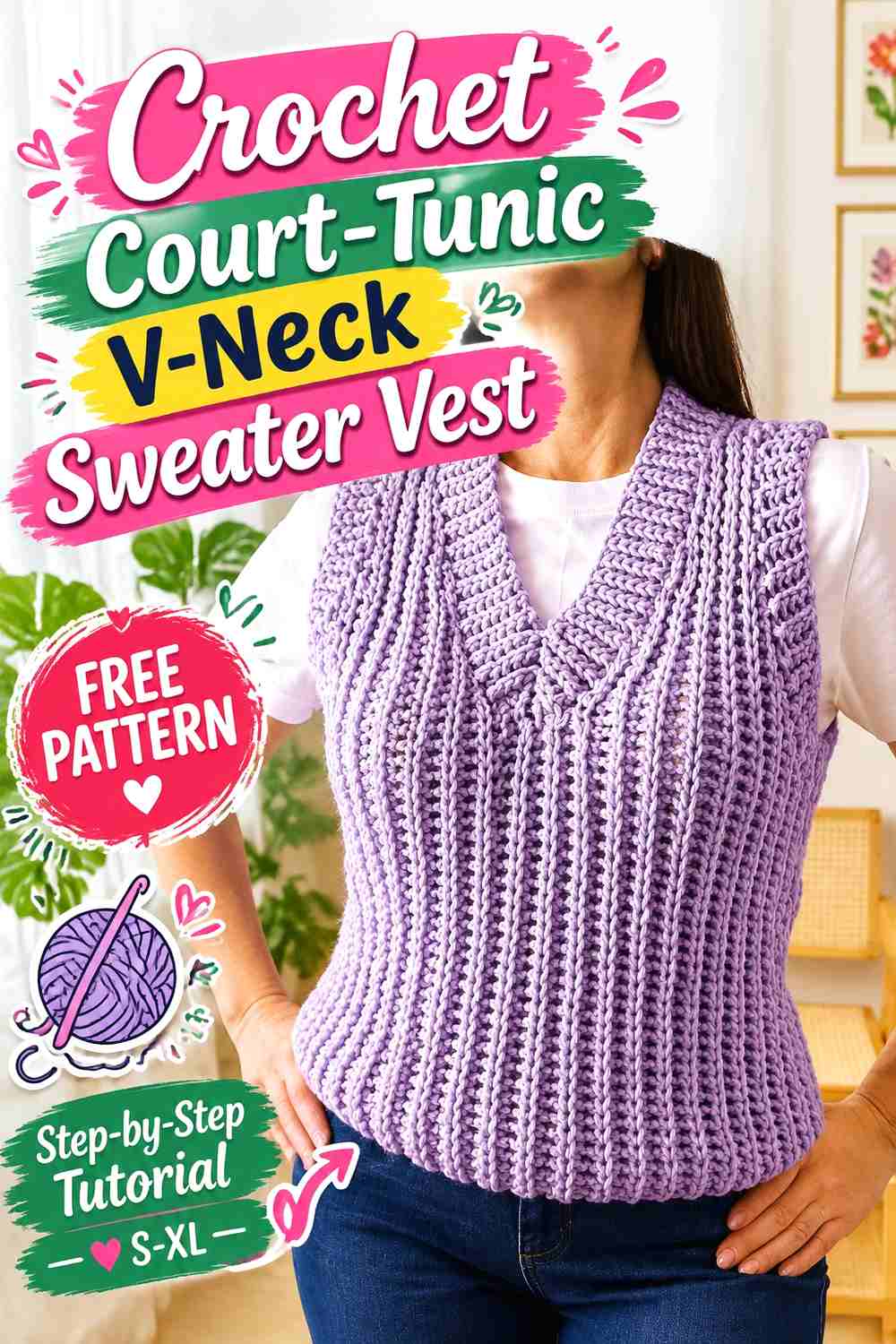
By StellaM’s tutorial teaches a classic V-neck crochet sweater vest with written pattern support. The straightforward pullover shape gives this project less built-in fantasy detail than the tabard or hooded designs, which makes it useful as a blank base for a restrained medieval court or scholar interpretation.
A deep forest, wine, midnight blue, oatmeal, or muted gold palette can change the character considerably without altering the construction.
A V-Neck Frames a High-Collar Underlayer Well
A V-shaped opening leaves room for the garment underneath to become part of the design.
For winter, that could mean a mock-neck top, buttoned blouse, or high-collar shirt rather than trying to make the vest itself provide all the neck coverage.
Simple Fronts Leave Room for One Heraldic Detail
A plain body can carry a small appliqué, embroidered-style surface accent, or contrasting border more successfully than an already complex patterned vest.
Keep any added motif original and separate from the source construction rather than trying to reconstruct another designer’s colorwork.
Hem Length Changes the Tunic Impression
A slightly longer vest naturally feels more tunic-like, while a short hem keeps the piece closer to a conventional sweater vest.
If you alter length, follow the construction logic of the tutorial and confirm that the final proportions still suit the neckline and armholes.
Creator Credit: By StellaM
8. Crochet Harlequin Checkerboard Sweater Vest
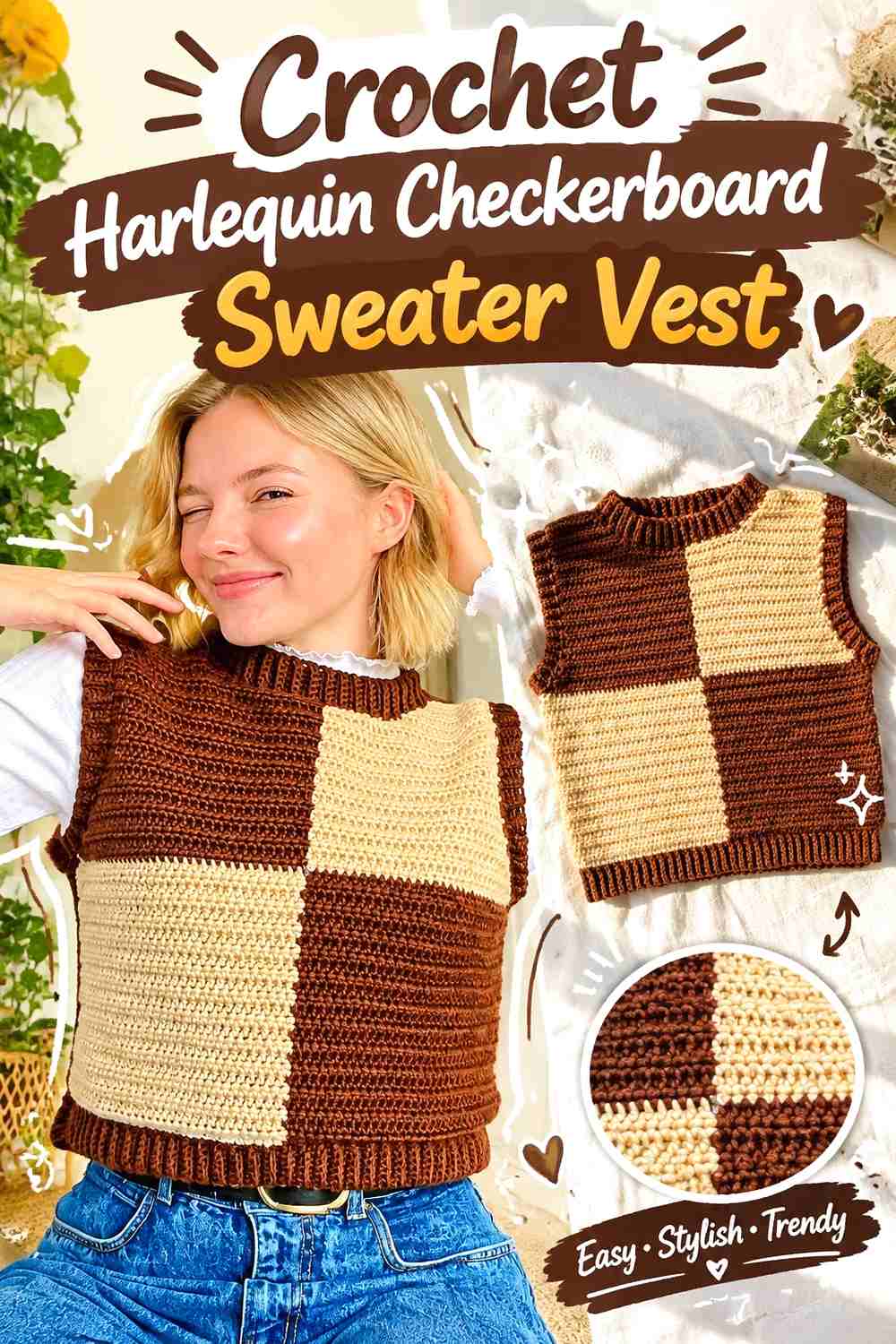
HayHay Crochet’s tutorial produces a checkerboard sweater vest with bold repeated blocks across the garment. The source uses a conventional boxy sweater-vest framework, but its geometric colorwork provides a strong starting point for a medieval harlequin, jester, guild, or tournament-inspired interpretation.
The medieval character here comes from palette and styling rather than historical construction.
Darker Checks Can Move the Pattern Away From Modern Pop Styling
Bright checkerboard can look playful and contemporary.
For a more medieval-fantasy direction, try thinking in pairs such as oxblood and charcoal, moss and brown, navy and pewter, or mustard and deep green.
Check Alignment Around the Neckline
The repeated grid makes interruptions obvious.
If you change width or length, consider how the checks will meet the armholes and neck rather than focusing only on whether the body is large enough.
Use the Pattern as the Main Costume Detail
A full checkerboard vest already carries strong visual information.
Adding a contrasting hood, elaborate belt, multiple appliqués, and oversized jewelry at the same time can shift the outfit from intentional fantasy layering to visual clutter.
Creator Credit: HayHay Crochet
9. Crochet Heraldic Argyle Sweater Vest
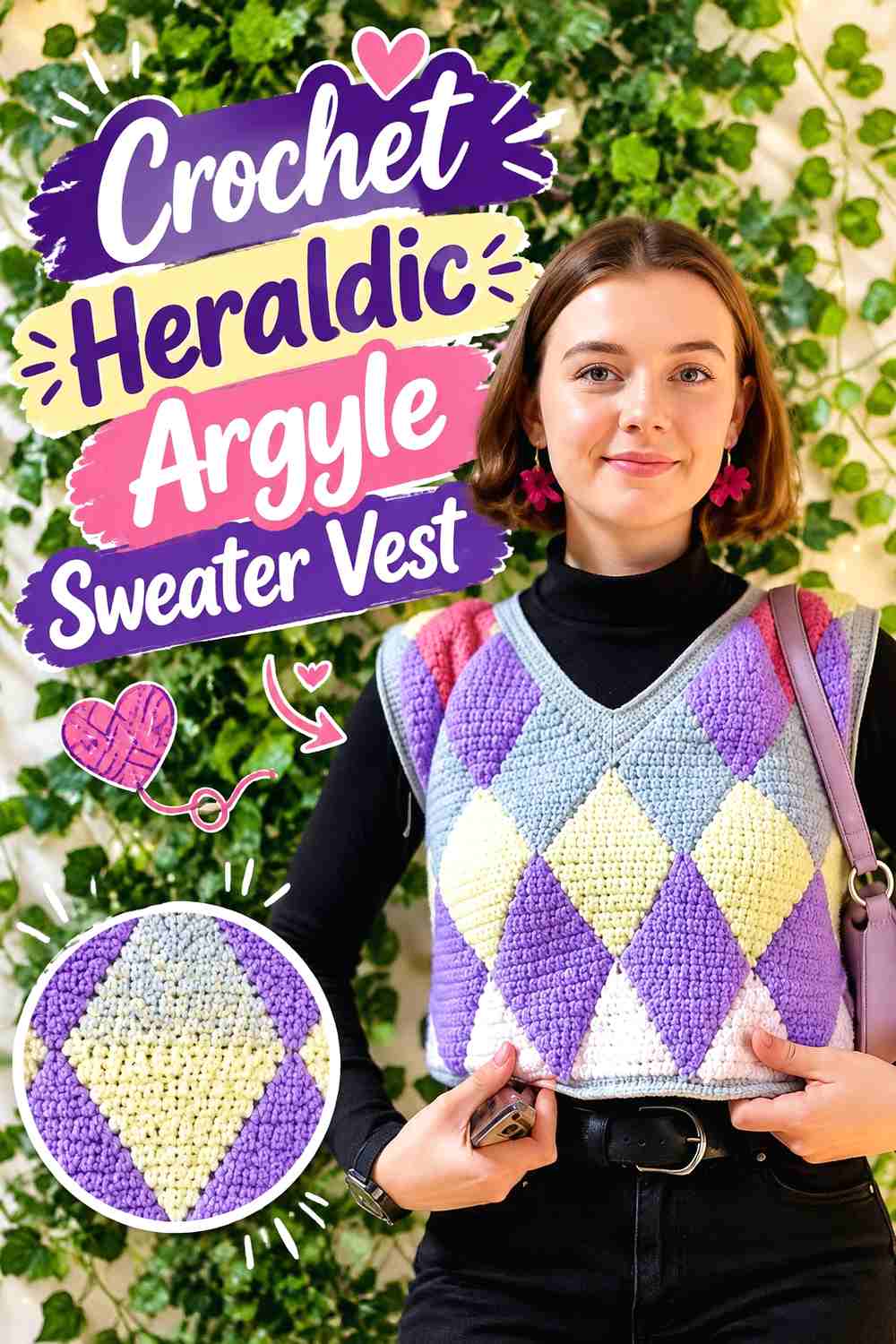
flotjetops teaches an actual argyle crochet sweater vest, making the diamond arrangement an integral part of the source rather than an adaptation added to a plain vest. The recognizable diagonal geometry gives this project one of the easiest paths toward heraldic styling.
Instead of treating the diamonds as preppy schoolwear, use a restrained medieval palette and think of them as shield-like divisions of color.
Center the Main Diamonds Against the Neckline
The V-neck and argyle both rely on strong diagonal lines.
If you alter the vest width, recheck the visual relationship between the neck and the central diamond arrangement rather than assuming the original design will remain centered automatically.
Heraldic Palettes Benefit From Clear Contrast
A diamond needs enough separation from the background to remain recognizable.
Deep red against oatmeal, gold against black, forest against cream, or blue against gray can give the front stronger heraldic character than several similar mid-tone shades.
Let the Back Stay Calmer if the Front Is the Emblem
You do not have to repeat the full graphic everywhere.
A quieter back can make the front behave almost like a tunic bearing a house or guild design. Repeating one trim color can keep both sides visually connected.
Creator Credit: flotjetops
10. Crochet Cropped Archer Layering Vest
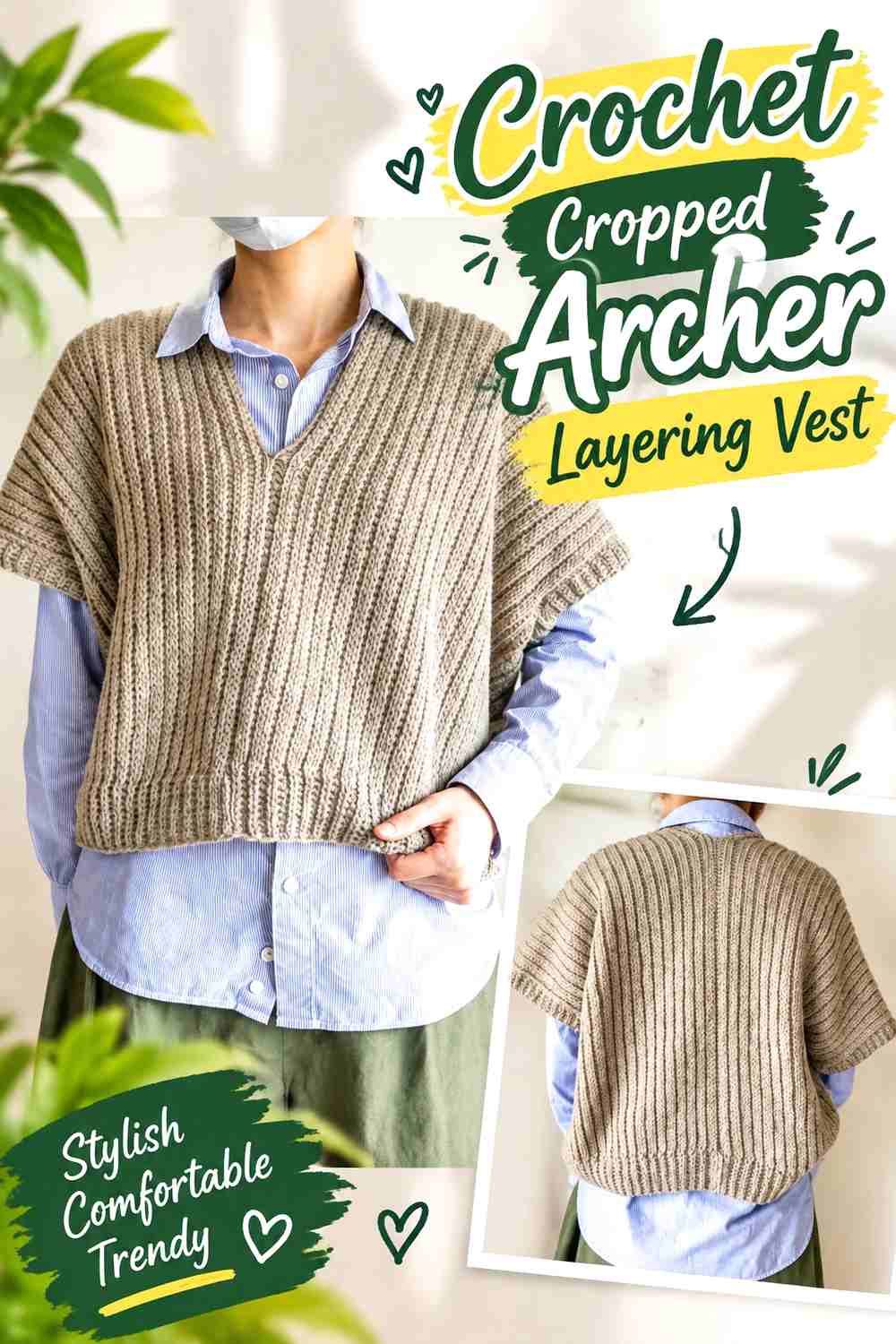
Orinam crochet’s tutorial creates a simple straight cropped vest with a clean sleeveless shape. Because the source avoids a hood, front opening, collar, or major motif, it provides a relatively neutral construction for an archer, woodland traveler, or under-armor-inspired layer.
This project works best as a medieval adaptation when the shorter silhouette is intentional rather than disguised as a full tunic.
A Cropped Vest Keeps the Waist Unobstructed
Shorter length can be useful when the outfit includes a belt, pouch, overskirt, or high-waisted trousers.
Unlike a long tabard, the crochet does not occupy the same lower-torso space as every accessory.
Plain Construction Makes Texture More Important
When there is no major colorwork, yarn surface and stitch definition become more noticeable.
A slightly rustic-looking solid shade can create more character than adding several unrelated motifs after the vest is finished.
Use the Underlayer to Complete the Medieval Shape
The vest itself remains contemporary and compact.
A fuller blouse, high-neck shirt, or long tunic underneath can supply the historical-fantasy volume that the cropped crochet piece intentionally lacks.
Creator Credit: Orinam crochet
11. Crochet Guild-Collar Sweater Vest
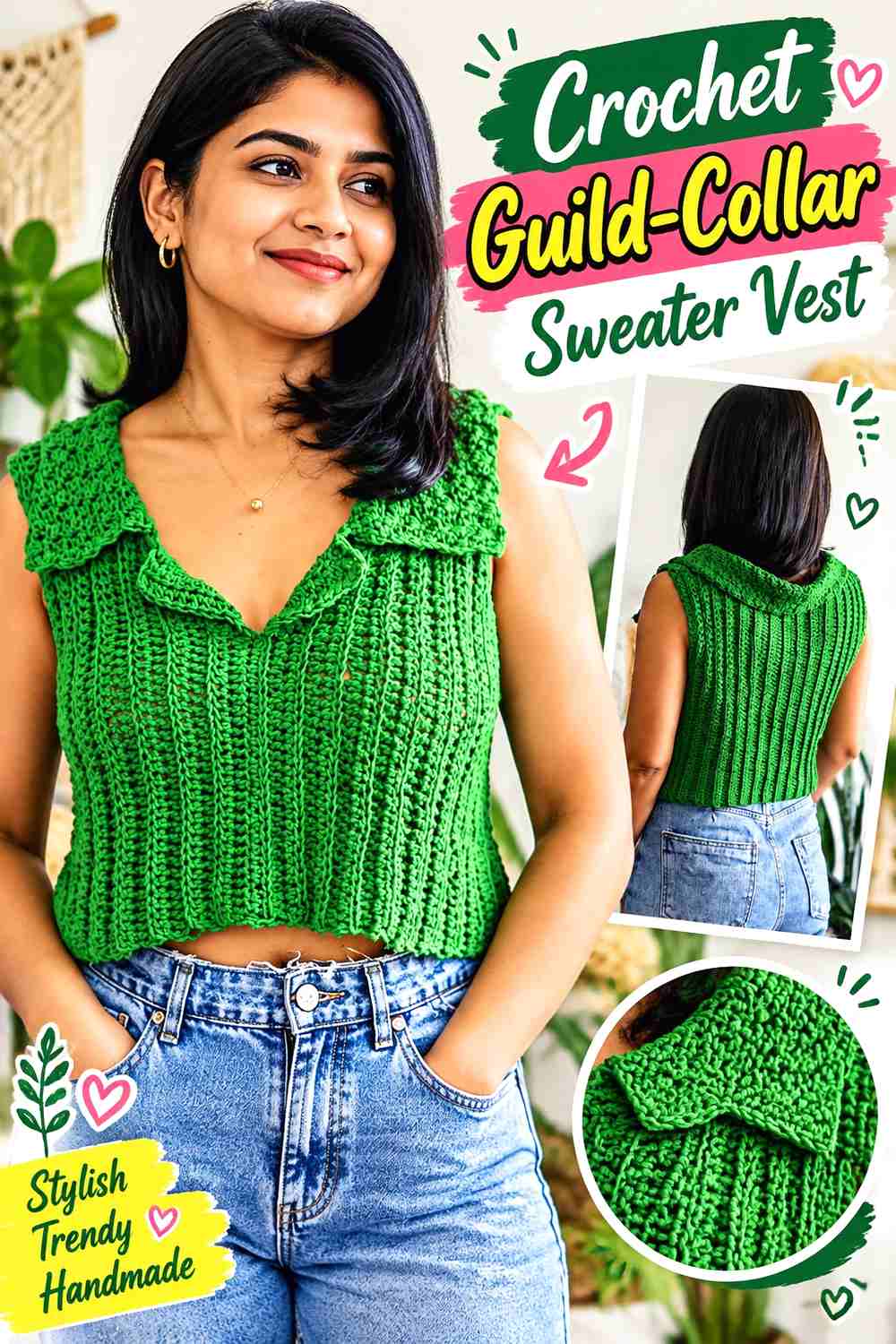
jennyandteddy’s sweater vest adds a separate collar to a sleeveless DK-weight garment, giving the neckline more identity than a basic crewneck or V-neck. The published source includes sizes from small through extra-large and provides both written and video support.
That collar can be styled toward a guild apprentice, scholar, merchant, or courtly winter layer without requiring a full hood.
The Collar Becomes the Main Medieval Cue
Because it frames the face, the collar is more visually influential than a small motif near the hem.
Before adding decorative edging elsewhere, see whether the collar already gives the outfit enough character when worn over a blouse or high-neck base layer.
Separate Collar Construction Needs Careful Orientation
A separately made finishing piece deserves the same attention as the main panels.
Check the placement and symmetry before permanently attaching it, especially if you change colors between the body and collar.
DK Fabric Can Suit Indoor Winter Layering
A lighter fabric occupies less space than the super-bulky hooded projects.
That can make this option more practical when the vest will be worn under a coat or inside heated rooms rather than serving as the outfit’s outermost layer.
Creator Credit: jennyandteddy crochet.
12. Crochet Village-Patchwork Medieval-Style Vest
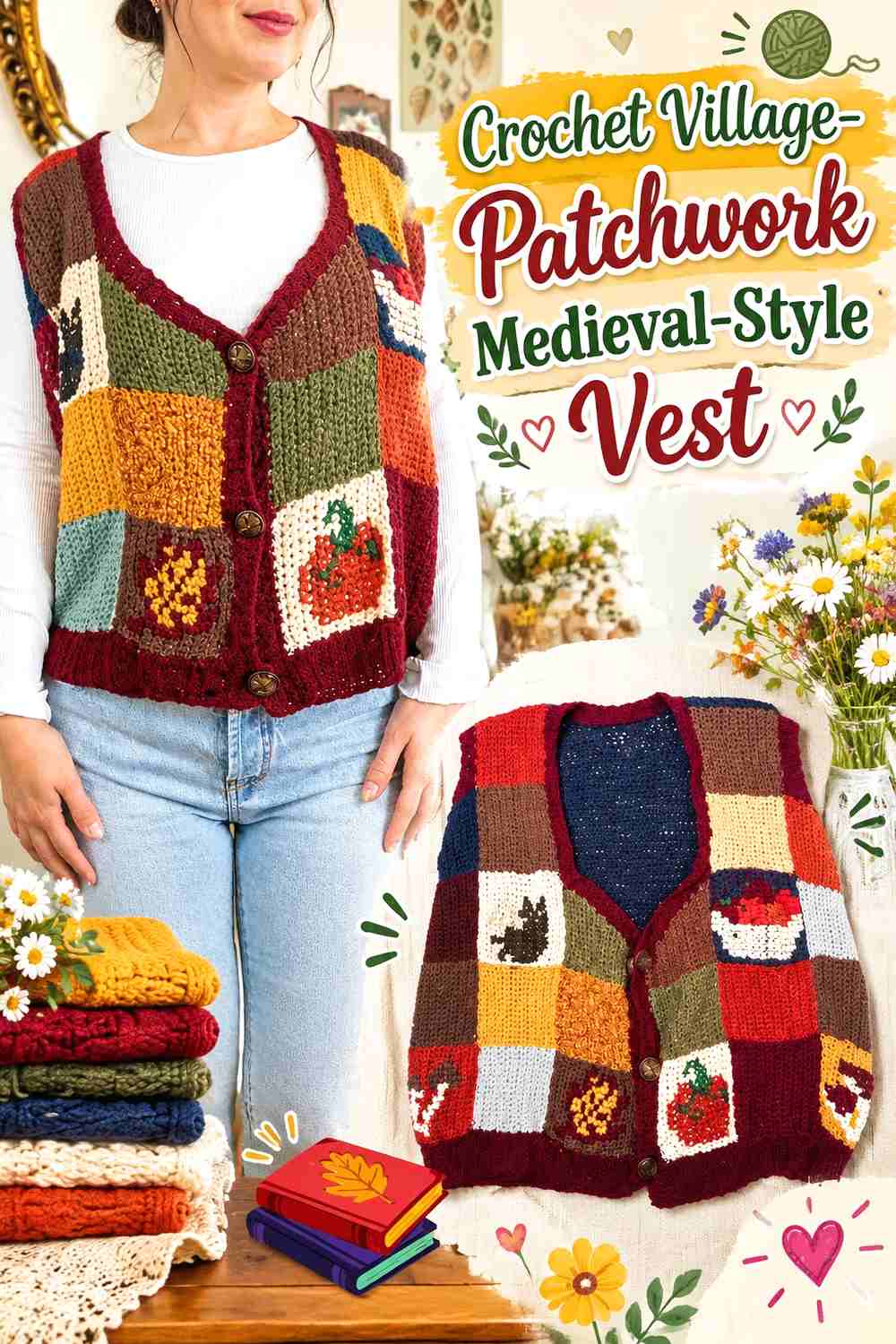
thisfairymade’s vintage-inspired patchwork sweater vest uses square-based sections, ribbed finishing, buttonholes, and cross-stitch decoration. The source has a deliberately handmade, old-fashioned appearance, making it a useful starting point for a medieval-fantasy village, herbalist, tavern, or cottage-dweller interpretation.
The original tutorial includes pumpkin-themed seasonal decoration, so a medieval version should be understood as an adaptation of the garment construction and patchwork concept rather than the exact surface design.
Replace Seasonal Imagery Without Changing the Vest Structure
The patchwork framework can stand on its own.
For a winter medieval interpretation, use plain squares or create your own simple palette instead of copying the source’s seasonal cross-stitch imagery.
Patchwork Can Suggest a Mended Village Garment
Perfectly matched blocks create one aesthetic; controlled variation creates another.
Several browns, creams, rusts, and faded greens can make the vest look collected and textile-rich while the repeated ribbing keeps the overall shape unified.
Lay Out the Squares Before Final Joining
Patchwork color balance is difficult to judge one piece at a time.
Arrange the developing sections in garment order and look at the full front before sewing or joining. A single very dark square can pull attention strongly toward one side.
Creator Credit: thisfairymade
13. Crochet Large-Diamond Heraldic Sweater Vest
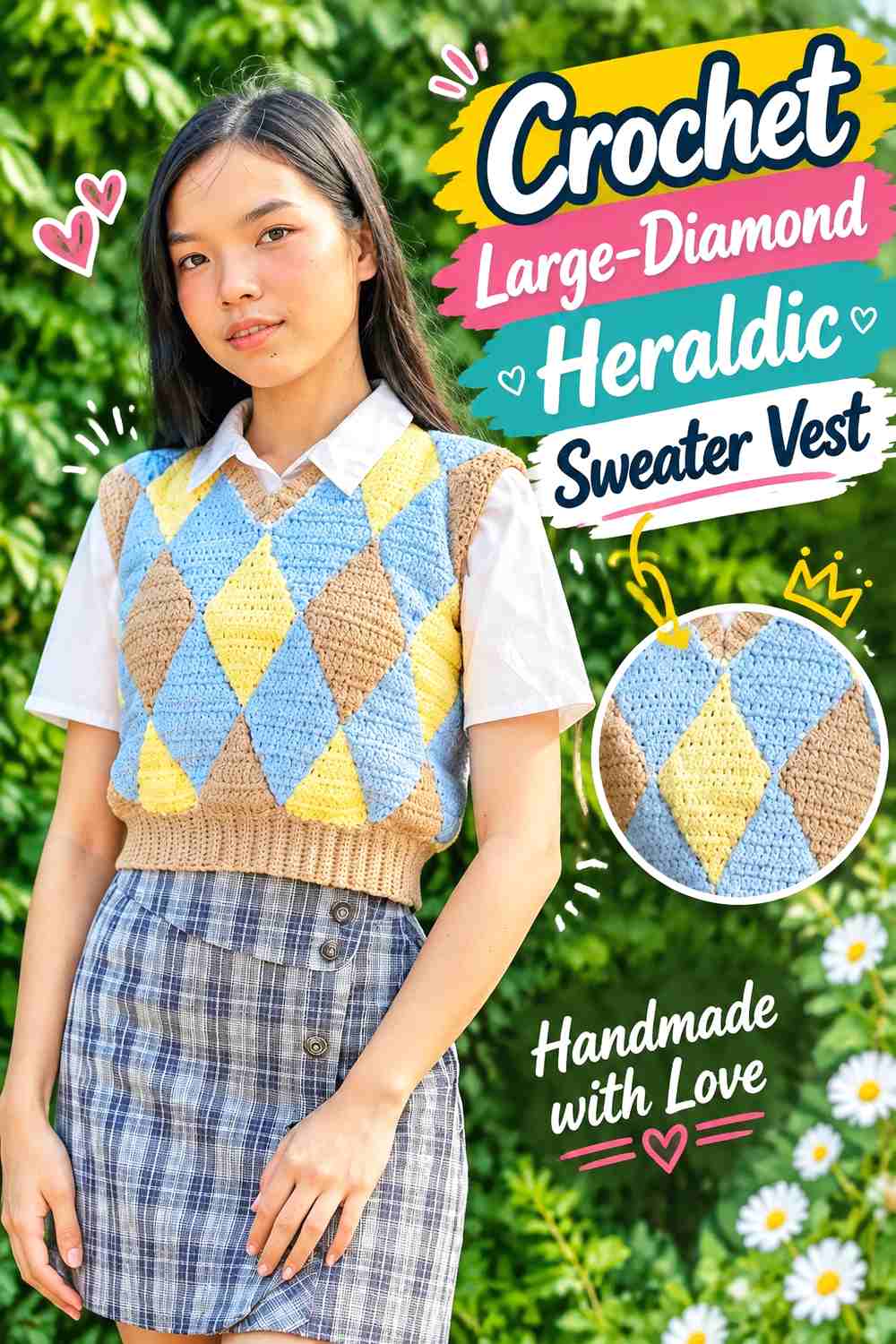
Chenda DIY’s tutorial teaches a vest built around large diamond shapes and explicitly credits the flotjetops design inspiration in the video. The larger graphic scale gives this project a different appearance from a denser argyle repeat and makes it useful for a bold coat-of-arms or tournament-color interpretation.
The strength of this idea is clarity: one large field of geometric color can read from farther away than many tiny details.
Large Diamonds Need Negative Space
A broad motif becomes harder to read when every surrounding area contains another competing decoration.
Allow enough background color around the main shapes that the diamonds remain recognizable as intentional emblems.
Scale the Graphic With the Garment
If you substantially change the body width, reconsider how the large diamond sits on the front.
A motif designed for one proportion can appear too small and isolated on a wider vest or become crowded when the garment is narrowed.
Keep Accessories Quieter Around a Strong Front
Large heraldic-style geometry already supplies the focal point.
A plain dark belt, simple shirt, and understated lower layers can support the vest more effectively than several additional patterned accessories.
Creator Credit: Chenda DIY
Which Crochet Medieval Sweater Vest Style Should You Choose?
| If you want… | Start with… | Main feature |
|---|---|---|
| The clearest fantasy tabard | 1 | Long silhouette and lacing |
| A corset-like medieval layer | 2 | Granny construction and laced fit |
| Knight-inspired texture | 3 | Hood and raised cables |
| A ranger-style vest | 4 | Ribbing, hood, buttons, pockets |
| A substantial winter fantasy layer | 5 | Super-bulky hooded construction |
| A chainmail-inspired look | 6 | Dense vertical ribbing |
| A restrained court or scholar vest | 7 | Simple V-neck body |
| Harlequin or tournament checks | 8 | Repeated checkerboard |
| Classic heraldic diamonds | 9 | Argyle colorwork |
| A shorter archer-style layer | 10 | Cropped straight silhouette |
| A guild or scholar neckline | 11 | Separate collar |
| Village or folk-fantasy patchwork | 12 | Modular vintage surface |
| Large coat-of-arms-style geometry | 13 | Oversized diamond design |
For the most direct medieval-fantasy result, projects 1 through 5 already supply strong structural cues such as tabard length, lacing, hoods, cables, front closures, and pockets.
Projects 6 through 13 need more styling interpretation. Their tutorials teach modern sweater vests, but ribbing, diamonds, checkerboard, collars, patchwork, and simple tunic-like shapes can become convincing fantasy layers when combined thoughtfully with winter undergarments and a controlled palette.
Conclusion
A crochet medieval sweater vest works best when the fantasy character comes from construction rather than a pile of unrelated decorations.
Choose Iriecchi’s tabard when you want the clearest Renaissance-fair silhouette, or the OHMYHANH corset vest when lacing and a closer fit matter more than length. The TCDDIY, BCNcrochet, and KnitcroAddict hooded projects are better suited to knight, ranger, guard, and traveler styling, with very different levels of texture and garment weight.
For a subtler wardrobe piece, ribbing, collars, diamonds, and checkerboard can introduce medieval influence without turning the vest into a costume. The VivCrochets ribbed vest works well for a chainmail-inspired palette, while flotjetops and Chenda DIY provide the strongest heraldic geometry.
Whatever direction you choose, check finished measurements, armhole room, shoulder width, garment length, yarn behavior, and the winter clothing you intend to wear underneath. Use the original creator tutorials for exact sizing, construction, materials, and finishing details.
Frequently Asked Questions
Are these crochet medieval sweater vests historically accurate?
No. The collection is focused on medieval-inspired and fantasy layering. The tabard source has an explicit Renaissance-fair/fantasy connection, but most of the other tutorials teach modern crochet vests that can be styled or adapted toward medieval, ranger, knight, guild, or courtly aesthetics.
What makes a crochet vest look medieval-inspired?
Silhouette usually matters more than color alone. Tabard length, lacing, substantial hoods, raised cable texture, high or shaped necklines, heraldic diamonds, and controlled patchwork can all move a modern vest toward a medieval-fantasy look. The clothing underneath also changes the effect considerably.
Can I make a crochet vest look like chainmail?
You can create a visual chainmail reference with gray, pewter, charcoal, open texture, or repeating ribbing, but crochet is not armor. It offers no reliable protection against impact, weapons, heat, or reenactment combat.
What should I wear under a medieval crochet sweater vest in winter?
Choose the underlayer according to the vest’s armhole and neckline room. A fitted thermal or long-sleeved shirt needs less space, while a blouse with full sleeves or a lightweight sweater requires more. Try the developing vest over a representative layer before completing tight armhole borders.
Should a medieval-inspired sweater vest be oversized?
Not necessarily. A long tabard or ranger vest may benefit from relaxed ease, while a corset-style laced vest can be closer fitting. Use the source tutorial’s measurements or made-to-measure guidance rather than automatically sizing up to create a fantasy silhouette.
What colors work well for a medieval-fantasy crochet vest?
Muted or deep colors often support the theme: charcoal, pewter, forest green, moss, brown, oatmeal, burgundy, navy, mustard, and tarnished-gold tones are useful starting points. Heraldic designs can use stronger contrast, while ranger and village-inspired pieces often look more cohesive with related earthy shades.
Can I add my own heraldic motif to a plain sweater vest?
Yes, as an original adaptation, provided you plan the motif around the garment rather than assuming any graphic will fit automatically. Consider the center front, neckline, armholes, and available surface area first. Keep the creator’s tutorial for the underlying vest construction and develop your added decorative design separately.