Vintage lace doilies can become beautiful wall art when their delicate crochet stitches, decorative edges, and classic shapes are given room to stand out. This collection explores 17 different ways to display lace, from traditional ivory rosettes in dark wooden frames to botanical motifs, dramatic gothic lace, romantic hearts, and layered medallions. Some ideas use a single statement piece, while others arrange several small doilies into a larger wall display.
Whether you’re decorating a cottage bedroom, creating a vintage-inspired gallery wall, or looking for a softer alternative to printed artwork, these designs offer different approaches to color, scale, framing, and texture. You’ll find ideas for compact spaces, wider walls, and more elaborate displays, alongside practical considerations such as suitable backings, removable attachments, blocking, dust exposure, and keeping delicate crochet lace in good condition.
These are AI-generated crochet design visualizations for inspiration, not photographs of tested handmade pieces or step-by-step patterns.
Quick Design Selection Guide
- For a classic vintage focal point: Choose Crochet Victorian Rose Cameo Doily. Its oval walnut frame, raised dusty-rose center, and ivory lace create a traditional look with strong contrast.
- For smaller cottage-style spaces: Consider Crochet Sage Botanical Diamond Doily or Crochet Lavender Butterfly Doily Display. Both use compact framed compositions with delicate botanical details.
- For more dramatic wall art: Crochet Midnight Starburst Lace Doily and Crochet Gothic Pineapple Lace Doily use darker crochet thread, strong silhouettes, and openwork against contrasting surfaces.
- For a narrow vertical wall: Crochet Heirloom Medallion Wall Hanging stacks three different-sized pieces without requiring a wide gallery arrangement.
- For romantic decorative details: Crochet Blush Heirloom Heart Doily and Crochet Champagne Pearl Lace Doily make the lace shape or its finishing details the main attraction.
- For a larger wall composition: Crochet Victorian Rose Window Triptych offers three coordinating framed designs, while Crochet Olive Fern Doily Wreath creates a lighter circular arrangement with an open center.
If you’re choosing the lace structure before deciding on a wall display, explore 35 Crochet Lace Doily Ideas for Fall 2026 for a separate collection of classic scalloped, floral, geometric, and pineapple-inspired doily styles.
1. Crochet Victorian Rose Cameo Doily
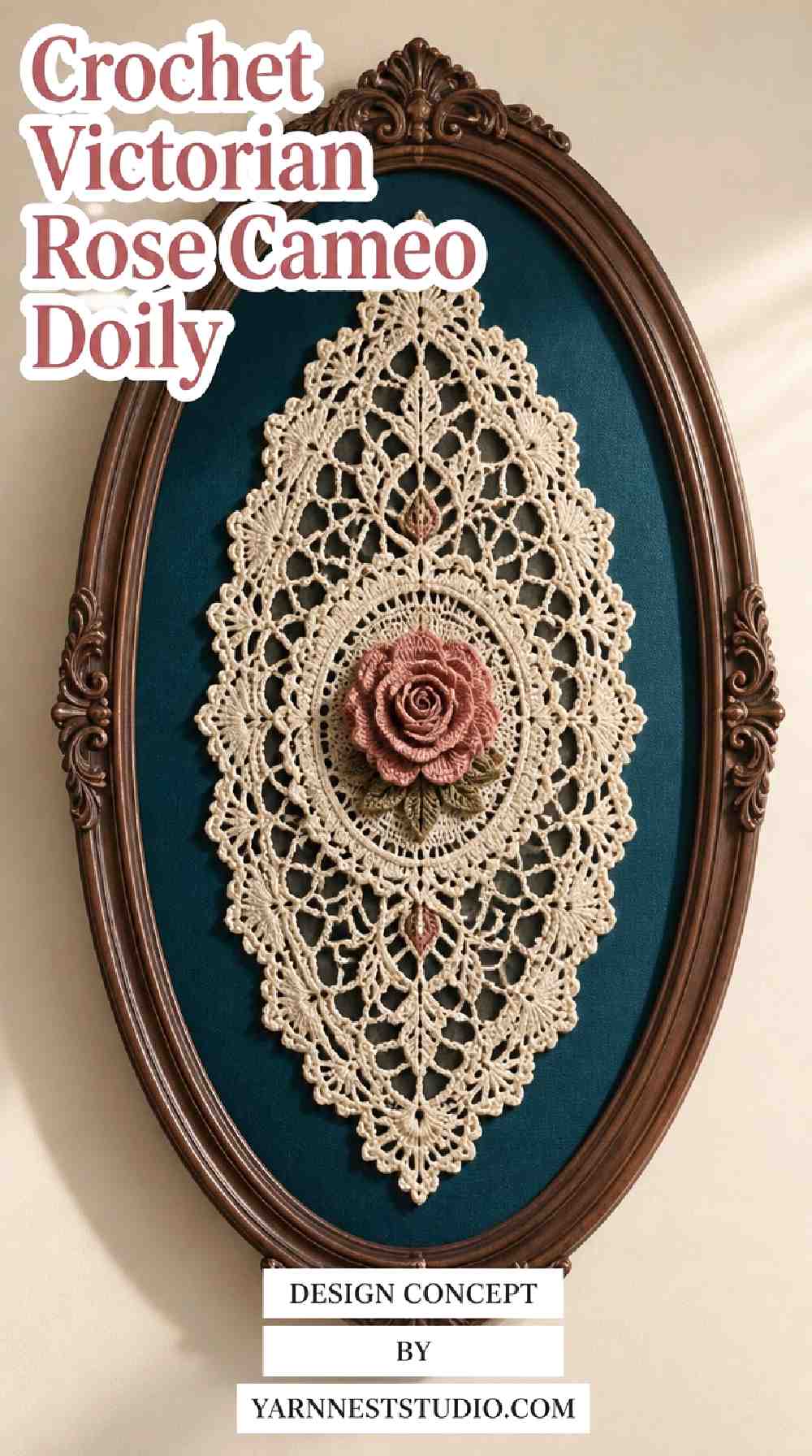
Antique-ivory crochet lace forms an elongated oval around a raised dusty-rose rosette. Fine branching openwork extends outward from the flower, ending in delicate scallops that soften the entire outline. The combination of a textured floral center and a lighter lace perimeter gives the piece a traditional cameo-like appearance.
Deep teal linen makes the ivory stitches and dusty-rose center easier to distinguish inside the dark walnut frame. The oval arrangement would suit a narrow wall space, although its fine edges need careful support to preserve their shape.
Oval Shape & Wall Proportions
The elongated silhouette is useful where a broad circular doily might feel oversized. Compare the frame’s overall height with the available wall space.
Raised Rose Center
The dusty-rose rosette introduces shallow relief. A shadow-box arrangement could protect its shape better than a frame that presses the flower flat.
Fine Lace Definition
Open branching stitches create most of the visual detail. A small thread swatch can help assess whether the lace remains readable at the intended size.
Teal Fabric Backing
Deep teal provides a stronger contrast than cream fabric. Select a colorfast backing, especially if the completed crochet will be mounted for extended display.
Walnut Frame Depth
An oval frame should have sufficient internal clearance for the raised center. Check the usable opening rather than relying on its outside dimensions.
Gentle Attachment Method
Discreet hand stitches through suitable backing fabric can support the doily. Avoid permanent adhesive where you may eventually want to remove or clean it.
Blocking the Scallops
The outer scallops may need careful shaping before mounting. Block according to the actual thread’s care instructions rather than stretching every curve aggressively.
Suitable Display Location
A bedroom dressing area or quiet reading corner could work well. Avoid damp walls, direct sunlight, and places where the frame is frequently brushed.
Cleaning & Preservation
Dust the exterior frame gently and examine the lace periodically. If removal becomes necessary, follow the fiber’s care instructions and protect the raised rosette.
2. Crochet Sage Botanical Diamond Doily
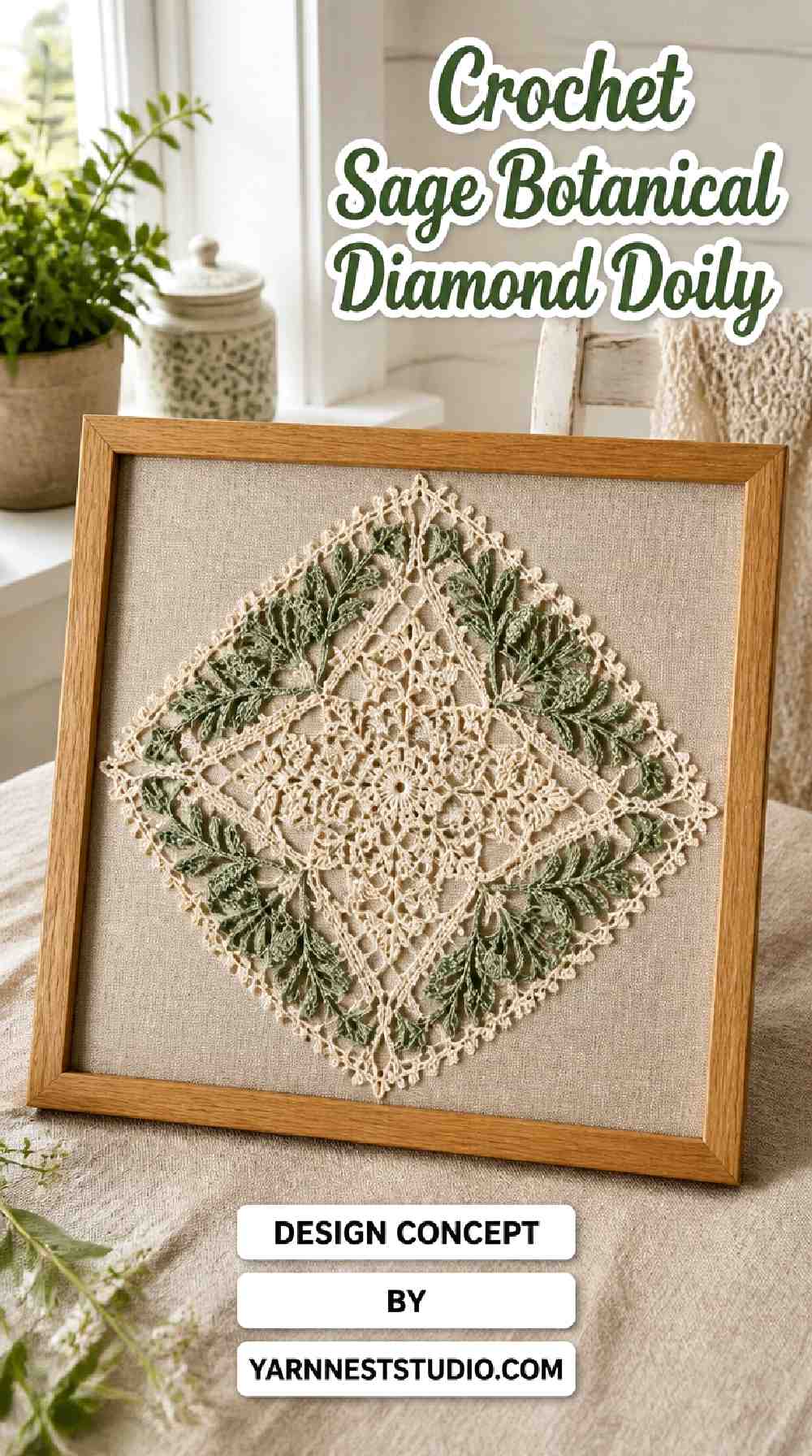
Soft sage-green leaf fans extend toward the corners of this square crochet doily, surrounding a clear central diamond. Antique-cream picots finish the outer edge, giving the botanical arrangement a delicate boundary without making the entire piece overly ornate.
The square honey-oak frame keeps the four corners balanced, while tan linen allows the muted green stitches to remain visible. This design offers a calmer alternative to elaborate floral lace, particularly where the surrounding decor already includes several colors or patterns.
Botanical Leaf Structure
The four sage leaf-fan groups establish a symmetrical outline. Keep their stitch openings consistent so the diamond shape remains clear after finishing.
Square Frame Alignment
The central diamond should sit evenly relative to all four frame sides. Unequal spacing can make an otherwise symmetrical crochet arrangement appear tilted.
Cream Picot Border
Tiny picots provide the finishing detail. Their spacing matters more visually than adding extra decoration around an already textured botanical design.
Sage & Tan Color Relationship
These muted colors create gentle contrast. If your wall is similarly neutral, choose a slightly deeper backing to avoid losing the green leaf shapes.
Thread Weight Choice
Fine cotton thread could suit the pictured delicate look. A heavier yarn would change the leaf definition and require a larger display opening.
Blocking the Corners
Check that each corner retains its intended angle without pulling the surrounding lace out of shape. Work gradually and use fiber-appropriate blocking methods.
Frame Mounting Options
A removable fabric-backed mount allows easier future care. Use attachment stitches that support the corners without visibly tightening the central diamond.
Ideal Room Styling
This square design could complement natural wood shelves, botanical prints, or neutral cottage furnishings. Give it enough clear wall space to appreciate the pattern.
Practical Limitation
Low-contrast sage lace may become difficult to distinguish from a similarly colored wall or backing. Assess the combination under the room’s actual lighting.
3. Crochet Midnight Starburst Lace Doily
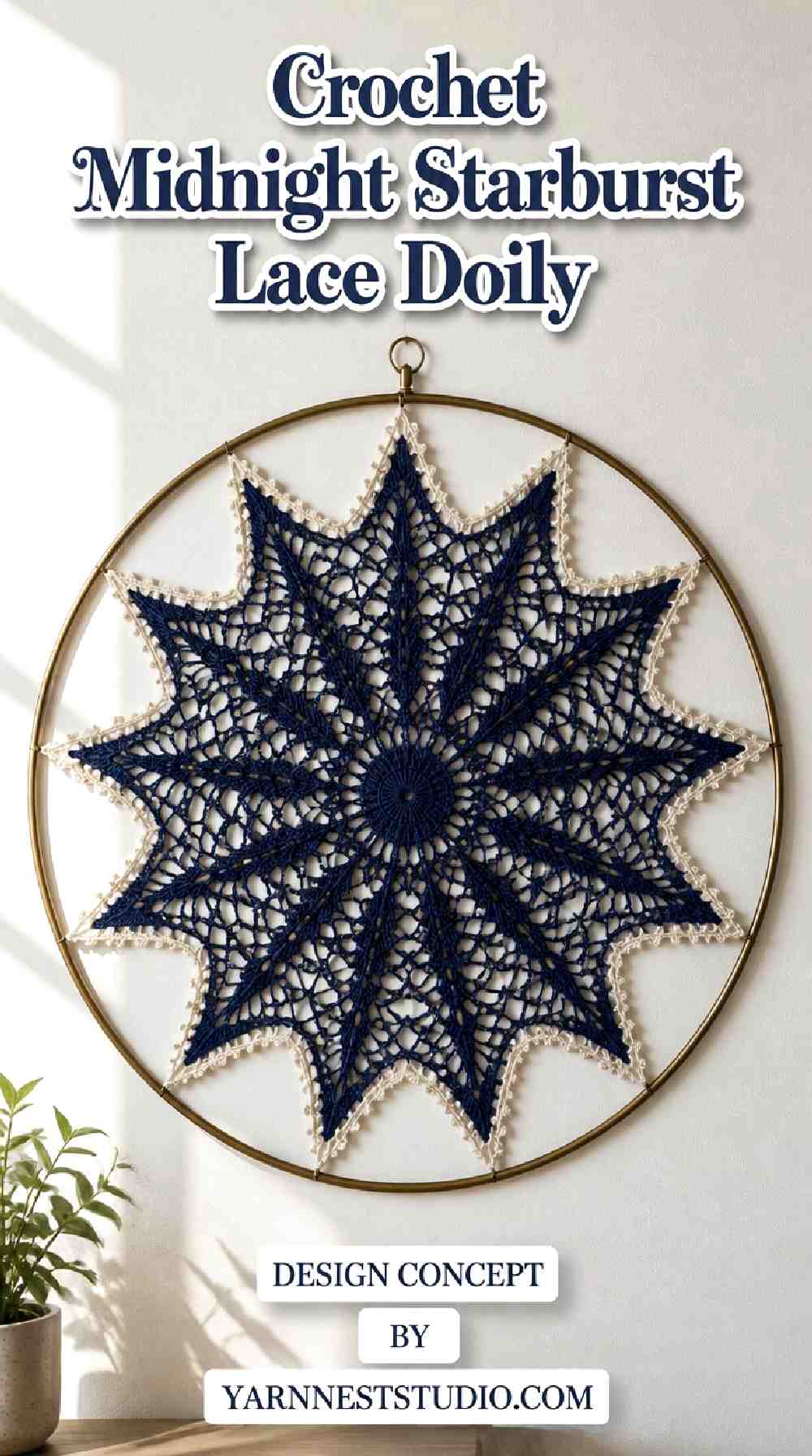
Twelve pointed sections radiate from the center of this midnight-navy crochet doily, creating a sharp starburst silhouette. Repeated chain arches open the space between the points, while a thin antique-ivory picot border traces the outer shape.
The aged-brass hoop frames the navy lace without concealing its openwork. Because the pale wall remains visible through the stitches, the starburst depends on both a well-defined outer edge and a sufficiently contrasting surface behind it.
Twelve-Point Symmetry
The visual balance depends on twelve evenly spaced points. Any difference in their tension could change the starburst outline when mounted.
Open Chainwork
Wide chain spaces give this design its airy appearance. They also offer less structural support than dense crochet, making careful mounting particularly important.
Navy Thread Definition
Dark navy can reveal beautiful lace geometry against a pale wall. Examine the actual thread under daylight to make sure individual stitch groups remain visible.
Antique-Ivory Picot Tips
The contrasting outer edging emphasizes each star point. A fine border will preserve the delicate appearance better than a bulky decorative trim.
Circular Hoop Support
The aged-brass hoop provides a defined boundary. Attachment points should distribute the lace’s tension without pulling individual star tips out of alignment.
Wall Background Selection
An ivory or pale beige wall allows the open areas to read clearly. A dark wall would reduce contrast through the chain spaces.
Maintaining the Points
Blocking can help establish the intended shape before display. Avoid stretching the points so far that the central section becomes distorted.
Brass Finish & Care
Check that the hoop’s finish will not transfer color or snag thread. Use a suitable barrier wherever metal touches vulnerable crochet.
Placement Away From Contact
The openwork is delicate enough to catch on nearby objects. A quiet wall above a sideboard is preferable to a busy passageway.
4. Crochet Burgundy Cathedral Lace Art
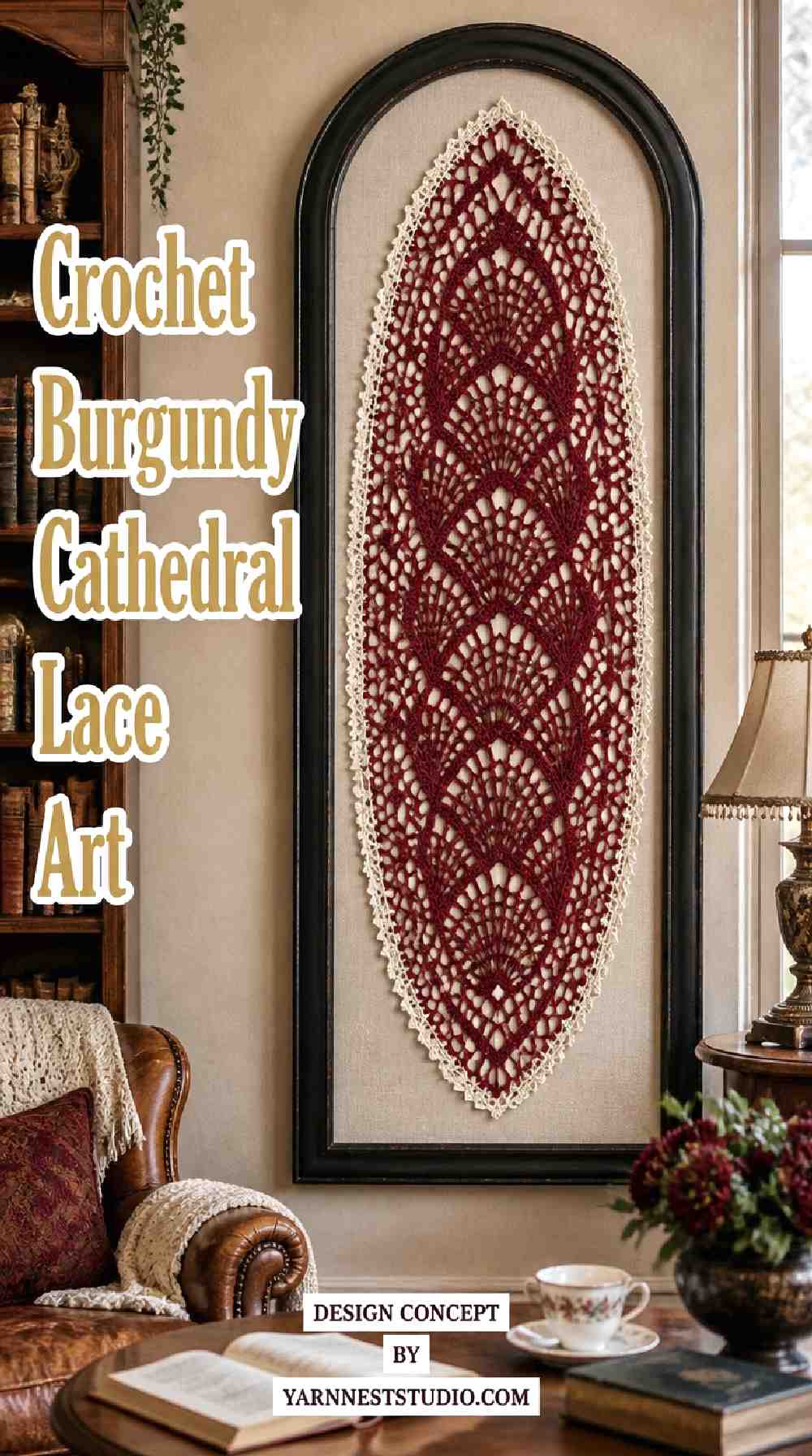
Deep burgundy crochet lace forms a tall oval filled with repeating pointed-arch fans. Fine chain spaces separate the arches, while a narrow antique-ivory edging traces the perimeter and makes the dark thread stand out against its oatmeal backing.
The tall black frame has an arched top that echoes the lace pattern without changing the doily’s oval outline. Its repeated architectural shapes give the piece a formal vintage character, though the fine openings need careful handling to prevent uneven tension.
Pointed-Arch Lace Motifs
The repeating arches should remain visually distinct. Use consistent stitch spacing so adjacent fan sections do not crowd together toward the center.
Burgundy Thread Contrast
Burgundy appears rich against oatmeal linen. Test the thread and backing together in daylight before committing to a permanent mounted arrangement.
Tall Oval Silhouette
A vertically oriented doily works well beside bookcases or narrow furniture. Compare the frame height and visual width before selecting a display spot.
Arched Shadow-Box Frame
The frame’s curved top echoes the pointed lace. Its interior should be deep enough to avoid unnecessary pressure on the stitched surface.
Antique-Ivory Edge
The narrow light edging defines the oval perimeter. Keep it consistent rather than adding heavy trim that could overwhelm the darker openwork.
Backing & Attachment
Oatmeal linen provides a neutral mounting surface. Small, carefully placed attachment stitches can help support the lace without obscuring its arch shapes.
Blocking the Repeated Fans
Each fan should open to a similar width. Adjust the lace gently during blocking and follow the chosen thread’s recommended care method.
Suitable Interior Mood
This darker design could suit a vintage reading room or a traditional bedroom. Light surrounding surfaces help prevent the arrangement from feeling visually heavy.
Dust & Light Exposure
Deep-colored threads can show accumulated dust, while prolonged sunlight may cause fading. Display away from strong direct light and inspect the frame periodically.
5. Crochet Heirloom Medallion Wall Hanging
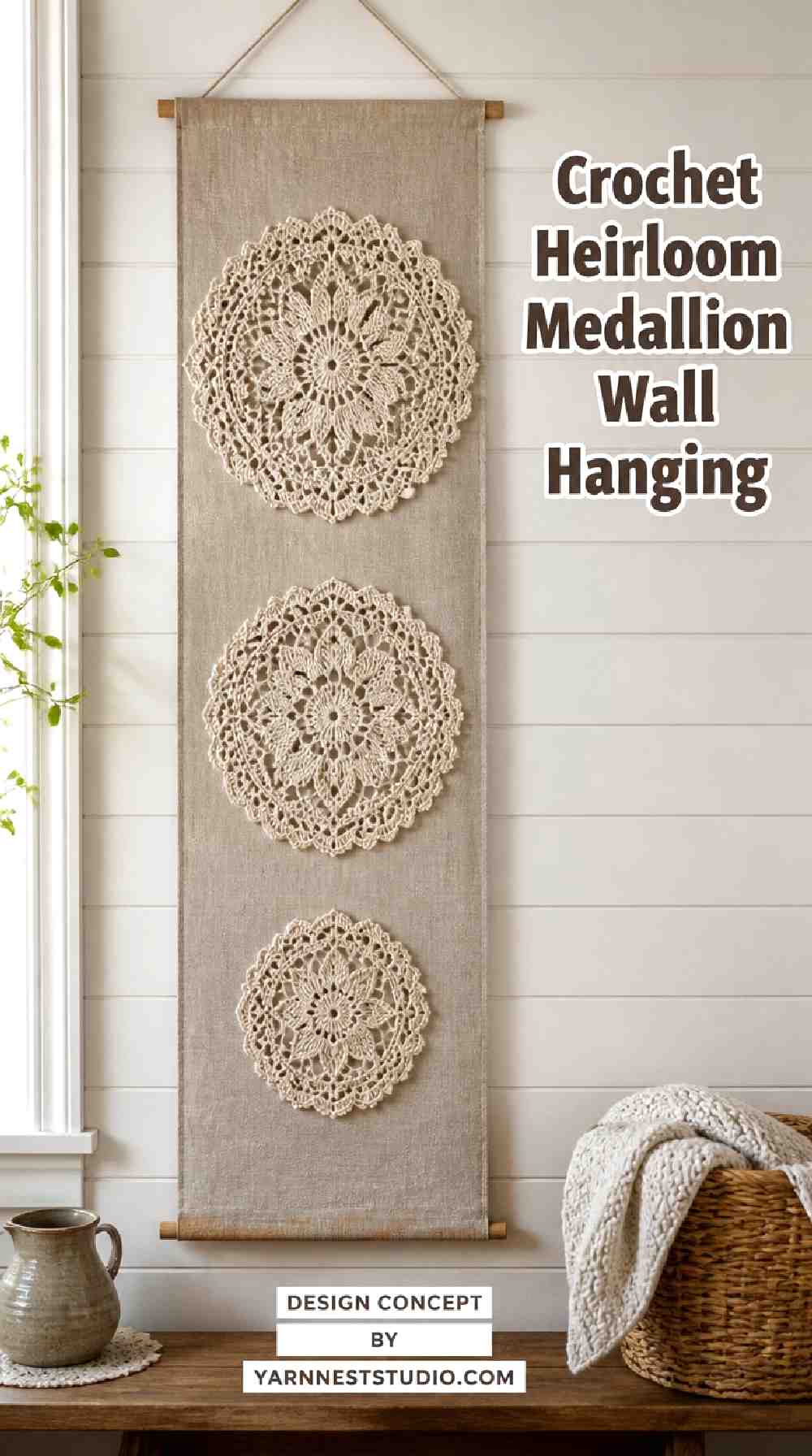
Three antique-ecru crochet doilies form a vertical composition, with the largest medallion at the top and the smallest at the bottom. Each circular piece has its own floral center and delicate scalloped border, creating gentle variation within the same neutral palette.
The doilies sit separately on a narrow flax-linen panel suspended between two wooden dowels. This display uses their changing sizes to create movement, while the fabric panel offers a continuous backing that keeps all three medallions visually connected.
Three-Medallion Arrangement
The descending sizes give the hanging a natural top-to-bottom rhythm. Leave enough separation so each individual floral center and scalloped border remains recognizable.
Floral Center Variation
Using different crochet flower centers introduces visual interest without changing the ecru palette. Keep the overall thread weight reasonably consistent between the pieces.
Scalloped Circular Edges
Each medallion should retain a distinct circular outline. Avoid attaching the lace so tightly that the scallops disappear against the fabric.
Flax-Linen Support Panel
The linen provides a common backing for all three designs. Choose a fabric with enough stability to hang smoothly without excessive sagging.
Wooden Dowel Placement
The upper dowel supports the complete panel, while the lower one helps define its end. Check the attachment and hanging hardware carefully.
Vertical Wall Space
This arrangement is useful between windows or beside tall furniture. Measure the full panel and dowels before deciding whether the location has enough clearance.
Attaching Separate Doilies
Removable hand stitching could hold each medallion in place while allowing individual cleaning. Support the outer edges as well as the centers when necessary.
Ecru Color Consistency
The pieces share a warm neutral tone. If combining different threads, compare their color and texture in daylight to avoid an unintended mismatch.
Cleaning the Complete Hanging
Fabric and crochet may have different care requirements. Consider whether the medallions can be removed before cleaning the larger linen panel.
For other approaches to vertically displayed crochet, explore 15 Crochet Wall Hanging With Tassels Ideas. That collection focuses on different wall-hanging structures rather than the framed doily arrangements shown here.
6. Crochet Dusty Blue Fan Doily Art
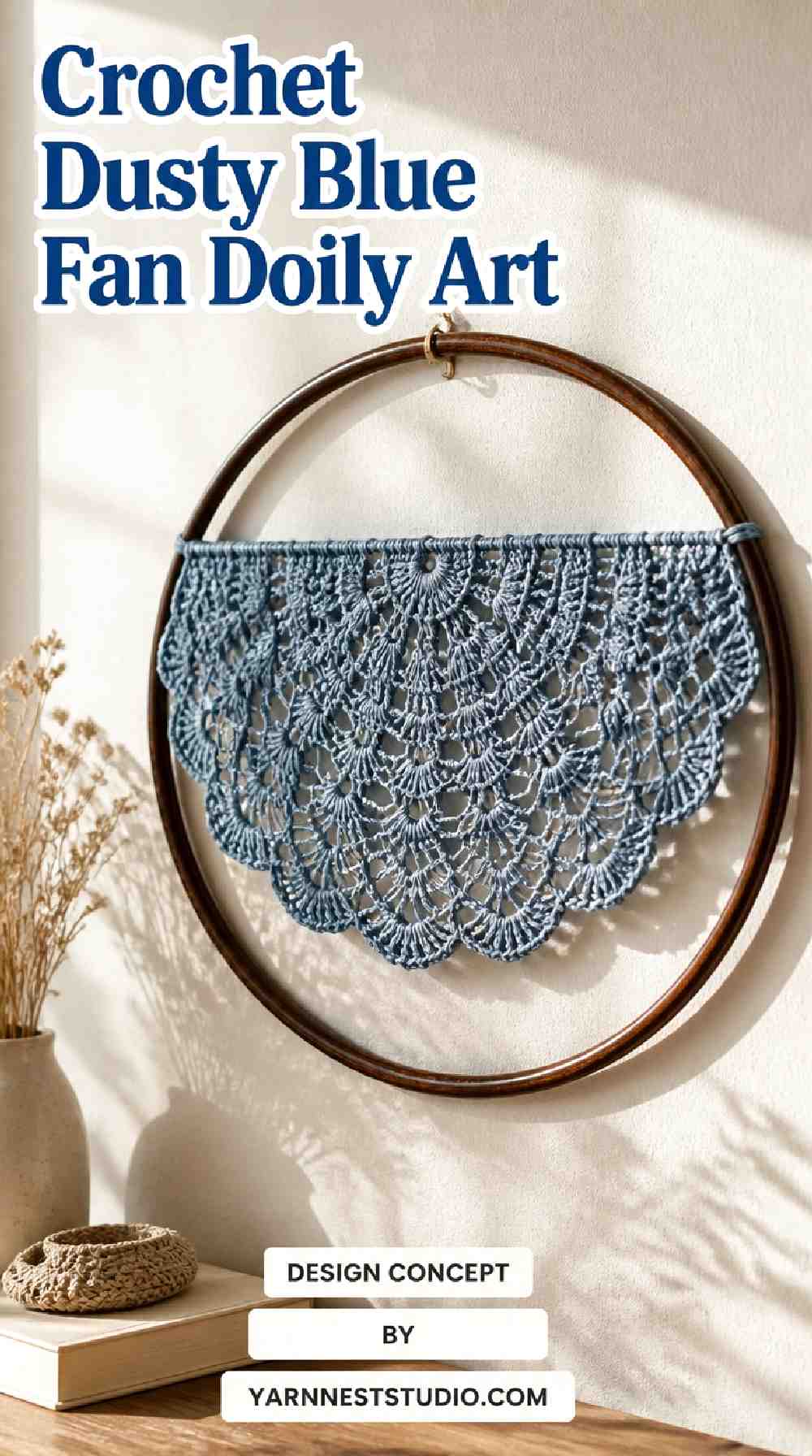
Radiating dusty-blue crochet fans create a semicircular lace panel with a straight upper edge and a softly scalloped lower edge. The open spaces between the fan groups make the pattern feel light, while the curved outline gives the design its distinctive half-moon shape.
The lace is anchored across the upper portion of a walnut circular hoop, leaving the lower section open. This unusual placement allows the fan silhouette to stand on its own, although the straight attachment needs enough support to maintain the intended curve.
Half-Moon Lace Shape
The semicircle differs from a conventional round doily. Preserve the straight upper line and evenly curved scalloped edge when adapting the concept.
Radiating Fan Texture
The fan groups should widen gradually toward the lower edge. A sample can help assess whether the selected crochet stitches achieve the desired shape.
Dusty-Blue Color
A muted blue keeps the design subtle. A pale wall offers some contrast, while warm wood adds definition around the otherwise cool-colored lace.
Straight Upper Attachment
The top edge needs several supported attachment points along the hoop. Avoid relying on one central loop to carry the entire panel.
Open Lower Hoop
Leaving the lower hoop visible is central to the composition. Do not cover it with extra fabric if you want to retain the airy half-moon effect.
Scalloped Fan Edge
The curved edge should hang evenly without being pulled unnaturally downward. Check the relationship between individual scallops and the hoop’s diameter.
Frame Material
A smooth walnut hoop complements the blue cotton texture. Sand or finish any rough contact points that could catch the fine lace thread.
Light Wall Placement
A bright hallway or bedroom wall could show the fan structure clearly. Avoid crowded arrangements that interrupt the open lower half.
Careful Handling
The exposed lace is more vulnerable than a fully enclosed piece. Keep the hanging away from frequent contact, moisture, and direct sunlight.
7. Crochet Antique Sunflower Rosette Doily
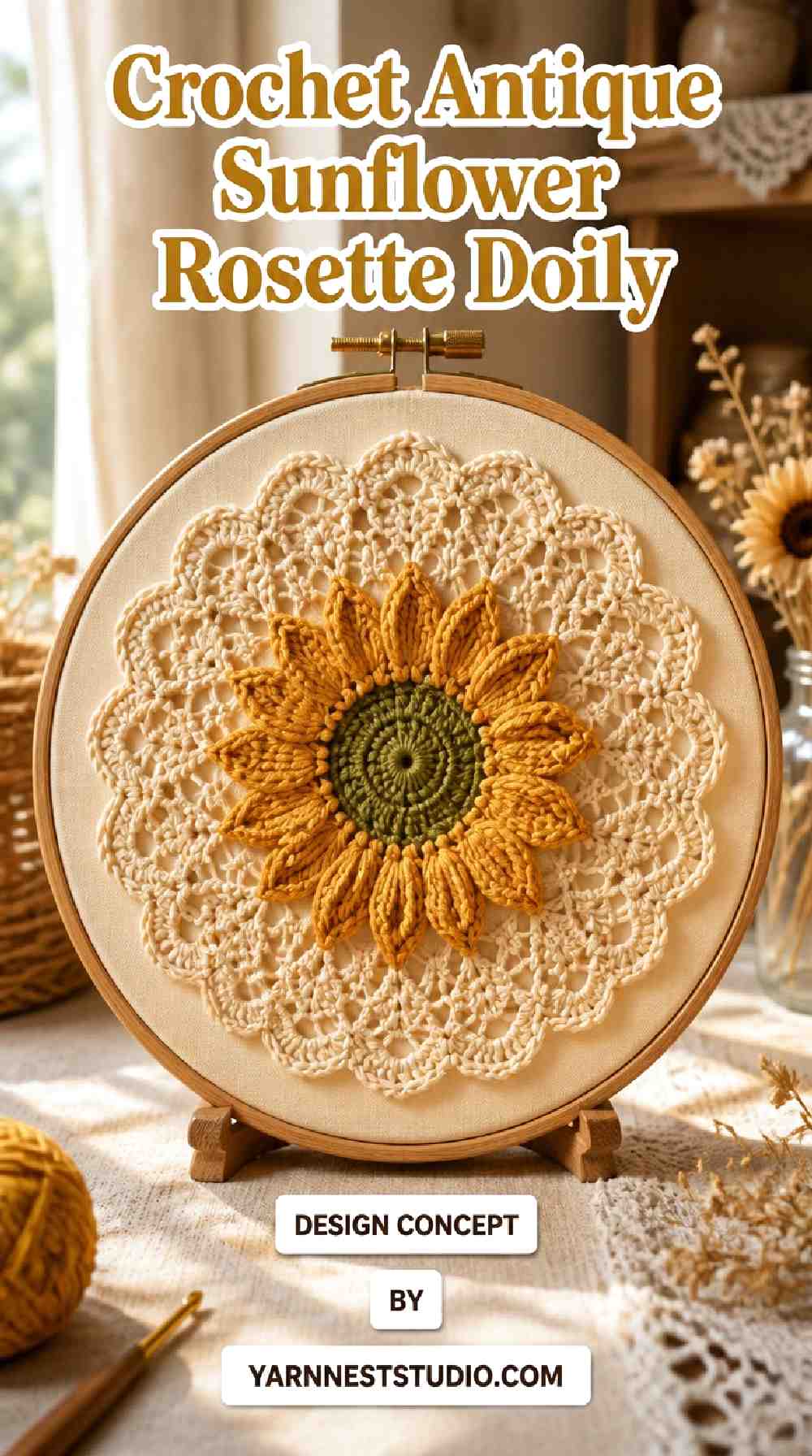
A small olive-green crochet center is surrounded by raised antique-gold petals, giving this circular doily a distinct sunflower appearance. Beyond the flower, antique-cream openwork spreads into a round lace border finished with soft scallops.
The contrast between the textured petals and the finer surrounding crochet makes the central flower stand forward visually. Mounted on warm cream fabric inside a natural-oak hoop, the design combines botanical detail with traditional doily lace, without needing a complicated multicolor background.
Raised Sunflower Petals
The antique-gold petals introduce dimension. Choose a crochet flower structure that can hold its intended shape without requiring excessive stiffening or heavy support.
Olive-Green Center
The small green center anchors the warm petals. Its textured stitches should remain proportionate so they do not hide the surrounding sunflower shape.
Cream Lace Surround
Openwork around the flower softens the transition into the circular border. Keep its stitch scale delicate compared with the raised petals.
Circular Hoop Proportions
The hoop should leave enough room around the scalloped border. Check the completed lace size rather than choosing a frame based on appearance alone.
Flower & Lace Thread Choice
A consistent cotton-thread family may help coordinate the layers. Test whether the flower and surrounding lace behave similarly during blocking.
Natural-Oak Finish
Light oak complements the gold and cream palette. Ensure the inner hoop surface is smooth wherever it contacts the crochet or fabric backing.
Backing Color
Warm cream fabric creates a gentle vintage finish. A deeper backing is an optional choice if you want stronger definition around the openwork.
Protecting Raised Texture
Do not flatten the flower under tightly fitted glass. A deeper frame or open hoop display may better accommodate its raised crochet petals.
Display & Maintenance
A cottage kitchen wall away from heat and steam, or a bedroom gallery, could suit this design. Avoid damp exposure and dust the piece carefully.
For help understanding how to shape delicate floral lace, Annie’s guide to blocking finished crochet covers doilies, openwork, and several blocking methods. It is general technique guidance, not a pattern for this flower design.
8. Crochet Lavender Butterfly Doily Display
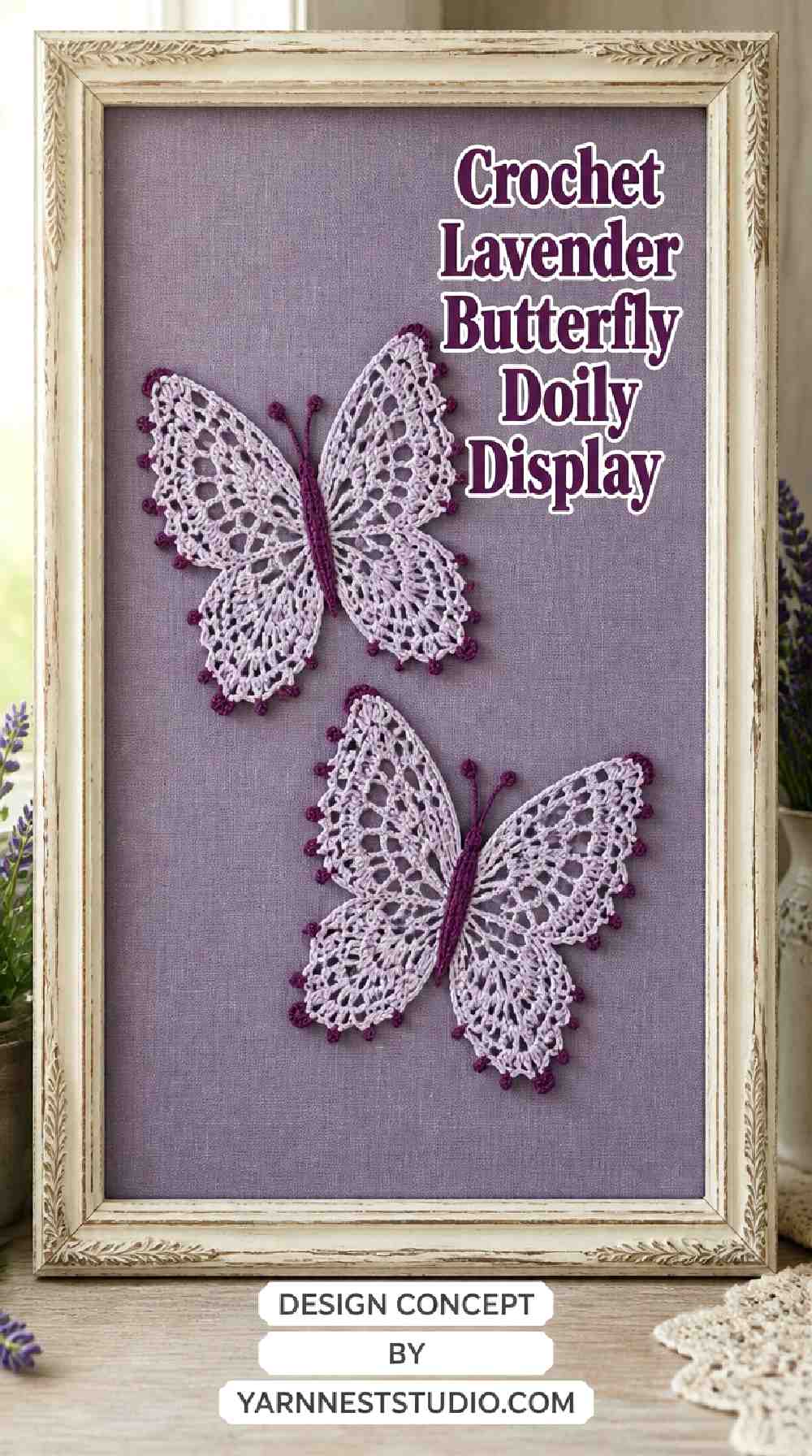
Two butterfly-shaped crochet mini doilies sit diagonally within the same frame, each formed from pale-lavender openwork wings and a narrow plum-colored center. Small plum picots finish the wing edges, helping the symmetrical butterfly outlines stand out.
The butterflies remain separate against muted violet linen, allowing their delicate wing openings to be appreciated individually. Unlike a traditional circular doily, this design turns lace into recognizable botanical-inspired shapes, which could work particularly well as a smaller decorative piece.
Mirrored Wing Shapes
Each butterfly has two symmetrical pairs of wings. Check that the crochet pattern creates balanced left and right sides before mounting the pieces.
Lavender Openwork
The pale wing sections contain the main lace detail. Slightly darker backing fabric helps reveal the openings without overwhelming the soft lavender color.
Plum Central Detail
A slim plum center separates the wing sections visually. Keeping this element narrow preserves the airy appearance of the butterfly silhouettes.
Picot Wing Edges
Small plum picots define the outer wings. Avoid unusually large picots if you want the delicate vintage-lace appearance shown in this concept.
Diagonal Composition
The two butterflies sit diagonally, leaving visible space between them. Their orientation should feel balanced rather than crowded into one corner.
Rectangular Frame Choice
A compact rectangular frame allows both butterfly shapes to remain visible. Check the internal opening and allow clearance around every outer wing tip.
Fabric Mounting
Small attachment stitches placed through stable sections may help hold each butterfly flat. Avoid stretching delicate wing openings during installation.
Color Harmony
Lavender and plum create a soft tonal pairing. An antique-cream frame adds contrast without introducing another strong decorative color.
Safe Display
Fine crochet wing tips can snag if left exposed. A protected frame, away from curious pets and frequent handling, may be easier to maintain.
9. Crochet Gothic Pineapple Lace Doily
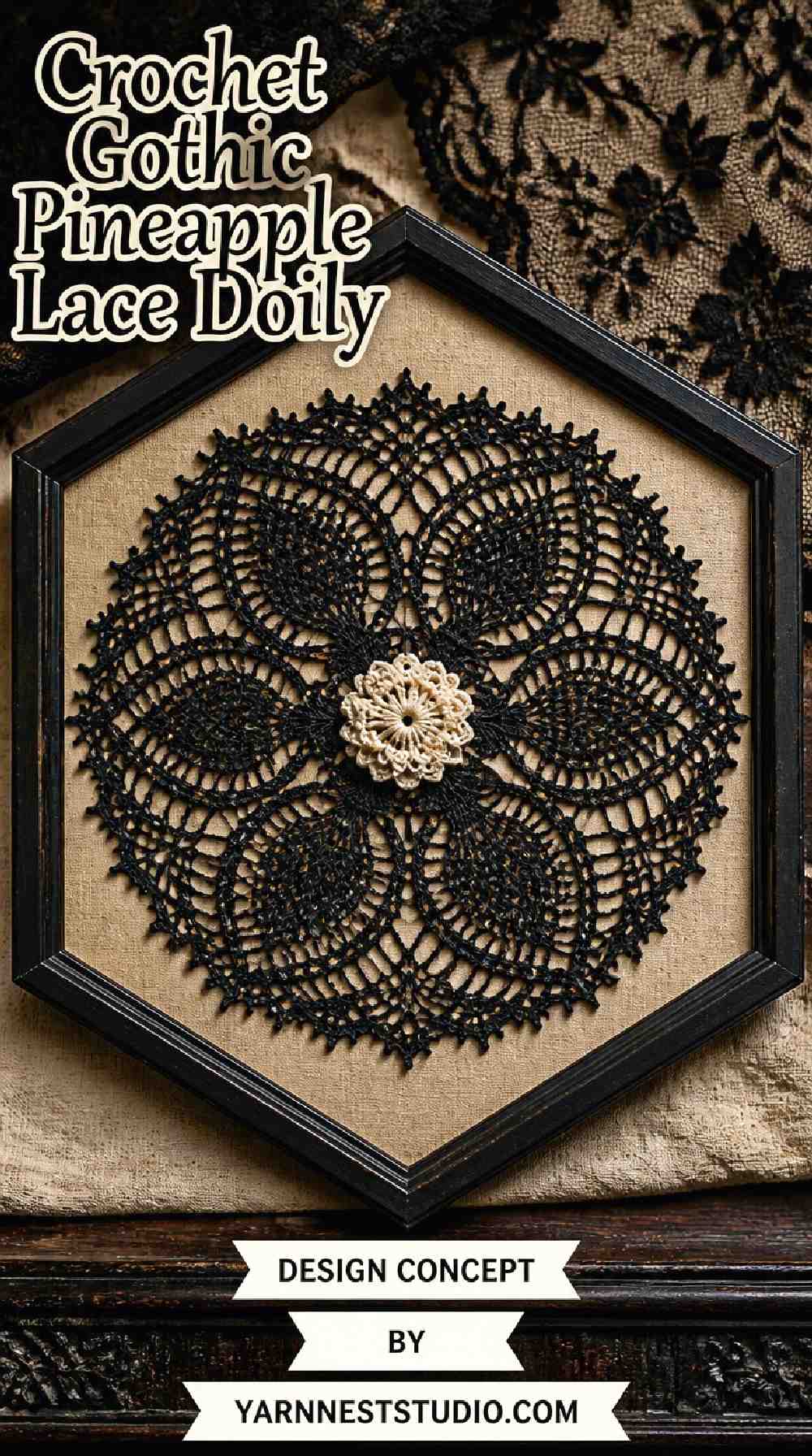
Black crochet lace forms eight pineapple-style sections radiating outward from a small antique-ivory rosette. The doily has open chain spaces between its repeating motifs and a pointed black scalloped edge that creates an intricate circular silhouette.
The parchment-colored backing reveals the black stitches clearly, while the hexagonal frame adds an angular contrast to the round lace. This design takes a traditional pineapple-inspired crochet structure in a darker direction, making the stitch openings more important than extra decoration.
Pineapple Lace Sections
Eight repeating pineapple-style motifs establish the main pattern. Their spacing should remain even so one section does not visually dominate the others.
Antique-Ivory Center
The small ivory rosette adds a controlled focal point. Keeping it compact helps the surrounding black crochet remain the primary visual feature.
Black Cotton Thread
A smooth black thread can emphasize the shape of repeated openings. Test stitch visibility against your selected backing before choosing a very fine thread.
Pointed Scalloped Edge
The pointed perimeter gives this piece its dramatic outline. Blocking should preserve those points without pulling the pineapple sections excessively wide.
Hexagonal Frame
The frame adds straight edges around a circular doily. Centering matters because uneven gaps between the lace and frame sides can become noticeable.
Parchment Backing
The warm light-colored fabric helps reveal the black openwork. A completely black backing would make many of the finer chain spaces difficult to see.
Removable Lace Mounting
Consider discreet hand stitches at stable points of the lace. Avoid adhesive, particularly when working with fine cotton that may need future cleaning.
Well-Lit Display
This darker concept needs adequate light to reveal its stitch details. A brighter wall or a room with soft daylight is a sensible choice.
Traditional Technique Reference
Pineapple lace is a recognizable crochet motif family, but this illustration does not provide an exact pattern. Work from an established stitch or doily pattern if making a physical version.
10. Crochet Blush Heirloom Heart Doily
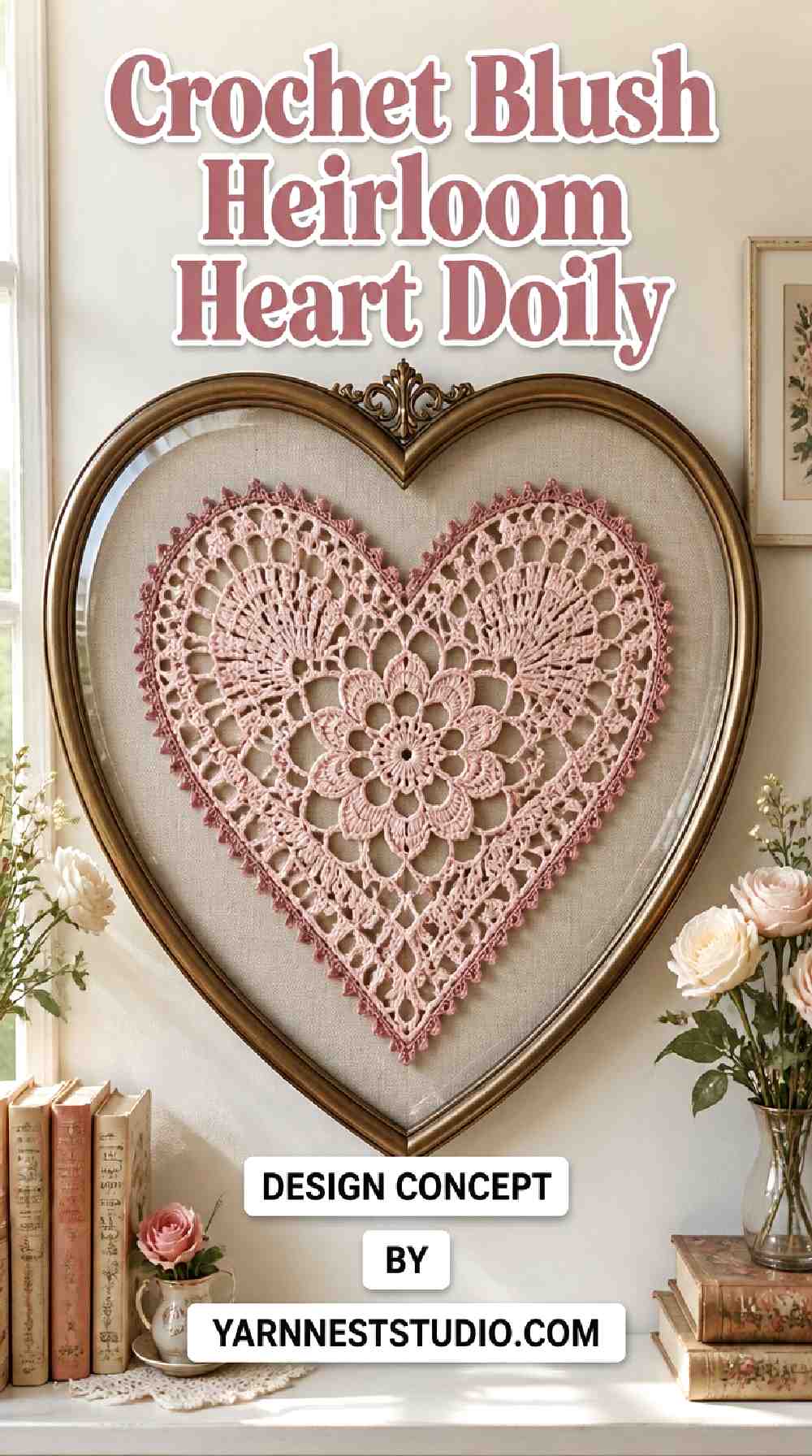
Blush-pink crochet lace creates a large heart with rounded upper lobes, an open floral center, and a clearly defined lower point. Fan-shaped openings fill both halves, while a dusty-rose picot border follows the entire heart silhouette.
The slender antique-brass frame follows the lace’s outline, with oatmeal linen offering a calm background. Its romantic appearance comes from the actual heart-shaped crochet construction rather than added ribbons or artificial flowers. Careful shaping is important because even slight asymmetry can change the heart’s appearance.
Heart-Shaped Construction
The two upper lobes should appear balanced, leading into one defined lower point. Consistent stitch tension helps preserve the intended silhouette.
Floral Openwork Center
The central flower adds texture without filling the heart completely. Leave its surrounding lace spaces open so the floral detail remains recognizable.
Blush & Dusty-Rose Tones
The similar pink shades create a soft vintage palette. Compare them in daylight to ensure the narrow edging remains visible against the body.
Picot Heart Border
Small picots follow the curved outer edge. Gentle blocking may help clarify their spacing without distorting the upper lobes.
Antique-Brass Frame
The frame’s heart shape should accommodate the complete crochet outline. Check the internal depth and avoid placing metal directly against fragile thread where possible.
Glass Clearance
The pictured frame includes protective glass separated from the lace. A spacer can help keep the crochet from touching the glass, especially in humid conditions.
Oatmeal Linen Backing
A neutral backing makes the pale pink stitches easier to distinguish. Choose stable, clean fabric that is appropriate for long-term textile display.
Conservation-Friendly Attachment
If preserving a delicate or older doily, use removable stitching and suitable backing materials rather than glue. This guide to framing and displaying crochet doilies explains several careful mounting considerations.
Occasion & Room Styling
This design could complement a romantic bedroom or anniversary-themed gallery. For a permanent display, protect the pink thread from direct sunlight.
11. Crochet Terracotta Triple Fan Doily
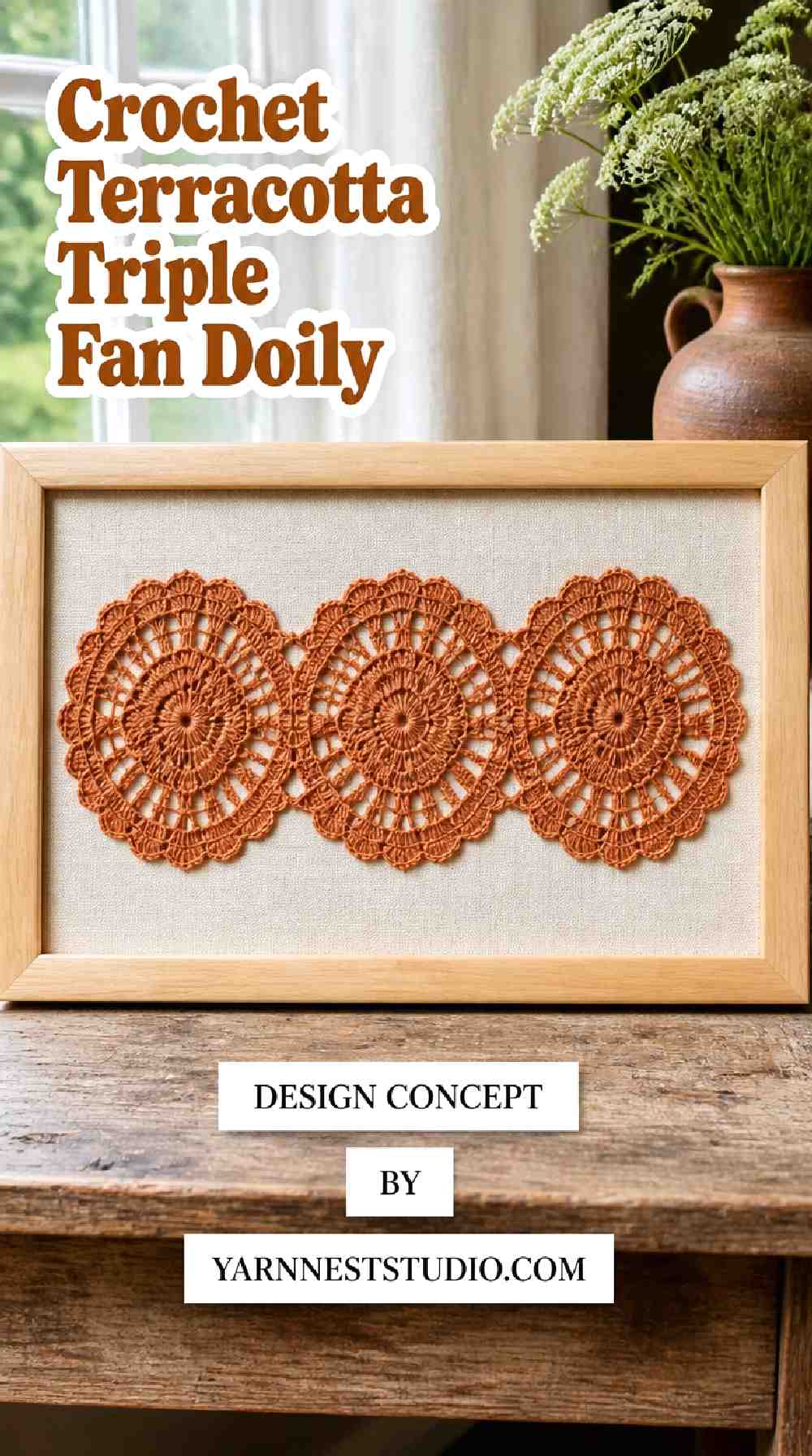
Three terracotta crochet medallions are connected in a horizontal row, each combining a small dense flower center with open fan sections and softly scalloped edges. Tiny matching crochet bridges join neighboring medallions, creating one long lace arrangement.
The pale cream backing allows the terracotta stitches and connecting bridges to remain visible inside a natural-maple frame. This concept offers a practical visual alternative to one oversized doily, especially for a wider wall where several connected motifs can fill the space without looking heavy.
Three Connected Medallions
The repeated circular shapes create a long, balanced arrangement. Each medallion should remain distinct rather than overlapping its neighbors.
Open Fan Sections
Repeated fan openings lighten the terracotta crochet. Maintaining consistent fan sizes can prevent the three medallions from looking like unrelated pieces.
Small Floral Centers
The dense flower centers provide structure within the open lace. Their scale should remain similar across all three circular motifs.
Crochet Connecting Bridges
Tiny bridges join the outer edges. These connections need appropriate stitch support so the arrangement does not pull apart or stretch unevenly.
Horizontal Wall Coverage
A wide rectangular frame works well above a narrow console or small bench. Measure the full arrangement before deciding on the frame proportions.
Maple Frame Finish
Natural maple provides a lighter border than walnut or black wood. The warm tone complements terracotta without competing with the open lacework.
Cream Linen Contrast
Pale cream helps the terracotta stitches stand out. Choose a backing with a relatively smooth surface so its texture does not visually interrupt the lace.
Joining & Blocking
The three medallions should be aligned before final mounting. Block with attention to the bridges so adjacent motifs remain evenly spaced.
Cleaning & Storage
A joined arrangement may be more awkward to handle than individual doilies. Support the complete width if removing it from the backing.
12. Crochet Ivory Snowflake Doily Art
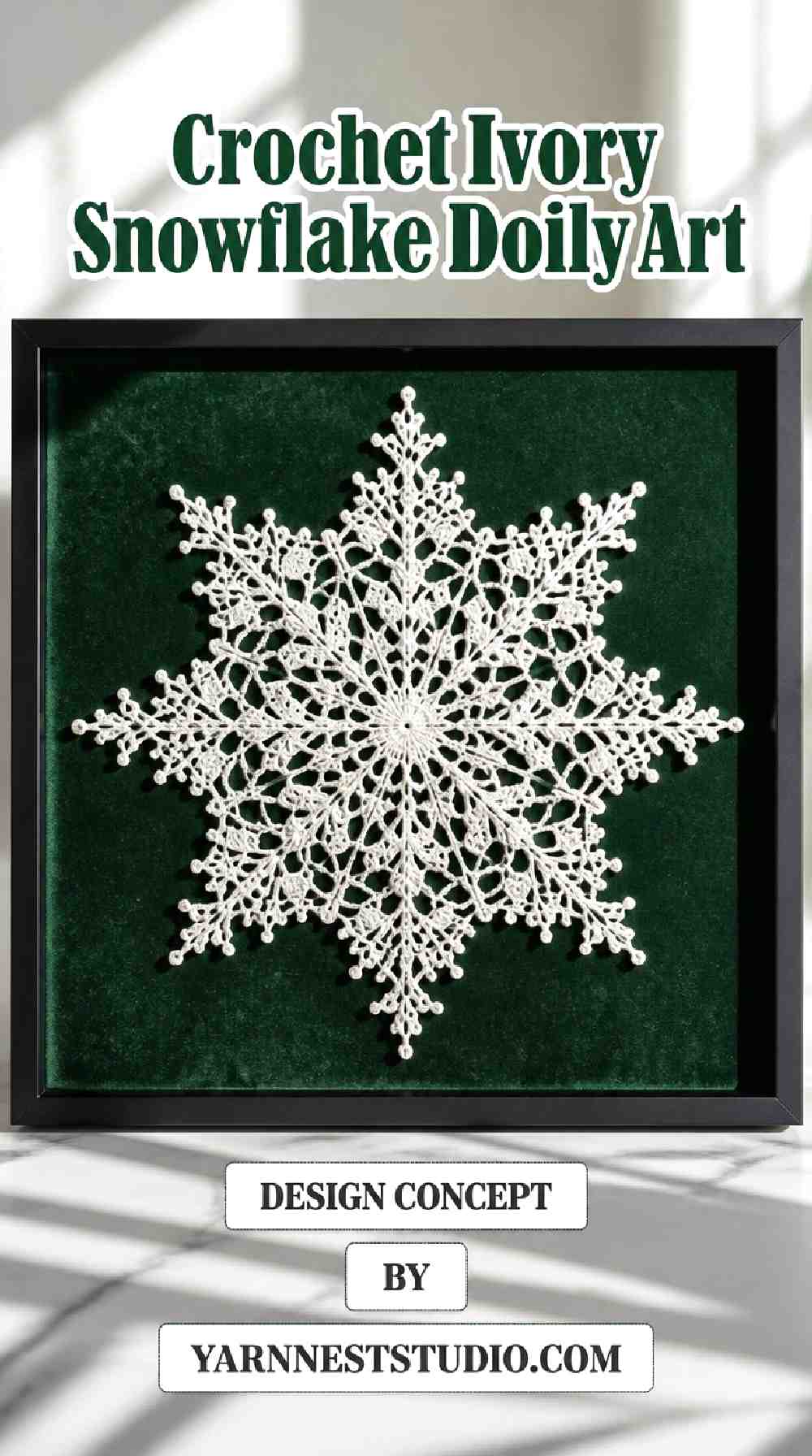
Eight branching points give this snow-white crochet doily the appearance of a delicate snowflake. Fine radial openwork spreads from the center, and tiny white picots finish the tips, emphasizing the crisp outline without introducing another color.
Forest-green velvet creates a strong background for the white lace inside a slim black shadow-box frame. The combination feels seasonal but could also work as year-round geometric wall art. Its pointed edges require careful shaping so the design retains its intended symmetry.
Eight-Pointed Lace Structure
The eight radial points give the doily its distinctive shape. Consistent spacing is important because uneven points can interrupt the overall symmetry.
Fine White Crochet Thread
Fine cotton thread may suit the intricate look. Compare thread thickness carefully, as heavier yarn can make the delicate branching sections appear crowded.
Open Radial Spaces
The spaces between the points form much of the snowflake design. A dense backing color helps those openings remain visible from a distance.
Forest-Green Velvet Backing
Dark green provides strong contrast with the white lace. Use a smooth, stable backing arrangement to prevent the velvet pile from catching the thread.
Black Square Frame
The square outline creates a geometric contrast with the snowflake. Leave enough empty backing around the points so they do not touch the frame edges.
Picot Tip Definition
The small white picots complete the branching silhouette. Shape them gently rather than pulling them into unusually sharp or exaggerated extensions.
Winter & Year-Round Styling
This piece can suit winter decorating without relying on holiday lettering. Its simple two-color arrangement may also work in a traditional study.
Protected Display
A shadow box can reduce casual contact with the delicate points. Keep the lace separated from glass and avoid displaying it near moisture.
Long-Term Color Care
White cotton may show dust and discoloration over time. Use appropriate materials and keep the finished artwork away from strong direct sunlight.
13. Crochet Teal Baroque Oval Doily
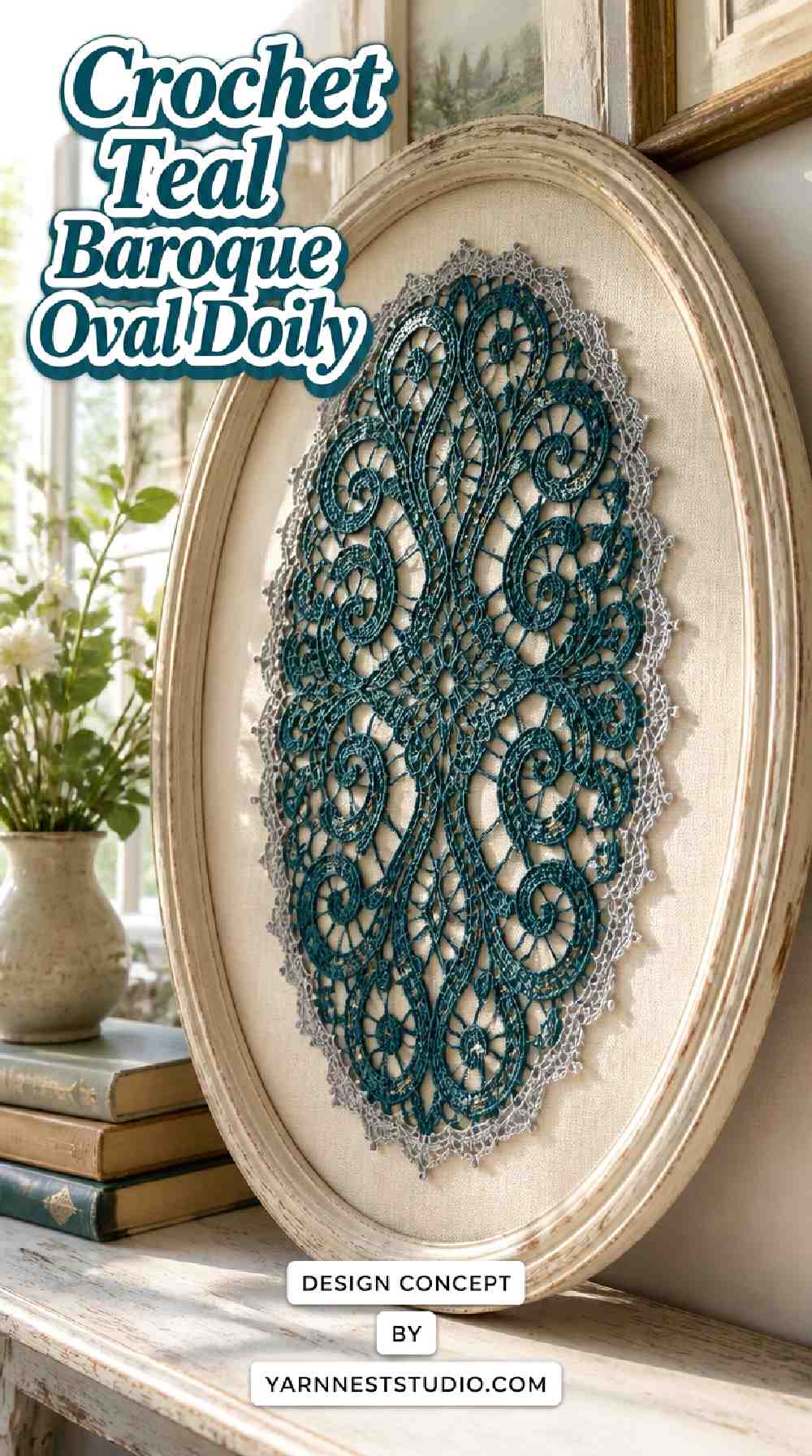
Deep-teal crochet lace creates an elongated oval with mirrored scrolling openwork sections and softly rounded ends. A narrow silver-gray border finishes the entire perimeter, giving the richly colored lace a lighter outline without distracting from its curved structure.
The pale-oak oval frame and ivory backing make the teal stitches easy to see. This design relies on elegant scrolling forms rather than floral motifs, making it a useful choice for vintage-inspired rooms where a slightly more formal lace pattern would fit.
Mirrored Scroll Motifs
The curling lace sections should balance on both sides of the oval. Uneven motif spacing can make the center appear shifted.
Elongated Oval Shape
The long form works well in narrow vertical arrangements. Check that both rounded ends remain visible inside the frame.
Deep-Teal Thread
Teal provides strong color without requiring several contrasting yarns. Select a thread that reveals the small openwork spaces clearly.
Silver-Gray Outer Edging
The narrow edging defines the shape against the pale backing. A restrained border keeps attention on the teal scrolling motifs.
Pale-Oak Frame
The distressed light-wood finish softens the darker thread. Check the inner frame surface for rough areas before positioning the crochet.
Ivory Background Contrast
Warm ivory allows the teal lace openings to stand out. A more textured backing could compete with the fine scrollwork.
Preventing Oval Distortion
Blocking should preserve the rounded ends and straight visual alignment through the center. Avoid stretching only one side to fit the frame.
Mounting the Scrollwork
Place support stitches where the lace is structurally stable. Fine projecting sections may need additional gentle support to remain flat.
Choosing the Display Spot
This arrangement could suit a traditional hallway or a quiet bedroom wall. Give the oval frame clear space around its ends.
14. Crochet Champagne Pearl Lace Doily
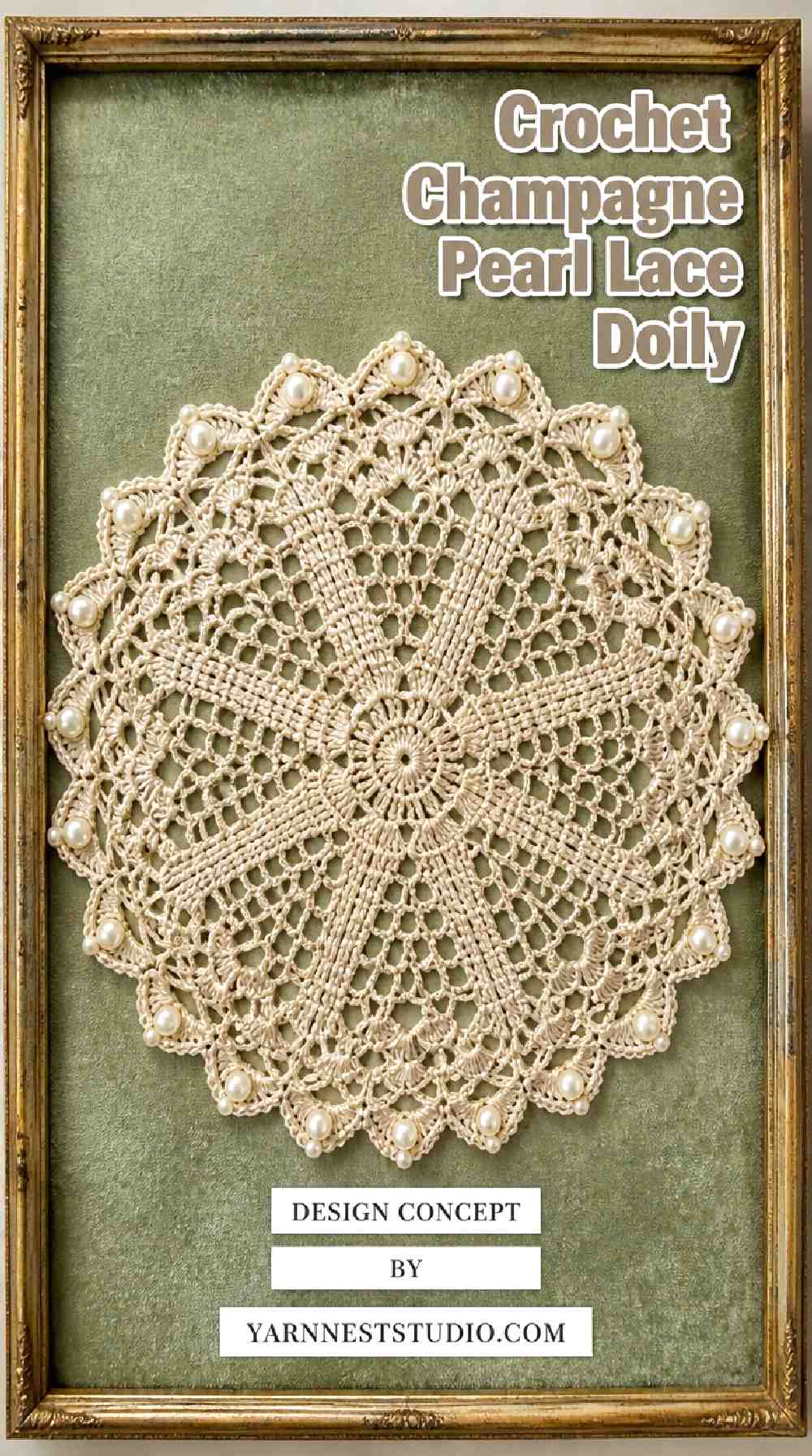
Champagne-cream crochet forms a large circular doily with a closely patterned center and eight broad open lace petals. Small ivory faux-pearl beads sit at evenly spaced scallop tips, adding a subtle raised detail along the perimeter.
The antique-gold shadow box and muted sage backing emphasize the warm cream lace without overwhelming its fine texture. The bead placement provides a decorative finish that differs from a plain picot border, but it also requires more attention to attachment and long-term care.
Eight Open Lace Petals
The broad petal sections create the main circular pattern. Keep the openings sufficiently defined so the design does not appear overly dense.
Champagne-Cream Thread
Warm cream gives the doily its vintage-inspired tone. Compare potential threads beside the sage backing to choose an appealing level of contrast.
Faux-Pearl Border
Small beads decorate the scallop tips. Their scale should remain modest so the crochet lace remains the main feature.
Secure Bead Attachment
Any actual beads would need careful individual fastening. Avoid placing small detachable embellishments where children or pets could reach them.
Sage Velvet Backing
Muted sage brings out the warm cream thread. Make sure the backing is stable and does not catch the lace when the artwork is mounted.
Square Shadow-Box Frame
A square frame leaves room around the circular doily. The extra depth can help protect the raised beads from pressure.
Scallop Alignment
The border should maintain an even circular shape. Check the position of the scallops before attaching decorative beads.
Antique-Gold Finish
The warm metallic frame complements the champagne tone. A restrained finish works better than adding more shiny details around the lace.
Cleaning Delicate Embellishments
Beaded lace needs gentler handling than an undecorated doily. Check both the thread and bead attachments before attempting any cleaning.
15. Crochet Olive Fern Doily Wreath
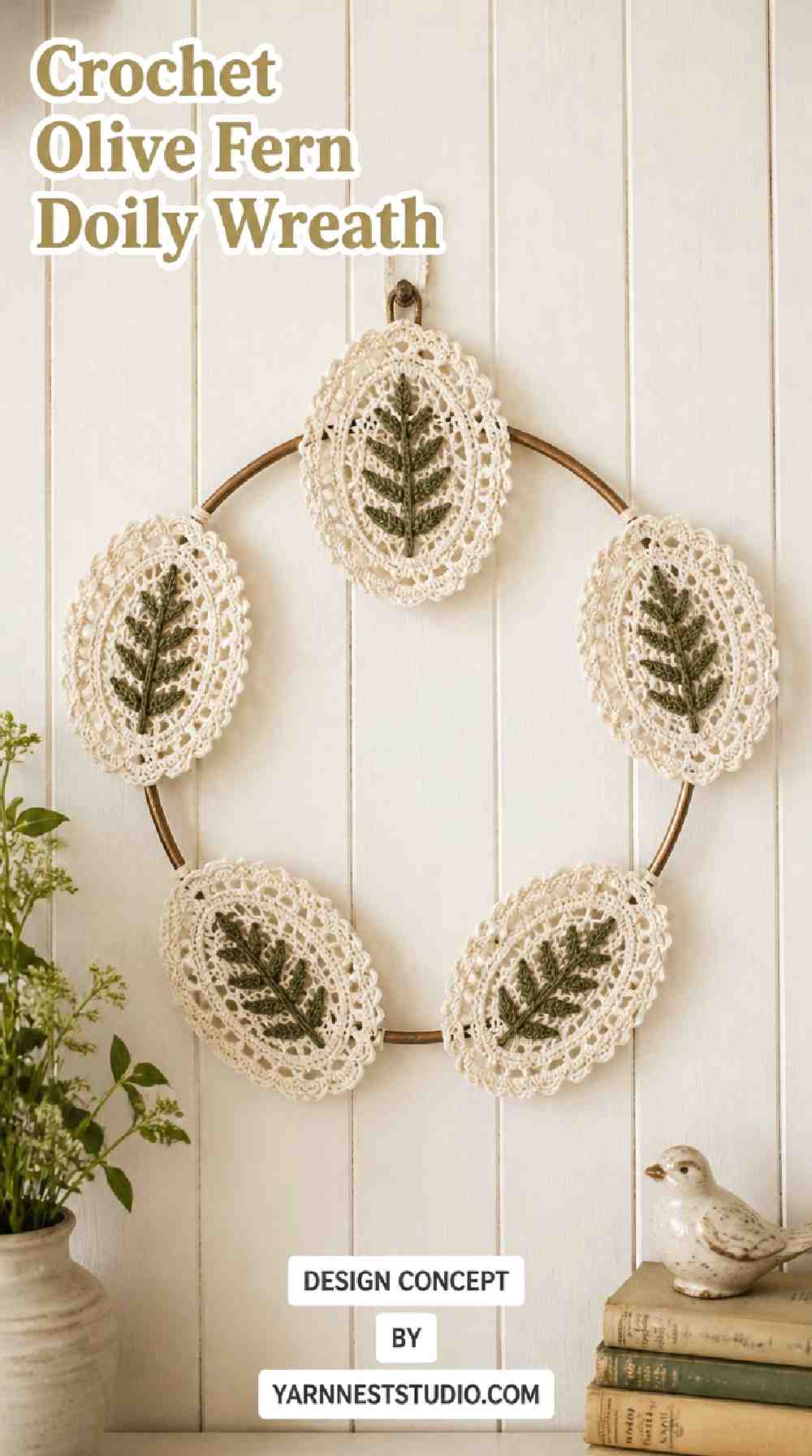
Five small oval crochet doilies form a loose wreath around an aged-copper hoop. Each oval contains a dark-olive fern-like central motif, surrounded by antique-cream openwork and softly scalloped ends.
The mini doilies are attached at several points around the hoop, leaving the center completely open. This arrangement turns separate lace pieces into one circular wall display while allowing each botanical motif to remain visible. Its light construction is visually appealing, although careful attachment is essential for keeping the ovals evenly positioned.
Five Oval Lace Motifs
The wreath uses five separate oval pieces rather than one continuous circle. Their spacing should feel balanced without forcing the ends to overlap.
Fern-Like Centers
Dark-olive crochet forms the central botanical details. Keep the individual leaf shapes distinct so the motifs remain recognizable within the openwork.
Antique-Cream Borders
Cream lace edges soften the dark-green centers. The scallops help distinguish each oval from the circular metal frame behind it.
Copper Hoop Placement
The thin hoop provides the main circular outline. Check that its finish is smooth and unlikely to stain the crochet where the materials touch.
Open Wreath Center
The middle remains empty, preserving the airy appearance. Adding a large central decoration would change the balance of this design.
Attachment Points
Each oval needs several appropriate fastening points. Distributing support can help prevent the mini doilies from twisting or sliding around the hoop.
Botanical Color Palette
Olive, cream, and aged copper create a subdued cottage look. These colors work well with natural wood and warm neutral walls.
Display Above Furniture
The open wreath could suit a small entryway wall or a botanical gallery. Keep it away from doors that swing into the hanging.
Dust & Storage Considerations
Individual lace motifs can catch on nearby objects. If storing the wreath, support its circular shape and protect the exposed scalloped edges.
16. Crochet Victorian Rose Window Triptych
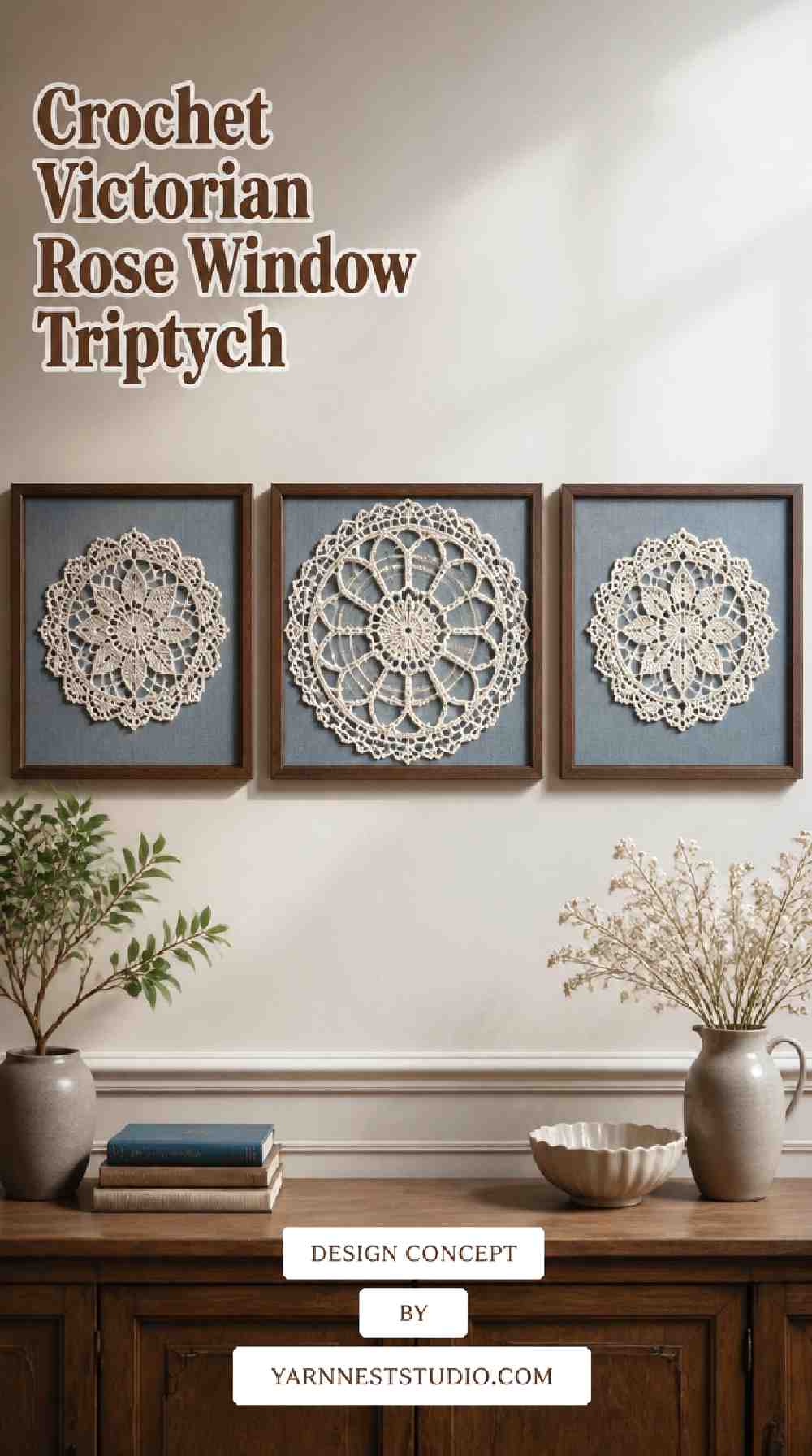
Three ivory crochet lace doilies sit inside separate square walnut frames, arranged as a horizontal triptych. The larger central medallion features a rosette surrounded by radiating cathedral-window sections, while the two smaller side doilies use simpler starflower centers and fine scalloped edges.
Muted dusty-blue backing gives all three pieces a shared background. The matching thread color and framing connect the designs, while the different central motifs create enough variation to make the three-part arrangement interesting.
Central Rose Window Motif
The larger central doily establishes the main focal point. Its radiating lace sections should remain clearly visible inside the square frame.
Smaller Starflower Medallions
The two side pieces use simpler floral centers. Keeping their scale and edge treatment similar helps the arrangement feel coordinated.
Consistent Ivory Thread
A shared ivory tone links all three pieces. Compare actual threads in daylight if using yarn from different batches or sources.
Dusty-Blue Backings
The same muted blue background provides visual unity. Consistent backing fabric also helps the different lace structures look like one collection.
Three Walnut Frames
Slim matching frames maintain a restrained vintage appearance. Check that all three have similar finish, depth, and hanging hardware.
Horizontal Spacing
The gaps between frames affect the complete composition. Test the arrangement on the floor before marking the wall for installation.
Different Medallion Sizes
The central design is larger within its frame, while the sides leave more backing visible. This deliberate difference creates a clear visual hierarchy.
Mounting Each Piece
Separate frames allow independent attachment and cleaning. Each doily should have enough support to prevent curling or slipping inside its display.
Wall Size & Position
A wider wall above a sofa or console could suit the triptych. Measure the full three-frame arrangement, including the spaces between frames.
For another approach to decorative crochet framing, explore 13 Crochet Whimsigoth Arched Mirror Frame Ideas for Moody Winter Decor. That collection uses lace details around mirrors rather than presenting doilies as separate wall art.
17. Crochet Copper Layered Lace Doily
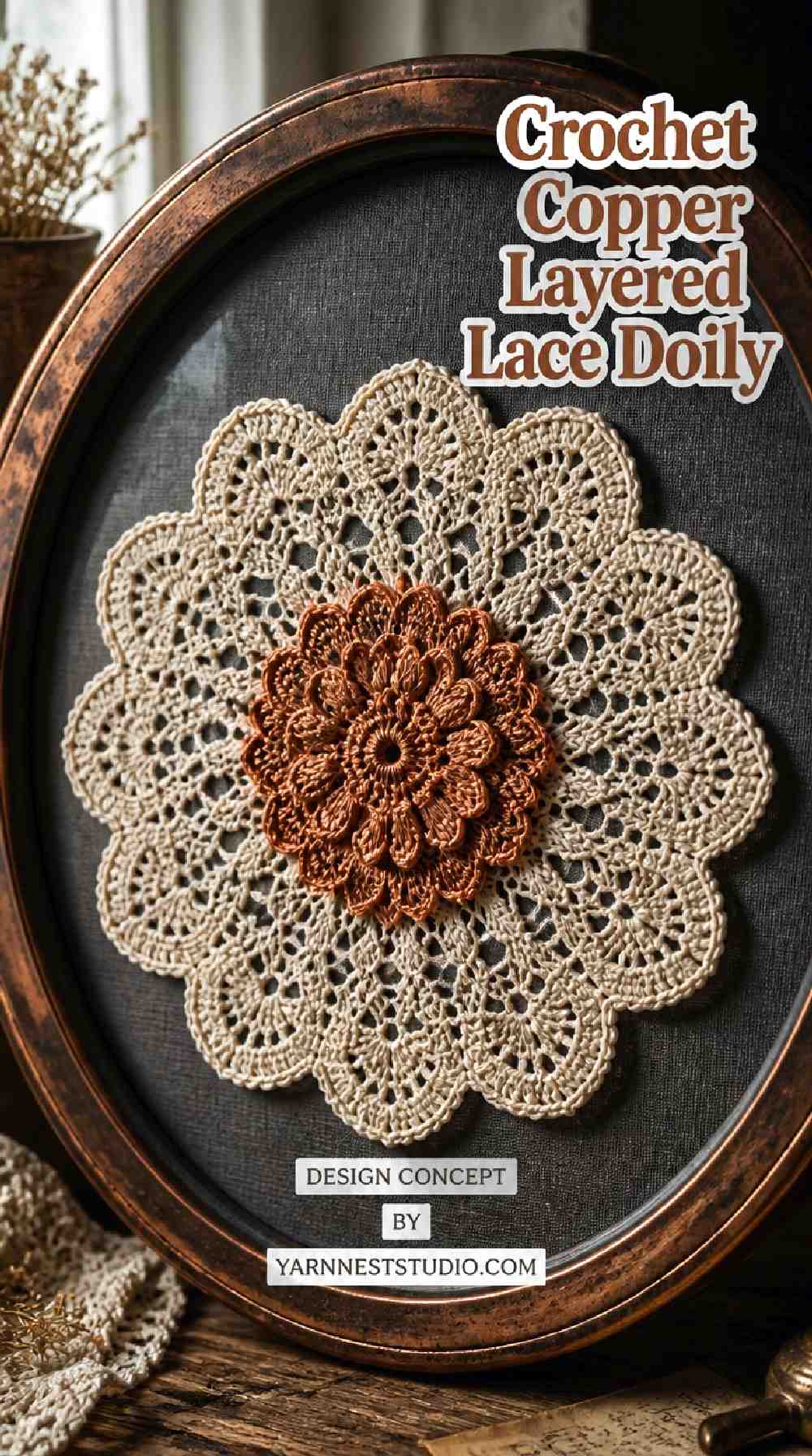
A large antique-ivory crochet doily forms the outer layer of this circular design, with ten broad scalloped lobes and open radial lacework. A smaller copper-colored rosette sits above its center, introducing raised petal stitches and a second, warmer texture.
The shallow layering is visible against charcoal linen inside a distressed-bronze shadow box. Its appeal comes from the contrast between delicate flat lace and the more dimensional central flower. The two pieces need careful support to preserve that layered effect without distorting the larger doily.
Ten-Lobed Outer Doily
The ivory lace has ten broad scallops around its perimeter. Keeping their spacing consistent gives the layered composition a balanced circular outline.
Raised Copper Rosette
The smaller copper flower sits above the center. Its textured petals create shallow depth without covering the outer lace sections.
Contrasting Crochet Textures
Fine openwork surrounds the denser raised rosette. This difference gives the design visual depth even though both pieces use similar crochet materials.
Copper & Ivory Palette
The warm copper center stands out against the antique-ivory base. The charcoal backing strengthens that contrast without adding another bright color.
Layered Mounting Method
Both crochet pieces need suitable support. Consider separate removable stitches rather than attaching the smaller rosette permanently to delicate outer lace.
Bronze Shadow-Box Depth
The frame must accommodate the raised center without pressing it flat. Check the internal clearance before choosing a mounting arrangement.
Charcoal Linen Backing
Dark neutral fabric makes the ivory lace openings easy to read. Ensure the backing is smooth enough to avoid catching delicate threads.
Maintaining Circular Symmetry
The smaller rosette should sit centrally within the ten outer lobes. Check alignment before final mounting to prevent an unintentionally uneven appearance.
Care & Display Limitations
Layered crochet can collect dust between its surfaces. Choose a protected wall location and plan for careful removal if cleaning becomes necessary.
Comparison: Which Crochet Doily Wall Art Design Should You Choose?
The best design depends on the space you’re decorating, the amount of lace detail you prefer, and how much maintenance you’re comfortable with.
| Design | Main advantage | Trade-off to consider |
|---|---|---|
| Victorian Rose Cameo Doily | Traditional oval framing with a raised floral center | Needs clearance for the raised rosette |
| Sage Botanical Diamond Doily | Compact square shape and muted botanical colors | Fine sage stitching needs sufficient contrast |
| Midnight Starburst Lace Doily | Dramatic, open twelve-point silhouette | Exposed lace needs careful support |
| Heirloom Medallion Wall Hanging | Fills a tall, narrow wall with three separate motifs | Fabric panel and doilies may need separate cleaning |
| Blush Heirloom Heart Doily | Romantic heart silhouette with delicate floral lace | Curves and lower point need accurate shaping |
| Champagne Pearl Lace Doily | Subtle raised bead embellishments | Small beads require secure attachment |
| Olive Fern Doily Wreath | Lightweight-looking botanical arrangement with an open center | Multiple motifs require reliable fastening |
| Victorian Rose Window Triptych | Coordinated artwork for a wider wall | Needs careful frame alignment and more horizontal space |
| Copper Layered Lace Doily | Strong depth and texture contrast | Layering needs adequate frame depth and support |
For a small starting display, the Sage Botanical Diamond or Lavender Butterfly arrangement offers a manageable visual scale. For a more elaborate feature wall, the Rose Window Triptych or Heirloom Medallion Hanging provides a larger composition.
If preserving delicate vintage lace is your priority, consider a properly supported, conservation-minded framed display rather than exposed mounting or permanent adhesives.
Conclusion
Crochet vintage lace doily wall art works best when the display brings out the stitches that make each piece special. A simple oval frame can highlight a delicate rosette, while contrasting fabric can reveal fine pineapple lace, geometric stars, or botanical motifs. Larger arrangements offer another way to use several smaller doilies together.
Before choosing a design, consider the available wall space, thread weight, backing contrast, attachment method, and cleaning needs. Those practical decisions can make the difference between a visually attractive concept and a piece you can comfortably display and care for over time.
Which design would you choose for your home? Would you prefer the dark Midnight Starburst, romantic Blush Heart, or the three-frame Victorian Rose Window arrangement? Share your favorite and where you’d display it.
Frequently Asked Questions
1. Can I turn an existing crochet doily into wall art without damaging it?
Often, yes, but the best mounting method depends on the doily’s age, condition, and thread. For a delicate or inherited piece, consider reversible hand stitching to a suitable acid-free backing rather than glue. Avoid excessive stretching, and consult a textile conservator if the doily is especially valuable or fragile.
2. Should crochet lace doilies be blocked before framing?
Blocking can help define scallops, straighten edges, and reveal open lace stitches. However, the correct method depends on the fiber and condition of the doily. Follow the thread manufacturer’s care advice, test unfamiliar materials first, and avoid excessive heat or tension, particularly with older lace.
3. What backing color looks best behind vintage crochet lace?
Choose the backing according to the thread color and stitch openness. Antique-ivory crochet often looks clear against dusty blue, sage, or dark teal, while black lace generally needs a light backing. Try several fabric samples behind the actual doily before choosing a permanent display.
4. Is it better to hang doilies in hoops or picture frames?
Hoops offer an airy, open display and can work well for modern or botanical compositions. Picture frames provide more options for backing and protection, especially when the lace is delicate. Neither is automatically better; compare support, dust exposure, removability, and the room’s humidity before deciding.
5. Are these 17 crochet doily wall art ideas available as patterns?
No. These are original AI-visualized design concepts, not tested patterns or complete construction instructions. You can use them to explore colors, shapes, framing, and decorative arrangements, then find established crochet patterns or tutorials for the individual lace techniques. A finished project may differ from the illustration depending on the chosen thread, stitches, blocking, and mounting method.