A tiny crochet axolotl plush is a charming way to turn a much-loved aquatic creature into a handmade-inspired pocket companion. Those unusual side gills, rounded faces, little legs, and expressive tails give axolotls a recognizable shape even at miniature scale. This collection explores 16 different designs, from classic blush-pink amigurumi and sleepy lavender characters to tiny swimmers, textured gills, colorful gradients, and unusual display-friendly shapes.
Pocket-sized plush designs can be especially interesting because their proportions matter so much. A large head, curled tail, or oversized gills may look adorable in a photograph but become harder to construct or carry at a very small size. These ideas help you compare body shapes, facial details, stitch textures, colors, stuffing, and decoration choices before choosing an axolotl concept to explore.
These are AI-generated crochet design visualizations for inspiration, not photographs of tested handmade plush toys or step-by-step patterns. Actual size, durability, and safety must be checked in a finished item.
Quick Design Selection Guide
- For a classic cute axolotl: Choose Crochet Blush Pink Chubby Pocket Axolotl, Crochet Mint Pebble Axolotl Mini Plush, or Crochet Sage Cream Two Tone Axolotl.
- For sleepy and gentle expressions: Compare Crochet Lavender Sleepy Axolotl Pocket Pal and Crochet Pearl Ivory Scallop Gill Axolotl.
- For interesting gill details: Explore Crochet Butter Yellow Ruffle Gill Axolotl, Crochet Coral Bobble Gill Pocket Axolotl, and Crochet Bubblegum Pink Heart Gill Axolotl.
- For swimming-shaped designs: Look at Crochet Powder Blue Long Tail Axolotl and Crochet Teal Paddle Fin Pocket Axolotl.
- For unusual color and texture: Consider Crochet Midnight Blue Starry Axolotl Mini, Crochet Lilac Ribbed Belly Axolotl, and Crochet Sunset Sherbet Ombre Axolotl.
1. Crochet Blush Pink Chubby Pocket Axolotl
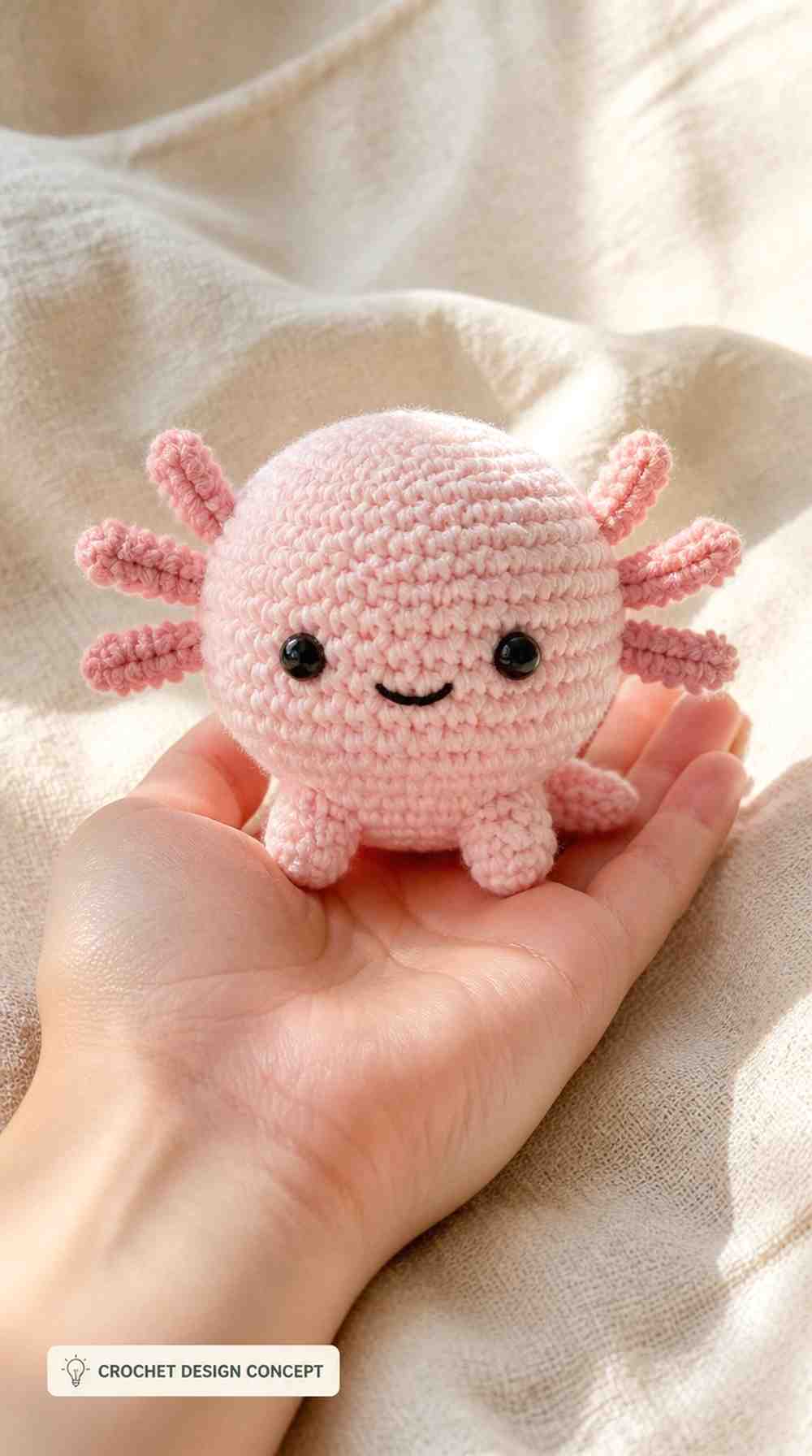
Soft blush-pink crochet gives this tiny axolotl an instantly recognizable, cheerful appearance. Its oversized round head sits above a short, plump body with four miniature legs. Three darker rose-colored gill fronds extend from each side, while a little tapered tail completes the silhouette.
The embroidered black eyes and curved smile keep the expression simple. Its compact upright shape makes it appealing as a small desk companion or collectible. A real version would need carefully balanced stuffing so the large head does not overwhelm the tiny body.
- Head-to-Body Balance: Keep the head visibly larger than the torso while checking that the finished plush can maintain its intended upright pose.
- Rose Gill Placement: Attach the three gill fronds on each side at matching positions so the face remains balanced.
- Embroidered Expression: Small stitched eyes and a short smile provide facial detail without adding separate plastic eye pieces.
- Stuffing Shape: Fill the rounded head gradually to avoid lumps and excessive pressure on the tiny limb attachment points.
2. Crochet Lavender Sleepy Axolotl Pocket Pal
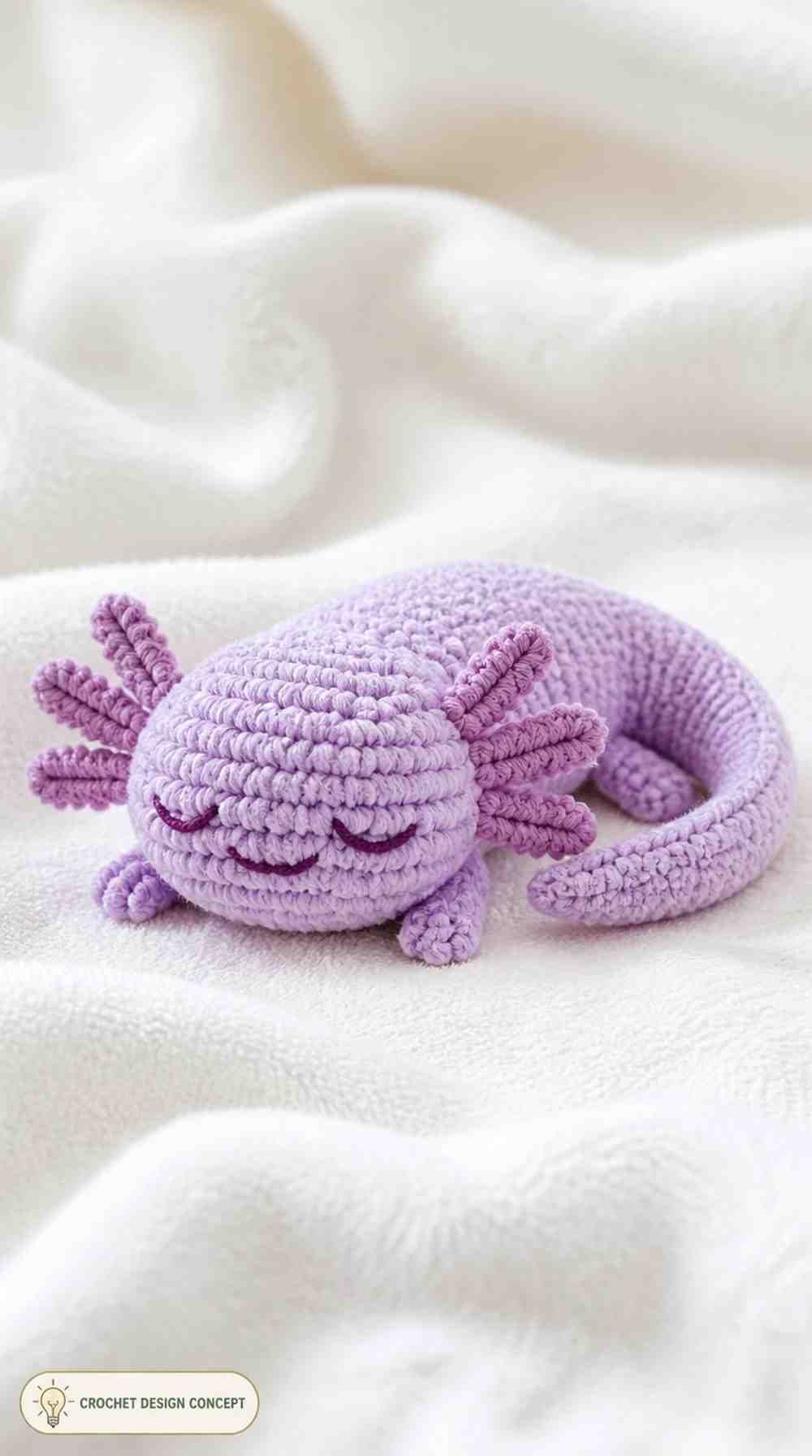
A sleepy expression gives this lavender crochet axolotl a peaceful little personality. Its elongated body rests close to the surface, with four low-positioned feet and a small tail curled around the right side. Dusty-lilac gills frame the rounded face, while embroidered plum eyelids create the closed-eye expression.
Unlike the upright chubby designs, this axolotl is meant to look relaxed and gently curled. The low body makes the tail an important visual feature. Careful shaping would help preserve that curve without making the plush too stiff.
- Curled Tail Shape: Keep the small tail close to the body without covering the legs or pulling the stuffed torso sideways.
- Closed-Eye Embroidery: Use matching crescent-shaped stitches for both eyes to create a consistent sleepy expression.
- Low Body Profile: Avoid overstuffing the underside if the intended design is meant to rest naturally on its belly.
- Soft Gill Arrangement: Dusty-lilac fronds should frame the face without drooping across the embroidered features.
3. Crochet Mint Pebble Axolotl Mini Plush
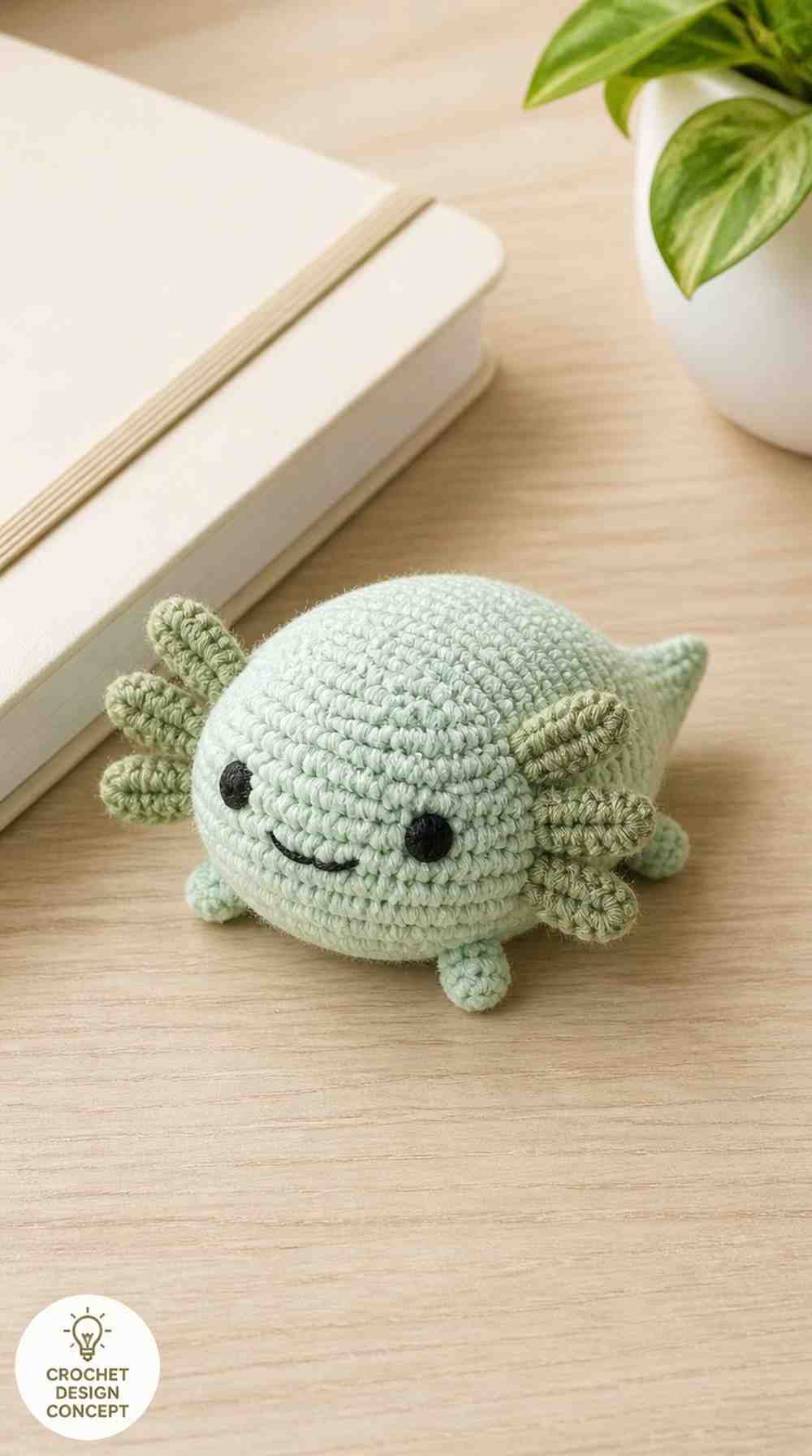
Mint-green crochet gives this tiny axolotl a fresh, playful appearance. Its body resembles a softly rounded pebble, with the broad face and torso forming one compact silhouette. Four very small feet and a tiny pointed tail keep the outline recognizable without adding much bulk.
Three short sage-green gill tabs decorate each side of the head. The simple embroidered face and smooth crochet surface suit a minimalist amigurumi style. Because there is no obvious neck, the body shaping carries much of the design.
- One-Piece Appearance: A smoothly shaped head-and-body form can reduce visible seams, although the actual construction method depends on the chosen pattern.
- Compact Gill Tabs: Shorter fronds may be less visually bulky than long decorative gills, but still need secure attachments.
- Pebble-Like Proportions: Keep the plush wider than tall to preserve its rounded bean-shaped appearance.
- Pocket Portability: Check the completed width including the gills before deciding whether it fits comfortably in a pocket or pouch.
4. Crochet Butter Yellow Ruffle Gill Axolotl
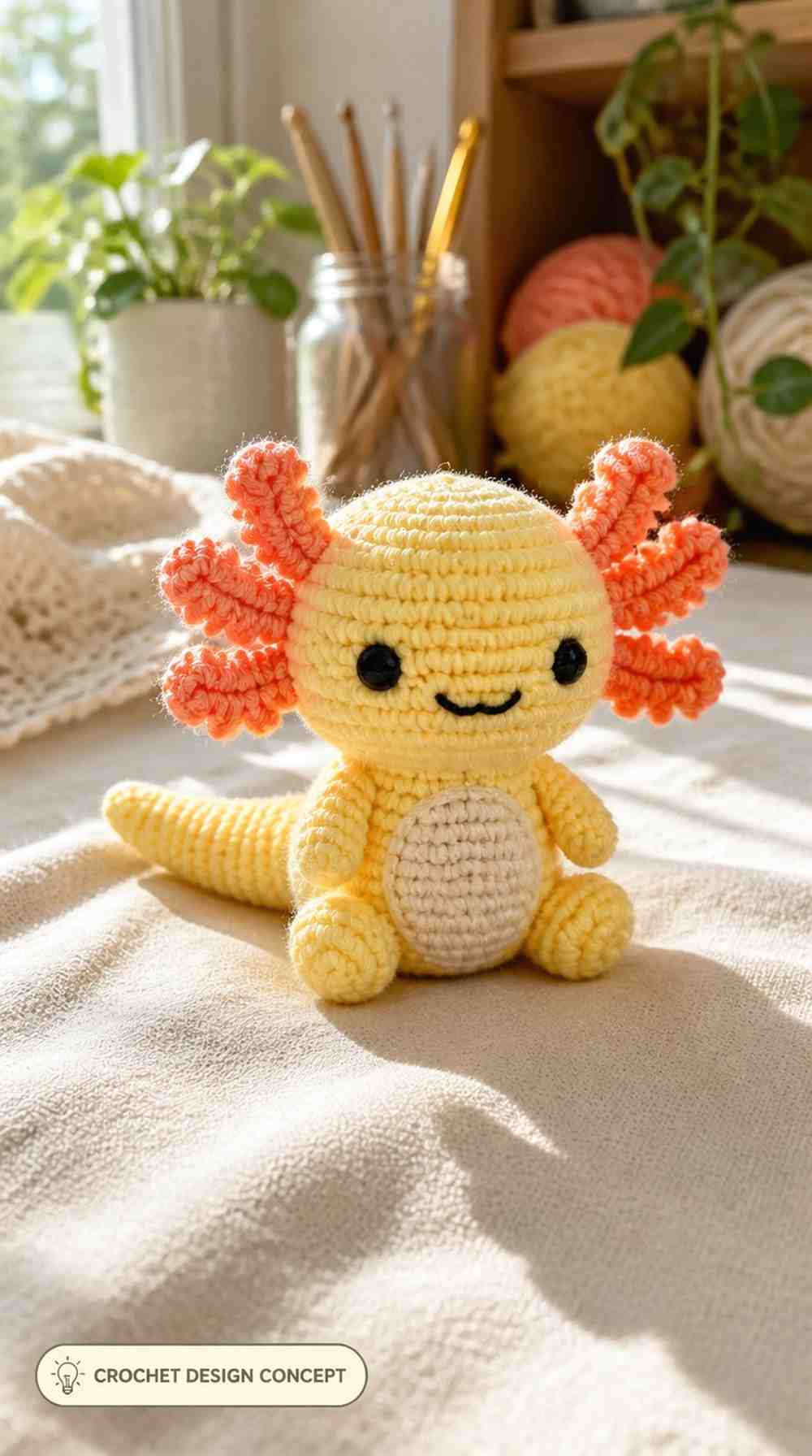
Butter-yellow crochet gives this miniature axolotl a bright, cheerful look. Its round head and compact seated body are decorated with a pale-cream belly patch, while the tiny legs and short tail maintain a simple silhouette. Coral-orange gills stand out along both sides of the head.
Each gill has small scalloped ruffles rather than a smooth tubular shape. This textured edging creates the main decorative feature. A real version would require careful attention to the ruffles because miniature curved stitches can become bulky when worked too tightly.
- Ruffled Gill Edges: Keep the coral scallops small enough to distinguish the three separate fronds on each side.
- Cream Belly Patch: A flat, neatly attached oval adds contrast without substantially changing the plump body shape.
- Gill Weight: Extra crochet along the frill edges may increase the weight of the head decorations.
- Stitch Definition: Smooth yarn can help the small scallops remain visible rather than blending into one fuzzy outline.
5. Crochet Peach Heart Belly Pocket Axolotl
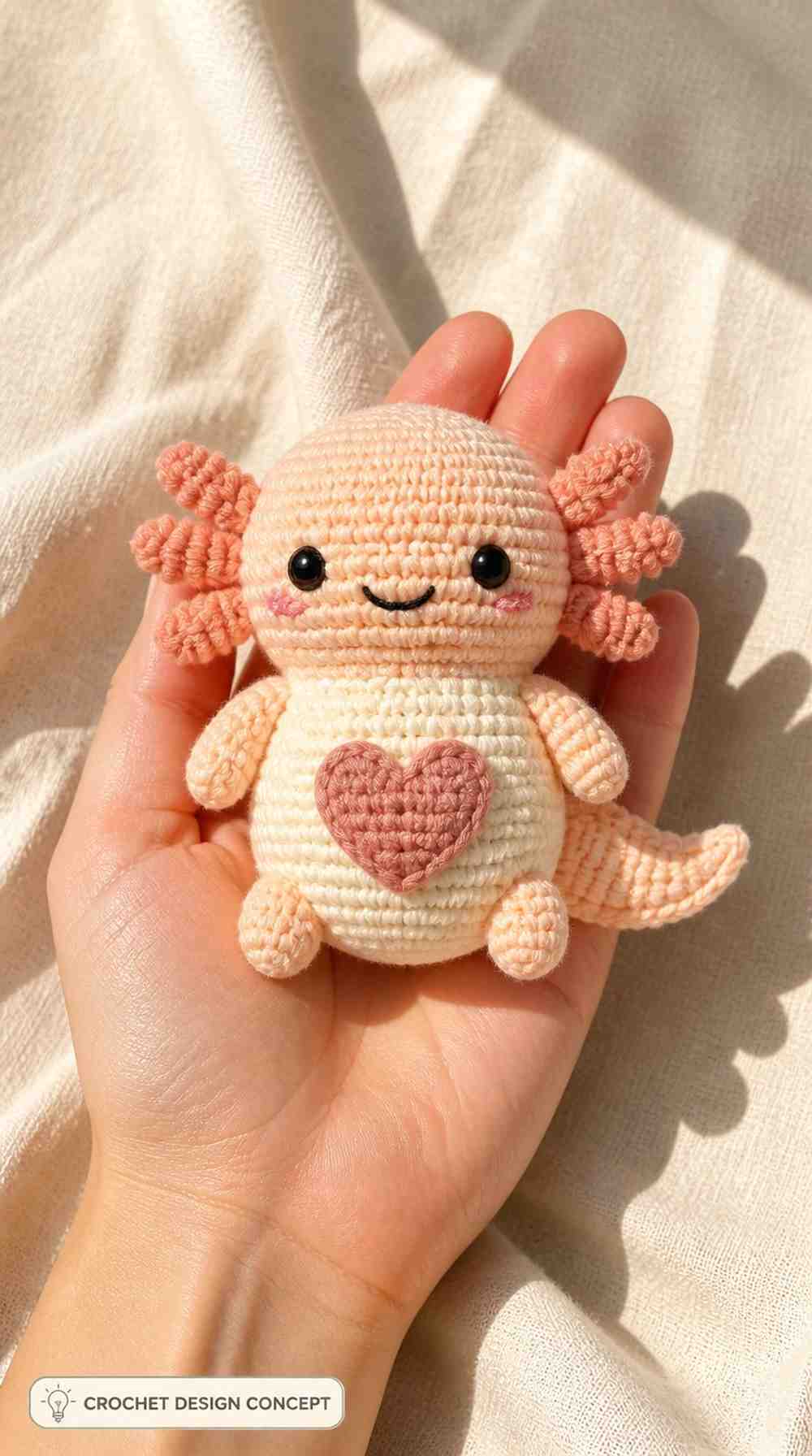
Pale-peach crochet creates a soft, romantic look in this tiny axolotl plush. A rounded head, pear-shaped torso, four small legs, and curved tail form the main body. Three coral gills appear on each side, while a dusty-rose crochet heart decorates the cream-colored belly.
The embroidered cheek marks and curved smile give the character an especially sweet expression. The heart is a flat decorative appliqué, not a usable pocket. Keeping it firmly attached would matter more than adding additional detail to the already compact plush.
- Heart Appliqué Placement: Center the dusty-rose heart on the cream belly without covering the tiny arms or lower body.
- Flat Flower-Free Decoration: A simple heart provides a distinct accent without introducing bulky bows or dimensional motifs.
- Cheek Embroidery: Small rose-colored stitches can suggest blush while avoiding separate beads or other hard facial details.
- Attachment Security: Inspect the entire heart edge for loose yarn sections that could lift or catch during handling.
6. Crochet Powder Blue Long Tail Axolotl
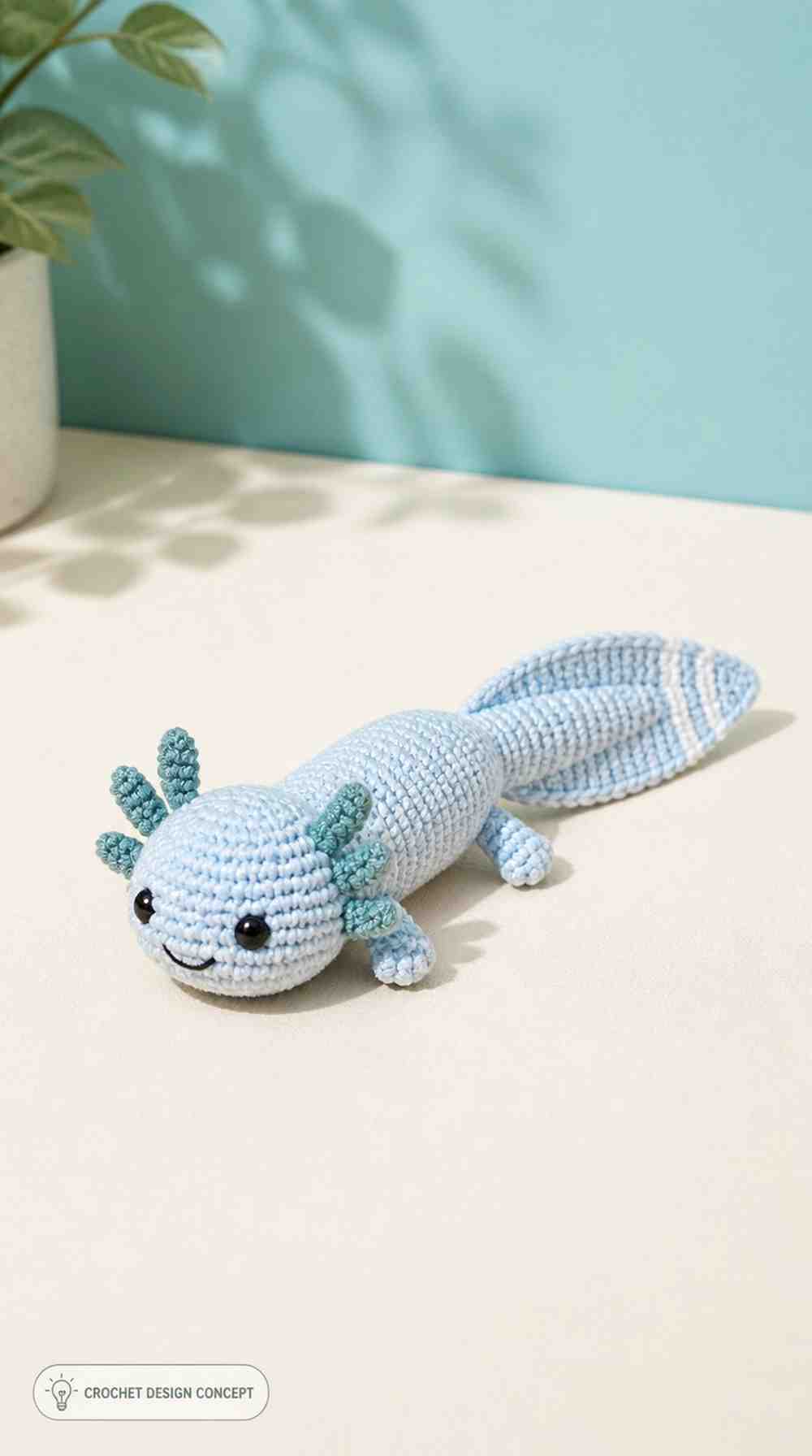
An elongated swimming silhouette makes this powder-blue crochet axolotl different from upright pocket plush designs. Its rounded head leads into a slender horizontal body, with four small side-positioned legs. A longer flattened tail extends behind, finished with two icy-blue stripes and a pale outer fin edge.
Muted-teal gills and a simple embroidered face complete the aquatic appearance. The tail takes up a larger proportion of the overall design, so the finished plush may require a longer pocket or storage pouch than a compact round character.
- Tail Length: Compare the tail with the body before choosing the finished size; the whole plush should remain manageable as one piece.
- Striped Tail Tip: Keep both icy-blue bands narrow and clearly separated near the end of the tail.
- Swimming Silhouette: Side-positioned legs should remain visible without interrupting the smooth horizontal body shape.
- Tail Stuffing: A flattened tail may need less stuffing than the head, depending on the construction used to preserve its intended outline.
7. Crochet Coral Bobble Gill Pocket Axolotl
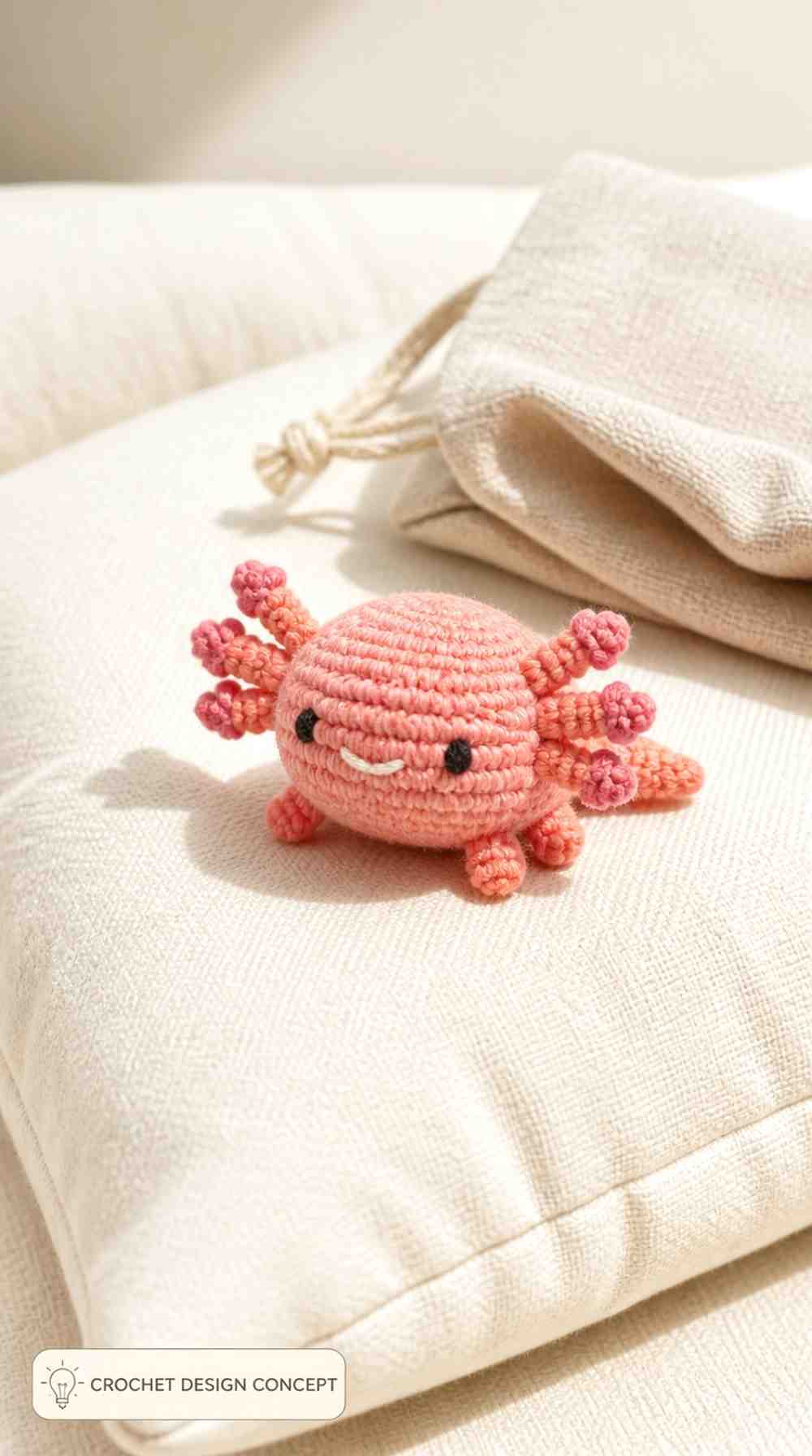
A rounded coral-pink body gives this tiny axolotl a soft bean-like shape. Its miniature limbs and narrow tail stay understated, while three strawberry-colored gills on each side carry tiny raised crochet bobbles. Two embroidered charcoal eyes and an ivory smile finish the face.
The contrast between the smooth body and textured gills makes this idea especially interesting. The raised bobbles provide character without additional clothing or accessories. Their small scale also makes consistent tension important so the fronds retain similar shapes.
- Bobble Gill Texture: Keep the small raised stitches consistent along the outer edges of the six gills.
- Smooth Body Contrast: Closely worked coral stitches make the bobble details more noticeable without needing extra colors.
- Gill Symmetry: Arrange the strawberry-pink branches at matching heights on both sides of the rounded head.
- Snagging Consideration: Raised bobbles can catch on loose threads or rough fabric, so check how the finished plush handles pocket storage.
8. Crochet Pearl Ivory Scallop Gill Axolotl
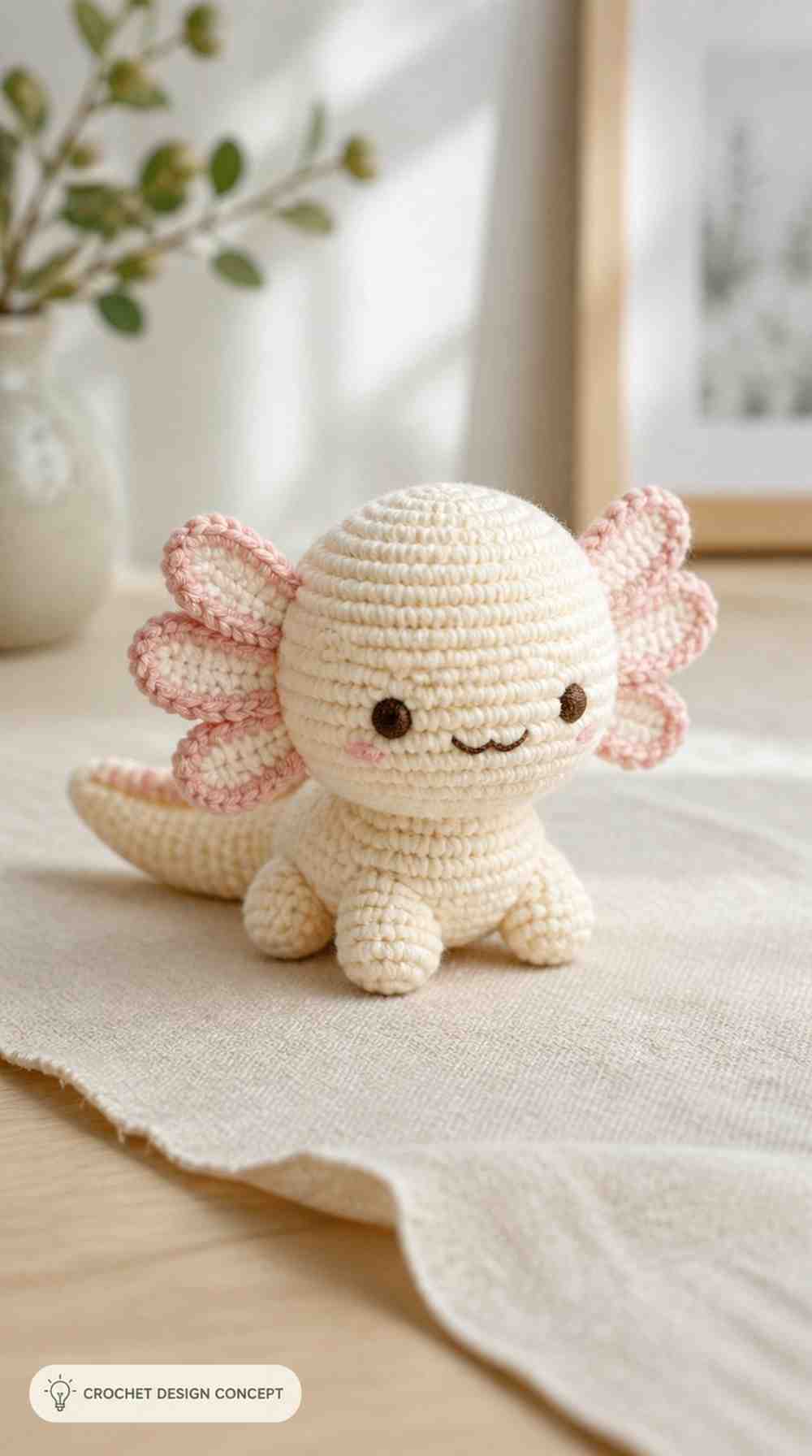
Pearl-ivory crochet gives this miniature axolotl a gentle, elegant appearance. Its slightly tall oval head sits above a compact torso with four small feet and a short tail. Pale-blush gills extend from both sides, each finished with delicate scalloped pink edging.
The warm-brown embroidered eyes, tiny smile, and faint cheek stitches create a soft expression. Rather than using bright body colors, the design relies on detailed edging around the gills. This would be a lovely concept to explore with fine yarn that can hold small crochet curves.
- Scalloped Gill Finish: Keep the pink edging narrow enough for the underlying blush fronds to remain recognizable.
- Ivory Stitch Clarity: Very pale yarn may hide fine details in strong light, so inspect the stitch texture closely when making the piece.
- Compact Feet: Short limbs preserve the slender appearance of the torso without making the lower body overly busy.
- Care of Pale Yarn: Ivory crochet can show surface dirt and fiber transfer, making storage and appropriate cleaning worth considering.
9. Crochet Sage Cream Two Tone Axolotl
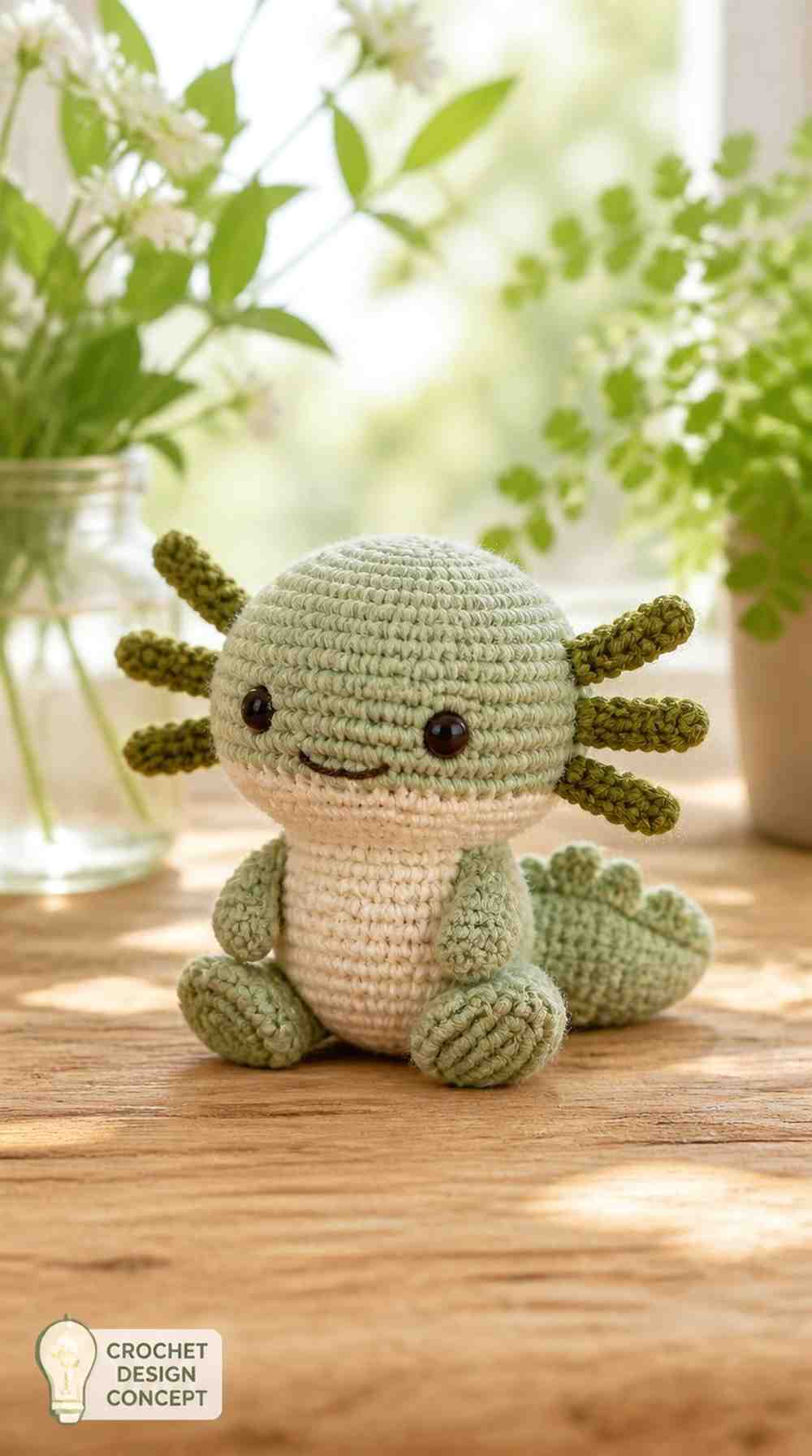
Muted sage-green crochet gives this miniature axolotl a calm botanical palette. Its broad oval head rests above a short cream-colored torso, while four sage limbs and a curled tail complete the seated shape. Three dark-olive gills appear on each side, with small brown embroidered eyes and a gentle smile.
The cream body creates a noticeable color division beneath the head. Unlike a simple belly appliqué, the torso itself is a different shade. A handmade version would need tidy yarn changes to keep the transition line clean and even.
- Two-Tone Body: Keep the cream section centered below the sage head so the difference in color remains intentional.
- Olive Gill Contrast: Darker green fronds distinguish the gills from the main head without introducing an unrelated accent.
- Curled Tail Position: Keep the tail visible behind the body instead of hiding it completely beneath the plush.
- Color-Change Tension: Check the transition between sage and cream for tight or loose stitches that may distort the body.
10. Crochet Midnight Blue Starry Axolotl Mini
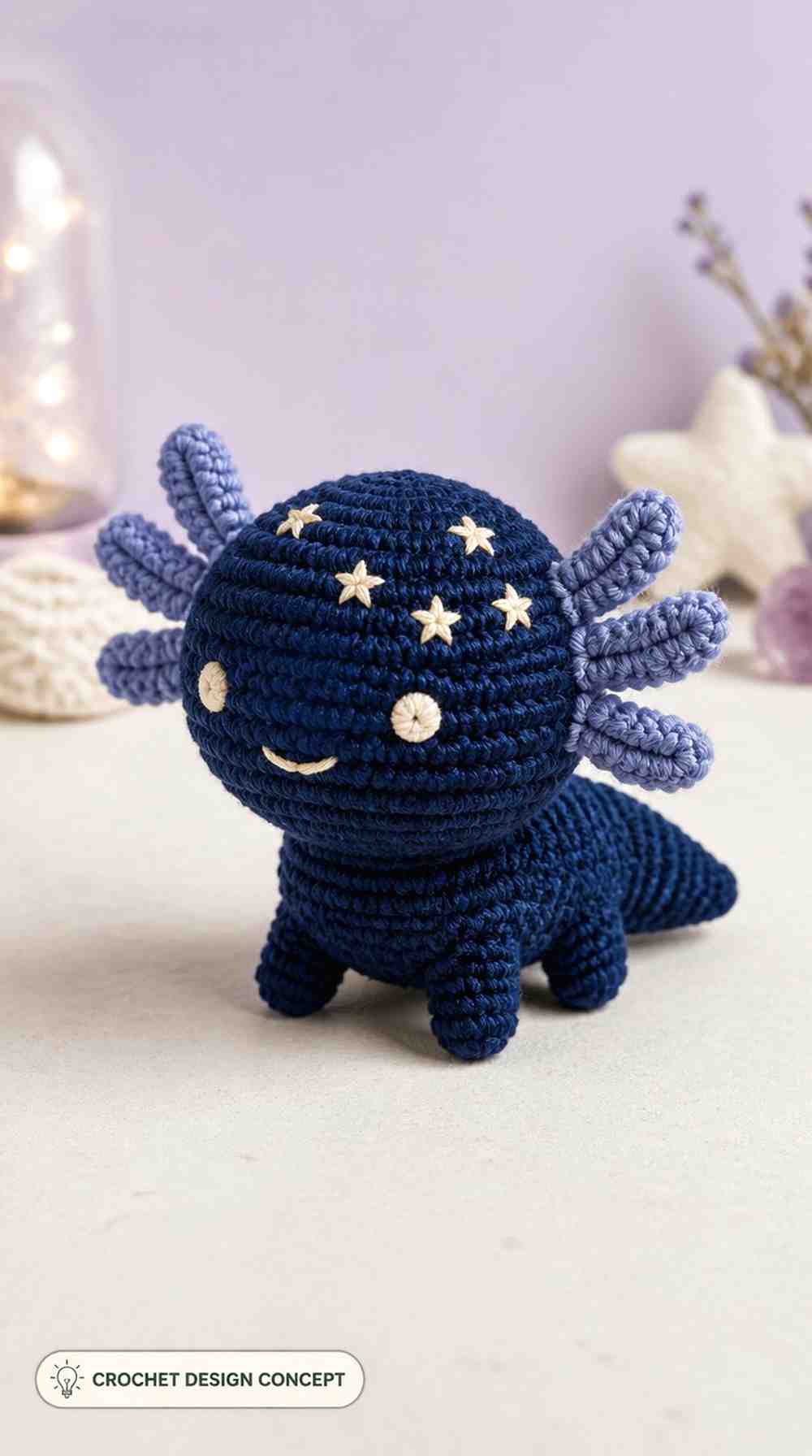
Midnight-blue crochet gives this pocket axolotl a dreamy night-sky appearance. Its large round head, compact body, tiny legs, and pointed tail form a familiar miniature shape. Periwinkle gills frame the face, while five small cream embroidered stars decorate the upper head and back.
The light embroidered eyes and smile remain visible against the darker yarn. The star details introduce a decorative theme without requiring beads or separate appliqués. Since dark stitches can be difficult to see, good lighting and a clear contrast between the yarn and embroidery would be helpful.
- Star Embroidery: Keep the five cream motifs small and spaced apart so they do not cover the natural crochet texture.
- Dark Yarn Visibility: Work under sufficient lighting to check stitch counts and prevent missed stitches in the navy fabric.
- Periwinkle Fronds: The lighter gills help define the head silhouette against the midnight-blue body.
- Facial Contrast: Ivory embroidery may be more visible than dark thread on this design, but every stitch should remain neatly secured.
11. Crochet Lilac Ribbed Belly Axolotl
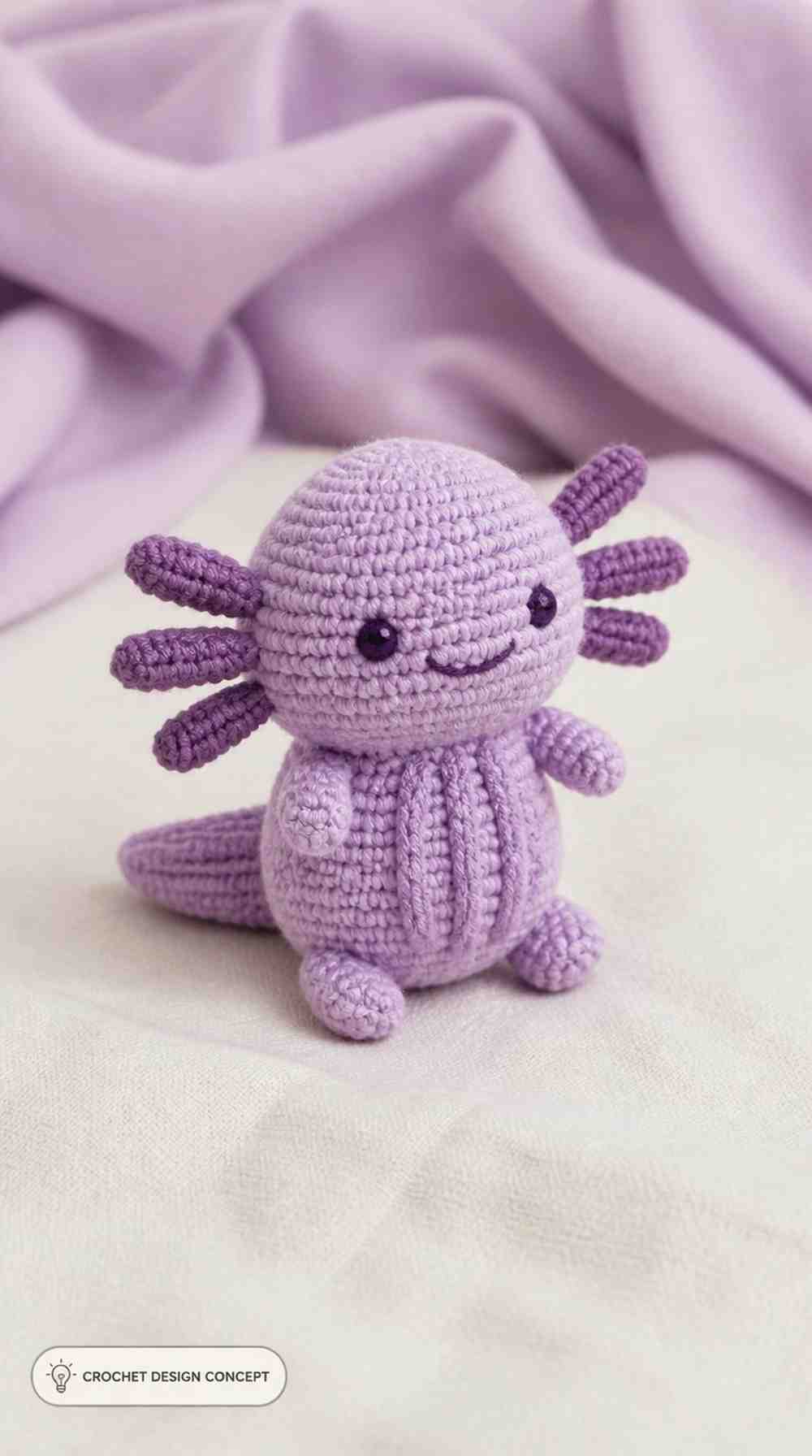
Lilac crochet gives this small axolotl a soft pastel appearance, while three raised lavender ridges decorate the front of its oval body. The rounded head features simple plum-colored embroidered eyes and a gentle smile. Dusty-violet gills, four tiny limbs, and a flattened tail complete the plush.
The ribbed belly is the design’s main feature, adding a tactile detail without changing the color significantly. Because the ridges rise above the surrounding fabric, they need careful stitch placement to remain straight. Their texture also makes the front easy to distinguish from the back.
- Three Raised Ridges: Keep the vertical crochet lines evenly spaced and centered on the belly.
- Ribbed Fabric Tension: Raised stitches may pull against surrounding rows; check that the torso retains its rounded shape.
- Violet Gill Placement: Smooth fronds provide a quieter contrast to the textured body.
- Tactile Finish: Examine the raised stitches for loose loops that might snag when the little plush is carried.
12. Crochet Bubblegum Pink Heart Gill Axolotl
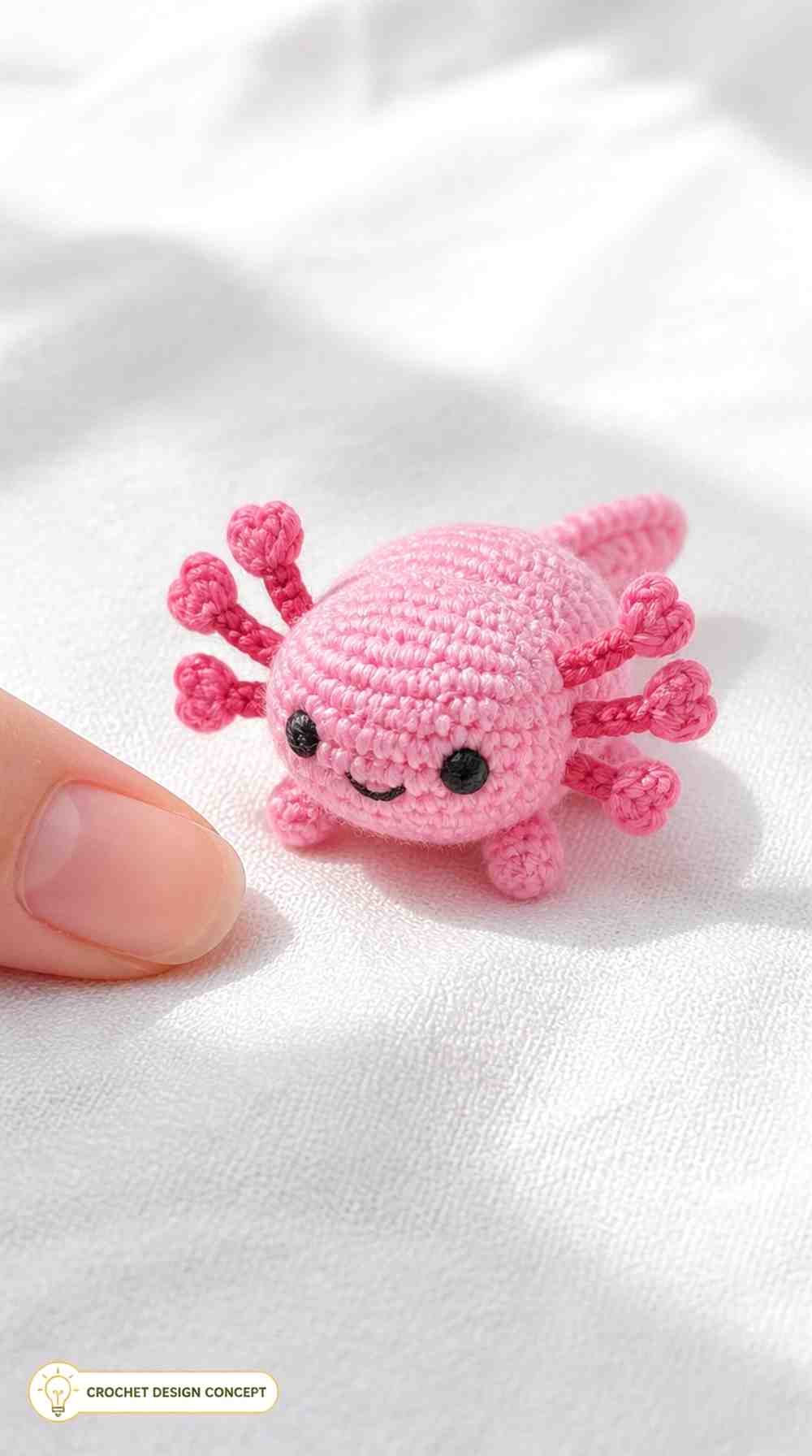
Bubblegum-pink crochet creates a cheerful miniature axolotl with a wide round head and squat body. The four tiny legs and straight tail keep the shape compact. Its most unusual feature is the set of six dark-rose gill fronds, each ending in a small heart-shaped crochet outline.
The heart-ended gills are a playful artistic interpretation rather than a realistic anatomical detail. They give the plush a distinctive silhouette without adding separate flowers, bows, or clothing. A real version would need to keep the heart shapes small and securely connected.
- Heart-Ended Gill Shape: Make the rounded heart tips proportionate to the narrow stalks so each frond remains identifiable.
- Secure Connections: The junction between stalk and heart-shaped tip needs careful finishing because it may be a vulnerable area.
- Compact Body Fit: Short legs and a small tail keep the design manageable despite the wider decorative gills.
- Simple Embroidered Face: Minimal eyes and mouth prevent the unusual gill shapes from competing with too many extra details.
13. Crochet Teal Paddle Fin Pocket Axolotl
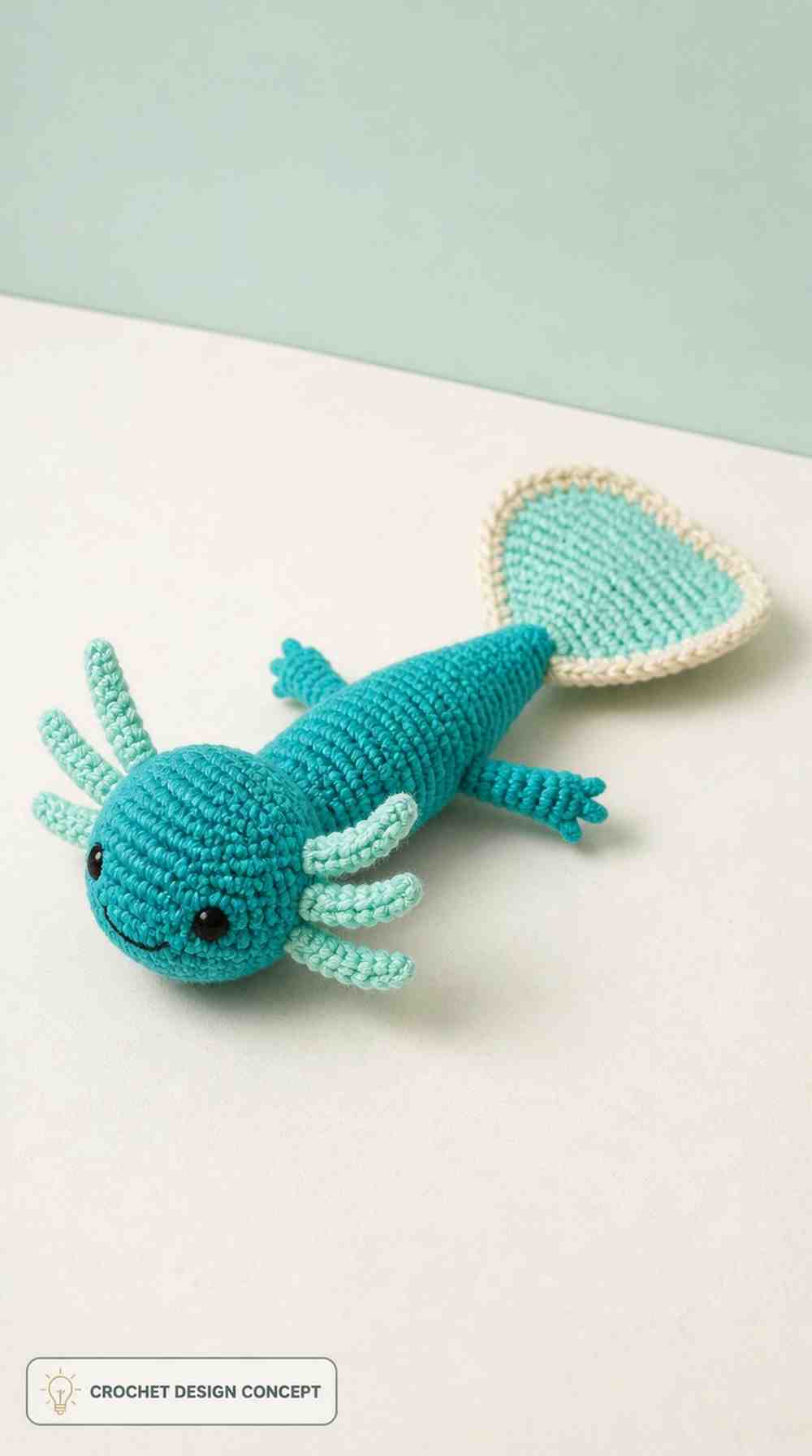
Sea-teal crochet gives this little axolotl a distinctly aquatic look. Its body is positioned horizontally, with an oval head, narrow torso, and four small side-facing legs. A short tail ends in a broad aqua paddle fin outlined with a fine cream border.
Three mint-green gills extend from each side of the head, while embroidered eyes and a tiny smile keep the expression simple. The wide tail fin makes this design more recognizable from a slightly elevated angle. Its construction would need attention where the narrow tail connects to the wider flat section.
- Paddle Fin Shape: A flat fin should remain wider than the tail but proportional to the small body.
- Tail Connection: Secure the transition between the stuffed body and flatter fin without creating a weak narrow point.
- Cream Fin Border: A thin pale outline can define the paddle shape without making the edge too thick.
- Horizontal Display: The swimmer-like posture may rest differently from a seated plush, so compare the intended viewing angle before finalizing the design.
14. Crochet Sunset Sherbet Ombre Axolotl
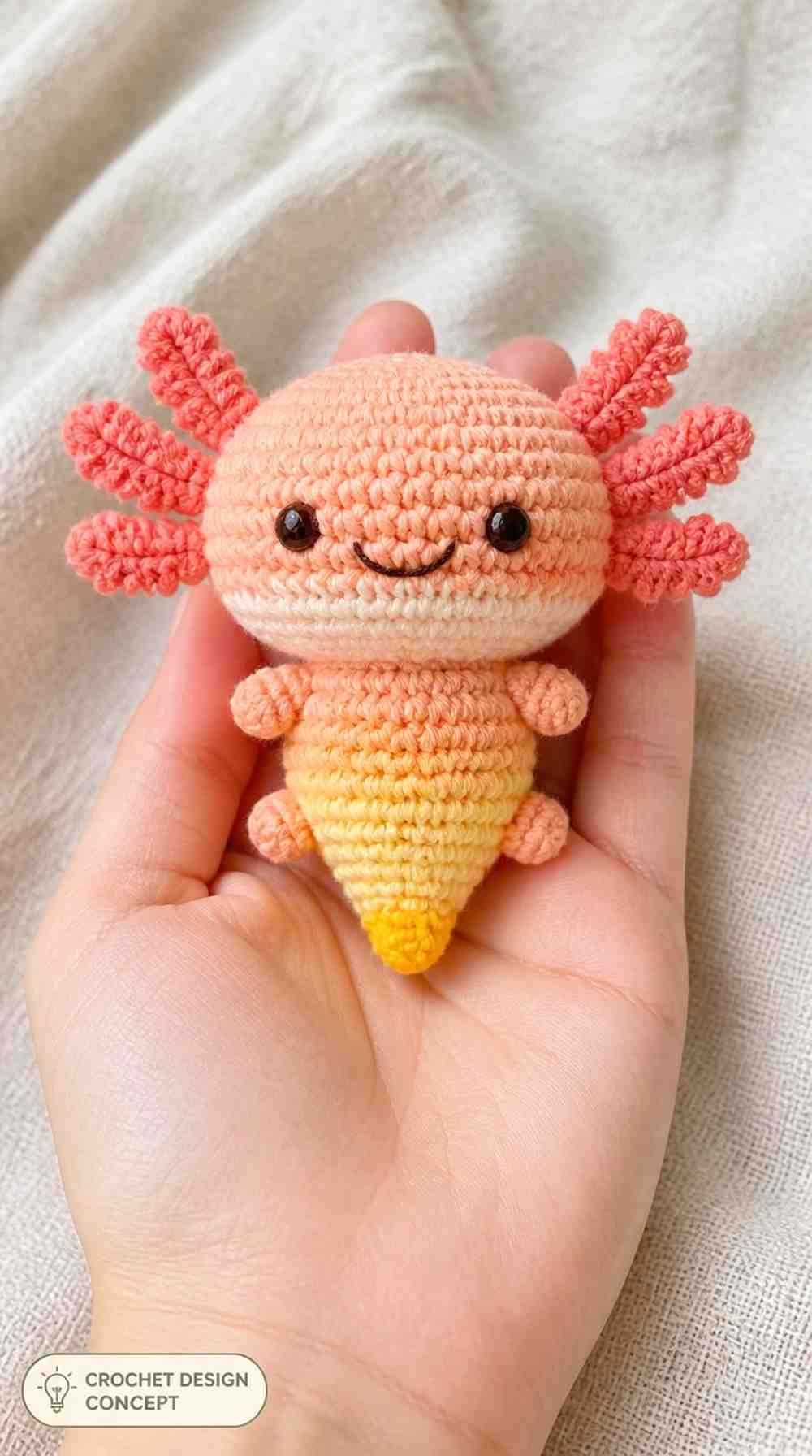
Peach, apricot, and butter yellow create a warm sunset-inspired gradient across this pocket axolotl. The large peach head leads into a shorter apricot body, finishing at a golden-yellow tail tip. Coral gills frame the face, while tiny apricot legs and a cream chin complete the character.
The gradient comes from distinct crochet color-change rows, not blended or printed yarn effects. This makes the transitions an important part of the design. A similar handmade version would need a planned color sequence that works with the small number of rounds available on a miniature body.
- Ombre Row Placement: Plan where peach changes to apricot and yellow so the gradient follows the intended head-to-tail direction.
- Warm Color Balance: Coral gills coordinate with the peach head without obscuring the softer shades beneath.
- Cream Chin Detail: Keep the pale chin small enough to remain a subtle accent rather than becoming a large belly patch.
- Miniature Color Changes: Frequent yarn changes can create extra ends inside the body, so secure them neatly before stuffing.
15. Crochet Oatmeal Freckle Axolotl Pocket Pal
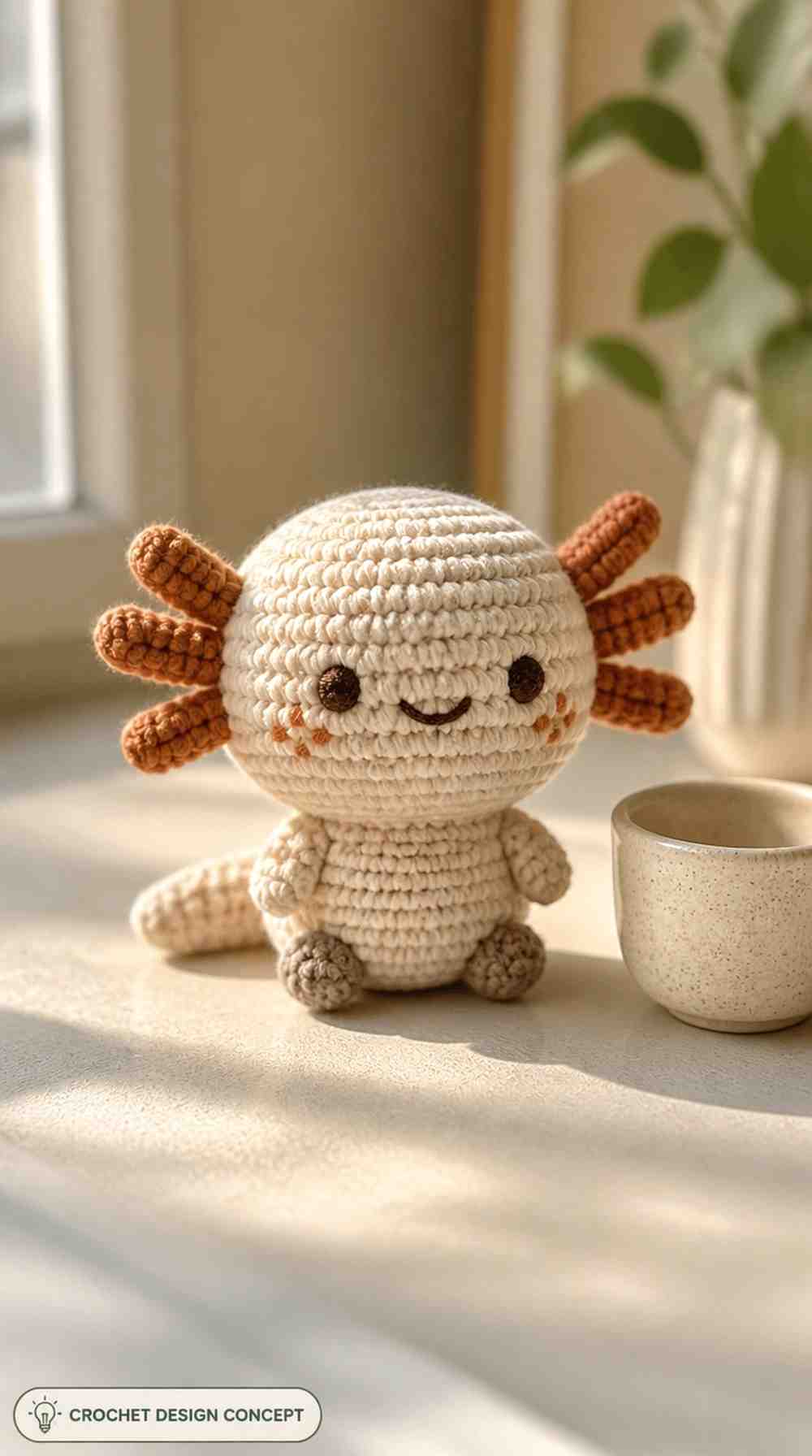
Oatmeal-colored crochet gives this tiny axolotl a warm vintage-inspired appearance. Its broad head rests above a compact body with four brown-beige limbs and a short curled tail. Six smooth cinnamon-brown gills surround the face, while small embroidered eyes and a curved mouth create a gentle expression.
Four tiny cinnamon freckles—two on each cheek—give the character its distinctive personality. The design relies on subtle embroidery rather than colorful appliqués or complicated shapes. Its restrained palette would suit anyone who prefers natural yarn colors for miniature collectibles.
- Four Freckle Marks: Place two tiny embroidered freckles on each cheek, leaving enough room for the eyes and mouth.
- Cinnamon Gill Contrast: Warm-brown gills define the head without introducing bright colors.
- Close Body Stitches: Compact crochet helps maintain a smooth oatmeal surface and may reduce visible gaps around stuffing.
- Curled Tail Balance: Keep the short tail positioned so it remains visible from the front three-quarter angle.
16. Crochet Rose Axolotl Shell Nest Pocket Plush
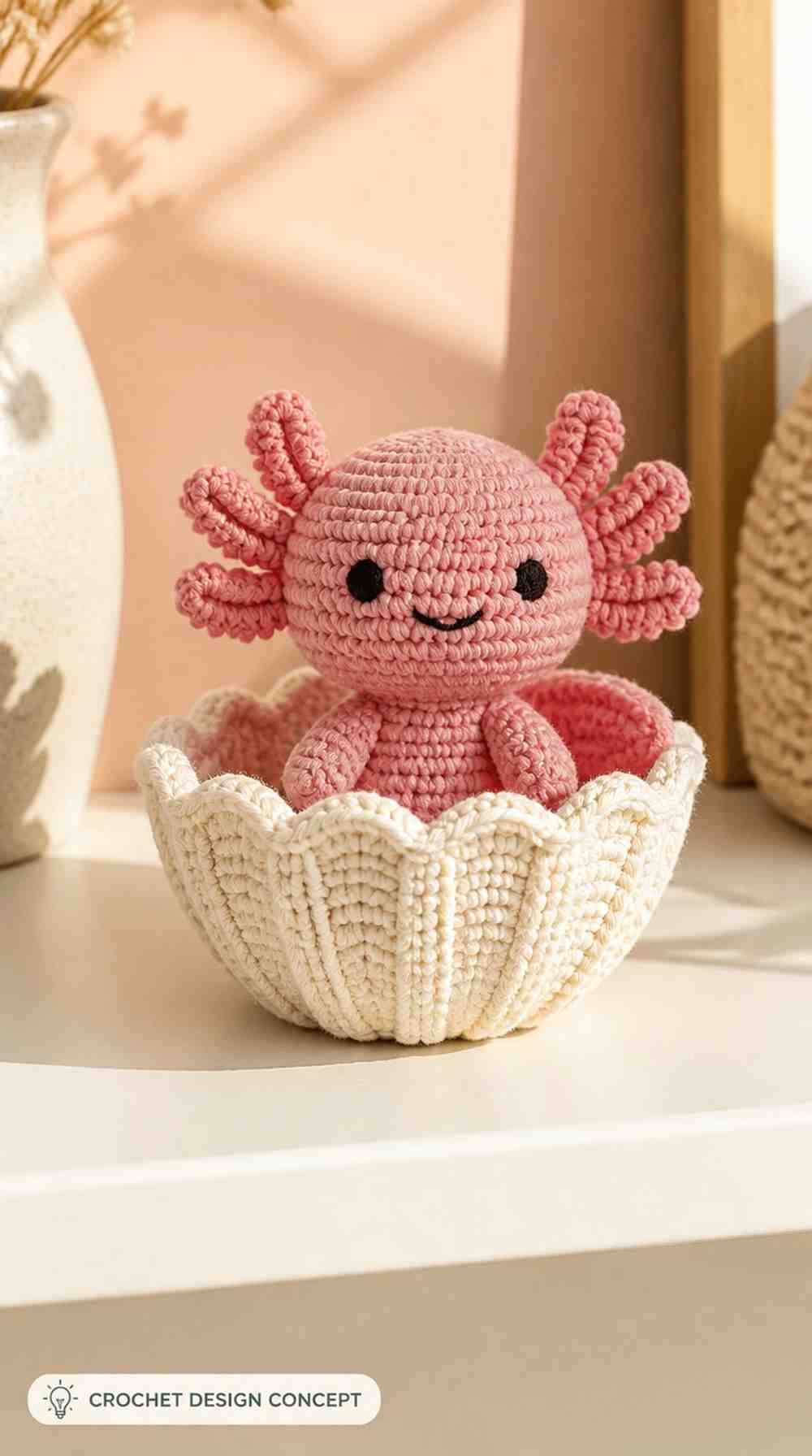
A dusty-rose crochet axolotl sits inside a small ivory shell-shaped display cup in this playful collectible concept. The plush has a rounded head, tiny seated body, short tail, four little feet, and three rose-colored gills on each side. Its embroidered eyes and smile remain simple.
The shell nest is a separate removable accessory with five raised ridges and a scalloped rim. This makes the design different from a standalone plush because it includes a small display setting. The axolotl should still be able to sit independently when removed from the cup.
- Removable Shell Cup: Keep the nest separate from the axolotl so the plush can be displayed on its own.
- Shell Rim Clearance: The scalloped edge should not conceal the axolotl’s face or cover the six gill fronds.
- Raised Shell Ridges: Five subtle crochet lines create the shell effect without requiring a large or heavy base.
- Display Stability: Check that the cup rests on a level surface and supports the plush without tipping or trapping its small limbs.
For another approach to axolotl-inspired crochet, Yarn Nest Studio’s 10 Crochet Axolotl Amigurumi with Flower Crown Ideas explores larger decorative characters with floral headpieces. This pocket-plush collection focuses instead on miniature body shapes, gills, tails, and texture.
Practical Guide to Crochet Pocket Axolotl Plushies
A pocket-sized crochet axolotl may look simple, but the small details require thoughtful planning. The gills, face, limbs, stuffing, and tail all need to work together at miniature scale.
Start with the intended size. A plush designed to sit in an adult palm will have different proportions from one made with chunky chenille yarn. Yarn thickness, hook choice, stitch tension, and stuffing affect the final dimensions. Do not assume a pattern will stay pocket-sized when the materials change.
Use a dense stitch fabric. Close amigurumi stitches help hold stuffing inside and create a smooth surface. Check the fabric for gaps, especially around decreases and attachment points.
Treat the gills as important structural details. An axolotl’s external gills are what make its silhouette instantly recognizable. Keep the three fronds on each side clearly separated, well secured, and proportional to the head.
Stuff gradually. Add small amounts of suitable filling while shaping the head and body. Overstuffing can stretch stitches, distort miniature proportions, or put pressure on seams.
Choose facial details carefully. Embroidered features avoid detachable plastic eyes, but they still need secure stitching. For toys intended for young children, follow applicable toy-safety standards and age guidance. Do not assume that any handmade plush is safe for babies simply because it has soft yarn or embroidered eyes.
Inspect every attachment. Tug gently and check the gills, feet, tail, decorative embroidery, and any separate accessories for loose or weak connections. Decorative pocket collectibles are not automatically suitable as children’s toys.
Consider cleaning and storage. Follow the yarn and stuffing manufacturers’ care guidance. Avoid crushing delicate gills or tail fins when storing a finished plush in a pouch or box.
Want to Make Something Similar?
These verified tutorials teach actual axolotl amigurumi construction. They are related crochet patterns, not exact instructions for the AI-generated designs above.
- Free Axolotl Crochet Pattern by DIY Fluffies — Mariska Vos-Bolman’s almost-no-sew axolotl pattern includes a video tutorial and guidance on the body, gills, legs, and tail. It also demonstrates how changing yarn thickness affects finished size. DIY Fluffies Amigurumi
- How to Crochet Mini Axolotl by Crochet Musings — A beginner-oriented video showing head and body construction, gill attachment, facial details, stuffing, and the tail. YouTube
- Crochet Axolotl Amigurumi: Free Pattern and Video by HuLoHuLa Studio — A written and video resource showing spiral rounds, decreases, gills, limbs, and shaping a stuffed axolotl. HuLoHuLa Studio
Each creator uses their own pattern, stitch counts, and construction method. Decorative changes such as heart-ended gills, raised ridges, or separate shell cups may require additional design work.
Which Crochet Pocket Axolotl Plush Should You Choose?
| Design | Main feature | Body shape | Main consideration |
|---|---|---|---|
| Blush Pink Chubby | Oversized head and rose gills | Short seated | Head balance |
| Lavender Sleepy | Closed eyes and curled tail | Low elongated | Tail shaping |
| Mint Pebble | Compact seamless-looking form | Rounded oval | Gill and foot scale |
| Butter Yellow Ruffle Gill | Scalloped coral gills | Upright rounded | Frill thickness |
| Peach Heart Belly | Flat rose heart appliqué | Pear-shaped | Heart attachment |
| Powder Blue Long Tail | Striped extended tail | Horizontal swimmer | Overall length |
| Coral Bobble Gill | Raised gill bobbles | Short bean-shaped | Snagging |
| Pearl Ivory Scallop Gill | Fine blush gill edging | Tall oval | Delicate stitchwork |
| Sage Cream Two Tone | Cream torso and sage head | Compact seated | Color transitions |
| Midnight Blue Starry | Five embroidered stars | Upright rounded | Dark stitch visibility |
| Lilac Ribbed Belly | Three raised belly ridges | Elongated oval | Ridge tension |
| Bubblegum Heart Gill | Six heart-ended fronds | Squat seated | Gill connection |
| Teal Paddle Fin | Wide flat tail fin | Horizontal swimmer | Fin attachment |
| Sunset Sherbet Ombre | Peach-to-yellow gradient | Short tapered | Color-change placement |
| Oatmeal Freckle | Four embroidered cheek marks | Compact upright | Tiny embroidery |
| Rose Shell Nest | Separate crochet shell cup | Small seated | Display stability |
For a recognizable miniature axolotl, the Blush Pink Chubby, Mint Pebble, and Sage Cream Two Tone designs keep the body simple while emphasizing the gills and face.
For more unusual crochet shaping, consider the Lavender Sleepy, Powder Blue Long Tail, and Teal Paddle Fin concepts. Their curled or flattened tails make the silhouette more distinctive, but they require closer attention to proportions.
If texture is your priority, the Butter Yellow Ruffle Gill, Coral Bobble Gill, and Lilac Ribbed Belly designs offer different ways to add tactile crochet details.
For decorative collectibles, the Midnight Blue Starry, Peach Heart Belly, and Rose Shell Nest ideas add recognizable character without needing to make the plush substantially larger.
Conclusion
Crochet pocket axolotl plushies offer a lovely mix of tiny amigurumi shaping, expressive faces, and playful aquatic details. A classic blush-pink character can be just as charming as a pastel swimmer, a sleepy lavender plush, or a miniature axolotl with unusual textured gills.
The most appealing design is one that keeps its features clear at a small scale. Consider the shape of the head, the length of the tail, the thickness of the gills, and how securely every part can be attached. Thoughtful proportions often matter more than adding extra decoration.
Which of these 16 pocket axolotls would you choose? Would you pick the chubby pink classic, the sleepy lavender friend, or the little midnight-blue starry character? Share your favorite color and design in the comments.
Frequently Asked Questions
1. What yarn is best for a crochet pocket axolotl plush?
Smooth cotton or suitable cotton-blend yarn can be useful when you want clear miniature stitch definition. Other yarns may create a softer, fuzzier appearance but can change the size and visibility of small details. The best choice depends on the pattern, intended finish, and appropriate care instructions.
2. How do I keep a crochet axolotl small?
The finished size depends on yarn thickness, hook size, gauge, stuffing, and the selected pattern. Using a finer yarn and a compatible hook may produce a smaller version, but the construction must still keep stuffing inside securely. Measure or compare a sample rather than assuming that any pattern will produce a pocket-sized result.
3. Can beginners crochet a pocket axolotl?
A beginner who knows single crochet, increases, decreases, and working in rounds may be able to follow a beginner-friendly axolotl pattern. The small gills, limbs, and facial embroidery can require extra patience. Start with a tested pattern and learn its construction before attempting unusual decorative changes.
4. Are crochet pocket axolotl plushies safe for children?
That cannot be determined from the design image alone. Toy safety depends on materials, construction, attachment strength, size, stuffing, intended age, and applicable safety standards. Small parts and loose components can create hazards. Embroidered eyes may avoid detachable plastic eyes, but they do not by themselves guarantee that a handmade toy is safe for young children.
5. How can I make axolotl gills stay in place?
Use a construction method that firmly joins the fronds to the head, following a reliable pattern where possible. Keep the gills proportionate to the plush and inspect their attachment points for loose stitches. Decorative ruffles, bobbles, and heart-shaped ends add weight or complexity, so their connections may need additional attention.