A curated trinket cabinet feels more interesting when every object seems to have a reason for being there. Instead of filling each cubby with another small plush, you can combine literary keepsakes, woodland finds, celestial pieces, miniature containers, framed memories, and unusual decorative objects that look as though they were collected gradually.
Crochet works especially well for this kind of display because scale and texture can change from object to object. A tiny book can lean against a photo frame, a mushroom can become a central woodland curio, and a shallow heart dish can hold even smaller treasures. Flat pieces such as butterflies also help because they add detail without using the same shelf depth as stuffed amigurumi.
The tutorials below were not created as one matching cabinet set. Some teach true mini amigurumi, while others create keychains, pouches, dishes, or decorative crochet pieces that can be restyled for a collector shelf. Check the finished scale before making the entire collection, and treat any substantial resizing as a separate adaptation rather than assuming every tutorial will naturally produce dollhouse-size objects.
Quick List
- Crochet Tiny Bound Book Trinket
- Crochet Mini Mushroom Curio
- Crochet Potion Bottle Curiosity
- Crochet Crescent Moon and Star Keepsake
- Crochet Mini Butterfly Specimen Accent
- Crochet Tiny Snail Cabinet Companion
- Crochet Mini Vase Display Piece
- Crochet Mini Photo Frame Keepsake
- Crochet Crystal Pouch Collector Pocket
- Crochet Decorative Candle Curio
- Crochet Tiny Acorn Nature Trinket
- Crochet Mini Basket Curio Holder
- Crochet Mini Bell Keepsake
- Crochet Stuffed Star Celestial Trinket
- Crochet Heart Trinket Dish
- Crochet Mini Heirloom Pumpkin Curio
Curate by Shape and Story, Not Just Color
A cabinet with sixteen similarly sized round amigurumi can look crowded even when every project is beautifully made. Instead, vary the physical role each object plays.
Books, frames, and butterflies can provide flatter shapes. Mushrooms, stars, pumpkins, potion bottles, and snails contribute dimensional focal points. The vase, basket, pouch, and trinket dish introduce open or container-like forms that can interact with smaller collectibles rather than merely sitting beside them.
You can also organize the cabinet as several tiny stories. One cubby might hold woodland curios such as the mushroom, snail, and acorn. Another can become a celestial section with the moon, stars, and candle. The book and frame can create a nostalgic corner, while the potion bottle and crystal pouch give another compartment a curiosity-shop feel.
Check Shelf Depth Before You Crochet the Full Collection
Measure the usable height, width, and depth of the cabinet rather than relying only on its exterior dimensions. Door frames, shelf supports, and raised edges can reduce the actual display area.
Then choose one completed crochet piece as a scale reference. A mini vase or mushroom can work well because its proportions are easy to compare visually with the objects around it.
If another tutorial creates something substantially larger, you have several choices: use it as the main focal piece, place it in a separate cubby, test a smaller yarn-and-hook combination, or accept a deliberately eclectic scale. A collector cabinet does not need perfect realism, but obvious size differences should look intentional.
Use Height, Negative Space, and Small Containers
Tiny objects are easy to lose inside a deep cabinet. Small risers, boxes, stands, or the cabinet’s own shelves can bring background items into view without requiring you to crochet everything taller.
Leave some space around distinctive silhouettes. A crescent moon needs open background around its curve, while a butterfly benefits from a relatively uncluttered surface behind its wings. Stuffed stars and mushrooms need enough side room for their points or caps to remain clear.
Containers can help control the smallest pieces. A mini basket might hold loose charms, while the heart dish can collect tiny jewelry or decorative objects. Avoid filling every vessel to the top; empty space is part of what makes a miniature display readable.
1. Crochet Tiny Bound Book Trinket
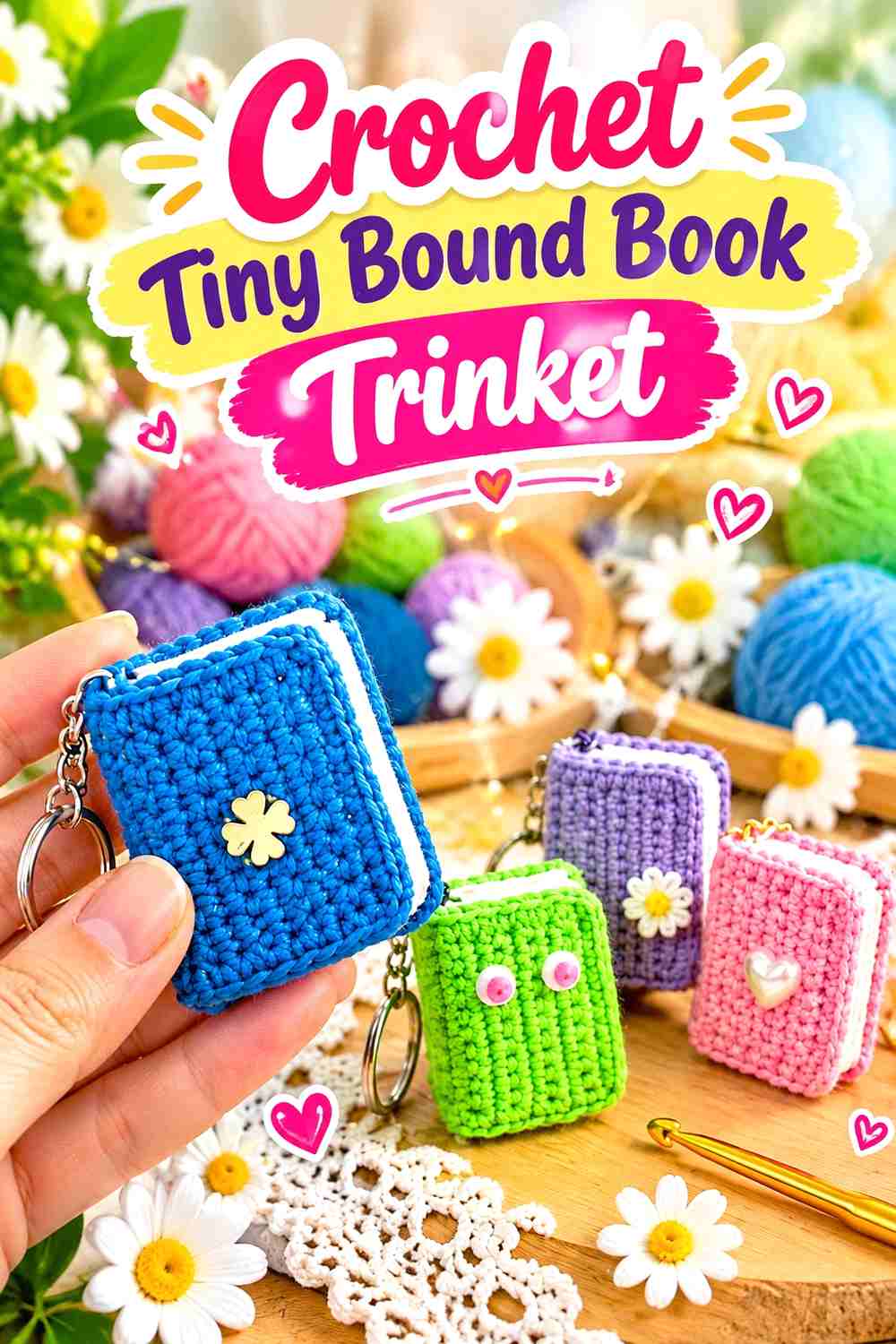
A miniature crochet book gives the cabinet an immediate collected-library feeling without occupying much shelf depth. Hobbysel Crochet demonstrates a small book construction with distinct cover and page sections, originally presented as a keychain project.
For a trinket cabinet, the keychain concept can be secondary. The book itself can sit flat, lean against another object, or become the first piece in a tiny literary cubby.
Show the Page Edge to Keep the Book Recognizable
A small rectangle viewed only from its cover side can resemble a pouch or block. Turn the finished piece so at least part of the contrasting page section is visible.
That orientation matters even more if the book is displayed behind another object where only a narrow edge can be seen.
Build a Stack Only After Comparing the Finished Thickness
Several tiny books can look charming together, but making multiples before checking the first one’s dimensions can create a stack too large for the intended cubby.
Finish one book, test it inside the cabinet, and then decide whether the shelf needs a second or third volume rather than filling the space automatically.
Creator Credit: Hobbysel Crochet
2. Crochet Mini Mushroom Curio
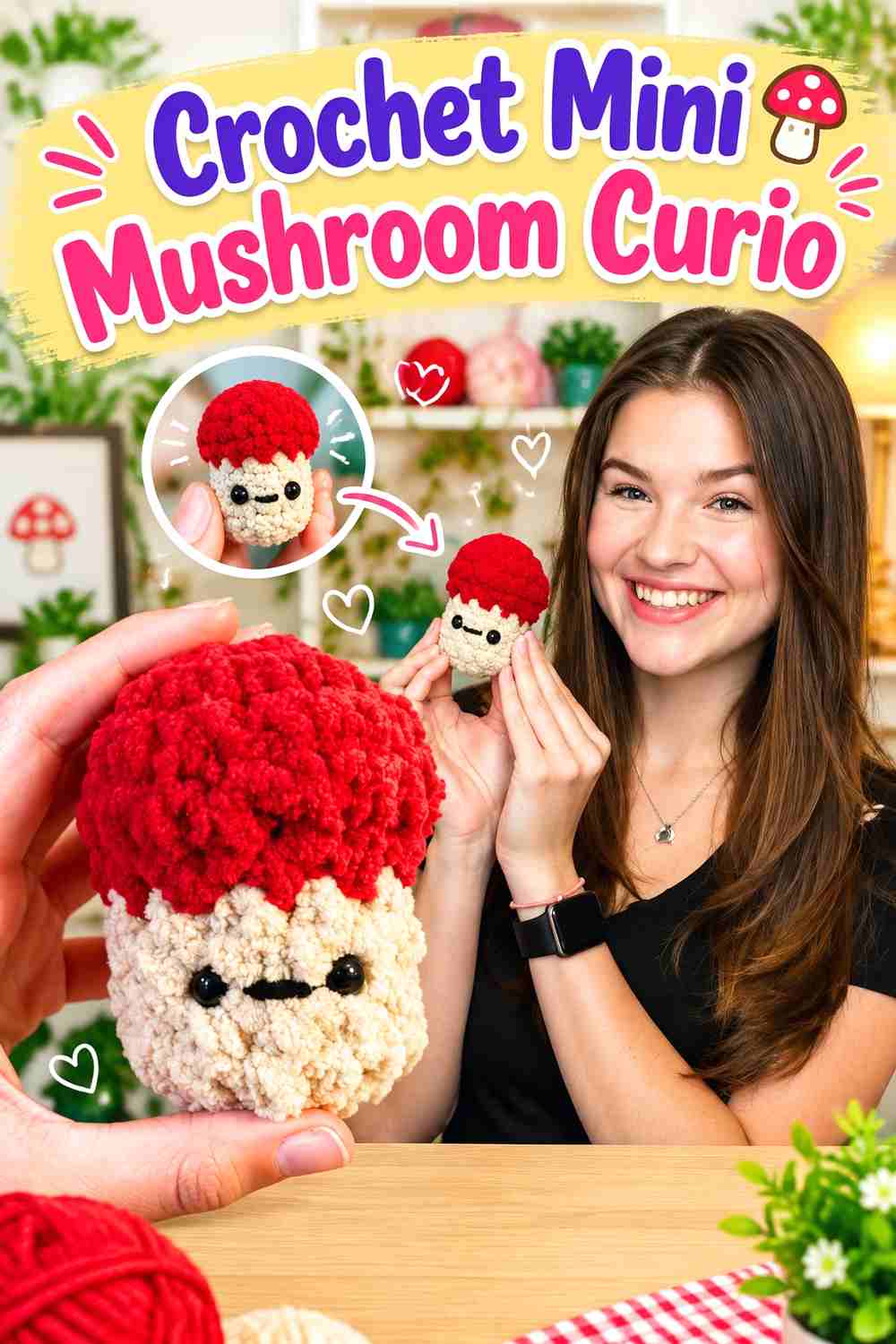
A mushroom gives the collection a strong woodland silhouette through its broad cap and narrower stem. Katiebeingcreative demonstrates a miniature amigurumi mushroom that can become a freestanding cabinet curio rather than another flat shelf accent.
It works particularly well near natural objects such as the acorn and snail, but it can also stand alone as a focal point in a small compartment.
Leave Clearance Around the Mushroom Cap
The widest part of the project may sit well above the shelf surface. That means measuring only the base can underestimate how much side room the finished mushroom needs.
Place it where the cap can remain visibly separate from neighboring curios instead of disappearing behind a vase or frame.
Use the Mushroom as the Woodland Section’s Anchor
If one cubby contains several nature-inspired pieces, let the mushroom provide the largest recognizable form.
Smaller objects such as the snail or acorn can sit lower around it, creating hierarchy instead of three equally competing focal points.
Creator Credit: katiebeingcreative
3. Crochet Potion Bottle Curiosity
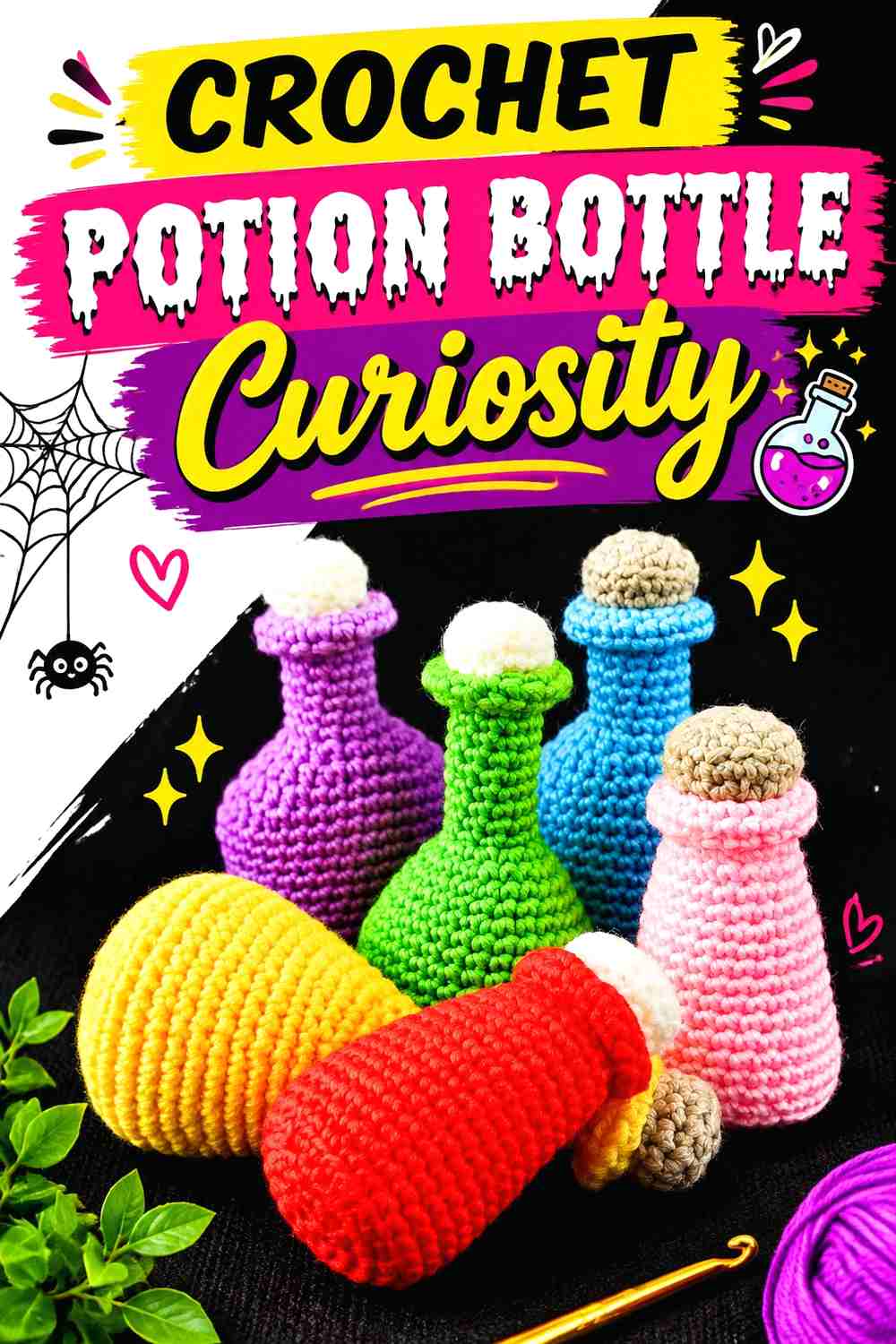
A tiny potion bottle gives the cabinet a more mysterious curiosity-shop direction. Skein Spider’s tutorial includes several crochet potion bottle variations, providing different bottle silhouettes within the same general concept.
That makes this project useful if you want one shelf to look like an apothecary collection without needing every bottle to be identical.
Bottle Silhouette Matters More Than an Elaborate Label
A narrow neck and fuller bottle body already communicate the basic idea. If you add your own decorative styling, avoid covering so much of the surface that the shape disappears.
One restrained accent can often distinguish a “potion” bottle more effectively than several layered charms.
Group Bottles in Uneven Numbers Only When the Shelf Has Room
Two or three bottle variations can create a convincing little collection, but several stuffed forms quickly consume shelf depth.
Make one first and test how much room remains around it. A single carefully positioned bottle may read more clearly than a crowded row.
Creator Credit: Skein Spider
4. Crochet Crescent Moon and Star Keepsake
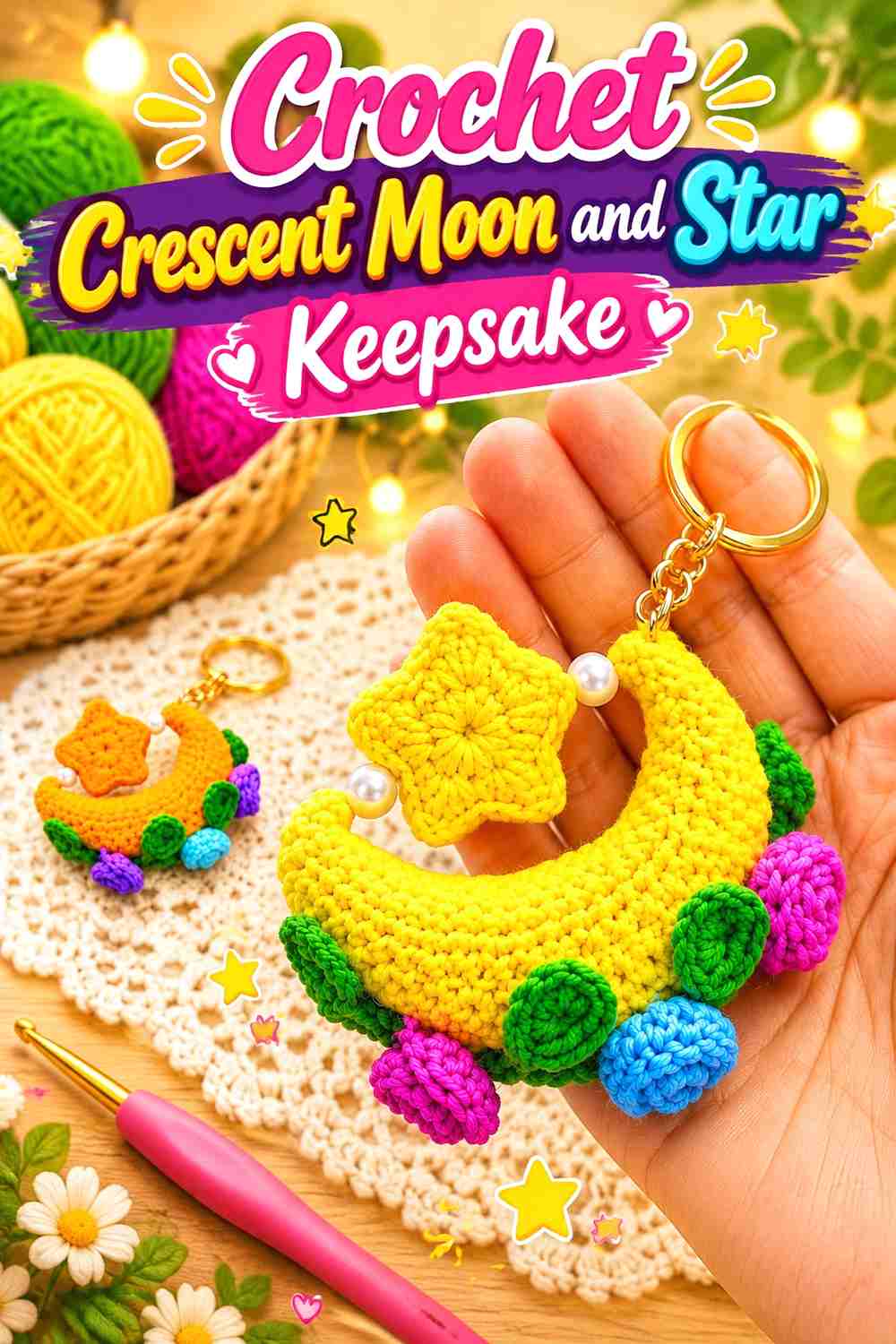
A crescent paired with a star creates one of the strongest graphic silhouettes in the cabinet. Crafting Wheel demonstrates the two celestial forms as a keychain-style project, but the shapes can also work as small shelf or hanging keepsakes.
The combination gives you the option to display both pieces together or separate them across a celestial-themed section.
Give the Crescent an Uncluttered Background
The open inner curve is what distinguishes the moon from an ordinary round plush.
Position it against a relatively simple backdrop and avoid placing another object directly inside the crescent-shaped negative space where the outline could become visually confused.
Separate the Moon and Star When One Cubby Feels Crowded
A paired tutorial does not require the finished pieces to remain side by side in the cabinet.
The moon can anchor one shelf while the star repeats the celestial theme elsewhere, creating visual connection across the collection without forcing two dimensional objects into the same small compartment.
Creator Credit: Crafting Wheel
5. Crochet Mini Butterfly Specimen Accent
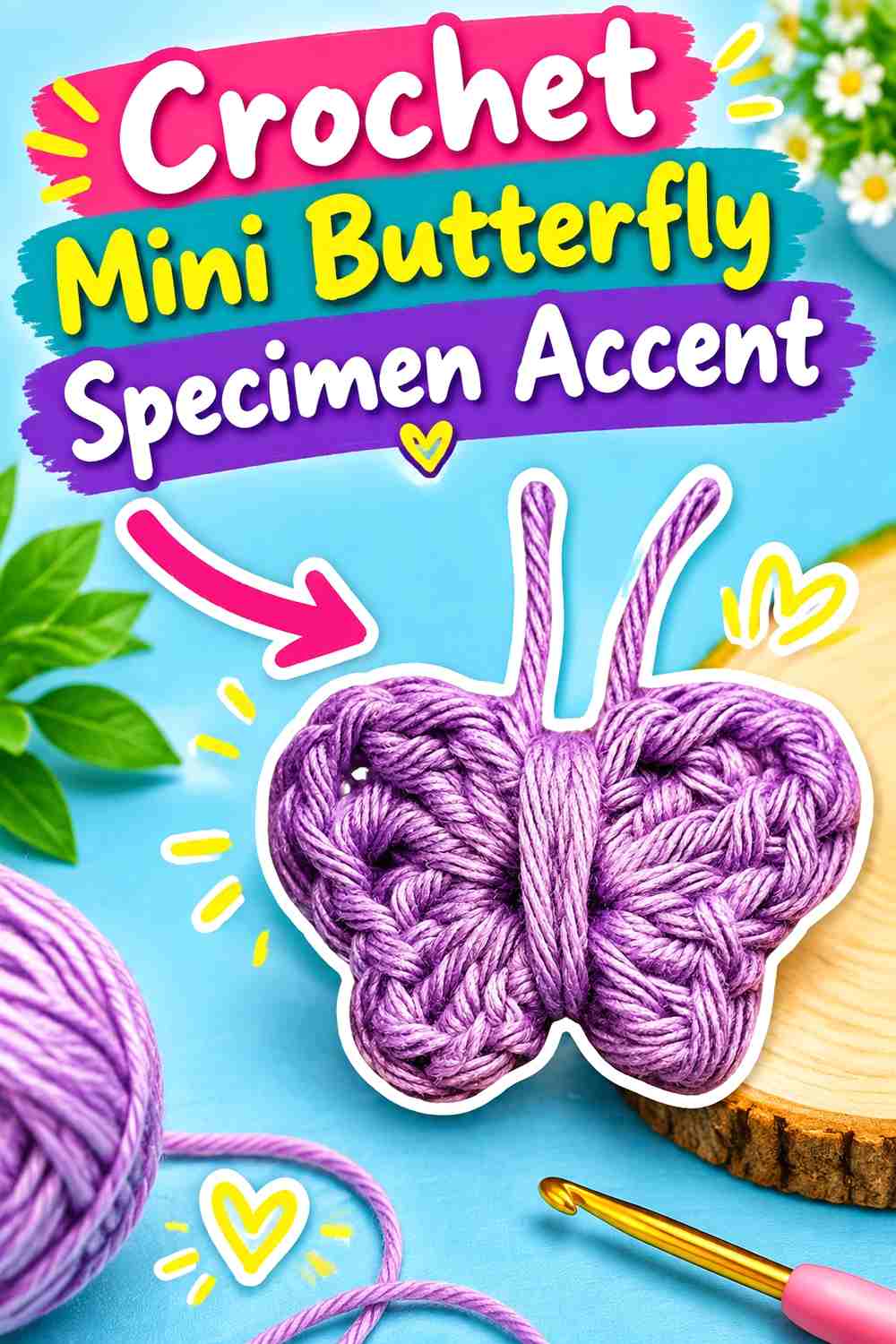
A butterfly gives the display a flatter nature-inspired detail than the mushroom or snail. Woodvale Lane demonstrates a small crochet butterfly whose broad wings can work well against the back of a cubby, beside a frame, or above a botanical grouping.
Because it uses little shelf depth, it can add another layer without competing for the same footprint as stuffed amigurumi.
Treat the Butterfly Like a Background Specimen
Instead of laying it underneath other objects, position the butterfly where the wing outline can be seen clearly.
A backing card, small frame-like area, or plain cabinet wall can make a flat crochet form feel more intentional than dropping it loosely between larger pieces.
Keep Other Objects Away From the Wing Edges
The butterfly’s recognizable form depends on seeing both sides of the wings.
Leave a small gap around the outer edges so a vase, basket, or mushroom does not turn the silhouette into an indistinct patch of crochet.
Creator Credit: Woodvale Lane
6. Crochet Tiny Snail Cabinet Companion
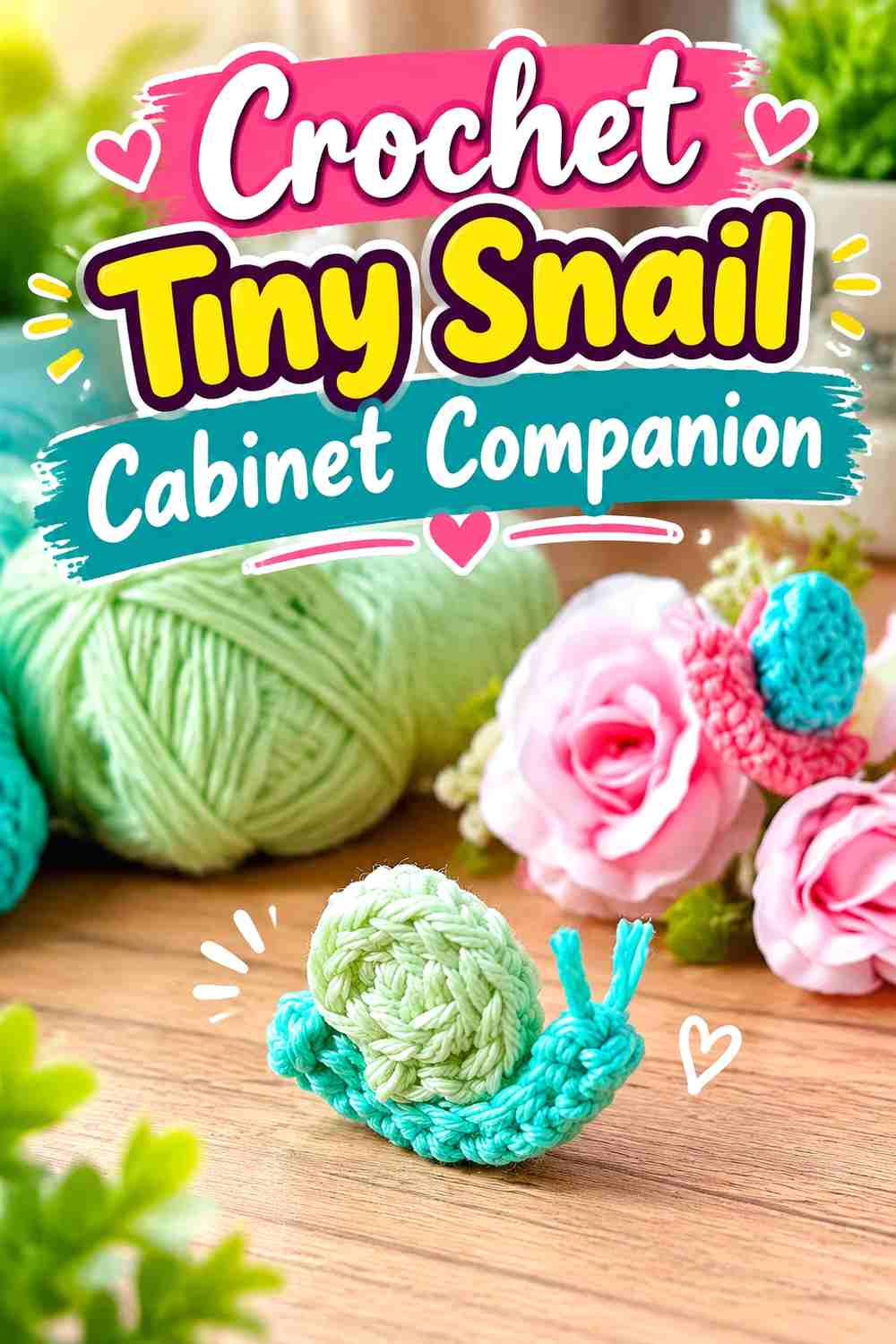
A tiny snail contributes a low, horizontal shape and a clear spiral detail. HappyBerry Crochet’s small snail is designed as a compact crochet accent rather than a large plush, making it especially suitable for filling a narrow foreground area.
It works naturally in the woodland section but can also become a playful surprise beside the book or vase.
Turn the Shell Toward the Main Viewing Angle
The spiral shell is the detail that gives the snail most of its visual identity.
Before settling on its permanent position, look at the cabinet from normal standing or seated height and rotate the snail until the shell remains visible rather than pointing toward a side wall.
Use the Snail to Fill Low Space, Not Hidden Space
Small pieces often get assigned to leftover gaps, but a gap behind a large object is not useful display space.
Place the snail in front of a taller curio or near the edge of a shelf where its low profile becomes an advantage.
Creator Credit: HappyBerry Crochet
7. Crochet Mini Vase Display Piece
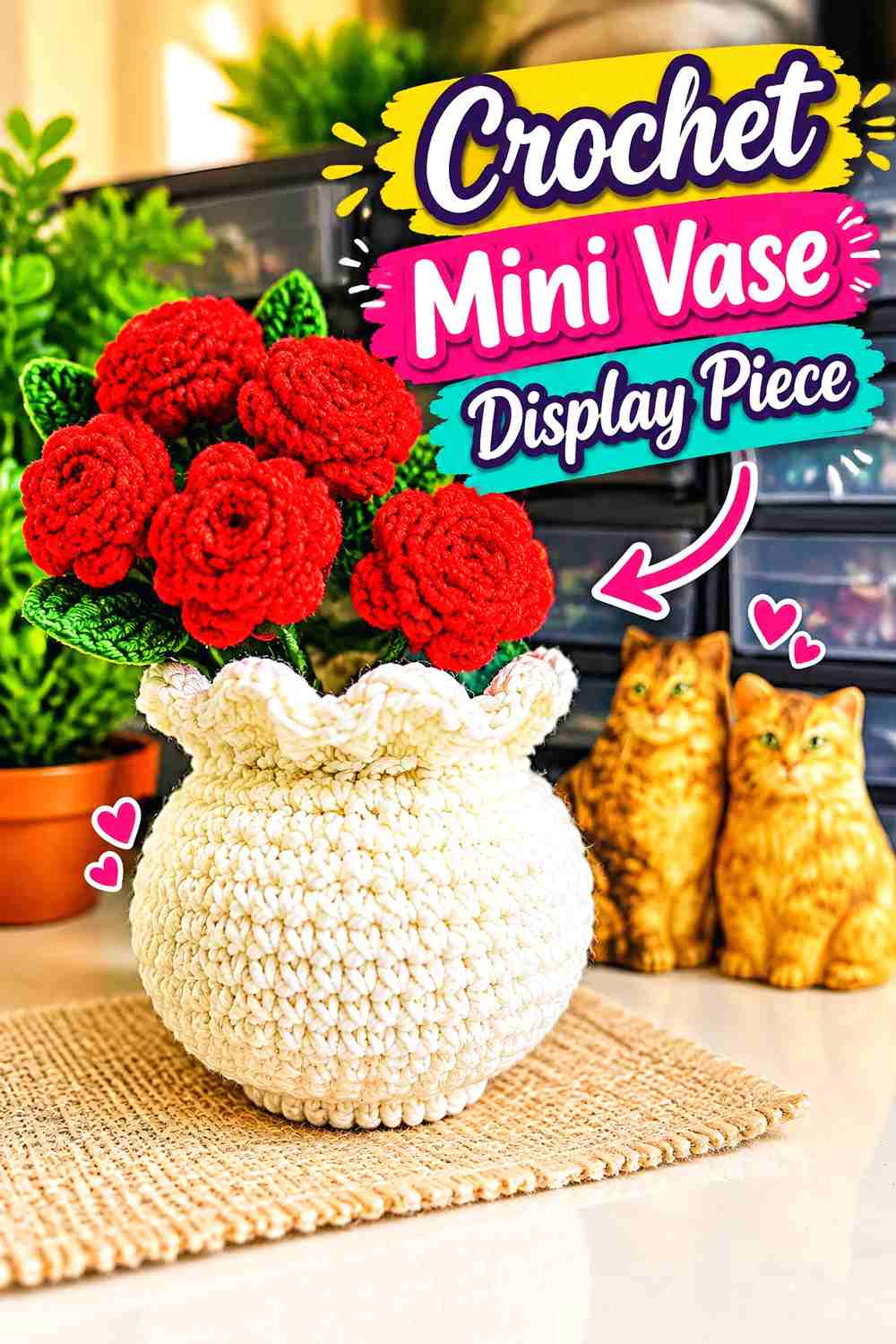
A miniature vase introduces a vessel shape without adding another storage container with handles or closures. Mei Crafts demonstrates a small crochet vase intended for decorative display and suggests that it can be shown alone or paired with flowers.
For a collector cabinet, that flexibility is useful. An empty vase creates a quieter silhouette, while a tiny botanical addition can provide height.
Decide Whether the Vase Needs Flowers at All
Not every container has to be full. In a cabinet already containing butterflies, mushrooms, acorns, and other detailed pieces, an empty vase can create welcome visual calm.
Add flowers only when the shelf needs more height or a deliberate botanical accent.
Treat It as Crochet Decor, Not a Water Vessel
The project is a decorative crochet object rather than a conventional watertight vase.
If you want a floral display, use dry or craft-based elements appropriate for the piece rather than assuming the crocheted form can hold water.
Creator Credit: Mei Crafts
8. Crochet Mini Photo Frame Keepsake
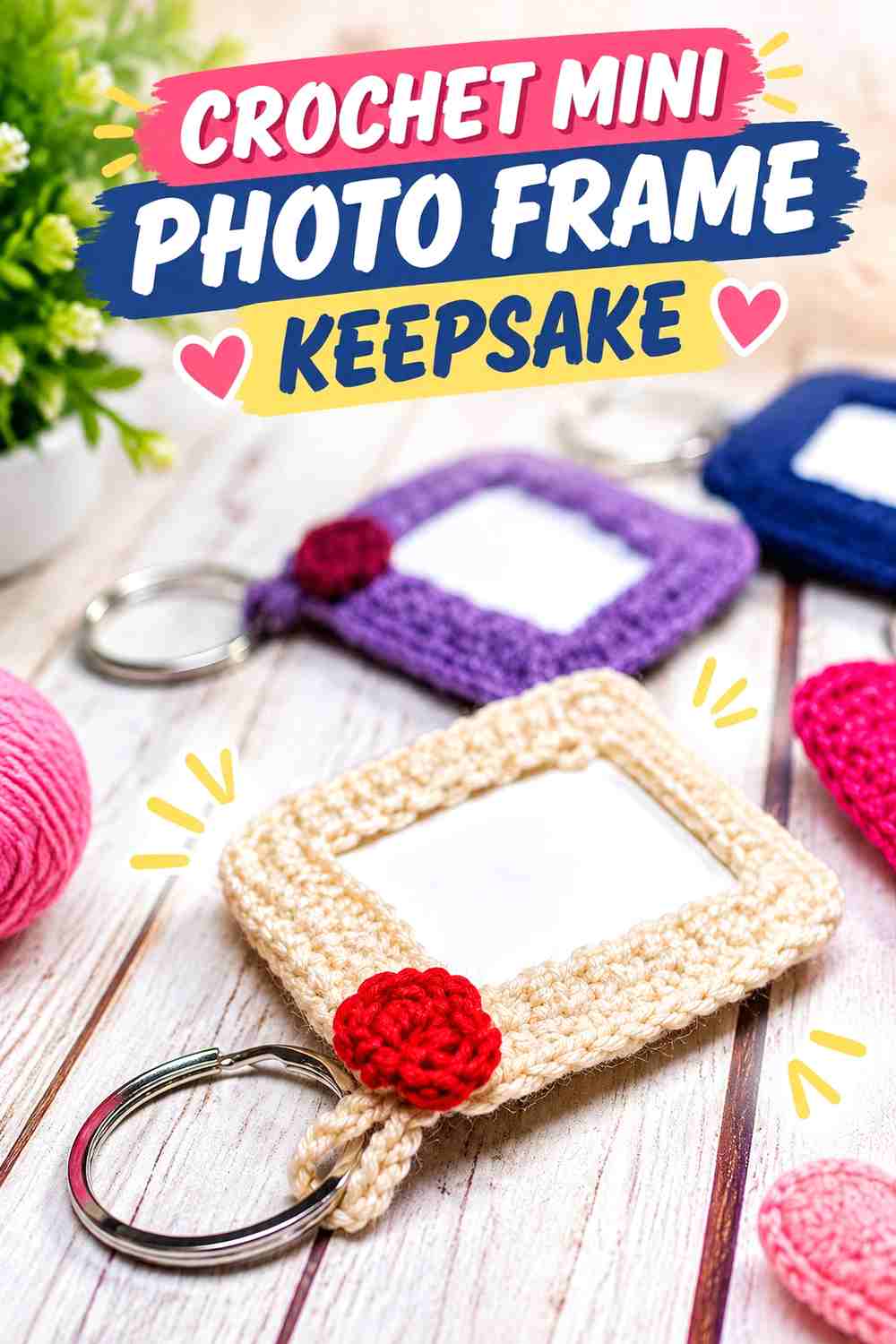
A frame introduces a personal element that most amigurumi cannot provide. Sabs Crochet Arts demonstrates a small crochet photo-frame keychain, giving the cabinet a flat object that can display an image or miniature artwork.
It can become the nostalgic center of the collection without occupying the depth required by a stuffed curio.
Choose the Image After Finishing the Frame
The visible opening determines how much of a photograph or illustration will actually show.
Complete the crochet frame first, then crop or choose the image to suit the real opening rather than preparing artwork from estimated dimensions.
Lean or Mount the Frame Where the Image Is Not Shadowed
Deep cabinet shelves can cast shadows over small framed details.
Test the frame near the front, on a slight riser, or against the back wall and choose the position where the central image remains readable from outside the cabinet.
Creator Credit: Sabs Crochet Arts
9. Crochet Crystal Pouch Collector Pocket
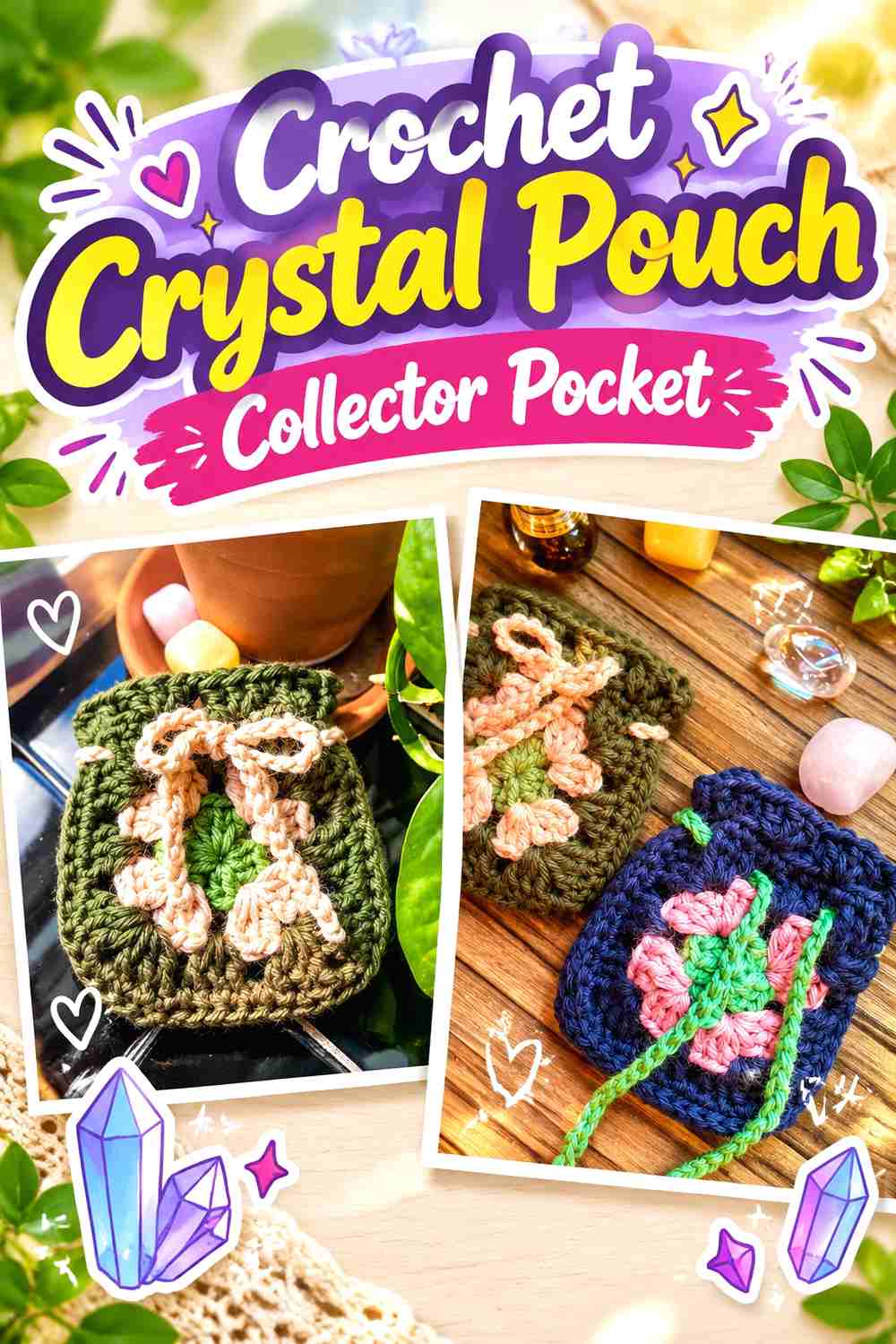
A tiny crystal pouch gives the display a functional object rather than another static ornament. The Cozy Tangerine demonstrates a compact granny-square-style holder designed around carrying a small crystal.
Inside a cabinet, it can be displayed open, hung from a hook, or used to contain one carefully selected lightweight trinket.
The Contents Should Not Overstretch the Pouch
A small holder works best when the object inside suits its finished proportions.
Do not assume that dense stones or oversized collectibles are appropriate simply because they physically fit through the opening. Check how the completed crochet fabric behaves with the intended contents.
Let Part of the Pouch Remain Visible
If the collectible completely hides the crochet, the cabinet loses the textural reason for including the holder.
Choose a piece that sits partly inside or display the pouch empty beside the object so both elements contribute to the composition.
Creator Credit: The Cozy Tangerine
10. Crochet Decorative Candle Curio
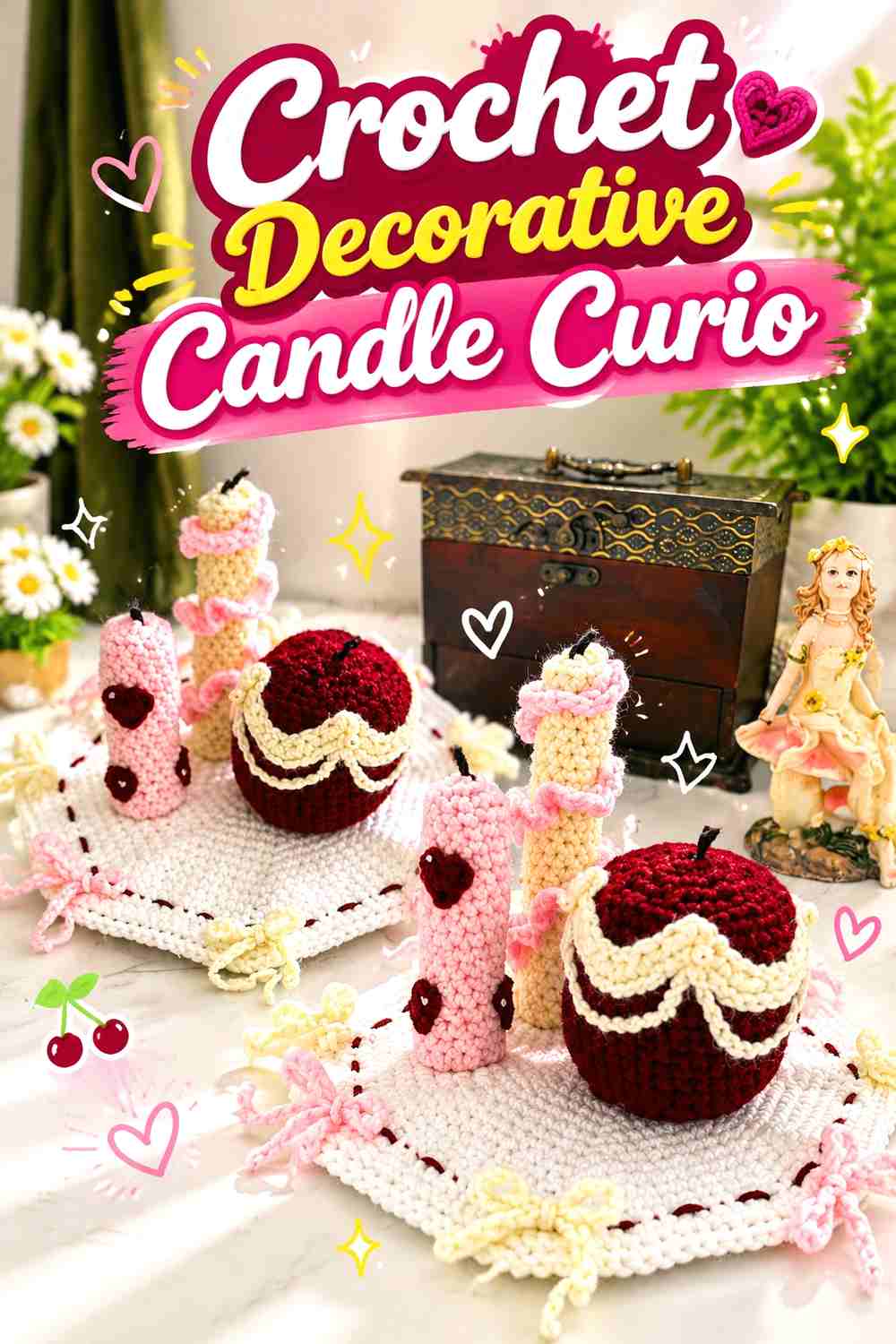
A crochet candle adds a vertical decorative form and gives a collector corner a quiet, old-fashioned atmosphere. Thisfairymade demonstrates a set of crochet candle decorations whose form can work particularly well beside books, potion bottles, or celestial pieces.
The candle can create the suggestion of warm light without introducing an actual flame.
Vary Height Rather Than Making Every Candle Identical
If you make more than one, a small difference in height can create a more natural grouping than a rigid row.
Keep the total arrangement within the shelf clearance, especially if the flame or decorative top adds extra height beyond the main candle body.
Keep Crochet Candles Away From Real Heat and Flame
This project should remain decorative.
Do not place an actual flame against yarn, stuffing, or other craft materials. If the cabinet needs illumination, use a separately appropriate lighting solution rather than treating the crochet candle as a functional candle holder.
Creator Credit: thisfairymade
11. Crochet Tiny Acorn Nature Trinket
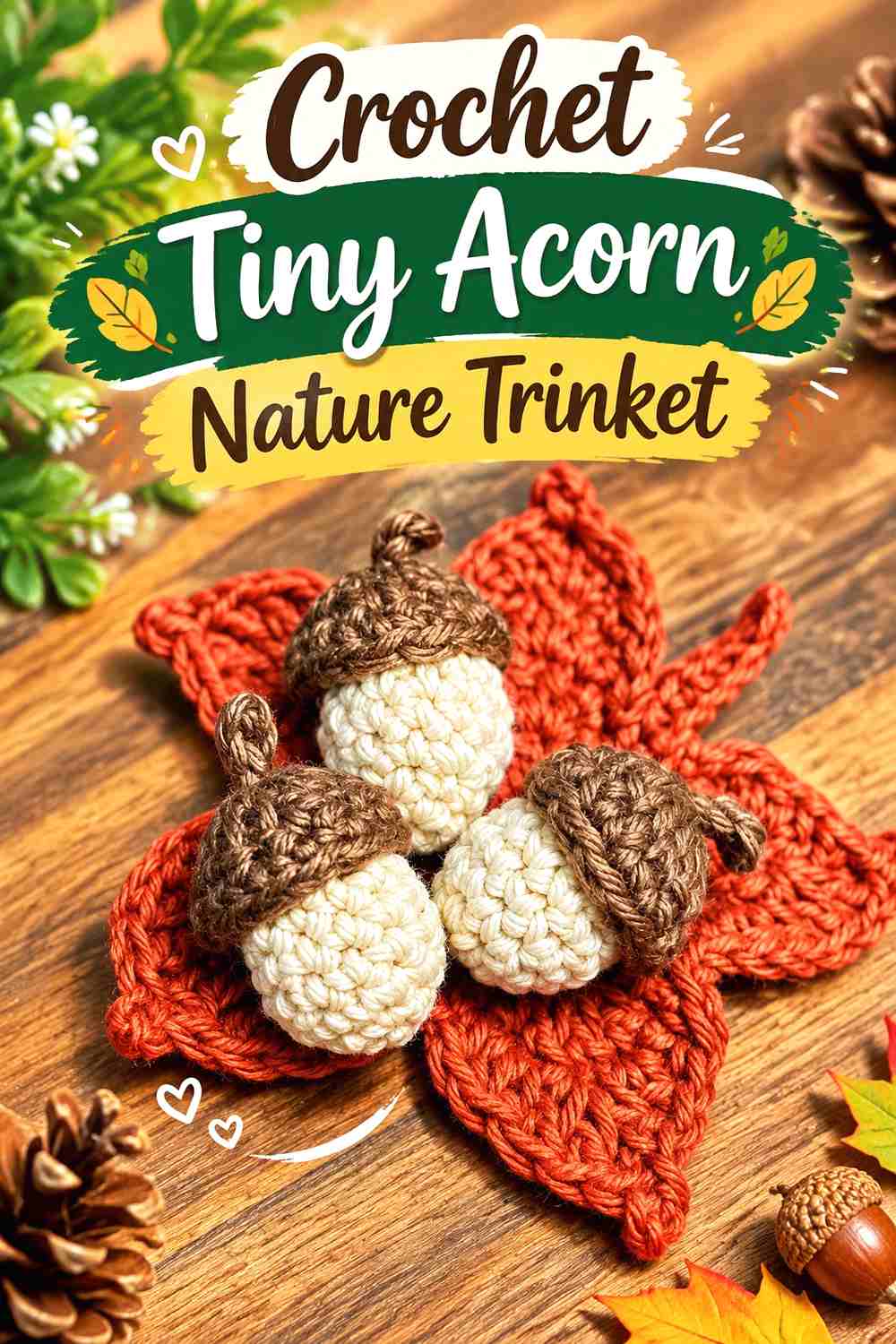
An acorn introduces one of the smallest nature-inspired silhouettes in the collection. Kristina´s Creative Universe demonstrates a tiny crochet acorn with a contrasting cap, which makes it visually distinct even at a small scale.
It works particularly well beside the mushroom or in a small dish where one tiny object might otherwise disappear.
Contrast Helps the Cap Remain Visible
The acorn depends on the relationship between the nut body and textured-looking upper section.
If both are crocheted in nearly identical tones, that distinction may disappear from normal cabinet-viewing distance. Choose related but sufficiently separated colors when you want the two-part shape to read clearly.
Small Acorns Work Well as Repeated Cabinet Details
Unlike a large mushroom or potion bottle, the acorn can be repeated without taking over the cabinet.
A pair or small cluster can connect several woodland pieces, but avoid scattering so many tiny objects across every shelf that the display becomes difficult to dust or visually parse.
Creator Credit: Kristina´s Creative Universe
12. Crochet Mini Basket Curio Holder
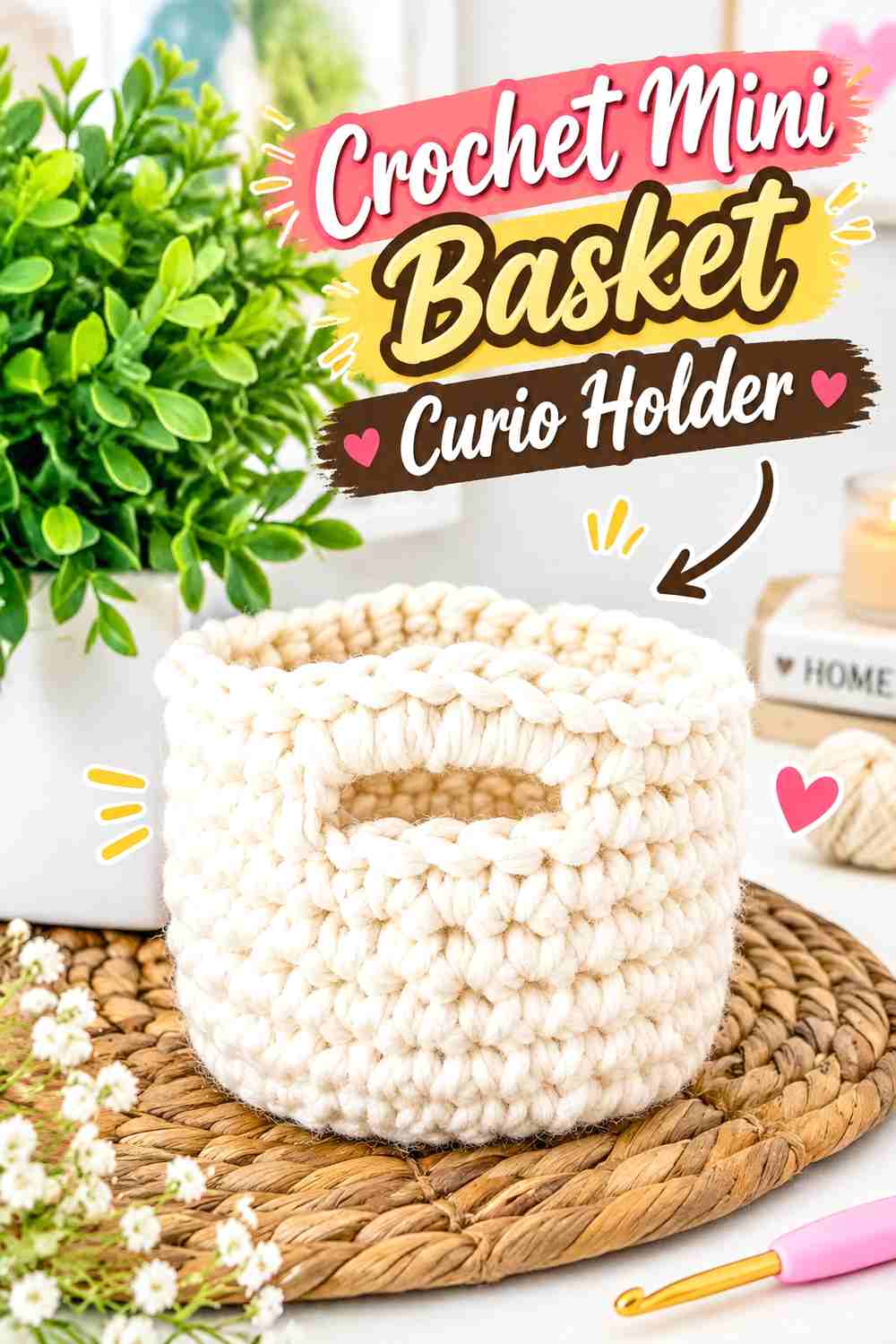
A miniature basket lets the cabinet contain objects within objects. Stitchberry demonstrates a small handled crochet basket that can become a home for tiny charms, acorns, buttons, or other lightweight collectibles.
Its open top is especially helpful because the contents can become part of the display rather than disappearing behind a lid.
Do Not Fill the Basket Above the Handles
The basket itself should remain recognizable.
Keep part of the rim and handle area unobstructed so the container contributes a clear silhouette instead of becoming an indistinct pile of tiny objects.
Use It to Consolidate the Smallest Collectibles
Very small curios scattered individually across a shelf can create clutter.
Grouping a few related pieces in one basket gives them a defined location and can free neighboring shelves for larger focal objects.
Creator Credit: Stitchberry
13. Crochet Mini Bell Keepsake
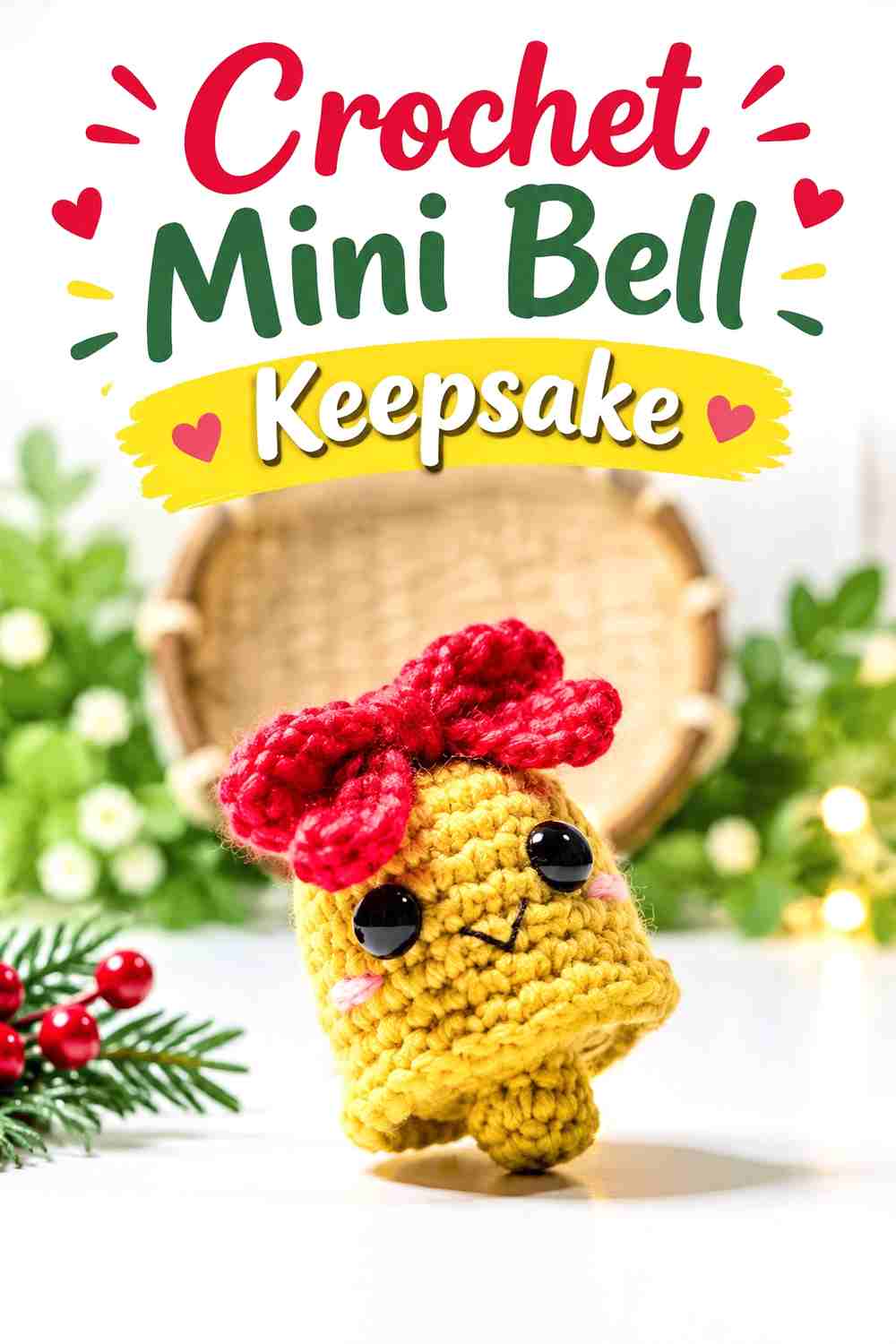
A little bell introduces a flared form that differs from round amigurumi and straight-sided containers. ToyGurumi demonstrates a small stuffed crochet bell, making it a useful choice for a cabinet with nostalgic, seasonal, or heirloom-style objects.
Its narrow upper section also provides a natural place to consider whether the finished piece will sit on a shelf or hang inside the cabinet.
Choose Between Hanging and Standing Before Arranging the Cubby
A bell displayed from a loop uses vertical space differently from one resting on the shelf.
Test both orientations with the neighboring objects before adding permanent display hardware. Hanging can free the shelf surface, while standing may keep the shape easier to view in a shallow cabinet.
Give the Flared Bottom Enough Side Room
The lower edge is what makes the piece read as a bell rather than a narrow stuffed capsule.
Avoid wedging it between two objects whose sides hide that widening profile.
Creator Credit: ToyGurumi
14. Crochet Stuffed Star Celestial Trinket
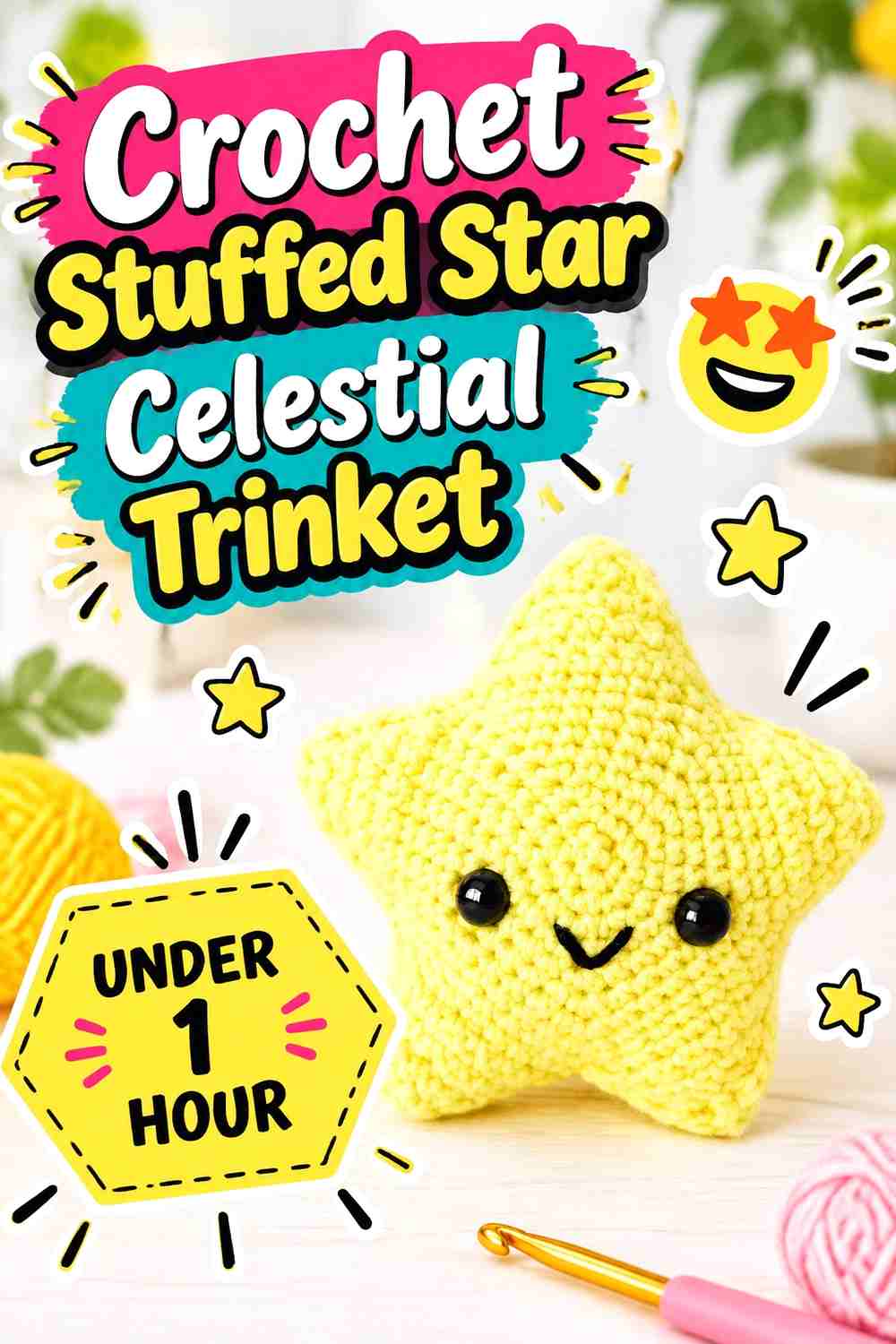
A dimensional star complements the earlier crescent-and-star pairing while adding a fuller amigurumi texture. Amigurumi Forge demonstrates a stuffed star that can function as a small prop or keepsake, giving the cabinet a soft celestial focal piece.
Use it separately from the crescent set if one shelf already contains enough celestial forms.
Preserve Space Around All Five Points
A star can lose its identity surprisingly quickly when several points are hidden.
Give the finished object enough clearance that most of the outline remains visible from the front, particularly if it is placed beside round potion bottles or candles.
Separate Flat and Stuffed Stars Across the Cabinet
Repeating a theme does not require placing every related object together.
A dimensional star on one shelf and the smaller celestial pair elsewhere can make the cabinet feel intentionally curated rather than like one overloaded moon-and-stars cubby.
Creator Credit: Amigurumi Forge
15. Crochet Heart Trinket Dish
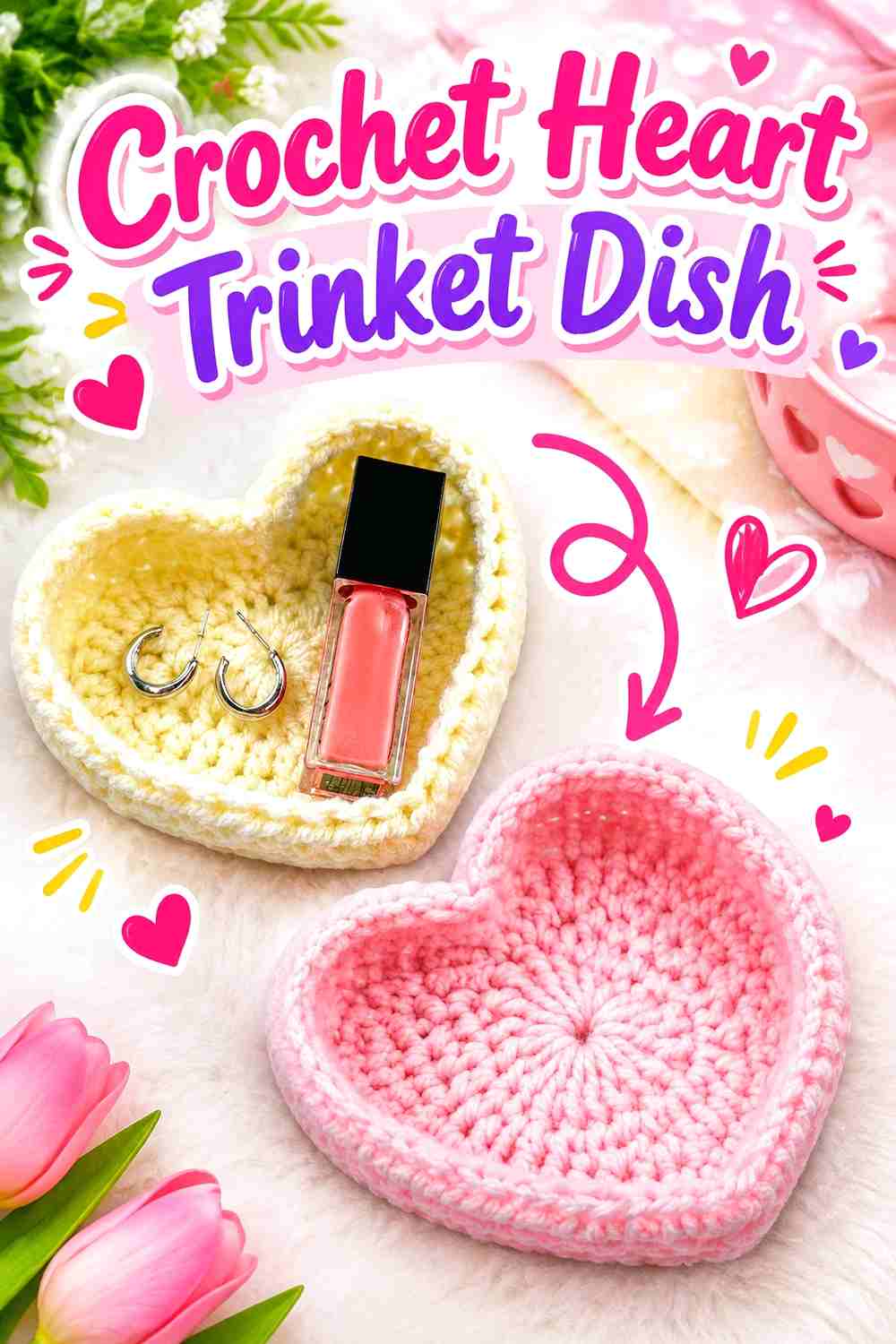
A shallow heart dish adds genuine storage to the display. ElyseCrochets demonstrates a crochet heart-shaped trinket dish, giving small jewelry, charms, buttons, or other lightweight keepsakes a defined place inside the cabinet.
Because the interior surface is part of the project, this piece is most useful where viewers can look slightly downward into it.
Put the Dish on a Lower or Forward Shelf
A dish pushed high above eye level can appear as little more than a narrow edge.
Position it where the heart outline and interior remain visible, or use a low riser that tilts the presentation slightly toward the viewer without making the contents unstable.
Limit the Contents to a Small Curated Group
Filling the dish completely hides its shape.
One ring, charm, stone, or a few very small objects usually lets the crochet form remain part of the display while still giving the dish a practical purpose.
Creator Credit: ElyseCrochets 💌
16. Crochet Mini Heirloom Pumpkin Curio
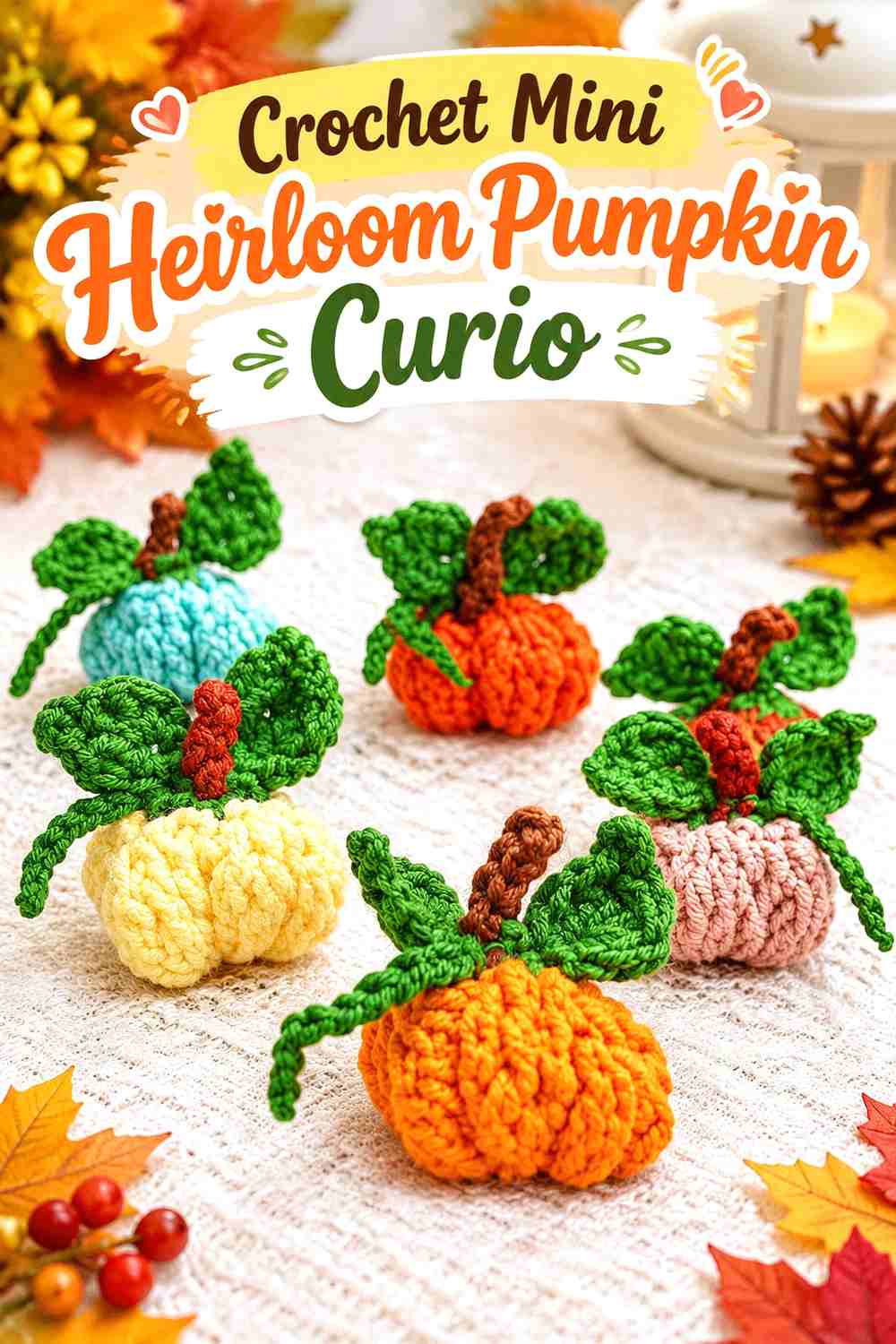
A tiny pumpkin adds a rounded seasonal or old-garden shape without repeating the mushroom. Ravella Design demonstrates a small crochet pumpkin with the segmented form that makes this object recognizable even when it is worked in an unconventional color.
It can lean autumnal in orange, but cream, faded green, dusty rose, brown, or muted mustard can make it feel more like an heirloom cabinet curiosity that stays on display longer.
Let the Segments Carry the Visual Interest
The ridged pumpkin shape already provides surface rhythm, so it does not need excessive trim.
If you add your own cabinet styling, keep the body relatively clear so the segmentation remains visible under normal room lighting.
Muted Color Can Make the Pumpkin Less Seasonal
A bright orange pumpkin immediately suggests fall decor. A quieter botanical or neutral shade shifts attention toward the shape itself.
That can make the piece easier to combine with books, botanical curios, potion bottles, and celestial objects in a year-round collector corner.
Creator Credit: Ravella Design
How to Balance the 16 Crochet Trinkets in One Cabinet
| Display Role | Strong Choices | Main Planning Point |
|---|---|---|
| Flat or back-layer details | Book, butterfly, photo frame | Keep edges and central details visible |
| Woodland focal pieces | Mushroom, snail, acorn, pumpkin | Vary height instead of lining them up |
| Celestial grouping | Crescent and star, stuffed star | Preserve negative space around points and curves |
| Curiosity-shop objects | Potion bottle, candle, crystal pouch | Avoid overcrowding one themed cubby |
| Open containers | Vase, basket, heart dish | Leave enough empty area to see the container |
| Hanging options | Bell, celestial pieces, pouch | Test balance before adding permanent hardware |
| Personal keepsakes | Photo frame, book, dish | Use the contents to tell a specific story |
You do not need all sixteen pieces in one small cabinet. For a narrow display, choose one literary object, one woodland form, one celestial piece, one container, and one unusual curio. Larger cabinets can use the remaining projects to create distinct compartments instead of treating every shelf as one continuous collection.
Conclusion
For a literary collector corner, start with the tiny book and photo frame, then add the candle for height. A woodland cabinet can center on the mushroom, snail, acorn, butterfly, and muted pumpkin. If you prefer a curiosity-shop mood, the potion bottle, crystal pouch, mini vase, and bell create more unusual forms.
The crescent, stars, and candle work well when you want a celestial section, while the basket and heart dish are especially useful for organizing even smaller keepsakes instead of adding more freestanding clutter.
Before crocheting all sixteen, finish a few pieces from different creators and test them inside the actual cabinet. Compare width, height, depth, and normal viewing angle rather than relying on the word “mini.” Then decide which objects should stand alone, which need a riser, which belong in a group, and which might need a carefully tested scale adaptation.
Use the original tutorials for exact construction details and let your own arrangement, palette, and choice of displayed keepsakes turn the individual projects into a coherent collector cabinet.
Frequently Asked Questions
Do all 16 tutorials make dollhouse-size crochet miniatures?
No. The sources include mini amigurumi, keychain projects, decorative crochet pieces, a pouch, basket, frame, and trinket dish. Their finished scales can differ.
Make sample pieces before planning a tightly scaled miniature cabinet.
How do I make projects from different creators look like one curated collection?
Repeat a restrained palette and organize the objects by theme or material mood. For example, parchment, mushroom brown, moss, burgundy, dusty blue, cream, and muted gold-like tones can connect literary, botanical, and celestial objects without making them identical.
Consistent spacing and display backgrounds can matter as much as yarn color.
Which crochet trinkets work best in very shallow cabinets?
Flatter projects such as the butterfly and photo frame are useful where depth is limited. A tiny book or low snail may also fit more comfortably than a deep stuffed mushroom or cluster of potion bottles.
Measure the cabinet’s actual interior depth before choosing the project.
How can I display tiny crochet pieces without losing them visually?
Group related small objects, use shallow dishes or baskets, and place low pieces near the front. Small risers can also bring background curios closer to eye level.
Avoid placing a tiny object directly behind something taller simply because there is physical room there.
Can I resize the crochet projects with thinner yarn?
Changing to thinner yarn with an appropriately matched hook can reduce scale, but it may also affect firmness, stuffing visibility, tiny structural details, and how easy the project is to assemble.
Test one adapted piece before resizing an entire themed collection.
Should every cabinet compartment have the same number of objects?
No. A single mushroom or framed keepsake can carry a small cubby, while another compartment may suit a group of three tiny objects.
Balance matters more than filling every available space.
What should I consider if children or pets can reach the collector cabinet?
Review the materials used in each individual project and in any added trinkets. Keychain hardware, safety eyes, beads, crystals, jewelry, and other small pieces may require additional care.
Treat the cabinet as a decorative display unless its contents and placement have been chosen specifically for handling.