Reusable cotton facial pads are useful for everyday skincare, but keeping the small rounds together between washing and drying can become a challenge. These 18 crochet reusable cotton pad laundry bag inspiration ideas explore compact mesh pouches, drawstring sacks, zippered cases, folded closures, and hanging collection bags. From soft sage and oatmeal to terracotta, lavender, coral, and forest green, the designs combine distinct crochet textures with practical ways to collect and organize washable facial rounds.
Some concepts focus on fine mesh that can hold a small group of pads together, while others offer secure zippers, separate sections, compact shapes, or hanging loops for bathroom storage. The collection helps you compare stitch openness, closure styles, drying access, and ease of cleaning. These are concepts, not tested machine-wash bags: before washing a handmade crochet bag in a machine, its material, stitching, closure, and compatibility with the washing process would need to be checked.
These are AI-generated crochet design visualizations for inspiration, not photographs of tested handmade pieces or step-by-step patterns.
Quick Design Selection Guide
- For a simple mesh collection bag: Crochet Sage Fine-Mesh Drawstring Laundry Bag and Crochet Oatmeal Honeycomb Cotton Pad Wash Sack offer compact gathered-top designs.
- For secure zippered storage: Crochet Ivory Zippered Flat-Mesh Wash Pouch and Crochet Navy Mini-Grid Laundry Pad Pouch have flatter, enclosed shapes.
- For separating different pad sizes: Crochet Cobalt Twin-Section Cotton Pad Wash Bag provides two distinct compartments.
- For hanging in a bathroom: Crochet Butter Yellow Daisy Hanging Laundry Bag and Crochet Peach Hanging-Loop Cotton Pad Wash Bag include short hanging loops.
- For decorative crochet texture: Crochet Lavender Granny-Panel Cotton Pad Laundry Bag and Crochet Sand Chevron Zippered Pad Wash Bag use more noticeable surface patterns.
- For a firm outer edge: Crochet Forest Green Framed-Mesh Laundry Bag surrounds its fine mesh with broader solid crochet sections.
1. Crochet Sage Fine-Mesh Drawstring Laundry Bag
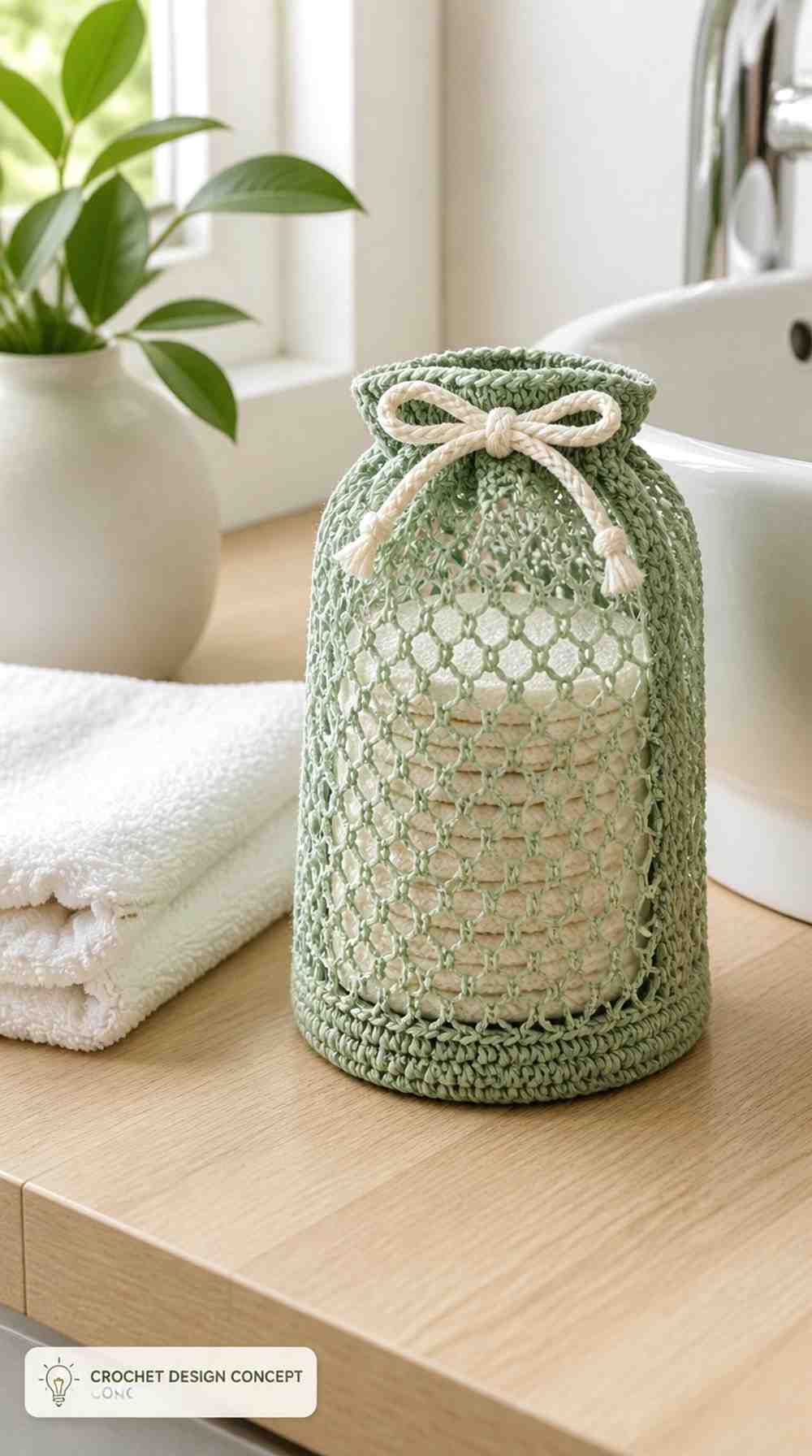
Soft sage-green crochet forms a small cylindrical laundry bag with tightly spaced diamond-mesh stitches and a solid circular base. An ivory drawstring gathers the upper opening, while a few reusable cotton facial rounds remain visible through the fine mesh.
The rounded shape gives this design a familiar wash-bag appearance without adding a bulky frame. Its narrow mesh openings are intended to keep pads contained, although actual stitch size and stretch must be checked before treating the finished crochet as a laundry-safe bag.
- Mesh opening size: Keep the crochet gaps noticeably smaller than the smallest reusable pad, allowing for stretching when the bag becomes wet.
- Drawstring security: Short, neatly secured cord ends are preferable to long dangling strings, especially if the bag will be placed near other laundry.
- Base construction: A solid circular crochet base can help prevent pads from catching in larger openings where the body joins the bottom.
2. Crochet Ivory Zippered Flat-Mesh Wash Pouch
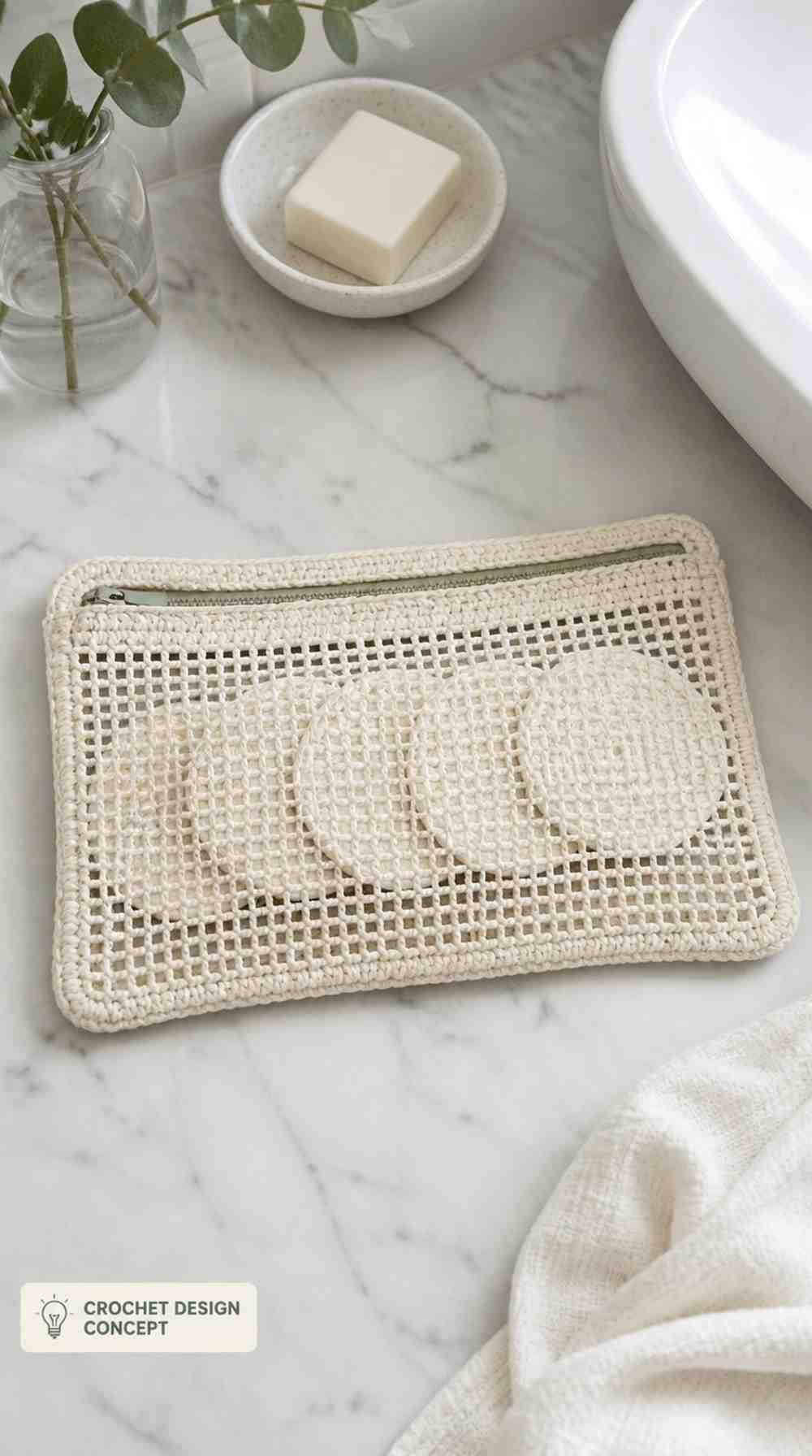
Ivory crochet gives this laundry pouch a simple rectangular silhouette, with small filet-mesh openings across the main panels and dense edging around the sides. A sage-green zipper runs along the top, and a short protective crochet strip covers the zipper pull.
The flat design is useful for imagining a small group of reusable facial pads kept together without too much excess fabric. The zipped opening distinguishes it from drawstring sacks, though any real zipper must be correctly installed and suitable for the intended washing conditions.
- Zipper protection: Cover or secure the zipper pull so it does not catch on other fabrics if the finished bag is machine-wash compatible.
- Flat construction: A shallow rectangular shape can keep pads from collecting in a deep corner, provided the pouch is not tightly overfilled.
- Edge reinforcement: Dense crochet borders help define the pouch shape, but the seams still need checking for stretching and yarn ends working loose.
3. Crochet Dusty Rose Foldover Pad Laundry Pouch
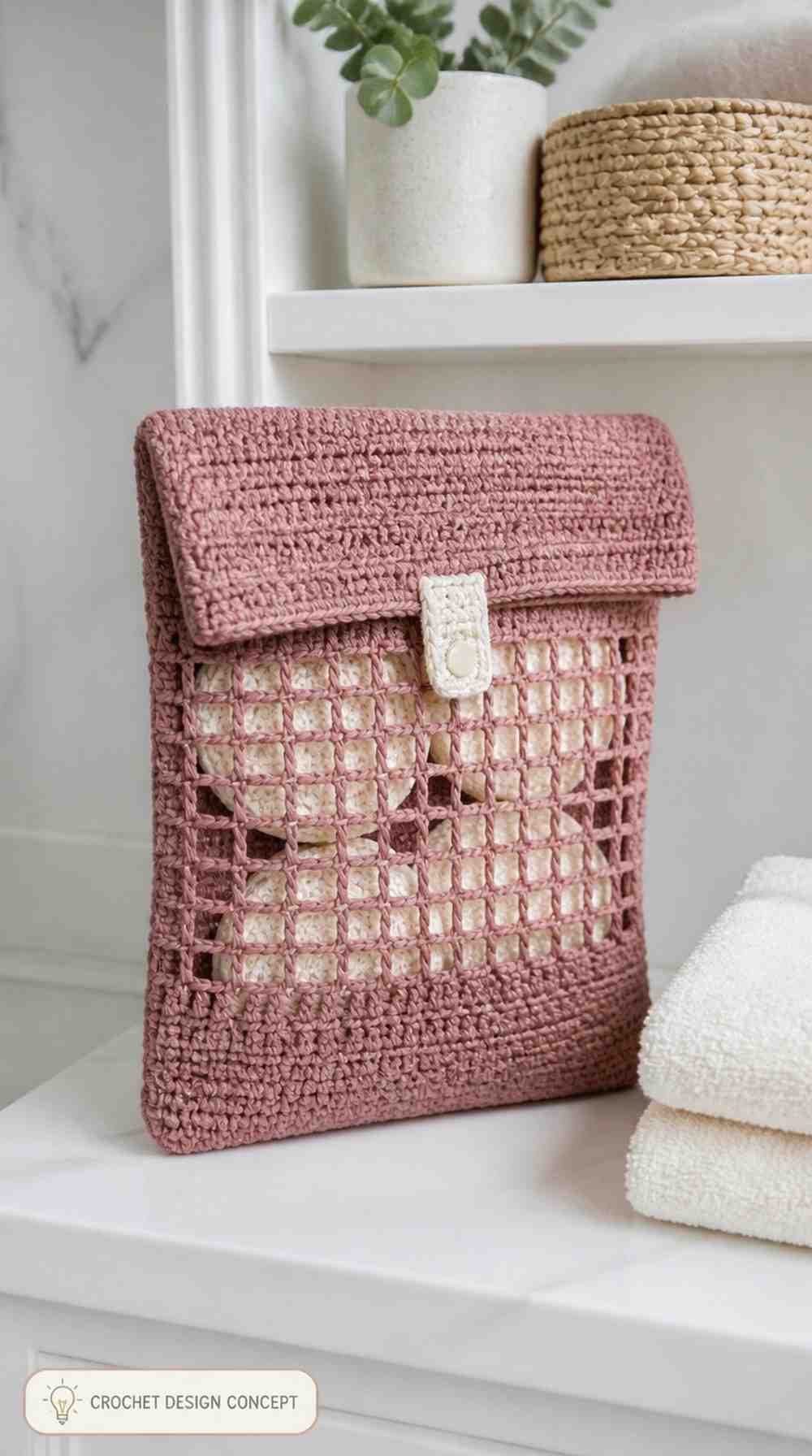
Dusty-rose crochet forms a neat rectangular pouch with close stitches along the lower section and a fine square-mesh center. A broad solid foldover flap covers the upper opening, held in place with a small cream snap tab.
The folding construction gives this concept a different appearance from a gathered bag. It offers an enclosed place for a few reusable cotton rounds, although its layered closure may be more convenient as a bathroom collection pouch than an automatically suitable machine-wash bag.
- Foldover overlap: Allow enough fabric to cover the opening securely without creating a bulky roll of crochet across the front.
- Snap suitability: Choose a fastening appropriate for the intended use; poorly attached snaps can detach or damage other laundry.
- Mesh balance: Keep the visible central mesh fine enough to contain the pads while maintaining solid sections around the closure.
4. Crochet Terracotta Covered-Cord Barrel Laundry Bag
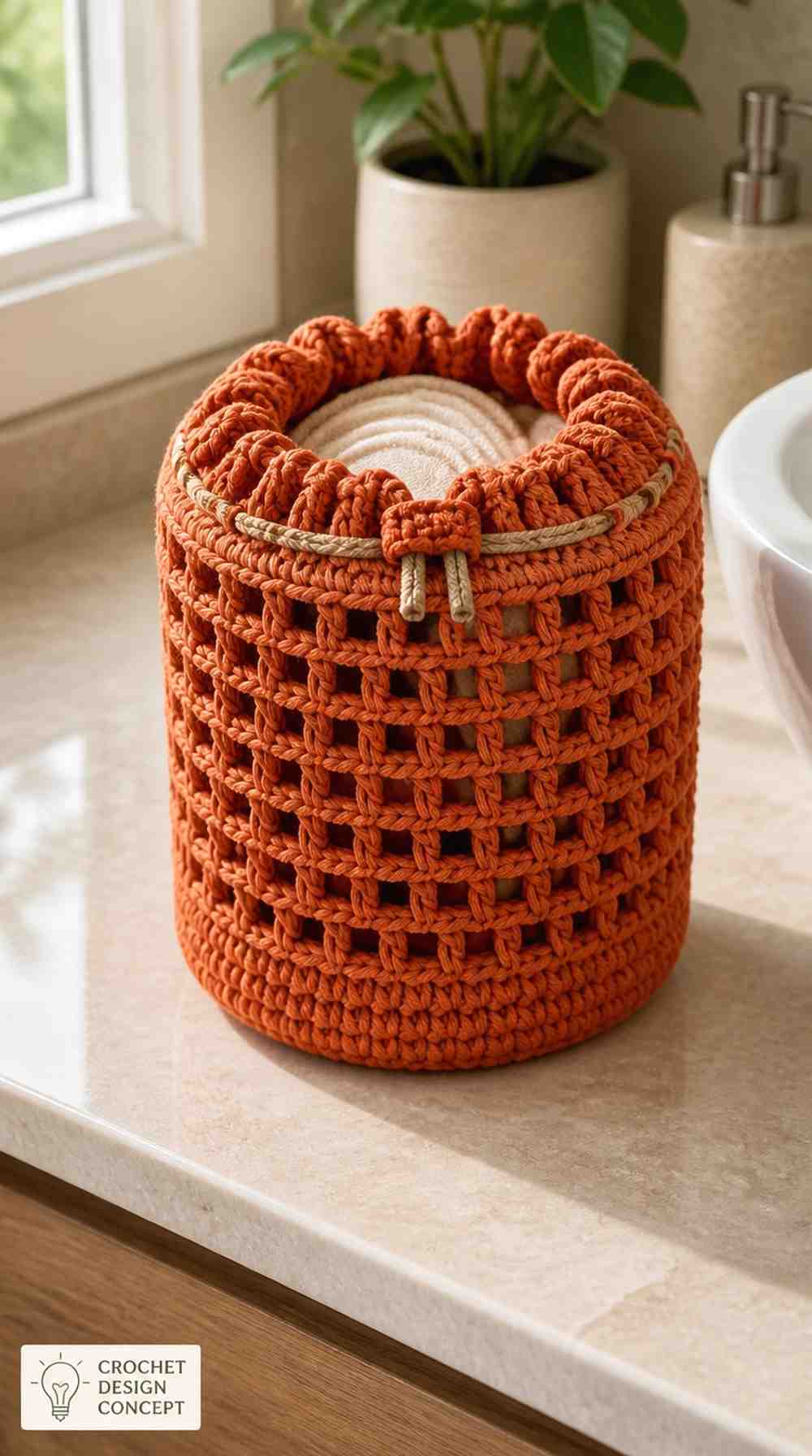
Warm terracotta crochet gives this compact bag a softly rounded barrel shape. Ladder-style mesh rows rise from a dense circular base, while an oatmeal-colored drawcord passes through a thick upper channel. Its short ends tuck neatly into a small keeper loop.
The upper channel keeps most of the cord contained, which is an important difference from a bag with long hanging drawstrings. The rounded shape provides space for several reusable cotton pads, but it should not be packed so tightly that water cannot circulate during washing.
- Cord management: Keep drawcord ends short and secured; a crochet cord channel does not guarantee that the bag cannot snag in a machine.
- Laundry movement: A loosely filled bag is more practical than a tightly stuffed barrel, which may restrict cleaning around individual pads.
- Rounded base: Check the join between the mesh body and solid bottom, where repeated movement could place stress on the stitches.
5. Crochet Cobalt Twin-Section Cotton Pad Wash Bag
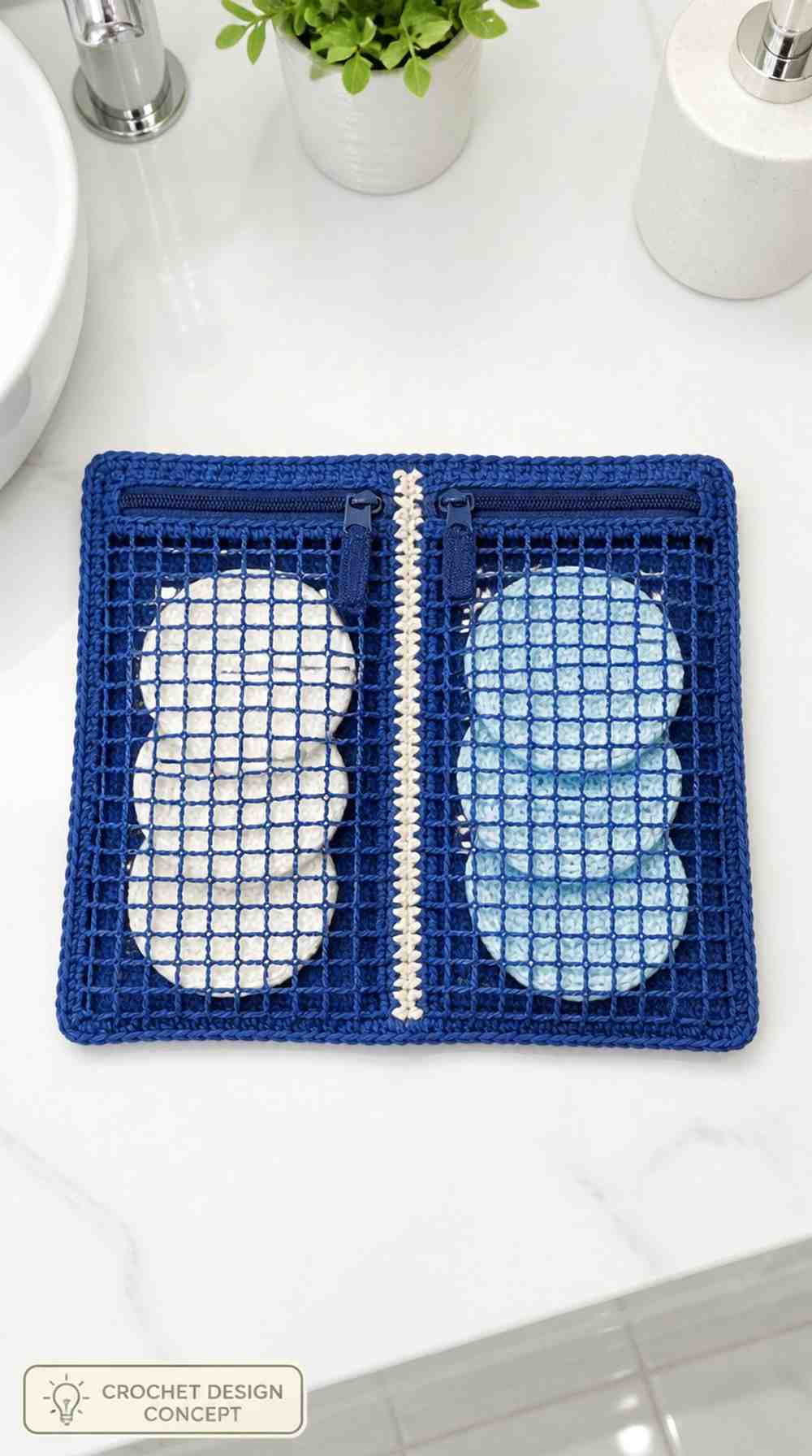
Cobalt-blue crochet creates a wide, flat laundry pouch with two side-by-side compartments. A solid cream seam divides the center, and each section closes with its own short zipper. Small white facial pads occupy one side, while slightly larger pale-blue pads sit in the other.
The two-section layout gives this idea a clear organizing purpose. It could help keep different pad sizes together without mixing them into one pocket. However, the added center seam and separate zippers introduce more construction details that must remain secure during handling.
- Compartment sizing: Give each section enough room for its own pad size instead of splitting the overall width into two impractically narrow pockets.
- Separate zippers: Both closures need protected pulls and secure ends, particularly if the bag is intended for laundering rather than storage alone.
- Central seam: A dense dividing seam should stay flat and firmly attached so the compartments do not distort when the pads move.
6. Crochet Butter Yellow Daisy Hanging Laundry Bag
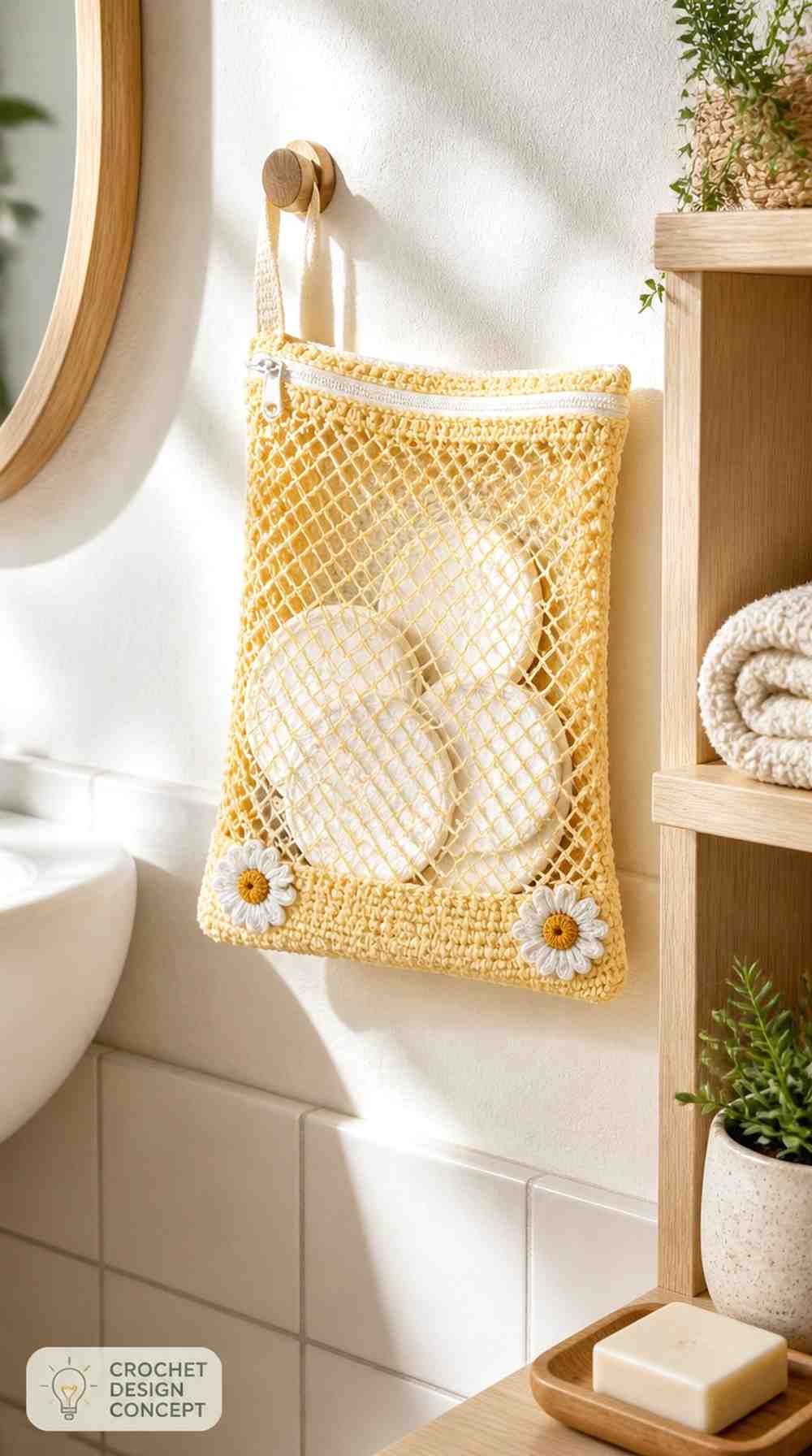
Butter-yellow crochet creates a cheerful rectangular laundry bag with a fine diamond-mesh center and a firm ivory zipper across the top. Two small flat daisies decorate its lower corners, while a short cream loop allows the bag to hang from a bathroom hook.
The decorative flowers sit outside the working opening, keeping the center relatively simple. The hanging loop gives the pouch an extra storage function, though wet used pads should not be left packed inside a closed bag where moisture may linger.
- Hanging position: Place the bag on a suitable dry hook where it does not touch splashing water or drag against damp bathroom surfaces.
- Flower attachment: Keep the flat crochet daisies firmly secured and away from the zipper so decorative threads cannot catch during handling.
- Used-pad care: Rinse pads as directed and avoid leaving them wet inside a closed pouch while waiting for laundry.
7. Crochet Oatmeal Honeycomb Cotton Pad Wash Sack
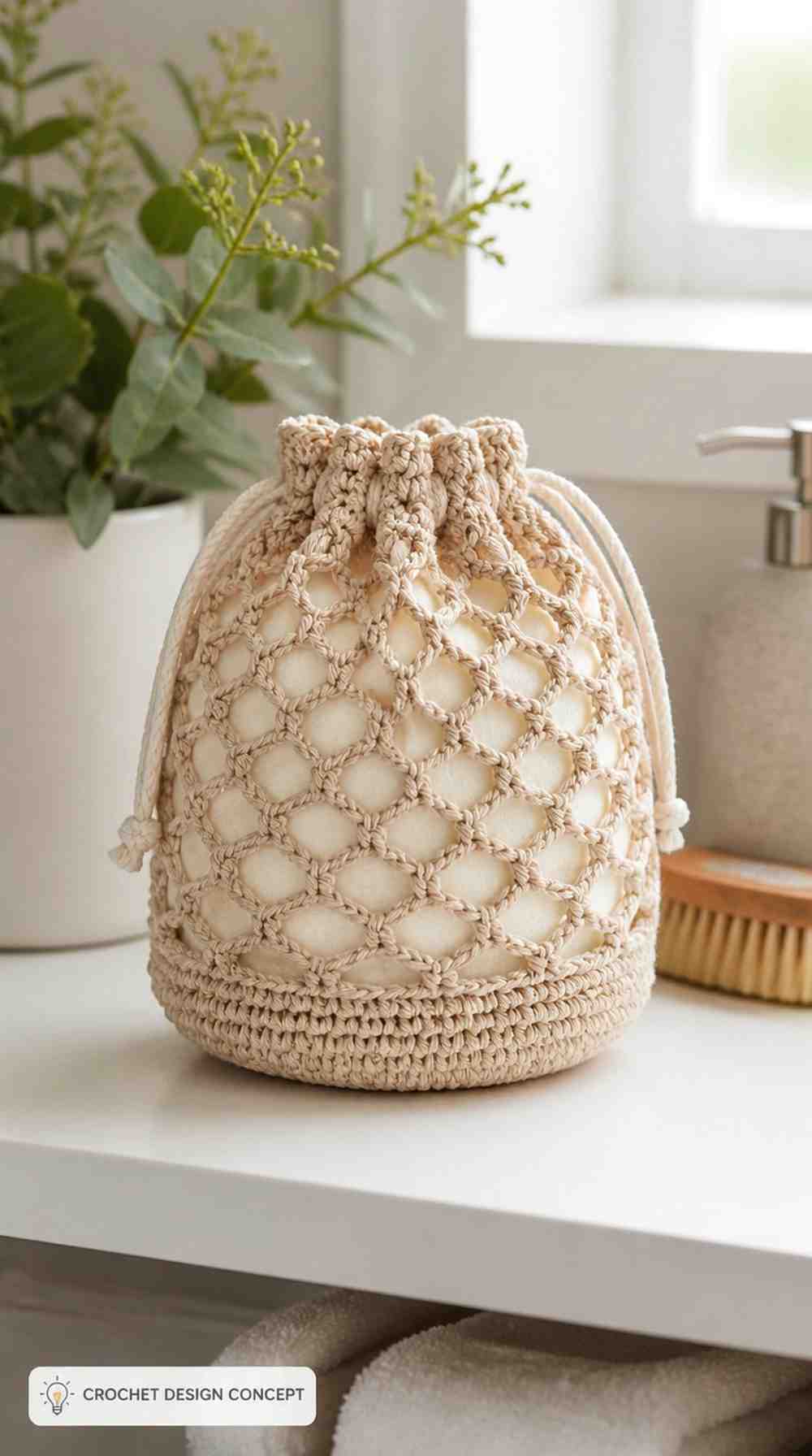
Oatmeal crochet forms a softly rounded drawstring sack with small honeycomb-shaped openings and a dense circular lower section. A cream cord gathers the top, creating a compact storage shape for a handful of reusable cotton facial rounds.
The honeycomb texture gives this bag a more distinctive mesh surface than simple square openings. It also introduces stitch intersections that must be checked for stretching. The design is best considered for a small quantity of pads, leaving space around them rather than packing the sack tightly.
- Honeycomb openings: Check the widest opening after stretching a wet crochet sample; decorative mesh can expand more than it appears when dry.
- Drawcord channel: A closely worked upper band can help define the opening, but loose cord ends must remain controlled.
- Capacity planning: Leave the pads enough room to move rather than using the soft bag as a tightly packed storage container.
8. Crochet Teal Roll-Top Cotton Pad Collection Bag
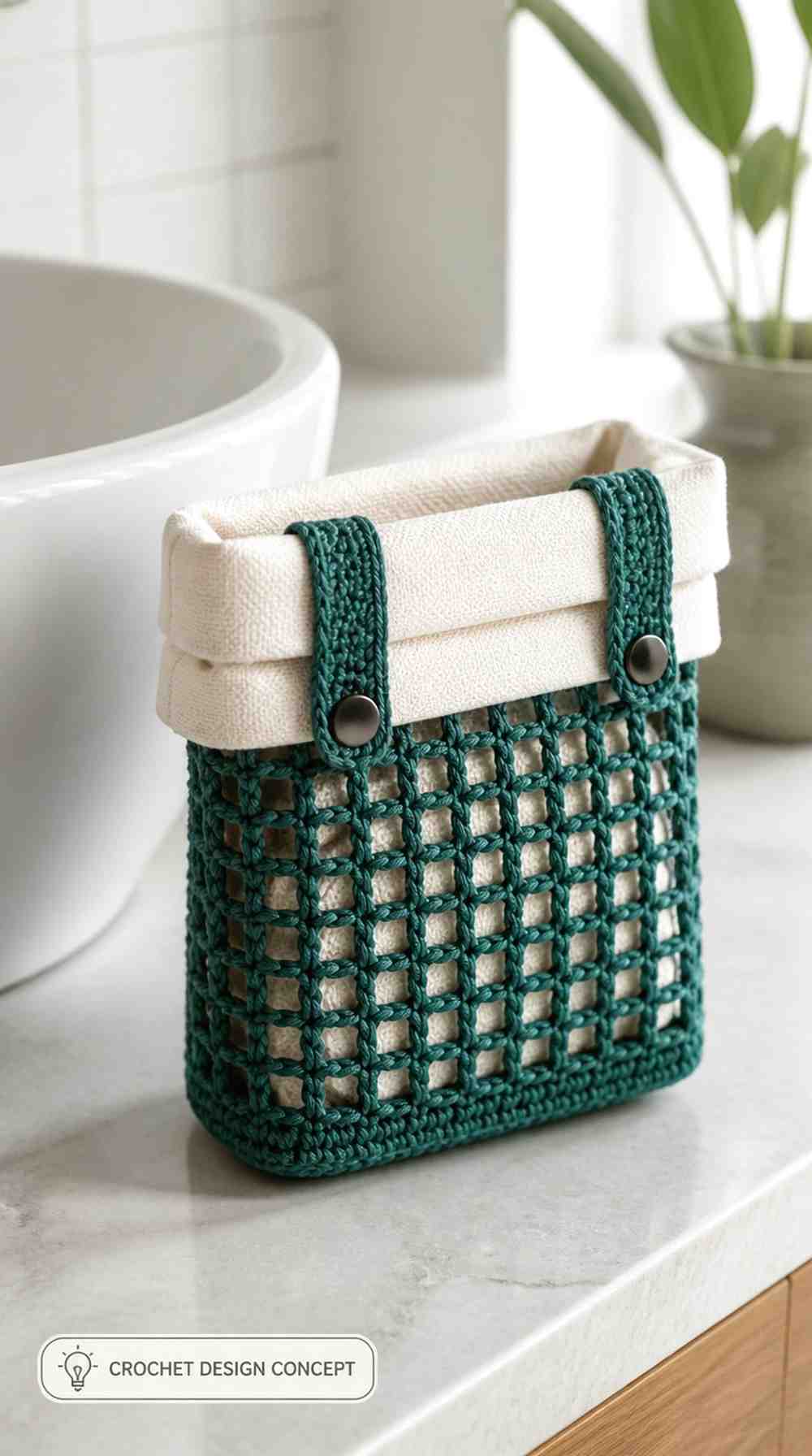
Teal crochet makes a small rectangular collection bag with a fine square-mesh body and a flat bottom. A cream fabric section extends above the mesh and folds down twice, secured by two short teal tabs with black snaps.
The rolled top offers a more enclosed storage shape than an open mesh sack. Its construction resembles a compact collection pouch rather than a conventional laundry mesh bag. Because the roll introduces layered fabric and hardware, suitability for machine laundering would depend on the materials and actual closure.
- Rolled-top thickness: Keep the fold compact so it does not become disproportionately bulky compared with the small mesh body.
- Fabric compatibility: Any cream fabric used with crochet should have suitable care requirements and shrinkage behavior if both layers will be washed together.
- Snap security: Check that both fastening tabs remain attached through repeated use, and do not assume decorative snaps are suitable for a wash cycle.
9. Crochet Lavender Granny-Panel Cotton Pad Laundry Bag
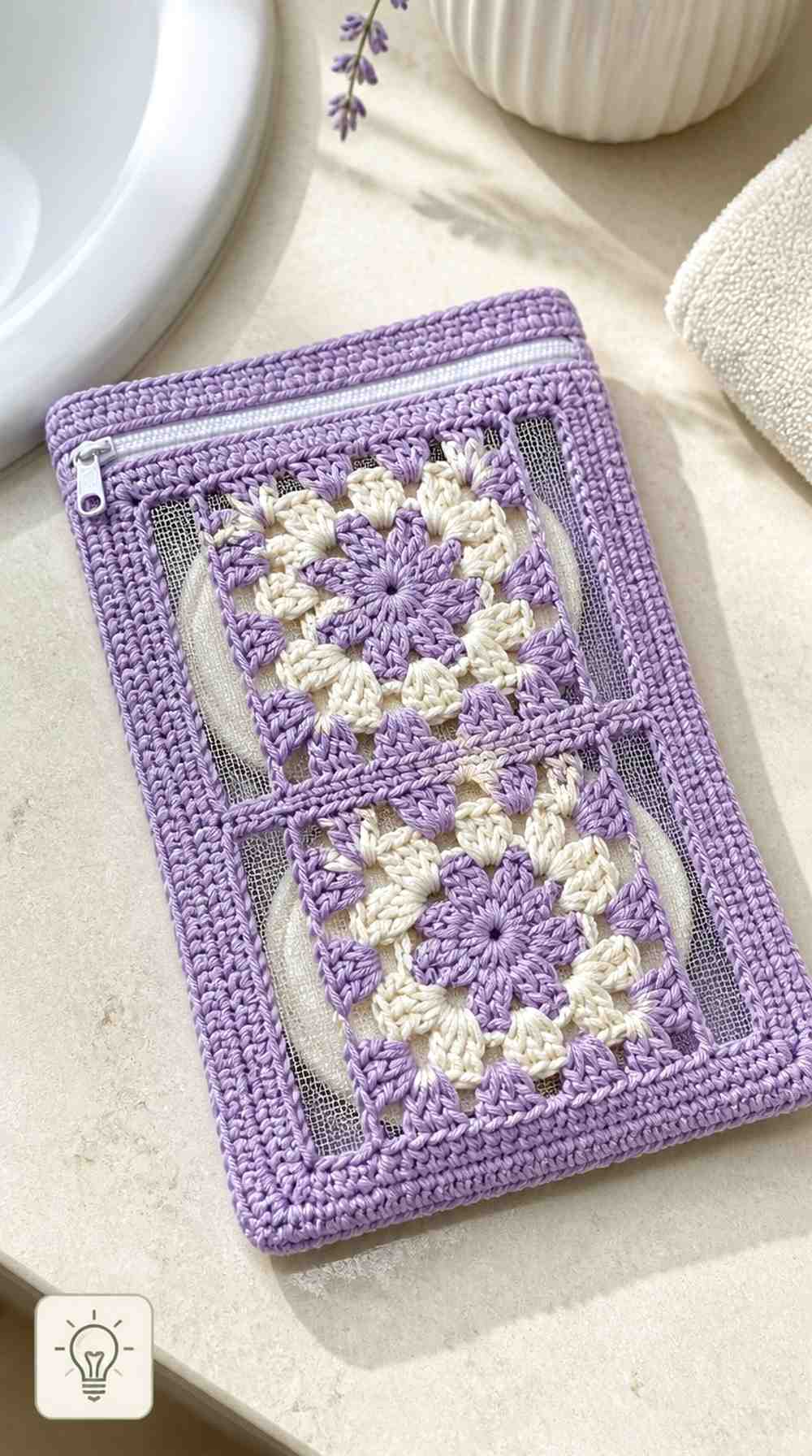
Lavender crochet gives this flat pouch a patchwork appearance, with two small lavender-and-ivory granny squares running down the front. Fine cream fabric mesh backs the open granny corners, while a white zipper closes the upper edge.
The backing is especially important here. Traditional granny squares create larger spaces than many small reusable cotton rounds require, so the separate mesh layer provides the more controlled containment surface. The visible granny motifs remain the decorative feature rather than the only fabric holding the pads.
- Granny-square backing: Use a suitably fine inner mesh to prevent small pads from shifting through the open corner spaces.
- Joined-square seams: Keep the crochet joins flat and secure so repeated handling does not produce raised gaps between the decorative panels.
- Mixed-material care: Check that the backing, zipper tape, and crochet yarn can tolerate the same washing and drying method before combining them.
10. Crochet Charcoal Vertical-Stripe Pad Laundry Pouch
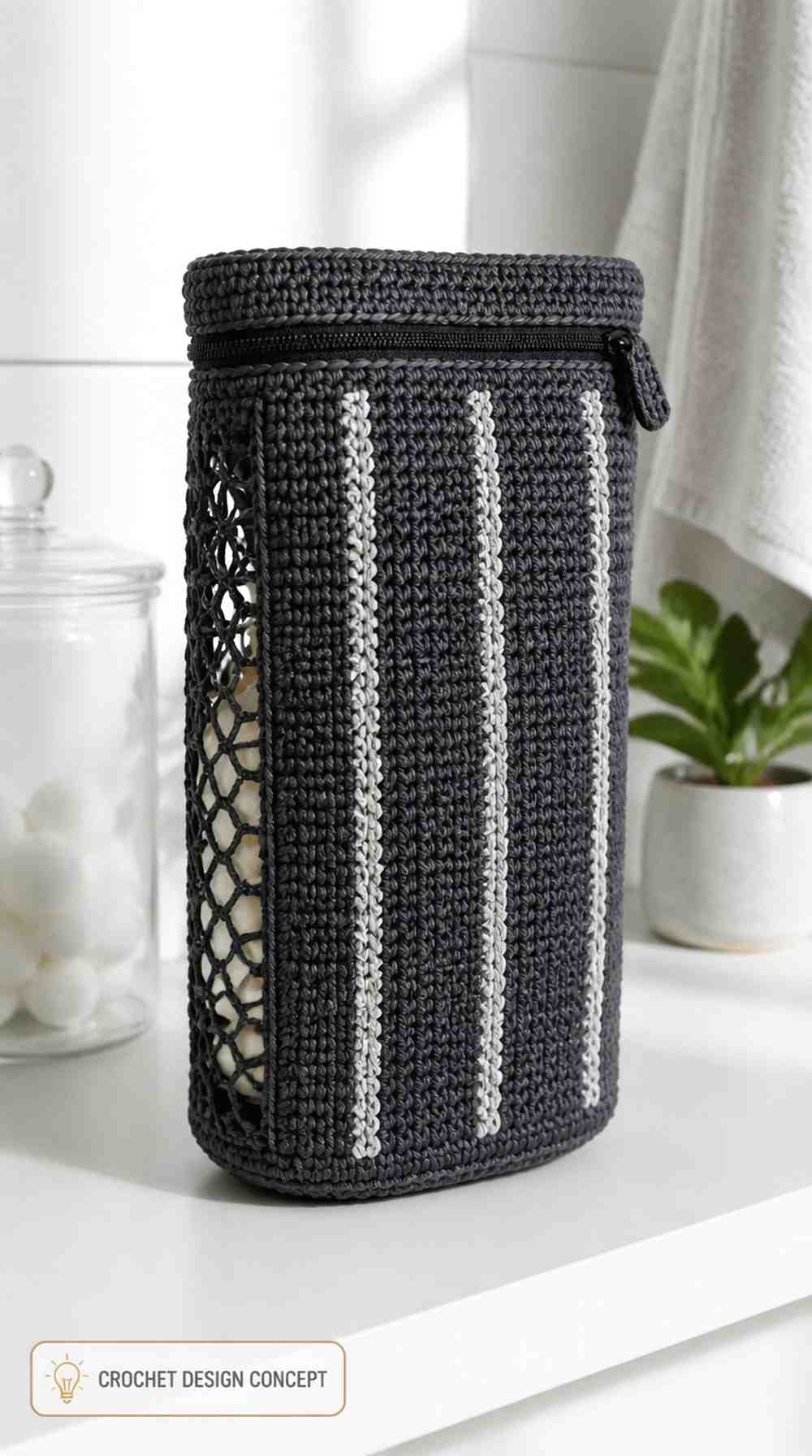
A tall charcoal crochet pouch features three narrow pale-gray vertical stripes across a dense front panel. Fine mesh sections run along the sides, while a short black zipper closes the narrow top. The bottom curves gently, giving the case a soft standing shape.
This concept organizes a small stack of reusable facial pads vertically rather than spreading them across a broad flat pouch. The dense front offers less open mesh than other designs, so the actual cleaning performance would need to be considered if it were used as a machine-wash bag.
- Vertical stacking: Keep the pouch wide enough for the pads to move, rather than compressing them tightly into a tall narrow column.
- Mesh distribution: Side mesh offers some openings, but a dense front may affect water movement compared with a fully meshed bag.
- Dark yarn: Check colorfastness before washing a dark crochet pouch with pale reusable facial pads.
11. Crochet Mint Envelope-Closure Cotton Pad Wash Pouch
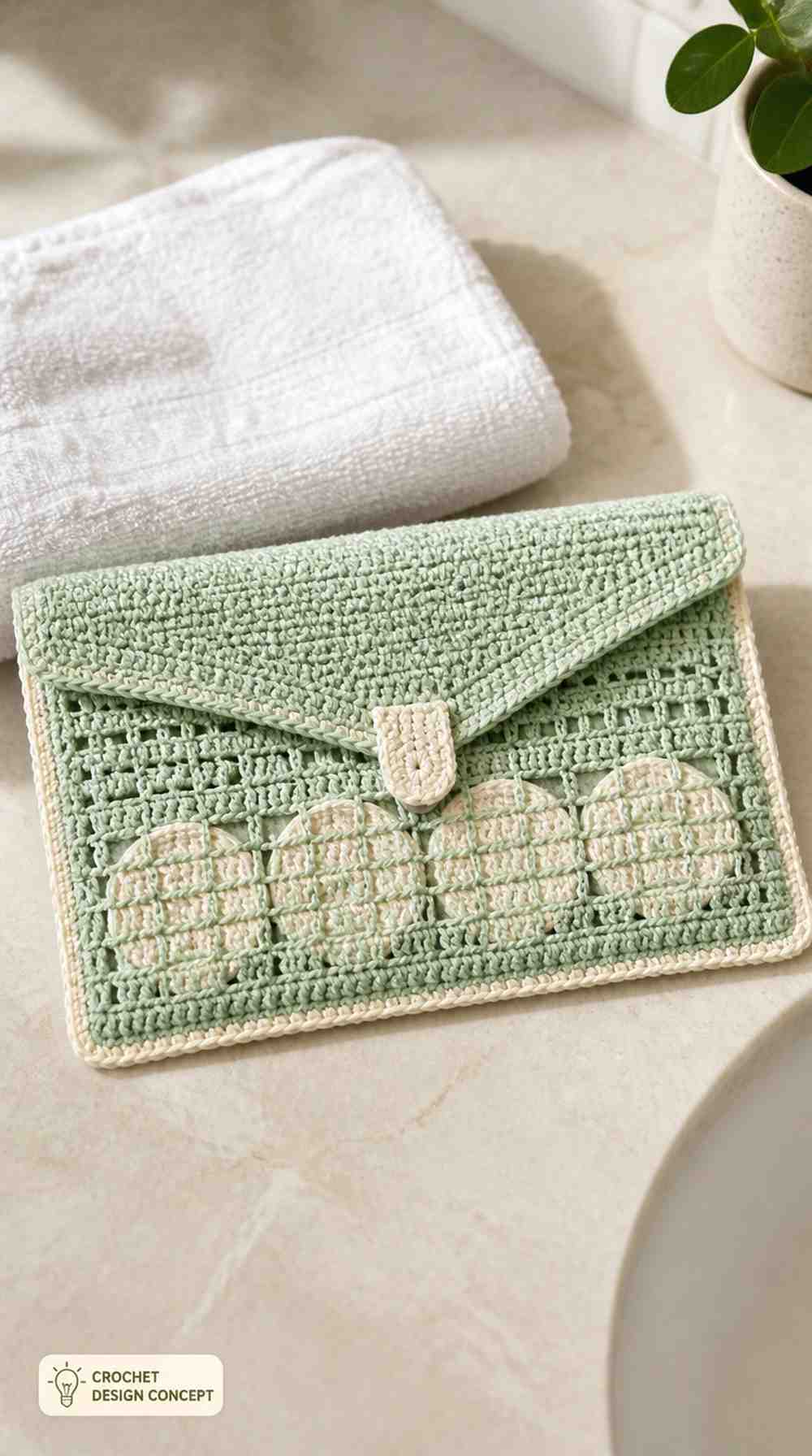
Mint-green crochet forms a flat envelope-style pouch with a fine rectangular mesh center and a pale-cream solid outer border. A broad mint flap folds over the front, held by a short cream tab with a concealed snap.
The design gives reusable pads a compact place to stay together between uses. Its flat rectangular profile is convenient for storing a small set in a bathroom drawer, although the folded closure introduces an additional layer that may not be ideal for every laundering method.
- Flap coverage: The overlap must remain wide enough to contain the pads without leaving an opening that stretches when the pouch is lifted.
- Mesh panel: Keep the stitch holes smaller than the pads, especially near the lower corners where items may collect.
- Storage use: A flat envelope can be handy for clean, dry pads; avoid trapping damp used pads inside its closed layers.
12. Crochet Coral Round-Bottom Mesh Laundry Sack
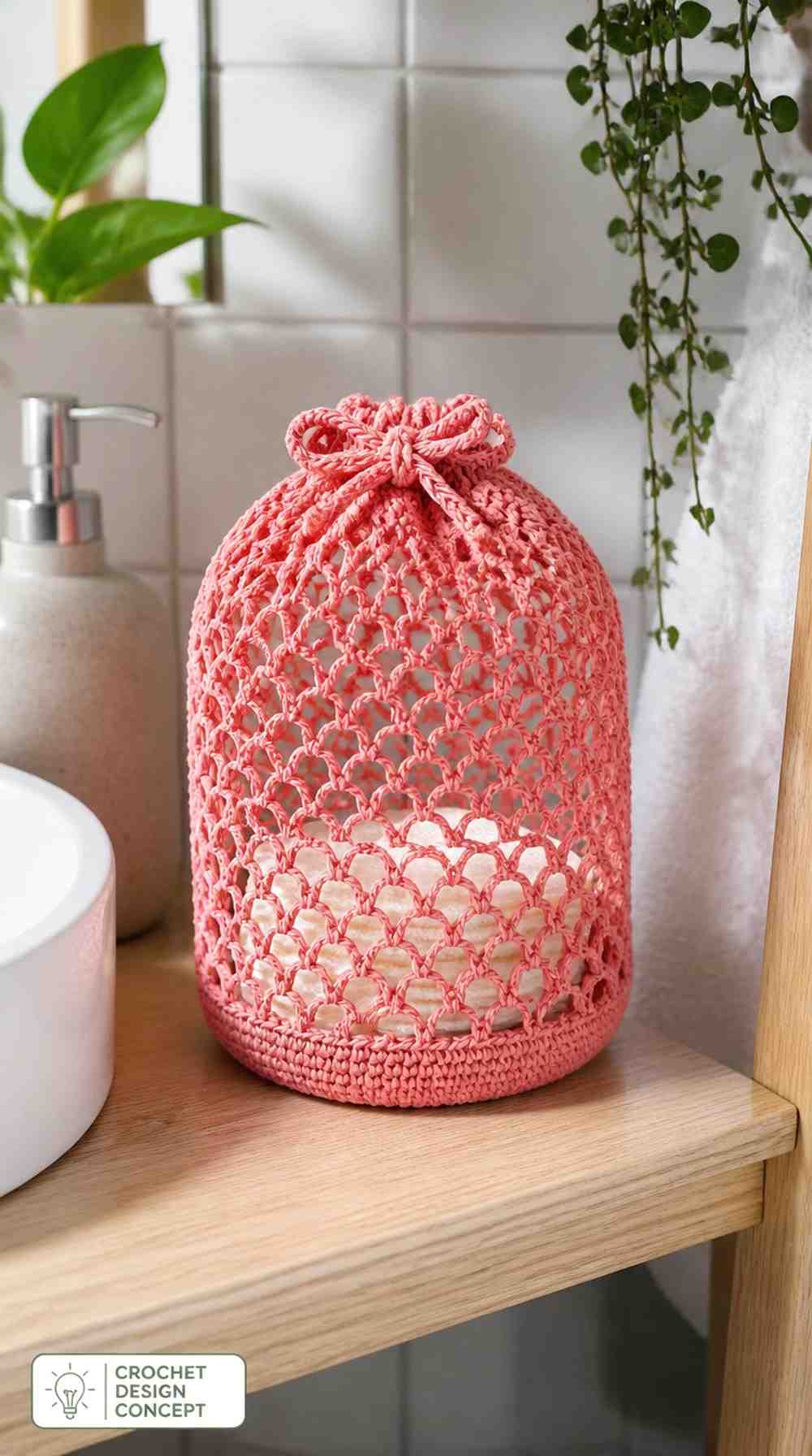
Coral-pink crochet forms a small cylindrical sack with repeating arched mesh loops and a closely stitched circular base. A matching coral drawcord gathers the upper opening, with the short tied ends tucked neatly beside the rim.
The open arched texture gives the bag a softer appearance than rigid square mesh. Its round base makes it easy to imagine gathering several reusable cotton rounds into one container. However, the arches must remain sufficiently small and stable when stretched by wet fabric.
- Arch spacing: Measure the largest stretched mesh opening to reduce the possibility of a small pad edge being caught or escaping.
- Bottom join: The base should be joined securely to the mesh body, without loose gaps around its circumference.
- Tied closure: Keep the cord ends secured and test the closure before laundering, rather than assuming a decorative knot will remain closed.
13. Crochet Sand Chevron Zippered Pad Wash Bag
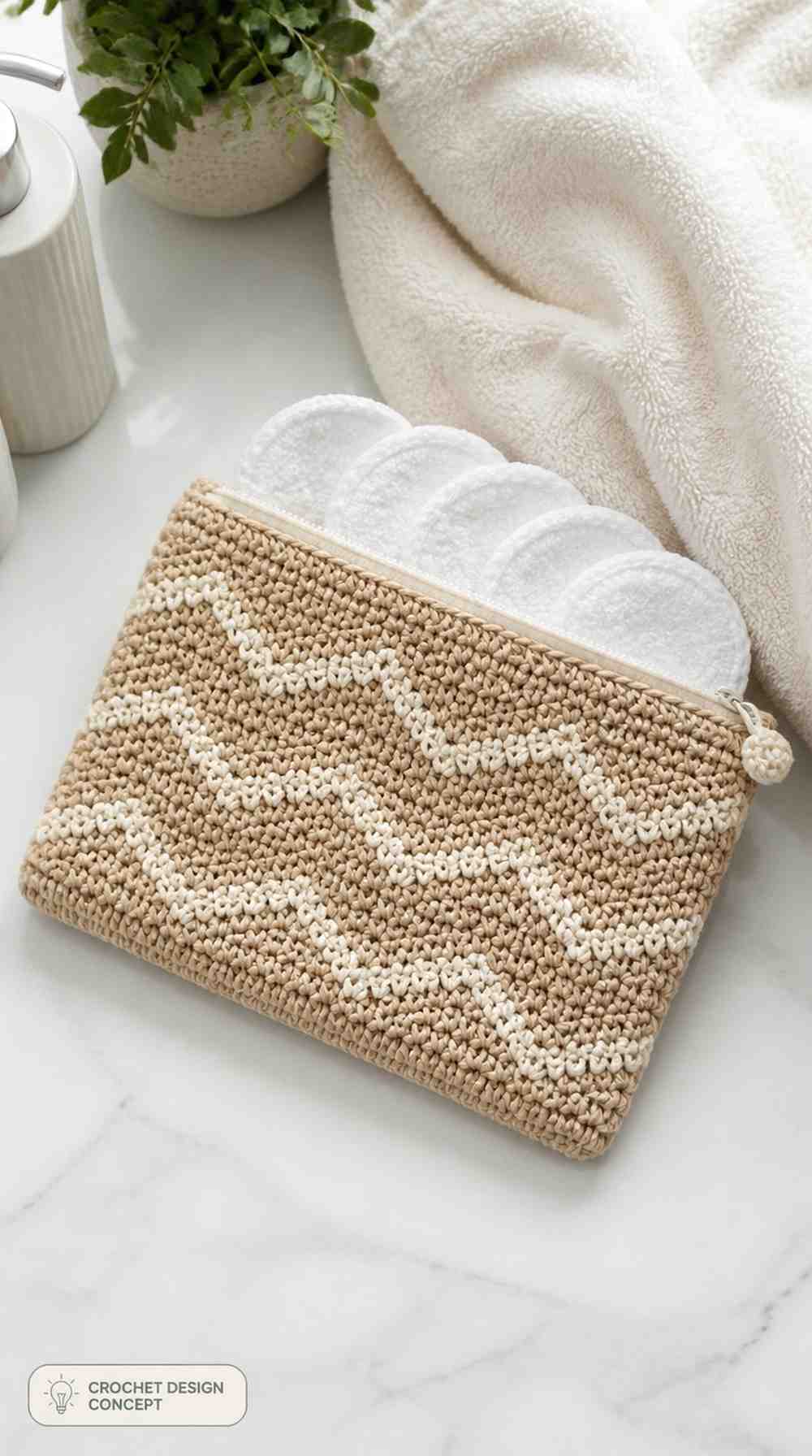
Sand-beige crochet creates a flat rectangular wash pouch with fine mesh panels interrupted by narrow cream chevron rows. An ivory zipper follows the upper edge, with a slim protective crochet strip covering its pull.
The chevron detail adds a decorative pattern without creating large raised motifs or hanging attachments. This concept remains closely related to a practical flat mesh pouch, though the changes in stitch direction around the zigzags could affect the fabric’s stretch and final shape.
- Chevron placement: Keep the decorative rows away from the zipper seam so the top edge remains straight and the closure moves smoothly.
- Stitch transitions: Check the joins between fine mesh and denser chevron sections for uneven pulling or puckering.
- Pale-color care: Light beige and cream yarn may show makeup residue, so removable stains and suitable washing conditions should be considered.
14. Crochet Forest Green Framed-Mesh Laundry Bag
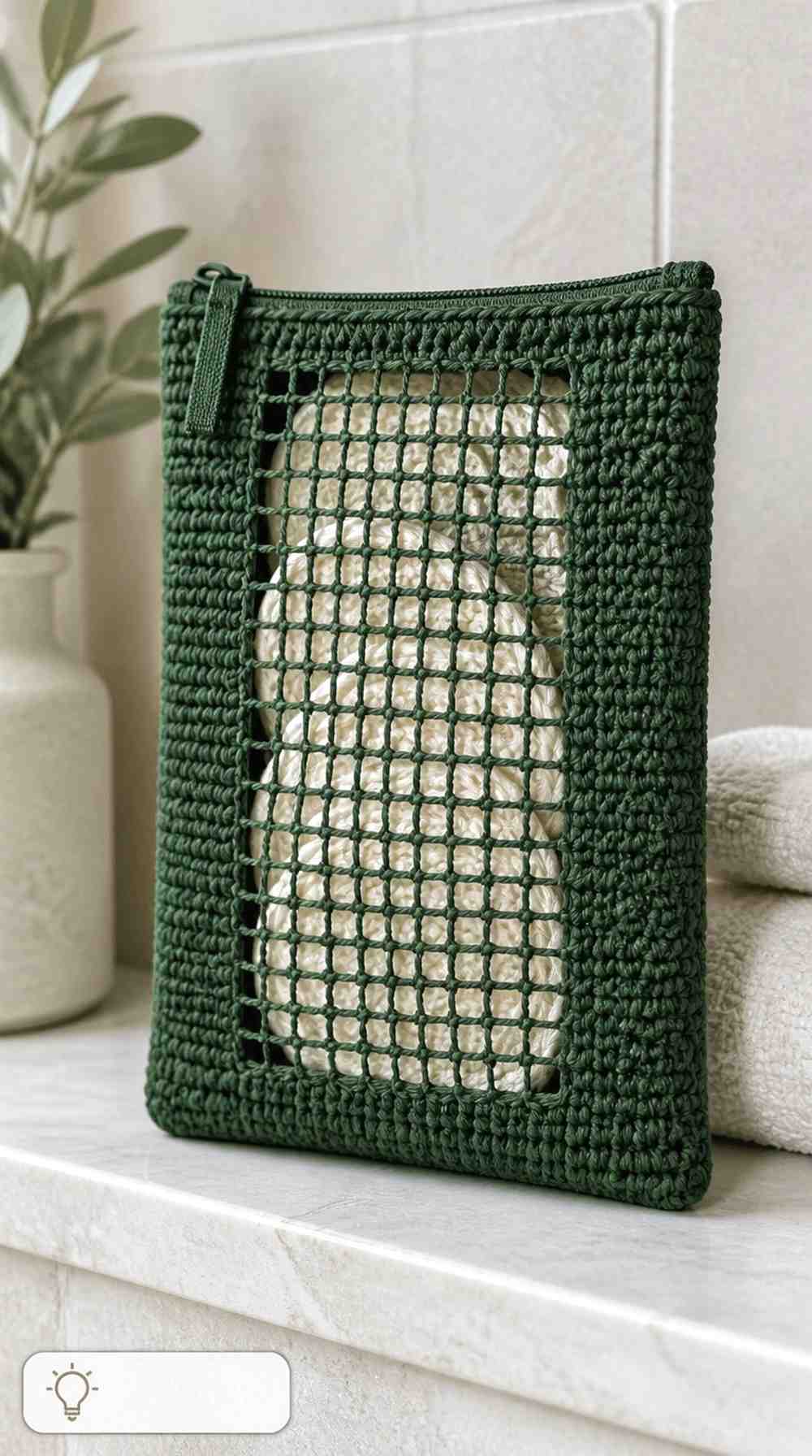
Deep forest-green crochet forms a rectangular pouch with broad solid side rails and a firm lower border. The center uses fine square mesh backed by smooth cream fabric mesh, with a dark-green zipper across the upper opening.
The stronger visual frame distinguishes this design from bags made entirely from open stitches. Its solid edges define the shape, while the central mesh provides the visible storage area for reusable cotton rounds. The extra backing and borders also create more layers to assess during cleaning.
- Side-rail width: Keep the solid vertical bands narrow enough that they do not dominate the mesh or make the pouch unnecessarily stiff.
- Lining attachment: Secure the inner mesh along the outer seams so it does not bunch into the central storage space.
- Drying time: Multiple fabric layers may retain moisture longer than a single mesh panel, so all layers must dry completely before storage.
15. Crochet Peach Hanging-Loop Cotton Pad Wash Bag
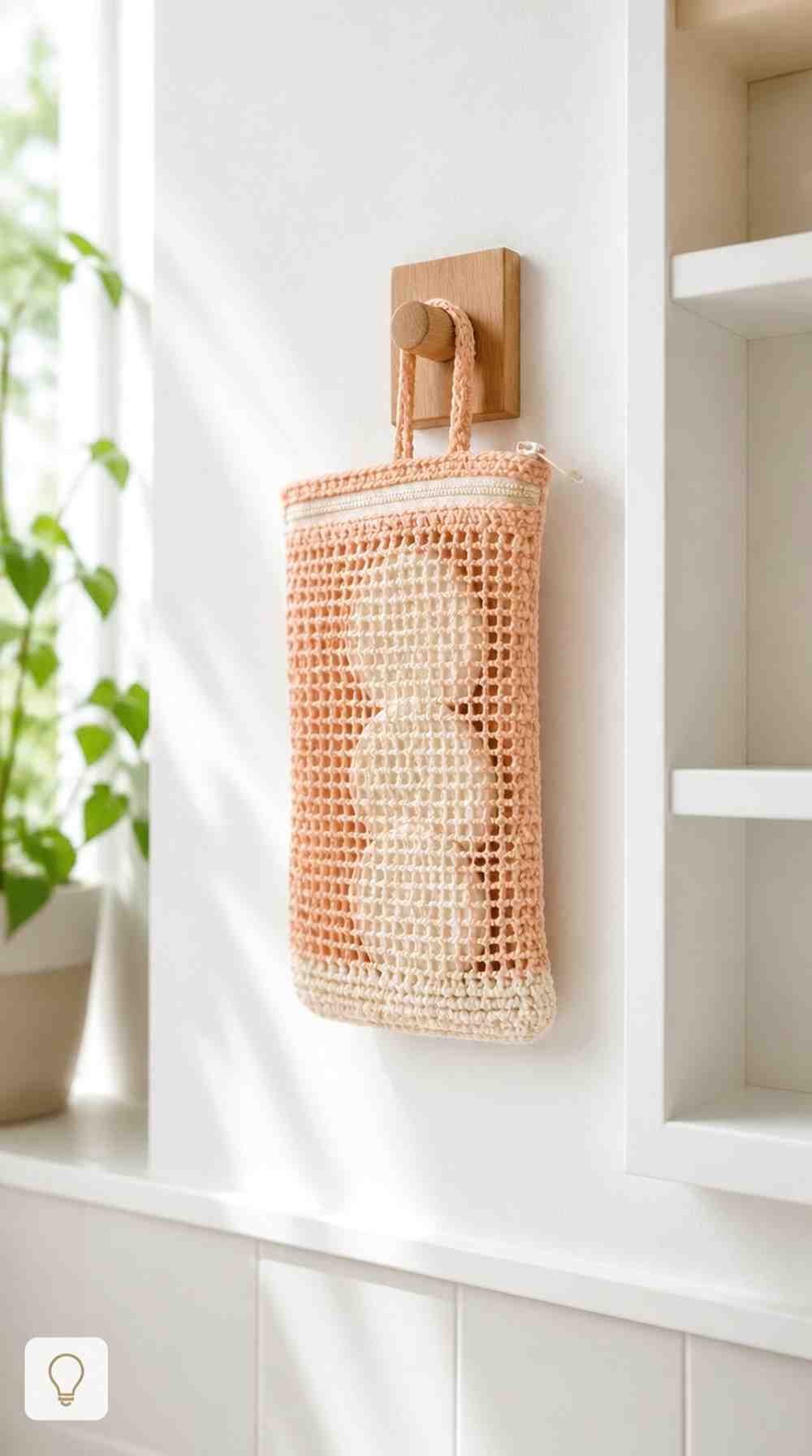
Peach crochet creates a slim rounded-rectangle laundry bag with fine mesh across its body and a cream lower border. A short ivory zipper closes the top, while one small peach loop extends from an upper corner for hanging the pouch from a hook.
The compact shape makes this concept suitable for keeping a modest set of clean, dry cotton rounds together in a bathroom. The hanging loop provides an easy storage option, but it should be treated as a separate feature from the bag’s ability to withstand laundering.
- Loop placement: Attach the short hanging loop at a reinforced upper corner so the pouch hangs without twisting excessively.
- Zipper clearance: Keep the loop away from the zipper pull to avoid catching while opening or closing the pouch.
- Bathroom storage: Hang only clean, dry contents in a suitable dry location, and wash the holder itself when it becomes soiled.
16. Crochet Navy Mini-Grid Laundry Pad Pouch
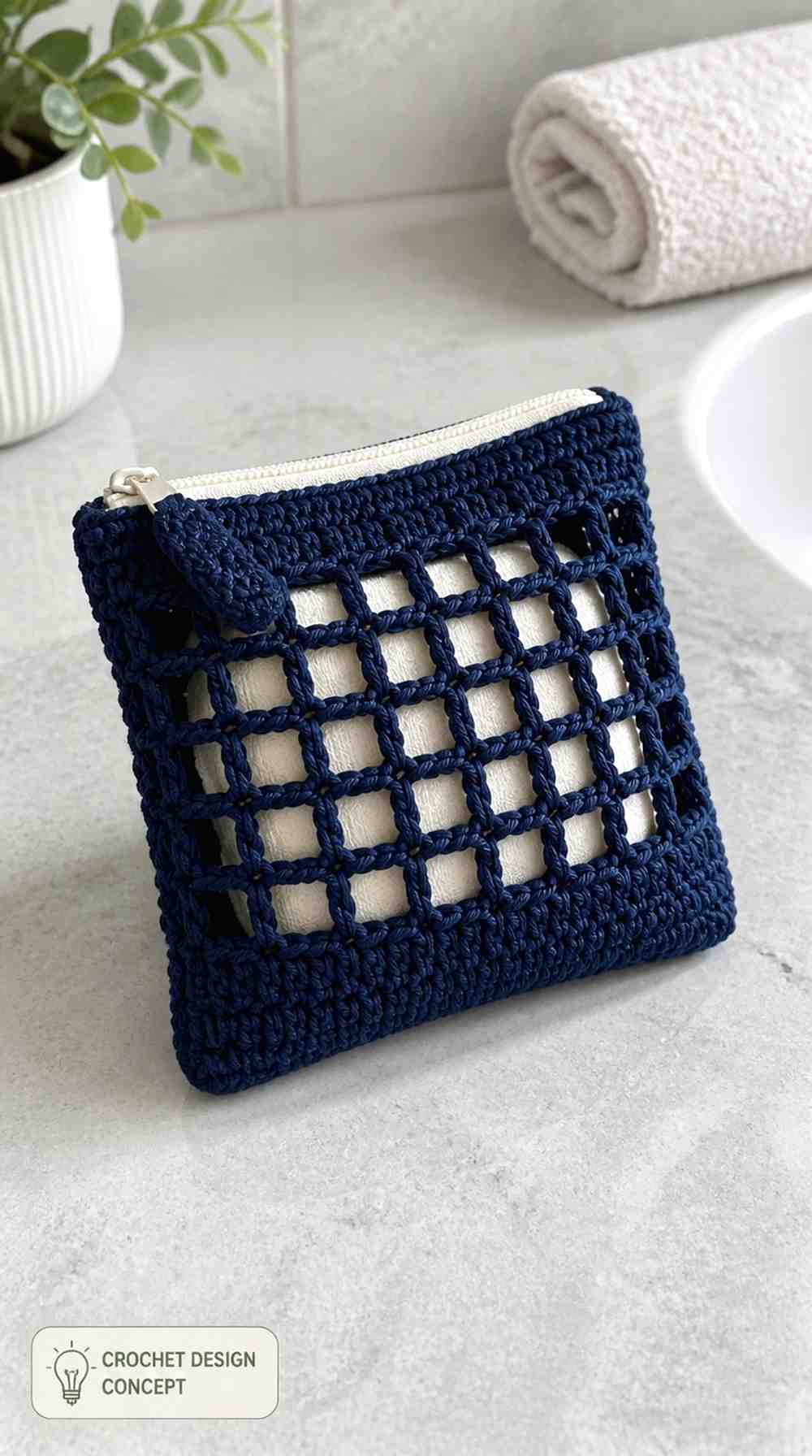
Navy-blue crochet creates a small square pouch with closely spaced geometric mesh openings and a dense flat base. A cream zipper closes the upper edge, while a narrow navy guard keeps the zipper pull contained.
The grid structure gives the bag a simple, repeatable visual pattern. Its square proportions make it different from the tall cylindrical sacks and wider rectangular cases. The small openings are promising as an organizing concept, but the actual finished mesh still needs washing and stretch checks.
- Grid tension: Keep the crochet squares consistent so some openings do not become larger than others when the pouch is filled.
- Square fit: Allow enough interior space for round cotton pads to lie without folding tightly against the corners.
- Dye compatibility: Dark-blue crochet should be checked for color bleeding before washing with white or cream pads.
17. Crochet Roseberry Two-Tone Drawstring Wash Bag
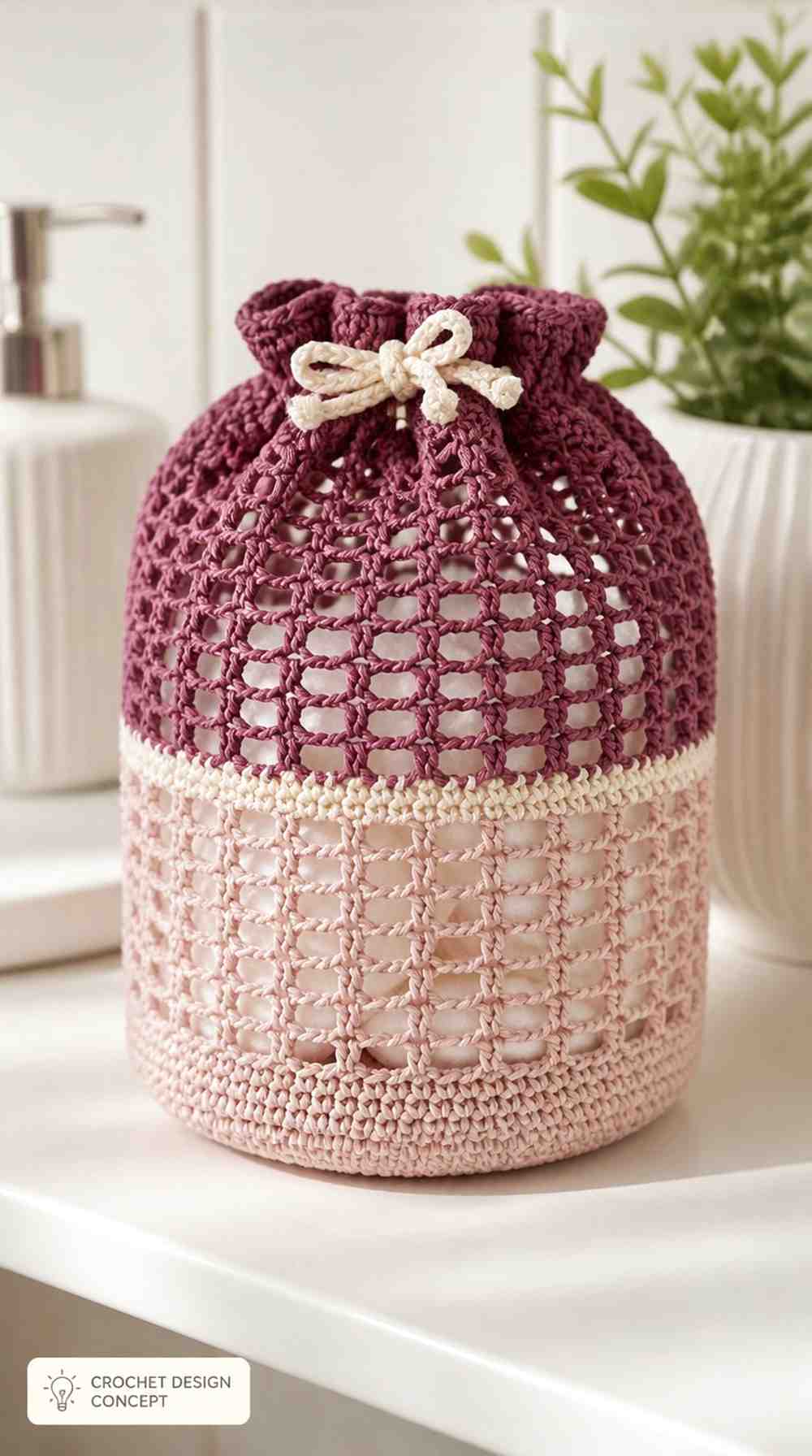
Deep roseberry-purple crochet covers the upper half of this softly cylindrical bag, blending into pale blush mesh across the lower section. A narrow cream join separates the colors, while a blush circular base and short cream drawstring finish the design.
The two-tone construction offers a clear decorative difference without relying on buttons or appliqués. Its contrasting upper and lower mesh sections still need to work together as one flexible bag, especially when the fabric becomes heavier during washing.
- Color-change join: Keep the cream dividing band flexible enough that it does not pull the mesh sections into different widths.
- Drawstring control: Tuck the short cord ends securely so they do not become tangled with surrounding fabrics.
- Colorfastness: Wash a yarn sample first to check whether darker roseberry dye transfers onto the pale blush section or cotton rounds.
18. Crochet Rust Rounded-Corner Zip Laundry Bag
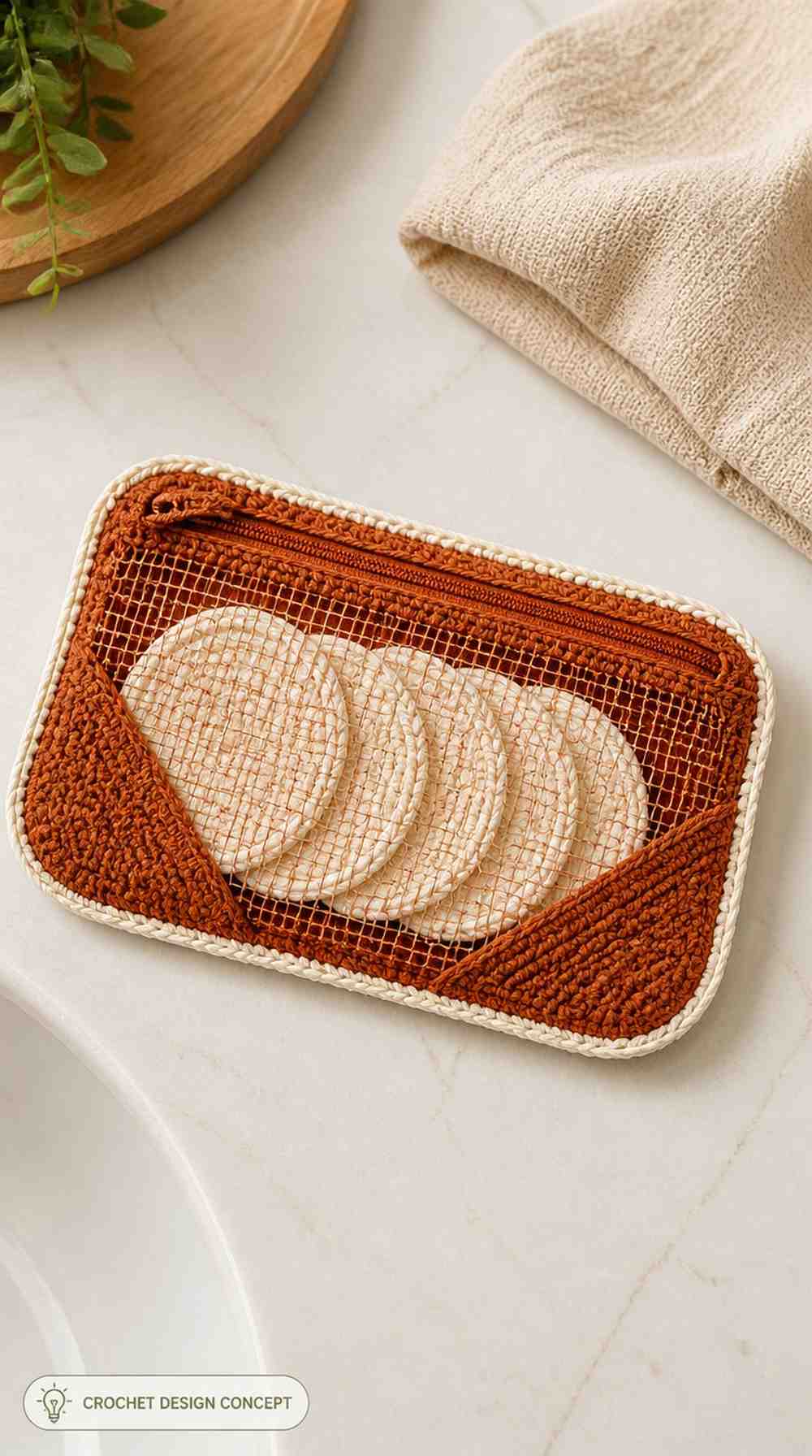
Rust-orange crochet forms a low rectangular pouch with softly rounded corners and a fine mesh center. Two short diagonal bands of tighter crochet sit near the lower edges, while a rust-colored zipper closes the top beneath a small fabric guard.
The rounded corners give this design a softer outline than a square pouch. The diagonal details remain close to the lower edges, away from the working zipper opening. It offers an attractive flat-storage concept for a small set of reusable cotton pads, provided the construction suits the intended wash routine.
- Rounded corners: Check that the curved crochet seams remain smooth, without forming small folds that collect pads or makeup residue.
- Diagonal bands: Keep the denser stitch details modest so they do not restrict the fine mesh across the rest of the pouch.
- Zip construction: Use a protected closure that does not snag other washing items, and verify that it stays closed through the intended cleaning method.
Practical Guide to Crochet Reusable Cotton Pad Laundry Bags
A reusable cotton pad laundry bag should keep small facial rounds together without preventing them from being cleaned and dried properly. However, decorative crochet mesh is not automatically suitable for machine washing. The yarn, stitch openings, closures, seams, and overall shape need to withstand water, agitation, and the chosen laundry cycle.
Start with your actual cotton pads. Check the smallest pad’s width and thickness before deciding on mesh size. The openings should stay much smaller than the pads even when the crochet is stretched and wet. Leave room for water movement rather than tightly packing the bag.
Choose materials carefully. Smooth, colorfast, washable cotton yarn may be a useful starting point. Finer crochet thread can create smaller mesh openings, but the actual fabric needs to be tested for strength, stretch, and washing behavior. Decorative blends or loose novelty yarns may be unsuitable.
Think about closures. A securely fitted zipper with a protected pull is often worth considering for machine laundering because loose drawstrings may become tangled. Foldover flaps, snaps, and button details may be better suited to collecting and storing pads unless their wash performance has been checked.
Separate collecting from machine washing if needed. A crochet bag can be used to collect clean or used pads, but a purpose-made washable mesh laundry bag may be the safer choice for the machine itself. Transfer the pads when the crochet collection bag has not been tested for laundering.
Prevent trapped moisture. Rinse used facial pads according to their care instructions and avoid leaving them damp in a closed bag. Wash and dry pads thoroughly, following the fabric manufacturer’s directions. Let the bag itself dry completely before putting clean pads back inside.
For more inspiration involving crochet mesh and small household storage, see Yarn Nest Studio’s 15 Crochet Soap Saver Pouch Inspiration Ideas. Soap saver bags serve a different purpose, but their openwork shapes and hanging arrangements offer useful visual references.
Want to Make Something Similar?
These 18 designs are original crochet concepts, not tested laundry-bag patterns. The following resources provide real construction examples and related techniques.
- Crochet Face Scrubbie + Mesh Bag Pattern by Zamiguz — a crochet project combining reusable facial rounds with a matching mesh bag, including practical care information.
- Face Scrubbies with Laundry Bag by Little Conkers — a published paid pattern set featuring round and square cleansing pads along with a small drawstring filet-crochet laundry bag.
- How to Use and Clean Reusable Makeup Pads from Garnier — guidance on checking pad care labels, using a delicates laundry bag, and drying reusable pads.
These resources are separate from the designs shown here. A related pattern does not guarantee that every decorative bag in this collection will be suitable for machine washing.
Which Crochet Reusable Cotton Pad Laundry Bag Should You Choose?
| Your main priority | Design to consider | Important trade-off |
|---|---|---|
| Simple gathered mesh | Sage Fine-Mesh Drawstring Laundry Bag | Drawstrings need securing |
| Flat zippered pouch | Ivory Zippered Flat-Mesh Wash Pouch | Zipper construction needs checking |
| Decorative foldover closure | Dusty Rose Foldover Pad Laundry Pouch | Layered flap may suit collection better |
| Different pad sizes | Cobalt Twin-Section Cotton Pad Wash Bag | Separate compartments add complexity |
| Hanging bathroom storage | Butter Yellow Daisy Hanging Laundry Bag | Keep contents clean and dry |
| Distinctive crochet texture | Oatmeal Honeycomb Cotton Pad Wash Sack | Mesh may stretch when wet |
| Granny-square styling | Lavender Granny-Panel Cotton Pad Laundry Bag | Needs fine mesh backing |
| Firmer side structure | Forest Green Framed-Mesh Laundry Bag | More fabric layers to dry |
| Compact square design | Navy Mini-Grid Laundry Pad Pouch | Opening must fit the actual pads |
| Rounded flat pouch | Rust Rounded-Corner Zip Laundry Bag | Curved seams need careful finishing |
For a machine-wash-oriented project, start by considering a simple, closely meshed pouch with a reliable closure and compatible materials. For bathroom collection and storage, there is more freedom to explore decorative foldovers, drawstrings, granny panels, and hanging loops.
Conclusion
Crochet reusable cotton pad laundry bags can offer a thoughtful way to organize small washable facial rounds. The designs in this collection range from simple sage drawstring mesh and ivory zippered pouches to lavender granny panels, double-compartment cases, and cheerful hanging bags.
The most practical design is one that fits the pads, keeps them contained, and suits the way they are actually cleaned. When machine-wash suitability is uncertain, using the crochet pouch for collection and a tested delicates bag for laundering is a sensible distinction.
Which would you prefer for your reusable cotton pads: the Sage Fine-Mesh Drawstring Bag, the Ivory Zippered Flat-Mesh Pouch, or the Lavender Granny-Panel Bag? Share whether you would use yours mainly for collecting pads, bathroom storage, or laundry.
Frequently Asked Questions
1. Can a crochet laundry bag be used directly in a washing machine?
Possibly, but not every crochet bag is appropriate for machine washing. The yarn, stitch density, seams, and closure must be suitable for the washing process. Decorative drawstrings, buttons, and loose mesh may snag or stretch. If the bag has not been tested, use a purpose-made washable delicates bag instead.
2. What yarn should I consider for a reusable cotton pad laundry bag?
Smooth, washable cotton yarn or appropriate fine cotton crochet thread may be worth considering, depending on the design. Check the actual yarn’s care instructions, colorfastness, and wet strength. The mesh needs to hold its shape, and the finished bag should not shed fibers or damage the pads during laundering.
3. How large should the crochet mesh openings be?
The openings need to be smaller than the smallest reusable cotton pad, including when the crochet is wet or stretched. There is no single suitable opening size for every design, because pads vary in shape and diameter. Test a real sample with your actual pads before using it as a laundry bag.
4. Should I store wet reusable cotton pads in a crochet bag?
Avoid leaving wet or heavily soiled pads sitting in a closed pouch for extended periods. Follow the pad manufacturer’s cleaning instructions, rinse them when recommended, and allow appropriate drying or wash them promptly. A hanging crochet bag should not be assumed to dry damp contents safely simply because it has mesh openings.
5. Are these 18 crochet reusable cotton pad laundry bag ideas complete patterns?
No. They are inspiration concepts illustrating different shapes, meshes, colors, closures, and storage arrangements. The linked crochet resources provide separate existing patterns or practical guidance. A finished bag requires its own sizing, stitch testing, material checks, and confirmation that it is suitable for the intended cleaning method.