A bathrobe belt can be surprisingly easy to lose when it slips out of its side loops or falls loose after the robe is untied. Small crochet belt keepers offer a simple way to give an everyday robe a more useful detail without changing the whole garment. These 15 crochet bathrobe belt keeper loop inspiration ideas explore everything from soft moss-stitch side loops and ribbed bands to button-opening keepers, slim cord loops, decorative details, and a sliding belt-end ring.
Some ideas are intended for adding permanent loops to a robe that has none, while others focus on replacing worn loops or making it easier to thread a wide fabric sash. You’ll find designs suited to plush terry robes, lightweight cotton styles, and waffle-textured bathrobes, with different approaches to width, stitch density, attachment, and comfort. The aim is to compare realistic design choices before deciding what would work with the robe you already own.
These are AI-generated crochet design visualizations for inspiration, not photographs of tested handmade pieces or step-by-step patterns.
Quick Design Selection Guide
- For a simple replacement: Crochet Sage Moss-Stitch Twin Belt Loops and Crochet Mint Braided Side-Seam Belt Loops offer straightforward side-waist designs.
- For a wider bathrobe sash: Crochet Oatmeal Ribbed Wide Belt Keeper and Crochet Burgundy Tubular Bathrobe Belt Keeper provide broader or more rounded passages.
- For opening the loop without pulling out the belt: Crochet Terracotta Button-Opening Belt Keeper uses a buttoned lower end.
- For keeping the belt aligned across the back: Crochet Navy Center-Back Belt Keeper adds a single center-back loop.
- For a decorative finish: Crochet Butter Yellow Daisy Belt Loop, Crochet Lavender Granny-Patch Belt Keeper, and Crochet Peach Bow-Accent Belt Keeper add subtle surface details.
- For securing a loose sash end: Crochet Cocoa Sliding Belt-End Keeper Ring works on the belt itself rather than being sewn to the robe.
1. Crochet Sage Moss-Stitch Twin Belt Loops
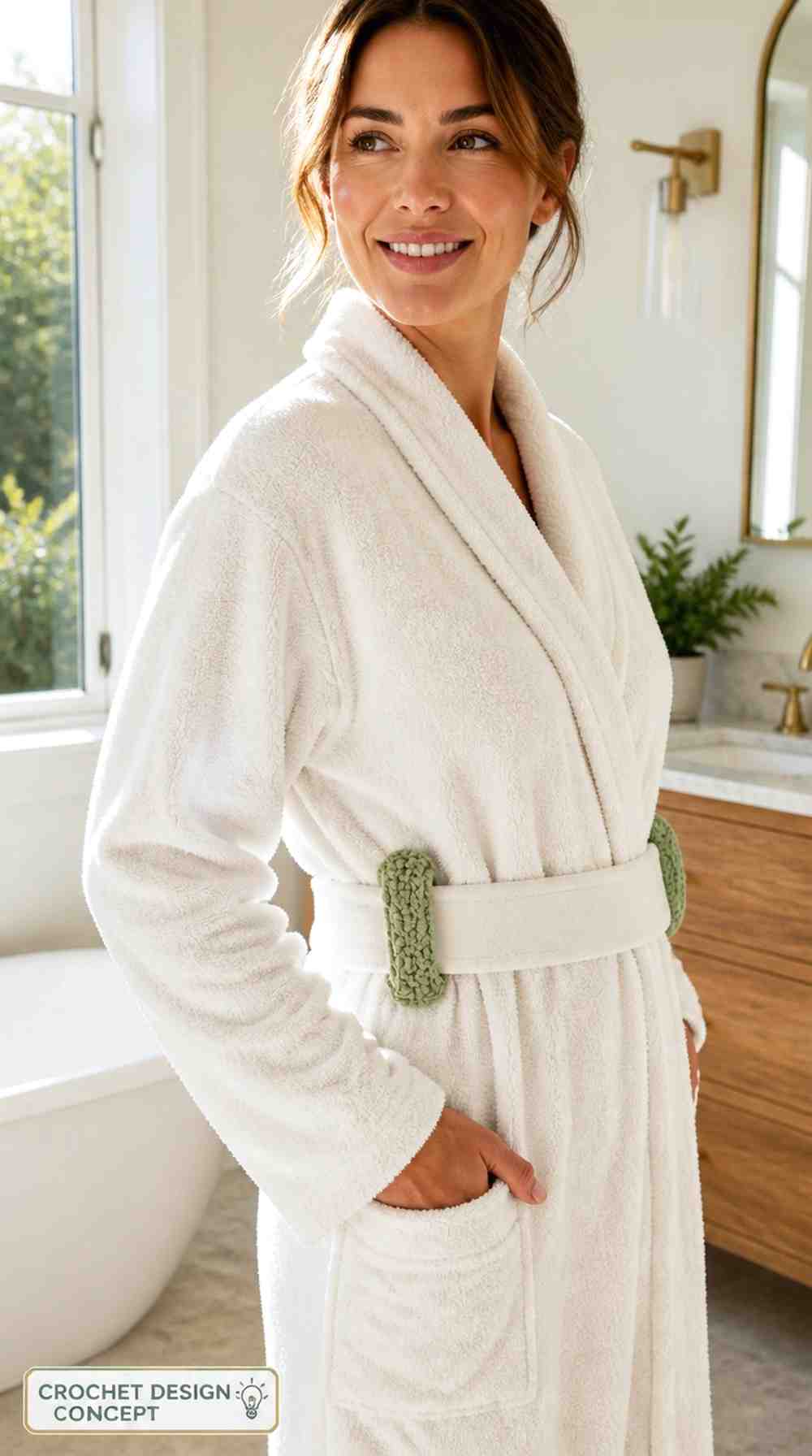
Sage-green moss stitches form two compact vertical crochet loops attached at the side seams of an ivory terry bathrobe. A wide matching fabric sash passes horizontally beneath the loops, with enough space between the crochet and the robe for the belt to lie flat.
The paired arrangement follows the familiar placement of traditional bathrobe belt loops. Its soft sage color adds a quiet handmade touch without drawing too much attention away from the robe. This design would be a useful starting point for replacing missing or damaged side loops.
- Side placement: Position both crochet loops at the wearer’s natural waist, checking that they remain level when the robe overlaps at the front.
- Loop clearance: Leave enough room under each strip for the full width and thickness of the robe belt without squeezing or folding it.
- Attachment strength: Secure both ends through suitable robe fabric or seam areas, avoiding stitches that pull excessively on the terry surface.
2. Crochet Oatmeal Ribbed Wide Belt Keeper
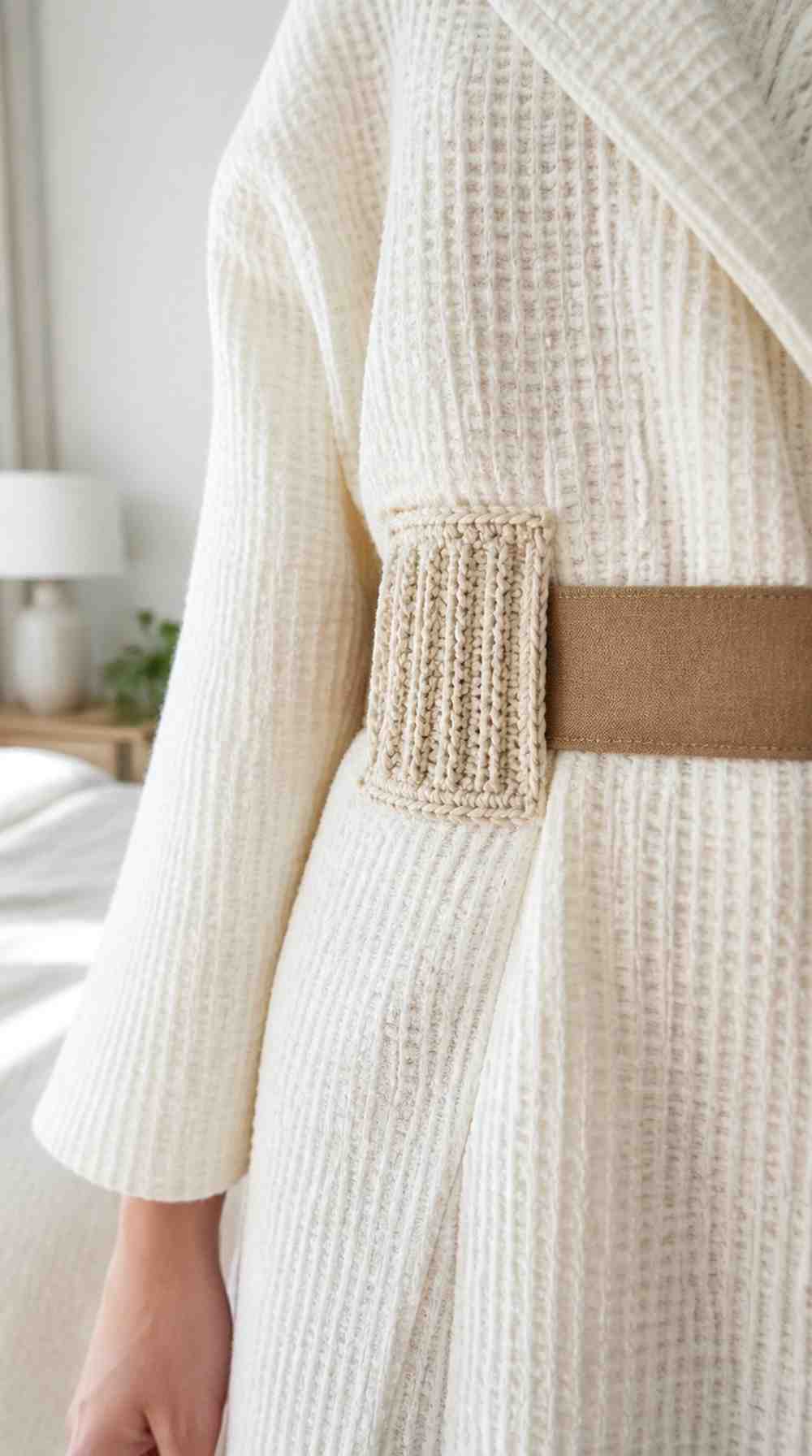
Oatmeal crochet creates one broad vertical keeper against a warm-white waffle-textured bathrobe. Raised ribs run along the strip, and a narrow cream border finishes its edges. A cinnamon-colored fabric sash passes behind the keeper, staying flat across the robe’s waist.
The wider shape makes this design noticeably different from a thin cord loop. It offers a larger contact area for a substantial fabric sash, although the ribbed crochet must remain flexible enough to move with the robe rather than creating a stiff patch.
- Keeper width: Compare the band with the actual sash width so the crochet supports the belt without becoming unnecessarily bulky.
- Rib direction: Raised crochet ribs add texture, but the fabric’s stretch should be checked before attaching the keeper permanently.
- Waffle-fabric care: Use an attachment method suitable for the robe fabric, avoiding tight sewing that gathers or damages the underlying texture.
3. Crochet Dusty Rose Scalloped Side Keepers
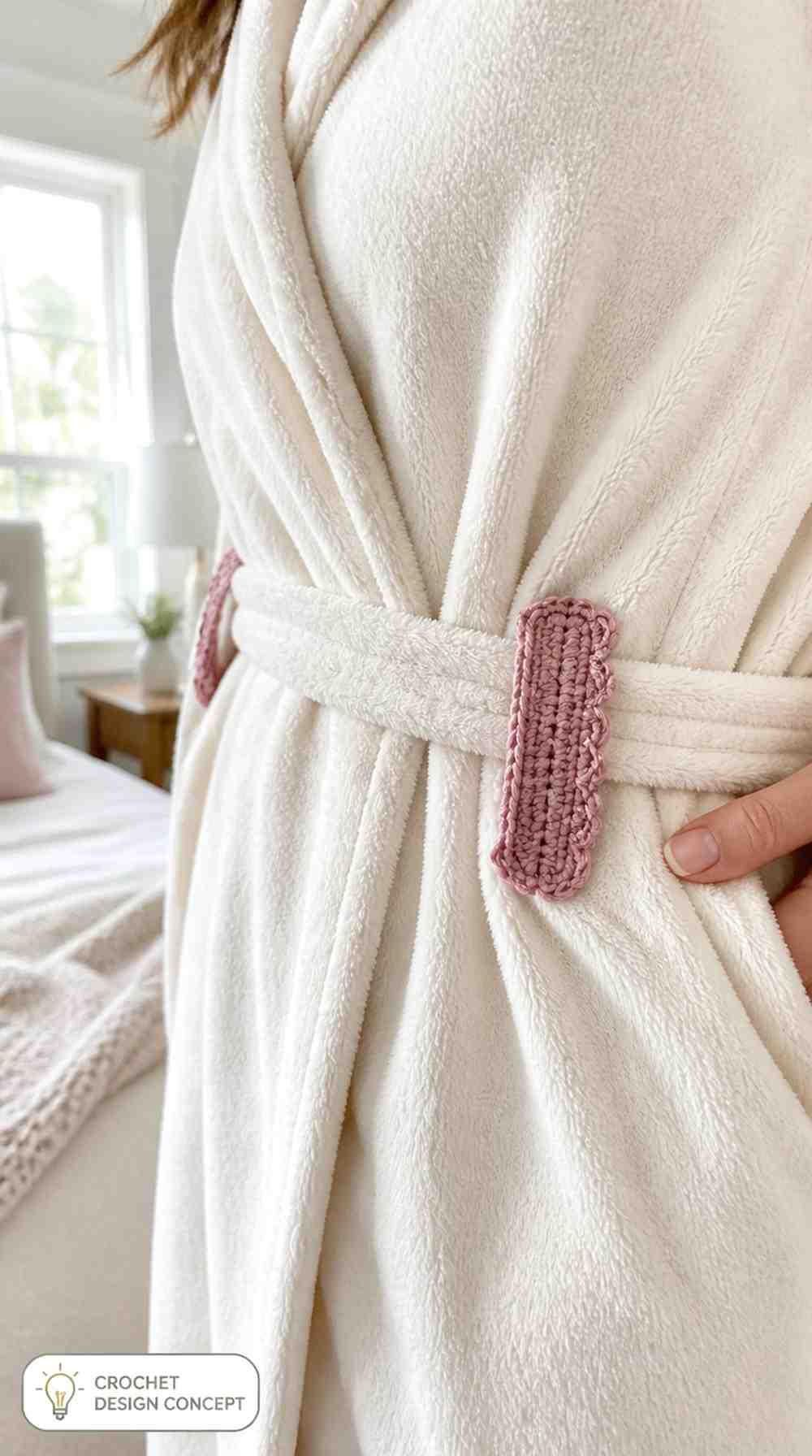
Dusty-rose crochet forms two slim vertical belt loops on a pale-cream plush bathrobe. Each strip has a narrow scalloped edge along one side, while the central crochet band remains closely stitched. The cream robe belt threads beneath both keepers at the waist.
The scalloped finish softens a basic functional detail without requiring large flowers or hanging trim. Keeping the decorative edge small is important here because bulky lace may catch on the sash or feel awkward against a plush robe.
- Scallop scale: Small, flat scallops are more suitable for belt loops than deep decorative edging that could fold beneath the sash.
- Pair alignment: Match the side-loop positions so the belt stays at a consistent height when the robe is tied.
- Plush fabric: Check that the attachment stitches reach a suitable supporting area instead of relying only on loose surface pile.
4. Crochet Terracotta Button-Opening Belt Keeper
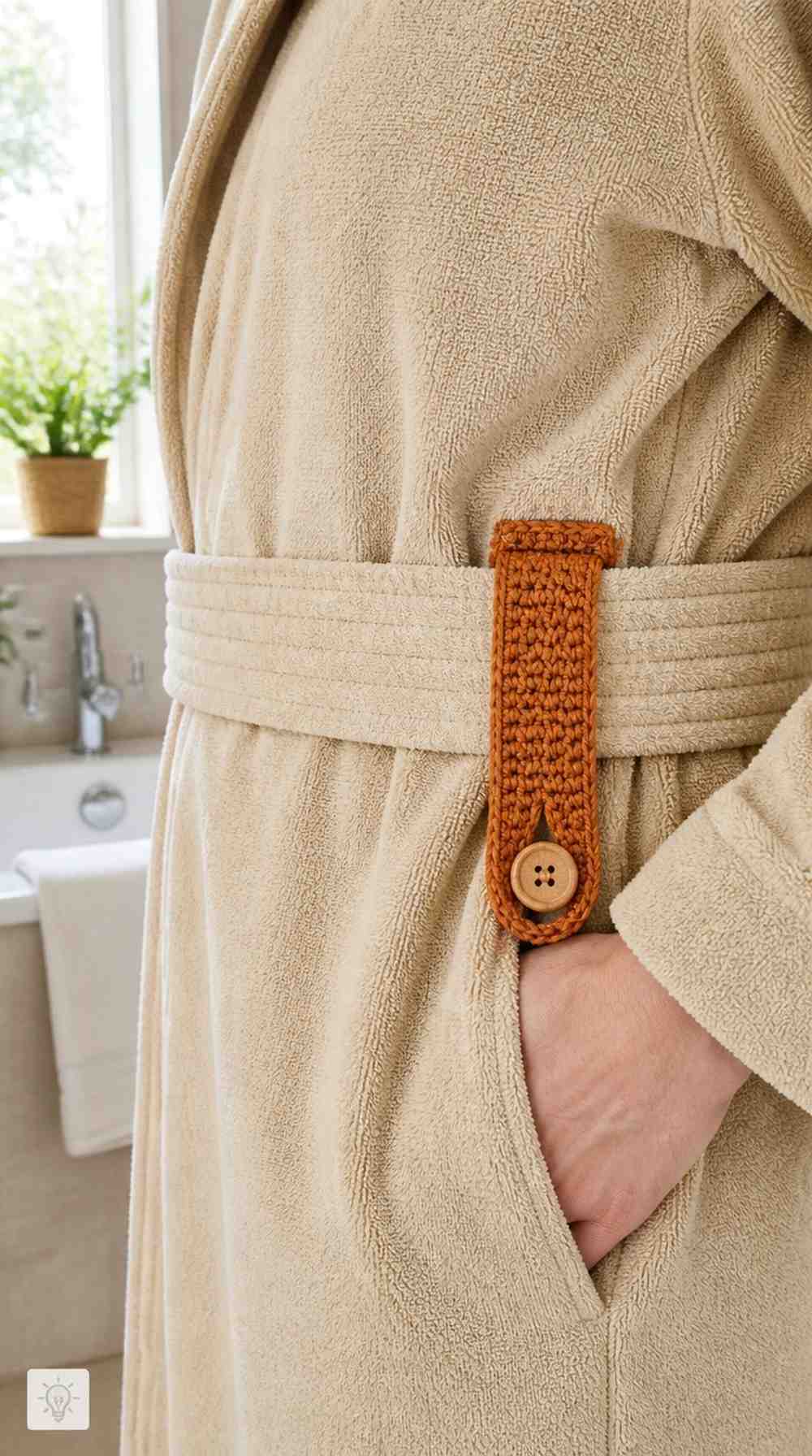
Terracotta-orange crochet forms a narrow flat keeper at the right waist seam of a sand-beige robe. Its upper end is sewn permanently to the garment, while the lower end closes around the matching fabric belt with a small wooden button and reinforced buttonhole.
The opening lower end is the useful feature. Rather than pulling the entire sash through a closed loop, the wearer could open the keeper, position the belt, and refasten the strip. The button must sit flat and remain securely attached to avoid irritation or accidental release.
- Button clearance: Place the button beneath the sash passage where it can be reached without digging into the wearer’s side.
- Reinforced opening: A crochet buttonhole should be checked for stretching, especially if the keeper will be opened frequently.
- Belt retention: The strap needs enough length to fasten around the belt comfortably without leaving a large loose gap.
5. Crochet Navy Center-Back Belt Keeper
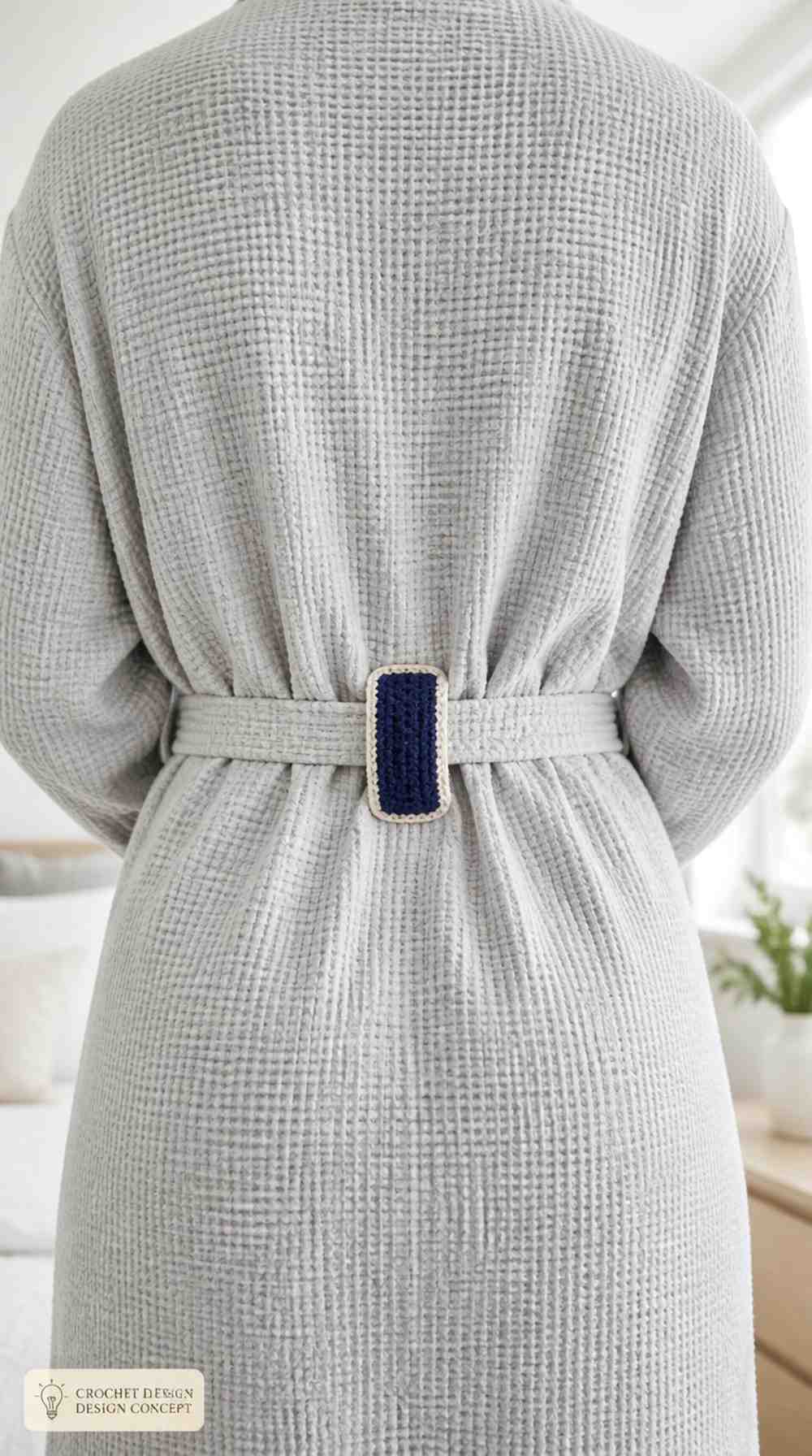
Navy-blue crochet creates one broad vertical keeper at the center-back waist of a light-gray waffle bathrobe. The gray sash runs horizontally underneath the crochet strip, which has close rows and a narrow cream border. Both ends attach directly to the robe.
A center-back keeper addresses a different problem from ordinary side loops. It can help establish a defined position for the sash across the back, although it would generally work best alongside suitable side loops rather than replacing every other belt attachment.
- Back-waist placement: Test the location while wearing the robe to avoid placing the keeper too high or too low for the sash.
- Sitting comfort: Keep the crochet band flat and flexible so it does not create an uncomfortable raised patch against a chair or backrest.
- Belt movement: Allow the sash to slide through the keeper without excessive resistance when tightening or loosening the robe.
6. Crochet Butter Yellow Daisy Belt Loop
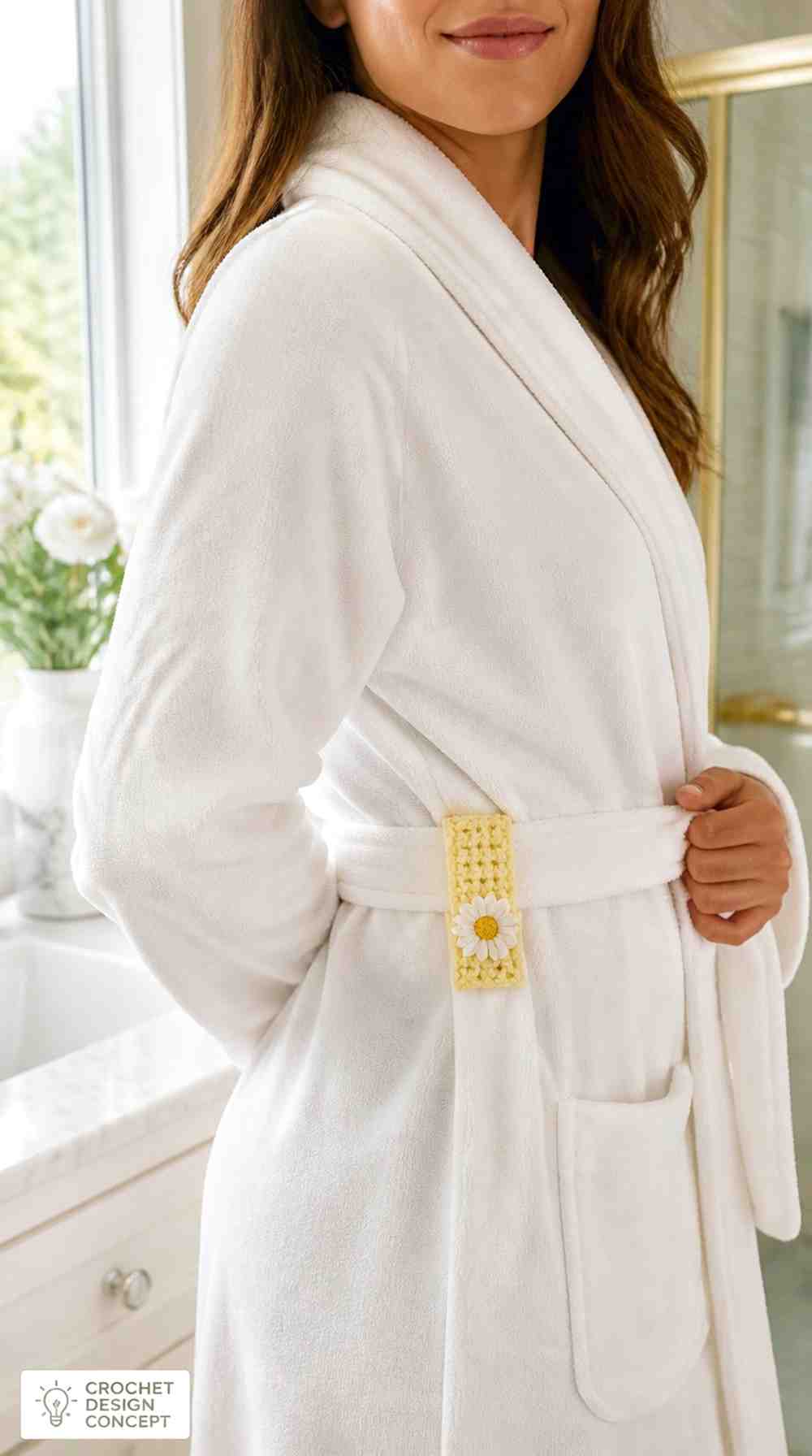
Butter-yellow crochet forms a compact vertical belt keeper on a white cotton bathrobe. Cream edging outlines the strip, and one small flat white daisy with a mustard center decorates its front. The matching robe sash passes through the channel beneath the loop.
The tiny flower gives the design a cheerful look while keeping the basic keeper construction familiar. Because the daisy sits flat against the strip rather than hanging from it, the decoration is less likely to interfere with the fabric belt moving underneath.
- Flower position: Keep the daisy centered on the outer face and away from the upper and lower attachment stitches.
- Decoration security: Work or sew the flower firmly into the keeper so the petals do not loosen through repeated laundering.
- Color matching: Butter yellow adds contrast to a white robe; an optional matching cream loop could provide a more understated variation.
7. Crochet Charcoal Double-Channel Belt Keeper
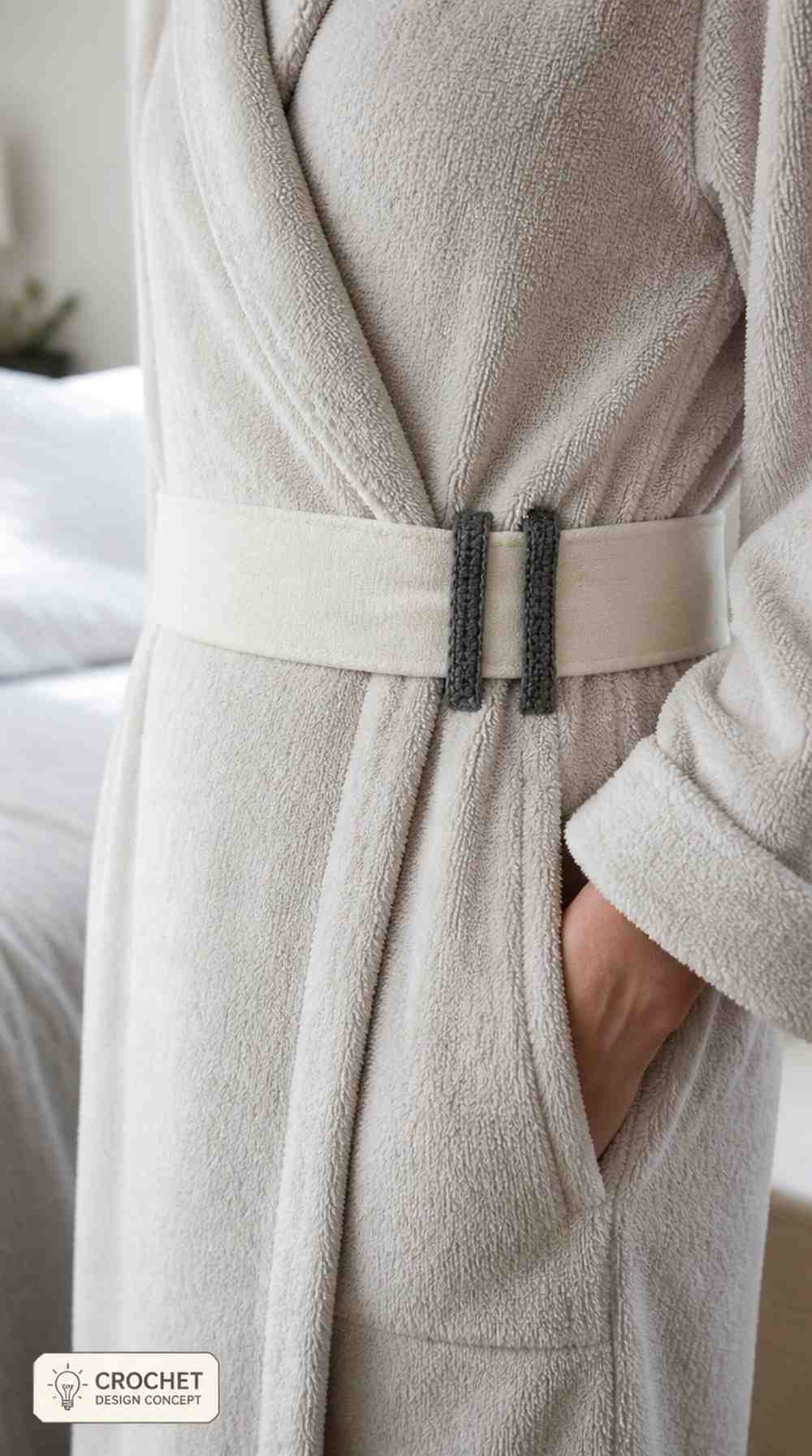
Two narrow charcoal crochet strips sit close together at the right waist of a pale-stone bathrobe. The cream sash threads beneath both vertical loops, which are separated by a small gap and independently secured at their upper and lower ends.
This double-channel arrangement spreads the belt guidance across two contact points rather than one wide strip. It creates a more technical-looking design while keeping the crochet relatively slim. The challenge is spacing the two channels correctly so the belt moves freely instead of bunching.
- Loop spacing: Leave a small, even gap between the two charcoal strips to preserve their separate shape and prevent fabric crowding.
- Threading direction: Both loops should guide the belt along the same horizontal path without forcing the sash into a twist.
- Extra attachment points: Four sewn ends create more areas to check for wear, especially on lightweight or loosely woven robe fabric.
8. Crochet Lavender Granny-Patch Belt Keeper
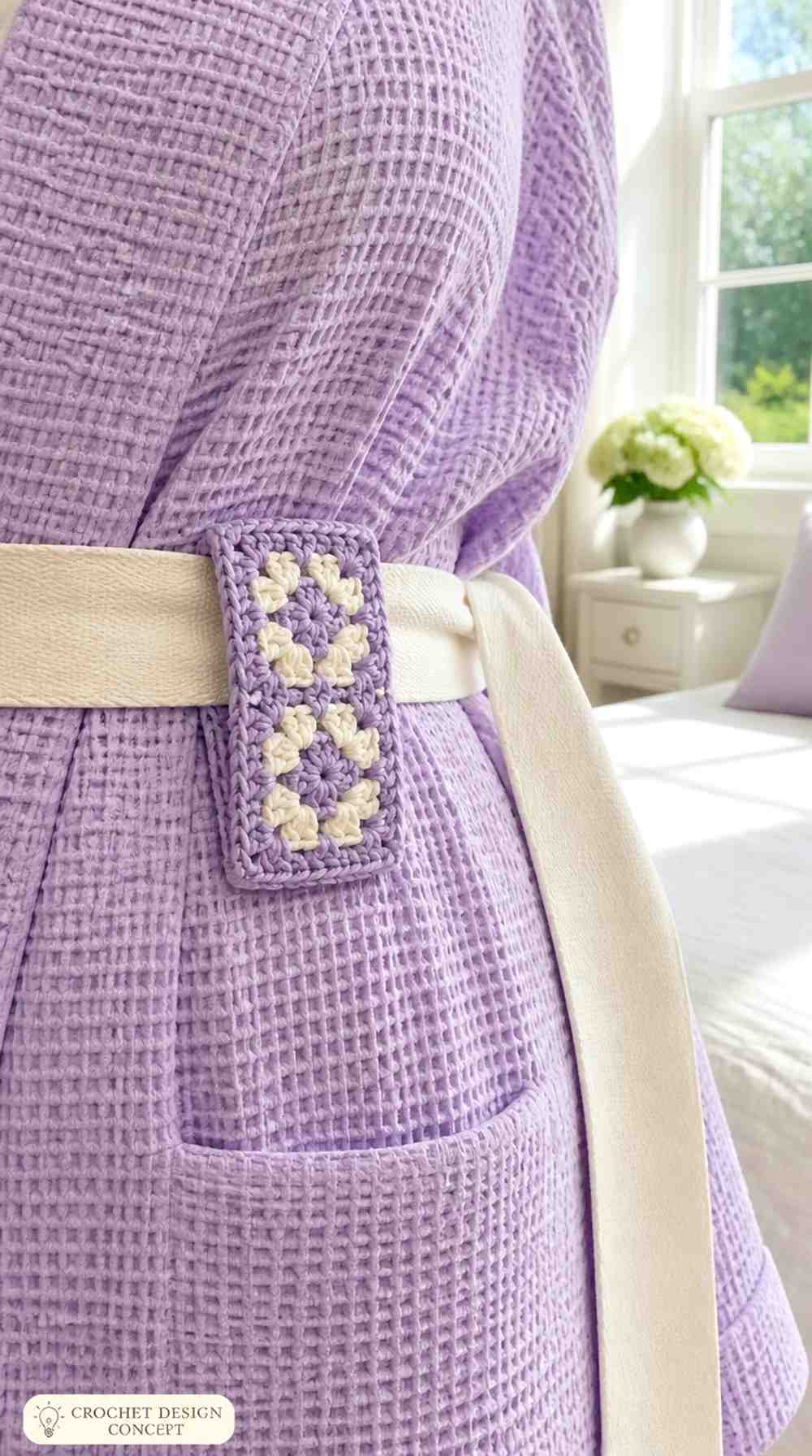
A small lavender-and-cream granny-square motif decorates this compact belt keeper on a lavender waffle bathrobe. The decorative motif sits over a denser lavender backing strip, with the ivory fabric sash passing beneath the whole keeper.
The granny-square detail brings a familiar crochet style to an unusually small accessory. Its backing matters because open granny corners alone may not provide the stable surface needed for a belt loop. The motif should remain proportional to the robe’s sash rather than becoming a bulky patch.
- Backing strip: Use close crochet behind the open motif so the actual belt passage remains supported by a continuous piece.
- Motif proportions: A miniature granny patch is easier to fit at the waist than a large square that overlaps the robe’s side folds.
- Join thickness: Keep the motif attachment flat, especially where the decorative layer sits against the underlying strip.
9. Crochet Forest Green Crossed Belt Straps
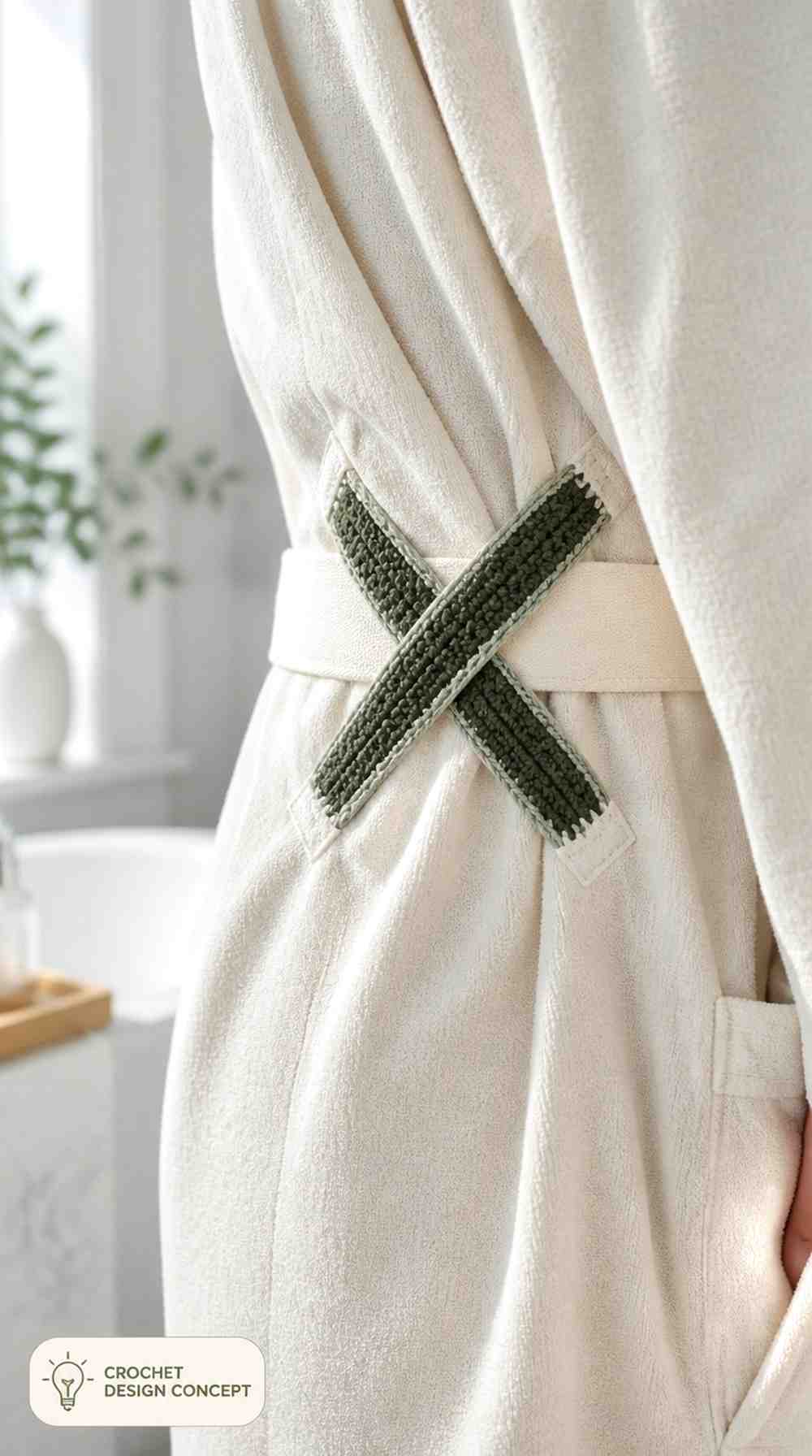
Two forest-green crochet strips cross diagonally over the cream sash of an ivory bathrobe, creating a compact X-shaped keeper at the side waist. Each strip has narrow sage edging and attaches at its four outer ends, leaving a passage beneath the crossing for the belt.
The crossed arrangement introduces a distinctive look without adding a separate pocket or fastening. Its main consideration is the central overlap, which may restrict belt movement if the straps are too tight. It should guide the sash rather than clamp it in place.
- Crossing tension: Leave enough space beneath the X for the belt to move without dragging heavily against the robe fabric.
- Four-point attachment: Secure all strip ends carefully so the diagonal layout does not shift or pull the fabric unevenly.
- Central bulk: Keep both crochet strips relatively thin because their crossing point already creates two overlapping layers.
10. Crochet Cream Adjustable Buttonhole Belt Keeper
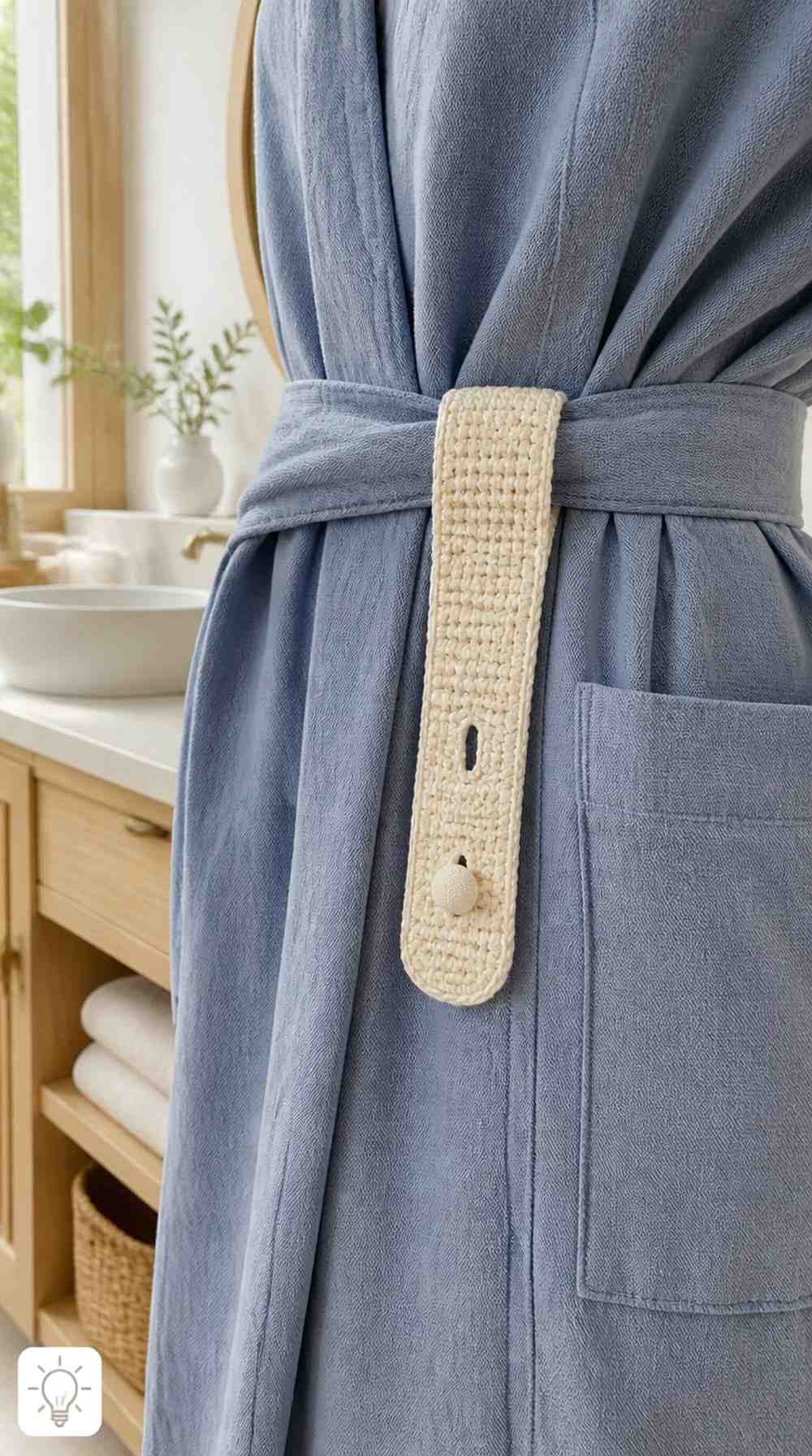
Cream crochet forms a ribbed vertical keeper on a dusty-blue bathrobe. The upper end is sewn to the robe, while the lower section contains two reinforced buttonholes. A matching fabric-covered button below the belt can fasten through either hole to adjust the keeper’s clearance.
The adjustable arrangement is useful for a robe worn with sashes of different thicknesses. It also gives the wearer a way to change the fit without replacing the whole loop. The button and both holes must be positioned so the fabric remains flat.
- Two fit settings: Test both buttonholes with the actual belt and choose the setting that allows movement without excessive looseness.
- Button position: Keep the fabric-covered button away from uncomfortable pressure points at the side waist.
- Hole reinforcement: Small crochet buttonholes may stretch over time, so the selected yarn and stitch structure need suitable stability.
11. Crochet Mint Braided Side-Seam Belt Loops
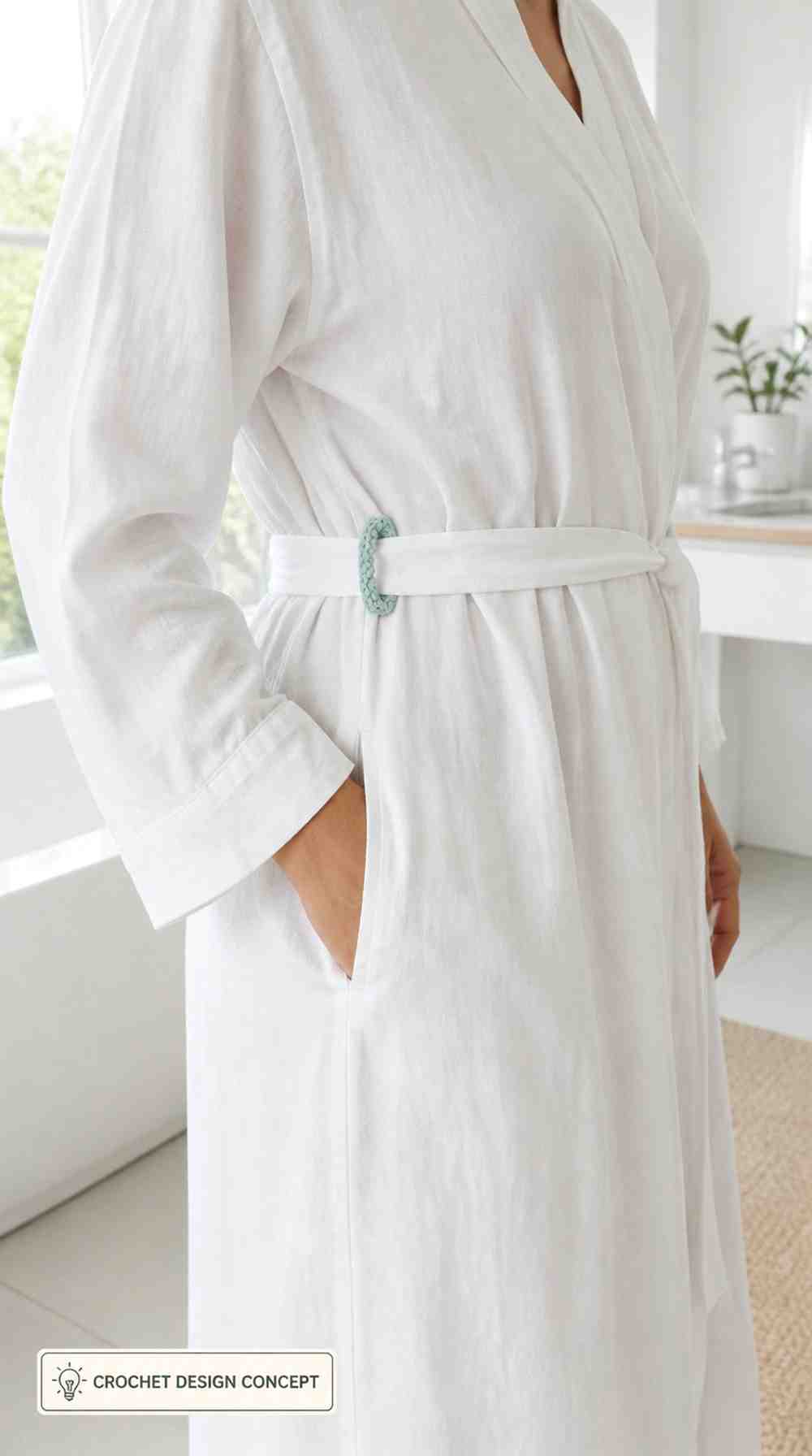
Two delicate mint-green crochet cord loops sit at the side seams of a lightweight white cotton bathrobe. The doubled cords create narrow vertical passages for the white sash, with their upper and lower ends neatly anchored into the seams.
This minimalist approach uses far less visible fabric than a broad crochet strip. The slender cords provide a subtle color accent while keeping the sash clearly visible. Because the loops are narrow, the attachment points and cord strength become particularly important.
- Cord strength: Test the doubled crochet cord for stretching and abrasion before using it repeatedly with a wide bathrobe belt.
- Lightweight appearance: A narrow loop suits a thin cotton robe visually, but it may not be ideal for supporting a heavy plush sash.
- Seam attachment: Use suitable reinforced sewing points so the cord does not pull loose from the robe’s lightweight side seam.
12. Crochet Burgundy Tubular Bathrobe Belt Keeper
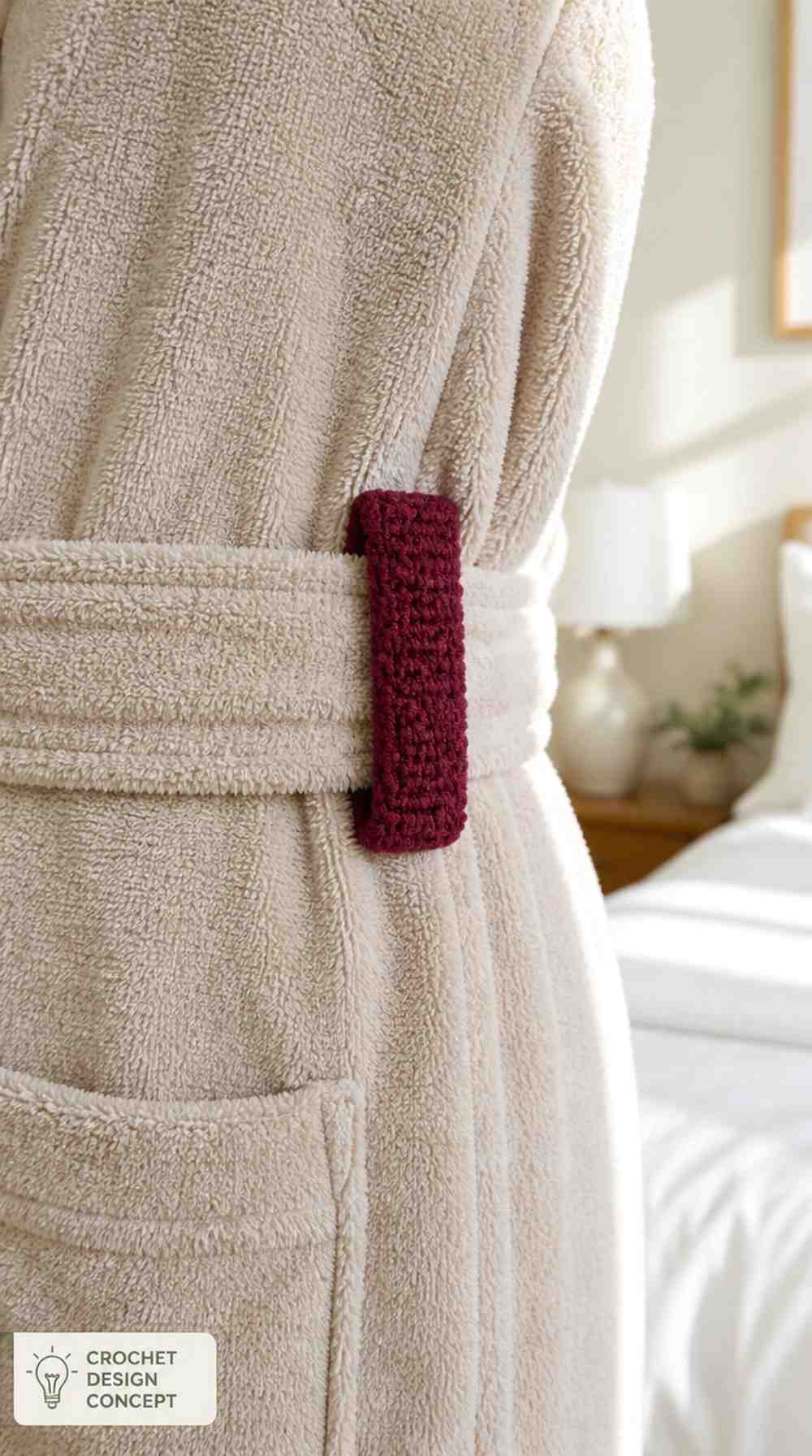
Burgundy crochet forms a short rounded tube at the right side of an oatmeal terry bathrobe. The tube’s flattened upper and lower ends attach to the robe, leaving a soft raised passage beneath its middle for the matching fabric belt.
The tubular shape makes this idea different from flat stitched strips. It creates a padded-looking rounded surface without decorative buttons or motifs. That softness may appeal visually on a plush bathrobe, although the extra fabric thickness needs careful consideration for comfort and drying.
- Tube thickness: Keep the crochet tube narrow enough that it does not become a bulky ridge beneath a tied sash.
- Flattened ends: Secure the upper and lower attachment sections without closing the central passage needed for the belt.
- Drying considerations: A tubular crochet keeper contains more fabric than a flat strip, so allow it to dry completely after washing.
13. Crochet Peach Bow-Accent Belt Keeper
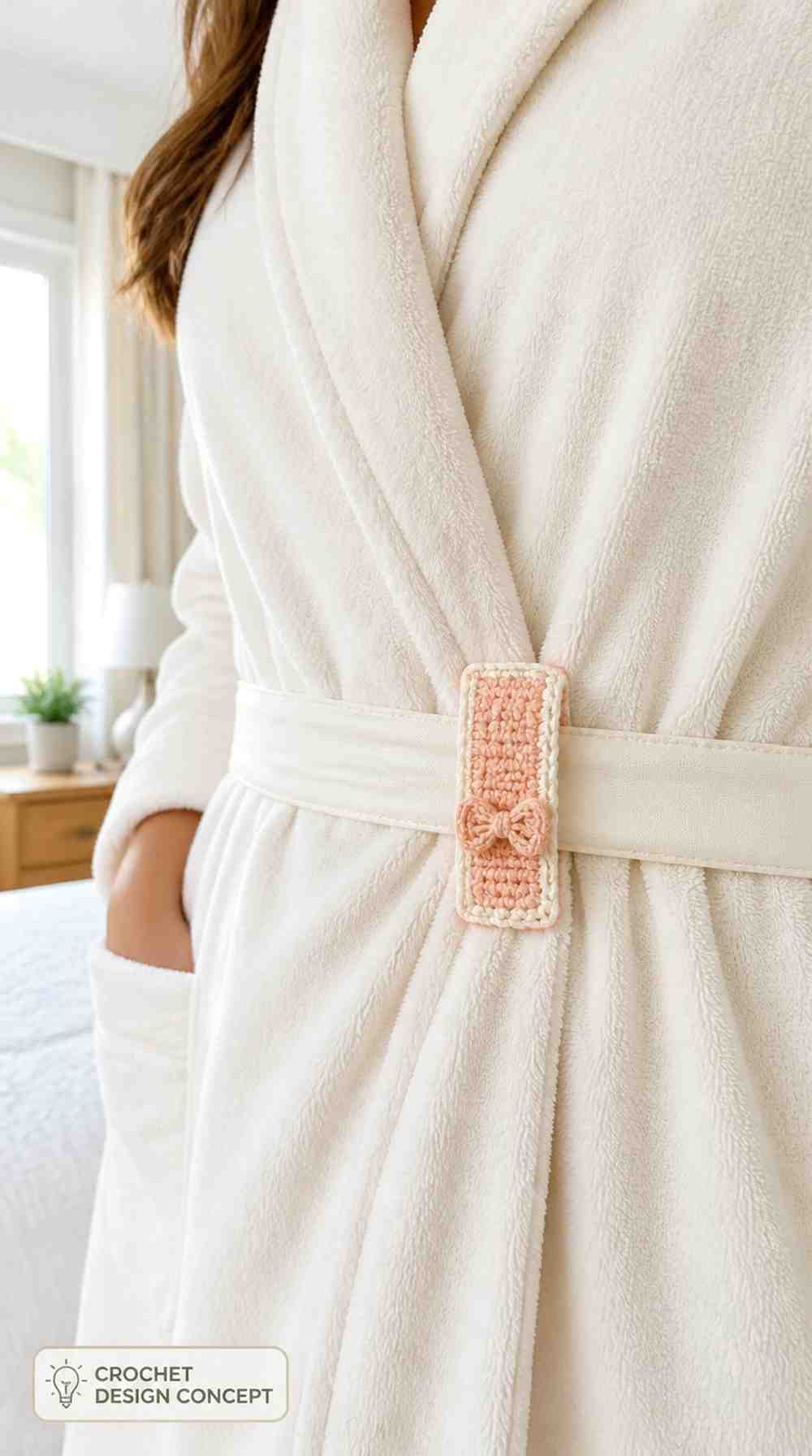
Peach-colored crochet forms a flat vertical keeper against a cream cotton bathrobe. A narrow cream border outlines the strip, and a tiny matching peach crochet bow sits on its outer surface. The robe’s ivory sash runs horizontally behind the keeper.
The bow creates a softer decorative style without changing the functional belt passage. Its very short tails remain close to the keeper, making the detail less likely to catch on clothing or towels. It would be a charming finishing idea for a simple everyday robe.
- Bow construction: Keep the bow small and flat, with its center firmly stitched to the keeper rather than attached by a loose tie.
- Sash clearance: The decorative front should not affect the channel behind the strip or make the belt difficult to pull through.
- Laundry care: Check that the bow and border tolerate the same cleaning method as the bathrobe and the underlying crochet keeper.
14. Crochet Teal Openwork Window Belt Keeper
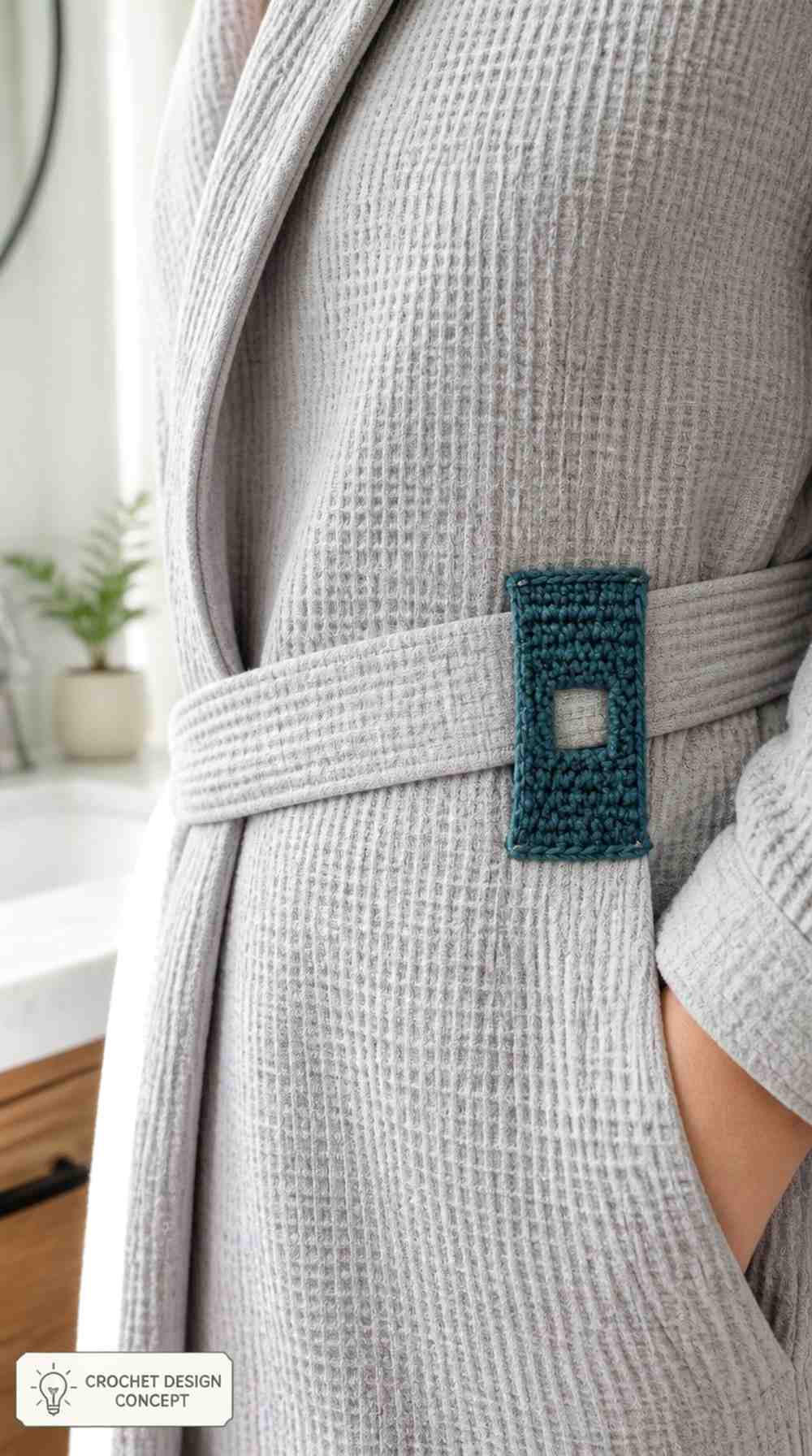
Teal crochet creates a moderately wide belt keeper on the right waist of a pale-gray waffle robe. Dense crochet edging surrounds one small rectangular openwork window in the middle of the strip, revealing the gray sash passing beneath it.
The window gives this design an airy appearance while the solid surrounding edges maintain the keeper’s overall shape. Unlike a fully open mesh loop, the design uses only a small central opening. The visual effect depends on keeping the window straight and the remaining crochet firm.
- Window size: Keep the openwork area small enough that it does not weaken the middle of the belt keeper.
- Solid edges: Use sufficiently dense crochet around the opening to maintain a consistent strip width and reduce distortion.
- Waist comfort: The keeper should lie flat against the waffle robe without stiff edging pressing uncomfortably through the fabric.
15. Crochet Cocoa Sliding Belt-End Keeper Ring
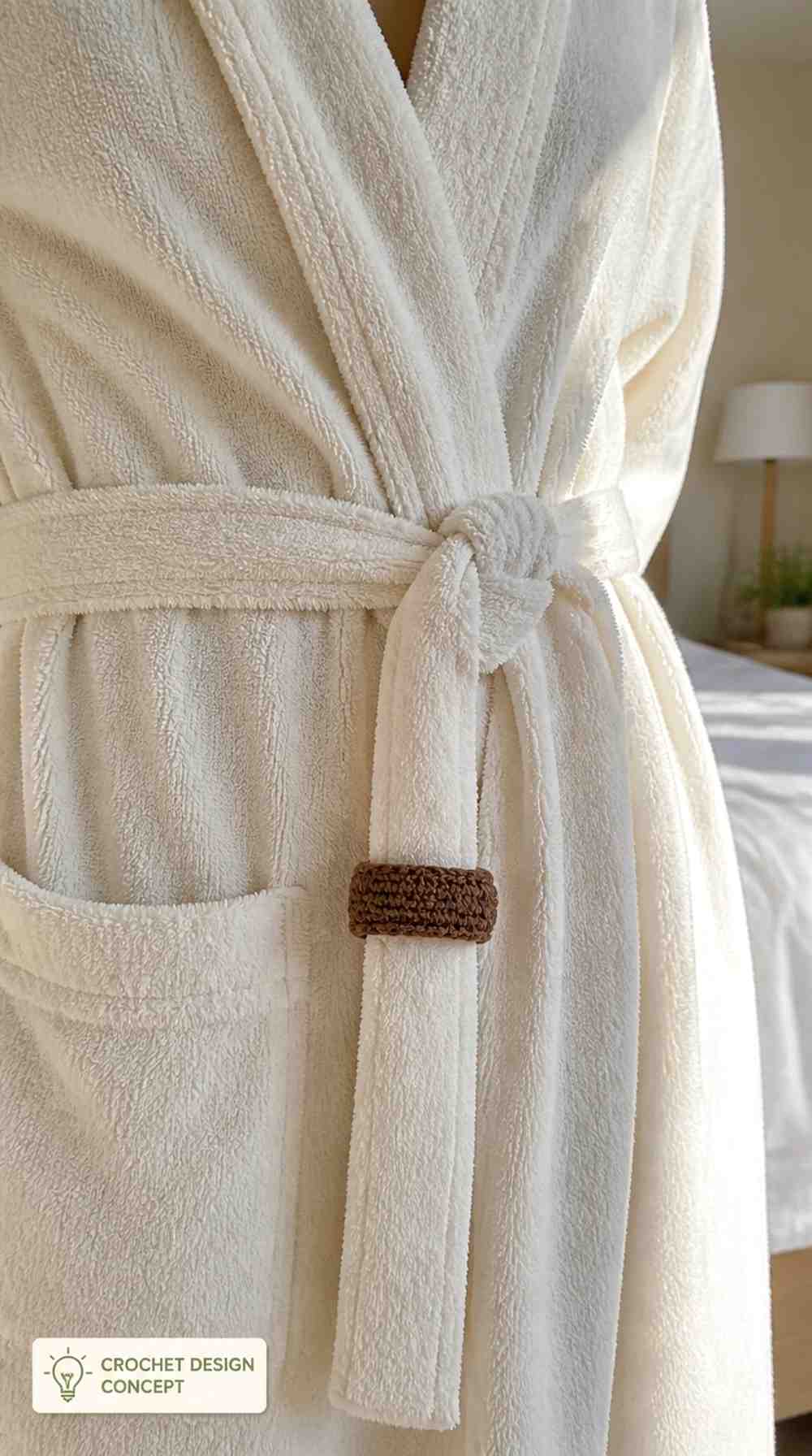
A small cocoa-brown crochet ring sits beside the front knot of a cream bathrobe sash. Rather than attaching directly to the robe, this flattened oval keeper slides around the main belt and one loose trailing end, keeping the two fabric layers together.
This concept solves a slightly different issue from side-seam loops. It is meant for tidying a loose sash end after the bathrobe has already been tied. The closed ring needs enough room for both fabric layers, but not so much space that it slides away on its own.
- Double-layer fit: Size the ring around the main sash and its loose end together rather than measuring only one fabric layer.
- Sliding control: Check how easily the ring moves along the belt; excessive looseness may let the trailing end slip out.
- Not a closure: The ring is intended to organize a sash end, not replace the robe’s knot or keep the robe securely closed by itself.
Practical Guide to Crochet Bathrobe Belt Keeper Loops
A bathrobe belt keeper is a small accessory, but its fit depends on the robe, the sash, and where the keeper is attached. Before making one, examine whether the robe already has side-seam loops, whether those loops have torn away, or whether a completely new belt-guiding arrangement is needed.
Measure the sash first. Check its width and thickness, including how much the fabric compresses when folded. A crochet keeper needs enough clearance for the belt to pass through comfortably without falling into a loose, oversized loop.
Choose the right placement. For standard side loops, try the robe on and mark the natural belt position at both side seams. Keep the positions level when the robe overlaps. A back-center keeper can be considered for additional alignment, but it should not pull the sash unnaturally against the body.
Think about the robe fabric. Lightweight cotton, waffle weave, and plush terry may need different attachment approaches. Avoid sewing into loose pile alone or creating overly tight stitches that damage the robe. Reinforced seams or stable fabric areas are usually better places to investigate.
Select comfortable yarn. Smooth, washable cotton or an appropriate soft blend may work for a small crochet keeper, depending on the robe’s care instructions. Avoid scratchy yarn, hard decorations, bulky knots, or stiff edges against the waist.
Check washing and wear. A permanently attached keeper should tolerate the robe’s usual cleaning routine. Test the yarn for color bleeding, particularly when placing dark crochet against a pale robe. Examine attachment stitches after laundering.
If you enjoy robe-inspired crochet styling, Yarn Nest Studio’s 15 Crochet Robe Coat Ideas for Cozy Winter Layering offers related inspiration for long garments and sash proportions, although those are robe coats rather than bathrobe belt-keeper patterns.
Want to Make Something Similar?
The 15 designs above are original visual concepts, not tested patterns. These published resources explain related crochet belt-loop construction and garment attachment techniques.
- Crocheted Belt Loops Tutorial by Sincerely Pam — demonstrates small crochet belt loops, adjusting their length for a particular belt, and choosing positions on a garment.
- Belt Loop Basics by the American Sewing Guild — useful guidance on loop spacing, belt clearance, attachment points, and alternatives including crochet-style thread loops.
- Sew a Robe — Easy Tutorial by Melly Sews — shows robe construction and explains where belt loops can be placed in the side seams during sewing.
These resources teach related techniques and do not reproduce the illustrated concepts exactly. Always adapt the loop dimensions and sewing method to the actual robe fabric and sash.
Which Crochet Bathrobe Belt Keeper Loop Should You Choose?
| Your main need | Design to consider | Important trade-off |
|---|---|---|
| Replace missing side loops | Sage Moss-Stitch Twin Belt Loops | Requires two secure attachments |
| Hold a wider sash | Oatmeal Ribbed Wide Belt Keeper | Wider crochet adds thickness |
| Open a keeper without unthreading the sash | Terracotta Button-Opening Belt Keeper | Button needs regular inspection |
| Guide the sash across the back | Navy Center-Back Belt Keeper | May work best with side loops |
| Add a tiny decorative accent | Butter Yellow Daisy Belt Loop | Flower must remain flat |
| Guide a sash at two nearby points | Charcoal Double-Channel Belt Keeper | More attachment ends to sew |
| Adjust for different sash thicknesses | Cream Adjustable Buttonhole Belt Keeper | Buttonholes may stretch |
| Keep decoration minimal | Mint Braided Side-Seam Belt Loops | Thin cords need strong anchoring |
| Create a softer rounded finish | Burgundy Tubular Bathrobe Belt Keeper | More bulk and drying time |
| Tidy the loose end after tying | Cocoa Sliding Belt-End Keeper Ring | Does not attach the belt to the robe |
For an everyday bathrobe, simple paired side loops are a sensible place to begin. Button-opening designs are worth considering when threading the sash is inconvenient, while the sliding ring serves a different purpose by managing a trailing belt end.
Conclusion
Crochet bathrobe belt keeper loops offer a small way to improve a robe’s everyday usefulness while adding a personal handmade detail. The collection includes practical side-seam loops, broader ribbed keepers, adjustable buttoned strips, softer tubular designs, and decorative touches that remain close to the fabric.
Whatever style you prefer, the important details are straightforward: the sash should fit comfortably, the attachment should hold securely, and the loop should not create uncomfortable bulk. Starting with your actual robe and belt will help you choose a design that makes sense beyond its appearance.
Which would you add to a bathrobe: simple sage side loops, a terracotta button-opening keeper, or the small cocoa belt-end ring? Share whether you want to replace a missing loop or improve a robe you already use.
Frequently Asked Questions
1. Can crochet belt keeper loops be added to an existing bathrobe?
Yes, it is possible to add crocheted loops to an existing robe, provided the fabric has suitable attachment areas. Side seams are a common place to consider. The loop size, placement and sewing method should be checked on the actual garment rather than relying on a standard measurement for every robe.
2. What yarn should I use for crochet bathrobe belt loops?
Smooth, washable cotton or a suitably soft yarn blend may be useful, depending on the bathrobe’s material and care instructions. The crochet should remain comfortable against the body and hold its shape during use. Test the yarn for stretch, colorfastness, and compatibility with the robe’s washing routine.
3. Should bathrobe belt loops be tight or loose?
They should allow the robe belt to pass through comfortably without compressing or folding the sash excessively. Loops that are too tight can make adjusting the belt difficult, while overly loose loops may allow it to twist or slip out. Test the intended clearance with the actual belt before attaching the loop permanently.
4. Can I use a removable crochet belt keeper instead of sewing permanent loops?
A button-opening or other detachable design may be possible, but it still needs a secure and suitable attachment to the robe. The fastening should not come open accidentally or create an uncomfortable hard spot. A sliding belt-end ring is another option, though it only organizes the sash end and does not replace side-seam loops.
5. Are these crochet bathrobe belt keeper loop ideas complete patterns?
No. They are crochet design concepts intended to show different shapes, textures, closures, placements, and decorative finishes. The linked tutorials provide related construction guidance, but exact dimensions, stitch counts, attachment strength, and garment compatibility must be worked out and tested for any finished keeper.