A jeans waistband button is small, but its position and hard metal surfaces can sometimes make a pair of jeans less comfortable, especially when sitting or wearing fitted clothing. These 19 crochet jeans waistband button comfort cover inspiration ideas explore small textile details for two different areas: decorative covers placed over the visible outer button and soft patches positioned over the metal backing inside the waistband. The designs range from simple denim-blue circles to lined inner pads, flat flaps and delicate scalloped edging.
Some ideas focus on a smoother-looking button surface, while others explore placing soft fabric between the metal backing and the body. The collection includes compact crochet caps, removable-looking covers, stitched backing patches and lightweight foldover guards. As you compare them, consider where any rubbing occurs, whether the jeans already fit properly and whether an added textile piece would interfere with fastening. These are visual concepts, not tested comfort products or guaranteed solutions for skin irritation.
These are AI-generated crochet design visualizations for inspiration, not photographs of tested handmade pieces or step-by-step patterns.
Quick Design Selection Guide
- For a simple outside button decoration: Crochet Denim Blue Smooth Button Cap, Crochet Rose Ribbed Jeans Button Sleeve and Crochet Plum Spiral Front Button Dot offer three low-profile circular finishes.
- For covering the metal backing inside the waistband: Crochet Oatmeal Inner Button Back Pad, Crochet Charcoal Layered Backing Disc and Crochet Terracotta Square Inner Stud Pad explore different small patch shapes.
- For a foldover inner cover: Crochet Cocoa Inner Waistband Comfort Flap, Crochet Olive Hinged Inner Button Guard and Crochet Sky Blue Foldover Waistband Guard attach above the button backing.
- For decorative outer edges: Crochet Lavender Petal Button Cover and Crochet Cream Scalloped Button Frame add small, flat scalloped details.
- For alternative fitting ideas: Crochet Coral Drawn-Rim Button Cap, Crochet Teal Split-Edge Button Cap and Crochet Butter Yellow Outer Placket Shield explore removable-looking arrangements.
- For a broader skin-facing fabric area: Crochet Sage Wraparound Inner Stud Guard and Crochet Peach Wide Oval Backing Patch extend beyond the metal tack.
1. Crochet Denim Blue Smooth Button Cap
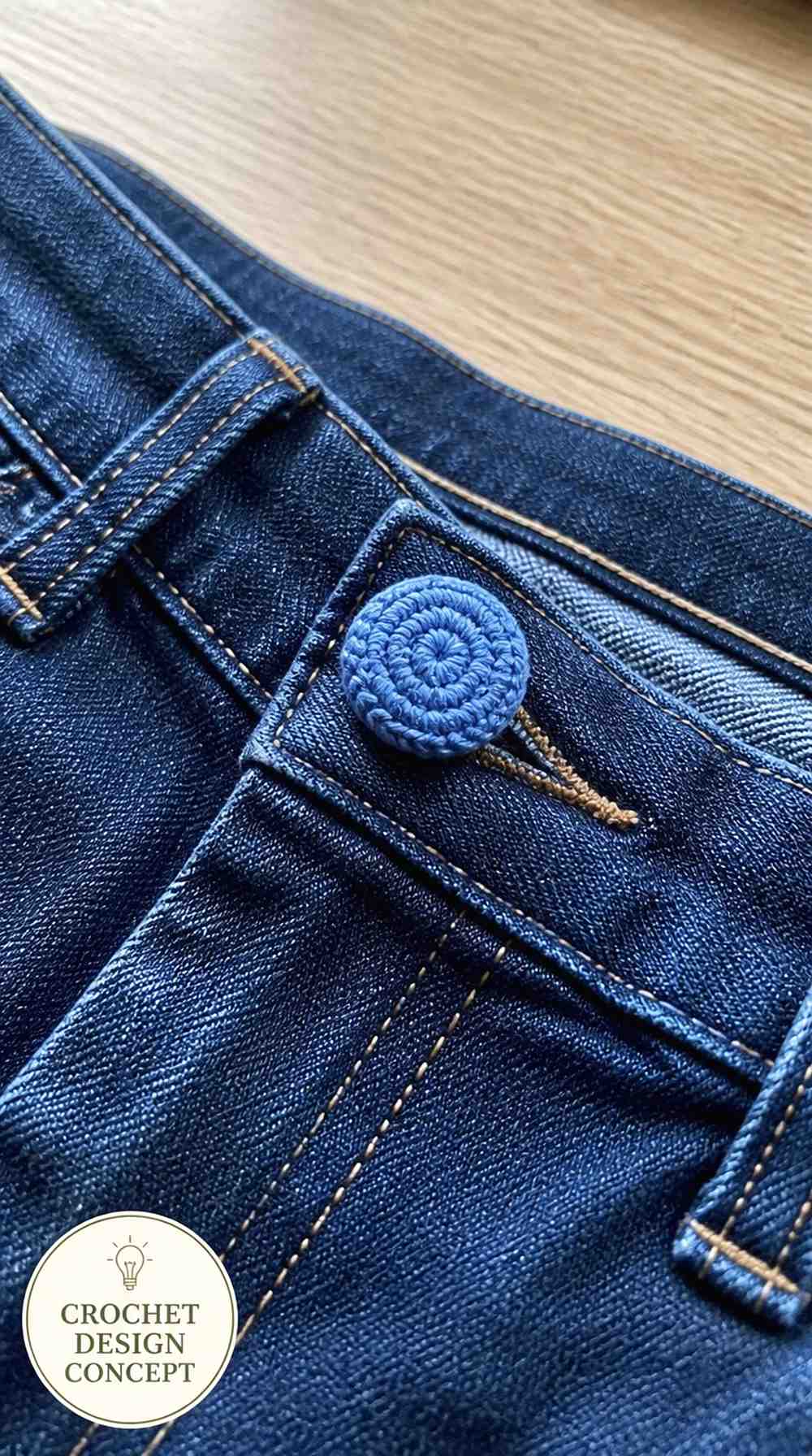
A tiny denim-blue crochet cap creates a neat finish over the visible outer waistband button of dark indigo jeans. Its smooth circular face is formed from closely worked concentric stitches, while a narrow gathered edge follows the underside of the metal button head.
The matching blue palette makes the cover feel like a subtle part of the jeans rather than a separate decoration. Because the cap sits on the outside, it mainly changes the surface of the visible button. It does not cover the metal backing against the skin.
- Button Fit: Compare the crochet cap with the actual button-head diameter so it cannot slide off easily during normal movement.
- Fastening Clearance: Fit the cover only if the buttonhole can remain properly engaged and the added yarn does not weaken the closure.
- Surface Texture: Smooth, closely worked stitches are more suitable for a low-profile finish than large raised crochet loops that might catch on clothing.
2. Crochet Oatmeal Inner Button Back Pad
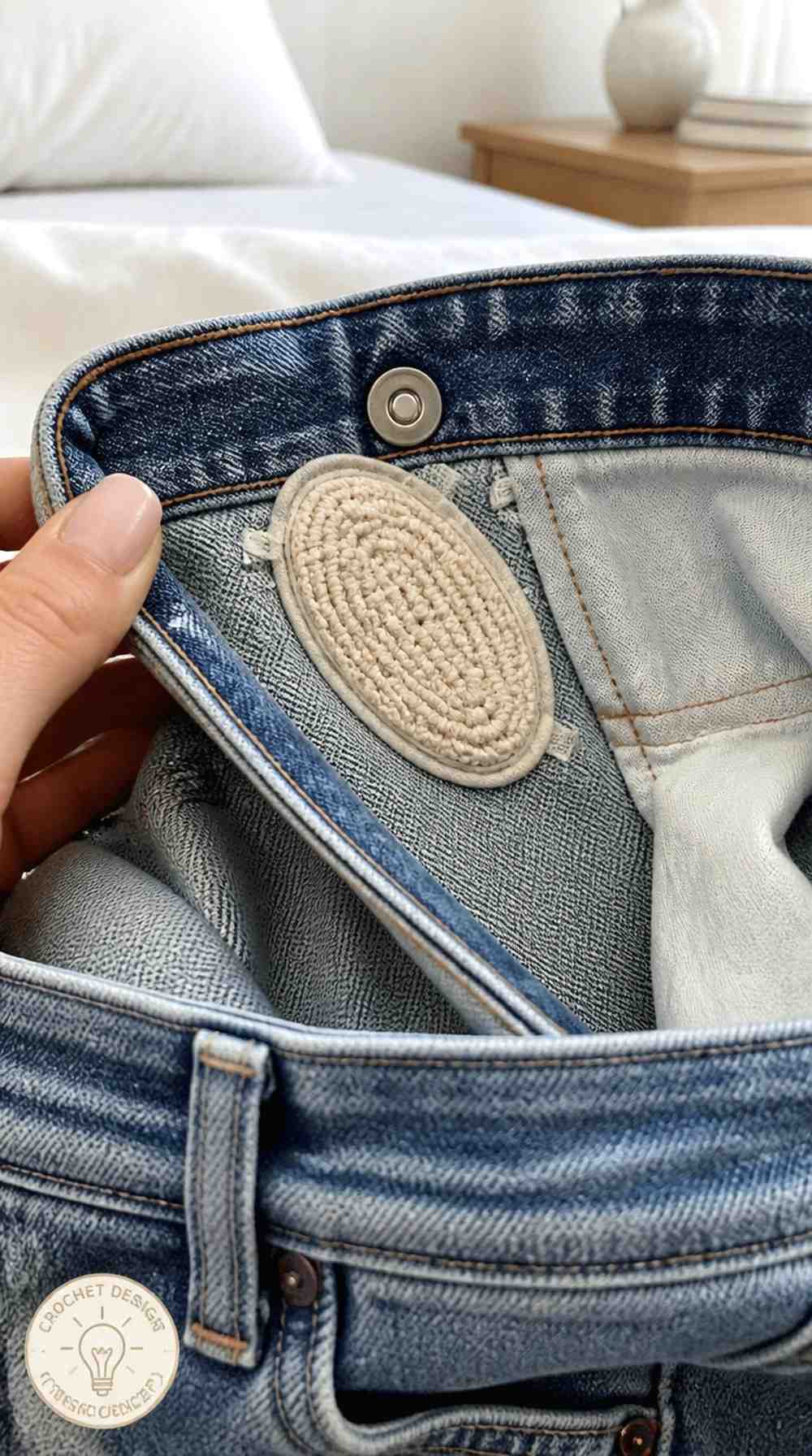
Soft oatmeal crochet forms a small oval patch over the inner metal backing of a jeans waistband button. The closely worked pad has a smooth ivory cotton lining on its skin-facing side and two tiny fabric attachment tabs secured to the surrounding denim.
This design focuses on the inside of the waistband rather than the button visible from the front. Its purpose is to explore a fabric layer between the metal tack and the body. The patch would need to stay flat without creating an uncomfortable ridge when sitting.
- Inner Metal Coverage: Position the oval over the entire exposed button backing, leaving no hard metal edge protruding against the covered area.
- Smooth Lining: A soft, low-texture cotton layer may feel gentler against skin than the crochet stitches alone, depending on the person’s sensitivities.
- Attachment Placement: Secure the fabric tabs to suitable denim areas without damaging the button’s original fastening or stitching through the metal.
3. Crochet Rose Ribbed Jeans Button Sleeve
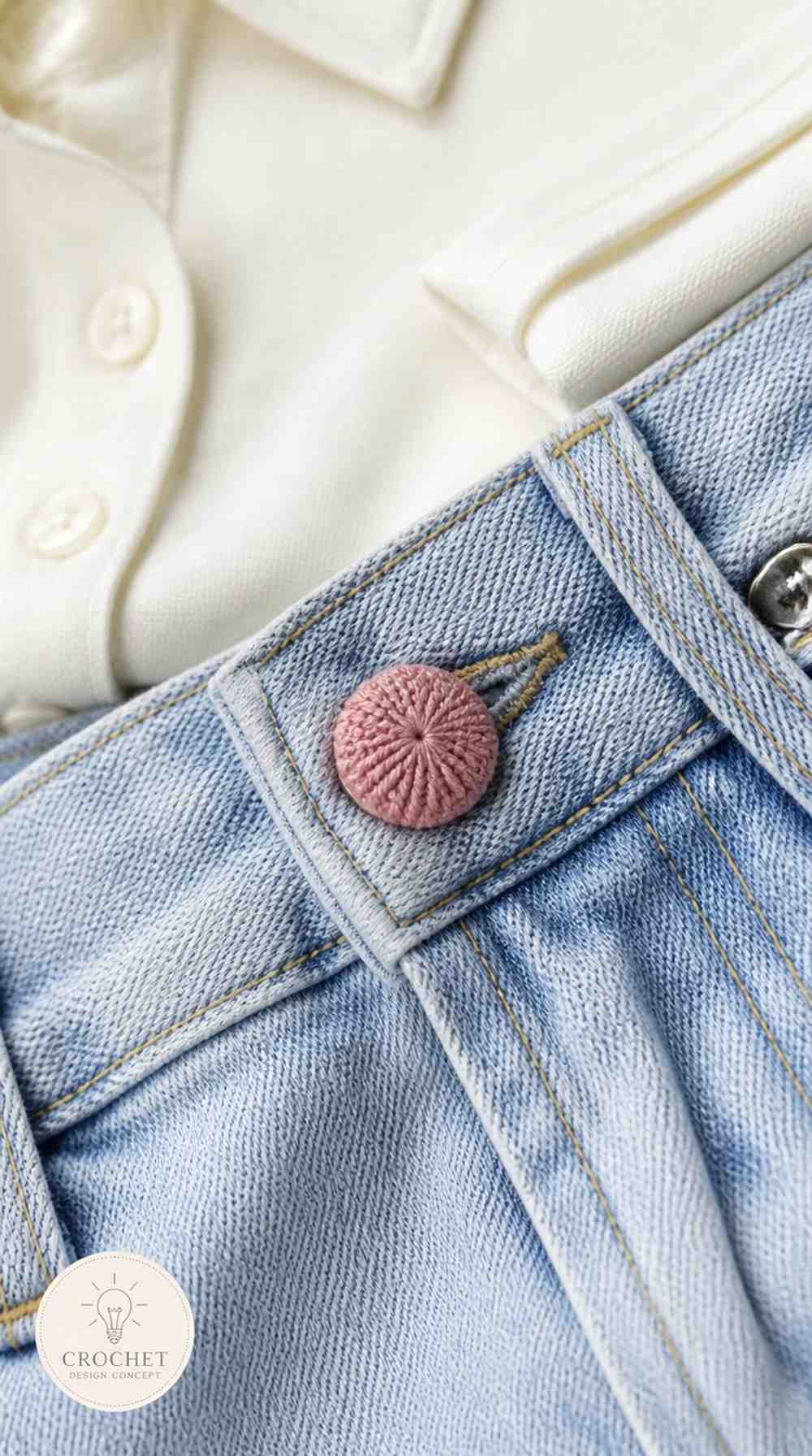
Dusty-rose crochet gives this tiny front-button cover a soft decorative appearance. Fine radial ribs spread outward from its rounded center, with a neatly gathered rim following the shape of the metal jeans button beneath.
The pink color stands out against light-wash denim without requiring a flower, bow or additional embellishment. Its short, fitted shape keeps the decoration concentrated around the button. The ribs need to remain shallow so the crochet does not become bulky under an overlapping shirt or waistband layer.
- Radial Ribbing: Keep the raised lines even and low so the button cover retains a rounded shape without developing stiff ridges.
- Color Contrast: Dusty rose creates a visible accent on pale denim, while a matching blue version would offer a less noticeable appearance.
- Removable Construction: Consider how the cap can be taken off for laundering without stretching the gathered rim or damaging the metal fastening.
4. Crochet Cocoa Inner Waistband Comfort Flap
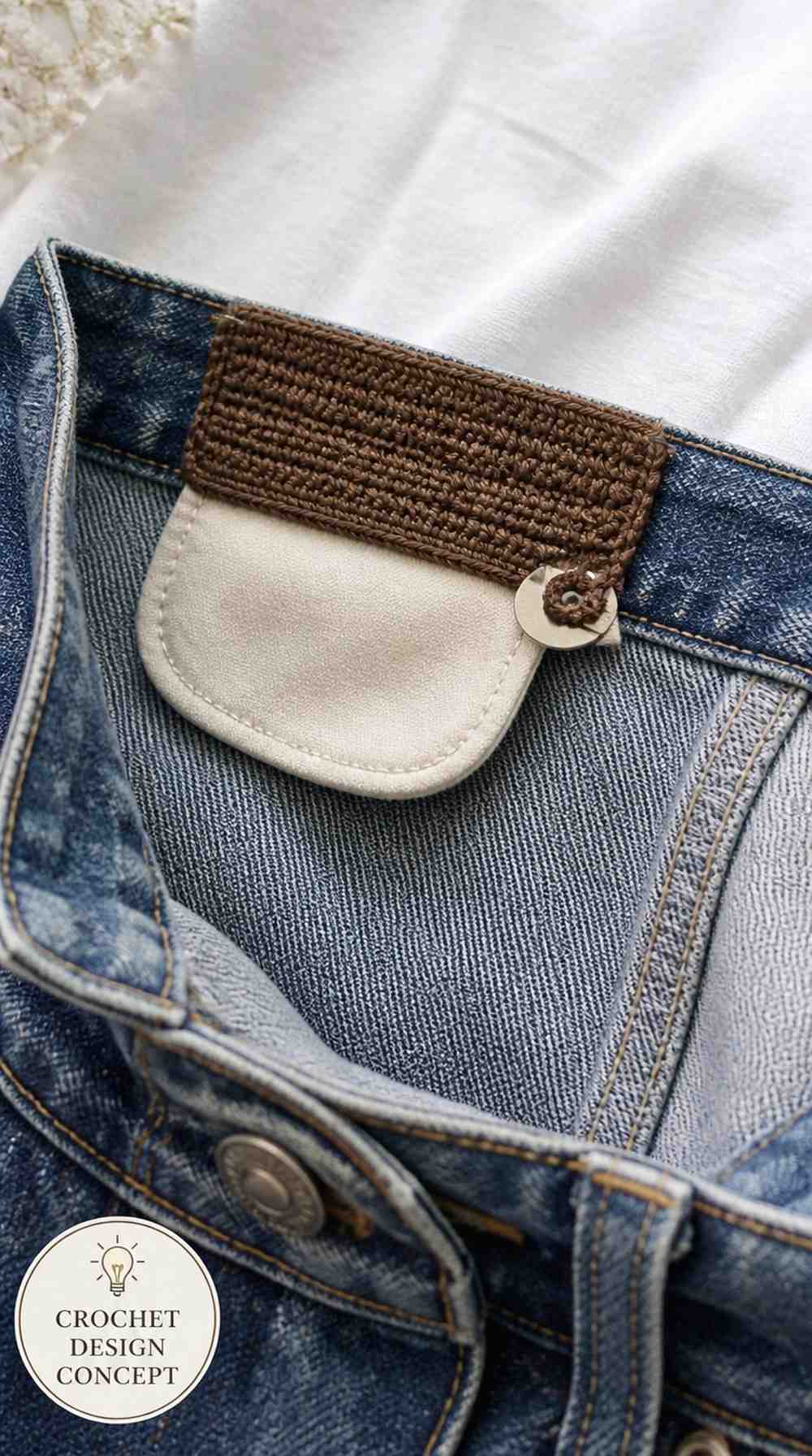
Cocoa-brown crochet creates a small rectangular flap inside the front waistband of blue jeans. Attached along its upper edge, the flap folds downward over the round button backing, with a soft cream cotton lining forming the surface nearest the skin.
This design differs from a permanently flat pad because the lower portion can lift away from the metal area. That could make the backing easier to inspect or clean. The attachment should remain close to the waistband seam so the flap does not bunch beneath clothing.
- Upper Seam Position: Attach the flap to suitable inner waistband fabric without interfering with the jeans button, zipper or original seam strength.
- Flap Length: The cocoa rectangle should extend just beyond the metal backing, avoiding unnecessary fabric that could fold or crease during sitting.
- Skin-Facing Finish: Keep the cream lining smooth and free from hard knots or exposed yarn ends near the lower edge.
5. Crochet Lavender Petal Button Cover
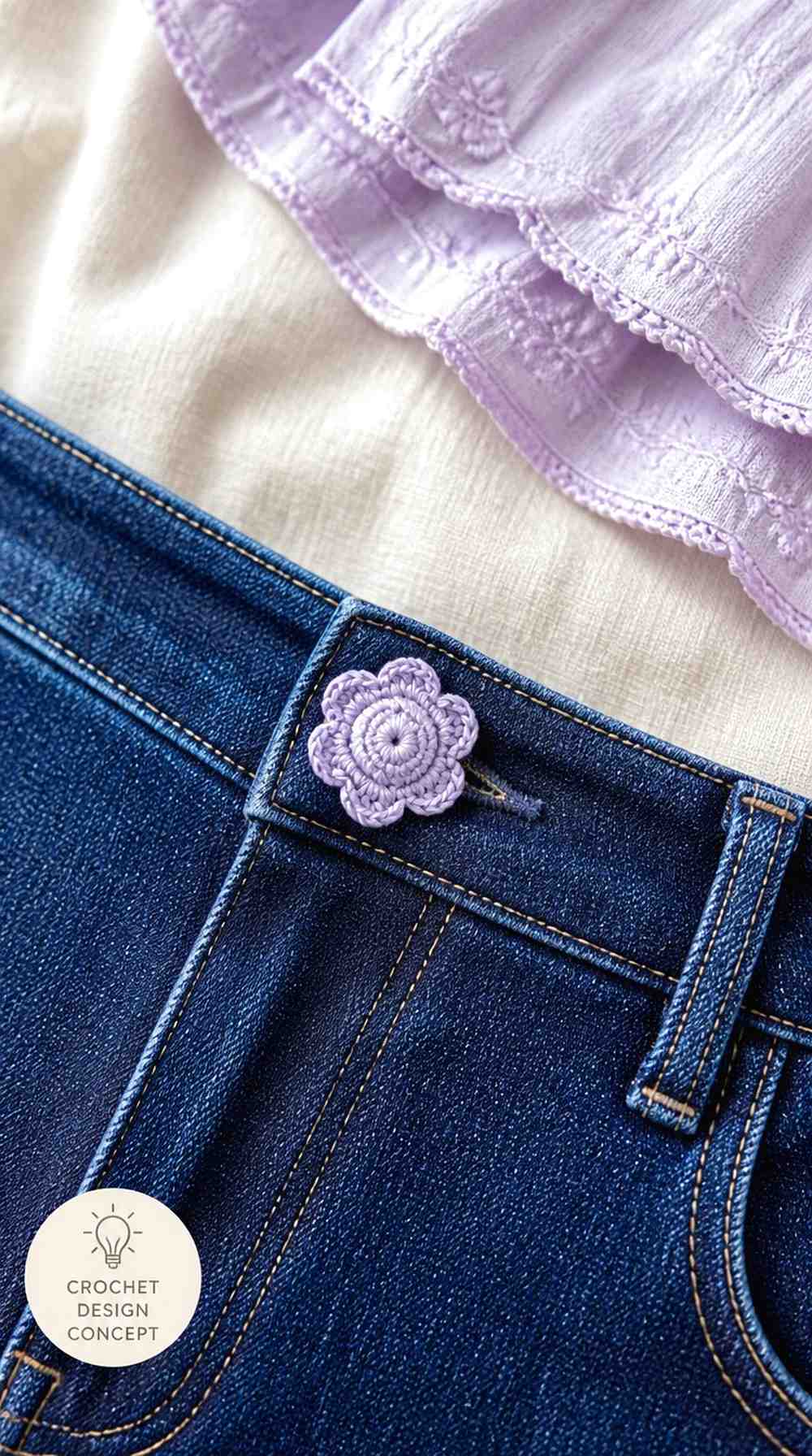
Pale-lavender crochet turns the visible jeans button into a tiny floral accent. Six flat petal-shaped scallops surround a closely worked central disk, creating a soft circular outline without a large raised flower.
The compact design sits over the outer metal button of fully fastened dark-blue jeans. Its decorative shape makes it more noticeable than a plain round cap, but the petals should remain close to the button. Wide or loosely attached petals could catch against the buttonhole or nearby fabric.
- Petal Proportions: Keep all six scallops small and evenly joined so they do not extend into the fastened denim opening.
- Decorative Limit: The outer petal edge is for appearance, not a replacement for the original metal button or its fastening function.
- Yarn Detail: Fine, smooth yarn can help individual petals remain recognizable without adding excessive thickness around the button.
6. Crochet Charcoal Layered Backing Disc
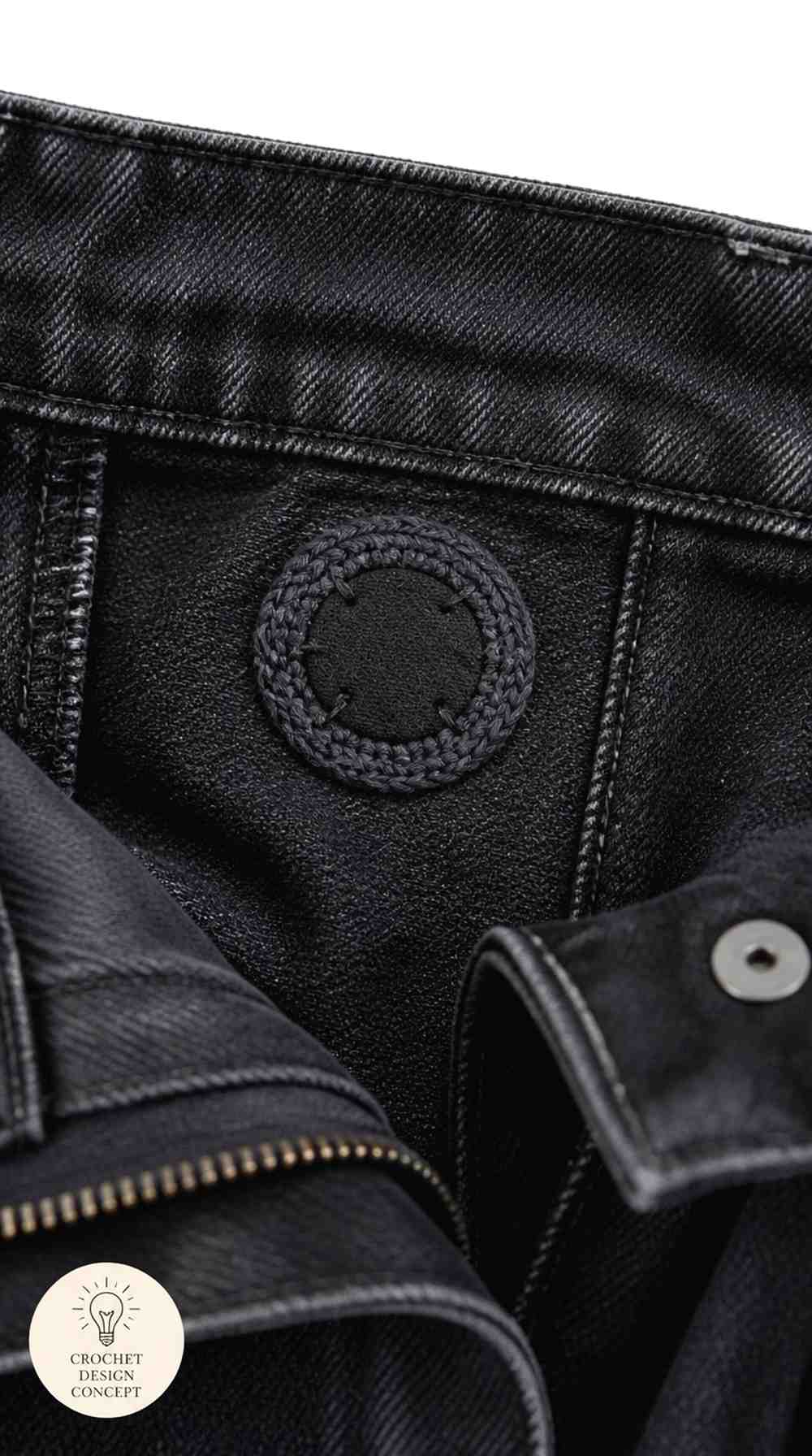
A charcoal-grey crochet disc gives this inner-waistband concept a restrained appearance against black denim. A narrow raised outer ring surrounds the closely stitched center, while a smooth black cotton lining covers the skin-facing side.
Four small attachment points hold the pad around the inner metal button tack. Its dark palette helps the piece blend into the jeans when the waistband is opened. The design focuses on covering the backing rather than changing the visible outer button or adjusting the fit.
- Disc Thickness: Keep the layered construction thin so the raised border does not create a new pressure point beneath a fitted waistband.
- Dark Fabric Matching: Charcoal crochet and black cotton lining can blend with dark denim, although hidden color matching matters less than comfort.
- Four-Point Attachment: Position the attachment stitches around the pad to reduce curling without disturbing the jeans’ existing metal fastening.
7. Crochet Olive Hinged Inner Button Guard
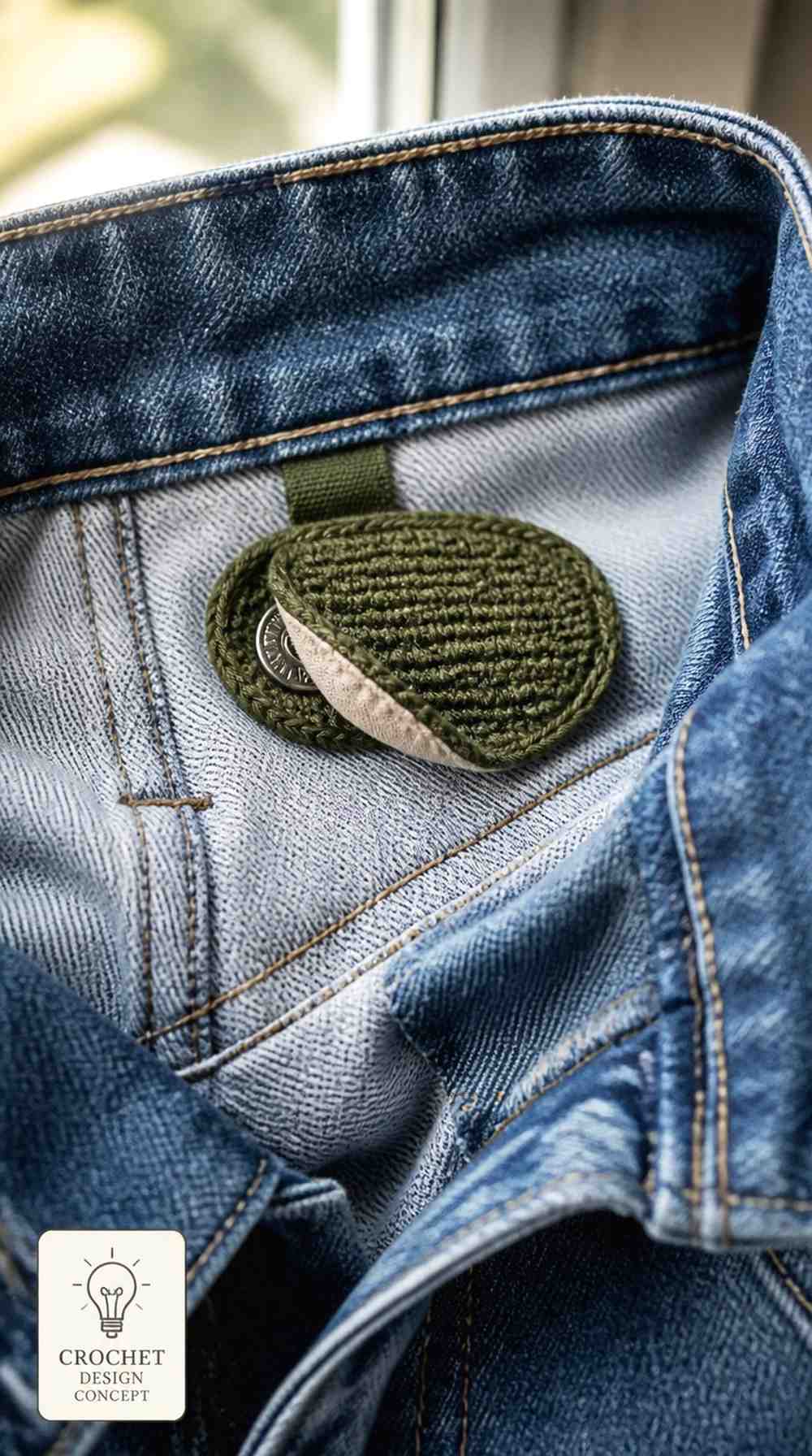
Olive-green crochet forms a small oval flap over the metal button backing inside a medium-wash jeans waistband. A narrow reinforced hinge joins the upper end to the inner denim, while a beige fabric lining lies beneath the crochet surface.
The hinged arrangement offers a different way to access the metal backing without removing the entire textile piece. Its rounded shape follows the small stud area rather than covering a large section of the waistband. The flap must lie naturally against the denim during wear instead of lifting or folding into the skin.
- Hinge Flexibility: Keep the upper connection flexible enough to let the flap lie flat without twisting around its attachment.
- Oval Coverage: The rounded lower section should cover the backing completely while remaining clear of the zipper and adjacent seams.
- Daily Movement: Check how the flap behaves when bending and sitting, since a loose lower edge could fold upward or cause irritation.
8. Crochet Coral Drawn-Rim Button Cap
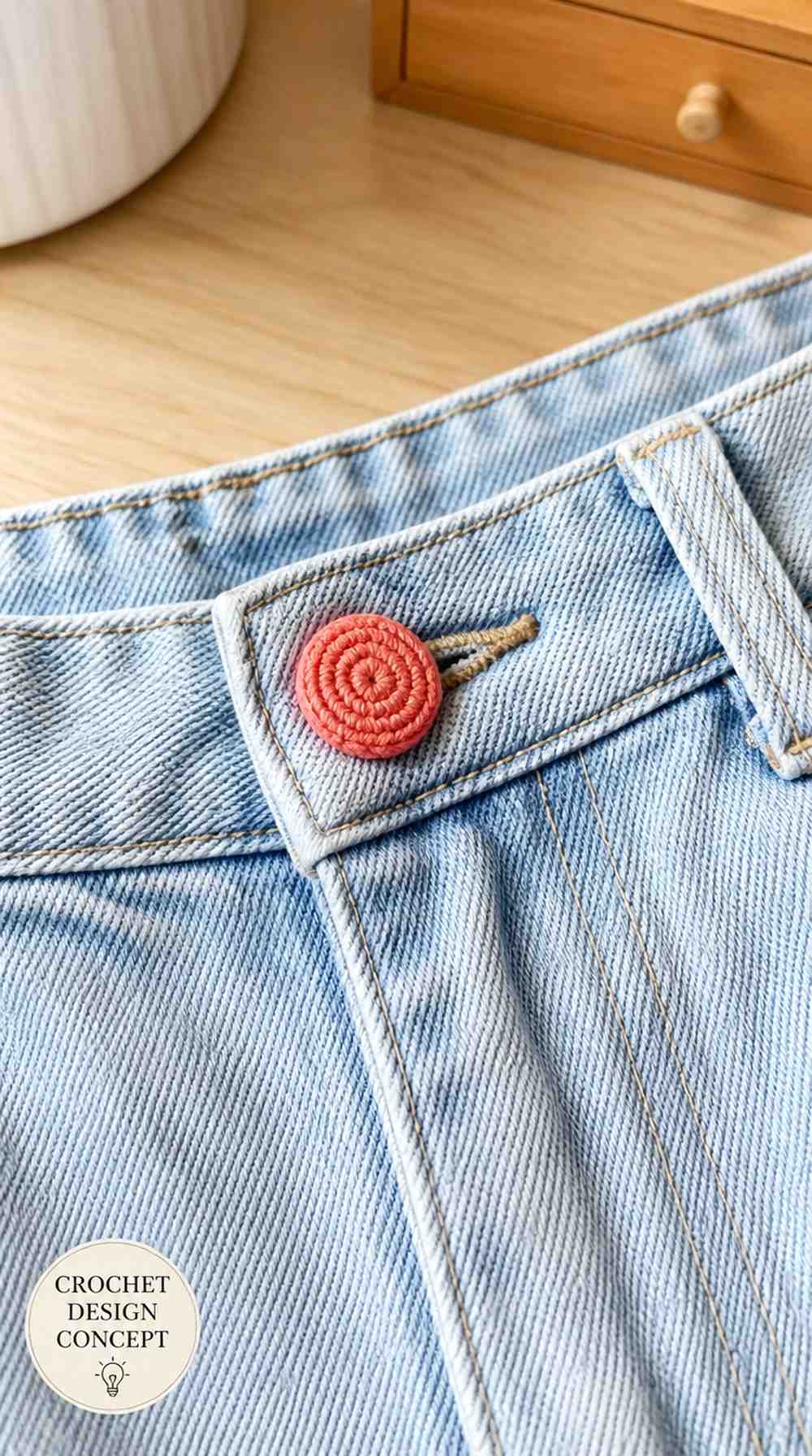
Bright coral crochet gives this exterior button cap a cheerful, compact appearance. A fine spiral stitch forms the circular front, while a narrow gathered rim follows the underside of the metal button head.
The design suggests a removable cover that can be fitted after the jeans are fastened. Its color makes the small accessory more visible against pale-blue denim. The rim is the critical part of the concept because it needs to stay in place without restricting the original buttonhole.
- Gathered Rim: Any draw-in construction should remain secure without loose cords or ends that could catch on the waistband.
- Removal: Check whether the cap can be removed without pulling aggressively on the jeans button or damaging its attachment.
- Original Closure: The metal button must remain fully engaged with the denim buttonhole; a decorative cap must never substitute for that fastening.
9. Crochet Butter Yellow Outer Placket Shield
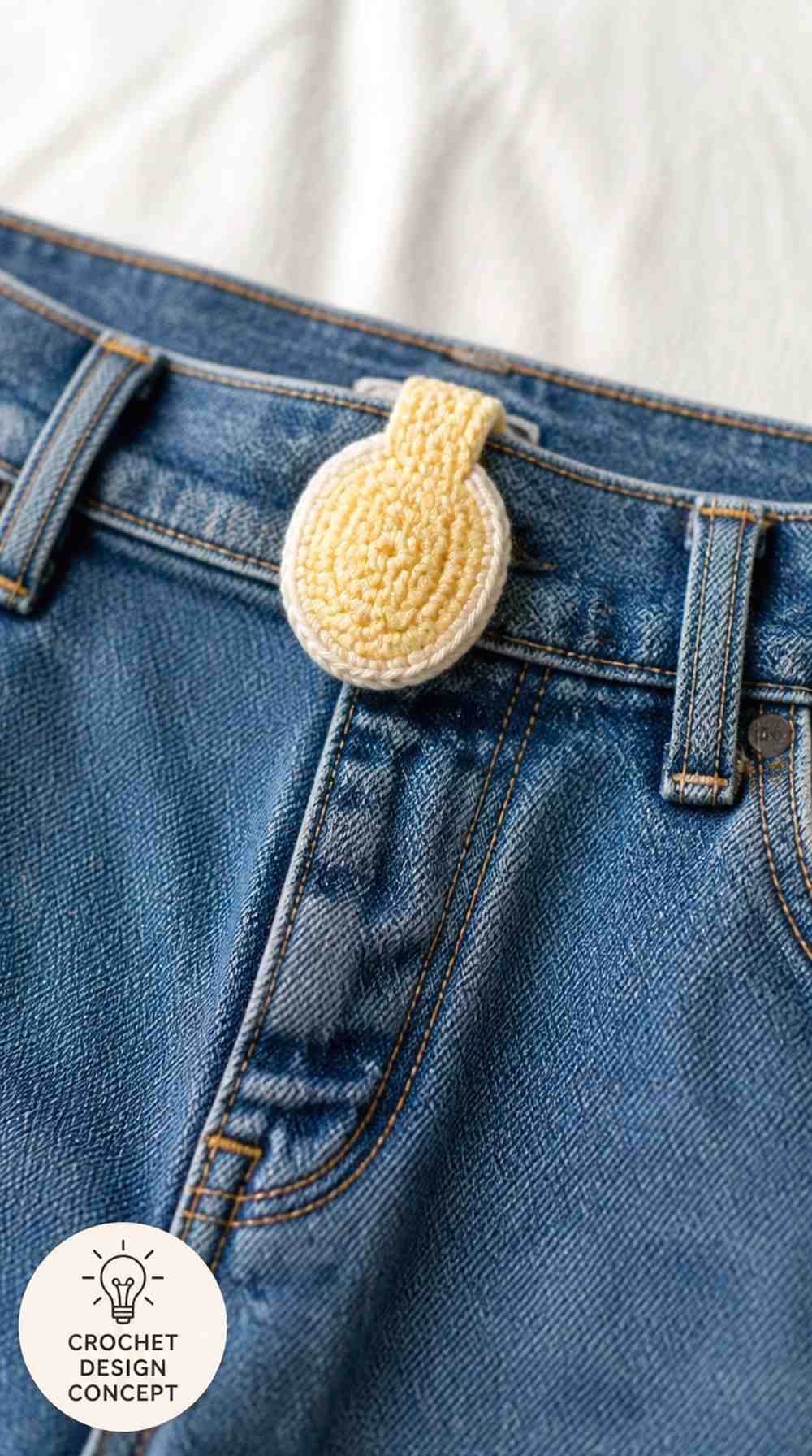
A butter-yellow crochet oval creates a soft-looking shield over the outside of a fastened jeans button. A narrow ivory border follows the rounded outline, while a short flat attachment tab folds over the upper waistband edge.
Unlike a small cap that grips the button head, this concept uses a separate fabric attachment to position the crochet over the front placket. Its broader oval shape makes it more noticeable than a button-sized circle. A practical version would need to remain flat without pulling the waistband or interfering with the closure.
- Tab Placement: The upper attachment should not distort the waistband or reduce the stability of the original button and buttonhole.
- Shield Shape: Keep the oval fairly small and flexible so it does not create a stiff patch across the front of the jeans.
- Exterior Purpose: This cover sits outside the clothing; it does not prevent skin contact with the metal backing on the inside.
10. Crochet Navy Mesh-Overlay Button Cover
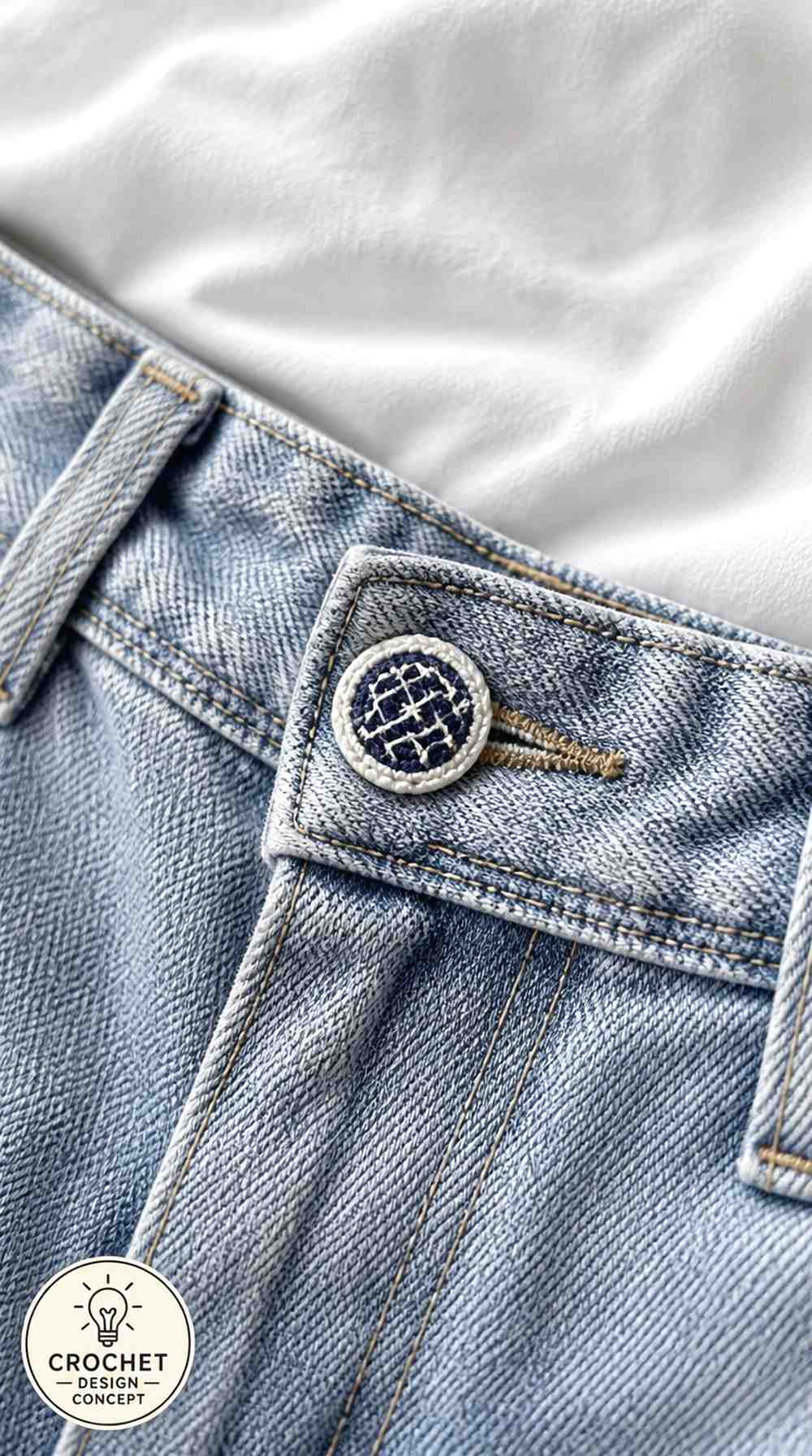
Navy-blue crochet gives this front-button cover a delicate layered appearance. A solid, closely worked base sits beneath a fine diamond-mesh overlay, with a narrow ivory outline defining the circular edge.
The tiny mesh pattern introduces visual texture while keeping the metal button covered from the outside. Compared with a fully open lace cap, the solid lower layer gives the design a more complete surface. Its extra crochet layer should remain thin enough to avoid catching on the buttonhole or making the front waistband feel bulky.
- Solid Lower Layer: A dense base prevents the decorative diamond openings from revealing much of the outer button beneath.
- Mesh Connections: Keep every diamond loop properly joined to neighboring stitches so the overlay does not snag or separate.
- Layer Thickness: Use fine yarn and minimal raised texture, especially where a shirt may lie directly over the jeans button.
11. Crochet Terracotta Square Inner Stud Pad
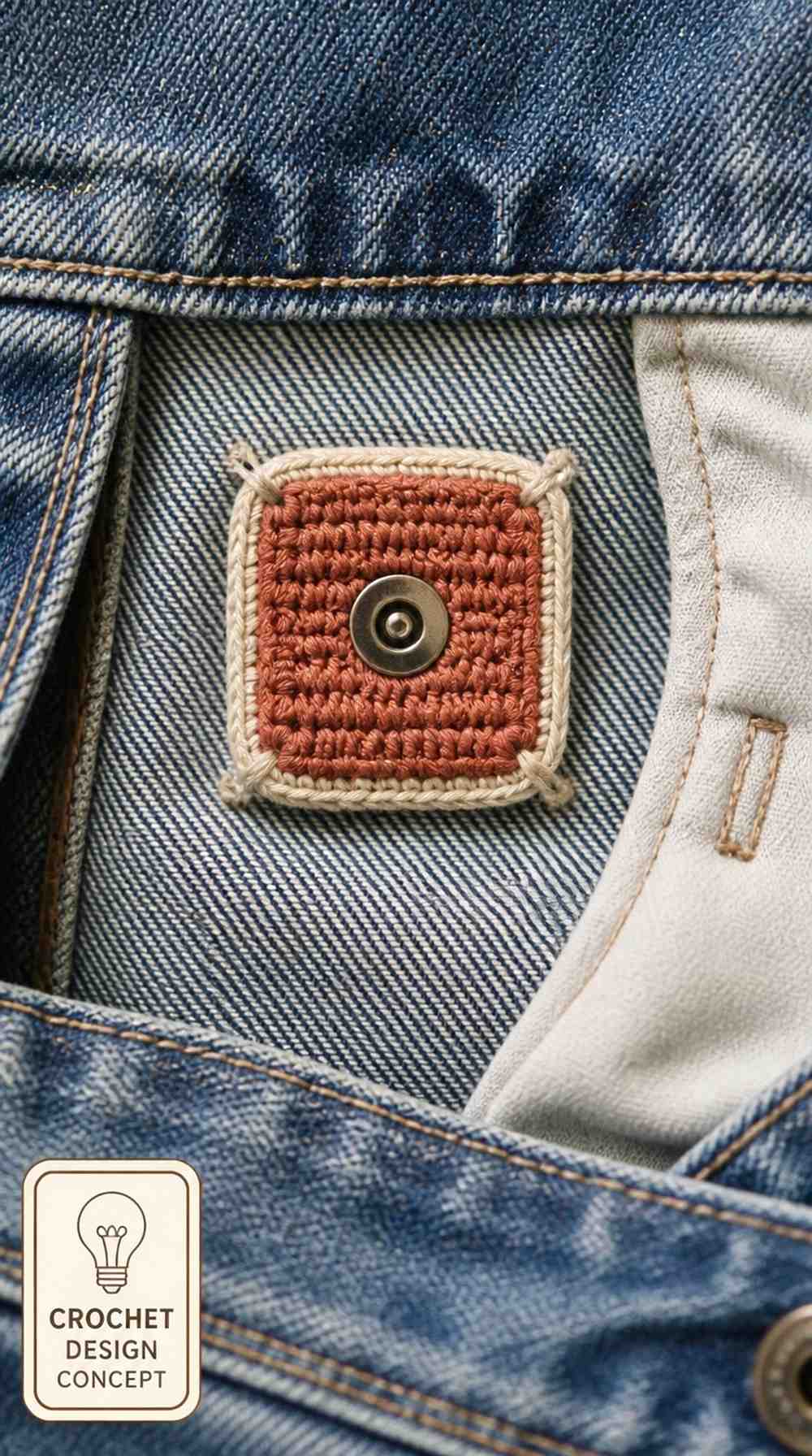
Terracotta crochet creates a small square patch with softly rounded corners over the metal button backing inside a jeans waistband. Closely worked horizontal stitches form the central area, while an oatmeal border and smooth cotton lining soften the finish.
The square outline distinguishes this design from the circular and oval backing pads. Its four corners offer places to position discreet attachment stitches, helping the pad lie evenly against the denim. The corners should remain flat, however, because raised fabric edges could create new points of rubbing.
- Rounded Corners: Soften the square’s four corners rather than forming sharp, bulky points against the waistband interior.
- Attachment Position: Secure the surrounding textile without stitching into the button hardware or interfering with the existing denim seam.
- Fabric Layers: The crochet and cotton lining should remain lightweight, with no thick knots or overlapping seam allowances near the metal backing.
12. Crochet Sage Wraparound Inner Stud Guard
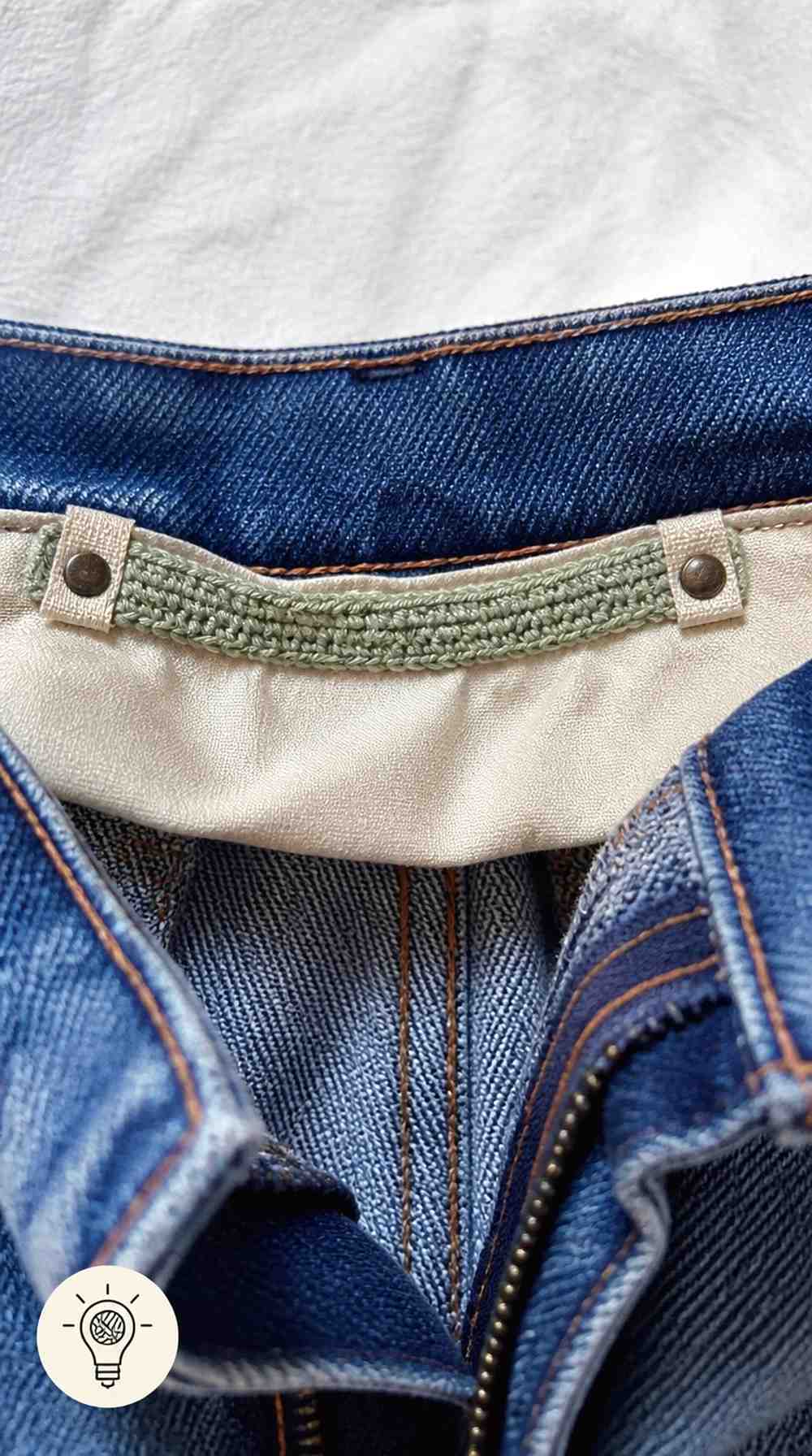
A soft sage-green crochet band runs horizontally across the inside of the jeans waistband, covering the metal button-backing area. Two narrow cream fabric tabs connect the band to the surrounding denim, while a smooth ivory lining faces the body.
The longer shape creates a different form of coverage from a button-sized disc. Instead of concentrating fabric directly over the stud, it spreads the textile across a short section of the waistband. That may create a smoother-looking surface, but the band should not pull the waistband tighter or introduce uncomfortable folds.
- Horizontal Placement: Keep the sage band aligned with the natural waistband curve so it does not wrinkle when the jeans are fastened.
- Fabric Tabs: Use appropriate attachment points on either side of the metal backing, avoiding the zipper and working buttonhole.
- Waistband Flexibility: The longer guard should move with the denim rather than acting as a stiff reinforcement that increases pressure.
13. Crochet Cream Scalloped Button Frame
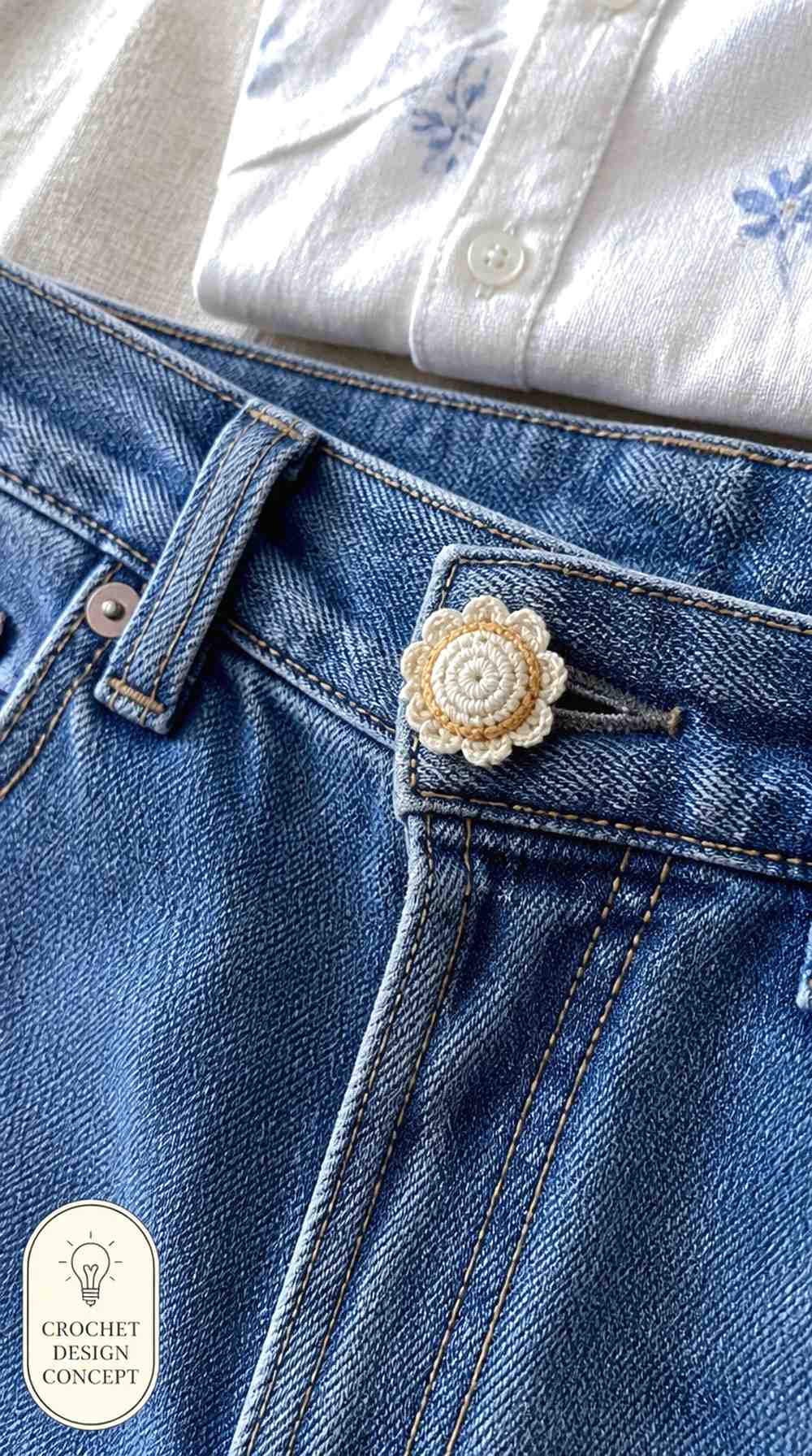
Warm-cream crochet gives this outer button cover a delicate vintage appearance. A narrow honey-colored circular inset sits around the smooth center, with eight tiny scallops finishing the outer edge.
The pale crochet contrasts against classic blue denim, making the fastening area a small decorative detail. Its shape is fuller than a plain circular cap but still much smaller than a separate waistband patch. The scallops are intended to be low and closely connected rather than raised into bulky petals.
- Eight-Scallop Edge: Keep the scallops evenly spaced and small enough that they do not overlap the buttonhole opening.
- Circular Inset: The honey-colored ring can add definition without introducing separate beads, buttons or other hard embellishments.
- Cleaning Detail: Cream yarn may show denim dye transfer or dirt more easily, so consider a removable, suitably washable design.
14. Crochet Burgundy Cushioned Inner Button Spot
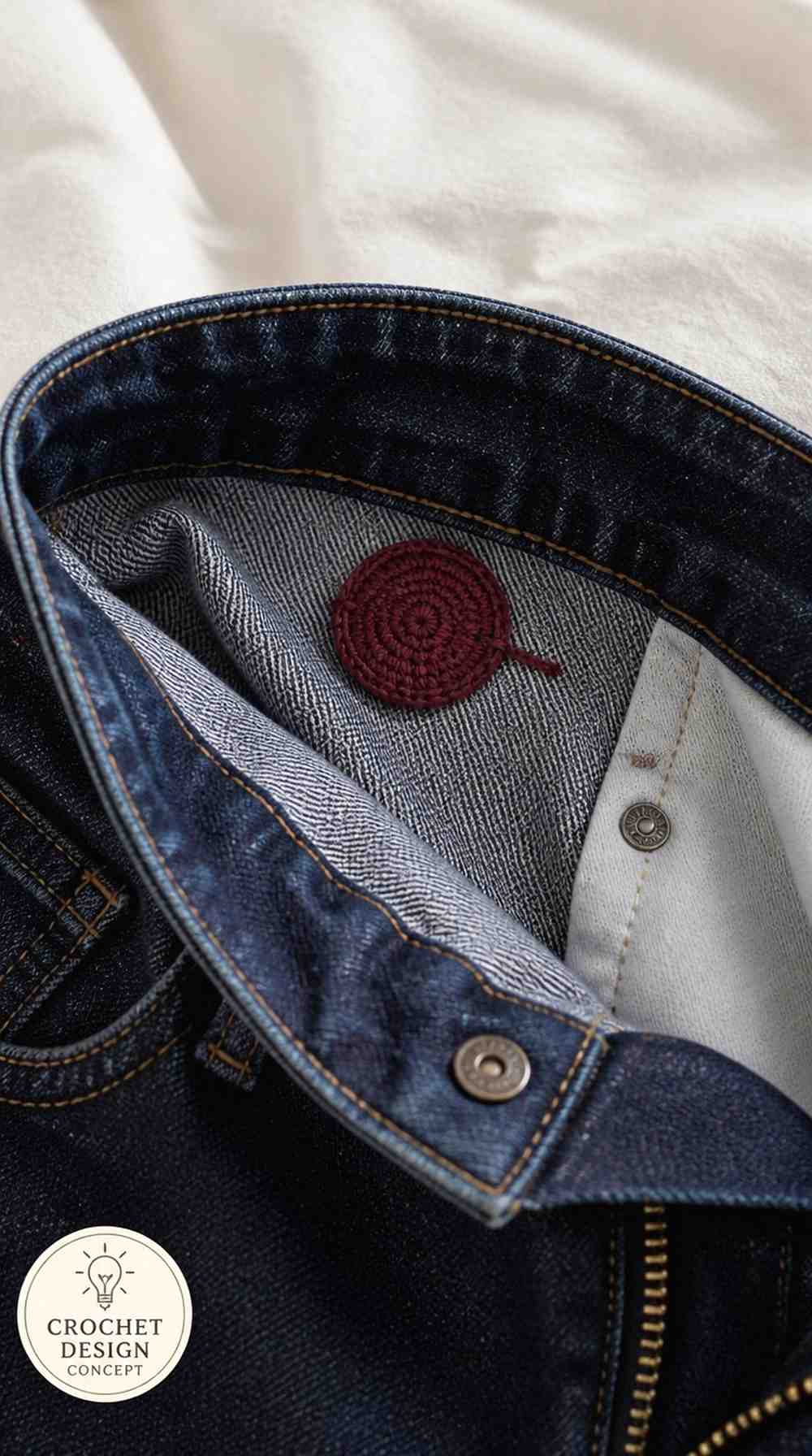
A burgundy crochet pad covers the small metal tack on the inside of a dark-indigo jeans waistband. Its subtle central texture is surrounded by a darker wine-colored rim, with a smooth matching cotton lining on the skin-facing side.
The concept explores a softly layered backing cover without creating an oversized padded patch. Its muted colors blend naturally with darker denim. Any added cushioning should remain light and flexible, since an excessively thick layer can create more pressure rather than reduce it.
- Gentle Thickness: Compare the thickness of the crochet and fabric layers carefully; more padding does not automatically mean greater comfort.
- Raised Rim: Keep the darker border low and smooth so it does not become a hard ring beneath the waistband.
- Skin Contact: Use clean, suitable fabric and avoid exposed knots, rough yarn ends or construction details that could irritate sensitive skin.
15. Crochet Teal Split-Edge Button Cap
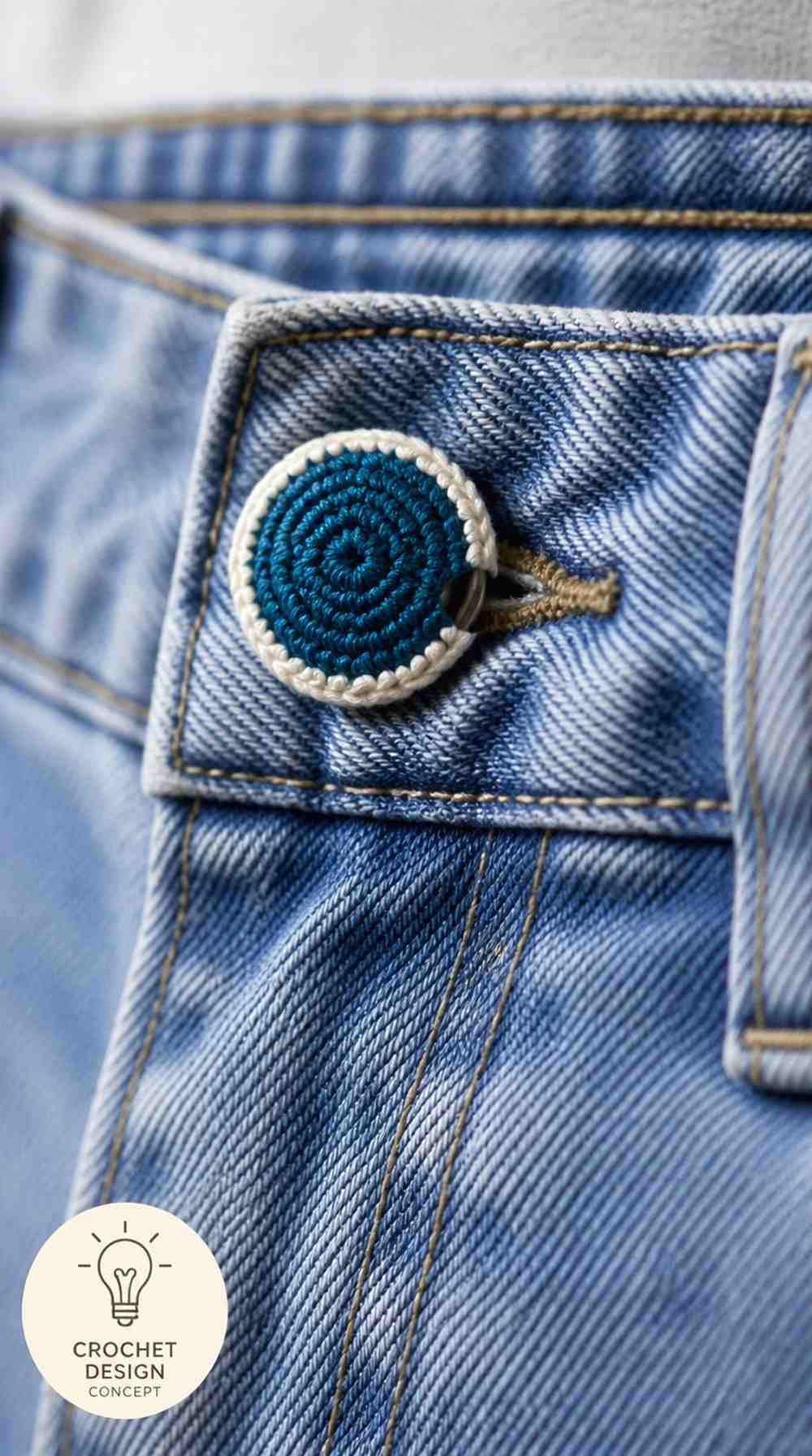
Deep-teal crochet creates a tiny removable-looking cap over the visible outer jeans button. A flat, closely worked center is framed by a narrow cream border, while a small reinforced slit appears along one side of the gathered lower rim.
The split-edge detail gives this concept a different fitting approach from a fully closed crochet cap. It suggests a cover that could be slipped into position without forcing the yarn over the whole button head. Its retention would still require testing to prevent the cover from falling off.
- Split Opening: The small slit needs a neatly reinforced edge so repeated fitting does not stretch or unravel the crochet.
- Button Retention: A split cover may be easier to remove but could also detach more readily than a properly fitted closed cap.
- Fastened Position: The cap should sit outside the already engaged buttonhole without opening or weakening the original waistband closure.
16. Crochet Peach Wide Oval Backing Patch
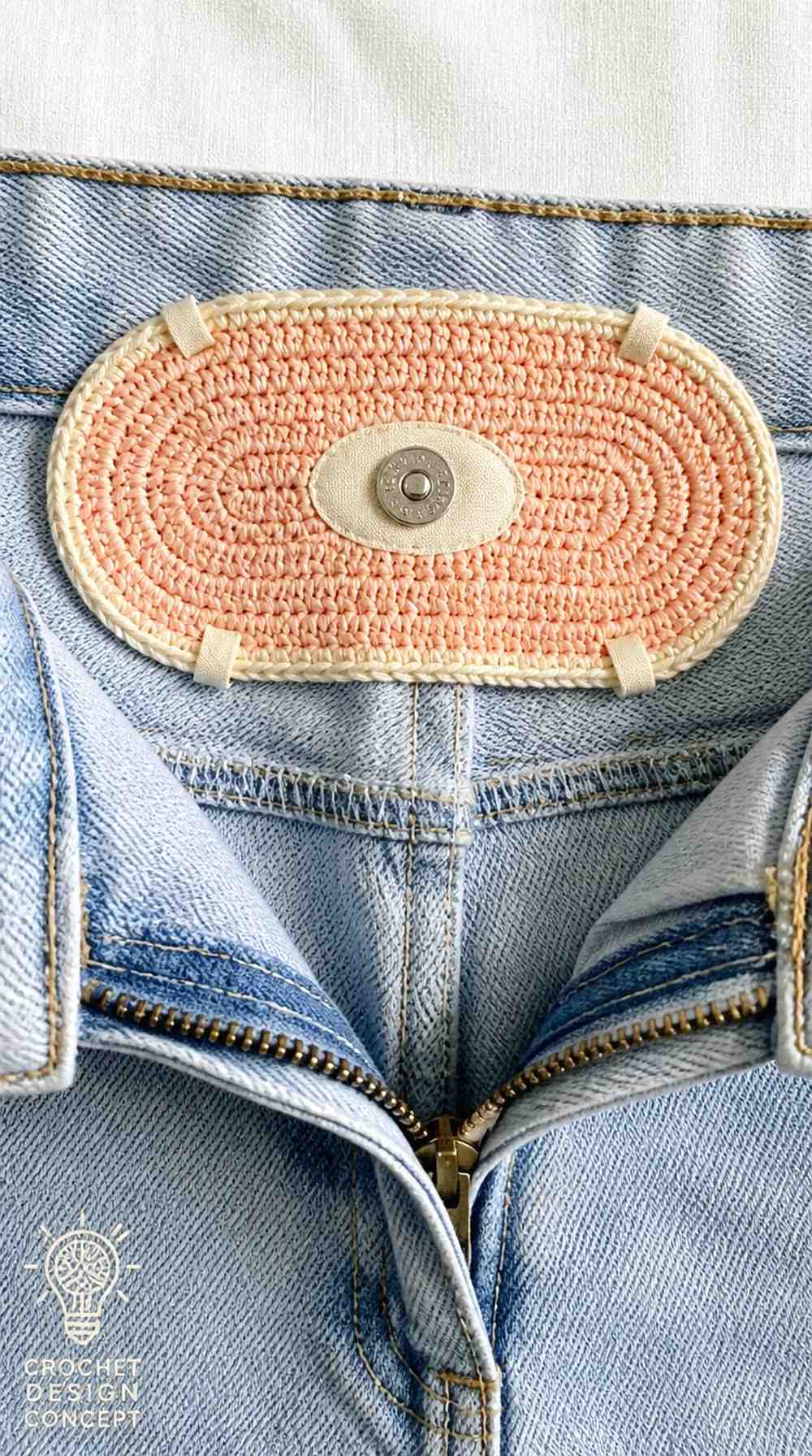
Soft peach crochet creates a wider oval patch over the metal button backing inside light-wash jeans. Fine concentric rows spread across the shallow oval, finished with an ivory border and thin cream cotton lining.
The patch extends beyond the small round tack onto the surrounding inner waistband fabric. This makes it visually different from a compact circular disc and provides a broader textile surface. Its larger footprint may also introduce more fabric movement, so careful placement is needed to prevent bunching.
- Oval Width: Keep the patch large enough to cover the metal backing but not so wide that it interferes with neighboring waistband seams.
- Flat Stitch Construction: Smooth oval rows may lie more evenly than raised decorative motifs in a skin-facing area.
- Movement Check: Evaluate the finished patch while sitting and bending, since a larger textile area may wrinkle as the waistband curves.
17. Crochet Mustard Reversible Inner Button Pad
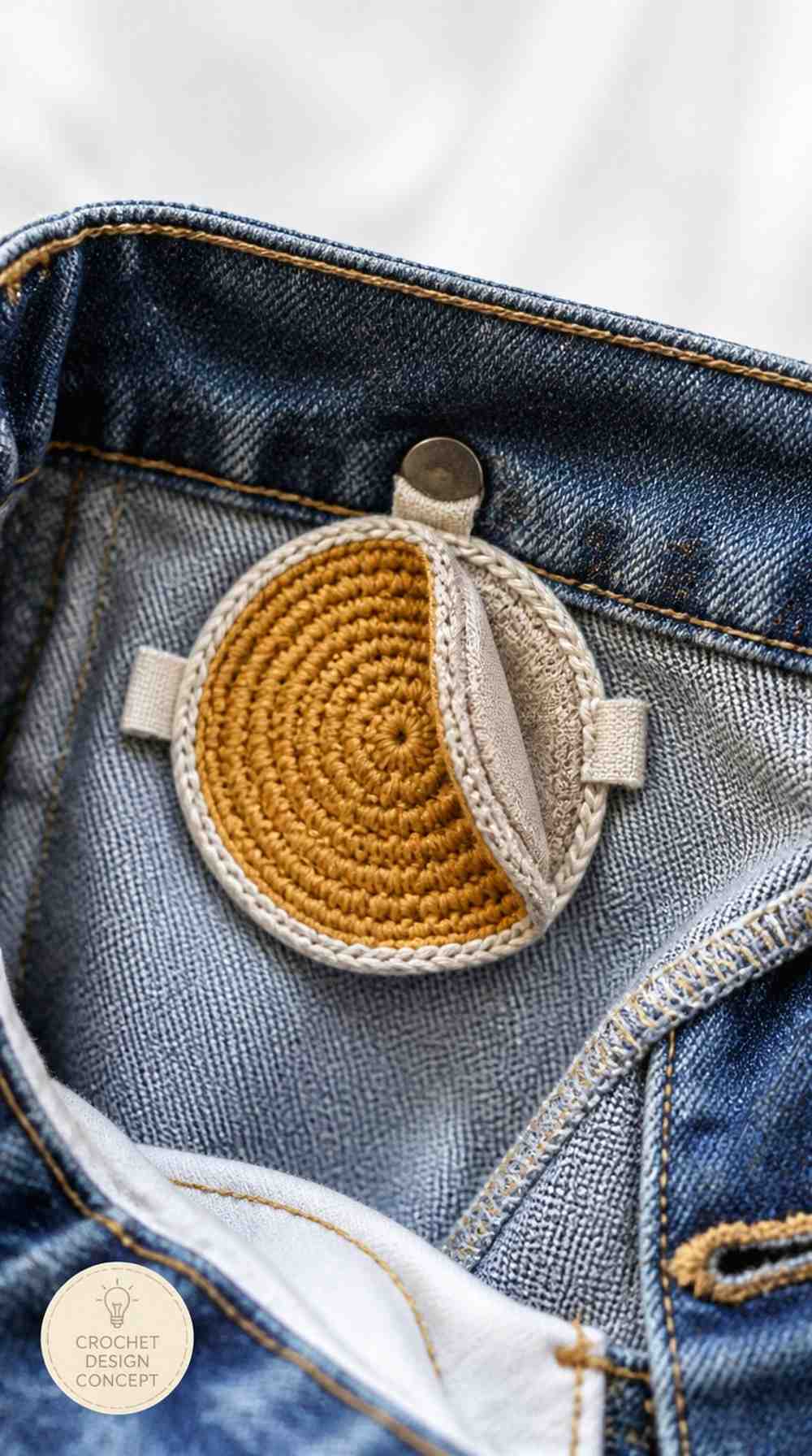
Muted mustard crochet gives this small inner-waistband pad a warm, understated appearance. Its visible side features close spiral stitches and an ivory border, while a lifted edge reveals a pale oatmeal reverse layer with smooth fabric lining.
The double-faced construction offers a way to explore different textile surfaces around the button backing. The pad is attached to the neighboring denim through small tabs rather than directly to the metal. Its design should remain thin, because a reversible arrangement introduces extra layers in an already close-fitting waistband.
- Two-Sided Construction: Keep both crochet faces securely connected, with a smooth lining where the finished pad may contact skin.
- Reversible Appearance: Reversing the pad would require an attachment method that allows it to be repositioned safely without loose fasteners.
- Thickness Control: Avoid using heavy yarn or multiple bulky seams; a layered guard should not make tight jeans feel tighter.
18. Crochet Plum Spiral Front Button Dot
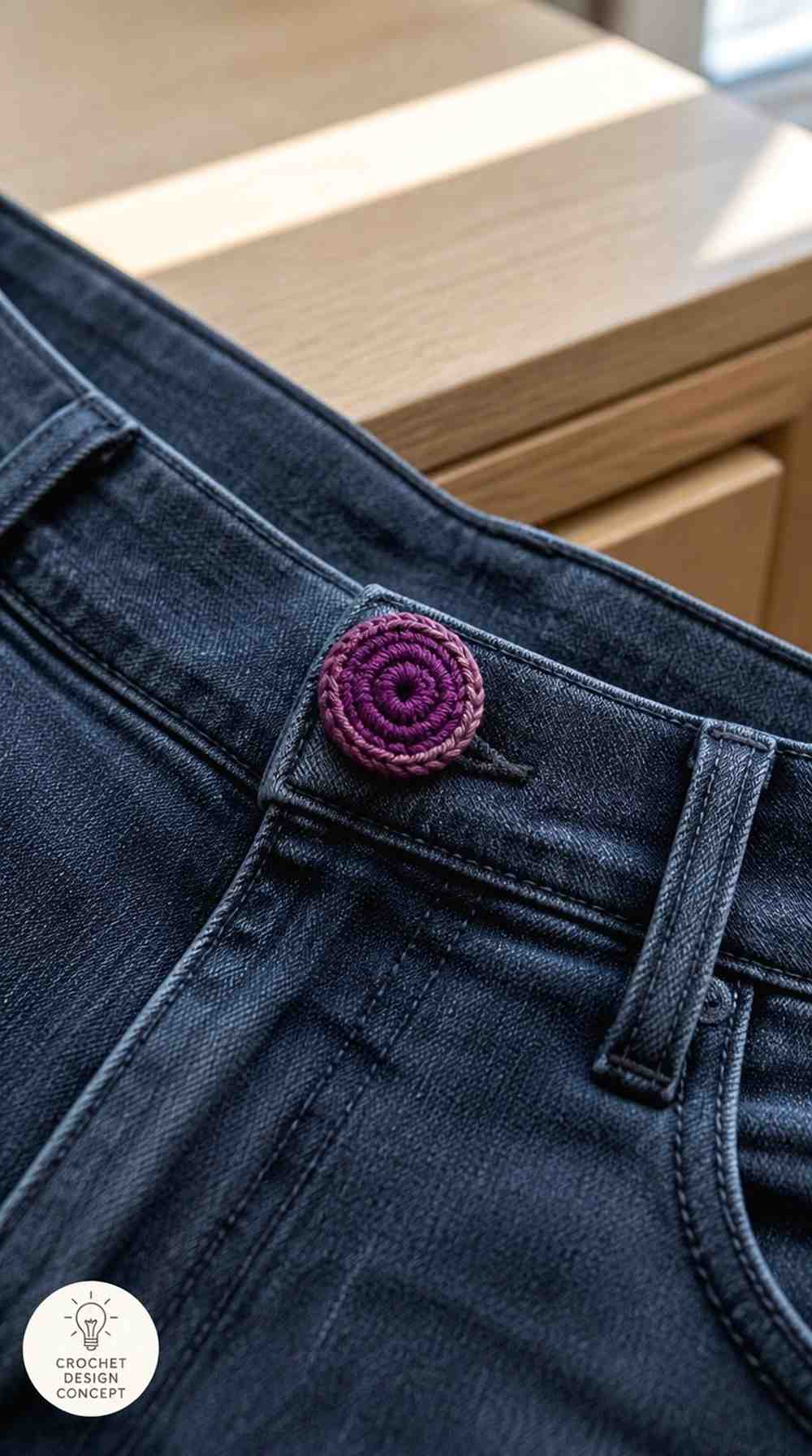
Rich plum crochet forms a tiny button-sized accent on the exterior of charcoal-blue jeans. A subtle raised spiral travels from the center outward, ending in a low mauve border around the metal button head.
This design keeps the decoration simple but gives it more texture than a completely flat circular cap. Its dark purple color complements deep denim without disappearing into the fabric. The spiral should remain shallow and carefully finished so it does not catch beneath an overlapping shirt or obstruct fastening.
- Spiral Relief: Work the raised spiral with restrained height so it adds definition without creating a hard central bump.
- Mauve Border: Keep the contrasting edge closely fitted around the button rather than extending across the denim buttonhole.
- Everyday Handling: A removable exterior cap should be checked for looseness during dressing and removed if it starts catching or slipping.
19. Crochet Sky Blue Foldover Waistband Guard
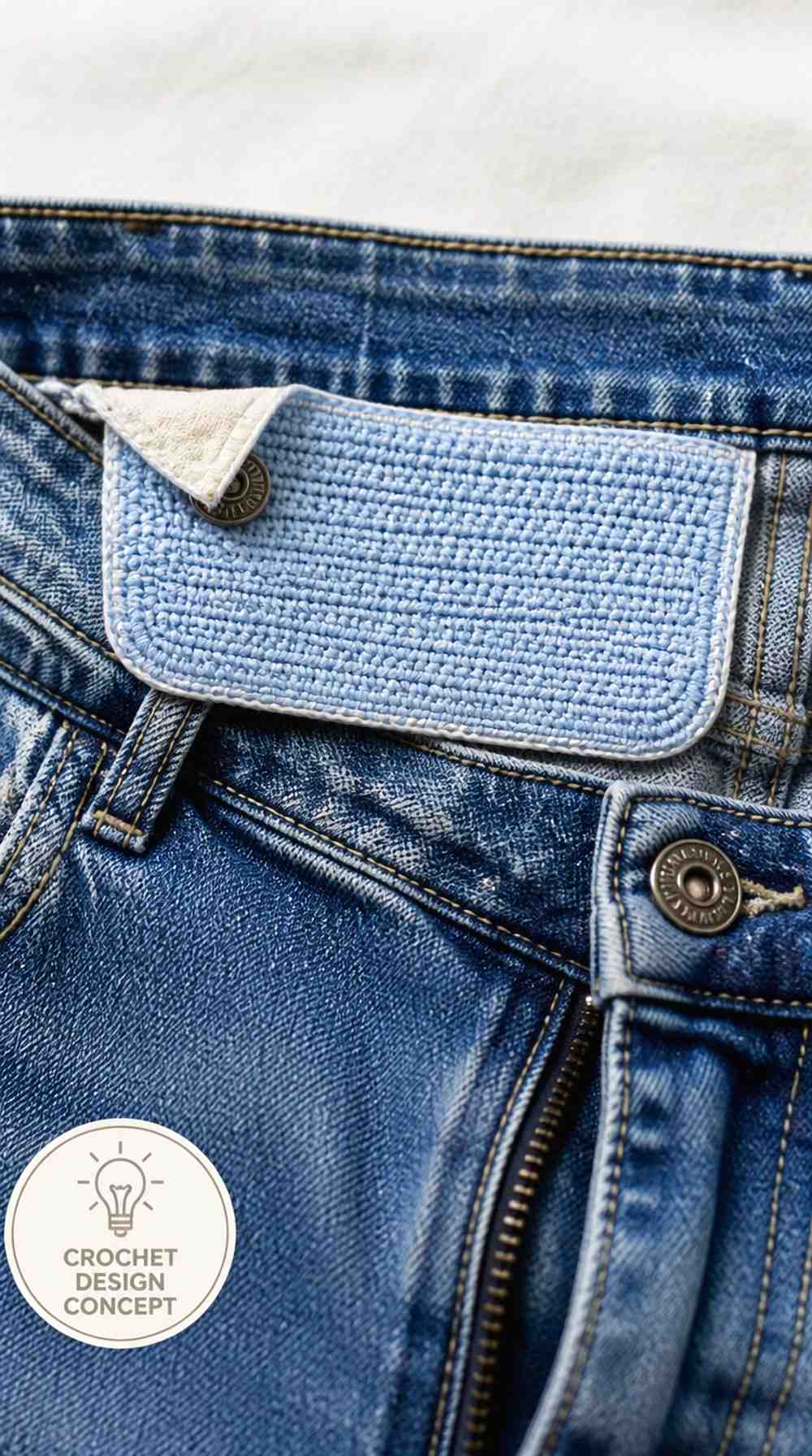
Sky-blue crochet completes the collection with a slim rectangular flap positioned inside the front waistband. Attached along the upper internal seam, it folds downward over the metal button backing and finishes with softly rounded lower corners.
A cream cotton lining and narrow white edge give the guard a smooth-looking finish. The foldover arrangement resembles the cocoa flap concept, but its lighter palette and narrow rectangular shape create a cleaner, more minimal appearance. A real version would need to stay flat throughout normal movement without interfering with the fastening.
- Upper Anchoring: Position the attachment along suitable inner denim fabric, preserving the original waistband seam and button construction.
- Rounded Lower Edge: Smooth corners can reduce bulky points, although comfort depends on the entire finished garment and fabric surface.
- Flap Stability: Make sure the lower portion does not roll upward or bunch when sitting, bending or fastening the jeans.
Practical Guide to Crochet Jeans Waistband Button Comfort Covers
Before choosing a crochet cover, identify which part of the jeans is causing discomfort. The visible button on the outside and the metal fastening backing inside the waistband serve different purposes and need different designs.
1. Check where the discomfort starts. If the front button catches against a shirt, a thin exterior cover may be worth exploring. If the skin-facing metal backing rubs against your abdomen, a smooth inner fabric patch is more relevant. Neither type fixes jeans that are simply too tight.
2. Keep the original fastening working. A decorative crochet cap should never prevent the button from passing securely through its buttonhole. Added fabric must not cause the closure to loosen, slip or open unexpectedly.
3. Choose soft, fine materials. Lightweight cotton yarn and a smooth fabric lining may be preferable to bulky, rough or heavily textured stitches. Check the finished piece for raised seams, knots and excess thickness before wearing it.
4. Understand the difference between pressure and allergy. A hard button can create pressure or rubbing, but an itchy or recurring rash may have a different cause. Metal jeans fasteners can contain nickel, a known trigger of allergic contact dermatitis. Dermatology guidance recommends avoiding direct contact with the offending metal. A decorative crochet cover is not a proven allergy barrier.
American Academy of Dermatology+1
5. Keep the cover clean and secure. Remove small detachable covers before laundering when appropriate. Check that stitched patches remain smooth and that loose yarn ends cannot snag the jeans. Stop using an attachment if it increases pressure, causes irritation or affects fastening.
Want to Make Something Similar?
These 19 designs are inspiration concepts, not tested patterns for jeans hardware. Two useful resources can help with the related techniques and practical considerations.
- DROPS Design — How to Crochet a Button Cover demonstrates a basic crochet button-cover technique. It is a general tutorial, not an exact pattern for a working jeans waistband fastening. garnstudio.com
- Floss Field — Sewing Crochet to Fabric and Attaching Buttons discusses attaching crochet details to fabric, which may be helpful when considering an inner backing patch or flap. Floss Field
If the issue is a recurring rash, consult the American Academy of Dermatology’s nickel allergy guidance rather than relying on a handmade crochet pad as treatment.
American Academy of Dermatology
Which Crochet Jeans Button Cover Should You Choose?
| Your main concern | Design to explore | Important consideration |
|---|---|---|
| Minimal outer button decoration | Denim Blue Smooth Cap | Must not obstruct fastening |
| Small inner metal backing | Oatmeal Inner Back Pad | Lining must lie flat |
| Visible soft-colored detail | Rose Ribbed Sleeve | Raised ribs need to stay low |
| Foldover inner coverage | Cocoa Comfort Flap | Lower edge may move |
| Floral appearance | Lavender Petal Cover | Petals could snag |
| Dark denim interior | Charcoal Layered Disc | Extra thickness |
| Liftable inner guard | Olive Hinged Guard | Hinge may fold |
| Removable outer cap | Coral Drawn-Rim Cap | Rim may loosen |
| Broader exterior shield | Butter Yellow Placket Shield | Tab could distort waistband |
| Fine mesh detailing | Navy Mesh-Overlay Cover | Two layers add bulk |
| Square inner protection | Terracotta Stud Pad | Corners must stay smooth |
| Wider horizontal coverage | Sage Wraparound Guard | Band may bunch |
| Vintage button styling | Cream Scalloped Frame | Border must stay compact |
| Lightly layered inner pad | Burgundy Cushioned Spot | Padding may increase pressure |
| Split-edge fitting | Teal Button Cap | Greater risk of detachment |
| Wider oval inner covering | Peach Backing Patch | Larger area may wrinkle |
| Two fabric-facing options | Mustard Reversible Pad | Layer thickness matters |
| Minimal spiral texture | Plum Front Button Dot | Raised spiral may catch |
| Narrow foldover inner flap | Sky Blue Waistband Guard | Needs secure anchoring |
For someone who simply wants to decorate the visible button, the Denim Blue Smooth Cap, Rose Ribbed Sleeve and Plum Spiral Front Button Dot offer compact starting points.
If the problem is the metal backing rubbing against the skin, the Oatmeal Inner Button Back Pad, Charcoal Layered Backing Disc and Peach Wide Oval Backing Patch are more relevant concepts to compare. They are still untested designs, and none should be considered a guaranteed solution for discomfort or contact allergy.
Conclusion
These 19 crochet jeans waistband button comfort cover inspiration ideas explore how a very small textile accessory can change the appearance or contact surface of a jeans button. From simple exterior caps to smooth inner backing pads and foldover guards, each design offers a different visual approach.
The best choice starts with understanding where discomfort occurs. Keep the jeans properly fastened, avoid bulky crochet around pressure points and make sure any skin-facing material is suitable for you. If the waistband itself is too tight or metal exposure is causing a recurring rash, changing the garment or fastening may be more useful than adding a cover.
Which design interests you most? Would you choose a tiny outer crochet button cap, a smooth inner backing pad or a foldover waistband guard? Share your favorite idea in the comments.
Frequently Asked Questions
1. Can a crochet button cover make tight jeans more comfortable?
A small textile cover may change how a particular button surface feels, but it cannot increase the waistband’s actual size or correct a poor fit. If jeans feel tight when sitting, adding crochet may create more bulk. Choosing a better-fitting waistband or having the garment adjusted is generally more appropriate than trying to cushion excessive pressure.
2. What is the difference between an outer button cap and an inner button backing pad?
An outer button cap sits on the visible front metal button, mostly changing its appearance and surface. An inner backing pad covers the metal tack on the skin-facing side of the waistband. The two pieces address different contact points, and a decorative exterior cover will not necessarily prevent metal from touching the abdomen.
3. Which yarn should I consider for a jeans button cover?
Fine, smooth cotton yarn is one option worth considering because it can form small, clearly defined crochet stitches. For skin-facing pieces, a smooth lining may also be useful. However, individual sensitivities vary, and even soft yarn can cause discomfort when bulky or incorrectly positioned. Check the fiber’s care instructions and avoid rough seams.
4. Can a crochet cover prevent a nickel allergy rash from a jeans button?
A crochet cover should not be relied upon to prevent nickel allergy symptoms. The fabric may shift, allow metal contact or fail to provide a consistent barrier. The American Academy of Dermatology advises avoiding nickel exposure and considering alternative fasteners or suitable protective barriers. If you develop recurring itching or a rash around the waistband, seek advice from a dermatologist.
American Academy of Dermatology
5. Are these crochet jeans button comfort covers available as patterns?
No. These are original AI-generated visual inspiration concepts rather than tested patterns or ready-to-use comfort products. Their fastening arrangements, dimensions and contact surfaces would need further development. Anyone making a similar cover should carefully check their actual jeans button, use suitable materials and confirm that the finished item does not interfere with fastening or cause irritation.