Keeping everyday pet accessories organized can be challenging when grooming cloths, spare cleanup bags, and small care notes end up scattered around the house. Crochet pet crate exterior storage pocket ideas offer a creative way to give these lightweight essentials a dedicated place near a pet’s resting area. These 17 inspiration concepts explore slim pockets, divided organizers, zippered sleeves, mesh fronts, modular sections, and decorative finishes in cobalt blue, mustard, plum, sage, and other welcoming colors.
The designs focus on compact pockets displayed on the solid exterior panels of hard-sided crates, rather than fabric hanging through wire bars or covering ventilation openings. Some concepts hold a folded grooming cloth, while others provide separate spaces for a checklist, sealed bag packet, or spare bandana. As you compare the ideas, consider your crate’s construction, whether exterior attachments are permitted, how easily the pockets can be removed, and whether your pet could reach or chew any part of the organizer.
These are AI-generated crochet design visualizations for inspiration, not photographs of tested handmade products or step-by-step patterns. The pictured crates are empty display setups. Exterior accessories must not block ventilation, doors, locks, handles, or assembly fittings, and should not be installed unless the crate manufacturer permits the attachment. If suitable mounting cannot be confirmed, use a separate organizer beside the crate instead.
Quick Design Selection Guide
| Your storage need | Design to explore |
|---|---|
| One folded grooming cloth | Crochet Cobalt Slim Grooming Cloth Pocket |
| Two separate small essentials | Crochet Mustard Twin Flat Supply Pockets |
| A folded care-information card | Crochet Dusty Rose Foldover Document Sleeve |
| Several lightweight supplies | Crochet Olive Three-Tier Crate Pocket Panel |
| A clean spare pet bandana | Crochet Plum Mesh-Front Bandana Pocket |
| Separate removable storage sections | Crochet Sage Modular Double-Pocket Crate Organizer |
1. Crochet Cobalt Slim Grooming Cloth Pocket
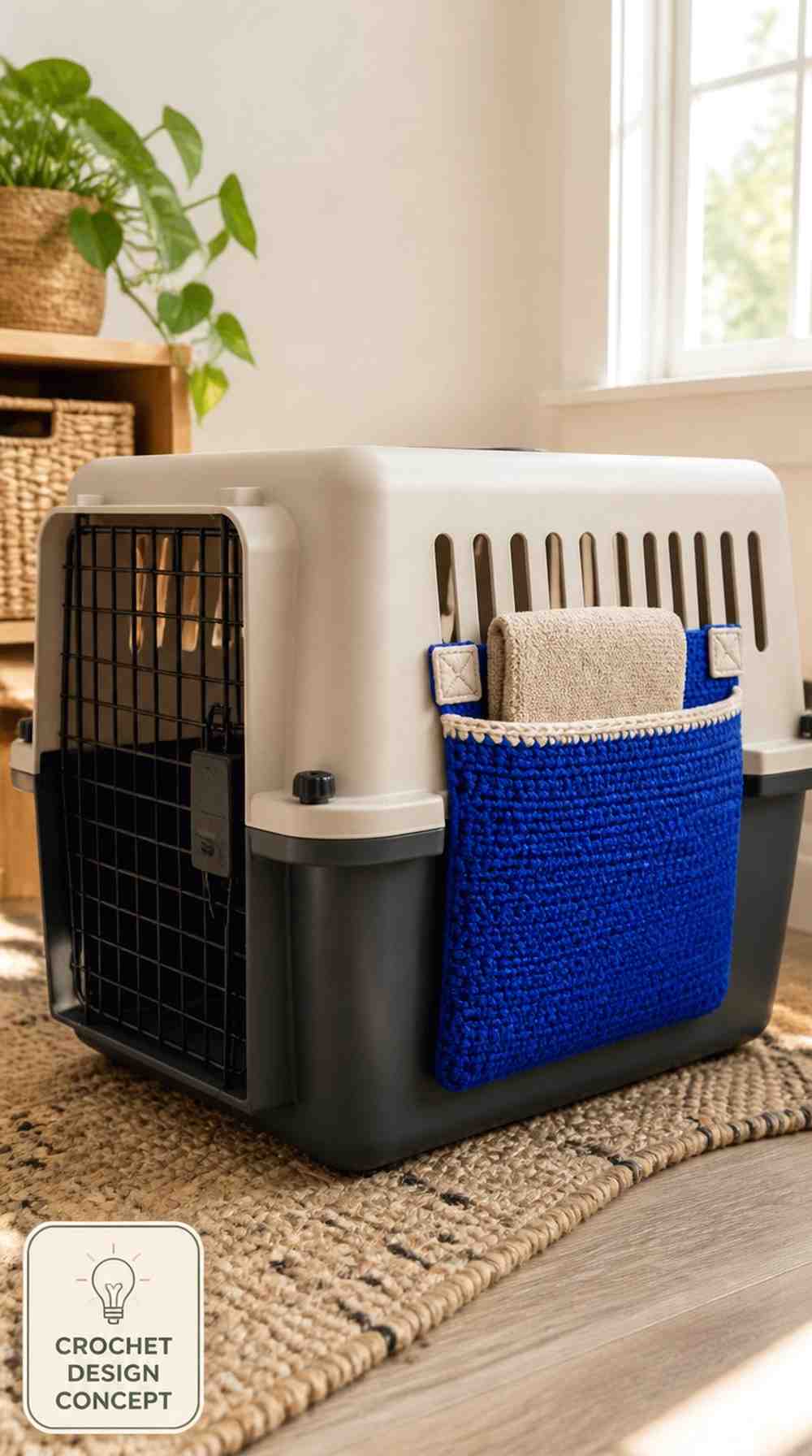
Bright cobalt-blue crochet gives this compact exterior pocket a neat, modern appearance. Its shallow rectangular body has dense horizontal crochet rows, a cream-edged opening, and a flat fabric-backed panel. A folded beige microfiber grooming cloth peeks above the pocket, making the contents easy to identify.
The design is shown against the solid lower side of an empty hard-sided pet crate, away from the front door and ventilation slots. Its narrow profile may suit a small amount of lightweight storage, provided a compatible attachment method is available.
- Cloth access: The cream-trimmed opening should allow the folded microfiber cloth to be removed without pulling hard on the crochet.
- Low-profile shape: A slim pocket projects less from the crate than a deep basket, although it still needs clearance from nearby furniture and walkways.
- Backing support: A firm fabric backing may help the pocket stay flat against a suitable mounting surface rather than sagging around the cloth.
- Intended contents: This concept is better suited to a clean, dry cloth than heavy grooming equipment or bottles.
2. Crochet Mustard Twin Flat Supply Pockets
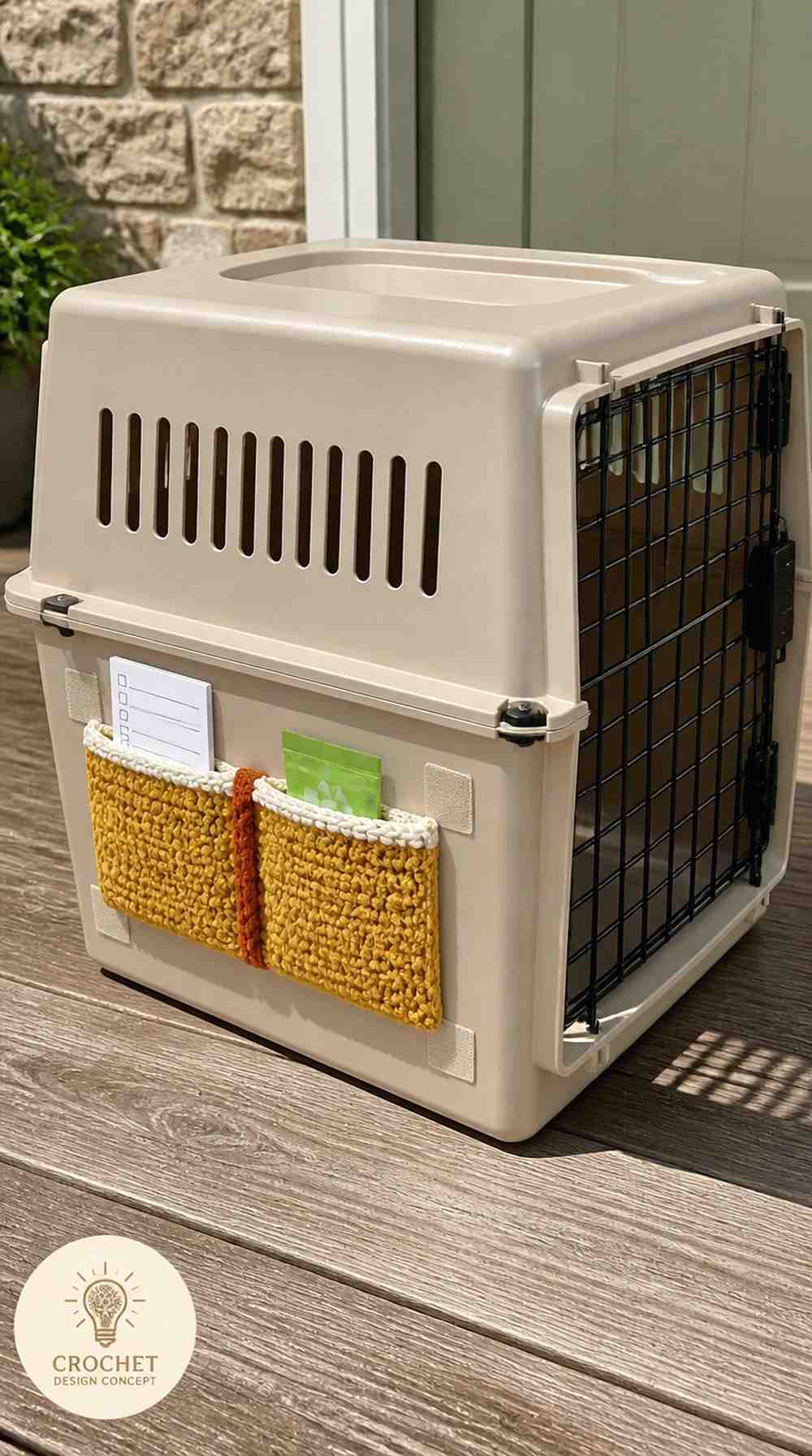
Mustard-yellow crochet creates a two-compartment organizer with a rust-orange divider and cream-trimmed pocket openings. The left pocket contains a small folded blank checklist, while the right holds one flat sealed packet of spare pet-waste bags. Dense crochet rows keep the design visually tidy.
Its side-by-side arrangement provides two clearly separated storage areas without needing a tall panel. The organizer is pictured on the solid lower exterior wall of an empty beige crate, with its original door and ventilation openings completely clear.
- Separate supplies: The divider keeps the paper checklist away from the sealed bag packet so each item can be reached independently.
- Pocket depth: Both compartments should remain shallow enough that their lightweight contents do not disappear below the openings.
- Paper protection: A checklist can absorb moisture, so the organizer should remain in a clean, dry location.
- Packet storage: Keep waste bags inside their original packet, and do not allow the packet or any loose plastic to become accessible to the pet.
3. Crochet Dusty Rose Foldover Document Sleeve
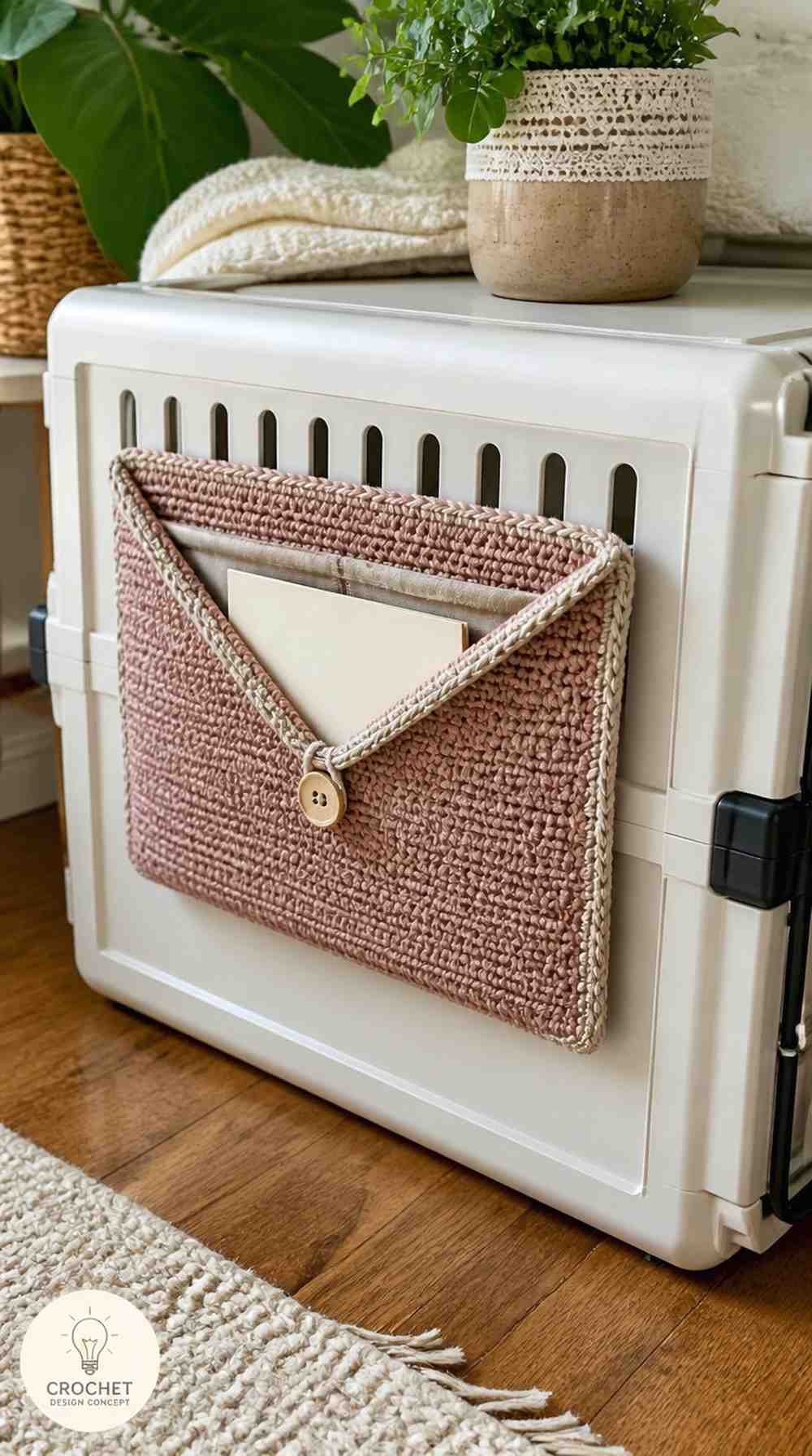
Dusty-rose crochet forms a flat horizontal envelope with a softly pointed triangular flap. An oatmeal border outlines the edges, and a small wooden button closes the flap through a reinforced crochet loop. Inside, a blank folded cream information card rests against a smooth cotton lining.
This design focuses on storing a small document rather than general grooming supplies. Its low-profile shape may be useful for keeping a care note near an adult-supervised pet area. The closure and any mounting fittings must remain well outside the pet’s reach.
- Card sizing: The envelope should fit the folded information card without forcing its corners against the crochet seams.
- Triangular flap: Keep the flap flat so the wooden button does not project unnecessarily from the crate exterior.
- Information storage: A card might contain non-sensitive care reminders, while essential emergency and identification information should also be kept in a more reliable location.
4. Crochet Teal Side-Zip Supply Pouch
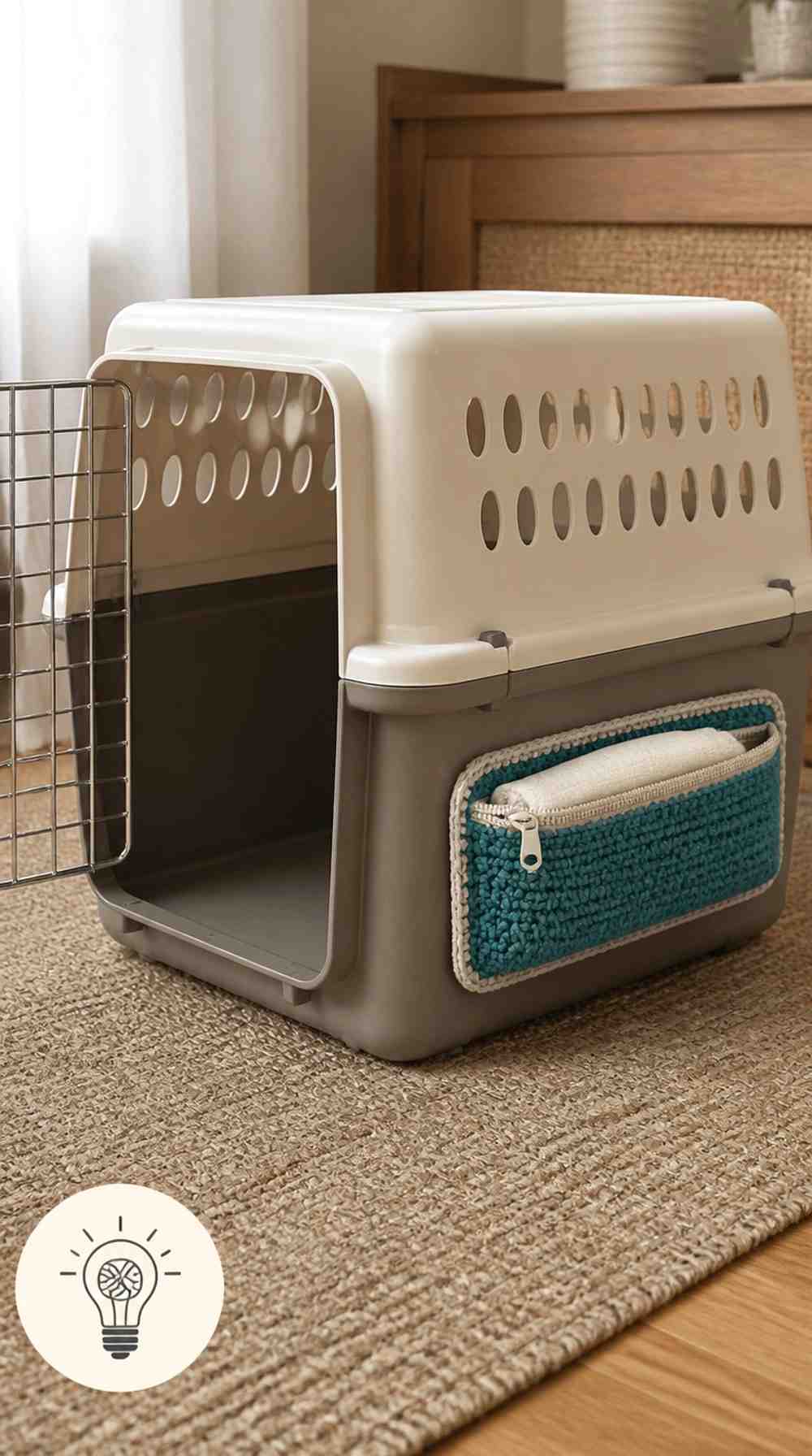
Teal crochet creates a long rectangular pouch with a pale-beige zipper running across its upper edge. A folded dry ivory microfiber cloth sits inside the cream-lined compartment, while oatmeal edging frames the front. Closely worked crochet rows give the body a smooth, structured appearance.
The horizontal zipper makes this idea different from open-top pockets. It may help keep a lightweight cloth contained when the pouch is not being used. The zipper and pull must remain outside the pet’s reach, and the case should be removable for cleaning.
- Zipper clearance: The fastening should open fully without catching the cloth, surrounding crochet, or any nearby crate components.
- Horizontal layout: The long narrow silhouette requires enough solid exterior panel width without crossing a ventilation opening.
- Fabric lining: A smooth interior may make removing a clean microfiber cloth easier than an unlined pouch with raised seams.
- Fastening caution: Metal zipper parts are inappropriate anywhere a pet can bite, paw at, or pull them through crate openings.
5. Crochet Olive Three-Tier Crate Pocket Panel
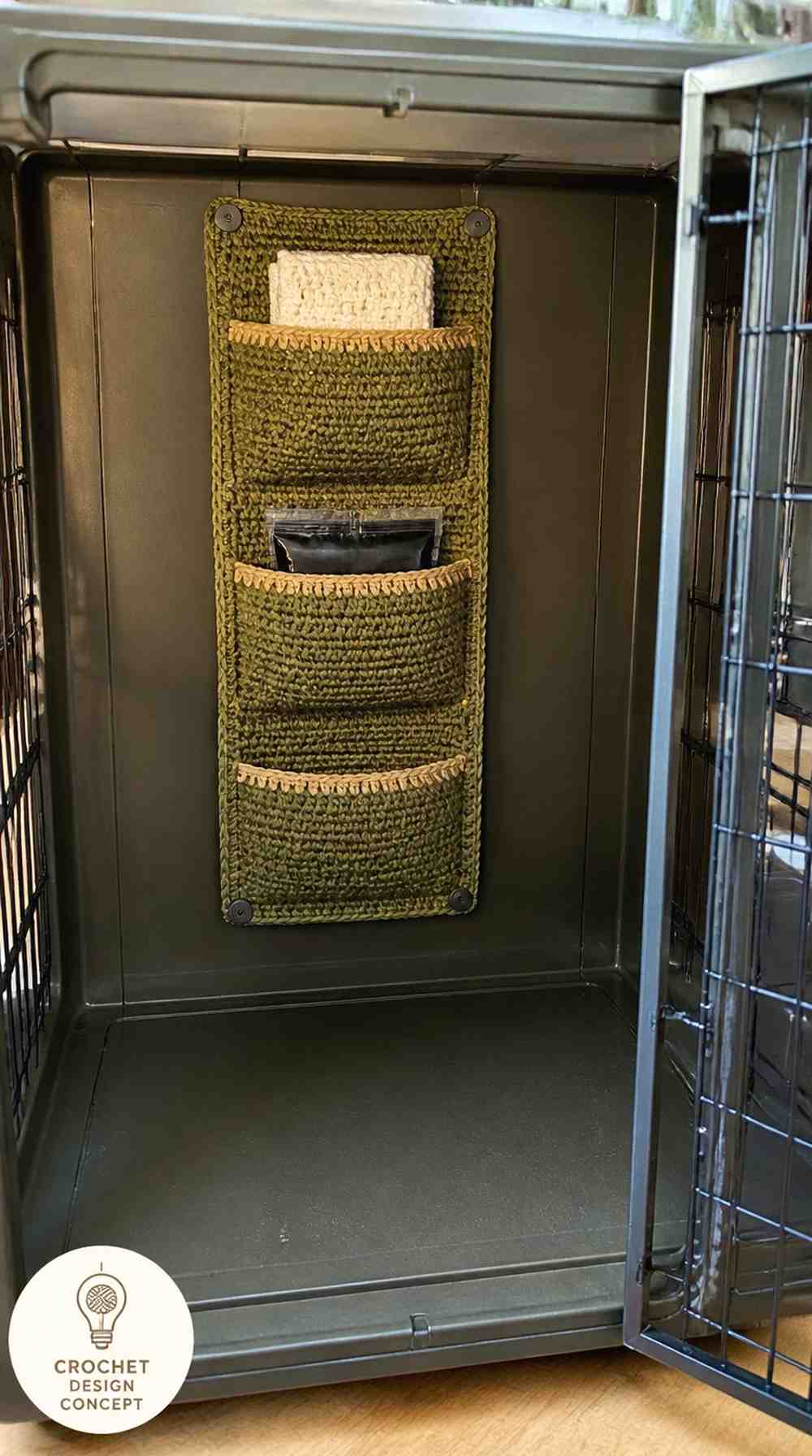
Olive-green crochet forms a compact vertical organizer with three shallow pockets stacked one above another. Wheat-colored borders distinguish the openings. The upper compartment contains a folded cream washcloth, the middle holds a flat sealed bag packet, and the lowest remains empty.
The tiered layout provides several small storage areas without requiring a wide organizer. It is pictured on a large crate with enough solid lower-side space for the complete panel. A smaller crate may not have adequate room for this arrangement.
- Three-tier spacing: Leave enough distance between openings so removing one item does not disturb the pocket above it.
- Panel height: Measure the available solid side area before considering a vertical organizer; ventilation openings must remain completely clear.
- Lower empty pocket: An unused compartment offers flexibility without encouraging overfilling the organizer.
- Weight distribution: Keep contents lightweight so the upper attachment points are not subjected to unnecessary pulling.
6. Crochet Plum Mesh-Front Bandana Pocket
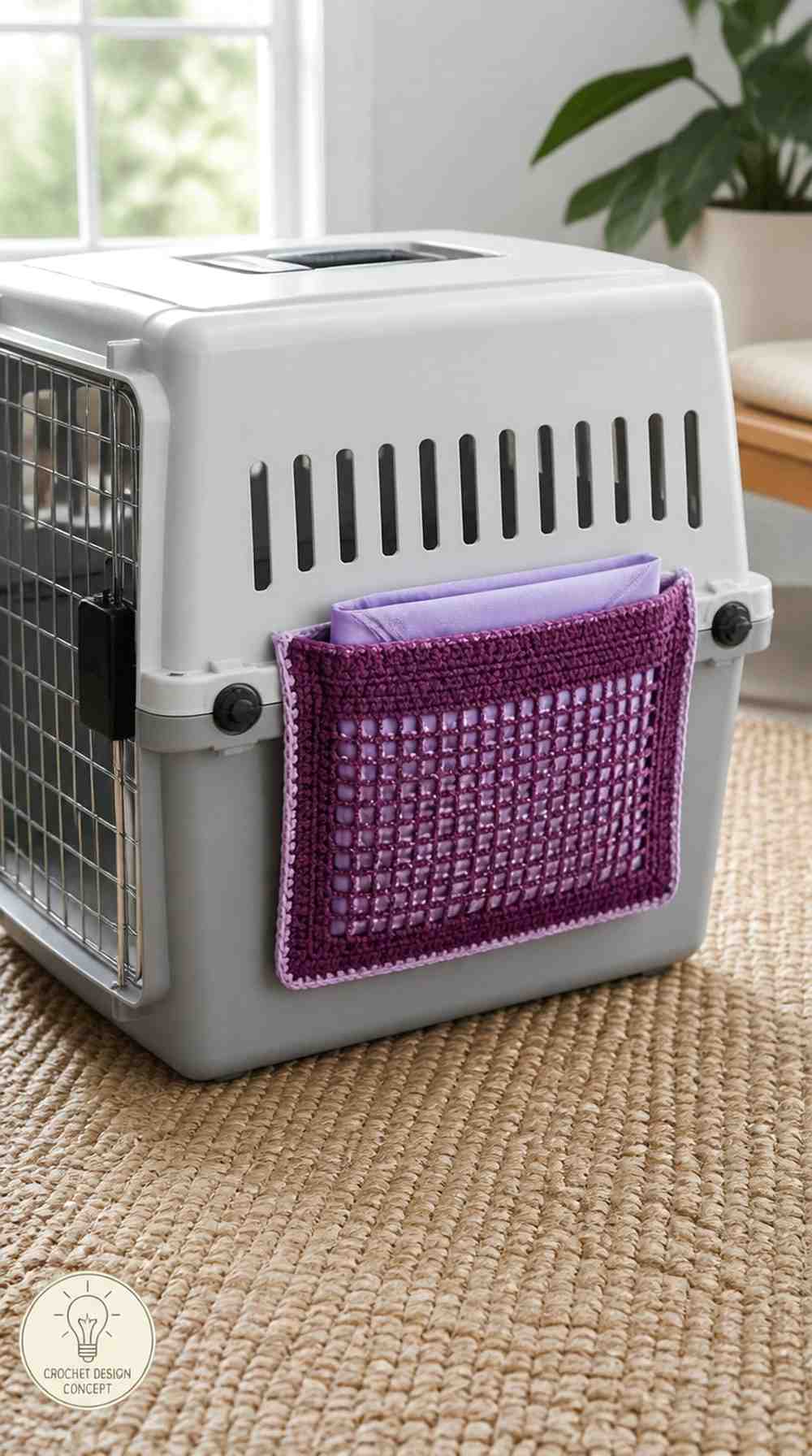
Deep-plum crochet forms a broad shallow pocket with square-mesh openings across its front. A continuous cream lining sits behind the decorative mesh, while a dusty-lilac border finishes the edges. A clean folded lavender pet bandana rests inside, with its upper section visible.
The openwork gives this organizer a lighter appearance than a solid pouch. Its lining is important because the mesh is decorative rather than a secure barrier on its own. The pocket is shown on the solid lower side of an empty crate, away from ventilation openings.
- Mesh construction: Keep the open crochet squares evenly joined so the front panel does not stretch into irregular gaps.
- Bandana storage: Fold the clean, dry fabric so it rests comfortably without forcing the mesh outward.
- Continuous lining: A smooth inner layer prevents the bandana from protruding through the decorative crochet openings.
- Pet access: Do not use this arrangement if the animal can reach the bandana or pull the pocket through nearby openings.
7. Crochet Peach Scalloped Grooming Mitt Pocket
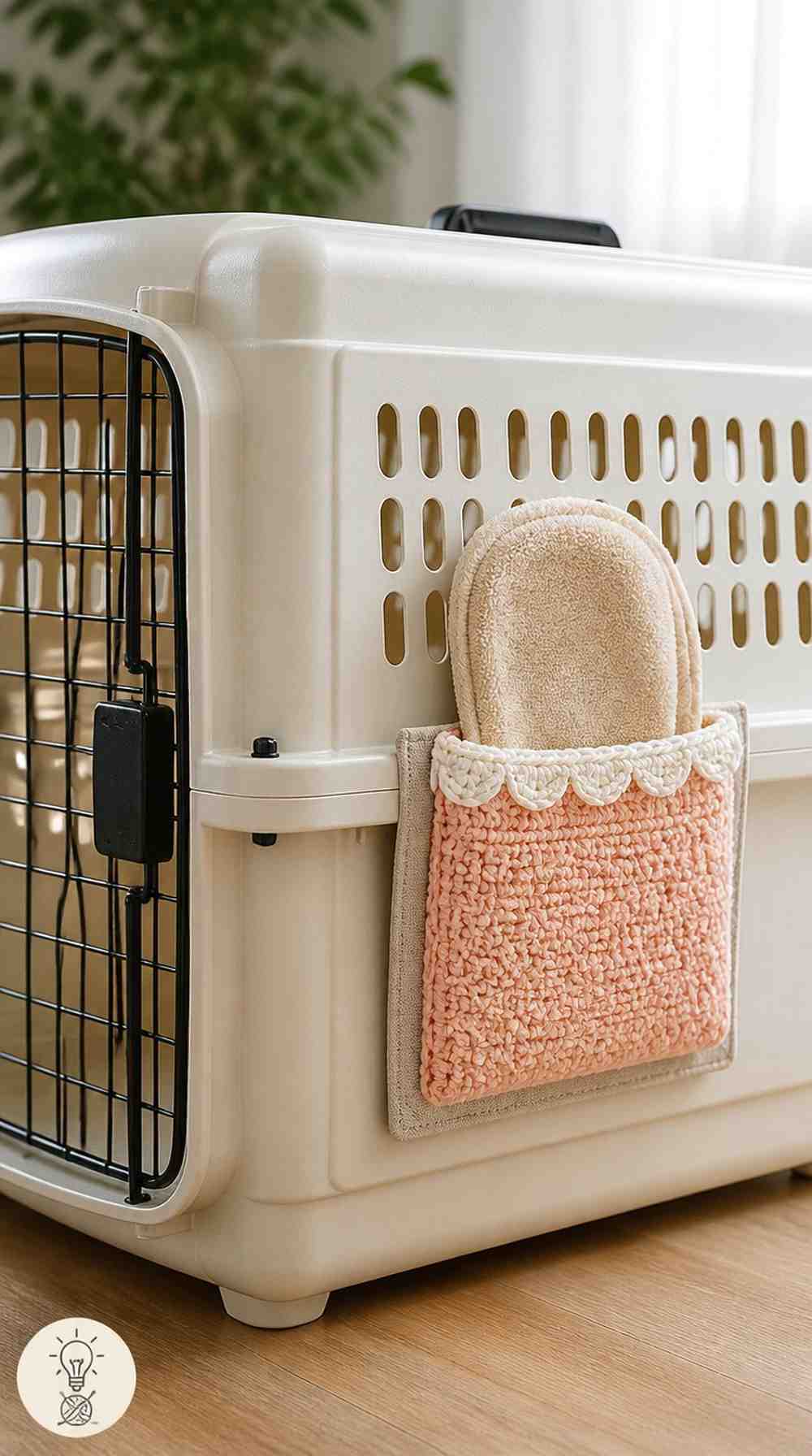
Soft peach crochet creates a small rectangular pocket with delicate ivory scallops along its upper opening. A clean beige fabric grooming mitt sits inside, with its rounded top visible above the border. The pocket’s other edges remain straight and closely stitched.
The scalloped finish adds a gentle decorative feature without taking much attention from the practical opening. Its shallow construction is intended for one lightweight mitt rather than a collection of grooming tools. The lower solid exterior area provides the pictured mounting surface.
- Scalloped opening: Keep the small ivory loops away from the mitt’s removal path to reduce snagging.
- Mitt dimensions: Measure the folded grooming mitt before deciding how wide or deep the pocket should be.
- Decorative restraint: A single scalloped border avoids the extra projections of hanging flowers or long tassels.
- Clean storage: Allow the mitt to dry fully after use before returning it to the crochet pocket.
8. Crochet Sand Twin Oval Cloth Pockets
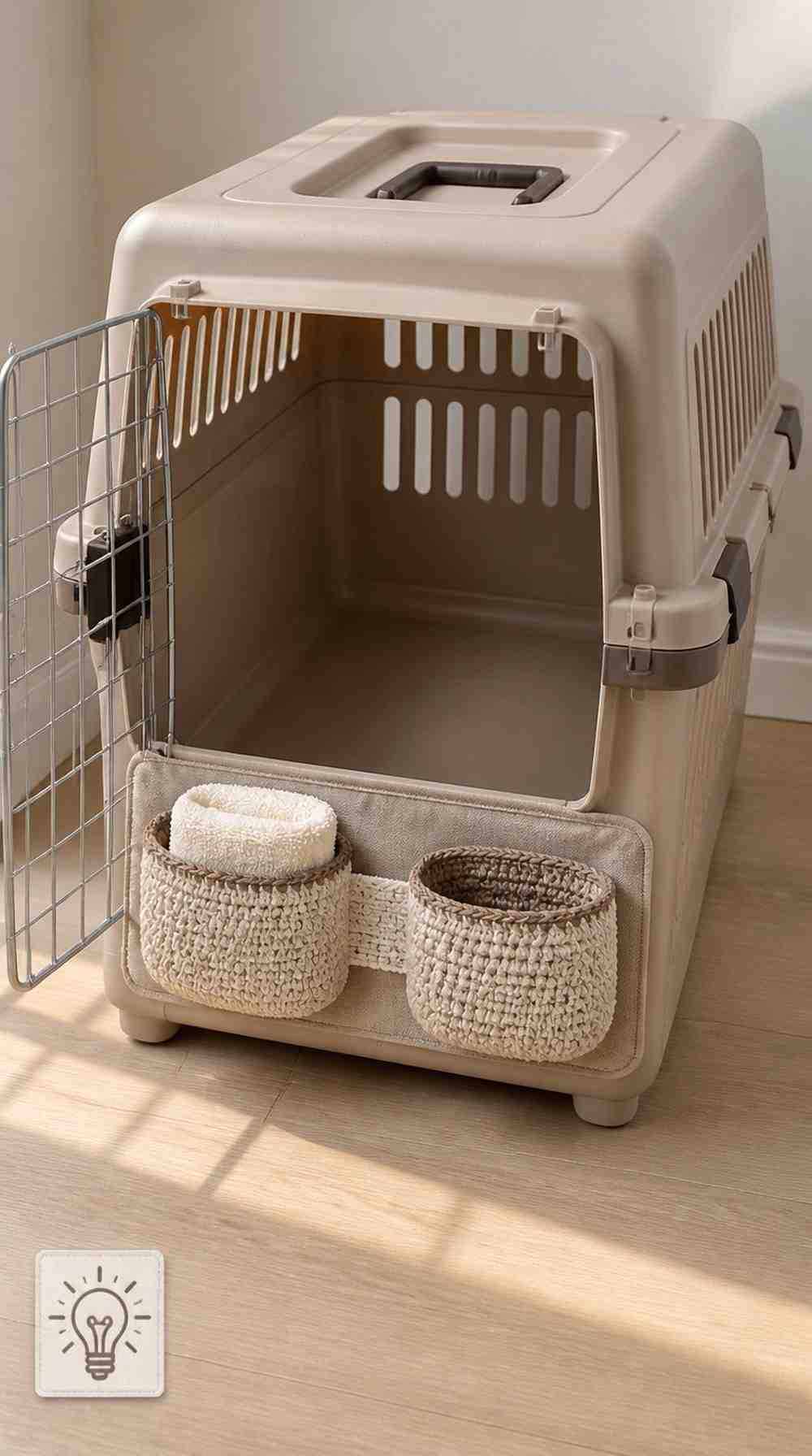
Sand-beige crochet creates two small oval pockets connected by a short ivory bridge. Cocoa borders outline their rounded openings, while a shared fabric-backed panel supports both compartments. One pocket contains a folded cream microfiber cloth, and the other remains empty.
The twin-oval design is softer in shape than the rectangular organizers elsewhere in the collection. Its separate pockets may suit a compact grooming setup where only one or two small cloths need storage. The bridge should remain flat rather than acting as a carrying strap.
- Oval sizing: The rounded compartments should accommodate folded cloth without forcing the lower curved edges outward.
- Connecting bridge: The short ivory join keeps the pockets visually aligned but should not be used as a handle.
- Independent access: The two openings make it possible to remove one cloth without disturbing the neighboring pocket.
- Shared backing: A continuous support panel may help the two rounded pockets remain aligned on an appropriate separate mounting surface.
9. Crochet Rust Side-Gusset Cloth Roll Pocket
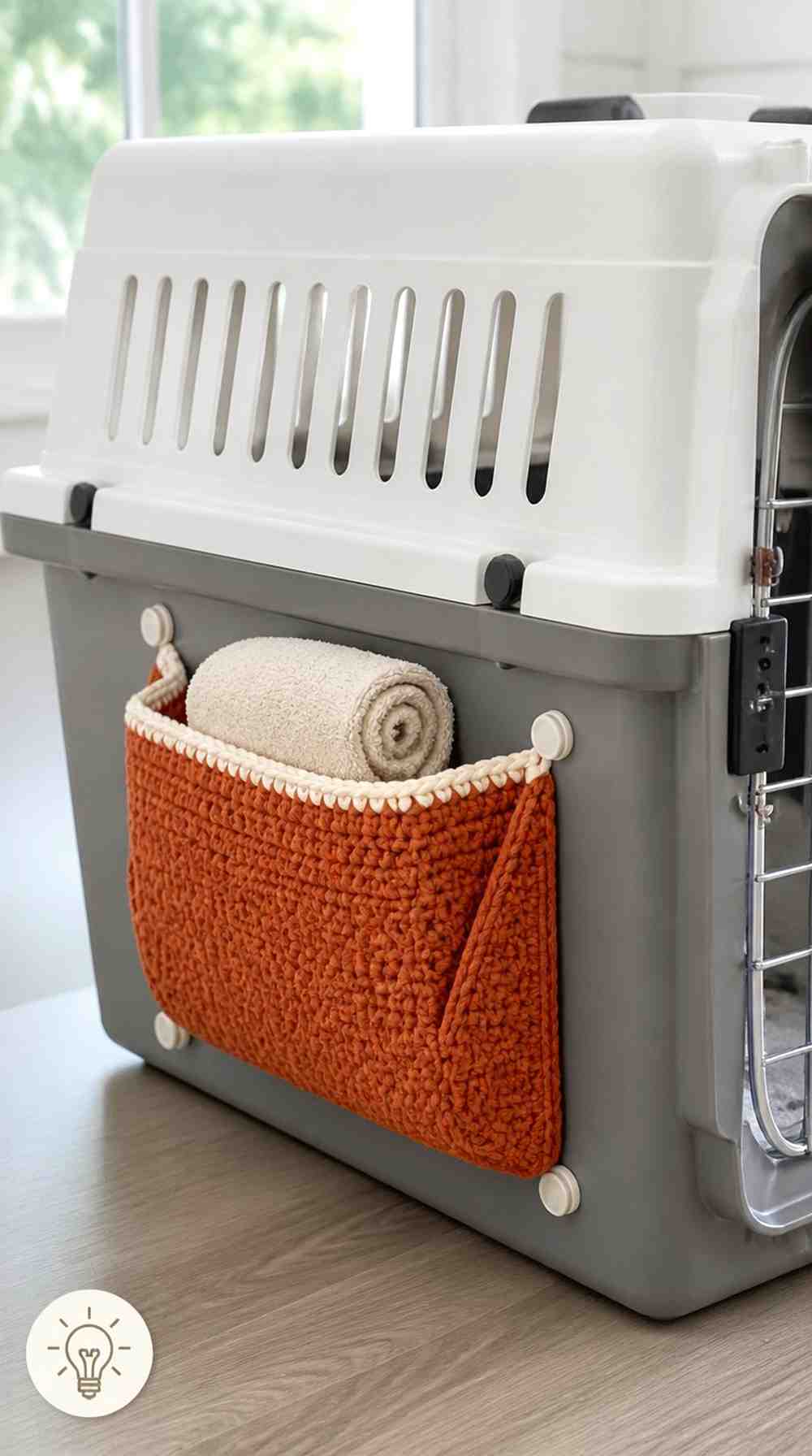
Rust-orange crochet forms a rectangular front pocket with small triangular gussets at its sides. A cream border finishes the open upper rim, while the gussets create extra depth for one rolled oatmeal microfiber cloth. The dense crochet body sits against a reinforced backing.
The added side depth distinguishes this design from flat document sleeves. It allows a short cloth roll to sit inside the pocket without stretching the front panel excessively. However, the greater projection means the organizer needs more clearance around the crate.
- Gusset depth: Keep the triangular side panels proportionate to the cloth roll so they provide room without creating a bulky pouch.
- Rolled-cloth fit: The fabric should slide into the opening without pushing the pocket away from its backing.
- Exterior clearance: A deeper pocket may be unsuitable where the crate stands close to a wall, cabinet, or narrow walkway.
- Cream edging: The narrow border helps define the opening without adding dangling cords or decorative loops.
10. Crochet Navy Clear-Window Information Pocket
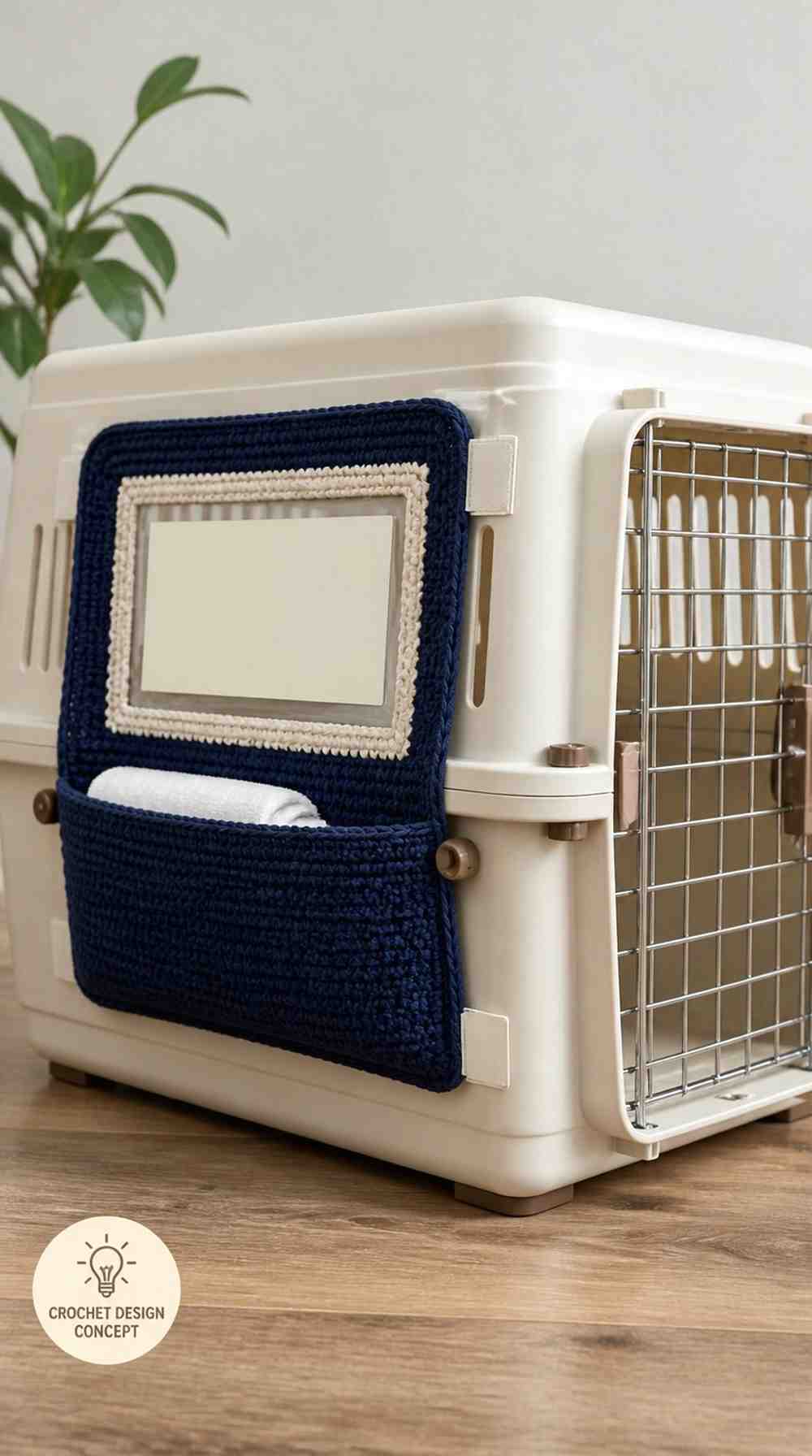
Navy-blue crochet creates a two-part organizer with a transparent label window above a shallow lower storage pocket. An ivory frame surrounds the clear insert, which holds a blank cream identification card. A folded white cloth rests in the compartment underneath.
This design combines visible information with a separate lightweight storage area. The clear window gives the organizer a more structured appearance than an ordinary crochet pouch. It may be useful for a short care reminder, although the card is not protected from every type of moisture or wear.
- Window access: Make the cream card removable so the information can be changed without disturbing the crochet frame.
- Separate lower pocket: Keep the cloth compartment shallow enough that it does not press against the label window above.
- Privacy: Avoid displaying personal contact details or other sensitive information where visitors can easily see them.
- Clear material: A transparent insert is not automatically waterproof and should be removed or protected during cleaning.
11. Crochet Butter Yellow Rear-Corner Pocket
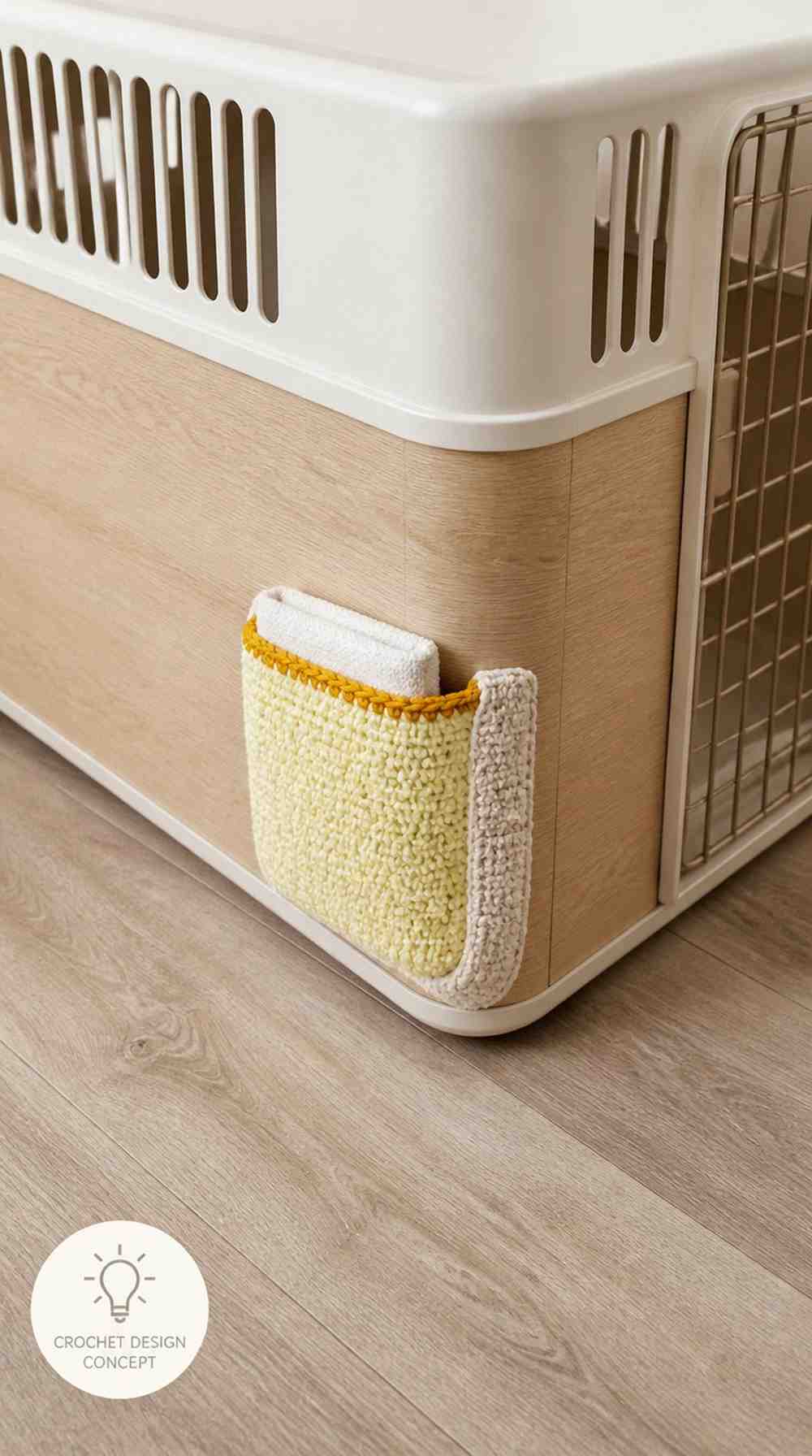
Butter-yellow crochet creates a shallow pocket shaped to follow the rounded rear corner of a hard-sided pet crate. A cream side gusset adds depth, while a mustard-colored border defines the opening. A small folded ivory cleaning cloth rests inside the rectangular front compartment.
Its corner-following shape gives this design a different placement from flat side pockets. The fitted profile may appeal to someone who wants to use a specific exterior corner, but it requires careful checking of the crate’s original structure and access points.
- Corner fit: Measure the actual curvature of the exterior panel rather than assuming the corner has a simple right angle.
- Side gusset: The cream panel should follow the outer surface without extending through a seam or into the crate.
- Rear-side placement: Keep the pocket away from assembly latches, door movement, and any rear ventilation openings.
- Installation limitation: If suitable external mounting is not permitted, recreate this corner-shaped pocket on a separate adjacent storage panel.
12. Crochet Lavender Twin-Sleeve Cloth Organizer
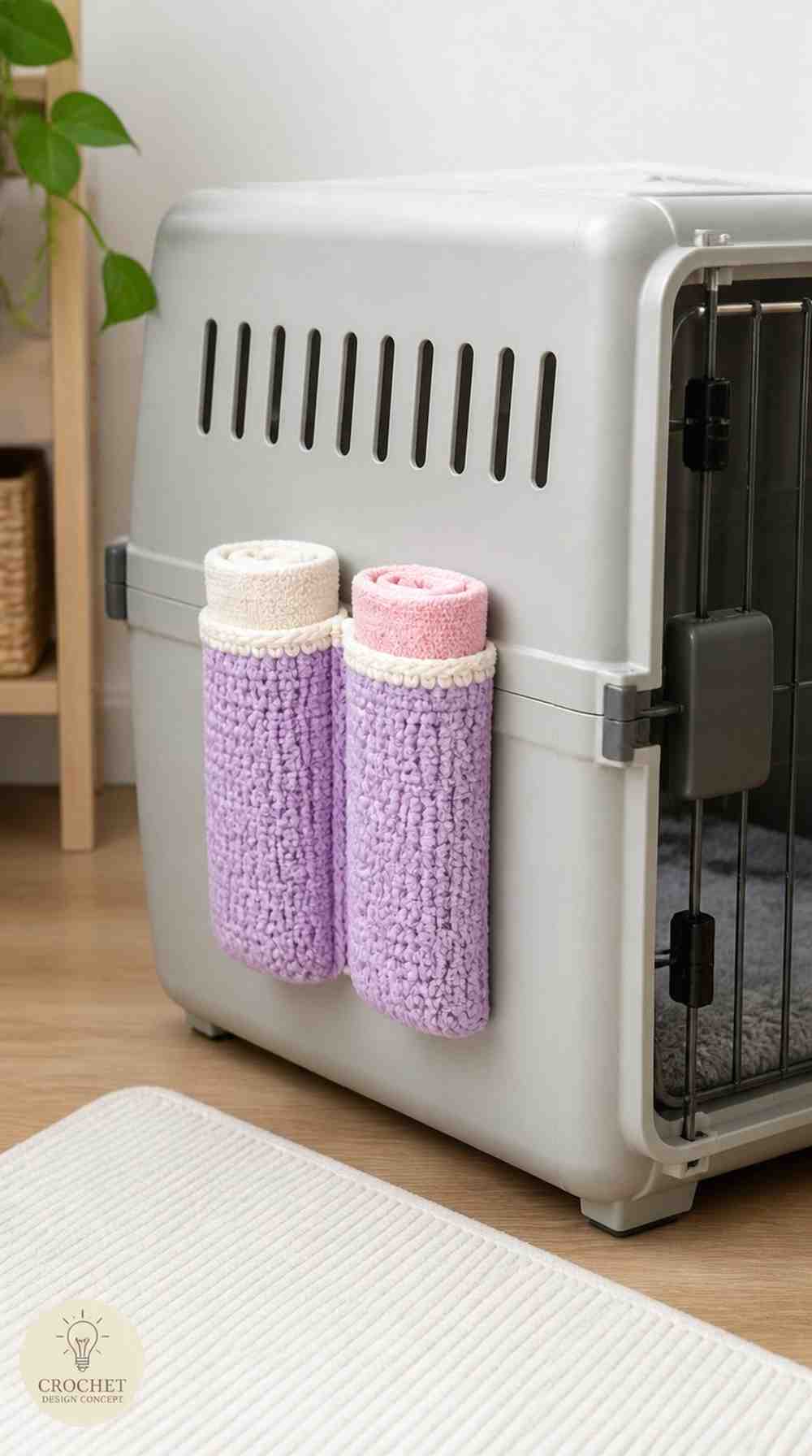
Lavender crochet forms two narrow upright sleeves on a shared rectangular backing. Each sleeve has a closed rounded base and an ivory-edged opening. One holds a rolled cream microfiber cloth, while the other contains a smaller rolled pale-pink cloth.
The side-by-side sleeves organize two cloths without requiring a broad pouch. Their upright arrangement may suit a crate with enough lower exterior height, provided both rolls remain lightweight. The closed lower ends are important because open tubes would not reliably retain the contents.
- Sleeve diameter: Size each opening around its particular cloth roll rather than forcing both rolls into identical dimensions.
- Closed bottoms: Secure the rounded lower ends so the cloths remain supported within their separate compartments.
- Shared backing: Keep the vertical joining seam flat to prevent one sleeve from twisting into the other.
- Removal direction: Leave enough space above both sleeves for cloths to be lifted out without contacting the upper ventilation area.
13. Crochet Sage Modular Double-Pocket Crate Organizer
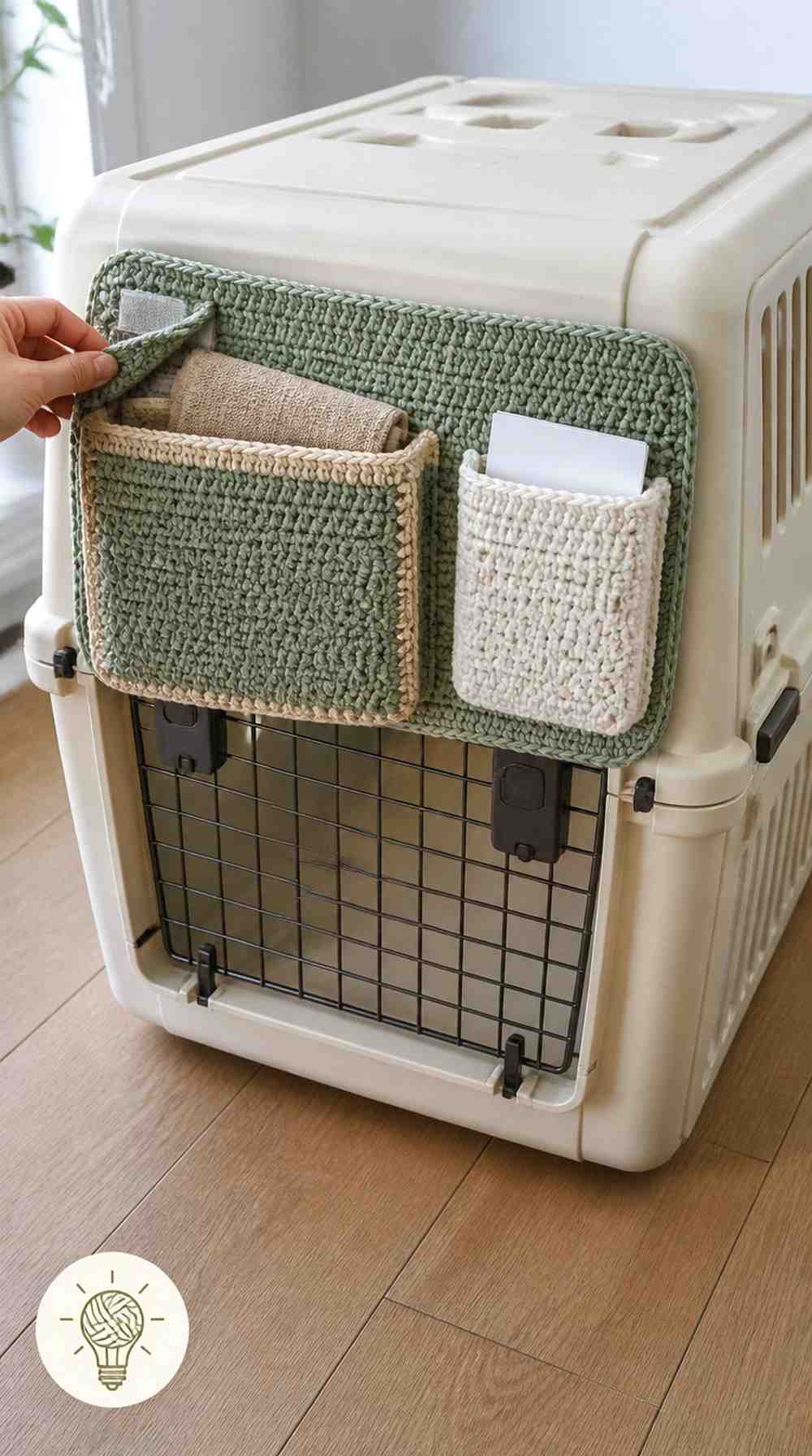
Sage-green crochet forms a supporting exterior band with two separately attached pocket modules. The larger sage pocket has an oatmeal border and holds a folded beige cloth. The smaller cream pocket carries a blank folded paper note. Broad concealed fabric fastening patches connect both modules to the backing.
The modular arrangement offers more flexibility than permanently joined compartments. One pocket could potentially be removed for cleaning without disturbing the other. Its fasteners still need secure construction, and none of the removable pieces should be accessible to an animal through crate openings.
- Detachable modules: Each pocket needs a broad, reinforced attachment area rather than a small patch that concentrates tension in a few stitches.
- Mixed storage: The larger cloth compartment and smaller note pocket have distinct purposes and should remain easy to reach.
- Backing fit: The continuous sage strip must be suitable for an approved exterior attachment location, not a substitute for crate hardware.
- Missing-piece risk: Remove loose modules entirely if their fastenings begin to fail or the pet shows interest in pulling at them.
14. Crochet Brick Red Foldover Cloth Sleeve
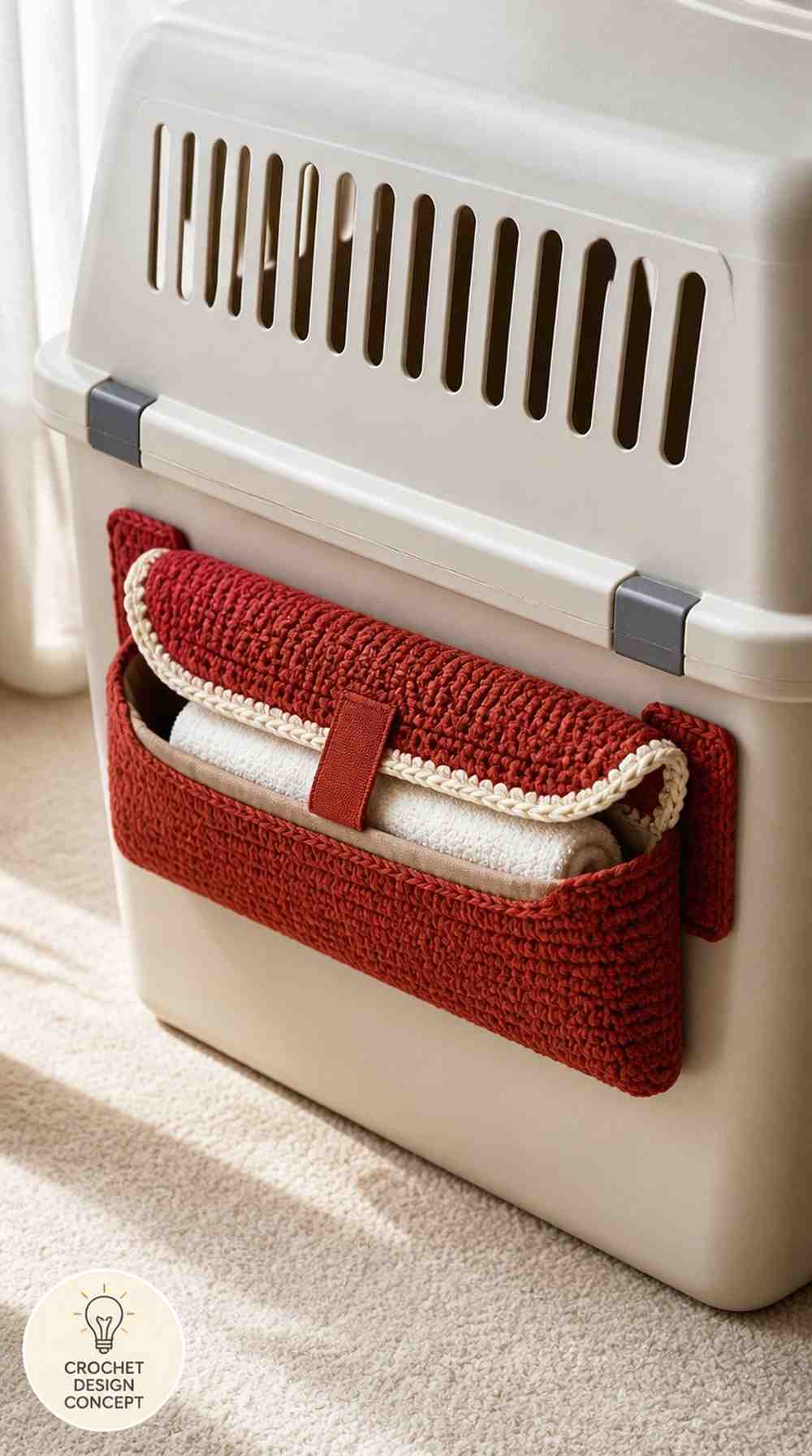
Brick-red crochet creates a compact horizontal sleeve with a broad cream-edged overlapping flap. Its dense outer rows enclose a smooth oatmeal lining, and one folded dry ivory microfiber cloth sits inside. A flat fabric fastening tab holds the flap in place without buttons or drawstrings.
This design keeps the outer surface relatively simple. The wide flap covers more of the opening than a shallow open pocket, while its soft fastening avoids added metal hardware. The sleeve still needs sufficient internal space for the cloth to lie naturally.
- Flap overlap: Keep the brick-red upper section broad enough to cover the opening without pulling tightly across the folded cloth.
- Fabric fastener: Use a reinforced fastening area and check that its surface does not catch surrounding crochet stitches.
- Low-profile storage: The compact envelope shape may suit a narrow exterior area better than a deep gusseted pocket.
- Cleaning access: A wide opening makes it easier to remove the cloth and inspect the lining for trapped dirt or moisture.
15. Crochet Cocoa Ribbed Double-Button Pocket
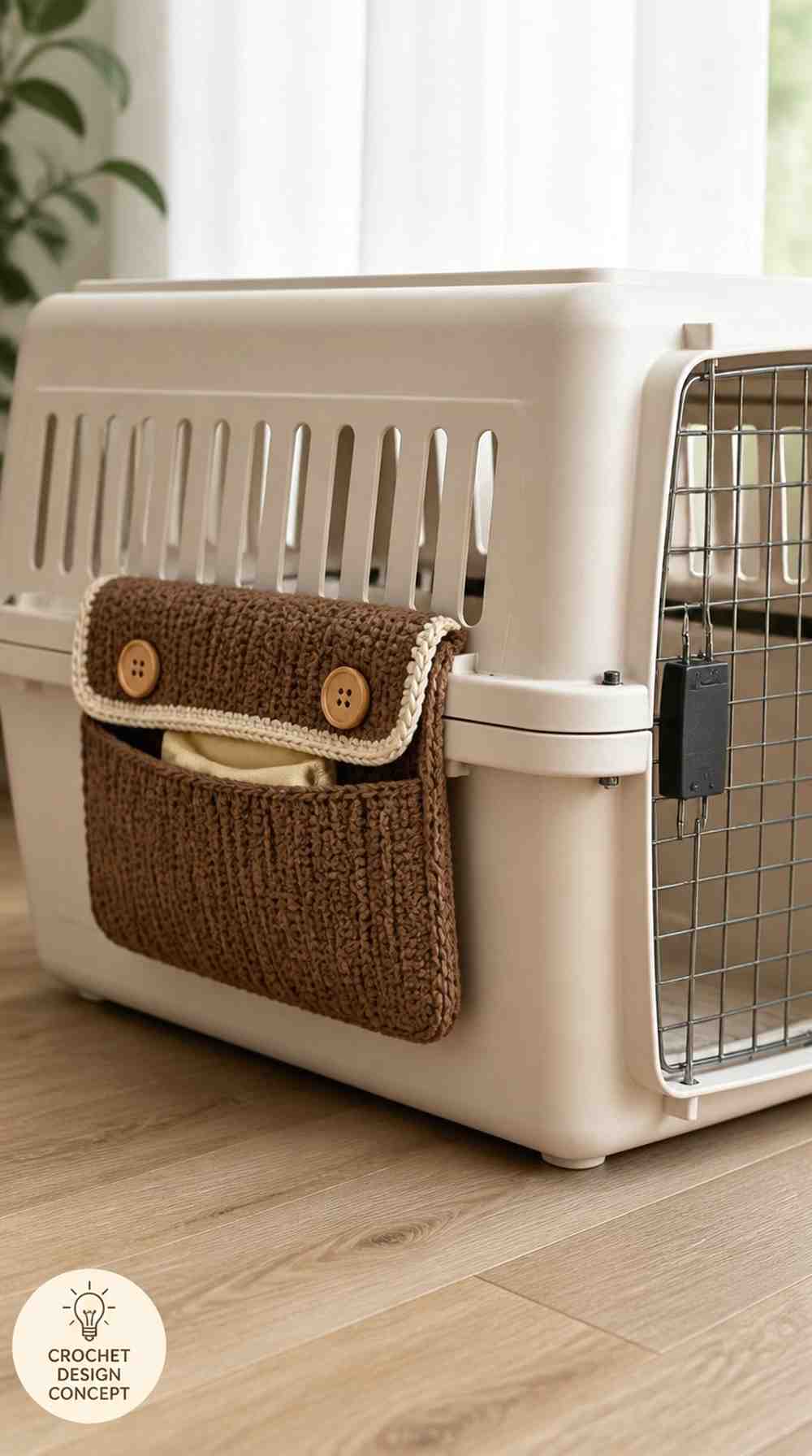
Cocoa-brown crochet forms a softly rounded rectangular pocket with clearly defined vertical ribbing. A cream-edged flap closes with two flat natural wooden buttons, while a clean wheat-colored cotton cloth sits inside the smooth-lined compartment. The pouch has a reinforced rectangular backing.
The ribbed surface adds texture without needing bright decorative motifs. Two buttons distribute the closure across the flap, which may help it sit evenly when the pocket is properly sized. However, the hard fasteners make this concept unsuitable anywhere the pet could reach or chew them.
- Two-button spacing: Keep both buttons level and far enough apart for the cream-edged flap to close without twisting.
- Ribbed crochet texture: Raised vertical rows should remain evenly worked so the front pocket does not stretch unevenly.
- Soft lining: A smooth interior may reduce snagging when inserting the folded cotton cloth.
- Chewing risk: Wooden buttons can detach and become dangerous if swallowed; use this idea only in a location inaccessible to pets.
16. Crochet Sea Glass Triple-Panel Crate Organizer
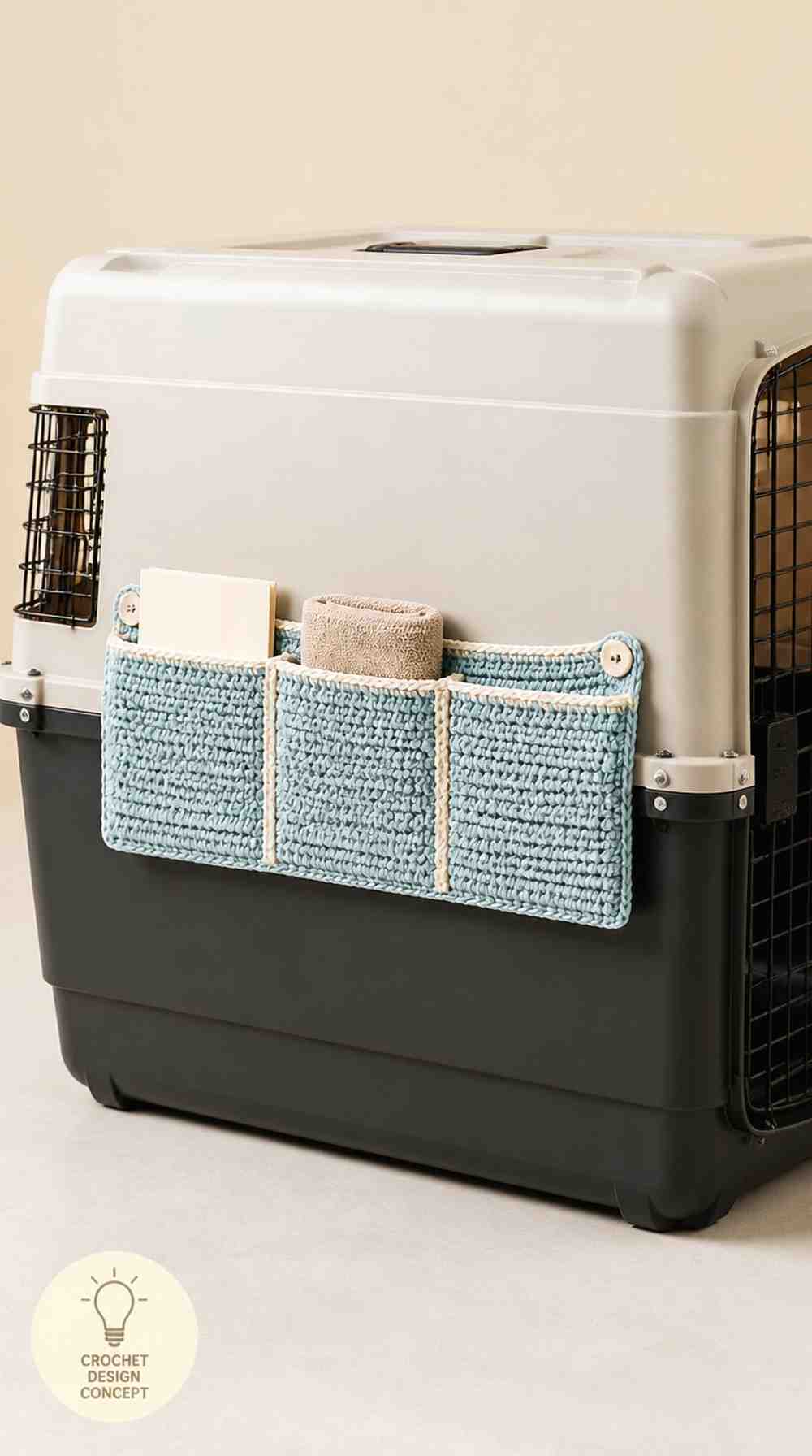
Sea-glass-blue crochet forms a wide horizontal organizer with three shallow compartments. Cream vertical joins separate the pockets, and matching cream borders finish their upper edges. The first pocket contains a folded blank checklist, the middle holds a dry beige microfiber cloth, and the third remains empty.
The long, low arrangement spreads storage across the exterior rather than stacking it vertically. It may suit a larger crate with a broad solid lower panel. The continuous backing needs to remain flat, and the overall width must not cross ventilation, doors, or joining hardware.
- Three-compartment layout: Separate the paper note from the cloth, leaving the third pocket available without requiring it to be filled.
- Long backing: Measure the uninterrupted solid area before considering this design; many crates will not have enough suitable exterior space.
- Cream dividers: Keep the joined vertical seams flat so each pocket retains its own opening.
- Removal for cleaning: A wide organizer may be easier to maintain as one detachable unit than as a permanently fixed accessory.
17. Crochet Ivory Daisy-Corner Crate Pocket
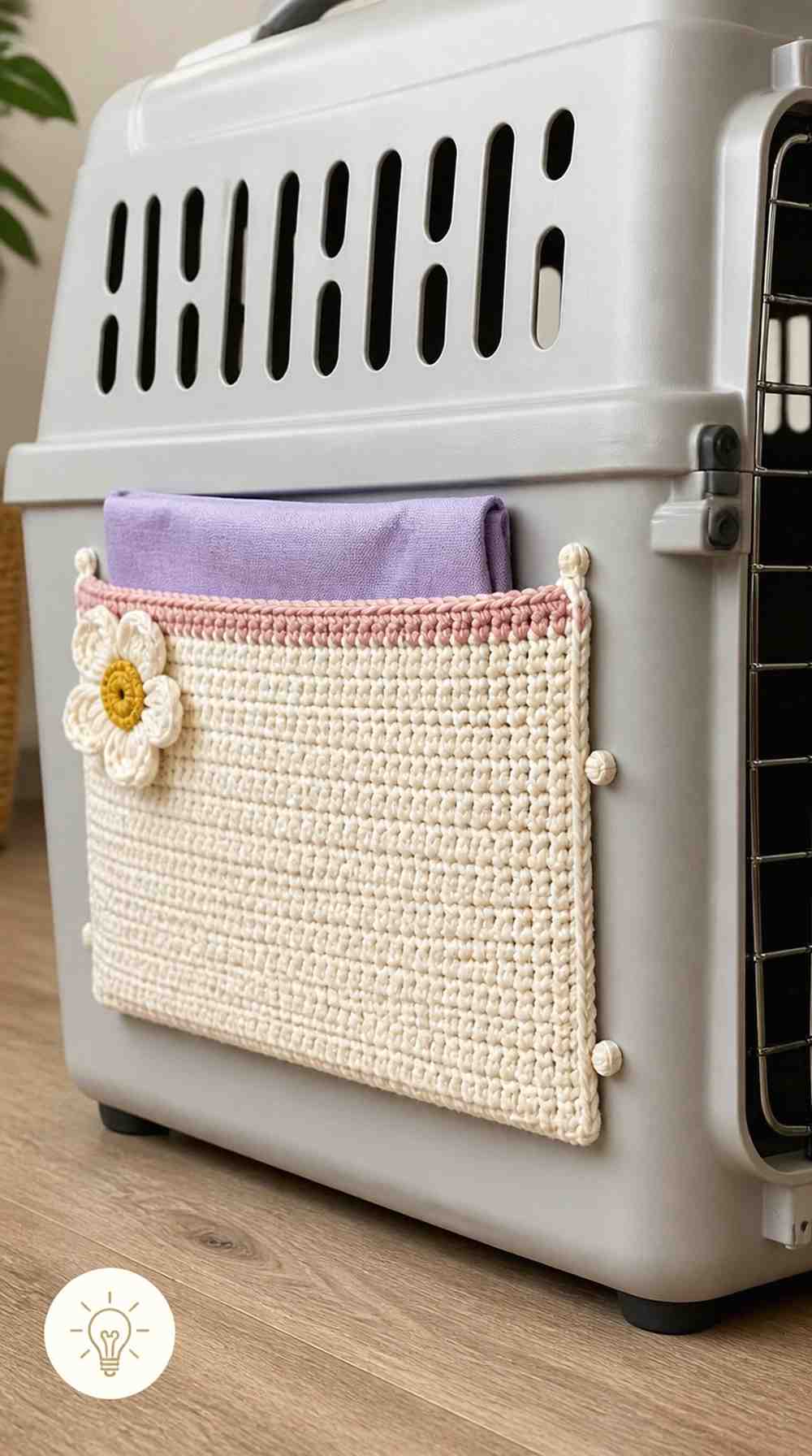
Warm-ivory crochet forms a compact rectangular pocket with a dusty-rose border around the opening. A small five-petal cream crochet daisy with a mustard-yellow center decorates the upper-left corner. A folded lavender cotton cloth sits inside, its top edge visible above the pocket.
This design introduces a soft floral detail while keeping the main storage function simple. The flower is deliberately small and flat, making it more restrained than a dangling embellishment. Its stitched center and individual petals still need secure attachment and protection from chewing.
- Daisy attachment: Secure the five petals and mustard center directly to the pocket so individual yarn pieces cannot loosen easily.
- Pocket contrast: The dusty-rose edging distinguishes the opening from the warm-ivory body.
- Cloth visibility: Keep the lavender fabric’s upper edge exposed enough to identify it without making the shallow pocket too loose.
- Pet safety: Decorative flowers should never be left within reach of an animal that may chew or pull loose yarn.
Practical Guide to Crochet Pet Crate Exterior Storage Pockets
Exterior crate organizers need extra care because the crate’s main purpose is providing an appropriate, secure space for the animal.
Check the crate manufacturer first. Not every hard-sided crate allows exterior accessories. Never drill into the shell, change the original fastenings, interfere with assembly seams, or assume that adhesive or hook-and-loop mounting is approved.
Keep all ventilation open. Side slots, rear openings, and door grids must remain unobstructed. Do not hang crochet through the bars of a wire crate, where an animal may pull yarn inside. The fabric must not reduce airflow or interfere with the crate’s normal use.
Keep the pet out of reach of the organizer. Pets may chew, pull, or swallow yarn, buttons, cords, fasteners, and stored items. An exterior position is not automatically inaccessible, especially beside wire openings. If the animal can reach any part, remove the organizer.
Store only lightweight, suitable items. Small dry cloths and flat paper notes are more appropriate than food, medications, cleaning chemicals, scissors, heavy grooming equipment, or containers of liquid. Keep pet supplies secured separately when needed.
Do not use these concepts during transport. Remove decorative pockets before moving or transporting a crate. They are not travel-rated attachments and could interfere with lifting, stacking, securing, or loading.
Use a separate organizer when uncertain. A freestanding storage panel or wall pocket placed safely beside the crate often offers the same convenience without changing the crate itself.
Keep fabric clean and dry. Remove the organizer for washing, follow the yarn’s care instructions, and allow it to dry completely before placing anything inside.
For a related pet-care storage concept, explore 13 Crochet Pet Grooming Tool Roll Inspiration Ideas, which focuses on storing grooming accessories in a separate roll.
For general pocket arrangements that can be placed away from the crate, see 20 Crochet Hanging Wall Pocket Organizer Ideas.
Want to Make Something Similar?
A simple crochet wall pocket is a useful starting point for studying flat back panels, folded openings, and reinforced joins.
Fresh Knack offers a Free Crochet Wall Pocket Organizer Pattern by Sierra Maeschen. Its envelope-style construction demonstrates how separate crochet panels can become a practical hanging pocket.
Lenka at Happy Heartsy also shares a Free Crochet Three-Pocket Wall Organizer Pattern, with guidance on forming compartments and assembling a vertical organizer.
Neither tutorial is an exact pattern for the 17 pet-crate concepts shown here. Both are general storage projects, not tested or manufacturer-approved crate attachments. For a practical pet-care setup, using a separate nearby organizer is the safer starting point when attachment compatibility cannot be confirmed.
Comparison: Which Crochet Pet Crate Exterior Pocket Should You Choose?
The most appropriate design depends on the supplies you want to keep nearby and whether your crate provides a suitable location for any exterior attachment.
| Design | Main feature | Practical trade-off |
|---|---|---|
| Crochet Cobalt Slim Grooming Cloth Pocket | One compact cloth compartment | Limited capacity |
| Crochet Mustard Twin Flat Supply Pockets | Two separate shallow pockets | Requires more horizontal space |
| Crochet Dusty Rose Foldover Document Sleeve | Covered paper-card storage | Not moisture-resistant |
| Crochet Teal Side-Zip Supply Pouch | Enclosed zipper opening | Hard zipper parts must stay inaccessible |
| Crochet Olive Three-Tier Crate Pocket Panel | Three vertically stacked sections | Needs a larger solid exterior area |
| Crochet Plum Mesh-Front Bandana Pocket | Decorative openwork and lining | More detailed construction |
| Crochet Rust Side-Gusset Cloth Roll Pocket | Extra space for a rolled cloth | Projects farther from the crate |
| Crochet Navy Clear-Window Information Pocket | Visible card and separate cloth space | Clear insert needs careful cleaning |
| Crochet Sage Modular Double-Pocket Crate Organizer | Removable storage modules | More fastening points to inspect |
| Crochet Sea Glass Triple-Panel Crate Organizer | Three side-by-side compartments | Requires a broad lower panel |
For one folded grooming cloth, the Crochet Cobalt Slim Grooming Cloth Pocket offers a simple visual concept. The Crochet Teal Side-Zip Supply Pouch provides a covered alternative, although its zipper adds hardware that must remain inaccessible to the pet.
For two lightweight essentials, the Crochet Mustard Twin Flat Supply Pockets or Crochet Sand Twin Oval Cloth Pockets may be worth considering. Both separate their contents without requiring a very tall organizer.
The Crochet Olive Three-Tier Crate Pocket Panel and Crochet Sea Glass Triple-Panel Crate Organizer provide more compartments, but each needs considerably more usable exterior space.
If your priority is keeping a short paper reminder near the pet’s area, the Crochet Dusty Rose Foldover Document Sleeve or Crochet Navy Clear-Window Information Pocket may offer the most suitable layout.
For an attractive, decorative finish, the Crochet Peach Scalloped Grooming Mitt Pocket and Crochet Ivory Daisy-Corner Crate Pocket bring additional crochet details without requiring large storage compartments.
In every case, the safest practical choice may be a separate wall-mounted or freestanding organizer beside the crate rather than a pocket attached to the crate itself.
Conclusion
Crochet pet crate exterior storage pocket inspiration ideas show how small handmade organizers could bring order and color to a pet-care corner. A slim cloth pocket, divided organizer, folded document sleeve, or decorative pouch can provide a dedicated place for a few lightweight essentials without requiring a large storage basket.
These 17 concepts are most useful as ideas for pocket construction, compartments, borders, and removable fabric organization. Whether they belong on an actual crate depends on the manufacturer’s guidance, the crate’s design, and the pet’s behavior. When there is any doubt about attachment safety, ventilation, or chewing access, keep the organizer on a separate nearby surface instead.
Which design would you choose for your pet-care area: the cobalt grooming-cloth pocket, the mustard twin organizer, or the sea-glass triple-panel design? Share your favorite and whether you prefer one simple compartment or several small pockets.
Frequently Asked Questions
1. Can I attach a crochet storage pocket directly to my pet’s crate?
Not automatically. The crate manufacturer must permit the attachment, and the finished pocket must not affect ventilation, door operation, latches, handles, stability, or other safety features. It must also remain completely inaccessible to the pet. If those conditions cannot be confirmed, use a separate storage organizer beside the crate instead.
2. Is an exterior crochet pocket safe if my dog or cat likes to chew?
An exterior pocket may still be accessible through crate bars or openings, and an animal could pull fabric, yarn, or small components inside. Chewing can create choking or ingestion hazards. Do not install a crochet accessory where the pet can reach it, especially if the animal has a history of chewing bedding, fabric, or other objects.
3. What should I store in a crochet pet-care pocket?
Small, lightweight, clean, dry items such as a folded grooming cloth or a flat care note may be appropriate in a separate, securely located organizer. Avoid food, medications, cleaning chemicals, sharp grooming tools, heavy objects, and anything that could harm the pet if swallowed or accessed. Always keep essential supplies in safe, designated storage.
4. Can I leave a crochet organizer attached while traveling with the crate?
No. These visualized designs have not been tested as transportation accessories. Decorative pockets could interfere with carrying, loading, securing, ventilation, or other crate functions. Remove them before travel and follow the crate manufacturer’s instructions and applicable transport requirements.
5. Are these 17 crochet pet crate exterior storage pockets actual patterns?
No. They are original crochet design visualizations showing possible shapes, colors, pockets, fastenings, and storage arrangements. They are not tested handmade products, complete patterns, or approved crate accessories. Anyone making a similar organizer should adapt its construction to a suitable separate storage surface unless the crate manufacturer specifically permits the attachment.