A reward board can make everyday goals easier for children to see and understand, especially when it uses simple pictures instead of complicated instructions. Crochet reusable kids reward token board ideas bring handmade texture to familiar progress charts through colorful stars, flowers, clouds, hearts, and other cheerful shapes. These 15 inspiration concepts explore reusable placement tokens, sewn-on flip tabs, pocket ladders, foldout boards, and family progress displays in coral, cornflower blue, lavender, mustard, and other inviting colors.
Some boards allow children to move large crochet tokens into position, while others use permanently attached pieces that flip to reveal completed steps. The collection includes compact five-step boards, a seven-day grid, nature-themed displays, and a shared board with separate progress spaces. When comparing the ideas, consider the child’s age and abilities, how clearly the board shows progress, whether it has detachable pieces, and how easily the system can be reset and reused.
These are AI-generated crochet design visualizations for inspiration, not photographs of tested handmade products or step-by-step patterns. Removable pieces can present choking or other hazards, especially for children under three or children who mouth objects. These concepts are not certified toys; adult supervision and age-appropriate design are essential.
Quick Design Selection Guide
| Your main goal | Design to explore |
|---|---|
| A simple five-step reward system | Crochet Coral Five-Star Progress Board |
| A cheerful rainbow-themed display | Crochet Cornflower Rainbow Cloud Token Board |
| Progress without loose tokens | Crochet Mustard Flip-Tab Task Board |
| A vertical goal tracker | Crochet Teal Rocket Launch Token Ladder |
| Tracking progress across seven days | Crochet Oatmeal Seven-Day Token Grid |
| Separate progress spaces for siblings | Crochet Tangerine Sibling Star Reward Board |
1. Crochet Coral Five-Star Progress Board
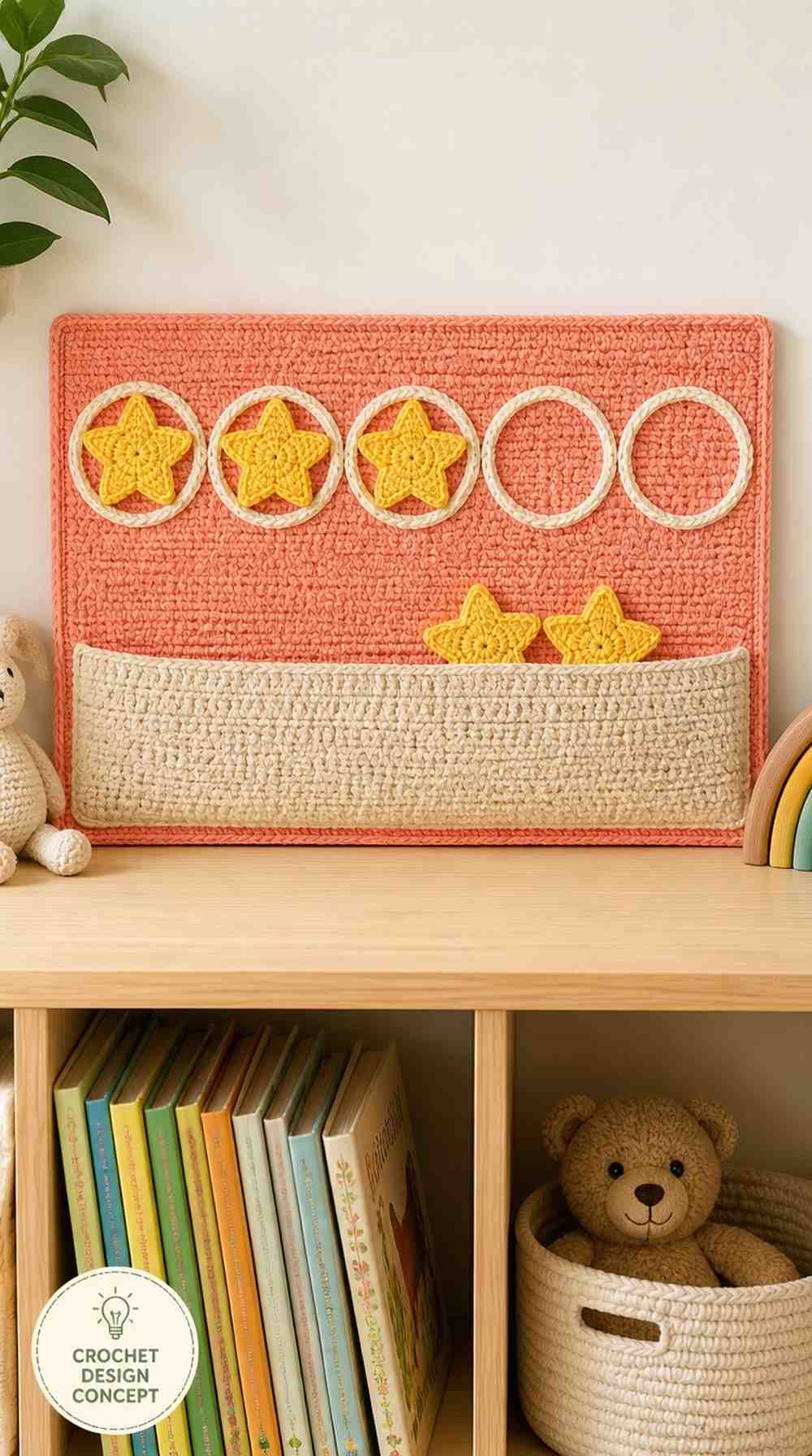
Coral-pink crochet forms a rectangular reward board with five cream-edged circular spaces arranged across the center. Three oversized golden-yellow crochet stars fill the first three positions, while two spaces remain empty. An oatmeal-colored pocket beneath the row holds the two remaining star tokens.
The simple arrangement makes the child’s progress visible at a glance. Each star represents a completed step toward a chosen goal, and the board can be reset after the activity is finished. Its rigid backing helps maintain the flat rectangular shape.
- Five clear steps: The single horizontal row suits one short goal, such as completing a simple morning routine or remembering daily reading time.
- Star placement: Large flat crochet stars with properly secured fabric fasteners may be easier to handle than miniature buttons or plastic counters.
- Lower storage pocket: Keeping the two unused stars in the oatmeal pocket creates a dedicated place for them between reward steps.
- Resetting progress: The five spaces can be reused for another activity without changing the coral board or making new tokens.
2. Crochet Cornflower Rainbow Cloud Token Board
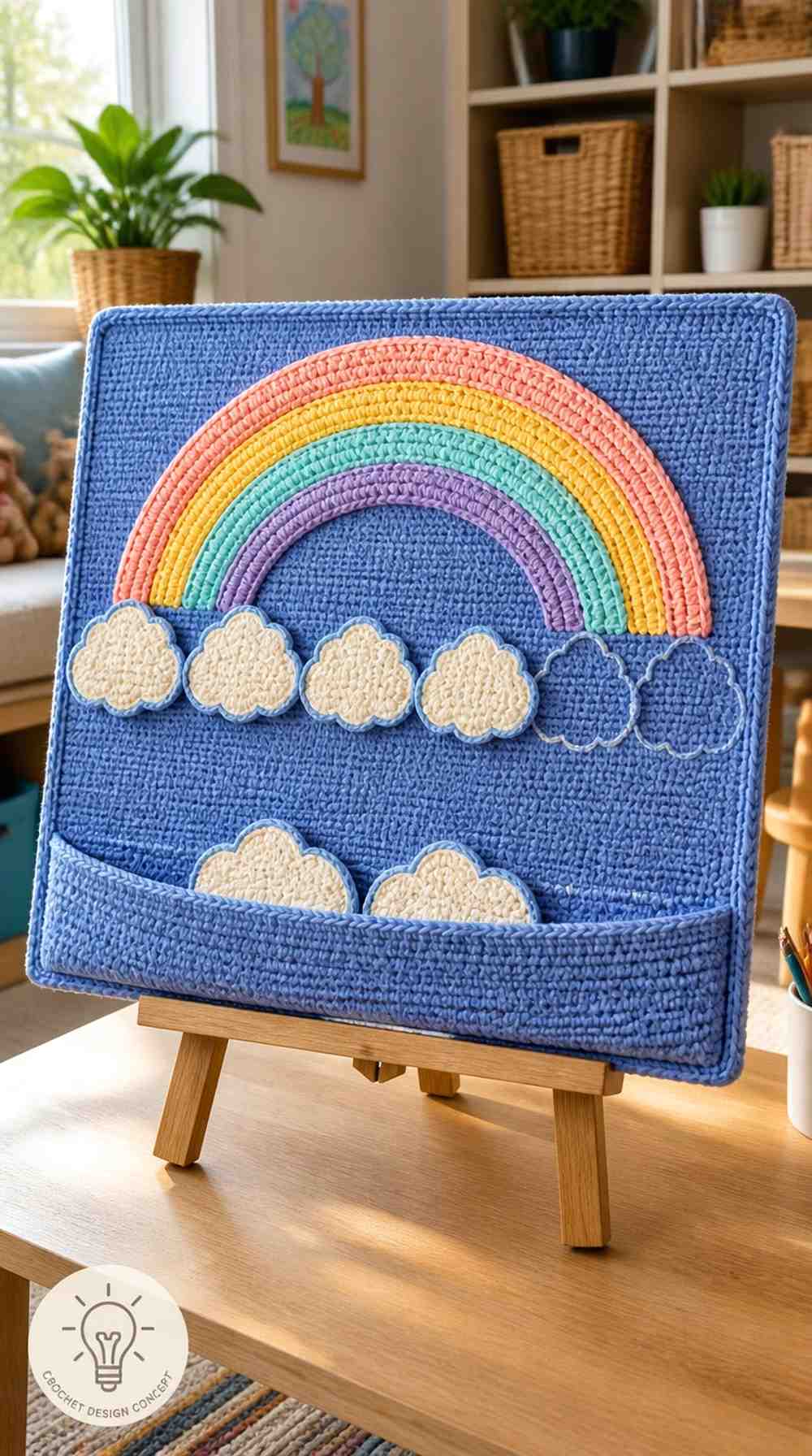
Cornflower-blue crochet creates a colorful reward board with a curved rainbow across its upper section. Peach, butter-yellow, mint, and lavender crochet bands form the arch, while six cream cloud-shaped spaces follow the lower curve. Four matching cloud tokens cover the first four positions, and two spare clouds rest in the bottom pocket.
The rainbow design turns a basic progress tracker into a cheerful scene. Its cloud shapes create a consistent visual theme without needing complicated written instructions. The curved arrangement is decorative, but the six positions should remain easy to distinguish.
- Six-cloud layout: The curved sequence could represent six small steps, with the final two spaces showing what remains to be completed.
- Cloud-shaped tokens: Each removable cloud should be broad, flat, and securely constructed without loose decorations or separate tiny pieces.
- Rainbow construction: The four colored crochet arches need tidy joins so the decorative curves remain flat against the backing.
3. Crochet Mustard Flip-Tab Task Board
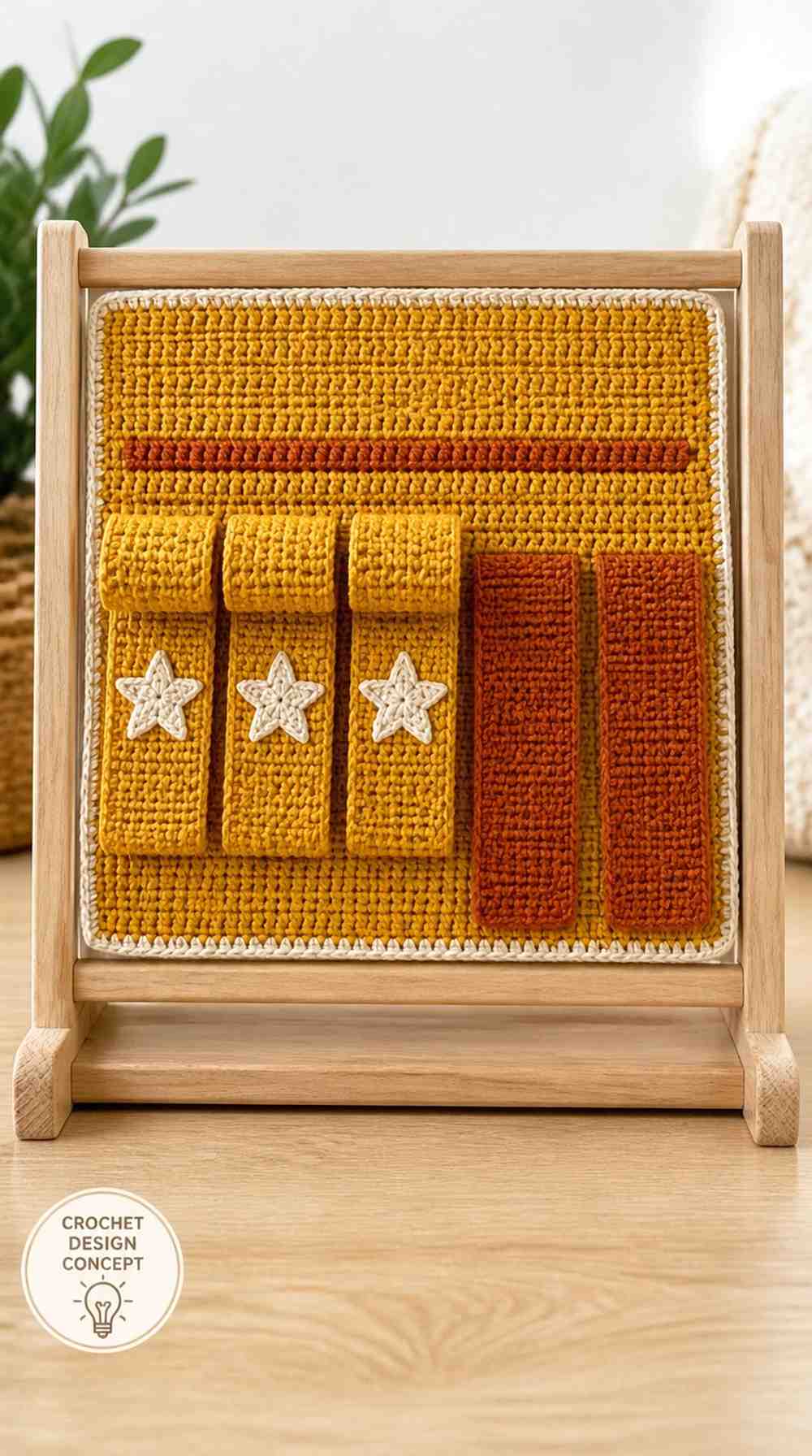
Mustard-yellow crochet forms a rectangular activity board with five broad flip tabs arranged in one row. The first three tabs are turned upward to reveal cream stars stitched underneath, while the final two remain closed with their rust-orange sides showing. An ivory border finishes the board.
Unlike a reward board that uses removable tokens, this design keeps all five markers permanently attached. That reduces the chance of losing individual pieces and may simplify resetting the display. Its fabric hinges still need strong, well-finished stitching to withstand repeated movement.
- Permanently attached markers: The five hinged tabs stay connected to the board instead of being stored as separate pieces.
- Visible completion: Turning a rust-orange tab upward reveals its cream star, creating a clear difference between completed and unfinished steps.
- Hinge placement: Each upper seam should allow the broad tab to fold freely without pulling apart the dense mustard backing.
- Easy reset: All five tabs can be folded down again when a new activity begins.
4. Crochet Plum Flower Garden Reward Board
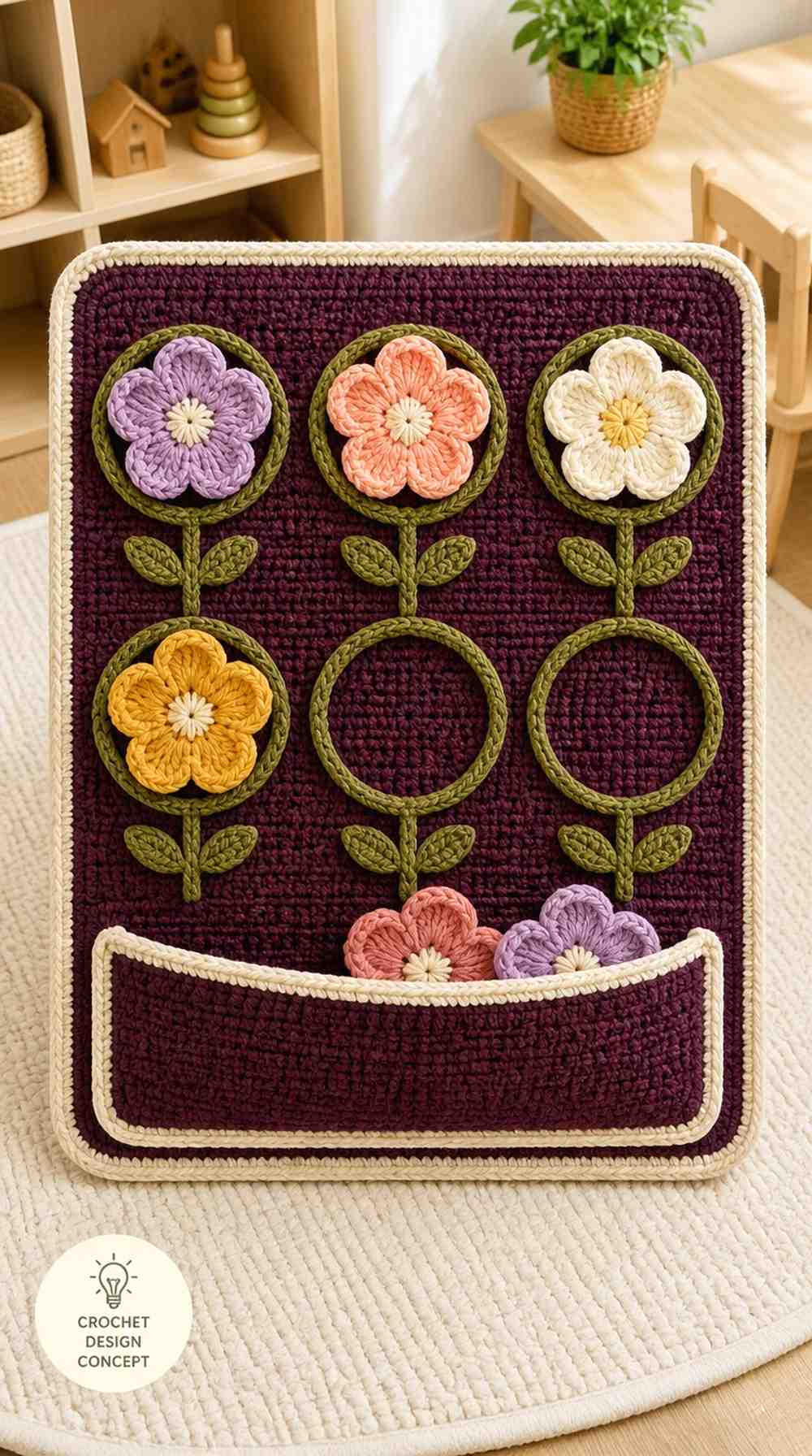
Deep-plum crochet creates a garden-inspired reward board with six flower placement spaces arranged in two rows of three. Olive-green stems and leaves decorate the background, while four oversized crochet flowers in lavender, peach, cream, and mustard fill the first four spaces. Two matching flowers remain in a bottom pocket.
The garden arrangement gives children a visual collection to build as they complete steps. Each flower has five flat crochet petals and a stitched yarn center rather than a separate bead or button. The result is colorful without relying on small hard decorations.
- Two-row layout: The six positions offer a compact arrangement that can accommodate a short routine without requiring a tall board.
- Flower construction: Keep the petals joined securely to each center so individual sections cannot easily be pulled away.
- Garden background: Permanently attached olive stems and leaves provide decoration without creating more detachable pieces to organize.
5. Crochet Teal Rocket Launch Token Ladder
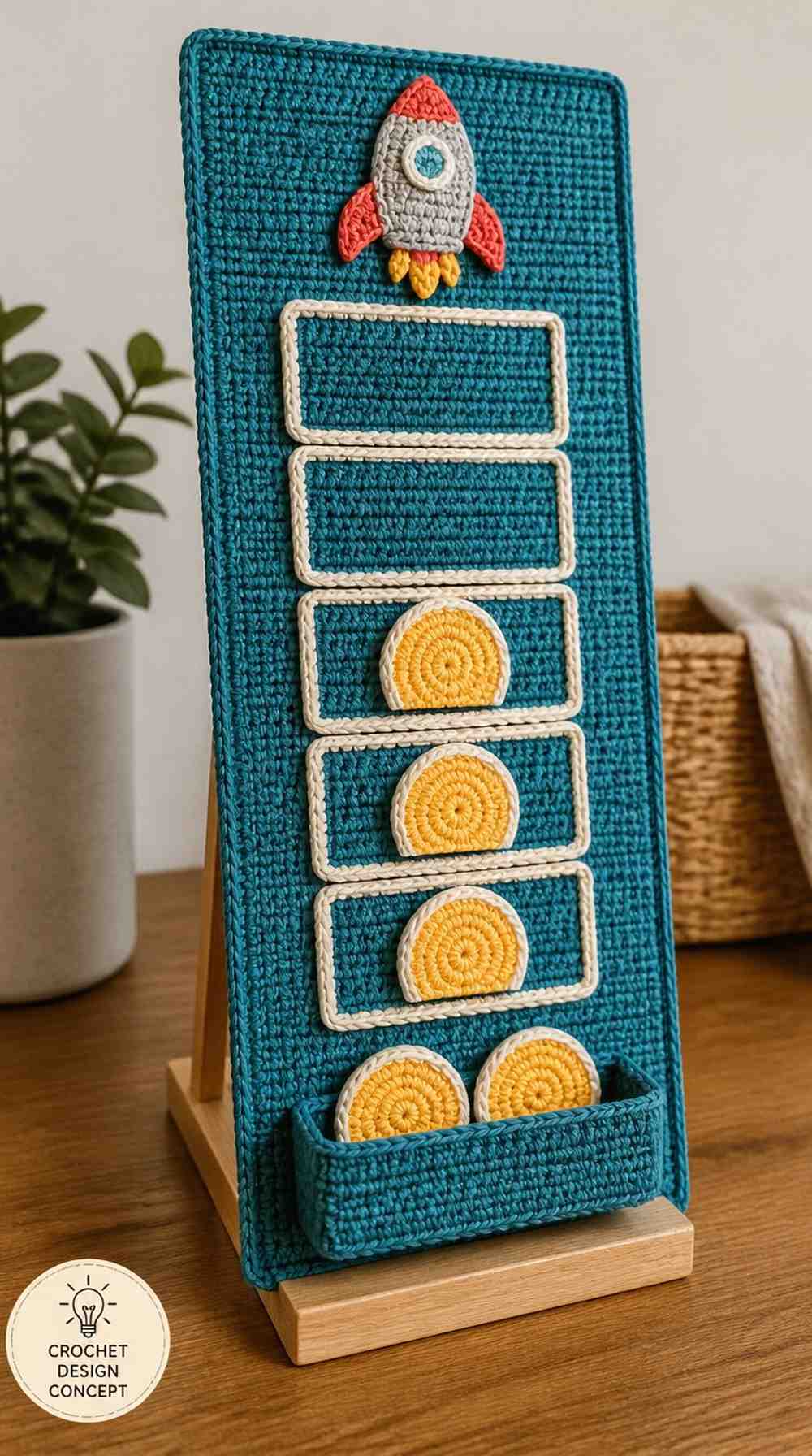
Teal-blue crochet forms a tall vertical progress board with five cream-edged pockets arranged like steps leading toward a rocket. Three oversized golden circle tokens sit in the lower pockets, while the upper two remain empty. A small coral-and-silver crochet rocket is permanently stitched near the top.
The upward arrangement makes progress feel like movement toward a destination. It may suit a child who enjoys space-themed pictures or a family that prefers one goal at a time. The pocket openings should remain wide enough for tokens to be inserted without forcing them.
- Vertical progress: Filling the pockets from bottom to top creates a clear sequence, with the rocket marking the final destination.
- Pocket openings: Each cream-edged compartment needs enough depth to hold a large flat token while leaving part of it visible.
- Attached rocket: The small decorative rocket should remain fixed to the board rather than becoming another loose play piece.
6. Crochet Oatmeal Seven-Day Token Grid
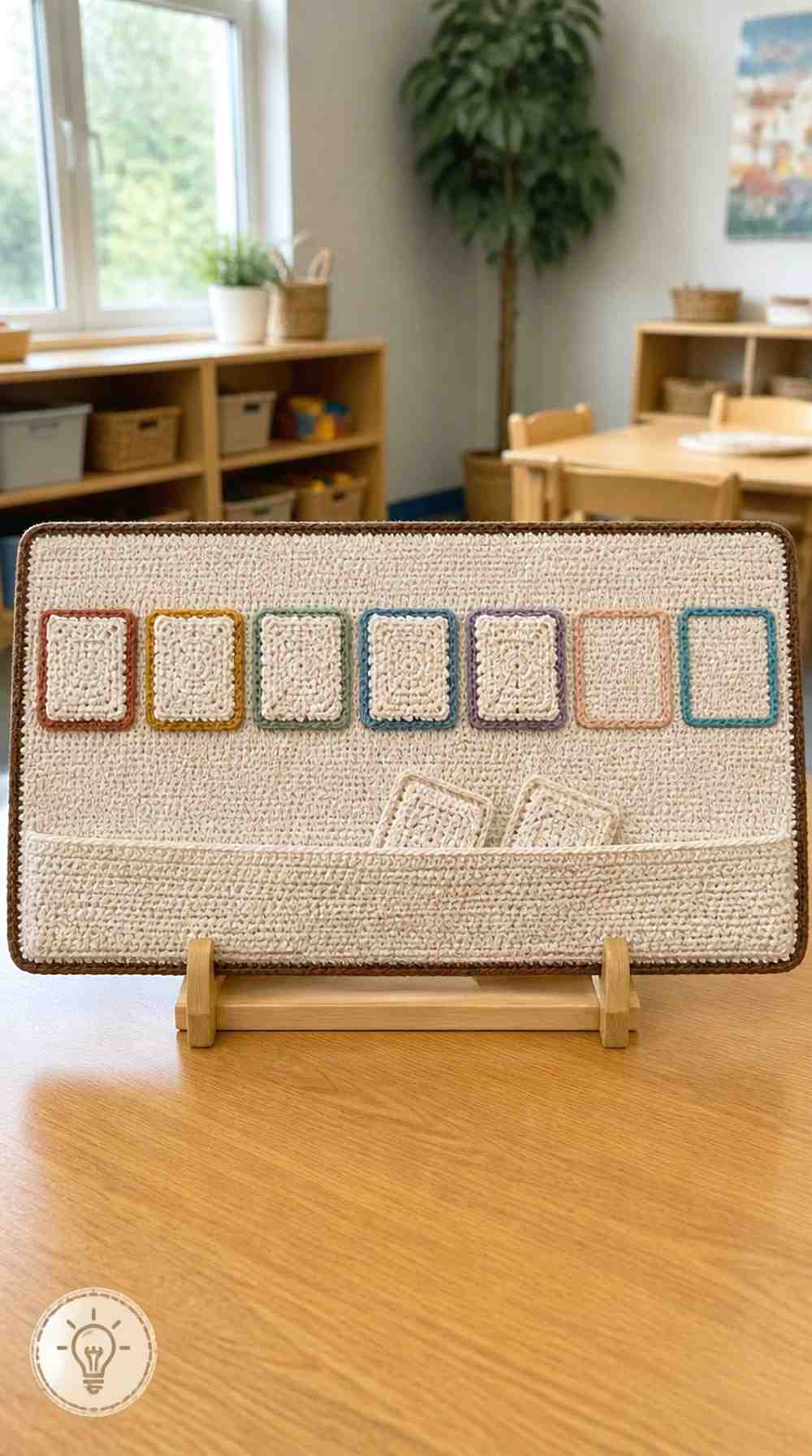
Oatmeal crochet provides a neutral background for seven large square progress spaces. Their outlines use rust, gold, sage, blue, plum, peach, and teal yarn. Five cream square tokens cover the first five positions, while two matching spare pieces rest in a wide pocket beneath the row.
The seven-position layout offers a straightforward way to represent a week, although the pictured board has no printed day names. Families could use a separate written key to decide what each position means. The broad square markers keep the visual system simple.
- Seven-position sequence: The row could represent seven days or seven steps, depending on the family’s chosen goal.
- Colored borders: Different crochet outlines help distinguish positions without requiring the tokens themselves to have separate shapes.
- Board width: A horizontal seven-space grid needs enough room for large markers and visible gaps between them.
- Simple recording: A paper note beside the board can identify the goal without permanently adding words to the crochet surface.
7. Crochet Terracotta Pocket-Ladder Token Board
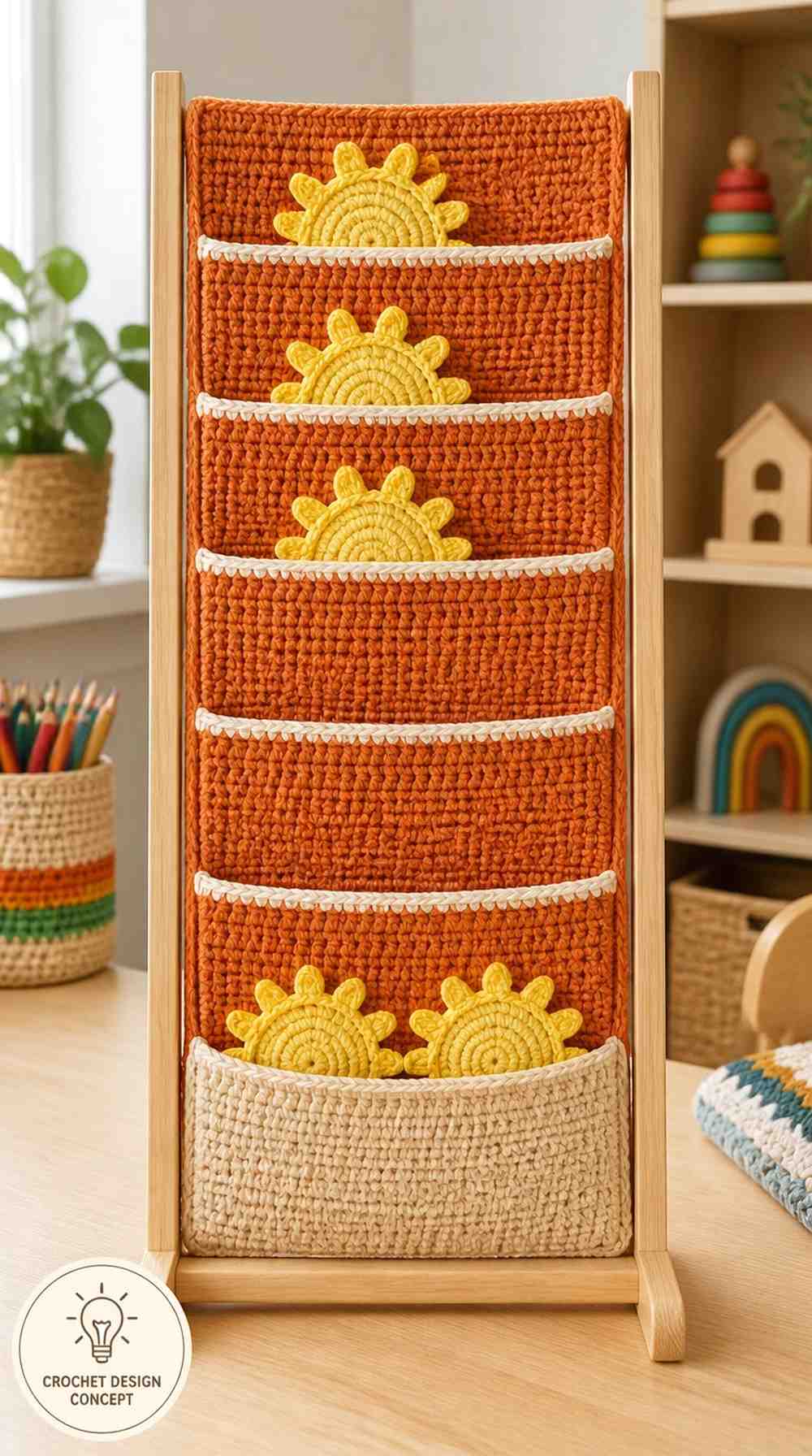
Terracotta crochet creates a tall panel with five spacious horizontal pockets stacked vertically. Three large butter-yellow sun tokens fill the first three pockets, leaving their upper halves visible. Two additional suns rest in the wider oatmeal storage pocket at the bottom.
The pocket-ladder construction makes progress easy to follow from one level to the next. Unlike flat fastening patches, the tokens are inserted into the actual crochet pockets. Their short, firmly joined rays form recognizable sun shapes without using separate dangling strands.
- Five visible levels: The vertical pockets create a clear order for completing a small sequence of activities.
- Sun-token fit: Each sun should slide into its pocket without bending the flat center or catching the joined rays.
- Pocket depth: Leaving the upper portion visible makes it easier to distinguish occupied spaces from empty ones.
- Lower storage: The separate oatmeal pocket helps keep the two unused sun tokens together between activities.
8. Crochet Sage Leafy Tree Reward Board
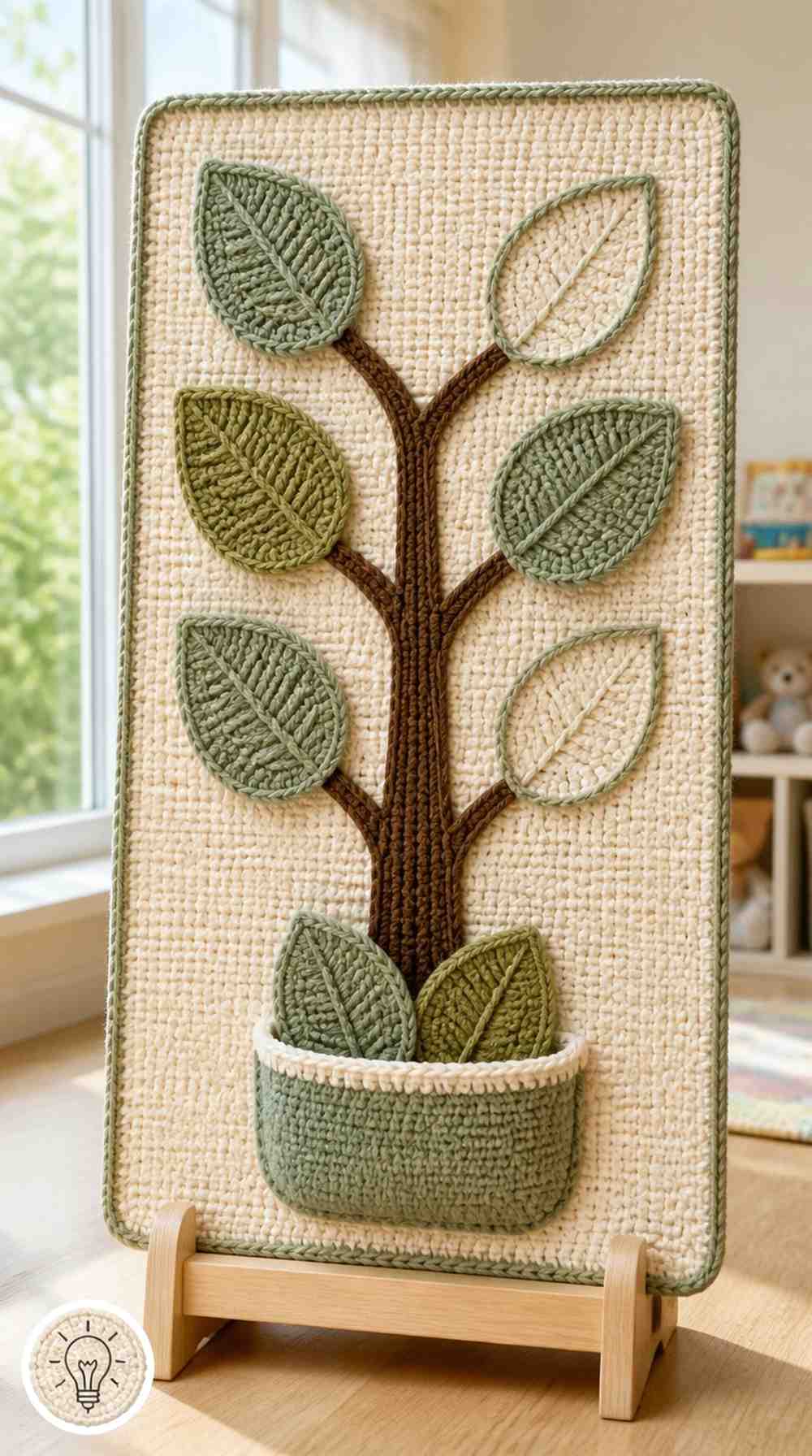
An ivory crochet background supports a cocoa-brown tree with six short branches and outlined leaf positions. Four oversized sage and olive crochet leaves fill the first four spaces, while two positions remain empty. A cream-edged sage pocket beneath the tree stores the remaining leaves.
The tree design offers a nature-inspired way to show progress building over time. Each broad leaf has a stitched central vein and a flat outline. The permanently attached branches provide the visual setting, while removable leaves supply the actual reward markers.
- Tree placement: Keep the six leaf positions visually separate so children can tell which branches are complete.
- Large leaf tokens: Use flat, securely finished motifs rather than leaves with loose stems, beads, or tiny detachable details.
- Storage location: The short sage pocket sits at the base, providing a clear place for unused leaves.
- Nature-themed goals: This layout could accompany reading, outdoor activities, or caring for a family plant without making the board itself a game toy.
9. Crochet Lavender Butterfly Flip-Wing Board
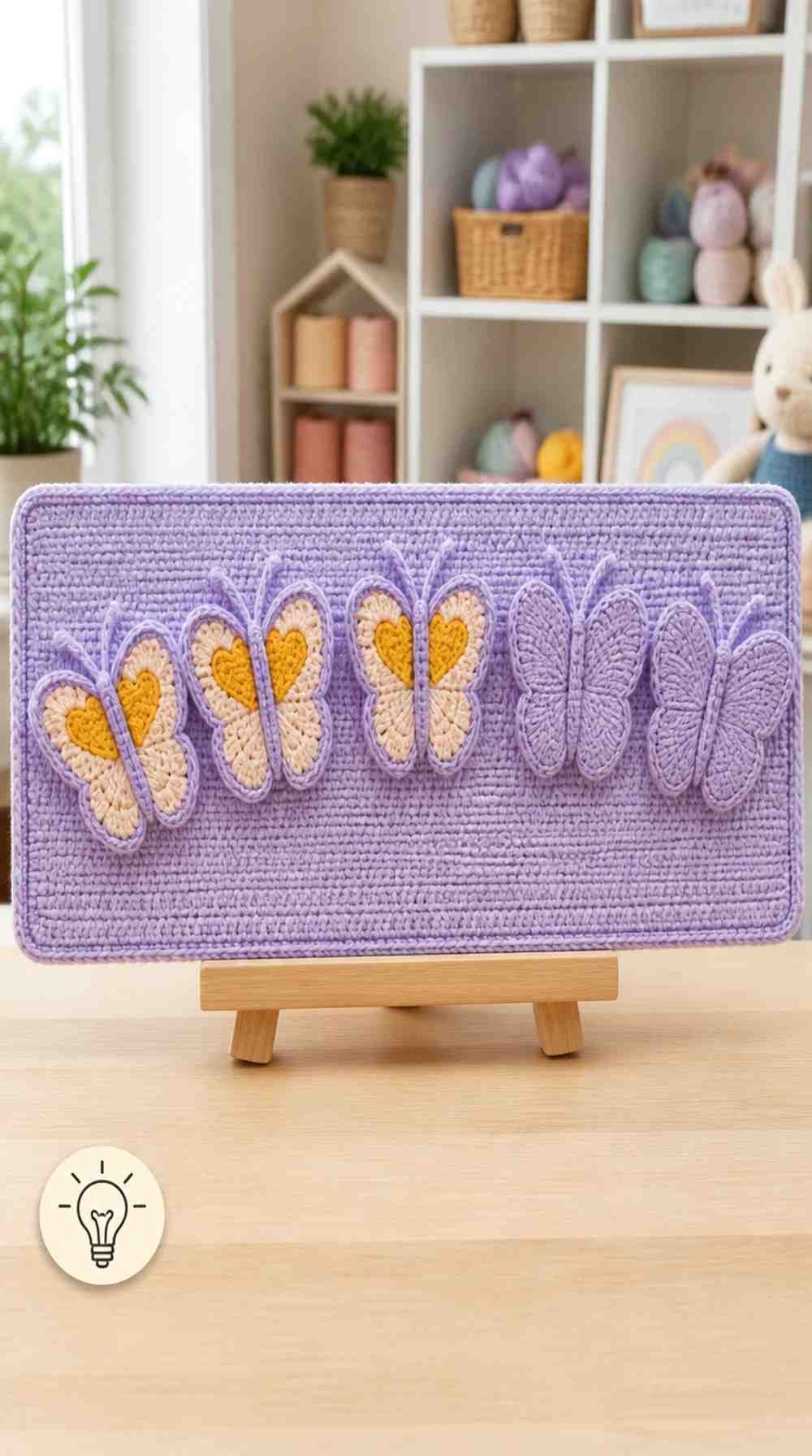
Lavender crochet forms a soft rectangular reward board with five large butterflies arranged in a rising curve. Three butterflies have their wings folded open to reveal cream, peach, and golden-heart details, while two remain closed. Every butterfly stays attached to the board at its central crocheted body.
The flip-wing arrangement provides a reusable marker system without separate reward tokens. Children can see which butterflies have opened as progress builds. The wings need enough flexibility to fold repeatedly while keeping their stitched centers firmly attached to the backing.
- No loose markers: Permanently connected butterflies avoid the need for a separate storage pocket or a collection of removable pieces.
- Wing movement: Each broad crochet wing should fold naturally at the center rather than stretching its stitches when opened.
- Visible progress: The contrast between open cream-and-peach wings and closed lavender wings makes completion easy to notice.
- Decorative simplicity: The golden hearts are stitched beneath the wings, not added as small detachable ornaments.
10. Crochet Navy Treasure-Coin Reward Trail
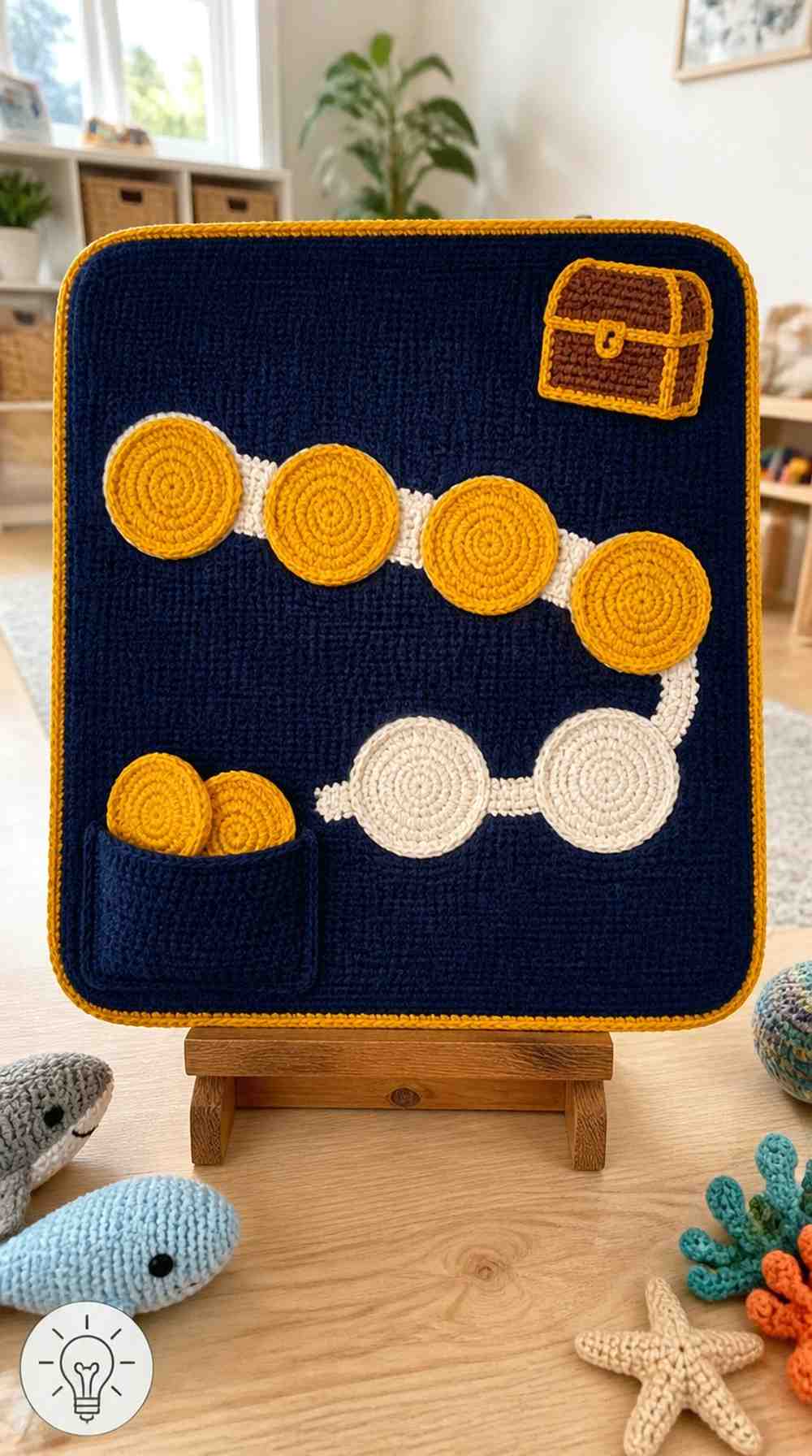
Navy-blue crochet provides the background for a curved cream progress trail with six large circular positions. Four oversized mustard-gold crochet coin tokens fill the first four spaces, while two spare coins rest in a corner pocket. A small cocoa-and-gold treasure-chest appliqué decorates the upper corner.
The winding trail gives this board a game-like appearance without requiring a complicated scoring system. Each flat crochet coin has a raised concentric stitch ring rather than printed numbers or tiny metal details. The treasure chest remains firmly attached to the board as decoration.
- Curved progress path: The six positions create a visible route, helping children recognize how many steps remain.
- Soft coin markers: Large flat crochet circles are different from actual coins and should not include hard inserts or loose metallic decorations.
- Fixed treasure-chest motif: Keeping the chest permanently stitched to the background avoids introducing another removable small object.
- Clear goal setting: The family can explain what completing the trail means before the first token is placed.
11. Crochet Peach Rainbow Arch Token Board
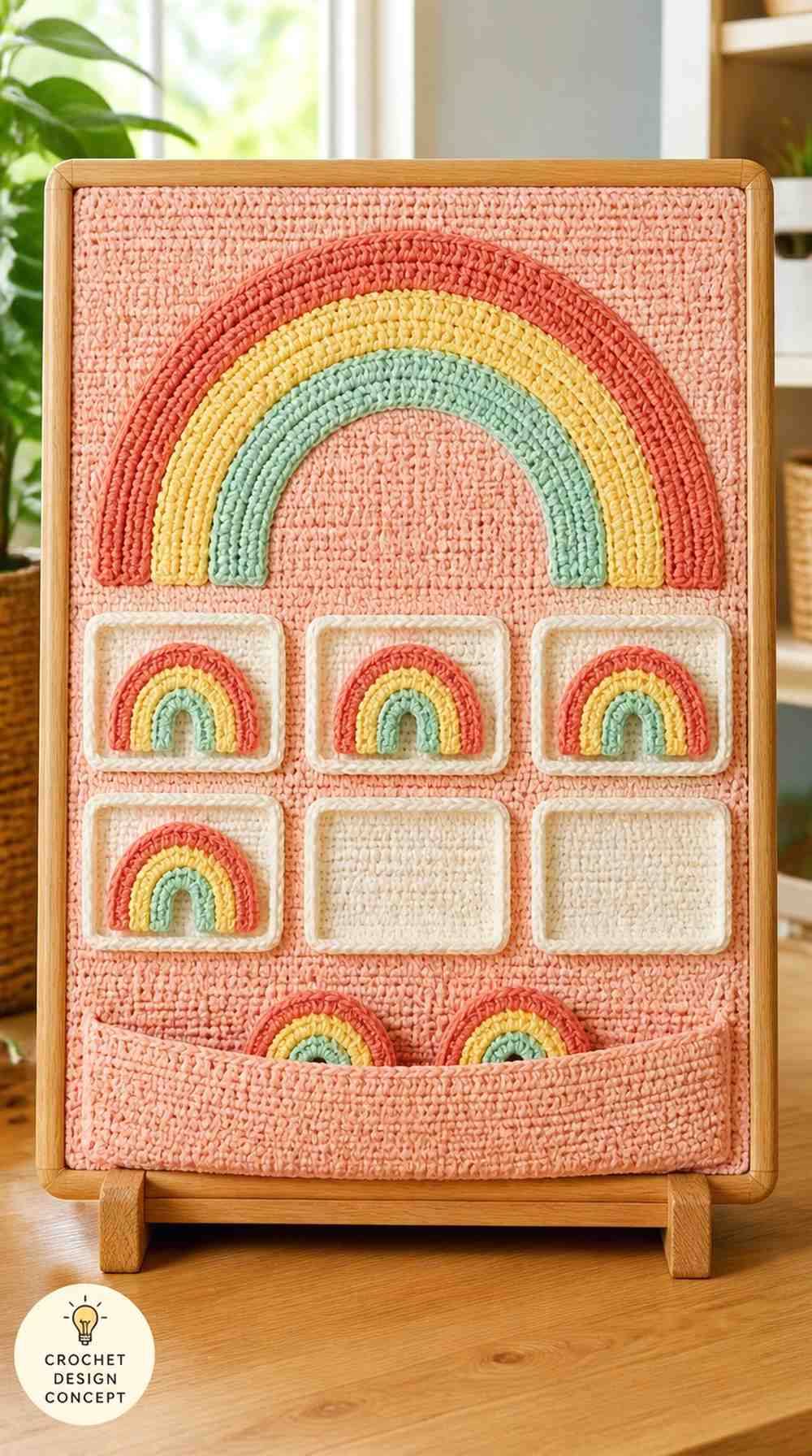
Peach-colored crochet creates a broad activity board with three concentric rainbow arches in coral, butter yellow, and mint. Six cream rectangular pockets sit beneath the arches in two rows of three. Four large rainbow-shaped crochet tokens fill the first four pockets, while two remain in the lower storage compartment.
The repeated rainbow shapes make this design feel coordinated and easy to recognize. The pockets keep the removable tokens separate, and their two-row layout avoids a very long board. Each token uses three joined crochet arcs rather than separate decorative clouds.
- Six-pocket grid: The two-by-three layout can suit a short routine that needs several clearly separated completion positions.
- Rainbow tokens: Each multicolored motif needs securely joined arcs so its layers remain connected during handling.
- Pocket visibility: Leave the top of each token exposed enough to distinguish filled pockets from empty ones.
- Decorative consistency: The large rainbow arches repeat the colors of the smaller tokens without requiring printed labels.
12. Crochet Mint Foldout Reward Book Board
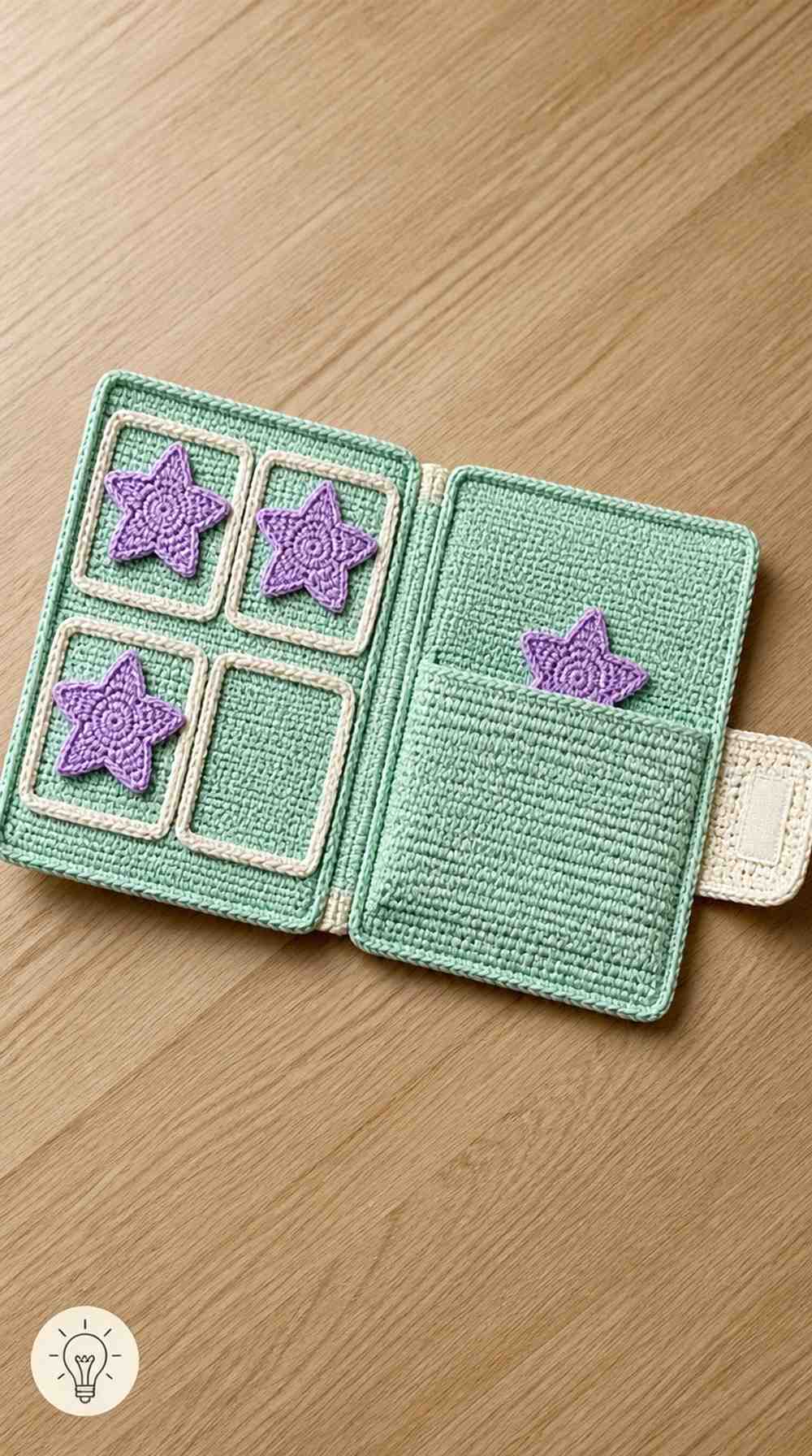
Mint-green crochet forms a portable foldout reward board with two firm fabric-backed pages connected by a reinforced spine. The left page contains four cream-bordered square pockets, three holding oversized lilac star tokens. The right page has a wider mint storage pocket containing the remaining star, while a broad cream fastening tab rests open beside the book.
The book-style layout offers a compact alternative to an upright reward board. It can be opened to display progress and folded away afterward. Because the pages have firm backing, the spine and closing tab need enough flexibility to work without squeezing the stored tokens.
- Four-step format: A small grid works for a brief routine where fewer progress markers may be easier to understand.
- Separate storage page: The spare star has its own pocket instead of mixing with the four progress positions.
- Foldout construction: Both rigid-backed pages should open flat through a flexible crochet spine.
- Closing tab: A broad fabric fastener avoids hard buttons, but its attachment must be secure and checked for wear.
13. Crochet Cocoa Reversible Goal Tile Board
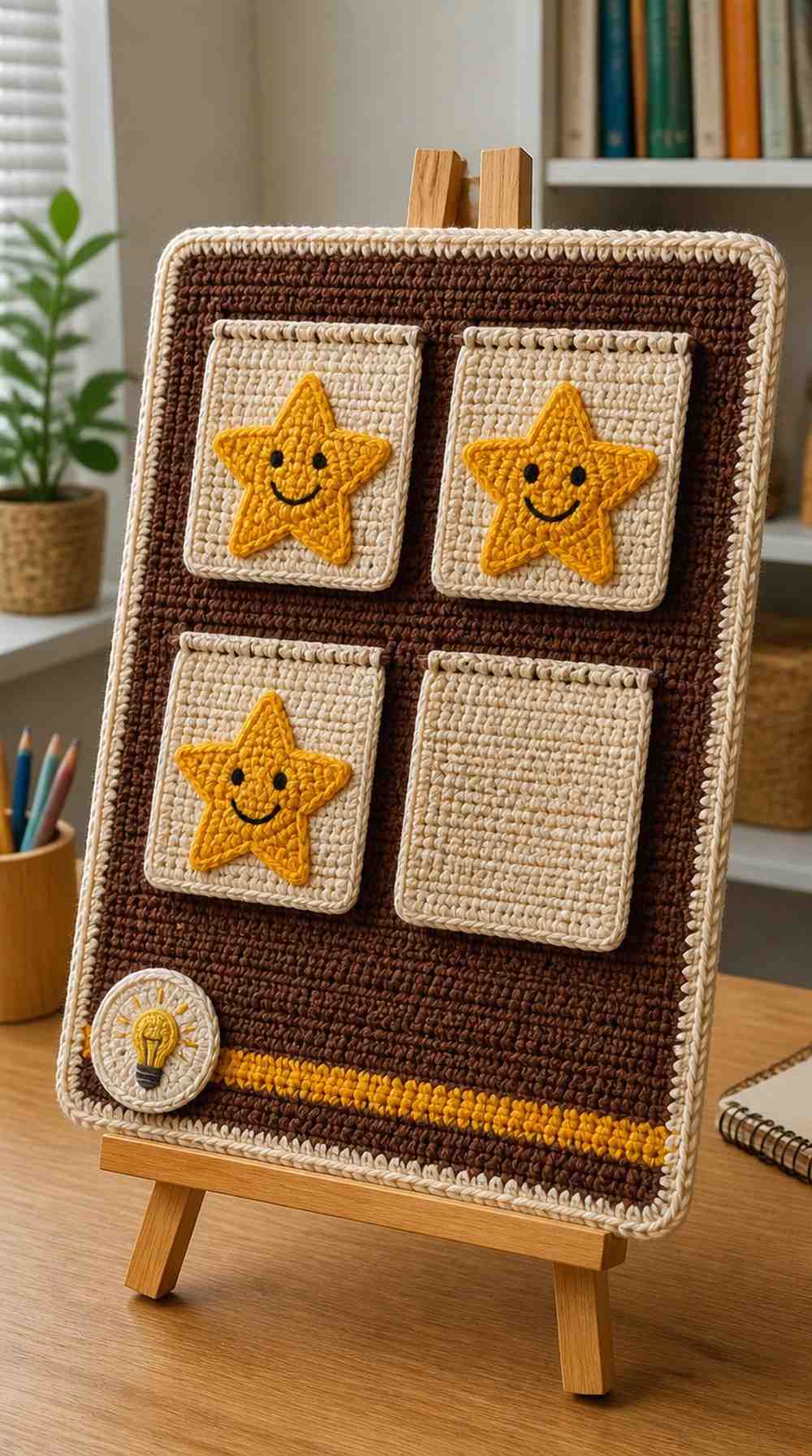
Cocoa-brown crochet forms a compact board with four large square flip tiles arranged in a two-by-two grid. Three tiles are turned upward to display golden crochet stars, while the fourth shows its plain oatmeal face. A narrow cream border and mustard-colored lower band finish the board.
The reversible-tile construction uses permanently attached fabric markers instead of removable tokens. Each tile flips along its upper stitched edge, creating an obvious change when a task is completed. Its four-position layout keeps the overall board relatively small and uncluttered.
- Four-square arrangement: The simple grid may suit a short routine with four clear expectations rather than a longer weekly tracker.
- Two visual faces: Plain oatmeal and golden-star sides make completed steps recognizable without reading labels.
- Permanently attached tiles: Stitched fabric hinges keep every marker connected to the cocoa backing.
- Hinge maintenance: Check the upper seam of each tile regularly, since repeated folding concentrates movement at the attachment.
14. Crochet Tangerine Sibling Star Reward Board
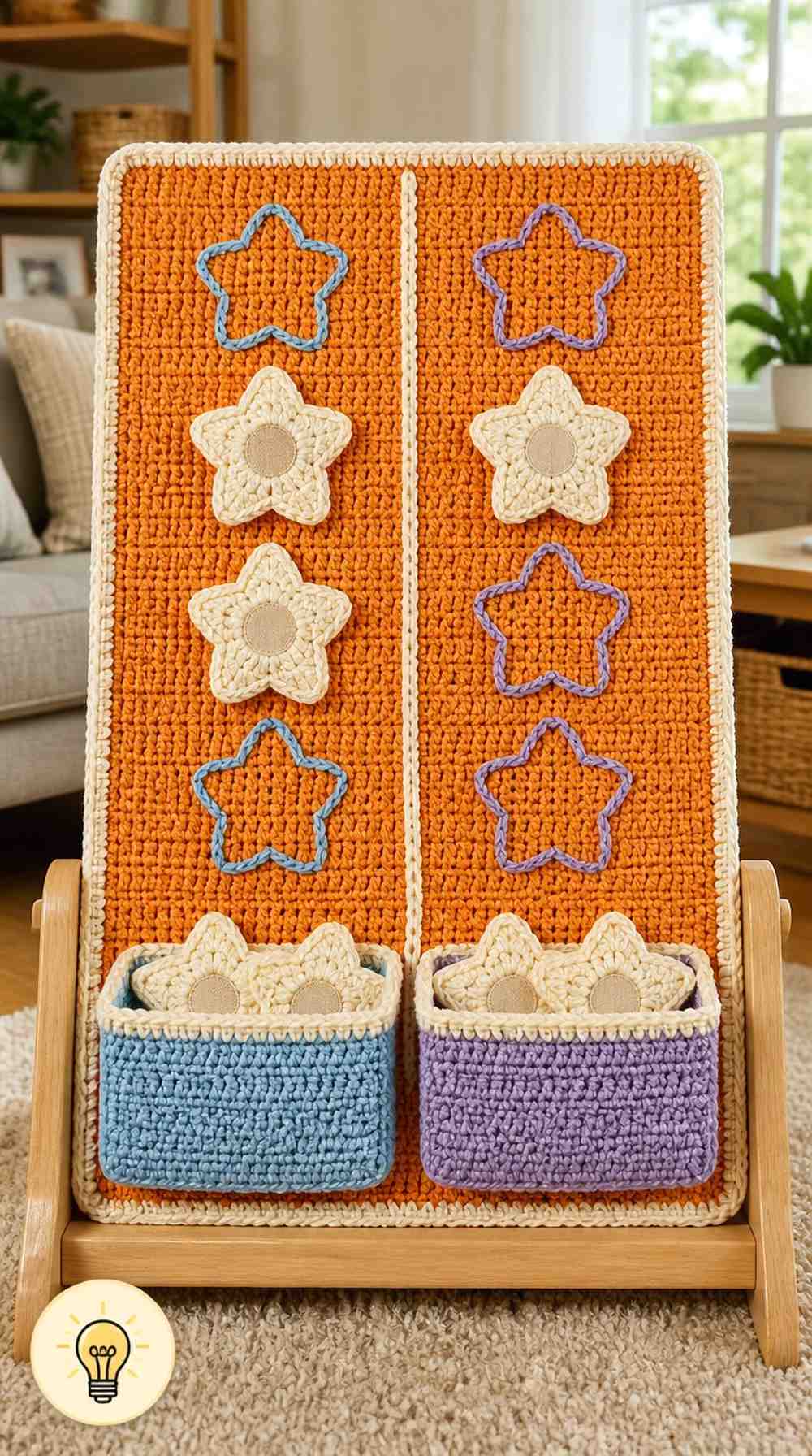
Tangerine-orange crochet creates a shared reward board with two equal progress columns separated by a cream stitched line. Pale-blue star outlines distinguish the left column, while lavender outlines mark the right. Two cream star tokens are attached on the left, one on the right, and the remaining markers sit in separate matching storage pockets.
The split arrangement provides two independent progress areas within one display. It can help families organize different goals without mixing tokens. Each column should be explained clearly to the children using it, rather than turning the board into an unwanted competition.
- Separate progress: Three spaces per column allow each child or activity to advance independently.
- Color-coded areas: Pale blue and lavender distinguish the two sections without needing permanently printed names.
- Individual storage pockets: The separate lower pockets help prevent the cream tokens for the two columns from being mixed.
- Supportive use: Compare each child’s progress with their own goal rather than using the shared board to rank siblings.
15. Crochet Ivory Heart Countdown Banner Board
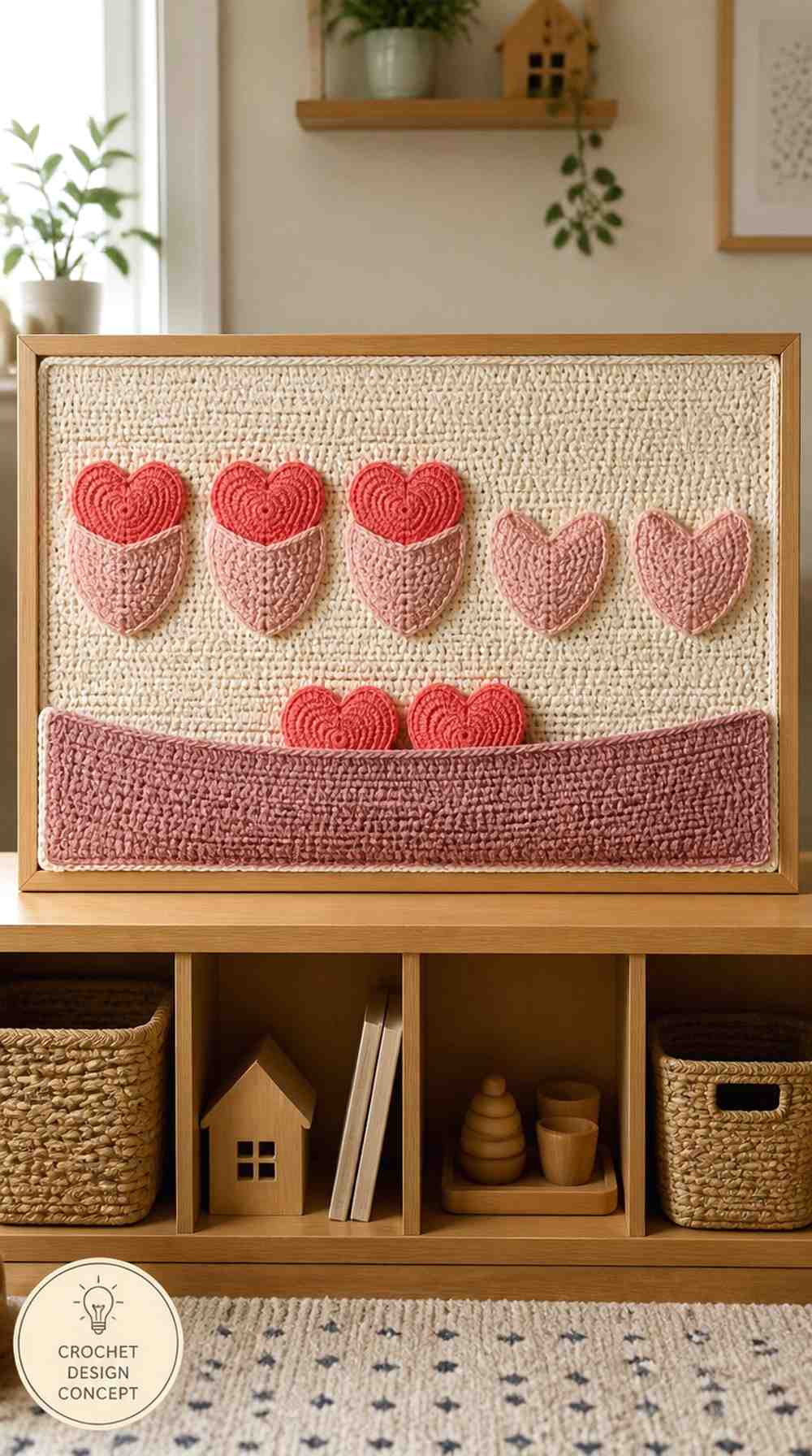
Warm-ivory crochet forms a long horizontal reward board with five large blush-pink heart-shaped pockets. Three flat coral crochet hearts rest inside the first three pockets, while two empty pockets remain. A dusty-rose storage compartment beneath the row holds the remaining two tokens.
The heart countdown design creates a soft, encouraging appearance for a family activity shelf. Its broad pockets provide a clear place for each reusable marker. The repeated heart shapes are simple enough to understand without additional symbols, although the intended goal should always be explained separately.
- Five-heart sequence: The row can represent progress toward one clearly explained activity or family goal.
- Heart-shaped pockets: Each opening should hold the broad coral token without squeezing its two rounded upper lobes.
- Extra-token storage: The dusty-rose lower pocket provides a dedicated place for the two unused hearts.
- Gentle presentation: The ivory and blush palette gives the board a calm appearance without needing excessive decoration or bright flashing elements.
Practical Guide to Crochet Reusable Kids Reward Token Boards
A useful reward board should have a simple purpose, clear progress markers, and a design suited to the child’s age and abilities.
Choose an age-appropriate system. Removable crochet tokens can become choking hazards, particularly for children under three and children who still put objects in their mouths. Avoid small detachable parts, beads, magnets, hard buttons, and long hanging cords. Even larger handmade pieces need supervision and inspection. Permanently attached flip tabs can reduce loose pieces but are not automatically safe or toy-certified.
Use clear, achievable goals. Start with a short routine or behavior the child can understand, such as putting books away or practicing a daily habit. Explain what each token represents and when it can be placed.
Keep encouragement positive. Reward boards work best as a way to recognize effort and progress rather than shame children. Avoid removing earned tokens as punishment, creating unfair competition, or withholding basic needs and affection.
Provide stable support. Use an appropriate rigid backing and secure tabletop stand or suitable wall mounting. Keep the board away from beds, cribs, and places where a child could pull it down.
Make markers easy to handle. Choose flat, visible crochet shapes that fit their pockets or placement spaces without pulling the board out of shape. Check seams and fastening patches for wear.
Reset and clean the board. Decide how the system restarts, store removable markers securely between uses, and follow the yarn’s care instructions. Check for detached stitches or damaged components before every use.
For broader ideas about organizing small items on a wall, see 20 Crochet Hanging Wall Pocket Organizer Ideas. It explores pocket layouts and backing arrangements that may inspire an adult-made reward display.
Want to Make Something Similar?
If you want to understand how to construct a crochet backing with an attached pocket, Made by KYM offers a Granny Square Wall Pocket Free Crochet Pattern. The tutorial explains granny-square construction, a backing panel, joining, and an upper hanging arrangement.
For another example of a pocket-based wall project, Happy Heartsy shares a Crochet Wall Hanging Pockets Free Pattern, including the process of joining and arranging hanging compartments.
These resources teach general crochet techniques, not the exact reward boards pictured here. Neither tutorial establishes that a finished item is safe for use by children. A child-oriented version requires additional age-appropriate design choices, suitable mounting, and adult safety checks.
Comparison: Which Crochet Reward Token Board Should You Choose?
Each design handles progress tracking differently, so the best option depends on how the family wants to use it.
| Design | Main advantage | Practical trade-off |
|---|---|---|
| Crochet Coral Five-Star Progress Board | Simple five-step display | Removable stars need safe storage |
| Crochet Cornflower Rainbow Cloud Token Board | Cheerful six-step visual theme | Curved arrangement takes more space |
| Crochet Mustard Flip-Tab Task Board | No separate tokens to lose | Hinges need durable stitching |
| Crochet Plum Flower Garden Reward Board | Colorful nature-themed markers | Several shaped flower pieces |
| Crochet Teal Rocket Launch Token Ladder | Clear upward progress | Taller display requires stable support |
| Crochet Oatmeal Seven-Day Token Grid | Seven visible positions | Wide horizontal layout |
| Crochet Lavender Butterfly Flip-Wing Board | Attached folding markers | More detailed hinge construction |
| Crochet Mint Foldout Reward Book Board | Compact foldaway format | Rigid pages and spine need fitting |
| Crochet Tangerine Sibling Star Reward Board | Two independent progress sections | Needs thoughtful, noncompetitive use |
| Crochet Ivory Heart Countdown Banner Board | Soft five-step countdown | Long board needs shelf space |
For the clearest starting point, the Crochet Coral Five-Star Progress Board offers a straightforward layout with five visible spaces. The Crochet Oatmeal Seven-Day Token Grid may be better for a goal tracked across a full week.
If keeping loose pieces together is a concern, the Crochet Mustard Flip-Tab Task Board, Crochet Lavender Butterfly Flip-Wing Board, and Crochet Cocoa Reversible Goal Tile Board use permanently attached markers.
For a themed display, the Crochet Teal Rocket Launch Token Ladder, Crochet Plum Flower Garden Reward Board, and Crochet Navy Treasure-Coin Reward Trail give progress a more imaginative appearance.
If a board needs to be stored between activities, the Crochet Mint Foldout Reward Book Board introduces a compact format. For siblings or two separate activity categories, the Crochet Tangerine Sibling Star Reward Board keeps progress in two distinct columns.
Whatever design you prefer, prioritize the child’s safety, clarity of use, and a supportive goal over decorative complexity.
Conclusion
Crochet reusable kids reward token boards offer a colorful way to make progress visible through familiar shapes and simple routines. Stars, clouds, flowers, leaves, hearts, and rainbows can make each completed step easy to recognize, while pockets, flip tabs, and foldout pages provide different ways of recording progress.
These 15 ideas show that a reward board can be adapted to suit many family settings. A simple five-step tracker may be enough for one routine, while a weekly grid or two-column board can accommodate a different arrangement. Choose a design that supports realistic goals, keeps the experience encouraging, and uses materials and attachments appropriate for the children involved.
Which concept would you choose for a family activity corner: the coral star board, the rainbow cloud display, or the butterfly flip-wing board? Share your favorite and whether you prefer removable markers or permanently attached flip tabs.
Frequently Asked Questions
1. Are crochet reward token boards safe for young children?
Not automatically. Small or detachable pieces may present choking hazards, and loose yarn, damaged seams, cords, or fastening materials can create additional risks. Removable-token designs are not appropriate for children under three and may also be unsuitable for older children who mouth objects. Use close adult supervision, inspect the board regularly, and do not assume a handmade design is toy-certified.
2. How many reward tokens should a children’s board have?
There is no single correct number. The board should match a clear, achievable goal and the child’s ability to understand the sequence. This collection includes four-, five-, six-, and seven-position layouts. A shorter board may be easier for one routine, while a longer arrangement may suit a series of related activities.
3. What can children earn reward tokens for?
Families might use tokens to recognize specific efforts such as completing a short reading session, putting away belongings, practicing a routine, or working toward a personal goal. The expectations should be realistic, clearly explained, and suited to the child. Avoid turning the board into a system of shame, harsh punishment, or constant sibling comparison.
4. Is a flip-tab reward board better than one with removable crochet tokens?
A flip-tab board keeps its markers connected, which reduces the number of loose pieces to manage. Removable tokens offer a different hands-on interaction but require additional storage and safety precautions. Neither format is automatically suitable for every age or child. The finished construction, mounting, and individual needs matter more than the visual style.
5. Are these 15 crochet reward token boards actual patterns?
No. These are original crochet design visualizations intended to inspire colors, token shapes, pocket arrangements, progress layouts, and display styles. They are not tested handmade products, certified toys, or complete crochet patterns. Anyone making a similar board should adapt the design to the intended user’s age and abilities and check every component for safety before use.