A crochet laptop charger storage sleeve can make an everyday work accessory easier to organize while adding a small handmade detail to your desk or travel bag. These 16 inspiration ideas explore side-loading slipcases, divided compartments, buttoned envelopes, lined pouches, adjustable wraps, and compact zipper cases. From warm terracotta and natural oatmeal to dusty denim, teal, charcoal, and butter yellow, each design offers a different combination of crochet texture and storage convenience.
Laptop chargers vary in shape, thickness, cable arrangement, and connector size, so a good storage sleeve needs more thought than simply making a small rectangular bag. Some concepts hold a charger brick alone, while others provide a separate place for a loosely coiled cable. This collection helps you compare openings, removable closures, fabric linings, and travel-friendly shapes while keeping electrical equipment safety in mind.
These are AI-generated crochet design visualizations for inspiration, not photographs of tested handmade sleeves or step-by-step patterns. Every concept is intended for storing an unplugged, fully cooled charger, never for covering a charger while it is operating.
Quick Design Selection Guide
- For a simple charger brick: The Crochet Terracotta Side-Loading Charger Sleeve and Crochet Ivory Corner-Cradle Adapter Sleeve provide straightforward slip-in arrangements.
- For keeping the charger and cable together: Compare the Crochet Oatmeal Twin-Compartment Charger Case, Crochet Teal Side-Saddle Cable Sleeve, and Crochet Seafoam Twin-Zip Charger Organizer.
- For a removable closure: The Crochet Denim Button-Flap Charger Pouch, Crochet Plum Adjustable Button Wrap, and Crochet Blush Scalloped Charger Envelope offer different fastening styles.
- For a fabric-lined case: The Crochet Charcoal Lined Zipper Charger Case and Crochet Mocha-style alternatives are represented here by the lined Crochet Ivory Corner-Cradle Adapter Sleeve and Crochet Mustard Drawstring Charger Pouch.
- For an organized workspace: The Crochet Butter Yellow Label-Pocket Charger Sleeve makes identification easier, while the Crochet Burgundy Hanging-Tab Charger Keeper offers a small hanging-storage concept for suitable lightweight adapters.
1. Crochet Terracotta Side-Loading Charger Sleeve
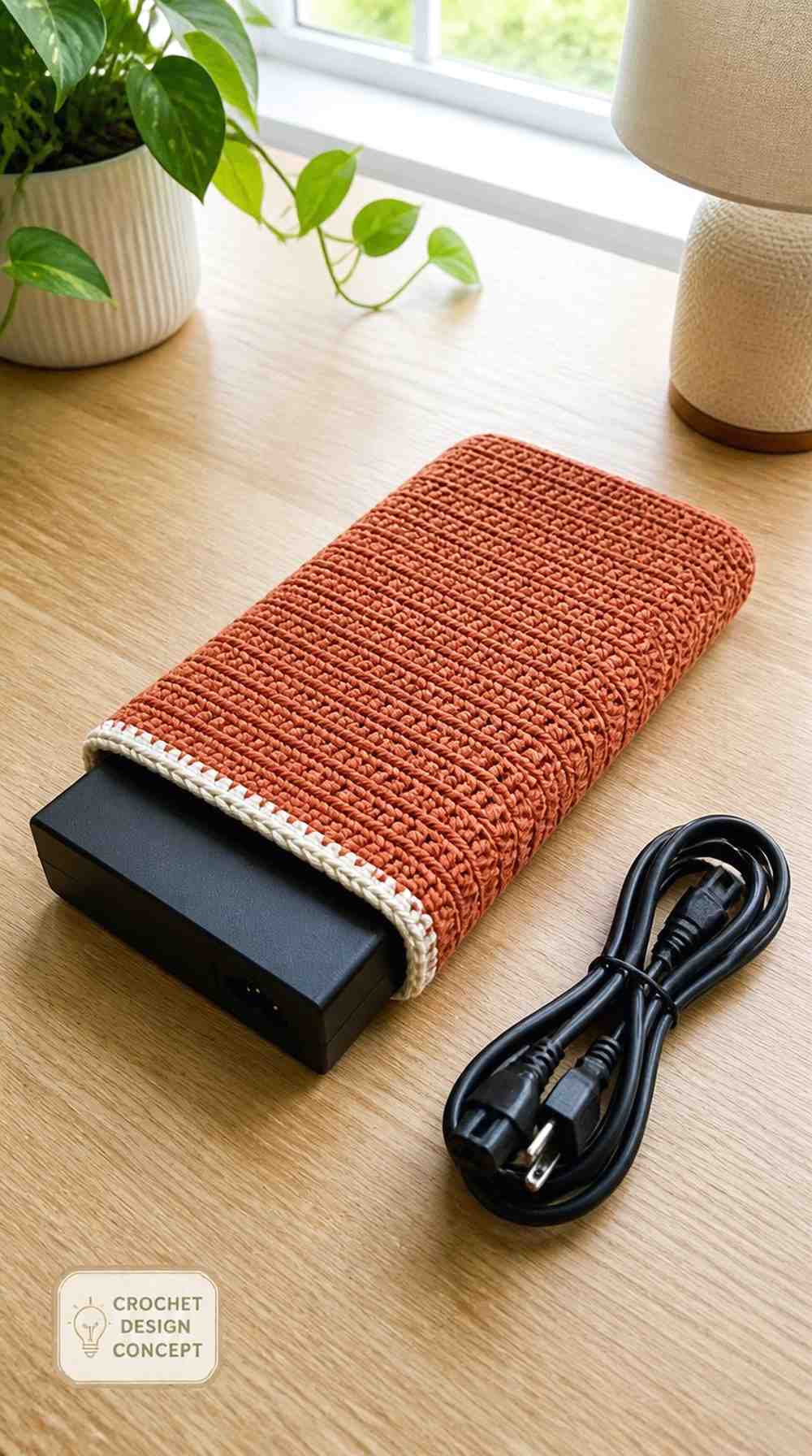
Warm terracotta crochet forms a slim rectangular sleeve with dense horizontal rows and a narrow ivory border around the side opening. A matte-black laptop charging brick sits partly inside, while its separate cable rests in a loose coil nearby. The rounded corners keep the crochet silhouette simple.
This is a straightforward concept for someone who stores a charger on a desk or shelf. The short-side opening allows the adapter to slide into the case, but the fit needs enough clearance to avoid pressing against the equipment.
- Side Opening: Size the ivory-bordered entrance around the charger’s full width and thickness, leaving room to insert the brick without scraping its corners.
- Dense Crochet Rows: Closely worked stitches create a tidy fabric surface, although the sleeve should not be treated as impact protection or electrical insulation.
- Cable Storage: Keep the separate cable loosely coiled beside the sleeve rather than winding it tightly around the power brick.
2. Crochet Oatmeal Twin-Compartment Charger Case
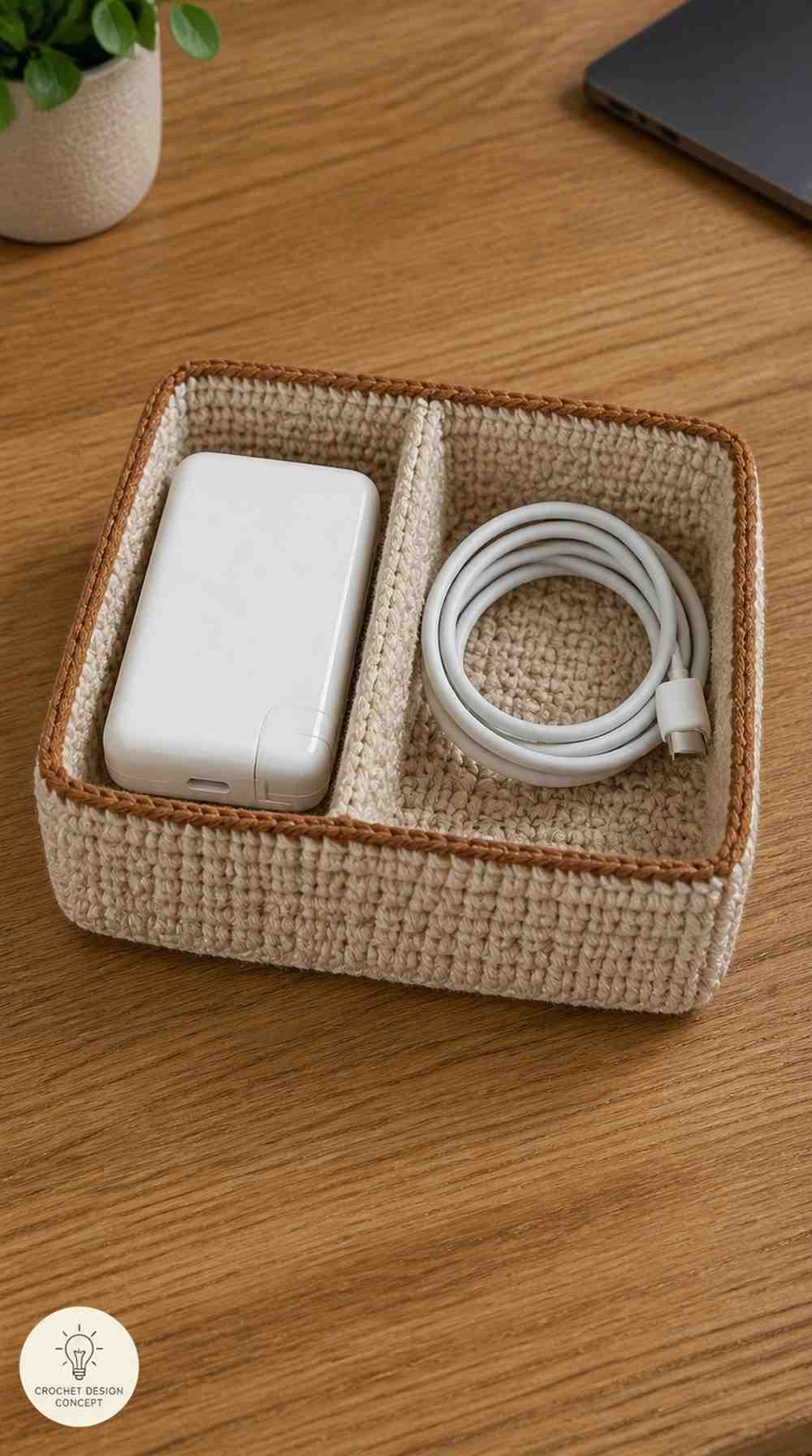
Natural oatmeal crochet creates a broad, open storage case with two rectangular compartments. The left section holds a white laptop power adapter, while the right contains its separate white cable in a relaxed coil. A caramel border frames the openings, and a vertical crochet seam divides the two areas.
The split arrangement is useful for keeping the adapter and cable from becoming tangled together. It also allows each item to be removed independently, provided the compartments are sized for the actual charger set.
- Two Storage Zones: Measure the charger and cable separately so the center divider does not leave either compartment too narrow.
- Central Seam: Reinforce the vertical crochet join to help the compartments retain their shape when the case is lifted or repositioned.
- Loose Cable Coil: Leave enough room for a natural cable loop without forcing sharp bends near the connectors.
3. Crochet Denim Button-Flap Charger Pouch
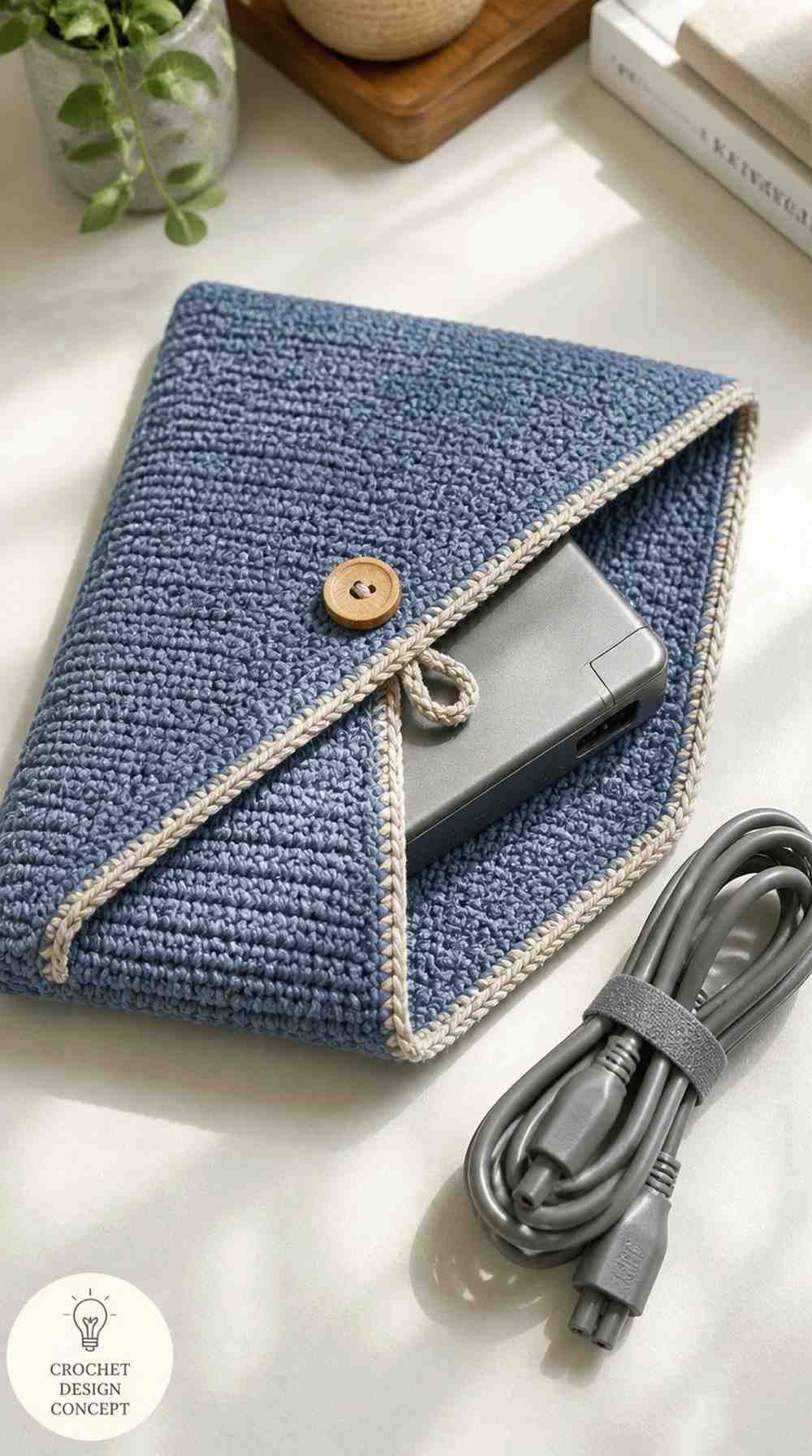
Dusty-denim-blue crochet gives this envelope pouch a calm, practical appearance. Its broad flap folds over a silver-grey charging brick, with oatmeal edging around the opening and one small wooden button at the front. A matching crochet loop holds the closure.
The buttoned flap makes the pouch easy to recognize as a small storage accessory rather than a permanently fitted equipment cover. Its most important design consideration is keeping the closure comfortably away from the charger’s corners and cable connection points.
- Flap Coverage: Allow enough overlap to conceal the charger without pulling the blue crochet tightly across its rectangular body.
- Button Position: Keep the wooden button on the outward-facing flap where it will not create a hard pressure point against the adapter.
- Separate Cable: Store the detached cable beside the pouch, or consider a separate cable keeper instead of forcing it beneath the flap.
4. Crochet Mustard Drawstring Charger Pouch
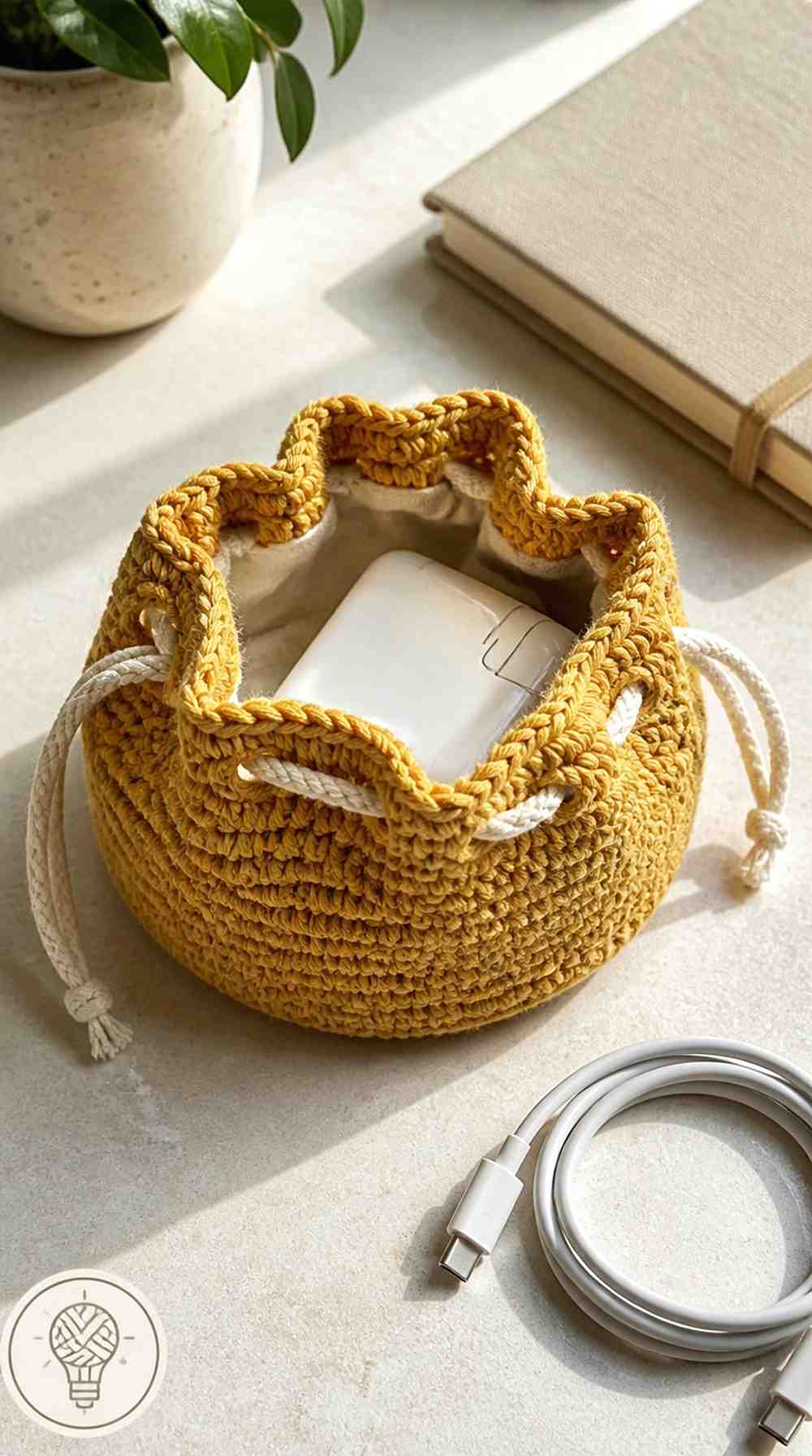
Mustard-yellow crochet forms a small bucket-style pouch with a flat oval base, short sidewalls, and cream drawstring eyelets around the upper opening. A white charging adapter rests inside against a plain cream fabric lining, while its separate cable lies nearby.
The softly rounded shape gives this design a different feel from a rectangular slipcase. It may suit a compact power brick, although the opening should remain generous enough for removal without tightening the drawstring around the adapter.
- Oval Base: Check that the flat bottom supports the charger’s shape without creating a narrow pressure point beneath its corners.
- Drawstring Opening: Keep the cream cord loose and the entrance wide enough to remove the brick without tugging its connectors.
- Fabric Lining: Choose a smooth interior fabric with neat joins, recognizing that the lining does not provide certified heat or impact protection.
5. Crochet Charcoal Lined Zipper Charger Case
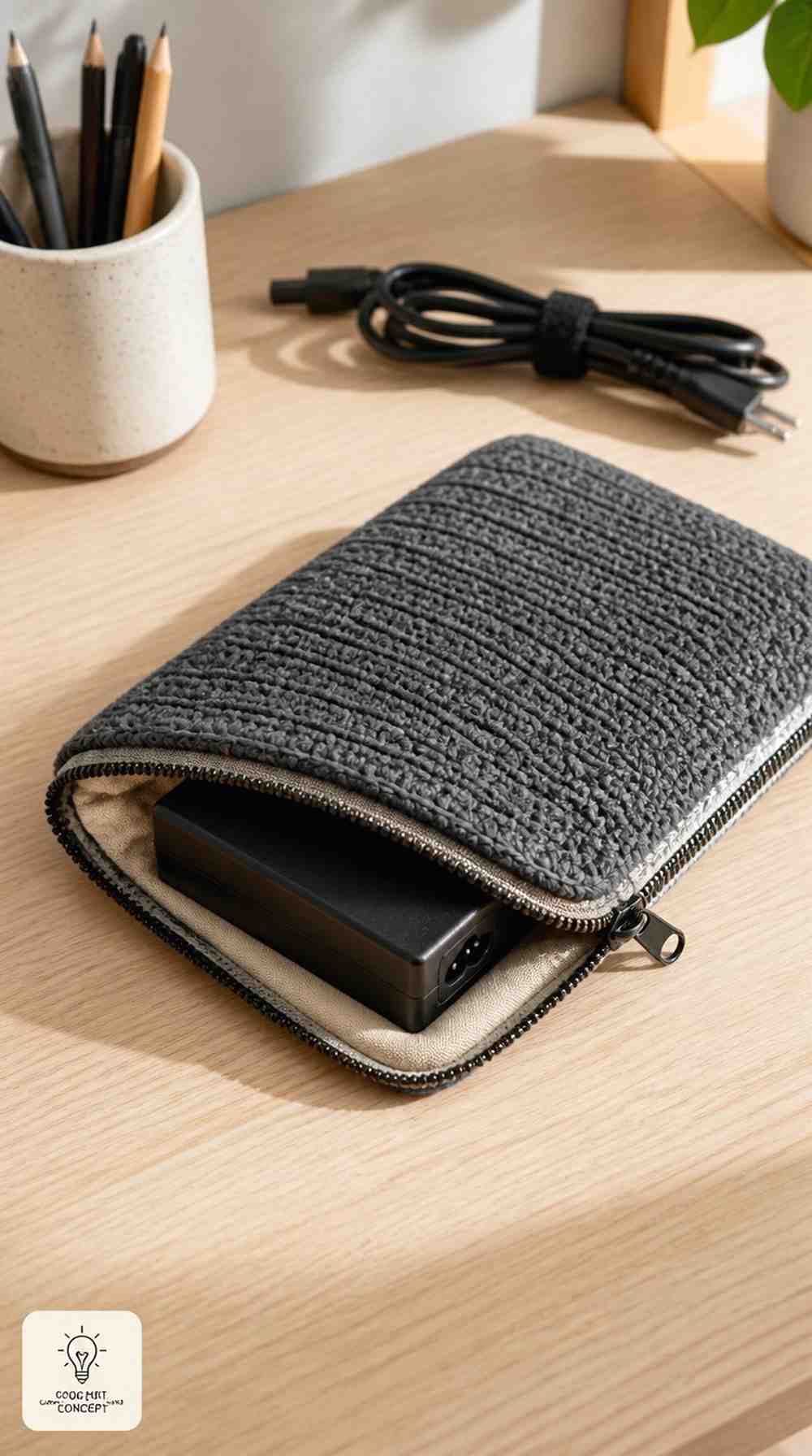
Charcoal-grey crochet creates a neatly shaped rectangular storage case with silver-grey edging and a black zipper along one long side. The partly opened case reveals a black laptop power adapter inside a soft beige fabric lining.
This enclosed design offers a more finished storage appearance than an open slipcase. Its zipper and lining require careful placement, particularly around hard adapter corners and any permanently attached cable.
- Long-Side Zipper: A broad opening can make insertion easier, provided the charger does not scrape against the zipper teeth.
- Interior Fabric: Keep the beige lining smooth and free of thick interior seams that could press against the adapter.
- Storage Limitation: Never charge a laptop with its power adapter inside the zippered crochet case; the sleeve must be removed before use.
6. Crochet Olive Foldout Charger Wallet
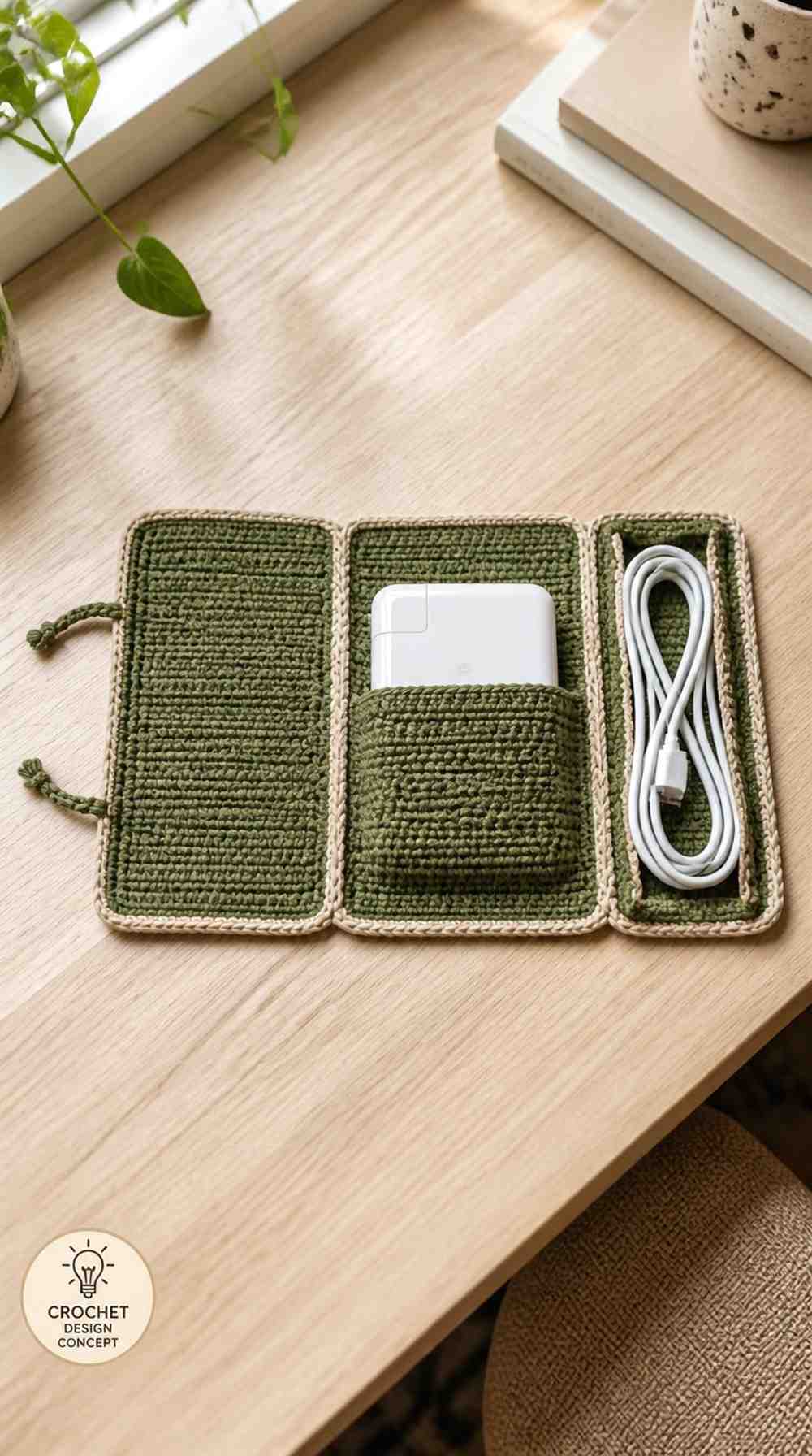
Muted olive-green crochet forms a three-panel organizer that opens flat on a desk. The central panel contains a shallow pocket holding a white charging brick, while a cream-bordered pocket on the right stores the detachable cable. The left panel folds over as a protective flap.
Two short olive ties provide a soft fastening arrangement when the organizer is folded. The separate panels are useful for keeping accessories visible when packing, although their joined edges need to remain flexible and reasonably flat.
- Three-Panel Layout: Leave enough folding room between the charger pocket and cable pocket so neither item is compressed when the wallet closes.
- Cable Compartment: Use the right pocket for a loose coil rather than tightly winding the cable around the adapter.
- Folded Storage: Keep the olive ties short and easy to undo, avoiding excessive pressure on the charger when securing the wallet.
7. Crochet Cobalt Mesh-Gusset Charger Pouch
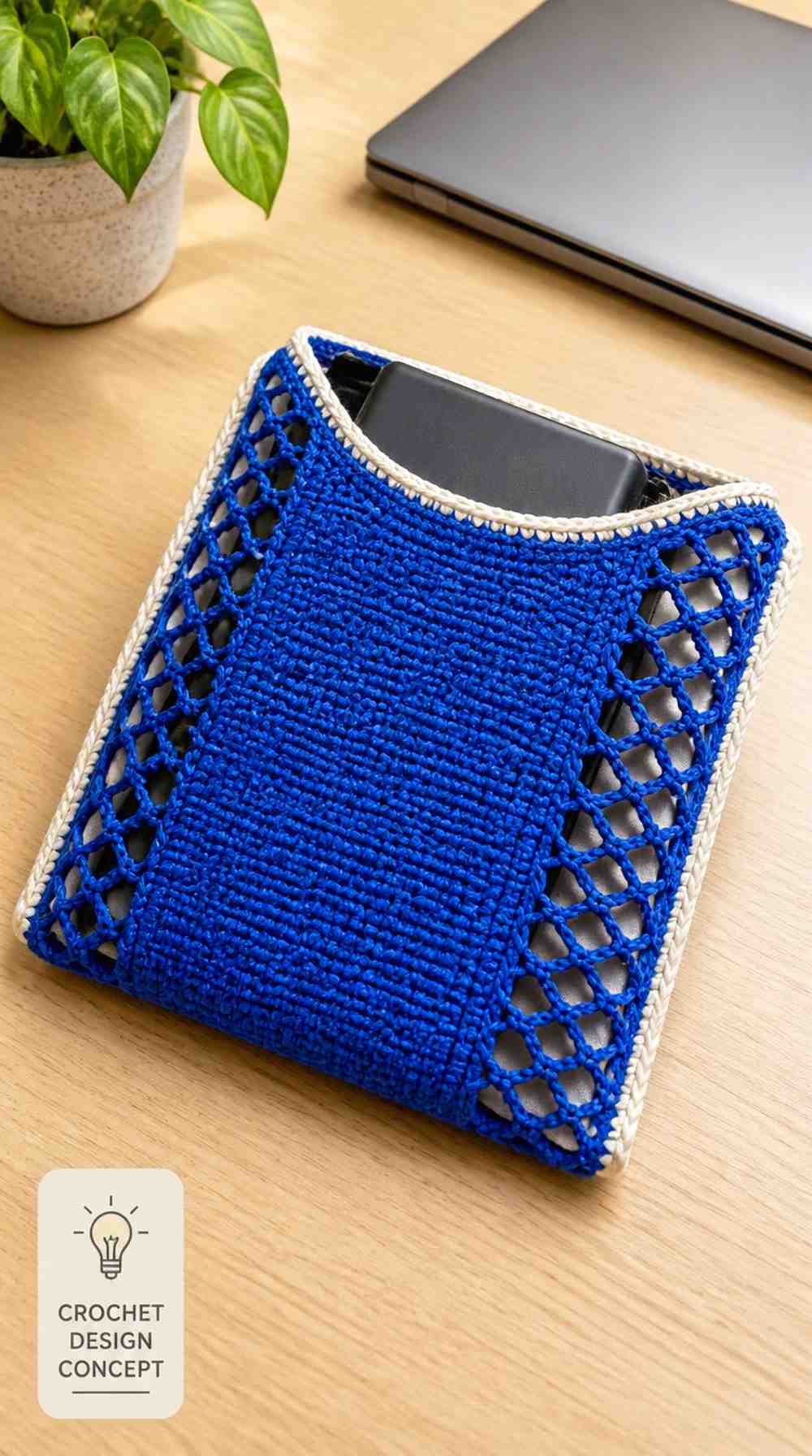
Bright cobalt-blue crochet creates a striking storage pouch with a solid front panel and open-mesh side gussets. A narrow ivory border outlines the broad upper opening, while a smooth cream inner fabric pouch separates the black power adapter from the decorative mesh.
The contrast between dense crochet and openwork gives this idea a more textured appearance. Its mesh sides are a visual feature rather than a promise of cooling or ventilation performance.
- Mesh Gussets: Keep the side openings evenly connected and supported by the solid panel so the pouch does not stretch unevenly around the adapter.
- Inner Fabric Pouch: The cream lining helps separate equipment from open stitch joins, but it must remain removable or easy to clean.
- Dry Storage: Open crochet does not make the case moisture-resistant, so store the cooled charger in a clean, dry environment.
8. Crochet Blush Scalloped Charger Envelope
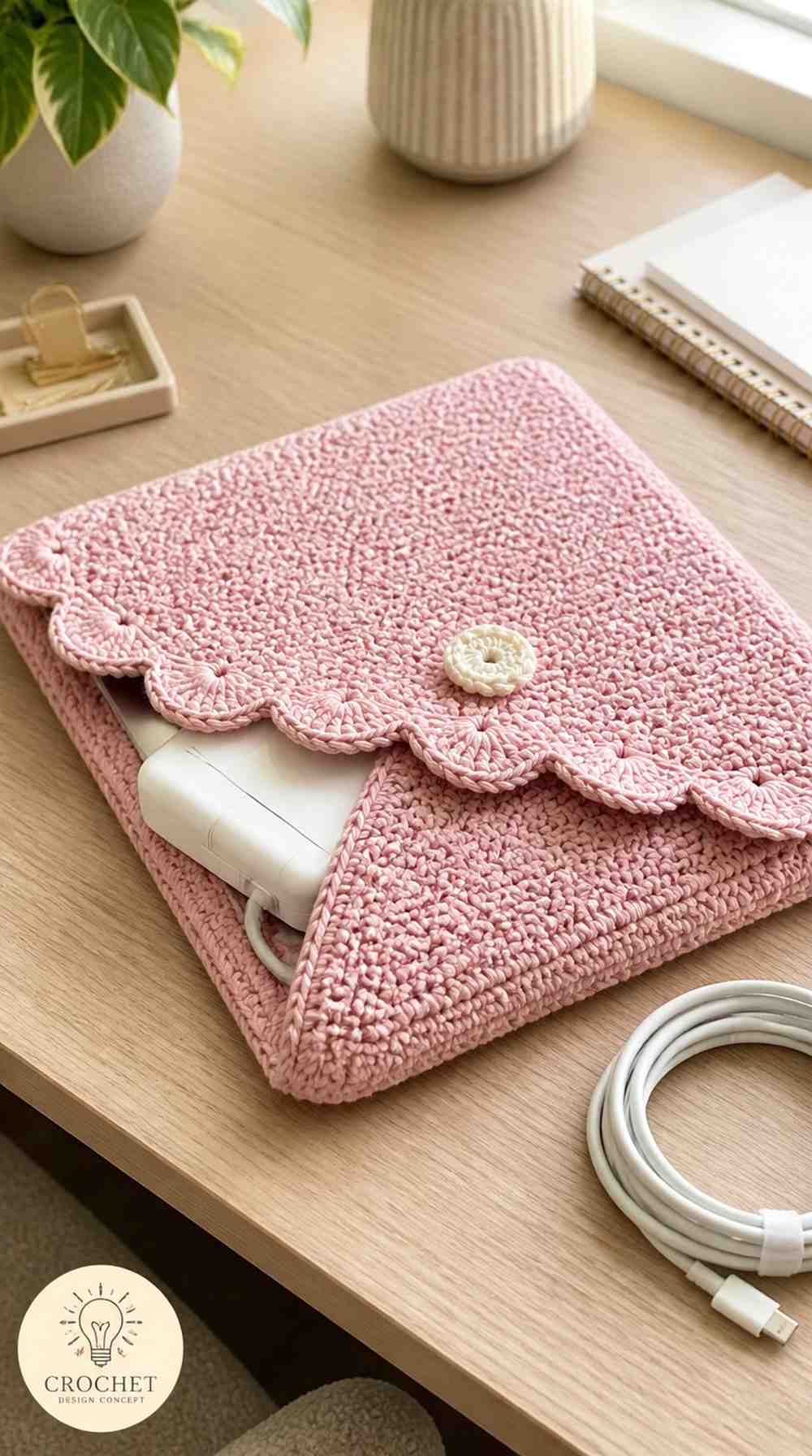
Blush-pink cotton crochet forms a soft envelope with a rounded flap and six small pale-rose scallops along its outer edge. A cream crochet button secures the opening, while a white charging brick rests inside the dense rectangular body.
This concept adds delicate decorative crochet without changing the basic storage purpose. The scalloped flap makes it particularly suitable for a carefully arranged desk or accessories drawer, though the small curved stitches may catch on nearby items.
- Scallop Position: Keep the pale-rose decorative edge outside the storage opening so the charger does not rub against individual scallops.
- Rounded Flap: Shape the flap to cover the pouch entrance while keeping the button easy to reach.
- Snag Awareness: Check that the scallops do not catch on zippers, loose cords, or other objects when the pouch is moved.
9. Crochet Espresso Upright Charger Pocket
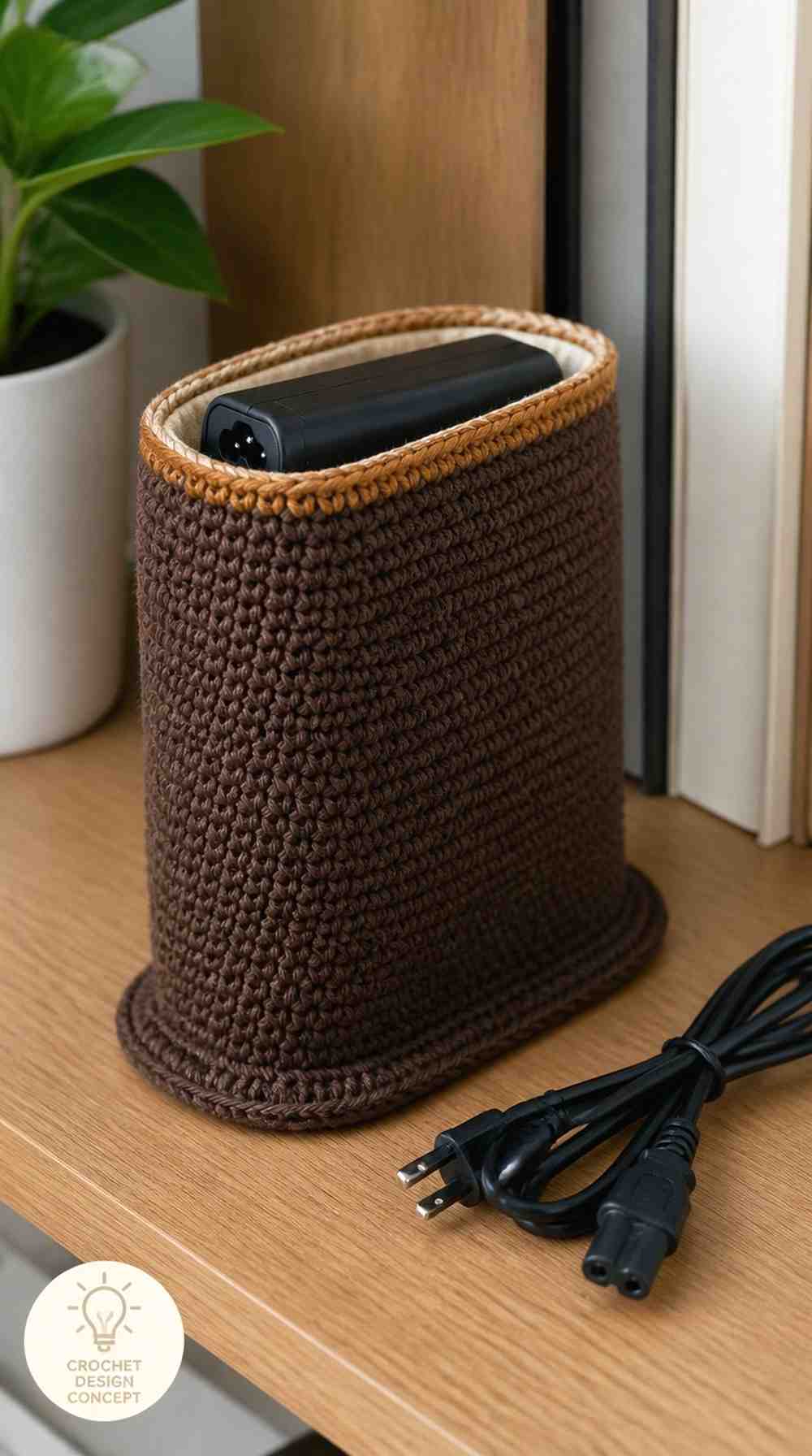
Rich espresso-brown crochet creates a small upright storage pocket with a broad flat base and caramel edging around its upper opening. A black laptop adapter sits inside against an oatmeal lining, with its top edge visible above the pocket.
The upright arrangement is different from the flat cases in this collection. It could suit a dry office shelf where the pouch can stand steadily, provided the adapter’s shape and the crochet base are compatible.
- Stable Base: A broad, flat reinforced bottom is important so the pouch does not lean or tip when the adapter is placed inside.
- Upper Opening: Keep enough clearance to grip the charger body without pulling on its connector or cable.
- Shelf Placement: Use this concept only where the filled pouch can remain stable; a flat case may be better for heavier or awkwardly shaped power bricks.
10. Crochet Teal Side-Saddle Cable Sleeve
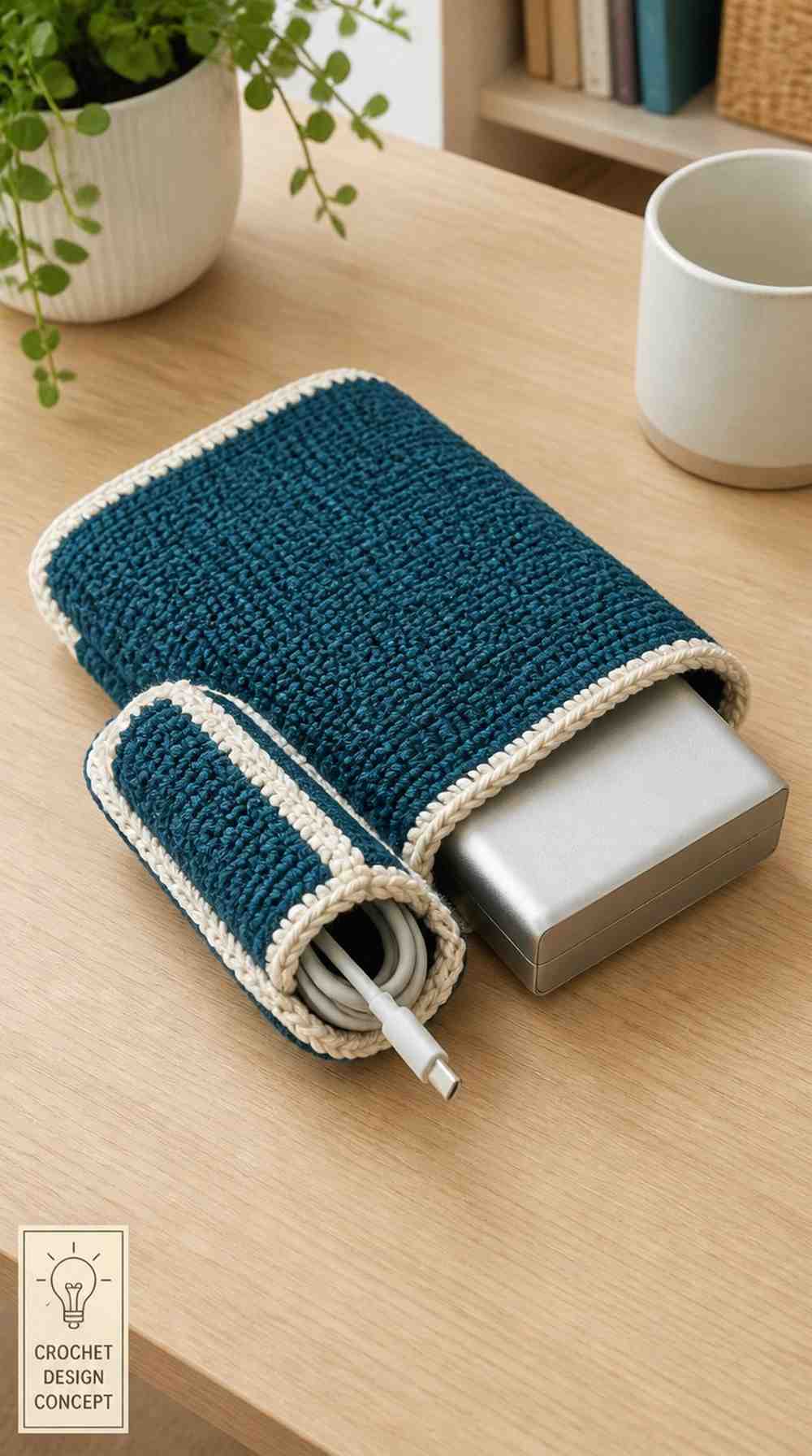
Deep-teal crochet forms a flat charger sleeve with a second narrow storage pocket attached along one side. The main compartment holds a silver power adapter, while the separate grey charging cable sits in a loose coil inside the ivory-edged side pocket.
This side-saddle arrangement keeps both parts of the charger together without requiring one large undivided pouch. The two openings remain accessible independently, making it easier to retrieve the cable without moving the adapter.
- Side-Pocket Width: Size the ivory-edged compartment for the cable’s natural coil rather than pressing it into an overly narrow space.
- Main Sleeve Fit: Keep the adapter pocket broad enough for the charger body while leaving the connectors clear of tight crochet seams.
- Joined Sidewall: Reinforce the place where the cable pocket attaches to the main sleeve, particularly near its lower edge.
11. Crochet Plum Adjustable Button Wrap
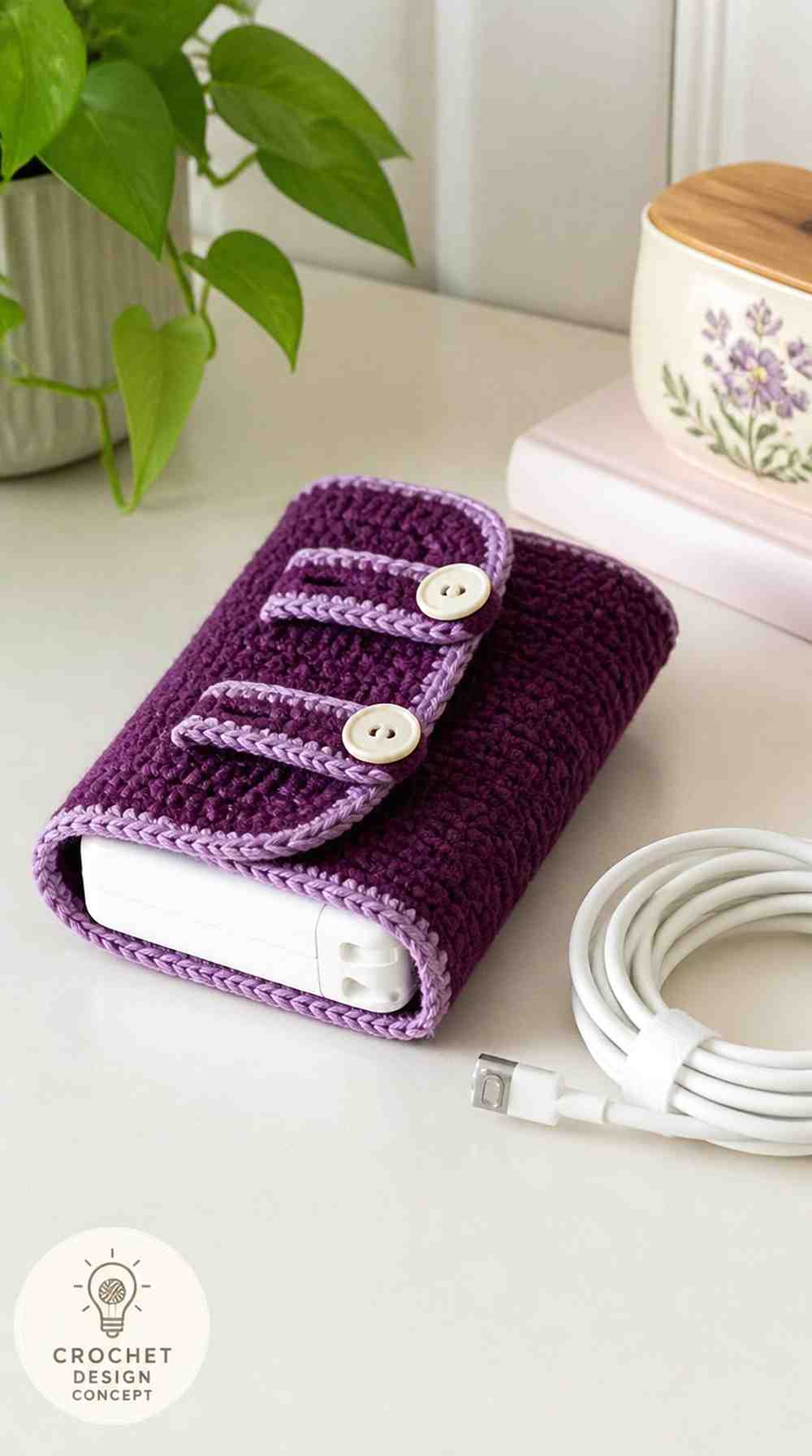
Plum-purple crochet creates a broad rectangular wrap with dusty-lavender edging and two short fastening straps. Each strap uses a cream button and two possible buttonhole positions, allowing the fabric to close around a compact white charging brick.
The adjustable arrangement offers more flexibility than a fixed-size envelope. Its paired closures help keep the panel aligned, although a real version should fit the charger naturally rather than compressing it to reach a tighter buttonhole.
- Two Buttonhole Positions: Use the adjustment options to accommodate the actual charger thickness without stretching the crochet tightly.
- Paired Fasteners: Align both cream buttons so the plum fabric closes evenly instead of twisting around the adapter.
- Gentle Wrap: Avoid placing the straps directly across cable strain-relief points or pressing hardware against the charging brick.
12. Crochet Ivory Corner-Cradle Adapter Sleeve
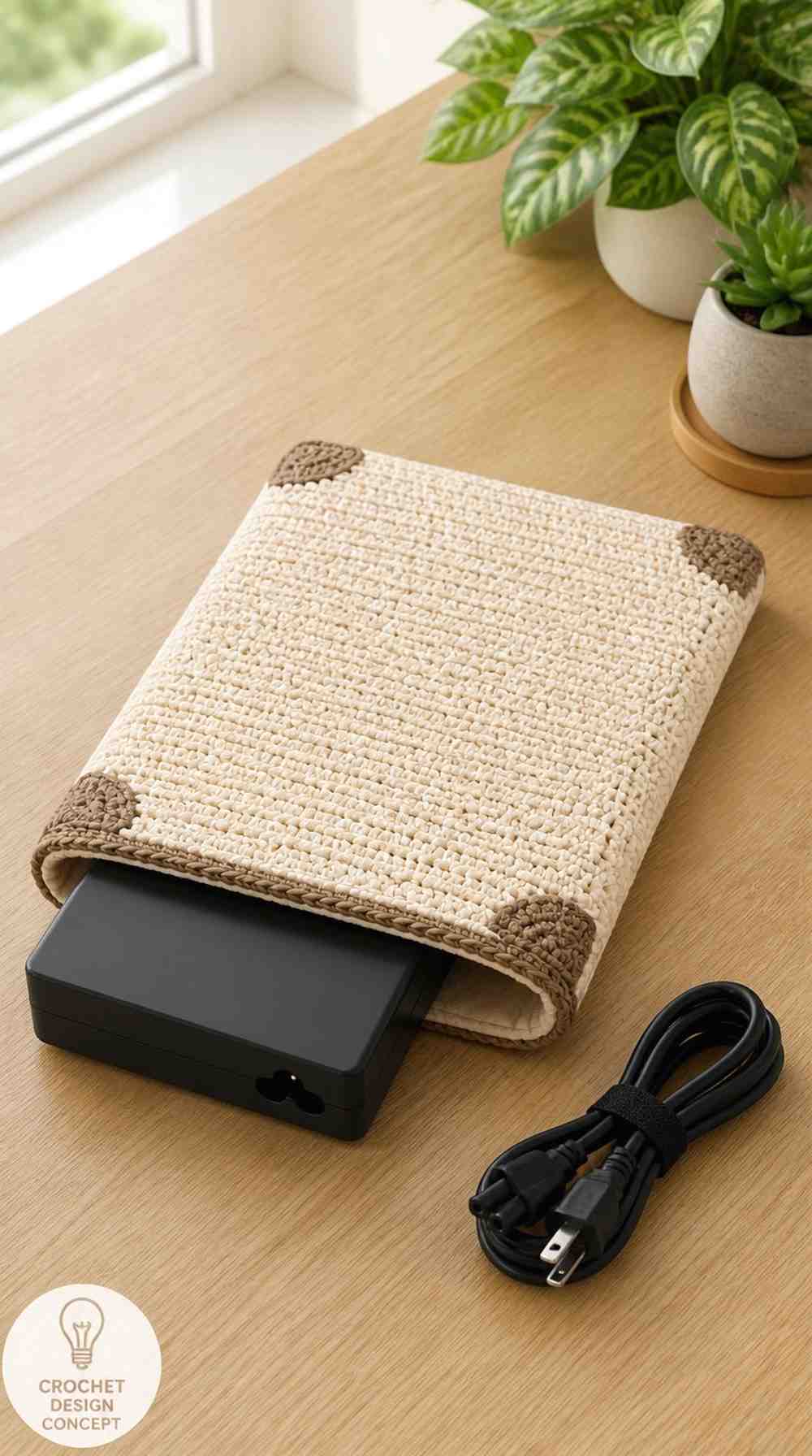
Warm-ivory crochet creates a tidy rectangular slipcase with four small mocha exterior corner reinforcements and a cocoa border around the open end. A black square charging adapter sits partly inside, with soft beige lining visible between the crochet and the electronic device.
The contrasting corners make this sleeve look more structured than a plain fabric pocket. They are decorative reinforcement details, however, and should not be mistaken for tested shock protection.
- Corner Proportions: Match the four mocha accents to the sleeve’s actual corners, avoiding raised interior joins that could press against the charger.
- Lining Placement: Keep the beige lining flat around the opening so it does not bunch when the square power brick is inserted.
- Protective Limits: Crochet and fabric lining may separate objects during storage but cannot guarantee protection against drops, pressure, or scratches.
13. Crochet Rust Diagonal-Panel Charger Holder
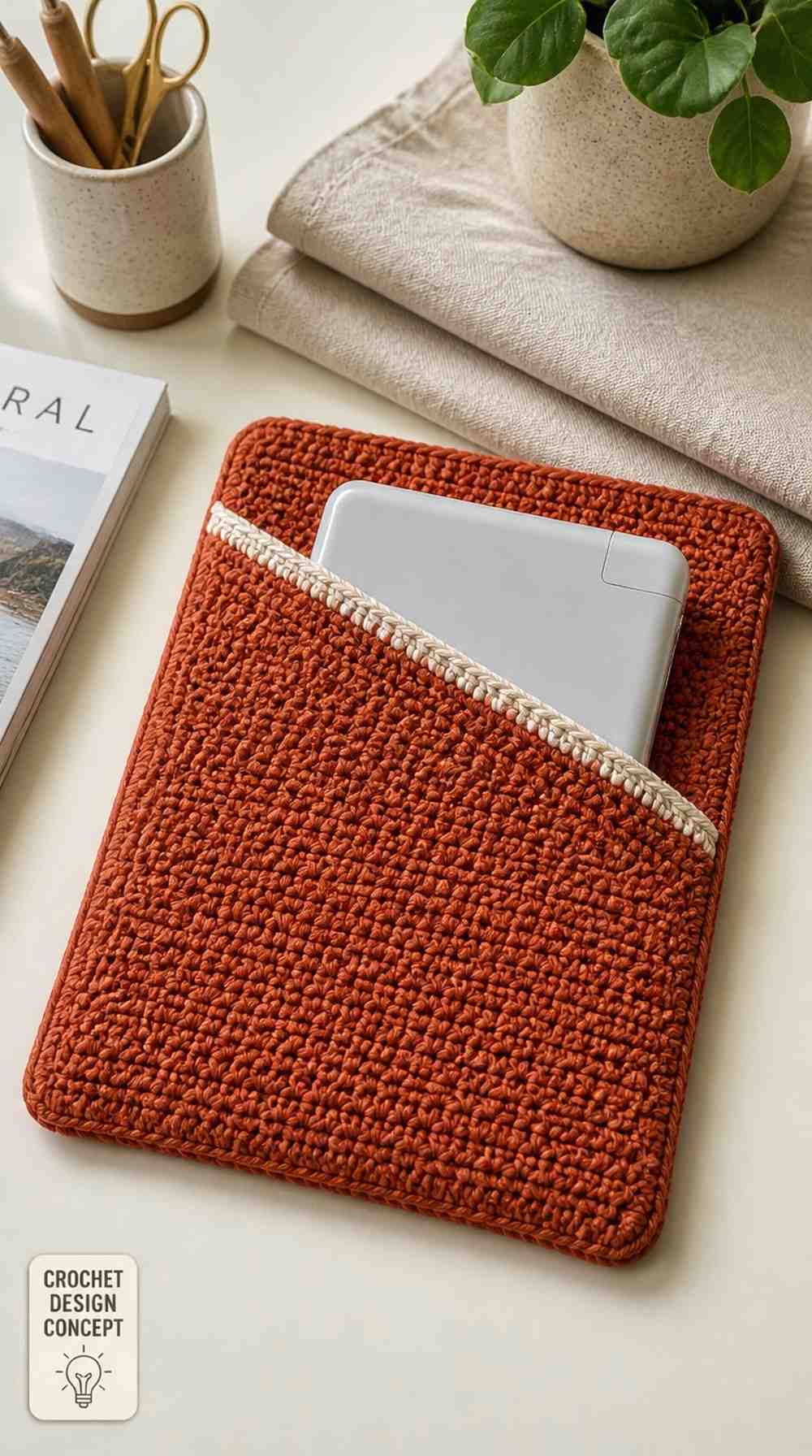
Rust-orange crochet forms a flat rectangular backing with a broad diagonal front pocket. An oatmeal border runs along the sloping opening, while the upper corner of a pale-grey charging brick remains visible above the pocket.
The diagonal design provides a different way to access the adapter without using a button or zipper. It is visually simple, but the open upper section means it is better considered a storage holder than a fully enclosed travel case.
- Diagonal Opening: Keep the sloping oatmeal edge smooth so the charger corner can slide behind it without catching on stitches.
- Pocket Coverage: The front panel should extend far enough across the adapter to retain it during gentle handling on a flat surface.
- Open Storage: The exposed upper section allows easy access but gives less coverage than a closed envelope or zippered sleeve.
14. Crochet Burgundy Hanging-Tab Charger Keeper
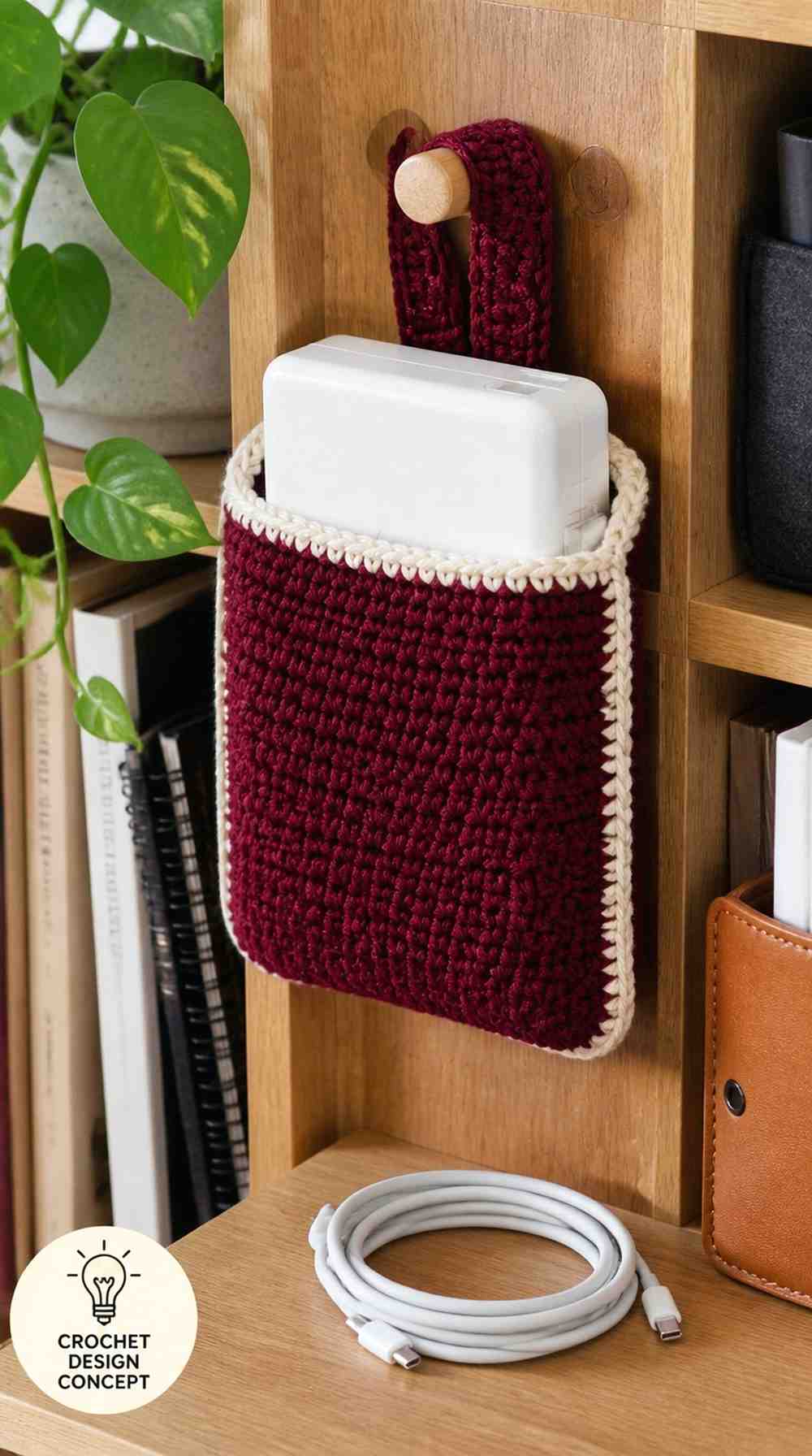
Burgundy cotton crochet forms a compact rectangular pouch with cream edging and a broad reinforced hanging loop. A small white laptop USB-C power adapter rests inside, while its disconnected charging cable remains separately coiled on the shelf beneath.
The hanging arrangement offers an alternative to storing small accessories in desk drawers. It requires a suitable wall or cubby peg, and the size and weight of the adapter become especially important because the pouch is supported from one point.
- Hanging Loop: Reinforce the burgundy attachment and verify that the peg can securely support the filled pouch before relying on it.
- Adapter Weight: Reserve the idea for suitably lightweight equipment; heavier laptop charging bricks may be better stored flat on a shelf.
- Cable Separation: Keep the disconnected cable supported separately rather than allowing its weight to pull on the charger’s connector.
15. Crochet Seafoam Twin-Zip Charger Organizer
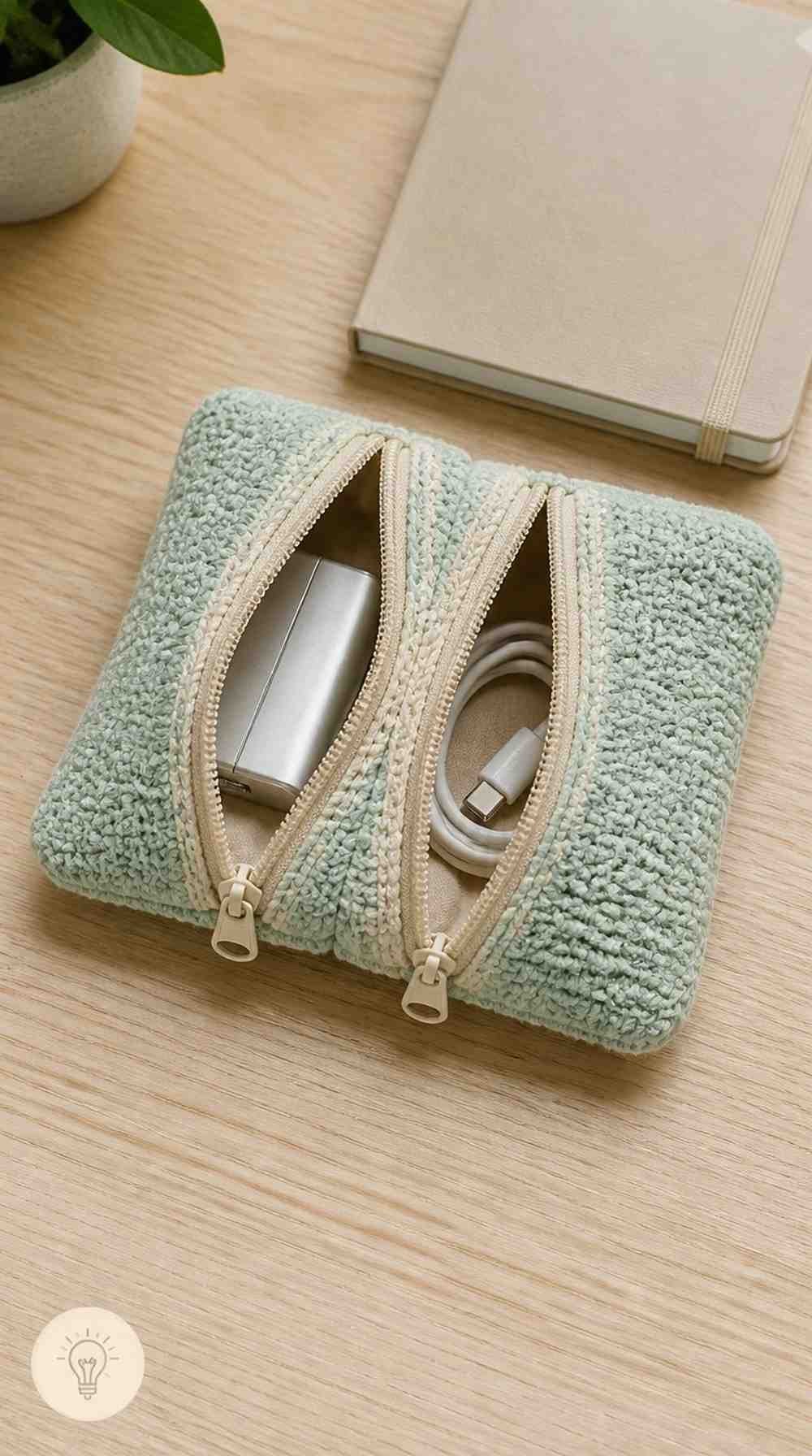
Pale-seafoam crochet forms a flat organizer with two adjacent zippered compartments, each with its own cream zipper. A central crochet divider separates the spaces. The left compartment holds a silver laptop power adapter, while a loose coil of white charging cable sits on the right.
The double-zip arrangement gives each accessory a dedicated opening. It could suit a travel bag or drawer where quick identification matters, although the zipper closures and divider need to be planned around the actual equipment.
- Independent Zippers: Keep the two cream zipper openings separate so the adapter and cable can be removed without disturbing the other compartment.
- Central Divider: Reinforce the dividing seam and ensure that hard charger corners do not push directly against the coiled cable.
- Travel Packing: Avoid crushing the filled organizer beneath heavy objects, since crochet and ordinary fabric lining are not rigid protective materials.
16. Crochet Butter Yellow Label-Pocket Charger Sleeve
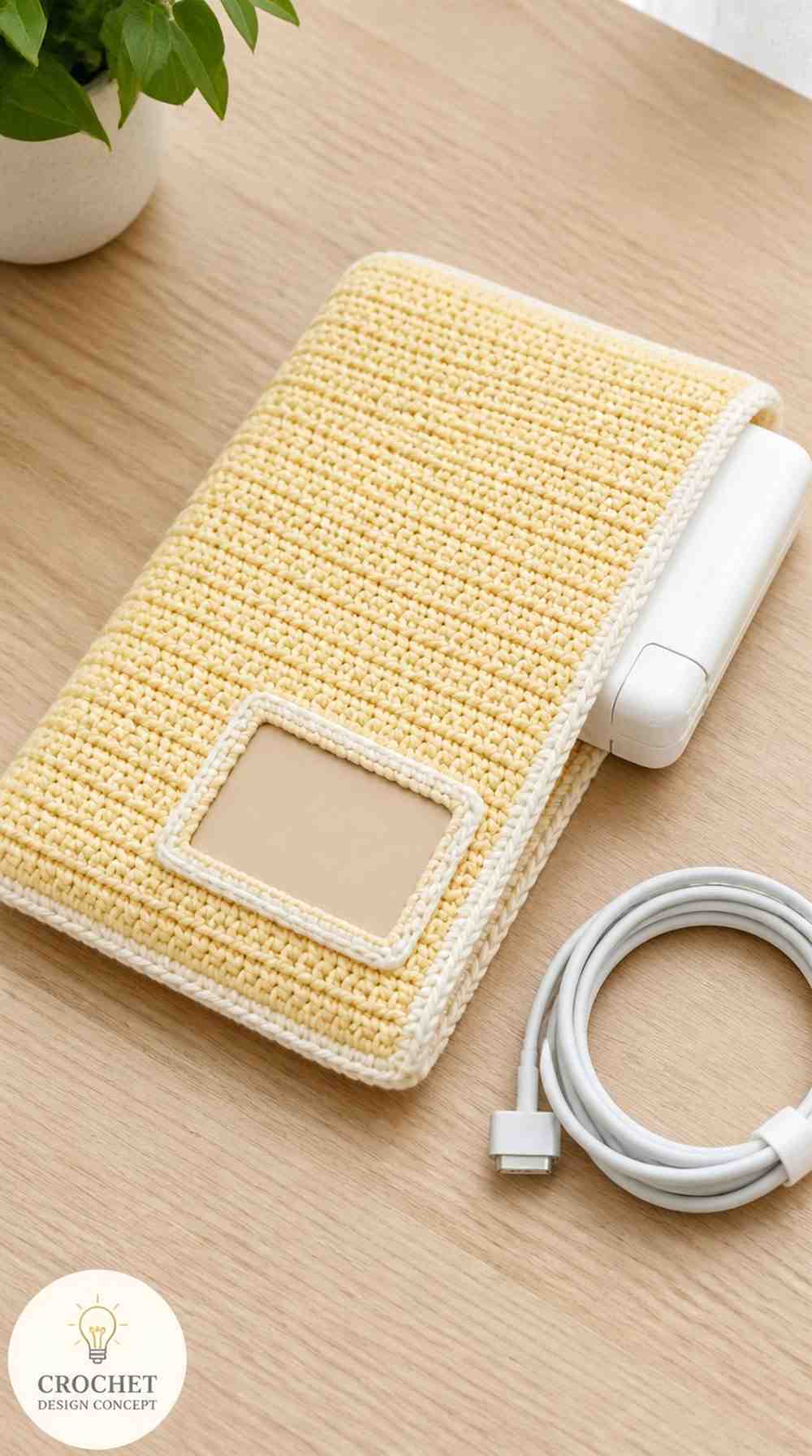
Butter-yellow crochet creates a cheerful rectangular slipcase with warm-white edging and an open short side. A small ivory-framed pocket sits near the lower front corner, holding a blank beige identification card. A white power adapter rests partly inside the main sleeve.
The label pocket makes this design useful for identifying similar chargers stored in one household or office. It adds organization without requiring a large external accessory pocket, although the card should remain removable when the charger changes.
- Identification Card: Use the beige card to record a charger name or compatible device, checking the actual adapter information rather than guessing.
- Label Placement: Keep the ivory pocket away from the insertion opening so its edges do not catch when sliding the power brick inside.
- Simple Sleeve Shape: The butter-yellow case stores the adapter itself; keep its disconnected cable loosely coiled separately unless adding another appropriate compartment.
Practical Guide to Crochet Laptop Charger Storage Sleeves
Always unplug and cool the charger
A crochet sleeve is for storage only, never for charging. Laptop adapters can generate heat during operation, and covering them with fabric may restrict heat dissipation. Dell advises keeping operating adapters uncovered and allowing them to cool before storage.
Dell Pakistan
Disconnect the adapter from power and the laptop, then let it cool fully before placing it inside any fabric sleeve. Never run a charger while it is inside one of these crochet concepts.
Measure the power brick and its cables
Laptop charging adapters come in different sizes and shapes. Measure the complete body, including protruding plug parts, before deciding on a sleeve.
Check whether cables are detachable or permanently attached. Do not force a permanently attached cable into a narrow opening or pull against the connection point.
Coil cords gently
Loose loops are preferable to tight cable bundles. Avoid sharply bending wires near their connectors or wrapping them tightly around the adapter. HP advises against tightly winding charging cables around adapter bodies because this can stress the internal wiring.
HP® Support
For additional cable organization ideas, see 17 Crochet Reusable Charging Cable Tie Inspiration Ideas on Yarn Nest Studio. That collection focuses on removable ties for stored charging cords rather than sleeves for laptop power bricks.
Choose suitable fabric and closures
Smooth cotton may be considered for clear crochet stitch definition and tidy edges. A soft lining can help prevent direct contact with raised interior joins, but no ordinary crochet sleeve is guaranteed to protect electronic equipment from damage.
Avoid rough fasteners against the adapter, and keep cords away from tight buttonholes or zipper teeth.
Use clean, dry storage
Keep chargers and fabric cases away from moisture, dust buildup, heavy pressure, and hot surfaces. Inspect the charger and cables for visible damage before use.
If a cable is frayed, a plug is damaged, or the adapter becomes unusually hot, stop using it and follow the manufacturer’s instructions.
Want to Make Something Similar?
These 16 designs are original crochet inspiration concepts, not exact tested patterns. The following resources teach relevant small-pouch and cable-keeper techniques.
- Woven Cable Keeper by CyCrochet provides a free written crochet pattern with diagrams for a folded organizer, side seams, pocket, and button-loop closure. It is designed for small cables or accessories rather than a full-size laptop power brick. CyCrochet
- Crochet Cord Organizer Pouch by Knitting Path explains a compact pouch using basic crochet stitches and a flap, useful for understanding small rectangular storage construction. knittingpath.com
These are related learning resources, not patterns for the exact pictured designs. Adapt any construction to the actual charger dimensions and keep the finished sleeve strictly for unplugged, cooled equipment.
Which Crochet Laptop Charger Storage Sleeve Should You Choose?
| Your priority | Designs to consider | Main trade-off |
|---|---|---|
| Simple adapter storage | Terracotta Side-Loading, Ivory Corner-Cradle | Cable needs separate storage |
| Charger and cable together | Oatmeal Twin-Compartment, Teal Side-Saddle | More pocket joins and sizing |
| Closed envelope | Denim Button-Flap, Blush Scalloped | Flap and button clearance |
| Adjustable wrap | Plum Adjustable Button | Requires careful fastener placement |
| Drawstring storage | Mustard Drawstring | Loose closure, rounded shape |
| Fully zippered case | Charcoal Lined Zipper | Zipper contact must be avoided |
| Foldout organization | Olive Foldout Wallet | Wider when opened |
| Openwork styling | Cobalt Mesh-Gusset | Limited dust coverage |
| Upright desk storage | Espresso Upright Pocket | Stability and tipping concerns |
| Diagonal access | Rust Diagonal-Panel | More exposed charger surface |
| Small hanging storage | Burgundy Hanging-Tab | Suitable only for supported lightweight items |
| Separate zipped compartments | Seafoam Twin-Zip | Greater bulk and more hardware |
| Charger identification | Butter Yellow Label-Pocket | Small card needs maintenance |
For a charger stored at home, the Crochet Terracotta Side-Loading Charger Sleeve offers a simple shape with few extra features. If you regularly pack a detachable power cable with your adapter, the Crochet Oatmeal Twin-Compartment Charger Case or Crochet Seafoam Twin-Zip Charger Organizer may be more convenient.
Conclusion
Crochet laptop charger storage sleeves offer a handmade way to keep charging accessories together when they are not being used. A terracotta slipcase provides a simple cover, an oatmeal divided case gives the cable its own place, and a seafoam twin-zip organizer creates a tidy travel-style arrangement.
The most useful design is one that fits the power adapter without pressure, allows cables to remain loosely coiled, and is easy to remove completely before charging. Choose the shape and closure that suit your equipment rather than relying on a decorative case as heat, electrical, or impact protection.
Which would you choose for your laptop setup: the terracotta side-loading sleeve, the teal side-saddle cable organizer, or the butter-yellow label-pocket case? Share your favorite color and how you usually store your charger.
Frequently Asked Questions
1. Can I use a laptop charger while it is inside a crochet sleeve?
No. These designs are only for storing chargers that have been unplugged and allowed to cool completely. Operating adapters can generate heat, and surrounding them with fabric may restrict heat dissipation. Remove the sleeve before connecting the charger, following your equipment manufacturer’s instructions.
Dell Pakistan
2. What yarn should I consider for a crochet laptop charger storage sleeve?
Smooth cotton or a suitable cotton blend may be worth considering because it can create tidy stitch rows and clearly defined edges. However, ordinary crochet is not heat-resistant electrical protection. The selected material should be used only for a removable storage accessory around disconnected, fully cooled equipment.
3. How can I store a laptop charger cable without damaging it?
Coil the cable loosely, avoid sharp bends near connectors, and never pull it tightly around the charging brick. A separate pocket can keep the cable organized without forcing it against the power adapter. Follow the manufacturer’s cable-handling guidance, especially for permanently attached cords.
4. Is a crochet laptop charger sleeve suitable for travel?
It may help organize a cooled, unplugged charger in a bag, but crochet is not a rigid protective case. Avoid placing heavy items on top of it, and make sure the charger cannot be crushed or exposed to liquids. A lined pouch may reduce some direct contact with other accessories, but protection is not guaranteed.
5. Are these 16 crochet laptop charger storage sleeves available as exact patterns?
No. These are original AI-generated design concepts rather than tested crochet patterns. The linked tutorials explain related small-pouch and cable-organizer techniques, but they do not reproduce the pictured charger sleeves exactly. A real version requires custom measurements, appropriate closures, and safe handling of the electrical equipment.