A crochet family weekly chore card display can bring a little handmade charm to the way household tasks are organized. These 17 inspiration ideas explore seven-day pocket charts, removable cards, hanging banners, family-member schedules, and weekly progress displays. Warm terracotta, oatmeal, navy, lavender, butter yellow, and forest green offer different styling options, while the crochet structures make paper task cards easy to display in a shared family space.
Whether your family uses a separate card for each day or one weekly list for every person, the right display should make tasks clear without becoming complicated to maintain. Some concepts use seven small compartments, while others hold larger weekly cards or let you move completed tasks into a separate pocket. Compare card visibility, hanging methods, and how easily the system can be updated before choosing your favorite.
These are AI-generated crochet design visualizations for inspiration, not photographs of tested handmade organizers or step-by-step patterns. The blank cards shown in the concepts can be filled in with real household tasks.
Quick Design Selection Guide
- For a clear seven-day layout: The Crochet Terracotta Seven-Slot Chore Rail and Crochet Olive Seven-Window Weekly Grid display seven individual cards.
- For a narrow wall: The Crochet Oatmeal Vertical Weekly Banner and Crochet Rust Roll-Up Weekly Card Organizer use vertical arrangements.
- For multiple family members: The Crochet Denim Three-Person Weekly Display and Crochet Forest Green Family Weekly Pocket Chart provide separate weekly-card spaces.
- For changing tasks frequently: The Crochet Navy Flip-Card Weekly Display and Crochet Teal Removable Seven-Card Board use movable or flip-style card holders.
- For tracking completed chores: The Crochet Plum Weekly Progress Card Station has separate places for the weekly schedule and finished-task cards.
1. Crochet Terracotta Seven-Slot Chore Rail
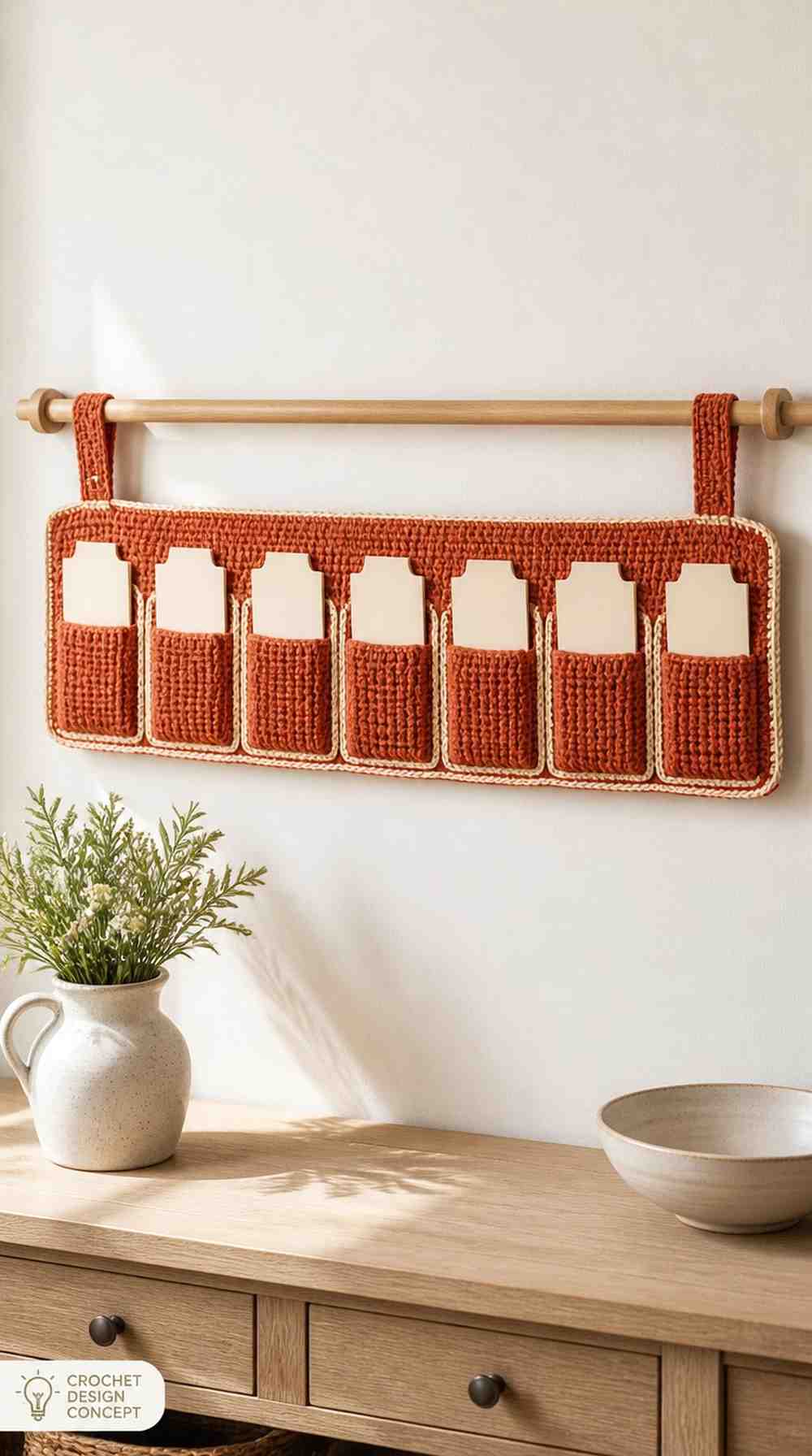
Warm terracotta cotton crochet creates a long horizontal display with seven narrow card pockets arranged in one row. Cream edging outlines each opening, while a smooth oak dowel supports the organizer from two reinforced upper loops. Seven blank ivory cards make the weekly arrangement easy to recognize.
This concept suits a family kitchen or planning area with enough horizontal wall space. Its main advantage is the simple side-by-side arrangement, allowing each day’s card to remain visible without opening flaps or turning pages.
- Seven-Day Layout: Assign one pocket to each day of the week, keeping the card order consistent so everyone can find the current tasks.
- Horizontal Space: Measure the available wall width before planning seven narrow pockets; very small compartments can make handwritten chores difficult to read.
- Card Replacement: Leave enough of each ivory card visible above the cream edging for easy removal without pulling on the crochet seams.
2. Crochet Oatmeal Vertical Weekly Banner
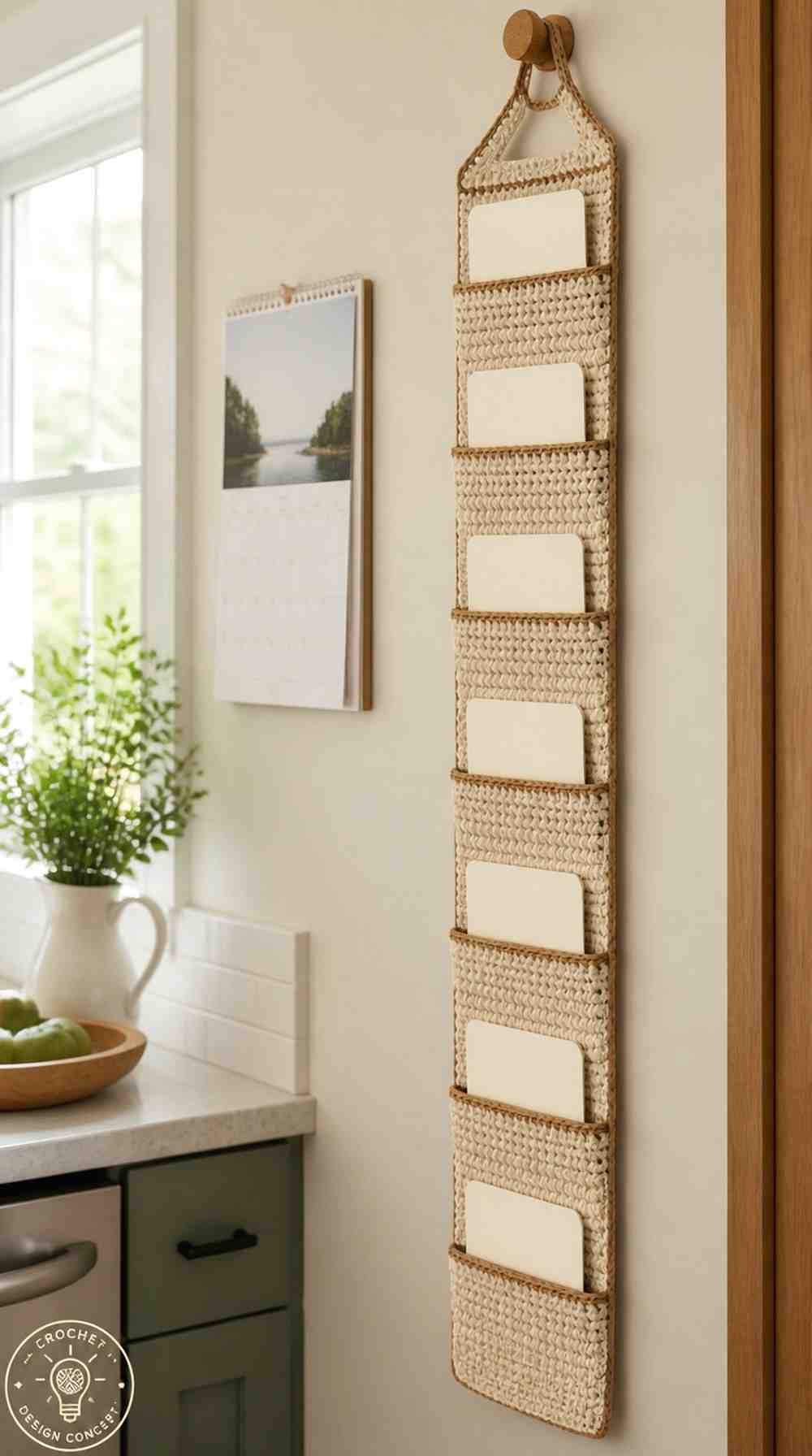
Natural oatmeal crochet forms a tall, narrow banner with seven horizontal pockets arranged from top to bottom. Each pocket holds a blank warm-white card, while caramel edging creates a clear separation between the rows. A reinforced top tab hangs the display from a wooden wall hook.
The vertical arrangement makes this design useful where wall width is limited. Instead of spreading the week across a long rail, the seven cards remain in a single column that can be checked from top to bottom.
- Vertical Reading Order: Arrange the cards consistently from Monday at the top to Sunday at the bottom, making the weekly sequence easy to follow.
- Wall Height: Check the full hanging length so the bottom cards remain visible and reachable without extending too close to furniture.
- Single Hook Support: Reinforce the oatmeal hanging tab and use suitable wall hardware because the entire chart hangs from one attachment point.
3. Crochet Navy Flip-Card Weekly Display
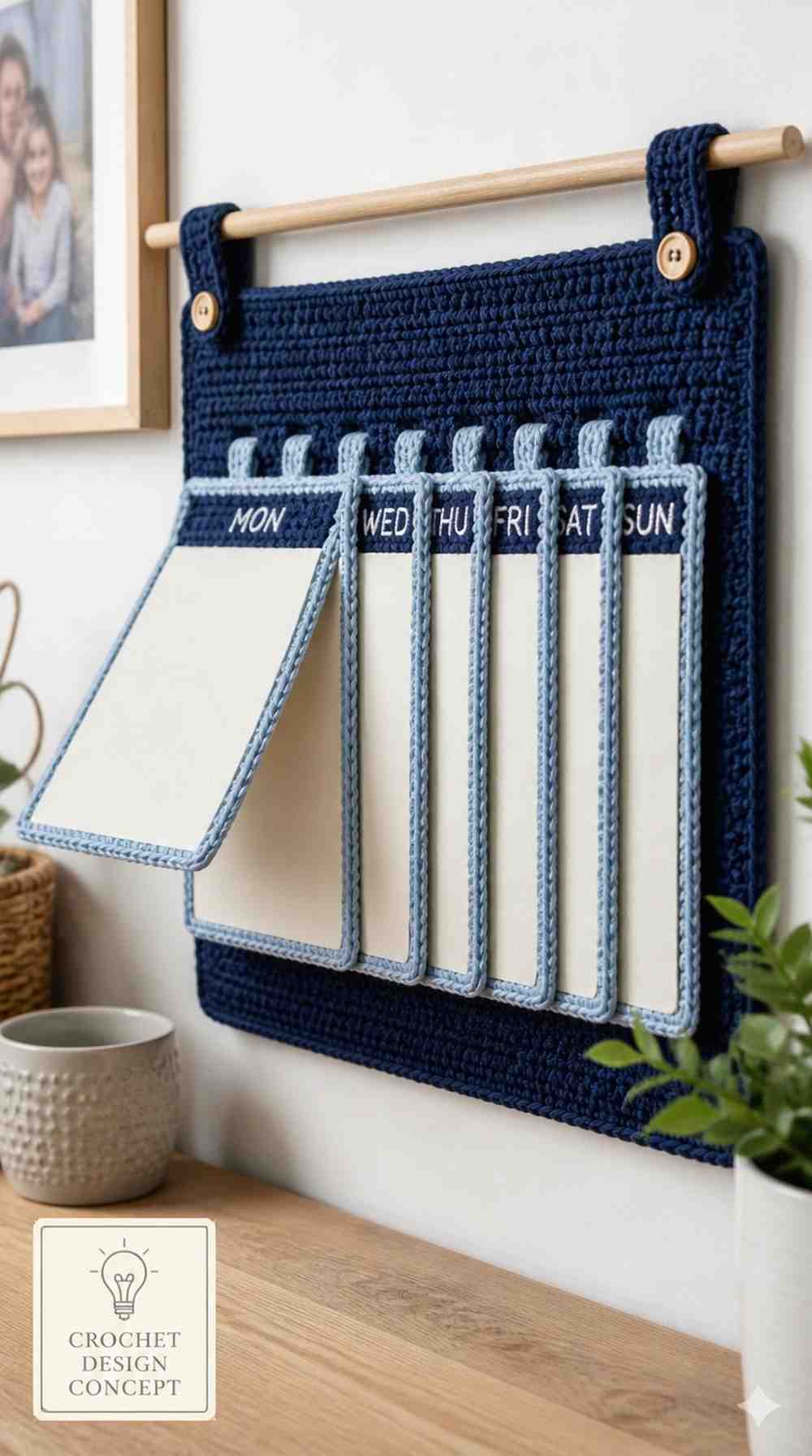
Deep navy crochet creates a rectangular backing with seven small overlapping card sleeves attached along an upper band. Powder-blue borders outline the sleeves, while the layered construction allows one card to be lifted to reveal another underneath.
This design offers a compact alternative to displaying seven cards across a large wall. Its flip-style arrangement keeps the cards together, although it requires more handling to view the tasks hidden behind the front sleeve.
- Layered Card Access: Keep the individual sleeves easy to lift so users can reach the correct day without pulling the other cards loose.
- Hinge Reinforcement: The upper crochet attachment points need careful joining because repeated flipping may gradually stretch the stitches.
- Visibility Trade-Off: Only the front card is immediately readable, so the system is better for families comfortable checking one day at a time.
4. Crochet Mustard Master-Week Card Frame
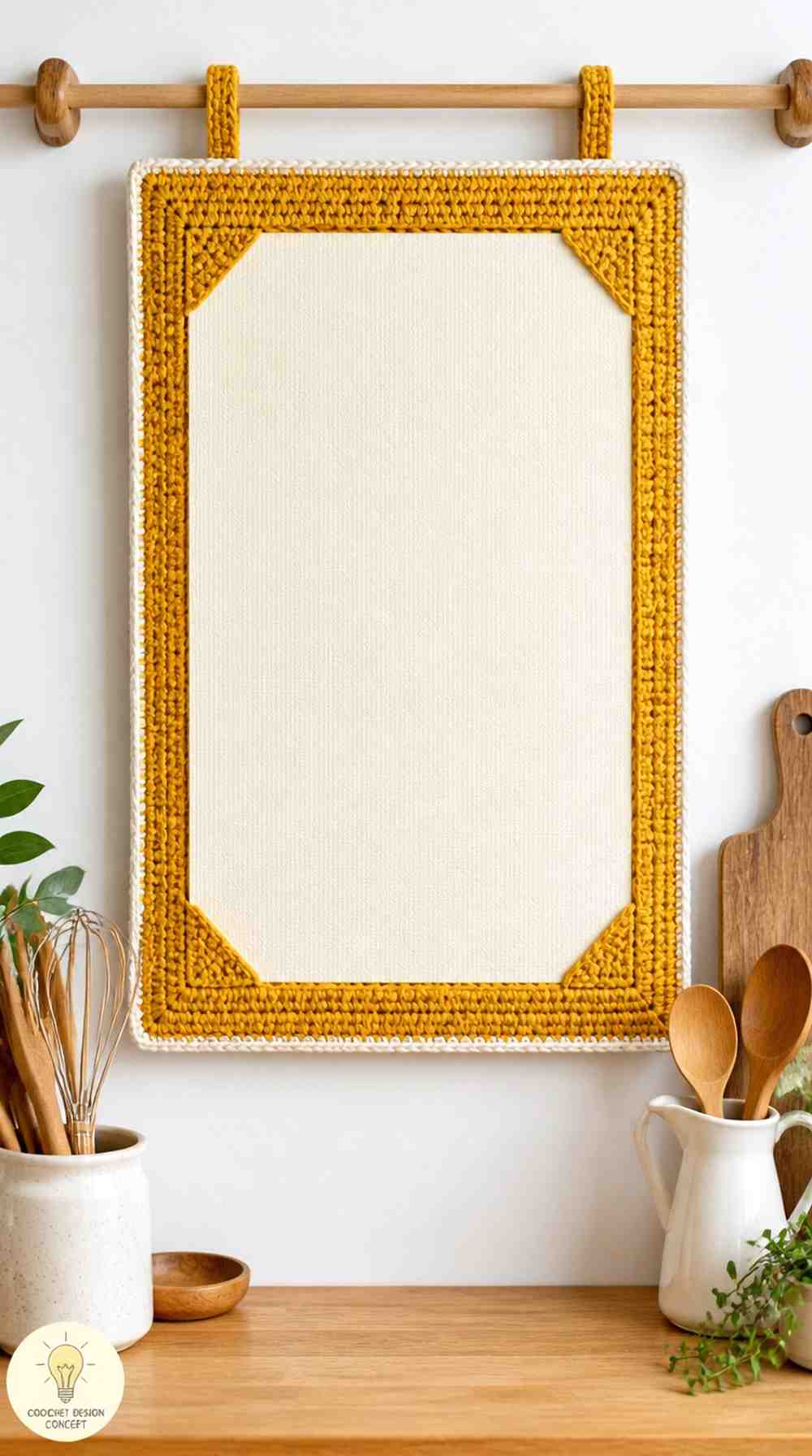
Mustard-yellow crochet forms a broad rectangular frame around one large ivory weekly planning card. Four narrow corner-retaining strips hold the card against a solid crochet backing, while warm-white edging gives the frame a tidy finish.
Rather than assigning a separate crochet pocket to every day, this concept displays an entire weekly schedule on one removable card. It could work well for families who prefer writing or printing one clear weekly chart and replacing it at the start of the next week.
- Full-Week Card: Choose a card large enough for the intended chores, family names, and weekly layout without making the handwriting difficult to read.
- Corner Retainers: Keep the four crochet strips secure while leaving the middle of the card unobstructed for writing and checking tasks.
- Weekly Replacement: The frame should allow the paper chart to be changed without bending it excessively or stretching the corner loops.
5. Crochet Olive Seven-Window Weekly Grid
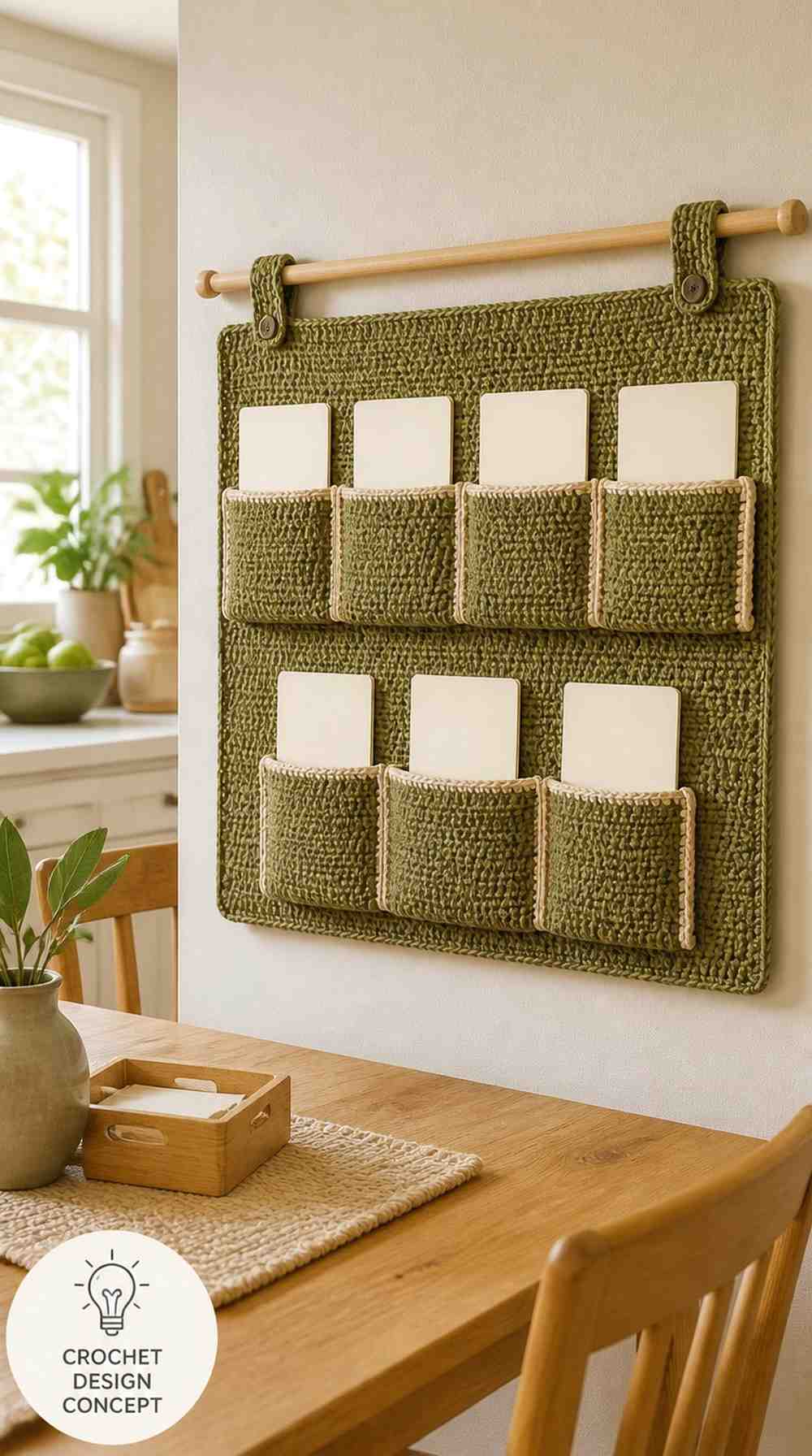
Muted olive-green crochet creates a structured weekly display with seven rectangular card holders. Four pockets occupy the upper row, while three are centered beneath. Oatmeal edging defines the windows, and a solid backing keeps the arrangement together beneath an oak dowel.
The compact grid makes the seven-card layout feel balanced without extending as far horizontally as a single row. Its different row lengths add visual interest, although the order of the days should be clear once the cards are filled in.
- Four-Plus-Three Arrangement: Use a consistent day sequence across the two rows so the three lower cards do not become confusing.
- Clear Card Windows: Keep the oatmeal borders narrow enough that they do not cover the handwritten tasks on smaller cards.
- Balanced Hanging: Position the dowel loops evenly above the backing so the seven-window panel hangs straight rather than tilting.
6. Crochet Denim Three-Person Weekly Display
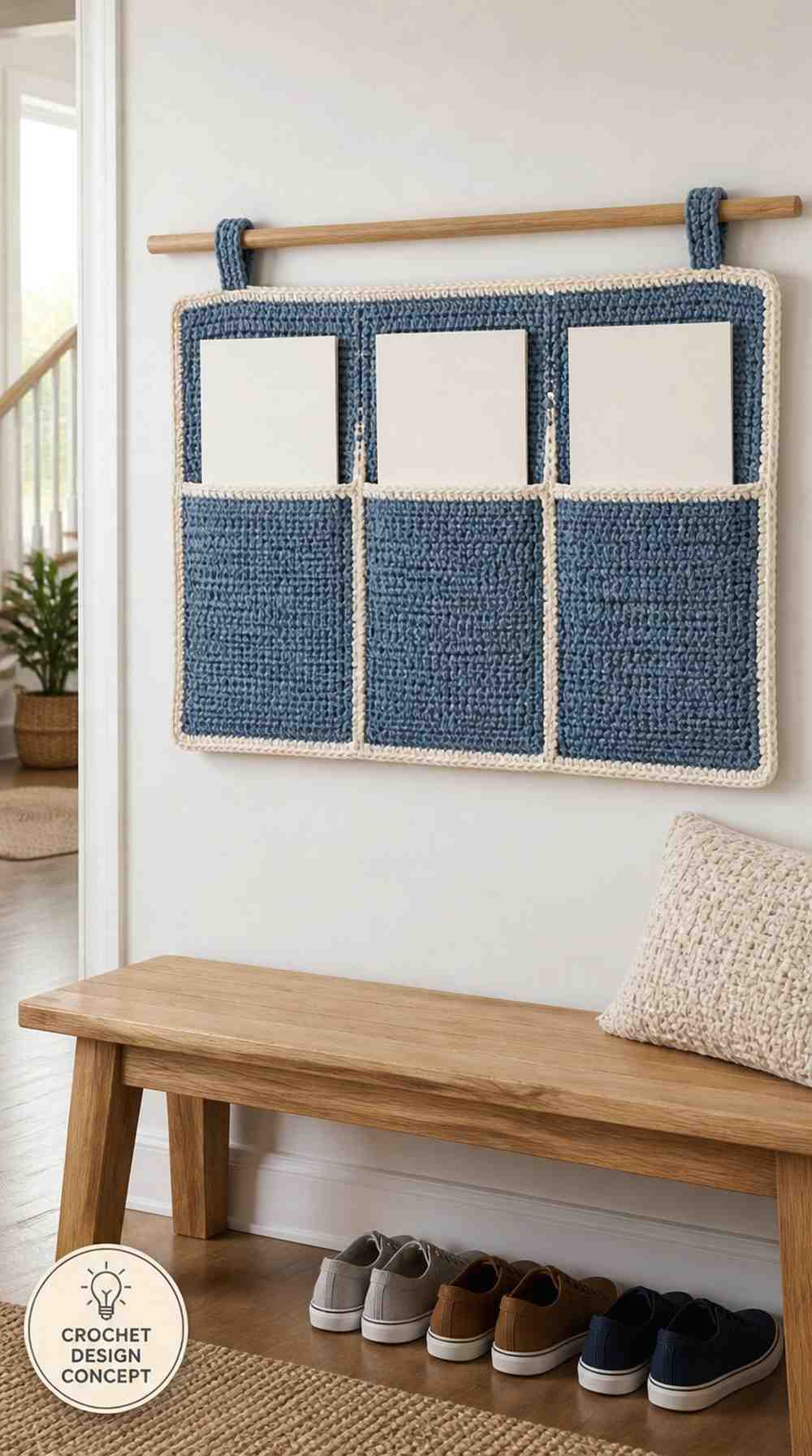
Dusty-denim-blue crochet forms a wide hanging panel with three large vertical card pockets. Each pocket holds a blank ivory weekly schedule card, while warm-white borders and neat dividing seams separate the three spaces.
This concept organizes chores by family member instead of by individual day. Each person can have a separate weekly card showing their responsibilities, making the display suitable for a household that prefers individual lists over one shared daily schedule.
- Three Personal Schedules: Give each family member one weekly card, with enough writing room to cover several days without overcrowding.
- Equal Pocket Width: Keep the three denim sections similar in size so the cards remain visually balanced across the display.
- Easy Identification: Write each person’s name clearly on the removable card rather than relying on the crochet pocket position alone.
7. Crochet Coral Seven-Step Task Ladder
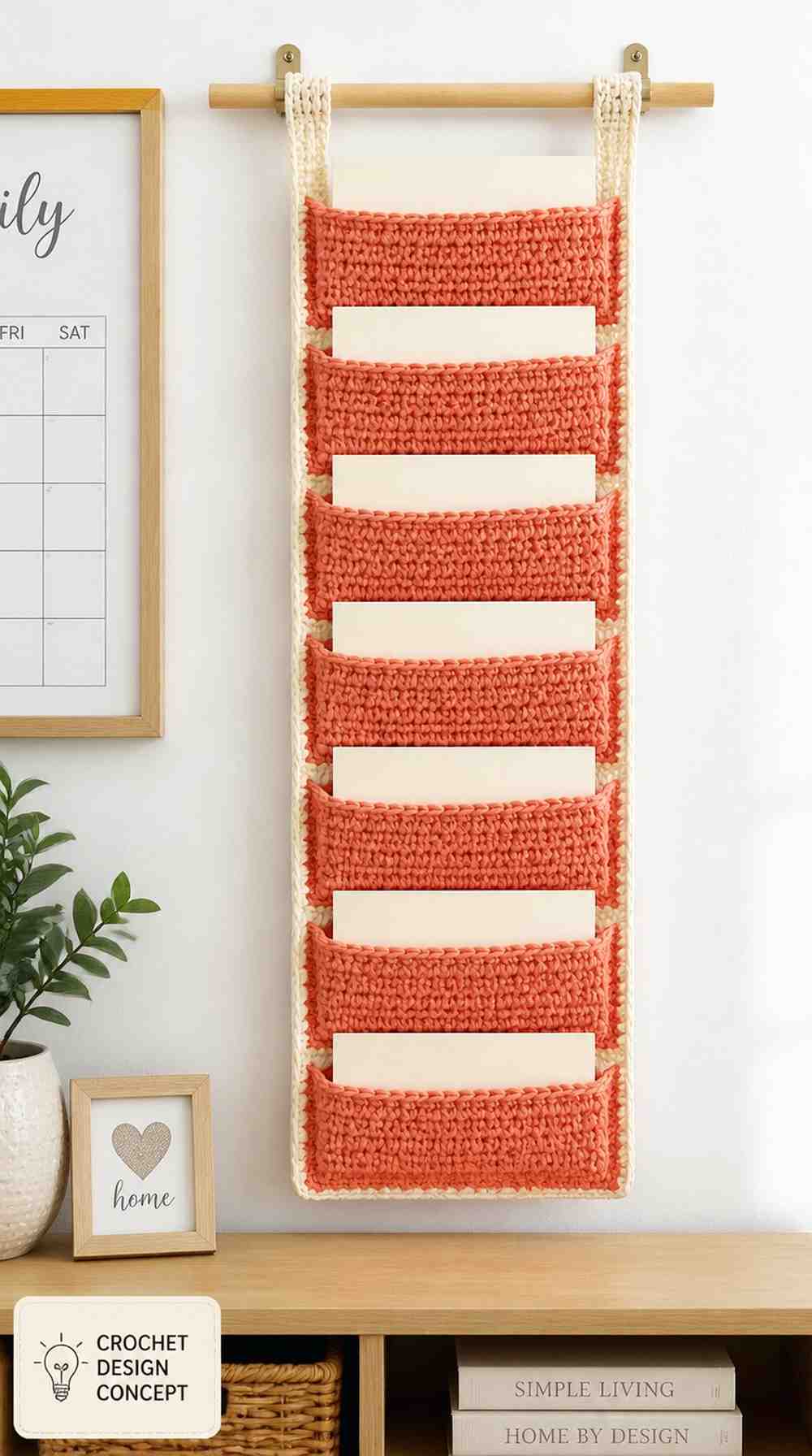
Soft coral crochet forms seven horizontal card sleeves suspended between two continuous cream crochet side strips. The sleeves resemble ladder rungs, with one blank ivory task card resting inside each level. A short wooden dowel supports the organizer from above.
The open ladder arrangement gives this design an airy appearance compared with a solid rectangular backing. It offers seven separate daily spaces, although both connecting strips need to remain evenly supported to prevent the pockets from leaning.
- Ladder Spacing: Leave enough room between the seven horizontal pockets for fingers to remove one card without disturbing the next.
- Side-Strip Tension: Keep both cream crochet supports consistent in length so the card sleeves hang level rather than forming a diagonal arrangement.
- Hanging Position: Mount the organizer where the lower rungs remain above the furniture beneath and do not swing into frequently used areas.
8. Crochet Charcoal Reversible Week Panel
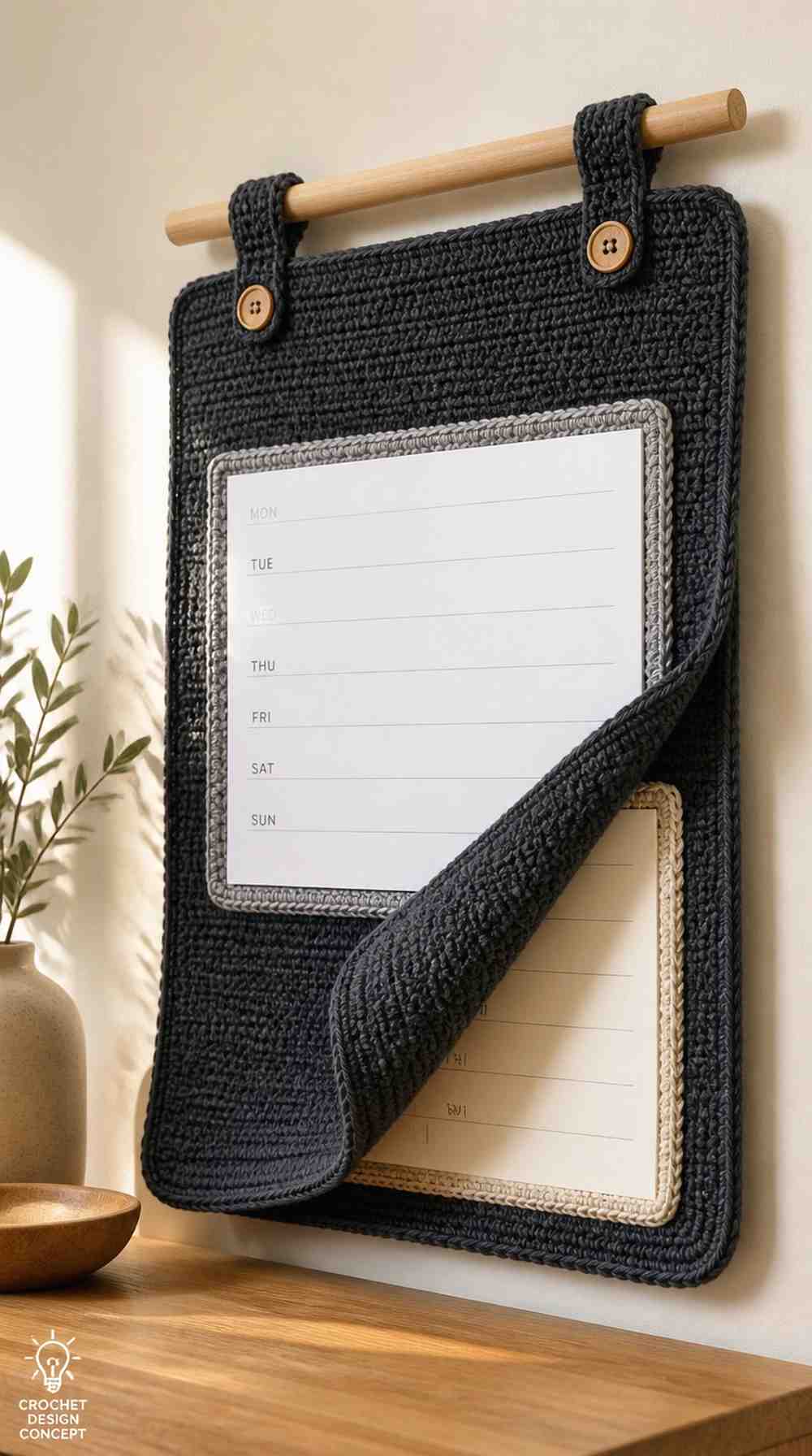
Charcoal-grey crochet creates a rectangular hanging panel with a broad card pocket on each side. Silver-grey edging defines the openings, and two reinforced upper loops attach the backing to a wooden dowel. One corner is turned to reveal the reverse pocket.
The reversible design offers an interesting way to prepare two separate weekly cards without displaying both at the same time. One side could hold the current week’s schedule, while the other contains the next week’s plan.
- Two-Sided Planning: Use the front pocket for the current week and the reverse for the upcoming week, changing the displayed side when appropriate.
- Panel Turning: Check that the crochet can be flipped or rehung without twisting the upper loops or damaging the card pockets.
- Hidden Information: Remember that the reverse schedule is not visible at a glance, so it should not contain tasks that need constant daily attention.
9. Crochet Lavender Seven-Pennant Chore Display
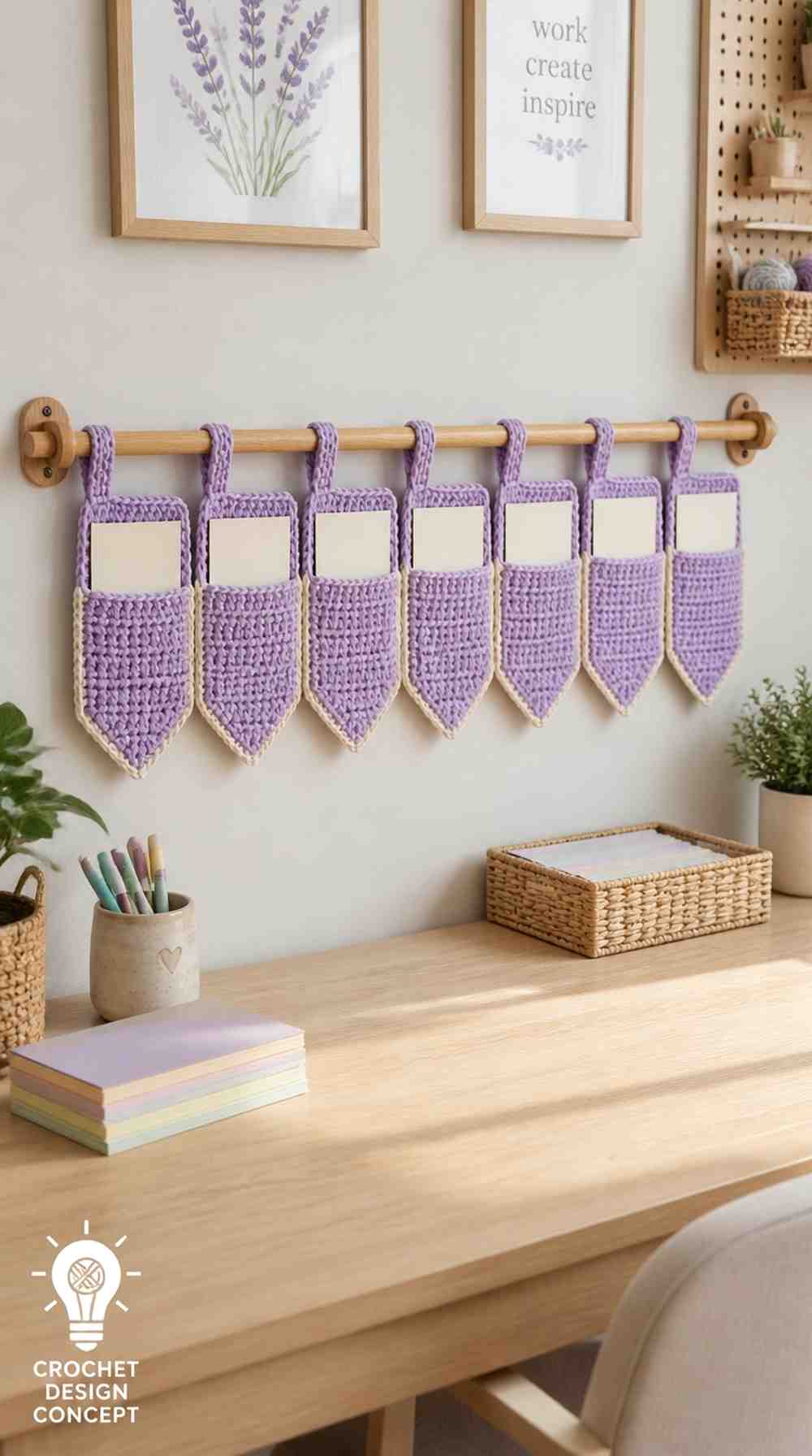
Seven small lavender crochet pennants hang independently from a secure wooden dowel. Each pennant has a rectangular card pocket at the top and a short pointed lower edge, finished with ivory crochet edging. Blank cream cards sit neatly inside all seven compartments.
The repeating pennant shapes give the display a decorative bunting-like appearance without using a long loose hanging cord. It could suit a family activity wall where the weekly chores should be visible while still feeling like part of the room’s décor.
- Seven Separate Pennants: Keep the cards in a consistent weekly order and space the pennants so the pointed ends do not overlap neighboring pockets.
- Secure Dowel Mounting: Use appropriate wall supports rather than leaving the pennants suspended from a loose cord within children’s reach.
- Decorative Tips: Keep the pointed crochet ends short so they do not catch on nearby objects or create unnecessary dangling fabric.
10. Crochet Teal Removable Seven-Card Board
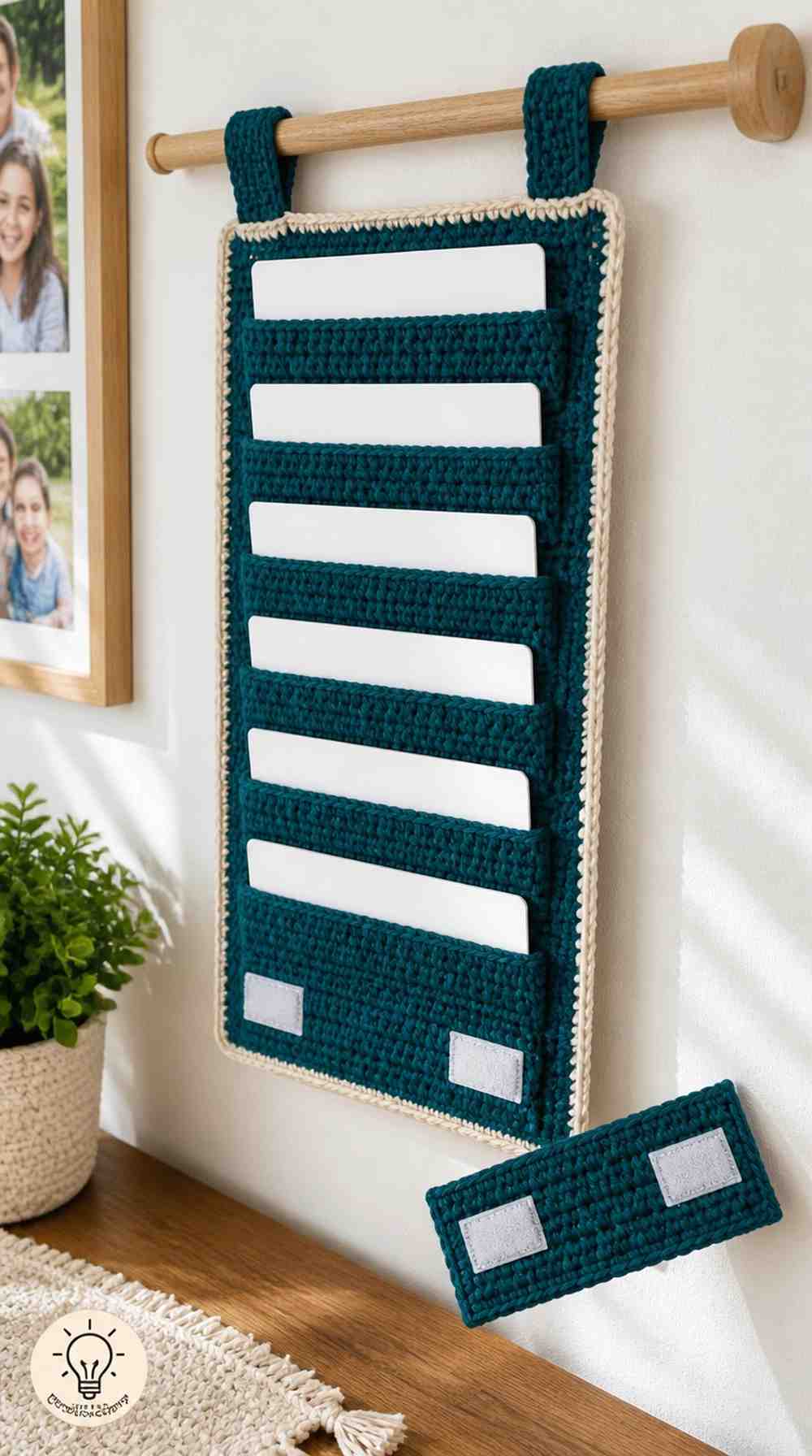
Deep-teal crochet forms a rectangular wall backing with seven narrow removable card sleeves arranged vertically. Each sleeve attaches through small fabric hook-and-loop tabs, while a cream border frames the main panel. One sleeve is shown lifted away from the board.
The detachable construction makes this design especially useful for rearranging tasks. A chore card can be moved or replaced without removing the entire display, although the attachment system needs to withstand regular handling.
- Removable Sleeves: Check that each card holder detaches without pulling yarn fibers from the teal backing or neighboring crochet rows.
- Hook-and-Loop Placement: Attach the fastening material securely behind the sleeves, keeping rough hook surfaces away from exposed crochet.
- Task Flexibility: Rearrange individual cards when family responsibilities change, rather than rebuilding the whole weekly chart.
11. Crochet Burgundy Weekly Card Clipboard
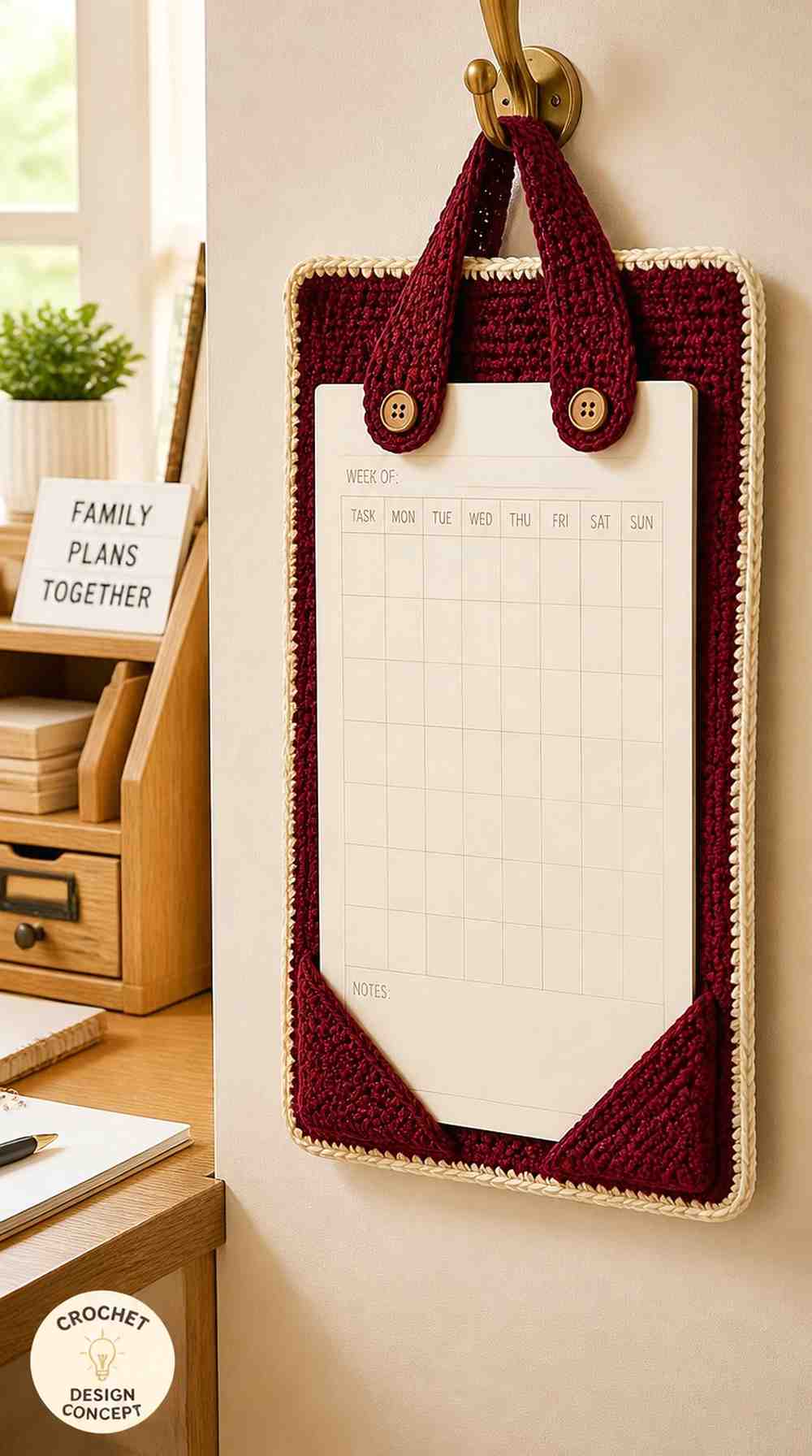
Deep burgundy crochet forms a tall rectangular backing for one large ivory weekly card. Two upper retaining tabs close with small wooden buttons, while narrow lower corner holders keep the card aligned. Antique-cream edging gives the display a clean outline.
This clipboard-style concept offers a simple alternative to several individual pockets. It presents the full weekly schedule in one place, with the removable crochet retainers allowing the paper chart to be changed when needed.
- Upper Button Tabs: Position both wooden buttons above the main writing area so they do not cover important schedule information.
- Lower Corner Holders: Keep the card aligned within the burgundy backing without requiring tight pressure that might crease its lower edges.
- Single-Card Visibility: Use a well-organized handwritten or printed weekly layout, since the whole household schedule must fit on one card.
12. Crochet Butter Yellow Seven-Leaf Chore Chart
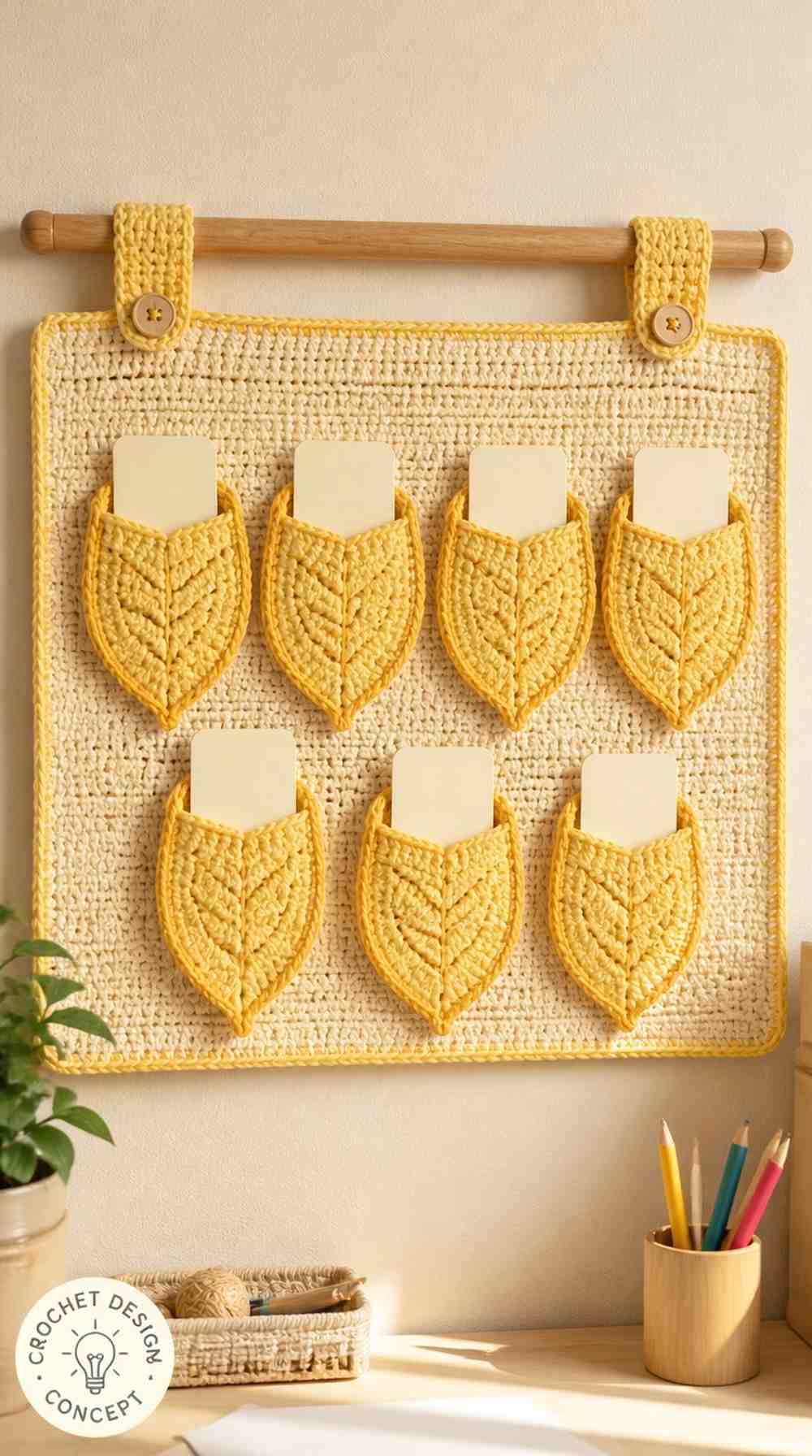
Butter-yellow crochet creates a cheerful hanging chart with seven small leaf-shaped card pockets. Four leaves occupy the upper row, while three sit beneath. Golden-yellow accents follow their pointed edges, and each leaf holds a small cream task card.
The leaf shapes give this concept a playful botanical appearance while preserving separate spaces for the seven days. It may appeal to families who enjoy a softer, decorative chart rather than a conventional grid.
- Leaf Pocket Openings: Keep the upper sections broad enough for the cream cards while allowing the pointed lower tips to remain decorative.
- Card Size: Choose compact task cards with enough writing space for short responsibilities rather than long, detailed instructions.
- Motif Joining: Secure all seven leaves to the cream backing, particularly around the pointed ends and pocket corners.
13. Crochet Cream Seven-Square Chore Display
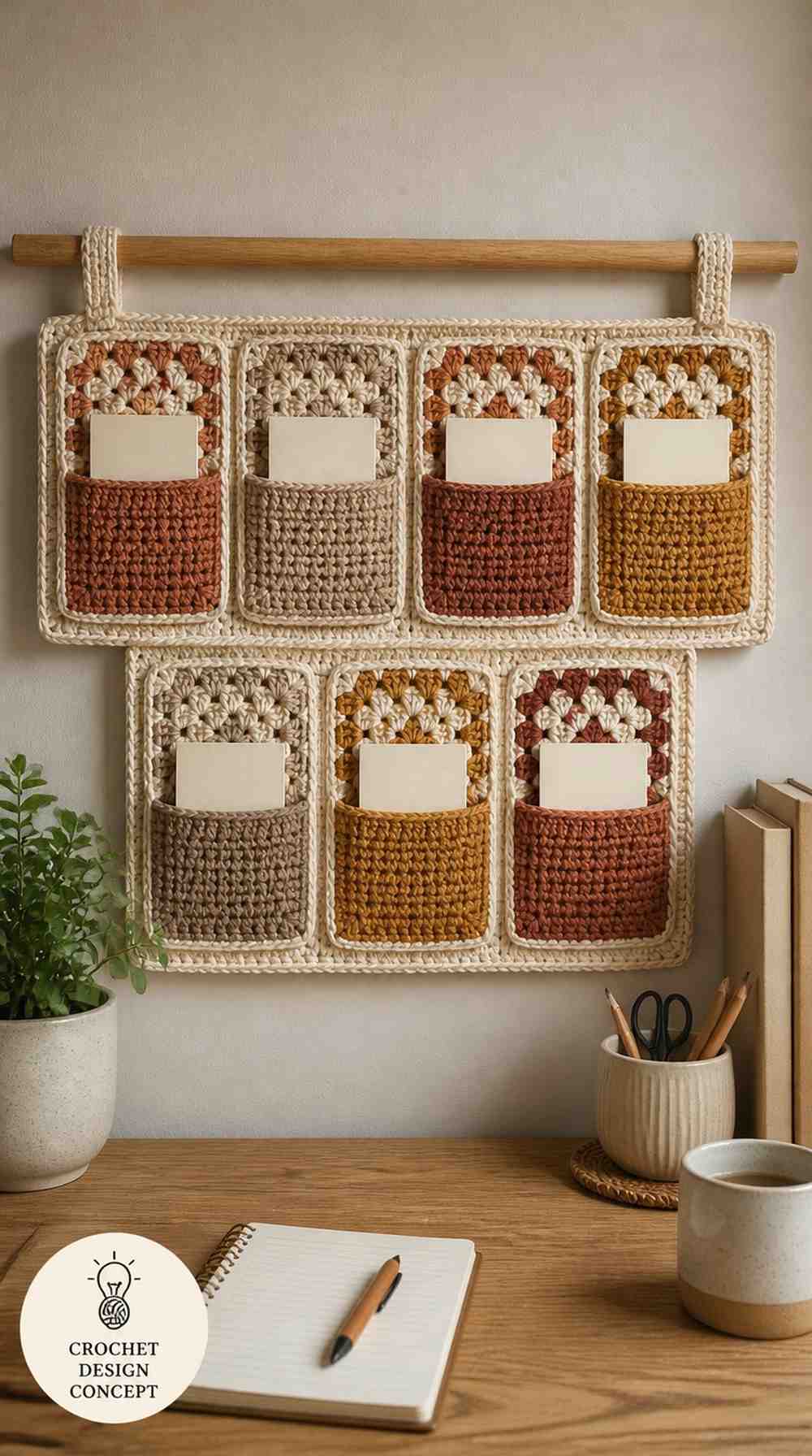
Warm-cream crochet forms a broad hanging panel decorated with seven small granny-square card pockets. The squares use terracotta, caramel, oatmeal, and cream yarn, arranged with four in the upper row and three below. Dense lower sections hold the ivory cards, while crochet clusters decorate their upper corners.
This design combines familiar granny-square textures with a practical weekly display. The small pockets make the cards easy to separate visually, although their open crochet details should not interfere with inserting or removing paper.
- Granny-Square Structure: Keep the dense card-holding sections separate from the decorative cluster openings so the cards remain securely positioned.
- Four-Plus-Three Layout: Maintain a consistent weekly order across the seven motifs, even though their different colors make them visually distinct.
- Joining Seams: Reinforce the connections between motifs and the cream backing to help the panel retain its rectangular shape.
14. Crochet Rust Roll-Up Weekly Card Organizer
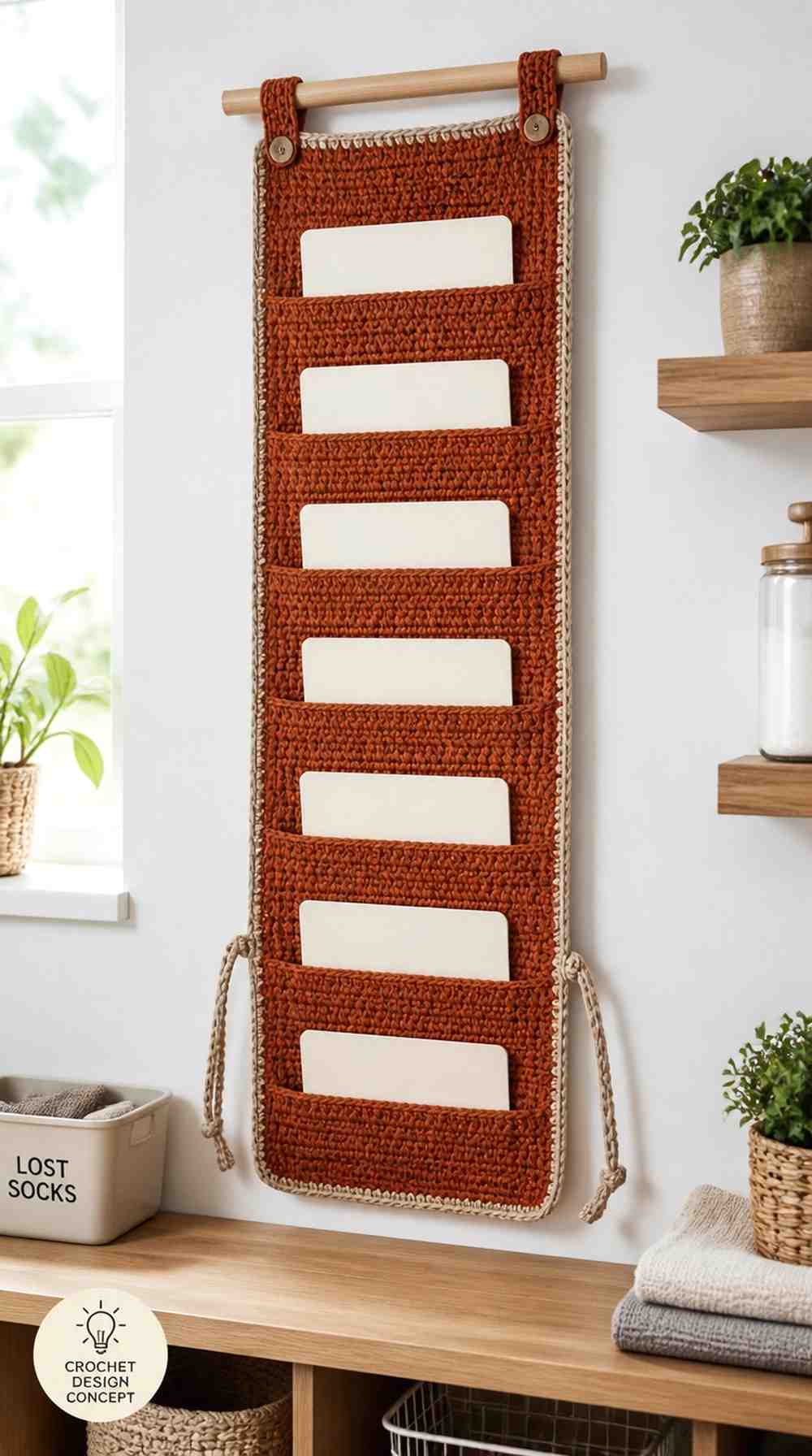
Rust-colored crochet forms a long narrow hanging organizer with seven slim card pockets arranged vertically. Oatmeal edging finishes the backing, and two short crochet ties are attached near its lower sides. Each pocket contains one blank cream task card.
The roll-up construction offers a way to store the empty organizer compactly when it is not being displayed. Its seven-pocket layout remains straightforward during weekly use, while the side ties provide an additional storage feature.
- Seven Slim Pockets: Allow enough space for each card to be removed easily, particularly near the lower pockets where the side ties are attached.
- Roll-Up Function: Remove all cards before rolling the organizer so paper is not bent or trapped between the folded crochet layers.
- Tie Placement: Keep the oatmeal ties short and secured when not in use to avoid loose dangling cords in family spaces.
15. Crochet Powder Blue Weekday-Weekend Display
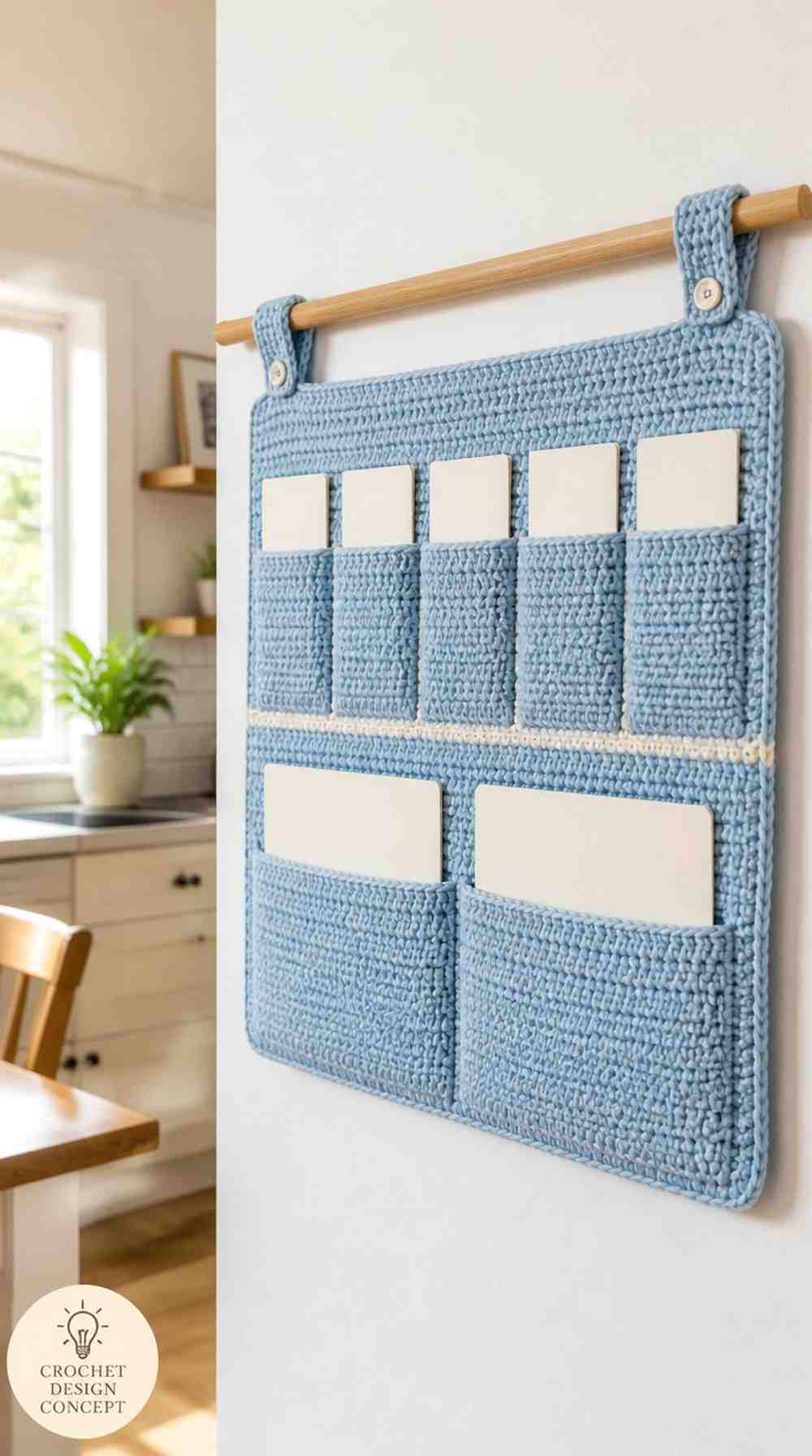
Powder-blue crochet creates a distinctive seven-pocket chart with five narrow compartments across the upper row and two wider pockets beneath. White edging separates the sections, making the different card sizes easy to recognize.
This layout is designed around the difference between weekday and weekend routines. The five upper cards can hold shorter everyday tasks, while the broader lower pockets provide more writing room for Saturday and Sunday activities.
- Five Weekday Cards: Use the narrow upper pockets for concise daily responsibilities that can be understood without lengthy instructions.
- Two Wider Weekend Pockets: Reserve the larger lower cards for chores that may need several steps or more detailed notes.
- Different Card Sizes: Prepare two card formats rather than forcing one standard size into all seven compartments.
16. Crochet Forest Green Family Weekly Pocket Chart
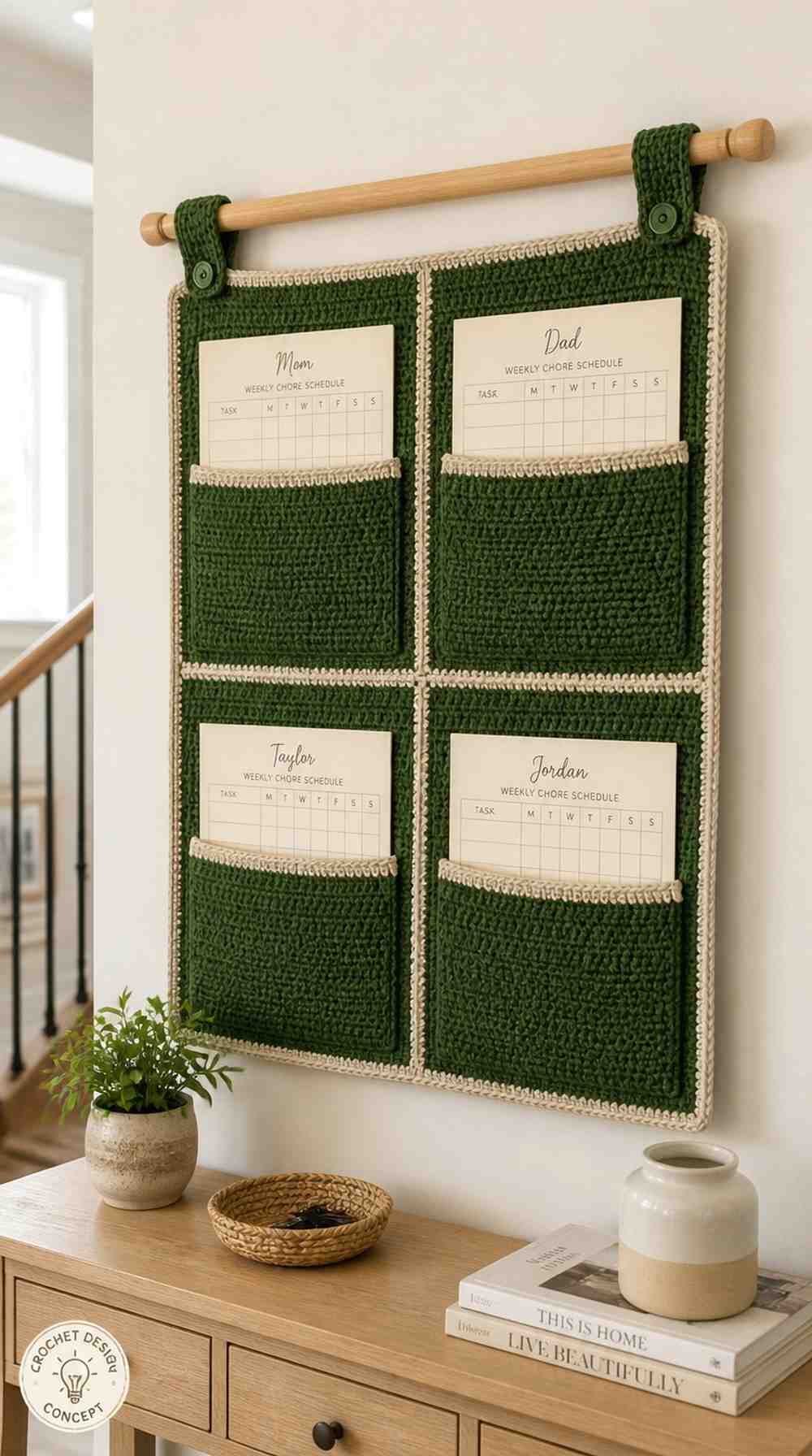
Forest-green crochet creates a wide hanging chart with four large card pockets arranged in a two-by-two grid. Oatmeal borders outline the sections, while a strong central divider separates the cards. Each pocket holds a blank ivory weekly schedule for an individual household member.
The four-person arrangement offers a different way to organize chores from a seven-day chart. Each family member can have a complete weekly list, making responsibilities visible together without requiring a separate display for every day.
- Four Individual Cards: Assign one full weekly schedule to each household member, using the card itself for names and dates.
- Central Divider: Keep the cross-shaped crochet seam secure so the four large pockets retain their shape when cards are changed.
- Shared Visibility: Display the chart at a height where everyone responsible for chores can read their card comfortably.
17. Crochet Plum Weekly Progress Card Station
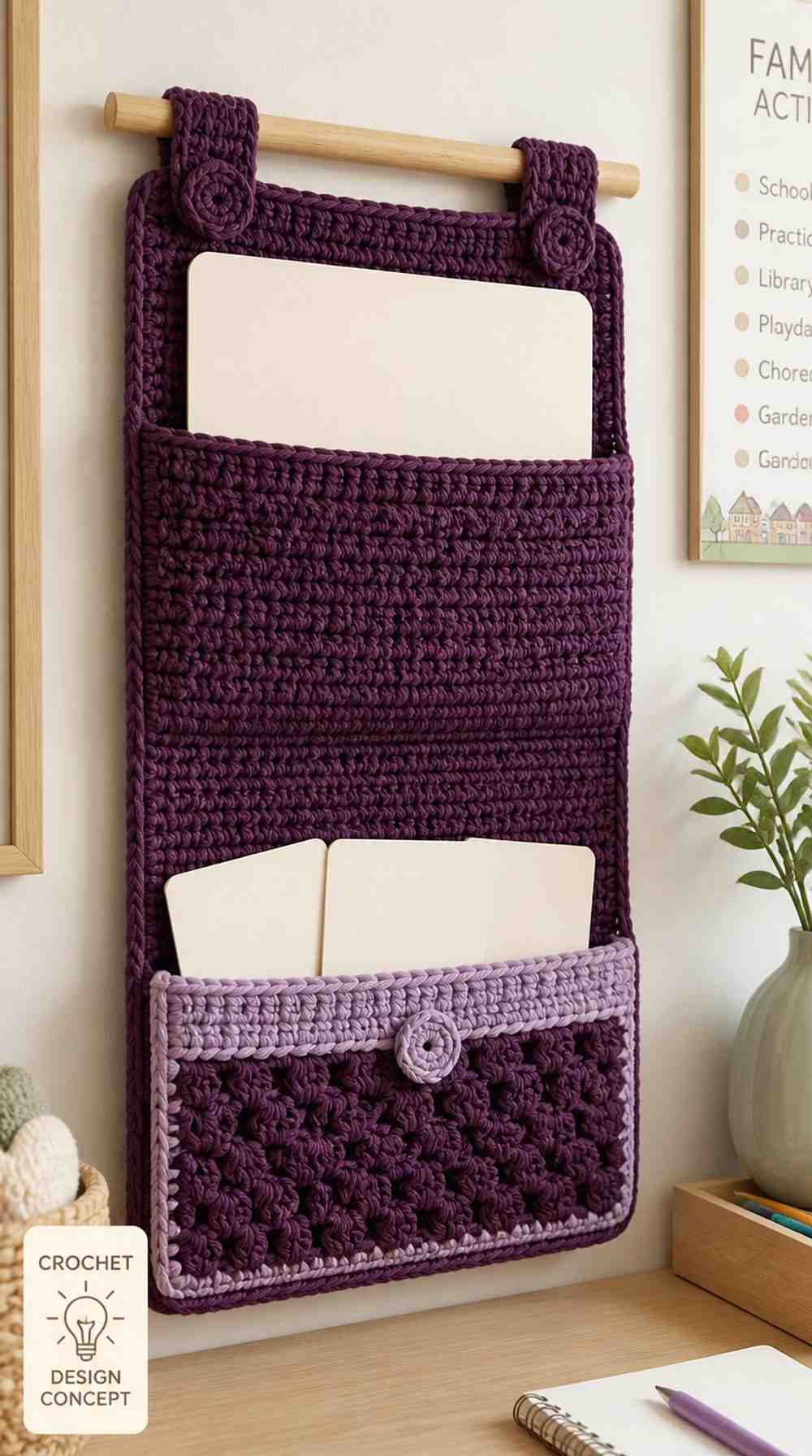
Deep plum-purple crochet forms a tall hanging display with one broad upper pocket and a smaller lower compartment. The upper section holds a large ivory weekly chore schedule, while the lower pocket contains three small cream task cards behind a dusty-lavender border and a buttoned retaining flap.
This concept separates the weekly plan from tasks that have already been finished. Instead of moving a whole daily card, individual completed-task cards can be placed in the lower pocket as the week progresses.
- Weekly Plan Pocket: Keep the large upper card clearly visible so the household can check remaining tasks without opening the lower compartment.
- Completed-Task Storage: Use the smaller lower pocket for finished task cards, making sure the cards can be removed when the weekly chart resets.
- Retaining Flap: Position the plum crochet button where it keeps the small cards contained without making the pocket difficult to open.
Practical Guide to Crochet Family Weekly Chore Card Displays
Choose a layout your family will actually use
Before selecting a crochet design, decide whether you want one card per day, one weekly card per person, or one shared weekly schedule.
Seven-card layouts are useful for tracking daily routines. Larger weekly cards may work better when family members have different responsibilities or when some chores happen only once or twice a week.
Keep the cards simple and readable
Use clear handwriting or printed cards with enough contrast to read from a normal standing distance. Include the task, who is responsible, and when it should be completed.
Avoid overcrowding small pockets with long lists. A card that is too narrow for the information may become difficult to use, even if the crochet display looks attractive.
Plan a weekly reset
Choose a regular time to review completed chores, remove outdated cards, and prepare the next week’s responsibilities.
For removable-card systems, keep spare blank cards in a separate drawer or envelope. If your chart uses individual schedules, update them when household routines change.
Use suitable crochet construction
Smooth cotton or an appropriate cotton blend may be worth considering for clear stitches and relatively tidy card pockets. Dense rows provide a more solid backing, while openwork borders are better used as decoration.
For hanging panels, reinforce pocket seams and upper attachment points. Use suitable wall hardware and consider a wooden dowel for wider charts.
Make the display safe and accessible
Hang the organizer securely at a practical viewing height without loose long cords or detachable small decorations within young children’s reach.
Avoid mounting charts directly above beds, cribs, or areas where falling hardware could cause injury. Small buttons and removable pieces require care around young children.
For related hanging-storage inspiration, see 20 Crochet Hanging Wall Pocket Organizer Ideas on Yarn Nest Studio. That collection explores broader wall-pocket arrangements that can help with choosing a backing and hanging style.
Want to Make Something Similar?
These 17 weekly chore displays are original design concepts, not exact tested patterns. The following crochet resources provide relevant guidance for making flat back panels, attaching pockets, and hanging organizers.
- Free Crochet Wall Organizer Pattern — Happy Heartsy by Lenka explains pocket construction, adding wooden dowels, and connecting hanging compartments. Its three-pocket organizer teaches related techniques rather than reproducing these weekly displays. Easy 3 Pocket Hanging Storage
- Crochet Wall Pocket Organizer — CyCrochet offers a free illustrated pattern for a flat backing, folded pocket, and simple hanging loop. It may help with the master-card frame and single-pocket concepts. CyCrochet
The pictured seven-day layouts and family-card arrangements would need custom measurements and construction decisions. Always test the finished pockets with the actual paper cards before hanging the organizer.
Which Crochet Family Weekly Chore Card Display Should You Choose?
| Your priority | Designs to consider | Main trade-off |
|---|---|---|
| All seven days in one row | Terracotta Seven-Slot | Needs more horizontal wall space |
| Narrow vertical display | Oatmeal Vertical Banner, Rust Roll-Up | Taller layout, less card width |
| Compact seven-card arrangement | Olive Seven-Window, Cream Seven-Square | More individual pocket joins |
| Flip-through daily cards | Navy Flip-Card | Hidden cards require handling |
| One large weekly schedule | Mustard Master-Week, Burgundy Clipboard | All information must fit on one card |
| Separate family-member plans | Denim Three-Person, Forest Green Four-Person | Requires individual weekly cards |
| Removable task cards | Teal Removable Seven-Card | Fasteners need checking |
| Decorative weekly display | Lavender Pennants, Butter Yellow Leaves | More shaped crochet details |
| Weekday and weekend separation | Powder Blue Weekday-Weekend | Two different card sizes |
| Weekly completion tracking | Plum Progress Card Station | Requires a consistent reset routine |
| Airy seven-level display | Coral Task Ladder | Side supports need even tension |
| Two weekly plans | Charcoal Reversible Panel | Reverse card isn't always visible |
For a straightforward household routine, the Crochet Terracotta Seven-Slot Chore Rail or Crochet Mustard Master-Week Card Frame may be a good starting point.
If the family prefers individual responsibilities, the Crochet Denim Three-Person Weekly Display or Crochet Forest Green Family Weekly Pocket Chart gives each person a separate card.
Conclusion
Crochet family weekly chore card displays bring together simple household organization and handmade decoration. A terracotta seven-pocket rail keeps daily tasks visible, a mustard card frame holds an entire weekly schedule, and a plum progress station creates a place for completed chores.
The best choice is one your household can read, update, and maintain without unnecessary effort. Choose a card arrangement that matches how responsibilities are shared, keep the crochet pockets easy to access, and secure the display properly to the wall.
Which design would suit your home best: the seven-card terracotta rail, the forest-green family chart, or the plum completed-task station? Share your favorite layout and how your family prefers to organize weekly chores.
Frequently Asked Questions
1. What should I put on a family weekly chore card?
A useful chore card can include the task, the responsible person’s name, and the day or time it needs to be completed. Keep the wording short and specific. For recurring responsibilities, reusable cards may make weekly planning easier, while larger cards can accommodate more detailed instructions when necessary.
2. Should I use one chore card per day or one card per family member?
Both arrangements can work. A seven-card display is useful when daily routines are the main focus. Individual weekly cards may suit families where members have different responsibilities throughout the week. Choose whichever makes tasks clearer and requires less time to update.
3. What yarn should I consider for a crochet chore card display?
Smooth cotton or an appropriate cotton blend may be worth considering because it can create clearly defined crochet stitches and tidy pocket edges. A denser backing may help keep paper cards aligned. However, the finished structure still depends on the stitch pattern, joining method, yarn tension, and secure hanging hardware.
4. How can I make chore cards easy for children to use?
Use short, age-appropriate tasks and clear writing. Pictures or simple symbols can help younger children understand the schedule. Place the chart where they can view it safely, but keep small buttons, detachable decorations, and hanging cords out of reach when they present a hazard. Responsibilities should match each child’s ability and supervision needs.
5. Are these 17 crochet family weekly chore card displays available as exact patterns?
No. These are original AI-generated inspiration concepts rather than tested crochet patterns. The linked tutorials teach related wall-pocket and hanging-panel techniques, but they do not reproduce the pictured weekly chore charts. A real version would need custom pocket sizing, suitable card materials, secure attachment points, and a practical routine for updating the schedule.