A crochet cotton bread storage bag can bring handmade texture and a little extra charm to the kitchen. These designs explore everything from traditional drawstring sacks and long baguette sleeves to rounded sourdough bags, gingham pockets and floral bread gift pouches. With oatmeal, sage, terracotta, lavender and butter-yellow cotton textures, the collection offers different ways to organize wrapped bread while keeping the kitchen looking warm and welcoming.
The 13 crochet bread bag ideas below focus on shape, closure style, yarn texture, loaf size and practical storage choices. Some designs are better suited to transporting wrapped bread, while others offer decorative outer storage around a suitable removable liner. You’ll also find important guidance on cleaning, moisture, food contact and choosing appropriate packaging, because a beautiful crochet bag alone cannot guarantee that bread stays fresh or safe.
These are AI-generated crochet design visualizations for inspiration, not photographs of tested handmade pieces or step-by-step patterns.
Quick Design Selection Guide
- For everyday simplicity: Explore Crochet Oatmeal Drawstring Bread Bag and Crochet Cream Sage Gingham Bread Bag for familiar drawstring closures and removable liners.
- For long bakery loaves: Crochet Sage Baguette Storage Sleeve has an elongated silhouette that is easier to compare against a baguette’s shape.
- For round sourdough: Crochet Terracotta Sourdough Storage Bag offers a wide gusseted body, while Crochet Powder Blue Oval Bread Pouch suits an elongated oval loaf.
- For carrying wrapped bakery bread: Crochet Natural Cotton Mesh Bread Carrier uses reinforced handles and open mesh, although the bread needs separate appropriate packaging.
- For decorative kitchen styling: Crochet Ivory Wheat Motif Bread Sack and Crochet Lavender Granny Square Bread Bag add recognizable crochet motifs.
- For giving homemade bread: Crochet Butter Yellow Floral Bread Gift Bag is designed around two individually wrapped small loaves rather than a single large loaf.
1. Crochet Oatmeal Drawstring Bread Bag
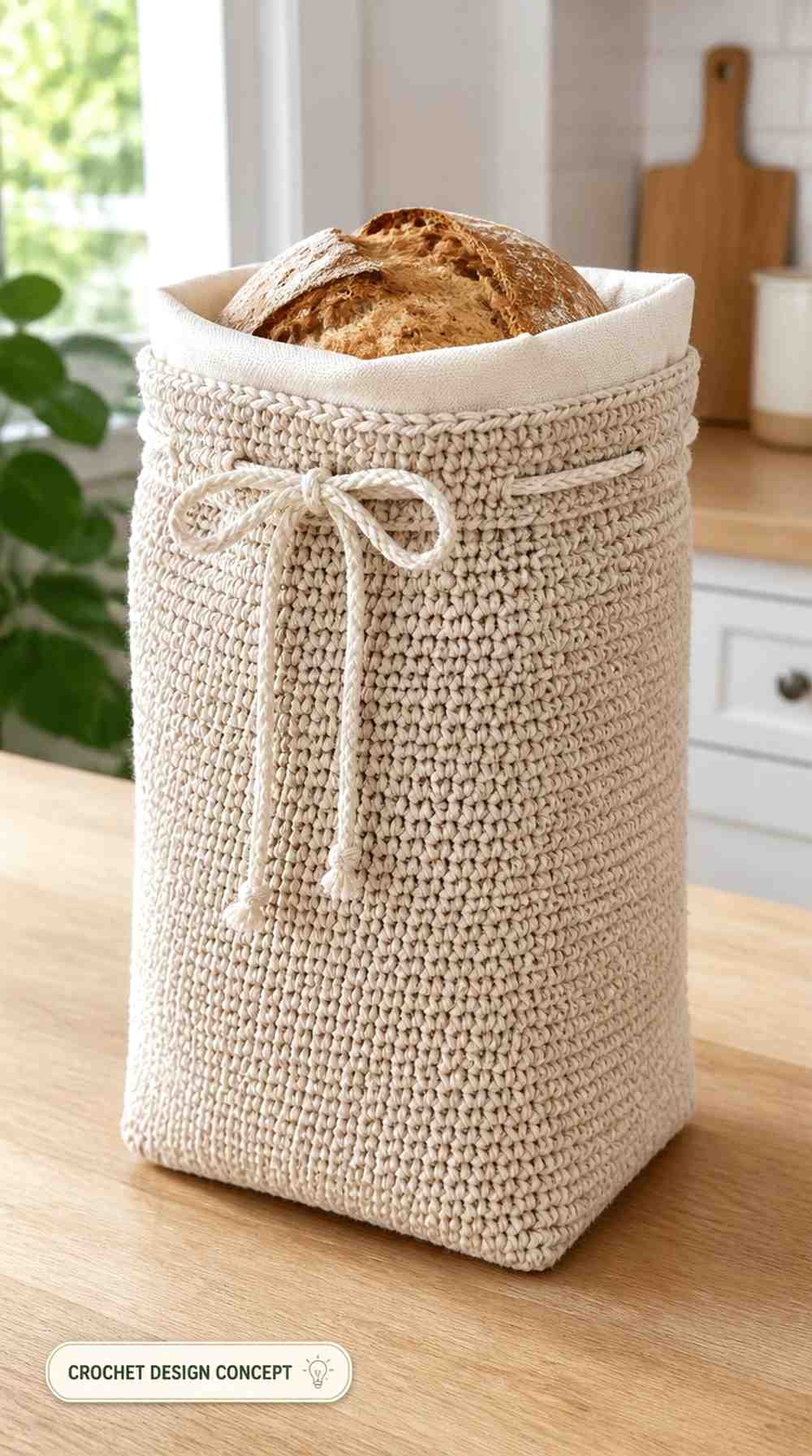
The oatmeal-beige crochet bag has a tall rectangular shape, closely worked linen-like stitches and a flat base. A broad drawstring channel finishes the opening, where two cream cotton cords form a relaxed bow. The natural color allows the texture of the cotton crochet to stand out without additional decoration.
An ivory fabric liner is visible inside, surrounding a cooled rustic oval loaf. This simple arrangement is worth considering for a kitchen where washable outer storage matters, although the actual bread-storage conditions must still be chosen separately.
- Drawstring adjustment: Allow the top to open wide enough for a whole loaf without pulling excessively against the crochet casing or creating unnecessary stretching.
- Liner choice: A removable, washable liner can separate bread from the textured yarn. Its suitability for food contact and storage still needs checking.
- Flat base: The rectangular bottom gives the bag a defined resting shape. Test whether the selected crochet fabric keeps its proportions after washing.
2. Crochet Sage Baguette Storage Sleeve
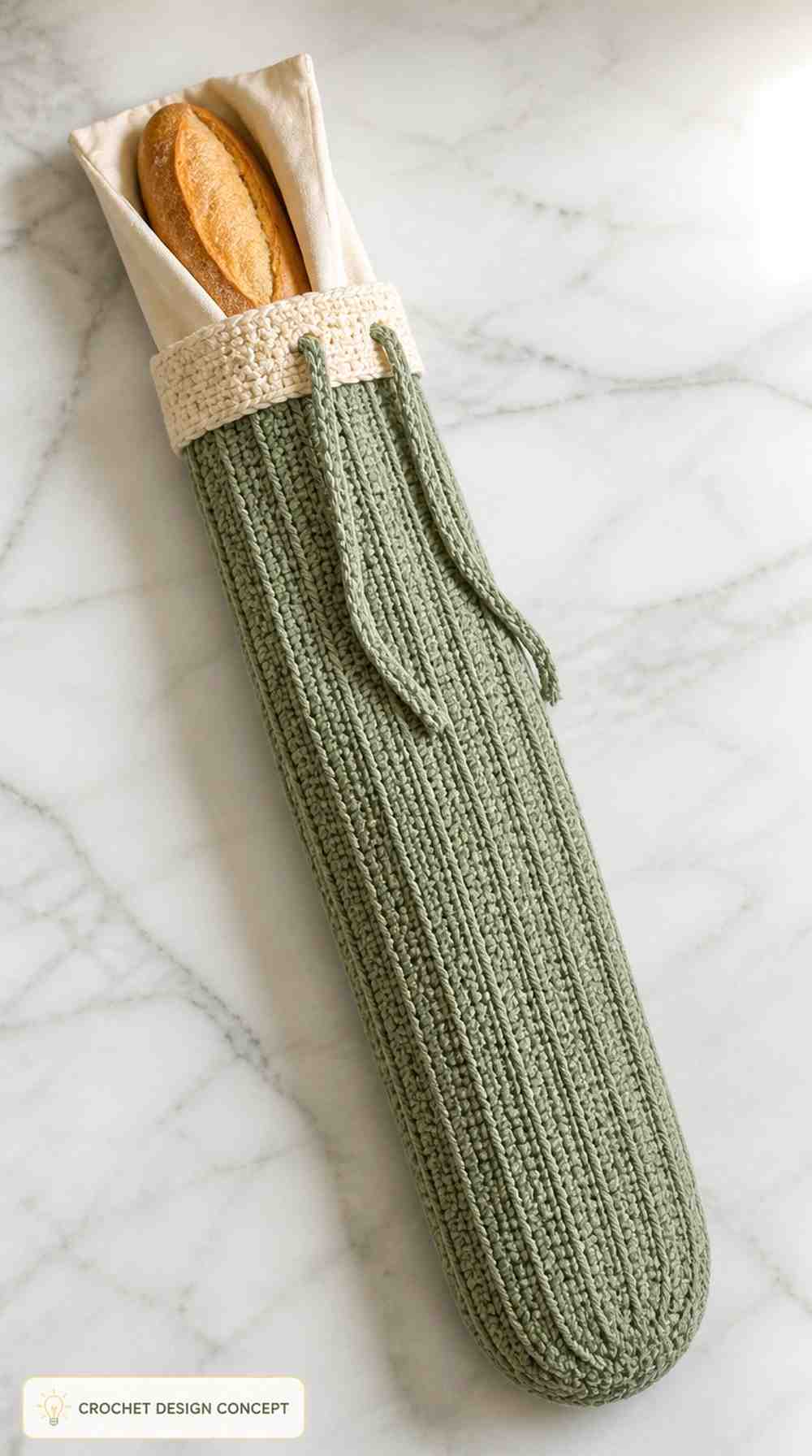
Long and slender, this sage-green cotton crochet sleeve is shaped around a baguette rather than a round loaf. Raised vertical stitch columns travel along the body, while a rounded closed bottom creates a softer finish. A cream upper flap folds over and is secured with two narrow sage ties.
The partially opened sleeve reveals a separate natural-cotton liner around a cooled baguette. Its elongated proportions make it a useful inspiration for storing or carrying appropriately packaged bakery bread without folding the bread itself.
- Baguette length: Compare the finished sleeve length with the longest loaf you expect to use, allowing room for the folded top and closure.
- Rounded bottom: The closed curved end may cradle a narrow loaf, but the width must still suit its actual crust and shape.
- Foldover protection: A tied flap provides coverage rather than an airtight seal. Choose the inner bread packaging based on the bread and storage period.
3. Crochet Terracotta Sourdough Storage Bag
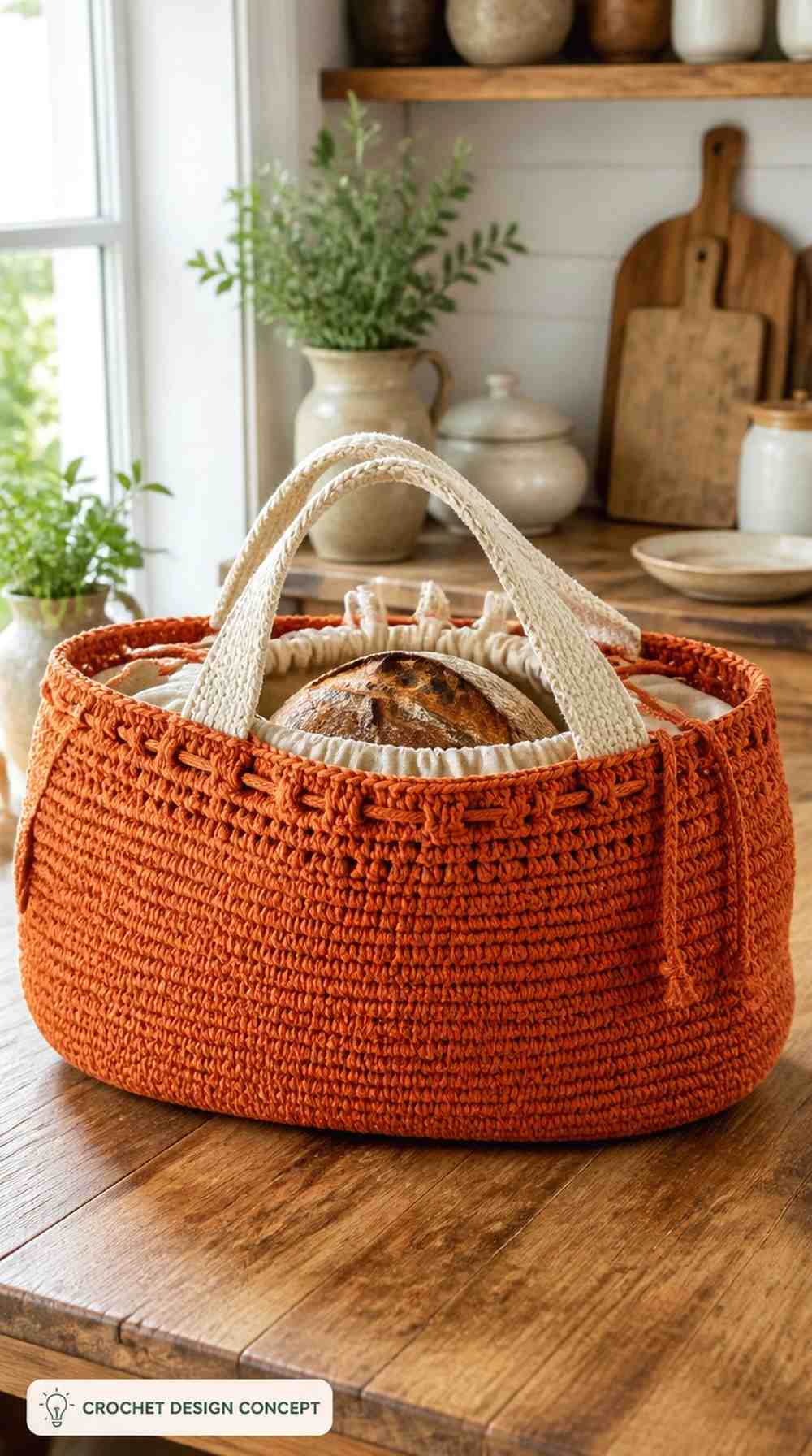
Terracotta-orange cotton crochet brings warmth to this broad bread bag, which has a rounded oval body, visible side gussets and a closely stitched lower portion. Two short cream handles rise above a narrow drawstring channel, giving the design a basket-like appearance.
The open top reveals an ivory removable liner with a cooled round sourdough loaf inside. Its wider shape is more suitable for comparing against large circular loaves than a narrow bread sleeve, while the gussets introduce additional construction and support decisions.
- Round loaf capacity: Measure the widest part of the intended boule rather than relying only on its diameter before baking.
- Handle reinforcement: The short handles are decorative as well as potentially useful, but their actual load-bearing strength requires proper construction and testing.
- Side-gusset shaping: Flexible crochet can expand unevenly around a rounded loaf. Consider how the gussets and lower seams will behave when loaded.
4. Crochet Blue Stripe Sandwich Loaf Bag
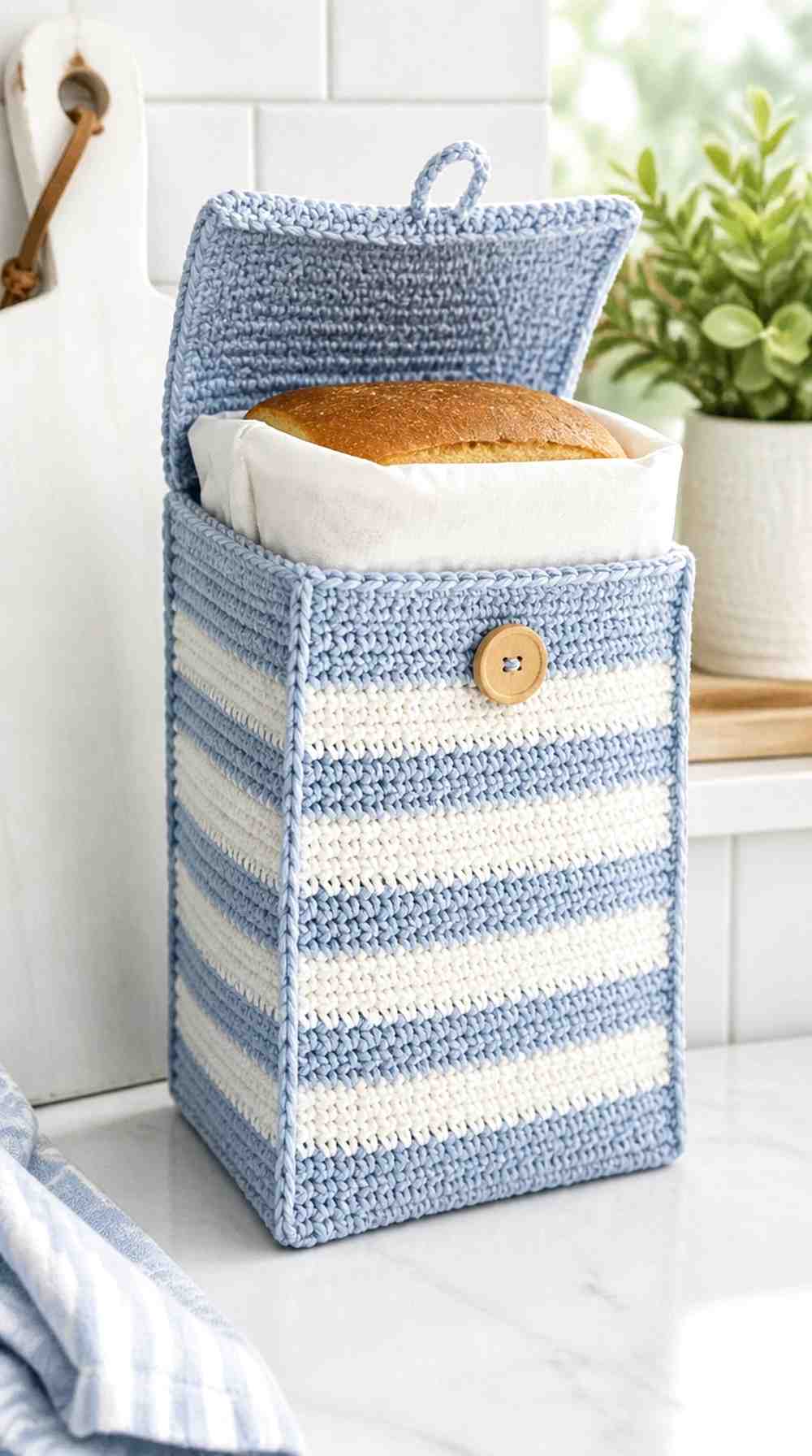
Powder-blue and warm-white horizontal stripes give this cotton crochet bread bag a clean, familiar kitchen look. Its rectangular body has a squared bottom, flat side seams and a broad blue foldover flap. A small natural-wood button and crochet loop provide the single visible fastening.
Beneath the lifted flap, a white cotton liner surrounds a cooled sandwich loaf. The boxier silhouette makes this idea particularly relevant to rectangular homemade bread, but the flap should be considered a textile closure rather than a freshness-preserving seal.
- Rectangular fit: Compare the bag’s width, height and depth with your loaf pan’s finished bread shape, including the raised top crust.
- Button placement: Keep the wooden button and crochet loop positioned where they can fasten easily without pressing against or damaging the loaf.
- Striped construction: Consistent crochet tension helps the horizontal bands align. Check colorfastness before washing different yarn shades together.
5. Crochet Natural Cotton Mesh Bread Carrier
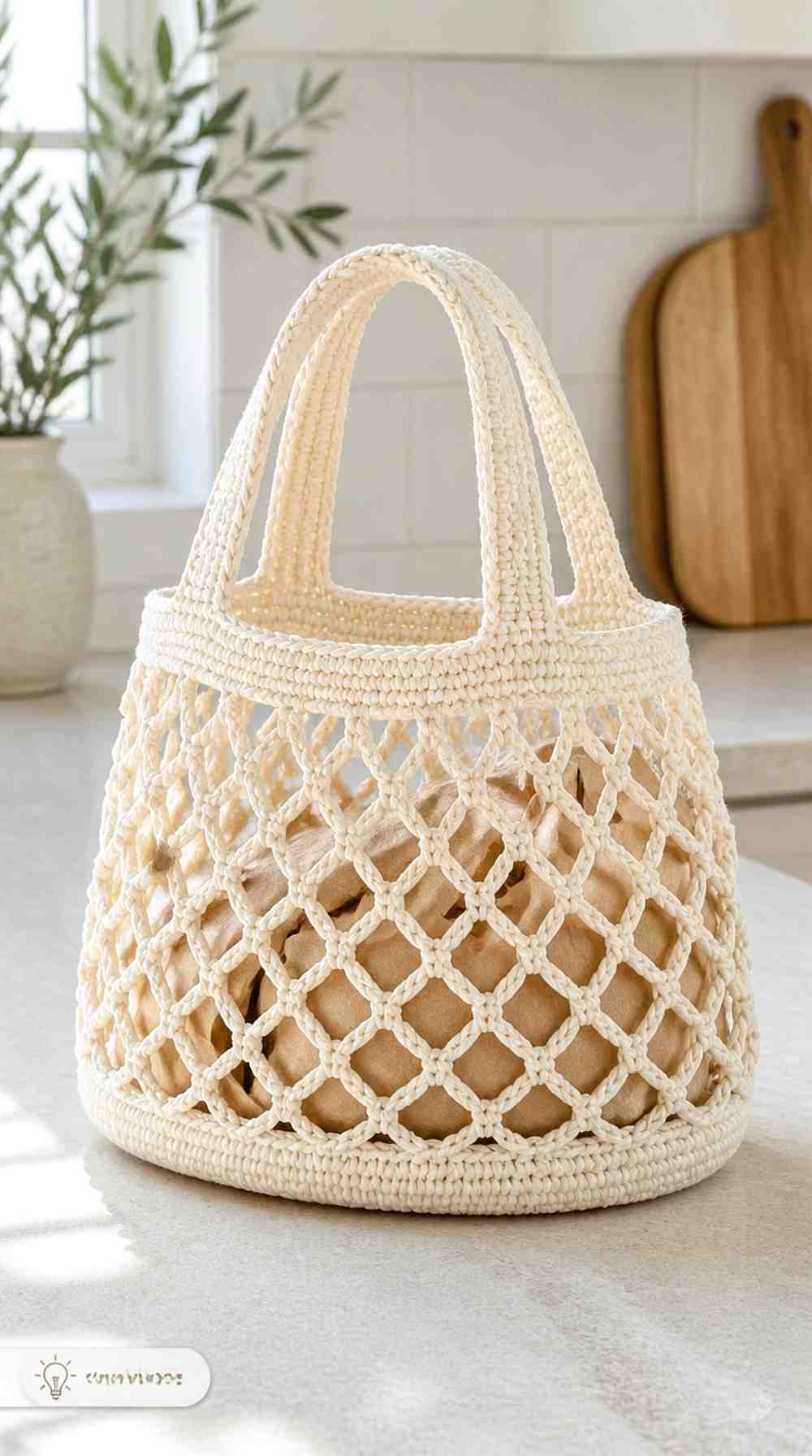
Natural ecru cotton gives this openwork crochet bag an understated bakery-market appearance. A dense oval base supports the body, while broad diamond-mesh stitches create the main sides. Two matching reinforced handles rise above a closely worked upper band.
Inside sits a small oval loaf enclosed in an unprinted bakery paper wrapper. Because the mesh leaves large openings, this design is better understood as an outer carrying or storage accessory for already packaged bread, not a protective bread bag on its own.
- Mesh limitations: Large crochet openings cannot protect exposed bread from dust, handling or insects. Use appropriate inner packaging rather than placing an uncovered loaf directly inside.
- Handle support: The reinforced-looking handles still need practical load checks, particularly where the open mesh meets the denser upper band.
- Paper-wrapped bread: Choose wrapping appropriate to the bread and storage conditions; paper alone is not a guarantee against staling or spoilage.
6. Crochet Dusty Rose Bread Roll Pouch
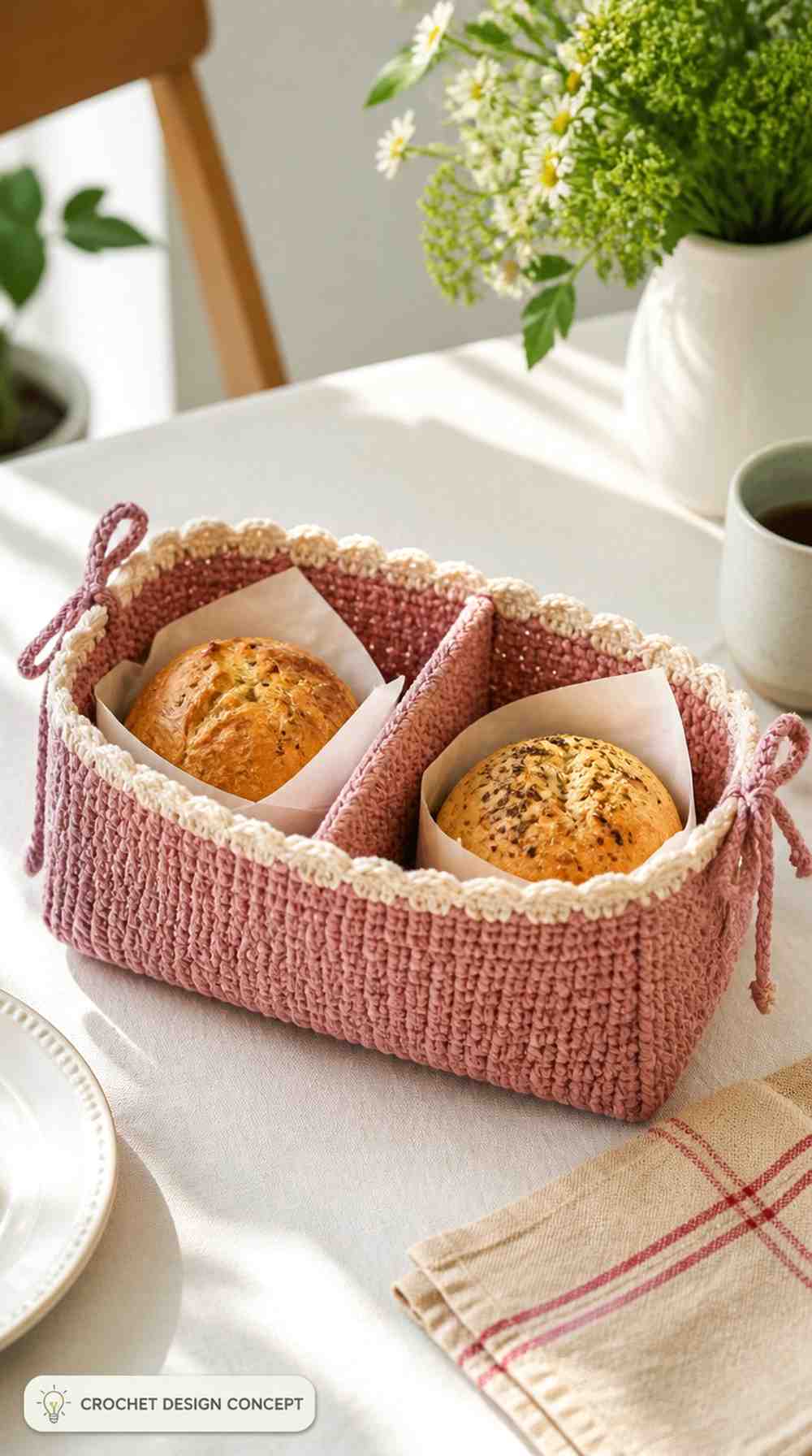
Dusty-rose cotton crochet shapes a low, wide bread pouch with a flat rectangular base and two equally sized compartments. A central crochet divider keeps the sections distinct, while a delicate cream scalloped border softens the upper opening. Two short rose drawcords sit loosely tied at opposite corners.
Each compartment contains a cooled bread roll in its own unprinted paper wrapper. The divided shape is appealing for arranging small bakery items, although it is more of a presentation and organization concept than an airtight bread-storage solution.
- Separate compartments: Plan each space around the wrapped rolls’ actual sizes so their wrappers can be removed without crushing the bread.
- Scalloped rim: Keep the cream border relatively shallow if the pouch will be opened and cleaned frequently; prominent scallops may catch on packaging.
- Open display: The corner ties leave the upper section open in the pictured concept. Add suitable separate packaging if longer storage is required.
7. Crochet Ivory Wheat Motif Bread Sack
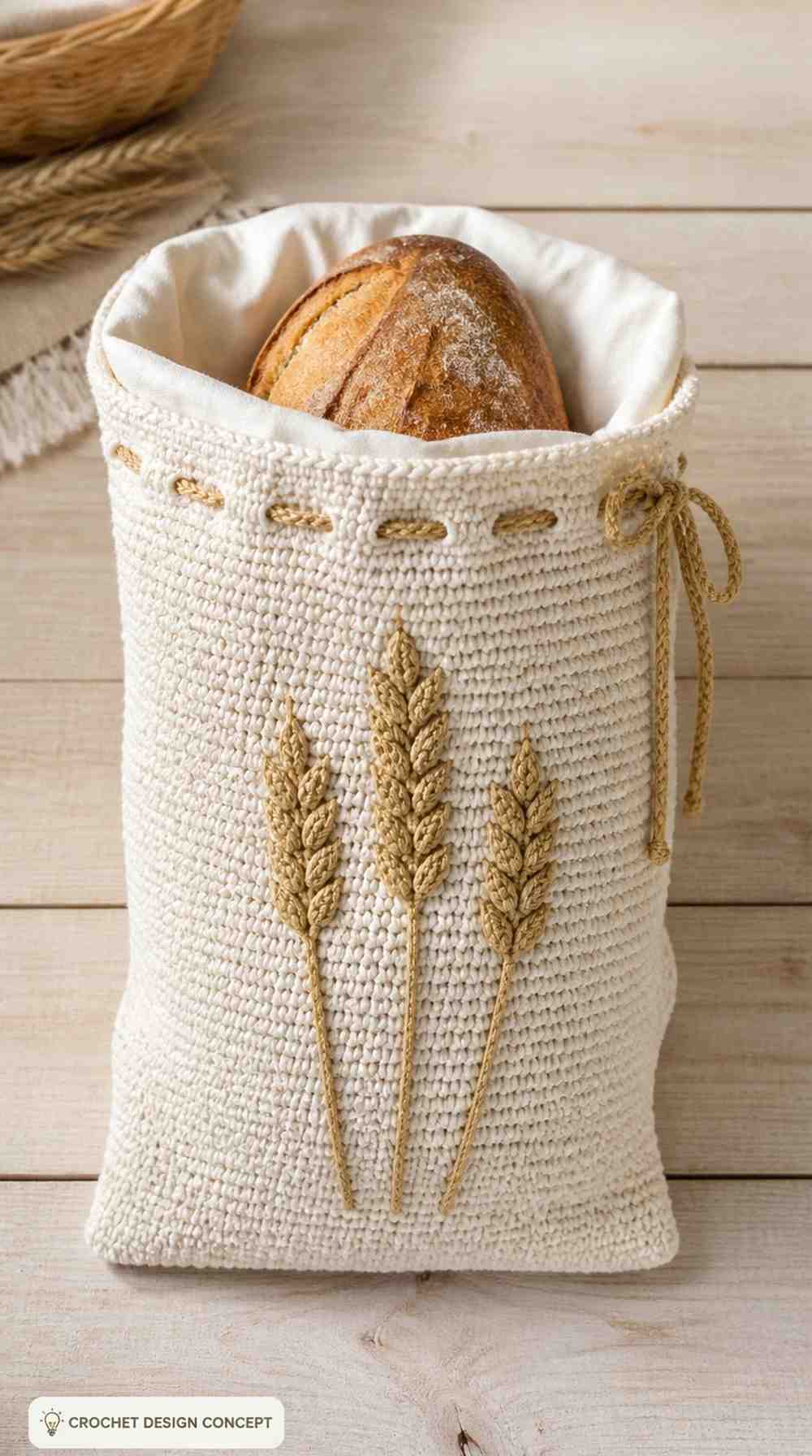
A tall ivory cotton crochet sack gets its character from three golden-wheat-colored motifs running vertically down the front. Compact stitches give the main bag a relatively smooth surface, while a folded base creates a neat lower edge. A narrow golden-oat drawstring passes through eyelets around the top.
The opening reveals a removable ivory cotton liner and the upper crust of a cooled oval loaf. This design brings a traditional bakery feeling to kitchen storage without relying on complicated shaping or multiple decorative attachments.
- Wheat motif placement: Position surface-crocheted stems away from the drawstring eyelets so they do not interfere with opening or closing the sack.
- Compact stitch texture: A dense cotton surface gives the motifs a clear background, but it may be slower to dry after laundering than airy crochet.
- Light-colored yarn: Ivory highlights dirt and food residue. Choose washable yarn and check whether the golden motif yarn has compatible care instructions.
8. Crochet Charcoal Envelope Bread Bag
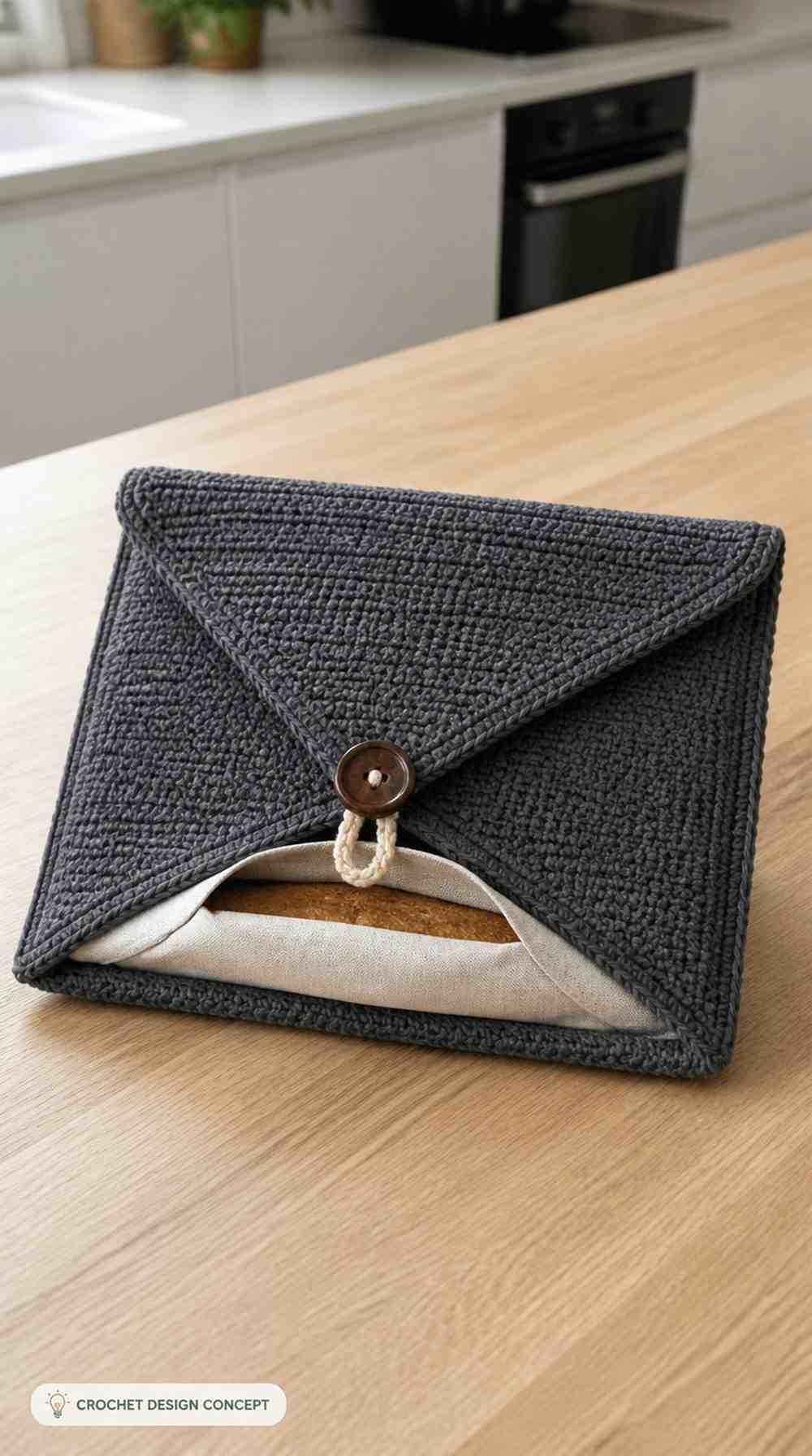
Charcoal-grey cotton crochet creates a modern envelope-style bread pouch with clean rectangular proportions and horizontal stitch rows. A broad triangular flap folds across the front, with an oatmeal crochet loop and dark wooden button forming the closure. The dark color emphasizes the bag’s simple geometric silhouette.
Under the partly lifted flap, a natural cotton liner encloses a cooled compact sandwich loaf. The envelope construction offers a different look from gathered drawstring bags, although the flap is not intended to create an airtight food-storage environment.
- Triangular flap: Plan the flap length so it covers the opening without requiring excessive pulling to reach the fastening.
- Wooden button care: Consider whether the button can be removed or kept appropriately dry when the cotton outer pouch needs washing.
- Dark crochet fabric: Charcoal provides a strong contrast against lighter kitchen surfaces, but it can make crumbs and residue less noticeable during inspection.
9. Crochet Lavender Granny Square Bread Bag
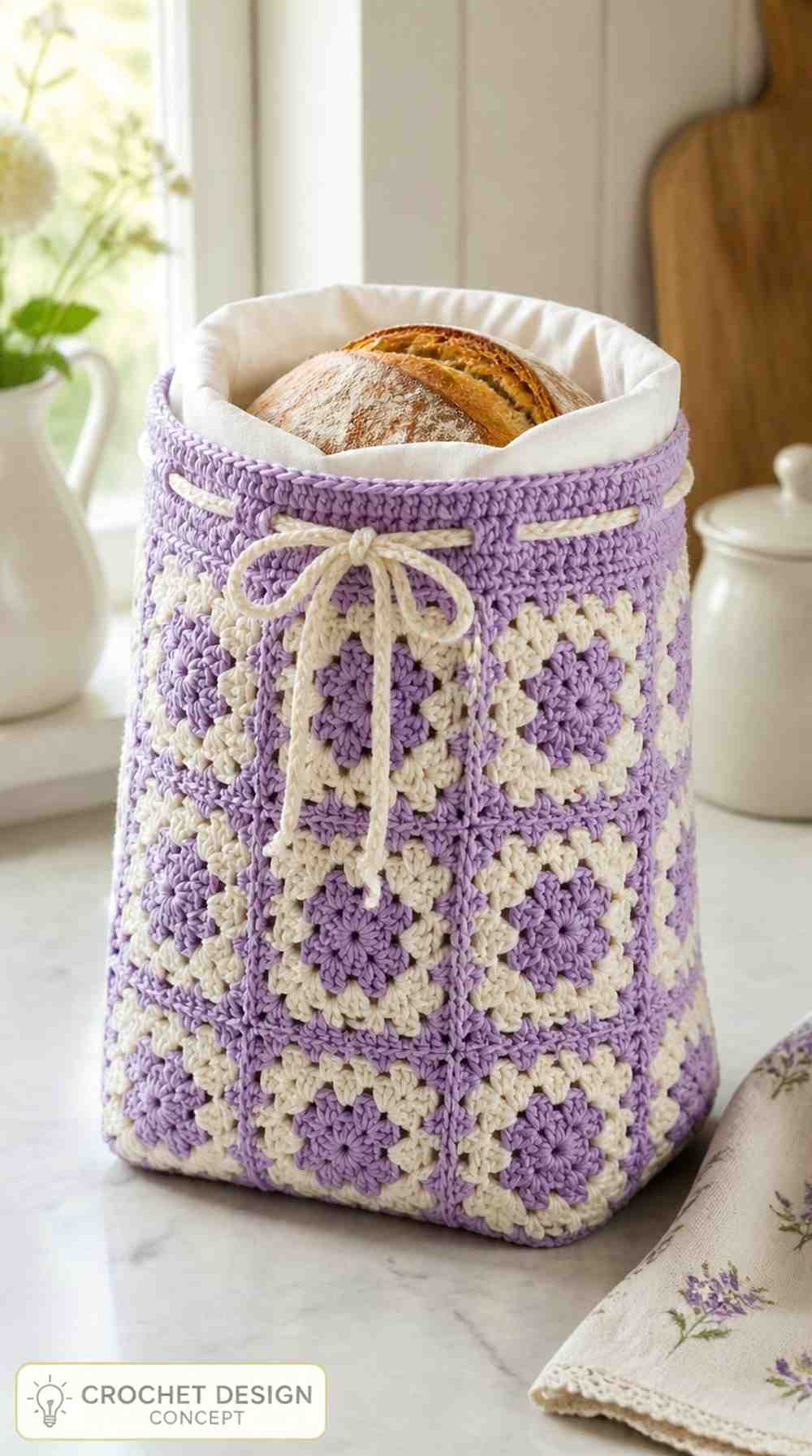
Lavender and cream granny squares form the body of this softly squared cotton crochet bread sack. Each square has a solid lavender center, a cream second round and narrow lavender joining edges. A straight upper band leads into a cream drawstring tied loosely at the front.
A removable smooth white cotton liner rests inside, holding a cooled small oval loaf. The repeated squares give this bag a distinctly handmade appearance, while its construction offers an opportunity to consider how joined crochet panels behave when used around a bulky item.
- Square alignment: Consistent granny-square sizes can help the bag keep a balanced shape. Uneven joins may distort the sides around a full loaf.
- Joining seams: Additional joins create more areas to inspect for trapped crumbs, loosened yarn ends and wear during repeated washing.
- Liner separation: A smooth removable liner can keep the textured granny-square seams away from direct bread contact, subject to its actual food suitability.
10. Crochet Cream Sage Gingham Bread Bag
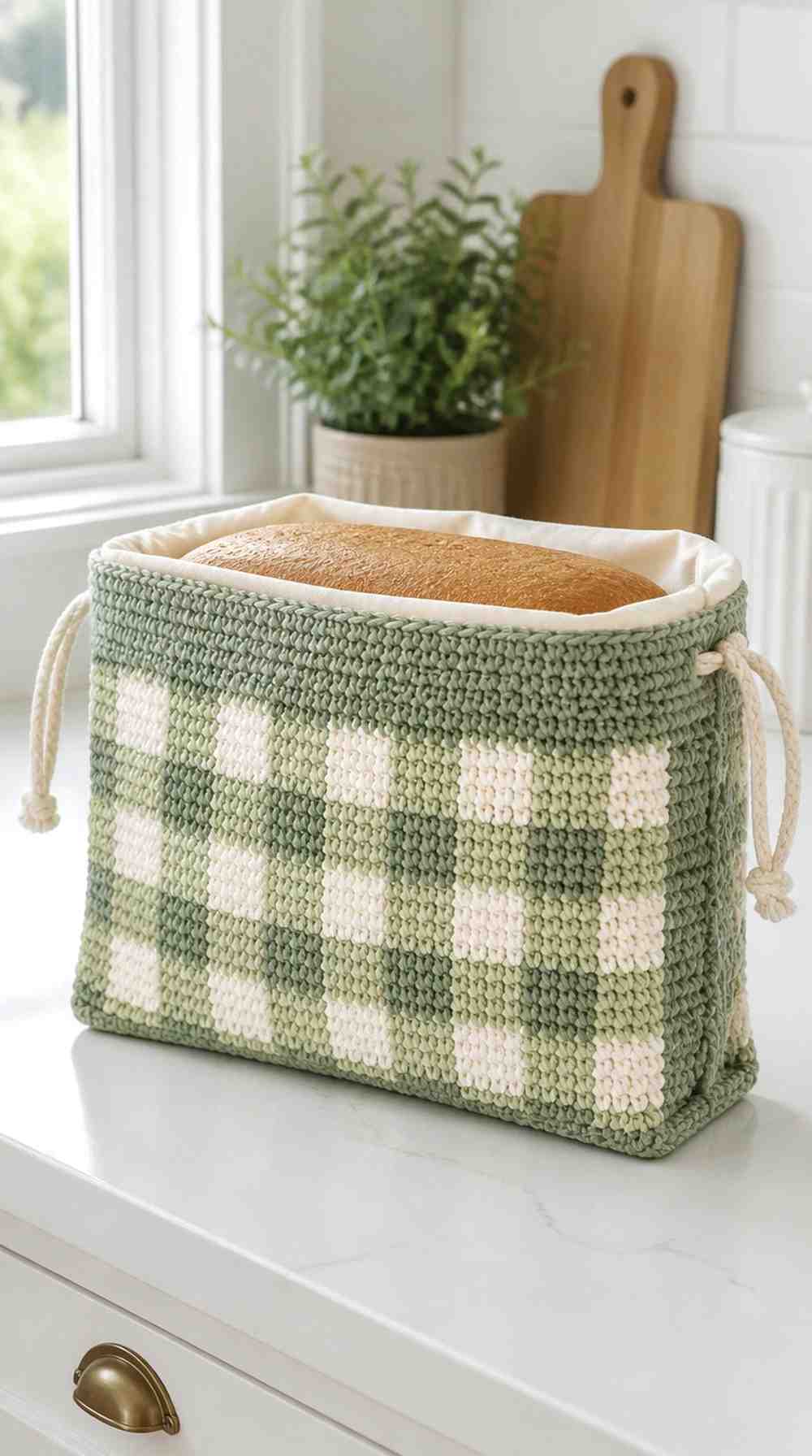
Small cream, muted sage and pale-pistachio squares create a gingham-like crochet effect across this rectangular bread bag. Slim gussets provide depth, while a neatly worked flat bottom supports the body. A plain sage drawstring casing finishes the top, with two cream cords tied near the opening.
The pale gingham pattern gives the bag a gentle farmhouse appearance, especially around light wooden kitchen surfaces. Inside, a removable cream cotton liner holds a cooled rectangular sandwich loaf, separating the decorative crochet from the bread itself.
- Colorwork planning: Keep the small squares consistent across both the front and side gussets so the gingham pattern does not break awkwardly at the corners.
- Drawcord positioning: Opposite-side cords should gather the opening evenly without pulling the rectangular bag into a badly twisted shape.
- Cotton color care: Test whether the sage and pistachio dyes remain stable during washing, especially beside the lighter cream sections.
11. Crochet Rust Chevron Foldover Bread Sack
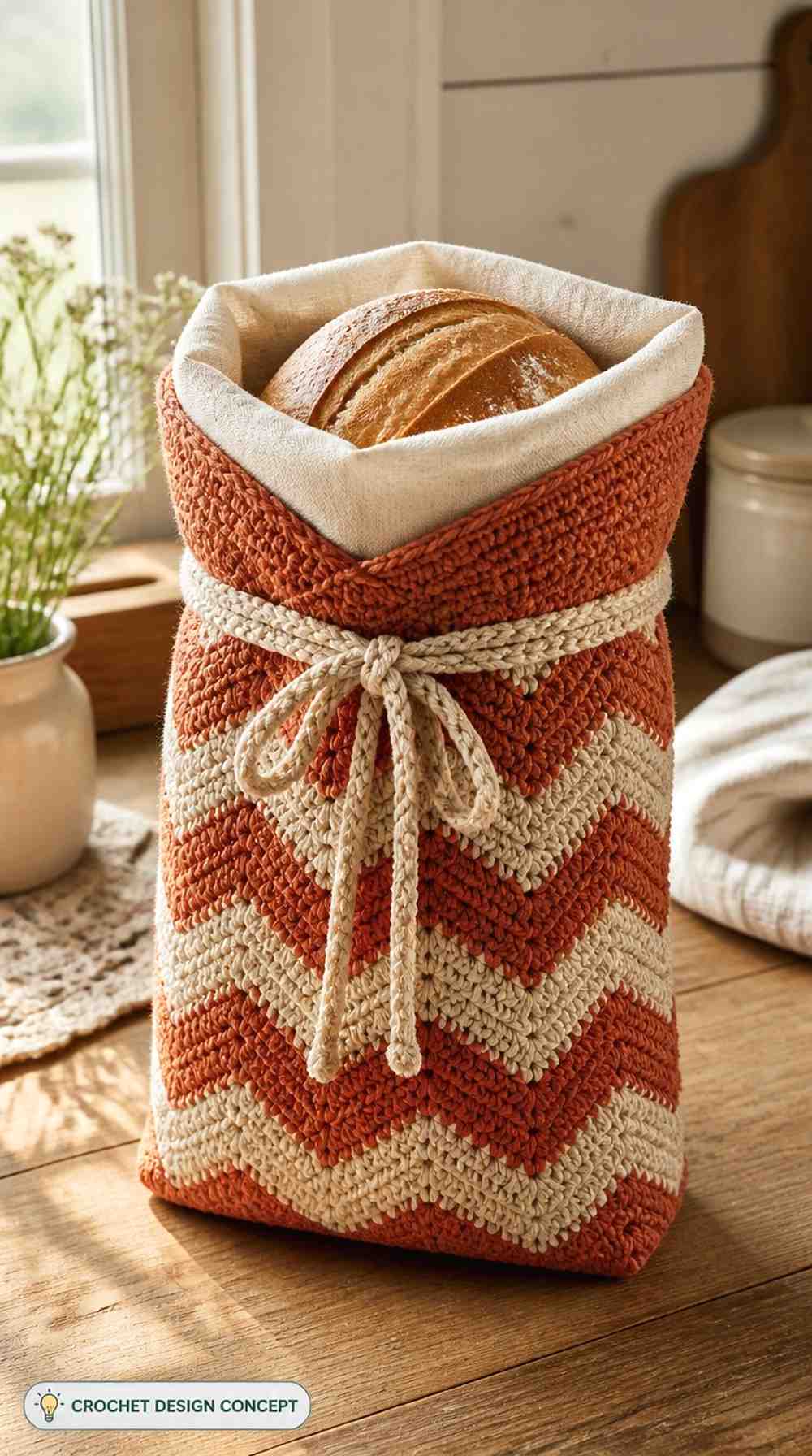
Rust-orange and beige crochet zigzags travel across this tall rectangular bread sack, giving the flexible body a bold, warm appearance. Its wide upper section folds downward, with two long beige crochet ties wrapped around the fold and knotted at the front. The broad chevron rows stand out clearly against the simpler shape.
A separate ivory cotton liner surrounds the cooled oval loaf visible beneath the partly opened fold. The design takes inspiration from traditional foldover storage bags, but its textile closure does not provide the same protection as suitable sealed food packaging.
- Chevron shaping: Zigzag crochet rows require careful tension so the decorative color changes do not distort the rectangular sides.
- Foldover length: Leave enough upper fabric to fold comfortably while still allowing the loaf and liner to be removed without difficulty.
- Long ties: Keep the beige ties manageable during storage and washing; loose cords can become tangled or snagged on nearby kitchen items.
12. Crochet Powder Blue Oval Bread Pouch
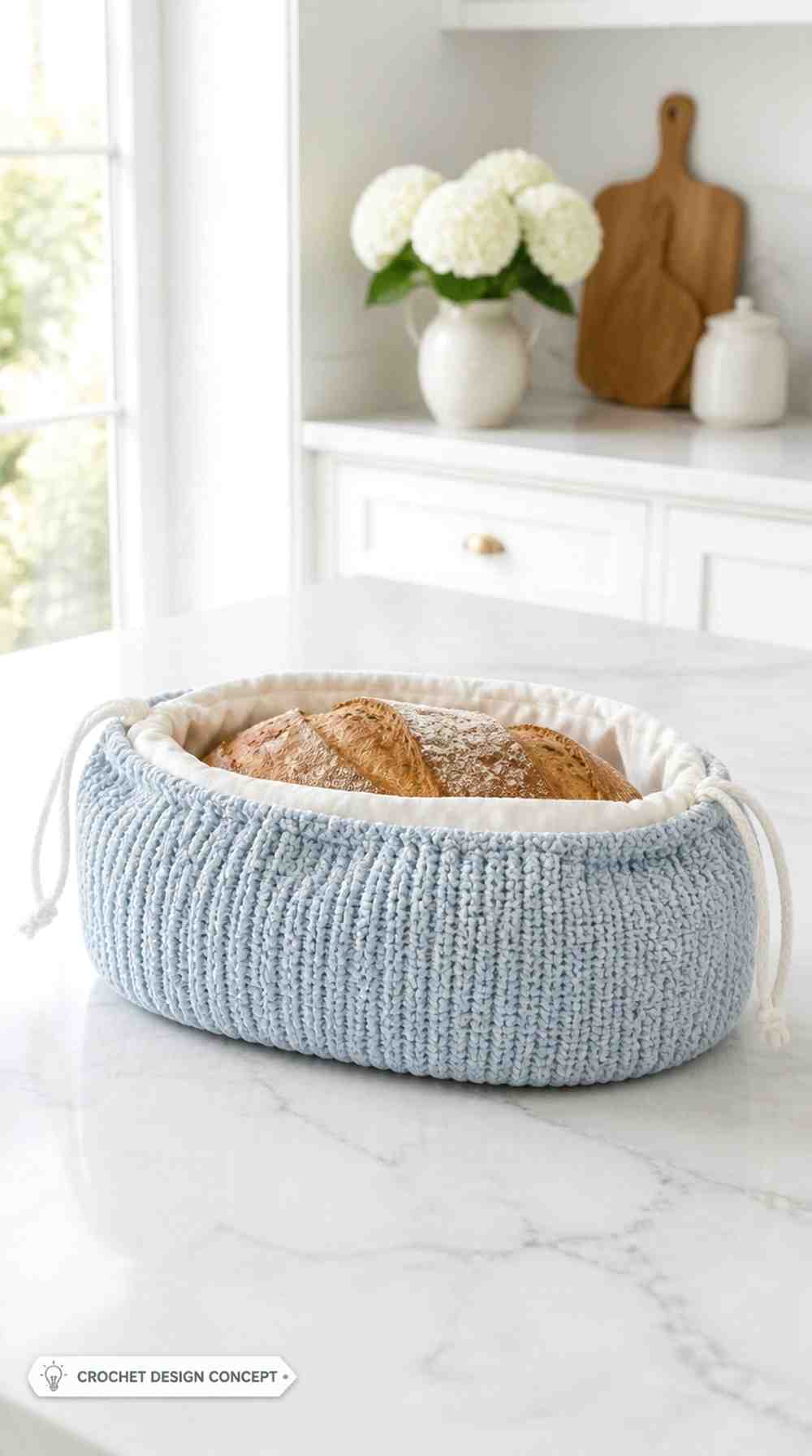
Powder-blue cotton crochet gives this bread pouch a long, softly rounded shape. The horizontal oval base and gently curved side gussets support an elongated body, while closely spaced vertical stitch columns add subtle texture. A white cotton drawcord gathers the broad upper opening.
A removable white liner sits inside with a cooled oval bâtard loaf resting horizontally. Unlike tall sacks made for upright storage, this concept follows the loaf’s longer proportions and offers a different way to arrange a wrapped loaf on a kitchen countertop.
- Horizontal loaf fit: Compare the pouch’s long internal dimension with the cooled loaf, leaving enough room around its ends for the liner.
- Rounded gussets: Smooth side shaping may reduce awkward corner folds, but flexible crochet still needs suitable tension to avoid stretching around the bread.
- Wide upper opening: A relaxed drawcord gives easier access, while a tighter gathering should not be mistaken for a protective airtight seal.
13. Crochet Butter Yellow Floral Bread Gift Bag
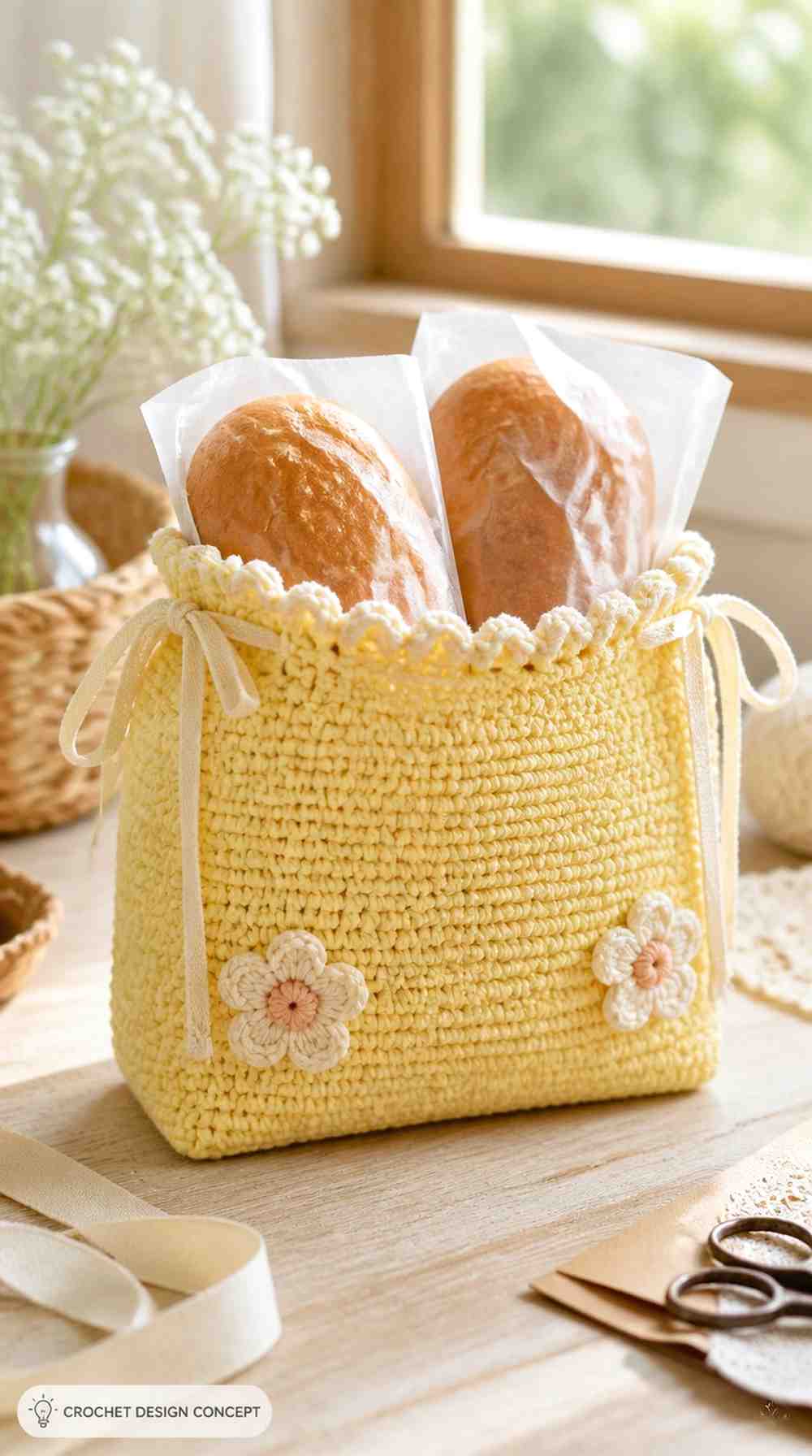
Butter-yellow cotton crochet forms a compact bread gift pouch with a flat rectangular bottom and closely worked stitch rows. Two cream five-petal flowers, each with a soft peach center, decorate the lower front corners. A narrow cream scalloped edge frames the opening, where two cream ribbon ties gather the upper section.
Inside are two cooled miniature bread loaves, individually wrapped in plain food-safe bakery paper. The design works particularly well as inspiration for presenting homemade bread as a thoughtful gift, while the wrapping provides the necessary separation from the decorative crochet.
- Gift presentation: Select wrapping suitable for the bread so recipients can handle and store it independently of the crochet outer bag.
- Flower placement: Keeping the two appliqués near the lower corners leaves the upper opening clear for ribbons and regular access.
- Reusable outer bag: If intended as a gift, include basic yarn-care information and explain that the decorative crochet does not replace appropriate bread packaging.
Practical Guide to Crochet Cotton Bread Storage Bags
Before choosing a crochet bread bag, consider three separate questions: How will it fit the bread? How will you keep it clean? And how will the bread itself be stored safely?
Choosing the bag shape
A baguette needs a long, narrow sleeve, while a round sourdough loaf needs more width and often greater depth. Rectangular sandwich loaves benefit from flatter sides, and miniature rolls are easier to organize in small compartments.
Measure cooled bread, not just the baking tin. Crochet fabric can stretch, particularly with heavy or loosely worked stitches, so actual tension and construction matter.
Cotton, liners and food contact
Choose cotton yarn with care instructions suitable for the intended cleaning routine. A washable, removable fabric liner or appropriate food-safe wrapping can keep bread separated from decorative yarn, raised stitches, joins and attached embellishments.
Do not assume every dyed yarn, wooden button, ribbon or fabric liner is suitable for direct food contact. Use materials intended for that purpose wherever they touch unwrapped bread.
Bread freshness and storage
A crochet bag is not airtight, and very open crochet provides little barrier against dust or insects. Even tightly crocheted cotton cannot be assumed to preserve bread freshness.
Bread storage depends on the loaf, how long it will be kept, and conditions such as heat and humidity. Breathable fabric can allow bread to dry out; more protective wrapping may retain moisture but can affect crust texture. For bread that needs longer keeping, appropriate freezer packaging is often more practical.
King Arthur Baking+1
Allow freshly baked bread to cool before packaging. Keep bags and liners clean and completely dry, and follow appropriate storage rules for bread containing perishable ingredients.
For complementary kitchen styling, see 28 Crochet Village Kitchen Decor Inspiration Ideas for Cozy Winter Homes and 16 Crochet Vintage Kitchen Wall Pocket Ideas for Cozy Cottage Homes. These published collections explore related baskets, kitchen storage and decorative crochet arrangements.
Want to Make Something Similar?
These designs are visual concepts, so the following existing resources are useful starting points rather than exact matches for the pictured bags.
- Surface-Stitched Bread Bag by CyCrochet — a dedicated bread-bag guide using a crocheted rectangle, drawstring casing and decorative wheat motifs. It offers relevant construction ideas for simple sacks and the ivory wheat-themed design. CyCrochet
- Cotton Crochet Produce Bag Tutorial by Crochet With Julie — demonstrates a cotton drawstring bag construction that may help readers understand basic casing and bag shaping. It is a produce-bag tutorial, not a tested bread-storage pattern. Crochet With Julie
Adapt materials, dimensions and food-storage arrangements thoughtfully rather than copying the AI-generated images as technical instructions.
Which Crochet Cotton Bread Bag Should You Choose?
| Main priority | Design to consider | Important trade-off |
|---|---|---|
| Simple classic storage | Oatmeal Drawstring Bread Bag | Straightforward shape, but fabric does not seal out air |
| Long baguette shape | Sage Baguette Storage Sleeve | Purposeful proportions, less suitable for round loaves |
| Broad round sourdough | Terracotta Sourdough Storage Bag | Roomy gussets, more demanding support |
| Rectangular sandwich bread | Blue Stripe Sandwich Loaf Bag | Flap covers opening but is not airtight |
| Carrying wrapped bread | Natural Cotton Mesh Bread Carrier | Very open mesh requires separate protective packaging |
| Small individual rolls | Dusty Rose Bread Roll Pouch | Separate compartments, but an open presentation |
| Traditional bakery appearance | Ivory Wheat Motif Bread Sack | Decorative surface stitches need careful cleaning |
| Minimal contemporary style | Charcoal Envelope Bread Bag | Simple look, more attention to flap closure |
| Granny-square texture | Lavender Granny Square Bread Bag | Multiple joining seams |
| Farmhouse color pattern | Cream Sage Gingham Bread Bag | More detailed colorwork |
| Bold warm color | Rust Chevron Foldover Bread Sack | Long ties and a flexible foldover closure |
| Elongated oval loaf | Powder Blue Oval Bread Pouch | Needs carefully planned curved gussets |
| Homemade bread gifting | Butter Yellow Floral Bread Gift Bag | Attractive presentation, separate food packaging needed |
For a practical first design, the Crochet Oatmeal Drawstring Bread Bag is a useful shape to explore because it has a straightforward body and a removable liner. For a visually distinctive present, the Crochet Butter Yellow Floral Bread Gift Bag gives the most obvious gift-focused arrangement.
If your kitchen regularly has homemade sourdough, compare the Crochet Terracotta Sourdough Storage Bag against the Crochet Powder Blue Oval Bread Pouch based on whether your bread is round or elongated.
Conclusion
Crochet cotton bread storage bags can add handmade character to a kitchen while providing attractive outer storage for appropriately wrapped bread. The most useful design depends on the loaf’s shape, how frequently the bag will be opened and whether its materials can be cleaned easily.
From the oatmeal drawstring sack to the cheerful butter-yellow floral gift bag, these 13 ideas show how differently a simple storage accessory can be styled. Keep the decorative crochet separate from decisions about food safety and freshness, and choose packaging that genuinely suits the bread.
Which design would you enjoy having in your kitchen? Would you choose the sage baguette sleeve, the terracotta sourdough bag or the traditional ivory wheat motif sack? Share your favorite and the type of bread you usually keep at home.
Frequently Asked Questions
1. Is cotton yarn a good choice for crochet bread storage bags?
Cotton is a reasonable material to consider for a reusable crochet outer bag because many cotton yarns can be washed and come in suitable weights. However, not every cotton yarn is designed for direct food contact. Check its composition, dyes, care instructions and intended use. A suitable removable liner can make cleaning and bread separation easier.
2. Can crochet bread bags keep homemade bread fresh for several days?
A crochet bag alone cannot guarantee freshness or prevent mold. Open or breathable fabric may allow a loaf to dry out, while unsuitable moisture-trapping arrangements can create other problems. The best packaging depends on the bread and how long you intend to store it. King Arthur Baking discusses these storage trade-offs in its bread storage guide.
King Arthur Baking
3. Should bread touch the crochet fabric directly?
It is generally more practical to separate unwrapped bread from decorative crochet with a clean, appropriate food-contact liner or suitable food packaging. Crochet stitches can leave small spaces where crumbs collect, while embellishments, buttons and joins may complicate washing. A liner should still be cleaned regularly and does not guarantee longer shelf life.
4. Can I wash a crochet cotton bread bag in the washing machine?
That depends on the exact yarn and attached components. Some cotton yarns tolerate machine washing, while others may shrink, stretch or release dye. Check the yarn label and consider removable wooden buttons, delicate flowers or ribbons before washing. Make sure the bag and any liner are fully dry before reuse.
5. Are these bread storage bag designs complete crochet patterns?
No. These 13 ideas are AI-generated visual inspirations rather than tested crochet patterns. The images suggest shapes, colors, closures and finishing details, but they do not establish reliable measurements, stitch counts or storage performance. The linked instructional resources can help with related construction techniques if you decide to develop a real version.