A crochet kitchen apron pocket organizer can turn a plain cooking apron into a more practical place for keeping small essentials within reach. These 11 inspiration ideas explore divided crochet pockets, narrow utensil holders, recipe-card sleeves, removable waist pouches and compact zippered compartments. Warm oatmeal, sage, terracotta, dusty lavender, cream and teal bring different looks to everyday kitchen aprons, while the pocket arrangements offer more than simple decorative stitching.
Whether you prepare meals daily, enjoy weekend baking or prefer keeping handwritten recipes close by, your apron pockets should suit the items you actually use. Some designs hold lightweight utensils and folded towels, while others organize note cards, pencils and small personal belongings. This collection helps you compare pocket depth, placement, stitch density, washable materials and attachment methods before deciding which crochet idea belongs on your kitchen apron.
These are AI-generated crochet design visualizations for inspiration, not photographs of tested handmade pieces or step-by-step patterns.
Quick Design Selection Guide
- For several small essentials: Choose the Crochet Oatmeal Triple Apron Pocket Organizer or Crochet Teal Divided Apron Note Organizer.
- For lightweight utensils: The Crochet Sage Diagonal Apron Utensil Pockets and Crochet Charcoal Tall Apron Tool Pocket provide different storage shapes.
- For recipe cards and notes: Consider the Crochet Terracotta Recipe Card Apron Pocket or Crochet Blush Scalloped Apron Bib Pocket.
- For removable storage: The Crochet Navy Detachable Apron Waist Pouch uses buttoned waistband attachments.
- For keeping a clean folded towel nearby: Explore the Crochet Mustard Towel Keeper Apron Pocket.
- For decorative or more enclosed storage: The Crochet Cream Granny Square Apron Pocket and Crochet Cocoa Zipper Apron Essentials Pocket offer contrasting finishes.
1. Crochet Oatmeal Triple Apron Pocket Organizer
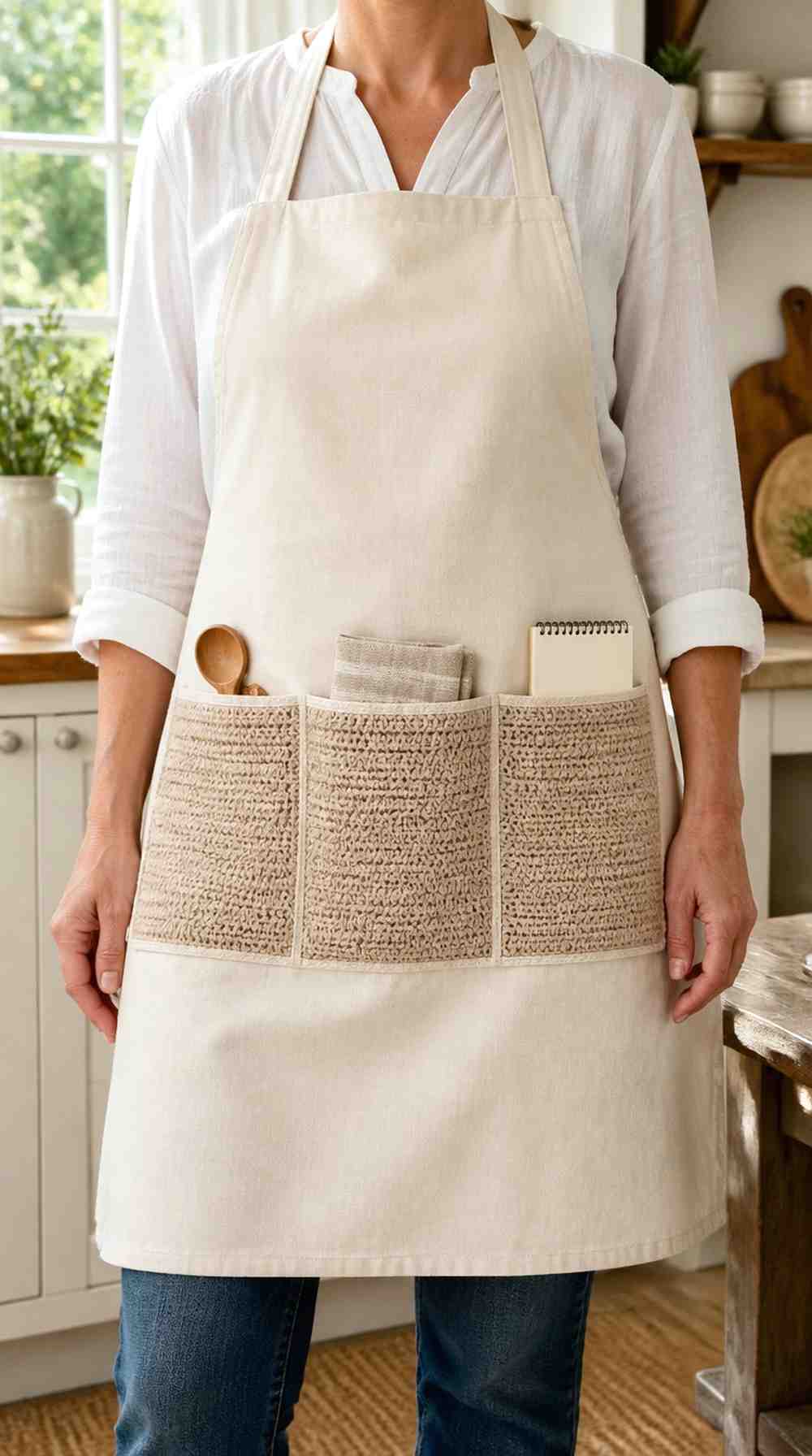
Warm oatmeal crochet forms a broad pocket panel across the lower front of an ivory kitchen apron. Dense horizontal ribs, cream edging and two reinforced vertical seams divide the panel into three compartments. A small wooden measuring spoon, folded beige kitchen cloth and slim blank recipe notepad sit separately inside.
This design keeps several lightweight items organized without adding multiple independent pouches. The divided layout may make retrieving individual essentials easier, although the apron fabric needs to support the contents without sagging during movement.
- Pocket divisions: Make the three compartments different widths if necessary, allowing the spoon, folded cloth and notepad to fit without crowding.
- Lower seam support: Reinforce the bottom and vertical seams, since the weight of stored items concentrates along these joined areas.
- Comfort while moving: Position the broad panel where it does not pull against the wearer’s hips or interfere with bending toward a counter.
2. Crochet Sage Diagonal Apron Utensil Pockets
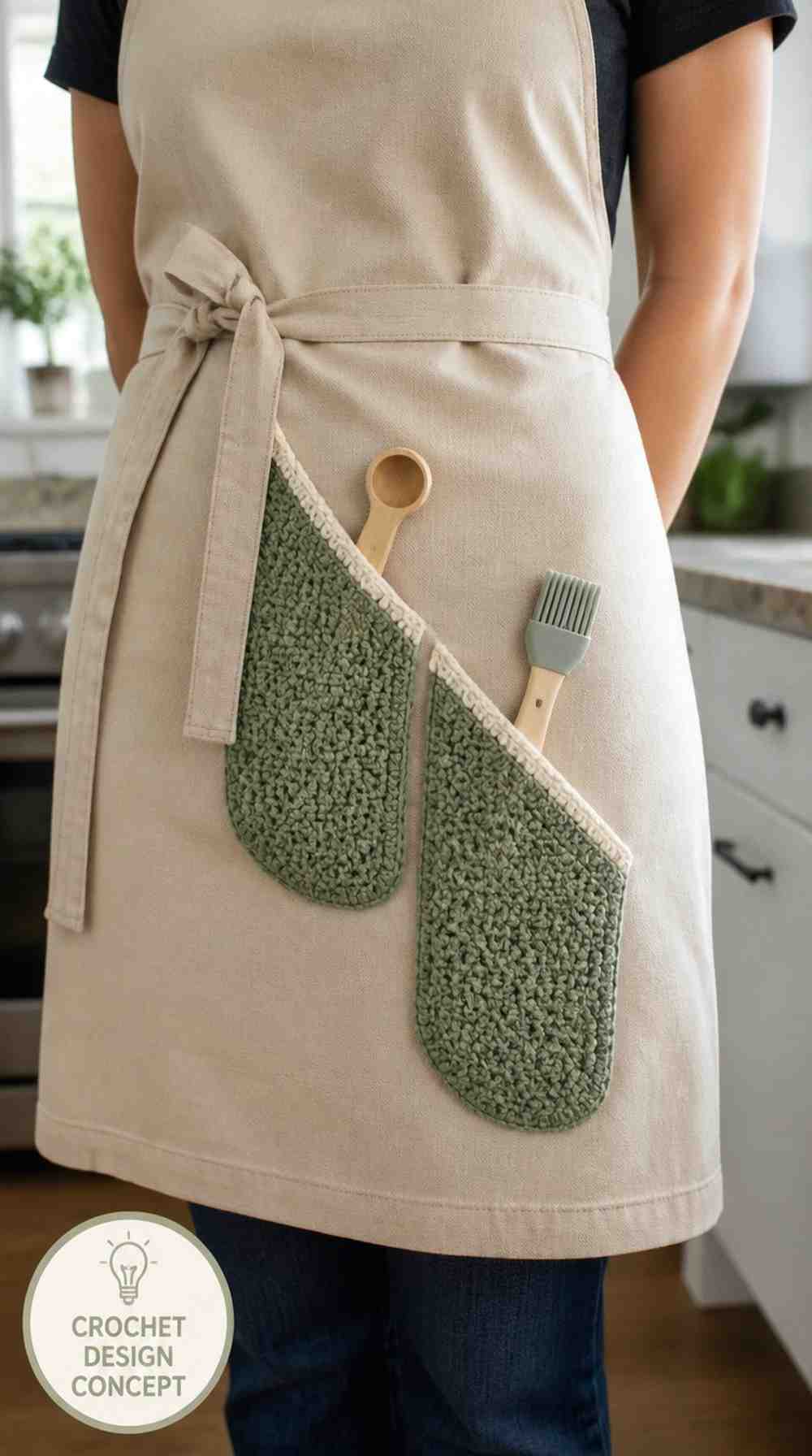
Two sage-green crochet pockets sit diagonally across a sand-colored apron. Their moss-stitch fabric has sloping cream-edged openings and rounded closed bases. A small wooden measuring spoon rests in one compartment, while a dry silicone pastry brush sits upright in the other.
The angled arrangement gives these pockets a different appearance from straight rectangular organizers. It may help present lightweight tools for easy retrieval, although both openings should hold their contents securely when the wearer walks or bends.
- Diagonal openings: Reinforce each sloping rim so the utensils do not slide outward when the apron moves.
- Utensil length: Keep both pockets deep enough to support their tools without allowing long handles to obstruct arm movement.
- Cleaning separation: Store utensils only when clean and dry; do not return food-coated or hot implements to the crochet pockets.
3. Crochet Terracotta Recipe Card Apron Pocket
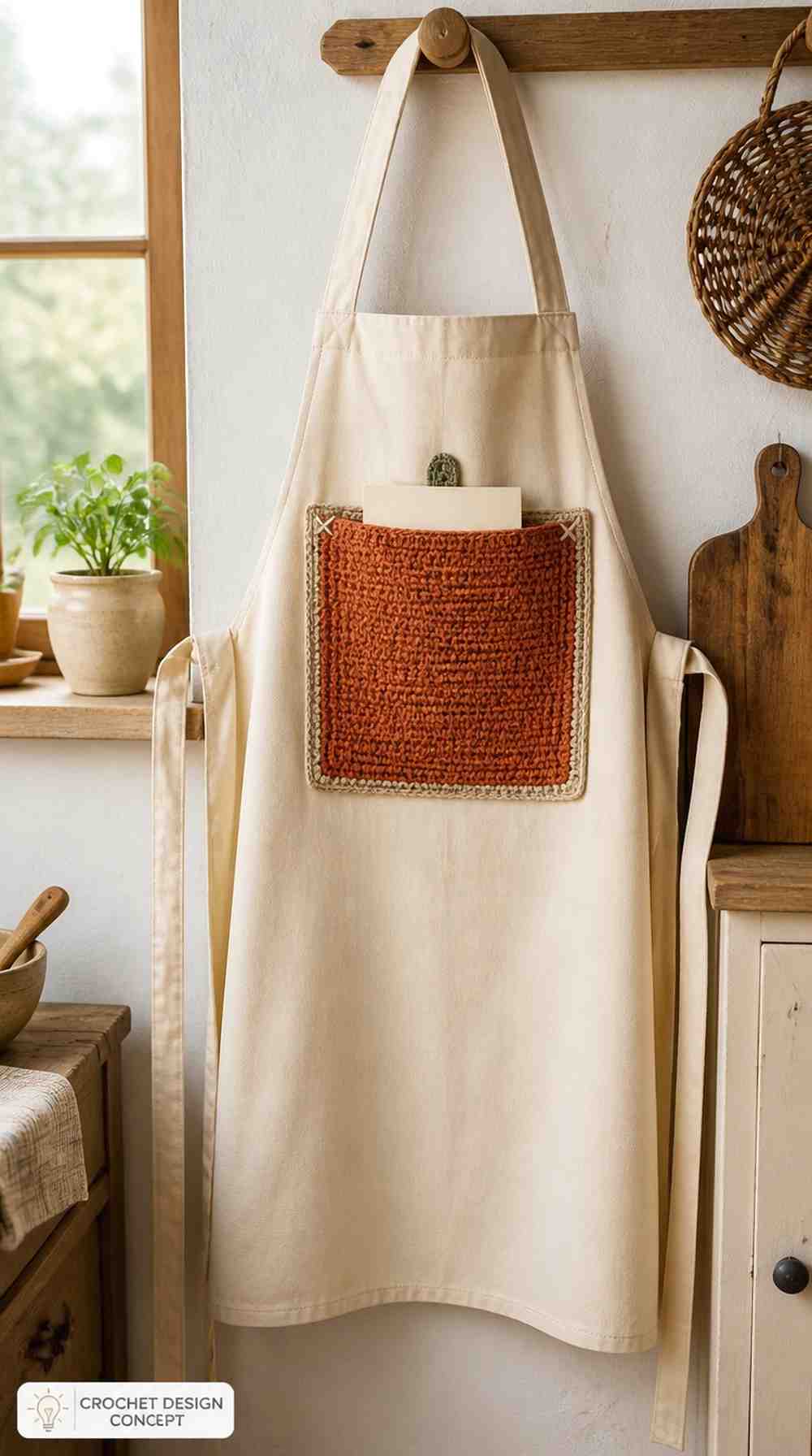
Terracotta-orange crochet creates a broad rectangular pocket on the upper bib of a cream kitchen apron. Closely worked horizontal rows and an oatmeal border give it a neat structure, while a blank ivory recipe card remains visible above the opening. A short sage pull tab sits at the pocket’s upper back.
The higher placement distinguishes this design from waist-level tool storage. It keeps a small reference card near the upper body, although the bib pocket should remain flat enough not to interfere with the apron straps.
- Card dimensions: Size the terracotta pocket around the actual recipe cards so they remain supported without becoming difficult to retrieve.
- Bib placement: Keep the upper corners securely stitched and clear of the neck strap attachments.
- Paper protection: Crochet is not splashproof; use an appropriate protective card sleeve if recipes may be exposed to water or food spills.
4. Crochet Navy Detachable Apron Waist Pouch
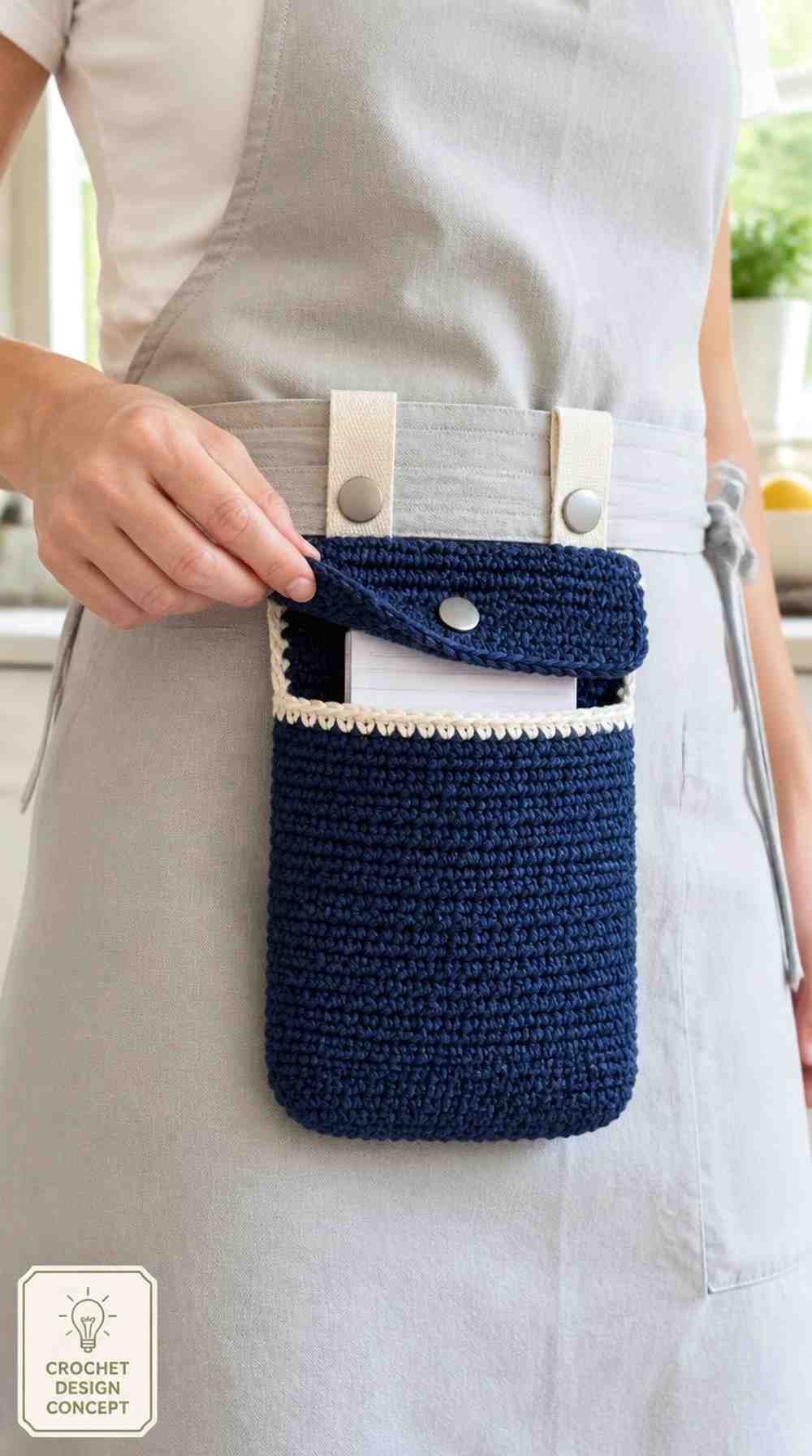
Deep navy crochet forms a compact rectangular pouch with close horizontal rows, cream edging and a short foldover flap. A small silver snap closes the flap, while two cream fabric buttoned tabs attach the pouch to the waistband of a pale-gray apron. A folded blank notepad rests inside.
The detachable construction offers more flexibility than permanently sewn pockets. It could be removed before washing the apron or replaced with another organizer, provided the waistband and buttoned tabs are appropriately reinforced.
- Waistband fit: Check that both cream attachment tabs fasten around the actual apron waistband without compressing or twisting it.
- Snap placement: Position the silver closure away from the wearer’s body and check that its backing cannot rub against clothing.
- Removal convenience: Make the pouch easy to detach before laundering, especially if the snap and buttons have different care requirements.
5. Crochet Blush Scalloped Apron Bib Pocket
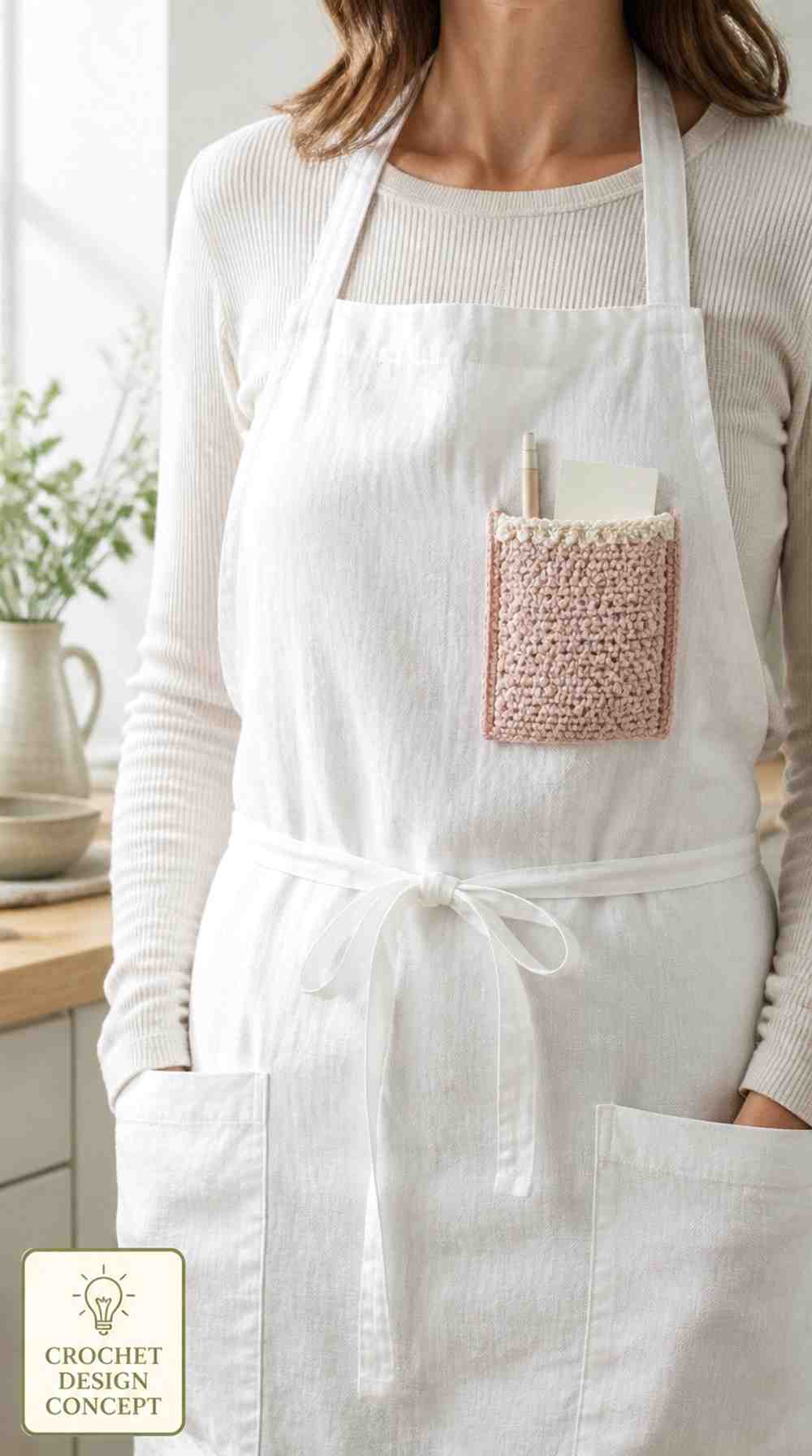
Pale-blush crochet forms a small upper-bib pocket with close textured stitches and dusty-rose seams. Tiny cream scallops finish its opening, while a short capped pencil and blank ivory note card remain partly visible above the rim.
This design is more compact than the lower-waist organizers. Its smaller capacity makes it suitable for a few lightweight notes rather than tools, while the scalloped border brings a gentle decorative detail to a plain white linen apron.
- Upper pocket size: Keep the pocket shallow enough to retrieve the pencil easily without allowing it to fall out when bending.
- Scalloped edge: Work the cream loops small and flat so they do not catch on the pencil or become stretched during use.
- Comfort: Avoid placing thick objects in the bib area, where they may press against the chest or catch on clothing.
6. Crochet Charcoal Tall Apron Tool Pocket
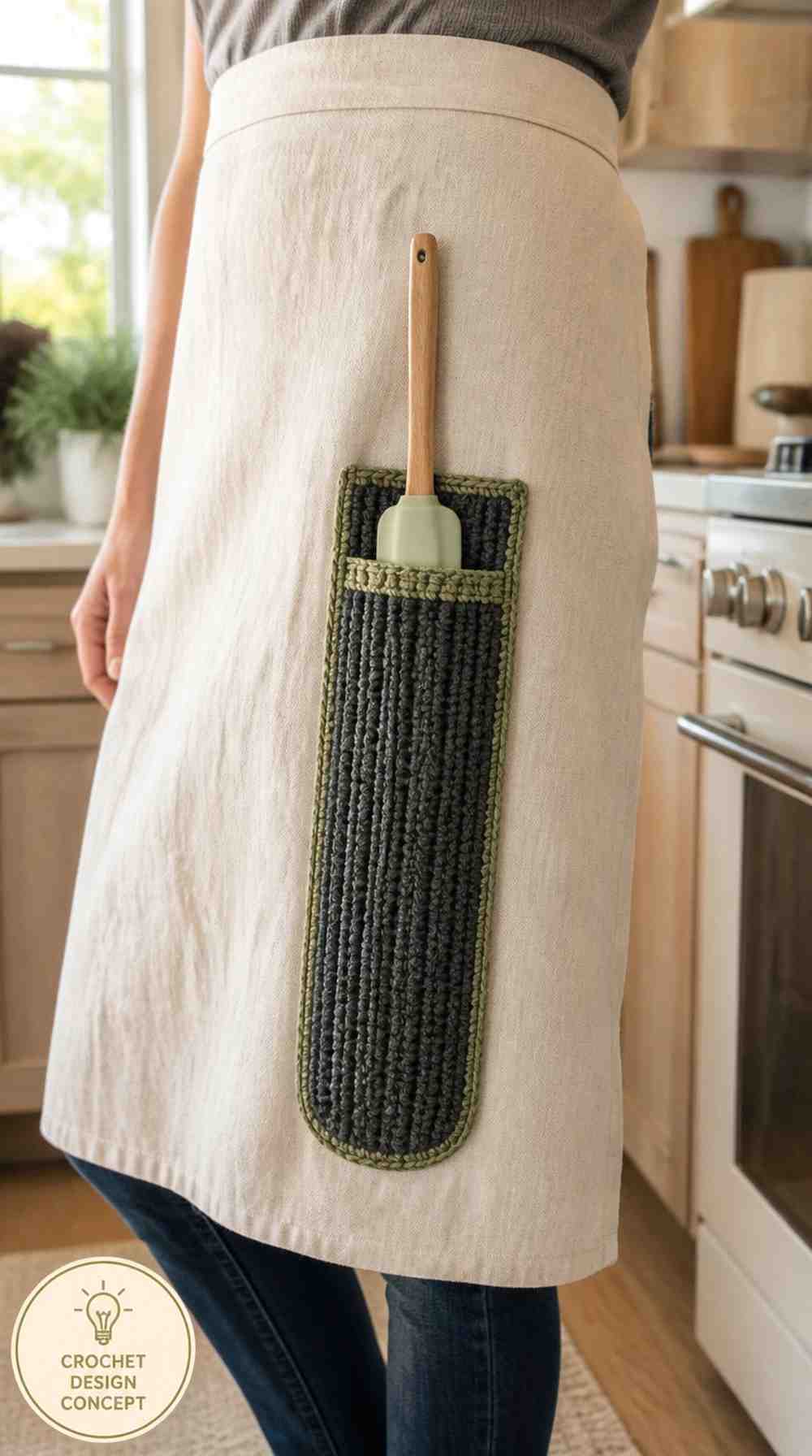
Charcoal-gray crochet creates a long narrow pocket near the right hip of an oatmeal-colored apron. Dense vertical ribs, a rounded closed base and muted-sage edging define its shape. A reinforced horizontal band crosses the upper front, helping position a clean, dry silicone spatula with its wooden handle exposed.
The tall profile is designed around one elongated lightweight tool rather than several small objects. Its placement leaves the central apron area clear, but the opening and retaining band need careful sizing to prevent the utensil from moving excessively.
- Vertical support: Keep the lower pocket deep enough for the spatula head, with the handle extending within comfortable reach.
- Retaining band: Position the horizontal charcoal band so it supports the tool without restricting its removal.
- Movement clearance: Avoid placing the pocket where the utensil may swing toward a hot pan, burner or working knife.
7. Crochet Mustard Towel Keeper Apron Pocket
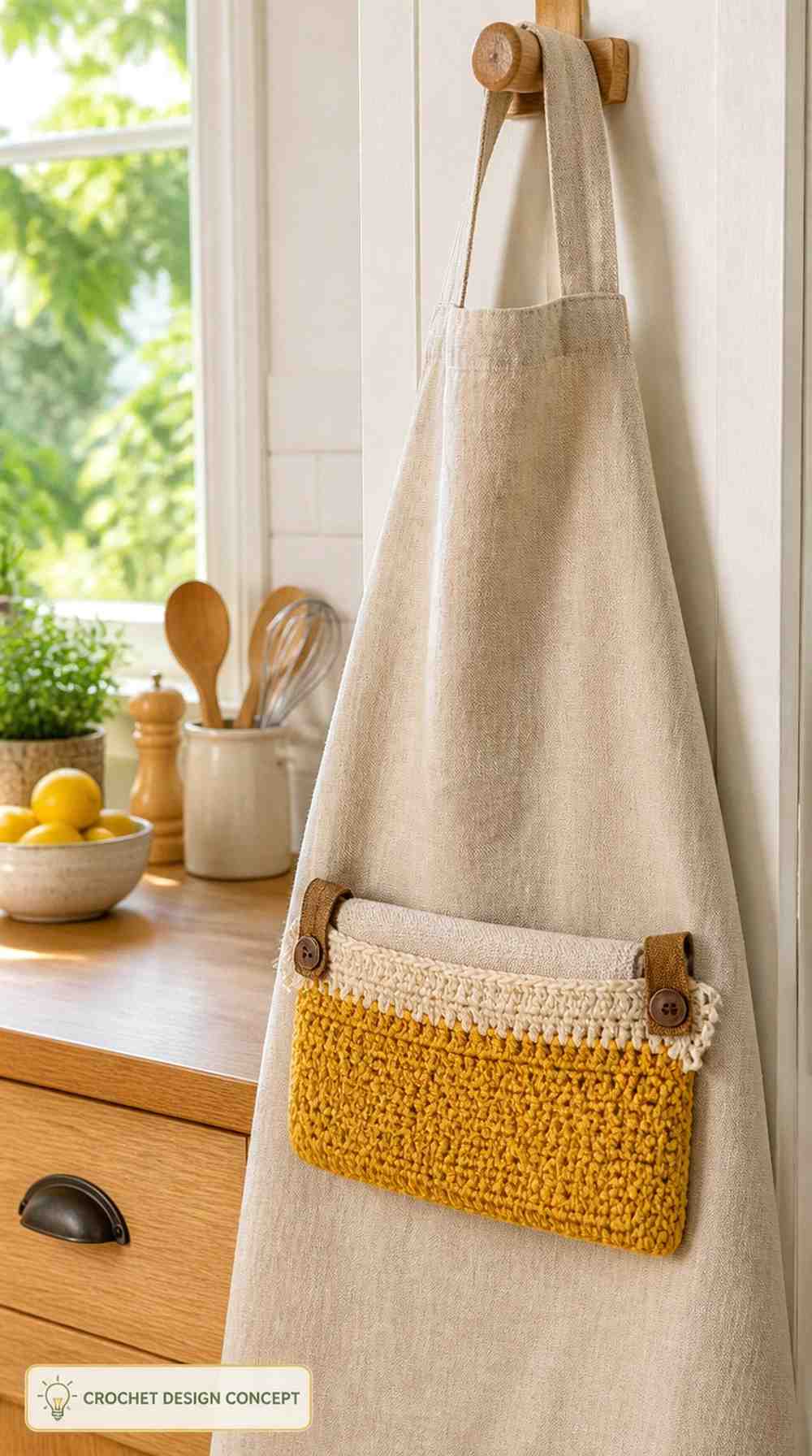
Mustard-yellow crochet forms a broad shallow half-pocket on the lower front of a beige kitchen apron. A cream upper band outlines the opening, while two small walnut-brown buttoned tabs secure its upper corners. One clean, dry oatmeal kitchen towel sits folded into a narrow horizontal roll inside.
Unlike the smaller utensil holders, this design accommodates a soft fabric accessory. The shallow shape makes the towel ends visible and accessible, although the pocket should be sized to prevent the rolled cloth from slipping out during movement.
- Towel roll fit: Match the mustard pocket width to the folded towel so neither end hangs excessively beyond the sides.
- Shallow support: Keep enough depth beneath the cream band to hold the towel without requiring tight compression.
- Important limitation: This is a storage pocket, not a heat-resistant potholder; never use the stored towel or crochet pocket to handle hot cookware.
8. Crochet Cream Granny Square Apron Pocket
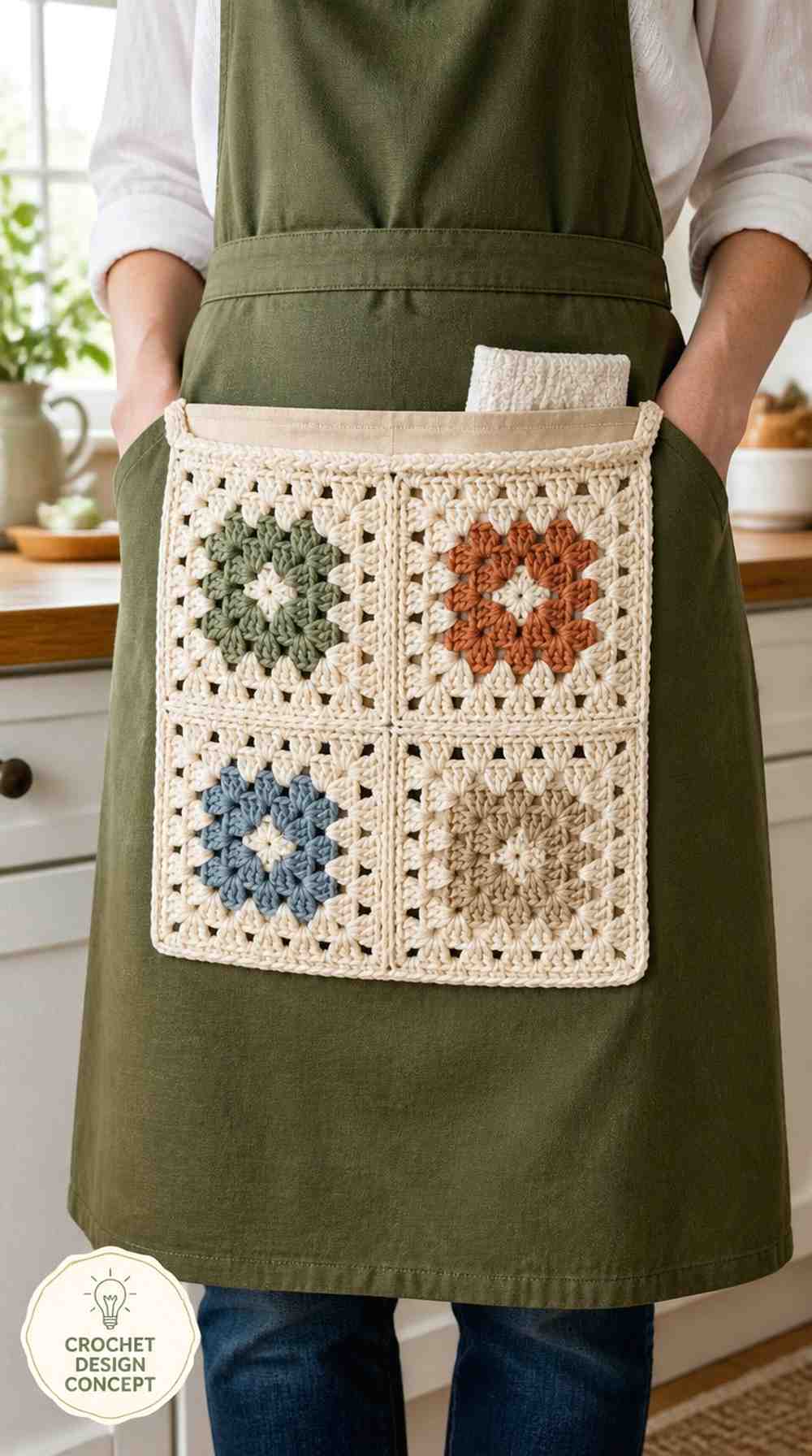
Four miniature granny squares form a broad cream crochet pocket across the lower front of an olive-green kitchen apron. Their centers feature sage, terracotta, dusty-blue and oatmeal accents, joined with smooth cream seams. A beige cotton lining sits behind the squares, while a folded dry cream cloth peeks above the opening.
The patchwork design adds traditional crochet character to a practical apron pocket. Its lining is particularly relevant because granny-square openings and joins may otherwise allow smaller objects to catch in the crochet.
- Square joining: Keep the four granny squares evenly joined so their seams do not create bumps across the pocket front.
- Fabric lining: Secure the beige lining smoothly behind the crochet to prevent stored items from pushing through decorative openings.
- Pocket placement: Position the lined panel where the apron can still move naturally when the wearer sits or bends.
9. Crochet Lavender Gusseted Apron Storage Pocket
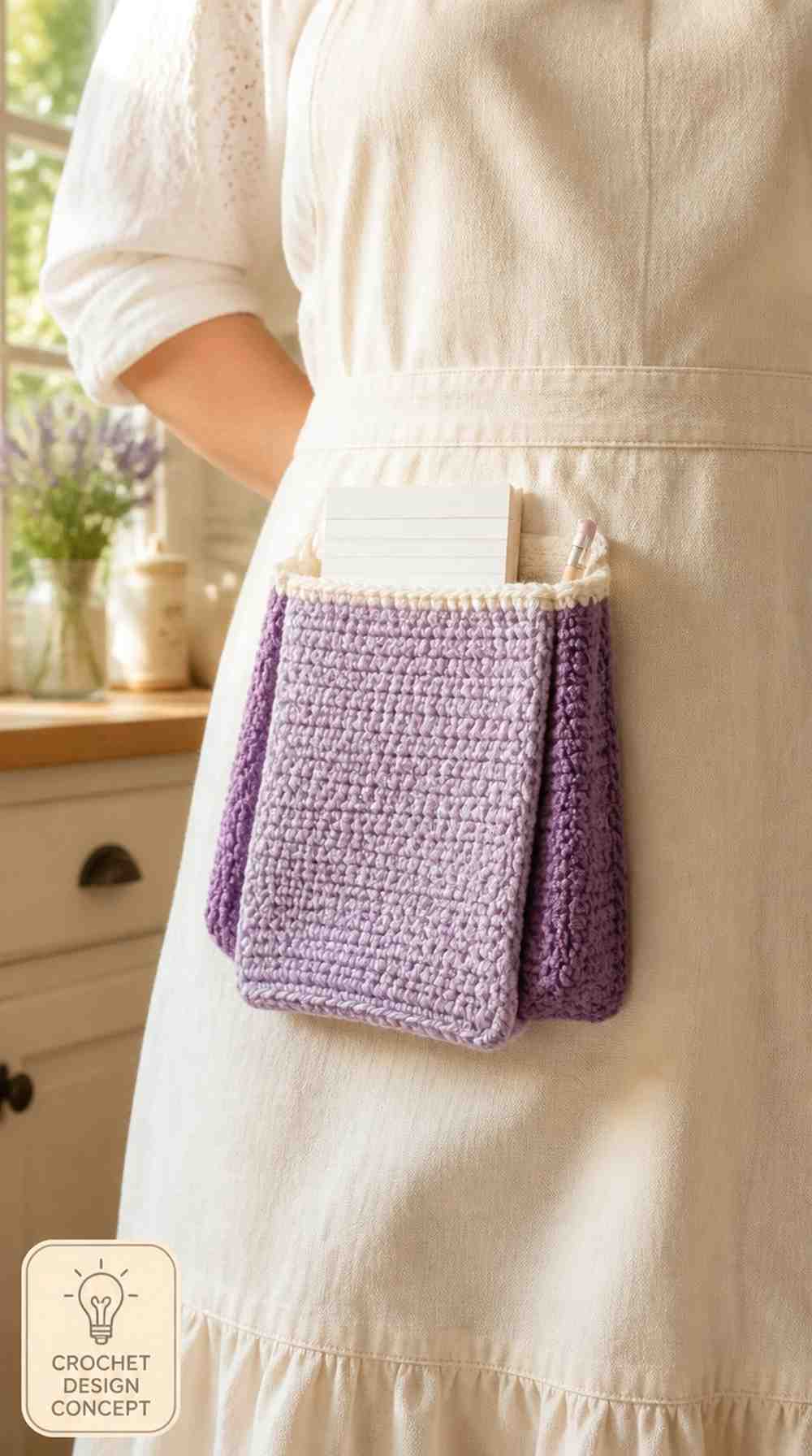
Dusty-lavender crochet creates a rectangular waist pocket with a flat front, cream upper rim and darker lavender accordion-style side gussets. A slim blank kitchen notepad and short capped pencil rest inside, with the side folds gently expanding to accommodate their thickness.
This design provides more depth than a flat patch pocket. The gussets may be useful for small, slightly bulky items, although the finished pocket should remain close enough to the apron to avoid catching on cabinet handles.
- Gusset depth: Keep the lavender folds modest so the compartment expands only as much as the notepad and pencil require.
- Upper-edge stability: Reinforce the cream opening so it does not collapse inward or stretch unevenly while the pocket is filled.
- Side clearance: Check the expanded shape while moving through the kitchen, especially near drawers and protruding handles.
10. Crochet Teal Divided Apron Note Organizer
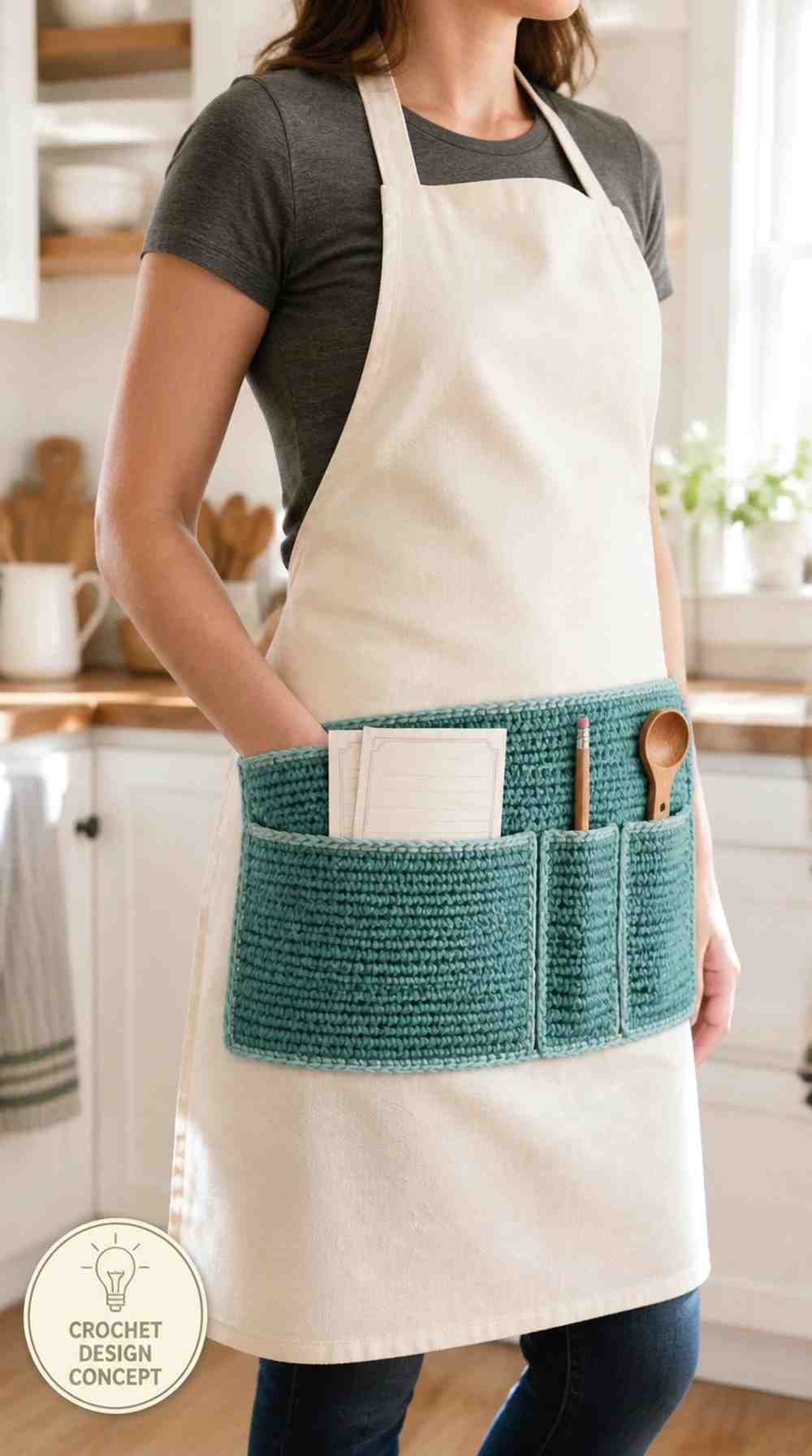
Teal-green crochet forms a broad rectangular pocket panel just below the waist of an ivory apron. Aqua edging defines the outline, while two vertical dividing seams create one wide compartment and two narrow compartments. Blank recipe cards, a capped wooden pencil and a clean, dry measuring spoon each have their own place.
This arrangement focuses on organizing items of different widths rather than creating identical pocket spaces. The cream fabric backing supports the crochet front, helping define a clean interior for notes and lightweight tools.
- Mixed compartment sizes: Keep the left pocket wide enough for recipe cards and the right compartments narrow enough to prevent small items from shifting.
- Divider reinforcement: Secure both vertical seams to the cream backing so pulling out one object does not distort the neighboring pockets.
- Paper storage: Remove recipe cards before washing and protect them from splashes; the teal crochet fabric does not seal out moisture.
11. Crochet Cocoa Zipper Apron Essentials Pocket
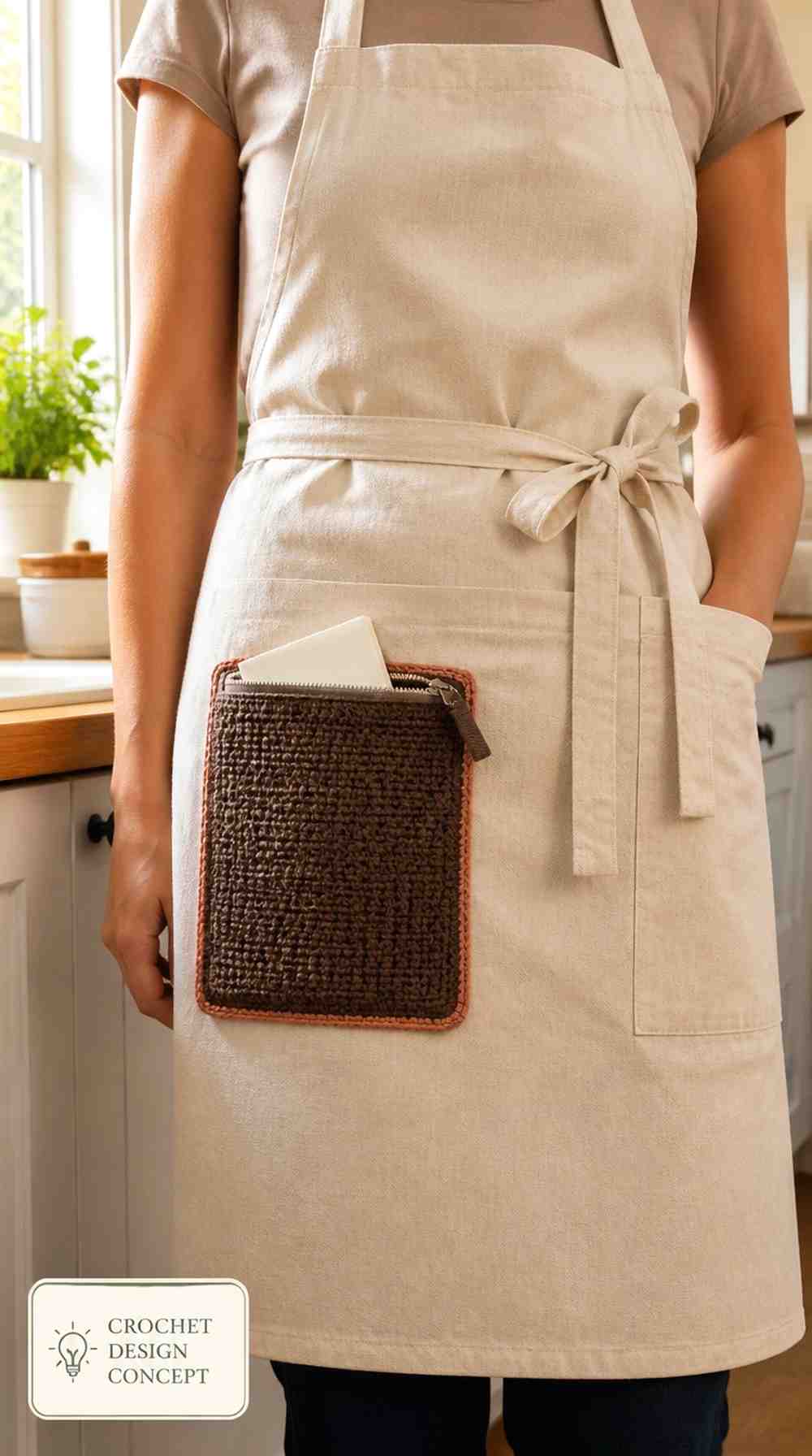
Cocoa-brown crochet creates a compact rectangular pouch permanently attached to the lower-left front of a sand-colored apron. Shallow basketweave texture, terracotta edging and a cream zipper give the pocket a defined appearance. Its partly opened top reveals a small blank notepad, while a flat cocoa zipper pull tab rests near the upper edge.
The zippered construction is the most enclosed design in this collection. It offers a place for lightweight belongings that might slip from an open pocket, although the metal fastening and thicker crochet fabric need appropriate positioning.
- Zipper clearance: Keep the cream zipper accessible and positioned so it does not rub against the wearer’s body or catch on clothing.
- Pocket capacity: Limit the contents to lightweight items; a thick or heavy pouch may pull noticeably on the apron fabric.
- Laundering: Remove the contents before washing and check the yarn, zipper and attachment seams for compatible cleaning requirements.
Practical Guide to Crochet Kitchen Apron Pocket Organizers
An apron pocket organizer should make everyday kitchen work easier without creating loose fabric, dangling accessories or extra cleaning problems.
Choose the pocket contents first. Decide whether you need room for a recipe card, small notepad, clean towel or lightweight utensil. Measure those items before planning the pocket, and avoid making every compartment the same width unless the contents require it.
Consider apron fabric and reinforcement. Cotton and canvas aprons may provide a suitable base for sewn crochet pockets, but their thickness and weave vary. Reinforce the upper corners, bottom seams and pocket dividers as appropriate. A wide crochet pocket can pull or sag if it is not properly supported.
Select washable materials. Smooth cotton crochet or a suitable washable cotton blend may be practical for kitchen textiles. Check the care instructions for the yarn, apron, lining, buttons and any zipper hardware before combining materials.
Keep pockets away from heat. Never use crochet apron pockets for hot utensils, sharp knives, exposed blades or heated cookware. Loose yarn and dangling straps must stay clear of open flames, burners, oven doors and moving kitchen equipment.
Avoid direct food contact. These organizers are for carrying small accessories, not holding unpackaged ingredients. Clean and dry utensils before placing them into crochet compartments, and wash soiled pockets appropriately.
Think about comfortable placement. Upper-bib pockets suit lightweight flat notes. Lower-waist compartments can accommodate small tools, but deep or bulky pockets may interfere with bending and walking.
Test an actual apron. Pin or temporarily position a sample pocket on the apron before permanent sewing. Check whether the wearer can reach the contents easily and whether the pocket remains flat during normal movement.
For another approach to small kitchen storage, explore 16 Crochet Vintage Kitchen Wall Pocket Ideas for Cozy Cottage Homes on Yarn Nest Studio. That collection focuses on stationary wall-mounted storage, while these designs bring small organizers directly onto an apron.
Want to Make Something Similar?
These 11 designs are visual inspiration concepts, not tested apron-pocket patterns. The following resources explain related crochet construction and attachment techniques.
- Farmhouse Apron Free Crochet Pattern — Sincerely Pam: This tutorial shows how to make a crochet apron pocket, sew it onto an apron and divide it into three compartments using surface crochet. It is especially useful background for the Oatmeal Triple Pocket and Teal Divided Organizer concepts. Sincerely pam
- Crochet Apron Free Pattern and Video — Winding Road Crochet: Lindsey’s apron pattern includes separate pockets for the adult version, with instructions for making and sewing them onto the apron body. It offers practical guidance for simple pocket construction. Winding Road Crochet
Neither tutorial reproduces the 11 illustrated designs exactly. Use the techniques as general guidance, then adapt pocket placement, dimensions and attachment methods to the apron and items you intend to carry.
Which Crochet Kitchen Apron Pocket Organizer Should You Choose?
| Your priority | Design to consider | Main trade-off |
|---|---|---|
| Three separate essentials | Oatmeal Triple Pocket | Broad panel needs support |
| Lightweight utensil access | Sage Diagonal Pockets | Angled openings need retention |
| Upper-bib recipe cards | Terracotta Recipe Card Pocket | Paper remains exposed to splashes |
| Removable waist storage | Navy Detachable Pouch | Extra buttons and snap |
| Small notes on apron bib | Blush Scalloped Pocket | Limited capacity |
| One long lightweight tool | Charcoal Tall Tool Pocket | Tool movement needs checking |
| Folded clean kitchen towel | Mustard Towel Keeper | Shallow open compartment |
| Decorative lined pocket | Cream Granny Square | Extra joining and lining |
| Slightly bulky stationery | Lavender Gusseted Pocket | Adds projection from apron |
| Mixed-size compartments | Teal Divided Organizer | Dividers need reinforcement |
| Enclosed small-item storage | Cocoa Zipper Pocket | Zipper and pouch add weight |
If you want an organizer that accommodates several small everyday items, the Crochet Oatmeal Triple Apron Pocket Organizer is a sensible starting concept. The Crochet Teal Divided Apron Note Organizer offers more deliberately sized spaces for notes and small tools.
For a decorative apron, the Crochet Cream Granny Square Apron Pocket adds a traditional patchwork look, while the Crochet Blush Scalloped Apron Bib Pocket keeps the detail smaller and higher on the apron.
The Crochet Navy Detachable Apron Waist Pouch may suit someone who wants to remove the organizer before cleaning. If carrying a small notepad securely is the main goal, the Crochet Cocoa Zipper Apron Essentials Pocket provides a more enclosed alternative.
Conclusion
These 11 crochet kitchen apron pocket organizer inspiration ideas show how a basic apron can be adapted with decorative and practical storage features. From simple divided compartments to detachable pouches, recipe-card pockets and lined granny-square panels, each concept offers a different way to organize lightweight kitchen essentials.
The best choice depends on the apron you already own, what you need to carry and how comfortably the pocket fits during cooking. Start with the most useful pocket placement, then select crochet textures, colors and edging that suit your kitchen style.
Which apron pocket organizer would you choose? Would you prefer an oatmeal three-pocket layout, a sage utensil organizer or a cocoa zippered pocket? Share your favorite idea and the items you usually keep in your kitchen apron.
Frequently Asked Questions
1. Can I sew a crochet pocket onto an existing kitchen apron?
Yes. A separately made crochet pocket can be sewn onto an apron when the base fabric is suitable and the attachment is properly reinforced. Choose an appropriate sewing method for the apron material, and make sure the pocket does not pull or distort the fabric. Test the planned position and intended contents before permanent attachment.
2. What yarn is suitable for crochet kitchen apron pockets?
Smooth, washable cotton yarn or an appropriate cotton blend is worth considering because it can create relatively firm fabric and has clearly defined stitches. Check the manufacturer’s laundering instructions. Avoid assuming any yarn is heatproof, flame-resistant or suitable for direct food contact. The yarn, apron and attached hardware should have compatible care requirements.
3. Should apron pockets have a lining?
A lining can be useful when the crochet stitches are open or the pocket will hold small stationery items that might catch between loops. A smooth cotton fabric backing can provide a more continuous interior. Dense crochet pockets may not need one, depending on their intended use. Keep any lining flat, clean and securely attached.
4. Where should crochet organizer pockets sit on a kitchen apron?
Upper-bib pockets can suit small lightweight notes or capped pencils, while lower-waist compartments may hold folded cloths or small clean utensils. The best placement depends on the apron design and the wearer’s comfort. Avoid positions where objects may press against the body, catch on cabinet handles or come close to flames and hot cooking equipment.
5. Are these 11 crochet kitchen apron pocket organizers actual patterns?
No. These are visual inspiration concepts showing possible pocket arrangements, crochet textures, colors and fastening methods. They have not been physically tested, and the images do not establish exact stitch counts, dimensions or carrying strength. The linked tutorials offer related crochet apron-pocket techniques, but a working version should be measured and adapted to the actual apron and its intended contents.