Keeping track of a pet’s medication schedule can involve several pieces of paper, including veterinary instructions, daily dose records, appointment reminders and refill notes. These 19 crochet pet medication schedule card pocket inspiration ideas explore decorative ways to organize those records in one convenient place. The collection includes simple ribbed wall pockets, seven-slot schedules, clear-window holders, granny-square panels, compact envelopes and foldout card books.
Some concepts keep the current schedule visible, while others provide separate spaces for completed records or several pets. Each design is intended for paper cards only, not the medication itself. As you explore the ideas, consider whether the records are easy to read, how the organizer attaches to a suitable surface and how you will keep important information accurate. The card pocket should support the veterinarian’s instructions, never replace them.
These are AI-generated crochet design visualizations for inspiration, not photographs of tested handmade pieces or step-by-step patterns.
Quick Design Selection Guide
- For one current medication card: Crochet Terracotta Ribbed Medication Card Pocket and Crochet Olive Paw-Accent Schedule Card Pocket provide simple, easy-to-identify storage.
- For weekly organization: Crochet Navy Seven-Slot Schedule Card Rail gives seven individual card spaces, but each card still needs the correct veterinarian-prescribed schedule.
- For visible records: Crochet Ivory Clear-Window Vet Card Pocket and Crochet Cobalt Chevron Reminder Card Board make it easier to see a paper card without removing it.
- For more than one pet: Crochet Teal Two-Pet Schedule Card Organizer provides separate pockets for individual records.
- For several types of paperwork: Crochet Seafoam Three-Tier Pet Care Card Pockets and Crochet Lavender Accordion Medication Card Archive help separate different documents.
- For filing older cards: Crochet Rust Current-and-Completed Card Holder and Crochet Charcoal and Cobalt Foldout Card Book offer separate areas for active and archived paperwork.
1. Crochet Terracotta Ribbed Medication Card Pocket
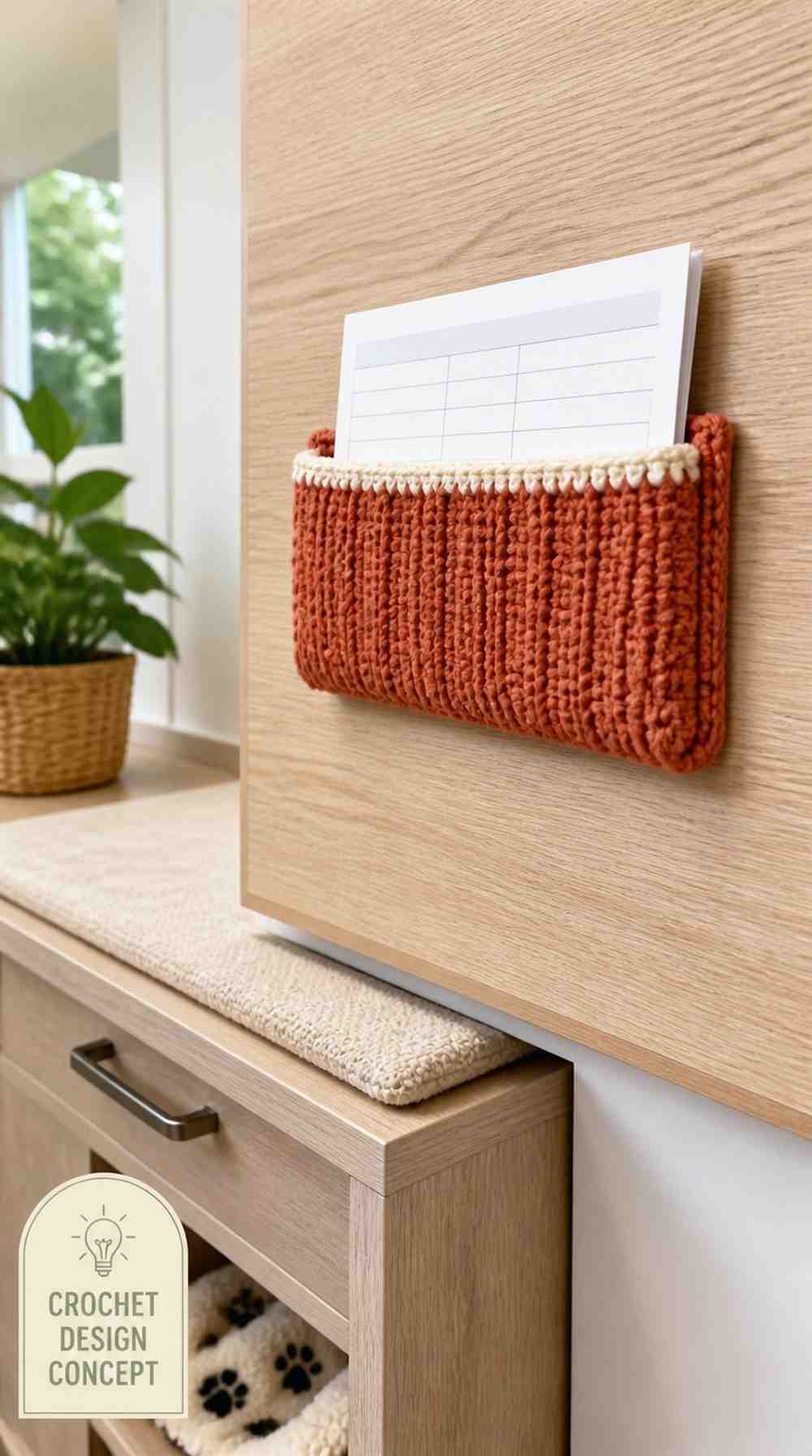
Warm terracotta crochet gives this small rectangular wall pocket a neat, handmade appearance. Closely worked vertical ribs form its front, while shallow side gussets and an ivory border create a clearly defined opening. One white schedule card sits upright with its upper half visible.
Mounted on a pale-oak panel above a pet-care cabinet, the organizer provides a dedicated spot for a current paper record. Its simple construction keeps attention on the card rather than decorative details, although the pocket should be securely supported.
- Card Visibility: Leave enough of the white card above the ivory edge to recognize the schedule without digging into the pocket.
- Ribbed Front: Closely worked vertical stitches can maintain a tidy appearance, but the gussets should remain shallow to prevent loose papers sliding sideways.
- Mounting Height: Position the backing board where the responsible adult can read it comfortably, while pets cannot reach or chew the crochet.
2. Crochet Navy Seven-Slot Schedule Card Rail
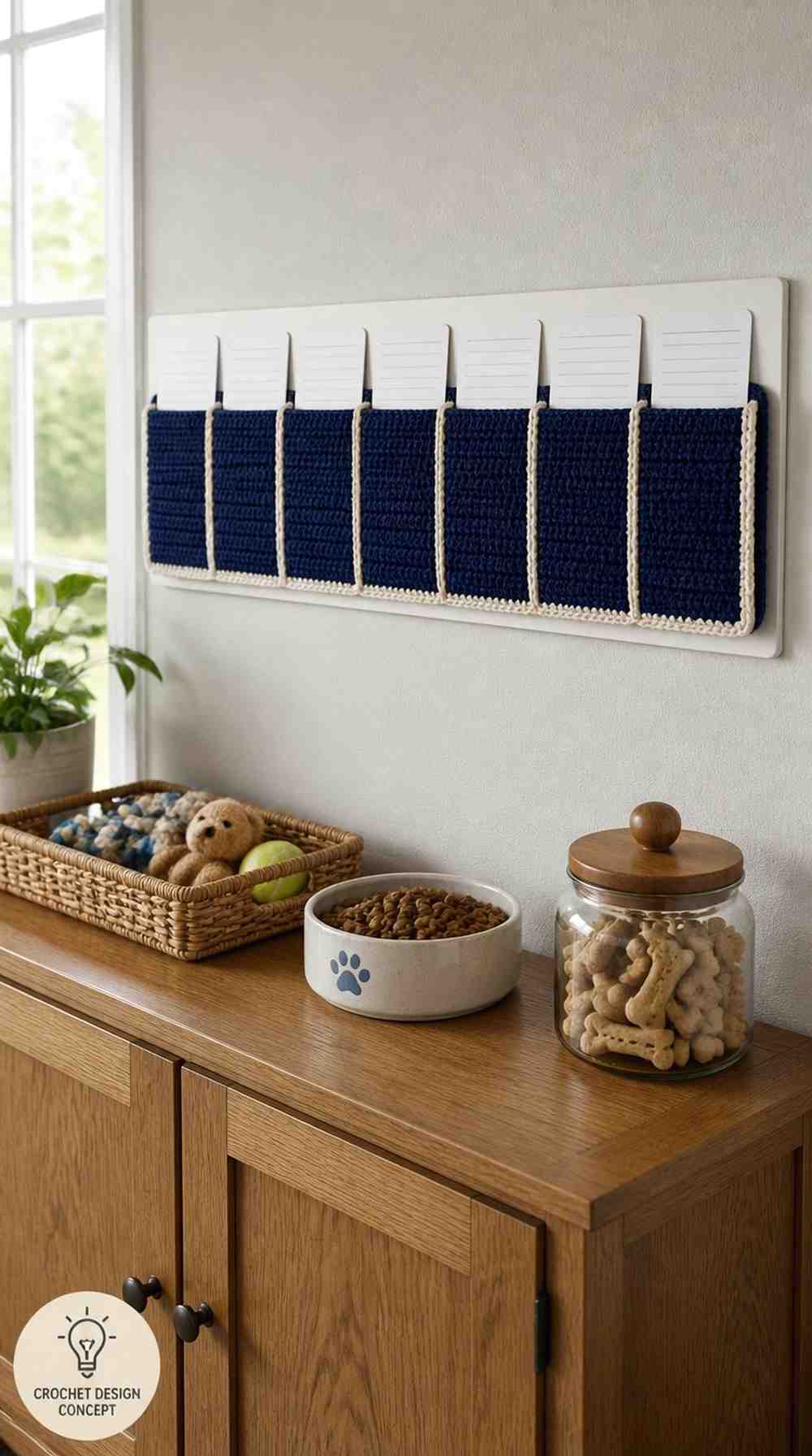
Deep navy crochet creates a long horizontal organizer with seven narrow card slots. Cream dividers separate the compartments, and seven small white cards project above the top edge. The continuous strip is attached to a rigid white wall board.
The arrangement could be used to sort records by day, although it does not determine when medication should be given. Because every slot looks similar, clear handwritten dates would be important in a real version. Its horizontal shape suits a wall above a pet-care storage cabinet.
- Seven Card Spaces: Size the narrow pockets for the actual cards, allowing them to slide out without catching against the crochet dividers.
- Date Identification: Mark cards clearly with dates or day names outside the design visualization; never rely on slot position alone for medication decisions.
- Weekly Changes: Replace or archive completed records carefully so a previous week’s card cannot be mistaken for the current schedule.
3. Crochet Ivory Clear-Window Vet Card Pocket
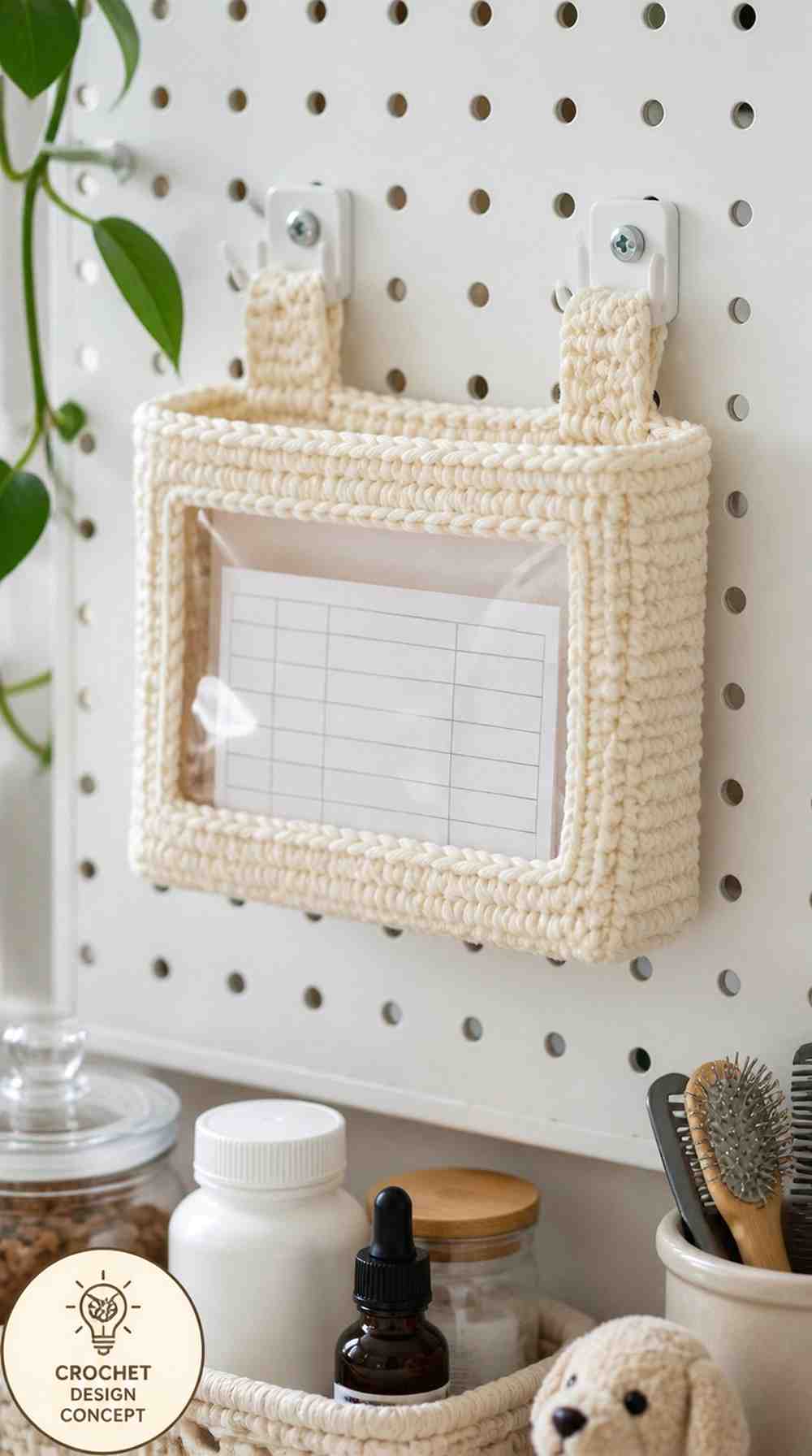
A clear rectangular window makes this ivory crochet organizer especially useful for displaying one paper card. The transparent front is framed with closely stitched cream crochet, while a solid backing keeps the card supported.
Two short reinforced tabs attach the pocket to a white pegboard using appropriate brackets. The card’s faint grid remains visible without being removed. Unlike a fully opaque pocket, this design allows a caregiver to check a record at a glance, provided glare does not obscure important details.
- Transparent Window: Choose a smooth, clear material that does not cloud easily or create reflections strong enough to hide the writing.
- Card Removal: Provide sufficient opening clearance to replace the schedule without bending or tearing its paper edges.
- Pegboard Fixings: Use suitable rigid hooks or brackets, not loose crochet loops alone, to support the panel securely.
4. Crochet Teal Two-Pet Schedule Card Organizer
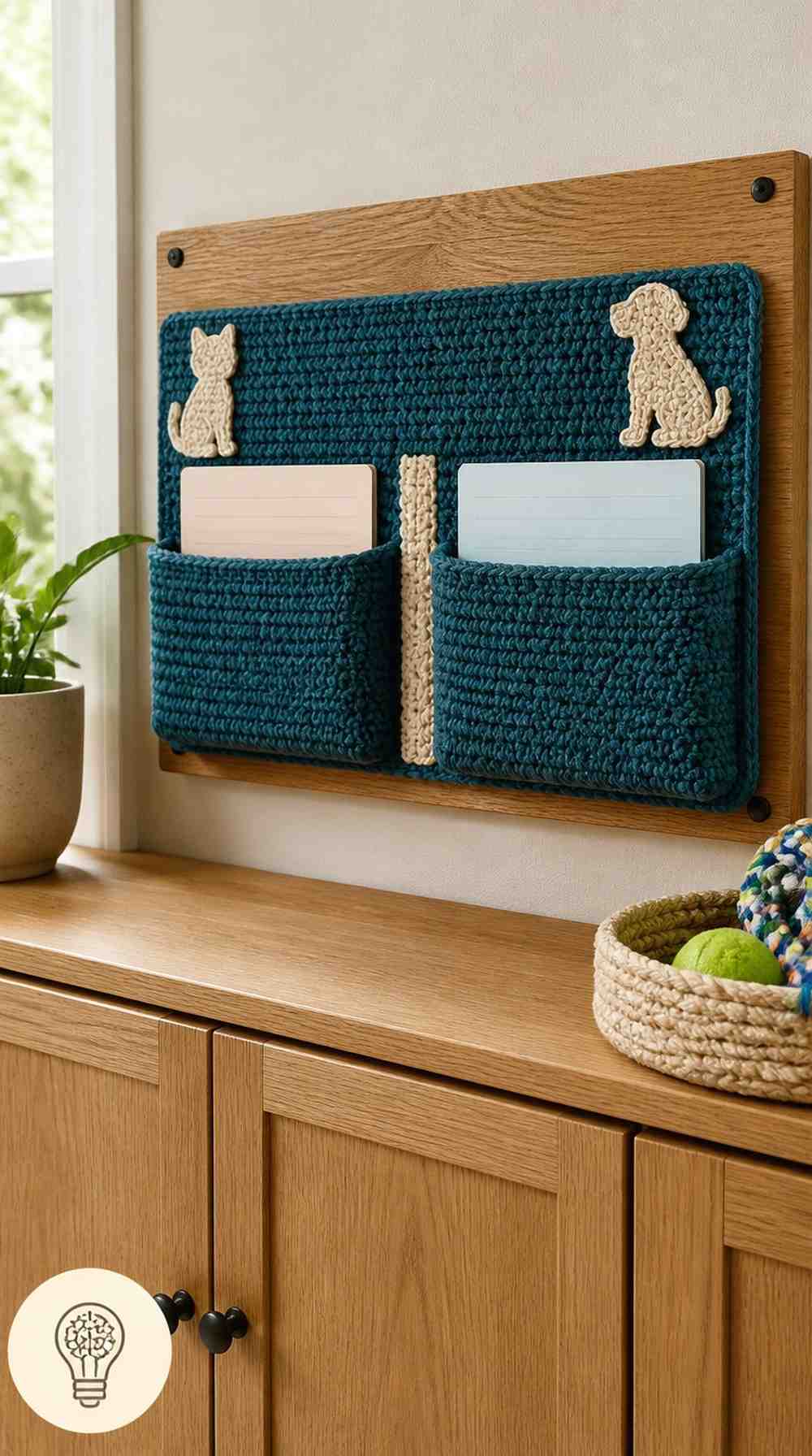
Deep-teal crochet forms two equal rectangular pockets on a pale wooden wall board. A cream central divider separates the spaces, while small flat cat and dog motifs decorate the upper corners. Peach and blue cards distinguish the two compartments.
This concept is particularly relevant to homes caring for more than one animal. The different colors and motifs can help organize paperwork, but they are not reliable substitutes for written identification. Every actual medication record should clearly identify the correct pet.
- Individual Pet Records: Keep each animal’s veterinary instructions separate, including its name and any information needed to avoid medication mix-ups.
- Color-Coded Cards: Use peach and blue only as visual aids; write the pet’s identifying details clearly on the real cards.
- Flat Animal Motifs: Secure the cat and dog shapes firmly against the crochet so they cannot loosen into chewable pieces.
5. Crochet Mustard Magnetic Schedule Card Wallet
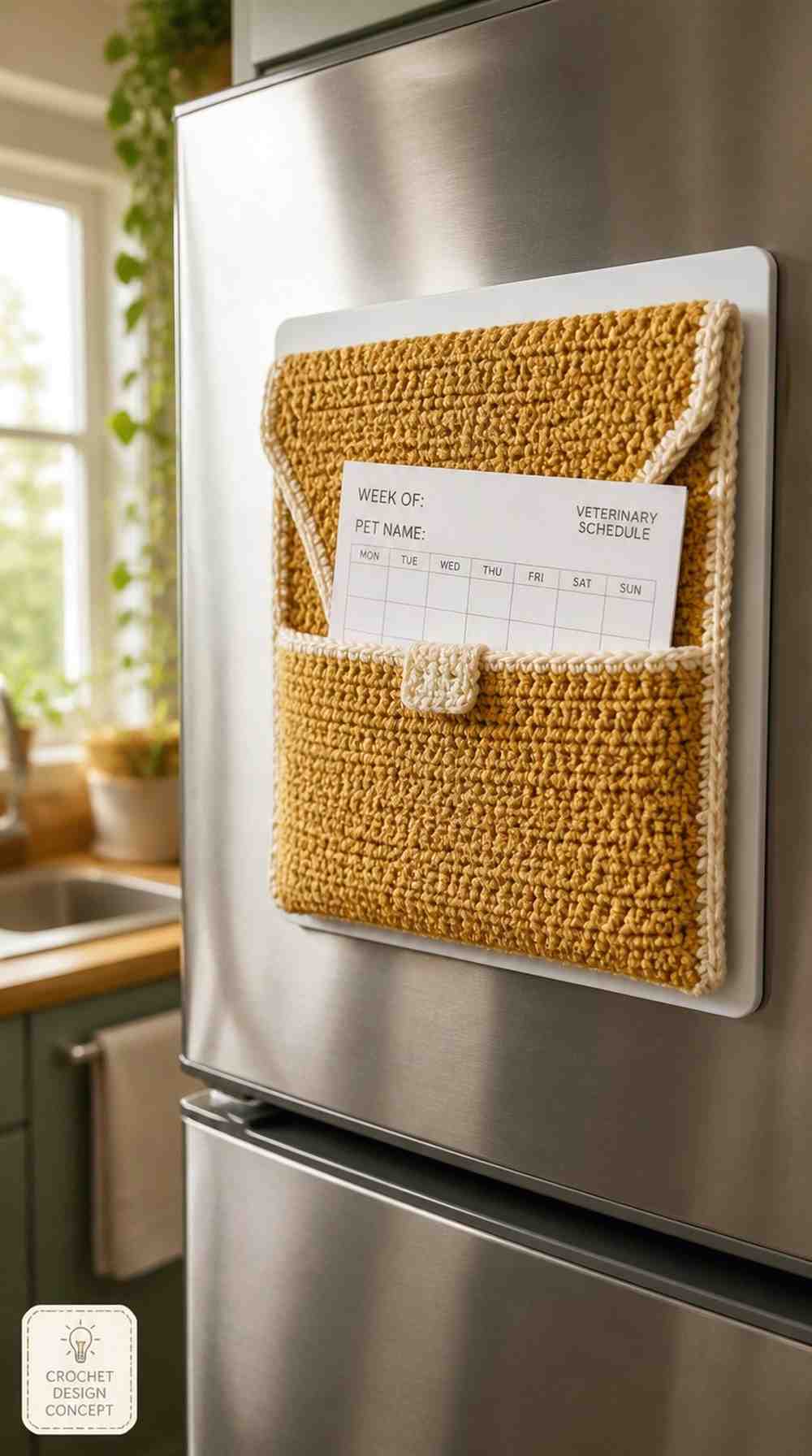
Muted mustard crochet gives this compact envelope pocket a warm, cheerful look. A cream-trimmed foldover flap covers the upper opening, with a small flat tab providing a place to lift it. The pocket rests on a rigid magnetic-backed panel attached to a refrigerator.
One blank weekly schedule card is visible beneath the partly opened flap. The magnetic support distinguishes this concept from wall-mounted crochet pockets. Its usefulness depends on placing the panel securely where it will not slide or fall.
- Magnetic Backing: Use a properly enclosed rigid magnetic support rather than small loose magnets that pets or children could swallow.
- Flap Access: Keep the mustard crochet tab easy for an adult to lift without pulling the entire panel away from the refrigerator.
- Safe Placement: A refrigerator is not automatically pet-proof; position the panel securely and keep the medication itself in appropriate separate storage.
6. Crochet Sage Dowel-Hung Treatment Card Pockets
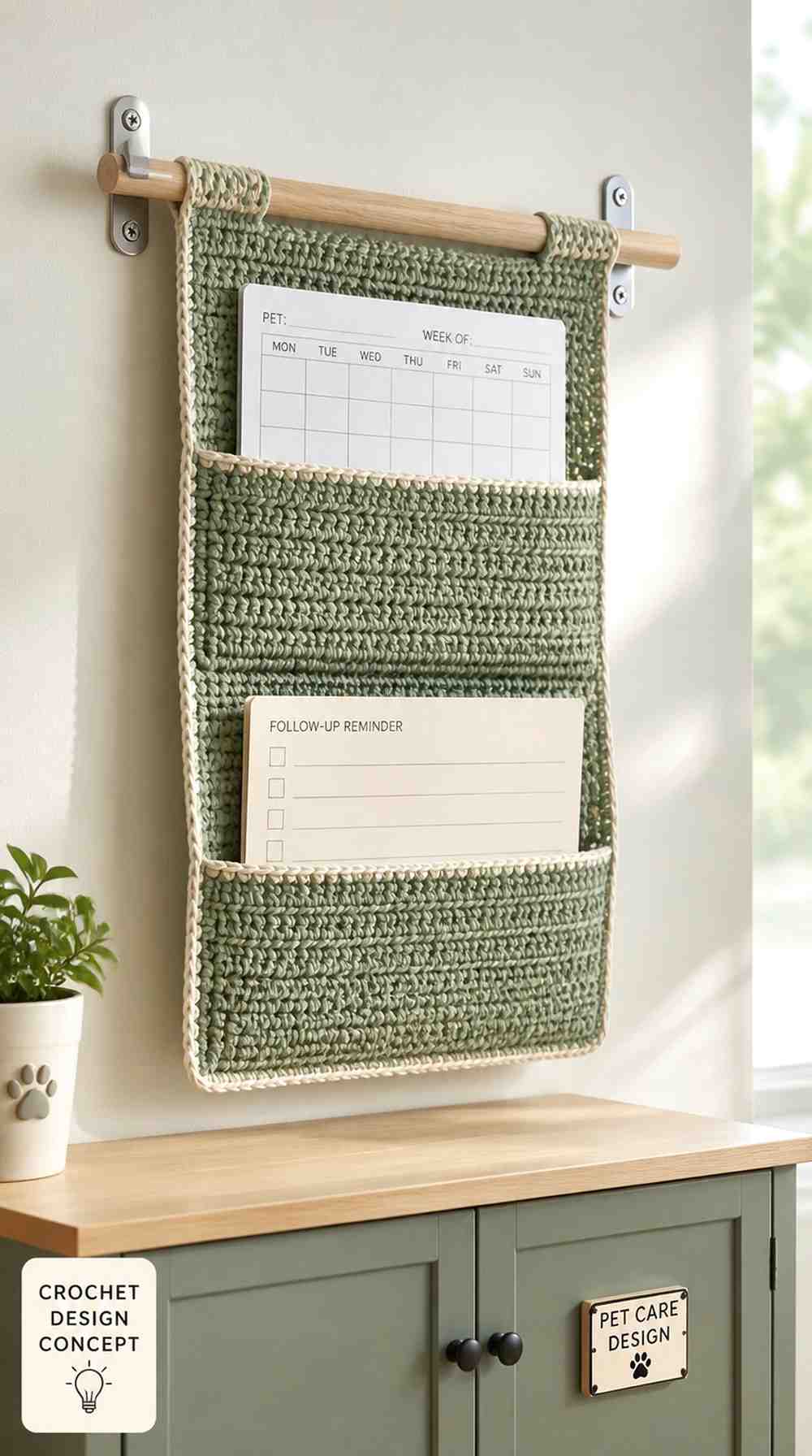
Muted sage-green crochet forms a vertical organizer with two stacked pockets. A smooth wooden dowel passes through the upper channel, while two rigid wall brackets hold the rod above a closed pet-care cupboard.
The top pocket displays a white schedule card, and the lower section contains a cream reminder card. Oatmeal edging distinguishes the two openings without introducing printed labels. This arrangement may help caregivers keep a current schedule and a related follow-up note together without mixing them into one compartment.
- Two-Pocket Layout: Decide which compartment holds the active schedule and which stores supporting paperwork, then keep that arrangement consistent.
- Wooden Dowel: Choose a smooth rod and secure wall brackets that support the full panel without loose hanging strings.
- Pocket Separation: Leave enough vertical space to lift the lower card without pulling or bending the one stored above it.
7. Crochet Blush Granny Schedule Pocket
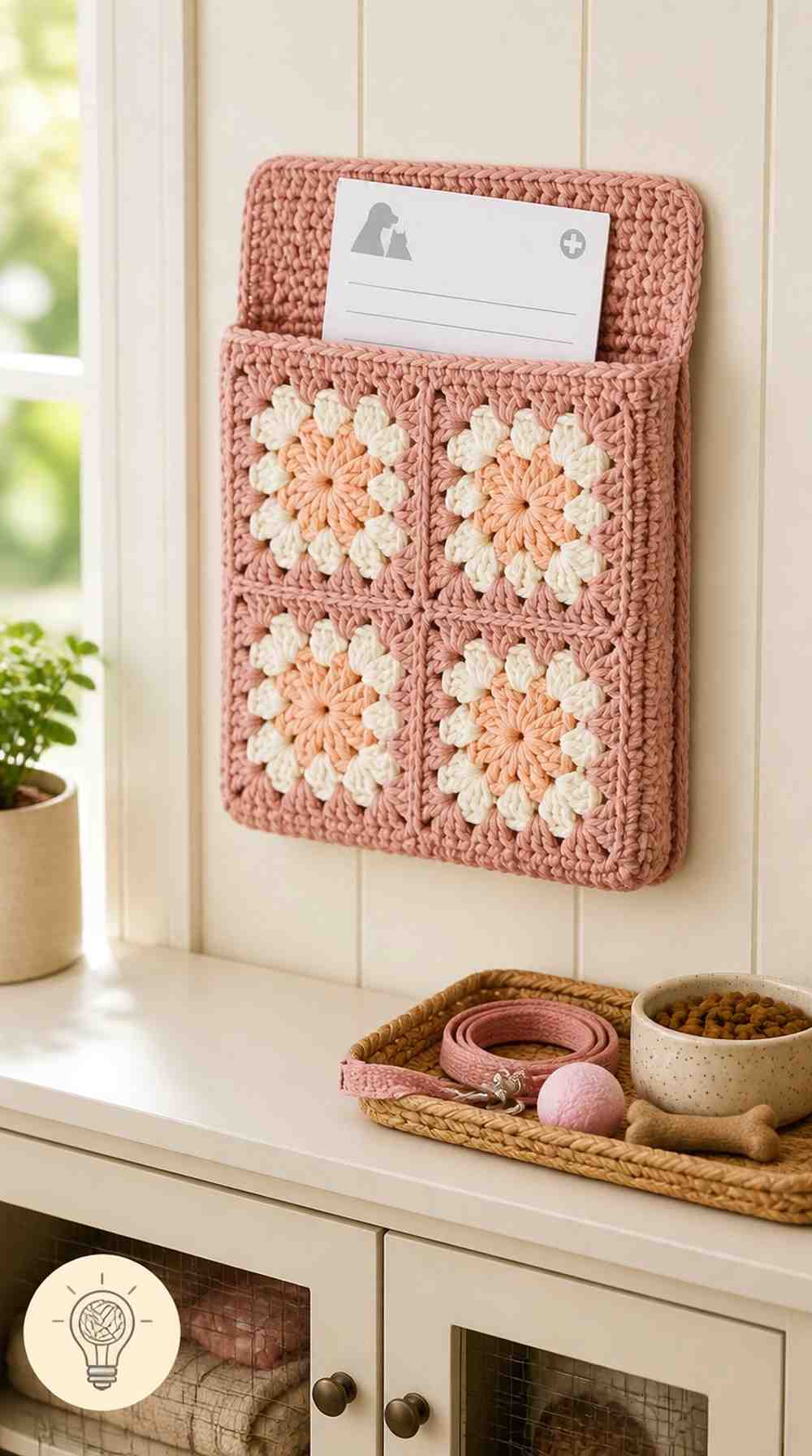
Dusty-blush crochet brings traditional granny-square texture to this single-card organizer. Four motifs form a two-by-two front panel, each with an apricot center, ivory middle stitches and blush outer border. A solid backing creates the actual storage compartment.
One white schedule card projects above the upper edge. The granny squares make the pocket more decorative than a simple ribbed holder, while the solid interior prevents the card from slipping through open motif spaces. This concept suits a calm, cottage-inspired pet-care corner.
- Four-Square Joining: Align the granny motifs carefully so their corners form one rectangular front without gaps along the pocket seams.
- Solid Backing: Keep the card against a continuous inner surface instead of relying on the granny-square openings to contain paper.
- Decorative Placement: Mount the piece above a closed cabinet, away from pets that might pull on the crochet or chew its decorative edges.
8. Crochet Charcoal Clipboard Side Card Sleeve
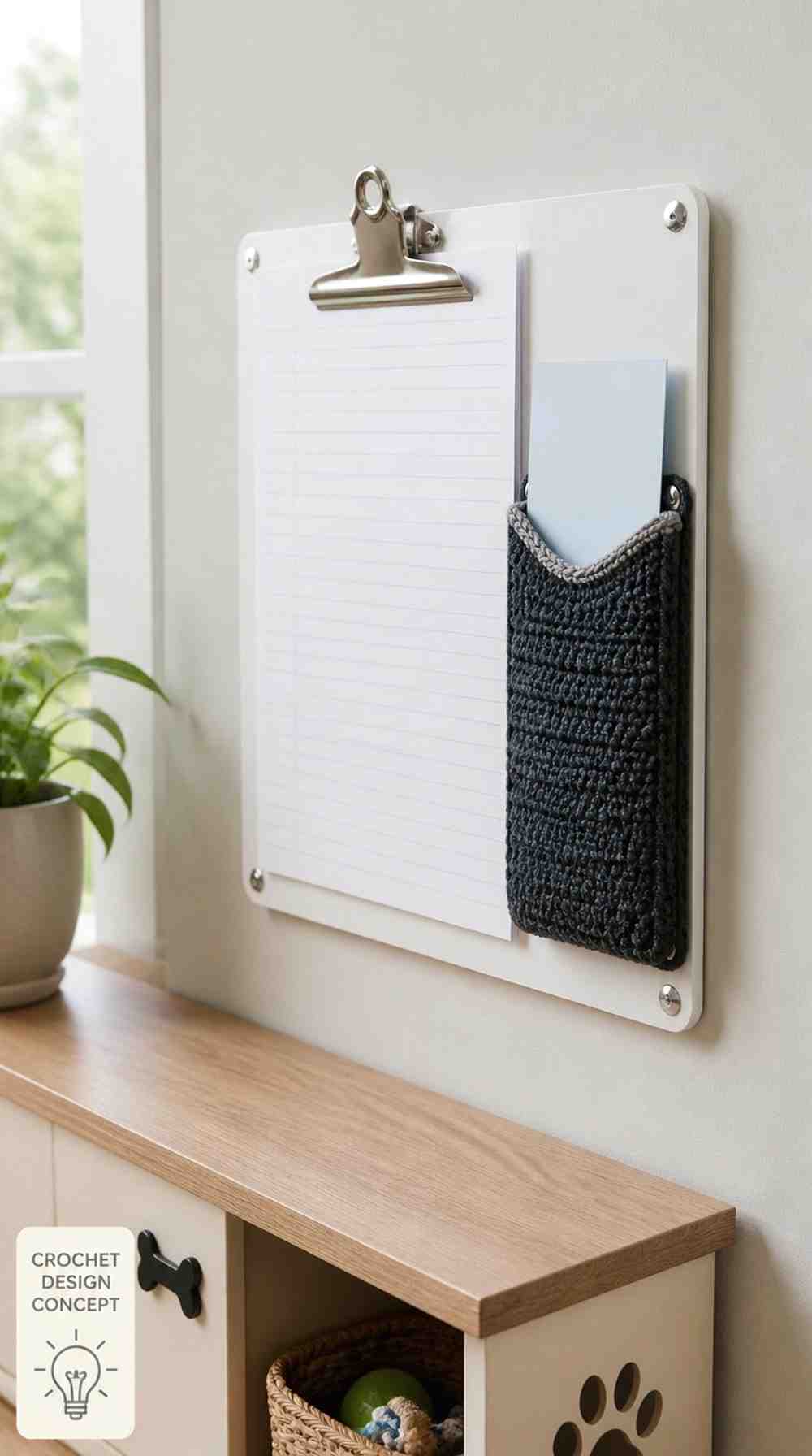
Charcoal-grey crochet creates a narrow side pocket attached to a rigid white clipboard. The sleeve has closely worked horizontal stitches, a silver-grey upper edge and a shallow curved opening that holds a small blue card upright.
The clipboard’s main metal clip secures a separate blank ruled sheet, allowing two pieces of paperwork to stay together. Unlike a large wall organizer, this design combines a small storage sleeve with an existing writing surface. The placement should not obstruct the clip or make either record difficult to read.
- Clipboard Clearance: Keep the crochet sleeve outside the main writing area so the larger sheet remains easy to remove and update.
- Curved Opening: The shallow front curve should expose enough of the blue card to grip it without bending the corners.
- Secure Mounting: Attach the rigid clipboard to a suitable wall fixture instead of leaving it where a pet could knock it down.
9. Crochet Lavender Accordion Medication Card Archive
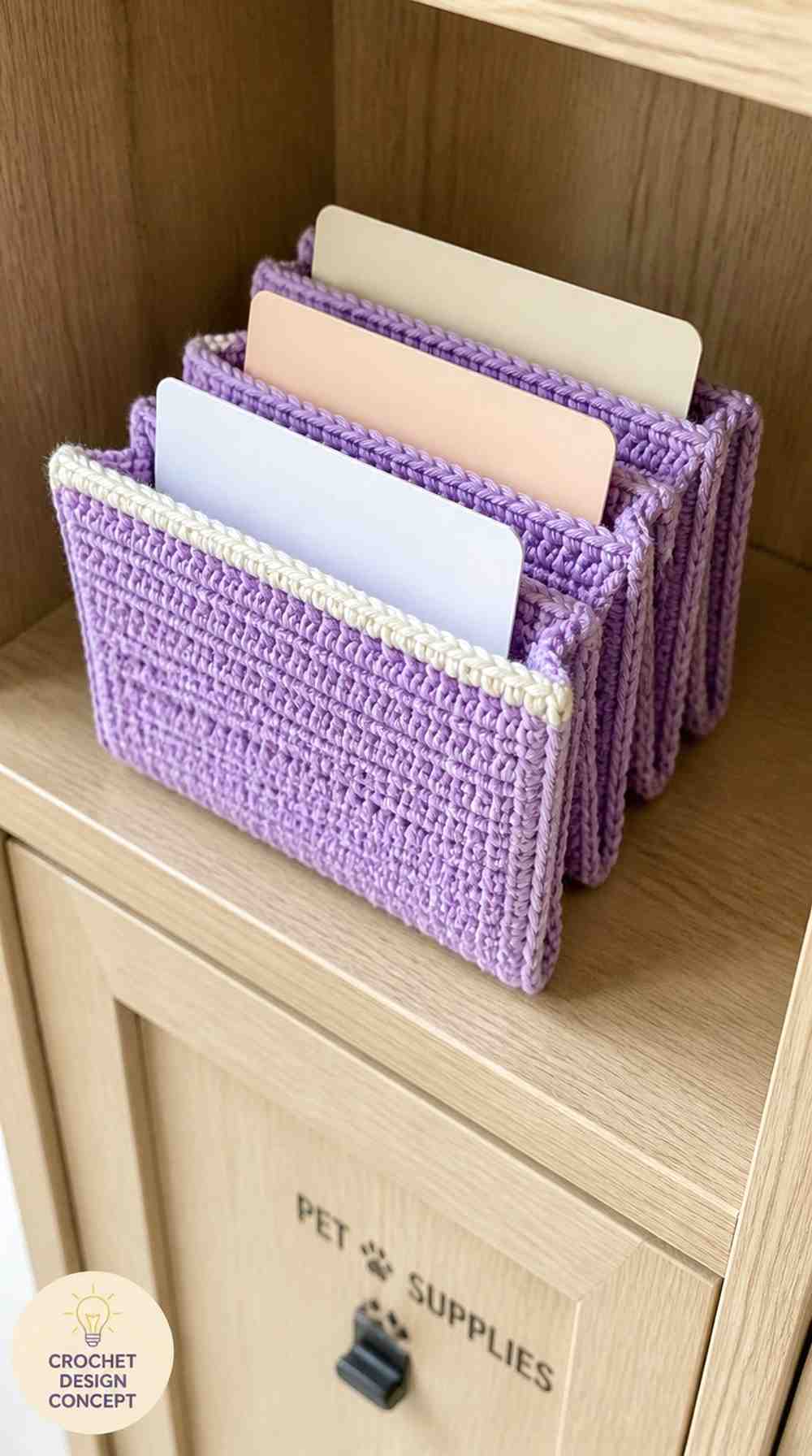
Lavender crochet gives this compact document organizer a soft, structured appearance. Folded lilac dividers create three narrow card sections, supported by thin removable inserts. A cream upper edge finishes the outer body.
White, peach and ivory cards sit at staggered heights, making the separate sections easy to recognize. The organizer rests inside a rigid wooden shelf compartment rather than hanging freely. This concept is particularly useful for exploring storage of older paper records, although current instructions should remain easy to locate elsewhere.
- Accordion Sections: Keep the internal dividers distinct so older cards do not slip behind or become mixed with the current record.
- Support Inserts: Use smooth removable inserts to help the folded crochet maintain its shape without sharp edges against the paper.
- Record Archiving: Mark completed cards with their actual dates and store them separately from current veterinary instructions to prevent confusion.
10. Crochet Cocoa Snap-Closure Vet Card Envelope
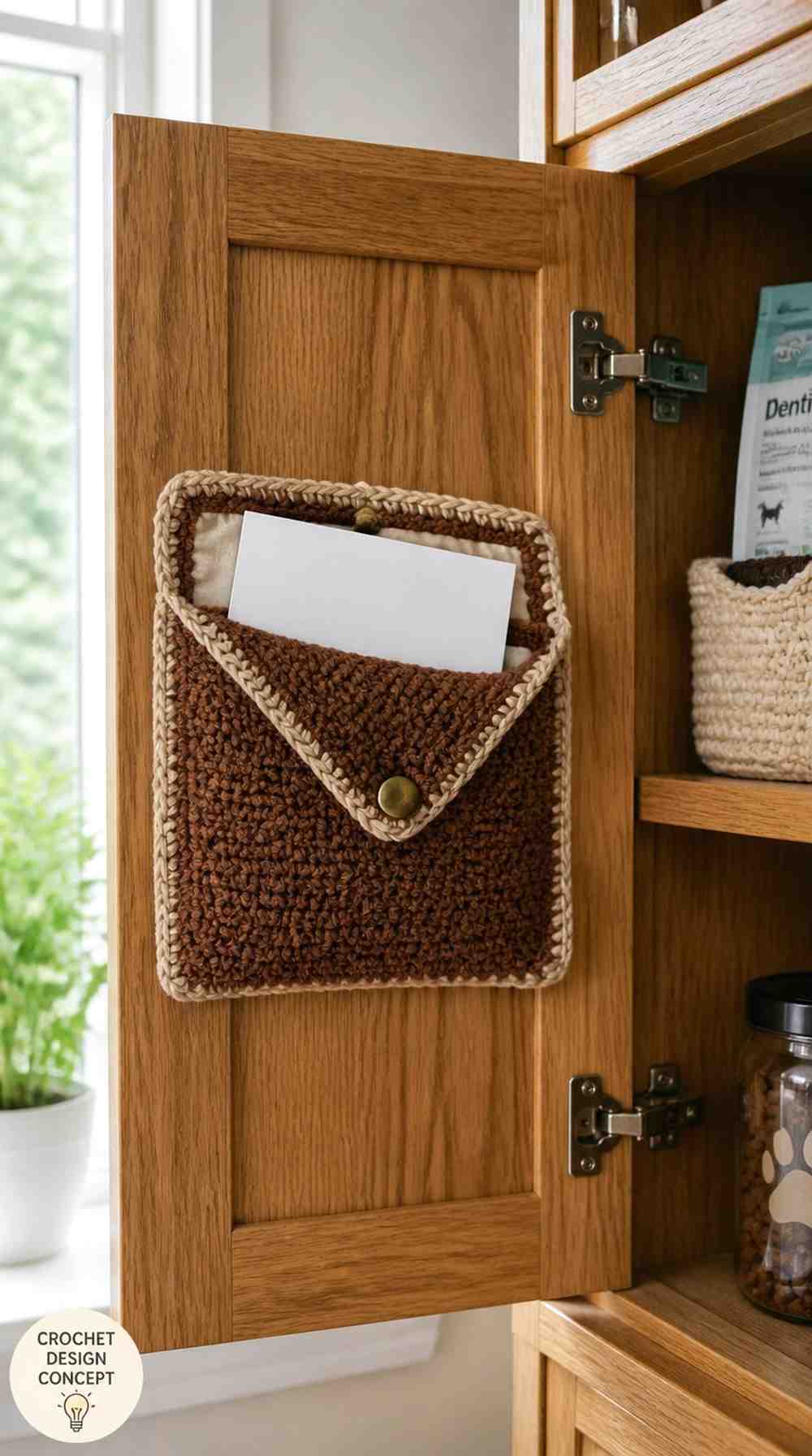
Cocoa-brown crochet gives this small envelope a tidy, understated finish. Its triangular flap closes with one matte-brass snap, while an oatmeal border and cream cotton lining soften the edges. A white schedule card fits inside the rectangular compartment.
The organizer is mounted to the inner side of an upper oak cabinet door. This concealed position keeps paperwork out of the main room while still making it accessible to a caregiver. The door must have enough clearance for the envelope and its contents when closed.
- Snap Placement: Keep the metal snap securely attached and positioned where it cannot press sharply against the stored card.
- Cabinet Clearance: Check that the envelope does not catch on shelves or cabinet hardware as the door opens and closes.
- Concealed Storage: An inside-door position may reduce visible clutter, but the caregiver still needs an easy way to find the current schedule promptly.
11. Crochet Seafoam Three-Tier Pet Care Card Pockets
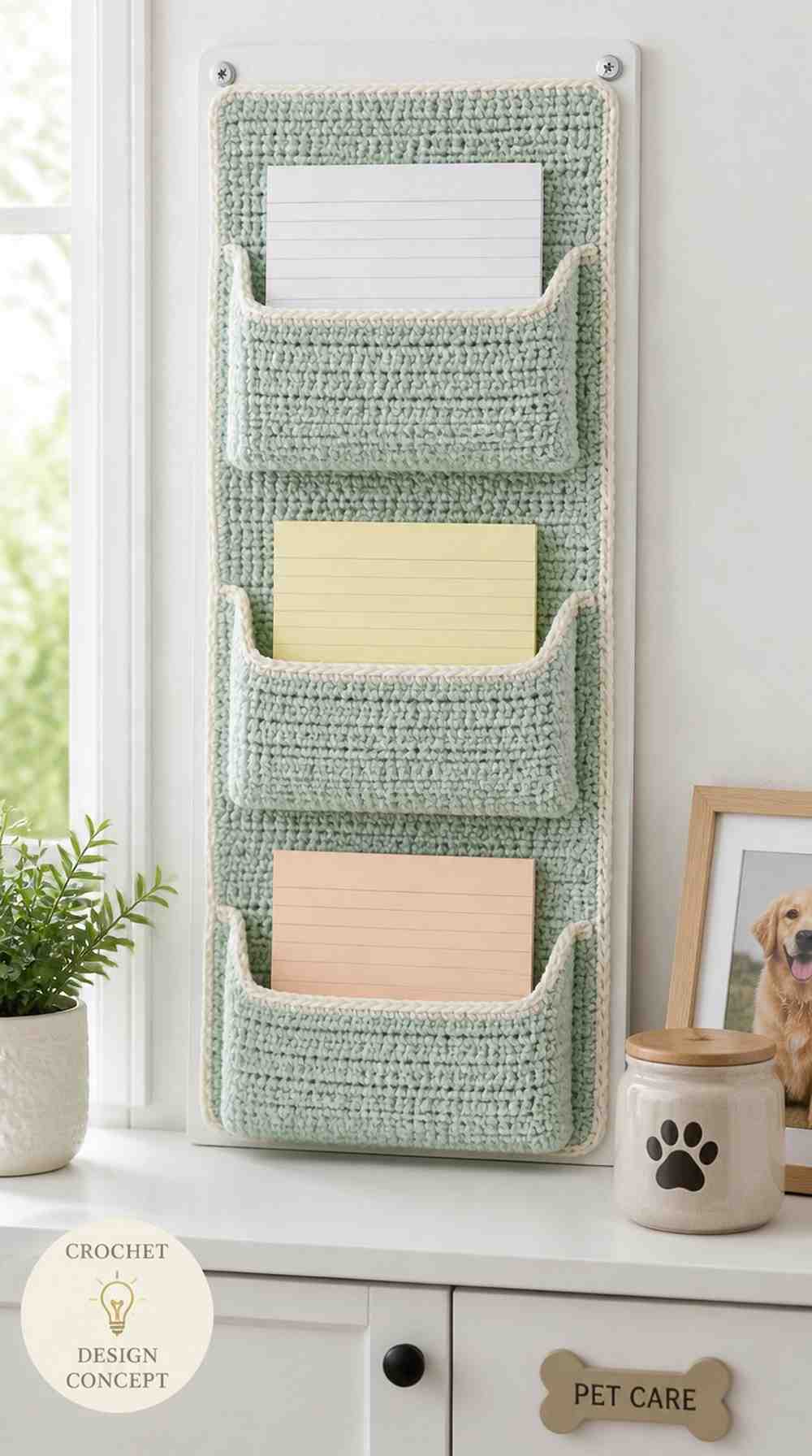
Pale seafoam crochet creates a vertical organizer with three shallow pockets. The continuous backing panel supports the compartments, while narrow ivory borders and small side gussets give each opening a neat finish.
Three different paper cards occupy the pockets: a white daily schedule, a pale-yellow appointment reminder and a peach refill note. This design allows related information to be stored together without sharing one loose stack. The differing colors are useful for organization, but the written instructions on real records must remain the authority.
- Separate Document Types: Keep daily medication records, appointment information and refill reminders in clearly identified compartments.
- Shallow Gussets: Small side expansions accommodate a few sheets without allowing papers to sink deeply below the pocket openings.
- Three-Level Access: Leave enough space above each pocket for an adult to remove the card without disturbing the others.
12. Crochet Coral Corner-Fit Schedule Card Pocket
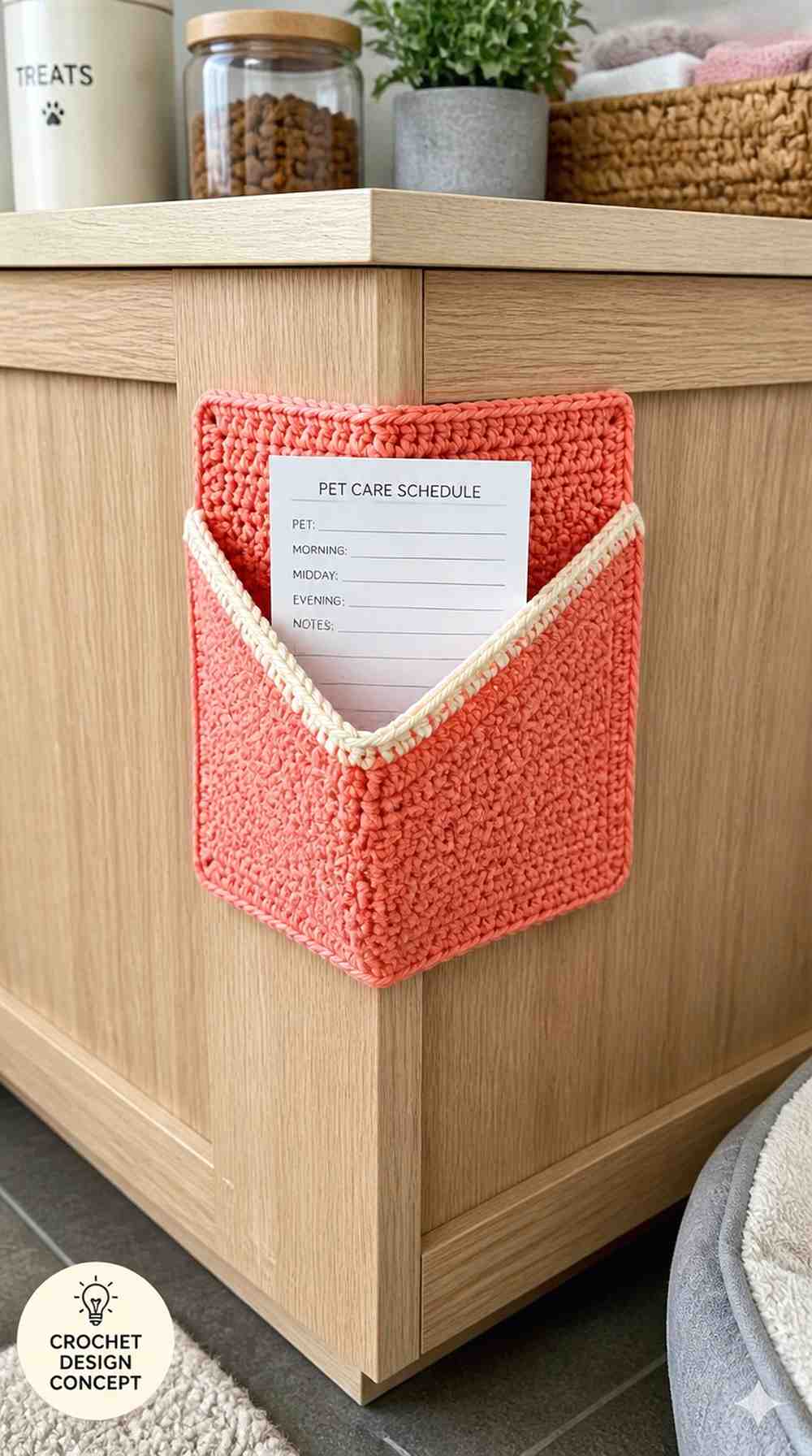
Coral-pink crochet gives this small organizer an unusual angled silhouette. The pocket wraps across two adjoining faces of a pale-oak wall cabinet, with a triangular lower gusset and cream edging around its diagonal opening.
One white schedule card stands inside, with the upper portion visible above the border. The corner placement makes use of a narrow area that might otherwise remain unused. However, the organizer’s attachment needs to follow the cabinet shape without relying on the paper card to hold the pocket open.
- Corner Measurements: Check both cabinet faces and the outside corner angle before planning the coral backing panels.
- Diagonal Opening: Keep the cream-trimmed opening wide enough to remove the card without pulling against its edges.
- Cabinet Position: Choose a stable upper cabinet corner, avoiding doors or drawers that could catch the protruding pocket.
13. Crochet Plum Zippered Medication Schedule Card Pouch
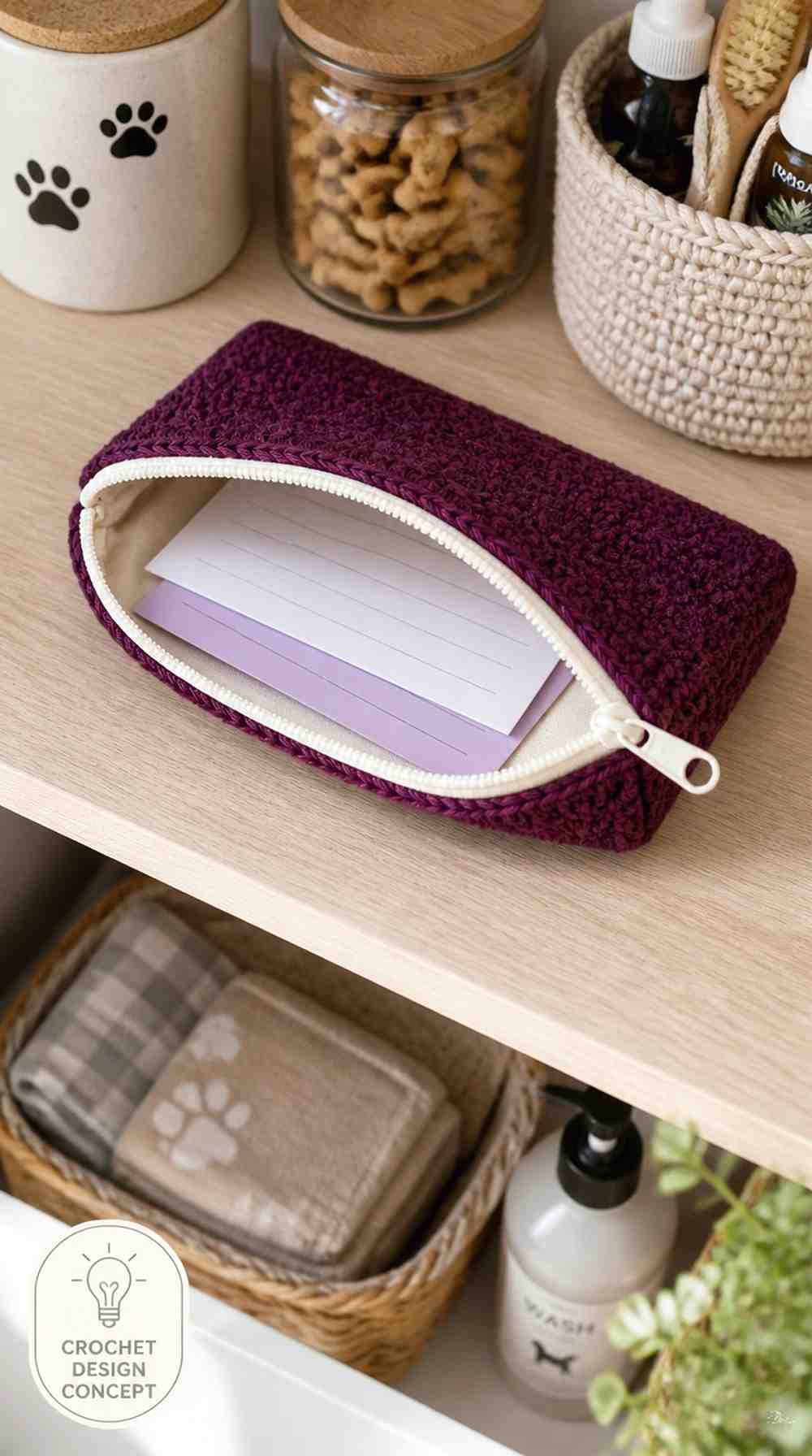
Rich plum crochet creates a small rectangular document pouch with a cream zipper. Its closely worked outer walls surround a smooth cotton lining, and two paper cards sit inside the partly opened compartment.
The white and lilac cards remain separate from any medicine containers, making this a paperwork-storage concept rather than a medication bag. The zipper provides a more enclosed arrangement than an open wall pocket. It may suit older records that do not need to remain visible throughout the day.
- Card Dimensions: Make the pouch large enough for flat paper cards without folding their dates or important written instructions.
- Zipper Protection: Use the cream lining to separate the paper from zipper teeth, reducing the chance of catching or tearing a card.
- Storage Purpose: Keep the pouch for documents only; medication should stay in its original properly labeled container and suitable storage location.
14. Crochet Cobalt Chevron Reminder Card Board
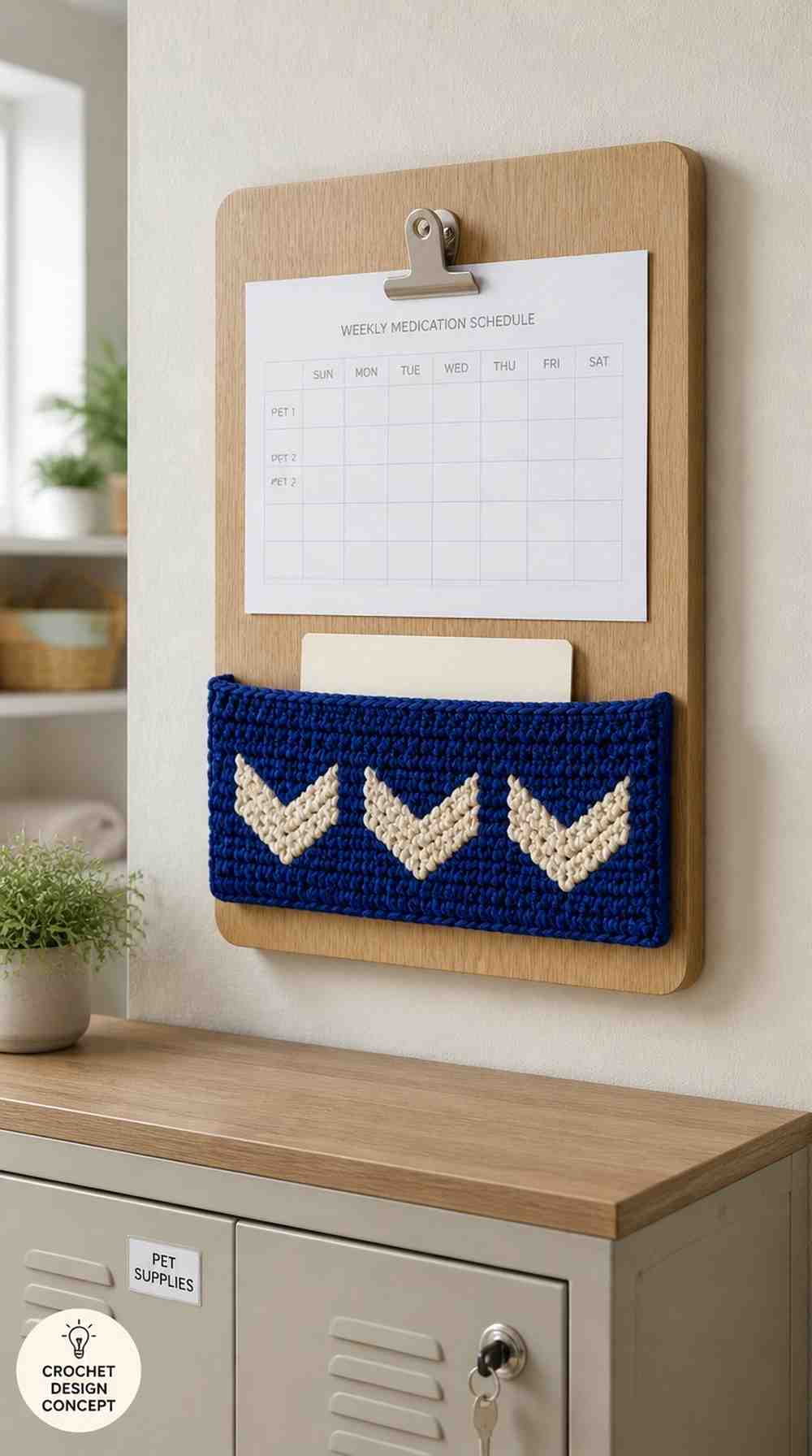
Cobalt-blue crochet adds a geometric detail to this rigid wooden reminder board. Three small ivory chevrons decorate a shallow lower pocket, while a metal clip above it holds a larger blank weekly schedule card.
A second cream paper card sits inside the crochet pocket. The design combines a visible primary record with a separate space for supporting notes. Compared with a fully enclosed document pouch, the open clipboard-style arrangement is easier to inspect at a glance, although the cards remain exposed to dust.
- Main Schedule Display: Position the clipped card where written dates and instructions remain visible without removing it.
- Lower Note Pocket: Use the shallow crochet compartment for related paper reminders rather than medication packets or dosing equipment.
- Clip Placement: Keep the metal clip securely mounted to the wooden board without allowing it to obstruct the main schedule.
15. Crochet Olive Paw-Accent Schedule Card Pocket
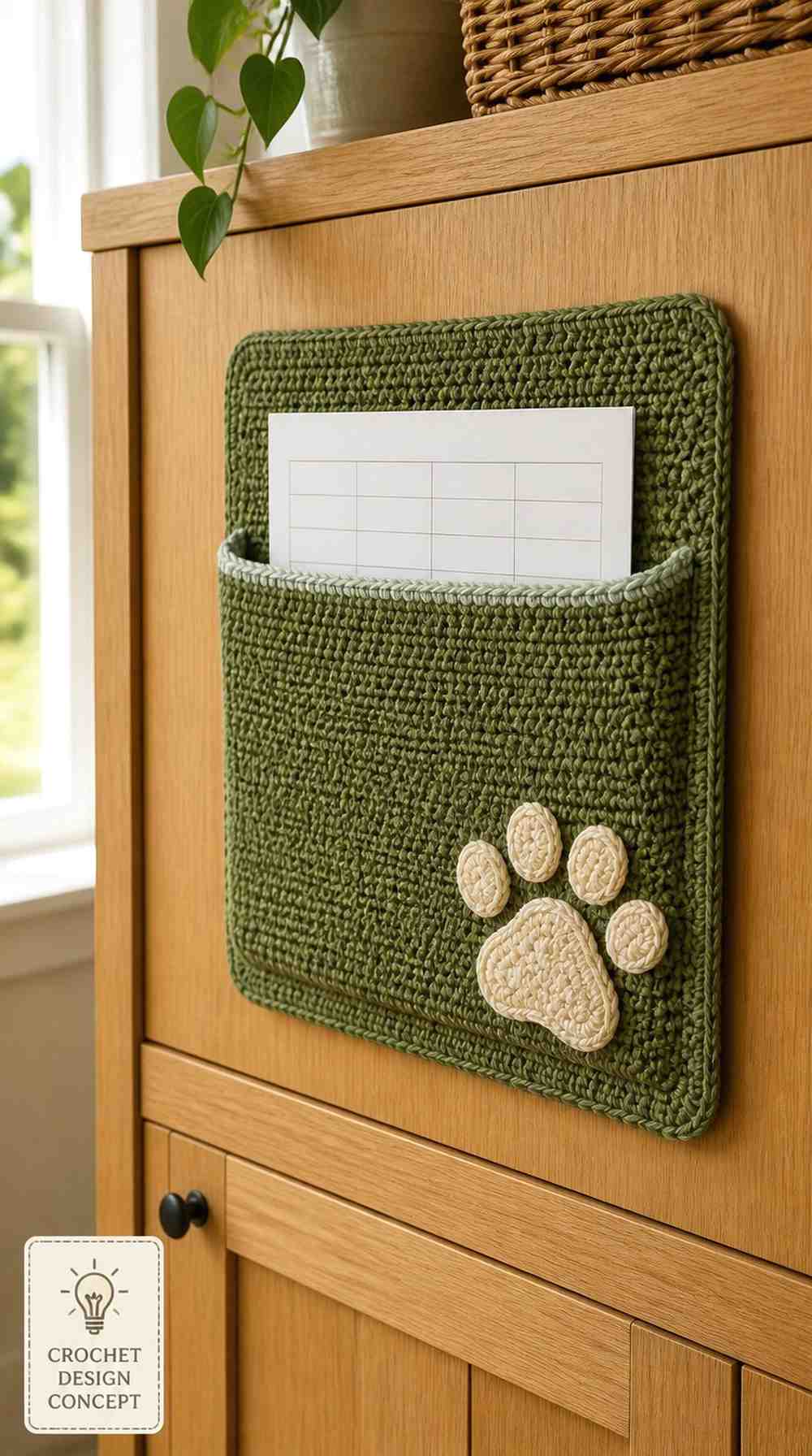
Olive-green crochet gives this single-card pocket a gentle botanical appearance. A flat cream paw-print motif decorates the lower right corner, while a muted sage border follows the opening. The broad backing and rectangular front form a simple card compartment.
A white schedule card projects above the pocket, showing only faint grid lines in the design image. The paw motif makes the organizer recognizable as a pet-care accessory without requiring extra signs or decorative lettering. Its small components should remain firmly attached and well away from animals.
- Paw Motif Construction: Join the cream central pad and four toe shapes securely so no small decorative pieces can detach.
- Card Clearance: Keep the paw detail below the opening, leaving the schedule card easy to grasp and read.
- Pet Access: A pet-themed design is not a pet toy; mount the crochet out of reach of animals that may chew or pull on yarn.
16. Crochet Butter Yellow Flip-Tab Card Organizer
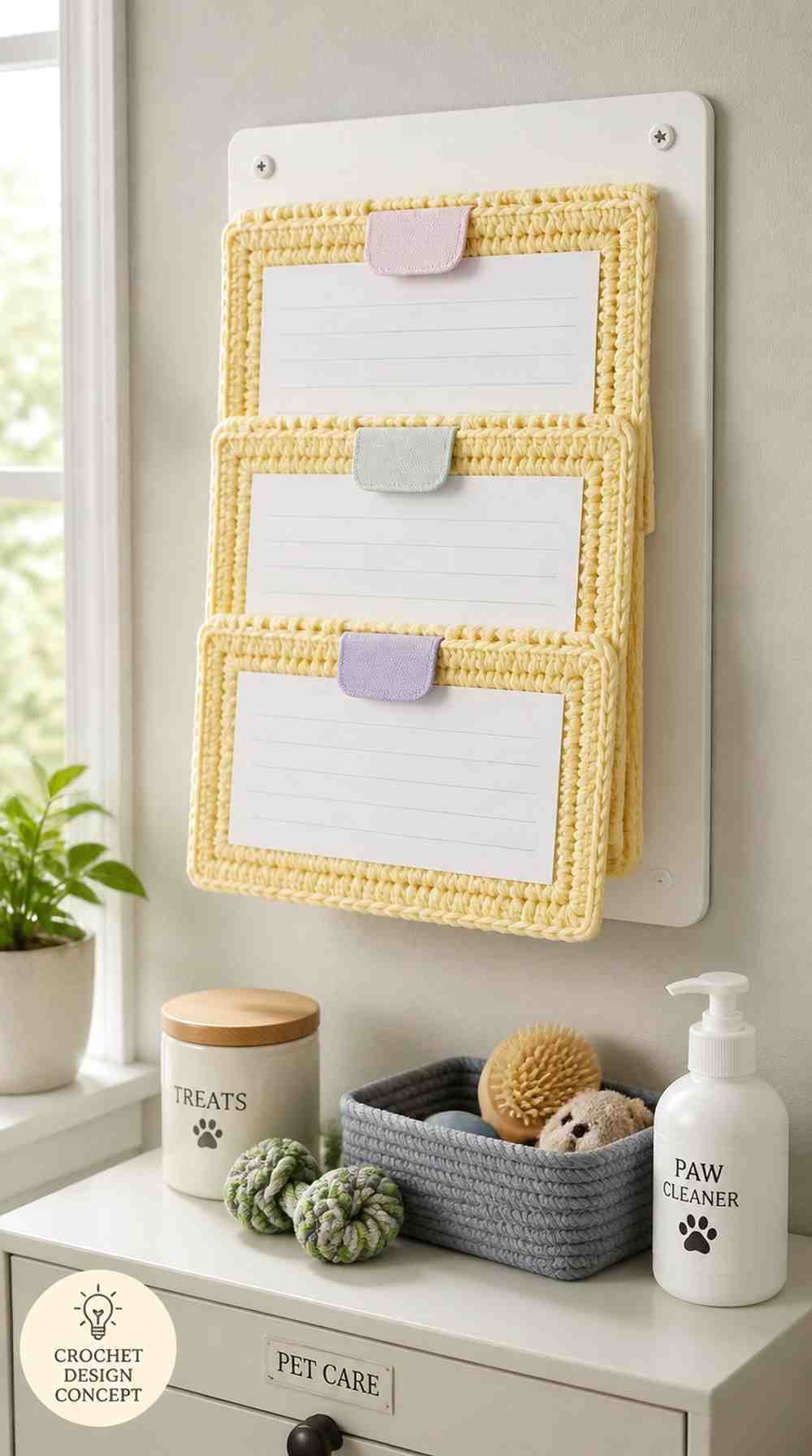
Butter-yellow crochet gives this small organizer the look of a miniature vertical filing system. Three overlapping card sleeves attach to a rigid backing board, each with a pale pastel pull tab along its upper edge.
The layered arrangement allows different paper records to occupy separate positions within a compact footprint. Unlike three permanently open pockets, the sleeves can be lifted individually to reveal the cards beneath. That makes the top-edge connections especially important, as they must remain flat and secure during repeated handling.
- Flip-Tab Arrangement: Keep the three fabric tabs individually accessible so one card can be checked without lifting every sleeve.
- Hinged Edges: Attach the upper crochet edges to a stable backing rather than relying on loosely joined yarn loops.
- Record Identification: Clearly date real cards and remove outdated instructions so layered storage does not hide an important change in treatment.
17. Crochet Rust Current-and-Completed Card Holder
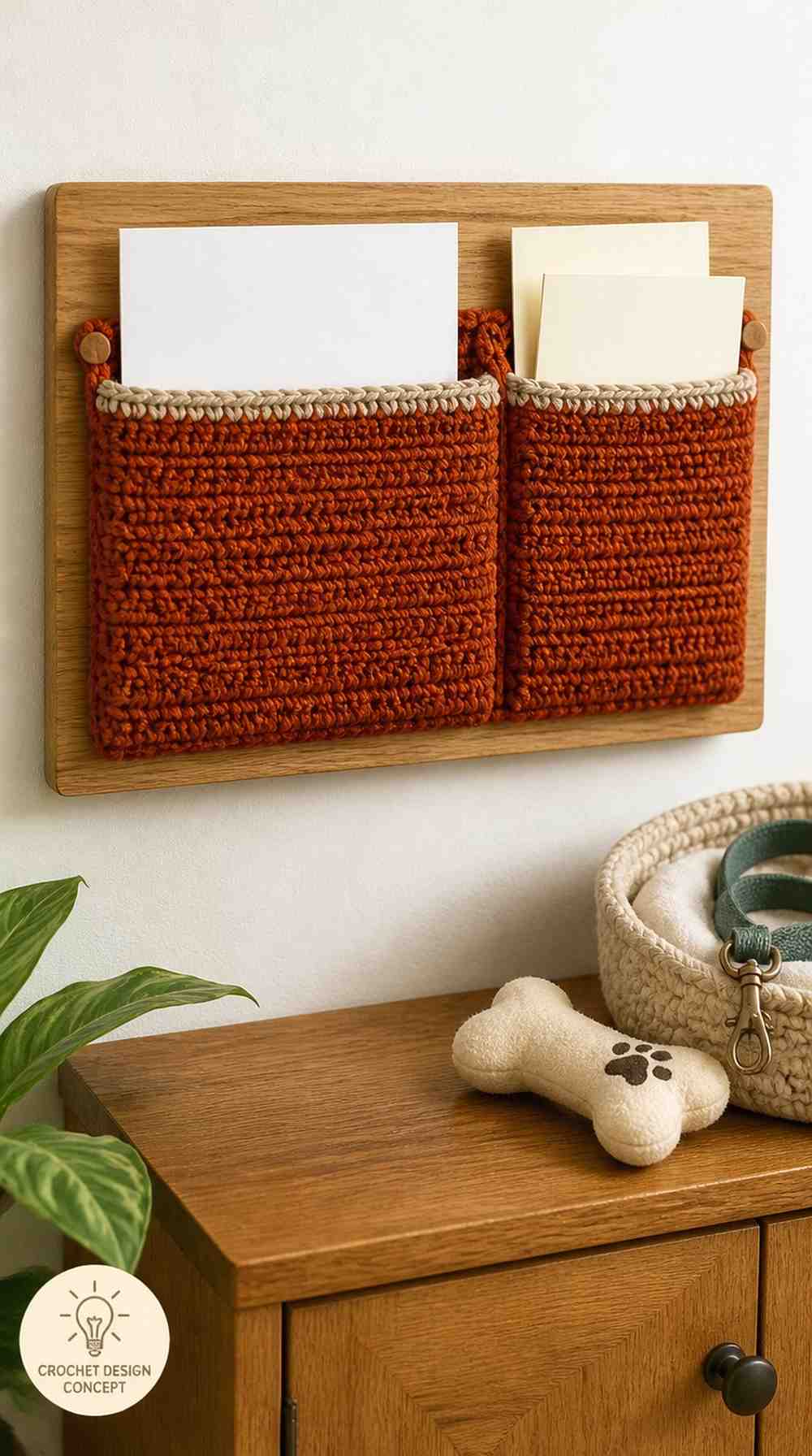
Rust-orange crochet creates two unequal pockets on a pale-oak wall panel. The broader left compartment holds one white daily medication record, while the narrower right pocket contains two cream-colored completed cards.
An oatmeal border and central divider give the organizer a clear two-part arrangement. This concept is useful for separating current paperwork from recently finished records without needing a larger filing system. The unequal widths are intentional, with more space reserved for the active schedule.
- Current Record Position: Keep the active card in the broader left pocket, where its main information can be found quickly.
- Completed Card Storage: Date finished records before moving them into the narrow compartment so they cannot be mistaken for current instructions.
- Limited Archive Space: The smaller right pocket is suited to a few recent cards, not a growing stack of long-term medical records.
18. Crochet Peach Scalloped Angled Card Display
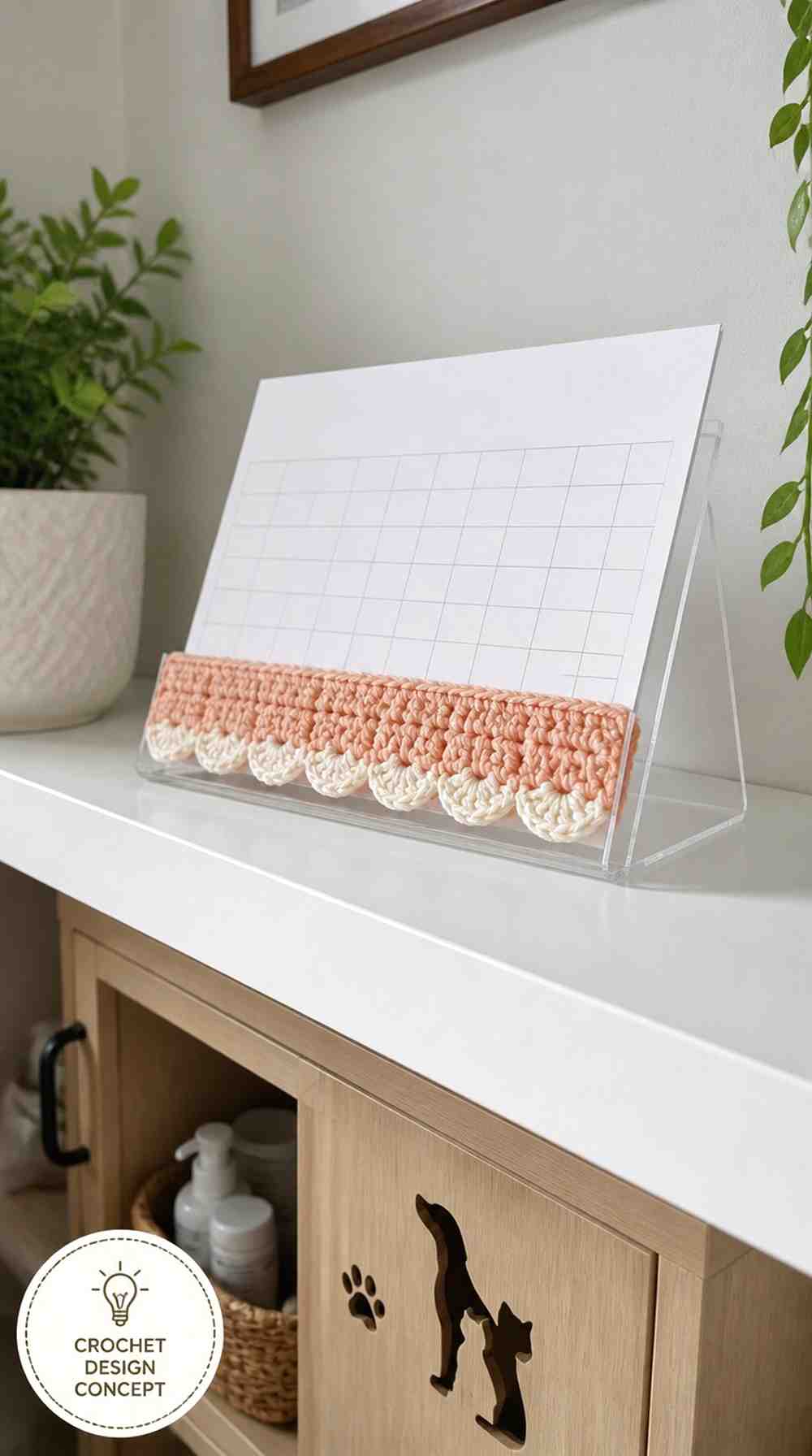
Soft peach crochet gives this small desktop-style card display a delicate finish. Seven ivory scallops decorate the lower retaining edge of a slanted transparent acrylic stand, while a single white schedule card rests against the rigid backing.
The card remains mostly unobstructed, making the design a useful visual alternative to deeper storage pockets. The acrylic provides the actual support, and the crochet functions as a removable decorative trim. Its freestanding form requires especially careful placement away from pets and areas where it might be knocked down.
- Slanted Readability: Choose a suitable viewing angle so written schedule details remain visible without producing excessive glare.
- Scalloped Trim: Keep the seven ivory scallops low and away from the paper’s main information area.
- Stable Placement: Position the stand on a secured, out-of-reach shelf rather than near food bowls, active play areas or exposed medication.
19. Crochet Charcoal and Cobalt Foldout Card Book
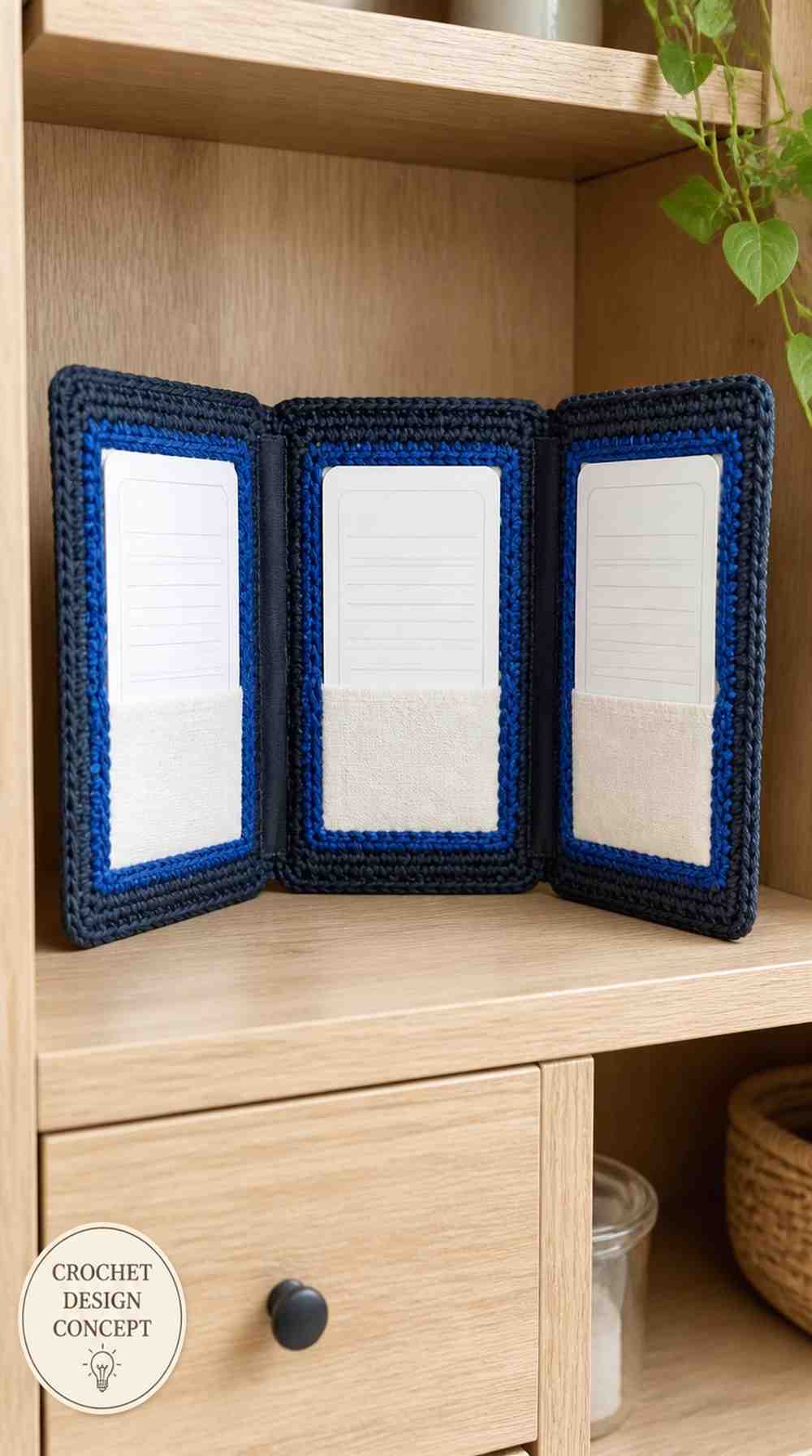
Charcoal-grey and cobalt-blue crochet create a compact three-panel filing book. Each panel has a smooth cream-lined card sleeve, while flat reinforced textile hinges connect the sections. Three white paper records occupy separate compartments.
The open arrangement resembles a small reference booklet rather than a hanging wall pocket. It may be particularly useful for organizing several related veterinary documents before storing them in an upper cabinet. The foldout form also offers a way to keep papers together without loose rings or dangling ties.
- Three-Panel Layout: Give each cream-lined sleeve enough room for one card without forcing it against the adjoining hinge.
- Flat Textile Hinges: Keep both joins flexible and securely stitched so the book opens without pulling the card sleeves out of shape.
- Cabinet Filing: Store the folded organizer in a protected, easily identified location, separate from actual medications and inaccessible to pets.
Practical Guide to Crochet Pet Medication Schedule Card Pockets
A medication schedule card pocket is most useful when it keeps veterinary instructions accessible and organized without creating confusion about which medicine has been given.
Keep the organizer for paperwork only. Do not place pills, medication bottles, topical treatments or used syringes inside crochet pockets. The FDA recommends storing medications securely where pets cannot reach them, since some animals may chew containers or swallow medication accidentally.
FDA
Make every schedule easy to identify. A real record should clearly identify the pet and reflect the veterinarian’s instructions, including the medication name, prescribed amount, administration method and scheduled time, where applicable. Include a date and a space for the caregiver to record when a dose was actually given.
Prevent duplicate or missed doses. In a household with several caregivers, use one agreed recordkeeping method and update it immediately after administering medication. If you cannot confirm whether a dose was given, contact the prescribing veterinarian rather than guessing or automatically repeating it. The FDA highlights the importance of understanding and following medication directions.
FDA+1
Separate current and old instructions. Replace the displayed schedule when the veterinarian changes the treatment. Archive older cards away from the active record so outdated instructions are not accidentally followed.
Choose safe materials and mounting. Smooth, closely worked cotton crochet is worth considering for dry paper pockets. Avoid loose beads, long cords and detachable decorations. Secure hanging organizers to an appropriate wall or cabinet surface, out of reach of curious animals and children.
Protect the paperwork. Keep cards away from moisture, direct splashes and chewing. For frequently handled records, a suitable clear protective sleeve may be more practical than an exposed paper card.
For other handmade storage ideas, explore 20 Crochet Hanging Wall Pocket Organizer Ideas and 13 Crochet Pet Grooming Tool Roll Inspiration Ideas. These related collections cover different pocket and pet-accessory organization approaches.
Want to Make Something Similar?
These 19 organizers are original visual inspiration concepts, not tested crochet patterns or medical recordkeeping systems. The following resources offer relevant guidance for making small paper-storage pockets:
- Crochet Wall Pocket Organizer — CyCrochet provides a free written pocket pattern with diagrams, including a flat backing, folded pocket and hanging loop. It is useful for understanding basic card-pocket construction, though it is not an exact pattern for these medication schedule organizers. CyCrochet
- Free Crochet Wall Pocket Organizer — Fresh Knack by Sierra Maeschen demonstrates how a flat crochet piece can be folded and joined into a wall pocket, including wooden-dowel mounting. It is a related construction reference rather than the specific design shown in this collection. Fresh Knack
For medication safety and storage, consult the FDA guidance on keeping pet medications safe. A handmade card organizer should never be considered a safe storage container for medication itself.
FDA
Which Crochet Pet Medication Schedule Card Pocket Should You Choose?
| Your main goal | Design to consider | Important consideration |
|---|---|---|
| One visible schedule | Terracotta Ribbed Pocket | Current card must remain accessible |
| Seven individual card slots | Navy Seven-Slot Rail | Each card needs clear dates |
| Reading through a window | Ivory Clear-Window Pocket | Transparent material may reflect light |
| Separate records for two pets | Teal Two-Pet Organizer | Written pet identification is essential |
| Refrigerator-mounted notes | Mustard Magnetic Wallet | Magnet must be safely enclosed |
| Schedule and reminder together | Sage Dowel-Hung Pockets | Requires secure wall brackets |
| Decorative granny squares | Blush Granny Schedule Pocket | Use a solid inner backing |
| Clipboard and extra card | Charcoal Clipboard Sleeve | Keep writing space unobstructed |
| Storing older cards | Lavender Accordion Archive | Avoid mixing active and archived records |
| Concealed cabinet storage | Cocoa Snap-Closure Envelope | Less immediately visible |
| Three paperwork categories | Seafoam Three-Tier Pockets | Each pocket needs clear identification |
| Narrow cabinet corner | Coral Corner-Fit Pocket | Corner fitting requires care |
| Enclosed paper storage | Plum Zippered Pouch | Current schedule may be less visible |
| Displaying a main record | Cobalt Chevron Board | Paper remains exposed |
| Small pet-themed decoration | Olive Paw-Accent Pocket | Motif must be securely attached |
| Layered card filing | Butter Yellow Flip-Tab Organizer | Older cards may be hidden |
| Separating current and completed logs | Rust Two-Pocket Holder | Archive space is limited |
| Angled viewing | Peach Scalloped Display | Stand must remain stable |
| Compact reference booklet | Charcoal and Cobalt Foldout Book | Requires opening to read |
If the main purpose is checking a current daily schedule, the Terracotta Ribbed Pocket, Ivory Clear-Window Pocket and Cobalt Chevron Reminder Card Board are particularly relevant because they keep one important record visible.
For homes with more than one pet or several types of paperwork, the Teal Two-Pet Organizer and Seafoam Three-Tier Pockets provide clearer separation.
For older records, the Lavender Accordion Archive and Charcoal and Cobalt Foldout Book offer more enclosed storage. The active schedule should still remain easy for the responsible caregiver to find.
Conclusion
These 19 crochet pet medication schedule card pocket inspiration ideas show how a small piece of handmade storage can help organize important veterinary paperwork. From single-card wall pockets and clear-window displays to divided organizers and foldout reference books, each concept offers a different way to keep records tidy.
The best choice is one that helps caregivers find the correct, current instructions without confusion. Keep all medication separately secured, make schedules easy to read and update records whenever the veterinarian changes the treatment. Crochet can add a warm decorative touch, but accurate medication tracking remains the priority.
Which card organizer would you choose for your pet-care area? Would you prefer the Terracotta Ribbed Pocket, the Teal Two-Pet Organizer or the Seafoam Three-Tier Pockets? Share your favorite idea in the comments.
Frequently Asked Questions
1. Can crochet be used to organize a pet’s medication schedule?
Yes. Crochet can form a pocket or decorative outer sleeve for paper medication schedules, appointment reminders and veterinary records. It should not replace the written directions supplied by the veterinarian. Keep the cards accurate, legible and protected, and store actual medication separately in a secure location.
2. What information should I include on a pet medication schedule card?
Use the veterinarian’s instructions to record the pet’s name, medication name, prescribed amount, administration method, scheduled dates and times, and any special directions. A place to record each completed dose can also help caregivers stay coordinated. Never invent a schedule or change the prescribed dose based on a decorative organizer.
3. Is it safe to store pet medication inside a crochet schedule pocket?
No. These designs are intended for paper cards only. Pills, bottles and other medication products should remain in appropriate, securely stored, correctly labeled containers, away from pets and children. The FDA cautions that pets may get into medications left in places their owners assume are safe.
FDA
4. What should I do if I forget to mark a medication dose as given?
First, check the available record and speak with any other caregiver who may have administered it. If you still cannot confirm whether the medicine was given, contact the prescribing veterinarian for advice. Do not automatically give another dose or change the schedule. The appropriate next step depends on the particular medication and instructions.
5. Are these 19 crochet pet medication schedule card pockets available as patterns?
No. These are AI-generated crochet design visualizations created for inspiration, not tested patterns or complete tutorials. Their pocket sizes, attachment methods, card compartments and decorative features may need further development. Anyone making a similar organizer should measure the paper cards, use suitable materials and secure the finished piece in a safe location away from pets.