Keeping small rewards within reach can make everyday pet training much easier, especially when both hands are needed for a leash, clicker, or training signal. These 15 crochet pet treat training waist pouch inspiration ideas explore compact treat cups, secure drawstring bags, structured belt cases, quick-access pockets, and hands-free organizers. From sage moss stitches and terracotta textures to colorful granny squares and modern belt-bag shapes, each concept brings a different approach to carrying training rewards.
The collection is especially useful for dog owners who want to compare easy-access openings, comfortable belt placement, secure closures, and practical cleaning arrangements. Some designs favor quick rewards during a short session, while others offer separate space for a clicker, different treat types, or unused waste bags. A removable, food-suitable inner container is worth considering for every crochet design, since yarn alone is not an ideal surface for storing moist or oily pet treats.
These are AI-generated crochet design visualizations for inspiration, not photographs of tested handmade pieces or step-by-step patterns.
Quick Design Selection Guide
- For fast reward access: Crochet Sage Moss-Stitch Quick-Access Treat Pouch and Crochet Butter Yellow Half-Moon Treat Pouch have accessible upper openings.
- For keeping treats enclosed: Crochet Terracotta Drawstring Training Pouch, Crochet Navy Foldover Flap Treat Case, and Crochet Mint Roll-Top Training Pouch offer different closure approaches.
- For organizing different rewards: Crochet Forest Green Twin-Chamber Reward Pouch separates two treat compartments.
- For a clicker and treats together: Crochet Cinnamon Clicker-Slot Treat Pouch adds a small exterior clicker sleeve.
- For easy cleaning: Crochet Lavender Treat-Tube Waist Holder uses a removable rigid treat container.
- For walking accessories: Crochet Burgundy Two-Zone Training Belt Pouch separates treats from a roll of unused waste bags.
1. Crochet Sage Moss-Stitch Quick-Access Treat Pouch
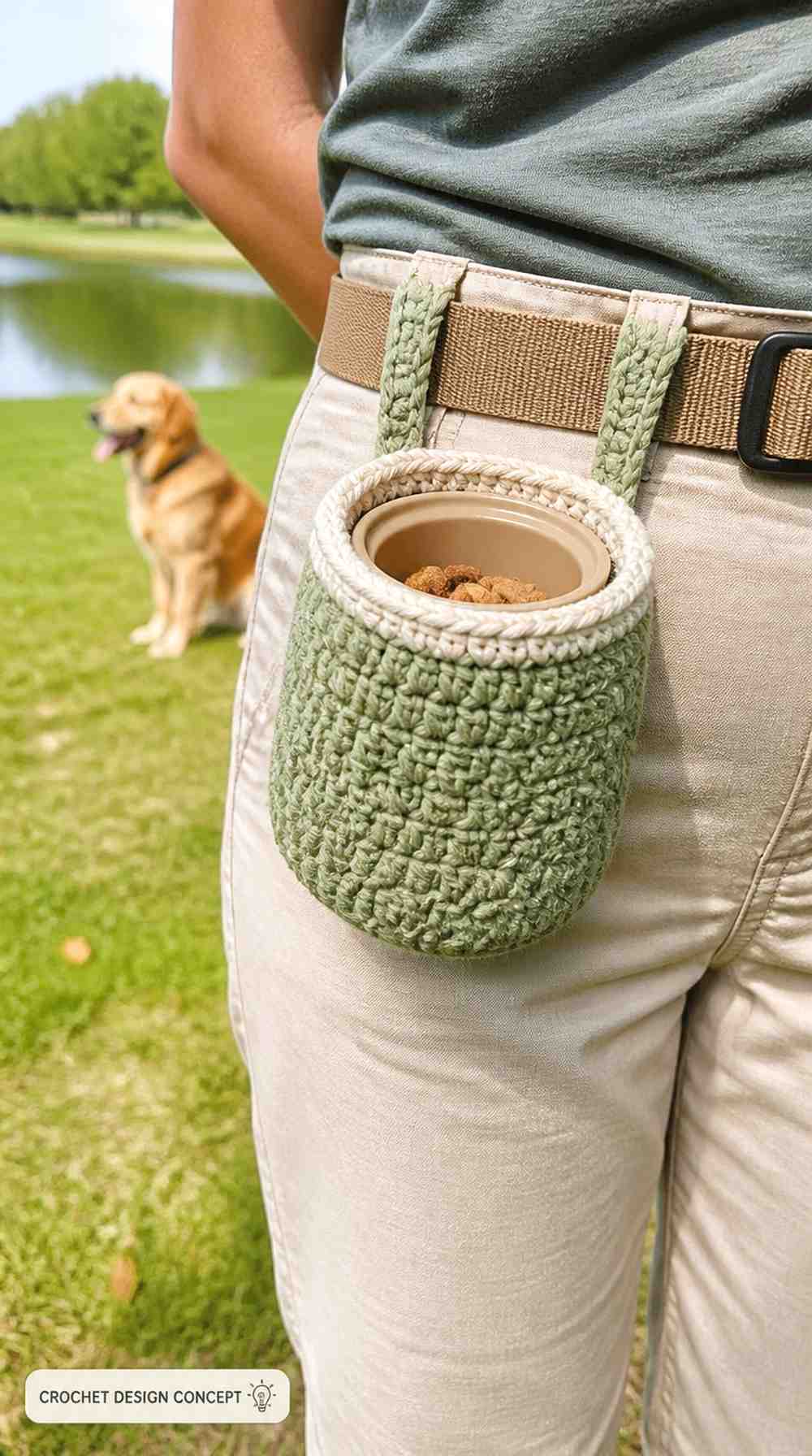
Soft sage-green moss stitches give this rounded crochet training pouch a neat, slightly textured surface. A cream rolled rim frames the open top, while a removable pale-beige silicone treat cup sits inside the pouch. Two rear belt loops hold the design against a plain tan waist belt.
The wide opening makes this concept particularly interesting for training situations that involve frequent rewards. There is no flap or drawstring to move aside, although that convenience comes with a trade-off: an uncovered opening needs more care when walking, bending, or changing position quickly.
- Reward access: A broad upper opening may make individual treats easier to reach, but it should be tested at the actual waist position.
- Belt stability: Two properly reinforced rear loops could reduce side-to-side movement compared with a single narrow attachment point.
- Treat containment: Use a removable food-suitable cup that fits securely inside the crochet shell and can be cleaned independently after training.
2. Crochet Terracotta Drawstring Training Pouch
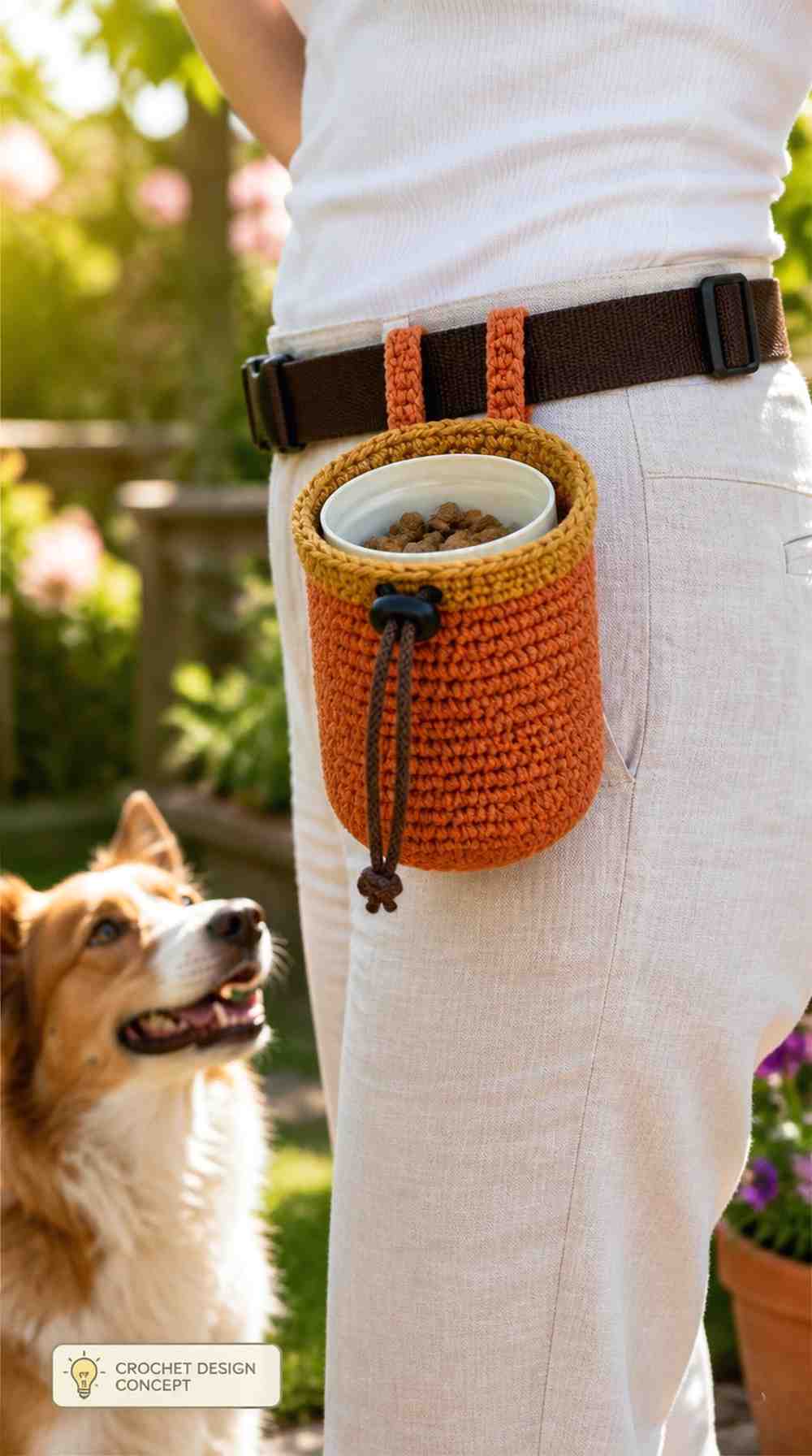
Warm terracotta crochet forms a cylindrical pouch with dense waistcoat-style stitches and mustard-gold edging along the upper rim. A short brown drawstring with one cord stopper gathers the top, while a cream removable inner container holds a small selection of dry training treats.
The rounded silhouette offers more depth than the flat belt cases in this collection. Its drawstring closure could help keep treats enclosed between sessions, but the opening mechanism may be less convenient when rewards must be delivered rapidly during active training.
- Drawstring control: Keep the cord short, with its ends secured and away from the pet, to reduce dangling or snagging risks.
- Container shape: A cylindrical treat insert should sit comfortably within the crochet base without pushing the sides outward excessively.
- Opening speed: Test whether the closure can be operated easily without releasing the leash or distracting from the training activity.
3. Crochet Navy Foldover Flap Treat Case
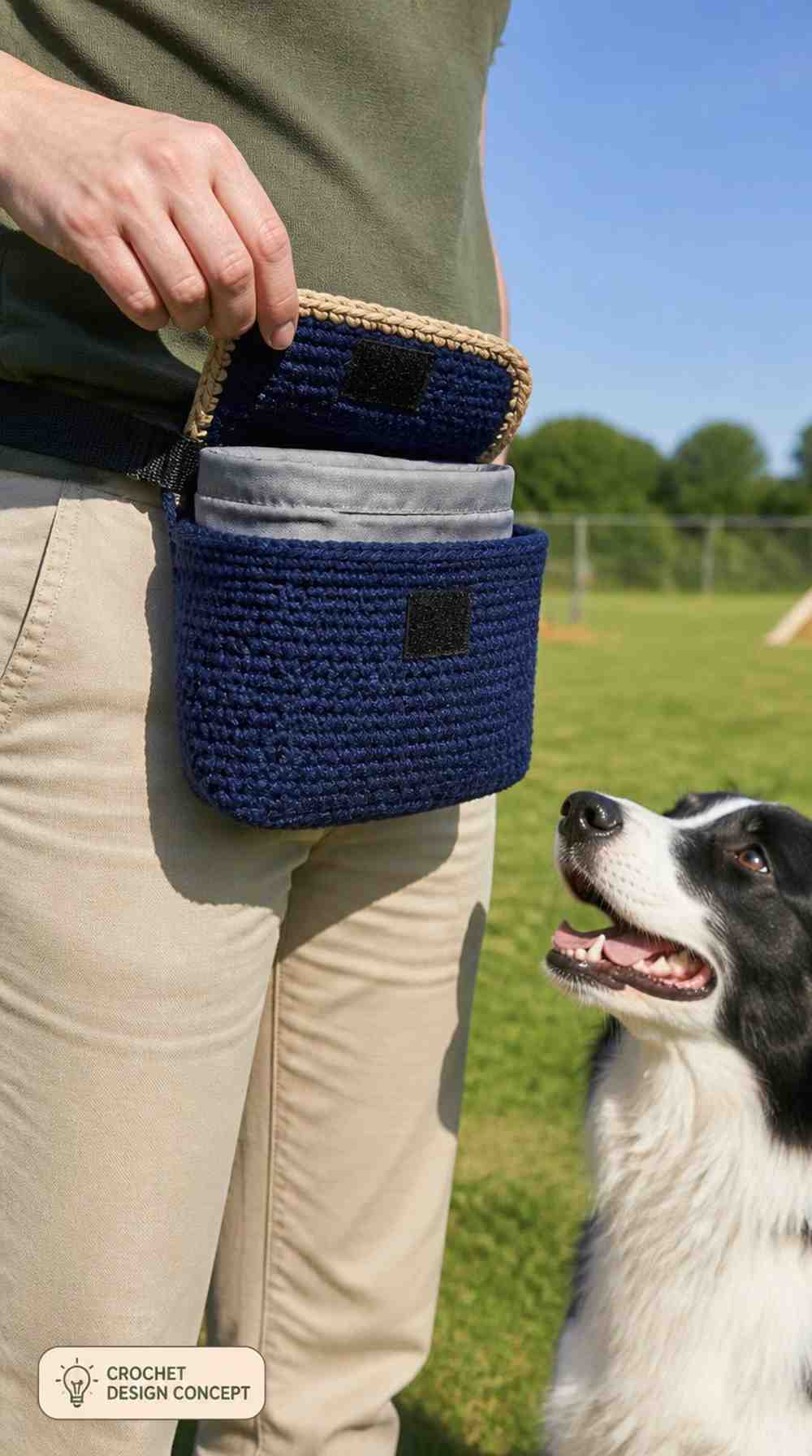
Deep navy crochet gives this rectangular waist pouch a clean, structured appearance. A camel-colored border outlines the folding flap, which closes over a simple hook-and-loop fastening tab. Beneath it sits a removable gray treat liner, while a broad rear belt tunnel supports the case.
This design looks more like a compact utility wallet than a traditional drawstring treat bag. The relatively flat profile may appeal to trainers who dislike bulky accessories around the waist, though the folding flap adds an extra action whenever treats are needed.
- Flap positioning: Keep the opening directed upward when worn so treats are not easily displaced while the closure is being opened.
- Fastener choice: A sewn, low-profile hook-and-loop closure avoids loose decorative buttons, but should be checked for secure attachment and wear.
- Belt threading: A rear tunnel can distribute contact across the pouch, provided the belt width matches the opening and does not fold inside it.
4. Crochet Butter Yellow Half-Moon Treat Pouch
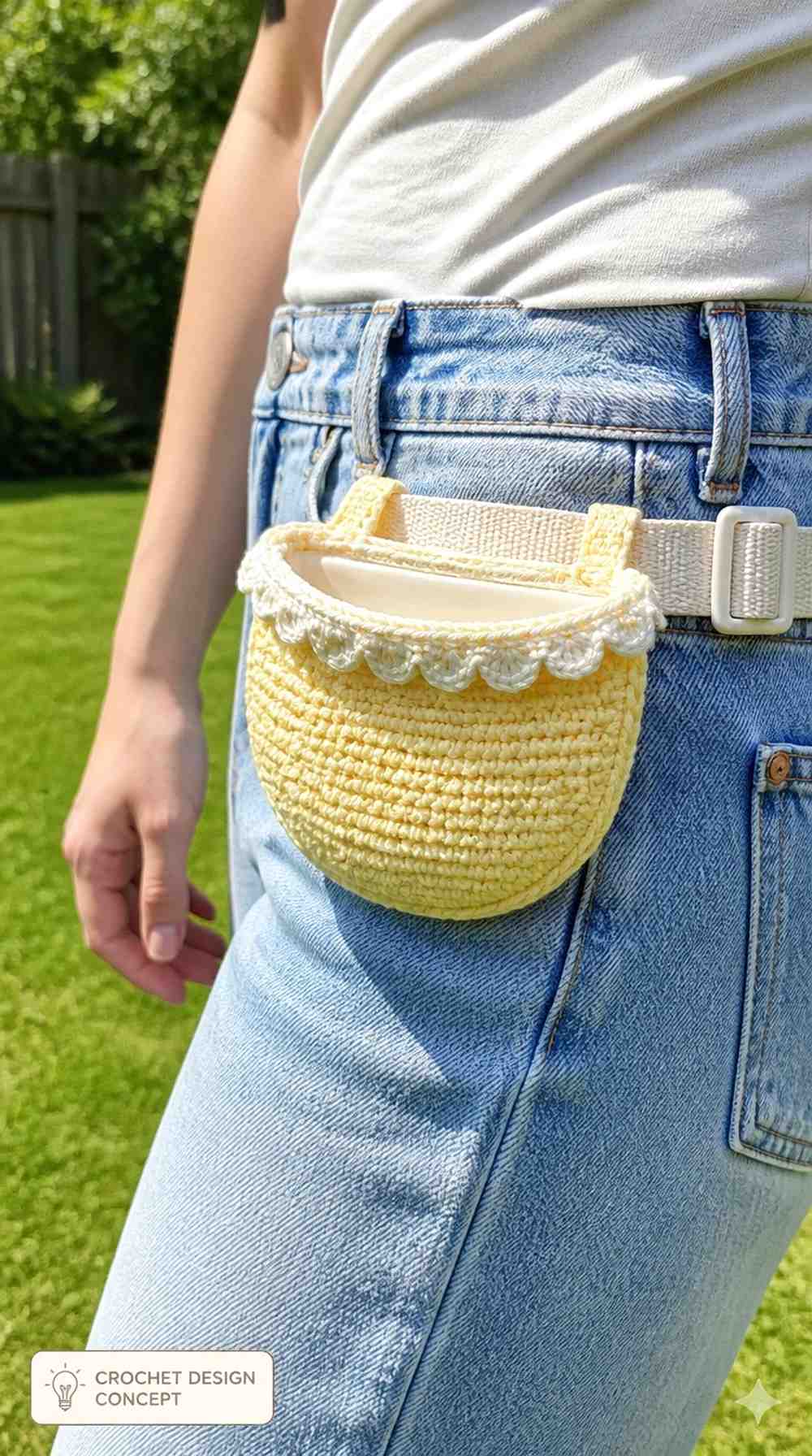
Butter-yellow crochet gives this waist pouch a cheerful half-moon silhouette, with a flat back and softly rounded lower edge. A cream scalloped border follows the upper opening, while the slightly gathered rim sits around a removable smooth treat insert.
The curved design rests against the front hip rather than hanging as a long cylindrical bag. Its open upper edge may be helpful for quick access, although the elastic-supported rim would need to be comfortable enough for repeated hand movements without making the treats difficult to reach.
- Curved fitting: A flat-backed crochet pouch may sit closer to the body, but the lower rounded section still needs enough room for the inner treat cup.
- Elastic tension: The opening should stay reasonably contained without requiring force to reach inside, especially during repeated training rewards.
- Scalloped trim: Keep the decorative border small and well secured so it does not fold into the opening or catch on clothing.
5. Crochet Forest Green Twin-Chamber Reward Pouch
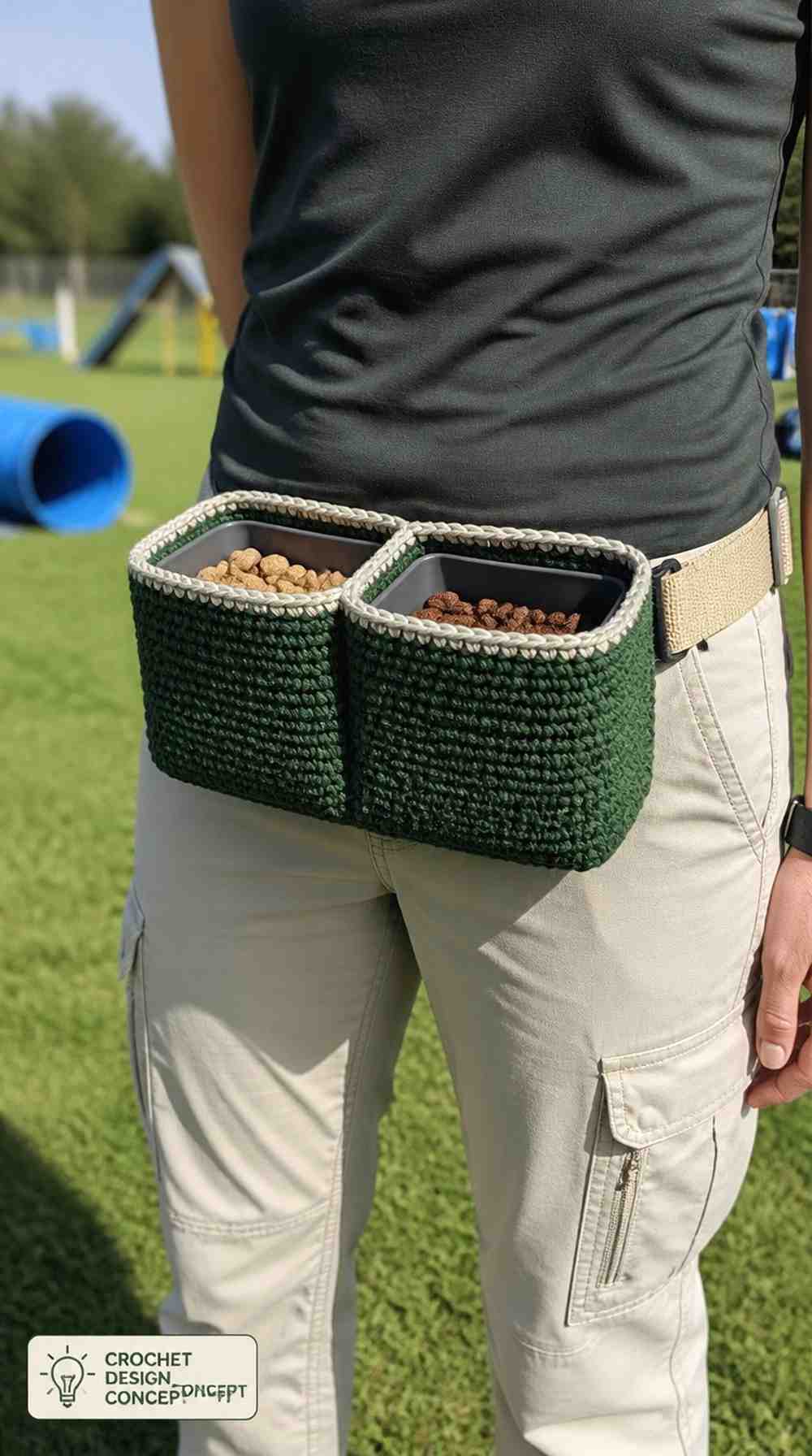
Forest-green crochet shapes a wider rectangular waist pouch with two separate upper compartments. Narrow oatmeal edging defines each opening, while a central partition divides the bag into two reward areas, each holding its own removable smooth inner insert.
This concept is particularly useful for imagining a setup with two kinds of dry training treats. Keeping the contents separated could make them easier to identify without searching through one mixed compartment. The wider shape, however, needs careful belt support so it does not twist or sag.
- Separate rewards: Two removable inserts can help keep different treats apart, but both should be cleaned and dried after use.
- Partition support: The central crochet divider must remain upright enough to maintain two distinct openings rather than collapsing between compartments.
- Waist width: Check that the wider pouch does not interfere with bending, crouching, or moving naturally during training.
6. Crochet Dusty Rose Zip-Top Belt Bag
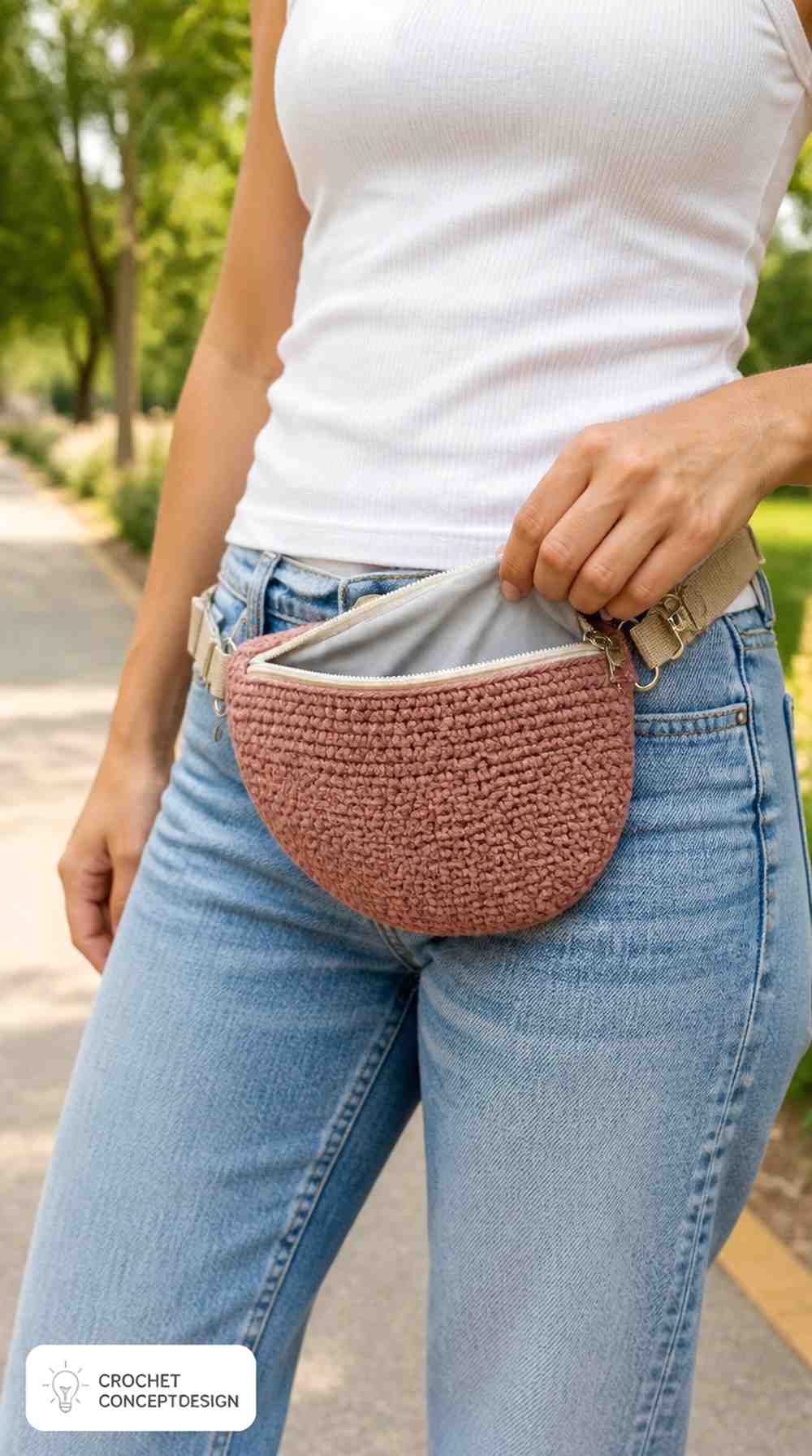
Dusty-rose crochet and a curved cream zipper give this compact waist bag a softer, everyday-accessory appearance. The body has dense diagonal texture, while metal rings at the sides connect it to a detachable beige webbing belt. A removable gray treat liner sits inside.
The zip-top arrangement makes this concept a practical-looking choice for carrying rewards between short training sessions. Unlike an open treat cup, the zipper helps enclose the contents, although frequent opening and closing may slow down the delivery of individual rewards.
- Zipper access: Position the curved zipper where it can be reached comfortably, without forcing the trainer to look down during every reward.
- Side hardware: Metal rings and strap connections must be properly secured and checked for wear before relying on the pouch while walking.
- Liner cleaning: Remove the inner treat container rather than assuming the decorative crochet shell can be cleaned like a food-contact surface.
7. Crochet Oatmeal Granny-Square Belt Pouch
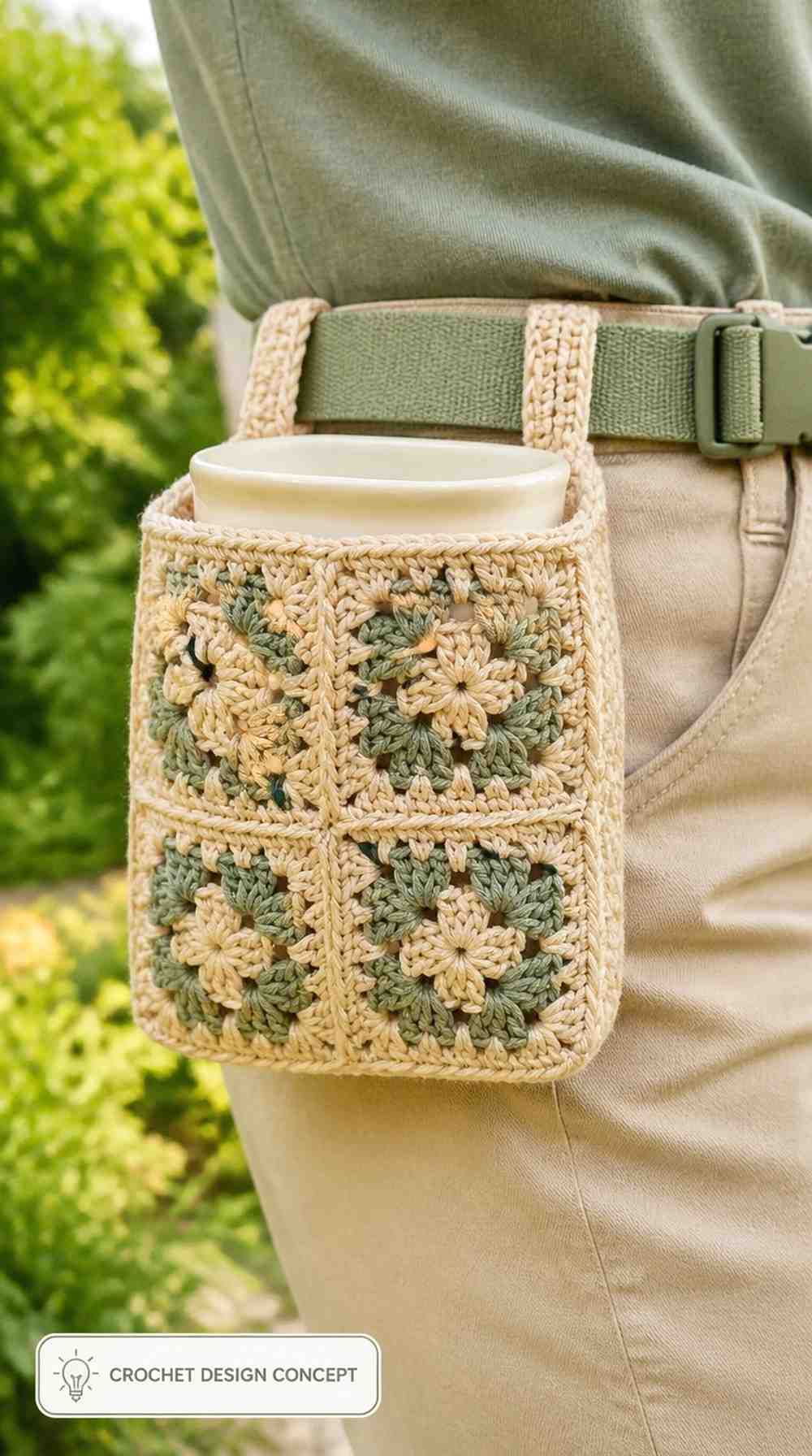
Four small oatmeal-and-sage granny squares form the front of this crochet waist pouch, creating an attractive patchwork surface with clearly defined joins. A closely stitched sage backing supports the open granny texture, and a removable cream treat cup rests inside the straight upper opening.
The design combines recognizable traditional crochet motifs with a useful everyday training accessory. Its square-front shape leaves room for the granny-square arrangement, but the open corners make a backing layer particularly important if the pouch is meant to hold an inner container securely.
- Granny-square openings: Add a separate close-stitched or suitable fabric backing so the decorative gaps do not become places where crumbs or small objects escape.
- Joined corners: Keep the joins flat and supported, especially where the front panel meets the sides and base.
- Cup compatibility: The removable treat insert should fit the actual interior dimensions without stretching the granny-square front out of shape.
8. Crochet Cobalt Expandable Pleated Treat Pouch
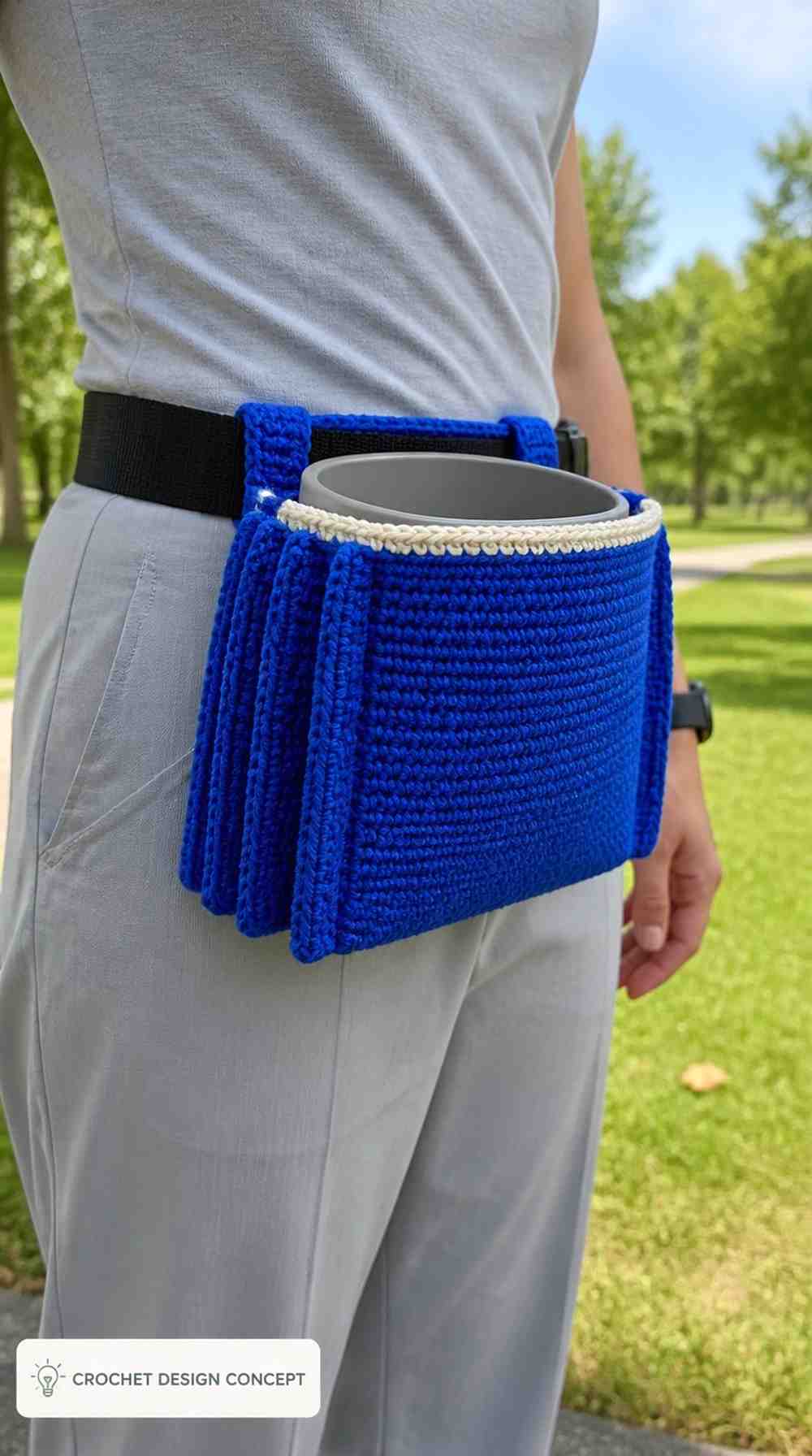
Bright cobalt crochet creates a compact pouch with a flat front and two accordion-like side gussets. A narrow cream border outlines the open top, where a pale-gray removable treat cup sits inside the expanded central compartment.
The pleated sides give this design a noticeably different shape from the rounded and flat cases. They suggest extra room when the pouch is opened, but the real construction would need to control how the gussets fold so the bag stays comfortable against the waist.
- Pleat construction: Side gussets should expand evenly and fold without twisting; sample the crochet tension before assuming the illustrated shape will hold.
- Opening support: The top edge needs enough structure to avoid collapsing inward when the trainer reaches for a reward.
- Movement comfort: Avoid making the expanded pouch so deep that it presses awkwardly against the hip during walking or sitting.
9. Crochet Olive Paw-Motif Flap Pouch
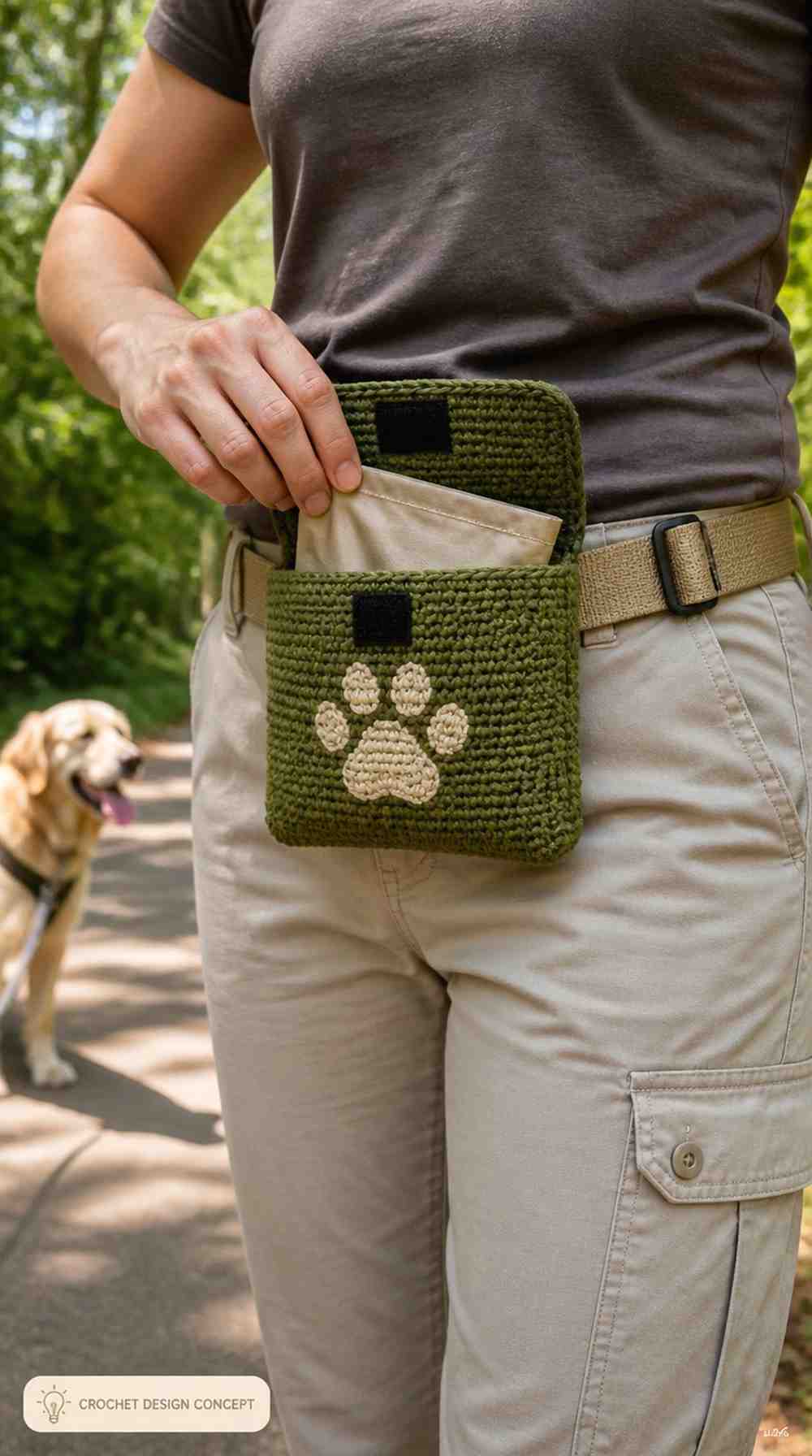
Muted olive-green crochet forms a rectangular envelope-style treat case with a small cream paw-print motif worked directly into its folding flap. The motif uses flat colorwork rather than attached ornaments, while a concealed hook-and-loop tab closes the flap above a removable beige inner sleeve.
The understated paw detail gives the pouch a pet-themed appearance without adding dangling decorations. Its flat profile makes it suitable for comparing compact storage ideas, although the narrow opening may be less convenient for trainers who need to reach treats very frequently.
- Motif durability: Flat tapestry-style crochet keeps the paw design part of the fabric rather than relying on detachable decorations that a pet might chew.
- Closure testing: Check that the flap stays closed during movement but can still be opened without excessive force or awkward hand positioning.
- Compact storage: This narrow case is better suited to a modest quantity of treats than to bulky pieces or multiple accessories.
10. Crochet Cinnamon Clicker-Slot Treat Pouch
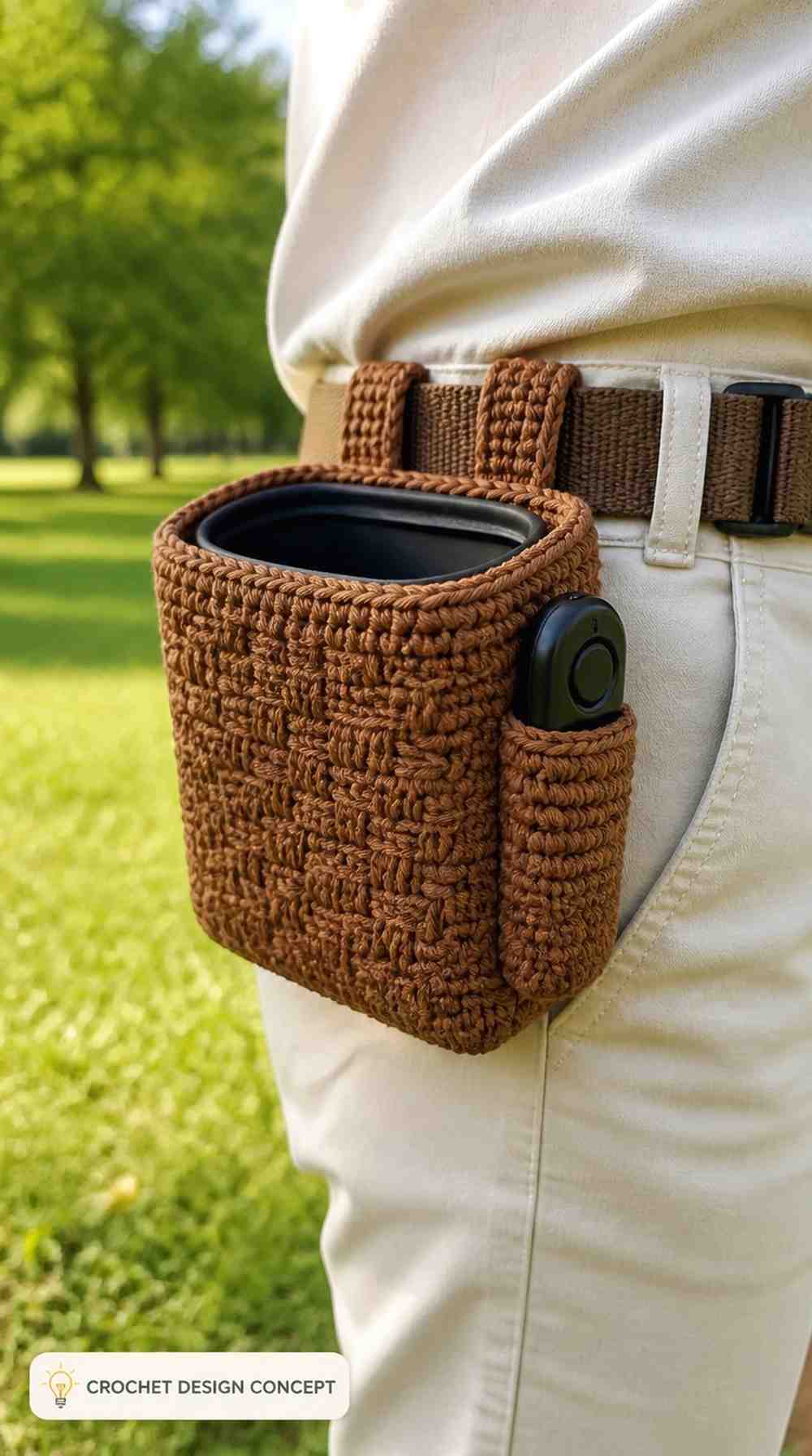
Cinnamon-brown basketweave crochet gives this box-shaped pouch a pronounced textured finish. The main open compartment contains a removable black treat cup, while a narrow vertical sleeve on the right side holds a small black training clicker with its button visible.
The separate clicker position is the feature that makes this concept useful. Instead of mixing the clicker with treats, the external pocket gives it its own place. The pouch would still need careful fitting so the clicker sleeve stays accessible without pressing uncomfortably against the trainer’s hip.
- Clicker fit: Measure the actual clicker before planning its sleeve; leaving the button exposed is useful only if the device remains securely held.
- Separate compartments: Keep the clicker pocket outside the food-contact liner so the treat area stays reserved for rewards.
- Basketweave weight: Raised crochet texture can add thickness, so check how the finished body sits against the waist when loaded.
11. Crochet Lavender Treat-Tube Waist Holder
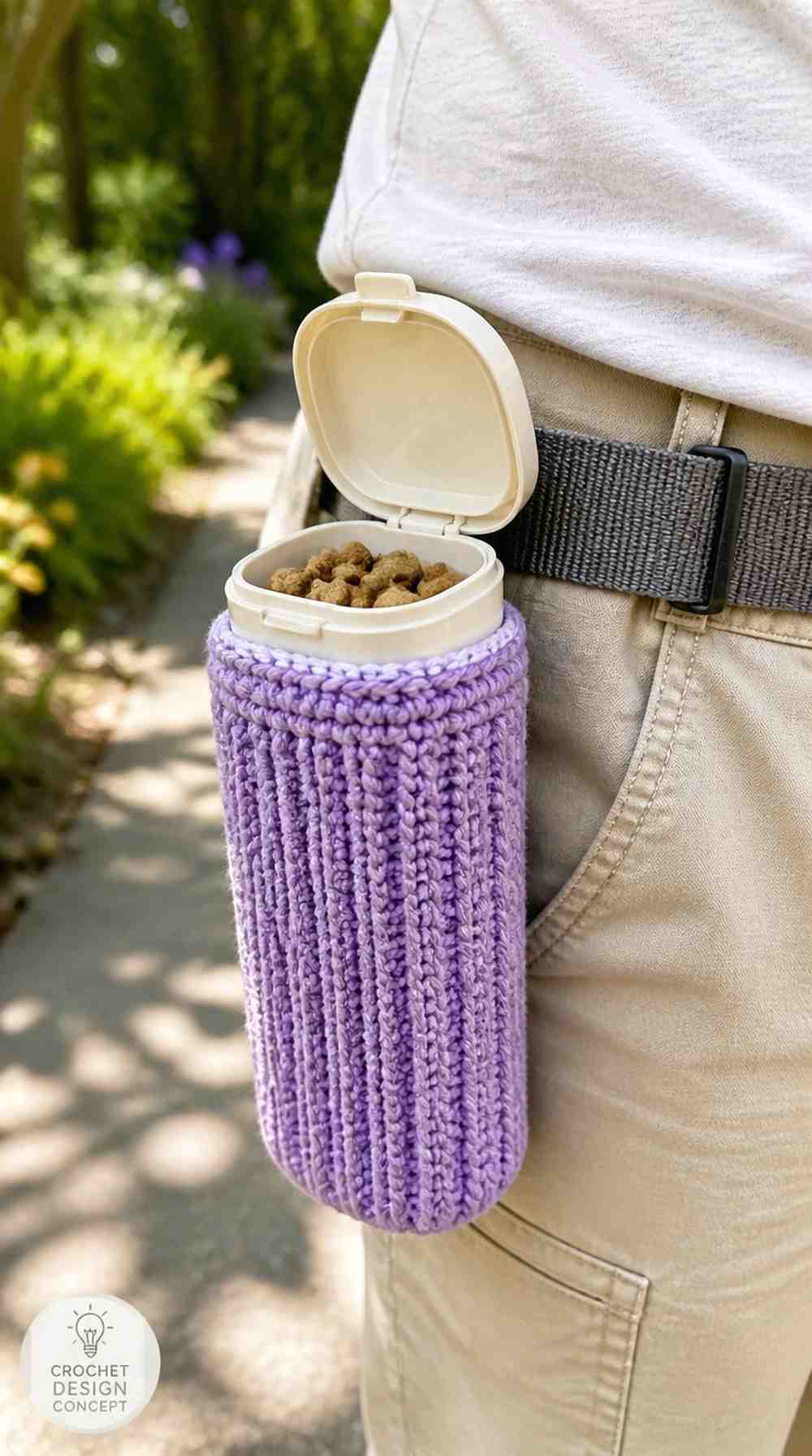
A slim lavender crochet sleeve holds a separate rigid cream treat container, creating a tall, narrow accessory rather than a soft traditional pouch. Vertical crochet ridges follow the container’s shape, while a pale-lilac upper border frames the hinged lid, shown open above the sleeve.
The container itself becomes the main treat storage compartment, and the crochet acts as an outer holder. This arrangement is interesting for trainers who want a removable insert with a clearly defined opening, although its height and lid position must be checked for comfortable use.
- Container compatibility: Choose the actual rigid container first, then plan the crochet holder around its shape so the lid can move freely.
- Hinged-lid access: The opened lid should not strike the trainer’s hand or press against the body when reaching for treats.
- Holder security: The crochet sleeve needs to grip or support the container adequately so it cannot slip out when the trainer bends or moves.
12. Crochet Coral Convertible Training Pouch
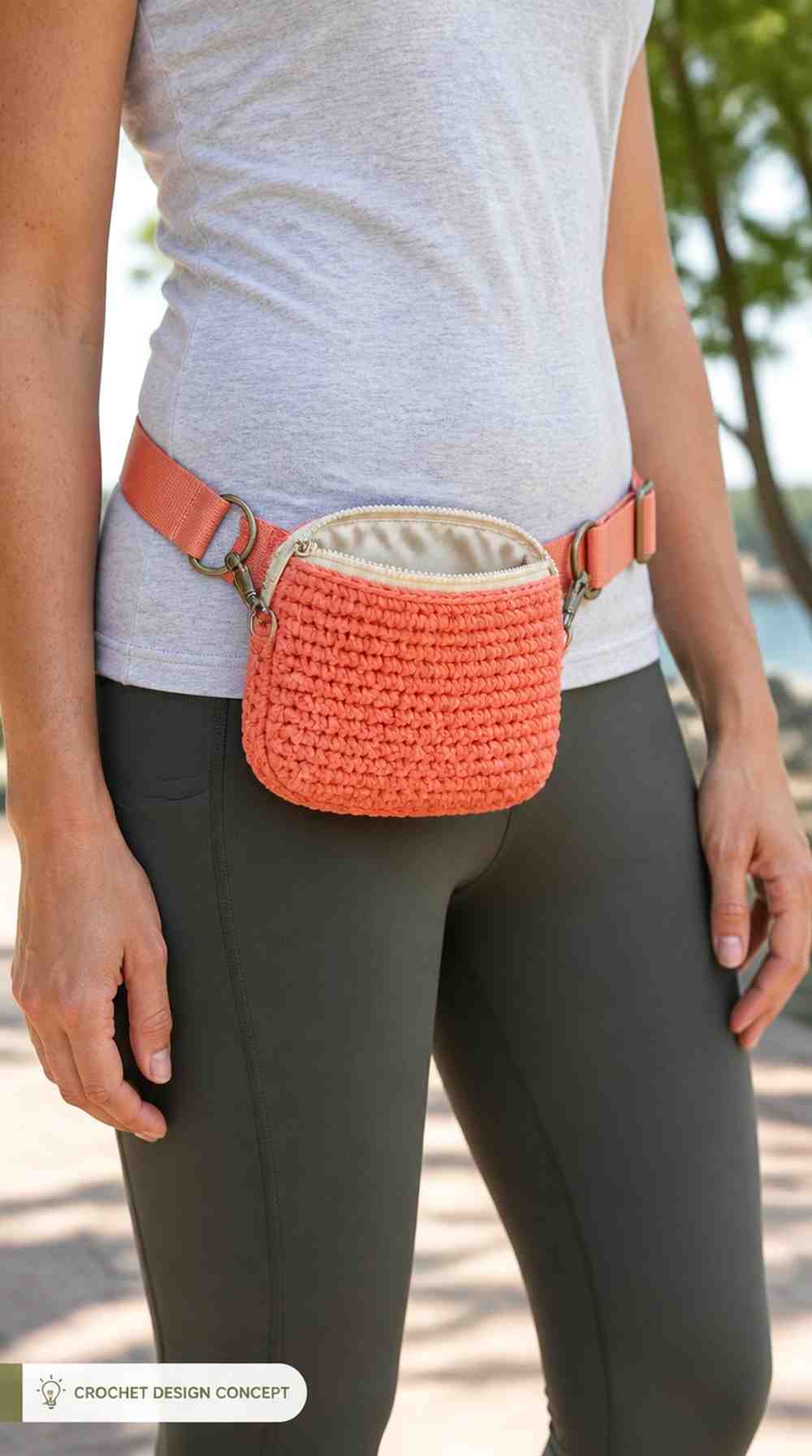
Coral crochet forms a rounded rectangular waist pouch with a neat cream zipper across the top. Two reinforced-looking side rings connect it to an adjustable coral webbing belt, while a removable pale-cream liner sits inside the zippered compartment.
The side-ring arrangement gives this concept a possible second use: replacing the waist belt with another compatible strap. It offers flexibility in how the accessory might be carried, but any alternative carrying setup would need independently suitable hardware and a stable position during training.
- Strap conversion: Check that clips and rings suit the intended strap before switching carrying styles; decorative crochet alone should not carry attachment loads.
- Zipper direction: Keep the opening positioned so treats can be reached without turning the pouch upside down or pulling it away from the body.
- Hardware reinforcement: Side attachments need dependable construction because repeated pulling can stretch crocheted edges if the load is not supported.
13. Crochet Slate Diamond-Stitch Covered Pouch
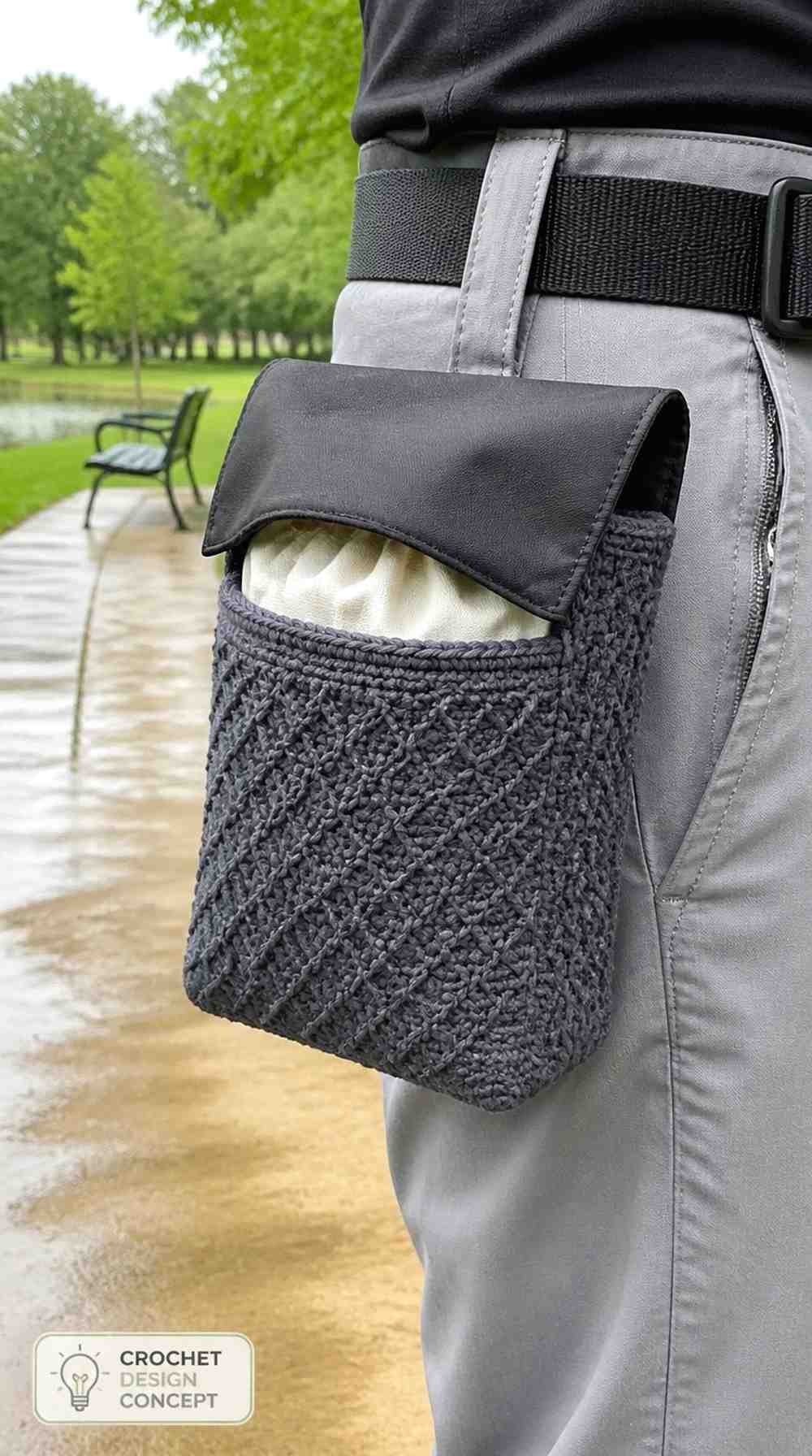
Slate-gray crochet features a raised diamond pattern across this rectangular waist pouch. A short charcoal fabric cover folds over the upper opening, while a smooth cream removable treat liner sits beneath it. The flat base gives the design a more structured shape.
The contrasting fabric flap offers an interesting alternative to an all-crochet closure. It may help shelter the opening from light debris, but neither the fabric nor the crochet should be assumed waterproof. Careful material choice would be necessary for outdoor use in damp conditions.
- Cover limitations: The flap offers partial coverage, not a weatherproof seal; use an appropriate closed inner container if treats must remain protected from rain.
- Texture placement: Keep raised diamond stitches away from any fastening or folding area that needs to lie flat.
- After-walk care: Remove and dry the inner container and check the outer crochet for trapped moisture before storing the pouch.
14. Crochet Mint Roll-Top Training Pouch
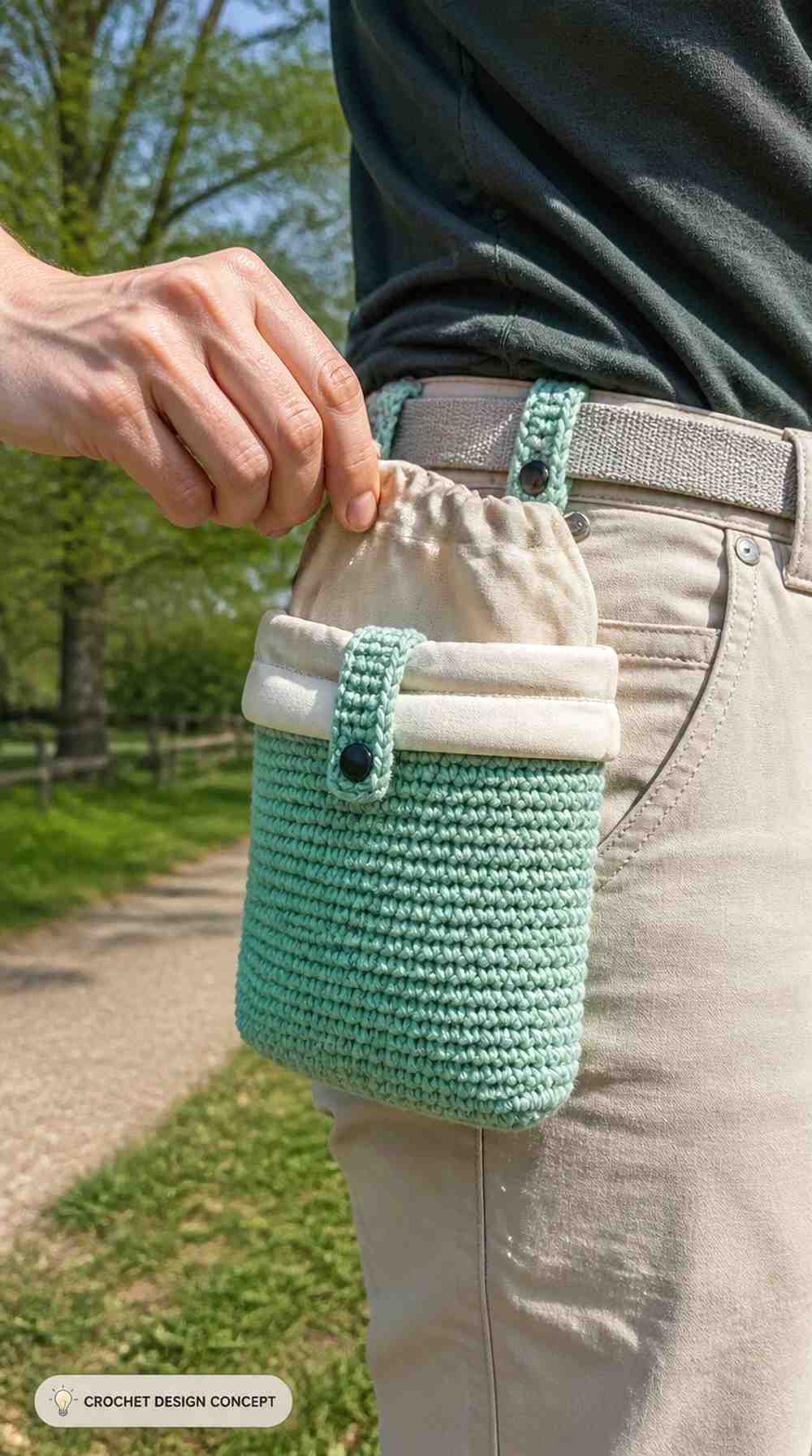
Mint-green crochet creates a compact rectangular pouch with a flat base and close-stitched sides. Its cream fabric-lined upper section folds down into a tidy roll, secured at the front by one short mint tab with a black snap. A removable beige treat liner sits underneath.
This design emphasizes secure storage between training stops. The rolled top changes the pouch’s outline and keeps it visually contained, though opening it requires more steps than reaching into a simple treat cup. It may suit occasional rewards rather than constant rapid treat delivery.
- Roll-top clearance: Leave enough upper fabric for the closure to fold properly without compressing the inner treat container.
- Snap attachment: The fastening should be securely installed and inspected regularly; loose small hardware must never become accessible to a pet.
- Training pace: Consider whether the multi-step closure suits the session, especially when treats must be delivered immediately after a behavior.
15. Crochet Burgundy Two-Zone Training Belt Pouch
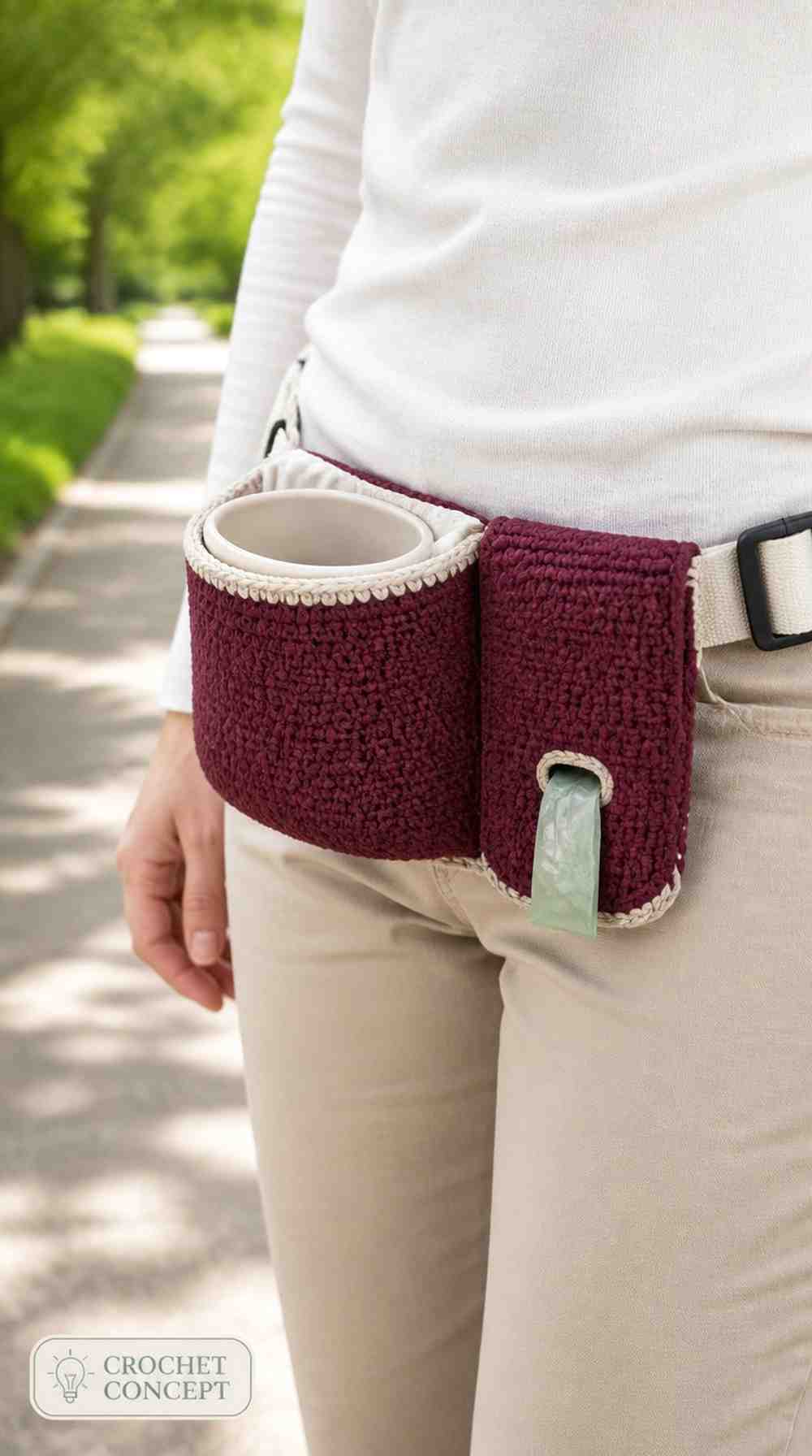
Deep burgundy crochet forms two separate storage sections against a broad cream waist belt. The larger rounded compartment holds a removable cream treat cup, while a narrower closed side pouch contains a roll of clean unused waste bags, with one bag edge visible through a reinforced dispensing slit.
The arrangement brings two commonly carried walking accessories together without mixing their contents. Its low-profile shape spreads the storage across the waist rather than concentrating everything in one deep bag. The two sections still need separate care and enough spacing for easy access.
- Hygiene separation: Keep food rewards and waste-bag storage in physically separate compartments, and handle treats with clean hands.
- Dispenser opening: The slit must be sized for the chosen bag roll without stretching or tearing the surrounding crochet stitches.
- Belt balance: Position the two sections so the weight feels balanced and neither compartment obstructs normal movement or leash handling.
Practical Guide to Crochet Pet Treat Training Waist Pouches
A useful crochet training pouch needs to do three things well: keep rewards accessible, sit securely on the body, and allow the treat-contact surfaces to be cleaned.
Start with the treat container. A removable, washable, food-suitable cup or liner is generally more sensible than storing oily, soft, or moist treats directly against yarn. Select the insert first and design the crochet shell around its actual dimensions. Wash and dry it according to the manufacturer’s instructions.
Consider how quickly rewards are needed. Open-top cups offer easier access during frequent training, but they may spill when bending or moving energetically. Drawstrings, flaps, roll tops, and zippers offer different degrees of enclosure, with extra steps to open them.
Choose a secure waist attachment. A properly designed adjustable webbing belt is worth considering because crochet-only straps can stretch under repeated movement. Belt loops, rings, fasteners, and reinforcement points should be checked in a real sample, not judged only by how they appear in a concept image.
Keep pet safety in mind. Avoid loose beads, dangling cords, easily detached decorations, exposed sharp hardware, or strings a curious pet may chew. A treat pouch is for the trainer to carry, not a chew toy. Inspect the fabric and attachments frequently.
Plan for cleaning. Empty rewards after a session, remove crumbs, and clean the food-contact liner. Check the crochet exterior and follow its yarn care instructions. Dry all parts before reassembly, particularly after outdoor use.
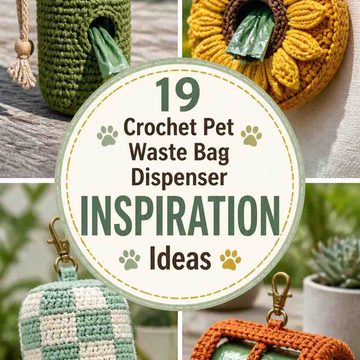
For a related collection focused on walking accessories, see 19 Crochet Pet Christmas Gift Basket Ideas for Dogs and Cats, which includes a dog treat pouch and other pet-use crochet inspiration.
Want to Make Something Similar?
The 15 illustrated designs are concept ideas rather than tested patterns. These existing crochet resources can help with techniques and construction decisions:
- Dog Treat Bag Free Crochet Pattern by Heart Hook Home — a free treat-bag project by Ashlea Schumaker that discusses waistcoat stitches and alternative pouch closures.
- Treat Training Bobble Belt Bag by Kalene Gardner — a crochet belt-bag design using bobble texture, available through Ravelry.
- Doggy Bag Pouch by Sara Huntington — an envelope-style pouch featuring belt loops and a flap, useful for understanding a different carrying shape.
These are separate creators’ designs. They do not reproduce the pictured concepts exactly, and material suitability, treat hygiene, attachments, and finished fit still need to be assessed for any adapted project.
Which Crochet Pet Treat Training Waist Pouch Should You Choose?
| Training need | Design to consider | Main consideration |
|---|---|---|
| Frequent, fast treats | Sage Moss-Stitch Quick-Access Treat Pouch | Open top can spill |
| Enclosed treats for walks | Terracotta Drawstring Training Pouch | Cord closure takes time |
| Flat, compact waist storage | Navy Foldover Flap Treat Case | Flap adds an opening step |
| Two kinds of training rewards | Forest Green Twin-Chamber Reward Pouch | Wider waist profile |
| A zipper-secured accessory | Dusty Rose Zip-Top Belt Bag | Slower reward access |
| Easy-to-remove treat container | Lavender Treat-Tube Waist Holder | Container and lid must fit |
| Treats and clicker together | Cinnamon Clicker-Slot Treat Pouch | Side sleeve must hold clicker securely |
| Treats plus unused waste bags | Burgundy Two-Zone Training Belt Pouch | Requires separate compartments and cleaning |
For frequent reward-based practice, an accessible top opening is usually the first feature to compare. For carrying treats between short sessions, a more enclosed pouch may be preferable. Neither option is automatically better for every trainer; the right choice depends on the activity, treat type, and how the pouch sits during movement.
Conclusion
A crochet pet treat training waist pouch can combine handmade style with the convenience of hands-free training, provided the actual design is planned around safe and practical use. Simple open cups offer easy access, while drawstring bags, flap cases, and zip-top designs provide alternative ways to carry rewards between sessions.
The most useful choice is not necessarily the pouch with the most compartments. A comfortable belt, reliable fastening, appropriate removable treat liner, and an opening that suits your training routine matter much more than decorative detail alone.
Which would you prefer for everyday pet training: a quick-access open pouch, a secure drawstring design, or a two-zone waist pouch with room for walking accessories? Share the feature you would use most.
Frequently Asked Questions
1. Is a crochet waist pouch suitable for carrying dog-training treats?
It can be suitable as an outer holder if the fit, fastening, and structure are carefully planned. A separate washable, food-suitable container is preferable for the treats themselves, particularly when rewards are moist or oily. A decorative crochet design should not be assumed secure or hygienic without checking its real construction.
2. What yarn is a good choice for a crochet training waist pouch?
A smooth, relatively firm cotton yarn may be a useful starting point for a washable outer shell, depending on its care label. The best choice also depends on stitch density, abrasion, and how often the pouch will be cleaned. Reinforcement or suitable webbing may be necessary for attachment points and waist straps.
3. Should a dog-training treat pouch have a zipper or an open top?
An open top can be easier for frequent rewards, while a zipper, drawstring, or flap can better enclose treats during travel or movement. The trade-off is access time. Consider the training session and test the opening mechanism before choosing a design, rather than relying on appearance alone.
4. Can I store treats directly inside the crochet fabric?
Direct storage is generally less practical because crumbs, oils, moisture, and food residue can become trapped between yarn fibers. A removable container or liner suitable for food contact makes cleaning more manageable. Follow the liner manufacturer’s care guidance and empty leftover treats after training.
5. Are these 15 crochet pet treat waist pouch ideas complete patterns?
No. They are visual inspiration concepts showing possible shapes, colors, closures, pocket layouts, and carrying styles. A real project requires its own measurements, construction choices, material checks, and secure attachment testing. The linked tutorials offer related skills, not exact reproductions of these 15 designs.