A crochet pumice stone storage pouch can bring a handmade touch to a small bathroom accessory that often gets left on a shelf or beside the sink. From open-top hanging pockets and breathable-looking mesh sleeves to little buttoned cases, textured baskets, and travel pouches, these 15 inspiration ideas explore different ways to organize a pumice stone. The designs combine soft neutral yarns, muted greens, pretty pastels, colorful stitch patterns, and practical hanging details.
Choosing a pouch involves more than finding a color that matches your bathroom. Pumice stones can hold moisture and debris after use, so cleaning, thorough drying, and suitable storage matter. This collection helps you compare open and enclosed designs, hook and rail attachments, pocket depth, different crochet textures, and the ease of removing the stone. The ideas are best considered for storing a clean, completely dry stone rather than enclosing a freshly used wet one.
These are AI-generated crochet design visualizations for inspiration, not photographs of tested handmade pouches or step-by-step patterns.
Quick Design Selection Guide
- For simple wall storage: Crochet Oatmeal Hanging Pumice Pocket has an open upper edge and a straightforward hanging loop.
- For a lightweight, open-texture look: Crochet Sage Diamond Mesh Stone Bag and Crochet Seafoam Ladder Stitch Stone Sleeve explore different stitch openings.
- For decorative bathroom storage: Crochet Ivory Scalloped Pumice Sleeve and Crochet Lavender Granny Square Pumice Pouch add traditional crochet details.
- For a wider stone: Crochet Terracotta Box Bottom Pumice Holder and Crochet Sandstone Basketweave Rail Pouch have deeper, box-shaped bodies.
- For clean, dry travel storage: Crochet Charcoal Zippered Pumice Travel Case provides an enclosed concept with a removable lining.
- For easy access from the front: Crochet Olive Diagonal Entry Stone Pocket exposes the upper part of the stone.
- For a pouch that can open along the side: Crochet Teal Split Side Pumice Pouch uses two side buttons rather than relying only on a top opening.
A storage pouch is not a substitute for cleaning the stone or allowing it to dry completely before storage.
Healthline+1
1. Crochet Oatmeal Hanging Pumice Pocket
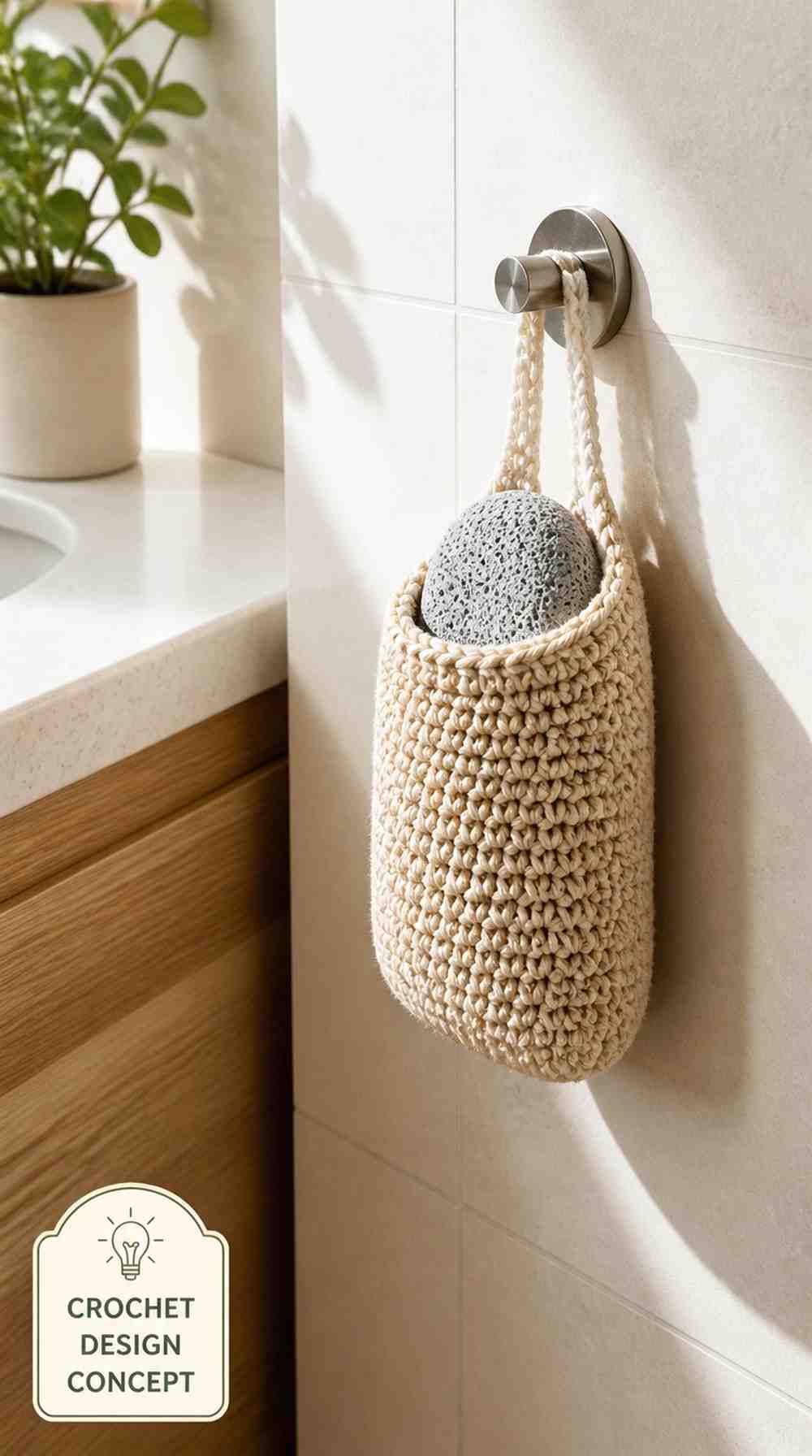
Warm oatmeal crochet gives this hanging pouch a clean, natural appearance. Its vertical body features closely worked moss stitches, straight sides, a softly rounded bottom, and a broad open top. A cream crochet hanging loop attaches the pocket to a simple metal bathroom hook.
This is one of the more straightforward storage concepts because the stone remains visible and easy to remove. The open shape does not make a damp stone safe to store, however. Both the cleaned stone and the pouch should be completely dry before being put together.
- Open-Top Access: The broad opening avoids buttons or drawstrings, making it easier to remove a dry stone without stretching the fabric.
- Moss-Stitch Texture: Closely spaced stitches create a more enclosed pocket than wide mesh, but the dense fabric requires thorough drying if it becomes wet.
- Hanging Support: Reinforce the cream loop and check that the hook can support the pouch and actual stone without pulling on fragile tiles or fixtures.
- Pocket Depth: Keep the rounded bottom deep enough to support the stone while leaving its upper portion accessible.
2. Crochet Sage Diamond Mesh Stone Bag
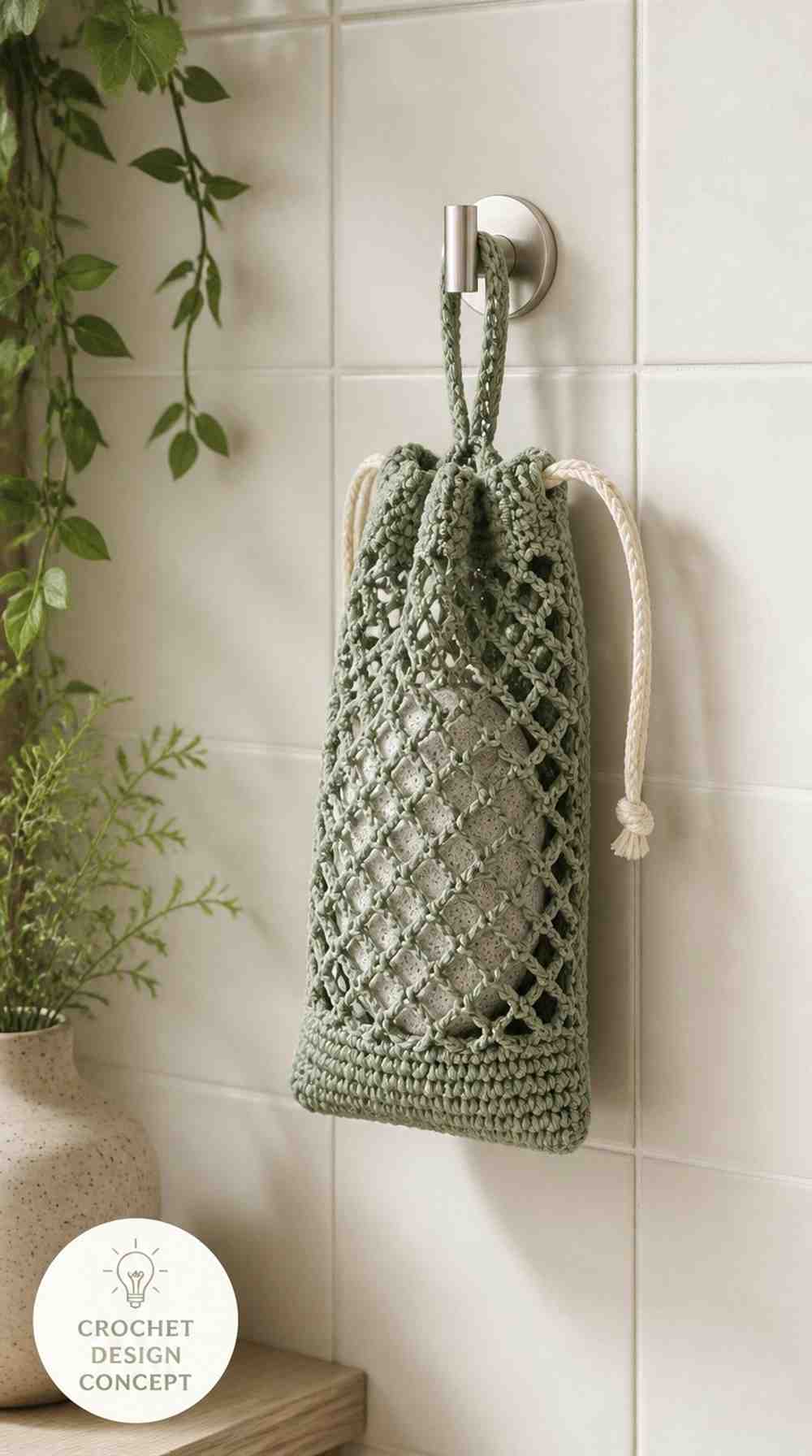
Sage-green crochet gives this narrow hanging bag a light, airy appearance. Its small diamond-shaped mesh openings reveal the dry grey pumice stone inside, while a closely stitched base supports the lower portion. A cream drawstring gathers the top, and a separate loop provides a hanging point.
The open mesh is the main attraction, particularly in a bathroom with soft green or botanical accents. It may offer more air exposure than an opaque pouch, but the mesh itself cannot guarantee that a wet stone will dry properly.
- Diamond Openings: Keep the mesh gaps smaller than the stone, and avoid overly loose stitches that could stretch under its weight.
- Drawstring Closure: The cream cord should gather the opening without squeezing the stone or becoming difficult to untie.
- Reinforced Base: The closely worked bottom carries much of the stone’s weight, so it deserves more support than the decorative mesh section.
- Hanging Position: Use a dry, well-ventilated location rather than placing the bag directly under shower spray.
3. Crochet Dusty Blue Envelope Stone Pouch
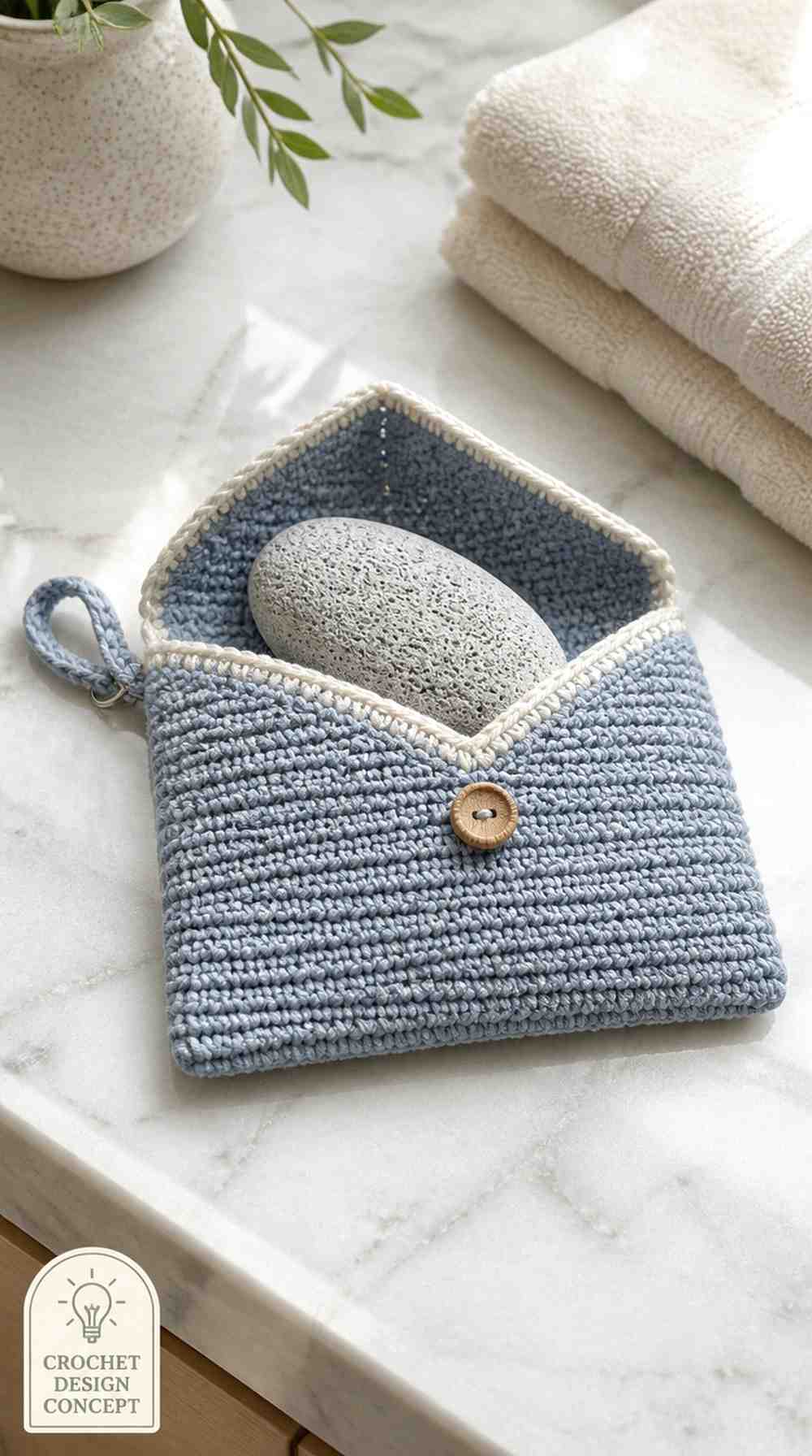
Dusty-blue yarn gives this landscape-shaped crochet pouch a calm, understated look. Horizontal raised ribs run across its rectangular body, while an ivory border outlines the edges. A pointed envelope flap folds over the front and closes with one small wooden button.
The design looks particularly neat resting on a bathroom shelf or vanity. Because the flap covers most of the opening when closed, it is better suited to a clean, fully dried pumice stone. Storing a wet stone inside the envelope could trap moisture against the crochet.
- Envelope Opening: The broad flap offers a familiar closure, but it should open far enough to remove the stone without scraping the fabric excessively.
- Wooden Button: Choose a suitable fastener and keep wooden components dry, as repeated moisture exposure may affect their appearance or condition.
- Horizontal Fit: This arrangement may suit a flatter oval stone better than a tall or unusually bulky one.
- Shelf Storage: Place the pouch on a clean, dry surface where it will not collect water from the sink or nearby toiletries.
4. Crochet Terracotta Box Bottom Pumice Holder
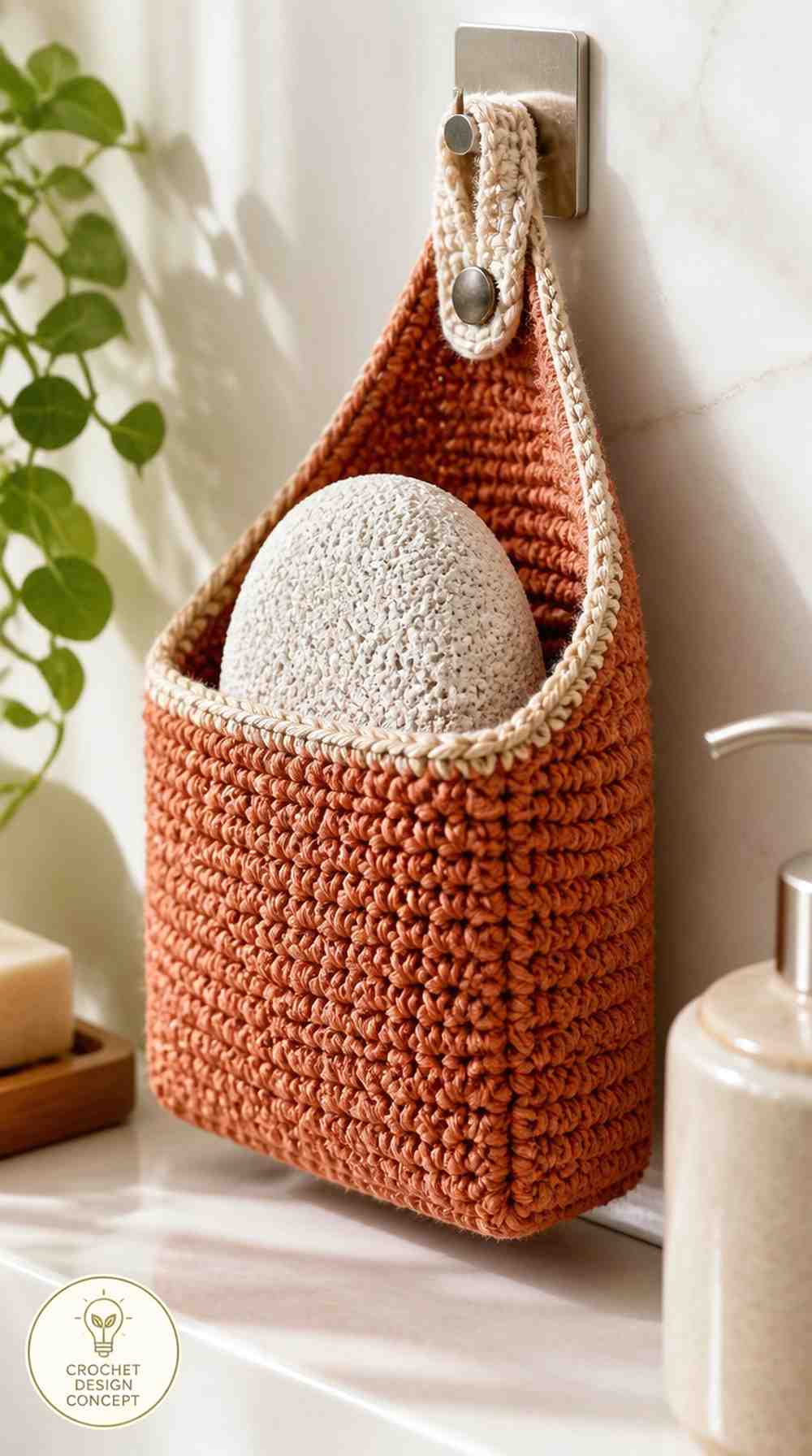
Rich terracotta crochet creates a compact hanging holder with a distinctly box-shaped bottom. Short side gussets give the pouch depth, while closely worked lemon-peel stitches add texture. A warm-beige upper border and cream hanging loop complete the simple design.
The boxed construction makes this concept different from flat sleeves and gathered bags. It offers a more defined interior shape for a dry stone, but the depth and side seams must be planned around the actual object. A heavily textured pumice may also rub against the crochet when inserted or removed.
- Boxed Base: A rectangular lower section can provide more room for a broad stone than a tightly tapered sleeve.
- Gusset Support: The short side panels need secure joining so the pouch does not distort when suspended from its rear loop.
- Lemon-Peel Texture: The alternating raised stitches give the terracotta surface character without requiring additional appliqués.
- Wall Clearance: Ensure the bottom and rear of the pouch do not rest against a damp wall or shelf surface.
5. Crochet Ivory Scalloped Pumice Sleeve
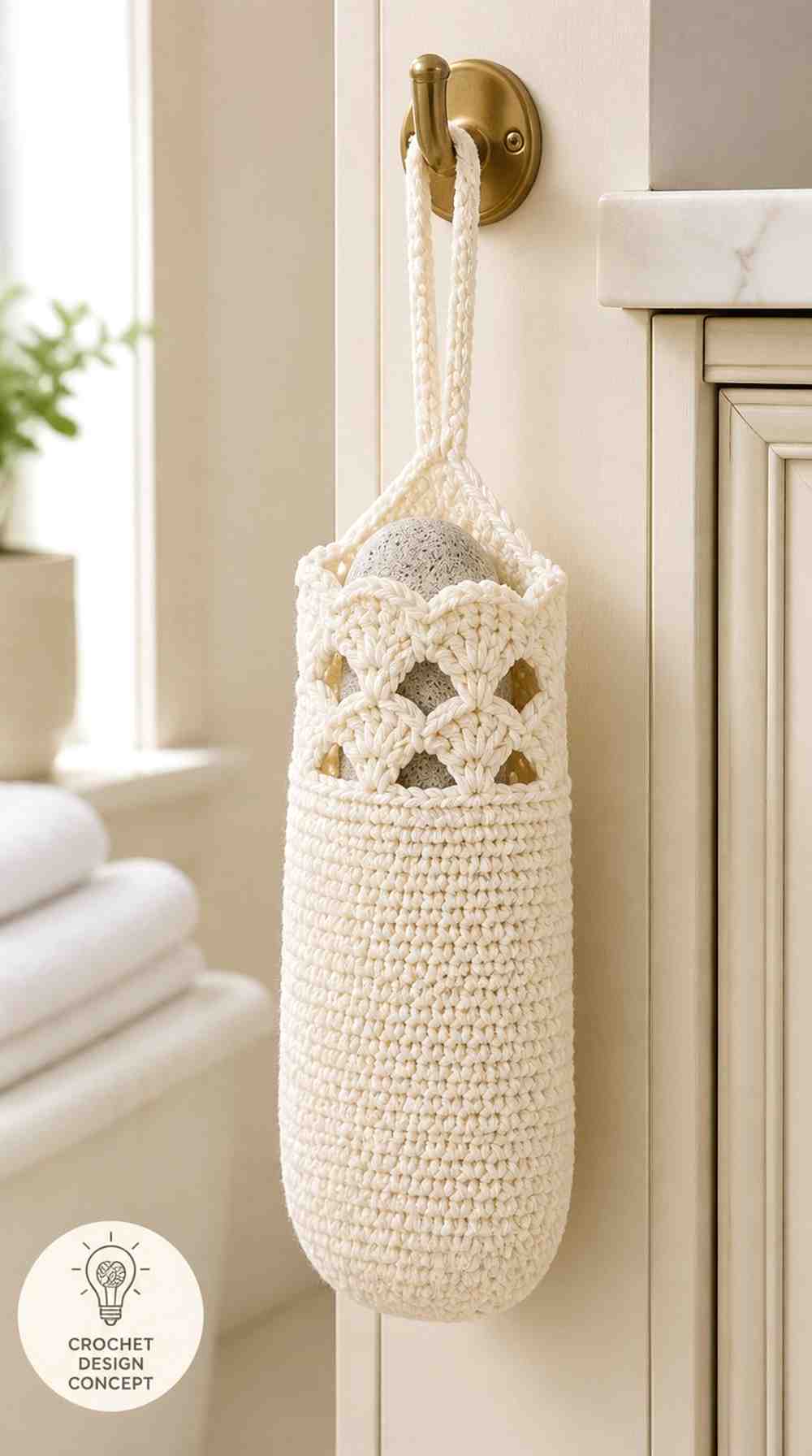
Warm-ivory crochet creates a soft, traditional appearance in this narrow pumice stone sleeve. The lower section is closely stitched, while small shell motifs form an open decorative band near the top. Compact scallops finish the upper edge, and a matching loop allows the pouch to hang from a bathroom hook.
This concept is mainly about combining decorative crochet with a small storage pocket. The shell openings allow the stone to be seen, but they also introduce gaps and edges that need careful shaping. The sleeve should be removed for cleaning whenever necessary.
- Shell-Stitch Band: Decorative openings create a lighter upper section, but they should not be so wide that the stone can push through them.
- Scalloped Rim: Keep the little rounded scallops compact to reduce snagging during removal.
- Ivory Color: Light yarn can reveal discoloration and residue quickly, making regular laundering and inspection particularly important.
- Narrow Sleeve Fit: Check whether the stone slides in comfortably without pulling the lower section into an awkward shape.
6. Crochet Charcoal Zippered Pumice Travel Case
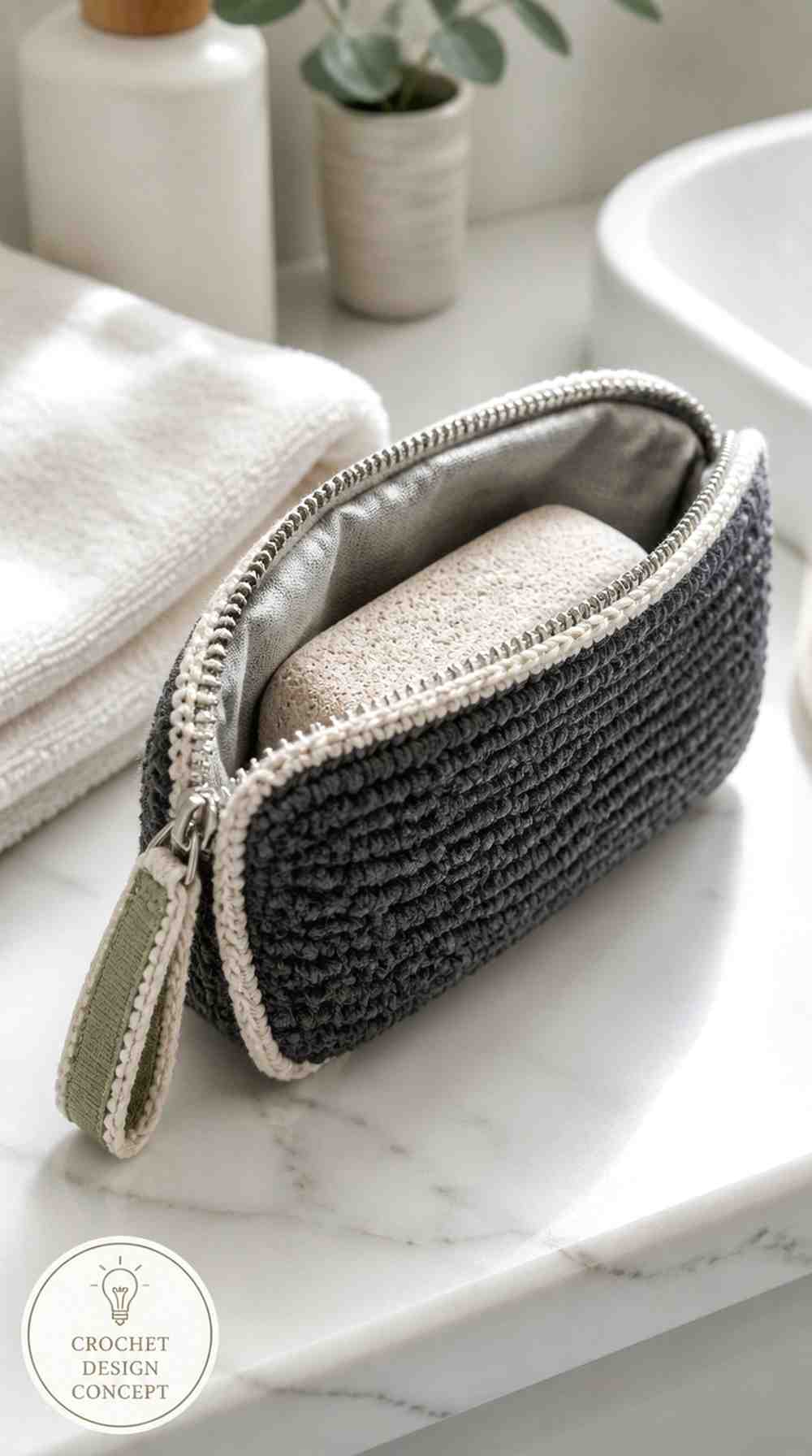
Charcoal-grey crochet gives this small travel case a polished appearance. Its rounded rectangular body has closely worked stitches, softly gusseted sides, a silver zipper, and narrow cream edging. A pale-grey removable lining sits inside the pouch, with the dry pumice stone visible through the partially opened top.
Unlike an open hanging pocket, this concept is intended for enclosed storage after cleaning and complete drying. It may be useful when packing a personal care item for travel, but the zipper and lining should never be treated as a way to safely seal a damp stone.
- Travel Storage: The closed shape keeps the dry stone together with its case, but it does not make the pouch waterproof or hygienic when packed wet.
- Removable Lining: A washable lining could make interior cleaning easier if selected and attached appropriately.
- Zipper Placement: Choose a zipper that opens widely enough for the irregular stone without pulling against the yarn.
- Dryness Check: Confirm that the pumice and lining are completely dry before closing the case and putting it into luggage.
7. Crochet Lavender Granny Square Pumice Pouch
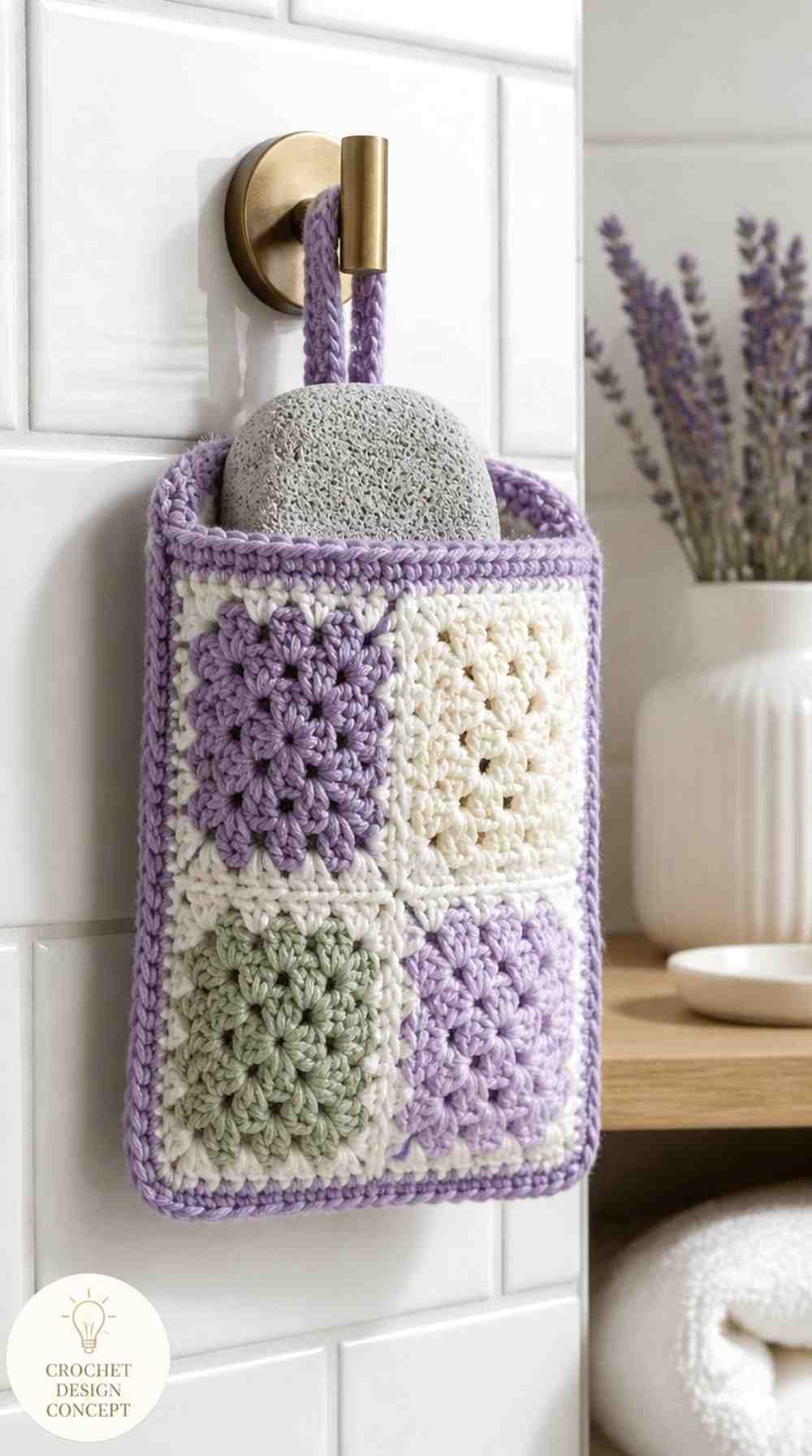
Four compact granny squares give this lavender crochet pouch a colorful handmade appearance. Lilac, cream, sage, and lavender motifs form the front panel, while the solid lavender back provides a simpler contrast. Flat ivory seams connect the squares, and a narrow hanging loop finishes the open-top design.
The small patchwork surface makes this a decorative choice for a light bathroom. The solid granny-square construction is visually different from open lace, though it needs careful joining. Each square and seam should retain its shape when the dry stone is placed inside.
- Four-Square Layout: Keep the motifs similar in size so the front panel does not twist when joined to the solid back.
- Flat Joining Seams: Raised or uneven joins can create unnecessary bulk and may be more vulnerable to rubbing against the rough pumice surface.
- Open Upper Edge: The stone remains accessible, although the opening still needs enough structure to avoid stretching.
- Pastel Coordination: Lavender, lilac, cream, and sage create a gentle color combination without requiring flowers or other separate embellishments.
For more crochet storage ideas involving hanging bathroom accessories, see 15 Crochet Soap Saver Pouch Inspiration Ideas on Yarn Nest Studio. Soap savers and pumice storage pouches have different uses, but the comparison of hanging loops, mesh, and closures may be helpful.
8. Crochet Seafoam Ladder Stitch Stone Sleeve
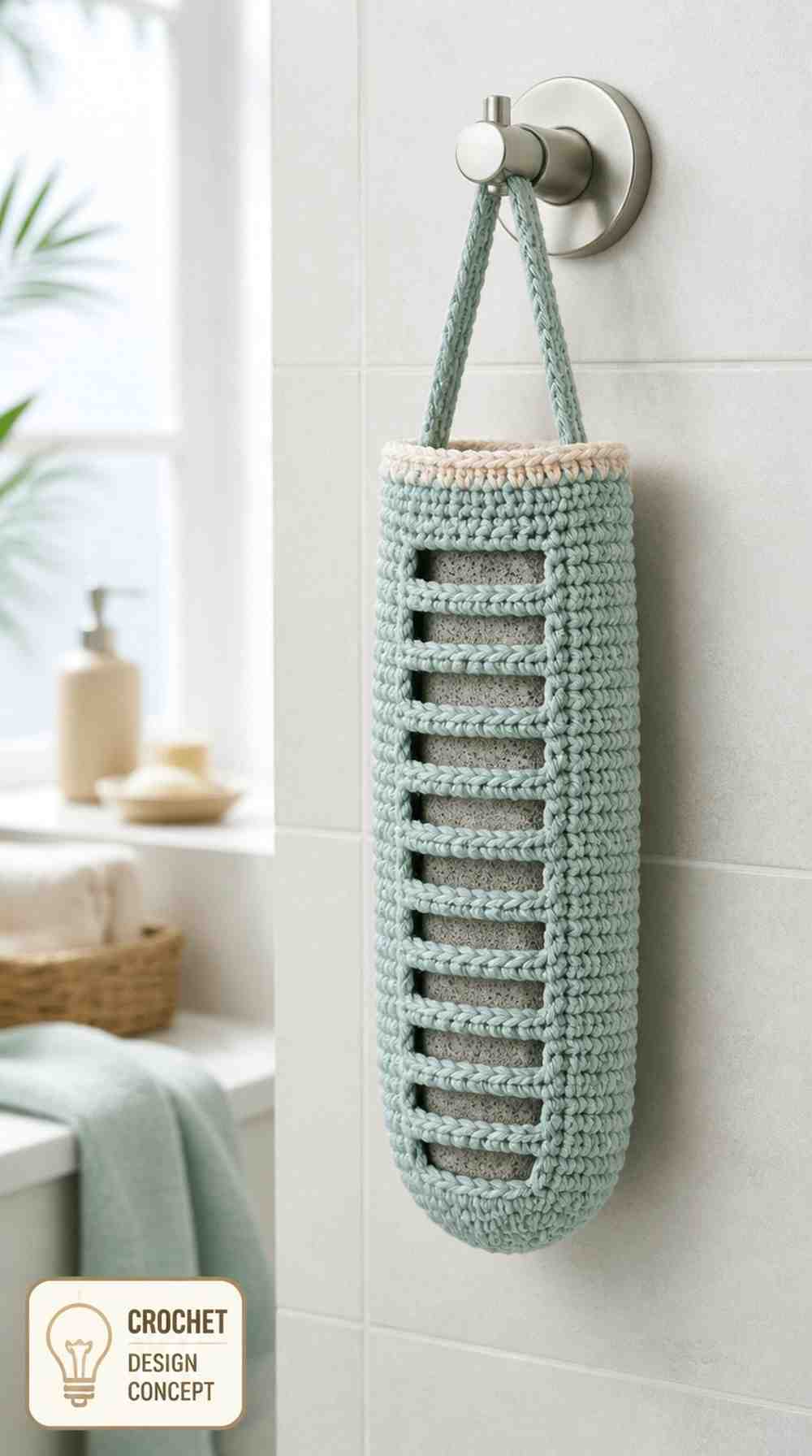
Seafoam-green crochet gives this tall, slim sleeve a fresh coastal feel. Horizontal ladder-stitch openings run between firm vertical borders, with a closely stitched back panel supporting the shape. A cream band defines the top, while a rounded loop connects the holder to its bathroom hook.
The ladder openings make the design visually lighter than an opaque pocket. This could appeal to someone who wants the stored stone to remain recognizable at a glance. The sleeve still requires proper sizing, since large gaps and weak side borders could allow a smaller stone to shift unexpectedly.
- Ladder Openings: Check the actual stone against the open spaces; the pouch should not rely on widely stretched yarn to keep it contained.
- Vertical Borders: Firm side edges help define the narrow silhouette and prevent the horizontal openings from pulling unevenly.
- Cream Upper Band: The contrasting rim creates a clear opening and could provide a place for additional reinforcement.
- Length Planning: A tall sleeve suits an elongated stone better than a very broad, round pumice.
9. Crochet Mustard Wrap Button Pumice Pocket
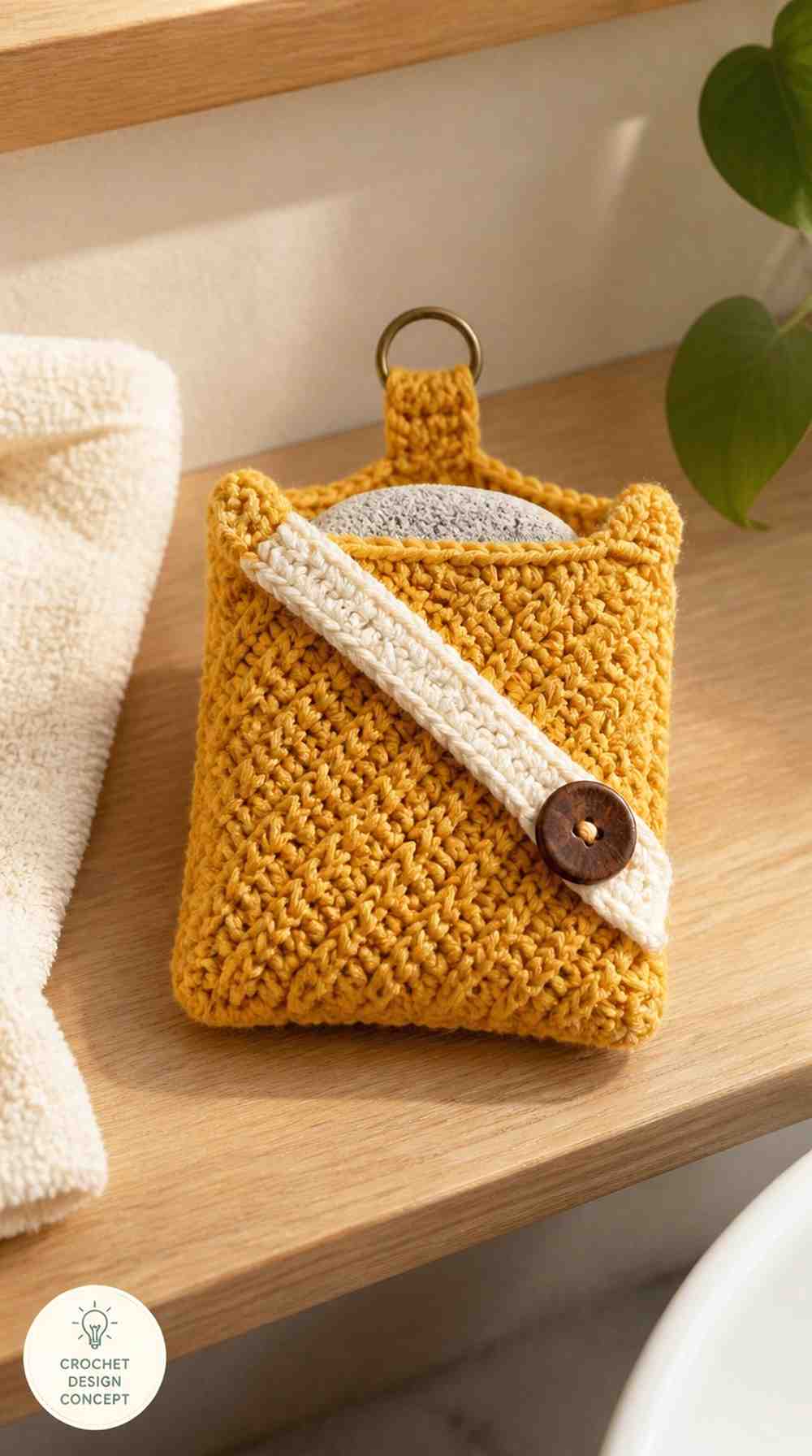
Warm mustard crochet gives this low rectangular pouch a cheerful appearance. Raised diagonal stitches decorate its front, while a long cream strap crosses the body and fastens to a dark wooden button near the lower-right corner. A small antique-brass ring connects to the reinforced hanging loop.
The diagonal wrap makes this concept stand apart from ordinary envelope flaps. It can create a simple closure without covering the entire front, though the upper opening must remain secure enough for storage. The design is best adapted for a dry stone that can be removed without repeatedly forcing the strap.
- Diagonal Strap: The cream band should cross the pocket without pressing so tightly that it distorts the stone or stretches the crochet.
- Button Position: Placing the button near the lower corner gives the wrap its distinctive angle, but the fastening needs to remain easy to reach.
- Raised Ridges: The diagonal texture adds visual interest while preserving a relatively simple rectangular body.
- Horizontal Shape: Check the width of the actual pumice before planning a low pouch with a narrow upper opening.
10. Crochet Coral Pebble Drawstring Pouch
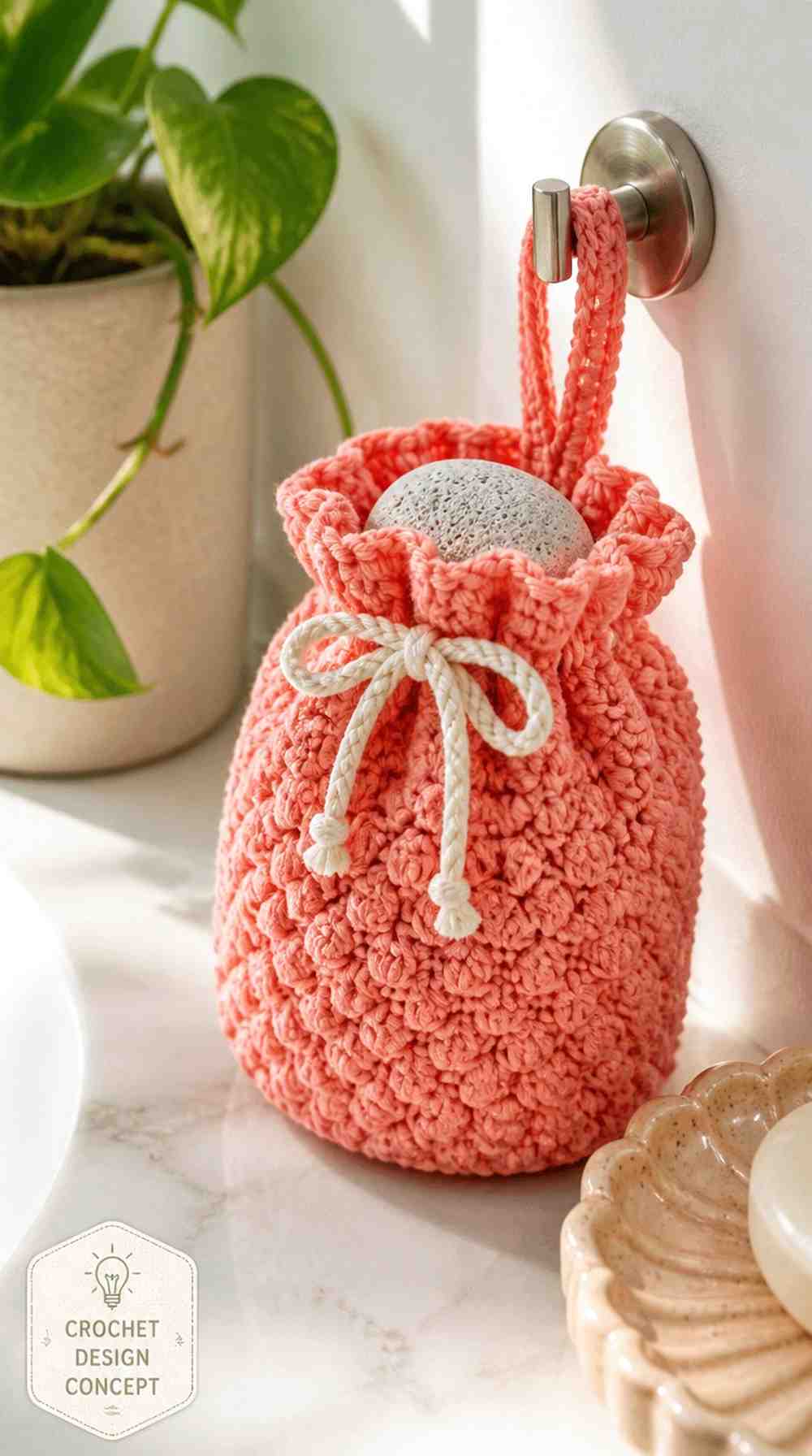
Coral-pink crochet makes this rounded little storage sack feel bright and friendly. Its raised pebble-like stitch texture covers a softly oval body, while two short ivory drawstring ends gather the upper edge. A separate coral loop provides a hanging point.
The gathered opening makes the pouch easy to recognize as a miniature storage bag. Compared with an open sleeve, however, it has more folds and closely gathered fabric near the top. Those areas deserve attention during cleaning and drying, especially if the pouch is ever accidentally splashed.
- Rounded Base: The oval bottom creates space for a small stone, but it must remain supported without stretching into an uneven point.
- Drawstring Ends: Keep the ivory cords short and secured so they do not hang loosely around bathroom fittings.
- Pebble Texture: Raised crochet clusters echo the stone’s natural shape, but a thick fabric may require additional drying time after washing.
- Gathered Opening: The top must open sufficiently for removing the pumice without scraping its rough surface across the cord channel.
11. Crochet Navy Mesh Window Pumice Pouch
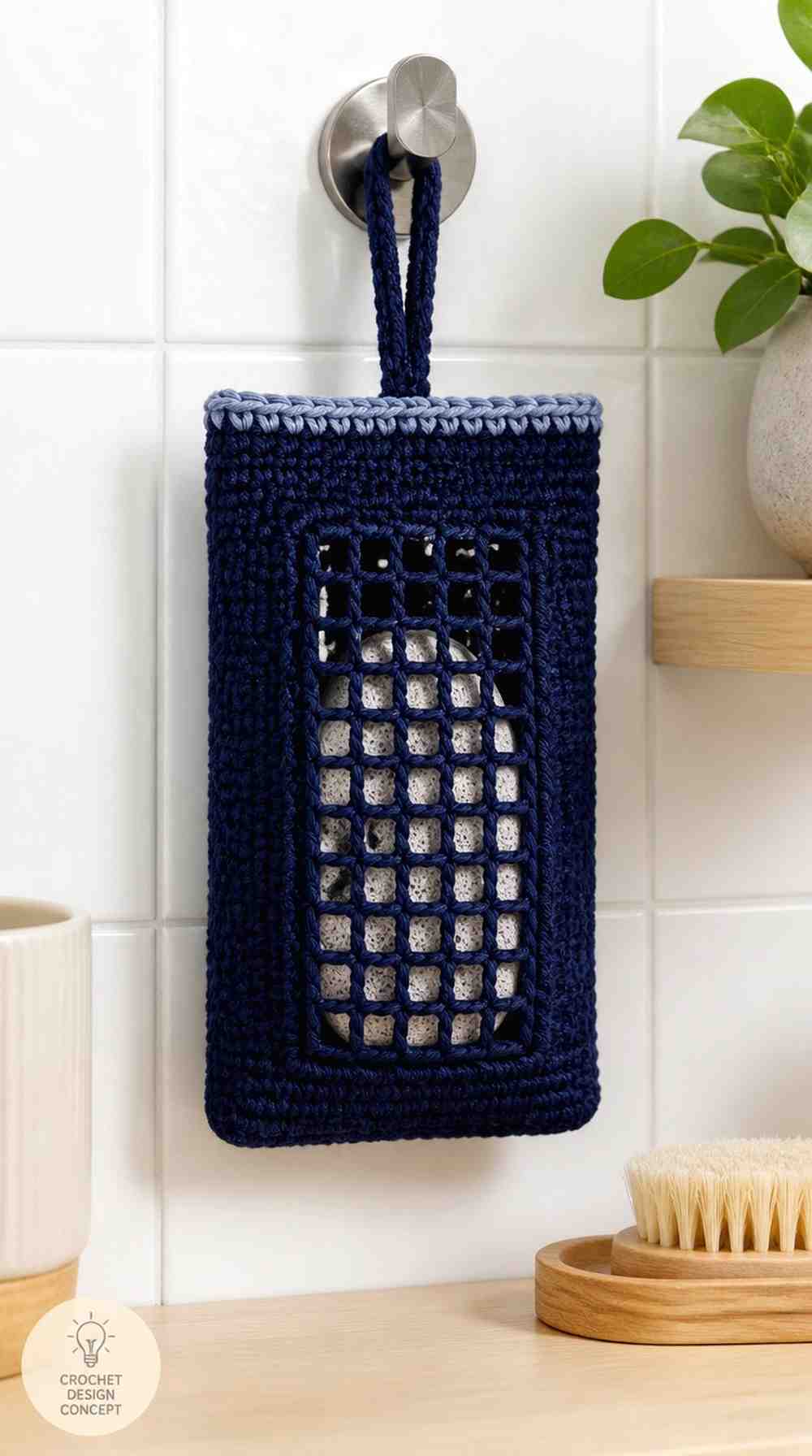
Deep navy crochet gives this pouch a modern, understated appearance. A closely stitched back panel supports the body, while a central mesh window exposes part of the dry pumice stone. The rectangular side borders remain firm, and a pale-blue top band softens the dark color.
The mesh window offers a different approach from making the entire pouch open. It provides a small display area without losing the solid backing. However, the mesh still needs to be strong enough for the stone, and an open fabric window does not guarantee complete moisture removal.
- Mesh Window: Keep the front openings smaller than the stone’s narrowest usable dimension, accounting for crochet stretch.
- Solid Back Panel: The closely worked rear provides structure but also needs cleaning if the pumice rubs against it.
- Navy Texture: Use bright lighting when photographing dark crochet so the stitch loops remain visible against the bathroom background.
- Top Opening: A straight upper edge provides access, but it should not allow the stone to fall out when the pouch moves.
12. Crochet Blush Tulip Flap Stone Pocket
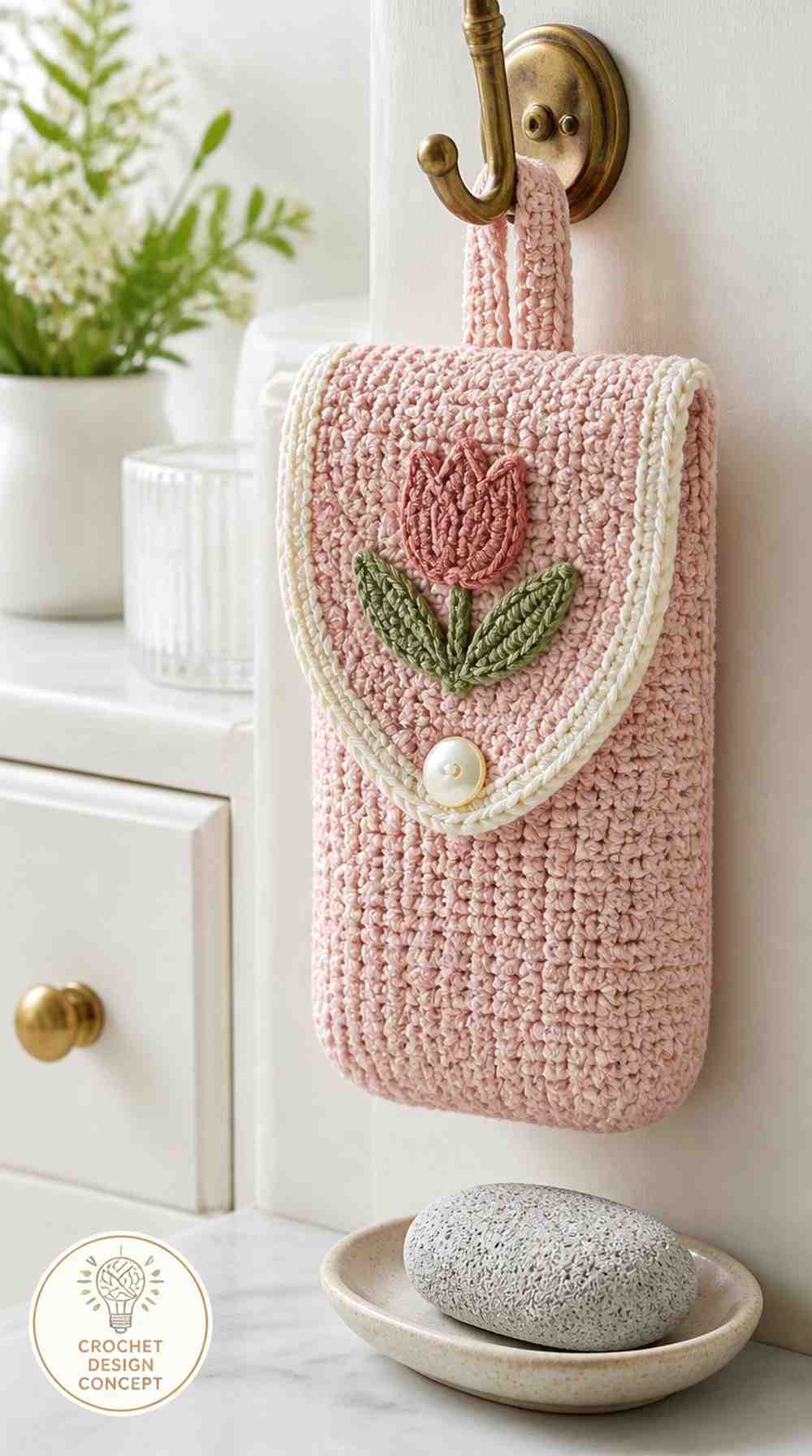
Soft blush crochet gives this closed pouch a gentle floral appearance. A rounded front flap features one dusty-rose tulip motif with two sage-green leaves, all stitched flat against the surface. A pearl-white button secures the flap, and narrow cream edging outlines its curved shape.
This concept focuses on keeping a personal care accessory tucked away in a decorative pouch. The tulip does not need to project outward to be noticeable. Because the stone would be enclosed, however, both the pumice and the crochet should be fully dry before fastening the button.
- Tulip Appliqué: Secure the petals and leaves closely so their edges do not lift or snag during handling.
- Rounded Flap: The curved closure needs enough overlap to cover the pocket opening without pulling the front panel out of shape.
- Button Security: A small decorative button should still be sturdy enough for repeated opening and closing.
- Dry Storage: The closed shape is best reserved for a clean, dry stone; do not use it to conceal a damp pumice after bathing.
13. Crochet Olive Diagonal Entry Stone Pocket
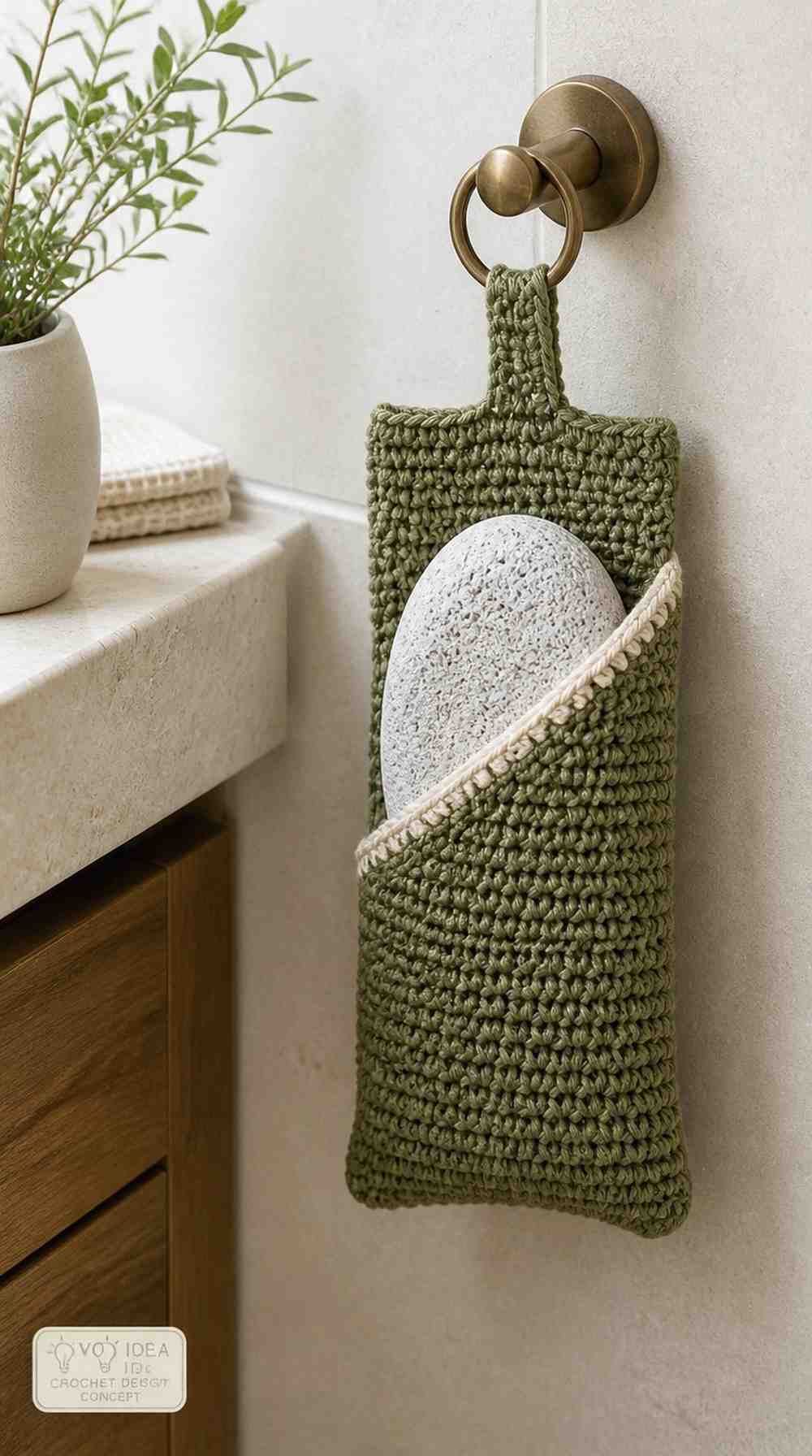
Olive-green crochet creates a simple but unusual hanging pouch with a slanted front opening. Its lower front has a dense linen-style texture, while a cream border follows the diagonal edge. A reinforced loop at the upper-right corner connects to a dark-brass ring.
The exposed upper section makes the stone easier to recognize and may simplify access compared with a fully enclosed pouch. The diagonal opening also changes how the weight rests against the front panel. A real version should be tested to make sure the stone does not tip forward or slide out.
- Slanted Entry: The diagonal edge should remain high enough on one side to support the stone rather than exposing too much of its body.
- Cream Border: A firm finishing row can help define the sloped opening, although final stiffness depends on stitch tension and yarn.
- Offset Hanging Loop: A single upper-corner attachment may cause some tilting, so test the actual hanging angle before regular use.
- Dense Lower Pocket: Closely worked stitches reduce large gaps at the base, where most of the stone’s weight rests.
14. Crochet Sandstone Basketweave Rail Pouch
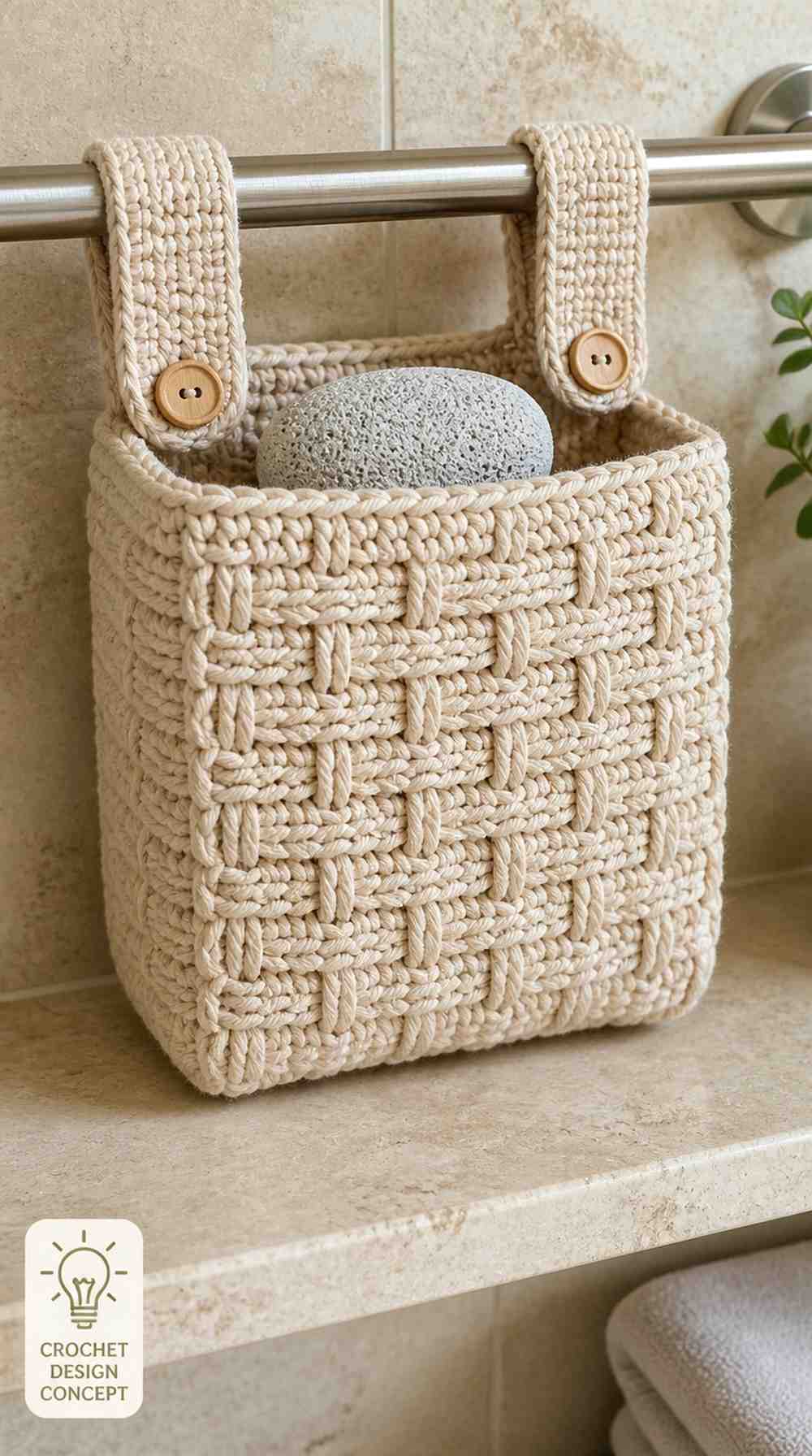
Sandstone-beige crochet gives this holder a neatly structured appearance. Raised basketweave-style blocks cover its box-shaped body, while a rectangular base creates depth for the dry pumice stone. Two cream crochet straps wrap around a bathroom rail and fasten with small wooden buttons.
The twin straps distinguish this design from single-hook hanging pouches. They may provide a balanced way to suspend a small holder from a suitable organizer rail. The installation still needs checking, particularly if the rail becomes wet or is not intended to carry extra accessories.
- Twin Rail Straps: Position both straps evenly so the holder hangs level and does not twist around the rail.
- Wooden Fastenings: Button loops require secure stitching, and wooden buttons should be kept away from repeated soaking.
- Basketweave Surface: Raised crochet blocks offer rich texture, though the thicker fabric may need more care after laundering.
- Boxed Lower Section: The wider base can suit a rounder stone, provided the finished pouch does not sag excessively.
15. Crochet Teal Split Side Pumice Pouch
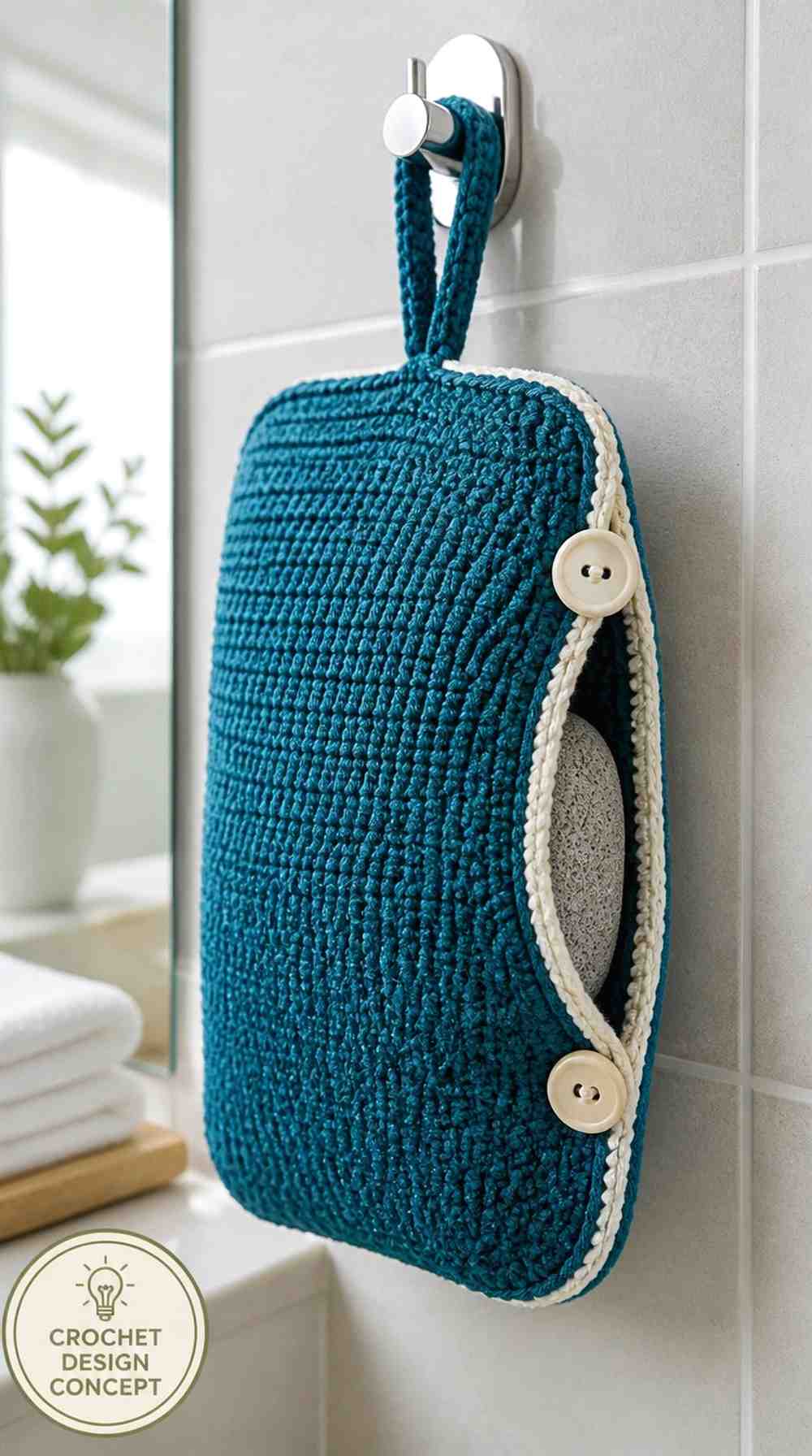
Bright teal crochet gives this small holder a clean, modern look. Its rounded rectangular body has shallow gussets and an unusual side opening secured by two cream buttons. Narrow ivory edging follows the opening, and a reinforced teal loop suspends the pouch from a silver bathroom hook.
The split-side construction is the main feature. Instead of reaching only through a narrow top, the user could open the side to remove the dry stone. That may be convenient for irregularly shaped pumice, but the buttoned seam needs to stay secure when the pouch is hanging.
- Side-Opening Access: Opening the right seam creates more room for removing a wide stone without forcing it through the top.
- Two-Button Closure: Both buttons need secure positioning so the side panel stays aligned when closed.
- Shallow Gussets: Small side panels provide extra depth without making the holder significantly wider than the stone.
- Cleaning Convenience: An opening that spreads wider may help with access to the pouch interior, although it still requires appropriate washing and thorough drying.
Practical Guide to Crochet Pumice Stone Storage Pouches
A crochet pouch can be an attractive way to organize a pumice stone, but hygiene should come first. The stone and its textile holder have different care needs.
Clean the pumice before storage. After using a pumice stone for personal care, rinse and clean it according to its manufacturer’s directions. Remove trapped residue and allow it to dry thoroughly. Personal-use pumice stones should not be shared.
Healthline
Dry the stone separately. Do not assume a mesh crochet pouch will dry a wet stone adequately. Place the cleaned pumice in a suitable well-ventilated location until completely dry before moving it into decorative storage.
Measure the actual stone. Natural pumice stones vary in thickness, width, and shape. A broad oval stone may suit a boxed holder, while a narrow one may fit a vertical sleeve. Allow enough clearance for easy removal without stretching the crochet excessively.
Choose washable materials. Smooth, washable cotton or cotton-blend yarn may be worth exploring for bathroom storage. Follow the actual yarn’s care label, and wash the pouch if it becomes dirty or damp. Any lining, buttons, or other hardware should suit the intended care routine.
Pick a sensible hanging location. Keep fabric away from direct shower spray, standing water, and continuously damp walls. Make sure the hook or rail can support the weight of the stone and pouch without loosening.
Use separate stones for separate purposes. A pumice used for foot care should not be mixed with stones used for household cleaning. Keep personal care tools properly identified and stored hygienically.
Want to Make Something Similar?
These crochet resources teach related pouch-making skills, although none is an exact pattern for the 15 pumice storage designs.
- Winterberry Soap Saver Crochet Pattern by MJ’s Off the Hook Designs — a free textured pouch pattern with a drawstring and decorative finishing that may help when exploring compact hanging pouches. MJ’s off the Hook Designs
- Travel Soap Saver Pouch by CyCrochet — a free two-panel cotton pouch pattern with mesh openings, seams, and a drawcord. Useful as general construction guidance for the sage mesh concept. CyCrochet
- DMC Crochet Soap Saver Pattern — a simple crochet storage-bag project with yarn-care information. It can provide general inspiration for stitch and bag construction. dmc.com
These resources concern soap pouches rather than pumice storage specifically. Adapt any technique to the stone’s actual dimensions, weight, surface texture, and dry-storage requirements.
Which Crochet Pumice Stone Pouch Should You Choose?
| Your main priority | Design to consider | Important limitation |
|---|---|---|
| Simple hanging storage | Oatmeal Hanging Pocket | Open top offers no closure |
| Open mesh appearance | Sage Diamond Mesh | Mesh does not guarantee drying |
| Flat shelf storage | Dusty Blue Envelope | Flap encloses the stone |
| Space for a broad stone | Terracotta Box Bottom | Gussets require secure joins |
| Decorative shell crochet | Ivory Scalloped Sleeve | Open motifs may stretch |
| Travel after complete drying | Charcoal Zippered Case | Enclosed storage requires dryness |
| Colorful patchwork | Lavender Granny Square | More seams to maintain |
| Tall, narrow storage | Seafoam Ladder Stitch | Less suitable for broad stones |
| Decorative strap closure | Mustard Wrap Button | Extra fastening step |
| Rounded miniature sack | Coral Pebble Drawstring | Gathered fabric needs careful drying |
| Partly visible stone | Navy Mesh Window | Mesh needs adequate support |
| Floral closed pouch | Blush Tulip Flap | Best for dry, clean storage |
| Easy front access | Olive Diagonal Entry | Exposed stone needs secure retention |
| Bathroom organizer rail | Sandstone Basketweave | Rail suitability must be checked |
| Wider removal opening | Teal Split Side | Side buttons need testing |
For a straightforward starting concept, the Crochet Oatmeal Hanging Pumice Pocket is easy to understand and offers an accessible open top. If you prefer decorative stitching, the sage mesh, ivory scalloped, and lavender granny-square designs have more visual character.
For travel, the charcoal zippered case is worth exploring, but only after the stone is cleaned and thoroughly dried.
Conclusion
A crochet pumice stone storage pouch is a small bathroom accessory with plenty of room for creative design. These 15 ideas show how hanging loops, mesh openings, little buttons, decorative stitches, and different pocket shapes can transform an ordinary storage item into something more personal.
The best design is one that suits the shape of your actual pumice stone and the location where you plan to keep it. Regardless of the style, clean and dry the stone thoroughly before placing it in a pouch, and keep the crochet clean and dry as well.
Which of these 15 crochet pumice stone pouches would suit your bathroom best? Would you choose a simple hanging sleeve, a decorative granny-square pocket, or a small travel case? Share your favorite design and where you would store it.
Frequently Asked Questions
Can I store a wet pumice stone inside a crochet pouch?
It is better to clean the stone and allow it to dry completely before placing it inside a crochet pouch. Wet fabric can stay damp against the stone, and poorly ventilated storage may encourage unwanted microbial growth. A mesh pattern does not guarantee adequate drying.
Healthline
What type of yarn is suitable for a crochet pumice stone storage pouch?
Washable cotton or cotton-blend yarn may be an option for a decorative bathroom pouch. Look for a yarn with suitable laundering instructions and enough stitch stability to support the intended stone. The specific material and construction should be tested, especially around hanging loops and seams.
Should a pumice storage pouch have mesh holes?
Mesh openings can offer a lighter appearance and make the stone visible, but they are not essential. A dense pocket may provide more enclosed storage, while mesh requires careful sizing so the stone does not slip through stretched openings. Neither option should be relied on to safely dry a freshly used pumice.
Can I hang a crochet pumice pouch in the shower?
A hook outside the direct water spray is preferable to one that is constantly wet. Even then, the stone should be cleaned and dried separately after use. If the hanging pouch gets wet, remove it, wash it when appropriate, and let it dry thoroughly before using it again.
Are these crochet pumice pouch designs available as patterns?
These are original visual concepts for inspiration, not tested crochet patterns. The images illustrate possible shapes, stitch textures, colors, and storage arrangements. The linked crochet lessons can help you learn related construction techniques, but a real pumice pouch still needs its own sizing, seam, hanging-strength, and care checks.