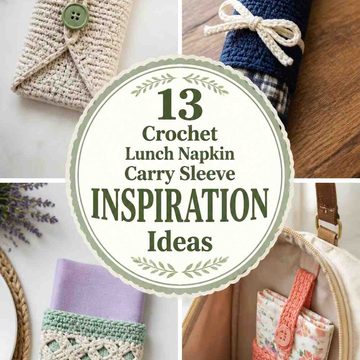
Reusable ice packs are useful for packed lunches, but their plain plastic surfaces leave plenty of room for creative storage and cover ideas. A crochet reusable lunch ice pack cover adds a decorative fabric layer around a sealed cold pack, with possibilities ranging from simple flat sleeves and buttoned envelopes to granny-square pockets, round covers and adjustable wraps. These 13 inspiration ideas explore different crochet textures, closures, colors and shapes for everyday lunch accessories.
Whether you carry a compact lunch bag to work, prepare packed meals for school or use a larger insulated food tote, choosing a suitable cover starts with the ice pack itself. Some designs suit flat rectangular gel packs, while others explore longer, narrower or circular shapes. The collection also considers easy removal, washable materials and an important limitation: extra crochet fabric can reduce cooling efficiency, so decoration should never come before keeping perishable food safely cold.
These are AI-generated crochet design visualizations for inspiration, not photographs of tested handmade pieces or step-by-step patterns.
Quick Design Selection Guide
- For flat everyday gel packs: Crochet Sage Flat Gel Ice Pack Envelope and Crochet Oatmeal Button Flap Ice Pack Pouch offer simple covered openings.
- For narrow ice packs: Crochet Dusty Blue Ribbed Ice Pack Sleeve and Crochet Cream Corner Tie Ice Pack Sleeve use slim rectangular shapes.
- For decorative crochet: Crochet Mustard Granny Square Ice Pack Sleeve, Crochet Terracotta Lined Lace Ice Pack Cover and Crochet Blush Daisy Round Ice Pack Cover bring different textures and motifs.
- For enclosed storage: Crochet Charcoal Zippered Ice Pack Case and Crochet Teal Fold Over Ice Pack Pocket provide more covered closure arrangements.
- For adjustable fitting: Crochet Lavender Adjustable Tab Ice Pack Wrap and Crochet Olive Roll Up Multi Size Ice Pack Cover explore overlapping closures.
- For two slim packs: Crochet Navy Twin Slim Ice Pack Organizer creates separate storage compartments.
- For changing the appearance: Crochet Rust Reversible Stripe Ice Pack Wrap shows contrasting crochet sides.
1. Crochet Sage Flat Gel Ice Pack Envelope
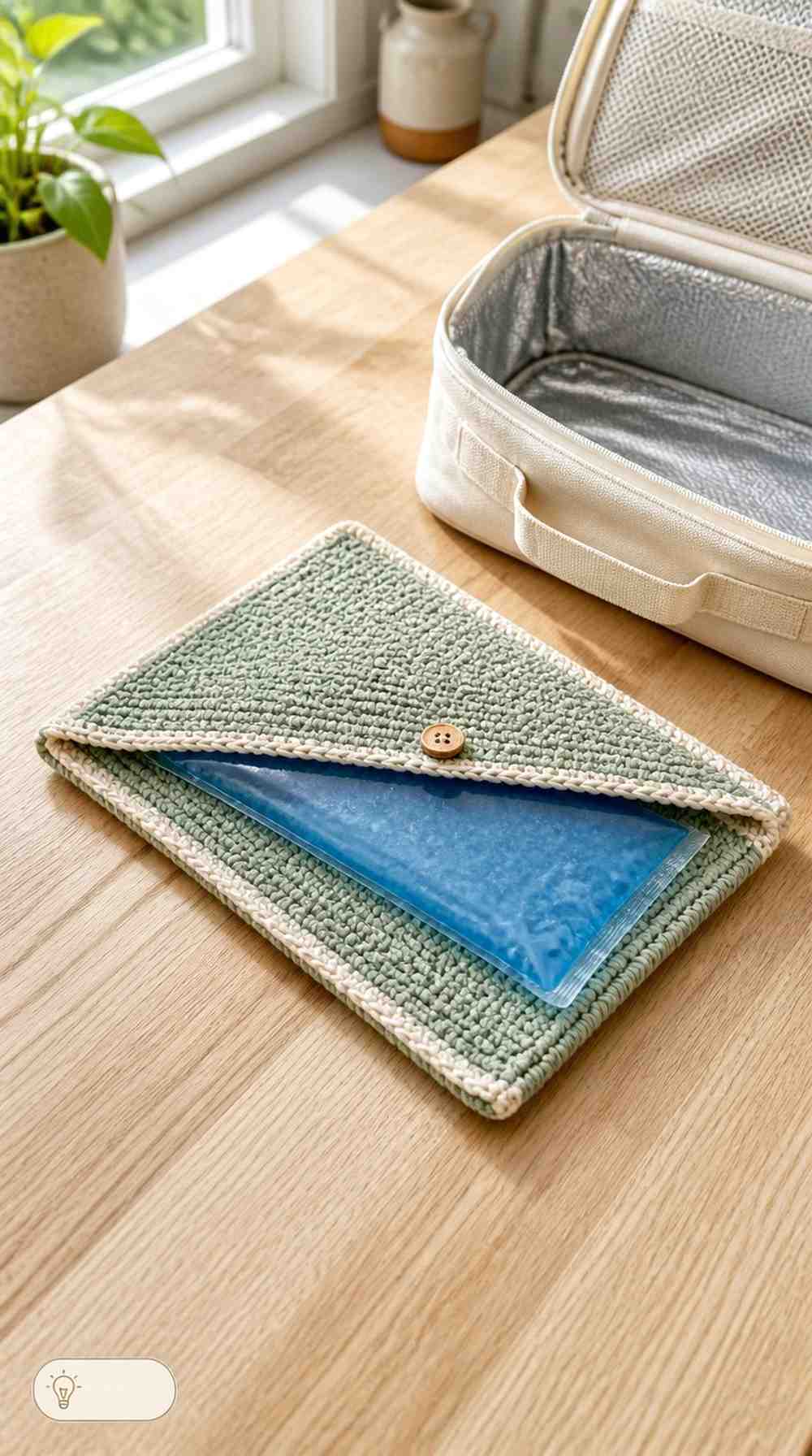
Muted sage-green cotton makes this flat crochet envelope look simple and tidy. Close moss-style stitches form its rectangular body, with a narrow cream border and broad overlapping front flap. One small wooden button fastens the flap, while a sealed blue reusable gel ice pack sits inside the pouch.
The flat envelope shape would be easy to compare with the dimensions of a standard rectangular cold pack. Its main appeal is the uncomplicated closure and relatively slim appearance. However, the additional fabric should remain lightweight when the pack is needed to cool perishable food.
- Envelope proportions: Measure the ice pack’s width, length and frozen thickness. The flap should close naturally without forcing the crochet around rigid corners.
- Button placement: Keep the wooden button clear of the pack’s sealed edges, where concentrated pressure could be undesirable.
- Fabric thickness: Consider a relatively thin cotton crochet fabric. A thicker envelope may slow heat transfer and reduce the pack’s cooling effectiveness.
2. Crochet Dusty Blue Ribbed Ice Pack Sleeve
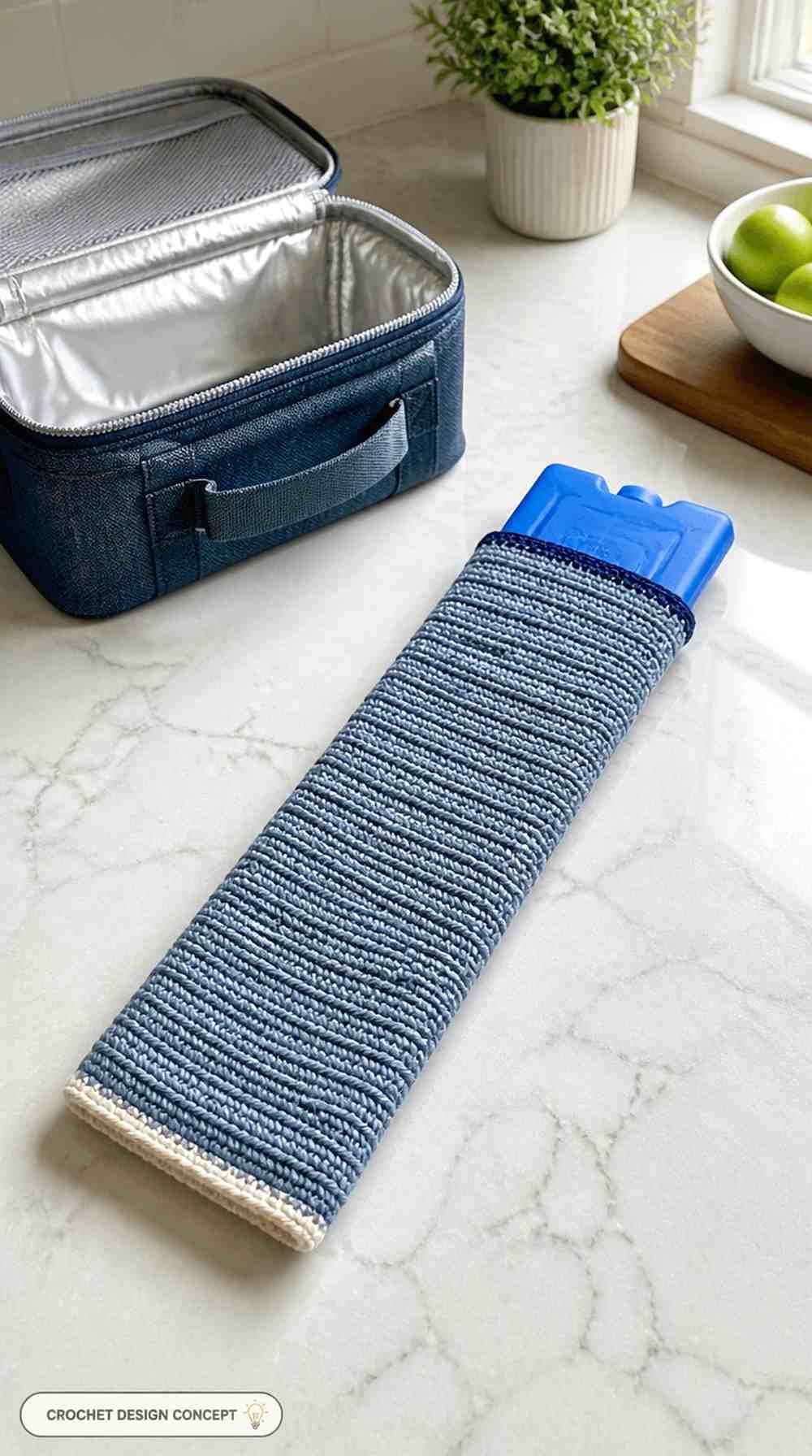
Soft dusty-blue cotton creates a long, narrow sleeve with shallow horizontal crochet ribs. A cream seam closes the lower edge, while a thin navy border defines the open upper end. A slim, sealed blue reusable ice pack slides partly into the sleeve, clearly showing the elongated fit.
This design is intended for narrow rectangular packs rather than broad square ones. The open-top arrangement avoids extra buttons and ties, making the cover straightforward to remove for cleaning. Its raised ribs add texture without introducing a bulky decorative motif.
- Length matching: Check the actual length of the slim ice pack, especially if it has rounded or thicker ends that require extra clearance.
- Open-end fit: Keep the mouth wide enough for removal without stretching the navy edging repeatedly.
- Rib height: Shallow ribs are more suitable for a compact lunchbox than pronounced raised stitches that add unnecessary bulk.
3. Crochet Oatmeal Button Flap Ice Pack Pouch
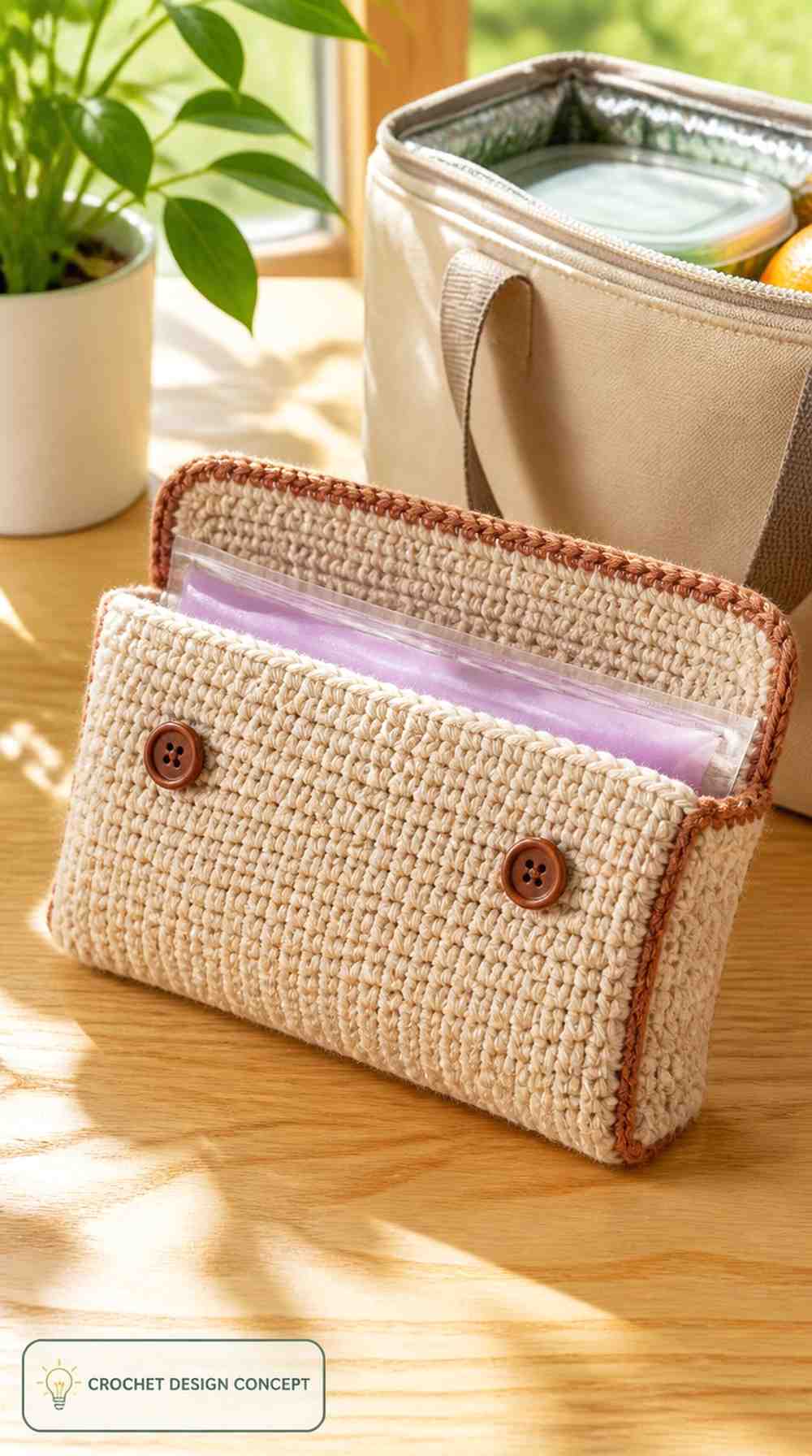
Warm oatmeal crochet gives this rectangular pouch a natural, understated finish. Linen-like stitch texture covers the main body, with cinnamon-brown edging, a softly rounded long flap and two walnut-colored buttons. A shallow gusset creates space around the flat lavender gel pack inside.
The two-button closure adds a different visual character from the single-button sage envelope. The gusset also makes this concept worth considering for a cold pack that becomes noticeably thicker when frozen, provided the finished pouch does not compress its sealed edges.
- Gusset depth: Allow enough room around the frozen pack for easy insertion and removal without forcing the side seams outward.
- Two-button alignment: Space the buttons evenly so the flap closes flat instead of pulling toward one corner.
- Cleaning access: A broad opening helps with turning the pouch inside out and checking for moisture trapped along the gusset seams.
4. Crochet Terracotta Lined Lace Ice Pack Cover
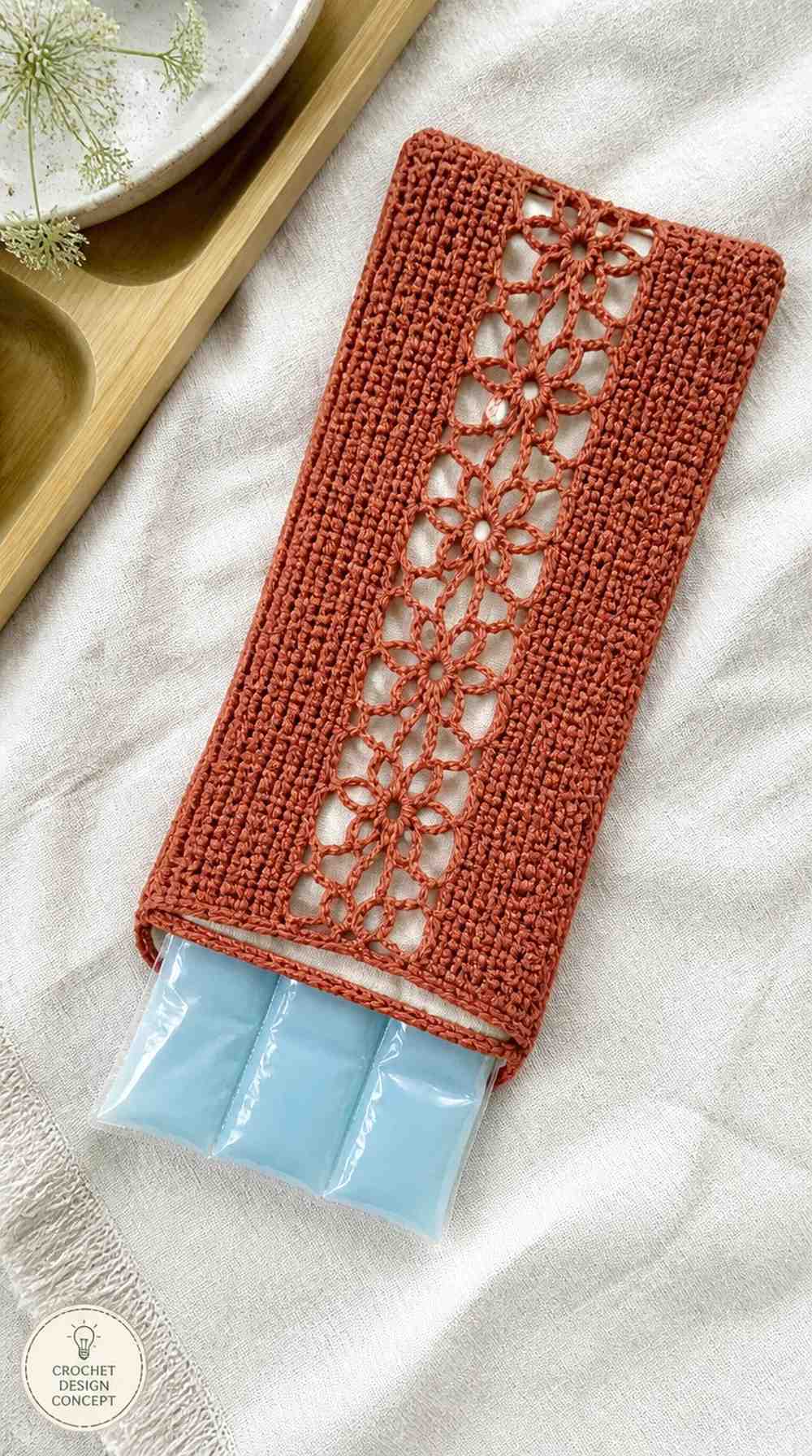
Terracotta cotton gives this flat cover a warm, rustic appearance. A narrow vertical floral lace panel runs through the center, surrounded by closely stitched sections and rust-colored edges. Cream woven cotton backing sits behind the openwork, while a sealed pale-blue ice pack enters through one short open end.
The contrast between decorative lace and solid fabric is the main feature. The lining prevents the ice pack’s plastic surface from showing directly through every lace opening, but also introduces another material layer that must be considered when planning cooling performance.
- Lace construction: Keep the floral loops securely connected to the stronger side sections so the panel does not stretch unevenly around the ice pack.
- Lining attachment: Fix the cream backing neatly around the opening without pulling the decorative crochet out of shape.
- Cooling limitation: Because this design combines crochet and fabric lining, compare its thickness carefully before using it for temperature-sensitive packed lunches.
5. Crochet Mustard Granny Square Ice Pack Sleeve
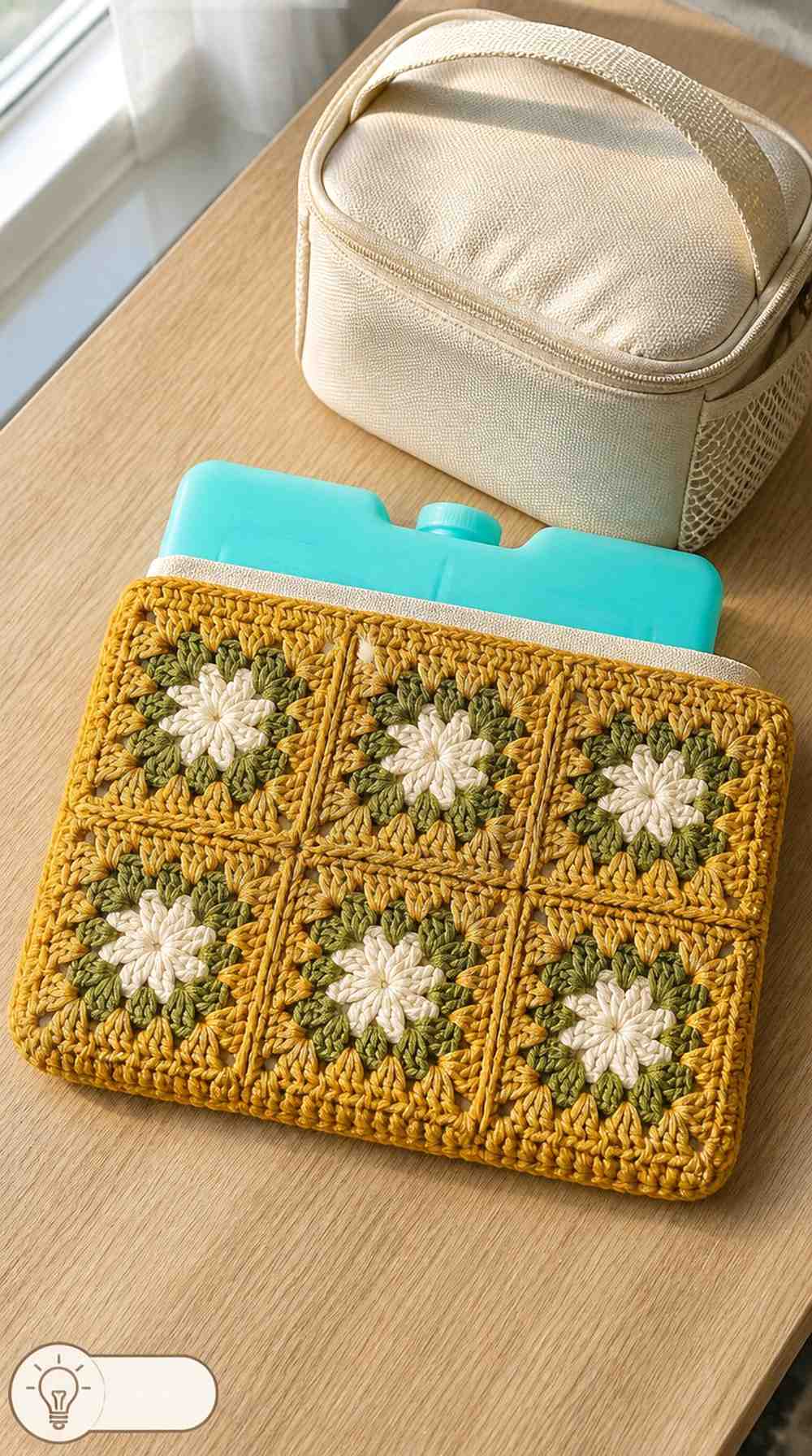
Six small mustard-yellow granny squares give this rectangular ice pack cover a classic handmade appearance. Arranged in two rows of three, the squares have cream centers and muted olive corner stitches. Mustard joining seams connect the motifs, while a cream backing sits behind the panels and a turquoise ice pack enters through the upper opening.
The joined-square structure makes this concept interesting for crocheters who enjoy small motifs. Each square contributes to the overall rectangle, although the seams and openwork require careful planning to keep the finished sleeve reasonably flat.
- Motif sizing: Work the six squares consistently so the joined rectangle fits the ice pack without distorted corners or uneven side edges.
- Seam placement: Keep joining seams neat and relatively flat, especially where the finished cover will rest against other lunchbox contents.
- Backing thickness: The cream fabric adds a complete inner layer behind the granny squares; avoid adding unnecessary padding when cooling efficiency matters.
6. Crochet Charcoal Zippered Ice Pack Case
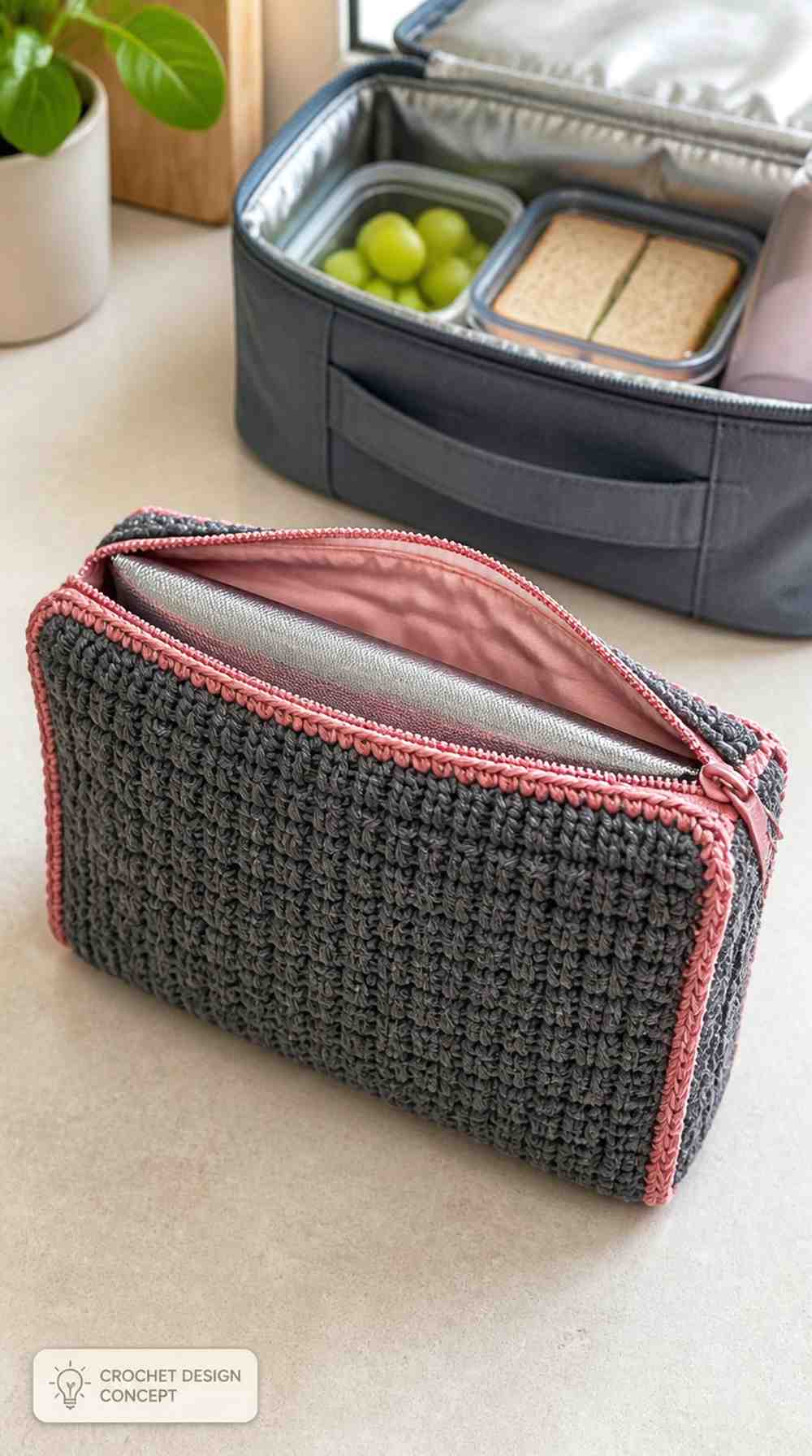
Charcoal-grey cotton gives this pouch a modern appearance. Dense basketweave-style crochet forms a small rectangular case, finished with dusty-rose trim and a rose-pink zipper across the short top edge. A smooth pale-pink cotton lining surrounds the sealed silver-grey gel ice pack inside.
The zipper creates a fully closable opening, unlike the simpler sleeves in this collection. It may appeal to someone who prefers a neatly enclosed accessory, although the extra fabric, zipper tape and seams can add thickness around the ice pack.
- Zipper clearance: Leave enough space for the zipper to move without pressing against the ice pack’s sealed plastic perimeter.
- Lining construction: Attach the pale-pink fabric securely along the zipper seam and corners so loose material does not catch in the closure.
- Washing: Check the care instructions for yarn, lining and zipper together, and allow the entire case to dry fully before reuse.
7. Crochet Lavender Adjustable Tab Ice Pack Wrap
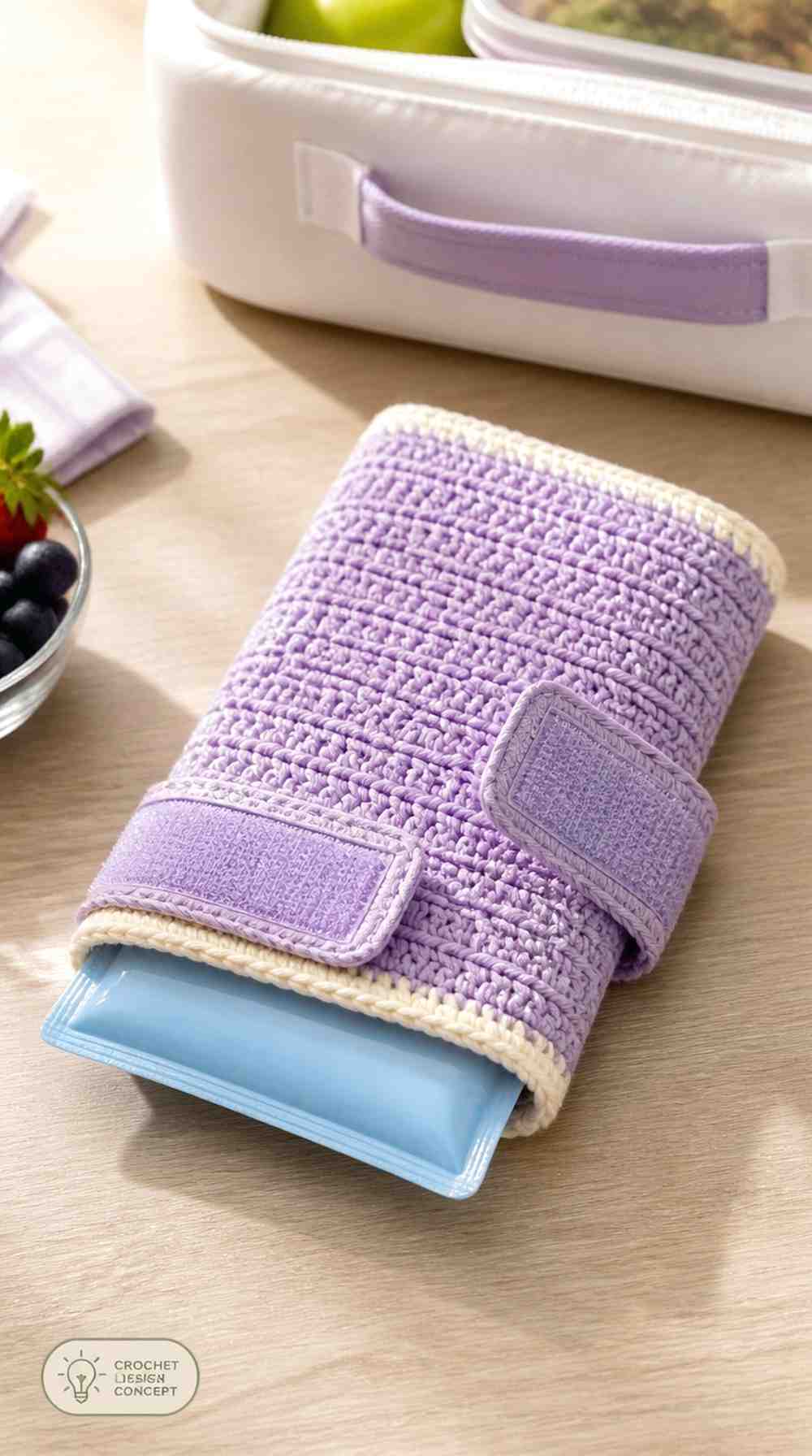
Pale lavender crochet makes this square ice pack wrap look clean and understated. Close, flat stitch rows create the rectangular panel, finished with ivory edging. Two wide lavender tabs overlap across the side, with flat hook-and-loop fasteners securing the fabric around a sealed light-blue square cold pack.
The adjustable tabs are the most useful visual feature here. Unlike a permanently closed sleeve, the panel opens flat and can be repositioned around the pack. That flexibility may help with modest changes in frozen thickness, although it cannot guarantee a universal fit.
- Tab overlap: Plan sufficient overlap for both fasteners without allowing loose fabric to bunch along the edges of the square pack.
- Fastener texture: Position the rough hook-and-loop surfaces away from the main crochet body when closing to reduce accidental yarn snagging.
- Thickness adjustment: Test the fit with the pack in its frozen state, as some gel packs become thicker or less flexible after freezing.
8. Crochet Navy Twin Slim Ice Pack Organizer
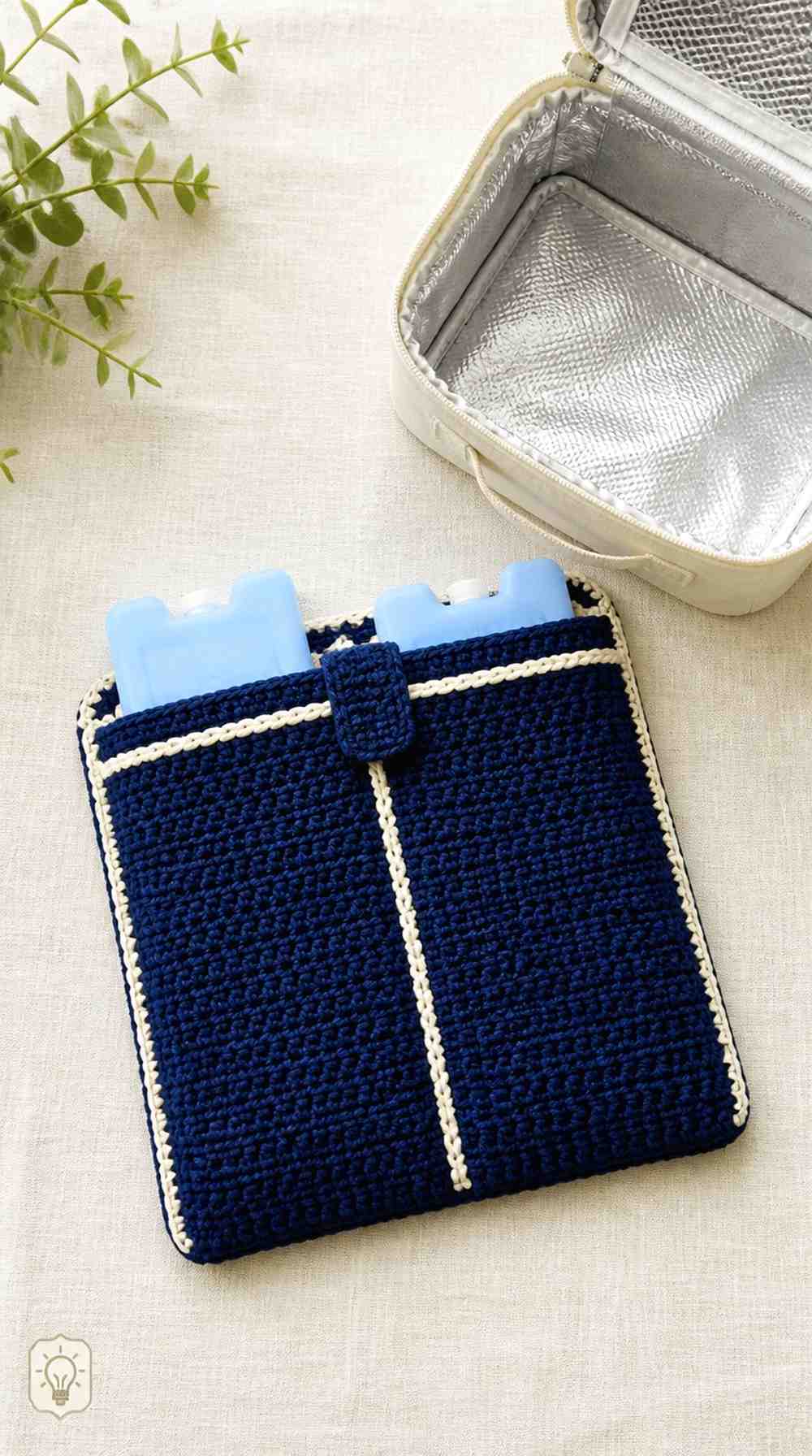
Deep navy crochet creates a rectangular organizer with two parallel sleeves and a central stitched divider. Cream edging outlines both narrow upper openings, while a short navy fastening strap crosses the top. Two sealed light-blue rigid ice packs sit separately inside the compartments.
This concept differs from single-pack sleeves by holding a matched pair together. It could be useful for keeping two narrow cold sources organized before packing, though placing both inside one crochet carrier may not suit the arrangement required to cool food effectively.
- Separate compartments: Measure both packs independently and keep the center dividing seam straight so neither sleeve presses tightly against its contents.
- Combined thickness: Account for the width and bulk of two filled compartments before assuming the organizer will fit inside a small lunchbox.
- Cooling placement: For perishable lunches, follow safe packing guidance rather than assuming two packs kept together in one cover provide adequate cooling distribution.
9. Crochet Blush Daisy Round Ice Pack Cover
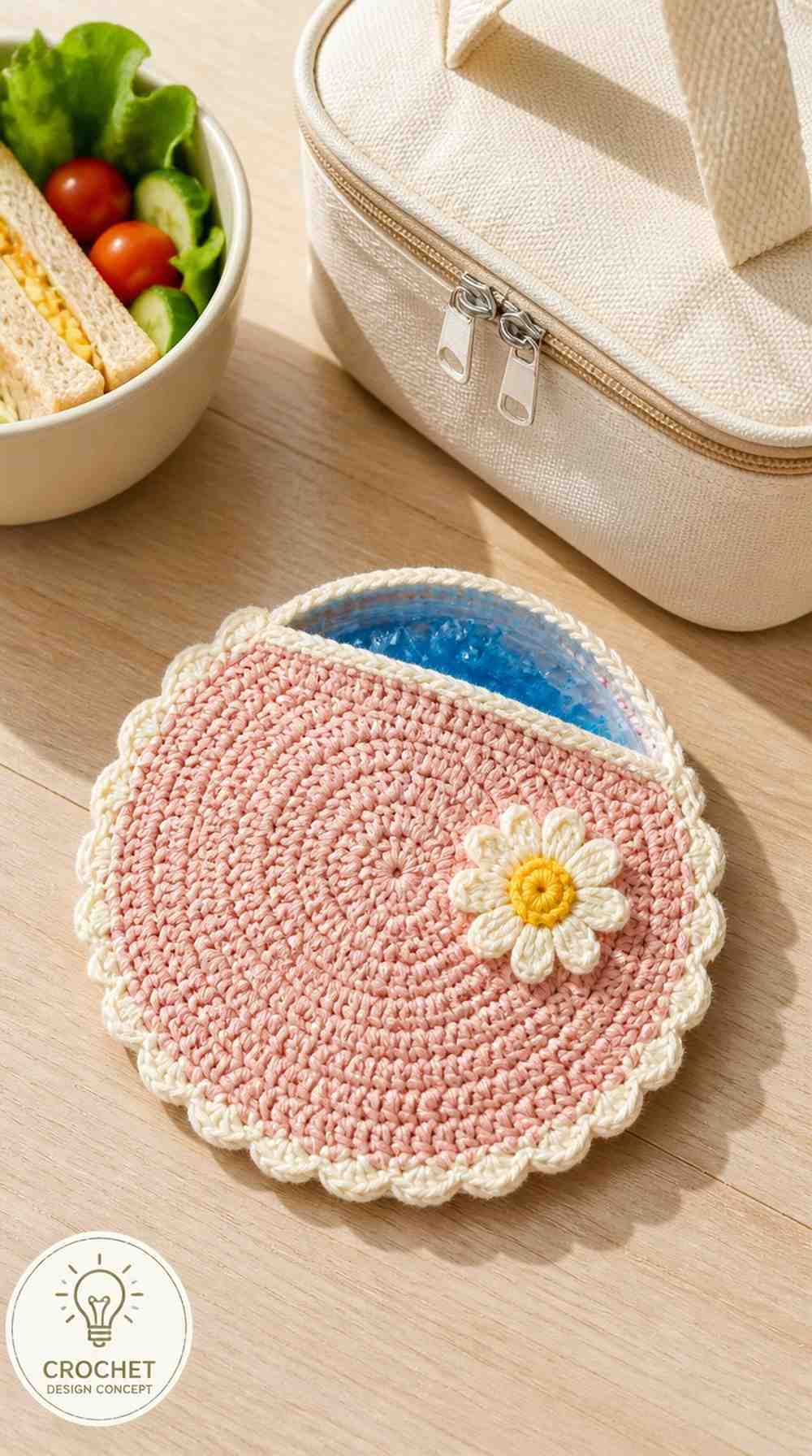
Blush-pink crochet gives this small circular cover a cheerful appearance. Two close-worked round panels join at the outer edge, finished with delicate ivory scallops. A flat cream-and-yellow daisy appliqué decorates one side, while a sealed round blue cold pack slides through the short opening along the upper arc.
The circular silhouette is intended for a compact round ice pack rather than the more common flat rectangular shape. Its simple joined-panel construction keeps the concept visually distinct, with the flower adding a small decorative touch.
- Circular fit: Measure the diameter and frozen thickness of the actual pack. Two flat crochet circles need sufficient allowance to enclose a raised object.
- Daisy placement: Keep the small flower flat and securely attached so it does not create excessive bulk or snag inside the lunchbox.
- Scalloped edging: The border should remain shallow enough not to interfere with inserting or removing the round pack.
10. Crochet Teal Fold Over Ice Pack Pocket
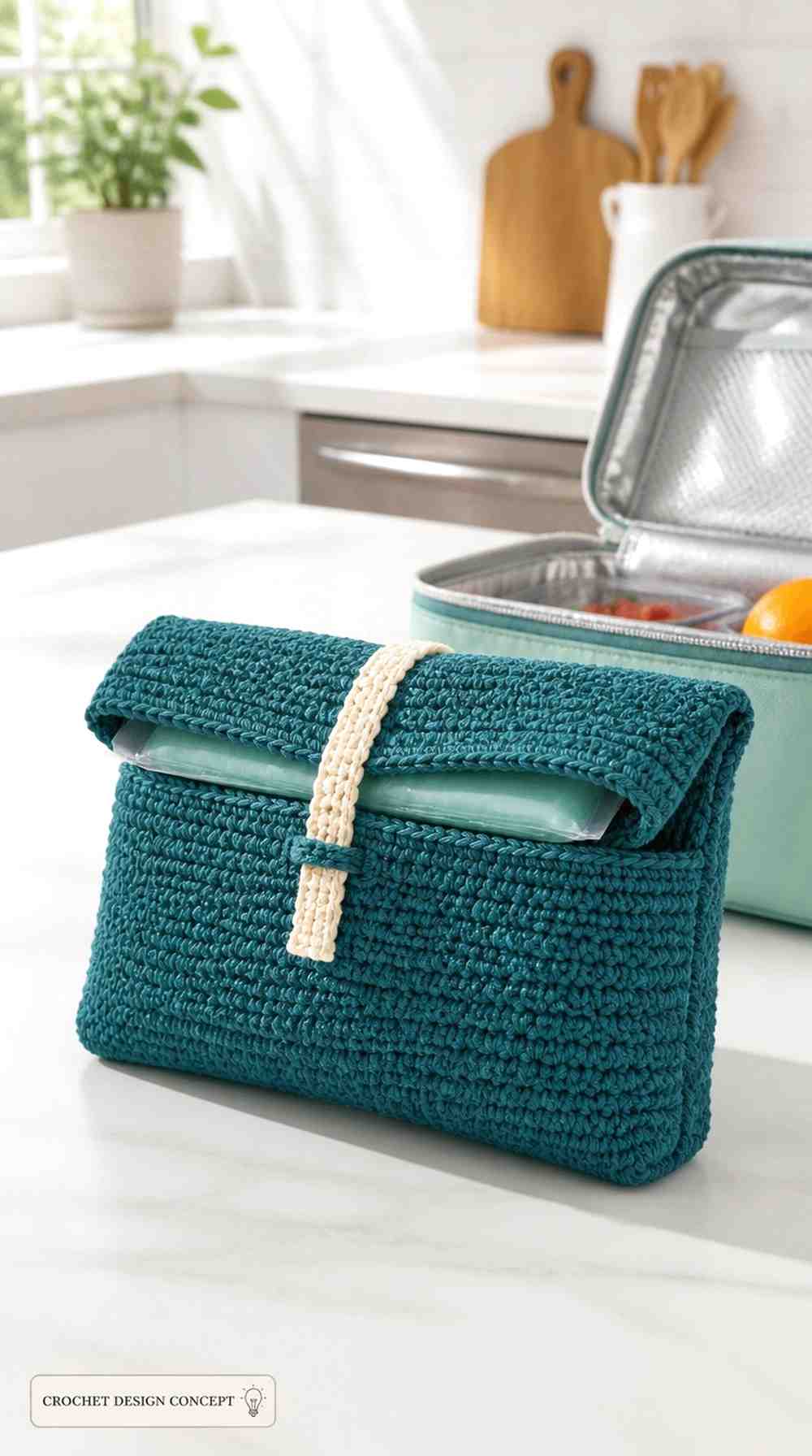
Dusty-teal cotton gives this rectangular pouch a polished appearance. Close horizontal stitch rows shape the flat body, while a long upper cuff folds down over the opening. A narrow cream crochet belt passes through a small front loop to keep the fold in place, with a sealed pale-green gel pack inside.
The fold-over closure offers a different solution from buttons and zippers. It has no separate metal fastening components, but requires extra fabric above the ice pack and careful planning around the thickness of the folded edge.
- Fold length: Leave enough upper fabric to turn over the filled pouch without placing pressure on the sealed ice pack.
- Belt tension: The narrow cream belt should hold the fold gently instead of pulling the upper crochet layer tightly around the pack.
- Lunchbox clearance: A folded cuff creates a thicker section near the top, which may reduce available space in a compact insulated bag.
11. Crochet Rust Reversible Stripe Ice Pack Wrap
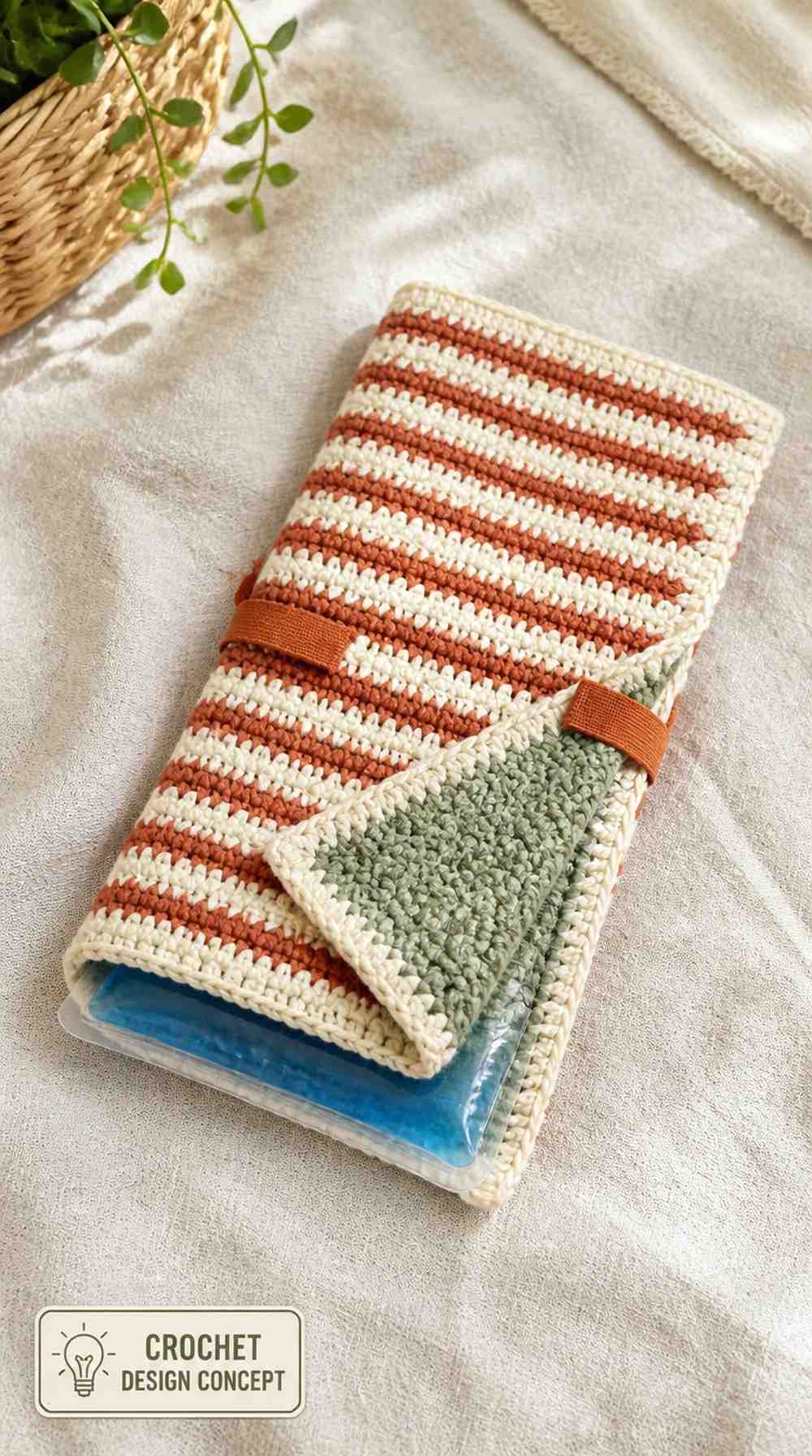
Rust-orange and cream crochet stripes give this rectangular wrap a warm, casual appearance. One turned corner reveals a muted sage-green reverse face, while a cream border joins the two layers. Short rust-colored ties secure the wrap underneath a sealed flat blue gel ice pack.
The reversible construction is its defining feature. The wearer can choose which crochet color appears outside, although reversing the wrap does not change its basic function. Because it uses two joined crochet faces, fabric thickness becomes an especially important consideration.
- Reversible joining: Keep the two crocheted layers aligned at their edges so one face does not stretch beyond the other.
- Short ties: Secure the rust-colored ties neatly beneath the pack and avoid long ends that could snag on lunchbox contents.
- Extra insulation: Two fabric layers may reduce heat transfer more than a single thin sleeve, so avoid assuming this design preserves food-cooling performance.
12. Crochet Cream Corner Tie Ice Pack Sleeve
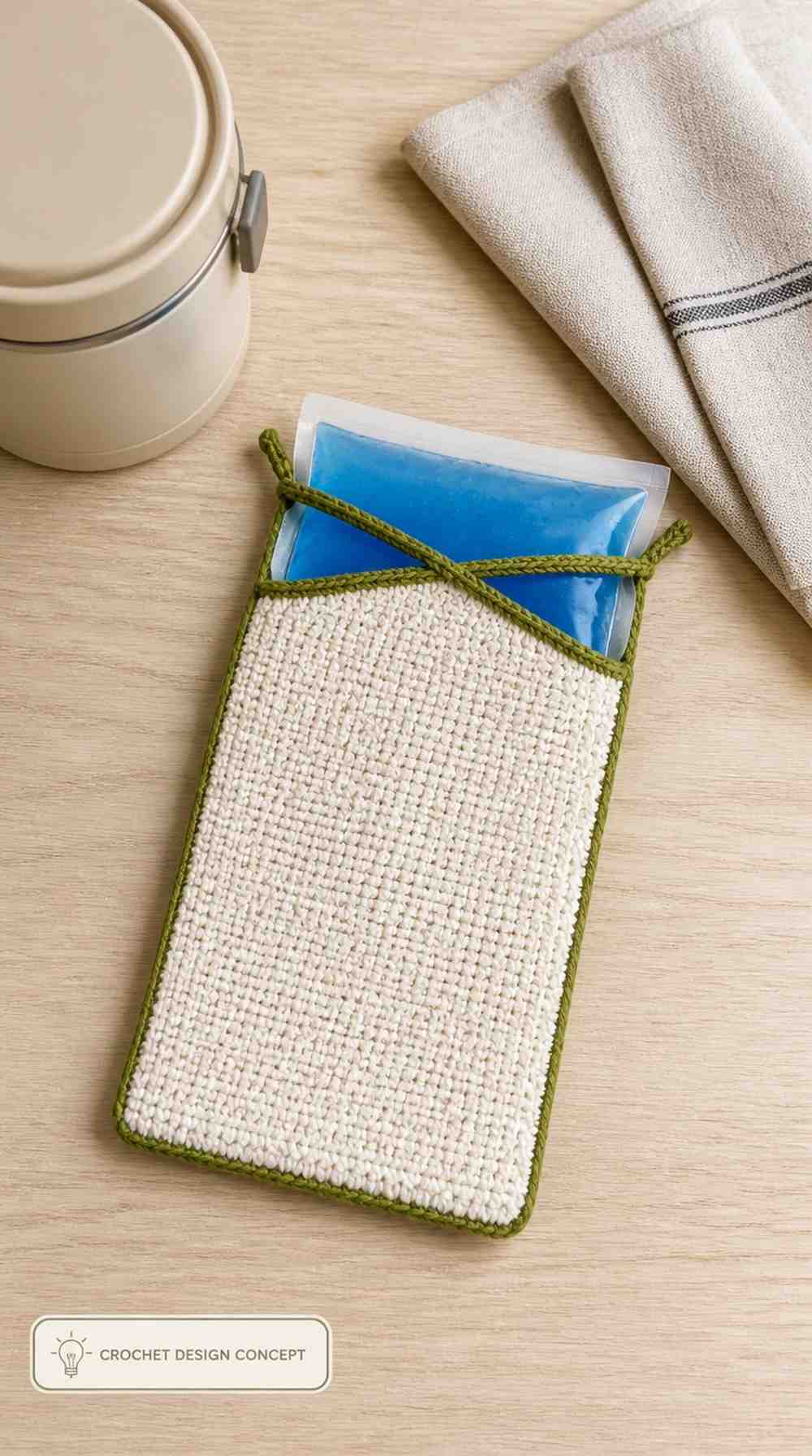
Cream cotton creates a clean, minimal sleeve with a densely stitched lower edge and narrow olive-green edging. Two short olive crochet ties extend from the upper corners, crossing over the opening to help retain a sealed transparent-blue flat ice pack.
The uncomplicated shape makes this idea visually appealing for a small ice pack that needs only a light fabric covering. Without a button flap or zipper, the closure is simple, although the corner ties must be placed carefully to keep them secure and out of the way.
- Corner reinforcement: Attach the olive ties through stable crochet stitches so repeated fastening does not pull the upper corners out of shape.
- Opening width: The sleeve should allow the frozen ice pack to slide inside without stretching the olive edging excessively.
- Tie management: Keep the cords short and securely fastened to avoid tangling with lunchbox zippers, handles or food containers.
13. Crochet Olive Roll Up Multi Size Ice Pack Cover
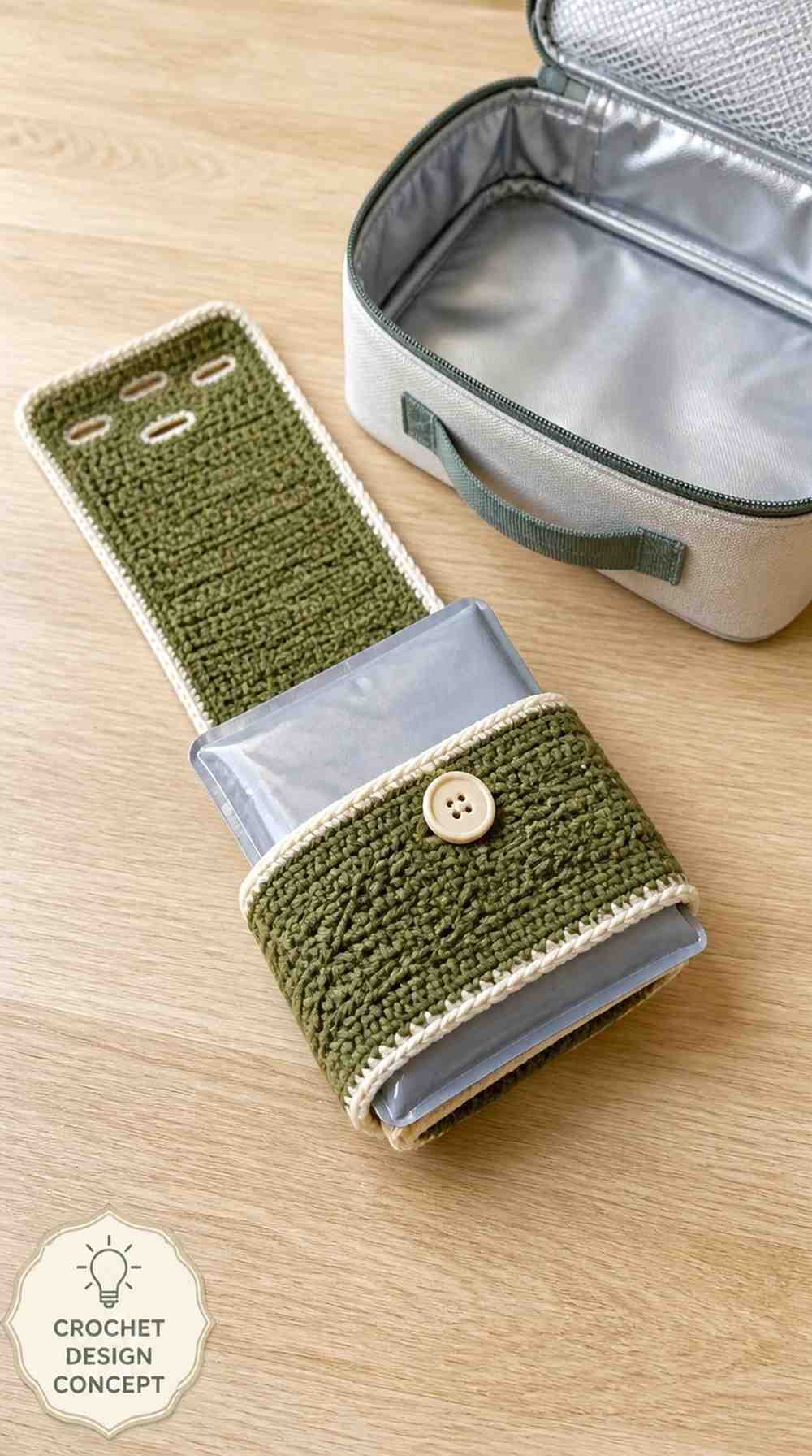
Olive-green cotton creates a long, slim adjustable wrap with shallow diagonal raised stitches. A beige backing lines the inner face, while cream edging frames the rectangular panel. Three alternative buttonhole positions provide different ways to fasten the rolled fabric around a small silver-grey sealed ice pack.
The adjustable roll-up arrangement is intended for packs with somewhat different proportions. Its main attraction is the ability to change the amount of overlap, although excess folded fabric may create unnecessary bulk in a lunchbox.
- Buttonhole spacing: Place the three closure options according to the finished wrap’s actual dimensions, not assumed universal ice pack sizes.
- Excess fabric: Keep unused overlap relatively flat. Large rolled layers may interfere with compact packing and reduce cooling effectiveness.
- Button attachment: Reinforce the cream button area so closing the wrap does not pull individual crochet stitches loose.
Practical Guide to Crochet Reusable Lunch Ice Pack Covers
A lunch ice pack cover can be a decorative removable accessory, but it should not compromise the cooling job of the sealed pack inside.
Start with the ice pack. Check its width, length, frozen thickness and shape. Rigid rectangular packs need different covers from flexible gel pouches or round cold packs. Never puncture, cut, alter or over-compress a sealed gel pack.
Choose lightweight materials. Cotton yarn may be a reasonable option for a washable crochet cover, but material thickness matters. Thick crochet, fabric lining and multiple folded layers can act as insulation, slowing heat transfer between the frozen pack and the food. A cover might therefore make an ice pack less effective at keeping a lunch cold.
Do not treat crochet as a cooling system. According to the USDA’s lunchbox food safety guidance, perishable packed lunches should be kept in an insulated bag with at least two cold sources, such as frozen gel packs or frozen drink containers. A decorative crochet cover does not replace either the insulated bag or the cold sources.
Keep the cover clean. Lunch containers can experience spills and condensation. Remove the crochet cover for washing as appropriate, follow the yarn and fastener care instructions, and let it dry completely. Never put damp crochet into long-term enclosed storage or allow it to touch unpackaged food.
Test the actual packing arrangement. If a cover is used with perishable food, check that the packed lunch stays at a food-safe temperature. Use the ice pack according to its manufacturer’s instructions and omit the cover if it interferes with the required cooling.
Want to Make Something Similar?
These 13 designs are inspiration concepts, not exact tested patterns. The following published crochet resources can help with related cover construction.
- Ice Pack Pillowcase by Cris Porter on Ravelry: A free crochet pattern for a rectangular ice pack cover that can be adapted to different sizes. Useful as a construction reference for the Sage Envelope and Dusty Blue Sleeve concepts.
- Chill Buddy Ice Pack Holder by Snappy Tots: A free crochet pattern designed around a small round cold pack, relevant to understanding the joined circular-panel shape of the Blush Daisy cover.
- Burst Stitch Ice/Hot Pack Pouch by Regina P Designs: A cotton crochet pouch pattern for square reusable packs, offering a separate reference for pouch shaping and folded flaps.
These sources teach ice pack cover techniques, but they do not establish that a crocheted cover is suitable for cooling packed food. The safety requirements for a lunchbox are different from those for holding a cold pack against the skin.
Which Crochet Lunch Ice Pack Cover Should You Choose?
The first decision is the shape of your ice pack. After that, compare how much fabric and fastening material each concept adds.
| Your priority | Designs to compare | Main consideration |
|---|---|---|
| Simple flat pouch | Sage Flat Envelope, Oatmeal Button Flap | One-button flat design versus gusseted two-button pouch |
| Narrow pack | Dusty Blue Ribbed Sleeve, Cream Corner Tie Sleeve | Open sleeve versus tied opening |
| Decorative crochet | Terracotta Lined Lace, Mustard Granny Square | Openwork with lining versus joined square motifs |
| Enclosed closure | Charcoal Zippered Case, Teal Fold Over Pocket | Zipper hardware versus folded crochet fabric |
| Adjustable fit | Lavender Adjustable Tab, Olive Roll Up Multi Size | Hook-and-loop overlap versus buttonhole options |
| Two narrow packs | Navy Twin Slim Organizer | Paired storage and cooling placement |
| Round cold pack | Blush Daisy Round Cover | Circular fit and decorative edging |
| Reversible look | Rust Reversible Stripe Wrap | Two crochet faces and added fabric thickness |
For a slim rectangular pack, the Dusty Blue Ribbed Sleeve offers one of the simpler visual approaches. The Sage Flat Envelope is another useful option when a covered flap is preferred.
If appearance is the main priority, the Mustard Granny Square and Blush Daisy designs offer stronger decorative details. But for lunches containing perishable food, proper cooling performance should always take priority over adding a crochet cover.
Conclusion
Crochet reusable lunch ice pack covers offer plenty of creative possibilities in a small format. From simple cotton sleeves and buttoned envelopes to granny-square panels, adjustable wraps and round floral cases, the 13 concepts show how different stitches and closures can change the appearance of an everyday cold pack.
The best design is one that fits the sealed pack comfortably, can be removed for cleaning and does not compromise safe food storage. A thin, uncomplicated cover may be easier to manage than a bulky layered case, and in some situations leaving the ice pack uncovered is the better option.
Which design would you choose? Do you prefer the simple Sage Flat Envelope, the decorative Mustard Granny Square Sleeve or the Blush Daisy Round Cover? Share your favorite and whether you normally use a flat, narrow or round reusable lunch ice pack.
Frequently Asked Questions
1. Can I put a crochet cover around a reusable lunch ice pack?
You can make a removable crochet cover for a sealed ice pack, but whether it is suitable for a packed lunch depends on cooling performance. Crochet fabric adds insulation and may reduce how effectively the ice pack cools nearby food. If your lunch contains perishable items, prioritize an insulated bag, adequate cold sources and safe temperatures.
2. What yarn is suitable for a reusable ice pack cover?
Smooth, washable cotton is worth considering for a removable crochet cover because it can create clear stitches and relatively lightweight fabric. Choose yarn based on its washing instructions and the intended cover thickness. Avoid assuming that thick, plush or multilayer crochet will improve cooling; it may do the opposite.
3. Should I freeze the ice pack with the crochet cover already on it?
Follow the ice pack manufacturer’s instructions. In general, freezing the sealed ice pack separately and fitting a clean cover afterward makes the cover easier to remove and inspect. Do not assume that all yarns, buttons, linings or fasteners tolerate repeated freezing or prolonged contact with condensation.
4. Can a crochet ice pack cover replace an insulated lunch bag?
No. A crochet sleeve is not a substitute for an insulated lunch bag or properly frozen cold sources. USDA guidance recommends an insulated lunchbox with at least two cold sources for perishable lunches. A crochet cover should be viewed as an optional accessory, not a proven food-cooling product.
5. Are these 13 crochet ice pack cover ideas available as exact patterns?
No. These are original design visualizations intended to inspire choices about shape, stitch texture, closure and appearance. The linked resources demonstrate related construction methods, but they are not exact instructions for the pictured designs. Any finished cover should be sized around the actual sealed ice pack and evaluated for its intended use.