Argyle crochet can take several very different forms. Traditional colorwork uses solid diamonds and crossing lines, modular construction builds the geometry from separate pieces, and planned pooling manipulates repeating colors in variegated yarn to create diagonal formations. There are also diamond-textured and openwork sweaters that keep the geometric character while avoiding classic multicolor argyle.
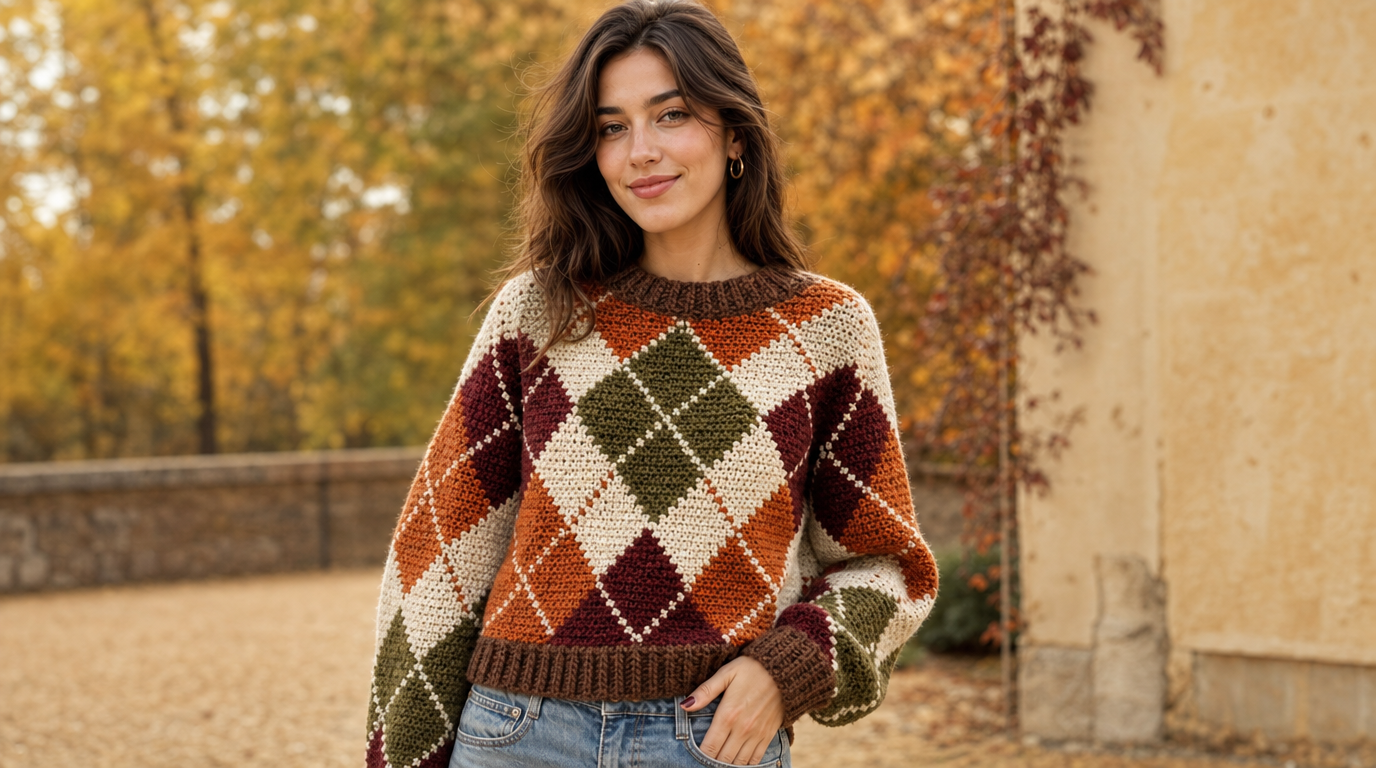
The 18 ideas below cover sweater vests, full pullovers, cardigans, an elongated sweater-dress silhouette, and lighter diamond-based layers. Some sources teach true argyle directly; others teach a closely related diamond garment that is useful when you want the visual rhythm of argyle without reproducing traditional lattice colorwork. For each, the original tutorial remains the place to confirm sizing, materials, gauge, and exact construction.
Quick List
- Crochet Classic V-Neck Argyle Sweater Vest
- Crochet Oversized Burgundy Argyle Sweater Vest
- Crochet Patchwork Diamond Argyle Sweater Vest
- Crochet Modular Diamond Sweater Vest
- Crochet Full-Sleeve Diamond Argyle Pullover
- Crochet Planned-Pooling Argyle Cardigan Jacket
- Crochet Winter Planned-Pooling Argyle Cardigan
- Crochet Off-Shoulder Planned-Pooling Sweater Dress
- Crochet Button-Front Two-Tone Diamond Cardigan
- Crochet Granny-Diamond V-Neck Pullover
- Crochet Filet-Diamond Long Cardigan
- Crochet One-Piece Diamond-Eyelet Cardigan
- Crochet Made-to-Measure Argyle Sweater Vest
- Crochet Two-Tone Jacquard Diamond Sweater
- Crochet Multicolor Lace-Diamond Fall Sweater
- Crochet Long Diamond Vest for Layering
- Crochet Openwork Diamond Sweater Vest
- Crochet Argyle Intarsia Sleeveless Sweater Top
Choose the Argyle Construction Before Choosing Yarn
Traditional intarsia or tapestry-style argyle gives you the clearest control over where every diamond sits, but it also requires careful color management. Modular versions shift the challenge toward making repeated pieces consistent and joining them neatly. Planned pooling removes repeated manual color changes, yet it introduces a different constraint: the yarn’s color sequence, stitch width, and tension have to cooperate for the diagonal pattern to stay aligned. The Knotty Lace’s cardigan is a good example of that planned-pooling approach.
Diamond lace and filet projects are different again. They create geometric outlines through stitch placement rather than contrasting color blocks. If your main goal is the fall argyle mood rather than a strict reproduction of classic argyle fabric, they can provide a lighter, less color-change-heavy alternative. Treat those projects as intentionally argyle-inspired rather than as traditional argyle.
Plan Fit and Diamond Placement Together
Garment fit and motif placement should be planned at the same time. On a V-neck vest, the center front and point of the neckline become strong visual reference lines; a slightly shifted diamond can therefore look more obvious than a modest difference elsewhere in the garment. Large patchwork diamonds also need enough uninterrupted panel space to remain readable.
Before changing the width, length, or ease of a tutorial, compare the proposed adjustment with the motif repeat. A shorter body may need fewer diamonds rather than compressed ones, while a wider garment may need an additional repeat or more background space at each side. For fitted or layered pieces, also compare the tutorial’s finished measurements with what you intend to wear underneath. Yarn substitutions can change both gauge and drape, so swatch before assuming the original motif proportions will survive a fiber or weight change.
1. Crochet Classic V Neck Argyle Sweater Vest
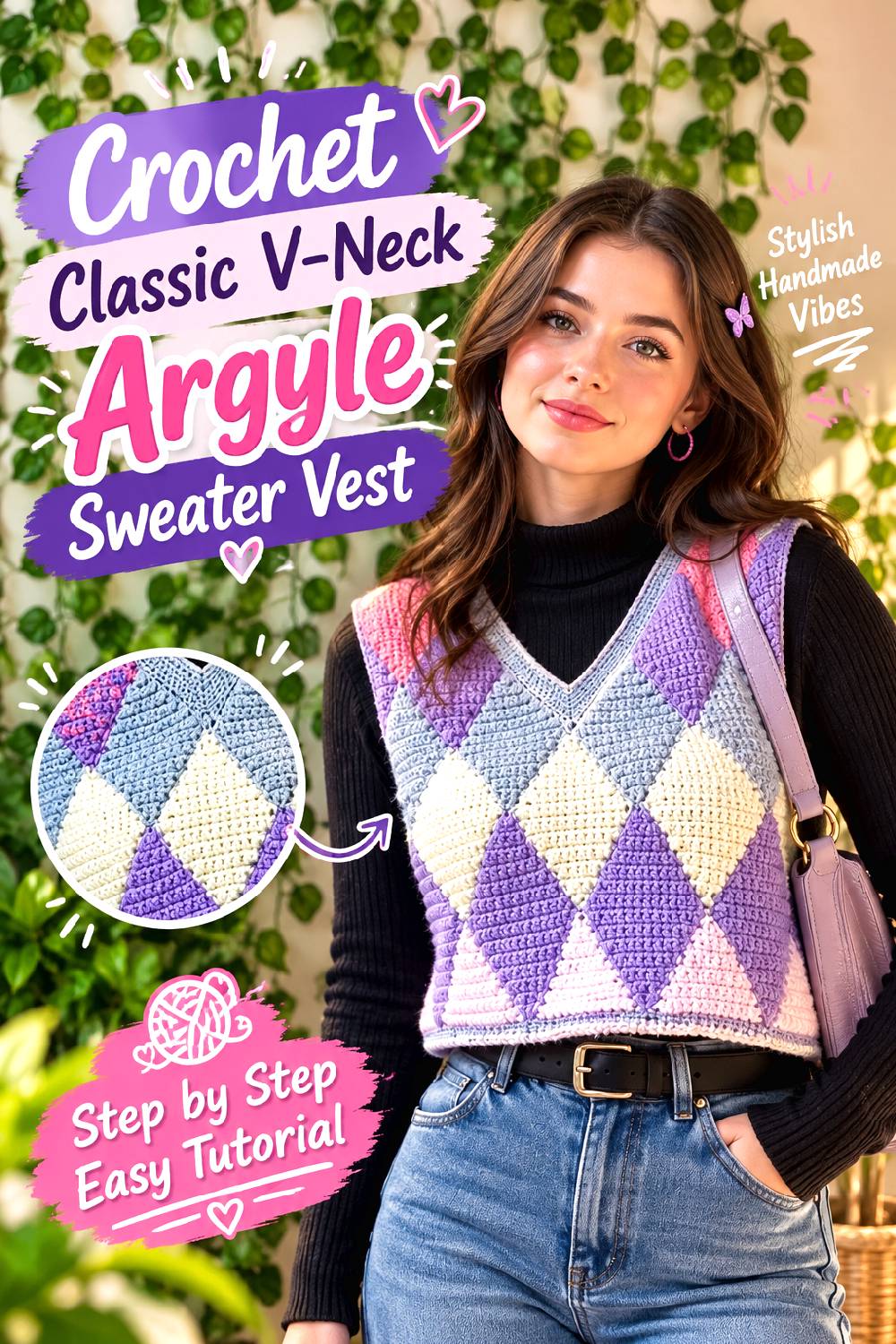
This version is the clearest starting point for the recognizable crochet argyle sweater-vest look. The sleeveless V-neck shape keeps attention on the diamond arrangement, while contrasting colors give the front a strong vintage-schoolwear character. The source from flotjetops specifically teaches an argyle sweater vest rather than a generic vest adapted afterward.
Choose this direction when you want the motif itself to carry the design. Because there are no sleeves competing for attention, it also works well for experimenting with a more restrained autumn palette such as espresso, oatmeal, rust, or moss.
Centering Matters More Than Color Quantity
A successful front does not need many colors, but the main diamond layout should look intentional beside the V-neck. If you alter the width, check the visual center again rather than simply adding background stitches to one edge. A symmetrical garment can still appear crooked when the geometric pattern is visually off-center.
Decide How Much Layering Room You Need
A sweater vest worn over a crisp shirt needs different ease from one worn directly over a thin tee. Compare your intended layering piece with the tutorial’s finished dimensions before committing to size changes. Pay particular attention to armhole depth and shoulder width because overly tight openings can make an otherwise attractive vest difficult to layer.
Keep the Trim From Competing With the Motif
Strong diamonds already create considerable visual movement. A restrained neckline, armhole, and hem treatment usually lets that geometry remain dominant. If you change trim depth or color, lay the developing garment flat and judge the overall proportion before adding more decorative detail.
Original Tutorial and Creator Credit
Creator: flotjetops
2. Crochet Oversized Burgundy Argyle Sweater Vest
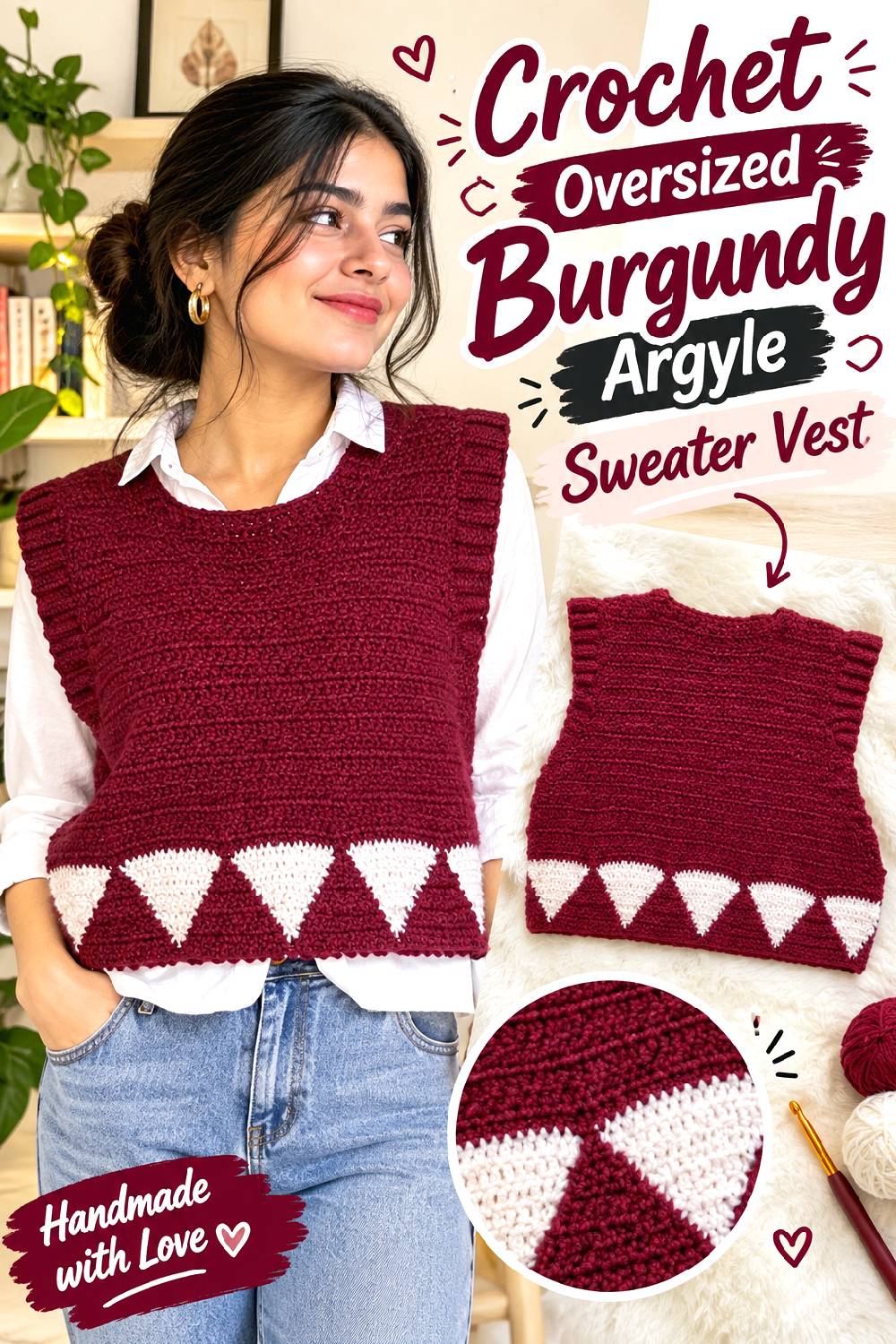
A roomier silhouette shifts argyle away from neat school-uniform styling and toward a relaxed fall layer. The mytearsarecrocheting tutorial demonstrates an oversized diamond-motif vest and covers the front and back panels, assembly, border, and ribbing at a high level.
The added width gives large diamonds more breathing room and makes this a useful direction for wearing over turtlenecks or long-sleeve shirts. Burgundy, oxblood, dark cherry, chocolate, and muted cream suit this proportion particularly well because the strong motif already supplies plenty of visual contrast.
Oversizing Should Include the Shoulders
Adding width only through the body can leave the shoulder area visually narrow. When adapting any vest for a deliberately oversized result, compare body width, shoulder coverage, neckline width, and armhole depth as a group. The best adjustment is not necessarily a larger number of stitches everywhere.
Large Diamonds Magnify Small Placement Errors
A broad motif is easier to see from across a room, which also means any irregular spacing becomes easier to notice. Lay the front flat periodically and check the relationship among the hem, side edges, and main diamond centers before proceeding into neckline shaping.
Original Tutorial and Creator Credit
Creator: mytearsarecrocheting
3. Crochet Patchwork Diamond Argyle Sweater Vest
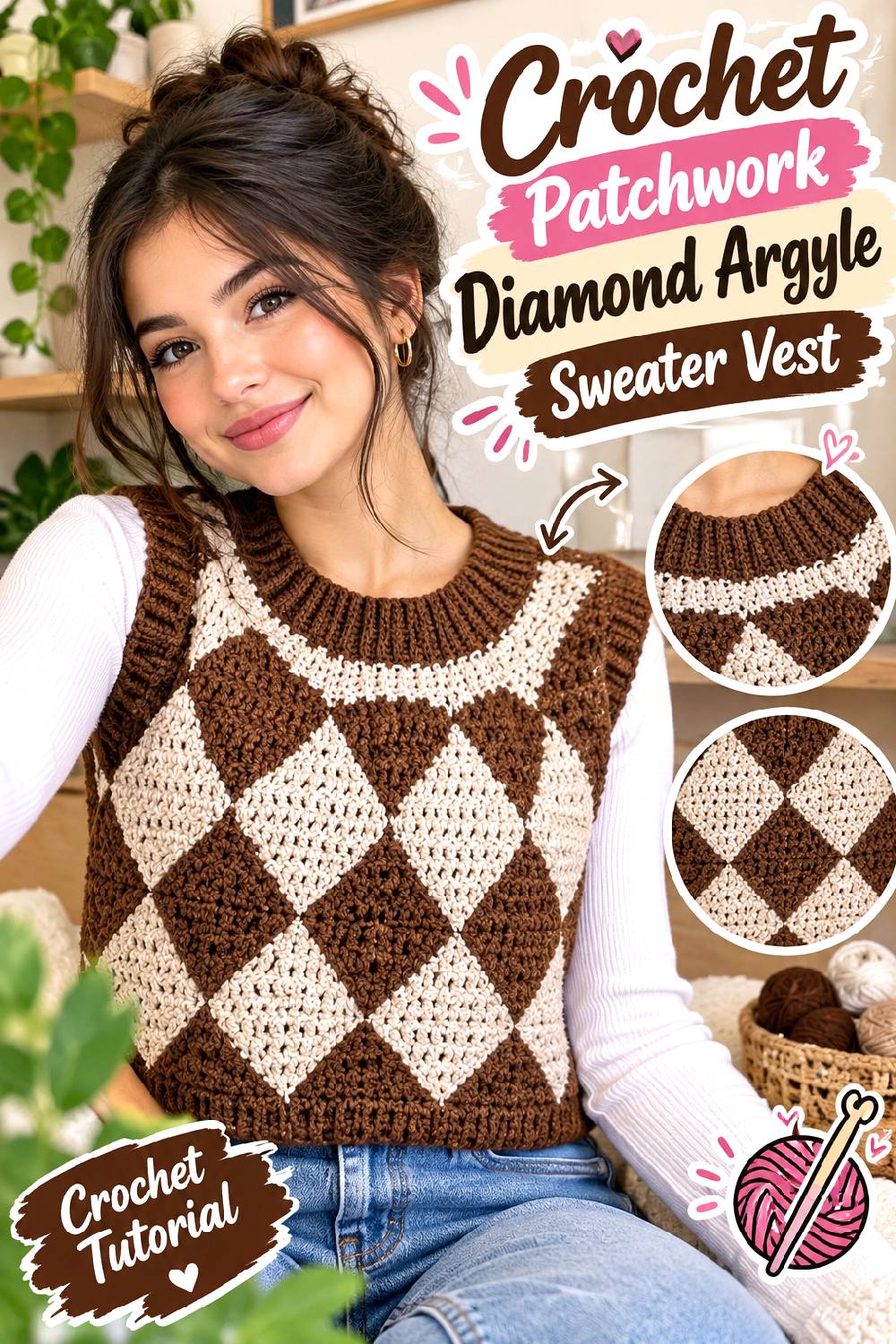
Cherilyn Q’s tutorial approaches the oversized argyle vest through separate diamond and triangular pieces, making the construction visually different from continuous-row colorwork. The tutorial specifically identifies the finished project as an oversized V-neck argyle sweater vest and shows the patch arrangement, neckline, armholes, and lower finishing.
This modular direction suits crocheters who would rather repeat manageable shapes than handle several active color sections across a wide row. It also gives the garment a more handmade patchwork identity because the geometry exists physically in the construction.
Lay Out Every Piece Before Joining
Modular colorwork gives you unusual freedom to rearrange colors, but the safest time to evaluate the composition is before joining. Place the pieces in their intended front and back positions and check for accidental color clustering, awkward half-diamonds, and a visual center that conflicts with the neckline.
Watch the Cumulative Effect of Seams
Each individual motif may measure correctly while the assembled panel ends up larger or firmer than expected. Joining method and seam tension can affect the final width and drape. Compare an assembled section with your target garment measurements before connecting the entire body.
Use the Neckline to Simplify the Layout
The V-neck naturally interrupts the upper diamonds, so the cleanest solution is not always to force every motif to remain complete. Let the garment silhouette guide which partial shapes are needed and follow the original tutorial for its construction rather than improvising the neckline from a flat grid.
Original Tutorial and Creator Credit
Creator: Cherilyn Q
4. Crochet Modular Diamond Sweater Vest
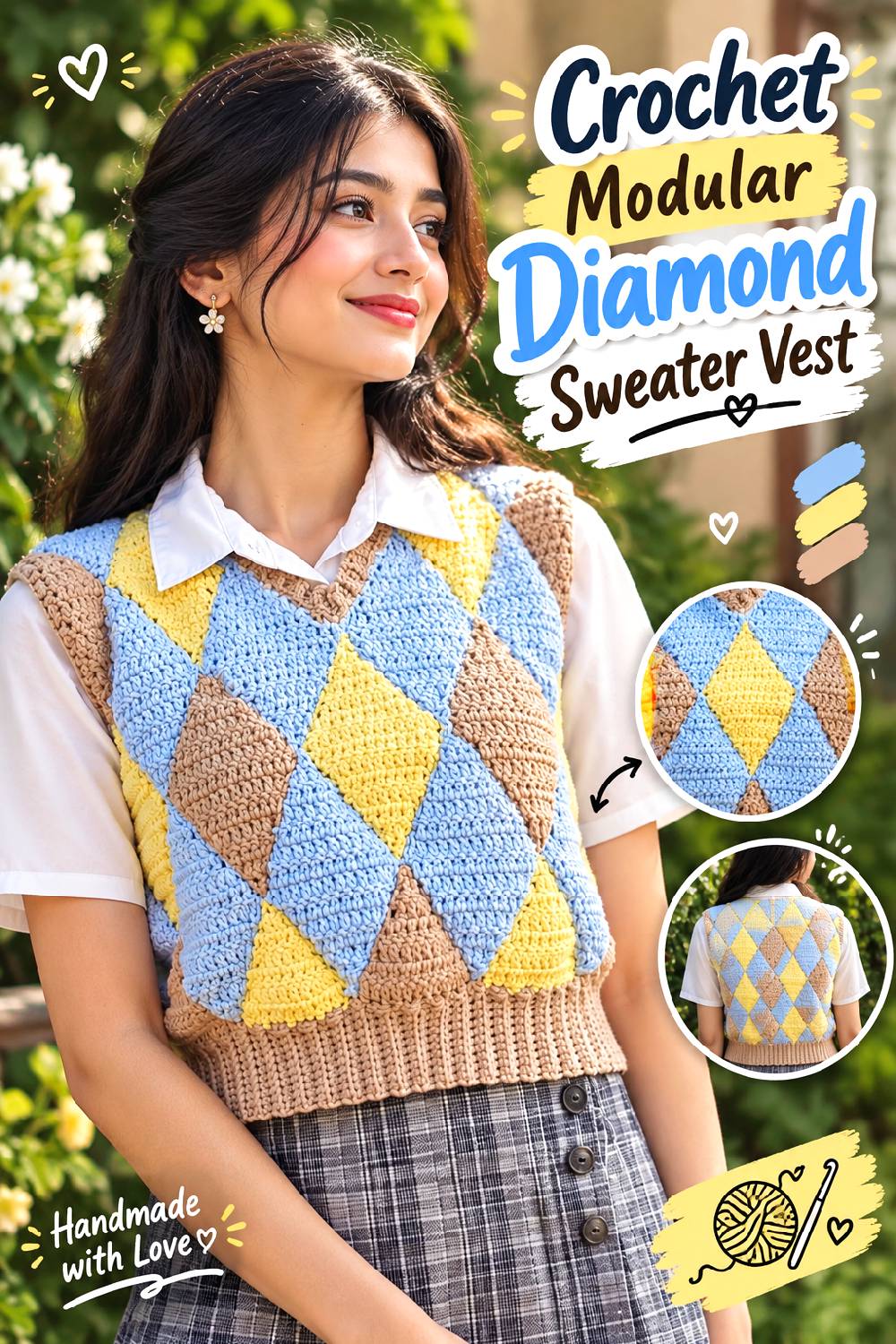
Chenda DIY’s diamond vest offers another modular interpretation, with the creator explicitly crediting flotjetops as the pattern inspiration. The finished garment relies on repeated diamond pieces rather than a small all-over lattice, giving it a bold color-blocked appearance.
Use this idea when large shapes appeal more than fine traditional argyle lines. The reduced number of motifs makes color selection especially important because every diamond occupies substantial visual space. Three or four earthy shades can make the piece feel autumnal without requiring a complicated palette.
Give Dominant Colors Enough Separation
With large diamonds, neighboring colors can blend visually when their values are too similar. Before buying an entire sweater quantity, place the chosen yarns beside one another in daylight and decide whether you want crisp separation or a more tonal effect.
Consistency Beats Speed in Repeated Motifs
A small difference in one motif can become a larger alignment problem once several pieces meet. Compare completed diamonds against one another periodically. If one begins drifting noticeably in size, correcting the cause early is easier than forcing uneven pieces together during final assembly.
Original Tutorial and Creator Credit
Creator: Chenda DIY
5. Crochet Full Sleeve Diamond Argyle Pullover
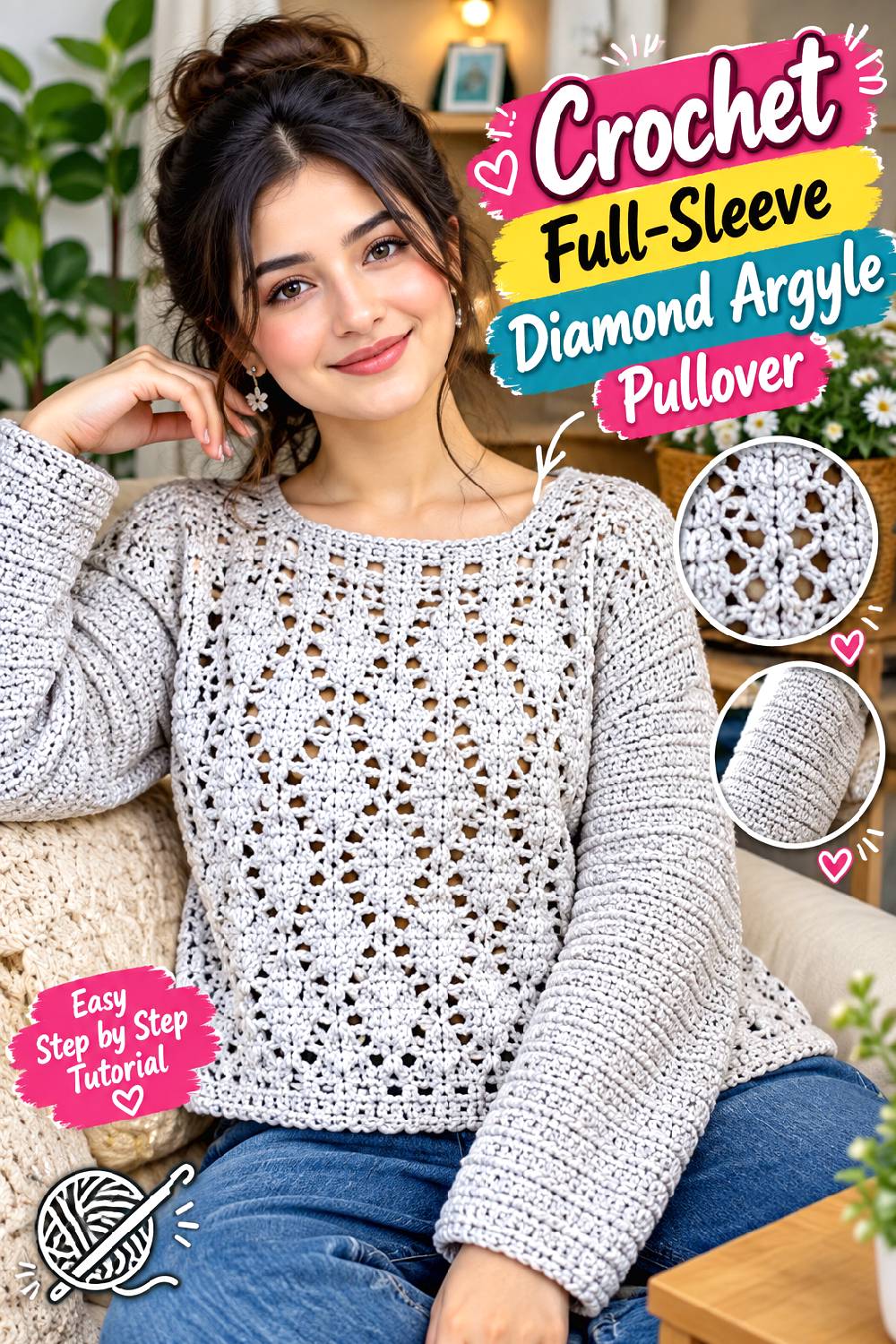
A long-sleeve pullover carries diamond geometry over a much larger garment than a vest, so it feels more substantial for fall. Zaina Crochet’s 2026 tutorial begins with the diamond pattern and the front and back pieces, with the video linking onward to the second part of the sweater construction.
This direction works for readers who want the graphic impact of argyle in an actual sweater rather than a layering vest. Long sleeves also let you choose whether the diamonds should remain concentrated on the body or visually continue through additional parts of the garment.
Keep Body Fit Separate From Motif Ambition
Do not add more diamonds merely because you want a wider sweater. First decide how much ease the garment needs, then determine how the pattern can fit within that width. Preserving recognizable diamond proportions is generally more convincing than stretching a motif horizontally to occupy extra space.
Check Sleeve Weight Before Extending Colorwork
Multiple colors, carried yarn, or dense colorwork can add bulk. If you plan to extend a body motif into the sleeves beyond what the source shows, make a representative swatch and consider how the fabric feels when hanging vertically. Extra visual detail is not worthwhile if the sleeves become uncomfortably rigid.
Original Tutorial and Creator Credit
Creator: Zaina Crochet
6. Crochet Planned Pooling Argyle Cardigan Jacket
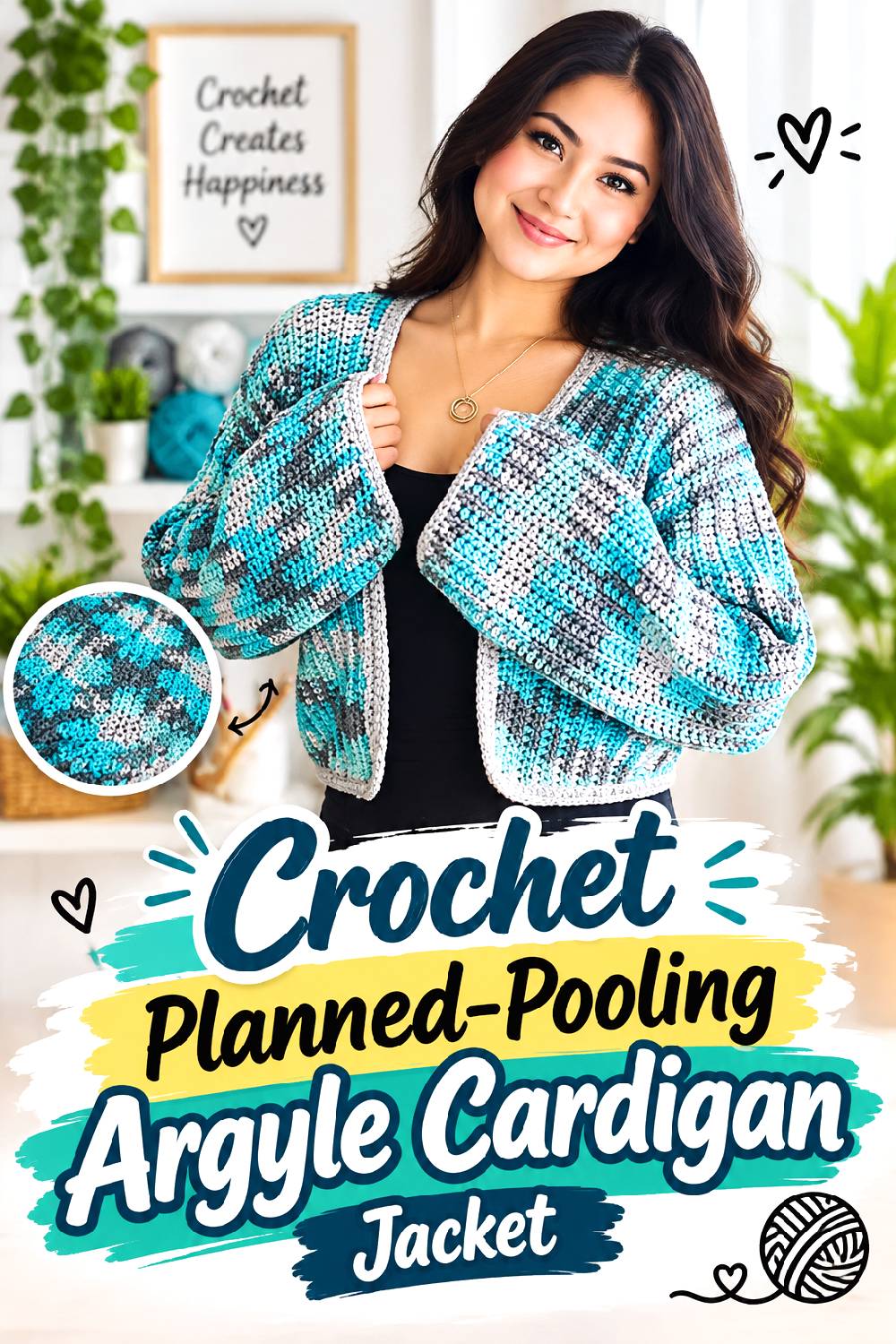
This cardigan replaces repeated manual color changes with planned pooling. The Knotty Lace explains that the argyle effect is produced by controlling the color sequence in pooling yarn, and the garment is built from straightforward shapes before being assembled into a jacket-style cardigan.
The result has a completely different character from patchwork argyle. Instead of clean individual color blocks, the yarn’s repeating sequence creates diagonal movement across the fabric. This is an appealing route when you enjoy technical tension control and want a cardigan rather than a pullover.
Swatch for the Pattern, Not Just the Size
Ordinary garment swatching asks whether your fabric matches the required dimensions. Planned pooling adds a second question: does the color sequence align correctly? A swatch can be dimensionally accurate while the planned pattern drifts, so both measurements and color placement need checking before beginning a full panel.
Rectangular Construction Helps the Pooling Stay Predictable
Straight sections are friendly to planned pooling because the working width remains stable. Heavy shaping can disturb the color sequence. If you alter the silhouette, consider where the pooled fabric should remain rectangular and where separate solid-color shaping or finishing might be more manageable.
Treat Yarn Substitution as a Major Change
A different variegated yarn may have different color lengths and sequence consistency even when the weight seems comparable. Do not assume that another skein will reproduce the same argyle automatically. Test the complete repeat and be prepared to adjust tension or project planning.
Original Tutorial and Creator Credit
Creator/Site: The Knotty Lace
7. Crochet Winter Planned Pooling Argyle Cardigan
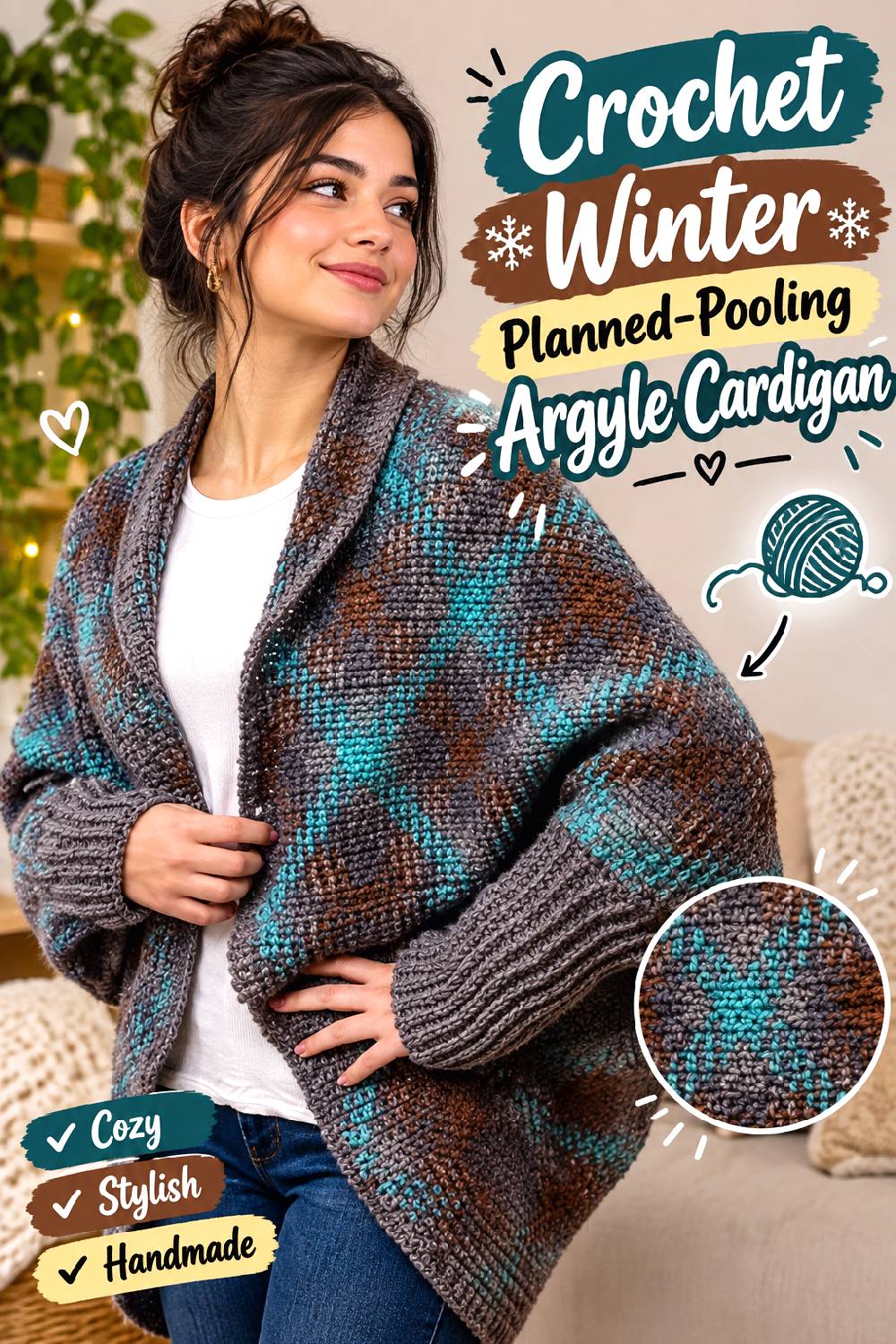
The yarn diary video offers another cardigan route using planned pooling, presented specifically as a winter cardigan/jacket. That makes it useful for comparing how the same broad technique can be translated into a different garment presentation and finishing style.
For Fall 2026, this is an interesting choice if you want the argyle effect to read more like multicolored fabric than carefully outlined individual diamonds. The major design decision is whether the pooling should dominate the entire garment or be balanced with quieter edging and sleeves.
Photograph the Swatch From a Distance
Planned pooling often looks more coherent when viewed from several feet away than when examined stitch by stitch. A quick photo can reveal whether the diagonals are developing evenly and whether a color unexpectedly dominates the overall composition.
Expect Tension Adjustments to Be Part of the Technique
When the color sequence starts slipping out of alignment, continuing with identical tension may make the drift worse. Planned pooling commonly requires active control. Review the source method rather than trying to force the motif into place through arbitrary increases or decreases that could change the garment dimensions.
Original Tutorial and Creator Credit
Creator: yarn diary
8. Crochet Off Shoulder Planned Pooling Sweater Dress
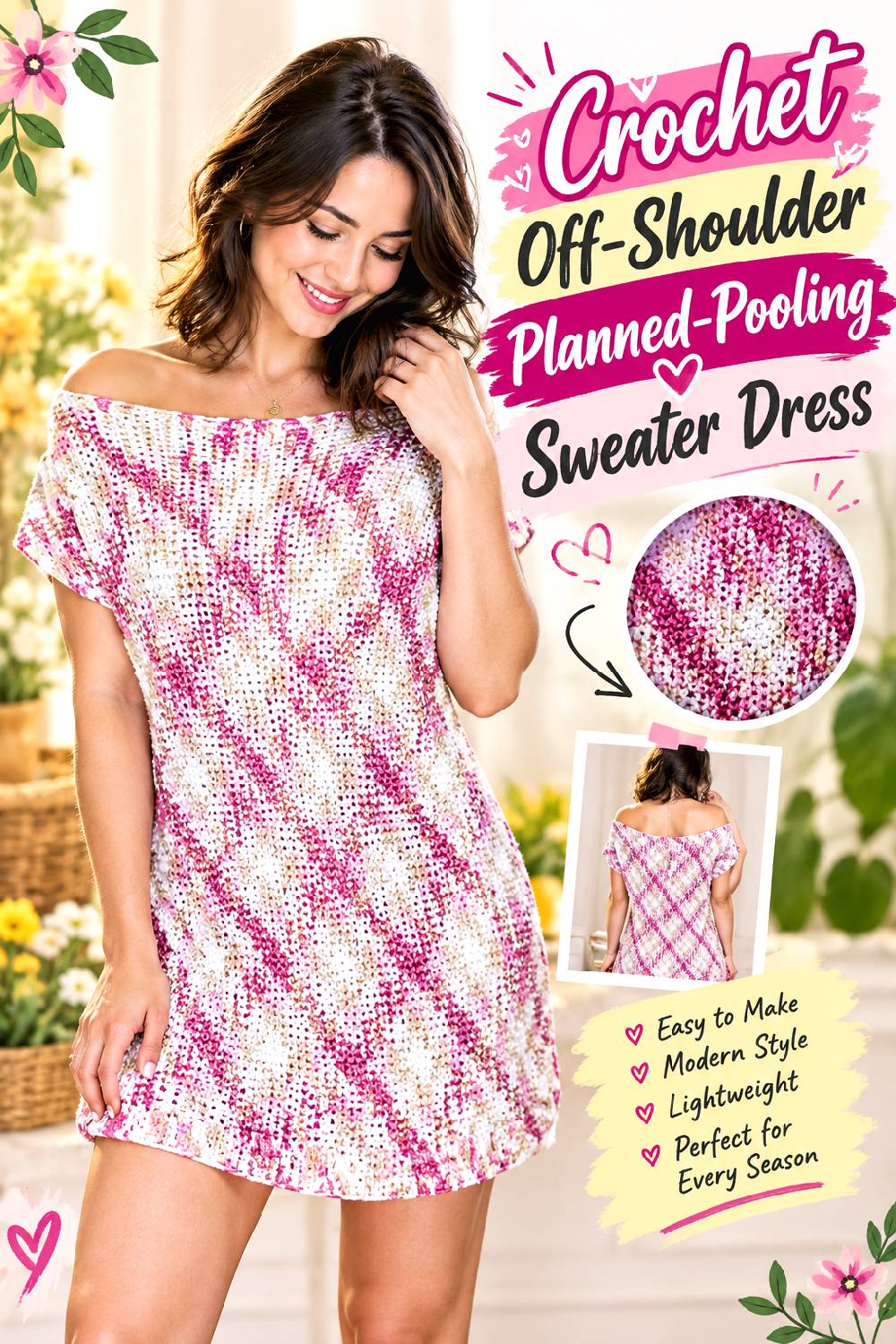
An elongated off-shoulder sweater changes the proportions dramatically. The Knotty Lace uses planned pooling in this oversized sweater-dress design, creating a longer canvas for repeating color movement than a cropped cardigan or vest provides.
This idea is best viewed as an argyle-adjacent planned-pooling garment rather than a conventional V-neck argyle sweater. It suits readers who care more about the diagonal pooled effect and dramatic silhouette than about reproducing classic golf-sweater styling.
Long Garments Amplify Pattern Drift
A small pooling error repeated over a long body can become increasingly visible. Check the color progression periodically instead of waiting until the garment is nearly complete. If the pattern begins migrating, consult the planned-pooling guidance before adding significant additional length.
Shoulder Drape Changes the Fit Checkpoints
An off-shoulder garment is intentionally different from a standard crew or V-neck sweater. Width near the neckline and upper body affects where the piece sits, while the extra body length affects weight and drape. Do not use the fit logic of a conventional pullover when adapting this silhouette.
Original Tutorial and Creator Credit
Creator/Site: The Knotty Lace
9. Crochet Button Front Two Tone Diamond Cardigan
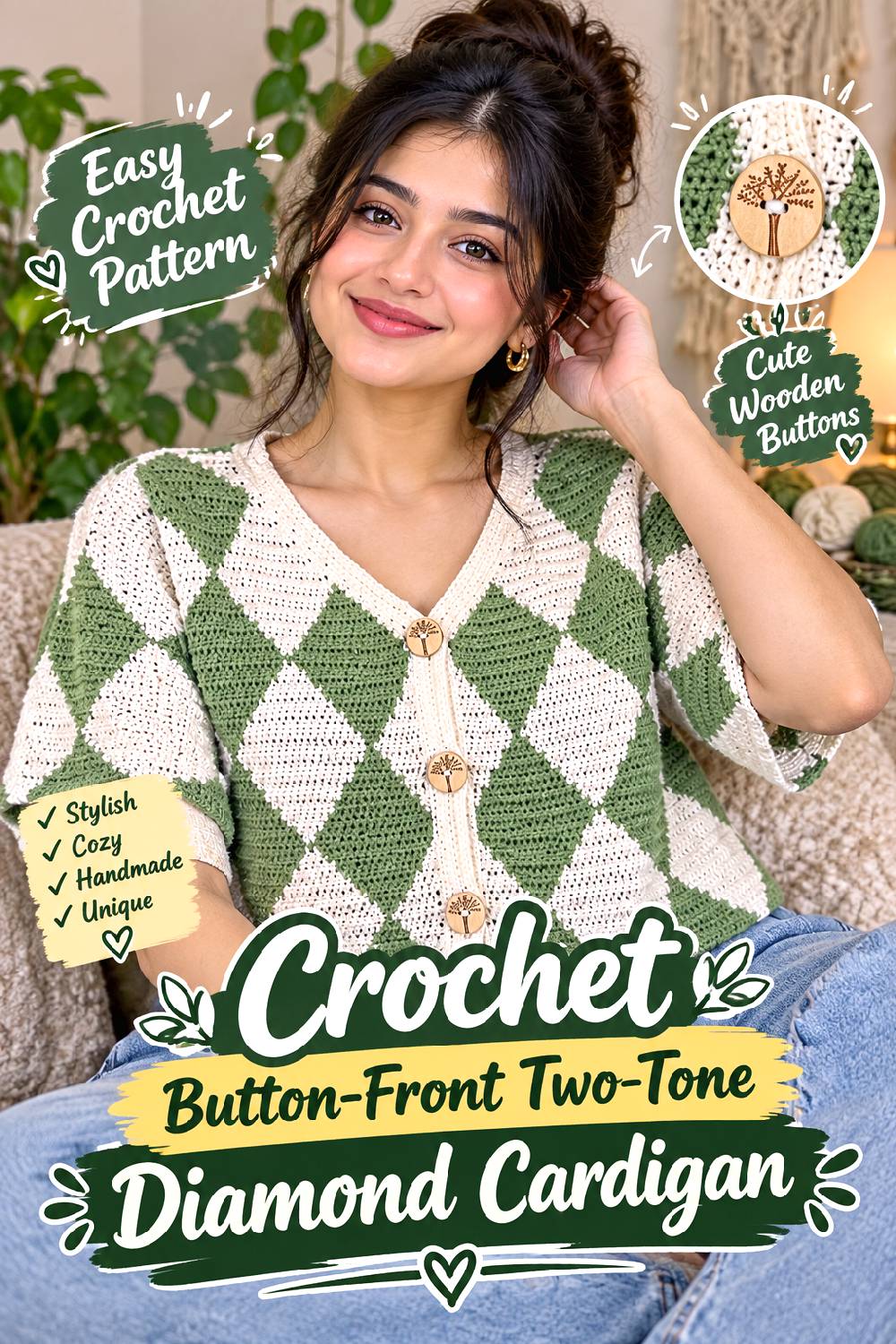
Crochet With Hannah’s cardigan uses a clearly visible two-color diamond design across a button-front sweater. The tutorial covers separate front panels, back, sleeves, joining, edging, and buttonholes, giving this idea a more structured cardigan identity than the open planned-pooling options above.
A button band divides the geometric design vertically, so the arrangement must work both as two separate fronts and as a combined pattern when the cardigan is closed. That design problem is exactly what makes this variation interesting.
Decide Whether the Two Fronts Should Mirror
Mirrored diamonds make the closed cardigan feel formal and balanced. Intentionally different arrangements can look more contemporary, but the asymmetry should be obvious enough to read as deliberate. Sketch both fronts side by side before starting extensive colorwork.
Buttons Add Another Alignment Line
Geometric colorwork, neckline edges, and button placement all create visible reference points. If you substitute different button sizes or alter the front band, check that the closures do not distort the patterned panels when fastened.
Original Tutorial and Creator Credit
Creator: Crochet With Hannah
10. Crochet Granny Diamond V Neck Pullover
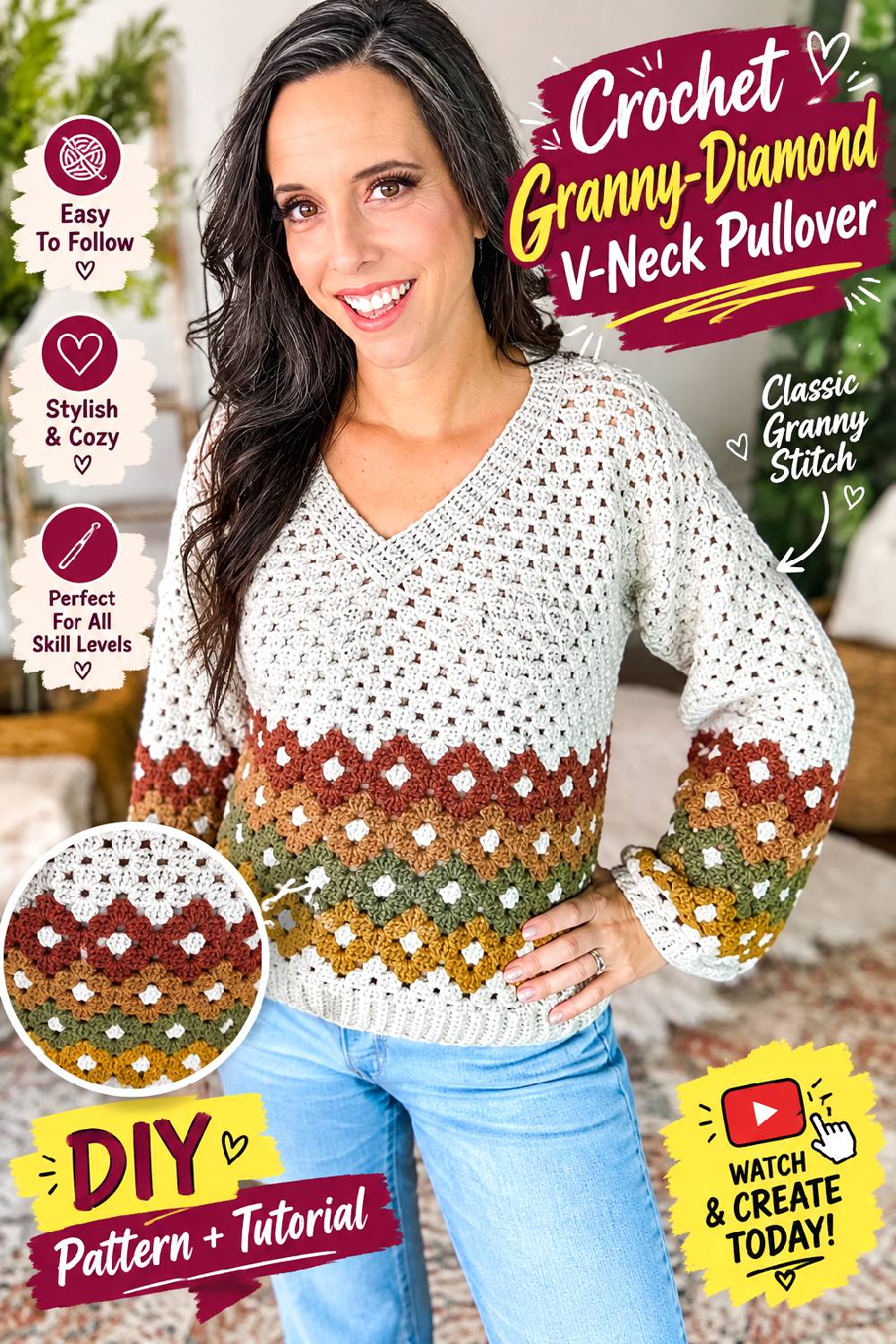
Briana K Designs’ Shades of Diamonds Pullover uses granny-style colorwork to create prominent diamonds and pairs them with a V-neck pullover silhouette. The pattern page identifies bottom-up construction and diamond colorwork worked in the round.
The effect is more contemporary and blocky than fine traditional argyle. That makes it a strong choice for fall when you want geometric color without delicate crossing lattice lines. Multiple accent shades can also give the diamonds a gradual, collected-over-time palette rather than a strict three-color uniform.
Granny Texture Softens Sharp Geometry
Argyle is normally associated with clean, crisp lines. A granny-based structure introduces small gaps and a more relaxed surface. Embrace that difference rather than trying to make the fabric imitate tightly knit argyle exactly.
V-Neck Proportion Should Lead the Upper Motifs
When the neckline begins shaping, the available space for complete diamonds changes. Preserve the neckline first and let the pattern respond to the garment rather than sacrificing fit to keep every motif whole.
Original Tutorial and Creator Credit
Creator/Site: Briana K Designs
11. Crochet Filet Diamond Long Cardigan
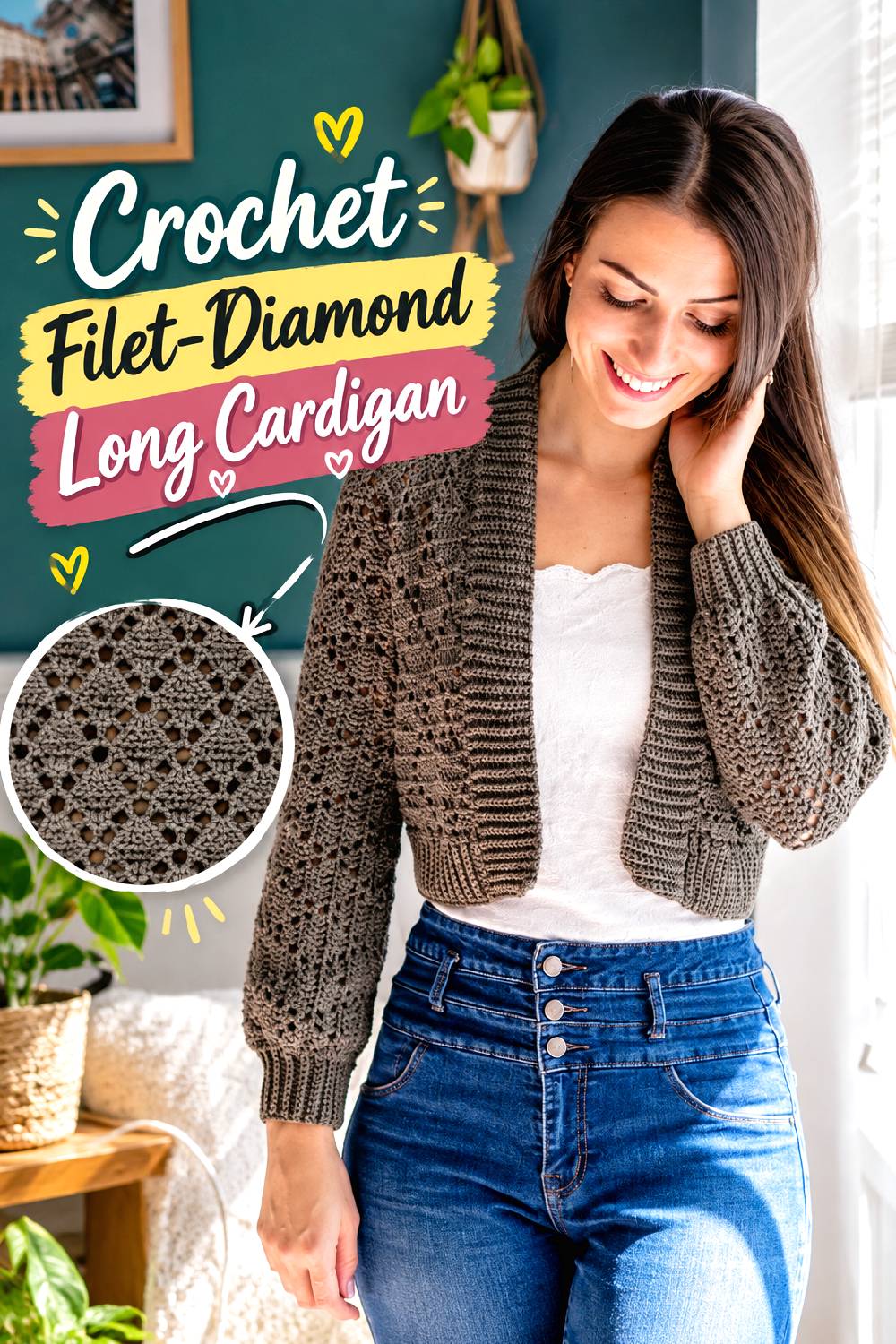
This Briana K Designs cardigan uses filet-style diamond openings rather than contrasting argyle blocks. It is therefore an argyle-inspired option for readers who want geometric repetition without managing several yarn colors. The original pattern offers multiple finished bust sizes and notes that the cardigan is worked flat before seaming.
The diamonds appear through negative space, so a contrasting shirt worn underneath becomes part of the finished look. For early fall, that gives you a way to echo argyle geometry while keeping the fabric more breathable.
Let the Underlayer Supply the Contrast
Open diamond fabric changes appearance depending on what sits beneath it. A dark cardigan over a light shirt can make the motif much more pronounced than tone-on-tone layering. Consider the garments already in your wardrobe before choosing yarn color.
Length Changes the Drape
Longer openwork fabric carries more weight and may stretch differently from a cropped cardigan. If you adjust the length, compare the developing fabric after it has had time to hang rather than judging only from a flat measurement.
Original Tutorial and Creator Credit
Creator/Site: Briana K Designs
12. Crochet One Piece Diamond Eyelet Cardigan
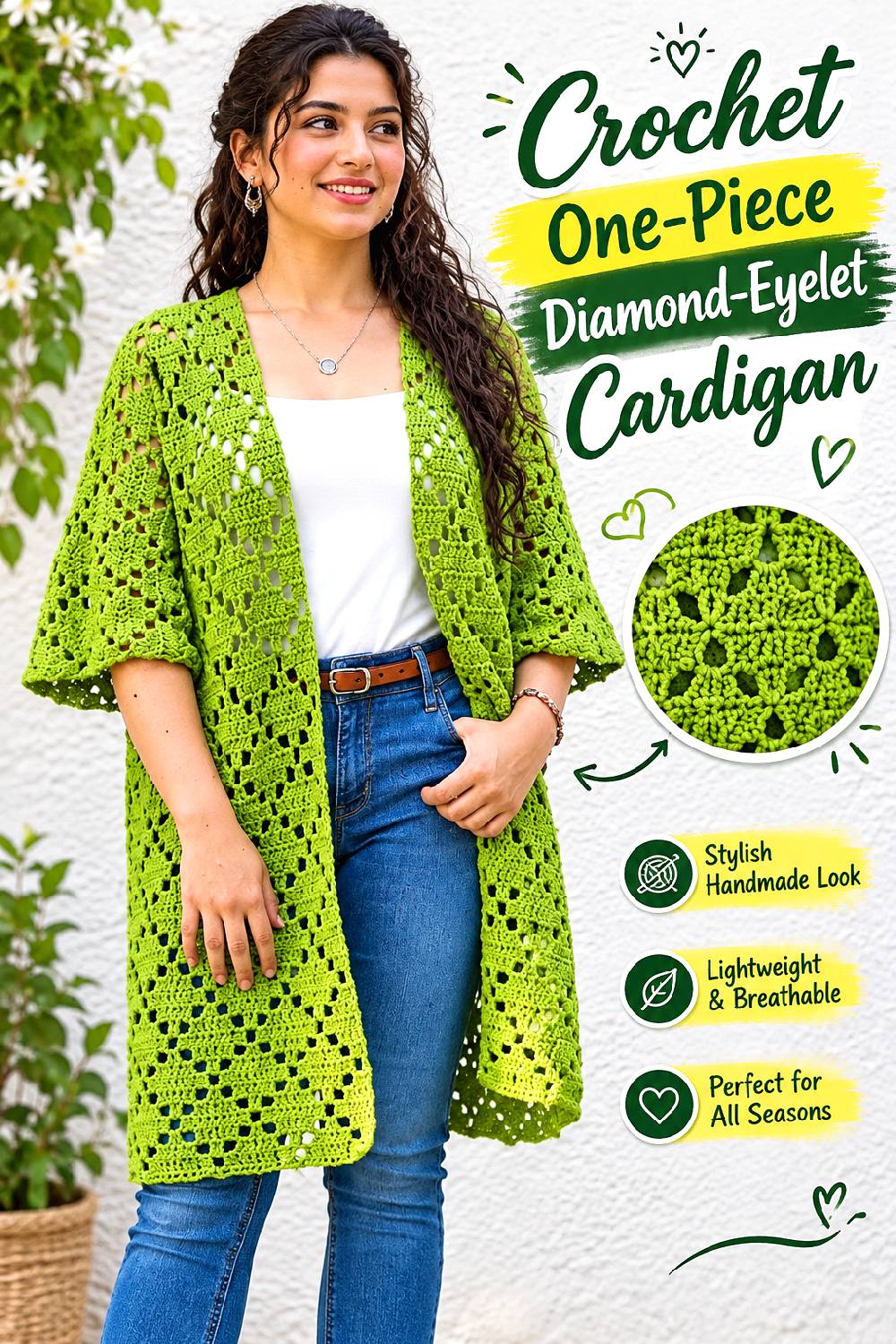
Yay For Yarn’s Diamond Cardigan creates repeated eyelet diamonds in an oversized, loose-fitting garment constructed from a modified rectangle. The pattern is designed as a breathable cardigan and provides grouped sizing through 5X.
Its strength for this roundup is simplicity of color. The visual geometry comes from holes in the fabric rather than multiple skeins of contrasting yarn. For a Fall 2026 wardrobe, layer it over a fitted turtleneck or long-sleeve top so the diamond shapes remain visible while the outfit gains warmth.
Oversized Does Not Mean Dimension-Free
Even a forgiving rectangular cardigan benefits from checking finished bust and length. An intentionally loose garment can still become overwhelming if both width and length are increased without considering the wearer’s height and preferred layering proportions.
Blocking Controls the Diamond Definition
Openwork motifs may look uneven while the fabric is still in progress. Follow the designer’s finishing guidance before deciding that individual diamonds are misshapen. At the same time, do not over-stretch the fabric simply to force larger openings.
Original Tutorial and Creator Credit
Creator/Site: Yay For Yarn
13. Crochet Made to Measure Argyle Sweater Vest
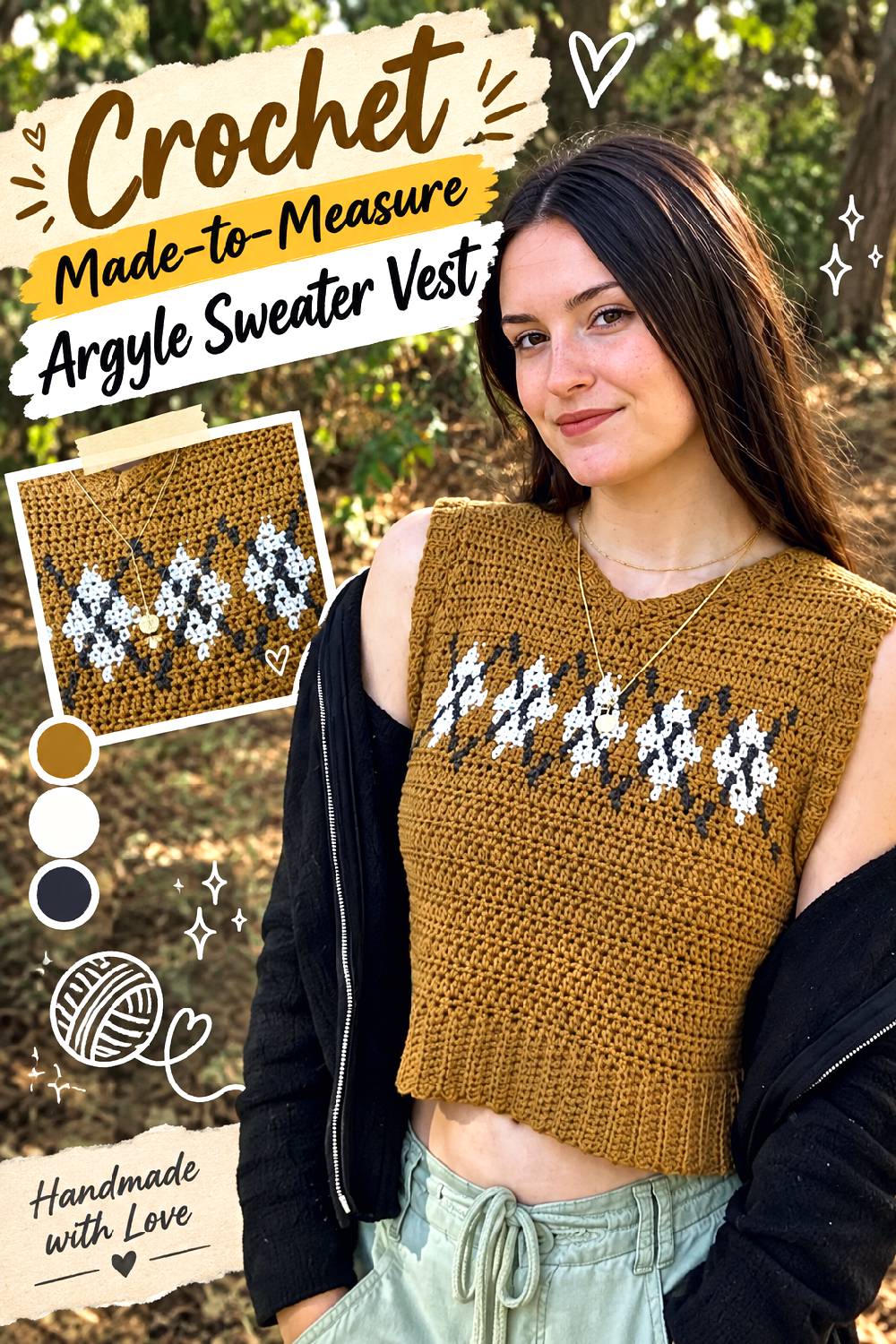
FrancesLeahCrochet’s Argyle Vest, hosted by Lion Brand, focuses on customization through body measurements and uses colorwork/tapestry crochet. The listing identifies the design as made-to-measure rather than confined to a small fixed size range.
That makes this a practical idea when standard sweater-vest grading does not line up well with your proportions. It also gives you more reason to think of the diamonds as part of the sizing plan, because changing the finished width can affect how much of the motif appears across the front.
Take Measurements Over the Intended Base Layer
If you plan to wear the vest over shirts or fine sweaters, measure with a comparable layer on. This gives a more realistic target than using bare-body measurements and then discovering that the finished armholes or chest feel restrictive.
Made-to-Measure Still Requires a Stable Swatch
Customization is not a substitute for gauge. The calculations rely on your fabric behaving predictably, and tapestry-style colorwork can tighten compared with plain crochet. Make a swatch that actually includes representative color changes rather than testing only the background stitch.
Original Tutorial and Creator Credit
Creator/Site: FrancesLeahCrochet / Lion Brand Yarn
14. Crochet Two Tone Jacquard Diamond Sweater
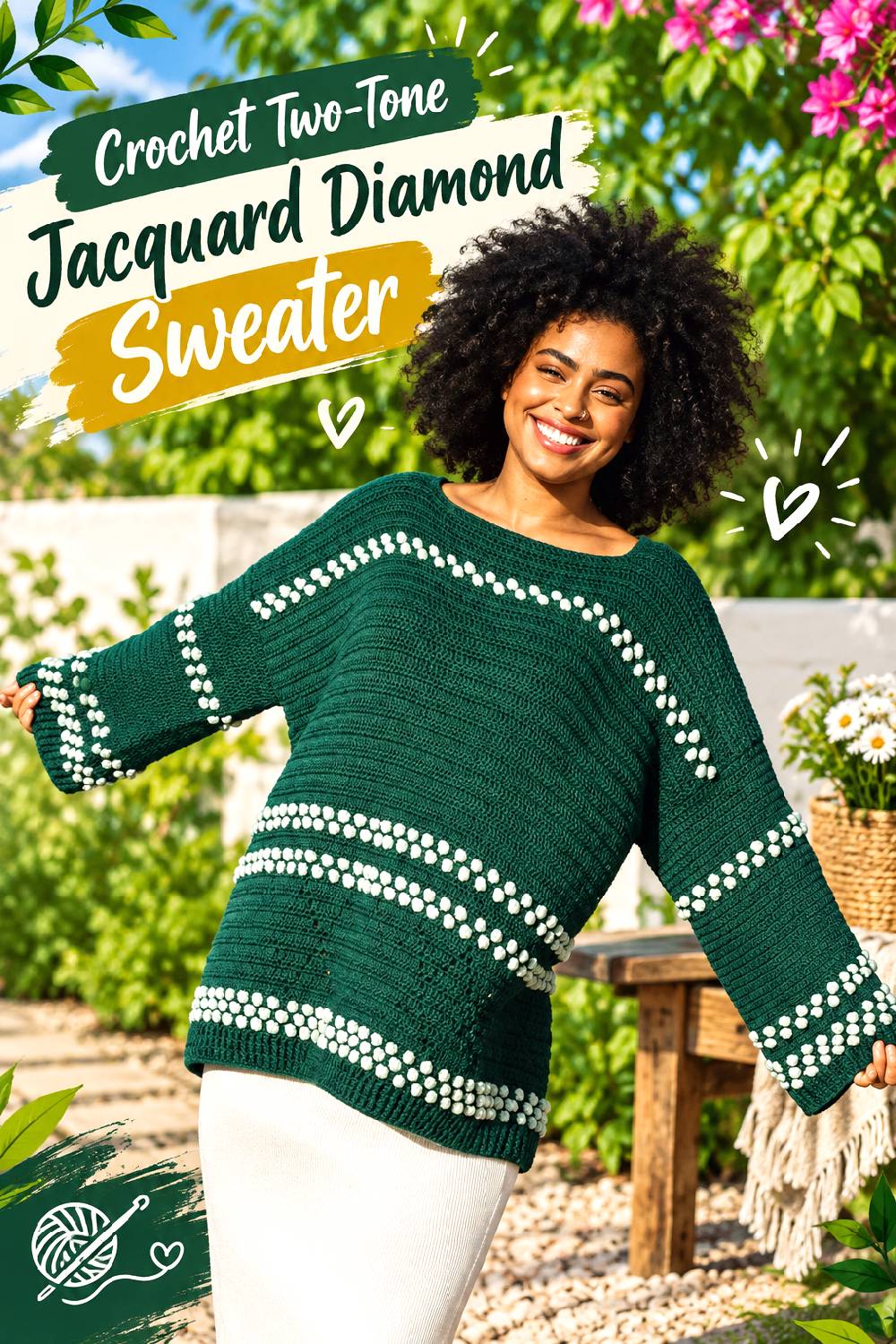
Katia’s two-tone sweater combines contrasting crochet colorwork with a diamond pattern near the lower garment and ribbed details. The source lists both jacquard and tapestry crochet among the techniques, so this is substantially different from an airy diamond-lace cardigan.
Rather than covering the entire sweater in argyle, use this idea when you prefer a focused geometric zone. Concentrating diamonds around one area can keep a full-sleeve sweater wearable with more patterned skirts, trousers, or coats.
A Motif Band Can Be Easier to Balance Than All-Over Argyle
A limited diamond section provides a natural place for the eye to rest while leaving large areas of the sweater quiet. If you change the sweater length, assess whether the band still sits at a visually intentional point rather than simply moving it farther from the hem.
Watch for Tension Changes Between Techniques
A sweater that combines ordinary crochet, ribbing, and tapestry or jacquard sections may not behave uniformly. Swatch the actual transition if possible. A colorwork band that is significantly firmer than the surrounding fabric can draw in the sweater even when the stitch count appears correct.
Original Tutorial and Creator Credit
Creator/Site: Katia
15. Crochet Multicolor Lace Diamond Fall Sweater
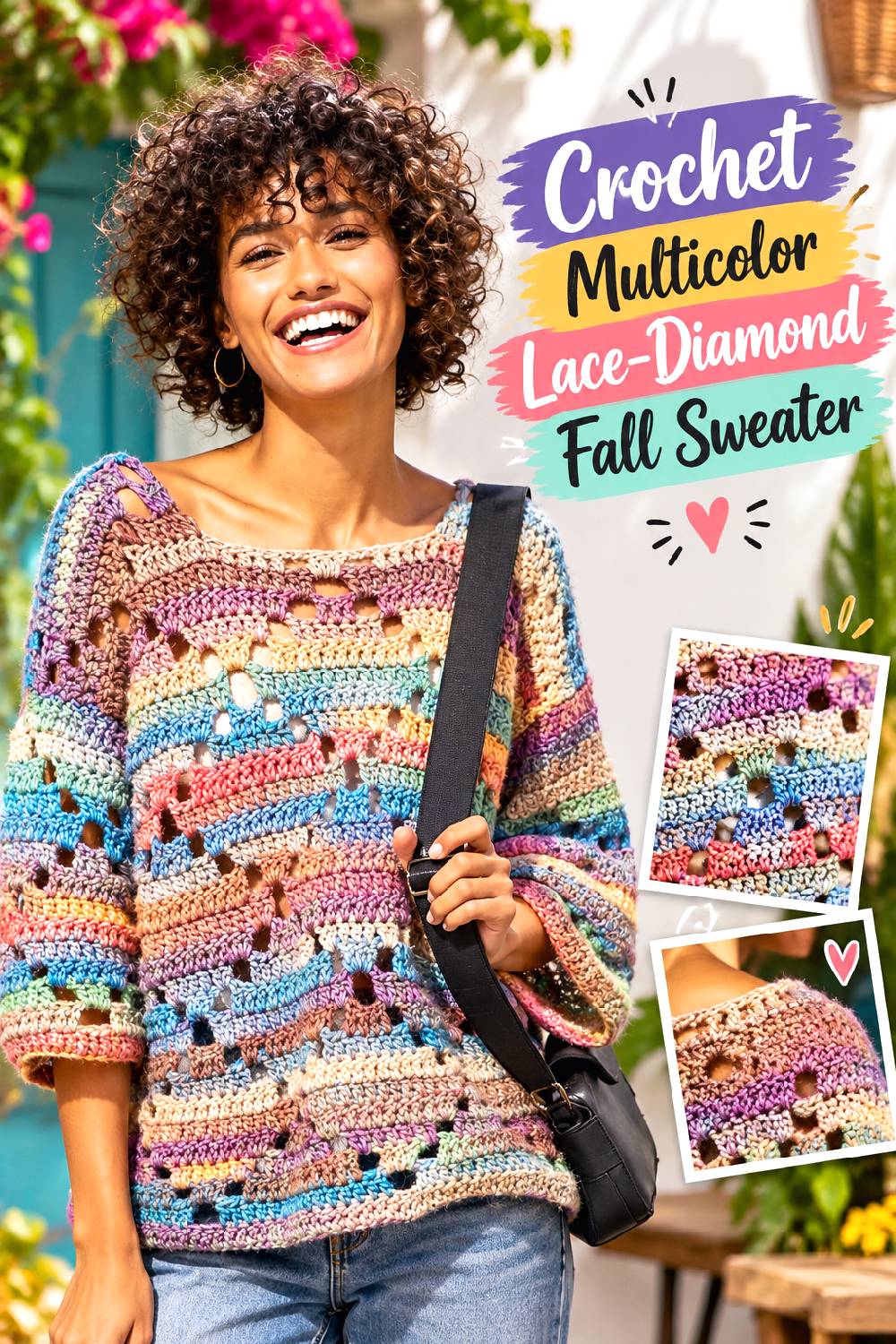
Katia’s Marie-Claire design uses large lace diamonds in a full crochet sweater intended for the autumn/winter collection. The pattern is offered across several sizes and uses a large-scale open motif rather than classic intersecting argyle lines.
This is a good geometric alternative for makers who like the diamond rhythm of argyle but prefer a single yarn source to create most of the color movement. The oversized lace shapes also read more softly than compact intarsia diamonds, which can suit relaxed weekend styling.
Multicolor Yarn Can Compete With Openwork
When the yarn already changes color, elaborate stitch geometry may become less obvious. If substituting yarn, decide whether you want the viewer to notice the diamonds first or the color transitions first. A calmer color sequence can emphasize stitch architecture.
Check Coverage Before Planning the Underlayer
Large lace diamonds naturally create openness. Consider where and how you expect to wear the sweater, then choose the layer beneath it accordingly. A contrasting base makes the diamond shapes more visible; a similar color produces a quieter effect.
Original Tutorial and Creator Credit
Creator/Site: Katia
16. Crochet Long Diamond Vest for Layering
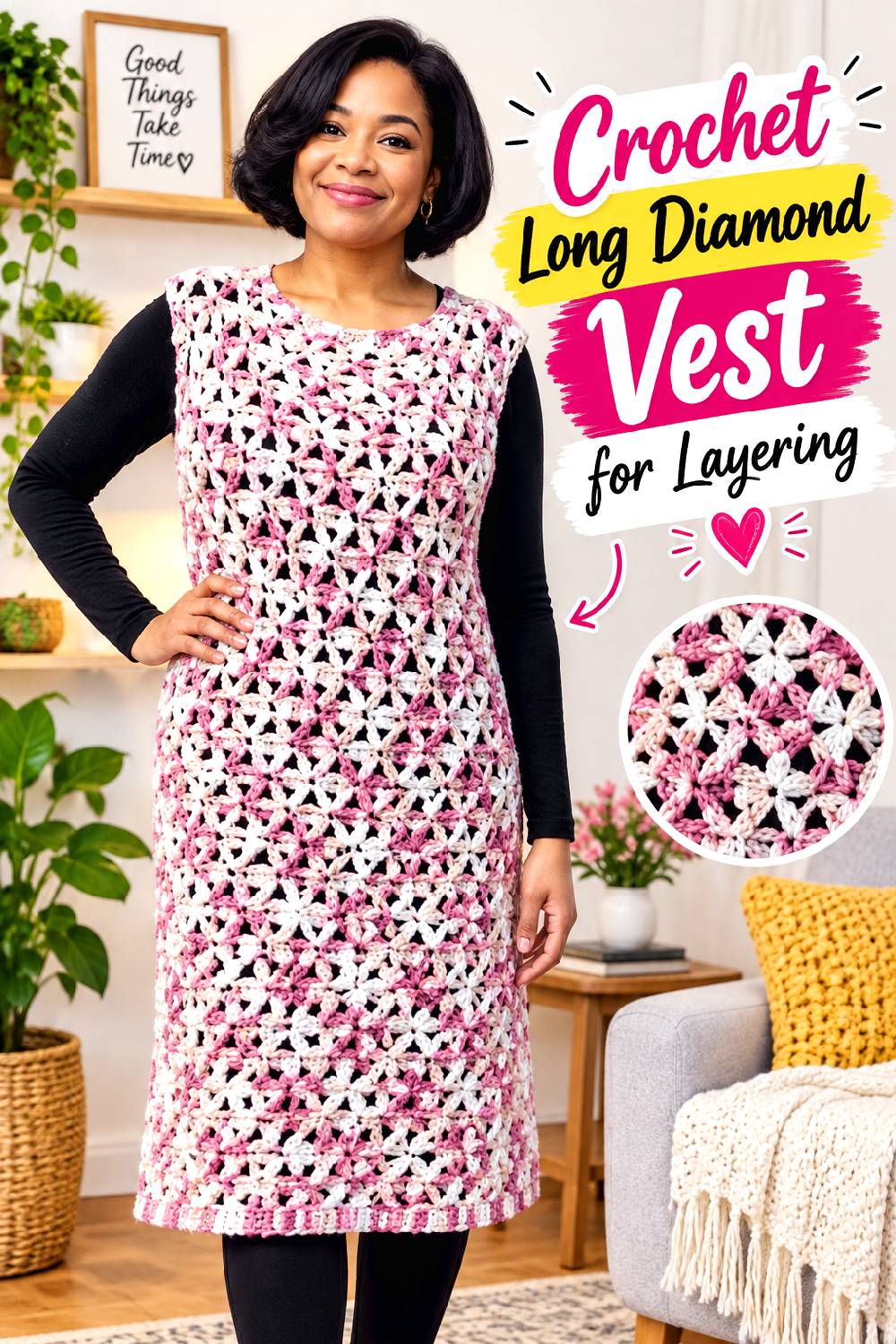
Crafting Shed’s tutorial teaches a long crochet vest with a diamond-shaped design. Its extended length separates it immediately from the cropped and high-hip argyle sweater vests elsewhere in this list.
Use it as a geometric fall layer over slim trousers, dresses, or a simple long-sleeve base. Because the source motif is an open diamond rather than classic multicolor argyle, this version is best for readers who want the repeating shape and long silhouette more than traditional crossing lines.
Long Vests Need Side Movement
Extra length can make a vest feel restrictive if the body is narrow or the fabric is stiff. Before altering the tutorial, think about walking, sitting, and layering rather than evaluating fit only while standing straight.
Keep the Diamond Repeat Proportional to Length
A long garment can accommodate more vertical repeats, but that does not automatically mean the motif should become smaller. Large diamonds can preserve a clean rhythm over the extra length, while tiny repeats may make the surface look much busier.
Original Tutorial and Creator Credit
Creator: Crafting Shed
17. Crochet Openwork Diamond Sweater Vest
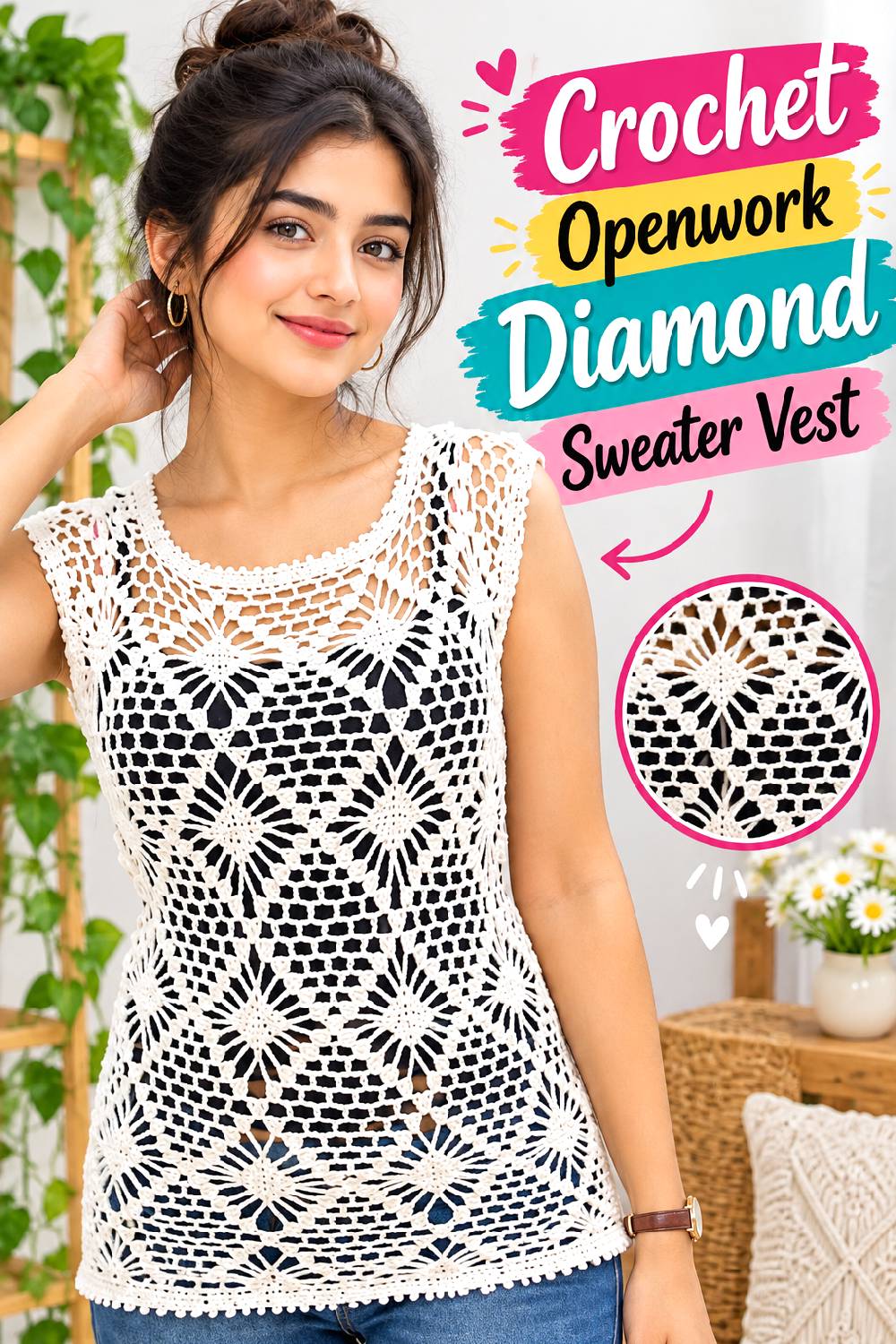
Sweet Nothings Crochet’s Diamond Vest uses an open lattice-style diamond pattern and discusses adapting the fabric to body measurements. The designer specifically notes that the fabric can open and stretch, an important consideration when turning an attractive flat diamond stitch into a wearable garment.
This is an argyle-inspired option rather than traditional colorwork. It is useful when you want the geometry to come from texture and negative space, especially for early fall days when a dense vest would feel too heavy.
Measure the Fabric in Its Realistic State
Openwork can change width when worn or blocked. Do not base every fit decision on a piece that has been pulled unusually tight or left completely unrelaxed. Compare the fabric in a state close to how you expect the finished vest to hang.
Layering Changes the Visual Pattern
A contrasting shirt can make each diamond opening look crisp, while a similar-colored underlayer produces a subtle texture. This gives one vest two very different styling personalities without changing the crochet itself.
Original Tutorial and Creator Credit
Creator/Site: Sweet Nothings Crochet
18. Crochet Argyle Intarsia Sleeveless Sweater Top
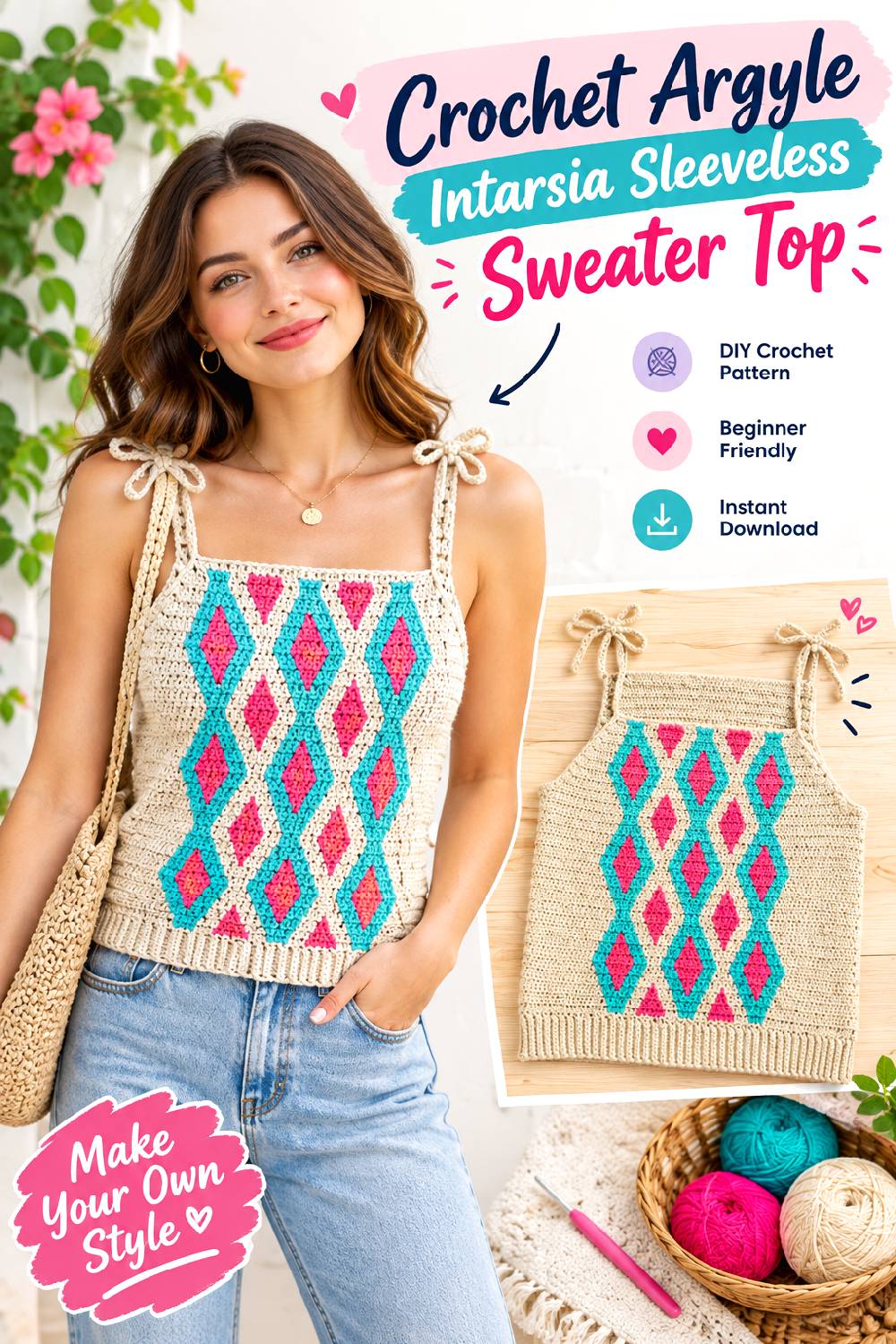
The Bernat Argyle Intarsia Crochet Top on Yarnspirations brings true intarsia-style argyle into a sleeveless garment with a broad published size range. Yarnspirations describes it as a classic argyle design using two bright contrasting colors against a neutral background.
The shape sits between a tank and sweater vest, making it especially useful for transitional fall weather or for layering under a cardigan or jacket. Because the design is already visually strong, you can make it feel more autumnal simply by changing the palette while retaining the original gauge and material logic.
Use Color Value to Preserve the Diamonds
Three colors do not need to be extreme opposites, but there should be enough separation for the diamond boundaries to remain legible. Photograph yarn choices in grayscale if you are unsure whether two shades are too similar in value.
Verify Fit Before Treating It Like a Vest
A sleeveless top worn alone may use different ease from one layered over a shirt. Yarnspirations provides both body and finished measurements, so compare those figures with how you plan to style the garment rather than choosing only by your usual ready-to-wear label.
Original Tutorial and Creator Credit
Creator/Site: Bernat / Yarnspirations
Which Crochet Argyle Style Should You Choose?
The biggest dividing line is technique rather than color. Traditional intarsia or tapestry argyle is the best fit when you want crisp, deliberately placed diamonds. Modular construction suits makers who would rather repeat individual geometric pieces and assemble them later. Planned pooling can create striking diagonals with fewer deliberate color changes, but tension and yarn sequence become critical. Diamond lace or filet is the lightest interpretation and works when you want the argyle mood rather than literal multicolor argyle.
For a conventional preppy finish, start with the flotjetops vest, FrancesLeahCrochet vest, or Bernat intarsia top. For something roomier and more graphic, consider Cherilyn Q or Chenda DIY. For a cardigan, The Knotty Lace and Crochet With Hannah offer substantially different routes. The lace and filet options make sense when breathability and simplified color management matter more than strict tradition.
Conclusion
Fall 2026 argyle crochet does not have to mean one standard V-neck vest. The same diamond language can become a fitted intarsia top, oversized modular vest, full pullover, button cardigan, planned-pooling jacket, or openwork geometric layer. The main choice is whether you want precise color placement, repeatable motifs, yarn-driven pooling, or diamond texture without extensive colorwork.
Once you choose the construction family, plan fit and motif placement together instead of treating the diamonds as decoration added at the end. For stitch counts, sizing, assembly, yarn requirements, and other exact construction details, follow the linked original tutorials.
Frequently Asked Questions
What is the difference between crochet argyle and a regular diamond pattern?
Traditional argyle usually combines diamond shapes with overlapping or intersecting diagonal lines, while a diamond pattern may use only the diamond itself. In crochet, both are useful design directions, but they are not identical. If you want a recognizably classic argyle result, choose a source that specifically teaches argyle, intarsia diamonds, or planned-pooling argyle rather than assuming any diamond stitch will create the same effect.
Is intarsia or planned pooling better for a first crochet argyle sweater?
They present different challenges. Intarsia gives you direct control over each color block but can involve several active yarn sections and many ends. Planned pooling uses the yarn’s existing color sequence, reducing deliberate color changes, but requires careful tension and repeat control. Neither is universally simpler. Choose according to whether you would rather manage separate colors or repeatedly monitor how one variegated yarn is pooling.
Can I change the yarn in an argyle sweater tutorial?
Possibly, but check more than the yarn weight printed on the label. Fiber, thickness, elasticity, stitch definition, and blocked gauge can alter both fit and motif proportions. Planned-pooling projects are particularly sensitive because another variegated yarn may have completely different color-repeat lengths. Make a representative swatch and use the original creator’s sizing and gauge information before committing to a full garment.
How do I keep argyle diamonds centered after resizing a sweater?
Recalculate the usable front-panel width before placing the motif. Treat the garment center, neckline, side seams, and armhole shaping as fixed visual references, then determine how many complete or partial diamonds can fit attractively between them. Do not automatically add all extra width to one side of an existing chart. A small sketch or swatch can reveal an imbalance before it becomes part of the finished sweater.
Do crochet argyle sweaters need blocking?
The appropriate finishing method depends on the yarn and tutorial. Blocking can help even out some crochet fabrics and clarify geometric motifs, but heat, water, and stretching affect fibers differently. Follow the yarn label and the creator’s finishing instructions. If several fibers, surface details, buttons, or other materials are involved, use the most conservative care method compatible with the entire garment.
Can I make an argyle sweater with only two colors?
Yes. A two-color version can emphasize the diamond shape clearly and often looks more modern than a traditional multicolor combination. Classic argyle frequently includes an additional contrasting lattice line, but that is a design choice rather than a requirement for every geometric sweater. Before committing, make a swatch to confirm that the two selected colors provide enough contrast for the motif to remain readable.