Opera-length gloves have moved well beyond formal eveningwear for Fall 2026. Current fashion coverage is highlighting long gloves as a major accessory direction, from refined runway versions to slouchier, more expressive styling. Crochet offers a handmade way to interpret that silhouette through ribbing, lace, open mesh, flowers, bows, shells, and dimensional texture.
The ideas below are intentionally varied. Some source tutorials already create long fingerless gloves or arm warmers, while others teach shorter decorative gloves that can become the design foundation for a separately measured opera-length adaptation. That distinction matters because forearms widen, stitch patterns stretch differently, and an attractive short mitt cannot always be extended as a straight tube.
Quick List
- Crochet Sleek Long Fingerless Opera Gloves
- Crochet Ribbed Elbow-Length Opera Wrist Warmers
- Crochet Almond-Texture Opera Arm Warmers
- Crochet Minimal Flat-Panel Opera Arm Warmers
- Crochet Straight-Line Opera Arm Warmers
- Crochet Bow-Trim Coquette Opera Gloves
- Crochet Vintage Lace Opera Gloves
- Crochet Victorian Ruffle Opera Gloves
- Crochet Scalloped Blossom Opera Gloves
- Crochet Long Fishnet Opera Gloves
- Crochet Mesh-and-Lace Full-Finger Opera Gloves
- Crochet Clean Ribbed Opera Mitts
- Crochet Full-Finger Formal Opera Gloves
- Crochet Puff-Texture Opera Gloves
- Crochet Even-Moss Opera Gloves
- Crochet Fantail Shell Opera Gloves
- Crochet Granny-Square Accent Opera Gloves
- Crochet Ruffled Coquette Opera Gloves
What Makes an Opera-Length Crochet Glove Fit Differently
A short fingerless glove mainly has to fit the palm, thumb area, and wrist. An opera-style glove continues much farther along an arm whose circumference normally changes between the wrist and upper forearm. That makes a comfortable hand fit only the beginning of the sizing problem.
Before extending a shorter tutorial, determine where you want the upper edge to land and compare the developing fabric with several points along your arm. A stretchy ribbed construction may tolerate gradual circumference changes better than firm shells, dense puff stitches, or structured motifs. If a source only teaches the hand portion, treat the extra forearm as a new fitting problem rather than assuming more identical rows will create a reliable opera glove.
Choose Between Sleek Fabric, Texture, and Openwork
For Fall 2026 styling, length is only one design decision. Smooth ribbing produces a cleaner line that can disappear beneath outer layers, while puff stitches, shells, scallops, flowers, and granny-square details make the crochet itself part of the outfit. Fishnet and lace create far less visual weight and allow skin or another layer to remain visible.
Yarn behavior matters along with stitch appearance. Check recovery if the glove needs to stay close to the arm, drape if you want a softer silhouette, and stitch definition when raised texture is the main feature. Openwork also needs to be evaluated while worn because stretching can dramatically change the size and shape of lace or mesh openings.
Plan the Hand Before Chasing Maximum Length
A dramatic elbow-grazing silhouette will not compensate for a thumb opening that pulls, a twisted palm, or fingers that feel cramped. Establish the source tutorial’s hand fit first, then decide how much additional forearm length makes sense.
For paired gloves, use the first finished piece as a physical reference for the second. Compare thumb placement, relaxed length, upper width, decorative orientation, and the height at which each glove sits on the arm. With long accessories, small inconsistencies have more space to become visible.
1. Crochet Sleek Long Fingerless Opera Gloves
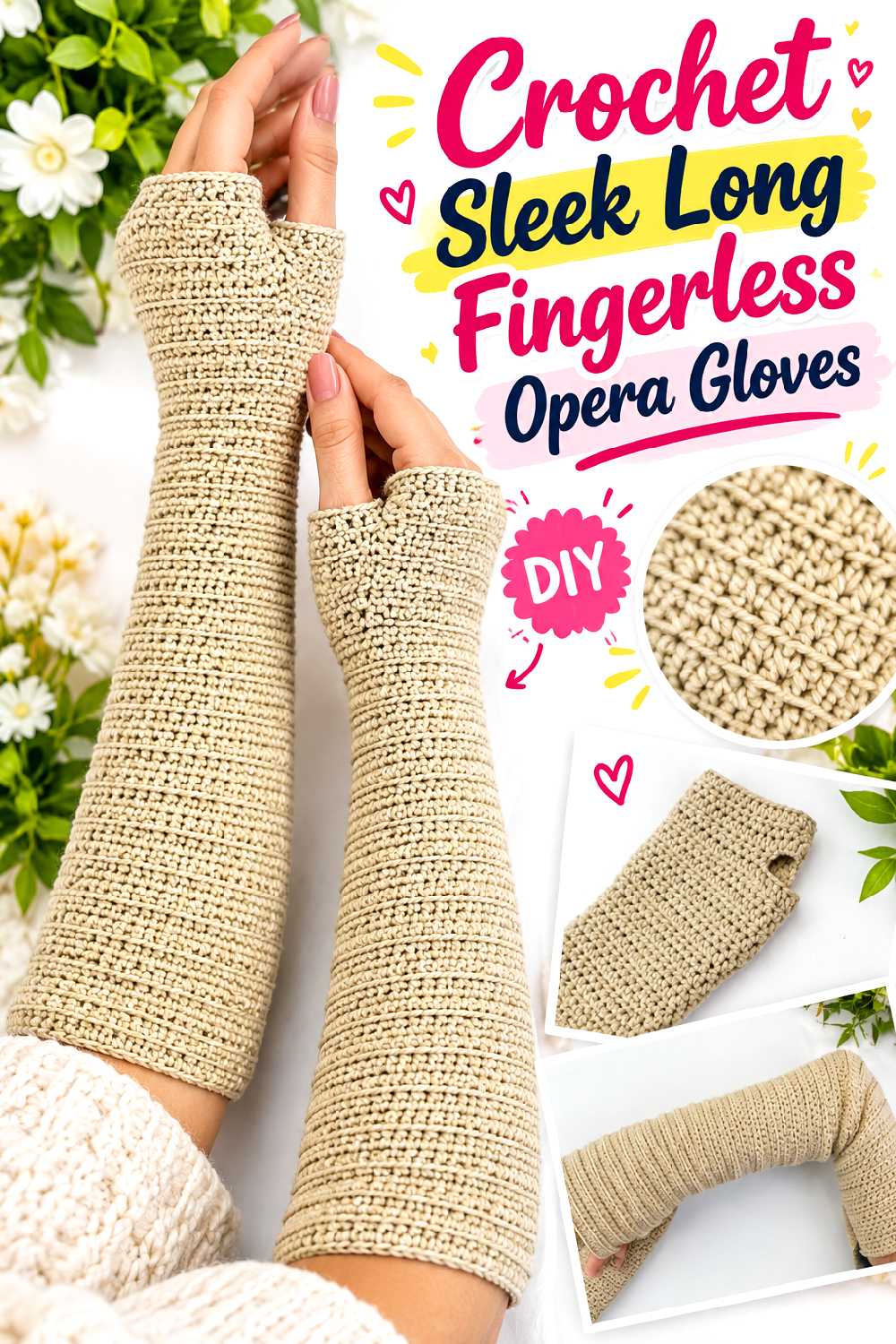
A streamlined long fingerless glove is one of the clearest ways to translate the opera-glove trend into crochet without adding heavy ornament. Chenda DIY’s source already demonstrates a genuinely long glove, so this option requires less conceptual reconstruction than a short wrist warmer that must be extended separately.
The long, relatively clean surface suits sleeveless dresses, simple tops, and layered fall outfits where the glove itself creates the vertical line. Because there is little decorative texture to distract the eye, fit and symmetry become especially noticeable. This is the option to consider when you want length to be the statement.
A Smooth Forearm Makes Taper Easy to See
A simple surface exposes sudden width changes more clearly than lace or raised texture. Check how the glove follows the wrist and widening forearm while worn, especially if you alter the source dimensions. Gradual shaping or usable fabric stretch will usually look more intentional than a narrow section followed by one abrupt increase.
Keep the Thumb From Rotating the Whole Glove
Before concentrating on the upper edge, make sure the hand sits straight and the thumb opening aligns naturally. If the hand section rotates, the entire extended glove can spiral visibly along the forearm. Resolve that relationship before using total length as your main fit checkpoint.
Decide the Stopping Point With the Outfit On
Mid-forearm and near-elbow lengths create noticeably different proportions. Try the developing glove beside the sleeve line or bare arm you expect to wear it with. A deliberate strip of visible skin can look cleaner than an upper edge that almost—but not quite—meets a garment cuff.
Creator: Chenda DIY
2. Crochet Ribbed Elbow Length Opera Wrist Warmers
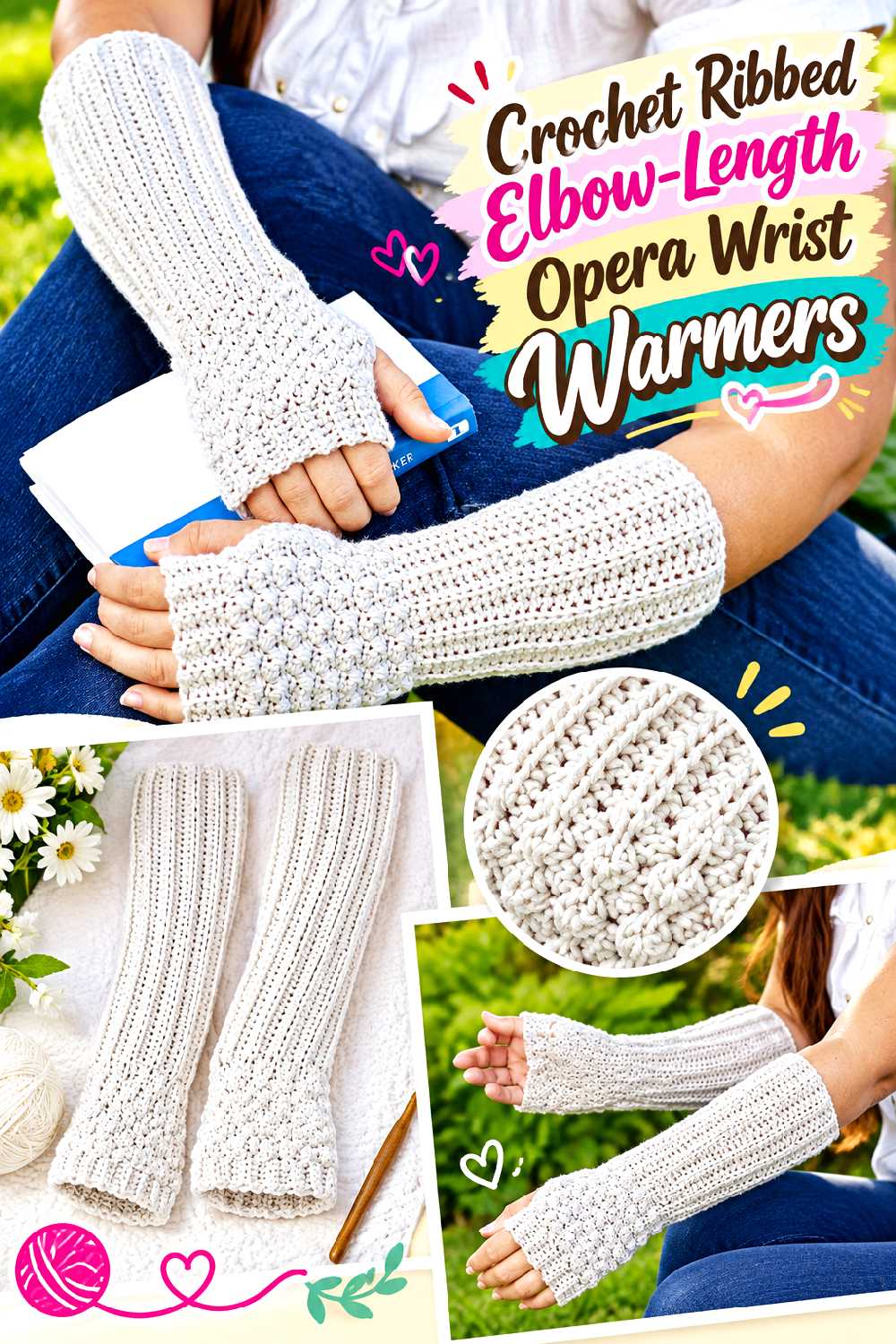
Winding Road Crochet’s long wrist warmers bring more visible ribbed texture to the extended glove shape. The project already travels well beyond a conventional wrist cuff, making it a practical reference for readers who want substantial forearm coverage with a softer cold-weather feel.
Compared with airy fishnet or lace, this direction reads more like a true fall layering accessory. The long textured tube can work with sleeveless knits, coats with generous cuffs, or a short-sleeve top, but the extra fabric makes stretch, seam consistency, and elbow clearance more important than they would be on a compact mitt.
Ribbing Can Accommodate Shape Without Looking Heavily Shaped
Elastic-looking ribs can visually narrow at the wrist and expand farther up the arm, which is useful for a long glove. Still, do not assume unlimited stretch. If the ribs are pulled almost flat at the upper forearm, the fabric may no longer look or feel the way it does around the wrist.
Check the Edge Before It Reaches the Elbow Crease
An upper edge close to the elbow can shift when the arm bends. Test the glove with the elbow straight and flexed before deciding that maximum length is automatically better. Stopping slightly lower can preserve the long effect while reducing bunching at the joint.
Match Any Long Seam Across Both Arms
A seam running through a substantial length of the glove becomes part of the silhouette. Compare whether each finished warmer lies straight instead of twisting toward the inner or outer arm. Uneven seaming tension can change both the appearance and available stretch.
Creator: Winding Road Crochet
3. Crochet Almond Texture Opera Arm Warmers
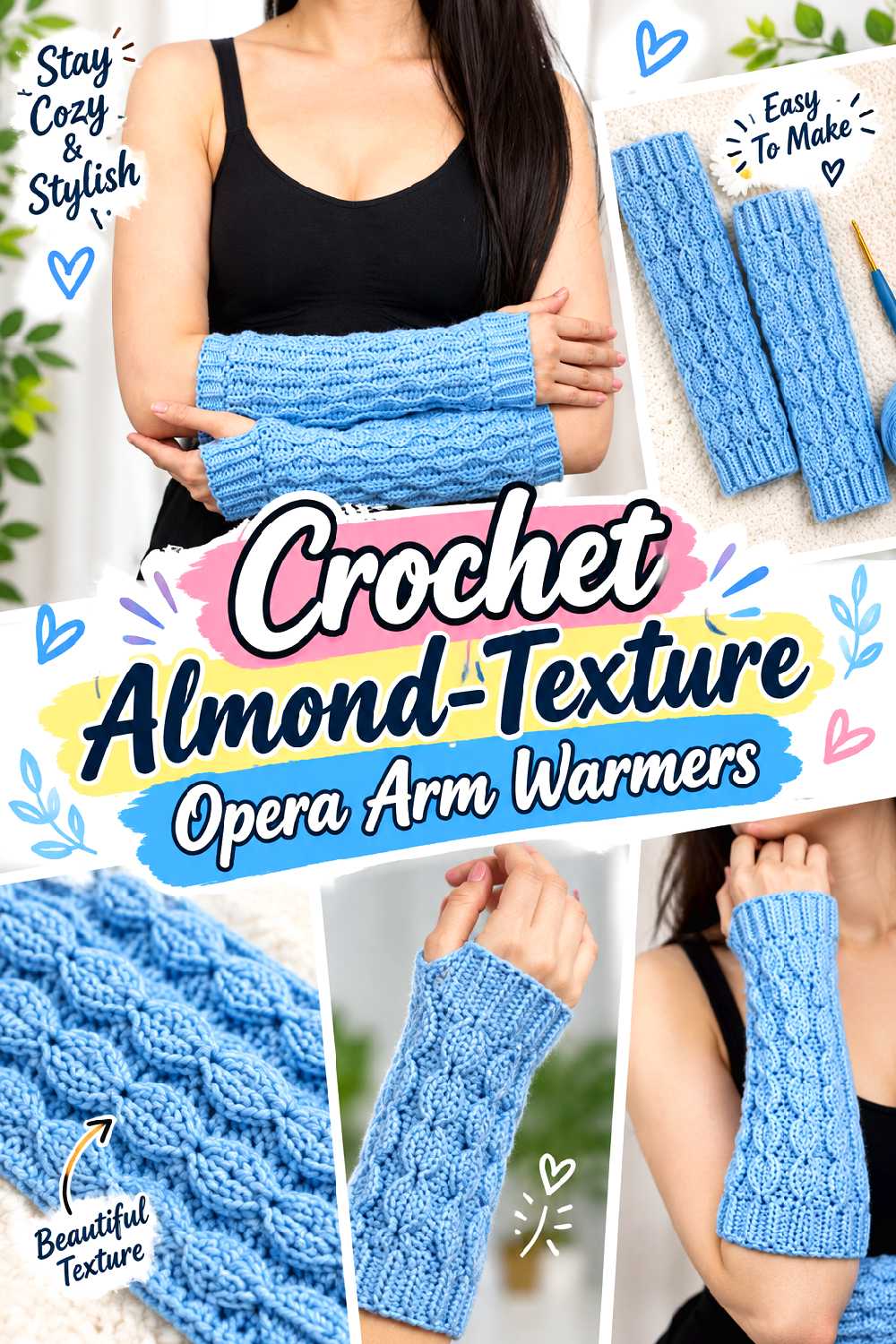
These arm warmers replace plain ribbing with a much more noticeable almond-style surface texture. TCDDIY’s tutorial already focuses on arm warmers with thumbholes, so the extended form and textured fabric are both part of the original project rather than an imagined combination.
That makes this one of the stronger choices when you want crochet texture to remain visible from across a room. The design can complement simpler clothing particularly well because the surface supplies most of the detail. The trade-off is that dimensional fabric may feel and layer differently from a smooth opera glove.
Raised Texture Occupies More Space Under Sleeves
A textured warmer can look fuller and feel thicker even when its basic circumference is similar to a flatter glove. If you plan to place it beneath a fitted coat or sweater sleeve, test the layers together. A beautiful stitch pattern is less useful when the outer cuff compresses it into an uncomfortable ridge.
Forearm Width Matters More Than the Wrist Sample
A texture that stretches comfortably around the wrist may behave differently when asked to expand farther up the arm. Judge the actual fabric at the widest point it needs to cover. If the motifs become excessively distorted, reconsider the desired length or finished width rather than relying on stretch alone.
Let the Texture Finish at an Intentional Point
Strong repeating surfaces make the upper edge visually important. If you alter length, avoid stopping at a place where the texture appears abruptly interrupted. Choose a nearby finishing position that respects both the visible repeat and comfortable placement on the arm.
Creator: TCDDIY
4. Crochet Minimal Flat Panel Opera Arm Warmers
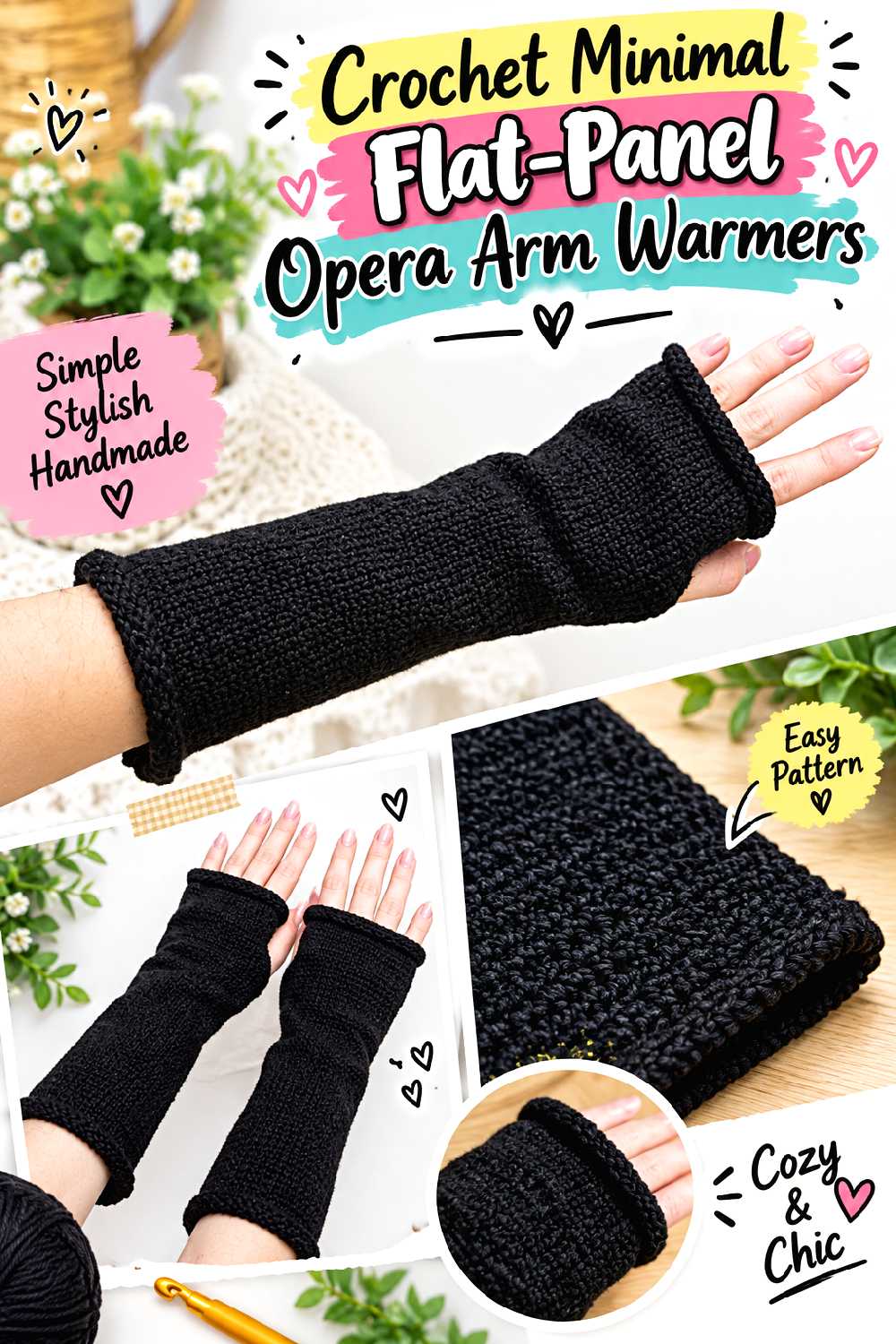
Yaejiyea’s video includes both knitted and crocheted arm-warmer versions, with the crochet section providing the relevant reference here. The finished concept is deliberately uncomplicated, making it a strong foundation for a modern opera-glove look that depends on proportion rather than lace, flowers, or elaborate edging.
This direction suits readers who want to experiment with extra length without simultaneously managing a complicated motif. Because the video covers two crafts, keep the crochet segment clearly separated from the knitted version while following the source. For a longer adaptation, check forearm width instead of assuming the original proportions can simply continue upward.
Flat Fabric Makes Width Easier to Judge Before Joining
When a glove begins as a flatter piece, you can compare its width against the arm before committing to the final seam. Use that opportunity to evaluate both relaxed fabric and usable stretch. Wrapping an unstretched panel tightly around the arm is not the same as predicting its finished behavior.
Establish the Thumb Position Before Adding Extra Length
The hand and thumb determine whether the warmer sits straight. Settle those proportions before extending the forearm substantially. If the glove already twists around the hand, more length will exaggerate the problem rather than correct it.
Compare the Two Panels Before Final Assembly
Minimal fabric makes mismatched lengths and widths conspicuous. Place both unfinished pieces together and check the locations of the thumb opening, upper edge, and lower edge. Physical comparison is more reliable than trying to reproduce the first glove from memory.
Creator: yaejiyea
5. Crochet Straight Line Opera Arm Warmers
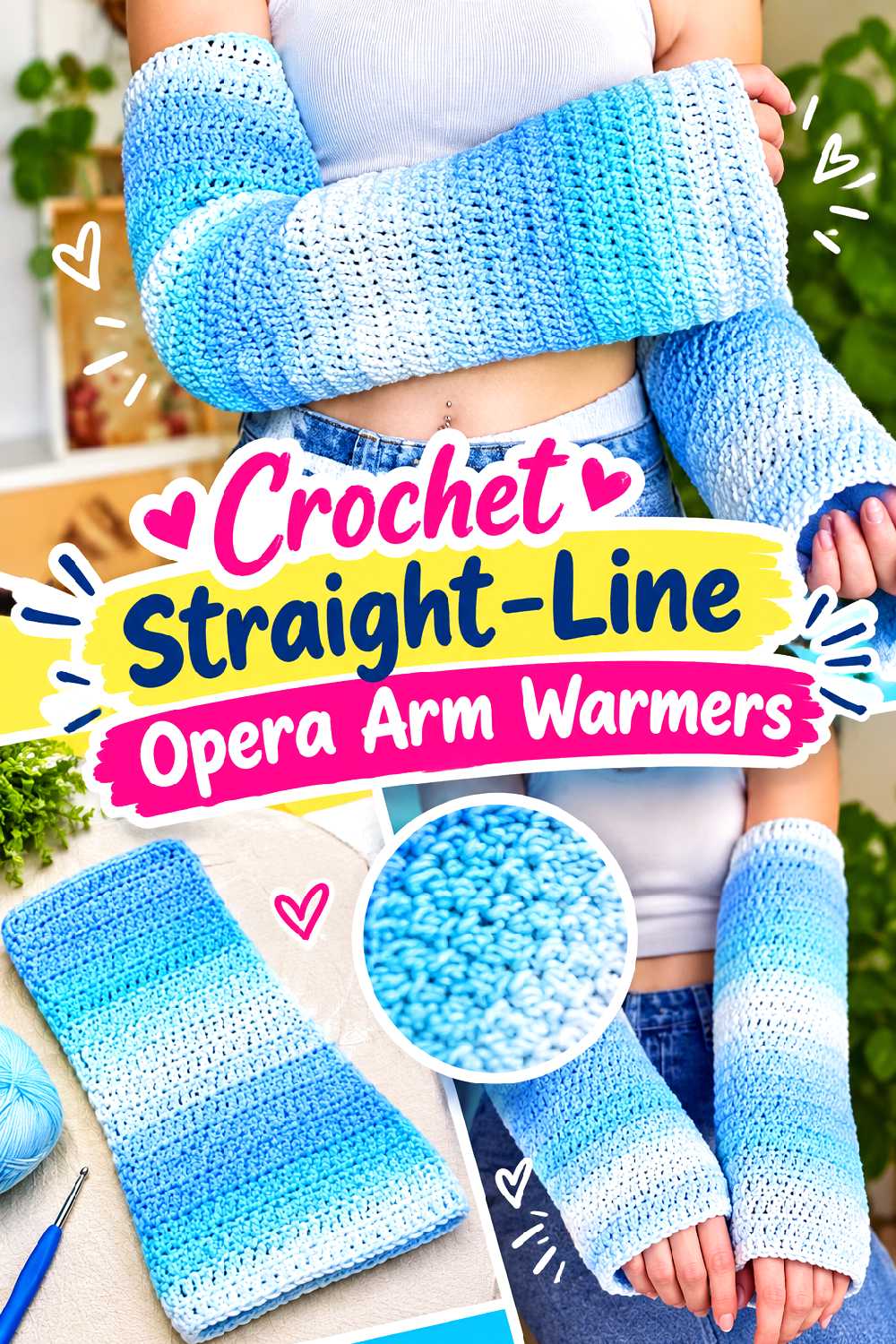
Gabrielle McAuley’s crochet arm-warmer tutorial provides a clean, continuous silhouette without making decoration the main attraction. That gives this idea a casual fashion angle: the accessory can be styled dramatically through length while the crochet surface stays comparatively restrained.
This is a useful contrast to the floral, Victorian, fishnet, and shell-based choices later in the list. Decide whether you want the finished pair close-fitting or slightly relaxed before making substantial proportion changes. A straight-looking warmer can still depend on fabric stretch to negotiate the difference between wrist and upper forearm.
A Straight Tube Still Has to Fit a Tapered Arm
If the relaxed width changes very little, make sure the fabric has enough comfortable expansion at the upper forearm. The opposite problem is also possible: adding enough width for the top can leave the wrist loose. Try the developing warmer at both locations rather than solving only one circumference.
Use Clothing Layers to Decide How Close the Fit Should Be
An arm warmer worn over a fitted top has different needs from one worn directly on bare skin or underneath a coat sleeve. Test the intended combination before finalizing the upper width. Layering can expose bunching or excess compression that is not obvious when the glove is tried on alone.
Creator: Gabrielle McAuley
6. Crochet Bow Trim Coquette Opera Gloves
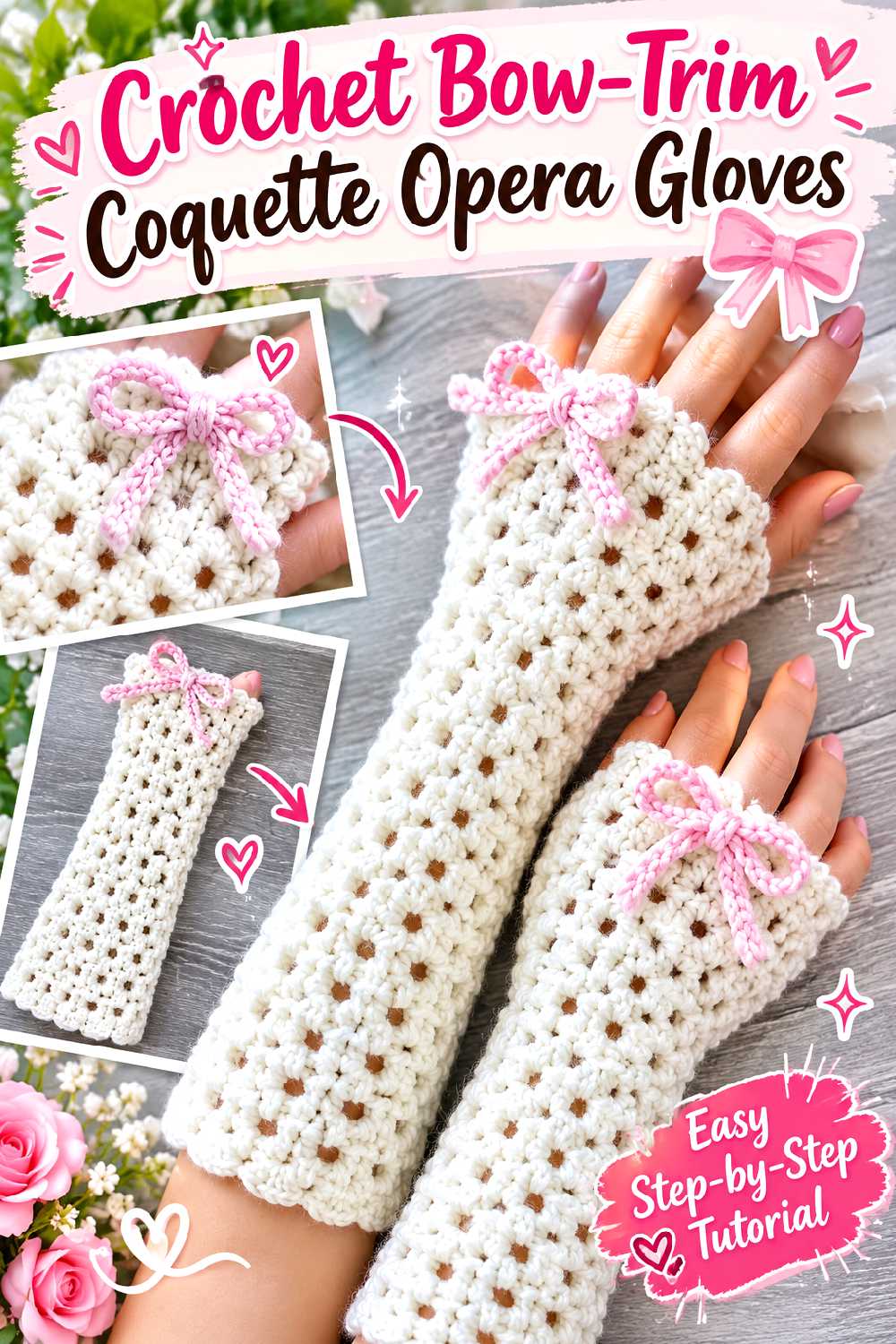
Mahum’s fingerless-glove tutorial adds bows to a ribbed accessory, creating a playful alternative to the more severe long-glove silhouettes. The source is not a traditional elbow-length opera glove, so the extended forearm should be planned separately if you want a more dramatic Fall 2026 proportion.
Bows shift the mood toward coquette, romantic, doll-inspired, or soft gothic styling. On a much longer glove, however, decoration needs a clear visual hierarchy. One bow near the hand, repeated smaller accents, and an embellished upper cuff all create very different results.
Choose the Bow Position After the Base Glove Fits
Decoration is easier to place once you know where the glove naturally sits on the hand and arm. Temporarily position a bow and flex the wrist before attaching it. A detail that looks perfect on a flat glove may become awkward if it sits directly on a bend or high-friction area.
One Statement Accent Reads Differently From Repetition
A single bow can anchor the hand area while allowing the extended forearm to remain visually quiet. Several bows create a more decorative, intentionally youthful look. Decide which effect suits the clothing first rather than continuing embellishment simply because additional space is available.
Watch for Bags, Cuffs, and Jewelry Catching the Trim
Raised bows can interact with handbags, narrow sleeves, bracelets, and coat cuffs. Consider where the glove will experience regular contact. Moving an embellishment slightly toward the back of the hand or another low-friction zone can preserve the look while making the accessory easier to wear.
Creator: mahum 🎀
7. Crochet Vintage Lace Opera Gloves
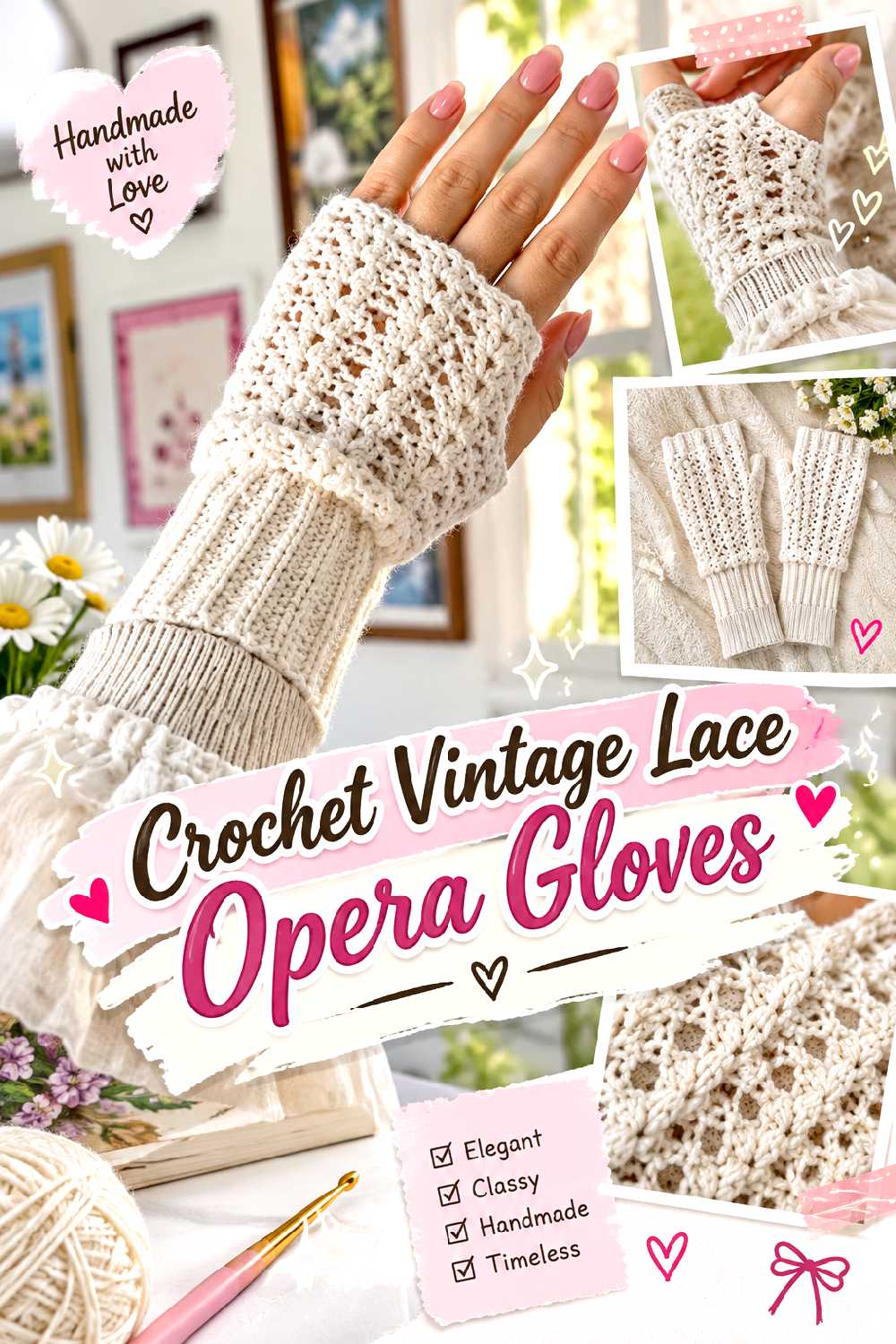
Mucie Studio’s lace fingerless gloves provide one of the most natural decorative foundations for an opera-length adaptation. The design combines a more defined cuff with open lace, giving the finished hand a softer vintage character without the stark geometry of fishnet.
The original source is shorter than a classic opera glove, so added forearm length needs independent measurement. You could continue a compatible lace effect upward or reserve the strongest openwork for the hand and transition into a quieter long section. Either approach should preserve the lace proportions when worn.
Judge Lace While It Is Stretched on the Arm
Open crochet changes visually under tension. A lace repeat that looks balanced while lying flat may become much larger or narrower when stretched around the hand and forearm. Evaluate both comfort and the appearance of the openings before committing to a long expanse of the same fabric.
Let Denser Sections Anchor the Openwork
A firmer cuff can provide visual and structural contrast against delicate lace. If you extend the design, consider whether the upper edge would also benefit from a more stable finish. The aim is not to make every section identical but to give the open fabric controlled boundaries.
Check Lace Against the Actual Fall Layers
Open stitches can catch on textured sleeves, bracelets, rings, or another lace layer. Try a sample or finished hand section with the outfit you expect to wear. An edge that looks striking on bare skin can become hidden or fussy when paired with a heavily detailed sleeve.
Creator: Mucie Studio
8. Crochet Victorian Ruffle Opera Gloves
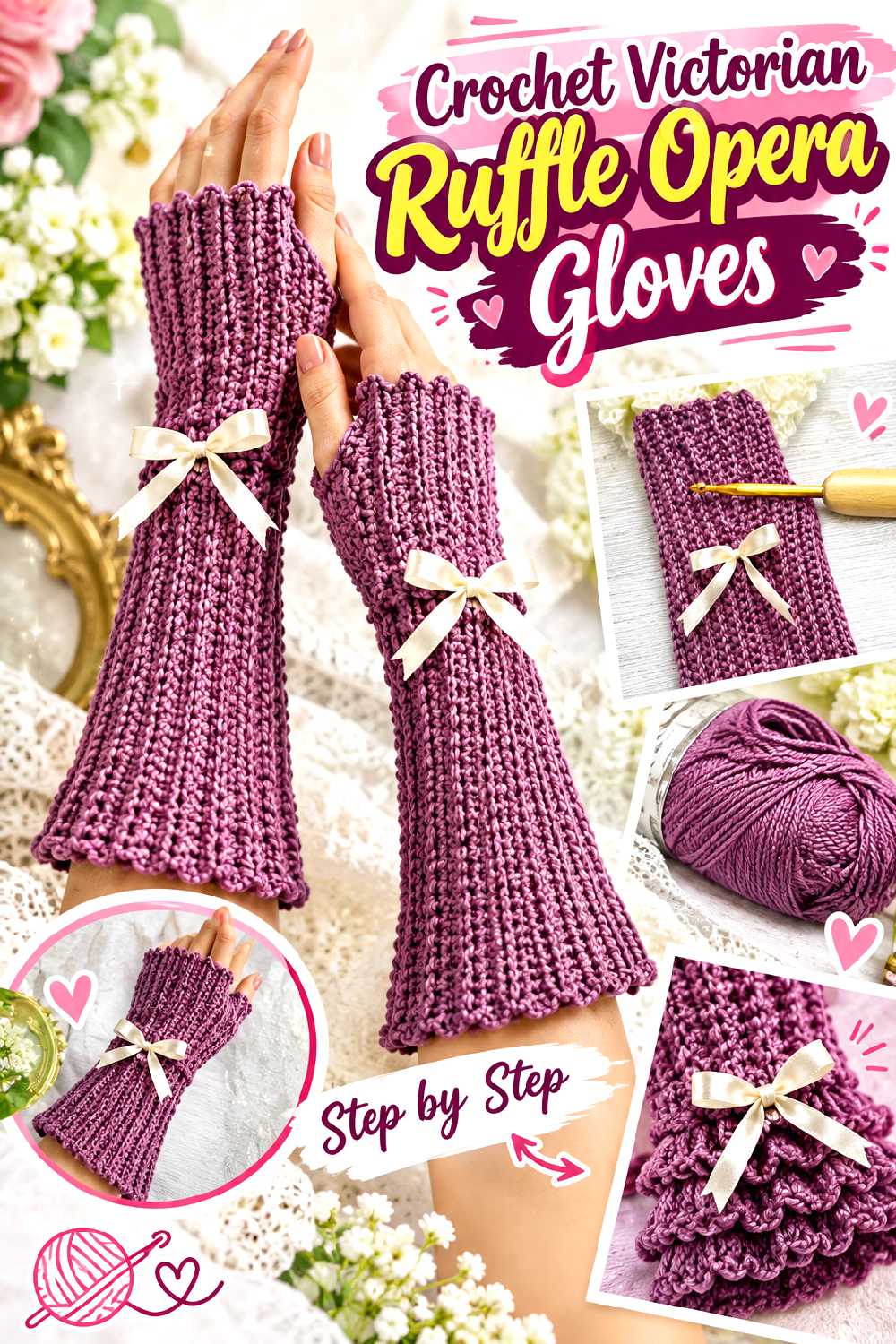
Ooty knitting and crochet’s Victorian-style fingerless gloves bring a historical-romantic mood that fits naturally with the renewed interest in dramatic long gloves. The source itself is a vintage-inspired shorter glove, so reaching opera length requires a separately fitted forearm rather than simply assuming the tutorial already supplies the full silhouette.
This idea works when the hand and edge should carry more ornament than the main arm. A relatively restrained long extension can make a decorative wrist or hand treatment feel more intentional, especially beside high-neck blouses, velvet dresses, or other vintage-influenced fall pieces.
Ruffles Change the Silhouette at the Wrist
A flared decorative edge creates volume exactly where a plain glove would normally narrow. Check whether that width complements the sleeve you intend to wear nearby. A dramatic ruffle can look beautiful with open sleeves but may bunch awkwardly beneath a fitted cuff.
Let the Vintage Detail Remain a Focal Area
Extending every decorative element all the way to the elbow can make a Victorian-inspired glove visually dense. Consider preserving the strongest period-style details around the hand and wrist while keeping more of the forearm subdued. Contrast often helps ornate features remain readable.
Test Decorative Edges During Wrist Movement
Flex the wrist in both directions before deciding where an ornamental edge should sit. A border that presses into the hand every time it bends can become distracting. Slightly repositioning the transition may improve wearability without changing the overall historical mood.
Creator: Ooty knitting and crochet
9. Crochet Scalloped Blossom Opera Gloves
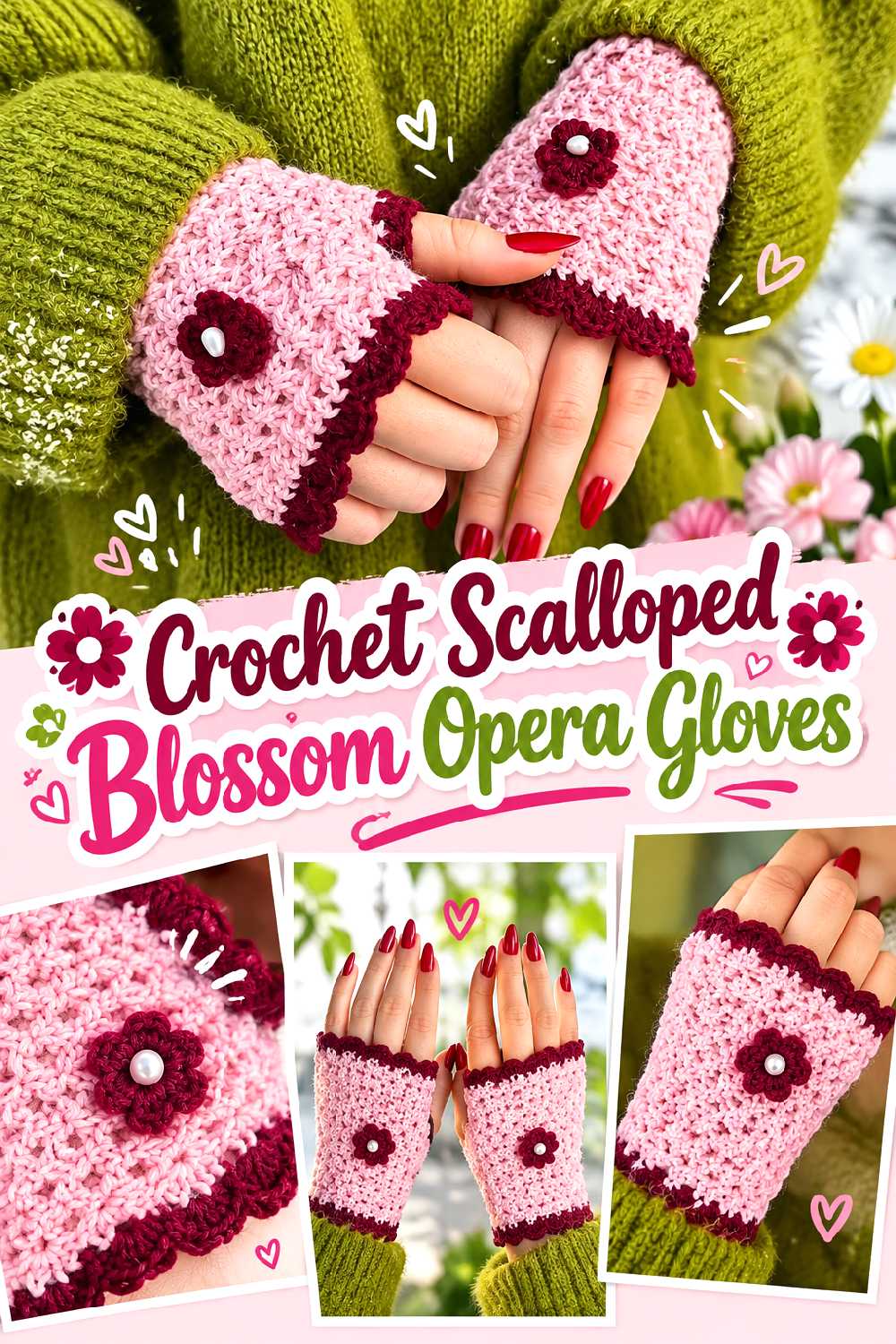
Crochet with Linni’s fingerless gloves combine several details that feel noticeably different from plain opera warmers: a ribbed cuff, crossed crochet texture, scalloped finishing, and a small flower. The source also addresses adjusting fit and length, making it an adaptable foundation even though the demonstrated glove is not a classic full opera length.
For a longer interpretation, decide which element deserves attention. Continuing every decorative feature through the forearm may become visually busy, while concentrating the flower and scallops around the hand allows a simpler upper section to frame them.
Place the Flower Where It Stays Visible
Temporarily position the floral accent before attaching it. The back of the hand, wrist, and upper edge give very different results, and some areas disappear under sleeves more often than expected. Favor a position that can be seen without constantly rubbing against a bag handle or tabletop.
Scallops Need Enough Room to Keep Their Shape
A decorative scalloped border can look compressed if placed where the glove must stretch substantially. If you move that edging to a wider part of the arm, check how its shape changes in use. The outline should still read as intentional curves rather than a tight, distorted band.
Use the Crossed Texture Selectively on a Long Version
The patterned body creates more visual activity than plain ribbing. Before repeating it over an entire opera-length extension, look at the glove from normal viewing distance. A quieter upper forearm may give the floral and scalloped details more impact than uninterrupted ornament.
Creator: Crochet with Linni
10. Crochet Long Fishnet Opera Gloves
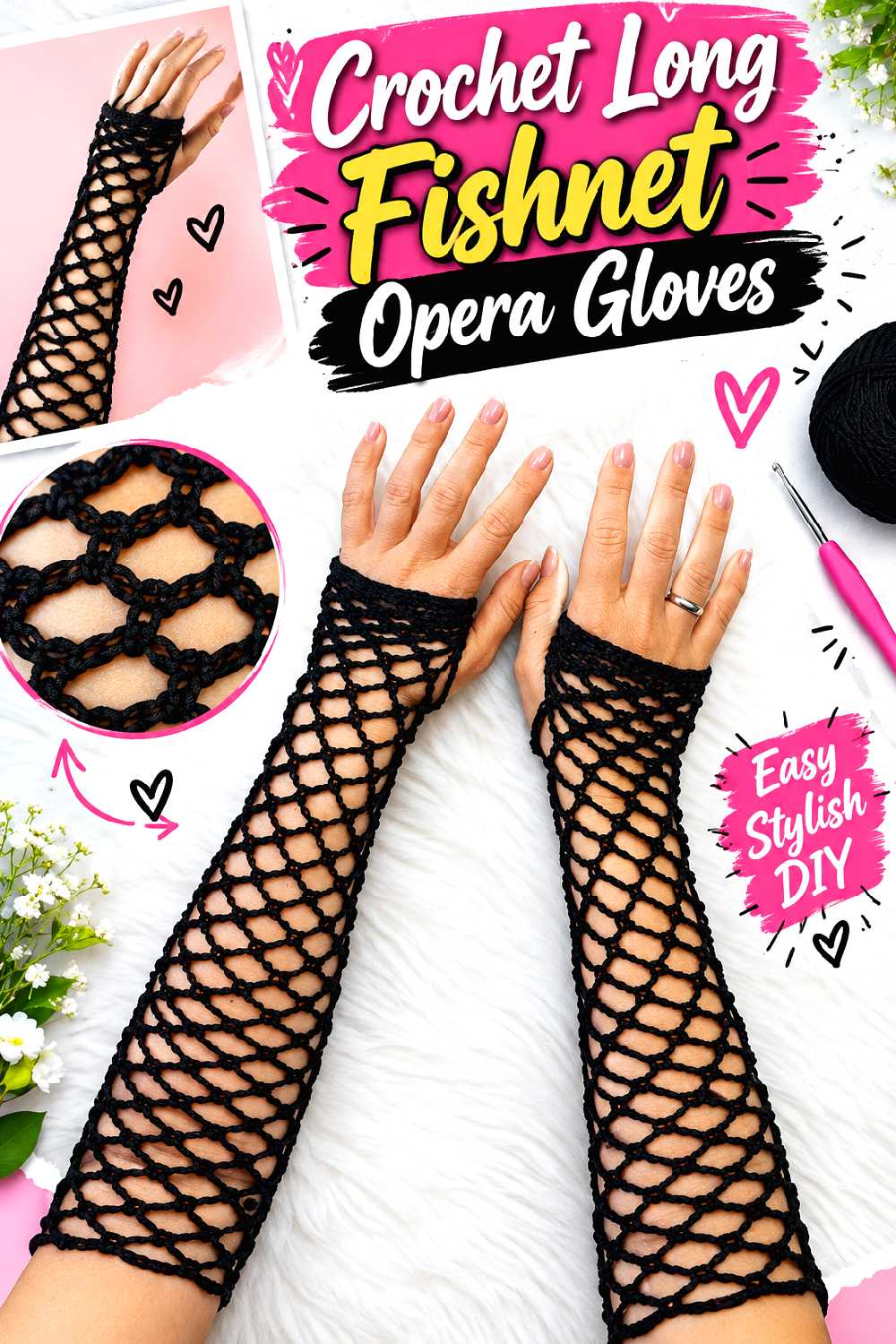
Diving Ducks Crochet’s fishnet fingerless gloves are one of the strongest direct matches in this collection. The tutorial specifically demonstrates long fingerless gloves in an open fishnet pattern, so both the length and the dramatic negative space already belong to the original project.
Compared with solid ribbing, fishnet covers the arm without creating a heavy visual block. It suits punk, gothic, evening, or layered styling and makes whatever is beneath the mesh part of the finished look. Because the openings expand as the glove stretches, fit has a strong effect on appearance.
Mesh Expansion Is Part of the Sizing Decision
With fishnet, increasing tension changes more than circumference. The openings themselves become larger and may take on different shapes at the hand, wrist, and wider forearm. Try the glove on while evaluating the pattern instead of judging only its relaxed dimensions on a table.
Treat the Layer Beneath as Part of the Design
Bare skin produces a very different effect from a contrasting long sleeve or patterned underlayer. Test the mesh with the actual outfit before adding extra embellishment. Since so much of the underlying surface remains visible, styling beneath the glove can matter as much as the yarn color.
Do Not Make the Top Edge Solve a Loose Forearm
An overly tight upper border can create a pressure point without correcting loose fabric below it. Evaluate how the whole glove sits along the arm. A more balanced fit is preferable to asking one narrow edge to hold the entire long mesh tube in place.
Creator: Diving Ducks Crochet
11. Crochet Mesh And Lace Full Finger Opera Gloves
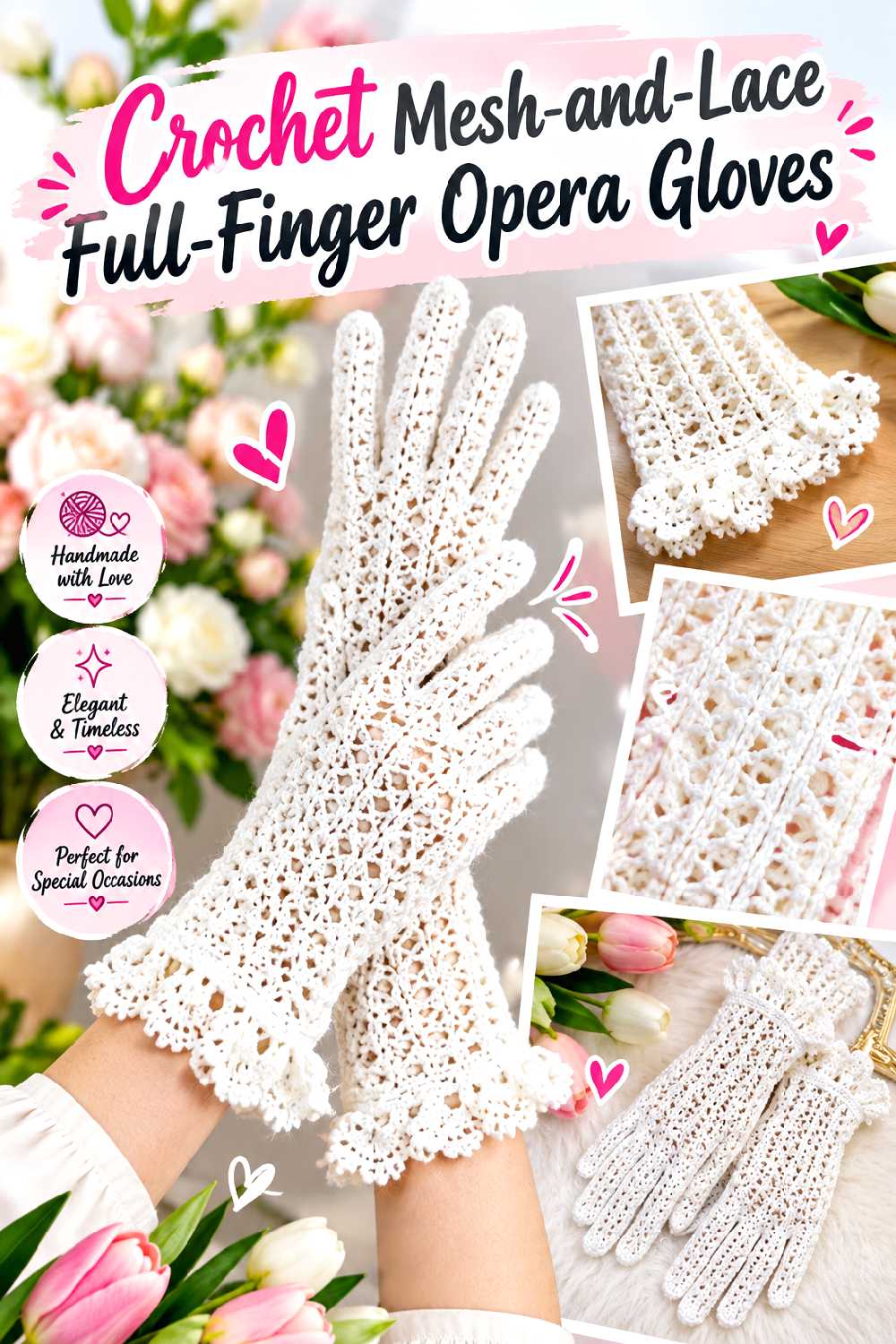
DIYGuru’s mesh-glove tutorial changes two major variables at once: the hand has individual finger coverage, and the fabric combines open mesh with a decorative lace edge. That creates a much more traditional glove impression than most fingerless arm warmers in this collection.
The demonstrated glove is not simply a long fingerless tube, so prioritize hand fit before considering a larger opera-length extension. This concept works well for dark romantic, retro, costume, or formal styling where visible fingers would change the intended effect.
Finger Fit Comes Before Forearm Drama
Individual fingers introduce more points where the glove can pull, twist, or feel restrictive. Complete and assess the hand according to the source before spending time planning added length. A beautifully extended cuff cannot repair fingers that are uncomfortable or incorrectly positioned.
Keep the Lace Edge at a Deliberate Boundary
A decorative edge attracts the eye, so its location should correspond to a clear end point in the glove. If you want a much longer version, decide the final forearm position before treating the border as finished. Moving the visual endpoint later can disrupt the balance of the design.
Open Mesh and Fingers Need Different Stretch Checks
The forearm mesh may tolerate visible expansion better than fabric around individual fingers. Evaluate these zones separately rather than assuming one fit rule applies everywhere. The hand needs enough movement, while the long mesh section needs an even appearance and stable placement.
Creator: DIYGuru
12. Crochet Clean Ribbed Opera Mitts
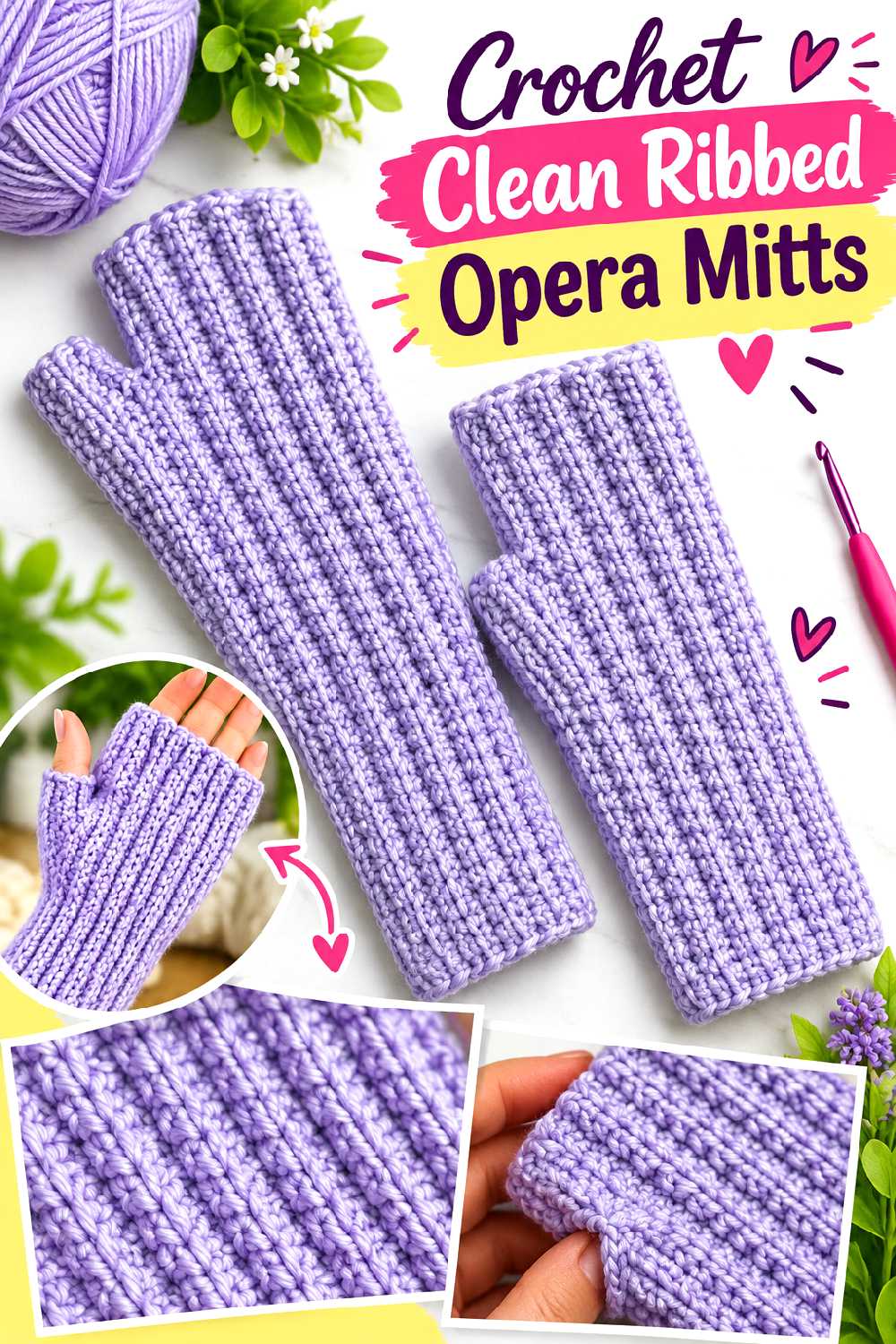
Crochet Bits’ ribbed fingerless gloves offer a compact, disciplined base for readers who want a simpler long-glove adaptation. The source demonstrates ribbed fingerless gloves rather than an already elbow-length opera pair, so the hand construction can serve as the starting point while the forearm requires its own fit planning.
This direction differs from decorative lace and floral options because the ribbing itself supplies most of the visual interest. A solid, uninterrupted surface can suit minimalist clothing, oversized tailoring, or a more utilitarian Fall 2026 interpretation.
Recovery Matters More as Ribbing Gets Longer
Stretch is useful only when the fabric can recover enough to maintain its shape. Before extending a ribbed glove substantially, handle and stretch a sample several times. If the ribs remain flattened afterward, a longer version may lose the fitted visual character that attracted you to the design.
Add Forearm Length as a Fitting Exercise
Do not treat a comfortable wrist circumference as a universal width for the whole arm. Compare the ribbed fabric with the intended upper stopping point and make changes gradually if needed. A long ribbed glove should follow the arm rather than depending on excessive tension at the top.
Creator: Crochet Bits
13. Crochet Full Finger Formal Opera Gloves
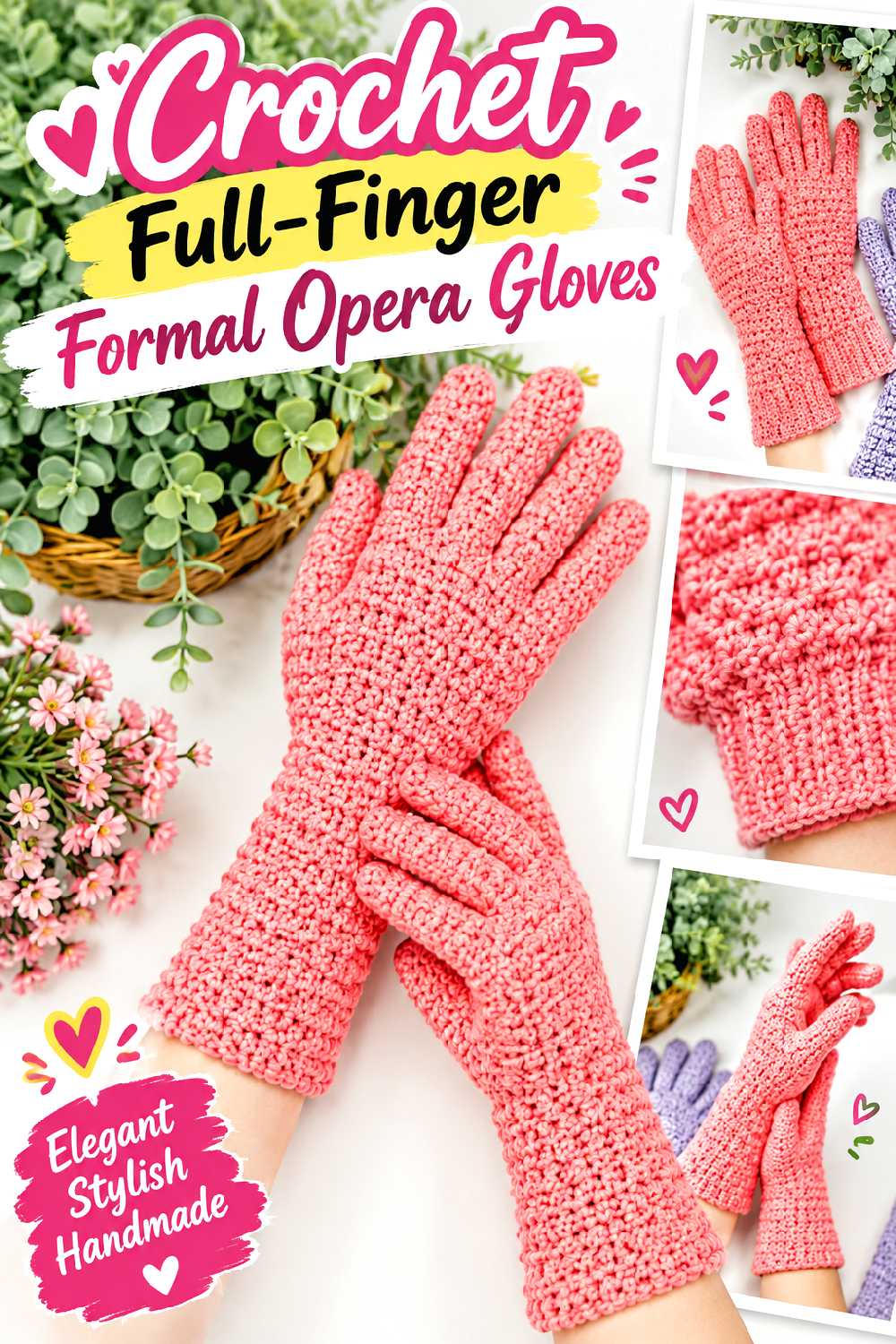
Just Be Crafty’s tutorial provides the individual-finger construction missing from most of the fingerless projects in this list. The source teaches a complete crochet glove with fingers, which makes it especially relevant if you want a more traditional formal-glove appearance before adding extra cuff length.
For an opera-inspired version, treat the hand and the long forearm as separate challenges. Full fingers already introduce many fit points, so a comparatively simple extended cuff can keep the finished object from becoming structurally and visually overloaded.
Check Every Finger Before Extending the Cuff
Finger length, width, and mobility matter before any attention is given to the dramatic forearm. Follow the original tutorial for its hand construction and wear the finished section long enough to identify pulling. Extra cuff length should only be added after the basic glove functions comfortably.
Decide How Much Dexterity the Finished Glove Needs
A full-finger crochet glove will feel different from a fingerless mitt when holding a phone, bag, or small object. Consider whether the finished pair is primarily fashion, costume, formalwear, or everyday cold-weather use. That purpose can influence how much you prioritize mobility versus an uninterrupted covered silhouette.
Keep a Long Extension Visually Quieter if Needed
Individual fingers already create many visible lines and transitions. A smoother forearm can balance that complexity more effectively than adding an unrelated decorative stitch everywhere. If you want lace or motifs too, concentrate them in a clearly defined zone.
Creator: Just Be Crafty
14. Crochet Puff Texture Opera Gloves
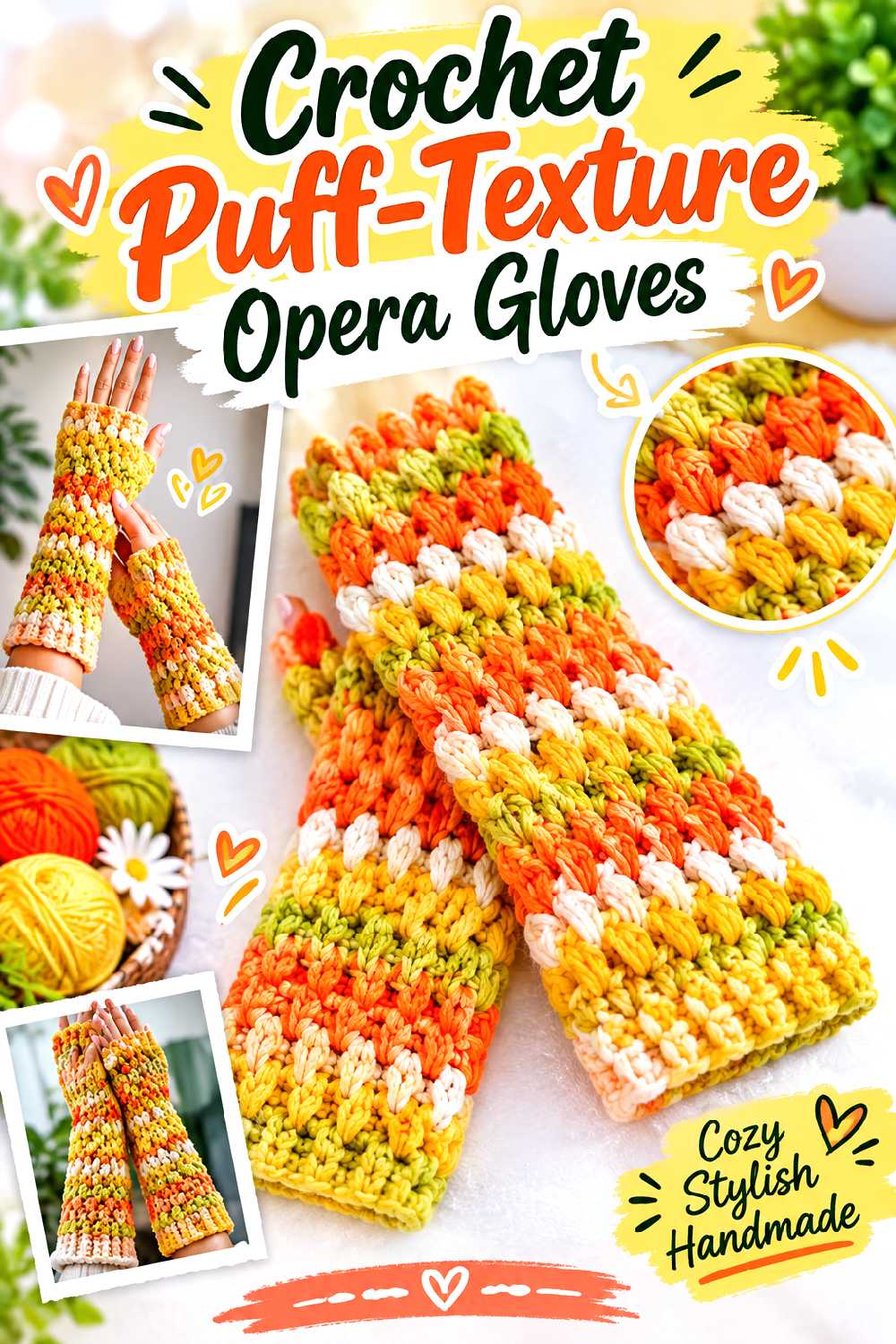
B.Hooked Crochet’s puff-stitch fingerless gloves offer a dense, dimensional surface that can become a bold long-glove concept when treated carefully. The source itself is a shorter fingerless style, so continuing the texture far up the forearm is an adaptation rather than something the original tutorial promises.
Puff texture creates visible shadow and depth without requiring attached embellishments. On an opera-length piece, however, that same feature can add substantial visual bulk. This option makes the most sense when texture is intended to become a major part of the outfit.
Raised Puffs Can Feel Bulky Beneath Fitted Sleeves
Before covering an entire forearm in dimensional stitches, test how the fabric interacts with outer layers. A coat cuff or narrow knit sleeve may compress the puffs and create more bulk than expected. Bare-arm styling gives the texture more room to remain visible.
Concentrating Texture Can Create Better Balance
You do not necessarily need to repeat a strong puff surface all the way to the elbow. Keeping it around the hand or lower forearm and using a quieter compatible extension can create contrast while reducing physical weight. Judge the whole silhouette rather than treating repetition as mandatory.
Watch the Transition Between Dense and Flexible Areas
If you combine puff texture with a smoother long section, compare their stretch before joining or transitioning. A sudden tight band between two fabrics can distort the glove. The change should feel intentional both visually and while the arm moves.
Creator: B.Hooked Crochet
15. Crochet Even Moss Opera Gloves
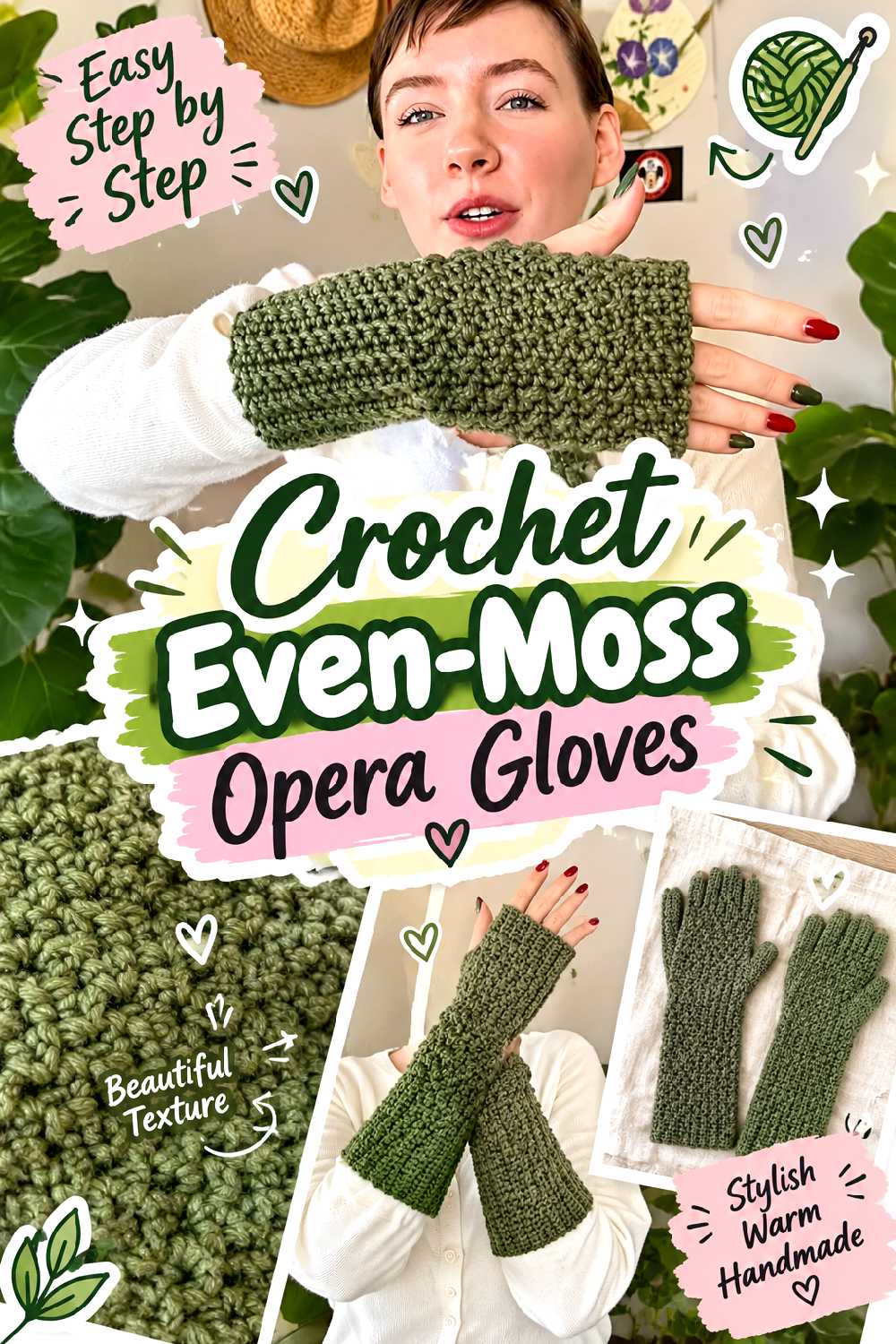
HayHay Crochet’s fingerless gloves combine ribbed sections with an even-moss texture, giving this idea more surface variation than a completely plain mitt without becoming heavily ornamental. The original glove is short, so any move toward opera length requires new forearm measurements rather than merely reproducing the demonstrated proportions.
This is a useful middle ground for Fall 2026: more tactile than simple ribbing but quieter than flowers, ruffles, or puffs. A long version can work especially well when you want texture that remains wearable with casual layers.
Compare the Ribbing and Moss Fabric Separately
Different stitch structures can have different stretch and recovery even when made from the same yarn. Check how the ribbed area and textured body behave before deciding which section should continue into the forearm. The most attractive hand fabric is not automatically the best material for the widest part of the arm.
Extend the Texture Only if It Keeps Its Definition
A repeated small-scale texture can become less distinct when heavily stretched. Test the fabric at the intended upper circumference before committing to extra length. If the stitch definition disappears, a gradual change in width or a different upper section may preserve the effect more successfully.
Creator: HayHay Crochet
16. Crochet Fantail Shell Opera Gloves
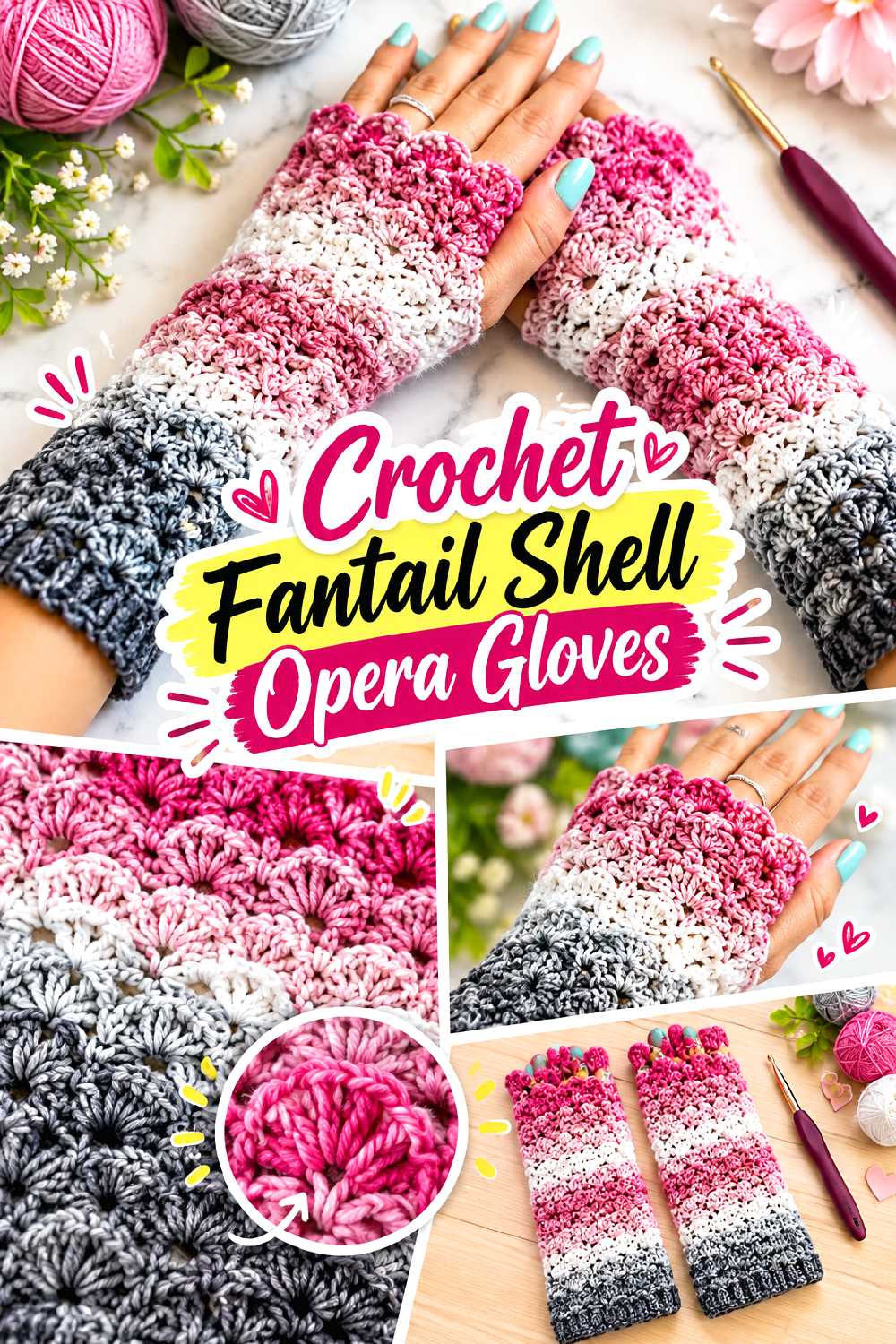
Hooked by Robin’s fantail shell gloves introduce a pronounced decorative pattern around the hand instead of relying on plain ribbing alone. The source teaches a shorter fingerless glove, so a true opera-length version should preserve the shell character while treating the additional forearm as a separate fitting decision.
The shell surface gives this idea an ornate, almost fan-like rhythm that can suit romantic, vintage, or statement fall styling. Because clustered stitches can create more width than narrow ribbing, decide whether the shells should continue upward or stay concentrated near the hand.
Shells Can Visually Widen a Long Glove
Grouped stitches create a broader, more decorative surface than sleek ribs. Over a large forearm area, that effect becomes stronger. If your goal is a narrow opera silhouette, consider reserving the shells for a focal section and using a more restrained treatment above them.
Finish Repeats at a Clean Visual Boundary
A recognizable shell pattern looks most deliberate when the upper stopping point respects the rhythm of the motifs. If you alter length, compare nearby possible endpoints rather than cutting the visual pattern off arbitrarily. Comfort still comes first, but a small adjustment in placement can improve the finish.
Keep the Wrist Transition From Becoming Too Full
The wrist is naturally narrower than the hand and forearm. Decorative clusters placed there can create unexpected flare if the transition is not balanced. Evaluate the glove while worn and make sure the ornate portion enhances rather than obscures the intended long silhouette.
Creator: Hooked by Robin
17. Crochet Granny Square Accent Opera Gloves
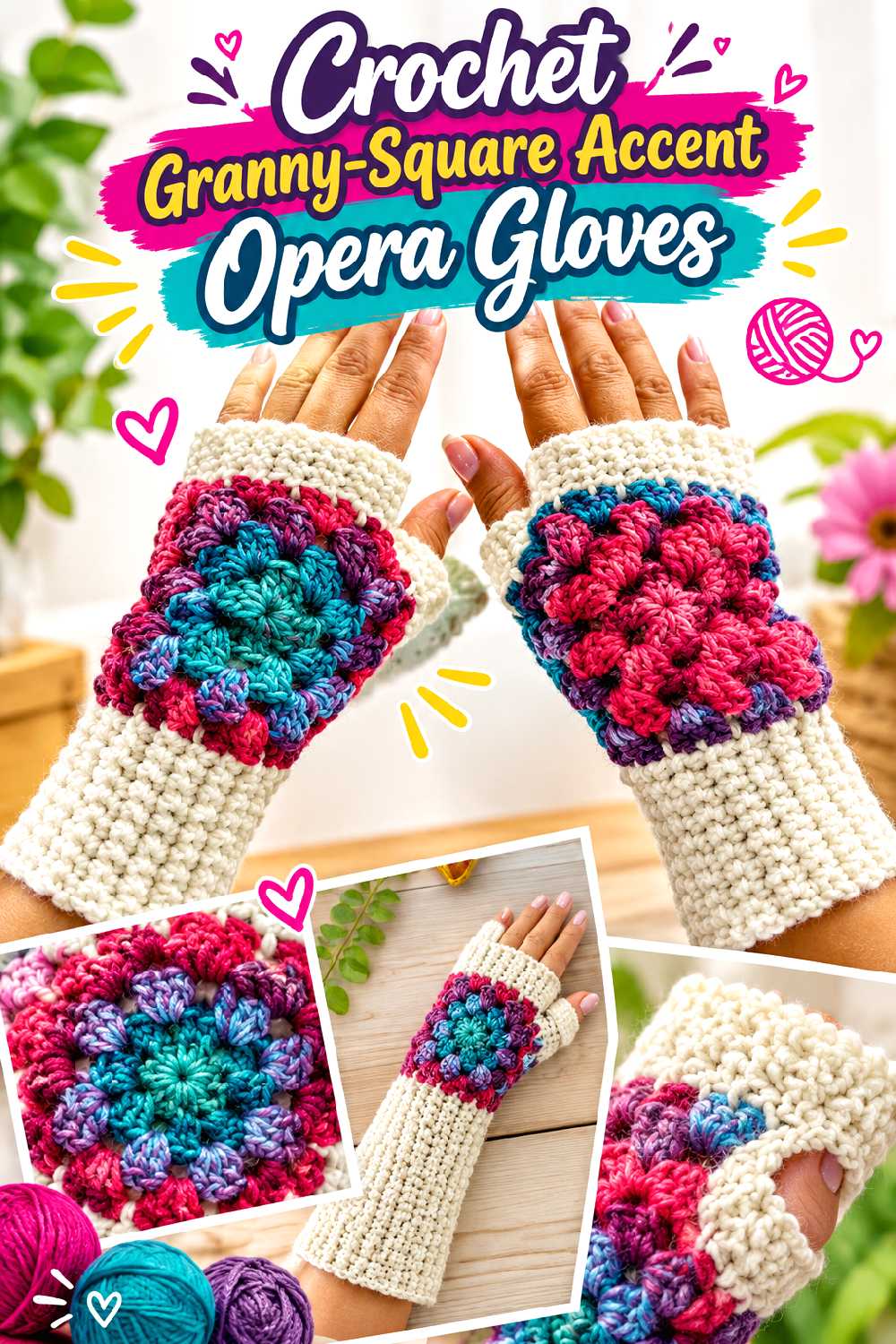
Katia Creates’ granny-square hand warmers give this collection a modular alternative to continuous ribbing and lace. The tutorial demonstrates hand warmers built around granny-square styling rather than opera-length gloves, so this is the most clearly adaptation-led idea in the roundup.
Instead of covering the entire forearm in motifs, the square can act as a focal hand or lower-wrist panel connected visually to a simpler long extension. That keeps the granny-square identity recognizable without requiring a stack of motifs to follow a strongly tapered arm.
Motif Dimensions Should Be Settled Before the Extension
A square that fits the hand comfortably determines much of the scale of the design. Measure the finished blocked motif rather than assuming another square pattern will have identical dimensions. If you change motifs, treat their compatibility as a new fit problem.
Keep the Square From Rotating Off the Hand
Graphic motifs are less forgiving of twisting than plain fabric. Check that the square sits where you want it when the hand is relaxed and moving. A long forearm section should support that orientation rather than pulling the focal motif toward one side.
Use the Motif as an Accent Instead of Forcing a Full Grid
An opera glove crosses changing arm widths that do not naturally correspond to a uniform rectangular grid. A simpler extension can often preserve the square as the star while allowing more flexible forearm shaping. This approach also separates motif planning from the fit requirements of the long section.
Creator: Katia Creates
18. Crochet Ruffled Coquette Opera Gloves
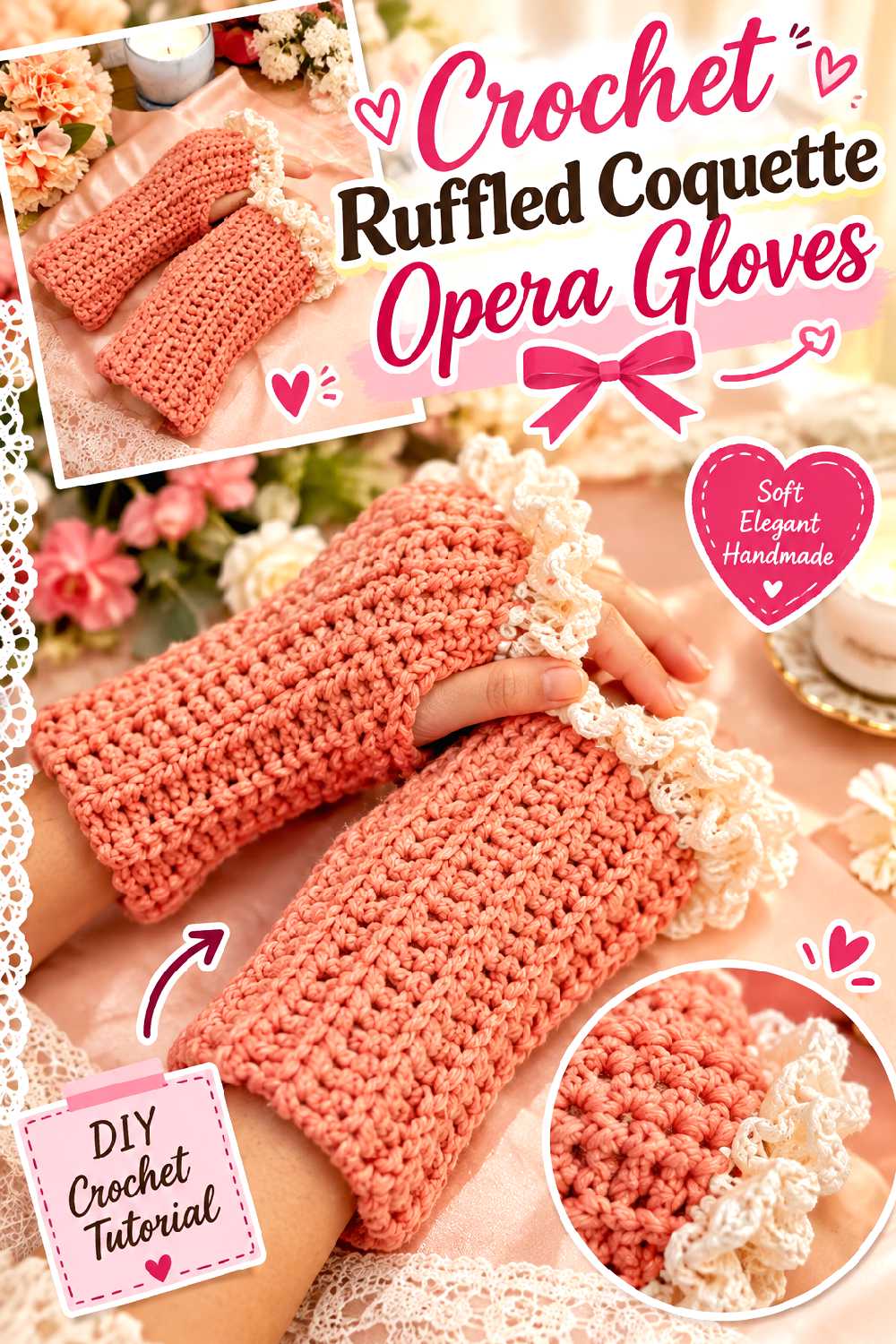
CrochetByMoni’s ruffled fingerless gloves provide another decorative coquette route, but the effect is different from the earlier bow-trimmed idea. Here, the edge itself creates the volume, giving a longer glove the potential for a flared, romantic boundary rather than a separately attached focal embellishment.
The source is a shorter fingerless design, so the opera-length forearm must be fitted independently. This concept works particularly well when you want a simple fitted arm interrupted by one deliberate burst of ruffle at the hand or upper edge.
Decide Which Edge Deserves the Ruffle
Placing the ruffle near the fingers emphasizes the hand, while an upper-forearm ruffle creates a dramatic boundary against bare skin. Repeating large frills at both ends produces a much busier silhouette. Choose the visual emphasis before extending the base glove.
Check Ruffle Volume Against Fall Sleeves
A prominent frill can disappear, compress, or bunch underneath a narrow coat cuff. Try the intended clothing combination before finalizing its scale and position. If the glove will be worn mainly with sleeveless or short-sleeved pieces, the ruffle has more freedom to remain fully visible.
Fit the Plain Base Before Adding the Flare
Do not use an oversized decorative edge to disguise a loose or poorly shaped glove. Establish the hand, wrist, forearm, and upper-edge fit first. Once the base stays where intended, the ruffle can function as decoration rather than an accidental structural fix.
Creator: CrochetByMoni
Which Crochet Opera Glove Direction Fits Your Fall 2026 Look?
| If you want | Strong starting ideas | Main decision to check |
|---|---|---|
| A genuinely long, clean silhouette | 1, 2, 3, 4, 5 | Forearm taper, recovery, and upper-edge position |
| Open, lighter-looking coverage | 7, 10, 11 | Lace or mesh distortion while worn |
| Romantic decoration | 6, 8, 9, 18 | Bow, flower, scallop, or ruffle placement |
| Strong crochet texture | 3, 14, 15, 16 | Bulk, repeat behavior, and sleeve compatibility |
| Traditional covered fingers | 11, 13 | Finger fit and dexterity before adding length |
| A visibly handmade motif statement | 17 | Motif orientation and how it connects to the long section |
The easiest route is usually a tutorial that already produces a long arm warmer or glove. Decorative adaptations demand more planning, but they also give you access to details—Victorian edges, flowers, bows, shells, and granny-square motifs—that a plain long tutorial may not include.
Conclusion
Fall 2026’s opera-glove revival leaves plenty of room for crochet to look polished, romantic, gothic, textured, or playful. Choose the sleek long and ribbed options when silhouette and easy layering matter most; look toward fishnet and lace when you want lighter visual coverage; and use flowers, bows, ruffles, shells, or granny-square accents when the handmade detail should be obvious.
For shorter source gloves, treat added forearm length as a real fit adaptation rather than automatic repetition. Check changing circumference, stitch stretch, thumb alignment, and upper-edge placement as you go. Use the original tutorials for their exact construction details, then make any length changes around the actual wearer and the outfit the gloves are meant to accompany.
Frequently Asked Questions
Are crochet opera gloves actually a Fall 2026 trend?
Opera-length gloves themselves are clearly part of Fall 2026 fashion coverage, appearing in runway and accessory trend reporting from major fashion publications. Crochet is one handmade interpretation of that broader trend rather than the single material driving it. That distinction leaves room to borrow the dramatic length while choosing crochet-specific textures such as ribbing, lace, fishnet, shells, or raised stitches.
Can I turn any crochet fingerless glove into an opera-length glove?
Not automatically. A short glove may give you a useful hand shape, thumb opening, cuff, or decorative stitch, but extending it farther up the arm introduces changing circumference and substantially more fabric. Check whether the stitch stretches and recovers well, whether the repeat allows controlled width changes, and whether the upper section will remain comfortable instead of simply continuing a wrist-sized tube.
Where should a crochet opera glove end on the arm?
There is no single required stopping point for a crochet interpretation. A mid-forearm glove creates a different effect from one reaching just below the elbow, and either can look deliberate depending on the outfit. Decide where you want the visible line to end, then test that position with the elbow bending and with the sleeves or outerwear you plan to wear.
What crochet fabric works best if I want the gloves to stay fitted?
Rather than choosing only by stitch name, compare the finished fabric’s stretch, recovery, skin feel, and stability. Ribbing may accommodate changing circumference particularly well, while softer draping fabric can require more deliberate shaping. Whatever you choose, stretch a sample repeatedly before making two long gloves so you can see whether it returns toward its original dimensions.
How do I stop long crochet gloves from sliding down?
Start with the overall forearm fit instead of making only the upper edge tighter. A loose glove with one restrictive top band can still move while creating an uncomfortable pressure point. Check whether the fabric follows the taper of the arm and whether it has enough recovery to stay close after stretching over the hand and wider forearm.
Are fishnet and lace opera gloves as warm as dense crochet gloves?
They offer a different type of coverage. Open lace and fishnet intentionally expose more skin or the layer beneath them, so their appeal is often visual rather than maximum insulation. Actual warmth depends on the yarn, fabric density, weather, and clothing underneath, which means an open glove should not be assumed to perform like a dense ribbed or textured warmer.
Should I block crochet opera gloves before wearing them?
Blocking may help settle stitches or open lace, but the appropriate method depends on the yarn and construction. Check the yarn’s care information before using water, heat, or steam, and be cautious about stretching a fitted glove so aggressively that it loses useful recovery. Finish both gloves consistently and compare their final dimensions so the pair still sits at matching heights on the arms.