Crochet hoods can solve several different cold-weather needs, but the finished pieces do not all behave the same way. A close balaclava frames the face and fits close to the neck. A hooded cowl trades that fitted shape for more room and drape. A scoodie combines a hood with scarf ends, while pocket versions and wider wraps add even more fabric below the shoulders.
That variety is useful for fall and winter 2026 because it gives you more to choose from than one standard rectangular hood. The 22 ideas below include rounded crowns, continuous stripes, granny-square constructions, thick ribs, faux fur, pockets, infinity loops, animal ears, cables, and adjustable silhouettes.
As you compare them, pay attention to more than color. Hood depth, neck volume, face-opening shape, scarf length, yarn flexibility, and how the accessory interacts with a coat can have a much bigger effect on whether you enjoy wearing the finished piece.
Quick List
- Crochet Continuous Stripe Scoodie
- Crochet Pixel Texture Hood Scarf
- Crochet Minimal Everyday Hood Scarf
- Crochet Two Tone Long Hooded Scarf
- Crochet Deep Rib Winter Scoodie
- Crochet Draped Infinity Hood Scarf
- Crochet Ribbed Pocket Hood Scarf
- Crochet Wide Pocket Wrap Hood
- Crochet Made To Measure Pocket Hood Scarf
- Crochet Triangle Hooded Wrap
- Crochet Faux Fur Snood Hood
- Crochet Rounded Crown Pocket Hood Scarf
- Crochet Checker Accent Balaclava
- Crochet Close Fit Open Face Balaclava
- Crochet Slouchy Winter Balaclava
- Crochet Patchwork Granny Square Balaclava
- Crochet Bear Ear Balaclava Hood
- Crochet Fold Down Bulky Hooded Cowl
- Crochet Adjustable Everyday Hooded Cowl
- Crochet Cable Texture Hooded Cowl
- Crochet Rounded Chunky Scoodie
- Crochet Chunky Simple Hooded Snood
Choose Between a Balaclava, Hooded Cowl, and Scoodie First
The broadest decision is how close you want the project to sit around your head and neck.
A balaclava normally behaves most like fitted headwear. Crown depth, face-opening placement, and neck fit therefore matter considerably. Even small proportion changes can alter where the front edge lands around the forehead, cheeks, or chin.
A hooded cowl usually gives you more room. When it is not covering the head, that extra hood fabric settles around the neck. This makes it important to consider both wearing positions. A hood that feels wonderfully generous when raised may become more fabric than you want inside a fitted coat collar.
Scoodies and hooded scarves move farther toward traditional scarf territory. They may provide long ends for wrapping, pockets, or extra shoulder coverage. That creates styling flexibility, but also additional weight and bulk.
Yarn Drape Can Change the Hood More Than Color
A hood needs to bend around a three-dimensional head, so yarn choice affects much more than the appearance of the stitches.
Firm crochet fabric can help a close balaclava or sculptural hood maintain a defined shape. Use that same firmness in an intentionally slouchy hood, however, and the extra fabric may stand away from the head instead of falling into relaxed folds.
Soft, flexible fabric works naturally with oversized hoods and scarf-style projects but may stretch under the weight of long ends or pockets. Raised ribs and cables create additional thickness, while faux-fur yarn can hide the stitches almost completely.
Before making a major yarn substitution, crochet enough fabric to judge its flexibility rather than relying only on the yarn label. Fold it, drape it, and consider how multiple layers would feel around your neck.
Check Hood Fit With the Layers You Actually Wear
A crochet hood fitted over a lightweight shirt may behave differently once you add a sweater and winter coat.
Try to make fit decisions in conditions that resemble how you will actually wear the finished accessory. If you usually wear your hair up, check whether the crown has appropriate room. If you wear glasses, notice whether a close face edge interferes with the temples. With hooded cowls, check how the lowered hood interacts with your coat collar.
Long scarves need a different type of fitting check. Put the hood into its intended position before judging where scarf ends or pockets should land. The fabric used by the hood changes how much length remains below the shoulders.
1. Crochet Continuous Stripe Scoodie
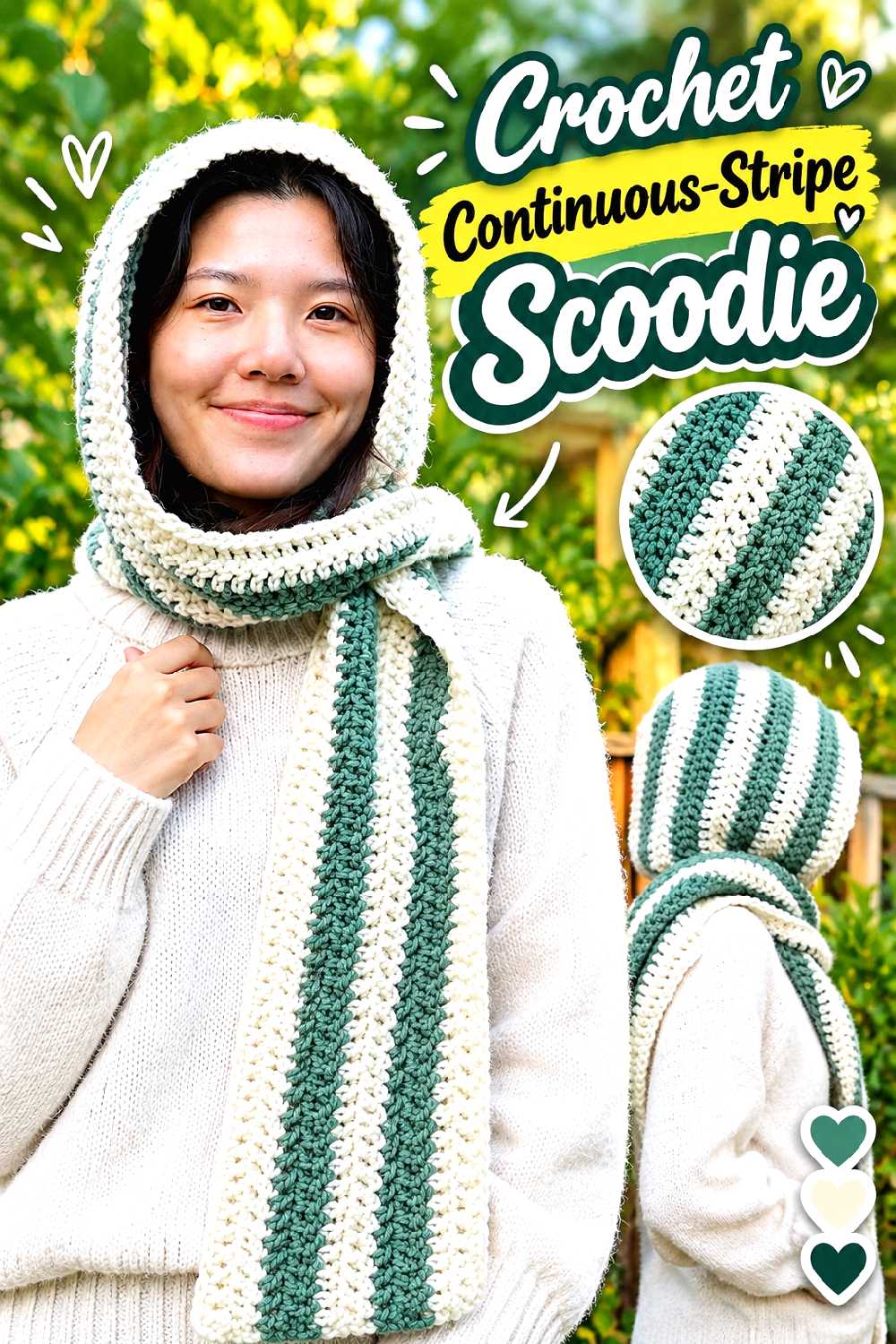
This crochet scoodie connects a rounded hood and scarf in one coordinated accessory, with stripes traveling through the overall design rather than treating the hood as a visually separate piece. VivCrochets presents the project as a no-sew hooded scarf and specifically shapes it to avoid the strong point that can develop at the back of some simple folded hoods.
That makes this a useful starting point if you like the relaxed coverage of a hood but still want traditional scarf ends for wrapping.
Plan the Stripe Placement Around Your Face
The same stripe width can look very different on a long scarf end and across the crown. Before committing to a repeating sequence, think about which shade you would like closest to your face.
If you are using a strong contrast, a small color band can become much more prominent once it bends around the hood. A quieter tonal combination will place more emphasis on shape and stitch texture.
A Rounded Crown Still Needs Enough Depth
Removing a pointed back does not automatically guarantee the hood will sit exactly where you want it.
Check depth while the scarf hangs naturally from the shoulders. A hood that is too shallow may pull the scarf upward as you turn your head, while excessive depth can cause the front edge to fall farther forward than intended.
Creator Credit: VivCrochets
2. Crochet Pixel Texture Hood Scarf
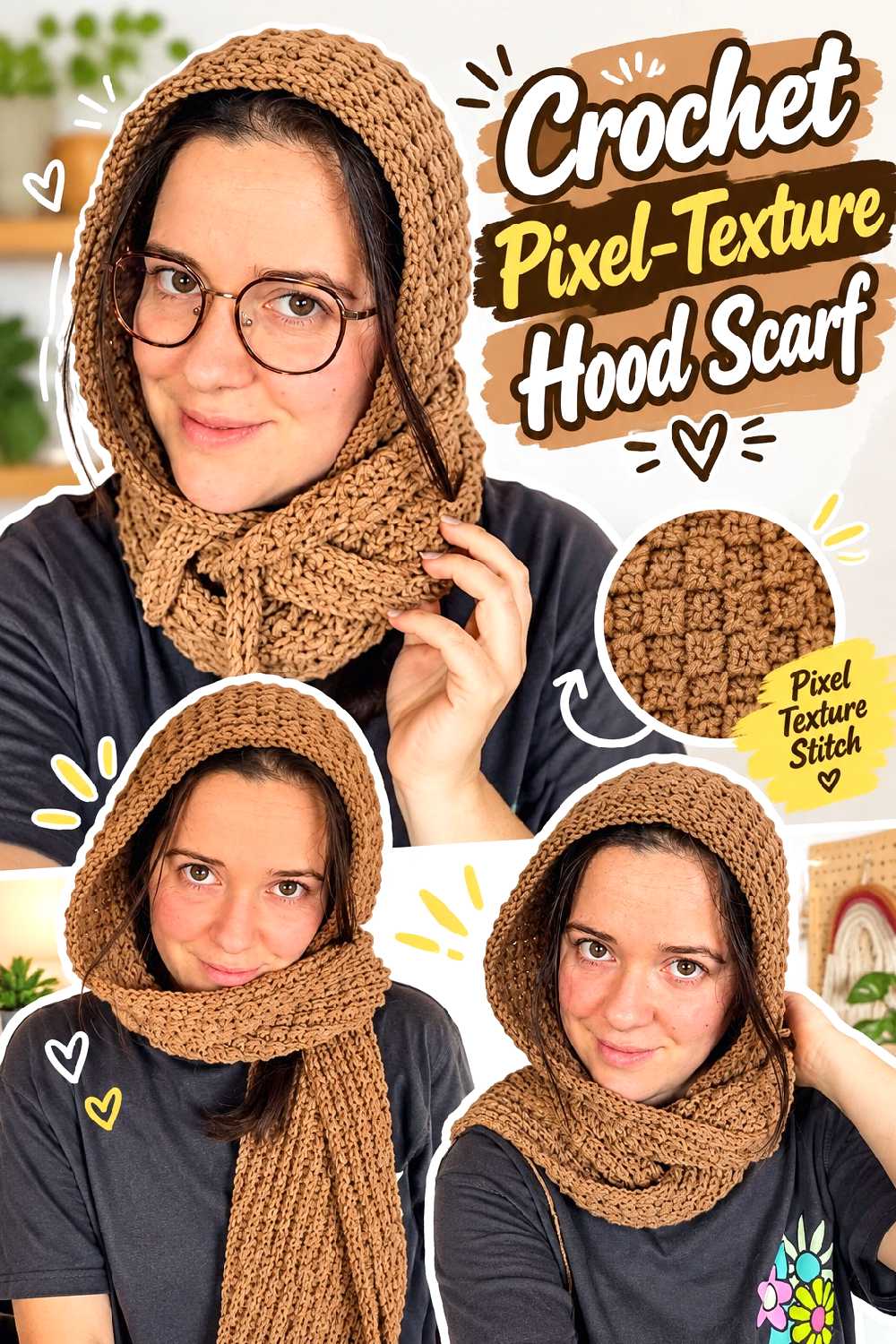
This crochet hood scarf takes a more streamlined route. Passionate Crafter’s design uses one-piece construction and shaped sections to create a contemporary hood without relying on pockets, granny squares, or a decorative fringe as the main feature. The accompanying pattern information identifies short-row shaping as part of the hood construction.
The result makes texture and proportion more important because there are fewer extra details competing for attention.
Dense Texture Changes How the Scarf Folds
A highly defined fabric may look compact while flat but feel much more substantial when folded around the neck.
If you plan to customize the scarf length, first decide whether you expect the ends to hang, cross once, or wrap more closely. Increasing length without considering fabric thickness can produce much more neck volume than expected.
Keep the Hood Centered When Adjusting Length
One-piece designs make proportion changes especially visible. If you lengthen one area, make sure the hood remains where it belongs in relation to both scarf ends.
Use measurements or markers instead of estimating symmetry by eye. Small differences become more noticeable once the accessory is hanging vertically.
Creator Credit: Passionate Crafter
3. Crochet Minimal Everyday Hood Scarf
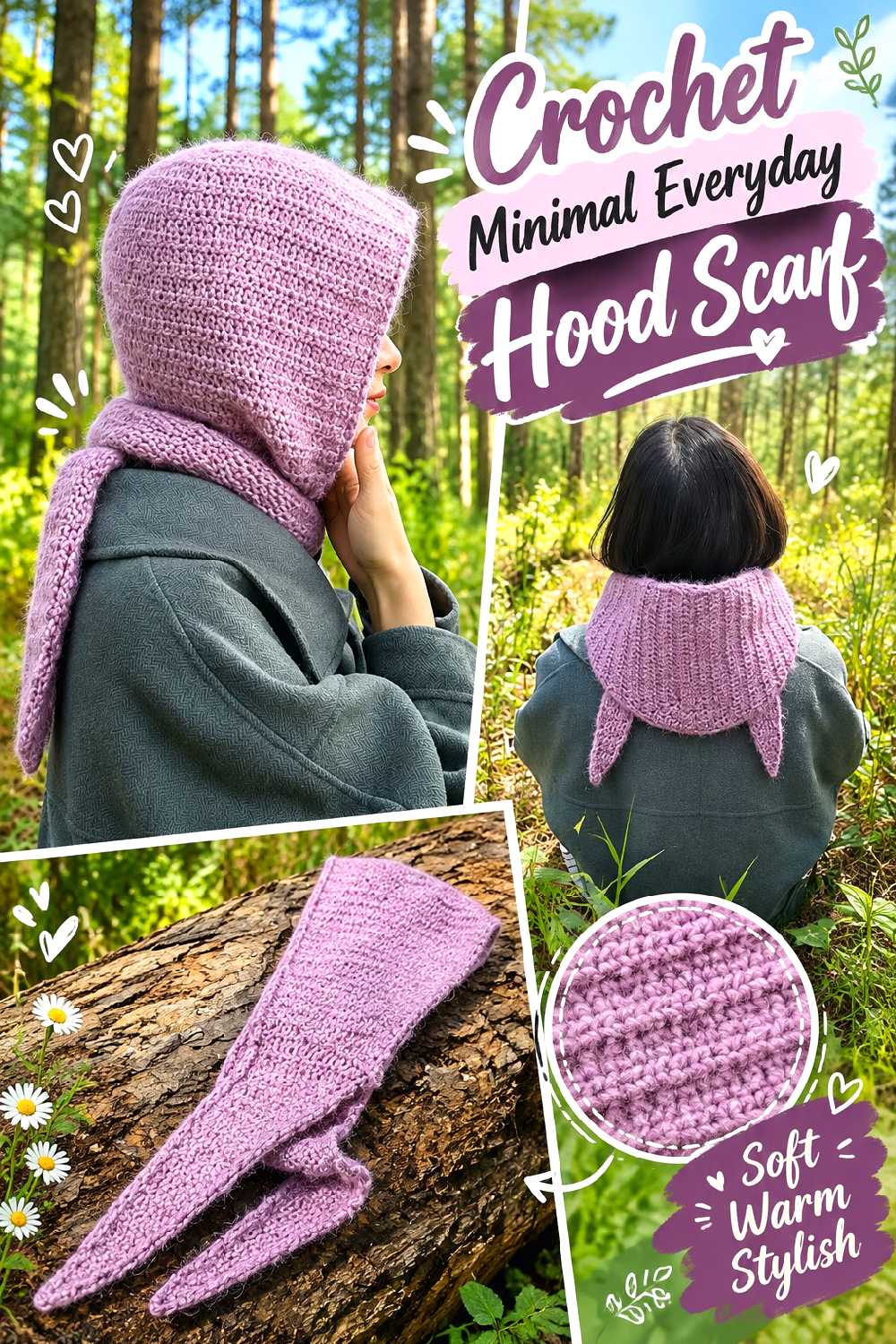
ABoC Studio provides a clean crochet hood-scarf direction without turning pockets, large motifs, or dramatic trim into the main attraction. The source design focuses instead on the basic relationship between the hood and scarf silhouette.
This kind of understated project can fit easily into a fall wardrobe because the yarn itself can carry the visual character.
Minimal Shapes Expose Proportion Problems
A decorative border can distract from a small irregularity. A simple hood cannot.
Fold or temporarily arrange the developing project in its wearing position and compare both sides periodically. Check the hood from the side as well as the front so you can see whether the crown depth suits the silhouette you want.
Let Yarn Texture Supply the Interest
A smooth yarn will emphasize clean edges and individual stitches. A softer, haloed yarn can blur those details and give the same basic form a gentler appearance.
Neither approach is automatically preferable. Decide whether you want stitch structure or the overall hood silhouette to receive the most visual attention.
Creator Credit: ABoC Studio
4. Crochet Two Tone Long Hooded Scarf
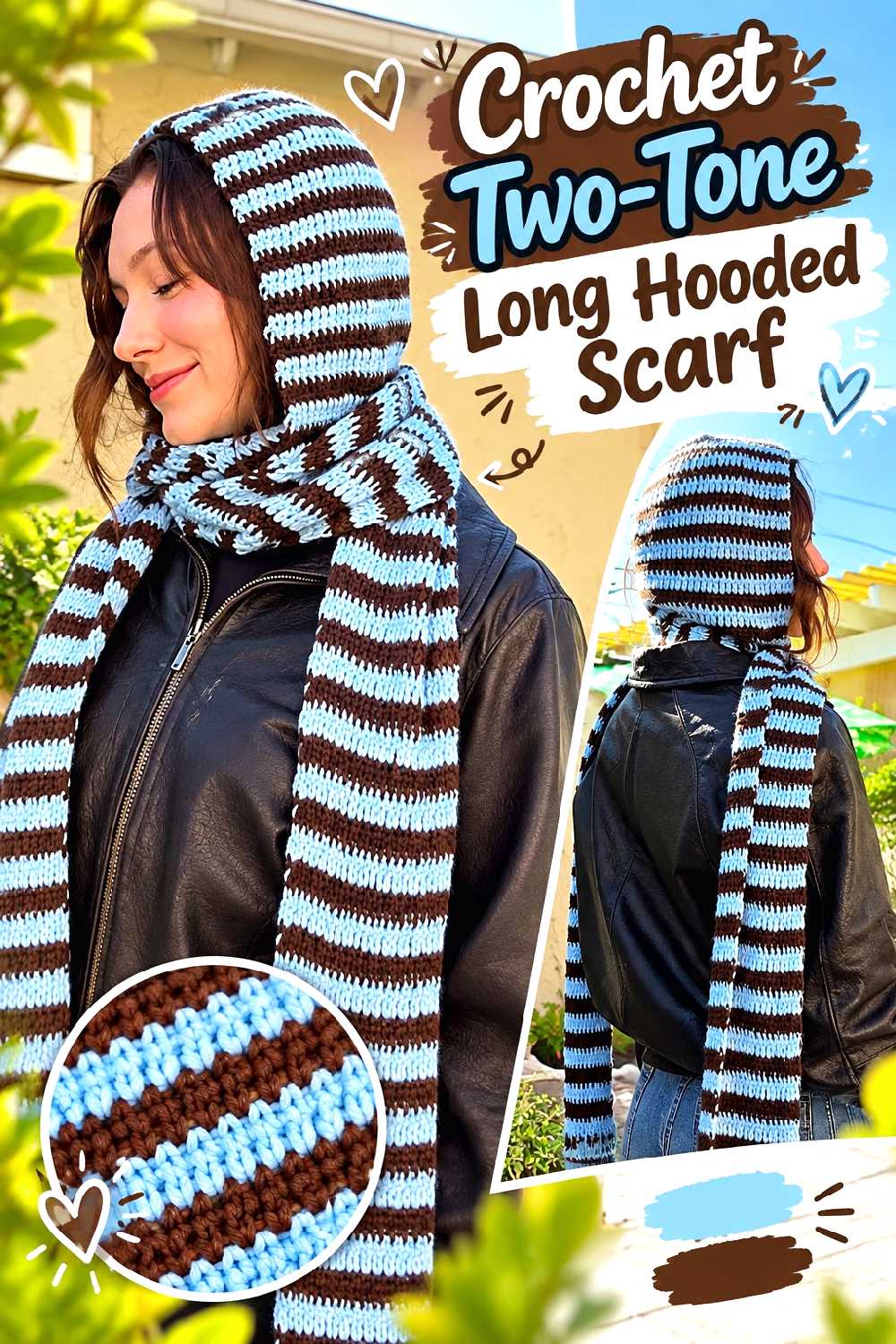
Anna Greene’s crochet hooded scarf uses two colors across a long scarf-and-hood shape, creating contrast without depending on separate motifs or pockets. The tutorial includes distinct scarf, hood, and attachment stages.
This format is worth considering if you enjoy long scarf tails but want something more graphic than a single-color scoodie.
Give the Two Colors Different Jobs
Before beginning, decide whether the colors should carry equal visual weight.
One can dominate the scarf while the second emphasizes the hood, or the contrast can be distributed more evenly. Put the yarns beside the coat you expect to wear with the scarf; a dramatic combination in the skeins can appear much busier against patterned outerwear.
Check the Join Before Finishing the Ends
A visible color transition can draw extra attention toward the place where hood and scarf meet.
Temporarily position the hood and let both scarf sections hang before final finishing. If one side rises or twists, correct the alignment rather than hoping the long ends will disguise it.
Creator Credit: Anna Greene
5. Crochet Deep Rib Winter Scoodie
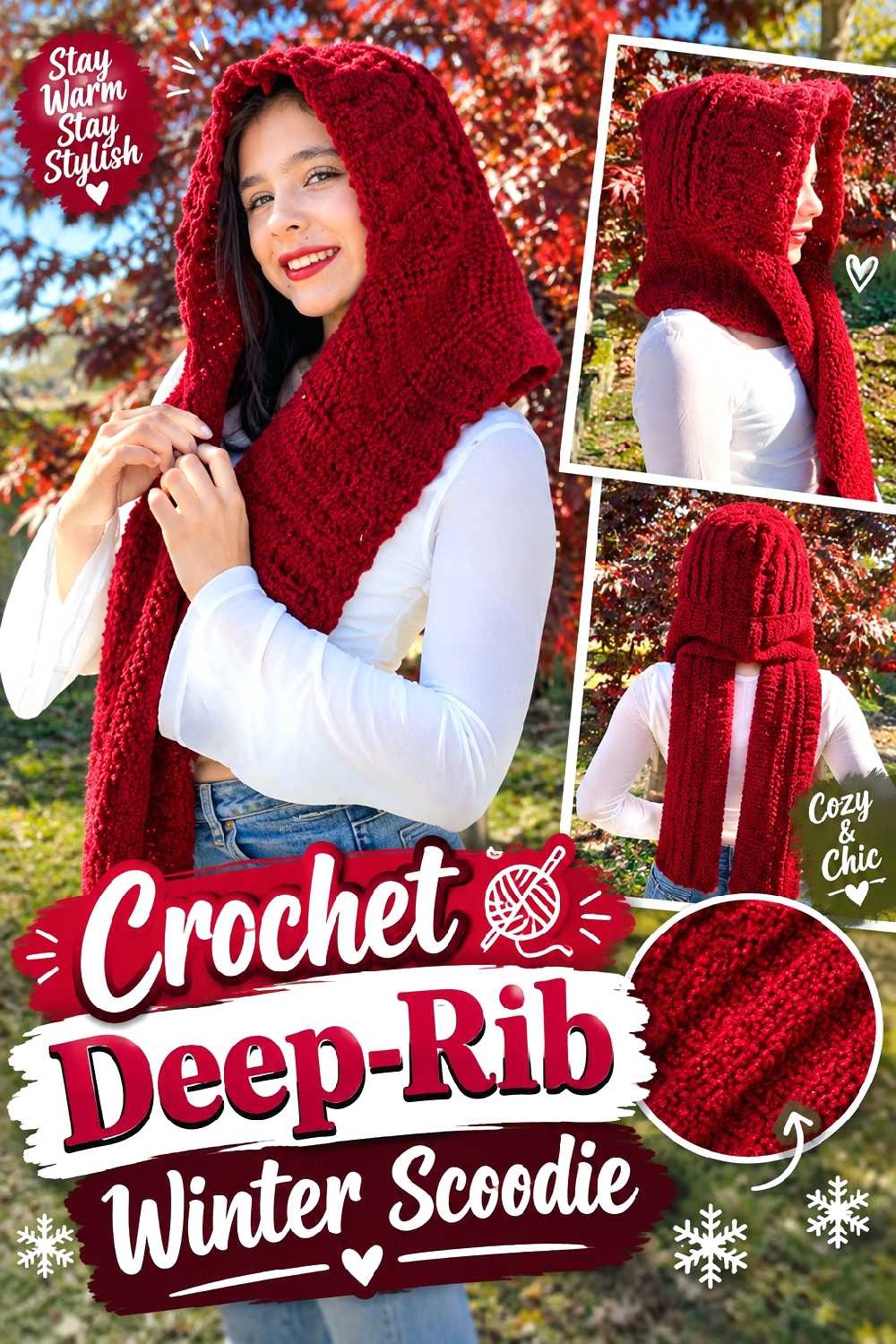
This crochet scoodie puts pronounced ribbed texture at the center of the design. Faith.Wisest uses raised post-stitch texture to produce a visibly dimensional hooded scarf rather than a flat, understated fabric.
It is a useful contrast to the smoother projects above because the texture changes both the appearance and the physical bulk of the accessory.
Deep Ribs Add More Than Visual Texture
Raised stitches create depth, so several overlapping layers can occupy significant space around the neck.
Fold a sample the way you expect to wrap the scarf. If two or three layers feel too firm, changing the scarf width or choosing a more flexible yarn may be more useful than simply making the finished piece larger.
Choose Yarn That Lets the Ribs Stay Visible
If ribbing is the feature that attracted you to this design, avoid judging yarn only by softness.
Very fuzzy fibers can soften the shadow lines that make raised stitches readable. Work enough of a sample to see several complete ribs and view it from normal distance before deciding.
Creator Credit: Faith.Wisest
6. Crochet Draped Infinity Hood Scarf
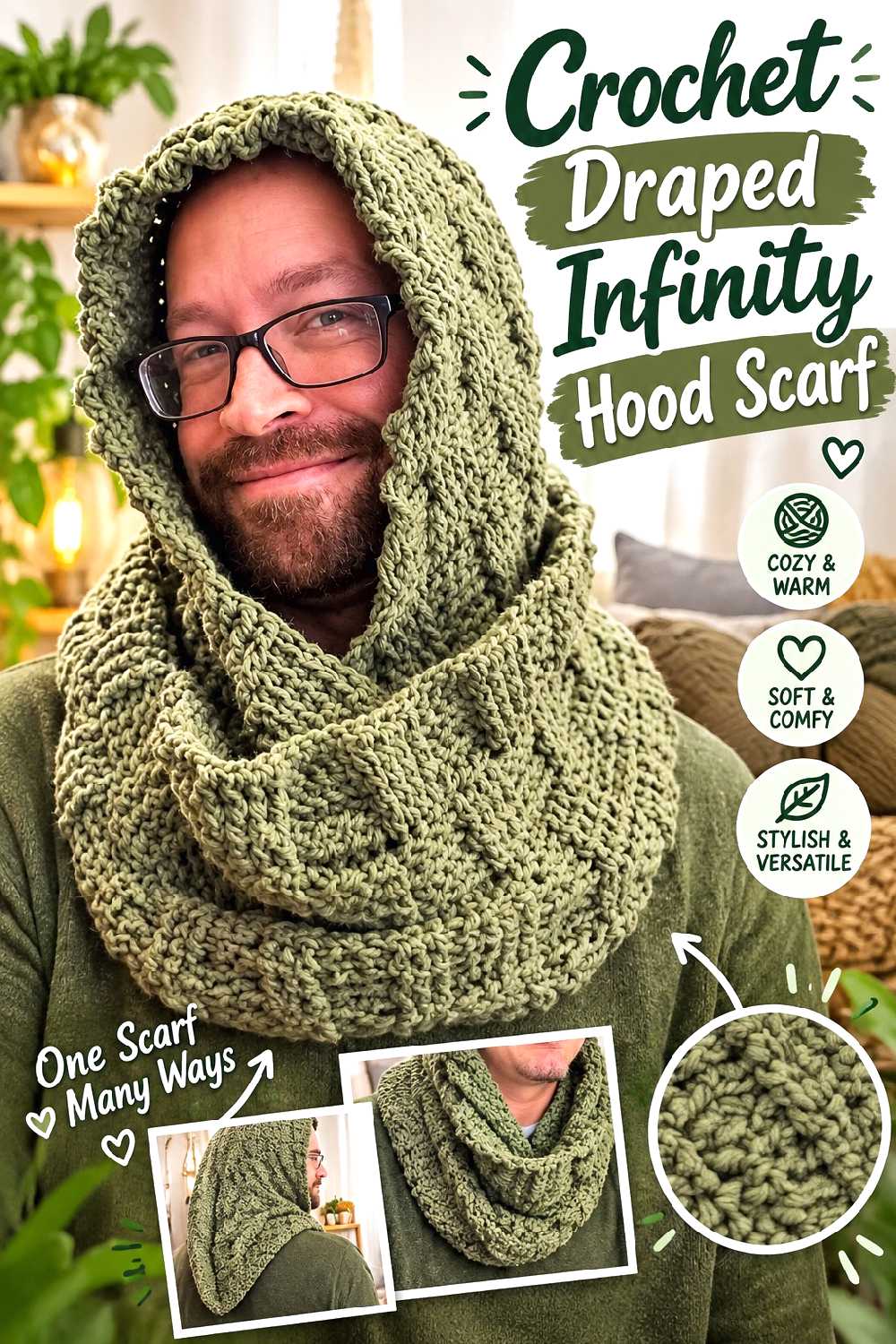
Fiber Spider’s version removes loose scarf tails and combines the hood with an infinity-style neck section. The continuous loop changes how the entire accessory is anchored because the scarf itself stays around the neck instead of hanging freely.
This can be appealing when you like hood coverage but do not want long ends moving around your coat.
The Infinity Loop Influences Hood Position
The neck section and hood cannot be evaluated independently.
If the loop becomes much looser after a yarn substitution, the hood may settle differently even if you did not change its dimensions. Check the loop first and then evaluate where the hood naturally falls.
Mark the True Center Before Attaching the Hood
Long scarves provide two ends that make orientation obvious. A closed loop does not.
Identify the center back before permanently positioning the hood. A small placement error can cause the infinity section to twist or make the hood feel offset when worn.
Creator Credit: Fiber Spider
7. Crochet Ribbed Pocket Hood Scarf
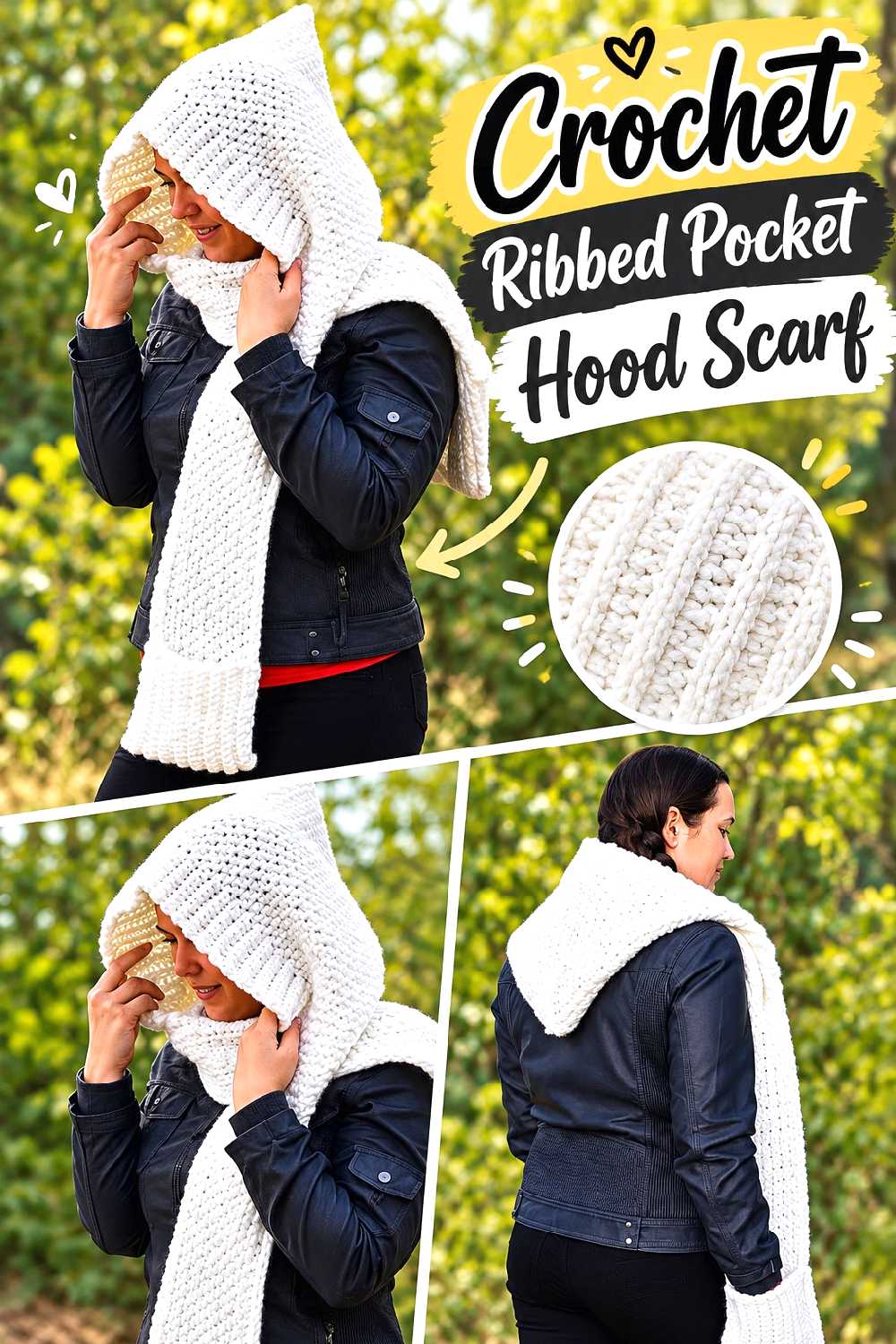
Winding Road Crochet combines a hood with long scarf sections and pockets, adding hand coverage and noticeable linear texture. The pocket ends make overall length a functional decision instead of a purely decorative one.
This is a useful option when you want one winter accessory to cover the head, neck, and hands without turning into a broad shawl.
Pocket Height Should Follow the Wearer
A generic scarf length does not guarantee comfortable pocket placement.
Put the hood in its proper position, stand naturally, and notice where your hands reach the scarf ends. If you modify the length, make equal changes so one pocket does not finish noticeably lower than the other.
Watch Whether the Border Pulls Inward
Textured edges sometimes have different elasticity from the main scarf fabric.
If the edge begins to cinch the scarf or produce waves, investigate the tension before continuing. A pocket scarf needs its ends to hang cleanly because uneven edges become especially obvious near the hands.
Creator Credit: Winding Road Crochet
8. Crochet Wide Pocket Wrap Hood
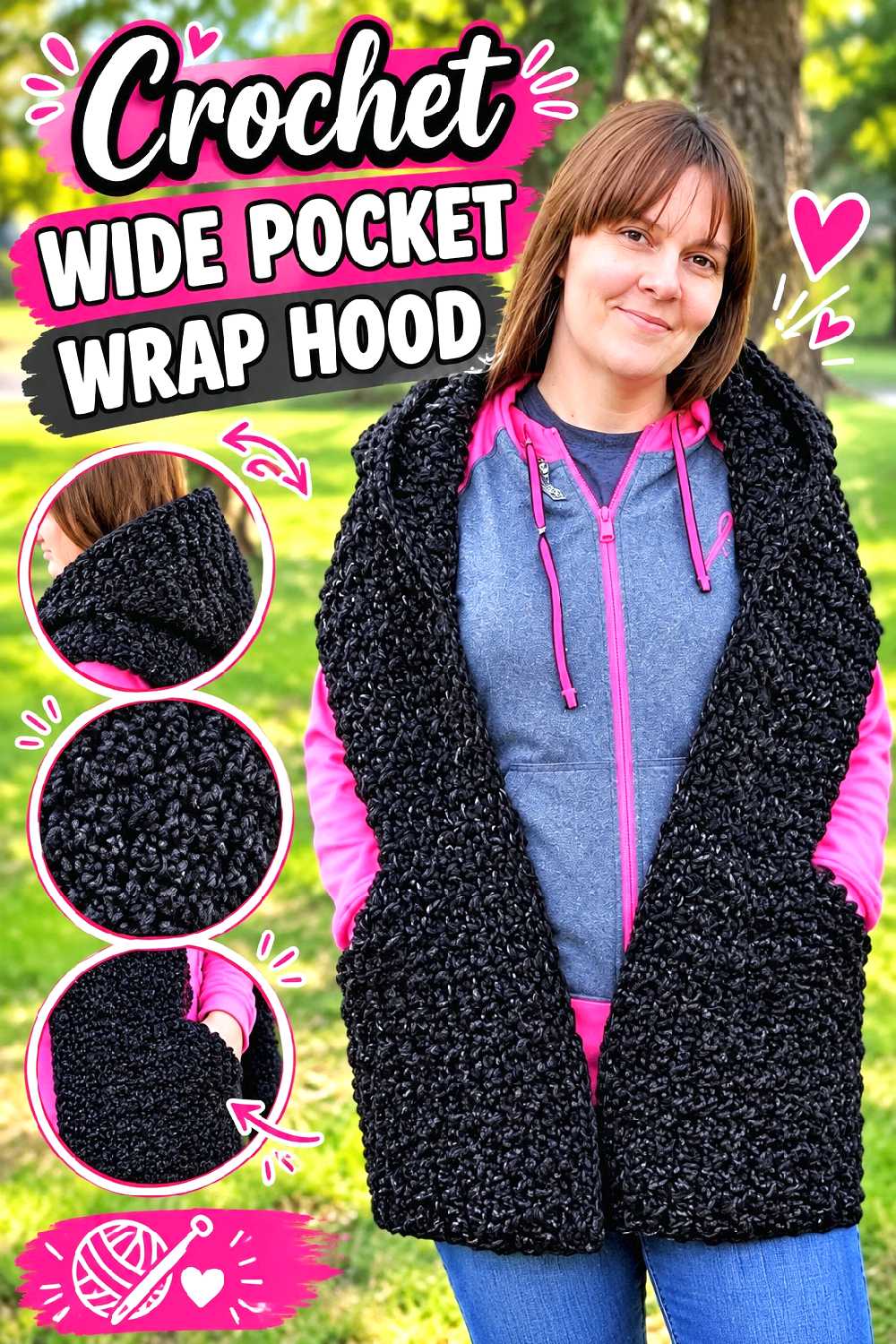
This crochet hooded scarf from Bag-O-Day Crochet moves toward a broader wrap silhouette while retaining pockets at the ends. Compared with a narrow scoodie, the extra width makes the project feel more like an upper-body layer.
That broader format can be useful for cool indoor spaces or fall weather when you want shoulder coverage without committing to a full garment.
Width Changes How It Works With Sleeves
Extra fabric can sit comfortably across the shoulders when worn on its own but bunch beneath a fitted coat.
Consider where you expect to wear the piece most often. If it will frequently go under outerwear, compare the intended width with the available room around your coat shoulders and collar.
Treat Pockets as Part of the Drape
Pockets add another downward force to already-long crochet fabric.
Notice how stretchy your chosen yarn becomes under gentle weight. A highly elastic fabric may lengthen more during wear, so pocket position should be checked with the wrap hanging naturally rather than lying flat.
Creator Credit: Bag-O-Day Crochet
9. Crochet Made To Measure Pocket Hood Scarf
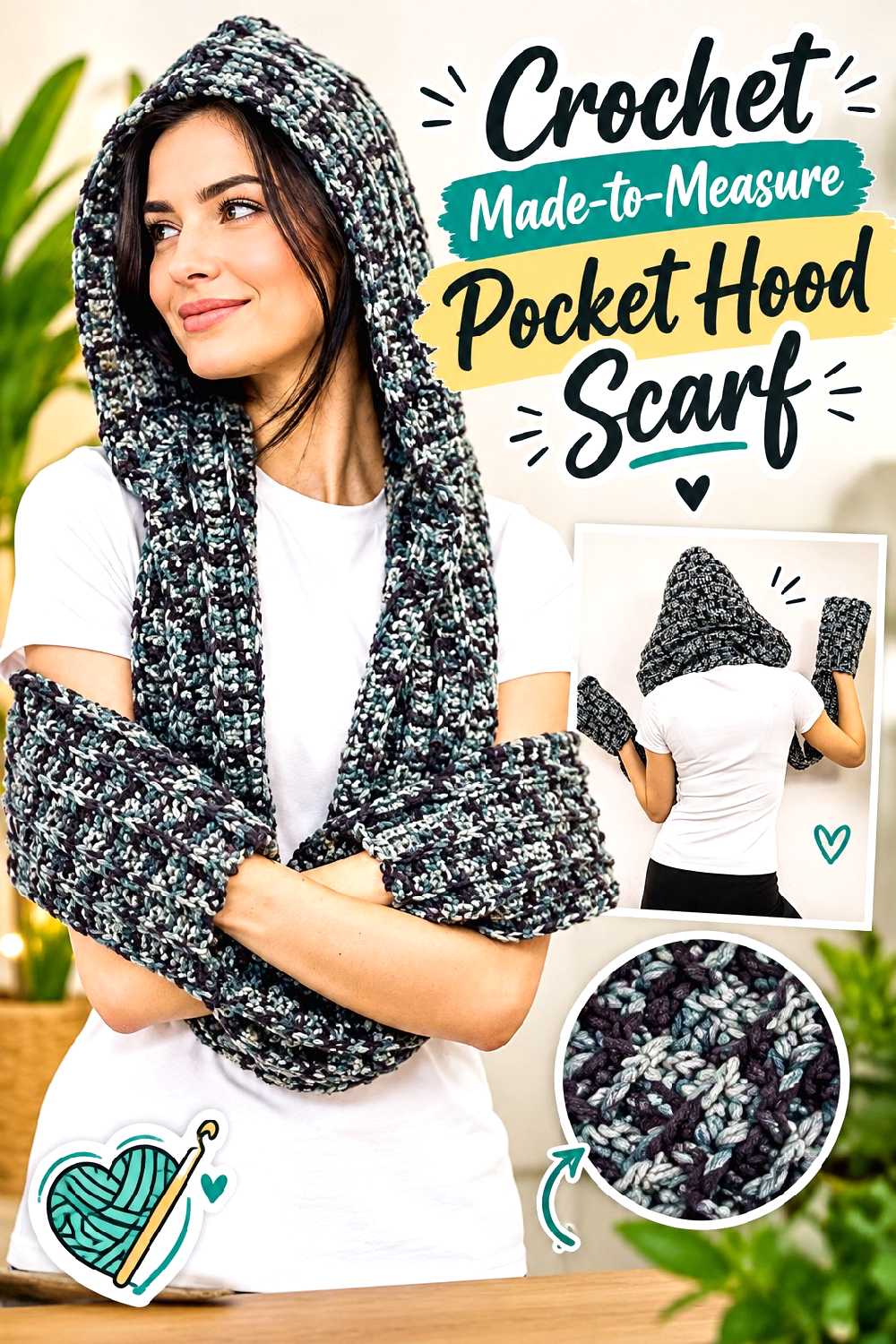
TCDDIY’s crochet hooded scarf incorporates a roomy hood and pockets while using a made-to-measure approach. That makes body proportion part of the planning instead of assuming one scarf length will place the pockets correctly on every wearer.
This concept is particularly useful for people who regularly find that standard pocket scarves finish too high or too low.
Measure Pocket Position With the Hood On
Do not determine final scarf length by holding one end at shoulder level.
A hood uses part of the fabric’s vertical relationship to the body. Put it into its intended position first, then judge where you want your hands to meet the pockets.
Track Both Sides During Custom Sizing
Made-to-measure does not mean every section should be adjusted independently.
Keep a written measurement or temporary marker for corresponding locations on both scarf ends. Repeated small differences can eventually produce visibly uneven pockets even when each adjustment seemed minor.
Creator Credit: TCDDIY
10. Crochet Triangle Hooded Wrap
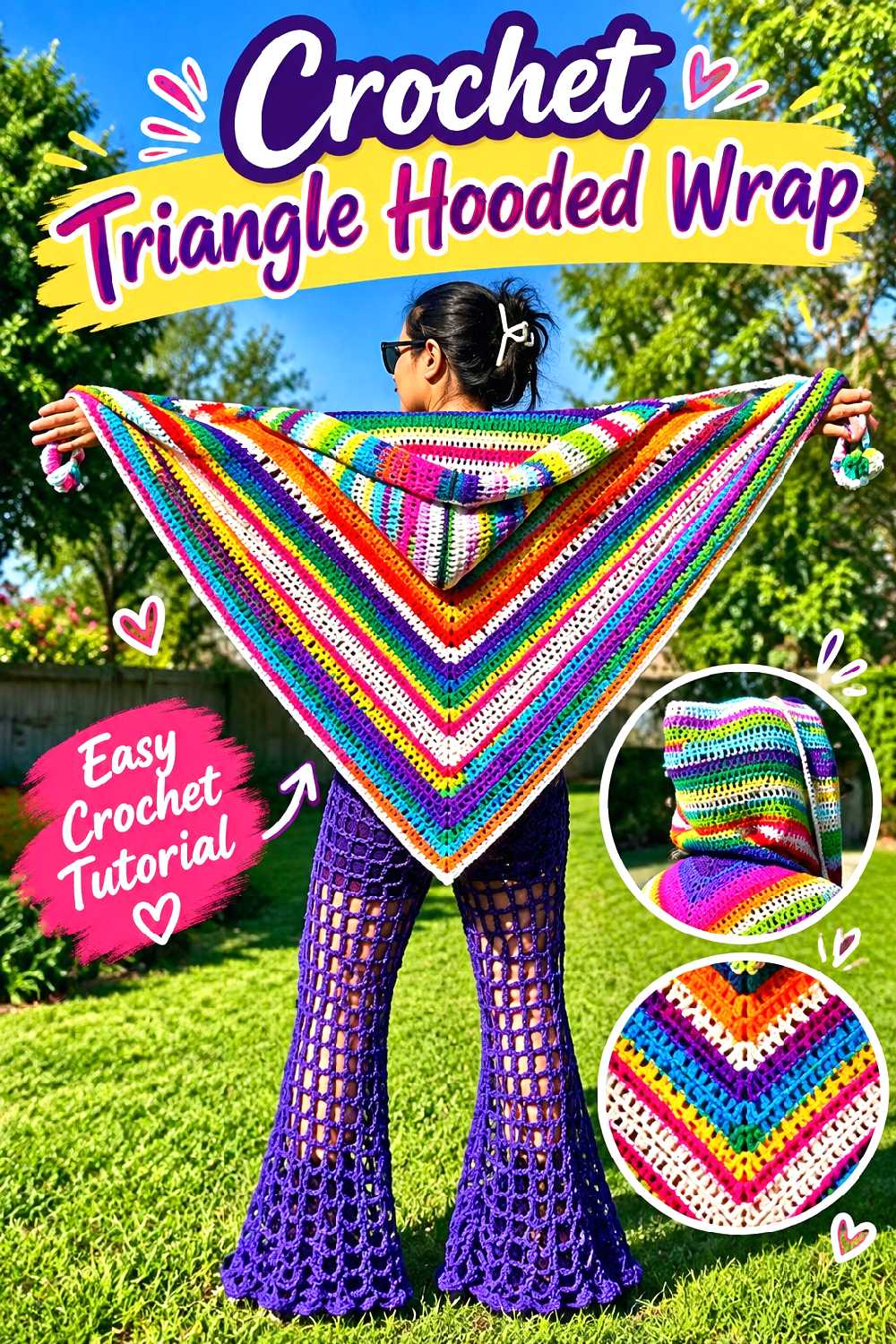
AstroKnotty’s crochet hood concept replaces straight scarf geometry with a triangular wrap and hood combination. The broader body spreads over the shoulders and back, giving the project a noticeably different role from a compact scoodie.
This direction makes sense when you want the hood to feel like part of a wrap rather than a scarf with head coverage added to its center.
The Triangle Needs Enough Drape to Follow the Shoulders
Soft yarn alone does not guarantee flowing fabric.
Crochet a larger sample and let gravity act on it. If the fabric remains very rigid, the triangular section may project away from the back rather than settling naturally over the shoulders.
Decorative Ends Can Affect Practical Wear
Fringe or tassels can emphasize the lower edges of a triangular wrap, but moving trim also interacts with handbags, textured coats, and zippers.
Think about where you will wear the finished piece before deciding how much edge decoration suits it. A simpler border can be easier to layer beneath outerwear.
Creator Credit: AstroKnotty
11. Crochet Faux Fur Snood Hood
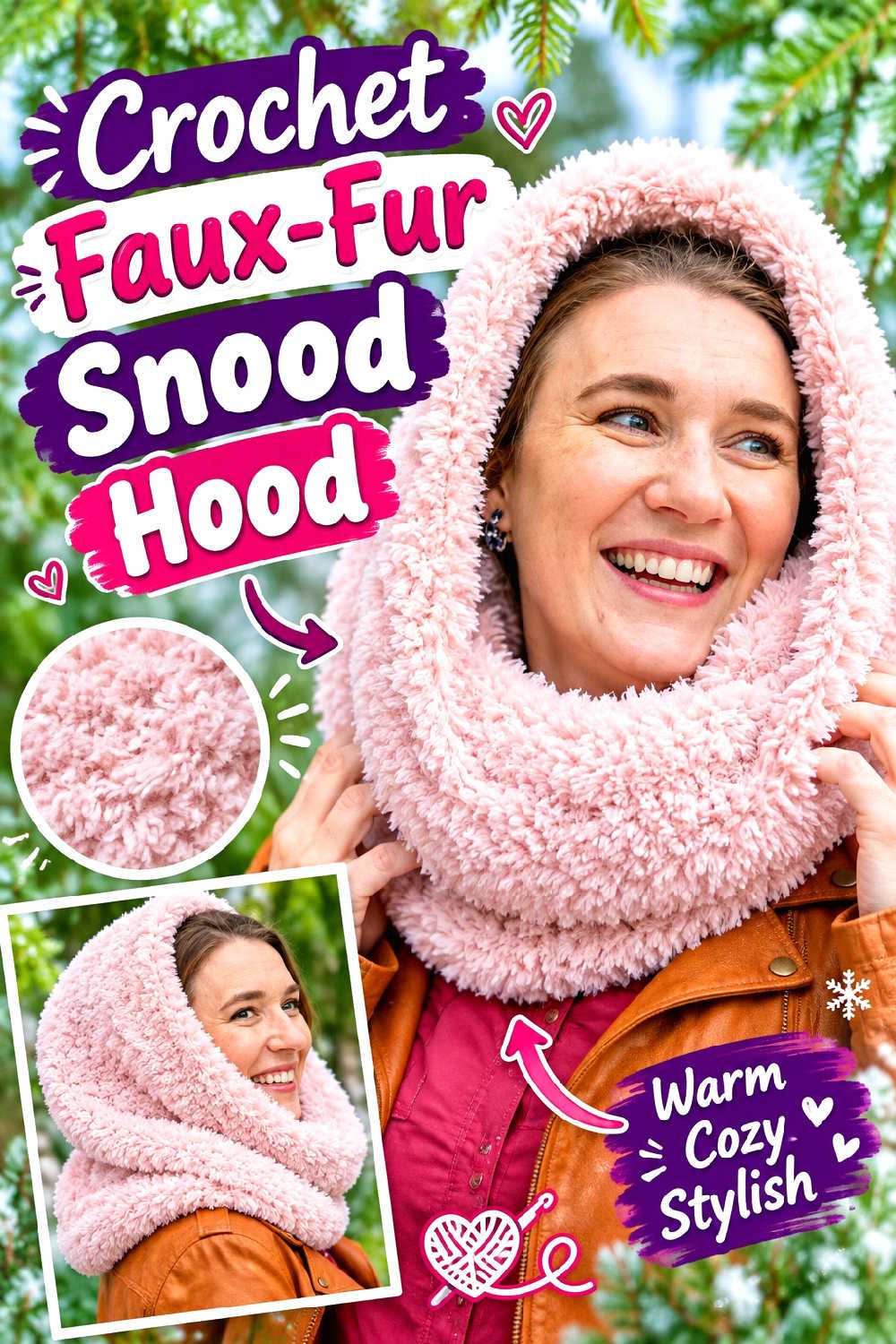
Nicki’s Homemade Crafts uses faux-fur yarn to create a compact crochet snood that can sit around the neck or pull up as a hood. Unlike long scarf projects, the design keeps the entire accessory concentrated around the head and neckline.
The fuzzy surface also creates a very different working experience because the stitches can become difficult to see.
Make Sure the Opening Works in Both Positions
A snood has competing requirements. It must pass comfortably over the head yet still sit in a useful position around the neck.
Check that relationship before finishing. Yarn with limited stretch may require different planning from a fabric that expands easily and recovers afterward.
Use Your Fingers When the Stitches Disappear
Faux fur can hide individual loops even when the structure underneath is correct.
Feel along the working edge and keep important locations marked. Also inspect the inside periodically. Fluffy yarn can visually conceal an irregularity on the outside that remains noticeable where the fabric touches the skin.
Creator Credit: Nicki’s Homemade Crafts
12. Crochet Rounded Crown Pocket Hood Scarf
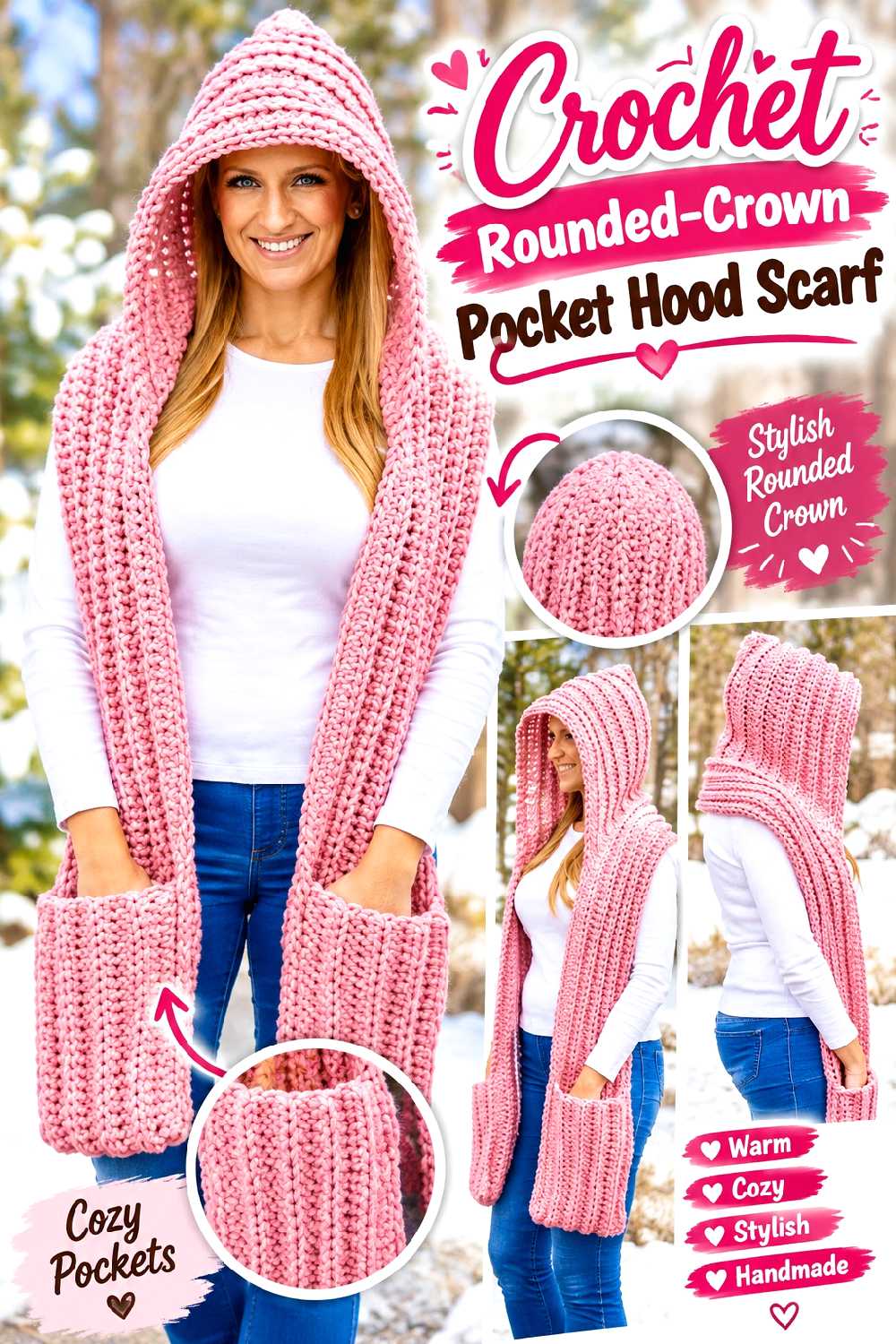
Naztazia’s crochet hooded scarf combines a shaped crown, long scarf portions, and pockets. The hood is developed first, with the scarf section incorporated afterward, giving the project a different construction route from simple rectangular hoods sewn at the top.
This is worth comparing with other pocket scarves when crown profile matters as much as hand coverage.
Check the Crown in Profile
A rounded hood is easiest to evaluate from the side.
Take a photo or use a second mirror during a fitting check. The face opening can look balanced from the front while the back still has more or less projection than you intended.
Judge Pocket Level Only After Positioning the Hood
The scarf ends will hang differently once the hood is resting on the head.
Put the project into its real wearing position before altering length. This helps you evaluate pocket height and neck coverage simultaneously instead of solving one measurement while accidentally changing another.
Creator Credit: naztazia
13. Crochet Checker Accent Balaclava
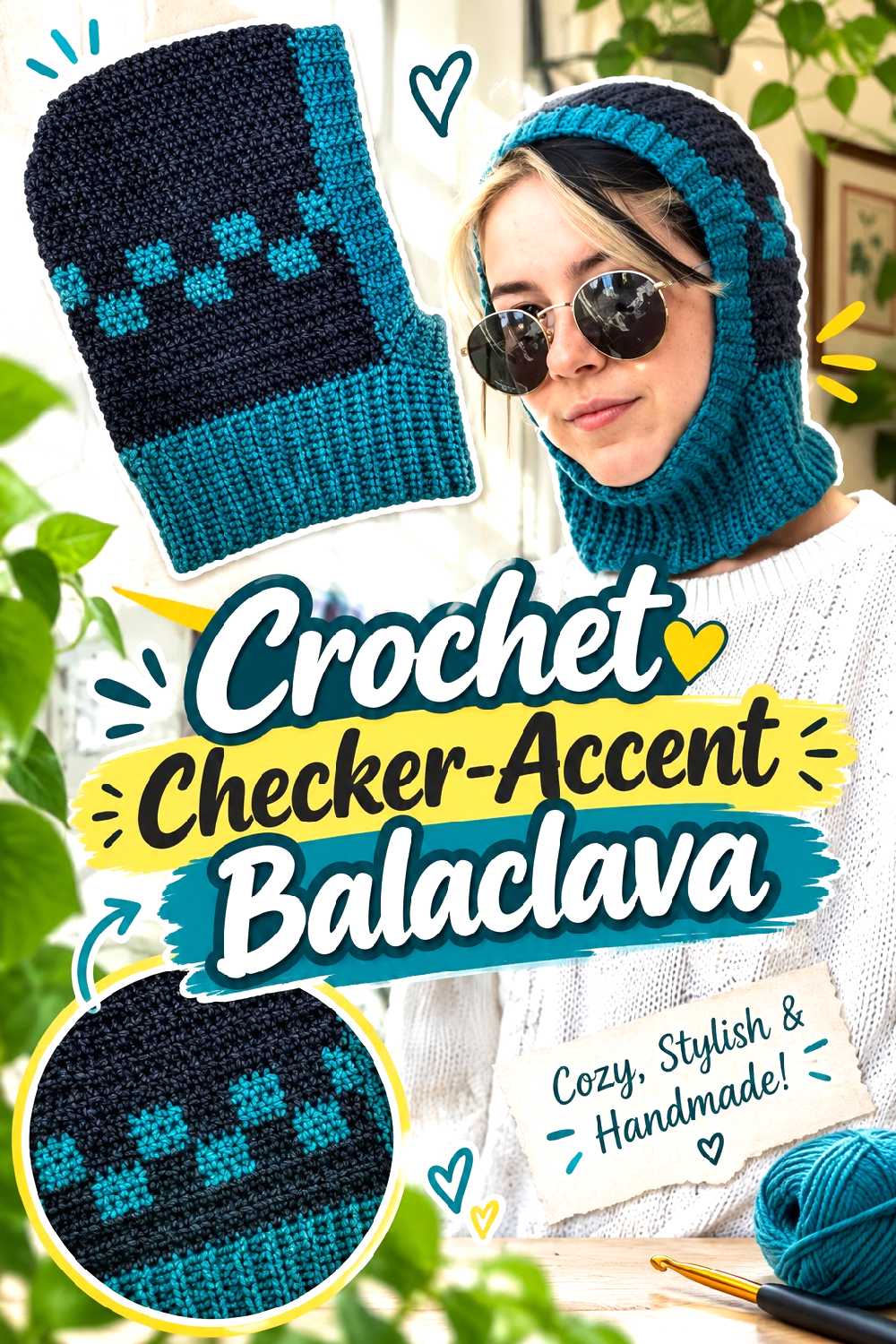
Made in the moment’s crochet balaclava introduces an optional checker feature into a fitted hood with visible ribbing around key areas. The tutorial also includes measurement and fitting stages rather than treating the balaclava as a fixed decorative shape.
This is a useful bridge between simple solid balaclavas and more elaborate motif constructions.
Keep Decorative Colorwork From Changing the Gauge
Switching colors can alter working tension even when the stitch pattern itself stays the same.
Compare the flexibility of the patterned section with the plain fabric. If the checker area becomes noticeably firmer, it can change how the hood stretches around the crown.
Front Ribbing Should Support the Opening
The edging around the face is both decorative and functional.
Before adding or completing it, make sure the main hood already sits correctly. Ribbing should refine the opening rather than being used to force an incorrectly sized hood into place.
Creator Credit: made in the moment
14. Crochet Close Fit Open Face Balaclava
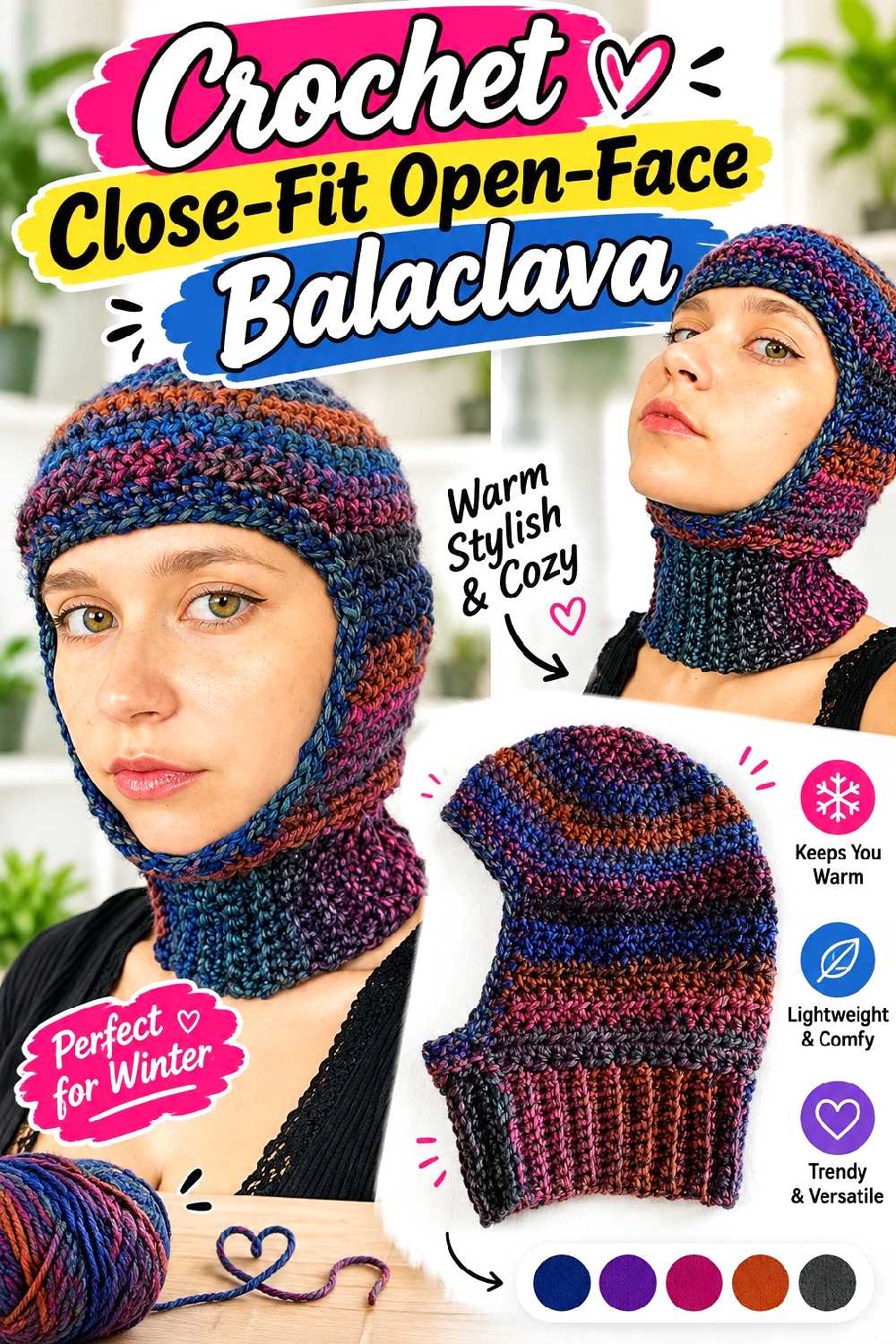
This crochet balaclava from brittanyalicecrochet takes a relatively restrained approach, with a close head-and-neck silhouette and an open face rather than long scarf tails, animal ears, or granny-square seams.
Because the fabric itself is visually simple, fit becomes one of the strongest features of the finished project.
Test Movement, Not Just a Front-Facing Fit
A balaclava may appear comfortable while you stand still but tug at the jaw or neck when you look sideways.
During fitting checkpoints, turn your head naturally. Notice whether the face opening shifts substantially or whether the lower section pulls upward.
Plain Fabric Makes Irregular Tension More Noticeable
Without large motifs or strong surface texture, stitch consistency contributes more directly to the finished appearance.
If you notice a section becoming tighter, correct the change while it is still small. Waiting until the entire hood is finished makes proportion problems harder to isolate.
Creator Credit: brittanyalicecrochet
15. Crochet Slouchy Winter Balaclava
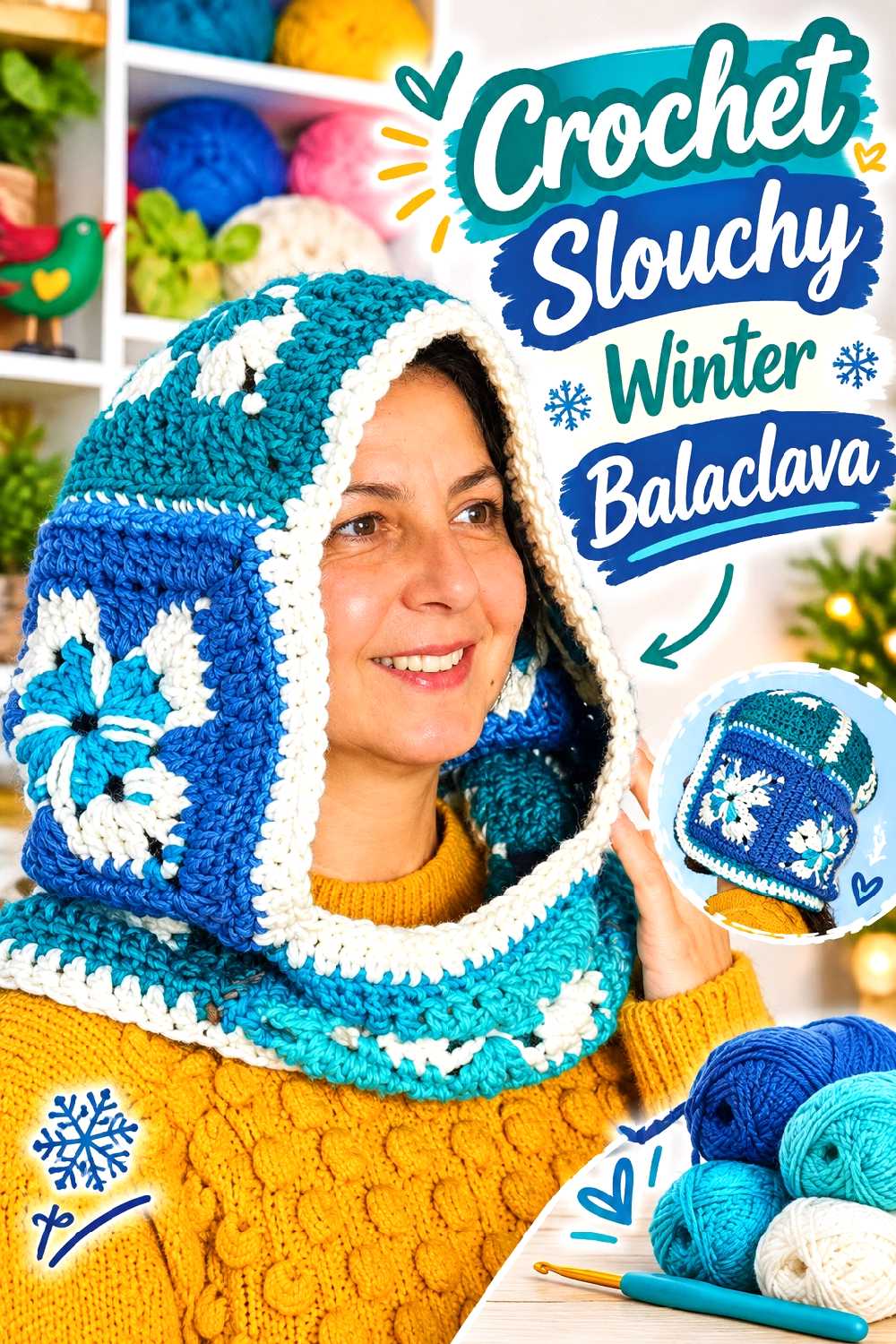
Sirin’s Crochet takes the balaclava silhouette in a looser direction, adding more relaxed volume around the crown instead of keeping every part close to the head.
This shape can suit someone who likes the visual character of a hood but still wants the connected neck and face opening associated with a balaclava.
Make the Extra Crown Room Look Deliberate
Slouch should fall into controlled folds rather than behave like a hood that was simply made too large.
Check the side and back views. If all of the excess fabric collects into one stiff projection, the issue may be drape or proportion rather than a need for more length.
Flexible Fabric Supports a Softer Silhouette
A firm swatch can hold beautiful stitch definition yet fight the intended shape.
Compare how your fabric bends with the look of the finished project. If the balaclava needs relaxed folds, prioritize enough flexibility for gravity to shape the crown naturally.
Creator Credit: Sirin’s Crochet
16. Crochet Patchwork Granny Square Balaclava
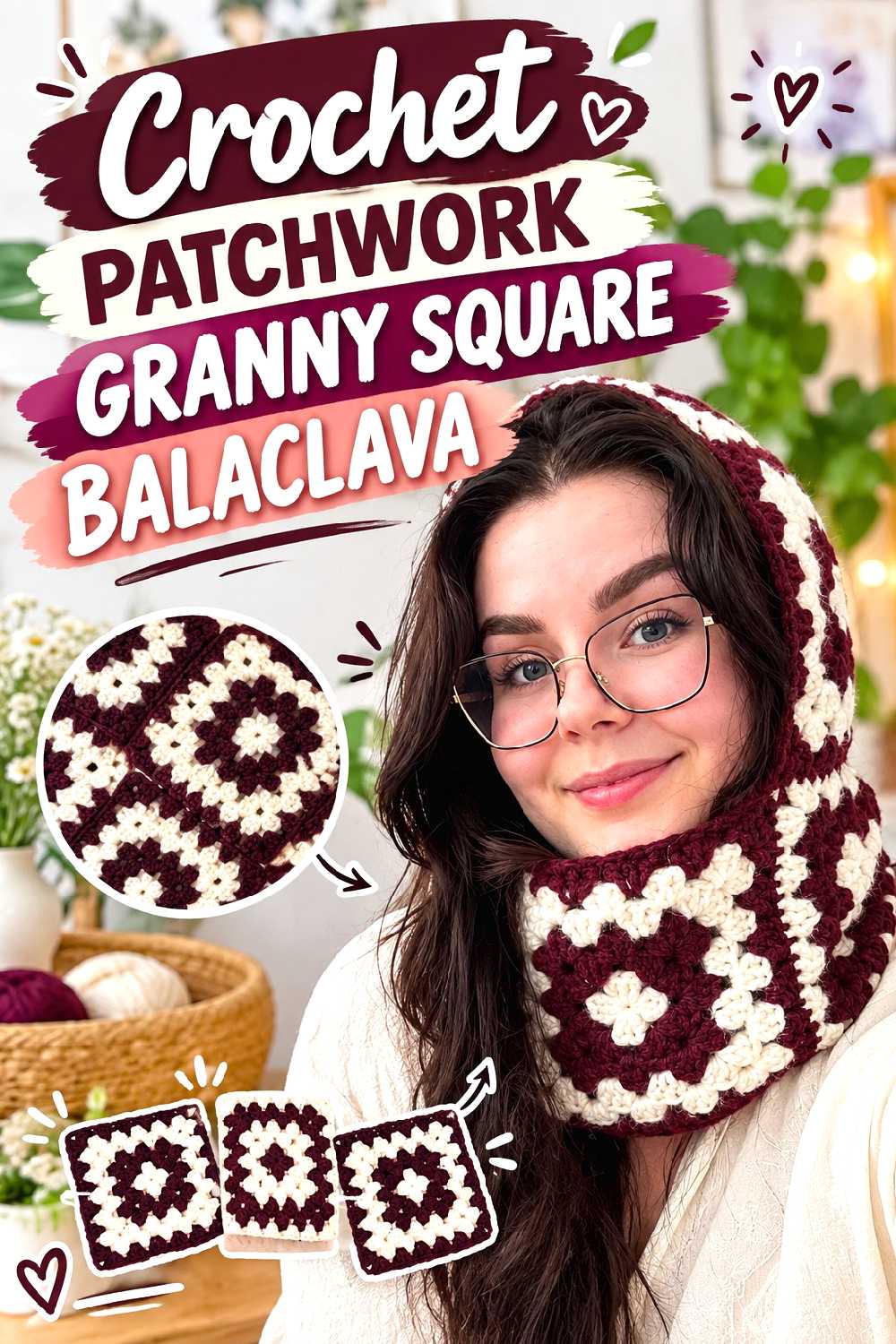
Sznurki Studio brings modular crochet into winter headwear with a balaclava built from multiple granny squares. Compared with a continuous hood, the square grid makes seams, blocked dimensions, and color placement much more visible.
It is a useful direction for scrap-yarn styling or for anyone who wants the construction itself to become part of the finished design.
Block Every Square Before Planning the Final Layout
Small size differences become more important when several motifs form a fitted headpiece.
Compare adjacent edges after blocking rather than assuming the joining process will absorb inconsistencies. Several slightly different squares can create more distortion around a crown than the same differences would in a large blanket.
Use Repetition to Control a Busy Palette
Patchwork does not require every motif to be unrelated.
Repeating one border color, center shade, or color sequence can visually connect scraps. Arrange the completed squares before joining so you can control which combinations appear around the face and crown.
Creator Credit: Sznurki Studio
17. Crochet Bear Ear Balaclava Hood
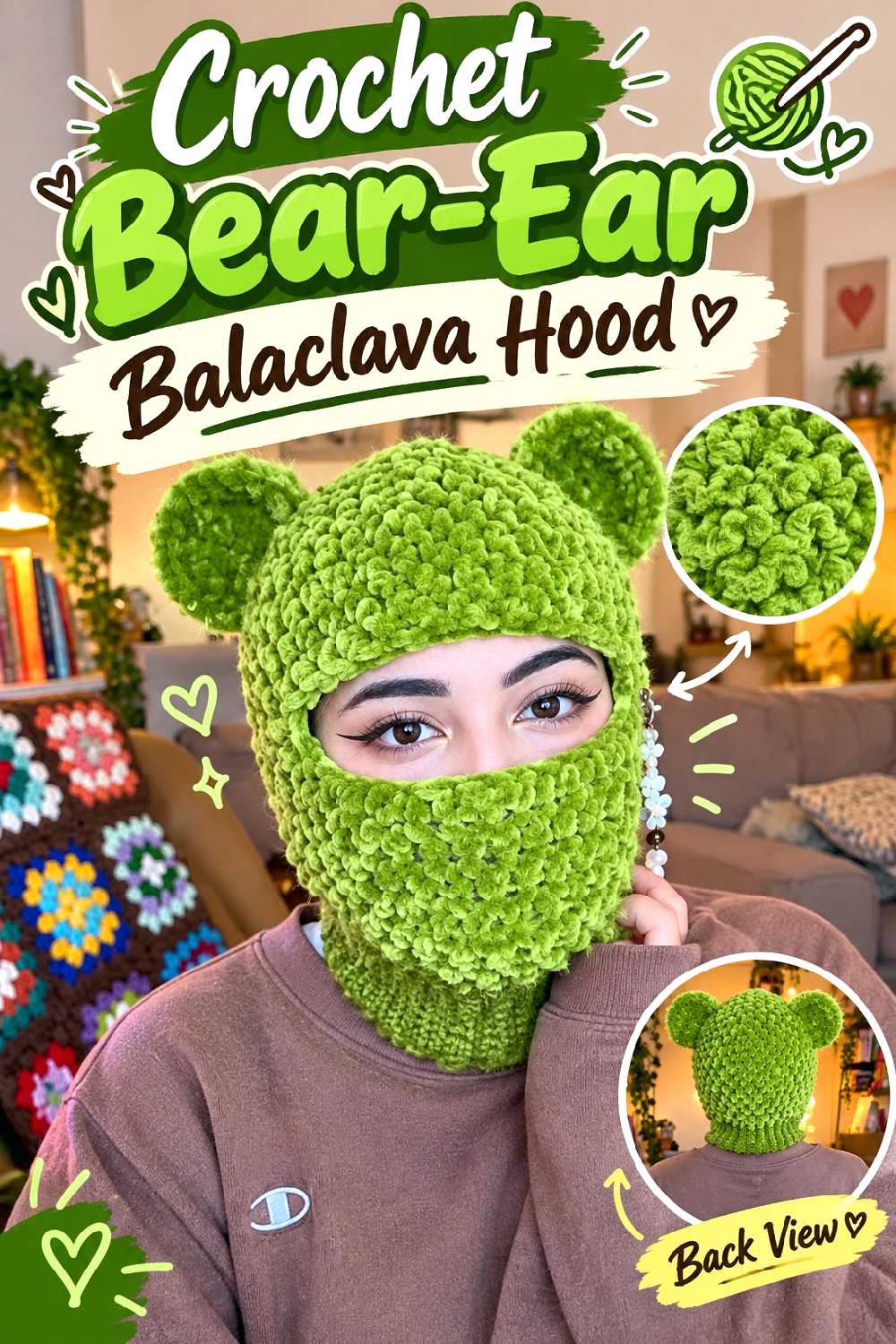
Kazclops adds rounded bear ears and optional decorative hardware to a compact crochet balaclava, making the crown silhouette itself part of the design. The creator also offers an accompanying bear-balaclava pattern.
The ears provide enough character that you can keep the remaining color treatment simple or move toward a more alternative look with extra embellishment.
Position the Ears While the Hood Is Being Worn
A flat balaclava stretches into a different shape on the head.
Temporarily place the ears before permanent attachment and inspect them from the front and three-quarter view. Placement that looks centered on a table may move outward once the fabric is under tension.
Keep Hardware Optional and Practical
Decorative rings or similar additions can add weight and may catch on hair or clothing.
If you include them, keep surfaces smooth and away from areas that press directly against the wearer. For children’s accessories or situations involving active movement, a simpler ear-only interpretation avoids unnecessary loose hardware.
Creator Credit: Kazclops
18. Crochet Fold Down Bulky Hooded Cowl
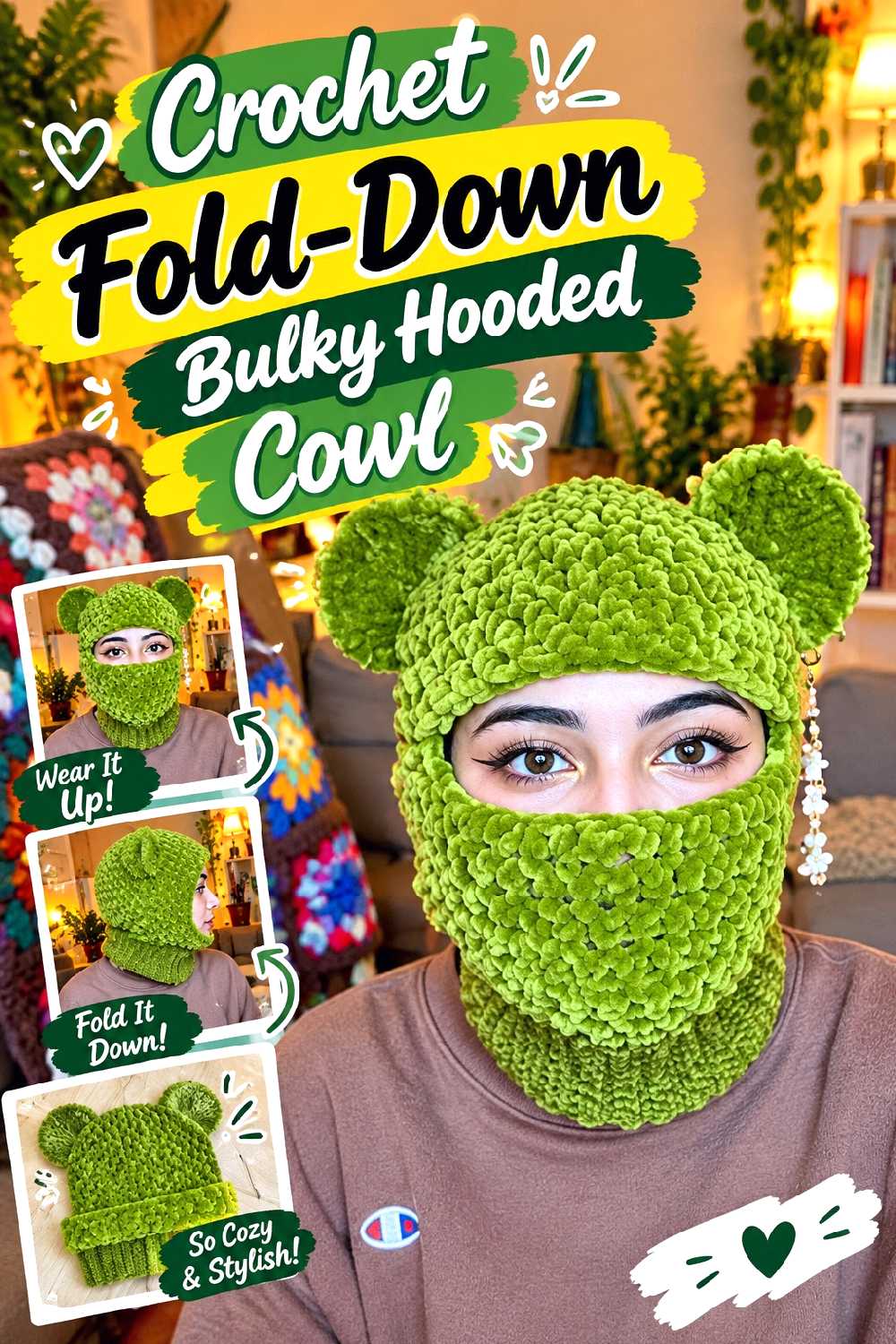
A Crocheted Simplicity’s crochet hooded cowl combines a roomy main body with a ribbed finish and is designed to work as head coverage when raised or as neckwear when lowered. The creator also discusses adapting the concept for different yarn choices.
That two-position use makes it fundamentally different from a close balaclava that continues to look like fitted headwear even when not covering the crown.
Judge the Cowl With the Hood Down
Do not fit only the raised hood.
Lower the fabric and look at how much volume remains around the neck. If you routinely wear fitted jackets, decide whether that volume will sit above the collar or needs enough flexibility to fit inside it.
Thick Yarn Makes Seams Easier to Feel
Bulky yarn enlarges every part of the crochet structure, including finishing areas.
Run your fingers along joins that will touch the back of the head or neck before fastening off permanently. A neat-looking seam can still be uncomfortable if it forms a firm ridge.
Creator Credit: A Crocheted Simplicity – Jennifer Renaud
19. Crochet Adjustable Everyday Hooded Cowl
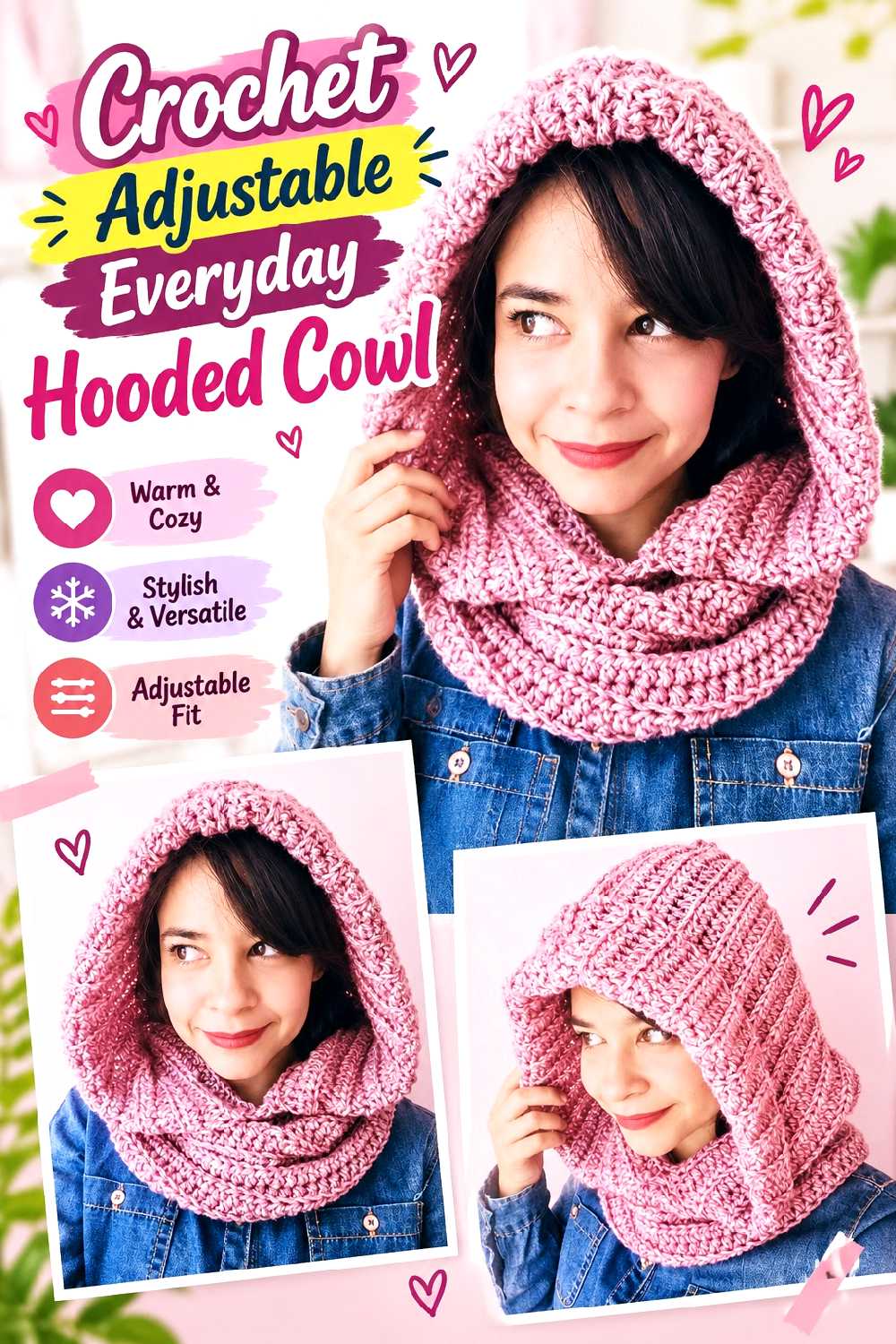
Kiri Kiri’s crochet hooded cowl focuses on a relatively clean hood-and-neck-warmer silhouette and includes room for adapting proportions. Compared with cable or granny-square versions, the construction keeps decorative distractions limited.
That makes it a useful choice if yarn color and fit are more important to you than motifs or elaborate texture.
Decide Whether You Want a Close or Deep Hood
Both shapes can technically fit the same head, but they behave differently.
A close hood stays nearer the cheeks and crown. A deeper hood creates folds and gives hair more room. Choose the intended behavior before increasing dimensions indiscriminately, because enlarging every area can also change the neck opening.
Test the Neck Opening Before Committing to the Full Size
Two yarns of similar thickness can have very different stretch.
A closed cowl must travel comfortably over the head before returning to the neck. Check that movement while alterations are still easy instead of discovering an overly firm opening after the rest of the hood is complete.
Creator Credit: Kiri Kiri
20. Crochet Cable Texture Hooded Cowl
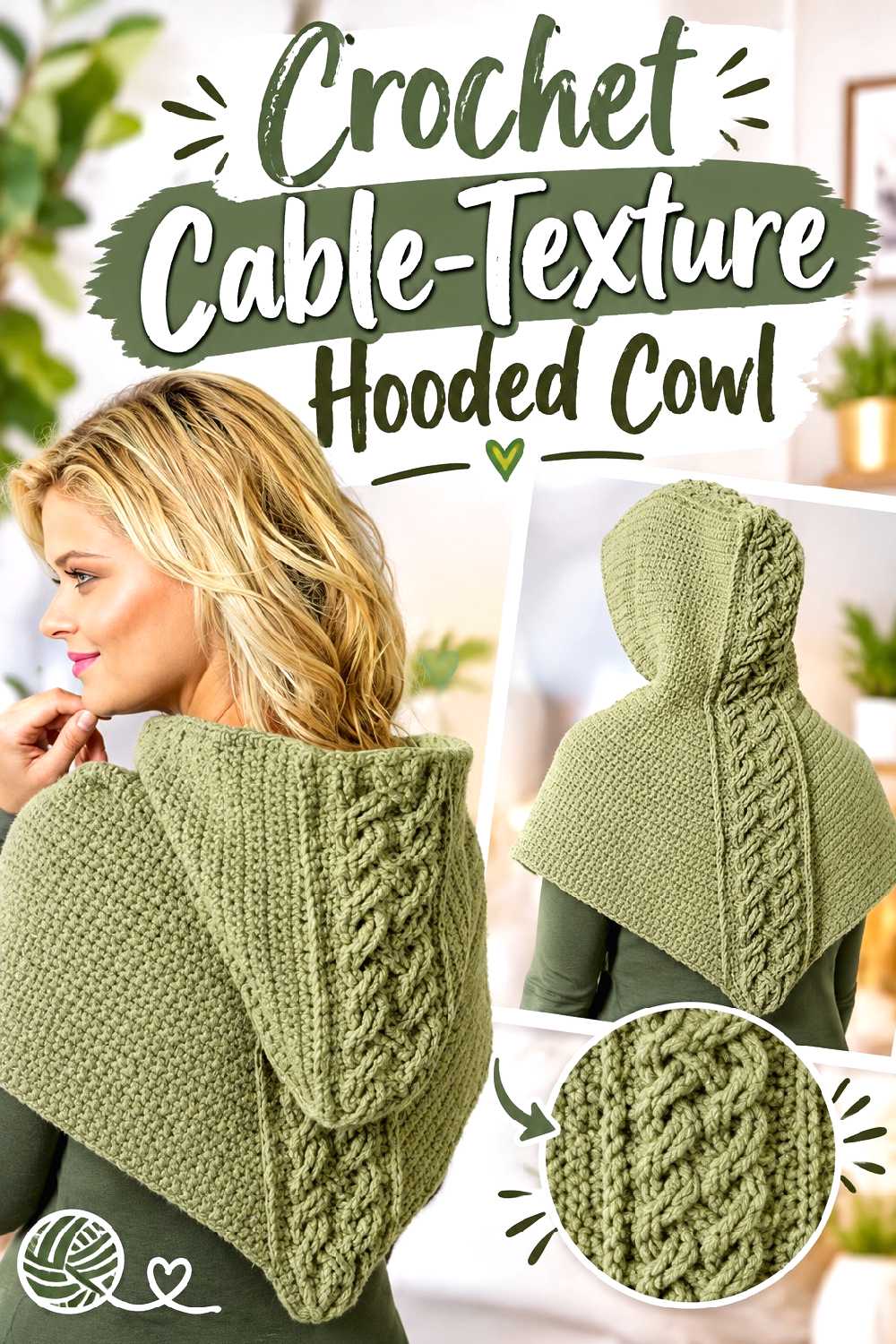
Marly Bird’s crochet hooded cowl shifts attention toward sculptural cable texture, demonstrating the post-stitch techniques used in a Red Heart design by Qualyn Stark.
This gives the accessory enough surface interest to make a single-color version visually substantial without relying on stripes or patchwork.
Use Yarn That Keeps the Cables Readable
A cable depends on light and shadow defining raised sections.
Strongly variegated or heavily fuzzy yarn can make that relief less obvious. Make a representative swatch and look at it from several feet away. If the texture disappears, a smoother yarn may highlight the feature more clearly.
Dimensional Stitches Add Physical Weight
Raised post stitches do not simply change appearance. They add fabric depth.
As the panels grow, check whether they remain flexible enough to curve comfortably around the head and shoulders. If the swatch is extremely stiff, making the hood larger may not solve the underlying drape problem.
Creator Credit: Marly Bird
21. Crochet Rounded Chunky Scoodie
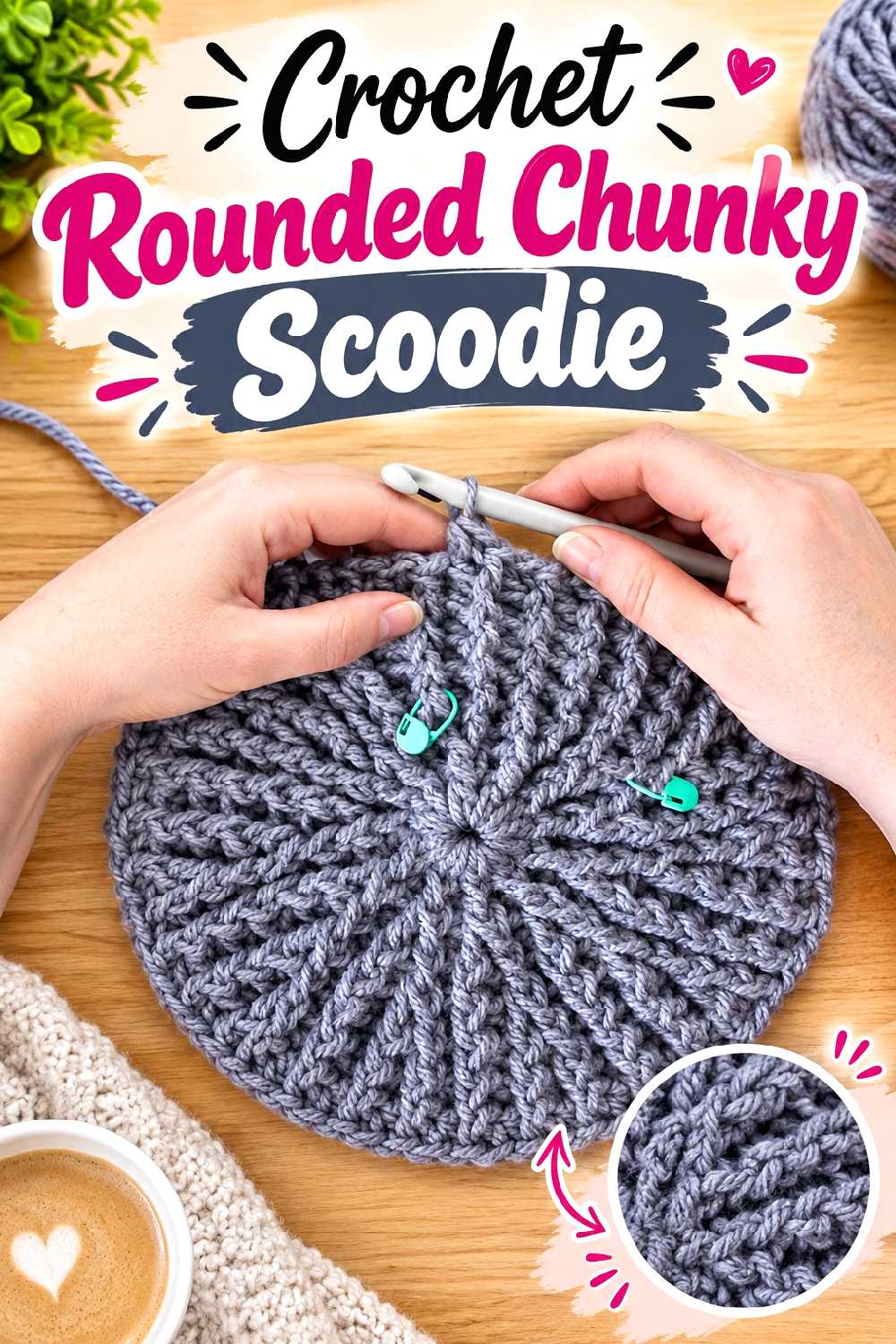
24 Carat Crochet’s chunky scoodie returns to the classic long scarf-plus-hood format but emphasizes a rounded crown. The creator’s accompanying pattern describes a version made as separate pieces that are assembled afterward.
The construction gives you a useful chance to evaluate the hood shape separately before the long scarf determines the final balance.
Check the Crown Before Permanent Assembly
Temporarily position the hood against the scarf section and try the combination on.
Make sure the rounded area reaches far enough toward the face without creating unwanted bulk at the back. Assembly tension should preserve the intended curve rather than flattening or stretching it.
Long Scarf Ends Should Suit How You Actually Wrap Them
A dramatic scarf can look appealing in a flat project photo but become awkward in daily movement.
Before adding extra length, decide whether you usually cross, wrap, knot, or simply hang your scarves. Test the developing project in that position rather than treating maximum length as the goal.
Creator Credit: 24 Carat Crochet
22. Crochet Chunky Simple Hooded Snood
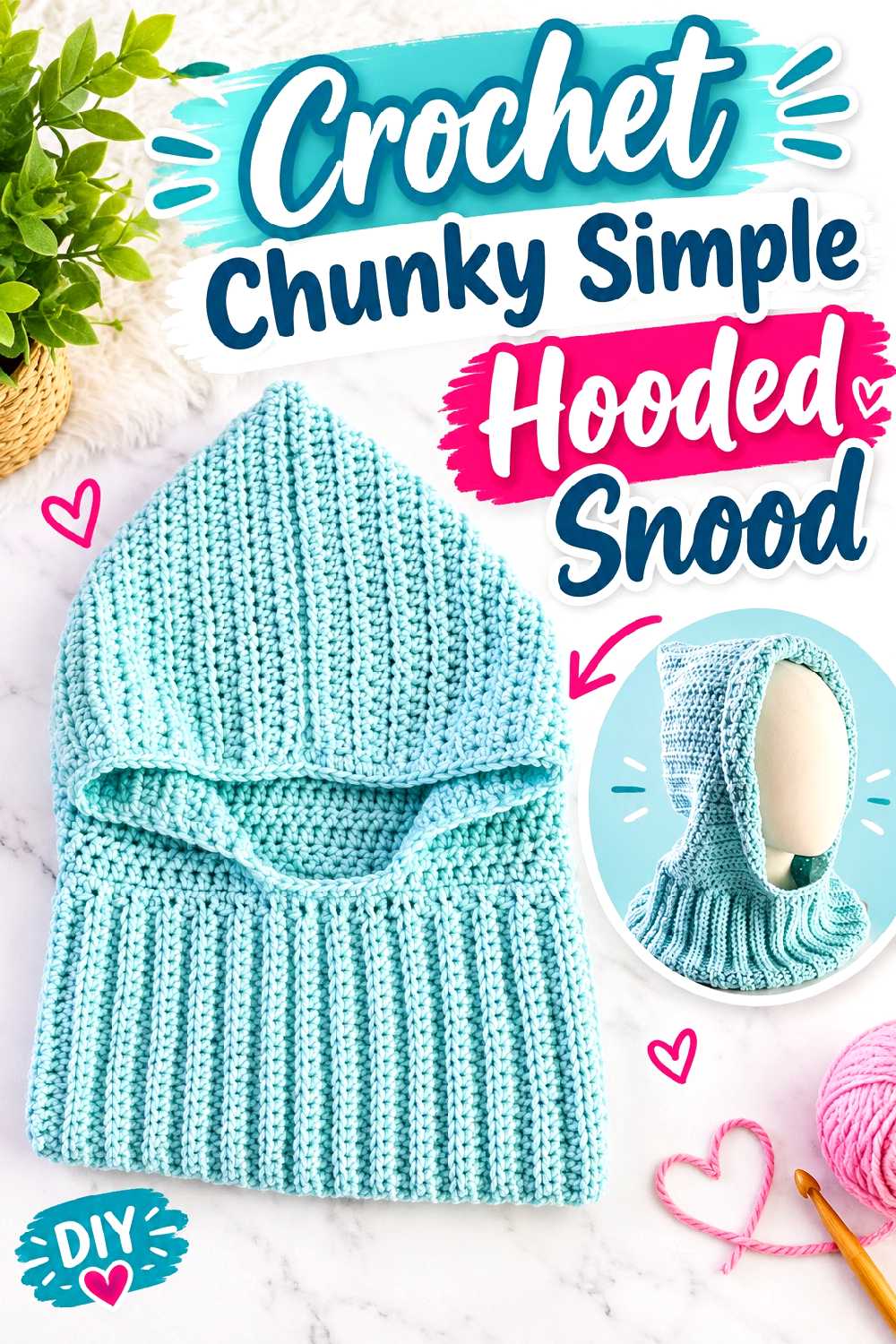
Treasurie’s crochet hooded cowl uses chunky yarn and a straightforward hood-and-neck format, creating a useful final option for readers who want a substantial winter silhouette without granny-square assembly, long pockets, or elaborate surface cables.
It sits between the compactness of a cowl and the coverage of a loose hood, making yarn thickness and opening size especially important.
Chunky Fabric Needs Space to Bend
Thick crochet fabric occupies more room when folded than the same dimensions worked in a thinner yarn.
Test how the developing hood behaves around the jaw, neck, and back of the head. If several layers press against one another, adding overall size may be less useful than adjusting the fabric flexibility.
Keep the Simple Shape Balanced
When there are few decorative features, the relationship between hood depth and neck height becomes easier to notice.
Check both positions before finishing: hood raised and hood lowered. The goal is enough fabric for comfortable head movement without leaving an unexpectedly rigid stack around the neck.
Creator Credit: Treasurie
How the 22 Crochet Hood Styles Compare
| Hood Style | What Defines It | Main Planning Question |
|---|---|---|
| Long scoodie | Hood plus traditional scarf ends | How much length and neck wrapping do you actually want? |
| Pocket hood scarf | Long ends with hand pockets | Where should the pockets land when the hood is worn? |
| Hooded wrap | Wider shoulder or back coverage | Will the extra fabric work with your outerwear? |
| Infinity hood | Closed scarf loop with an attached hood | Does the loop anchor the hood comfortably? |
| Hooded cowl | Hood converts into neck volume | Is it comfortable both raised and lowered? |
| Close balaclava | Fitted crown, face edge, and neck | Does the opening stay comfortable during movement? |
| Slouchy balaclava | Extra crown depth and softer drape | Does the added volume fold intentionally? |
| Granny-square balaclava | Joined motifs form the hood | Are all blocked motifs compatible in size? |
| Animal-ear hood | Crown details create the silhouette | Do the ears sit correctly once the fabric stretches? |
| Faux-fur snood | Fuzzy tubular head-and-neck coverage | Can you maintain stitch control when loops are hard to see? |
| Cable hood | Raised texture dominates the surface | Does your yarn show the cables without becoming too rigid? |
Conclusion
The most useful way to choose among these 22 crochet hood ideas is to start with how much coverage and fabric you actually want.
For a compact winter accessory, compare the close-fit balaclavas and hooded cowls. If you want more room around your hair and face, look toward the slouchy balaclava, rounded scoodies, or deeper cowls. Granny-square and bear-ear projects put more emphasis on visual construction, while cables, ribs, faux fur, and stripes let texture or yarn become the main feature.
If you want additional function below the neckline, the pocket scarves and triangular wrap provide much more coverage than a balaclava. Infinity styles eliminate loose ends, while traditional scoodies preserve the familiar wrapping options of a scarf.
Whichever direction you choose, use the credited creator’s original tutorial for the exact construction and project-specific sizing. Treat yarn substitutions, extra length, different motif sizes, and fit changes as real design decisions rather than assuming every hood will respond the same way.
Frequently Asked Questions
Is a crochet hood the same thing as a crochet balaclava?
Not necessarily. “Crochet hood” is a broad description that can include balaclavas, hooded cowls, snoods, and hooded scarves.
Balaclavas usually fit closer to the head and have a defined face opening. A hooded cowl is generally roomier and becomes neckwear when lowered. A scoodie combines a hood with scarf sections.
What type of yarn should I choose for a crochet hood?
Start with the behavior required by the project.
A close or sculptural hood may benefit from fabric with enough structure to maintain its shape. Slouchy hoods, oversized cowls, and wraps generally need more flexibility so the fabric can fall naturally.
Also consider skin comfort because the yarn may touch the forehead, cheeks, and neck. Follow the tutorial’s yarn guidance before making a major substitution.
How can I avoid a pointed shape at the back of a crochet hood?
The point is often related to construction rather than a finishing mistake. A simple rectangle folded and joined across the top naturally behaves differently from a hood designed with crown shaping.
If a rounded profile is important, choose a tutorial that intentionally creates one rather than trying to force a basic rectangular hood into a completely different shape afterward.
Should granny squares be blocked before making a crochet balaclava?
It is a useful checkpoint when motif size affects fit.
Measure the squares after they have settled into their intended dimensions and compare them with one another before joining. In a fitted hood, several small differences can accumulate around the crown or face opening more noticeably than they would in a large blanket.
How should I size a crochet hood if I wear my hair in a bun or have thick curls?
Use your normal hairstyle during fitting checks.
Head circumference alone does not describe the amount of space required behind or above the crown. Follow the creator’s measurement method, then evaluate hood depth while wearing your hair as you normally would in cold weather.
Avoid simply enlarging every measurement because doing so can also make the neck and face openings larger.
Can a crochet hooded scarf be converted into a hooded cowl?
Sometimes the concept can be adapted, but removing scarf length changes more than appearance.
The scarf may help anchor the hood, and converting it into a closed cowl introduces a new circumference that has to pass comfortably over the head and sit correctly around the neck. A tutorial designed specifically as a hooded cowl is usually a clearer reference if that is the finished format you want.