A crochet spiderweb shrug can be a small shoulder layer, a dramatic sleeve piece, or a fuller openwork garment that sits somewhere between a bolero and a cropped sweater. That difference matters when you are planning a Halloween outfit. A web that looks striking in a finished photo may give much more torso coverage—or much less arm mobility—than you expected.
These 16 ideas include true spiderweb shrugs along with closely related spiderweb tops and sweaters that can provide useful inspiration for shrug-style layering. The fuller garments should be treated as construction and styling references rather than automatically converted into open-front boleros.
The main choices are not simply black versus another color. Think about where the web sits, how much of the underlayer remains visible, whether sleeves are straight or flared, and how much hanging weight the shoulders need to support.
Quick List
- Crochet Back Centered Spiderweb Shrug
- Crochet Bell Sleeve Spiderweb Bolero
- Crochet Hexagon Spiderweb Witch Shrug
- Crochet Long Sleeve Spiderweb Layering Shrug
- Crochet Heart Center Spiderweb Shrug Top
- Crochet Hooded Spiderweb Sweater Shrug
- Crochet Compact Cropped Spiderweb Shrug
- Crochet Glow In The Dark Spiderweb Shrug Top
- Crochet Convertible Sleeve Spiderweb Shrug
- Crochet Fitted Spiderweb Layer Shrug
- Crochet Distressed Spiderweb Grunge Shrug
- Crochet Clean Radial Spiderweb Shrug Top
- Crochet Festival Spiderweb Sleeve Shrug
- Crochet Off Shoulder Halloween Spiderweb Sweater Shrug
- Crochet Relaxed Spiderweb Sweater Layer
- Crochet Structured Spiderweb Top Shrug
Decide Whether You Actually Want a Shrug, Top, or Sweater
A traditional shrug usually concentrates fabric across the upper back and arms while leaving much of the front visible. That makes it particularly useful over a dress, fitted tank, corset, or costume where the clothing underneath is supposed to remain part of the outfit.
A spiderweb top changes the emphasis. Once a large front panel is added, the crochet becomes a more dominant part of the outfit. Sweater versions add still more fabric and may introduce hoods, wider bodies, or deliberately distressed sections.
If you mainly want sleeves and a dramatic back web, begin with one of the actual shrug references. If you want the web itself to become the main garment, the fuller top and sweater projects provide more relevant inspiration.
Check Armholes and Shoulder Placement Before Sleeve Length
Spiderweb openwork can look loose while still feeling restrictive in the wrong place. The crucial fit areas are often the upper-back span, shoulder position, and armhole rather than the total width of the web.
Try the developing garment over the kind of clothing you expect to wear beneath it. A shrug that fits over a camisole may behave differently over a fitted long-sleeve shirt.
Sleeve volume deserves its own decision. Long straight sleeves emphasize the continuous shoulder-to-wrist line, while bell sleeves make the lower arm a major visual feature. Large cuffs also create additional hanging weight and need more physical space when you move.
Let Yarn and the Underlayer Work Together
Spiderweb crochet depends heavily on negative space, which means the garment underneath becomes part of the finished appearance. High contrast makes spokes and openings easier to see. Similar colors create a subtler, more textural effect.
Smooth yarn tends to preserve crisp radial lines, while fuzzy yarn can soften them. Neither effect is automatically preferable. Decide whether you want a sharply graphic Halloween web or something hazier and more romantic.
If you substantially change the yarn from a tutorial, pay attention to drape and vertical stretch as well as stitch appearance. A material that works nicely in a small shrug can feel noticeably heavier when used for long sleeves, a larger body, or a hood.
1. Crochet Back Centered Spiderweb Shrug
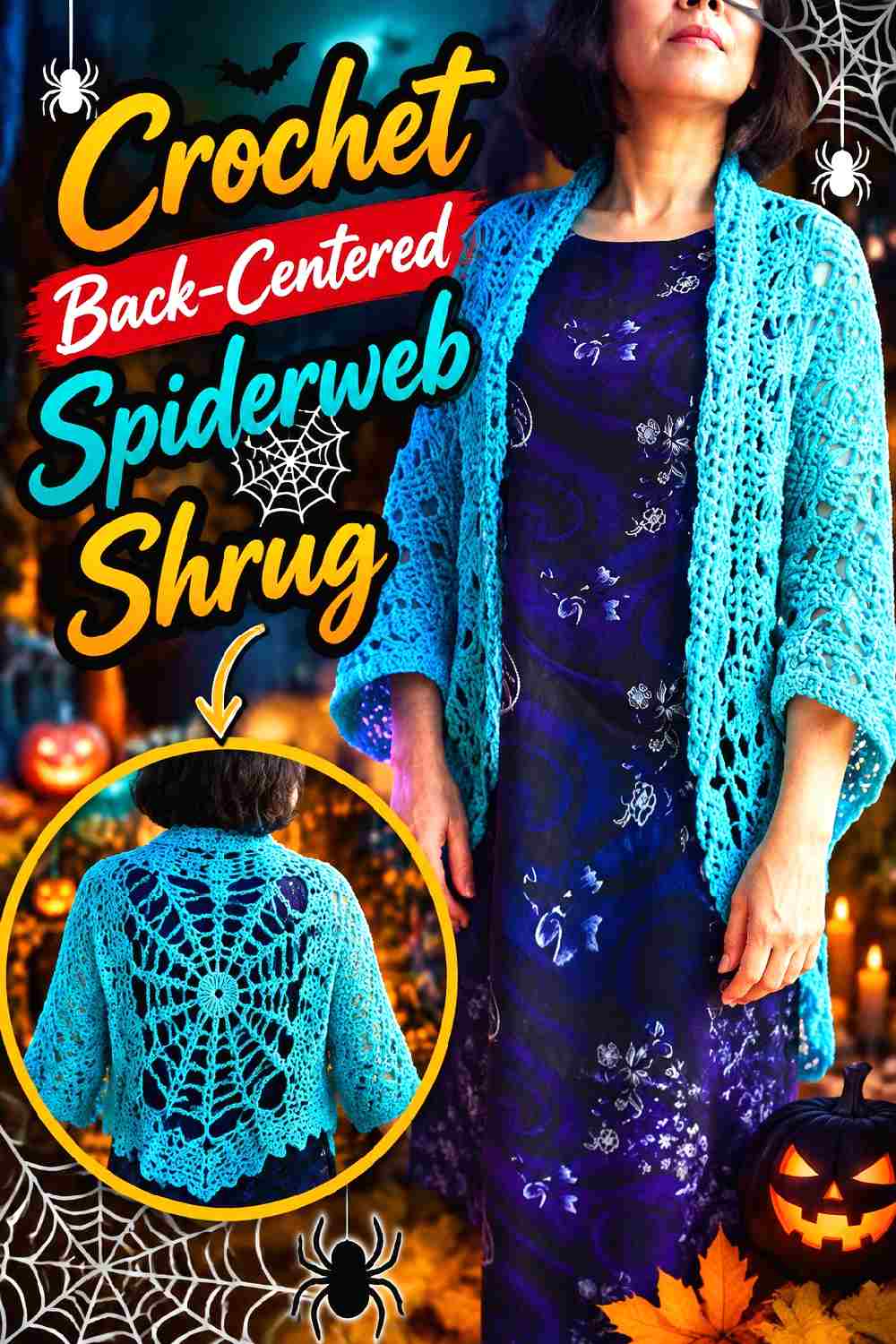
This is the clearest direction for someone who wants an actual shoulder-and-arm shrug rather than a spiderweb shirt. Crafting Shed presents the source project specifically as a spider web shrug, keeping the web concentrated around the upper body rather than extending it into a full sweater.
It works particularly well when the dress, tank, or costume underneath should remain visible. Compared with the fuller projects later in this list, the crochet behaves more like a frame around the outfit.
Center Placement Changes the Whole Back View
With limited body fabric, there is less room to disguise an off-center motif. Check how the web sits while the shrug is actually being worn rather than judging its position only on a flat surface.
If you change the scale, make sure the center still relates naturally to the shoulder line. Enlarging a radial motif can affect more than the visual diameter because the surrounding garment also has to remain comfortable around the arms.
Solve Mobility Problems Before Adding Width
If the shrug feels restrictive, identify whether the issue is the upper back, armhole, or sleeve. Adding width everywhere may make the garment shift without solving the specific tight area.
Testing shoulder movement early is more useful than trying to correct fit after long sleeves and edging are already attached.
Creator Credit: Crafting Shed
2. Crochet Bell Sleeve Spiderweb Bolero
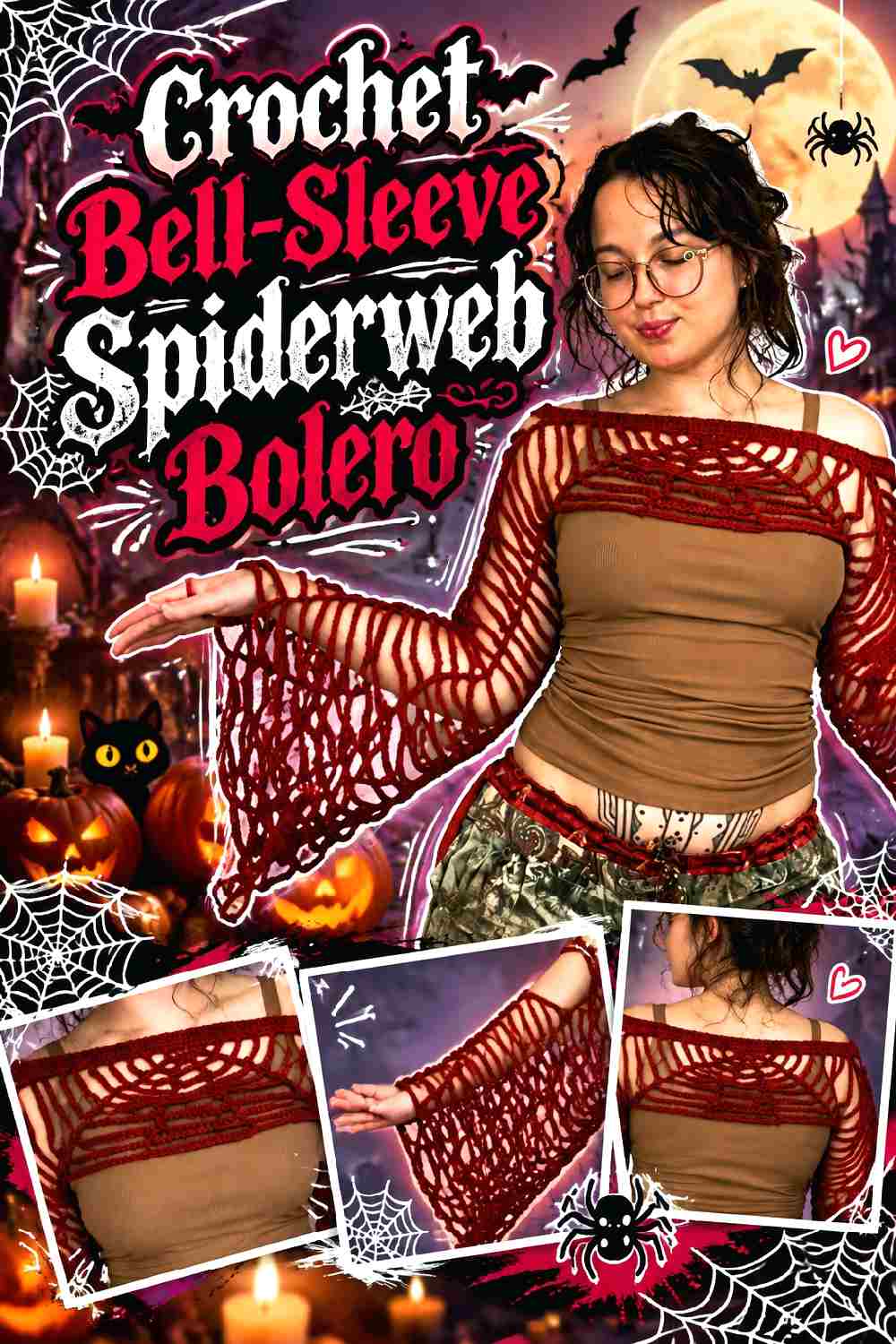
Alex Alette’s project is useful because the source tutorial separates the garment into body, joining, and sleeve work and includes both bell- and straight-sleeve directions. That makes sleeve shape a genuine design choice rather than a minor finishing variation.
For a Halloween bolero, the bell-sleeve option gives the arms much more visual presence. The straighter version creates a cleaner outline and is easier to combine with another outer layer.
Bell Sleeves Need Space Around the Hands
A deep flare can look dramatic when your arms are relaxed but become more noticeable around bags, tables, food, railings, or another jacket.
If the shrug is intended for a party or event, move around in the developing sleeve before repeating the same flare on the second arm. Practical sleeve length is part of the design, not an afterthought.
Joining Controls the Neckline and Web Position
Panel placement determines where the web sits relative to the shoulders. Open crochet can stretch during handling, so compare corresponding edges without pulling them into alignment.
A join that changes the shoulder angle can also move the web center, alter the neckline, or make one armhole behave differently from the other.
Extra Flare Adds Hanging Weight
Airy fabric can still become heavy when more of it hangs from the wrist end of a sleeve. If you substitute a noticeably heavier yarn, watch for the shoulders dropping as the garment grows.
The goal is a dramatic outline that still allows the upper body to sit where intended.
Creator Credit: Alex Alette
3. Crochet Hexagon Spiderweb Witch Shrug
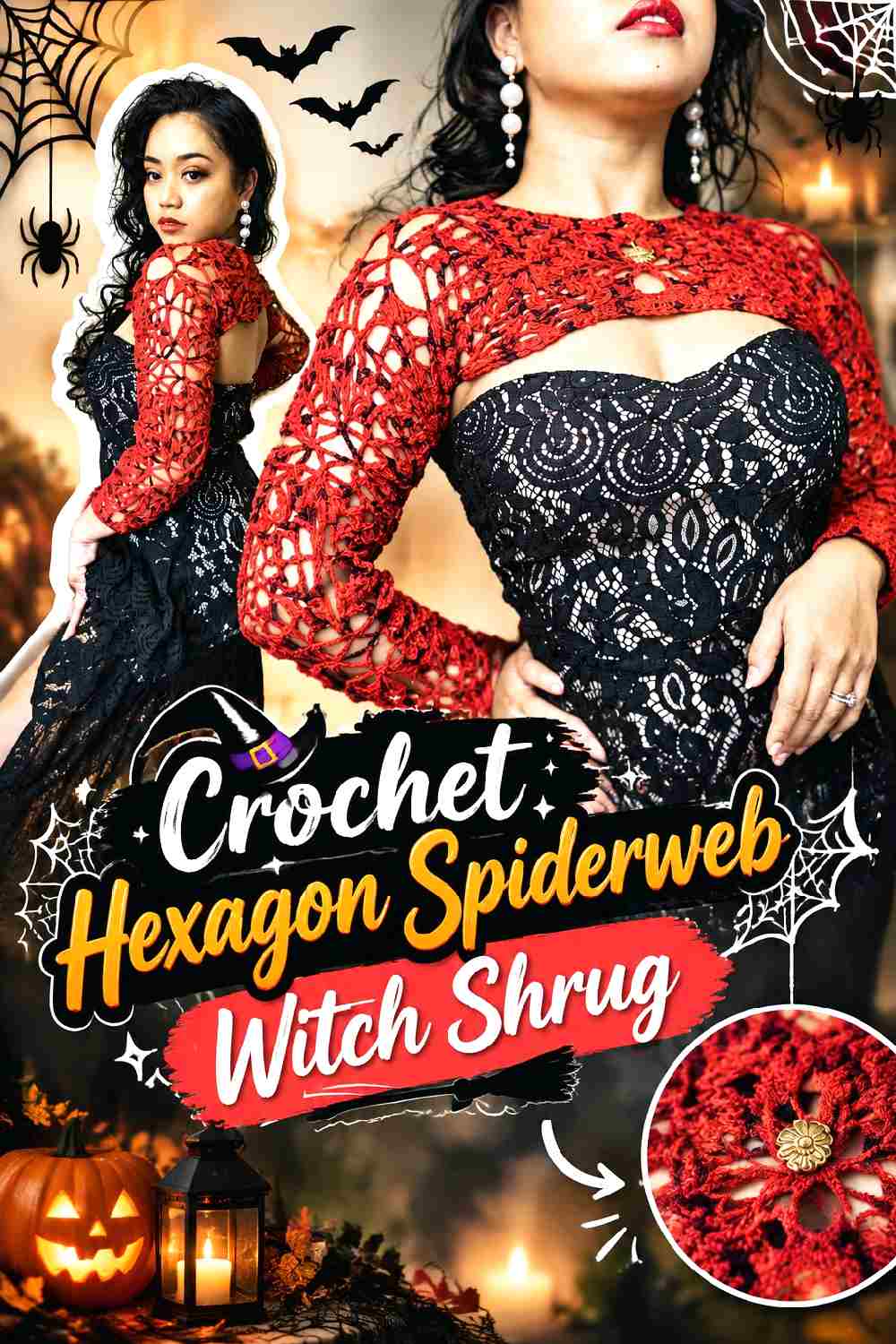
Yommycrochetlogy uses a geometric spiderweb shrug construction inspired by the witchy styling associated with Hocus Pocus. The hexagon-based approach immediately separates this project from designs built around a simple round web panel.
This is a useful direction if you like crochet garments that grow from a larger geometric foundation and want the construction itself to contribute to the Halloween character.
Growing a Hexagon Can Change Several Fit Areas at Once
With geometric garment construction, increasing the base does not necessarily add width in only one location. Sleeve depth, body coverage, and shoulder proportions can change together.
Before enlarging the project, understand how the completed geometric piece is transformed into the wearable shape. That makes it easier to decide where a personal adjustment actually belongs.
Matching Openwork Matters at the Join
A spiderweb fabric makes uneven tension highly visible. Two edges may contain corresponding stitch sections yet still behave differently if one has been worked much more tightly.
Compare the relaxed shape of matching areas before joining. Trying to stretch a smaller edge into position can introduce puckering around an otherwise attractive web.
Creator Credit: Yommycrochetlogy
4. Crochet Long Sleeve Spiderweb Layering Shrug
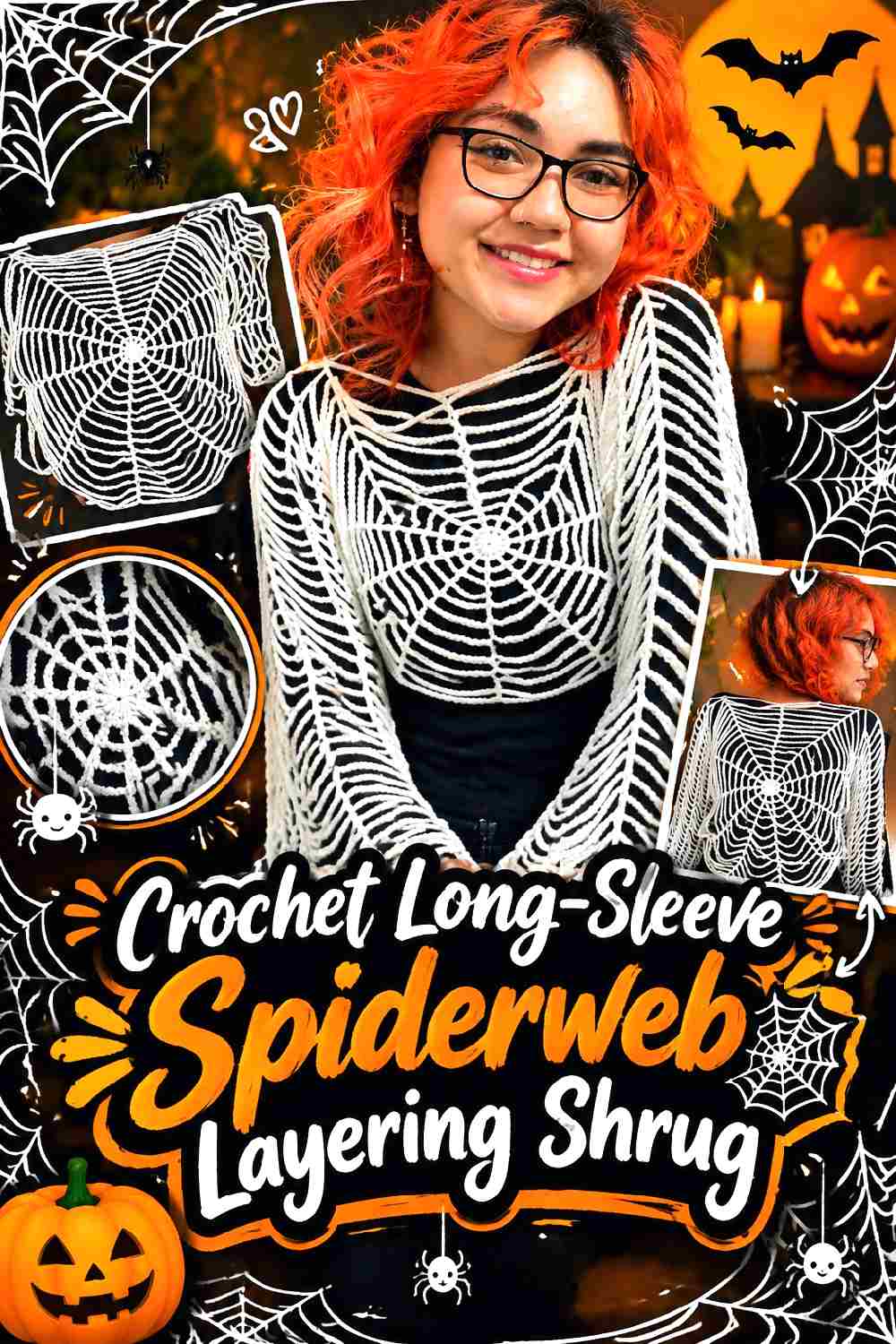
The source from threaderie by m. creates a full spider-web top with identifiable panel, joining, and sleeve sections rather than a minimal bolero. Use it as inspiration when you want substantially more torso presence but still like the visual effect of long openwork sleeves.
A fuller web changes the relationship with the outfit underneath. Instead of framing the base layer, the crochet becomes one of the main things people see.
Long Sleeves Can Preserve the Shrug Feeling
If you adapt a fuller top toward a shorter layering piece, keeping substantial sleeves can preserve the strong shoulder-to-wrist line associated with a shrug.
Reducing the torso and sleeves at the same time may produce a much smaller garment visually than you intended, even if the web remains recognizable.
Fine Openwork and Bulky Substitutions Behave Differently
An airy web depends on the relationship between yarn thickness and open space. Changing to a much heavier yarn can make the garment more structural, enlarge the visual spokes, and increase shoulder weight.
When making a major substitution, compare the hanging behavior of a sample rather than considering yarn color alone.
Creator Credit: threaderie by m.
5. Crochet Heart Center Spiderweb Shrug Top
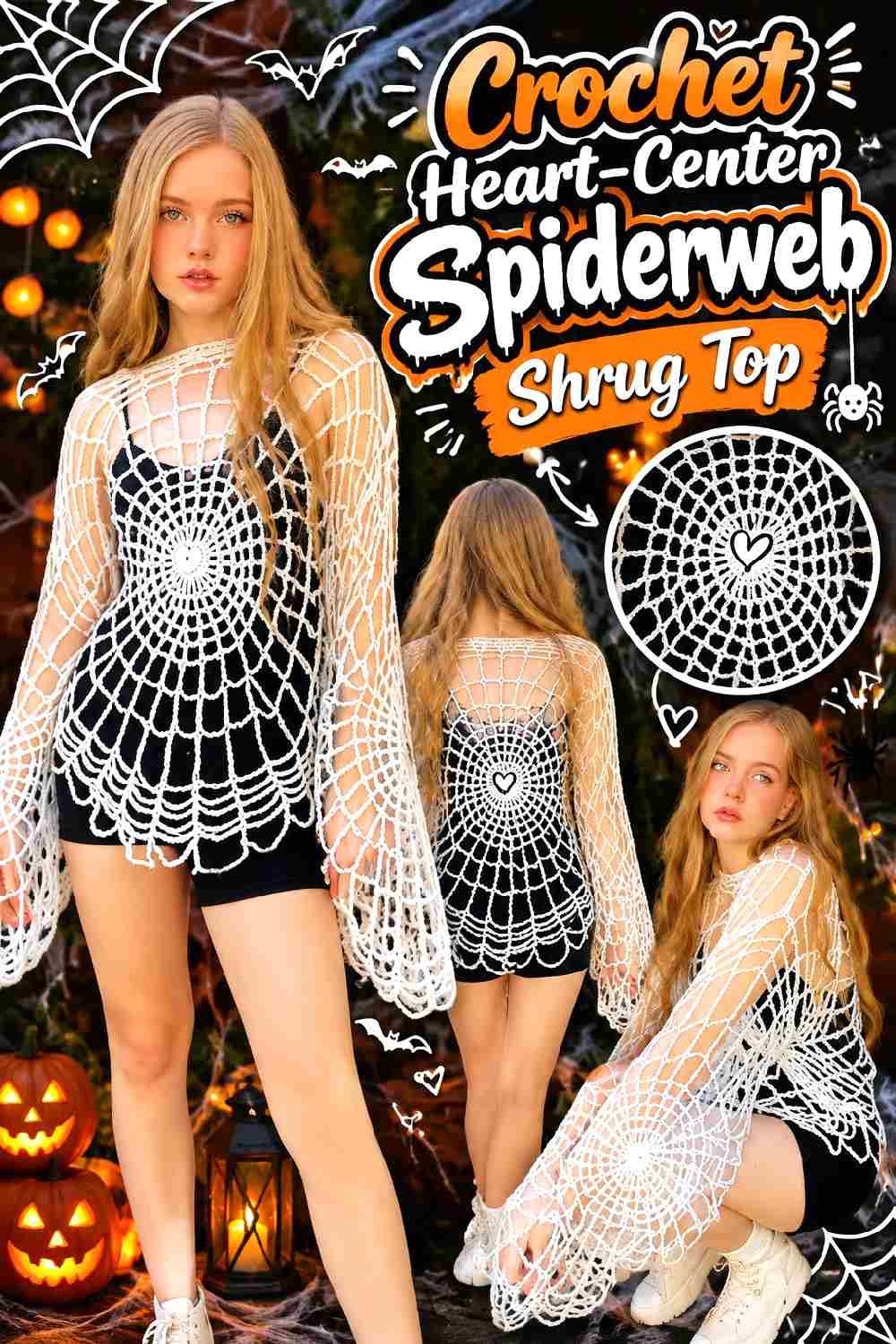
WONDER NETTING changes the usual plain web center by placing a heart at the focal point. The tutorial is for a spiderweb top rather than a narrow bolero, making this a better reference for a romantic-goth cropped layer than for a traditional open shrug.
The heart gives the web a softer direction that can work for Halloween while also feeling appropriate for concerts, alternative fashion, or a less costume-specific outfit.
Protect the Center Motif When Changing Scale
A heart needs enough visual space around it to remain recognizable. Enlarging or compressing the surrounding web can change the balance between the focal motif and the spokes.
Also consider the garment underneath. A busy print visible through the openings can make a small center detail harder to read.
Fuzzy Yarn Softens Graphic Lines
The source uses a soft, haloed presentation, which demonstrates how fiber character can change the web even when the geometry remains recognizable.
Choose a smoother yarn if crisp spokes are more important than softness. Choose a fuzzier surface when you want the web to feel atmospheric rather than sharply outlined.
Creator Credit: WONDER NETTING
6. Crochet Hooded Spiderweb Sweater Shrug
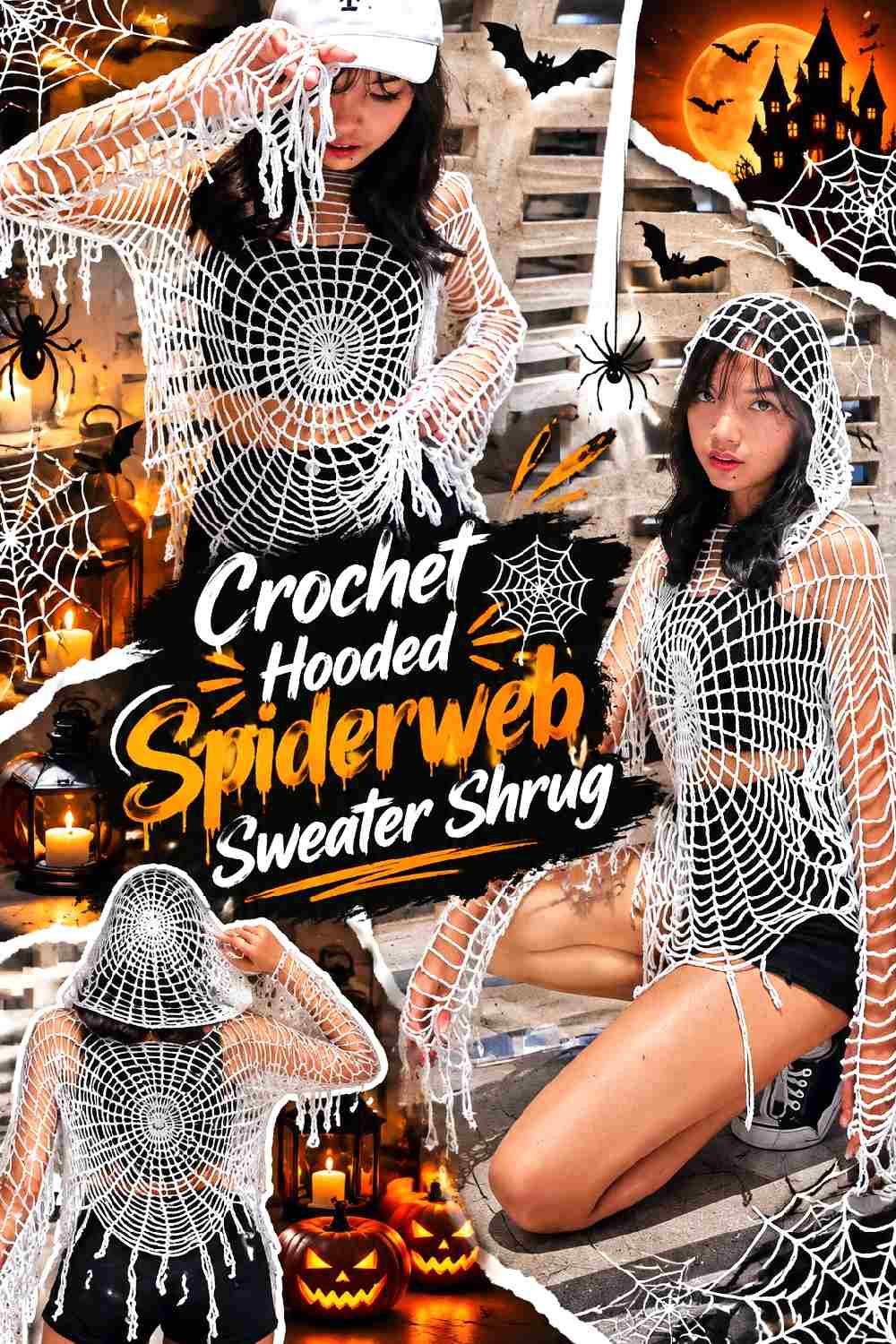
Chenda DIY expands the spiderweb concept into a substantially fuller sweater with a hood, so this is one of the strongest options for readers who want the crochet garment itself to dominate the Halloween outfit. The source clearly presents the project as a spider web sweater rather than a tiny bolero.
For shrug inspiration, focus on what the hood and longer web coverage do to the upper-body silhouette.
A Hood Competes With the Back Web for Space
When the hood rests down, it occupies the same general area where many spiderweb garments place their strongest focal point.
Look at both positions—hood up and hood down—before adding extra decoration to the upper back. A beautiful motif loses impact if it spends most of its time hidden beneath gathered hood fabric.
Fuller Coverage Makes Weight More Important
A hood, body, and sleeves create far more hanging material than a narrow shoulder shrug.
If you change to a heavier yarn, periodically hold the developing garment in wearing orientation. Flat fabric may appear correctly proportioned while gravity produces considerably more vertical stretch.
Creator Credit: Chenda DIY
7. Crochet Compact Cropped Spiderweb Shrug
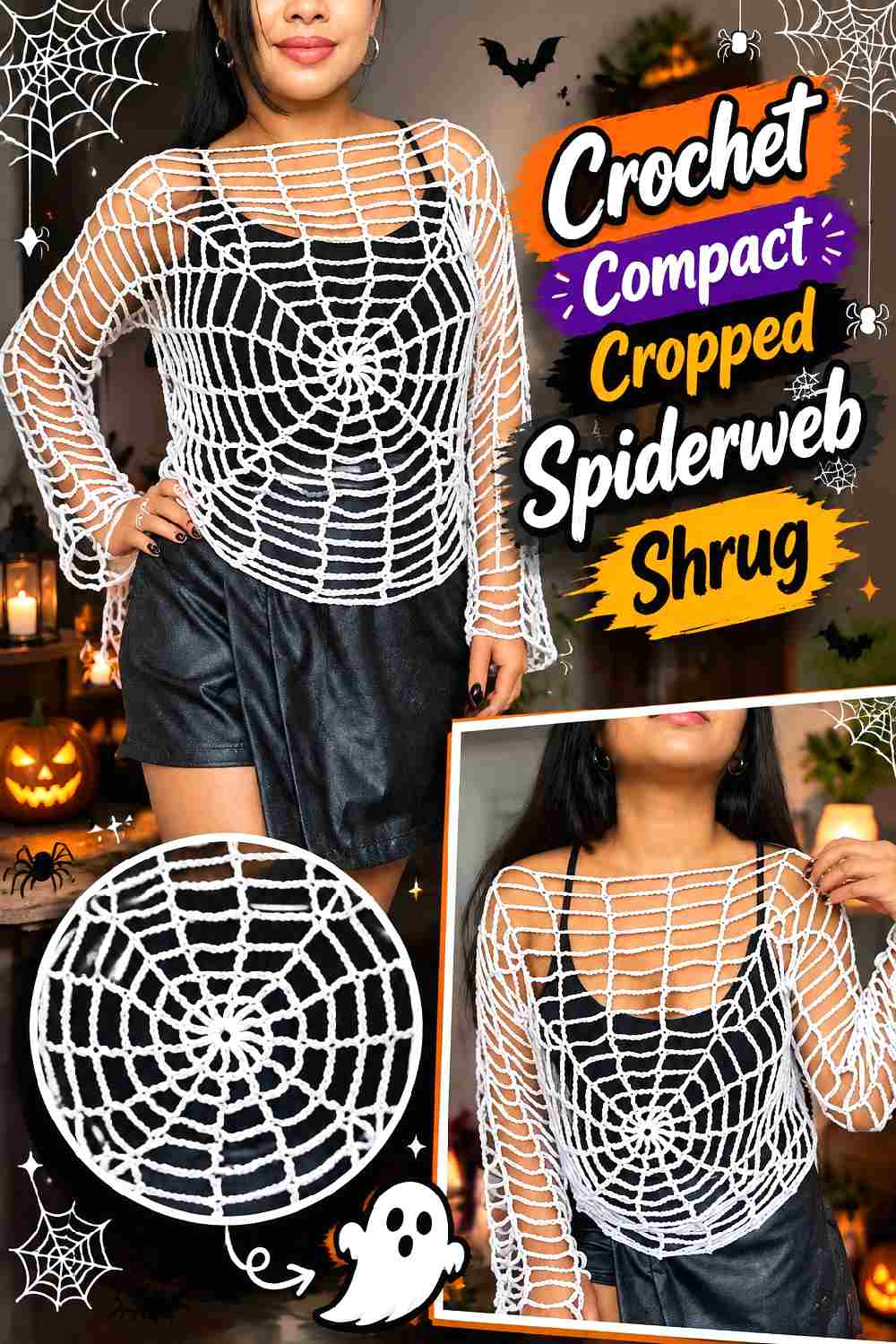
CrochetbyJen’s source project is a compact spider web top rather than an open-front shrug. The creator identifies the demonstrated version as a small-to-medium top, so treat that sizing as source-specific information rather than assuming the open fabric automatically fits everyone.
Its smaller footprint is useful for Halloween outfits where you want a concentrated graphic web without a lot of fabric extending down the torso.
A Short Body Still Needs Correct Shoulders
Cropping a garment does not eliminate upper-body fitting. Shoulder width and arm openings can still be wrong even when the project uses very little torso fabric.
Check those structural areas independently from the lower edge instead of assuming a compact garment is automatically flexible in size.
Make the Crop Line Look Deliberate
Consider where the web ends relative to the waistband, dress seam, corset edge, or shirt underneath.
A deliberately placed lower edge looks integrated with the outfit. An arbitrary stopping point can make a cropped adaptation appear unfinished.
Creator Credit: CrochetbyJen
8. Crochet Glow In The Dark Spiderweb Shrug Top
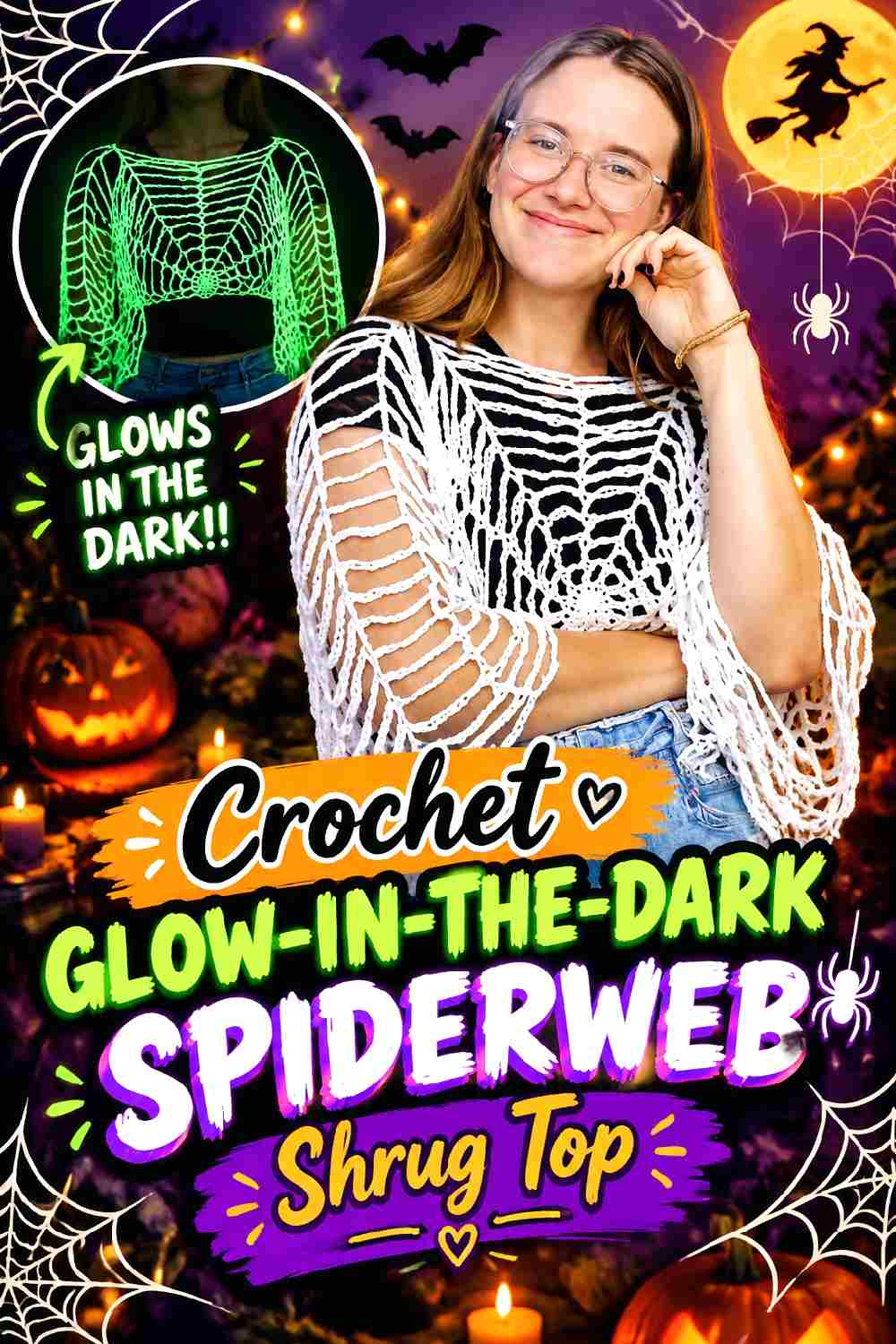
Beebe Doe adds glow-in-the-dark yarn to a panel-based spiderweb top, making the yarn itself part of the visual idea rather than simply choosing a Halloween color. The project is a fuller top, so a shrug interpretation would involve borrowing the glow concept and web styling rather than assuming the original construction is an open bolero.
This direction makes the most sense for parties, concerts, haunted attractions, or nighttime Halloween events where the material effect may actually be visible.
Judge Novelty Yarn in Ordinary Light First
A special nighttime effect is only one part of the garment. Most of its life will be spent in normal lighting.
Check the yarn’s regular color, texture, drape, and stitch definition before committing to the whole shrug. The web should still work visually when it is not glowing.
Reducing the Body Changes Sleeve Support
A complete front-and-back top provides more structure for sleeves than a tiny shoulder layer.
If you adapt the concept into a smaller shrug, do not remove body fabric without considering what remains to stabilize the armholes and carry the sleeve weight.
Creator Credit: Beebe Doe
9. Crochet Convertible Sleeve Spiderweb Shrug
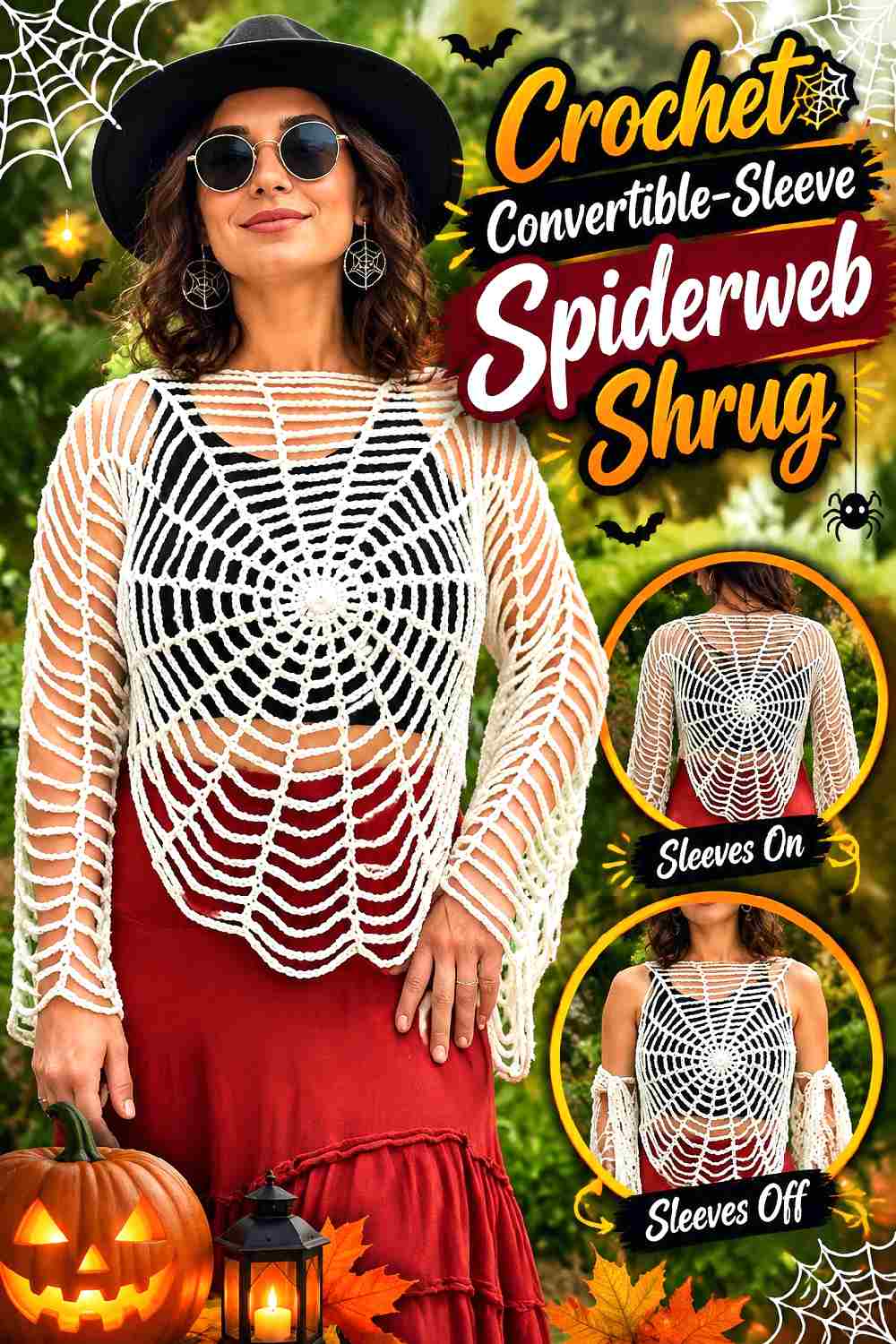
Crochet with illJay specifically presents a spider web top with long- and short-sleeve possibilities. That makes this a useful source when your main uncertainty is how much arm coverage your Halloween layer should have.
Although the source is a top, the sleeve comparison transfers naturally to shrug planning because arm length changes both the seasonality and the apparent proportion of the whole garment.
Long Sleeves Strengthen the Shrug Silhouette
A complete shoulder-to-wrist line makes even a cropped web top feel more like a deliberate layering piece.
If that silhouette is the part you like, avoid automatically shortening both the torso and sleeves. Keeping one dimension dramatic can preserve the project’s visual identity.
Short Sleeves Leave More of the Costume Visible
A shorter sleeve can expose gloves, jewelry, tattoos, striped underlayers, or other Halloween accessories.
It also reduces the visual weight of the garment, allowing a large body web to become the clear focal point rather than competing with long arms.
Establish the Shoulder Before Finalizing Sleeve Length
Sleeve length cannot compensate for a poor shoulder position. Check upper-body fit first, preferably over the clothing you actually intend to wear underneath.
Once the shoulder and armhole are comfortable, sleeve length becomes a styling choice rather than a structural fix.
Creator Credit: Crochet with illJay
10. Crochet Fitted Spiderweb Layer Shrug
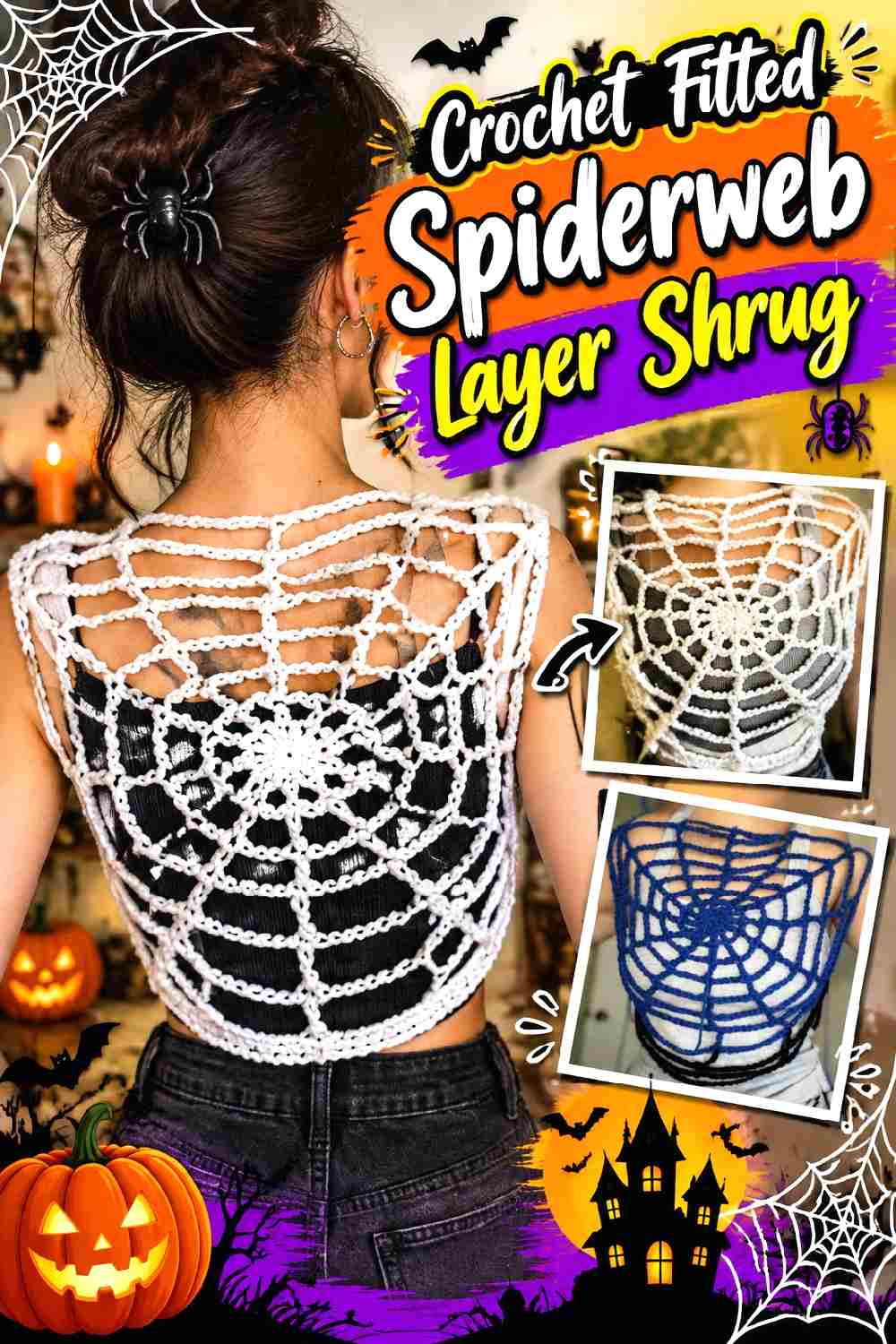
Kat’s Creative Crochet presents the source spider web top for a specified women’s medium, which makes it useful for comparing a defined-size garment with web designs that look more loosely adjustable.
For a shrug-style interpretation, the important lesson is to compare actual fit information rather than assuming a familiar size label or openwork stretch guarantees a comfortable result.
Size Labels Do Not Replace Measurements
Independent crochet patterns can use different finished proportions under the same size name.
Look for the measurements or fit guidance supplied with the original tutorial and compare them with your upper back, shoulder area, and intended underlayer before choosing the project.
Web Diameter Is Not the Same as Wearable Width
A large radial web can appear generous while still producing an armhole or shoulder position that does not suit the wearer.
Judge where the outer web lands on the finished body. For a shrug, useful upper-back coverage matters more than simply making the motif visually larger.
Creator Credit: Kat’s Creative Crochet
11. Crochet Distressed Spiderweb Grunge Shrug
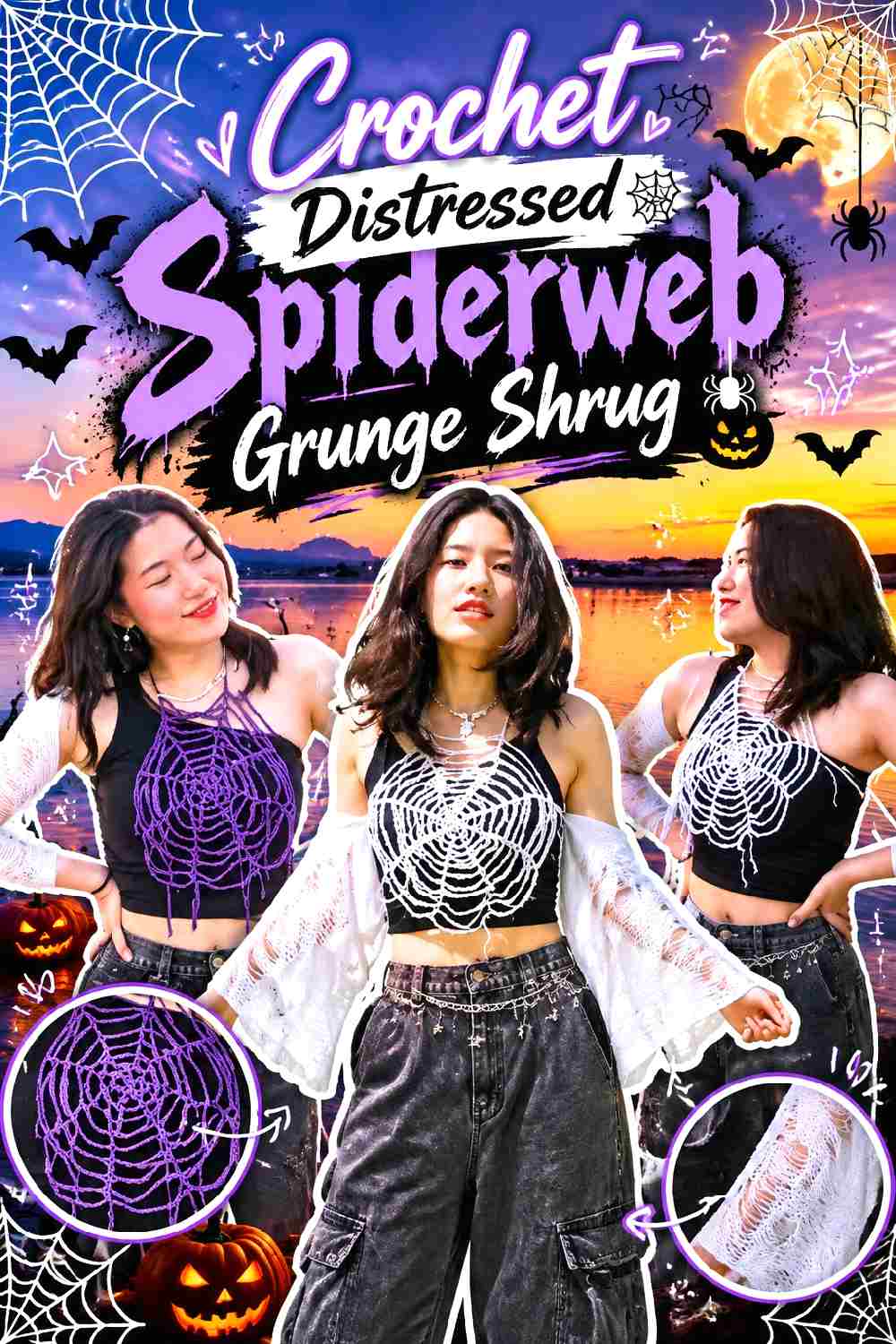
Lydiamensional takes the web concept in a deliberately distressed direction rather than aiming for a polished, evenly repeated radial surface. The source project is a spiderweb top, making it useful for a grunge-inspired shrug adaptation where irregular openings become part of the aesthetic.
This option looks most distinct when some recognizable web structure remains to contrast with the disrupted portions.
Distressing Should Look Intentional From a Distance
Irregular openings can lose their impact if every area receives the same amount of disruption.
Step back periodically and look at the distribution of solid lines, web geometry, and distressed spaces. Visual balance matters even when perfect symmetry is deliberately avoided.
Larger Openings Increase Snag Potential
Loose or irregular sections can catch more easily on rings, bracelets, bag hardware, costume jewelry, or textured furniture.
That is especially relevant if the distressed look extends into long sleeves. Consider where the garment will actually be worn before making every opening as dramatic as possible.
Creator Credit: Lydiamensional
12. Crochet Clean Radial Spiderweb Shrug Top
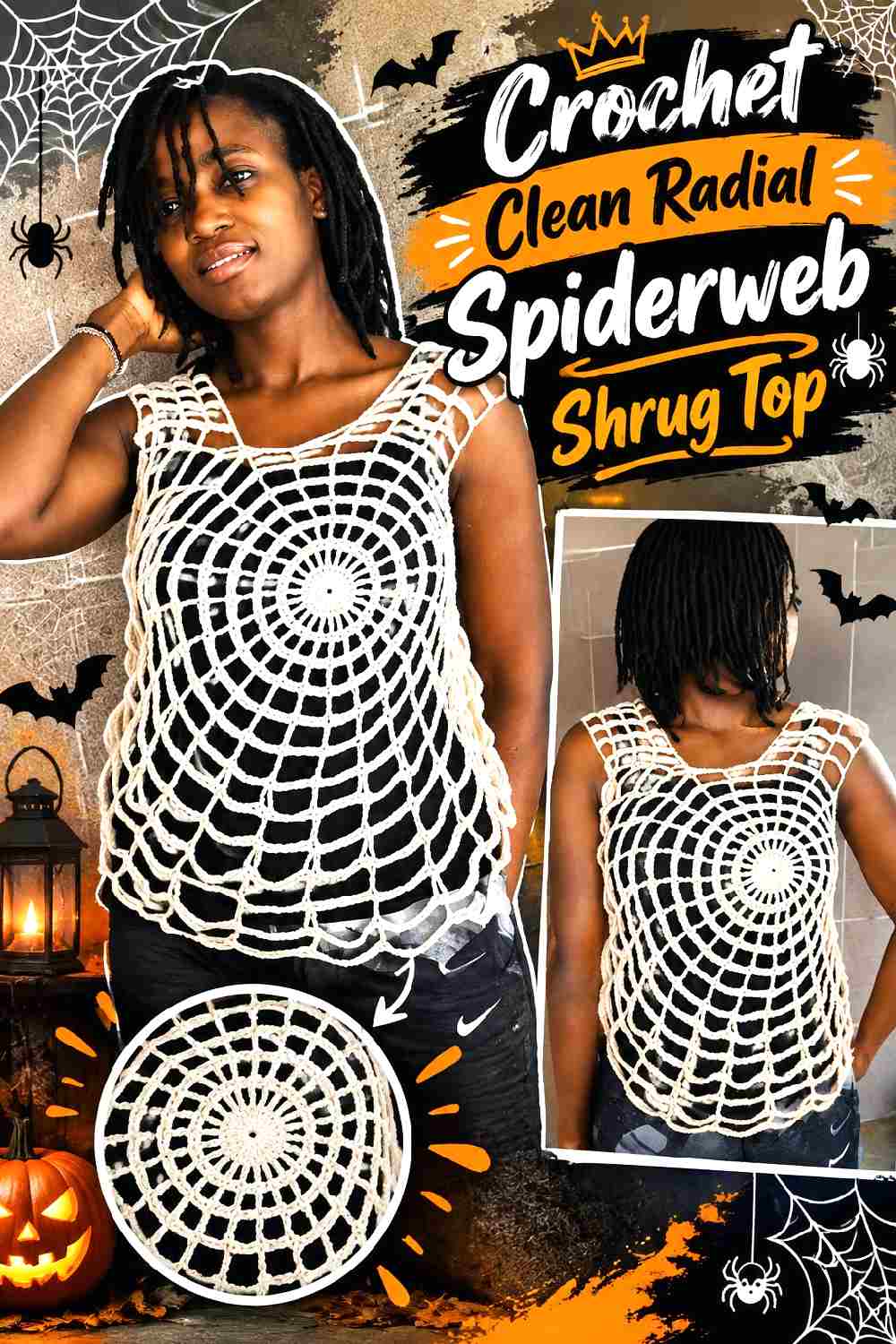
Njenie Handmade’s source focuses on a straightforward spider web top without relying on a hood, glow effect, or heart center. That makes the clear radial web itself the main design feature and provides a useful reference for a cleaner Halloween shrug direction.
A simpler web can also move beyond Halloween more easily because yarn color and styling have more influence when there are fewer themed extras.
Let the Web Remain the Main Detail
When there is no secondary motif competing for attention, differences in tension become more visible.
View the developing web from several feet away. A spoke that looks only slightly irregular while you are crocheting may become much more obvious once the motif is read as one large graphic shape.
Add Embellishment After Structural Fit Is Stable
Beads, spiders, contrasting borders, or decorative cuffs can personalize the project, but they may also add weight to openwork.
Make sure the garment hangs correctly before placing heavier details. Decoration should support the design rather than pulling the shoulder or web out of position.
Creator Credit: Njenie Handmade
13. Crochet Festival Spiderweb Sleeve Shrug
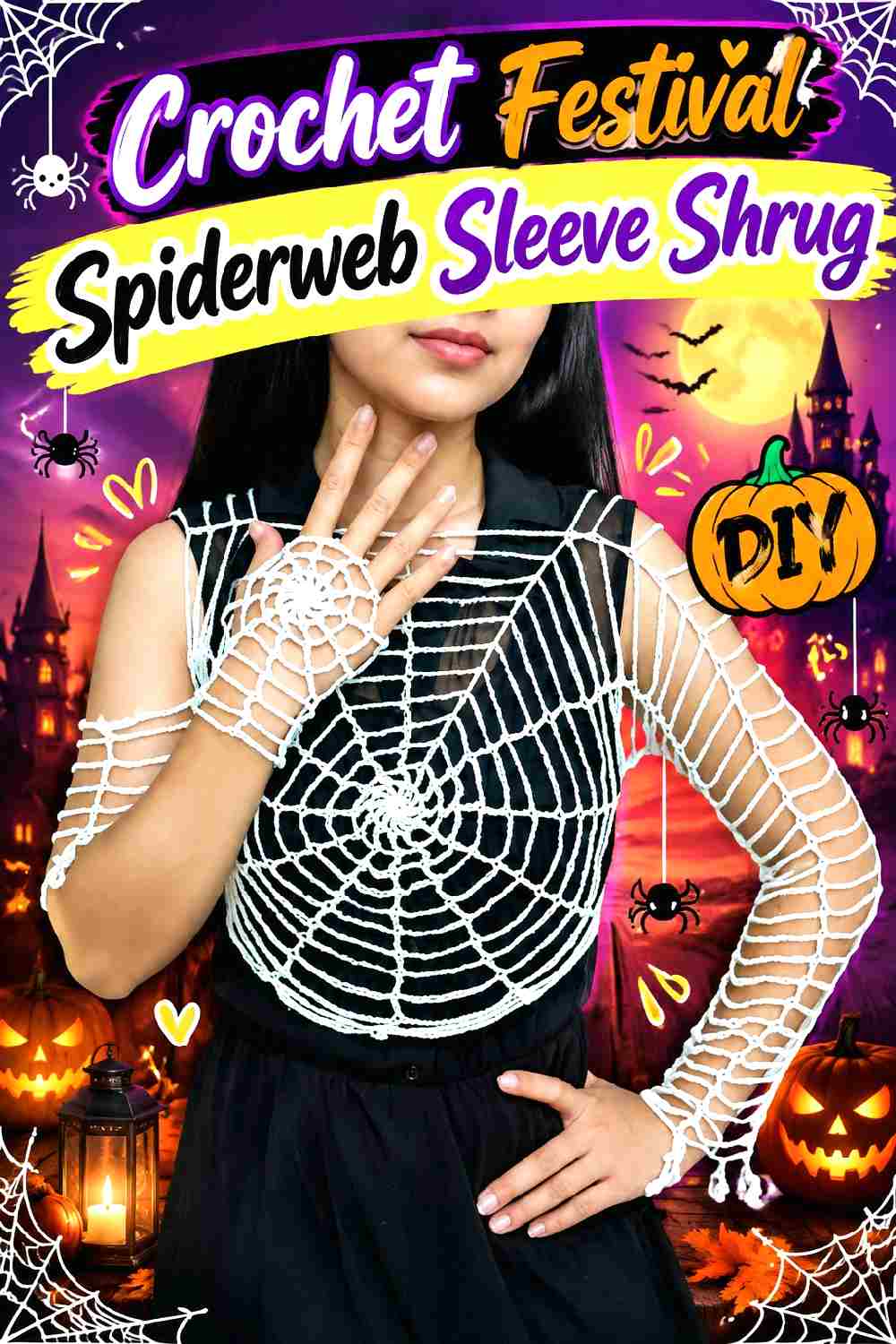
The Crochet Channel presents its spider web top as a festival-style outfit, making this source especially useful for thinking about spiderweb crochet as a light outer layer rather than as a warm cardigan replacement.
That styling translates naturally to Halloween parties where a fitted base garment remains visible through large areas of negative space.
Build the Underlayer Into the Design
The shirt, dress, bralette, or costume beneath the crochet will show through, so its neckline and color affect the final result.
Place your yarn against the actual base garment before committing. Strong contrast emphasizes the web; similar shades make the crochet feel more textural.
Event Clothing Needs a Movement Test
A dramatic sleeve that looks impressive in photos can behave differently in a crowd.
Carry your intended bag, raise your arms, sit down, and check where cuffs and open loops fall. A festival-inspired shrug is more successful when its statement elements do not constantly interfere with movement.
Halloween Does Not Require Black Yarn
White, silver, red, violet, neon shades, or another contrasting color can keep the web recognizable while changing the overall mood.
What matters visually is the relationship between the web and the layer behind it, not adherence to one traditional Halloween palette.
Creator Credit: The Crochet Channel
14. Crochet Off Shoulder Halloween Spiderweb Sweater Shrug
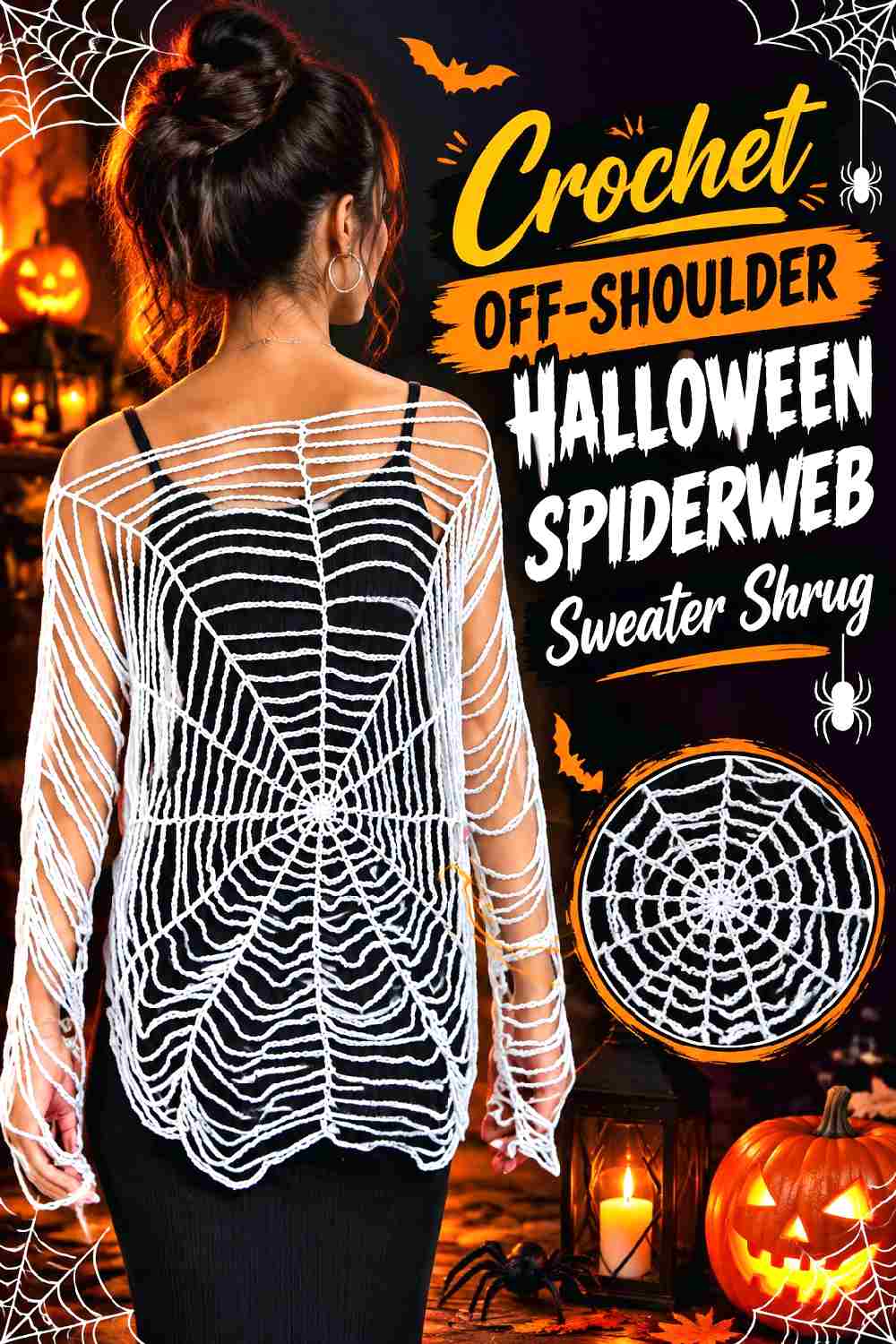
Cactus Lady Creation’s source moves well beyond a small bolero into a distressed spiderweb sweater designed as a fuller Halloween layering piece. The associated project information describes an oversized, off-shoulder direction, which makes this useful when you want the web garment to feel loose rather than fitted close to the upper body.
For a shrug-inspired version, the main decision is how much of that relaxed sweater proportion you actually want to preserve.
Off-Shoulder Styling Needs Stability Elsewhere
A wide neckline changes where the garment gets support. If you reduce the body at the same time, pay attention to whether enough structure remains around the upper back and sleeves.
A neckline that looks intentionally relaxed should not depend on constant repositioning to stay wearable.
More Fabric Increases Vertical Stretch
A sweater carries more yarn below the shoulder line than a compact bolero.
If you choose a heavier or more elastic yarn than the source, check the garment while it hangs rather than relying solely on flat measurements. Openwork can lengthen considerably once the full project is suspended.
Creator Credit: Cactus Lady Creation
15. Crochet Relaxed Spiderweb Sweater Layer
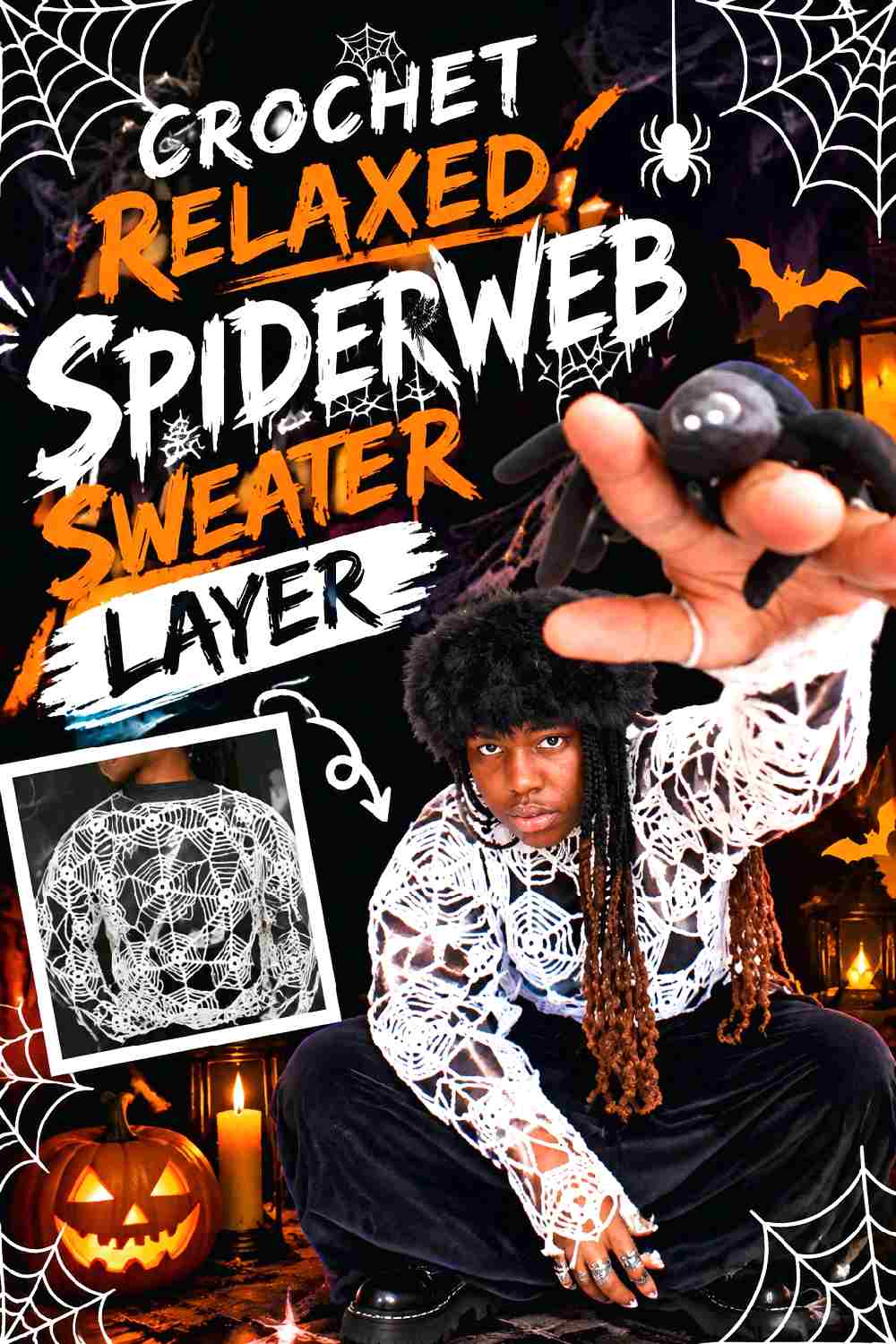
Fay Mberu’s source is presented as a spiderweb sweater/top, giving this option a relaxed middle ground between a tiny shrug and a much more elaborate hooded garment.
This direction is useful if you like the visual language of a spiderweb shrug but want more room around the torso and less emphasis on a sharply fitted bolero shape.
Separate Shoulder Room From Lower-Body Room
A relaxed body does not require an equally oversized shoulder.
When adapting the silhouette, evaluate the upper-back span and armholes independently from the amount of ease you want lower down. Too much width in the wrong location can make the web slide rather than drape.
Keep Secondary Textures Under Control
A roomy silhouette already gives the web plenty of visual space. Multiple heavy borders, textured cuffs, and extra motifs can make the garment look busy.
If you customize the project, decide whether each added element frames the web or competes with it.
Creator Credit: Fay Mberu
16. Crochet Structured Spiderweb Top Shrug
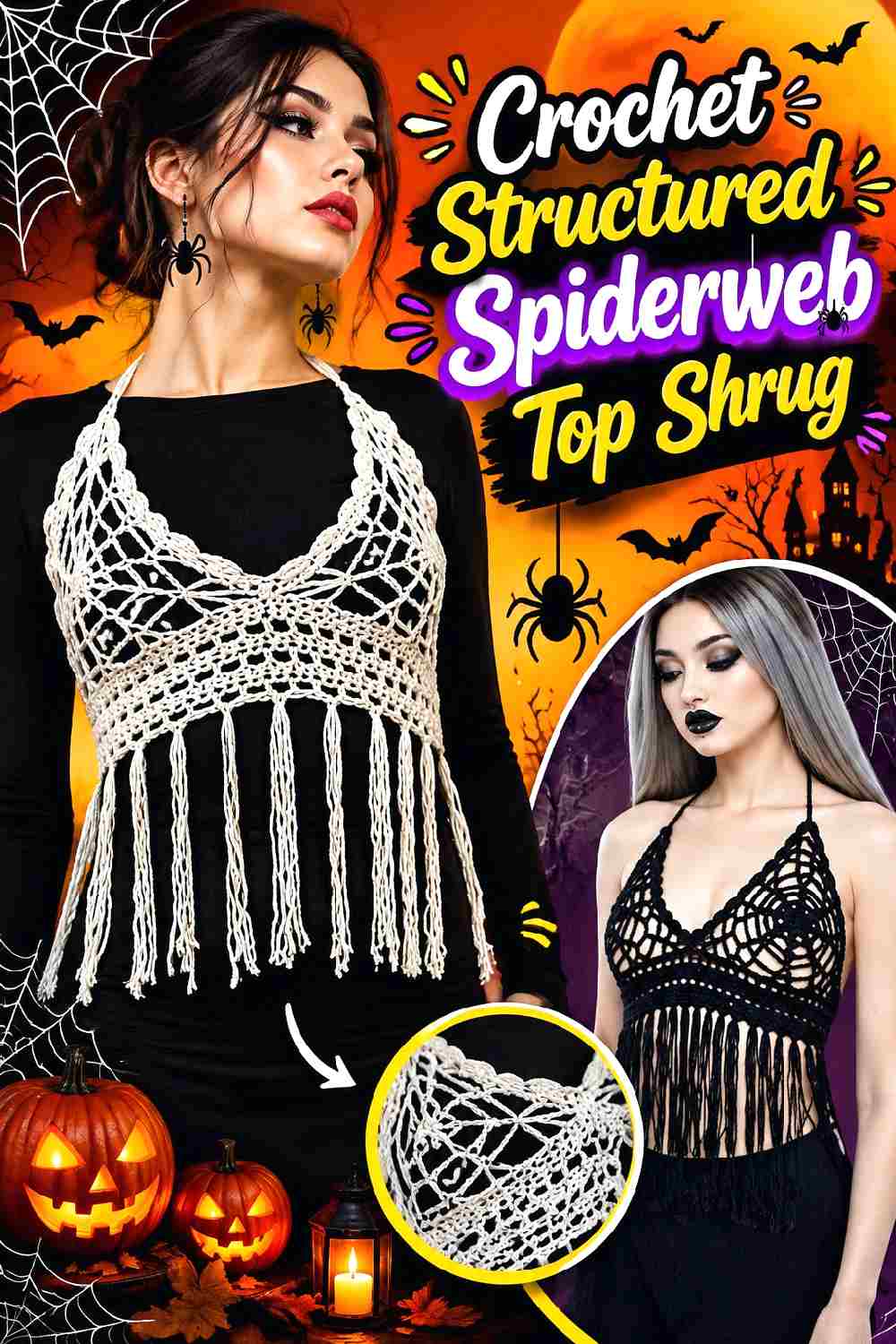
Made by BJax’s spiderweb top provides another fuller-body interpretation with a strong, recognizable web shape. The source is a top rather than a traditional shrug, so it makes the most sense for readers who want a structured cropped web garment and are willing to keep more front coverage.
This is a useful final contrast with the loose sweater versions because the visual direction is more concentrated and defined.
Consistent Tension Helps a Large Web Stay Graphic
Large radial motifs expose distortion quickly. Check the developing web flat for general symmetry, then hold it vertically to see what gravity does to the openings.
Both views matter because a motif that appears balanced on a table can change once it is supporting its own weight.
Decide How Important the Front Panel Is
A full spiderweb top may depend on its front structure for fit as well as appearance.
If your real goal is an open bolero, do not assume that removing most of the front will leave the shoulders and armholes unchanged. A source already designed as a shrug may be a more predictable choice when open-front styling is essential.
Keep Borders Proportional to the Web
A heavy perimeter can visually overpower airy radial work.
Choose finishing that stabilizes the garment without turning every edge into a stronger feature than the web itself, unless that contrast is a deliberate part of your Halloween design.
Creator Credit: Made by BJax
How These Crochet Spiderweb Shrug Directions Compare
If you want the closest thing to a traditional shrug, the back-centered Crafting Shed project, Alex Alette’s bell-sleeve option, and Yommycrochetlogy’s hexagon shrug are the most direct silhouettes to examine first.
For more torso coverage, look toward threaderie by m., CrochetbyJen, Crochet with illJay, Kat’s Creative Crochet, Njenie Handmade, or Made by BJax. These projects are closer to tops, so they work particularly well when the web itself should occupy a large part of the outfit.
For stronger Halloween statement features, the choices separate further. WONDER NETTING adds a heart center, Beebe Doe changes the effect through glow yarn, Lydiamensional emphasizes distressed openwork, and The Crochet Channel provides a lighter festival-style direction.
Chenda DIY, Cactus Lady Creation, and Fay Mberu make more sense when you prefer sweater-level presence rather than a barely-there bolero. Those shapes also make yarn weight and hanging stretch more important because there is simply more fabric pulling from the shoulders.
Conclusion
The most useful way to choose among these 16 crochet spiderweb shrug ideas is to start with the amount of coverage you want. If a Halloween dress, corset, or graphic top should remain visible, choose a true shoulder shrug or cropped bolero. If the web should become the centerpiece, a full spiderweb top or sweater gives it more room to dominate.
Next, compare sleeve shape. Bell sleeves create motion and drama, straight long sleeves strengthen the shrug outline without as much bulk, and shorter sleeves keep accessories and underlayers visible. Hooded and oversized versions create considerably more visual and physical weight.
Finally, match the yarn to the effect you want. Crisp stitch definition emphasizes graphic web geometry, softer fibers blur the edges, and novelty yarn can introduce an additional Halloween feature. Once you have chosen the silhouette, use the original creator tutorial for exact construction, sizing, materials, and finishing details.
Frequently Asked Questions
Can I turn any crochet spiderweb top into a shrug?
Not automatically. A full top may depend on front and back panels to establish its neckline, shoulder position, and sleeve support. Removing body sections can also change armhole shape. If an open bolero is your main goal, beginning with a tutorial already designed as a shrug is generally a more predictable approach.
How do I check the fit before finishing both spiderweb sleeves?
Check the garment as soon as the shoulders and arm openings have enough structure to try on. Wear the intended base layer underneath and assess upper-back width, shoulder placement, arm movement, and where the web center sits. Correct those areas before duplicating a long or heavily flared sleeve.
What yarn makes a crochet spiderweb easiest to see?
Smooth yarn generally gives radial lines and open spaces clearer visual edges, while fuzzy yarn creates a softer effect. Contrast with the clothing underneath matters too. A sharply defined web can become difficult to see if the yarn and underlayer are nearly the same color.
Should I block a crochet spiderweb shrug?
Blocking can help openwork settle and can make matching areas easier to compare, but the appropriate technique depends on the yarn fiber and the creator’s guidance. Follow the yarn’s care information and avoid forcing the garment to dimensions that distort the shoulders or armholes.
Are bell sleeves practical for a Halloween spiderweb shrug?
They can be, but the amount of flare matters. Large cuffs take up more space around bags, drinks, tables, and other people. If the shrug will be worn at a crowded event, test the sleeves in motion before deciding how dramatic you want the lower arm silhouette to become.
How can I make a spiderweb shrug feel less costume-specific?
Keep the web but change its context. Neutral, jewel-tone, pastel, white, silver, or brighter yarn can move the garment away from a conventional black Halloween look. Clean finishing and fewer seasonal embellishments also make the shrug easier to combine with ordinary alternative-fashion outfits after October.