Crochet argyle vests can move from traditional prep to modern fall layering simply by changing the scale of the diamonds, the neckline, the amount of colorwork, or the overall fit. A neat V-neck with small repeated diamonds feels quite different from a cropped vest with one oversized motif, while collars, buttons, pockets, and textured fabric introduce their own design challenges.
For a polished Fall 2026 look, the strongest options are usually the ones where the geometry and garment shape are planned together. A restrained palette of cream and espresso, burgundy and camel, forest and oatmeal, charcoal and rust, or navy and soft gray can keep a graphic vest easy to style without requiring the argyle to become overly busy.
Some tutorials in this collection teach argyle or diamond-based vests directly. Others teach substantially different sweater-vest constructions that can serve as a base for an independently planned argyle treatment. When a source is not already an argyle design, treat the tutorial as guidance for the garment shape and use a separate swatch to test your own colorwork rather than assuming the original construction automatically accommodates diamonds.
Quick List
- Crochet Classic V Neck Argyle Sweater Vest
- Crochet Oversized Large Diamond Argyle Vest
- Crochet Ribbed Crewneck Argyle Accent Vest
- Crochet Cropped Stripe And Argyle Sweater Vest
- Crochet Boxy Graphic Argyle Sweater Vest
- Crochet Minimal Cropped Argyle Vest
- Crochet Hooded Argyle Vest With Pockets
- Crochet Collared Argyle Sweater Vest
- Crochet Clean Line V Neck Argyle Vest
- Crochet Textured Boxy Argyle Vest
- Crochet Button Up Argyle Vest
- Crochet Tonal V Neck Argyle Layering Vest
- Crochet Preppy Striped Argyle Tank Vest
- Crochet Scallop Edge Argyle Button Vest
- Crochet Textured Diamond Argyle Inspired Vest
Plan the Argyle Before You Commit to the Vest Shape
Argyle is more sensitive to garment shaping than ordinary stripes. A deep V-neck removes fabric exactly where upper diamonds may otherwise continue, armhole shaping can clip motifs near the sides, and a button-front vest divides the design through the center. Sketch the vest outline and mark the usable front area before deciding how many diamond repeats you want.
Motif scale matters just as much as color. Large diamonds create a cleaner statement and can suit boxier or cropped silhouettes, while smaller repeats produce a more traditional effect but leave less tolerance for uneven placement. Make a representative swatch and measure it after the fabric has settled or been finished as intended.
As a simple planning example, if one blocked diamond section occupies about 5 inches across, three repeats would span roughly 15 inches before accounting for borders, seams, shaping, or any background space. That calculation is not a garment formula, but it quickly tells you whether the proposed motif scale is realistic.
Choose Yarn for Drape and Clear Diamond Edges
A polished argyle vest needs enough stitch definition for the geometry to remain readable, but it also needs to hang comfortably. A very fuzzy yarn can visually blur small diamonds and crossing lines. A particularly firm fabric can make extensive colorwork feel more structured than expected.
When substituting yarn, compare the resulting fabric rather than relying on weight classification alone. Colorwork can behave differently from a plain swatch, especially if tension changes when several colors are managed in the same section. Test a sample that actually includes representative color changes.
Also think about color value. A sophisticated palette does not require extreme contrast, but the diamonds still need enough separation from the background to remain intentional. Photographing your yarn choices in grayscale can help reveal whether several shades that look different in color are actually very similar in value.
Build the Fall Outfit Into Your Fit Decisions
A vest intended for a fitted tee can sit differently from one that will regularly go over an Oxford shirt, blouse, or light turtleneck. Check the chest, shoulder width, armhole depth, neckline, and body length with the intended underlayer in mind.
For a polished outfit, you can also let the vest determine how much detail the rest of the look needs. Dense multicolor argyle usually pairs easily with simple trousers, denim, solid skirts, or uncomplicated shirts. A minimal single-diamond vest leaves more room for patterned underlayers or statement accessories.
Fit still comes before motif perfection. Do not make a vest narrower simply because an exact number of diamonds fits neatly across the front. Establish wearable dimensions first, then adjust motif count, spacing, scale, or placement to suit that space.
1. Crochet Classic V Neck Argyle Sweater Vest
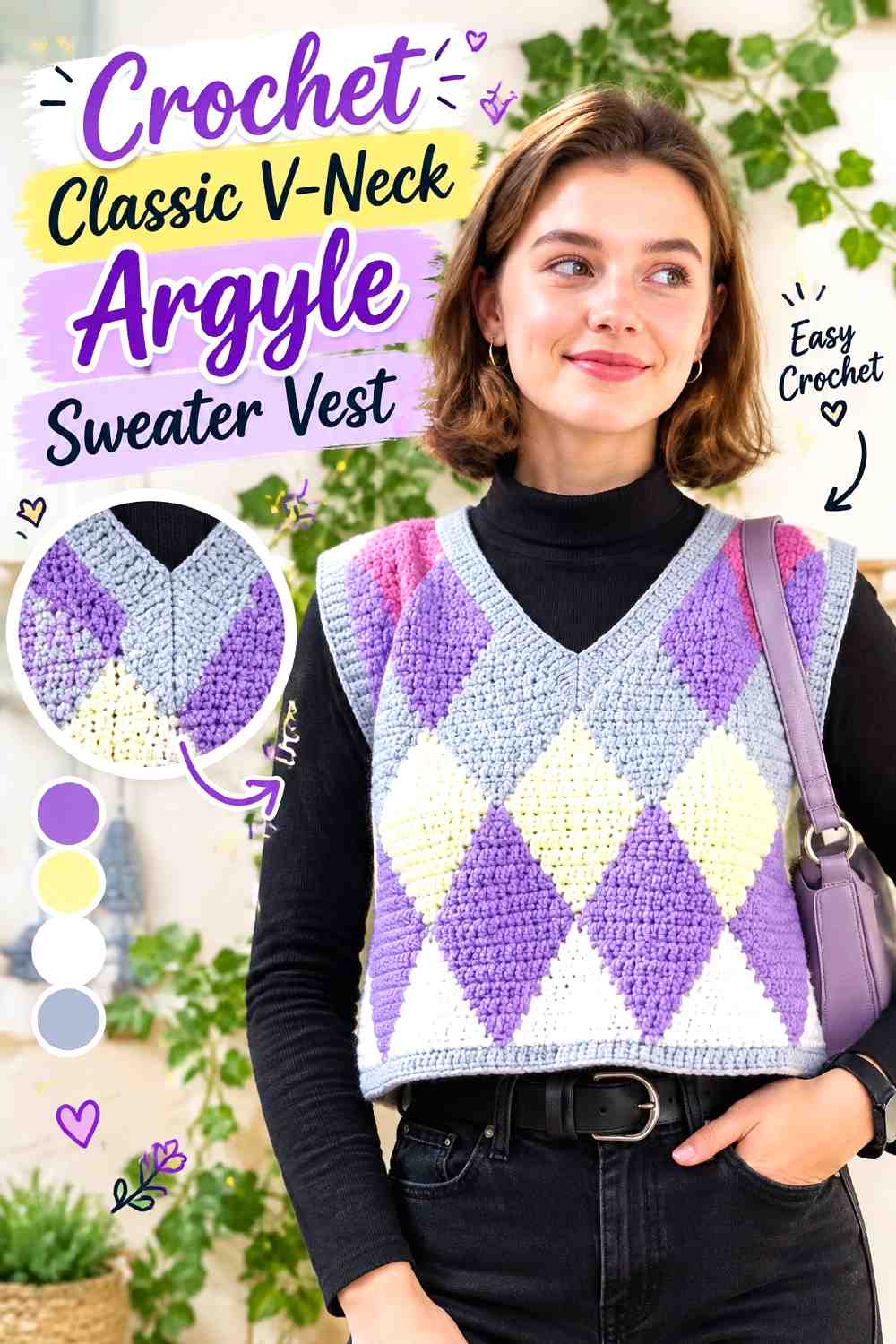
This is the most traditional direction in the collection: a sleeveless V-neck with the diamond pattern carrying most of the visual interest. The underlying tutorial is specifically centered on an argyle vest, making it a useful reference when you want the geometry and vest construction to feel like one unified design rather than an added decoration.
For fall, this silhouette works particularly well over crisp shirts and slim turtlenecks. Keeping the trim restrained lets the diamonds remain the focal point.
Make the V-Neck Part of the Diamond Layout
The V creates another strong set of diagonal lines, so the uppermost motifs need to relate to it. If you alter width or neckline depth, reassess the colorwork rather than assuming the original visual center will remain correct.
A diamond that looks perfectly centered on a rectangular panel can suddenly appear misplaced once the neckline is removed.
Use Contrast Where It Helps the Geometry
Traditional argyle usually contains enough visual information that every color does not need to shout. One strong diamond shade, a quieter secondary shade, and a controlled background can produce a more refined result than several equally dominant colors.
For a subdued fall version, consider keeping the lattice or smallest details closer in value to the background while letting the main diamonds carry the contrast.
Judge the Entire Front Before Finishing
Repeated geometry makes small alignment differences easier to spot. Lay the developing front flat and view it from a few feet away, checking the center line, side margins, hem, and relationship with the neckline.
Do this before adding major finishing details, because a prominent border can make an already off-center design even more obvious.
Creator Credit: flotjetops
2. Crochet Oversized Large Diamond Argyle Vest
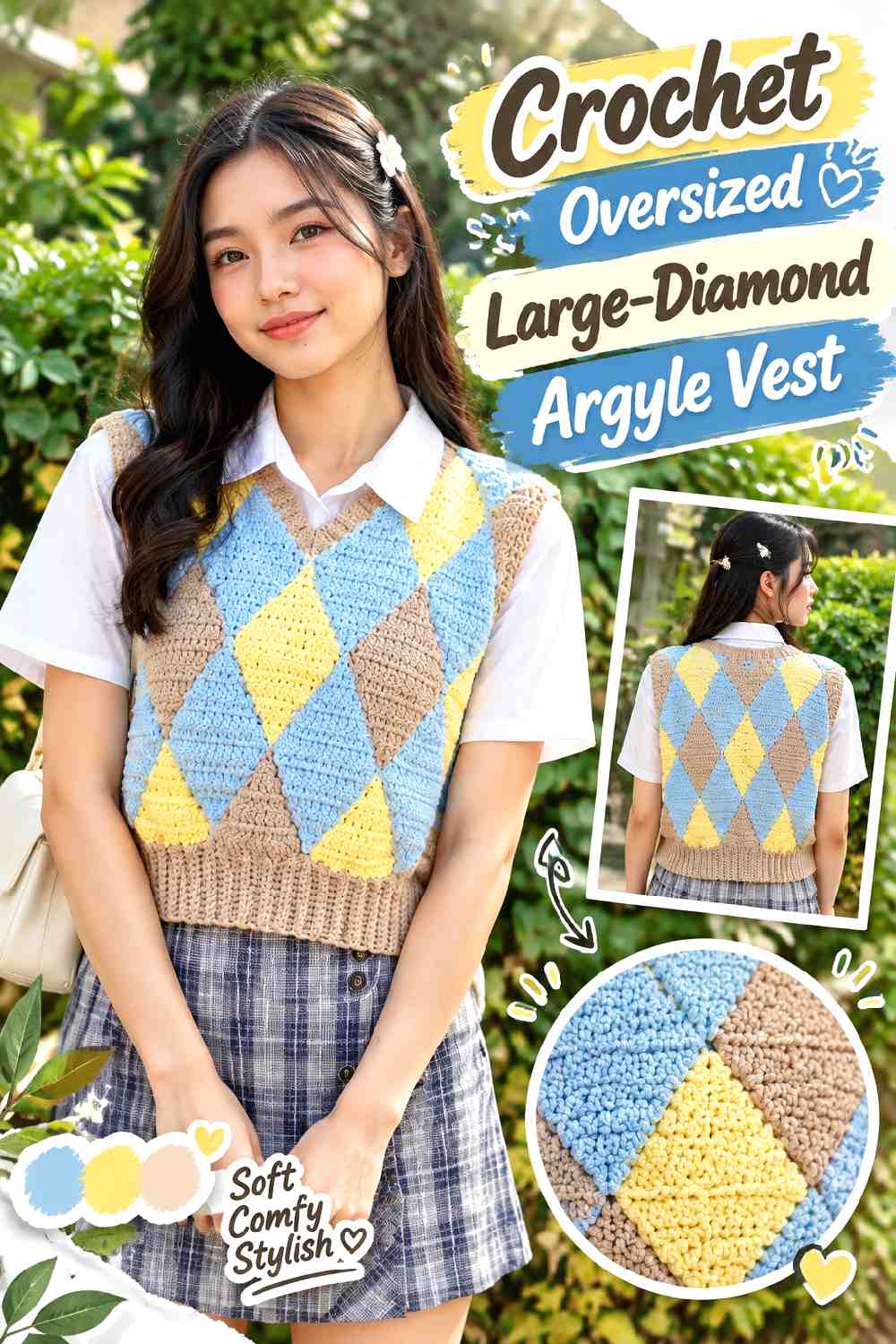
Large diamond pieces make this direction much bolder than traditional fine argyle. The Chenda DIY tutorial uses a diamond-based vest construction, giving you a useful reference for a design where each geometric shape occupies substantial visual space.
This style suits relaxed fall layering because a roomier silhouette can accommodate a shirt or fine sweater underneath without making the graphic front feel cramped.
Large Motifs Magnify Placement Errors
When only a few diamonds cover the front, each one becomes important. A small shift can noticeably alter the apparent center of the garment.
Lay out the main geometry against the actual neckline and armhole positions rather than centering motifs only on an unfinished rectangular panel.
Decide Whether You Actually Need a Lattice
Large diamond blocks already create a strong argyle-adjacent effect. Adding crossing lines can move the design closer to conventional argyle, but it also increases visual density.
If your fall palette already has three or four contrasting shades, leaving out or simplifying the lattice may produce the cleaner result.
Oversizing Should Include the Upper Body
Do not add width only through the torso and assume the vest will become comfortably oversized. Shoulder coverage, armhole depth, neckline width, and body width work together.
Try the developing shape over the type of shirt or sweater you intend to wear underneath before making further size changes.
Creator Credit: Chenda DIY
3. Crochet Ribbed Crewneck Argyle Accent Vest
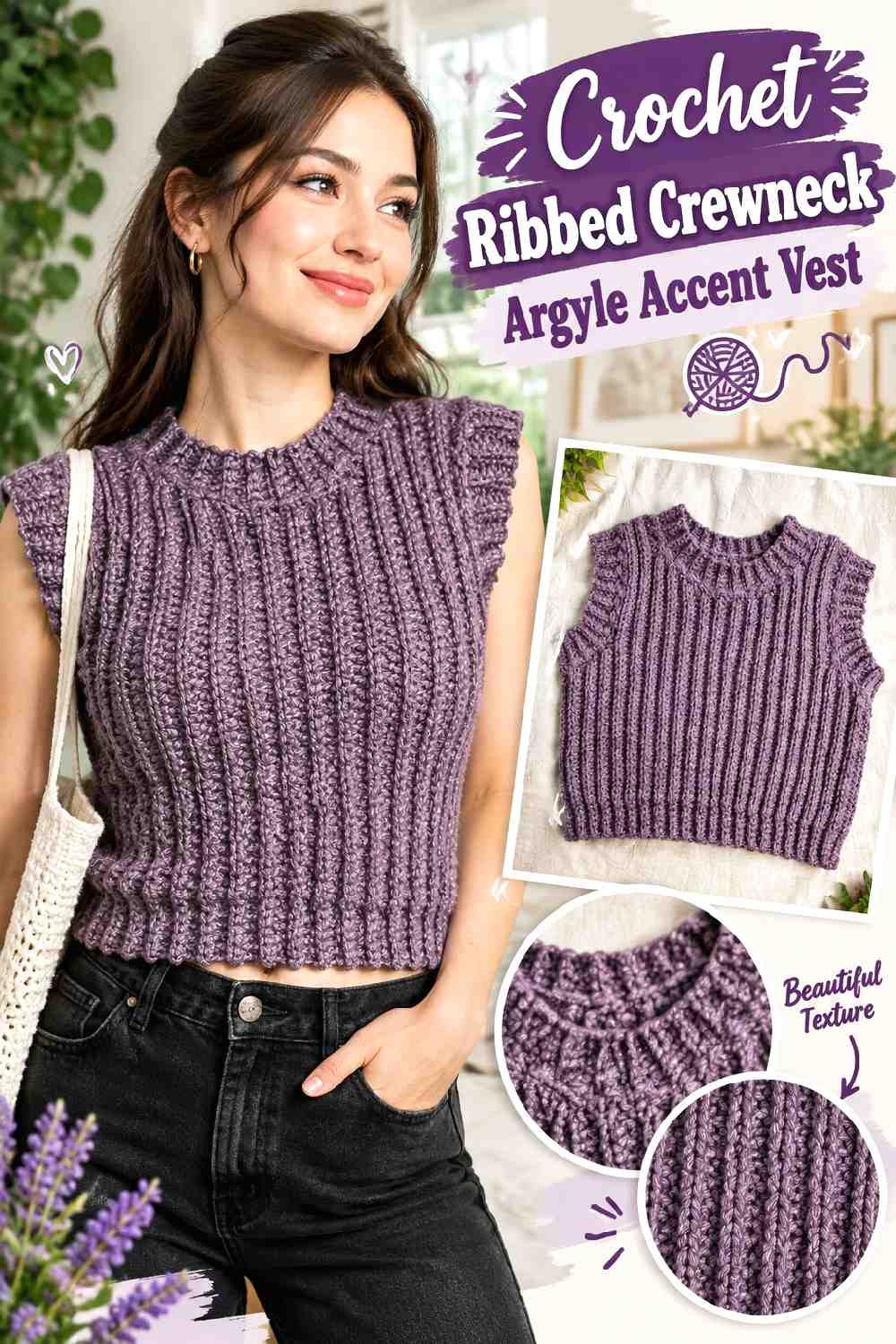
A crewneck provides more uninterrupted upper-chest fabric than a deep V-neck, which opens several different argyle possibilities. Instead of filling the entire garment, consider one central diamond, a narrow chest band, or a small grouping positioned below the neckline.
The source construction from VivCrochets is a ribbed vest rather than an argyle project, so the value here is the higher neckline and sweater-like shape.
Use the Extra Chest Space Selectively
The temptation with a crewneck is to fill all the available space with pattern. A more polished result may come from allowing a noticeable field of plain fabric around the argyle.
That negative space makes one carefully placed motif look intentional instead of unfinished.
Ribbing and Diamonds Need a Clear Hierarchy
Strong ribbing creates vertical movement while argyle introduces diagonals. If both are visually dominant, the surface can become busy.
A larger, simpler diamond arrangement or a lower-contrast palette can make the two textures cooperate rather than compete.
Protect the Neckline While Replanning Colorwork
The color design should respond to the vest shape, not change it accidentally. Keep neckline and armhole shaping clearly separate from your independent motif planning.
If the final diamond does not fit neatly near the crewneck, reducing or relocating the motif is usually preferable to distorting the garment edge.
Creator Credit: VivCrochets
4. Crochet Cropped Stripe And Argyle Sweater Vest
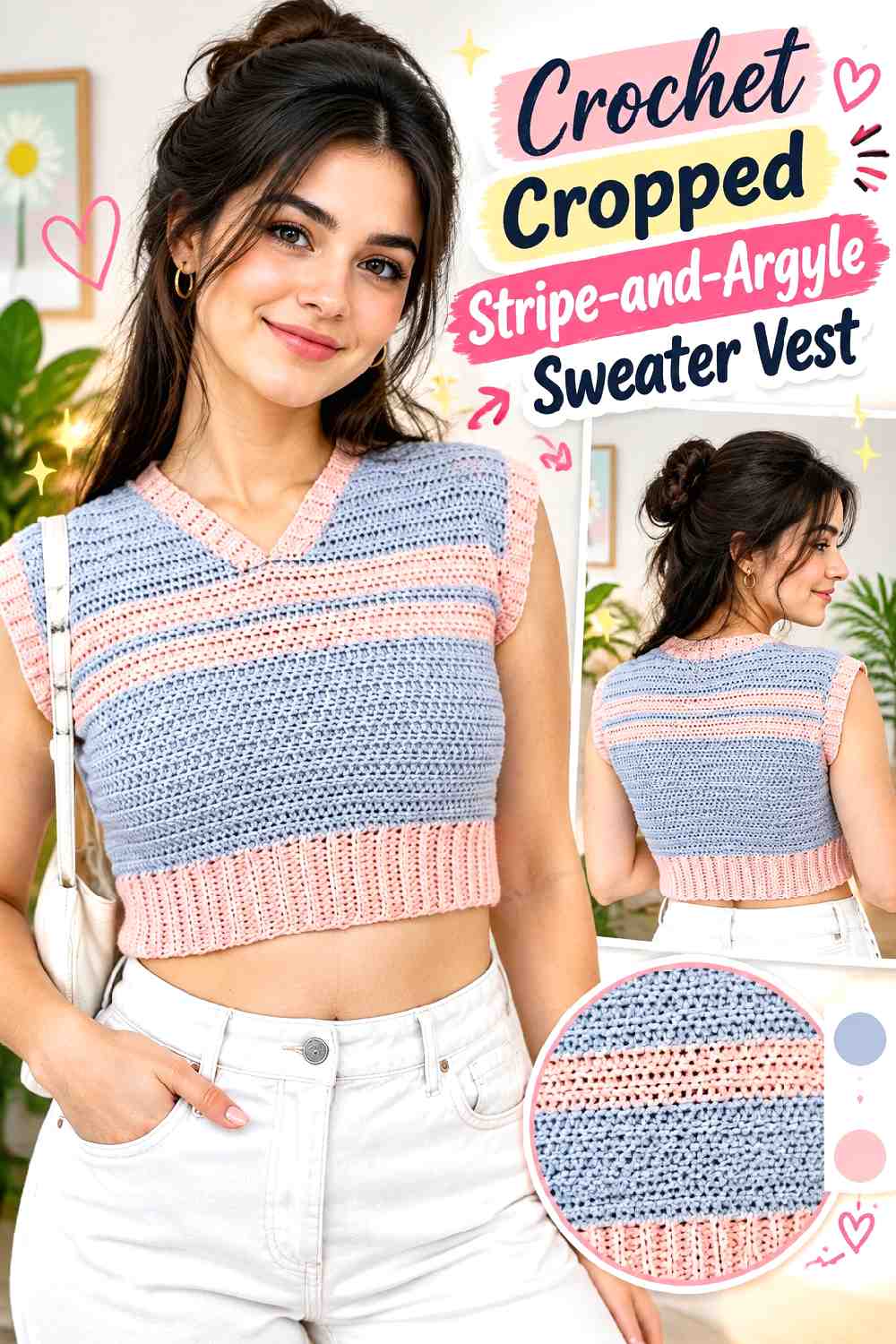
A cropped sweater vest has considerably less vertical room for repeated diamonds. That limitation can work in your favor: one argyle band or several enlarged motifs can look sharper than attempting to compress a traditional full-height layout.
Yarnalina’s source tutorial uses a cropped striped vest construction, making this a useful option if you want to combine straight preppy lines with a limited diamond feature.
Let the Final Length Determine the Motif Count
Choose where the hem should sit before planning the full colorwork. Once the cropped length and upper shaping are accounted for, you can see how much uninterrupted space actually remains.
If several rows of diamonds look crowded, remove a repeat rather than shrinking everything merely to make it fit.
Stripes Can Frame Rather Than Fight the Argyle
A narrow stripe above the hem or near a border can reinforce the collegiate look without competing with the main diamonds.
Choose which element should dominate. Wide stripes plus high-contrast argyle plus bold trim may leave too few quiet areas in a short garment.
Test It Over Your Intended Fall Layer
A cropped vest over a fitted long sleeve looks very different from the same piece over a loose button-down. Check both body width and armhole space with the intended styling piece underneath.
That is especially important if you want a tidy, polished fall silhouette rather than deliberate bunching around the waist and armholes.
Creator Credit: Yarnalina
5. Crochet Boxy Graphic Argyle Sweater Vest
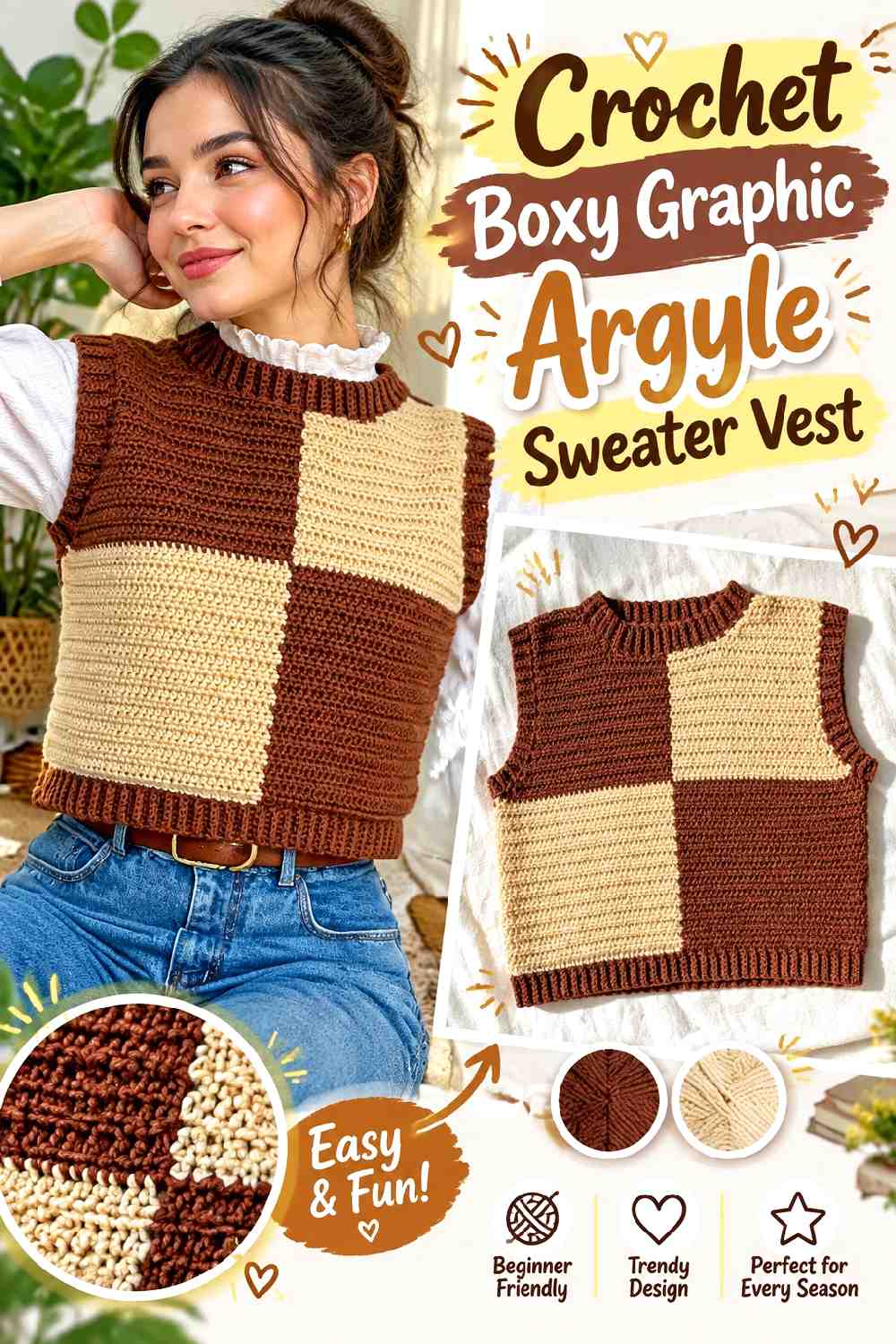
Checkerboard and argyle are both graphic colorwork ideas, but they direct the eye differently. HayHay Crochet’s tutorial provides a boxy checkerboard vest construction that can serve as a useful shape reference for a bold independent argyle adaptation.
The broader, straighter front gives large diamonds room to breathe and can create a modern alternative to closely fitted vintage-style argyle.
Replace the Geometry, Not Merely the Colors
A checkerboard does not become argyle just because the palette changes. Diamonds need a separate layout with planned diagonal edges and, if desired, intersecting lines.
Preserve the source garment’s fit logic while treating your argyle chart or swatch as a separate design problem.
Keep Important Diamonds Away From Heavy Shaping
Armhole areas progressively reduce usable width. A prominent diamond that extends directly into that area may become difficult to read once part of it disappears.
Place the most recognizable motifs within the central body whenever possible, or decide deliberately that cropped side motifs are part of the design.
Check the Garment While It Is Worn
A wide panel that looks perfectly balanced flat will curve around the torso in use. Important motifs positioned too close to the side seams can partly disappear from the front view.
If the polished frontal appearance matters most, keep your strongest diamonds comfortably inside the visible front area.
Creator Credit: HayHay Crochet
6. Crochet Minimal Cropped Argyle Vest
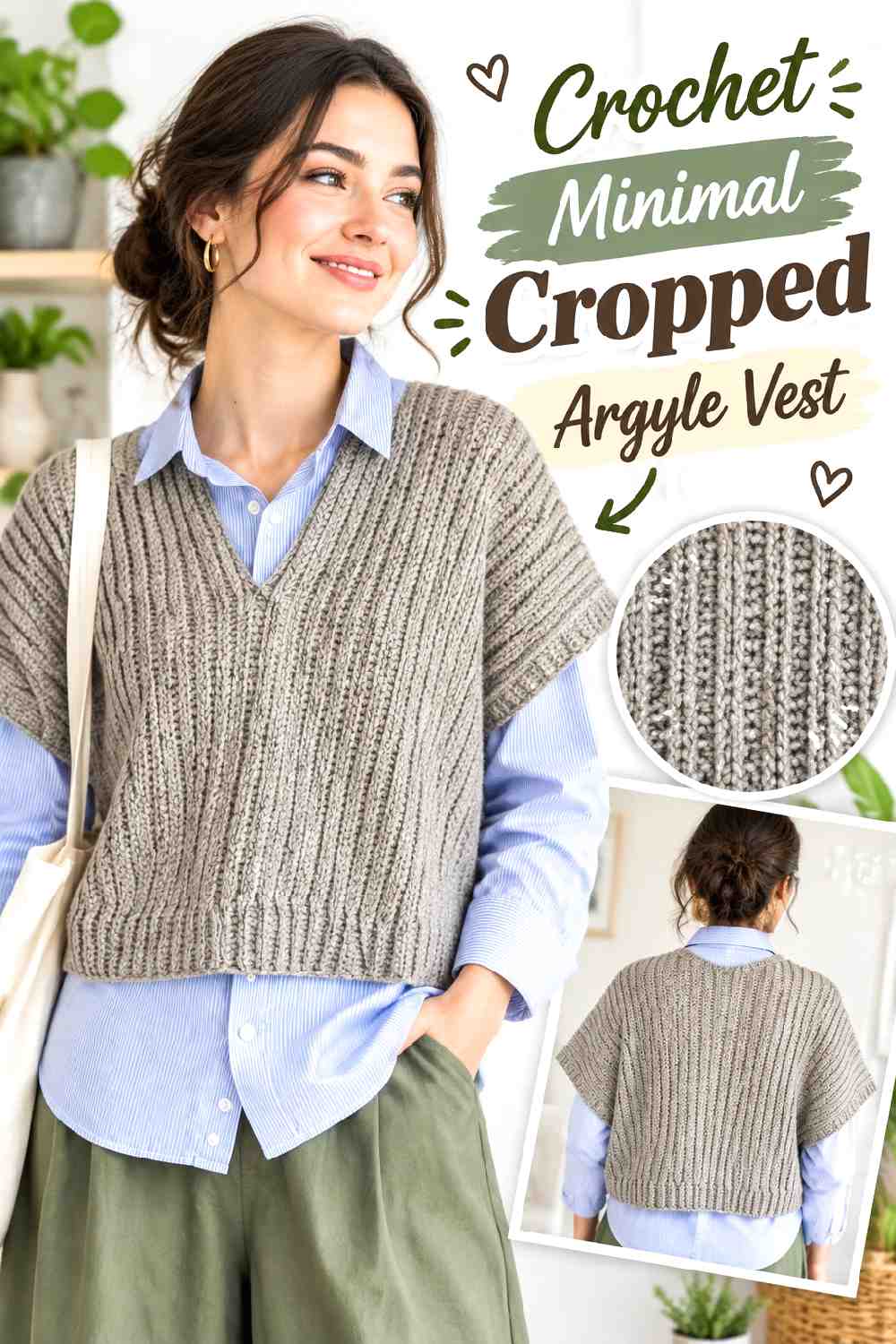
A simple cropped vest gives you a nearly blank canvas for restrained argyle. Orinam crochet’s source construction avoids a hood, front closure, collar, or other dominant features, so the geometric detail can do the styling work.
This is a useful route when you want the fall look to feel cleaner and less literal than a full vintage argyle repeat.
A Single Diamond Can Be Enough
Instead of automatically repeating the motif across the entire front, try planning one central diamond or two offset motifs.
A small amount of intentional colorwork can look especially effective with a muted background such as camel, deep olive, warm gray, cream, or chocolate.
Give the Hem Some Breathing Room
Cropping reduces the plain space around the design. A diamond ending immediately above the border can appear accidentally cut off unless that interaction repeats consistently.
Mark the border depth before positioning the lowest motif.
Simple Shapes Expose Alignment Clearly
Straight side edges make it easier to see whether your colorwork really is centered. Use that advantage by marking the center front and checking both halves of the motif layout as the panel develops.
The fewer decorative elements a vest has, the more visible small alignment issues become.
Creator Credit: Orinam crochet
7. Crochet Hooded Argyle Vest With Pockets
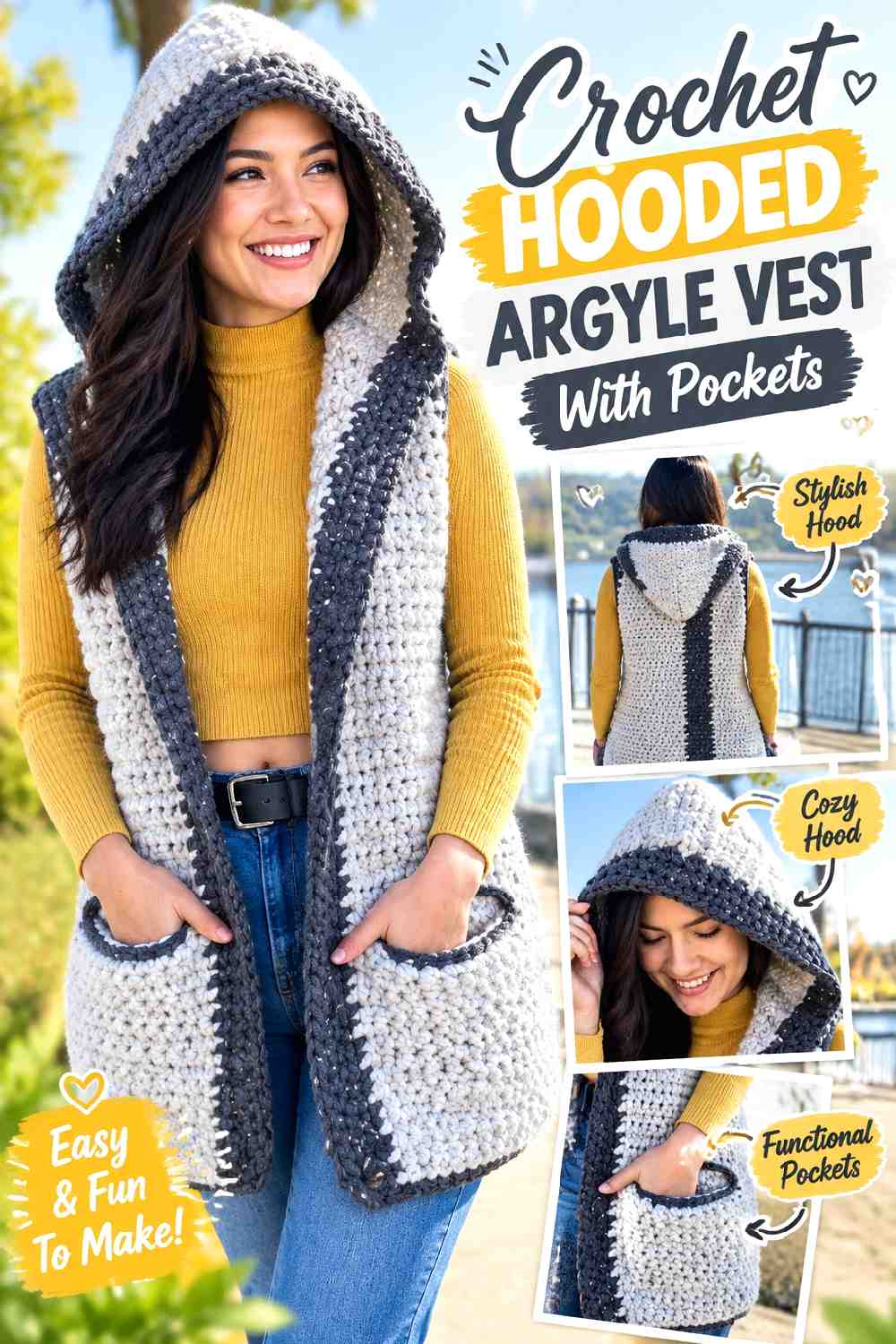
A hood and pockets turn an argyle vest into something closer to casual outer layering. KnitcroAddict’s vest construction gives you a front opening, hood, pocket areas, and substantial edging, so the argyle needs more restraint than it would on a simple pullover.
This can work particularly well for cool-weather outfits when you want the diamond theme without the formal school-uniform effect.
Keep Major Diamonds Clear of the Pockets
Pocket openings can cut directly through colorwork and make an otherwise recognizable motif look incomplete.
Mark the pocket locations before plotting argyle. Upper-front diamonds or a patterned back panel may provide cleaner alternatives to dense lower-front colorwork.
Plan Both Sides of the Front Opening Together
An open vest divides the composition vertically. You can mirror motifs, place complete diamonds independently on each side, or intentionally make the fronts asymmetrical.
Evaluate the layout with the vest both open and closed so the design remains convincing in the way you are most likely to wear it.
Let the Hood Carry Some of the Visual Weight
A hood already adds volume and a strong outline to the upper garment. If the front also contains oversized multicolor diamonds, thick contrast trim, pockets, and buttons, the design can become crowded.
Keeping the argyle concentrated in one area often produces a more composed fall layer.
Creator Credit: KnitcroAddict
8. Crochet Collared Argyle Sweater Vest
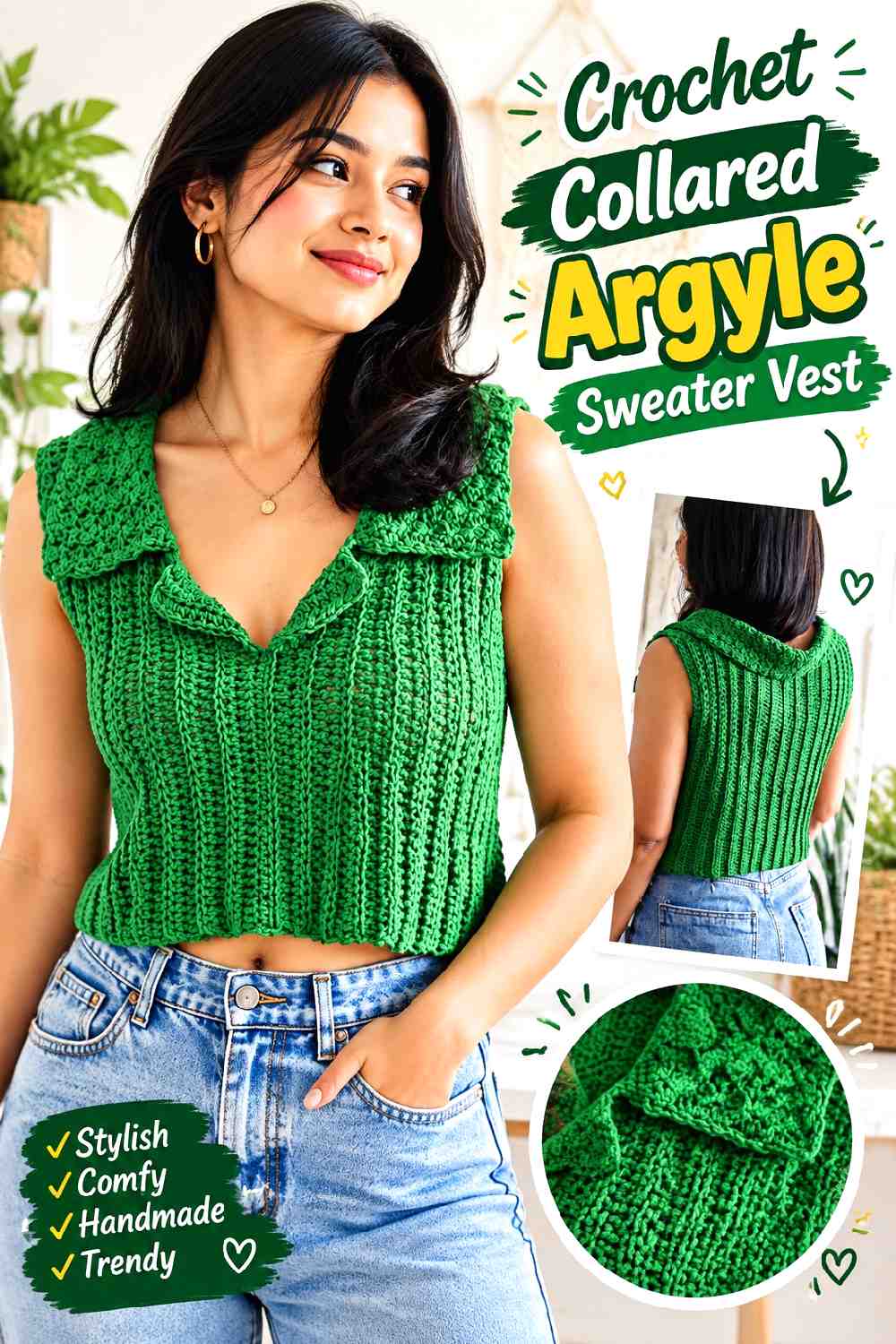
A collar gives argyle a different kind of preppy finish. Instead of the familiar open V framing a shirt collar underneath, the crochet garment itself carries the neckline detail.
The Jennyandteddy crochet. tutorial supplies the collared vest construction; the argyle treatment would be your own adaptation.
Leave Plain Fabric Beneath the Collar
Placing strong diamonds immediately against the collar can make the upper chest feel compressed. A small field of background color gives the collar and motif separate visual jobs.
This also gives you more flexibility if the collar changes the apparent depth of the neckline once attached.
Repeat a Motif Color in the Collar
One of the cleanest ways to connect the collar with the argyle is to reuse an existing color instead of introducing another shade.
For example, a cream collar can echo cream lattice lines on a forest-and-camel diamond arrangement without increasing the palette.
Judge the Balance After the Collar Is Finished
An unfinished neckline can make the body look visually empty or top-heavy. Avoid making last-minute colorwork additions solely because the collar is not yet present.
Assess the complete silhouette before deciding whether the vest needs more pattern near the shoulders.
Creator Credit: Jennyandteddy crochet.
9. Crochet Clean Line V Neck Argyle Vest
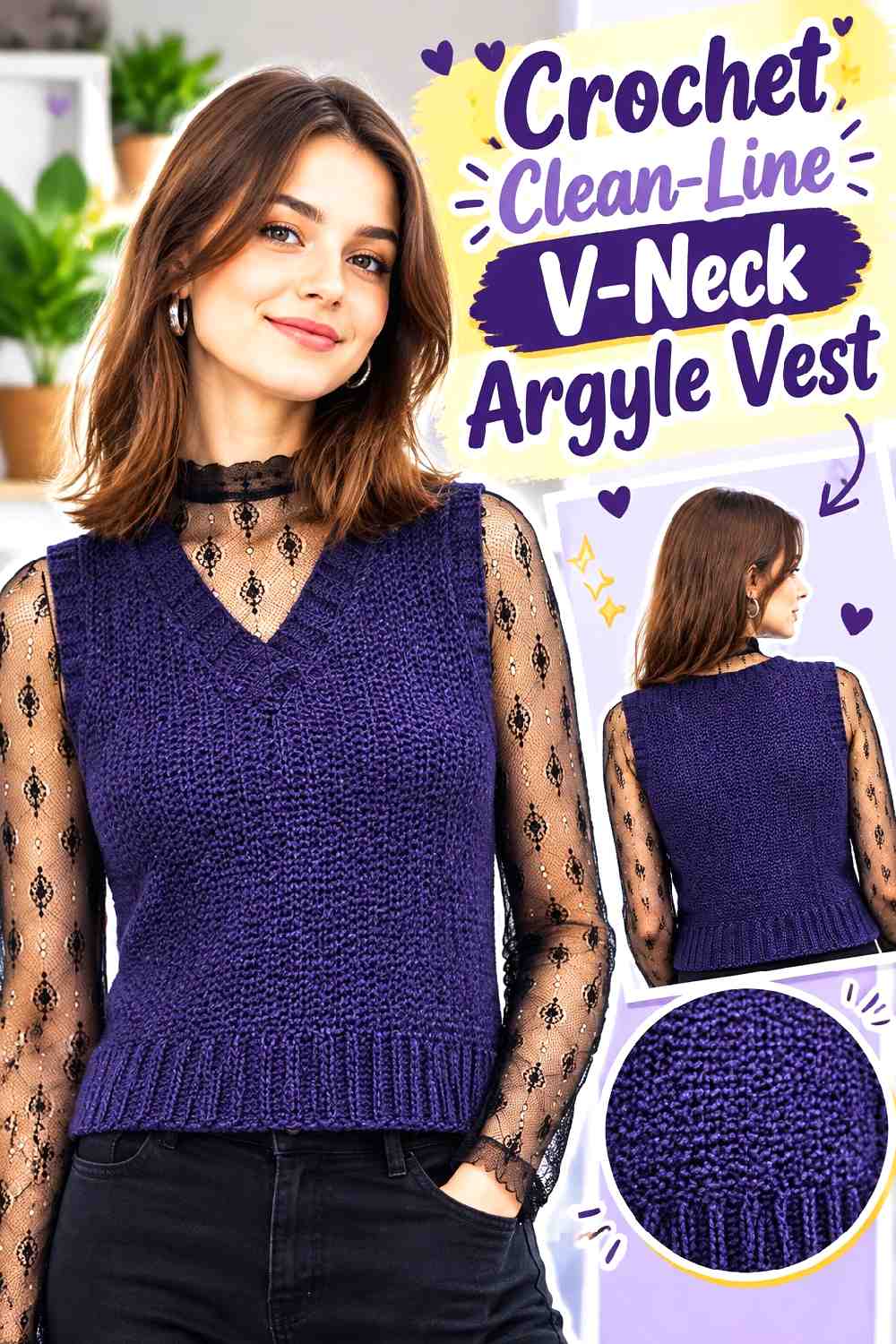
A straightforward V-neck construction is a practical base when you want classic argyle but prefer to plan the graphic independently. Krafty Station’s source vest keeps the silhouette relatively free of competing design details.
That makes the relationship between neckline depth, diamond scale, and layering room the main decision.
Plot the Upper Diamond and V at the Same Time
Both forms use strong diagonal lines. If the top point of a diamond and the bottom point of the neckline are crowded into the same small area, the upper front can look visually tangled.
Moving the final full motif lower is often cleaner than forcing an awkward partial diamond beside the neck edge.
Treat the Shoulders as a Natural Pattern Boundary
Narrow shoulder sections do not always need continued argyle. A solid shoulder area can give repeated diamonds an intentional stopping point.
This is particularly effective when the lower front is already visually dense.
Preserve Layering Ease Before Preserving Symmetry
A polished vest over a shirt still needs enough room for the shirt. Do not reduce body width merely because a particular motif count happens to fit more neatly.
Fit the vest first, then adjust motif spacing, size, or quantity.
Creator Credit: Krafty Station
10. Crochet Textured Boxy Argyle Vest
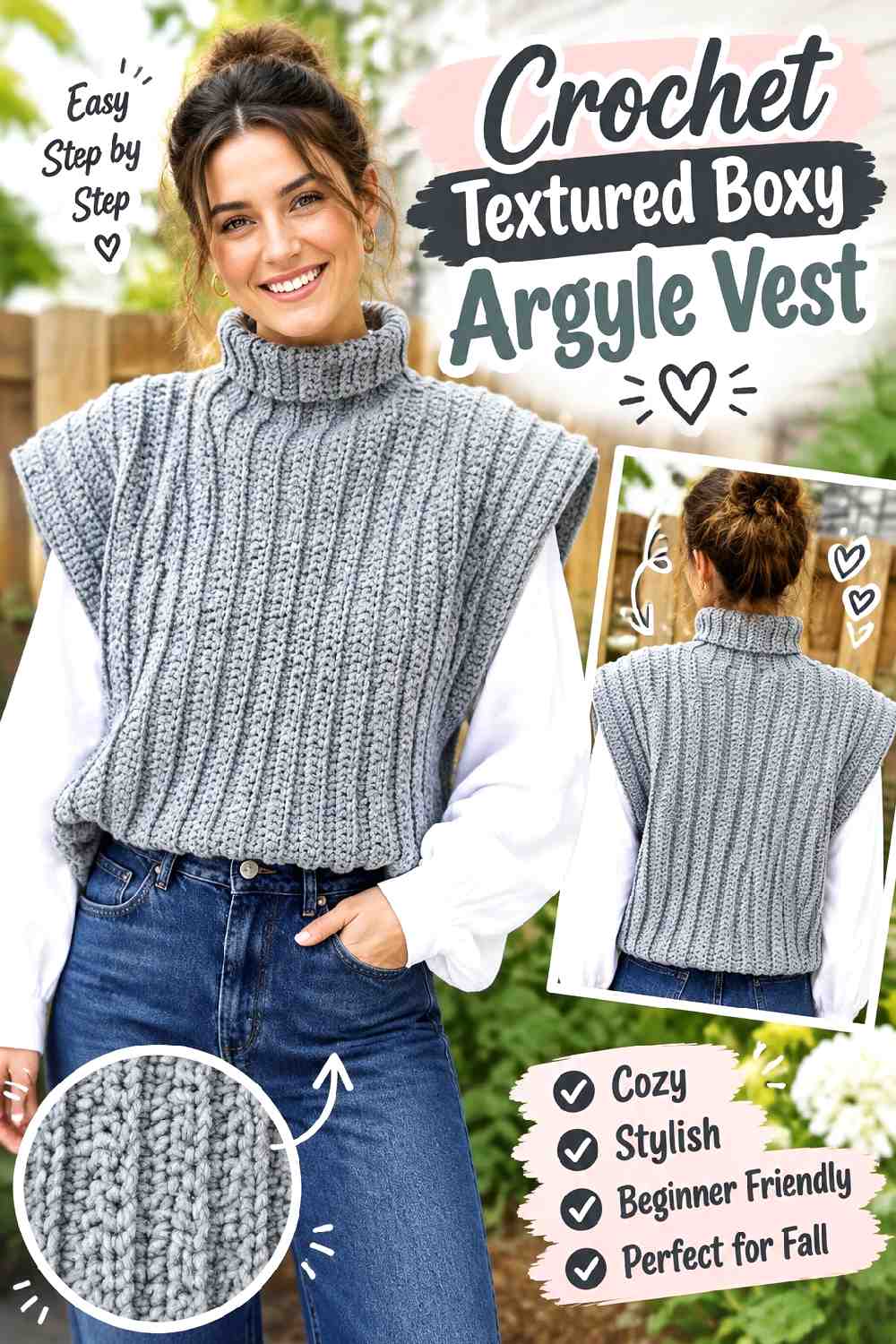
Texture changes how sharp argyle appears. JeggoCrochet’s boxy sweater-vest construction provides a relaxed silhouette and visibly textured fabric, which creates a useful contrast with the crisp geometry associated with traditional diamonds.
Choose this direction when you want a softer, less formal version of argyle for fall.
Sample a Color Boundary in the Actual Texture
A color change that looks sharp in smooth crochet may appear more irregular across a pronounced texture. Make a small representative section before planning several tiny diamonds.
If the boundaries look too broken up, enlarging the motifs can improve readability.
Give Large Diamonds More Background
A roomy vest offers plenty of width, but covering every inch with equally large motifs can make the front feel heavy.
Leaving a border of solid background around the main argyle area creates a stronger visual frame and makes each diamond easier to distinguish.
Watch What Happens Near the Side Seams
A boxy vest wraps farther around the body than the flat panel suggests. Colorwork placed close to the edge may become more visible from the side than the front.
Decide whether that continuation is desirable or whether the main design should remain front-focused.
Creator Credit: JeggoCrochet
11. Crochet Button Up Argyle Vest
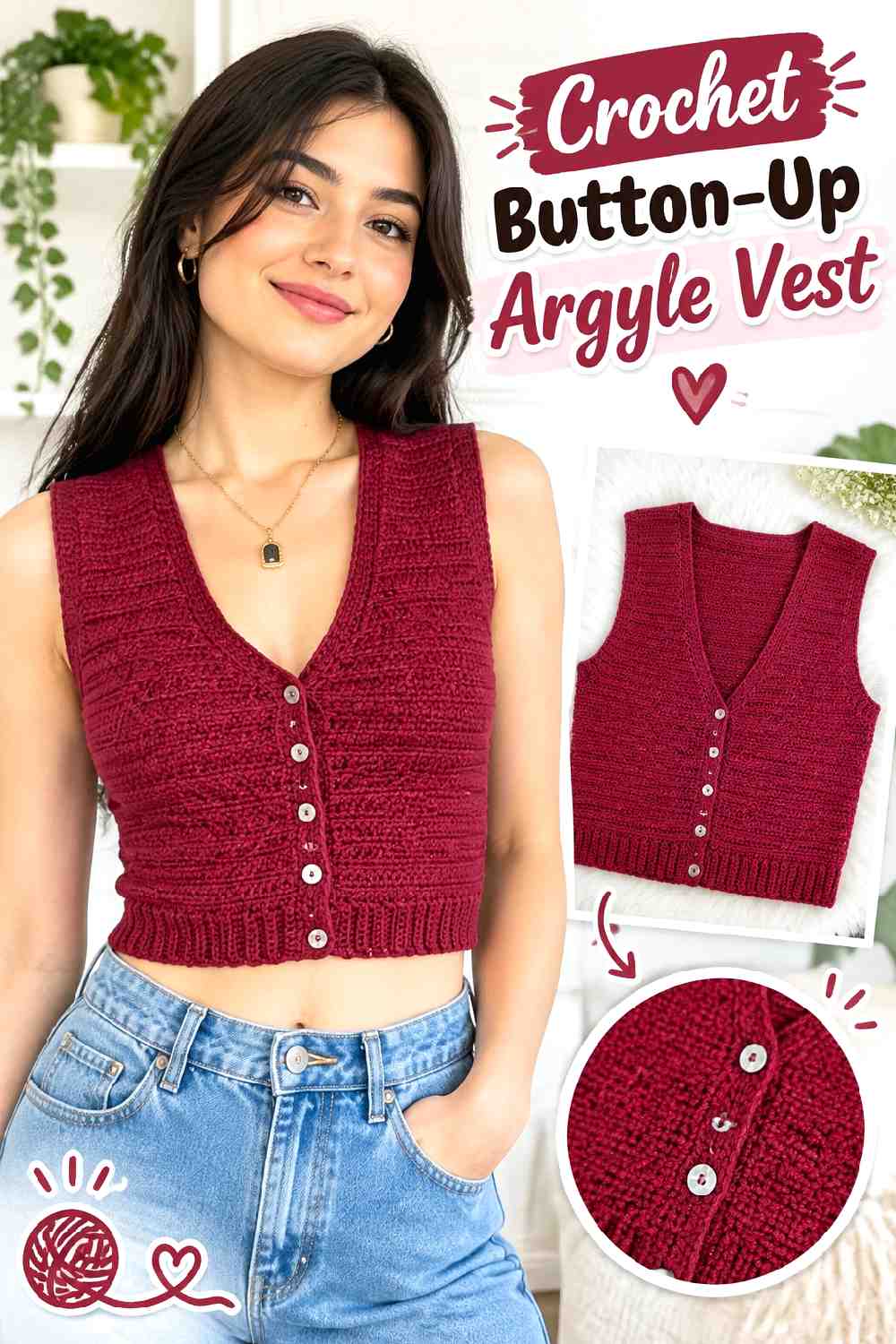
A button-front vest gives argyle two different identities: one when the garment is closed and another when the fronts separate. Granny Gaia’s made-to-measure V-neck button vest provides a useful construction reference for this type of silhouette.
This is one of the most versatile options for a polished fall wardrobe because it can function as a sleeveless cardigan or as a closed vest.
Decide Which View Matters Most
Mirrored half-diamonds can become a complete motif when the vest is buttoned, but they separate when it is worn open. Complete diamonds on each side behave more independently.
Plan around the way you expect to wear the garment most often.
Keep the Button Band Visually Quiet
Buttons, buttonholes, color changes, and diagonal lines all demand attention. A solid-color center band creates a useful buffer.
Position the strongest diamonds farther into the front panels so the functional edge remains clear.
Fit the Closure Before Finalizing Motif Spacing
A front that pulls when buttoned can distort geometric colorwork. Test the garment over the intended fall layer and confirm the fronts meet as expected before treating motif symmetry as finished.
The colorwork should accommodate the garment rather than conceal a fit problem.
Creator Credit: Granny Gaia
12. Crochet Tonal V Neck Argyle Layering Vest
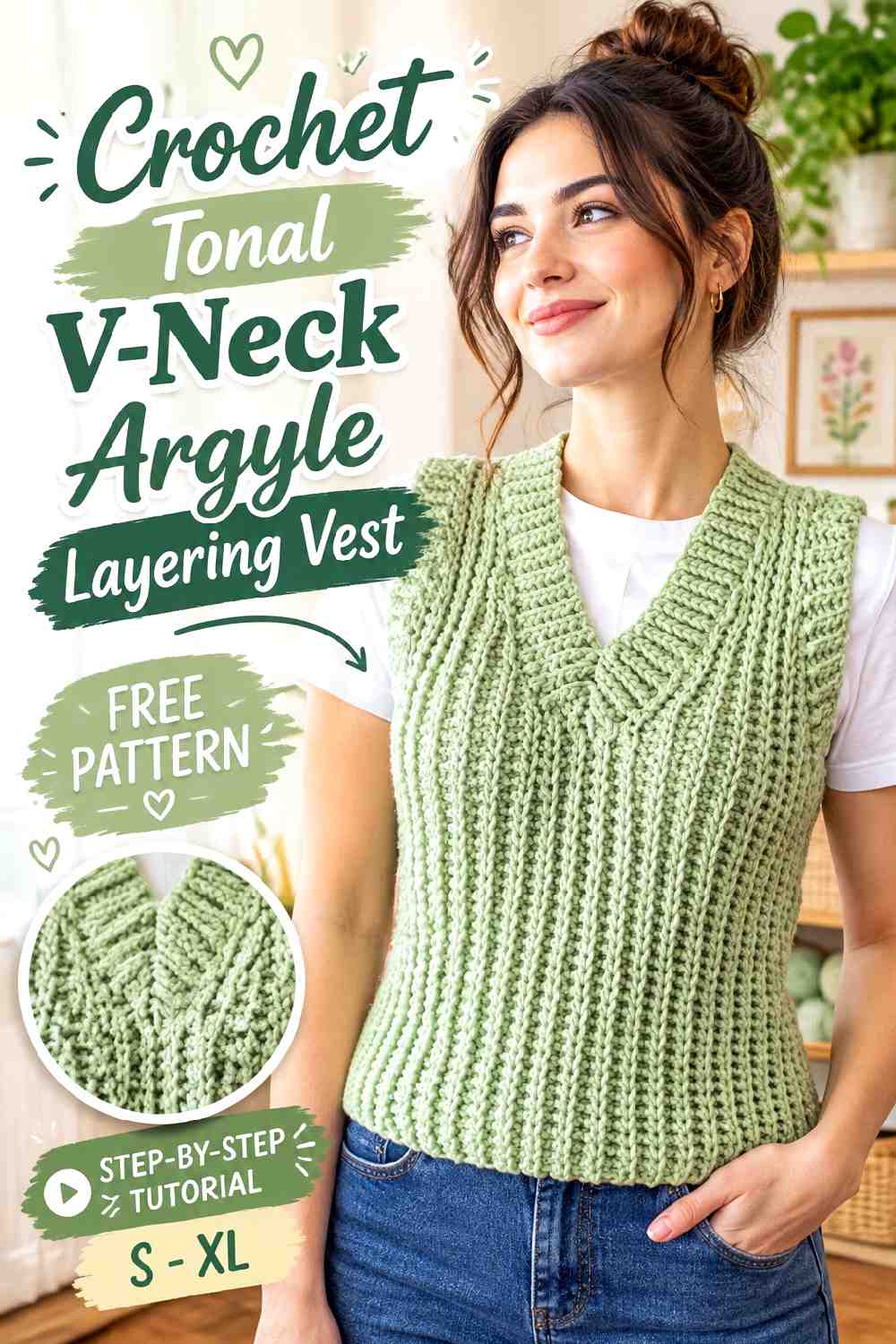
This option uses a straightforward V-neck vest as the foundation for a quieter argyle interpretation. The By StellaM tutorial supplies the garment construction, while the tonal motif would be planned independently.
Instead of cream, black, red, and other sharp traditional contrasts, consider adjacent shades such as chocolate and camel, charcoal and medium gray, or moss and olive.
Tonal Argyle Needs Value Separation
Two yarns can appear different in the skein but almost merge after crocheting. Place them together in daylight and check the contrast from several feet away.
The goal is subtle geometry, not a motif that disappears unintentionally.
Let Trim Create the Strongest Frame
If the diamonds are deliberately low contrast, a slightly deeper neckline or hem color can give the vest enough structure without introducing another busy graphic element.
Repeat one existing motif shade instead of adding a completely unrelated border color.
Check the V-Neck Over Your Preferred Shirt Collar
A polished layered outfit depends partly on how the two necklines interact. Test the vest against the type of button-down, mock neck, or crewneck you expect to wear.
A beautiful argyle layout will not compensate for an underlayer that bunches around the neckline or armholes.
Creator Credit: By StellaM
13. Crochet Preppy Striped Argyle Tank Vest
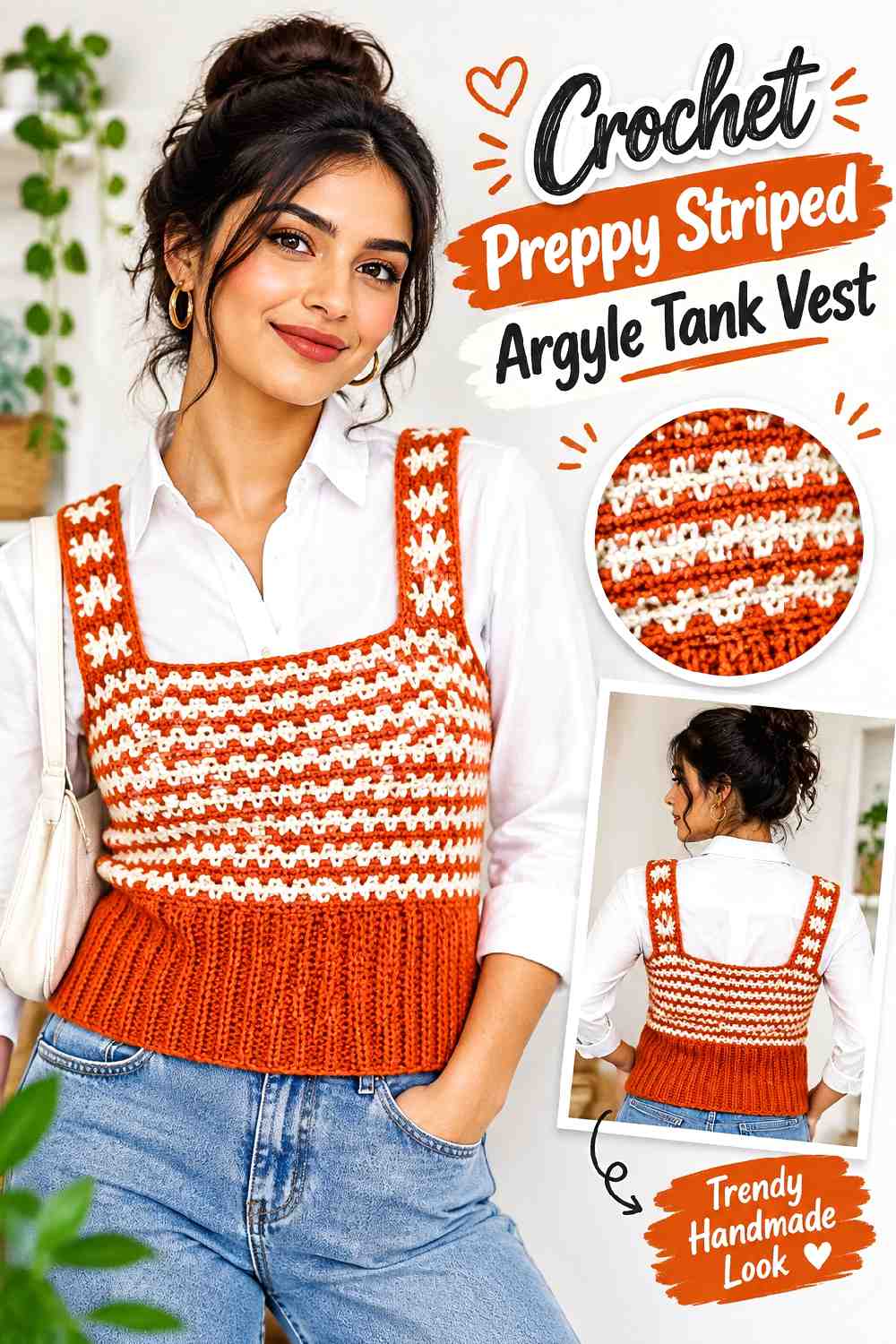
TL Yarn Crafts’ striped layering tank offers a lighter, sportier base for an argyle adaptation. Its existing preppy character makes it particularly interesting for a hybrid design where narrow stripes frame a limited diamond section instead of covering the entire vest in traditional argyle.
This can be a practical choice for early fall or indoor layering when a heavier sweater vest would feel excessive.
Choose Stripes or Diamonds as the Main Feature
Trying to give both equal prominence can make a small sleeveless garment look overly segmented.
One effective approach is to keep broad areas quiet, use a single argyle band as the focal point, and reserve stripes for trim or a secondary zone.
Keep the Upper Body Visually Clean
Tank-like constructions place more emphasis on the straps, neckline, and arm openings. Dense diamonds near all three can make the upper edge difficult to read.
Concentrating the argyle lower on the body can leave the shoulder area more refined.
Use Underlayers to Change the Season
A fitted tee produces a lighter transitional look, while a collared shirt makes the same vest read more traditionally preppy.
Choose your intended styling before deciding how much room the armholes and body need.
Creator Credit: TL Yarn Crafts
14. Crochet Scallop Edge Argyle Button Vest
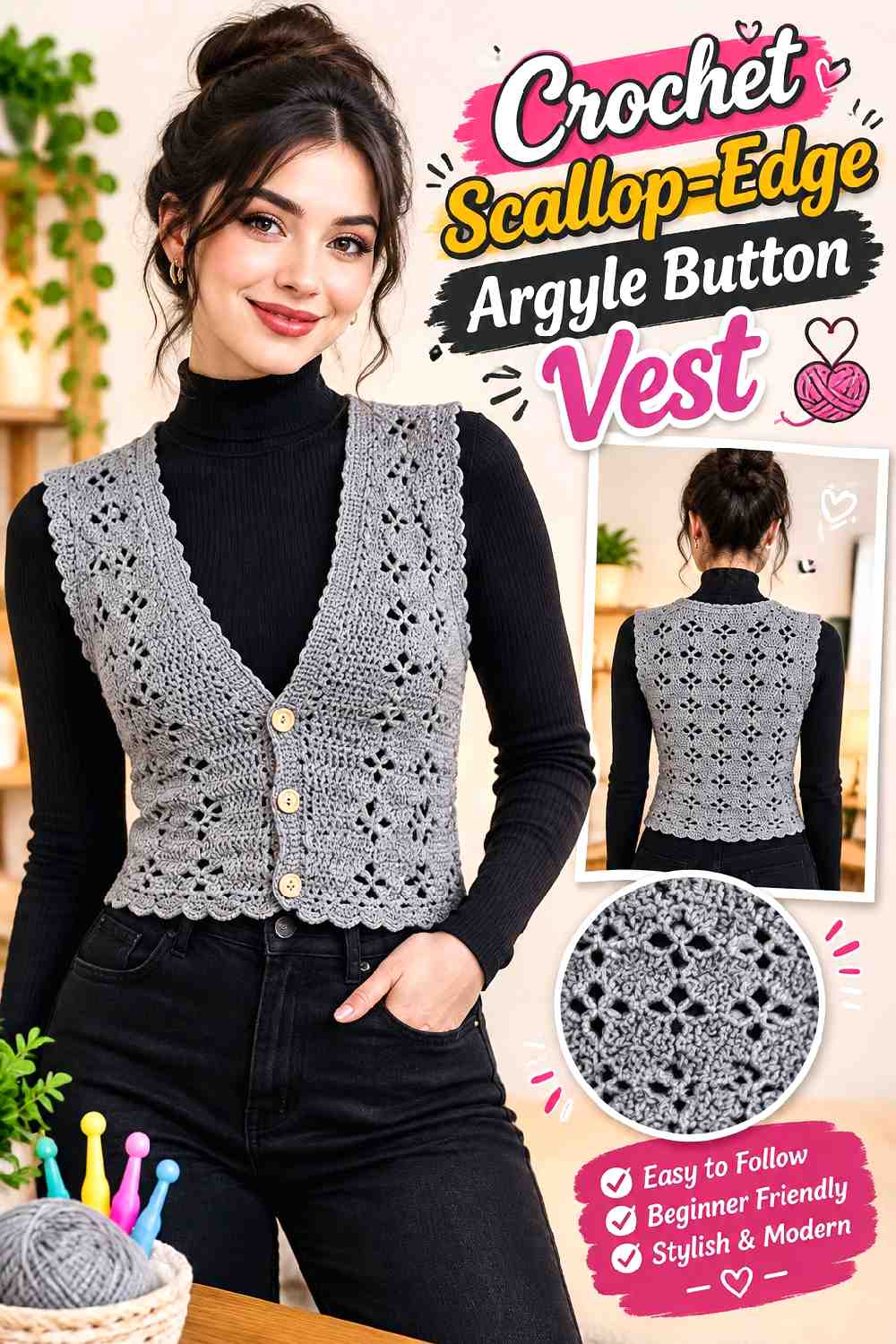
Scalloped edging softens the hard angles of argyle and creates one of the more decorative options in this collection. Ler Crochet’s button-up vest supplies the open-front silhouette and shaped edging, while an argyle arrangement can be developed independently within the main panels.
Use this direction when you want fall prep without an overly masculine or uniform-like finish.
Keep Argyle Away From the Decorative Perimeter
The scalloped border already attracts the eye to the garment outline. Dense diamonds touching that edge can create too many competing shapes.
A strip of solid background between the motif and scallops allows both details to remain readable.
Check Both Front Panels Before Adding Buttons
Geometric designs make unequal panel length or width more obvious. Lay the vest flat, align the front edges, and compare the motif positions before committing to final closure placement.
Buttons should finish a balanced front rather than force two uneven panels into alignment.
Limit the Palette When the Edge Is Detailed
Decorative borders, buttons, and argyle already supply several visual elements. Two main garment colors plus one restrained accent may produce a more polished result than a large multicolor palette.
If the scallops use a contrast shade, consider repeating that shade only sparingly within the diamonds.
Creator Credit: Ler Crochet
15. Crochet Textured Diamond Argyle Inspired Vest
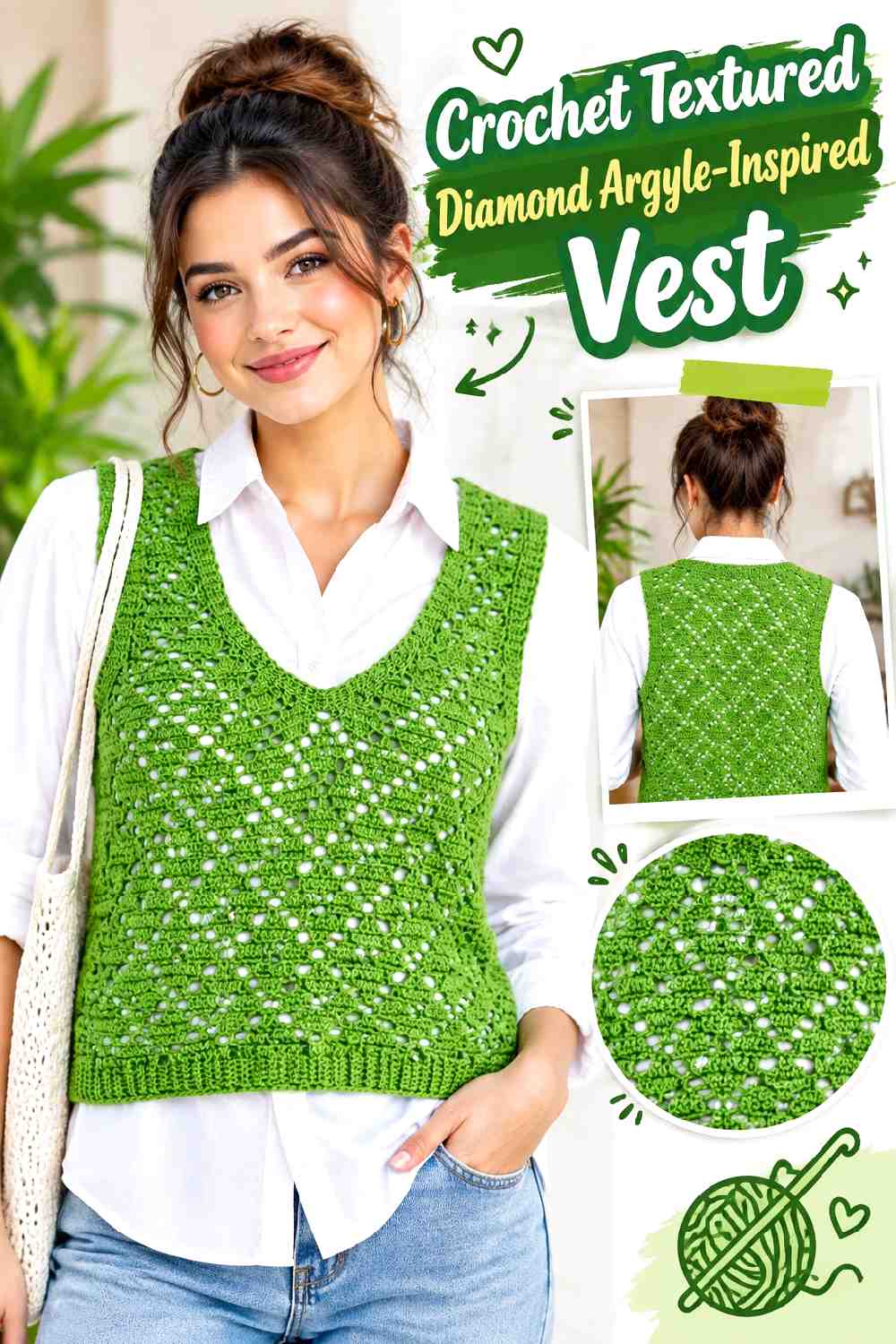
Not every polished argyle-inspired vest needs multicolor blocks. Crocheting Wit Me’s diamond-stitch vest provides a textured alternative where the geometry comes from the fabric itself.
This direction works well when you like the repeating rhythm of argyle but want fewer color changes, fewer loose ends, or a more monochromatic fall layer.
Let Texture Replace Some of the Colorwork
Repeated diamond texture can carry enough visual information that full traditional argyle is unnecessary. A solid espresso, charcoal, oatmeal, burgundy, or forest-colored vest can still deliver the geometric mood.
If you add a contrast accent, keep it limited so the raised or open diamond structure remains visible.
Check Drape Before Choosing a Long or Close Fit
Textured crochet can behave differently from smooth fabric. Make a meaningful sample and see how it hangs rather than assessing only its flat width.
If the stitch pattern creates a firmer fabric, extra body length or a very close fit may feel different from what you expect from a softer vest.
Use the Underlayer to Strengthen the Diamonds
Where the texture includes visible openings, the shirt underneath becomes part of the design. High contrast can make each diamond more pronounced, while similar colors create a quieter surface.
That gives you an easy way to move the same vest between bold and understated fall outfits without changing the crochet itself.
Creator Credit: Crocheting Wit Me
Which Crochet Argyle Vest Direction Should You Choose?
For the most recognizable traditional result, start with the classic V-neck or oversized diamond options because their source projects already revolve around diamond-based crochet. The clean V-neck and tonal V-neck versions are also useful when you want a conventional sweater-vest silhouette but prefer to develop your own motif treatment.
For a more modern look, the cropped, boxy, or minimal versions give large diamonds more breathing room. The crewneck and collared directions change the usual neckline relationship, while the hooded vest pushes argyle toward casual outerwear.
Button-front designs require the most careful center planning because the motif must still look intentional when the garment opens. The striped and scalloped versions introduce additional surface details, so they benefit from restrained argyle placement. If managing several colors is not appealing, the final textured diamond vest keeps the geometry while simplifying the palette.
Conclusion
A polished crochet argyle vest is less about using the maximum number of diamonds and more about controlling proportion. The neckline, motif scale, armholes, hem, closure, and intended underlayer all affect whether the pattern looks integrated with the garment or simply placed on top of it.
Choose the classic V-neck for traditional fall prep, a cropped or boxy shape for larger modern motifs, a collared or button-front vest for dressier layering, or a textured diamond design when you want geometric interest without extensive colorwork. Whichever direction you take, test the actual fabric and establish the fit before forcing a particular repeat into the available space.
Use each original tutorial for its exact construction, sizing, finishing, and creator-specific instructions, especially when adapting a non-argyle vest into a new geometric design.
Frequently Asked Questions
Can I add an argyle design to any crochet sweater vest?
Not automatically. Smooth, uninterrupted front panels are generally simpler to adapt than heavily textured or motif-based constructions. Neckline shaping, armholes, button bands, and stitch texture can all interfere with diamond placement. Make a representative swatch and compare its blocked dimensions with the usable front-panel space before committing to the layout.
Should crochet argyle continue onto the back of the vest?
It does not have to. A solid back can keep the garment visually quieter and reduce the amount of complex colorwork. Full front-and-back argyle makes a stronger statement but introduces additional alignment questions around the side seams. Another option is to keep the back solid while repeating one front color in the edging.
How can I tell whether my argyle diamonds are too large?
Compare both the width and height of a blocked motif with the usable garment area after neckline and armhole shaping are considered. A diamond that nearly touches both side seams or extends deeply into the neckline may be too large for a repeated layout. It could still work as one deliberately oversized statement motif.
What makes an argyle color palette look more polished for fall?
Controlled contrast usually helps. Instead of giving every shade equal visual weight, choose a clear background, one dominant diamond color, and one or two supporting shades. Cream with espresso, oatmeal with forest, camel with burgundy, charcoal with rust, and navy with soft gray are examples of combinations you can explore without implying that one specific palette is required.
Should I block my vest before adding surface argyle details?
If the argyle treatment is added to completed fabric rather than created as part of the main crochet, stabilizing the garment to its intended finished dimensions first can make placement easier. Follow the care instructions appropriate for the actual yarn. The goal is to avoid carefully positioning a surface design on fabric that will later change substantially in width or length.
Why does argyle sometimes look centered flat but crooked when worn?
A flat garment and a garment wrapped around the torso do not present the same visible area. Motifs close to the side seams can rotate partly out of view, and stretching across the chest can alter apparent spacing. Check key placement on the body or over a comparable garment before finalizing important front motifs.
Is a traditional V-neck always the best neckline for crochet argyle?
No. A V-neck reinforces the diagonal geometry and gives the most familiar preppy result, but a crewneck provides more uninterrupted motif space, a collar creates a dressier outline, and a button front allows separate designs on each side. Choose the neckline based on how you want to layer and where you want the strongest diamonds to sit.