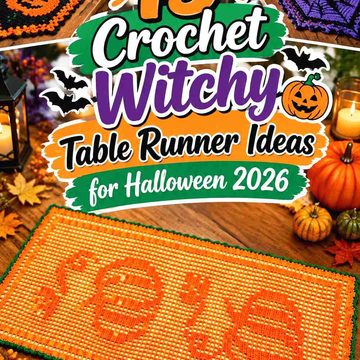
Pastel Halloween decor gives ghost pillows a completely different mood. Instead of relying on white, black, and orange, you can work with lavender, blush pink, mint, peach, powder blue, butter yellow, and soft cream while keeping the ghost shape recognizable.
The projects below are intentionally varied. Some sources teach actual pillows or pillow covers, while others teach stuffed ghosts, cuddlers, or plush characters whose construction can inspire a smaller cushion or carefully scaled pillow-style version. Those adaptations are identified rather than presented as exact pillow patterns.
Color is only one decision. A checkered pillow cover behaves differently from a fully stuffed ghost, and a flat cuddler needs different planning from a round blanket-yarn squish. Before choosing a project, consider how the piece will be displayed, how much structure you want, whether the cover needs to be removable, and how clearly your pastel shades contrast.
Quick List
- Crochet Lavender Checkered Ghost Pillow Cover
- Crochet Blush Sheet-Ghost Accent Pillow
- Crochet Mint Round Ghost Squish Pillow
- Crochet Peach Two-Sided Ghost Pillow
- Crochet Lilac No-Sew Ghost Pillow Stuffie
- Crochet Pastel Witch-Hat Jumbo Ghost Cushion
- Crochet Powder-Blue Flat Ghost Cuddler Pillow
- Crochet Butter-Yellow Blanket-Yarn Ghost Hug Pillow
- Crochet Pastel Ruffle-Edge Ghost Cushion
- Crochet Strawberry-Milk Witch Ghost Character Pillow
- Crochet Candy-Color Bobble-Arm Ghost Cushion
- Crochet Sky-Blue Hanging Ghost Mini Pillow
- Crochet Soft-Lilac Draped Sheet Ghost Cushion
- Crochet Pastel Character Ghost Plush Pillow
- Crochet Mint No-Sew Plush Ghost Cushion
- Crochet Blush-Cheek Pastel Ghost Soft Pillow
- Crochet Mini Pastel Ghost Pillow Trio
Choose the Pillow Shape Before Choosing Pastel Colors
A standard pillow cover is the easiest option to integrate with ordinary sofa cushions because its outer dimensions stay familiar. It can also be more convenient for seasonal storage when the insert is removable.
Shaped ghosts create a stronger Halloween silhouette but depend much more on stuffing and edge shaping. Overfilling can distort waves, ruffles, or arms, while too little filling can make a tall ghost slump.
Round squishes and blanket-yarn ghosts sit somewhere between a pillow and an amigurumi character. They work especially well on beds, deep chairs, reading corners, and other places where a three-dimensional object has room to project forward.
When a source tutorial is for a small softie rather than a full cushion, changing yarn weight is an adaptation, not a guaranteed sizing formula. Watch the proportions as the project grows instead of assuming thicker yarn alone will produce an ideal pillow.
Pastel Contrast Matters More Than the Number of Colors
Pastel Halloween does not require every color in the palette to appear on one pillow. In fact, two or three carefully separated colors are often easier to read.
A pale lavender ghost against a slightly darker lilac background may lose its outline from across the room. Lavender against cream, charcoal, dusty plum, or a noticeably lighter pink usually creates a clearer division.
The face needs the same consideration. Pure black creates crisp contrast, but charcoal, deep plum, muted brown, or dark mauve can soften the expression while remaining visible. Check the combination from normal viewing distance before permanently attaching or embroidering facial details.
Match Yarn Texture to the Detail You Want to See
Smooth yarn is useful when the project depends on checks, appliqués, color changes, or a clearly defined ghost outline. Stitch definition helps graphic details remain readable.
Chenille, blanket, and other plush yarns emphasize softness instead. They suit round ghosts and stuffed characters, although small embroidery can disappear into the pile. If the face or accessory is important, it may need to be visually simpler and larger.
For a stuffed pastel ghost, also watch the density of the fabric. Pale yarn can make gaps and visible filling more noticeable. Correct fabric that is too open before adding more stuffing; extra filling generally makes gaps more obvious rather than hiding them.
1. Crochet Lavender Checkered Ghost Pillow Cover
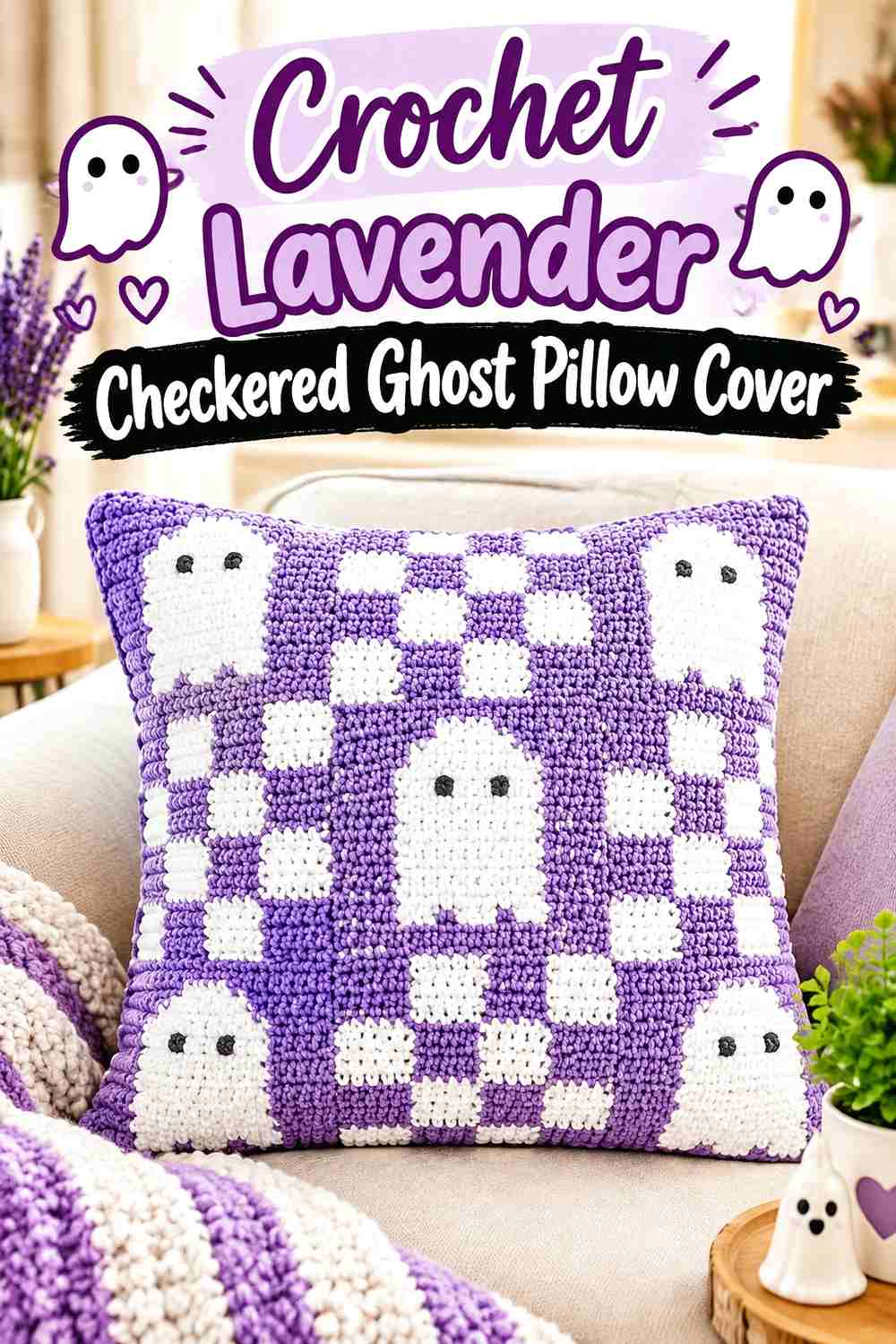
This version keeps a traditional square cushion shape but fills the surface with alternating ghost and checkered motifs. The source tutorial from The Turtle Trunk is an actual pillow-cover project made from joined squares, so it offers a useful route for anyone who wants Halloween imagery without a character-shaped cushion.
For a pastel interpretation, try lavender ghost squares against cream checks, or reverse the balance with pale ghosts against dusty purple. Because the design is modular, the color placement can look more graphic than a single large ghost silhouette.
Low-Contrast Pastels Can Hide the Ghost Grid
Check the value difference between your two main shades before making an entire set of motifs. Two pale colors that look different in separate skeins may blend once they alternate across a pillow.
Photographing a small sample in grayscale is one simple way to assess whether the ghost still separates clearly from its surroundings. If it disappears, deepen one shade or introduce a neutral border rather than relying on additional decorative details.
Matching Motif Dimensions Protects the Checkerboard
Joined-square construction makes uneven motif size visible quickly. Compare the finished dimensions of your ghost and checkered squares before permanent assembly.
If one motif repeatedly finishes larger, joining will not automatically correct the difference. The cushion may bow or pull once stretched around an insert. Work out the size issue at the motif stage so the final grid can sit evenly.
A Removable Insert Can Simplify Seasonal Storage
A square cover is useful if you already rotate pillow covers during the year. Instead of storing another fully stuffed Halloween cushion, the crochet shell can potentially share an insert with other seasonal decor, depending on how you finish the opening.
If easy removal matters, decide on that feature before final assembly rather than trying to retrofit an opening afterward.
Creator Credit: The Turtle Trunk
2. Crochet Blush Sheet-Ghost Accent Pillow
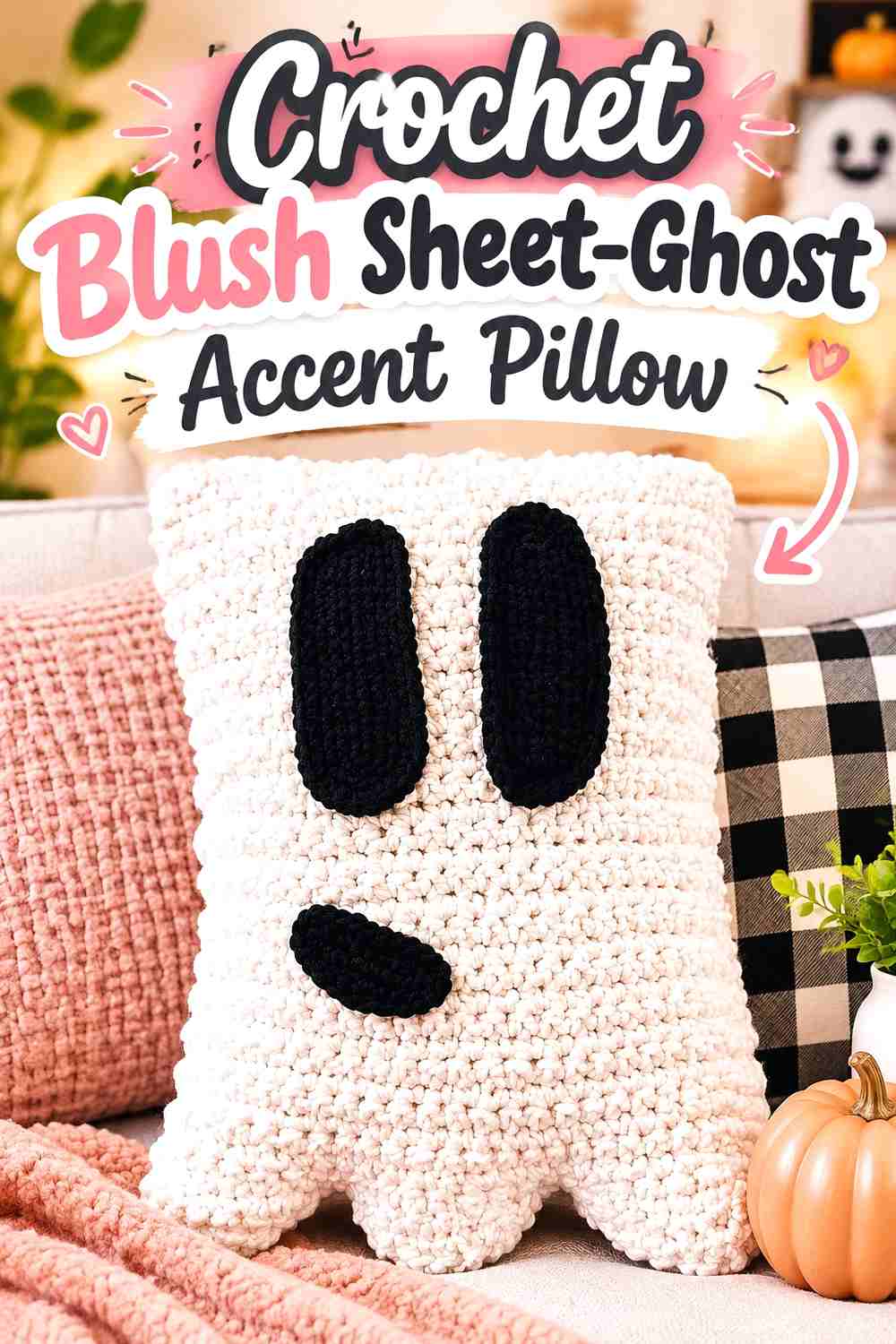
Crochet by Colleen’s source is a true ghost pillow tutorial presented as an Urban Outfitters-inspired project. Its softly defined sheet-ghost shape makes it especially suitable for a blush, cream, or very pale peach interpretation where texture can do more of the visual work.
Unlike a square cover, the outline itself supplies the Halloween identity. This makes it a good choice for a mostly pastel room where you do not want to introduce a busy printed background.
Soft Texture Changes How Crisp the Outline Looks
Fuzzy yarn can produce a cloudlike surface, but it also softens every curve along the edge. Before substituting a dramatically different yarn, make a small sample and see whether the fabric has enough body to maintain the sheet-like silhouette.
A color such as blush pink already reduces visual contrast compared with white and black, so keeping the outline recognizable becomes even more important.
Stuffing Has to Reach the Outer Curves
A shaped pillow can look uneven when filling stays concentrated in the center. Add filling gradually and keep checking the head, lower waves, and side transitions from the front.
Do not use overstuffing as a solution for a weak edge. Excess filling can stretch the crochet fabric and push delicate curves outward until the shape looks more like an oval than a ghost.
Creator Credit: Crochet by Colleen
3. Crochet Mint Round Ghost Squish Pillow
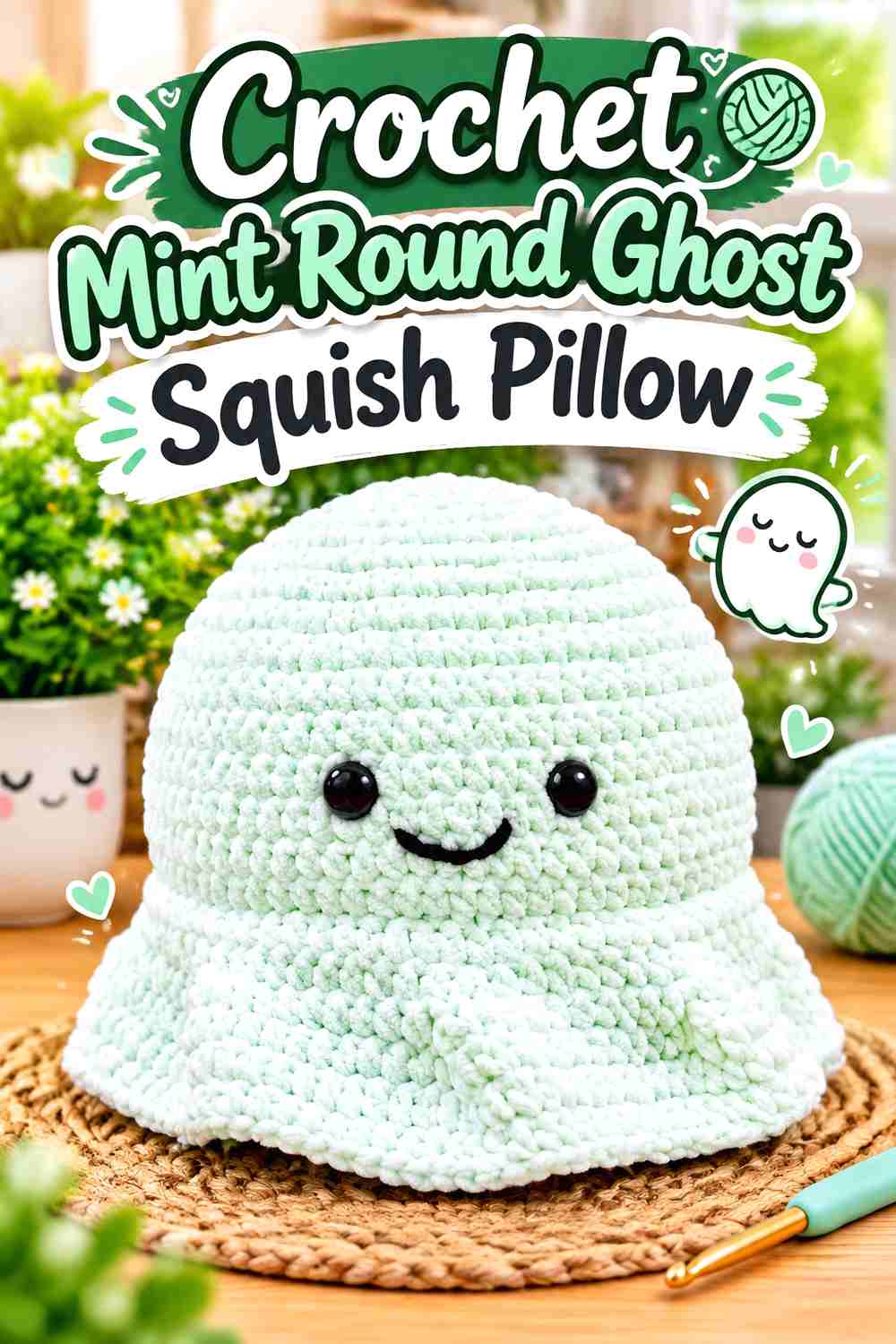
For a distinctly plump alternative, the Ghost Squish from Tamara Kelly – Moogly uses blanket yarn and is designed around a rounded stuffed form. The creator provides filling options that include a pillow ball as well as loose fiberfill, so the project sits naturally in the cushion-and-squish category.
Mint gives this shape a playful Halloween look without needing extra colorwork. A cream lower accent or deep teal embroidered face could preserve the soft palette while giving the rounded body enough contrast.
Rounded Cushions Need Space in Front of Other Pillows
A squish projects farther forward than a flat cover. On a bed it can work well at the front of a layered arrangement, while a narrow bench may feel crowded much sooner.
Think about depth as well as height and width before making multiple squishes. One full, rounded ghost can carry more visual weight than several flat accent pillows.
Facial Placement Changes on a Curved Surface
Features that seem evenly spaced while the work is flat can appear farther apart after the body becomes round.
Evaluate the face from the direction the pillow will normally be seen. If an eye is already beginning to wrap around the side, adjusting its placement before final finishing can make the expression look much more balanced.
Creator Credit: Tamara Kelly – Moogly
4. Crochet Peach Two-Sided Ghost Pillow
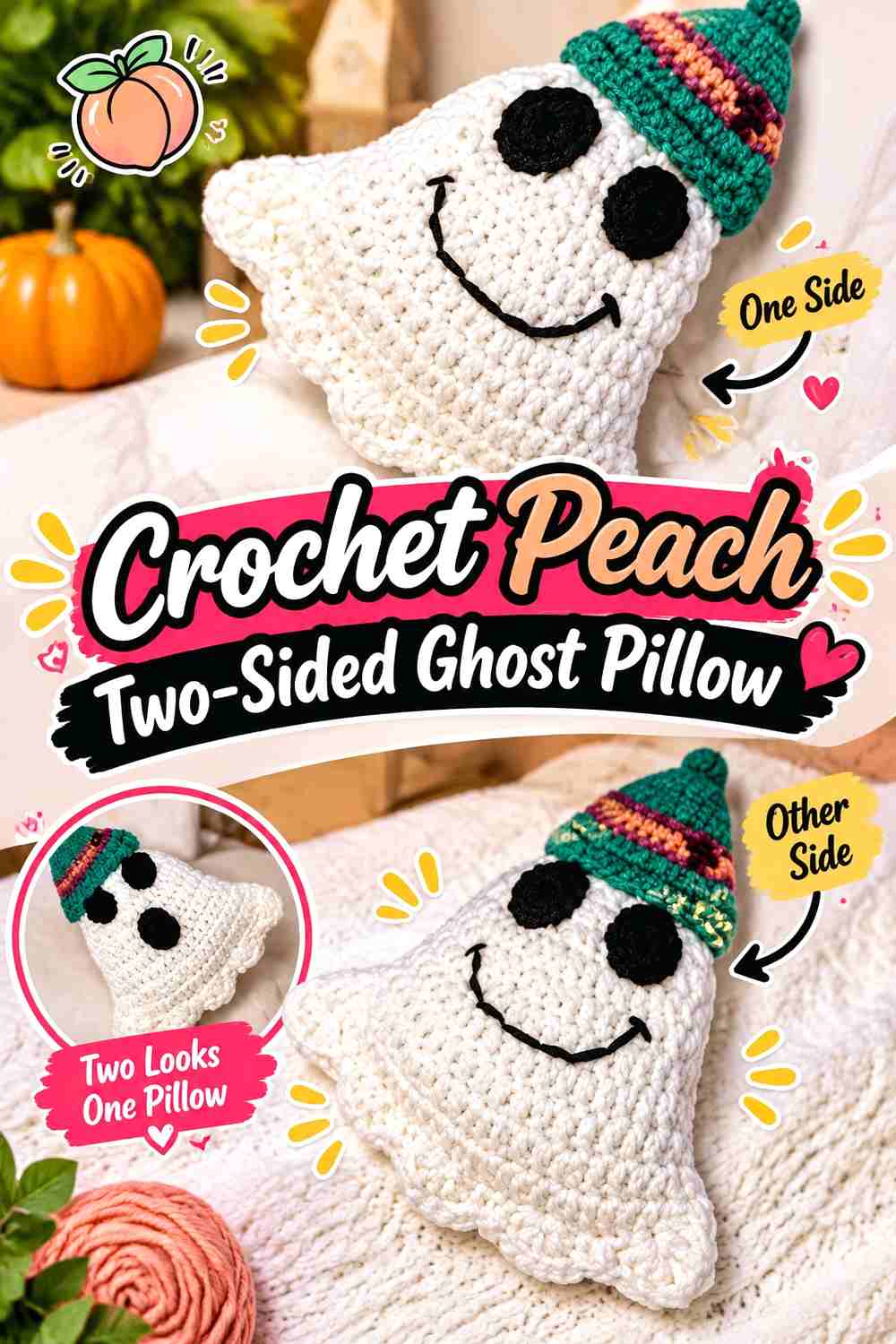
Sara Sach Crochet Designs demonstrates a shaped ghost pillow whose two sides can carry different expressions, including happy and spooky treatments. The creator also shows an optional witch-hat detail.
That makes the design useful for a reversible pastel concept. One peach side could have sleepy features while the other has a surprised Halloween face, giving you two display moods without changing the body construction.
Plan Both Faces as a Pair
Two expressions work better when they feel intentionally related rather than independently placed. Mark approximate eye and mouth positions before the pillow is completely closed and compare the sides.
Stuffing curves the surface, so a face positioned only while the panel is flat may shift visually once the ghost has volume.
Keep Dimensional Accessories Away From Resting Areas
A hat, bow, flower, or miniature pastel pumpkin can add personality, but consider how the pillow will be used. A stiff accessory may be perfectly acceptable on a display cushion yet uncomfortable on a pillow that will be hugged or leaned against.
For a cuddle-first version, flatter embroidered or crocheted surface details can preserve the colorful look with fewer pressure points.
Creator Credit: Sara Sach Crochet Designs
5. Crochet Lilac No-Sew Ghost Pillow Stuffie
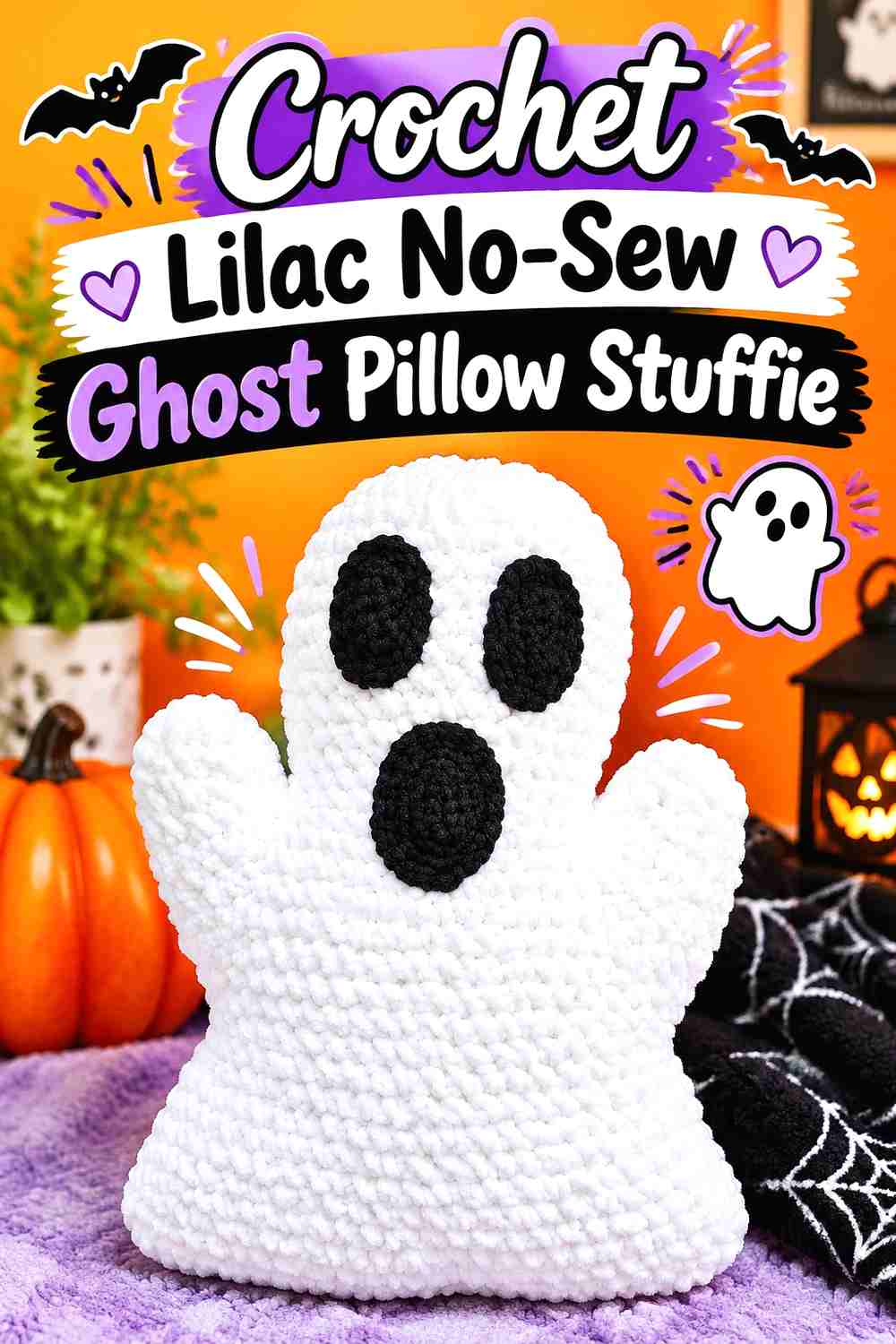
CreationsMisfit’s tutorial is specifically presented as a ghost pillow stuffie and uses super-bulky yarn with polyfill. The result is a thick stuffed character rather than a flat insert cover.
Lilac is a natural fit for this simple silhouette because the large body provides plenty of uninterrupted color. You could keep the face charcoal or deep plum and let the single pastel shade remain the main decorative feature.
No-Sew Construction Still Needs Careful Finishing
Avoiding separate body-panel sewing does not eliminate the need to inspect the final shape. Changes in tension around shaping areas can create visible bumps, especially in thick yarn.
Rotate the ghost as it fills and check the side profile as well as the front. A smooth outer shape matters more on a simple one-color pillow because there are few other details to distract from unevenness.
Super-Bulky Substitutions Can Behave Differently
Two yarns labeled in the same broad weight category can still differ in loft, elasticity, pile, and firmness.
If your lilac yarn produces a noticeably different fabric from the tutorial, prioritize fabric density and the developing silhouette instead of assuming identical dimensions. A pastel ghost only looks soft and polished when the filling remains contained cleanly.
Creator Credit: CreationsMisfit
6. Crochet Pastel Witch-Hat Jumbo Ghost Cushion
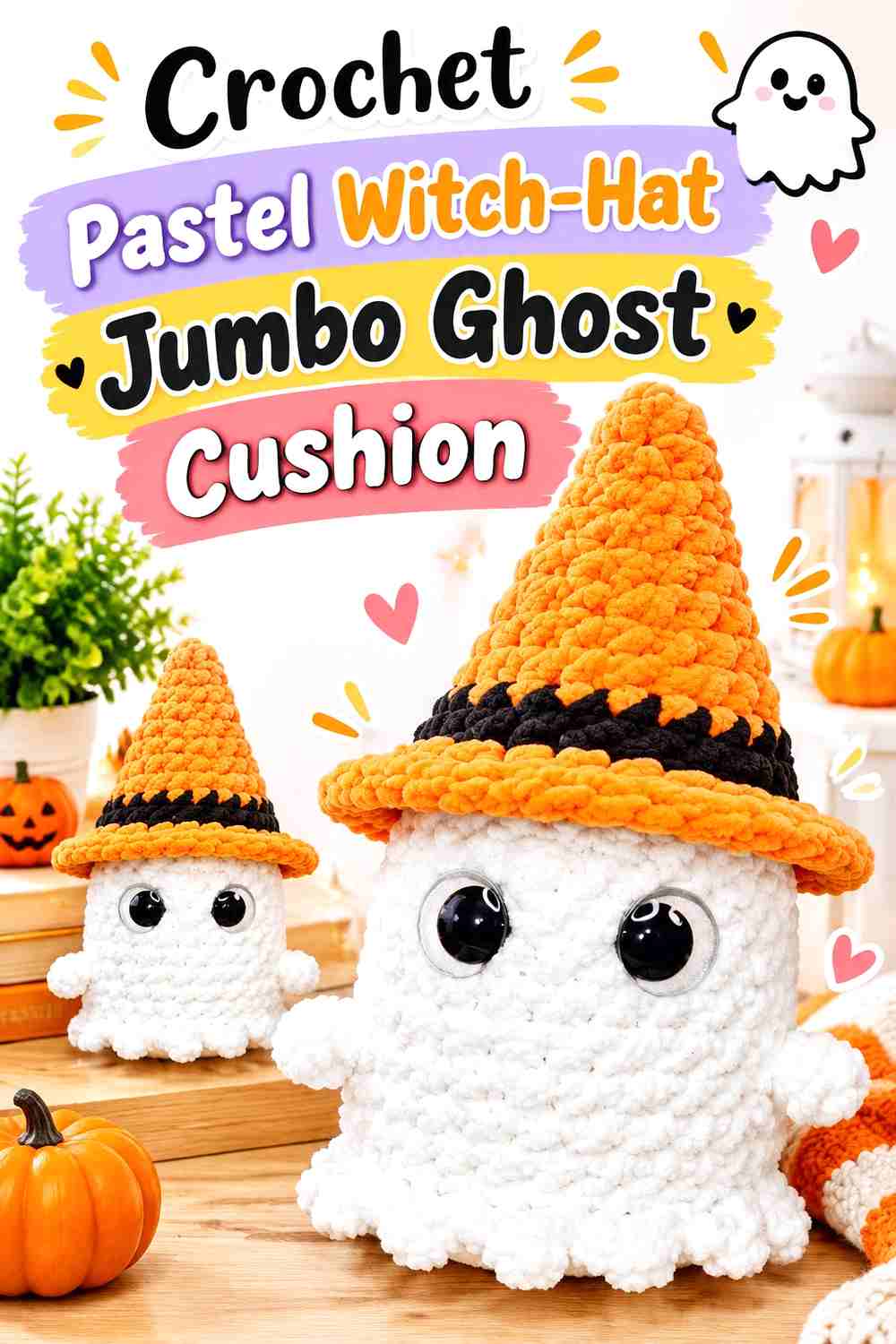
The Loopy Lamb demonstrates no-sew ghosts at more than one yarn scale, including a jumbo blanket-yarn version. The pointed witch hat adds a second strong shape and creates an obvious place to introduce an extra pastel color.
Consider a cream ghost with a lavender hat, a mint ghost with a dusty-pink hat, or a pale peach body with plum trim. Because the hat already creates strong contrast in shape, you do not need a complicated multicolor body.
The Hat Changes Where the Cushion Can Sit
A pointed hat adds height but can fold behind the ghost on a deep sofa. A bed, low chair, bench, or open display basket gives the top more space to remain visible.
Decide whether the hat is primarily decorative or whether the cushion needs to remain comfortable for hugging. That choice can influence how firm or dimensional you want the accessory to feel.
Enlarging One Part Can Distort the Character
If you adapt the scale, treat the ghost, hat, facial features, and arms as a visual system. A dramatically enlarged body paired with a relatively small hat can look accidental rather than whimsical.
Compare proportions as the parts develop instead of waiting until final assembly to discover that one feature dominates the rest.
Creator Credit: The Loopy Lamb
7. Crochet Powder-Blue Flat Ghost Cuddler Pillow
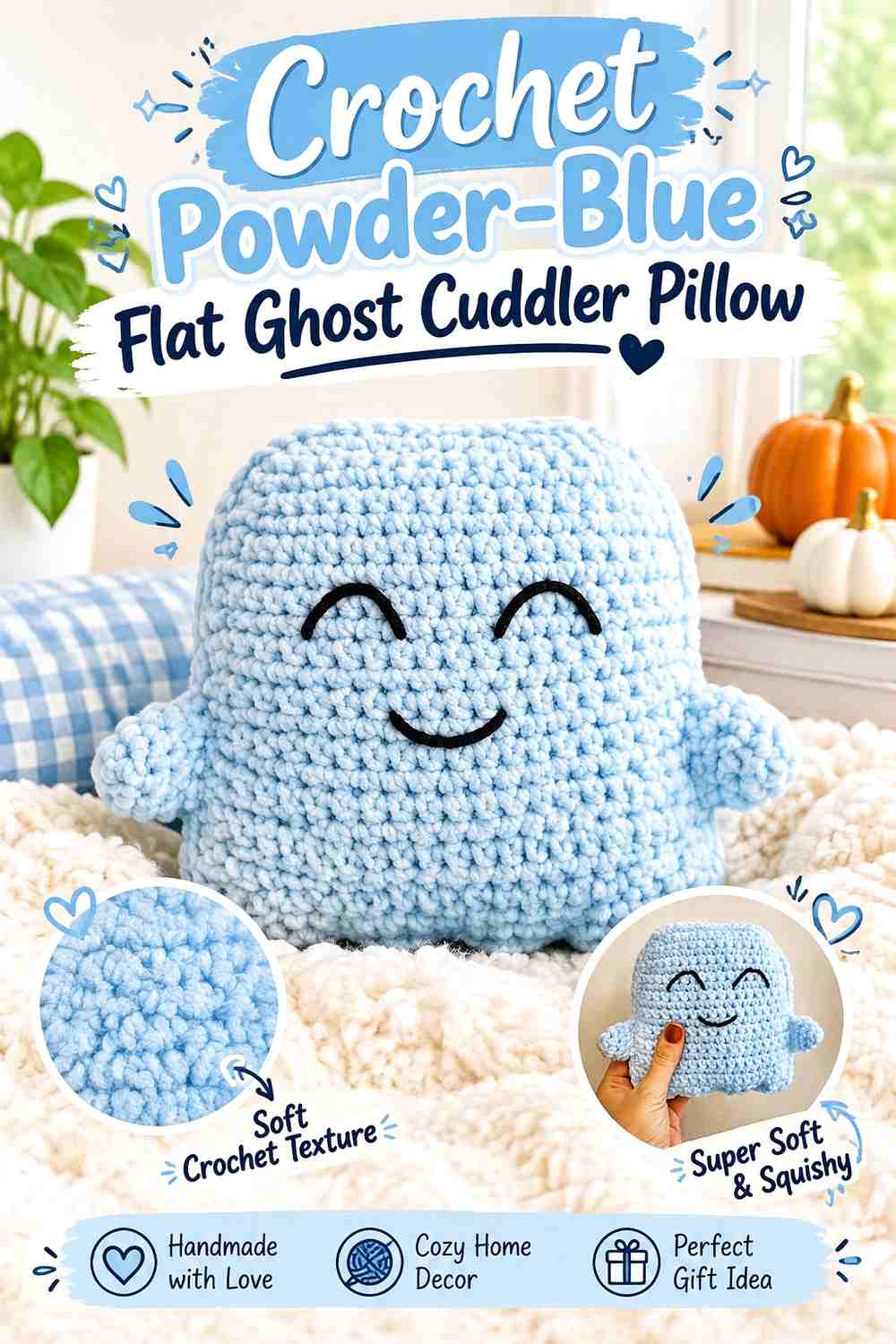
Heather Corinne Crochets teaches a ghost cuddler made with separate front and back body sections, a stitched face, stuffing, and small arms. The original project is a cuddler rather than a conventional sofa pillow, but its broad flat construction makes it a useful reference for a slim pillow-style ghost.
Powder blue emphasizes the calm, bedtime-friendly side of pastel Halloween. This format can also layer in front of larger square cushions without projecting as far forward as a round squish.
Flat Construction Makes the Outline Easy to Inspect
Before stuffing, place the two body pieces together and compare their edges. The head, sides, and lower ghost points should align without one panel stretching to meet the other.
This becomes even more important if you adapt the scale upward. Small discrepancies that look minor on a cuddler can become much more visible on a larger decorative cushion.
Arms Affect the Width More Than the Depth
Projecting arms give the front silhouette personality without creating the volume of a round body.
Measure the display area using the complete width rather than the central body alone. On a narrow chair or shelf arrangement, arms that are constantly tucked behind the ghost lose much of their intended visual effect.
Creator Credit: Heather Corinne Crochets
8. Crochet Butter-Yellow Blanket-Yarn Ghost Hug Pillow
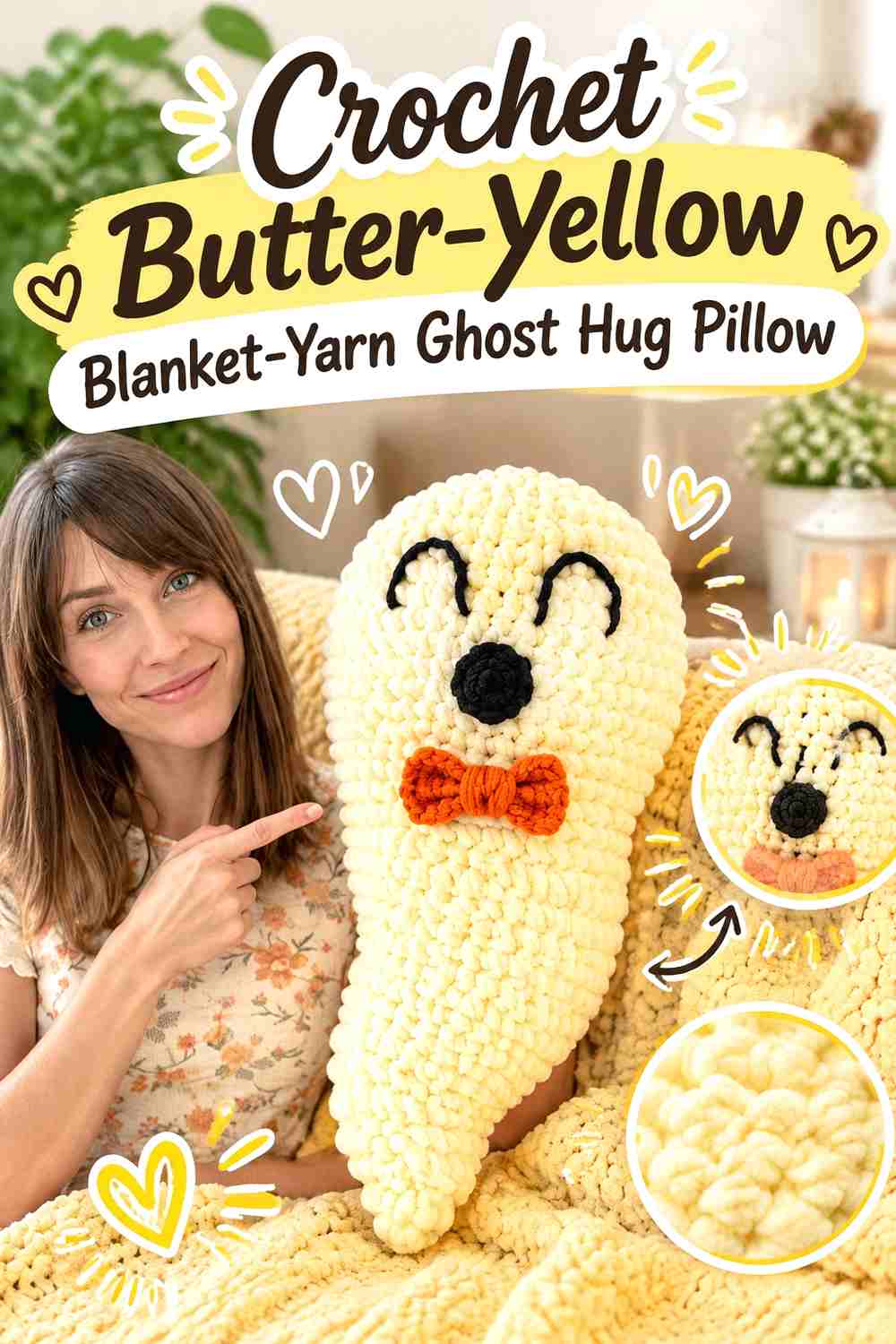
Evelyn And Peter Crochet’s ghost tutorial uses super-bulky blanket yarn and creates a notably large stuffed ghost form, making it one of the more natural amigurumi-to-hug-pillow sources in this collection. The original creator also emphasizes the ability to customize expressions.
A pale butter yellow body can pair well with cream, dusty orange, muted brown, or lavender details. It is colorful enough to stand apart from a traditional ghost while remaining soft beside neutral bedding.
Large Plush Fabric Magnifies Uneven Tension
With blanket yarn, each stitch occupies more visual space. Loose spots around shaping can therefore become obvious once light-colored stuffing presses against the fabric.
Inspect the work periodically rather than waiting until the body is nearly finished. If gaps are appearing consistently, address the fabric before adding more filling.
Expression Can Supply Variety Without Changing the Body
A simple ghost silhouette makes a good foundation for a coordinated set. Instead of redesigning the shape each time, vary the face, bow, or small surface accent.
This works especially well with a pastel palette because repeated construction creates cohesion while butter yellow, lavender, mint, and peach versions can still feel distinct.
Creator Credit: Evelyn And Peter Crochet
9. Crochet Pastel Ruffle-Edge Ghost Cushion
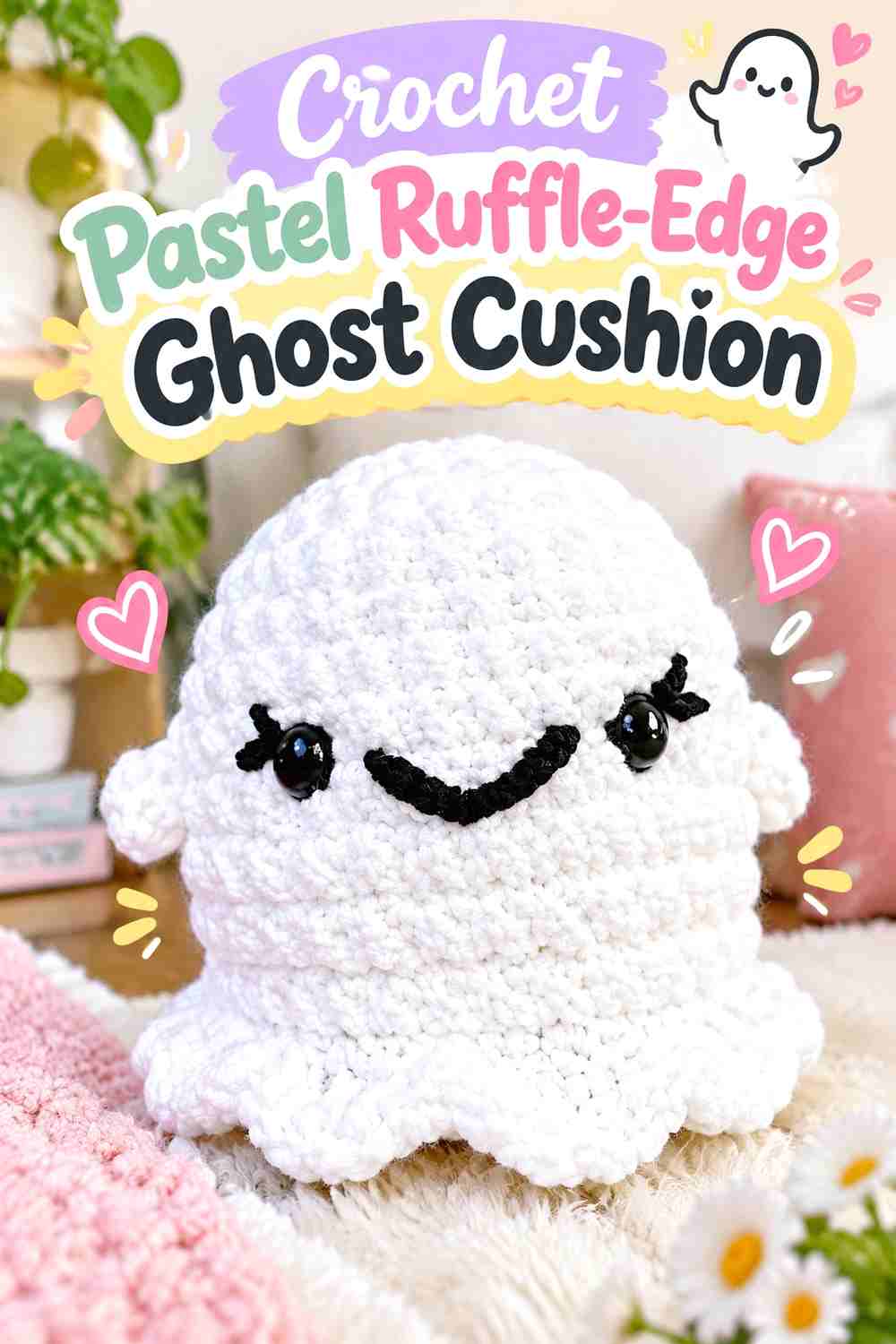
Knot Bad’s chunky ghost uses blanket yarn and finishes with a pronounced wavy or ruffled lower edge. That makes the bottom silhouette, rather than an accessory, the main decorative feature.
A pastel version can lean into that movement with a light aqua, pale lilac, or peach body. Keep the face relatively restrained so the lower edge stays visually important.
Do Not Pack Filling Into the Decorative Ruffle
The body needs enough filling to hold its rounded form, but the lower edge needs room to remain visible.
Pushing stuffing too far into the decorative portion can spread the waves outward or turn a flexible ruffle into a stiff skirt. Check the base repeatedly while filling the main body.
Give the Lower Edge Space in the Display
A ruffle loses much of its impact when buried inside a deep basket or pressed between other cushions.
Place this ghost toward the front of a pillow arrangement or on an open chair where the bottom can be seen. If neighboring pieces overlap the entire edge, a simpler ghost shape may be a better use of the space.
Creator Credit: Knot Bad
10. Crochet Strawberry-Milk Witch Ghost Character Pillow
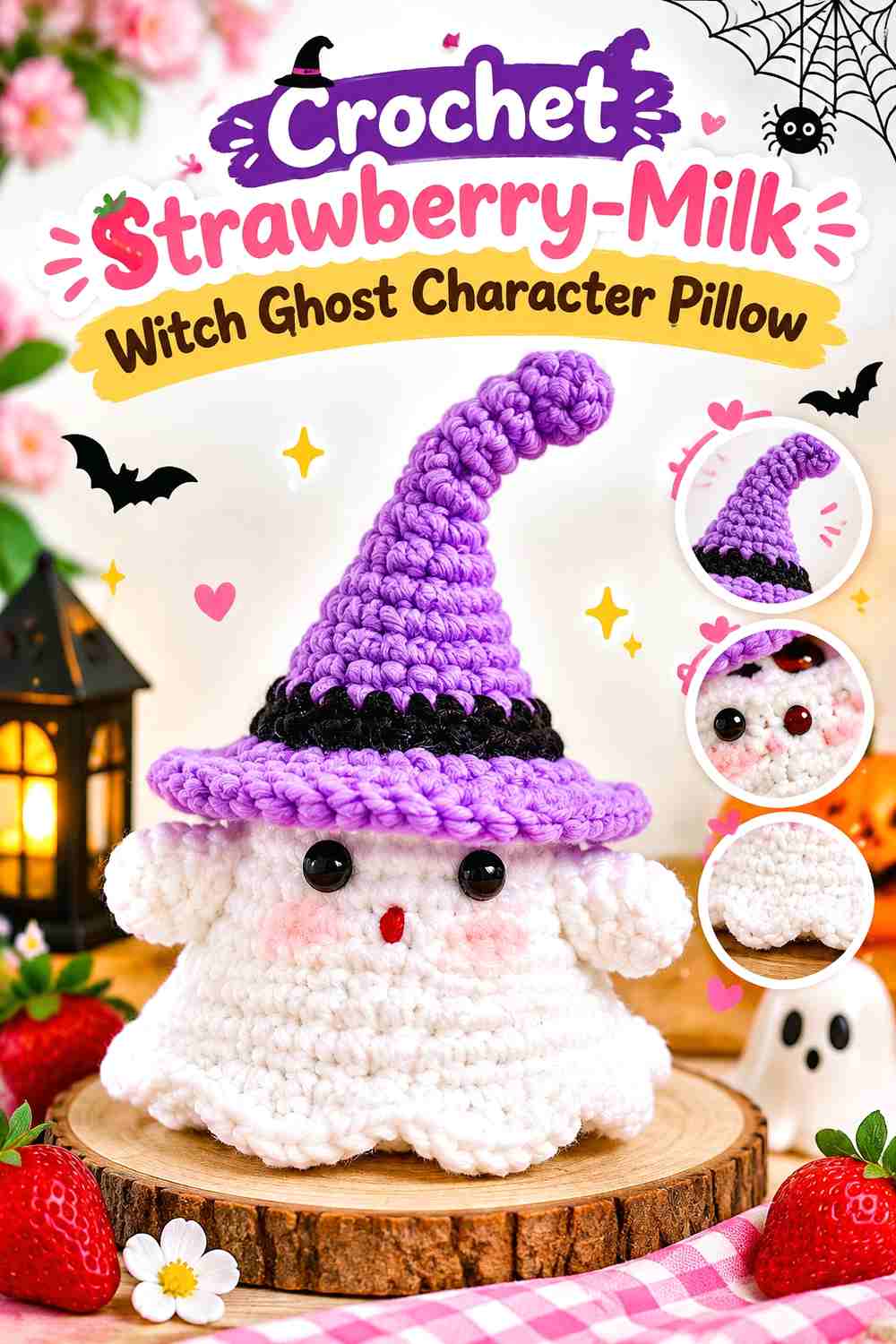
Betty’s.Crochi teaches a ghost character with separate arms, a witch hat, and final assembly. The original uses a much smaller amigurumi scale than a furniture cushion, so this is character-pillow inspiration rather than an exact throw-pillow tutorial.
For a strawberry-milk palette, imagine a very pale pink ghost with a muted purple or cream witch hat. The separate hat gives you a clean place for contrast without adding stripes or complicated body colorwork.
Extra Parts Increase Alignment Decisions
Once a ghost has arms and a hat, face placement is no longer the only visual checkpoint. The hat should sit intentionally in relation to the eyes, while the arms need to look balanced from the front.
Temporarily position the accessory pieces before permanent attachment. This is particularly helpful when changing the scale because small proportional differences become much more noticeable.
Scale the Function, Not Every Detail
A feature that looks charming on a small amigurumi can become cumbersome on a pillow. An oversized brim, long arm, or stiff point may interfere with comfortable use even when it follows the original proportions.
When adapting, decide which details are essential to the witch-ghost identity and simplify anything that competes with the cushion’s intended function.
Creator Credit: Betty’s.Crochi
11. Crochet Candy-Color Bobble-Arm Ghost Cushion
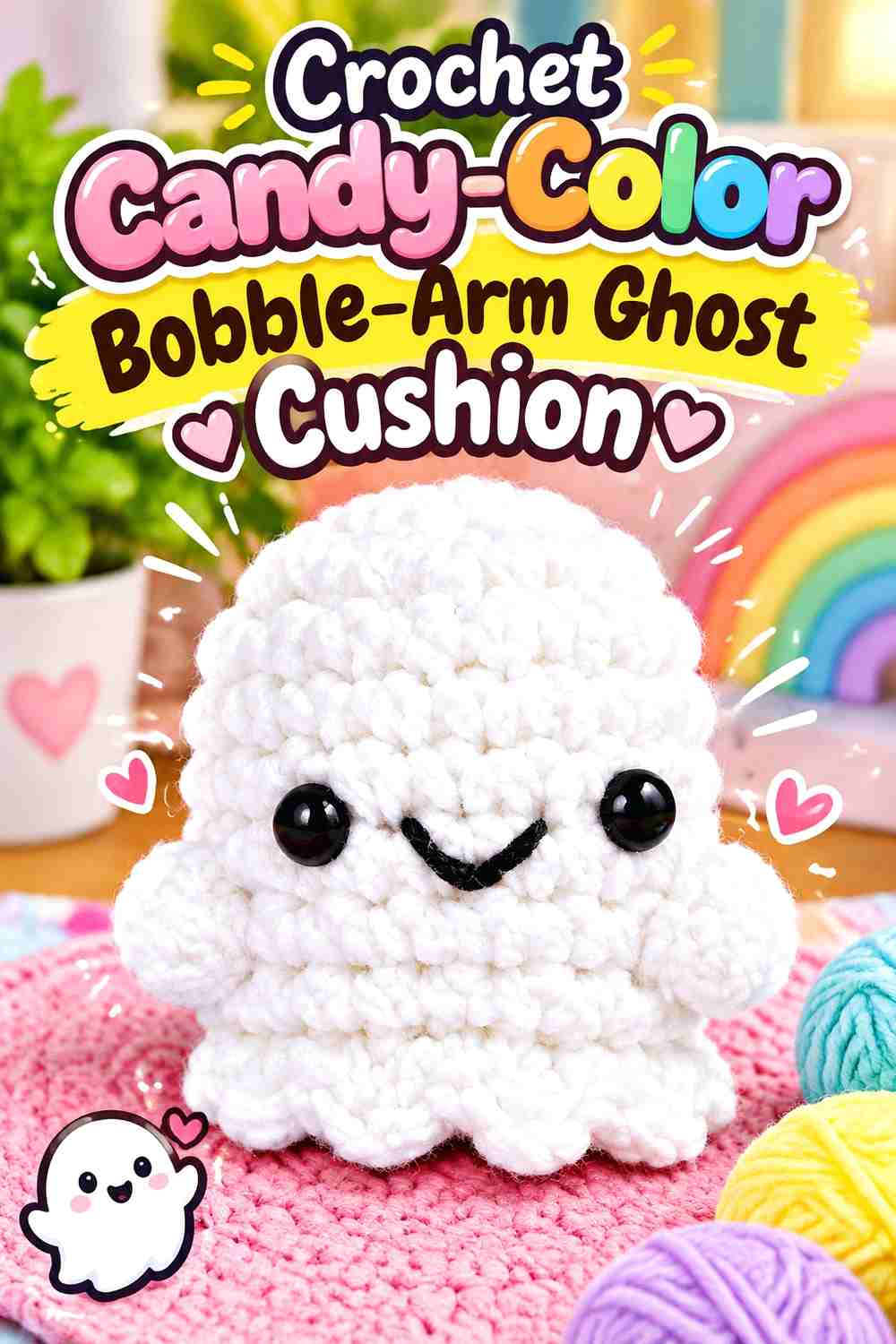
Club Crochet’s classic ghost tutorial builds small arms directly into the body with bobble-style shaping rather than depending on separately sewn limbs. The source is a small amigurumi project, so a cushion-size version would be an adaptation.
The uncomplicated shape makes it especially useful for color experiments. Try one ghost in pale coral, another in mint, and another in lavender while keeping a repeated dark face to tie the collection together.
Integrated Arms Reduce Loose Components
For frequently handled soft decor, forming character details as part of the body can reduce the number of pieces that need separate positioning and attachment.
If you change to much thicker yarn, inspect how far the arms project. A subtle bobble at small scale can become disproportionately prominent on a large plush surface.
Let Color and Expression Create the Collection
You do not need seventeen structural variations to make a group of ghosts look individual. Repeating one clean shape while altering color and facial expression can create a more cohesive pillow arrangement.
Keep at least one feature constant—such as face color, yarn texture, or approximate scale—so the set reads as a deliberate pastel collection rather than unrelated softies.
Creator Credit: Club Crochet
12. Crochet Sky-Blue Hanging Ghost Mini Pillow
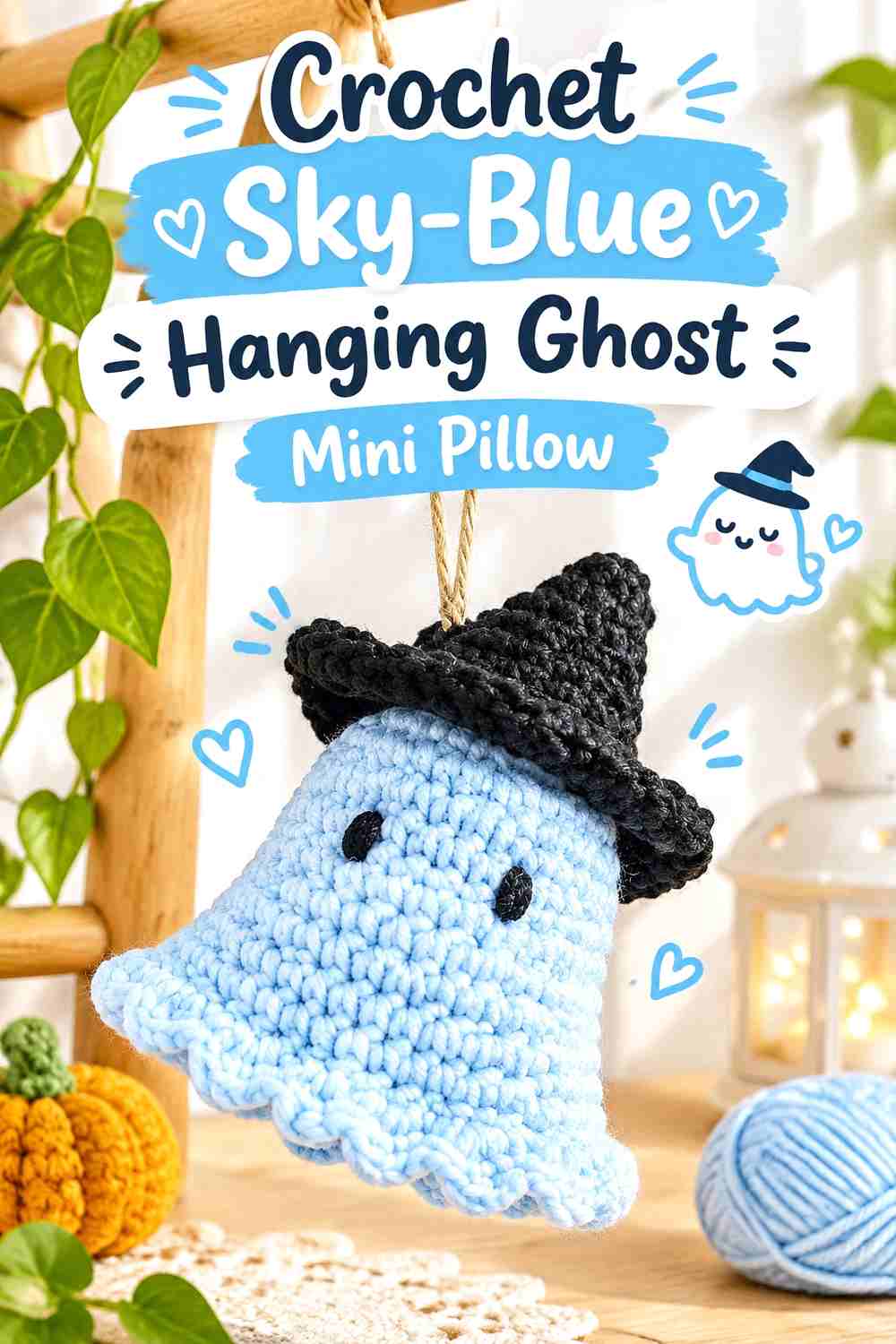
Ichigocrochet’s earlier Halloween ghost tutorial belongs to the small amigurumi category, and the creator later referenced that ghost tutorial again in a Halloween video collection. The little ghost format lends itself to hanging seasonal decor rather than a full sofa pillow.
A sky-blue version can function as a small stuffed accent suspended from a decorative indoor branch, hook, or lightweight seasonal arrangement. Think of it as a miniature pillow-shaped ghost rather than scaling it automatically into a heavy hanging cushion.
Hanging Adds a Different Structural Requirement
A loop suitable for a small amigurumi should not automatically be treated as strong enough for an enlarged, heavily stuffed version.
If you want a substantially larger cushion, use it as seated decor unless you independently plan a hanging attachment appropriate for the finished weight. The source’s small decorative scale is the safer reference point.
Inspect the Ghost Vertically Before Finishing
A hanging project is usually viewed while gravity pulls directly downward. Hold it in that orientation before finalizing the face and filling.
A lower edge that looks centered on a table can twist slightly once suspended. The same is true of the face if filling is uneven from side to side.
Creator Credit: Ichigocrochet
13. Crochet Soft-Lilac Draped Sheet Ghost Cushion
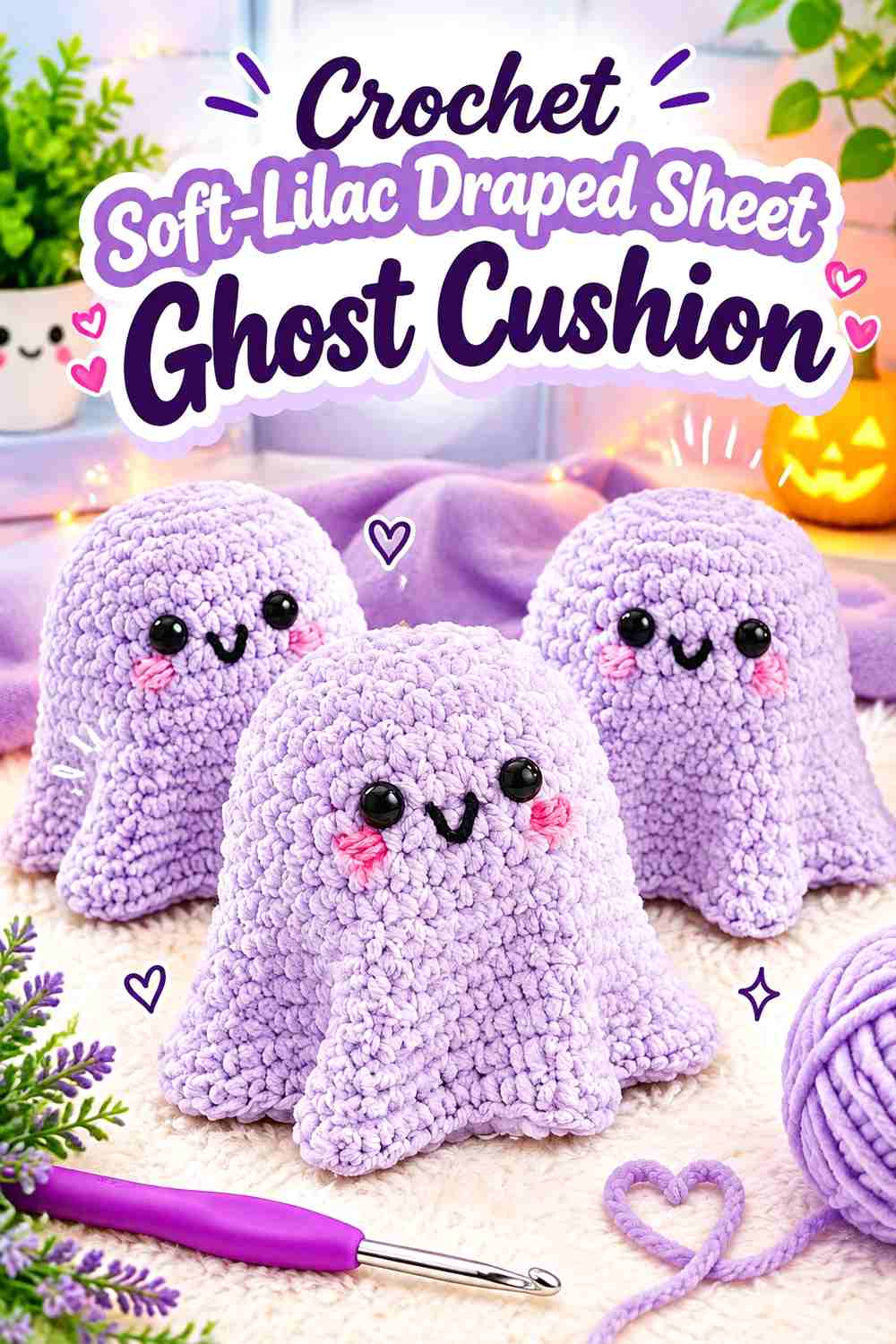
Hooked by Robin’s ghost interprets the familiar “figure under a sheet” shape more literally. The creator describes a freestanding ghost with a posable sheet, making the outer drape the distinguishing feature rather than a simple cylindrical body.
Soft lilac is a useful color for this design because shadows in the folds can make the surface look more dimensional. A larger cushion interpretation would be an adaptation, so preserve the sheet effect rather than concentrating only on overall size.
Fabric Drape Is More Important Than Maximum Firmness
A sheet-inspired ghost needs a balance between structure and movement. Fabric that is too rigid can lose the draped impression, while extremely limp fabric may collapse into an indistinct shape.
If you change yarn, evaluate a small sample for flexibility before committing to a much larger version.
A Soft Face Suits the Draped Surface
The sheet construction already provides plenty of three-dimensional interest. Embroidered eyes, mouth, and cheeks can keep the front flexible while still giving the ghost personality.
For a larger cushion intended for hugging, soft facial treatment is also more comfortable than placing rigid components in the main contact area.
Creator Credit: Hooked by Robin
14. Crochet Pastel Character Ghost Plush Pillow
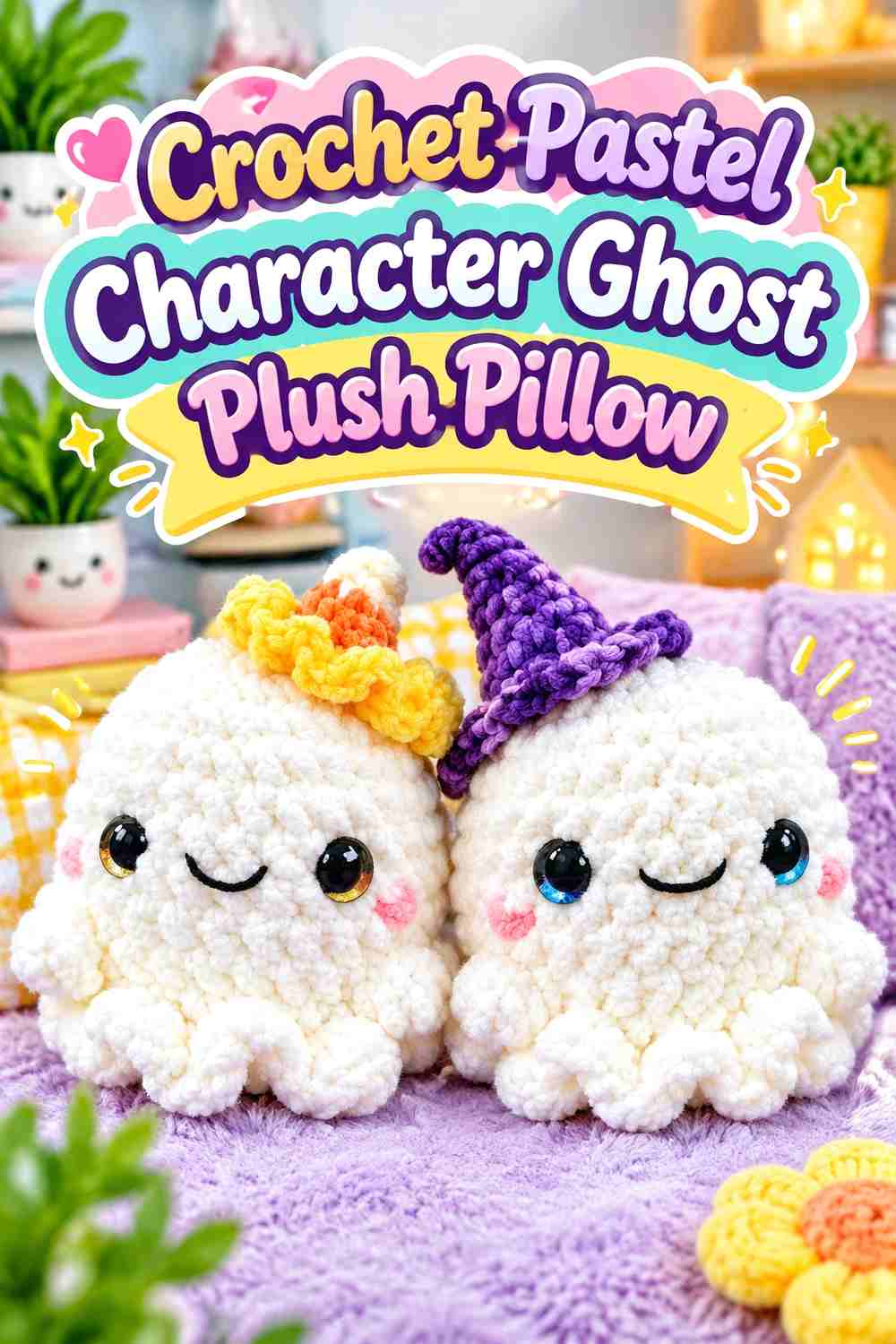
Annie Carraway Art’s ghost tutorial uses blanket yarn and comes from a broader ghost-plushie concept with many character variations. The source is plush-focused rather than a traditional pillow-cover tutorial, which makes it most useful for a soft character cushion or bed accent.
This is a good direction when one plain pastel ghost is not enough. A coordinated group could include a lavender witchy ghost, mint mushroom-inspired ghost, peach pumpkin-accent ghost, and cream classic ghost while keeping the same underlying plush texture.
Too Many Accessories Can Weaken a Pastel Palette
Pastel character decor can become visually crowded quickly because each accessory introduces another shape and often another color.
Choose one dominant pastel, one supporting pastel, and a dark facial accent before adding character pieces. Limiting the palette lets the accessory identify the character without overwhelming the ghost body.
Keep Multiple Plushies at a Deliberate Scale
If several ghosts will share a bed or bench, decide whether they should match in size or form an intentional graduated arrangement.
Using a consistent yarn family can help varied characters feel connected. Random changes in yarn thickness, firmness, and overall proportion may make the collection look less unified even when every piece uses pastel colors.
Creator Credit: Annie Carraway Art
15. Crochet Mint No-Sew Plush Ghost Cushion
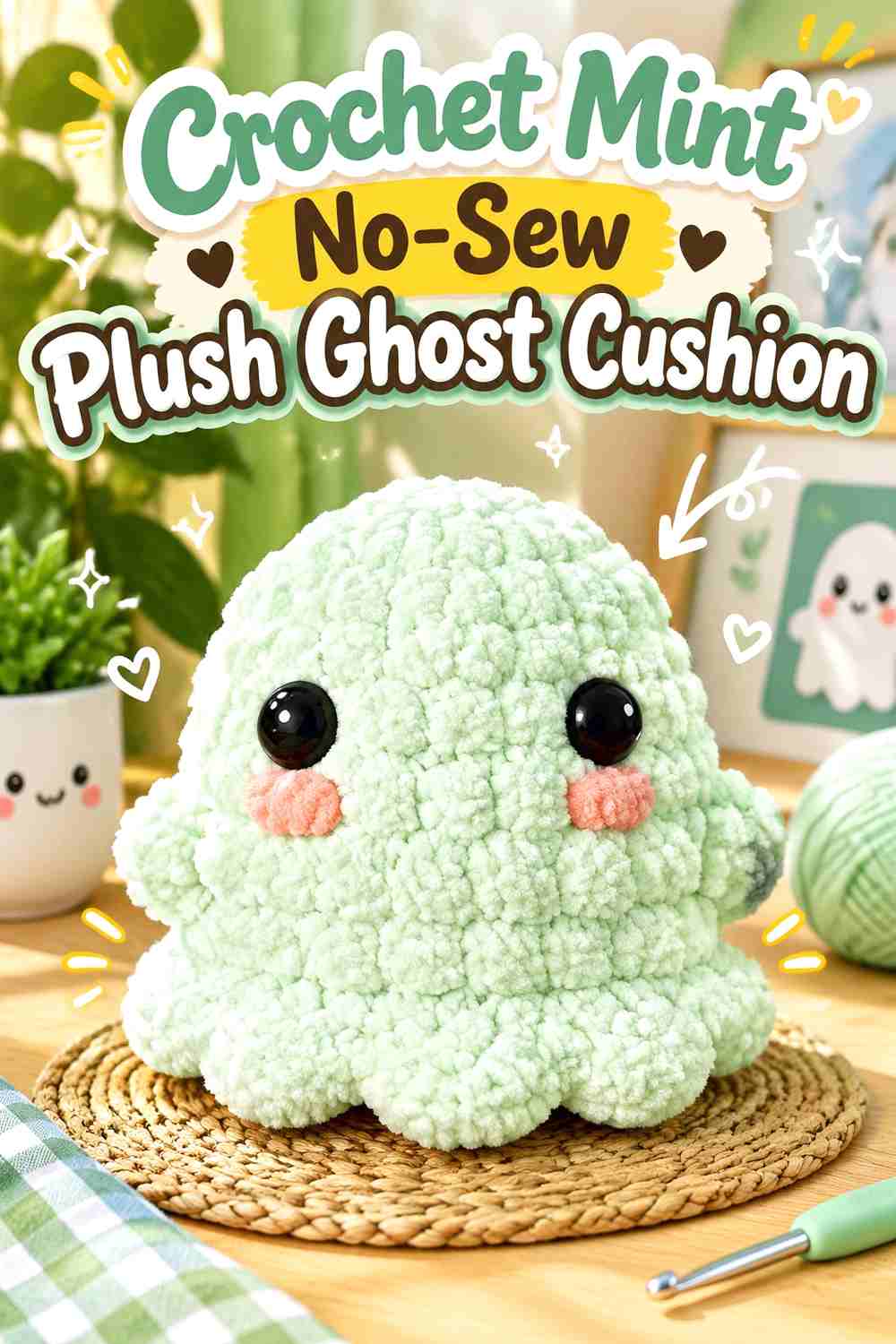
Crafter Frog’s tutorial teaches a ghost from plush yarn without sewing separate body pieces and uses toy filling for the finished form. It is originally a compact plush rather than a sofa cushion.
A mint adaptation keeps the design simple and lets the chenille texture remain the main attraction. This works particularly well as a bedside accent or as one small cushion among larger square pillows.
Plush Yarn Makes Stitch Tracking More Important
Chenille-style fibers can obscure stitch tops, especially around increases and decreases. Losing track of shaping can create bumps that only become obvious after stuffing.
Use markers consistently and compare the silhouette frequently. On an enlarged interpretation, one repeated counting error can become more visible because every round covers more surface area.
Seamless Construction Highlights the Overall Shape
Without obvious panel seams, the ghost can look smooth from several directions. That makes this format useful where the cushion may sit on an open bed or bench rather than always facing forward.
The trade-off is that there is no removable insert to reshape or replace. Spend extra time distributing the filling before closing the body.
Creator Credit: Crafter Frog
16. Crochet Blush-Cheek Pastel Ghost Soft Pillow
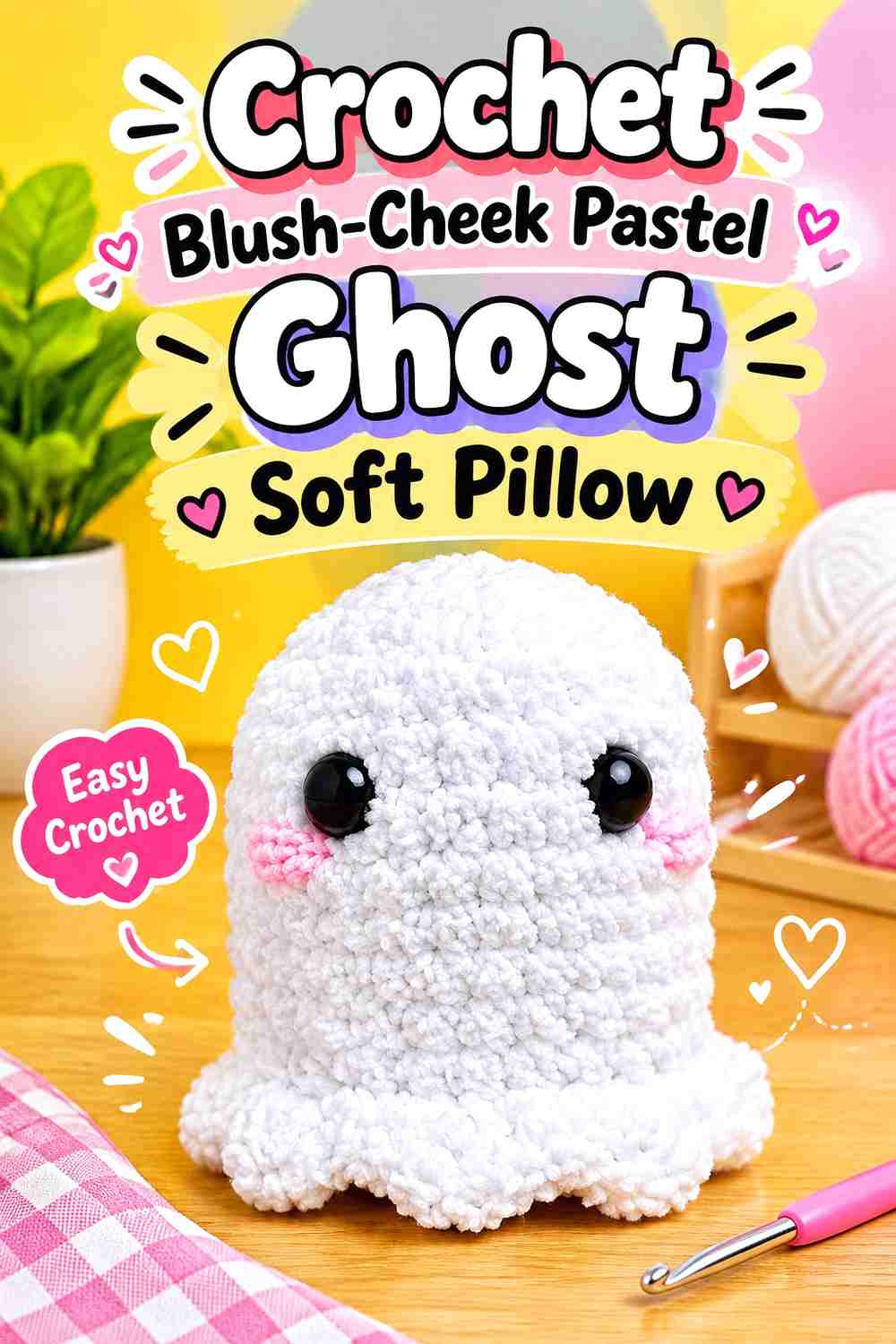
Nicole Chase’s tiny ghost includes embroidered blush details, and the creator specifically discusses changing to plush chenille yarn for a larger, squishier result. That makes it a particularly natural source for a soft pastel adaptation, even though the original worsted-weight version is miniature.
A cream or very pale pink ghost with rose-colored cheeks can fit a softer Halloween room where stark black-and-white decor feels too graphic.
Changing Yarn Changes More Than the Finished Size
Plush yarn makes the surface rounder and visually softer than smooth worsted yarn. Small stitches and embroidery also become less sharply defined.
If the goal is a cushion-like ghost, choose the thicker-yarn route intentionally rather than trying to make a small version look larger simply by packing in extra filling.
Position the Blush Relative to the Final Eyes
Cheeks should work with the expression rather than follow an arbitrary placement. If you change the eye style, yarn thickness, or overall scale, preview the full face before securing the blush.
On a large plush surface, tiny cheek marks may disappear from normal viewing distance. Adjust the visual scale while preserving the overall character rather than copying a small-project measurement.
Creator Credit: Nicole Chase
17. Crochet Mini Pastel Ghost Pillow Trio
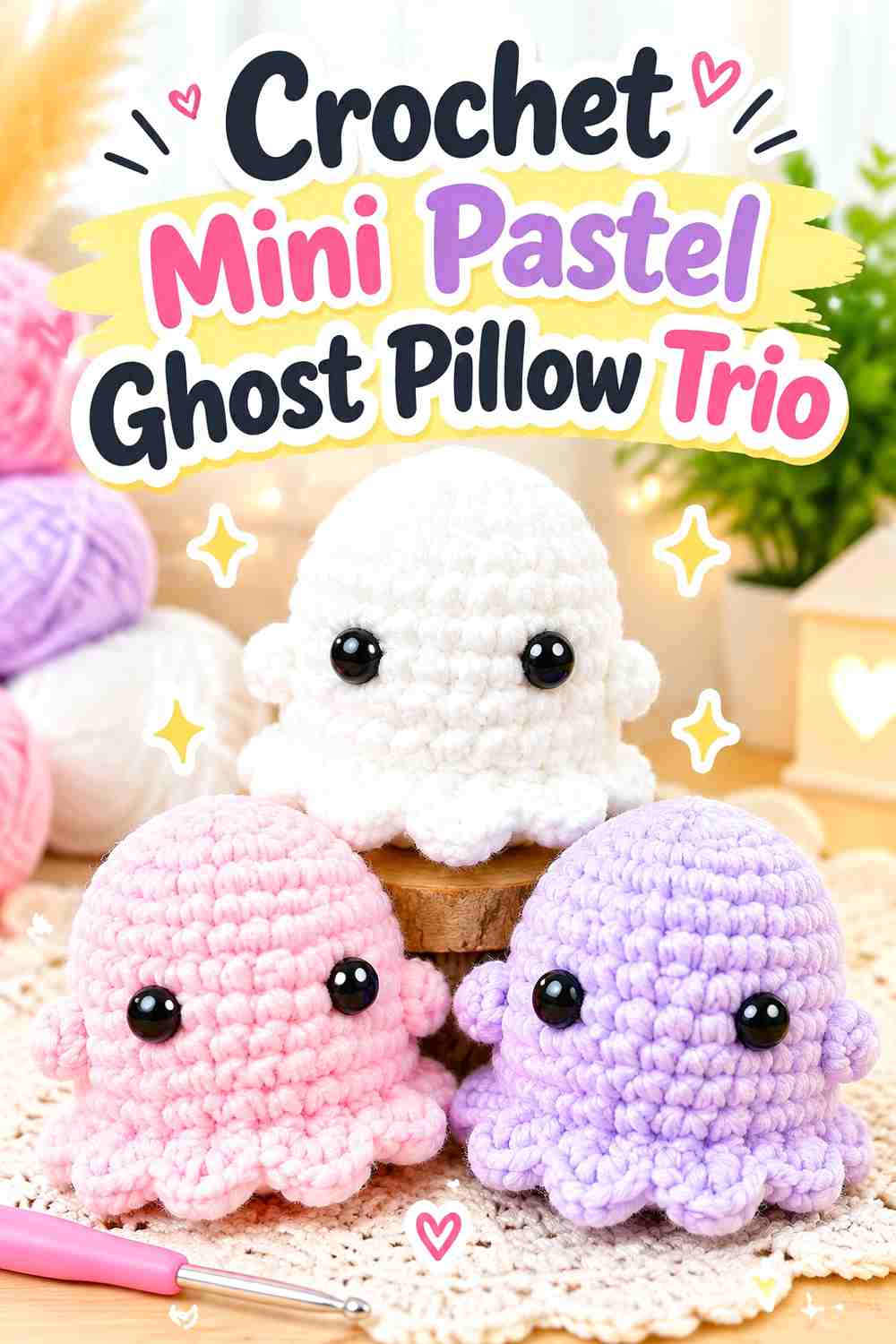
Rose and Lily Crochet’s tutorial makes a compact no-sew plush-yarn ghost with a clean rounded silhouette. The creator also explicitly notes that safety eyes are not recommended for children under three.
Instead of enlarging every design into a statement cushion, consider making a trio of small pillow-like ghosts in lavender, peach, and mint. Grouping several compact soft forms can add color to a bed, basket, or shelf while leaving room for one larger main pillow.
Repetition Works When One Feature Stays Consistent
For a trio, use the same yarn family and approximate stuffing firmness so the ghosts feel related. Color and expression can provide the variation.
If every ghost also changes texture, scale, facial style, and silhouette, the set can lose the clean repeated rhythm that makes a small group effective.
Small Parts Need Recipient-Appropriate Finishing
A decorative plush used only by adults has different requirements from one that may be handled by a baby or very young child. For young recipients, avoid relying on small detachable facial components and consider appropriately secured embroidered features.
Check closures, yarn tails, and attached details carefully whenever a small stuffed project will be carried or handled frequently.
Creator Credit: Rose and Lily Crochet
Which Pastel Ghost Pillow Style Should You Choose?
For a conventional sofa, the Lavender Checkered Ghost Pillow Cover is the easiest fit because it keeps a familiar square cushion format. The Blush Sheet-Ghost Accent Pillow offers a stronger Halloween silhouette without moving fully into amigurumi styling.
For a bed or reading corner, the Mint Round Ghost Squish, Lilac No-Sew Ghost Pillow Stuffie, and Butter-Yellow Blanket-Yarn Ghost Hug Pillow provide more volume. These shapes work especially well where the cushion can be seen from several directions.
Choose the Powder-Blue Flat Ghost Cuddler if you want a slimmer layered look. The Pastel Ruffle-Edge Ghost is more decorative at the base, while the Witch-Hat designs add height and a second obvious color area.
The later plush and mini projects make more sense when you want several small pastel ghosts rather than another full-size furniture pillow. They can also be useful starting points for careful scale adaptations, but changing yarn does not guarantee the same proportions or structure at cushion size.
Conclusion
Pastel ghost pillows work best when color supports the construction rather than becoming the only difference between projects. A lavender checkerboard pillow has very different advantages from a mint squish, a powder-blue cuddler, or a peach reversible ghost.
Choose the Checkered Ghost Pillow when removability and a standard cushion shape matter. Pick a shaped sheet ghost for a stronger silhouette, a blanket-yarn squish for softness and volume, or a flat cuddler when you want Halloween character without a bulky footprint. Witch hats, ruffles, blush details, and hanging formats can add variety without requiring every pillow to use a completely different color palette.
Whichever direction you choose, confirm the original creator’s exact construction and material guidance in the linked tutorial before changing yarn weight, size, filling method, or finishing.
Frequently Asked Questions
What pastel colors work well for a crochet ghost pillow?
Lavender, blush pink, mint, powder blue, peach, butter yellow, and soft cream all work well when the ghost silhouette remains clear. A darker plum, charcoal, muted brown, or deep teal can provide facial contrast without pushing the palette back toward standard black-and-white Halloween decor.
How do I keep a pastel ghost from disappearing against a pastel background?
Create contrast through lightness as well as hue. A pale lavender ghost on pale blue may blend even though the colors are different. Pairing one pastel with cream, a deeper dusty shade, or a dark neutral usually makes the outline easier to read.
For motif pillows, test the colors side by side before completing every square.
Is plush yarn better than smooth yarn for crochet ghost pillows?
It depends on the design. Plush and blanket yarn favor soft, rounded stuffed ghosts. Smooth yarn makes checks, appliqués, embroidery, and graphic outlines easier to see.
If a design relies heavily on fine facial details or colorwork, very fuzzy yarn may hide more of that detail than you want.
Can I turn any small crochet ghost into a full-size pillow?
Not reliably. A thicker yarn can enlarge a project, but it also changes fabric density, filling requirements, weight, drape, and the scale of features such as arms and hats.
Tutorials that already use plush or blanket yarn provide a more predictable starting point for pillow-style adaptation than tiny thread or lightweight-yarn amigurumi.
How do I keep a shaped crochet ghost pillow from looking lumpy?
Distribute filling gradually instead of packing the center first. Check the head, sides, bottom curves, and transitions as you work, and rotate the cushion frequently.
Also inspect the crochet fabric before stuffing. Uneven tension or missed shaping cannot always be hidden by adding more filling.
Are removable covers useful for Halloween crochet pillows?
They can be especially practical for seasonal decor. A removable cover can potentially reuse an insert that serves other holidays and may take less storage space after Halloween.
Fully stuffed shaped ghosts require more room to store, but they preserve silhouettes that a standard pillow insert cannot create.
Should a crochet ghost pillow use safety eyes or an embroidered face?
For adult decorative use, either approach may suit the design. Embroidery creates a flatter, softer surface and is particularly useful for cuddle pillows.
For projects intended for babies or very young children, avoid assuming small detachable components are appropriate. Choose recipient-appropriate finishing and follow relevant guidance from the original project creator.