A crochet medieval winter hood can sit anywhere between practical cold-weather headwear and full fantasy costume styling. The silhouette makes the biggest difference. A close balaclava can suggest a guard or armored under-hood, while a deep cowl feels more monastic. Long scarf ends create a traveler or ranger look, and a hood attached to a sweeping cape moves the project firmly into enchanted-cloak territory.
The tutorials in this collection are modern crochet projects rather than claims of historical reconstruction. Some already have dramatic hood shapes; others are contemporary winter designs that can be styled toward medieval fantasy through earthy color, texture, layering, and restrained finishing.
That distinction matters. You do not need to reconstruct an old garment to achieve a convincing fantasy wardrobe. Start with a hood construction that provides the right face framing, crown shape, neck coverage, and shoulder volume, then adapt the visual direction without replacing the creator’s original pattern instructions.
Quick List
- Crochet Checkered Sentinel Winter Hood
- Crochet Granny-Square Tavern Keeper Hood
- Crochet Cabled Castle Guard Hood
- Crochet Adjustable Monastery Cowl Hood
- Crochet Draped Merchant Snood Hood
- Crochet Chunky Gatehouse Cowl Hood
- Crochet Striped Woodland Ranger Hooded Scarf
- Crochet Long Pilgrim Wrap Hood
- Crochet Ribbed Court Bonnet Cowl Hood
- Crochet Infinity Scholar Hooded Scarf
- Crochet Minimal Cloister Tube Hood
- Crochet Pocketed Road-Warden Hooded Scarf
- Crochet Storybook Red-Cloak Winter Hood
- Crochet Woodland Fox Familiar Hood
- Crochet Enchanted Mage Cloak Hood
Choose the Medieval Silhouette Before the Yarn Color
Forest green, charcoal, brown, wine red, oatmeal, and gray can support a fantasy wardrobe, but color alone will not make an ordinary winter accessory look medieval-inspired. Shape has more influence.
For a guard, scout, or chainmail-adjacent look, choose a hood that sits relatively close around the head and neck. For a monk, healer, or scholar, extra cowl depth creates softer folds around the throat. Rangers and travelers benefit from long scarf panels because they extend the visual line down the torso. A cloak or cape gives you the strongest fantasy statement because the hood becomes part of a complete outer layer.
Think about the hood-down position too. A fitted balaclava stays compact, a snood gathers around the neck, a hooded scarf still leaves long front panels, and a cape continues to dominate the outfit even when the head is uncovered.
Fit the Hood Over the Hair and Layers You Will Actually Wear
Winter and fantasy styling both add layers. A hood that fits comfortably over flat hair may feel quite different over curls, braids, a headband, another hat, or costume hair.
Check the face opening as carefully as the crown. A narrow opening creates a guarded silhouette but can feel restrictive if the edge has limited stretch. A large opening reveals more hair and underlayers and produces a softer look.
Also consider the neckline. Thick cowls, scarves, cloak collars, costume armor, and winter coats can all compete for the same space around the shoulders. If the hood already has substantial neck volume, test it with the rest of the planned outfit before adding a heavy border, clasp, tassels, or another bulky layer.
Match Yarn Behavior to the Fantasy Character
A structured fabric helps a face edge or dramatic crown hold a deliberate outline. Softer drape works better for snoods, deep cowls, infinity scarves, and cloak hoods that are supposed to fall into folds.
Texture can establish character without additional decoration. Cables create heavy relief suitable for guard or court styling. Granny squares produce a folk or tavern-market feel. Ribbing looks practical and understated. A simple smooth hood gives you more room for a contrasting edge, clasp, or costume layer elsewhere.
Whatever style you choose, keep visibility and movement practical. Deep hoods should not continually fall across the eyes, and excessively long ties or scarf ends can snag during walking, festivals, crowded events, or outdoor wear.
1. Crochet Checkered Sentinel Winter Hood
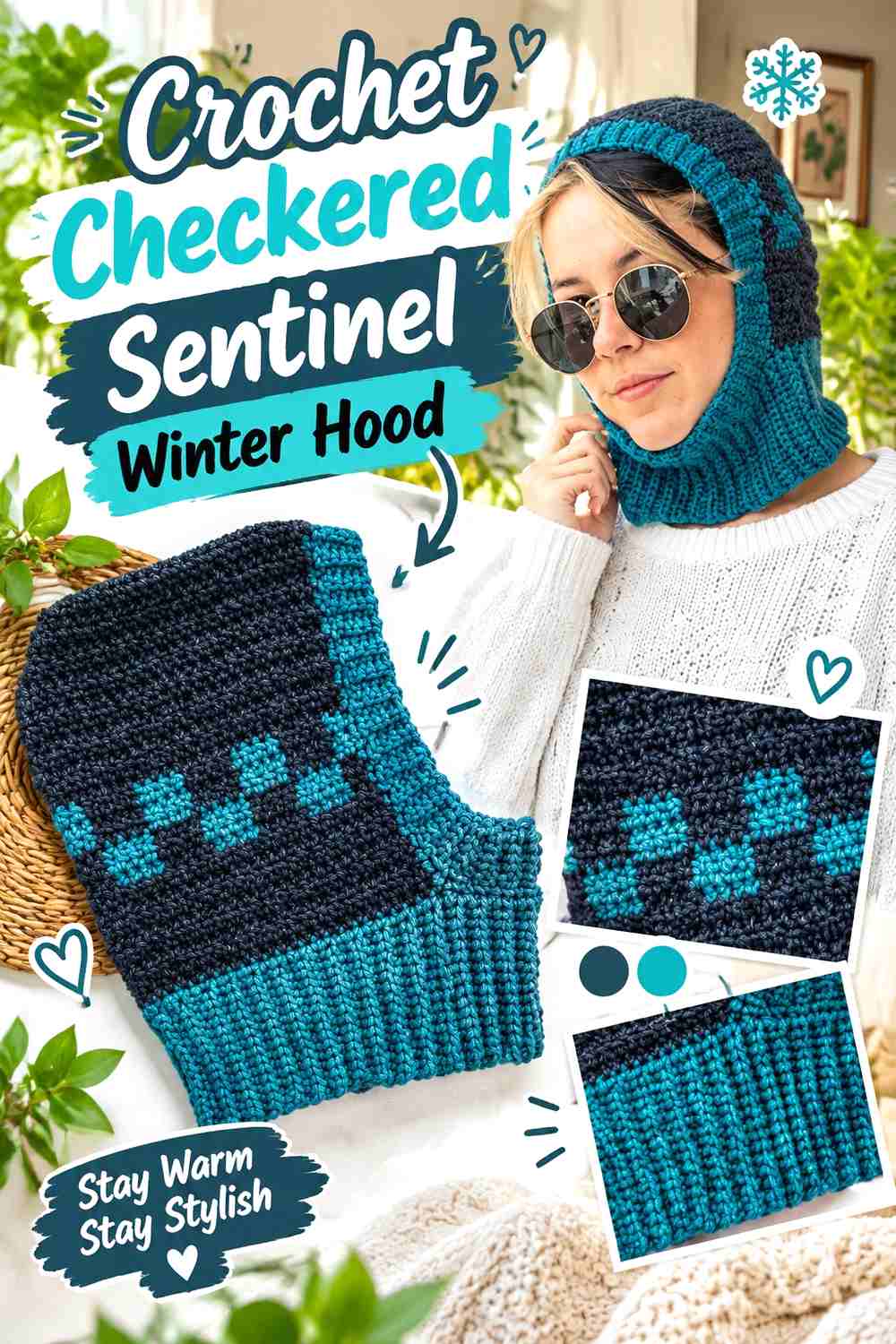
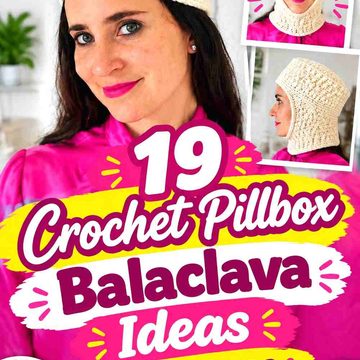
This close balaclava construction frames the face and continues down around the neck, giving it a compact silhouette that adapts naturally to sentinel, scout, gate guard, or chainmail-inspired winter styling. The original tutorial also includes optional checker detailing, allowing surface pattern to contribute to the finished character instead of relying on separate embellishment.
For a subtler medieval effect, work with related shades instead of very high-contrast checks. Pewter and charcoal, deep brown and black, or muted green with gray can create visible pattern without making the accessory feel like modern graphic streetwear.
The Close Crown Works Well Under Other Layers
A fitted head shape takes up less space than a deep oversized hood.
That makes this concept useful if another fantasy layer will sit above or behind it, such as a cloak collar, cape, costume mantle, or armor-look shoulder piece. Try those pieces together before adding extra thickness around the neckline.
Low-Contrast Checks Can Suggest Heraldic Texture
The optional checker area gives you a place to introduce two-tone design without covering the entire hood.
If the rest of the outfit already includes a heraldic color, repeat it sparingly rather than introducing several new shades. The hood should reinforce the character rather than compete with the tunic, cloak, belt, or accessories.
Keep the Face Edge Comfortable
The face border is visually important because it creates the clean outline around the cheeks and forehead.
When changing yarn, check stretch as well as gauge. A firmer yarn may produce the correct measurements but still feel tighter around the face than the original fabric.
Creator Credit: made in the moment
2. Crochet Granny-Square Tavern Keeper Hood
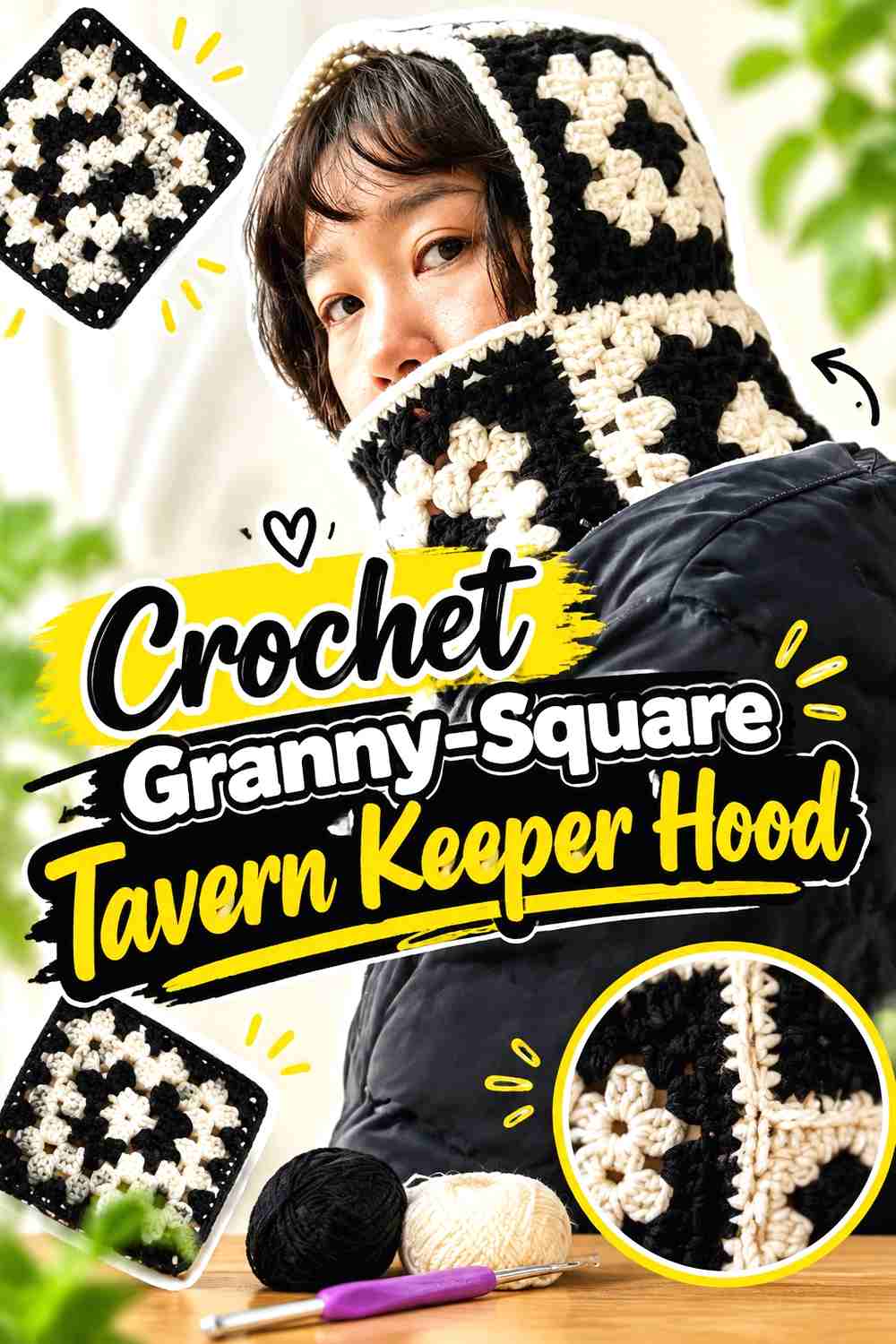
A hood built from granny squares immediately looks different from a solid balaclava. The individual motifs and visible joins create a patchwork surface that can suit a tavern keeper, traveling artisan, village herbalist, or colorful fantasy-market character. The source tutorial constructs its balaclava from granny squares rather than treating motifs as small appliqués.
For medieval-inspired winter styling, consider a controlled scrap palette: moss, bark brown, rust, oatmeal, faded red, smoke gray, or muted gold rather than unrelated bright colors.
Arrange the Motifs Before Joining
Every square becomes part of the finished face and crown composition.
Lay the completed motifs in their planned positions before joining them. A very light or bright square beside one cheek can attract far more attention than the same square placed toward the back.
Matching Blocked Size Matters More Than Matching Color
A hood depends on the joined motifs behaving like one fabric.
Compare the dimensions of the finished squares before assembly. Differences in motif size can create pulling, rippling, or an uneven face opening that color placement cannot correct.
Use the Underlayer as Part of the Design
Granny construction leaves visible openings.
A darker under-cap can emphasize the motif geometry, while an underlayer close to the hood color makes the openings less obvious. Try the hood over the actual winter or costume layer before deciding the final effect.
Creator Credit: day la hanh
3. Crochet Cabled Castle Guard Hood
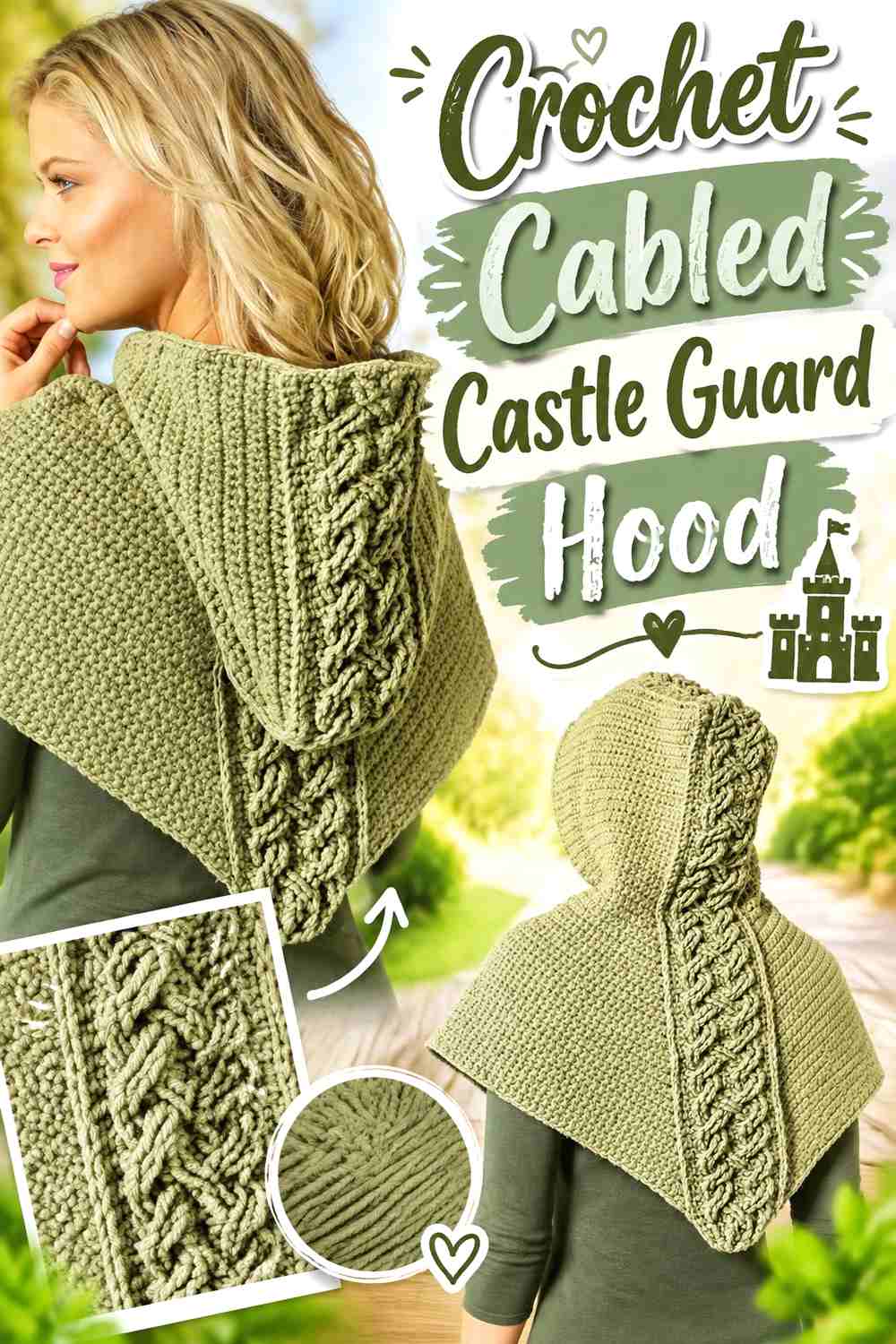
Heavy crochet cables give a hood depth without requiring multiple colors. Marly Bird’s tutorial demonstrates a cabled hooded cowl with raised post-stitch work, producing much more surface relief than a plain winter hood.
That makes it a strong base for a castle guard, guild officer, northern court attendant, or fantasy warrior whose clothing should look substantial rather than delicate.
Let the Cable Work Replace Extra Ornament
Cables already create strong highlights and shadows.
Large appliqués, several clasps, or heavily patterned yarn can compete with that relief. A solid or gently heathered shade often allows the structure to remain the focal point.
Check Neck Bulk Beneath a Cloak
A cabled cowl carries noticeable fabric around the throat.
If the final outfit includes a cloak or high collar, test the two together. Too much dense crochet in the same area can restrict head movement and make the shoulder line look crowded.
Weathered Color Can Feel More Convincing Than Sparkle
Fantasy armor styling does not require shiny yarn.
Charcoal, stone, pewter, brown-gray, or muted silver can allow the cable shadows to suggest weight and age without turning the hood into a metallic novelty piece.
Creator Credit: Marly Bird
4. Crochet Adjustable Monastery Cowl Hood
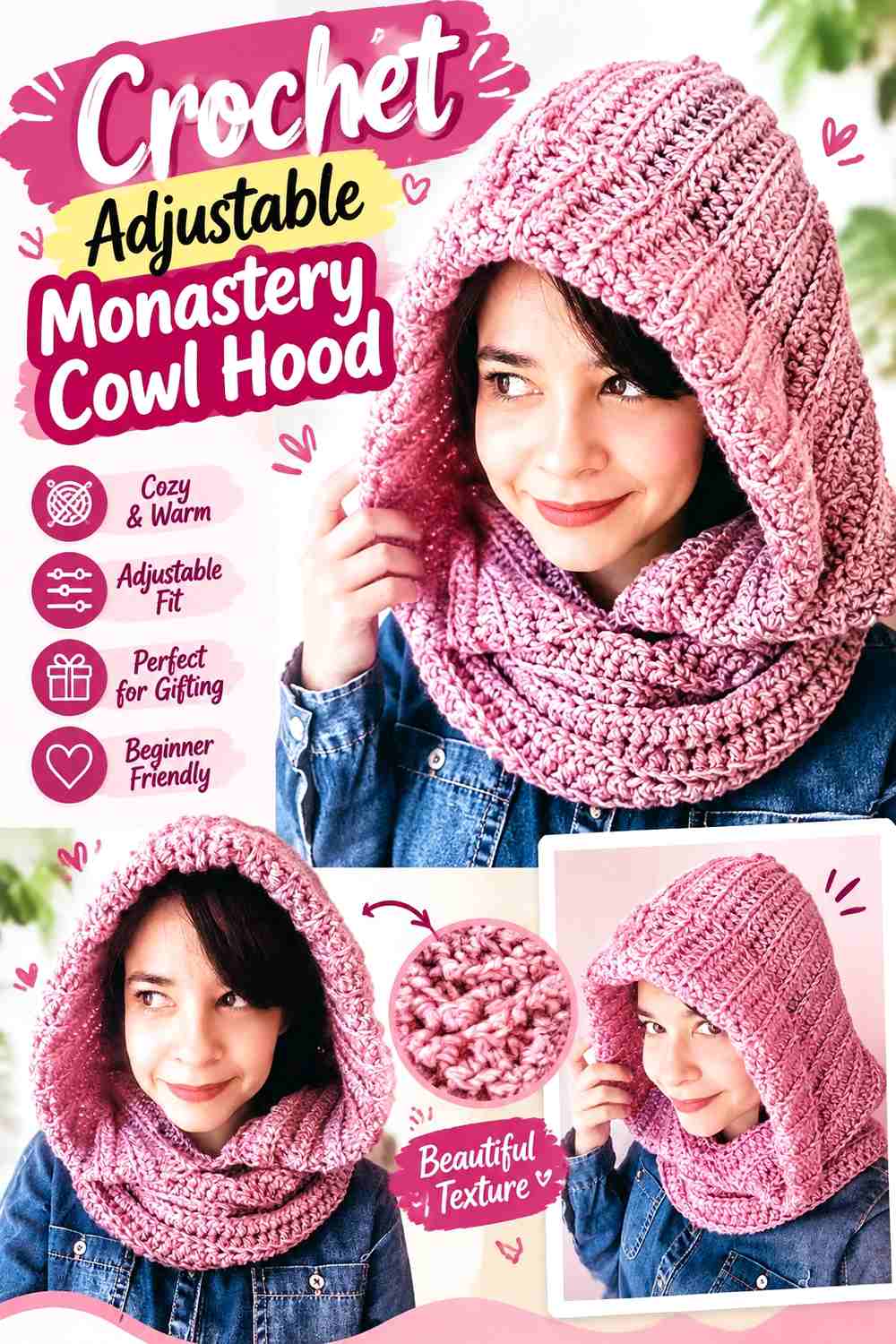
This hooded cowl offers a roomier alternative to a fitted balaclava. The Kiri Kiri tutorial presents an adjustable hood-and-cowl form, making it useful when you want a softer monk, scribe, healer, or wandering-scholar silhouette rather than a tightly framed guard hood.
The extra fabric around the neck can also look effective with simple robes, tunic-inspired layers, or a long coat because it creates natural folds instead of long scarf ends.
More Hood Depth Creates a Softer Character
A loose hood does not trace the skull as closely as a balaclava.
That difference alone can move the same earthy yarn from “guard” toward “monk” or “traveler.” Decide how much of the character should come from drape before adding trim.
Adjust Around the Real Winter Layers
An adjustable design gives you useful fit flexibility, but test it over what will actually sit underneath.
Hair volume, a headband, or another thin winter layer can alter how the hood frames the face. A hood that appears generously sized on its own may become much closer once layered.
Keep Added Borders Flexible
A decorative border can establish a fantasy look, but a stiff edge may change the opening more than expected.
Test any contrasting trim on a short section before committing to the complete face edge.
Creator Credit: Kiri Kiri
5. Crochet Draped Merchant Snood Hood
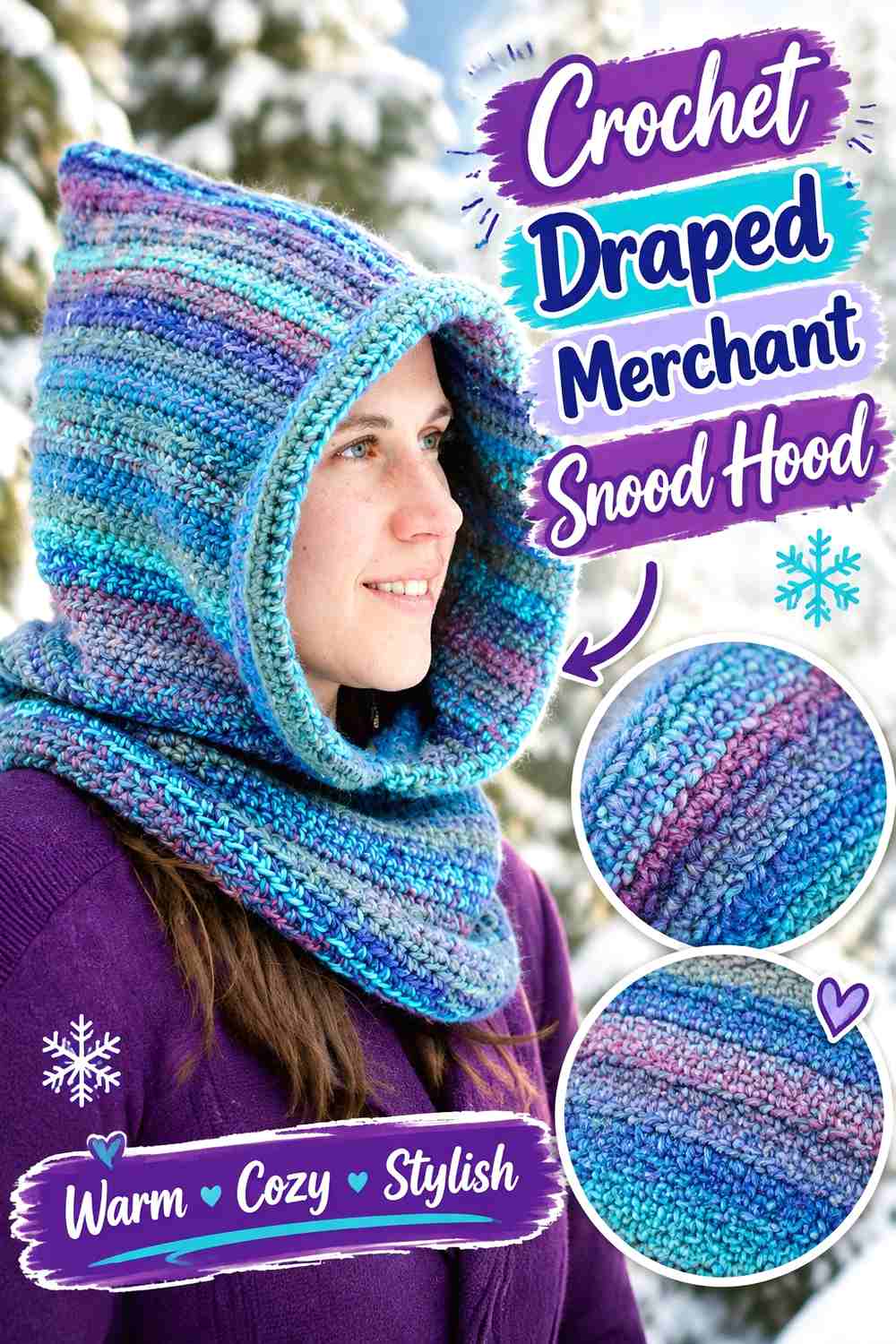
A snood is useful when you want one accessory to move between hood and neckwear. Crochet with illJay’s tutorial specifically demonstrates a simple snood that can function as a balaclava or hooded cowl.
That convertible shape suits a merchant, apothecary, innkeeper, traveling craftsperson, or low-key village character because it looks less like armor and more like practical cold-weather cloth.
Drape Is More Important Here Than a Sharp Crown
A snood needs to rearrange easily between the head and neck.
Very stiff fabric can form awkward bulky folds when lowered. Before substituting yarn, let a swatch hang vertically and see whether it collapses naturally.
Judge the Design in Both Positions
A raised hood can look excellent while producing too much bulk once gathered at the throat.
Try the developing piece in both configurations where the construction allows. The better snood is the one that works as a complete convertible accessory, not only in photographs with the hood up.
Keep Closures and Charms Light
This project already gathers fabric around the neck.
A heavy brooch, cluster of beads, or several dangling charms can drag the drape downward. One restrained fastening or trim detail is usually enough for a fantasy adaptation.
Creator Credit: Crochet with illJay
6. Crochet Chunky Gatehouse Cowl Hood
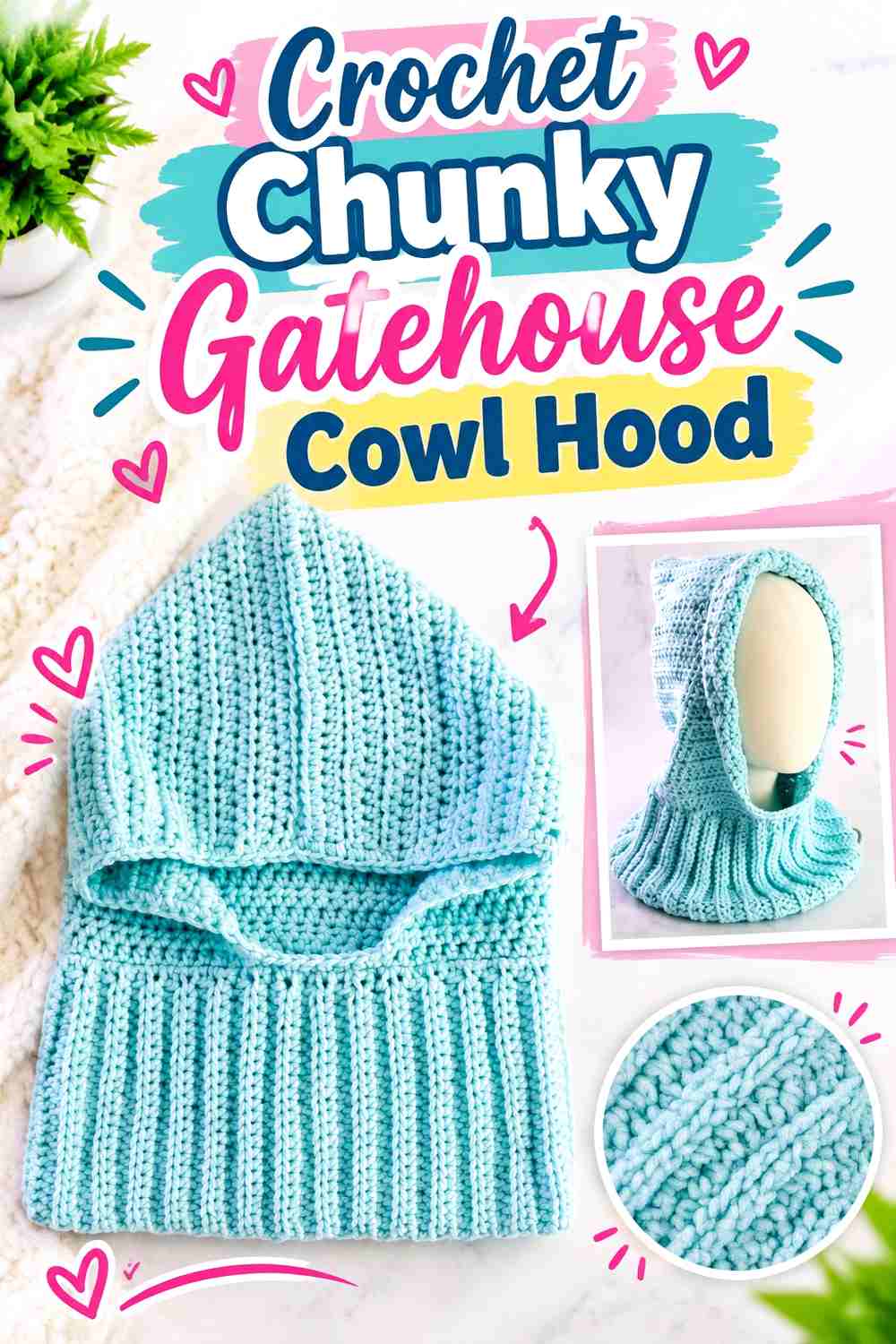
A chunky hooded cowl creates visual weight through scale rather than complicated surface pattern. Treasurie’s tutorial uses a hood-and-cowl construction in chunky yarn, giving the finished piece a substantial winter profile.
That can suit a gatekeeper, blacksmith, mountain guard, northern traveler, or rustic fantasy character where the hood should look heavy and practical.
Large Stitches Create Stylized Fantasy Weight
Chunky crochet will not resemble fine historical textile or metal construction.
Its strength is exaggeration. The large-scale texture reads clearly from a distance, which can work particularly well for theatrical outfits, photographs, markets, and fantasy festivals.
Avoid Stacking Too Many Thick Neck Layers
The cowl already occupies significant space around the shoulders.
If the outfit also includes a heavy cape, thick tunic collar, scarf, or costume armor, try them together before finishing additional edging. More fabric is not automatically more convincing.
Use a Muted Shade to Calm the Scale
Bulky stitches are visually strong even in one color.
Deep charcoal, loden green, brown, oatmeal, or muted wine can keep the silhouette dramatic without adding unnecessary visual noise.
Creator Credit: Treasurie
7. Crochet Striped Woodland Ranger Hooded Scarf
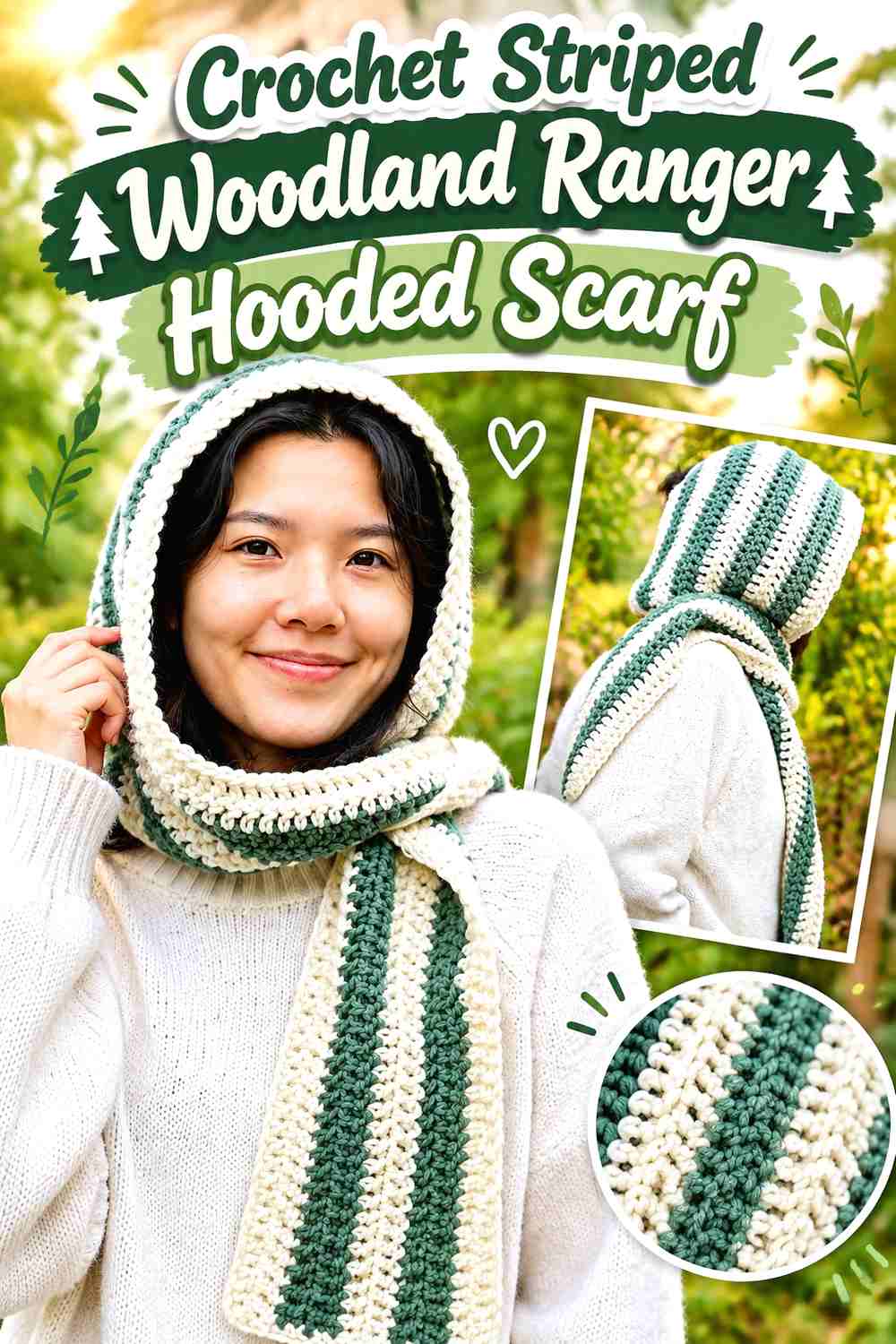
A hooded scarf creates a long vertical silhouette that works particularly well for ranger and traveler styling. The VivCrochets source is a no-sew hooded scarf construction that can also carry continuous striping through the hood and scarf sections.
Unlike a compact cowl, the scarf remains a major part of the outfit even when the hood is down.
Let the Scarf Ends Lengthen the Costume Visually
Long front panels can make a tunic or simple coat feel more layered.
Before adding even more length for drama, consider the wearer’s height and whether a belt, bag, cloak clasp, or costume prop occupies the same area.
Tonal Stripes Feel More Old-World
Continuous striping does not have to look bright or sporty.
Try two close greens, gray with brown-gray, or rust with deep burgundy. Low contrast gives the fabric variation without making the stripe pattern dominate the whole outfit.
Check the Ends for Active Wear
Very long scarf panels can catch on bags, seating, market stalls, branches, and crowded costumes.
For Ren Faire or outdoor use, choose a length that contributes to the silhouette while remaining manageable.
Creator Credit: VivCrochets
8. Crochet Long Pilgrim Wrap Hood
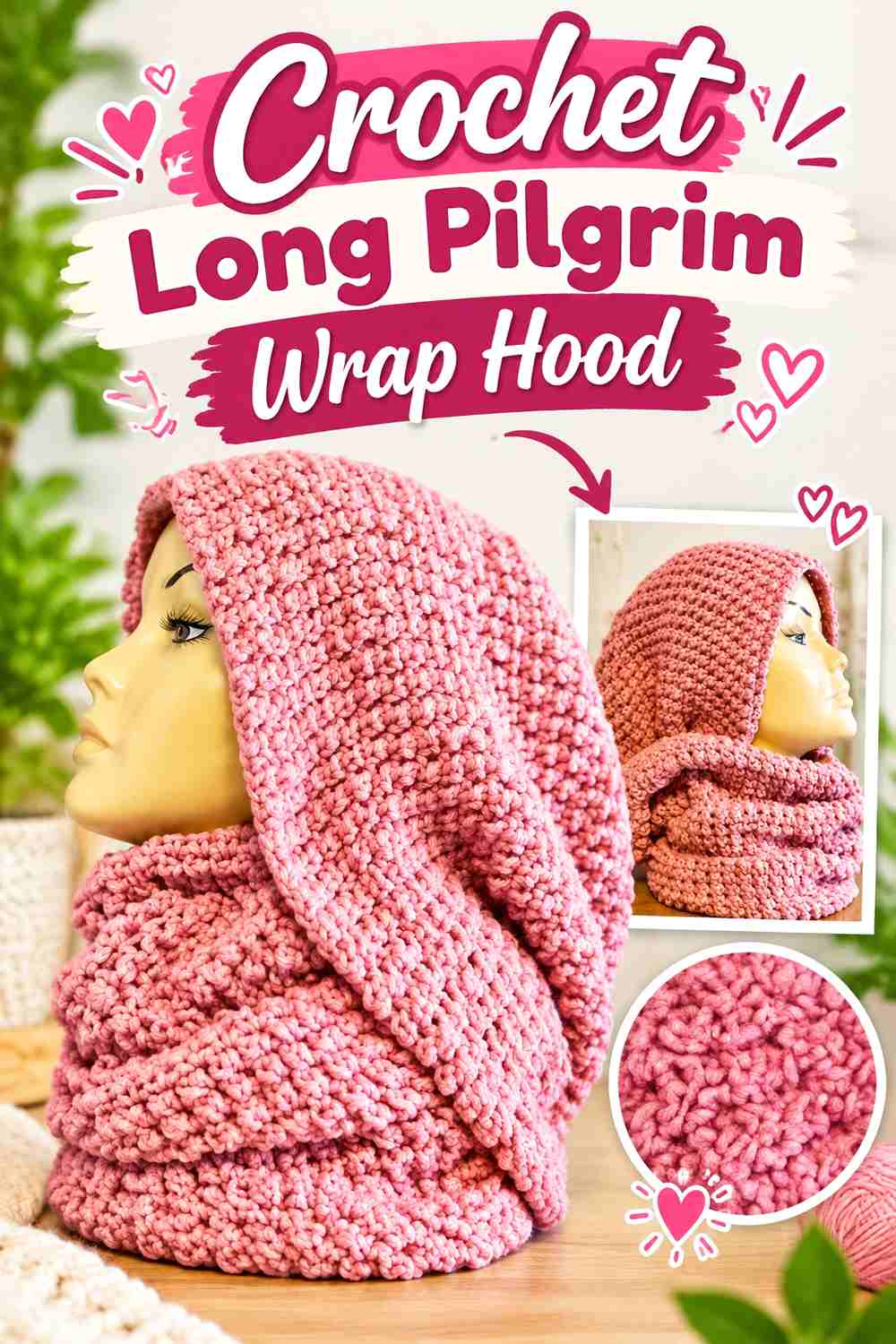
The Hobby Crochet tutorial combines a hood with a long scarf that can wrap around the neck, creating much more fabric movement than a fitted balaclava.
That makes it useful for pilgrim, traveler, wandering healer, or winter-village styling where the hood should feel like part of a practical wrap.
Wrapping Changes the Whole Neckline
The accessory will not look the same hanging loose and wrapped several times.
Make styling decisions with the scarf in the position you expect to wear most often. Several overlapping layers can make a decorative border look much heavier than it did while the project was flat.
Softer Fabric Supports the Traveler Look
A long hooded scarf benefits from fabric that falls rather than projects outward.
When substituting yarn, consider drape as carefully as gauge. A stiff fabric can make the scarf ends stand away from the torso and weaken the wrapped traveler effect.
Keep the Hood and Scarf in the Same Visual Language
If you add fantasy trim, repeat it selectively.
A narrow edge that continues from the hood into the scarf can unify the piece more successfully than adding unrelated decoration to every section.
Creator Credit: Hobby Crochet
9. Crochet Ribbed Court Bonnet Cowl Hood
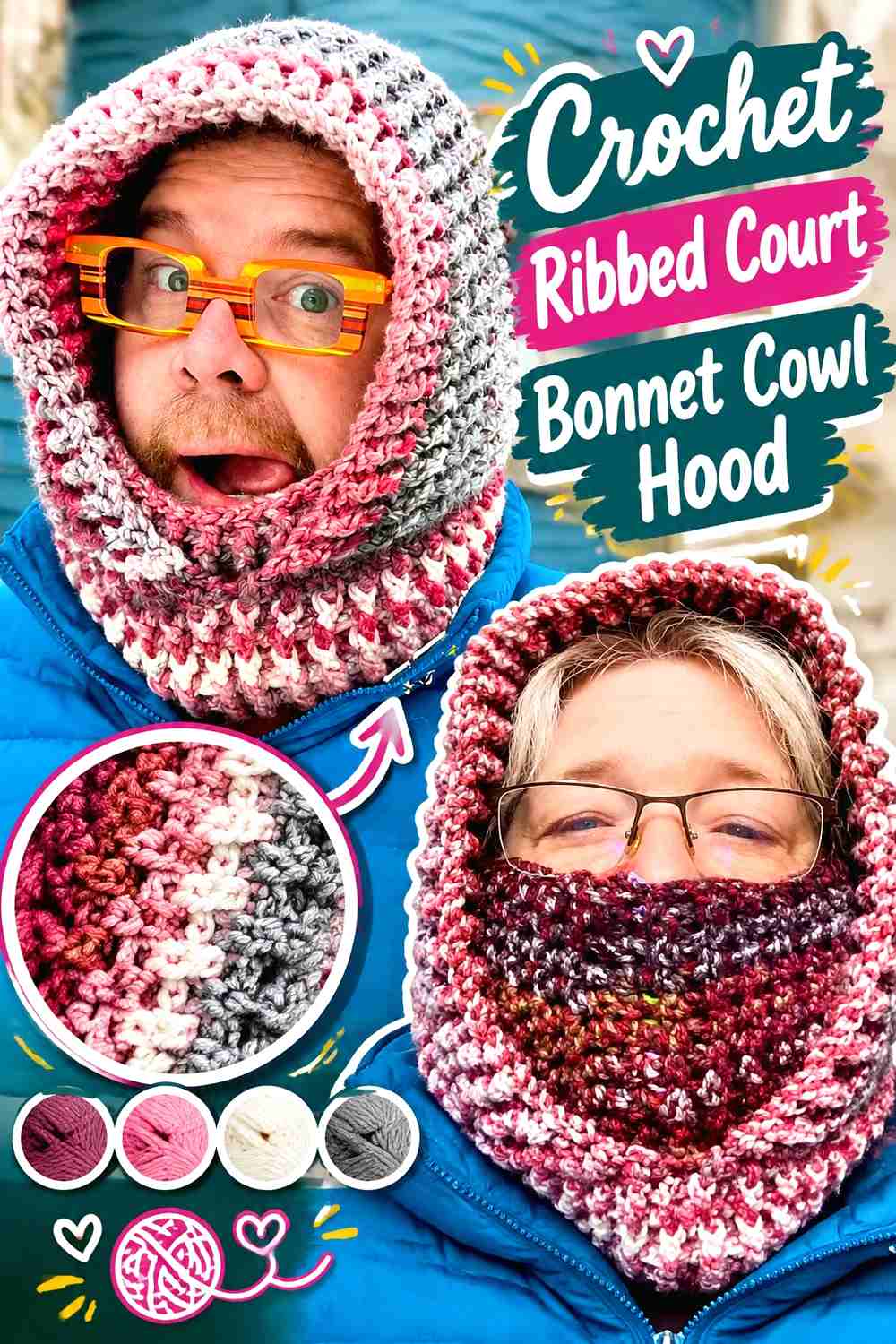
The Crochet Crowd’s Crohoodie combines a rounded hood with a built-in ribbed cowl, producing a bonnet-like profile that differs from both a pointed hood and a long scarf. The updated tutorial presents an adult hood-and-cowl combination with a rounded back.
For fantasy styling, this can move toward court attendant, winter scholar, merchant, or storybook traveler depending on yarn and surrounding clothing.
The Rounded Crown Creates a More Polished Silhouette
A rounded back looks less rustic than an intentionally pointed pixie hood.
That can be useful when the outfit leans toward court or town styling rather than woodland fantasy.
Use the Ribbing as a Built-In Frame
The cowl texture already provides a strong finish around the lower part of the accessory.
Instead of adding a second dramatic trim, consider repeating the ribbed texture visually through cuffs, gloves, or another winter layer.
Test the Folded Cowl With Outerwear
The cowl can create double thickness around the neck depending on how it is arranged.
Try the hood with the coat, cloak, or cape you intend to wear so the combined collar does not become overly tight.
Creator Credit: The Crochet Crowd
10. Crochet Infinity Scholar Hooded Scarf
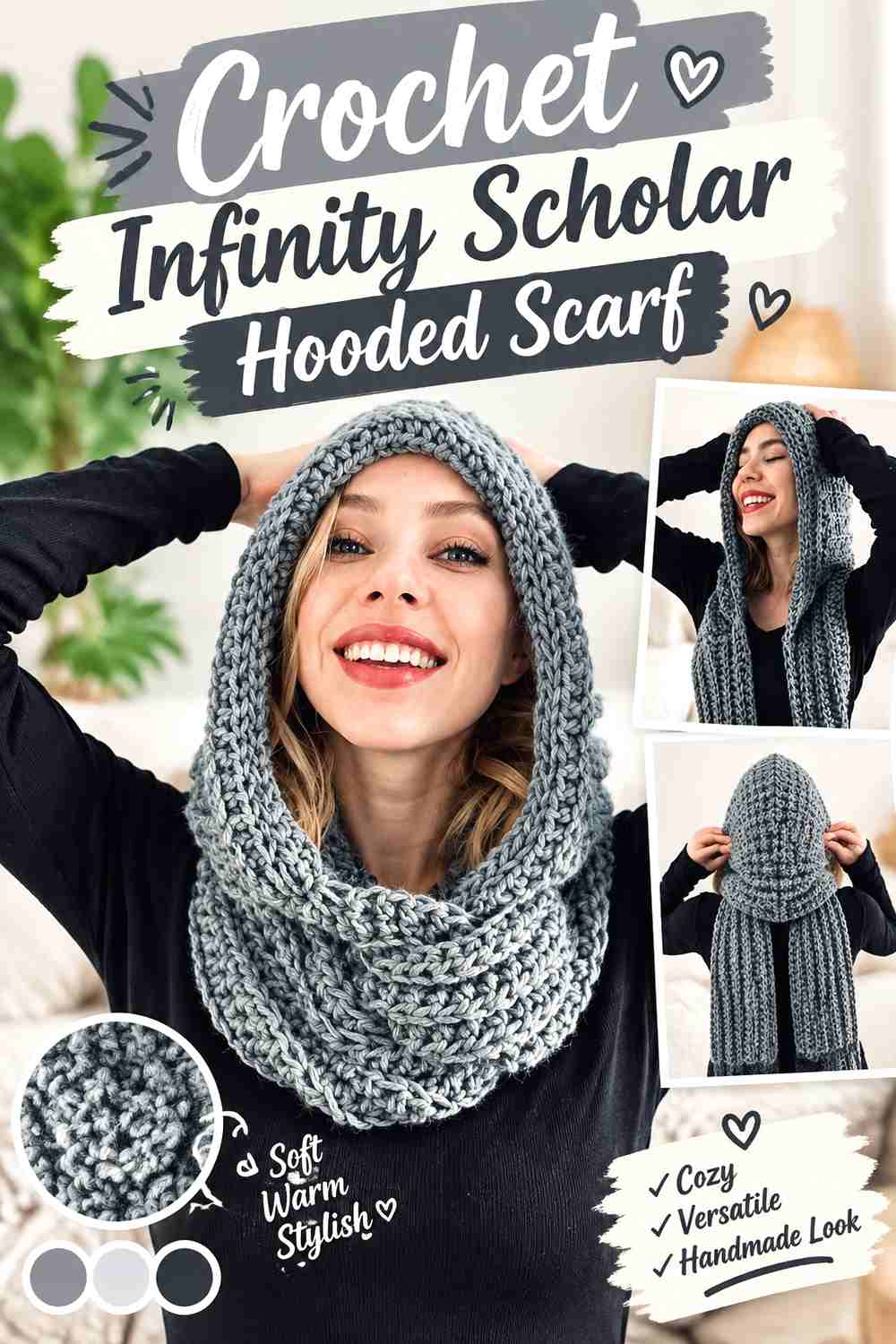
This infinity-style hooded scarf creates a closed neck loop rather than two loose scarf ends. Wilma Westenberg’s Hooded Alpa Scarf is worked as a scarf-and-hood combination with a textured hood brim and a continuous wrapped neckline.
That contained shape works well for scholar, archivist, mage apprentice, herbalist, or traveling cleric styling where you want layered neck coverage without dangling panels.
The Closed Loop Keeps the Outfit Controlled
Long scarf tails can interfere with belts, props, or cloak clasps.
An infinity section concentrates the fabric at the neckline instead, making this useful when the rest of the costume already has several vertical elements.
Let the Brim Establish the Face Frame
The textured brim naturally defines the opening.
A darker tonal border can make the frame stronger, while a matching shade keeps the look quieter. Test the contrast against the hair and underlayers before deciding.
Watch Stretch When Substituting Yarn
A closed loop must remain comfortable when pulled on and worn.
Do not assume another fiber will behave identically simply because it is labeled the same weight. Compare gauge and elasticity with the source guidance.
Creator Credit: Wilma Westenberg
11. Crochet Minimal Cloister Tube Hood
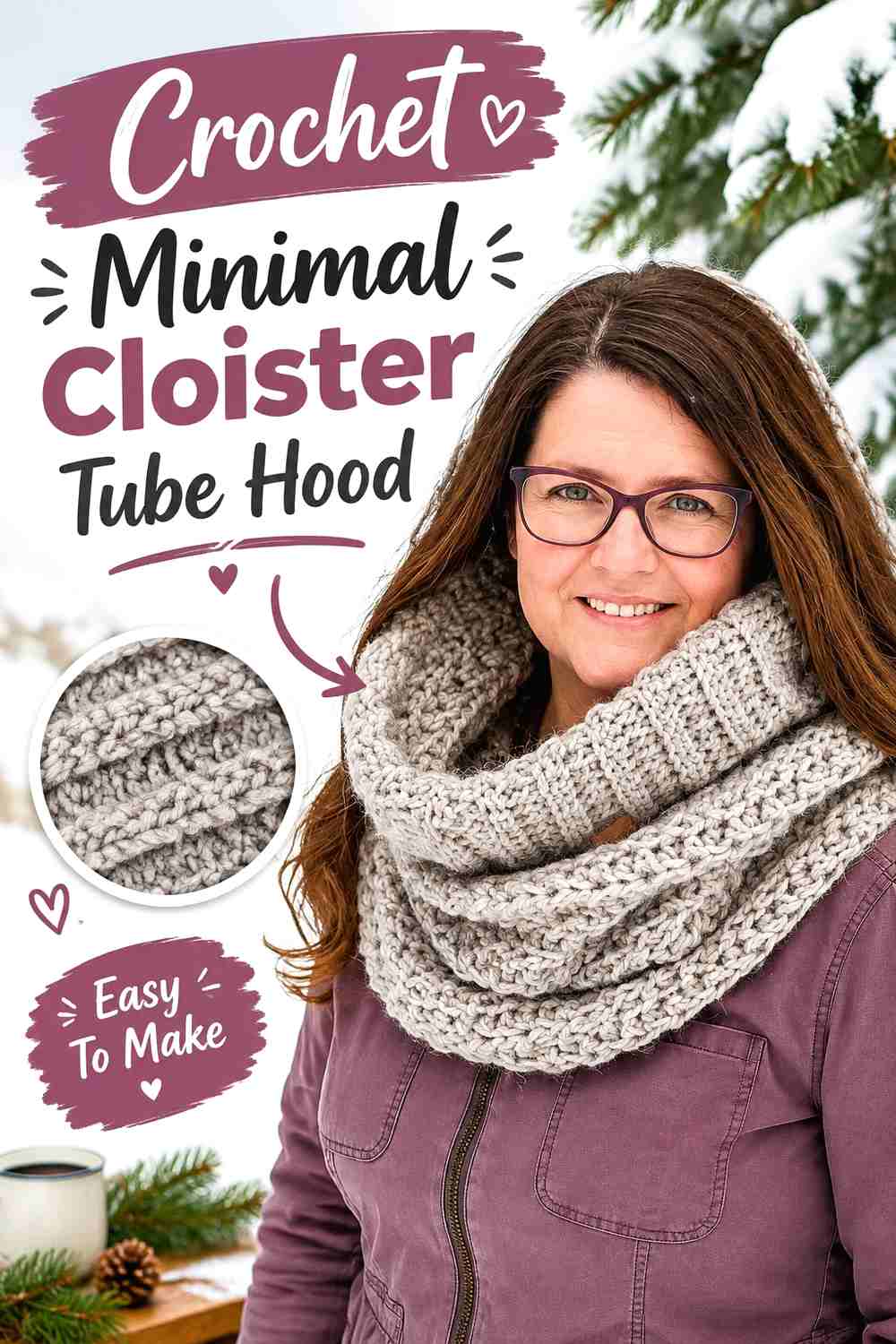
This project strips the hooded-cowl idea back to a tall tube with textural ribbing rather than a separately shaped scarf or dramatic cloak. A Crocheted Simplicity’s design is intended to be worn as a cowl or pulled up as a hood, giving it one of the cleanest constructions in the collection.
That simplicity suits monastery, cloister, village, or understated mage styling because color and fabric can carry the mood without elaborate shaping.
Minimal Construction Leaves More Styling Freedom
There are few competing features, so the surrounding outfit can do more of the storytelling.
Pair the hood with a textured tunic, brooch, cloak, leather-look belt, or layered winter coat rather than forcing every fantasy detail into the crochet itself.
Drape Determines Whether the Tube Looks Graceful
A tall cowl has to collapse attractively when lowered.
If the fabric is too stiff, it may bunch around the jaw. If it is excessively loose, it may not stay comfortably around the head. A larger swatch can tell you more than a narrow gauge sample.
A Single Neutral Can Show Texture Clearly
Because the shape is simple, stitch texture becomes more important.
Heathered brown, charcoal, oatmeal, stone, or moss can create depth without introducing a second color.
Creator Credit: A Crocheted Simplicity – Jennifer Renaud
12. Crochet Pocketed Road-Warden Hooded Scarf
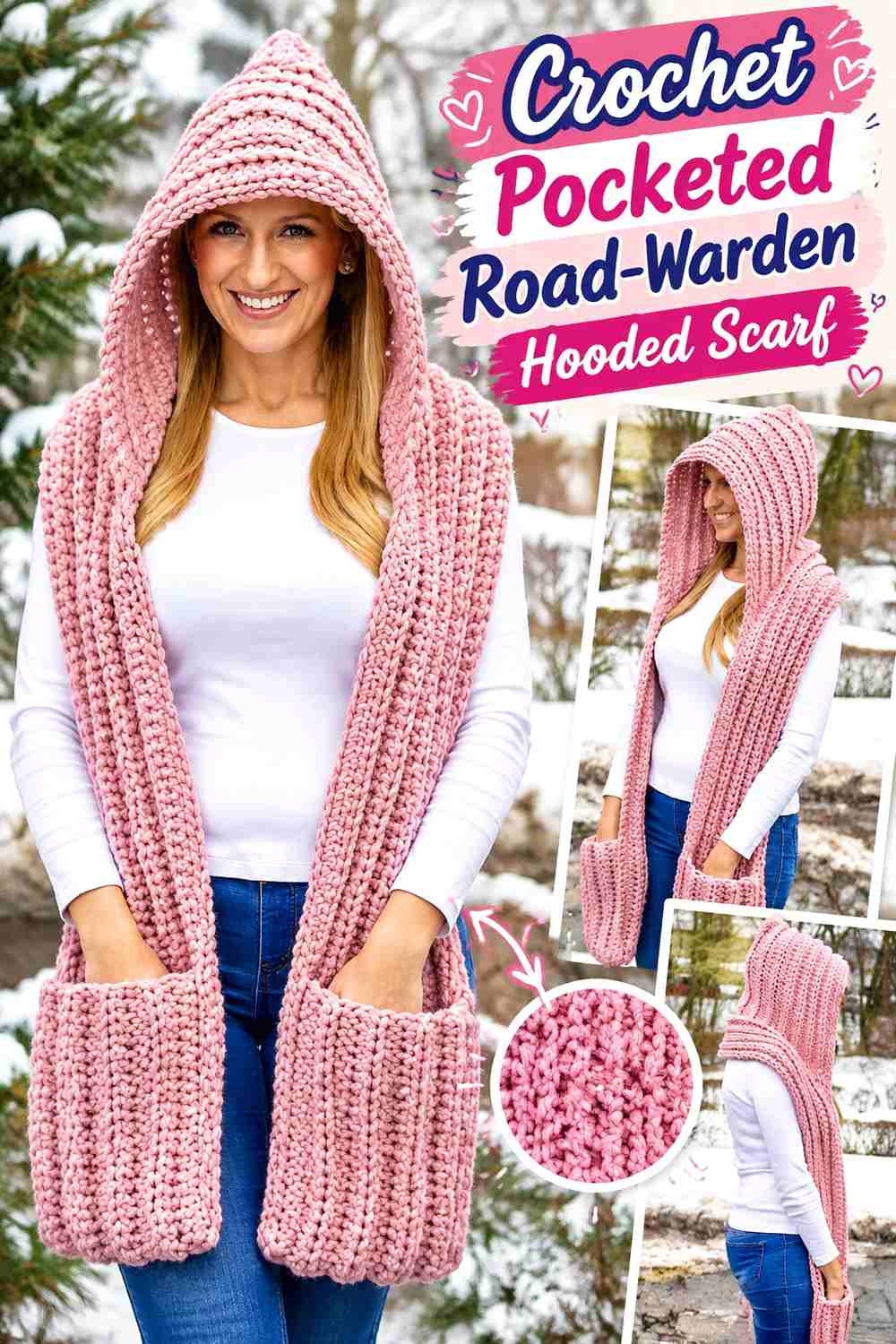
Naztazia’s hooded scarf adds pockets to long front panels and uses a rounded hood shape, giving this project both visual length and a practical feature not found in the simpler scarf versions.
The silhouette works well for a road warden, market traveler, messenger, wandering herbalist, or cold-weather ranger.
Broad Scarf Ends Create a Stronger Front Layer
Pocket panels need enough width to remain useful, so they read almost like narrow stole sections.
That gives the accessory more presence over a simple tunic or coat than a narrow scarf would provide.
Treat the Pockets as Light Storage
Crochet fabric can stretch when repeatedly loaded.
Use the pockets for light belongings rather than assuming they can carry heavy modern items without changing the scarf’s hang. If the costume includes a belt pouch or bag, let that carry the heavier pieces.
Rounded Hood Shaping Softens the Character
Compared with a sharp elf point, the rounded crown feels more practical and grounded.
That makes this a useful choice if you want fantasy atmosphere without a highly theatrical profile.
Creator Credit: Naztazia
13. Crochet Storybook Red-Cloak Winter Hood
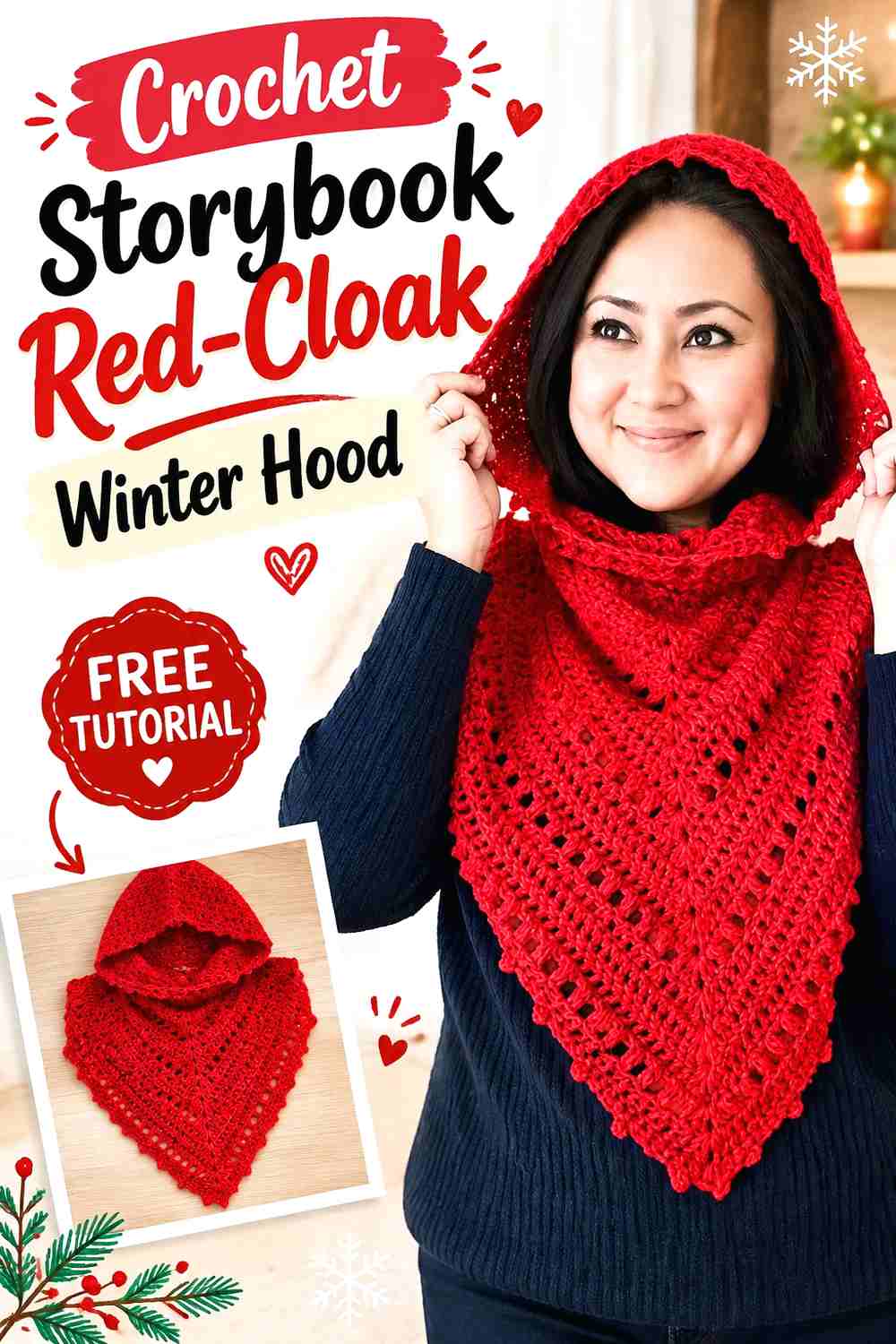
The Knotty Lace’s hooded cowl takes direct inspiration from a Little Red Riding Hood-like combination of hood, neck warmer, and cape or poncho styling. Its design includes textured elements and a roomy hood rather than a tight balaclava form.
That makes it a strong starting point for fairy-tale villager, winter court, woodland traveler, or storybook fantasy outfits.
The Shoulder Shape Adds More Drama Than a Plain Cowl
A broader lower section makes the hood feel connected to the torso.
If your fantasy outfit is otherwise simple, this can provide enough shape without requiring a separate cloak.
Keep the Decorative Edge Proportional
The source construction already includes surface texture and decorative finishing.
If adapting the color palette, you may not need additional fringe, tassels, appliqués, and clasps at the same time. Decide which one feature should attract attention.
Deep Red Is Only One Storybook Direction
Forest green, plum, midnight blue, parchment, charcoal, or brown can shift the same broad silhouette toward different fantasy characters.
Use color to change the story while respecting the underlying hood construction.
Creator Credit: The Knotty Lace
14. Crochet Woodland Fox Familiar Hood
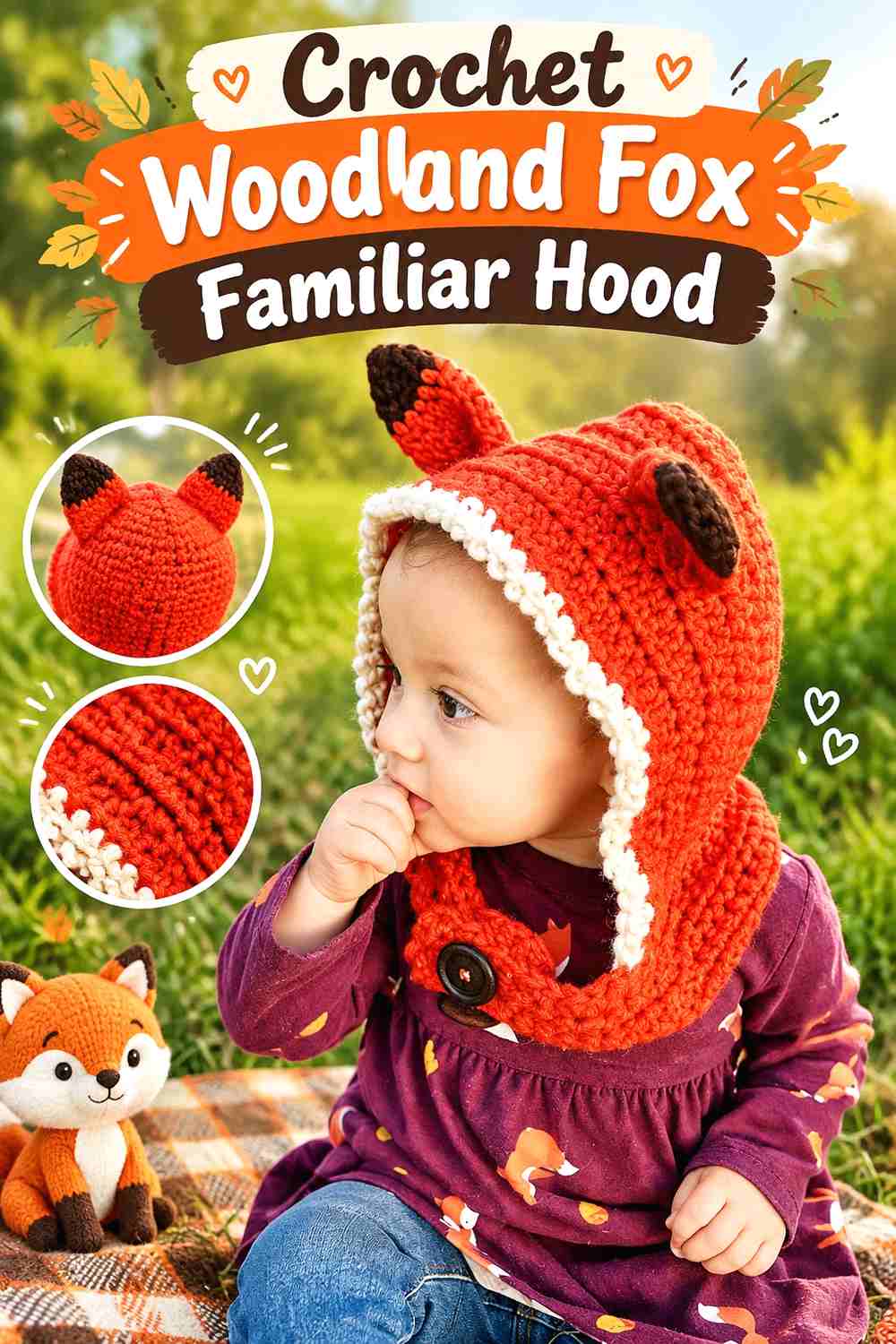
A fox hood brings an animal-fantasy direction into the collection. Happy Cat Crochet’s tutorial demonstrates a dimensional fox hooded cowl with ears, making this project visibly different from the human historical-inspired silhouettes elsewhere in the list.
It can work for woodland-familiar, shapeshifter, forest guardian, fae, or playful Ren Faire styling where realism is not the goal.
The Ears Should Remain the Focal Fantasy Feature
Pointed ears already change the hood dramatically.
Avoid adding several other equally strong elements such as horns, oversized tassels, multiple appliqués, and heavy edging unless you deliberately want a highly theatrical costume.
Earthier Colors Can Reduce the Costume Effect
Orange creates an obvious fox reference, but brown, russet, gray, cream, or black can push the same ear silhouette toward a more general woodland creature.
Choose whether the finished hood should clearly read “fox” or simply suggest a fantasy animal.
Check Ear Position With the Hood Worn
Features that look symmetrical while lying flat can sit differently once the hood curves over the head.
Evaluate ear placement in the worn position before making any independent decorative additions around them.
Creator Credit: Happy Cat Crochet
15. Crochet Enchanted Mage Cloak Hood
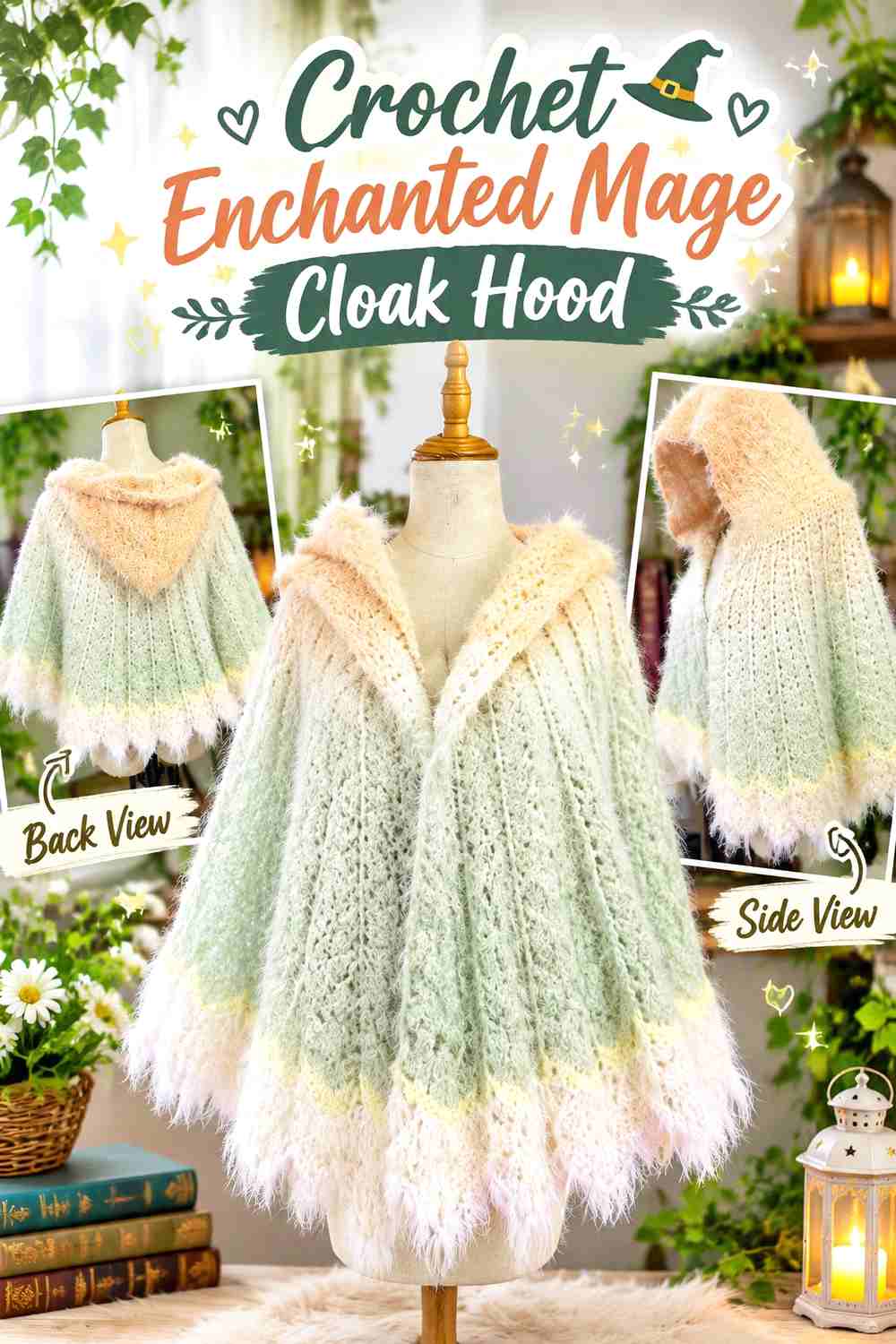
For the most dramatic fantasy option, use a hood that belongs to a complete cape rather than a standalone accessory. M49.5’s tutorial demonstrates a crocheted hooded cape, creating substantial shoulder and body coverage in addition to the headpiece.
This construction suits mage, sorcerer, court traveler, woodland guardian, or fantasy-cloak styling where the hood needs to feel inseparable from the outer garment.
The Cloak Changes the Importance of Hood Proportion
A hood attached to a large cape must balance against much more fabric than a balaclava or cowl.
An extremely small hood can appear visually lost, while excessive hood volume can pull backward. Follow the original construction before making major proportion changes.
Drape Matters Across the Entire Garment
A fiber substitution affects more than the face opening.
The same yarn determines how the cape falls over the shoulders and how the hood collapses when lowered. Make a fabric sample large enough to judge hanging behavior, not just stitch gauge.
Keep Closures From Carrying Too Much Weight
A fantasy clasp can look striking at the throat, but the crochet fabric still has to support it.
Use closures appropriate to the structure and avoid assuming a heavy decorative piece will behave like hardware attached to woven or leather clothing.
Creator Credit: M49.5
Which Crochet Medieval Winter Hood Fits Your Fantasy Style?
For a guard, sentinel, or armor-adjacent look, start with the Checkered Sentinel, Cabled Castle Guard, or Granny-Square Tavern Keeper Hood. The first stays close to the head, the second emphasizes heavy relief, and the third adds open modular texture.
For monk, scholar, healer, or village styling, the Adjustable Monastery Cowl, Merchant Snood, Infinity Scholar Hood, or Minimal Cloister Tube Hood creates softer folds with fewer overt costume details.
The Striped Ranger, Long Pilgrim Wrap, and Pocketed Road-Warden Hooded Scarves are strongest when you want long front panels to remain part of the outfit after the hood is lowered.
Choose the Storybook Red-Cloak Hood when shoulder coverage and fairy-tale styling matter, the Woodland Fox Hood for fae or creature-inspired fantasy, and the Enchanted Mage Cloak Hood when you want the hood to belong to a full dramatic outer garment.
The Ribbed Court Bonnet Cowl sits between those groups: structured enough for a polished character look but still compact enough for practical winter layering.
Conclusion
The most effective crochet medieval winter hood starts with silhouette rather than decoration.
Choose a close balaclava for a sentinel, cables for a heavier guard look, granny motifs for a folk or tavern feel, a deep cowl for monastic styling, long scarf panels for a ranger or traveler, or a cape hood for the strongest fantasy statement. Once the shape is right, color and finishing can move the project toward woodland, court, village, mage, or armor-inspired styling.
For winter wear, keep comfort as important as appearance. Check the hood over the hairstyle and clothing you intend to wear, make sure the face opening does not interfere with vision, and consider how much fabric will collect around the neck when the hood is lowered.
Follow the credited creator tutorials for exact construction, sizing, stitch placement, and finishing, then use color, layering, and restrained fantasy details to develop your own medieval-inspired style.
Frequently Asked Questions
Are crochet medieval winter hoods historically accurate?
These projects are best understood as modern fantasy-inspired crochet rather than historical reconstructions. They borrow visual ideas such as deep hoods, close coif-like coverage, long traveler panels, cloak silhouettes, earthy colors, and textured surfaces. Historical reenactment requires separate research into the specific period, location, materials, and garment construction.
Which crochet hood shape looks most like a medieval fantasy ranger?
A hooded scarf works especially well because its long front panels create a layered traveler silhouette. The Striped Woodland Ranger, Long Pilgrim Wrap, and Pocketed Road-Warden ideas are useful starting points if you want that look.
What colors work well for a medieval-inspired winter hood?
Forest and moss green, bark brown, charcoal, pewter, oatmeal, rust, muted burgundy, faded black, deep blue, and subdued jewel tones all fit the theme. The most useful color depends on the character and the clothing worn underneath.
Is a pointed hood necessary for medieval fantasy style?
No. A pointed hood creates an obvious elf or fairy-tale reference, but rounded hoods, balaclavas, snoods, cowls, and cloak hoods can look equally convincing when the silhouette and surrounding layers support the character.
How do I choose between a hooded cowl and a hooded scarf?
Choose a hooded cowl when you want fabric concentrated around the neck with few loose sections. Choose a hooded scarf when long front panels are part of the desired look or when you want more wrapping and styling options.
What should I check before changing yarn in a crochet hood tutorial?
Compare gauge, stretch, drape, fabric weight, and softness against the face. A substitution that matches stitch dimensions can still behave very differently around the crown and neck. For cloaks and long scarves, the extra finished weight also matters.
How can I make a modern crochet hood look more fantasy-inspired without changing the pattern?
Start with an old-world palette and the clothing around it. Pair the hood with a simple tunic-shaped layer, long coat, cloak, textured scarf, or understated clasp. A narrow contrasting edge or one carefully chosen fastening can reinforce the theme without altering the creator’s construction or covering the hood in costume embellishments.