A crochet mantel scarf adds a textile layer beneath garlands, stockings, small houses, greenery, and other Christmas decorations. Unlike a full table runner, a mantel scarf has to work with a much shallower surface, so width, edge shape, overhang, and the placement of dimensional details matter just as much as the stitch pattern.
The tutorials in this collection include Christmas runners and adaptable decorative runners that can inspire mantel-sized versions. Some are long continuous strips, while others are assembled from snowflakes, stars, flowers, or granny motifs. That variety gives you options for everything from a traditional red-and-green fireplace display to an airy winter-white mantel.
The focus here is on practical differences in drape, motif scale, finishing, and adaptation rather than reproducing any creator’s pattern.
Quick List
- Crochet Filet Christmas Tree Mantel Scarf
- Crochet Snowflake Motif Mantel Scarf
- Crochet Joined Star Mantel Scarf
- Crochet Bell-and-Lace Mantel Scarf
- Crochet Sparkle Lace Mantel Scarf
- Crochet Broad Holiday Mantel Scarf
- Crochet Red, White, and Gold Mantel Scarf
- Crochet Daisy-Texture Mantel Scarf
- Crochet Classic Rectangular Mantel Scarf
- Crochet Moss-Stitch Fringe Mantel Scarf
- Crochet Granny-Square Mantel Scarf
- Crochet Zigzag Granny Mantel Scarf
- Crochet Flower-Motif Mantel Scarf
Measure the Mantel Before Choosing the Runner Style
A mantel is usually much shallower than a dining table, so a runner that looks perfectly proportioned on a table may extend too far toward the front edge when used as a scarf.
Measure both the usable shelf depth and the length you want to cover. Then decide whether the scarf should remain fully on top, hang slightly at the ends, or create a longer draped effect on one or both sides.
Also account for irregular edges. Snowflakes, stars, scallops, tassels, and granny motifs may extend beyond the main body of the crochet even when the central section fits comfortably.
If you already know where stocking holders, garland hooks, candlesticks, houses, or figurines will sit, include those areas in your layout before settling on the scarf dimensions.
Keep Crochet Decor Clear of Fireplace Heat and Flame
A crochet mantel scarf is decorative textile, not a heat shield or fireplace accessory.
Keep yarn, fringe, tassels, garlands, stockings, and other textile decor away from open flames, hot surfaces, vents, fireplace openings, and any clearance area required by the fireplace or appliance manufacturer. Do not assume a fiber is safe near heat simply because it feels thick or sturdy.
The same applies to candles. If candles are part of the mantel arrangement, use placement that keeps flame well away from crochet and surrounding decorations. A safer arrangement may mean leaving part of the mantel uncovered rather than running the scarf directly beneath every decorative object.
Choose Between a Flat Background and a Decorative Edge
A straight rectangular scarf acts as a background layer. It works well beneath elaborate greenery, ornaments, village houses, or stocking holders because the crochet does not compete strongly with the objects above it.
Motif scarves behave differently. Snowflakes, stars, granny squares, and flowers create their own outline, so they can become part of the centerpiece even before other decorations are added.
For a heavily decorated mantel, a calmer textured strip may provide better balance. For a minimalist mantel with only greenery and lights, a pointed star or snowflake edge can supply more of the visual interest.
1. Crochet Filet Christmas Tree Mantel Scarf
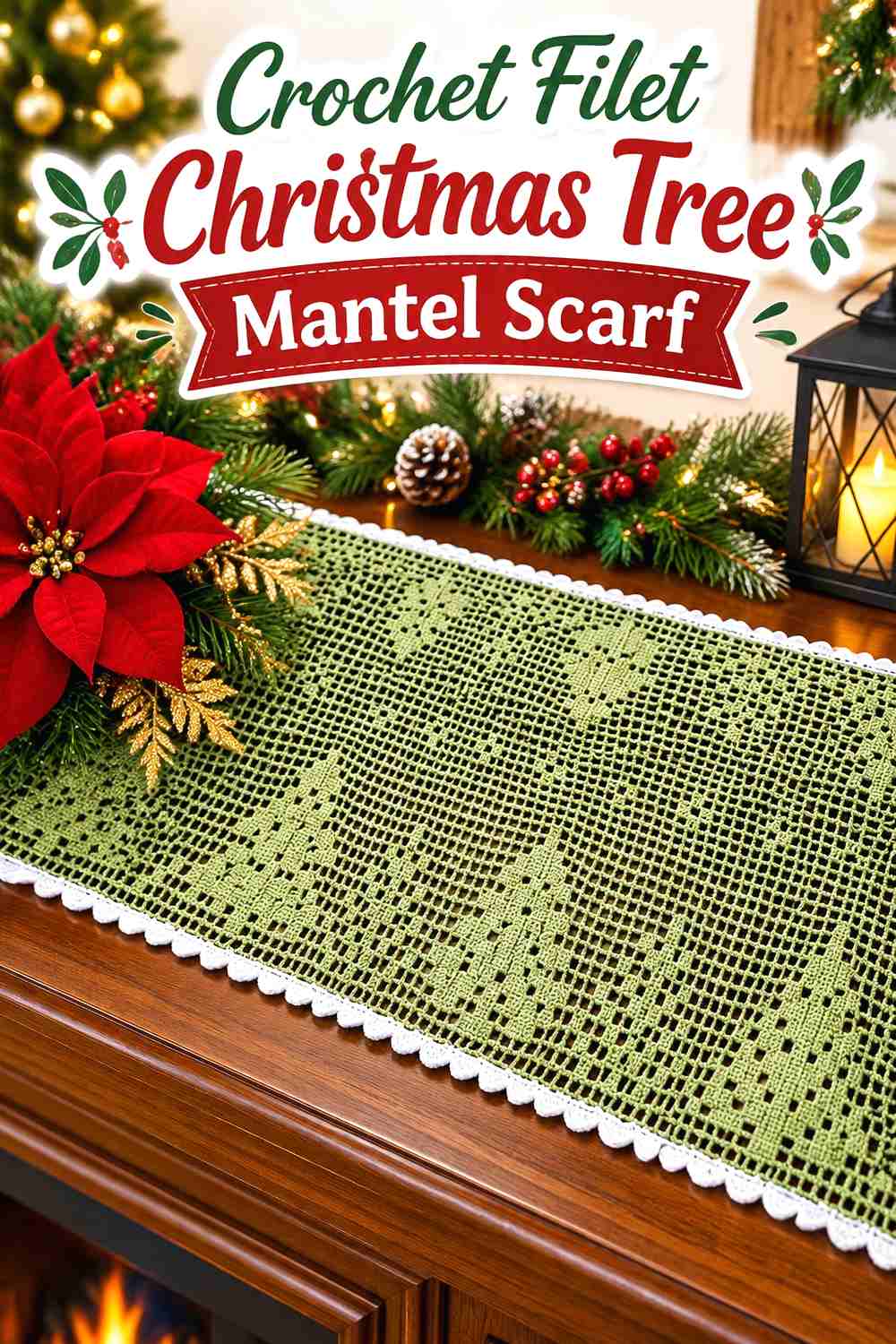
A filet Christmas tree design is one of the clearest ways to make the scarf itself carry the holiday theme. Open and solid sections create the tree silhouettes directly in the fabric, so there are no separate appliques competing with objects placed on top.
This works especially well across a relatively uncluttered mantel where the tree images remain visible instead of disappearing beneath dense garland.
Keep the Filet Trees in the Visible Zone
Before adapting the runner length, decide which section of the scarf will actually be visible once your mantel is decorated.
If a thick evergreen garland will cover most of the back half, position the recognizable tree imagery toward the front where it can still be seen. There is little benefit in spending time on a graphic motif that will be hidden for the entire season.
Straight Blocking Matters With Filet Crochet
A graphic grid depends on consistent alignment. Uneven edges or a twisted strip can make otherwise clear tree silhouettes look less crisp.
Finish and block according to the fiber you use before arranging the final mantel display. Do not rely on heavy decorations to hold an uneven scarf flat.
Contrast the Trees With the Mantel Surface
Open filet sections allow the mantel itself to show through.
A dark green scarf can read clearly against a light painted shelf, while a light filet design may stand out more effectively against wood or a dark surround. Consider the surface as part of the color plan.
Creator Credit: HandmadebyRaine
2. Crochet Snowflake Motif Mantel Scarf
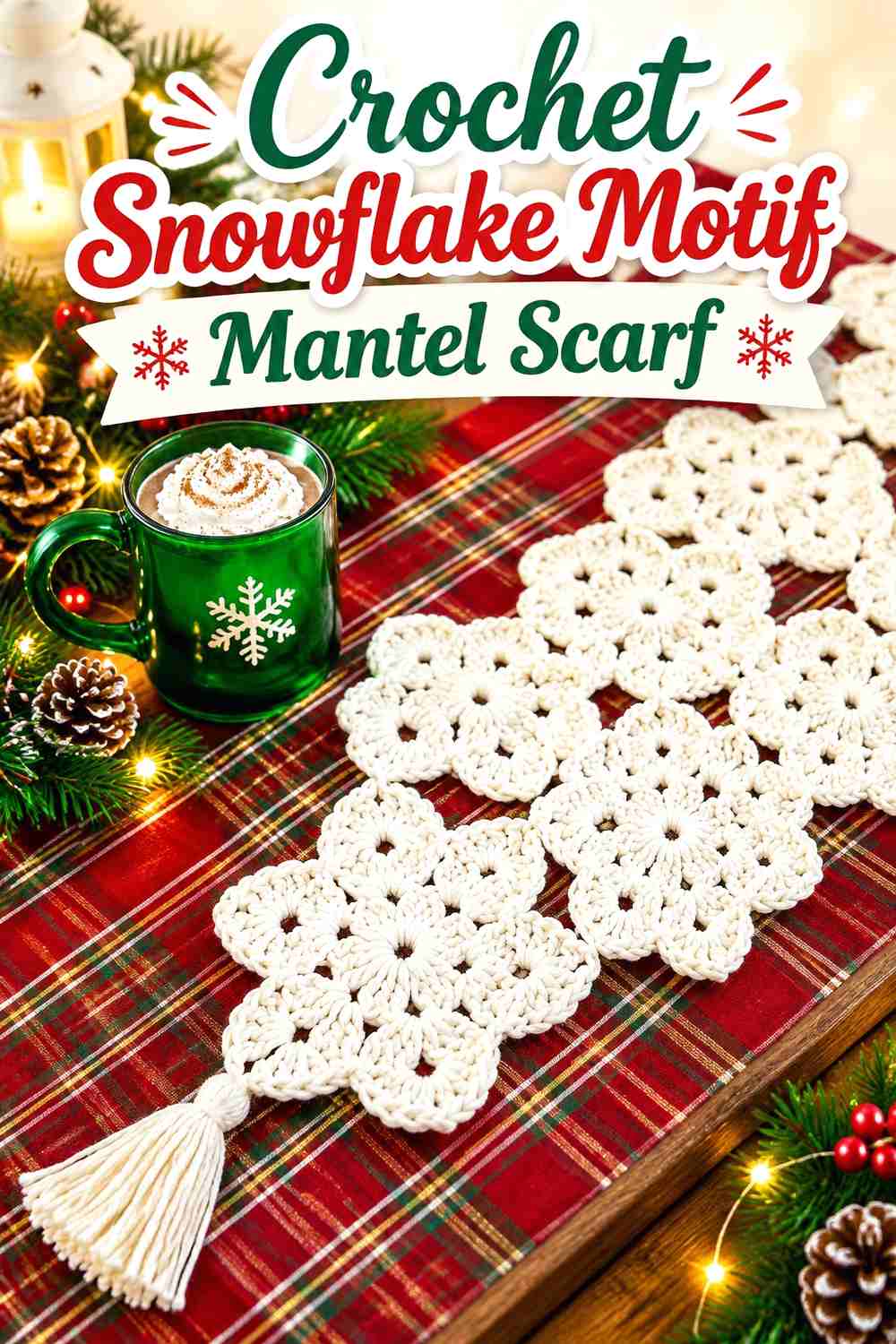
Individual snowflakes create a much lighter silhouette than a solid strip. Joined together, they can form an airy winter scarf that leaves portions of the mantel visible between the motifs.
This construction works particularly well with white, cream, pale gray, or icy blue decor where you want the display to feel seasonal without relying heavily on red and green.
Motif Size Controls the Finished Depth
A large snowflake may fit beautifully on a dining table but extend too far over a shallow mantel.
Complete one motif and place it on the actual shelf before making the full set. That single test can tell you whether the chosen yarn and hook produce a useful scale.
Join Consistency Affects the Whole Outline
Snowflakes have many points, so small differences between motifs become more visible after joining.
Compare completed pieces before assembly and correct obvious sizing differences first. Forcing one tight snowflake between larger neighbors can distort the entire scarf.
Tassels Are Optional for Mantel Placement
Tassels create movement on a table runner, but they may compete with hanging stockings or garlands on a mantel.
If you like the motif layout but the lower additions create clutter, consider whether the scarf looks complete without extra hanging elements rather than assuming every detail must be retained.
Creator Credit: Fiber Flux
3. Crochet Joined Star Mantel Scarf
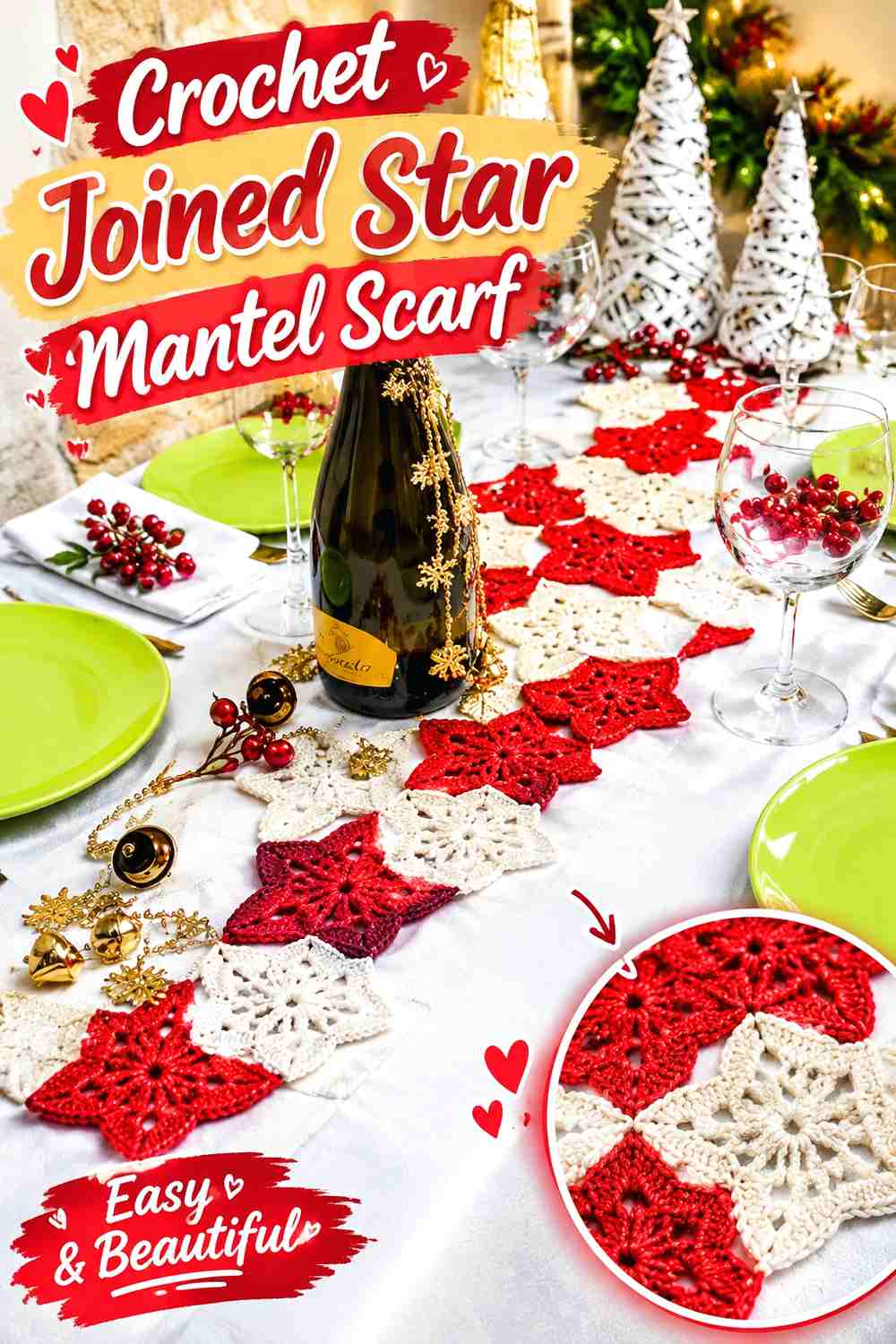
Connected stars give this scarf an irregular, pointed edge that feels more like a series of Christmas ornaments than a conventional runner. It can be especially effective on a plain mantel where the crochet itself needs to provide much of the decoration.
Using multiple star scales can also create more movement than repeating one identical unit from end to end.
Give the Star Points Room to Show
Avoid placing stocking holders or heavy decor directly on every outer point.
The pointed silhouette is the feature that distinguishes this design from a rectangle, so leave at least some sections exposed where the shape can be appreciated.
Mixed Motif Sizes Need a Planned Layout
If the construction uses both larger and smaller stars, arrange the entire sequence before committing to the final joins.
A mantel is viewed mostly from the front, so visual balance across the horizontal line matters more than how an individual star looks on the worktable.
Check the Edge From Across the Room
Detailed star points can appear very different at normal viewing distance.
Temporarily place the finished motifs on the mantel and step back. If the points visually disappear against a busy garland or patterned background, simplify the surrounding decor rather than adding still more crochet detail.
Creator Credit: Francesca Uncinettando Crochet&Love
4. Crochet Bell-and-Lace Mantel Scarf
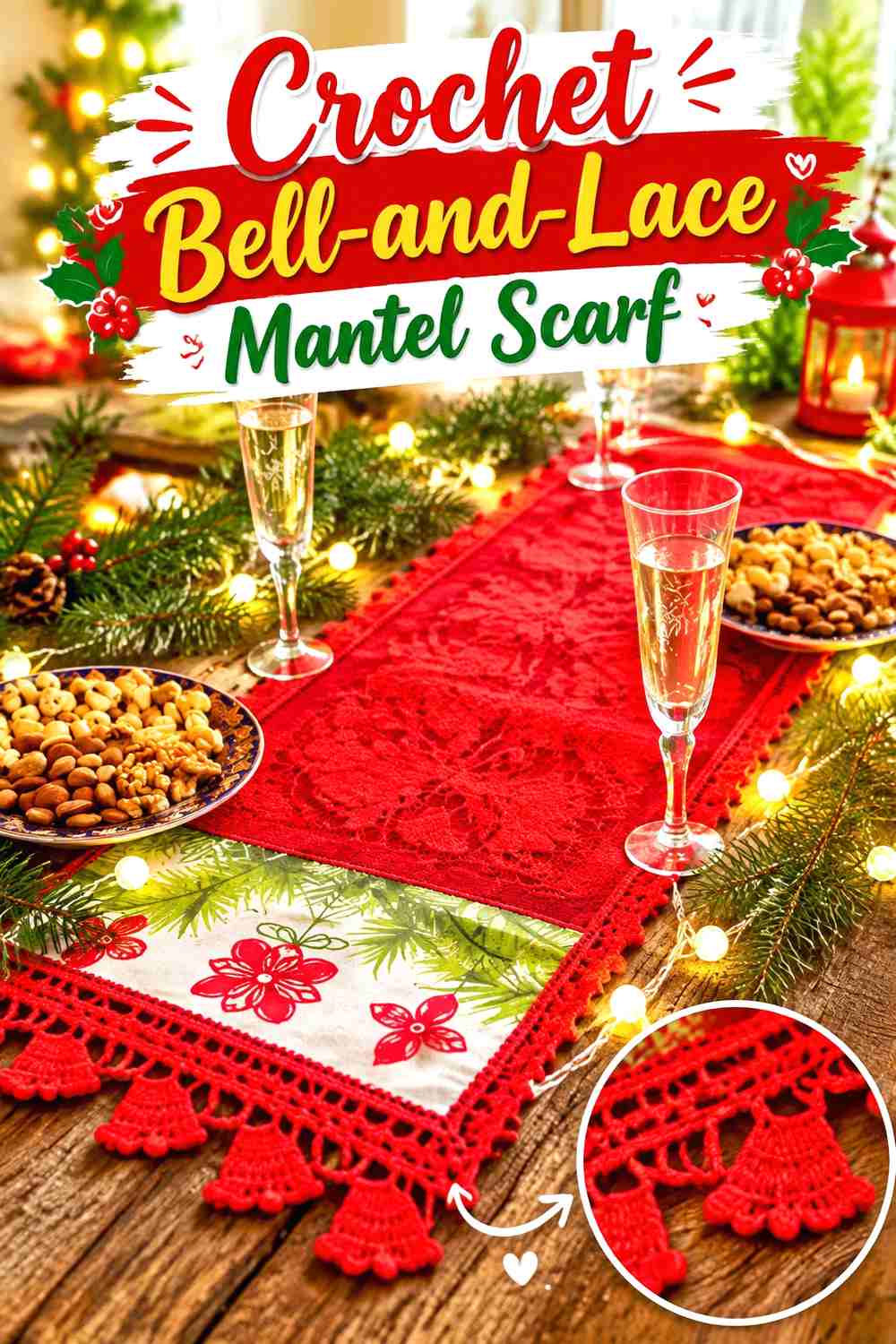
A bell motif gives the scarf a traditional Christmas identity before stockings or ornaments are added. Combined with decorative lace, it creates a more ornamental look than a simple textured strip.
This direction works especially well with classic Christmas decor—greenery, red accents, brass tones, old-fashioned ornaments, and familiar holiday figurines.
Keep Bell Motifs From Disappearing Under Decor
Recognizable images need clear viewing space.
Position village houses, greenery, or stocking holders so they frame rather than completely cover the bells. If only a narrow front portion of the scarf will remain visible, make sure that is where the strongest motifs appear.
Lace Adds Effective Width
A lace border may look visually light, but it can still extend well beyond the central panel.
Measure the completed width or create a sample before deciding whether the piece suits a shallow shelf. A narrower main section with an open border may be more practical than simply shrinking the entire design.
Traditional Motifs Need Less Extra Decoration
Bells plus lace already make the scarf visually specific.
If the mantel begins to feel crowded, remove small filler objects before adding more crocheted motifs. Let the scarf carry some of the seasonal storytelling.
Creator Credit: Hablemos de Magia Crochet
5. Crochet Sparkle Lace Mantel Scarf
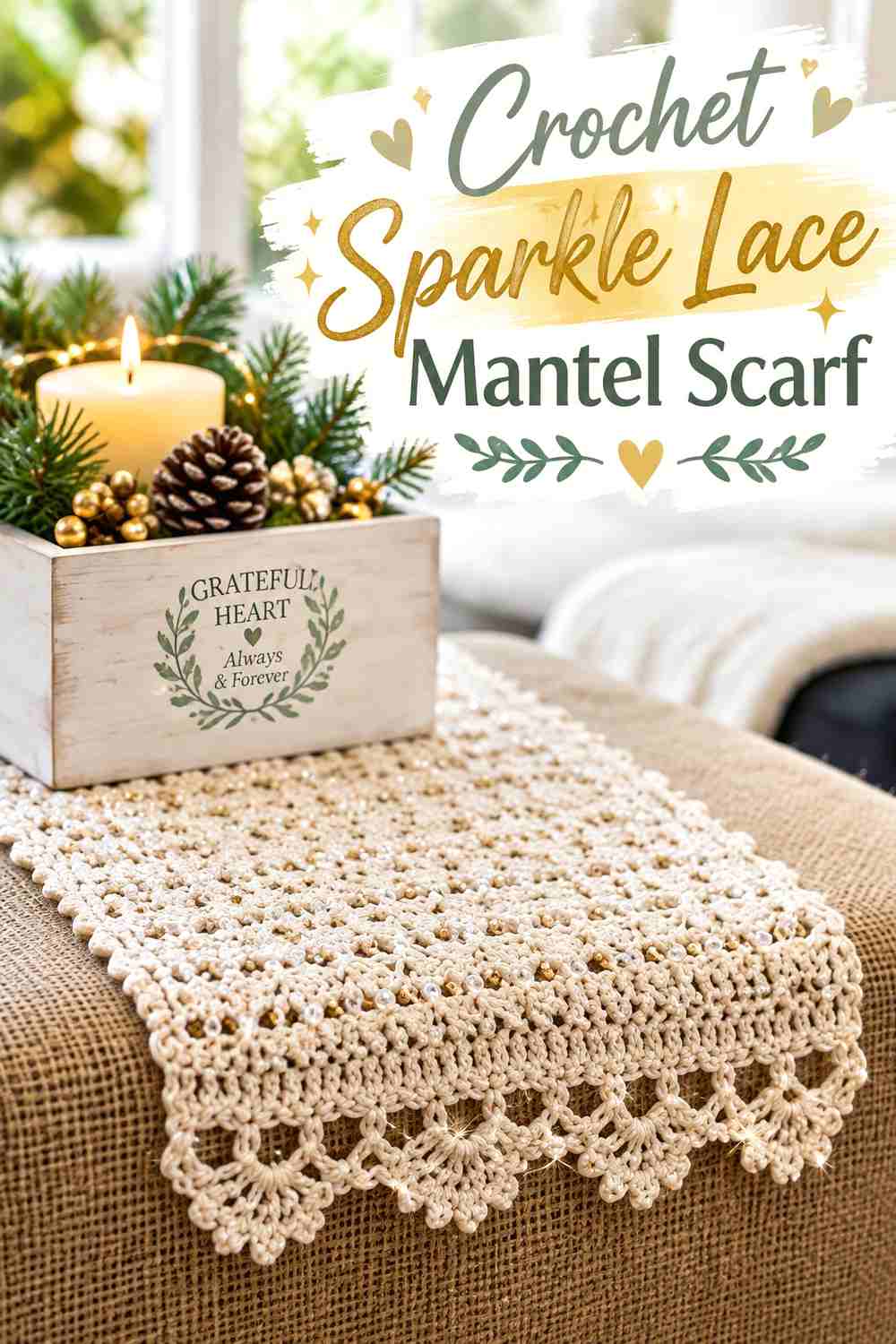
Fine crochet with a subtle sparkle produces a much more formal mantel scarf than chunky farmhouse texture. It can work well beneath glass ornaments, metallic trees, crystal-like decorations, or a restrained white-and-gold Christmas display.
Because the fabric is lighter, it also avoids creating a heavy visual band across the mantel.
Test Sparkle Under Evening Lighting
Metallic or sequined threads can look understated in daylight and considerably brighter beside Christmas lights.
Make a small sample and place it where the scarf will be displayed before committing to a large amount of specialty yarn.
Fine Crochet Benefits From Open Surface Around It
A delicate scarf can disappear beneath thick garland.
If you choose a lace-based design, consider arranging greenery toward the back and leaving enough of the front section uncovered for the crochet to remain visible.
Avoid Overloading a Detailed Thread
Specialty yarn already introduces texture.
Adding numerous bead strands, metallic cords, and glittery ornaments directly on top of it can make the surface visually chaotic. A limited number of repeating metallic accents often creates a more coherent display.
Creator Credit: Las Totoras Crochet
6. Crochet Broad Holiday Mantel Scarf
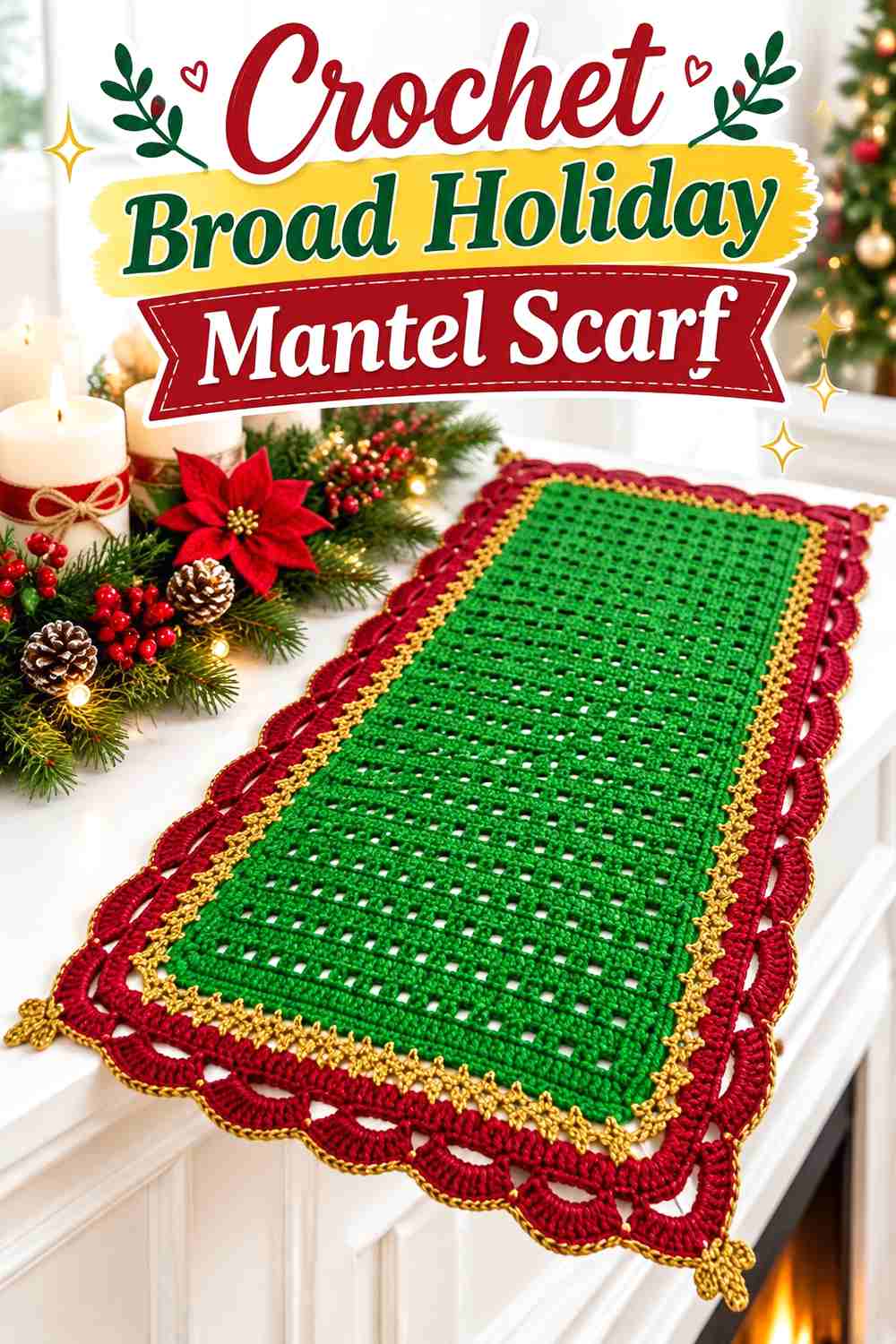
A wider decorative Christmas runner can be adapted into a substantial mantel scarf when you want the textile to cover most of the shelf surface rather than act as a narrow accent.
This approach is useful beneath a sparse arrangement of houses, ceramic trees, ornaments, or greenery because the crochet provides much of the visual foundation.
Width Needs the Most Attention
Table runners are often designed with more surface depth available than a mantel provides.
Before starting, compare the demonstrated proportions with your actual shelf. If adaptation is possible within the tutorial construction, prioritize getting the depth right before deciding how long the scarf should be.
Broad Crochet Changes How Objects Sit
A thicker or more textured scarf creates a different base than bare wood or stone.
Check whether stocking holders, frames, houses, or other decorations remain stable when placed on the finished textile. Do not allow decorative fabric to create an unstable surface for heavy objects.
Use Color Blocks to Organize the Mantel
A broad scarf provides enough area for multiple holiday colors to be visible.
Rather than scattering every shade evenly, consider allowing one color to dominate and using the others to connect with nearby ornaments or garland.
Creator Credit: Mimos da Jô Tapetes e Trilhos
7. Crochet Red, White, and Gold Mantel Scarf
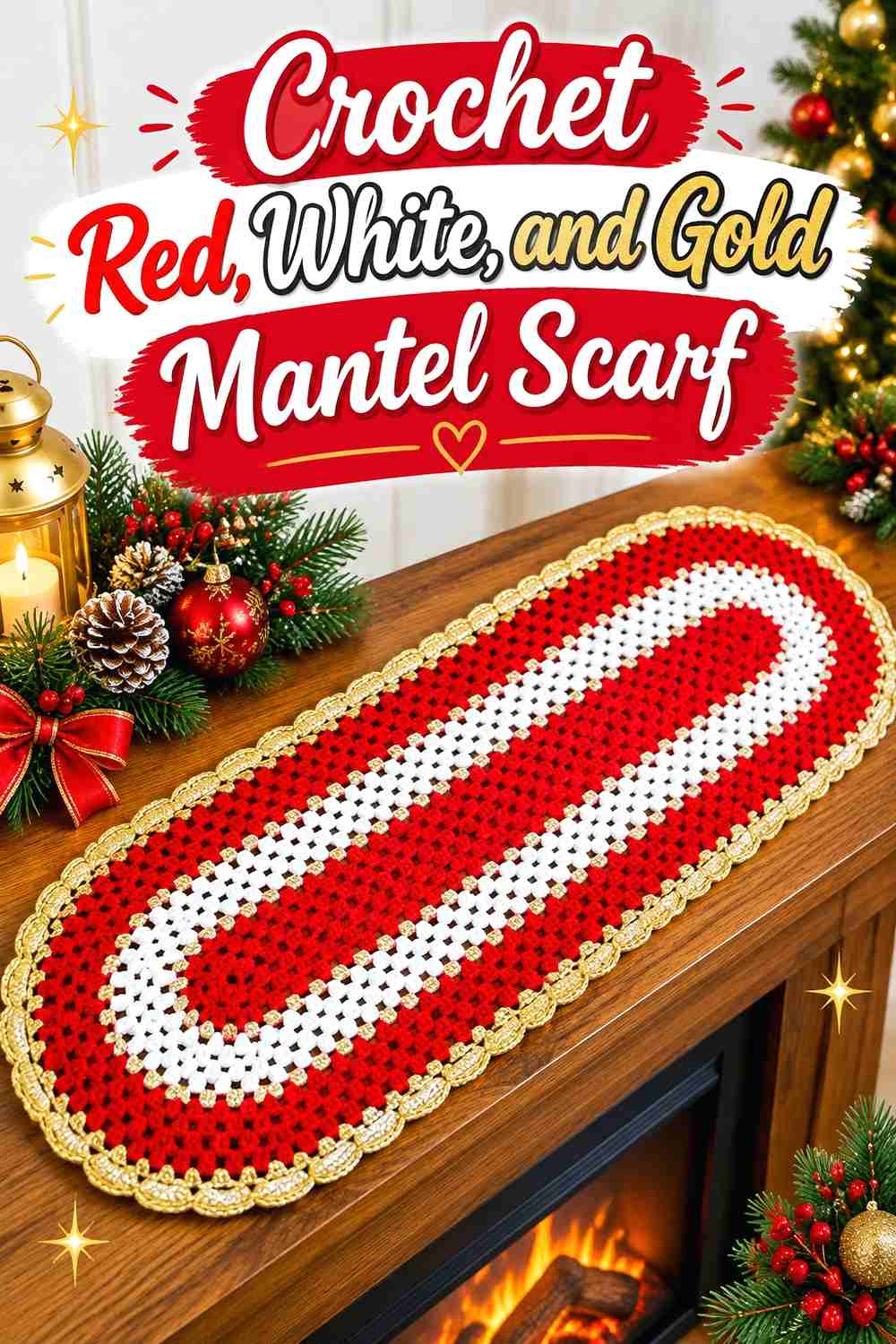
A three-color scarf provides a strong traditional holiday palette without requiring separate appliques. Red creates warmth, white creates contrast, and gold can connect the crochet with metallic ornaments, stocking holders, bells, or frames.
This design works best when the mantel itself is not already overloaded with competing colors.
Choose One Dominant Color
Using red, white, and gold in identical visual proportions can make the scarf feel busy.
Choose the color that should establish the main field and let the others serve as supporting accents. The dominant shade should also contrast enough with the mantel surface to define the scarf’s edges.
Repeat Gold Selectively Around the Display
If gold appears in the crochet, repeating it once or twice elsewhere can make the mantel feel coordinated.
A few gold ornaments or a metallic stocking holder may be enough. Too many reflective pieces can compete with the yarn rather than reinforce it.
Check the Palette With the Stockings
Stockings hang directly below the scarf, so they become part of the same composition.
Place their colors beside the proposed yarn before starting. If the stockings already contain strong red-and-green patterns, a more restrained version of the scarf may keep the display balanced.
Creator Credit: D Tejidos a Crochet
8. Crochet Daisy-Texture Mantel Scarf
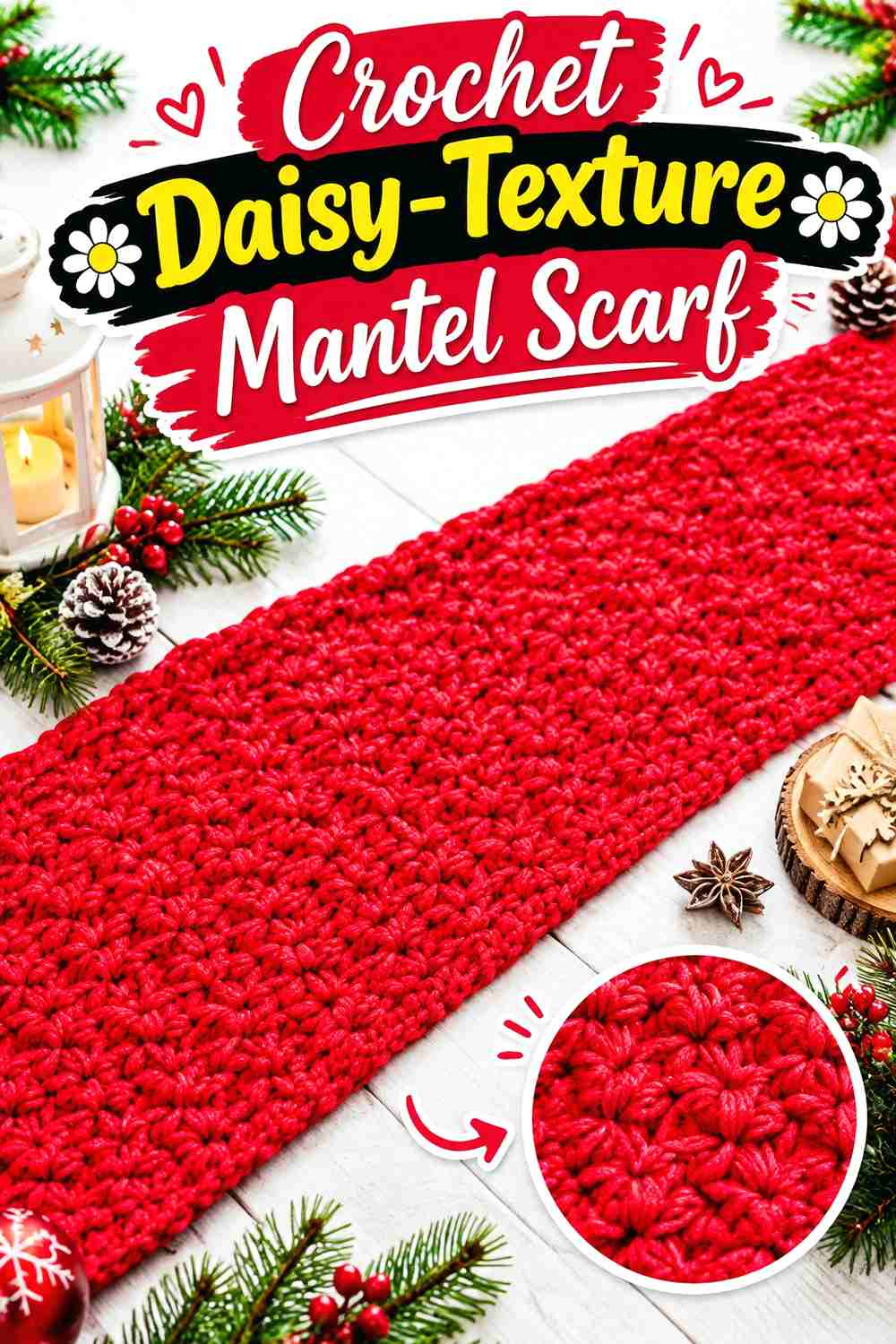
A repeated raised texture gives this scarf interest without requiring obvious Christmas pictures. Worked in a seasonal shade, it can fit farmhouse, woodland, Scandinavian-inspired, or neutral Christmas decor.
This is a useful choice when stockings, greenery, and ornaments already provide the recognizable holiday symbols.
Texture Works Well Beneath Simple Decor
Raised stitches catch small shadows under Christmas lights, giving a single-color scarf more depth than plain fabric.
Pair it with relatively simple objects so the stitch texture remains visible instead of covering every section with greenery.
Fuzzy Yarn Can Hide the Stitch Pattern
If the repeating texture is the reason you chose this construction, prioritize yarn that shows it clearly.
A highly brushed or novelty yarn may soften the surface until the defining stitch pattern becomes difficult to see.
Straight Edges Matter on a Minimal Design
Without pointed motifs or colorwork to distract the eye, gradual narrowing or widening can become more noticeable.
Lay the scarf flat periodically and compare the two long edges rather than waiting until the entire length is finished.
Creator Credit: Raji’s Craft Hobby
9. Crochet Classic Rectangular Mantel Scarf
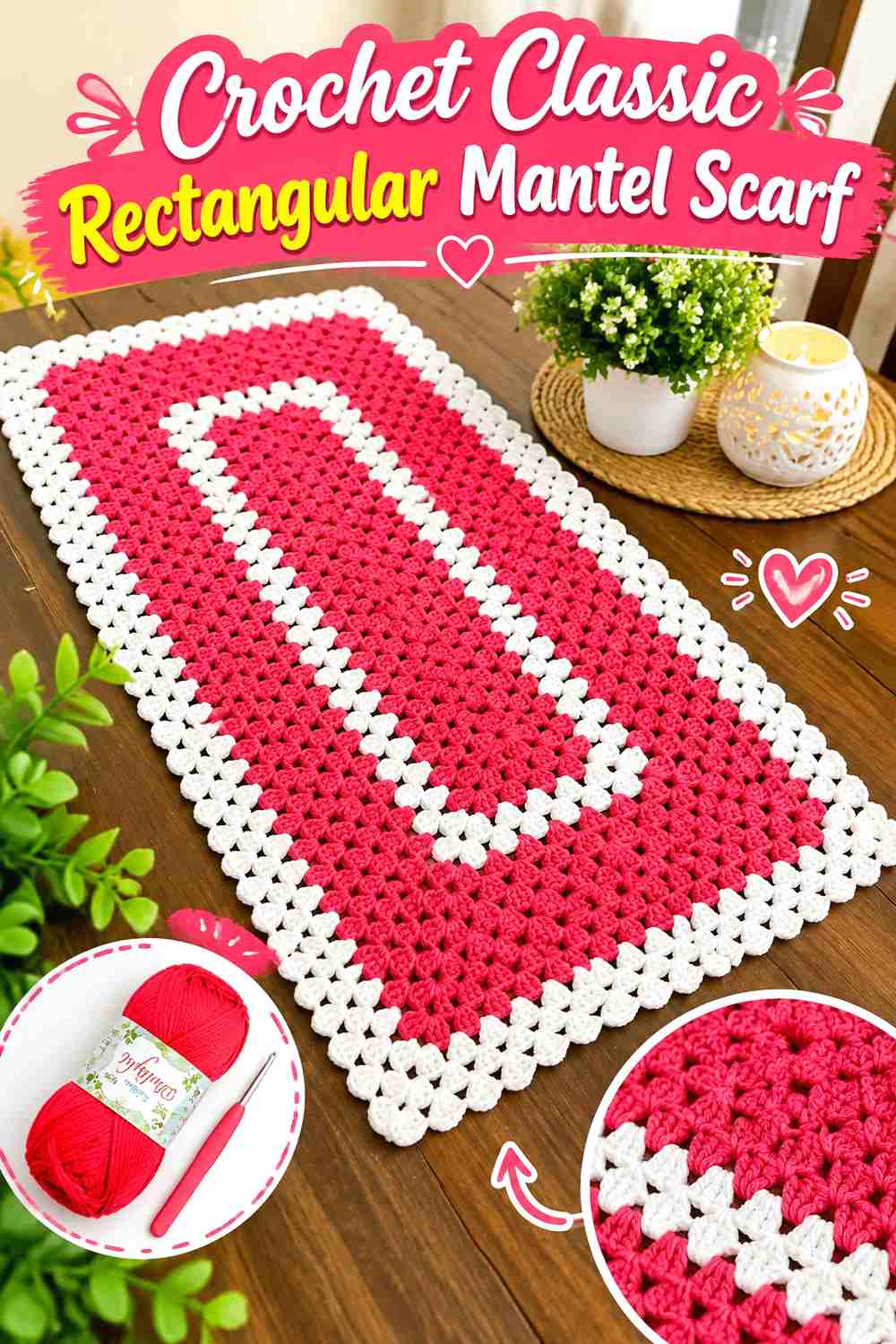
A simple rectangle may be the most useful choice when the mantel already includes elaborate garland, stockings, lights, signs, and figurines.
Instead of becoming another focal point, the scarf functions as a soft background layer that separates the decorations from the hard mantel surface.
Simple Construction Makes Proportion More Important
With no elaborate motif to distract from the silhouette, width and length become the main design decisions.
Mock up the planned footprint with folded fabric or paper before starting. This quickly shows whether you want the scarf flush with the mantel, slightly overhanging, or stopping short of the ends.
Let Yarn Color Carry the Holiday Mood
A restrained construction leaves plenty of room for color choices to influence the finished look.
Forest green can feel traditional, cream can lighten a dark fireplace surround, and deep red can create a stronger Christmas band beneath neutral greenery.
A Flat Scarf Is Easier to Layer
A relatively even surface gives you more freedom to place lightweight decorative objects without navigating around large appliques or tassels.
Still check that every object remains stable, especially near the edge of the mantel.
Creator Credit: The Art Zone
10. Crochet Moss-Stitch Fringe Mantel Scarf
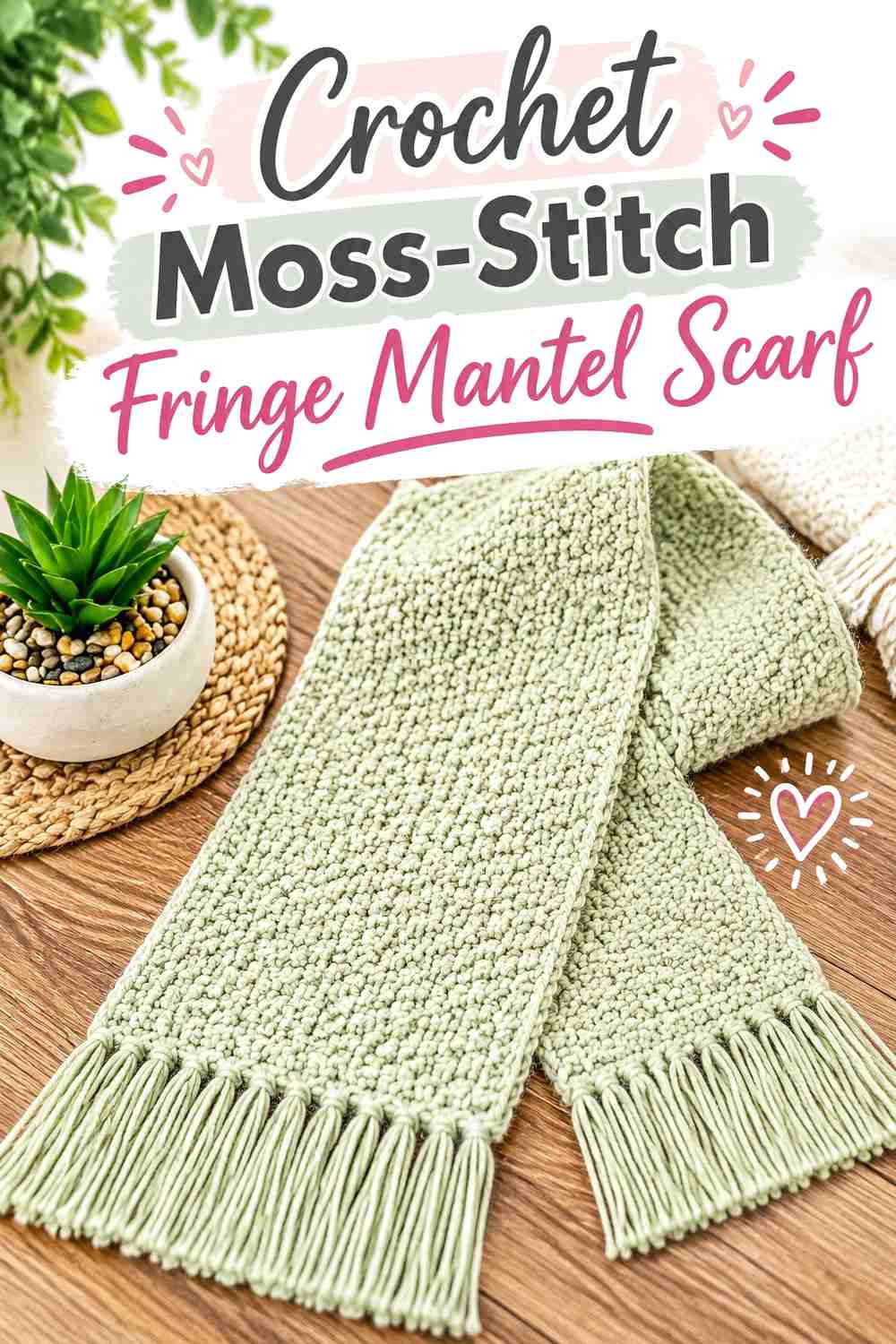
Moss stitch creates a neat woven-looking surface that can fit both modern and rustic Christmas decor. Fringe at the ends adds movement without making the entire long edge irregular.
For a mantel, this design is especially useful when you want the center section to remain simple beneath decorations while allowing the ends to feel more finished.
Fringe Works Best at the Outer Ends
Long fringe hanging from the front edge can interfere with stockings or nearby decor.
Keeping it primarily at the ends preserves the decorative finish while allowing the central front edge to remain controlled.
Moss Stitch Handles Stripes Quietly
The small-scale texture can support subtle color changes without turning the scarf into bold graphic colorwork.
Consider narrow bands of cream, green, or red if you want more holiday character while preserving the understated construction.
Check the Finished Tassel Drop
If the scarf extends past the mantel ends, fringe adds additional vertical length.
Measure that drop against nearby furniture, cords, decorations, and walking paths before choosing a dramatic tassel length.
Creator Credit: Jo to the World Creations
11. Crochet Granny-Square Mantel Scarf
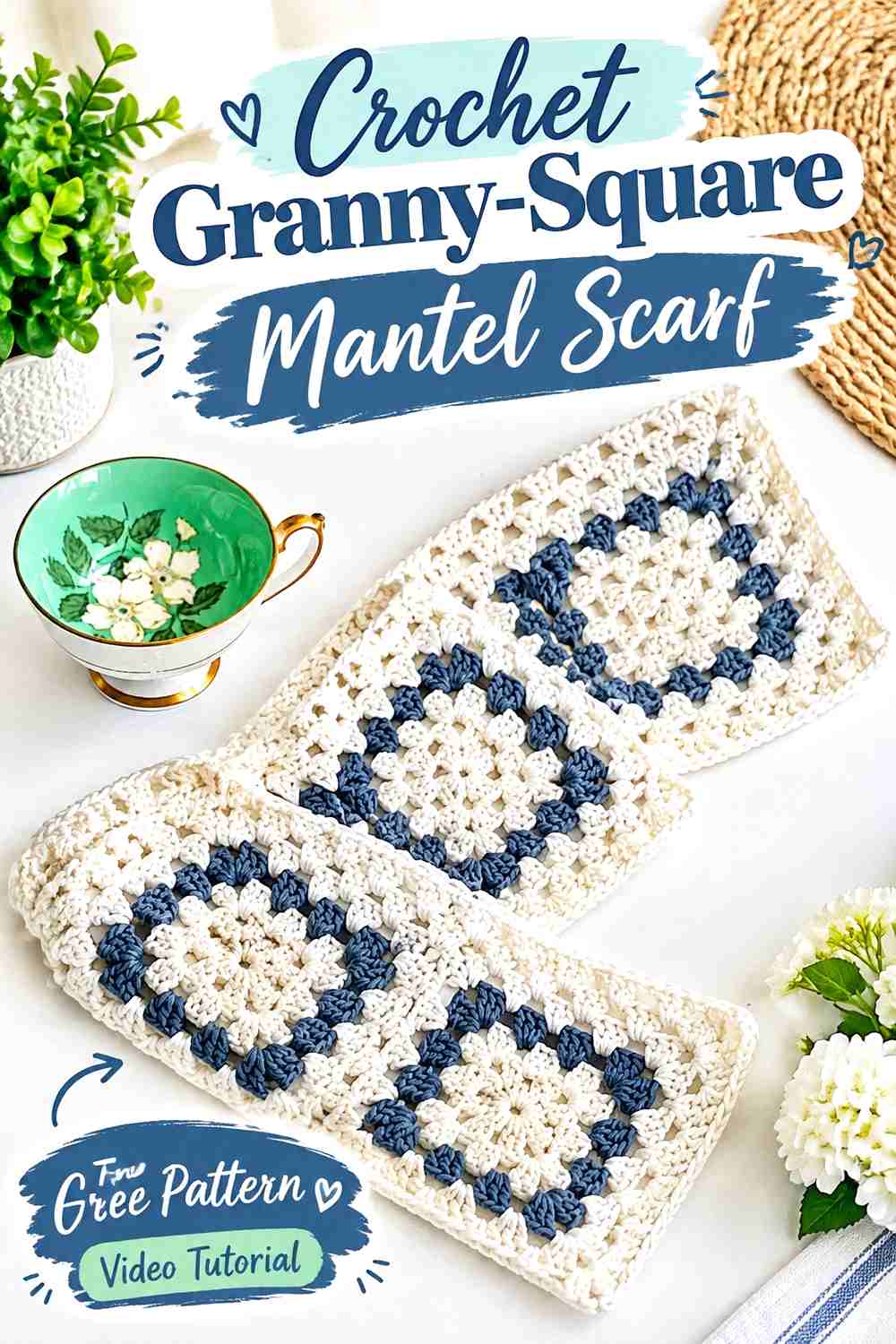
A scarf assembled from granny squares creates a collected, nostalgic Christmas look. Each motif is worked separately and then becomes part of a longer composition, making color planning much more flexible than in a single continuous strip.
This construction can be particularly useful when you want to use several coordinating Christmas shades without creating conventional stripes.
Block the Squares Before Planning the Final Length
A mantel scarf made from motifs depends on consistent units.
Compare the squares after any finishing or blocking you intend to do, then arrange them across the actual mantel before joining the final layout.
Color Placement Can Prevent Repetition
Alternating identical squares in one strict sequence can look formal, while rotating several related color arrangements creates a more collected appearance.
Use a limited palette to keep the motifs connected even if the internal color order changes.
Joining Becomes Part of the Design
The join may be nearly invisible or visually prominent depending on the chosen approach.
Think about whether you want the connection between squares to form another decorative line across the mantel or disappear into the individual motifs.
Creator Credit: American Crochet Association
12. Crochet Zigzag Granny Mantel Scarf
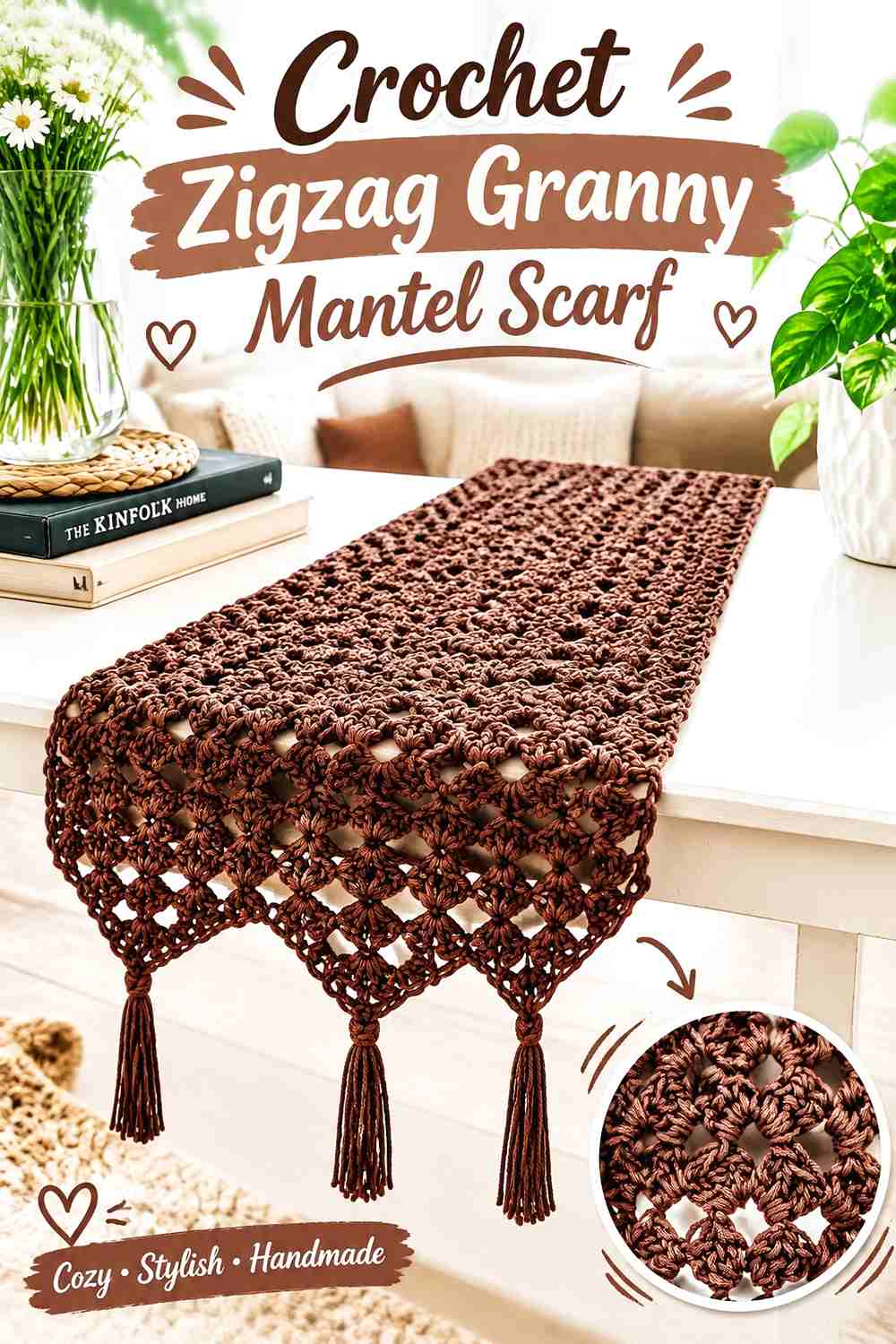
A zigzag granny construction combines the familiarity of granny stitch with a directional edge. This makes it more dynamic than a conventional block of granny squares and gives the mantel a strong horizontal rhythm.
The peaks and valleys can look especially effective beneath simple evergreen garland because the geometric crochet contrasts with organic foliage.
Zigzags Need a Clear Front Edge
If the entire lower edge is hidden by stockings or thick garland, much of the construction’s character disappears.
Keep at least part of the zigzag unobstructed so the changing edge line remains visible from the room.
Bold Color Changes Amplify the Geometry
A single-color version emphasizes texture, while alternating Christmas shades makes each directional section more obvious.
If your mantel already has strong plaid stockings or multicolored ornaments, a quieter color treatment may keep the geometry from becoming overwhelming.
Test the Corners of the Mantel
A zigzag scarf can behave differently where it reaches the ends of a shelf.
Decide whether you want the pattern to stop cleanly on top, hang beyond the edge, or terminate before the corners rather than allowing an awkward partial peak to become the final visible section.
Creator Credit: CJ Design
13. Crochet Flower-Motif Mantel Scarf
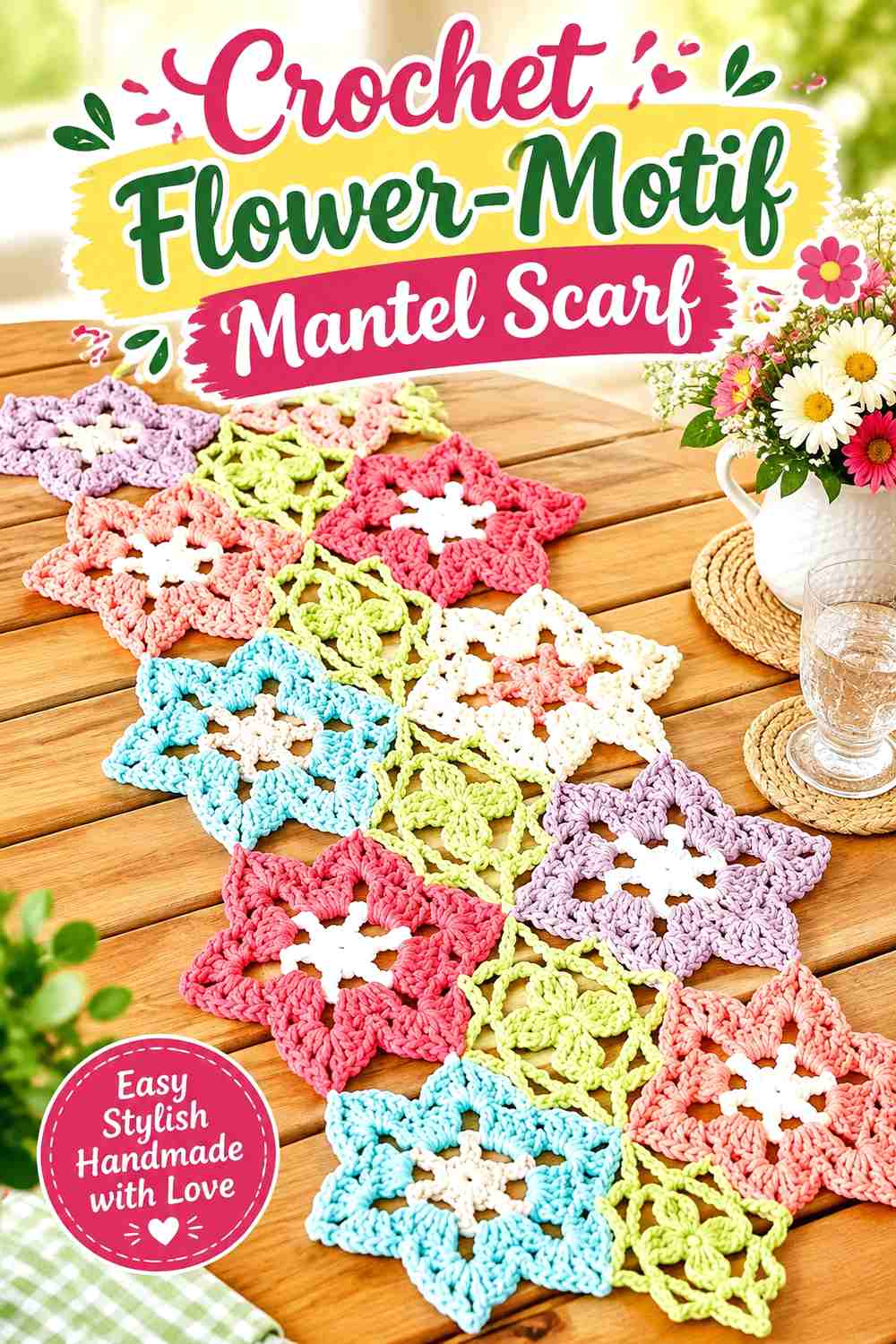
The final idea uses joined floral motifs to create an open decorative strip. In Christmas colors, the flowers can shift toward poinsettia-inspired, vintage, or folk-art styling without requiring the original construction to become a literal poinsettia pattern.
This option feels particularly different from the continuous rectangular scarves because the joins and open spaces remain visible throughout the piece.
Let the Mantel Show Through the Motifs
Negative space is part of the appeal.
Choose a yarn color that contrasts with the fireplace surround or shelf so each motif remains recognizable instead of visually blending into the background.
Plan the Motif Count Around the Exact Display
A modular runner gives you a useful opportunity to decide the final length after seeing the individual pieces.
Lay the motifs across the mantel before completing the entire joining process and consider where stocking holders or decorations will interrupt the sequence.
Keep the Floral Texture Away From Heavy Objects
Joined motifs often include raised or open sections that can distort under concentrated weight.
Position heavier mantel decorations on stable uncovered areas or another appropriate surface rather than relying on delicate crochet motifs to support them.
Creator Credit: The Crochet Crowd
Comparing the Crochet Mantel Scarf Styles
For a mantel already filled with stockings, greenery, houses, and ornaments, the classic rectangle, moss-stitch scarf, and daisy-texture scarf provide relatively calm textile backgrounds.
If you want the scarf itself to become a major Christmas feature, the filet trees, bells, stars, snowflakes, and zigzag granny designs give the front edge or body a much stronger identity.
Motif constructions—the snowflake, star, granny-square, and flower versions—are useful when modular sizing appeals to you. You can make individual pieces, check their scale on the mantel, and then plan the larger arrangement.
The fine sparkle and open lace options suit lighter, more formal displays, while broad colorwork and textured designs create more visual coverage for rustic or traditional Christmas decorating.
Conclusion
The most useful crochet mantel scarf is the one that works with the decorations already competing for space on the shelf.
Choose a simple rectangle or subtle texture when the mantel has elaborate greenery and stockings. Use filet trees or bell motifs when you want Christmas imagery built directly into the textile. Snowflakes and stars create an airy winter edge, while granny squares, zigzags, and floral motifs add a more nostalgic handmade character.
Before adapting any table-runner construction, measure the real mantel depth and check where the scarf will meet stocking holders, garlands, and other objects. Most importantly, keep all crochet and other textiles safely away from flames, heated surfaces, vents, fireplace openings, and required clearances. Use the credited original tutorials for exact construction details.
Frequently Asked Questions
Can I use a crochet table runner as a mantel scarf?
Often, yes, but check the width first. Dining tables provide substantially more surface depth than many mantels. A runner that is too wide may hang too close to the fireplace opening or interfere with decorations. Measure the actual mantel and adapt only when the tutorial construction allows it.
How wide should a crochet mantel scarf be?
There is no universal width because mantel shelves vary considerably. Measure the usable depth of your shelf and decide whether you want the crochet completely on top or slightly overhanging the front edge. Always preserve safe clearance from the fireplace and heat sources.
Can a crochet mantel scarf hang down near the fireplace opening?
It should not be placed where it can approach flame, high heat, hot surfaces, vents, or manufacturer-required clearance zones. Crochet is decorative textile, not heat protection. Adjust the scarf length and position according to the specific fireplace and surrounding installation.
Which crochet construction is easiest to resize for a mantel?
Motif-based projects can be useful because overall length is often controlled by how many complete squares, stars, snowflakes, or flowers are used. Continuous runners may also be adaptable when their repeats permit length changes. Confirm the specific tutorial construction before altering it.
Should a Christmas mantel scarf match the stockings?
It can coordinate without matching exactly. If the stockings already have strong plaid, embroidery, or several colors, a solid or lightly textured scarf may provide better balance. With simple stockings, the mantel scarf can carry stronger colorwork or pictorial motifs.
How do I stop a crochet mantel scarf from looking crowded under garland?
Decide which layer is supposed to be the focal point. With thick greenery, choose a calmer scarf or leave more of its front edge exposed. With delicate garland, snowflakes, stars, filet trees, or scalloped edges can provide more of the decorative detail.
Are tassels and fringe practical on a Christmas mantel scarf?
They can be, particularly at the outer ends, but check where stockings and other hanging decorations will sit. Fringe should not hang into unsafe areas or become entangled with nearby decor. Test the finished drop while the scarf is positioned on the actual mantel.