Crochet bell sleeves fit naturally into romantasy winter style because they can make an otherwise simple sweater feel theatrical without requiring elaborate surface decoration. A fitted bodice with a widening cuff can suggest a courtly gown, while an oversized pullover with long flared sleeves feels closer to a forest-mage or wandering-healer layer.
The practical differences matter just as much as the look. Some of the tutorials below create true cold-weather pullovers, while others are cropped tops, shrugs, or cardigans that make stronger sense over a fitted winter base layer. Openwork also changes how much warmth a garment provides, and a very wide cuff can become surprisingly heavy when worked in dense yarn.
Use these projects as different routes into the medieval bell-sleeve silhouette. Follow each creator’s tutorial for the actual construction, measurements, stitch information, and sizing rather than assuming one sweater can be substituted directly for another.
Quick List
- Crochet Knit-Look Bell Sleeve Winter Pullover
- Crochet Wrap-Front Bell Sleeve Court Sweater
- Crochet Cropped Bell Sleeve Shoulder Shrug
- Crochet Shimmer Bell Sleeve Cropped Sweater
- Crochet Floral Bell Sleeve Blouse Sweater
- Crochet Granny Stitch Bell Sleeve Pullover
- Crochet Simple Bell Sleeve Everyday Sweater
- Crochet Almond-Texture Bell Sleeve Crop Sweater
- Crochet Rectangle Bell Sleeve Layering Sweater
- Crochet Mesh Tie-Front Bell Sleeve Cardigan
- Crochet Tie-Front Bell Sleeve Cardigan Sweater
- Crochet Square-Neck Mesh Bell Sleeve Sweater Top
- Crochet Lace Bell Sleeve Fitted Crop Sweater
- Crochet Raglan Wide-Sleeve Winter Sweater
- Crochet Oversized Bell Sleeve Moon Pullover
- Crochet Dramatic Bell Sleeve Turtleneck Sweater
- Crochet Hexagon Bell Sleeve Cropped Cardigan
How to Make Bell Sleeves Work for Romantasy Winter Style
Sleeve shape creates much of the fantasy effect, but wider is not automatically better. A bell that begins close to the elbow usually gives a different silhouette from a sleeve that remains loose from the upper arm downward. The first can feel more fitted and courtly; the second tends to look softer, oversized, and more robe-like.
Think about what will be worn over the sweater as well. A dramatic cuff may fit comfortably under a cape, cloak, shawl, or sleeveless coat but bunch badly inside a narrow winter jacket. If this will be an everyday garment rather than a costume-focused piece, test the developing sleeve while reaching, sitting, carrying a bag, and bending the elbow.
Romantasy styling also does not require literal medieval costume details. Deep natural colors, heathered yarns, textured stitches, long cuffs, high necklines, open fronts, and flowing layers can create the mood while leaving the finished sweater wearable with ordinary winter clothing.
Yarn, Drape, and Sleeve Weight Matter More Than They First Appear
Bell sleeves place extra fabric near the hands, so yarn behavior becomes especially important. A fabric that feels pleasantly substantial across the torso can become tiring when the same density is multiplied around a large cuff.
Before substituting yarn, compare the original tutorial’s gauge and fabric character rather than choosing solely by fiber name or color. A dense, firm fabric emphasizes structure, while a softer fabric allows the bell to collapse into folds. Neither is universally preferable; they simply create different silhouettes.
Openwork projects require another decision. A lace or mesh bell sleeve can look highly romantic while providing limited insulation on its own. For a winter version, it may work better as a decorative outer layer over a fitted long-sleeve top than as the only layer between the wearer and cold weather.
Fit Checks for Medieval-Inspired Crochet Sleeves
Check the shoulder and upper arm before investing time in an elaborate flare. If that portion of the garment pulls, a larger cuff will not correct the fit. If it is excessively loose, the weight of the finished sleeve may make the whole garment shift.
Also consider finished sleeve length in motion. Long medieval-style cuffs look different with the arm extended than they do with the hand relaxed. A sleeve edge that appears perfect in a standing photo may brush surfaces or cover the fingers during normal use.
Blocking can influence flare and drape, but the correct finishing method depends on the yarn. Follow the fiber care information and the creator’s guidance rather than assuming every sweater should be stretched or steamed in the same way.
1. Crochet Knit-Look Bell Sleeve Winter Pullover
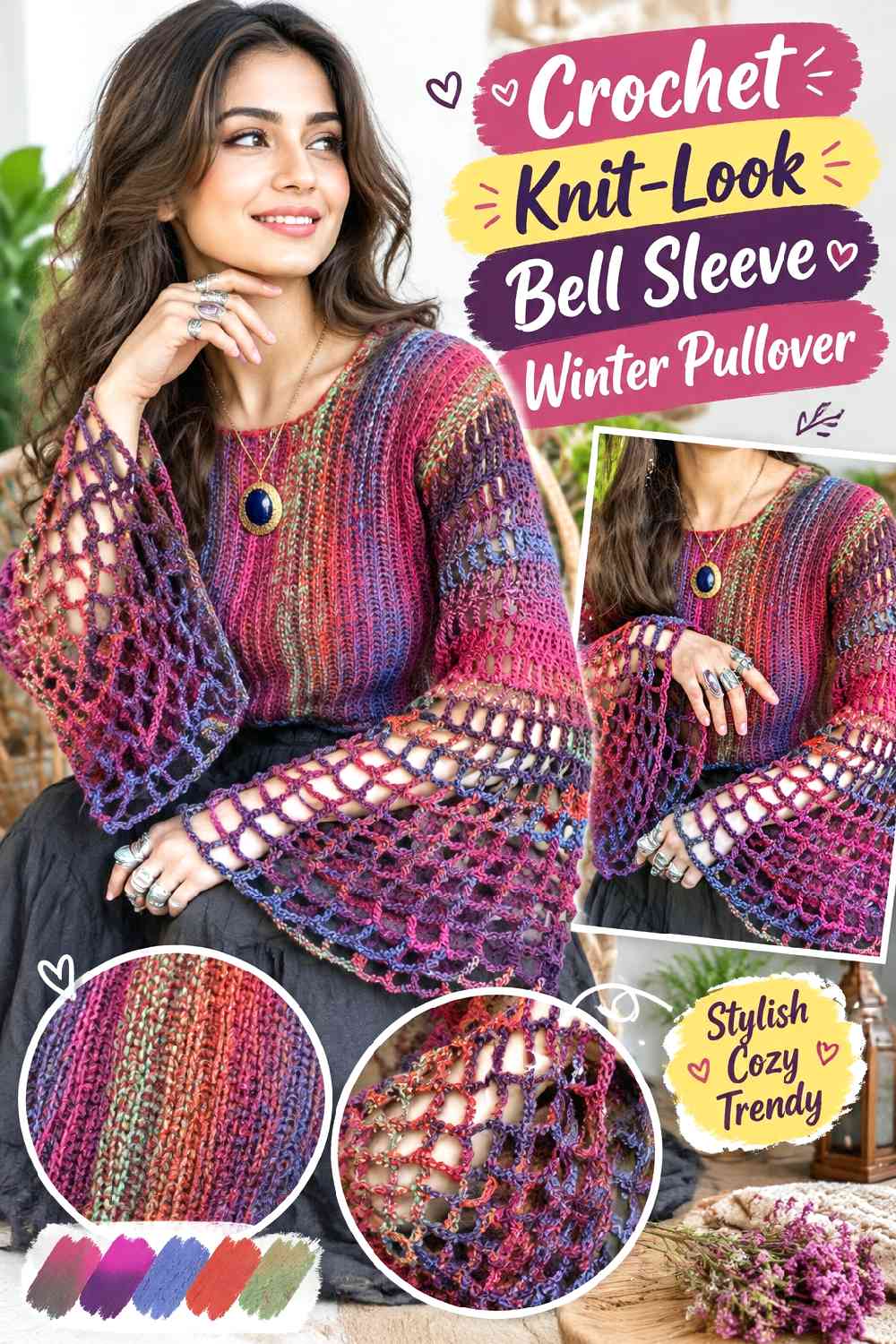
This closed pullover is one of the strongest options for readers who want the bell-sleeve idea to read as a real sweater rather than a decorative shrug. Hannah Drapinski’s tutorial combines a sweater body with conspicuous bell sleeves and a crochet fabric intended to give a knit-like visual effect.
For romantasy winter styling, that relatively simple body is useful. It leaves room for the silhouette to do the work, so the garment could sit comfortably beside long skirts, fitted trousers, boots, leather-look accessories, or a cloak without competing with several different motifs.
A Quiet Body Makes the Sleeve Flare More Noticeable
When both the torso and sleeves contain strong decorative features, a fantasy-inspired sweater can quickly become visually crowded. Here, the cleaner sweater body gives the widening cuff more room to become the focal point.
That makes this direction particularly useful if your wardrobe already contains detailed skirts, embroidered accessories, corset-style belts, or patterned scarves. The sweater can provide the dramatic shape without requiring another highly decorated surface.
Watch the Weight at the Lower Sleeve
The tutorial’s bell shape adds more material near the wrist than a straight sleeve would. If you substitute yarn, compare the developing fabric with the original before committing to both sleeves.
A heavier or less flexible yarn may cause the lower sleeve to hang differently or place more pull on the shoulder. Make decisions from gauge and fabric behavior rather than assuming a thicker winter yarn will automatically improve the sweater.
Creator Credit: Hannah Drapinski YouTube tutorial
2. Crochet Wrap-Front Bell Sleeve Court Sweater
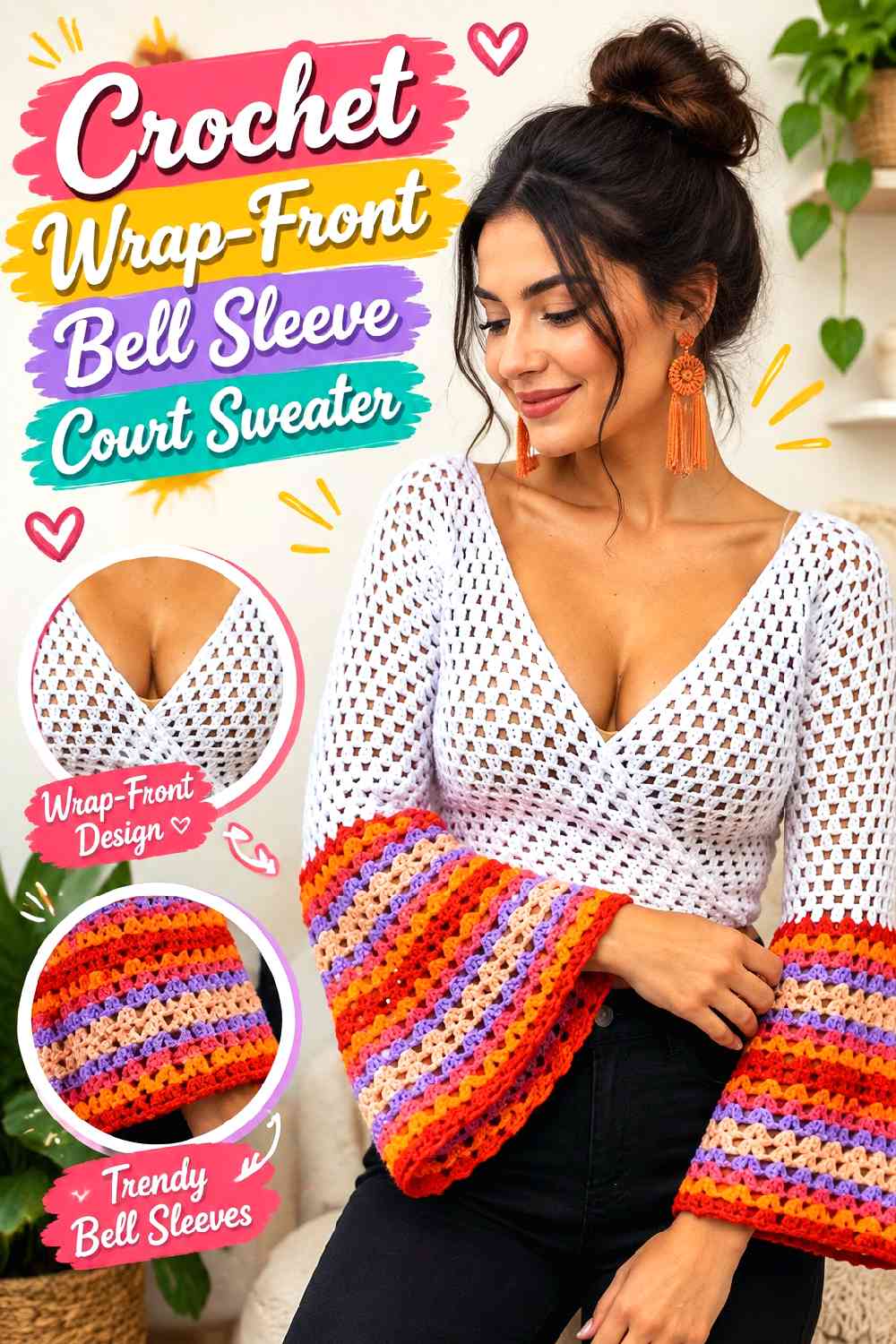
A wrap front changes the medieval effect immediately because it creates diagonal lines rather than the uninterrupted front of a standard pullover. Muchacha Ganchillo’s project combines that crossover shape with bell sleeves, giving it a more fitted blouse-like character.
For winter wear, think of this as a court-inspired layering sweater rather than assuming it will provide the same coverage as a dense crewneck. The front structure can look especially effective over a fitted base layer when more warmth or coverage is needed.
The Crossover Front Makes Fit More Visible
Wrap garments draw attention to where the two sides cross and how smoothly they sit around the torso. That means bust, shoulder, and waist fit can affect the overall impression more noticeably than on a loose rectangular sweater.
Before adapting the style, examine the creator’s finished views from the front and side. The goal is to understand the intended silhouette before changing length, yarn, or layering pieces.
Pair the Sleeve Drama With a Simple Underlayer
A wrap front and bell sleeve already create two strong lines. A plain fitted underlayer can preserve those shapes instead of obscuring them with additional volume.
For a winter romantasy outfit, this can be more practical than trying to make the wrap itself perform every job. The crochet layer supplies shape and texture; the base layer can provide additional coverage.
Creator Credit: Muchacha Ganchillo YouTube tutorial
3. Crochet Cropped Bell Sleeve Shoulder Shrug
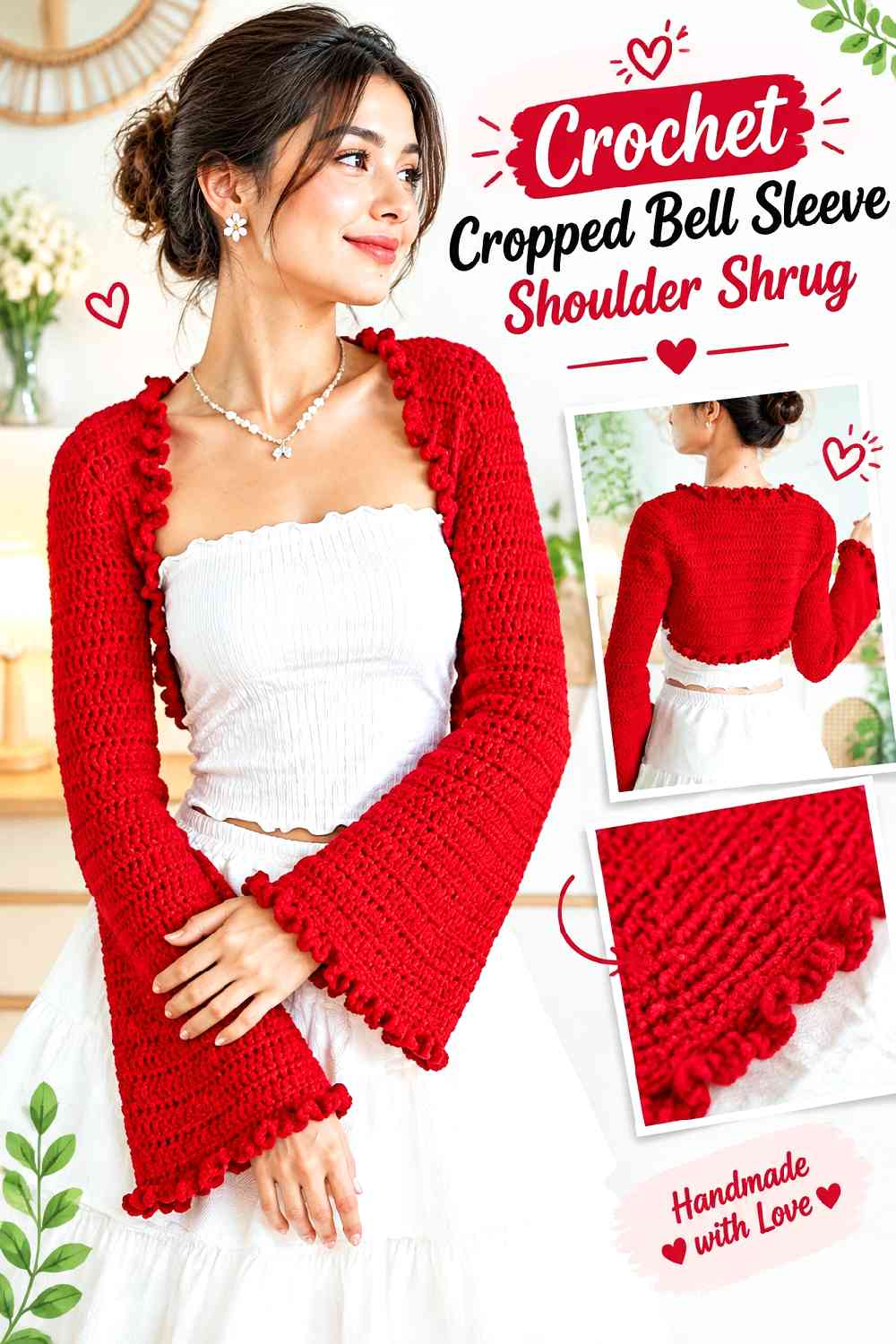
This project reduces the garment body and lets the sleeves become almost the entire design. Chenda DIY’s bell-sleeve shrug covers the shoulders and arms while leaving much of the clothing underneath visible.
That makes it useful for a romantasy outfit built around a dress, fitted top, corset-inspired layer, or high-waisted skirt. Rather than hiding the base garment, the shrug adds moving sleeves and a little shoulder coverage.
Treat the Base Outfit as Part of the Project
Because a shrug leaves so much of the torso visible, its color and neckline should be planned beside whatever will sit underneath it. A beautiful sleeve can still feel disconnected if the shoulder line fights with the dress or top below.
For winter, decide on the underlayer first. Then evaluate whether the shrug’s opening, shoulder width, and sleeve color create one coherent outfit.
Check Whether the Sleeve Weight Pulls Backward
A short body has less fabric to counterbalance long sleeves. As the cuffs grow, periodically try the garment on rather than judging the sleeve only while it lies flat.
If the whole shrug wants to move toward the back, investigate fit and weight before adding even more length or decorative edging.
Creator Credit: Chenda DIY YouTube tutorial
4. Crochet Shimmer Bell Sleeve Cropped Sweater
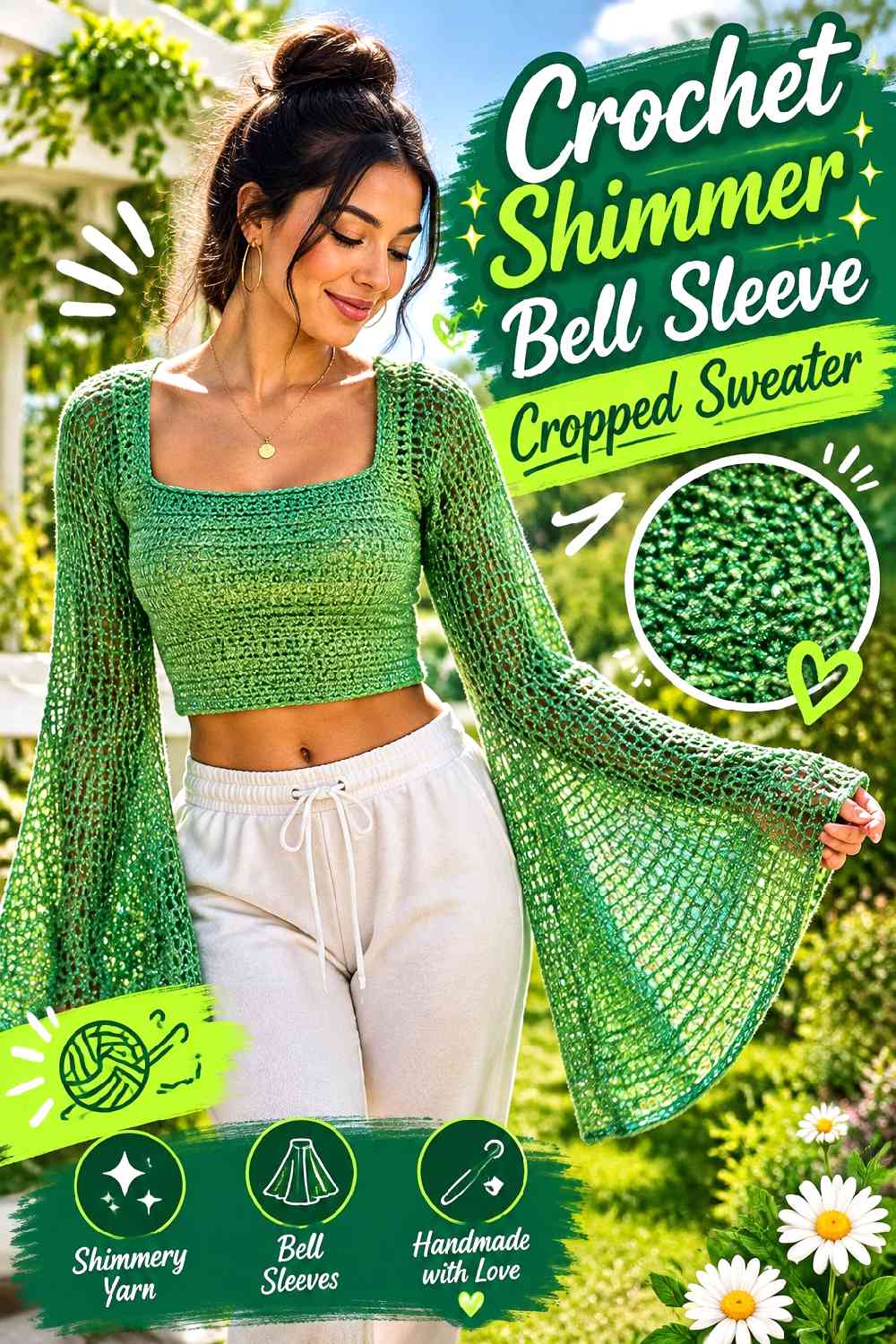
ChaoticCurl Crafts’ bell-sleeve crop project puts much of its personality into oversized sleeves and a shorter body. The source material also discusses the finishing effect of blocking, making drape part of the finished appearance rather than an afterthought.
A cropped shape can still work for winter when treated as a layer. It is particularly useful when you want large cuffs without combining them with a long, heavy torso.
A Short Hem Can Balance Very Large Sleeves
Wide cuffs add considerable visual weight to the lower arms. A shorter torso creates contrast and keeps the entire garment from becoming uniformly oversized.
If you plan to change the body length, consider the relationship between those two volumes. Lengthening the sweater substantially while preserving very large cuffs may create a much heavier overall silhouette.
Finishing Can Change the Fantasy Effect
Blocking can alter how an open or flexible fabric settles. A sleeve that looks slightly stiff directly from the hook may develop a more flowing outline after appropriate finishing.
Do not apply heat simply because another project does. Check your yarn’s care guidance and the creator’s recommendations so the finishing method suits the actual fiber you use.
Creator Credit: ChaoticCurl Crafts YouTube tutorial
5. Crochet Floral Bell Sleeve Blouse Sweater
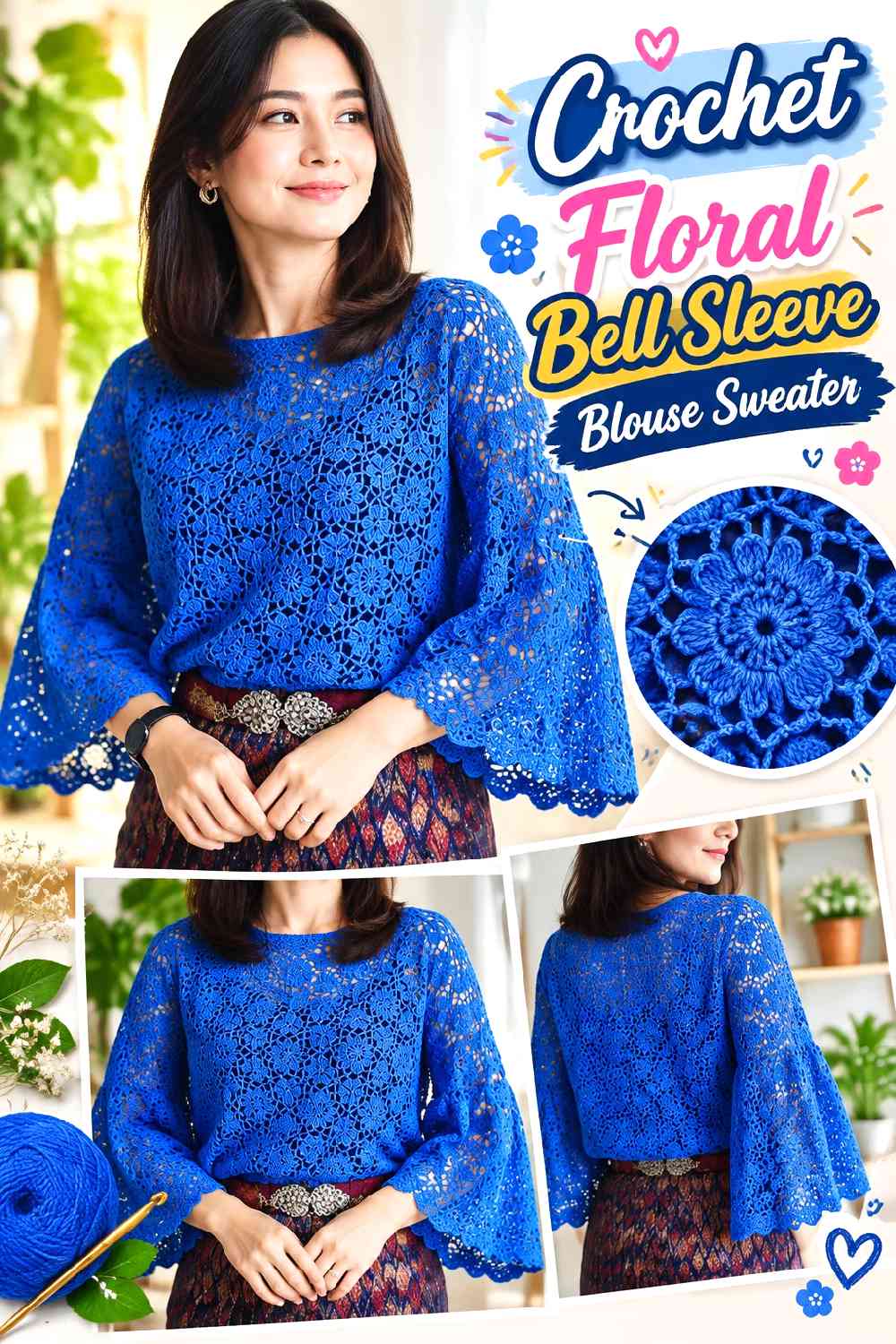
Crochet by Somjit’s floral bell-sleeve project adds decorative patterning to a silhouette that is already visually strong. Instead of relying only on cuff width, the blouse uses floral detail to create interest across the garment.
This can suit the more enchanted-garden side of romantasy style, especially when you prefer botanical detail over a plain medieval tunic look.
Decide Whether Flowers or Sleeves Should Lead
Floral motifs and flared cuffs can compete for attention when both are strongly contrasted. Before choosing colors, decide which element should read first from several feet away.
A restrained palette can allow texture and shape to lead. Strong color contrast will emphasize individual motif areas instead.
Joining Accuracy Affects the Entire Silhouette
Where decorative units or patterned sections meet, small size differences can become more visible than they would in plain fabric. Compare corresponding sections before final assembly and pay attention to the creator’s joining guidance.
For a wearable, matching overall dimensions matters more than forcing together pieces that only appear similar when unblocked.
Creator Credit: Crochet by Somjit YouTube tutorial
6. Crochet Granny Stitch Bell Sleeve Pullover
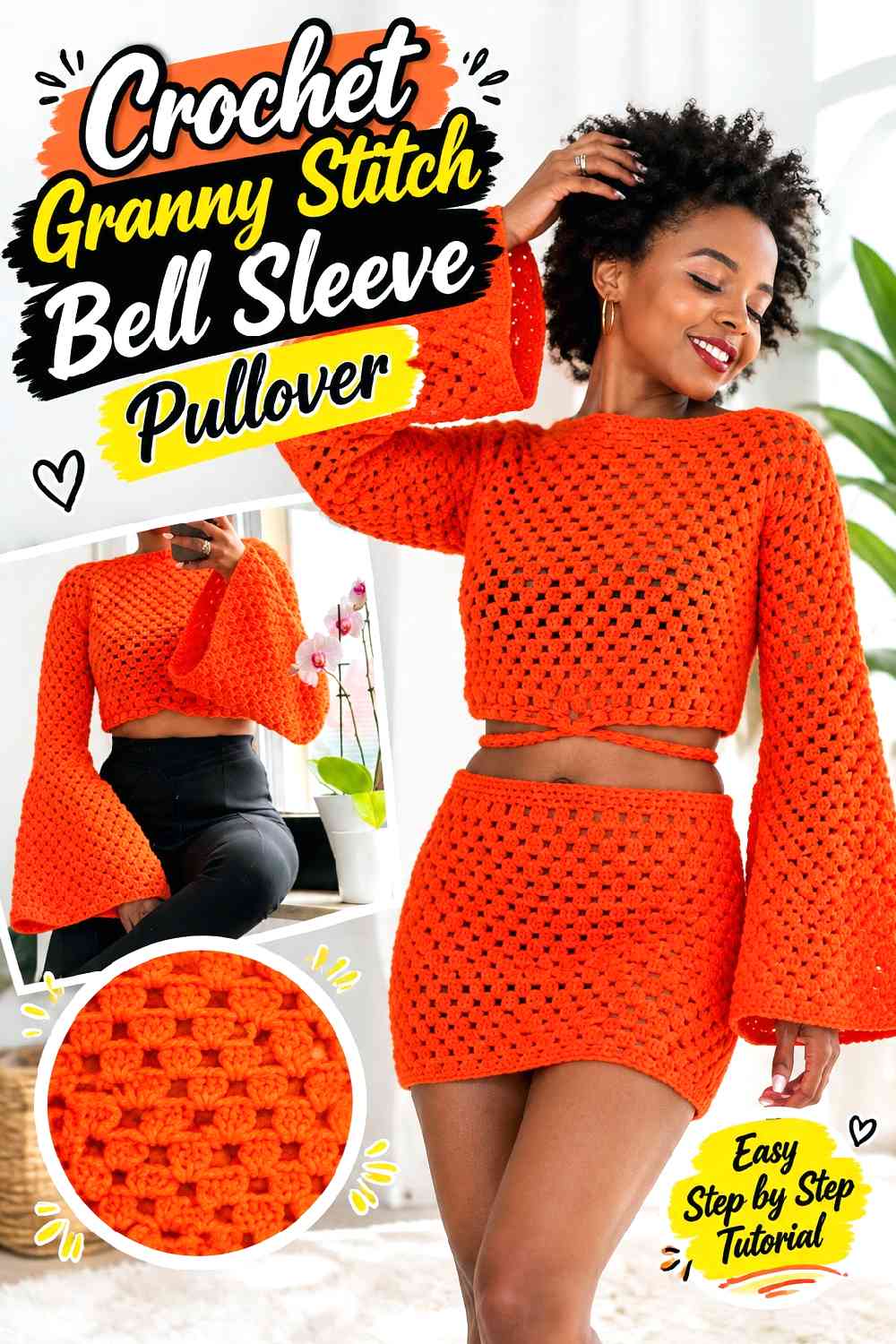
AC Crochets uses granny-style fabric for a bell-sleeve top that can be made according to body measurements. The recognizable cluster texture gives the sweater a more openly crocheted appearance than a dense winter pullover.
For romantasy styling, that openness can be an advantage. Layered over a contrasting long-sleeve top, the holes become part of the visual texture rather than simply reducing coverage.
Open Fabric Makes the Underlayer Visible
With granny-style fabric, the clothing underneath influences the finished look. A tonal layer produces a quieter effect, while contrast makes every opening much more obvious.
Choose that underlayer before finalizing yarn color if you want the complete winter outfit to feel intentional.
Measure Before Increasing the Sleeve Drama
The torso and upper sleeve need to fit before the flare becomes the focus. Follow the creator’s measurement approach and check the developing garment rather than copying another person’s finished dimensions.
An oversized cuff cannot compensate for an uncomfortable armhole or an upper sleeve that restricts movement.
Creator Credit: AC Crochets YouTube tutorial
7. Crochet Simple Bell Sleeve Everyday Sweater
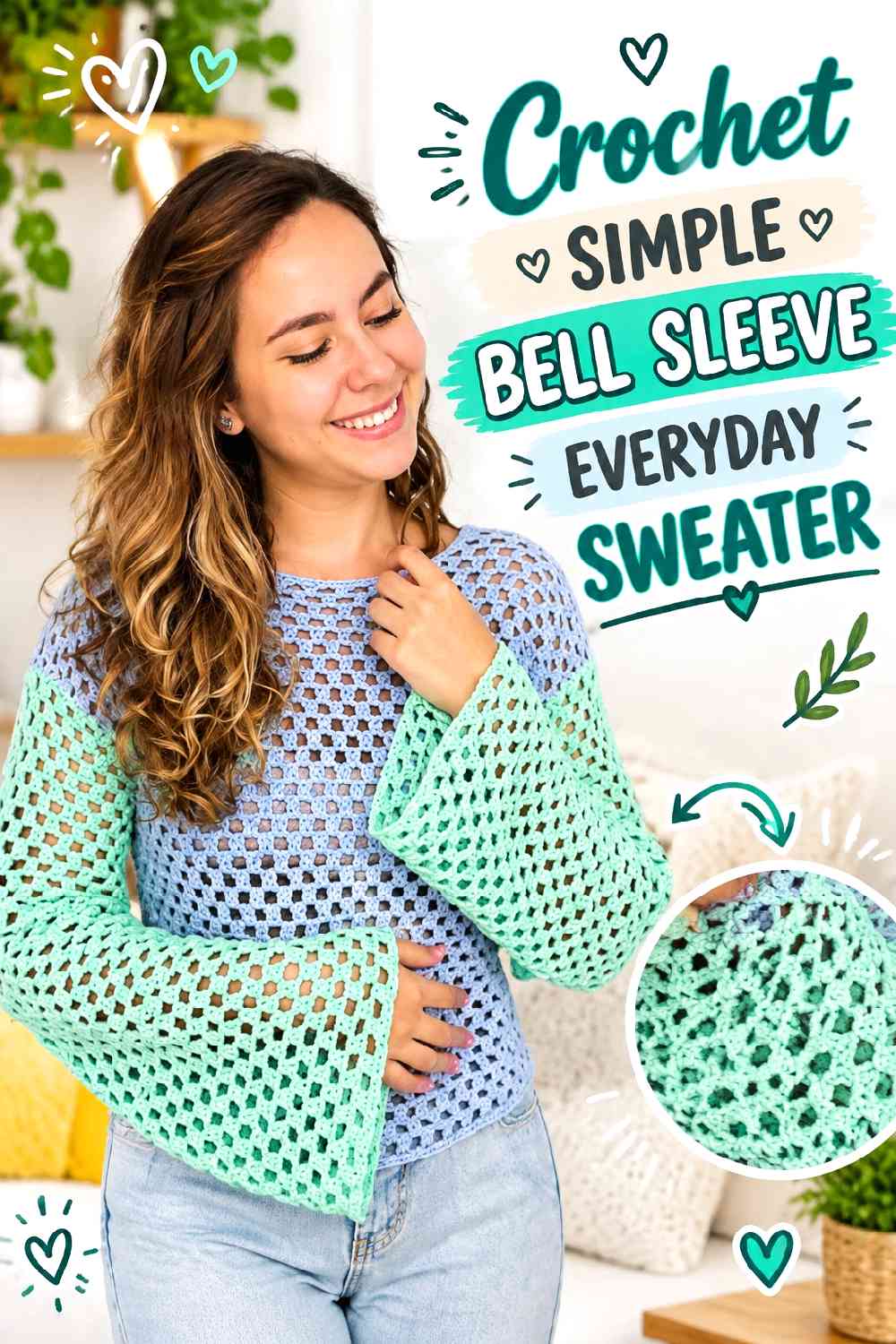
Yarnmaide’s bell-sleeve top keeps the central garment relatively straightforward, making it a useful choice for someone who wants the flare to be the main design event. The tutorial presents the finished garment as a pullover-style top rather than an open cardigan.
That simpler outline can translate well into an everyday romantasy wardrobe because it does not depend on ties, motif placement, or an unusual closure.
Body Length Changes How Dramatic the Sleeves Feel
A cropped pullover, waist-length sweater, and longer tunic can all use bell sleeves, but they do not create the same proportions.
Compare the creator’s finished length with garments you already wear. If adapting the length is supported by the tutorial, think about the total silhouette rather than extending the body automatically.
Give the Cuff Enough Visual Space
Bell sleeves are easier to appreciate when they are not hidden under another tight layer. If the sweater is meant for winter, consider whether your usual outerwear can accommodate the flare.
For indoor outfits or cloak-style outer layers, this may be less of a concern than it would be under a closely fitted coat.
Creator Credit: Yarnmaide YouTube tutorial
8. Crochet Almond-Texture Bell Sleeve Crop Sweater
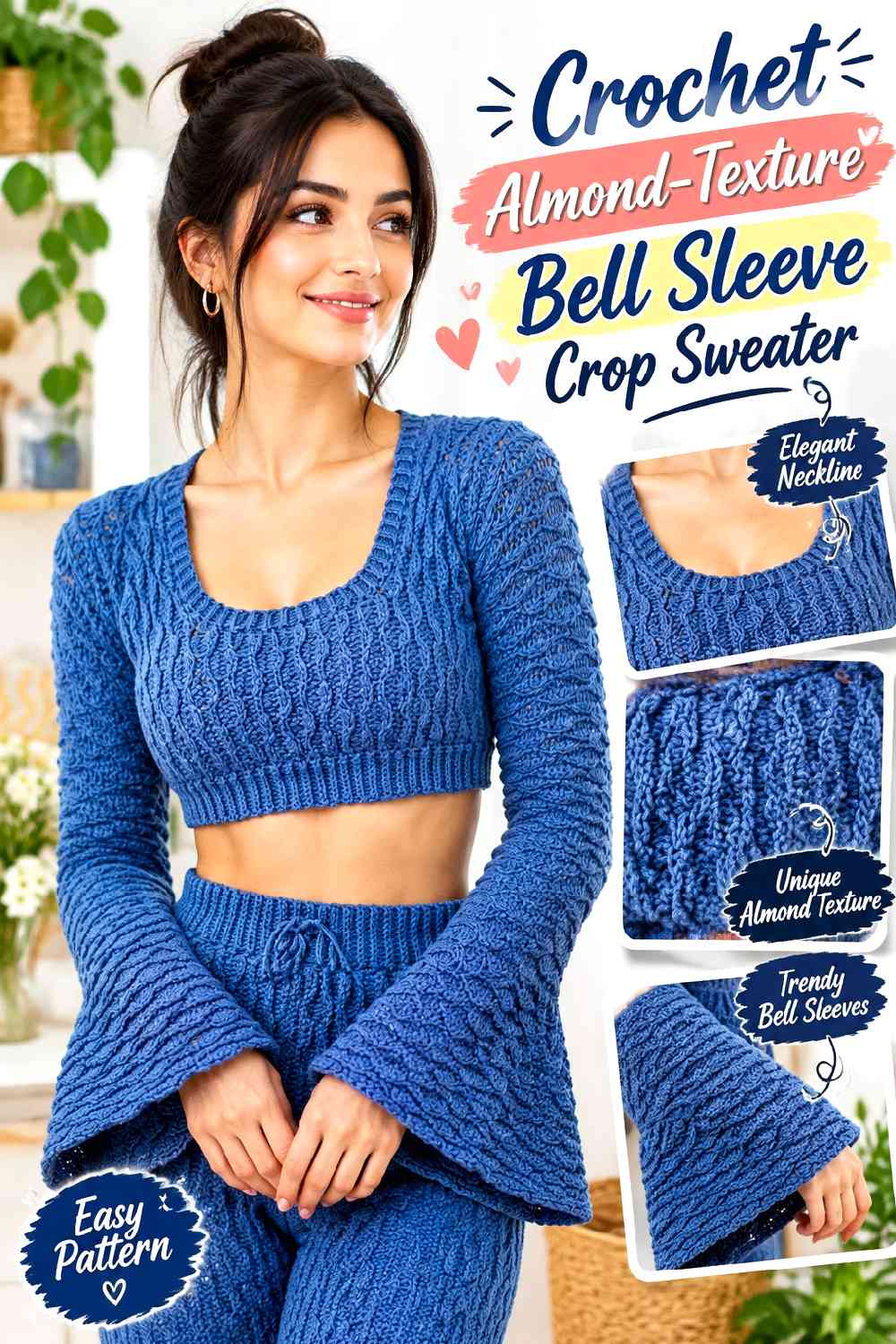
This TCDDIY project uses almond stitch texture through a cropped bell-sleeve garment with distinct body, sleeve, band, and collar areas. That combination gives it more structural detail than a very simple rectangle sweater.
The pronounced texture works well for a winter-fantasy interpretation because shadow and stitch relief can add interest even in one color.
Texture Can Disappear in Very Dark Yarn
Black, deep brown, forest green, and burgundy all suit romantasy palettes, but some textured stitches are harder to see in low-contrast yarn.
If the stitch surface is important to you, examine a swatch under ordinary indoor lighting. A slightly lighter or heathered dark shade may show relief more clearly while keeping the same mood.
Track the Garment Pieces Before Assembly
When a design has separate bands, panels, sleeves, and collar areas, organization becomes useful. Label or pair corresponding pieces and compare them before seaming.
This prevents a small difference between sleeve components from becoming much more obvious once the wide cuffs are hanging side by side.
Creator Credit: TCDDIY YouTube tutorial
9. Crochet Rectangle Bell Sleeve Layering Sweater
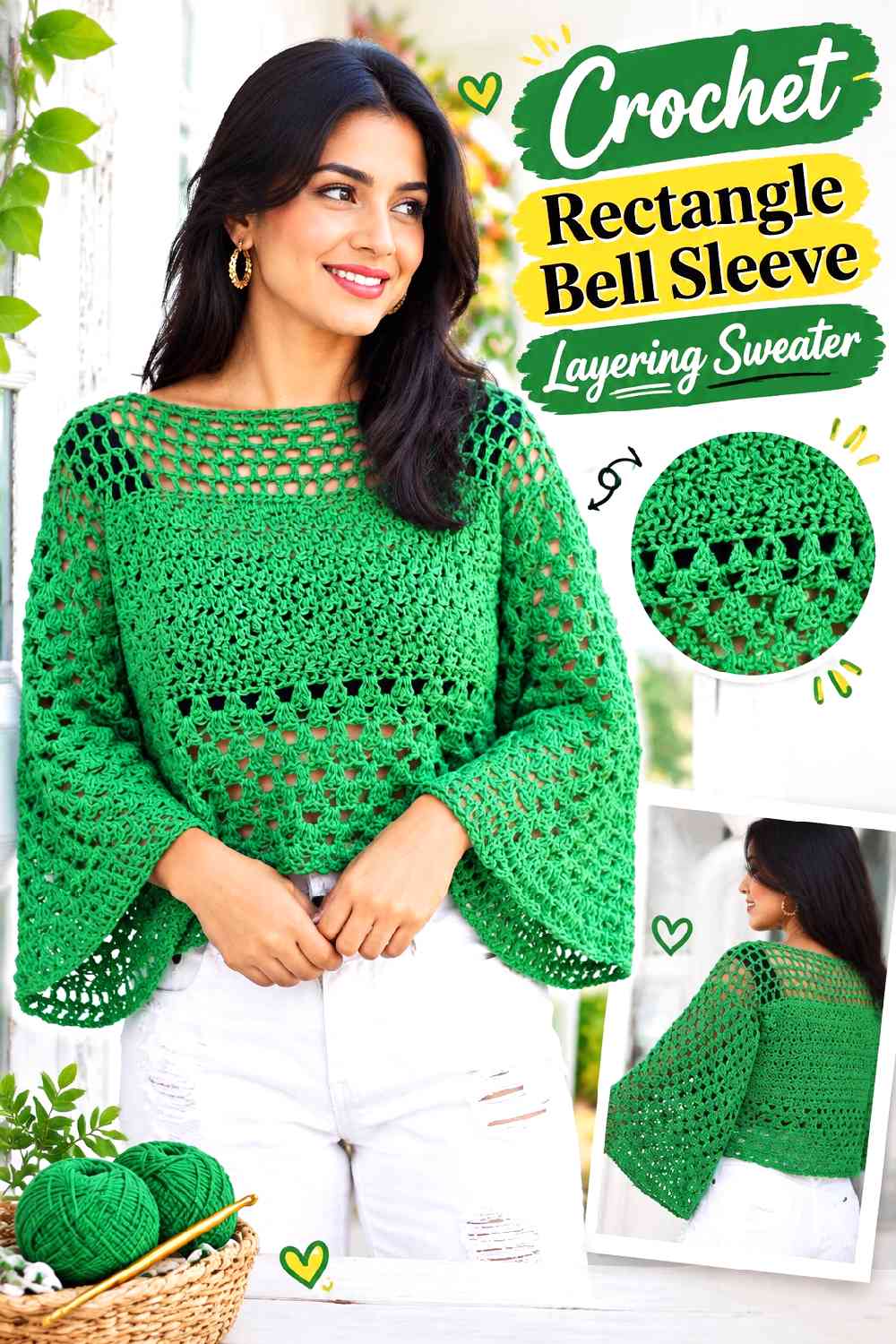
Jennyandteddy crochet. demonstrates a made-to-measure bell-sleeve sweater built around two main rectangles before the sleeves are added. The straight body gives this project a noticeably different construction logic from wrap fronts or fitted panel shaping.
That makes it useful for a relaxed medieval-tunic interpretation where the torso does not need to follow the body closely.
Rectangle Construction Creates a Straighter Silhouette
A rectangular body naturally behaves differently from a highly shaped sweater. Expect a more relaxed line and decide whether that suits the outfit you want before focusing on sleeve decoration.
For romantasy winter styling, that straighter shape can pair particularly well with belts or layered skirts, but any belt adaptation should be planned around the actual fabric and fit rather than used to correct a poorly sized sweater.
Record Your Measurements Before You Start
Made-to-measure construction depends on the wearer’s own measurements. Write them down and follow the creator’s method rather than relying on a standard size label alone.
Also remember that blocked fabric may behave differently from an unfinished piece, so follow the tutorial’s gauge and finishing guidance where provided.
Creator Credit: Jennyandteddy crochet. YouTube tutorial
10. Crochet Mesh Tie-Front Bell Sleeve Cardigan
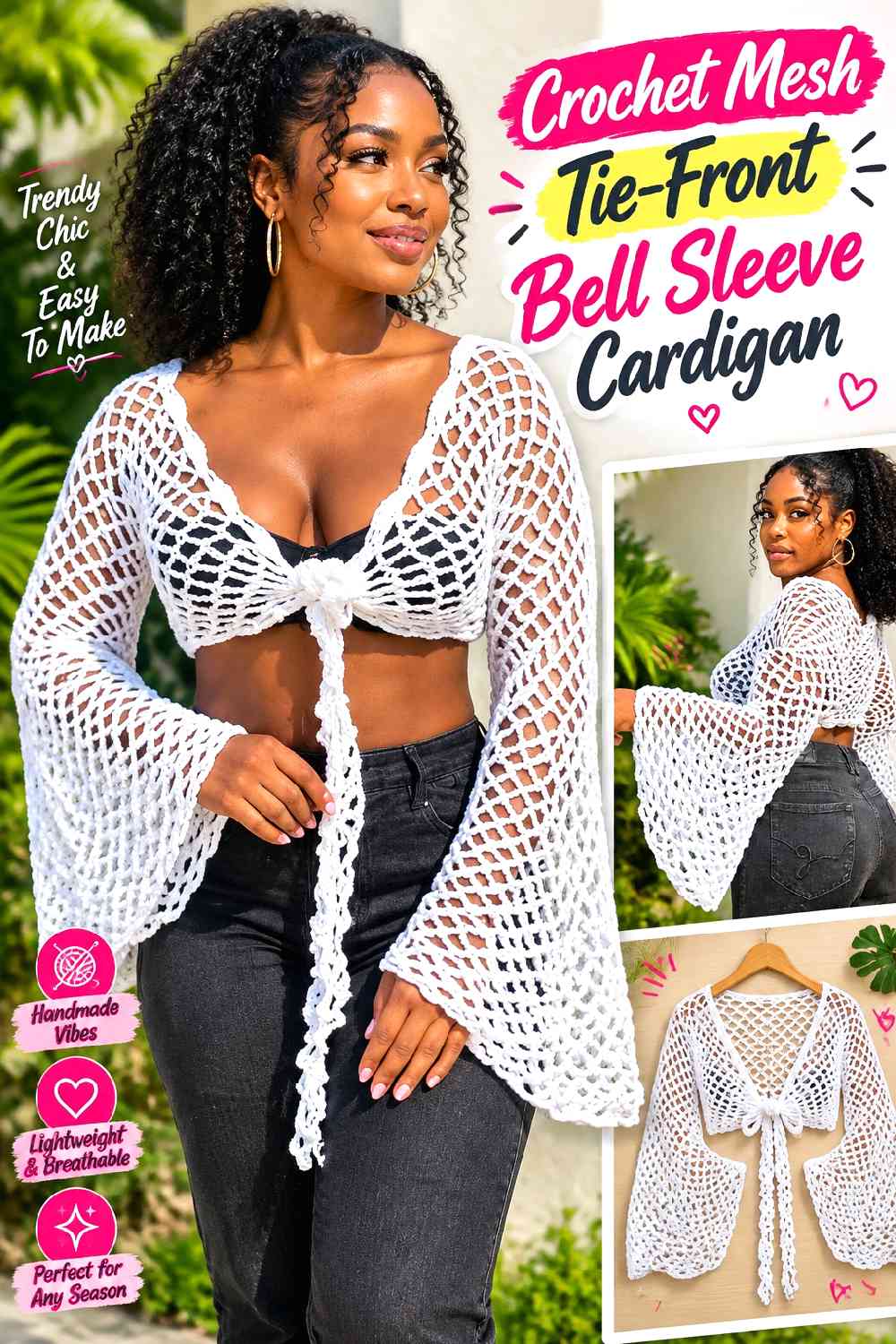
Priya Crochets’ project combines an open mesh body, flared sleeves, and a front tie. It is much lighter in coverage than a dense pullover, making it primarily a decorative layering direction for a winter wardrobe.
The open surface gives it a slightly ethereal quality that works well for fae, sorceress, or enchanted-forest styling without requiring a complicated motif.
Winter Warmth Has to Come From the Layer Below
Mesh should not be treated like dense sweater fabric. If you want to wear this silhouette in colder weather, choose an appropriate underlayer and treat the crochet as the visible outer texture.
That approach preserves the openwork instead of trying to force a lightweight construction into a job it was not designed to perform.
Front-Tie Height Changes the Whole Look
A tie creates a visual center for an otherwise open garment. Notice where the creator places that closure and how much of the base layer remains visible above and below it.
If you prefer more coverage, verify what alterations the tutorial supports before changing the front construction.
Creator Credit: Priya Crochets YouTube tutorial
11. Crochet Tie-Front Bell Sleeve Cardigan Sweater
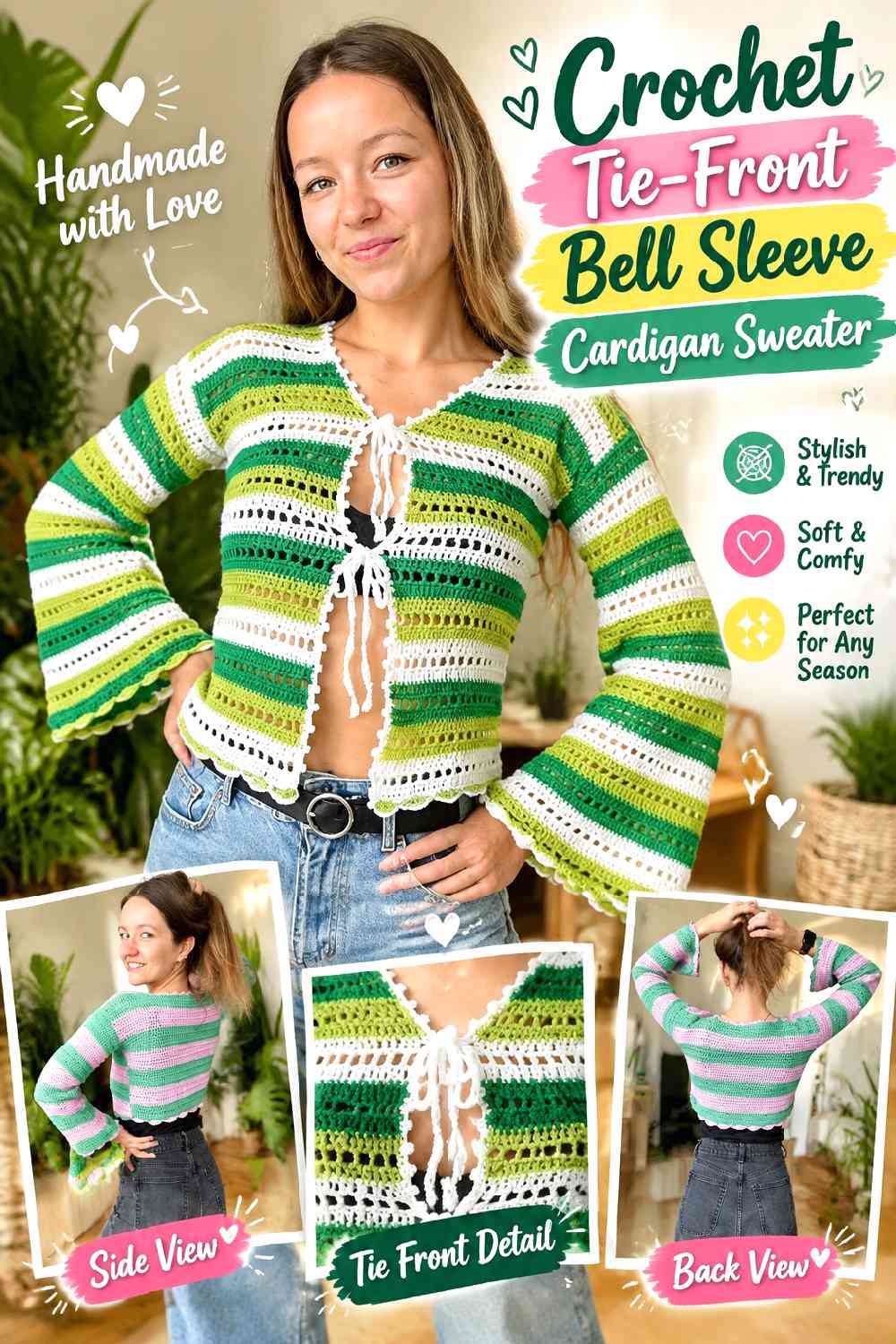
The by Kristine tutorial uses separate body sections, broad bell sleeves, border finishing, and ties at the front. It sits between a cardigan and a statement top, with the open center preventing it from feeling as heavy as a closed pullover.
That open-front shape can fit romantasy styling particularly well when you want the crochet to frame another garment rather than cover it.
Let the Tie and Sleeves Share the Movement
Both the cuffs and front ties introduce moving elements. Adding many more dangling decorations could make the finished layer feel busier than intended.
For a winter-fantasy version, consider allowing color and texture to create the atmosphere while keeping the basic closure visually clear.
Evaluate Cuff Width With Your Arms Relaxed
Sleeves photographed with arms extended often look more dramatic than they do during normal wear. Check the developing cuff with the arms hanging naturally and while performing ordinary tasks.
That will give you a better sense of whether the amount of flare suits everyday layering or is better reserved for more theatrical outfits.
Creator Credit: by Kristine YouTube tutorial
12. Crochet Square-Neck Mesh Bell Sleeve Sweater Top
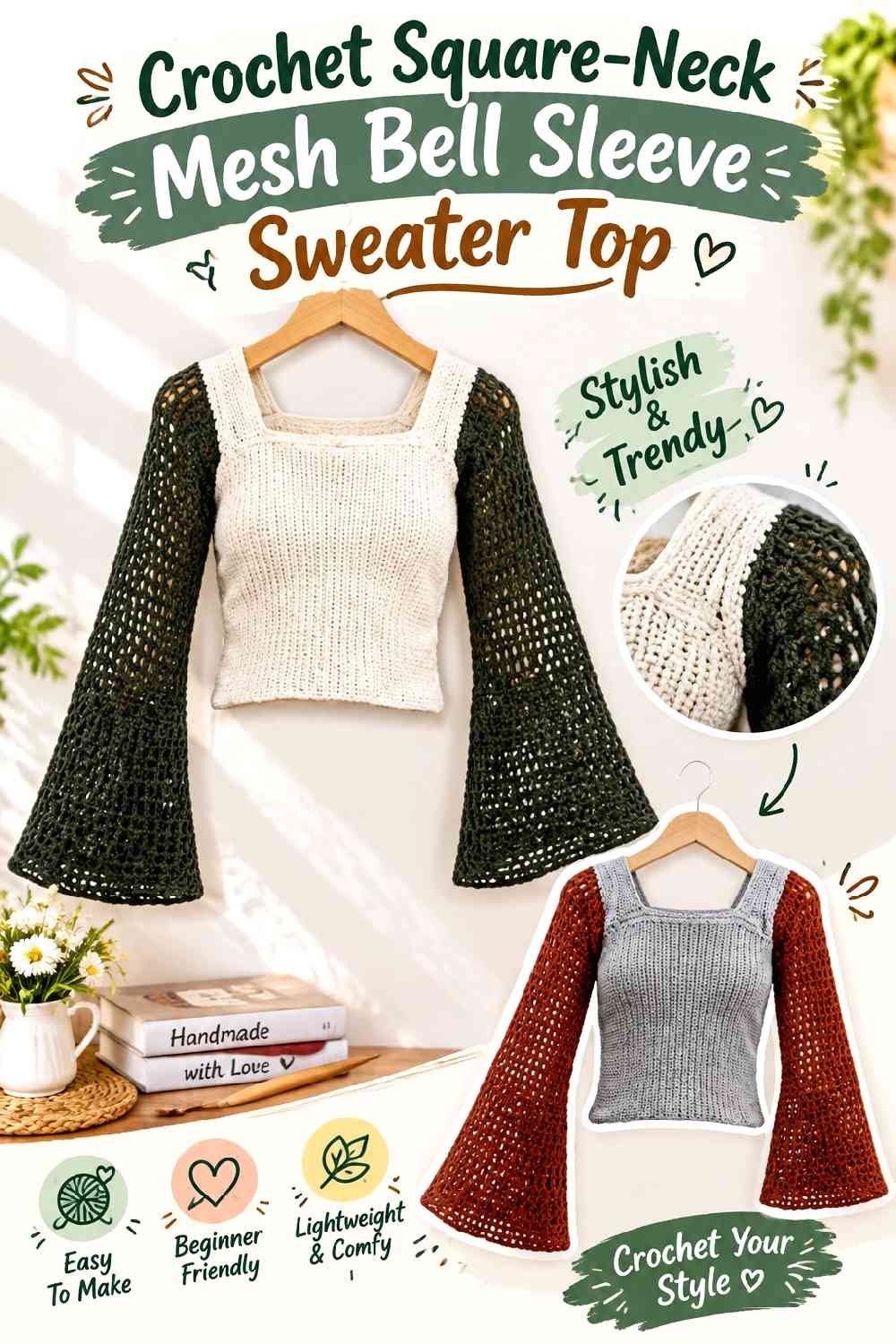
Calluna Crochet’s tutorial pairs long mesh bell sleeves with a square neckline and a comparatively simple body. The neckline gives this project a more defined frame than the wrap, tie-front, or shrug options.
For a romantasy wardrobe, a square neck can suggest historical clothing without needing literal costume construction. Layering determines whether the final result reads summery or winter-ready.
The Neckline Should Work With the Layer Beneath It
A square neckline frames whatever sits underneath. A high-neck base layer will produce a very different winter look from a camisole or low neckline.
Plan that contrast before choosing colors, because the underlayer may remain one of the most visible areas of the complete outfit.
Mesh Sleeves Need Drape More Than Bulk
A very thick substitute yarn could make an open sleeve behave differently from the creator’s version. If adapting for colder weather, it may be more successful to add warmth underneath rather than automatically increasing yarn thickness.
Follow gauge and material guidance when changing yarn so the sleeve retains the movement that makes the bell shape recognizable.
Creator Credit: Calluna Crochet YouTube tutorial
13. Crochet Lace Bell Sleeve Fitted Crop Sweater
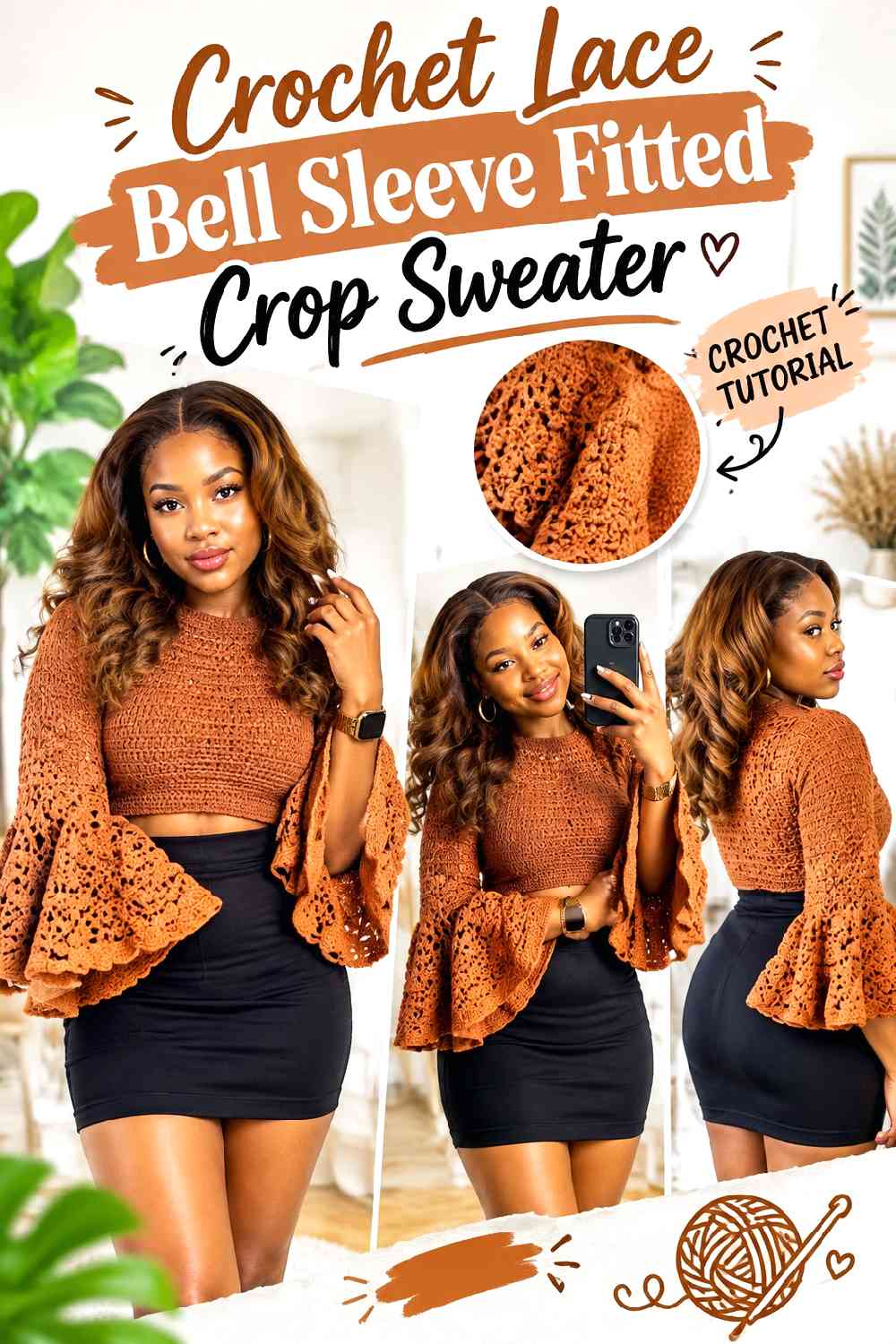
Mihankushea’s long-sleeve crop top uses lace texture and a bell silhouette, giving it a more fitted body than many oversized medieval-inspired sweaters. The tutorial references body measurements including bust, top length, sleeve length, and armhole measurement.
That measurement-focused structure makes this a useful option when you want the torso relatively close to the body while preserving flowing sleeves.
A Fitted Torso Intensifies the Bell Shape
The contrast between a close body and expanding cuff makes the sleeve appear larger than it would on an equally oversized sweater.
This can create a strong courtly silhouette, but it also means fit problems around the armhole or bust will be more noticeable. Resolve those areas according to the tutorial before treating the cuff as the main design decision.
Lace Needs a Layering Plan in Cold Weather
A visually dense lace pattern can still contain substantial openings. Look at the finished fabric rather than assuming that a long sleeve automatically provides winter-level coverage.
For colder outfits, a close-fitting base layer can preserve the lace pattern while contributing the warmth that open crochet may not provide by itself.
Creator Credit: 🧶Mihankushea🧶 YouTube tutorial
14. Crochet Raglan Wide-Sleeve Winter Sweater
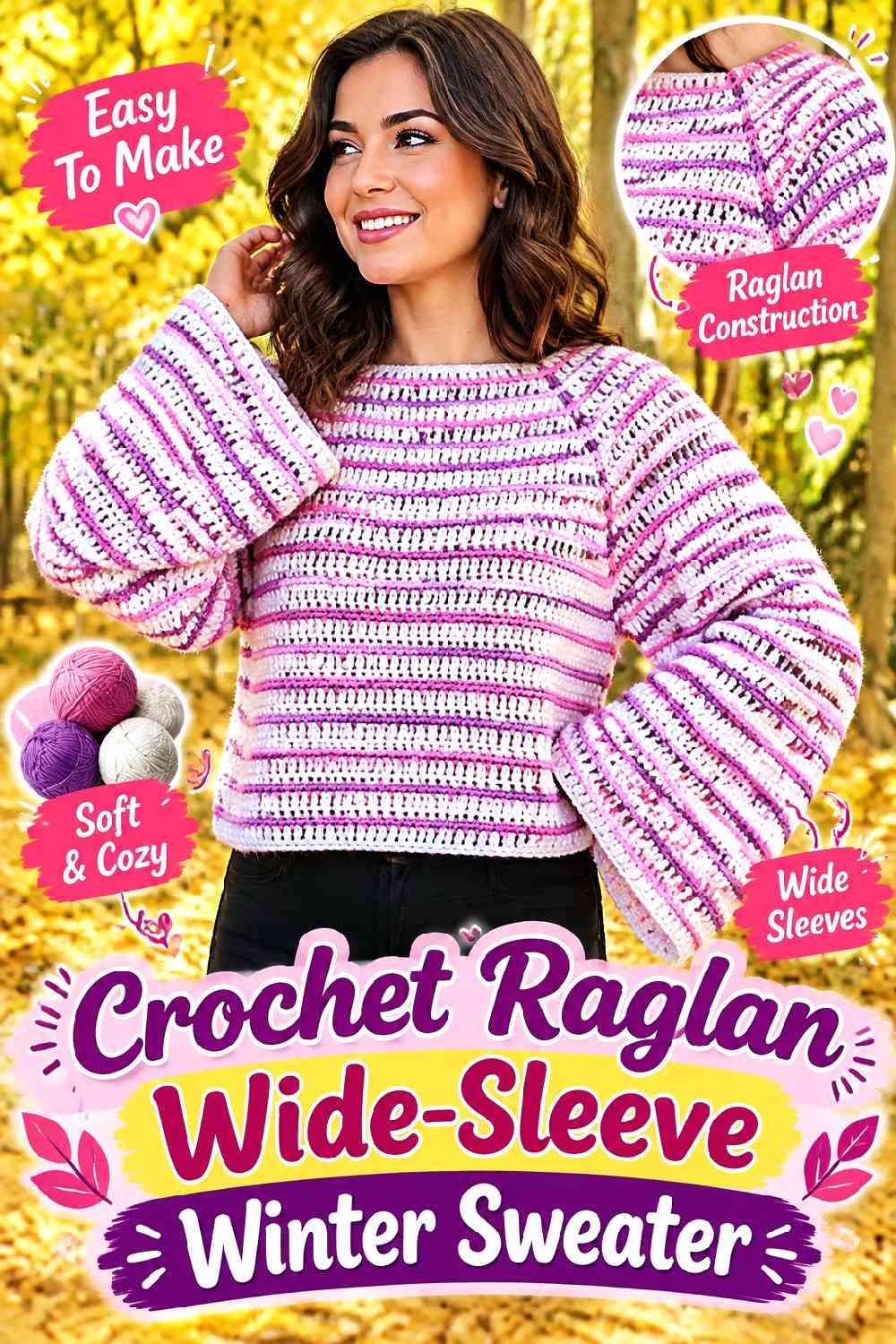
sewsam’s tutorial uses raglan-style sweater construction with wide sleeves, giving this project a different shoulder structure from the flat-panel and rectangle sweaters elsewhere in the list. The creator describes it as customizable to the wearer’s measurements.
A wide raglan sleeve can create a softer fantasy silhouette because the volume begins higher on the garment rather than appearing only at a dramatic cuff.
Raglan Lines Change the Shoulder Character
A raglan does not create the same shoulder edge as a set-in or dropped sleeve. That can make the upper body look less rigid and allow the sleeve volume to feel more continuous with the torso.
If you want a strong fitted-forearm-to-flared-cuff contrast, another project may suit you better. Choose this direction when a more flowing upper sleeve is part of the appeal.
Compare Sleeve Volume Before Choosing an Outer Layer
Wide sleeves occupy space long before the cuff. Try to picture the entire arm inside your usual coat or jacket rather than considering only the wrist flare.
A cloak, cape, poncho, or sleeveless outer garment naturally gives this kind of sleeve more room, but everyday practicality should guide the final choice.
Creator Credit: sewsam YouTube tutorial
15. Crochet Oversized Bell Sleeve Moon Pullover
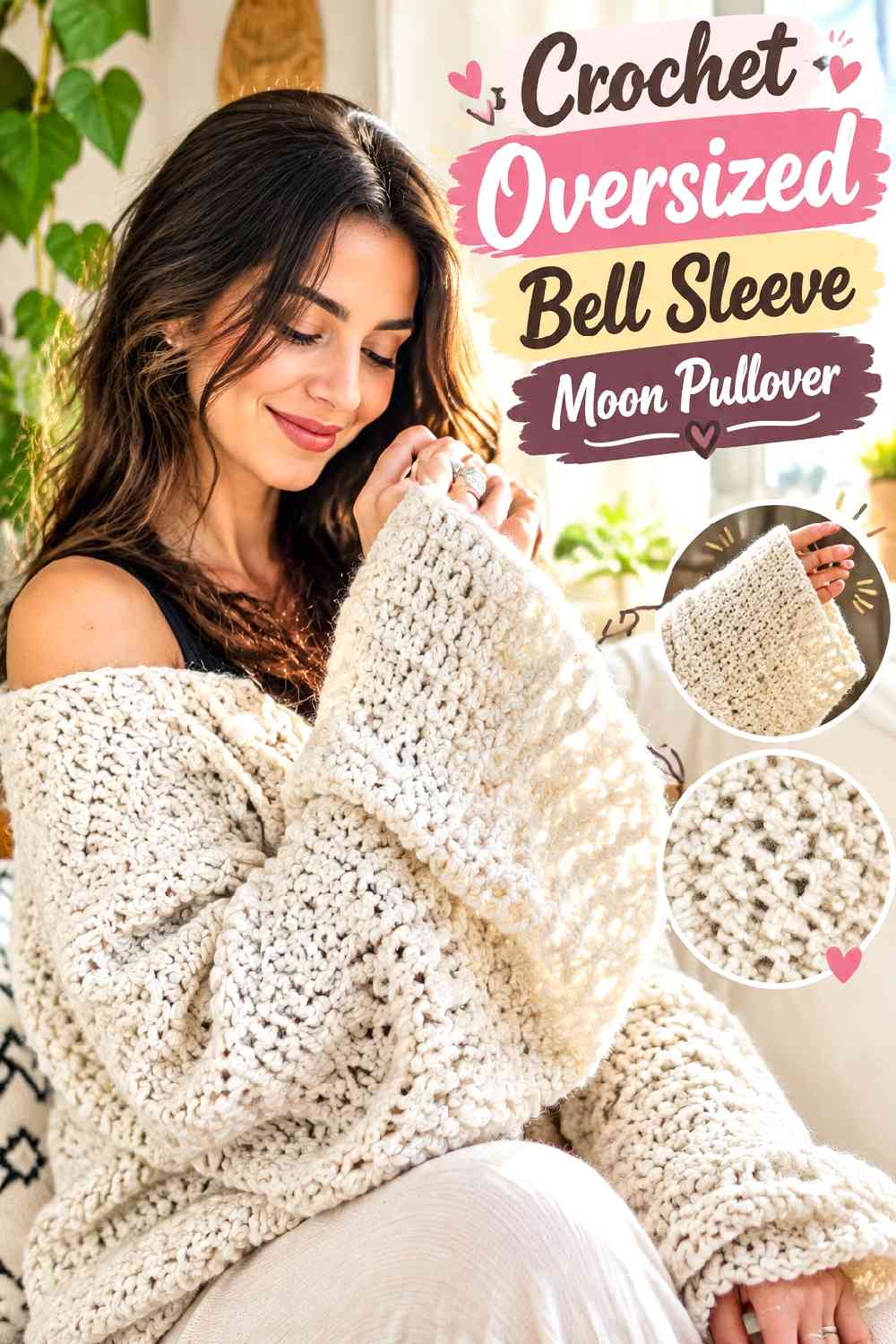
MayaLunaCorazon DIY CROCHET & BUSINESS presents an oversized bell-sleeve sweater with a substantial pullover shape, making this one of the more obvious cold-weather directions in the collection.
The larger body and flared sleeves create a robe-like profile that suits the softer side of medieval fantasy styling particularly well.
Oversized Does Not Mean Unmeasured
Extra ease is still a deliberate fit choice. Shoulder width, armhole placement, and total length determine whether the sweater appears intentionally loose or simply incorrectly sized.
Use the creator’s sizing information and finished examples rather than automatically choosing a larger size solely to create volume.
Large Sleeves Multiply Garment Weight
An oversized torso already uses more fabric than a fitted top. Adding long bell sleeves increases that further, so yarn weight and drape deserve attention before both sleeves are complete.
If you are considering a substitution, make a sufficiently large swatch to evaluate actual fabric weight and behavior rather than judging the skein in your hand.
Creator Credit: MayaLunaCorazon DIY CROCHET & BUSINESS YouTube tutorial
16. Crochet Dramatic Bell Sleeve Turtleneck Sweater
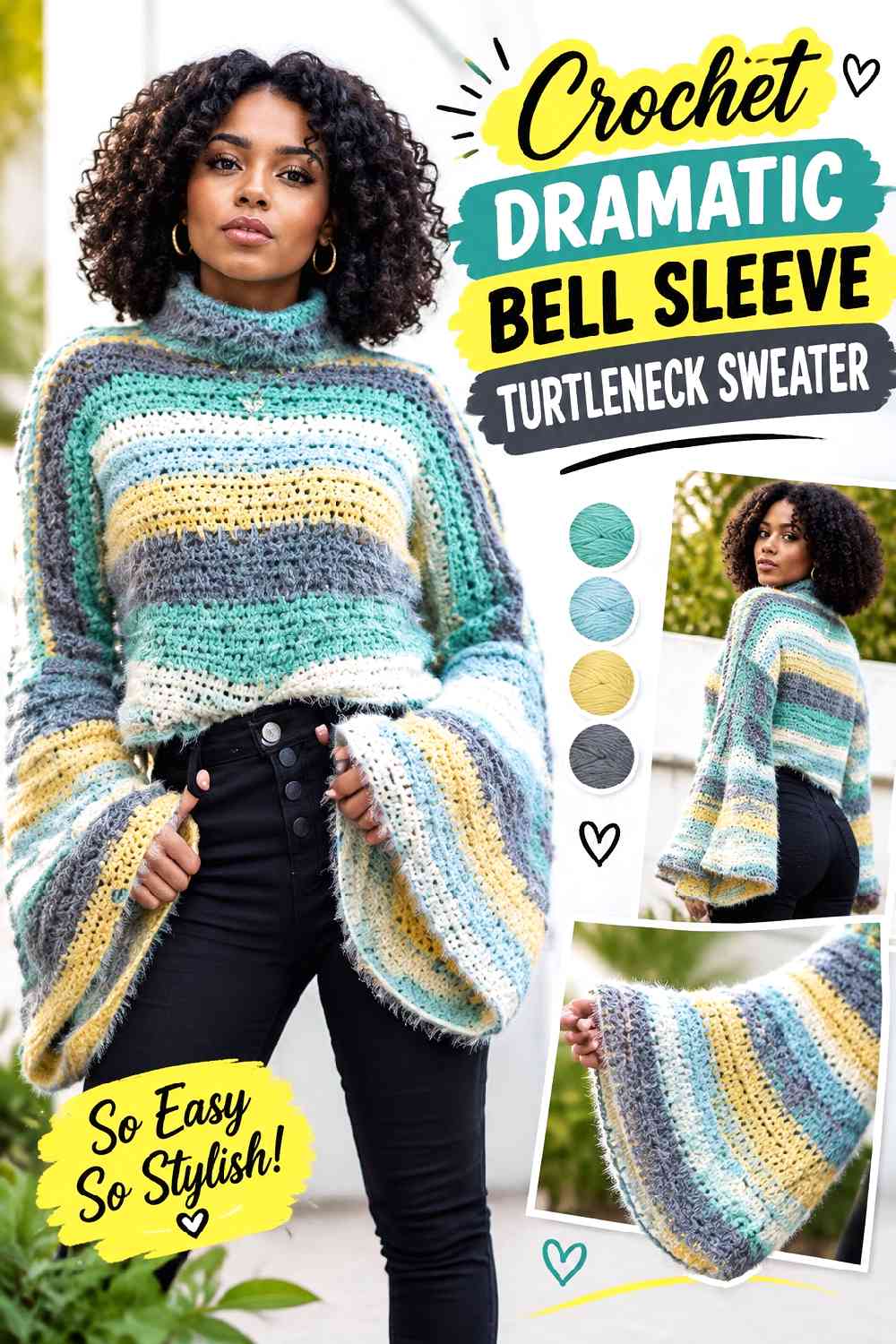
The dramatic bell-sleeve design associated with Chasing SunRaee gives the collection a stronger winter-fantasy direction through an oversized sweater silhouette and conspicuous lower-sleeve volume. The project is categorized as a pullover and uses a substantial statement-sleeve shape.
A higher neckline is especially useful when you want the outfit to feel wintry without relying on a scarf that could compete with the sleeve silhouette.
A High Neck Adds Visual Weight Near the Face
Large cuffs place emphasis low on the arms. A turtleneck or substantial neckline introduces a second strong area higher on the body, which can make an oversized sweater feel more balanced.
For romantasy styling, this can create a more complete garment on its own than a very open neckline that depends heavily on jewelry or another layer.
Dramatic Cuffs Need Real-Life Testing
The attraction here is the scale of the sleeves, so reducing them too aggressively can change the character of the project. Instead, assess where and how you plan to wear the sweater.
Sit at a table, carry a bag, bend your arms, and check where the cuff edge falls. That gives you useful information without assuming that every dramatic sleeve must be made smaller.
Creator Credit: Chasing SunRaee YouTube tutorial
17. Crochet Hexagon Bell Sleeve Cropped Cardigan
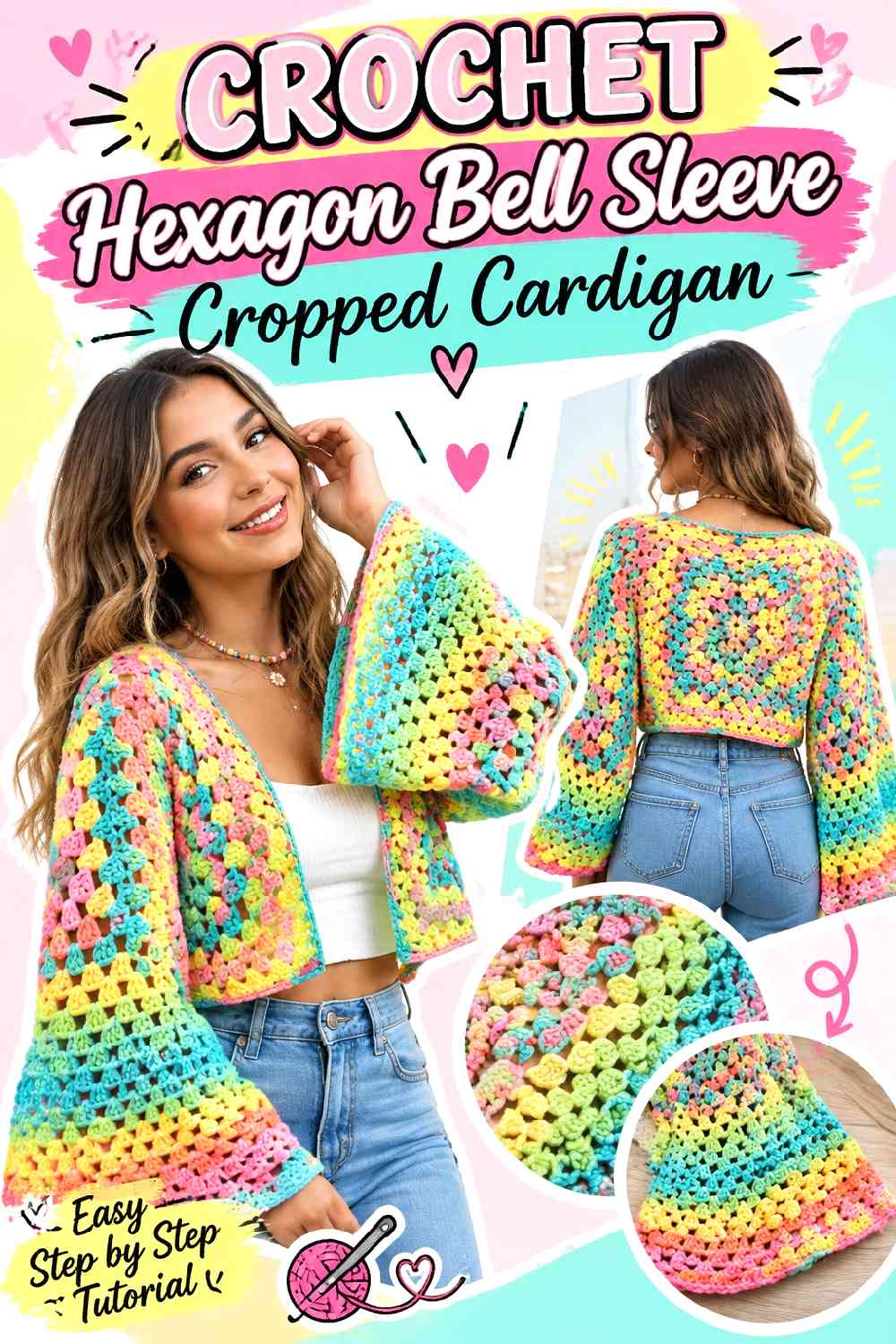
AstroKnotty’s cardigan uses two hexagon sections as its foundation and then develops the cropped body and flared sleeves from that geometry. The creator’s tutorial also discusses extending torso coverage without simply enlarging the sleeve opening.
This construction is especially useful for readers who want a granny-inspired medieval-fantasy layer rather than another conventionally paneled sweater.
Growing the Hexagon Changes More Than One Area
A hexagon garment does not always behave like a rectangular front or back panel. Continued growth can influence several garment dimensions at once.
Measure the developing pieces and follow the creator’s shaping guidance instead of assuming that adding more rounds is a neutral way to increase every part of the cardigan.
Keep Both Halves Consistent Before Seaming
The two main pieces should work as a pair. Compare their dimensions and relaxation periodically, particularly before investing time in sleeve flares or final finishing.
If one side has stretched more than the other, correcting that discrepancy earlier is easier than discovering it once the wide sleeves emphasize asymmetry.
Creator Credit: AstroKnotty YouTube tutorial
Which Crochet Bell Sleeve Style Fits a Romantasy Winter Wardrobe?
For a sweater that can carry most of the outfit by itself, start with the knit-look pullover, oversized moon sweater, raglan sweater, rectangle pullover, or dramatic turtleneck. They provide more central body coverage and read most clearly as sweaters.
For a courtly silhouette, the wrap-front, fitted lace, or square-neck versions place more emphasis on the torso and neckline. They work well when you want the finished garment to feel shaped rather than intentionally oversized.
For layered fae or woodland styling, the shrug, mesh cardigan, tie-front cardigan, floral blouse, granny-stitch option, and hexagon cardigan keep more of the underlying outfit involved in the final look.
The strongest choice is therefore not necessarily the project with the largest cuffs. Choose according to the amount of body coverage you need, how much fabric you want around your hands, what outerwear you use in winter, and whether the sweater itself or the complete layered outfit should create the fantasy effect.
Conclusion
Medieval-inspired bell sleeves can take a crochet sweater in several directions. A fitted body with a widening cuff creates a more courtly profile, while oversized pullovers and raglan shapes move toward a softer wandering-mage look. Mesh, floral, granny, and shrug designs are better considered as decorative layers when winter warmth needs to come from clothing underneath.
If you want substantial coverage, the knit-look pullover, oversized moon sweater, rectangle sweater, raglan sweater, and turtleneck are useful places to start comparing. For stronger layering potential, look at the wrap, shrug, tie-front, mesh, and hexagon constructions.
Whichever silhouette you choose, check shoulder fit, arm movement, sleeve weight, gauge, and the behavior of the finished fabric before making large adaptations. Follow the original creator’s tutorial for exact sizing and construction details.
FAQs
Can I make a lightweight bell sleeve tutorial into a winter sweater?
Sometimes, but changing to a heavier yarn is not automatically the right method. Yarn thickness can change gauge, dimensions, drape, armhole fit, and cuff weight. Check whether the creator provides substitution or made-to-measure guidance. For open lace or mesh designs, adding a warm underlayer may preserve the original silhouette better than substantially changing the yarn.
What makes a crochet bell sleeve look medieval or romantasy?
The effect usually comes from proportion and styling rather than one specific stitch. Long fitted sleeves that widen near the wrist can feel courtly, while loose oversized sleeves can resemble robes or fantasy tunics. Deep natural colors, textured yarn, high necklines, wrap fronts, open cardigans, long skirts, boots, and cloak-style layers can reinforce the look without copying historical clothing.
How wide should a medieval crochet bell sleeve be?
There is no universal width. The appropriate flare depends on the upper sleeve, yarn, wearer, intended length, and construction. Use the creator’s measurements or shaping method and try the developing sleeve on. A sleeve that looks dramatic in a photograph can feel very different when the arm is relaxed or bent.
Which yarn qualities work well for flowing bell sleeves?
Look first at the yarn specified by the tutorial and the fabric it produces. Bell sleeves generally need enough flexibility to hang attractively without becoming excessively heavy. Fiber, yarn construction, gauge, and stitch density all affect that result, so weight category alone does not predict the finished drape.
Are openwork bell sleeves practical for winter?
They can be when used as part of a layered outfit. Mesh, granny-style fabric, and lace may leave substantial skin or underlayers visible. A fitted long-sleeve base can provide warmth while preserving the crochet texture. For outdoor cold-weather use, consider the complete clothing system rather than evaluating the crochet layer by itself.
How can I stop two crochet bell sleeves from looking different?
Compare them repeatedly while working. Check length, upper-arm circumference, the point where the flare begins, and the relaxed cuff shape before finishing. Differences in tension can accumulate even when the same instructions are followed, so catching them early is easier than trying to correct visibly mismatched sleeves after assembly.
Will large crochet bell sleeves fit under a winter coat?
That depends on both garments. A narrow coat sleeve can compress or bunch a large crochet cuff, while roomy outerwear gives it more space. If wide sleeves are central to the design, consider how you normally dress for winter before choosing the project. Cloaks, capes, ponchos, and sleeveless outer layers leave more room, but the most practical solution is the one that works with clothing you will actually wear.