A Christmas mantel swag built from crochet pinecones and winter fruit can capture the look of old-fashioned natural holiday decorating without depending on fresh greenery or dried fruit. Brown pinecones provide deep texture, citrus adds warm color, red fruit creates focal points, and crocheted leaves help connect separate motifs into one continuous arrangement.
Exact tutorials for complete pinecone-and-fruit mantel swags are uncommon. The sources in this collection therefore include verified tutorials for pinecones, citrus, orchard fruit, pomegranates, berries, holly, mistletoe, acorns, foliage, and garland construction. Each project idea uses those components as a practical starting point for an original swag composition rather than pretending the source creator made the entire mantel arrangement described here.
The biggest design decision is not which shade of red or green to use. It is how much three-dimensional weight to place along the swag. Stuffed fruit and thick pinecones create strong focal clusters, while flat orange slices, leaves, and lighter foliage can fill space without making every section equally bulky.
Quick List
- Crochet Woodland Pinecone Cluster Mantel Swag
- Crochet Cascading Pinecone and Berry Mantel Swag
- Crochet Long-Scale Pinecone Christmas Mantel Swag
- Crochet Chunky Pinecone Hearth Mantel Swag
- Crochet Mixed-Size Pinecone Forest Mantel Swag
- Crochet Orange Slice and Pinecone Mantel Swag
- Crochet Whole Orange Winter Orchard Mantel Swag
- Crochet Red Apple and Pinecone Christmas Swag
- Crochet Pear and Evergreen Mantel Swag
- Crochet Plum and Pinecone Jewel-Tone Swag
- Crochet Pomegranate Christmas Mantel Swag
- Crochet Persimmon Woodland Mantel Swag
- Crochet Lemon and Pinecone Winter Citrus Swag
- Crochet Holly Berry and Pinecone Mantel Swag
- Crochet Spiky Holly Leaf Winter Fruit Swag
- Crochet Mistletoe and Fruit Mantel Swag
- Crochet Acorn Pinecone Woodland Mantel Swag
- Crochet Puff-Garland Fruit Mantel Swag
- Crochet Eucalyptus Winter Fruit Mantel Swag
Plan the Swag by Visual Weight, Not Just Motif Count
A stuffed apple, pear, or pomegranate occupies much more visual and physical space than a flat orange slice. Treating each motif as one equal unit can leave the swag unbalanced even when the number of pieces on each side matches.
Start by deciding where the main focal cluster will sit. A centered arrangement can work over a symmetrical fireplace, while an off-center fruit cluster creates a looser botanical look. Place the largest dimensional pieces first, then use flat fruit, berries, leaves, and smaller pinecones to bridge the gaps.
For a swag that hangs rather than rests fully on the mantel, attachment strength matters too. Do not assume a lightweight chain intended for flat motifs can support several stuffed fruits. Consider the finished weight of your chosen components before deciding how they will be connected and displayed.
Keep Pinecones and Fruit at Compatible Scale
Scale is especially noticeable when recognizable objects appear beside one another. A tiny pinecone next to an oversized apple can look whimsical, while several similarly scaled motifs produce a more naturalistic arrangement.
That does not mean every element should be identical in size. Variation often makes woodland decor look more convincing. The useful distinction is between deliberate variation and accidental mismatch.
Make one sample of the largest fruit and one pinecone before producing the full set. Place them on the mantel from normal viewing distance. If one component completely dominates the other, adjust yarn weight, hook choice, motif quantity, or placement before committing to dozens of pieces.
Give Mantel Swags Enough Empty Space
Christmas swags can become visually muddy when every inch contains a stuffed fruit, berry, leaf, cone, bow, and ornament.
Allow some connecting cord, stems, or foliage to remain visible. Negative space helps individual fruit shapes read clearly and gives textured pinecones enough room for their scales to cast shadows.
This is particularly important above a mantel already holding stockings, candlesticks, framed art, mirrors, or a television. The crochet swag should work with those objects rather than becoming a thick horizontal band that hides everything behind it.
1. Crochet Woodland Pinecone Cluster Mantel Swag
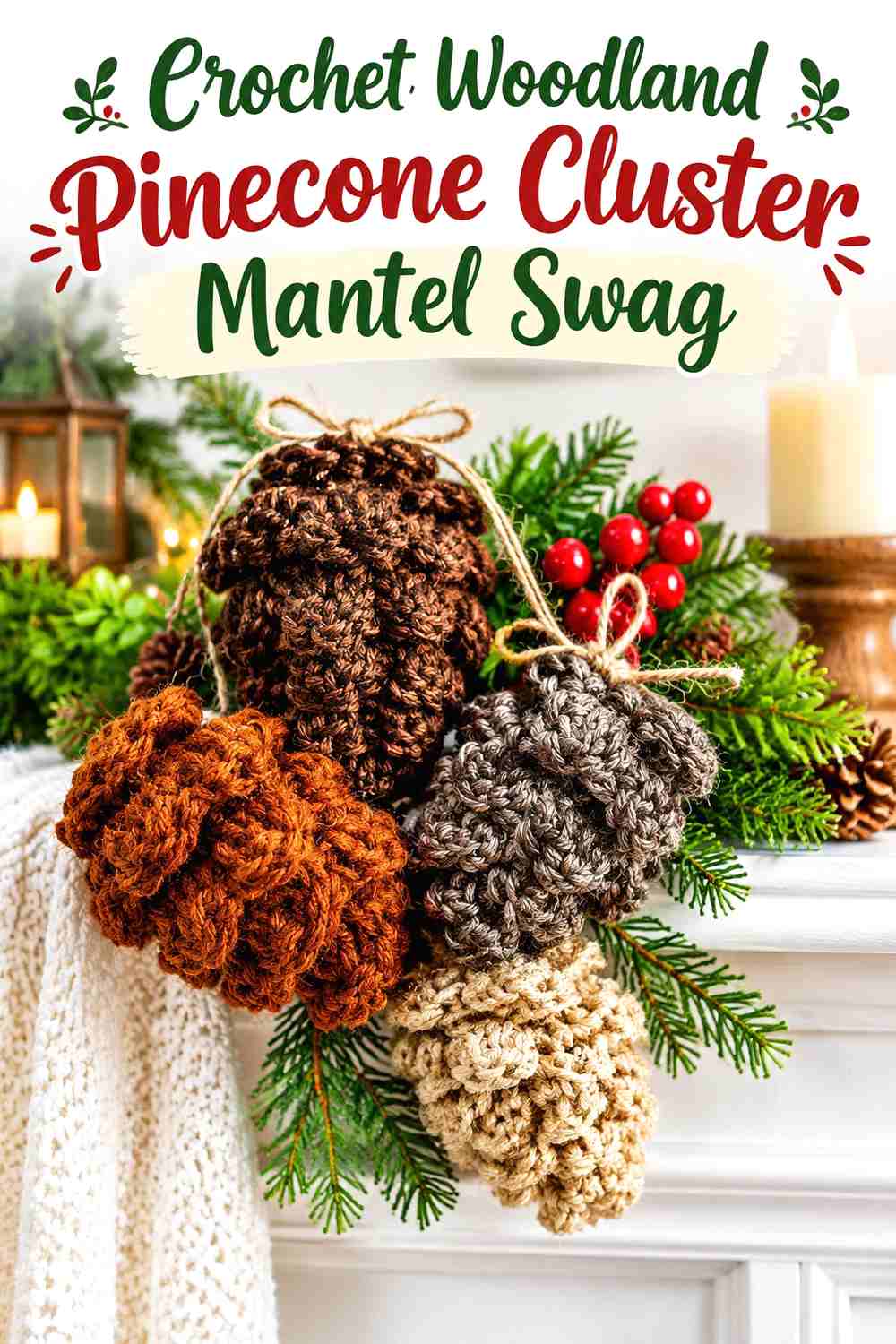
Passionate Crafter’s pinecone tutorial produces a strongly textured Christmas ornament specifically suited to garlands and holiday decorating. That makes it a practical source for a swag where pinecones form the main visual mass instead of acting as occasional fillers.
Build the Focal Cluster Before the Long Sides
If several cones will sit together near the center or one end of the mantel, arrange that group first.
Different orientations can keep repeated pinecones from looking like identical ornaments lined in a row. Some can hang downward while others sit at slight angles among leaves or fruit.
Use Fruit as Color Interruptions
A pinecone-heavy swag can become one continuous brown texture from a distance.
Instead of distributing fruit evenly, place oranges, apples, or berries at a few intentional breaks. Those brighter shapes can separate the pinecone clusters and make the entire arrangement easier to read.
Creator Credit: Passionate Crafter
2. Crochet Cascading Pinecone and Berry Mantel Swag
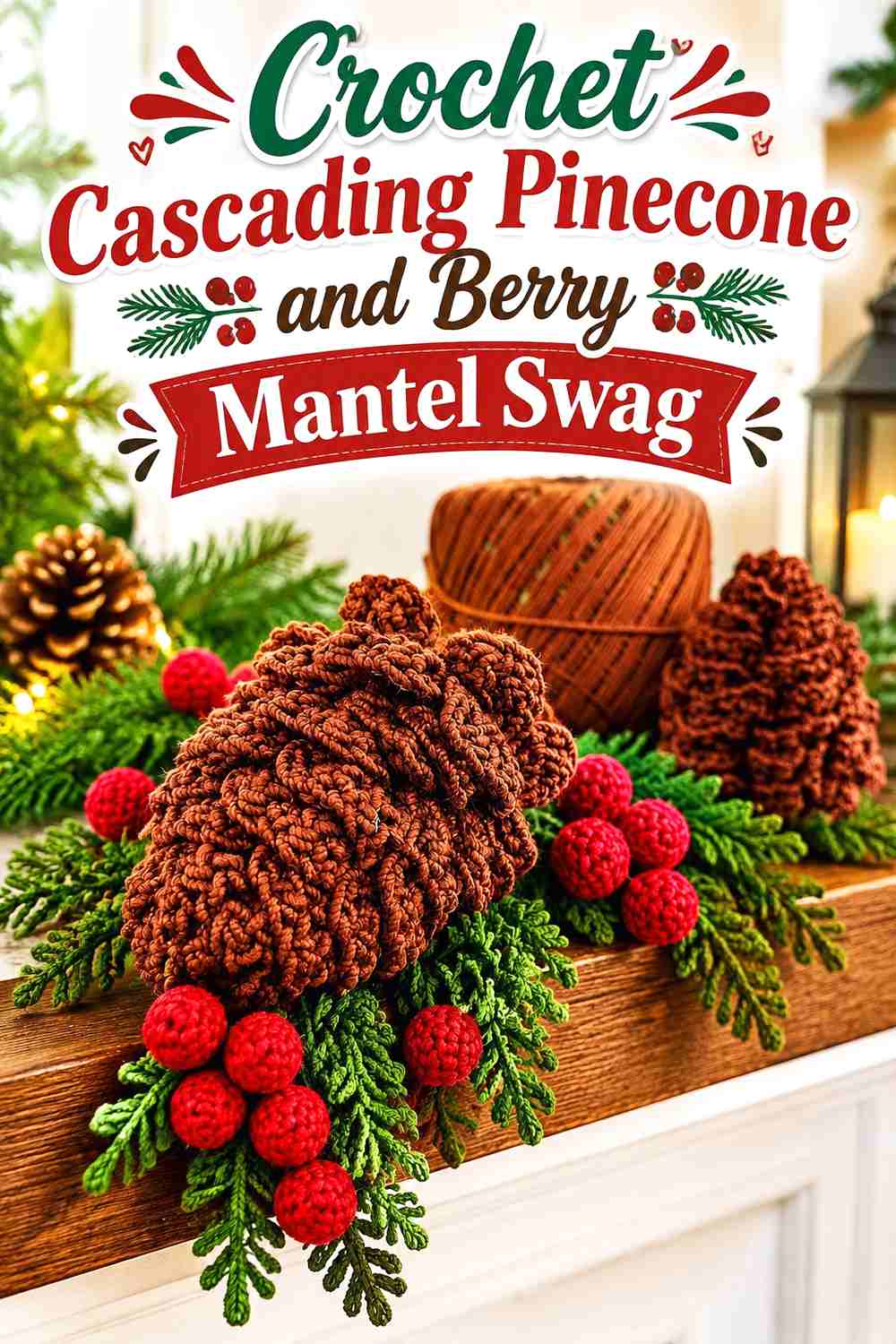
Passione Uncinetto’s crochet pinecone is designed for Christmas compositions and decorations, making it useful for a more delicate cone treatment than a heavily stuffed focal piece.
Use Repetition to Create a Hanging Cascade
A mantel swag does not have to run in one straight horizontal line.
Grouping several pinecones at gradually different hanging heights near one end can create a descending woodland shape. Smaller berry clusters can continue the downward movement without adding another large form.
Leave Space Around the Cone Scales
The pinecone texture is the feature that gives this composition depth.
Packing the cones tightly behind dense foliage can hide much of that surface. Let some pieces extend beyond the surrounding leaves so the individual layered shapes remain visible.
Creator Credit: Passione Uncinetto
3. Crochet Long-Scale Pinecone Christmas Mantel Swag
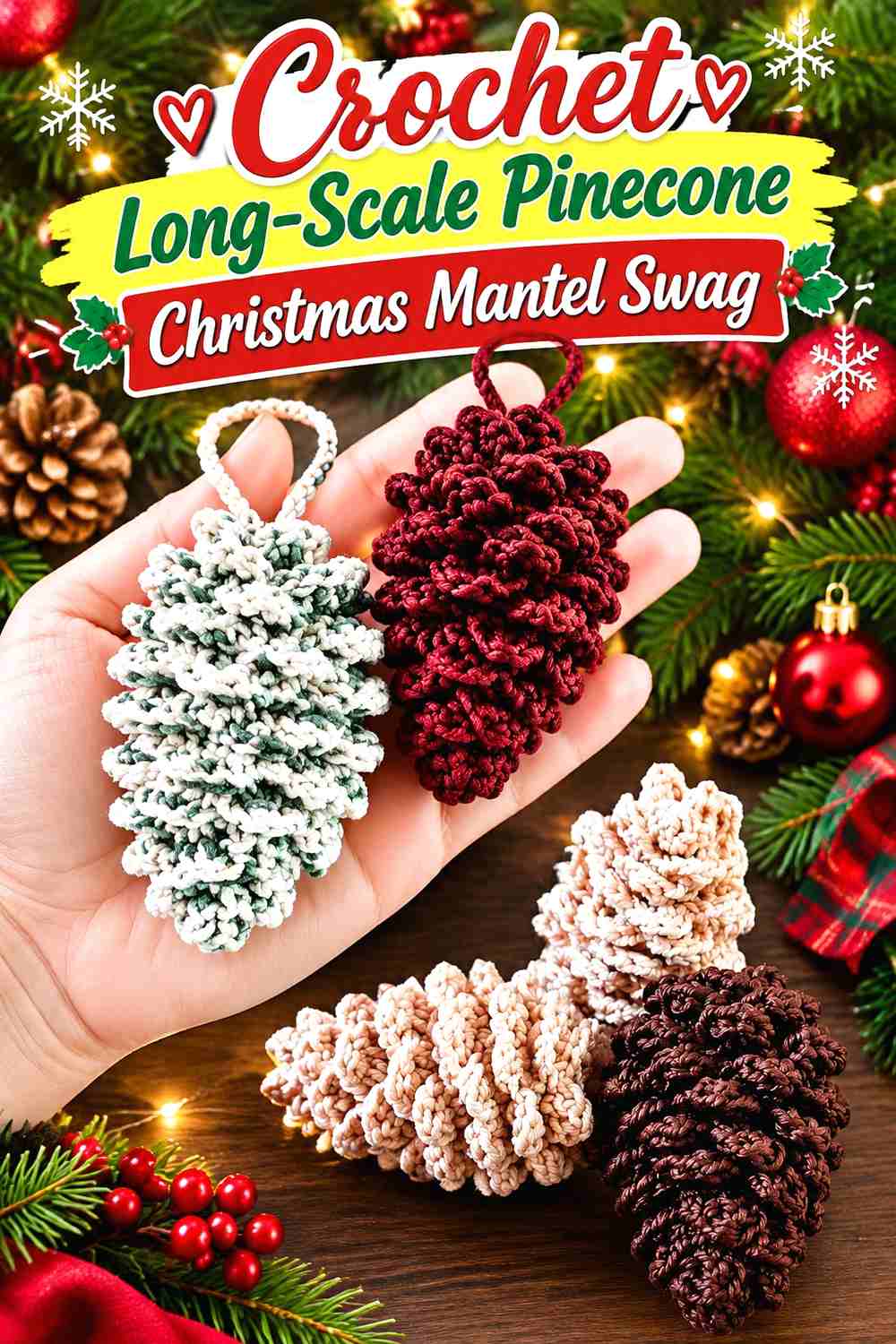
Erfin R. Tangdilintin’s pinecone ornament uses a visibly layered construction and has a strong sculptural profile. It works well as the source component for a swag where elongated cones punctuate the design at regular intervals.
Long Pinecones Can Establish the Swag Rhythm
Instead of mixing many shapes immediately, place the longest pinecones first and use them like visual markers across the mantel.
Fruit can then fill the larger spaces between those markers. This produces more structure than scattering every motif randomly.
Keep Similar Cones From Looking Factory-Spaced
Perfectly even gaps can make naturalistic woodland decor feel rigid.
Try small differences in angle and distance while preserving overall balance. The eye can still detect a rhythm without every repeated pinecone sitting in precisely the same position.
Creator Credit: Erfin R. Tangdilintin
4. Crochet Chunky Pinecone Hearth Mantel Swag
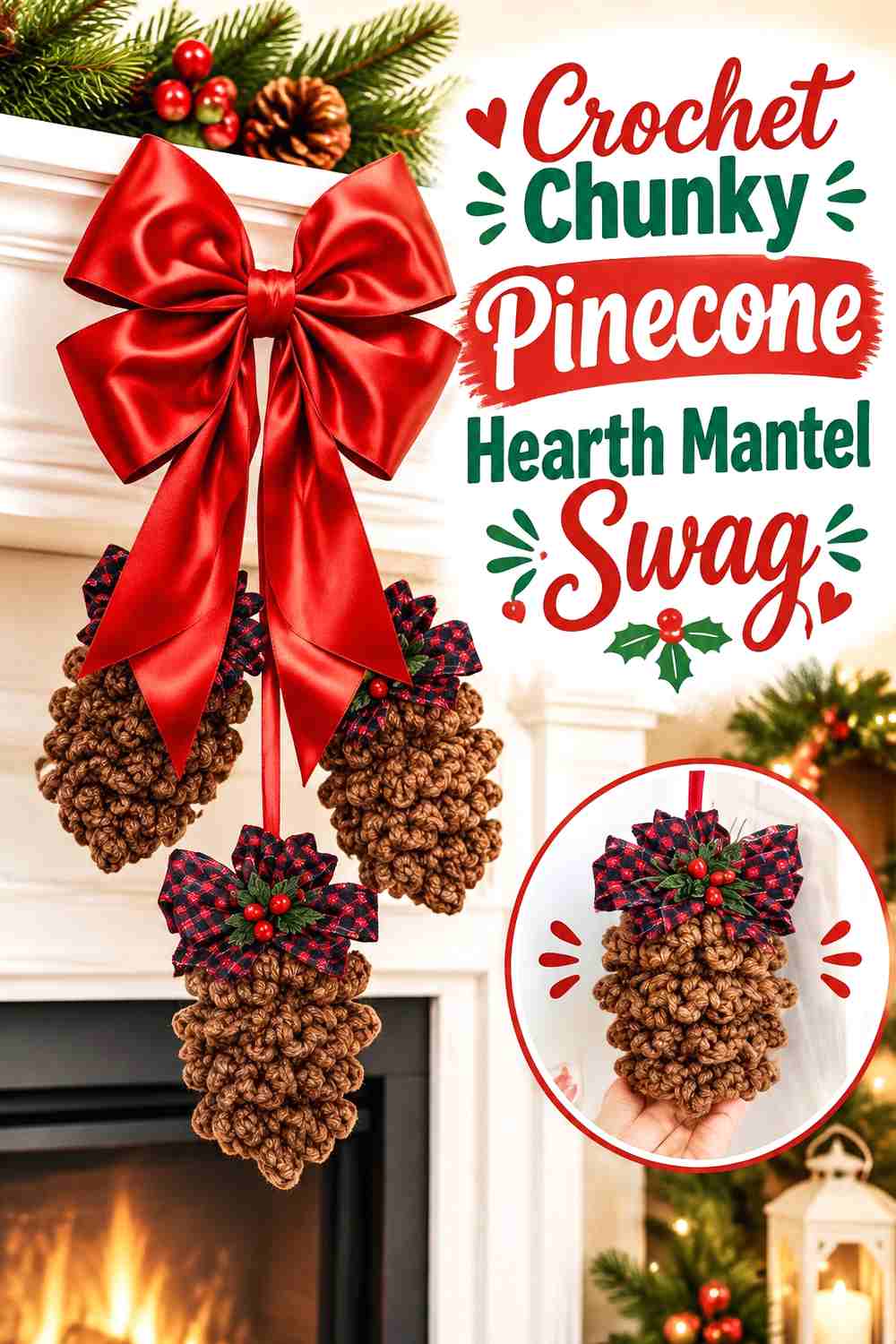
Hectanooga1’s pinecone design can be adjusted through yarn and hook choices, and the source specifically presents the project as a Christmas hanging ornament. That makes it a useful reference for a fuller, more substantial hearth arrangement.
Chunky Cones Need Fewer Competing Motifs
Large textured pinecones already occupy significant space.
Rather than adding an equally large fruit between every cone, use smaller berry groups, flat citrus slices, or leaves as transitions. The result can still look abundant without becoming excessively heavy.
Check Clearance Above Stockings
A thick swag can hang lower than expected once several dimensional pieces are attached.
Before final assembly, temporarily position the largest components and hang any stockings you normally use. Make sure the swag does not cover stocking loops or interfere with removing them.
Creator Credit: Hectanooga1
5. Crochet Mixed-Size Pinecone Forest Mantel Swag
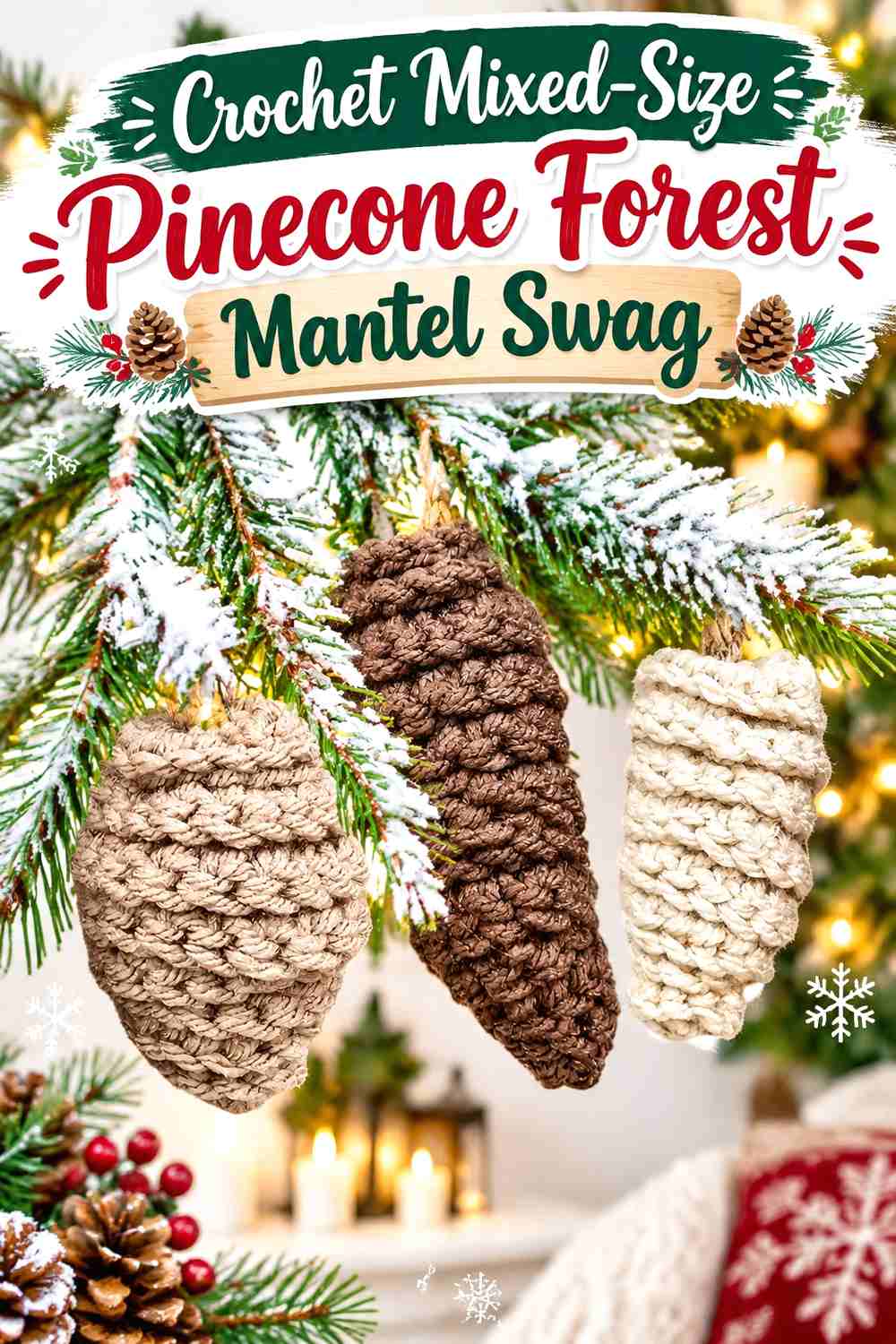
The Secret Yarnery’s pinecone design is available in different shapes and sizes, which is particularly useful for a swag meant to look gathered from a woodland floor rather than assembled from identical decorations.
Mix Sizes Within Clusters Instead of by Section
Avoid putting all large cones on one side and all small ones on the other.
Combining different sizes inside the same cluster creates more natural depth and prevents one section from appearing visually heavier simply because its individual motifs are larger.
Repeat One Color to Hold the Variation Together
Size variation already introduces movement.
Keeping most pinecones within a related brown, camel, cream, or frosted palette can give the collection cohesion while winter fruit supplies the brighter color.
Creator Credit: The Secret Yarnery
6. Crochet Orange Slice and Pinecone Mantel Swag
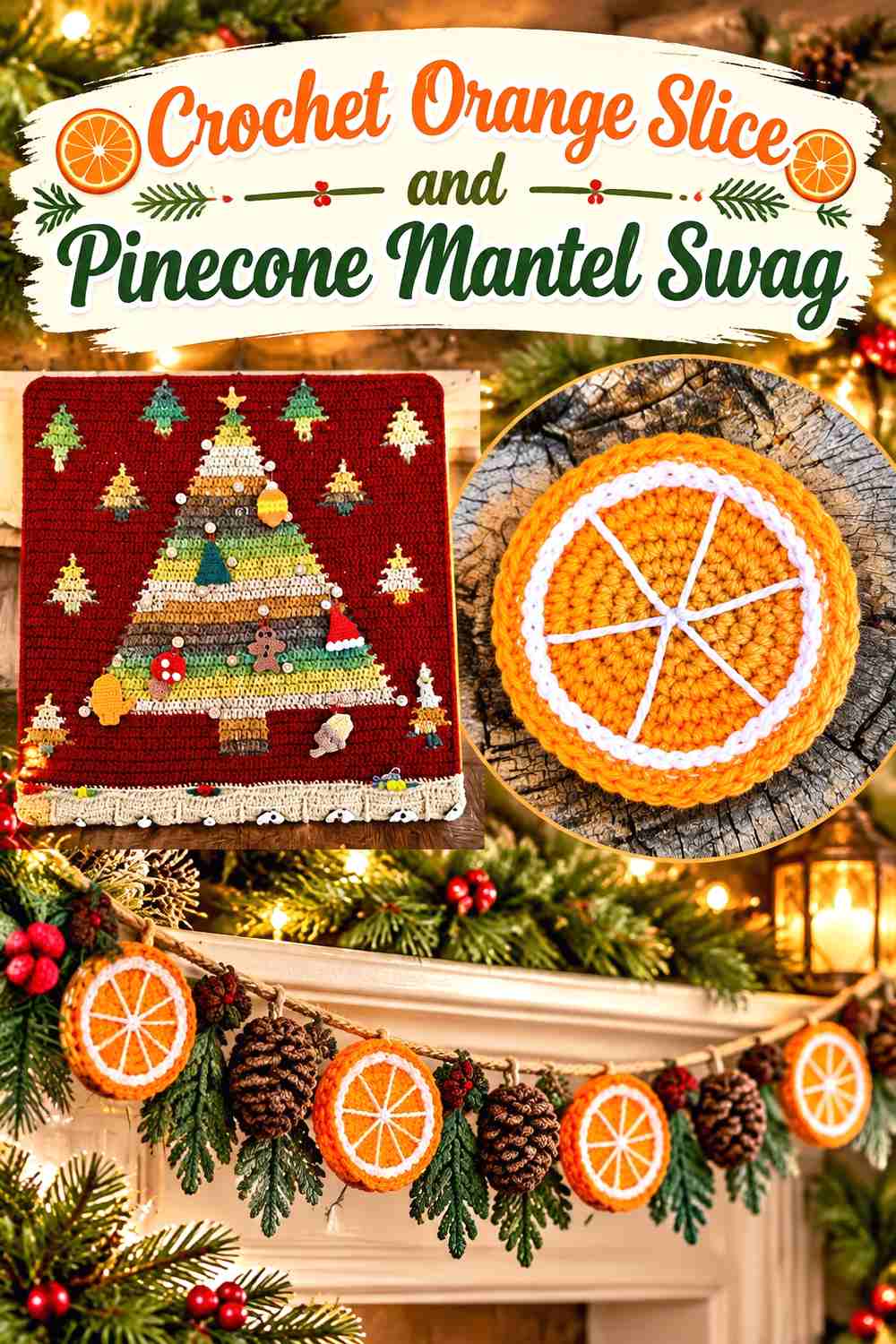
Concrete Gems Crochet’s orange slice is specifically designed as a hanging Christmas decoration and is suggested for uses including garlands and wreaths. Its flat shape provides an effective contrast to bulky pinecones.
Flat Citrus Keeps a Textured Swag From Becoming Too Heavy
Pinecones project outward, while flat orange slices sit closer to the connecting strand.
Alternating those two levels creates dimensional variety without requiring every ornament to be stuffed. It can also make a long mantel swag easier to distribute evenly.
Use Orange Slices as Bright Repeating Markers
Citrus works especially well when repeated at recognizable intervals.
The slices do not need to appear in a strict pattern, but several visible orange circles can tie separate pinecone and foliage clusters together across a long mantel.
Creator Credit: Concrete Gems Crochet
7. Crochet Whole Orange Winter Orchard Mantel Swag
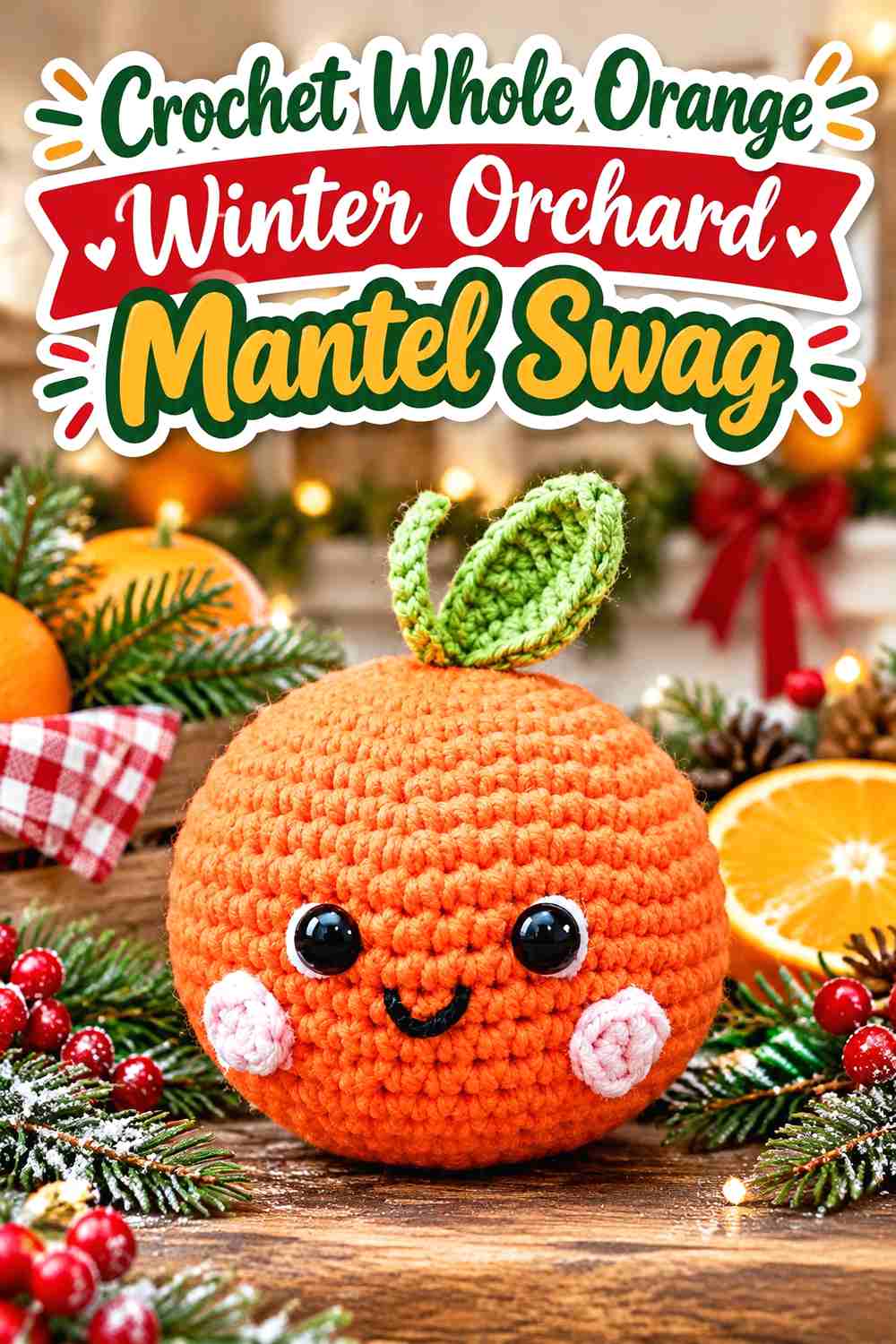
Odinka Wisanindhi’s tutorial produces a dimensional crochet orange with a leaf and stem, offering a substantially different citrus form from a flat slice.
Whole Fruit Works Better as a Focal Accent
A stuffed orange will usually command more attention than a flat citrus motif.
Use whole oranges in smaller numbers near major focal points and let slices, leaves, or berries carry the citrus theme through the quieter sections.
Consider How the Fruit Will Hang
A round stuffed piece may rotate after it is suspended.
If the leaf or stem needs to remain visible from the front, test the attachment position before securing the rest of the swag. A beautiful detail placed entirely toward the wall will contribute very little to the finished display.
Creator Credit: Odinka Wisanindhi
8. Crochet Red Apple and Pinecone Christmas Swag
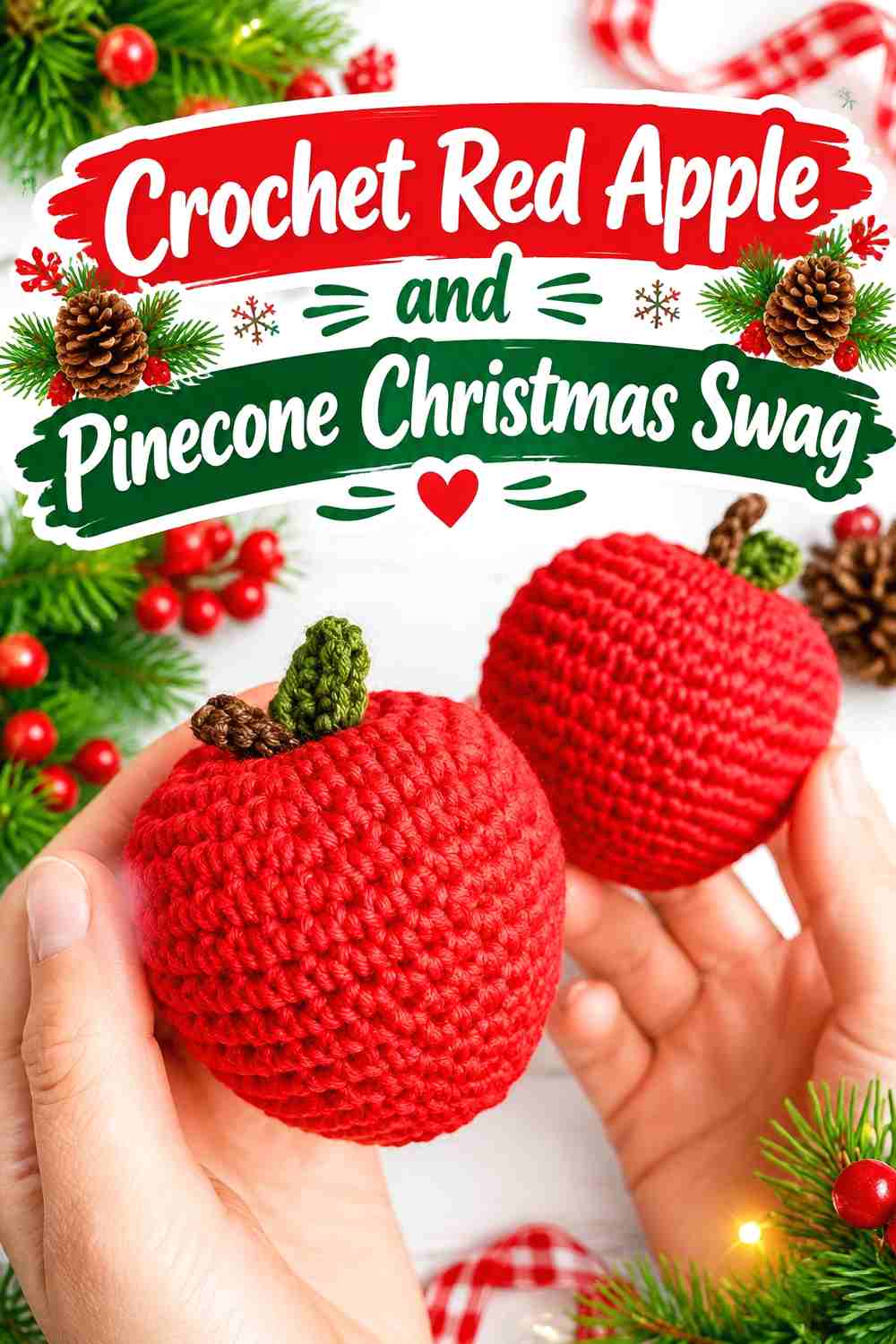
Amigurumi_Joys provides a dedicated crochet apple tutorial, giving this idea a classic red orchard fruit that can replace some of the usual berry accents in a Christmas mantel display.
Apples Create Larger Red Focal Points Than Berries
Traditional Christmas swags often use small areas of red.
Crochet apples let that color occupy a more substantial shape. One or two fruit clusters can therefore make a stronger statement than scattering many tiny red details through the entire arrangement.
Pair Rounded Apples With Angular Pinecone Texture
The contrast between smooth fruit and layered cones is part of what makes this combination useful.
Avoid covering the apple with too many leaves or bows. Its simple rounded shape gives the eye a resting point beside the more complicated pinecone texture.
Creator Credit: Amigurumi_Joys
9. Crochet Pear and Evergreen Mantel Swag
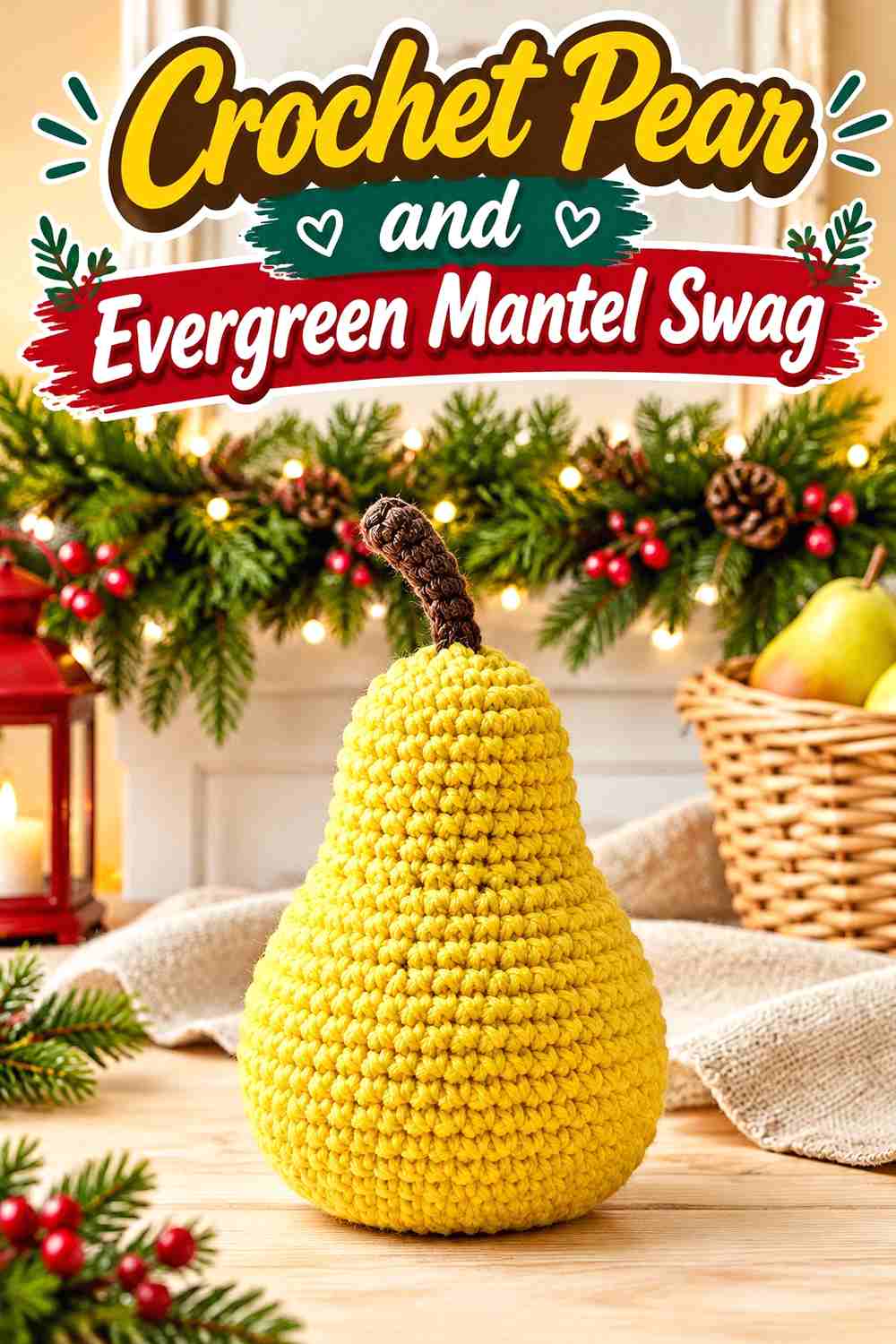
Alextitia Tuto Crochet’s pear tutorial creates a recognizable tapered fruit form, which brings a noticeably different silhouette from round apples and oranges.
Pears Add Useful Vertical Shape
The narrow top and fuller lower section make pears particularly effective near hanging ends or downward-pointing greenery.
Place them where that tapered outline can remain visible rather than burying the fruit inside a dense central pile.
Muted Pear Colors Can Soften a Traditional Palette
Not every fruit needs to be bright red or orange.
Olive, golden ocher, muted green, or warm cream can make pears work as quieter bridge elements between dark pinecones and brighter fruit. Compare actual yarn colors together before committing to the full set.
Creator Credit: Alextitia Tuto Crochet
10. Crochet Plum and Pinecone Jewel-Tone Swag
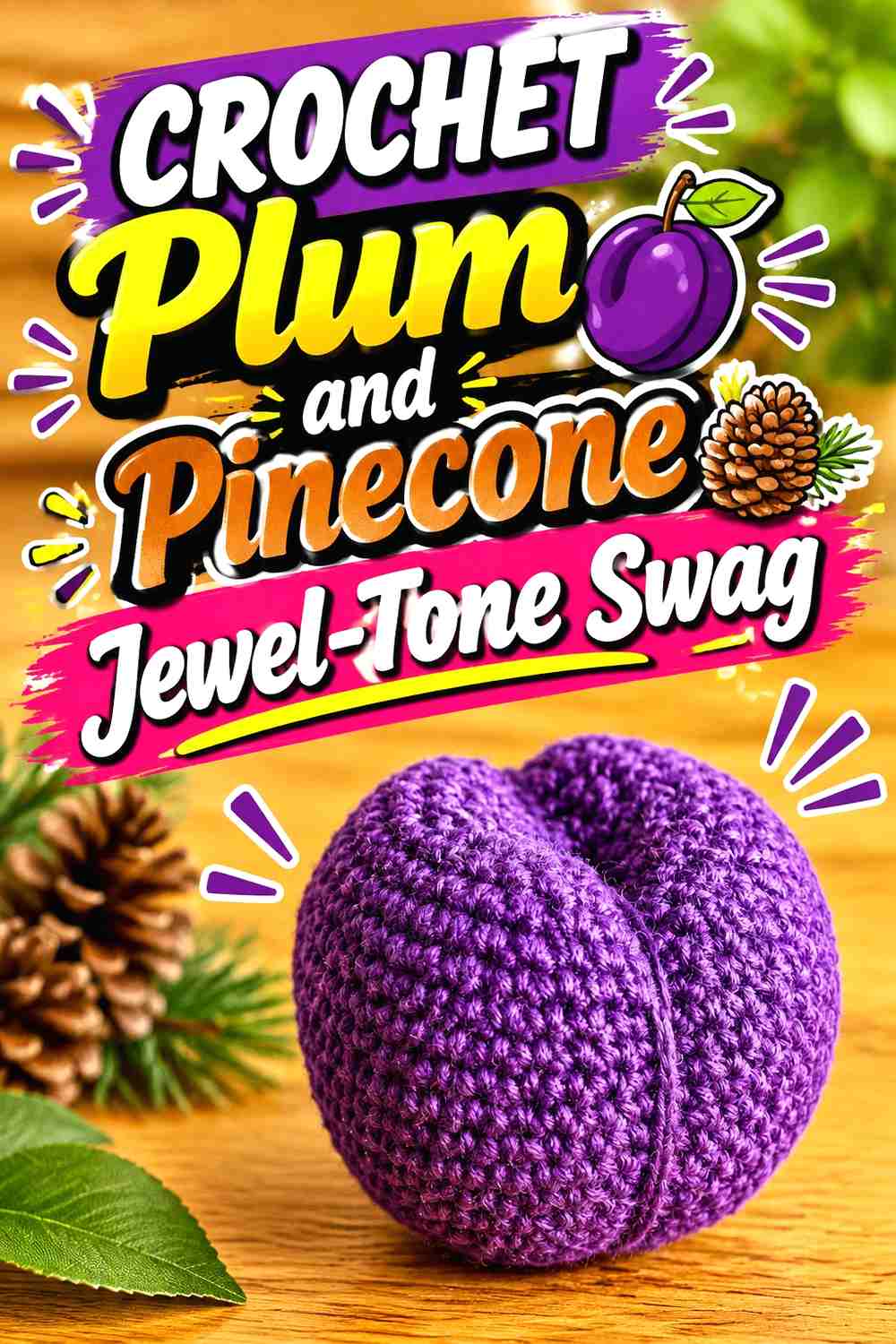
MummaJ Crochet’s dimensional plum tutorial introduces a deeper fruit color that can move a Christmas swag away from the usual red-and-green combination.
Plum Adds Depth Without Looking Like Another Berry
A rich purple, burgundy-purple, or dark wine fruit can sit comfortably beside brown cones, olive foliage, and muted orange.
Because the color is less expected in traditional Christmas decor, use it deliberately rather than mixing it with every other jewel tone available.
Cluster Plums in Odd-Numbered Groups
Several small or medium fruits placed together can create a stronger focal unit than isolated plums scattered along the entire mantel.
Keep the group visually loose enough that each fruit’s outline remains recognizable.
Creator Credit: MummaJ Crochet
11. Crochet Pomegranate Christmas Mantel Swag
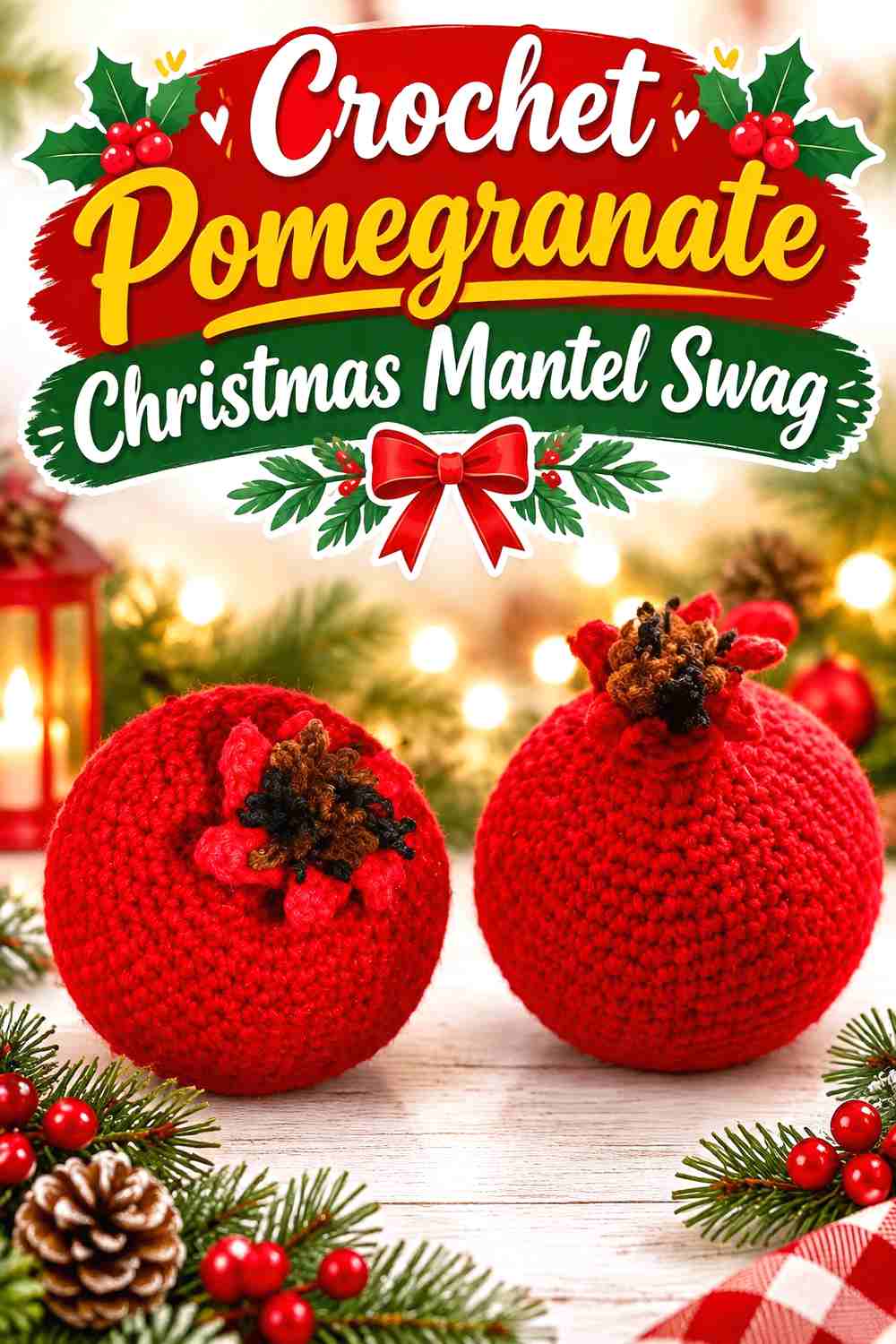
Indu’s Creation demonstrates a dimensional crochet pomegranate, giving this idea one of the strongest winter-fruit references in the collection.
Let the Crown Shape Stay Visible
The top of a pomegranate distinguishes it from an ordinary red ball.
When attaching the fruit to the swag, orient it so that identifying detail remains visible from the room instead of pointing backward into the greenery.
Pomegranate Red Can Replace Several Small Accents
A few substantial red fruits can provide enough color for the entire arrangement.
This can be particularly effective on a mantel dominated by cream, deep green, brown, and natural wood, where too many additional red berries might fragment the composition.
Creator Credit: Indu’s Creation
12. Crochet Persimmon Woodland Mantel Swag
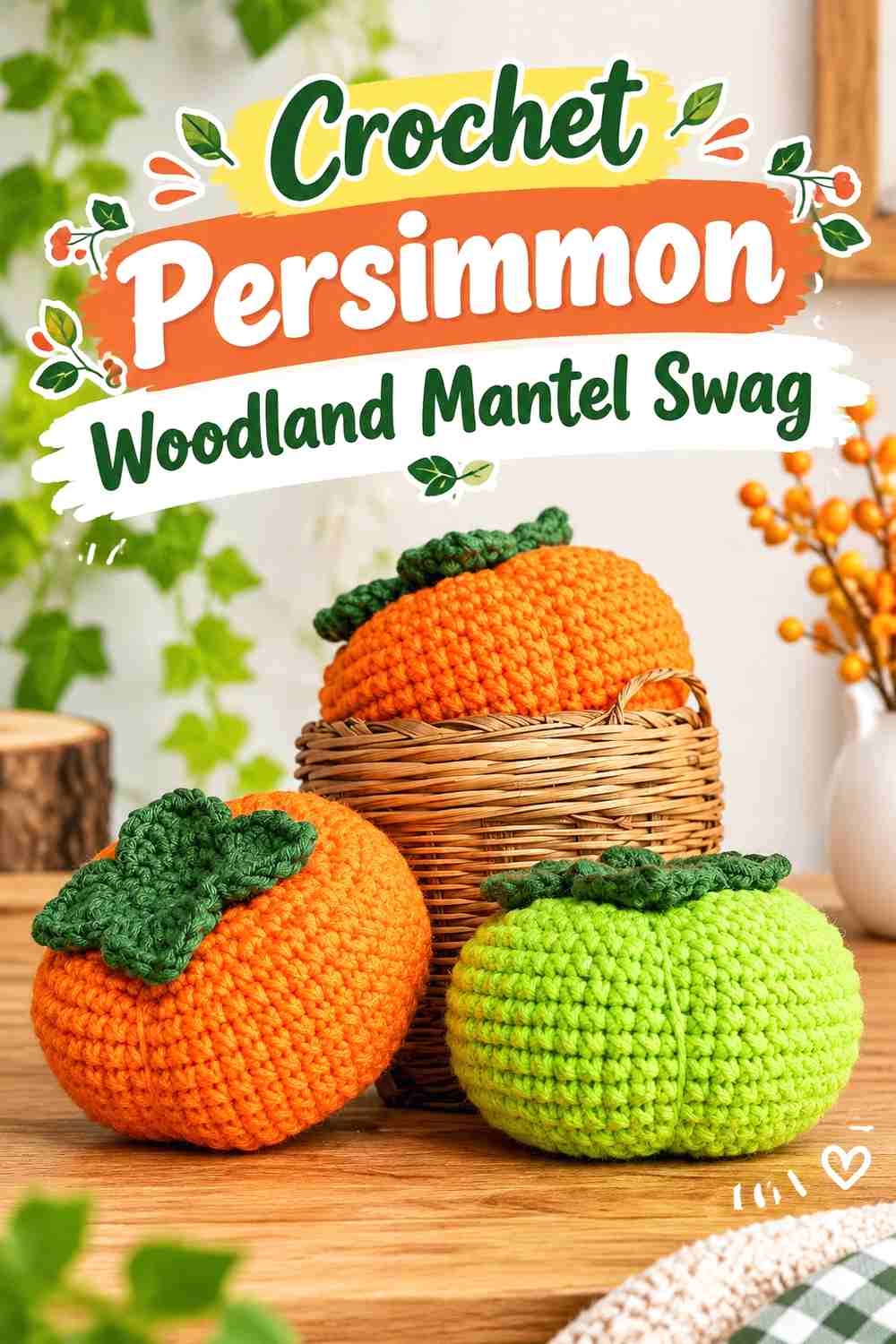
Amigu World’s persimmon tutorial provides a distinct orange-red winter fruit with a leafy top, offering another way to introduce warm color without repeating oranges throughout the entire swag.
Persimmon Creates a Softer Orange-Red Transition
If bright orange citrus feels too sharp beside dark green and brown, persimmon can bridge the space between traditional Christmas red and warm harvest orange.
The color works particularly well in woodland palettes that already contain camel, rust, moss, and cream.
Do Not Hide the Leafy Top
Like a pomegranate crown, the top detail helps identify the fruit.
Leave enough room around the upper section that the leaves do not disappear behind pinecones or other dense foliage.
Creator Credit: Amigu World
13. Crochet Lemon and Pinecone Winter Citrus Swag
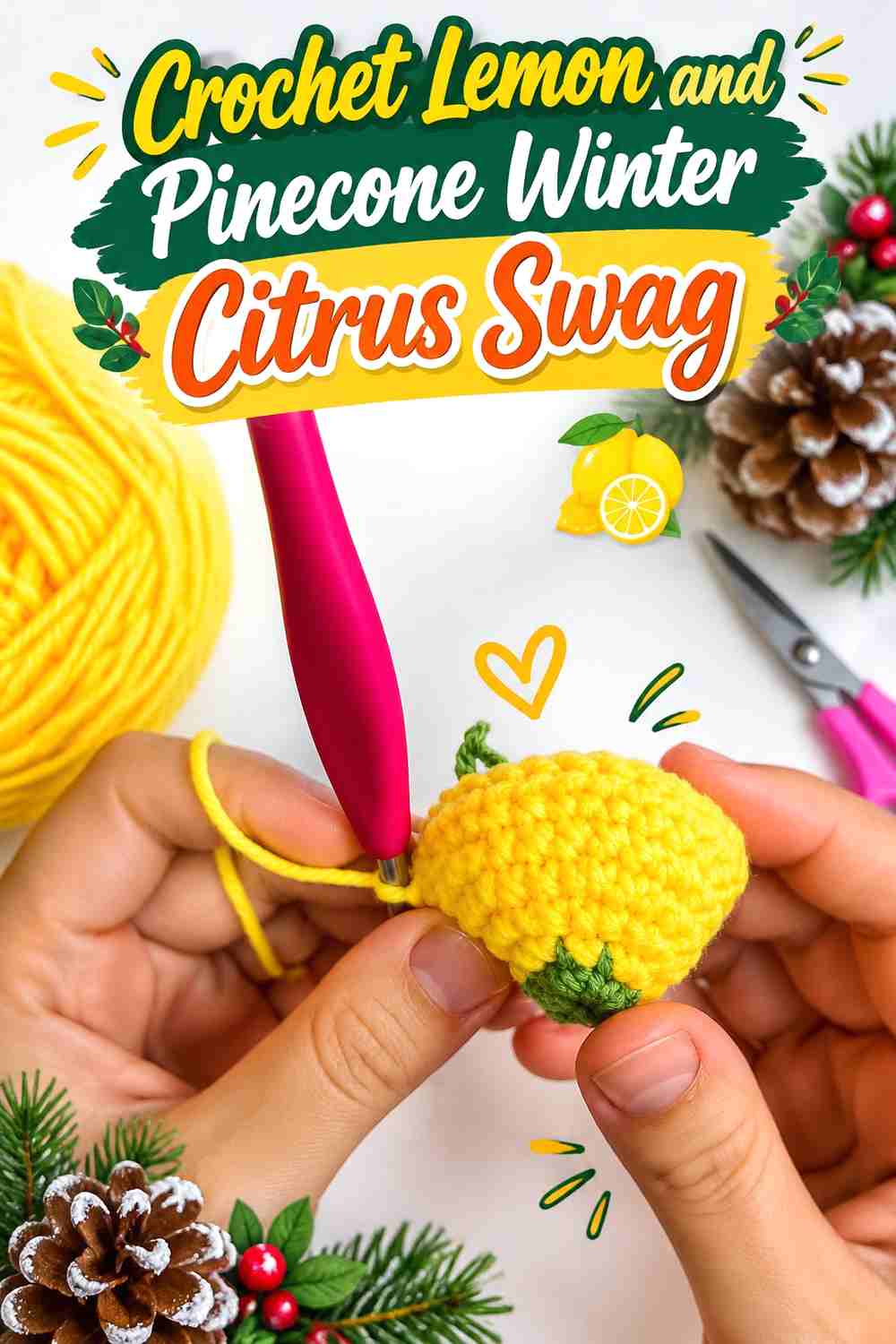
Pink’s Cozy Corner provides a full crochet lemon tutorial, adding a pointed citrus silhouette that differs from both round oranges and flat orange slices.
Use Lemon as a Pale Highlight
For Christmas, lemon does not have to mean bright summer yellow.
A muted golden yellow, cream-yellow, or antique citrus shade can introduce light between dark green leaves and brown pinecones. Always verify that a yarn substitution still suits the tutorial’s construction.
Limit the Number of Strong Yellow Focal Points
Yellow naturally attracts attention in a dark winter palette.
A few strategically placed lemons can brighten the swag, but repeating them too densely may shift the entire display away from the pinecone-and-evergreen character.
Creator Credit: Pink’s Cozy Corner
14. Crochet Holly Berry and Pinecone Mantel Swag
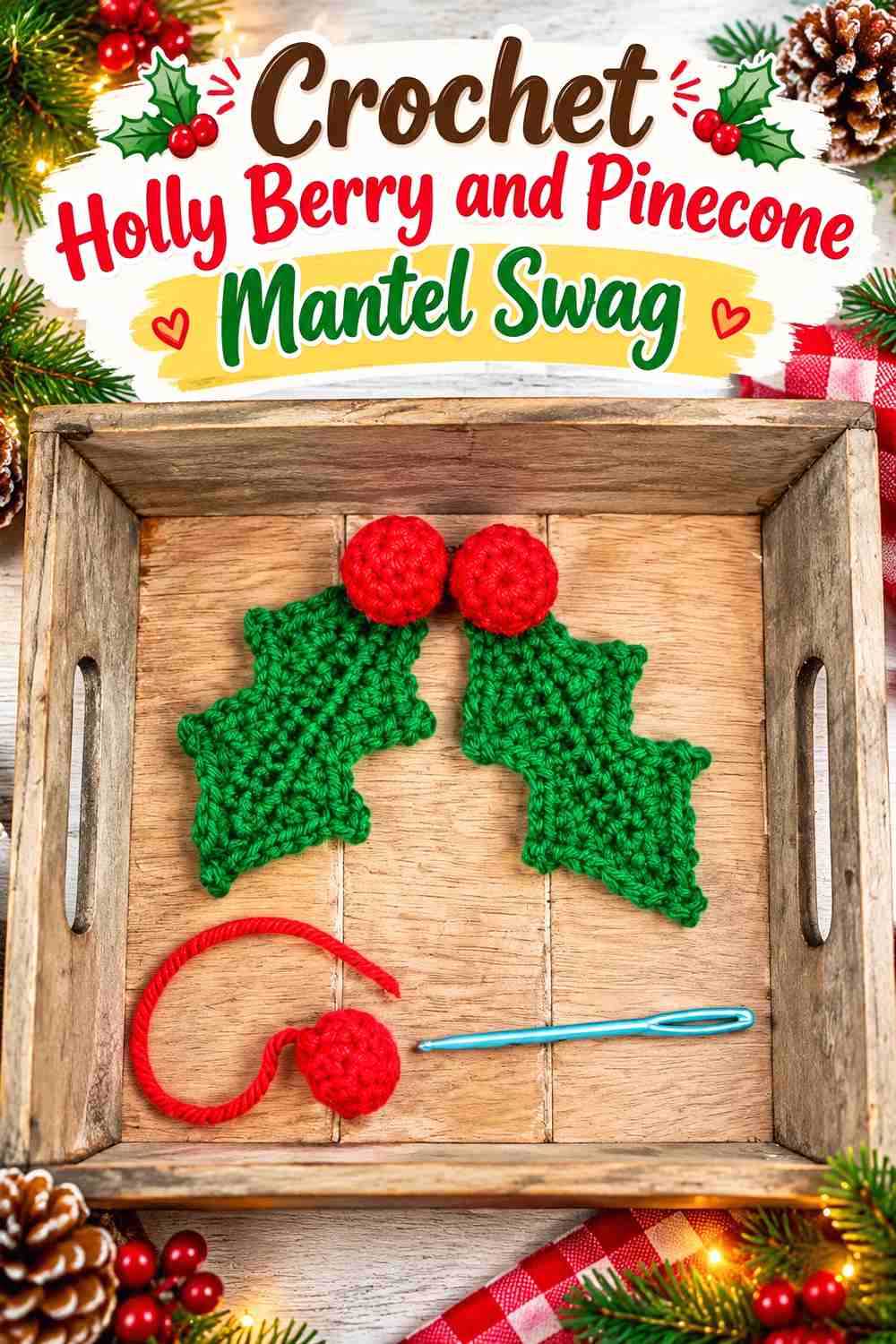
Cosy Rosie Crochet’s tutorial focuses on dimensional holly berries, providing a small-scale red component that can fill spaces where full-sized fruit would be too bulky.
Berry Clusters Work as Connectors
Use small red clusters between larger pinecones, apples, oranges, or pomegranates.
Because berries occupy less space, they can visually connect separate focal groups without creating another large object competing for attention.
Keep Berry Scale Consistent Within Each Cluster
A natural-looking arrangement can include several cluster sizes, but individual berries grouped together generally read more cleanly when they are reasonably compatible in scale.
Make one complete cluster before producing the rest so you can judge its relationship to the pinecones and fruit.
Creator Credit: Cosy Rosie Crochet
15. Crochet Spiky Holly Leaf Winter Fruit Swag
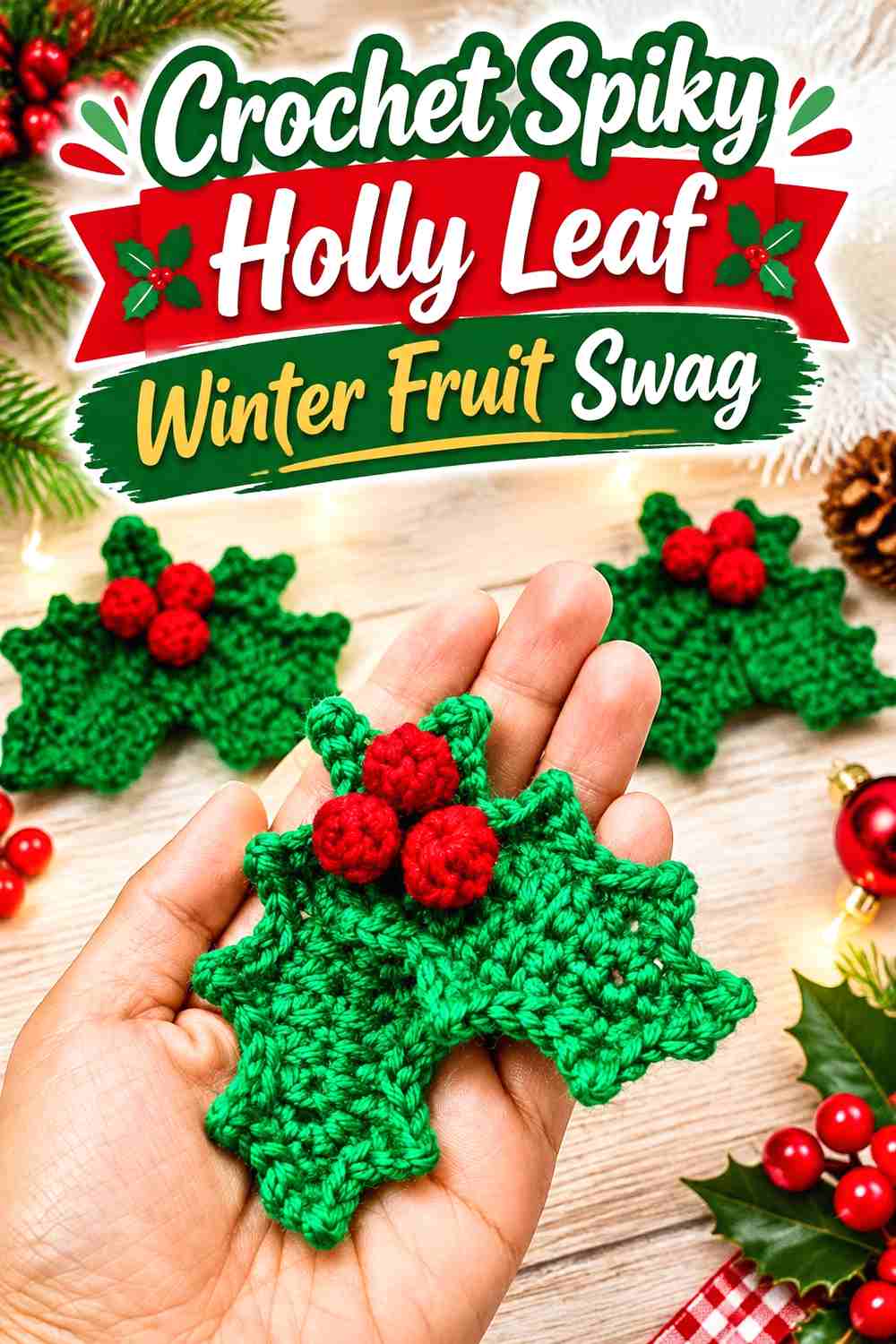
Handmade By Mei’s holly-leaf tutorial provides a clearly pointed Christmas leaf shape, giving this swag more graphic greenery than soft eucalyptus or rounded mistletoe leaves.
Holly Leaves Can Frame Fruit Instead of Filling Everything
Place several leaves around oranges, apples, or pomegranates so their pointed edges radiate outward from the fruit cluster.
This creates a recognizable Christmas botanical detail without requiring holly to cover the entire connecting strand.
Dark Green Helps Bright Fruit Stay Defined
If the fruit is red, orange, or golden, a sufficiently darker leaf color can create useful separation.
Compare the colors from across the room. Two yarns that seem different in your hand may merge visually once the motifs are several feet away.
Creator Credit: Handmade By Mei
16. Crochet Mistletoe and Fruit Mantel Swag
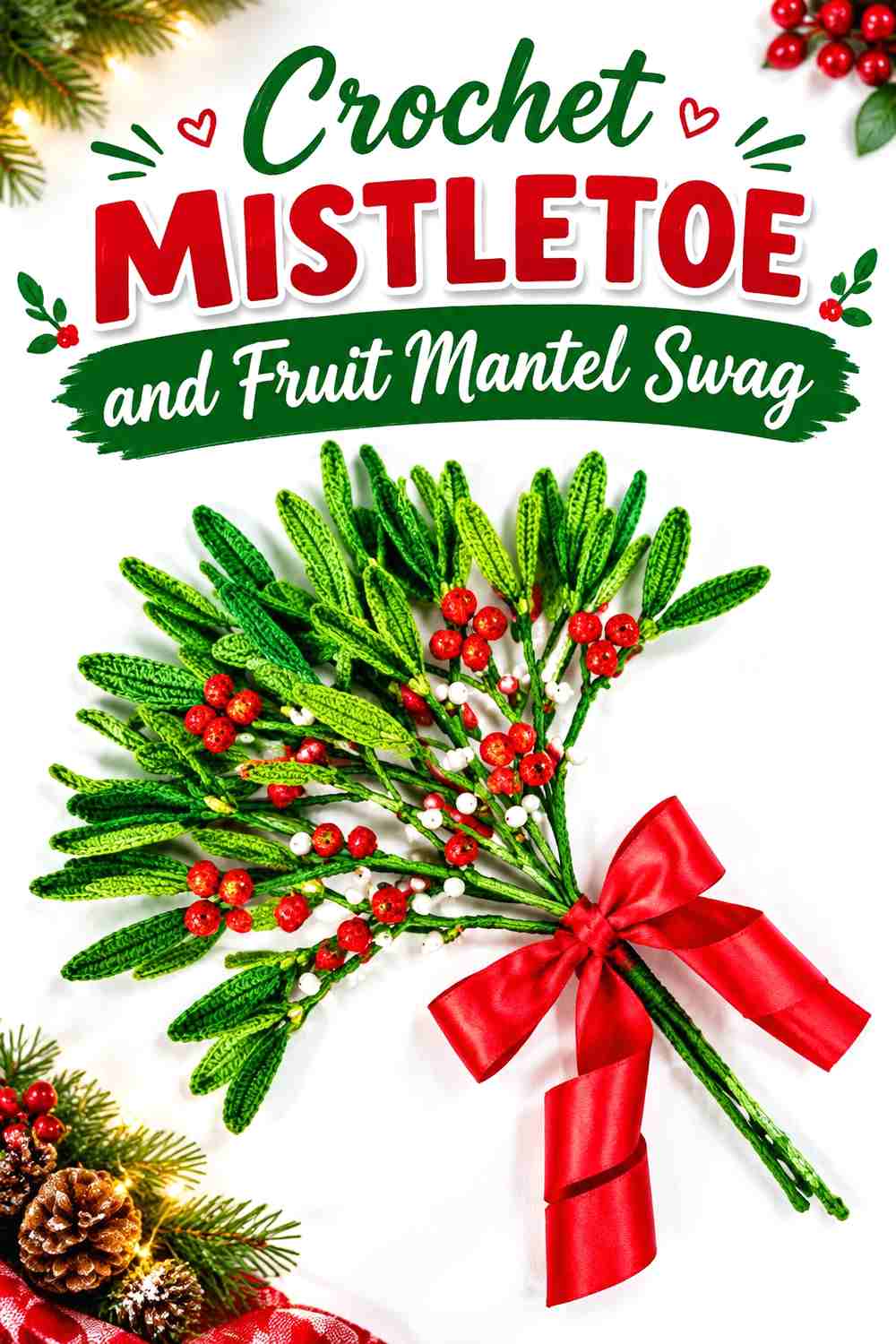
Happy Patty Crochet’s mistletoe branch combines crocheted foliage with additional stem and fruit elements, creating a more botanical, branching structure than a flat leaf appliqué.
Use Mistletoe for the Airiest Sections
The branch form can extend into empty space without carrying the same visual weight as a stuffed pinecone or piece of fruit.
This makes it useful near swag ends or between heavy focal clusters where you need continuity without another dense object.
Check the Materials Before Using It Near Heat
The source project incorporates materials beyond ordinary yarn, including wire and adhesive-related components.
If the swag will hang over a functioning fireplace or another heat source, follow the fireplace manufacturer’s clearance requirements and keep crochet, stuffing, wire, adhesives, and other decorative materials well away from flame and high heat.
Creator Credit: Happy Patty Crochet
17. Crochet Acorn Pinecone Woodland Mantel Swag
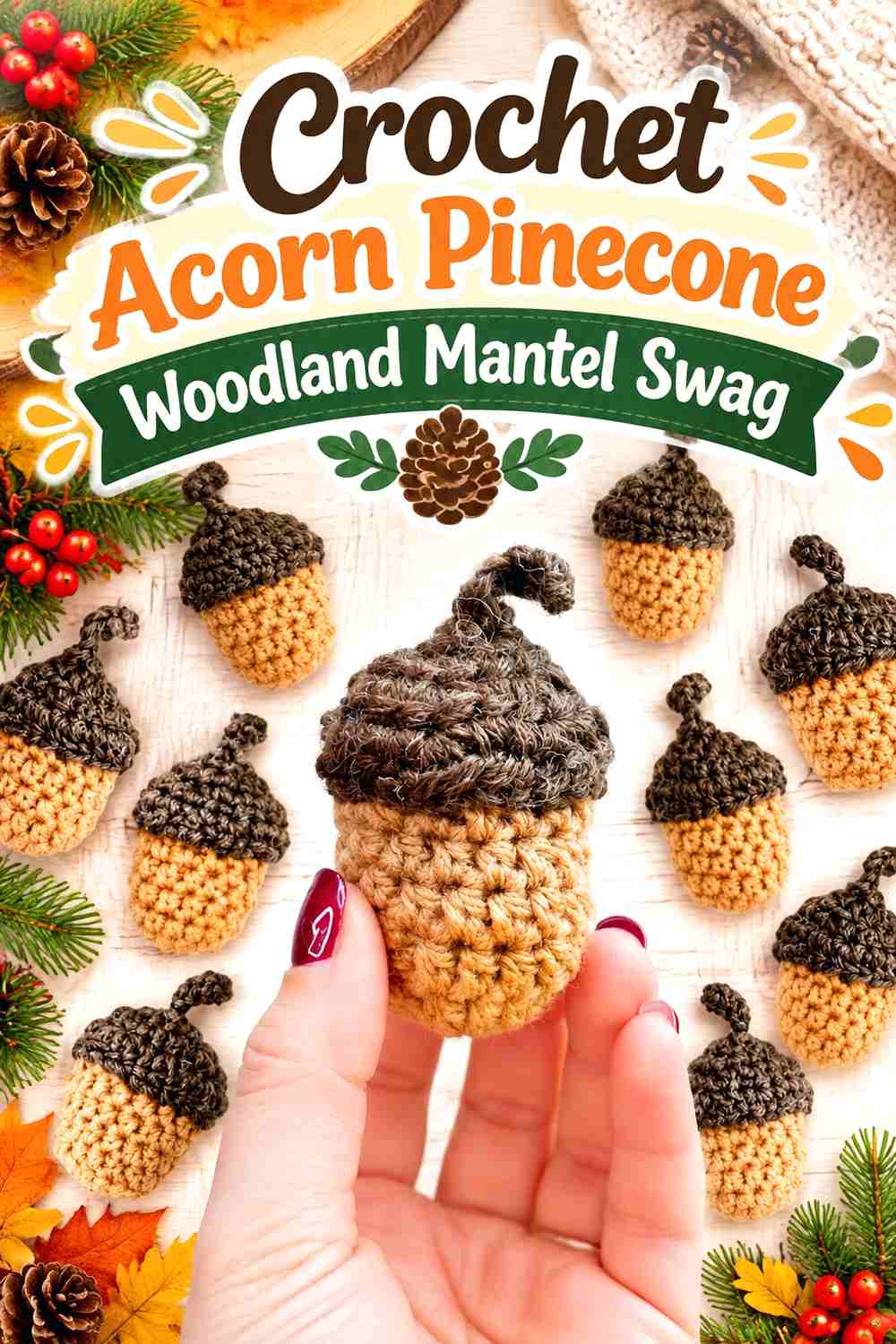
Brunaticality’s acorn tutorial creates a stuffed woodland motif with a contrasting cap, making it useful as a smaller natural element between large fruit and pinecones. The creator specifically suggests the acorns for autumn and Christmas decor.
Acorns Bridge the Size Gap
A swag can feel abrupt when it jumps directly from large fruit to tiny berries.
Medium-scale acorns provide an intermediate shape that keeps the woodland theme intact and makes transitions between large and small elements smoother.
Repeat the Cap Color Elsewhere
If the acorn cap uses a dark brown, echoing that shade in pinecones or the connecting cord can help the acorns feel integrated rather than added as an unrelated autumn motif.
Keep the fruit colors distinct enough that the overall arrangement still reads as Christmas rather than a general fall garland.
Creator Credit: Brunaticality
18. Crochet Puff-Garland Fruit Mantel Swag
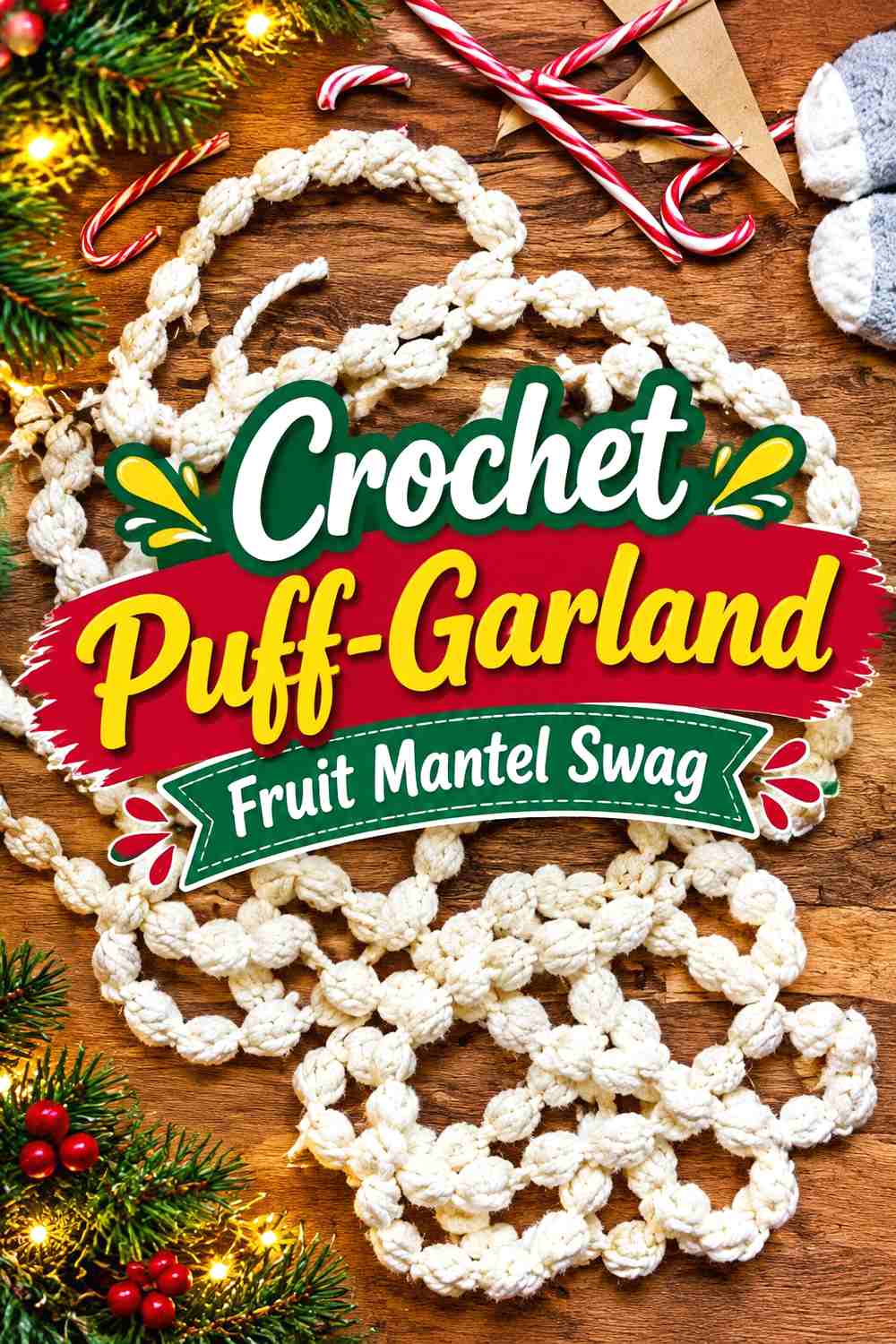
Delia Creates demonstrates a chunky puff-stitch garland that provides a useful structural and spacing reference for a mantel treatment. The tutorial is particularly relevant when you want the connecting strand itself to be decorative rather than hidden behind foliage.
Let the Garland Become a Visible Background Layer
Instead of attaching every fruit and pinecone directly beside the next, allow sections of the puff garland to show.
That extra texture can make sparse motif spacing look intentional and reduces the number of three-dimensional decorations required to cover a long mantel.
Add Heavy Motifs Selectively
A decorative crochet garland and a garland loaded with stuffed fruit are not structurally identical.
Before adapting the strand, consider the added weight and support heavier motifs independently where appropriate rather than assuming the original garland construction is intended to bear them.
Creator Credit: Delia Creates
19. Crochet Eucalyptus Winter Fruit Mantel Swag
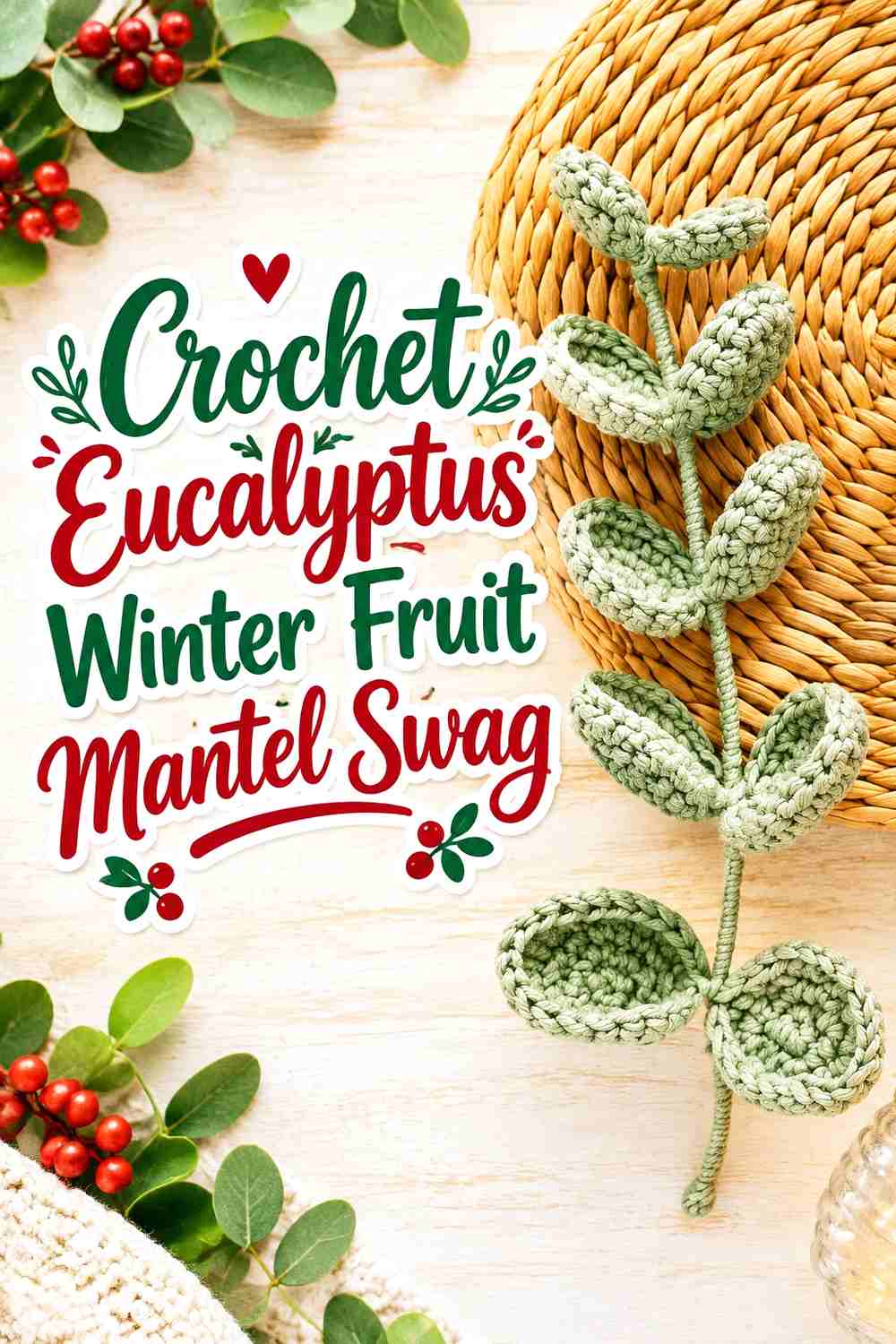
Moara Crochet’s eucalyptus tutorial creates a stem assembled from differently sized leaves, giving the final idea softer, rounder foliage than pointed holly. The project uses florist wire in the demonstrated construction, which also distinguishes it from flat sewn-on leaves.
Eucalyptus Softens Strong Pinecone Texture
Pinecones, holly, and dimensional fruit all have clearly defined silhouettes.
Rounded eucalyptus leaves can provide a calmer background and help a full mantel arrangement feel botanical rather than crowded with separate ornaments.
Silvery Green Can Support Winter Fruit Colors
Eucalyptus-inspired sage and gray-green tones work well beside burgundy, orange, muted yellow, cream, and brown because they provide foliage without introducing another saturated green.
Compare the actual yarn under your room lighting, particularly if the mantel has warm Christmas lights that may make gray-green shades appear considerably warmer.
Shape Wired Stems Before Final Attachment
When a tutorial uses wire, the finished branch may be positioned more deliberately than a completely soft crochet leaf strand.
Establish the general curve before securing fruit and pinecones around it, and keep wired decorations safely away from electrical connections, open flames, and hot fireplace surfaces.
Creator Credit: Moara Crochet
Which Crochet Pinecone and Winter Fruit Swag Style Should You Choose?
| If you want… | Compare these ideas | Main feature | Main planning issue |
|---|---|---|---|
| A pinecone-dominant woodland mantel | 1–5 | Layered cone texture | Keeping repeated cones varied |
| Traditional dried-citrus styling in crochet | 6 | Flat orange slices | Maintaining light overall weight |
| Dimensional citrus | 7 or 13 | Whole oranges or lemons | Hanging orientation |
| Classic red Christmas fruit | 8 or 11 | Apples or pomegranates | Avoiding too many competing red accents |
| Softer orchard color | 9 | Pears | Keeping the tapered silhouette visible |
| A jewel-tone Christmas palette | 10 | Plums | Balancing purple with traditional greenery |
| Warm woodland orange-red | 12 | Persimmons | Preserving leafy top details |
| Small red filler accents | 14 | Holly berries | Cluster scale |
| Strong traditional Christmas foliage | 15 | Pointed holly | Preventing greenery from hiding the fruit |
| Light branching greenery | 16 | Mistletoe | Material and display safety |
| Rustic woodland fillers | 17 | Acorns | Keeping the arrangement Christmas-focused |
| A visible crochet foundation | 18 | Puff garland | Added motif weight |
| Soft botanical greenery | 19 | Eucalyptus | Shaping and wired-stem placement |
Conclusion
For a mantel that should feel predominantly woodland, start with one of the first five pinecone constructions and use fruit as smaller interruptions of color. The mixed-size pinecone approach is especially useful when you want a collected, natural look rather than a repeated ornament garland.
For a fruit-forward Christmas swag, orange slices offer the lightest construction, while apples, pears, plums, pomegranates, persimmons, whole oranges, and lemons create stronger three-dimensional focal points. You do not need every fruit in one arrangement. Two or three fruit types usually give each silhouette more room to remain recognizable.
Holly berries, holly leaves, mistletoe, acorns, a visible puff garland, and eucalyptus can then solve specific composition problems: filling narrow gaps, extending the ends, connecting focal clusters, or softening the transition between bulky pieces.
Complete representative samples before building the full swag, particularly if you plan to combine patterns made with different yarn weights. Use the original creator tutorials for exact motif construction, and plan the final mantel arrangement around the weight, scale, hanging method, and heat clearance of your own display.
Frequently Asked Questions
Which winter fruits work well in a crochet Christmas mantel swag?
Oranges, apples, pears, pomegranates, persimmons, lemons, plums, and berry-like motifs can all work. The most useful combination depends on the palette and desired weight. Flat orange slices create lighter sections, while stuffed fruit produces larger focal points.
How many different fruit types should I use in one crochet swag?
There is no required number, but using every fruit in the collection can make individual shapes difficult to notice. For a cohesive mantel, consider choosing one dominant fruit, one secondary fruit, and smaller berries or foliage as supporting elements.
How do I combine crochet pinecones and stuffed fruit without making the swag too heavy?
Distribute the heaviest pieces rather than clustering all of them on unsupported sections. Use flat citrus slices, leaves, berries, and visible connecting strands between heavier motifs. If necessary, support larger clusters separately instead of relying on a lightweight decorative chain to carry everything.
Should crochet pinecones all be the same size?
Not necessarily. Several sizes can produce a more natural woodland effect. What matters is deliberate distribution. Avoid accidentally placing every large pinecone on one side of the mantel, which can make the arrangement look unbalanced.
Can I mix yarn weights in the same Christmas swag?
You can, but compare finished motif scale before making the entire collection. Changing yarn weight can alter not only size but also stiffness and hanging behavior. Make samples of the key fruit and pinecone pieces and arrange them together before producing multiples.
What is the easiest way to make a long mantel swag look full without crocheting dozens of stuffed pieces?
Use flatter fillers and visible connecting elements. Orange slices, holly leaves, eucalyptus, mistletoe-style branches, berries, and textured garland sections can cover visual distance with less bulk than a continuous row of stuffed fruit and pinecones.
Is a crochet mantel swag safe above a working fireplace?
Treat yarn, stuffing, adhesives, ribbons, wire, and other craft materials as decorative combustible or heat-sensitive materials. Follow the fireplace or stove manufacturer’s clearance requirements and local fire-safety guidance, and never allow the swag to hang near an open flame, hot surface, flue opening, or other heat source.