A good reading nook floor cushion needs more than an attractive stitch pattern. The shape has to suit the way you plan to sit, the filling needs enough support for the intended use, and the crochet fabric has to cope with more compression and floor contact than an ordinary sofa pillow.
The ideas below cover several approaches, including true oversized floor poufs, structured ottoman-style seats, shaped stuffed cushions, round motif designs, and textured pillow covers that can inspire a larger reading-nook version.
Not every source tutorial was originally designed at floor-cushion scale. Where a tutorial demonstrates a standard pillow or smaller cushion, treat it as a construction and design reference rather than assuming its stitch counts will work unchanged at a larger size. Measure your intended insert or finished space first, then use the original tutorial for its exact construction details.
Quick List
- Crochet Ribbed Oversized Floor Pouf
- Crochet Jumbo Round Reading-Nook Cushion
- Crochet Ribbon-Yarn Ottoman Pouf
- Crochet Cabled Floor Pouf with Access Opening
- Crochet Sculptural Flower Floor Cushion
- Crochet Cloud Lounge Cushion
- Crochet Star Reading-Nook Cushion
- Crochet Heart Floor Pillow
- Crochet Mandala Round Cushion
- Crochet Low-Profile Round Floor Cushion
- Crochet Granny Square Floor Cushion
- Crochet Gingham Reading-Nook Pillow
- Crochet Cable-Front Winter Cushion
- Crochet Mixed-Texture Floor Pillow
- Crochet Faux-Fur Reading Cushion
- Crochet Snowflake Winter Floor Pillow
- Crochet Bobble-Diamond Floor Cushion
Decide Whether You Need a Seat, Backrest, or Soft Accent
A reading nook often works better with more than one kind of cushion. A deep pouf can provide the main seat, while a softer shaped pillow supports the back or fills the space between the reader and a wall.
That distinction matters before you choose a tutorial. A thick round pouf with a contained insert behaves differently from a stuffed flower or star. Sculptural shapes can make excellent lounging accents, but their irregular edges are not always as practical as a broad round or square surface when the cushion will carry most of a person’s weight.
For a corner setup, think about how the cushion will be used first. A primary floor seat benefits from an even footprint and predictable support. A back cushion can prioritize softness and texture, while an occasional accent can use more dramatic shaping.
Plan the Insert Before You Enlarge the Crochet
It is tempting to crochet a larger panel first and decide on filling later, but floor cushions are usually easier to plan in the opposite order.
A ready-made cushion insert gives you fixed dimensions to work toward. Loose stuffing offers more freedom in unusual shapes, but it also makes the final firmness dependent on how evenly the fill is distributed. Pouf constructions may use a separate liner or other contained fill system, which can make the outer crochet shell easier to manage.
If you enlarge a standard pillow tutorial, do not simply multiply every element without checking the proportions. Make a sample, measure the actual crochet fabric, and compare it with the intended insert or finished footprint before committing to the full piece.
Choose Winter Texture with Floor Use in Mind
Cables, bobbles, fuzzy yarn, raised motifs, and thick fibers can make a reading nook look especially inviting in winter. They also create different surfaces under direct pressure.
Pronounced bobbles and cables can be attractive on a backrest but more noticeable when someone sits directly on them for a long period. Fuzzy yarn creates a softer visual effect but may make stitch inspection and repairs less straightforward. Smooth, dense crochet can be easier to assess for wear.
Floor placement also means more contact with dust and everyday traffic. If cleaning matters in your home, consider whether you want a removable outer cover, and always check the care instructions for the actual yarn and insert you choose.
1. Crochet Ribbed Oversized Floor Pouf
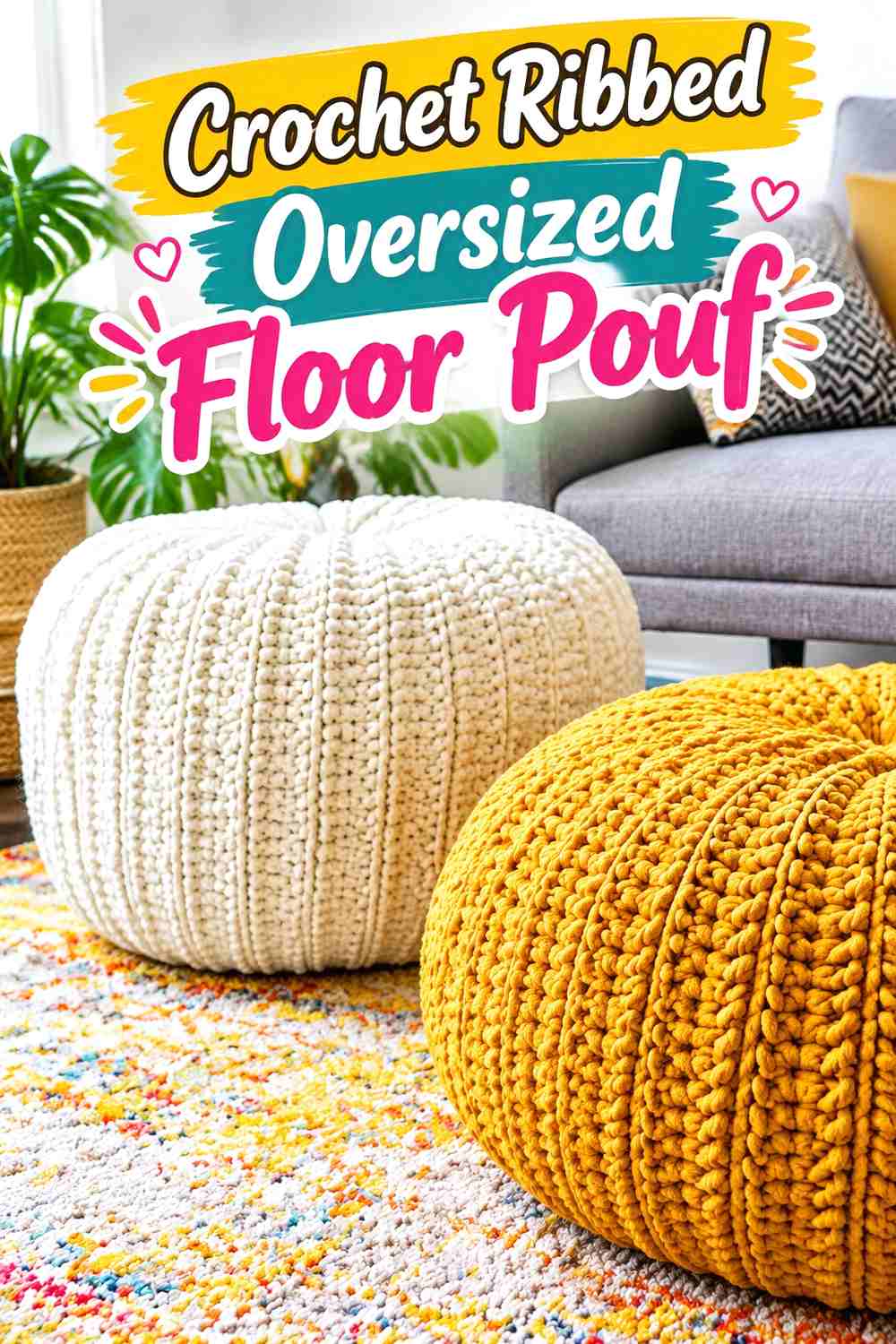
This design is one of the clearest matches for a genuine reading-nook floor cushion. Golden Fleece Design demonstrates an oversized crochet floor pouf intended for sitting on the floor, using a simple ribbed-looking fabric created from back-loop work. The broad round shape gives you a more conventional seating surface than a novelty-shaped pillow.
A Broad Round Surface Works Well as the Main Seat
Choose this direction when you want one substantial cushion to anchor the entire nook. A circular footprint avoids hard corners and can sit comfortably beside a low bookshelf, window, or wall.
Before changing the tutorial’s scale, decide how much floor space you can give up. Increasing diameter affects far more than appearance: it also changes the amount of outer fabric and filling needed.
Decide How You Want the Filling Contained
The source allows the maker to choose the stuffing, so the insert decision deserves attention before finishing the shell. If you want the crochet exterior to be removable later, plan a separate inner container rather than placing loose fill directly into a permanently closed outer layer.
Creator Credit: Golden Fleece Design
2. Crochet Jumbo Round Reading-Nook Cushion
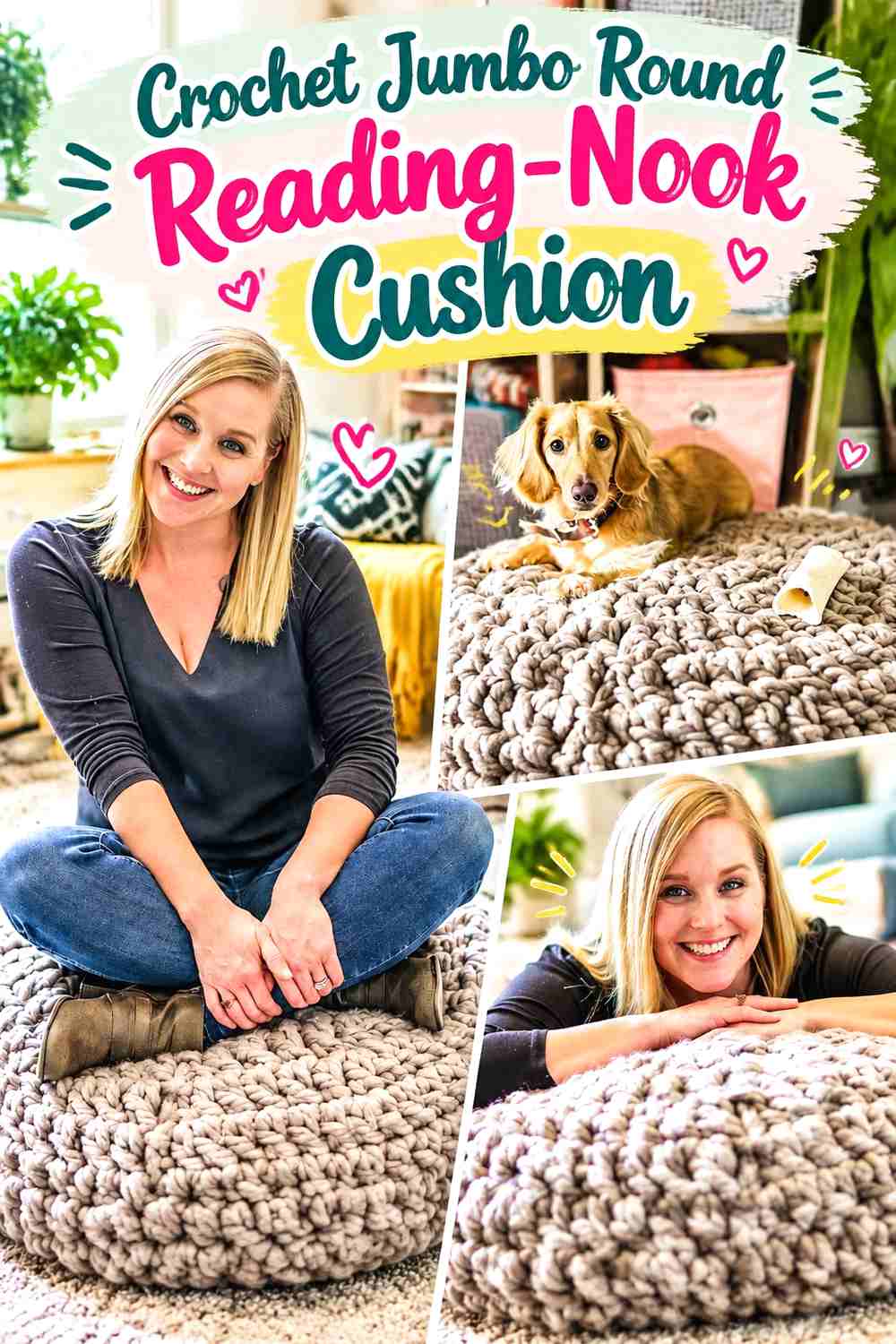
Crochet With Tiffany demonstrates a particularly large round floor pouf built around a 32-inch round cushion, making this option useful for readers who want a wide lounge-style seat instead of a compact ottoman. The tutorial uses jumbo yarn and a very large hook, so the overall look is bold rather than delicate.
Let the Insert Determine the Finished Diameter
This approach removes some of the uncertainty of loose stuffing because the inner cushion establishes the target shape. If you use a different insert, measure its diameter and depth rather than assuming the demonstrated crochet dimensions will fit.
A predetermined insert can also make it easier to judge whether the finished cushion will overwhelm a small nook before you buy the yarn.
Oversized Stitches Become Part of the Design
With jumbo yarn, every stitch is visually prominent. That can make a simple fabric feel substantial enough for winter decor without relying on elaborate motifs.
It also means changes in tension are easier to see. If you substitute a different jumbo yarn, make a substantial sample and compare its density with the tutorial before committing to the full cover.
Creator Credit: Crochet With Tiffany
3. Crochet Ribbon-Yarn Ottoman Pouf
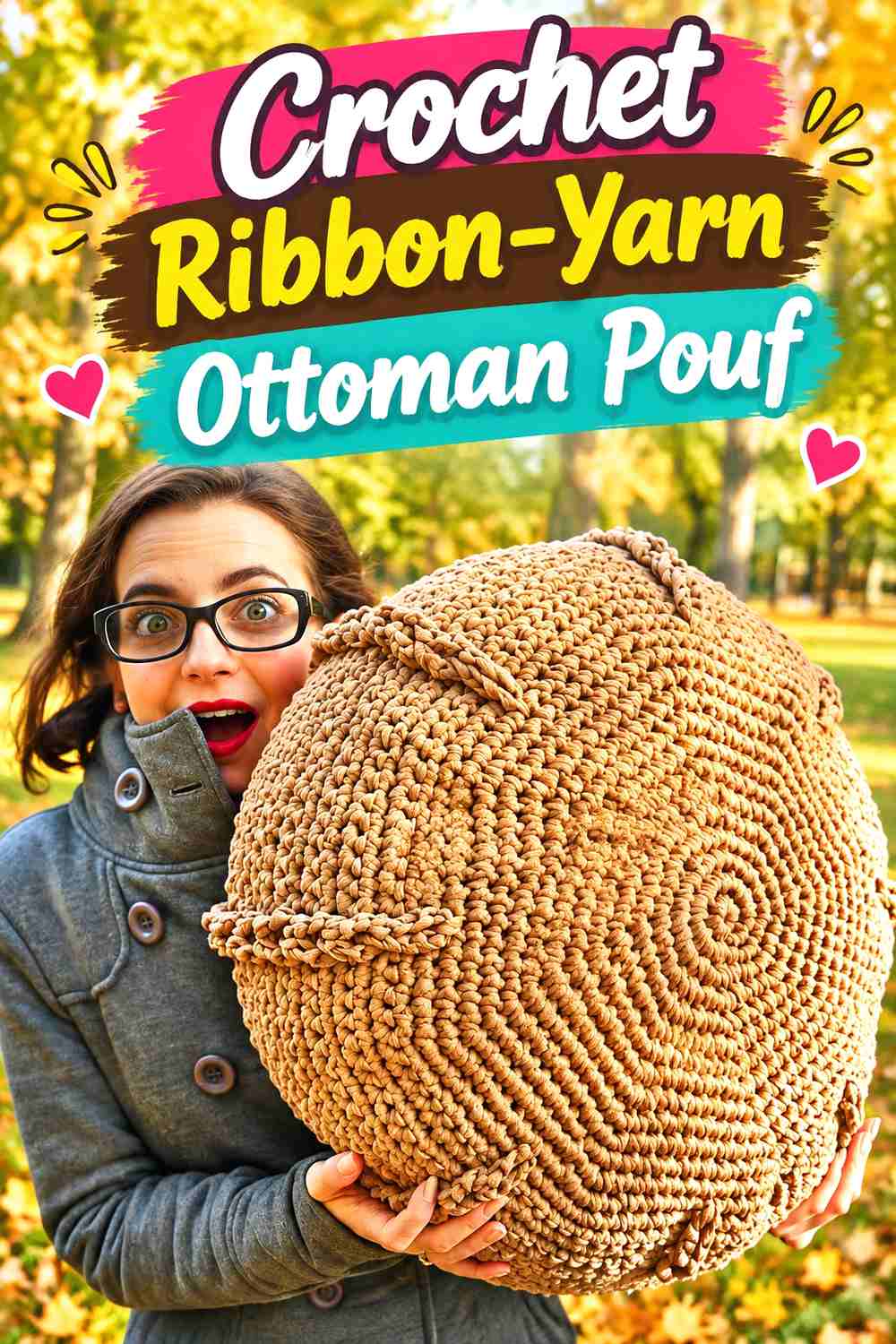
QrkokoTV’s floor pouf uses ribbon yarn and a clearly defined base, side wall, and upper section. That construction gives the finished piece more of an ottoman profile than the flatter pillow-style cushions elsewhere in this collection. The tutorial also covers filling and final closure.
A Defined Side Wall Changes the Seating Feel
A pouf with visible vertical depth feels more like a small piece of soft furniture. It can work beside a chair as a footrest as well as inside a floor-level reading corner.
If seat height matters, pay close attention to the demonstrated proportions rather than focusing only on diameter. A wider pouf is not automatically a taller or more supportive one.
Ribbon Yarn Gives the Surface More Structure
Ribbon-style yarn behaves differently from soft, lofty yarn. Its flatter construction can emphasize the shape of the crochet fabric and give the pouf a more defined exterior.
If you substitute another yarn type, expect the silhouette and drape to change. Confirm the creator’s material information before deciding how closely you want to reproduce the original structure.
Creator Credit: QrkokoTV
4. Crochet Cabled Floor Pouf with Access Opening
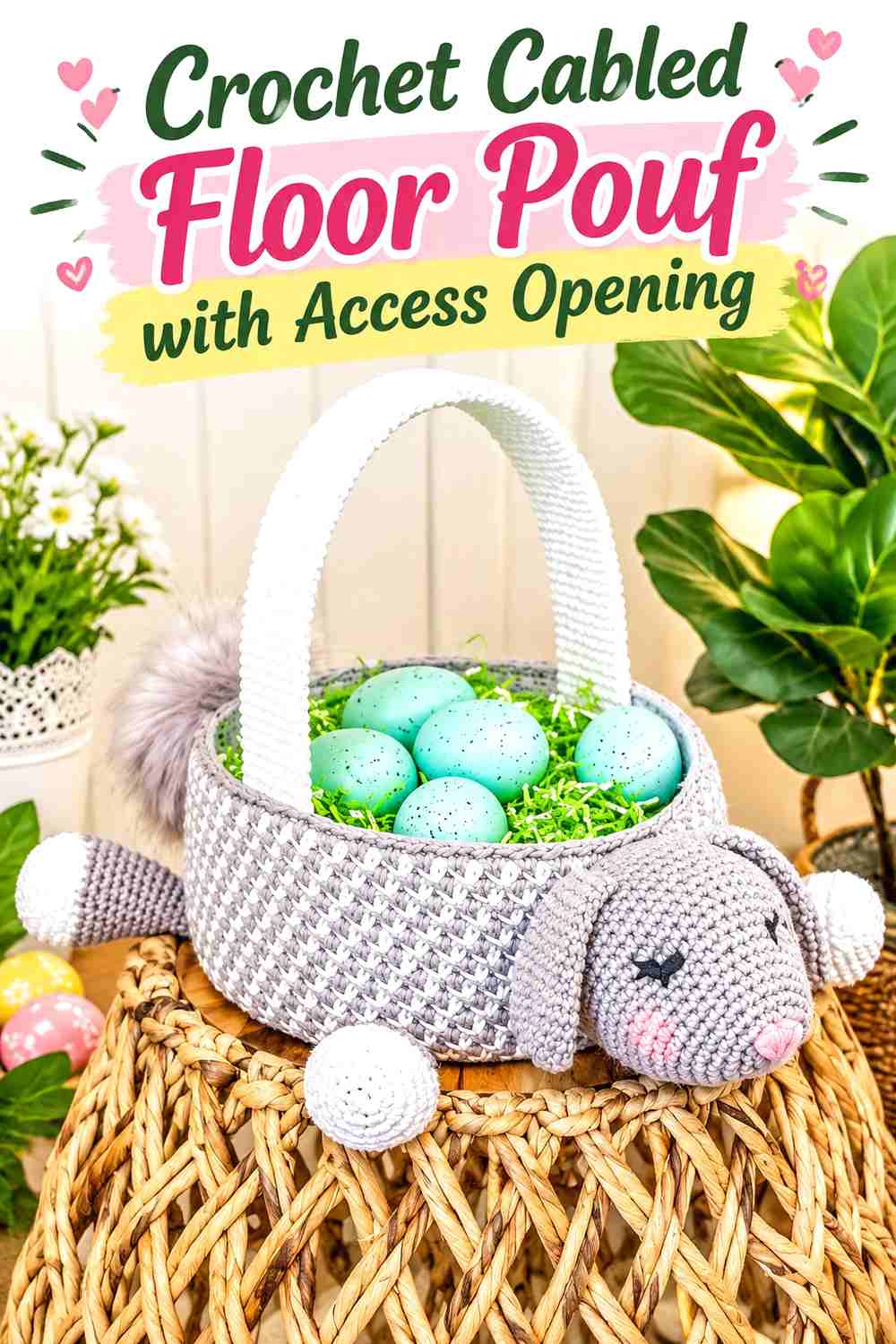
This Briana K design takes the floor pouf in a more decorative direction with raised cable texture. The pattern information describes short and tall versions and also includes an optional zipper concept that can provide access to the interior.
Cables Give a Neutral Pouf More Visual Weight
A strong cable surface can make a single-color cushion look detailed without relying on a multicolor palette. That works particularly well in winter corners built around cream, oatmeal, gray, brown, or muted green.
For an actual seat, remember that the cables are raised. Decide whether you want that texture directly beneath the sitter or whether the pouf will function more often as a footrest or occasional seat.
Interior Access Can Make the Pouf More Flexible
An opening changes how you can manage the cushion later. It may make it possible to reach the interior rather than treating the entire piece as permanently sealed.
Any zipper or closure added to a floor piece should sit where it will not be uncomfortable during normal use. Follow the source construction rather than improvising placement after the pouf is already assembled.
Creator Credit: Briana K
5. Crochet Sculptural Flower Floor Cushion
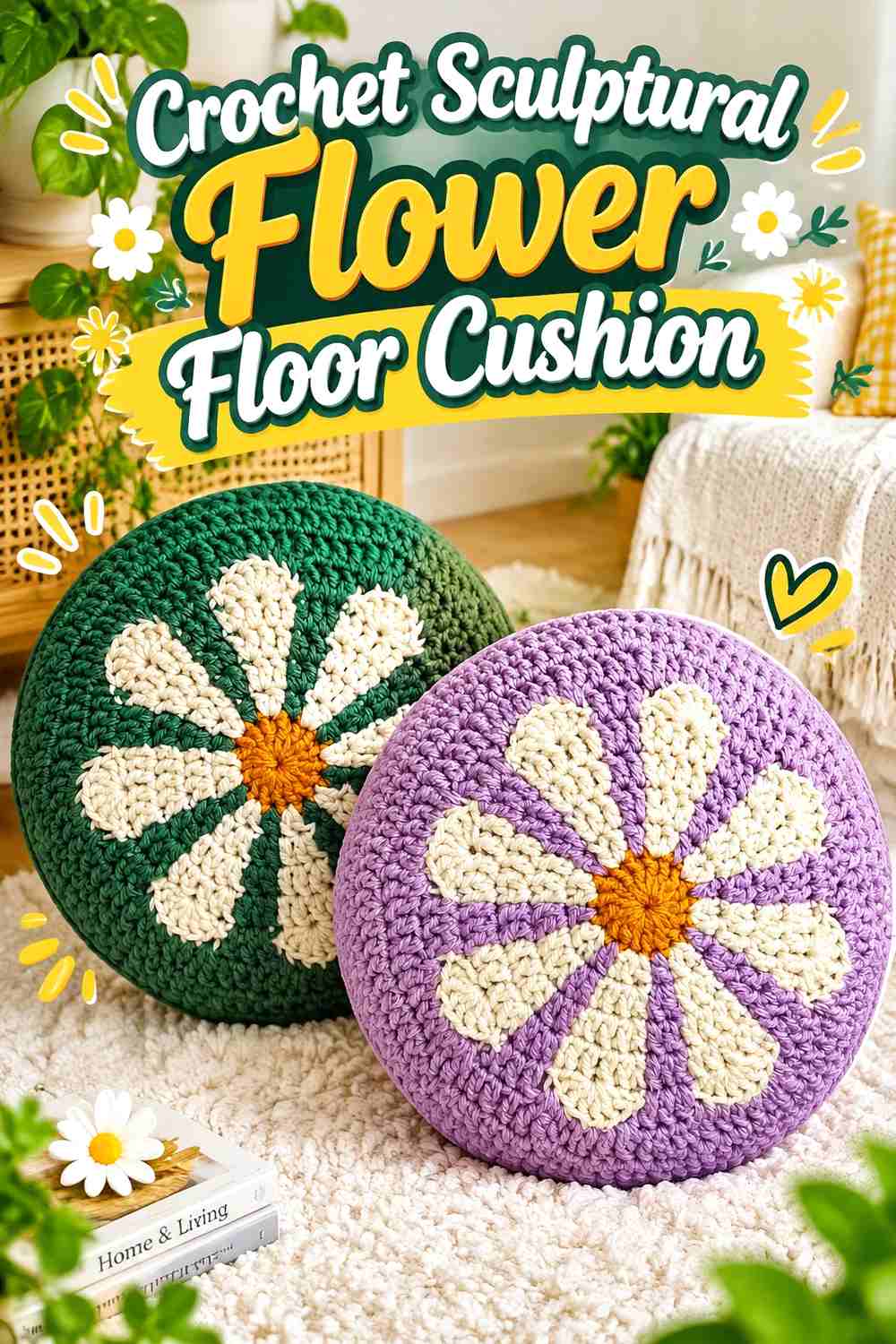
VivCrochets demonstrates a stuffed eight-petal flower pillow with a dimensional silhouette and separate back panel. It is smaller than a dedicated floor pouf, so this is best viewed as a shape concept to enlarge carefully or as a companion cushion beside a more supportive seat.
Petals Make the Perimeter Decorative Rather Than Uniform
Unlike a round pouf, a flower cushion has dips between the petals. Those curves give the piece personality but reduce the amount of continuous edge support.
That makes the design especially appealing as a back cushion, lounging pillow, or soft accent layered over a plain floor mattress.
Scale the Entire Silhouette Together
If you want a larger version, avoid enlarging only the central area while leaving the petals visually small. The relationship between center and petal depth is what makes the finished object read clearly as a flower.
Use the creator’s tutorial for the shaping logic and verify your own dimensions as the piece grows.
Creator Credit: VivCrochets
6. Crochet Cloud Lounge Cushion
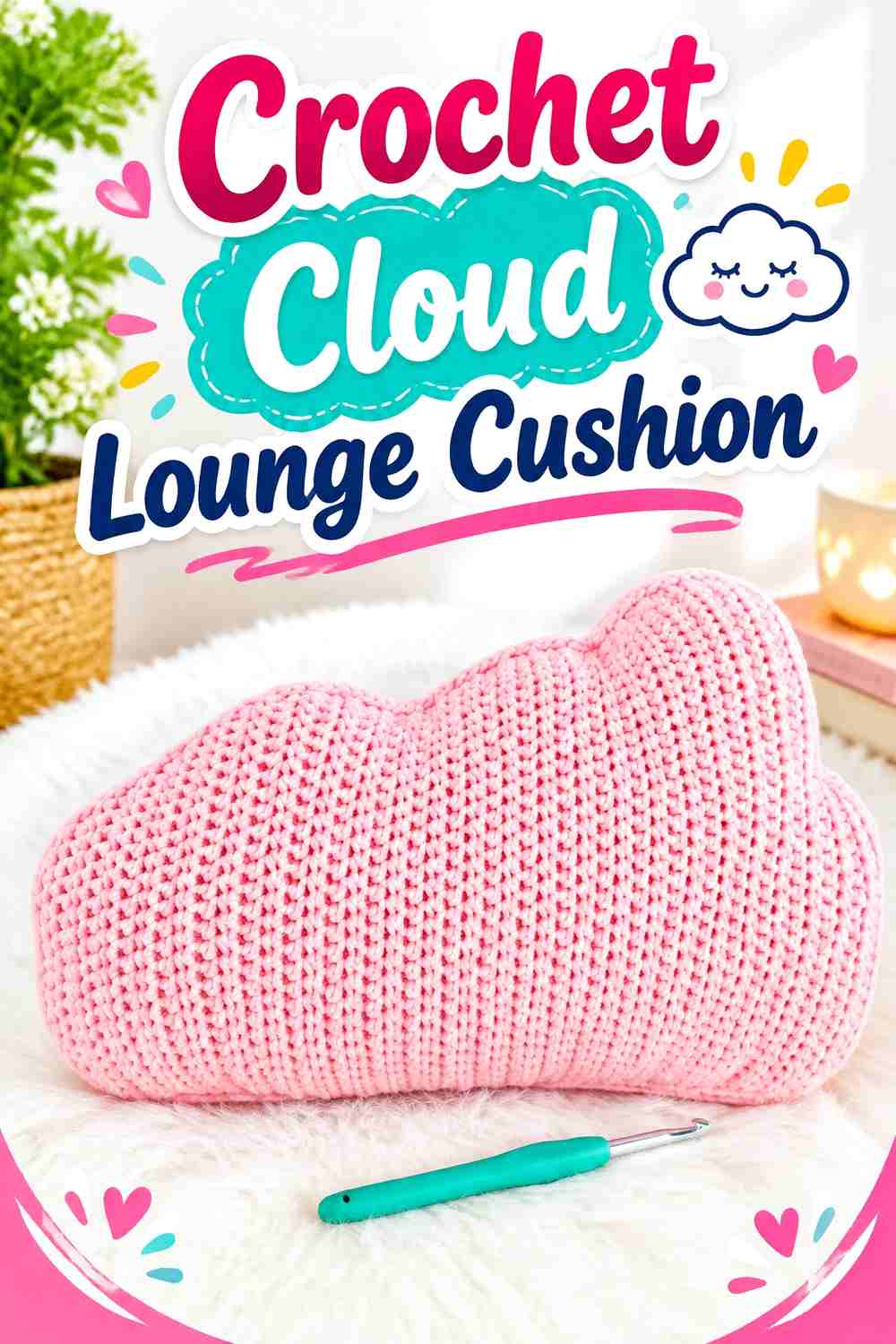
The MummaJ Crochet tutorial creates a stuffed cloud from shaped crochet pieces rather than fitting a standard square insert. Its long, curved silhouette makes it particularly suitable for leaning against a wall in a reading nook.
A Horizontal Shape Can Support More of the Back
A cloud can spread across a wider section of wall than a compact round pillow. In a narrow corner, that makes it useful behind another floor cushion rather than beneath it.
Before enlarging the design, measure the available wall width. A cloud that extends too far can interfere with shelves, side tables, or neighboring cushions.
Curved Sections Need Balanced Filling
Shaped pillows can develop uneven bulges when one area receives substantially more filling than another. With a cloud, compare the different lobes as you fill so the outline stays intentional.
If a firmer reading support is your priority, consider how much structure the chosen filling provides rather than judging the cushion only by how full it looks.
Creator Credit: MummaJ Crochet
7. Crochet Star Reading-Nook Cushion
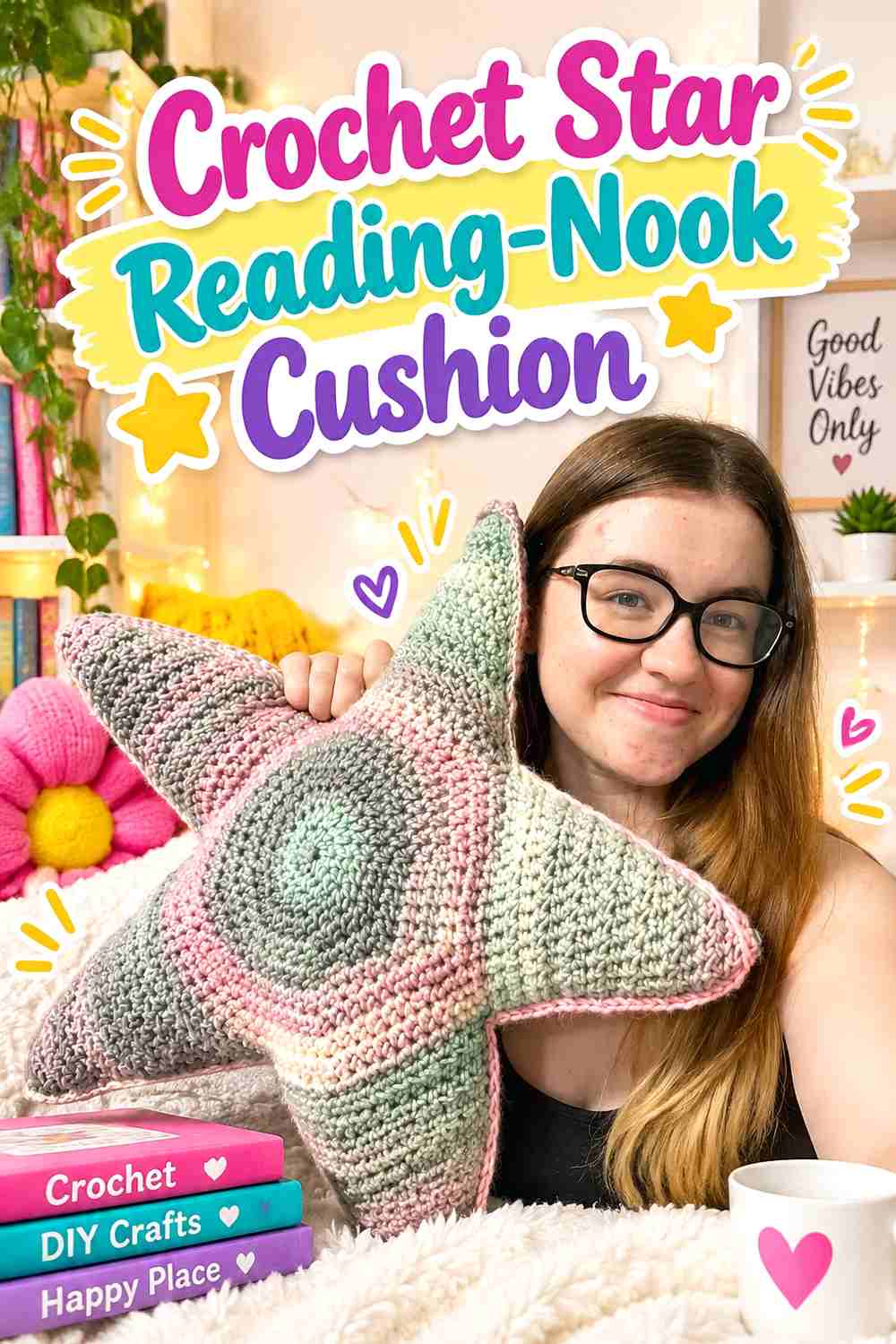
Madberry Crochet’s tutorial demonstrates a stuffed star made from matching shaped panels. The five-point outline makes this one of the most playful options in the collection and a good candidate for layering over a plain round or square floor seat.
The Points Make This Better as an Accent Than a Flat Seat
A star does not distribute its footprint as evenly as a circle or square. For that reason, it makes more sense as a soft lounging piece, side cushion, or decorative top layer than as the only cushion beneath an adult reader.
Its distinctive outline can still make a plain reading corner feel intentionally designed.
Symmetry Becomes More Noticeable as the Star Grows
Small differences between points may be easy to overlook on a compact pillow, but they become obvious when the shape is enlarged.
Compare corresponding sections while working and place the two finished panels together before final assembly. Correcting a size difference is easier before filling turns the piece three-dimensional.
Creator Credit: Madberry Crochet
8. Crochet Heart Floor Pillow
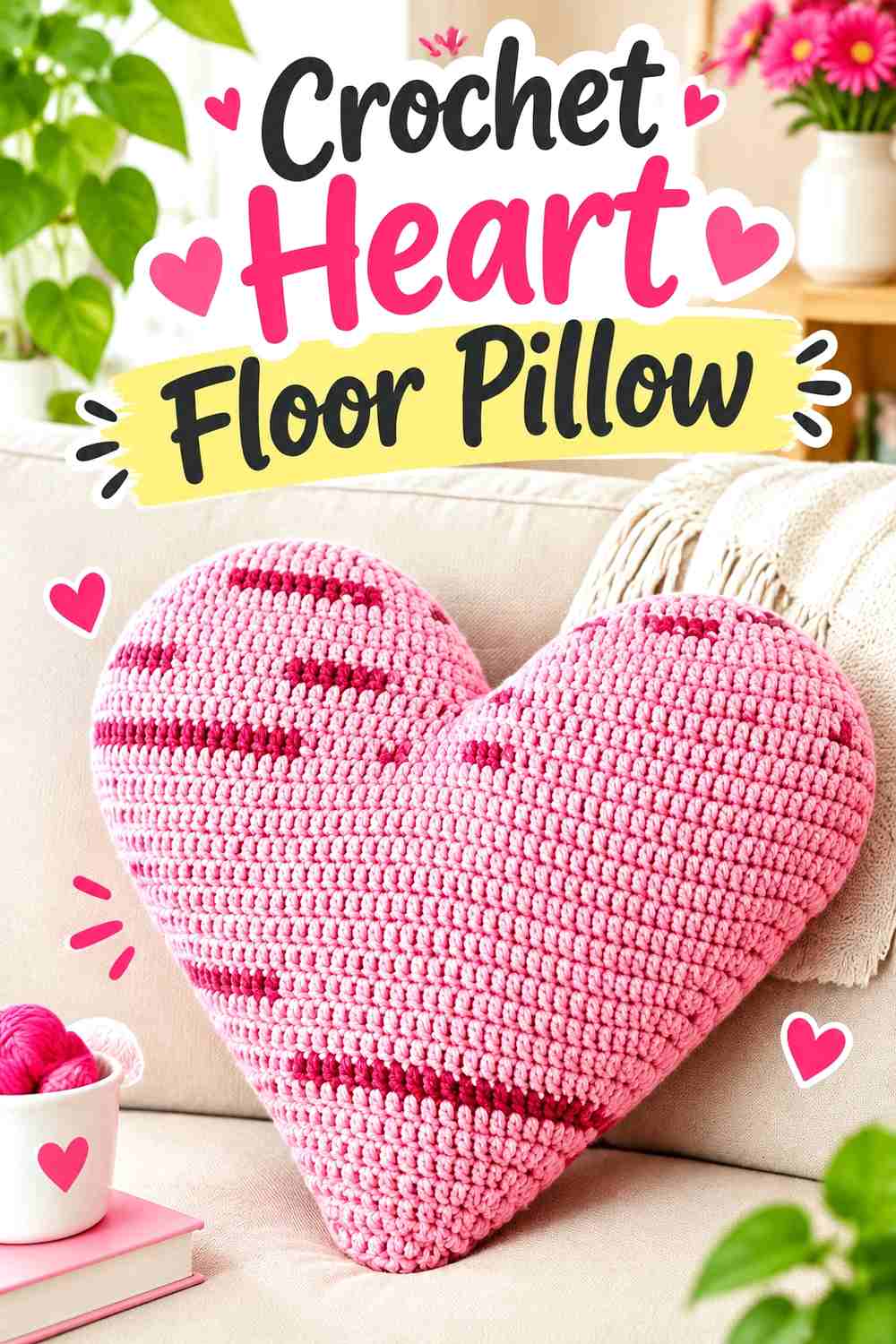
Ahuyama Crochet demonstrates a fully heart-shaped cushion rather than a square pillow decorated with a heart. That distinction gives you another sculptural option for a reading corner where the cushions are meant to be visible decor as well as functional pieces.
The Shape Fits Naturally Against a Wall
A heart cushion can sit upright behind a reader, where the wider upper portion creates visual fullness and the narrower base occupies less floor space.
For a winter nook, this shape can feel cozy without depending on a holiday-specific color. Cream, rust, burgundy, forest green, or a muted neutral can shift the emphasis away from Valentine’s decor.
Check the Center Dip Before Making It Much Larger
The upper indentation is one of the defining parts of the silhouette. When adapting a shaped design, compare that area frequently rather than assuming the outer width alone determines whether the heart looks balanced.
Use the original tutorial for the shaping rather than attempting to invent additional rows around the finished form.
Creator Credit: Ahuyama Crochet
9. Crochet Mandala Round Cushion
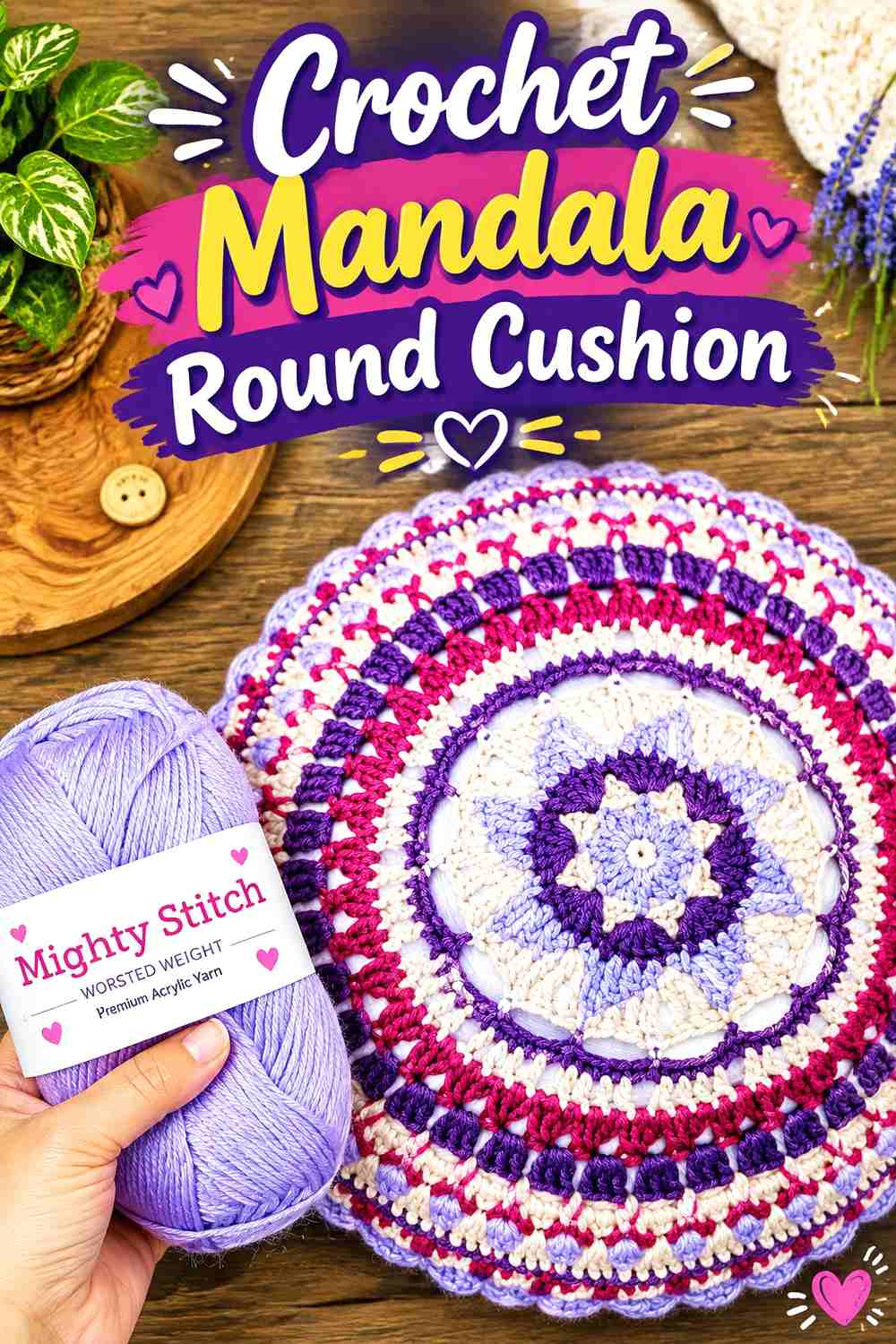
Oombawka Design Crochet pairs a circular backing with a decorative mandala front for a finished round pillow. The published pattern uses a 16-inch round format, making this a useful example of how a detailed motif can be integrated with a conventional round insert.
Color Placement Can Replace Heavy Surface Texture
A mandala already creates visual complexity through rings and color changes. That means you can build a rich winter palette without adding a heavily raised surface.
For a calm reading nook, limit the number of dominant colors and repeat shades that already appear in the surrounding blanket, rug, or shelving.
Resize Around the Insert, Not Around the Last Motif Round
If you want to use a larger floor insert, measure the crochet front as it develops. Do not assume that adding decorative rounds indefinitely will preserve the same proportions.
The motif and backing ultimately need compatible dimensions, so treat the insert size as the fixed target.
Creator Credit: Oombawka Design Crochet
10. Crochet Low-Profile Round Floor Cushion
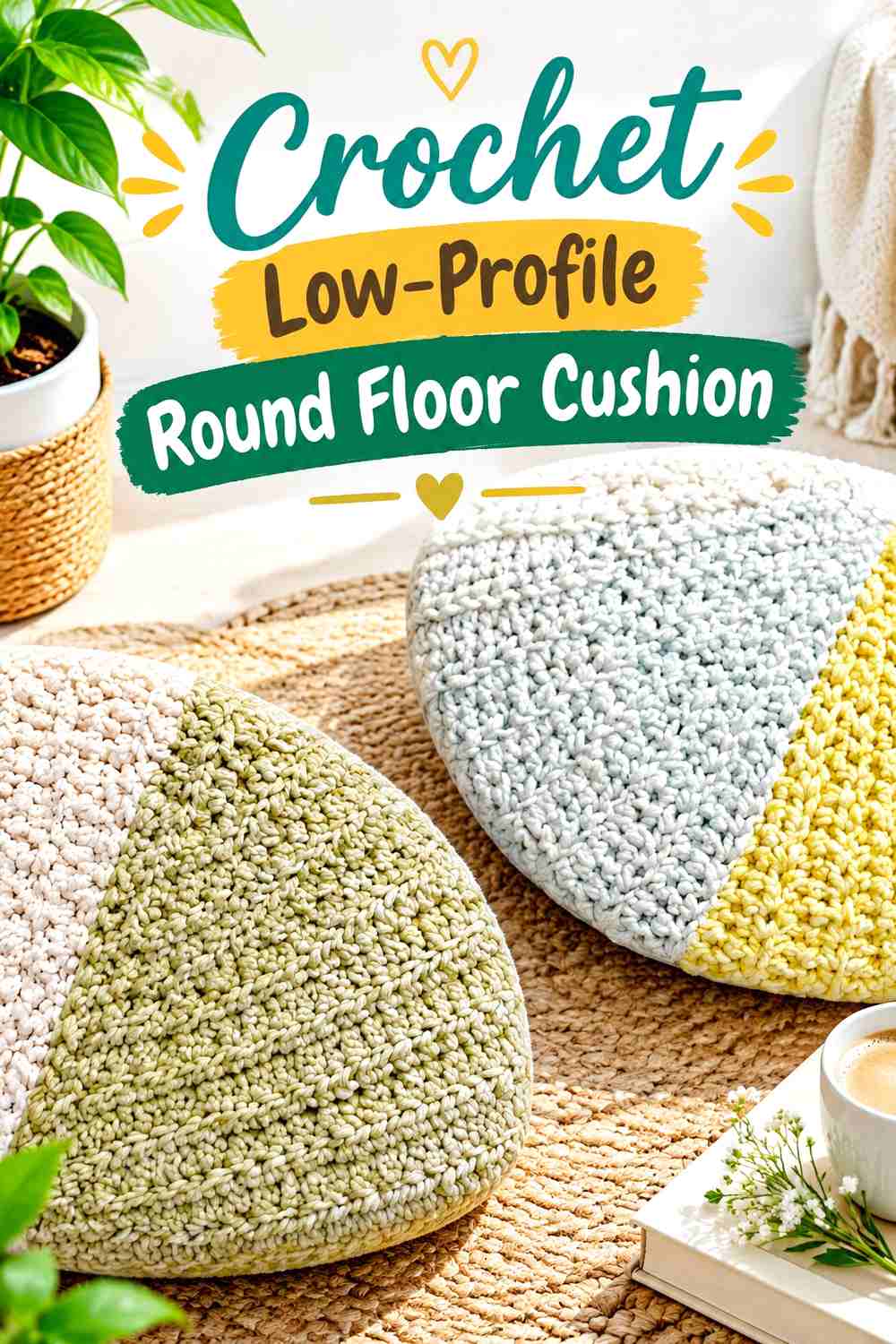
The round cushion demonstrated by minoteshigoto is deliberately much flatter than the deep poufs in this list. The source gives a finished diameter of 25.5 cm and a thickness of about 1 cm, so it is better understood as a low-profile pad concept than a deep lounge seat.
Use a Flat Cushion as Part of a Layered Nook
A thin pad can soften a hard surface without creating the elevated sitting position of a pouf. Several low cushions can also be stored or stacked more easily than one very deep floor seat.
For a reading nook, this approach may suit someone who already has a rug or floor mattress and mainly wants a handmade top layer.
Thin Construction Makes Surface Evenness Important
On a low-profile pad, lumps and irregular edges have nowhere to disappear inside deep filling. That makes consistent tension and accurate joining especially noticeable.
If you want more cushioning than the tutorial provides, redesign the insert plan rather than simply forcing additional loose stuffing into a construction intended to remain flat.
Creator Credit: minoteshigoto
11. Crochet Granny Square Floor Cushion
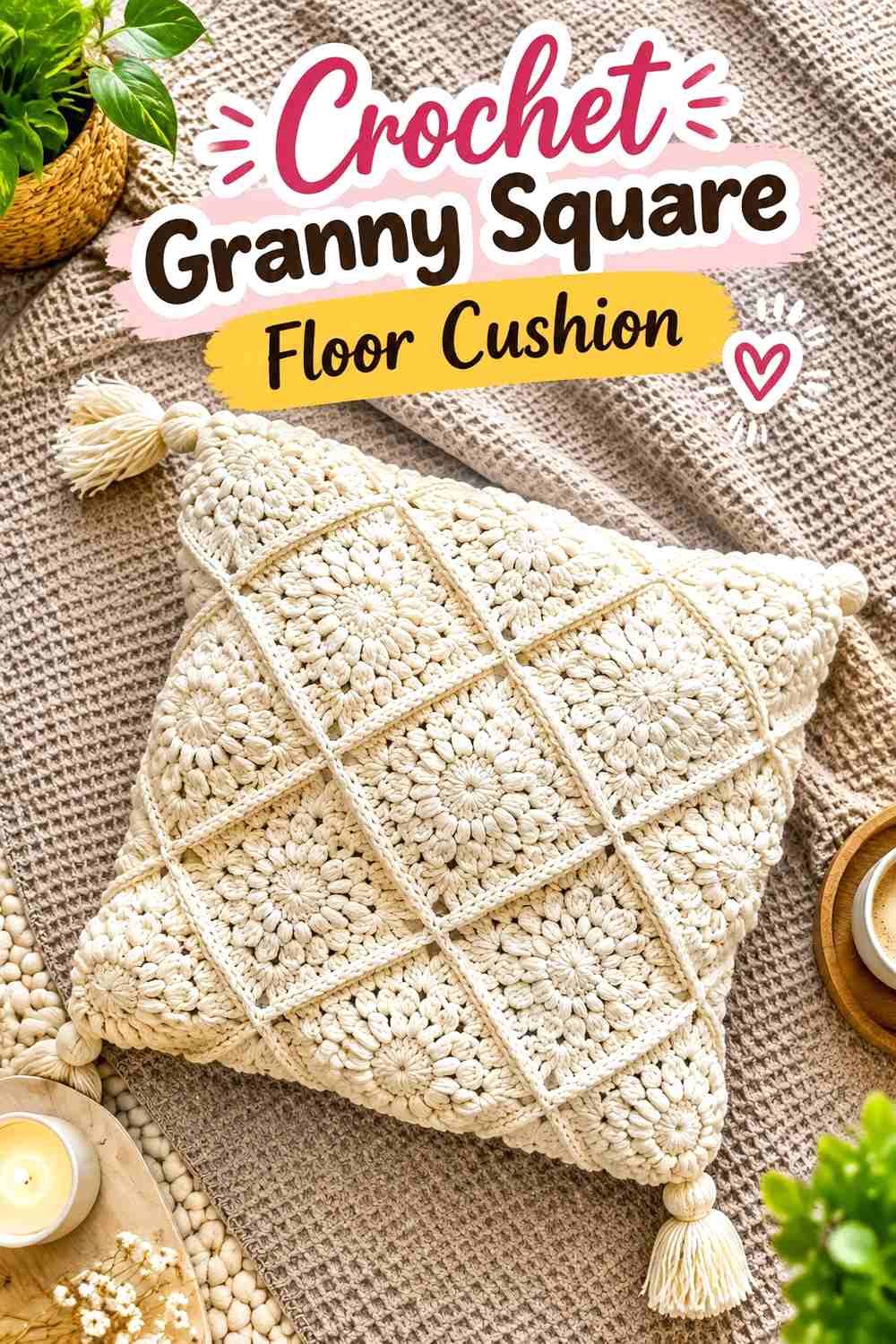
Jewels and Jones demonstrates a granny square pillow construction that can inspire a larger square floor cushion. The familiar motif gives you substantial freedom with color while keeping the overall silhouette straightforward.
Motif Dimensions Should Drive the Final Size
If you adapt a granny-based cushion, measure the crochet after blocking rather than planning only from an expected square size. Yarn, hook choice, and personal tension can all change the finished dimensions.
This matters even more at floor-cushion scale, where a small difference repeated across a wide front can produce a noticeably different final footprint.
Decide How Much Visual Activity You Want
A granny construction can be highly colorful or very restrained. For a winter corner already filled with books, throws, and baskets, a limited palette may keep the space from looking crowded.
If the nook is otherwise plain, contrasting rounds can make the cushion the main focal point.
Creator Credit: Jewels and Jones
12. Crochet Gingham Reading-Nook Pillow
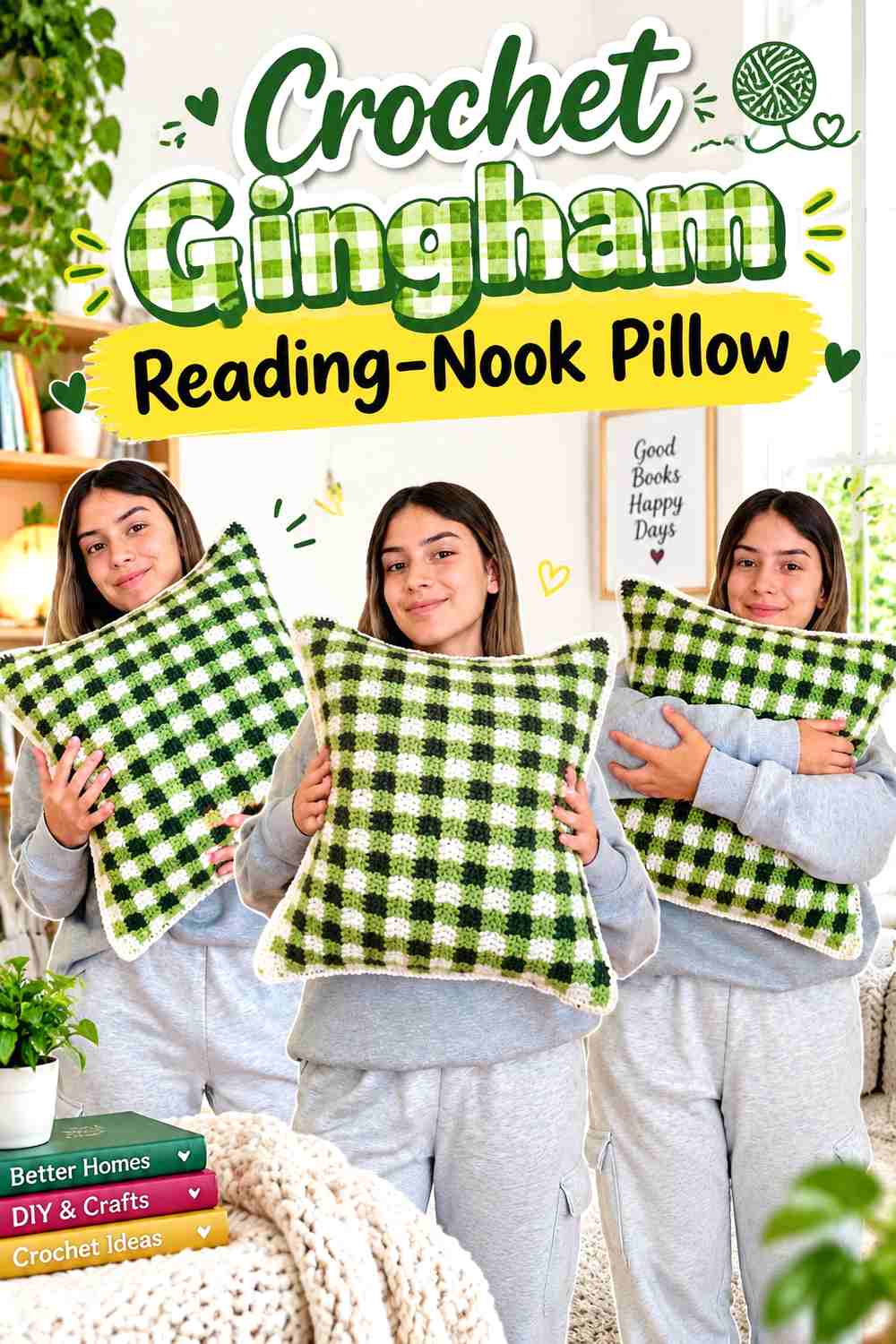
Crochet daniela demonstrates a 16-by-16-inch gingham pillow cover. It is a standard throw-pillow scale rather than a floor seat, but the check pattern is a strong candidate for a larger winter cushion if you carefully recalculate the proportions around your own insert.
Gingham Depends on Consistent Color Blocks
The recognizable check effect comes from the relationship between neighboring color areas. If you enlarge the pillow, preserve the visual proportions rather than simply adding an unrelated strip around the outside.
Planning the color layout on paper first can help you decide whether you want larger checks or more repeats across the front.
A Cover-Based Construction Is Useful for Seasonal Decor
A removable cover gives you more flexibility than a permanently stuffed decorative cushion. That can be helpful if the reading nook changes between winter and warmer months.
Before adapting the source, confirm how the original cover is assembled and how you want to access the larger insert.
Creator Credit: crochet daniela
13. Crochet Cable-Front Winter Cushion
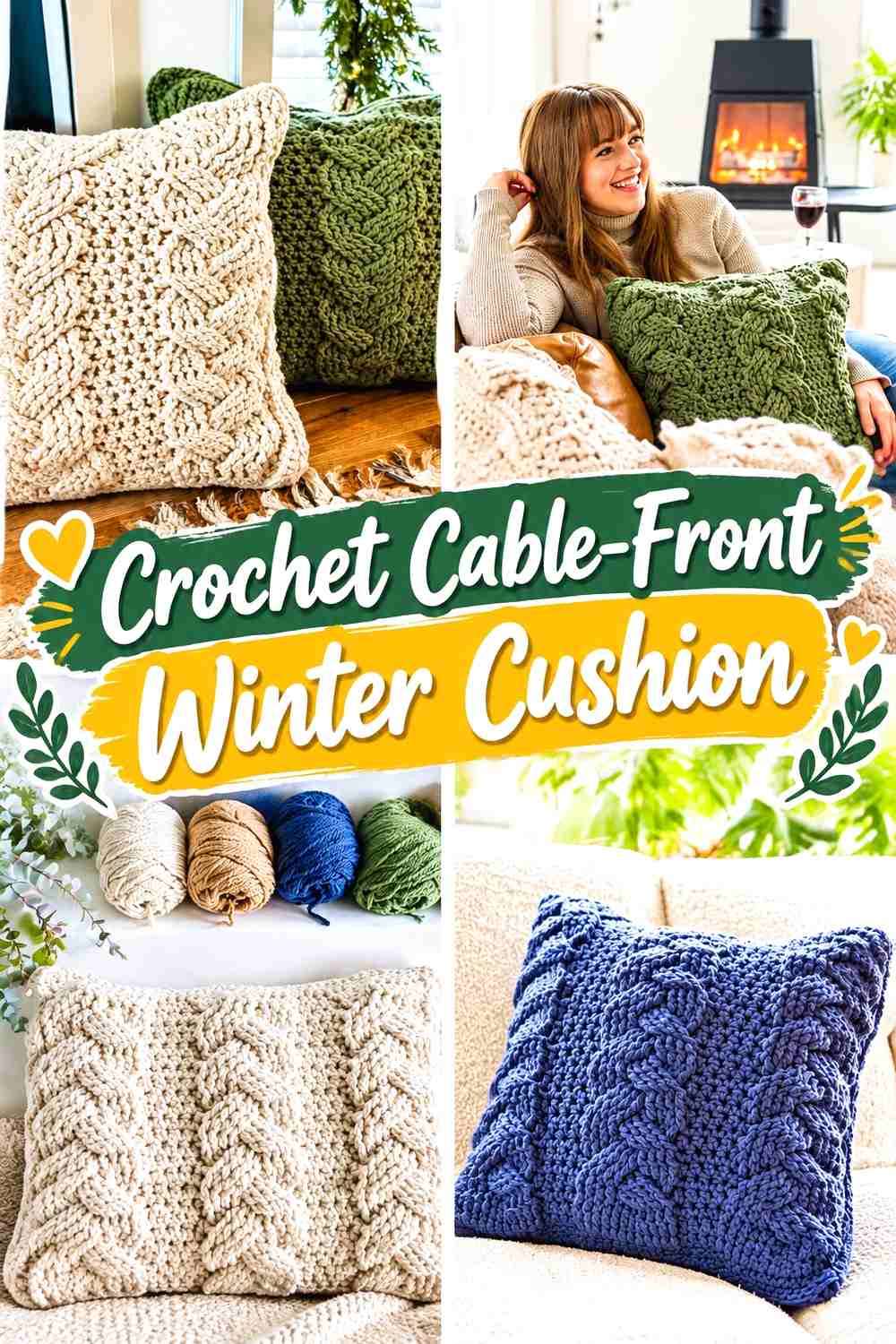
MJ’s Off The Hook Designs demonstrates a substantial cabled pillow cover with separate back panels and an insert. The source uses a 20-inch square pillow form and a strongly raised central cable, giving this option a classic cold-weather look.
Raised Cables Suit Back Support Especially Well
The deep cable pattern gives a plain color plenty of dimension. In a reading nook, that makes the cushion an effective backrest behind a smoother main floor seat.
For direct sitting, decide whether you personally want such pronounced relief beneath you. Texture that looks inviting is not automatically the most comfortable surface for every use.
Insert Access Is Worth Preserving When Scaling
The source uses overlapping back sections, which allows the insert to be placed inside rather than permanently sealing it into the crochet shell.
If you enlarge the design, keep the closure proportional to the insert. An opening that works comfortably for a standard cushion may need reconsideration when the insert becomes much larger and more awkward to maneuver.
Creator Credit: MJ’s Off The Hook Designs
14. Crochet Mixed-Texture Floor Pillow
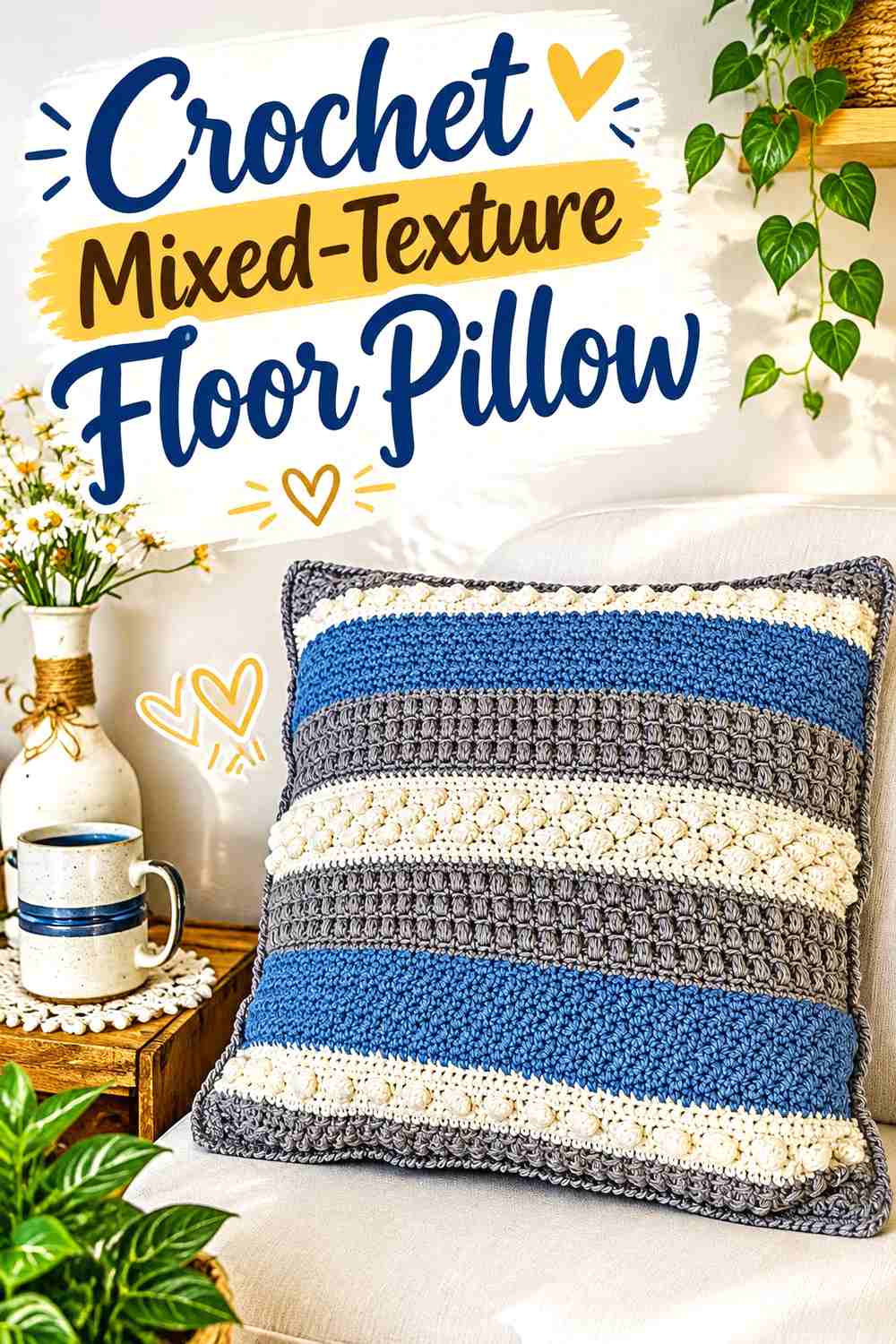
Stephanie Zed’s cushion combines several surface treatments, including clusters, bobbles, puff stitches, and smoother sections. It is a useful reference when you want a neutral or single-color floor pillow that still has visible variation.
Mixed Texture Can Replace a Complicated Color Scheme
Using several stitch textures lets light and shadow create the pattern. That makes this direction especially useful in a reading nook where you want the cushion to coordinate with many different book covers, blankets, or seasonal accessories.
A cream, gray, brown, or muted jewel tone can still look detailed without frequent color changes.
Put the Most Raised Areas Where They Feel Comfortable
Bobbles and puffs project farther from the surface than flatter stitches. When enlarging the concept, think about where the reader’s body will actually make contact with the pillow.
A highly textured front may be ideal as back support, while a smoother reverse side can offer another way to use the same cushion.
Creator Credit: Stephanie Zed
15. Crochet Faux-Fur Reading Cushion
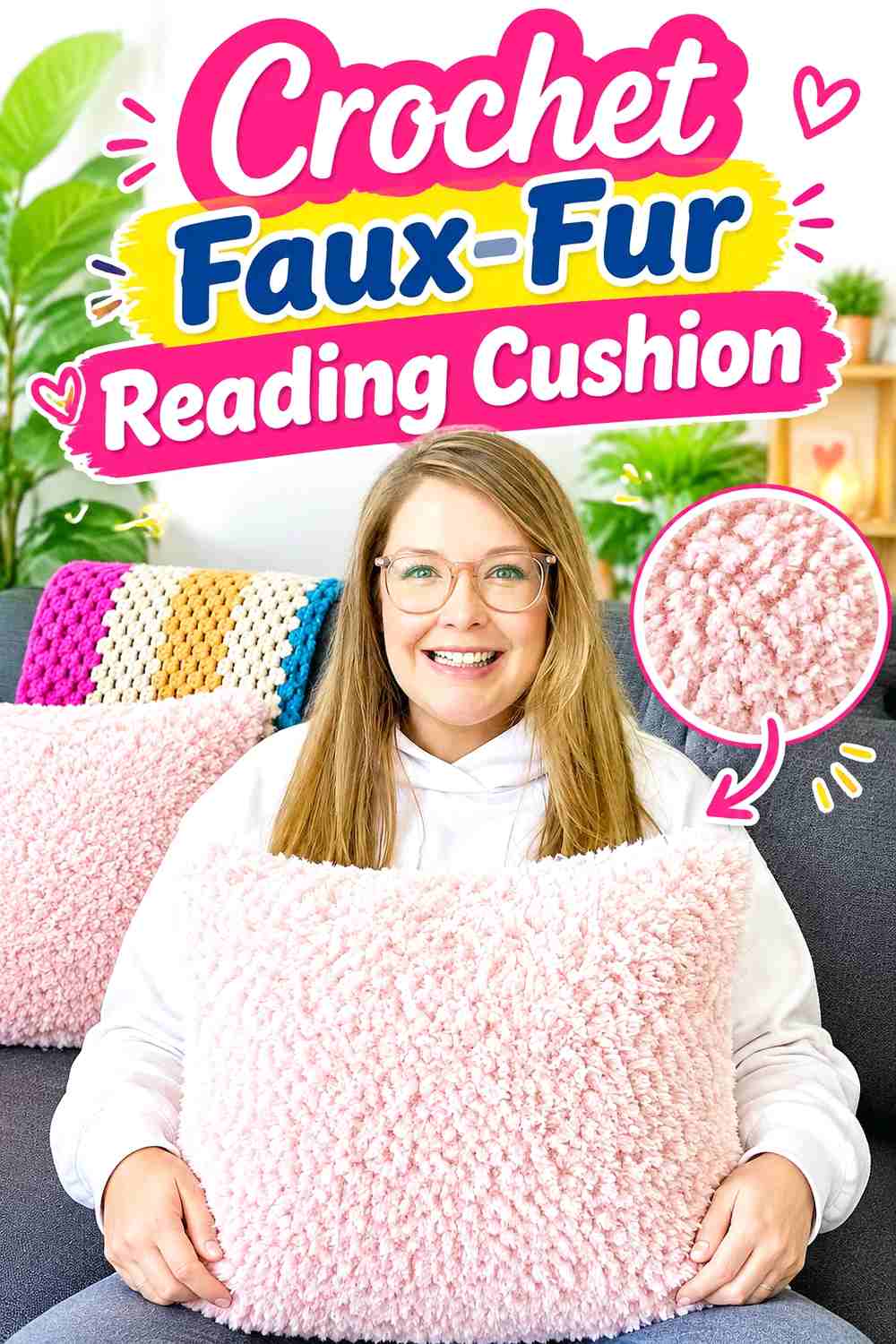
Just Be Crafty’s faux-fur pillow tutorial uses a fuzzy yarn over a 16-inch pillow form, producing a very different surface from the clearly defined stitches elsewhere in this list. It works well as inspiration for a tactile winter back cushion or soft side pillow.
Fuzzy Yarn Shifts Attention from Stitches to Surface
With faux-fur-style yarn, individual stitches are far less visible. The attraction is the overall plush appearance rather than complex crochet detail.
That can make it a good partner for a cabled or granny-style main cushion. Combining one fuzzy piece with one clearly stitched piece creates contrast without adding more colors.
Consider Wear Before Making It the Main Floor Seat
A reading-nook cushion that sits directly on the floor receives more friction and handling than an ordinary decorative pillow. Check the care information for the specific fuzzy yarn you intend to use and decide how much maintenance you are comfortable with.
A removable insert can also be useful when the outer surface requires separate cleaning.
Creator Credit: Just Be Crafty
16. Crochet Snowflake Winter Floor Pillow
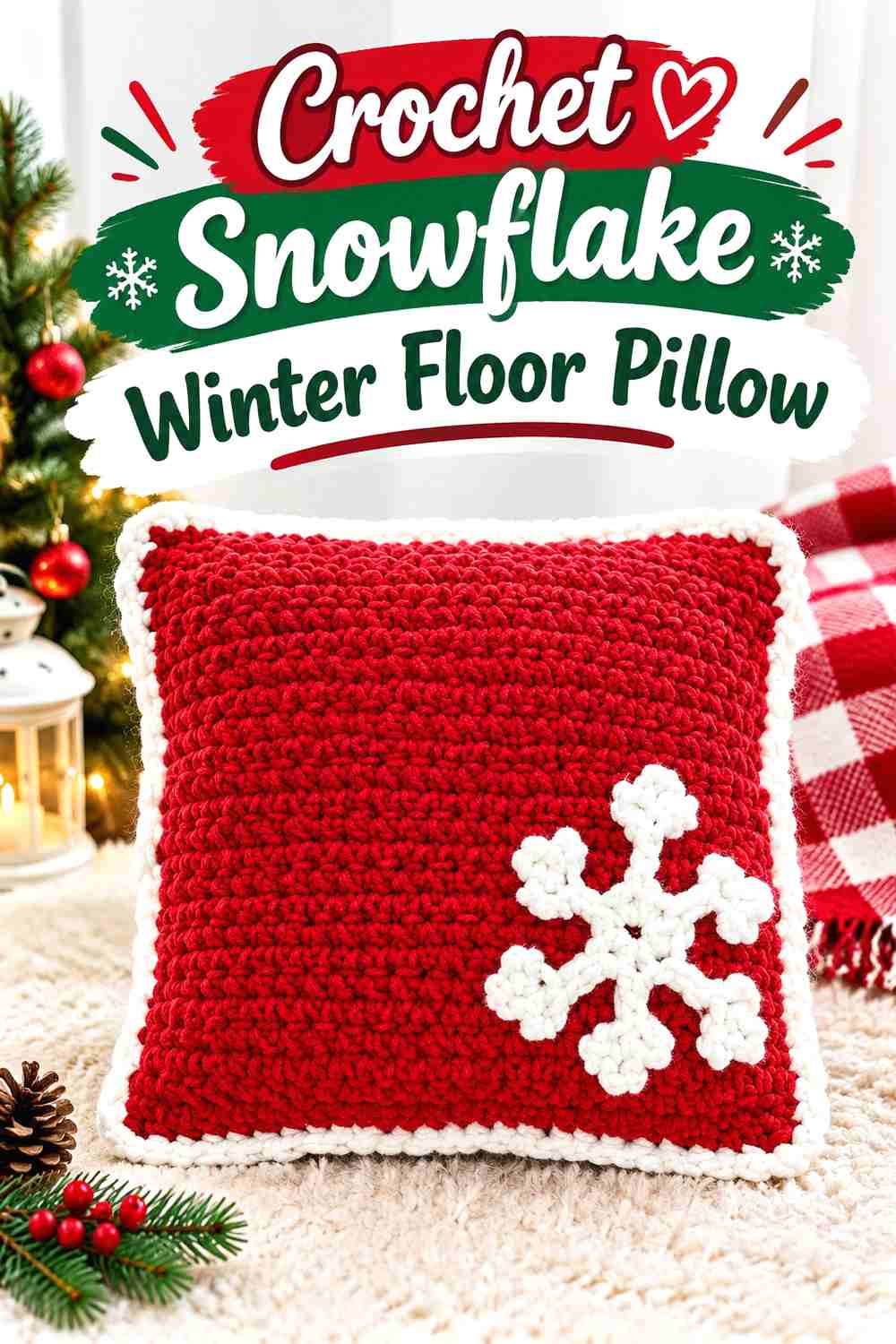
The Crochet Crowd demonstrates a square snowflake pillow that puts the winter theme directly into the design rather than relying only on yarn texture or color. The graphic motif makes this one especially suitable for a seasonal reading corner.
A Single Winter Motif Keeps the Cushion Easy to Style
One large snowflake can make a stronger statement than many small seasonal details. Pairing it with plain cushions keeps the nook looking intentional instead of turning every surface into a competing motif.
A lower-contrast palette can also make the design feel wintry rather than specifically holiday-themed.
Enlarge the Background and Motif as One Composition
When adapting a motif pillow to a larger format, the decoration needs to remain proportional to the panel. A small central snowflake on a much larger square may look disconnected from the border.
Plan the complete front visually before changing size, and use the original tutorial for its actual construction rather than inventing extra motif rounds.
Creator Credit: The Crochet Crowd
17. Crochet Bobble-Diamond Floor Cushion
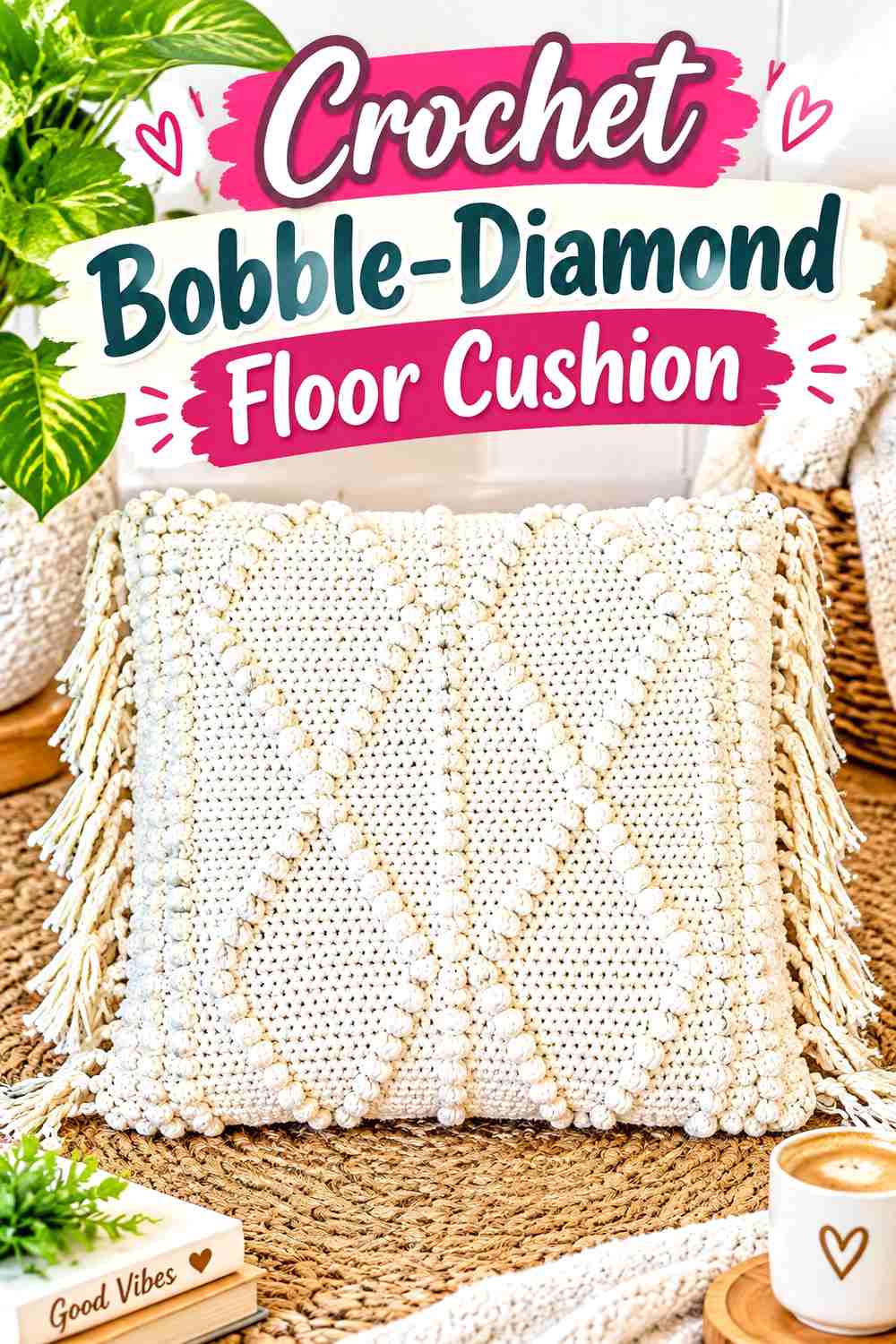
Crazy Cool Crochet’s pillow cover uses bobbles arranged into a diamond-style design and is demonstrated for an 18-inch square pillow. The raised pattern gives it a strong boho texture that can translate well to a cozy reading corner.
Bobbles Create a Strong Pattern Without Multiple Colors
The raised diamond design lets a solid yarn create both pattern and texture. This is useful if the rest of the nook already contains multicolored blankets, patterned rugs, or a busy book collection.
Because bobbles use more depth than flat stitches, swatching is particularly useful before scaling the idea to a much wider floor cushion.
Decide Whether This Is a Seat or a Back Cushion
A large field of bobbles will feel noticeably different from smooth crochet under body weight. If you like the look but prefer a flatter sitting surface, use this design as the upright cushion behind a plain floor pouf.
That pairing gives you the winter texture without requiring every cushion in the nook to perform the same job.
Creator Credit: Crazy Cool Crochet
Which Crochet Floor Cushion Style Fits Your Reading Nook?
The first four projects are the strongest choices when the cushion needs to function as a primary floor seat. Their pouf-style construction creates more depth and a more predictable footprint than the decorative shaped pillows.
The flower, cloud, star, and heart options make more sense when you want softer lounging support or an accent layered around a main seat. The mandala and low-profile round designs sit between those groups: they keep the friendly circular shape but offer different levels of depth and structure.
The granny square, gingham, cable, mixed-texture, faux-fur, snowflake, and bobble designs are especially useful when you already know what size insert you want. They begin as conventional pillow ideas, so turning them into true floor cushions requires more measuring and adaptation than simply following the source unchanged.
Conclusion
For a reading nook that will be used every day, begin with function. The oversized round poufs and structured cabled pouf are the most natural starting points for a main seat because their tutorials already deal directly with floor-level scale.
If you already have a supportive floor pad or mattress, the choice becomes more decorative. A cloud or heart can soften the wall behind you, a flower or star can add a sculptural layer, and gingham, cables, snowflakes, bobbles, or faux fur can bring stronger winter character.
Whichever direction you choose, decide on the insert, finished footprint, and intended use before changing the tutorial’s size. Refer to the original creator’s tutorial for the exact construction, stitch counts, materials, and finishing method rather than assuming a standard pillow can simply be enlarged without adjustment.
Frequently Asked Questions
Can I enlarge a 16-inch crochet pillow tutorial into a floor cushion?
Yes, the construction can often provide useful inspiration, but the original stitch counts should not be treated as universal scaling instructions. Make a sample with your chosen yarn, measure the resulting fabric, and plan around the actual insert or finished dimensions you need. Shaped motifs and colorwork may also need proportional changes so the enlarged cushion still looks balanced.
Which shapes work better for actual floor seating?
Broad round and square shapes usually provide a more continuous seating surface than stars, flowers, hearts, or clouds. Deep poufs are particularly useful when you want height as well as cushioning. Irregular shapes can still work beautifully in a nook, but they are often more practical as backrests, lounging pillows, or decorative layers around the main seat.
Should a crochet floor cushion have a separate inner liner?
A liner can be useful when the outer crochet shell and the filling need to be managed separately. It is especially worth considering with loose fill or when you want future access to the interior. Follow the selected tutorial’s construction and make sure any added liner or closure works with the shape rather than obstructing normal use.
How do I choose between loose stuffing and a ready-made cushion insert?
A ready-made insert gives you a fixed target size and generally makes the exterior easier to measure. Loose stuffing provides more freedom for flowers, clouds, stars, and other unusual silhouettes. Pouf designs may use other contained filling arrangements. Base the decision on the construction you choose rather than trying to force one filling method into every design.
What yarn qualities matter most for a floor cushion?
Think about surface wear, stretch, stitch definition, cleaning requirements, and the amount of structure you want. A very soft yarn may produce a different result from a firm ribbon yarn even when both are used in the same general shape. Check the yarn manufacturer’s care information and the creator’s recommended materials before substituting.
How can I keep a large crochet cushion from looking stretched or floppy?
Start by checking fabric density before making the full piece. A very open fabric can expose an inner liner and may distort more noticeably when enlarged. The insert should also suit the finished shell rather than forcing the crochet to stretch far beyond its intended dimensions. For motif cushions, block and measure the completed pieces before final assembly.