A holiday table runner does not have to sit quietly beneath the centerpiece. For a maximalist table, the crochet itself can become part of the spectacle: pointed stars, metallic thread, jewel colors, sequins, beads, fringe, dimensional flowers, and dramatic openwork can all draw the eye down the center of the table.
The tutorials in this collection take several routes to that look. Some sources already create true star-shaped runners or star table pieces. Others teach holiday, filet, granny-square, floral, lace, or textured runner constructions that can provide the base for a star-themed adaptation. When stars, beads, sequins, or metallic details are an editorial addition rather than part of the source tutorial, that distinction is kept clear.
“Bedazzled” also does not have to mean covering every inch in gems. A metallic border, a few securely sewn sequins at star points, bead centers on motifs, or one glittering accent yarn can create more impact than embellishing every stitch.
Quick List
- Crochet Join-As-You-Go Jeweled Star Table Runner
- Crochet Mixed-Scale Constellation Star Table Runner
- Crochet Filet Starlight Table Runner
- Crochet Oversized Gem-Star Medallion Table Runner
- Crochet Sunflower Starburst Table Runner
- Crochet Snowflake-and-Star Crystal Table Runner
- Crochet Filet Evergreen and Star Sparkle Table Runner
- Crochet Floral Sequin Star Garden Table Runner
- Crochet Gold-Bloom Starburst Table Runner
- Crochet Ruby, Ivory, and Gold Star Border Table Runner
- Crochet Bell-and-Star Lace Table Runner
- Crochet Granny Patchwork Star Table Runner
- Crochet Jewel-Tone Holiday Star Table Runner
- Crochet Filet Jewel-Star Table Runner
- Crochet Openwork Flower-and-Star Table Runner
- Crochet Midnight Fringe Star Table Runner
- Crochet Daisy-Texture Star Scatter Table Runner
- Crochet Minimal Star-Confetti Table Runner
Decide Where the Tableware Will Sit Before Adding Sparkle
Maximalist decoration works best when the functional zones remain predictable. Set out your plates, glasses, serving dishes, and centerpiece before deciding where beads, sequins, dimensional stars, tassels, or raised flowers should go.
A flat metallic strand integrated into the crochet creates less obstruction than a cluster of beads. Applied stars can work beautifully along the ends or exposed borders while leaving the central serving area flatter.
If a runner will be used during a meal rather than purely as display decor, avoid placing unstable dishes directly on raised embellishments. A beautiful beaded center is less useful if a serving bowl rocks on top of it.
Crochet table runners should also be treated as decorative textiles rather than heat protection. Keep them separated from open flames and do not assume yarn, beads, sequins, or metallic fibers are suitable beneath hot cookware.
Choose One Kind of Shine to Lead the Design
Maximalist does not require every embellishment technique at once.
Metallic yarn can outline stars without adding loose components. Sequins catch light more dramatically but need secure attachment. Beads give star centers or borders a jewelry-like finish, yet they add weight and texture. Jewel-toned yarn creates a bedazzled impression without adding anything to the surface.
A useful hierarchy is to choose one dominant sparkle treatment and one supporting detail. A gold-thread star runner may need only a few bead centers. A heavily sequined border may look stronger against a relatively simple crochet body.
If small detachable embellishments could be reached by young children or pets, consider metallic yarn or color contrast instead.
Plan Star Scale and Repetition Before Joining
Stars create a very different outline from a straight rectangular runner. Their points extend sideways, and a row of individual motifs can become wider than expected once joined.
Before making a full set of motifs, finish one star and place it on the actual table. Check its point-to-point width against the area between opposite place settings.
Mixed star sizes can create a more lavish constellation effect, but they require deliberate layout planning. Large stars naturally become focal points, so distribute them intentionally rather than letting all of the visual weight collect at one end.
For runners built from another construction—filet, granny squares, lace, or a continuous rectangle—decide where the star treatment belongs before embellishing. Border stars, end medallions, scattered flat appliqués, and embroidered star outlines each create a different balance.
1. Crochet Join-As-You-Go Jeweled Star Table Runner
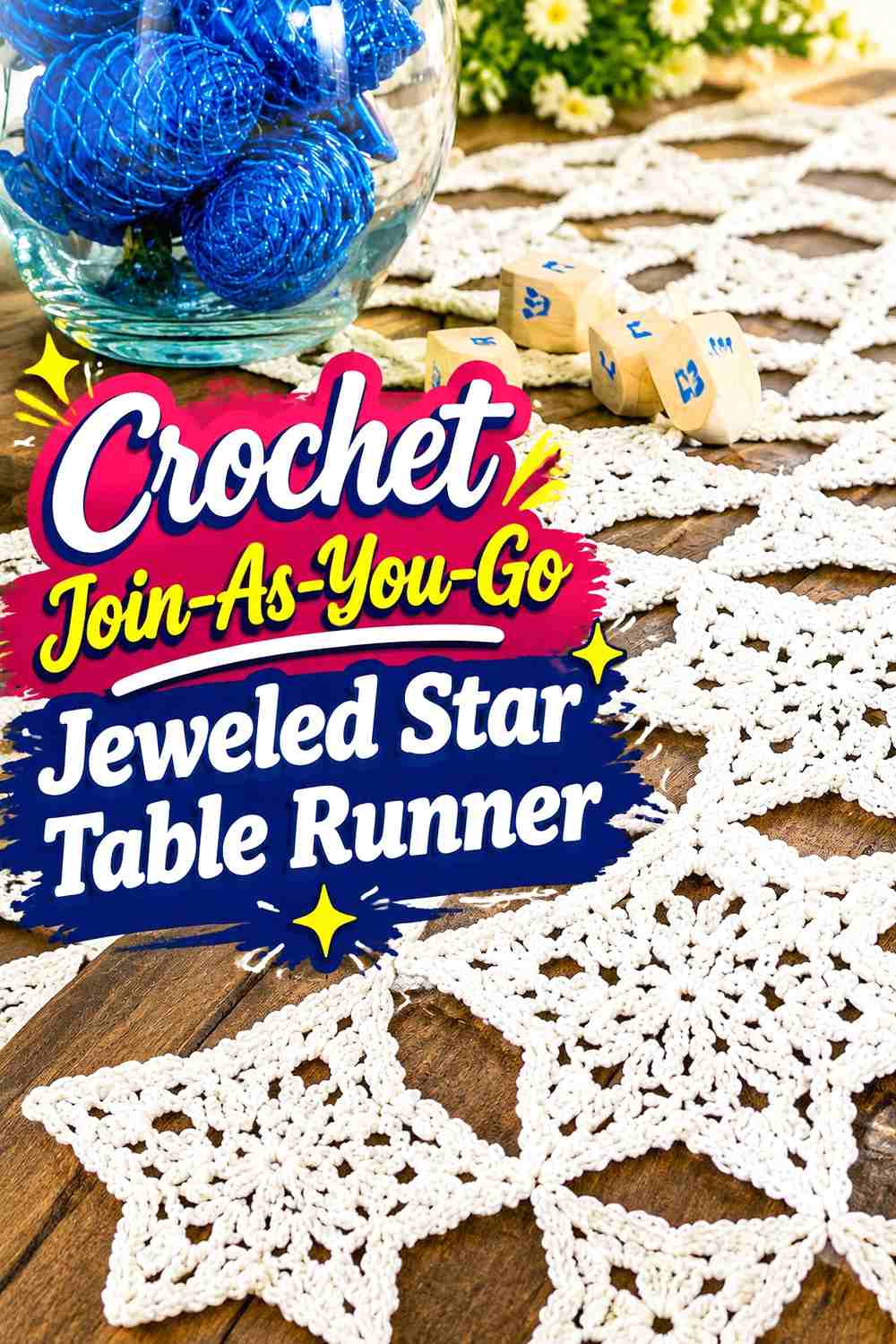
This is one of the closest matches to the theme because the tutorial itself creates a table runner from joined star motifs. The individual stars connect during their final rounds, producing an open runner whose points form the outside silhouette rather than sitting inside a rectangular border.
That structure already has plenty of drama, so the bedazzled treatment can stay controlled: metallic edging, occasional bead centers, or alternating jewel-tone stars can provide shine without hiding the join-as-you-go construction.
Put Sparkle Where the Stars Already Draw Attention
The center and outer tips are natural focal areas. If you add a specialty strand or securely attached embellishment, concentrating it there can emphasize the geometry without making the whole runner stiff or heavy.
Keep raised additions away from areas where serving dishes need to sit flat.
Check Every Star Before the Final Join
A repeating motif runner exposes dimensional differences quickly. Compare the stars on a flat surface before joining them into the final layout.
If one motif is noticeably tighter or larger, correcting the discrepancy early is more useful than forcing the surrounding stars to compensate.
Let Negative Space Be Part of the Maximalism
Maximalist design is not the same as solid coverage. Open areas between star points let a velvet tablecloth, dark wood surface, or metallic underlayer show through.
That contrast can make the stars look even more elaborate.
Creator Credit: The Crochet Crowd
2. Crochet Mixed-Scale Constellation Star Table Runner
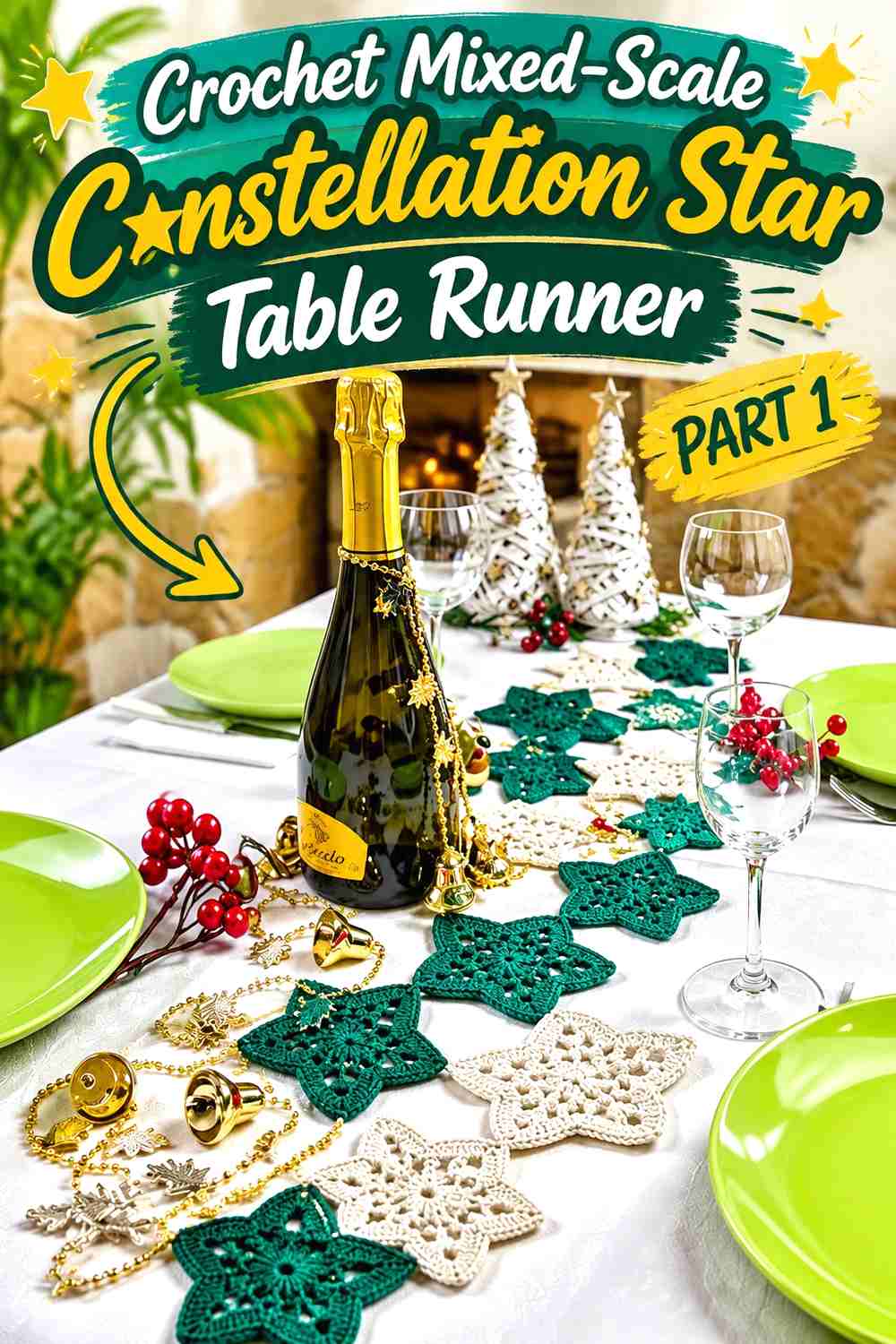
This tutorial also builds the runner from stars, but it incorporates more than one star scale and demonstrates how the motifs come together into a complete holiday table piece. The varying sizes give the finished composition a looser constellation effect than a perfectly uniform row.
That makes it especially compatible with a maximalist palette where gold, burgundy, emerald, sapphire, and cream can be distributed across different motif sizes.
Give the Largest Stars the Richest Treatment
A large star naturally carries more visual weight. Instead of applying the same amount of sparkle to every motif, reserve the strongest metallic yarn or bead detailing for the large stars.
Smaller motifs can act as visual connectors rather than competing focal points.
Map the Runner Before Joining the Colors
Lay the completed stars on the table in their intended sequence before final assembly.
This is particularly important with several saturated colors. Two heavily embellished dark stars placed together may make one section appear much heavier than the opposite end.
Keep One Element Consistent
A repeated metallic edge, shared center color, or single neutral yarn can unify a collection of otherwise different stars.
That small repetition prevents “maximalist” from becoming visually random.
Creator Credit: Francesca Uncinettando Crochet&Love
3. Crochet Filet Starlight Table Runner
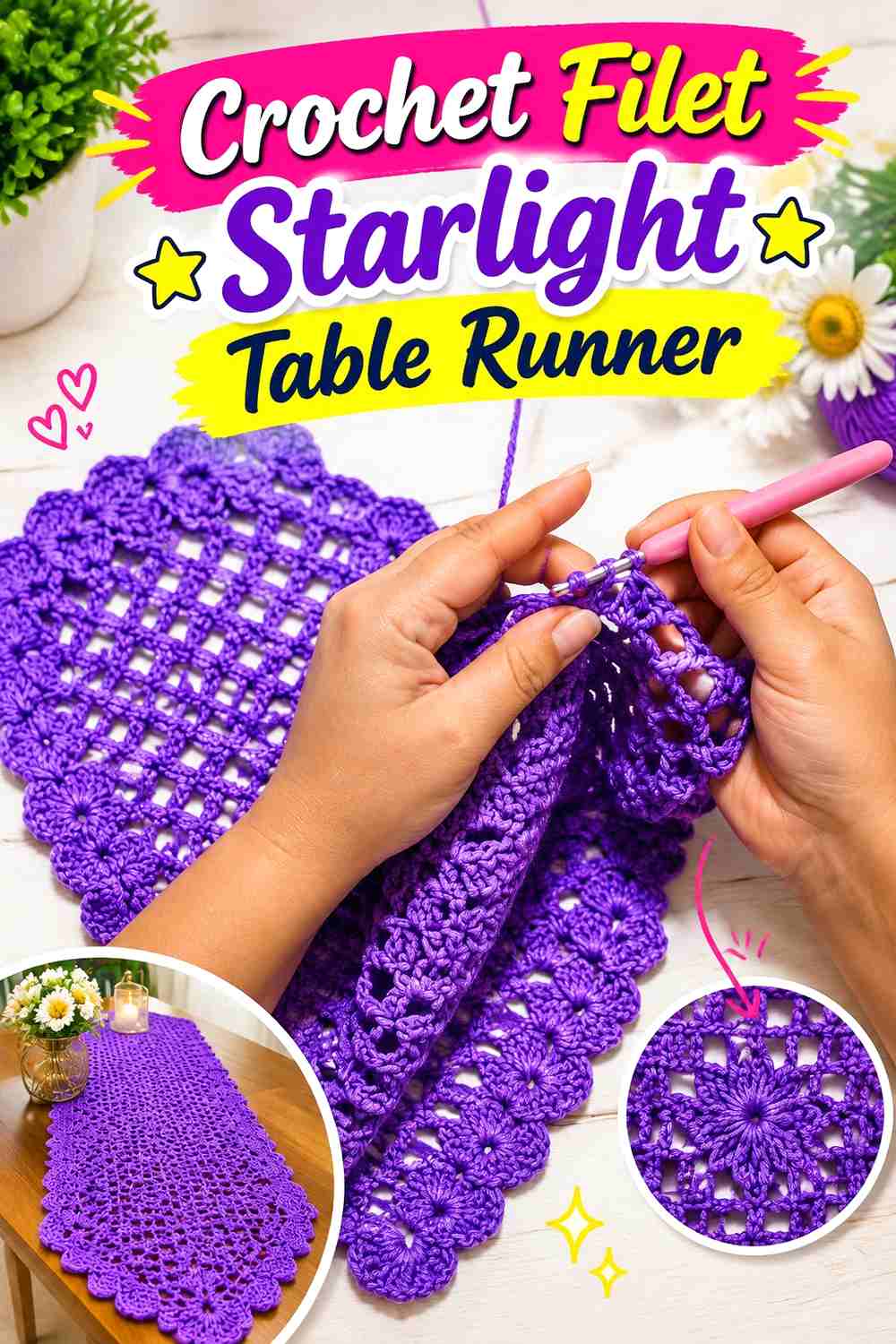
This source takes a different route by working stars into a filet-style runner rather than joining separate star-shaped pieces. The star imagery becomes part of a flatter grid, creating a more predictable rectangular footprint on the table.
It is a particularly useful choice when you want the glamour of stars but still need a relatively uninterrupted surface through the center.
Metallic Thread Can Outline the Graphic Stars
A filet star already has a defined silhouette. If the construction allows an appropriate decorative finish, a restrained metallic accent can make those outlines more visible in evening light.
Sample specialty yarn first because metallic strands can behave differently from the main crochet fiber.
A Flat Star Design Gives Serving Pieces More Flexibility
Unlike dimensional appliqués, the star image is created through the fabric itself.
That makes this style worth considering when the runner needs to remain decorative even after platters, bowls, and glassware have been added.
Strong Table Contrast Helps Filet Read Clearly
An open grid changes appearance according to the surface beneath it. Pale filet may disappear on a pale tablecloth but become much clearer over burgundy, green, charcoal, or dark wood.
Test the contrast before committing to additional embellishment.
Creator Credit: Trecos & Tarecos Crochet
4. Crochet Oversized Gem-Star Medallion Table Runner
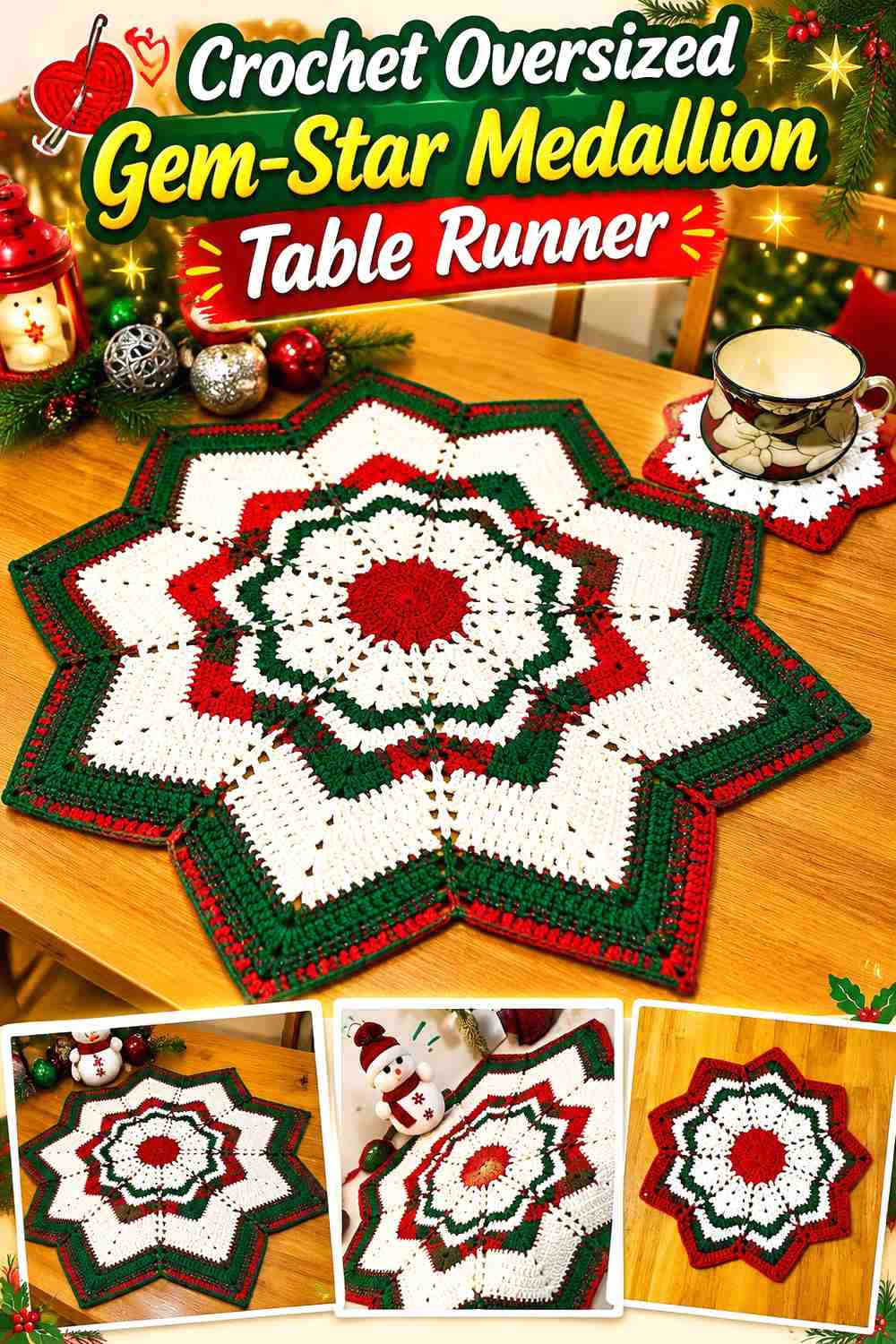
The source tutorial creates a large star-shaped centerpiece that can serve as the inspiration for a runner built around oversized star medallions rather than many tiny motifs. The demonstrated star can also function at several table-decor scales depending on materials and intended use.
The tutorial does not teach a long joined runner, so treat it as the star-medallion reference. Before planning multiples, make one and determine whether its scale works with your available center strip.
One Large Star Can Replace Several Small Decorations
On a shorter table, an oversized star at the center with a simpler crocheted extension on either side may create more impact than a dense row of small motifs.
This also gives you a defined place for the strongest embellishment.
Use Beading to Emphasize the Star’s Center
A concentrated jewel-like center can make a large motif feel intentional without covering the outer points in hardware.
Make sure any beads are securely attached and remain outside areas used beneath food or serving ware.
Do Not Assume a Smaller Hook Creates a Perfect Mini Version
Changing yarn and hook size can affect thickness, drape, and stitch definition as well as overall dimensions.
Make a sample before planning several medallions around an estimated scale.
Creator Credit: Jana Crochê Criativo
5. Crochet Sunflower Starburst Table Runner
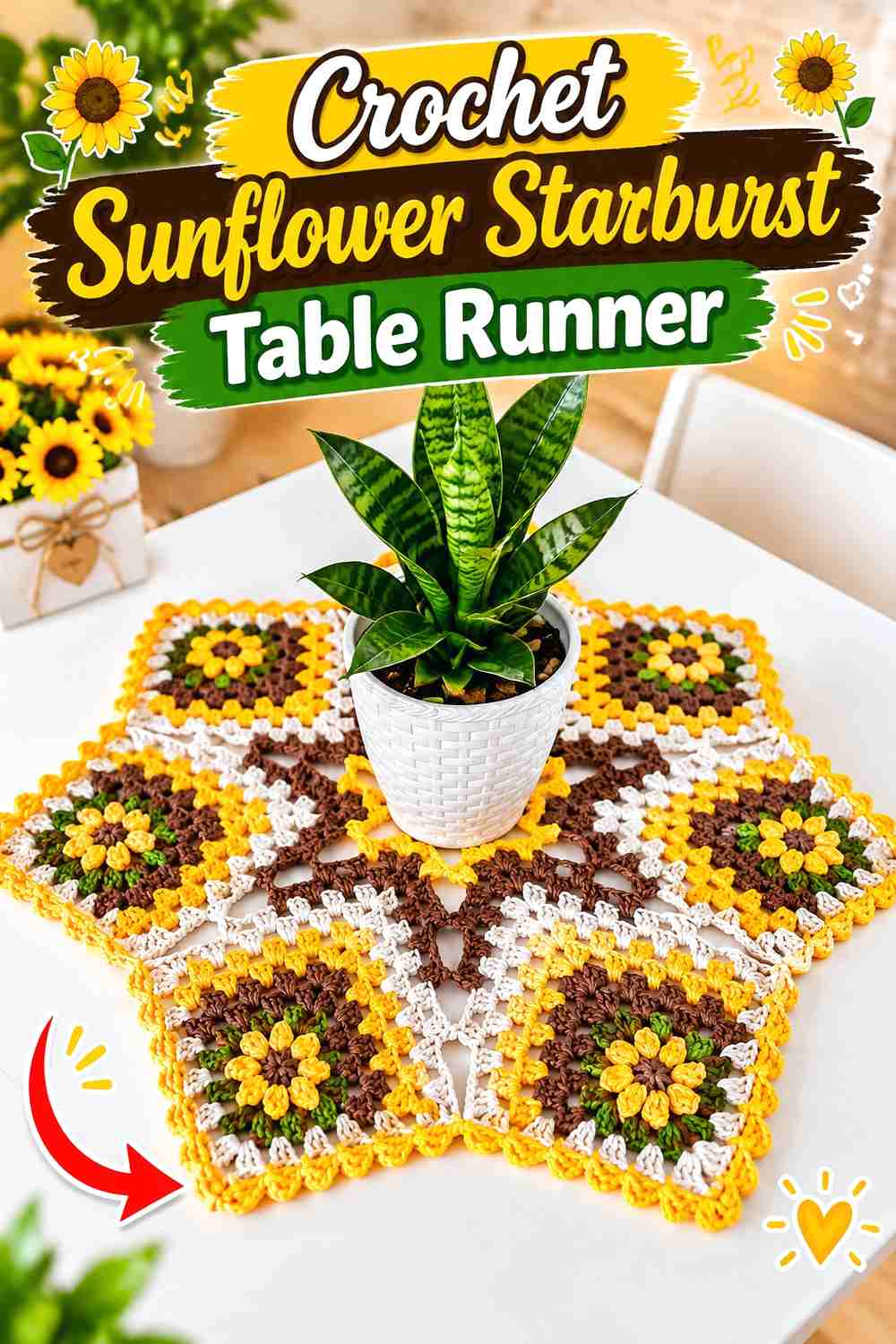
This source combines a star-shaped centerpiece with a sunflower focal area, giving the design two strong motifs at once.
For maximalist holiday hosting, the floral center can move into jewel territory: burgundy, garnet, deep green, gold, cream, or bronze can make the star feel more like a winter brooch than a summer sunflower.
Let the Flower Act Like a Jeweled Center
The central motif already creates dimensional interest. Adding sparkle around that area rather than across every star point can produce a concentrated brooch-like effect.
If the flower is raised, keep heavy serving pieces away from it.
Use Repetition Carefully With Large Medallions
A design this strong may need only two or three major star elements to create the impression of a runner.
Make one first, place it on the table, and decide whether repeating it actually improves the composition.
Dark Backgrounds Increase the Drama
A cream-and-gold star on a black, emerald, plum, or deep red tablecloth can look much more extravagant than the same piece on a pale surface.
Consider the complete tablescape before adding extra colors.
Creator Credit: Crochê Passo a Passo
6. Crochet Snowflake-and-Star Crystal Table Runner
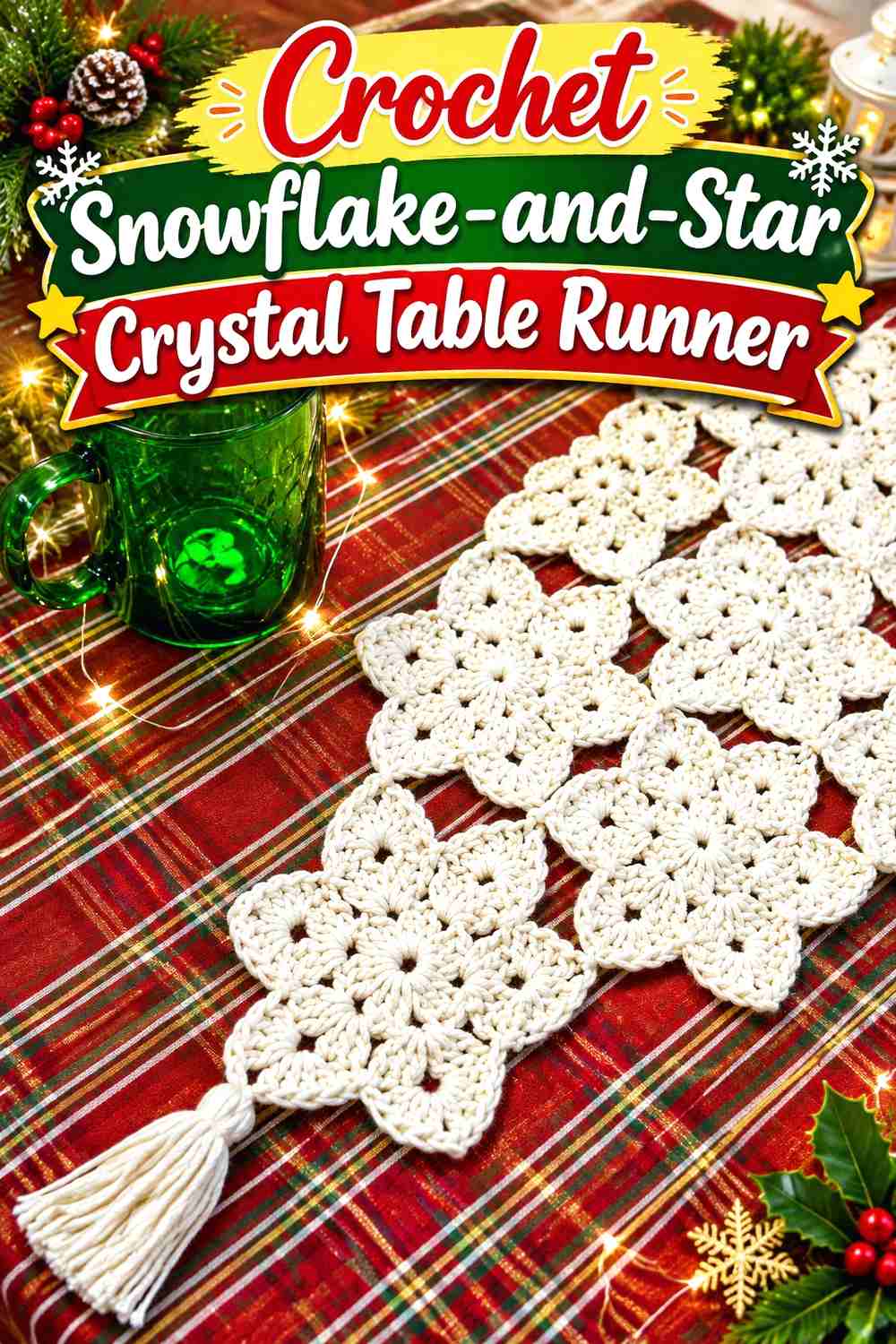
The source runner uses joined snowflake motifs with an open construction and decorative end treatment, offering an established motif-runner structure that can inspire a mixed celestial layout.
For a star adaptation, preserve the snowflakes as the primary tutorial construction and introduce only compatible flat stars or star-colored accents after checking motif dimensions. Do not assume unrelated motifs will join cleanly simply because both have points.
Compare Motif Size Before Mixing Shapes
A snowflake and a star can have similar overall diameters while placing their outer points in completely different positions.
Lay prospective motifs over a paper grid before joining them. The important issue is where the connection points actually meet.
Crystal Effects Need Restraint Near Snowflake Points
Small reflective beads can reinforce the icy theme, but outer points are already visually delicate.
If embellishing, favor areas that will not interfere with joins or catch constantly on table linens.
Tassels and Star Points Compete for End Space
If the original end treatment is retained, avoid adding so many extra stars that the ends become congested.
Choose whether tassels or star motifs should provide the strongest finishing detail.
Creator Credit: Fiber Flux
7. Crochet Filet Evergreen and Star Sparkle Table Runner
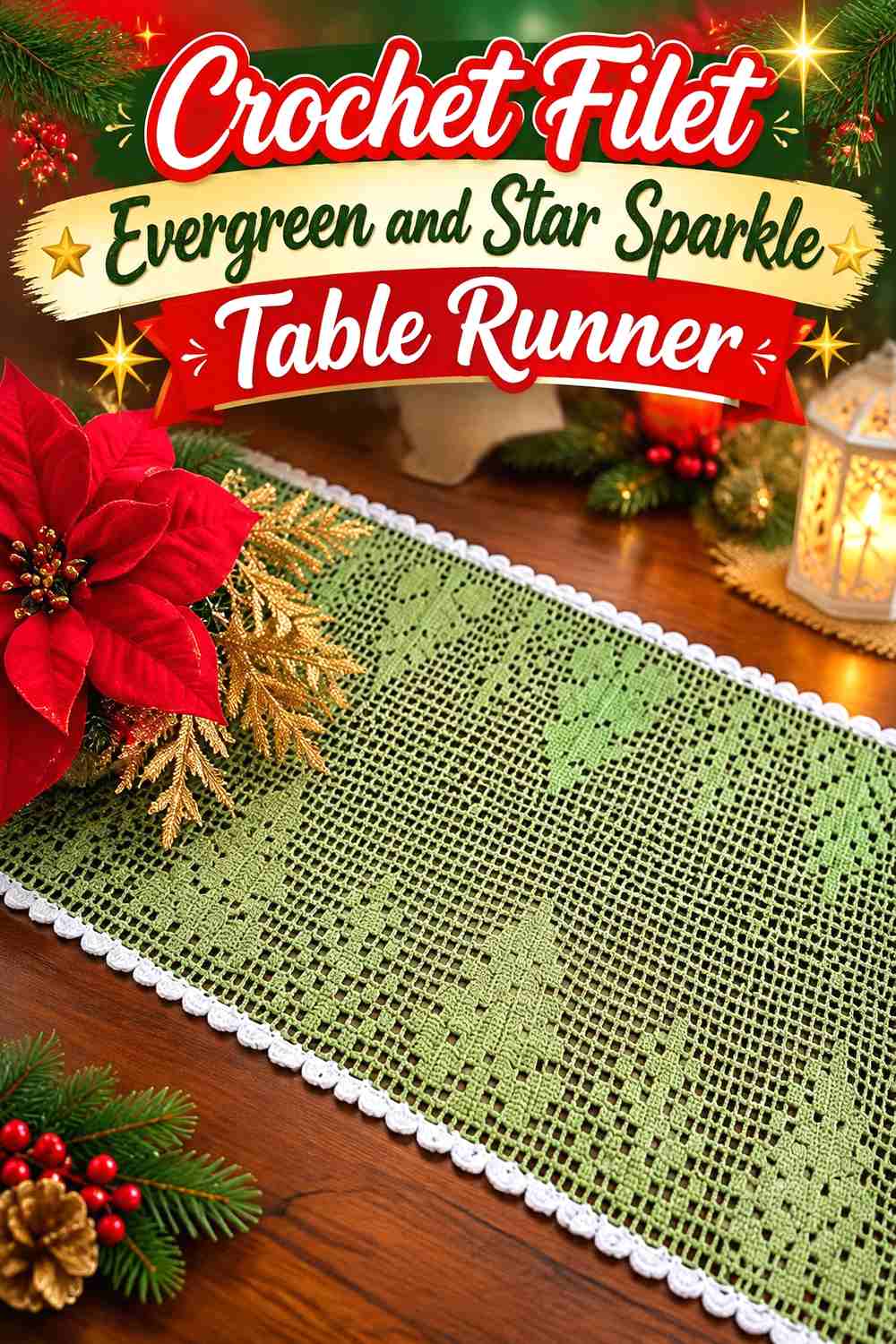
The source tutorial creates a filet Christmas-tree runner with an open grid and contrasting snowy border. It also includes finishing and blocking guidance for the graphic fabric.
The trees already give this runner a clear holiday identity, so stars can be added sparingly as a secondary theme—perhaps along the short ends or through metallic accents rather than covering the filet imagery.
Keep Stars Away From the Tree Silhouettes
The source design depends on the evergreen pictures remaining readable.
Place additional star details in the border or open end areas instead of covering the graphic section with appliqués.
A Metallic Snow Border Can Supply Enough Sparkle
Rather than sewing on many separate decorations, consider whether a specialty accent in the existing border creates the desired bedazzled effect.
A sample will show whether the metallic yarn keeps the border flexible enough to lie flat.
Blocking Is Especially Important With Graphic Crochet
A distorted grid can make both the original trees and any added stars look uneven.
Finish and shape the base runner before deciding exactly where additional embellishment belongs.
Creator Credit: HandmadebyRaine
8. Crochet Floral Sequin Star Garden Table Runner
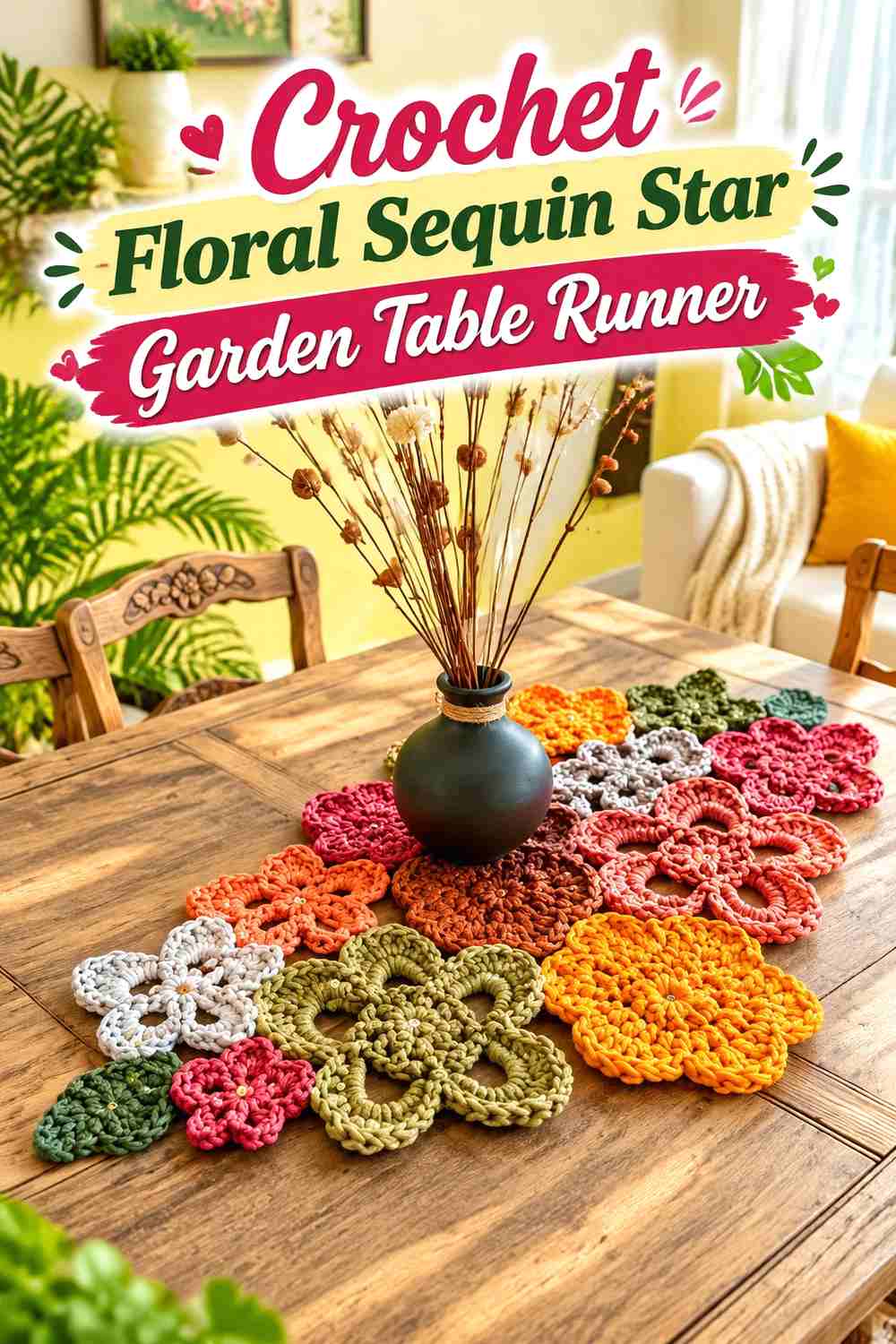
This source constructs a runner from separately crocheted floral and leaf motifs that are arranged into the final design. That modular layout offers useful planning logic for a maximalist composition because individual pieces can be positioned before permanent assembly.
For a holiday adaptation, stars can replace some of the floral visual weight rather than being added on top of every finished motif.
Build the Layout Before Sewing Anything Together
Loose motifs give you an opportunity that continuous runners do not: you can move the entire arrangement around until the balance feels right.
Photograph the chosen placement before joining so the design does not gradually drift during assembly.
Sequins Belong on Visible Motifs
If flat sequins are part of the bedazzled treatment, concentrate them on motifs that will remain uncovered during dinner.
There is little benefit in embellishing the exact area where a serving platter will sit.
Keep Leaves and Stars From Becoming Two Separate Themes
Repeat one color across both motif types. A gold star and gold-edged leaf, for example, can make botanical and celestial elements feel like one deliberate collection.
Creator Credit: Las Totoras Crochet
9. Crochet Gold-Bloom Starburst Table Runner
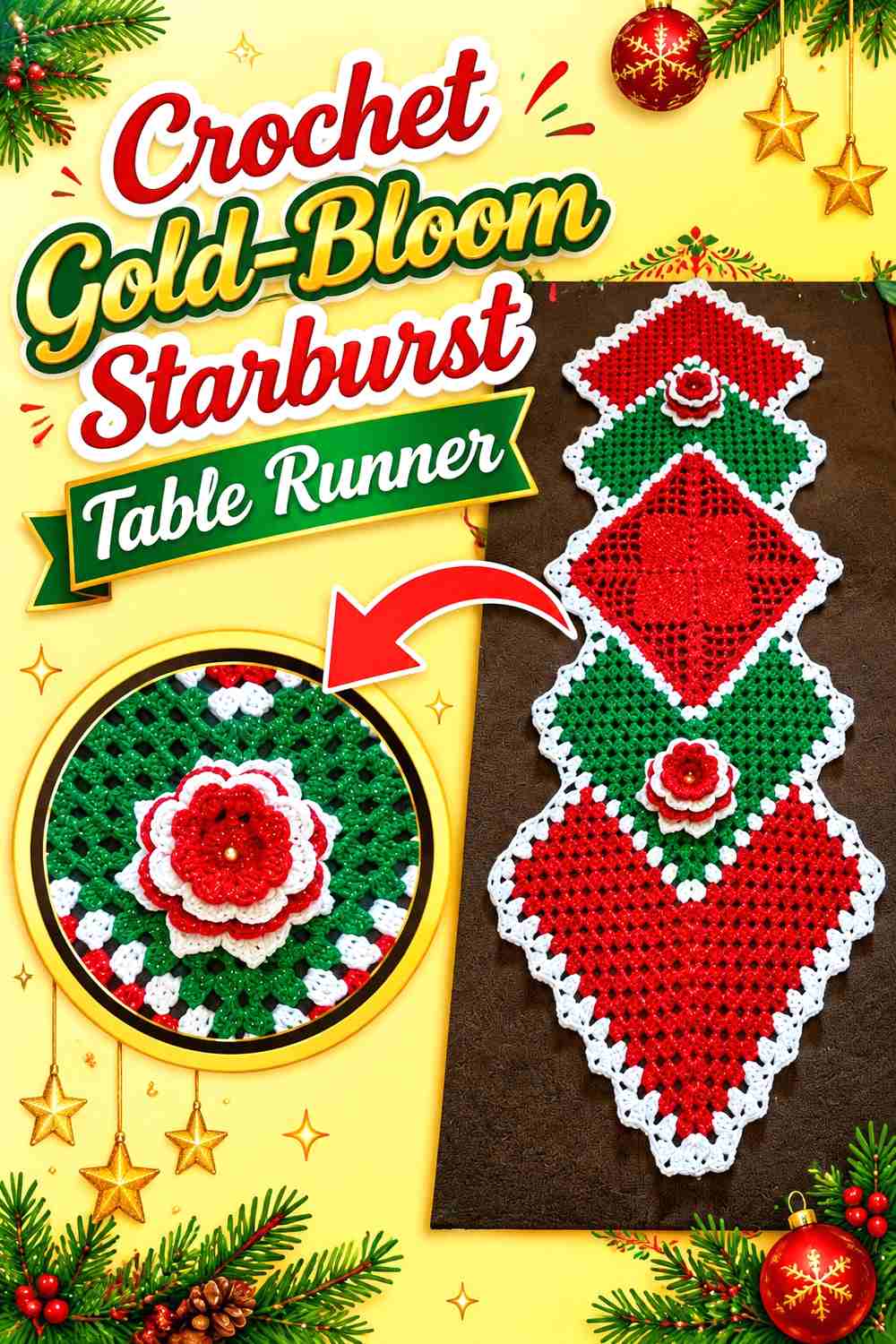
The source holiday runner combines traditional Christmas coloring with shiny gold yarn and a dimensional floral accent, making it an especially natural starting point for a bedazzled interpretation.
Rather than adding more shine everywhere, star details can echo the existing gold and make the floral focal points feel like part of a larger celestial theme.
Gold Stars Can Connect Separate Floral Sections
If flowers already occupy prominent areas, small flat stars can serve as visual bridges rather than new focal points.
Repeat the same gold yarn so the runner looks intentionally coordinated.
Protect Raised Details From Serving Dishes
Flowers, beads, and star appliqués all create changes in height.
Plan a relatively flat center lane if bowls or platters will sit directly on the runner during the meal.
Store Dimensional Details Without Crushing Them
A plain rectangle can be folded compactly, but raised flowers and embellished stars need more careful seasonal storage.
Follow the fiber’s care guidance and avoid leaving heavy objects pressed on decorative sections.
Creator Credit: Mimos da Jô Ateliê
10. Crochet Ruby, Ivory, and Gold Star Border Table Runner
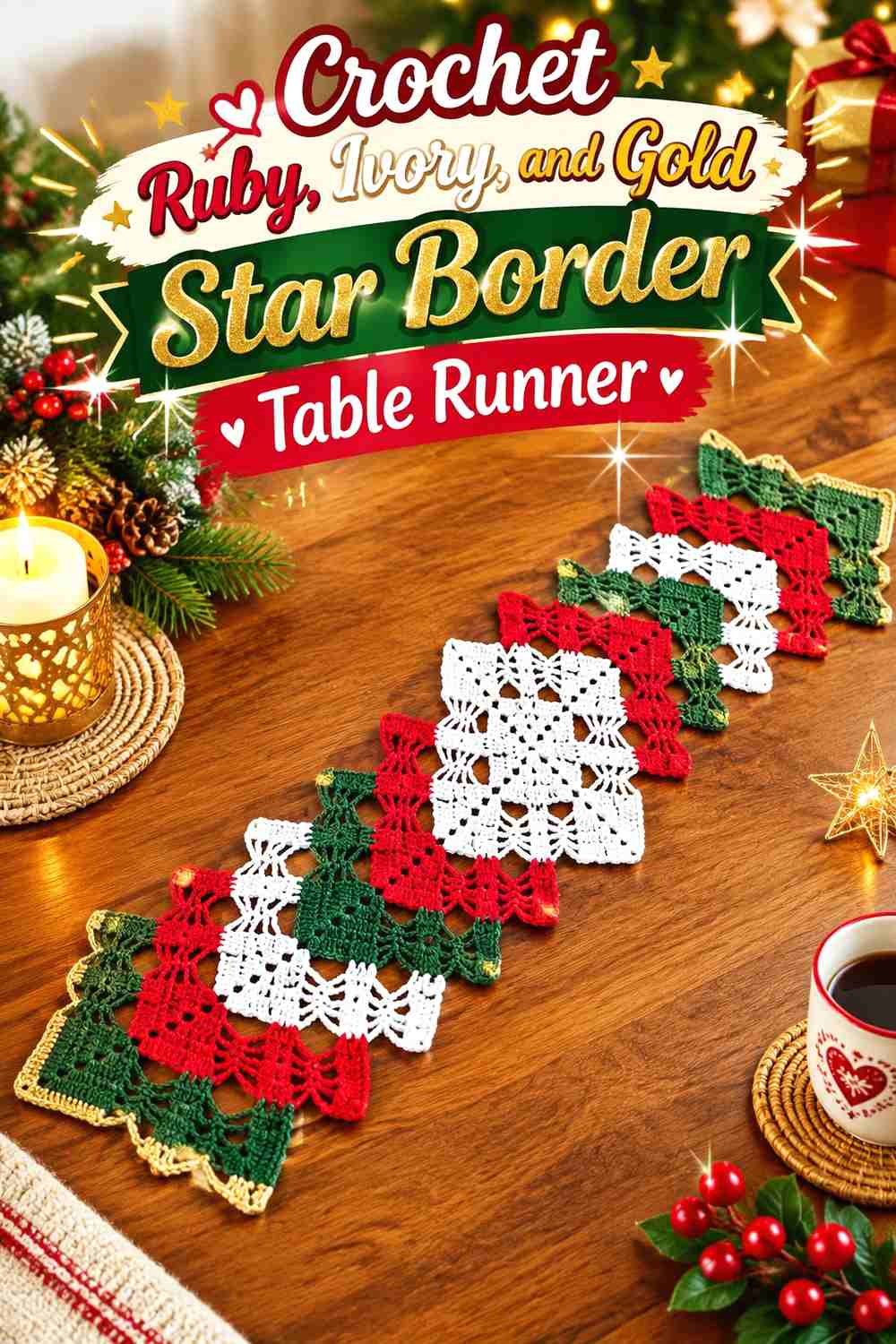
This Christmas runner uses a strong holiday palette and incorporates satin-gold yarn, providing sparkle without depending entirely on attached embellishment. The creator also explains how the runner’s dimensions can be adapted.
That makes the construction a strong base for a star-bordered version where the decorative stars remain near the exposed edges.
Use the Gold as a Connector, Not a Fourth Focal Point
Ruby, ivory, and green already create substantial color contrast. Gold works most effectively when it links those colors rather than competing equally with them.
Repeating the gold only in star centers or narrow border details can be enough.
Keep Applied Stars Along the Visible Edge
A border treatment remains visible even when the center of the runner is partially covered with tableware.
This is one of the most practical places for decorative star appliqués or bead accents.
Test the Width With Fully Set Place Settings
A maximalist runner can become crowded quickly once chargers, plates, glasses, and serving pieces are introduced.
Lay the table before deciding whether a wider border actually improves the final look.
Creator Credit: D Tejidos a Crochet
11. Crochet Bell-and-Star Lace Table Runner
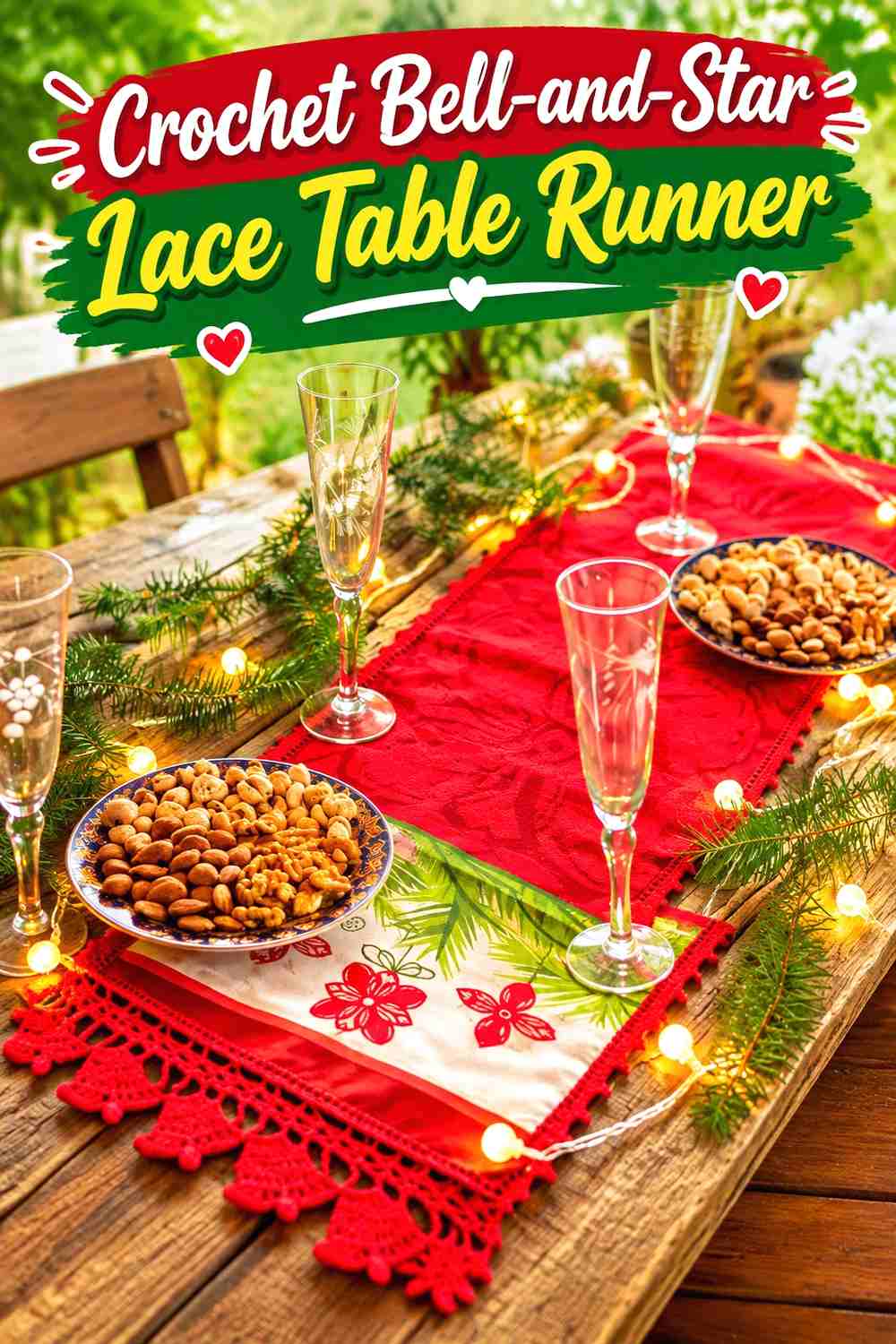
The source runner combines recognizable Christmas imagery with decorative lace, making it more pictorial than a plain rectangular design.
For a star adaptation, let the bells remain the main narrative motif and use stars as smaller linking accents. That preserves the source design instead of burying its strongest feature beneath unrelated decoration.
Lace Needs Space More Than Extra Ornament
A detailed edge can already look elaborate from across the table.
Before attaching sequins or stars, set the unfinished runner in place and decide whether the lace provides enough visual richness on its own.
Repeat Star Details Between the Bell Motifs
Small celestial accents can fill visual gaps without changing the primary picture.
Keep them flatter than the bell areas if that portion of the runner may sit beneath dishes.
Candlelight Makes Reflective Details Stronger
Sequins and metallic fibers can look much brighter at night than they do while you are crocheting in daylight.
Preview embellishments under your actual dining-room lighting before deciding how many to add, and keep all textile decorations safely away from open flame.
Creator Credit: Hablemos de Magia Crochet
12. Crochet Granny Patchwork Star Table Runner
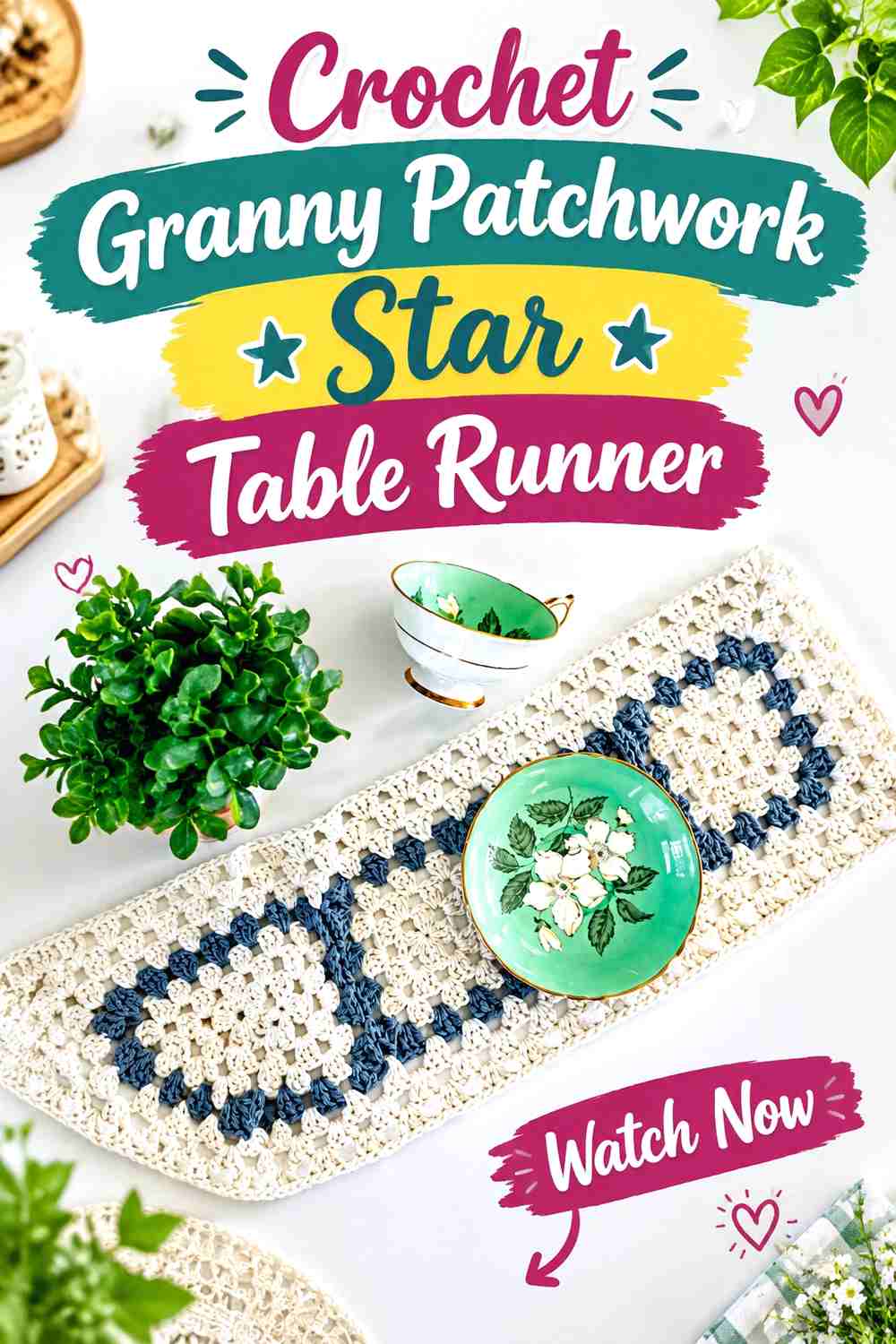
This source teaches a table runner assembled from individual granny squares using a join-as-you-go approach.
The square grid makes a useful framework for a star-themed adaptation because the celestial elements can be limited to selected blocks rather than scattered randomly across the whole surface.
Use Star Blocks as Focal Squares
Not every square needs the same visual intensity.
A few star-colored or star-embellished blocks separated by quieter granny squares create rhythm and give the eye somewhere to rest.
Keep Motif Dimensions Compatible
If you substitute a different square motif containing a star, compare its blocked dimensions and edge structure with the source square before planning the runner.
Two square designs are not automatically interchangeable simply because they have the same general shape.
Metallic Joins Can Become Part of the Grid
The joining lines themselves can contribute to the bedazzled effect.
A restrained metallic accent around selected squares may create more cohesion than attaching decorations after the runner is complete.
Creator Credit: American Crochet Association
13. Crochet Jewel-Tone Holiday Star Table Runner
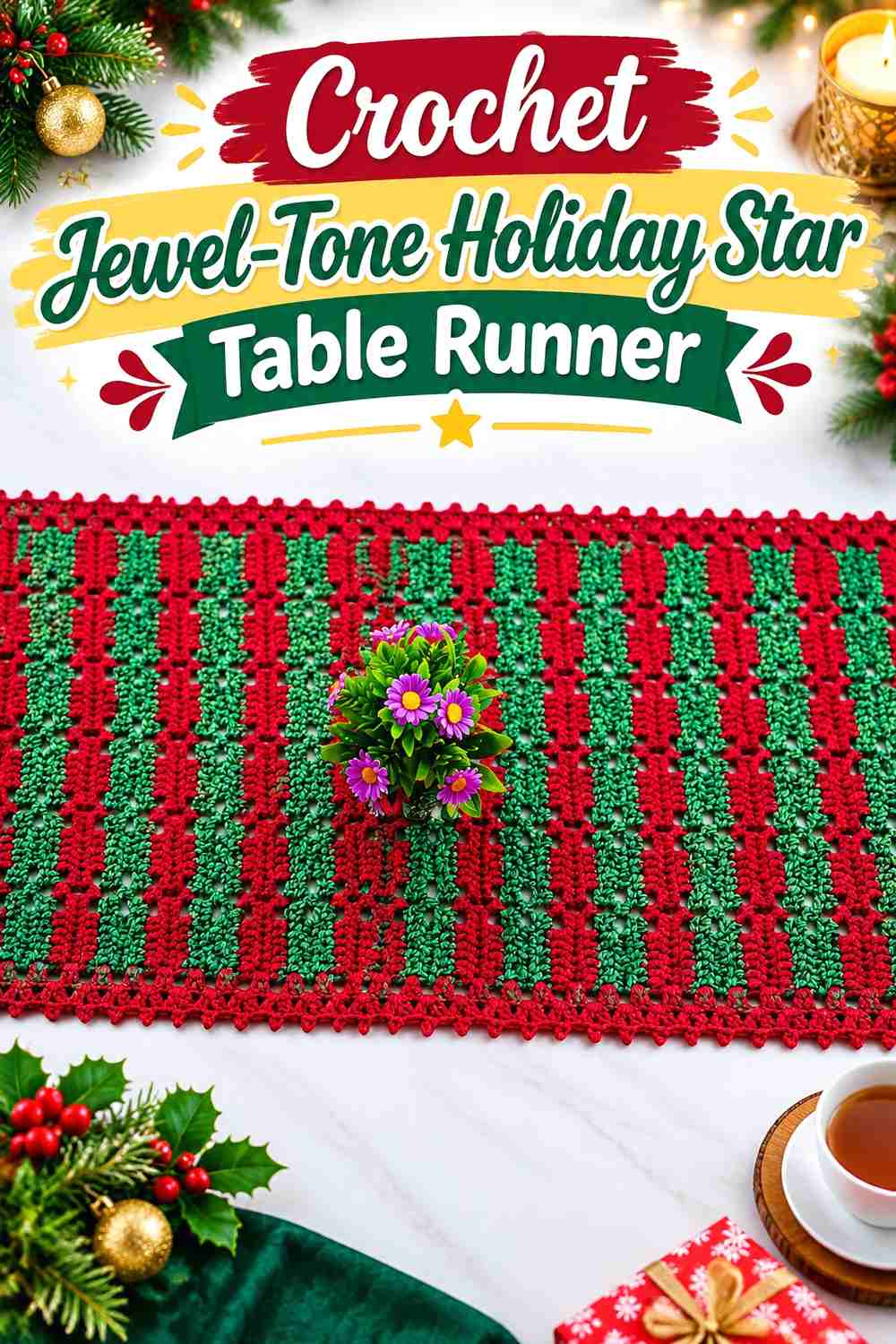
This source is a dedicated Christmas table runner tutorial, providing a practical holiday base rather than a separate ornament or appliqué.
For a maximalist star interpretation, use its established runner construction as the foundation and make the celestial theme come from color placement and carefully positioned flat stars.
Jewel Colors Can Create “Bedazzled” Without Hardware
Emerald, garnet, sapphire, amethyst, and warm gold naturally suggest gemstones.
Using those colors in a saturated holiday runner can provide a luxurious effect without sewing beads into every section.
Reserve Physical Embellishment for the Ends
The short ends often remain more visible during dinner than the center.
They are therefore a better candidate for secure star appliqués or sequins than areas beneath the main serving dishes.
Make the Table Setting Part of the Color Test
A jewel-tone runner may look balanced alone and overwhelming once placed beside patterned china or colorful glassware.
Evaluate the yarn with the actual dinnerware whenever possible.
Creator Credit: Mary Souza crochê
14. Crochet Filet Jewel-Star Table Runner
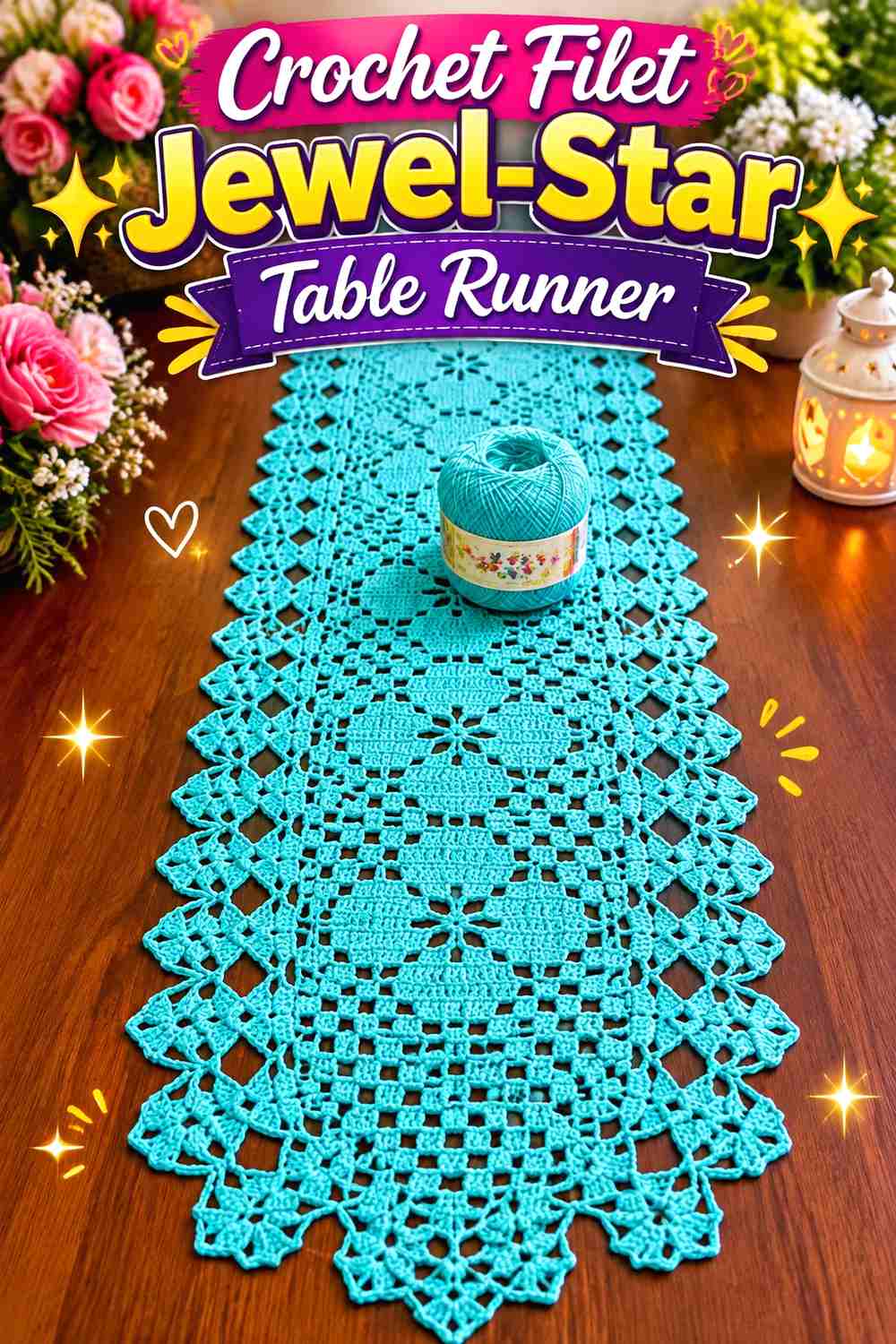
This tutorial creates a long filet table runner, giving you a flat openwork surface that can support a more graphic style of embellishment.
Rather than attaching thick three-dimensional stars, consider using color contrast, metallic surface details, or securely sewn flat accents that respect the open nature of the filet fabric.
Openwork Needs a Different Beading Strategy
A bead should have a stable attachment point rather than hanging loosely across an open space.
If you are unsure whether an embellishment can be secured without distorting the filet grid, omit it and use a specialty thread instead.
Let the Star Arrangement Follow the Grid
Filet naturally provides straight visual reference lines.
Use that geometry when planning star placement so the accents look intentionally spaced rather than sprinkled without structure.
Keep the Long Edges Straight
The more decorative elements you add, the more noticeable a wavy base becomes.
Lay the runner flat before embellishing and correct major shape issues first.
Creator Credit: Carmem Crochê
15. Crochet Openwork Flower-and-Star Table Runner
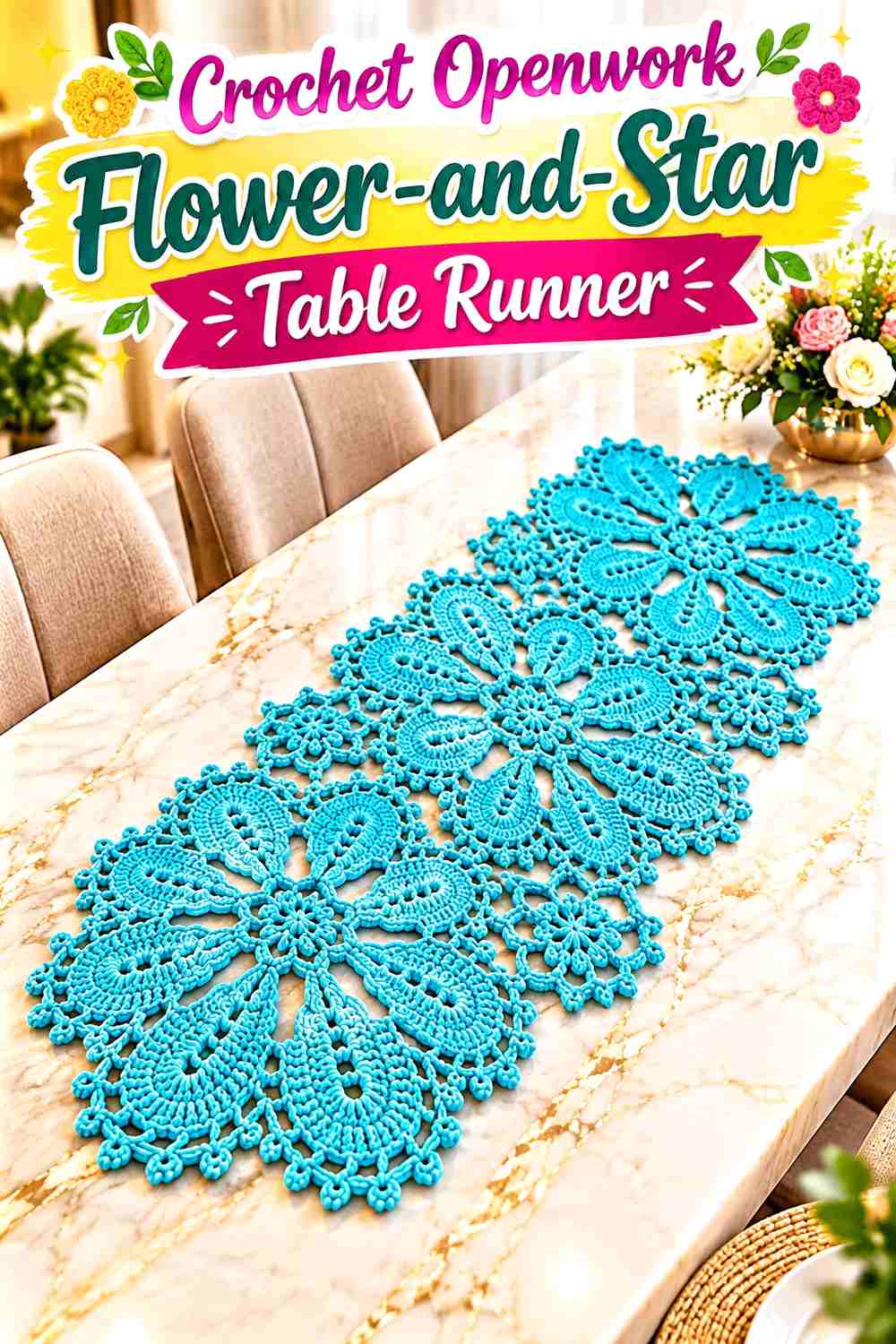
The source tutorial uses an openwork floral pattern and explains how the runner can be adapted in size, giving this idea a lighter alternative to dense holiday fabric.
Stars can be introduced as occasional accent shapes at the ends or between floral repeats, but the openwork flowers should remain visually dominant unless you intentionally want a completely different motif balance.
Alternate Flowers and Stars Instead of Layering Them
Putting a star directly on every flower can hide the feature that makes the runner distinctive.
An alternating arrangement preserves both motifs and creates a more deliberate repeat.
Champagne Metallics Suit Delicate Openwork
Bright yellow-gold can overpower fine floral crochet. Champagne, pale gold, pewter, or silver accents may integrate more quietly.
Hold the specialty strand beside the main yarn before committing to an entire border.
Size the Runner Before Adding End Motifs
A star attached to each short end changes the final length.
Finish the basic runner and test it on the table first so the decorative ends do not extend into chairs or high-traffic areas unexpectedly.
Creator Credit: Crochet by Glau
16. Crochet Midnight Fringe Star Table Runner
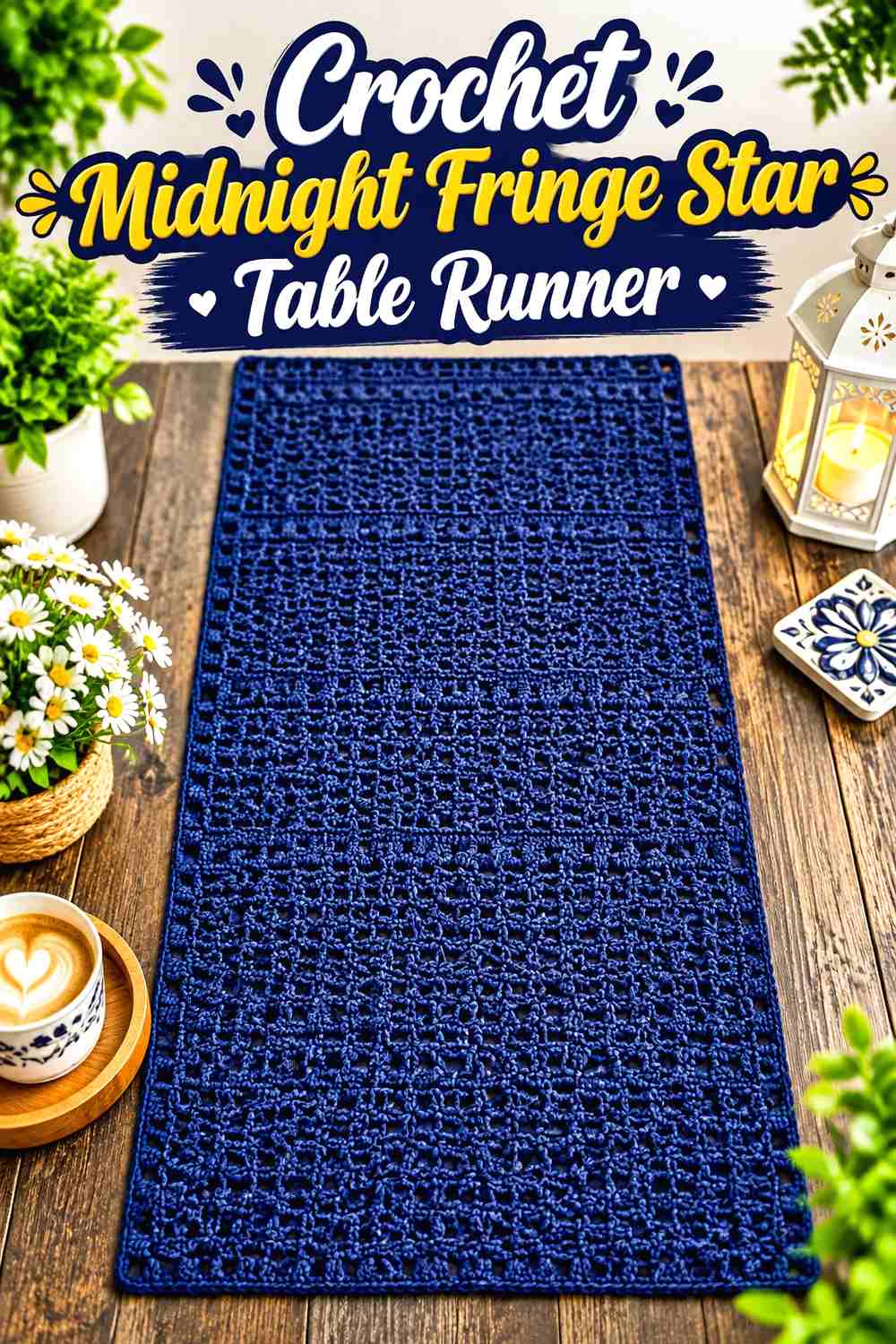
This source demonstrates a straightforward rectangular runner with fringe, providing a strong linear base and a decorative end treatment without a built-in holiday motif. It can also be adjusted through its repeat structure.
That simplicity is useful for a night-sky adaptation: deep navy, charcoal, plum, or black can become the background while metallic stars supply the holiday drama.
Use the Dark Body as Negative Space
Not every inch needs a motif. A dark uninterrupted center can make even a few pale or metallic stars appear brighter.
This is one of the cases where restraint inside the runner can actually increase the maximalist impact of the ends.
Decide Whether Fringe or Star Tassels Lead
Fringe already gives the runner movement.
If adding star details near the ends, avoid so many dangling elements that they tangle together or interfere with people seated at the table ends.
Silver and Gold Produce Different Night-Sky Moods
Silver against navy creates a colder, icy effect. Gold against black or plum reads warmer and more theatrical.
Choose according to the surrounding glassware, flatware, and centerpiece rather than selecting metallic yarn in isolation.
Creator Credit: Kristines Crochets
17. Crochet Daisy-Texture Star Scatter Table Runner
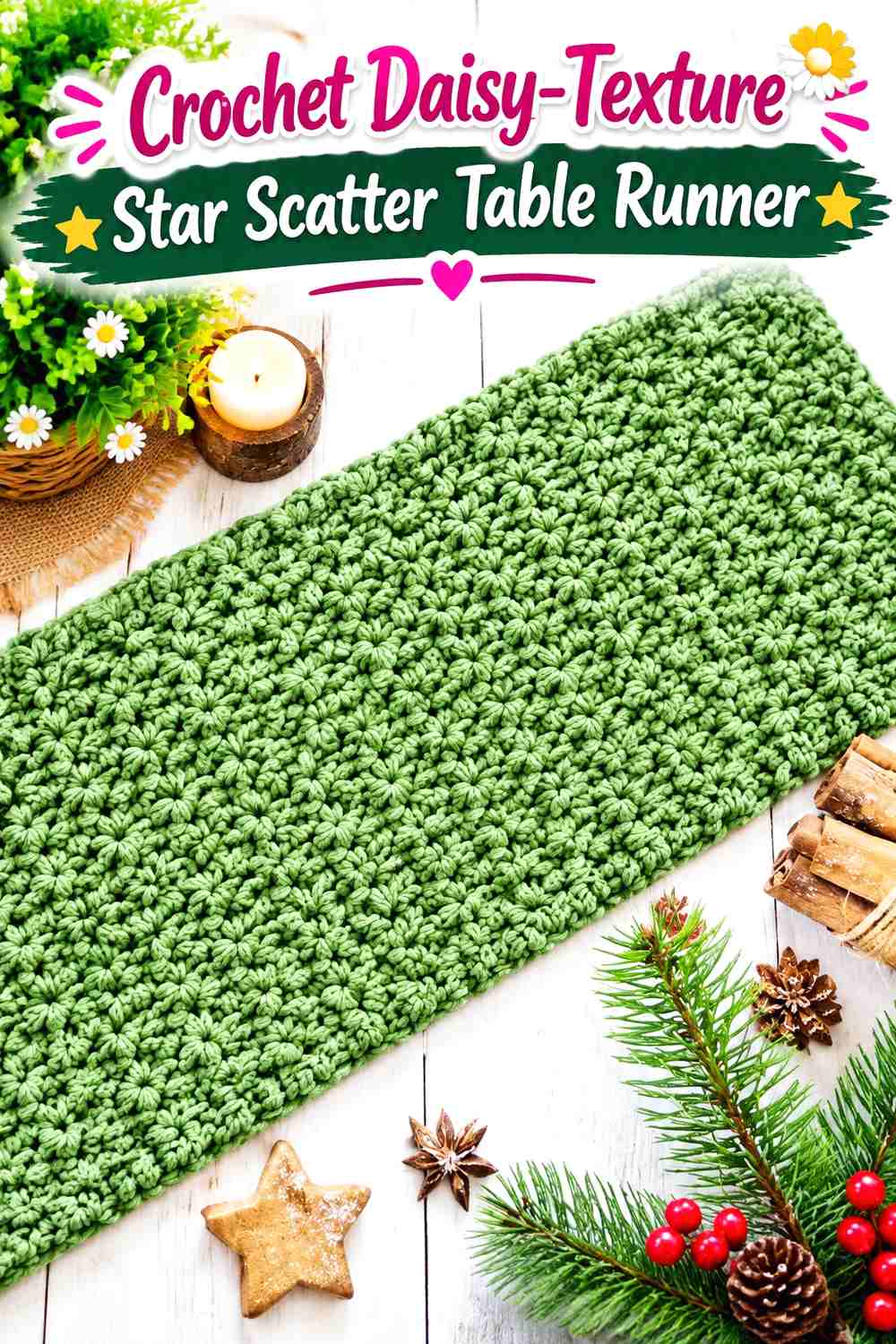
This source uses a repeated daisy-cluster texture to give a relatively narrow holiday runner substantial surface interest without relying on separate applied motifs. The pattern is presented as customizable in size.
For a star version, the texture can become the quiet background while sparse flat stars supply the celestial theme.
Do Not Hide the Texture Under Too Many Appliqués
The repeating surface is the reason this construction feels different from a plain rectangle.
Place stars selectively—perhaps only near the ends or at deliberate intervals—so the cluster texture remains visible.
A Narrow Runner Can Carry Stronger Embellishment
Because less of the table is covered, a narrow strip can tolerate richer color or sparkle without dominating every place setting.
This can work particularly well on a dark wood table where the runner has plenty of visual contrast.
Straight Edges Make Scattered Stars Look More Intentional
A random-looking star placement works better when the underlying runner is crisp and regular.
Check the width periodically during construction so the decorated result does not emphasize gradual widening or narrowing.
Creator Credit: Raji’s Craft Hobby
18. Crochet Minimal Star-Confetti Table Runner
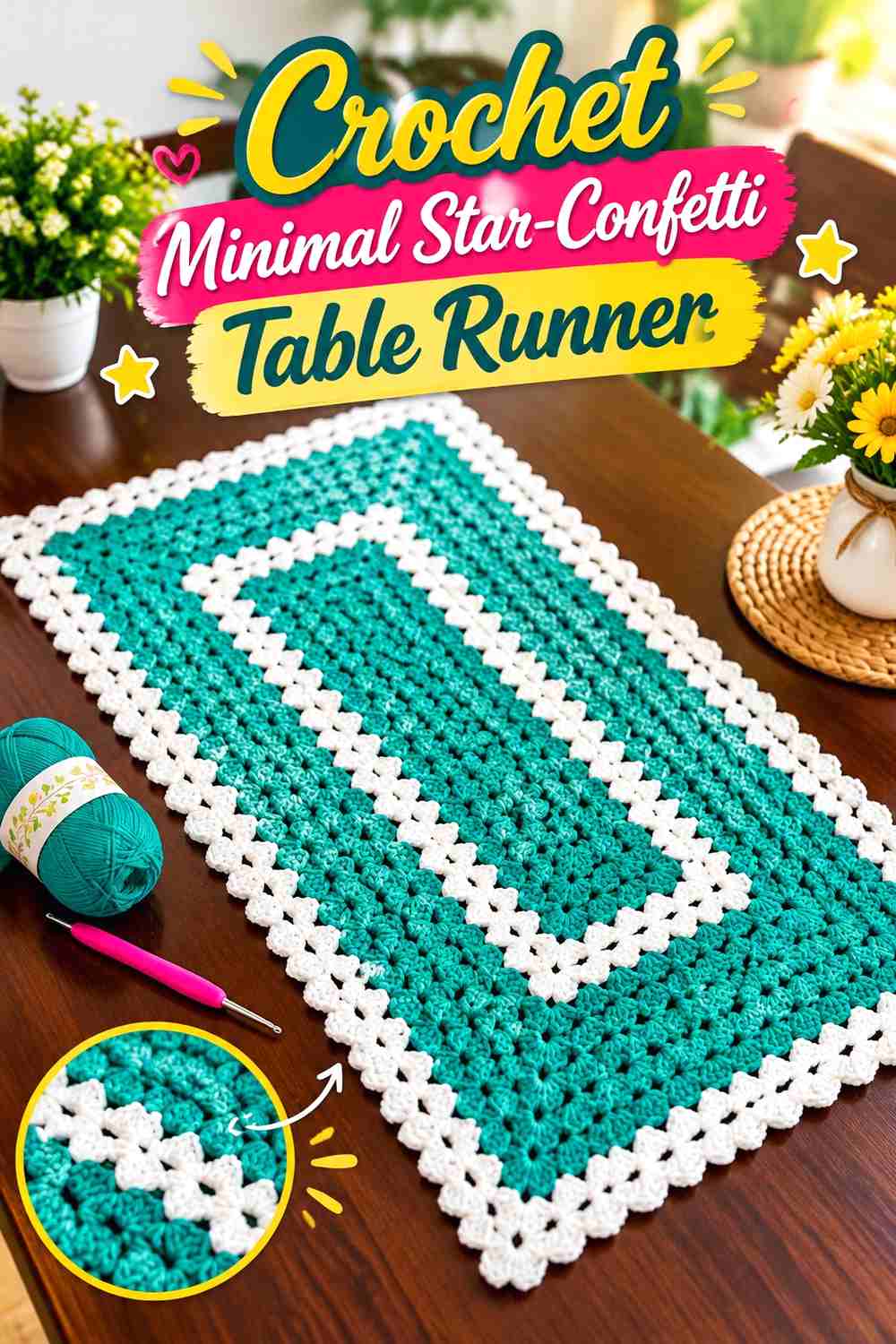
The final source uses a straightforward rectangular Christmas runner, leaving much of the decorative identity to color and styling rather than an elaborate built-in motif.
That blanker surface makes it one of the most adaptable options for a star-confetti treatment. Instead of changing the core crochet construction, place a limited number of flat stars or metallic accents where they can remain visible.
Map the Star Scatter Before Attaching Anything
Lay removable paper stars over the finished runner first.
This lets you experiment with dense clusters at the ends, a center constellation, or an asymmetrical scatter without committing to permanent placement.
Varying Star Size Creates More Movement Than Varying Every Color
A limited palette can still feel lavish when the stars change scale.
Using one metallic shade plus two or three jewel colors creates a more coherent maximalist effect than giving every star an unrelated color.
A Simple Base Is Easier to Restyle Next Holiday
If permanent embellishment is kept modest, the runner can work with different centerpieces from year to year.
The plain rectangle also simplifies folding compared with a design covered in raised flowers, beads, and projecting motifs.
Creator Credit: The Art Zone
Which Bedazzled Star Table Runner Style Fits Your Holiday Table?
For the strongest literal star effect, start with the Join-As-You-Go Jeweled Star, Mixed-Scale Constellation Star, or Filet Starlight runners. The stars are already central to the underlying construction, so you do not need many additional embellishments to make the theme clear.
The Oversized Gem-Star and Sunflower Starburst ideas work better when you want large medallions to behave almost like jewelry down the center of the table. They require more scale planning because a single star can occupy substantial space.
For a lighter motif-based table, the Snowflake-and-Star Crystal, Floral Sequin Star Garden, and Granny Patchwork Star concepts preserve plenty of visible tabletop.
Choose the Evergreen-and-Star, Bell-and-Star Lace, Ruby-Ivory-Gold, Filet Jewel-Star, or Openwork Flower-and-Star options when you want stars to support another holiday motif rather than dominate it.
The Midnight Fringe, Daisy-Texture Star Scatter, and Minimal Star-Confetti runners offer the greatest styling freedom. Their underlying construction is comparatively restrained, so the color palette and embellishment placement can provide most of the maximalist personality.
Conclusion
A maximalist crochet star runner works best when its drama has structure. Start with the silhouette: joined stars create the boldest outline, filet stars keep the table surface flatter, and rectangular runners provide a calmer base for appliqués, metallic thread, beads, or sequins.
Then decide where the shine belongs. Metallic yarn is useful when you want sparkle without additional hardware. Beads can create concentrated jewel-like centers. Sequins emphasize movement and evening light. Jewel-tone yarn can produce a bedazzled impression without adding anything raised to the fabric.
Most importantly, decorate around the way the table will actually be used. Keep stable areas available for serving pieces, protect detailed motifs from crushing, and keep crochet and embellishments safely separated from flames and hot cookware. Follow each creator’s original tutorial for the exact construction, then use star placement, color, and controlled sparkle to build the maximalist holiday version.
Frequently Asked Questions
Can I sew beads onto a crochet table runner?
You can add securely attached beads as decorative elements, but placement matters. Keep them away from sections that need to support plates, glasses, or serving dishes, and check the attachment periodically. Small detachable parts also deserve extra caution in homes with young children or pets.
Is metallic yarn easier to use than sequins for a bedazzled runner?
Metallic yarn can create shine without separately attaching many pieces, but specialty strands may feel or behave differently from the main yarn. Sequins offer stronger individual flashes of light but require secure placement. Make a sample before committing either treatment to a full runner.
How do I keep star motifs from curling at the points?
First check whether the motif is being worked according to the original tutorial and whether your tension is changing. Finishing or blocking may help a correctly constructed motif settle, depending on the fiber, but it should not be used to disguise a major stitch-count or tension problem.
Can I combine stars from one tutorial with a runner from another?
Potentially, but treat them as separate components that need compatibility testing. Compare finished dimensions, fabric thickness, attachment points, and the amount of stretch before joining or sewing the star onto the runner. Two designs using similar yarn do not automatically fit together cleanly.
Where should I place stars if serving dishes will sit on the runner?
The exposed ends and outer borders are often the most practical decorative zones. Flat motifs can work closer to the center, while raised stars, beads, flowers, and sequins are better kept away from places where heavy or unstable dishes will rest.
Can a crochet holiday runner be used under hot serving dishes or candles?
Do not assume a decorative crochet runner is heat resistant. Follow the yarn manufacturer’s guidance and use appropriate heat-rated protection for hot cookware. Keep open flames safely separated from yarn, fringe, appliqués, sequins, and other textile decorations.
How can I make a star runner maximalist without making it look cluttered?
Repeat a small number of deliberate elements. Choose one dominant metallic, two or three jewel tones, and a recurring star scale or border treatment. Concentrating embellishment in focal areas usually creates more impact than giving every stitch, point, and motif a different decoration.