Crochet door draft stoppers fit especially well with burrowcore decorating because their long, low shape can resemble logs, roots, snakes, earthworms, and small woodland animals resting along the edge of a room. Instead of treating the stopper as something to hide, a burrowcore version can become part of a winter interior filled with mushroom tones, mossy greens, bark browns, stone grays, and other earthy textures.
Function still comes first. A decorative stopper needs to sit where cold air actually enters, and its dimensions should suit the individual doorway rather than a generic measurement. Raised decorations, legs, tails, and appliqués also need to stay out of the way of the door.
The tutorials below include both true crochet draft stoppers and related long-form projects such as bolsters, snakes, cats, and body pillows. When a tutorial was designed for another purpose, treat it as a construction or styling reference rather than assuming its original dimensions will fit a door. Measure the doorway independently and use the creator’s tutorial for the original construction details.
Quick List
- Crochet Mossy Log Door Draft Stopper
- Crochet Root-Ring Burrow Draught Excluder
- Crochet Leaf-Litter Scrap Draft Blocker
- Crochet XXL Burrow Snake Draft Stopper
- Crochet Woodland Long-Cat Door Draft Stopper
- Crochet Earthen Bolster Door Draft Stopper
- Crochet Ribbed Root-Bundle Draft Stopper
- Crochet Chunky River-Stone Roll Draft Stopper
- Crochet Removable Granny-Moss Bolster Draft Stopper
- Crochet Tunisian Soil-Layer Door Draft Stopper
- Crochet Scrap-Happy Leaf-Mould Bolster Draft Stopper
- Crochet Earthworm-Style Door Draft Stopper
- Crochet Fern-Stripe Serpent Draft Stopper
- Crochet Low-Profile Garden Snake Draft Stopper
- Crochet Twisted-Root Door Draft Stopper
- Crochet Cave-Cat Guardian Draft Stopper
- Crochet Burrow-Hound Dachshund Draft Stopper
Plan the Draft Stopper Around the Door Before Adding Woodland Details
The most successful burrowcore details are added to a shape that already works for the doorway. Measure the section you want the stopper to cover and check how the door moves through that space. A very thick roll may look wonderfully plush but become inconvenient if the door has little clearance, while a short decorative animal may leave part of the drafty area exposed.
Also decide whether you want a permanently stuffed piece or a crochet cover around a separate insert. A permanently filled tube gives you more freedom to create an unusual custom length. A removable cover can make cleaning and seasonal storage simpler, provided the tutorial’s construction supports that approach.
Decorative ends do not necessarily need to count toward the functional span. A mushroom cap, animal head, curled tail, or root cluster can extend beyond the section that actually needs to block airflow.
Choose Floor-Level Texture With Cleaning in Mind
A door draft stopper lives close to dust, shoes, pet hair, and everyday floor traffic. That changes the value of texture. Ridges and dense stitches can give a project wonderful bark or root character, but very loose loops, long fringe, and delicate surface embellishments may catch debris or snag more readily.
Before substituting yarn, think about the fabric rather than color alone. A softer yarn may produce a squashier tube, while a firmer fabric may hold a clearer cylindrical or animal silhouette. If you change the yarn used by a tutorial, make a small sample first rather than assuming the new material will create the same structure.
Stuffing also affects performance. Distribute it along the entire length and check the center as well as the ends. An attractive stopper that becomes noticeably thin in the middle may not sit evenly along the threshold.
Keep Burrowcore Details Low and Purposeful
Mushrooms, leaves, ears, roots, paws, vines, and embroidered markings can establish the theme without covering every inch of the project. A long horizontal object already has strong visual presence, so a few carefully positioned details often read more clearly than many loose embellishments.
For homes with young children or pets, reconsider detachable eyes, buttons, beads, and other small parts where they could be pulled loose. Embroidered or crocheted details can offer a simpler alternative when appropriate.
Most importantly, test the finished stopper in its actual location. Make sure decorative parts are not pulled beneath the door, caught on hardware, or positioned where people are likely to step on them.
1. Crochet Mossy Log Door Draft Stopper
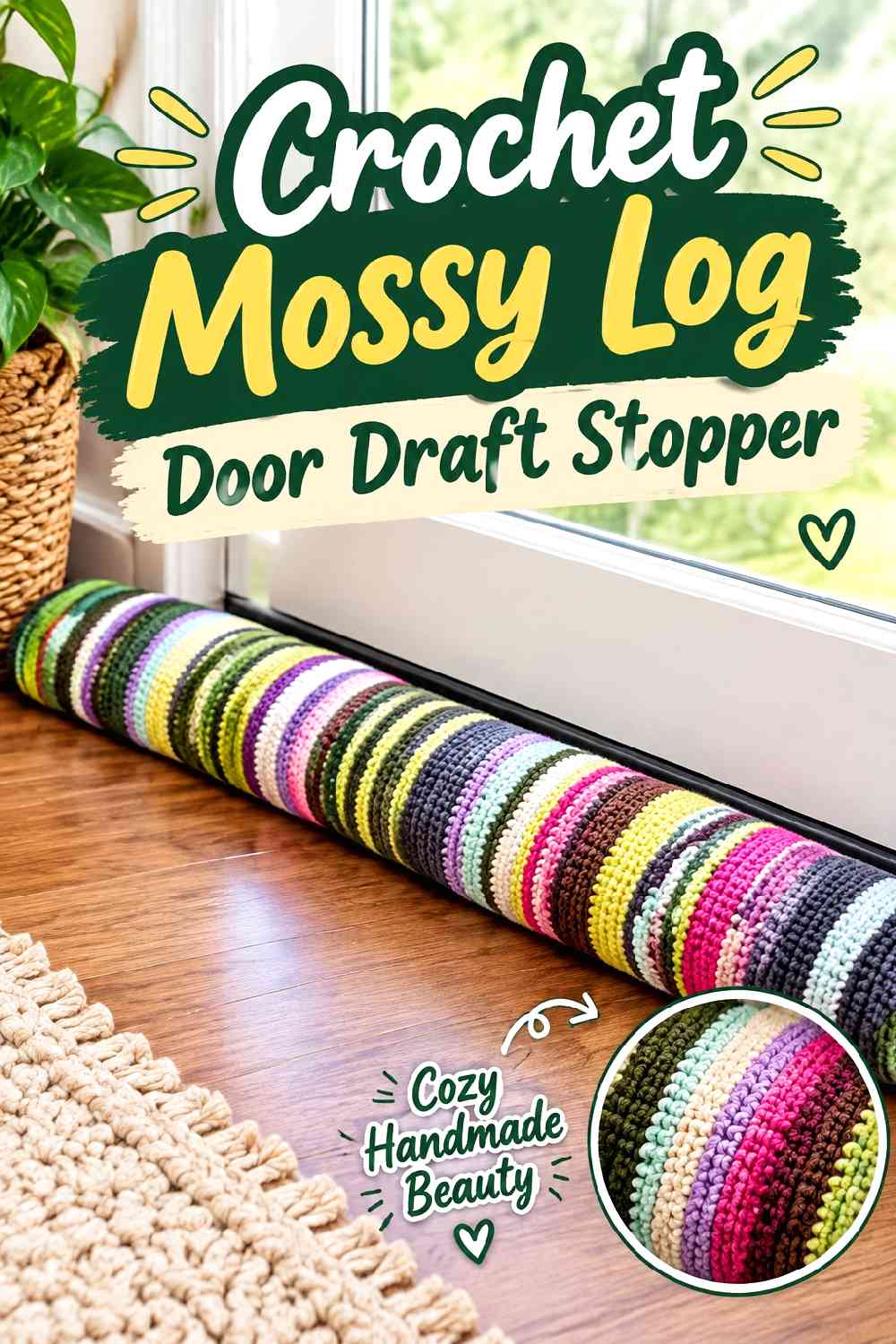
A simple cylindrical draft stopper is one of the easiest shapes to push toward a burrowcore look without changing its basic function. Lindy Loves Life demonstrates a true crochet draft-stopper project, giving this idea a direct functional starting point rather than requiring a pillow or toy to be converted.
For a mossy-log interpretation, let brown, taupe, charcoal, or muted tan establish the “wood,” then reserve moss green for restrained surface accents. The shape remains recognizably practical while the palette makes it look more like something brought in from a storybook forest floor.
Let the Log Shape Do the Functional Work
Keep the longest section relatively uninterrupted so it can rest evenly against the bottom of the door. Large dimensional decorations placed through the center could cause the stopper to sit unevenly.
If you want a knotted-log effect, concentrate the strongest visual details near the ends or use flatter surface changes through the middle.
Moss Looks Better as an Accent Than a Thick Fringe
Burrowcore does not require covering the whole piece in fuzzy green detail. Small irregular areas of green, subtle embroidery, or changes in crochet texture can suggest moss while keeping the floor-facing surface manageable.
Before adding anything dimensional, place the plain stopper at the door and identify which side will face the room.
Creator Credit: Lindy Loves Life
2. Crochet Root-Ring Burrow Draught Excluder
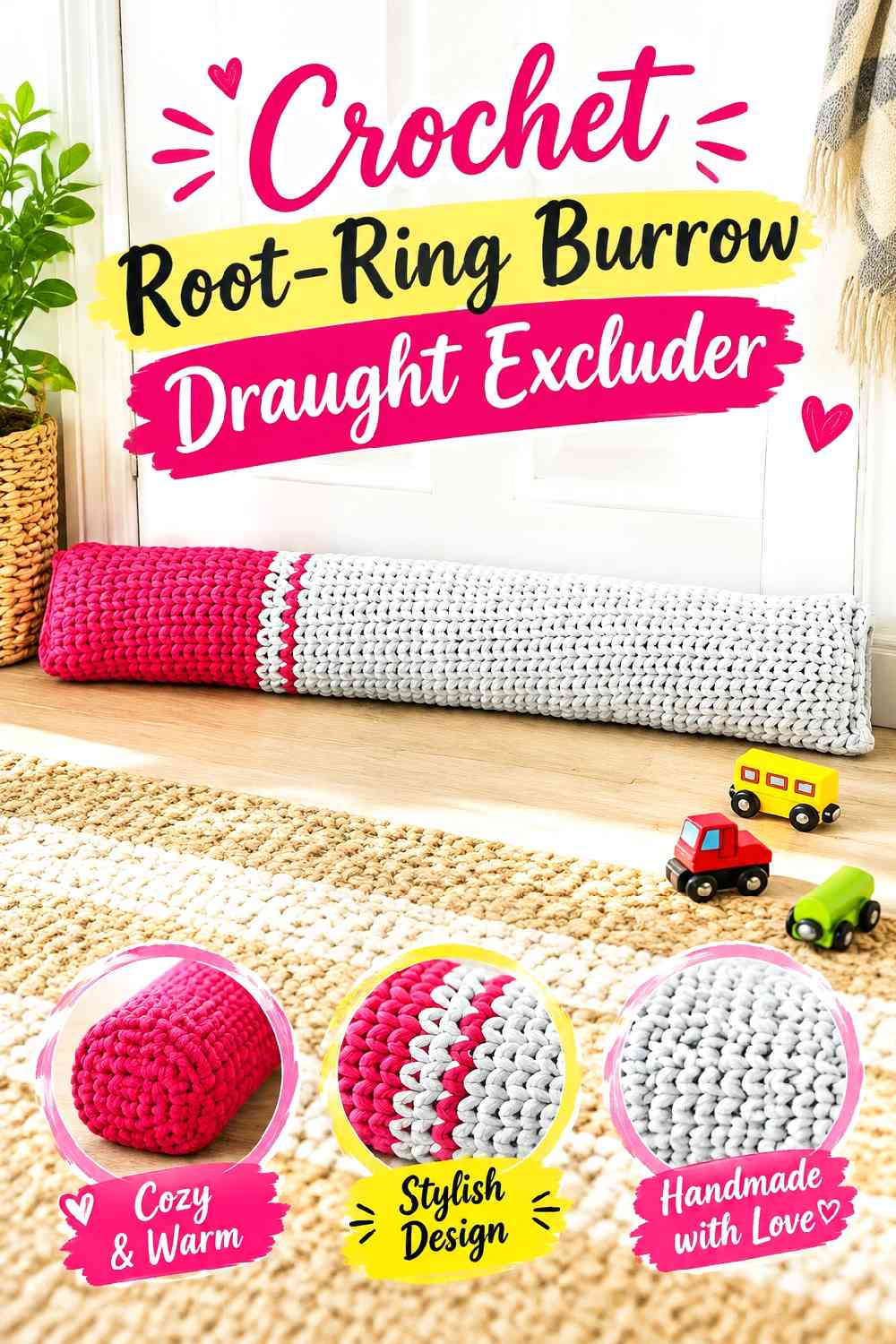
Annaboo’s House demonstrates a true crochet draught excluder that can be adjusted for the intended doorway, making it useful for a more substantial root-like interpretation.
Instead of treating the cylinder as a polished decorative pillow, lean into the heavier visual character of underground roots. Deep brown can form the main body, with occasional lighter rings suggesting cut wood, exposed roots, or layers of soil.
Broad Rings Suit a Long Crochet Shape
A draft excluder is viewed horizontally and from a distance, so very narrow repeated color changes can become visually busy. A few wider bands create stronger “growth ring” or root-joint divisions.
Lay the project where it will eventually be used before deciding where the most contrasting bands should fall. Door frames and nearby furniture can obscure end sections.
Check the Functional Length Before Enlarging the Ends
Thicker rounded ends can strengthen the root appearance, but they should not compensate for a center section that is too short.
Measure the actual draft area first and treat ornamental end shaping as additional visual length rather than automatically including it in the section that needs to cover the doorway.
Creator Credit: Annaboo’s House
3. Crochet Leaf-Litter Scrap Draft Blocker
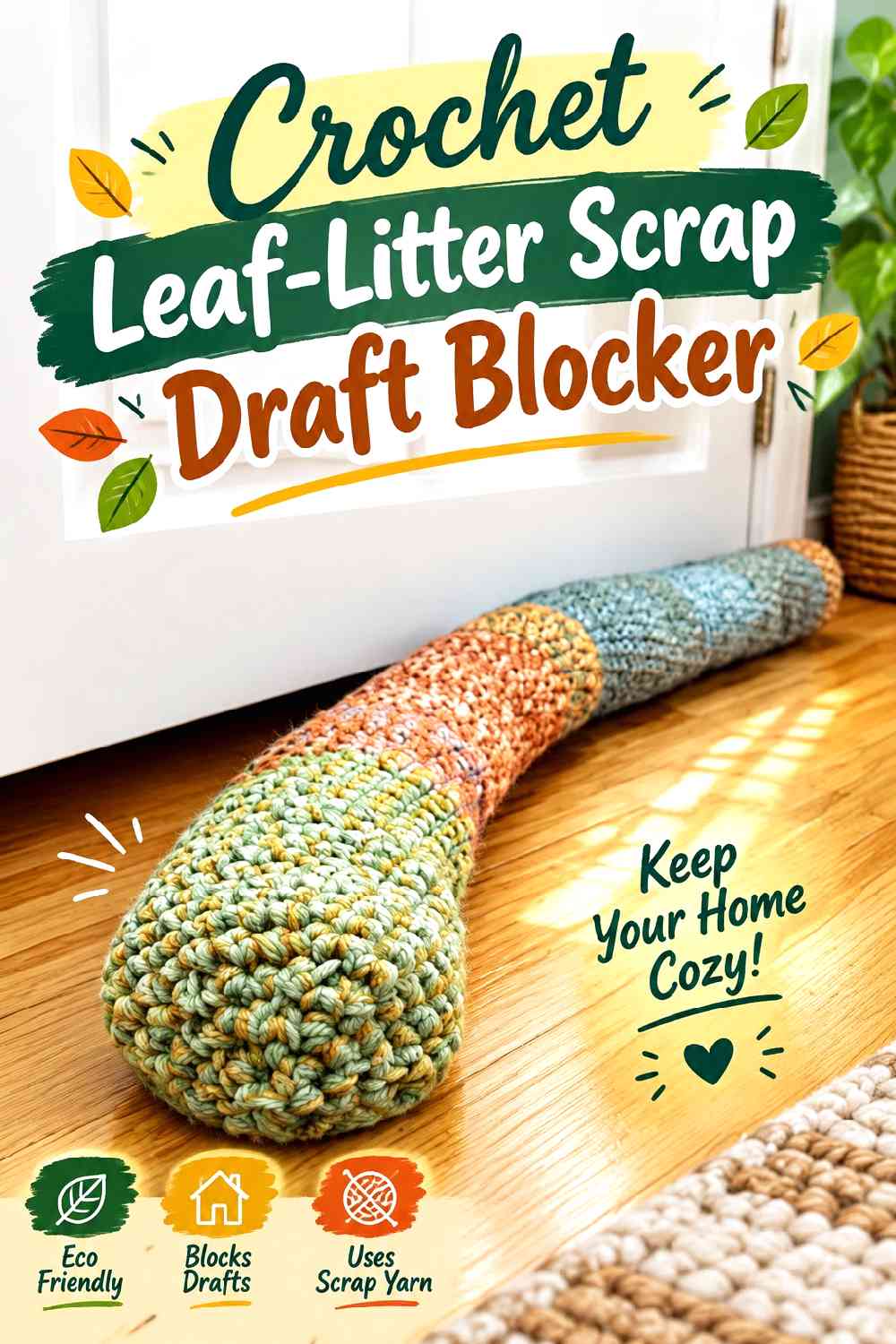
The Crochet Crowd’s draft-blocker project is especially useful for a burrowcore home because the underlying idea already welcomes mixed yarn and practical floor-level use.
A scrap-based version can resemble layers of fallen leaves and forest soil without relying on perfectly coordinated skeins. Think rust, dry-leaf gold, brown, muted olive, gray, and occasional cream rather than a conventional rainbow.
Give Random Scraps One Repeating Anchor
Scrap yarn looks more intentional when at least one element repeats. That might be the same brown returning between sections or a recurring neutral that visually connects otherwise unrelated remnants.
This also makes it easier to add new leftover yarn without turning the entire stopper into a sequence of competing colors.
Compare the Fabrics Before Mixing Very Different Leftovers
Two yarns labeled with a similar weight can still behave differently in stretch, loft, and surface texture.
If one section becomes noticeably softer or narrower than another, the finished blocker can look uneven once stuffed. Test questionable combinations before committing them to a large section of the tube.
Creator Credit: The Crochet Crowd
4. Crochet XXL Burrow Snake Draft Stopper
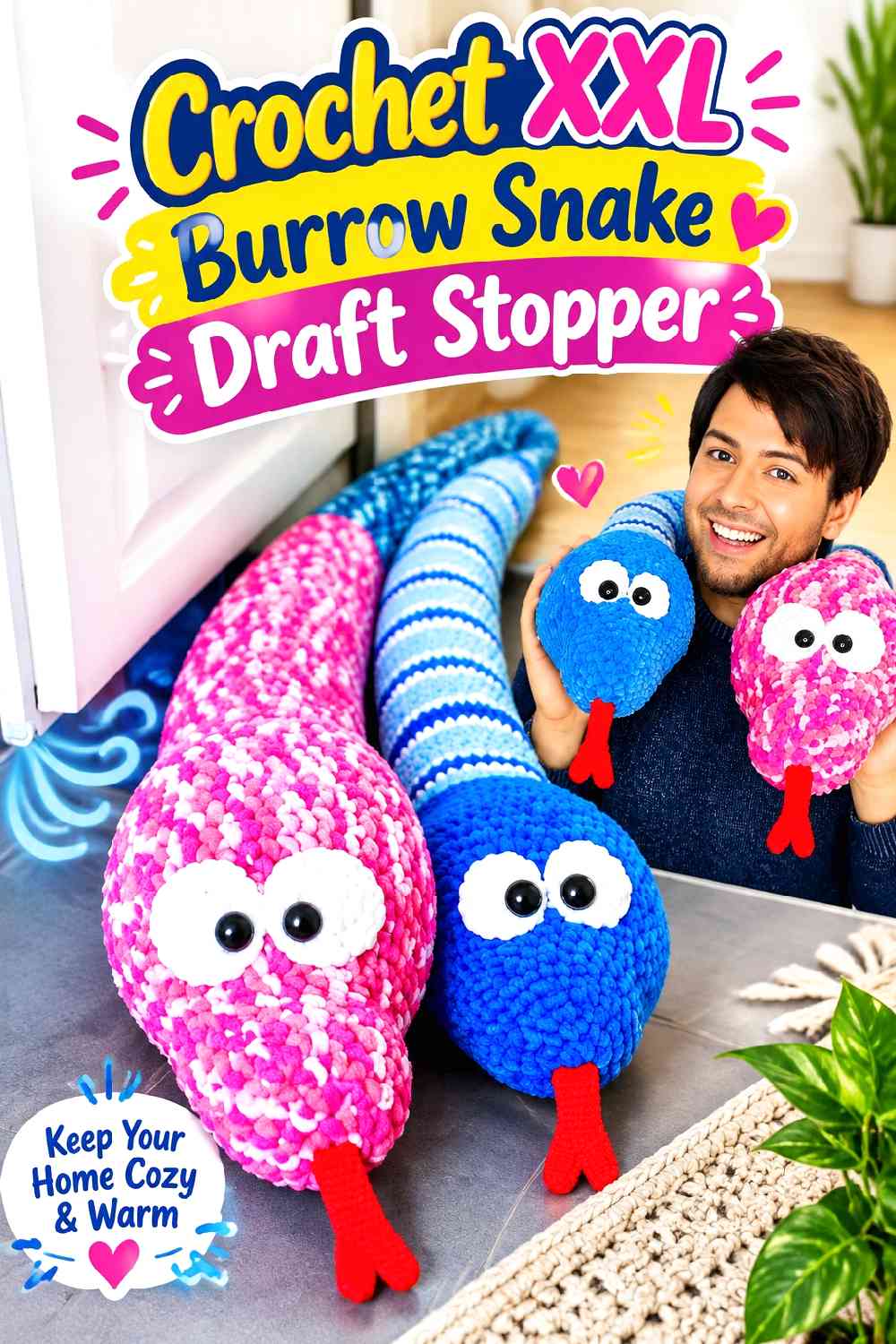
Küma Tutorials provides an especially close match for this theme: an oversized crochet snake presented specifically as a draught snake as well as a cushion or plush project.
That makes it a natural choice when you want the stopper to look intentionally creature-like rather than disguising a plain cylinder. Earthy browns, lichen greens, mushroom beige, and charcoal can shift the result from playful reptile toward an imaginary resident of a cozy underground den.
Keep Most of the Body Straight Along the Door
A snake naturally invites curves, but the section responsible for blocking a draft works differently when it is pressed into several deep bends.
Let the head or tail create the strongest curve while keeping the main body positioned along the threshold. You can still create an organic silhouette without sacrificing most of the useful span.
Let the Head Mark One End of the Composition
A defined head gives the viewer an obvious starting point and means the rest of the body does not need constant decoration.
For a quieter burrowcore result, concentrate facial character near one end and keep the long center relatively restrained.
Creator Credit: Küma Tutorials
5. Crochet Woodland Long-Cat Door Draft Stopper
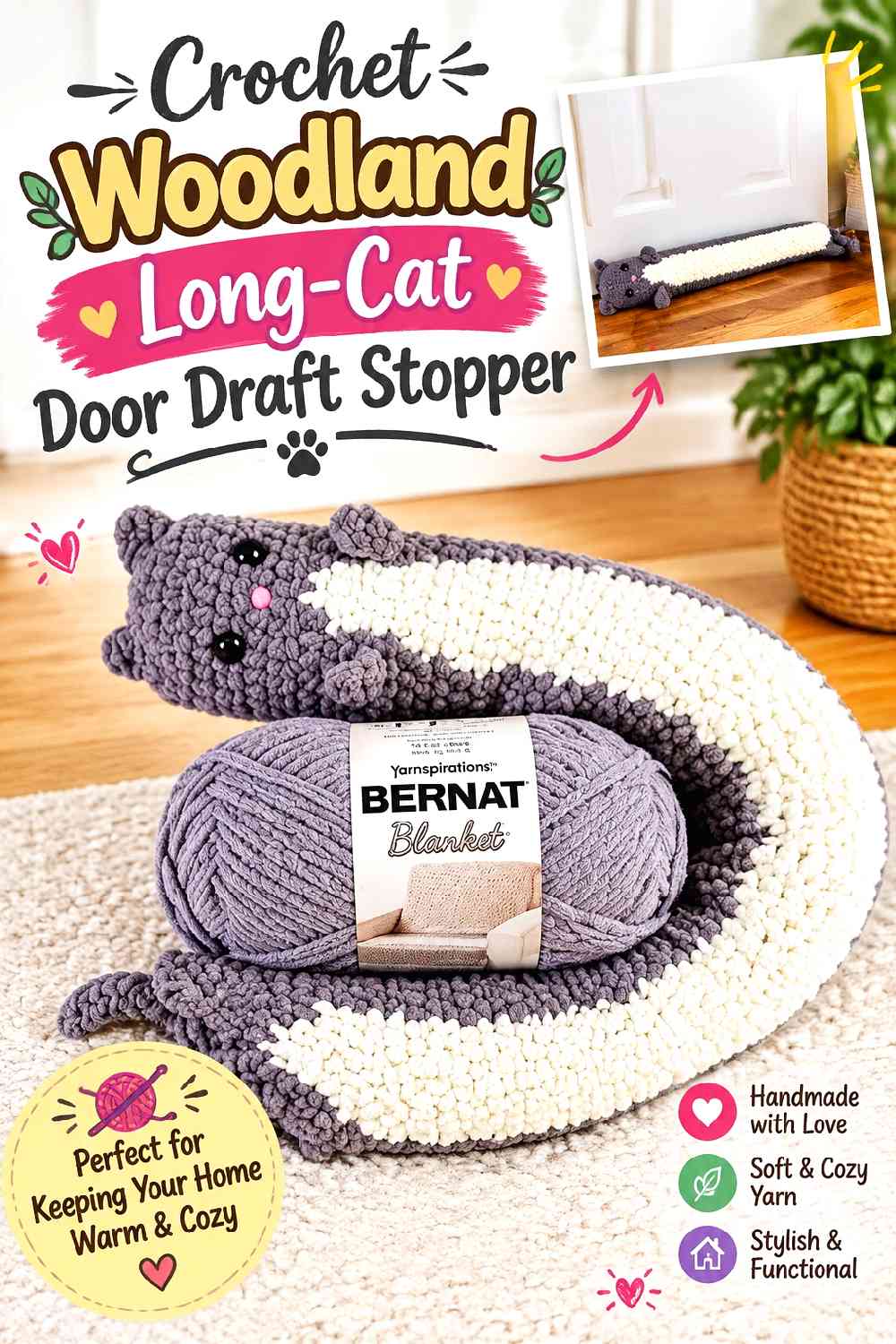
Moogly’s long-cat project is designed specifically as a crochet cover for a door draft stopper, so it solves a different problem from a permanently stuffed animal. The underlying insert can be removed from the crochet exterior.
For a burrowcore version, imagine a sleepy woodland cat stretched across the doorway in brown tabby, smoky gray, mossy charcoal, or cream-and-bark markings.
A Removable Cover Changes the Care Strategy
If the doorway receives regular foot traffic, a removable exterior can be appealing because the insert and decorative crochet layer do not have to be treated as one permanent object.
Follow the creator’s closure and construction method rather than adding an improvised opening after the piece is completed.
Keep Paws and Tail From Competing With the Door Swing
The animal details are what make this design distinctive, but their position matters more at floor level than it would on a sofa plush.
Check which direction the door travels and arrange the finished stopper so protruding details remain on the room-facing side instead of repeatedly passing beneath the door.
Creator Credit: Moogly
6. Crochet Earthen Bolster Door Draft Stopper
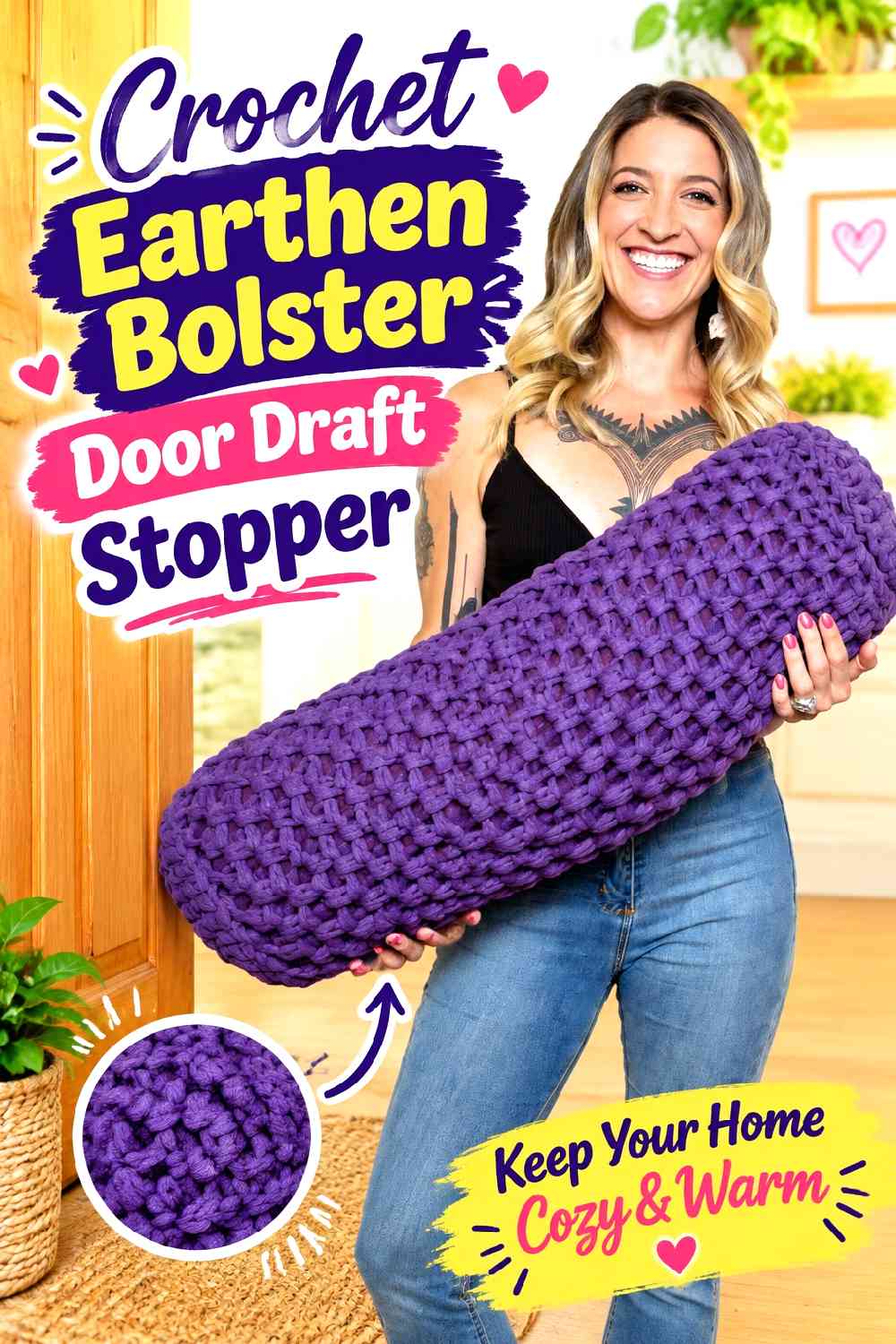
Anne Galante – Escola de Artes Manuais demonstrates a cylindrical crochet bolster intended as a yoga support cushion rather than a door draft stopper. Its long rounded construction nevertheless offers a useful reference for a substantial, log-like burrowcore adaptation.
This direction suits a home where you want the stopper to look more like a carefully made furnishing than a novelty animal. Clay brown, stone, mushroom, peat, or dark moss can reinforce that quieter approach.
A Bolster Diameter Can Become Too Large for a Doorway
A support cushion can be much deeper than a draft stopper needs to be. Before adapting the concept, check the clearance around your door rather than copying the cushion proportions automatically.
The goal is a long form that sits comfortably at floor level, not necessarily a full-size yoga support.
Use the Ends as the Main Decorative Feature
Circular bolster ends offer a natural place for faux wood rings, small embroidered leaves, or a subtle spiral that suggests a cut branch.
Keeping those details on the end faces allows the central body to remain relatively smooth where it contacts the floor and doorway.
Creator Credit: Anne Galante – Escola de Artes Manuais
7. Crochet Ribbed Root-Bundle Draft Stopper
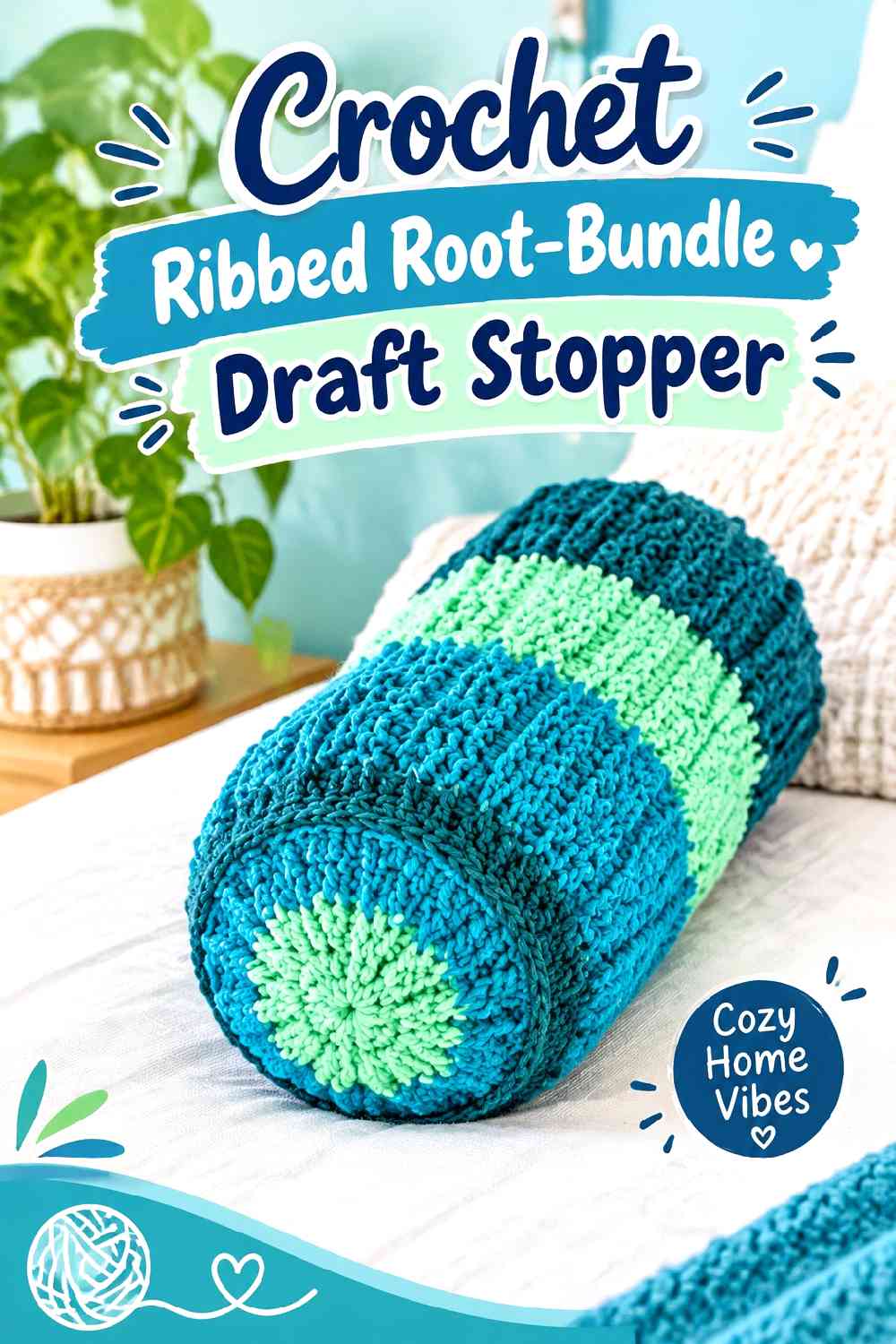
Ninja Bunny Crochet’s cylindrical neck-pillow design uses pronounced post-stitch texture, giving this adaptation a noticeably different surface from a smooth stuffed tube.
Those raised lines can be reimagined as bundled roots or ridged tree bark. A single earthy shade is enough because the shadows formed by the texture provide visual variation without additional colorwork.
Raised Ridges Can Replace Complicated Color Changes
When the crochet fabric already has strong relief, adding many stripes or appliqués may make the stopper look unnecessarily busy.
Try thinking of texture as the main burrowcore element. Bark brown, stone gray, or dark olive lets the raised structure remain easy to see.
Decide Which Side Will Receive the Most Floor Contact
Deep relief can collect more dust than a flat surface. Once the cylinder is finished, choose its display orientation deliberately rather than rotating it at random.
If you adapt the pillow to a longer doorway size, confirm how the textured repeat behaves before enlarging the piece.
Creator Credit: Ninja Bunny Crochet
8. Crochet Chunky River-Stone Roll Draft Stopper
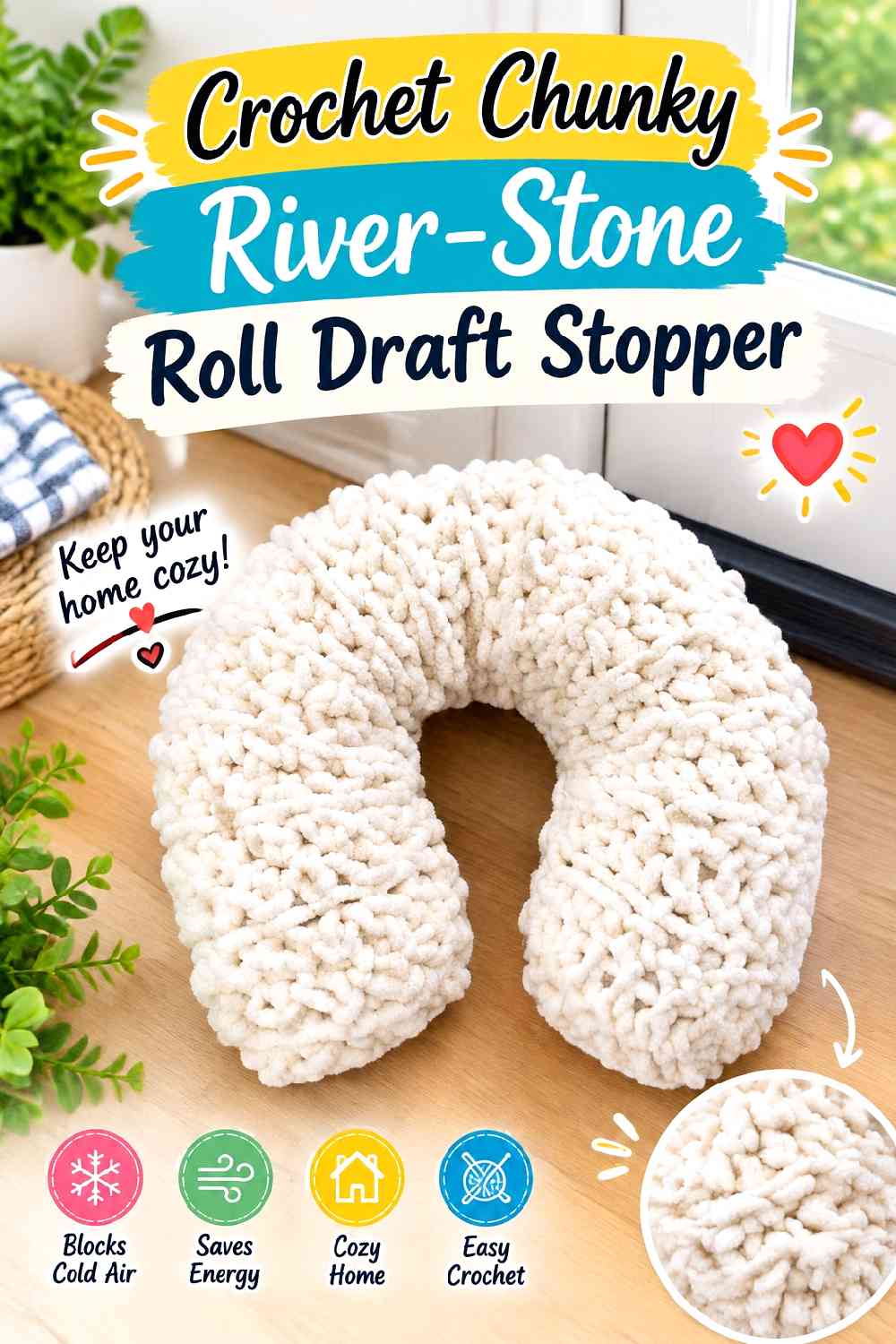
Hectanooga1’s neck-roll pillow provides a chunky elongated form that can be adjusted in size, making it useful for a soft stone- or cave-inspired stopper rather than a narrow snake.
Instead of a literal log, imagine a long roll made from overlapping river-stone colors: granite gray, mushroom, brown, cream, and muted green. The rounded profile gives the doorway a softer visual edge.
Length and Diameter Need Separate Decisions
Making a cylinder longer does not automatically mean it should also become thicker.
Measure the door width for length, then judge diameter according to the gap, floor clearance, and how prominent you want the finished object to appear. Treat those as two independent choices.
Soft Stone Colors Can Carry the Theme Without Appliqués
This design can stay completely abstract. Alternating closely related neutrals creates a natural-material feeling without adding mushrooms, leaves, or animal parts.
That makes it useful for a burrowcore room that already contains several stronger woodland motifs.
Creator Credit: Hectanooga1
9. Crochet Removable Granny-Moss Bolster Draft Stopper
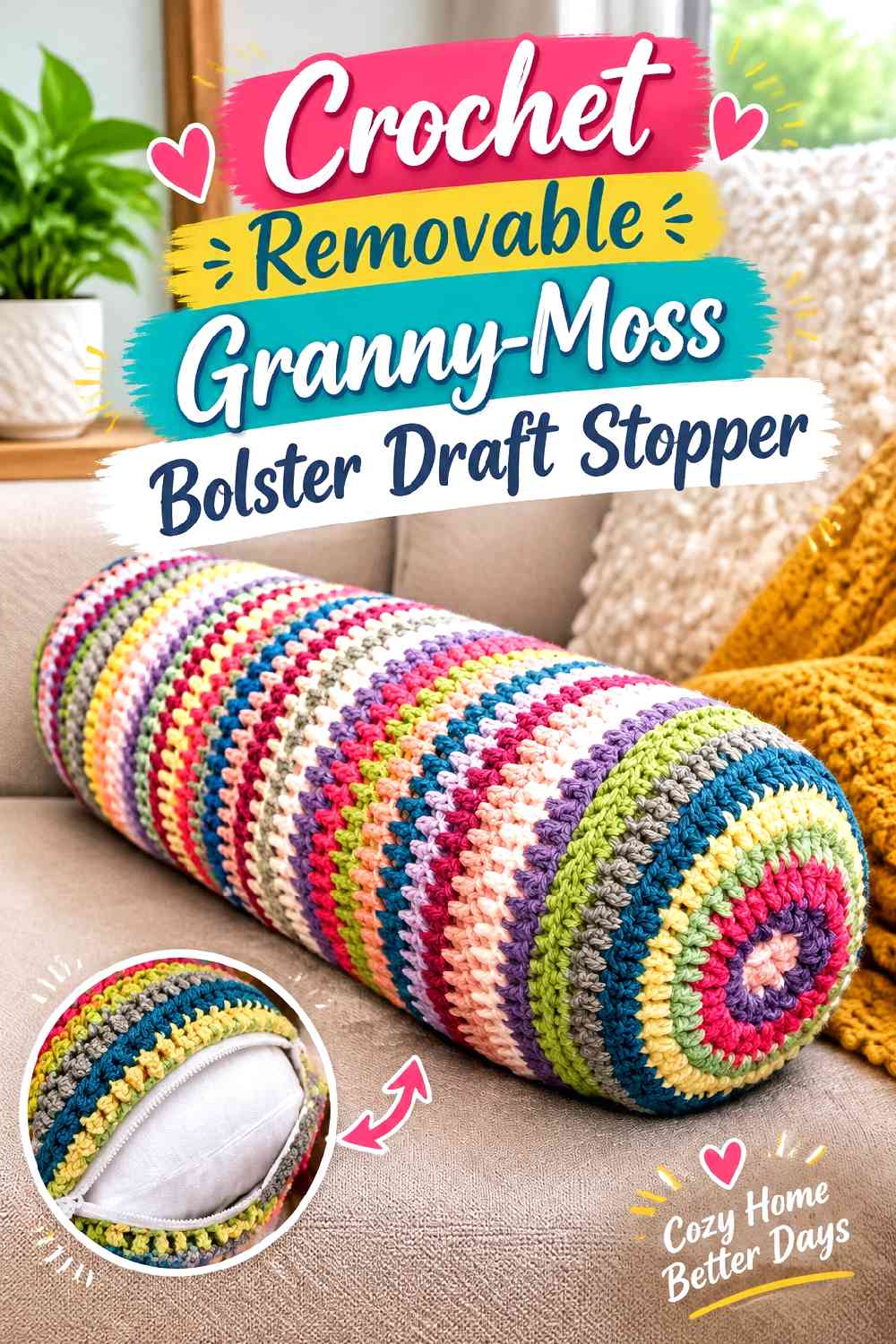
Ophelia Talks Crochet demonstrates a crochet cover made around an existing bolster cushion rather than a permanently stuffed crochet tube.
That makes this one worth considering when you already have a suitable long insert or want a decorative layer that can be changed independently. A restrained granny-inspired surface in moss, bark, cream, and lichen tones can bring handmade pattern to an otherwise simple doorway.
Start With the Insert Instead of Guessing the Cover Size
When the inner form already exists, it becomes the sizing reference.
Measure the actual insert rather than relying entirely on its original label, especially if it has been used and compressed. A cover that is too loose can sag, while one that is too small may distort the intended pattern.
Open Crochet Needs More Thought at a Drafty Door
A decorative bolster cover is not automatically equivalent to a dense draft blocker.
If the crochet surface contains noticeable openings, remember that the insert beneath it is doing the practical work. Choose the inner form for the doorway first and treat the crochet exterior as the decorative layer.
Creator Credit: Ophelia Talks Crochet
10. Crochet Tunisian Soil-Layer Door Draft Stopper
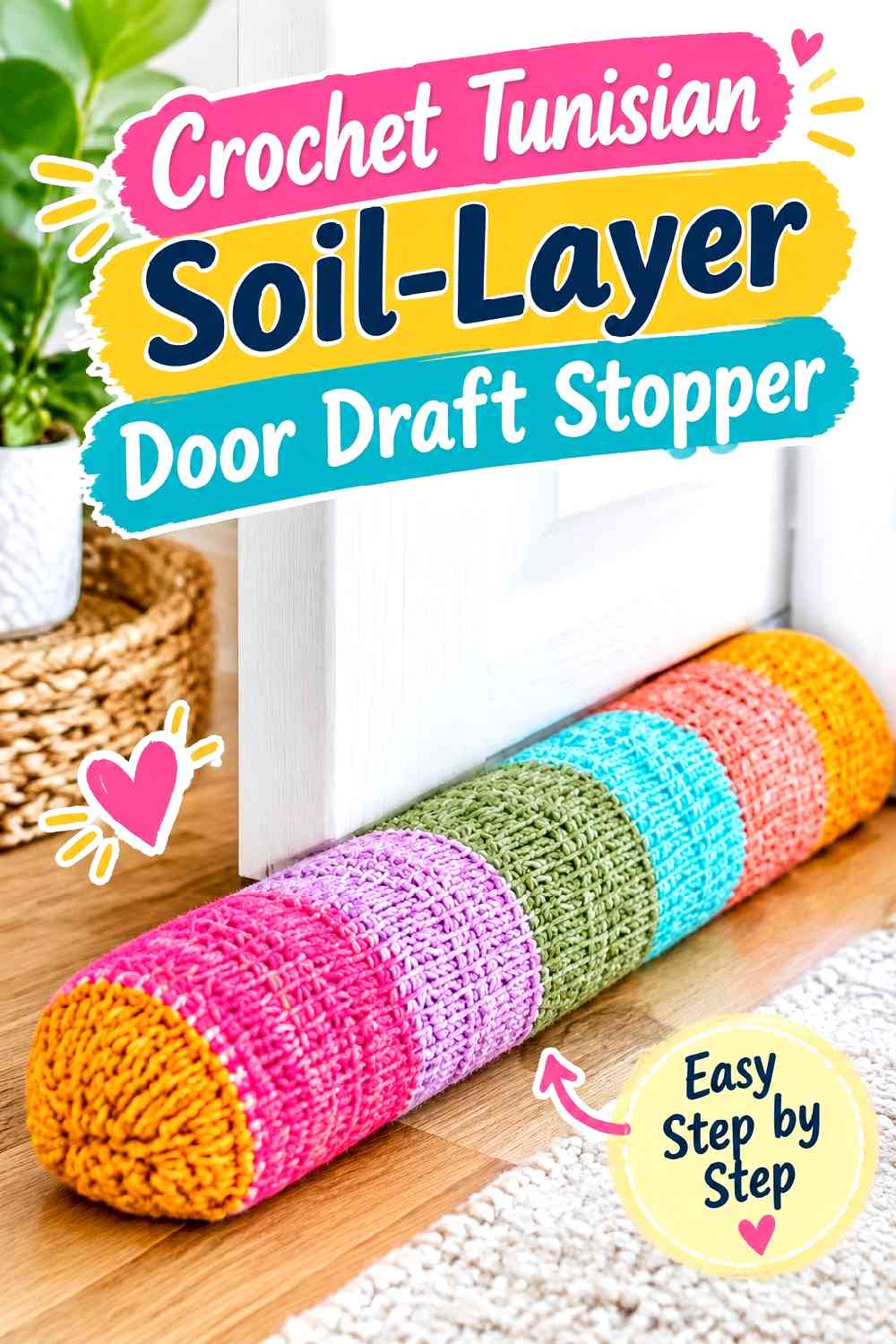
Easy Crochet demonstrates a long Tunisian crochet body pillow and notes that the form can also function as a bolster. That long, seamed construction offers a very different adaptation route from a tube worked continuously in the round.
For burrowcore styling, alternating Tunisian textures or earthy sections can suggest compacted layers of soil and rock running beneath a woodland floor.
Flat Construction Makes the Long Surface Easy to Plan Visually
When a long fabric panel is visible before final assembly, you can judge how the color or texture arrangement will read across the entire span.
That is particularly useful for intentional soil-layer effects where one broad section should transition into another rather than producing many small stripes.
Do Not Copy Body-Pillow Dimensions for a Door
The supporting project was designed as a body pillow, not as a threshold accessory.
Measure the intended doorway and decide how much depth is appropriate before adapting the form. Use the original tutorial for its Tunisian techniques and construction rather than treating its finished measurements as a draft-stopper standard.
Creator Credit: Easy Crochet
11. Crochet Scrap-Happy Leaf-Mould Bolster Draft Stopper
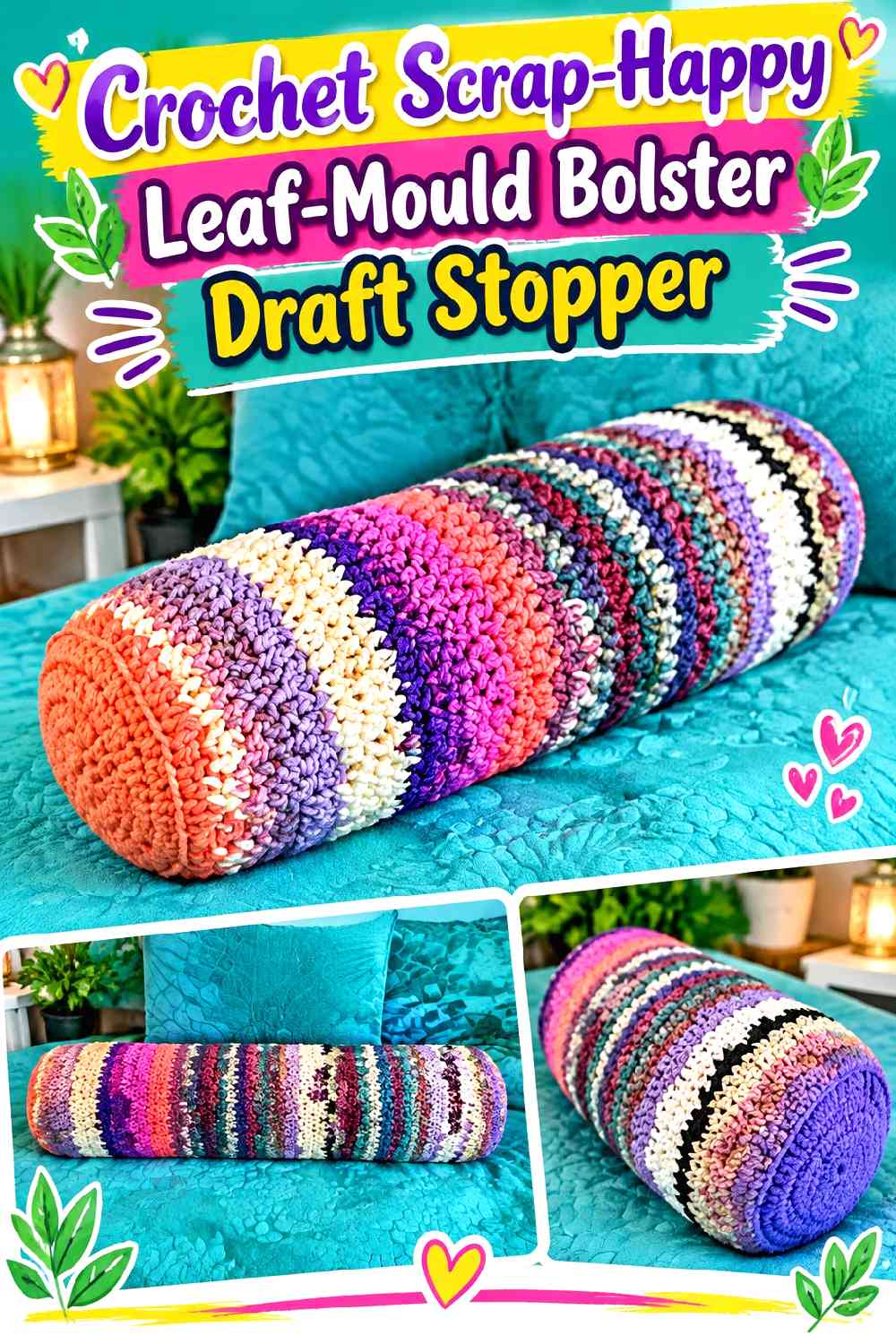
Sara Sach Crochet Designs demonstrates a long scrap-yarn bolster, making this an appealing route for a burrowcore stopper that looks intentionally pieced together from woodland remnants.
Instead of arranging scraps randomly, use them to mimic decomposing leaves and forest-floor color: brown, olive, rust, dull gold, gray, and small touches of cream.
Arrange Scraps by Mood Instead of Exact Matching
A burrowcore palette does not require identical yarns. It benefits from slight variation, provided the overall grouping still feels earthy.
Separate very bright leftovers for another project and place the chosen colors beside one another before crocheting. The relationship between colors matters more than whether every skein came from the same collection.
Watch for Changes in Firmness Between Yarn Sections
Scrap yarn can introduce shifts in thickness and elasticity.
If one yarn produces much looser fabric than the others, reserve it for a small accent or reconsider the combination. A long stuffed object shows uneven density more readily than a small motif.
Creator Credit: Sara Sach Crochet Designs
12. Crochet Earthworm-Style Door Draft Stopper
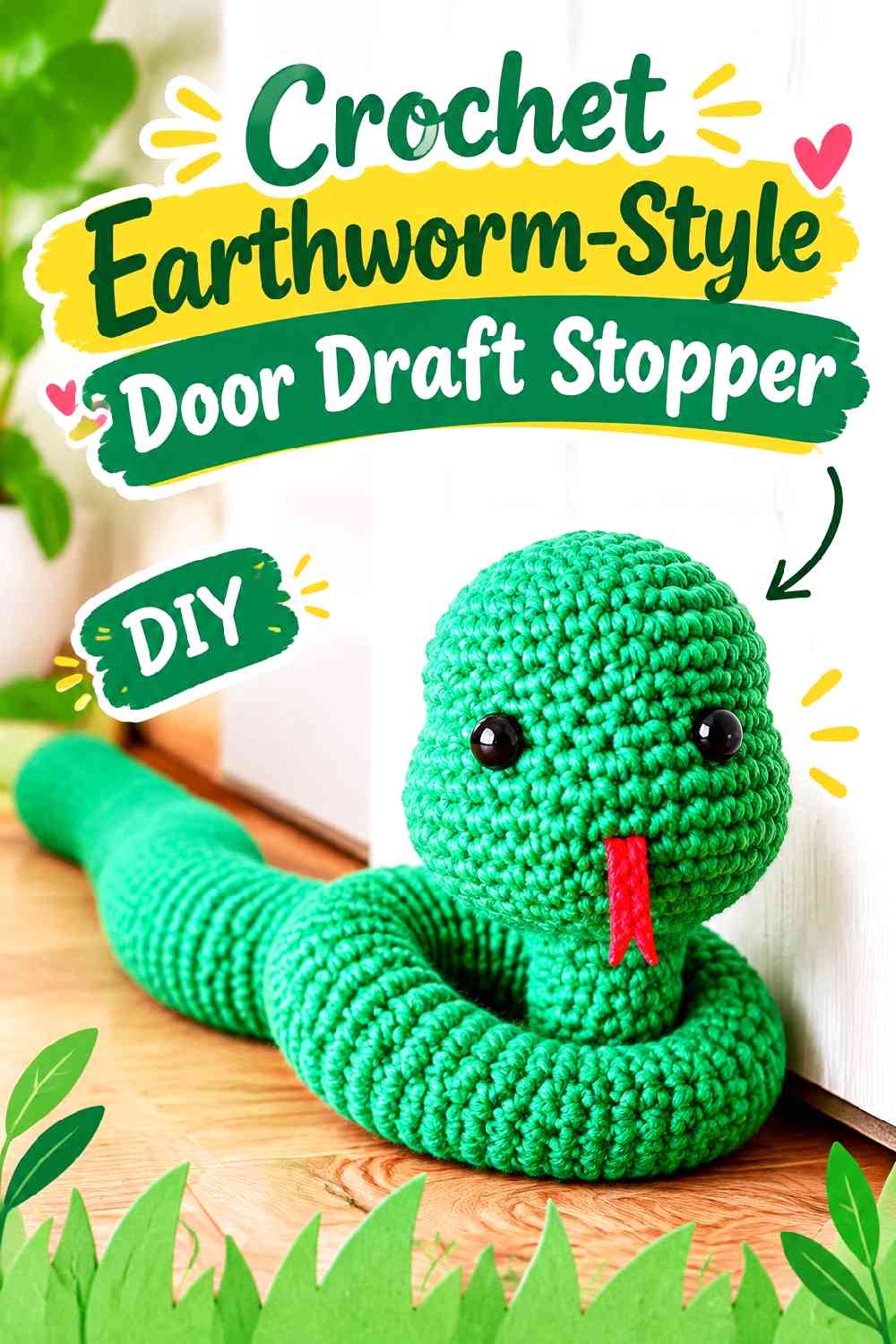
Yarn Society’s snake tutorial creates a slim stuffed animal rather than a door-sized draft stopper, so this idea requires deliberate enlargement or extension rather than direct copying.
The advantage is aesthetic: simplify the reptile styling and the same long form can become an oversized earthworm, a fitting resident for a burrowcore room. Muted rose-brown, clay, tan, or dusty mauve can make it feel earthy without becoming cartoonish.
Scale Is the Main Adaptation Challenge
A toy-sized animal and a functional doorway blocker have different requirements.
Measure the doorway first and determine whether the source construction can reasonably be adapted. Do not assume that simply using thicker yarn will produce the correct length, diameter, or firmness.
Minimal Facial Detail Keeps the Earthworm Idea Subtle
A small embroidered face or no face at all can move the finished piece away from conventional amigurumi and toward organic home decor.
If detachable eyes or other small components are inappropriate for the household, choose a different facial treatment rather than treating the tutorial’s original embellishments as mandatory.
Creator Credit: Yarn Society
13. Crochet Fern-Stripe Serpent Draft Stopper
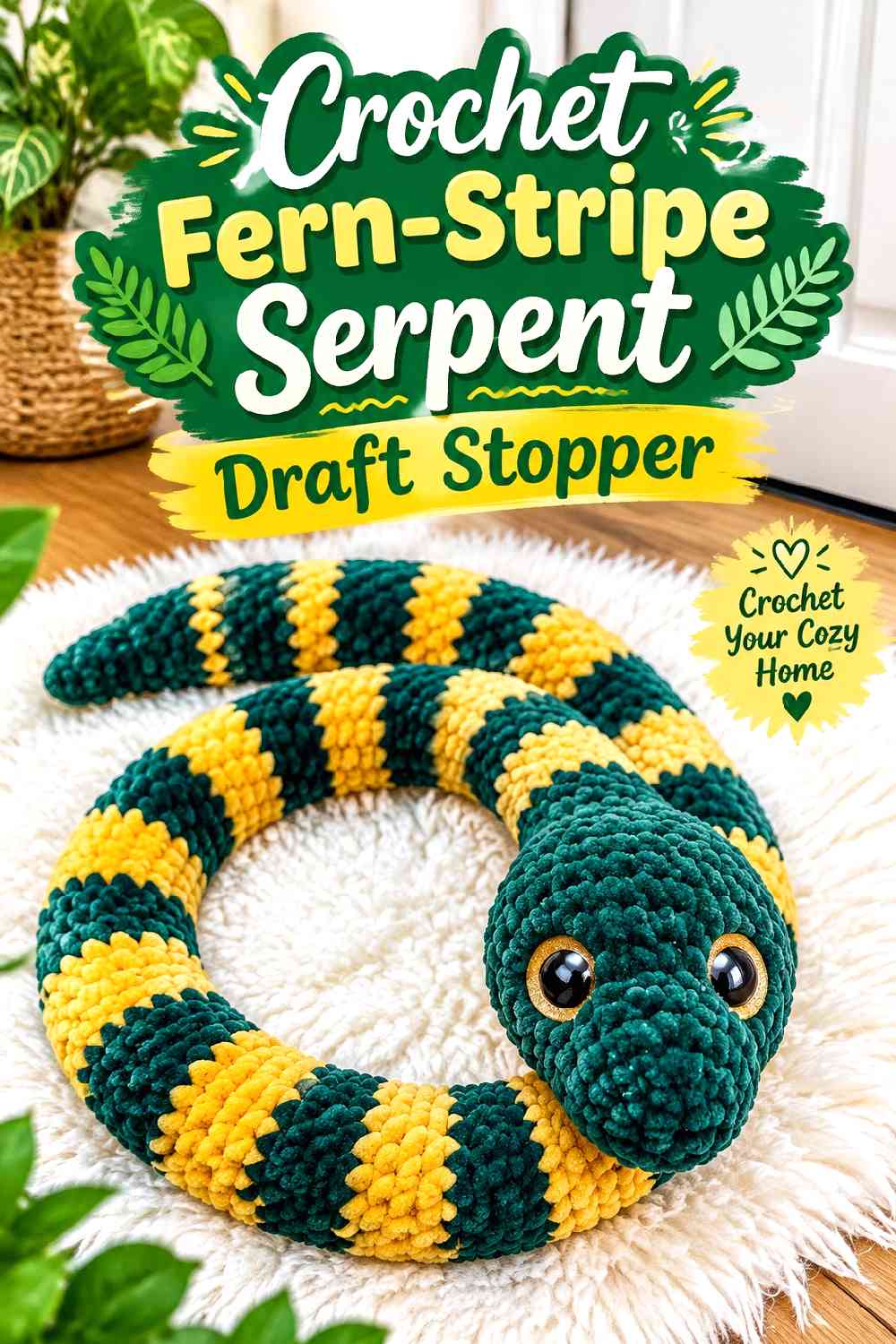
Twin Peak Knits demonstrates a striped crochet snake with a visibly plush, substantial body. The original project is a snake rather than a draft stopper, so doorway sizing still needs to be planned separately.
For burrowcore styling, replace high-contrast fantasy colors with fern green, black-brown, mushroom, and muted cream. The stripe rhythm can resemble bands of damp earth, roots, and foliage.
Use Fewer, Wider Stripes for a Calmer Doorway Piece
A long object can accommodate many stripes, but that does not mean it needs them.
Broad bands allow each earthy color to read clearly from across the room and keep the serpent from competing with patterned rugs or blankets nearby.
Plush Fabric Creates More Visual Mass
A thicker snake can read almost like a low floor cushion rather than a narrow draft cord.
Check whether that scale works with the door clearance and surrounding furniture before making major substitutions. A dramatic chunky form is useful only when it still fits the space.
Creator Credit: Twin Peak Knits
14. Crochet Low-Profile Garden Snake Draft Stopper
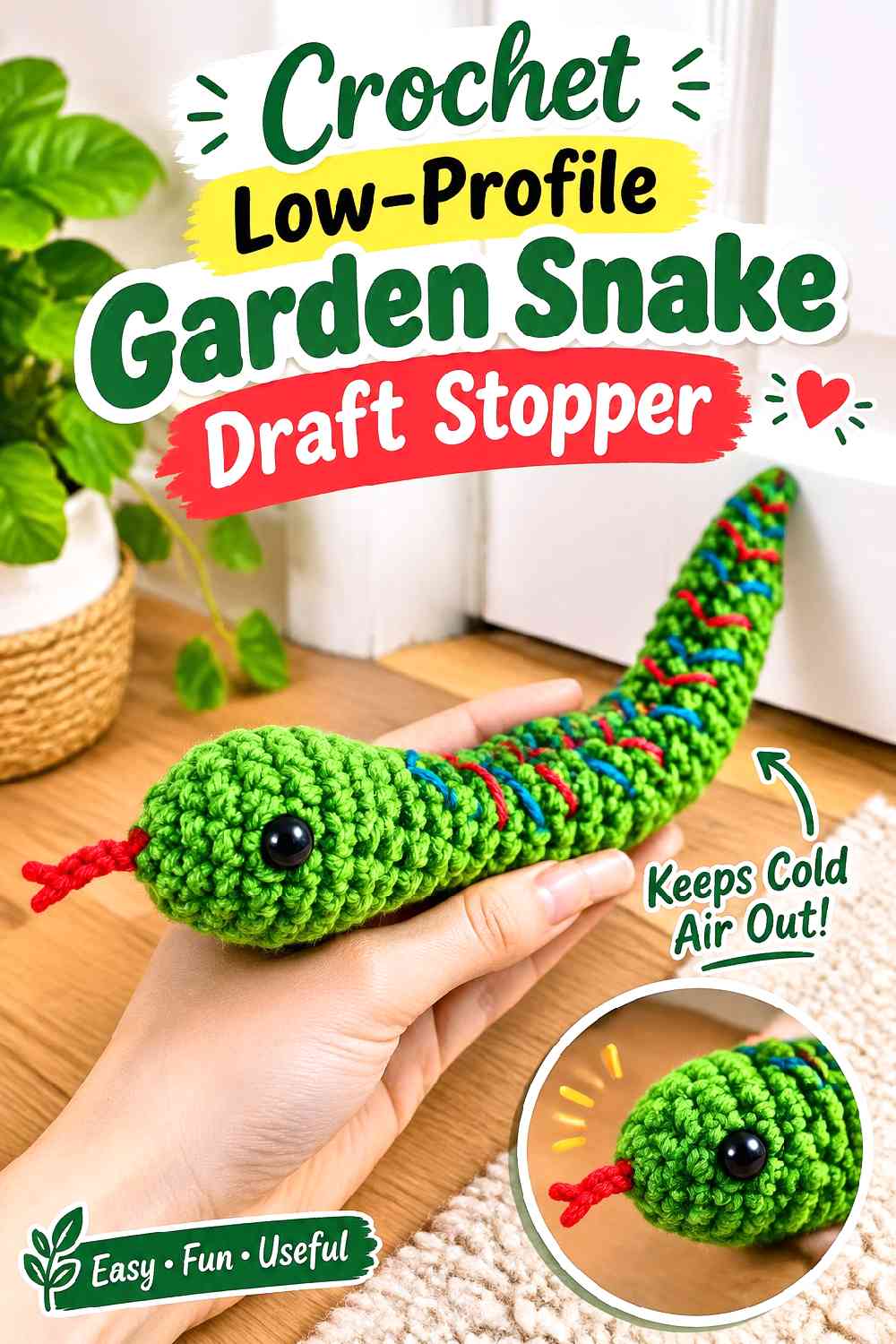
Kendall – Lousy Llama Creations demonstrates another crochet snake, but this route works better for a quieter, less decorative garden-snake interpretation.
Use a mostly solid body and reserve the strongest contrast for the head or a few widely spaced markings. The result can blend into a natural-toned room more easily than a heavily striped serpent.
A Narrower Silhouette Suits Tight Visual Spaces
Some entryways already contain shoe storage, baskets, rugs, and furniture near the door.
A visually restrained snake-style stopper can add the burrowcore theme without making that floor area feel crowded. Compare the planned thickness with the available clearance before adapting the tutorial.
Keep the Functional Section Free of Large Attachments
If you add leaves, mushrooms, or other forest embellishments, keep them near the ends rather than throughout the section that needs to rest against the threshold.
Flat embroidery can create markings through the center without substantially changing the profile.
Creator Credit: Kendall – Lousy Llama Creations
15. Crochet Twisted-Root Door Draft Stopper
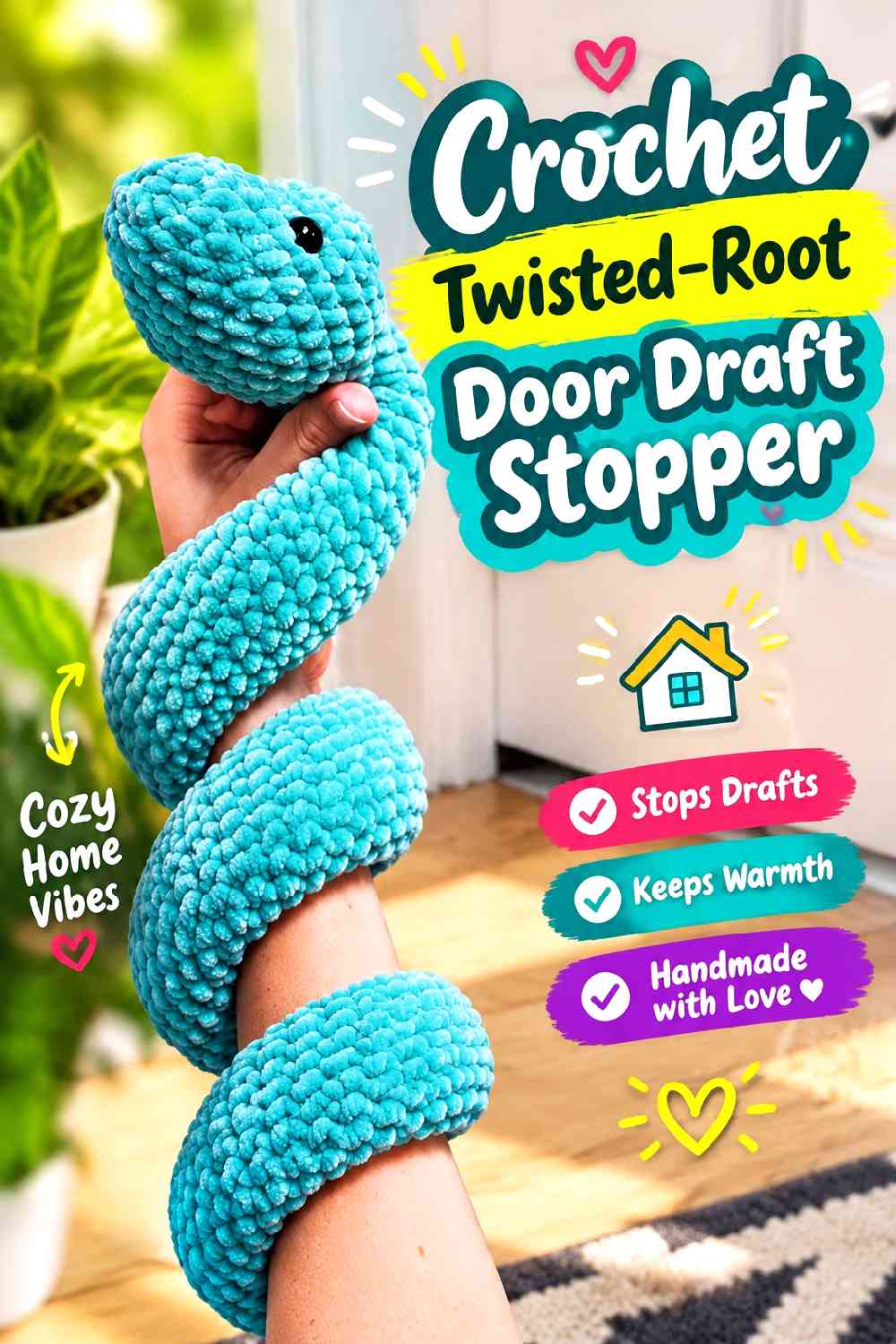
One Cent Crochet’s snake tutorial provides another elongated stuffed construction that can be pushed away from a literal animal and toward the appearance of a winding tree root.
A root version works especially well when you do not want a face at all. Use an irregular woodland palette or a largely solid bark color and let the long organic form create the theme.
A Root Can Curve Visually Without Leaving Large Gaps
Deep coils may look natural, but they are less useful when the goal is to cover a straight doorway.
Keep the central portion mostly aligned with the threshold and save the strongest bend for an exposed end. This gives the piece a root-like gesture without sacrificing the main horizontal span.
Uneven Color Placement Can Look More Natural Than Perfect Stripes
Tree roots rarely have neat repeating bands.
Small, irregular areas of darker brown, gray, or moss can create a weathered surface without changing the underlying construction. Keep these as color or flat-texture decisions rather than adding bulky decorations everywhere.
Creator Credit: One Cent Crochet
16. Crochet Cave-Cat Guardian Draft Stopper
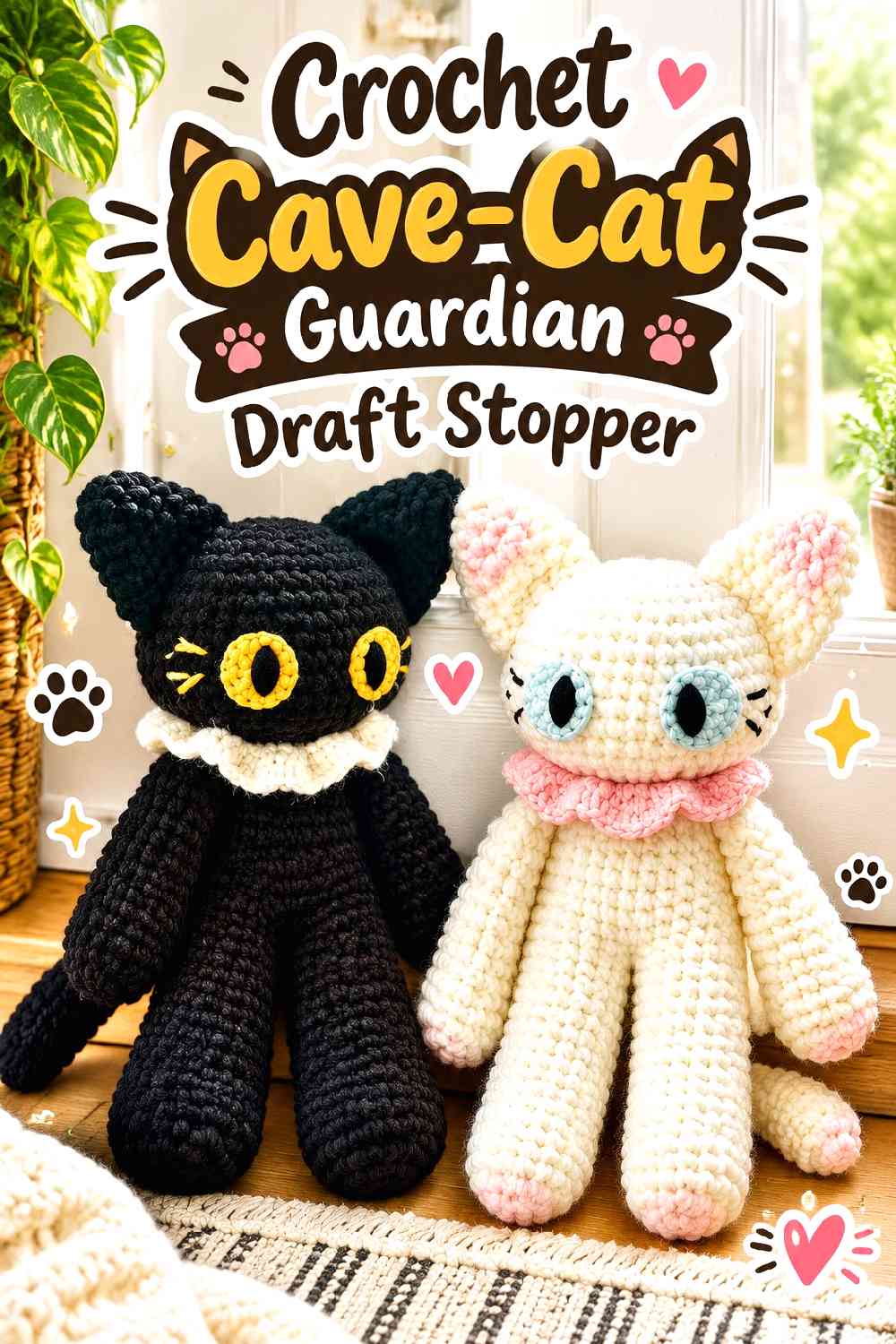
The long-cat tutorial from chubbiesbyash creates a characterful plush with elongated limbs and a bendable tail rather than a true draft stopper. That makes this the most decor-forward cat adaptation in the collection.
Instead of trying to copy the finished plush directly for a doorway, use its long-cat silhouette as inspiration for a burrow guardian that rests near the threshold. Measure independently and decide which projecting features actually make sense at floor level.
Long Limbs Need a Floor-Level Reality Check
Dangling arms and legs are charming on a plush toy but can become awkward beside a working door.
If adapting the concept, think carefully about where those features would sit and whether they could be stepped on or caught beneath the door. A simplified silhouette may suit the location better.
A Face Can Carry Most of the Character
You do not need elaborate decoration across the entire body when the head already provides a strong focal point.
Keep the long central section subdued in charcoal, mushroom brown, cream, or another cave-like neutral, then concentrate expressive detail at the visible end.
Creator Credit: chubbiesbyash
17. Crochet Burrow-Hound Dachshund Draft Stopper
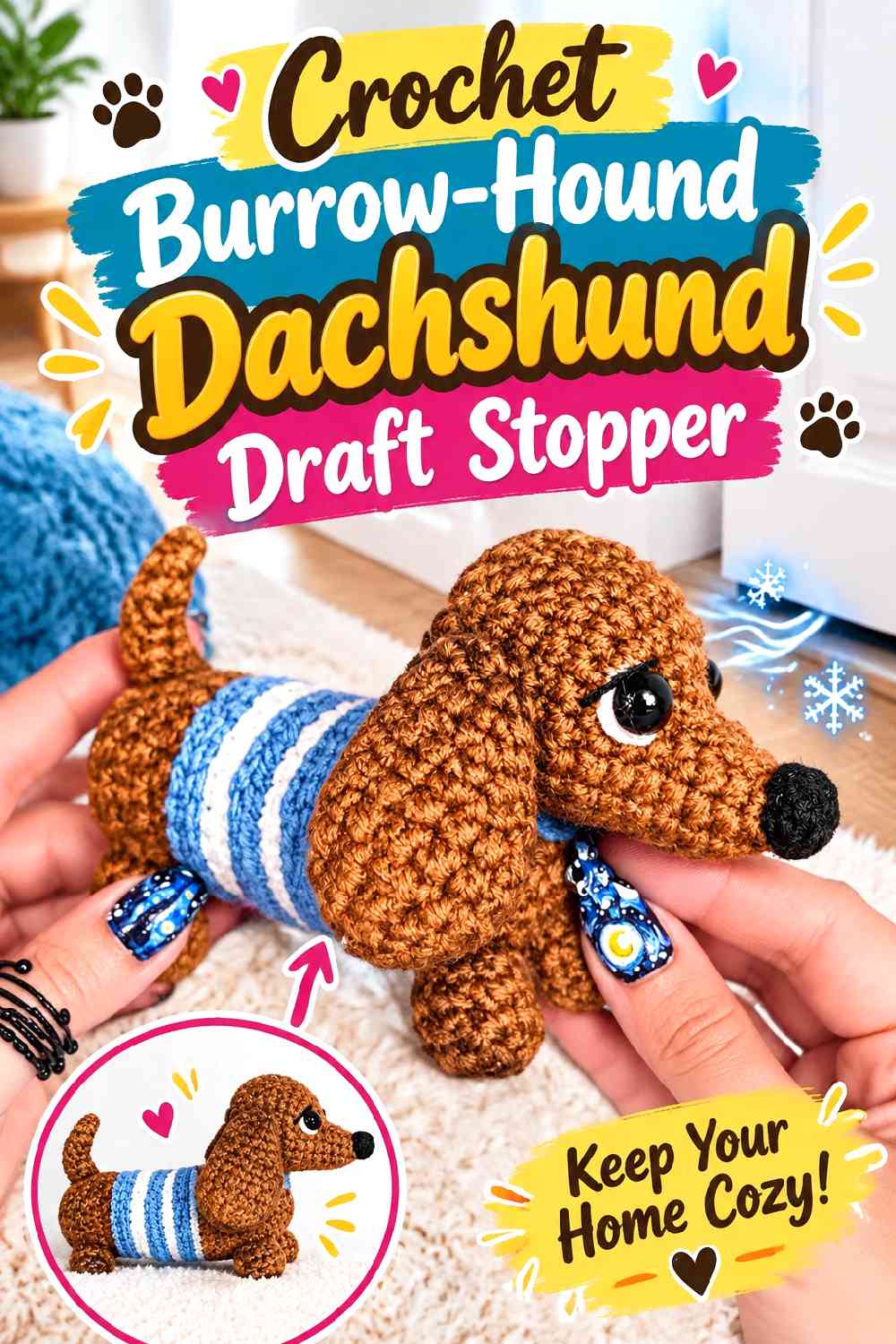
Coraoutline Retrosurreal’s dachshund tutorial demonstrates a naturally elongated dog shape, making it an appealing adaptation for a burrowcore doorway even though the original project is amigurumi rather than a draft stopper.
The long body already echoes the horizontal proportions needed at a threshold. Dark chocolate, clay brown, charcoal, or muted cream can turn the finished concept into a small “burrow hound” guarding the room.
Let the Long Torso Remain the Main Draft-Blocking Zone
A dachshund’s head, legs, and tail give the project personality, but the long body is the part most compatible with a doorway.
When planning an adaptation, measure the required center span independently and do not assume the animal tutorial’s original proportions will match the opening.
Keep the Feet Clear of the Door Path
Short legs can help the silhouette read immediately as a dachshund, but their final position matters at floor level.
Arrange the stopper so the decorative side faces the room and check that paws, ears, and tail do not repeatedly enter the door’s travel path.
Creator Credit: Coraoutline Retrosurreal
Which Burrowcore Crochet Draft Stopper Style Should You Choose?
For the most straightforward functional route, start with the Mossy Log, Root-Ring, Leaf-Litter, XXL Burrow Snake, or Woodland Long-Cat ideas. Their supporting tutorials are already centered on draft blocking, so less conceptual conversion is required.
Choose the Earthen Bolster, Ribbed Root Bundle, Chunky River-Stone Roll, Granny-Moss Cover, Tunisian Soil Layer, or Scrap-Happy Bolster if shape and crochet texture matter more to you. These projects begin as cushions or bolsters, so you gain more construction variety but also need to plan the door-specific proportions yourself.
The Earthworm, Fern-Stripe Serpent, Garden Snake, Twisted Root, Cave Cat, and Burrow Hound are more character-driven. They work best when you are comfortable treating the source tutorial as inspiration for an adaptation rather than expecting a ready-made door measurement.
For an understated room, favor the mossy log, stone roll, root bundle, or twisted root. For a playful cottage or woodland interior, the long cat, burrow snake, earthworm, or dachshund gives the doorway much more personality.
Conclusion
A burrowcore crochet door draft stopper works best when the woodland styling grows out of the object’s practical shape. Logs, roots, worms, snakes, and long-bodied animals all make sense because they naturally occupy the same low horizontal space as a conventional draft blocker.
Start with the doorway rather than the decoration. Measure the area you actually need to cover, check the door’s movement, and decide whether a stuffed piece or removable cover better suits the room. Then choose the visual direction: restrained moss and bark for a subtle interior, layered scraps for a forest-floor effect, pronounced ridges for root texture, or a creature silhouette for something more playful.
When adapting a bolster, pillow, snake, cat, or dachshund tutorial, use the original creator’s video for its intended construction and verify your own door-specific dimensions rather than assuming the original project will fit unchanged.
Frequently Asked Questions
What makes a crochet door draft stopper look burrowcore?
Natural shapes and earthy visual references do most of the work. Logs, tree roots, worms, snakes, woodland animals, moss-like texture, soil-inspired stripes, mushroom neutrals, bark browns, muted greens, and stone grays can all support the theme. You do not need to add literal mushrooms or leaves to every project.
Should a crochet draft stopper be the same length as the door?
There is no universal measurement. Measure the area where the draft enters and consider the door frame, trim, and where the stopper will actually sit. Decorative heads, tails, roots, or other end details should not automatically be counted as part of the useful blocking length.
Can I adapt a crochet bolster tutorial into a door draft stopper?
Potentially, yes, but the dimensions and intended use need to be reconsidered. A bolster may be much thicker, shorter, or softer than you want at a doorway. Use the tutorial for its original construction concept, then plan the door-specific length and clearance independently rather than simply copying the pillow proportions.
How can I make a burrowcore draft stopper easier to clean?
A removable crochet cover is one option when the chosen construction supports it. For permanently stuffed pieces, consider how the yarn and embellishments will handle floor-level use before beginning. Avoid assuming a fiber is machine washable unless its care information confirms that.
Are loose moss, mushroom, or leaf embellishments practical on a draft stopper?
They can work decoratively, but placement matters. Large or loose details are better kept away from the floor-facing section and the path of the moving door. Flat embroidery, color changes, shallow appliqués, and crochet texture can create a woodland effect with less projection.
Can I use an amigurumi snake or dachshund tutorial for a door draft stopper?
Use it as an adaptation reference rather than assuming the finished toy will already have suitable dimensions. Doorway length, body thickness, firmness, and the placement of legs, tails, or facial details all need separate consideration. The creator’s tutorial should remain the source for the original animal construction.