A crochet vintage fruit garland can bring the look of old botanical prints, farmhouse kitchens, market labels, and traditional fruit ornaments to a winter mantel without relying on fresh or dried produce. The style can be bright and nostalgic, but it can also become surprisingly rich when cherry red, plum, muted citrus, pear green, and antique cream are used against darker winter surroundings.
The main choice is whether you want flat fruit motifs or stuffed fruit. Flat appliqués sit close to the mantel and are easier to distribute across a long strand. Dimensional apples, pears, plums, oranges, and pomegranates create stronger focal points but also add more weight and can rotate once suspended.
The tutorials below include complete garlands, hanging fruit decorations, appliqués, and dimensional crochet fruit. Not every source was designed specifically as a vintage winter mantel garland, so the final arrangements are independent styling ideas. Use each creator’s tutorial for the actual fruit construction and plan the connecting strand, spacing, palette, and mantel installation separately.
Quick List
- Crochet Strawberry Cottage Fruit Garland
- Crochet Watermelon Market-Print Garland
- Crochet Grape Cluster Vineyard Garland
- Crochet Pressed-Lemon Vintage Garland
- Crochet Peach Orchard Bunting Garland
- Crochet Orange-Slice Marmalade Garland
- Crochet Raspberry Cluster Winter Garland
- Crochet Pineapple Pantry-Label Garland
- Crochet Red Apple Farmhouse Garland
- Crochet Twin-Cherry Café Garland
- Crochet Blueberry Bead-Style Garland
- Crochet Plum Jewel-Tone Mantel Garland
- Crochet Pomegranate Heritage Garland
- Crochet Persimmon Winter Orchard Garland
- Crochet Whole-Lemon Botanical Garland
- Crochet Whole-Orange Pomander-Style Garland
- Crochet Avocado Retro Fruit Garland
- Crochet Pear Harvest Mantel Garland
- Crochet Banana Vintage Market Garland
Choose Flat Fruit or Stuffed Fruit Before Building the Garland
Flat fruit motifs behave more like bunting. They can be attached directly to a crochet chain, cord, ribbon, or another suitable strand and usually stay relatively close to the wall or mantel face. That makes them useful when the mantel already holds frames, candles, pottery, or other objects.
Stuffed fruit creates a different display. Round pieces project farther forward, require stronger support, and may turn after hanging. If identifying details such as a leaf, crown, stem, or colored side need to remain visible, test the attachment point before assembling the whole garland.
Mixed garlands can work well when the difference is deliberate. Dimensional fruit can form a few focal groups while flat slices or appliqués fill the longer spaces between them.
Make the Palette Feel Vintage Without Making Every Fruit Brown
Vintage styling does not require dull colors. Instead, think about how the colors relate. Tomato red, dusty rose, burgundy, mustard yellow, ocher, faded orange, olive, bottle green, cream, and muted purple can give recognizable fruit a softer old-fashioned character.
Repeating one neutral is particularly useful. A cream connecting cord, dark brown stems, or olive leaves can unite fruit that would otherwise seem unrelated.
Also consider the room from normal viewing distance. Small embroidered seeds and tiny leaves may disappear several feet away, while the main fruit silhouette and large color blocks remain visible.
Keep Crochet Garland Clear of Fireplace Heat
Yarn, stuffing, ribbon, and similar craft materials are combustible. If the fireplace is functional, do not assume the mantel is automatically a safe place for hanging crochet decor. Fireplace manuals can specify required clearances, and some manufacturers explicitly warn against combustible ornamentation on or near the mantel. Keep the garland away from flames, hot surfaces, vents, and the fireplace opening, and follow the instructions for the specific appliance.
Weight matters even when heat is not an issue. Several stuffed fruits can become significantly heavier than a strand of flat appliqués. Secure the display appropriately for the mantel and do not rely on a lightweight decorative chain to support bulky clusters unless it is suitable for that load.
1. Crochet Strawberry Cottage Fruit Garland
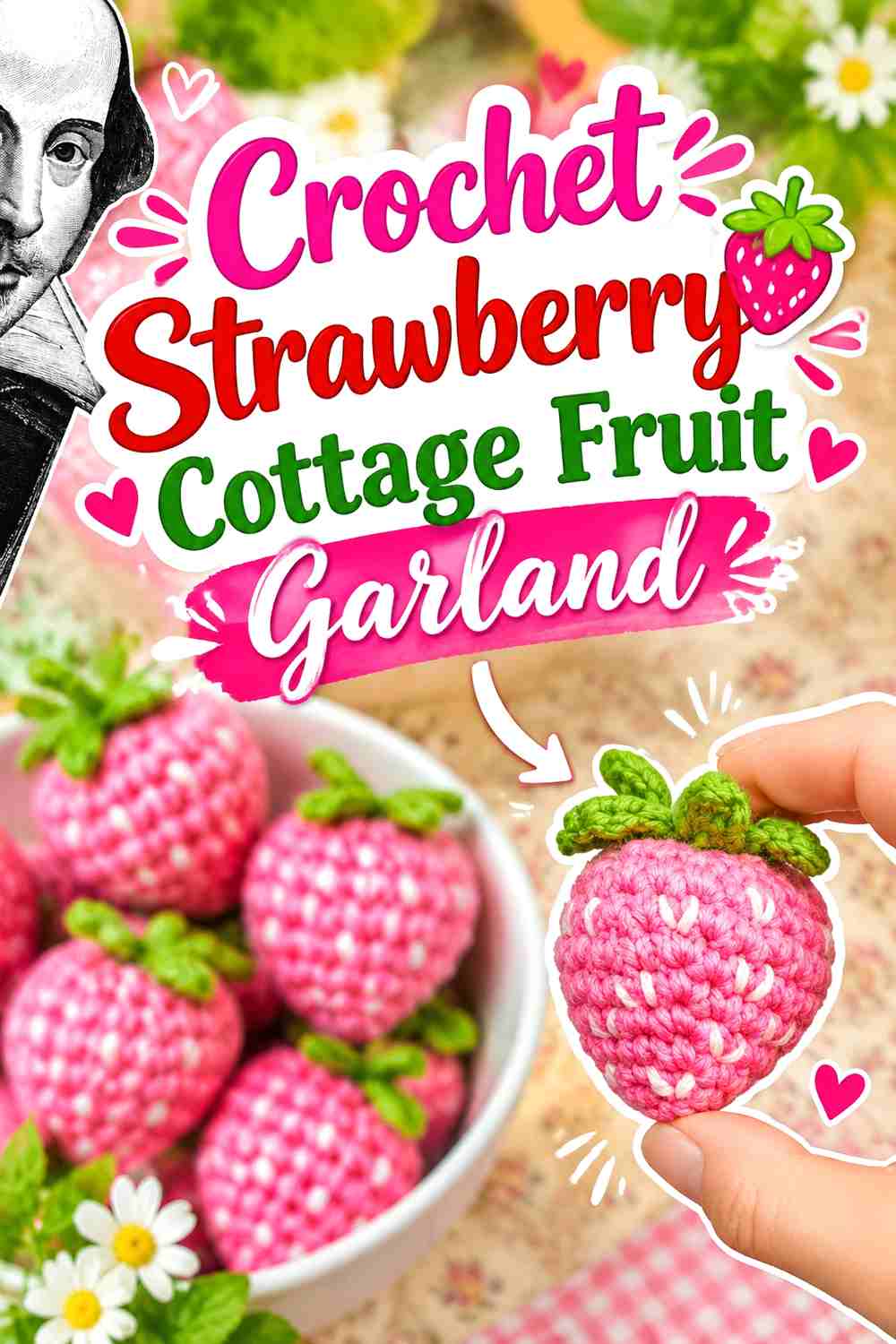
Alynaa Crochets 🎀🧶 demonstrates small dimensional strawberries and includes their assembly into a garland, so this is one of the closest complete-garland matches in the collection. The strawberries include green tops and visible surface details, giving the repeated fruit enough character to work without additional large motifs.
Use Repetition Instead of Filling Every Gap
Strawberries already combine a strong red body with contrasting green. Packing them tightly can turn those two colors into one continuous band.
Leave portions of the connecting strand visible so each fruit keeps its individual silhouette. For a more old-fashioned mantel, cream, tan, or muted green between the berries can soften the brighter red.
Alternate the Hanging Direction
Identical fruit can look mechanical when every strawberry faces exactly forward at the same height. Small differences in angle make the garland feel more like collected produce.
Keep the variation controlled enough that the leafy tops remain visible rather than disappearing behind the strand.
Creator Credit: Alynaa Crochets 🎀🧶
2. Crochet Watermelon Market-Print Garland
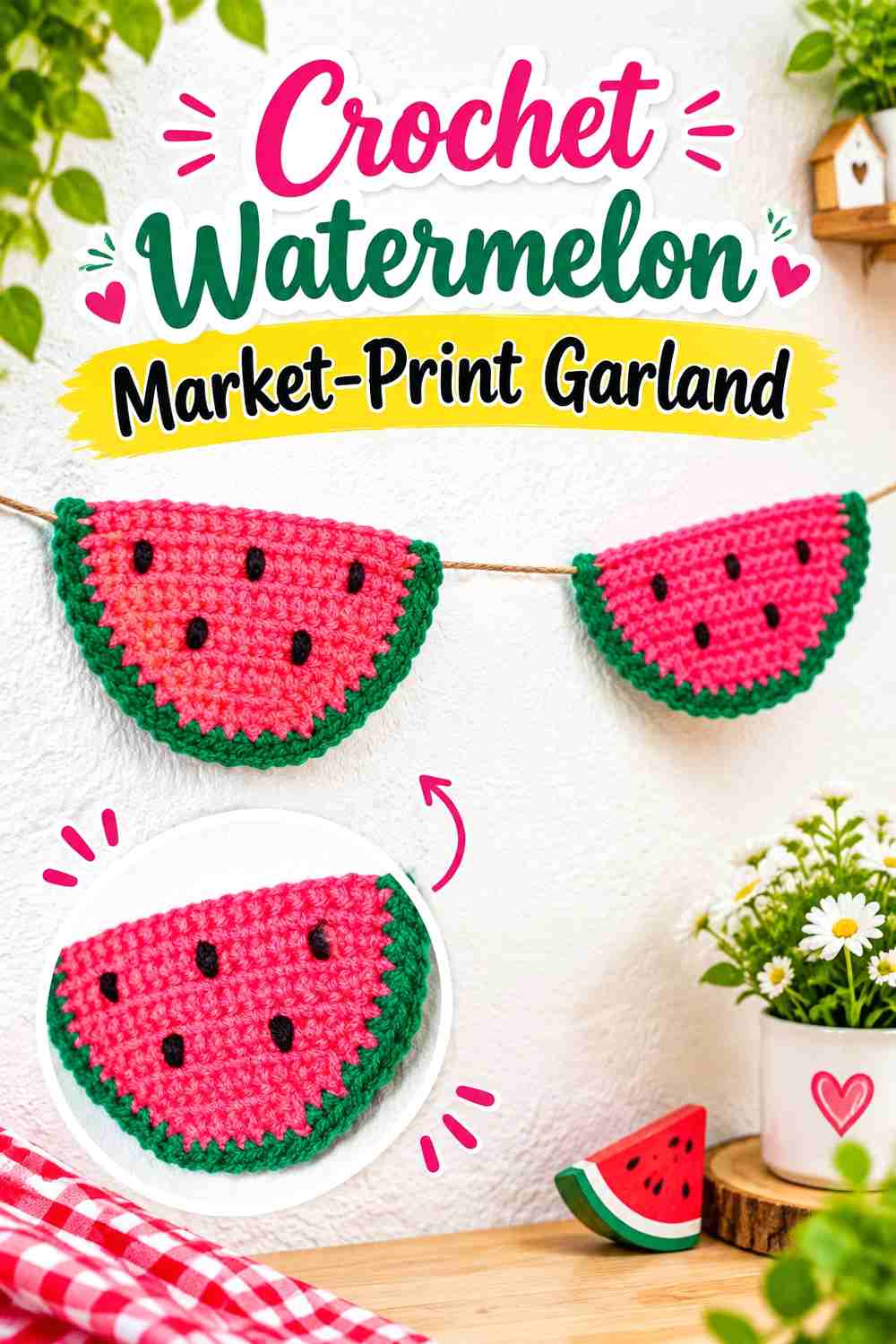
Heather Corinne Crochets provides a watermelon motif tutorial that is specifically assembled as a garland. The wedge-like fruit creates a broad graphic shape that is very different from the round orchard fruit elsewhere in this list.
Darker Colors Can Shift Watermelon Away From Summer
Bright neon pink and lime naturally feel warm-weather oriented. For a vintage mantel interpretation, consider the overall palette rather than assuming the fruit must be recolored realistically.
Dusty red, muted green, cream, and dark seed details can make the familiar wedge read more like a vintage kitchen illustration.
Wide Motifs Need Enough Breathing Room
A broad watermelon slice occupies more horizontal space than a blueberry or cherry.
Arrange one sample on the actual mantel before producing the entire set. If the pieces overlap excessively, increase the spacing rather than making the whole garland visually dense.
Creator Credit: Heather Corinne Crochets
3. Crochet Grape Cluster Vineyard Garland
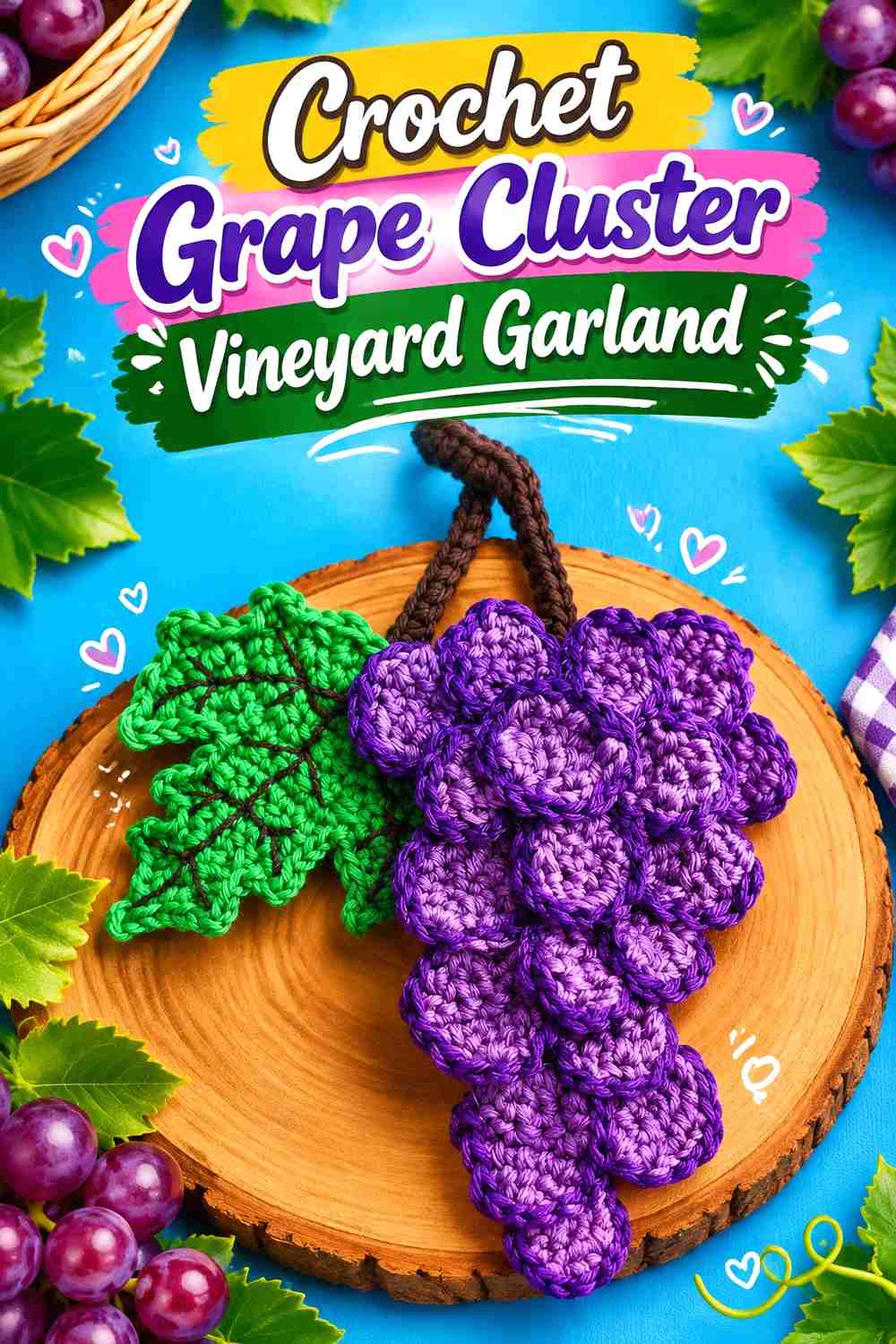
Kerri’s Crochet demonstrates a grape appliqué built as a recognizable bunch with foliage. Unlike a single round berry, the clustered form already gives you vertical movement and a more elaborate silhouette.
Let the Clusters Hang Below the Main Strand
Grapes naturally lend themselves to a cascading layout. Instead of attaching every bunch flat against the cord, allow the clusters to hang beneath it at selected points.
That creates useful depth across a mantel without requiring every motif to be stuffed.
Burgundy and Plum Can Feel More Wintery Than Bright Purple
The grape silhouette remains recognizable across several color directions.
Deep wine, aubergine, burgundy-purple, or muted violet can coordinate particularly well with dark wood, brass-toned decor, cream ceramics, and winter greenery.
Creator Credit: Kerri’s Crochet
4. Crochet Pressed-Lemon Vintage Garland
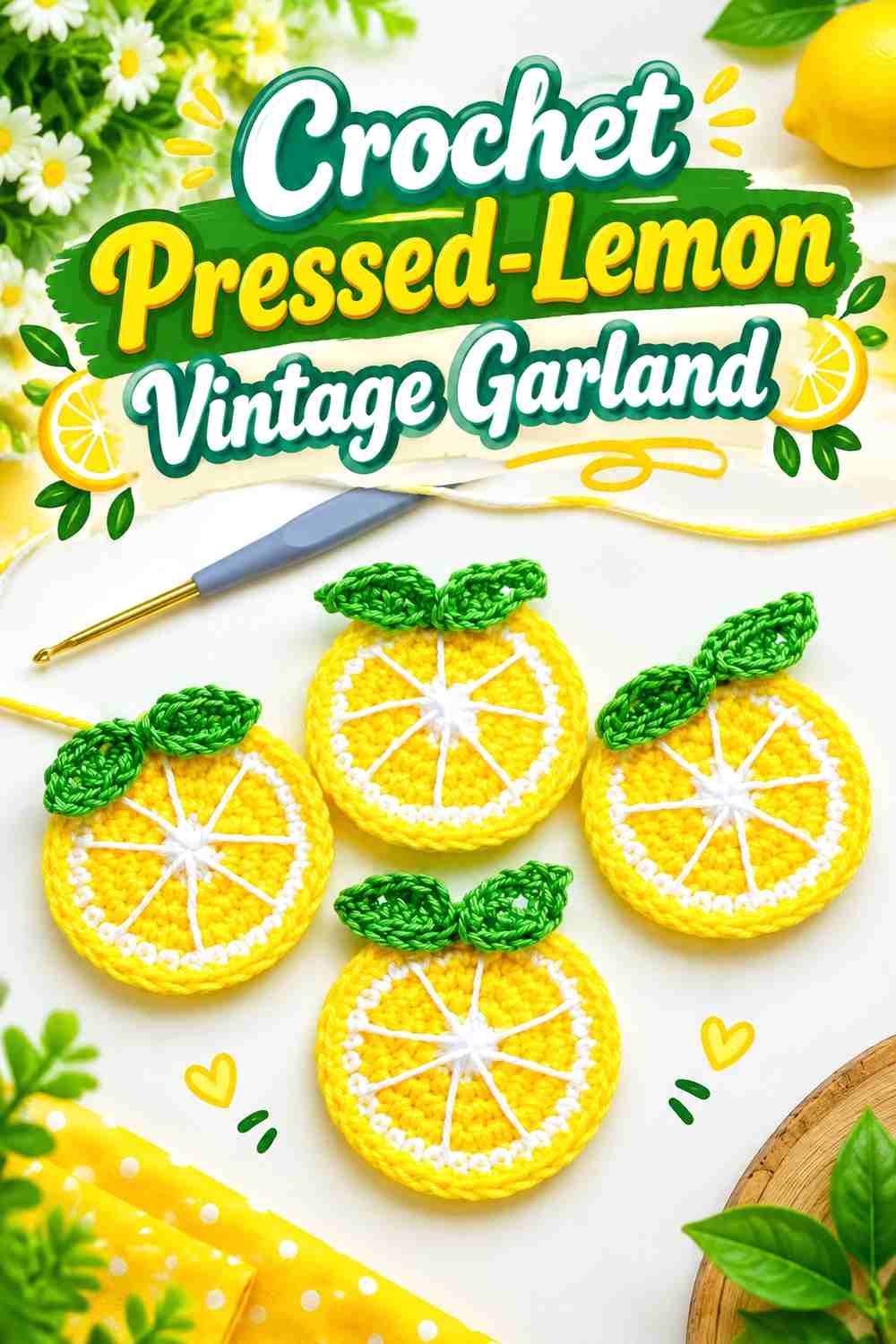
aicrochet’s lemon appliqué is a small, flat fruit motif with green foliage. Its compact construction makes it useful for a garland that should resemble pressed botanical specimens or illustrated fruit labels rather than stuffed ornaments.
Pale Yellow Works as a Light Accent
Lemon does not have to dominate the palette. Against burgundy, forest green, brown, or dark blue winter decor, a muted yellow motif can function almost like a highlight.
Space the lemons between darker fruits instead of grouping every yellow piece together.
Flat Motifs Can Be Mounted in Small Frames of Color
A narrow cream, brown, or green crochet connector around each lemon can visually separate the fruit from a similarly colored wall.
This is particularly useful if the mantel background is light and the yellow outline would otherwise lose definition.
Creator Credit: aicrochet
5. Crochet Peach Orchard Bunting Garland
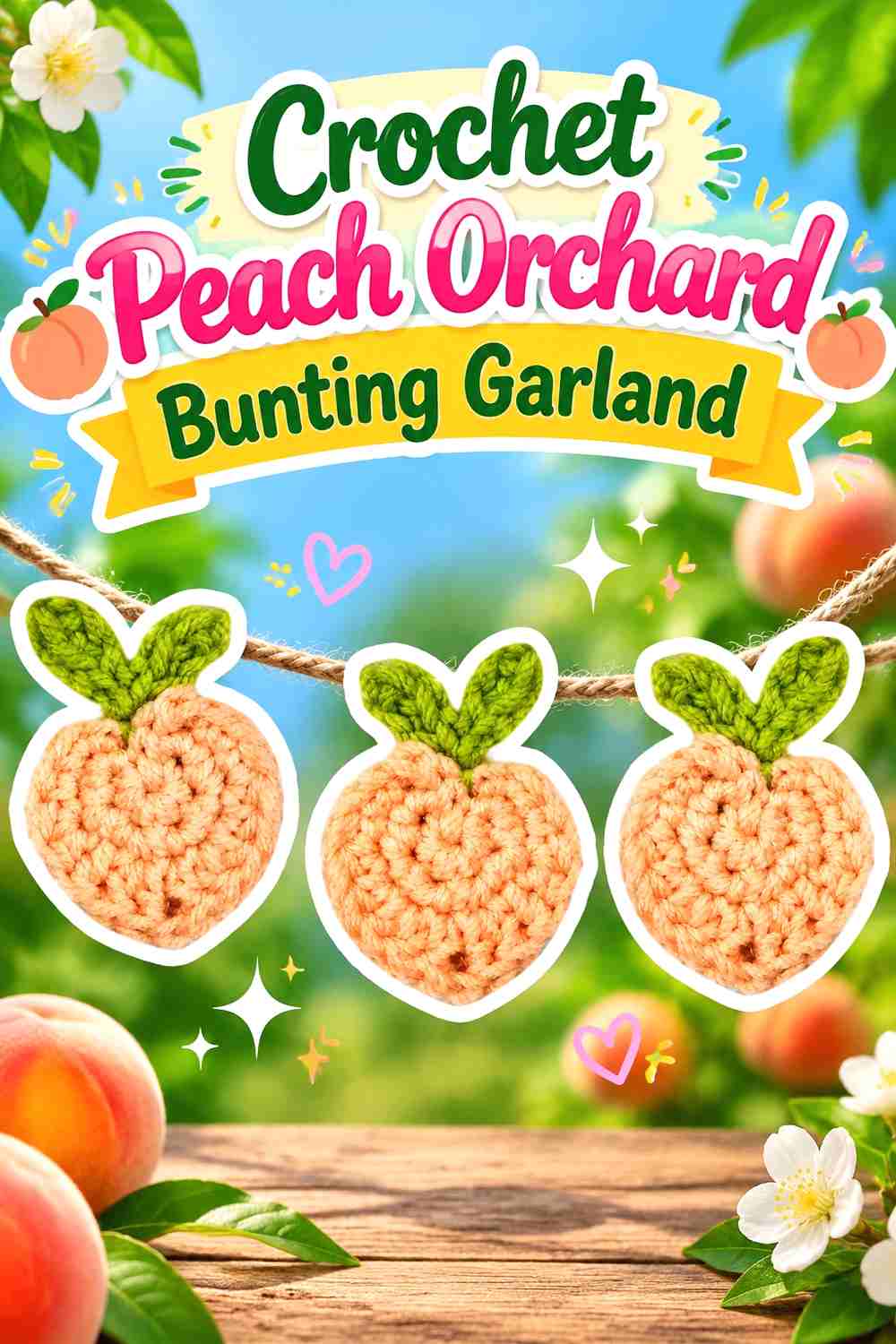
Pixeled Peach demonstrates a flat peach appliqué with green leaves. The rounded fruit and leaf placement give this project a softer silhouette than citrus slices or triangular watermelon motifs.
Use Blush, Rust, and Apricot Instead of One Flat Orange
A peach-inspired motif can carry subtle color variation even when the construction stays the same.
Alternating dusty peach, rust-orange, and muted coral across the strand can create an orchard look without requiring a completely different motif for every position.
Keep the Leaf Visible Against Dark Fruit
A darker winter peach color can reduce the contrast between fruit and stem if the green is also muted.
Compare the yarns together from several feet away. The top detail should remain clear enough that the motif does not become an unidentified circle.
Creator Credit: Pixeled Peach
6. Crochet Orange-Slice Marmalade Garland
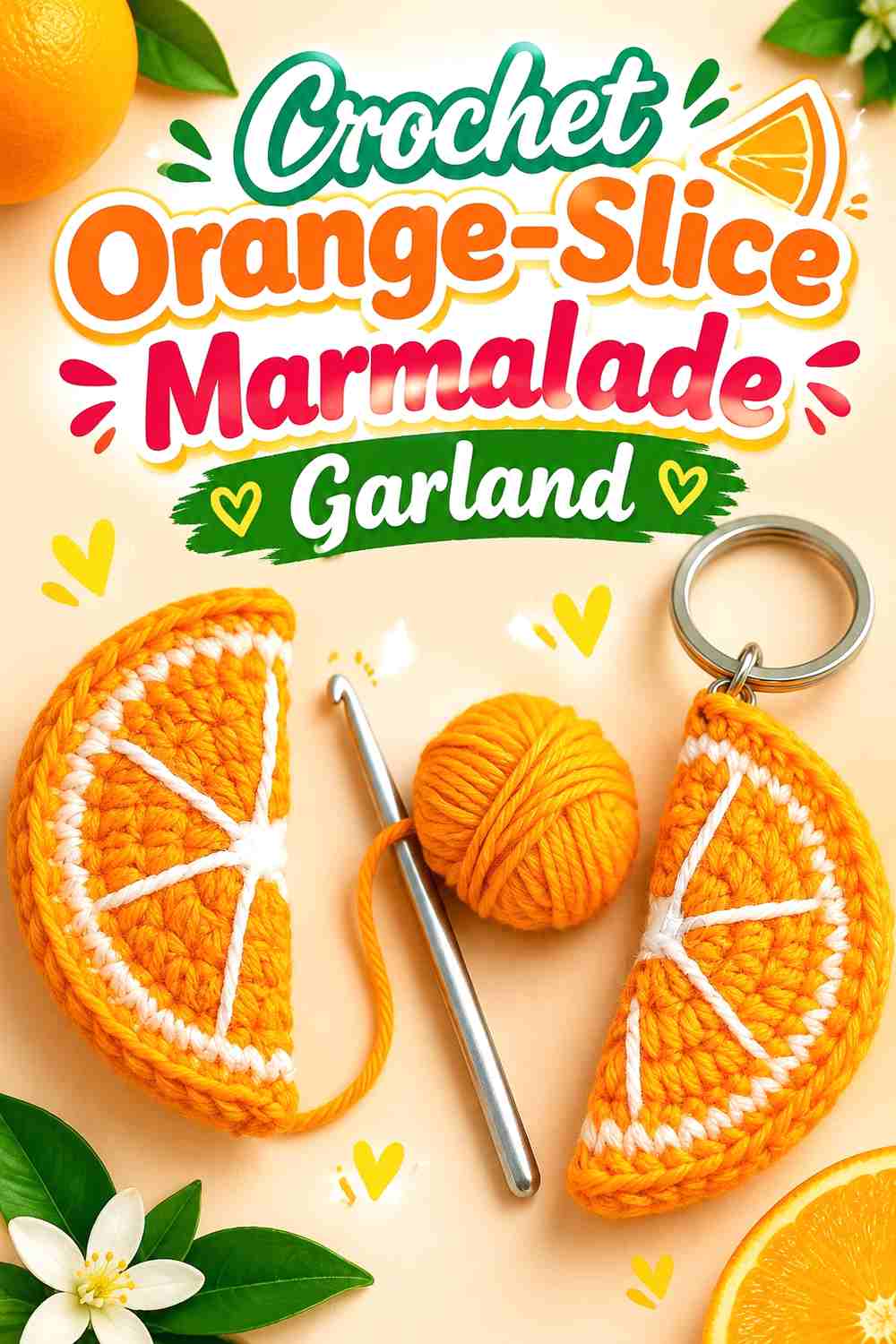
puffy hook demonstrates a flat orange slice with distinct rind, center, and segment coloring. The circular cross-section makes this idea resemble dried citrus decorations while keeping the entire motif crocheted.
Repeat the Round Shape Like Old Citrus Ornaments
Orange slices work particularly well at regular intervals because the circles create a clear rhythm across a long mantel.
They do not have to be perfectly evenly spaced, but repeating the round shape helps unify other irregular fruit motifs if you decide to mix the garland.
Cream Centers Can Soften Bright Orange
Strong orange and white can look very crisp. If the goal is aged rather than modern, an ivory or oatmeal-toned center can reduce that contrast.
Make one complete sample before changing all of the colors so you can confirm the fruit still reads clearly as citrus.
Creator Credit: puffy hook
7. Crochet Raspberry Cluster Winter Garland
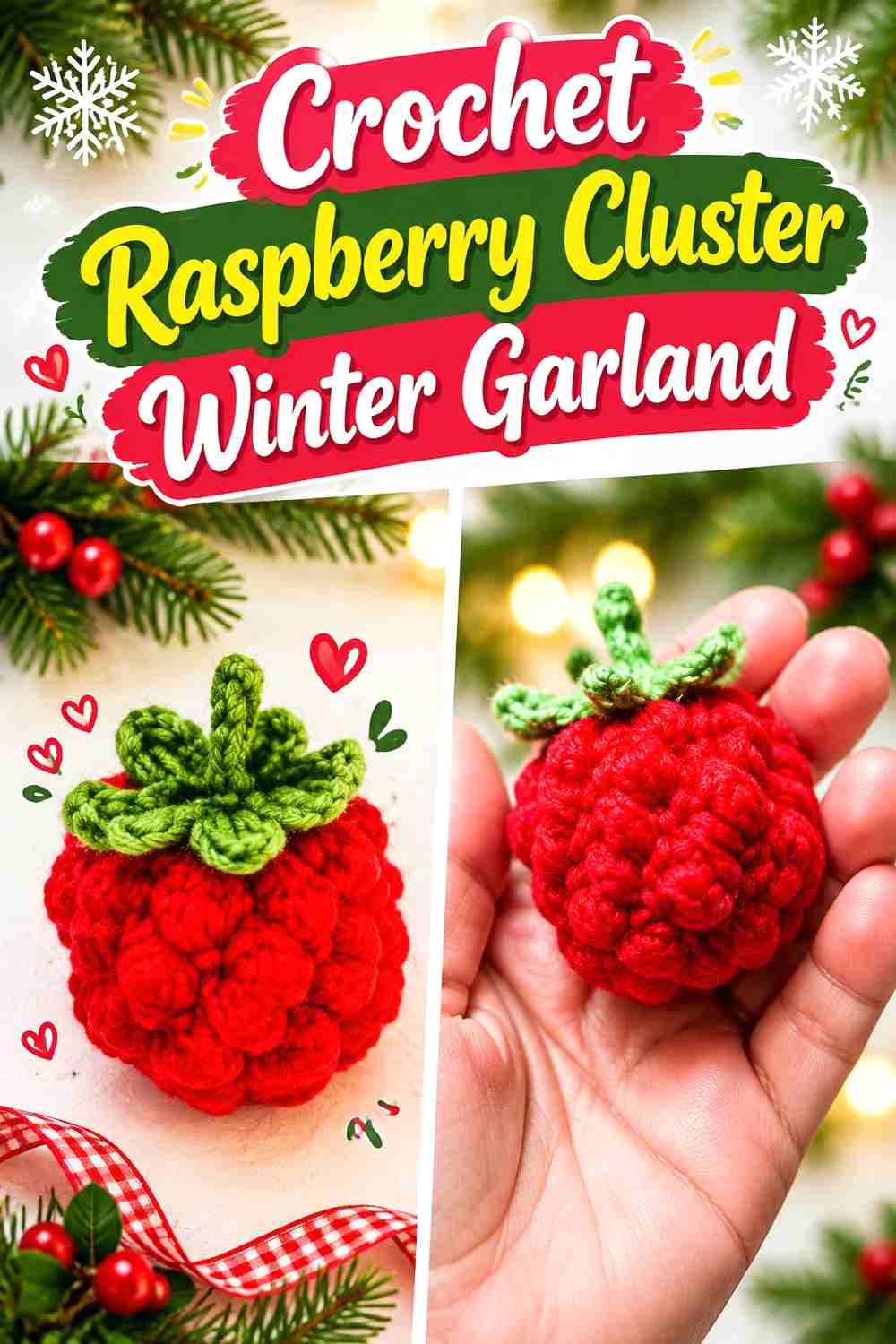
Josephine Chow demonstrates a dimensional raspberry whose puffed surface gives the fruit a noticeably different texture from smooth stuffed apples and oranges.
Texture Makes Small Berries Visible
Tiny flat berries can disappear when viewed across a room. Raised berry texture creates shadows and gives each small fruit more visual presence.
That means you may need fewer raspberries than you would need tiny flat circles to achieve the same amount of detail.
Cluster Berries Instead of Spacing Them One by One
Several berries grouped near leaves can create one stronger focal accent.
Separate those clusters with longer sections of cord, ribbon, or larger fruit so the entire garland does not become a continuous line of small red objects.
Creator Credit: Josephine Chow
8. Crochet Pineapple Pantry-Label Garland
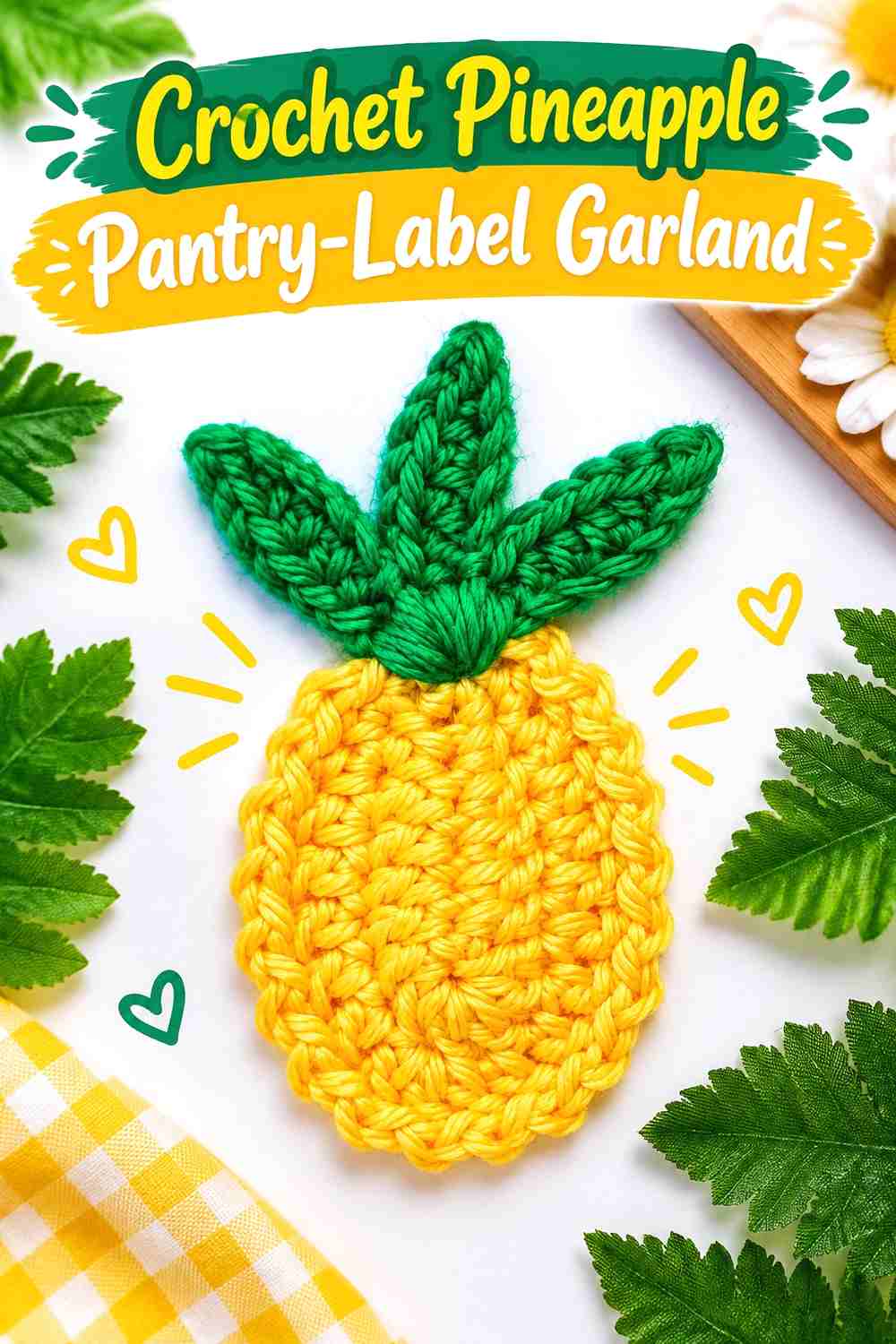
Pora Pora Crochet demonstrates a flat pineapple appliqué with a clearly different body and leafy crown. Its long vertical silhouette gives this garland a retro kitchen or old market-label direction rather than a traditional winter-orchard look.
Pineapple Adds Height to a Flat-Motif Garland
Many fruit appliqués are nearly round. Pineapple breaks that repetition with a tall crown and elongated body.
Use it at wider intervals as a statement motif rather than placing every pineapple edge-to-edge.
Mustard and Olive Make the Motif More Heritage-Looking
A softer gold body with dark olive foliage can feel less tropical than very bright yellow and green.
Keep enough value difference between the body and crown that the shape remains readable from across the room.
Creator Credit: Pora Pora Crochet
9. Crochet Red Apple Farmhouse Garland
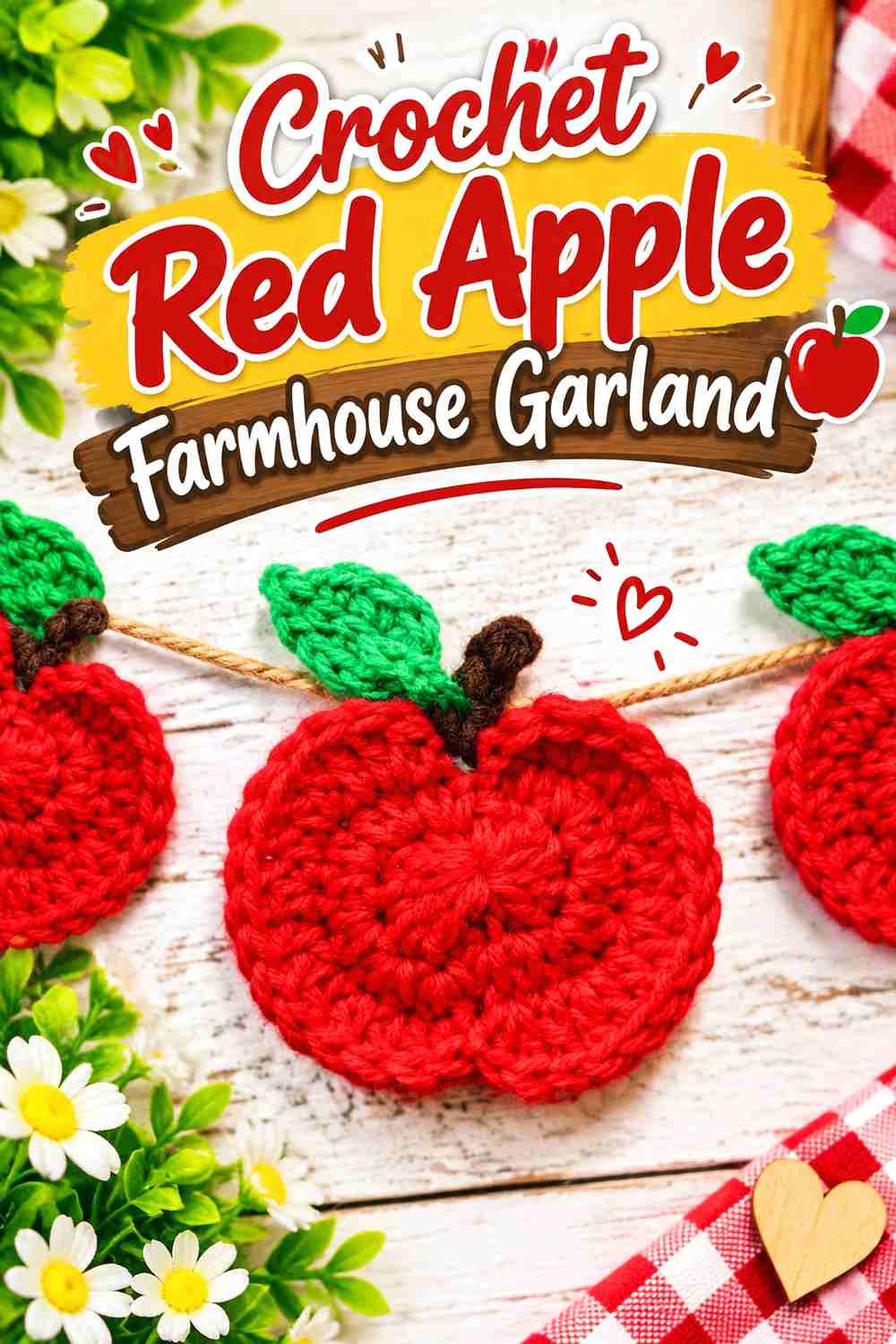
Jayda InStitches demonstrates a flat apple appliqué with a stem and leaf, providing a simple orchard motif that can be repeated across a farmhouse-style mantel.
Red Apples Can Anchor the Entire Palette
Because red is visually strong, apple motifs can become the main recurring color while pears, lemons, grapes, or leaves act as secondary accents.
If the room already contains red textiles or holiday decor, compare the yarn beside them before choosing the final shade.
Keep the Cord Quieter Than the Apples
A highly decorated connecting strand can compete with the recognizable fruit shapes.
For a restrained vintage effect, consider a neutral or foliage-colored foundation that allows the apples to remain the main repeated element.
Creator Credit: Jayda InStitches
10. Crochet Twin-Cherry Café Garland
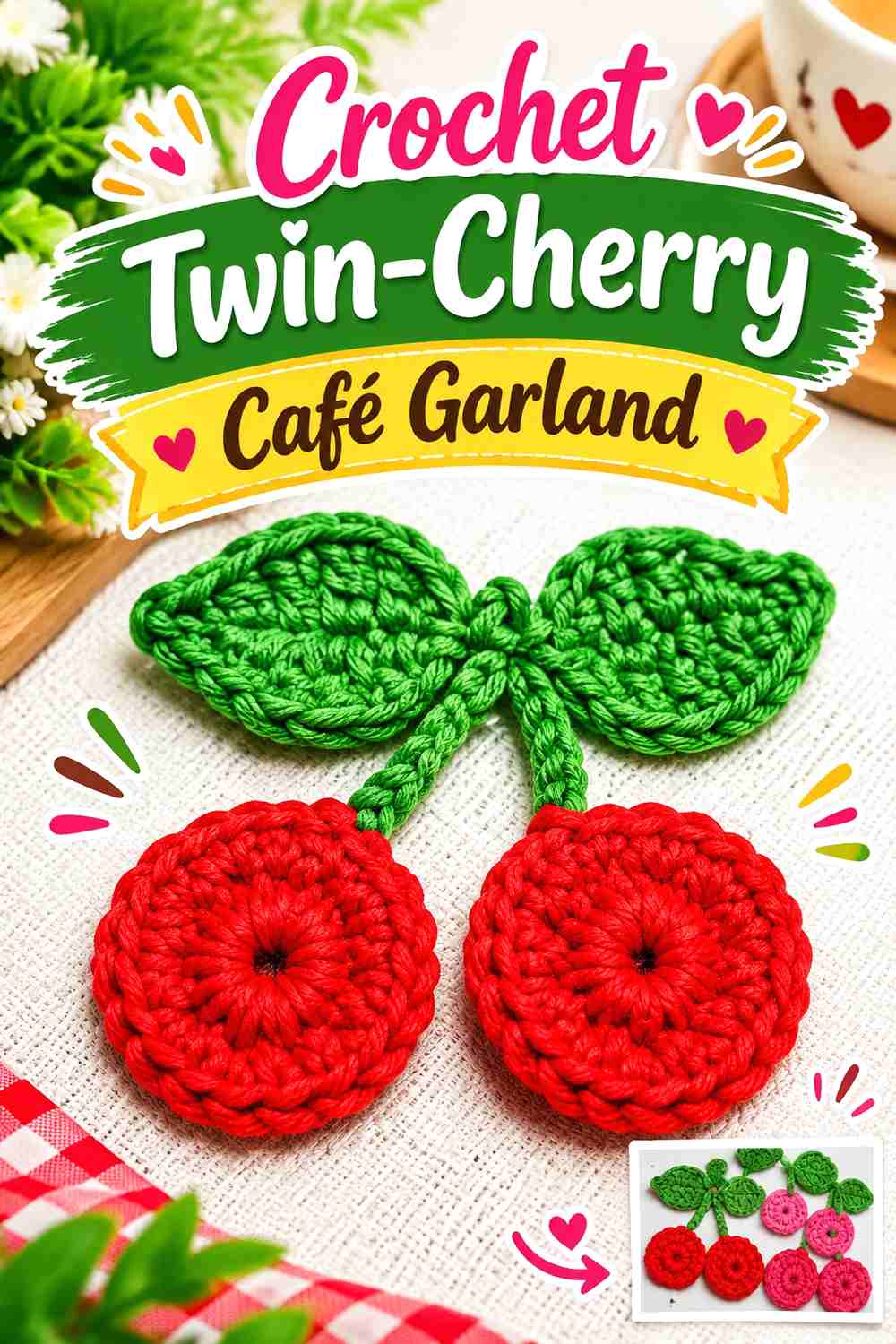
Ria Rose Crafts demonstrates a cherry fruit appliqué in a paired arrangement. Two fruits connected by stems create a naturally decorative shape that suits a vintage café, diner, or embroidered-tablecloth inspired mantel.
Pairs Create a Different Rhythm From Single Fruit
Rather than treating each cherry as one garland unit, allow the pair to remain intact.
Alternating paired cherries with longer blank sections can make the garland feel lighter than a solid row of red fruit.
Protect the Stem From Excess Tension
The connecting stem is visually important because it identifies the pair.
Attach the garland from a stable portion of the motif or another suitable point rather than assuming the decorative stem should carry the full pull of the strand.
Creator Credit: Ria Rose Crafts
11. Crochet Blueberry Bead-Style Garland
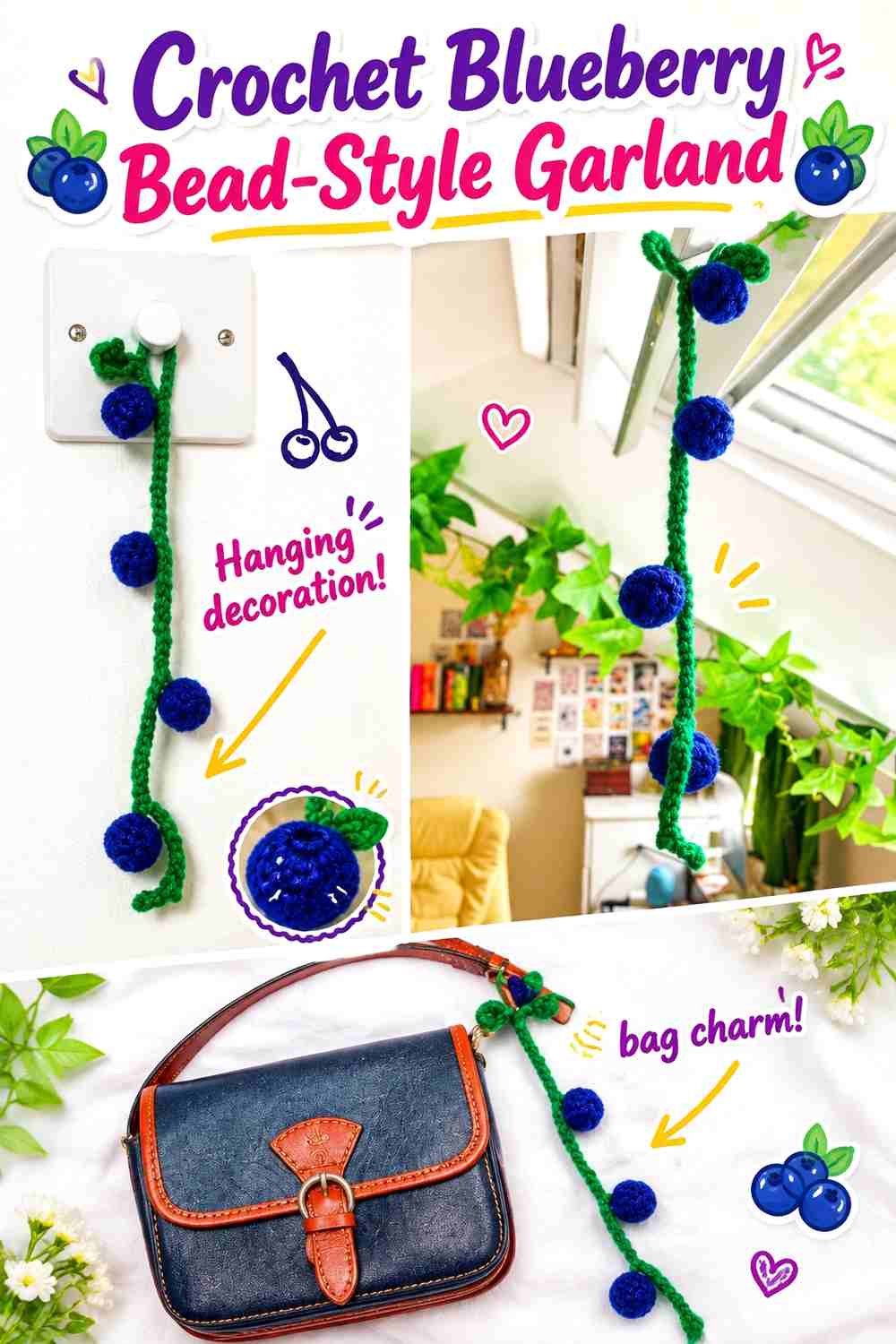
thisfairymade demonstrates a dimensional blueberry hanging decoration and explicitly notes that it can be used as a hanging decoration or garland component. The compact round fruit provides a natural way to build a bead-like strand.
Vary the Number of Berries in Each Group
A single repeated blueberry at identical intervals can look more like beads than fruit.
Mixing pairs and small clusters while retaining the same overall palette creates a more botanical effect.
Blue Gives a Winter Mantel a Different Direction
Most fruit garlands rely heavily on red, yellow, and orange. Dusty blue or deep blueberry purple introduces a cooler color that can work with gray-green foliage, cream yarn, and dark wood.
Avoid making every surrounding element equally dark or the small berries may disappear visually.
Creator Credit: thisfairymade
12. Crochet Plum Jewel-Tone Mantel Garland
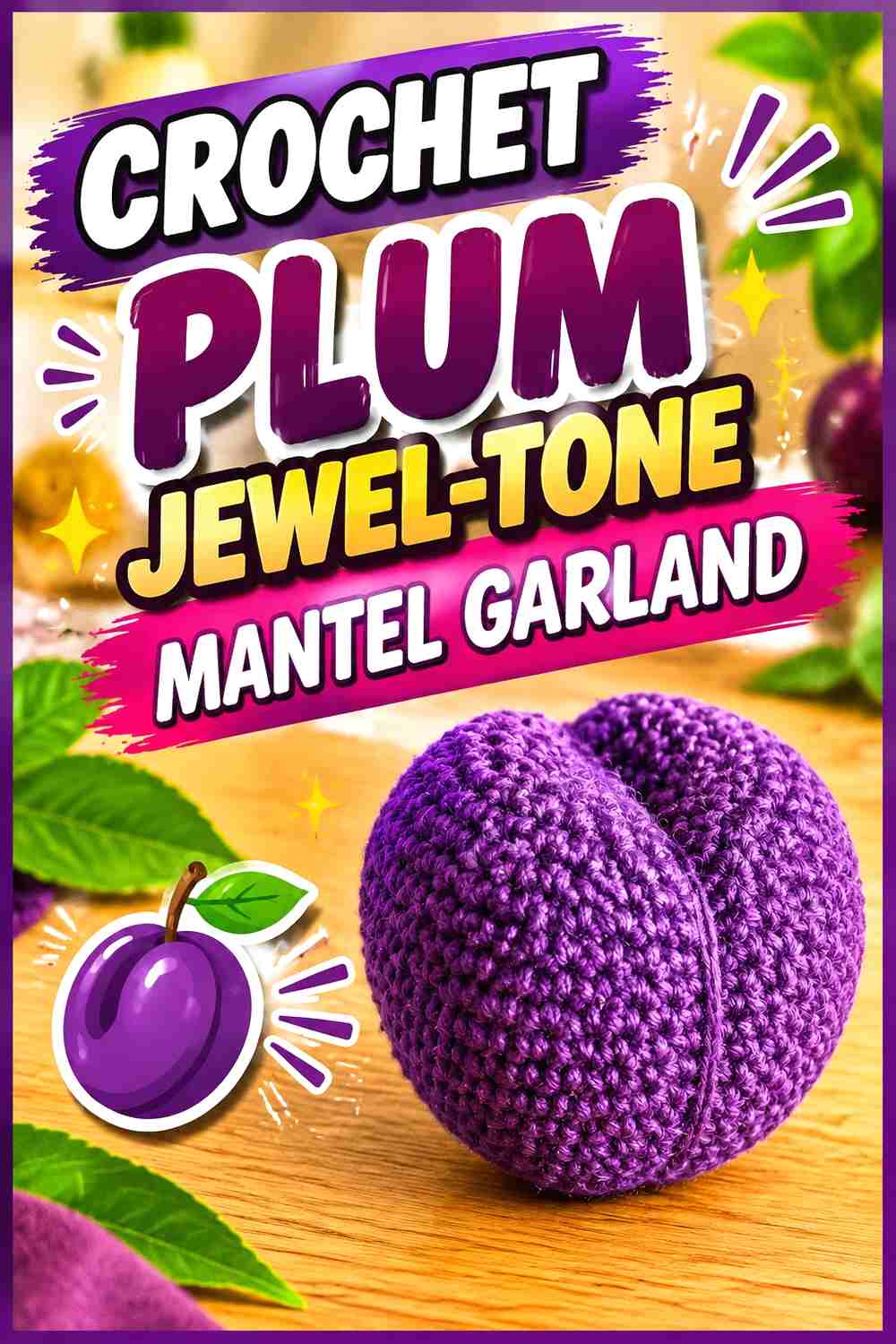
MummaJ Crochet provides a dimensional plum tutorial, offering a rounded stuffed fruit with a deeper jewel-tone color direction than the usual red apple or orange citrus.
Plum Adds Depth Without Adding Another Red Fruit
Burgundy-purple, aubergine, and muted plum can sit beside traditional winter reds without looking like another berry.
This is useful when the mantel already has red stockings, ribbons, or candles and another bright red motif would feel repetitive.
Use Fewer Stuffed Plums Than Flat Motifs
A dimensional plum occupies more physical space than an appliqué.
Place several at intentional focal points and use lighter motifs or visible cord between them so the strand does not become unnecessarily heavy.
Creator Credit: MummaJ Crochet
13. Crochet Pomegranate Heritage Garland
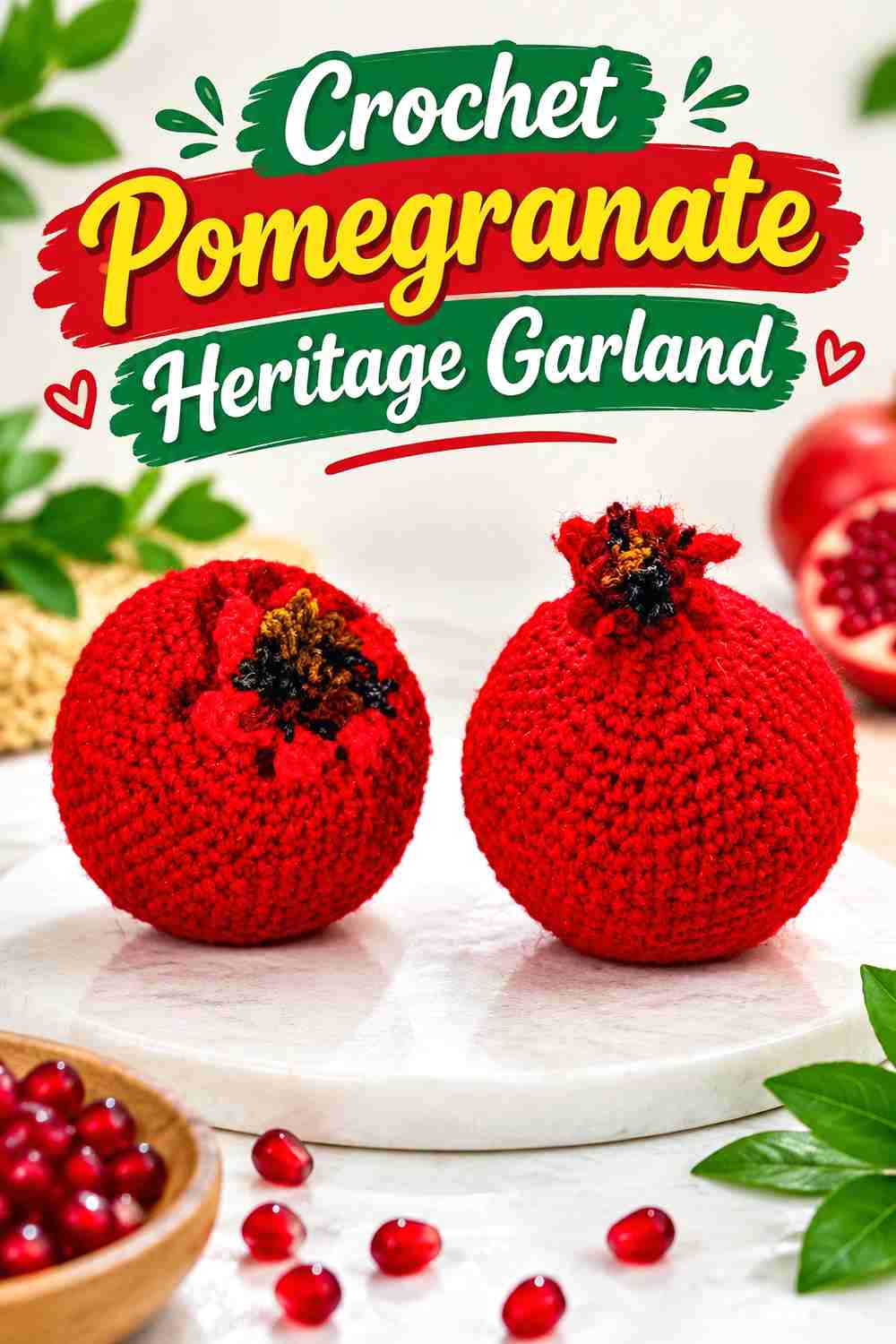
Indu’s Creation demonstrates a dimensional crochet pomegranate. Its distinctive crowned top gives the fruit a formal ornamental quality that suits a winter mantel especially well.
Keep the Crown Facing the Room
A pomegranate becomes much less recognizable when its top is buried behind foliage or turned toward the wall.
Temporarily suspend one fruit and adjust the attachment point until the identifying detail remains visible.
Dark Red Can Carry the Vintage Theme Almost by Itself
Pomegranate red works naturally with antique cream, brass-toned accessories, dark greenery, and brown wood.
You can therefore keep the rest of the garland restrained rather than surrounding each fruit with several additional colors.
Creator Credit: Indu’s Creation
14. Crochet Persimmon Winter Orchard Garland
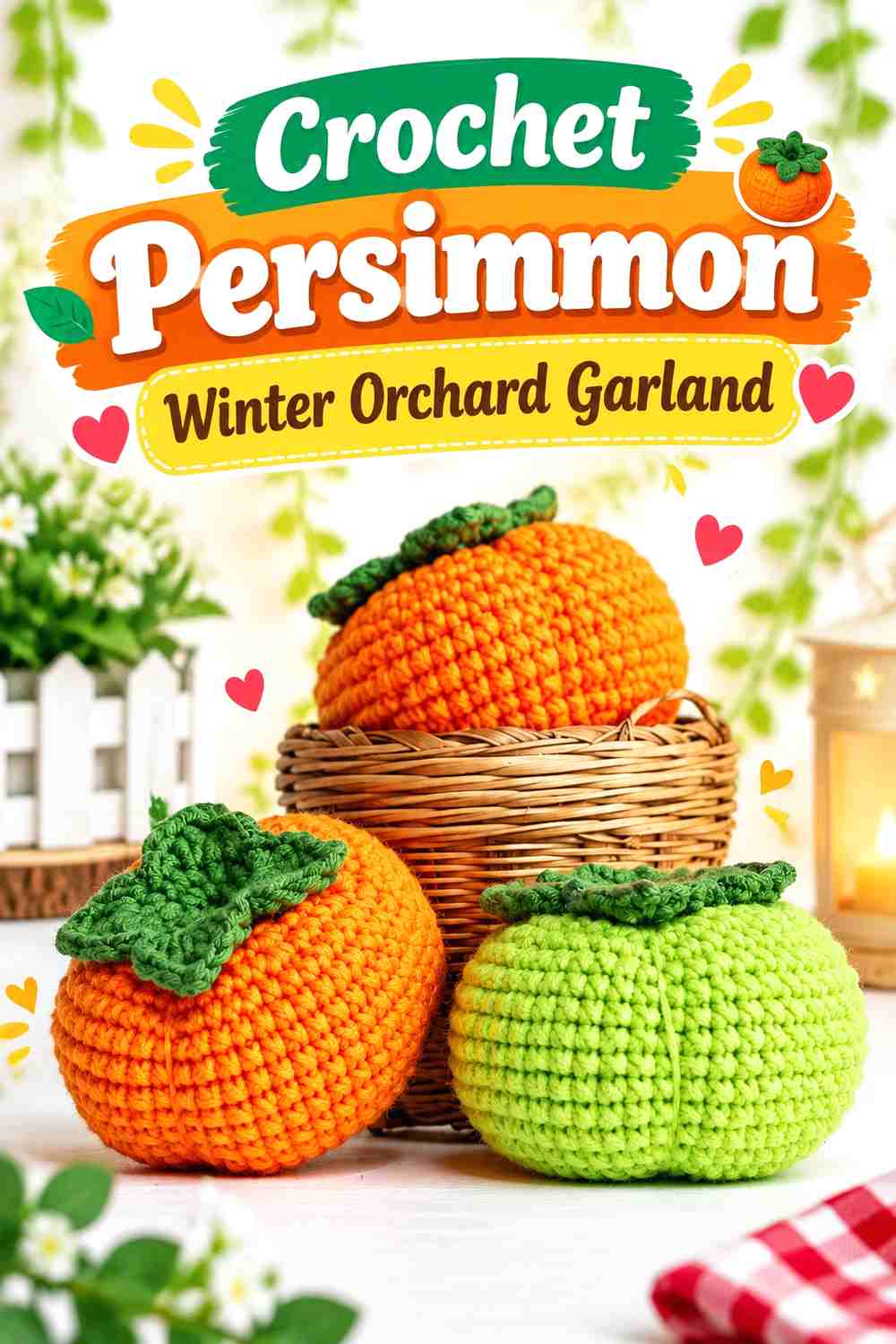
Amigu World provides a dimensional persimmon tutorial with the fruit’s recognizable leafy top. The orange-red body offers a useful bridge between red orchard fruit and brighter citrus.
Persimmon Works Well in Muted Autumn-to-Winter Palettes
Rust, burnt orange, terracotta, and orange-red can transition naturally from late fall decor into early winter.
Pairing those tones with cream and olive keeps the display cozy without forcing it into a strictly Christmas palette.
Give the Leafy Tops Space
Several stuffed persimmons packed tightly together can hide the very feature that distinguishes them from oranges.
Leave a little visible space around the tops or alternate their hanging heights.
Creator Credit: Amigu World
15. Crochet Whole-Lemon Botanical Garland
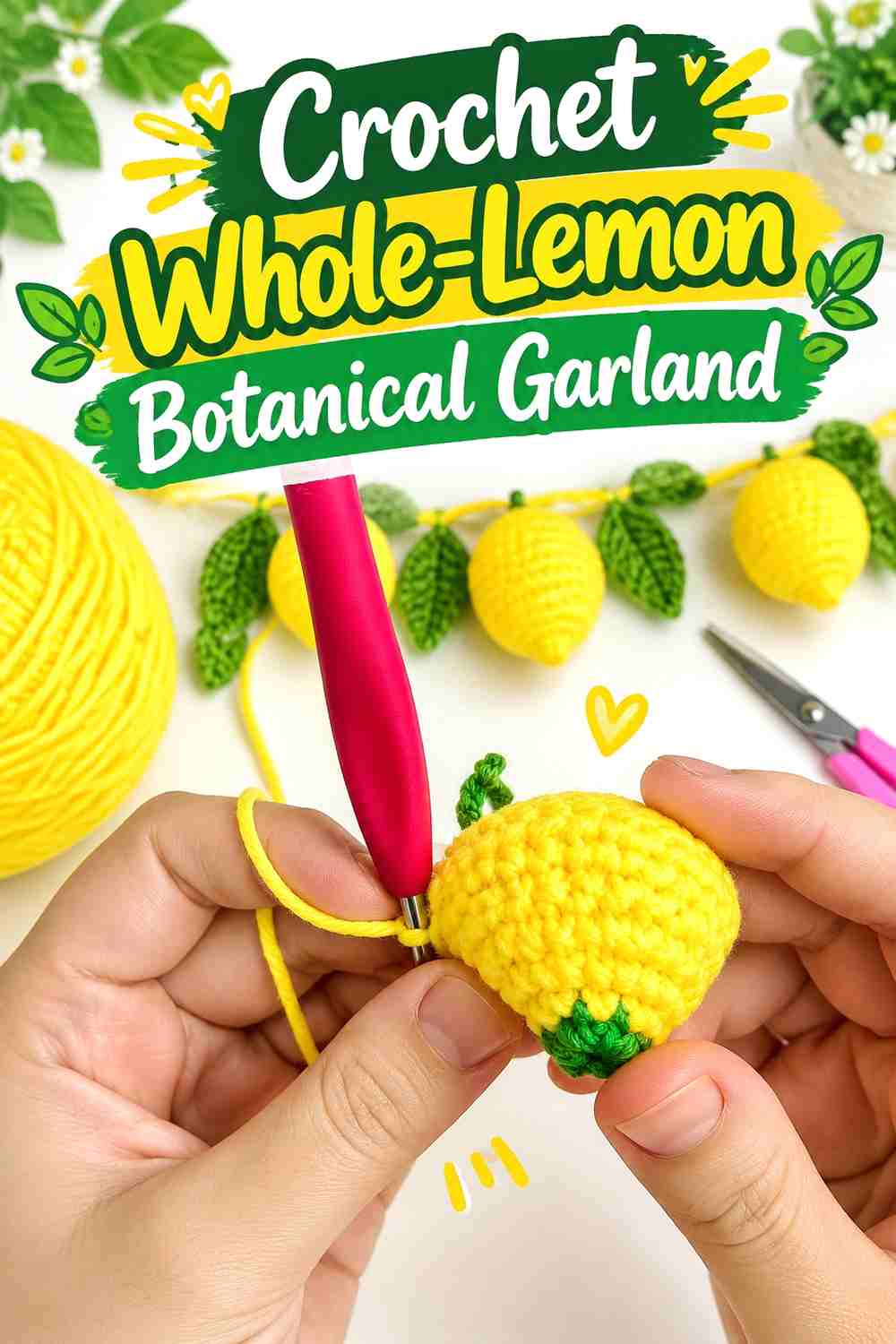
Pink’s Cozy Corner provides a whole crochet lemon rather than a flat citrus slice. That dimensional form creates a stronger botanical-fruit arrangement and can be mixed with leaves for an old kitchen-garden look.
Whole Lemons Should Be Treated as Focal Fruit
A stuffed lemon projects farther from the mantel than a flat appliqué.
Use fewer whole fruits and let leaves, smaller berries, or exposed strand fill the space between them.
Pointed Ends Help Preserve the Lemon Silhouette
Once several fruits are suspended together, round forms can begin to look similar.
Position the lemons so their characteristic tapered shape remains visible rather than being compressed between neighboring motifs.
Creator Credit: Pink’s Cozy Corner
16. Crochet Whole-Orange Pomander-Style Garland
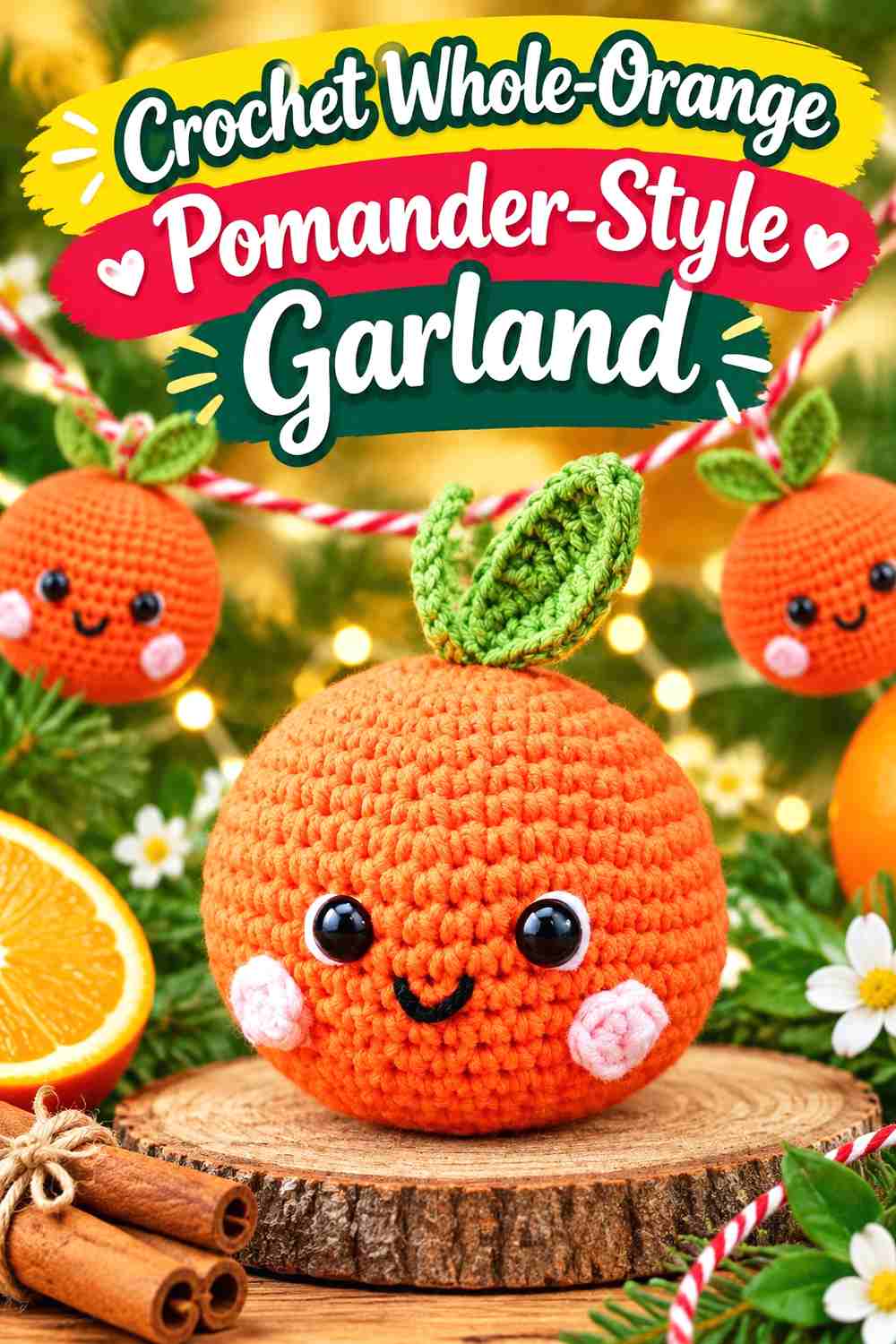
Odinka Wisanindhi demonstrates a dimensional orange with a stem and leaf, creating a substantially fuller fruit than a flat orange-slice motif.
Use Whole Oranges Like Vintage Pomander Ornaments
The round shape is well suited to spaced hanging accents rather than a densely packed strand.
For a winter interpretation, dark green, cream, brown, or burgundy surroundings can make the oranges feel more like traditional seasonal fruit decorations.
Test Rotation Before Completing the Garland
A round stuffed fruit can turn after it is suspended.
If the leaf or stem is important to the design, hang one finished orange first and adjust where it is supported before making all the attachment loops identical.
Creator Credit: Odinka Wisanindhi
17. Crochet Avocado Retro Fruit Garland
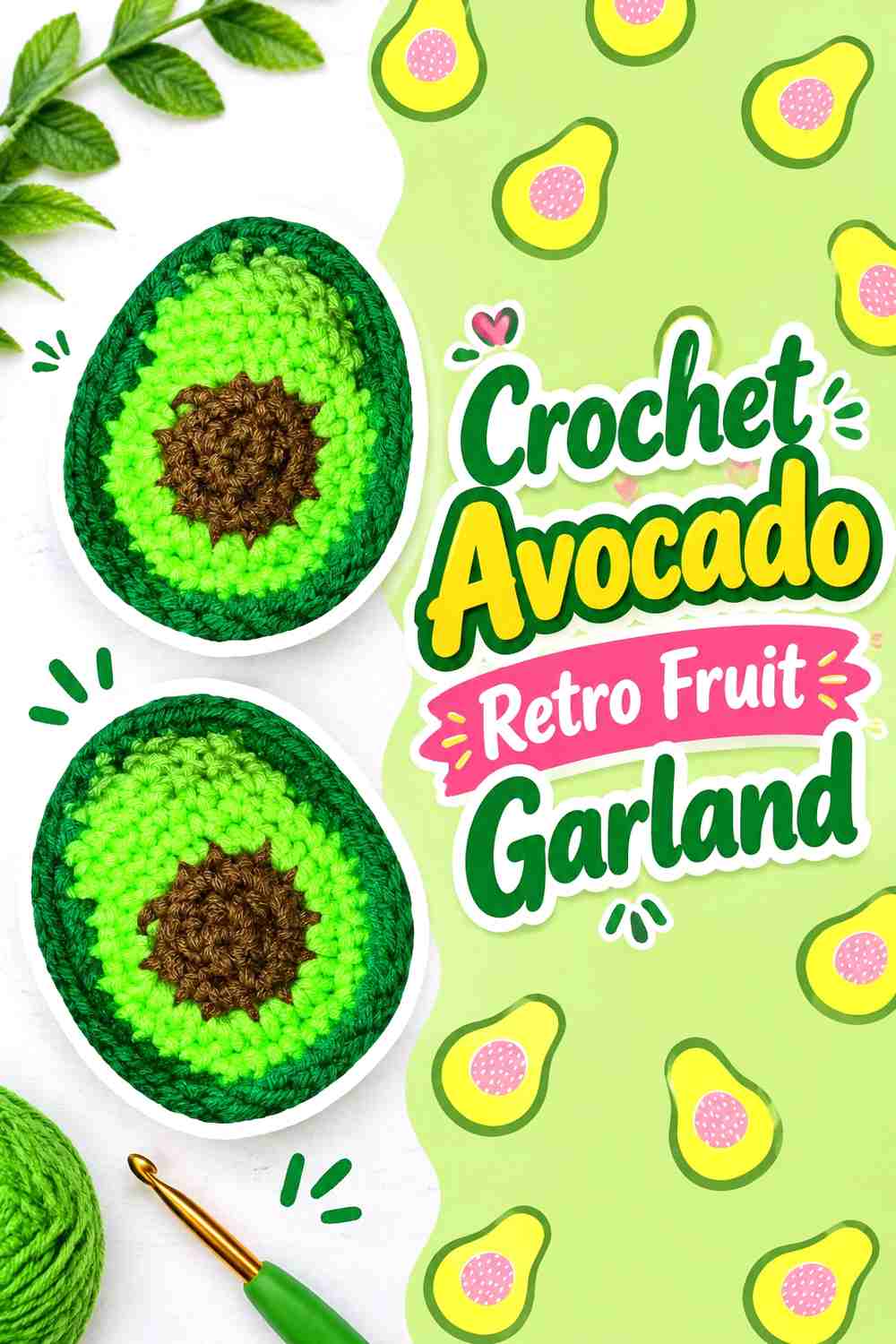
croliachet demonstrates a flat avocado appliqué. Its pear-like outer silhouette, pale center, and contrasting pit introduce a distinctly retro color combination that separates this idea from conventional red-and-citrus mantel decor.
Avocado Works Best as a Deliberately Retro Choice
This motif naturally evokes vintage kitchen graphics more than winter orchard decorating.
Lean into that difference with olive, avocado green, mustard, cream, and brown instead of trying to make it blend invisibly with traditional holiday colors.
The Center Pit Needs Enough Contrast
The interior circle is one of the details that immediately identifies the fruit.
Check the brown against the surrounding center color before making multiples; low contrast can make the motif less readable from across the room.
Creator Credit: croliachet
18. Crochet Pear Harvest Mantel Garland
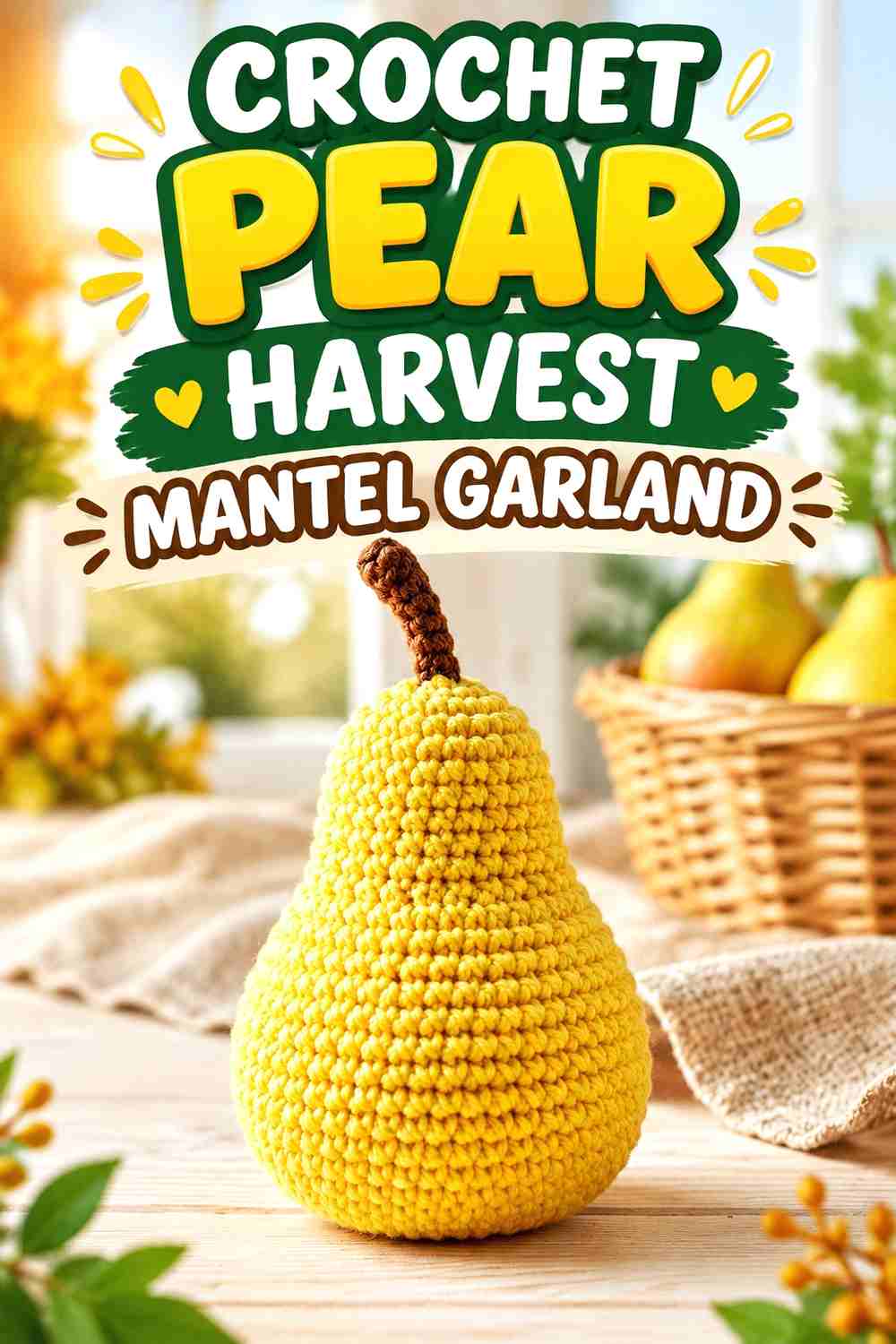
Alextitia Tuto Crochet demonstrates a stuffed pear amigurumi with the fruit’s tapered upper body and fuller base. The vertical silhouette makes it useful along the ends of a garland or anywhere the arrangement needs a downward-pointing shape.
Pears Break Up Repeated Round Fruit
Apples, oranges, plums, and berries can make a garland feel dominated by circles.
The narrower pear top introduces a different outline, which is especially useful in a mixed vintage-fruit display.
Golden and Muted Green Pears Create Different Moods
Golden ocher makes the fruit warmer and more decorative, while olive or yellow-green gives the garland a quieter orchard character.
If you use both, repeat the same stem or leaf color so the variation still feels coordinated.
Creator Credit: Alextitia Tuto Crochet
19. Crochet Banana Vintage Market Garland
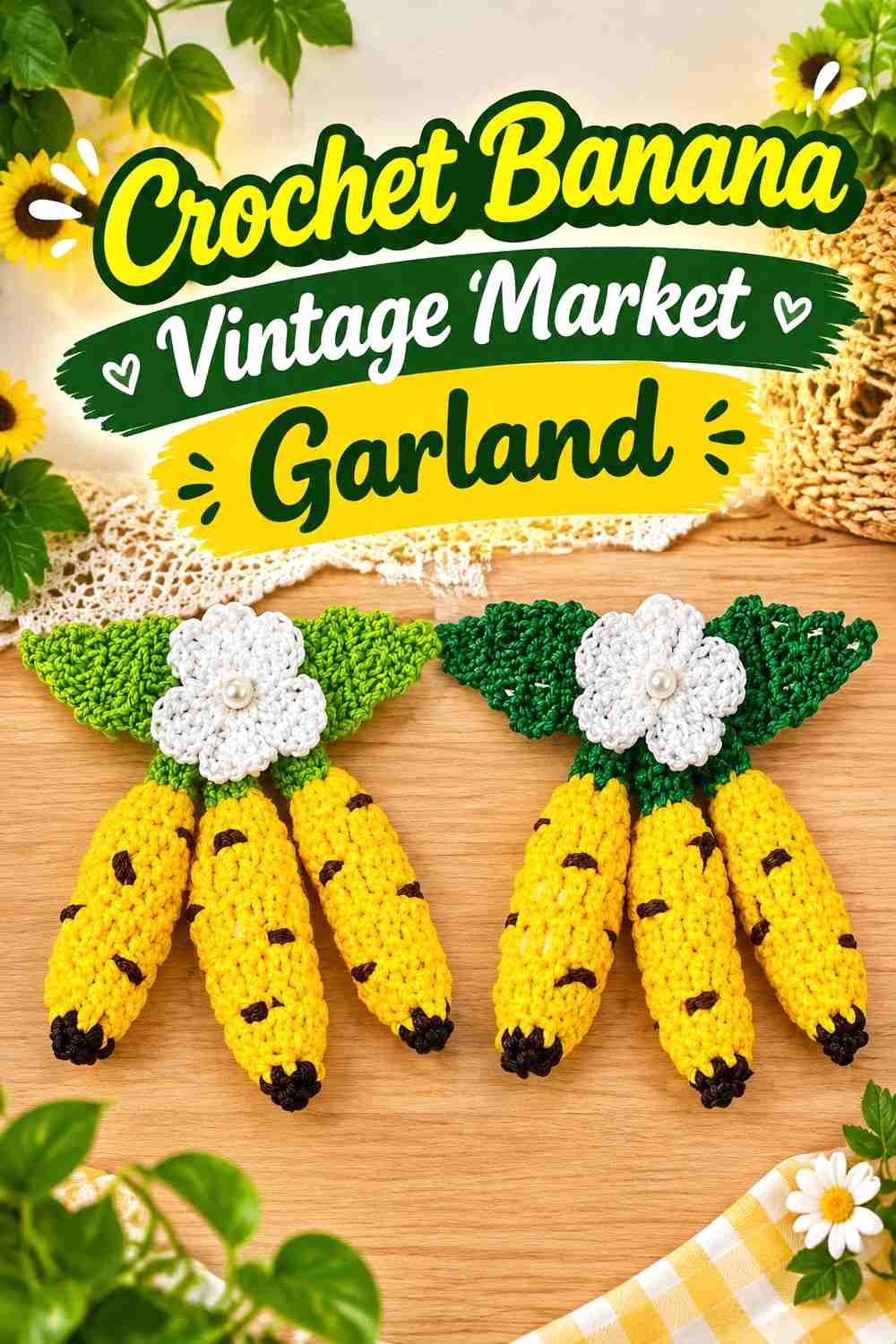
valdenete crochê artes e reciclagem demonstrates a flat crochet banana appliqué. Its long curved form is unlike any of the circular, clustered, or pear-shaped fruit above, making it a useful final option for a playful vintage market or pantry-themed mantel.
Curved Motifs Can Interrupt a Row of Round Fruit
If a mixed garland contains apples, citrus slices, cherries, and berries, an occasional banana changes the direction of the composition.
Place it at a slight angle rather than forcing every curve into the same horizontal orientation.
Mustard Yellow Feels More Vintage Than Neon
A muted golden yellow can coordinate with brown stems, olive leaves, cream cord, and deeper fruit colors without overwhelming them.
Make sure the darker end details still show clearly against the main yellow so the silhouette remains recognizable.
Creator Credit: valdenete crochê artes e reciclagem
Which Vintage Fruit Garland Style Works Best?
| Garland Direction | Main Character | Construction | Best Planning Check |
|---|---|---|---|
| Strawberry | Cottage and romantic | Dimensional repeated fruit | Avoid overcrowding |
| Watermelon | Retro market print | Flat wedges | Allow enough horizontal space |
| Grapes | Vineyard and botanical | Clustered appliqué | Preserve downward shape |
| Flat lemon | Pressed botanical | Small appliqués | Keep yellow visible |
| Peach | Soft orchard | Flat fruit and leaves | Maintain leaf contrast |
| Orange slice | Dried-citrus inspired | Flat circular motifs | Control repetition |
| Raspberry | Textured berry | Dimensional clusters | Group rather than scatter |
| Pineapple | Vintage pantry | Tall appliqué | Use as statement motif |
| Apple | Farmhouse orchard | Flat appliqué | Let red anchor the palette |
| Cherries | Vintage café | Paired appliqué | Protect connecting stems |
| Blueberry | Cool cottage | Small hanging fruit | Vary cluster size |
| Plum | Jewel-tone winter | Stuffed fruit | Limit total weight |
| Pomegranate | Heritage winter | Dimensional crowned fruit | Keep crown visible |
| Persimmon | Warm winter orchard | Stuffed fruit | Give leafy tops space |
| Whole lemon | Botanical citrus | Stuffed fruit | Treat as focal pieces |
| Whole orange | Pomander inspired | Stuffed round fruit | Test rotation |
| Avocado | Retro kitchen | Flat appliqué | Preserve pit contrast |
| Pear | Traditional orchard | Stuffed tapered fruit | Use silhouette strategically |
| Banana | Vintage market | Curved appliqué | Balance curved orientation |
For the lightest mantel treatment, start with the lemon, peach, orange-slice, apple, cherry, pineapple, avocado, or banana appliqués. They can create a long visual run without requiring the connecting strand to support several stuffed objects.
For a fuller winter arrangement, plums, pomegranates, persimmons, pears, whole lemons, and oranges work better as focal pieces. The strawberry, raspberry, blueberry, and grape ideas sit between those extremes because they naturally work in clusters.
Conclusion
A vintage crochet fruit garland becomes more convincing when the fruits are chosen for shape and visual weight rather than simply adding every available motif to one strand.
For a classic orchard mantel, apples, pears, plums, peaches, and pomegranates provide a strong foundation. Citrus slices and whole lemons or oranges move the display toward traditional fruit ornaments, while strawberries, cherries, raspberries, blueberries, and grapes add smaller accents.
Pineapple, avocado, watermelon, and banana take the style in a more playful retro-kitchen direction. Those motifs can work especially well when the goal is vintage market imagery rather than a traditional winter orchard.
Whatever combination you choose, make representative fruit first and arrange them on the mantel before producing multiples. Check color from normal viewing distance, compare the physical weight of stuffed and flat motifs, and use the original creator tutorials for the exact crochet construction. For a working fireplace, follow the appliance manufacturer’s requirements and keep combustible crochet decor away from heat and flame.
Frequently Asked Questions
Which crochet fruits look most vintage on a winter mantel?
Apples, pears, cherries, grapes, citrus, plums, and pomegranates naturally suit orchard, botanical, and traditional fruit-decoration themes. Muted yarn colors can strengthen the vintage effect, but the recognizable fruit silhouette matters more than making every shade look aged.
Can I combine flat fruit appliqués and stuffed fruit in one garland?
Yes, but plan around weight. Stuffed fruit works well at selected focal points, while flat motifs can cover longer sections without adding as much bulk. Arrange the heaviest pieces first and decide whether they need separate support.
How do I stop stuffed crochet fruit from turning backward?
Test the hanging point on one completed fruit. Round objects naturally rotate, so the attachment may need to sit slightly behind the visual center if you want a leaf, stem, crown, or other feature facing forward.
What colors make a crochet fruit garland look vintage instead of summery?
Consider tomato red, burgundy, plum, muted peach, ocher, mustard yellow, burnt orange, olive, dark green, cream, and brown. You do not need to desaturate every fruit; repeating a subdued neutral or foliage color can unite brighter motifs.
Should every fruit motif be the same size?
No. Variation can make a mantel arrangement more interesting, but large differences should feel deliberate. Make samples before producing multiples, especially when combining tutorials that use different yarn weights or construction methods.
What is the easiest way to make a long mantel garland look full?
Use visible connecting cord and repeat smaller flat motifs between larger focal pieces. A garland does not need fruit touching from end to end. Negative space can actually make individual shapes easier to recognize.
Can a crochet fruit garland hang over a working fireplace?
Treat crochet yarn, stuffing, ribbons, and similar decorations as combustible materials. Do not let a garland hang near the opening, flame, hot surfaces, or vents. Follow the clearance and decorating requirements in the specific fireplace manufacturer’s instructions rather than assuming a general mantel position is safe.