A crochet miniature room can turn a small shelf into a complete winter story. Instead of displaying one amigurumi figure by itself, you can build a tiny reading corner around a chair, create a bedroom around miniature textiles, arrange a cocoa table for a winter kitchen, or use a wreath, stocking, candle, or Christmas tree to establish the season.
The important distinction is scale. Some tutorials in this collection are specifically designed for dollhouses, while others teach small amigurumi objects that can become focal pieces in a miniature-room display. They should not automatically be combined without comparing their finished proportions first.
These 19 ideas therefore focus on room planning rather than reconstructing the creators’ patterns. Use the linked tutorials for exact construction, then decide how much surrounding furniture, floor space, textile detail, and seasonal decoration your shelf scene actually needs.
Quick List
- Crochet Fireside Reading Nook Miniature Room
- Crochet Vintage Lamp Library Miniature Room
- Crochet Oval-Rug Winter Parlor Miniature Room
- Crochet Checkerboard Entryway Miniature Room
- Crochet Basket-Filled Nursery Miniature Room
- Crochet Granny-Throw Bedroom Miniature Room
- Crochet Lace Tea Room Miniature Scene
- Crochet Boutique Dressing Room Miniature Scene
- Crochet Christmas Tree Living Room Miniature Scene
- Crochet Candlelit Mantel Miniature Room
- Crochet Hot Cocoa Kitchen Miniature Room
- Crochet Yarn-Basket Craft Room Miniature Scene
- Crochet Teddy Bear Nursery Miniature Room
- Crochet Penguin Winter Playroom Miniature Scene
- Crochet Mushroom Cottage Miniature Room
- Crochet Cat Window Nook Miniature Room
- Crochet Winter Cake Tea-Party Miniature Room
- Crochet Wreath Entryway Miniature Room
- Crochet Stocking Mantel Miniature Room
Establish the Scale Before Building the Whole Crochet Room
“Miniature” is not one universal size. A project intended for a traditional dollhouse can look very different beside an amigurumi object designed as a keychain or small ornament.
Choose one important object as your scale anchor before adding the rest of the room. In a living room, that might be the chair. In a bedroom, use the bed or blanket. For a kitchen vignette, a table or main food prop can provide the reference.
Place potential accessories beside that anchor before making multiples. A basket, rug, mug, or pillow that looks perfectly small on its own may still overpower true dollhouse-scale furniture.
You also do not need every element to be crocheted. A shallow display box, wooden shelf, paper wall, miniature frame, or existing dollhouse furniture can provide structure while crochet supplies the soft furnishings and amigurumi focal pieces.
Use Texture to Make Tiny Winter Rooms Feel Cozy
Winter atmosphere does not depend on adding snowflakes to every room. Texture often communicates warmth more effectively.
A granny-square throw can suggest layered bedding. A round rug can make a sitting area feel warmer. Tiny baskets imply stored blankets or yarn. Cocoa, candles, stockings, and stuffed animals give a scene a lived-in cold-weather character without requiring an explicitly Christmas theme.
Color can reinforce that effect. Cream, rust, burgundy, evergreen, brown, mustard, dusty rose, muted blue, and oatmeal can all suit cozy miniature interiors. You do not need to use every seasonal color at once.
Be careful with excessive texture, though. At miniature scale, thick yarn can make a tiny room visually crowded very quickly. Give the main crochet object enough surrounding space for its silhouette to remain recognizable.
Plan the Shelf as a Scene, Not a Collection of Tiny Objects
Miniature displays usually become stronger when one object is clearly dominant.
A reading nook might need only a chair, rug, book, and lamp. A winter kitchen could be communicated with a cocoa mug, small table, and basket. Filling every corner with another amigurumi item can make it harder to understand what the room is supposed to represent.
Also consider the normal viewing angle. Shelf displays are usually seen from the front rather than from directly overhead. Position the tallest object toward the back and keep important small props where they will not disappear behind furniture.
If your display is accessible to babies, young children, or pets, remember that tiny crocheted objects and detachable details are better treated as decorative collectibles unless they were specifically designed and assessed for another use.
1. Crochet Fireside Reading Nook Miniature Room
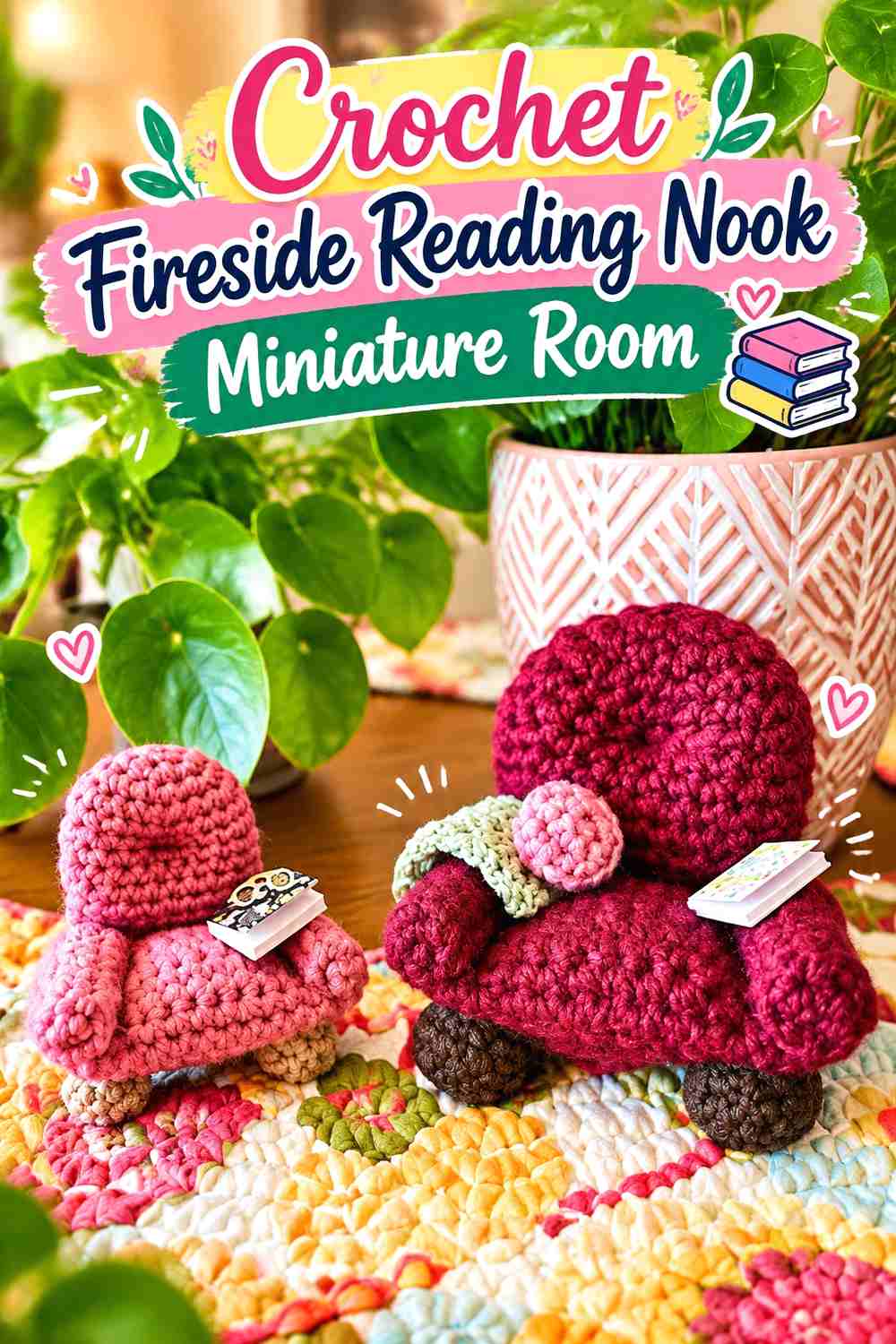
A substantial miniature chair gives a room an immediate purpose. Wind Rose Fiber Studio’s source project creates an upholstered-style crochet chair with enough dimensional character to serve as the visual anchor for a reading nook.
Instead of filling the room with several large pieces of furniture, let the chair establish the scale. A tiny rug, folded throw, book, or decorative lamp can then provide context without hiding the seating shape.
Let the Chair Control Every Other Proportion
Once the chair is finished, compare every accessory directly against it.
A cushion should still leave the chair recognizable. A side rug should extend beyond the feet without consuming the entire floor. Any book or basket beside the chair needs to look like something its imagined occupant could realistically handle.
This approach is much more reliable than combining several tutorials simply because all of them contain the word “mini.”
Build Warmth Around the Seat Instead of Adding More Furniture
For a winter shelf, one well-dressed chair may create more atmosphere than a complete matching furniture set.
A folded miniature textile over one arm, a small basket beside the seat, and a muted background can suggest a quiet evening reading corner. Keeping empty floor area around the chair also makes the dimensional construction easier to appreciate.
Creator Credit: Wind Rose Fiber Studio
2. Crochet Vintage Lamp Library Miniature Room
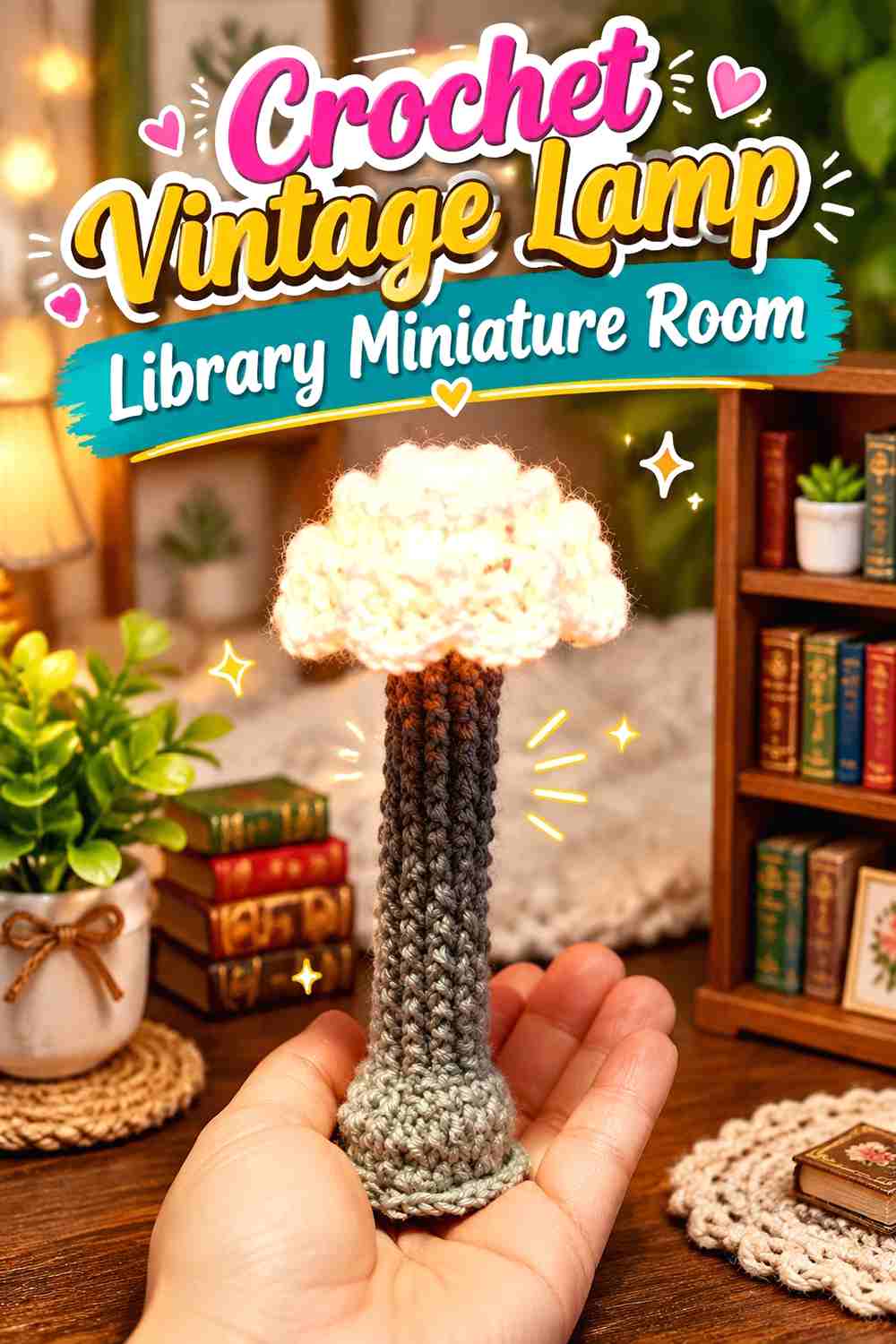
A lamp gives a tiny library or study a strong vertical element. The Lanzagurumi Canarias tutorial specifically demonstrates crochet miniature furniture for a dollhouse, making the lamp a useful starting point for a shelf-scale reading or desk scene.
Treat the finished crochet object as a decorative lamp form. Do not assume a miniature yarn lamp can safely contain a hot bulb or improvised electrical component.
Pair the Lamp with Low Objects
The lamp will read more clearly when the objects around its base stay comparatively low.
A tiny book stack, flat rug, side table, or folded textile can establish the room without competing with the shade. If another tall object sits immediately beside it, the lamp can lose its role as the visual accent.
Judge the Shade Against the Furniture Below It
Miniature lamps can look believable alone but become oversized once placed on a small table.
Before arranging the final room, compare the shade width with the supporting furniture. If you combine this tutorial with objects from another source, scale compatibility deserves more attention than coordinating colors.
Keep the crochet lamp decorative unless any lighting component you add is specifically designed for safe use with the materials involved.
Creator Credit: Lanzagurumi Canarias
3. Crochet Oval-Rug Winter Parlor Miniature Room
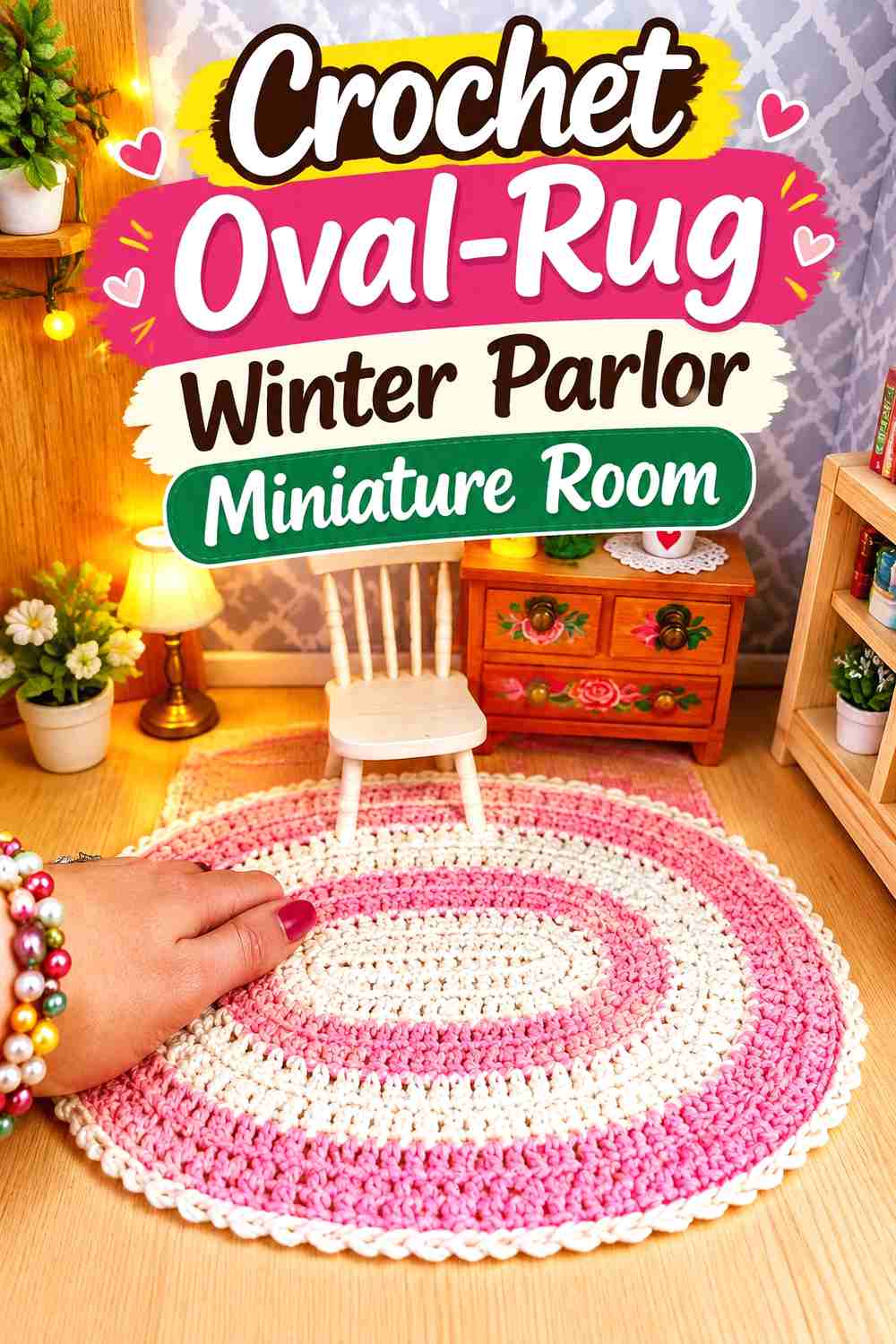
Loy Dollhouse’s crocheted miniature rug provides a different starting point: instead of building the scene around furniture, you establish the room from the floor upward.
An oval rug is particularly useful beneath a chair, small table, or bed because its curved outline breaks up the many straight edges common in miniature interiors.
Decide What the Rug Is Supposed to Connect
A room rug works best when it visually relates two or more objects.
For a parlor scene, it could connect a small chair and table. In a bedroom, the rug might project from the side or foot of the bed. Avoid covering so much of the rug that its oval shape becomes impossible to recognize.
Flatness Matters More at Small Scale
A slight curl that seems insignificant on a full-size crochet piece can look substantial in a dollhouse.
Check the finished rug on the same type of flat shelf or floor where you intend to display it. If you use a different material from the tutorial, follow that fiber’s appropriate finishing and care methods rather than assuming every yarn responds to shaping in the same way.
Creator Credit: Loy Dollhouse
4. Crochet Checkerboard Entryway Miniature Room
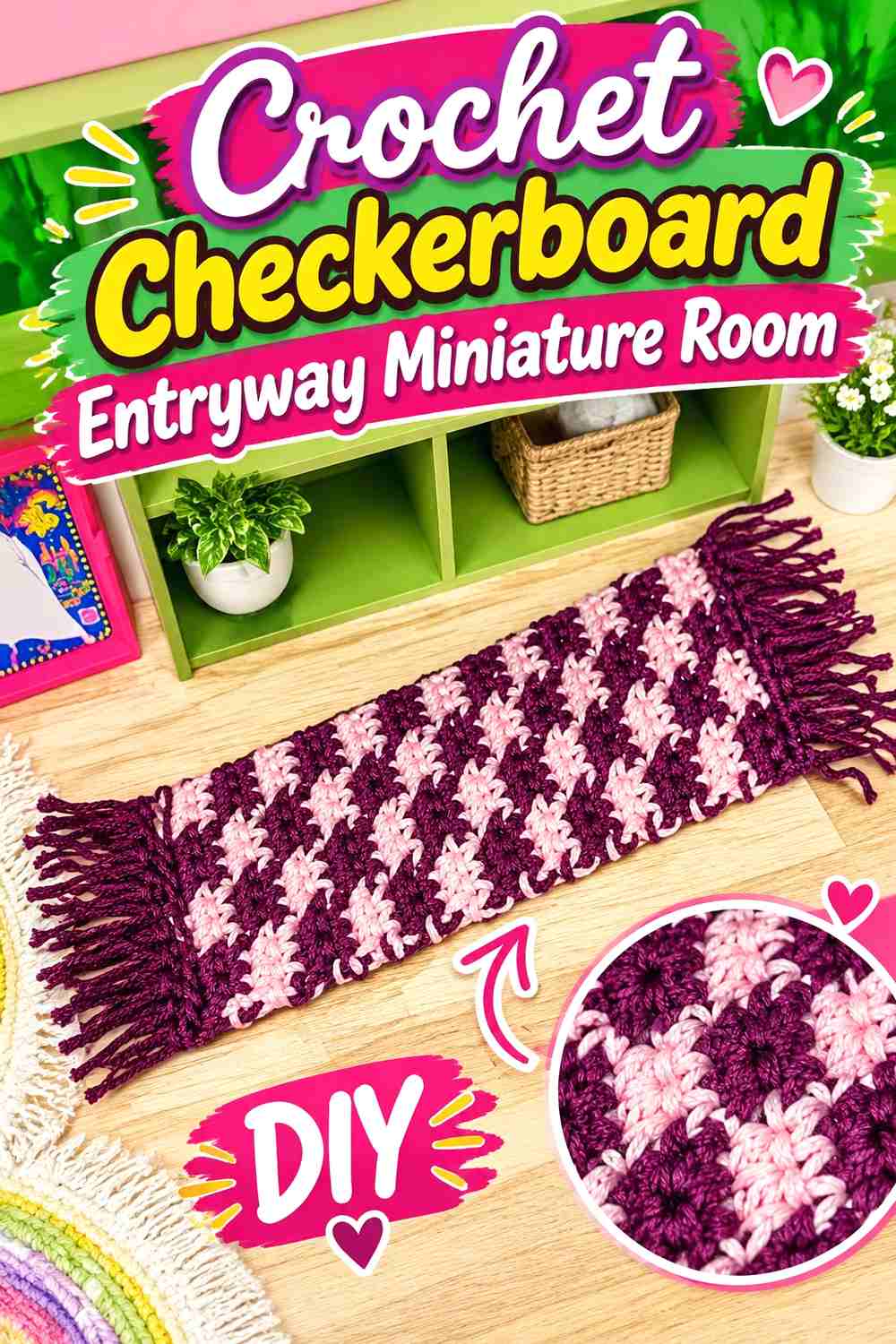
A checkerboard floor textile gives a miniature room immediate graphic structure. Daring Daisy’s small-scale crochet rug concept can become the foundation for an entryway, mudroom, kitchen corner, or contemporary winter shelf.
Unlike a softly blended rug, checkerboard crochet attracts attention because viewers instantly notice the repeating blocks.
Check the Pattern from Normal Shelf Distance
Tiny color blocks can look crisp while you are crocheting them but merge visually when viewed from farther away.
Place the developing rug where the finished room will sit and step back. This tells you whether the checkerboard remains recognizable and whether it is already strong enough to be the room’s main patterned feature.
Let Plain Furniture Balance the Floor
If the rug provides strong contrast, the furniture above it does not need equally busy crochet.
A restrained bench, basket, coat prop, or plain chair lets the checkered floor remain visible. Using several competing granny, striped, and checkerboard textiles together can make a tiny entryway feel cluttered faster than a full-size room.
Creator Credit: Daring Daisy
5. Crochet Basket-Filled Nursery Miniature Room
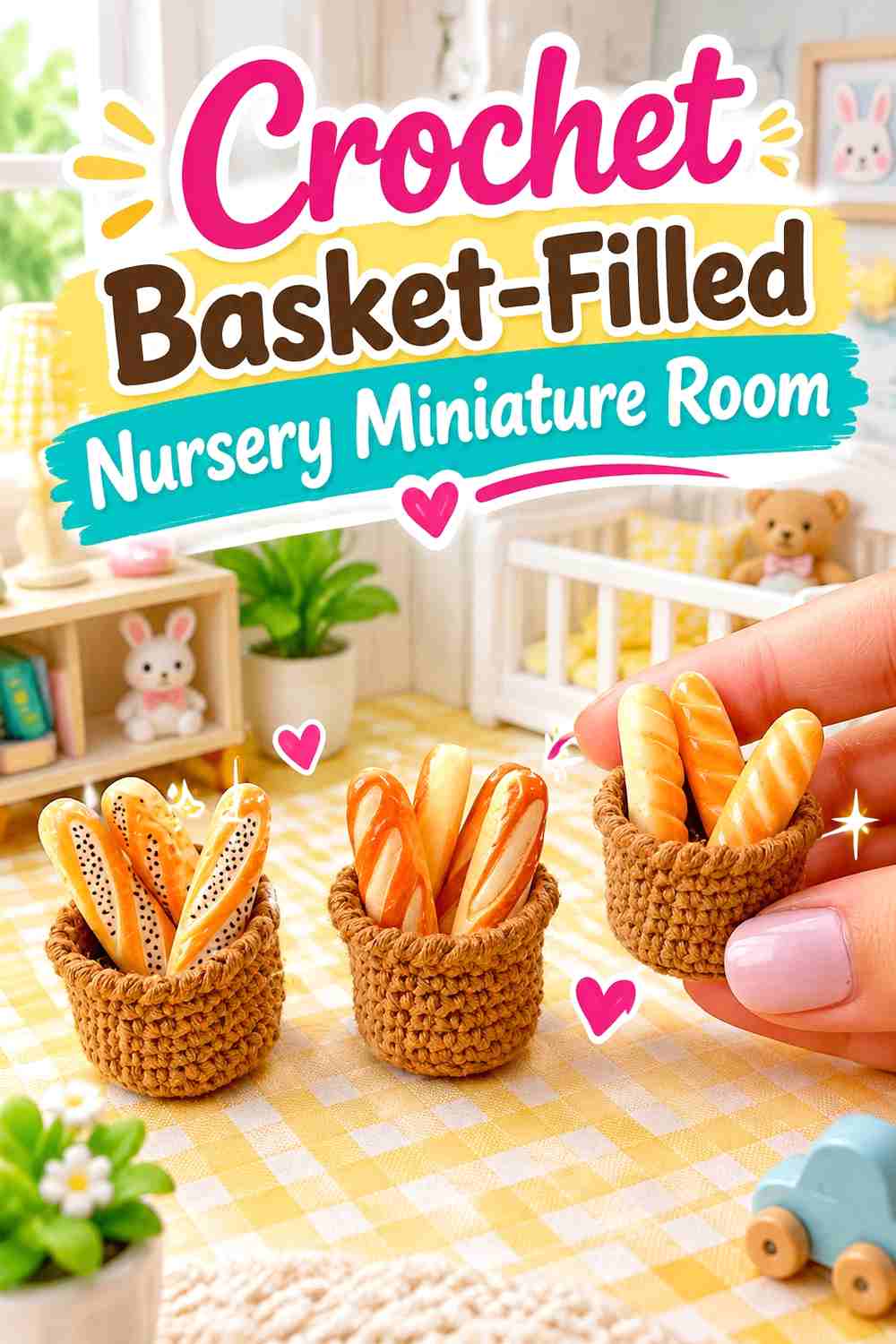
A tiny storage basket is a small project with a surprisingly strong storytelling role. LittleMaggieShop’s dollhouse basket tutorial provides a useful focal accessory for a miniature nursery where folded textiles, toys, or other tiny props suggest an occupied room.
Because a basket is portable, the same basic idea can move later to a bathroom, bedroom, laundry space, or sewing room.
Choose the Contents Before Finalizing the Scene
The basket should make sense beside whatever it supposedly holds.
A container for blankets needs a different visual relationship to its contents than a basket for tiny toys. Establishing that role first also helps you decide where the basket belongs: floor, shelf, bedside, or changing area.
Watch the Opening and Rim
The recognizable feature of a small basket is not elaborate decoration but its container silhouette.
If the sides become too soft or the upper edge flares dramatically, it may begin to resemble a bowl. Check the profile before filling it with props, because contents can conceal structural problems rather than solve them.
Creator Credit: LittleMaggieShop
6. Crochet Granny-Throw Bedroom Miniature Room
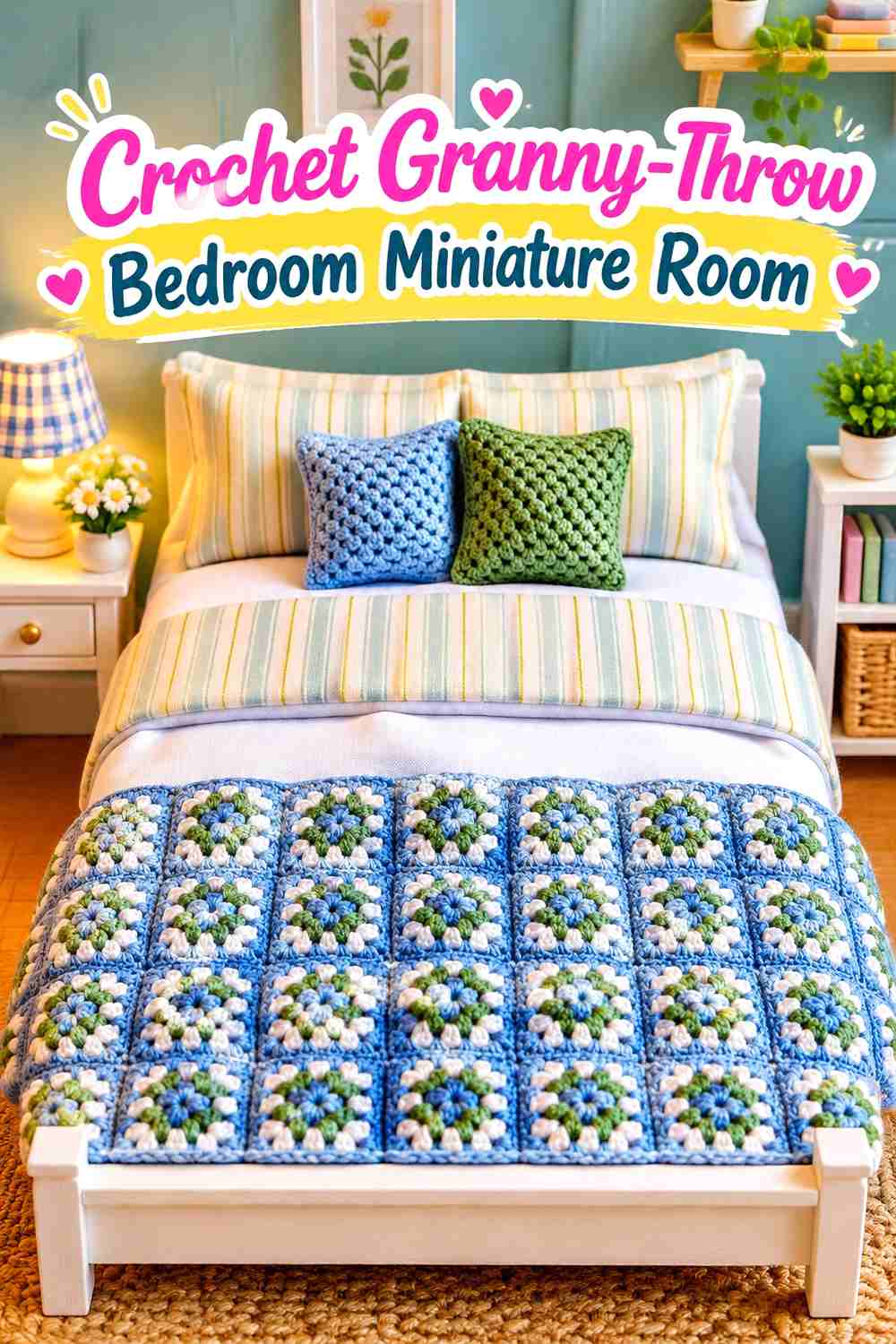
A tiny granny-square throw brings familiar handmade textile language into a miniature bedroom. Julie Warren’s dollhouse-focused project is especially useful because a completed small motif gives you an early opportunity to evaluate scale before committing to the whole blanket.
Drape the finished textile over a bed, chair, or bench rather than automatically spreading it flat. How it hangs can communicate just as much as its color pattern.
Make One Motif Your Scale Test
Before producing a collection of tiny squares, put the first completed motif beside the intended furniture.
Ask whether the stitches read as miniature crochet or whether each cluster appears enormous compared with the bed. Material thickness can alter the visual scale even when the overall measurements technically fit.
Avoid Matching Every Textile
A colorful granny throw can already carry most of the room’s pattern.
Instead of making the rug, cushions, and curtains identical, repeat only one or two colors elsewhere. A quiet surrounding palette helps the miniature squares become the bedroom’s main handmade feature.
Creator Credit: Julie Warren
7. Crochet Lace Tea Room Miniature Scene
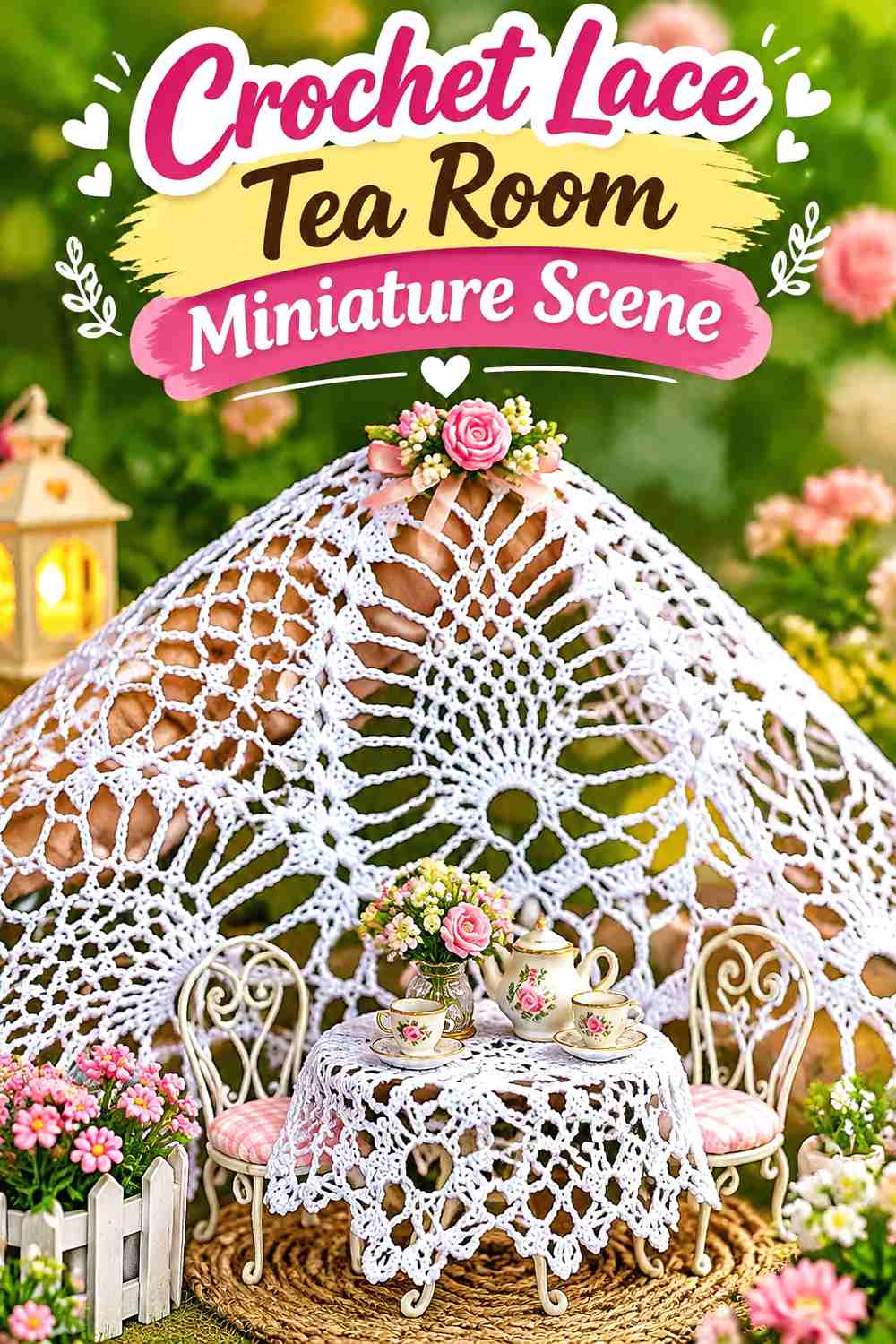
Fine crochet can create a more traditional miniature interior than bulky amigurumi shapes. HelgaRo’s dollhouse tablecloth tutorial is designed for a small-scale table setting, making it a natural anchor for a winter tea room.
Add only a few props around it—a chair, cup, cake, or tiny centerpiece—so that the openwork remains visible.
Preserve Enough Tabletop Around the Lace
A miniature table can vanish beneath an oversized cloth.
Before finishing the entire room, check how far the textile extends beyond each side. A formal tea-table look can tolerate an overhang, but the furniture still needs to remain identifiable beneath the crochet.
Fine Crochet Needs Space to Be Seen
Intricate lace can disappear when surrounded by too many tiny objects.
Instead of covering the table with numerous accessories, create a deliberate focal arrangement. One cake or teapot positioned near the center can give the room purpose while leaving enough empty textile for its pattern to show.
Creator Credit: HelgaRo
8. Crochet Boutique Dressing Room Miniature Scene
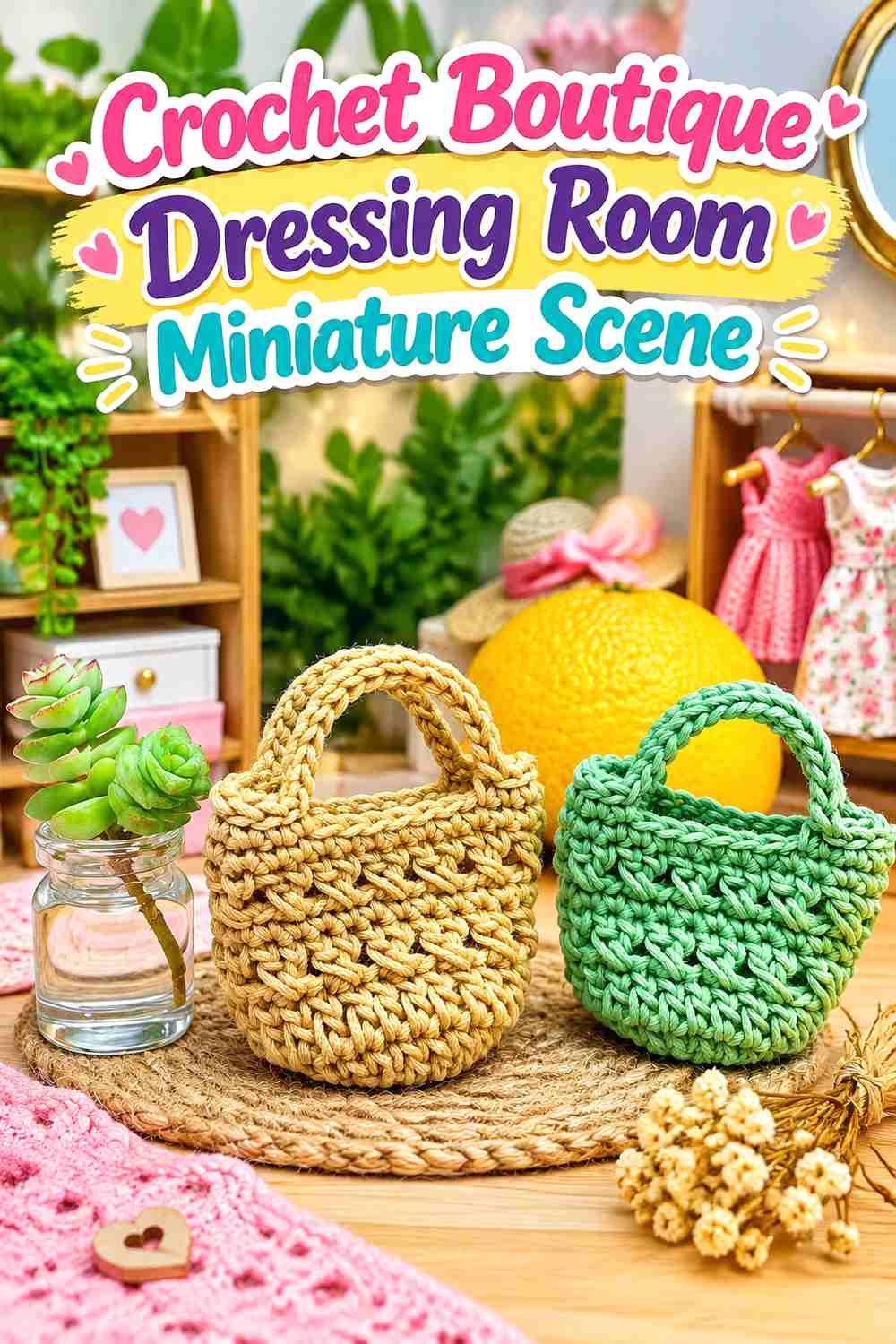
Nala Mini’s miniature crochet bag offers a way to create a room that feels occupied without making another large piece of furniture. A tiny handbag placed on a chair, hook, shelf, or dressing table immediately suggests a wardrobe or boutique setting.
This is especially useful for narrow shelf displays where a full sofa or bed would consume too much depth.
Scale the Bag to Its Imagined Owner
A miniature handbag should relate primarily to the doll rather than the room.
Place it beside the figure’s hand or body before constructing the rest of the dressing area. A bag that seems attractively tiny by itself can still look like oversized luggage beside a smaller doll.
Use Accessories to Suggest More Than You Build
A dressing room does not require a complete crochet wardrobe.
A small bag, chair, rug, mirror-shaped prop, and folded textile can communicate the idea with far less visual congestion. This leaves enough negative space for the miniature handbag to remain recognizable.
Creator Credit: Nala Mini
9. Crochet Christmas Tree Living Room Miniature Scene
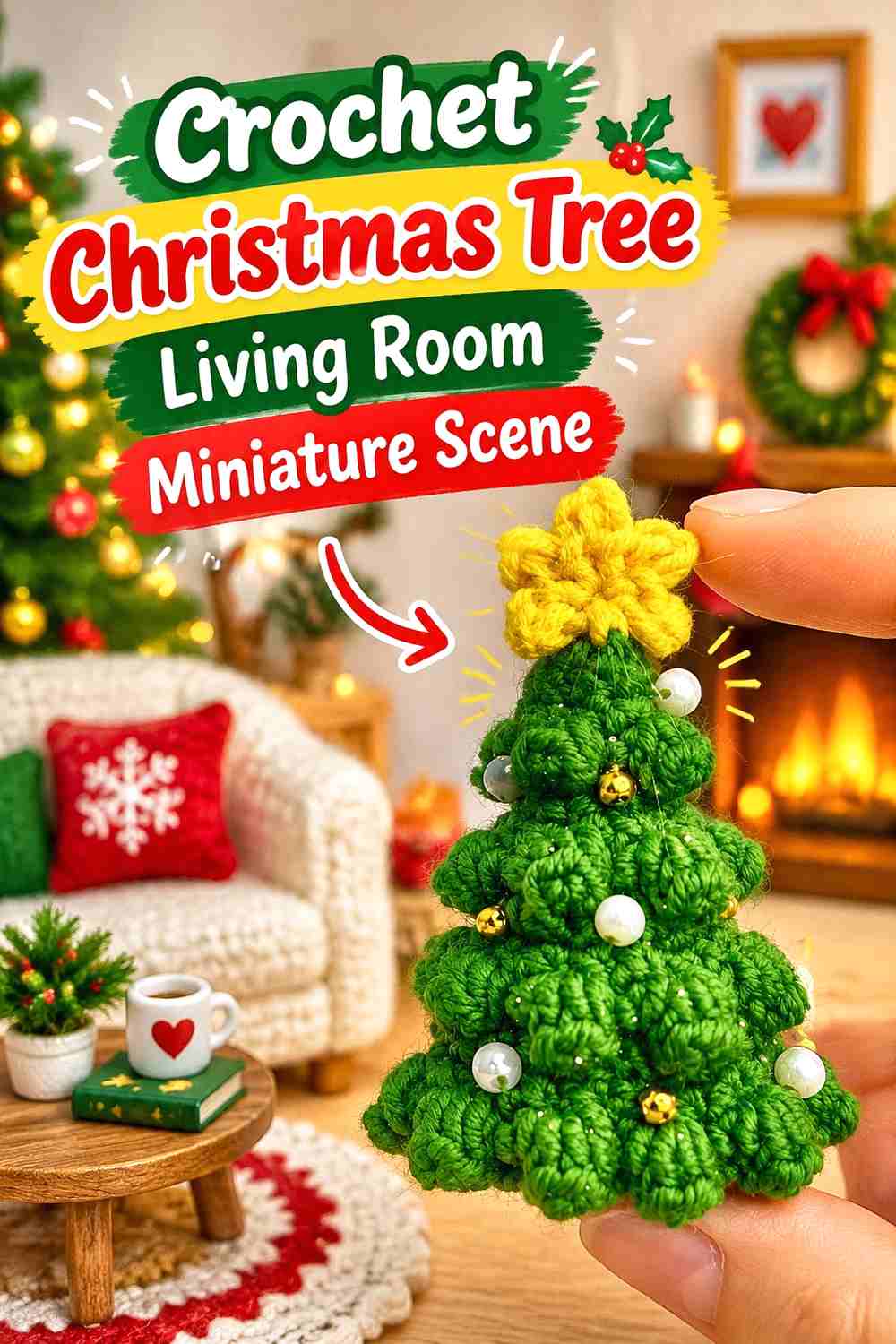
A small amigurumi Christmas tree creates an immediate winter focal point. Gul’s Cozy Crochet demonstrates a compact stuffed tree with a separate tiny star, giving you a recognizable seasonal object around which a whole shelf room can be organized.
Because the source project is an amigurumi-scale decoration rather than a complete dollhouse room, compare its finished proportions with your furniture before treating it as a miniature floor-standing tree.
Let One Tree Establish the Holiday Theme
You do not need Christmas motifs on every object once the tree is in place.
A neutral chair, simple rug, and perhaps one small parcel or basket can make the tree feel more prominent. Limiting the surrounding decorations also helps the room remain useful as winter inspiration rather than becoming an overloaded holiday display.
Leave Visual Space Around the Branch Shape
The outline of a miniature tree is easiest to read when surrounding items do not press directly against it.
Position lower props near the base and leave some background visible around the upper portion. This is particularly helpful on deep shelves where the crochet tree could otherwise merge into a dark or highly patterned backdrop.
Creator Credit: Gul’s Cozy Crochet
10. Crochet Candlelit Mantel Miniature Room

ToyGurumi’s amigurumi candle provides a straightforward way to add the appearance of warm light to a winter room without using a real flame.
Place the crochet candle on a miniature mantel, shelf, table, or windowsill and build the rest of the room around its upright silhouette.
Keep Crochet Candles Decorative
An amigurumi candle represents a candle; it is not a heat-resistant candle holder.
Do not place a flame inside or immediately beside yarn, stuffing, or crocheted embellishments. If you want actual illumination in a miniature room, use a separate lighting system designed for that purpose and follow its safety instructions.
Repetition Can Create a Mantel Arrangement
One candle can act as a small accent, while several compatible decorative pieces can establish a stronger mantel focal point.
If you make multiples, variation in placement can look more natural than lining every piece at equal intervals. Keep enough surrounding space for the individual candle silhouettes to remain distinct.
Creator Credit: ToyGurumi
11. Crochet Hot Cocoa Kitchen Miniature Room

Few objects communicate a cozy winter interior as quickly as a mug of cocoa. The olliehollycrochet source project creates an amigurumi hot-chocolate ornament with a dimensional mug form and topping details, making it a strong centerpiece for a tiny kitchen or café scene.
Since the project was not designed specifically as dollhouse tableware, treat it as a room-scale focal object unless its dimensions suit the furniture you are using.
Build the Kitchen Around the Mug’s Actual Scale
Finish the mug before selecting its table.
If a conventional dollhouse table looks too small, the better solution may be to turn the scene into a whimsical amigurumi room rather than forcing the mug into an incompatible realistic scale.
A stool, shelf, cake, cookie, or basket can then be proportioned around the cocoa instead.
Keep Small Toppings Visually Clear
A cocoa project gains much of its identity from the contrast between the cup and the top surface.
When arranging it on a shelf, avoid viewing angles where the tabletop hides that detail completely. A slightly elevated surface or open-front scene can make the miniature drink easier to recognize.
Creator Credit: olliehollycrochet
12. Crochet Yarn-Basket Craft Room Miniature Scene
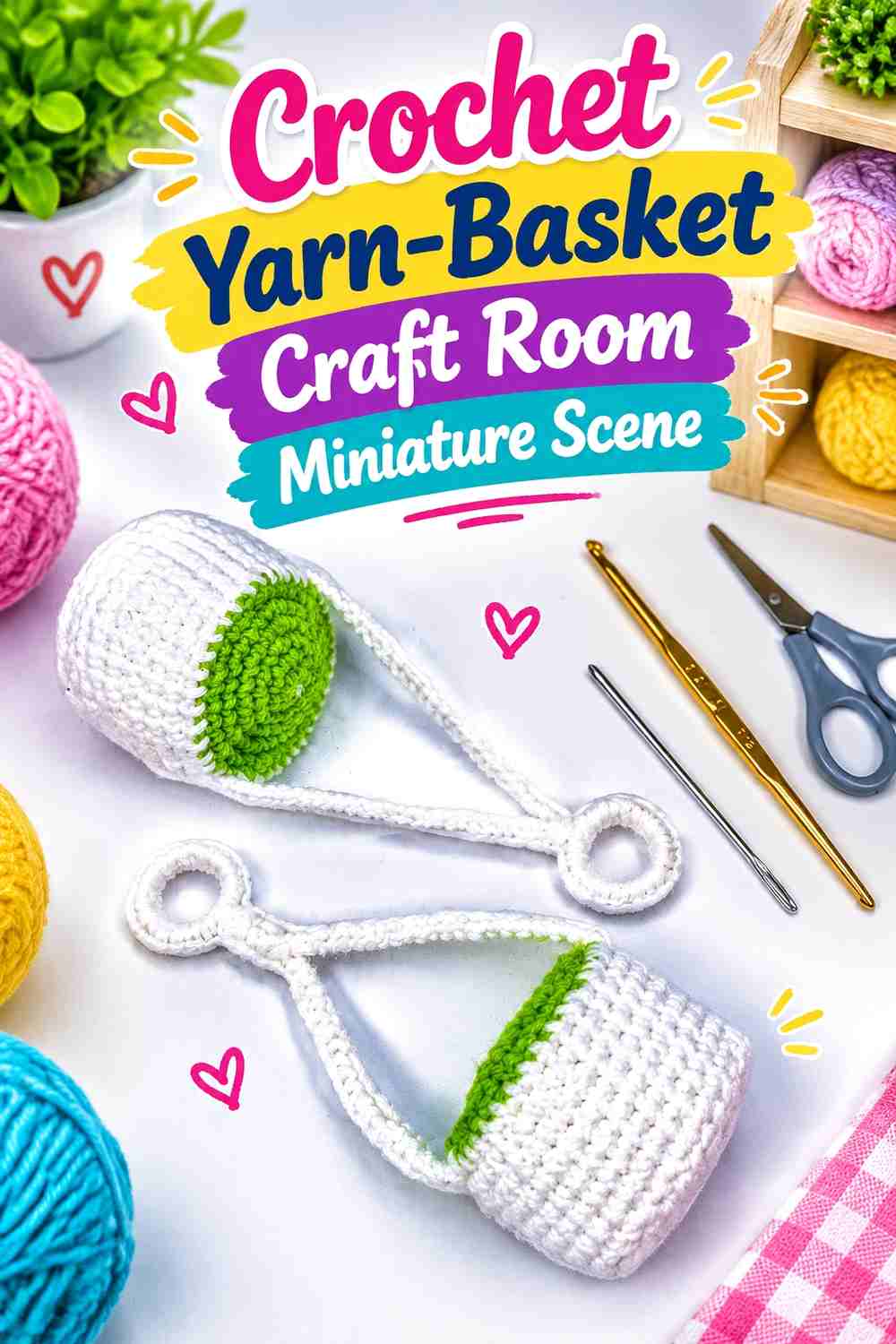
Molina.D DIY’s mini amigurumi basket provides an obvious starting point for a miniature crochet craft room. Fill the visual area around it with yarn scraps, a chair, folded textile, or small work surface to suggest a room in the middle of a project.
This scene can deliberately be more whimsical than a strict dollhouse interior, especially if your basket is larger than traditional miniature furniture.
A Craft Basket Benefits from Visible Contents
An empty basket reads as storage. A basket with coordinated yarn-like details immediately tells a stronger story.
Keep those additions proportional to the basket opening. Very thick “yarn balls” can obscure the container and turn the display into a pile of objects rather than a recognizable craft basket.
Controlled Clutter Looks More Convincing
Craft rooms naturally suggest supplies, but miniature clutter needs editing.
Choose a few recognizable elements rather than filling every open surface. Leaving some empty tabletop or floor area makes the scene feel intentionally busy instead of accidentally crowded.
Creator Credit: Molina.D DIY
13. Crochet Teddy Bear Nursery Miniature Room
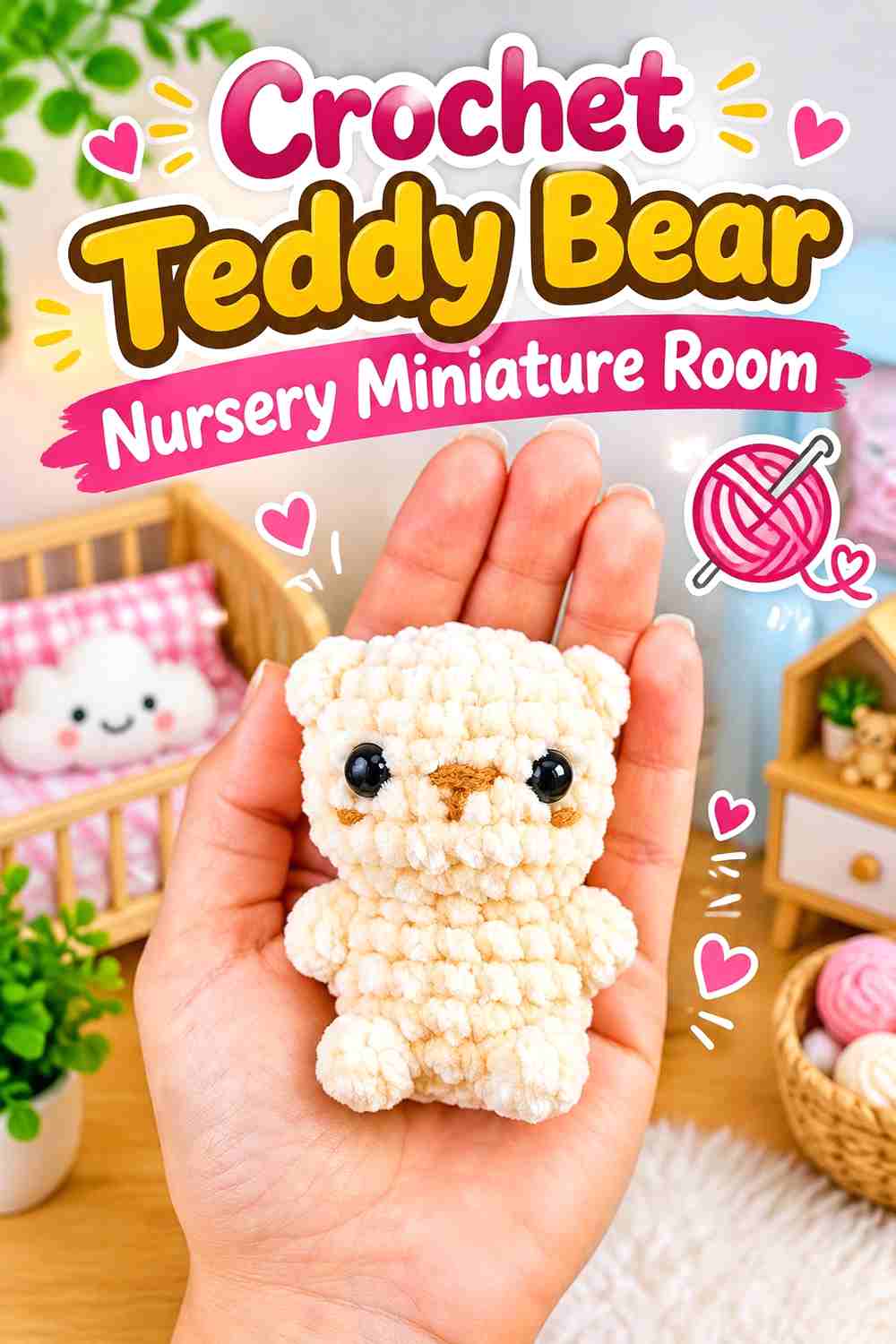
A small teddy bear can establish the purpose of a nursery or child’s bedroom without requiring themed motifs on every surface. Amigurumis Atina’s mini bear provides a compact stuffed character that can sit on a bed, chair, rug, or shelf.
This is also an example where the bear itself can serve as the scale anchor for a whimsical amigurumi room rather than a strict dollhouse reproduction.
Decide Whether the Bear Is a Toy or the Room’s Character
Those two roles create different scale relationships.
If the bear represents a toy belonging to a doll, it should remain visibly smaller than the room’s occupant. If the bear is the character who “lives” in the room, furniture can instead be built or selected around its body dimensions.
Make that decision before collecting the surrounding objects.
Use One Nursery Motif Rather Than Several
The bear already supplies a strong child-room cue.
A plain blanket, simple rug, basket, and muted wall allow it to remain central. Adding bear faces to every cushion, floor mat, and decoration can make the room’s individual components harder to distinguish.
Creator Credit: Amigurumis Atina
14. Crochet Penguin Winter Playroom Miniature Scene
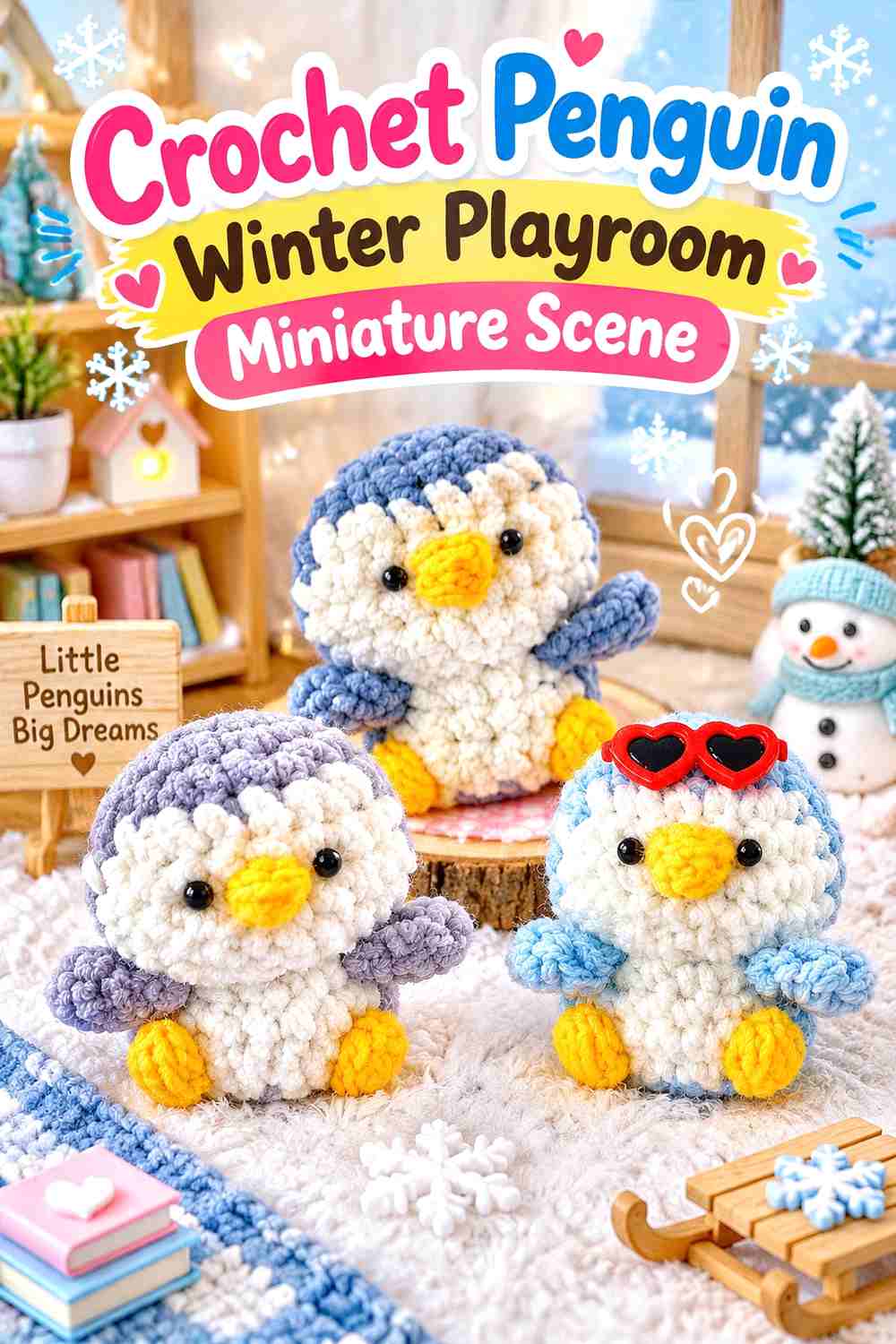
A tiny penguin immediately shifts a miniature shelf toward a playful cold-weather theme. はなやちゃん Hanayachan’s amigurumi tutorial produces a compact penguin form that can act as a room character rather than simply another decoration.
Instead of creating a literal Antarctic setting, use the penguin inside an imaginative winter playroom with small cushions, a basket, rug, or tiny tree.
Let the Character Determine Furniture Height
When an amigurumi animal occupies the room, standard dollhouse scale may no longer be the most useful reference.
Compare any chair, table, or basket to the penguin itself. The furniture should support the visual story even if the resulting scene is deliberately stylized rather than architecturally realistic.
Use Winter Cues Sparingly
The penguin already provides a strong seasonal signal.
A cool-toned rug, small snowflake decoration, or tiny evergreen may be enough to complete the effect. Too many separate snow and ice motifs can make the character disappear inside its own theme.
Creator Credit: はなやちゃん Hanayachan
15. Crochet Mushroom Cottage Miniature Room
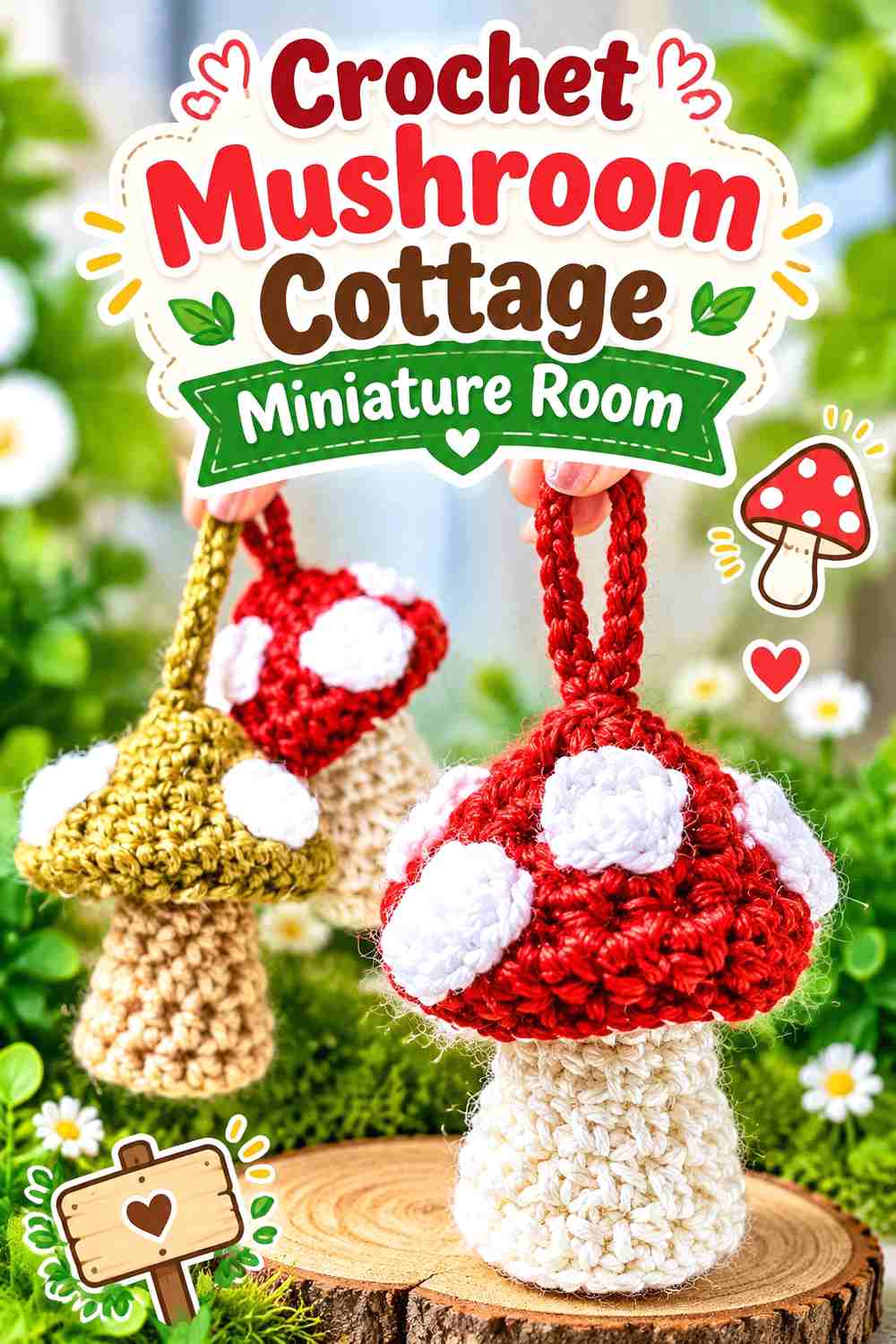
Brunaticality’s dimensional mushroom tutorial can become the central decorative object in a woodland-inspired miniature interior.
Instead of using the mushroom outdoors, place it on a tiny shelf, stool, or floor cushion area and let the room lean into cottagecore winter styling with brown, cream, rust, mossy green, and other subdued colors.
Decide Whether the Mushroom Is Décor or Furniture
Scale changes the interpretation.
A small mushroom on a shelf reads as decoration. A much larger mushroom beside a tiny character may resemble a stool, table, or fantastical room feature.
Make that role intentional before adding other objects, because the surrounding proportions need to reinforce the same interpretation.
Woodland Rooms Benefit from Material Contrast
If every object in the scene is round, stuffed, and crocheted from similar yarn, the individual forms can merge visually.
Pair the mushroom with flatter textiles or more rigid miniature surfaces. A small rug beneath it or plain shelf behind it can provide enough contrast for the cap and stem silhouette to remain clear.
Creator Credit: Brunaticality
16. Crochet Cat Window Nook Miniature Room
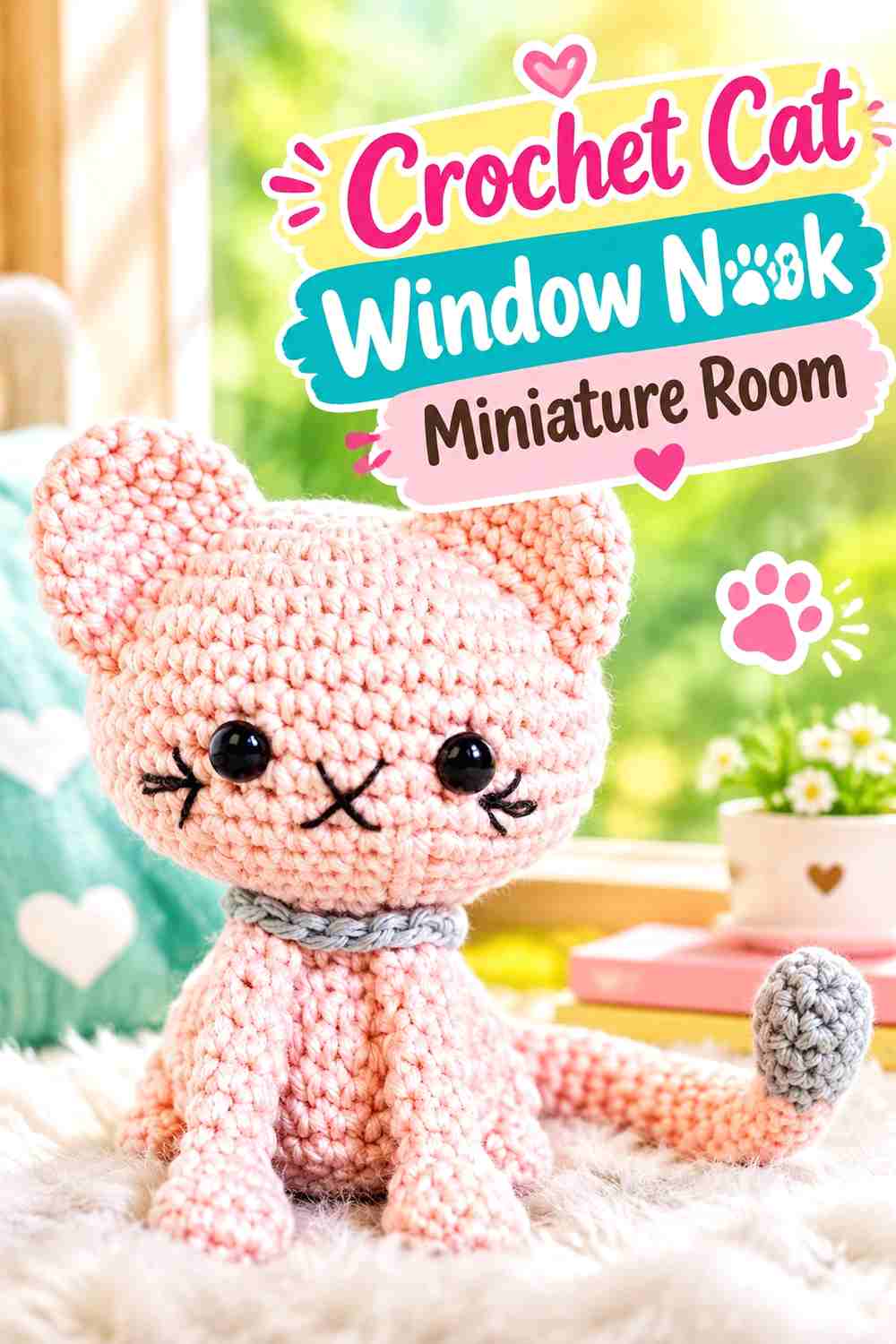
A small amigurumi cat can turn an otherwise static miniature interior into a lived-in scene. Yarn Society’s cat tutorial provides the character, while the surrounding room can be kept deliberately simple: a window backdrop, cushion, rug, and perhaps a tiny basket.
This idea works particularly well for winter shelves because the story is familiar without requiring explicit seasonal decorations—a cat settled into a warm indoor corner while the setting outside feels cold.
Pose the Room Around the Cat’s Silhouette
Do not design the window seat first and assume the cat will fit afterward.
Finish or establish the size of the amigurumi character, then judge how much sitting or lying space looks believable. Even a small difference in body size can make a miniature cushion appear either appropriately cozy or far too cramped.
Keep the Window Area Visually Quiet
The cat is easier to recognize against a simple background.
If you use patterned curtains, a patterned cushion, and a colorful wall all at once, the amigurumi outline may disappear. One strong textile detail is often enough for a small window nook.
Creator Credit: Yarn Society
17. Crochet Winter Cake Tea-Party Miniature Room
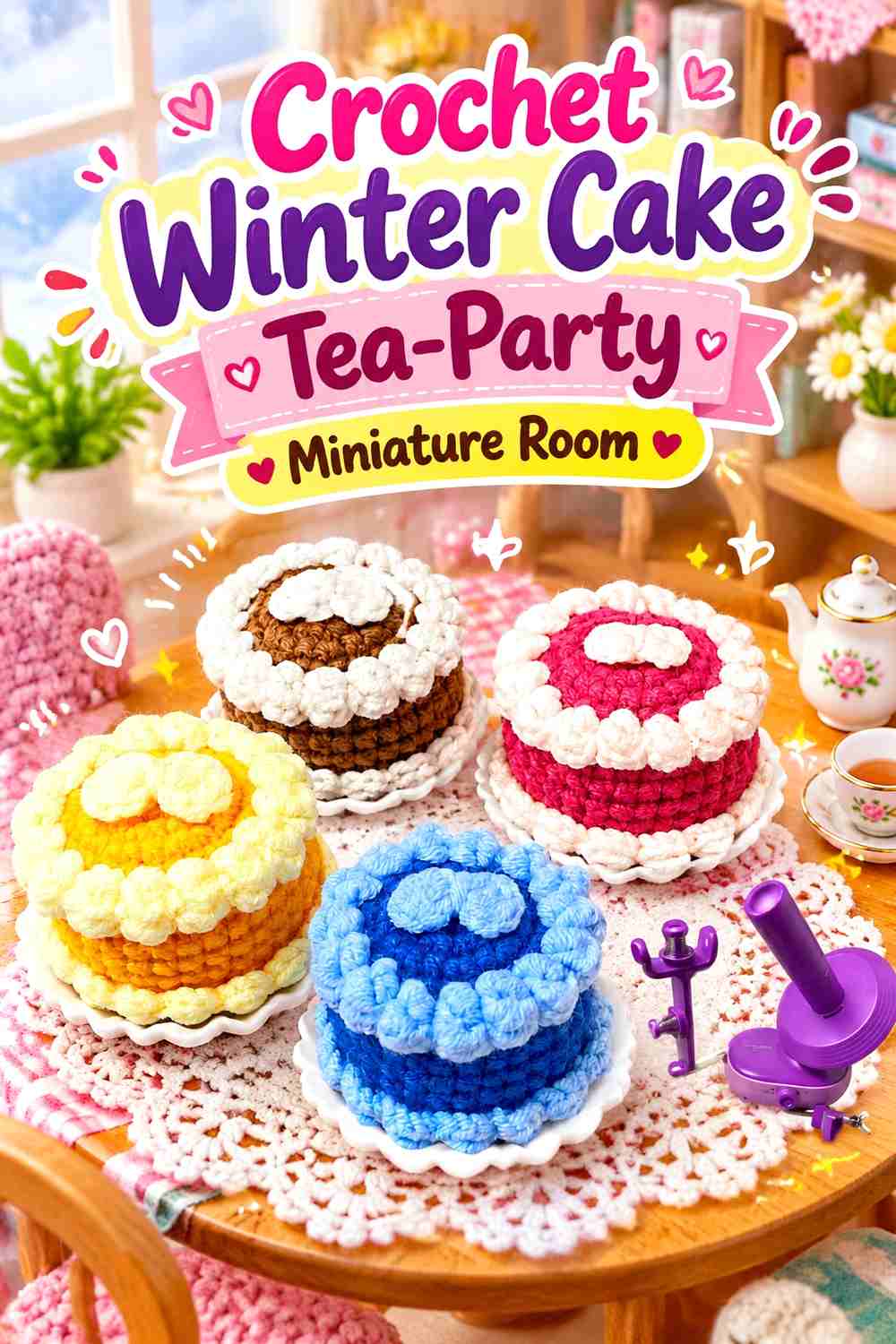
Amiwa Crochet’s dimensional mini cake provides a playful centerpiece for a miniature tea room, bakery shelf, birthday corner, or winter café vignette.
Unlike a flat textile, the cake immediately suggests a tabletop activity. That means you can keep the rest of the room restrained and still communicate a clear scene.
Size the Table After the Cake
The centerpiece should occupy only part of the available surface if you want the table to remain recognizable.
Complete the cake first and test it on candidate furniture. If it overwhelms true dollhouse pieces, build the scene as a whimsical amigurumi café where all objects intentionally share the cake’s larger scale.
Limit the Number of Competing Food Props
A table filled with many tiny foods can look impressive close up but lose clarity on an ordinary shelf.
One cake accompanied by a mug or two small accessories often tells the story more clearly. Leave enough visible tabletop around the centerpiece to frame it.
Creator Credit: amiwacrochet
18. Crochet Wreath Entryway Miniature Room
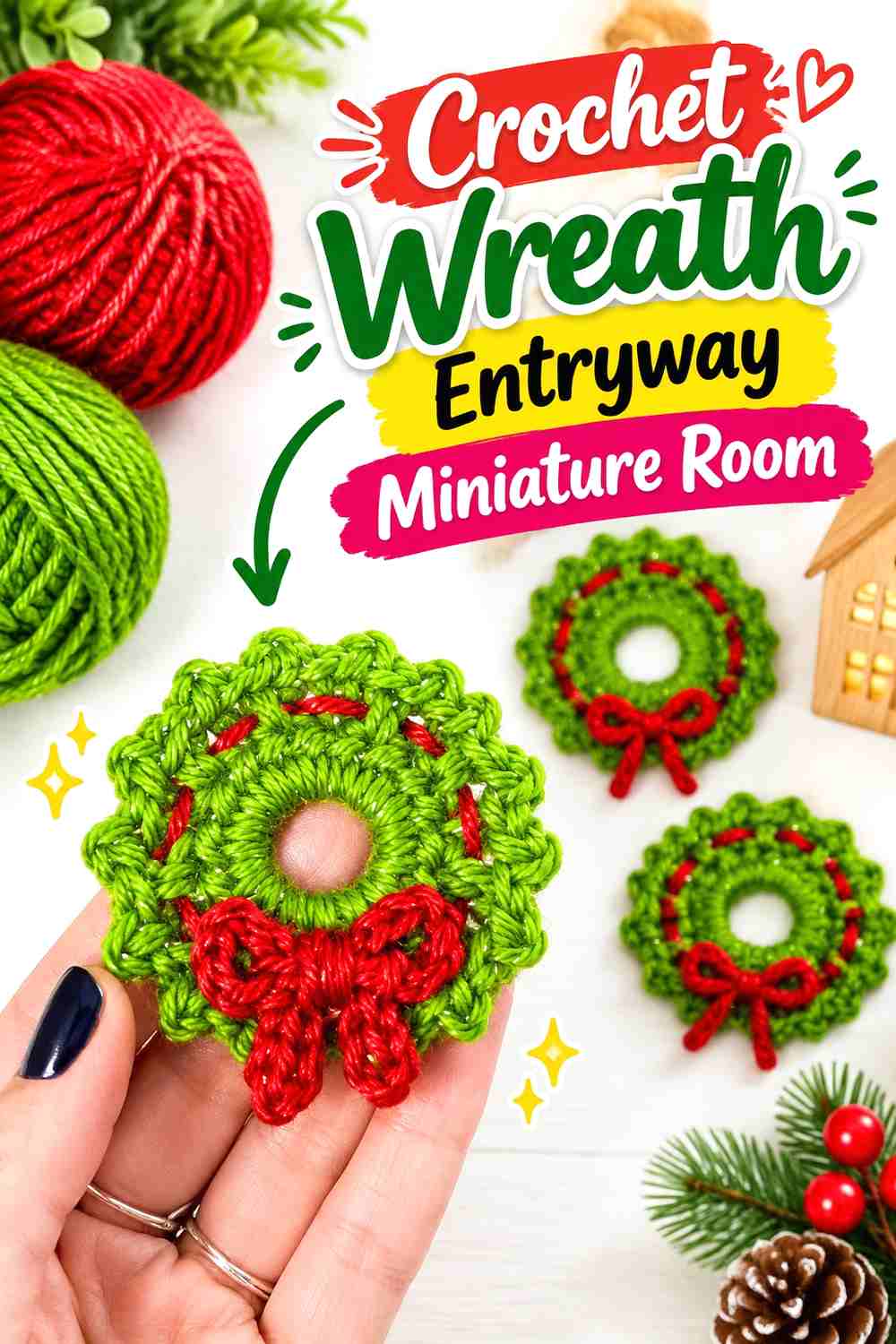
A small wreath gives you a seasonal room idea that uses wall space rather than floor space. The Knotty Boss demonstrates a compact crochet wreath with bow options, making it adaptable as a miniature doorway or wall decoration when the finished proportions suit your display.
Because the wreath hangs vertically, it can bring winter detail to a very shallow shelf where larger furniture would not fit.
Compare the Wreath with the Door, Not the Whole Room
A wreath may look small in your hand yet appear enormous on a miniature door.
Hold the finished piece against the intended wall or doorway before fixing its position. If it dominates the door, consider presenting it as a larger decorative wall wreath in a whimsical amigurumi scene instead of trying to pass it off as strict dollhouse scale.
A Wall Accent Leaves Floor Space for Storytelling
One advantage of a wreath-centered scene is that the lower part of the display remains open.
Use that space selectively for boots, a basket, small rug, or bench-like prop. Keeping the floor arrangement modest lets the wreath and entryway read as one composed room rather than two unrelated areas.
Creator Credit: The Knotty Boss
19. Crochet Stocking Mantel Miniature Room

Briana K’s mini stocking tutorial provides a textured seasonal piece that can inspire a tiny mantel, bedroom, or cottage wall scene.
A single stocking can suggest a quiet winter interior, while several can create a stronger holiday display. Since the source project has uses beyond dollhouses, verify its finished scale against the shelf scene rather than assuming it will fit miniature furniture automatically.
Match Stocking Size to the Mantel
A stocking is familiar enough that an incorrect proportion is noticeable immediately.
Temporarily position the finished crochet piece against the proposed mantel or wall before making more. If one stocking fills most of the fireplace area, several identical pieces may become visually overwhelming.
Let Texture Carry the Winter Mood
A textured stocking already communicates softness and warmth.
You can therefore keep the mantel itself plain and add only one or two restrained surrounding details, such as greenery, a basket, or decorative candle. The room will usually look more convincing when every winter symbol has space around it.
Creator Credit: Briana K
How to Choose a Crochet Miniature Room for Your Shelf
If you want the room itself to feel predominantly crocheted, start with the fireside chair, granny-throw bedroom, lace tea room, rug-based parlor, or craft-room basket. These ideas use crochet as part of the interior rather than simply placing one seasonal character inside it.
For a stronger winter theme, the Christmas tree, candle, cocoa mug, wreath, or stocking provides an immediate seasonal cue. The tree and stocking lean most strongly toward holiday décor, while cocoa and candle themes can remain on display throughout colder months.
The teddy bear, penguin, mushroom, and cat scenes suit more whimsical shelves. In those rooms, it is often easier to establish the amigurumi character as the scale anchor rather than trying to force it into traditional dollhouse proportions.
For very limited shelf depth, prioritize textiles and wall details. Rugs, throws, tablecloths, handbags, wreaths, and stockings can suggest a whole room without requiring several bulky pieces of three-dimensional furniture.
Conclusion
A successful crochet miniature room does not need dozens of tiny objects. It needs a clear focal point and a believable relationship among the pieces surrounding it.
Choose the chair if you want a cozy reading nook, the granny throw for a textile-rich bedroom, the lace cloth or cake for a tea room, and the cocoa mug for a winter kitchen. A tree, wreath, stocking, or decorative candle can shift an existing miniature interior toward winter without rebuilding the whole display.
For character-led shelves, a teddy bear, penguin, mushroom, or cat can determine the scale and personality of the entire room. Whichever concept you choose, complete the main object first and compare every later addition against it before combining projects from different designers.
Refer to the original creator tutorials for exact crochet construction and finishing details.
Frequently Asked Questions
What is the difference between miniature crochet and dollhouse-scale crochet?
Miniature crochet simply means the finished item is small. Dollhouse-scale crochet is designed to relate to a particular miniature environment or proportion. A small amigurumi ornament can therefore still be much too large for traditional dollhouse furniture. Check the finished object against your actual room and furniture rather than relying on the word “mini.”
Can I combine miniature crochet tutorials from different creators in one room?
Yes, but compare the finished proportions first. Tutorials may use different yarn weights, hooks, construction styles, and intended scales. Complete one major object and use it as the room’s reference before making several accessories from unrelated sources.
What should I make first for a crochet miniature room?
Start with the largest or most visually important element. That might be a chair, bed textile, rug, character, or main seasonal decoration. Once its actual size is known, choosing compatible smaller pieces becomes much easier.
How do I keep a crochet miniature shelf from looking cluttered?
Give each room one obvious focal point. Limit competing patterns and leave some open floor, wall, or tabletop area around detailed crochet. Small spaces become visually crowded quickly, so removing one unnecessary prop can sometimes improve the scene more than adding another decorative object.
Does every piece in a miniature crochet room need to be crocheted?
No. Combining crochet with a wooden shelf, dollhouse furniture, paper walls, simple frames, or other display materials can actually make the stitches easier to see. Crochet can provide the textiles, characters, and focal accessories while other materials define the room.
Are miniature crochet room pieces suitable as children’s toys?
Do not assume decorative miniatures are toys. Small objects, safety eyes, buttons, beads, detachable decorations, and other components can be unsuitable for babies, young children, or pets. If the finished project will be handled rather than displayed, assess each source pattern and material specifically for that intended use.
How can I make a miniature crochet room feel wintry without making it Christmas-themed?
Focus on warmth rather than holiday symbols. A small rug, layered throw, basket, cocoa mug, reading chair, candle-shaped decoration, woodland mushroom, or curled-up cat can all suggest a cozy winter interior. Muted greens, burgundy, brown, cream, oatmeal, dusty blue, and warm neutrals can reinforce the season without making the room explicitly Christmas-themed.