Crochet barrel-leg pants combine two ideas that work especially well for cold-weather dressing: noticeable volume through the leg and a narrower finish near the ankle. In crochet, that shape can look particularly sculptural because the fabric has more visible texture and structure than many woven materials.
The tutorials below cover several useful starting constructions, including wide-leg trousers, granny-square pants, joggers, palazzo pants, velvet pants, mesh trousers, and shaped crochet bottoms. Not every source tutorial was designed specifically as a barrel leg. Instead, each offers a construction or fabric idea that can inform a barrel-shaped version.
For any adaptation, keep the creator’s original instructions as the construction reference. Before changing the leg shape, confirm the finished hip room, rise, stitch repeat, fabric stretch, and whether decreases can be introduced without disrupting an important motif.
Quick List
- Crochet Dense-Stitch Winter Barrel Pants
- Crochet Patchwork Granny-Square Barrel Pants
- Crochet Relaxed Drawstring Barrel Pants
- Crochet Straight-to-Barrel Everyday Trousers
- Crochet Curved-Leg Statement Pants
- Crochet Flower-Appliqué Barrel Pants
- Crochet Velvet Barrel-Leg Lounge Pants
- Crochet Floral-Lace Layered Barrel Trousers
- Crochet Side-Motif Granny Barrel Pants
- Crochet Cuffed Barrel Jogger Pants
- Crochet Oversized-Motif Barrel Pants
- Crochet Shell-Stitch Color-Block Barrel Pants
- Crochet Mesh-Layered Barrel Pants
- Crochet Full-Coverage Granny Barrel Pants
- Crochet Measurement-Led Barrel Trousers
- Crochet Polished Elastic-Waist Barrel Pants
What Creates a Convincing Crochet Barrel-Leg Shape?
A barrel silhouette is not simply an oversized straight leg. The visual interest comes from controlling where the volume sits. The leg generally needs comfortable width through the upper leg, additional presence through the thigh or knee area, and some degree of narrowing before the hem.
When adapting another pants construction, study where the tutorial establishes the hip and crotch fit first. Those areas affect movement and should not be casually reduced just to create a stronger taper. The safer place to explore the barrel effect is usually farther down the leg, after the essential fit has been established.
Stitch pattern matters too. A plain, relatively dense fabric makes shaping easier to read, while granny squares, shells, lace, and other patterned fabrics require more planning. With motifs, you may need to create the illusion of a barrel through motif scale, placement, or smaller lower-leg sections rather than inserting arbitrary decreases.
Yarn, Drape, and Structure Change the Silhouette
Barrel-leg crochet needs a balance between structure and movement. A very firm fabric can hold a dramatic curved outline but may become bulky around the hips, crotch, or knees. A highly fluid fabric hangs more comfortably but can lose the sculpted leg shape and behave more like ordinary wide-leg trousers.
Before committing to a full pair, make a generous swatch using the intended yarn and stitch pattern. Handle it vertically, since pants experience their own weight in that direction. If the swatch grows noticeably after hanging, account for that behavior before deciding the final leg length.
Winter pants also need practical consideration beyond appearance. Open granny stitches, lace, and mesh can create an excellent sculptural outline but may require tights, leggings, or another layer underneath. A denser crochet fabric offers more coverage, although fiber choice and stitch density still determine how warm the finished garment actually feels.
Plan Fit Before Adding the Barrel Effect
The waist, rise, hips, crotch depth, thigh circumference, and intended layering all matter before the leg silhouette is adjusted. If you plan to wear thermal leggings underneath, test the pants over a similar base layer rather than judging the fit over bare legs.
A good adaptation also considers proportion. A very large upper leg with an aggressively narrow ankle can become heavy and restrictive in crochet. A gentler taper often preserves the barrel impression while leaving enough room for comfortable movement and footwear.
Blocking should be part of the planning process rather than an afterthought. Check the behavior of the actual yarn and follow its care information, since blocking can change both the width and length of a crochet garment.
1. Crochet Dense-Stitch Winter Barrel Pants
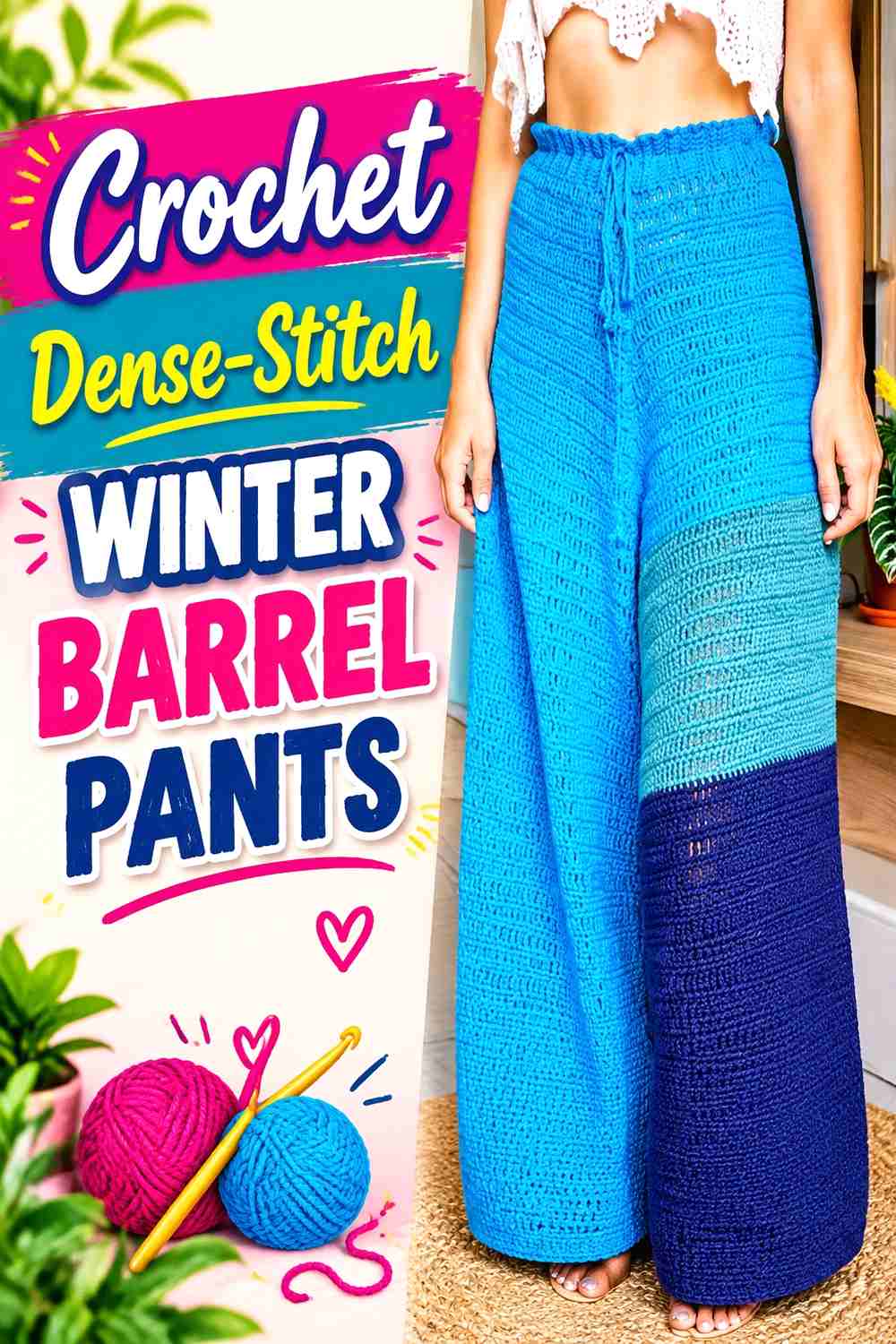
Juliana Faz Crochê presents a wide-leg pants construction that moves from waistband and hip shaping into long legs. For a winter barrel interpretation, this type of continuous fabric can be useful because there are no large motifs that must be preserved when planning changes in leg circumference.
Create Volume Before You Remove It
The strongest barrel effect needs contrast. If the leg begins narrowing immediately below the hip, the result may read as a basic tapered pant instead. Retain enough room through the upper and middle leg to establish visible volume before considering a narrower lower section.
Watch the Weight of a Denser Fabric
Winter-oriented crochet can become substantial once two full legs are completed. Check a large swatch vertically and consider how the waistband will support the garment’s weight. A yarn that feels pleasantly substantial in a small sample may behave very differently across a complete pair of pants.
Creator Credit: Juliana Faz Crochê 🧶
2. Crochet Patchwork Granny-Square Barrel Pants
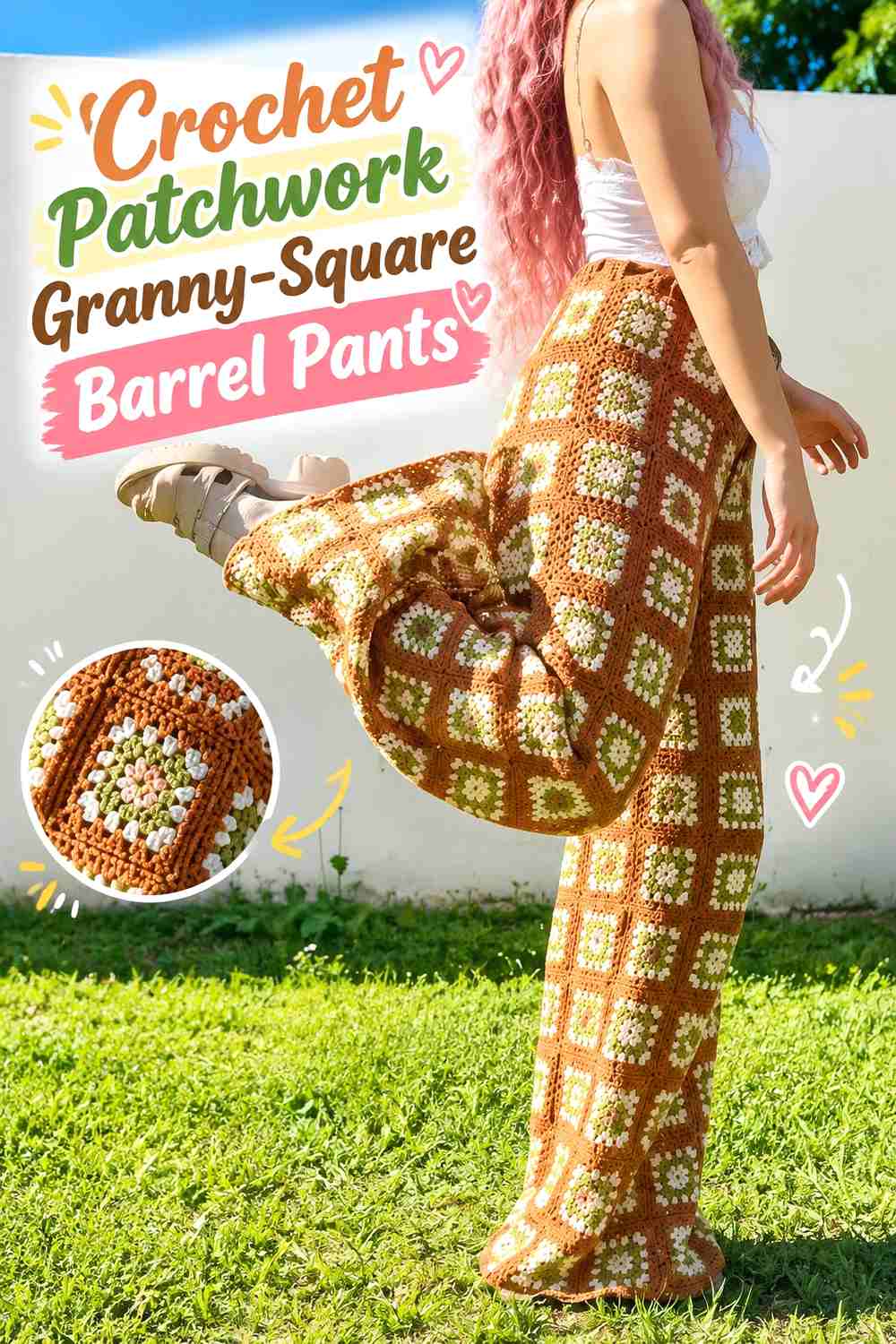
Caroleena’s closet demonstrates a full granny-square pants concept, making this a useful reference for a modular barrel silhouette. Rather than relying entirely on stitch decreases, you can think about the leg as a layout problem: wider motif coverage through the thigh and knee region, followed by a visually tighter lower section.
Block Every Motif Before Final Layout Decisions
Granny-square pants depend on consistent modules. Small differences become much more noticeable when several motifs meet around a leg. Block and compare the squares before committing to a layout, especially if different colors or yarn leftovers behave differently.
Let Motif Placement Build the Curve
A modular barrel leg does not have to mimic the shaping of solid crochet. A wider visual field around the middle of the leg and a calmer, narrower-looking ankle section can suggest the silhouette without forcing awkward decreases through complete squares.
Creator Credit: caroleena’s closet
3. Crochet Relaxed Drawstring Barrel Pants
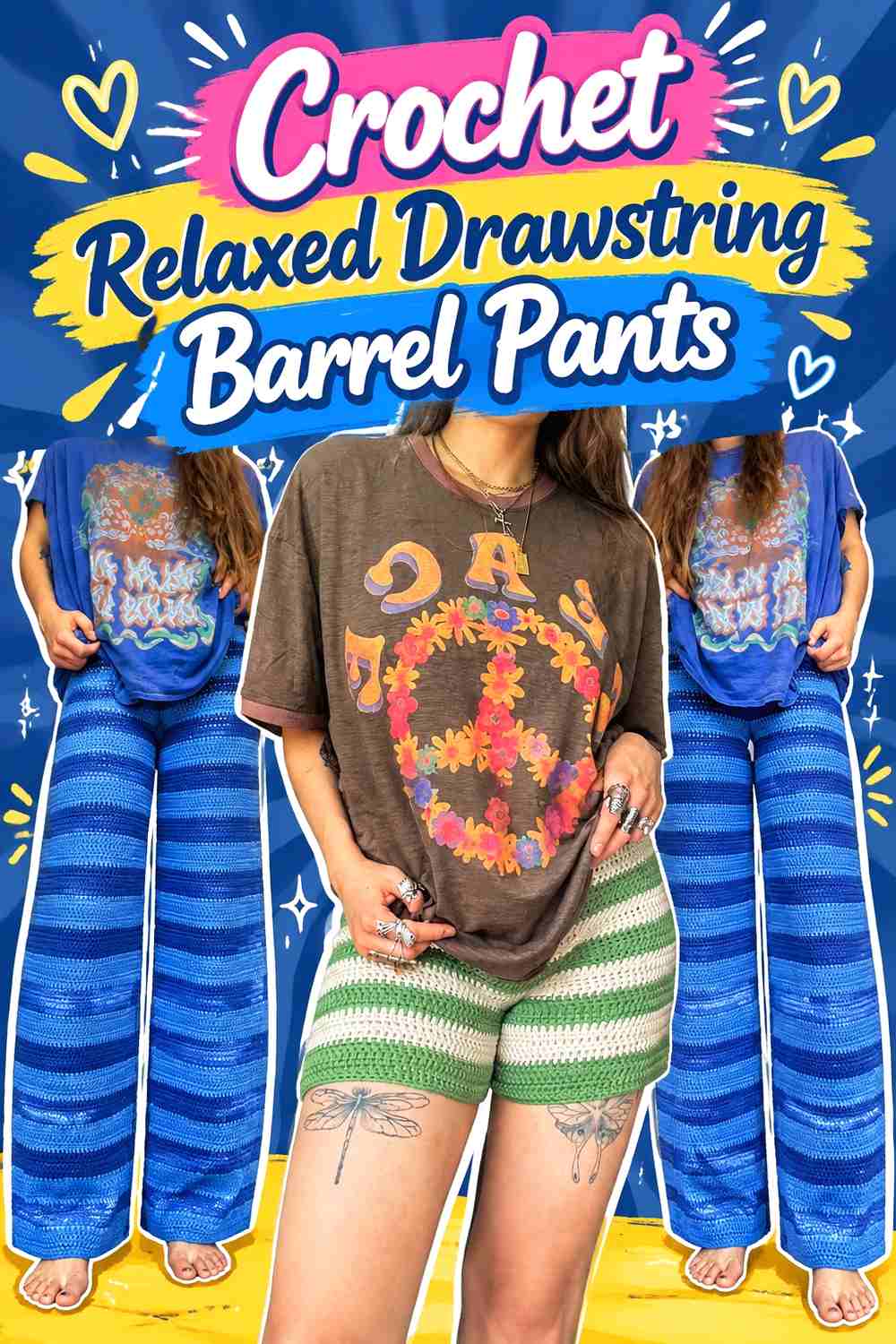
Hannah Drapinski’s pants construction provides a relaxed garment framework with a defined waistband, hip shaping, and separate legs. That makes it a useful starting point for an informal barrel pant where comfort matters as much as the sculptural outline.
Decide How Slouchy You Want the Upper Leg
Barrel pants can range from mildly rounded to deliberately oversized. Choose that degree of volume before altering the lower leg. Too much extra fabric through both the hips and thighs may turn a controlled barrel into a generally baggy silhouette.
Keep the Ankle Comfortable
The lower leg only needs to be narrower relative to the fullest part of the pant. It does not need to become fitted. Leave enough room for normal movement and for the shoes or boots you expect to wear with the finished pants.
Creator Credit: Hannah Drapinski
4. Crochet Straight-to-Barrel Everyday Trousers
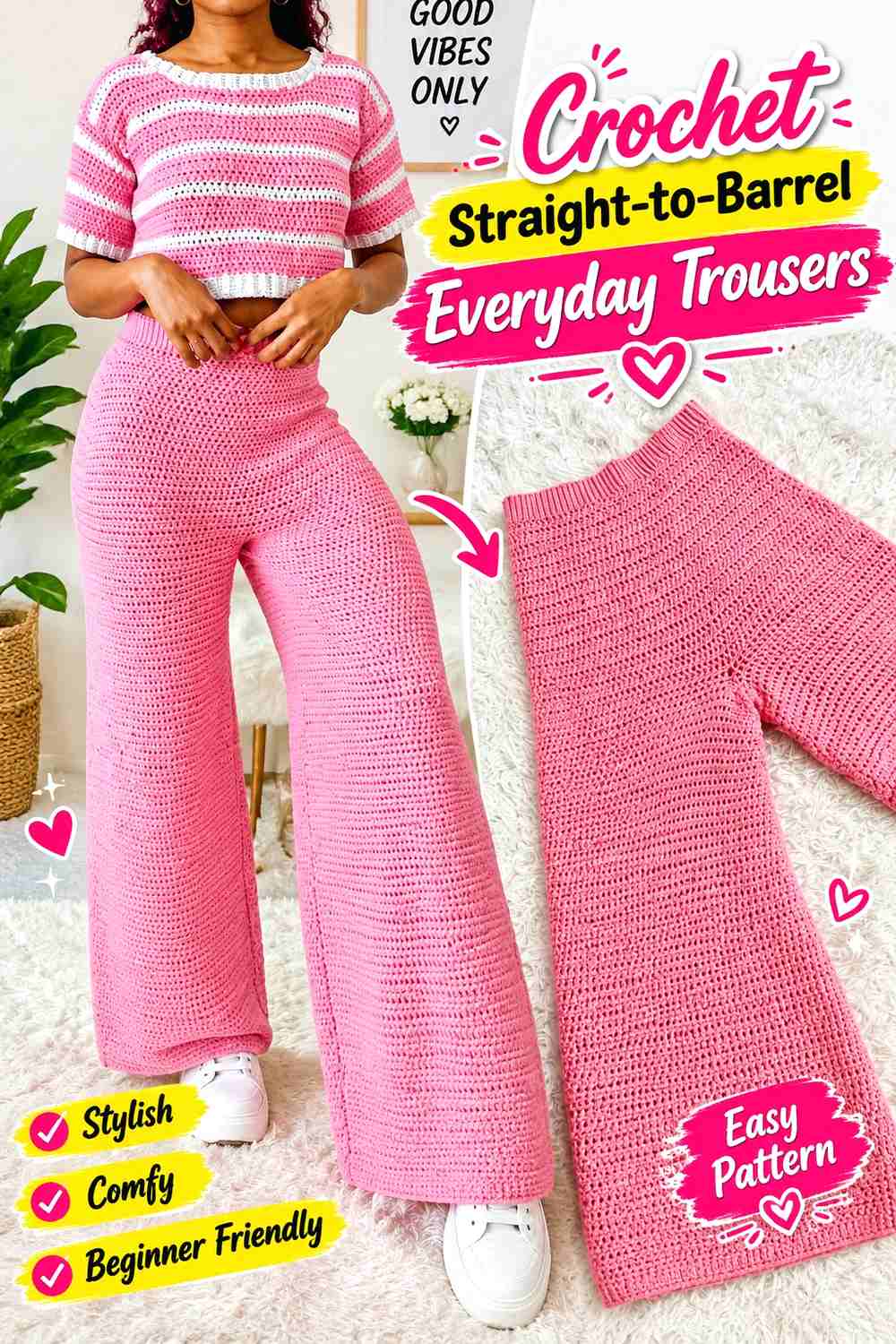
Kali’s Threads shows a simple pants construction with both straight and flared leg possibilities. That makes the tutorial particularly useful for understanding how one basic trouser can change character through lower-leg shaping. A barrel adaptation takes that logic in the opposite direction by retaining width and then gradually reducing it toward the hem.
Use the Straight Leg as Your Baseline
Before changing the shape, understand how the unmodified straight leg hangs. That gives you a practical reference for deciding where additional fullness or taper should begin rather than guessing from the waistband downward.
Small Shape Changes Can Look More Wearable
A dramatic balloon shape is not the only option. A modest curve through the lower half of the leg can produce a barrel impression while remaining easier to style with sweaters, coats, and everyday footwear.
Creator Credit: Kali’s Threads
5. Crochet Curved-Leg Statement Pants
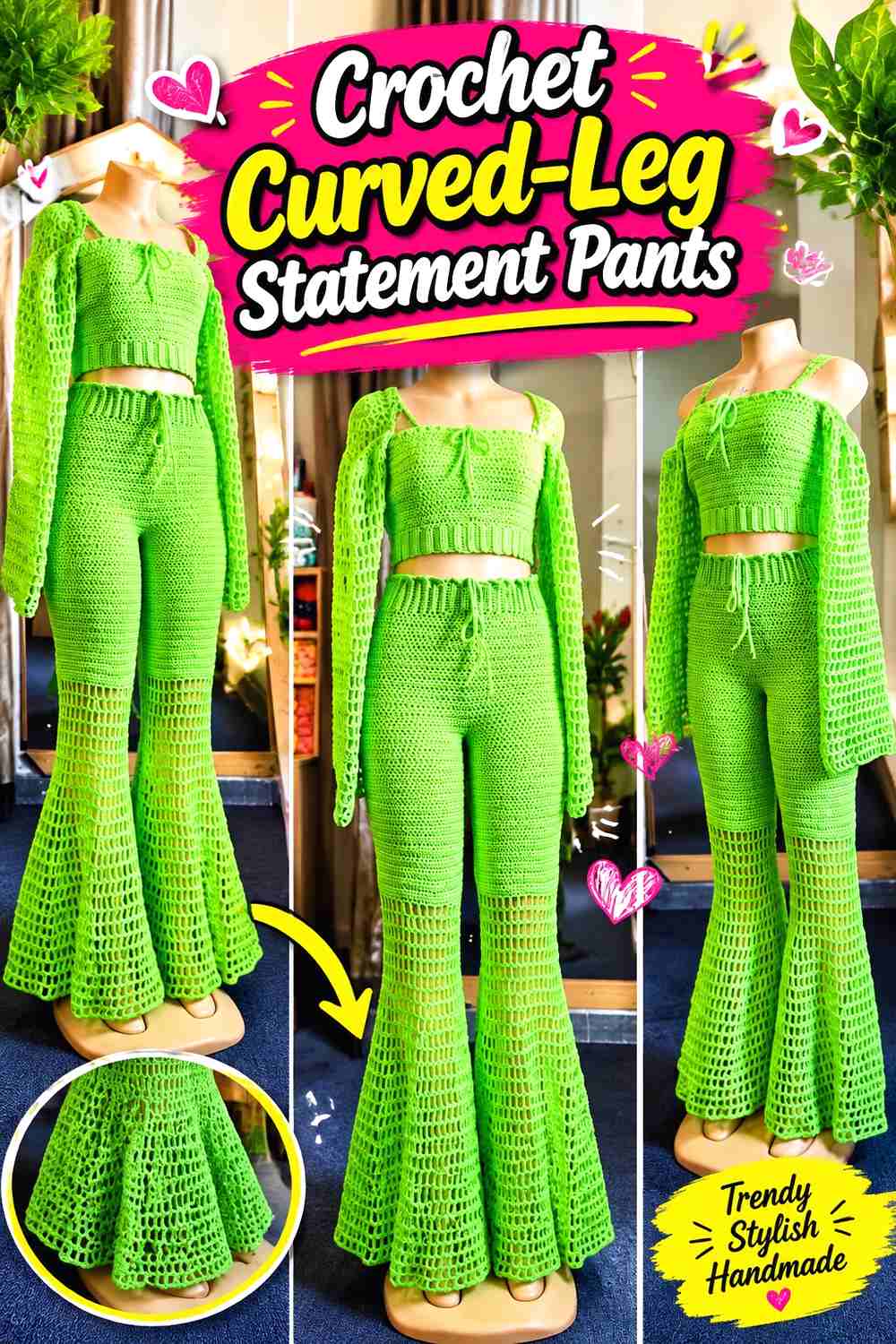
LaDenser Crochets demonstrates bell-bottom pants with deliberate shaping and a contrasting open flare. Although the source silhouette expands instead of narrows, it offers a useful lesson: changing circumference at a planned point can completely alter the identity of crochet trousers.
Reverse the Visual Emphasis
A flare directs attention to the hem. A barrel leg shifts that emphasis upward by placing more volume around the thigh or knee and reducing width closer to the ankle. When adapting the concept, preserve the secure upper-pants construction but rethink where the dramatic shape belongs.
Protect Decorative Stitch Repeats
If you borrow a decorative texture from a flared design, check whether its repeat can tolerate narrowing. A complex lace or mesh repeat may be better used as an accent panel while the surrounding solid fabric handles the actual shaping.
Creator Credit: LaDenser Crochets
6. Crochet Flower-Appliqué Barrel Pants
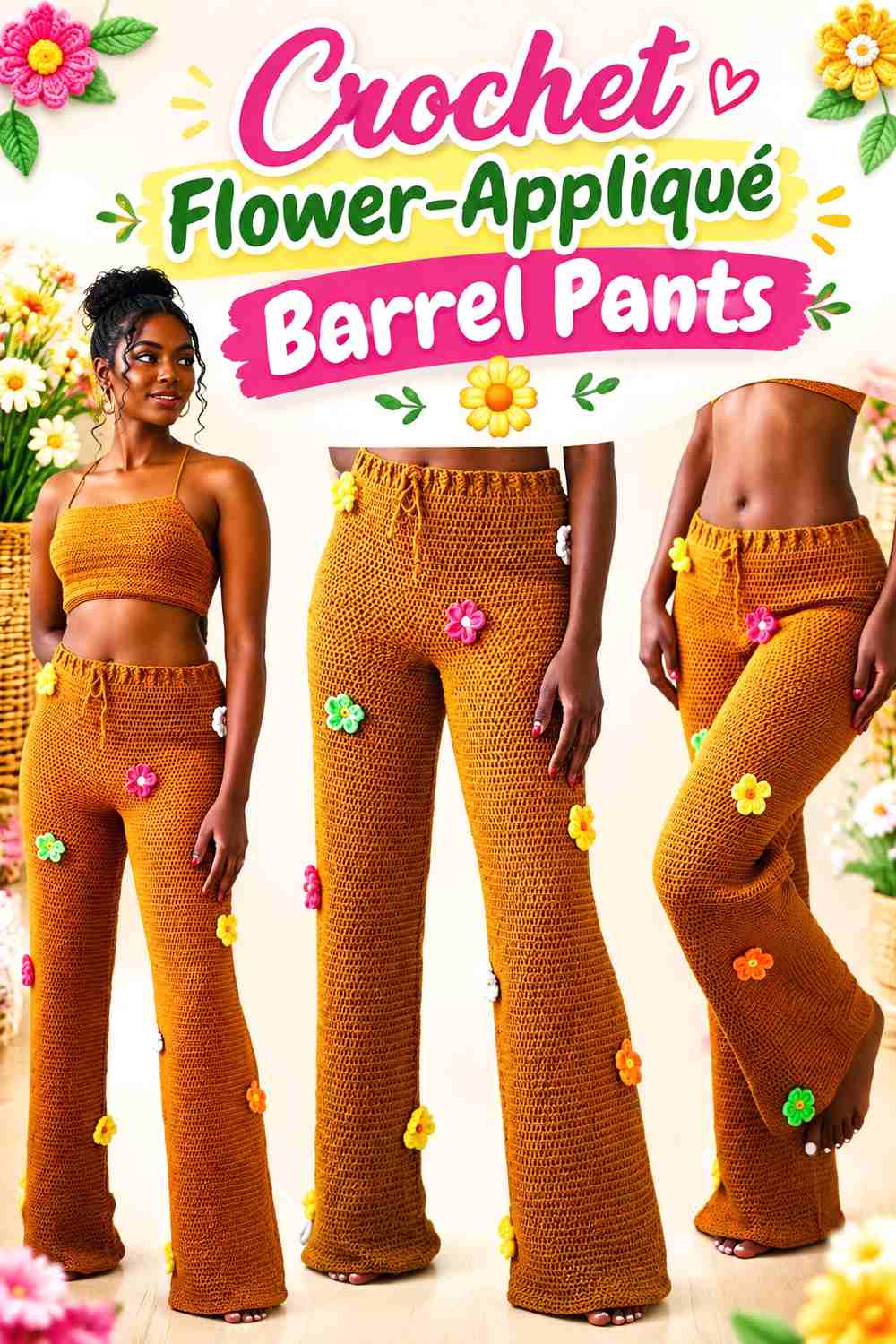
Shyler crochets combines a palazzo-style pants shape with optional floral decoration. For a winter barrel version, the flowers can become controlled focal points on a more rounded leg rather than being spread evenly over the whole garment.
Place Flowers Where They Will Not Distort Fit
Dimensional appliqués add both visual and physical bulk. Consider concentrating them along an outer leg, around the lower thigh, or in another area that does not interfere with sitting or create excessive thickness between the legs.
A Restrained Palette Can Shift the Season
The flower idea does not have to feel summery. Deep neutrals, muted woodland colors, or a monochromatic arrangement can make the same decorative concept read more like winter texture. Confirm that any yarn substitution still produces a compatible fabric before applying the source construction.
Creator Credit: Shyler crochets
7. Crochet Velvet Barrel-Leg Lounge Pants
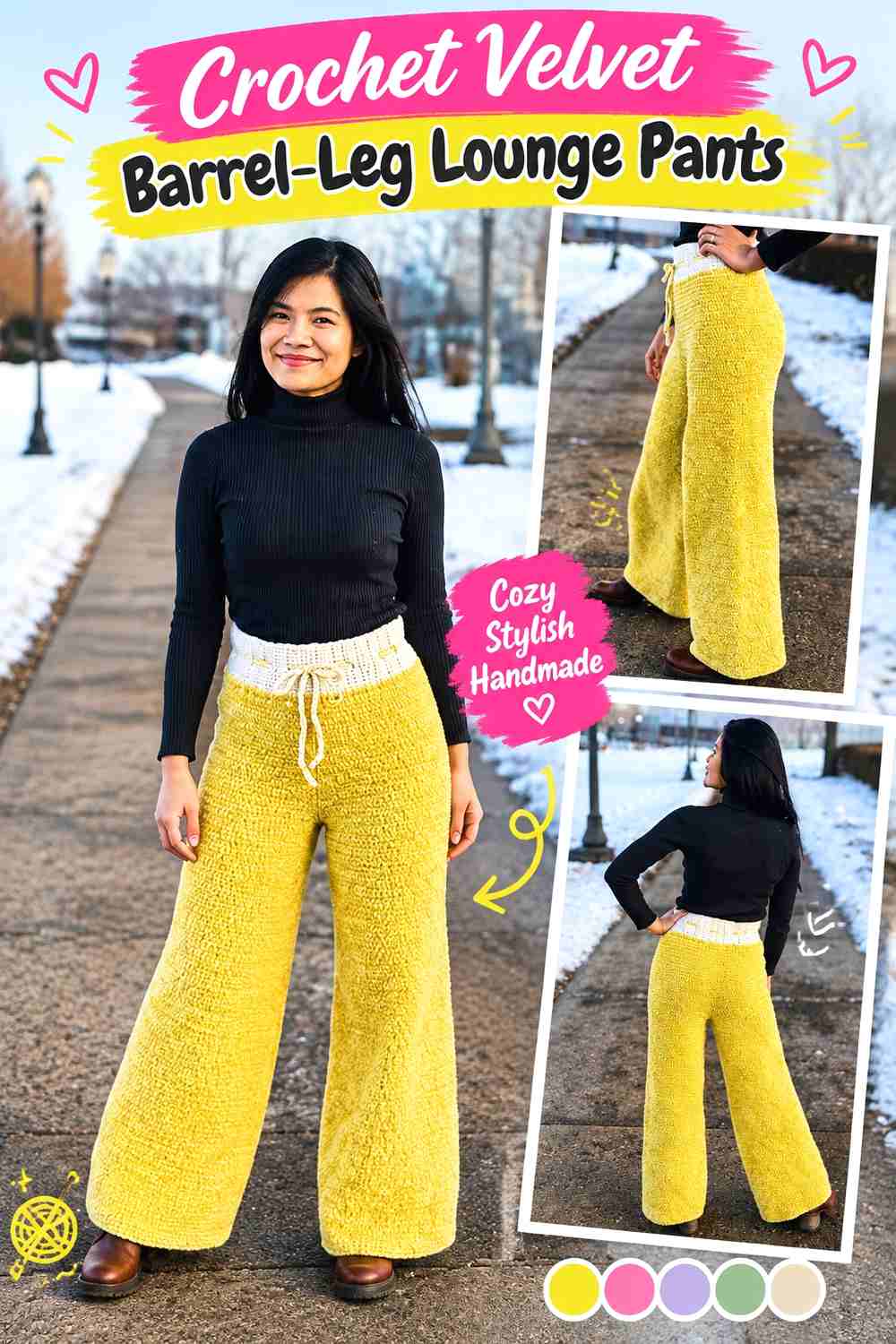
KnitcroAddict’s velvet pants use a relaxed straight-leg concept and plush-looking yarn, making the design an interesting reference for a softer barrel silhouette. The source pants are designed with a relaxed leg, so the adaptation can focus on gentle narrowing rather than extreme reshaping.
Plush Yarn Can Hide Subtle Shaping
Texture can soften the visual definition of increases and decreases. If the yarn has a fuzzy or velvety surface, a slightly stronger difference between the middle-leg width and hem width may be needed for the silhouette to remain visible.
Test Recovery Before Making a Heavy Pant
Some plush yarns stretch differently from firmly spun yarn. Make a substantial sample and check whether it springs back after being handled or hung. That information matters around the knees and seat, where a pant experiences repeated movement.
Creator Credit: KnitcroAddict
8. Crochet Floral-Lace Layered Barrel Trousers
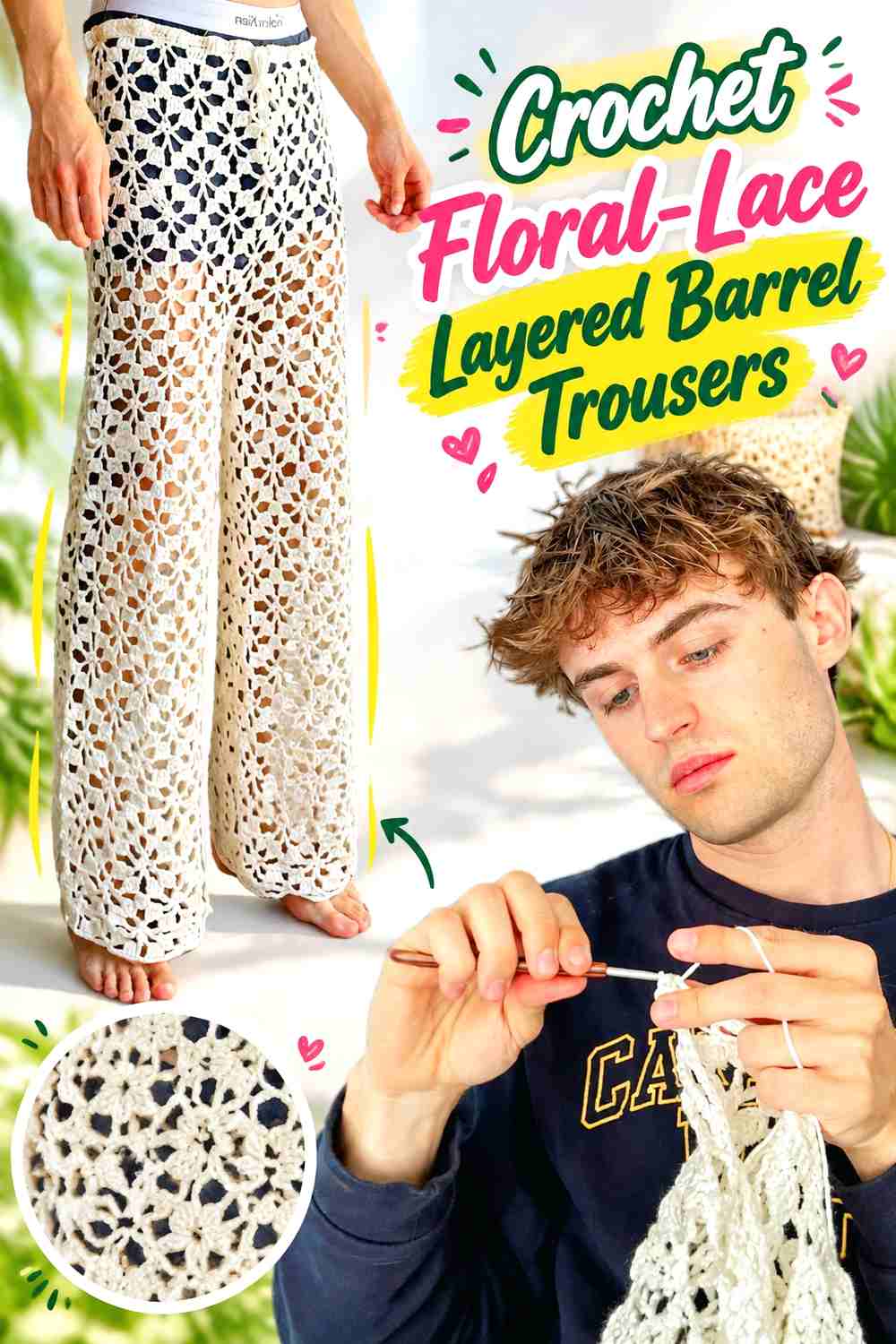
Henri Purnell’s floral lace pants offer a completely different surface from dense winter trousers. For cold-weather styling, the open fabric can be treated as an outer layer over opaque leggings or another compatible base, allowing the sculptural leg to remain visible without pretending the lace itself provides heavy insulation.
Layering Changes the Fit Requirement
If the barrel pants will consistently be worn over another garment, account for that layer when checking the hip, rise, thigh, and calf room. A pair that fits comfortably on its own may feel restrictive once another fabric is underneath.
Let the Lace Remain Visually Open
Packing too much fullness into an elaborate lace pattern can obscure the motifs. A controlled barrel curve may suit this style better than an exaggerated balloon shape, especially if the lace is already providing strong visual interest.
Creator Credit: Henri Purnell
9. Crochet Side-Motif Granny Barrel Pants
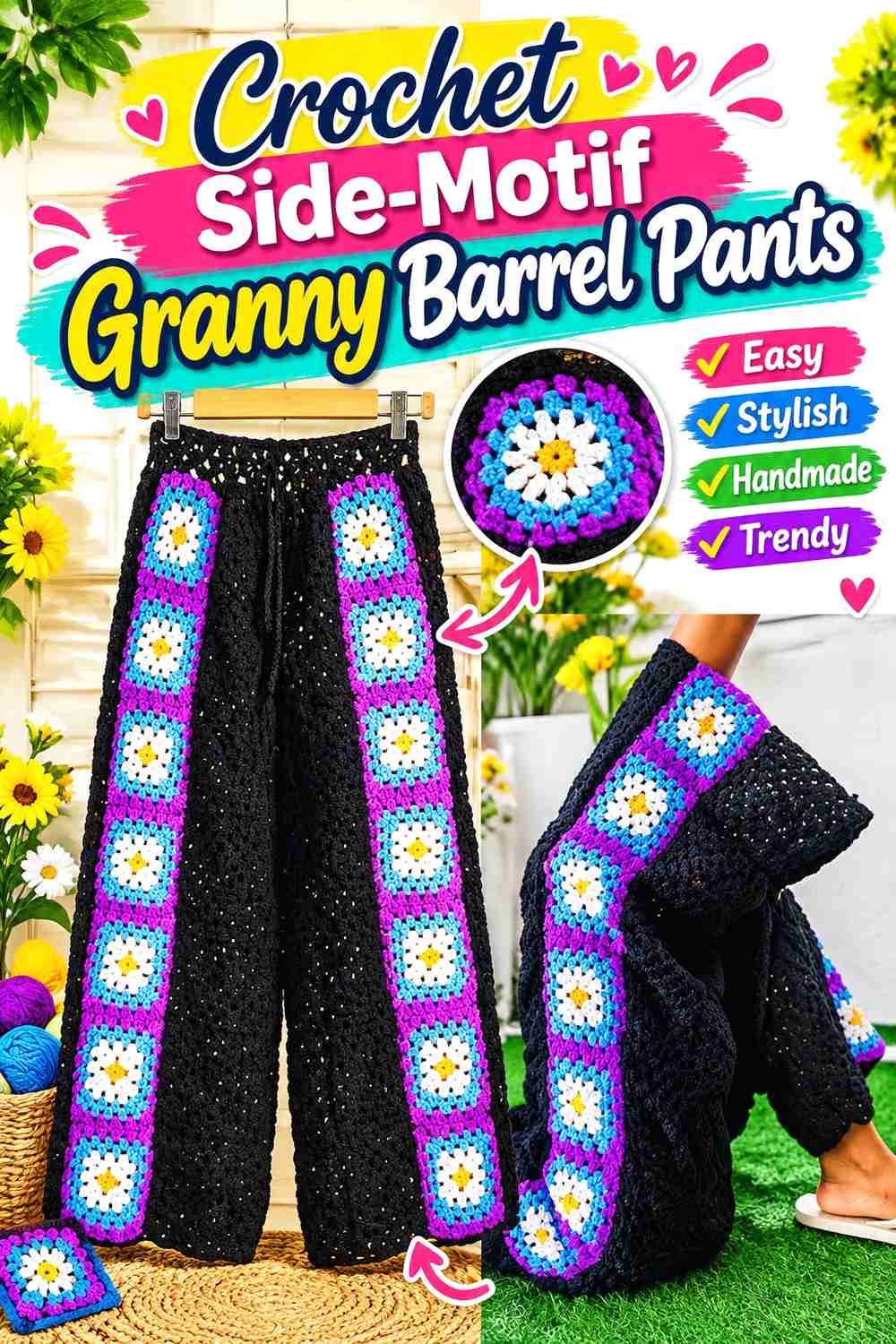
Myzayi Yunus provides a granny-square pants reference that can be adapted toward a more directional barrel design. Instead of treating every part of the leg identically, use the motif arrangement to create vertical interest while maintaining the broad middle section that defines the silhouette.
Use Contrast to Control Visual Width
A bright motif placed at the outer leg attracts attention and can make that portion appear more prominent. A quieter lower-leg palette can visually reinforce the taper even when the physical difference in circumference is moderate.
Match Finished Square Dimensions First
Do not plan the final pants grid from unblocked motifs. Compare the finished dimensions and make sure repeating squares can meet cleanly before calculating how they will wrap around the thigh, knee, or lower leg.
Creator Credit: Myzayi Yunus
10. Crochet Cuffed Barrel Jogger Pants
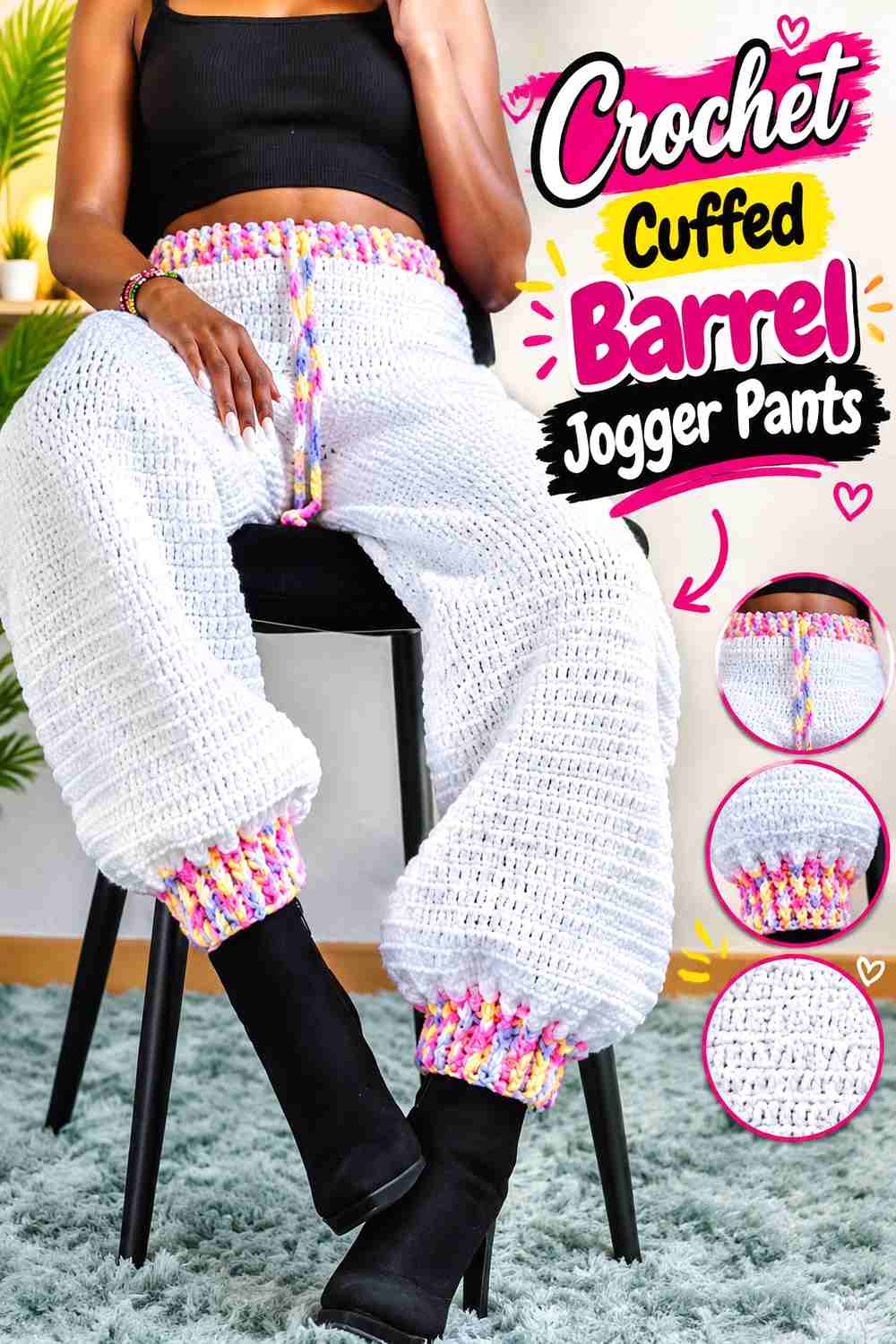
AC Crochets demonstrates crochet jogger pants with a clearly defined lower-leg finish. Joggers already contain one principle that works naturally with barrel styling: a fuller leg meeting a narrower ankle treatment.
Use the Cuff as a Natural End Point
Instead of tapering until the leg becomes tight, allow the roomy barrel section to transition into a structured cuff. That creates a strong silhouette while avoiding an unnecessarily narrow crocheted lower leg.
Check Where the Fullness Collects
A cuff can cause excess fabric to blouse above the ankle. Decide whether that is desirable. For a cleaner barrel profile, some of the circumference may need to be reduced gradually before reaching the cuff rather than gathering all the fullness at once.
Creator Credit: AC Crochets
11. Crochet Oversized-Motif Barrel Pants
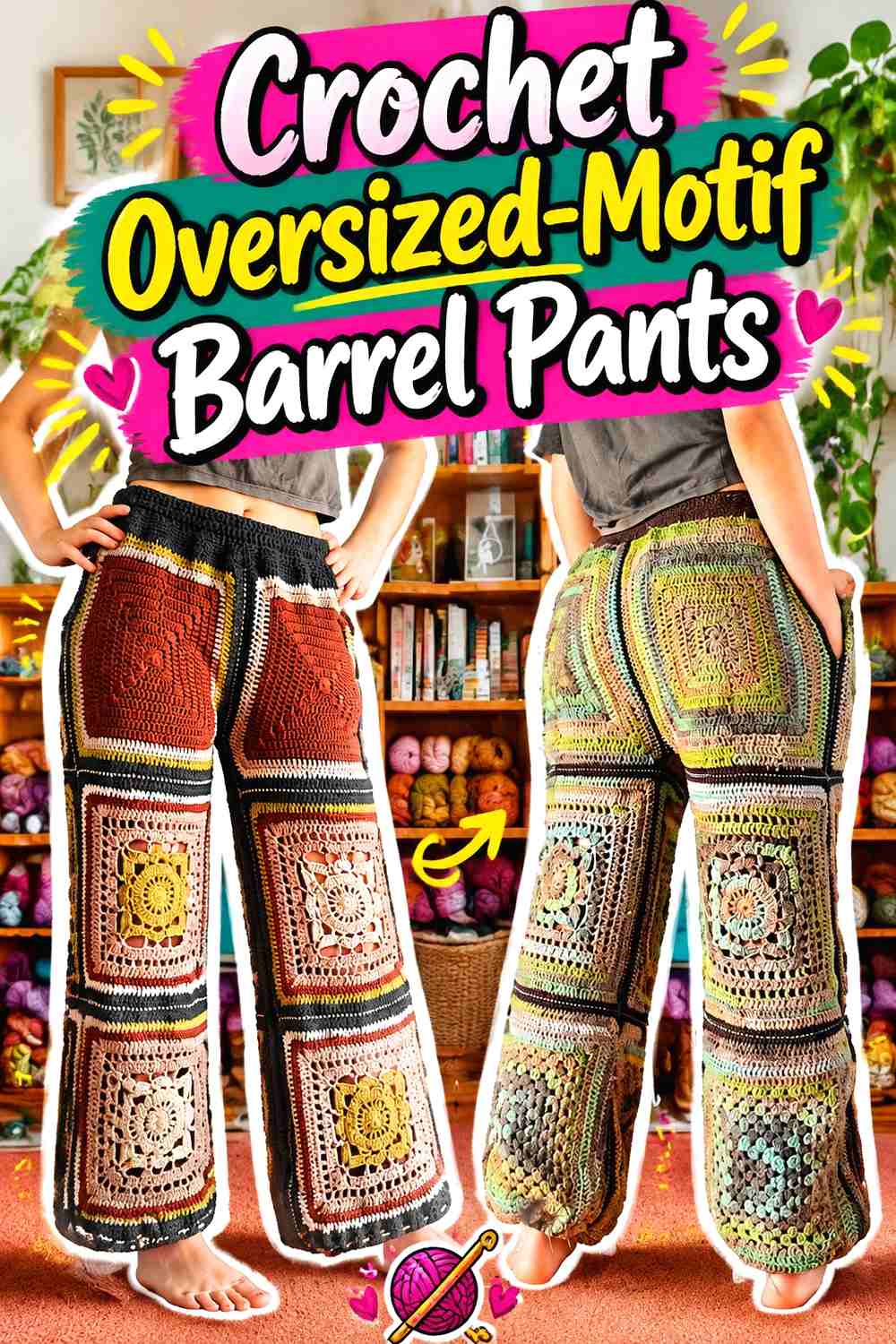
Forest Lily’s granny-square pants tutorial provides a recent modular reference for building full crochet pants from motifs. A barrel interpretation can lean into intentionally oversized motif proportions through the upper and middle leg, then transition to a visually quieter ankle area. The creator’s own site links directly to the public pants tutorial.
Decide the Leg Grid Before Making Dozens of Squares
Motif projects reward early planning. Sketch the approximate placement around the hips, thighs, knees, and lower legs before producing the entire batch. The barrel effect needs to be considered as part of the grid, not added after every square has already been joined.
Mixed Motifs Need Compatible Borders
If you want to vary the motifs for a more patchwork winter look, their outer dimensions still need to cooperate. Different centers can work together more easily when their finished borders reach comparable blocked measurements.
Creator Credit: Forest Lily
12. Crochet Shell-Stitch Color-Block Barrel Pants
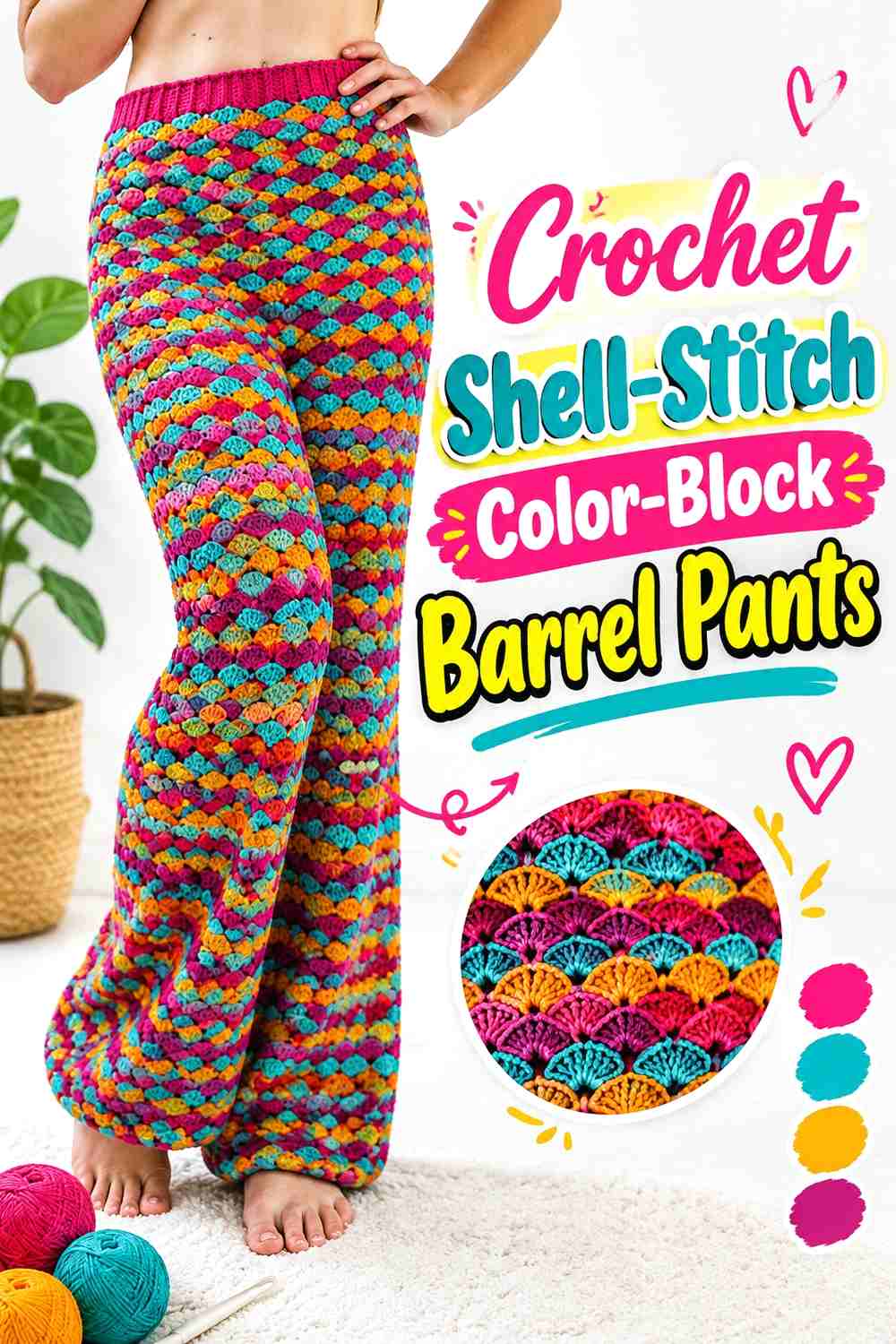
Loops Only Crochet’s colorful pants use a high-waisted, wide-leg construction and prominent shell-stitch texture. For a barrel version, the shell fabric can provide movement while the color changes emphasize selected areas of the sculptural leg.
Check the Stitch Repeat Before Planning Decreases
Shell stitches depend on consistent repeats. Randomly reducing stitches can interrupt the pattern. Identify where the repeat can change cleanly or consider using another compatible section to manage the narrowing.
Color Placement Can Reinforce the Silhouette
A darker ankle section beneath a broader, more colorful middle leg can make the taper appear stronger. Alternatively, a monochromatic version lets the shadow created by the shell texture become the main design feature.
Creator Credit: Loops Only Crochet
13. Crochet Mesh-Layered Barrel Pants
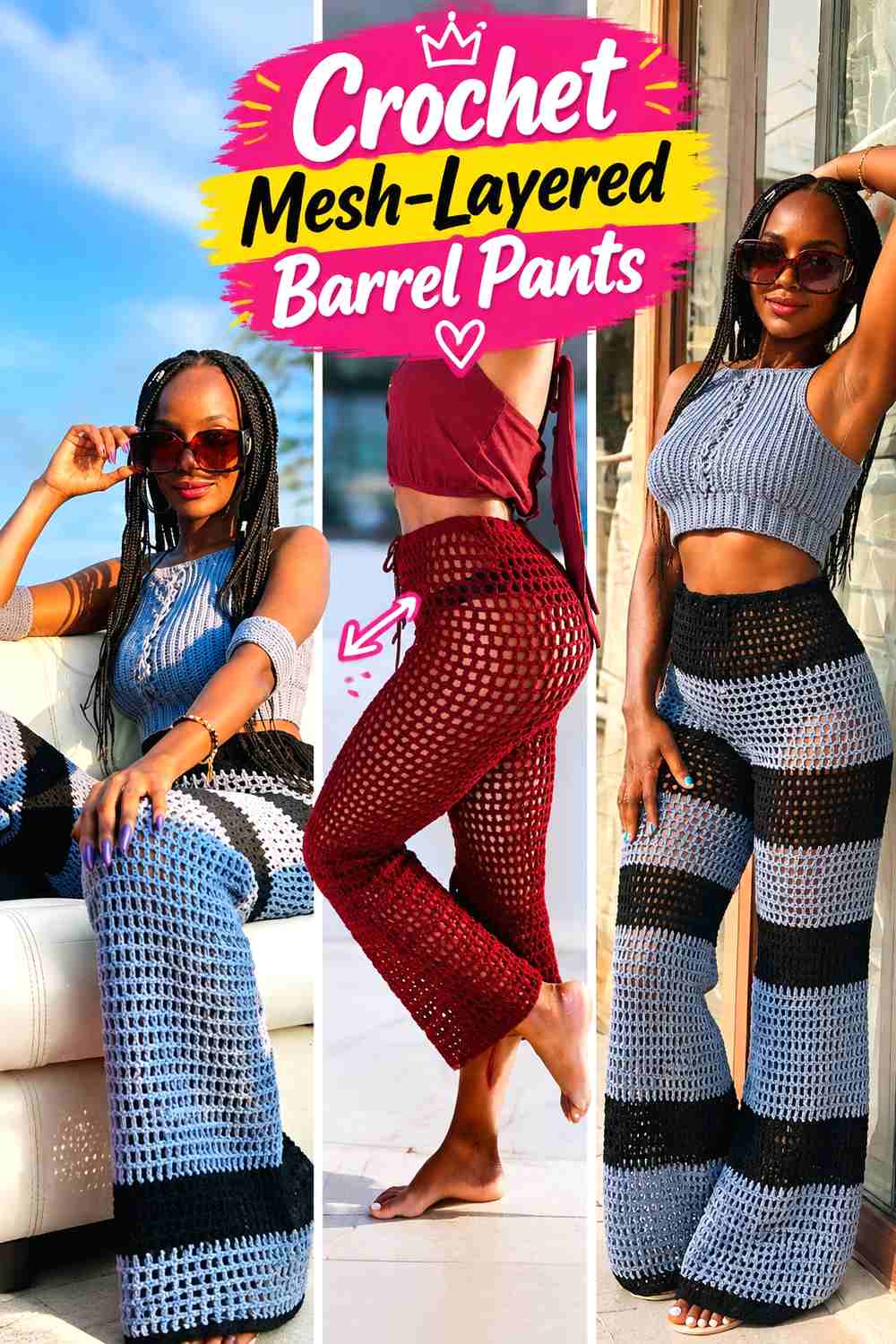
DIY with gh crochets demonstrates full mesh crochet pants, offering a useful source for anyone who wants transparency and negative space rather than dense fabric. A winter barrel interpretation works most realistically as a layering piece instead of relying on the mesh alone for warmth.
Choose the Underlayer Before Finalizing Fit
Opaque leggings, thermal tights, or another base garment can change how the crochet layer moves. Try the intended combination together before committing to a narrow ankle opening or close-fitting rise.
Keep Mesh Tension Consistent Through Shaping
Open fabric makes irregular tension highly visible. If you alter the leg circumference, inspect the transition frequently so the mesh does not suddenly tighten, twist, or create an obvious band where the shaping begins.
Creator Credit: DIY with gh crochets
14. Crochet Full-Coverage Granny Barrel Pants
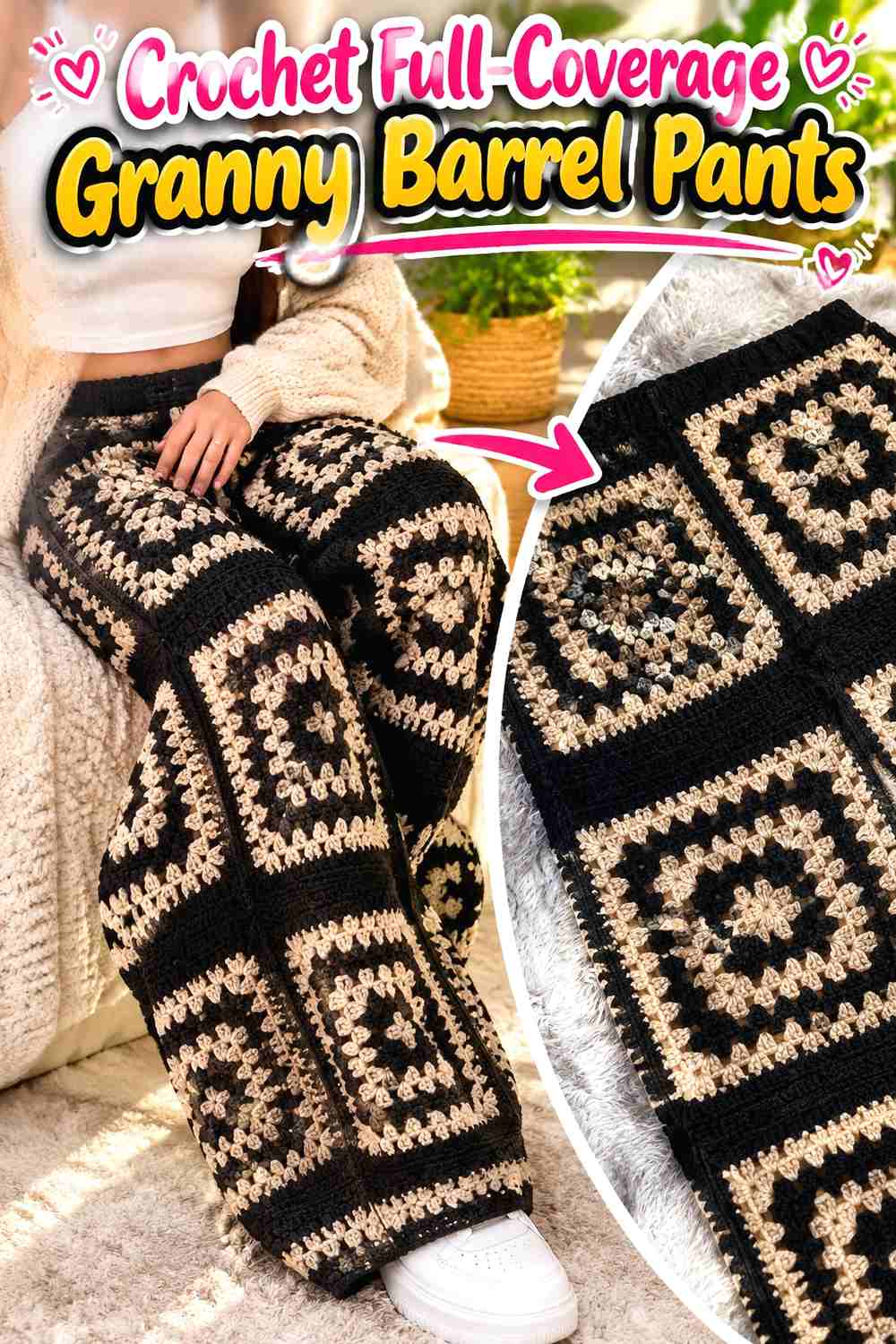
Fisayo & Crochet demonstrates granny-square pants with a full modular look. This can become a strong winter statement when the barrel effect is built through a substantial middle-leg layout and a more controlled finish around the lower leg.
Full Motif Coverage Adds Both Pattern and Bulk
Every seam and square contributes structure. Before adding extra width for a dramatic barrel, consider how much thickness the complete motif fabric already creates. More circumference is not automatically better.
Repeat the Color Rhythm Deliberately
A full pair of granny pants can become visually busy quickly. Repeating a limited color rhythm around the widest part of the leg and simplifying the ankle area can make the silhouette easier to read.
Creator Credit: Fisayo & Crochet
15. Crochet Measurement-Led Barrel Trousers
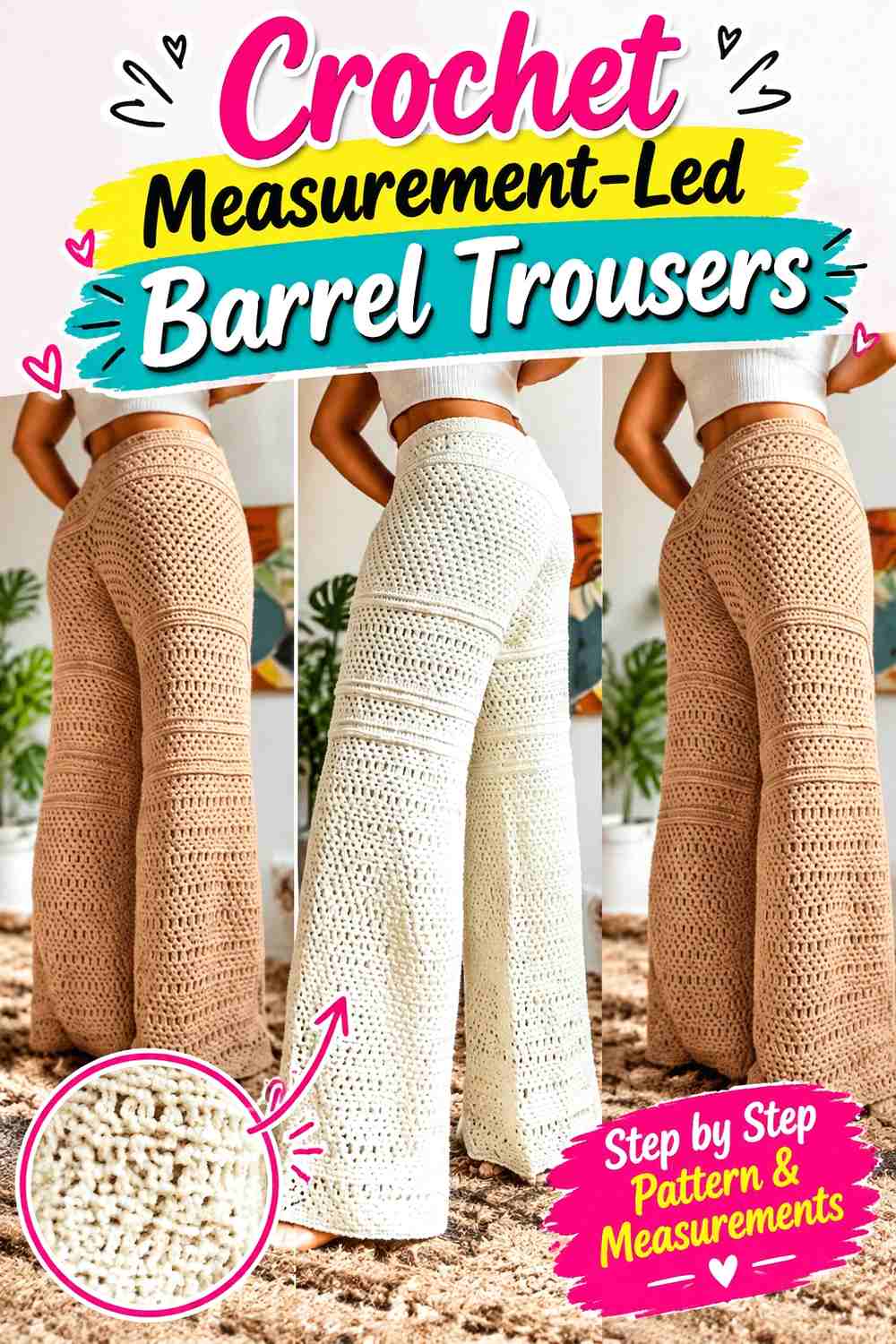
Raquel Dayo’s pants tutorial places noticeable emphasis on body measurements and fit calculations, which makes it particularly relevant when the goal is to modify a standard leg silhouette. A barrel pant still needs a reliable foundation around the waist, hips, rise, and crotch before decorative shaping is considered.
Take the Measurements That Affect Movement
Waist circumference alone is not enough for pants. Pay attention to the measurements and fit checkpoints used by the source, then consider how your intended layering and leg volume interact with them.
Separate Fit Adjustments From Style Adjustments
Extra thigh width for the barrel shape is a design choice; adequate crotch depth is a fit requirement. Treat those decisions separately. This helps prevent an exaggerated silhouette from accidentally compensating for a poorly fitted foundation.
Creator Credit: Raquel Dayo
16. Crochet Polished Elastic-Waist Barrel Pants
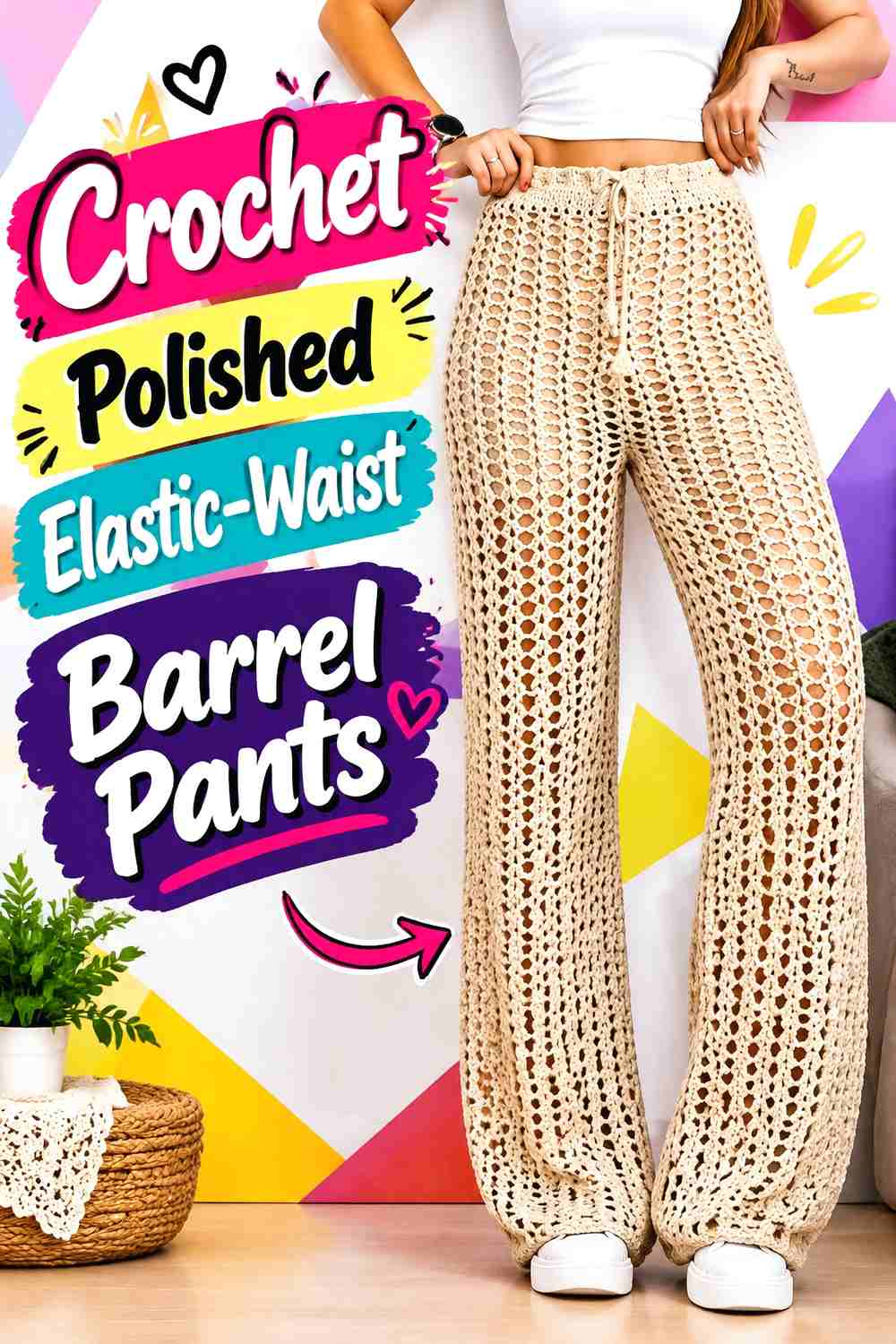
Espaco Chelmi demonstrates a complete pants construction with an elastic waistband and discusses different possible leg directions. That makes the tutorial a useful final reference for a cleaner barrel pant where the waistband remains visually simple and the leg carries most of the sculptural interest.
Keep the Waist Visually Controlled
A barrel leg already creates considerable volume below the hip. A neat waistband can provide useful contrast and prevent the entire garment from looking oversized from top to bottom.
Finish With a Gentle Lower-Leg Taper
A polished barrel trouser does not require an extreme ankle. Allow the leg to narrow gradually enough that the curve remains visible while still leaving practical room for movement. Compare both legs frequently so their shaping remains symmetrical.
Creator Credit: Espaco Chelmi
Which Crochet Barrel-Leg Direction Should You Choose?
For a minimal, modern winter wardrobe, the solid-fabric ideas from JeggoCrochet, Juliana Faz Crochê, Kali’s Threads, Raquel Dayo, and Espaco Chelmi give the leg silhouette room to become the main feature.
For maximum texture, the velvet, flower-appliqué, shell-stitch, and floral-lace versions add surface interest before the silhouette is even considered. They work better when the barrel shaping stays controlled rather than competing with the stitch pattern.
The granny-square options are strongest when you enjoy layout planning. They require a different approach because a modular fabric cannot always be tapered in the same way as continuous crochet. Use motif size, placement, smaller sections, or a changed lower-leg treatment to create the transition.
For relaxed winter styling, the cuffed jogger concept is particularly practical. It naturally combines room through the leg with a contained ankle and can be paired easily with casual layers.
Conclusion
Crochet barrel-leg pants are most convincing when the shape is planned as part of the garment rather than added at the last minute. Start by choosing the construction that matches your priorities: solid fabric for clear shaping, granny squares for modular impact, plush yarn for soft volume, lace or mesh for layered texture, or a jogger construction for a naturally narrower ankle.
Whatever direction you choose, establish the waist, rise, hips, and upper-leg fit first. Then decide how much volume you want through the leg and how gradually it should return toward the ankle. Swatching, measuring, and checking the fabric under its own weight can prevent many of the problems that appear only after a large crochet garment is finished.
Use the original creator tutorials for their exact construction details, and treat the barrel-leg ideas here as planning directions for creating a more sculptural winter silhouette.
Frequently Asked Questions
Can I turn any crochet wide-leg pants tutorial into barrel-leg pants?
Not automatically. A simple solid stitch usually gives you more freedom to alter leg circumference than a complex lace or motif repeat. First confirm how the original leg is constructed and whether gradual narrowing can be introduced without damaging the stitch pattern or fit.
Where should a crochet barrel leg be widest?
There is no universal measurement. Visually, barrel pants need noticeable volume somewhere between the upper thigh and lower leg, followed by a narrower hem. The exact placement should work with your height, fit preference, stitch pattern, and the construction used by the tutorial.
Should crochet barrel pants have a tight ankle?
No. The ankle only needs to appear narrower than the fuller part of the leg. A comfortable opening can still create a clear barrel silhouette, and it is usually more practical for movement and footwear.
Which crochet fabric works well for a sculptural barrel shape?
A fabric with enough body to show the curved outline but enough flexibility to move with the wearer is useful. Because yarns and stitches behave differently, swatching is more reliable than choosing by fiber label alone. Hang the swatch to see whether its own weight changes the shape.
Can granny-square pants have a barrel-leg silhouette?
Yes, but the shaping method is different. Instead of relying only on conventional decreases, you can plan the motif grid, vary the visual density, introduce compatible smaller sections, or use a different ankle treatment. Always compare blocked motif dimensions before joining.
How can I wear openwork crochet barrel pants in winter?
Treat open granny stitches, lace, or mesh as an outer layer. Leggings, tights, or another suitable base can provide coverage and additional warmth. Account for that underlayer when checking the finished hip, thigh, rise, and lower-leg fit.
Should crochet pants be blocked before judging the final length?
Check the care recommendations for your yarn and pattern first, but in general you should account for the way the finished fabric changes after its intended finishing process. Large crochet garments can also stretch under their own weight, so a representative swatch can help you evaluate length and drape before completing both legs.