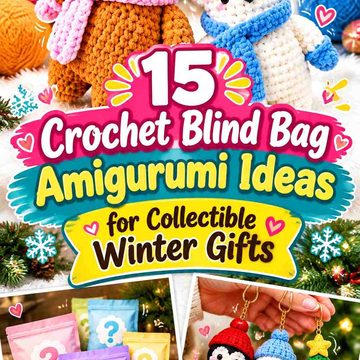
Blind bags are more fun when the possible surprises actually feel different. Instead of filling a collection with the same round animal in nineteen colors, you can combine tiny cats, sea creatures, woodland characters, food-themed amigurumi, and unusual animals while keeping the overall presentation coordinated.
The tutorials in this collection were not all originally designed or marketed as blind bags. They are small amigurumi projects that can work well as individual mystery gifts, collectible series, party favors, bag charms, or small surprise packages when their finished proportions suit your packaging.
Before making an entire set, crochet one or two samples. Yarn weight, hook choice, stuffing, ears, tails, wings, and other projections can make two supposedly “mini” projects occupy very different amounts of space. A blind-bag collection looks more intentional when the packages have similar volume even if the characters inside have different shapes.
Quick List
- Crochet Pocket Kitten Collectible
- Crochet Bumblebee Surprise Plush
- Crochet Mini Whale Pocket Pal
- Crochet Curly-Tentacle Octopus Collectible
- Crochet Tiny Duckling Gift
- Crochet Costume Ghost Mystery Character
- Crochet Mini Penguin Pocket Plush
- Crochet Frilled Axolotl Collectible
- Crochet Scrap-Yarn Capybara Buddy
- Crochet Classic Mini Bear
- Crochet Strawberry Food Friend
- Crochet Jellyfish Bag Charm
- Crochet Mini Cow Farm Friend
- Crochet Long-Ear Bunny Keychain
- Crochet Porcini Mushroom Woodland Collectible
- Crochet Shell-Detail Turtle
- Crochet No-Sew Mini Dinosaur
- Crochet Mini Fox Character
- Crochet Stackable Frog Collectible
Plan the Collection Before Making the Blind Bags
A good blind-bag series needs both consistency and surprise.
Consistency can come from yarn type, facial style, packaging, color palette, or approximate finished volume. Surprise should come from the characters themselves. A whale should not feel interchangeable with a mushroom, and an axolotl should offer a noticeably different silhouette from a teddy bear.
You also do not need every project to finish at exactly the same height. A flatter turtle, wider whale, upright bear, and long-eared rabbit can still belong to one collection if they occupy similar visual space.
If one tutorial produces a substantially larger result than the others, changing yarn weight may help, but test the altered materials first. Smaller yarn can change stitch definition and make tiny appendages more difficult to shape cleanly.
Make the Packaging Part of the Collectible Experience
You can create the mystery effect with small paper pouches, envelopes, drawstring fabric bags, boxes, or other opaque gift packaging. The project does not require commercially styled plastic packaging.
Consider assigning each character a collection number or broad rarity group. For example, the bear and bunny might be core characters while the mushroom, axolotl, or ghost become unexpected pulls. This changes the experience without altering the crochet patterns.
If the gift is for a child, packaging and toy components deserve separate consideration. Small plastic eyes, beads, keychain hardware, magnets, and detachable accessories can create hazards. Do not assume an amigurumi is suitable for a young child simply because it is handmade or because a component is sold as a “safety” eye. Choose finishing methods appropriate to the intended recipient.
Keep Scale Consistent Without Making Everything Identical
Choose one finished project as your visual benchmark. Instead of demanding an identical height, compare body volume.
A kitten with tall ears may measure higher than a strawberry while using a similar amount of visual space. An octopus may be short but much wider because of its arms. A jellyfish can become taller once its tentacles are included.
For gift packaging, test the widest and tallest characters before ordering or preparing all of the bags. Flexible crochet can compress slightly, but forcing delicate ears, fins, or embroidered details into an undersized package can distort the finished shape.
1. Crochet Pocket Kitten Collectible

A miniature kitten is a natural anchor for a cute blind-bag collection. Todo a Crochet’s tutorial creates a small stuffed cat with an upright body, pointed ears, facial details, and keychain potential, giving it a noticeably different silhouette from the rounder animals later in this list.
The Ears Make the Package Feel Taller
Pointed ears add character but also increase the effective height of the finished piece.
When planning identical blind bags, compare the kitten’s full silhouette rather than measuring only the stuffed body. A package that comfortably fits a round bear may bend the cat’s ears.
Facial Details Deserve Extra Attention at Small Scale
A small face has little room for error.
Check eye placement, nose position, whiskers, and embroidery before permanently finishing the head. If the collectible will be given to a young child, consider embroidered facial features rather than relying automatically on plastic eyes.
Creator Credit: Todo a Crochet
2. Crochet Bumblebee Surprise Plush

A striped bee adds an insect shape and strong graphic contrast to the collection. CrochetByGenna’s mini bee tutorial produces a compact plush with a striped body and separate wing shapes, so it stands apart immediately from four-legged animals and upright characters.
Stripes Create Variety Without Extra Accessories
The alternating body colors already give this project plenty of visual identity.
That means you can keep the wings and facial details simple rather than adding bows, charms, or other pieces simply to make the bee feel special. For a collectible series, strong silhouettes are usually more useful than extra detachable decorations.
Wing Placement Changes the Finished Width
The body may be compact, but wings extend the horizontal profile.
Make one finished bee before choosing the final blind-bag dimensions. A bag that fits the body snugly may press the wings flat or fold them awkwardly.
Creator Credit: CrochetByGenna
3. Crochet Mini Whale Pocket Pal

A whale brings a smooth horizontal silhouette into a collection dominated by upright characters. HoneyCookie Crochet demonstrates a small no-sew whale with integrated fins and tail details, making it particularly useful when you want a compact sea creature with relatively little finishing assembly.
Horizontal Shapes Make a Collection Feel More Varied
The whale’s body spreads across the package rather than upward.
That simple change prevents a display of opened collectibles from looking like a row of similarly proportioned dolls. It can also help balance taller characters such as the bunny, cat, or bear.
Keep the Tail From Being Crushed in Packaging
A small tail can be visually important even when it occupies little space.
Place the whale into a sample bag and remove it again before preparing the full batch. If the tail repeatedly folds sharply, a slightly wider package may protect the silhouette better.
Creator Credit: HoneyCookie Crochet
4. Crochet Curly-Tentacle Octopus Collectible

An octopus changes both shape and movement. Bonito día Crochet’s mini amigurumi version combines a compact head with multiple curled lower elements, producing a character that looks substantially different from a simple stuffed sphere.
Tentacles Add Volume Below the Body
The lower details can make the project occupy more space than the head suggests.
Before grouping it with smaller animals, arrange the tentacles naturally and judge the entire footprint. Packing them too tightly may make the finished octopus look flattened when opened.
This Shape Works Well as an Unexpected Pull
Cats, bears, and bunnies are familiar collectible characters. An octopus provides a more surprising reveal while remaining visually cute.
That makes it a useful candidate for a less common character in the series without requiring an artificially complicated version of the pattern.
Creator Credit: Bonito día Crochet
5. Crochet Tiny Duckling Gift

A miniature duck introduces a recognizable bird silhouette without the bulk of long legs or a large tail. Medintseva toys demonstrates a very small duck amigurumi with a compact body, beak, and wing details that the creator specifically presents as suitable for tiny gifts and collectible use.
The Beak Creates the Character With Very Little Bulk
A duck does not need an elaborate costume to remain recognizable.
That makes it useful when you want a clean collectible series rather than one where every figure depends on removable accessories.
A Compact Duck Can Help Standardize Package Size
Compared with characters that have tall ears or trailing tentacles, the duck keeps most of its volume close to the body.
Use this type of character as one benchmark when deciding whether your blind bags are unnecessarily large for the majority of the collection.
Creator Credit: Medintseva toys
6. Crochet Costume Ghost Mystery Character

A ghost introduces a character that can support multiple themed variations. Gold Yarn’s tutorial shows a mini ghost series with several costume treatments, making the basic form especially useful when you want one collectible category with controlled variations.
Costume Variants Can Create a Sub-Series
Instead of treating every color as a separate design, use meaningful visual changes.
A distinctive hat, ears, or themed feature changes the character more effectively than making an otherwise identical ghost in six shades. If you create variants, keep the base body consistent so collectors can recognize the family.
Avoid Overloading a Tiny Character With Loose Parts
Mini costumes can invite extra buttons, beads, charms, or glued embellishments.
Consider the recipient before adding them. For gifts intended for children, loose or detachable decorative components require particular caution.
Creator Credit: Gold Yarn
7. Crochet Mini Penguin Pocket Plush

The penguin introduces strong front-facing color blocking and a compact bird shape. Ngochan Crochet’s tutorial creates a small penguin with contrasting belly, beak, flippers, and feet, giving the finished character several identifiable features without relying on a costume.
Belly Contrast Makes the Front Easy to Read
Blind-bag collectibles are often first seen in the palm of the hand.
A contrasting front panel helps a small character remain visually clear at that distance. If you alter colors, preserve enough contrast for the body shape and face to remain distinct.
Feet Change How the Penguin Sits
Small lower details can influence whether an amigurumi appears upright, tilted, or visually balanced.
If you plan to photograph all nineteen collectibles together, test how the penguin rests on the same surface as the flatter sea creatures and rounded animals.
Creator Credit: Ngochan Crochet
8. Crochet Frilled Axolotl Collectible

An axolotl makes an excellent unusual character because the external gill shapes create a silhouette that is immediately different from conventional stuffed animals. Phoenix TV’s mini version uses those distinctive side details to make the character recognizable without needing a complicated outfit.
Side Frills Need More Package Clearance
Small projections can bend more easily than a rounded stuffed body.
Check the finished width with the gills positioned naturally. A slightly roomier paper pouch may preserve them better than a narrow package that presses them against the head.
Color Can Change the Character Without Changing the Shape
An axolotl already has a distinctive outline, so variation does not need to come from added accessories.
A coordinated set could use several carefully selected body colors while preserving the same gill arrangement. This is one of the cases where color variation supports an already meaningful design difference rather than replacing one.
Creator Credit: Phoenix TV
9. Crochet Scrap-Yarn Capybara Buddy

A capybara brings a long-bodied land animal into the mix. HappyBerry Crochet’s miniature version is designed as a tiny scrap-yarn project and creates a recognizable capybara form that can serve as a desk buddy, charm, or small gift.
A Longer Body Breaks Up the Round-Plush Look
Many mini amigurumi use near-spherical construction because it is compact.
The capybara provides a useful contrast. Its longer silhouette makes an opened collection feel more thoughtfully curated even when the overall size remains small.
Neutral Colors Can Calm a Bright Collection
Not every blind-bag character needs a highly saturated palette.
A brown, tan, or similarly subdued capybara can give the eye a rest between bright strawberries, bees, frogs, and sea creatures. That color balance can make the full collection look stronger when displayed together.
Creator Credit: HappyBerry Crochet
10. Crochet Classic Mini Bear
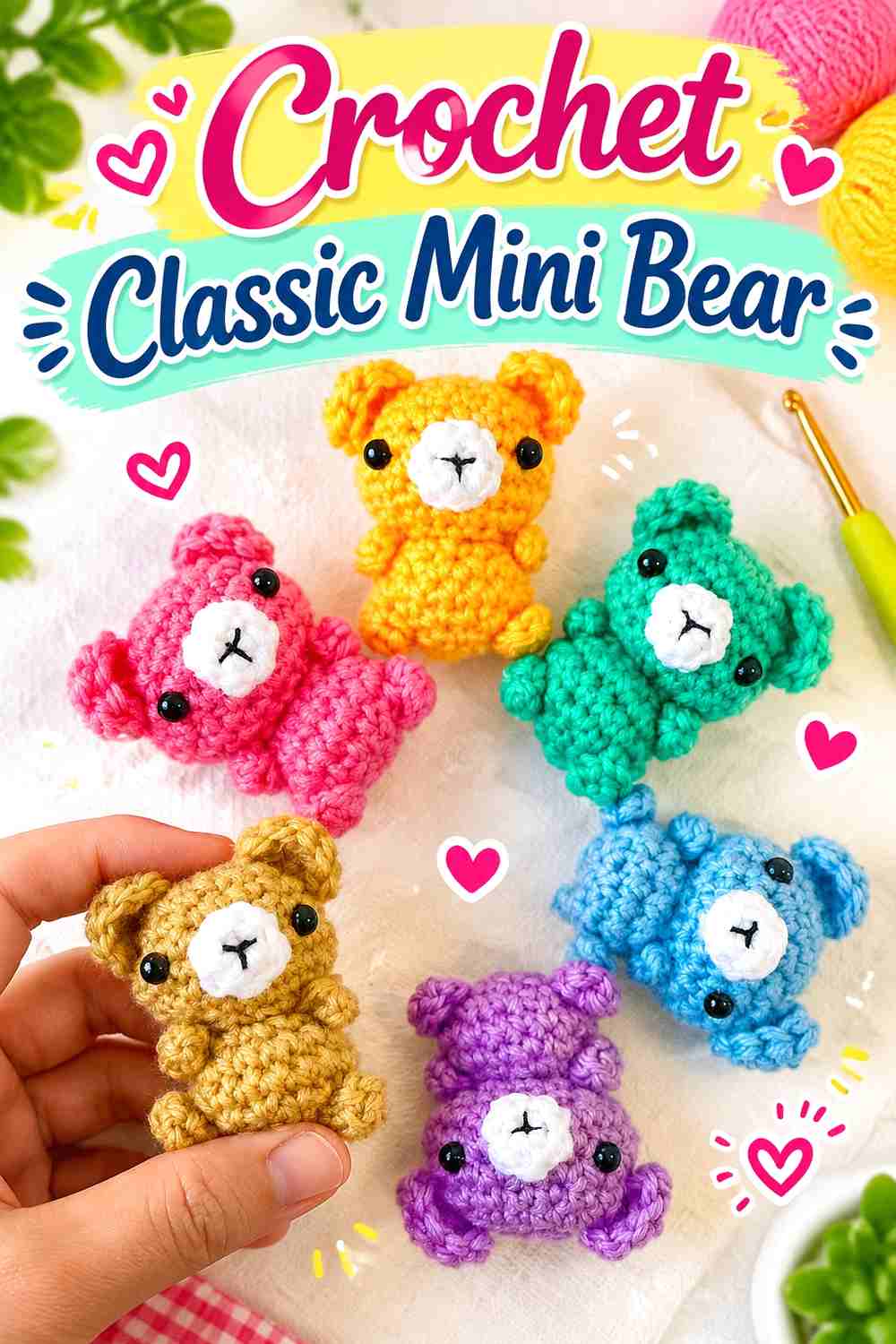
A bear provides the familiar character that anchors the more unusual pulls. GratiaProject’s mini bear tutorial uses the classic separate head-and-body amigurumi look with small ears, limbs, and facial details.
Familiar Characters Make Unusual Ones More Fun
If every blind-bag option is strange or highly themed, the collection can lose a visual center.
A traditional teddy-style bear gives collectors an instantly familiar option. The mushroom, axolotl, whale, and octopus then feel more surprising by comparison.
Separate Limbs Increase Finishing Decisions
A design with multiple attached pieces gives you more control over pose, but placement also becomes more noticeable.
Before sewing permanently, pin or position paired parts symmetrically and look at the bear from the front and side. Small alignment differences appear larger on miniature figures.
Creator Credit: GratiaProject
11. Crochet Strawberry Food Friend

A strawberry adds a food-themed collectible without needing arms, legs, or a complicated face. Isa Monteiro Amigurumi demonstrates a miniature stuffed strawberry intended for small decorative, keychain, or gift uses.
Food Shapes Add Variety Without Another Animal
A strong blind-bag assortment benefits from category changes as well as species changes.
The strawberry introduces a tapered fruit silhouette and leafy top, preventing the entire set from becoming a miniature zoo.
Keep the Leafy Top in Proportion
The green upper detail helps identify the fruit, but oversized leaves can visually dominate a small strawberry.
If you change yarn or hook size, evaluate how the two parts relate rather than resizing one component independently.
Creator Credit: Isa Monteiro Amigurumi
12. Crochet Jellyfish Bag Charm

A jellyfish provides a combination of rounded body and hanging movement. Heather Corinne Crochets’ mini jellyfish uses separate bell, belly, and tentacle elements and is specifically presented as adaptable to a keychain, backpack buddy, or bag charm.
Hanging Tentacles Change the Effective Height
Measure the jellyfish while it is hanging naturally rather than while the tentacles are curled into your palm.
This is particularly important if you want identical blind-bag packaging across the collection. A flexible tentacle can fit into a small bag, but repeated tight folding may change how it looks when revealed.
This Project Can Bridge Toy and Accessory Collections
Some recipients may prefer a display plush while others like usable charms.
The jellyfish works naturally in either direction. Decide whether hardware belongs in the blind bag itself or whether you want to keep the collectible as a soft object and let the recipient add hardware later.
Creator Credit: Heather Corinne Crochets
13. Crochet Mini Cow Farm Friend

A small cow introduces patches, ears, horns or horn-like details, and a farm-animal silhouette without repeating the shape of the bear or bunny. Amigurumis Atina’s mini cow tutorial produces a compact chenille-style character intended as a small amigurumi collectible.
Patch Placement Can Make Each Cow Feel Individual
Color markings offer meaningful variation because they are naturally associated with the animal.
Instead of simply changing the entire body color, consider how contrasting patches alter the front and side views while preserving the recognizable cow design.
Check Small Head Details Before Gifting
Tiny ears and other head features should be securely finished.
If the cow is intended for a child rather than adult collecting or display, review all small components and facial features with the recipient’s age and use in mind.
Creator Credit: Amigurumis Atina
14. Crochet Long-Ear Bunny Keychain

A rabbit adds one of the strongest vertical silhouettes in the collection. DIY Fluffies’ small bunny is specifically designed at a keychain-friendly scale when worked with the creator’s smaller-yarn option, and the long ears distinguish it immediately from rounder animals.
Ears Should Be Included in Your Scale Check
Body height alone gives a misleading comparison.
Place the completed bunny beside the bear, penguin, and cat and judge the overall visual volume. It can be taller while still fitting comfortably into the same collectible family.
Decide on Keychain Hardware Before Packaging
A metal ring can add considerable bulk beside a tiny soft toy.
If every project is being sold or gifted specifically as a keychain, standardizing the hardware helps the collection feel cohesive. If the emphasis is on soft collectibles, leaving hardware off may create cleaner blind-bag packaging.
Creator Credit: DIY Fluffies
15. Crochet Porcini Mushroom Woodland Collectible

A miniature mushroom gives the series a woodland object rather than another animal. HuloHulaStudio’s small porcini design uses a rounded cap over a thicker stem, producing a compact shape that can stand out strongly among creatures with faces and limbs.
A Faceless Collectible Can Still Have Strong Character
Not every piece needs eyes and a smile.
A recognizable natural form adds visual variety and can make the whole assortment feel more curated. It also offers an option for collectors who prefer woodland décor over character plushies.
Cap Width Matters More Than Height for Packaging
The mushroom is relatively compact vertically, but the cap creates its widest point.
Use that width when checking blind-bag dimensions. Compressing the cap too strongly can change the finished profile.
Creator Credit: HuloHulaStudio
16. Crochet Shell-Detail Turtle

A turtle has a flatter profile than most upright amigurumi and places much of its visual interest across the back. Cute Crochet’s miniature turtle includes a distinct shell, underside, head, and flippers, making it one of the more structurally layered animals in the collection.
The Shell Gives You a Second Display View
Most small characters are designed primarily to be viewed from the front.
A turtle can also be interesting from above because the shell becomes a focal surface. That makes it particularly useful for flat-lay collection photos and gift displays.
Flippers Extend Beyond the Main Body
Check the finished footprint before choosing a narrow bag.
The turtle may be shorter than the bunny or bear while still requiring extra width around its sides. Packing based only on height can therefore be misleading.
Creator Credit: Cute Crochet
17. Crochet No-Sew Mini Dinosaur

A dinosaur introduces a prehistoric character and a more irregular silhouette. John´s Crochet demonstrates a miniature no-sew dinosaur with recognizable body and dinosaur details, giving the collection an option that feels very different from familiar pets and farm animals.
Dinosaur Details Should Remain Readable at Small Scale
Back details, tail shape, and head proportions do much of the identification work.
If you change yarn weight to match the rest of your blind-bag collection, make a complete test before producing several. Very small textured details can lose definition faster than a simple round body.
Use the Dinosaur as a Strong Surprise Character
A mystery assortment benefits from a few pulls that feel noticeably less expected.
Instead of making the dinosaur extremely rare through marketing claims, you can simply produce fewer of it than the core bears, bunnies, or cats if that suits your gifting plan.
Creator Credit: John´s Crochet
18. Crochet Mini Fox Character

A fox brings pointed ears, a muzzle, and a prominent tail into the collection. Amiguchos Arte em Crochê’s Mini Mochi-style fox is a genuinely small amigurumi design, with the creator listing a finished size of about 5.5 cm using the stated materials.
The Tail Changes Both Shape and Balance
A substantial tail is not just decoration.
It can change how the fox sits, how wide it appears from the side, and how it fits inside a package. Arrange the tail naturally when deciding whether it matches the scale of the other collectibles.
Strong Animal Markings Reduce the Need for Accessories
The contrast between the main body and lighter facial or tail details already makes the fox visually distinctive.
That is useful for blind bags because you can create an interesting character without adding removable hats, bows, or charms.
Creator Credit: Amiguchos Arte em Crochê
19. Crochet Stackable Frog Collectible

A compact frog is an effective final addition because its raised eyes and squat body create a shape not duplicated elsewhere in the collection. Club Crochet’s tutorial uses a rounded mini frog concept and also discusses optional magnetic stacking features.
The Raised Eyes Create the Frog’s Silhouette
Even before color or facial embroidery is considered, the top eye shapes distinguish this character.
Protect that outline when packaging. A bag that presses heavily against the top can make the finished frog look less expressive when opened.
Skip Magnets When They Do Not Suit the Recipient
The source includes optional magnets as part of its collectible concept, but magnets introduce a serious ingestion hazard if they become accessible.
For children’s gifts, especially those intended for young children, do not treat magnetic inserts as a harmless upgrade. A soft nonmagnetic version is the more appropriate direction when that risk is relevant.
Creator Credit: Club Crochet
Which Blind Bag Amigurumi Projects Work Best Together?
For a mostly animal collection, combine the kitten, bee, whale, duck, penguin, capybara, bear, cow, bunny, turtle, dinosaur, fox, and frog. The different body shapes keep the series varied even though the theme remains consistent.
For a more whimsical assortment, mix animals with the strawberry, mushroom, ghost, axolotl, octopus, and jellyfish. Those unusual pulls make the reveal harder to predict.
If you want the easiest packaging plan, prioritize compact characters with fewer long projections, such as the duck, bear, capybara, strawberry, mushroom, or penguin. The bunny, fox, turtle, jellyfish, octopus, bee, and axolotl require more attention to ears, tails, flippers, tentacles, wings, or side details.
A particularly balanced nineteen-piece display does not require nineteen different yarn palettes. Repeating a controlled group of colors across unrelated characters can make the assortment look like one collection while each silhouette still remains unique.
Conclusion
The strongest blind bag amigurumi collection combines familiar favorites with a few surprises.
The bear, bunny, kitten, duck, and penguin can act as approachable core characters. Sea creatures such as the whale, octopus, jellyfish, and turtle change the proportions of the collection, while the mushroom and strawberry break away from animals entirely. The axolotl, capybara, ghost, dinosaur, and fox provide the less predictable reveals that make a mystery assortment interesting.
Before making multiples, test your yarn, finished proportions, and packaging with several different shapes. Most importantly, choose eyes, hardware, magnets, embellishments, and packaging according to the intended recipient rather than assuming every miniature amigurumi construction is suitable for every age.
Use the original creator tutorials for the exact crochet construction of each featured design.
Frequently Asked Questions
What makes an amigurumi suitable for a crochet blind bag?
A useful blind-bag project is small enough for your chosen packaging, recognizable without a large display setup, and different enough from the other possible pulls to make the reveal interesting. It does not have to have been originally designed as a commercial-style blind-bag toy.
Do all blind bag amigurumi need to be exactly the same size?
No. Similar visual volume is more useful than identical height. A tall-eared bunny and a wide turtle can belong to the same collection even if their measurements differ. Compare the finished objects together and test them in the same packaging.
How can I make different crochet patterns look like one collectible series?
Repeat a limited yarn palette, use similar facial styling where appropriate, choose comparable yarn textures, and use consistent packaging. Do not force every pattern into the same body shape simply for consistency; silhouette variety is part of what makes the collection interesting.
Are safety eyes appropriate for blind bag amigurumi gifts?
That depends on the recipient and intended use. Small plastic components can pose hazards if they detach, particularly for young children. Embroidered features are worth considering when small-part safety is important. Follow appropriate toy-safety guidance for your location and intended recipient.
Can I add keychain rings to every blind bag amigurumi?
You can turn many small amigurumi into charms, but first check whether the attachment point can handle normal use and whether metal hardware is appropriate for the recipient. Adding a ring also changes the space required inside the package.
How can I create rare blind bag characters without designing new patterns?
Use the same nineteen-project pool but produce different quantities. A mushroom, axolotl, ghost, dinosaur, or another distinctive project can simply appear less often than the core characters. You can also create meaningful creator-permitted color variations rather than inventing an entirely new construction.
What is the safest way to package crochet blind bag gifts for children?
Choose packaging based on the child’s age and intended supervision. Avoid creating additional hazards with loose small components, magnets, or unsuitable plastic packaging. Paper pouches, small boxes, or reusable fabric bags can provide the mystery effect without requiring commercial blind-bag packaging.