Crochet wall pockets fit especially well in cottage kitchens because they can combine visible storage with the softer texture of handmade decor. The projects in this collection range from shallow granny-square pockets and dowel-mounted organizers to dimensional hanging baskets, produce pouches, grocery-bag dispensers, herb holders, and compact towel hangers.
The differences matter when choosing a project. A flat pocket is useful where wall depth is limited, while a rounded basket can accommodate bulkier contents. Open mesh is better suited to items that benefit from airflow, whereas dense fabric offers more support for utensils, recipe cards, or other small kitchen supplies. Decorative details such as granny motifs, tassels, floral lace, and novelty shapes can push the finished piece toward a distinctly vintage or cottage look without changing its basic function.
Use the original creator tutorials for exact construction, sizing, materials, and finishing instructions.
Quick List
- Crochet Granny-Square Dowel Pocket
- Crochet Button-Tab Kitchen Pocket Panel
- Crochet Macramé-Look Tassel Pocket
- Crochet Three-Pocket Dowel Organizer
- Crochet Deep Dowel Storage Pouch
- Crochet Half-Round Wall Basket
- Crochet Sturdy Ribbed Hanging Basket
- Crochet Folded-Square Cottage Wall Basket
- Crochet Farmhouse Plarn Wall Basket
- Crochet Dowel-Rail Herb Jar Baskets
- Crochet Mesh Produce Hanging Pouch
- Crochet Chicken Grocery-Bag Wall Pocket
- Crochet Lacy Farmhouse Bag-Saver Pocket
- Crochet Elastic-Base Grocery-Bag Dispenser
- Crochet Star-Stitch Towel Ring Holder
- Crochet Buttoned Thread Towel Loop
Choose Structure Before Choosing the Decorative Style
The most useful kitchen wall pocket is one whose structure matches its contents. Flat-backed pockets conserve space and work well for recipe cards, folded cloths, lightweight tools, or decorative stems. Deeper baskets are better when the contents are bulky enough to push a shallow pocket outward.
Pay particular attention to the hanging point. A wooden dowel spreads weight across a wider area, while a single loop concentrates it around one hook. Crocheted straps can also lengthen under load depending on the fiber, stitch density, and construction.
Openwork deserves similar consideration. Lace and mesh make attractive cottage details and reduce visual bulk, but small objects can protrude through large openings. Dense crochet is generally more supportive, although it can also become heavier. Before adapting any tutorial, consider both the empty appearance and how the pocket will behave once filled.
Match Yarn Behavior to Kitchen Use
A wall organizer does not need the same fabric qualities as a scarf or blanket. For pockets expected to hold objects, fabric stability usually matters more than flowing drape. Cotton and cotton-rich yarns are common choices in several of these tutorials because they can produce a defined, substantial fabric, but the original pattern should remain the starting point for substitutions.
Bulky yarn makes a basket visually substantial, yet it can also create a heavier finished piece. Thin thread provides a delicate vintage appearance but changes the scale and amount of structure available. Mesh designs intentionally stretch more than dense panels, which can be useful for produce but less suitable for narrow utensils.
Also consider cleaning. Kitchens expose textiles to dust, moisture, and splashes. Follow the care instructions for the yarn actually used, especially when a project includes wooden rings, dowels, buttons, elastic, beads, jars, or other non-yarn components.
Keep Cottage Styling Functional
Vintage kitchen character does not have to come from complicated embellishment. A granny motif, scalloped edge, floral stitch, wooden dowel, simple button, natural fiber, or traditional farm-animal shape can establish the mood without turning useful storage into purely decorative crochet.
Placement matters just as much as color. A wall pocket beside a pantry or prep area can hold lightweight supplies; a produce pouch benefits from a location with suitable airflow; a towel holder belongs where the towel can hang freely. Avoid placing crocheted storage where it may contact burners, open flames, hot cookware, or surfaces that become dangerously warm.
For older-looking palettes, consider cream, flax, muted green, dusty blue, faded red, or warm brown, but treat color as the finishing choice rather than the only source of variety. Shape, pocket depth, edge treatment, hanging hardware, and stitch texture create much stronger differences between projects.
1. Crochet Granny-Square Dowel Pocket
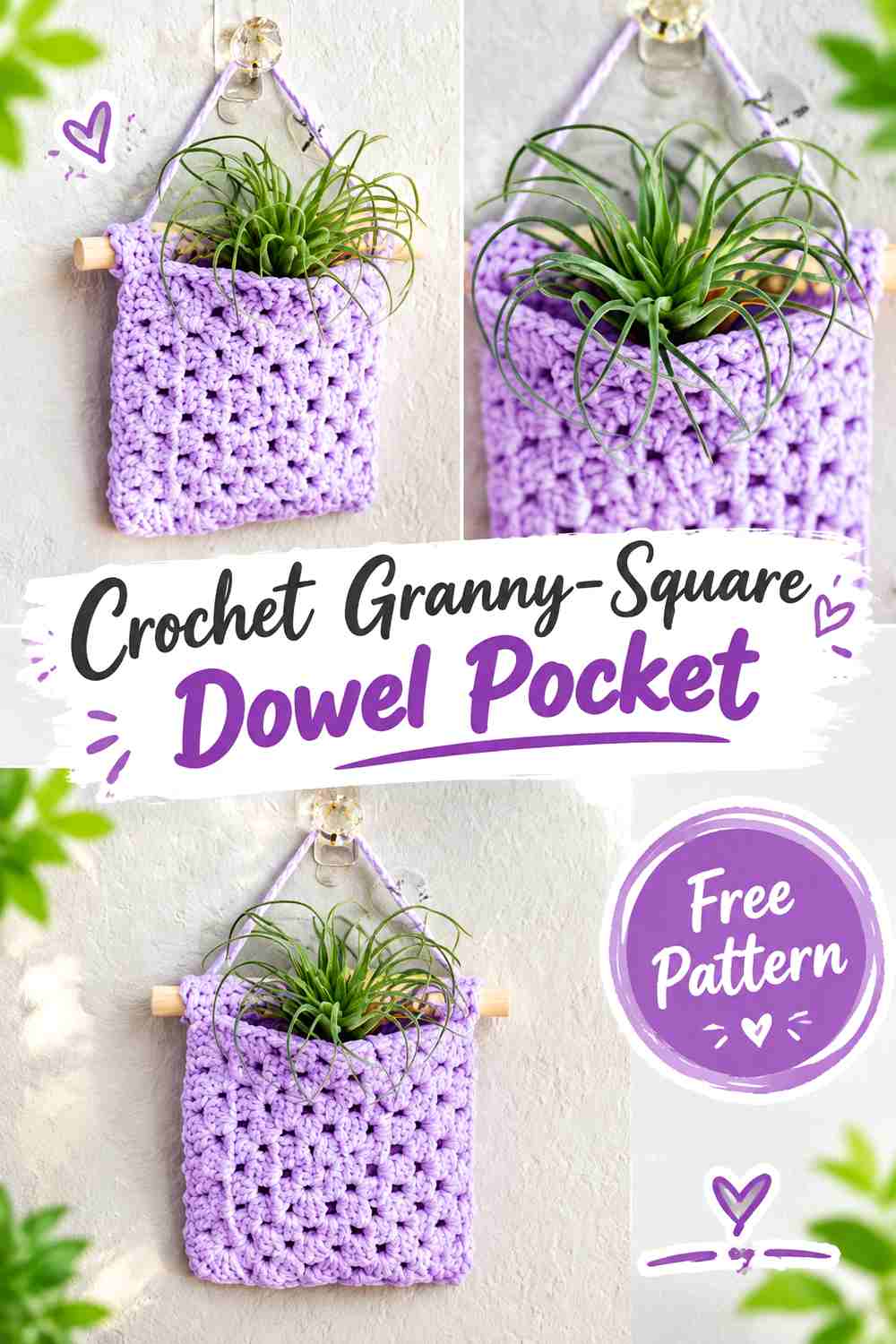
This compact wall pocket puts a classic granny-square face in front of a separate solid backing, then suspends the finished piece from a wooden dowel. Made by KYM’s tutorial describes the pocket as a two-piece construction and uses cotton yarn, with the granny square joined to the backing along three sides. That combination gives the project a recognizably traditional motif while preserving a more solid surface behind the open granny fabric.
For a vintage kitchen, this is better suited to lightweight objects than bulky storage. Recipe notes, seed packets, wrapped utensils, or a small arrangement of dried stems make more sense than heavy jars. The shallow scale also works well where a deeper basket would interfere with a doorway or narrow passage.
Decide Whether the Granny Openings Need Backing
Granny squares naturally contain openings between clusters. The tutorial discusses an optional felt or fabric layer behind the motif, which is useful when the contents are small enough to show through or catch in those gaps.
For kitchen adaptation, think about the smallest object you expect to store. If it could poke through the motif, an added backing may improve practicality. Remember that introducing fabric also changes laundering and drying, so care should reflect every material in the finished pocket.
Keep the Dowel Proportionate to the Load
The backing wraps around a small wooden dowel in the original design. That detail reinforces the vintage wall-pocket appearance while spreading the hanging point across the pocket’s width.
A dowel should not be treated as permission to overload the crochet. The front motif and its seams still carry the contents. If you enlarge the project, verify the creator’s construction before assuming that the same seaming, yarn, or support will perform the same way at a larger scale.
Creator Credit: Made by KYM
2. Crochet Button-Tab Kitchen Pocket Panel
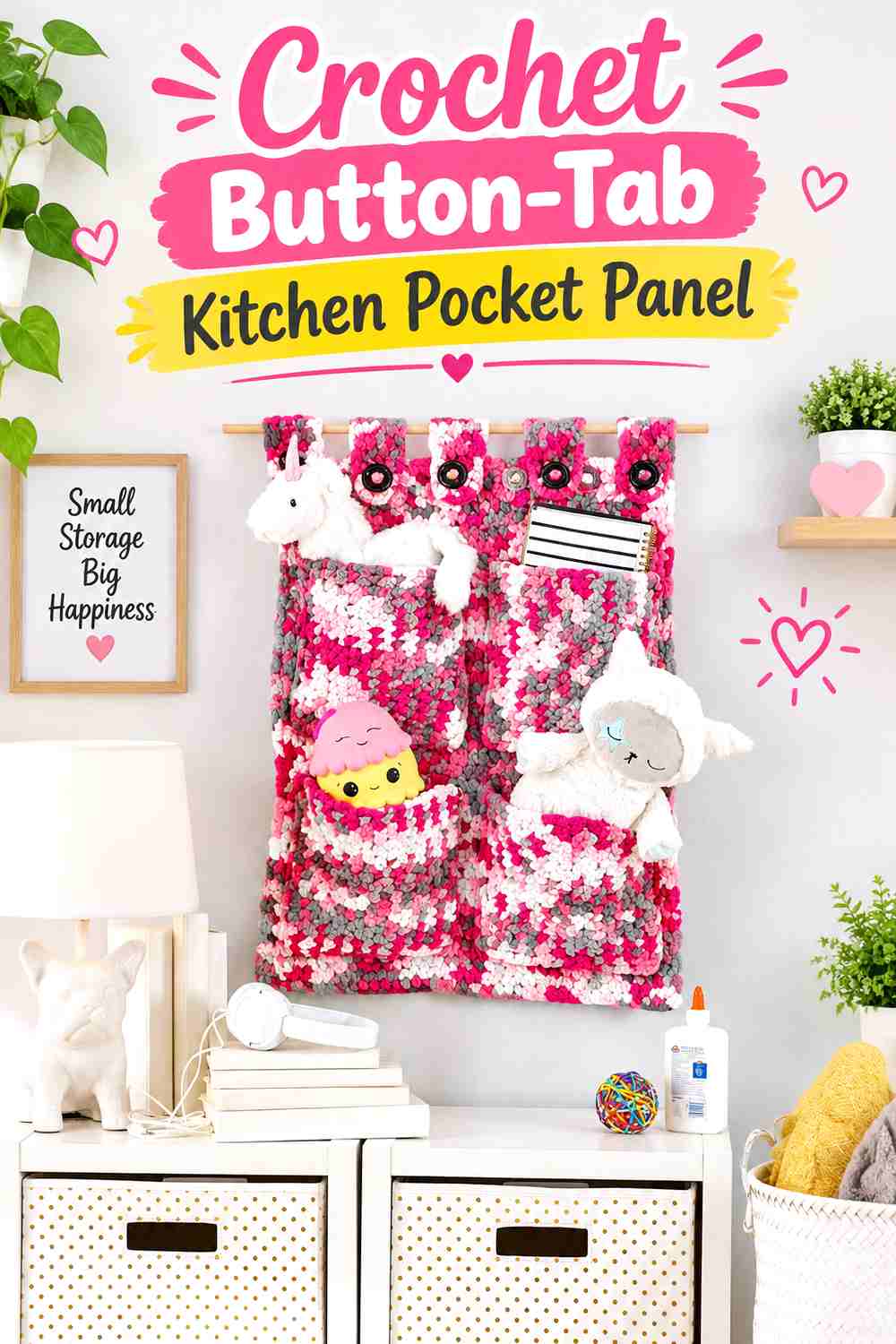
This wall organizer uses a substantial back panel with attached pockets and hanging straps, creating a larger storage surface than a single pouch. The Yarnspirations design by Corina Gray is worked as a wall hanging with patch-style pockets and a dowel-supported format, making it a useful reference when you want the look of an old fabric kitchen organizer translated into crochet.
Its strength is compartmentalization. Instead of asking one deep basket to hold everything, the panel provides separate areas that can visually divide small kitchen items. For a cottage interpretation, muted colors and contrasting buttons can emphasize the sewn-pocket look. Check the original finished size before choosing a wall because this type of organizer occupies considerably more visual space than a compact hook-hung basket.
Use Separate Pockets to Prevent a Cluttered Bulge
A broad panel works best when the contents are distributed rather than piled into one central pocket. Separate compartments can keep folded cloths, lightweight notes, and small packaged supplies from settling into a single heavy mass.
Before adapting pocket dimensions, compare the intended contents with the pocket opening and depth given by the tutorial. Very tall objects can lean outward, while very small pieces may disappear into an unnecessarily deep compartment.
Watch the Relationship Between Panel Weight and Wall Hardware
A large crocheted panel becomes heavier once pockets and contents are added. The dowel and hanging method therefore deserve as much attention as the decorative stitches.
Use wall hardware appropriate for the actual combined load and wall material. The crochet itself should also remain free from hot appliances and moisture-prone locations. If the organizer starts pulling forward or curling when filled, reducing the contents is generally wiser than trying to force more rigidity into a design intended for textile storage.
Creator Credit: Yarnspirations
3. Crochet Macramé-Look Tassel Pocket
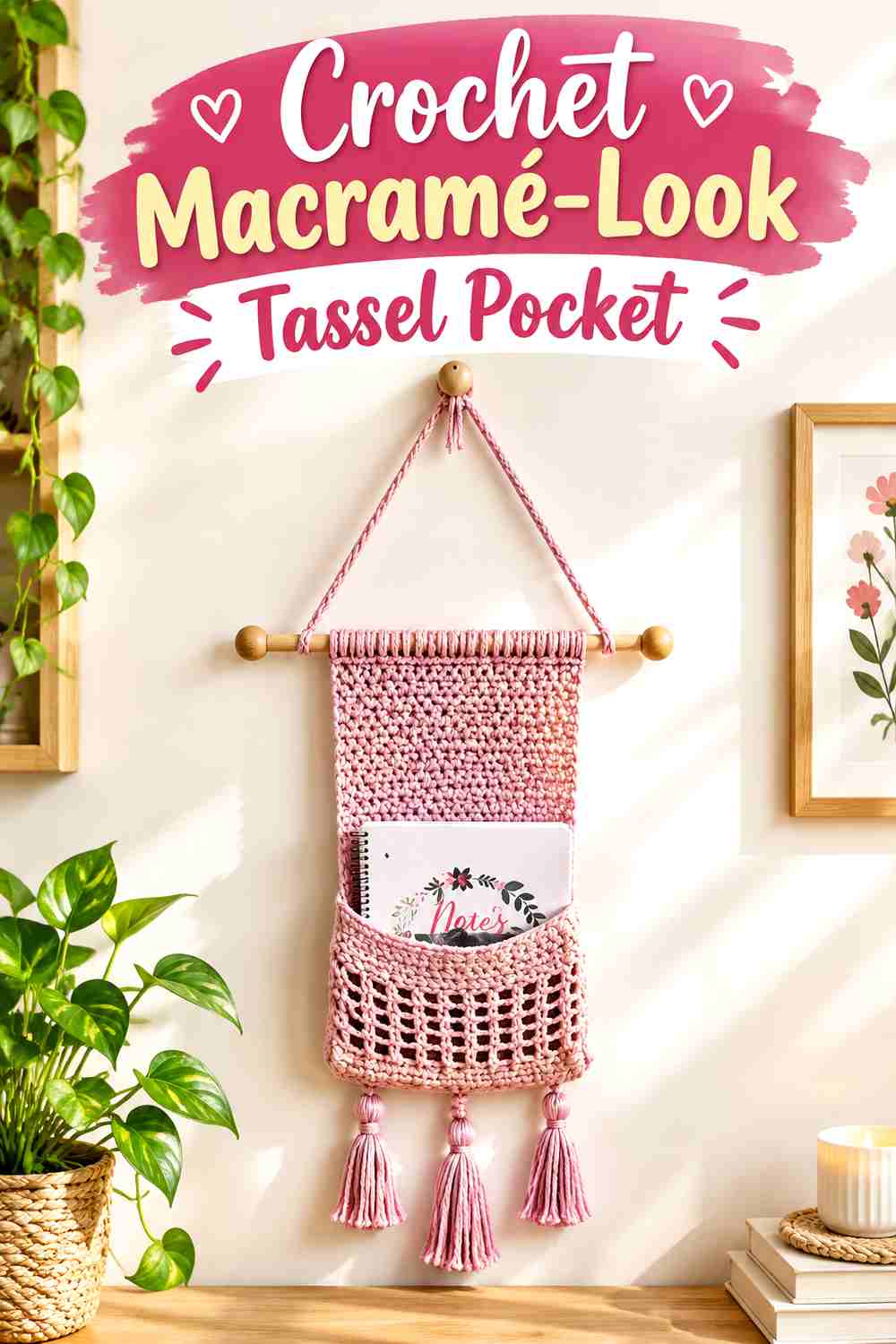
This design deliberately borrows the long, decorative silhouette of a macramé wall hanging while remaining crocheted. Day’s Crochet demonstrates a central storage pocket on a long hanging panel, finished with a wooden dowel and tassel details. The creator specifically presents the pocket as suitable for several rooms, including a kitchen, and the substantial hanging format makes it noticeably different from compact basket-style projects.
The design is a strong option when wall decor is as important as storage. In a cottage kitchen it could hold a few long, lightweight wooden utensils, folded linens, or decorative dried stems while the lower tassels remain visible. Because the ornament extends well below the pocket itself, confirm that the intended wall has enough clear vertical space before starting.
Let the Long Silhouette Stay Visible
This project’s decorative impact comes partly from the relationship between the pocket, dowel, hanging ring, and tassels. Filling the pocket with oversized contents can visually bury those features.
Choose objects that remain within or just above the pocket rather than cascading over the entire front. If using it near a work surface, also check that the fringe does not hang into splashes, food preparation, drawer openings, or other places where loose fibers would be inconvenient.
Treat Cording and Yarn Substitution Carefully
The tutorial uses a substantial home-decor-style material and also discusses strong cotton cording as an alternative.
A very soft substitute may change both the crispness of the panel and the way the pocket hangs once filled. Conversely, an unusually rigid cord can alter hand feel and make seaming more difficult. Compare thickness, flexibility, and finished gauge with the tutorial before substituting rather than selecting material solely by color.
Creator Credit: Day’s Crochet – Modern Crochet Patterns
4. Crochet Three-Pocket Dowel Organizer
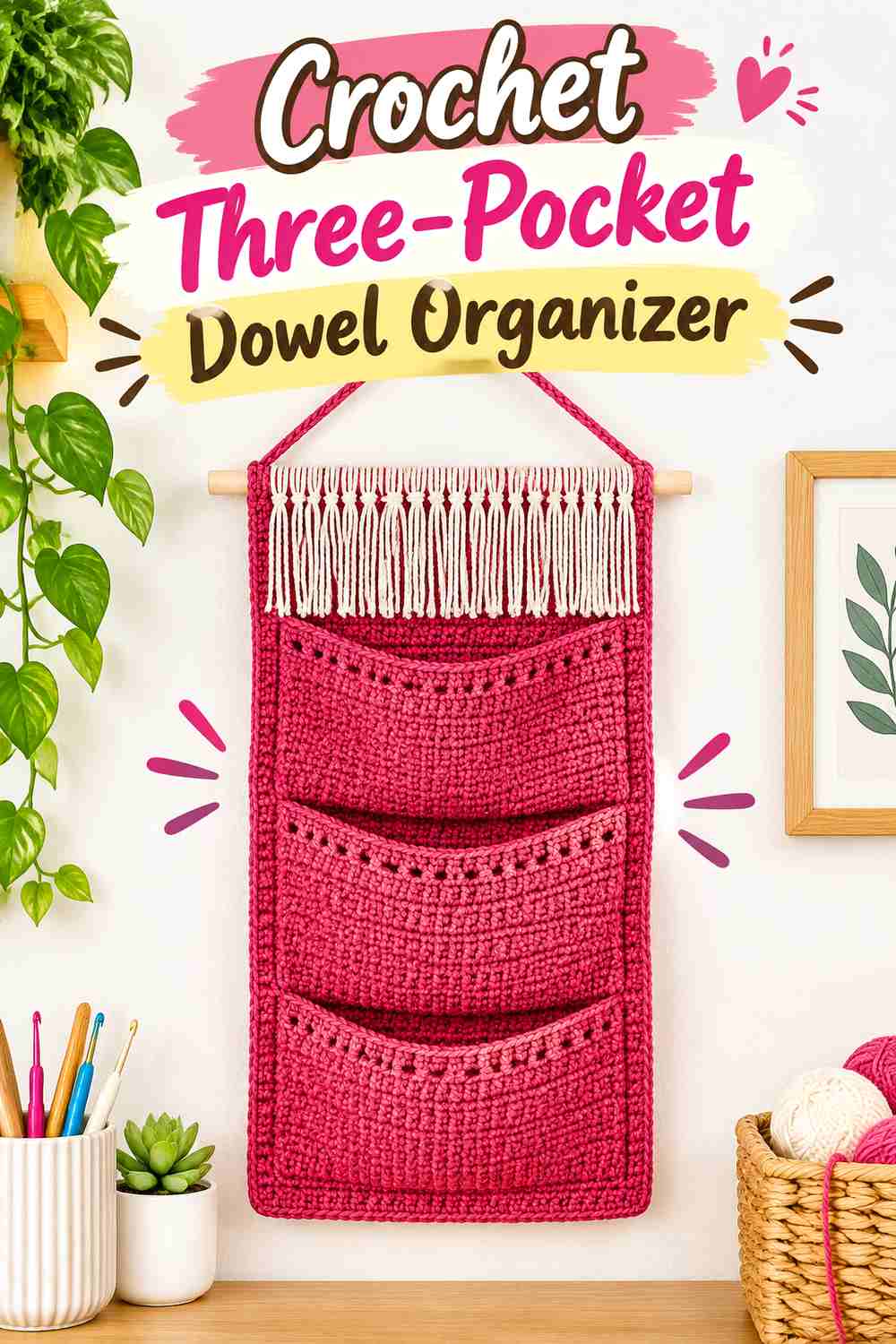
Fuzzy Stitches’ wall-organizer tutorial combines a crocheted back with multiple small pockets, side finishing, a wooden dowel, and tassels. The video separates pocket sizing, alignment, sewing, border work, dowel attachment, and tassel finishing, confirming that this is a true constructed organizer rather than a decorative panel with a token pouch.
For kitchen use, the smaller compartments can be more practical than one oversized pocket because similar items can be separated. Think recipe cards in one area, lightweight measuring tools in another, and folded cloths or packets in a third. The rectangular arrangement gives a neater, more structured look than a soft hanging basket, making it suitable for kitchens where cottage details need to coexist with orderly storage.
Align the Pockets Before Permanent Joining
Pocket placement affects both appearance and use. Small alignment differences become obvious when several compartments share the same rectangular back panel.
Before joining, temporarily position the pockets and check them with the panel hanging vertically rather than only lying on a table. This helps reveal whether openings tilt, edges overlap, or the lower pockets sit so close together that they become difficult to access.
Reserve Tassels for Clear Wall Areas
Tassels soften the straight organizer shape and contribute to its handmade wall-hanging character, but they add length without adding storage.
On a kitchen wall, make sure they remain clear of counters where food is prepared, stove areas, sink splashes, and cabinet doors. If the intended location is busy, the useful pocket system can still provide the main visual interest even when decorative finishing is kept restrained.
Creator Credit: Fuzzy Stitches
5. Crochet Deep Dowel Storage Pouch
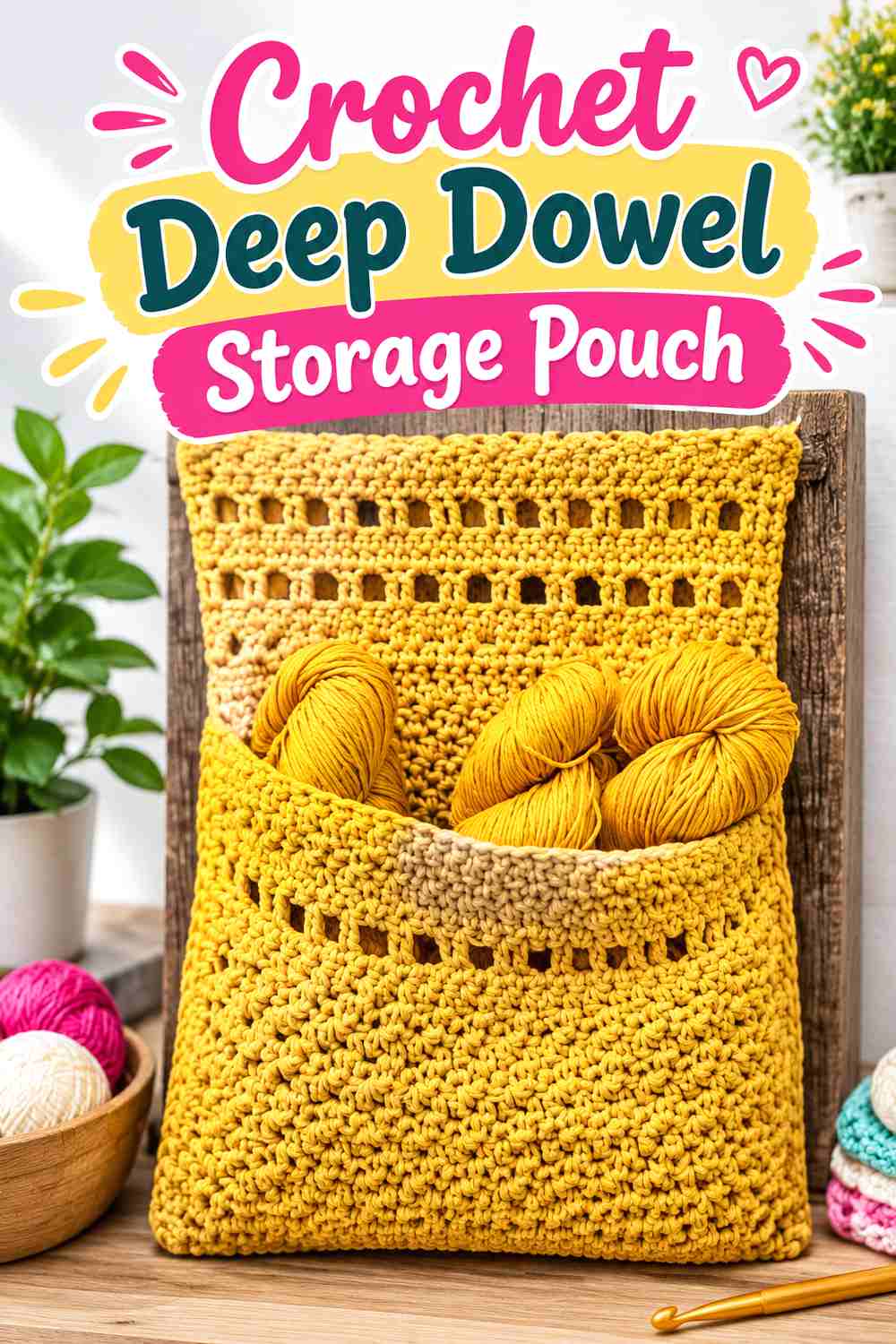
This hanging pouch takes a different approach from a flat patch pocket. First The Coffee Crochet’s tutorial develops a substantial fabric piece, forms the pouch, attaches a dowel, joins the sides, and finishes the hanger. The result has more depth than a shallow wall panel and is designed specifically as hanging storage.
That deeper profile makes it useful for kitchen objects that are too bulky for a flat pocket but still relatively light. Rolled dishcloths, spare reusable bags, or a group of wooden utensils are more realistic choices than heavy bottles. Because a dimensional pouch projects farther from the wall, check its location carefully. A narrow passage or area beside an often-opened cabinet may be better served by one of the flatter options in this list.
Check the Side Seams Under a Light Test Load
The sides are what transform this project from a flat textile into usable storage. Once the pouch is assembled, fill it lightly and hang it before deciding what its permanent contents will be.
Look for excessive pulling at the side joins or top support. Crochet can appear stable while empty but change noticeably after weight is added. If the pouch leans forward dramatically, reduce the contents rather than relying on stretching to create additional capacity.
Keep Long Utensils Balanced
A deep pouch invites storage of taller kitchen tools, but objects with heavy handles can shift the center of gravity away from the wall.
Place longer items so their weight is distributed rather than clustered on one side. Sharp or pointed tools are poor choices for soft crochet storage because they may work through stitches. Wooden spoons, lightweight spatulas, or similarly blunt items are more compatible with this type of textile pocket.
Creator Credit: First The Coffee Crochet
6. Crochet Half-Round Wall Basket
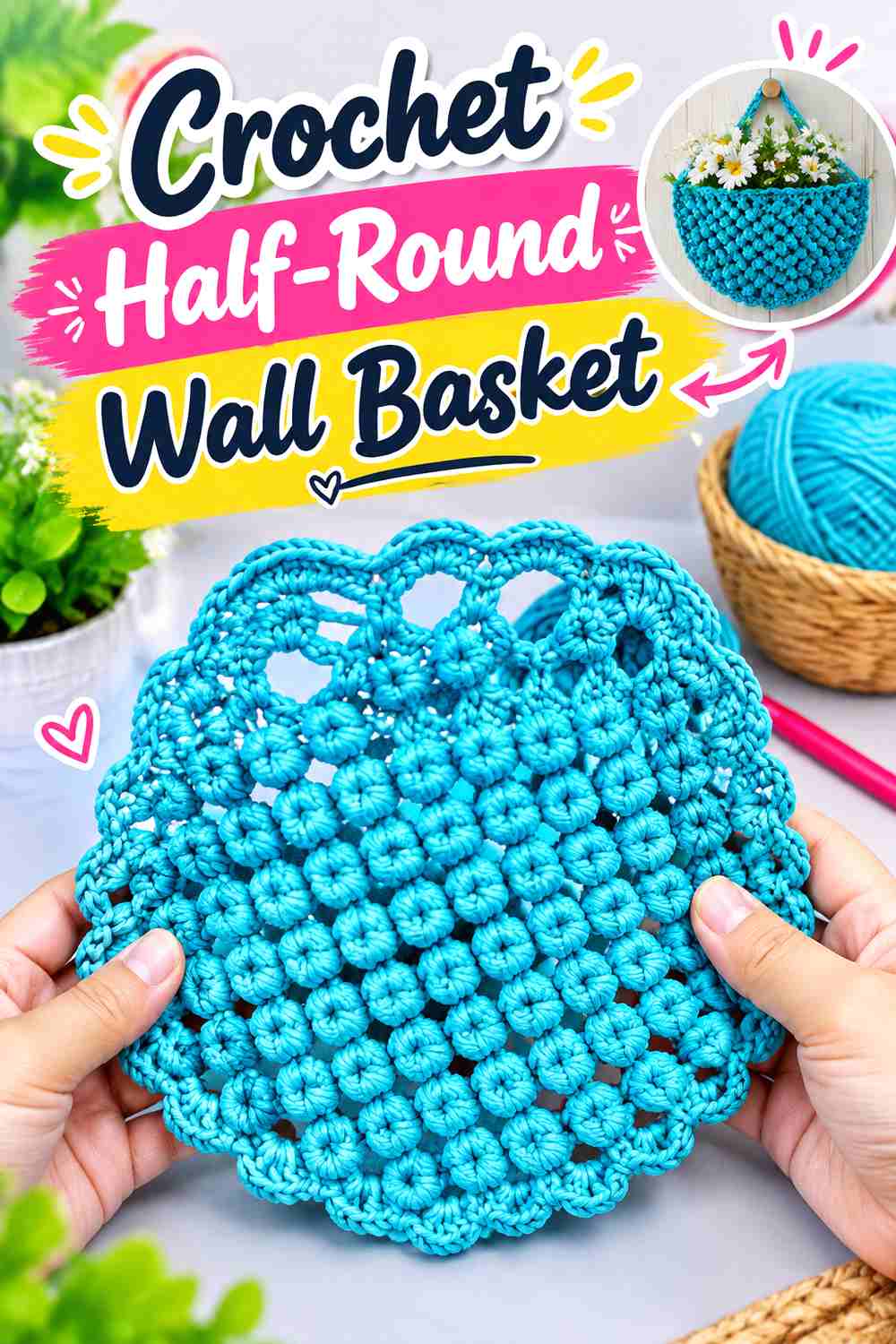
Crochet Everyday’s video demonstrates a two-in-one hanging basket intended to function as a wall pocket, flower holder, or small storage basket. Its rounded lower body creates a softer silhouette than rectangular panel organizers, while the top hanging area keeps the basket close enough to a wall to function as vertical storage.
This shape suits cottage kitchens particularly well when the contents are decorative or irregularly shaped. A few artificial or dried stems, wrapped utensils, or lightweight kitchen accessories can fill the rounded body without requiring precise compartment sizing. Because the basket opens broadly at the top, it is better for objects you want to see and reach quickly than for tiny pieces that could become buried.
Consider How Far the Basket Projects
Rounded pockets gain capacity by extending outward. That makes them useful but also more intrusive than a flat organizer.
Check the side view of the intended location before hanging it. Beside a frequently opened door, refrigerator, or cabinet, even a lightweight basket can become annoying if it catches moving surfaces. A clear wall section lets the dimensional shape remain an asset.
Use Decorative Fillers Without Overstretching the Rim
Flower stems and utensils can spread an opening outward, particularly if too many are forced into the basket.
Allow some breathing room at the top so the rim retains its intended shape. If using dried botanicals, keep them away from cooking flames and high-heat areas. Decorative wall storage should remain well outside active cooking zones.
Creator Credit: Crochet Everyday
7. Crochet Sturdy Ribbed Hanging Basket
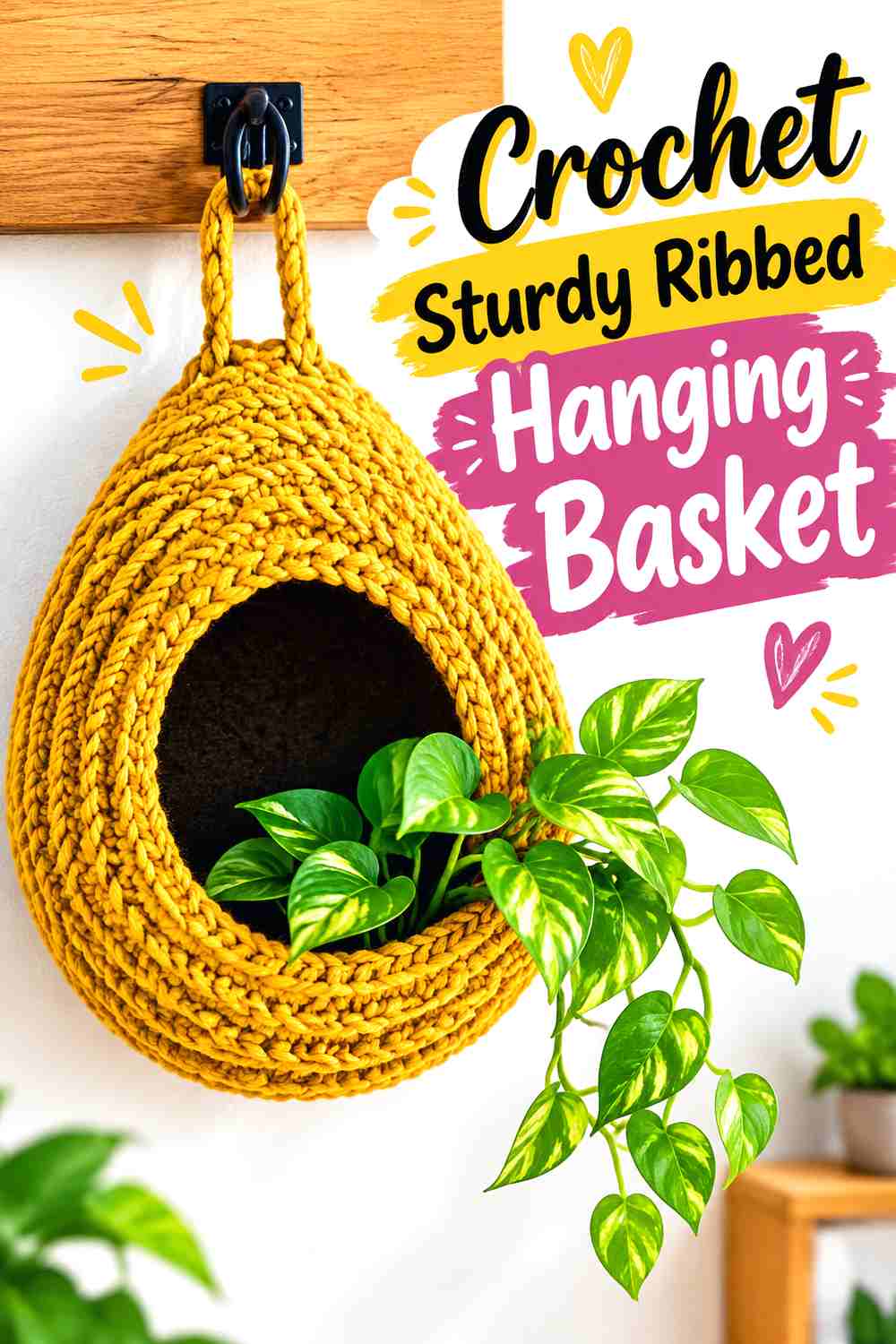
Crochet With Julie’s hanging basket is worked with a dense, textured body that develops from a round base before narrowing toward the top. The tutorial presents it as sturdy small-item storage and uses back-loop construction extensively, giving the surface pronounced horizontal definition.
In a kitchen, that rounded container shape can hold a cluster of lightweight supplies that would not sit neatly in a flat wall pocket. Small rolled cloths, reusable produce bags, or other soft goods are sensible possibilities. Its body is more enclosed than mesh produce storage, so it is less suited to fresh foods that need ventilation. Choose it when containment and shape matter more than airflow.
Let the Ribbed Fabric Supply the Visual Texture
Because the body already has strong stitch definition, this basket does not require fringe or appliqués to feel decorative.
A quiet cottage palette can keep the ribs visible without making the wall overly busy. If you use variegated yarn, consider whether the color changes obscure the structural texture that distinguishes this design from smoother hanging pouches.
Check the Opening After Substituting Yarn
A different yarn can change how readily the top portion narrows and how firmly the basket holds its shape. A soft, springy fiber may behave differently from a firm home-decor yarn even when the label lists a similar weight.
Before committing to several matching baskets, finish and hang one. Test the opening, body depth, and stretch with the intended lightweight contents first.
Creator Credit: Crochet With Julie
8. Crochet Folded-Square Cottage Wall Basket
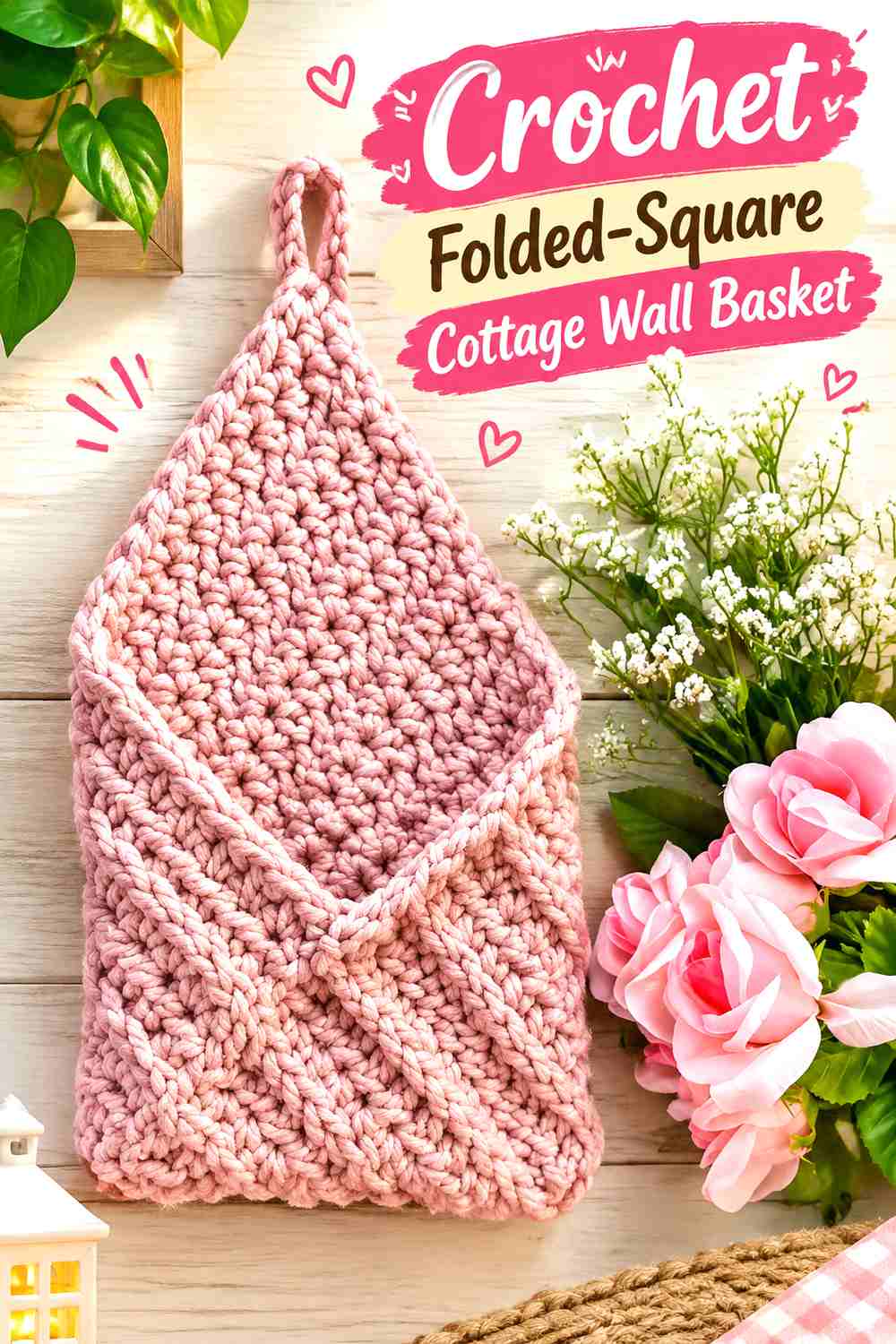
A Crafty Concept’s guest-designed hanging basket begins from a square format and is shown in a substantial super-bulky yarn, producing a broad, sculptural storage pocket rather than a thin panel. The tutorial also notes that changing yarn weight changes the resulting scale and that cotton can provide additional structure when a worsted-weight version is made.
The folded appearance makes this option feel closer to a fabric catch-all than a traditional cylindrical basket. In a cottage kitchen it could hold soft reusable bags, folded linens, or a decorative arrangement. Its thicker yarn gives the wall more visual texture, so this is a useful choice when the pocket itself is meant to be an obvious decor feature rather than almost disappearing into the background.
Scale the Basket by Purpose, Not Just Appearance
The tutorial discusses how yarn and stitch-count changes can create smaller or larger baskets.
Before resizing, decide what the basket actually needs to hold. A tiny version can lose usefulness for kitchen storage, while an oversized version may sag when filled. Enlargement also changes the load on the hanging point, so scale should be considered together with structure.
Watch Bulky Fabric Around Narrow Work Areas
Super-bulky crochet makes a substantial pocket even before anything is put inside. That visual weight is attractive on an open wall but can feel cumbersome beside a crowded counter.
Measure the available width and depth, including the room needed to reach into the opening. The best placement gives the basket enough space to look intentionally dimensional rather than squeezed between cabinets.
Creator Credit: A Crafty Concept
9. Crochet Farmhouse Plarn Wall Basket
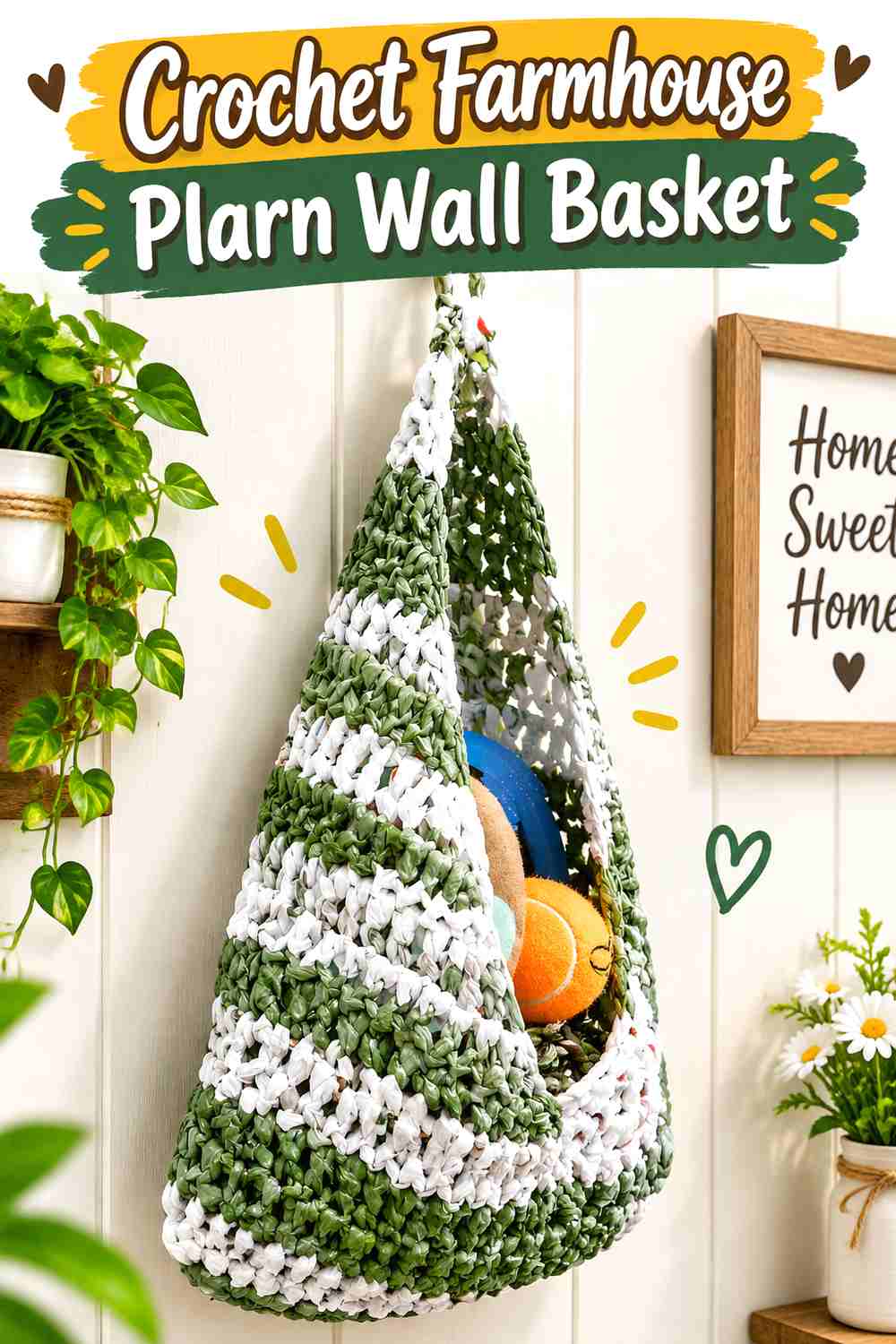
Pattern Princess takes the farmhouse hanging-basket idea in an unusual direction by incorporating plarn made from plastic grocery bags. The tutorial forms a widening piece and folds the lower portion before seaming, producing a useful hanging container while repurposing material that might otherwise accumulate in the kitchen.
This project is most appealing when you want the storage itself to carry a rustic, resourceful character. The material will not behave exactly like conventional yarn, so the finished basket has a different hand and visual texture from cotton versions. It is best considered for dry, lightweight household storage rather than items that need a carefully controlled textile surface.
Expect Plarn to Behave Differently From Yarn
Strips cut from plastic bags vary in thickness, elasticity, and consistency. That can make the crochet surface less uniform than yarn, which is part of its character but also affects shaping.
Keep tension steady without pulling so tightly that working the material becomes uncomfortable. If substituting conventional yarn instead, return to the original tutorial to confirm how the designer handles shaping rather than assuming both materials produce identical results.
Choose a Dry, Low-Heat Location
Plastic-based material should be kept well away from burners, ovens, hot cookware, and other heat sources. A pantry wall, utility area, or cool side wall is more appropriate than the immediate cooking zone.
Also avoid using the basket for exposed food unless the materials and intended use are specifically suitable. Treat it primarily as household organization with a farmhouse look.
Creator Credit: Pattern Princess
10. Crochet Dowel-Rail Herb Jar Baskets
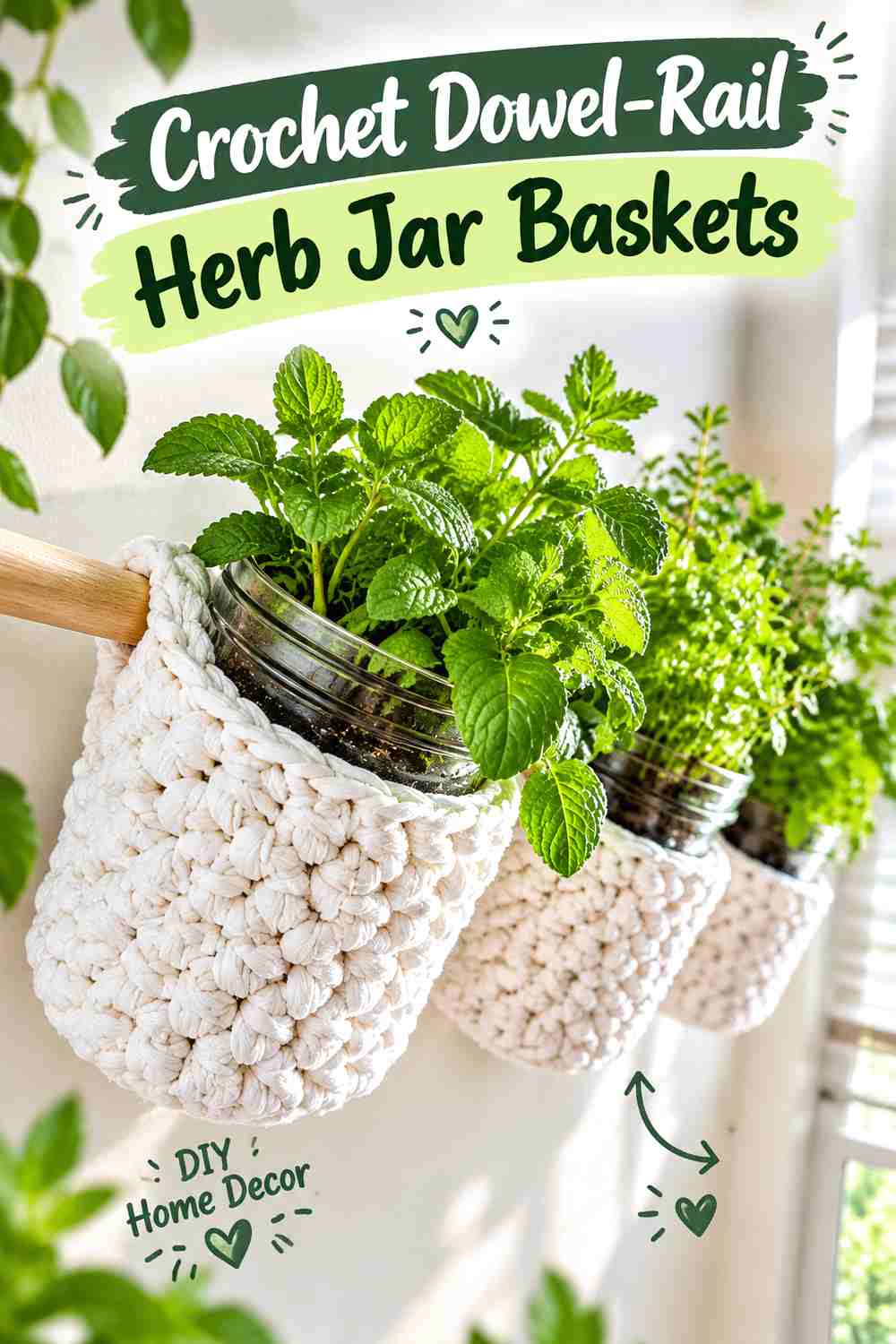
Heart Hook Home’s hanging herb garden uses individual crochet baskets to hold wide-mouth mason jars, then slides those baskets onto a dowel so several plants can share one wall-mounted rail. The tutorial specifically discusses hanging three baskets, a substantial dowel, hooks, and wall reinforcement, making this one of the most structurally specialized projects in the collection.
For a cottage kitchen, the repeated jar-and-basket format creates a very different effect from ordinary storage pockets. It can turn an unused wall into a small herb display without occupying the counter. Because jars, soil, plants, and water introduce significant weight compared with empty crochet, this idea needs more careful mounting and placement than pockets intended for linens or paper.
Treat the Wall Support as Part of the Project
The creator calls for a dowel and discusses reinforcing the hanging hooks. That is an important distinction: once glass jars and growing material are involved, the wall hardware becomes structural rather than decorative.
Use mounting hardware appropriate for your wall and actual load. If you are uncertain about the installation, keep the display smaller rather than adding more filled baskets to the same rod.
Plan for Water Before Choosing the Wall
Crochet surrounding a plant container can encounter moisture during watering. Keep the jar properly contained and remove it for watering if that makes spills easier to control.
Choose a location based on the herb’s light requirements as well as kitchen appearance. Avoid positioning damp crochet directly against a surface that could be damaged by moisture, and follow the yarn’s care instructions if the baskets need cleaning.
Creator Credit: Heart Hook Home
11. Crochet Mesh Produce Hanging Pouch
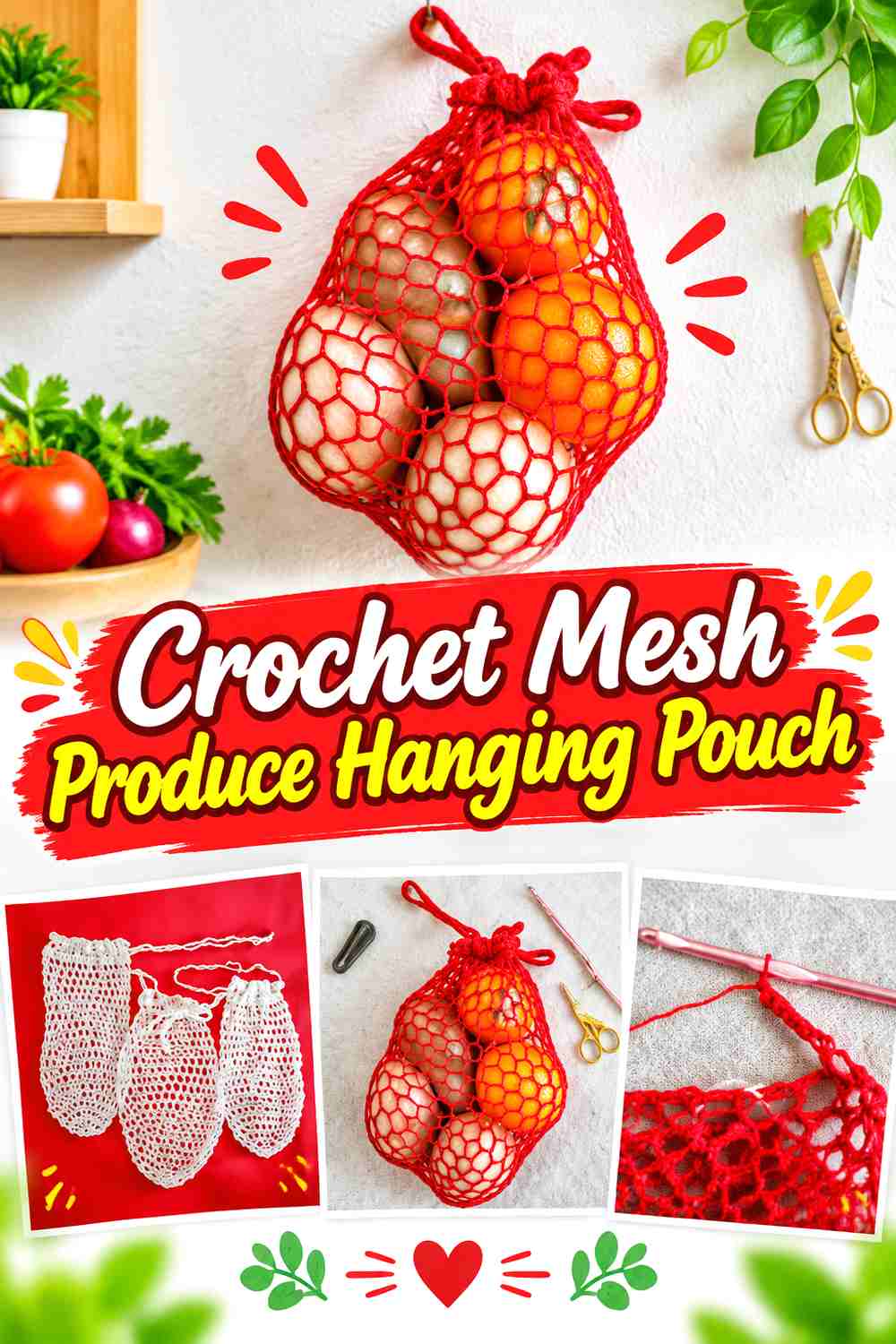
Handy Finch’s produce-bag tutorial creates lightweight openwork storage and includes a drawstring/hanging element, making it easy to reinterpret as a hanging kitchen produce pouch when the location and produce type are appropriate. The pattern’s open mesh is the defining feature: it stretches around irregular shapes while remaining visibly lighter than a dense wall basket.
This is the option to consider when ventilation and flexible capacity matter more than rigid form. The mesh can expand as produce is added, but that same stretch means the loaded bag may become longer than expected. Hang it with enough clearance beneath it, and avoid overfilling simply because the fabric continues to expand.
Match Mesh Size to What You Store
Large openings work well around sizable produce but can be inconvenient for small items. Before choosing this type of wall storage, consider whether the intended contents could push through the mesh.
The creator has updated the design over time and discusses a smaller version, so use the current tutorial rather than improvising dimensions from a photograph.
Allow for Stretch Under Produce Weight
A mesh pouch that looks compact when empty can change dramatically once filled. The weight of produce pulls both the body and hanging point downward.
Test the finished bag with a modest load first. Heavy quantities may be better stored in a rigid basket or on a shelf, especially if the wall hook or crocheted hanger begins to deform.
Creator Credit: Handy Finch
12. Crochet Chicken Grocery-Bag Wall Pocket
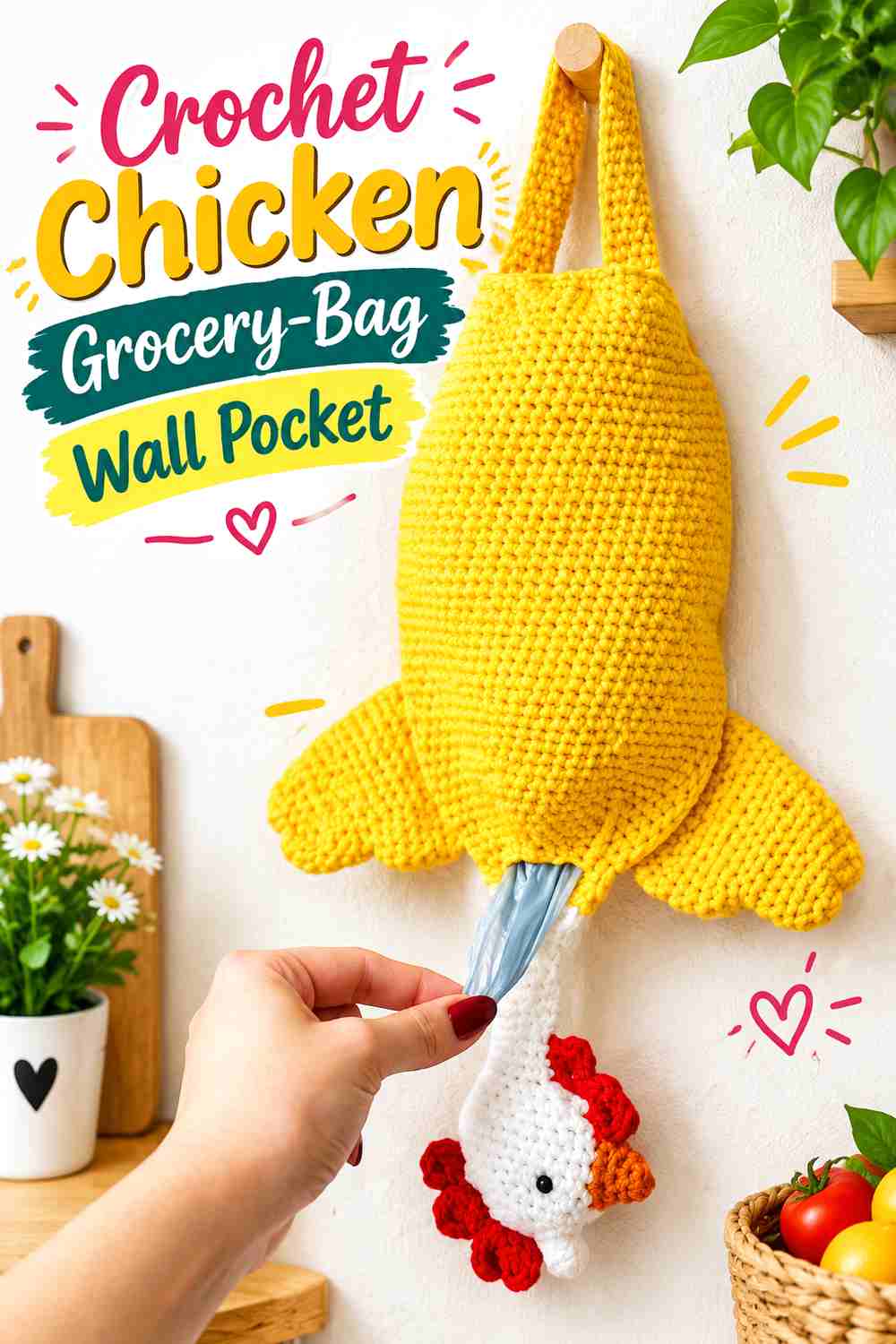
Few projects in this list capture an old-fashioned country-kitchen mood as directly as this chicken-shaped bag dispenser. StringyDingDing’s original crochet version forms a functional body for storing grocery bags, with bags inserted through an elasticized end and removed from the opposite end near the chicken’s head. The pattern includes separate dimensional details that establish the farm-animal silhouette.
Unlike a generic cylindrical bag saver, this design is meant to be noticed. It works especially well in a kitchen with vintage tins, gingham, wooden shelving, or other farmhouse references. Because the form includes appendages and decorative features, allow more wall clearance than you would for a plain narrow dispenser.
Keep the Dispensing Opening Functional
The novelty shape still depends on the openings doing their job. Overstuffing the body can make bags difficult to remove and may distort the chicken silhouette.
Load bags loosely enough that the dispenser remains flexible. If the elastic begins to lose recovery, address that rather than forcing more bags through a stretched opening.
Reconsider Small Parts Around Young Children
The tutorial lists a safety eye among its supplies. If the finished holder will be accessible to young children, consider whether detachable or hard small components are appropriate for your household.
Alternative embroidered details may change the finished appearance but avoid adding a separate small eye component. Keep the holder and its hanging arrangement out of reach if necessary.
Creator Credit: StringyDingDing
13. Crochet Lacy Farmhouse Bag-Saver Pocket
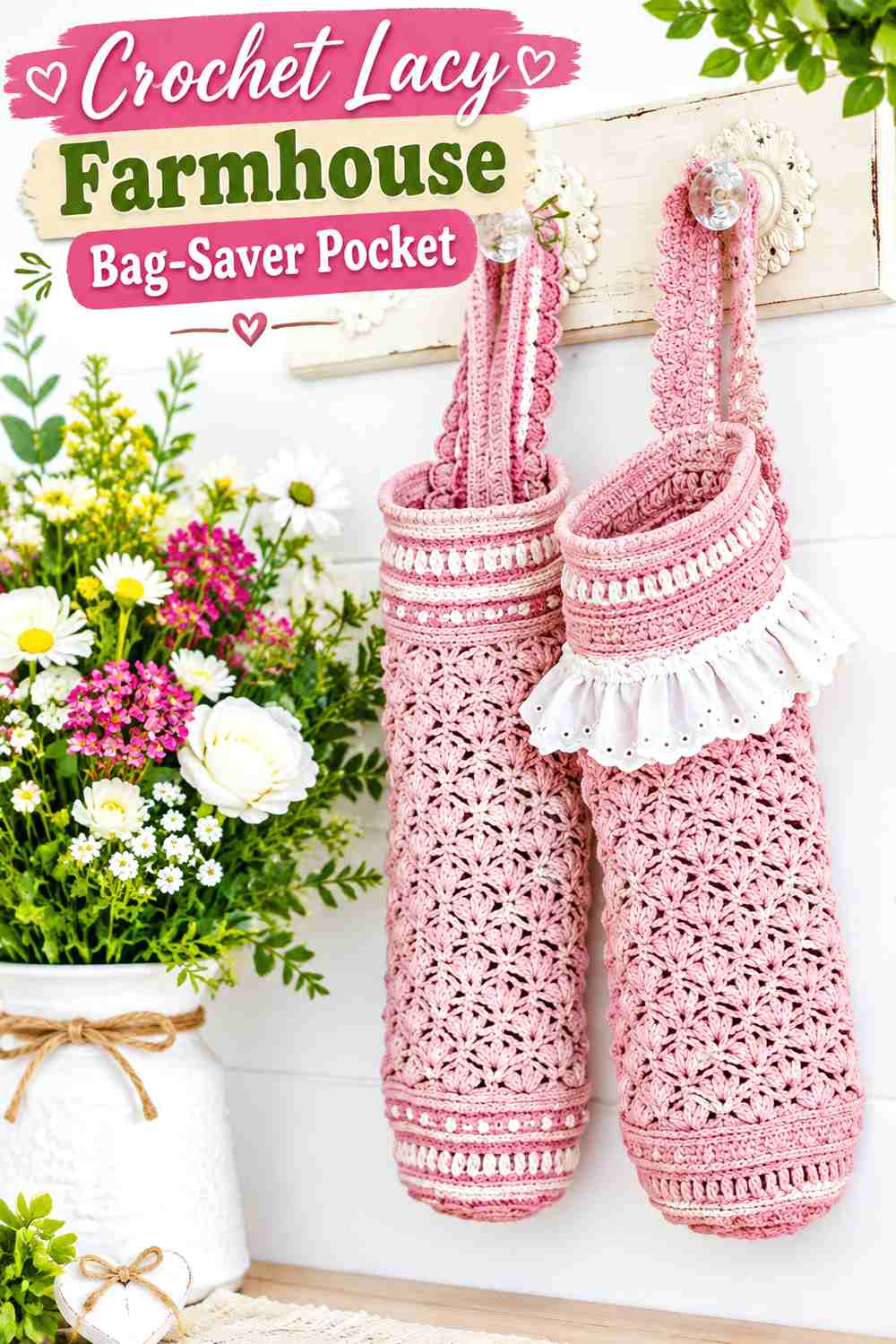
Kirsten Holloway Designs turns an ordinary grocery-bag dispenser into a much more decorative wall piece through floral stitchwork, texture, optional ruffle treatment, and a designed hanging strap. The tutorial offers more than one size and builds the bag saver around an elastic opening, so it remains functional despite the ornamental surface.
This is a particularly good fit for a vintage or romantic cottage kitchen where a plain storage tube would feel too utilitarian. The lace makes the dispenser visually lighter, while the textured bands give it the appearance of an heirloom household textile. It is still intended to store lightweight bags, not to function as a general-purpose container for dense or heavy objects.
Let the Lace Determine What Goes Inside
Open floral sections create a very different surface from a solid bag holder. Smooth grocery bags can sit behind the openings without much difficulty, but small loose objects would be a poor match.
Keep the use close to the tutorial’s purpose unless you carefully assess whether the alternative contents could protrude through the lace or place unexpected strain on the narrower decorative sections.
Consider the Ruffle as a Care Decision
The optional decorative trim can strengthen the vintage effect, but every additional material changes cleaning and maintenance.
If you add ribbon or fabric trim, check its care requirements alongside the yarn. A simpler all-crochet version may make more sense in a kitchen where the holder will need frequent washing.
Creator Credit: Kirsten Holloway Designs
14. Crochet Elastic-Base Grocery-Bag Dispenser
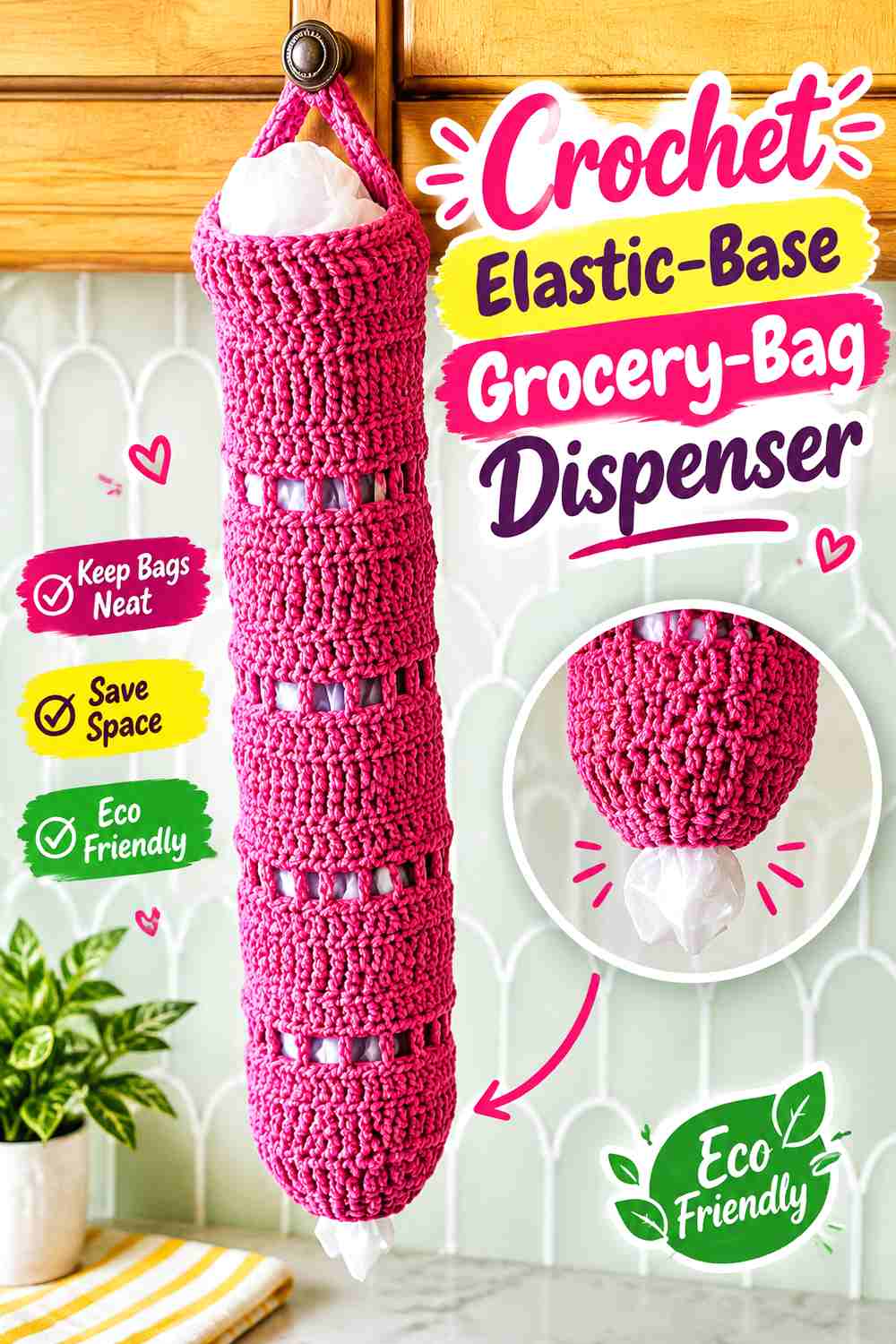
Joy of Motion Crochet’s plastic-bag holder is a more straightforward kitchen organizer, worked from the bottom upward in rounds and beginning around a ponytail holder so the dispensing end remains gathered and flexible. The creator specifically presents cotton as a suitable yarn choice for this household project.
For readers who like vintage kitchens but do not want every handmade item to be heavily embellished, this type of dispenser provides a quieter option. It can be made in a faded cottage color and hung inside a pantry, from a utility hook, or on an open kitchen wall. Compared with the chicken and floral-lace versions, its appeal comes more from practical shape and texture than novelty detailing.
Pay Attention to the Elastic Component
The lower opening depends on the ponytail holder for controlled access. Elastic eventually wears differently from yarn, especially when it is repeatedly stretched.
Avoid cramming the dispenser so full that the opening must be pulled aggressively each time a bag is removed. If the elastic deteriorates, consult the construction before attempting replacement so the surrounding crochet is not damaged.
Keep the Body From Becoming a Heavy Storage Sack
A long tube can visually suggest more capacity than its hanging system should necessarily carry. Grocery bags are lightweight; unrelated household objects may not be.
Use the project for its intended low-weight storage role. If you need to organize bottles, tools, or other dense supplies, choose a basket or rigid wall system designed for that kind of load.
Creator Credit: Joy of Motion Crochet
15. Crochet Star-Stitch Towel Ring Holder
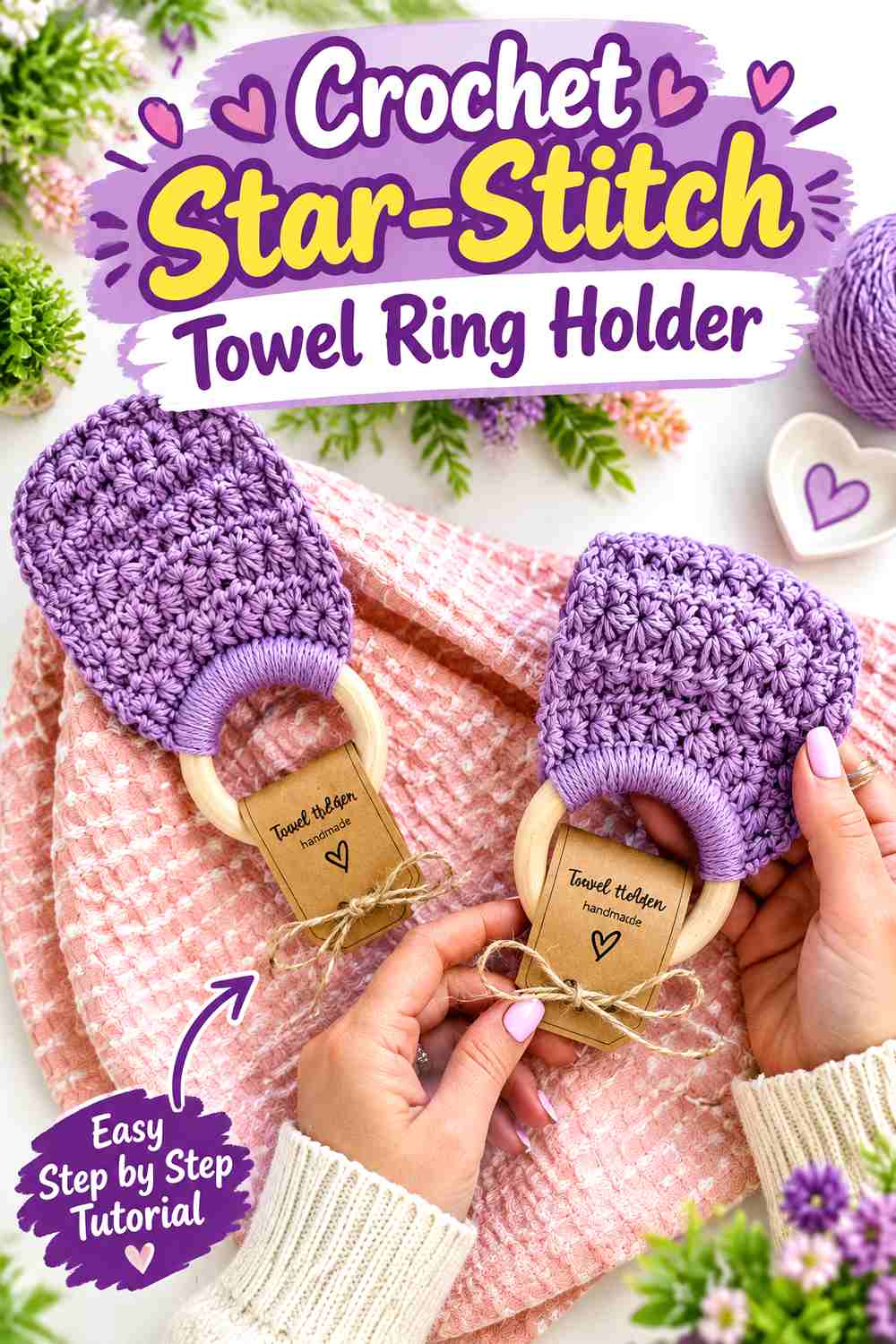
MJ’s Off The Hook Designs demonstrates a compact towel holder with pronounced star-stitch texture and two wooden rings. The towel passes through the ring area rather than being permanently attached to the crocheted fabric, making this design visually and functionally distinct from a traditional crocheted towel topper.
The combination of textured crochet and wood works naturally in a cottage kitchen, especially when the surrounding space already includes wooden handles, cutting boards, or open shelves. Because the holder itself is relatively small, it can introduce handmade texture without adding another large storage feature to the wall. Verify the mounting arrangement and ring sizing in the creator’s tutorial before substituting hardware.
Let the Wooden Rings Stay Smooth
A towel repeatedly slides through the ring area, so rough or splintered hardware can catch fabric.
Inspect wooden rings before assembly and periodically during use. If a ring becomes damaged, replacing it is safer for both the towel and the crochet than continuing to use a rough surface that may abrade fibers.
Keep a Towel Holder Away From Active Heat
A kitchen towel may hang from an oven or appliance handle, but handles and surrounding surfaces do not all remain cool during operation.
Use the holder only where the crochet, wooden hardware, and towel will remain safely away from flames and excessive heat. When in doubt, a cabinet pull or cool rail is a more conservative placement.
Creator Credit: MJ’s Off The Hook Designs
16. Crochet Buttoned Thread Towel Loop
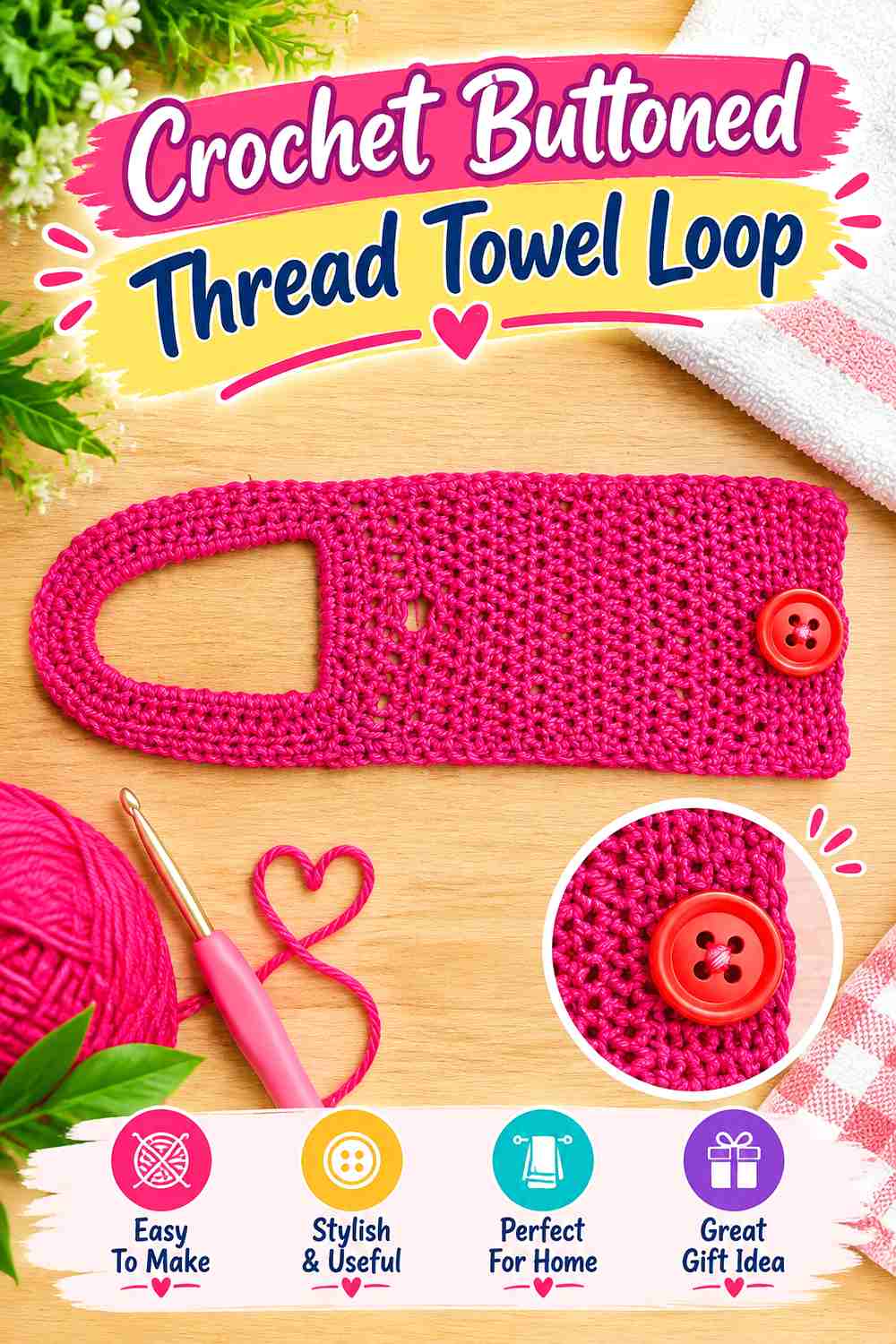
Relaxing With Yarn’s dish-towel holder uses crochet thread, a small hook, and a button closure, producing a much finer textile than the bulky baskets and thick pocket organizers elsewhere in this list. The construction begins with a ring for the towel and extends into a strap that folds around its hanging point and buttons in place.
That smaller scale is ideal when you want a subtle vintage detail rather than a major wall feature. Fine thread and a contrasting button can echo older crocheted kitchen accessories without requiring a full towel topper. Because the holder wraps around its support, check the intended cabinet pull, rail, or handle before making it and compare that location with the tutorial’s proportions.
Choose the Button for Function as Well as Style
A decorative button can reinforce the vintage look, but it still needs to pass through the intended opening without straining the surrounding crochet.
Avoid a button that is so small it slips open easily or so large that fastening requires excessive stretching. If substituting, compare thickness as well as diameter because a bulky button can sit awkwardly against fine thread.
Fine Crochet Needs Different Handling
Thread produces a lighter, more delicate-looking holder than worsted or bulky yarn. That makes it attractive for cottage styling, but it should not be expected to behave like a heavy strap.
Check the holder periodically where it bends around the support and where the button is sewn. Follow care appropriate to both the thread and button rather than assuming the entire piece can be treated like a plain cotton dishcloth.
Creator Credit: Relaxing With Yarn
Which Crochet Kitchen Wall Pocket Style Should You Choose?
For compact storage, the Granny-Square Dowel Pocket and Fold-Up Utility Wall Pocket keep the silhouette shallow. The Three-Pocket Dowel Organizer and Button-Tab Kitchen Pocket Panel make more sense when several categories need separate spaces.
Choose one of the rounded hanging baskets when you need more depth, and look to the Mesh Produce Hanging Pouch when airflow and stretch are deliberate features. The Herb Jar Baskets require the most attention to wall support because the crochet carries rigid containers rather than just soft household items.
For a stronger vintage-kitchen statement, the Chicken Grocery-Bag Wall Pocket, Lacy Farmhouse Bag-Saver Pocket, and fine Buttoned Thread Towel Loop bring recognizable country or heirloom details without duplicating the same construction.
Conclusion
A useful crochet vintage kitchen wall pocket should suit both the room and what you actually intend to store. Flat granny and panel organizers conserve space, deeper baskets accommodate bulkier lightweight items, mesh introduces ventilation, and specialized projects such as herb holders, bag dispensers, and towel loops solve very different kitchen problems.
For cottage styling, construction often matters more than color. Wooden dowels, traditional motifs, lace, buttons, fine thread, dimensional farm-animal shapes, and simple hanging baskets can all create an older handmade character in different ways.
Once you choose a form, use the linked creator tutorial for exact materials, measurements, stitch information, assembly, and any project-specific finishing. That is especially important before resizing, substituting yarn, changing hardware, or asking the crochet to support more weight than the original design intended.
Frequently Asked Questions
What yarn works well for a crochet kitchen wall pocket?
There is no single yarn that suits every wall pocket. Dense cotton or cotton-rich yarn can provide useful definition and structure, while bulky yarn produces a thicker basket and fine crochet thread creates a more delicate vintage accessory. Mesh produce storage needs different behavior from a solid organizer. Start with the material specified by the original tutorial, particularly when size and structure matter. If substituting, compare yarn weight, fiber behavior, gauge, stretch, and the weight of the finished project rather than choosing by color alone.
Can I enlarge a crochet wall pocket to hold more kitchen items?
Sometimes, but increasing dimensions also increases leverage on seams, straps, dowels, loops, and wall hardware. A small flat pocket enlarged substantially may sag instead of becoming a useful basket. If you need much greater capacity, it is usually better to choose a tutorial already designed as a deep or dimensional container. When modest resizing is appropriate, check how the original designer handles stitch multiples, shaping, gauge, and hanging support before making changes.
Should crochet kitchen organizers be lined?
Lining is useful when open stitches allow small contents to protrude, when a pocket needs a smoother interior, or when you want to reduce direct abrasion against the crochet. It is not automatically necessary for every design. A granny-square pocket, for example, may benefit more from backing than a dense single-crochet basket. Remember that added fabric changes flexibility and care. If the tutorial does not include lining, make sure any addition does not interfere with the pocket opening, stretch, seams, or intended hanging method.
How much weight can a crochet wall pocket hold?
There is no safe universal weight because capacity depends on yarn, stitch density, seams, hanging hardware, wall construction, dimensions, and the original design. A tutorial intended for lightweight bags or paper should not be assumed suitable for jars or heavy utensils. Start with the creator’s stated use, load the finished piece gradually, and watch for stretching, leaning, distorted seams, or a hanging point pulling away from the wall. Projects involving jars or plants require especially careful wall support.
Can crochet wall pockets be hung close to a stove or oven?
Keep crochet, yarn, plastic-based materials, wooden accessories, towels, dried botanicals, and other decorative components away from burners, open flames, and surfaces that become dangerously hot. An oven handle is not automatically a cool location during appliance use. A pantry wall, cool cabinet pull, backsplash-free side wall, or dedicated rail may provide a safer placement depending on the project. Always consider the actual heat sources and appliance design in your kitchen before choosing a hanging location.
How do I make a new crochet wall pocket look more vintage?
Focus on structural and finishing details rather than relying only on beige yarn. Granny motifs, fine crochet thread, floral lace, scalloped finishes, traditional buttons, wooden dowels, muted two-color combinations, and farmhouse-inspired shapes all create different vintage references. Choose only details that suit the project’s construction. Adding heavy beads, extra fringe, fabric, or appliqués can change weight and care, so decoration should not compromise the hanging system or interfere with the pocket opening.