Crochet cushion cover identification tabs are small handmade details that can make organizing cushions, matching covers and keeping fabric information together a little easier. They can be especially useful when you own several similar pillow covers, rotate seasonal decorations or store spare cushion sets in a linen cupboard. These 19 inspiration ideas explore folded corner labels, removable card pockets, button-on tags, tiny granny squares and simple color-coded markers in a range of warm and modern colors.
Some designs use blank removable cards for recording the cover’s size, room or care details, while others rely on matching colors and small crochet motifs to identify a set. You’ll find discreet labels for the back of a cushion, decorative tabs that extend from side seams and multi-card holders for organizing more information. The most suitable choice depends on the cushion’s fabric, the label’s purpose and whether the cover needs regular washing.
These are AI-generated crochet design visualizations for inspiration, not photographs of tested handmade pieces or step-by-step patterns.
Quick Design Selection Guide
- For simple cushion identification: Crochet Terracotta Corner Identification Tab and Crochet Pearl Gray Slim Color-Code Cushion Tab offer understated shapes.
- For removable labels: Crochet Indigo Button-On Cushion Identification Tag, Crochet Cherry Gingham Loop-On Cushion Tag and Crochet Coral Button-Off Round Cushion Tag explore different detachable attachments.
- For matching cushion sets: Crochet Pine Checkerboard Matching Cushion Tabs and Crochet Mustard Three-Bobble Cushion Code Tab use recognizable patterns or tactile details.
- For decorative corners: Crochet Dusty Rose Daisy Cushion Corner Tag and Crochet Plum Granny-Square Cushion Identification Tag add small crochet motifs.
- For storing care or size details: Crochet Oatmeal Twin-Card Cushion Care Tab and Crochet Burgundy Triple-Slot Lumbar Cushion Label provide separate card spaces.
- For seasonal cover changes: Crochet Lavender Tie-On Seasonal Cushion Tag and Crochet Cornflower Fold-Open Cushion ID Booklet offer more flexible information storage.
1. Crochet Terracotta Corner Identification Tab
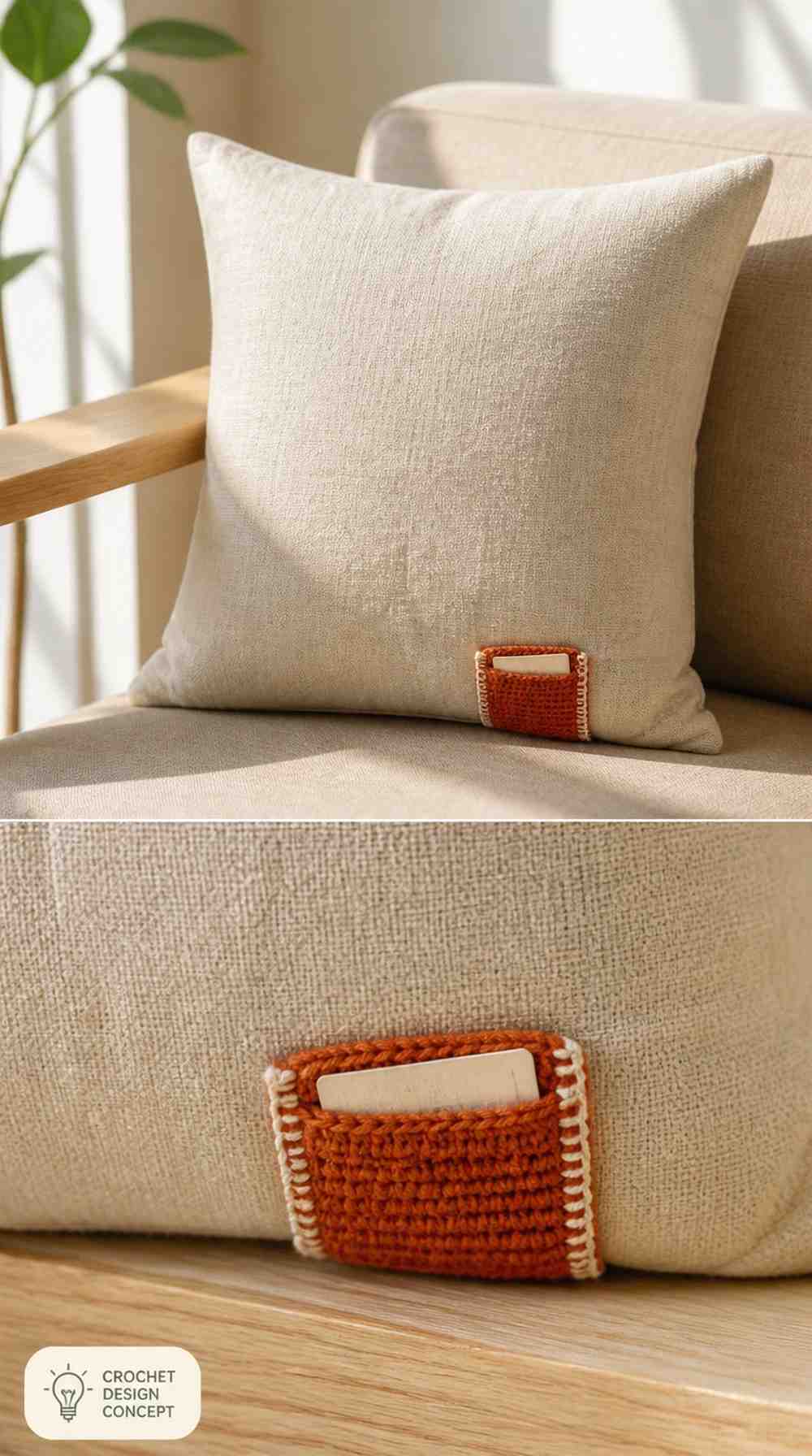
Burnt-terracotta crochet creates a compact rectangular identification tab folded over the lower side seam of an oatmeal cushion cover. Closely worked horizontal stitches give the label a neat surface, while rounded corners and cream slip-stitch edging soften its outline. A small fabric pocket holds a removable ivory identification card.
The folded design keeps part of the label visible from the side while leaving the cushion’s main decorative surface untouched. It could be useful for identifying covers in a matching collection without adding a large sewn-on label.
- Corner Placement: Position the tab where it remains visible during storage but does not create an uncomfortable raised area when the cushion is used.
- Card Pocket: Allow enough space to remove the ivory card easily. A tightly stitched opening may bend or damage paper inserts.
- Seam Attachment: Secure the folded tab through an appropriate seam allowance without weakening the cushion cover’s original stitching.
2. Crochet Indigo Button-On Cushion Identification Tag
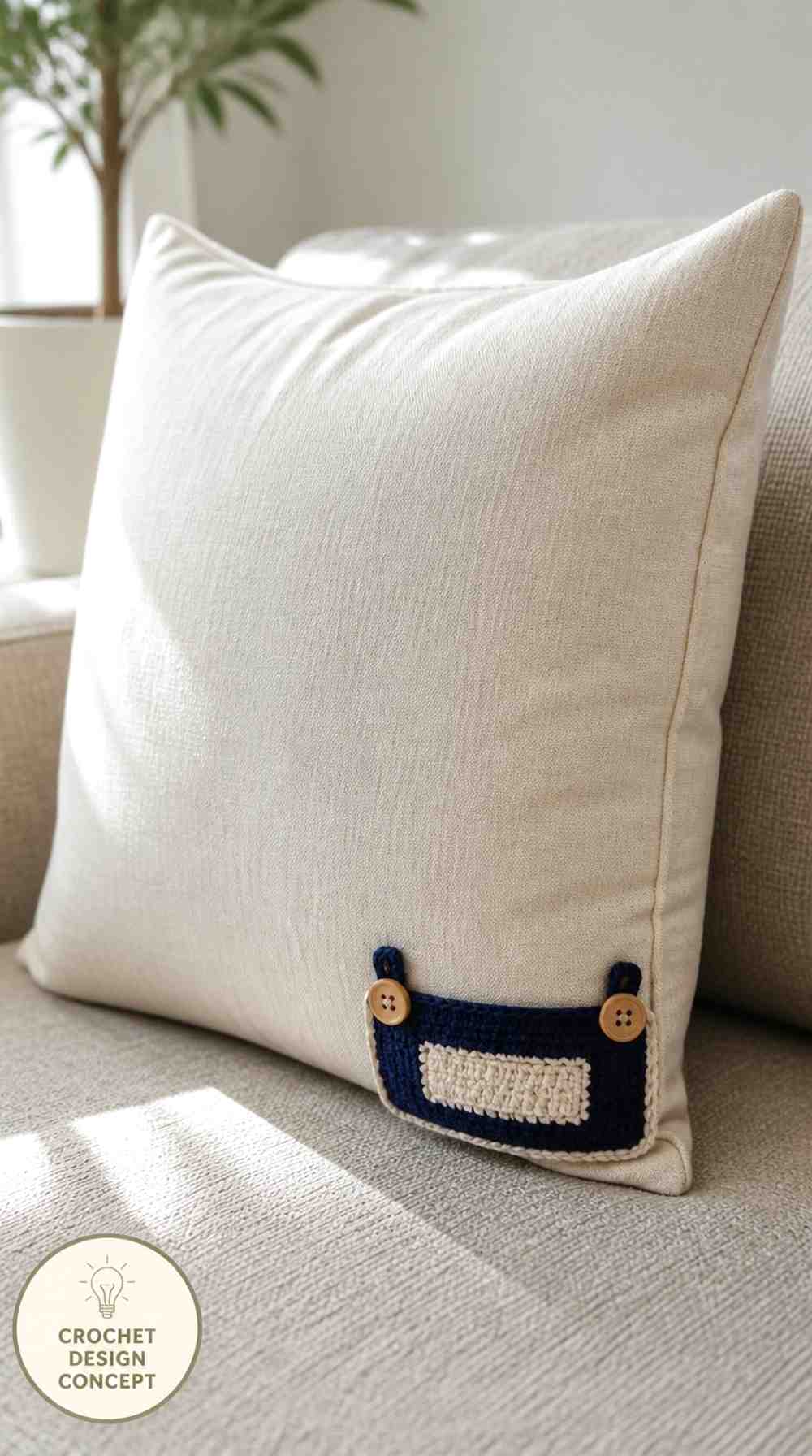
Deep-indigo crochet gives this removable identification tag a clean rectangular appearance. Closely connected stitches cover the flat surface, with oatmeal edging around the rounded corners. A cream fabric patch provides space for identification details, while two small natural wooden buttons attach the tag to the lower back corner.
The button-on arrangement makes this concept different from permanently sewn labels. It could suit a cushion cover that needs a removable tag during washing or seasonal storage, provided the fastening points are properly reinforced.
- Button Placement: Position both wooden buttons away from the main sitting surface so they do not create hard pressure points against the user.
- Removable Construction: Reinforced button loops should allow the tag to be detached without pulling or distorting the surrounding cushion fabric.
- Fabric Patch: Choose a writing or marking method compatible with the cream patch rather than assuming every ink will remain readable after cleaning.
3. Crochet Butter Yellow Scalloped Cushion Label Tab
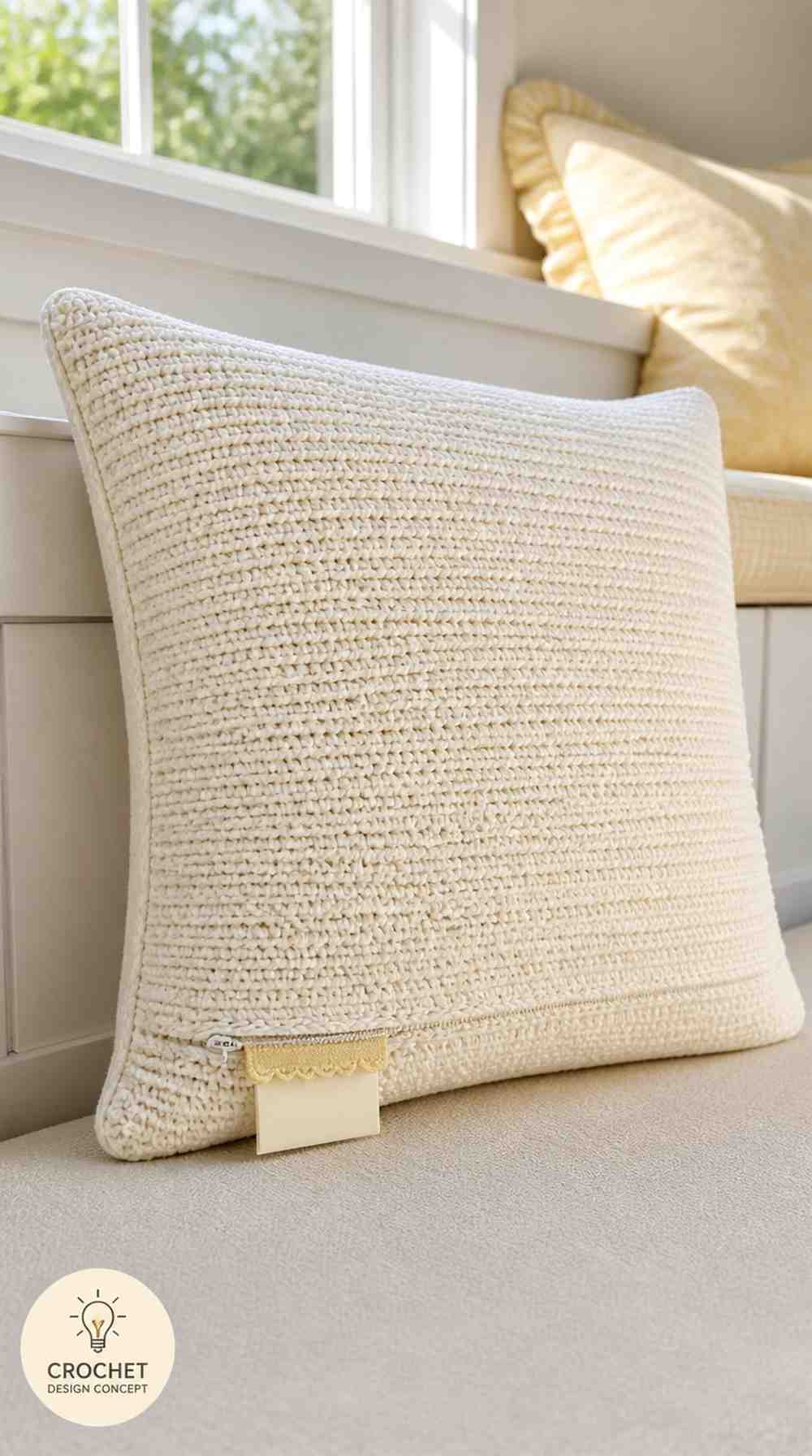
Butter-yellow crochet creates a softly triangular identification tag with a cream scalloped lower edge. The folded shape sits beside the zipper end of a pale-cream cushion cover, with a small ivory fabric pocket holding a removable blank identification card.
The scallops add a decorative finish to an otherwise practical label. Its placement near the zipper is especially relevant when you want identification information close to the cover’s opening without attaching anything to the main front panel.
- Zipper Clearance: Keep the scalloped tab away from the zipper teeth and slider so it does not interfere with opening or removing the cover.
- Scallop Size: Small, securely joined scallops are less likely to catch against neighboring fabrics than large loose decorative loops.
- Card Removal: Position the pocket opening where the card remains accessible even when the cushion cover is fully closed.
4. Crochet Pine Checkerboard Matching Cushion Tabs
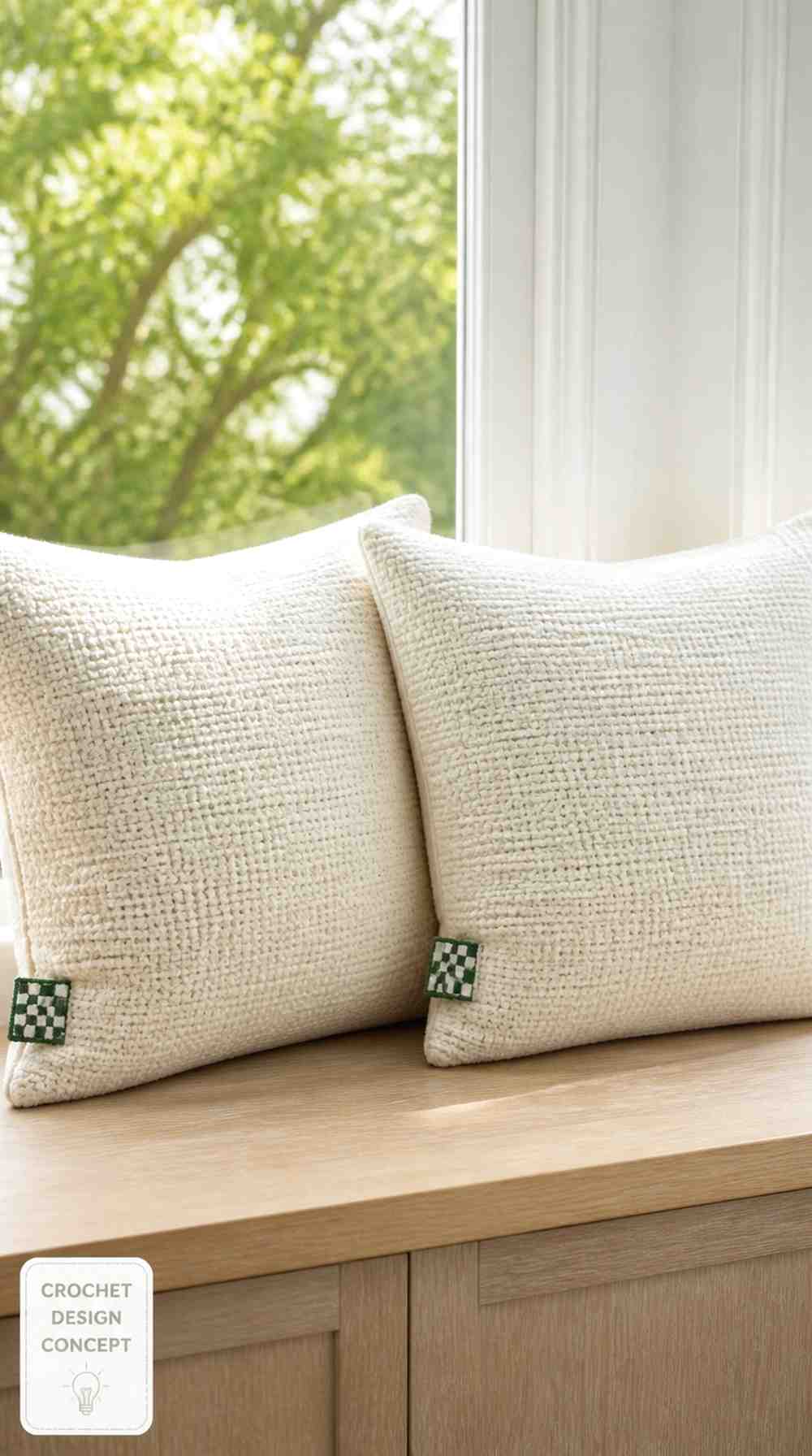
Pine-green and cream checkerboard crochet gives these matching identification tabs a recognizable geometric appearance. Two identical folded rectangles are attached to the lower side seams of separate warm-ivory cushion covers. Each tab has carefully aligned colorwork squares, a solid pine border and smooth cream backing.
This concept focuses on matching cushions rather than carrying written information. The repeated checkerboard pattern helps visually connect two covers that belong together, which could be useful when several similar neutral cushions are stored in the same cupboard.
- Matching System: Use the same checkerboard arrangement on covers belonging to one set, and choose a clearly different marker for another set.
- Colorwork Consistency: Keep the small squares aligned so the two tabs look recognizably identical even when viewed from different angles.
- Flat Backing: A smooth fabric backing can help the folded tabs remain neat and reduce the chance of the colorwork catching against stored textiles.
5. Crochet Dusty Rose Daisy Cushion Corner Tag
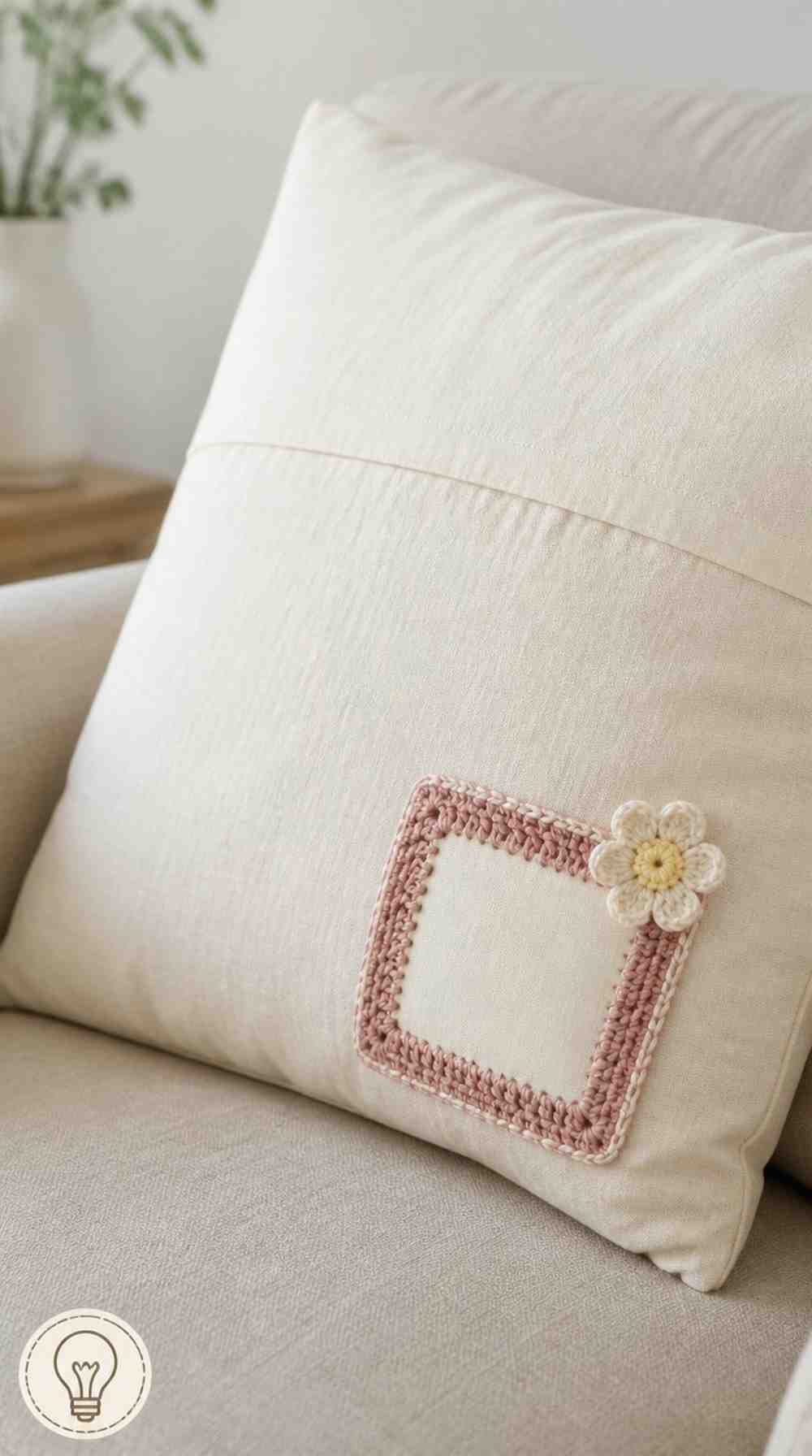
Dusty-rose crochet creates a small square identification tag with dense stitches and cream edging. A plain cream fabric center leaves room for information, while a tiny daisy with five cream petals and a pale-yellow center decorates one outer corner.
The tag is sewn to the lower back corner of an ivory cushion cover. The single flower gives the label a gentle cottage-style appearance without covering the entire identification area with decoration.
- Flower Attachment: Secure the daisy petals and center carefully so the small embellishment does not loosen during handling.
- Writing Space: Keep the cream fabric center large enough for the intended identification detail rather than allowing the flower to occupy most of the area.
- Comfort Placement: Position the raised daisy away from frequently contacted cushion surfaces, particularly on covers used for resting or sleeping.
6. Crochet Cinnamon Ribbed Envelope Label
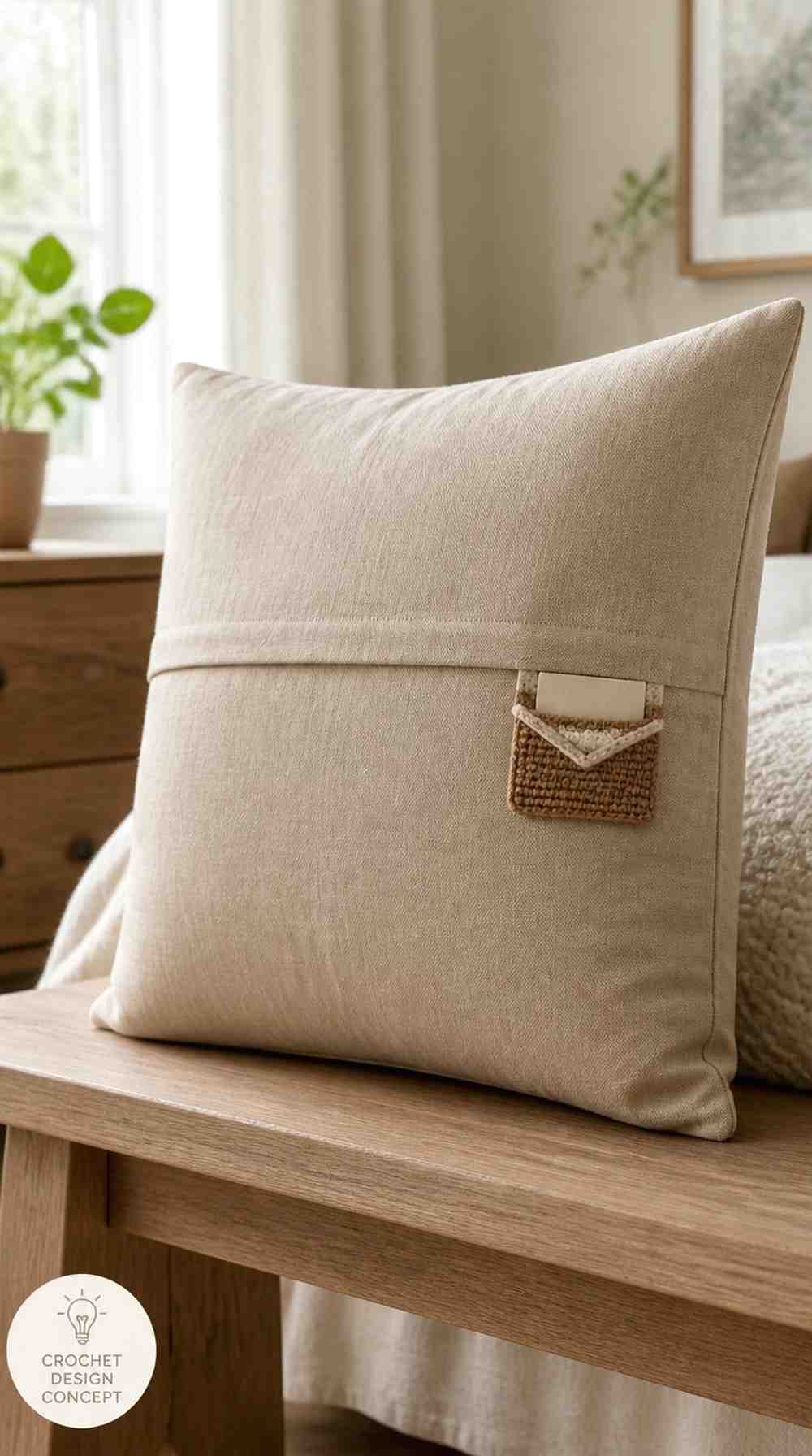
Cinnamon-brown crochet forms a miniature envelope-shaped identification tag with narrow vertical ribs and cream edging. Its overlapping flap covers a small fabric sleeve containing a removable ivory card. The tag sits beside the back envelope closure of a warm-beige rectangular cushion cover.
The layered design gives the reminder card a more enclosed location than an open corner pocket. It could be useful for information that does not need to remain visible throughout the day, such as a stored cover’s matching insert or room assignment.
- Envelope Flap: The overlapping section should open without pulling against the cushion’s own envelope closure.
- Ribbed Texture: Keep the raised crochet ribs relatively low so the small tag can rest flat when the cushion is stored.
- Card Access: Leave enough room to lift the flap and remove the card without stretching the tag’s side seams.
7. Crochet Plum Granny-Square Cushion Identification Tag
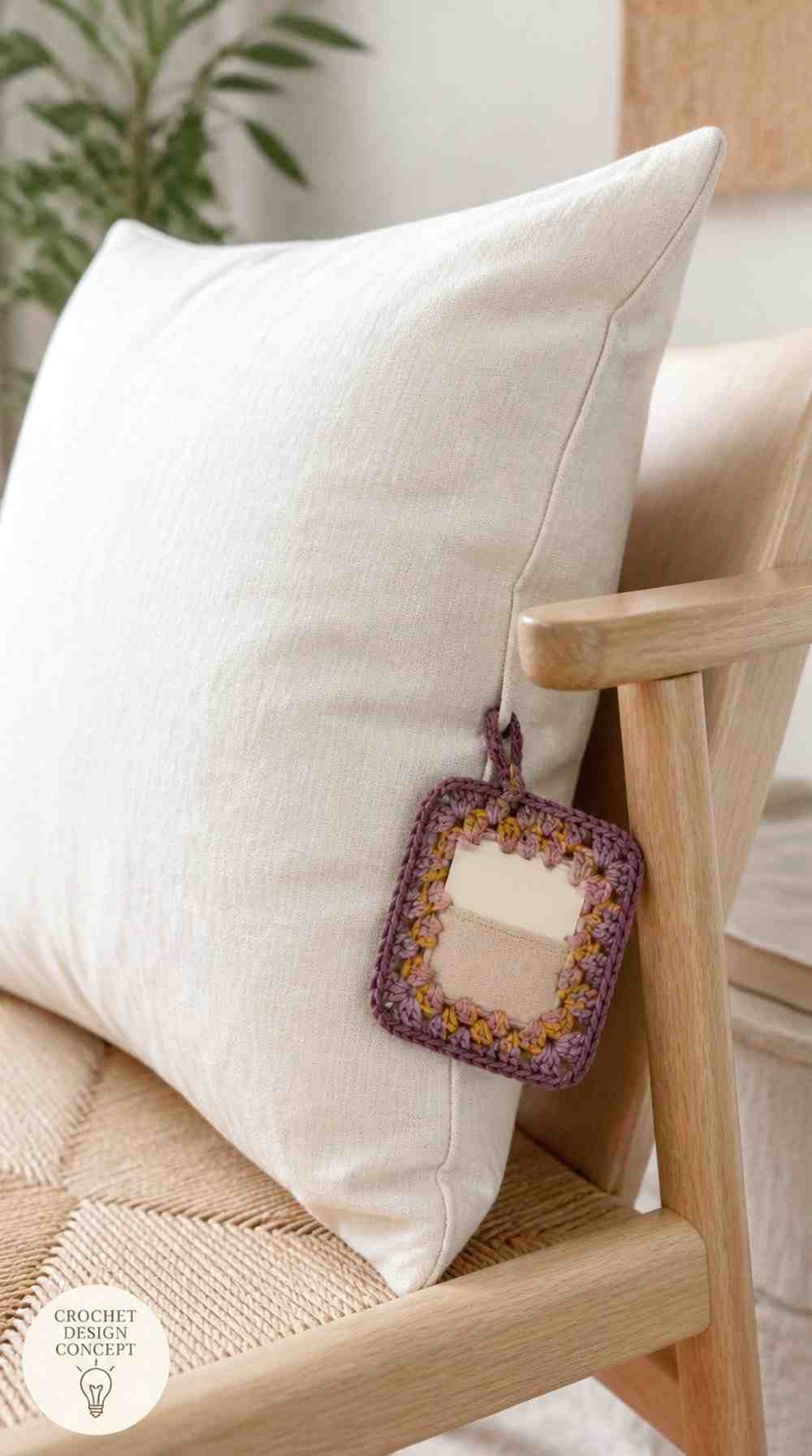
Plum, lavender and muted-ochre crochet create a miniature granny-square tag with recognizable cluster stitches. A plain plum border surrounds the motif, while a smooth linen center holds a tiny cream card pocket and removable ivory identification slip.
The tag hangs from a short reinforced loop at the side seam of a cream cushion cover. This gives the label more decorative character than a flat sewn-on strip and makes the traditional crochet motif visible without altering the cushion’s main design.
- Granny-Square Joining: Keep the small cluster stitches and corner connections secure, especially where the hanging loop attaches to the motif.
- Linen Center: The plain fabric area creates a more stable surface for the card pocket than the open spaces between crochet clusters.
- Hanging Length: Use a short loop to prevent the tag from dangling excessively or catching on nearby furniture and textiles.
8. Crochet Slate Double-Tab Cushion Orientation Markers
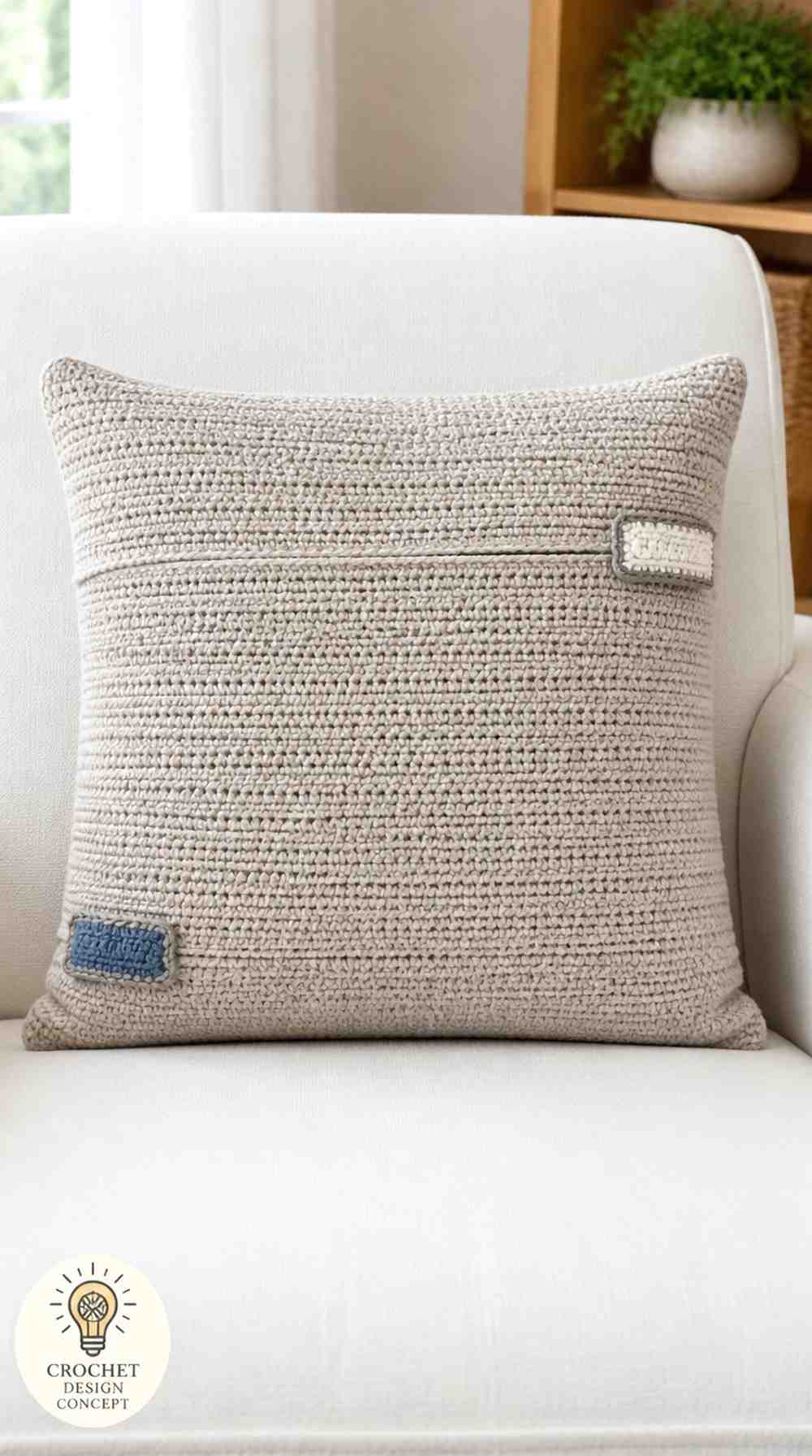
Slate-blue and cream crochet create two separate flat identification tabs on the back of an oatmeal square cushion cover. The solid slate tab sits near the lower-left seam, while the cream tab appears near the upper-right seam. Both have fine stone-gray edging and closely connected stitches.
Instead of carrying written information, the contrasting positions provide simple visual orientation cues. This concept could help distinguish different sides of a cover when its front and back look similar or when the cushion has a preferred display direction.
- Consistent Placement: Attach the slate and cream tabs in the same relative positions on all covers that use this orientation system.
- Visual Contrast: The two colors should remain easy to distinguish against the oatmeal cushion fabric.
- Flat Construction: Avoid adding raised decorations because these markers are intended to remain discreet against the back of the cushion.
9. Crochet Cherry Gingham Loop-On Cushion Tag
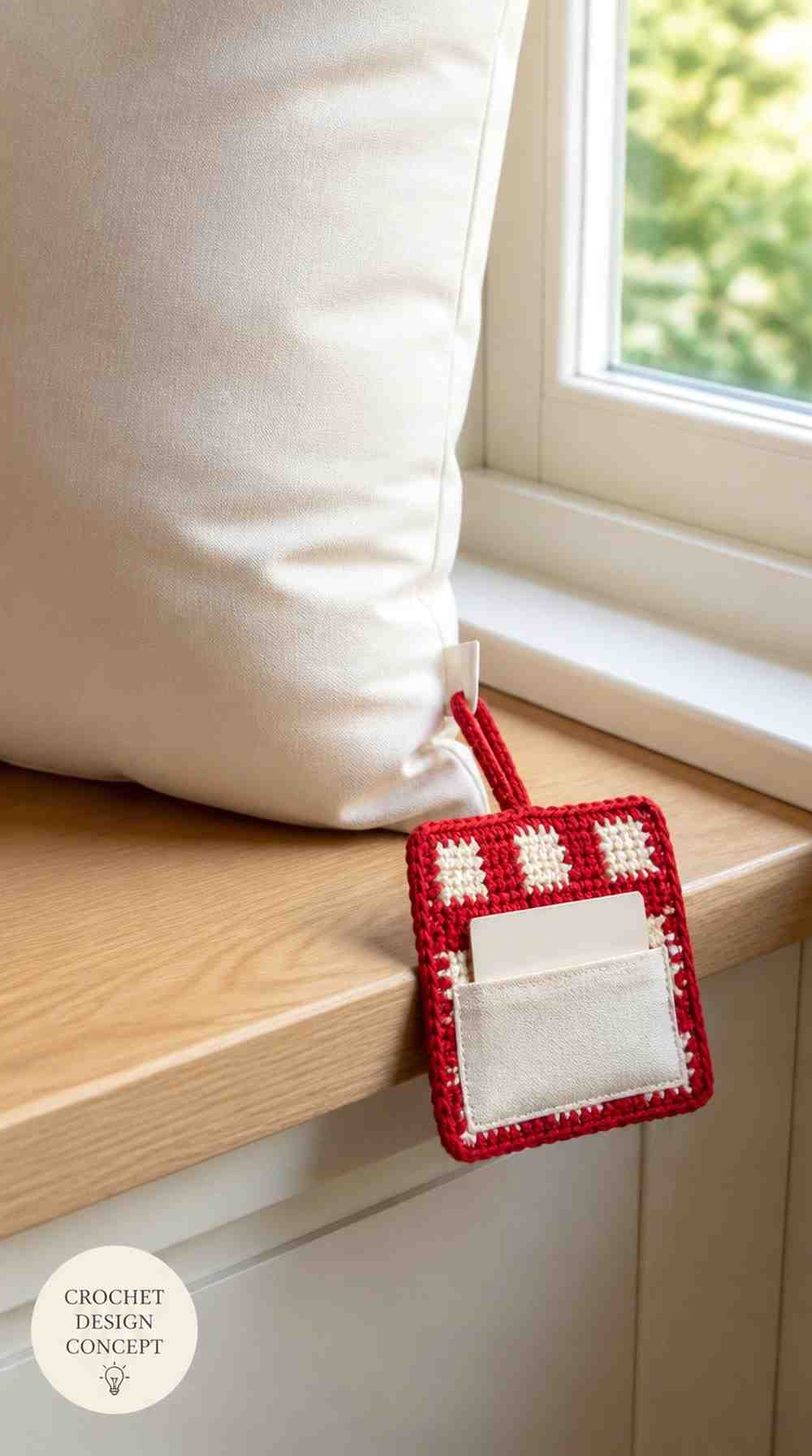
Cherry-red and warm-cream gingham crochet creates a small square identification tag with neatly aligned checked stitches. A plain red border surrounds the front card pocket, while a reinforced short crochet loop attaches the tag to an existing fabric tab at the lower rear corner of a cream cushion cover.
The loop-on arrangement makes the label removable without sewing it permanently across the cushion’s back panel. Its bright checks also provide a recognizable visual marker when similar covers are folded together in storage.
- Loop Attachment: Use a suitably reinforced fabric attachment point rather than pulling the crochet loop through weak or open cushion stitches.
- Card Pocket: Keep the cream fabric pocket flat enough that the identification card cannot slip out when the tag hangs sideways.
- Gingham Alignment: Consistent red-and-cream squares help preserve the tag’s recognizably checked appearance on a very small surface.
10. Crochet Sea Glass Clear-Window Cushion Label
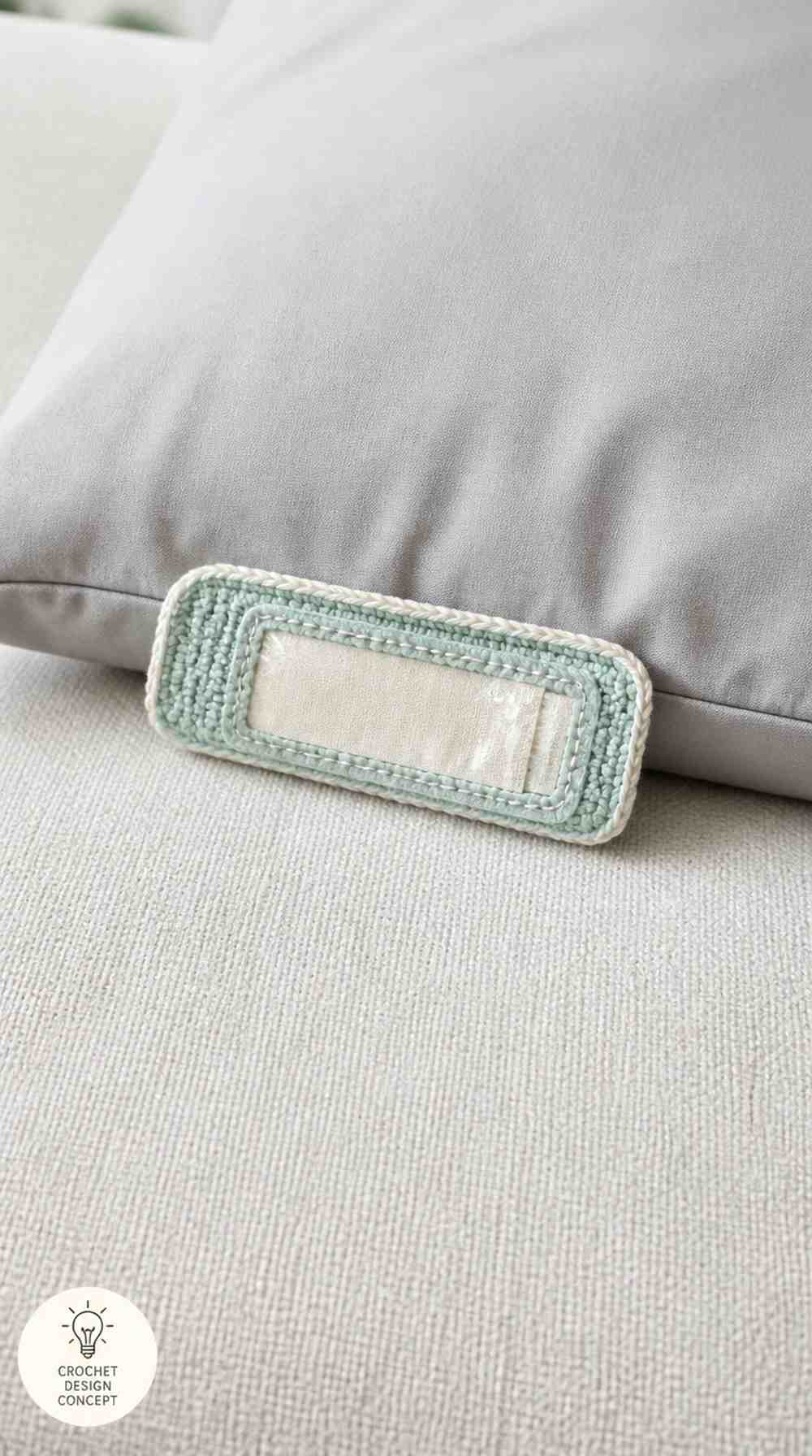
Pale sea-glass-green crochet creates a neat rounded rectangular label with dense horizontal stitches and cream edging. A transparent flexible window covers the front, revealing a blank ivory identification slip underneath. A small opening along one short edge allows the insert to be changed.
The label sits against the lower back seam of a pearl-gray cushion cover. Its transparent window offers a different approach from exposed fabric pockets, keeping the paper insert behind a separate surface while allowing the label to remain readable.
- Window Material: Choose a flexible transparent material that will not crack, become uncomfortably stiff or damage the cushion during normal handling.
- Insert Opening: The short-side opening should retain the card while still allowing it to be removed without pulling apart the crochet.
- Laundry Consideration: Check whether the transparent material can tolerate the cushion cover’s required cleaning method; a removable construction may be preferable.
11. Crochet Mocha Zipper-Pull Cushion Identifier
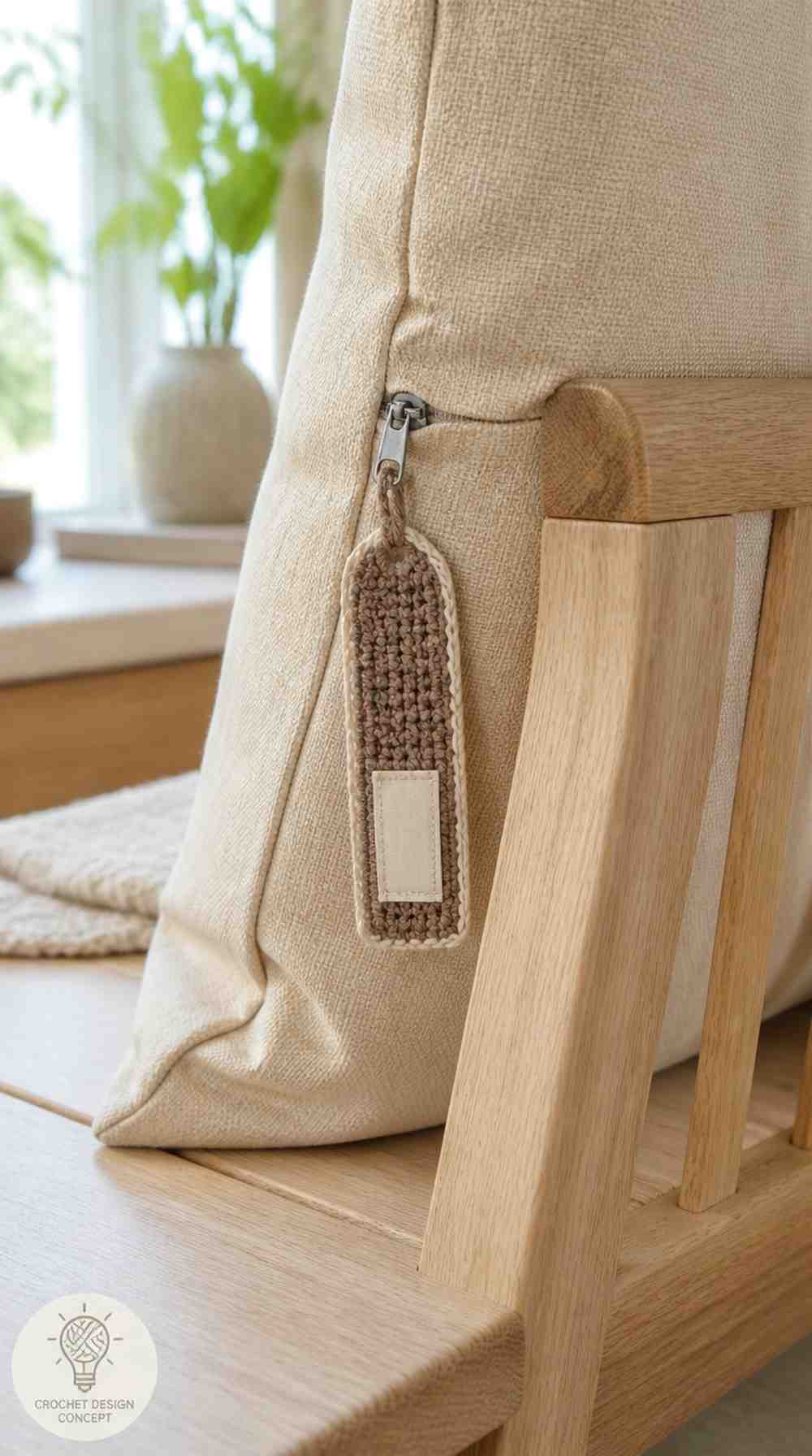
Mocha-brown crochet creates a narrow flexible identification tab with lengthwise ribs and cream edging. A plain cream fabric panel sits at the center, while a small reinforced crochet loop attaches the label to the zipper pull on the back of a warm-beige cushion cover.
The tag is intended to hang lightly beside the zipper rather than support any weight. This placement makes it easy to locate the cover’s opening and identify the item before removing the insert.
- Zipper Function: Keep the tab small enough that it does not snag on fabric or obstruct the slider’s normal movement.
- Lightweight Attachment: The crochet loop should carry only the label itself, not be used to pull, lift or carry the cushion.
- Ribbed Surface: Fine lengthwise ribs add texture without requiring bulky crochet motifs around the zipper area.
12. Crochet Oatmeal Twin-Card Cushion Care Tab
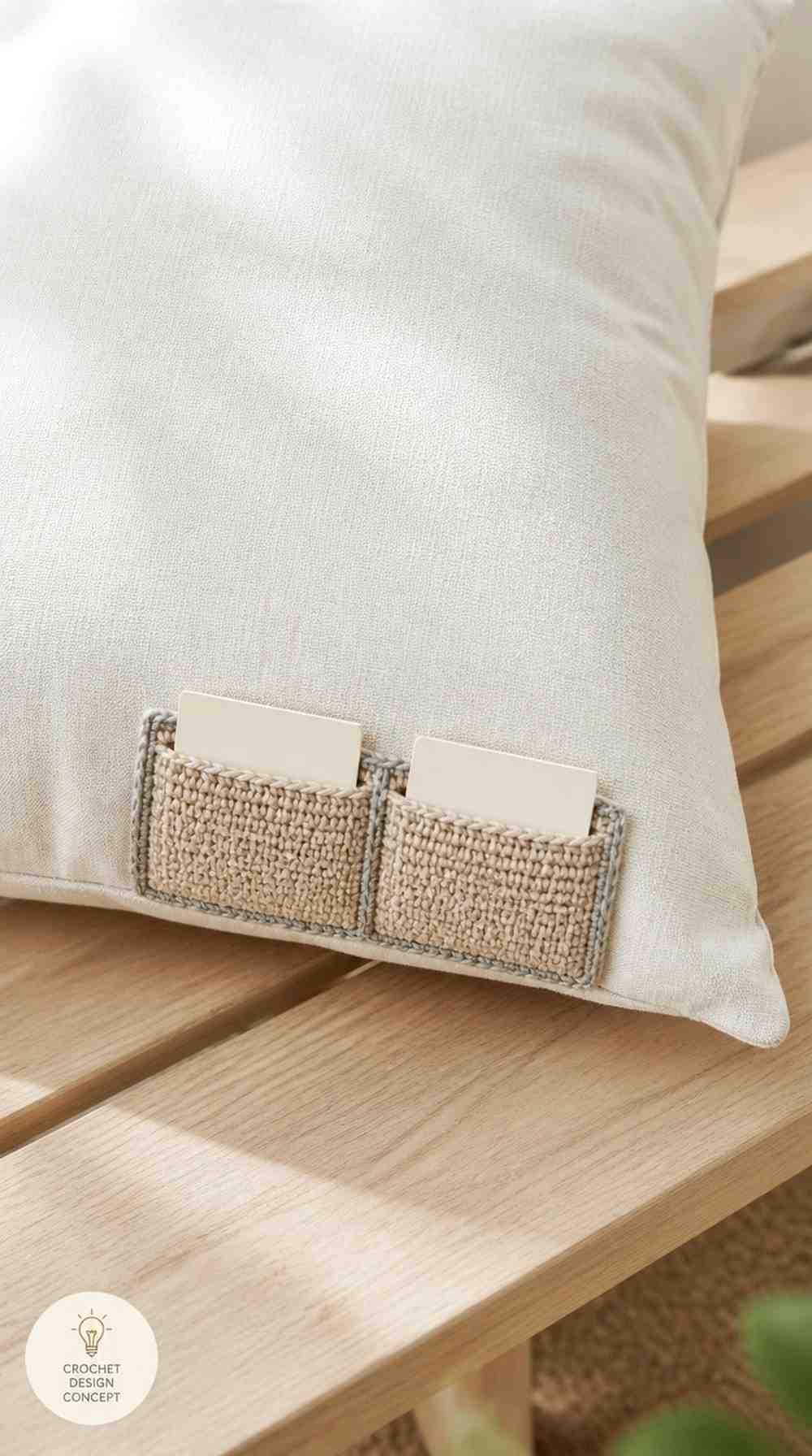
Oatmeal crochet forms a flat rectangular tag with closely connected stitches and stone-gray edging. Two shallow cream fabric pockets sit side by side, each holding a separate removable ivory information card. The tag is stitched near the lower back seam of a soft cream cushion cover.
The two-card arrangement offers a straightforward way to keep different types of information apart. One card might identify the cushion insert size, while another records care details taken from the actual cover and yarn instructions.
- Information Separation: Use one card for measurements or set identification and the other for verified fabric-care details, avoiding conflicting or unexplained notes.
- Pocket Width: Both shallow pockets should be wide enough for the removable cards without forcing them into tight corners.
- Care Accuracy: Any washing instructions must reflect the actual materials and original care information, not assumptions based on the crochet tag alone.
13. Crochet Lavender Tie-On Seasonal Cushion Tag
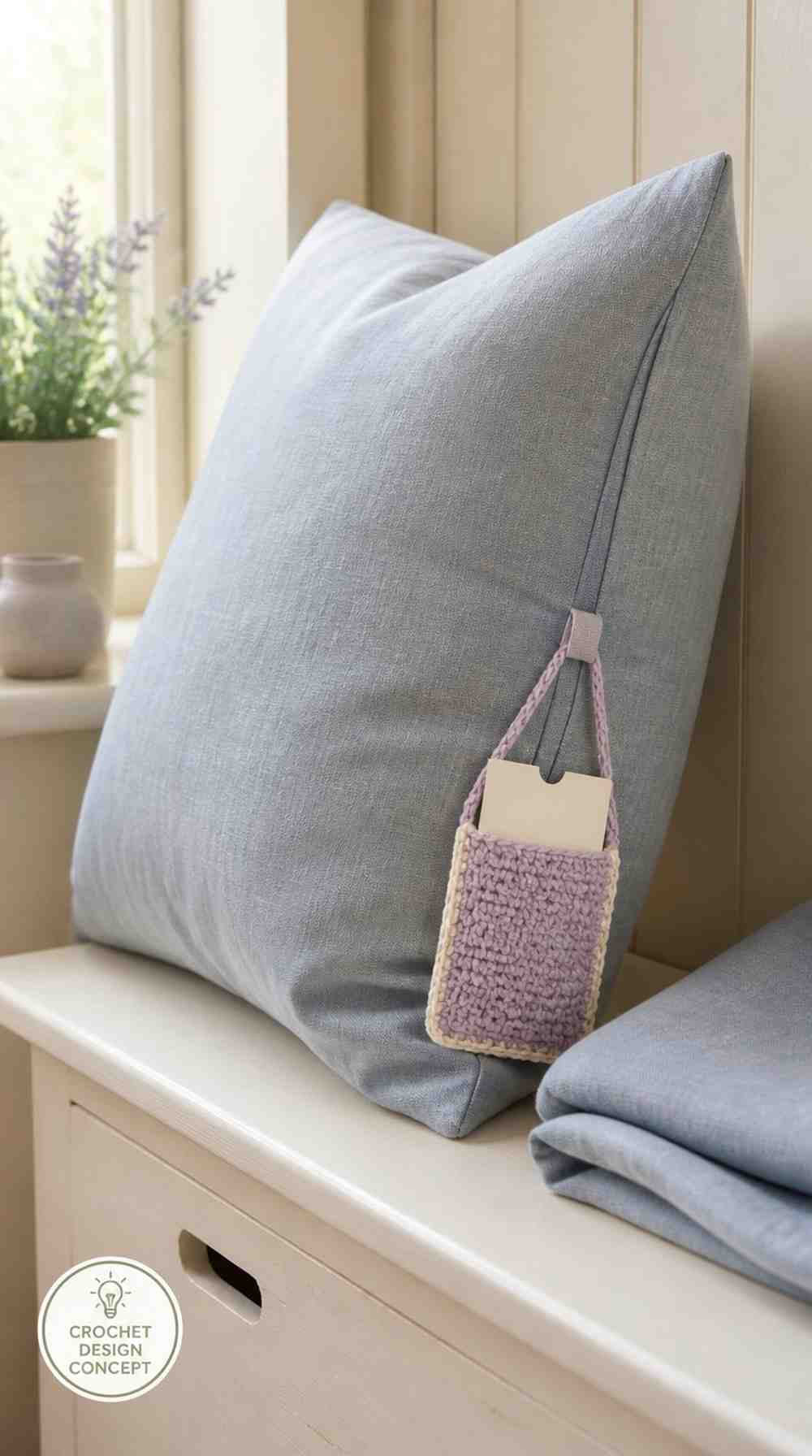
Muted-lavender crochet gives this small rectangular tag a soft, decorative appearance. A cream border surrounds its flat stitched surface, with a tiny front pocket holding an ivory card. Two short lavender ties extend from the upper corners and attach to a fabric loop at the lower rear seam of a dusty-blue cushion cover.
The removable design is especially suited to seasonal storage. A label can be taken off before cleaning or used to identify which cover belongs to a particular room, cushion set or decorating collection.
- Seasonal Information: Record a clear collection or room name on the removable card instead of relying only on the lavender color.
- Tie Length: Keep both ties short and securely fastened so they cannot become tangled in other stored textiles.
- Storage Removal: Detach the tag when necessary for washing or whenever the tied accessory could snag on other fabric.
14. Crochet Mustard Three-Bobble Cushion Code Tab
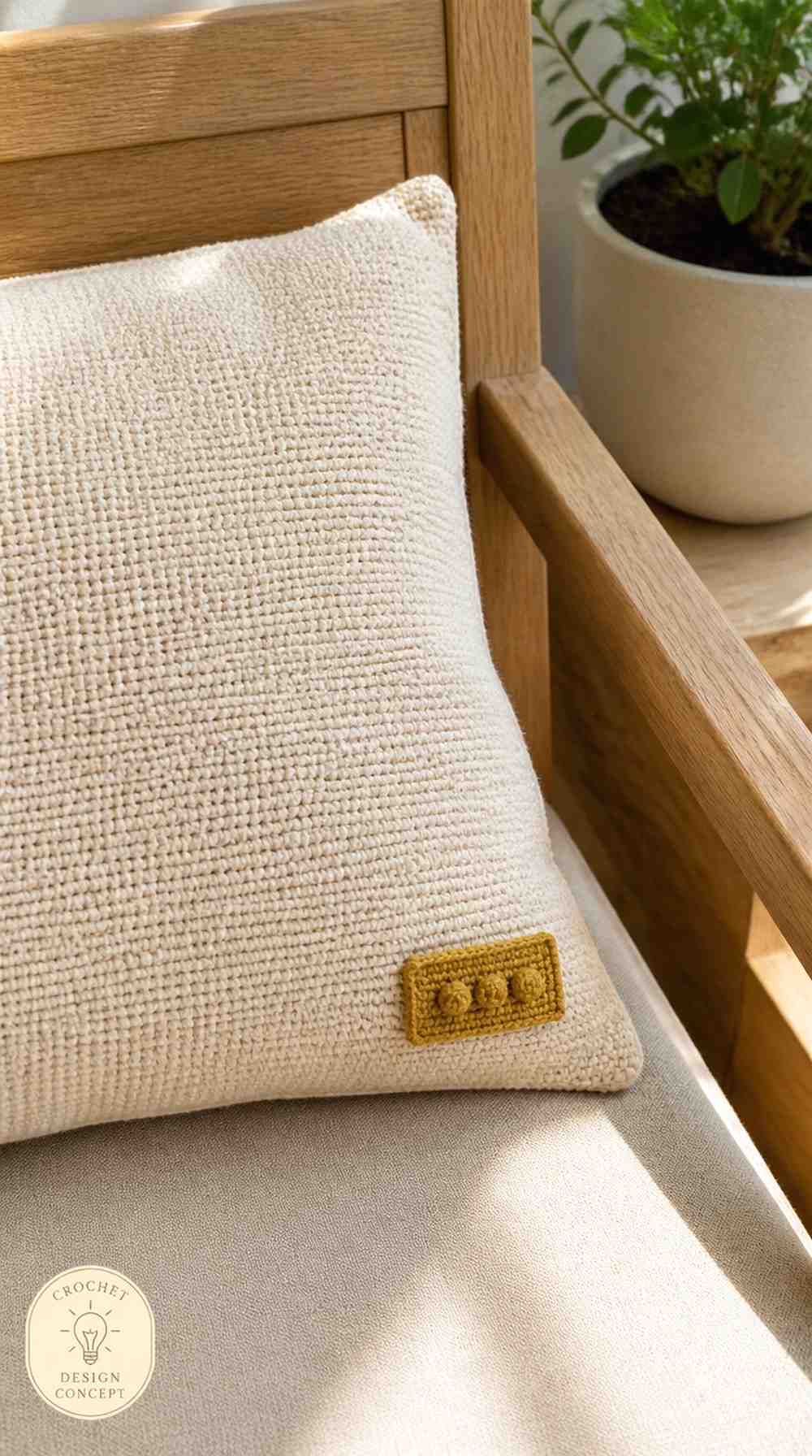
Golden-mustard crochet creates a compact rectangular identification tab with dense horizontal stitches and oatmeal edging. Three tiny mustard crochet bobbles sit in a straight row on its outward-facing surface, forming a simple tactile marker without any written information.
The tab is sewn flat to the lower back corner of a cream cushion cover. Its raised dots could help distinguish one cushion set from another through a recognizable arrangement, especially when multiple covers have similar colors or patterns.
- Tactile Code: Use the three-bobble arrangement consistently, and keep a separate record of what the marker represents if several coded sets are stored.
- Bobble Attachment: Ensure all raised stitches are securely formed and connected so they cannot loosen during repeated handling.
- Placement: Keep the bobbles on the back seam area rather than the main sitting surface, where raised texture may be uncomfortable.
15. Crochet Cornflower Fold-Open Cushion ID Booklet
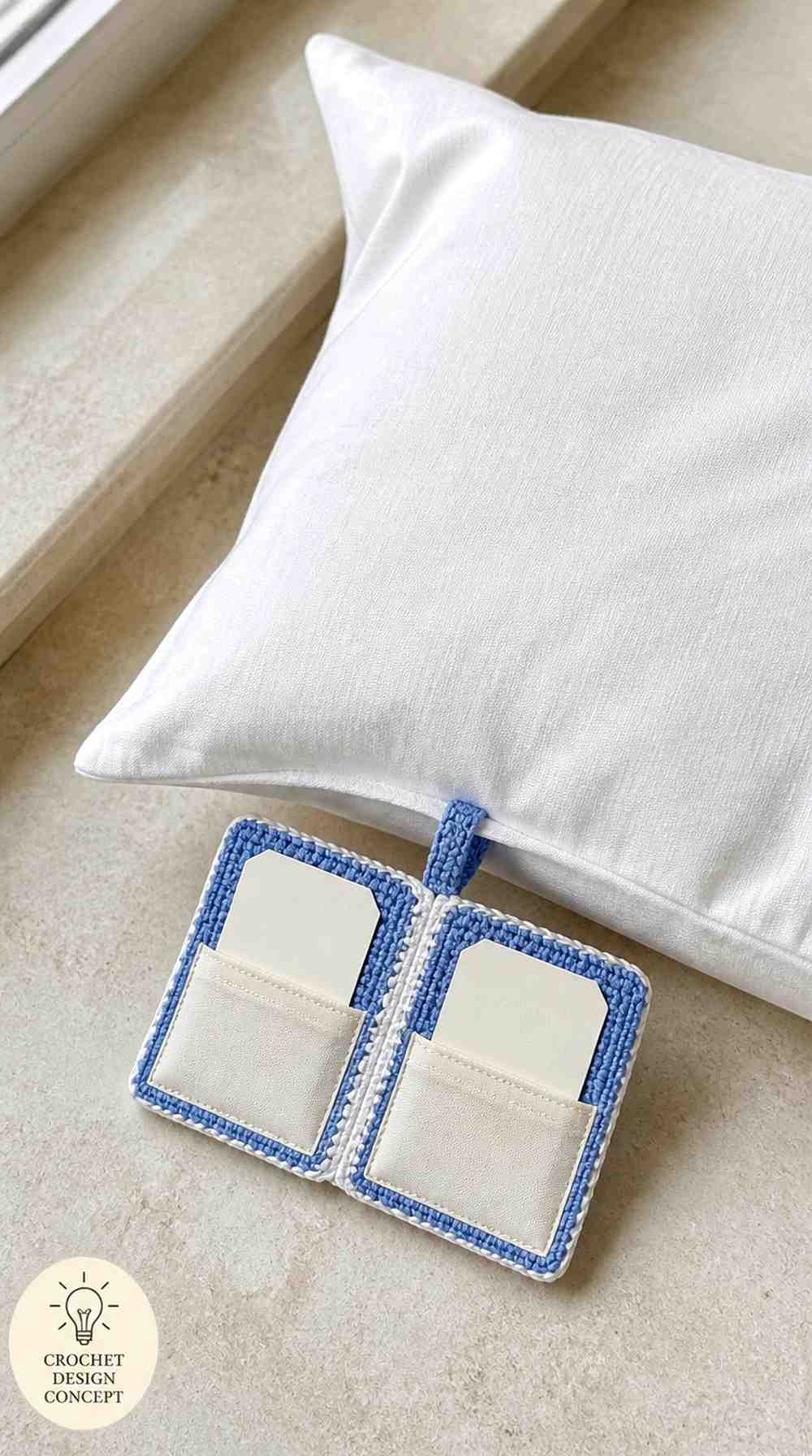
Cornflower-blue crochet creates a miniature two-panel identification booklet joined by a flexible cream-edged spine. Each panel contains a small cream fabric pocket holding a blank ivory card. A short reinforced hanging loop attaches the booklet near the lower side seam of a white cushion cover.
The open booklet provides two separate information spaces while keeping the main cushion surface free from lettering. It could be useful when a stored cover needs both identification and an additional note, such as its matching insert or the room where it belongs.
- Flexible Spine: The joining section should allow the small panels to open without pulling the hanging loop or stretching the surrounding crochet.
- Two-Card Layout: Keep each card dedicated to a distinct piece of information to make the booklet easier to understand.
- Storage Profile: Fold the booklet closed before packing the cover so the separate panels do not catch against neighboring textiles.
16. Crochet Teal Triangle Cushion Corner Marker
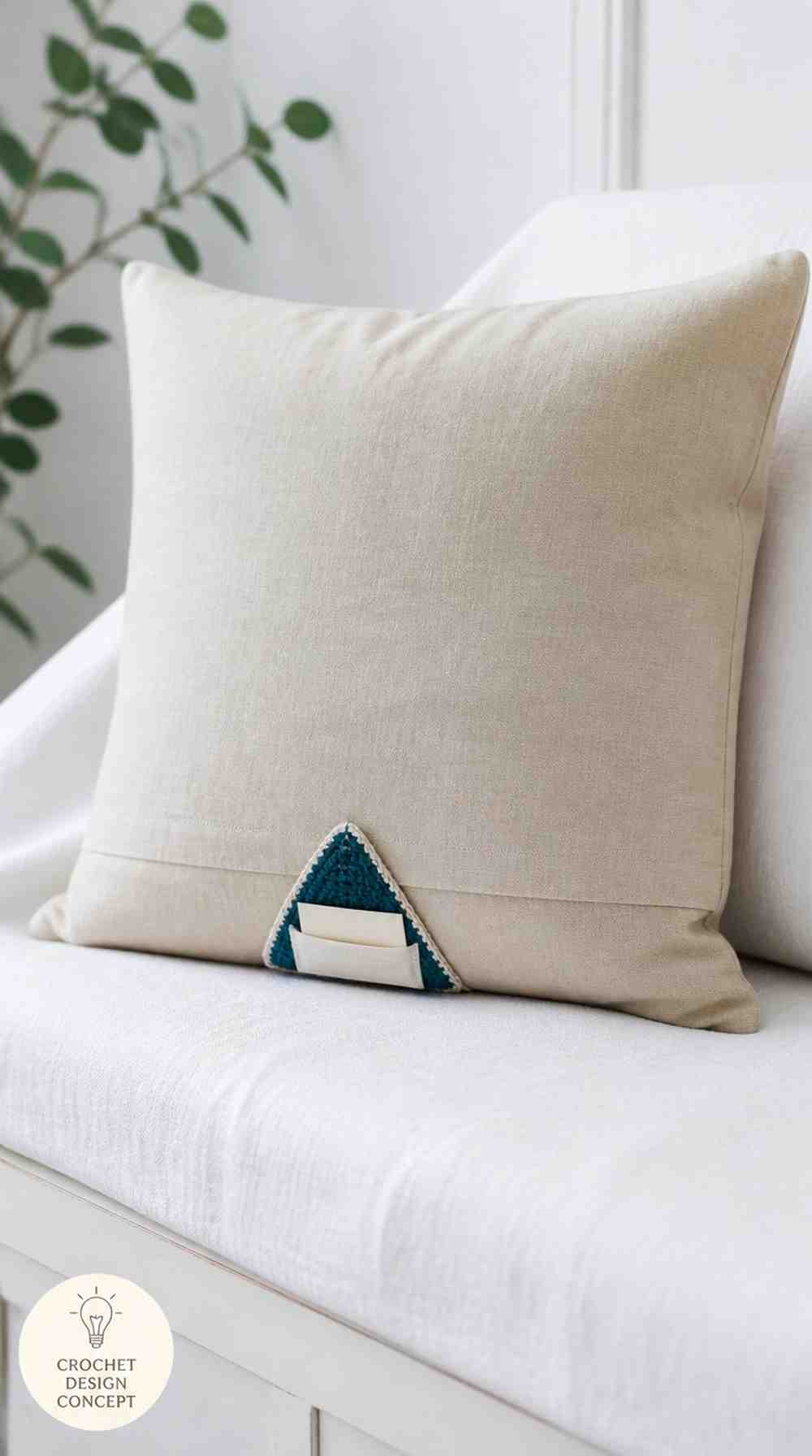
Deep-teal crochet gives this identification tab a distinctive triangular silhouette. Closely worked small stitches fill the flat shape, with cream slip-stitch edging around its sides. A little cream fabric pocket occupies the lower section and holds one removable ivory card.
The triangle attaches to the lower back seam of a pale-beige cushion cover, with its upper point extending slightly beyond the fabric edge. Its compact design could suit covers where a small visible corner marker is preferable to a larger rectangular label.
- Triangle Orientation: Position the pointed upper section so it remains visible without sticking out far enough to catch on clothing or furniture.
- Pocket Placement: Keep the small card pocket within the broader lower area, where there is more fabric to support the insert.
- Edge Reinforcement: Secure the triangle’s sewn base to prevent the upper point from twisting or pulling the tag sideways.
17. Crochet Coral Button-Off Round Cushion Tag
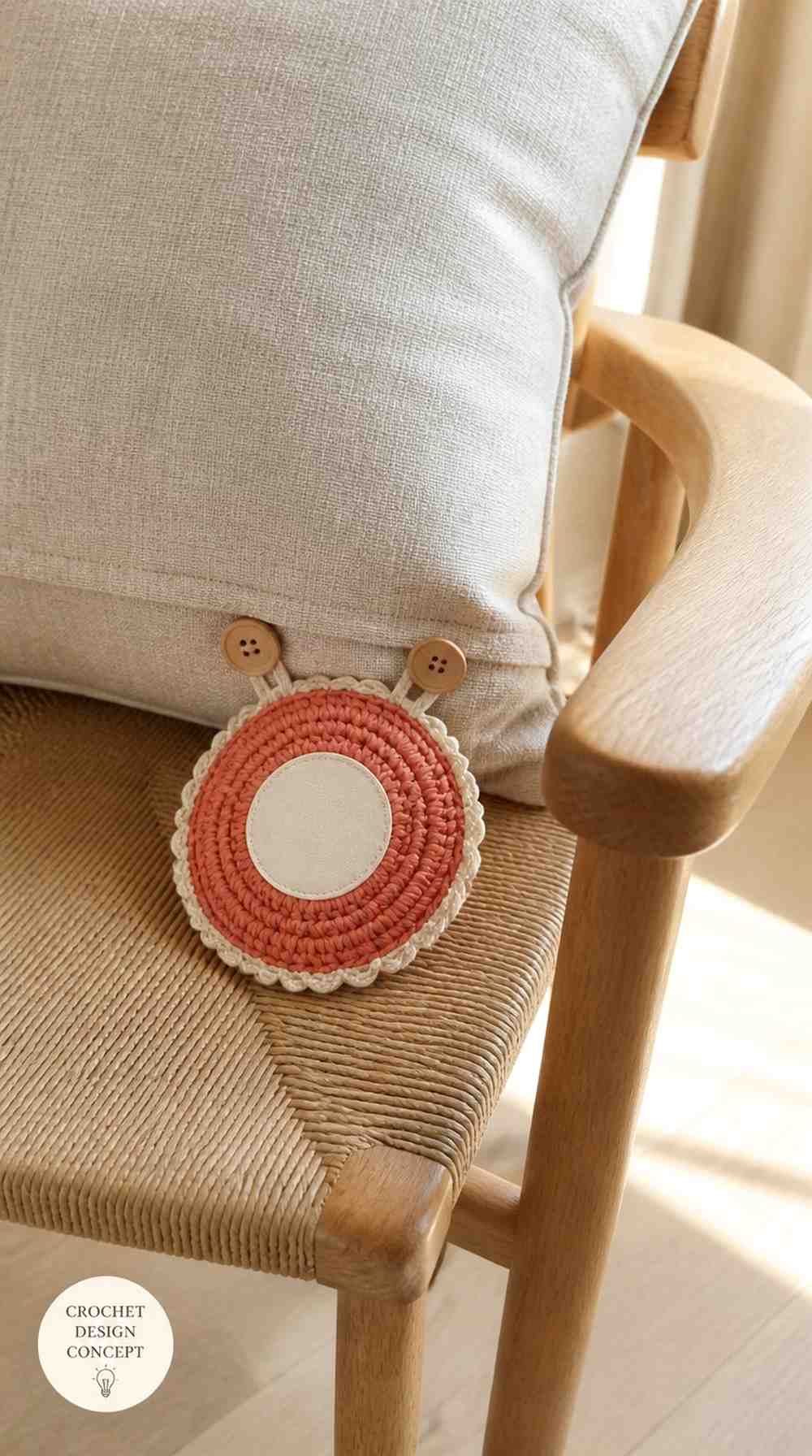
Warm-coral crochet creates a circular identification tag with concentric rounds and a delicate cream scalloped border. A smooth blank ivory fabric patch fills the center, while two small wooden buttons and reinforced loops provide a removable attachment.
The round tag sits just outside the lower back edge of an oatmeal cushion cover. Its circular shape offers a softer decorative option than the rectangular labels, while the button-off design allows it to be removed when necessary.
- Round Construction: Keep the concentric crochet rounds flat so the label does not curl into a shallow bowl.
- Button Security: Reinforce both attachment points and check that the wooden buttons cannot loosen during use or cleaning.
- Scalloped Border: Small, firmly joined scallops can preserve the circular outline without making the tag difficult to store alongside other cushion covers.
18. Crochet Pearl Gray Slim Color-Code Cushion Tab
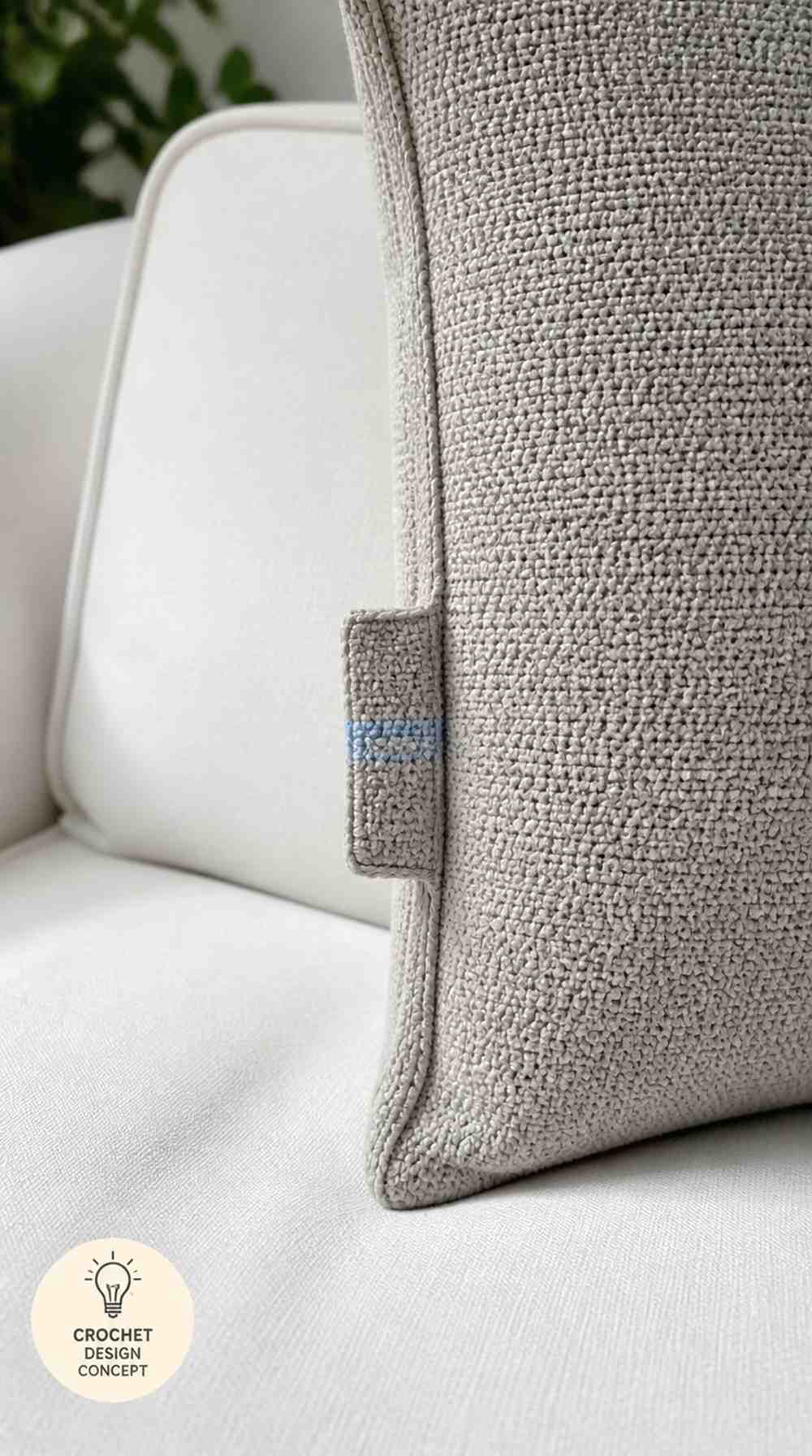
Pearl-gray crochet forms a narrow folded identification tab with fine smooth stitches and a stone-gray outer border. A single powder-blue horizontal stripe runs through its center, creating a quiet color-coded detail without cards, buttons or written information.
The tag is stitched over the lower back side seam of a matching pearl-gray cushion cover. Its simple construction makes it one of the most discreet ideas in the collection, particularly for households that prefer a consistent color-coding system over visible labels.
- Color-Code Planning: Assign the powder-blue stripe a clear meaning, such as a particular matching set, rather than relying on memory alone.
- Folded Seam: Secure the two halves of the tab neatly around the cover edge without adding unnecessary thickness.
- Minimal Maintenance: With no removable cards or fasteners, the tag has fewer separate parts, although its yarn must still suit the cover’s cleaning requirements.
19. Crochet Burgundy Triple-Slot Lumbar Cushion Label
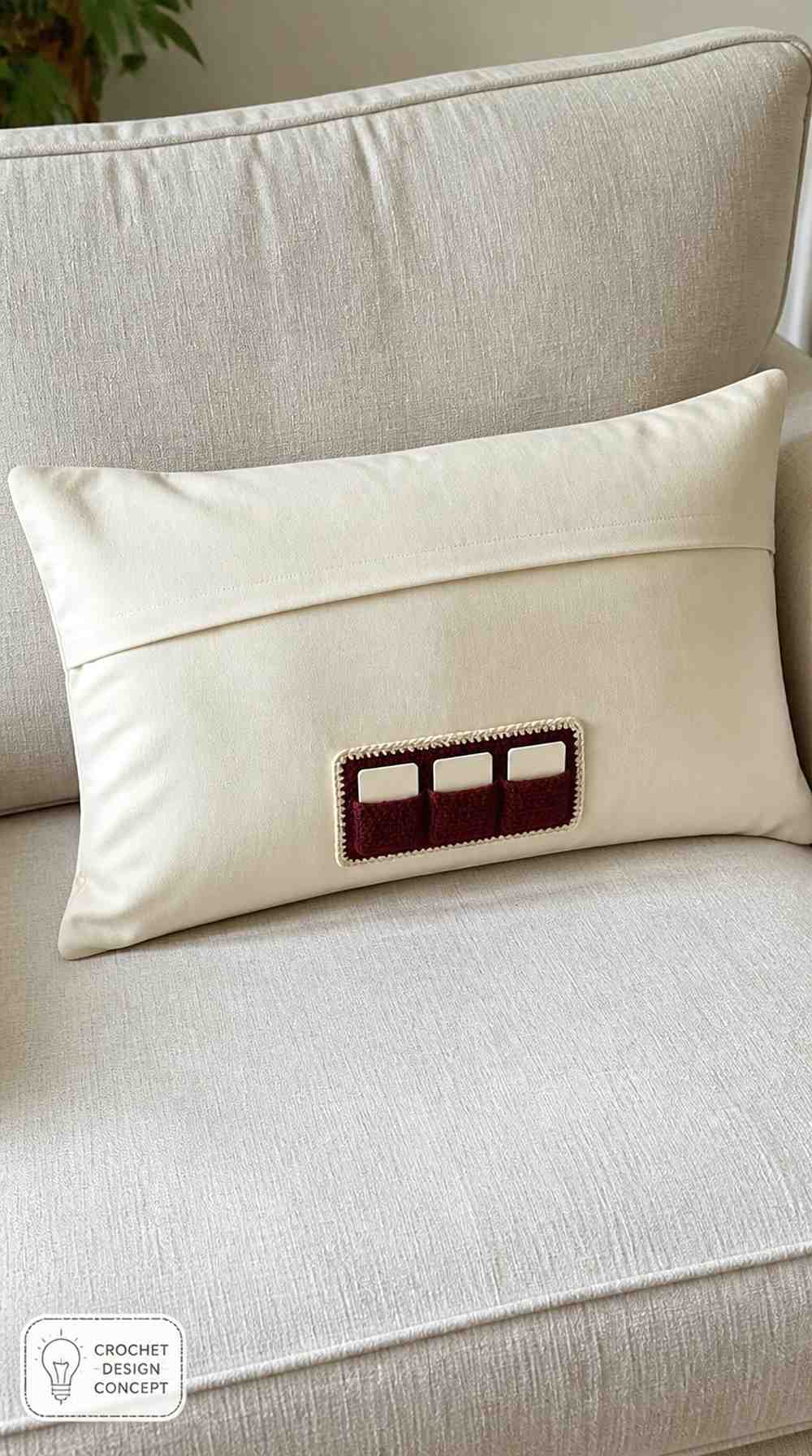
Burgundy crochet creates a broad horizontal identification tag with dense flat stitches and oatmeal edging. Three shallow cream fabric pockets sit side by side, each holding a separate blank ivory card. The tag is sewn near the lower center of the back panel of a long ivory lumbar cushion cover.
The three-card layout is the most information-focused concept in this collection. It could suit a stored decorative cushion that needs separate notes about its insert size, matching set and care requirements.
- Three Information Spaces: Use the individual cards for separate details, keeping each note short enough to remain easy to read.
- Lumbar Placement: Position the horizontal tag on the back panel where it does not interfere with the cover’s overlapping envelope closure.
- Card Retention: Keep the three pocket openings secure enough that the cards remain in place when the long cushion cover is folded or stored.
Practical Guide to Crochet Cushion Cover Identification Tabs
Decide what the tag needs to identify
A cushion identification tab works best when its purpose is clear. You might use it to identify a matching set, record an insert size, distinguish the front and back of a cover or keep a verified cleaning note.
A color-coded tab may be enough for matching sets, while a removable card is more useful when the information needs to change.
Common Cushion Insert Size Reference
These are common shopping reference sizes, not measurements of the designs pictured in this article. Actual cushion dimensions and product availability vary.
| Cushion shape | Common insert size examples |
|---|---|
| Small square | 16 × 16 inches |
| Standard decorative square | 18 × 18 inches |
| Larger square | 20 × 20 inches |
| Rectangular lumbar | 12 × 20 inches |
| Larger lumbar | 14 × 22 inches |
Measure the actual cushion insert and cover before recording its size. Allow for the cover’s intended fit, fabric stretch and closure style rather than assuming the listed measurements describe every product.
Choose a suitable attachment
Flat sewn tabs work well for a permanent identification system. Button-on tags, loop-on labels and short ties can be useful when labels need to be removed.
Whichever method you choose, avoid damaging seams, obstructing zippers or creating hard raised areas where someone rests against the cushion.
Think about yarn and cleaning
Smooth cotton or suitable cotton-blend yarn may be useful for small, clearly defined crochet tabs. However, the tag’s yarn, fabric backing, ink, buttons and other materials must all be compatible with the intended cleaning method.
Care instructions should come from the actual cushion and yarn labels, not from an unverified assumption about the finished piece.
Keep stored covers organized
When rotating cushion covers, use matching tags or removable cards consistently. A small inventory note can help explain color codes, room assignments and the location of spare inserts.
For inspiration on the covers themselves, browse 9 Crochet Cushion Covers Ideas, which explores different decorative cushion shapes and finishes.
Want to Make Something Similar?
These 19 designs are original crochet inspiration concepts, not exact published patterns. The following verified resources offer useful techniques for attaching handmade tags and working with removable cushion covers:
- Personalize Your Crochet: How to Add Labels & Tags to Your Crochet Items — A Crocheted Simplicity — demonstrates attaching different types of handmade labels and selecting suitable positions on crochet items.
- DIY Custom Fabric Tags — Tiny Curl Crochet — shows ways to prepare and attach small fabric labels to handmade crochet projects. It is useful background for combining crochet borders with fabric identification panels.
- Cozy Free Crochet Pillow Cover Pattern — Marching North — offers a removable envelope-style cushion cover tutorial that can help readers understand where a small identification tab might fit around a cover’s back seams.
These resources cover related techniques. They do not provide exact instructions for the 19 identification tab concepts shown here.
Which Crochet Cushion Cover Identification Tab Should You Choose?
| Your priority | Design to consider | Main consideration |
|---|---|---|
| Simple corner identification | Terracotta Corner Tab | Folded seam placement |
| Removable buttoned label | Indigo Button-On Tag | Button comfort and security |
| Decorative zipper-side tag | Butter Yellow Scalloped Tab | Keep clear of zipper |
| Matching cushion pairs | Pine Checkerboard Tabs | Consistent colorwork |
| Cottage-style decoration | Dusty Rose Daisy Tag | Secure flower attachment |
| Covered identification card | Cinnamon Ribbed Envelope | Flap access |
| Granny-square detail | Plum Granny-Square Tag | Motif joins and hanging loop |
| Front-and-back orientation | Slate Double-Tab Markers | Consistent color placement |
| Removable looped label | Cherry Gingham Tag | Existing fabric attachment |
| Clear identification window | Sea Glass Clear-Window Label | Material and laundry compatibility |
| Zipper-end identification | Mocha Zipper-Pull Identifier | Keep attachment lightweight |
| Two pieces of information | Oatmeal Twin-Card Tab | Separate card pockets |
| Seasonal storage | Lavender Tie-On Tag | Remove before washing |
| Tactile matching code | Mustard Three-Bobble Tab | Keep code system consistent |
| Fold-open information holder | Cornflower ID Booklet | Compact folded storage |
| Geometric corner marker | Teal Triangle Tab | Pointed-edge placement |
| Decorative removable circle | Coral Button-Off Tag | Button attachment |
| Minimalist color coding | Pearl Gray Slim Tab | No written information |
| Three details on lumbar cover | Burgundy Triple-Slot Label | Card retention and closure clearance |
For an uncomplicated cushion identification system, the Terracotta Corner Tab and Pearl Gray Slim Tab are sensible visual starting points. Both use relatively small shapes and limited decoration.
If you regularly change cushion covers, the Indigo Button-On Tag, Lavender Tie-On Tag and Coral Button-Off Tag explore detachable arrangements that could make cleaning or changing labels easier.
For organizing information about several covers, the Oatmeal Twin-Card, Cornflower Fold-Open and Burgundy Triple-Slot designs provide more space for separate notes.
Conclusion
A crochet cushion cover identification tab can make a small but useful difference when organizing matching cushions, spare covers and seasonal textiles. These 19 concepts show how simple crochet shapes can become decorative corner tags, removable identification cards, tactile markers and discreet color-coded labels.
The best design depends on how much information you need, where the cushion is used and whether the cover requires regular washing. Choose a small, secure attachment that does not interfere with comfort or closures, and keep identification details accurate and easy to update.
Which identification tab would you choose for your cushion covers? Do you prefer the simple Terracotta Corner Tab, the colorful Plum Granny-Square label or the practical Burgundy Triple-Slot design? Share your favorite in the comments.
Frequently Asked Questions
1. What is the purpose of a crochet cushion cover identification tab?
A crochet identification tab can help distinguish matching cushion sets, identify cover sizes, mark front and back orientation or store a small information card. It can be particularly useful when several similar cushion covers are folded together in storage or rotated between rooms.
2. Can I attach a crochet identification tab to any cushion cover?
A tag may be attached to many fabric or crochet cushion covers, but the method should suit the material and construction. A permanent sewn label may work on a sturdy seam, while delicate fabrics or removable covers may be better suited to a detachable arrangement. Avoid damaging zippers, seams or decorative front panels.
3. What information should I put on a cushion identification card?
Useful details may include the cover’s measured size, matching set, intended room, insert size or verified cleaning instructions. Use short, readable notes and distinguish measurements from care information. Do not invent washing instructions or assume that the cover and insert share the same care requirements.
4. Can crochet identification tabs be washed with cushion covers?
That depends on the yarn, backing, fasteners, ink and other materials used. Some simple sewn crochet tags may tolerate the same cleaning method as their covers, while labels with paper cards, wooden buttons or transparent windows may need removal. Always follow the care instructions for the complete item.
5. Are these 19 crochet cushion cover identification tabs available as patterns?
No. These are original visual inspiration concepts rather than tested crochet patterns or complete construction tutorials. They illustrate possible shapes, attachment methods, colors and information-storage features. To create something similar, start with an appropriate small crochet motif or label technique and adapt it to the cushion cover’s actual fabric, seams and intended use.