Crochet duvet corner fastening ties are small bedding accessories that can inspire a handmade finish inside a duvet cover. These 15 ideas explore ribbed ribbons, rounded crochet cords, flat bow ties, reinforced corner tabs and decorative details in sage, oatmeal, terracotta, lilac and other soft colors. Although hidden once the bed is made, the ties show how crochet texture can be incorporated into everyday bedding accessories.
The designs focus on connecting the inside corner of a duvet cover to a matching loop already sewn onto a duvet insert. You’ll find different ribbon widths, compact knots, soft edging and reinforcement ideas, along with practical considerations such as stretching, washing and easy removal. A suitable corner tie should hold the insert in place without pulling, distorting or damaging either fabric layer.
These are AI-generated crochet design visualizations for inspiration, not photographs of tested bedding fasteners or complete crochet patterns. Their appearance does not establish reliable fastening strength.
Quick Design Selection Guide
| Your main preference | Design to explore | Distinctive feature |
|---|---|---|
| Simple crochet fastening | Crochet Sage Ribbed Twin-Tail Duvet Corner Tie | Two ribbed ribbons and one corner tab |
| Soft, broad bow | Crochet Oatmeal Wide-Bow Duvet Fastening Ties | Flat linen-like ribbons |
| Narrow cord ties | Crochet Terracotta Braided I-Cord Duvet Corner Ties | Two short tubular cords |
| Delicate corner decoration | Crochet Ivory Scalloped Corner-Tab Duvet Ties | Five small scallops on a triangular tab |
| Fabric-backed construction | Crochet Forest Green Reinforced Flat-Ribbon Corner Ties | Cotton-backed crochet ribbons |
| Minimal loose ends | Crochet Plum Short-Tail Duvet Corner Tie | Compact bow and short tapered ends |
| Traditional crochet motif | Crochet Denim Granny-Square Corner Tie Tab | Mini granny-square decoration |
| Modern color accents | Crochet Rust Diagonal Colorblock Duvet Corner Tie | Three diagonal colors on each ribbon |
Before considering any handmade attachment, check whether your duvet cover already has suitable interior ties and whether the duvet insert has matching corner loops. Those two parts need to work together; crochet decoration cannot replace a missing or damaged attachment point without proper construction.
1. Crochet Sage Ribbed Twin-Tail Duvet Corner Tie
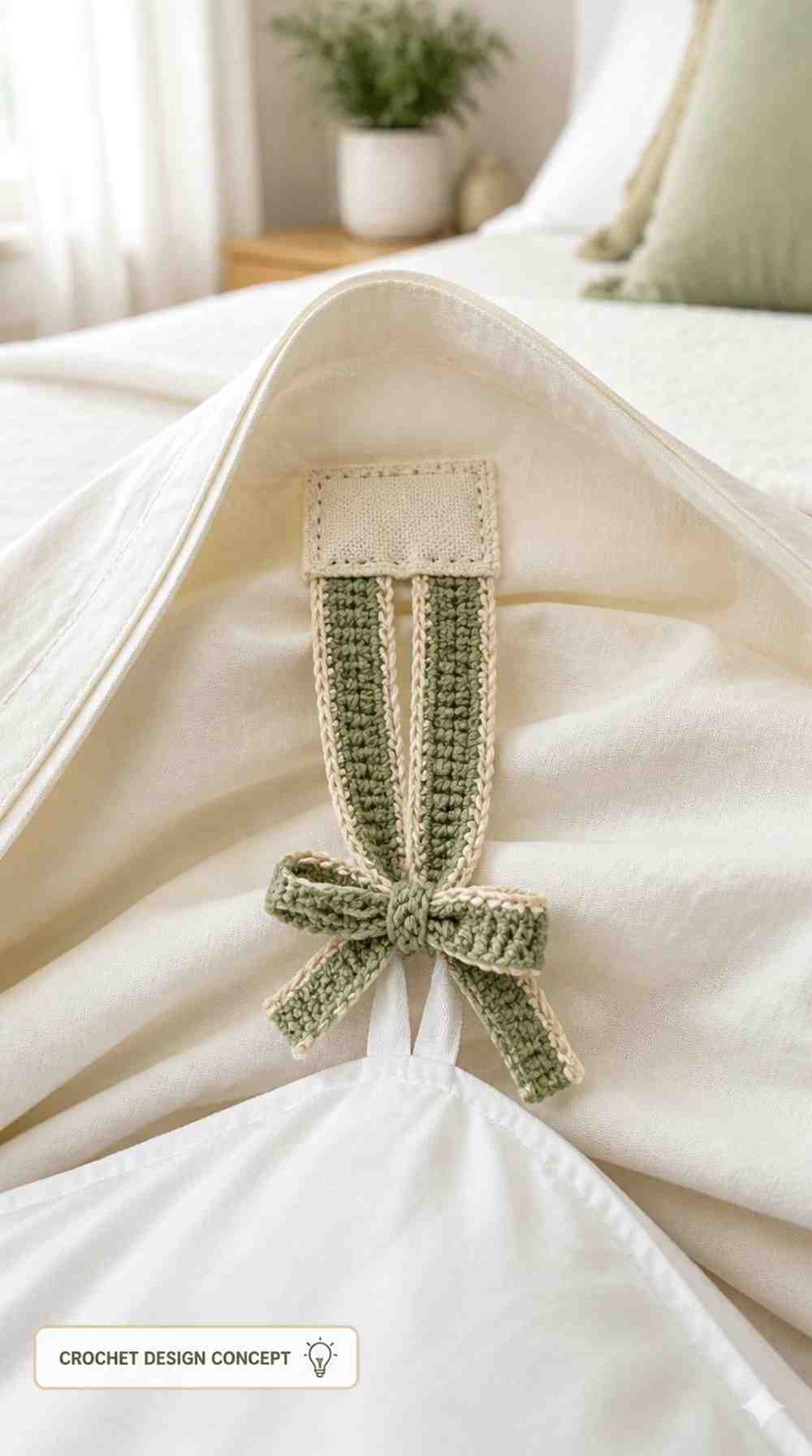
Sage-green crochet forms two short flat tie strips with fine vertical ribs and narrow oatmeal edging. Both ribbons extend from a small cream woven reinforcement patch at the inside corner seam of an ivory duvet cover. One strip passes through the duvet insert’s existing fabric loop, while the pair forms a compact removable bow.
The understated green color and simple shape make this a useful starting point for exploring crochet bedding ties. The narrow ribbons need enough flexibility to knot neatly without stretching excessively.
- Vertical Ribbing: Back-loop crochet creates a textured surface, but the finished ribbons must be checked for stretching when pulled or untied.
- Two Matching Tails: Both strips should have suitable lengths for passing through the existing insert loop and forming a removable knot.
- Cream Anchor Patch: The woven attachment should connect to an appropriate reinforced cover seam rather than relying on decorative crochet stitches alone.
- Gentle Bow Tension: Leave a little ease around the insert loop instead of drawing the duvet corner into a tight crease.
2. Crochet Oatmeal Wide-Bow Duvet Fastening Ties
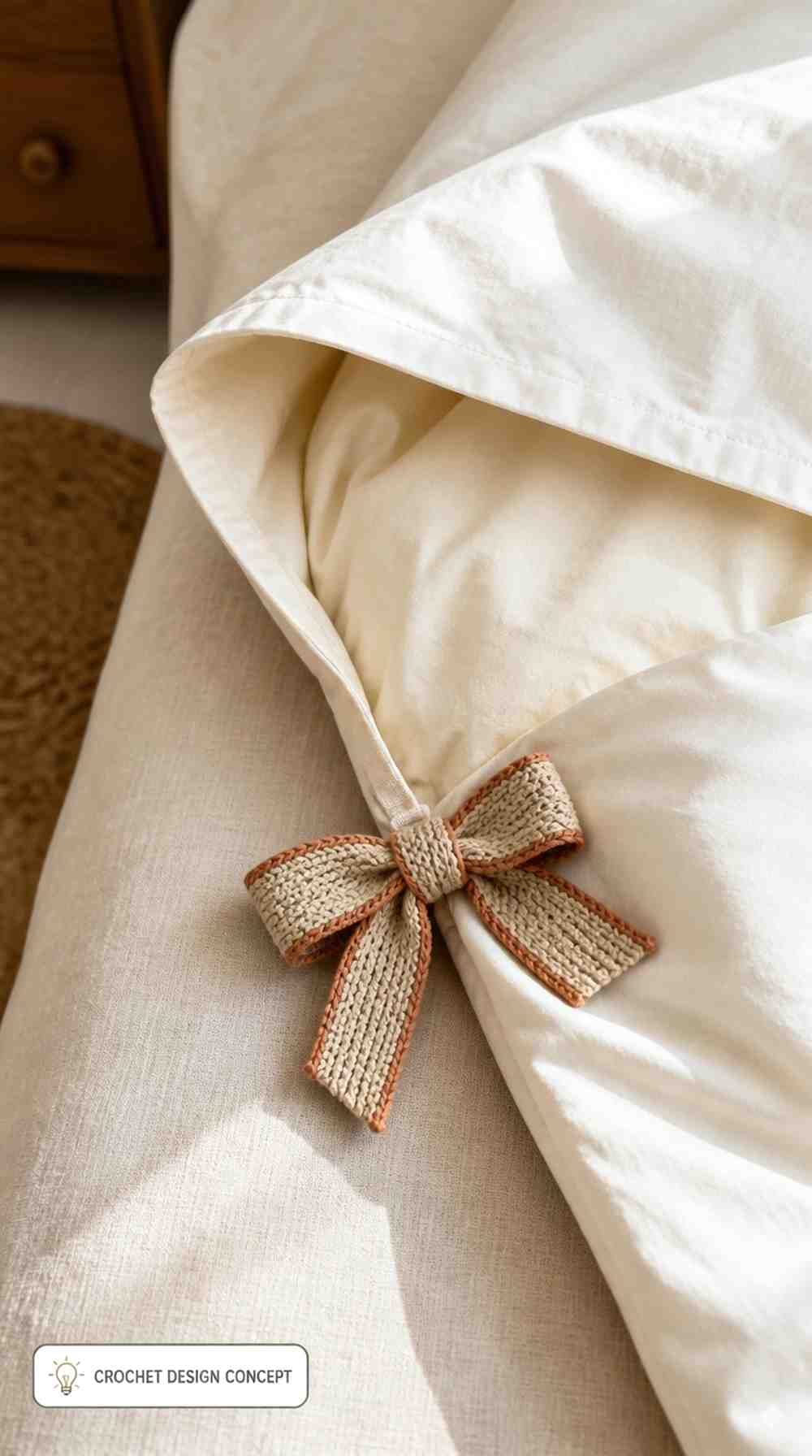
Warm oatmeal crochet forms two short, broad ribbons with closely worked linen-like rows and thin terracotta borders. A matching woven tab anchors the ribbons to the inside corner of a cream duvet cover. One ribbon passes through the white insert loop, meeting the other in a soft, low-profile bow.
The wider ribbon shape creates a different appearance from narrow cords. It gives the bow a flatter, fabric-like finish, although thicker crochet can make the knot bulkier than ordinary cotton twill ties.
- Broad Ribbon Width: Choose a width that can still form a compact knot without creating a noticeable lump beneath the duvet cover.
- Terracotta Edging: A narrow contrasting border defines both ribbons while keeping the free ends smooth.
- Linen-Like Stitches: Dense, even crochet rows create a relatively flat surface, but the fastening’s strength remains untested.
- Removable Knot: The bow should be easy to undo when the cover is removed for washing.
3. Crochet Terracotta Braided I-Cord Duvet Corner Ties
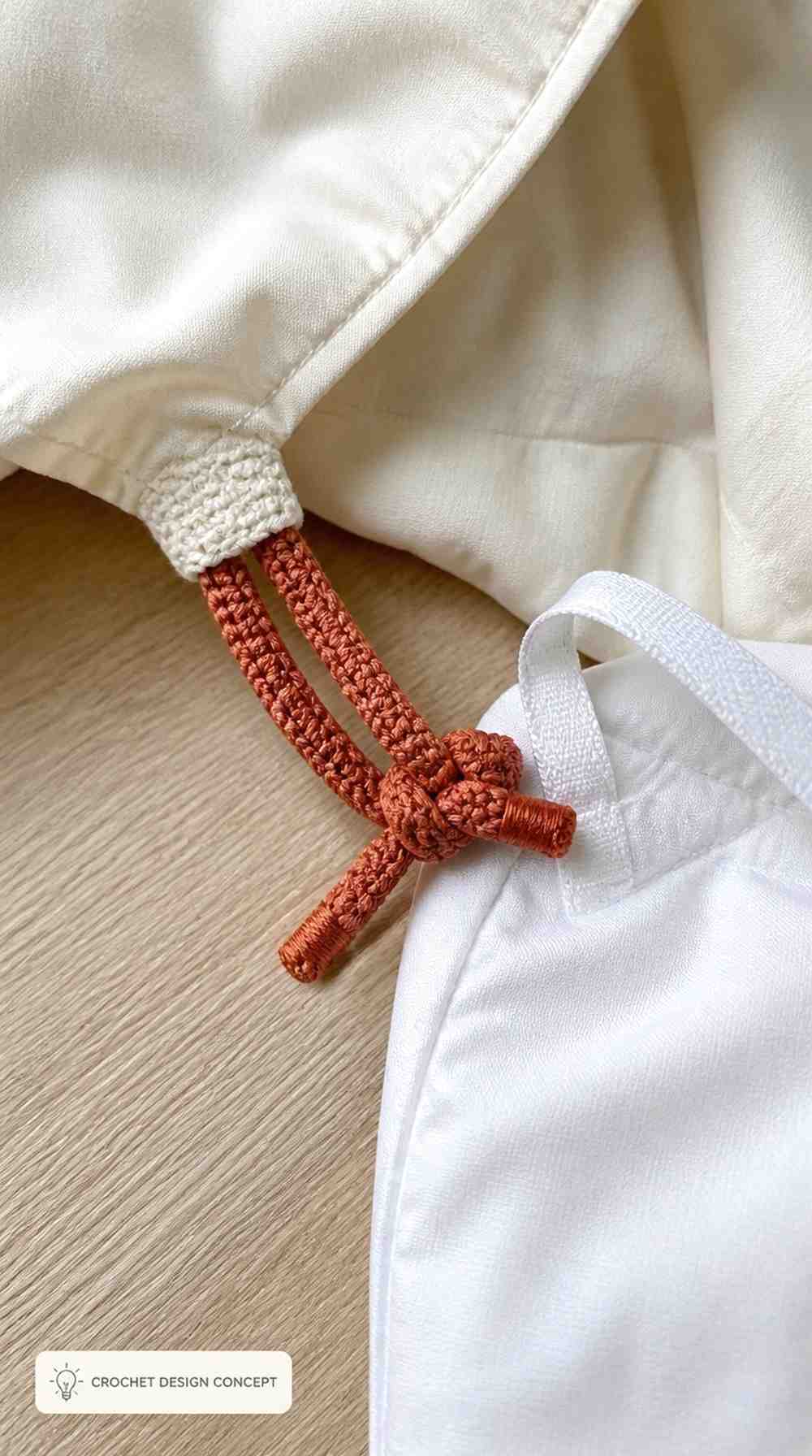
Terracotta crochet creates two narrow, braided-looking I-cords with small rust-colored end finishes. The cords extend from a cream fabric tab at the inner corner of an ivory duvet cover. One passes through the matching white loop on the duvet insert, and the two ends form a short removable double knot.
This design explores a more rounded tie shape than flat crochet ribbons. The tubular stitches provide an attractive cord-like appearance, but their flexibility and possible stretch need attention before considering them for bedding.
- Tubular I-Cord Shape: Rounded cords may pass easily through some insert loops, though their thickness must suit the existing attachment.
- Compact Double Knot: Avoid making the knot unnecessarily tight; it should remain removable without pulling against the fabric loop.
- Rust End Wraps: Short finishing details help define the ends without adding tassels or dangling decoration inside the bedding.
- Cord Stretch: Crochet I-cords can lengthen under tension, so they should not automatically replace sturdy manufacturer-provided ties.
4. Crochet Navy Checker-Edge Duvet Corner Tie
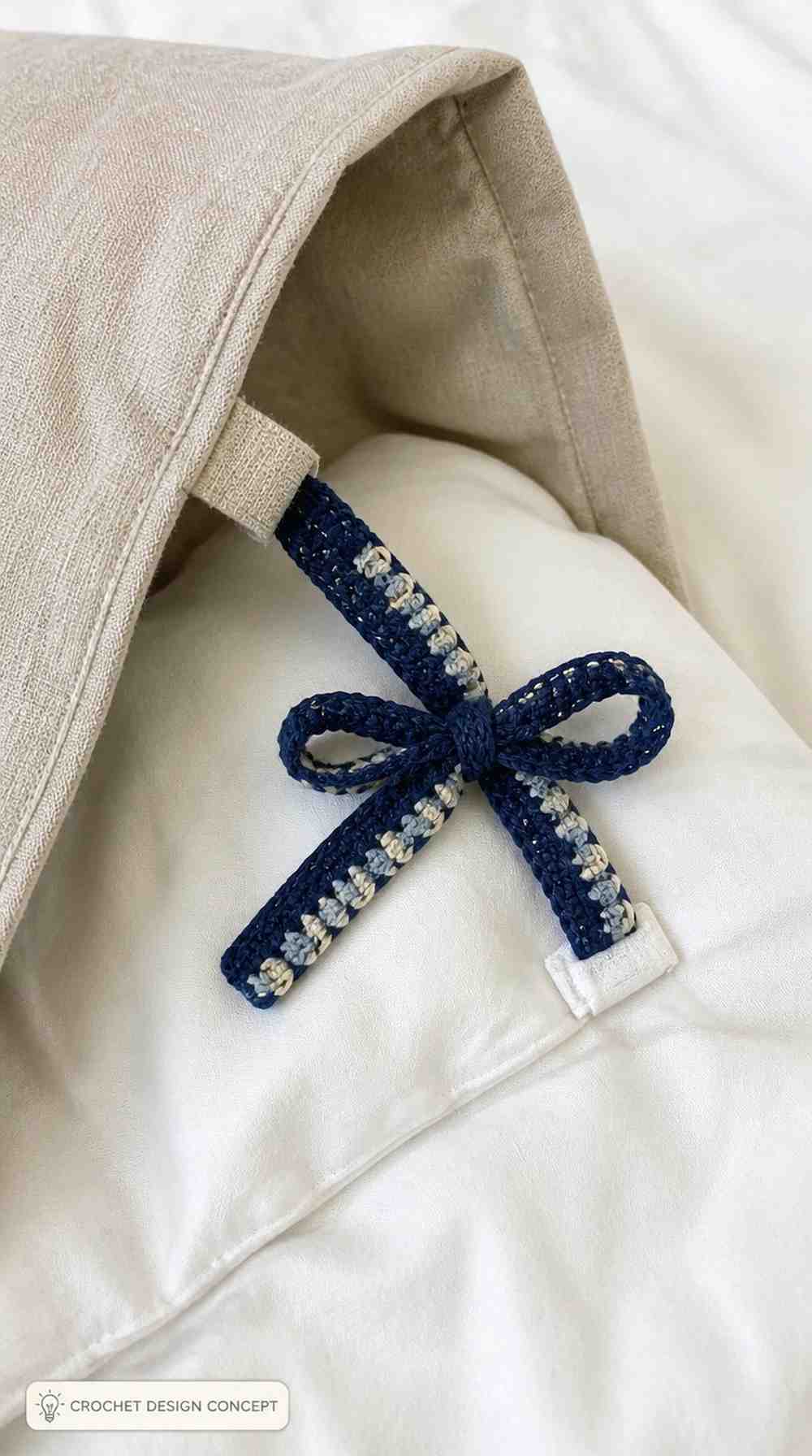
Deep navy crochet forms two flat fastening ribbons with compact stitches and tiny faded-blue and cream checker blocks along their edges. Both ribbons extend from a beige woven tab inside the duvet-cover seam, with one passing through the white loop of the cream duvet insert.
The narrow checker pattern gives the ribbons a subtle decorative detail without using bulky motifs. Most of each tie remains plain navy, which helps the small color changes stand out. The edge joins must remain smooth enough to form a comfortable, compact bow.
- Tiny Checker Edging: Keep the blue and cream squares small so the decorative border does not interfere with knotting.
- Flat Navy Body: Dense stitches create a simple ribbon shape that can be folded without the complexity of raised motifs.
- Edge Joining: Secure all color changes and loose yarn ends to reduce snagging around the insert loop.
- Cover Compatibility: The existing corner tab and insert loop should be intact before any decorative replacement is considered.
5. Crochet Ivory Scalloped Corner-Tab Duvet Ties
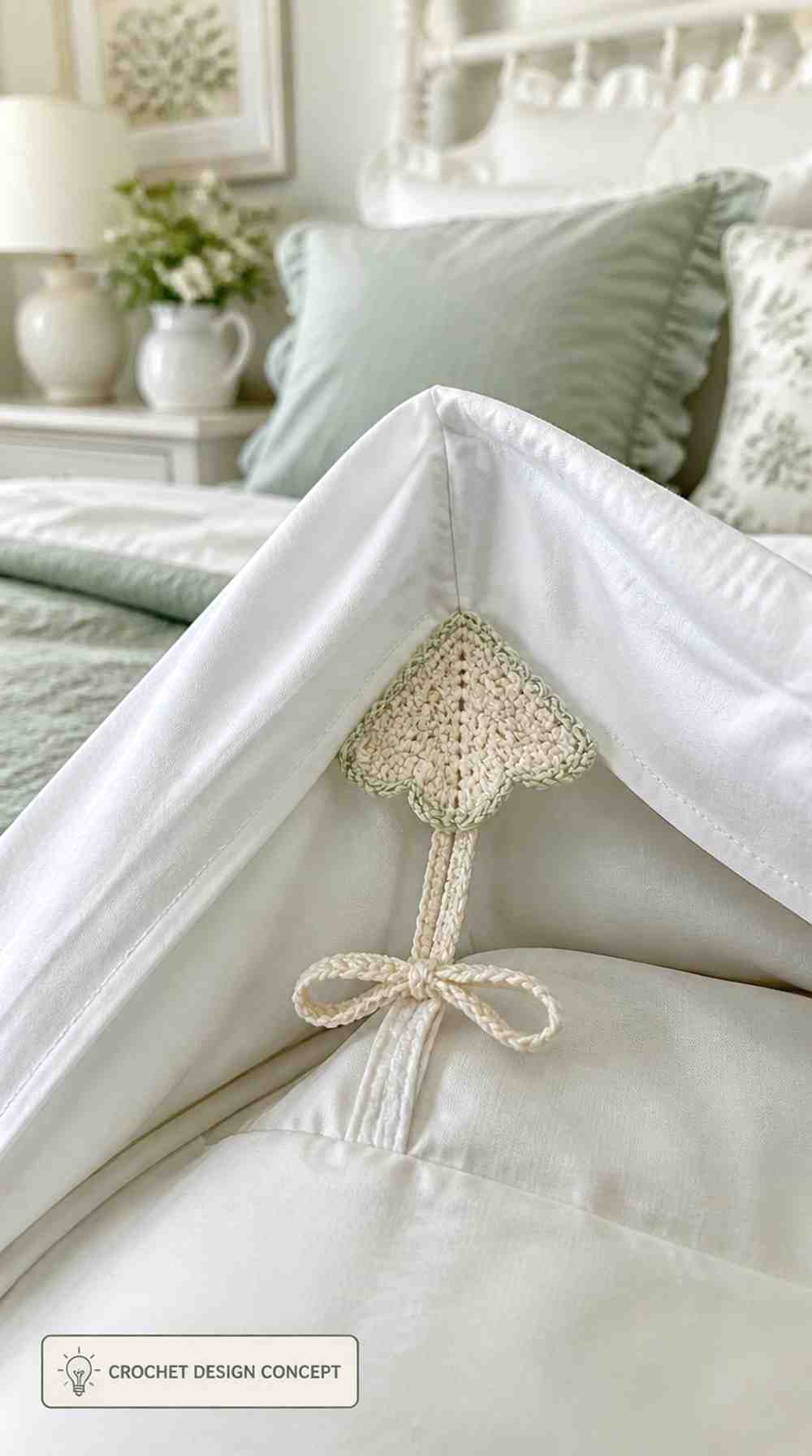
Ivory crochet forms a small triangular corner tab with five sage-edged scallops. Two short, narrow ivory ribbons emerge from the tab’s center and form a flat bow through the insert’s existing corner loop. The scallops stay at the anchored base, away from the knot and free tie ends.
This design places the decoration on the corner tab rather than the working ribbons. The scalloped detail would normally remain hidden inside the duvet cover, giving the attachment a soft handmade appearance without changing the visible bedding.
- Five Scallops: Keep the curved edges small and flat so they do not catch against the duvet cover seam.
- Triangular Tab: The decorative triangle should sit over a suitable woven anchor rather than serving as the only structural attachment.
- Plain Ivory Ties: Simple narrow ribbons are easier to tie than heavily textured or scalloped strips.
- Laundering Concern: Small decorative loops may catch during washing, so inspect and care for them according to the yarn and cover instructions.
6. Crochet Dusty Blue Eyelet-Detail Duvet Ties
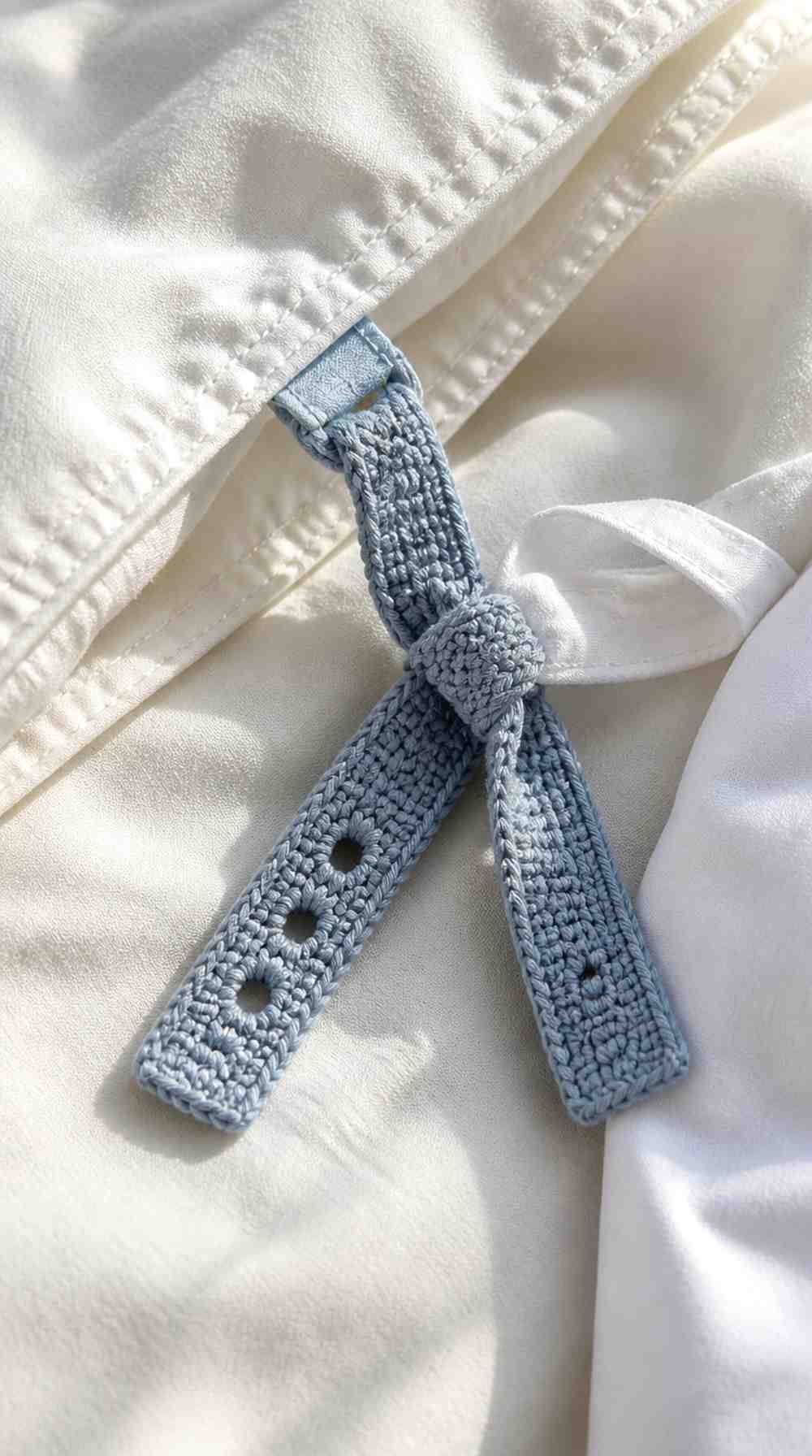
Dusty-blue crochet forms two flat fastening ribbons with three small decorative eyelets running down each strip. The ribbons extend from a pale-blue fabric anchor inside an ivory duvet-cover corner. One passes through the duvet insert’s original white corner loop, and the two form a loose flat knot.
The eyelets introduce an openwork detail without changing the basic two-tail fastening arrangement. Unlike adjustable buttonholes, these small openings are purely decorative. They should remain well formed and away from the actual anchor point.
- Three Eyelets Per Ribbon: Keep the openings small and evenly spaced so the strips retain sufficient fabric between them.
- Decorative Openwork: The holes are not intended to replace the duvet insert’s existing loop or serve as separate fastening points.
- Pale-Blue Anchor: A woven backing provides a distinct attachment area that can be inspected separately from the crochet.
- Possible Snagging: Raised edges around the eyelets could catch on neighboring fabric, so smooth finishing matters.
7. Crochet Charcoal Cotton-Backed Duvet Corner Ties
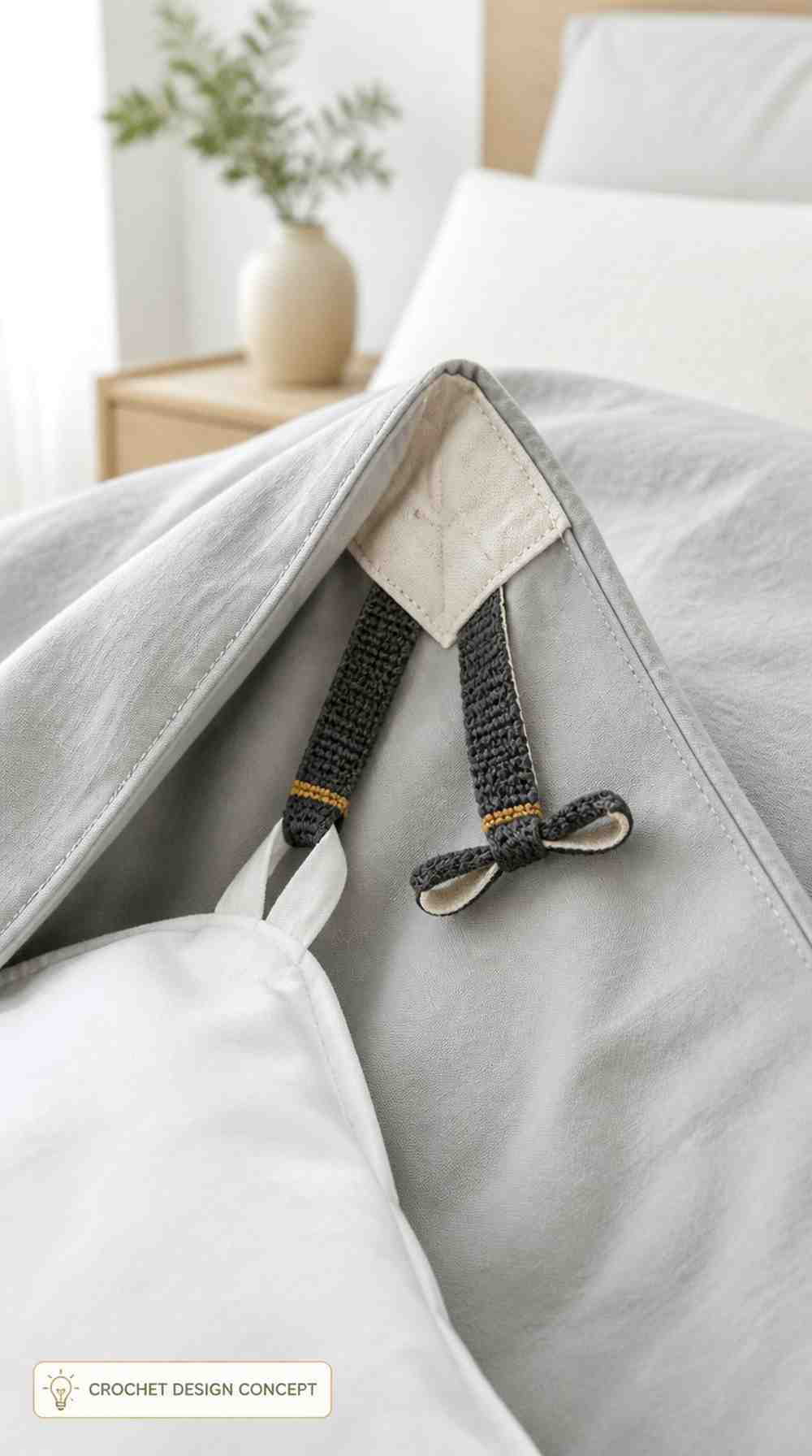
Charcoal-gray crochet forms two narrow ribbons backed with smooth cream cotton tape. Fine mustard lines finish the edges, while the combined strips attach to a reinforced cream fabric patch at the inside corner of a pale-gray duvet cover. One ribbon passes through the insert loop and forms a short bow with the second.
This design separates decorative crochet from the smooth backing material. The layered structure offers a different construction idea from a plain crochet-only tie, although it still requires independent checks for seam strength, washing compatibility and fastening performance.
- Cotton Tape Backing: The smooth woven layer provides a separate foundation, but its suitability depends on the actual material and attachment method.
- Layered Ribbon Thickness: Crochet and cotton together may form a thicker knot than a single fabric tie, so avoid unnecessary bulk.
- Mustard Edge Detail: Narrow finishing lines add color without introducing separate appliqués or hard hardware.
- Washing Compatibility: Both layers should tolerate the duvet cover’s care requirements without shrinking at different rates.
8. Crochet Coral Daisy Duvet Corner Tie Tab
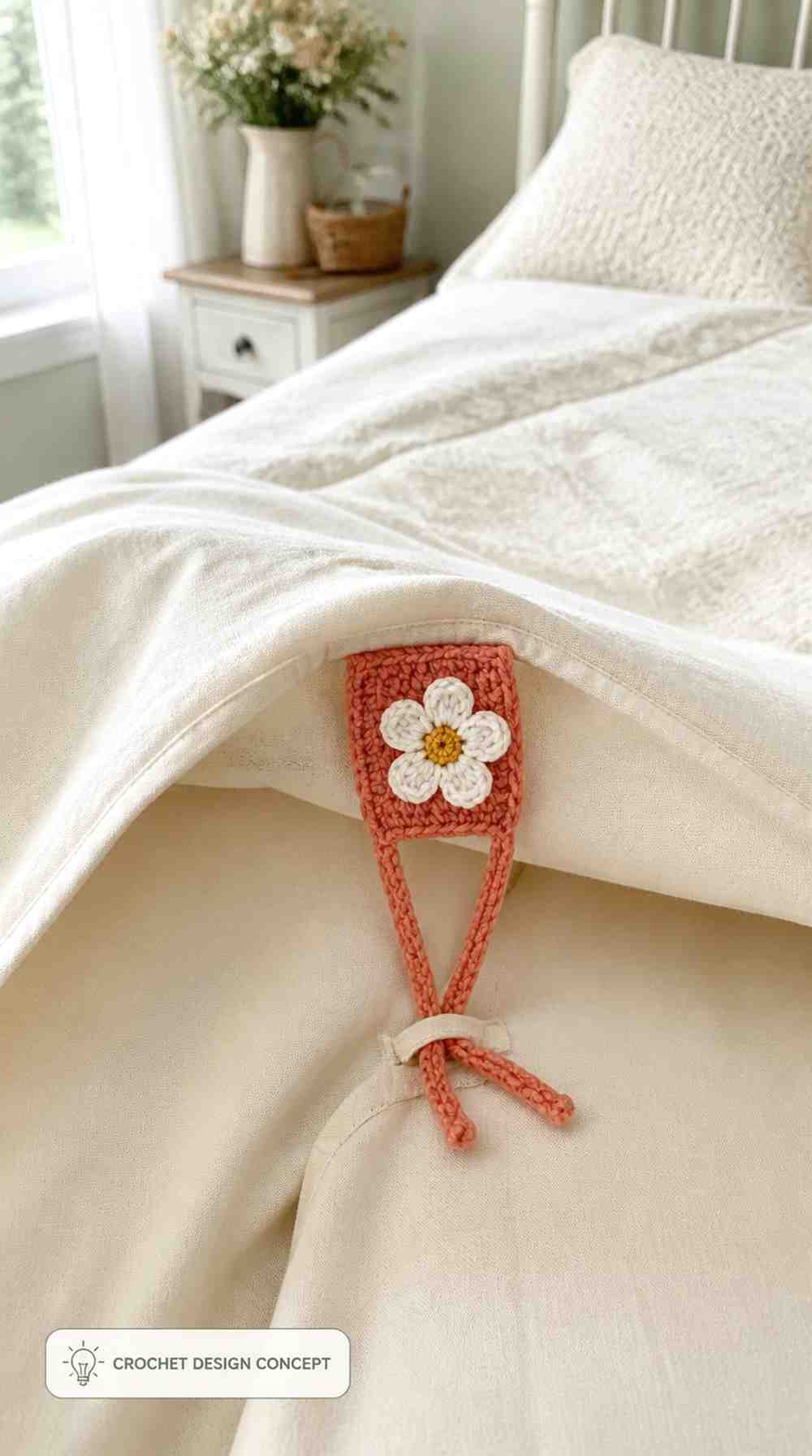
Coral-pink crochet forms a short rectangular anchor tab decorated with one flat ivory daisy. The flower has five petals and a small golden-yellow center. Two narrow coral ties extend from the tab and meet in a compact bow through the existing cream loop on the matching duvet insert.
The floral detail gives this fastening concept a cheerful cottage-inspired character. Because the daisy sits near the cover seam rather than on the tie itself, it does not need to be manipulated whenever the duvet cover is changed.
- Single Daisy Placement: Keep the flower flat and securely attached near the anchor, away from the working knot.
- Five-Petal Motif: Small petals provide the intended decorative shape without creating a bulky embellishment.
- Plain Coral Ribbons: Narrow, undecorated tie ends are easier to knot than strips covered in additional flowers.
- Hidden Decoration: Since the motif sits inside the duvet cover, its main value is handmade detail rather than visible bedroom styling.
9. Crochet Forest Green Reinforced Flat-Ribbon Corner Ties
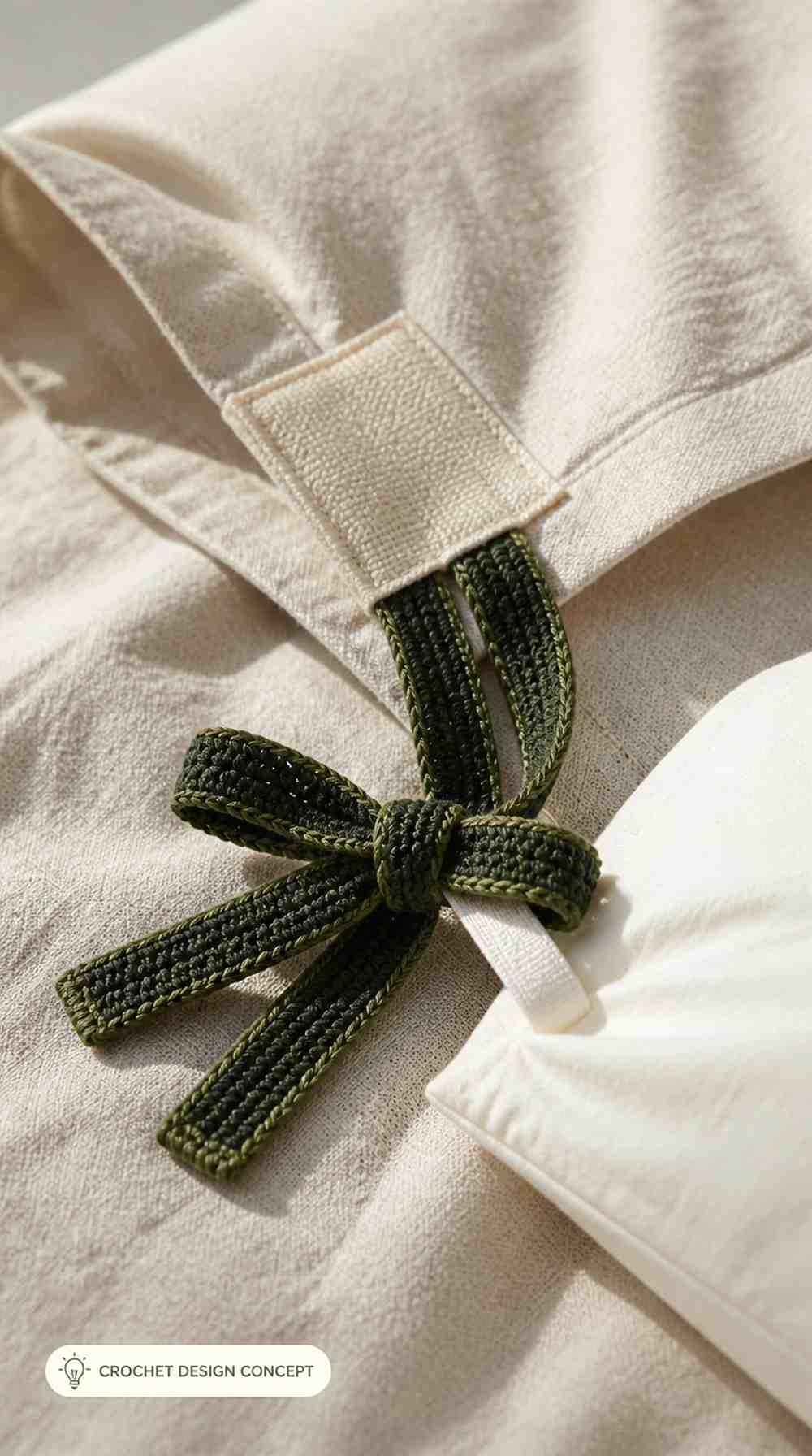
Forest-green crochet forms two closely worked ribbons with olive edging and narrow cream cotton tape cores. The paired strips extend from a cream woven reinforcement patch sewn into the inner seam of an oatmeal duvet cover. One passes through the existing white insert loop, and both ribbons form a neat, removable bow.
The combination of flat crochet and separate cotton backing gives this concept a more structured appearance than rounded I-cord ties. It offers an interesting way to explore decorative finishes over familiar bedding materials, without assuming the crochet alone provides dependable fastening strength.
- Cotton-Backed Ribbons: The inner woven tape can provide a smooth foundation, but its strength and compatibility with the cover must be evaluated.
- Forest Crochet Overlay: Keep the decorative stitches flat enough that the finished ties can bend naturally around the insert loop.
- Cream Reinforcement Patch: The anchor belongs at a suitable cover seam, not through the duvet insert’s filled shell.
- Layered Fabric Care: Crochet and woven cotton may behave differently during laundering, so check for shrinkage, curling and loosened stitching.
10. Crochet Lilac Twin I-Cord Duvet Corner Bow
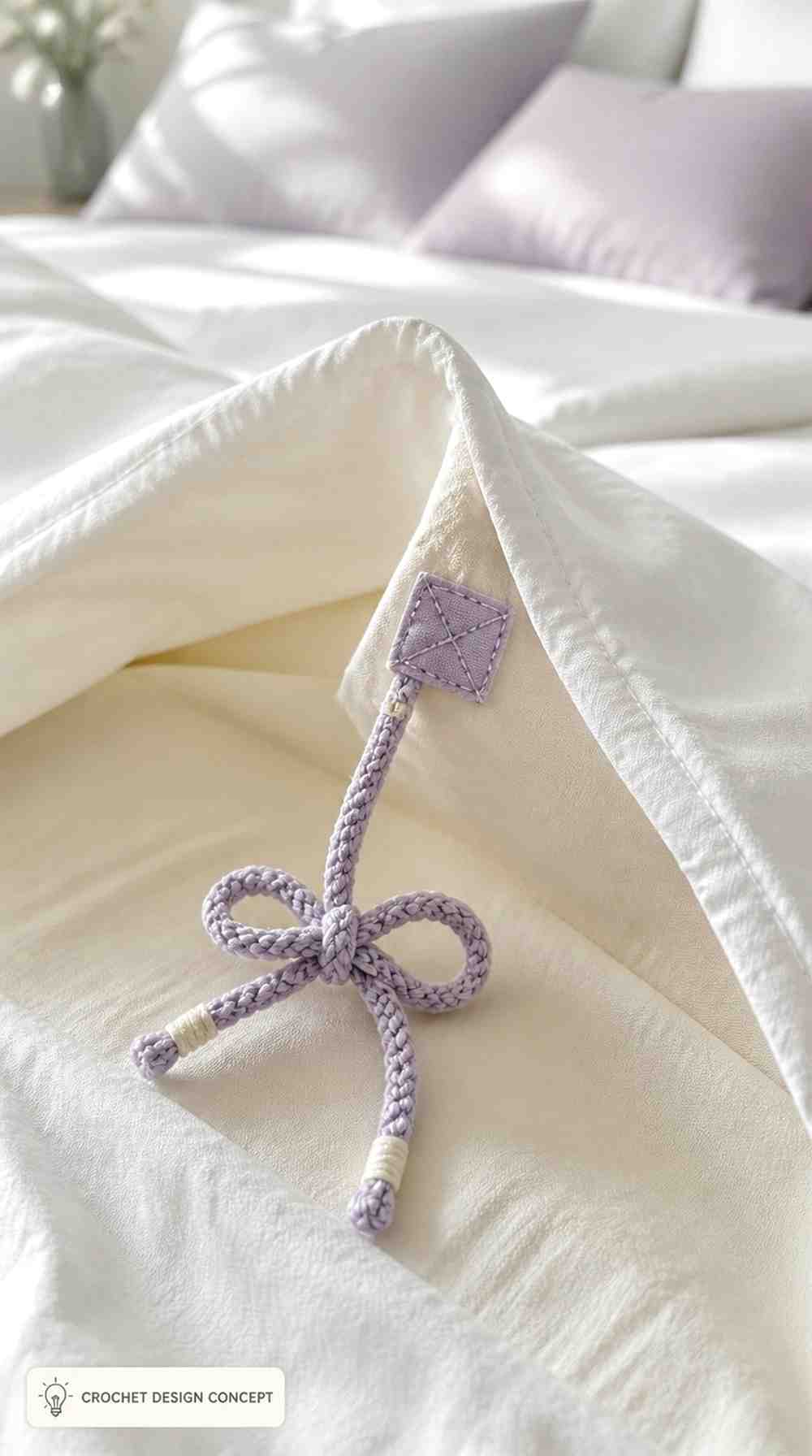
Two slender lilac crochet I-cords extend from a lavender fabric patch at the inside corner of a white duvet cover. Fine cream wraps finish their short ends. One cord passes through the duvet insert’s existing corner loop, and both form a compact bow with rounded loops.
This design has a softer, more delicate look than broad flat ribbons. The small tubular cords create a tidy fastening detail, although their stretch and knot thickness need careful consideration when used near bedding seams.
- Twin Rounded Cords: Both I-cords should have similar thickness and flexibility so the bow sits evenly.
- Cream End Wraps: Keep the tips smooth and firmly finished without adding beads, tassels or other hard decorations.
- Small Bow Shape: A compact knot may reduce bulk, but it must still be easy to undo without pulling the insert loop.
- Cord Stretch: Slender crochet cords can lengthen during use, so finished dimensions and secure attachment require checking.
11. Crochet Mustard Triangular Anchor Duvet Fastening Ties
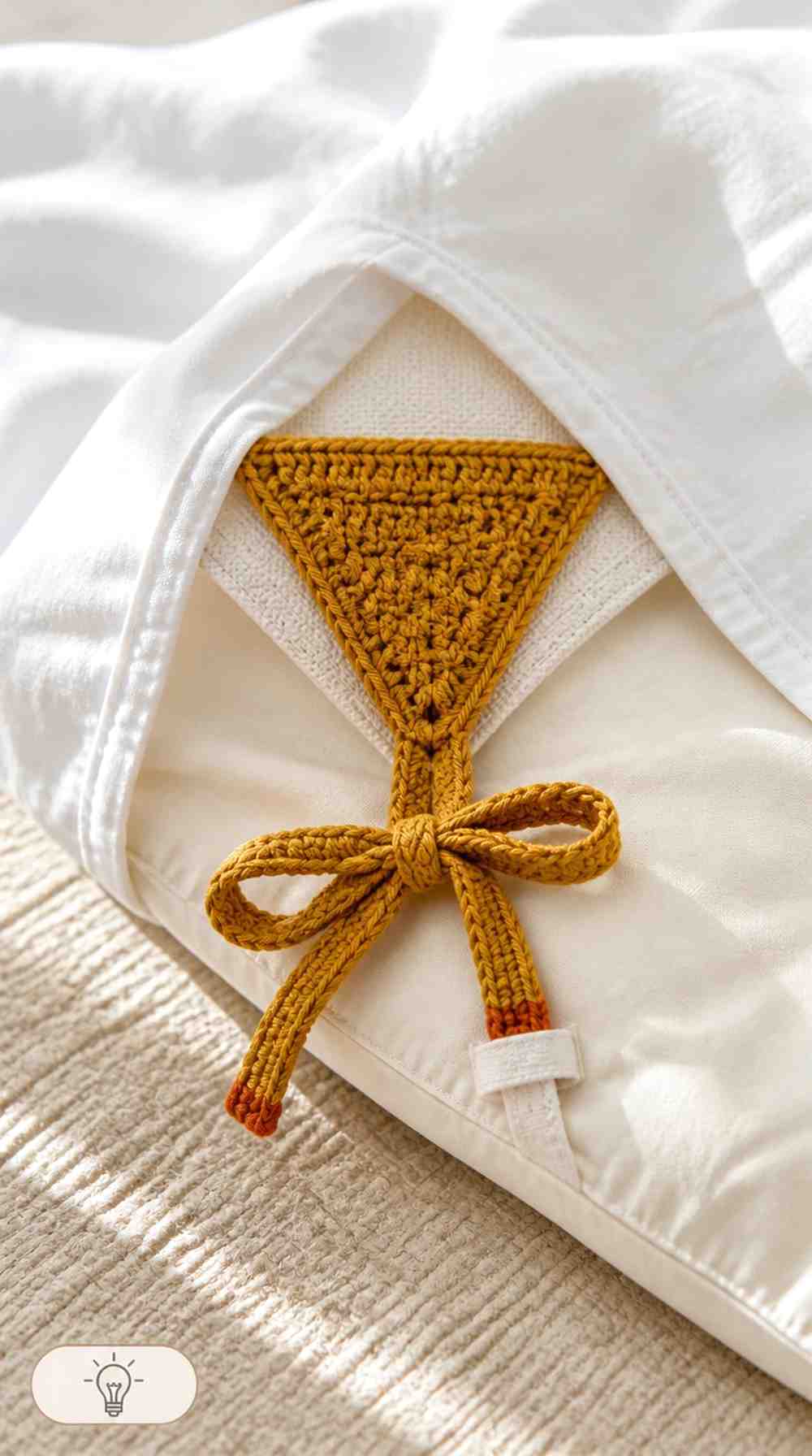
Mustard-gold crochet forms a small triangular corner panel with closely worked moss-like stitches and fine rust-orange edging. Two short flat ribbons extend from the lower point of the triangle, connecting to the duvet insert’s existing white corner loop in a restrained bow.
The triangular shape gives this design a distinct anchor arrangement. Rather than attaching plain ribbons directly to the cover seam, it places a decorative panel over a woven reinforcement patch. The triangle must remain flat so it does not create a noticeable lump inside the finished bedding.
- Triangular Anchor Shape: The panel should fit the inside corner without gathering or distorting the duvet cover’s two adjoining seams.
- Two Flat Mustard Ties: Matching ribbons should extend from a suitable reinforced area rather than from unsupported decorative stitches.
- Rust Edging: The narrow contrast border gives the triangle a finished appearance without adding bulk along the working tie ends.
- Corner Pressure: Avoid thick seams or raised embellishments that could create uncomfortable pressure points inside the bedding.
12. Crochet Denim Granny-Square Corner Tie Tab
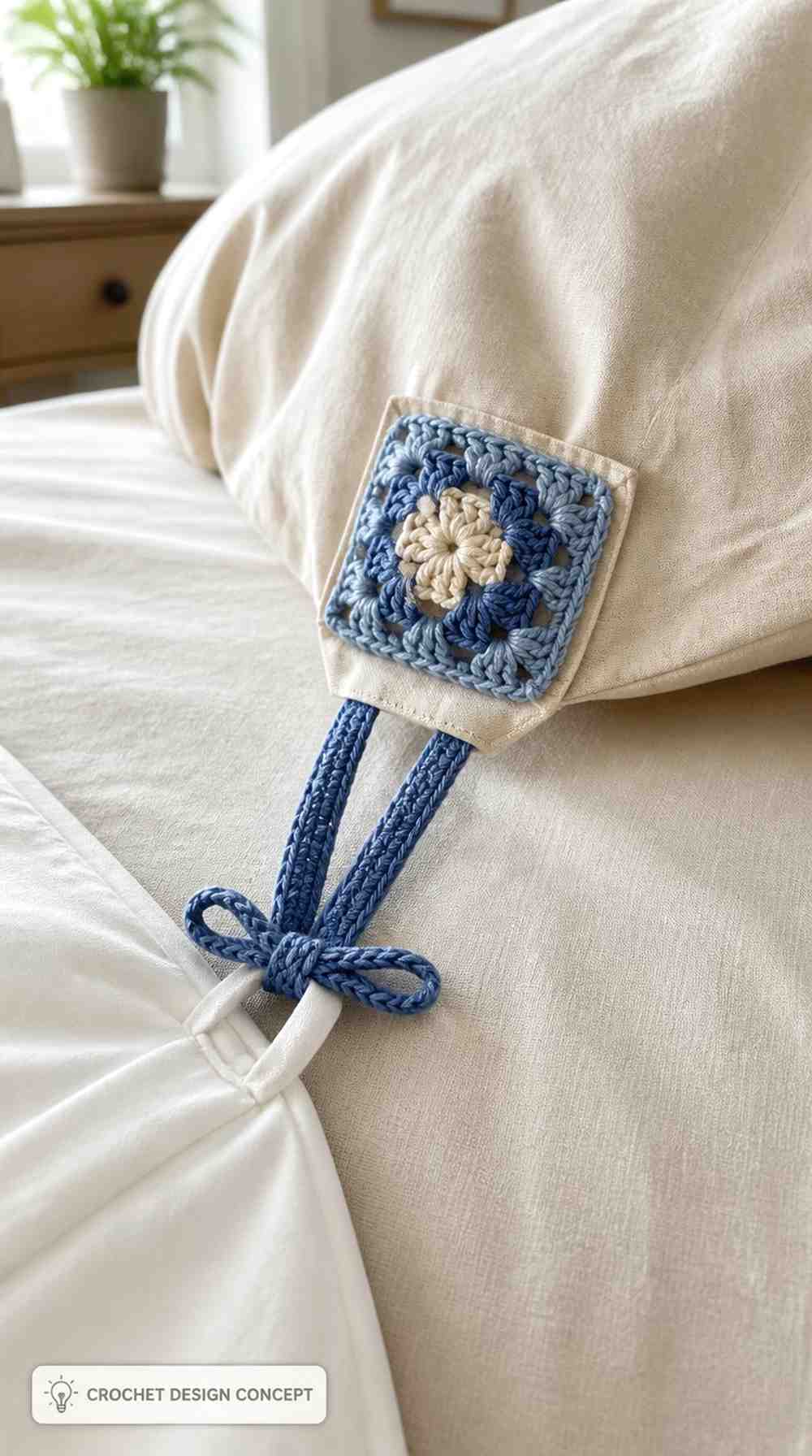
A miniature denim-blue granny square decorates the inside corner of this pale-beige duvet cover. Its cream center and faded-blue outer stitches give the tab a traditional crochet appearance. Two solid denim ribbons extend from a separate smooth cotton backing, passing through the insert’s white corner loop to form a small bow.
This design uses the granny square as decoration rather than as the main fastening point. That distinction matters because the open stitches of a granny motif are not ideal places to concentrate repeated pulling forces.
- Mini Granny-Square Motif: Keep the decorative square small and flat so it fits naturally inside the duvet-cover corner.
- Solid Ribbon Attachment: The denim ties should connect to a suitable woven backing, not simply to the granny-square openings.
- Cream Center Detail: A contrasting center makes the motif recognizable without adding beads, buttons or other hard objects.
- Openwork Maintenance: Check the granny-square holes and joining stitches for snagging or loose yarn during laundering.
13. Crochet Plum Short-Tail Duvet Corner Tie
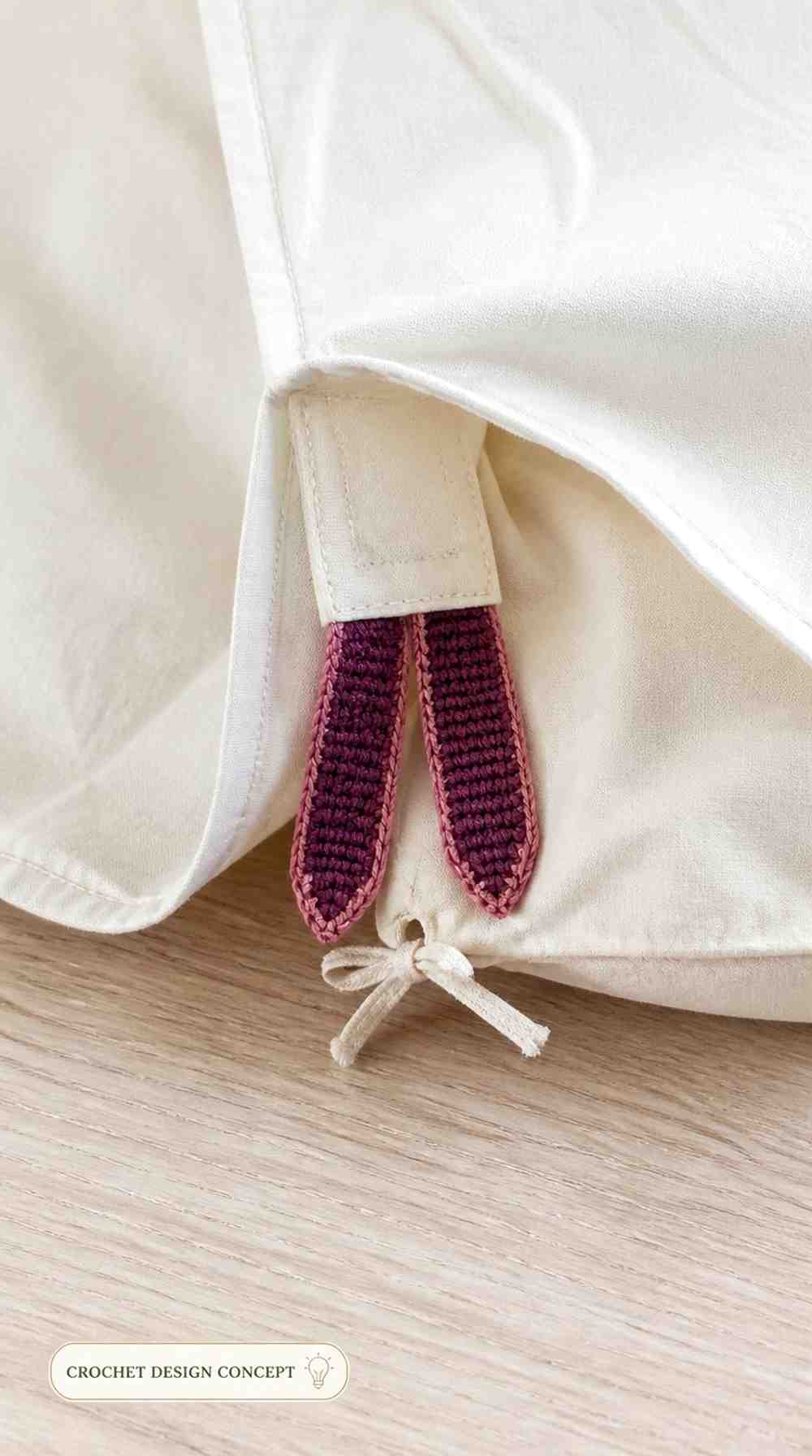
Plum-purple crochet creates two short flat ribbons with dense horizontal stitches and narrow dusty-rose edges. The ribbons attach to a cream fabric tab at the inner corner of an ivory duvet cover. One passes through the existing insert loop, and both form a small removable bow with very short loose ends.
The compact fastening arrangement is the main feature of this concept. It avoids long dangling cords while keeping the knot visible when the cover is turned inside out. However, the ribbons must still provide enough length to tie and untie comfortably.
- Short Free Ends: Keep the tails compact without making them so short that the knot becomes difficult to open.
- Tapered Ribbon Tips: Smooth finished ends can help the strips pass through a small existing duvet-insert loop.
- Dusty-Rose Borders: Narrow edging defines the plum ribbons without introducing extra fastening layers.
- Knot Accessibility: A compact tie should remain reachable when changing the duvet cover, rather than requiring forceful pulling.
14. Crochet Mint Two-Tone Corner Ribbon Ties
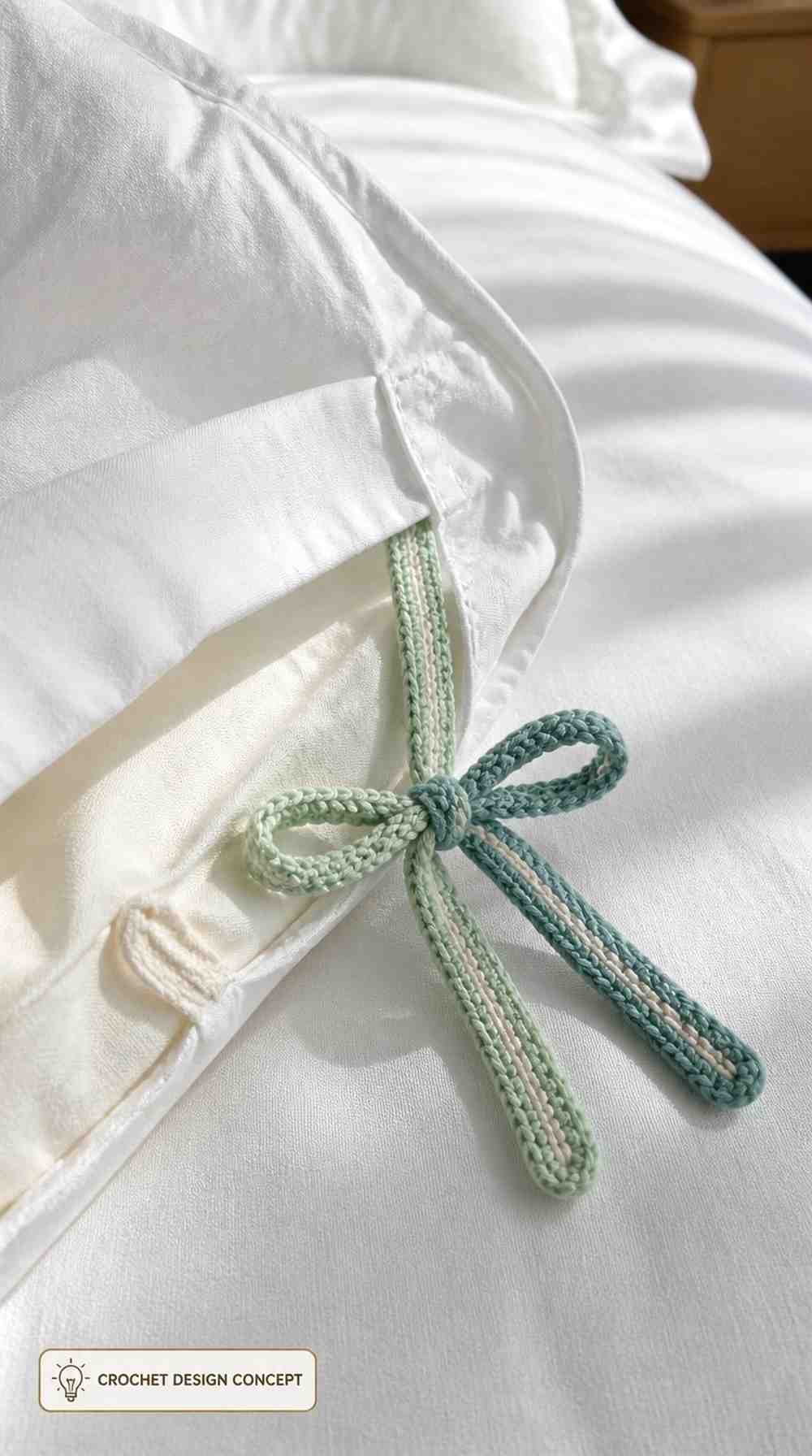
Mint-green and muted-teal crochet form two narrow fastening ribbons with fine ivory center stripes. Both extend from a shared white woven tab inside the corner seam of a white duvet cover. The mint ribbon passes through the matching insert loop, meeting the teal ribbon in a neat bow.
The contrasting colors make the individual tie ends easy to distinguish when the duvet cover is turned inside out. This design uses color changes rather than raised stitches or decorative appliqués, keeping the fastening visually simple.
- Two Distinct Colors: Mint and teal make the ribbons easy to tell apart while preserving a coordinated look.
- Ivory Center Stripes: Narrow lines add detail without increasing the width or thickness of the ties.
- Shared Anchor Tab: Both ribbons should be attached to a suitable reinforced area so they remain aligned during use.
- Matching Ribbon Lengths: Keep the two ends appropriately balanced so the knot sits close to the existing insert loop.
15. Crochet Rust Diagonal Colorblock Duvet Corner Tie
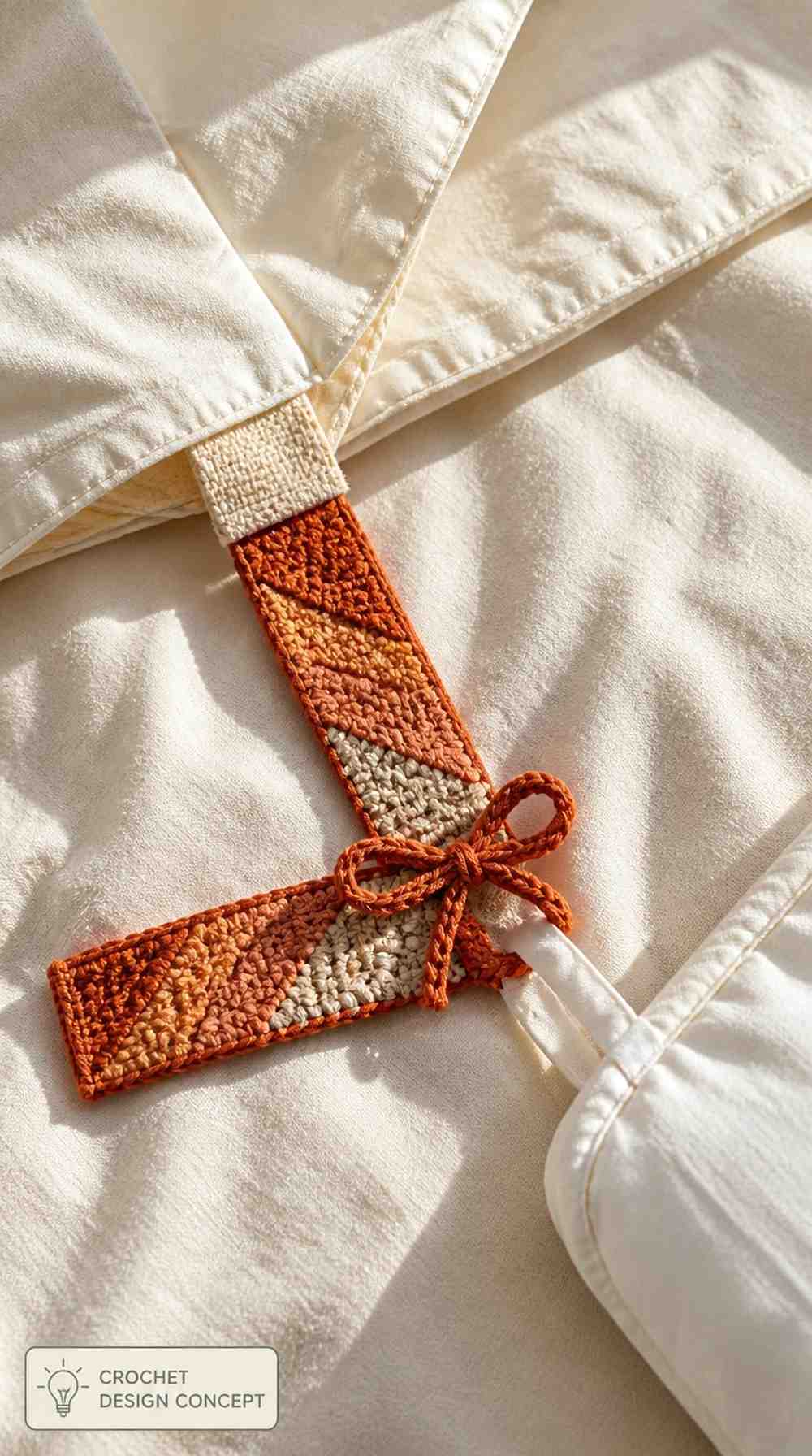
Rust-orange, terracotta and oatmeal crochet form diagonal color sections along two short flat fastening ribbons. Thin rust borders frame the joined colors, while a cream woven tab anchors the pair at the inside corner seam of an ivory duvet cover. One ribbon passes through the insert’s existing white loop, forming a compact bow with the second.
This design offers a modern colorblock appearance without changing the traditional two-tie arrangement. Its diagonal joins are decorative, although uneven seams could make the ribbons twist or become difficult to knot smoothly.
- Three Diagonal Colors: Keep the rust, terracotta and oatmeal sections evenly joined for a clear colorblock appearance.
- Smooth Color Transitions: Avoid bulky seams where the diagonal sections meet, especially around the knotting area.
- Cream Woven Anchor: The attachment patch should remain flat against the cover’s inner seam.
- Consistent Tension: Both ribbons should have similar flexibility so the bow does not pull unevenly on the duvet insert loop.
Practical Guide to Crochet Duvet Corner Fastening Ties
Duvet corner ties are designed to help keep a duvet insert aligned inside its cover. Traditional systems usually use two soft ties attached to the inside corner of the cover and a matching reinforced fabric loop on the insert.
The Duvet Advisor
Check the existing attachment points. Turn the empty duvet cover inside out and inspect all four inner corners. Look for intact cover ties and corresponding loops on the duvet insert. Some bedding uses alternative fastening systems, so follow the manufacturer’s instructions.
Choose soft, low-profile materials. Smooth, washable cotton or a suitable cotton blend may be worth exploring for decorative crochet ties. Avoid scratchy embellishments, hard beads, sharp clips or bulky knots that could create uncomfortable areas inside the cover.
Use appropriate reinforcement. Crochet can stretch, and an unreinforced decorative motif should not be relied upon to hold the insert. If the cover lacks ties, a sewing repair using suitable woven tape and properly reinforced seams is a more dependable starting point than an untested crochet-only attachment.
Do not pull the corners tight. Pass the cover tie through the insert’s matching loop, then secure it with a removable knot that leaves enough ease for both fabric layers to lie naturally. Tight knots can concentrate strain at the corner seam.
The Duvet Advisor
Match the bedding sizes. Corner ties cannot fully correct a duvet insert that is substantially smaller or larger than its cover. Compare the actual dimensions and orientation before changing the fastening system.
Inspect before washing. Untie the duvet insert and remove it from the cover. Check for frayed ribbons, stretched loops and loose stitching. Wash each component according to its own care label.
For safety, avoid long, loose cords or detachable small decorations around infant and young-child bedding. Do not modify a child’s sleep product without following its manufacturer and applicable safe-sleep guidance.
Want to Make Something Similar?
These verified resources explain related duvet-cover fastening and crochet tie techniques. They are not exact patterns for the 15 illustrated concepts.
- Sewing Ties to a Duvet Cover — Essie of Who — A firsthand sewing project showing how woven twill ties were added to the inner corners of a duvet cover. It offers useful background on anchor placement and sewn fastening tabs. Essie of Who
- How to Crochet an I-Cord — Yarnspirations — A crochet tutorial by the Red Heart Design Team explaining how to make slender tubular cords, relevant to the Terracotta and Lilac I-Cord concepts. Yarnspirations
For a wider explanation of how cover ties and insert loops connect, see Duvet Cover Ties and Loops: How to Attach Them Correctly. It discusses corner alignment, suitable knots and why the fastening should not pull tightly against the bedding.
The Duvet Advisor
These resources teach related methods. None verifies the strength or wash performance of the crochet concepts pictured here.
Which Crochet Duvet Corner Fastening Tie Should You Choose?
| Your main priority | Designs worth comparing | Important consideration |
|---|---|---|
| Simple flat ribbons | Sage Ribbed, Oatmeal Wide-Bow | Stretch and knot thickness |
| Narrow rounded cords | Terracotta Braided I-Cord, Lilac Twin I-Cord | Cord flexibility and possible loosening |
| Decorative corner tabs | Ivory Scalloped, Coral Daisy | Raised motifs and laundering |
| Modern colorwork | Navy Checker-Edge, Rust Diagonal Colorblock | Flat joins and smooth tie ends |
| Fabric-backed ribbons | Charcoal Cotton-Backed, Forest Reinforced | Compatibility of the crochet and woven layers |
| Distinct anchor shape | Mustard Triangular | Corner fit and seam reinforcement |
| Traditional crochet motif | Denim Granny-Square | Open motifs should not bear the load |
| Compact fastening | Plum Short-Tail | Enough length to untie easily |
| Easy-to-distinguish tie ends | Mint Two-Tone | Balanced length and attachment |
| Subtle decorative openings | Dusty Blue Eyelet-Detail | Snagging and maintaining ribbon strength |
For a straightforward visual design, the Crochet Sage Ribbed Twin-Tail Duvet Corner Tie has one of the simplest arrangements. It uses two flat ribbons with a restrained contrast border.
If you prefer rounded crochet cords, the Crochet Terracotta Braided I-Cord Duvet Corner Ties provide an alternative texture, although their stretch and knot behavior require checking.
For a concept that combines crochet with a separate woven foundation, the Crochet Forest Green Reinforced Flat-Ribbon Corner Ties are particularly worth exploring.
If you want decorative details that stay away from the working knot, the Crochet Coral Daisy Duvet Corner Tie Tab or Crochet Denim Granny-Square Corner Tie Tab offers that distinction.
Conclusion
These 15 crochet duvet corner fastening tie inspiration ideas show how small bedding accessories can incorporate different crochet stitches, soft colors, reinforced tabs and compact knots. Simple ribbons, tubular cords, scalloped details and small granny-square motifs each offer a different handmade approach.
The important part is the fastening beneath the decoration. A useful corner tie should connect a suitable duvet-cover anchor to the matching insert loop, remain easy to remove and avoid putting unnecessary stress on the fabric. Properly fitted bedding and secure, washable attachments matter more than decorative complexity.
Which design would you prefer inside your duvet cover: the Sage Ribbed Twin-Tail Tie, the Oatmeal Wide-Bow Tie or the Forest Green Reinforced Ribbon? Share whether your duvet cover already has inner corner ties or needs a new fastening arrangement.
Frequently Asked Questions
1. What is the purpose of duvet corner fastening ties?
Corner ties help keep the duvet insert aligned with the inside corners of its cover. They typically connect to fabric loops sewn onto the insert. These attachments can reduce normal shifting, but they cannot completely solve problems caused by an incorrectly sized cover or insert.
2. Can I make duvet corner ties from crochet yarn?
Crochet yarn can be used to explore decorative tie designs, but the finished strips may stretch or loosen. Their suitability depends on the fiber, stitch structure, anchor stitching and laundering conditions. For dependable fastening, woven cotton twill ties or another manufacturer-approved attachment method are a more established option.
3. How tight should duvet corner ties be?
They should be secure enough to keep the corresponding corners together without pulling the fabric into a tight gather. A compact removable bow or suitable knot is generally preferable to excessive tightening. The duvet cover and insert should lie naturally without visible distortion at the corners.
4. What if my duvet insert doesn’t have corner loops?
Check the insert manufacturer’s instructions before adding anything. Some inserts have hidden tabs or alternative attachment systems. Do not pierce the filled shell with safety pins or attach crochet directly through the filling. An appropriately reinforced attachment added by someone experienced with sewing may be possible when the bedding construction permits it.
5. Are these 15 crochet duvet corner fastening tie ideas complete patterns?
No. These are original AI-generated inspiration concepts showing possible crochet ribbon shapes, cord textures, colors, decorative tabs and fastening arrangements. They do not include tested stitch counts, exact dimensions, verified seam strengths or laundering performance. The linked resources explain related crochet and sewing methods rather than reproducing these specific designs.