A crochet houseplant watering schedule tag is a small decorative reminder that can make caring for a collection of indoor plants more organized. Whether you have one pothos on a shelf or several different plants around your home, it can be easy to forget when you last checked the soil or watered a particular pot. These 17 inspiration ideas explore little hanging tags, clear note windows, sliding markers, reversible symbols, and miniature care logs with beautiful handmade crochet details.
The most useful tags help you remember when to check a plant, rather than telling you to water automatically on a certain day. Different houseplants need water at different times depending on the species, potting mix, pot size, light and growing conditions. This collection helps you compare written reminders, movable indicators, color-coded markers, and changeable records while keeping crochet accessories away from wet soil and drainage areas.
University of Maryland Extension+1
These are AI-generated crochet design visualizations for inspiration, not photographs of tested handmade tags or step-by-step patterns.
Quick Design Selection Guide
- For a simple plant-check note: Crochet Sage Droplet Watering Reminder Tag offers a compact label window.
- For keeping two separate dates: Crochet Oatmeal Twin Window Plant Tag provides two individual note compartments.
- For a reusable position marker: Crochet Terracotta Seven Bobble Check Band and Crochet Dusty Blue Slider Check Tag explore two sliding indicator layouts.
- For switching between two reminder states: Crochet Navy Flip Face Plant Reminder and Crochet Blush Reversible Heart Check Tag use reversible crochet panels.
- For a small written care history: Crochet Teal Mini Watering Log Book and Crochet Charcoal Triple Record Plant Tag offer more note space.
- For decorative houseplants: Crochet Lavender Daisy Reminder Pocket and Crochet Rust Granny Square Care Pocket combine storage with visible crochet motifs.
- For an adjustable pot attachment: Crochet Plum Adjustable Pot Handle Tag has two fastening positions.
- For a circular check indicator: Crochet Coral Rotating Check Dial Tag offers a manually movable pointer.
These designs help organize care records. The tag cannot measure soil moisture or determine whether a plant needs watering.
1. Crochet Sage Droplet Watering Reminder Tag
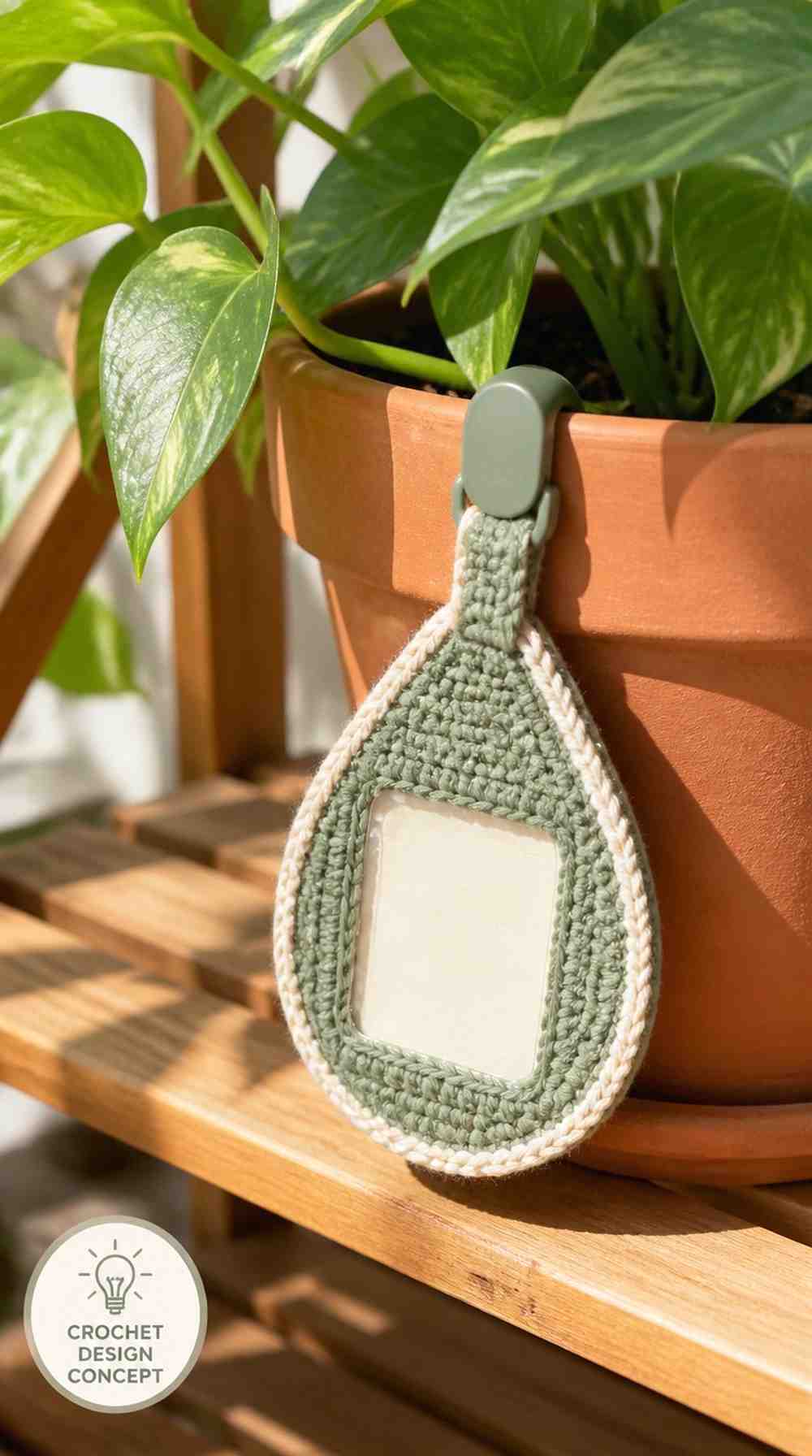
Muted sage-green crochet gives this small teardrop-shaped plant tag a clean, botanical appearance. The closely worked moss stitches create a neat surface, while ivory edging follows the rounded droplet silhouette. A tiny transparent window holds a blank cream note card, and a short strap connects the tag to a removable clip on the planter rim.
The droplet shape makes the reminder easy to recognize without introducing a large label. A real version could hold the date of the last soil check, helping you track plant care without prescribing a fixed watering interval.
- Small Note Window: The card can record a date or brief reminder, provided it can be removed easily when the information changes.
- Rim Attachment: Check that the clip fits the actual planter without scratching the finish or interfering with watering.
- Moisture Protection: Keep the crochet and paper card outside the pot, away from soil splashes and drainage water.
2. Crochet Oatmeal Twin Window Plant Tag
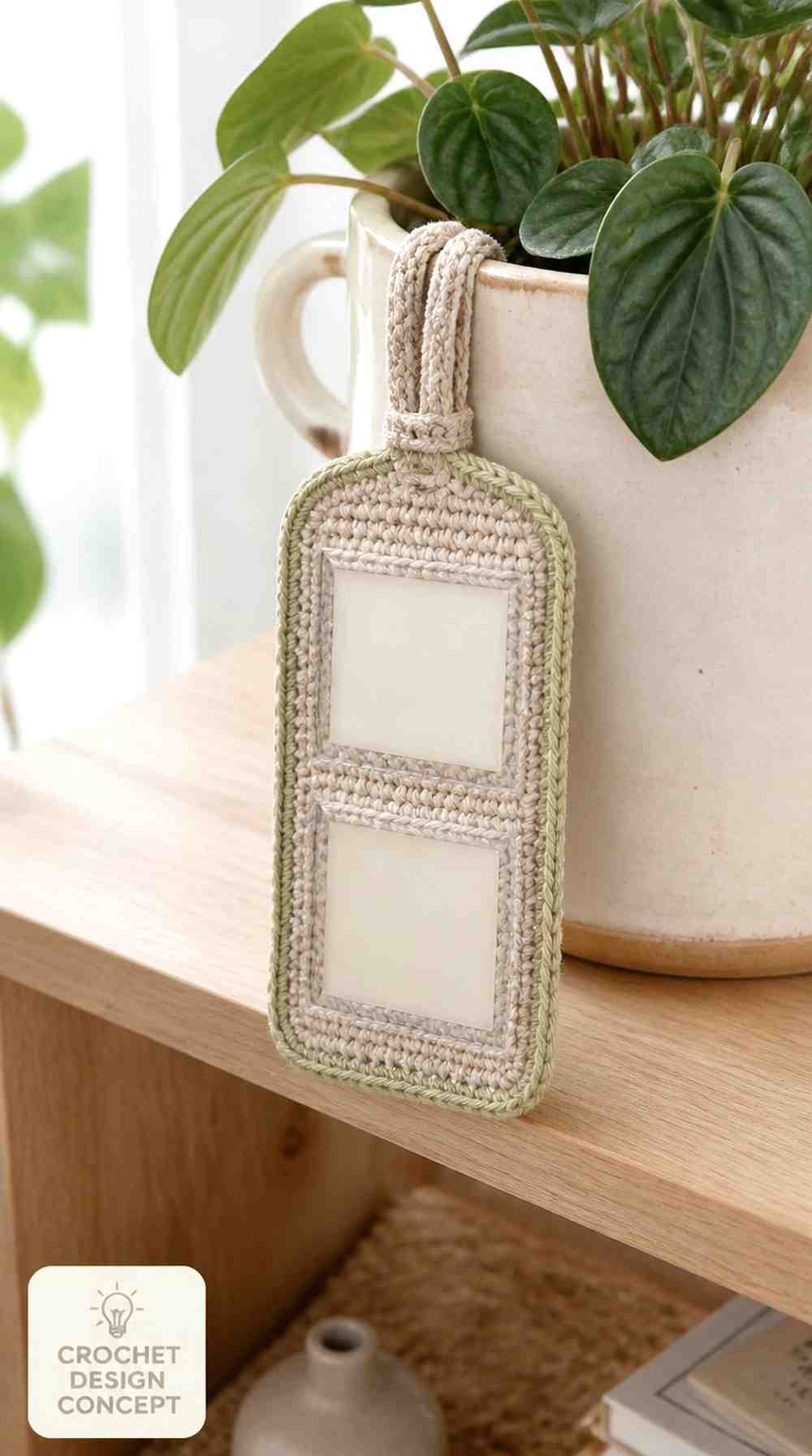
Warm oatmeal crochet gives this rectangular plant-care tag a soft, neutral finish. Its two transparent windows sit one above the other, with sage-green edging outlining the closely stitched body. A reinforced hanging loop connects the tag to a cream cachepot handle.
The two-window arrangement is especially useful for recording separate pieces of information. For example, one replaceable card could show when the soil was last checked, while the other records the next planned inspection. Neither date should automatically mean that the plant needs watering.
- Two Record Fields: Keeping previous and upcoming soil checks separate makes the tag more informative than a single-date label.
- Card Replacement: Both paper inserts should be accessible without removing or stretching the transparent windows.
- Neutral Styling: Oatmeal and sage coordinate naturally with cream planters, wood shelving and leafy houseplants.
3. Crochet Terracotta Seven Bobble Check Band
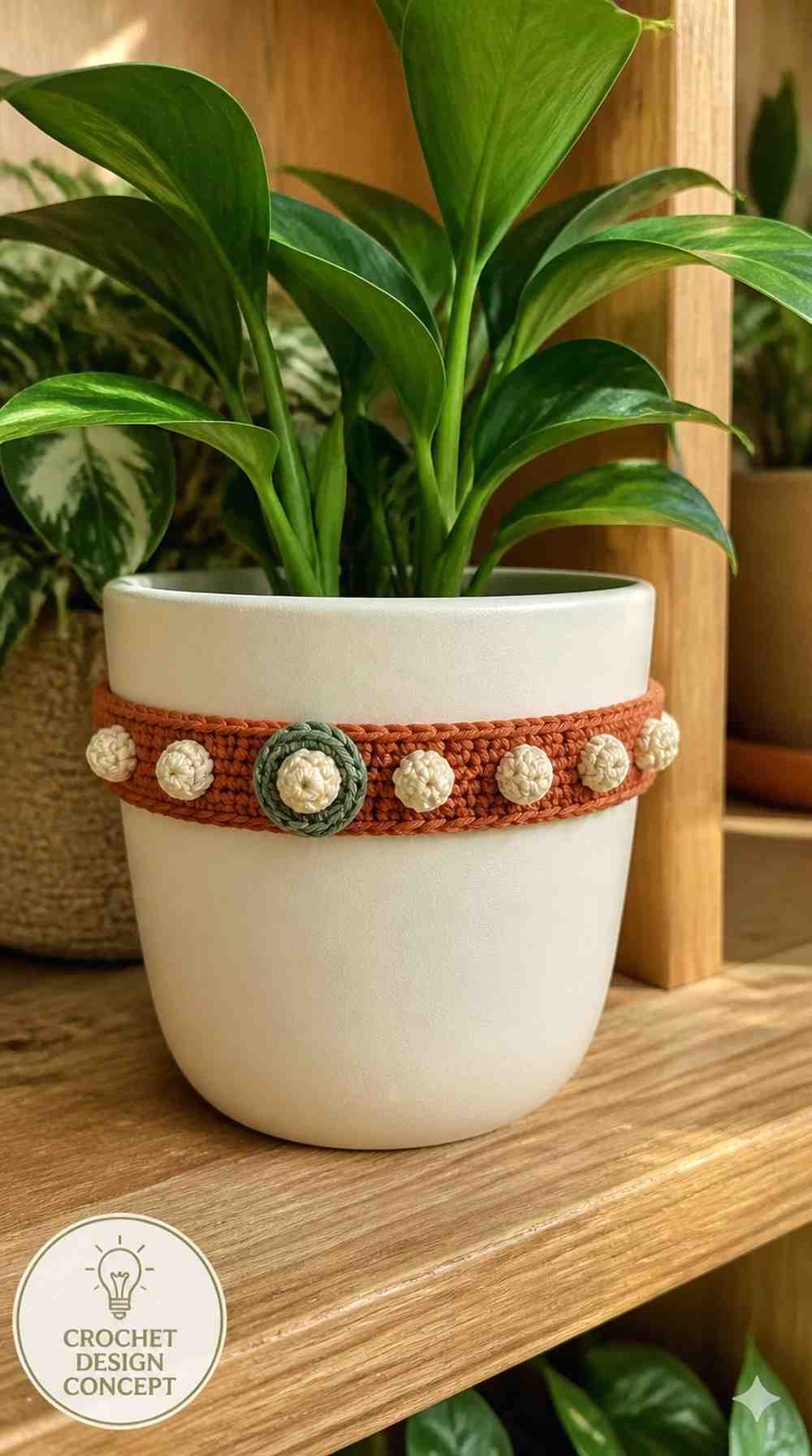
Terracotta crochet creates a warm identification band around the outside of a cream plant pot. Seven small ivory bobbles run across its front, while one sage-green sliding ring surrounds the third bobble. A concealed rear button holds the band loosely in place.
This concept offers a simple manual reminder without written dates. A household could assign the seven positions to days of the week and move the ring after each soil check. The marker only records a position; it cannot confirm that the plant was watered or needs water.
- Seven-Position System: Decide what each bobble represents before using the marker. The order must remain consistent to avoid confusion.
- Sliding Ring: The small loop should move deliberately between positions without slipping off the band during normal handling.
- Pot Circumference: Measure the planter’s outer wall and keep the band loose enough not to become stuck or obstruct drainage.
- Small-Part Safety: Avoid detachable rings or buttons where young children might remove and swallow them.
4. Crochet Navy Flip Face Plant Reminder
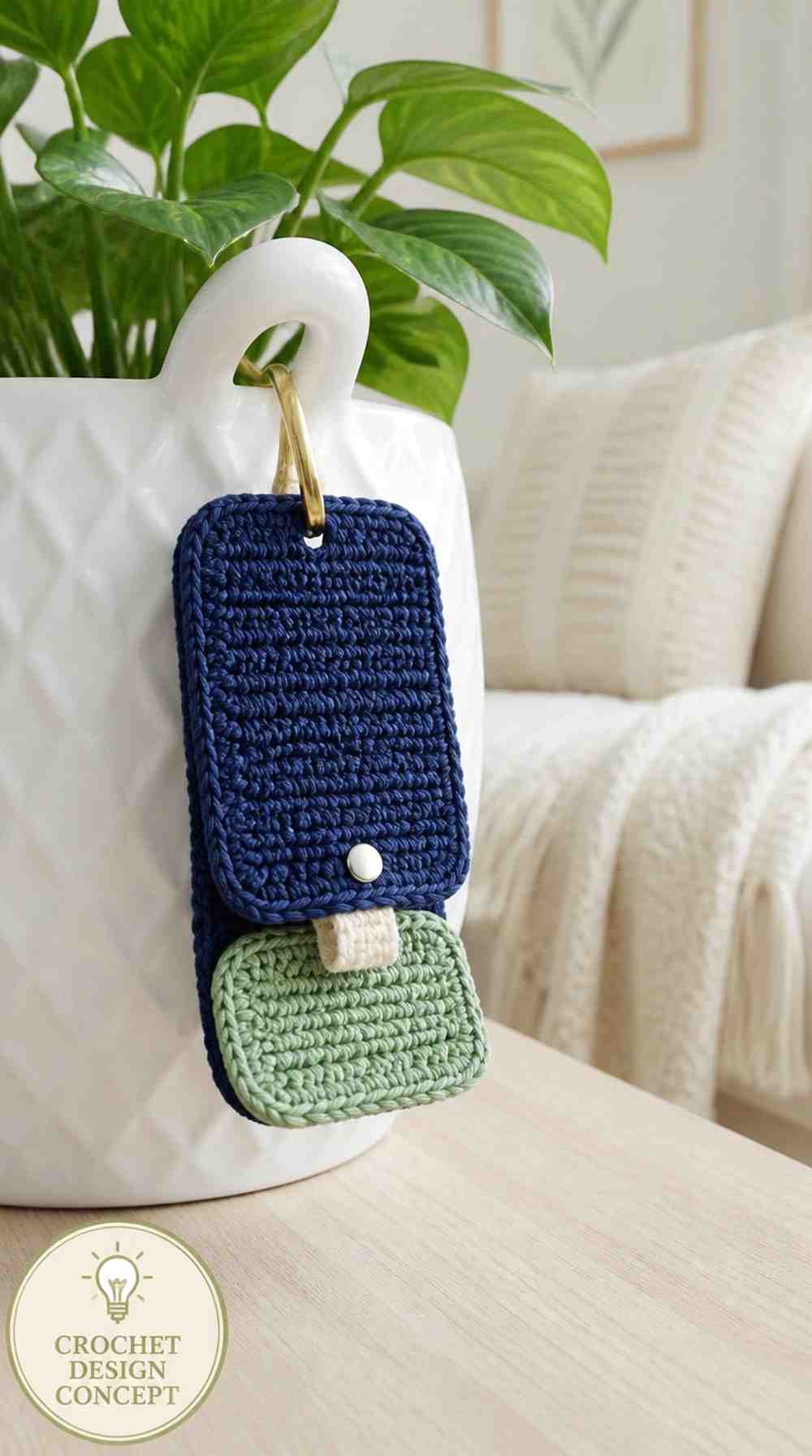
Deep navy crochet gives this compact reminder a modern appearance. The rounded rectangular front has raised ribbing, while a partly folded hinged section reveals a muted-sage reverse. A cream joining tab and small silver snap complete the two-sided design.
The reversible construction could represent two different care states, such as waiting for the next soil inspection or having completed the latest check. This works best when the meaning of each color is clearly established. It should never be used as proof that the soil is wet or dry.
- Two Color States: Assign navy and sage to clearly defined manual actions, rather than treating either color as an automatic moisture indicator.
- Hinged Panel: The joining strip needs enough flexibility to flip without pulling the tag out of shape.
- Snap Security: Position the metal fastening so it stays accessible and does not rub against the planter surface.
5. Crochet Lavender Daisy Reminder Pocket
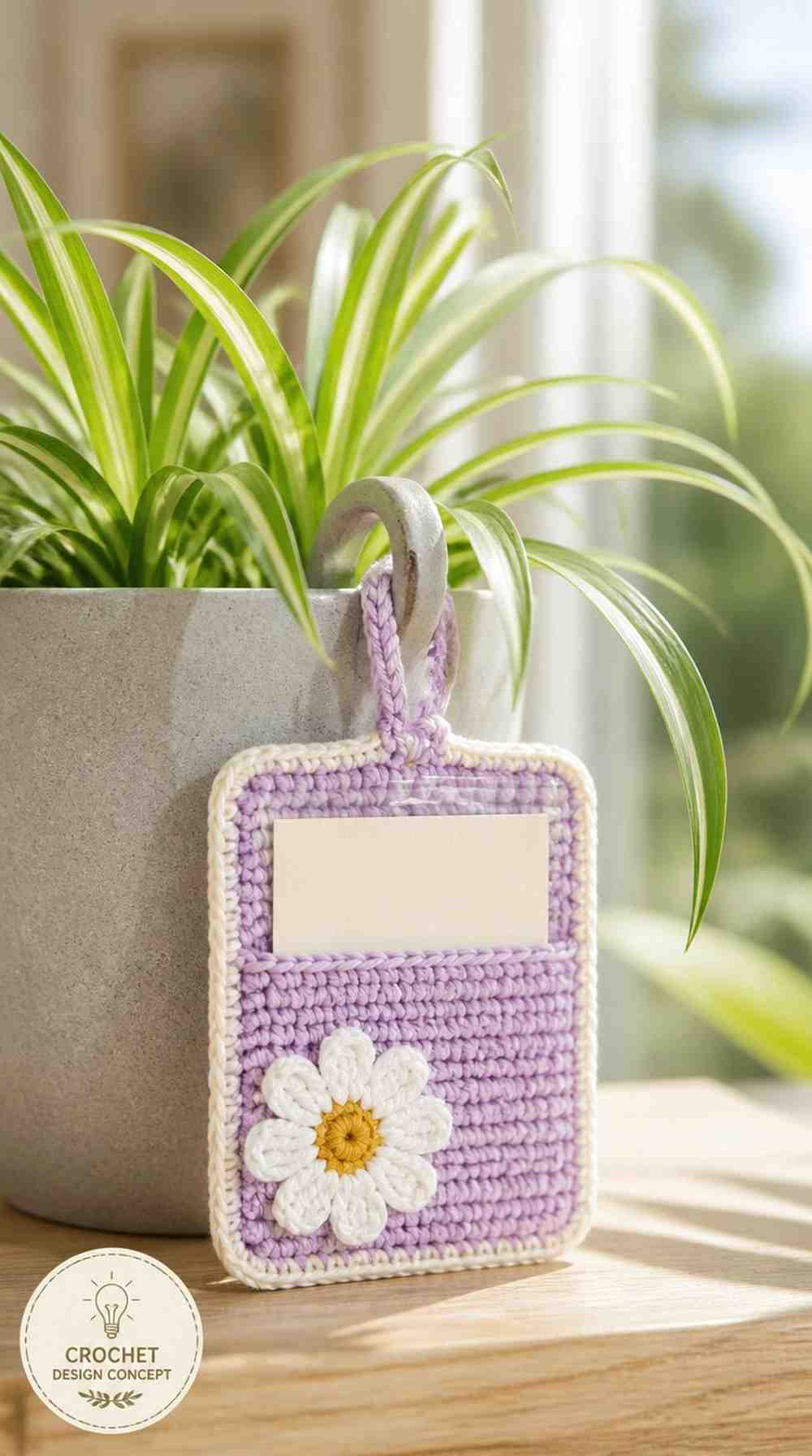
A white crochet daisy adds a gentle decorative touch to this lavender plant-care tag. The square body has dense single-crochet stitches, ivory edging and a transparent card sleeve above the small flower. A reinforced lavender loop hangs from the handle of a pale-grey planter.
The daisy makes the tag especially appealing for a bright indoor plant corner. Its small clear sleeve could hold a reminder to inspect the soil or a record of a recent watering. The design stays compact enough to identify one pot without covering its foliage.
- Blank Card Sleeve: Use a replaceable insert for changing information rather than writing permanently on the crochet.
- Daisy Placement: Keep the flat flower beneath the window so its petals do not hide the recorded information.
- Light Yarn Care: Lavender and white yarn can show dirt or watermarks, so the tag may need occasional cleaning.
6. Crochet Olive Leaf Wipe Clean Tag
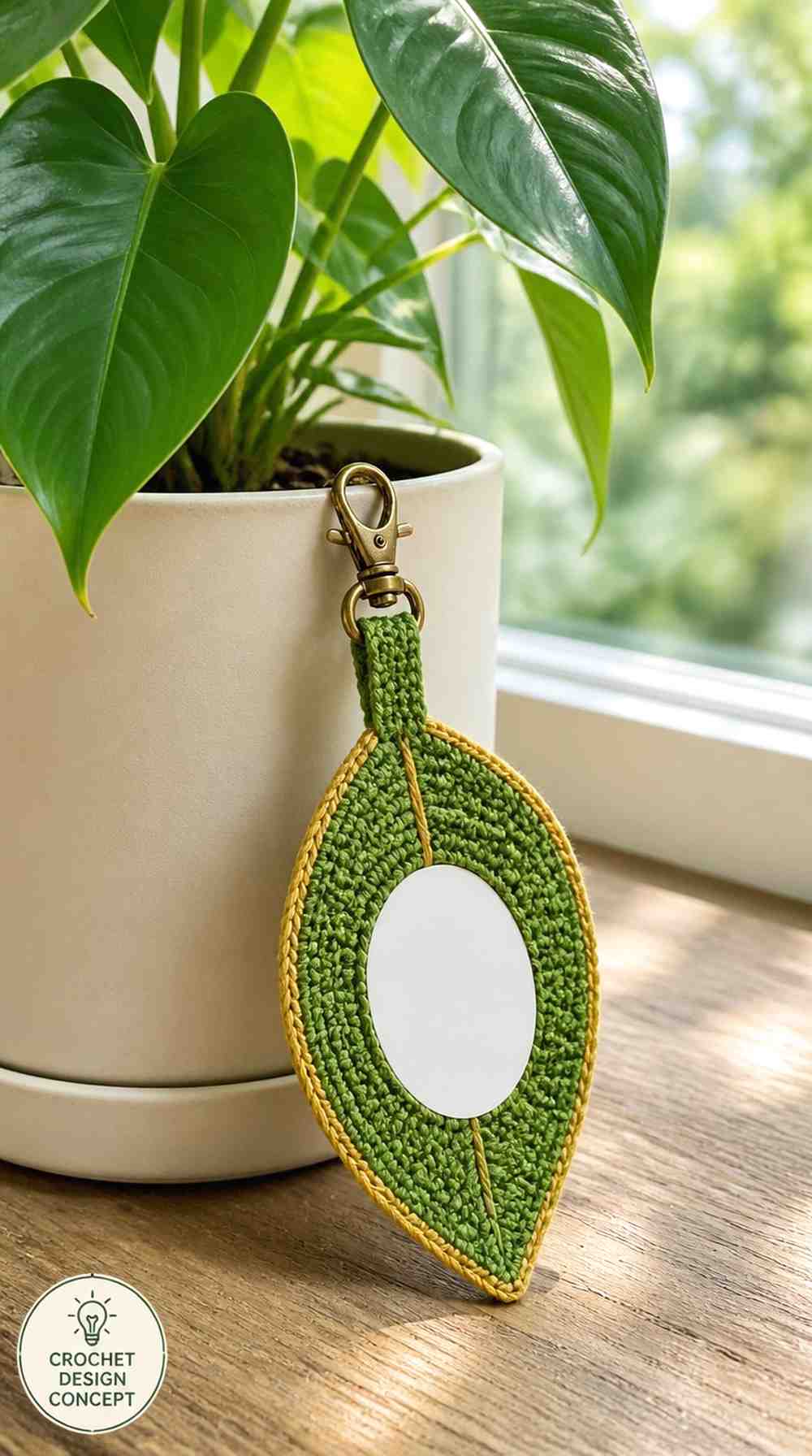
Olive-green crochet gives this reminder a natural leaf-shaped silhouette. Raised vein lines run through the design, while a golden-ochre border defines its pointed edge. A small blank white reusable writing panel sits inside an oval opening, with a removable clip securing the tag to the planter.
This concept is useful for someone who wants to update a plant-care note repeatedly without replacing paper cards. The writing surface must be suitable for the chosen erasable marker, and the crochet should remain protected during cleaning.
- Reusable Writing Area: Choose a compatible wipe-clean material and marker; ordinary paper or untreated fabric will not function the same way.
- Leaf-Shaped Border: The raised veins provide decoration, but they should remain outside the writing panel.
- Cleaning Method: Wipe the writing surface carefully without soaking the crochet or allowing cleaning liquid into the planter.
7. Crochet Mustard Mini Calendar Plant Tag
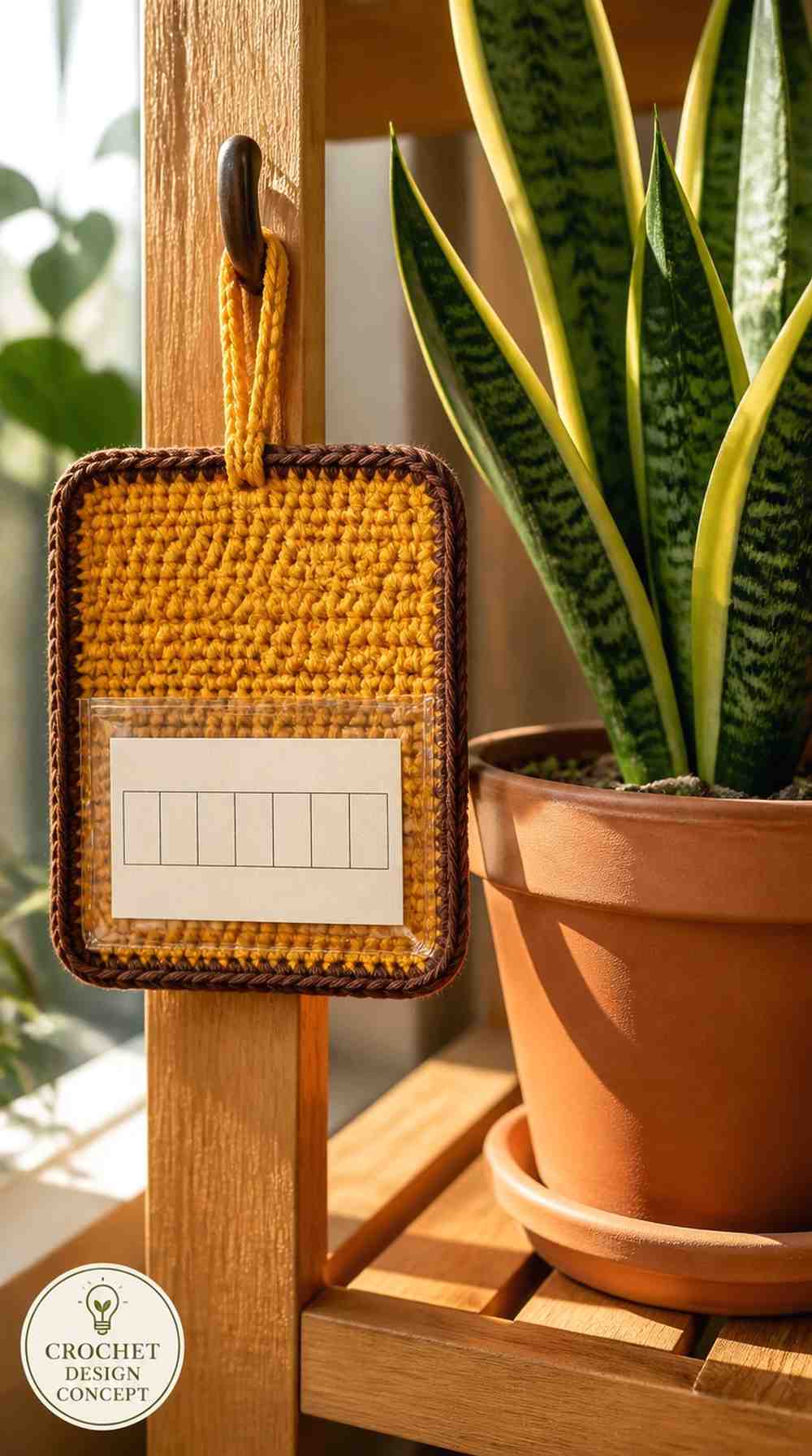
Golden mustard crochet creates a cheerful rectangular tag with chocolate-brown edging and a clear front window. Inside sits a blank seven-cell grid card, while a short hanging strap connects the marker to a wooden shelf hook beside a snake plant.
The seven-cell layout could support a weekly inspection record. Rather than instructing the owner to water every seven days, the grid could be used to mark which days the soil was checked. This makes it more useful for tracking care habits without encouraging unnecessary watering.
- Seven-Cell Grid: The blank card provides a simple weekly record, with each cell available for a manual check mark.
- Shelf Attachment: Hanging the tag beside the pot avoids fastening anything to the plant stem or inserting yarn into the soil.
- Card Visibility: Keep the grid large enough to read and update without allowing the transparent pocket to distort its lines.
8. Crochet Dusty Blue Slider Check Tag
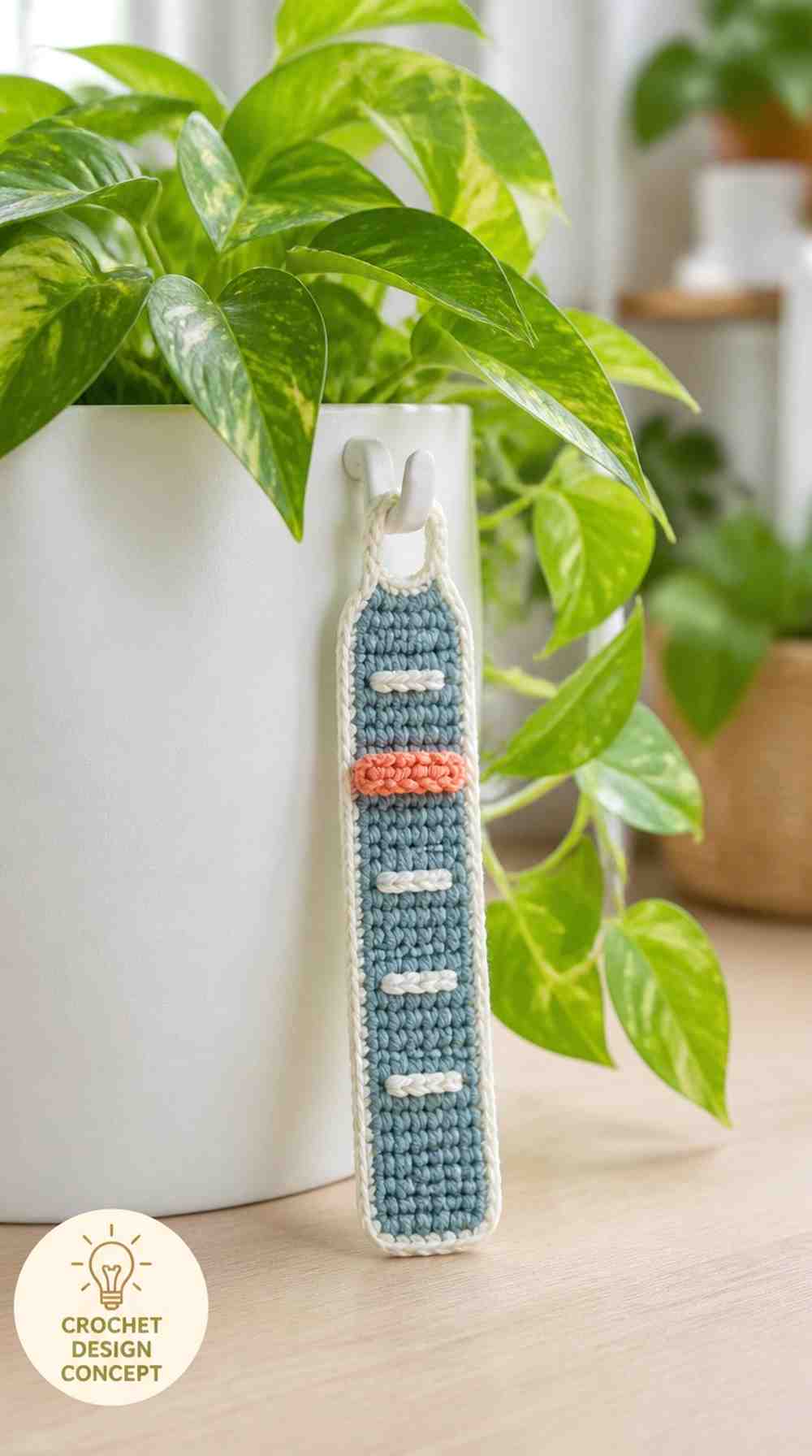
Dusty-blue crochet creates a tall, narrow reminder with five raised ivory stitch bars arranged vertically. A small coral sliding loop sits around the second bar, while a reinforced upper loop attaches the tag to a planter handle.
The movable marker is the key feature. It could record progress through a sequence of soil checks or another five-step care routine defined by the owner. Unlike a written date card, however, its meaning can be forgotten unless the positions are used consistently.
- Five-Position Track: Assign a clear purpose to the five bars before using the slider as part of a plant-care routine.
- Marker Retention: The coral loop should fit firmly enough to stay on the selected position without stretching or falling off.
- Narrow Hanging Shape: The vertical format suits a small planter handle and takes up little space beside the foliage.
9. Crochet Ivory Scalloped Plant Note Tag
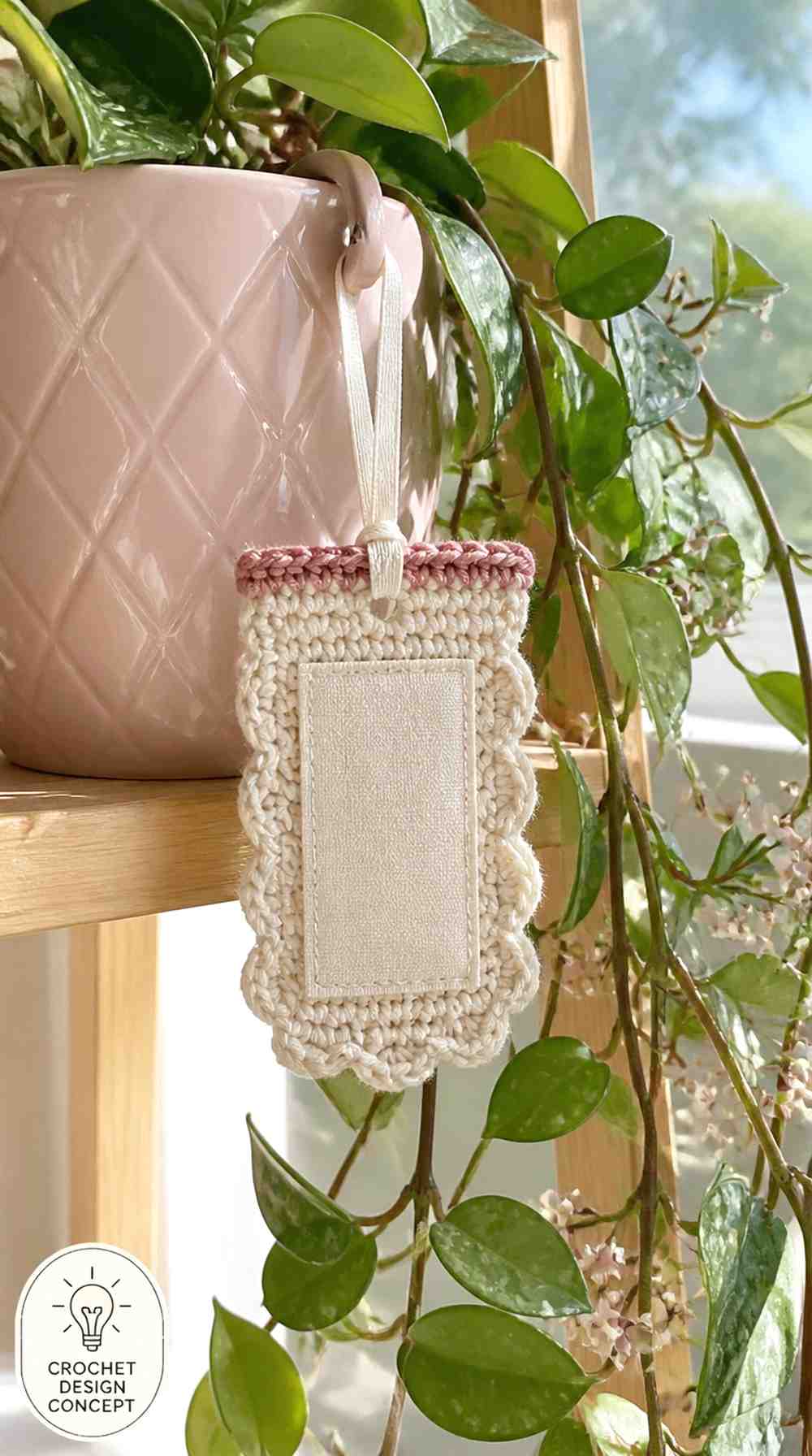
Warm-ivory crochet gives this hanging reminder a delicate appearance. Compact scallops run along its lower edge, while dusty-rose edging frames a blank cream fabric writing patch. A narrow cotton ribbon connects the tag to a pale-pink cachepot handle.
The smooth fabric patch provides a place for a short care note, such as a recent check date or a reminder about the plant’s preferences. Unlike a transparent paper pocket, the patch is part of the tag and may be less convenient to update repeatedly.
- Fabric Note Surface: Use a suitable textile marker only if permanent writing is intended; ordinary ink may bleed or wash away.
- Scalloped Lower Edge: Keep the decorative loops compact so they do not snag on nearby foliage or storage accessories.
- Ribbon Attachment: A removable ribbon lets the marker be detached for cleaning or when the plant is moved to another container.
10. Crochet Teal Mini Watering Log Book
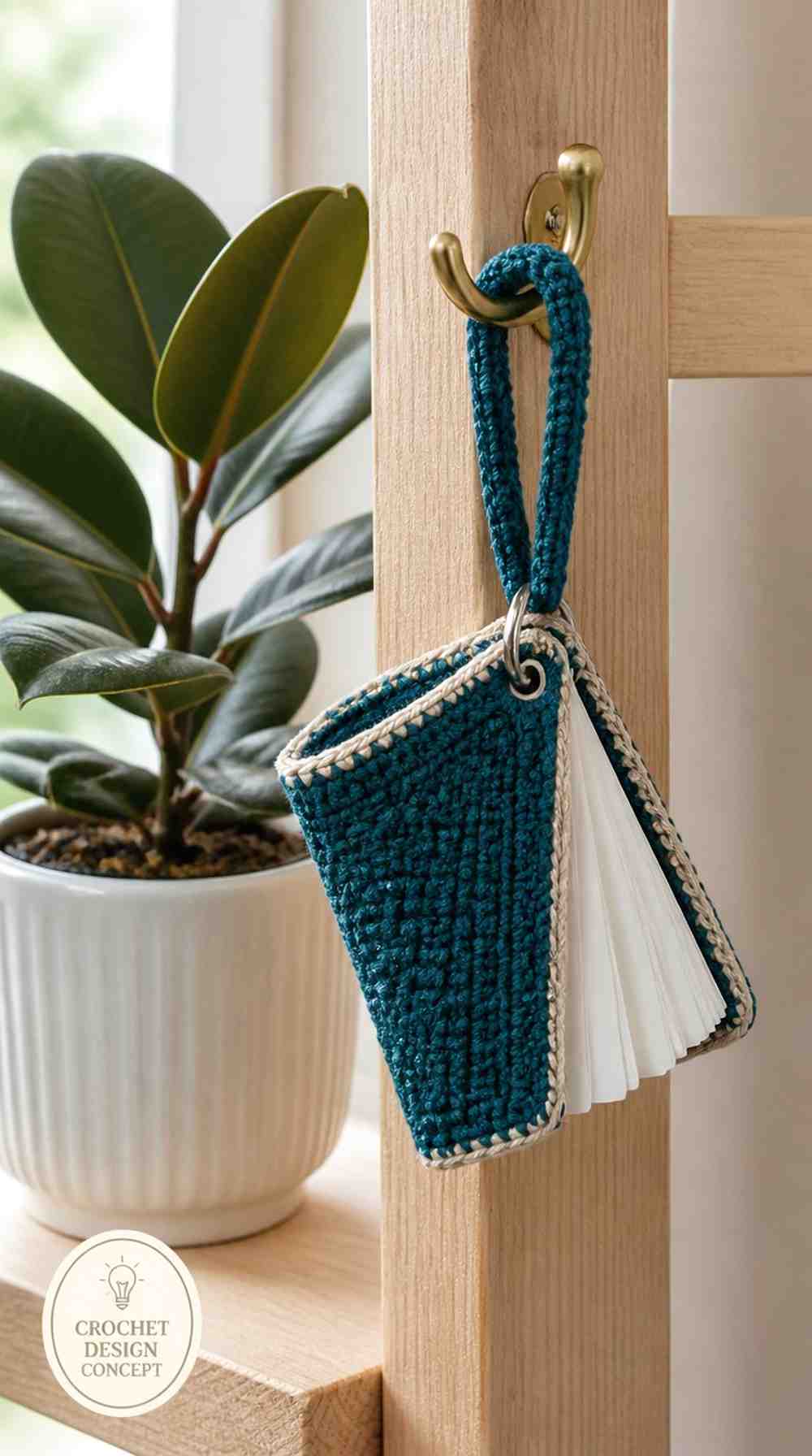
Deep teal crochet turns this plant-care reminder into a tiny hanging notebook. The rectangular moss-stitch cover has cream edging, while a small silver ring holds three blank removable paper pages. A separate loop allows the little book to hang beside a potted plant.
This concept offers more room for recording a plant’s care history than a single small tag. The pages could hold dates, soil observations or notes about changing conditions. It would work best in a dry indoor location where paper is unlikely to become wet.
- Three-Page Log: Individual pages can record separate check-ins or observations without crowding everything onto one label.
- Binding Ring: Choose smooth hardware that holds the pages securely without tearing them during removal.
- Dry Shelf Storage: Keep the miniature book away from watering splashes, because its paper pages and crochet cover are not waterproof.
- Regular Updates: Recording actual observations makes the log more useful than repeatedly copying a fixed watering interval.
11. Crochet Blush Reversible Heart Check Tag
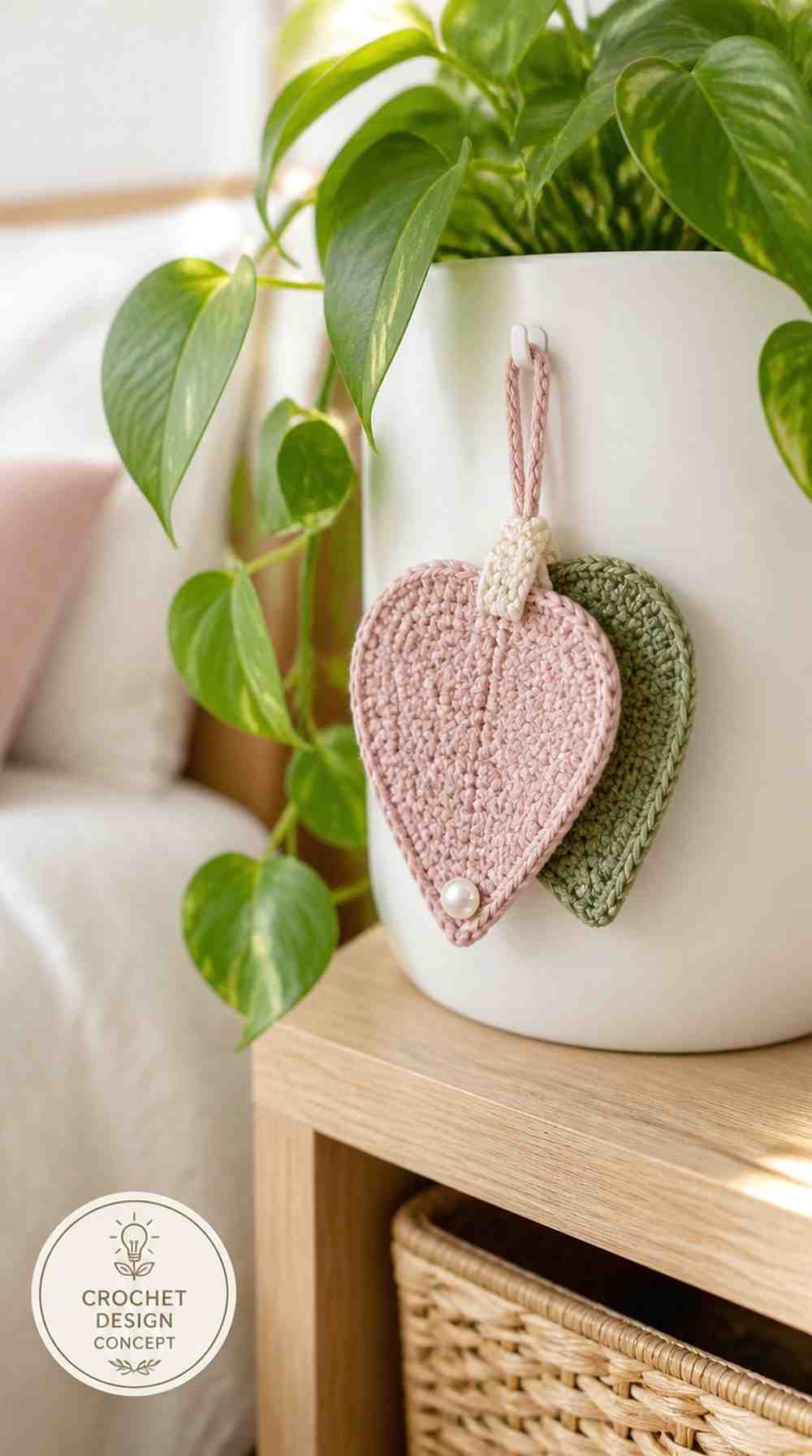
Dusty-blush crochet forms one side of this small heart-shaped reminder, while a sage-green reverse becomes visible when the hinged panel is flipped backward. A cream upper hinge and pearl-white snap hold the two faces together.
The heart silhouette makes this a decorative option for a bedroom plant corner. Its reversible colors could represent whether a soil check is still pending or has already been completed. Since the tag is manually changed, it should be viewed as a reminder rather than a moisture-reading device.
- Reversible Heart: Assign a clear meaning to each color and turn the tag only after the relevant care action has taken place.
- Hinge Flexibility: The cream connection should allow easy flipping without pulling the heart out of shape.
- Secure Closure: A small snap can hold the selected face forward, but it needs regular checking for loose hardware.
12. Crochet Charcoal Triple Record Plant Tag
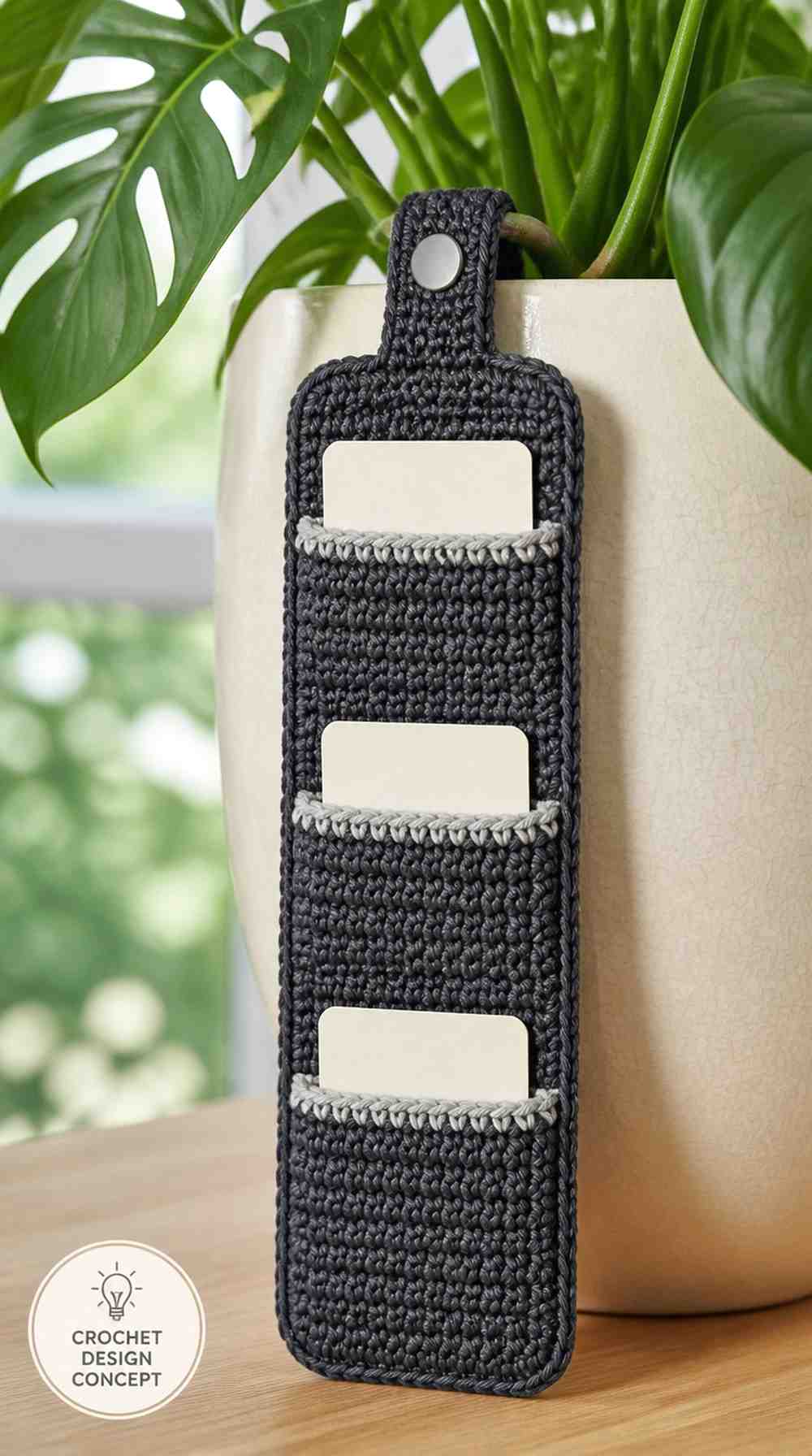
Charcoal-grey crochet gives this long tag a professional, organized look. Three separate open-top pockets sit vertically across the ribbed front, each holding a blank ivory paper card. Silver-grey edging defines the individual compartments, while a snap-fastened loop attaches the tag to a cream planter handle.
This design is useful for someone who wants to separate different types of plant-care information. One card could record the last inspection, another the last watering, and the third a note about the next check. Keeping those records distinct helps prevent confusing inspection dates with automatic watering dates.
- Three Independent Cards: Use separate inserts for different records so updates do not require rewriting the entire tag.
- Open-Top Pockets: The cards need sufficient overlap with the crochet so they remain secure when the planter is moved.
- Charcoal Contrast: Pale inserts are easy to distinguish against the dark crochet, provided the pockets remain clearly separated.
13. Crochet Rust Granny Square Care Pocket
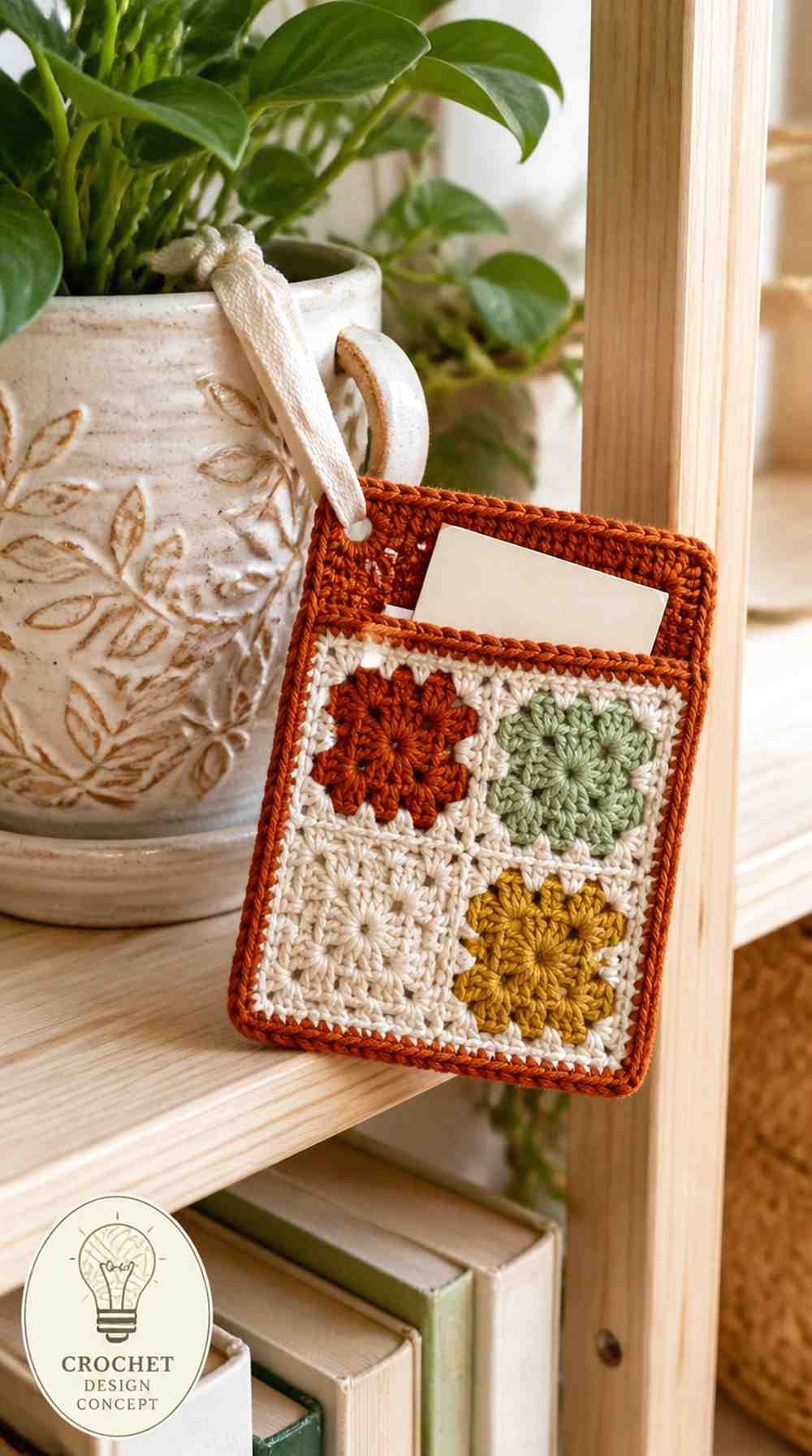
Four compact granny squares give this small plant-care tag a colorful handmade appearance. Rust, sage, ivory and mustard motifs form the front, joined with flat cream seams. A solid terracotta back creates a shallow upper pocket holding a blank paper note card.
The little patchwork pouch adds decorative crochet texture to a planter while keeping a care reminder nearby. The note card could record the plant’s name and a recent soil-check date, although a short insert may be better suited to one or two brief details.
- Granny-Square Joining: Flat seams help the front pocket stay neat and prevent the small motifs from pulling away from one another.
- Card Retention: Leave enough depth behind the patchwork panel to hold the note securely without hiding it completely.
- Color Identification: The four-color arrangement can distinguish this plant from others with more neutral reminder tags.
For other handmade plant-label styles, explore Yarn Nest Studio’s 15 Crochet Little Letter & Number Tags Ideas, which includes decorative markers that can also be adapted for organizing plant pots.
14. Crochet Seafoam Pot Wrap Reminder Tab
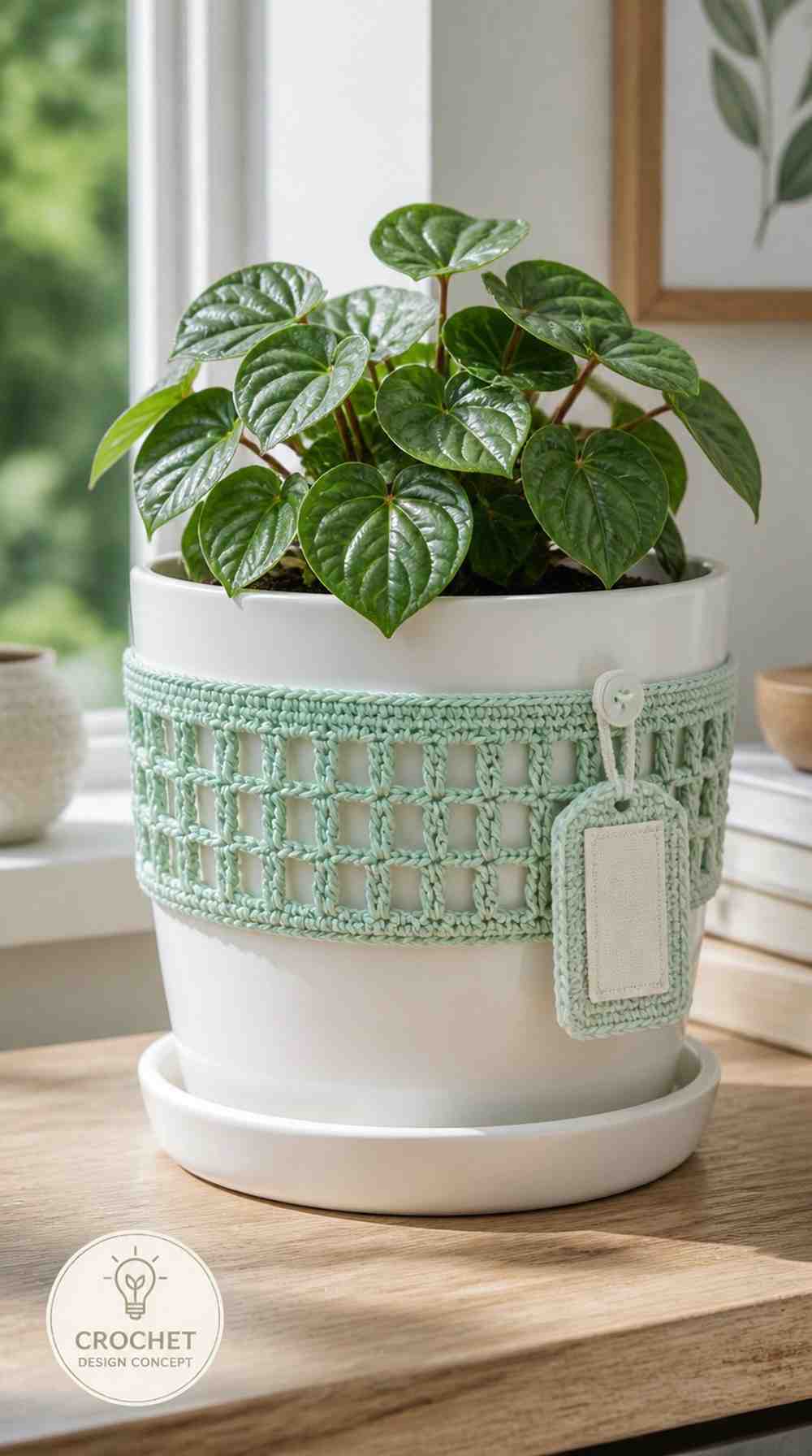
Seafoam-green crochet forms a narrow open-lattice band around the outside of a white ceramic cachepot. Firm upper and lower borders keep the band defined, while a small pale-aqua tag hangs from one side. The removable tab contains a completely blank cream fabric patch.
The separate hanging label is the most useful detail. It allows the main pot wrap to remain decorative while the smaller tag provides an identification or reminder space. Because the band covers part of the pot exterior, it should be removed if moisture collects beneath it.
- Outer Pot Wrap: Check the cachepot’s circumference and leave the band loose enough not to damage the surface or interfere with handling.
- Removable Side Tab: The small label can be detached for updating or cleaning without replacing the entire crochet wrap.
- Lattice Openings: Decorative gaps make the band visually light, but they do not prevent moisture from becoming trapped where yarn touches the pot.
- Drainage Clearance: Keep the band well away from drainage holes, saucers and areas that regularly become wet.
15. Crochet Forest Double Pocket Plant Reminder
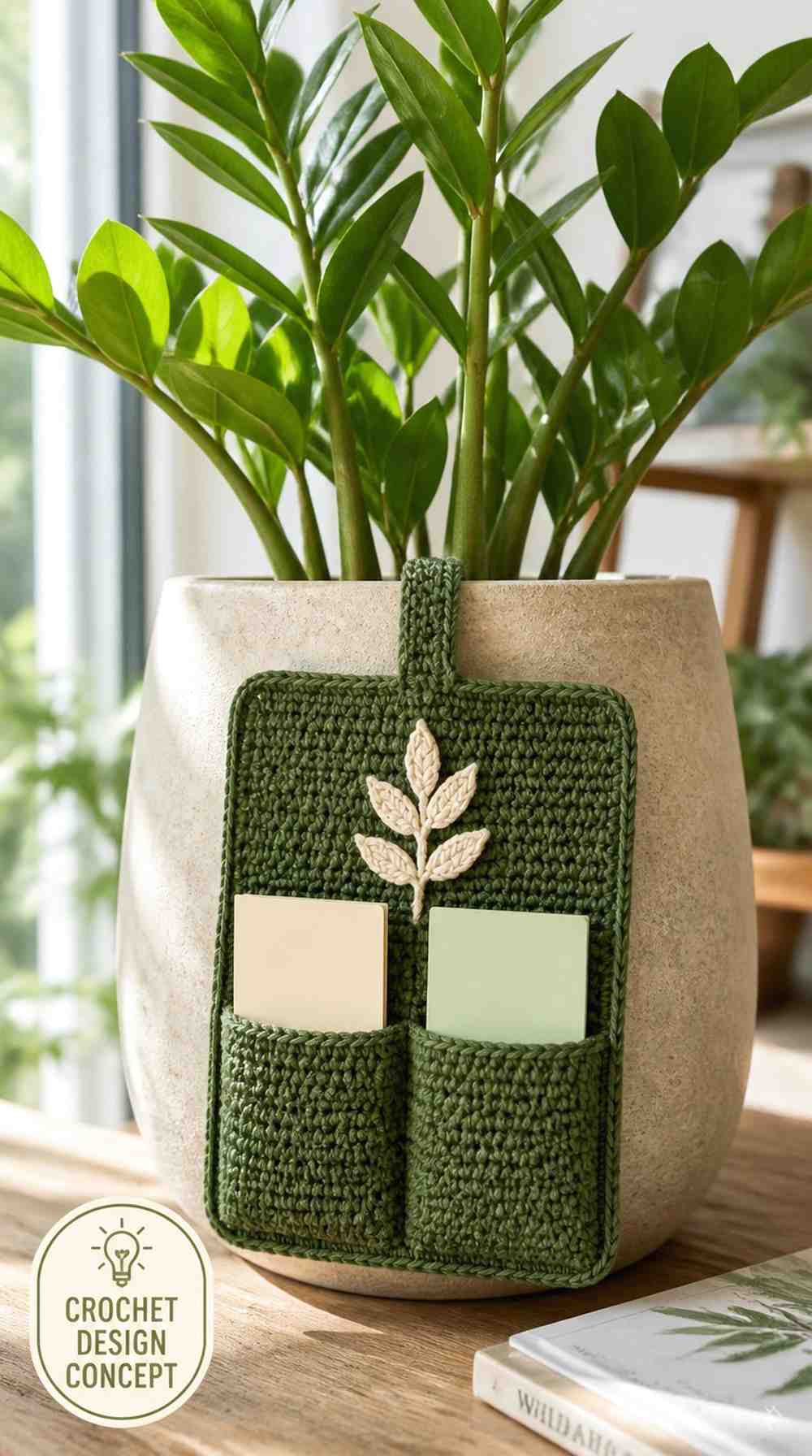
Forest-green crochet gives this tag a tidy botanical appearance. Two short pockets sit side by side across the lower front, holding separate cream and pale-sage note cards. A small flat ivory leaf decorates the upper center, while olive edging frames the rectangular body.
The two-pocket layout is useful for distinguishing watering records from general plant observations. One card could document the last time water was actually added, and the other could hold the date of the latest soil inspection. These are different events and should not be confused.
- Separate Record Types: Keeping watering and soil-check notes apart gives the owner a clearer picture of the plant’s care history.
- Side-by-Side Access: Both cards should slide out independently without stretching the central seam.
- Flat Leaf Motif: The small decorative leaf keeps the botanical theme visible without blocking either pocket.
16. Crochet Plum Adjustable Pot Handle Tag
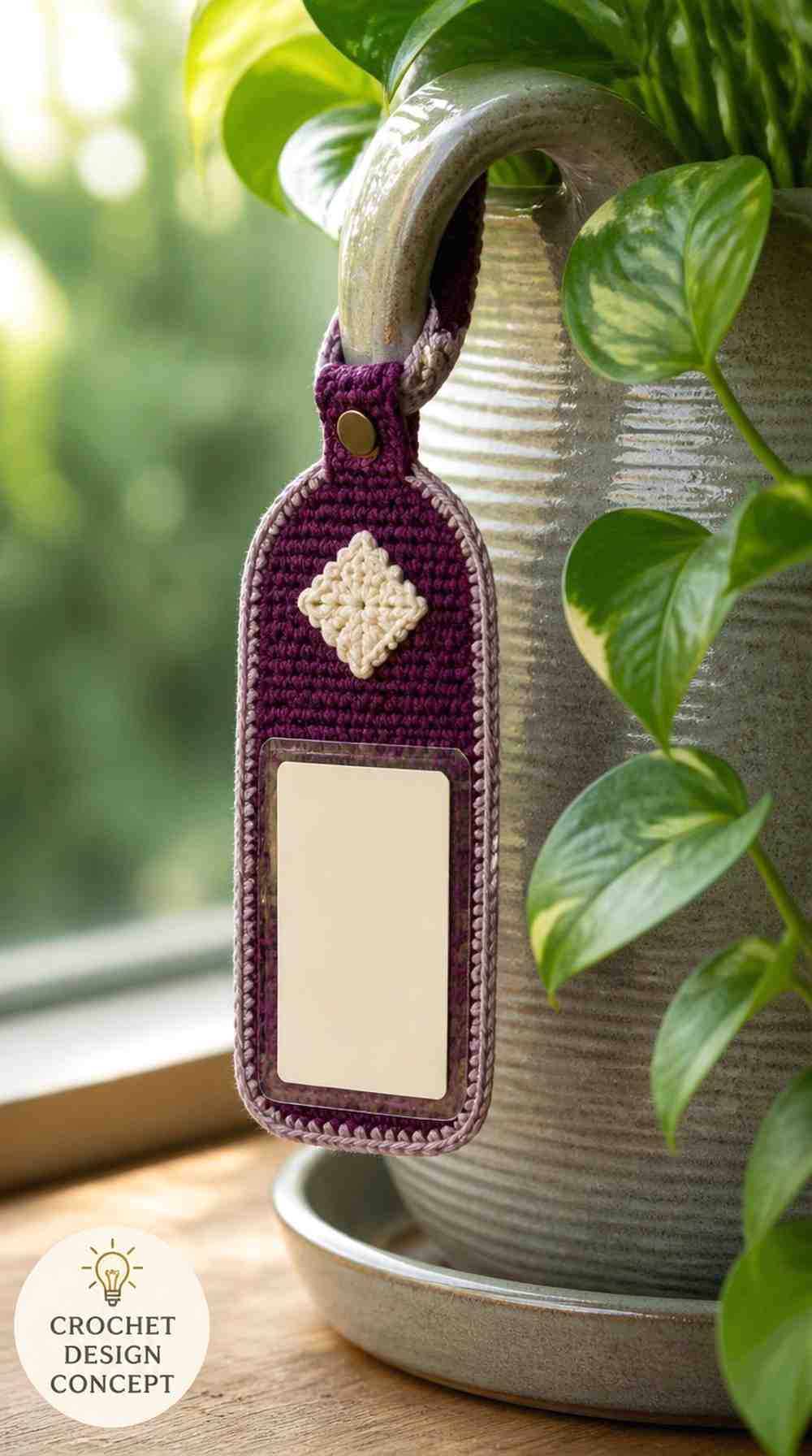
Rich plum crochet gives this elongated reminder a polished look. Raised horizontal ribs run along its body, while dusty-lilac edging frames a flat ivory diamond motif. Beneath the diamond, a transparent sleeve holds a blank cream card. Two brass snap positions allow the upper strap to adjust around the planter handle.
The adjustable attachment is the main advantage. It could make the tag easier to transfer between suitable pots or handles of different thicknesses. The written reminder should still be updated whenever the tag moves to a different plant.
- Two Snap Positions: Alternative fastening points allow some adjustment while keeping the hanging loop reasonably short.
- Replaceable Card: The clear sleeve provides space for a care note that can be changed without disturbing the crochet body.
- Plant-Specific Information: Update the card when transferring the tag, since watering records and care needs belong to the individual plant.
17. Crochet Coral Rotating Check Dial Tag
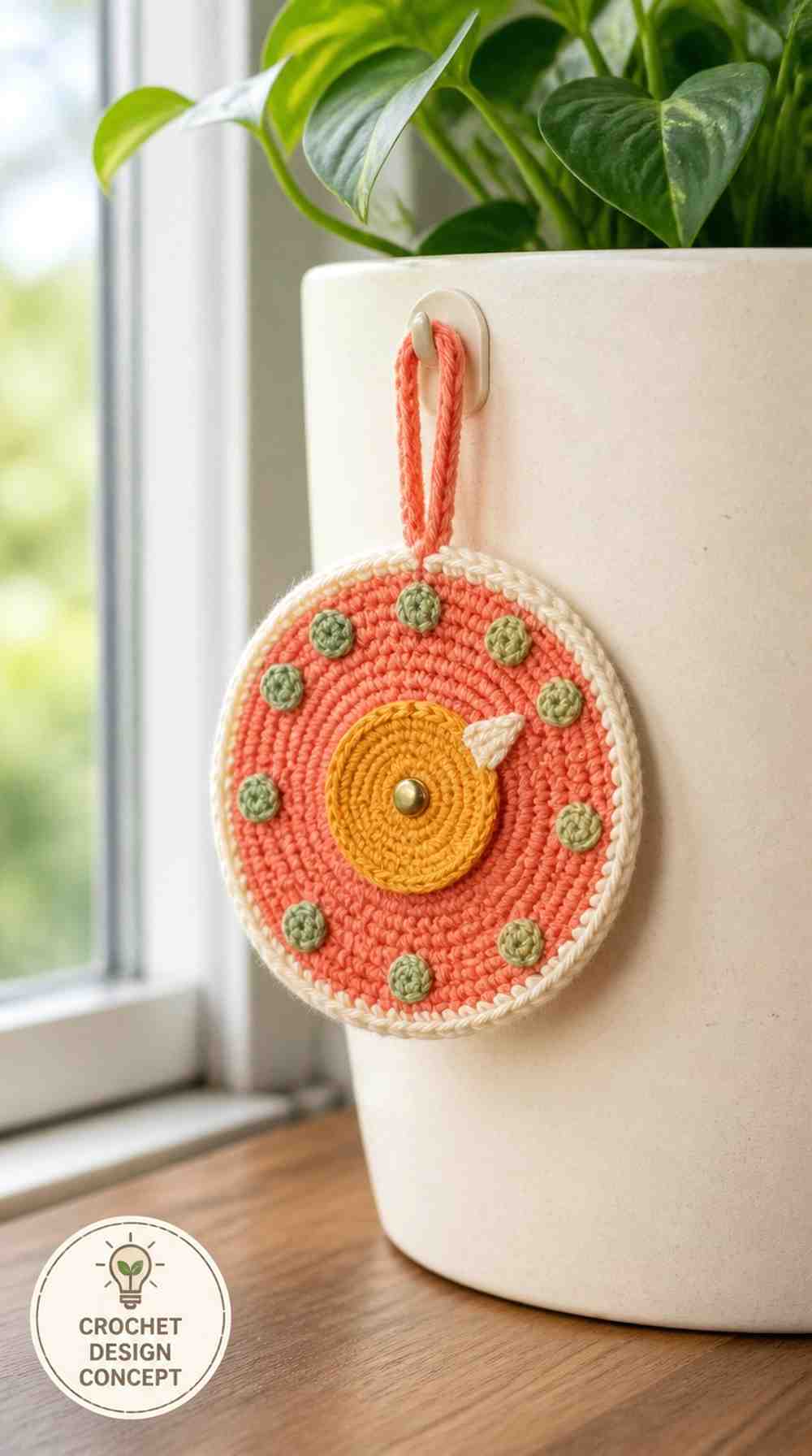
Coral-pink crochet creates a circular reminder with an ivory outer border and seven small sage-green dots around its edge. A mustard-yellow center disc rotates on a smooth pivot, with a tiny ivory pointer indicating one dot. The entire dial hangs from a reinforced loop beside a cream planter.
This concept offers a visual alternative to paper notes. The pointer could be moved after a planned soil inspection, with the seven positions representing a defined sequence. It is important to remember that the dial does not measure soil conditions or automatically change with time.
- Seven-Dot Dial: Assign a clear meaning to the positions; without a consistent system, the pointer may become confusing.
- Rotating Center: The pivot needs secure construction and smooth movement without leaving loose small components.
- Manual Reminder: Move the pointer only when the intended check or record update has occurred.
- Decorative Circle: The coral and mustard combination makes the tag easy to locate among several green houseplants.
Practical Guide to Crochet Houseplant Watering Schedule Tags
A useful plant-care tag should help you remember what has happened and when to check again. It should not encourage watering simply because a particular day has arrived.
Use the schedule for checking, not automatic watering. Plant-care recommendations from the University of Maryland Extension explain that watering depends on the plant and its growing conditions. Soil moisture, potting mix, temperature and humidity all matter. Check the specific plant’s needs before adding water.
University of Maryland Extension+1
Separate checking from watering. A record of the last watering and a reminder for the next soil inspection are not the same thing. If the soil is still sufficiently moist, the next check may result in no watering at all.
Choose the right recording method. Clear-window tags suit written dates. Sliding markers and reversible symbols work for simple routine reminders. Miniature notebooks or multi-card pockets are better when you want to record several observations.
Keep crochet outside the growing area. Attach a tag to a decorative pot handle, removable rim clip or nearby shelf hook. Avoid putting yarn into moist potting mix or allowing a band to cover drainage holes. Wet yarn may stay damp against a planter and can become dirty or develop odors.
Choose suitable materials. Smooth, washable cotton or an appropriate cotton blend may work for a small decorative tag. Paper inserts should be protected from splashes, and reusable writing panels should be compatible with their markers.
Make the system consistent. When caring for several plants, decide what colors, dots, bars and flip markers mean. Written labels are usually clearer when different people share plant-care responsibilities.
Clean and update the tags. Remove crochet tags during repotting or whenever watering may soak them. Allow any wet fabric to dry completely before reattaching it. Update written records immediately after a check, while the information is fresh.
Want to Make Something Similar?
These verified crochet resources provide related techniques for plant markers, labels and small pot accessories. They are not exact patterns for the 17 illustrated reminder concepts.
- Basic Crochet Plant Marker by CyCrochet — a free step-by-step pattern for a narrow ribbed hanging plant marker, useful for learning simple tag construction and attachment loops. CyCrochet
- Crochet Garden Fruit and Vegetable Label Pattern by HookStitchSew — a free plant-label project offering inspiration for creating recognizable crochet markers. HookStitchSew
- Crochet Holder for a Potted Plant by Easy Crochet — a free plant-pot accessory pattern useful for exploring close-fitting crochet around planters. It is a pot holder rather than a watering tag. Teachers Gift
For more decorative plant-display ideas, Yarn Nest Studio’s 19 Crochet Cottagecore Hanging Plant Holder Inspiration Ideas collection offers related crochet styling, though those larger holders serve a different purpose.
Which Crochet Houseplant Watering Tag Should You Choose?
| Your priority | Design to consider | Main trade-off |
|---|---|---|
| Simple written reminder | Sage Droplet | One small card |
| Two separate dates | Oatmeal Twin Window | Requires updating both inserts |
| Seven-position routine | Terracotta Seven Bobble | Needs a clear position code |
| Two-state marker | Navy Flip Face | No written history |
| Decorative flower tag | Lavender Daisy | Small writing area |
| Reusable writing surface | Olive Leaf Wipe Clean | Requires compatible marker |
| Weekly check record | Mustard Mini Calendar | Grid needs manual updating |
| Five-step check sequence | Dusty Blue Slider | Meaning of bars must be defined |
| Short fabric note | Ivory Scalloped | Writing may be permanent |
| Detailed care history | Teal Mini Log Book | Paper must stay dry |
| Decorative reversible symbol | Blush Heart | Only two states |
| Three separate records | Charcoal Triple Record | More cards to maintain |
| Colorful handmade pocket | Rust Granny Square | Small note capacity |
| Tag plus pot decoration | Seafoam Pot Wrap | Band may become damp |
| Two record categories | Forest Double Pocket | Limited space per card |
| Adjustable pot handle attachment | Plum Adjustable | Handle compatibility varies |
| Rotating visual reminder | Coral Check Dial | Pivot and marker need testing |
For a straightforward everyday reminder, Crochet Sage Droplet Watering Reminder Tag is an appealing starting point. Its blank card can hold a recent inspection date without requiring a complicated marker system.
If you care for several houseplants and want more information, the oatmeal twin-window, forest double-pocket or charcoal triple-record designs provide extra recording space. For a reusable visual check-in, the terracotta bobble band and coral rotating dial are interesting alternatives, provided their meanings remain consistent.
Conclusion
A crochet houseplant watering schedule tag can bring organization and personality to an indoor plant collection. These 17 ideas show how small yarn projects can become attractive reminders through clear label windows, movable markers, reversible symbols, decorative motifs and miniature care logs.
The most useful tag is one that makes plant care easier without encouraging overwatering. Keep the crochet dry, record observations accurately, and remember that the plant’s actual moisture needs matter more than a calendar date.
Which of these 17 crochet houseplant reminder tags would you choose? Do you prefer a simple written date card, a sliding check marker or a little hanging care notebook? Share your favorite design and how you currently keep track of your indoor plants.
Frequently Asked Questions
Can a crochet tag tell me when my houseplant needs water?
No. A crochet tag can record when you last watered or checked a plant, but it cannot measure soil moisture. Many houseplants should be watered according to their actual needs rather than a fixed calendar interval. Check the growing medium and follow guidance for the particular plant species.
Illinois
What should I write on a houseplant watering reminder tag?
Useful details include the plant’s name, the date of its last watering, the most recent soil inspection and the date you plan to check again. A short observation, such as how dry the soil felt, can also be helpful. Avoid treating the next inspection date as an automatic instruction to water.
Can I put a crochet watering tag directly into plant soil?
Keeping the crochet outside the potting mix is generally preferable. Soil and watering splashes can leave yarn damp and dirty, while buried or wet fabric may deteriorate over time. Attach the tag to a suitable pot handle, removable clip or nearby shelf hook instead.
Which crochet tag is best for managing several houseplants?
A written label system is often easier to maintain across several plants because each pot can have its own record. Twin-window tags, card pockets and miniature logbooks allow more information than a simple color marker. A color or symbol system can supplement written records if everyone using it understands the meanings.
Are these crochet houseplant watering schedule tags available as patterns?
These 17 ideas are original visual inspiration concepts, not tested crochet patterns. They illustrate different tag shapes, colors, attachment methods and reminder systems. The linked crochet tutorials teach related techniques, but making a usable version requires appropriate sizing, secure construction, suitable materials and your own plant-care recording method.