A handheld milk frother is a handy little tool for making coffee, matcha and other creamy drinks, but finding a tidy place to keep it can be surprisingly awkward. These 16 crochet milk frother storage sleeve inspiration ideas explore everything from simple drawstring pouches and decorative handle covers to hanging organizers, lined cases and compact countertop holders. Expect warm neutrals, cheerful colors, neat crochet textures and several different storage arrangements.
Some designs focus on keeping a frother organized inside a kitchen drawer, while others give it a dedicated place near a home coffee station. You’ll also find options for removable whisk attachments, narrow shelves and kitchens with limited counter space. Each concept offers a different combination of coverage, opening style and crochet detail, helping you decide which arrangement might suit your own appliance and storage habits.
These are AI-generated crochet design visualizations for inspiration, not photographs of tested handmade pieces or step-by-step patterns.
Quick Design Selection Guide
- For simple drawer storage: Crochet Oatmeal Drawstring Wand Pouch offers a narrow, uncomplicated shape with a gathered opening.
- For an accessible coffee station: Crochet Terracotta Ribbed Stand Sleeve decorates the handle while keeping the original stand in use.
- For saving counter space: Crochet Dusty Blue Wall Pocket Sleeve and Crochet Mustard Rail-Hung Frother Sleeve explore two hanging arrangements.
- For more enclosed storage: Crochet Coral Foldover Envelope Sleeve and Crochet Navy Zippered Travel Sleeve use different closures.
- For detachable accessories: Crochet Espresso Dual-Compartment Sleeve gives a compatible frother body and whisk attachment separate spaces.
1. Crochet Oatmeal Drawstring Wand Pouch
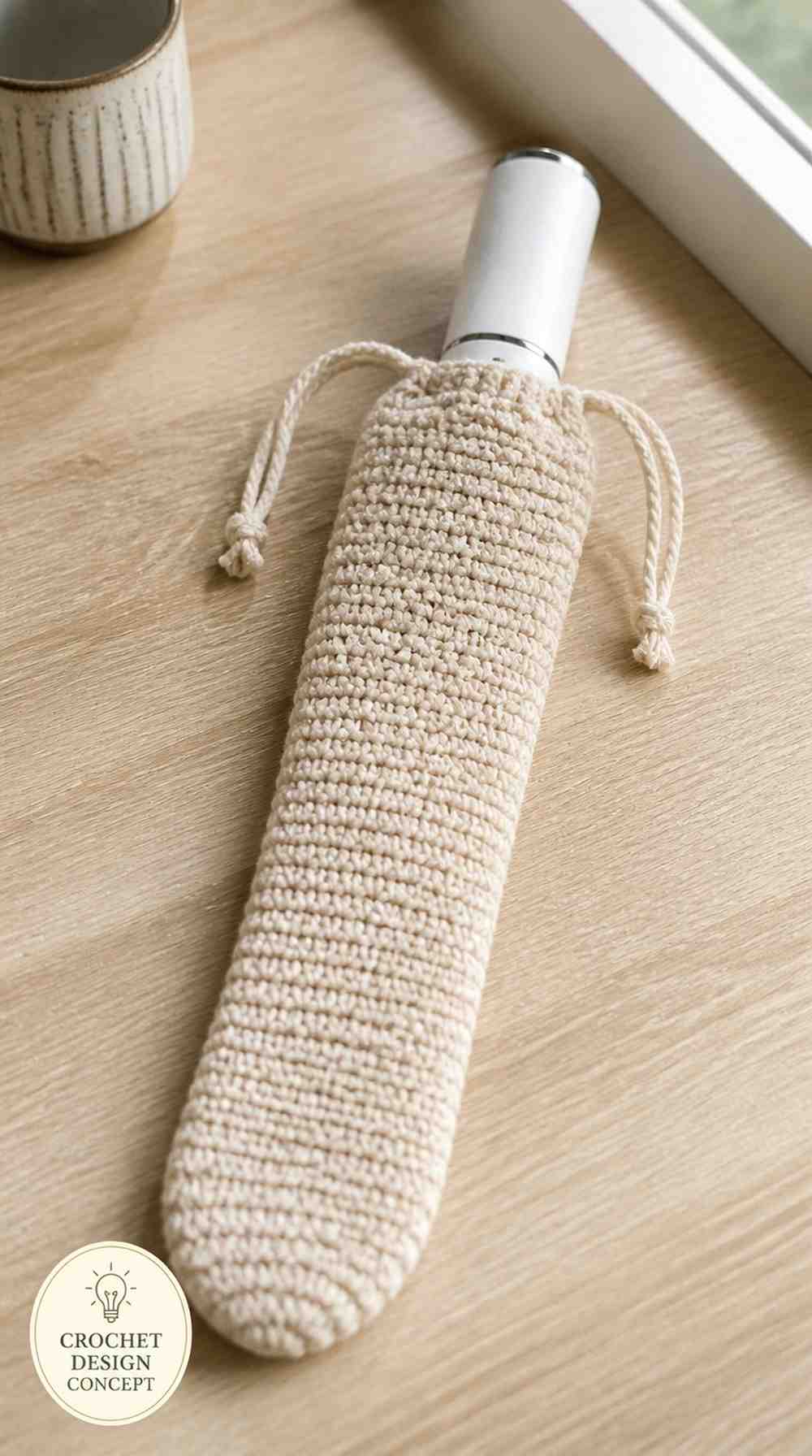
Soft oatmeal crochet gives this slim pouch a simple, welcoming look. Its closely worked stitch pattern forms a narrow tube with a rounded bottom, while an ivory drawstring adds a little contrast around the upper opening. The white handle of the milk frother remains visible above the pouch in the design.
This concept suits someone who prefers keeping a clean, dry frother in a kitchen drawer rather than leaving it on display. The gathered opening is useful for storage organization, although it should not be pulled too tightly around the appliance.
- Drawstring opening: Keep the cord loose enough to remove the frother easily. A narrow, tightly gathered mouth could catch against a wider motor handle.
- Bottom shaping: The rounded base should allow enough clearance for the whisk end without forcing delicate metal wires against densely stitched fabric.
- Yarn choice: A smooth, washable cotton yarn could suit this close-stitch style, provided the finished pouch is dried properly before storing the appliance.
2. Crochet Terracotta Ribbed Stand Sleeve
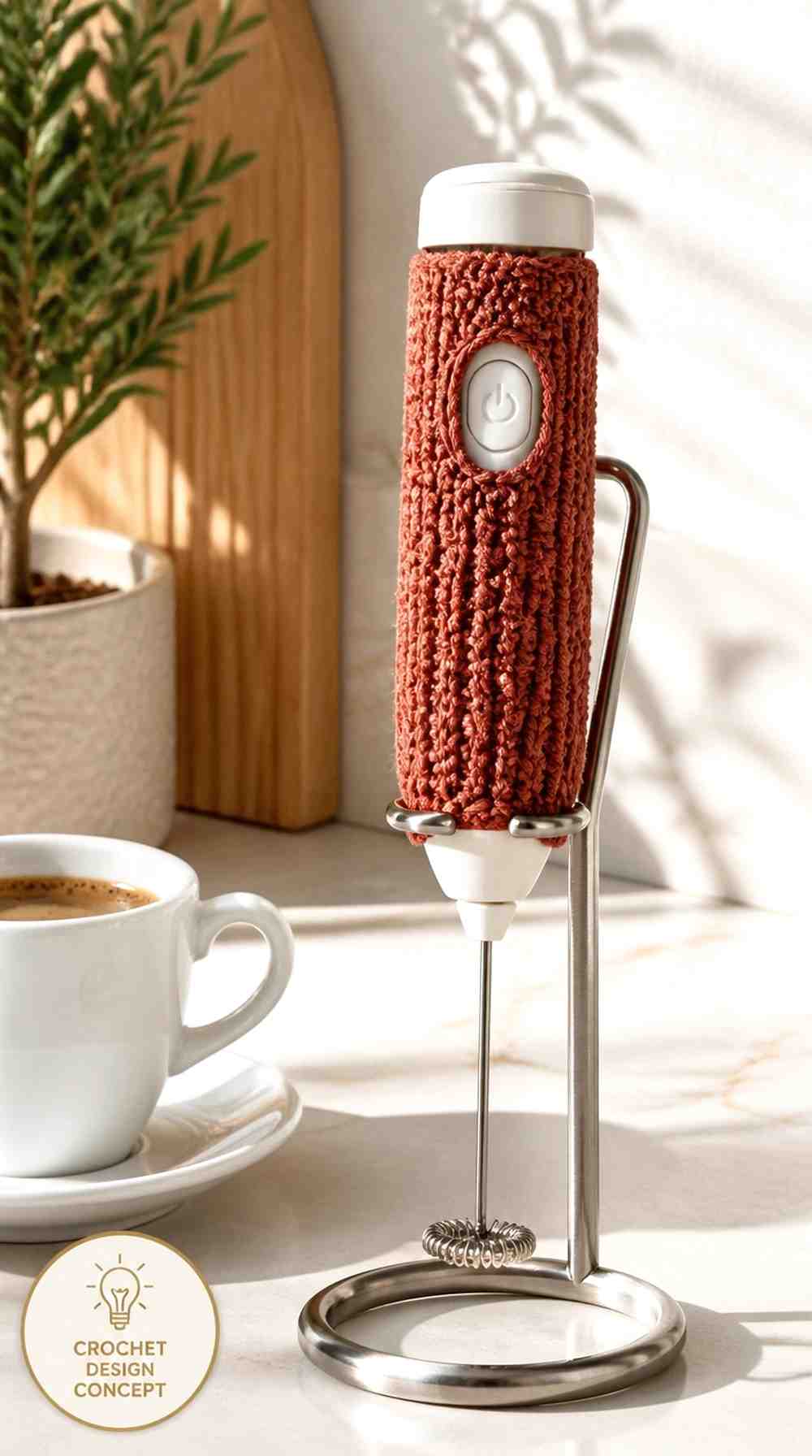
Warm terracotta crochet wraps around the white motor handle of this milk frother, creating a rich contrast against its brushed-steel stand. Vertical crochet ribs give the cuff a neat, fitted appearance, and an oval opening leaves the power button visible. The metal whisk remains uncovered beneath the handle.
Unlike a full-length storage pouch, this design focuses on the visible part of a frother kept in its original stand. It adds handmade texture without introducing another storage container, but the fabric should be removed before operating the appliance unless the manufacturer specifically allows a fitted cover.
- Button clearance: The oval opening needs to accommodate the exact location and movement of the appliance’s switch without accidentally pressing it.
- Handle fit: Crochet ribbing may stretch, so a fitted cuff should be checked against the actual handle rather than estimated from a photograph.
- Exposed whisk: Because the metal attachment remains uncovered, this design is more decorative than protective. Keep the stand somewhere clean and away from accidental knocks.
3. Crochet Dusty Blue Wall Pocket Sleeve
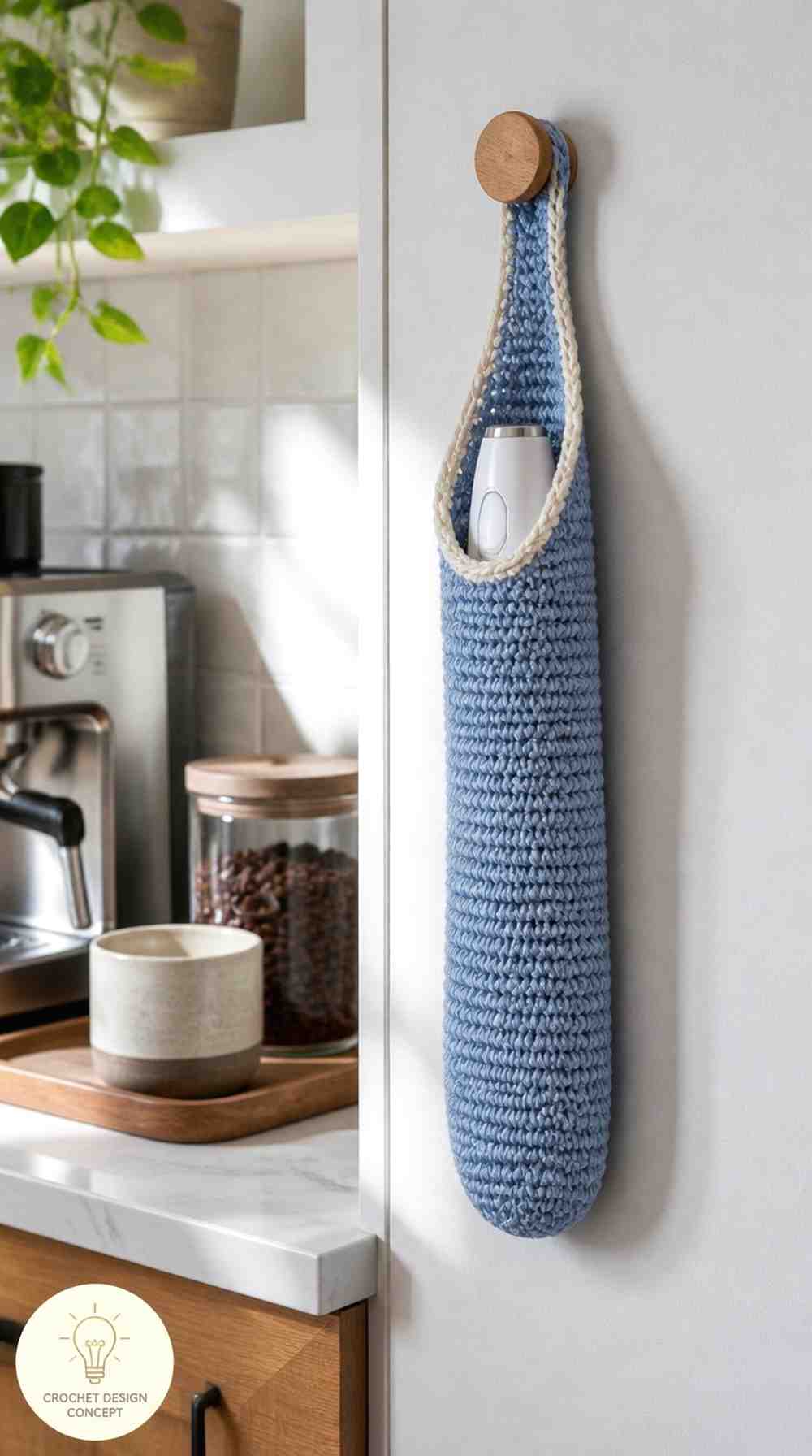
Dusty-blue crochet turns a narrow milk frother pouch into a compact wall organizer. The design combines a flat back, rounded lower section, cream-edged opening and reinforced hanging loop. The white motor handle peeks above the pocket, while the rest of the appliance sits deeper inside.
Hanging storage can be especially appealing around a small coffee station where every bit of counter space matters. This idea works best as a dedicated holder for one dry frother, positioned where it can be reached without pulling the fabric sideways.
- Hanging support: The wooden peg and reinforced crochet loop must be suitable for the combined weight of the holder and appliance.
- Pocket depth: The pocket needs enough length to accommodate the whisk without bending its wire head or creating pressure at the rounded bottom.
- Wall placement: Choose a dry spot away from sink splashes, stove heat and other appliances that might expose the crochet to moisture or damage.
For more ways to arrange crochet storage on a wall, explore these vintage crochet kitchen wall pocket ideas.
4. Crochet Olive Side-Button Wrap Sleeve
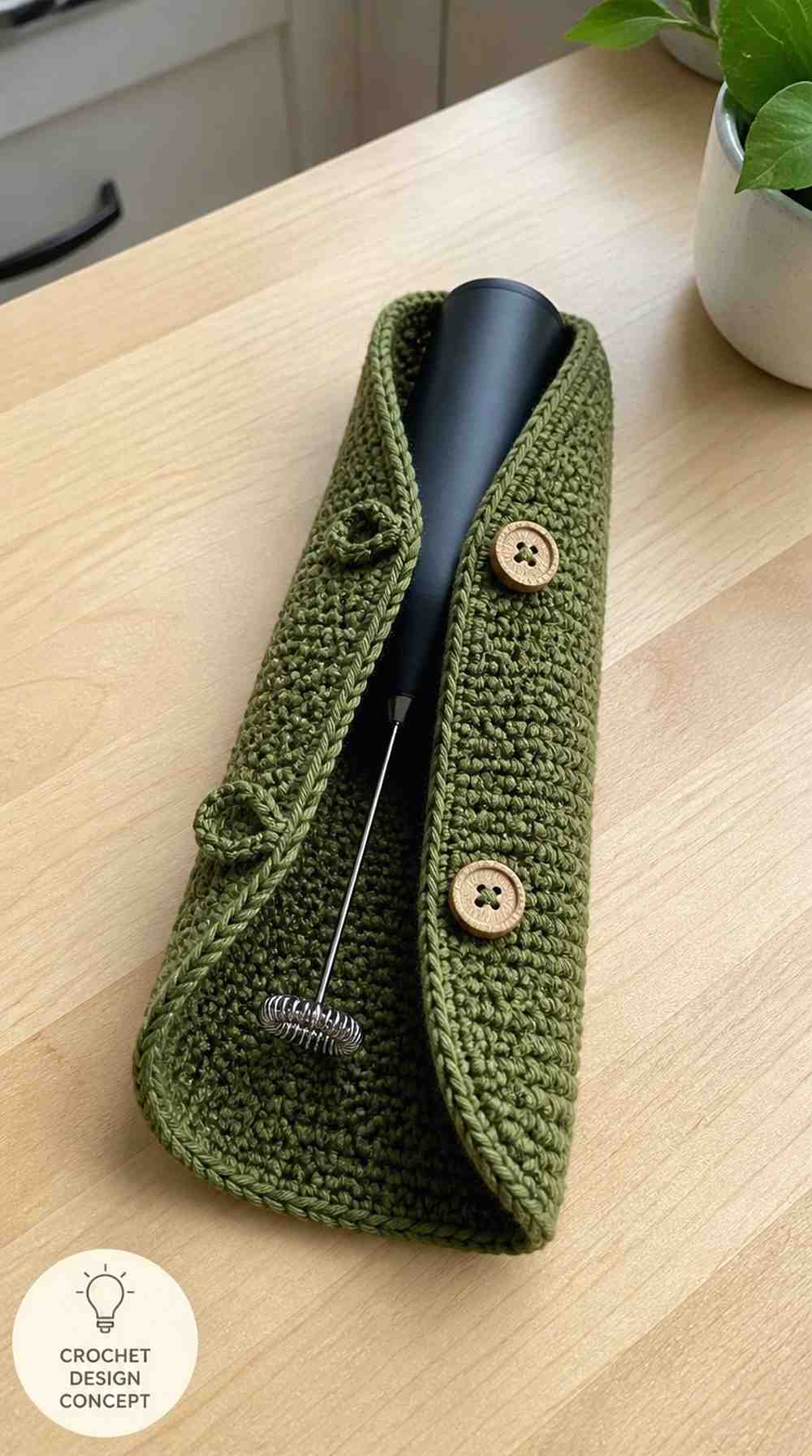
Olive-green seed-stitch crochet creates a soft, textured wrap around a horizontally stored milk frother. Two small wooden buttons sit along one long edge, fastening into matching crochet loops. The tapered shape follows the appliance, with the upper handle slightly visible and the clean whisk tucked into the covered lower section.
A side-opening wrap offers a different experience from sliding a frother into a narrow tube. The fabric can open more widely, making it easier to inspect the inside and arrange the appliance without pushing it against the closed end.
- Button placement: Position the buttons outside the appliance’s main contact area so they do not press into the handle or delicate metal attachment.
- Opening width: The wrap should open far enough to lift out the frother without dragging the whisk through a tight crocheted channel.
- Optional inner layer: A removable smooth lining could reduce snagging where the metal whisk rests, provided it fits without bunching inside the wrap.
5. Crochet Ivory Lace-Panel Lined Sleeve
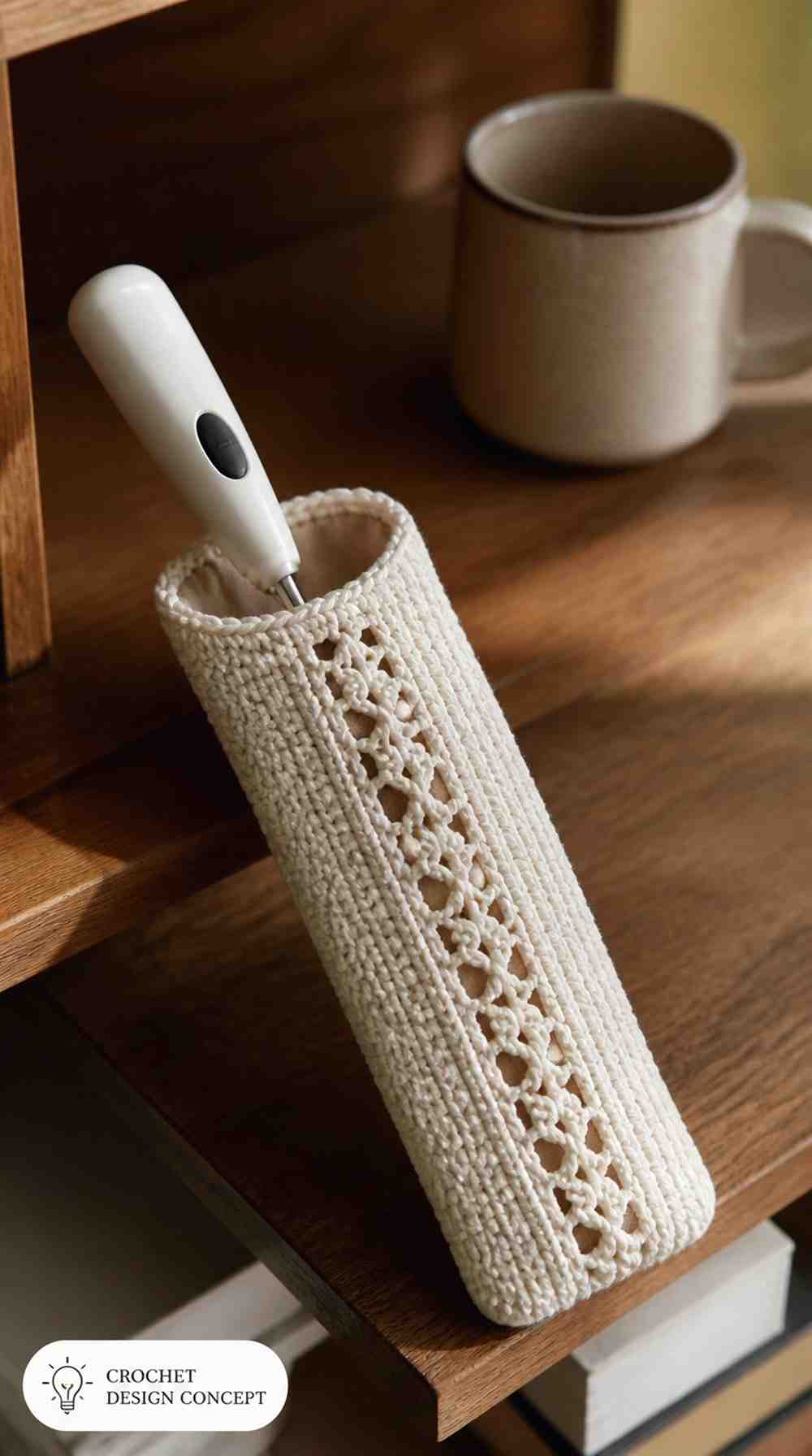
A delicate eyelet-lace panel gives this ivory storage sleeve an airy, vintage-inspired appearance. The body is mainly made from closer crochet stitches, with a decorative vertical opening pattern along the front. A beige fabric lining shows at the mouth, creating a soft contrast against the cream-colored yarn.
The combination of crochet lace and a separate inner layer makes this an interesting choice for someone who loves decorative storage but wants the actual appliance to rest against a smoother surface. The lining still needs to be removable or easy to maintain.
- Lace construction: The central eyelet panel should have connected, evenly spaced openings rather than unsupported strands that could stretch out of shape.
- Lining fit: A fabric lining should sit smoothly inside the narrow sleeve without creating folds that catch the frother during removal.
- Storage setting: This pale design suits a clean, dry shelf better than a frequently splashed work surface, where light-colored crochet could need more cleaning.
6. Crochet Coral Foldover Envelope Sleeve
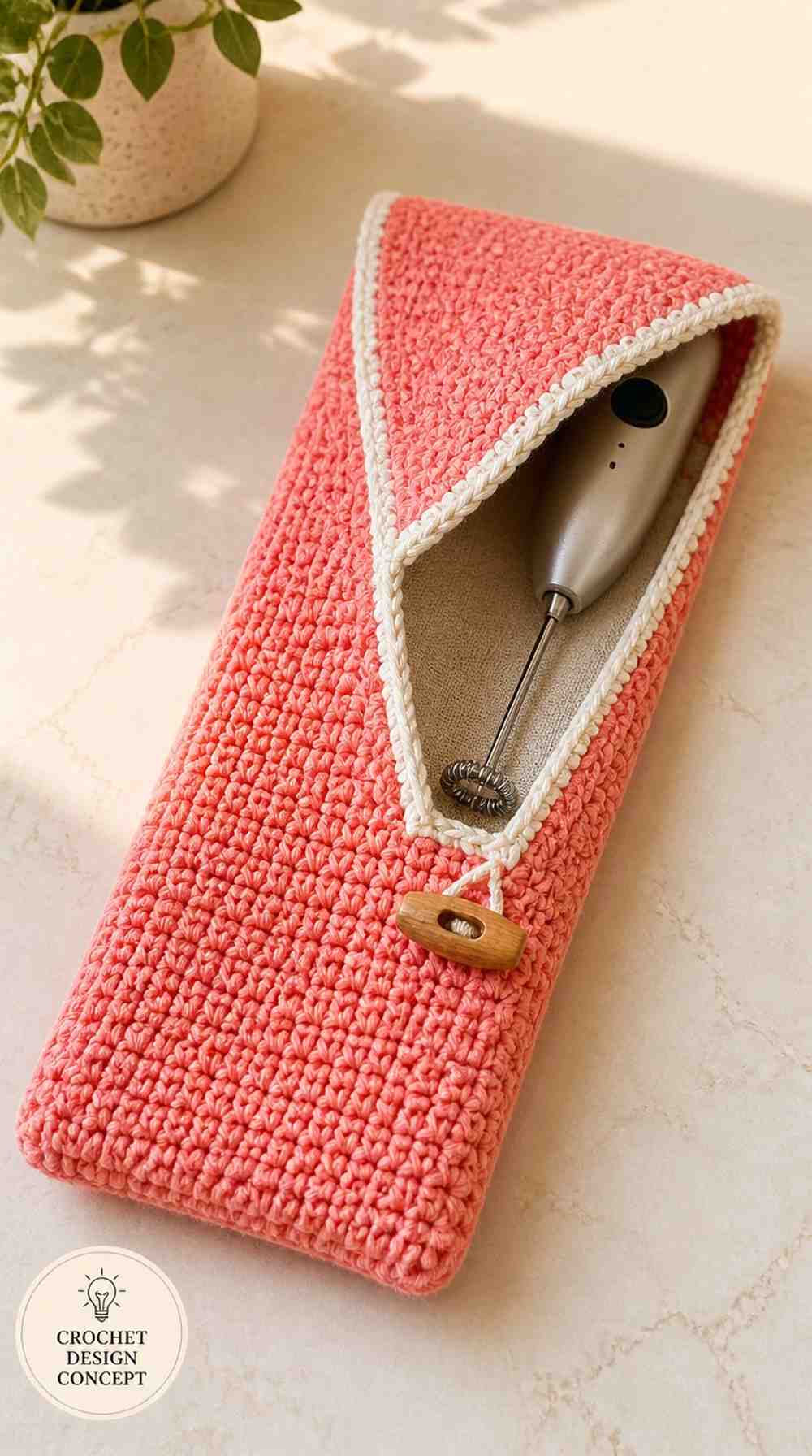
Coral-pink crochet gives this compact envelope sleeve a lively finish. Its softly structured rectangular body has a narrow cream border and a slanted foldover flap, secured by a single wooden toggle. When partly open, the pale inner lining and the top of the milk frother handle become visible.
This design feels closer to a small appliance case than a simple slip-on cover. The flap offers a clearly defined opening, making it worth considering for a frother stored horizontally among other coffee accessories, provided its interior leaves enough room for the whisk.
- Flap allowance: The foldover section should close without squeezing the frother or putting pressure on its switch and metal attachment.
- Toggle position: Keep the wooden fastening away from the appliance’s most delicate section so its hard surface does not press against the whisk.
- Inner compartment: A smooth, removable lining is worth considering for this envelope shape, especially if the sleeve will be opened and closed frequently.
7. Crochet Navy Zippered Travel Sleeve
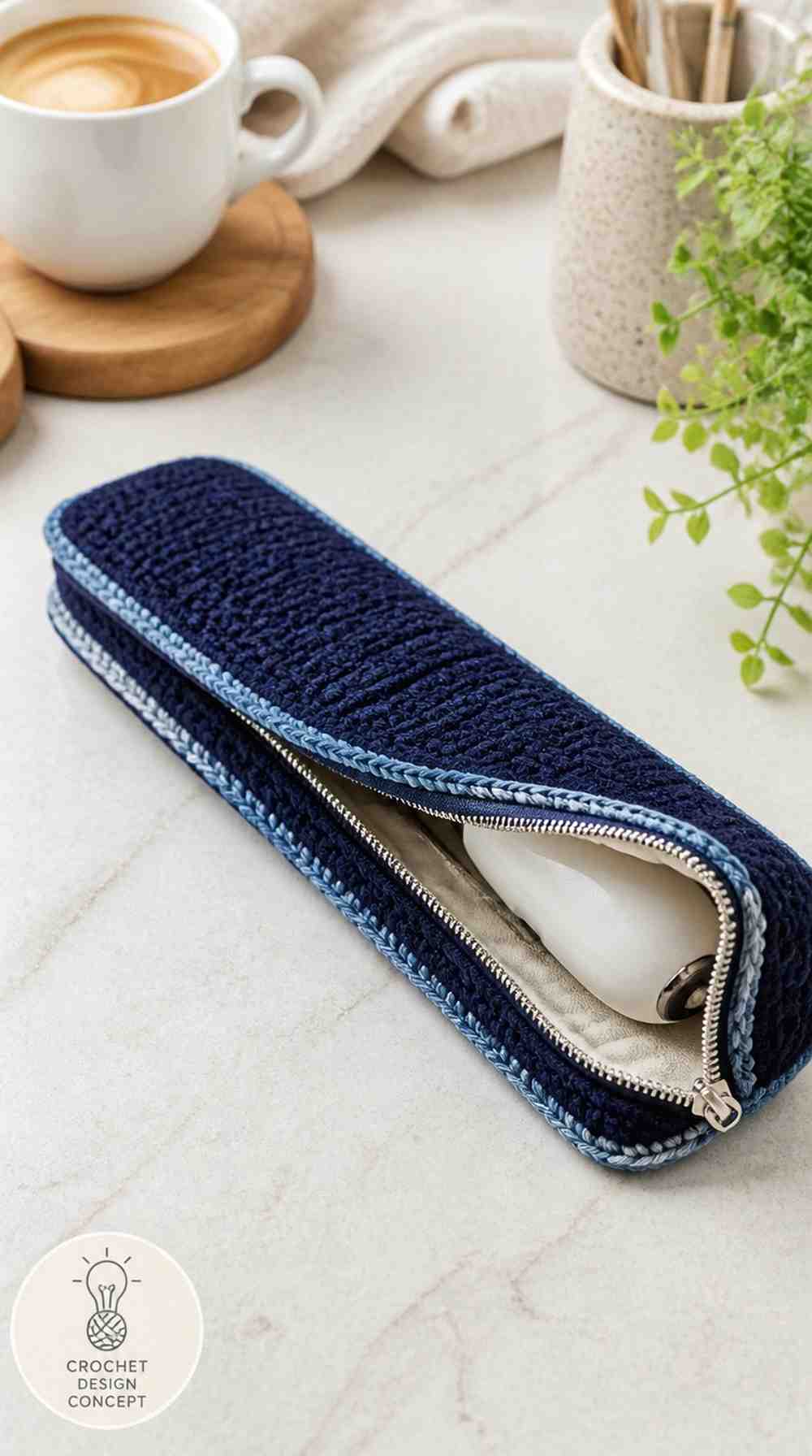
Midnight-navy crochet gives this long storage case a clean, tailored appearance. Dusty-blue edging highlights its narrow outline, while a short silver zipper opens part of the upper side. The pale lining and white milk frother handle remain visible through the partially opened case.
The zipped design may appeal to someone who wants to keep coffee accessories together inside a drawer or travel bag. However, a crochet case alone cannot be assumed to protect an electrical appliance from pressure, impact or moisture, even when it has a lining.
- Zipper clearance: The zipper should move freely without catching crochet loops, the fabric lining or any part of the appliance.
- Case length: Plan the overall length around the complete frother, including its whisk attachment, rather than measuring only the motor handle.
- Travel limitation: This is an organization concept, not a tested protective case. A suitable rigid insert may be necessary if the device needs physical protection.
8. Crochet Mustard Rail-Hung Frother Sleeve
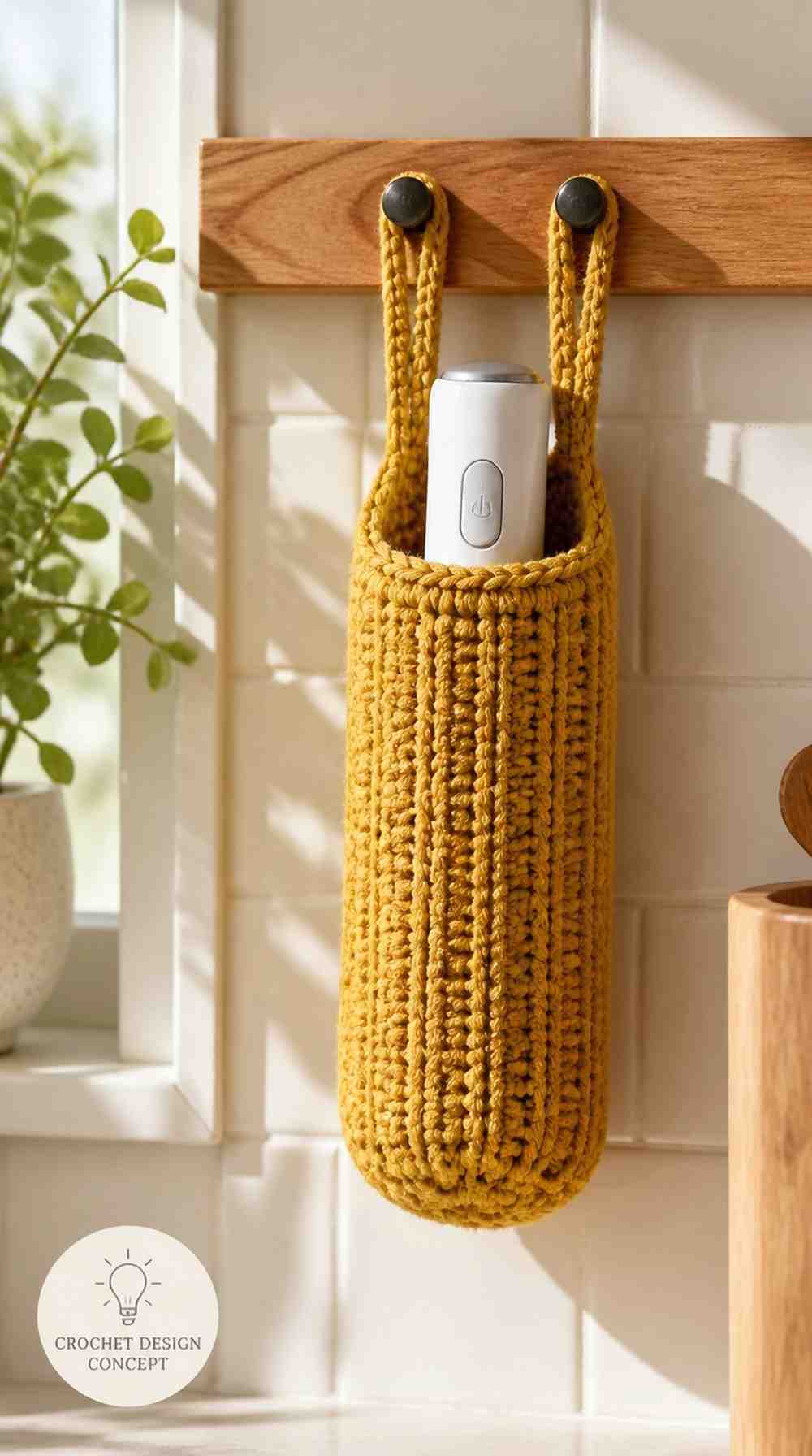
Golden-mustard crochet brings a cheerful color to this narrow hanging organizer. Its vertical stitch columns lead down to a rounded base, while two reinforced loops connect the sleeve to a short wooden kitchen rail. The frother’s upper white handle remains visible above the opening.
Using two attachment points changes how this sleeve hangs compared with a single-loop wall pocket. The wider suspension arrangement may help it sit more evenly against a wall, although its actual stability depends on the crochet construction, rail and weight of the frother.
- Two-loop attachment: Both loops should be evenly positioned and securely joined to the sleeve so the appliance does not cause it to lean sharply.
- Rail access: Leave enough space above the sleeve to lift the frother out without hitting the rail or dragging the fabric against the handle.
- Lower clearance: Check that the closed bottom accommodates the full whisk assembly without bending or trapping its fine metal loops.
9. Crochet Lilac Bow-Tied Split Sleeve
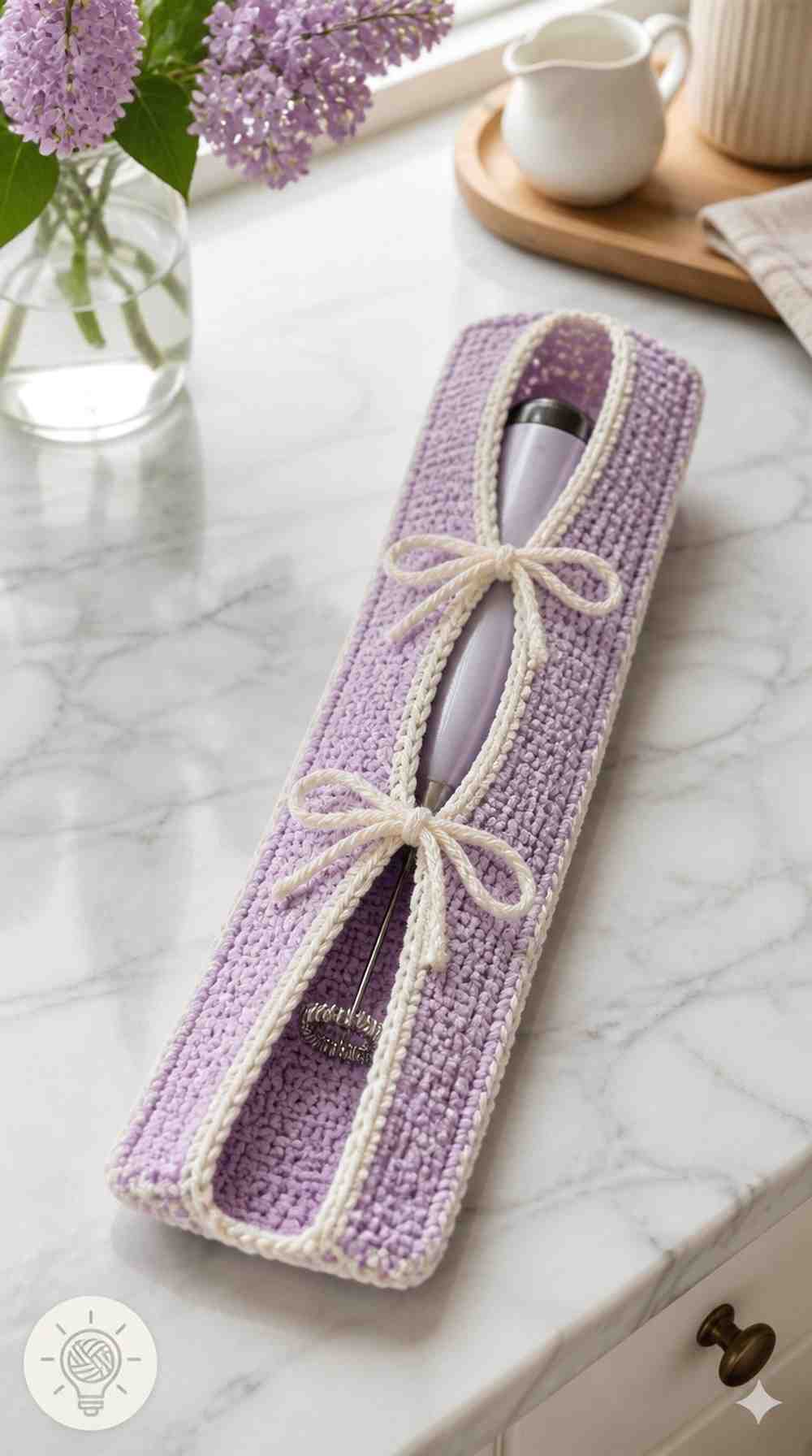
Lilac crochet and small ivory bows create a gentle, decorative look for this split-front storage sleeve. Two pairs of crocheted ties cross the opening, while an ivory border outlines the long edges. The frother rests inside a narrow fabric channel, with its upper handle visible above the tied section.
Because the front opens, this idea offers more control over how the dry appliance is positioned before storage. It also allows the ties to become part of the visual design, although loose ends need careful attention around a tool with a rotating attachment.
- Tie security: Use the bows only to close the sleeve during storage. Untie and remove the cover completely before using the frother.
- Split-front access: The opening should be wide enough to lift the appliance out rather than pulling its whisk through narrow yarn loops.
- Cord length: Short, tidy ties would reduce dangling yarn around nearby utensils, drawer runners and other objects that could catch them.
10. Crochet Cocoa Checkerboard Storage Sleeve
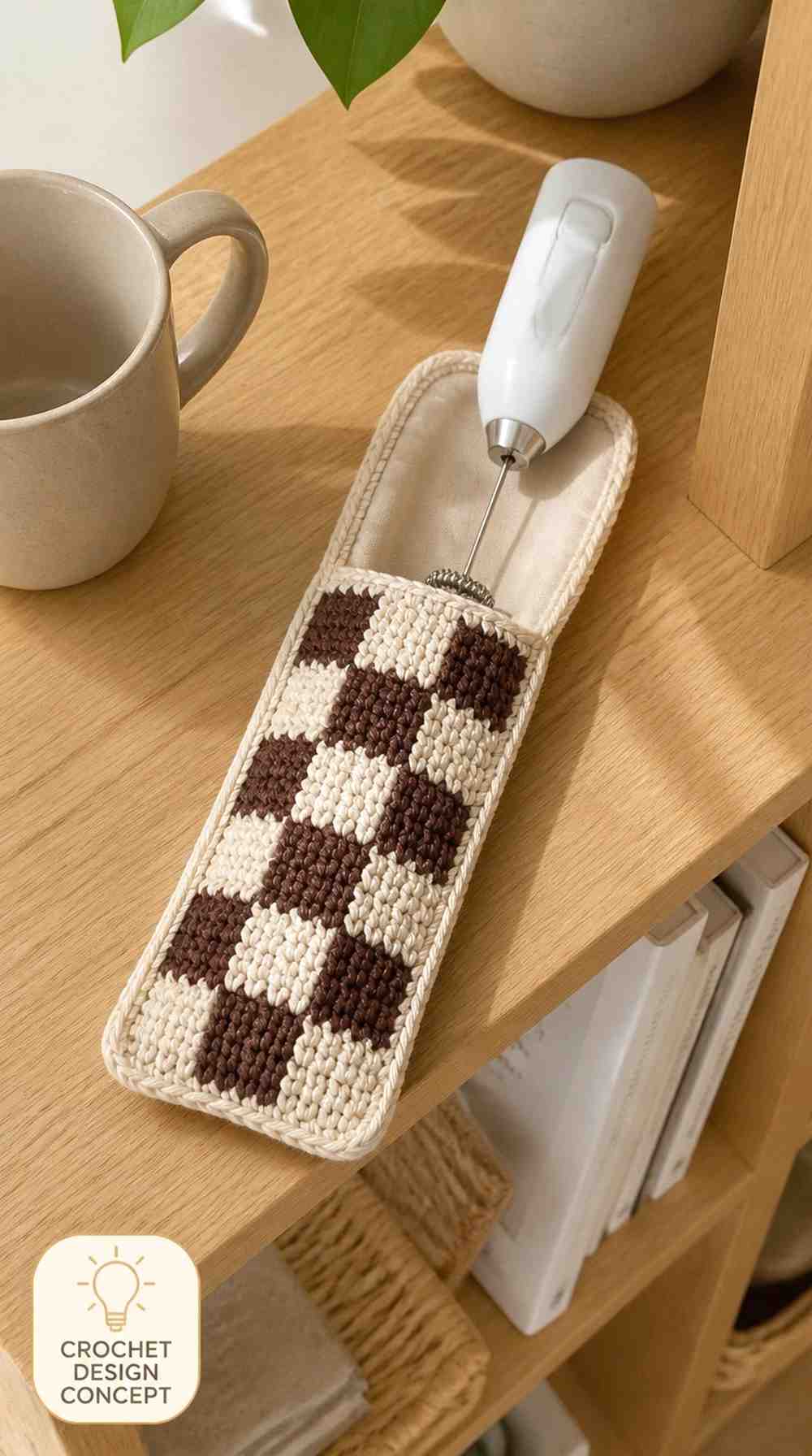
Chocolate-brown and warm-cream crochet blocks give this milk frother pouch a cozy checkerboard finish. The small squares are joined into a long, narrow sleeve with visible seams, an ivory edge and a pale lining. The white frother handle rises slightly above its open upper end.
Compared with a plain stitched tube, the checkerboard construction introduces more joins and changes in texture. That makes it a lovely design direction for a coordinated coffee station, but the seams should be considered carefully when deciding how closely the sleeve fits around the appliance.
- Block joins: The joined crochet sections should remain smooth on the inside, avoiding bulky seams that narrow the usable space.
- Pattern scale: Small checkerboard blocks will suit a slender pouch better than oversized squares that distort the long silhouette.
- Color maintenance: Cream sections may show coffee stains more readily than dark yarn. Select materials that can be cleaned according to their care instructions.
11. Crochet Seafoam Mesh-Panel Storage Sleeve
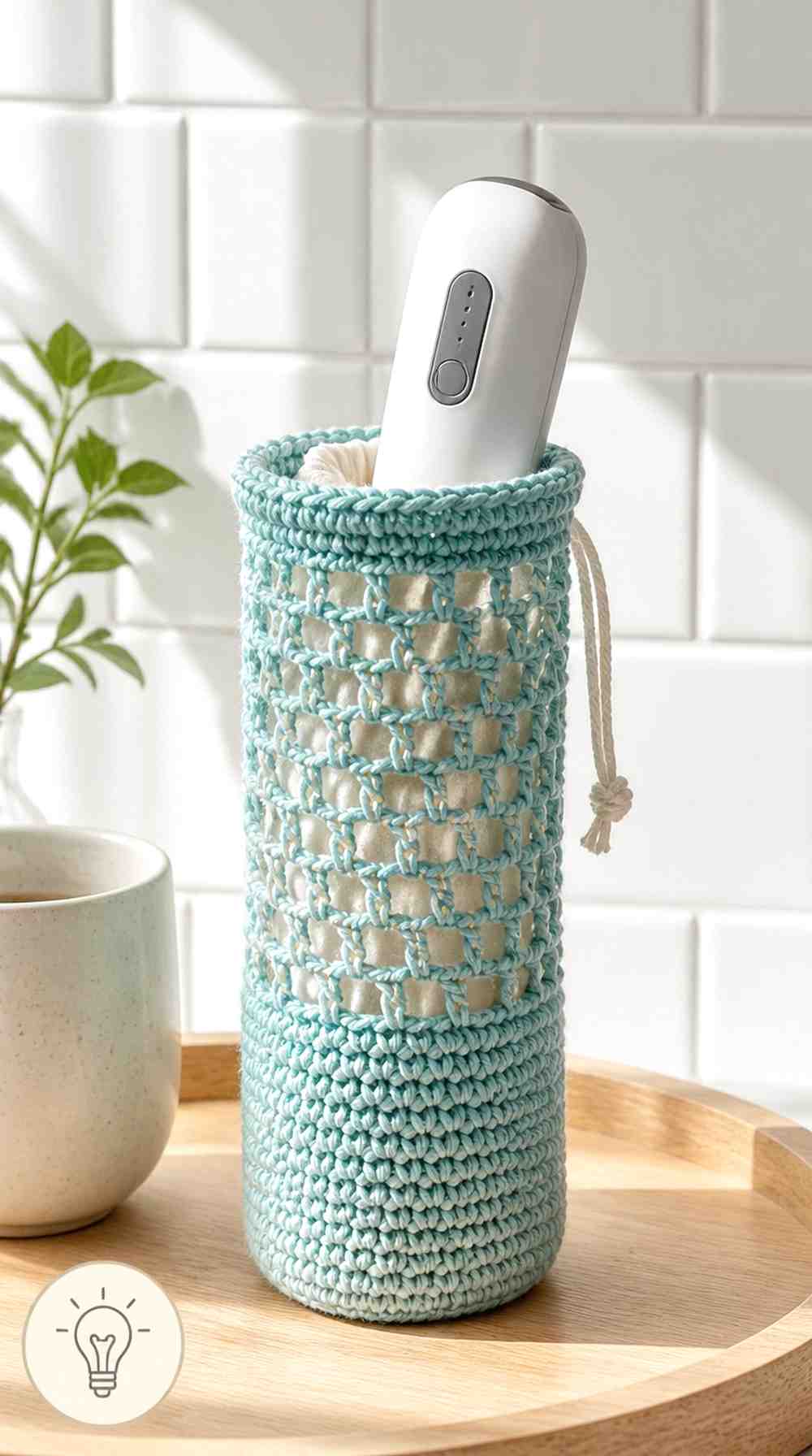
Seafoam-blue crochet adds an airy appearance to this slim storage pouch. The upper portion features evenly spaced mesh stitches, while a denser lower section gives the shape a more solid base. A cream removable cotton pouch shows through the open crochet loops, creating a layered look.
The visible mesh provides texture without leaving the frother directly against large crochet openings. This is especially relevant when storing an appliance with a wire whisk, because loose open stitches may catch on metal parts. The inner pouch would need to be properly fitted.
- Mesh placement: Keep the open crochet section away from direct contact with the whisk; the inner pouch should separate the metal attachment from those loops.
- Layer removal: A removable cotton lining allows the inner surface to be inspected and cleaned separately from the decorative outer sleeve.
- Drying considerations: The layered design is not automatically ventilated. Both fabric sections and the cleaned frother should be fully dry before storage.
12. Crochet Mocha Waffle Cup Sleeve
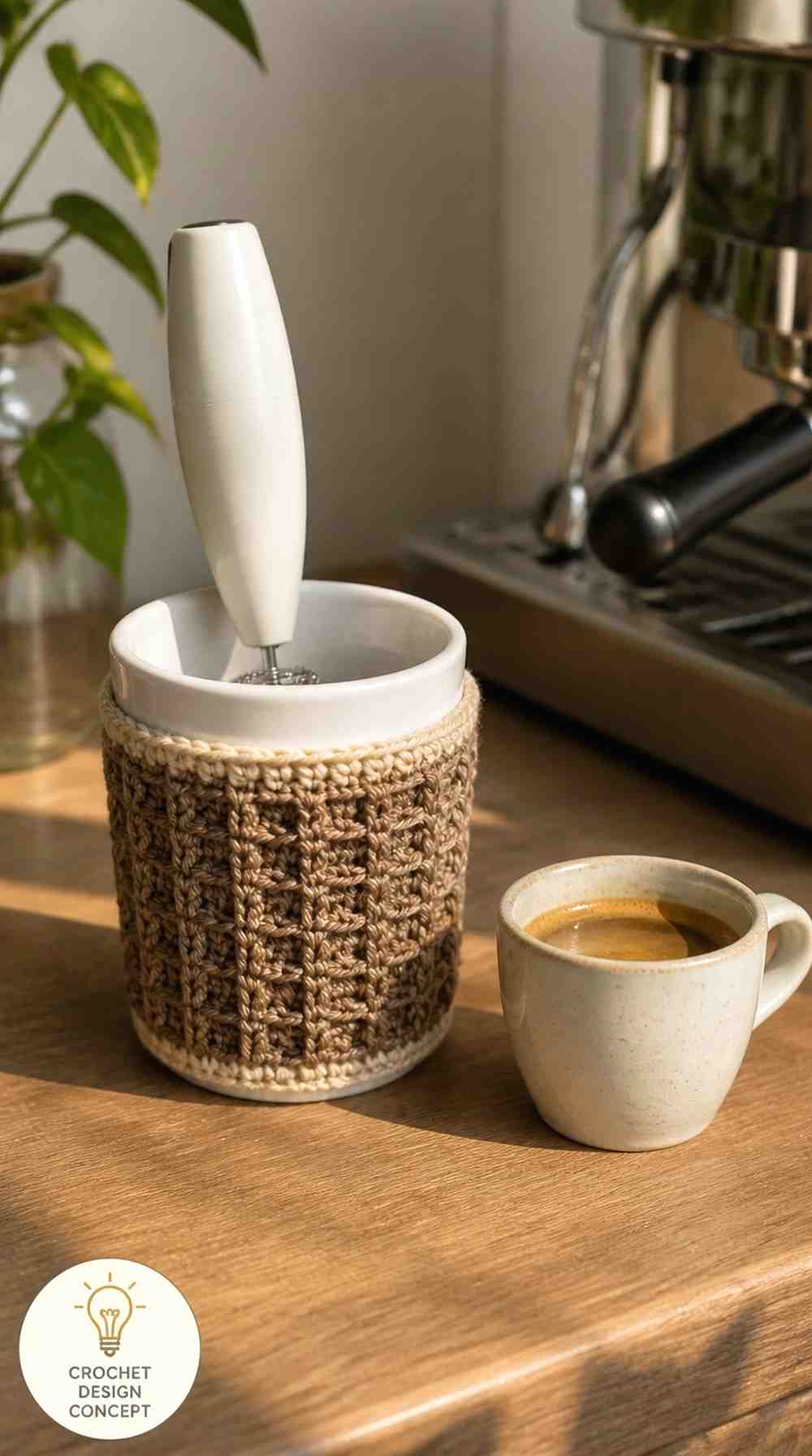
Mocha-brown waffle crochet wraps around a small white ceramic storage cup in this countertop design. The raised stitch pattern creates a tidy grid of texture, while a narrow beige border finishes the upper edge. The milk frother stands inside the rigid cup, with its white handle above the opening.
Here, the crochet belongs to the storage container rather than directly covering the appliance. That distinction makes it useful for readers who like the appearance of crochet but prefer a firmer upright holder. The ceramic cup provides the shape, while the crochet becomes a removable decorative sleeve.
- Cup stability: Select a rigid container with a sufficiently stable base and appropriate height for the actual frother; a narrow cup may tip.
- Waffle texture: Raised crochet stitches should be evenly structured so the outer wrap lies comfortably around the ceramic wall without excessive bulk.
- Cleaning access: A removable crochet cover lets the ceramic container be cleaned separately, important if the whisk touches the inside during storage.
13. Crochet Blush Daisy Storage Sleeve
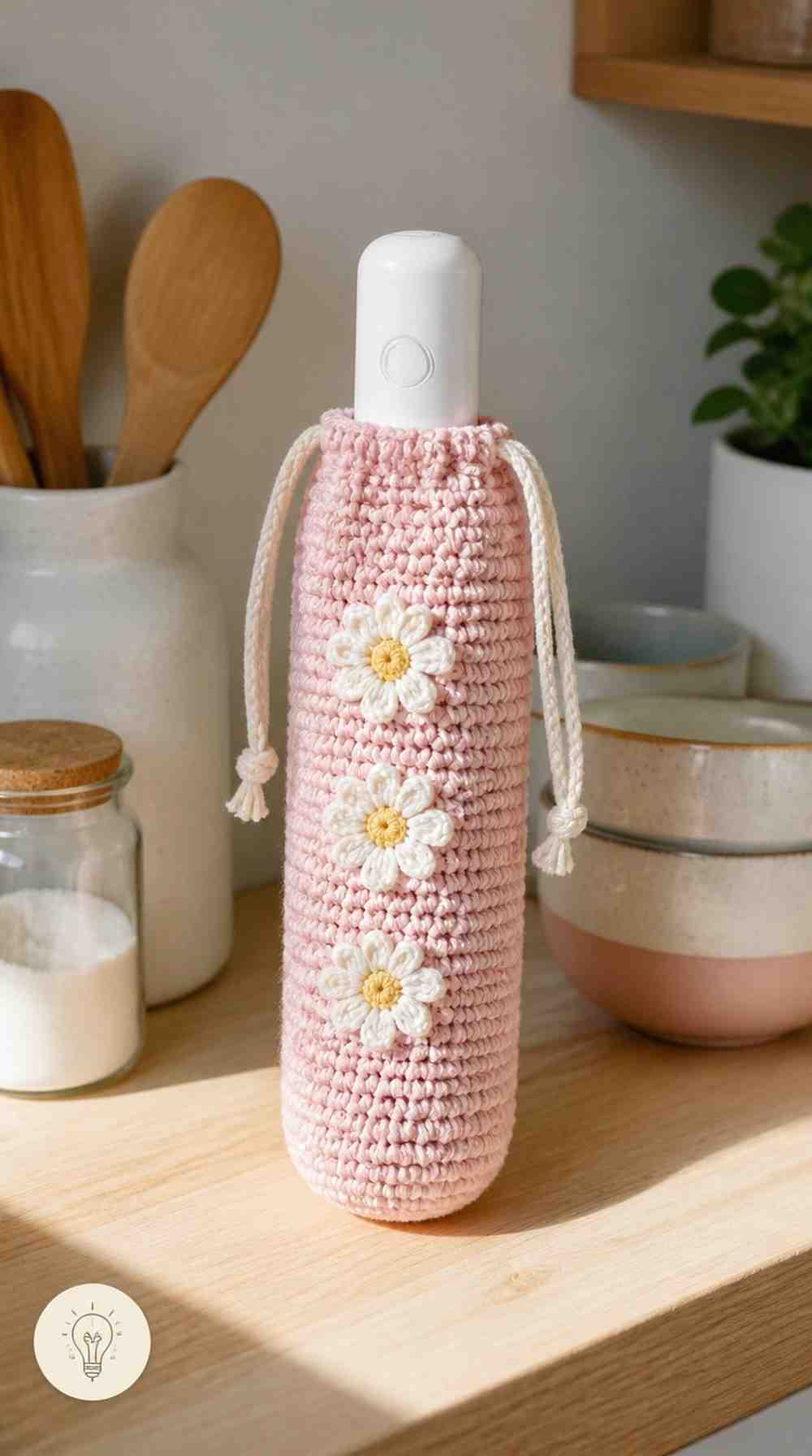
Blush-pink crochet gives this narrow pouch a soft finish, with three small crocheted daisies arranged down its front. Each flower has cream petals and a yellow center. A cream drawcord runs through the upper rim, while the milk frother handle remains visible above the opening.
This idea adds a playful floral detail without changing the basic purpose of the storage pouch. It could suit a bright cottage-style coffee shelf or a handmade gift collection, although the attached flowers bring a little extra texture that may catch on surrounding objects.
- Flower positioning: Keep the daisies on the outer front rather than inside the pouch, where raised petals could interfere with inserting the appliance.
- Decorative attachment: Each small motif needs a secure connection to the crochet body so repeated handling does not loosen its edges.
- Drawer suitability: The raised flowers are better suited to open-shelf display than a tightly packed drawer where neighboring items may snag them.
14. Crochet Charcoal Folded-Cuff Sleeve
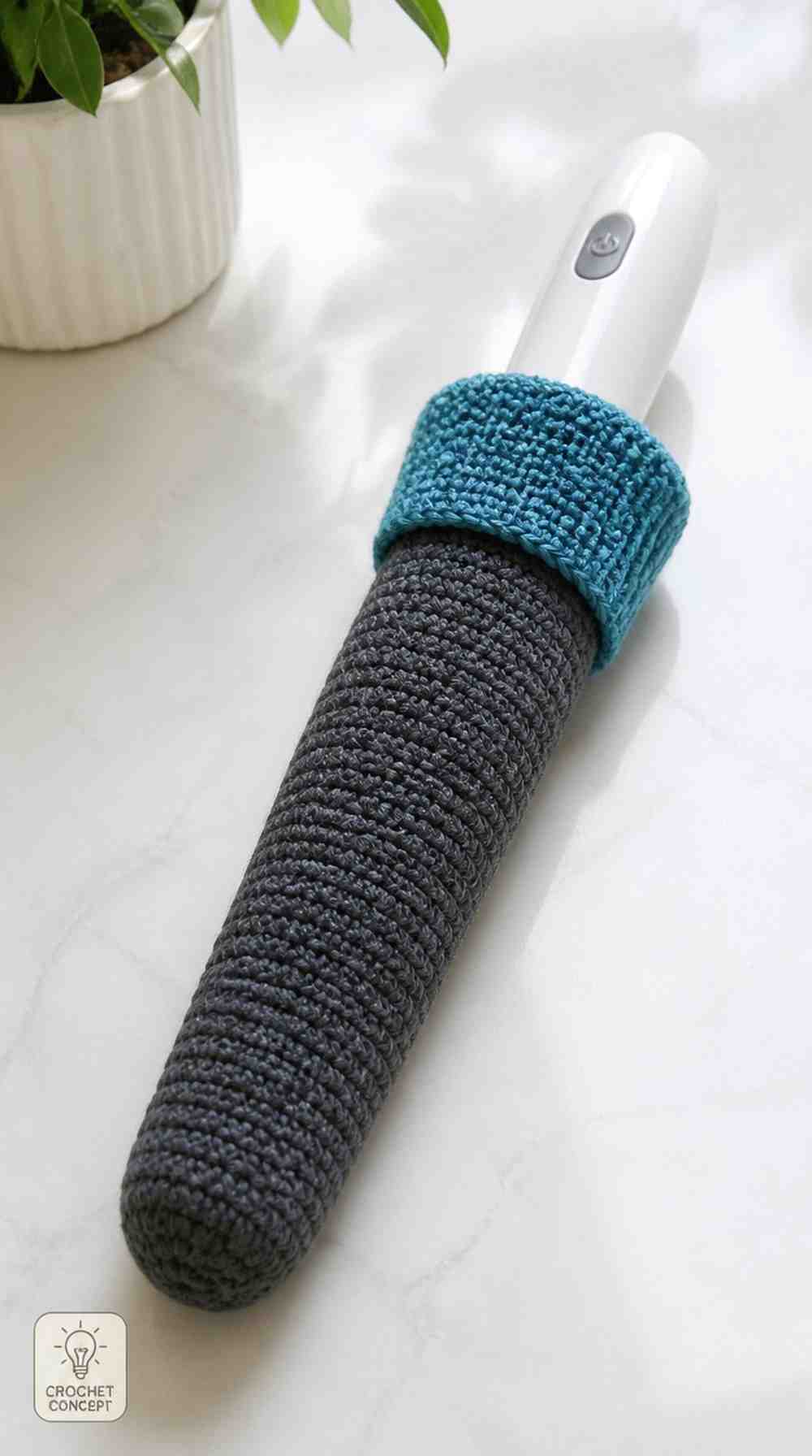
Charcoal-grey crochet creates a streamlined storage sleeve with a turquoise-blue folded cuff. The main body has close, evenly worked stitches and a gently tapered closed end. At the opening, the wider ribbed cuff adds a strong contrasting detail while holding its soft layered shape.
This design takes a simpler approach to storage because it has no buttons, zipper or drawcord. The frother slides into the sleeve through the cuff, making it worth exploring for someone who prefers a smooth outer surface without separate fasteners.
- Cuff elasticity: The ribbed opening should stretch enough for the handle to pass through without becoming so loose that the sleeve slides off unintentionally.
- Tapered end: Allow enough room for the whisk assembly inside the lower section. The taper should follow the appliance without squeezing the attachment.
- Storage direction: A flat drawer or shelf may suit this soft sleeve better than unsupported upright storage, since the crochet body has no rigid base.
15. Crochet Copper Roll-Up Storage Sleeve
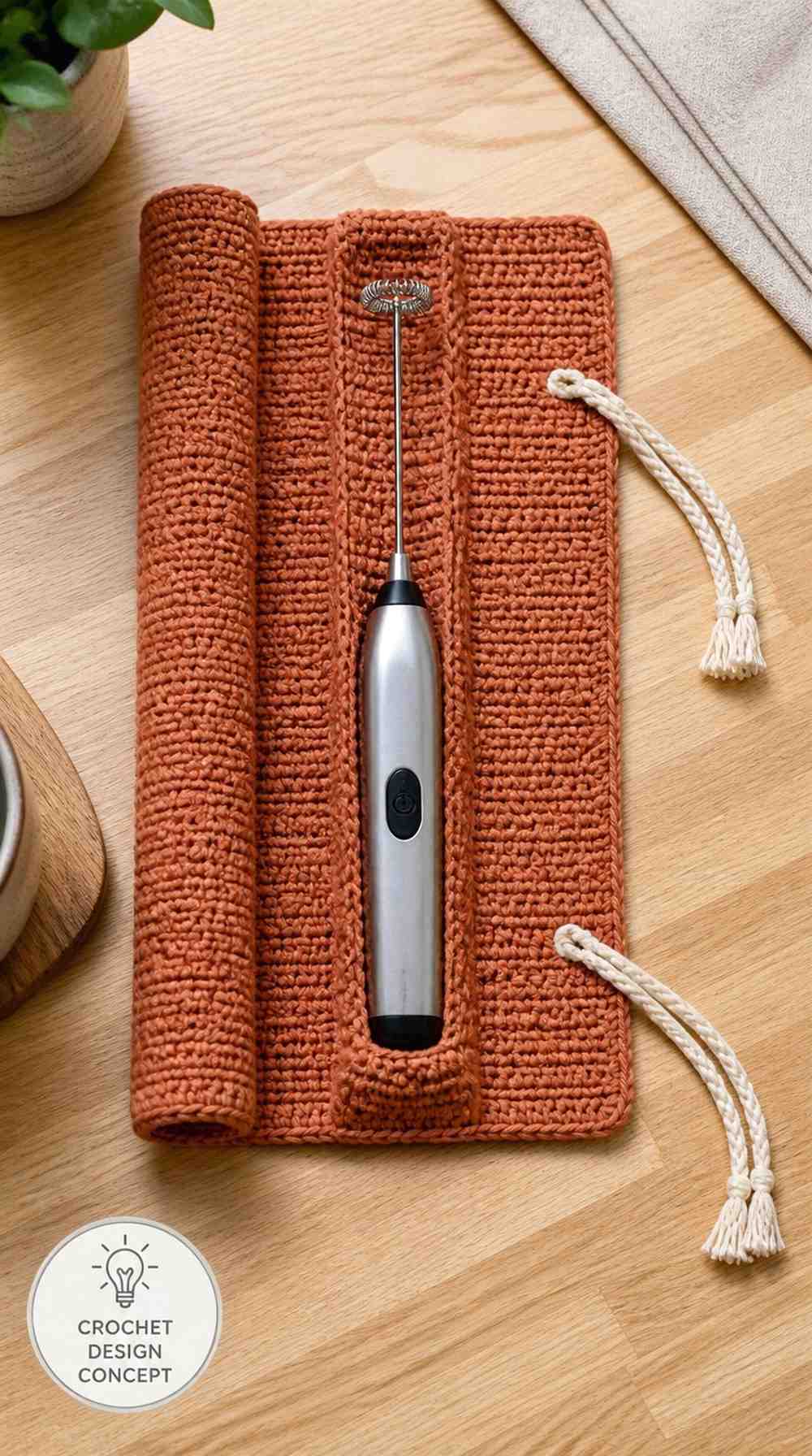
Copper-colored crochet forms a flexible rectangular organizer with a long central channel for the milk frother. Alternating textured rows give the panel gentle definition, and two cream braided ties are attached along its outer edge. The dry appliance lies inside the open channel, with its silver whisk visible.
Rather than inserting the frother into a closed pouch, this design allows the panel to fold or roll around it after cleaning and drying. Its wider opening also makes the appliance easier to inspect before storage, although the ties and fabric should never contact a moving whisk.
- Roll direction: The panel should wrap without forcing the appliance into a sharp bend or pressing heavily against the delicate whisk attachment.
- Tie placement: Position both ties so they secure the outer panel without tightening directly around the metal whisk head.
- Storage space: A rolled holder may be bulkier than a slim pouch, but opening the panel gives better access to the entire appliance.
16. Crochet Espresso Dual-Compartment Sleeve
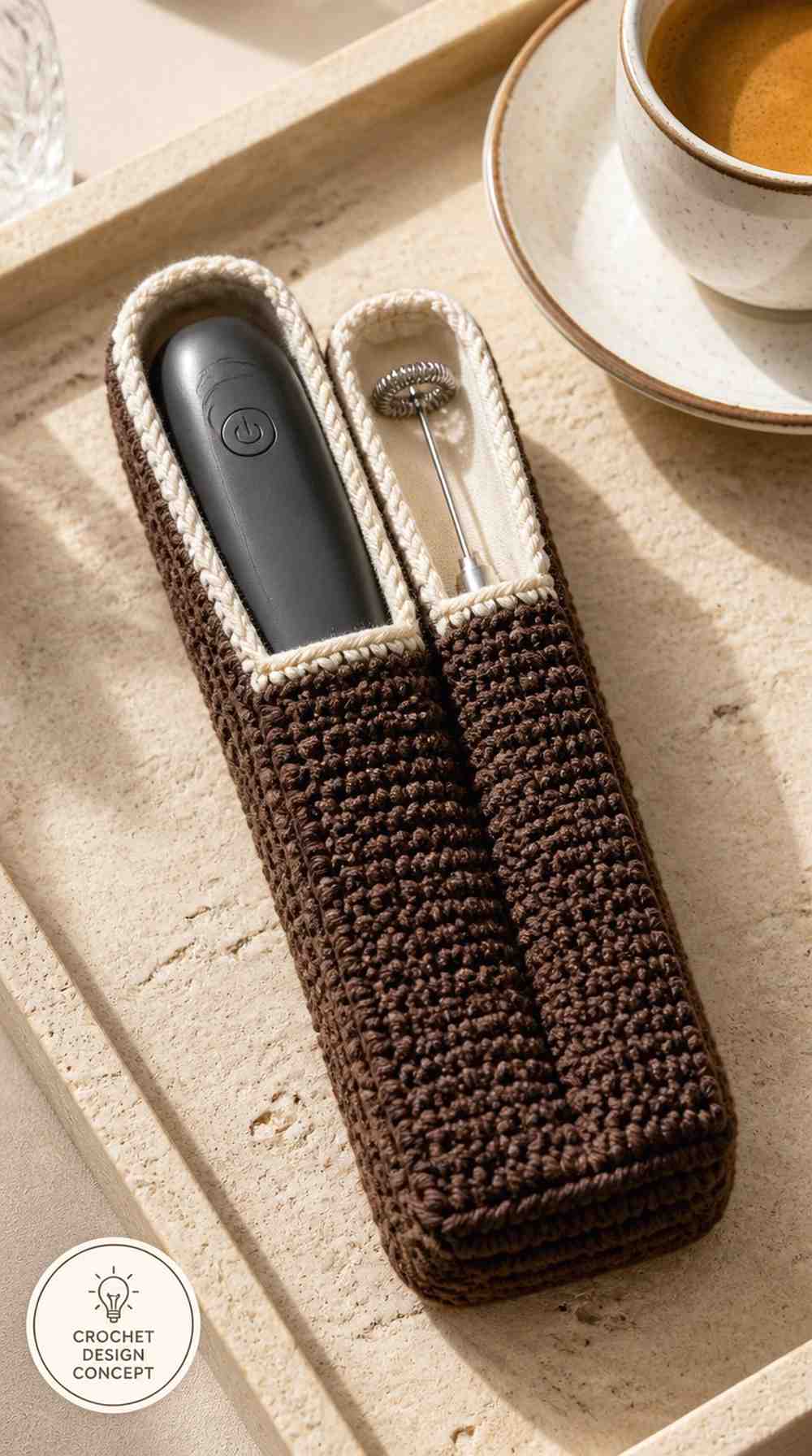
Deep espresso-brown crochet gives this organizer a tidy, practical appearance. It has two narrow compartments joined side by side, each with a smooth ivory lining and cream-edged opening. The larger compartment holds the motor handle, while the smaller one stores a separate metal whisk attachment.
This concept is specifically for a handheld frother with a detachable whisk that its manufacturer allows users to remove. Keeping the parts in neighboring compartments could make them easier to organize, but the design would not suit a frother whose whisk is permanently attached.
- Model compatibility: Confirm that the frother actually has a removable whisk attachment. Never attempt to pull apart a fixed appliance to use this storage arrangement.
- Compartment sizing: The narrow pocket must fit the complete attachment without bending its wire loops, while the wider section accommodates the motor handle.
- Separate lining: Smooth lining in both compartments may help keep the metal attachment away from loose crochet stitches and rough joined edges.
Practical Guide to Crochet Milk Frother Storage Sleeves
Before choosing a crochet sleeve, consider how your milk frother is designed, how frequently you use it and where you normally keep it.
Measure the actual appliance. Handheld frothers vary in motor-handle shape, length and whisk attachment. Measure the complete device, including its widest sections, before choosing a pouch shape. A sleeve should accommodate those parts without forcing them into position.
Choose the right crochet fabric. Close, even stitches can create a more controlled pouch shape, while ribbing offers some flexibility around a handle. Decorative lace and mesh are best kept away from direct contact with delicate whisk wires unless there is a smooth inner layer.
Clean and dry before storage. Follow the appliance manufacturer’s cleaning instructions, and let the whisk and other permitted washable parts dry thoroughly. Never cover a wet attachment with crochet fabric. Keep yarn away from active moving parts, electrical contacts and charging connections. Remove fitted textile covers before operating or charging unless the manufacturer explicitly permits them.
Think about removal and cleaning. Cotton may be a useful material to consider for removable sleeves, but washing and drying requirements depend on the actual yarn and construction. Separate fabric liners can make some enclosed designs easier to maintain.
Check hanging and countertop stability. Hanging loops, rails and wall pegs need reliable support. Upright containers should have stable bases. Crochet should not be treated as a protective barrier against heat, spills, impact or electrical hazards.
For another take on storing long kitchen tools, see these crochet rolling pin protective sleeve inspiration ideas, which explore different openings and storage shapes.
Want to Make Something Similar?
These images are design concepts, so there may not be an existing pattern that recreates any one of them exactly. However, a few established crochet techniques can help you explore the shapes and finishes.
- Drawstring construction: VivCrochets’ basic crochet drawstring pouch pattern and video teaches a small pouch with a gathered opening. Its shape would need considerable resizing and adjustment for a milk frother.
- Adding zippers and lining: Nordic Hook’s tutorial for sewing a zipper and lining into a crochet pouch explains how to finish a crocheted case by hand. This is relevant to the Navy Zippered Travel Sleeve concept.
These are related construction resources, not exact patterns for the pictured designs. Always adapt the finished shape to the appliance and its manufacturer’s storage guidance.
Which Crochet Milk Frother Storage Sleeve Should You Choose?
| Storage need | Design to consider | Main consideration |
|---|---|---|
| Simple drawer organization | Oatmeal Drawstring Wand Pouch | Easy opening, soft construction |
| Original stand display | Terracotta Ribbed Stand Sleeve | Leaves the metal whisk exposed |
| Wall storage | Dusty Blue Wall Pocket Sleeve | Requires a dependable hanging point |
| Easy side access | Olive Side-Button Wrap Sleeve | Buttons and loops need careful positioning |
| Decorative enclosed storage | Ivory Lace-Panel Lined Sleeve | Inner lining needs to fit smoothly |
| Flap closure | Coral Foldover Envelope Sleeve | Avoid pressure from the toggle |
| Zippered case | Navy Zippered Travel Sleeve | Not a tested impact-protection case |
| Hanging from a rail | Mustard Rail-Hung Frother Sleeve | Requires balanced support |
| Adjustable ties | Lilac Bow-Tied Split Sleeve | Loose ties must stay away from moving parts |
| Colorful joined crochet | Cocoa Checkerboard Storage Sleeve | Interior seams may add bulk |
| Open decorative stitches | Seafoam Mesh-Panel Storage Sleeve | Smooth lining separates whisk from mesh |
| Upright countertop display | Mocha Waffle Cup Sleeve | Depends on a stable ceramic cup |
| Floral decoration | Blush Daisy Storage Sleeve | Appliqués can snag in crowded drawers |
| Fastener-free storage | Charcoal Folded-Cuff Sleeve | Cuff fit matters |
| Full opening access | Copper Roll-Up Storage Sleeve | Can take more drawer space |
| Detachable whisk storage | Espresso Dual-Compartment Sleeve | Only suits compatible models |
For a frother used several times each day, an accessible stand arrangement or properly supported hanging pocket may be the most convenient option. For a frother used less frequently, a clean, dry, lined storage pouch can help keep its parts organized without leaving them permanently on the counter.
Conclusion
Crochet milk frother storage sleeves can bring a small handmade detail to a coffee station while exploring different ways to organize a surprisingly awkward kitchen tool. A simple drawstring pouch may be all that is needed, while hanging pockets, foldover covers and lined cases offer other possibilities. The most useful design is the one that fits your actual frother, allows easy removal and does not interfere with cleaning, drying or safe operation. Let the crochet texture and colors complement the way you already use your kitchen.
Which design would you choose for your coffee station? Would you prefer the simple oatmeal drawstring pouch, the dusty-blue hanging pocket or the copper roll-up organizer? Share your favorite style and where you would keep it.
Frequently Asked Questions
1. Can a crochet sleeve be used with any handheld milk frother?
Not automatically. Milk frothers come in different shapes, lengths and attachment styles. A storage sleeve should be planned around the actual appliance, including its switch, whisk and charging connections if present. A removable storage cover is different from a cover intended to remain on the device during operation.
2. What yarn is suitable for a crochet milk frother storage sleeve?
A smooth cotton yarn may be a practical option for a removable storage pouch because it can provide clear stitch definition and comes in many colors. However, suitability depends on the specific yarn, construction and cleaning instructions. Avoid assuming any crochet fabric is heat-resistant, waterproof or safe against electrical components.
3. Should the milk frother whisk be covered with crochet?
A clean, completely dry whisk can be stored within an appropriately designed pouch, but exposed crochet loops may snag its metal wires. A smooth lining or suitably shaped inner compartment is worth considering. Never place yarn against an operating whisk, and do not force an attachment into a narrow sleeve.
4. Are hanging crochet storage sleeves better than countertop sleeves?
Neither is automatically better. Hanging sleeves can free up counter space, but require a dependable mounting point and a safe location away from splashes or heat. Countertop arrangements may provide quicker access, especially when they use a stable existing stand. The best choice depends on the kitchen layout and appliance.
5. Are these 16 crochet milk frother storage designs available as patterns?
These are inspiration concepts rather than tested patterns or instructions for finished products. The images illustrate possible shapes, colors and crochet details. Related pouch, lining and zipper tutorials can help with general techniques, but a real storage sleeve must be adapted to the specific frother and checked for fit and safe use.