Collecting paint color sample cards is an easy way to explore ideas for bedrooms, kitchens, living rooms and furniture makeovers. The trouble begins when those little cards get mixed together in drawers, bags or piles of decorating supplies. These 15 crochet paint color sample card binder inspiration ideas explore creative ways to keep paint swatches organized in compact books, clear-pocket albums and foldout portfolios, with different crochet textures, colors and cover styles.
Some designs focus on sorting sample cards by color family, while others make it easier to compare several shades side by side. You’ll find traditional ring binders, small swatch fans, transparent storage pages, decorative granny-square covers and portable mini albums. Whether you’re planning one room or collecting colors for future decorating projects, these concepts offer different ways to protect paper samples, keep related shades together and find your favorite colors again.
These are AI-generated crochet design visualizations for inspiration, not photographs of tested handmade pieces or step-by-step patterns.
Quick Design Selection Guide
- For an everyday decorating collection: Crochet Burnt Coral Three-Ring Swatch Binder provides a familiar binder format with removable transparent pages.
- For keeping samples visible: Crochet Oatmeal Clear-Pocket Swatch Album organizes individual cards behind clear vinyl.
- For comparing a few colors together: Crochet Mustard Twin-Ring Swatch Fan Binder lets protected sample strips spread into a fan.
- For sorting by color family: Crochet Dusty Blue Color-Family Tab Binder uses separate divider tabs for different groups.
- For traveling to a paint shop: Crochet Butter Yellow Pocket-Size Four-Ring Binder offers a smaller format for selected swatches.
- For working at a desk: Crochet Copper Fold-Out Desktop Swatch Binder presents color samples on a supported upright display.
1. Crochet Burnt Coral Three-Ring Swatch Binder
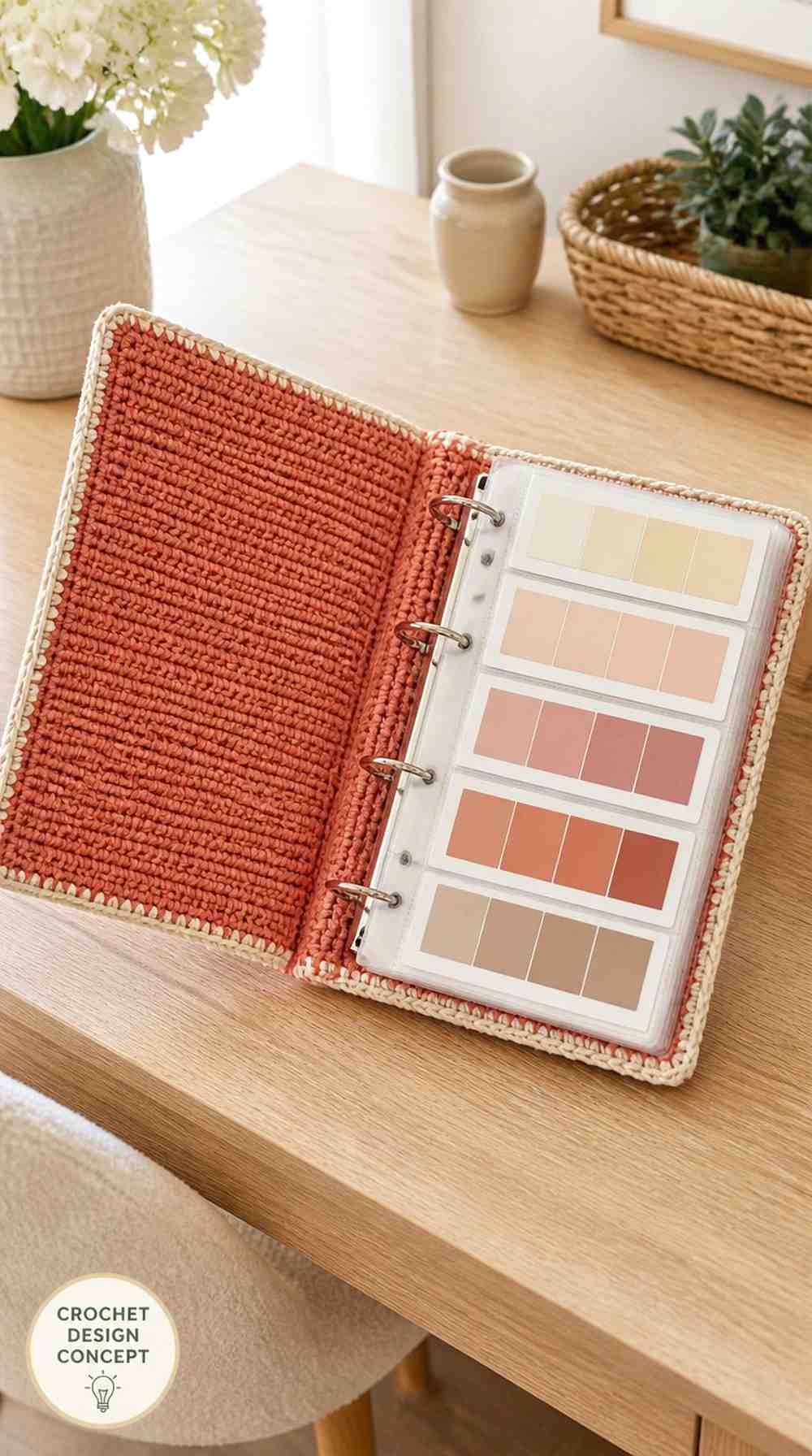
Burnt-coral crochet gives this compact paint sample binder a warm, inviting appearance. Fine horizontal stitches cover the rigid exterior, while a narrow ivory border finishes the edges. Inside, three silver rings hold transparent pages filled with cream, beige, rose and terracotta color sample cards.
The familiar ring-binder format makes this concept useful for a growing collection. Individual pages can be moved or replaced without rebuilding the entire crochet cover, provided the inserts match the binder’s ring spacing and the cover fits its actual dimensions.
- Binder sizing: Measure the closed binder’s front, back, spine and thickness before planning a fitted crochet cover.
- Removable pages: Choose punched inserts that match the three-ring mechanism rather than forcing differently spaced holes onto the rings.
- Swatch protection: Clear pockets can help keep loose cards together, but remove samples for closer color evaluation if the plastic changes their appearance.
2. Crochet Oatmeal Clear-Pocket Swatch Album
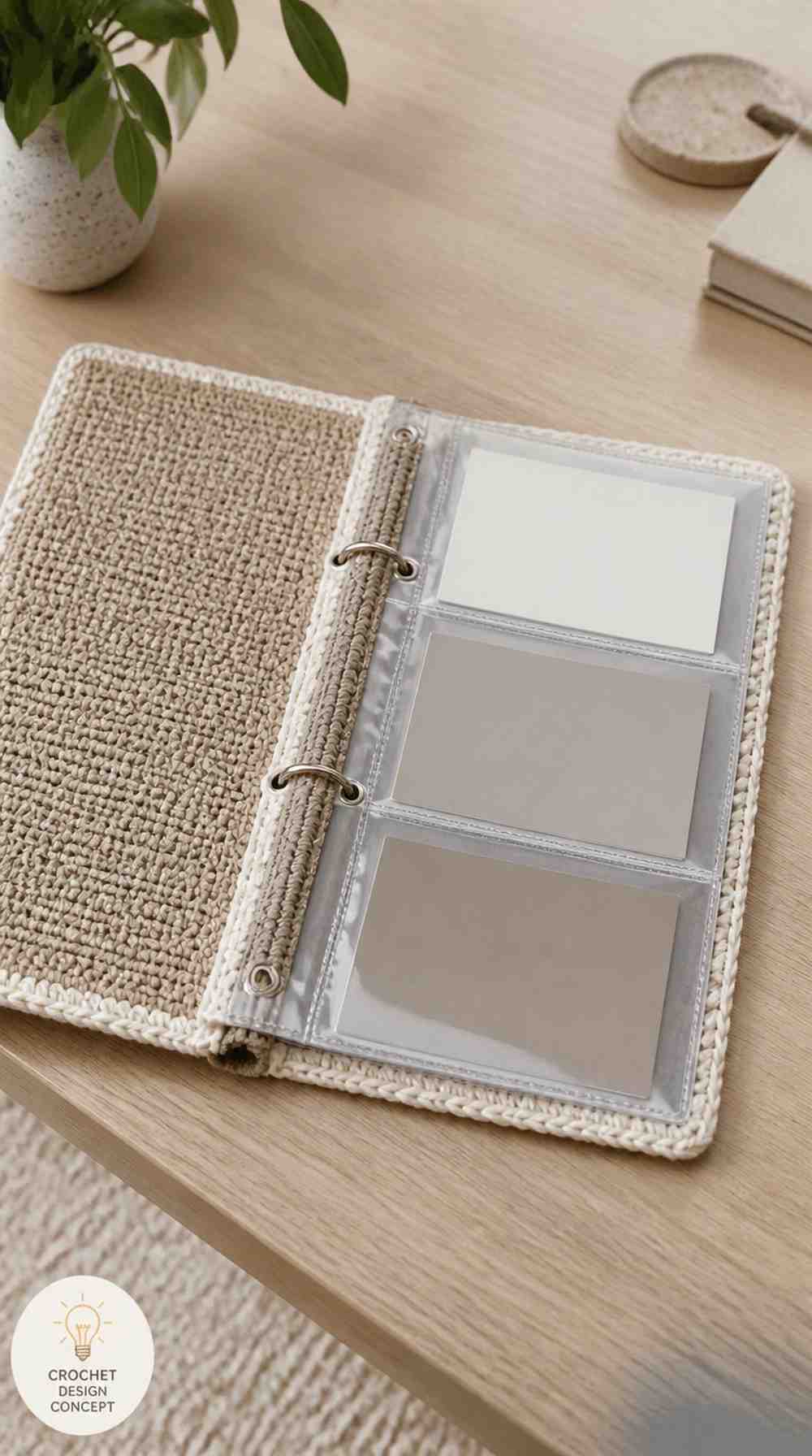
Warm oatmeal crochet creates a soft, neutral album with a cream border and a reinforced spine. Two metal rings hold several transparent pocket pages, each displaying small sample cards in whites, greys, taupe and sandy beige. The clear pockets make individual shades visible without removing the entire page.
This design is particularly appealing for neutral paint collections, where very similar colors can be difficult to recognize in a mixed pile. Each sample has its own compartment, making it easier to return cards to their original positions after comparing them.
- Pocket dimensions: Match the transparent compartments to the actual sample-card width and height, allowing enough room for removal without bending.
- Transparent material: Clear vinyl or suitable card sleeves may help with storage, but reflections and plastic tint can affect visual comparisons.
- Neutral cover: Oatmeal crochet creates a quiet exterior, although accurate paint-color decisions should be made under suitable lighting with the samples outside the pockets.
3. Crochet Navy Accordion Paint Swatch Portfolio
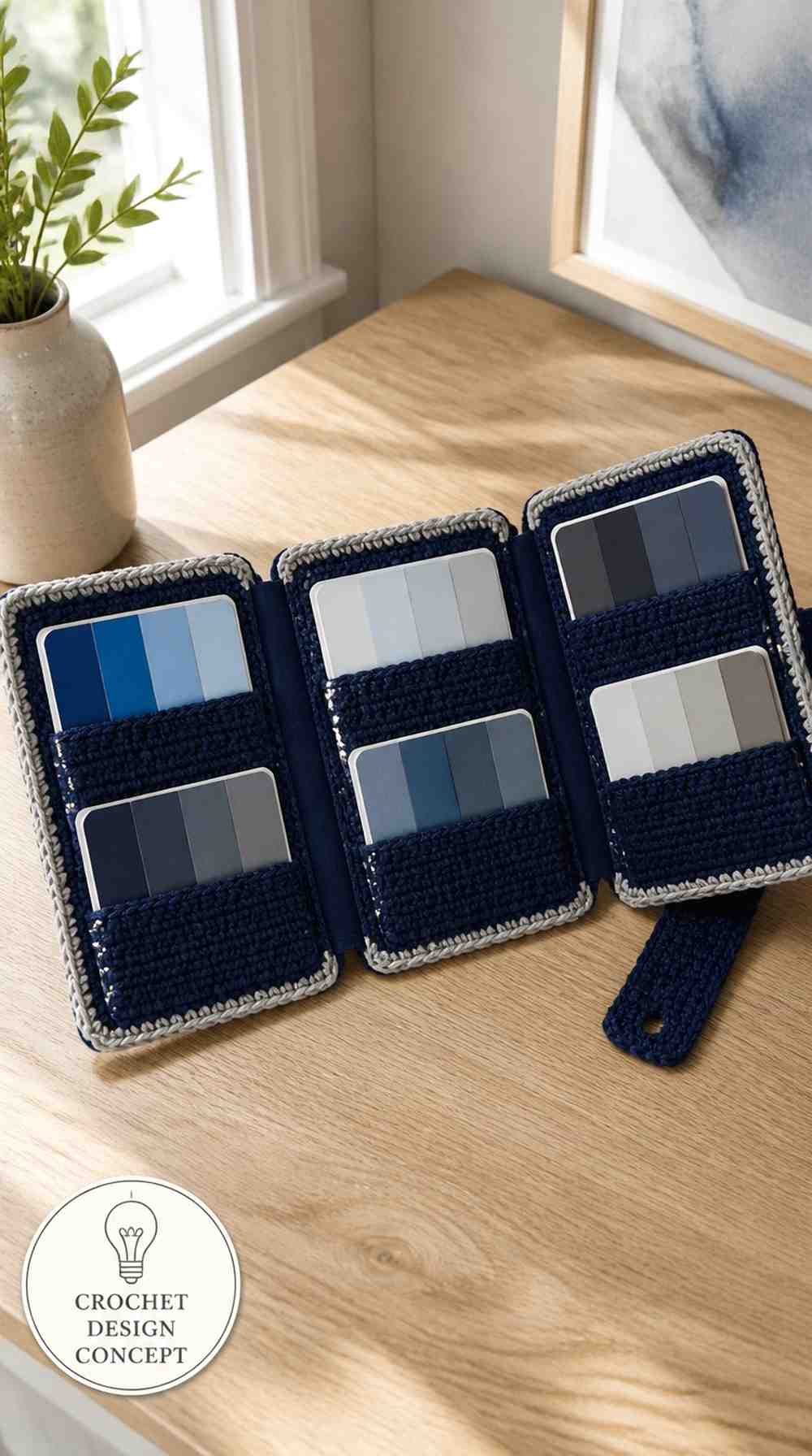
Midnight-navy crochet forms a three-panel foldout portfolio with silver-grey edging and cream-lined sample pockets. Soft fabric hinges connect the panels, allowing the organizer to open across a decorating desk. Blue, slate and grey paint sample strips sit in six separate shallow compartments.
Unlike a traditional ring binder, this design displays a small collection across one continuous surface. It could help someone narrow down several coordinating shades for one room without turning pages repeatedly, provided the accordion panels remain flat when fully opened.
- Folding clearance: Leave enough space around both fabric hinges so the panels close without creasing or pressing against the paper samples.
- Pocket depth: A shallow pocket should secure the bottom of each strip while leaving most of its painted color area uncovered.
- Desk space: The trifold format needs a wider working area when opened, even though it can fold into a compact storage shape.
4. Crochet Mustard Twin-Ring Swatch Fan Binder
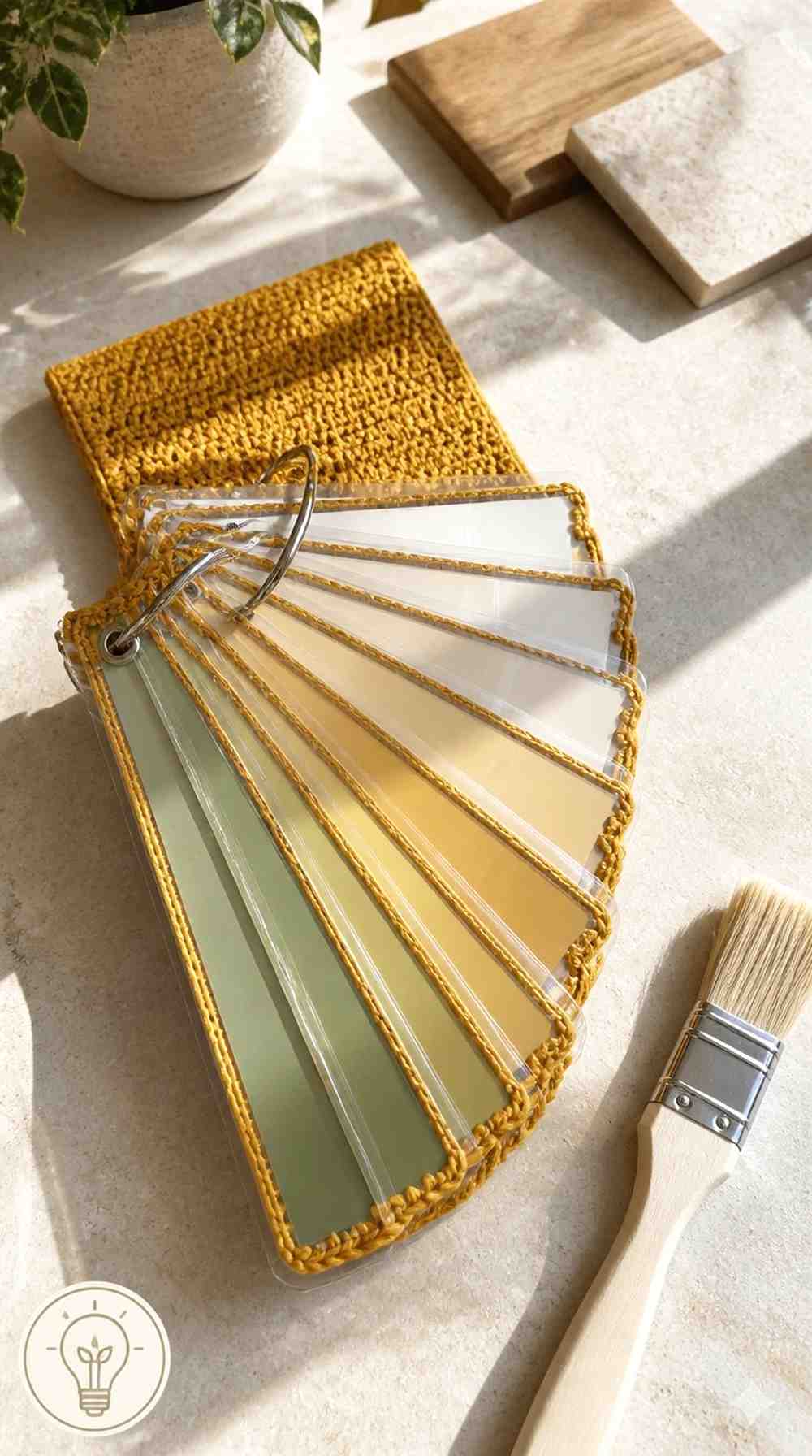
Mustard-yellow crochet adds a cheerful finish to this compact swatch fan. Individual color sample strips sit inside narrow transparent sleeves edged with fine yellow crochet. Two small silver binder rings connect the protected strips at one end, allowing the cards to spread outward for comparison.
The fan arrangement offers a different way to view coordinating shades without carrying a full album. Yellow, ochre, cream and muted-green samples can be brought together in one hand, although the rings and protective sleeves need careful sizing to keep the cards aligned.
- Ring spacing: Use reinforced holes that match the two metal rings so the sample sleeves can turn without tearing around their edges.
- Fan movement: Leave enough clearance near the ring ends for the strips to spread smoothly instead of bunching together.
- Color comparison: Remove individual cards when necessary to avoid judging subtle shade differences through reflective plastic or against the mustard cover.
5. Crochet Dusty Blue Color-Family Tab Binder
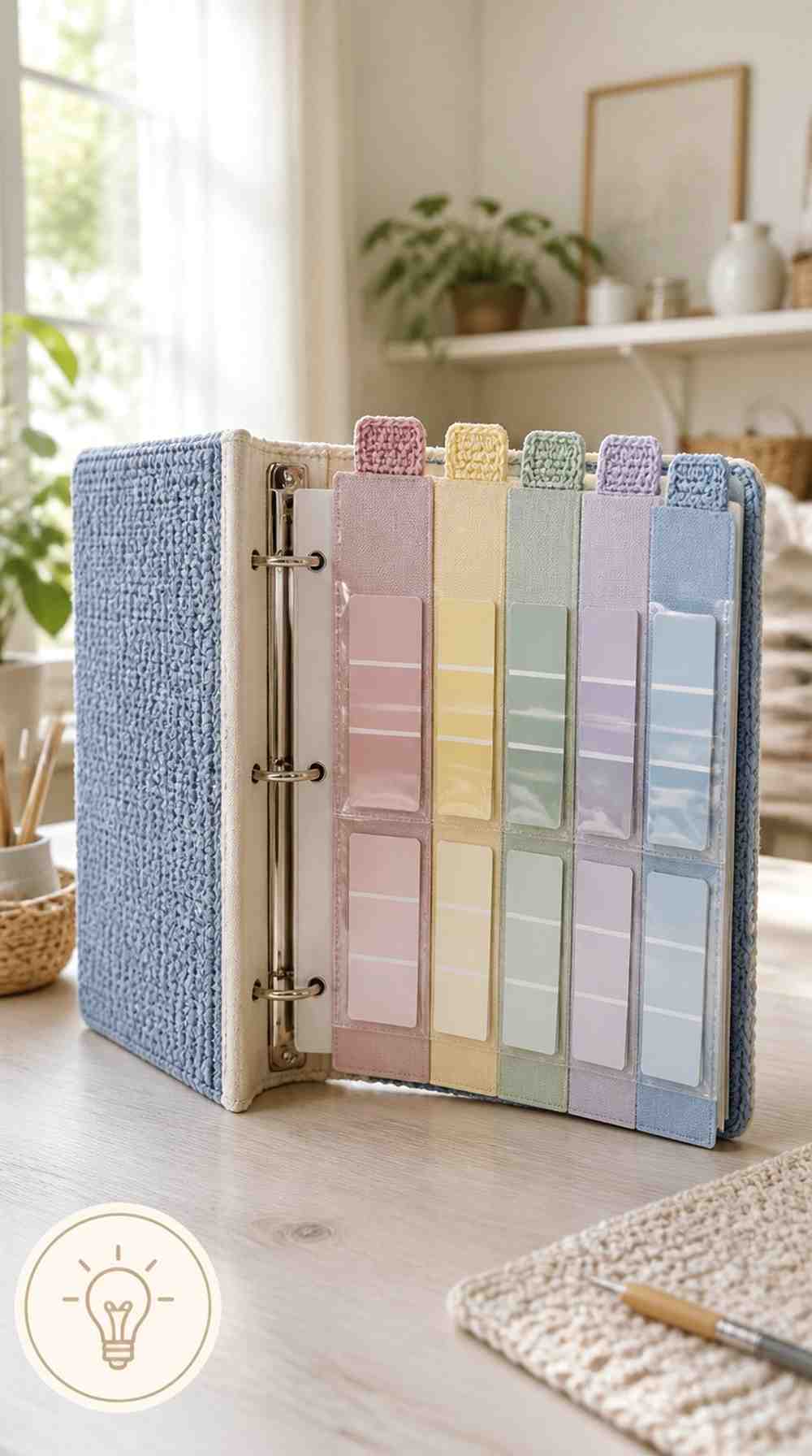
Dusty-blue crochet creates a neat binder cover with a cream reinforced spine. Five small colored tabs project above the internal divider pages in muted rose, pale yellow, sage, lavender and blue. Transparent pockets hold the corresponding paint sample cards behind the dividers.
The color-family approach gives the collection a clear organization system. Rather than mixing all the samples together, each group has its own section. This could be especially useful when planning several rooms and returning to the same color choices over time.
- Divider categories: Group cards by a system that makes sense to you, such as warm neutrals, greens, blues, pinks and accent colors.
- Tab placement: Stagger the tabs so they remain visible when the binder is closed, without projecting so far that they bend in storage.
- Consistent filing: Return cards to their matching sections after comparing shades to avoid gradually rebuilding the same mixed pile.
6. Crochet Terracotta Granny-Square Paint Sample Binder
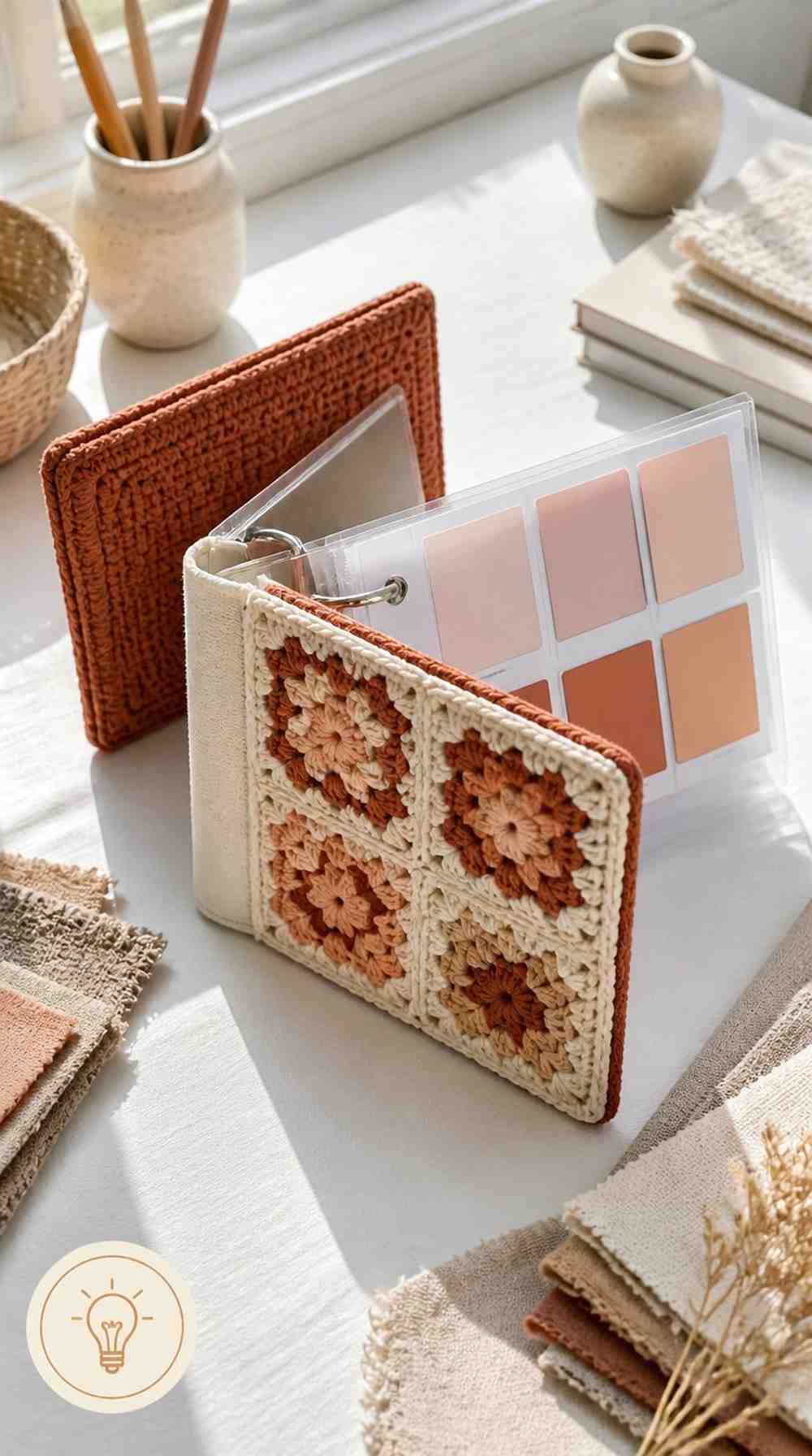
Terracotta and ivory granny squares bring a traditional handmade look to this compact paint sample binder. Four joined motifs decorate the front cover, while a plain terracotta back and reinforced cream spine wrap around the rigid binder. Inside, two silver rings hold transparent sleeves with peach, coral, clay and pink sample cards.
The granny-square exterior makes the binder attractive enough to leave on a decorating shelf. Its main purpose remains practical storage, however, so the raised crochet motifs should not interfere with opening the cover or turning the pages.
- Motif placement: Arrange the granny squares on the flat front rather than across the binder hinge, where bulky joins could restrict opening.
- Seam finishing: Keep the cream joining seams neat and secure so the cover doesn’t stretch unevenly around the rigid corners.
- Page capacity: Check that the two-ring mechanism has enough space for the intended transparent sleeves without forcing the binder to close tightly.
7. Crochet Olive Zip-Around Paint Card Binder
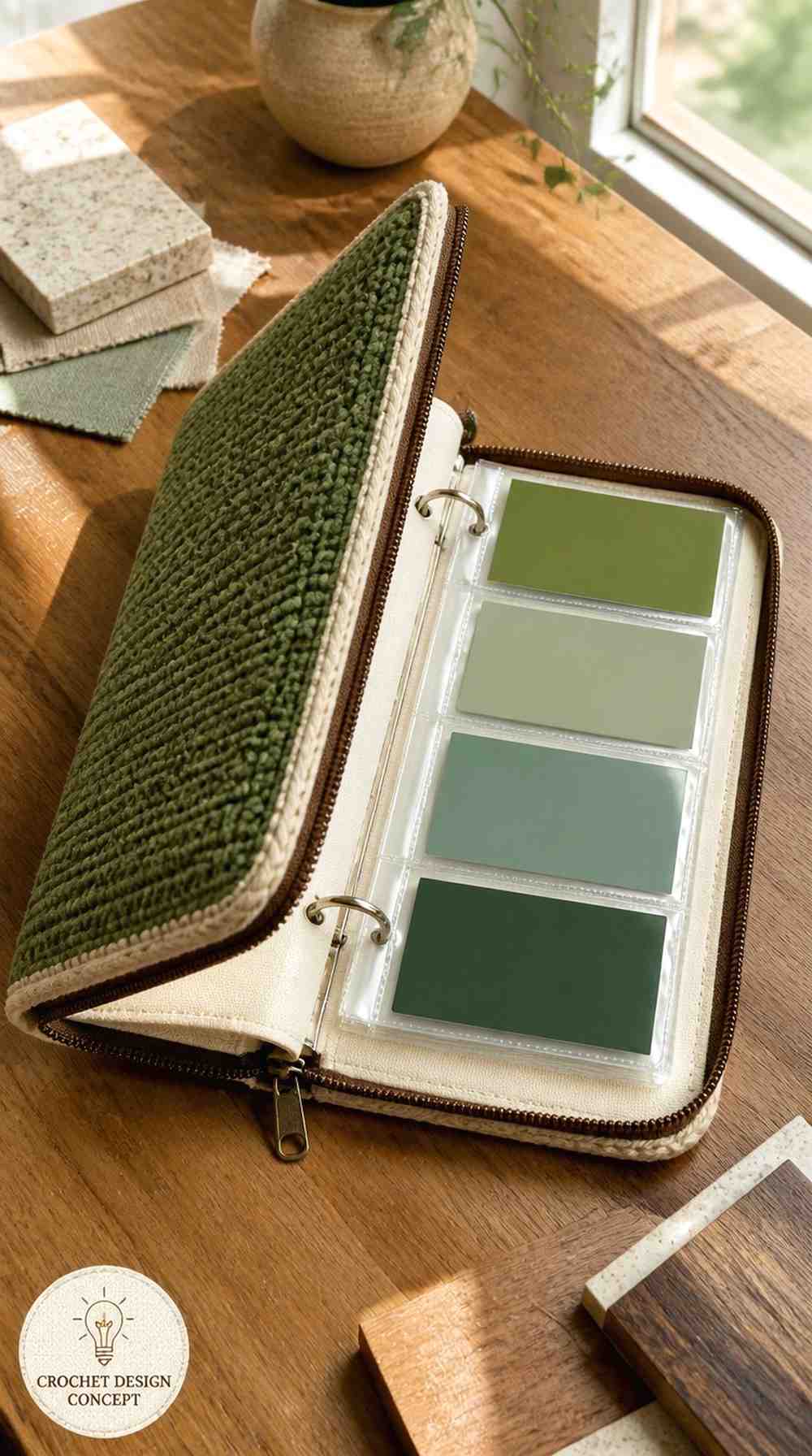
Olive-green crochet gives this zip-around binder a tidy, modern finish. A dark bronze zipper follows three outer edges, while beige piping frames the close-stitch cover. Inside, two metal rings hold clear pockets containing moss, sage, eucalyptus and darker green paint sample cards.
The zippered design offers a more enclosed storage format than an open binder. It could be convenient for moving a small collection between home and a decorating shop, although the zipper should close freely without catching the plastic sleeves or pressing against the contents.
- Zipper clearance: Leave enough space around the internal pages for the zipper to close without folding or damaging the sample cards.
- Cover structure: The crochet should fit over a suitable rigid binder rather than serving as the only support for the metal ring mechanism.
- Travel storage: A zippered binder can keep pages together, but it is not waterproof or guaranteed to protect paper from crushing.
8. Crochet Lilac Ribbon-Tie Sample Card Binder
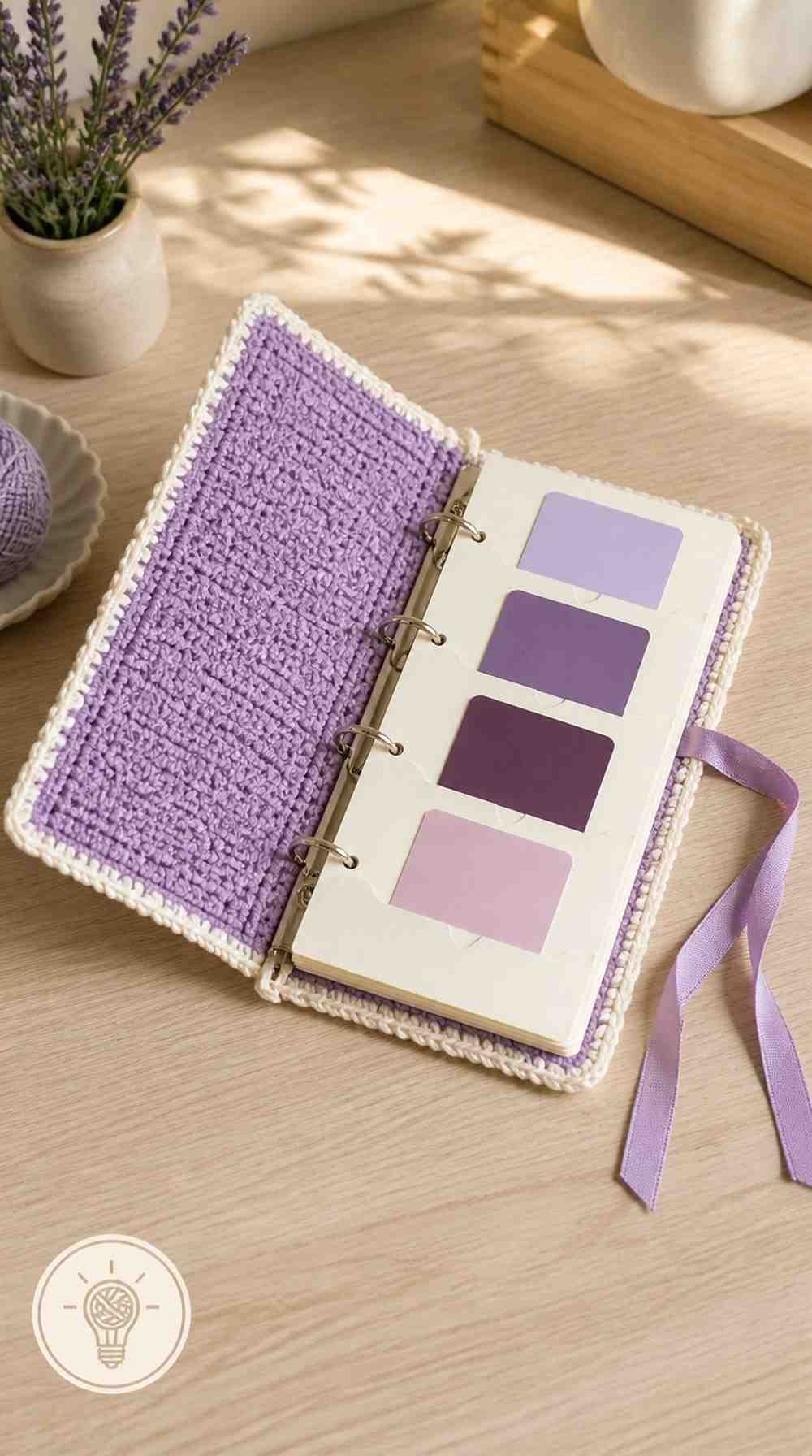
Lilac crochet creates a soft portfolio-style binder with fine moss stitches and a delicate ivory scalloped border. Two short lavender ribbons sit along the outer cover, while three metal rings hold cardstock pocket pages. Purple, plum and blush sample strips remain visible above the cream pocket openings.
The ribbon-tie finish makes this design more decorative than a standard binder. It could suit a personal decorating journal where a small selection of favorite shades is kept together, provided the ribbons are short enough to remain tidy during storage.
- Ribbon placement: Attach the ties at the cover edge rather than near the binder rings, where loose fabric could catch during page turning.
- Pocket openings: Keep the cardstock pockets shallow enough to reveal the actual color sections of the sample strips.
- Scalloped edging: Small, closely joined scallops can decorate the cover without projecting so far that they snag neighboring books.
9. Crochet Charcoal Checkerboard Modular Swatch Binder
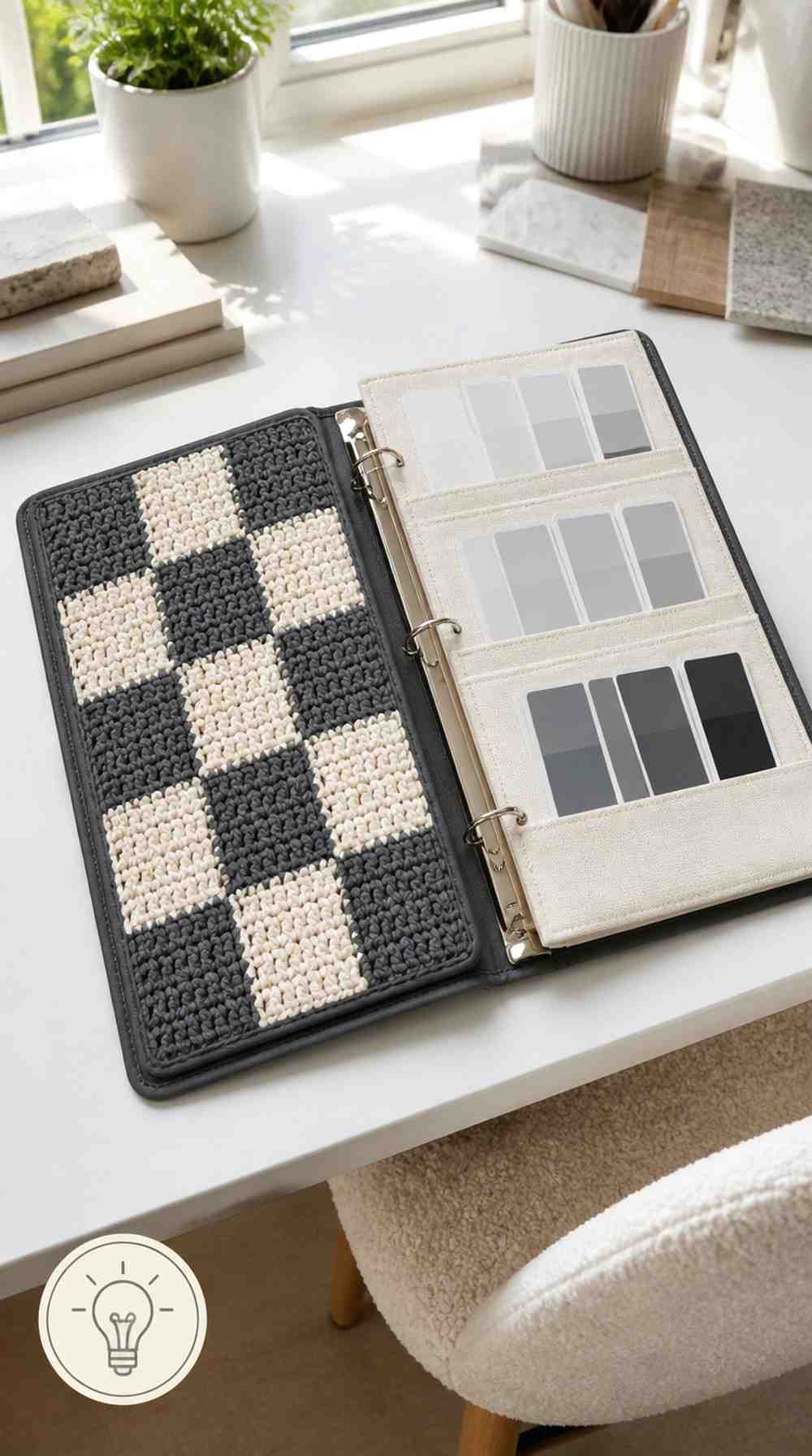
Charcoal-grey and ivory checkerboard crochet gives this binder a strong geometric look. Twelve small colorwork squares cover the rigid front, with a smooth charcoal spine connecting the two sides. Inside, removable fabric-backed pocket pages hold pale-grey, white and deeper charcoal paint samples.
This concept combines decorative colorwork with modular storage pages. It may suit someone who frequently adds or replaces sample cards, since the internal pages can be reorganized while the outer crochet cover stays the same.
- Checkerboard joins: Keep the colorwork squares flat and evenly aligned so the cover sits smoothly over the rigid binder.
- Removable modules: Use page holes compatible with the binder rings so individual pocket pages can be changed without damaging the crochet.
- Neutral sample groups: Separate whites, greys and near-black colors into clearly identified sections when comparing many similar neutral shades.
10. Crochet Teal Landscape Swatch Comparison Binder
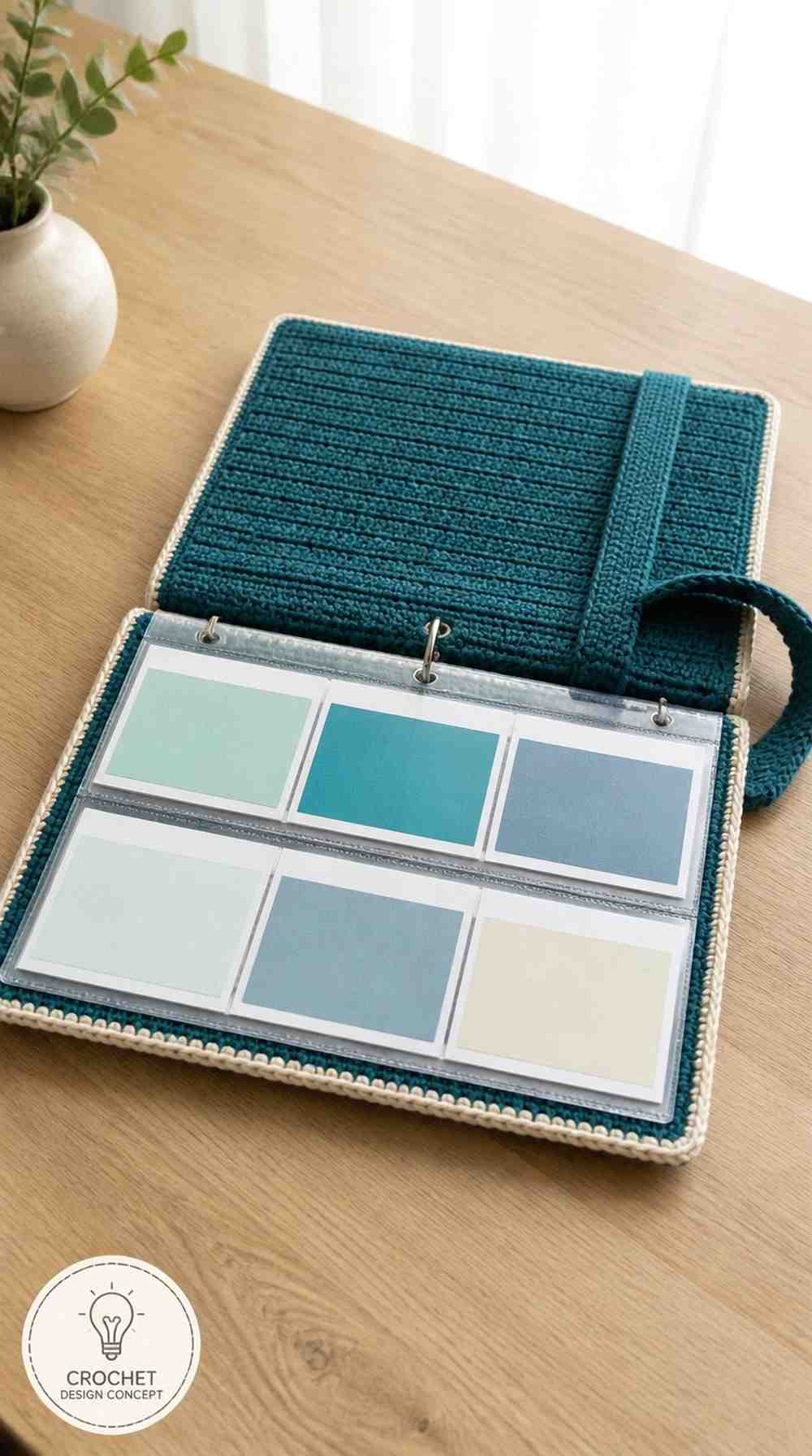
Deep-teal crochet forms a wide, landscape-format binder with a cream border and a short reinforced spine. Two silver rings support horizontal clear-pocket pages, each holding three paint sample cards side by side. Aqua, turquoise, dusty blue, slate and cream shades create a calm comparison layout.
The landscape orientation is especially useful for viewing several colors at once. Rather than stacking samples vertically, it places them beside one another, making it easier to think about possible combinations for walls, furniture and decorative accents.
- Side-by-side spacing: Leave a little space between the transparent pockets so cards can be removed without lifting neighboring samples.
- Landscape measurements: Check the page width and ring placement before making the crochet cover; a horizontal binder has different proportions from a standard notebook.
- Comparison limitations: Viewing colors together can help with planning, but confirm final choices with actual samples in the intended room and lighting.
11. Crochet Ivory Daisy Paint Swatch Folio
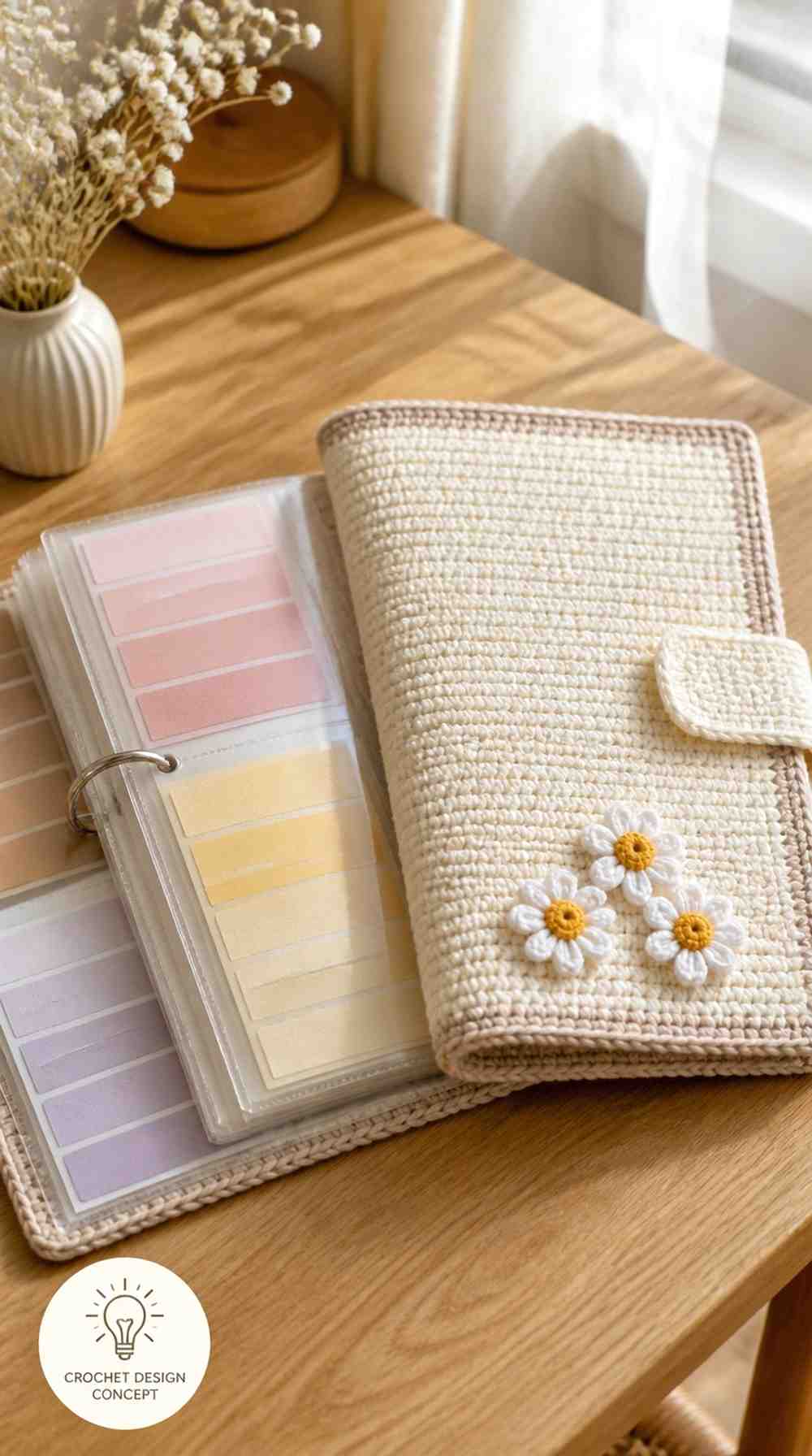
Warm-ivory crochet gives this small folio a gentle cottage-style appearance. Three tiny white-and-yellow daisies decorate one lower corner, while oatmeal edging and a short foldover flap finish the cover. Inside, two silver rings hold transparent sample pages containing blush, butter-yellow and lavender paint cards.
This design keeps the floral decoration on the outside so the pages remain clear and easy to use. It may appeal to readers who enjoy softer decorating accessories and want a compact place for a few favorite color combinations.
- Daisy attachment: Sew the motifs securely to the exterior, keeping petals and yarn ends away from the ring mechanism and sample pages.
- Flap clearance: The foldover section should close without pressing the paint cards against the binder’s metal rings.
- Light-colored cover: Ivory crochet may show dust and handling marks more readily, so consider a removable cover that can be cleaned separately.
12. Crochet Plum Notes-and-Swatches Binder
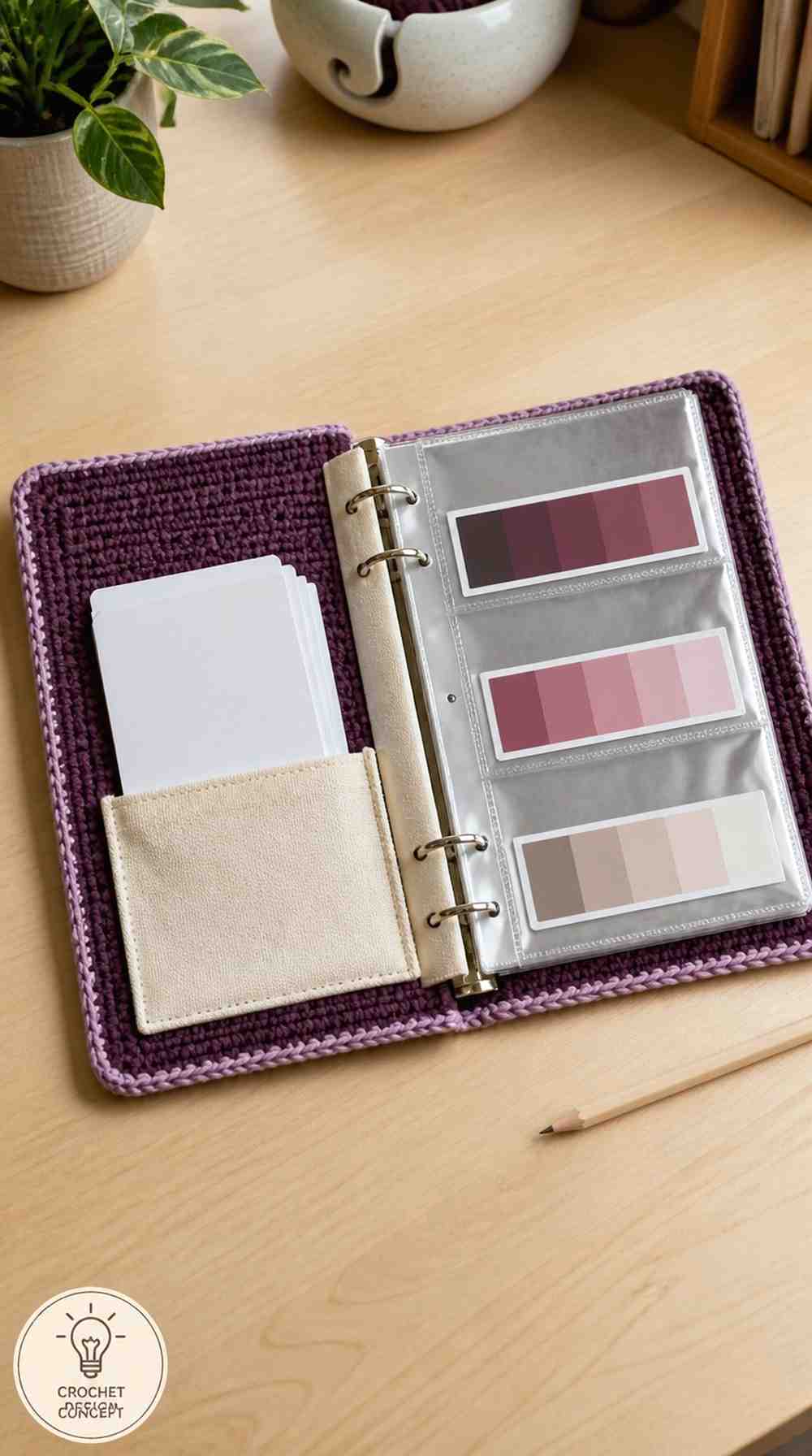
Deep-plum crochet creates a practical binder for keeping paint samples and decorating notes together. Its seed-stitch cover has pale-lilac edging and a fitted rigid spine. One internal section holds blank note cards, while the opposite section contains clear swatch sleeves in burgundy, mauve, dusty rose and beige.
The combination of notes and samples makes this design useful for a specific room project. Color cards can remain together while measurements, shopping notes or decorating ideas are stored in a separate section, reducing the need for several loose notebooks.
- Note-card storage: Keep paper notes in a dedicated pocket so they do not cover the paint samples or become mixed into the swatch pages.
- Section divider: A firm cream divider can separate writing materials from color samples without adding a bulky second binder.
- Project tracking: Include useful details such as room names, possible color combinations and the date a sample was collected.
13. Crochet Copper Fold-Out Desktop Swatch Binder
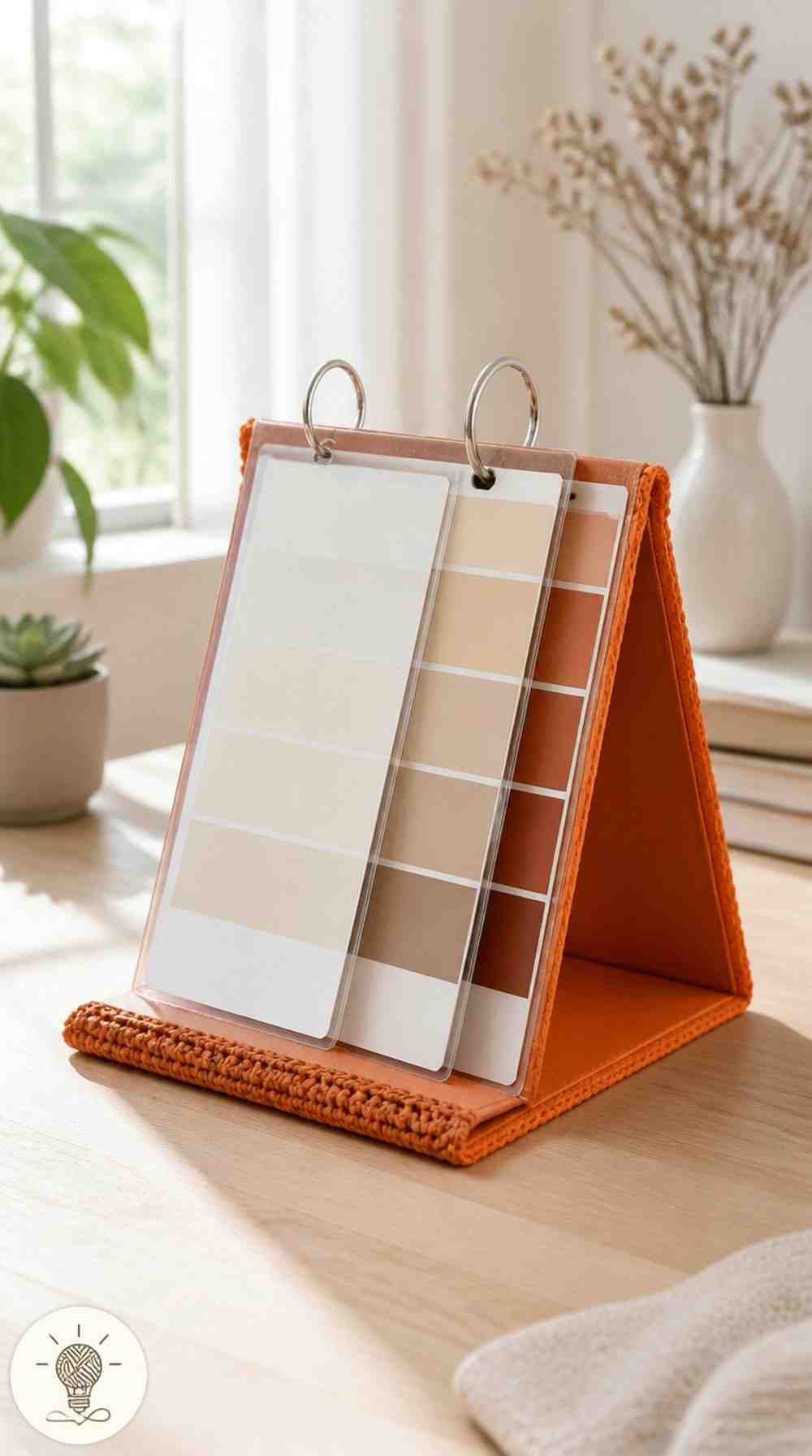
Copper-orange crochet covers a rigid binder that opens into a supported A-frame desktop display. A folding rear support holds the structure upright, while two silver rings at the top carry transparent pages of cream, beige and clay paint samples. The front page can be turned forward for a clearer view.
This concept moves beyond storage and explores temporary display during decorating decisions. It could be useful on a worktable when choosing between a few color families, although the stand needs a rigid support system rather than relying on crochet fabric alone.
- A-frame support: Use a suitable firm structure beneath the crochet and check that the rear stand cannot fold unexpectedly.
- Page turning: The upper rings should allow the sample pages to turn freely without pulling the entire display forward.
- Viewing conditions: Place the stand in good, consistent light and remove samples for closer evaluation when reflections affect their appearance.
14. Crochet Butter Yellow Pocket-Size Four-Ring Binder
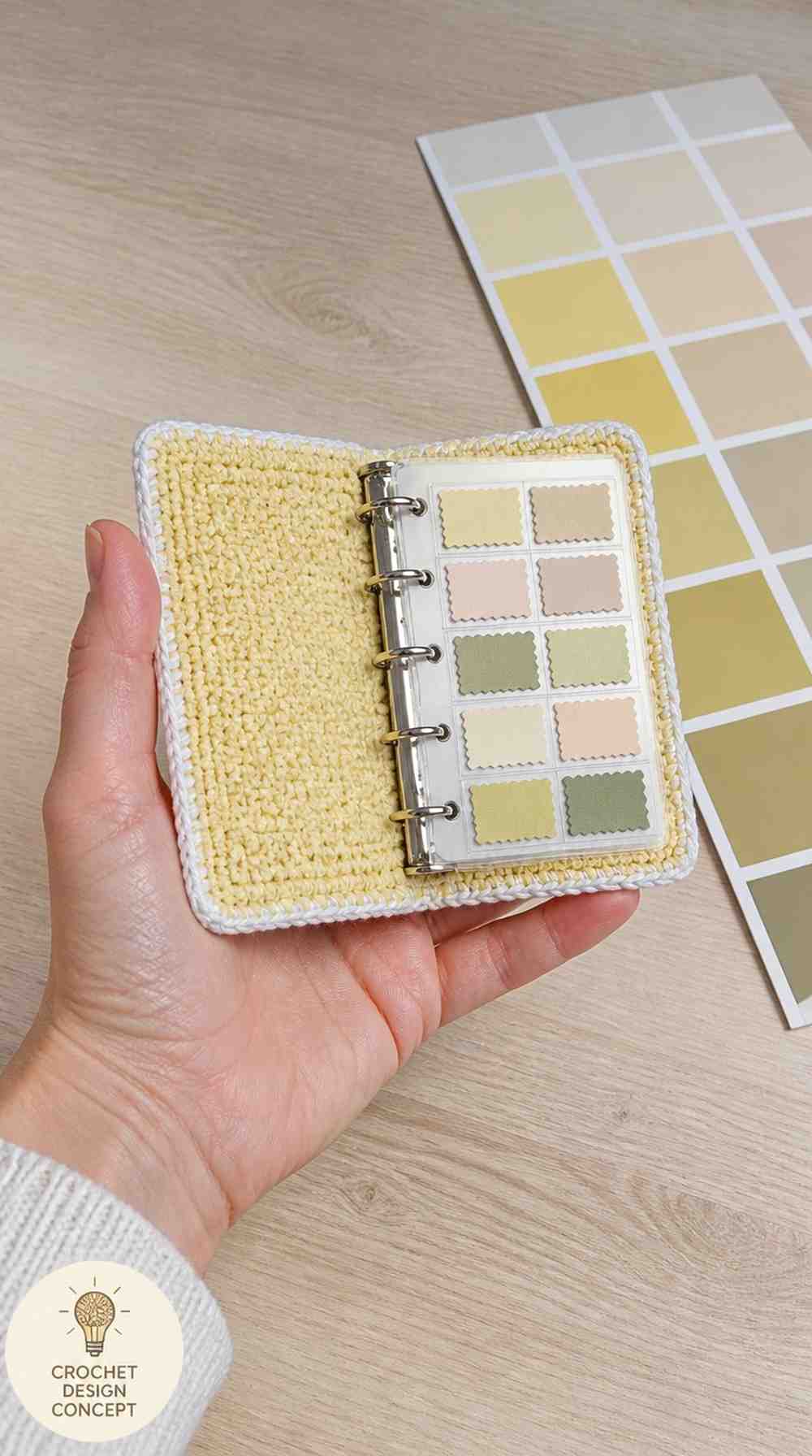
Butter-yellow crochet creates a cheerful miniature binder with a white border and compact fitted spine. Four small metal rings hold transparent pages containing tiny paint sample cards in yellow, beige, peach and olive tones. The album fits comfortably in an adult hand, with a full-size sample card nearby showing its smaller scale.
The portable size makes this concept appealing for taking a shortlist of colors to a shop or comparing them with furnishings. Its limited page space is the main trade-off, since larger paint strips may need to be stored separately.
- Miniature page sizing: Check the actual dimensions of the selected cards before choosing a small binder; full-size paint strips may not fit.
- Four-ring compatibility: Use matching miniature inserts rather than punching new holes through printed sample areas or squeezing cards into undersized sleeves.
- Travel selection: Carry only the most relevant samples instead of overcrowding the compact rings with an entire paint collection.
15. Crochet Slate Grey Neutral-Frame Color Binder
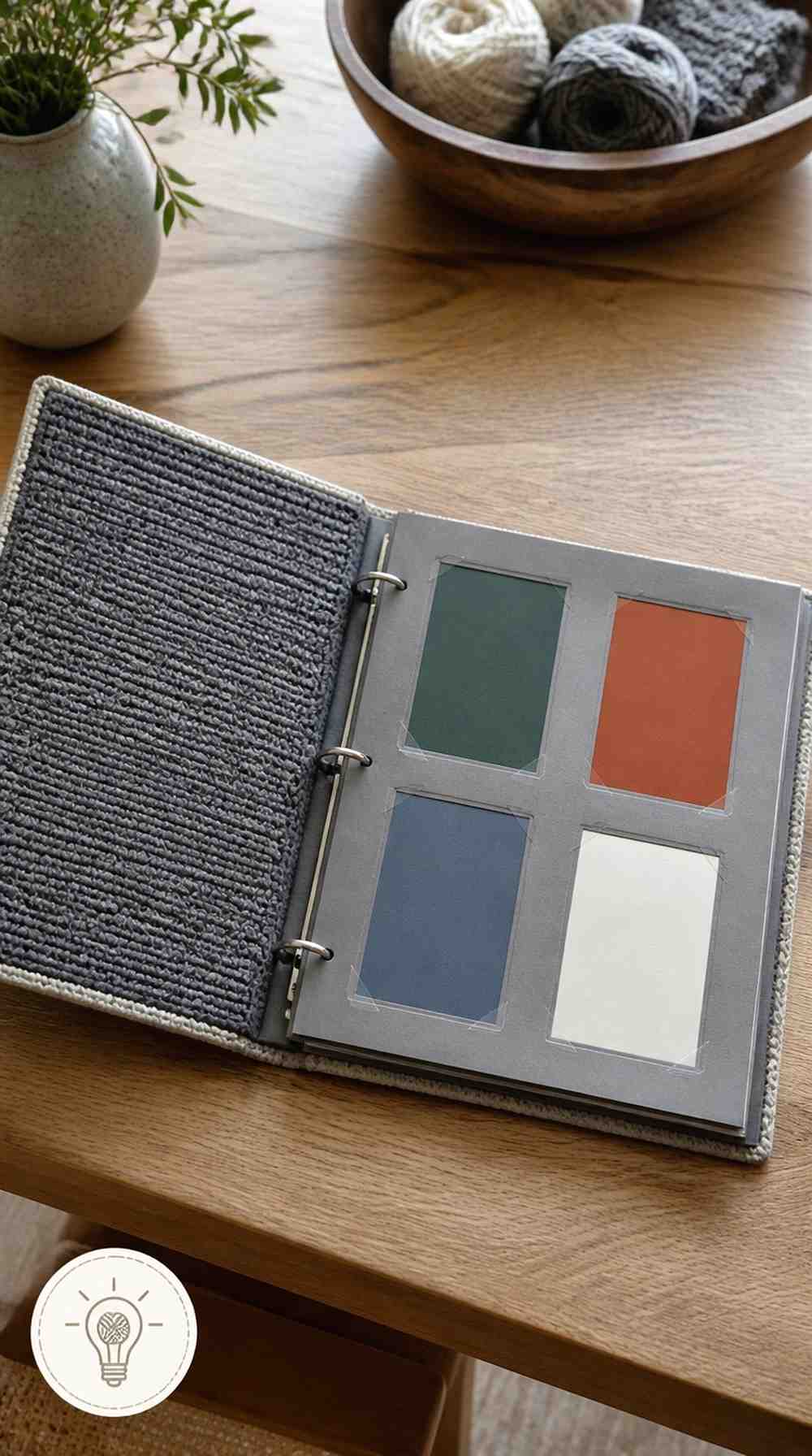
Slate-grey crochet gives this binder a clean, understated finish. A charcoal spine and cream exterior border frame the rigid cover, while three metal rings hold removable pages with broad neutral-grey viewing areas. Forest-green, terracotta, dusty-blue and warm-cream paint cards sit in shallow clear corner pockets.
The neutral viewing frames are the main feature. They create a consistent backdrop around each sample, which may help reduce some visual distraction from colorful surrounding materials. However, a grey frame does not replace checking paint in the intended room under real lighting conditions.
- Neutral borders: Keep the viewing-frame colors consistent across pages so different samples can be compared against a similar background.
- Corner pockets: Use small, smooth transparent corners that hold the sample cards without hiding large portions of their painted surfaces.
- Final color judgment: Remove a card from its pocket when necessary, and compare it in the room where the paint will actually be used.
Practical Guide to Crochet Paint Color Sample Card Binders
A useful paint sample binder should help you find, compare and preserve your color cards without damaging them or making their shades harder to judge.
Start with the card dimensions. Paint sample cards come in different sizes and formats. Some are narrow multi-shade strips, while others are wider individual color samples. Measure the actual cards before choosing a binder size, clear pockets or ring spacing. Avoid cutting off useful color information to force a card into an undersized sleeve.
Choose a practical organizing system. You can sort swatches by color family, room, decorating project or personal favorites. Color-family tabs are helpful for a large collection, while project-based dividers may work better when several rooms are being redecorated at once.
Protect the sample surfaces. Smooth transparent sleeves, shallow card pockets or removable page inserts can help keep paper samples from becoming bent or mixed together. Make sure plastic seams, crochet knots and ring hardware do not press directly into delicate sample surfaces.
Be careful when judging paint colors. Paint can look different under natural daylight, warm indoor lighting and cool artificial lighting. Transparent vinyl, colorful crochet covers and surrounding objects can also affect how a shade appears. Use actual manufacturer-provided samples in the intended room before making final decisions.
Keep the binder away from wet paint. These concepts are designed for dry sample cards, not wet paint chips, freshly coated paper or painting equipment. Yarn and fabric can absorb spills, while paint residue may be difficult to remove. Keep the binder on a clean, dry surface when comparing colors.
Plan for changing collections. Removable pages make it easier to add new paint shades or retire older cards. Keep useful details with each sample, such as the paint brand, exact color name or code, finish and intended room. Written information is more reliable than remembering a shade by its appearance alone.
Use a suitable rigid structure. Crochet covers can add texture and color to a binder, but metal rings, clear pages and a firm spine still need proper support. Choose a real binder mechanism or suitable reinforced insert instead of expecting soft crochet fabric to maintain the entire book’s shape.
For a related approach to storing small identification cards, explore 19 Crochet Plant Label Storage Book Inspiration Ideas on Yarn Nest Studio. That collection focuses on reusable gardening labels rather than paint swatches, but it explores useful ideas such as transparent pages, foldout compartments and removable binder sections.
Want to Make Something Similar?
These 15 designs are original inspiration concepts, not tested crochet patterns. However, existing crochet tutorials can help with binder-attached pockets, clear vinyl and card-sized envelope construction.
- For ring-binder pouch construction: Crochet Spot – Crochet Pattern: 3 Ring Binder Pouch by Rachel Choi is a free pattern explaining how a crochet pouch can attach directly to a three-ring binder. It is useful for understanding ring-compatible crochet construction, although it is not an exact paint swatch binder.
- For clear vinyl and crochet edging: Blackstone Designs – How to Make the Clear Envelope Pouch by Sonya Blackstone explains how to combine transparent vinyl with crocheted edges and a closure. The technique is relevant to the clear-pocket concepts but would need adapting for paint sample cards.
- For a clear-window pocket: Blackstone Designs – How to Make a Clear Window Pencil Pouch provides another free example of joining crochet and vinyl, which may help with removable swatch pockets.
These tutorials cover related techniques rather than reproducing the pictured designs. A real binder should be measured around its ring mechanism, page inserts and sample-card collection.
Which Crochet Paint Color Sample Card Binder Should You Choose?
| Design | Main feature | Important consideration |
|---|---|---|
| Burnt Coral Three-Ring Swatch Binder | Traditional removable-page binder | Correct ring spacing |
| Oatmeal Clear-Pocket Swatch Album | Individual transparent card pockets | Vinyl reflections |
| Navy Accordion Paint Swatch Portfolio | Three-panel foldout | Hinge and desk clearance |
| Mustard Twin-Ring Swatch Fan Binder | Fan-style comparison strips | Reinforced ring holes |
| Dusty Blue Color-Family Tab Binder | Five colored divider sections | Consistent filing system |
| Terracotta Granny-Square Paint Sample Binder | Decorative joined crochet motifs | Cover and hinge fit |
| Olive Zip-Around Paint Card Binder | Enclosed zipper closure | Page and zipper clearance |
| Lilac Ribbon-Tie Sample Card Binder | Decorative ribbon closure | Keeping ties away from rings |
| Charcoal Checkerboard Modular Swatch Binder | Removable pocket modules | Flat joined seams |
| Teal Landscape Swatch Comparison Binder | Horizontal side-by-side samples | Wider page dimensions |
| Ivory Daisy Paint Swatch Folio | Floral cover and compact pages | Secure motifs and flap |
| Plum Notes-and-Swatches Binder | Separate notes and card sections | Clear project organization |
| Copper Fold-Out Desktop Swatch Binder | Upright A-frame display | Rigid stand stability |
| Butter Yellow Pocket-Size Four-Ring Binder | Compact portable collection | Limited sample-card space |
| Slate Grey Neutral-Frame Color Binder | Consistent neutral sample borders | Accurate lighting comparisons |
For building a larger collection, the Burnt Coral Three-Ring Binder or Dusty Blue Color-Family Tab Binder offers a familiar way to organize removable pages. If comparing several shades side by side matters most, the Mustard Twin-Ring Fan or Teal Landscape Binder may be more convenient.
The Copper Fold-Out Desktop Binder works as inspiration for a decorating workstation, while the Butter Yellow Pocket-Size Binder is better suited to a smaller shortlist taken to a shop. If you’re carefully comparing similar colors, the Slate Grey Neutral-Frame Binder offers a more restrained viewing arrangement.
Conclusion
Crochet paint color sample card binders can make decorating supplies easier to organize while adding handmade texture to a creative workspace. From traditional ring binders and transparent pocket albums to swatch fans, foldout displays and compact travel books, these 15 concepts show different ways to store and compare paint colors. The best design depends on the size of your sample cards, how frequently you add new colors and whether you need the binder for storage, comparison or both. Choose a structure that keeps the cards accessible and protected without making it harder to see their true colors.
Which binder would you choose for your decorating projects? Would you prefer the burnt-coral three-ring album, the mustard swatch fan or the copper desktop display? Share how you currently keep paint samples and which organizer style would make your next decorating project easier.
Frequently Asked Questions
1. Can crochet be used to make a paint color sample card binder?
Crochet can be used for a decorative binder cover, card pockets or page edging, but a rigid insert and appropriate ring mechanism are usually needed for a structured binder. The finished dimensions should match the actual sample cards and storage pages. These concepts are inspiration ideas rather than tested binder patterns.
2. How should I organize paint color sample cards?
You can group cards by color family, room, decorating project or favorite shades. A larger collection may benefit from labeled dividers, while a small group may fit in a swatch fan or pocket-size binder. Keep the paint name, brand and color code with each sample whenever available so you can identify it accurately later.
3. Will clear plastic pockets change how paint colors look?
Transparent plastic can introduce reflections, tint or glare that may make subtle color differences harder to judge. Clear pockets are helpful for organizing cards, but remove samples for close comparisons when necessary. Final paint choices should be checked using actual samples under the lighting conditions where the paint will be used.
4. What yarn should I use for a crochet paint swatch binder cover?
Smooth cotton or cotton-blend yarn may be worth considering because it can produce clearly defined stitches and is available in many colors. A closely worked fabric can create a tidy exterior, but the binder’s rigidity should come from an appropriate supporting structure. Follow the yarn’s care instructions and avoid loose fibers around paper samples.
5. Are these 15 crochet paint color sample card binder designs available as patterns?
No. These are original visual inspiration concepts, not photographs of tested handmade binders or step-by-step patterns. Their covers, page layouts, pocket styles and closures can help you plan an organizer. The linked tutorials teach related crochet and vinyl techniques rather than exact reproductions of the pictured concepts.