A crochet reusable shopping cart handle cover is a simple way to add a soft, personalized fabric layer to an ordinary grocery cart. From ribbed cotton wraps and adjustable button closures to colorful granny-square panels and compact foldaway designs, there are plenty of ways to approach this small everyday accessory. These 16 inspiration ideas focus on removable covers with different stitch textures, fastenings, lengths and practical details.
Shopping cart handles vary in shape and size, so choosing a cover involves more than picking an attractive color. Some designs cover the entire straight handle, while others provide two shorter gripping sections or a single central panel. This collection explores which arrangements might be easiest to fit, remove, clean and carry between shopping trips, while keeping the cart’s normal functions accessible.
These are AI-generated crochet design visualizations for inspiration, not photographs of tested handmade products or step-by-step patterns.
Quick Design Selection Guide
- For simple everyday use: Crochet Sage Ribbed Button Handle Cover and Crochet Oatmeal Braided Tie Cart Handle Wrap offer familiar rectangular shapes with removable fastenings.
- For adjustable fitting: Crochet Olive Adjustable Buttonhole Handle Wrap and Crochet Dusty Blue Tab Fastener Handle Cover explore different ways to accommodate handle thickness.
- For shorter gripping areas: Crochet Blush Scalloped Short Grip Cover and Crochet Charcoal Twin Grip Handle Covers avoid covering the whole bar.
- For decorative designs: Crochet Cream Granny Square Cart Handle Wrap, Crochet Navy Chevron Cart Handle Wrap and Crochet Butter Yellow Sunflower Handle Cover bring more visual detail.
- For a smoother hand-contact surface: Crochet Lavender Lined Eyelet Handle Cover and Crochet Teal Envelope Overlap Handle Cover combine simple gripping areas with concealed closures.
- For carrying between shopping trips: Crochet Burgundy Roll Up Cart Handle Cover includes a band intended for compact storage after removal.
1. Crochet Sage Ribbed Button Handle Cover

Muted sage-green crochet gives this long handle wrap a clean, understated appearance. Raised vertical ribs form the main surface, while a narrow cream border outlines its rectangular shape. Two small cream buttons secure the overlapping edges along the underside of the shopping cart’s straight metal push bar.
The ribbed surface adds a noticeable handmade texture without requiring bulky embellishments. Because the cover wraps around an existing bar rather than sliding over its end, it offers a more practical starting point for carts with permanently attached handle brackets.
- Rib orientation: Keep the raised crochet ribs consistent across the top surface. Uneven rows could create uncomfortable lumps where hands naturally rest.
- Button positioning: Place both buttons on the underside, away from the normal gripping area, and check whether they fasten securely around the chosen handle.
- End clearance: Leave the cart’s side brackets exposed. The cover should not wrap over mounting hardware or other operating parts.
- Material choice: Consider smooth cotton yarn with good stitch definition. Check the care label before deciding how the finished cover will be washed.
2. Crochet Oatmeal Braided Tie Cart Handle Wrap

Warm oatmeal cotton gives this cover a natural, relaxed appearance. The long rectangular panel uses fine moss-style crochet stitches with narrow cinnamon-colored edging. Four pairs of braided cotton ties secure it underneath the shopping cart handle, leaving a continuous upper gripping surface.
The tie arrangement gives the concept a more flexible fastening style than fixed buttons. It also avoids sewing separate hard closures onto the fabric, although the number and position of the ties require careful planning to prevent loose ends.
- Tie placement: Space the four pairs along the underside so the wrap closes evenly without gathering or twisting across the handle.
- Loose ends: Keep the braided ties short and firmly secured. Long dangling cords could catch on shopping bags, the cart frame or nearby objects.
- Surface texture: Fine moss-style stitches create a relatively even gripping area compared with heavily raised bobbles or thick decorative motifs.
- Fit checking: Ties allow some adjustment, but the crochet panel itself must still be wide enough to overlap around the bar.
3. Crochet Dusty Blue Tab Fastener Handle Cover
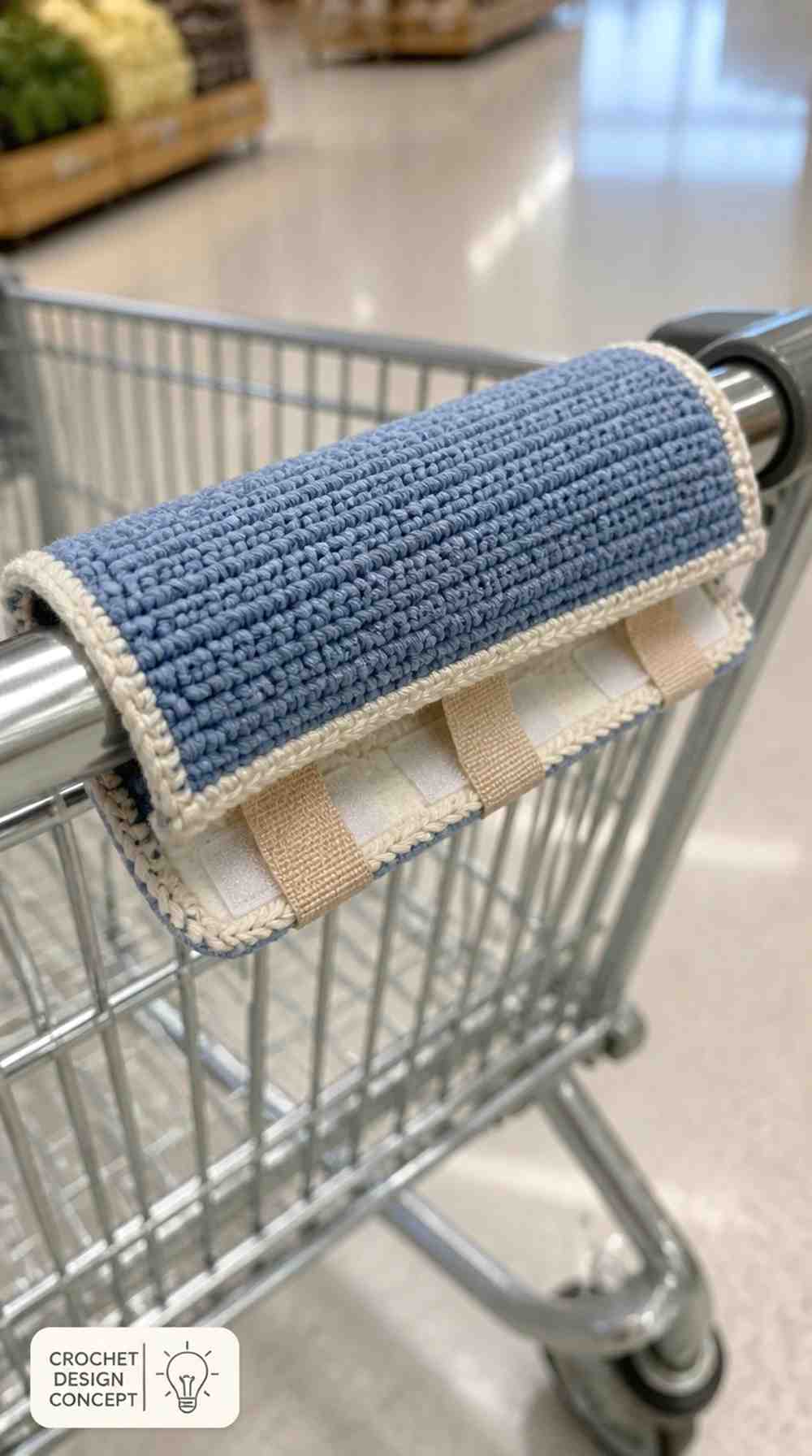
Dusty-blue crochet creates a tidy, modern handle wrap with closely worked horizontal rows and crisp ivory edges. Three pale-beige fabric tabs are positioned along the underside, where hook-and-loop fasteners secure the rectangular panel around the metal cart handle.
One slightly opened end reveals how the fastening system works. Compared with individually tied cords, this arrangement offers a different approach to repeated opening and closing, provided the fabric tabs are attached firmly and positioned correctly.
- Fastener placement: Keep the hook-and-loop contact area underneath the handle so the rough fastening surface does not rub against the palms.
- Tab reinforcement: Stitch the pale-beige tabs firmly to the crochet panel. Repeated pulling can stress the points where woven fabric joins stretchy crochet.
- Opening allowance: Leave enough overlap for the tabs to fasten without forcing the upper crochet surface tightly around the bar.
- Cleaning considerations: Check the care requirements of both the cotton crochet and hook-and-loop material before washing the combined cover.
4. Crochet Blush Scalloped Short Grip Cover

Instead of covering an entire shopping cart handle, this blush-pink crochet wrap occupies only the central gripping area. Close, compact stitches create the main surface, while a delicate cream scalloped border finishes both short ends. Two narrow burgundy cotton ties secure the panel beneath the bar.
The shorter shape provides an alternative for anyone who prefers a smaller accessory rather than a full-length wrap. Its scalloped ends add a decorative detail without turning the whole surface into openwork.
- Coverage length: Decide where the hands will usually rest. A short central panel may not suit shoppers who naturally grip the outer ends.
- Scalloped edging: Keep the cream scallops small and well attached so the ends do not curl upward or catch under the hands.
- Tie security: The two burgundy ties need firm attachment and should close underneath the bar without leaving long hanging tails.
5. Crochet Mustard Honeycomb Double Grip Cover
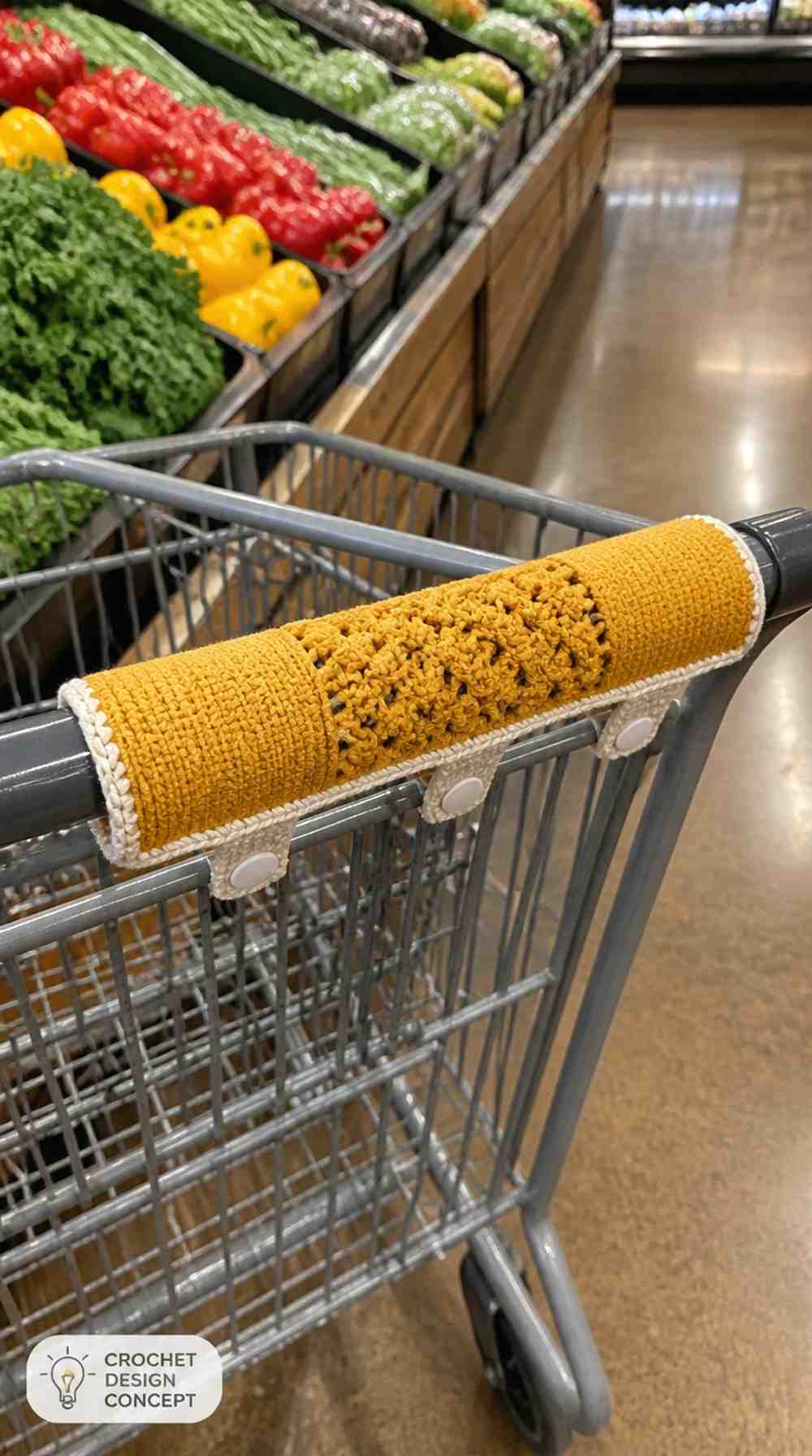
Mustard-gold cotton gives this full-length wrap a warm, cheerful appearance. Two smooth crochet gripping sections sit on either side of a raised honeycomb-style central panel, with a slim ivory border around the entire rectangle. Three small cream snap-fastened tabs secure it underneath.
The main design feature is the contrast between the smoother hand areas and the textured middle section. It introduces decorative crochet without placing the most pronounced raised stitches directly beneath the palms.
- Textured center: Keep the honeycomb section between the intended hand positions. Moving it too far outward may make the grip feel uneven.
- Smooth hand areas: Closely worked stitches are worth considering for the two gripping sections, particularly if the central texture is more pronounced.
- Snap attachment: Reinforce the fabric around each snap so repeated fastening does not pull individual yarn loops out of shape.
- Handle coverage: Check the available straight-bar length before planning the two grip sections and central panel.
6. Crochet Charcoal Twin Grip Handle Covers

Charcoal-grey crochet gives this matched pair a practical, understated look. Each short cover features dense horizontal stitches, two narrow rust-orange stripes at its ends and two small dark buttons underneath. An uncovered metal section separates the left and right pieces.
The divided layout is the key difference. Rather than wrapping one long panel around the entire bar, it creates two independent gripping areas that can be positioned separately, depending on the shopping cart’s design.
- Separate positioning: Check both intended hand positions before fastening the covers. The exposed middle gap should remain deliberate and balanced.
- Matching sizes: Keep the two crochet pieces consistent in length and width unless the cart has an unusual asymmetrical handle.
- Button clearance: Each short wrap needs its own secure underside closures, with no buttons projecting into the upper hand-contact areas.
- Cleaning convenience: Two smaller pieces may be easier to handle individually, but both still need cleaning after shared-cart use.
7. Crochet Olive Adjustable Buttonhole Handle Wrap
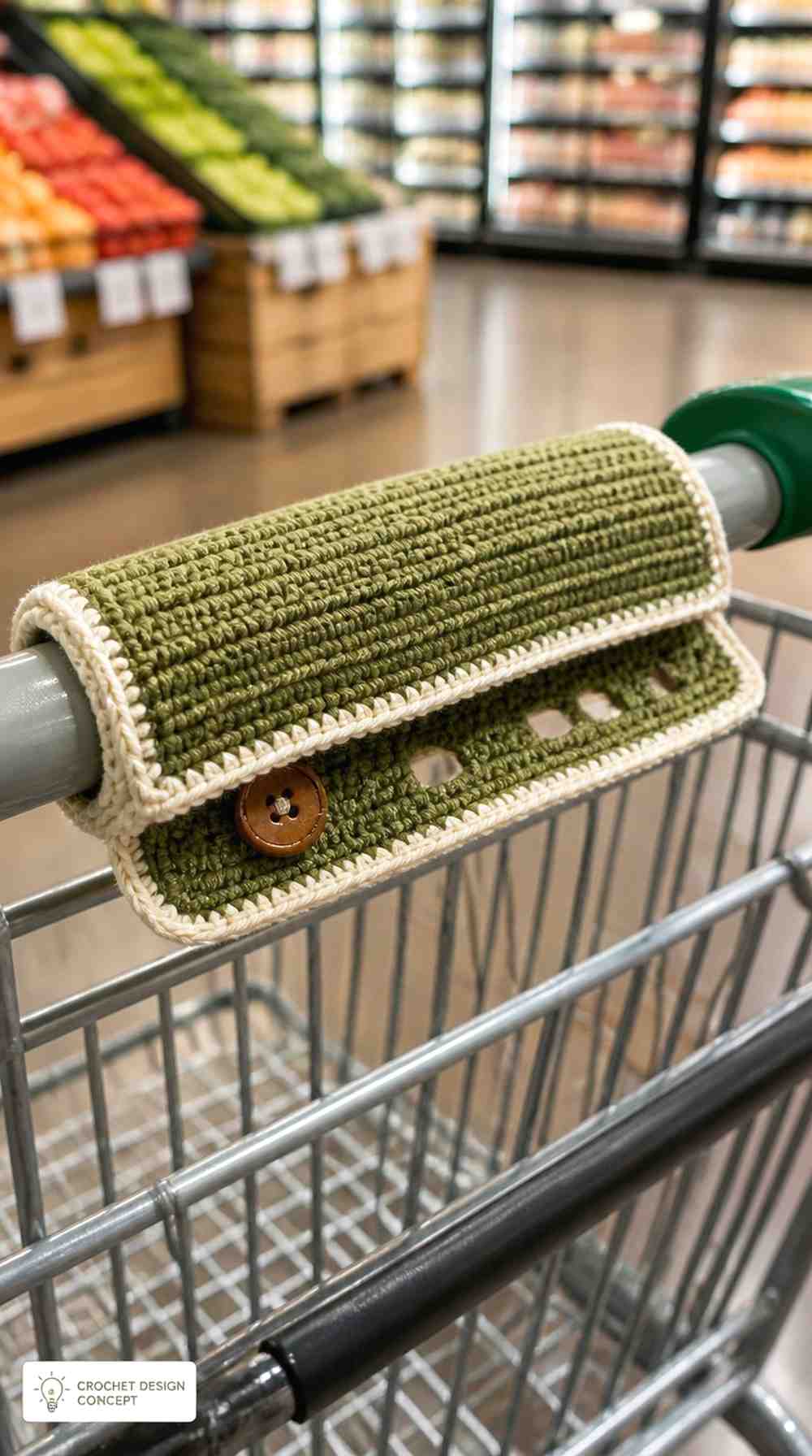
Olive-green crochet creates a practical-looking wrap with alternating flat and slightly raised stitch rows. Cream edging defines the rectangular panel, while a single brown button works with three alternative buttonhole positions along the overlapping underside flap.
The multiple buttonholes are intended to offer adjustment around different handle circumferences. This makes the concept especially interesting for someone who visits several supermarkets, although handle thickness and bar shape still determine whether the cover can fit properly.
- Buttonhole spacing: Position the three alternatives carefully so each fastening option creates a different circumference without twisting the crochet panel.
- Stretch allowance: Crochet can stretch after repeated use. Check the actual fabric tension instead of assuming the same buttonhole will remain suitable indefinitely.
- Button strength: Attach the brown button through reinforced crochet stitches, avoiding a loose single loop that may pull out.
- Fit limitations: Multiple buttonholes can accommodate some variation in bar thickness, but they cannot make one wrap suitable for every cart design.
8. Crochet Lavender Lined Eyelet Handle Cover
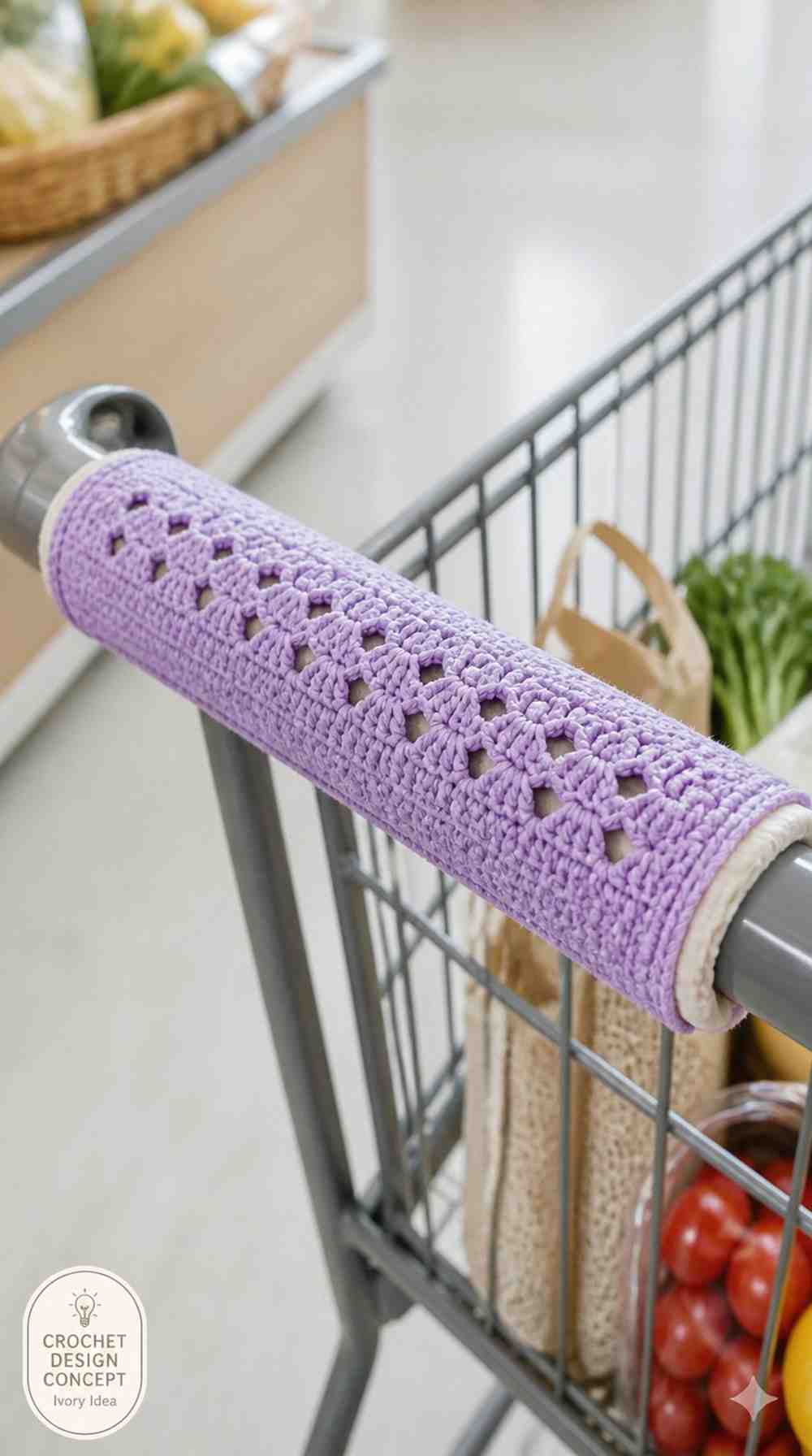
Soft lavender crochet and small repeating eyelets give this shopping cart wrap a light decorative appearance. Solid lavender borders frame the openwork, while a continuous cream cotton lining is visible behind the crochet. A discreet hook-and-loop closure sits along the underside.
The lining changes how this design can be used. Rather than allowing the metal handle to show through every crochet opening, the cream backing forms a continuous fabric surface beneath the decorative layer.
- Lining coverage: Extend the cream cotton backing across the full intended gripping area so fingers do not press directly through the eyelets.
- Fabric attachment: Stitch the lining securely around the outer edges while allowing for differences between woven fabric and stretchy crochet.
- Eyelet size: Keep the openings small and evenly worked. Large decorative gaps may distort when the wrap is pulled around the bar.
- Drying: Layered materials may take longer to dry. Make sure both crochet and backing are completely dry before storage.
9. Crochet Terracotta Layered Cushion Grip Cover

Terracotta-colored cotton gives this wrap a warm, earthy character. Shallow wave-like raised crochet stitches cover the exterior, finished with a cinnamon-brown border. A thin natural-beige cotton padding layer appears beneath one gently opened edge, while three button tabs close underneath the handle.
This concept explores a modestly layered gripping surface rather than a thick padded cylinder. The additional fabric may change how the cover feels in the hand, but actual comfort and fit would depend on the finished construction.
- Padding thickness: Keep the beige layer relatively thin. Excessive bulk can increase the effective handle diameter and make gripping less comfortable.
- Layer stability: Attach the padding so it does not bunch beneath the crochet or shift toward one end during use.
- Button tabs: The three underside tabs should hold the layered panel evenly without leaving gaps or creating pressure points.
- Washing and drying: Multiple fabric layers require particular attention to complete drying. Avoid storing the cover while any internal padding remains damp.
10. Crochet Forest Green Snap Closure Handle Wrap

Deep forest-green crochet creates a polished handle cover with shallow diagonal, herringbone-like raised stitches. A thin sand-beige border outlines the panel, while four small green fabric tabs with flat cream snap fasteners close along the underside.
Its low-profile fastening arrangement is the main feature. Unlike a wrap secured by cords, the tabs stay close to the crochet body, keeping the closure relatively contained when correctly attached.
- Snap location: Place the fasteners underneath the handle rather than where the hands grip the upper surface.
- Four-point alignment: Check that all four tabs close without pulling the wrap diagonally or causing one end to bunch.
- Raised stitch direction: Keep the diagonal texture shallow and consistent so it does not create uneven ridges along the gripping area.
- Hardware care: Inspect the snaps and their fabric attachments regularly for looseness, rust or sharp edges.
11. Crochet Cream Granny Square Cart Handle Wrap
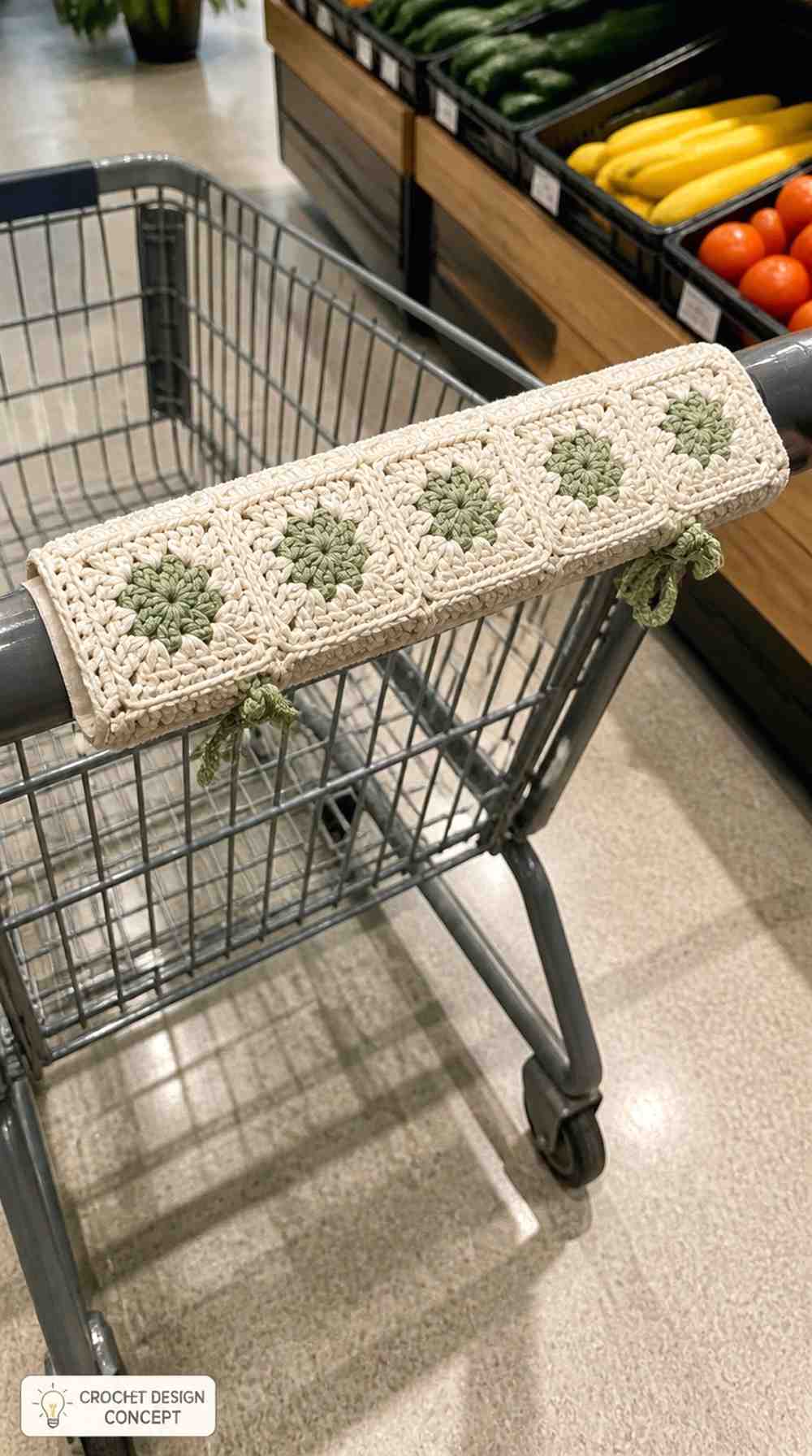
Five small granny squares create this cream crochet cover, each featuring a solid sage-green center. The squares are joined side by side into a rectangular band, with cream fabric backing visible at the edge. Three short sage crochet ties secure the cover beneath the shopping cart bar.
The repeating motif gives the cover a classic handmade appearance while allowing the main panel to be assembled from smaller units. However, joined squares introduce seams that need more attention than a single continuous rectangle.
- Square consistency: Keep all five motifs uniform in size so the finished band stays straight across the handle.
- Joining seams: Work flat, secure connections between the squares. Thick joins directly beneath the palms could make the upper grip uneven.
- Backing fabric: The cream cotton lining helps cover the granny-square openings and should be attached without pulling the motifs out of shape.
- Tie locations: Position the three sage ties away from weak square corners, using properly reinforced areas of the assembled band.
12. Crochet Teal Envelope Overlap Handle Cover
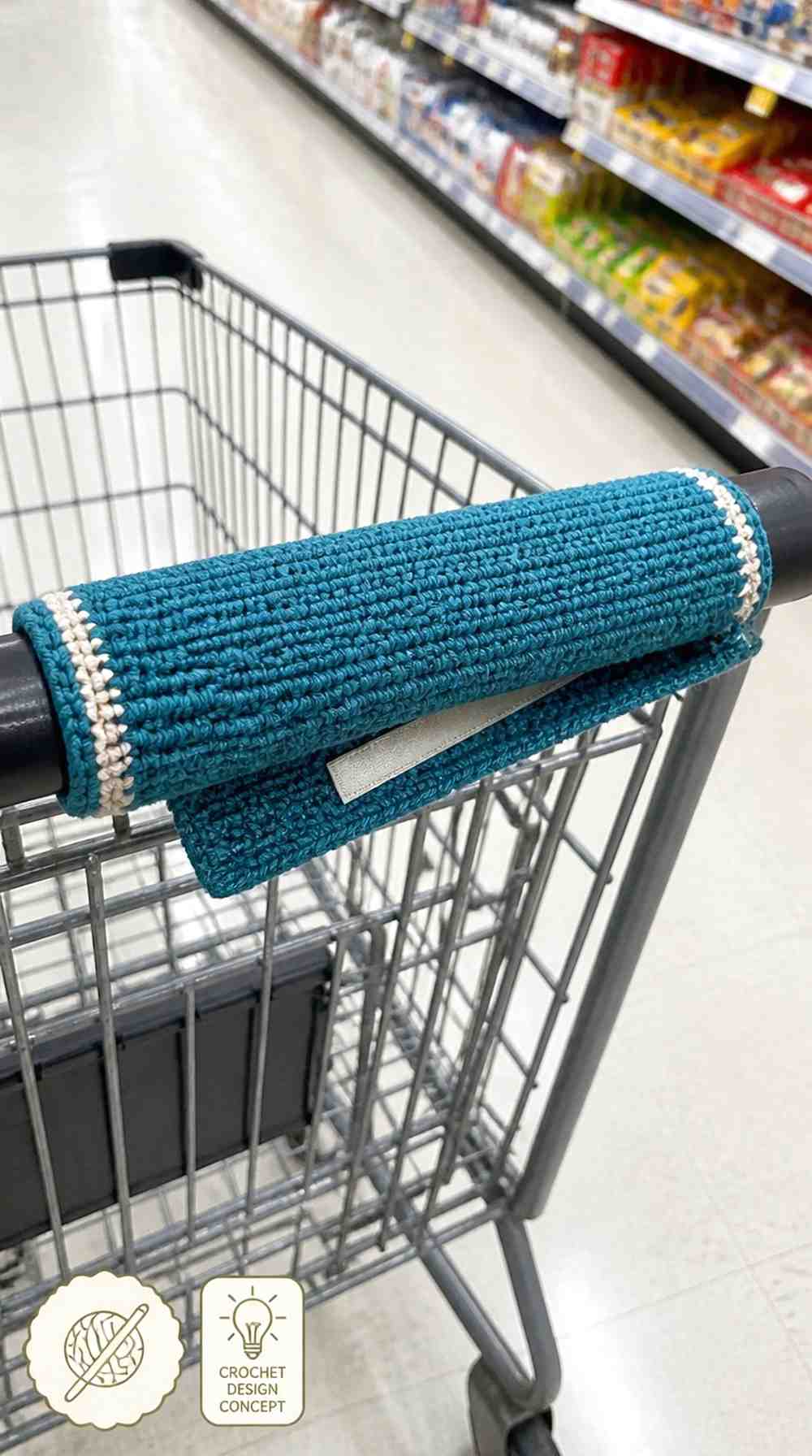
A deep teal cotton crochet panel gives this design a simple contemporary look. Close horizontal stitches form a smooth rectangular surface, with narrow ivory accent lines at the ends. Underneath the shopping cart bar, the fabric edges overlap and fasten with a concealed hook-and-loop strip.
The envelope-style underside removes the need for visible buttons or decorative ties. This makes the arrangement particularly appealing when a clean upper gripping surface matters more than elaborate stitch decoration.
- Overlap depth: Allow enough fabric for the underside edges to meet securely without leaving the top of the bar exposed.
- Concealed closure: Position the hook-and-loop strip so it remains fully covered when fastened, reducing exposed rough edges.
- End finishing: Keep the ivory accent edges neat and flat. Curling ends could lift away from the bar during handling.
- Removal: Make sure the closure can be opened without pulling excessively on the crochet fabric itself.
13. Crochet Coral Two Zone Palm Grip Cover
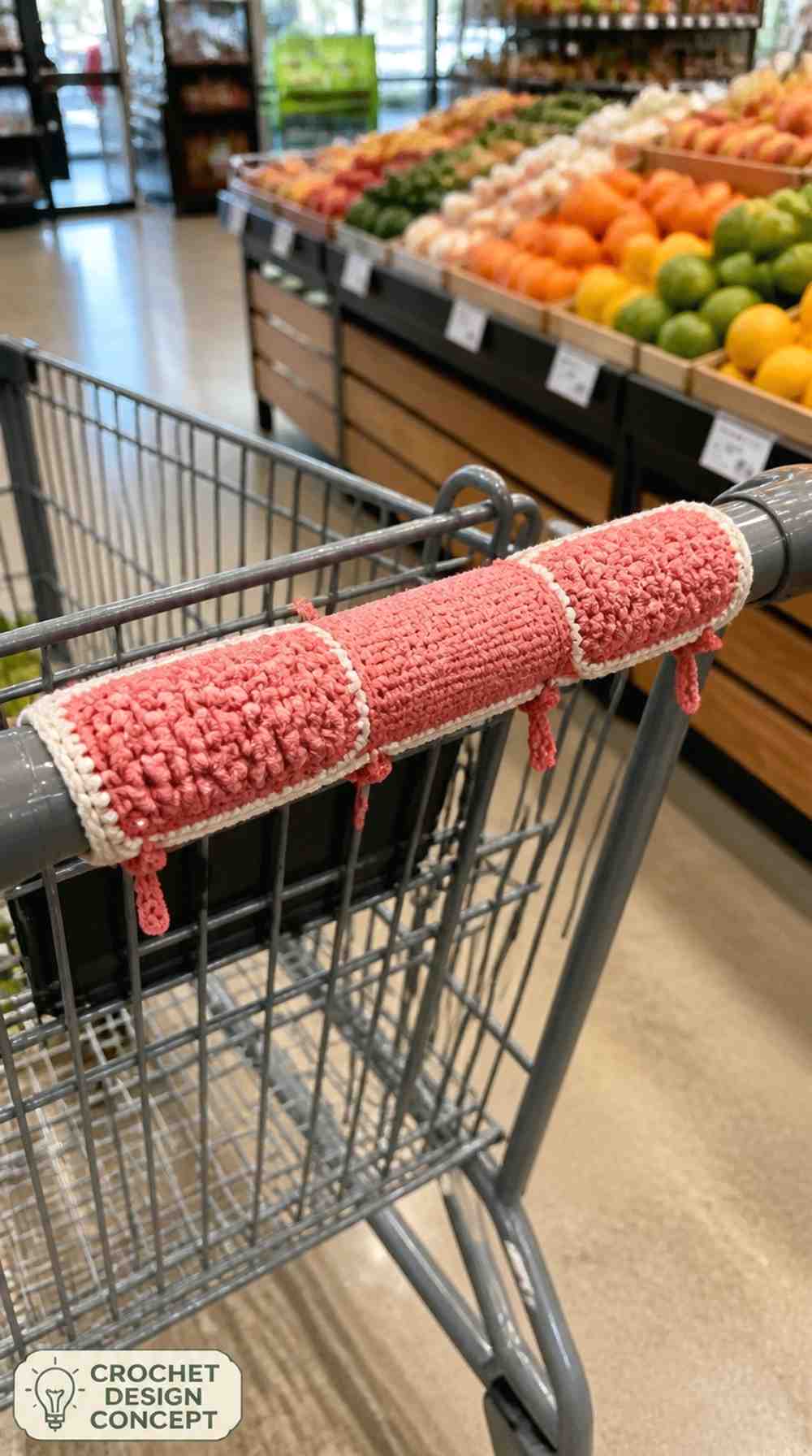
Bright coral-pink crochet brings a playful look to this full-length shopping cart wrap. Two modest oval areas of raised bobble-style texture sit near the expected hand positions, while the middle section remains smooth. An ivory outer border and four short coral fastening ties complete the design.
The two textured zones give this concept a more deliberate hand-placement arrangement. They may appeal to someone who enjoys tactile crochet, although their placement and thickness should be considered carefully rather than assuming raised stitches automatically improve comfort.
- Grip-zone placement: Position the oval textured sections according to the intended hand spacing, leaving enough plain fabric between them.
- Bobble height: Avoid overly large raised stitches that could press into the palms or make the handle difficult to hold comfortably.
- Four-tie fastening: Keep all ties underneath the bar, secured evenly, with no loose lengths hanging into the cart.
- Texture maintenance: Raised stitches can collect lint and debris, so inspect the bobble areas closely when cleaning the cover.
14. Crochet Navy Chevron Cart Handle Wrap
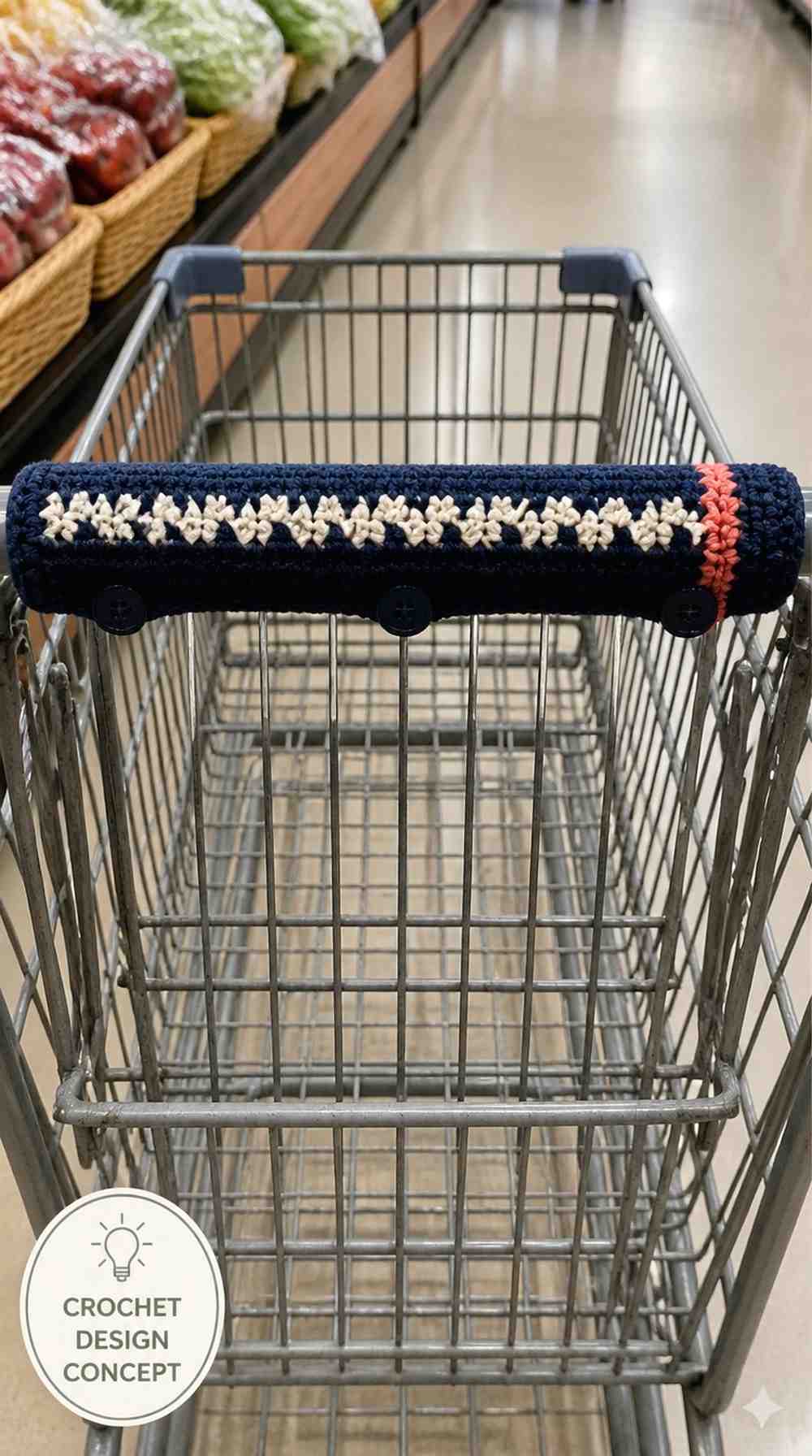
Navy-blue cotton crochet gives this rectangular wrap a bold, tailored appearance. Small ivory chevron motifs repeat across the surface, while one coral-red accent band sits near the right end. Dense navy edging and three underside buttons complete the fitted design.
The repeating zigzag pattern provides visual interest without requiring separately attached motifs. Its contrasting right-end band also makes the wrap easy to distinguish from more neutral designs when stored with other shopping accessories.
- Chevron alignment: Keep the repeated colorwork centered and straight along the bar so the pattern does not become uneven near the overlapping seam.
- Color changes: Secure navy, ivory and coral yarn ends neatly to prevent loose strands from catching on the handle.
- Accent placement: Position the coral band close to the end, as pictured, rather than in the middle of the gripping surface.
- Fastening layout: Space the three underside buttons to hold the long panel evenly without pulling the chevron rows out of alignment.
15. Crochet Butter Yellow Sunflower Handle Cover
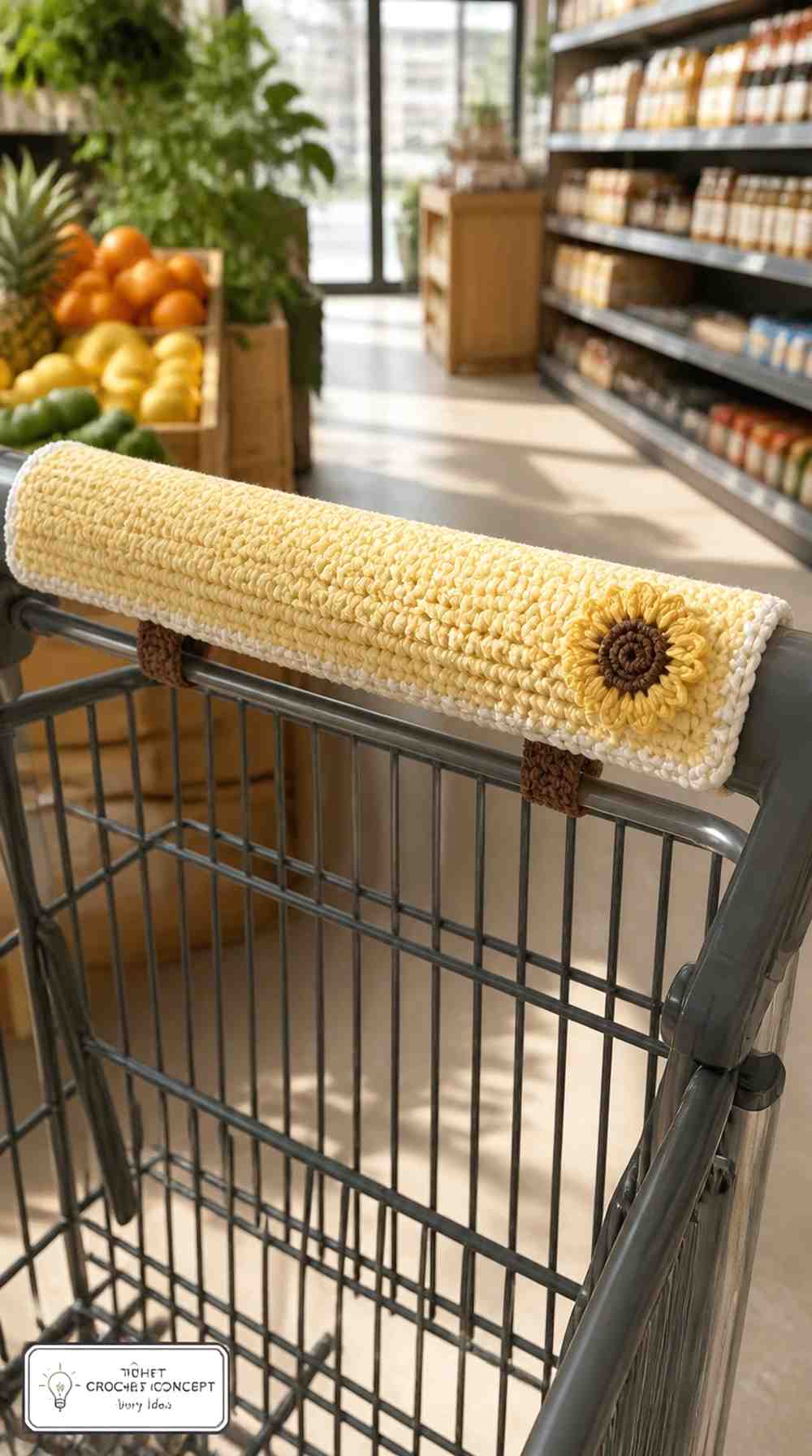
Butter-yellow cotton and a soft cream border create a cheerful cover for an everyday grocery cart handle. The main rectangular panel uses small, dense crochet stitches, with one flat sunflower appliqué positioned near the right end. Its muted golden petals surround a brown stitched center, while two brown straps fasten underneath.
The sunflower adds a distinctive personal touch without covering the entire gripping area. Keeping the decorative motif near the end allows the middle section to remain relatively smooth and straightforward.
- Flower placement: Keep the appliqué away from the central hand-contact area and any moving or projecting parts of the cart.
- Petal attachment: Secure each flower element carefully so raised petals do not loosen or snag during use.
- Child considerations: Avoid loose decorative pieces, dangling cords or detachable embellishments, especially on carts used near young children.
- Brown fasteners: Check that both underside straps remain flat and secure, without the decorative flower affecting how the cover closes.
16. Crochet Burgundy Roll Up Cart Handle Cover
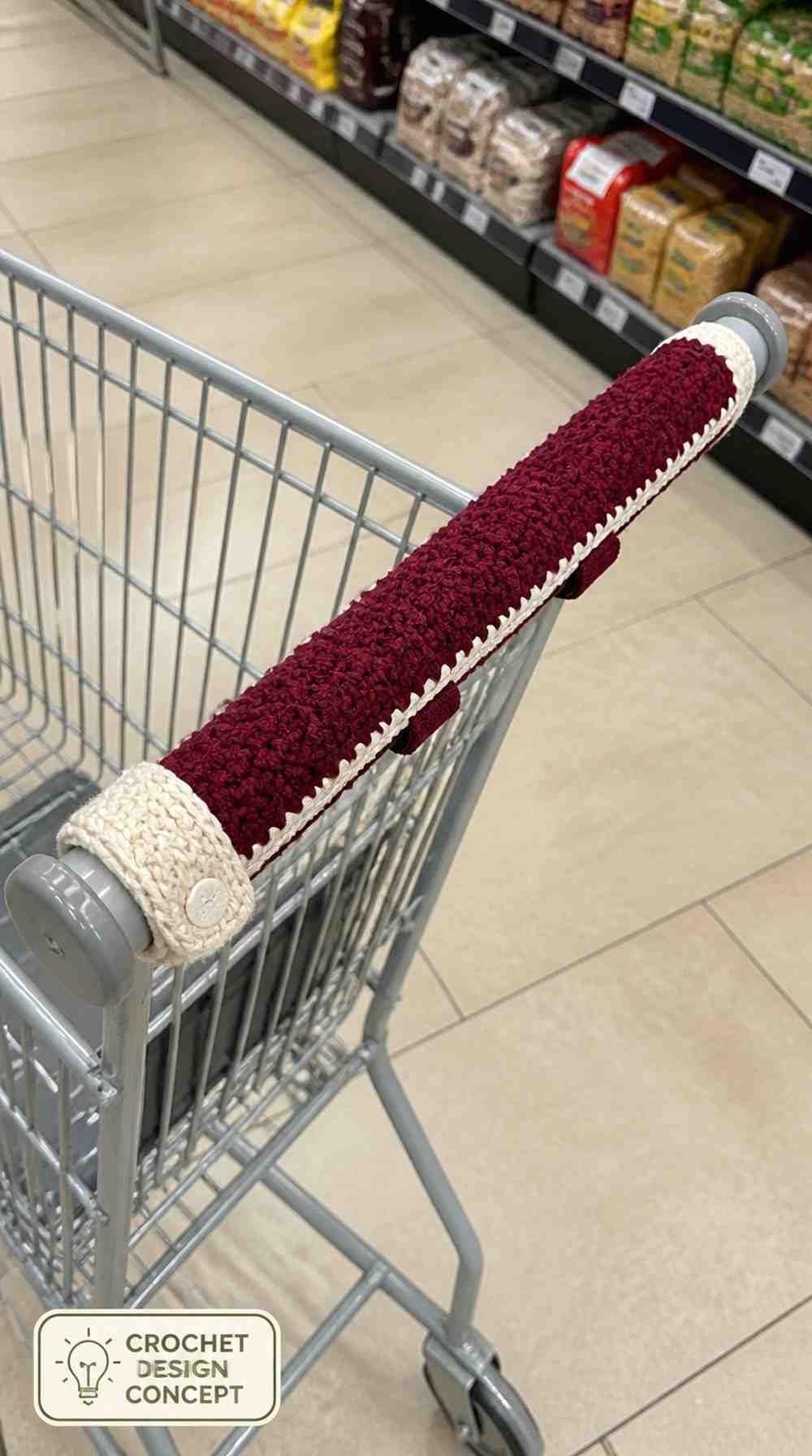
Rich burgundy cotton gives this foldaway design a neat, practical appearance. Basketweave-style crochet texture runs across the long rectangular body, framed by pale-cream edging. Three flat burgundy hook-and-loop tabs secure it underneath the cart bar, while a small cream storage band stays snapped flat near one end.
The additional band is intended to hold the cover together after it has been removed and rolled up. This introduces a useful storage consideration for an accessory that needs to be carried between shopping trips.
- Roll-up flexibility: Choose a crochet thickness that bends comfortably into a small roll. Very rigid stitches may resist folding.
- Storage band length: Plan the cream band around the rolled cover’s actual circumference, not simply the flat panel’s width.
- Band placement: Keep the band fastened flat underneath the installed cover so it cannot dangle or catch during shopping.
- After-use storage: Do not roll a dirty or damp cover into a clean handbag or enclosed compartment. Clean and dry it before longer-term storage.
Practical Guide to Crochet Shopping Cart Handle Covers
A reusable shopping cart handle cover needs to fit securely, come off easily and remain practical to clean. Because public carts have different bar shapes and hardware, an attractive visual concept does not guarantee a workable fit.
Measure the actual handle. Check the straight gripping length, circumference and any side brackets, locks, controls or child-seat components. Many handles have fixed ends, which makes a removable wrap more realistic than a closed crochet tube that would need to slide on.
Choose suitable materials. Smooth cotton yarn is worth considering for a frequently handled accessory. Close stitches can create a relatively even surface, while fabric linings may be helpful behind openwork. Buttons, snaps, hook-and-loop strips and ties all need secure attachment and compatible washing instructions.
Keep safety features accessible. Never cover child-seat restraints, buckles, cart mechanisms, handle-mounted controls or other important fittings. Covers should not slip, interfere with steering, or encourage a child to chew on loose yarn or decorations. Remove the cover if the fit is uncertain.
Clean after use. A fabric handle cover is not a disinfectant and does not guarantee protection from germs. Shared shopping cart handles are high-touch surfaces, so regular cleaning and proper hand hygiene still matter. Follow the care instructions for every material used, and dry the cover completely before storing it. For general hygiene advice, see the CDC guidance on cleaning high-touch surfaces.
Think about carrying it home. A separate washable pouch can help keep a used cover away from clean personal belongings until it is washed. The cover itself should not be assumed clean simply because its outer surface looks tidy.
For more inspiration about textured crochet surfaces and handles, explore 17 Crochet Statement Bag Strap Ideas for Fall 2026. Those designs have a different purpose, but they offer useful visual comparisons for grip texture and stitch placement.
Want to Make Something Similar?
These 16 designs are crochet inspiration concepts rather than tested shopping cart handle patterns. The following resources show related construction techniques that could help when developing a real removable cover.
- Crochet Luggage Handle Wrap — CyCrochet: A free crochet pattern showing how a rectangular crochet piece can fold around a handle and close with a button. It is intended for luggage, so shopping cart dimensions and safety requirements must be considered separately.
- How to Make a Shopping Cart Handle Cover — Shabby Fabrics: A sewing tutorial for a removable handle cover. Useful for understanding the general wrap arrangement, even though it is not a crochet pattern.
- Free Crochet Reversible Bag Handle Pattern — Crochet Bits: A related crochet handle project that can provide stitch and construction inspiration, not exact cart-cover instructions.
No linked tutorial is presented as the exact pattern for any of the 16 visualized designs.
Which Crochet Shopping Cart Handle Cover Should You Choose?
The easiest way to narrow down the options is to decide how much of the handle you want covered and what kind of closure you would prefer.
| Your priority | Designs to compare | Main trade-off |
|---|---|---|
| Simple full-length wrap | Sage Ribbed Button, Oatmeal Braided Tie | Fixed buttons versus adjustable ties |
| Limited handle coverage | Blush Scalloped Short Grip, Charcoal Twin Grip | One central section versus two separate grips |
| Variable handle thickness | Olive Adjustable Buttonhole, Dusty Blue Tab Fastener | Buttonhole adjustment versus hook-and-loop tabs |
| Decorative texture | Mustard Honeycomb, Coral Two Zone Palm Grip | Textured center versus raised hand-contact zones |
| Smooth covered surface | Lavender Lined Eyelet, Teal Envelope Overlap | Lined decorative crochet versus dense plain crochet |
| Colorful motifs | Cream Granny Square, Navy Chevron, Butter Yellow Sunflower | Joined motifs, colorwork or appliqué |
| Layered construction | Terracotta Layered Cushion Grip | Extra thickness and drying requirements |
| Compact carrying | Burgundy Roll Up Cart Handle Cover | Foldable storage versus added fastening details |
For an uncomplicated everyday accessory, the Sage Ribbed Button or Teal Envelope Overlap concept is a useful starting point. If you prefer using less fabric, the Charcoal Twin Grip layout offers a different approach.
The decorative designs may be more appealing for personal expression, but any real version should prioritize an even gripping surface, secure fastening and easy removal.
Conclusion
A crochet shopping cart handle cover can turn a plain everyday accessory into a small creative project. Some people may prefer the neat appearance of sage ribs or navy chevrons, while others might enjoy the cheerful sunflower detail, handmade granny squares or practical roll-up design.
The most useful concept is one that fits the intended cart without interfering with its operation, can be removed without difficulty and is straightforward to wash. Good design matters, but a secure fit and sensible hygiene habits should come first.
Which of these 16 crochet handle covers would you choose? Would you rather make a simple button-fastened wrap, a colorful granny-square design or a compact roll-up cover? Share your favorite idea and the type of fastening you would find easiest to use.
Frequently Asked Questions
1. Can a crochet handle cover fit every shopping cart?
Not necessarily. Shopping carts vary in handle diameter, length, shape and attachment points. A removable rectangular wrap with adjustable fastening may accommodate more than one handle style, but it still needs to be measured and checked. Never force a cover onto a cart where it could obstruct controls or interfere with safe operation.
2. What yarn is best for a reusable shopping cart handle cover?
Smooth, washable cotton is a reasonable material to consider because it can create firm, defined crochet stitches. The ideal yarn depends on the desired thickness and stitch texture. Always check its care instructions, especially when the cover includes fabric lining, snaps, buttons or hook-and-loop fasteners.
3. Does a crochet shopping cart handle cover protect against germs?
A crochet cover should not be treated as a proven germ barrier or a substitute for cleaning and handwashing. Reusable fabric can itself become contaminated through handling or contact with public surfaces. Keep the cover clean, wash it according to the material instructions and continue practicing proper hand hygiene.
4. Are button fasteners better than crochet ties?
Both have advantages and limitations. Buttons can create a compact closure but need appropriately positioned buttonholes and secure stitching. Ties allow more adjustment but can leave loose ends if poorly planned. Hook-and-loop fasteners and snaps are additional possibilities. The best option depends on the actual bar, fabric thickness and intended use.
5. Can I use these designs on shopping carts with child seats?
Only if the cover can be fitted without obstructing any restraint, buckle, seat mechanism, control or other safety feature. Avoid dangling ties and loose decorative pieces around children. These design concepts have not been tested for child safety, and a shopping cart handle cover should never replace any existing cart restraint or safety equipment.