Crochet sweater patterns can lead to very different finished garments, even when the basic idea sounds the same. Some sweaters are pullovers with ribbed edges, while others use open mesh, granny square panels, raglan shaping, wide sleeves, or cardigan construction. Those differences matter because they affect coverage, layering, fit, and how much finishing the maker needs to pay attention to.
This collection focuses on sweater tutorials with clear finished results and a useful variety of shapes. You will find closer necklines, open-front layers, cropped or adjustable options, textured sleeves, and statement details. Use the notes under each idea to compare the finished look, the information worth confirming, and the kind of sweater each tutorial is best suited to support.
Quick List
- Crochet Granny Square Pullover Sweater
- Crochet Turtleneck Panel Sweater
- Crochet Lightweight Mesh Sweater
- Crochet Top-Down Raglan Sweater
- Crochet Chunky Drop-Shoulder Sweater
- Crochet Balloon Sleeve Tie Sweater
- Crochet Hexagon Cardigan Sweater
- Crochet Striped Made-to-Measure Sweater
- Crochet V-Neck Pullover Sweater
- Crochet Bell Sleeve Sweater
What to Compare Before Choosing a Crochet Sweater Pattern
For sweaters, the biggest decision is not only the look of the stitches. Fit, neckline, sleeve shape, and construction style all change how the finished piece will be used. A mesh sweater may need a base layer underneath, while a turtleneck or chunky pullover gives more coverage at the neck and body. A top-down raglan can reduce seaming, while panel-based sweaters may require closer attention to joining and matching pieces.
Before choosing a tutorial, check whether the creator provides measurements, size notes, gauge information, or a written pattern link. Also notice how much of the back, sleeves, cuffs, and neckline are shown. Those views can help readers decide whether the sweater shape matches their preferred length, ease, and layering style.
1. Crochet Granny Square Pullover Sweater
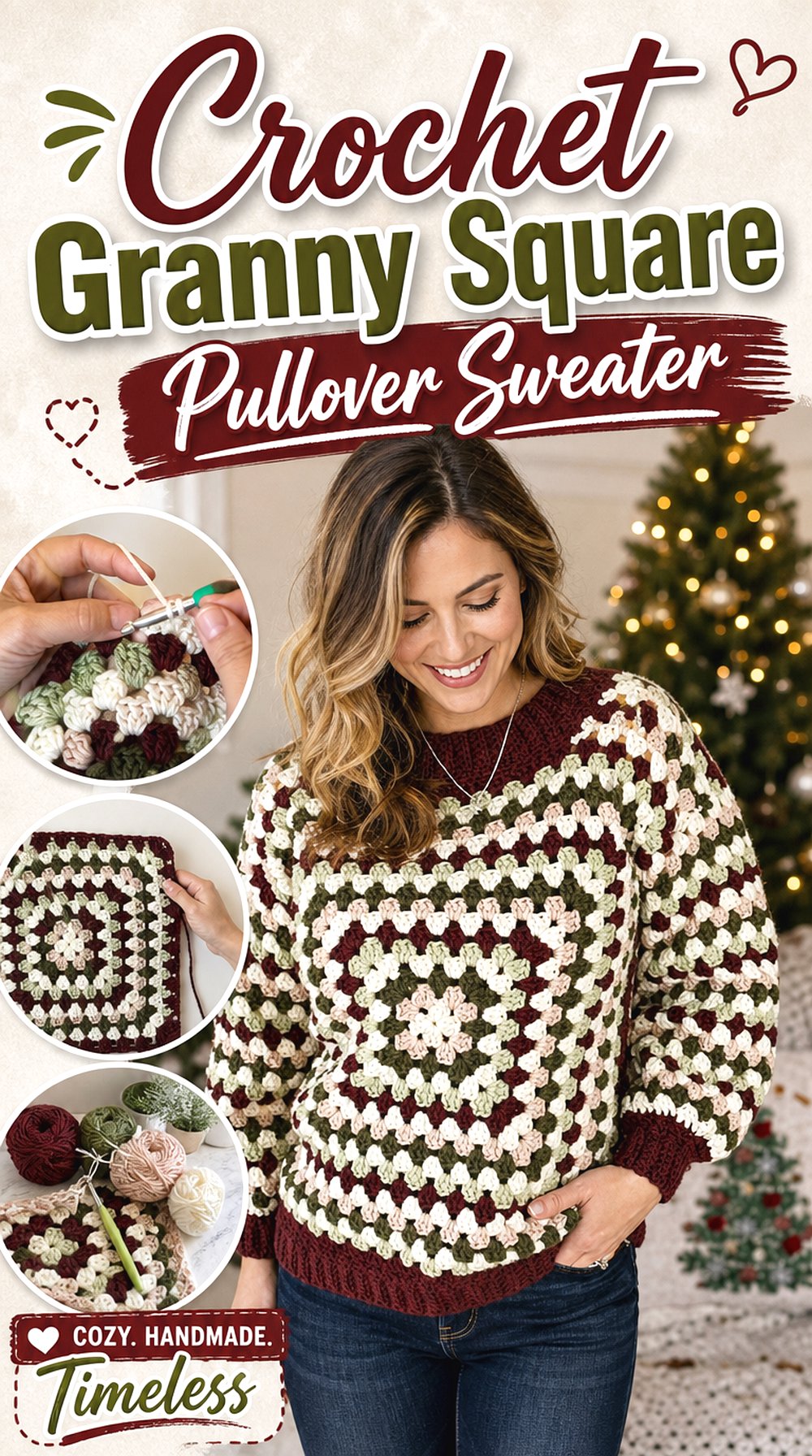
This crochet granny square pullover uses large square sections as the main visual feature, giving the sweater a bold handmade look without relying on stripes or surface decoration alone. The finished garment reads more like a relaxed pullover than a traditional fitted sweater, and the square layout makes it stand apart from the other patterns in this list.
The design is especially useful for readers who like motif-based projects but still want a wearable sweater result. The neckline, sleeves, and ribbed edges are the details to watch because they turn the square-based structure into a finished garment.
The Motif Layout Defines the Shape
The main appeal here is the granny square structure. Because the sweater is built around large square sections, readers should pay close attention to how the motif placement affects the neckline, shoulders, and body width. This is not the same decision as choosing a plain panel sweater, where the fabric shape is more direct.
Ribbing Changes the Finished Look
The cuffs, collar, and hem help the sweater look more complete and less like loose joined squares. Readers who prefer a neater pullover finish should notice how the ribbing frames the garment. It is also worth checking whether the written pattern gives the size-specific details needed for a chosen fit.
Creator: Hooked on Homemade Happiness
2. Crochet Turtleneck Panel Sweater
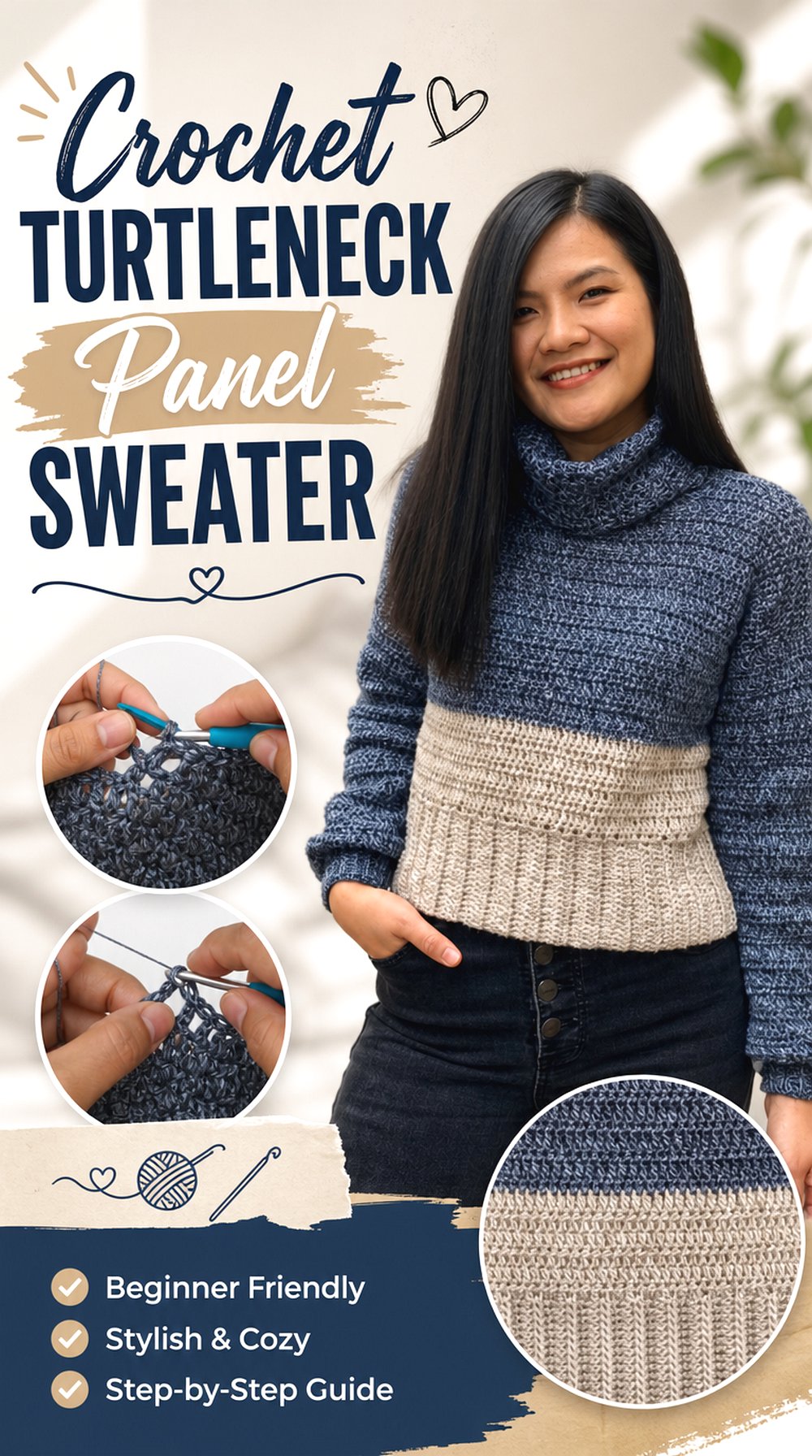
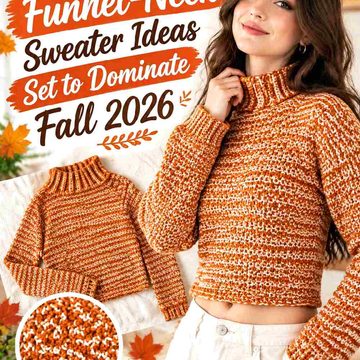
A high folded neckline gives this crochet turtleneck sweater a covered, cozy shape that feels different from the open and mesh options in this list. The sweater is made as separate pieces with the collar added after the main body, so the finished result has a classic pullover look with a defined neck.
This project may appeal to readers who want a sweater with more upper-body coverage and a cleaner cold-weather outline. The source includes a written pattern link and gives details for the demonstrated size, but readers should still compare the listed measurements with their own preferred fit.
The Collar Is the Main Feature
The turtleneck changes both the style and the way the sweater sits at the top. A higher collar can look polished, but it also makes neckline fit more important. Readers should check the creator’s collar information carefully before choosing this option, especially if they are sensitive to close necklines.
Separate Pieces Need Careful Matching
Because the sweater is described as being made in separate pieces, matching the front, back, sleeves, and collar matters for a balanced result. Readers should review the construction overview before starting so they understand how much sewing and finishing are part of the project.
Size Notes Are Worth Comparing
The tutorial description includes specific sample measurements for the demonstrated sweater. Those details are useful, but they should not be treated as a universal size. Anyone planning a different fit should compare the source’s size information, gauge notes, and written pattern before buying supplies.
Creator: KnitcroAddict
3. Crochet Lightweight Mesh Sweater
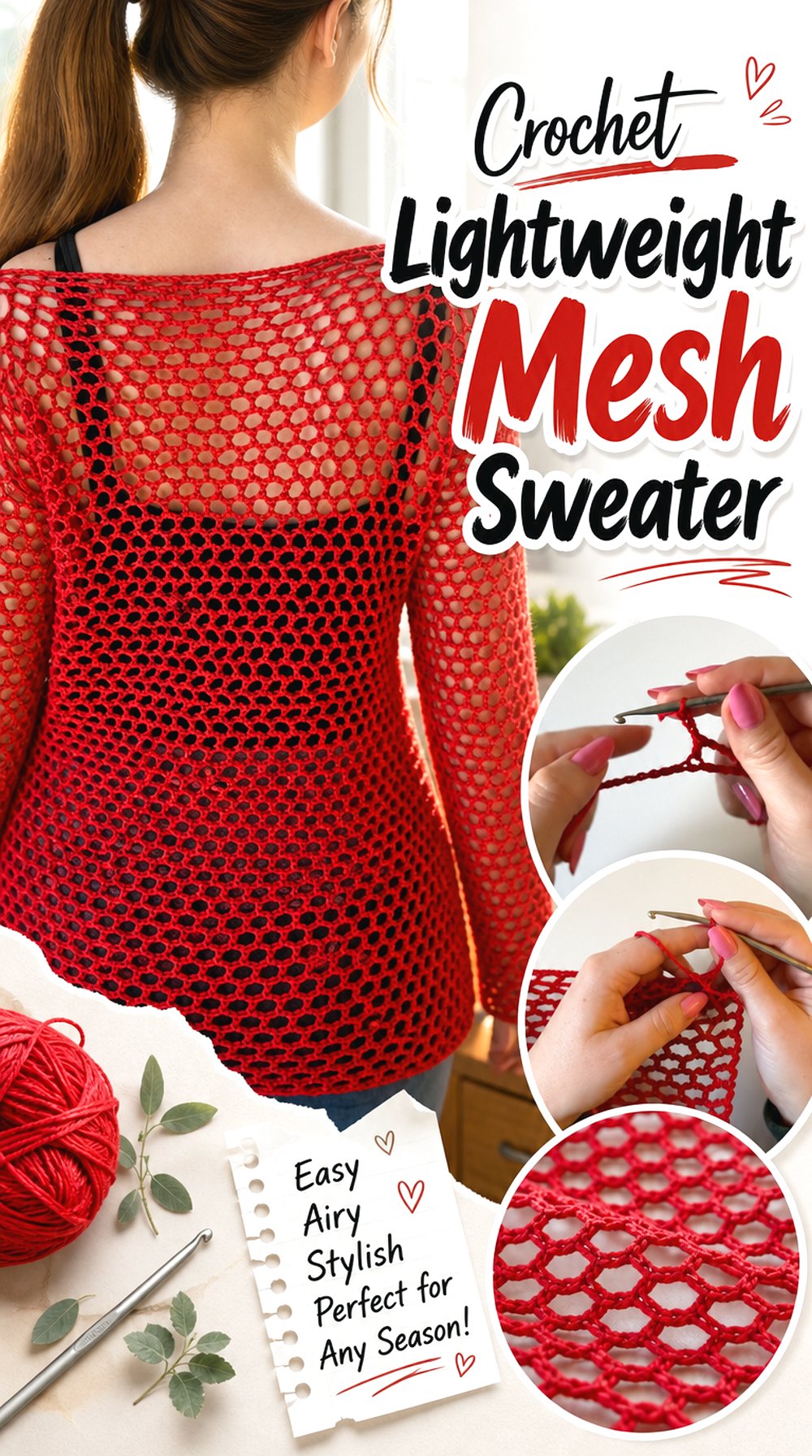
Open mesh gives this crochet sweater a lighter, more breathable appearance than the solid pullovers in this collection. The finished shape is still a sweater, but the open fabric makes layering an important part of how it will be worn. It can work as a visible top layer over a simple base rather than as a stand-alone covered garment.
This option is useful for readers who want a sweater shape without a heavy solid surface. The tutorial includes panel measurements and assembly, so it is worth watching how the mesh increases, decreases, and final joining affect the finished outline.
Coverage Depends on the Layer Underneath
The mesh fabric creates visible openness across the body and sleeves. Readers should plan what they would wear under it before choosing colors or yarn. This is especially important if they want more coverage, because the finished sweater’s look depends partly on the base layer showing through.
Panel Measurements Guide the Fit
The source includes panel measurement information, which can help readers compare the sweater to their preferred body width and length. Since mesh can visually stretch or open, it is useful to check the finished measurements rather than judging the fit only from the thumbnail or final try-on.
Assembly Shapes the Final Sweater
The panels need to come together cleanly for the sweater to sit evenly. Readers should give extra attention to the assembly section and compare both sides as they work. This is not about memorizing the pattern; it is about understanding how the open fabric becomes a wearable garment.
Creator: Crochet with Linni
4. Crochet Top-Down Raglan Sweater
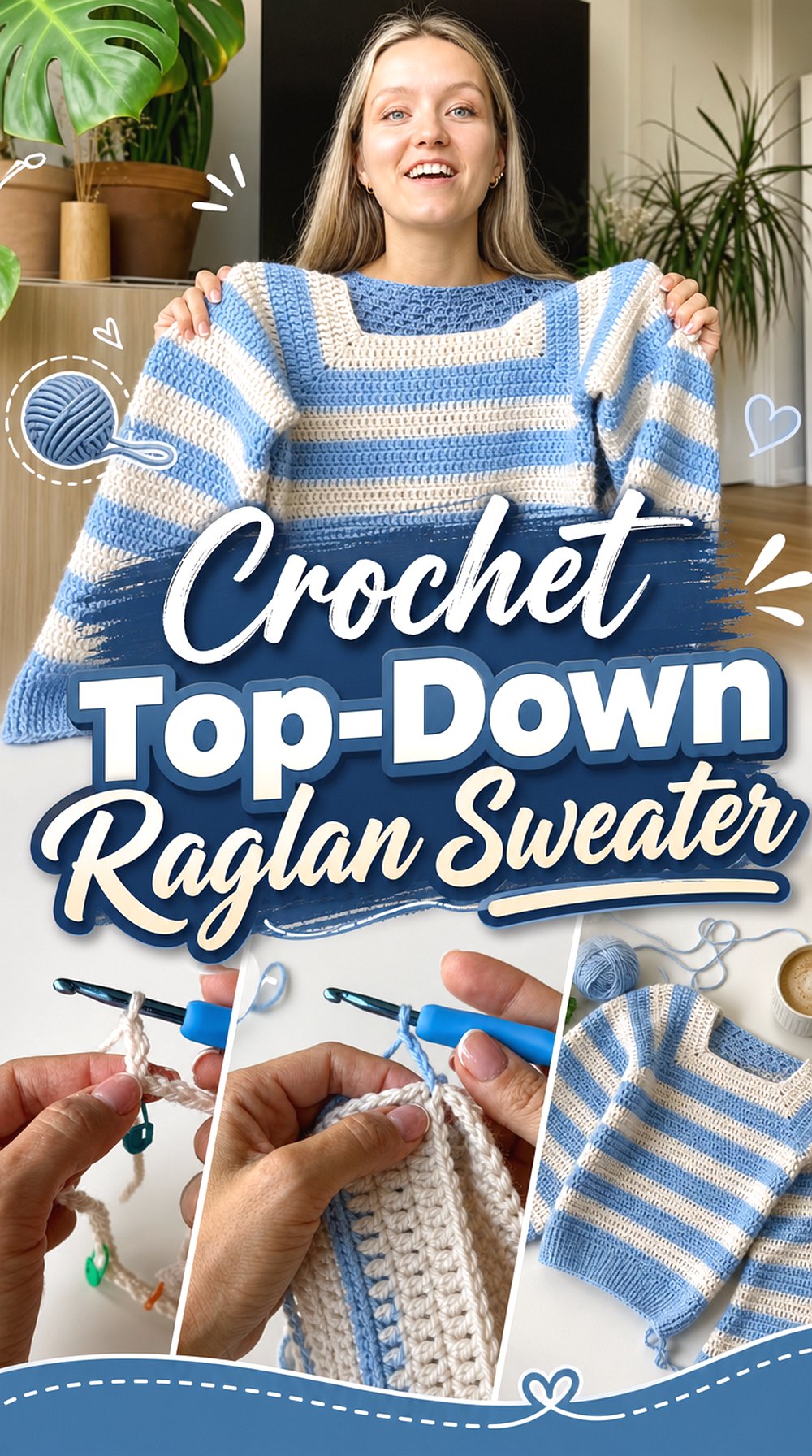
The raglan shape gives this crochet sweater a different construction path from panel-based pullovers. It begins from the neckline area and develops into a sweater with shoulder shaping built into the upper section. The finished result has a modern pullover outline with less emphasis on separate body panels.
This style may suit readers who like seeing the sweater form from the top down and who want to understand fit as the garment grows. The tutorial includes sections for the neckline, shoulder area, body, sleeves, and a final try-on, which helps viewers see the overall shape.
The Neckline Starts the Whole Fit
With a top-down raglan, the neckline is not just a finishing detail. It sets up the upper sweater shape and affects how the shoulders and body develop. Readers should check the neckline portion carefully and compare it with the finished try-on before deciding if this shape suits them.
Minimal Sewing Changes the Project Feel
The source describes the sweater as having minimal sewing, which makes it different from projects that rely on separate panels. That may appeal to readers who prefer fewer joining stages. Even so, they should still review the sleeve and finishing sections so they know where careful checking is needed.
Color Changes Need Planning
The tutorial includes a color change section, so readers interested in a multi-color version should plan their palette before starting. Color placement can change the look of a raglan sweater because the upper body, sleeves, and main body meet visibly near the shoulders.
Creator: by Kristine
5. Crochet Chunky Drop-Shoulder Sweater
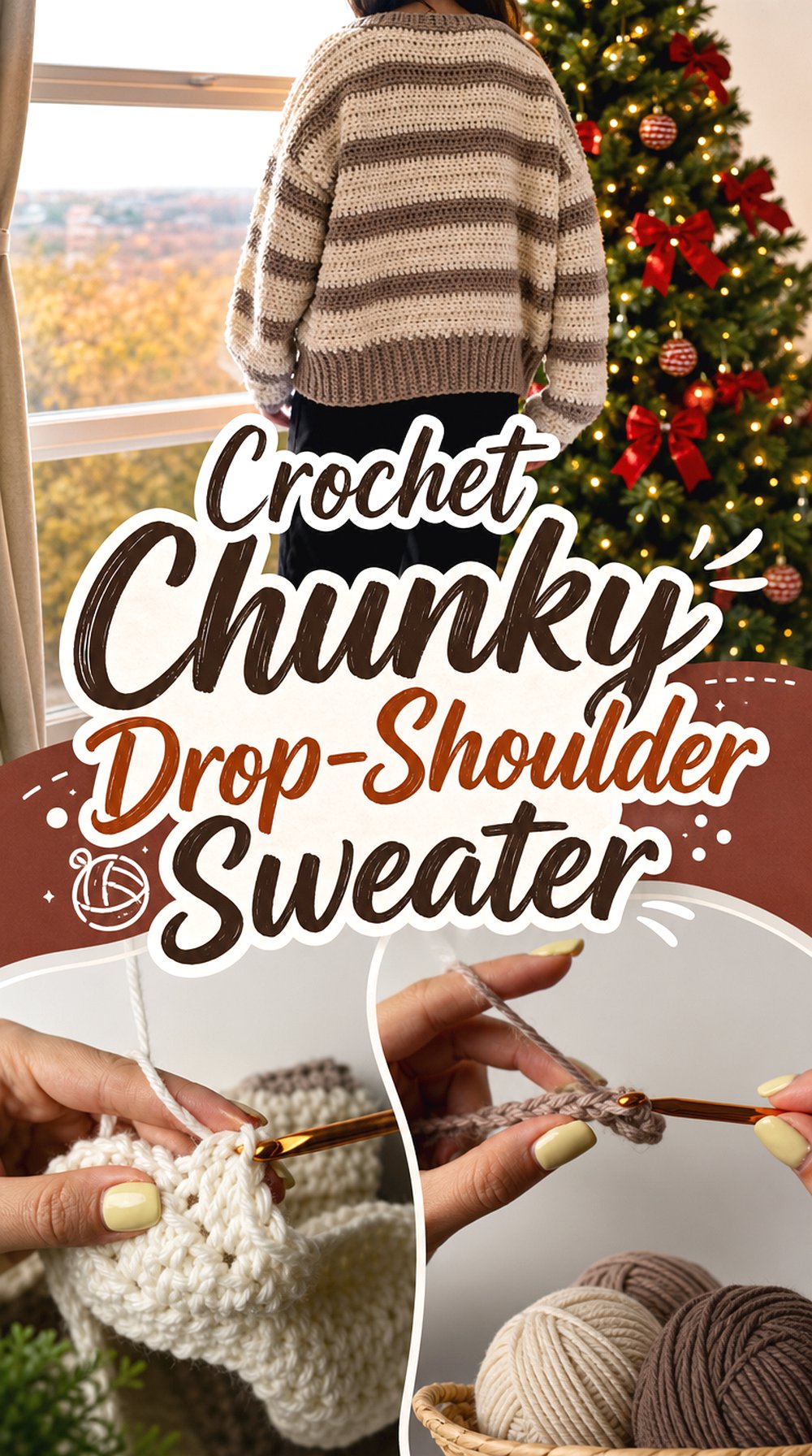
A chunky yarn look gives this crochet sweater a thicker, more substantial appearance than the mesh or DK-weight options. The finished sample has a relaxed pullover shape with visible body panels, sleeves, collar, and cuffs. Its softer oversized outline makes it stand apart from the more fitted V-neck and the structured turtleneck.
Readers choosing this project should focus on the garment’s width, sleeve length, and neckline finish. The tutorial description includes measurements for the demonstrated XL sample, so those numbers can help readers judge whether they want a similar roomy shape or need to adjust.
Chunky Fabric Affects Drape
Chunky yarn can create a sweater that looks fuller and more textured. That can be appealing for a relaxed pullover, but it also means the finished garment may feel visually heavier than a light mesh or stripe sweater. Readers should look at the final view closely before choosing this style.
Sample Measurements Matter Here
The creator lists measurements for the sweater made in the video, including body and sleeve details. Those measurements are especially useful because a chunky sweater can look very different when made smaller, longer, or wider. Readers should compare the sample size to a sweater they already like wearing.
The Collar Finishes the Shape
The collar section helps define the neckline and gives the sweater a more finished pullover edge. Readers who prefer a lower or higher neckline should check what the source shows before committing. The collar can change the balance of a thick sweater more than it would on a lighter garment.
Creator: Kenikse Crochet
6. Crochet Balloon Sleeve Tie Sweater
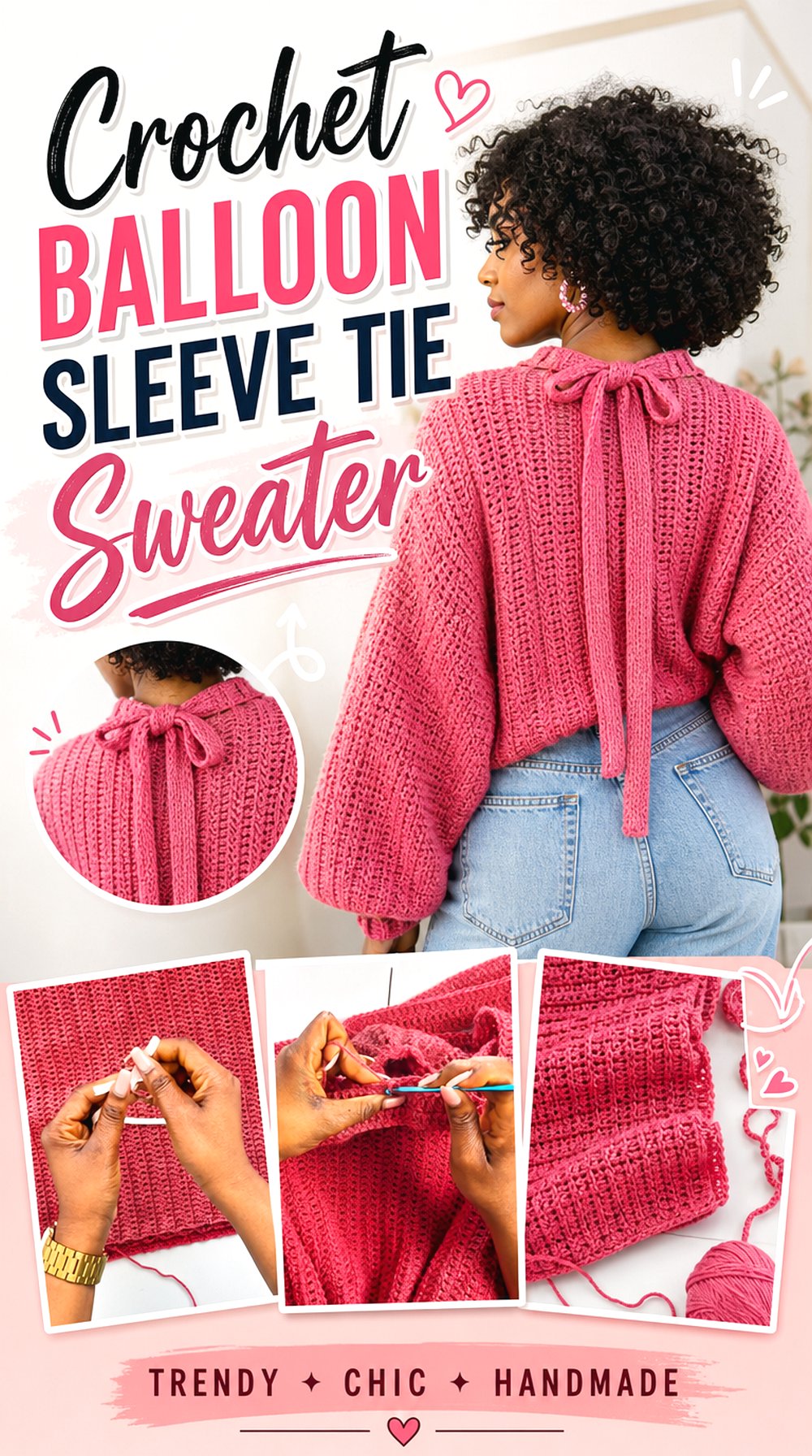
This crochet balloon sleeve sweater is one of the more dramatic shapes in the list. The high neckline and statement tie detail give the upper sweater a clear focal point, while the oversized sleeves create volume away from the body. It is not just another basic pullover, because the sleeve shape and neckline styling carry much of the design.
The tutorial describes a side-to-side body construction and sleeves worked to create the balloon shape. Readers who like modern sweater silhouettes should check how the sleeve volume, tie detail, and body texture work together before choosing this pattern.
Sleeve Volume Is the Big Decision
The balloon sleeves are the most noticeable feature, so readers should decide whether they want that amount of volume in a handmade sweater. Wider sleeves can create a strong style statement, but they may not suit every layering need or everyday wardrobe. The finished sleeve view is important here.
The Neck Tie Adds Structure and Detail
The high neckline with a tie detail gives the sweater a more styled finish than a plain crewneck. Readers should look at how the tie sits at the neckline and decide whether they want that feature to be prominent. It is also worth checking whether any extra component, such as elastic, is part of the supply list.
Side-to-Side Construction Feels Different
The body is described as worked side to side, which creates a different planning experience from bottom-up or top-down sweaters. Readers should watch the overview before starting so they understand the direction of the fabric and how that affects the finished texture.
Creator: 🧶Mihankushea🧶
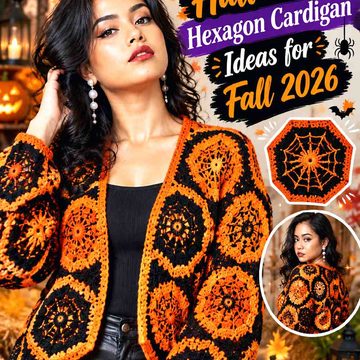
7. Crochet Hexagon Cardigan Sweater
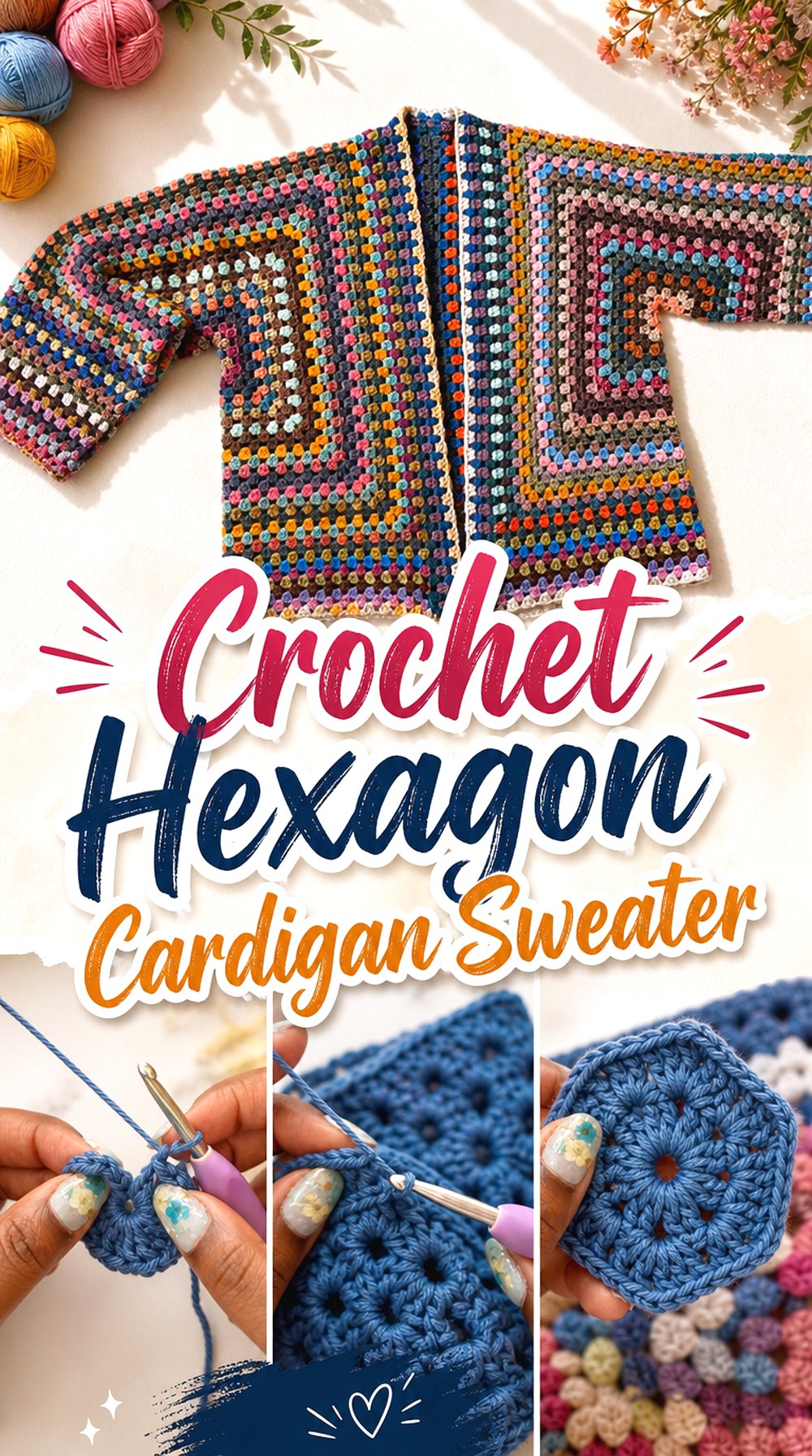
The hexagon cardigan brings an open-front sweater option into the collection. Instead of a closed pullover, this project creates a layer that can be worn over other clothing, with the hexagon structure forming the body and sleeves. It is a practical contrast to the turtleneck, chunky pullover, and V-neck sweaters because it does not need to fit over the head.
This tutorial includes gauge, dimension planning, body widening, sleeve lengthening, collar work, and finishing sections. Readers who want a cardigan-style sweater should focus on the open front, sleeve length, and how the collar frames the finished shape.
Open Front Layering Changes the Use
Because this is a cardigan-style sweater, the front remains open instead of closing like a pullover. That makes it useful as a layer, but it also means the garment will show whatever is worn underneath. Readers should choose this option if they want a sweater that can be added or removed easily.
Gauge and Dimensions Come Early
The source includes early sections about gauge and finalizing dimensions. That is helpful for a wearable project because cardigan fit depends on more than the stitch pattern. Readers should use those sections to compare width, length, and sleeve expectations before moving deeper into the project.
Sleeve and Body Length Are Adjustable Points
The tutorial separates sleeve lengthening and body lengthening into their own sections. That makes those areas worth reviewing closely, especially for readers who prefer cropped cardigans, longer layers, or sleeves that hit a certain point. The final shape should guide those decisions.
Creator: TL Yarn Crafts
8. Crochet Striped Made-to-Measure Sweater
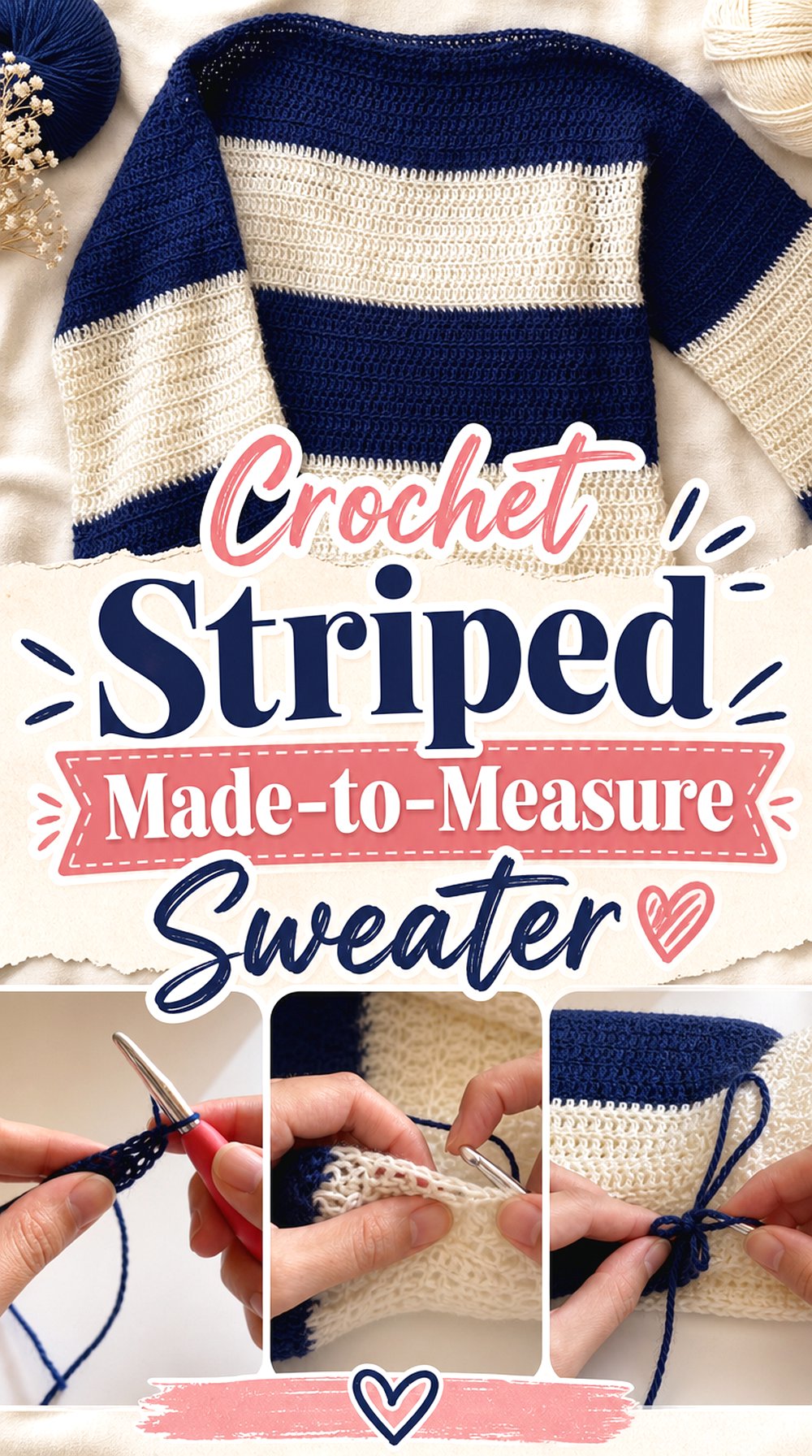
Stripes give this crochet sweater its strongest visual identity, but the made-to-measure approach is the more practical reason to consider it. The tutorial description notes that the sweater can be customized for different fits, including loose oversized or cropped fitted versions. That makes it different from tutorials centered on one fixed sample shape.
This project may suit readers who want a colorful pullover and are comfortable measuring as part of the process. Since stripes draw attention to width, length, and sleeve placement, planning the final proportions matters before choosing colors.
Stripes Highlight Proportion
Horizontal stripes make the sweater’s body length, sleeve length, and width more noticeable. Readers should think about whether they want narrow color changes, bold contrast, or a softer palette. The stripe layout can make the finished sweater feel playful, graphic, or more understated.
Made-to-Measure Requires Careful Notes
A made-to-measure sweater gives flexibility, but it also asks the reader to keep track of their own numbers. The source includes a measurement guide, which should be reviewed before starting. This is especially important for anyone choosing a cropped, oversized, or more fitted result.
Color Changes Need Clean Planning
Since the sweater depends on stripes, color changes are part of the final appearance. Readers should plan how many colors they want and where changes will land across the body and sleeves. A small progress note can help keep the stripe rhythm consistent without relying on memory.
Creator: mahum 🎀
9. Crochet V-Neck Pullover Sweater
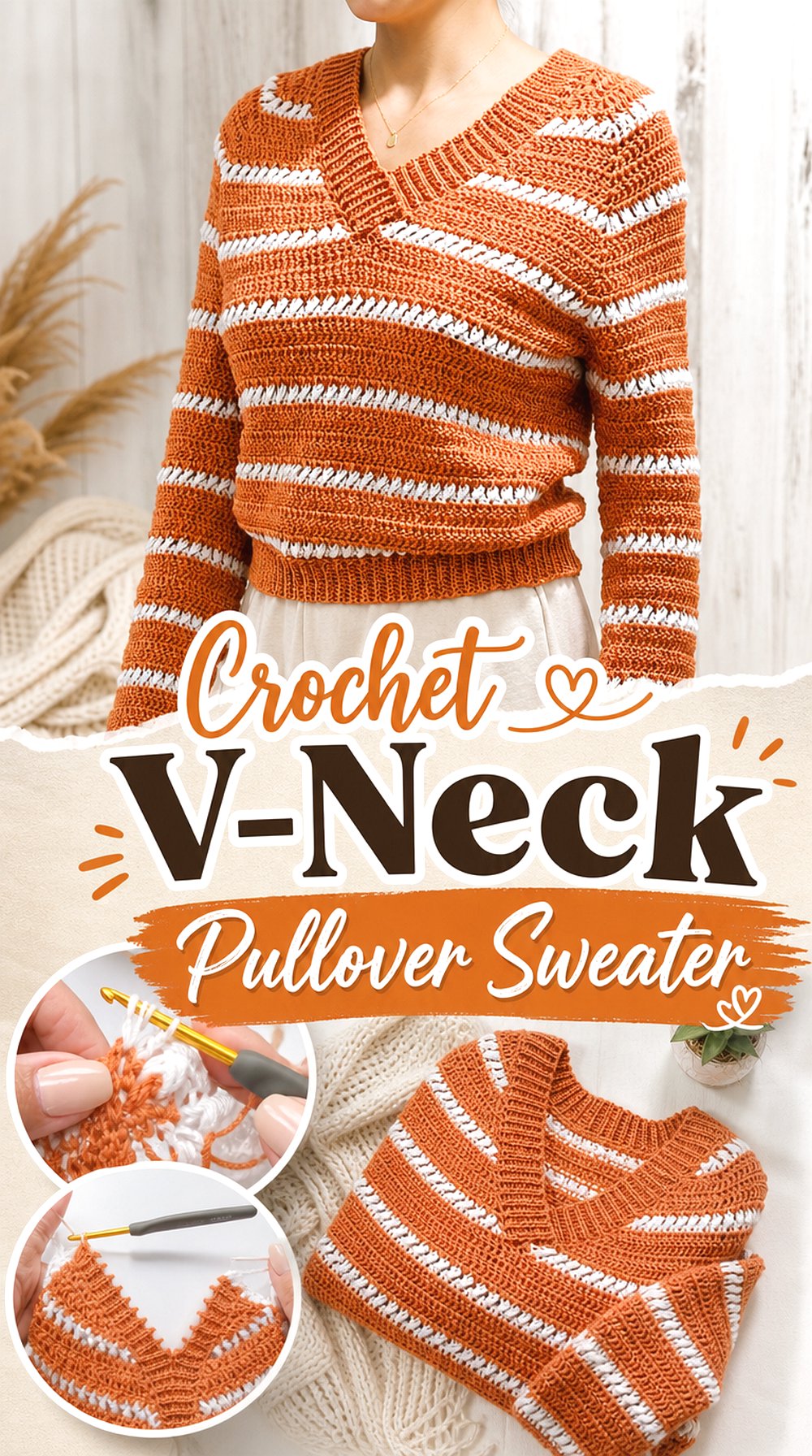
The V-neck shape gives this crochet pullover a more open front line than the turtleneck, raglan, or chunky sweater options. It has a clear neckline feature while still keeping the main body and sleeves in a classic sweater form. The sample described in the source is for size S/M, so readers should treat the sizing information as something to compare rather than assume.
This pattern is useful for readers who want a pullover that can show a base layer, necklace, or shirt neckline underneath. The contrast between the V-neck and ribbed edges is the detail that gives the finished sweater its shape.
The V-Neck Changes Coverage
A V-neck creates less coverage at the upper front than a crewneck or turtleneck. Readers should think about how deep the finished neckline appears and what they would wear underneath. This is a key decision for anyone who wants a sweater for layering rather than full neck coverage.
Sample Size Should Be Verified
The source identifies the tutorial size as S/M. That makes it important for readers outside that range to check whether the creator explains changes or whether extra pattern information is available. Wearable crochet depends heavily on measurements, so this should be reviewed before selecting supplies.
Ribbed Edges Frame the Pullover
The ribbing at the neck, cuffs, and waistband helps define the final sweater outline. With a V-neck, the neckline finish is especially visible. Readers should look closely at how the edge sits so they can decide whether this style matches their preferred finished look.
Creator: D3 Crochet
10. Crochet Bell Sleeve Sweater
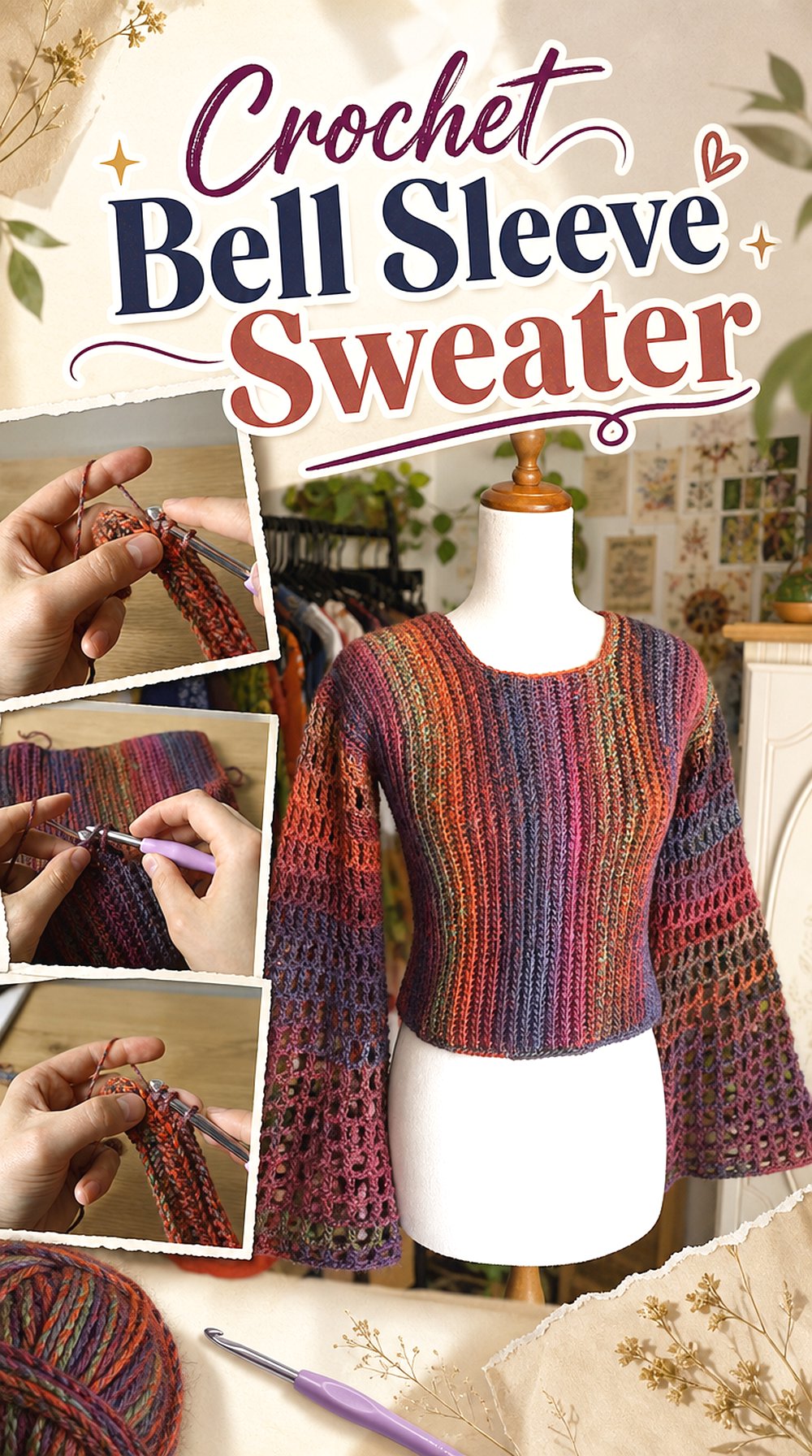
Bell sleeves give this crochet sweater a softer, more flared silhouette than the chunky drop-shoulder or balloon sleeve designs. The sleeve shape is the detail that makes the project stand out, while the body remains more controlled. The tutorial also focuses on a crochet stitch effect that resembles knit fabric, giving the surface a different appearance from granny squares, mesh, or stripes.
This sweater may suit readers who want a pullover with movement at the sleeves rather than strong shaping at the neckline. The shoulder panels, neck area, and sleeve finish are the details to follow closely.
Bell Sleeves Create the Main Movement
The sleeve shape widens toward the lower arm, which gives the sweater its standout line. Readers should decide whether they want that softer flare before choosing this project. It may feel more decorative than a straight sleeve, especially when the arms are visible in the finished view.
The Fabric Look Is More Subtle
The tutorial describes a stitch effect that looks knit while still being crochet. That makes this sweater a good contrast to the bolder granny square and striped options. Readers who prefer a less openly “crocheted” surface may want to study the finished texture before choosing yarn colors.
Shoulder Panels Shape the Upper Sweater
The shoulder panel sections affect how the neckline and sleeves sit. This is the area to review carefully because the bell sleeve effect depends on the upper sweater being balanced. Readers should compare the final front view with their preferred shoulder and sleeve placement.
Creator: Hannah Drapinski
Choosing Between These Crochet Sweater Pattern Styles
For the most covered neckline, the turtleneck is the clearest choice, while the V-neck and mesh sweater offer more visible layering. The raglan and striped sweater are useful for readers who want to think carefully about fit as the garment develops. The granny square and hexagon cardigan options are better for people drawn to motif-based construction, with the cardigan giving the most open-front wear. For sleeve drama, the balloon sleeve sweater has the boldest volume, while the bell sleeve sweater gives a softer flare. The chunky pullover is the most substantial-looking option in this mix.
Conclusion
These crochet sweater pattern ideas cover several different ways a handmade sweater can look and fit. Choose the granny square or hexagon cardigan if motif structure is the main attraction. Pick the mesh, V-neck, or cardigan style for layering. The turtleneck and chunky pullover offer more covered shapes, while the raglan and striped sweater give readers useful fit-focused options. For a stronger sleeve statement, compare the balloon sleeve and bell sleeve designs. Use the original tutorials for exact construction details, sizing notes, supply lists, and any written pattern links before starting.
FAQs
How do I choose the right crochet sweater pattern?
Start with the finished shape rather than the color. Decide whether you want a pullover, open-front cardigan, mesh layer, high neck, V-neck, or statement sleeve. Then check the tutorial for measurements, size notes, gauge information, and a clear final try-on or finished view.
Are crochet sweater tutorials enough without written patterns?
Some tutorials include written pattern links, while others rely more on video instruction. For a wearable sweater, written sizing information can be very helpful because measurements and fit changes matter. Before starting, check whether the creator provides a blog post, PDF, measurement guide, or size-specific notes.
What fit details should I confirm first?
Check the bust or chest width, body length, sleeve length, neckline shape, and size range whenever that information is available. For cardigans, also look at front opening width and sleeve drop. For mesh or V-neck sweaters, think about what layer will be worn underneath.
Can I change yarn for a crochet sweater pattern?
Changing yarn can affect size, drape, thickness, and how the neckline or sleeves sit. If the creator gives gauge information, compare it before substituting. For chunky, mesh, or made-to-measure sweaters, yarn changes can be especially noticeable, so review the creator’s notes before buying supplies.
Which crochet sweater style is best for layering?
The hexagon cardigan, mesh sweater, and V-neck pullover are the strongest layering-focused options in this list. The cardigan stays open, the mesh sweater is designed with visible openness, and the V-neck leaves room at the front neckline. A turtleneck or chunky pullover gives a more covered look.
Can I sell a sweater made from a YouTube tutorial?
Do not assume selling is allowed. Check the creator’s written terms, video description, pattern license, and shop information before selling finished items. Credit alone does not automatically give permission to sell from a tutorial, and local labeling, fiber, and business requirements may also apply.