Leopard print can work on far more than a basic rectangular crochet tote. For fall 2026, the more interesting possibilities include compact phone bags, curved crossbodies, structured clutches, barrel bags, bucket shapes, backpacks, zipper pouches, and open market totes. Each shape changes how much room there is for the spots and how clearly the print reads.
A few tutorials below already feature leopard or animal-print details. Others teach a distinct bag construction that can be adapted with leopard colorwork; those adaptations are identified rather than presented as designs taught by the original creator. The comparisons focus on print placement, stretch, openings, straps, lining, and structure so you can choose a bag format first and then decide how much leopard pattern makes sense.
Quick List
- Crochet Leopard T-Shirt Yarn Handbag
- Crochet Leopard Phone Crossbody Bag
- Crochet Leopard Mixed-Media Clutch Bag
- Crochet Leopard Ring-Handle Mini Bag
- Crochet Leopard Baguette Shoulder Bag
- Crochet Leopard Crescent Belt Bag
- Crochet Leopard Barrel Crossbody Bag
- Crochet Leopard Round Crossbody Bag
- Crochet Leopard Japanese Knot Bag
- Crochet Leopard Drawstring Sling Bag
- Crochet Leopard Scallop Bucket Bag
- Crochet Leopard Drawstring Backpack
- Crochet Leopard Zipper Pouch
- Crochet Leopard Granny-Square Tote
- Crochet Leopard Structured Everyday Tote
- Crochet Chunky Leopard Shoulder Tote
- Crochet Leopard-Trim Mesh Market Bag
- Crochet Leopard Basket-Stitch Frame Clutch
- Crochet Leopard Lined Everyday Purse
Place the Leopard Print Where the Bag Can Actually Show It
A leopard motif behaves differently on a flat tote panel than on a curved, gathered, or heavily textured bag. Broad flat areas give irregular spots room to remain recognizable, while a narrow phone bag needs smaller markings. Curved circle and barrel bags can interrupt a rigid chart, so treat the spots as a composition that can shift around shaping rather than expecting every mark to stay perfectly rectangular.
Before committing to a large bag, make a small colorwork swatch in the yarn and stitch structure you intend to use. The useful question is not only whether the colors work together, but whether the spots remain readable at normal viewing distance. A detailed leopard repeat that looks clear on paper may become visually crowded once translated into thick crochet stitches.
Yarn Structure Matters as Much as the Fall Palette
Camel, cream, brown, black, rust, and muted gold can give leopard crochet a warm fall direction, but color alone does not determine whether a bag will function well. A soft, elastic fabric may create attractive slouch but can also let a long strap or loaded body stretch. Firmer cotton, cord, raffia, or T-shirt-style materials can produce more defined shapes, although the exact result depends on the tutorial, stitch, gauge, and yarn.
When adapting a tutorial, avoid assuming that an unrelated yarn can simply be substituted without consequences. Changes in thickness or fiber behavior can alter the bag’s dimensions, spot scale, opening, and hardware fit. If maintaining the original proportions matters, compare your fabric with the creator’s demonstrated construction before making all the panels.
Plan Straps, Closures, and Linings Before Adding the Spots
Leopard colorwork is most successful when it supports the bag rather than hiding functional details. On a flap bag, keep enough contrast around the closure to make it easy to find. On a drawstring bag, consider what happens when the printed upper section gathers. On a small crossbody, decide whether a leopard strap strengthens the concept or makes the entire piece visually busy.
Lining is another separate decision. Dense crochet does not automatically require it, and open crochet does not always serve the same purpose. Think about what you plan to carry, whether small objects could work through openings, and how much shape you want the lining to provide. Reinforcement can also be useful at strap attachment points when the chosen fabric has noticeable stretch.
1. Crochet Leopard T Shirt Yarn Handbag
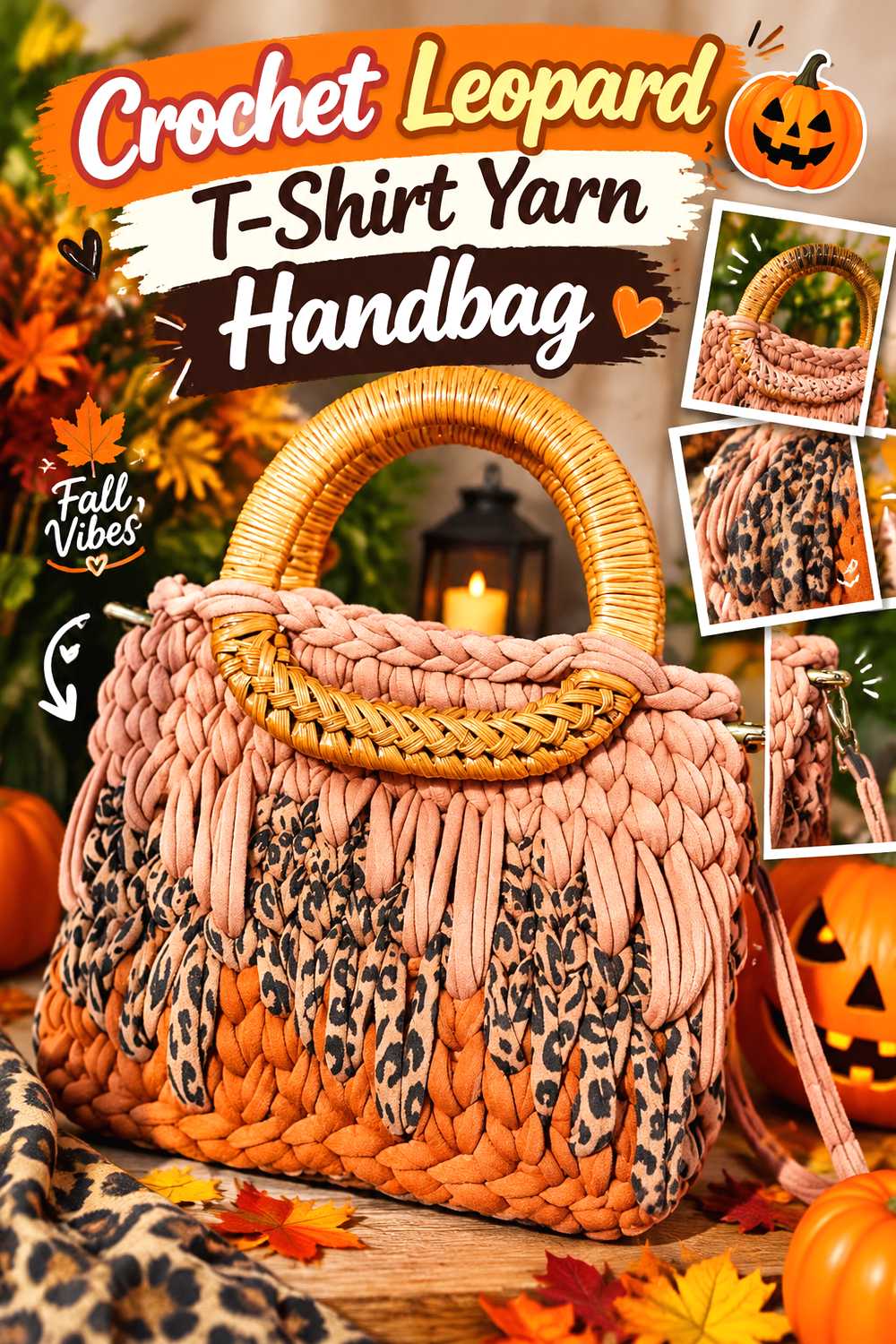
This is the most direct starting point for a bold leopard bag because Crochê Paloma’s tutorial specifically presents an animal-print crochet handbag made with T-shirt yarn and a contrasting handle. The thick material gives the spots substantial visual scale rather than reducing them to tiny flecks, making the bag suitable for someone who wants leopard to be the main feature instead of a small accent.
Its relatively substantial surface also makes warm camel, cream, chocolate, or black combinations feel intentional for fall. If you change the yarn or handle style, however, check how those choices affect the original proportions rather than assuming the same construction will behave identically.
Large Spots Need Uneven Spacing
Leopard markings look more convincing when they do not form obvious horizontal stripes or identical repeats. On a thick-yarn handbag, each color change occupies considerable visual space, so repeating the same spot every few stitches can make the surface look more like polka dots. Look across the entire body periodically and vary both the apparent size and spacing of the dark areas while preserving the tutorial’s construction.
Let the Handle Frame the Print
A distinctive handle already creates a strong boundary at the top of this bag. Keeping the handle and immediate upper edge comparatively quiet can give the leopard body more room to read. If the handle is changed from the one demonstrated by the creator, confirm that its attachment points suit the finished opening and can be secured appropriately for the way you intend to carry the bag.
Creator: Crochê Paloma
2. Crochet Leopard Phone Crossbody Bag
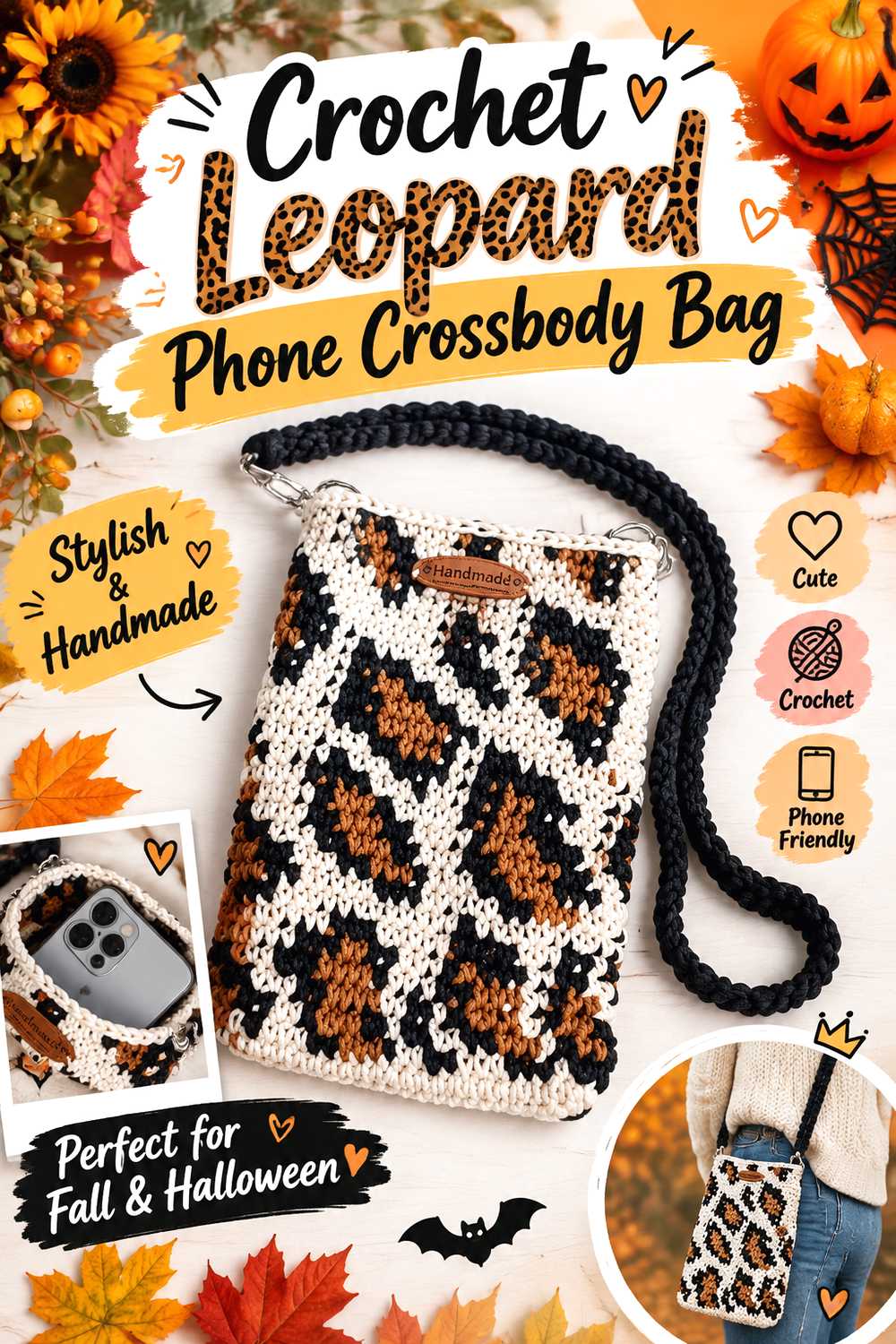
A narrow phone bag offers a completely different leopard canvas. Crochê by Adriana Nogueira’s tutorial specifically demonstrates an animal-print “oncinha” crochet bag intended for a phone, making it another source where the print is already integral to the project rather than added editorially.
Because the body is narrow, smaller markings make more sense than the oversized spots used on a broad tote. This format also works when you want leopard to function as a compact fall accent with a coat or cardigan rather than dominate an outfit. Before changing the dimensions, check that the opening still accommodates the actual phone or small item you plan to carry.
Scale the Spots to the Narrow Body
A large dark patch can take over most of the front of a phone bag. Smaller irregular marks leave enough background color visible for the overall pattern to read as leopard. Check the front from a few feet away before repeating the arrangement on the back; the goal is balanced randomness rather than mirroring both sides exactly.
Treat the Strap as a Separate Design Decision
The strap occupies much less area than the bag body but can still affect the overall look. A solid neutral strap can visually contain a busy printed pouch, while continuing leopard into the strap creates a more graphic result. Whichever direction you choose, prioritize the creator’s construction and attachment method before making decorative changes to an area that carries the bag’s weight.
Creator: Crochê by Adriana Nogueira
3. Crochet Leopard Mixed Media Clutch Bag
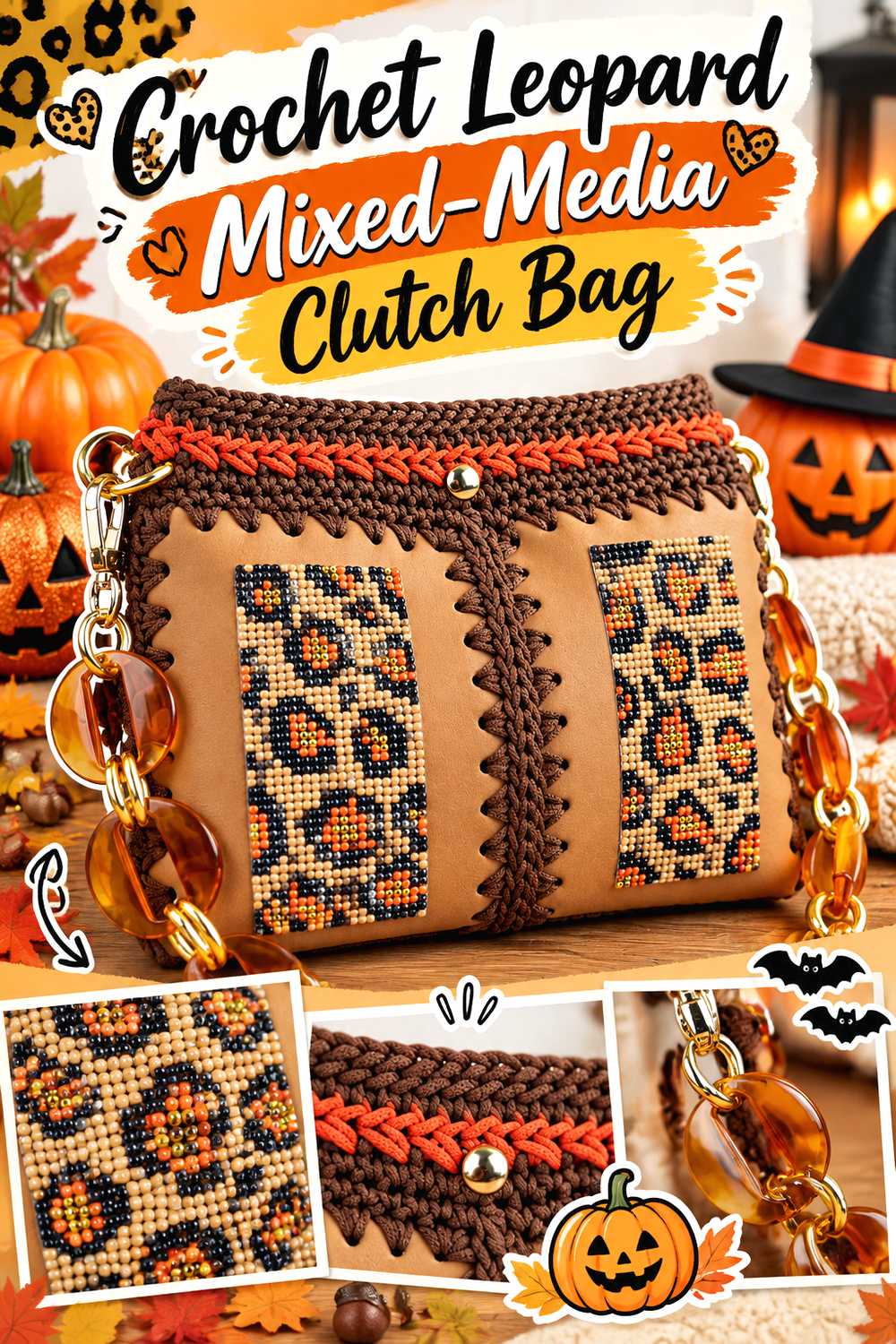
Katy Handmade’s DDBAG Leopard is different from the other ideas because it combines crochet bag construction with a leopard-themed decorative component and diamond-painting work. It is therefore better viewed as a mixed-media leopard clutch than as a pure crochet-colorwork bag. The source also demonstrates closure and strap elements as part of the finished accessory.
This route suits someone who wants the animal print concentrated in a focal area rather than repeated throughout every crochet stitch. For fall, surrounding the leopard feature with black, chocolate, camel, or another restrained solid crochet fabric can make the inserted decoration stand out without forcing several techniques to compete equally.
Make One Surface the Focal Point
Mixed-media bags can become cluttered when the crochet, leopard decoration, hardware, and strap all compete for attention. Decide which front-facing area should carry the strongest pattern. If the leopard section is already visually detailed, a more restrained crochet surround can create a clearer frame and make the finished bag easier to style.
Check Compatibility Before Changing Hardware
A magnetic closure or removable strap depends on the dimensions and reinforcement of the surrounding bag. If you substitute different hardware, compare its attachment requirements with the finished crochet rather than selecting it solely by appearance. A larger clasp can distort a small flap, while heavier hardware may need more support than the original arrangement.
Creator: Katy Handmade
4. Crochet Leopard Ring Handle Mini Bag
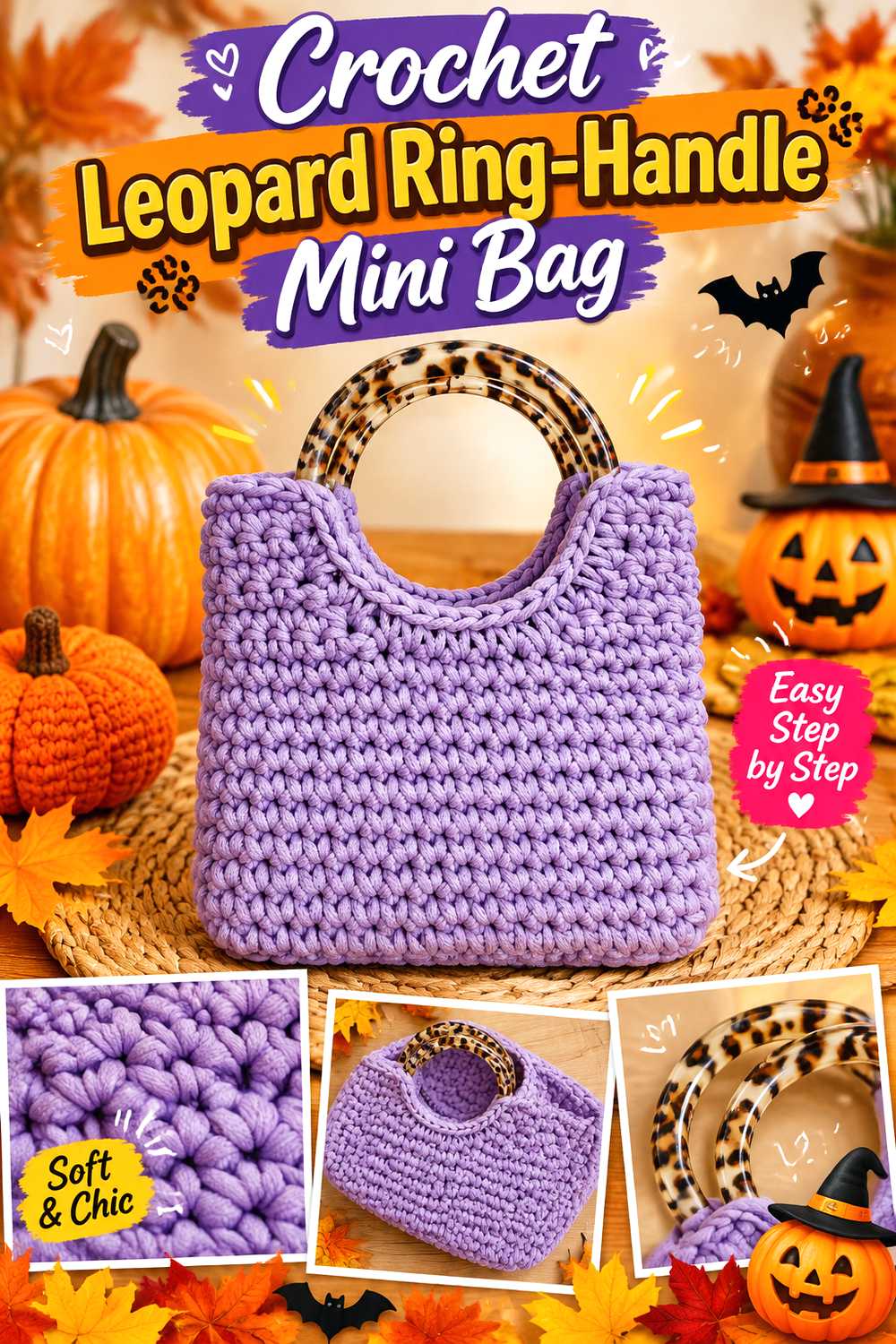
Made by Lunda’s mini bag tutorial provides a compact bag construction with round handles, giving a leopard adaptation a very different silhouette from a crossbody or tote. The source is not a leopard tutorial, so the animal print would be your own colorwork treatment layered onto the demonstrated mini-bag construction.
Round handles create an immediate visual frame, which means the bag body does not need an extremely dense spot pattern to feel finished. A warm tan background with scattered dark markings could work particularly well for fall. Because this is a small format, first consider what you realistically need the opening to accommodate before altering the shape for decorative reasons.
Keep the Print Below the Handles
Crowding irregular spots immediately around ring handles can make the top edge look visually congested. Letting some background color remain near the handle attachment area separates the hardware from the print and makes both features easier to read. This also gives you a clearer view of the attachment area while finishing.
Small Bags Expose Colorwork Tension
On a compact body, one unusually tight color change can visibly pull the edge inward. Swatch the planned leopard technique before committing to both panels, especially if you are carrying unused colors behind the work. The colorwork should not alter the dimensions required by the source construction or interfere with the way the top meets the handles.
Creator: Made by Lunda
5. Crochet Leopard Baguette Shoulder Bag
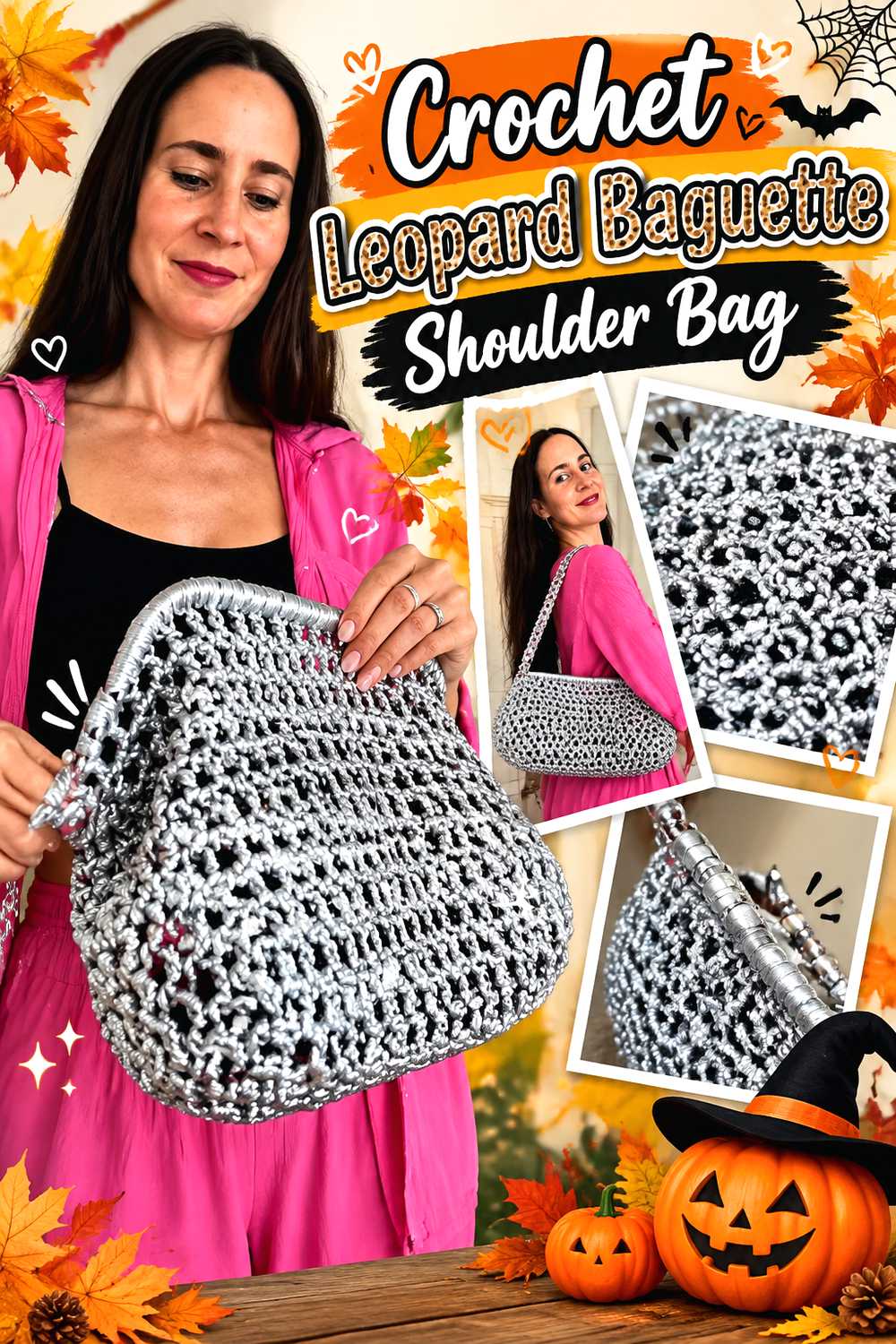
A baguette bag stretches the leopard pattern horizontally instead of giving it a tall tote-style canvas. Maison Saint Bonnet’s tutorial demonstrates a crochet baguette bag with a metal frame, providing a useful construction base for this adaptation; the source itself is not a leopard-print project.
Because the shape is long and relatively shallow, widely spaced markings can help preserve the horizontal silhouette. This is also a good format for a restrained fall palette: black and camel can deliver strong contrast, while cream or muted brown backgrounds soften the overall effect. The metal opening deserves special attention because a yarn substitution can affect how accurately the crochet fits the hardware.
Horizontal Shapes Need a Wider Composition
A leopard layout designed for a square swatch can look strangely compressed on a baguette bag. Instead of repeating a narrow vertical unit, spread markings across the full width and avoid stacking similarly sized spots directly above one another. Step back after each major section to see whether the pattern still feels irregular when viewed across the finished horizontal shape.
The Frame Determines the Top Edge
When a metal frame is part of a bag, the decorative pattern should not distract from fitting the crochet correctly to that structure. Before extending or reducing the printed panel, verify how the creator prepares the top for the frame. Changing the final width purely to complete a leopard repeat could leave the crochet incompatible with the intended hardware.
Creator: Maison Saint Bonnet
6. Crochet Leopard Crescent Belt Bag
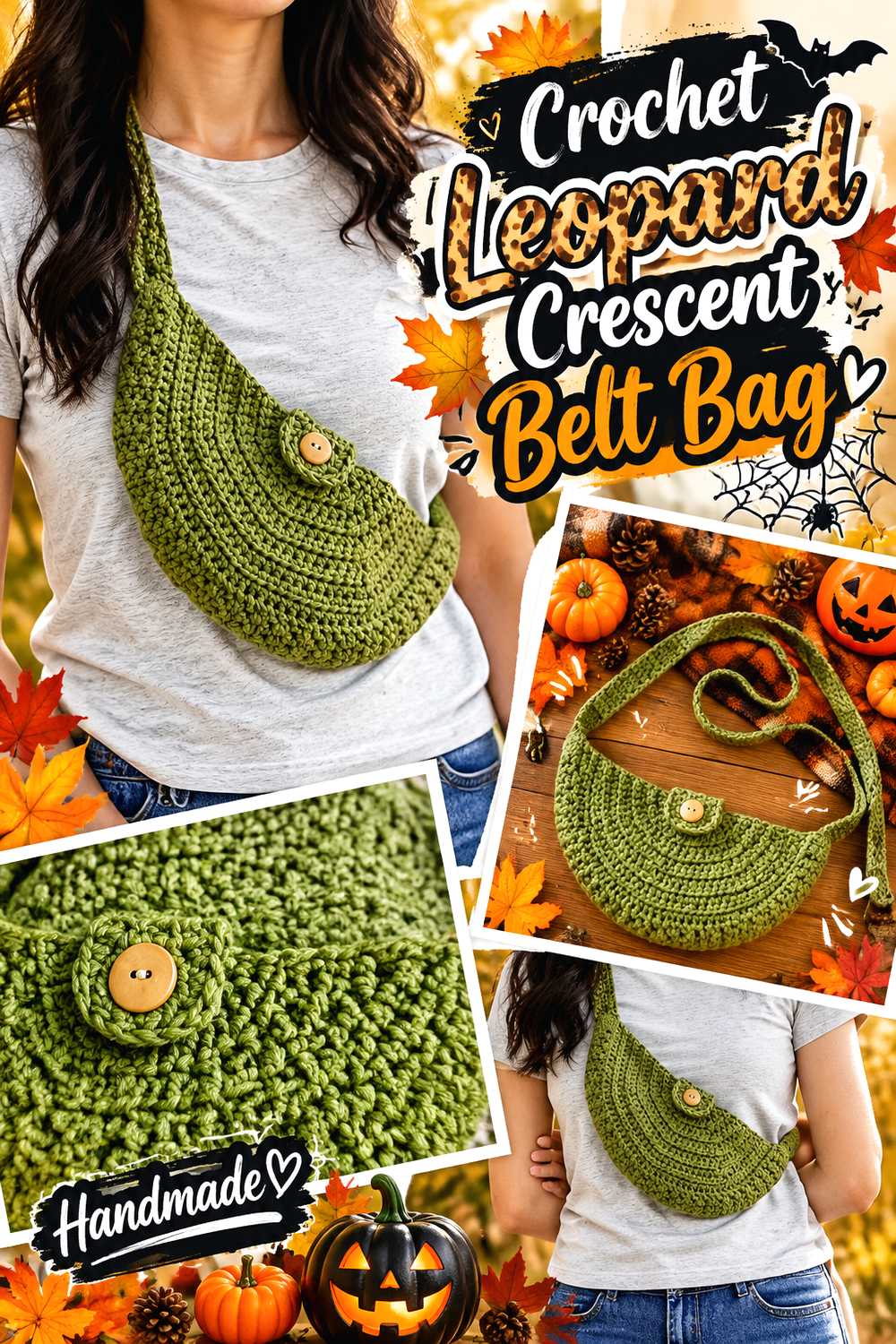
The curved profile in VivCrochets’ crescent bag tutorial creates one of the more modern-looking bases in this collection. The source demonstrates a crescent/belt-bag form with side construction, strap elements, and a buttoned flap; leopard print would be an independent colorwork adaptation.
Unlike a rectangle, the crescent shape changes width as the bag curves, so rigid rows of evenly repeated spots are likely to fight the silhouette. Let markings shift naturally with the available space. This style can work particularly well as a compact fall crossbody because the shape already has visual interest before the animal print is added.
Curves Interrupt Rigid Motif Grids
Do not expect every leopard mark to remain identical as shaping changes the available stitch area. A smaller spot near a taper can look more natural than forcing a complete large motif into insufficient space. Think of the markings as distributed accents while the tutorial’s shaping remains the structural priority.
Protect the Flap From Visual Camouflage
A dark leopard spot landing directly beneath a button or closure can make that functional feature harder to see. Consider using more of the background color around the flap edge and fastening area. The result can still read clearly as leopard while making the opening easier to locate and keeping the curved flap outline distinct.
Creator: VivCrochets
7. Crochet Leopard Barrel Crossbody Bag
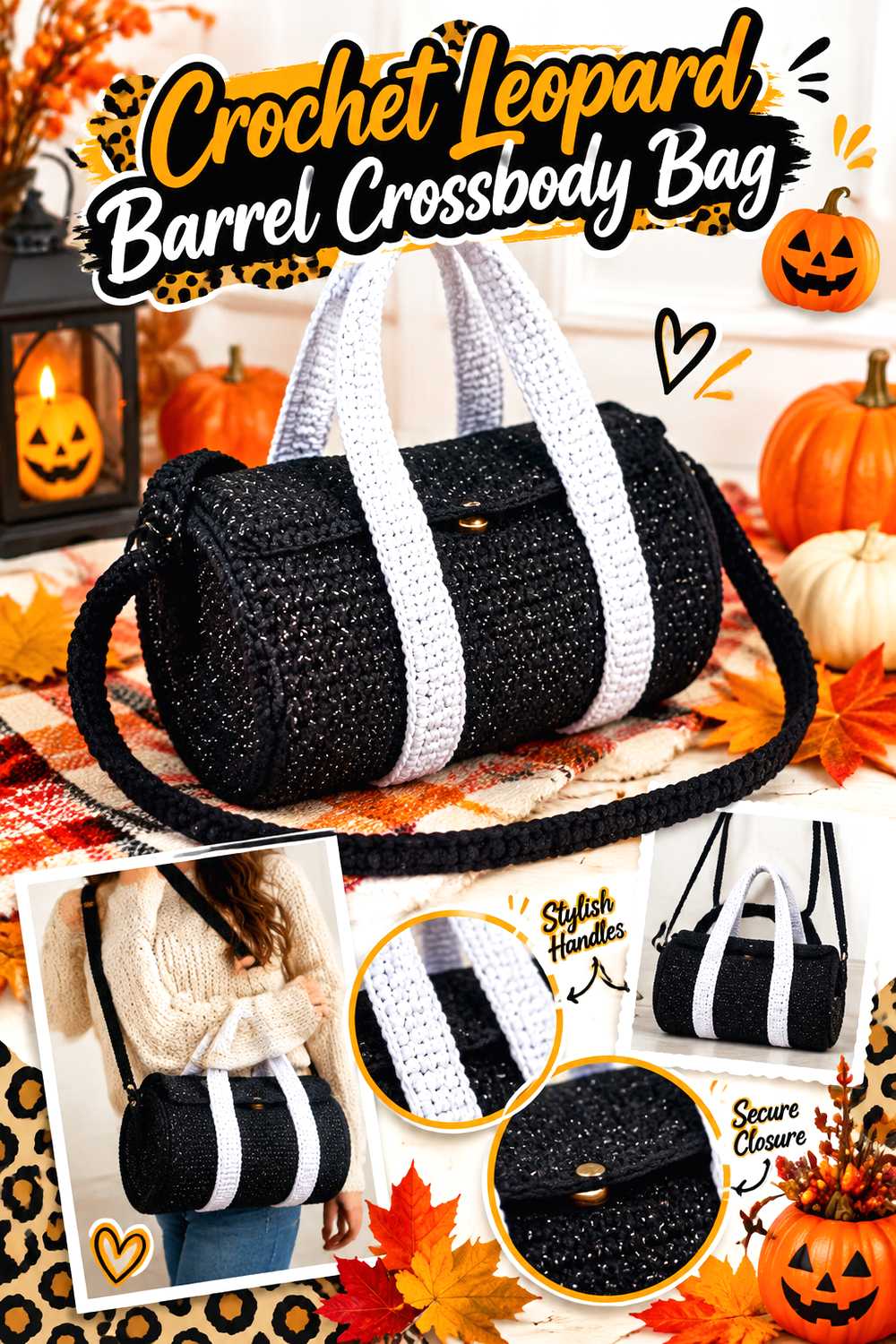
Crochet.Box’s barrel bag gives the leopard idea a cylindrical surface rather than a flat front-and-back construction. The tutorial demonstrates a mini barrel form, while the spotted colorwork would be your adaptation rather than part of the creator’s original design.
This shape is especially interesting for leopard because the pattern can visually wrap around the bag. The challenge is deciding how spots meet at joins and how they interact with circular ends. A solid-colored end panel can simplify the composition, while a fully printed cylinder produces a more dramatic fall accessory. Either way, plan the visible orientation before assembling the bag.
Decide Where the Pattern Wraps
A barrel does not have one uninterrupted flat front. Place the body piece in its approximate cylindrical position before finishing the color arrangement and identify which area will face outward most often. This prevents the strongest spot cluster from disappearing underneath the bag or being interrupted by a prominent join.
Solid Ends Can Calm the Cylinder
Repeating leopard across both circular ends and the barrel body can be visually dense. Keeping the ends in a coordinated solid color gives the print a boundary and emphasizes the cylindrical construction. If you do carry the pattern onto the circles, use the creator’s shaping as the priority rather than attempting to preserve a rectangular spot chart.
Creator: Crochet.Box
8. Crochet Leopard Round Crossbody Bag
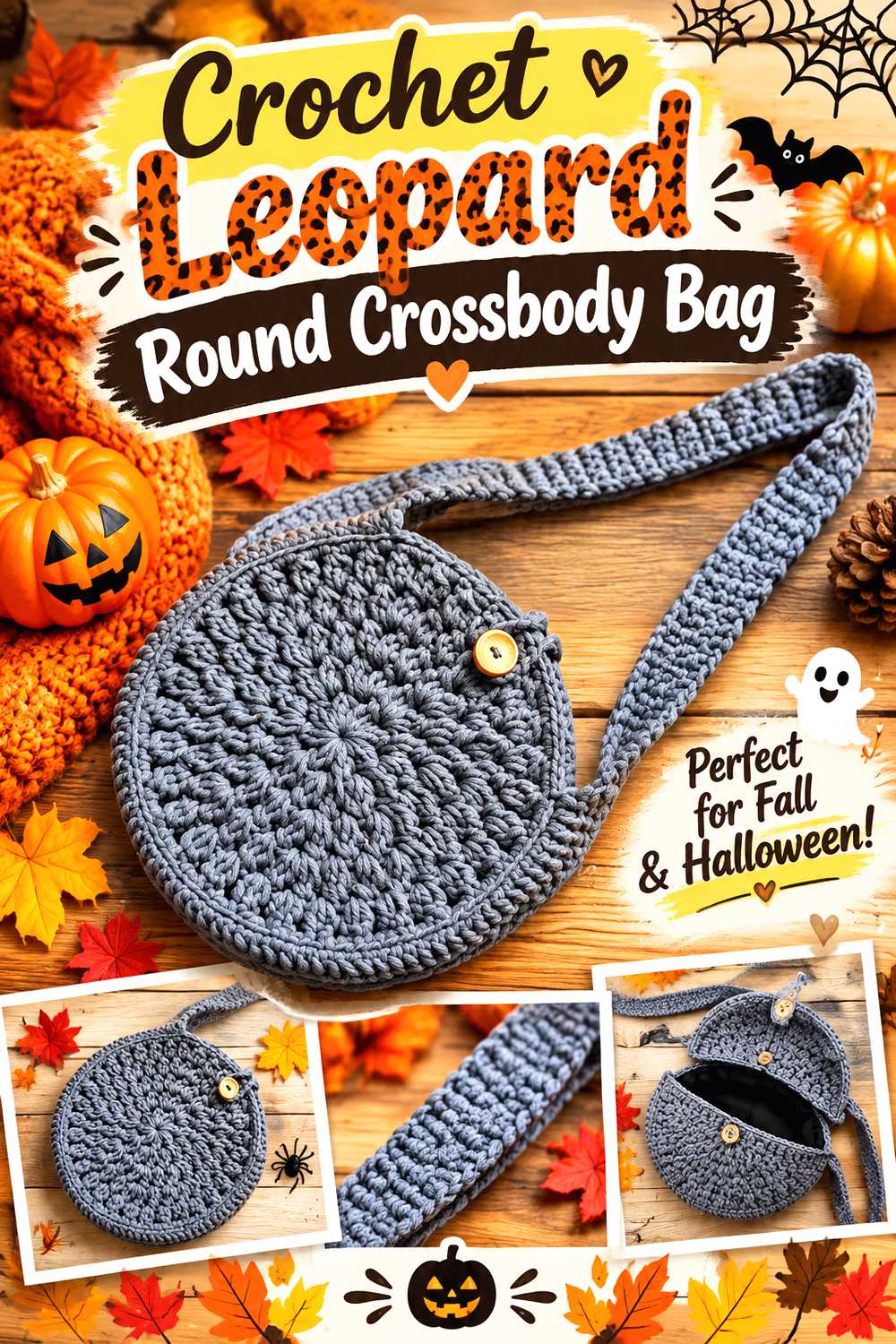
Chompu Handicrafts demonstrates a circular crochet bag, creating a strong base for a leopard adaptation that feels noticeably different from rectangular totes. The original tutorial is a round-bag project rather than an animal-print design, so the spotted surface would be an independent change.
On a circle, leopard placement works better when treated as scattered visual balance rather than a straight repeat running from left to right. Spots near the outer edge can become smaller or more widely spaced as needed. A round crossbody also gives you the option of putting leopard on only one face and using a plain reverse side for a quieter look.
Build the Spots Around the Circle
As a circular panel expands, each new area offers a different amount of room. Trying to force every dark mark into the same size can create obvious rings. Vary the placement and leave irregular areas of background visible so the print does not turn into concentric stripes.
Check Both Faces Before Assembly
If the bag uses separate circular faces, lay them side by side before joining. They do not need to match exactly, but their overall visual density should feel intentional. One extremely dark panel and one almost plain panel can make the bag look unfinished unless that asymmetry is a deliberate styling choice.
Creator: Chompu Handicrafts
9. Crochet Leopard Japanese Knot Bag
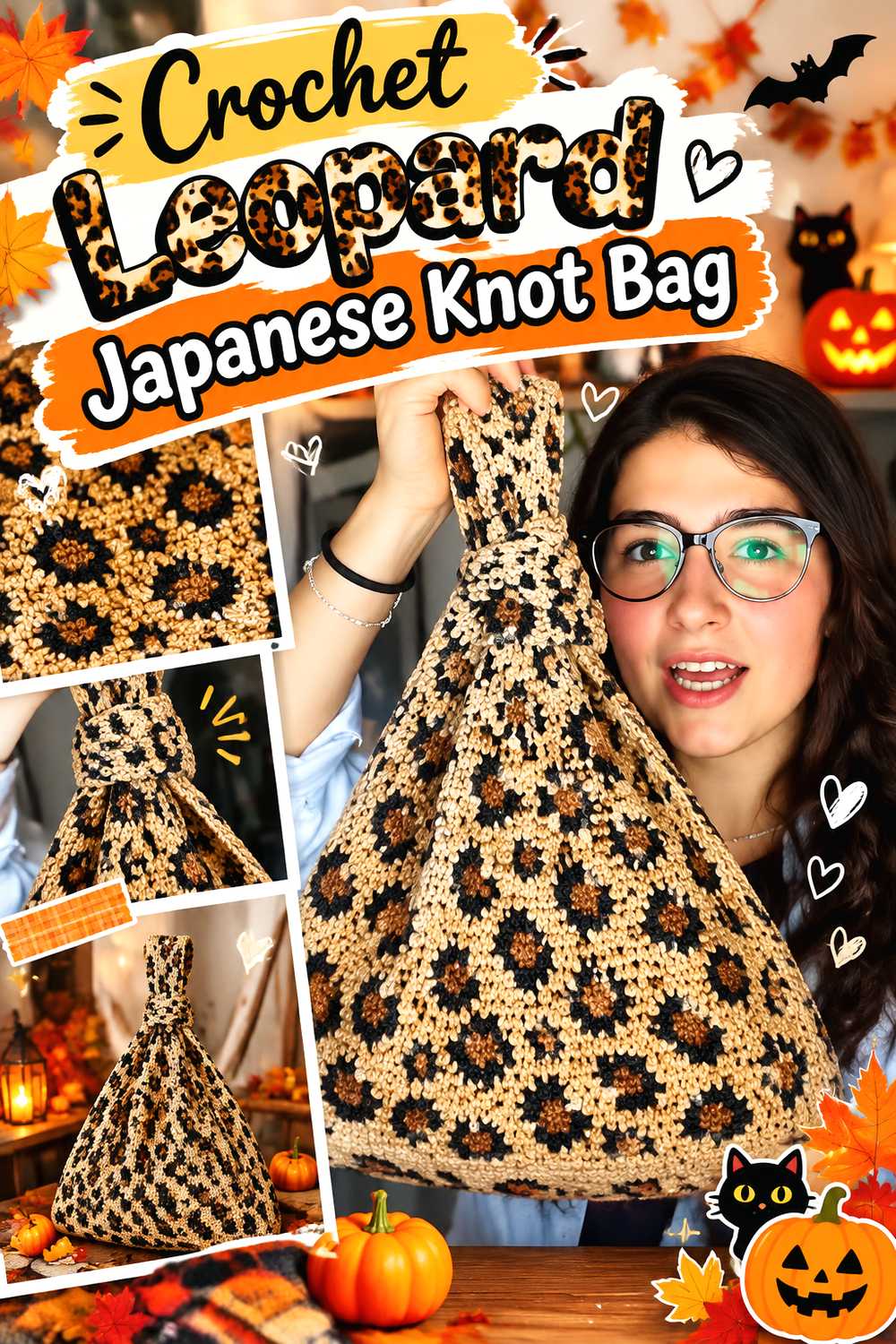
Lallaulab’s Japanese knot bag uses unequal handles so one passes through the other to close and carry the bag. That built-in handle arrangement makes it fundamentally different from a tote with separate straps. Leopard print is not part of the source tutorial and would be an adaptation to the demonstrated construction.
Because the handles cross over the body during use, consider restricting the strongest spotting to the main bag section. A mostly solid upper area can make the knot mechanism easier to read. This is also a practical way to introduce leopard into a fall project without covering every visible inch in animal print.
Keep the Unequal Handles Easy to Read
The Japanese knot closure depends visually and functionally on two different handle lengths. If both are covered in dense high-contrast colorwork, their relationship can be harder to see. A solid or lightly spotted handle section preserves the distinctive construction while leaving the body free to carry the stronger print.
Test the Folded Appearance
This bag changes appearance once one handle passes through the other. Before finalizing spot placement, loosely hold the unfinished body in the way it will be carried. A marking that looks centered on a flat piece can move toward a fold or disappear beneath the upper section once the bag is closed.
Creator: Lallaulab
10. Crochet Leopard Drawstring Sling Bag
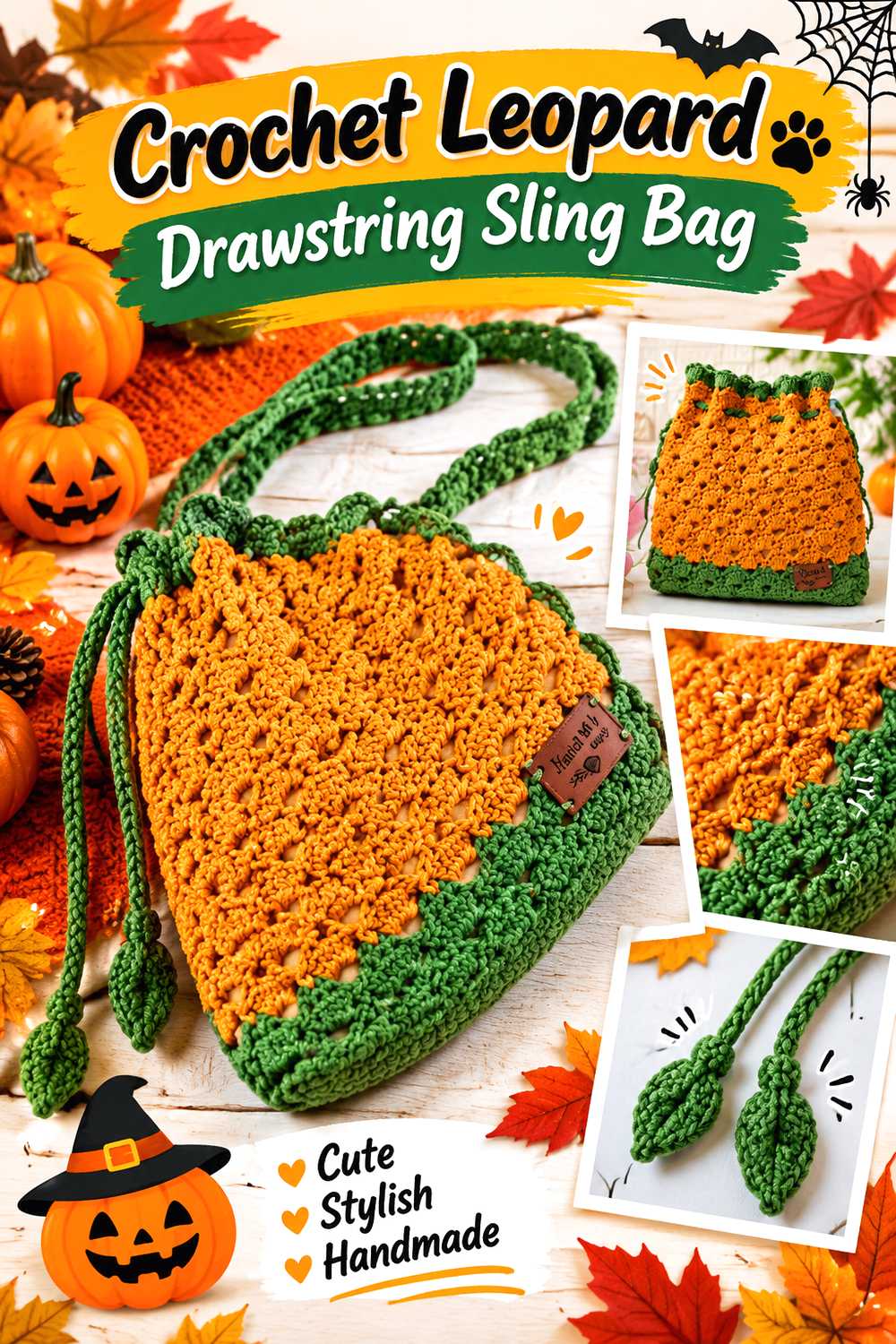
SANG DEWI CRAFT’s drawstring bag tutorial provides a gathered opening and sling-style carry option that can be adapted with leopard colorwork. The demonstrated bag construction is the source; the leopard surface is not.
This format offers a softer alternative to a framed or zippered bag. It also changes how the print behaves because the top portion compresses whenever the drawstring is tightened. Instead of placing your most recognizable markings directly at the opening, keep the clearest leopard areas lower on the body where they remain visible whether the pouch is open or closed.
Expect the Upper Spots to Gather
Colorwork close to a drawstring channel will not remain flat during use. A carefully shaped rosette-like leopard mark may disappear into folds as soon as the cord is pulled. Treat the upper section as lower-detail territory and concentrate stronger markings across the body that stays relatively open.
Check Cord Movement Before Decorating Further
Tassels, beads, or extra crochet details can look appealing with leopard, but first make sure they do not obstruct the drawstring. Open and close the bag repeatedly after the basic cord system is complete. Only then decide whether additional decoration adds anything useful or simply competes with the print.
Creator: SANG DEWI CRAFT
11. Crochet Leopard Scallop Bucket Bag
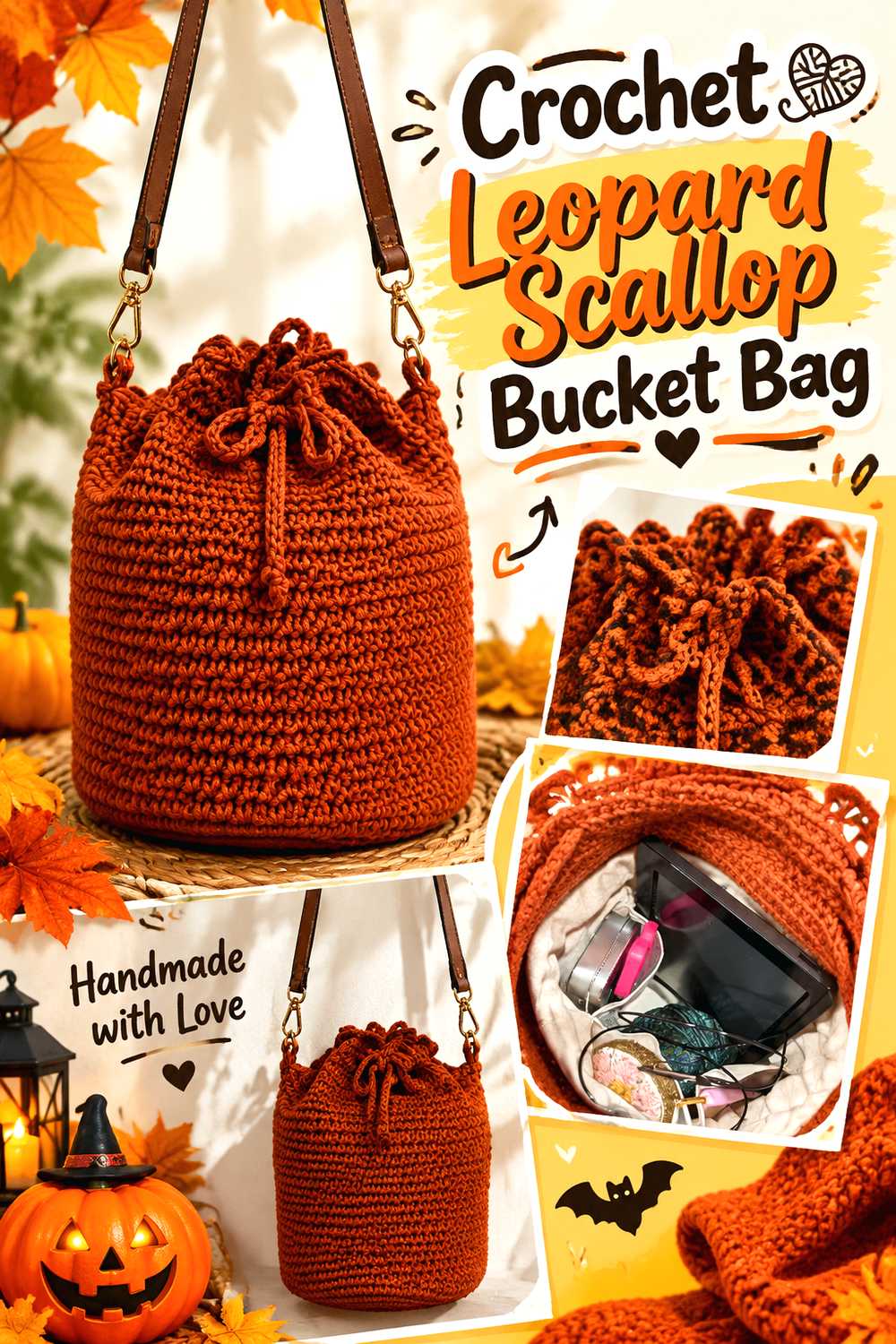
Jess Crafting’s Scallop Bucket Bag introduces a decorative upper edge alongside a drawstring bucket silhouette. The original project does not use leopard print, so this version depends on adapting the color treatment without obscuring the scalloped feature that gives the source bag its identity.
This is a good option if you want more than one decorative idea in the same fall bag. Leopard can fill the main bucket body while the scalloped section remains a quieter solid color. That separation keeps the animal pattern from overwhelming the top edge and distinguishes this project from the simpler gathered sling bag above.
Give the Scallops Their Own Visual Space
Irregular black or brown markings crossing directly over a shaped scalloped border can make the outline harder to see. Ending the strongest print below that section gives the scallops a clean background. You can still connect the two areas by repeating one of the leopard colors in the edging or drawstring.
Check the Bucket From Every Side
Unlike a flat purse with a clearly designated front, a bucket bag can rotate while being carried. Spread the spots around the body rather than placing all the interesting markings on one narrow panel. Rotate the unfinished bag periodically and check that no side looks accidentally empty or excessively dark.
Creator: Jess Crafting
12. Crochet Leopard Drawstring Backpack
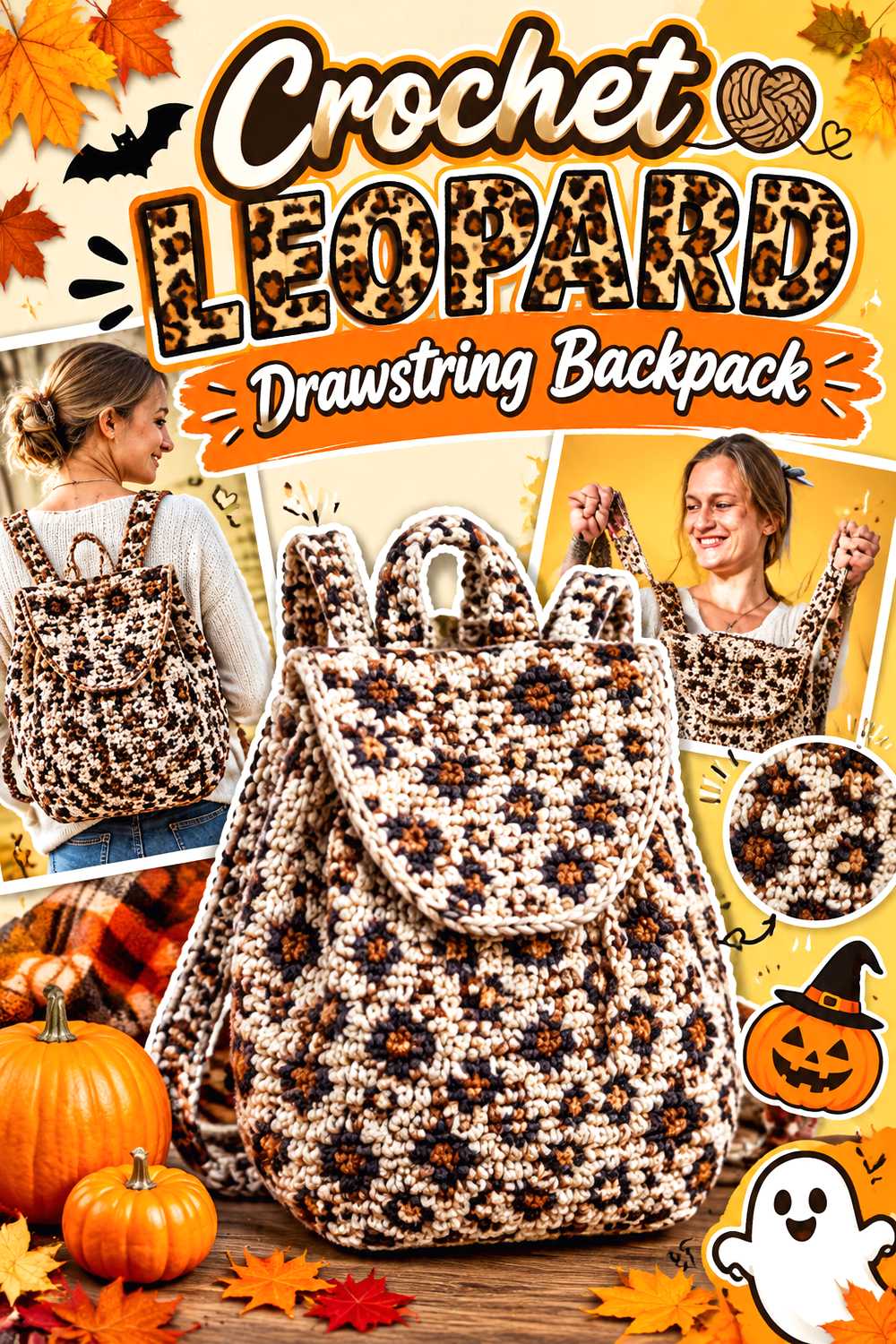
Life and Yarn’s backpack tutorial adds the largest hands-free option in this collection. The source demonstrates a textured drawstring backpack with a flap, strap openings, straps, and handle; leopard print would be an independent adaptation rather than part of the original project.
A backpack has more surface area than a phone pouch or clutch, so you do not need to cram markings together for the design to register. Large areas of the background color between spots can keep the finished piece from looking excessively busy. Because this project also includes several functional zones, consider confining leopard to the main body and letting straps or the flap provide visual rest.
Separate Printed and Load-Bearing Areas
Backpack straps work harder than decorative clutch straps. Making them solid rather than heavily colorworked can simplify finishing and keep attention on the body. More importantly, follow the source’s structural approach at attachment points; do not alter those areas merely to keep a spot repeat uninterrupted.
A Flap Can Break Up a Large Pattern
Using one coordinated solid color on the flap is an effective way to divide a broad leopard field. If you prefer a printed flap, compare its markings with the section immediately beneath it when closed. Two dense clusters sitting on top of each other can create one visually heavy block.
Creator: Life and Yarn
13. Crochet Leopard Zipper Pouch
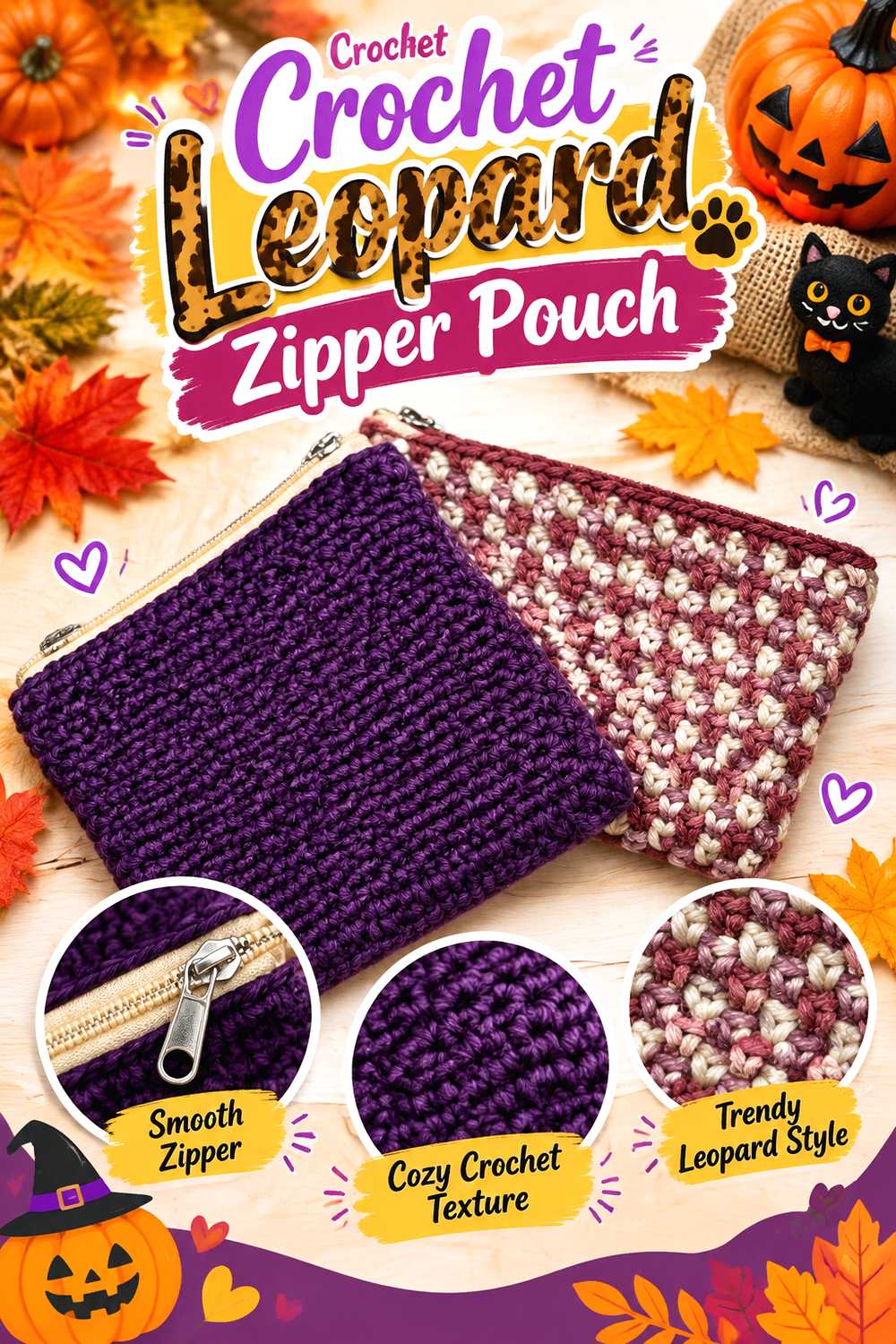
Juniper & Oakes demonstrates a crochet cover attached to a premade zipper pouch, creating a different route to a leopard accessory: the zipper and inner pouch structure already exist, while crochet supplies the decorative outer layer. The source uses moss stitch and multiple colors rather than leopard print, so the animal pattern would be your adaptation.
This format works well for smaller-scale leopard because the pouch is compact and rectangular. It also avoids asking the crochet fabric itself to provide every part of the bag’s closure and interior structure. Check your colorwork dimensions carefully, though, because the cover ultimately needs to correspond with the pouch it surrounds.
Fit Matters More Than Completing a Spot
A decorative mark near the edge should never tempt you to add extra width that prevents the crochet cover from fitting its underlying pouch. Treat the zipper pouch dimensions as the fixed boundary and crop, shrink, or shift spots as necessary to stay within that shape.
Keep the Zipper Line Visually Clean
High-contrast leopard placed immediately against zipper teeth can make the top look crowded. A narrow section of background color near the opening can act as a visual border and help the zipper remain clearly identifiable. It can also make small inconsistencies in the print less noticeable where the crochet meets the pouch.
Creator: Juniper & Oakes
14. Crochet Leopard Granny Square Tote
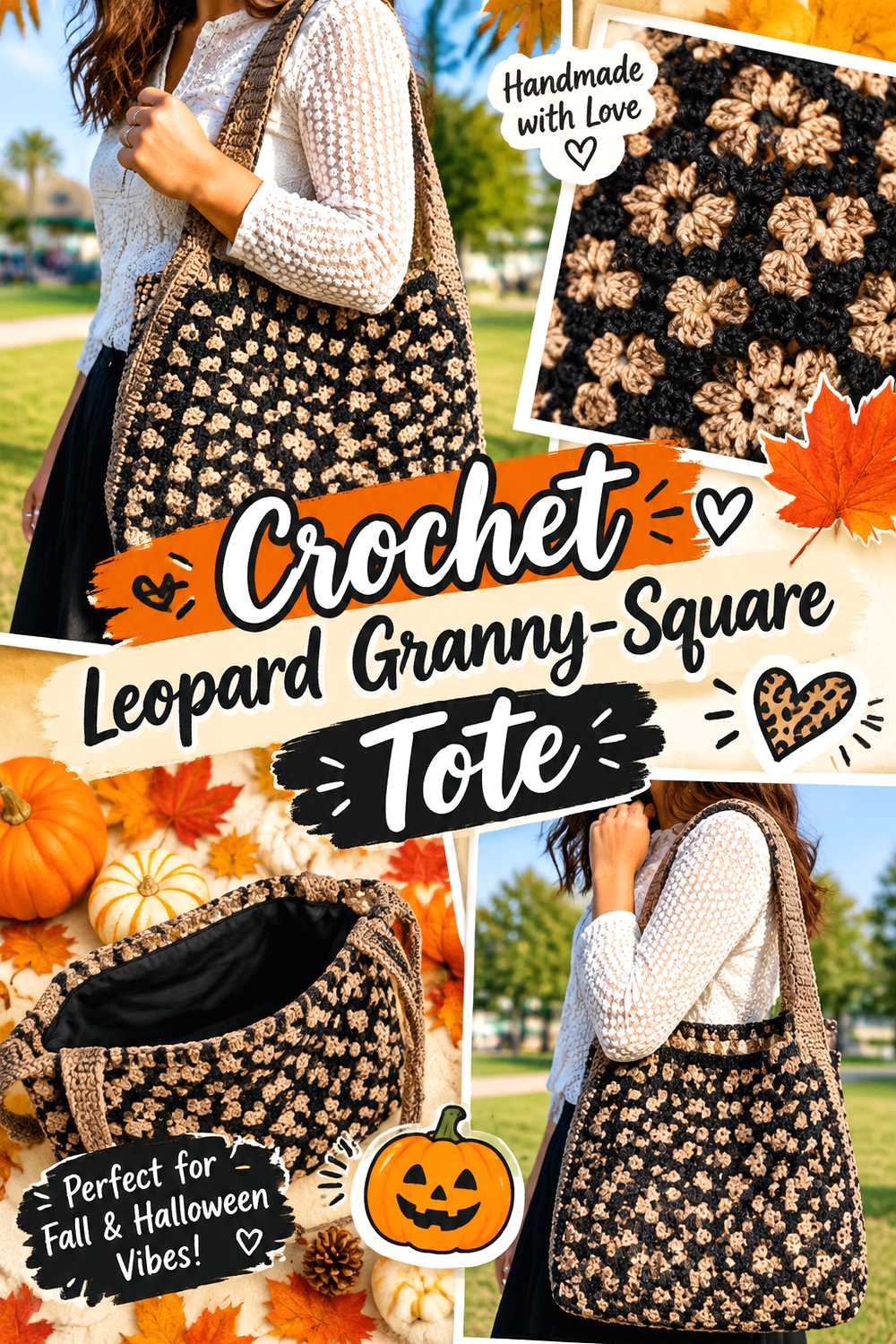
KnitcroAddict’s tote tutorial uses large granny-square panels, providing a modular way to introduce leopard without running colorwork continuously around an entire bag. The original tutorial is not leopard print, so you would need compatible leopard-inspired squares or a leopard-like color treatment that still works with the source construction.
This approach is useful if you prefer preparing individual motifs and evaluating them before assembly. It also allows deliberate variation: one square can carry a bolder spotted center while another uses more background color. The essential checkpoint is size compatibility. A decorative replacement square still needs to suit the panel dimensions required by the bag.
Match Blocked Squares Before Joining
Two motifs can contain the same nominal number of rounds yet finish at different dimensions because stitch structure and tension differ. Block your proposed leopard squares and compare them before treating them as interchangeable with the tutorial’s panels. Correcting a mismatch before joining is much easier than trying to force uneven panels together later.
Use the Join as Part of the Palette
A strong solid joining color can separate irregular spots and prevent the whole tote from reading as one dense field. Black creates a graphic frame, while cream, camel, or brown can soften the contrast. Choose the join color after laying several motifs together, not from a single isolated square.
Creator: KnitcroAddict
15. Crochet Leopard Structured Everyday Tote
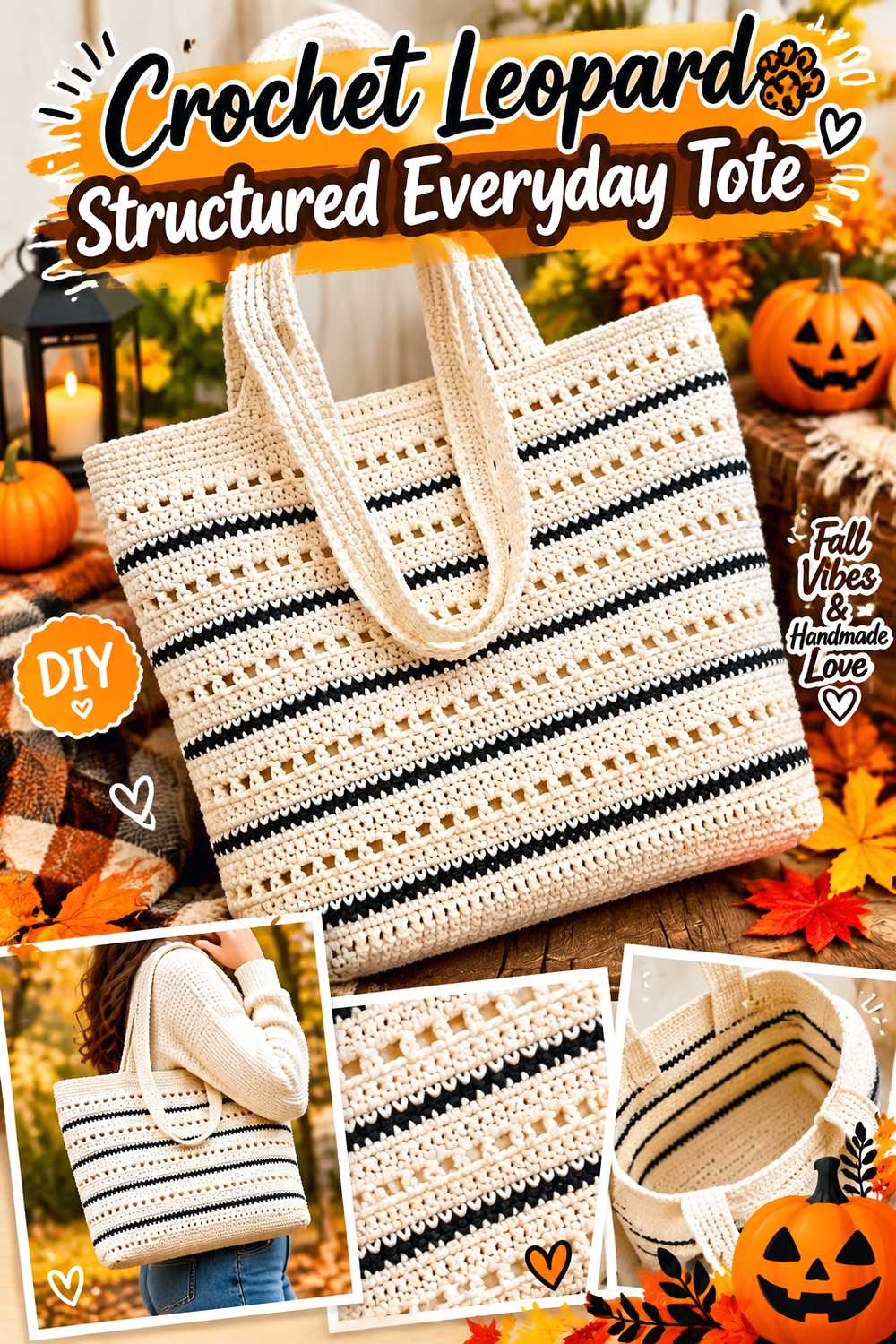
Toh Handmade’s tote tutorial provides a straightforward full-size bag construction with a defined base, body, and handles. Leopard print is not part of the source project, making this a blank construction base for a more classic all-over spotted tote.
A broad tote offers enough room to use larger, irregular markings without losing the background color. It is also one of the easiest shapes for planning a front-facing composition because there is relatively little curvature compared with a circle or barrel bag. For fall use, consider whether you want a high-contrast black-and-camel statement or a softer brown-on-oat interpretation before buying all the yarn.
Establish the Base Before Starting the Pattern
A strongly spotted bottom may receive little visual attention once the tote is in use. Keeping the base solid can simplify the earliest structural section and give the printed body a clear starting line. It also prevents a carefully arranged motif from being hidden underneath the bag.
Handles Can Balance an All-Over Body
When most of the tote is leopard, solid handles provide visual rest and make the upper silhouette easier to read. If you prefer printed handles, watch for carried colors and tension because long narrow pieces can react differently from a wide body panel. The handle should function correctly before it serves as another pattern surface.
Creator: Toh Handmade
16. Crochet Chunky Leopard Shoulder Tote
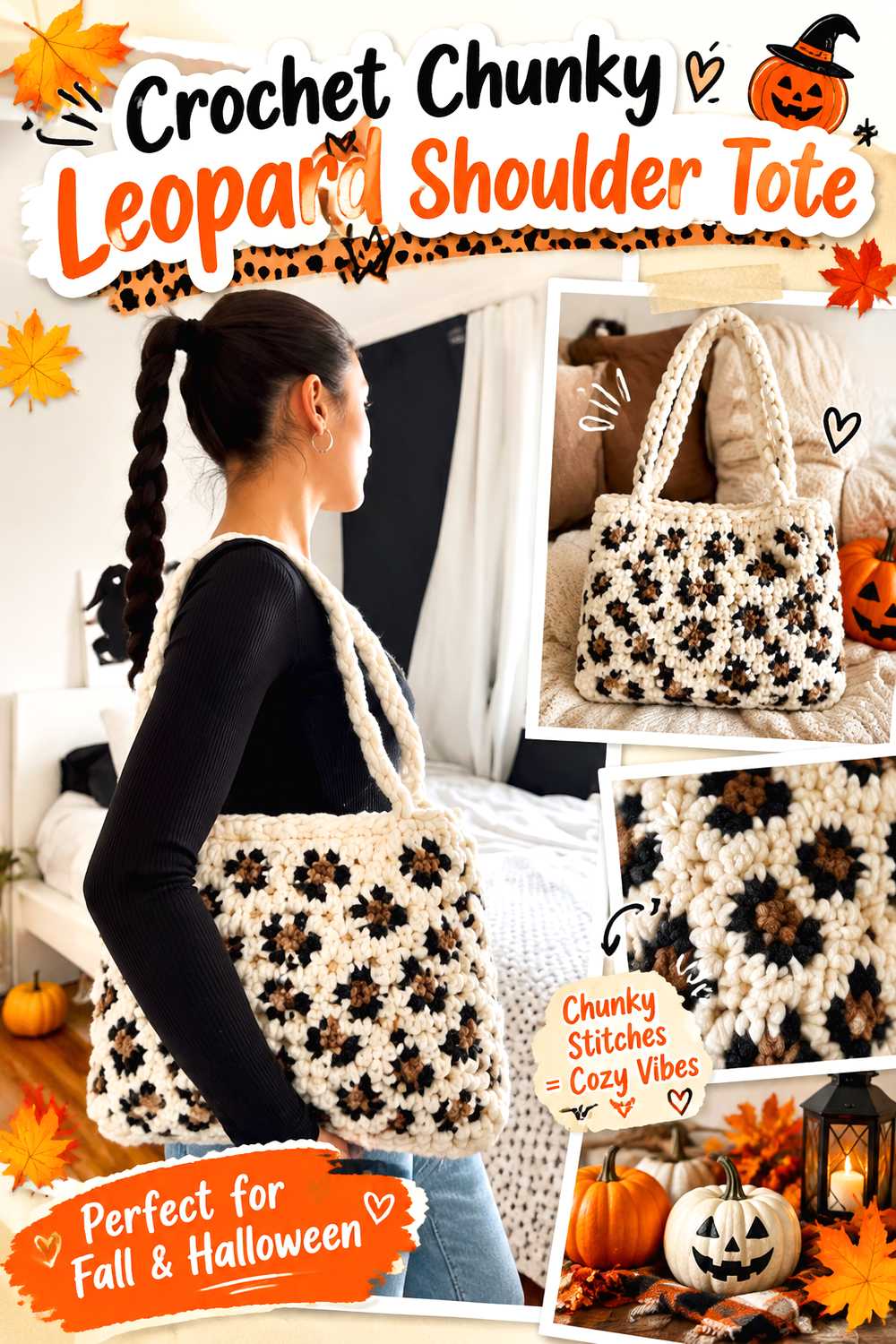
Crochet daniela’s tutorial demonstrates a tote made with chunky yarn, making this adaptation useful for anyone who wants leopard markings that read at a much larger scale. The source bag is not leopard print, so both the spot placement and color palette would be independent modifications.
Chunky yarn reduces the number of stitches available across a given visual area, which means tiny detailed spots are unlikely to translate cleanly. Think in broad, simplified patches instead. That limitation can become an advantage: a camel body with oversized black and deep-brown markings can produce a graphic fall tote without needing a highly intricate colorwork chart.
Simplify Before Enlarging the Motif
A leopard mark that uses several tiny color changes in fine yarn may become awkward when every stitch is physically large. Reduce the design to its essential irregular outline and center rather than trying to preserve minute details. Make one swatch large enough to judge from normal carrying distance.
Watch the Bag’s Finished Weight
Chunky fabric can become substantial before anything is placed inside it. If you change to an even heavier material for stronger structure, consider how that affects the overall carry experience and handle stretch. Avoid making unsupported claims about load capacity; instead, inspect the finished attachments and use the bag according to the properties of your actual fabric.
Creator: crochet daniela
17. Crochet Leopard Trim Mesh Market Bag
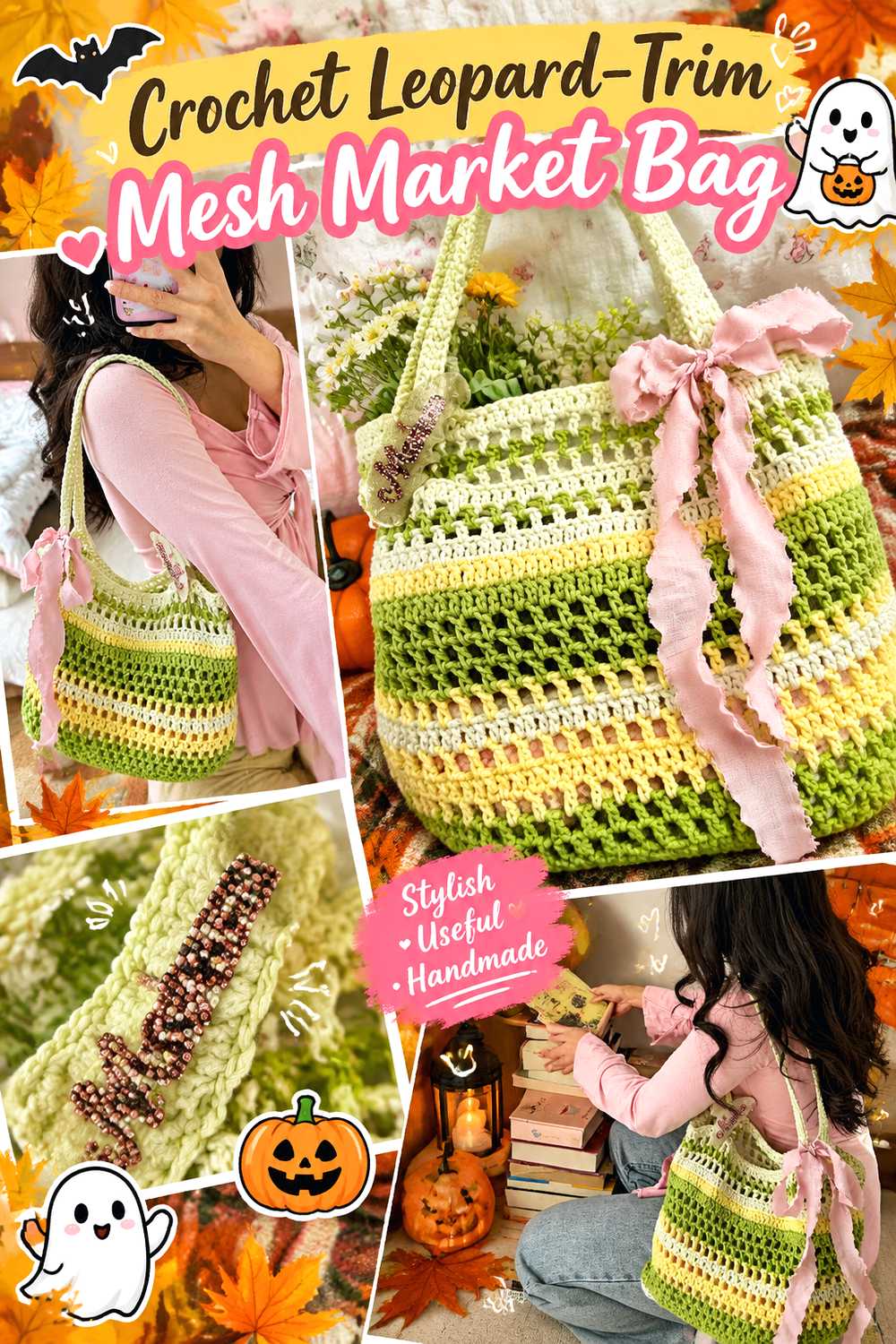
Mahum’s mesh tote tutorial provides the most open fabric in this collection. Rather than trying to create detailed leopard spots across large holes, use the animal-print concept on denser portions such as the base, upper band, or straps. The source teaches a customizable multicolor mesh tote, not a leopard bag.
This creates a lighter visual interpretation that can still work into early fall. A solid camel mesh body with a compact leopard-print base, for example, keeps the pattern recognizable without fighting the open stitch structure. It also gives readers who dislike an all-over animal print a way to use leopard as controlled trim.
Open Mesh Is a Poor Canvas for Tiny Spots
A colorwork shape needs enough continuous fabric to remain legible. If most of a proposed leopard mark lands in chain spaces, the effect can dissolve into random color changes. Reserve detailed spotting for solid sections, or simplify the leopard idea to broader color bands where the mesh begins.
Consider What the Open Fabric Will Carry
Mesh expands and exposes more of the bag’s contents than dense crochet. Before choosing this project, decide whether that openness suits your actual use. A lining would fundamentally change the visual and stretch behavior, so treat it as a separate structural modification rather than an automatic finishing step.
Creator: mahum 🎀
18. Crochet Leopard Basket Stitch Frame Clutch
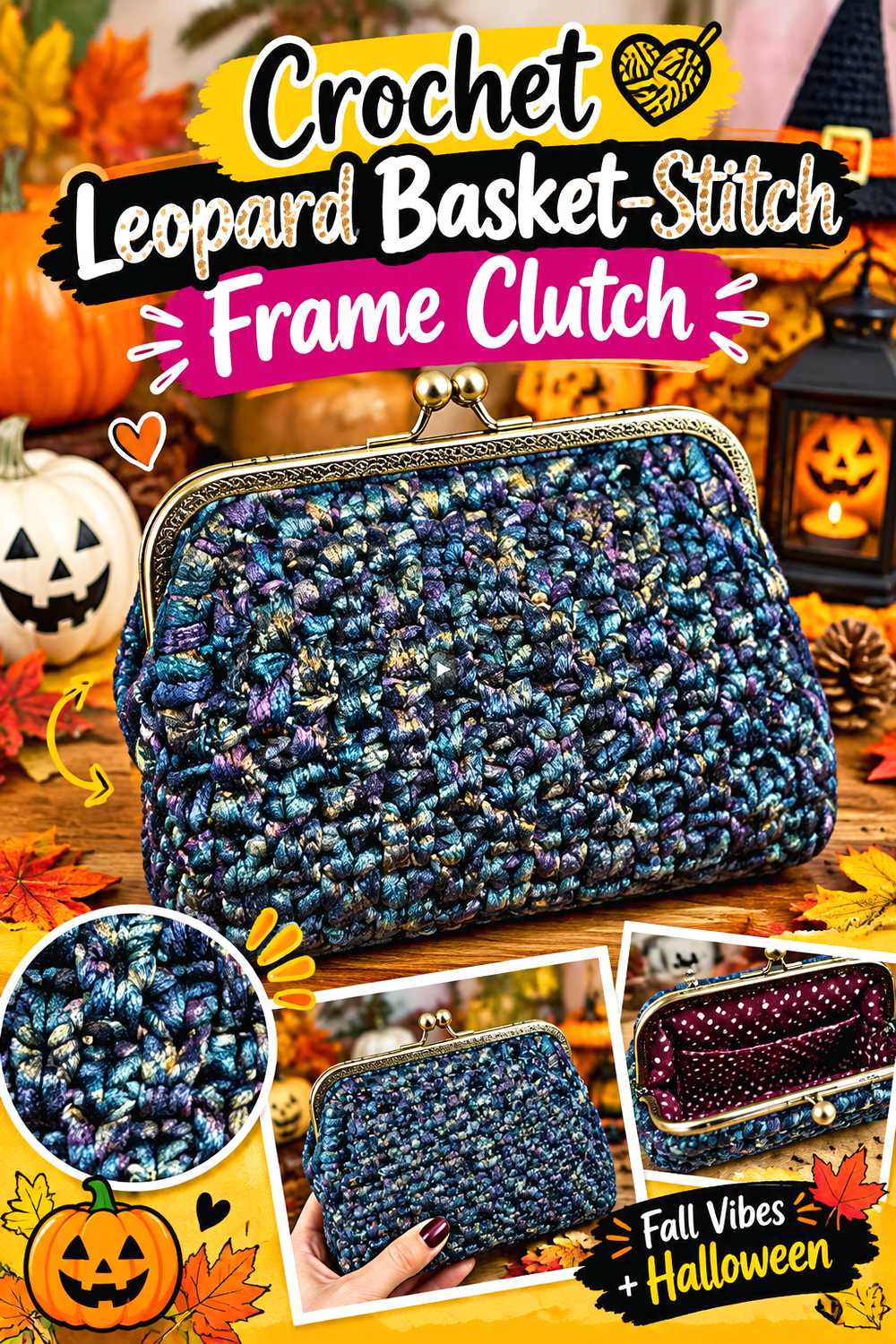
Vivi e cuci’s clutch tutorial combines basket-stitch texture with an oval faux-leather bottom and a structured clasp. That gives a leopard adaptation two competing surface ideas: pronounced crochet texture and high-contrast colorwork. The source itself is a textured clutch rather than an animal-print design.
The most balanced fall version may use relatively restrained leopard markings so the basket texture remains visible. Another option is to keep the textured body in camel or brown and introduce leopard through a narrower decorative section. Because the clutch uses a structured opening, any yarn or stitch modification should preserve the dimensions needed to meet that hardware.
Do Not Hide the Basket Texture
Complex spotting can visually flatten a stitch pattern by making the eye follow color instead of shadow and relief. Test a few marks over the basket texture before covering the whole clutch. If the surface feature disappears, reduce the number of spots or increase the amount of plain background between them.
Hardware Fit Sets a Hard Boundary
A frame or clasp is less forgiving than a soft drawstring opening. Do not add rows, width, or heavy edging simply to complete a leopard repeat without checking the resulting fit. Crop the pattern when necessary; the functional relationship between crochet and hardware matters more than preserving every decorative mark.
Creator: vivi e cuci
19. Crochet Leopard Lined Everyday Purse
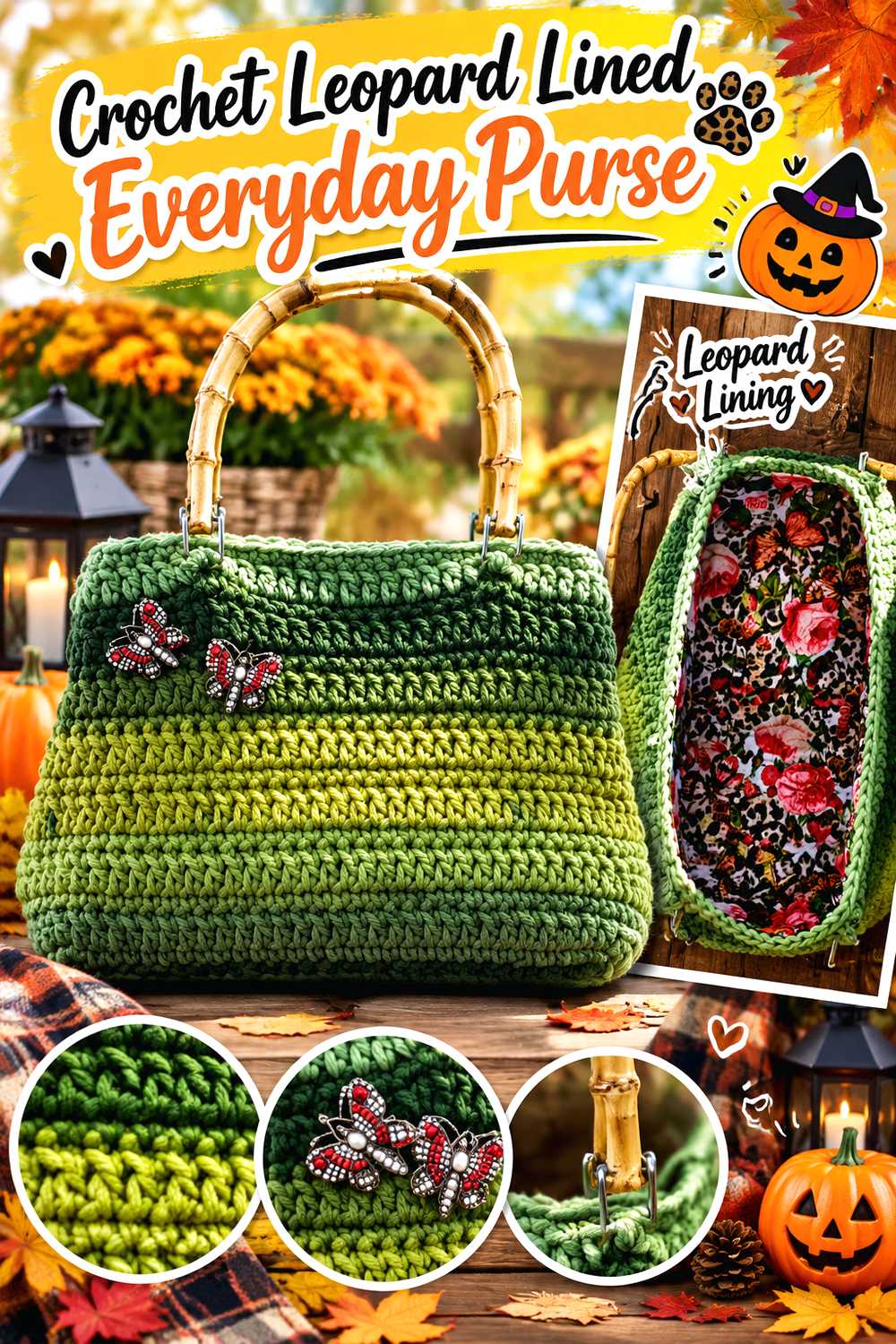
Bag-O-Day Crochet’s purse tutorial earns a place here because it specifically includes adding a simple liner, making it a useful source for readers who want to think about the inside of a leopard bag as well as the decorative exterior. The original project is not leopard print, so the colorwork remains an adaptation.
A straightforward purse shape is also a good final option for someone who wants the print to do most of the decorative work. Instead of adding scallops, frames, or unusual shaping, let an irregular spotted body become the focal feature and use the lining to create a cleaner interior.
Choose the Lining After the Crochet Is Stable
Changing yarn, adding colorwork, or altering tension can affect the finished dimensions. Complete and settle the crochet body before treating lining measurements from another version as universally applicable. The lining should correspond to the bag you actually made rather than to an assumed size.
A Quiet Interior Can Balance the Exterior
An all-over leopard outer fabric already carries plenty of visual information. A solid lining can make the opening look cleaner and make small belongings easier to see inside. If you prefer a patterned lining, compare it with the crochet at the opening first so the two patterns do not unintentionally compete.
Creator: Bag-O-Day Crochet
Which Leopard Crochet Bag Shape Should You Choose?
| If you want… | Strong formats to consider | Main leopard-print checkpoint |
|---|---|---|
| The clearest all-over animal print | T-shirt yarn handbag, structured tote, chunky tote | Make sure individual spots are large enough for the stitch scale |
| A compact fall accent | Phone crossbody, mini ring-handle bag, zipper pouch | Reduce spot size so background color remains visible |
| A distinctive silhouette | Crescent, barrel, round, or knot bag | Let shaping interrupt the print rather than forcing a rigid chart |
| A softer gathered bag | Drawstring sling or scallop bucket | Keep key motifs away from heavily gathered upper sections |
| A structured small bag | Baguette or frame clutch | Protect the dimensions needed for hardware |
| A hands-free larger option | Drawstring backpack | Prioritize strap and attachment structure over decorative repeats |
| A lighter amount of leopard | Mesh market tote | Put detailed colorwork on solid sections rather than open mesh |
| Modular color planning | Granny-square tote | Compare blocked motif dimensions before assembly |
Conclusion
The most useful way to choose among these 19 leopard print crochet bag ideas is to start with the shape rather than the animal print. Flat totes and clutches provide the clearest canvas for planned spots, while round, crescent, barrel, and gathered bags need a looser approach to motif placement. Small phone bags and zipper pouches benefit from scaled-down markings, while chunky yarn can support much larger shapes.
For a restrained fall look, keep straps, hardware areas, or upper edges solid and let one main panel carry the leopard effect. For a bolder result, extend the print across the body while protecting structural details. Use the original tutorials for exact construction, then make any colorwork adaptation around the requirements of that particular bag.
Frequently Asked Questions
Do all 19 tutorials actually teach leopard print crochet?
No. Some sources directly demonstrate leopard or animal-print bags, while many others teach a useful bag shape that can be adapted independently with leopard colorwork. That distinction matters because changing the surface design can affect tension, dimensions, and shaping. Follow the original creator for the bag’s construction and treat any added leopard motif as a separate design decision rather than assuming it is included in the source tutorial.
What bag shape is easiest to plan for leopard colorwork?
A broad, relatively flat tote or rectangular pouch gives you the most uninterrupted area for arranging spots. Curved bags, round panels, barrels, and heavily gathered openings are still workable, but their shaping can interrupt a fixed motif. Instead of selecting a shape purely because it looks interesting, consider how much continuous fabric you want for the animal print and how comfortable you are adjusting spot placement around shaping.
Should leopard crochet spots be identical on the front and back?
They do not need to match. In fact, slight variation can make an organic animal-print arrangement feel less repetitive. What should remain reasonably consistent is the overall visual density: if one panel contains almost no background color while the other is largely plain, the difference may look accidental. Place the finished panels together before assembly and compare their balance rather than trying to mirror every individual marking.
What yarn works well for a leopard crochet bag?
There is no single yarn that works for every bag. The right choice depends on the structure required by the tutorial. Firmer fibers and cords can help some bags retain shape, while softer yarn can suit slouchier constructions. Yarn thickness also changes the scale of each leopard mark. When substituting yarn, compare your fabric, gauge, dimensions, stretch, and hardware compatibility instead of relying on fiber color alone.
When should a leopard crochet bag be lined?
Consider lining when the crochet is open enough for small belongings to work through, when you want a cleaner interior, or when a lining can provide useful support for the intended bag. It is not automatically necessary simply because the project is a bag. Complete or accurately size the crochet first, then plan the lining around the actual finished interior rather than assuming one standard lining measurement will work.
How can I keep a leopard crochet bag from looking too busy?
Give the print somewhere to stop. Solid straps, a plain base, a quiet flap, neutral edging, or an unprinted upper band can create useful visual boundaries. You can also enlarge the spaces between markings rather than making the spots themselves smaller. On a bag that already has a strong scalloped edge, basket texture, unusual handles, or prominent hardware, let that construction feature share the attention instead of covering every surface with animal print.
Can I add leopard colorwork to any crochet bag tutorial?
Not always without adjustment. Color changes can alter tension, carried yarn can add bulk, and a different stitch structure can change finished dimensions. Those differences matter most around fitted hardware, zippers, small openings, joins, and shaped panels. Swatch the proposed colorwork first and compare it with the fabric expected by the tutorial. If the adaptation changes the size or flexibility substantially, the original construction may need more reconsideration than a simple color substitution.