Crochet flower bags can move into fall without losing their garden-inspired character. The biggest differences are not simply flower color: construction, fabric density, strap design, opening style, motif scale, and the amount of dimensional texture all affect how a finished bag looks and functions. A sunflower granny tote feels very different from a tiny flower pouch, an embroidered shoulder bag, or a thick sculptural rose purse.
The tutorials below are not all presented by their creators specifically as fall projects. Instead, they offer twelve strong flower-bag constructions that can be adapted with autumn palettes such as rust, ochre, olive, cranberry, plum, cream, cocoa, or muted gold. This guide helps you compare those constructions before choosing where to put your time, yarn, and finishing effort.
Quick List
- Crochet Harvest Sunflower Granny Tote
- Crochet Five-Square Daisy Handbag
- Crochet Lily-of-the-Valley Bouquet Shoulder Bag
- Crochet Graphic Autumn Floral Tote
- Crochet Flower-Band Market Shoulder Bag
- Crochet Five-Petal Mini Flower Pouch
- Crochet Embroidered Lazy Daisy Shoulder Bag
- Crochet Vintage Bloom Granny Carryall
- Crochet Foldaway Flower Market Bag
- Crochet Daisy Granny Snap-Closure Shoulder Bag
- Crochet Raffia Flower-Lattice Purse
- Crochet Sculptural Rose T-Shirt Yarn Handbag
Choose the Bag Construction Before the Fall Palette
It is tempting to choose rust, mustard, brown, and olive yarn first, but the construction should come first. A granny-square tote gives you separate color zones around every flower, while a solid bag with embroidered blooms lets the background dominate. Connected-flower bags create much more open space and visual texture, and a sculptural rose bag makes one large flower the entire focal point.
Think about what you want the bag to do. A compact pouch needs little capacity but benefits from a tidy closure and stable seaming. A market bag needs an opening that is easy to use and fabric that can respond to changing contents. For a shoulder or crossbody design, the strap deserves as much planning as the flowers because stretch can change where the finished bag sits.
Use Fall Color Placement to Keep the Flowers Readable
An autumn palette works best when the flower and background still have enough contrast to remain visually separate. If every round uses similarly dark rust, burgundy, brown, and forest green, a detailed motif can disappear from a distance. Consider placing the darkest shade in either the flower center or the surrounding field rather than using deep tones everywhere.
Warm cream, oatmeal, tan, muted gold, and soft camel can provide breathing room between stronger fall colors. A sunflower design naturally supports ochre and brown, while daisies can shift toward cream petals with pumpkin, wine, or chocolate centers. For dimensional flowers, limit the number of competing accent colors so the raised petal shape remains the feature rather than becoming lost inside a busy palette.
Plan Straps, Openings, and Lining for Real Use
A flower bag may look complete before its functional details are settled. Before finishing, check how wide the opening is, whether small belongings can work through open motifs, and how the strap behaves when gently loaded. Longer crochet straps can lengthen more noticeably when the fabric or fiber is elastic, so a short sample can help you judge whether reinforcement is worth considering.
Lining is especially useful when the crochet fabric has large openings, many joined motifs, or embroidery tails on the inside. It can also reduce direct abrasion on decorative joins. Do not assume every tutorial includes a lining or closure; confirm those details in the source before buying materials. If you add hardware, make sure the crochet attachment area is stable enough to carry the stress rather than fastening a ring or snap to a loose decorative edge.
1. Crochet Harvest Sunflower Granny Tote
1. Crochet Harvest Sunflower Granny Tote
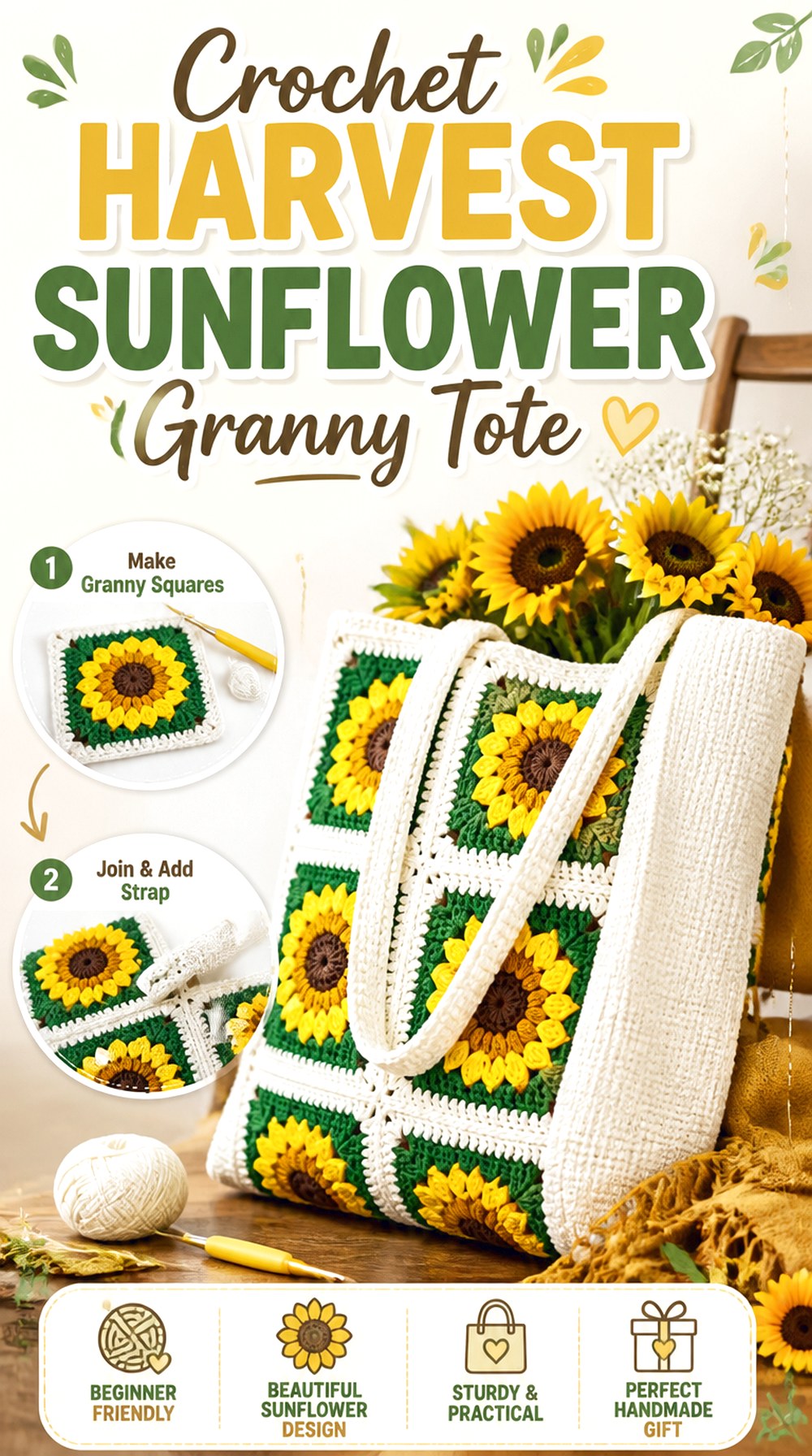
Large sunflower granny squares make this tote one of the clearest choices for an autumn interpretation because the flower itself already suits ochre, gold, brown, and rust. The tutorial builds a recognizable square-motif bag and then adds the carrying strap, so the flowers dominate both the construction and the finished appearance. Chompu Handicrafts demonstrates the project with cotton rope, giving readers a useful example of a firmer bag material rather than a soft wearable yarn.
This version works particularly well when you want a bold repeating floral statement instead of scattered embellishment.
Let the Sunflower Centers Carry the Fall Palette
You do not need to make every part of the square dark to create an autumn effect. A chocolate or espresso center surrounded by muted gold petals can remain readable against cream, taupe, olive, or warm gray outer rounds. If you want more rust or cranberry in the bag, use those shades around the square rather than allowing them to compete with the sunflower center.
Square Consistency Matters Before Joining
A modular tote exposes size differences quickly. Finish and measure your motifs under the same conditions before committing to the final layout. If one square is noticeably larger, forcing it into a seam can create ripples or pull adjacent motifs out of alignment. The practical checkpoint is simple: place the completed squares edge to edge on a flat surface and correct obvious size differences before joining.
Test Strap Stretch Before You Commit
The strap connects to a motif-built body, so both the strap fabric and its attachment points matter. If you substitute a softer or more elastic yarn for the cotton rope shown in the tutorial, work a short strap sample and pull it gently to see how much it lengthens. A bag that sits neatly when empty can hang much lower once contents add tension.
Original Tutorial and Creator Credit
Creator: Chompu Handicrafts
2. Crochet Five Square Daisy Handbag
2. Crochet Five Square Daisy Handbag
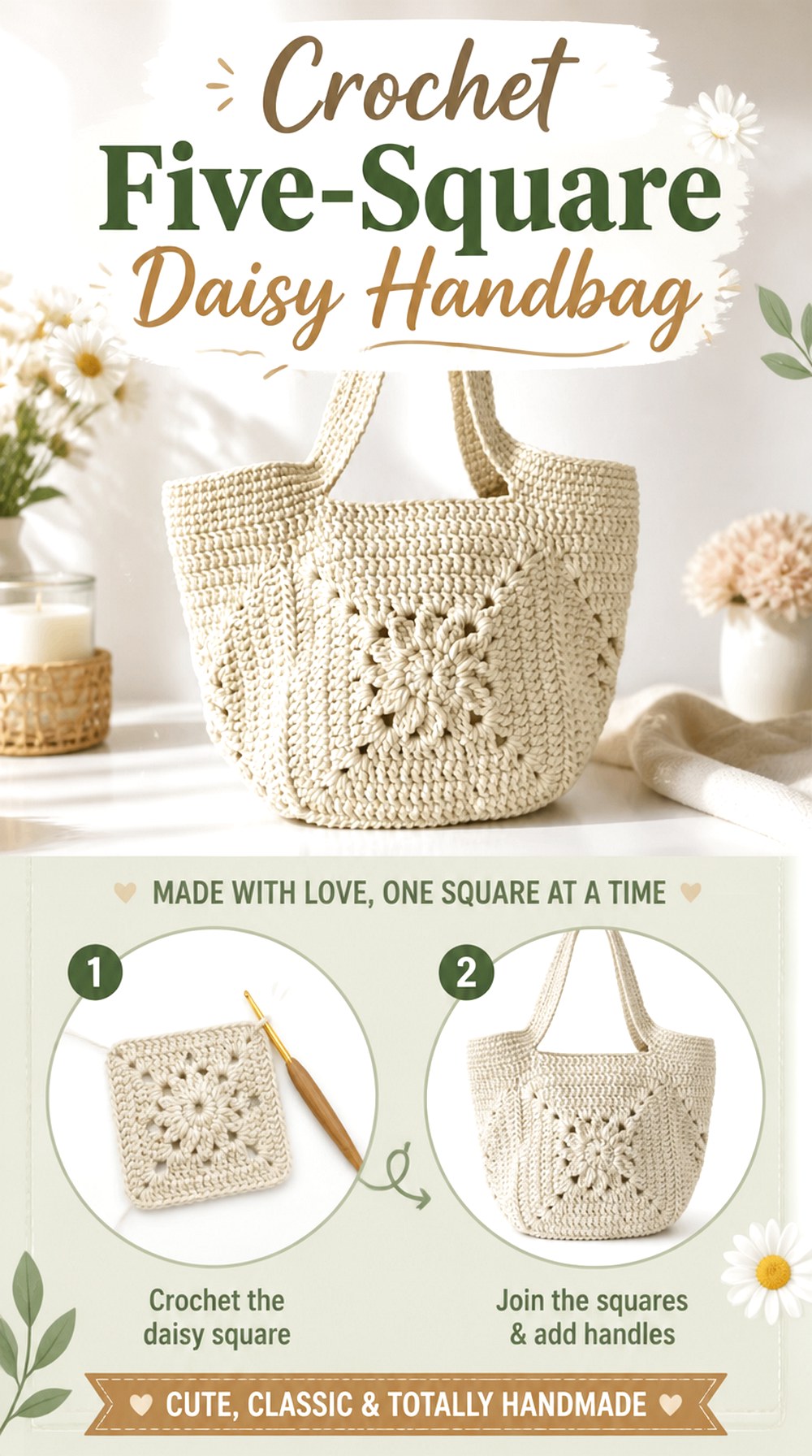
Instead of covering a large tote with many small motifs, this construction uses five substantial daisy granny squares. That gives the finished bag a more geometric appearance, with each flower acting as a major design panel rather than a tiny repeat. Ganchillo Crochet demonstrates the project using recycled cotton and shows the square layout, joining, border, and handle development.
For fall, this is a useful option when you want recognizable flowers but a calmer overall surface. Cream petals with pumpkin, plum, brown, or muted mustard centers can shift the familiar daisy into a warmer seasonal direction without changing the construction.
Five Large Squares Create a Different Visual Rhythm
With fewer, larger motifs, every square receives more attention. That means color placement deserves planning before you crochet all five. Decide whether the flowers should match or whether the front-facing squares will carry stronger fall colors while less visible areas stay neutral. Lay out the planned palette as yarn balls or small swatches first; it is easier to rebalance five large color blocks before the squares are finished.
Choose a Background That Frames the Daisy
The outer portion of each granny square becomes part of the bag body, so it affects more than the flower itself. A warm cream can keep dark burgundy and olive flowers readable, while charcoal or chocolate can create a moodier bag with pale petals. If you use several saturated colors in the flower, a quieter square background usually gives the motif enough visual separation.
Watch the Folded Corners and Top Opening
A bag formed from large squares does not display every section flat. Some areas turn into corners or angle toward the opening once assembled. Before joining, arrange the completed motifs in the tutorial’s layout and identify which flowers will face forward. This prevents your favorite color combination from ending up primarily around a fold or less visible section of the finished handbag.
Original Tutorial and Creator Credit
Creator: Ganchillo Crochet
3. Crochet Lily of the Valley Bouquet Shoulder Bag
3. Crochet Lily Of The Valley Bouquet Shoulder Bag
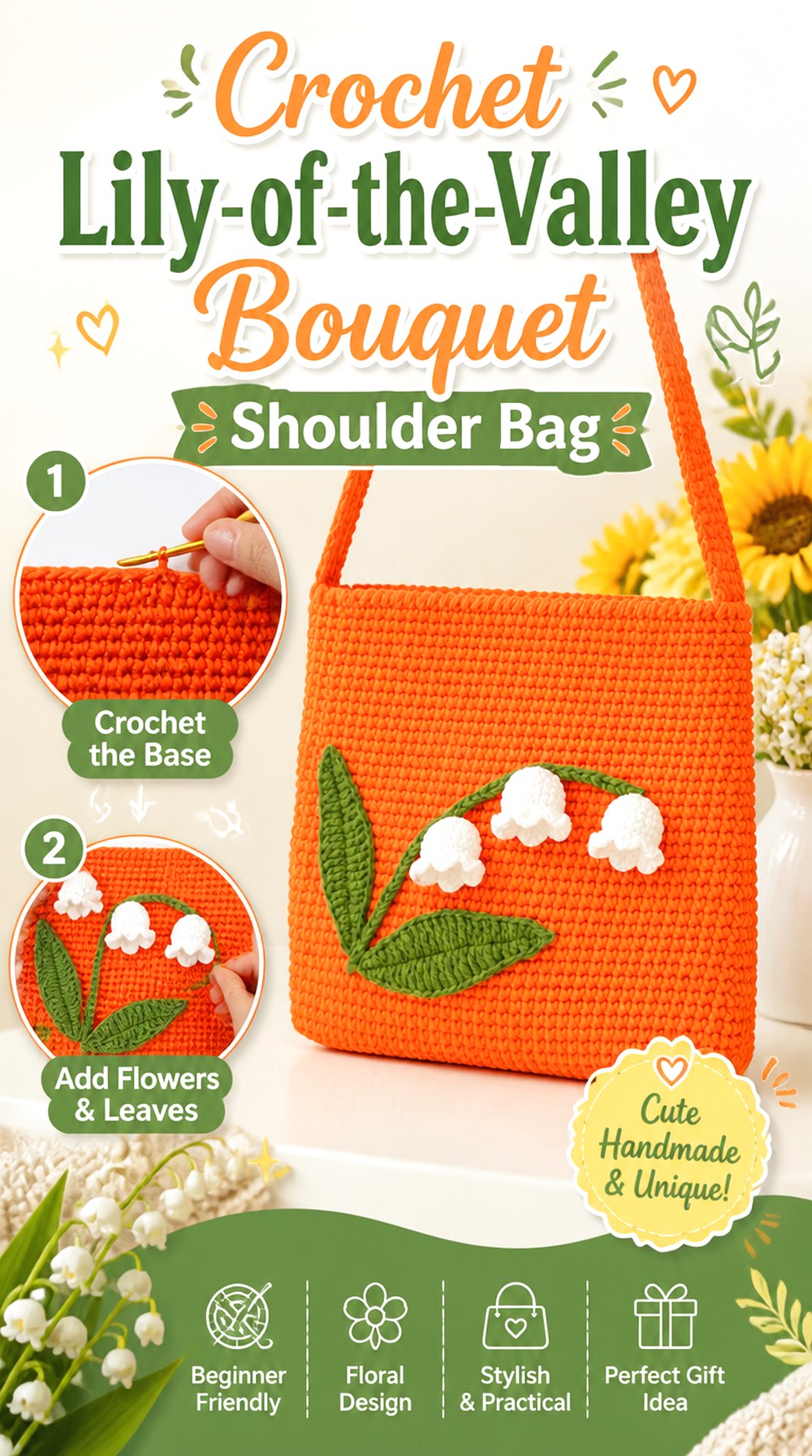
This project takes a different route from granny squares: the main shoulder bag is comparatively simple, while crocheted lily-of-the-valley flowers, stems, and leaves create the botanical detail. Lingzhi Handmade demonstrates the bag body, straps, individual flowers, foliage, and final assembly in one tutorial.
For a fall version, the appeal is restraint. Instead of covering the entire bag in motifs, you can keep a cocoa, olive, tan, or burgundy body and let a smaller floral arrangement become the focal point. This makes the design useful for readers who like flower bags but do not want every inch of the surface patterned.
Applied Lilies Keep the Bag Body Calm
Separate floral embellishments let you control visual density more precisely than repeated granny motifs. Before attaching anything, position the flowers on the finished bag and view it from normal carrying distance. A concentrated cluster near one side can feel very different from evenly spaced blooms. Pin or temporarily tie the pieces in place first so you can adjust the composition without repeatedly removing sewn attachments.
Secure Dimensional Flowers for Everyday Carry
Raised flowers and leaves experience more snagging than flat colorwork. When deciding where to attach them, consider which parts of the bag rub against clothing, furniture, or your arm. Decorative pieces near the center of the outer panel generally receive less friction than embellishments directly along an edge. If you modify the creator’s arrangement, make secure attachment—not just appearance—part of the placement decision.
Autumn Color Can Shift the Botanical Mood
Lily-of-the-valley is usually associated with pale spring flowers, but the construction does not require a spring palette. An olive or moss body with cream blossoms can feel woodland-inspired, while a wine-colored body with muted beige flowers creates stronger contrast. Keep stems and leaves distinguishable from the bag background; dark green details can disappear when placed on a similarly deep green body.
Original Tutorial and Creator Credit
Creator: Lingzhi Handmade
4. Crochet Graphic Autumn Floral Tote
4. Crochet Graphic Autumn Floral Tote
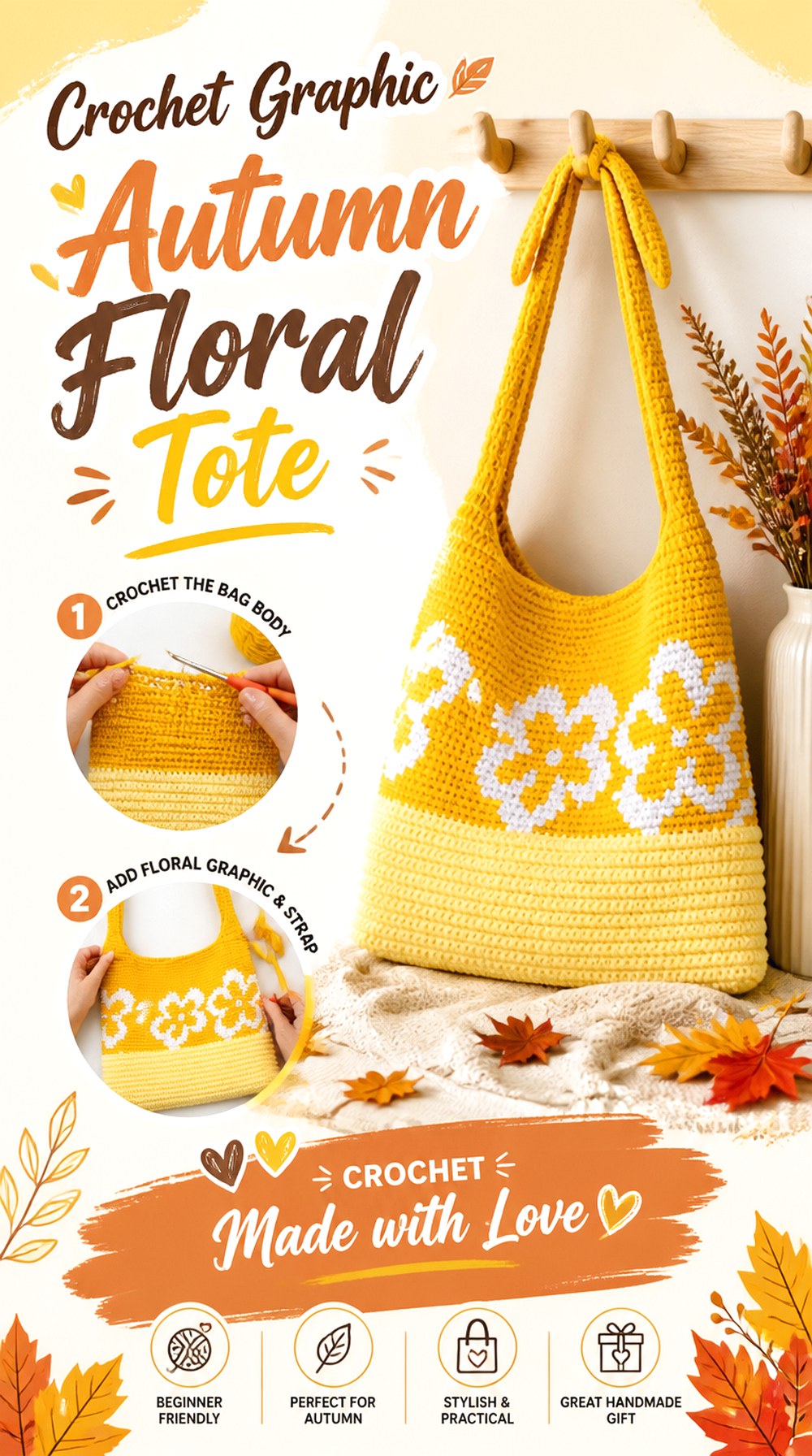
Chenda DIY’s floral tote provides a valuable contrast to raised flower motifs. The flower appears as a graphic design within the bag fabric, creating a flatter, cleaner surface. The tutorial also includes plastic canvas among the materials, making this a useful reference when you want to explore a more supported tote rather than a highly flexible granny-square body.
A fall adaptation could pair pumpkin and cream, mustard and deep brown, olive and tan, or cranberry and oatmeal. Because the motif is integrated into the surface, color contrast becomes more important than dimensional texture.
A Flat Floral Graphic Reads Differently Than Raised Motifs
A graphic flower can feel more polished and less cottage-style than layered petals or granny squares. If you want the fall colors to remain visible from a distance, test the combination as two or three small yarn swatches placed next to each other. Colors that look distinct in separate skeins can merge visually once worked into a compact motif, especially when both are dark or similarly muted.
Plastic Canvas Changes the Structure Decision
The creator lists plastic canvas for this project, which means structure is part of the original material plan. If you substitute another yarn or decide to omit a supporting element, expect the finished body to behave differently. Before changing the construction, decide whether you want the tote to stand more cleanly or collapse softly when set down. That functional preference should guide the modification rather than appearance alone.
Keep Color Changes Clean at High-Contrast Edges
A flat motif puts extra attention on the boundary between colors. When using cream against burgundy or pale gold against chocolate, inconsistent transitions can become more obvious than they would in a highly textured flower. Slow down around visible color boundaries and periodically lay the work flat. Catching an irregular edge early is easier than deciding after the bag is finished that one side of the motif looks distorted.
Original Tutorial and Creator Credit
Creator: Chenda DIY
5. Crochet Flower Band Market Shoulder Bag
5. Crochet Flower Band Market Shoulder Bag
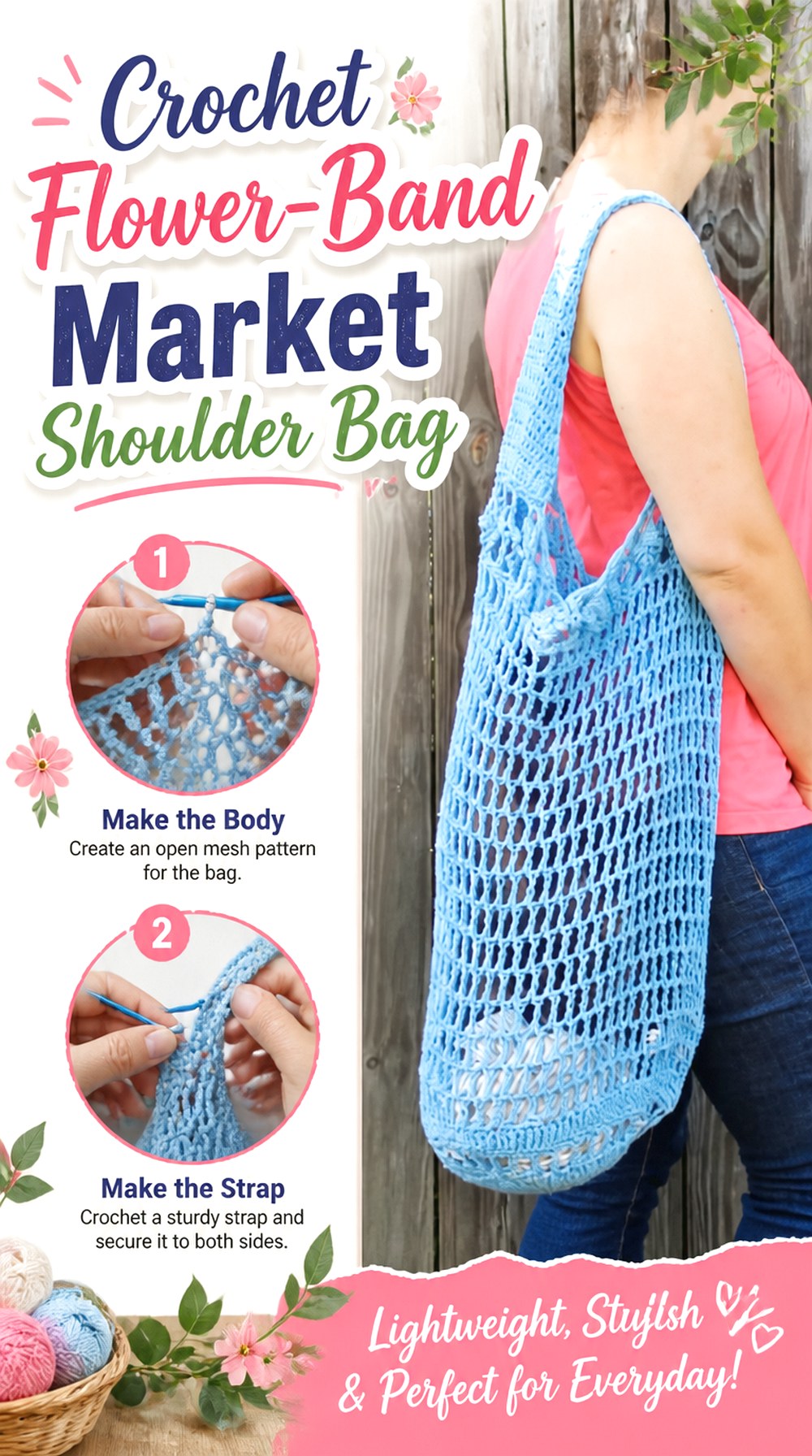
This market bag places the flower detail in a defined band rather than spreading individual flowers over every panel. Katie Cooks and Crafts presents it as a slouchy market-style bag with an open fabric structure and floral band feature.
That makes it an appealing fall choice for anyone who wants a relaxed shoulder bag with seasonal color concentrated in one area. A neutral body can be paired with a band of rust, gold, olive, and plum, allowing the floral section to become the visual break between larger areas of simpler crochet.
Openwork Makes Contents and Lining a Bigger Decision
A market-style fabric can expand and reveal more of what is inside than a dense purse. Think about intended contents before choosing whether to leave the bag openwork. A removable pouch or lining can help with small items, but adding a fixed lining can also change how freely the crochet stretches. Decide whether flexibility or containment matters more before adding extra structure.
The Flower Band Works Best as a Focal Zone
Because the floral detail occupies a specific section, you can use stronger color without overwhelming the entire bag. Try keeping the main body in oatmeal, taupe, or chocolate and placing ochre, rust, moss, and cream in the flower band. If you use many colors, repeat at least one body color inside the floral section to make the transition feel deliberate rather than disconnected.
Shoulder Length Changes How a Slouchy Bag Hangs
A flexible market bag changes shape as it is filled, which can alter the perceived handle length. Before finishing a modified strap, place a few soft, lightweight objects inside the bag and hold it where you expect it to sit. This gives you a better impression of the carried silhouette than judging the strap while the bag is completely flat and empty.
Original Tutorial and Creator Credit
Creator: Katie Cooks and Crafts
6. Crochet Five Petal Mini Flower Pouch
6. Crochet Five Petal Mini Flower Pouch
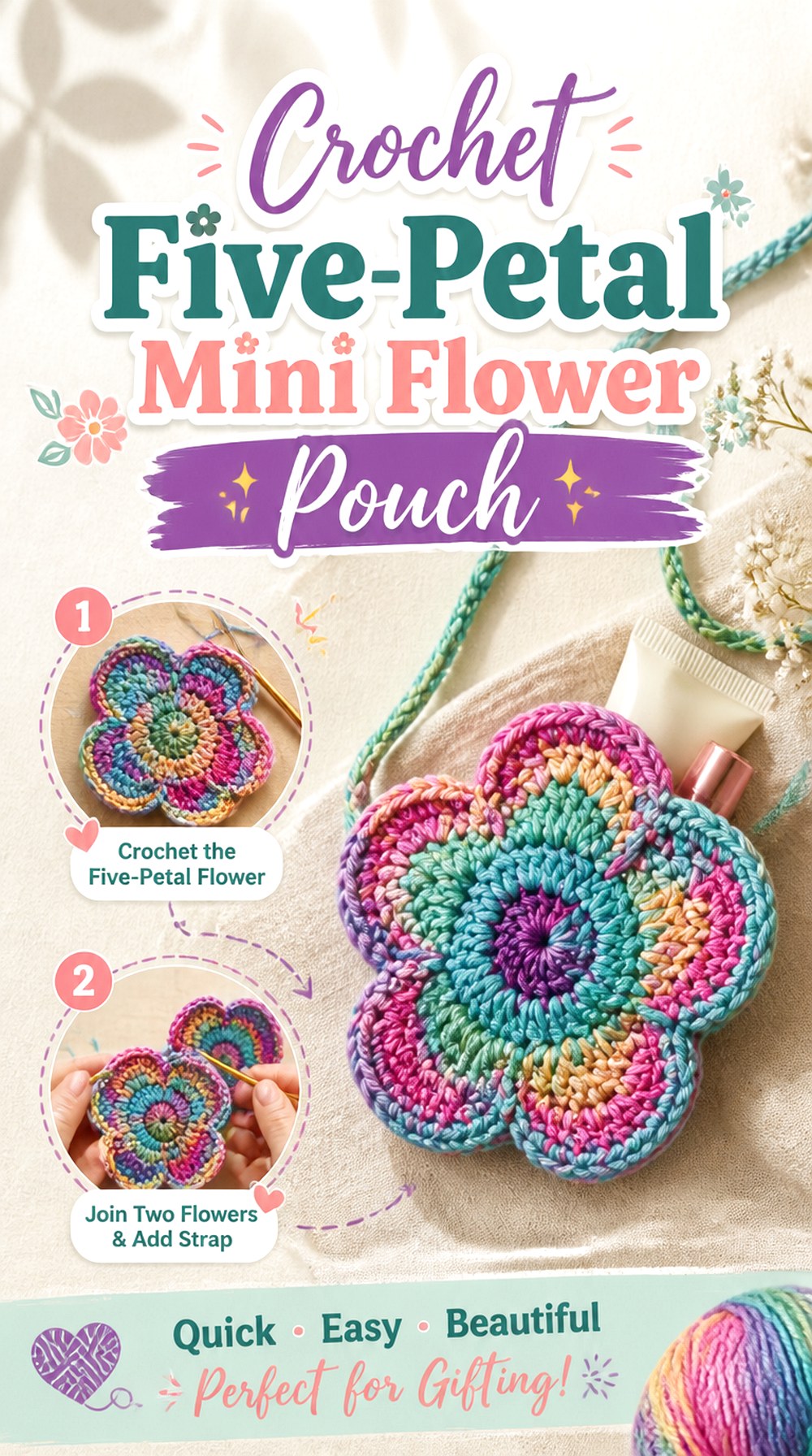
This tiny pouch turns the flower shape itself into the bag. OhMeOhMyCrochet’s tutorial makes a five-petal flower pouch by creating two flower pieces and seaming them together, producing a small accessory rather than a full tote.
That smaller scale is useful for fall gift bags, a compact accessory, or a bag charm-style project. Instead of shrinking a large tote concept and risking awkward proportions, you are starting from a project that is already designed around a miniature flower form. Deep red, pumpkin, mustard, plum, or brown can make it feel more autumnal immediately.
Scale the Pouch Around What You Actually Need to Carry
The tutorial is intentionally small, so do not assume it will suit a phone, wallet, or larger personal items. Decide what the pouch needs to hold before beginning. If your intended contents are significantly larger than the finished example, choose another project rather than enlarging every element without checking how the flower shape, opening, and strap will change together.
Two Flower Panels Make Finishing Highly Visible
When the front and back are both recognizable flower shapes, an uneven seam can distort the petal outline. Match corresponding petal points before joining and check the silhouette as you progress. For a fall version with contrasting seam yarn, remember that the join will become part of the design; a matching color keeps attention on the petals, while contrast emphasizes the edge.
Original Tutorial and Creator Credit
Creator: OhMeOhMyCrochet
7. Crochet Embroidered Lazy Daisy Shoulder Bag
7. Crochet Embroidered Lazy Daisy Shoulder Bag
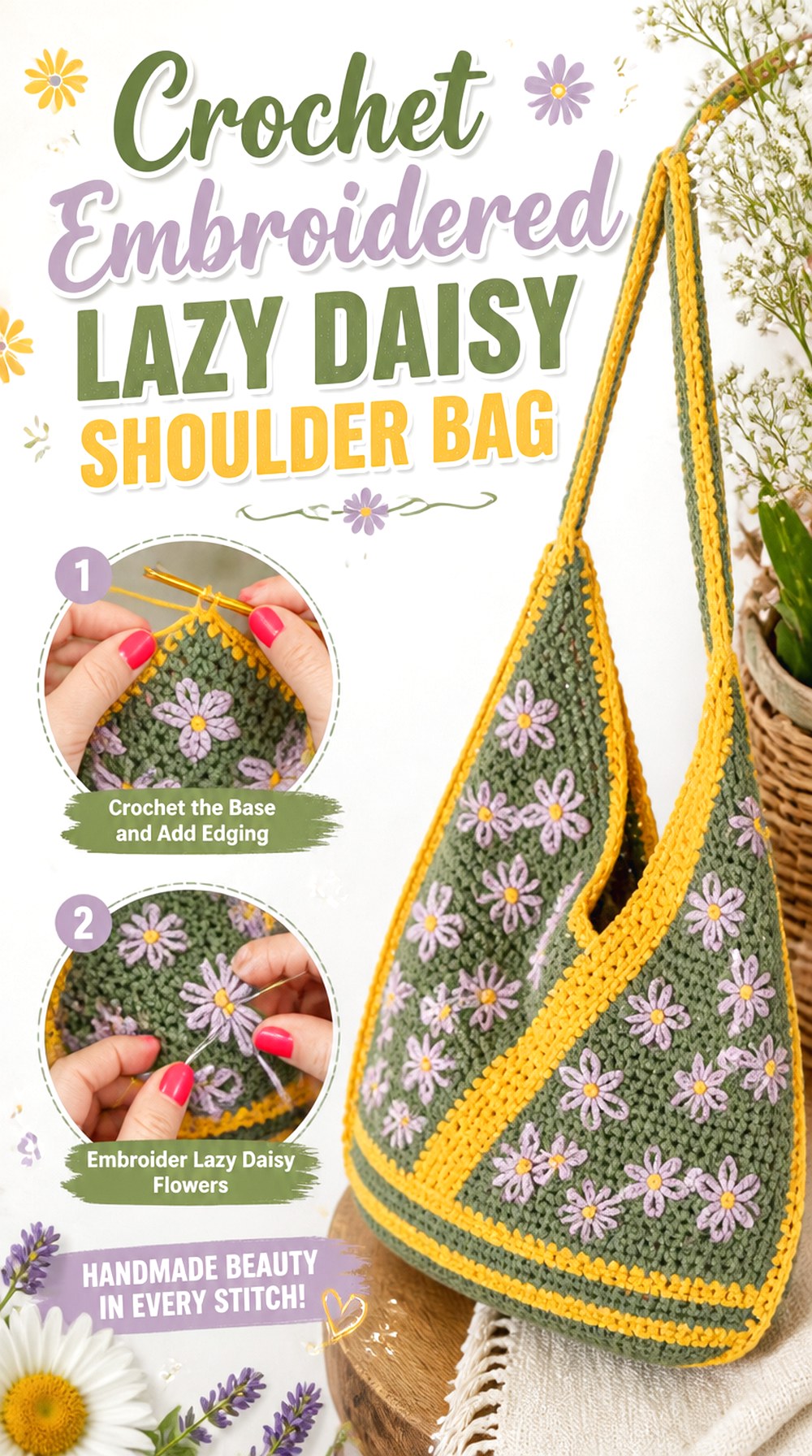
Life and Yarn’s project starts with a comparatively solid crochet purse and adds flowers through embroidered lazy daisies rather than granny squares or separately attached crochet motifs. The creator’s tutorial covers bag construction, flower embroidery, French-knot-style centers, and assembly.
This construction is well suited to a subtle fall interpretation because the floral decoration can occupy only part of the surface. A deep olive, mushroom, wine, or cocoa bag body with muted gold or cream embroidery can read as autumnal without becoming a dense multicolor patchwork.
Embroidery Adds Flowers Without Adding Motif Seams
If you dislike managing many square joins, this route keeps the main crochet fabric comparatively continuous. The key planning decision shifts from motif sizing to flower placement. Before embroidering, spread the unfinished panel flat and mark approximate flower centers with removable markers. This lets you evaluate spacing and prevents the decoration from drifting unexpectedly toward one edge as more flowers are added.
Lining Helps Protect the Wrong Side of the Embroidery
Embroidered flowers create yarn activity on the inside of the fabric as well as the decorative surface. Life and Yarn specifically notes the usefulness of a lining because of the ends on the wrong side. If you plan to carry items that can catch on yarn, decide on lining before final assembly so you are not trying to conceal a complicated interior after every seam is closed.
A Flap Gives the Fall Palette Another Color Block
The bag includes a front-flap area, giving you another place to control color without adding more flowers. A contrasting trim or flap section can repeat one of the embroidery colors and make the overall palette feel connected. If the flowers are already numerous, keep the flap quieter; if the embroidery is sparse, a stronger border color can help balance the front.
Original Tutorial and Creator Credit
Creator: Life and Yarn
8. Crochet Vintage Bloom Granny Carryall
8. Crochet Vintage Bloom Granny Carryall
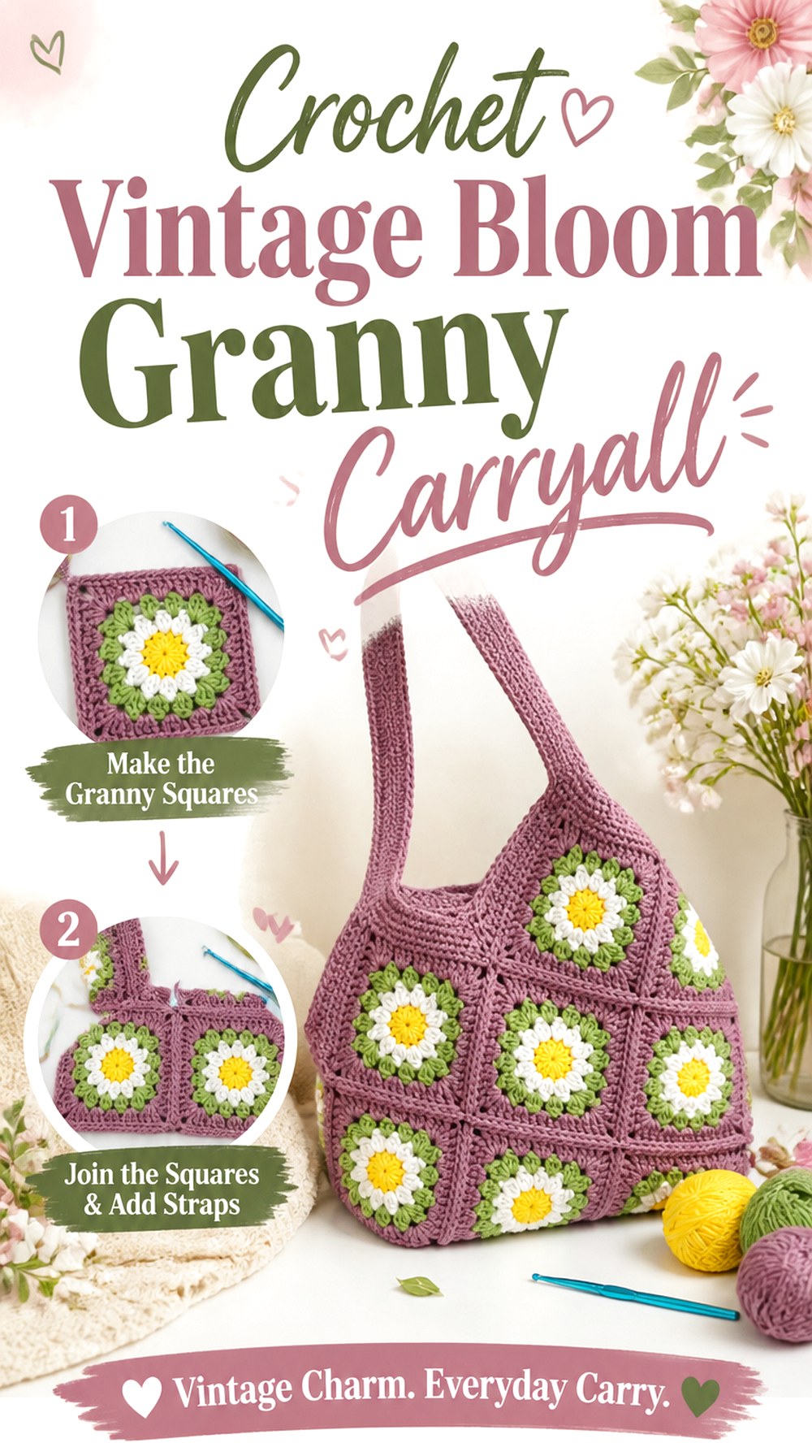
Jo to the World Creations offers a larger flower granny square bag with a strong repeated grid, flat slip-stitch joining, and a developed border-and-strap section. The result is more of a full carryall than a small purse, making it one of the stronger options here when you want flower motifs to cover a substantial surface.
A fall version can lean into vintage combinations such as cream, burnt orange, mustard, olive, cocoa, and muted rose. Because many squares repeat across the bag, even small color choices accumulate into a strong overall pattern.
Repeated Squares Create Strong Vintage Density
More motifs mean more visual repetition, so decide early whether every flower will match. Identical squares produce a disciplined vintage grid, while several flower colors create a patchwork effect. If you choose variation, limit the palette and repeat combinations deliberately. Random color changes can look accidental once many squares sit together, particularly when one saturated color appears only once.
Flat Joins Keep the Motif Grid Visually Organized
The tutorial demonstrates a flat slip-stitch joining approach. That is worth noticing if you care about keeping the front surface visually orderly. When changing yarn from the original, compare your blocked motif sizes before joining. Even a clean flat join cannot fully hide large differences between squares, and forcing mismatched edges together can make the grid ripple.
A Larger Carryall Needs Strap Planning Early
A larger bag can place more tension on its handles simply because readers are likely to put more inside it. That does not mean a specific weight capacity can be assumed. Instead, treat the strap as its own swatch: test the intended yarn and construction for stretch, and inspect the points where the strap meets the motif body before deciding the project is finished.
Original Tutorial and Creator Credit
Creator: Jo to the World Creations
9. Crochet Foldaway Flower Market Bag
9. Crochet Foldaway Flower Market Bag
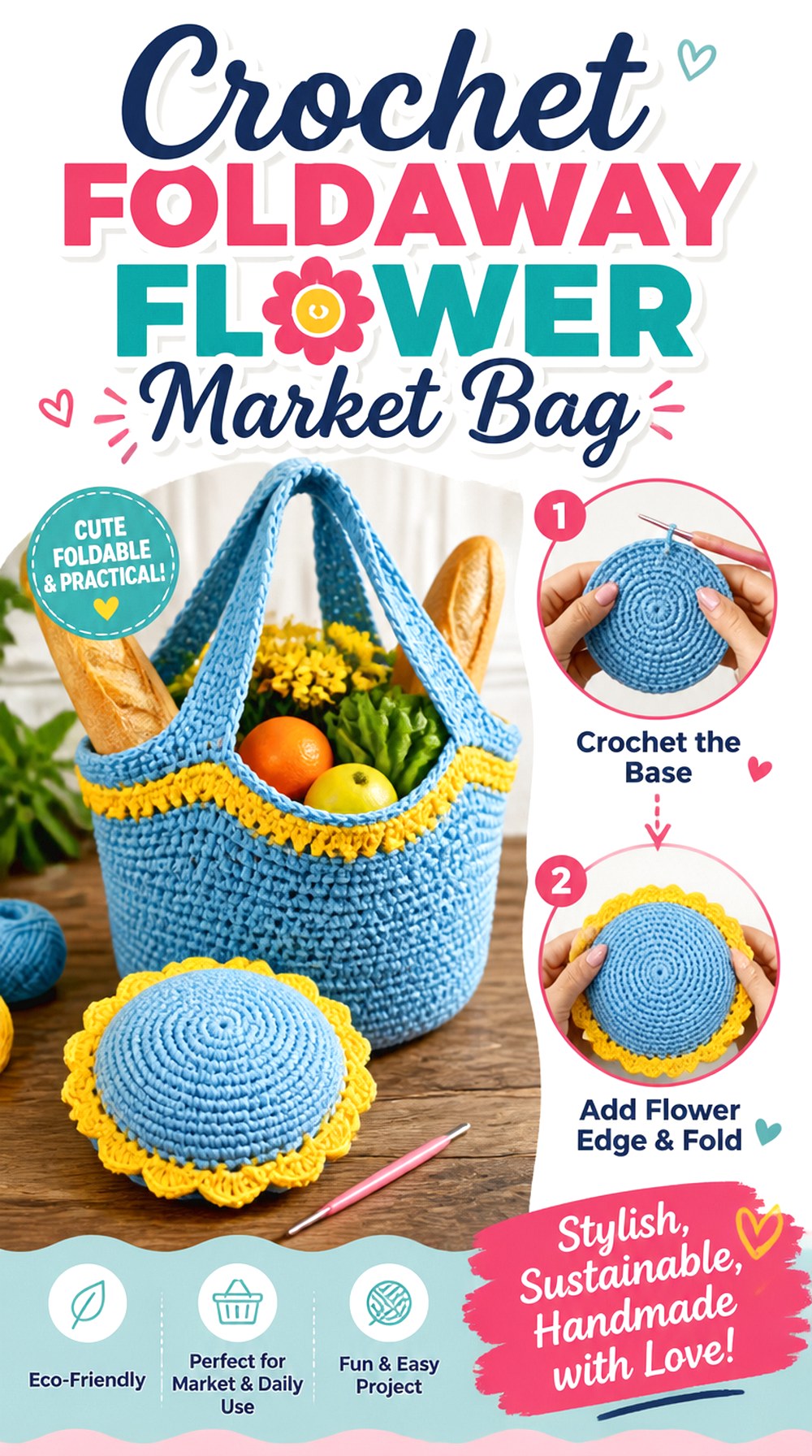
This project stands apart because the bag is designed to fold into a compact flower form when it is not being used. Luna Crochet Designs demonstrates the convertible market-bag concept in a full tutorial, giving the floral feature a functional role rather than using it only as decoration.
For fall, imagine a pumpkin flower pouch opening into a warm cream market bag, or a burgundy flower paired with a taupe or olive body. The important difference is that color placement must work in two states: folded and fully opened.
The Foldaway Feature Is the Main Design Constraint
Do not treat the decorative flower as an isolated appliqué. It is part of the storage concept, so changing its size or surrounding construction can affect whether the bag still folds neatly. If you substitute yarn, compare the resulting fabric thickness with the tutorial’s appearance. A much bulkier material may make a compact fold harder to achieve even if the stitch work itself is successful.
Keep the Flower Face Neat After Repeated Folding
A flower that sits on a bag which is repeatedly packed and unpacked will experience more handling than a decorative motif on a standard tote. Weave in ends securely and check that raised details do not snag during the folding motion. Before calling the project complete, convert it between both forms several times and inspect whether the flower edges remain arranged the way you want.
Check the Opening Before Calling It an Everyday Bag
Market bags prioritize quick access, but that may not match every reader’s idea of a daily purse. Before choosing this design, decide whether the opening suits the items you normally carry. If you need more containment, consider using a separate interior pouch rather than assuming the flexible market-bag structure will function like a closed handbag.
Original Tutorial and Creator Credit
Creator: Luna Crochet Designs (a.k.a. Luna the Ladybird)
10. Crochet Daisy Granny Snap Closure Shoulder Bag
10. Crochet Daisy Granny Snap Closure Shoulder Bag
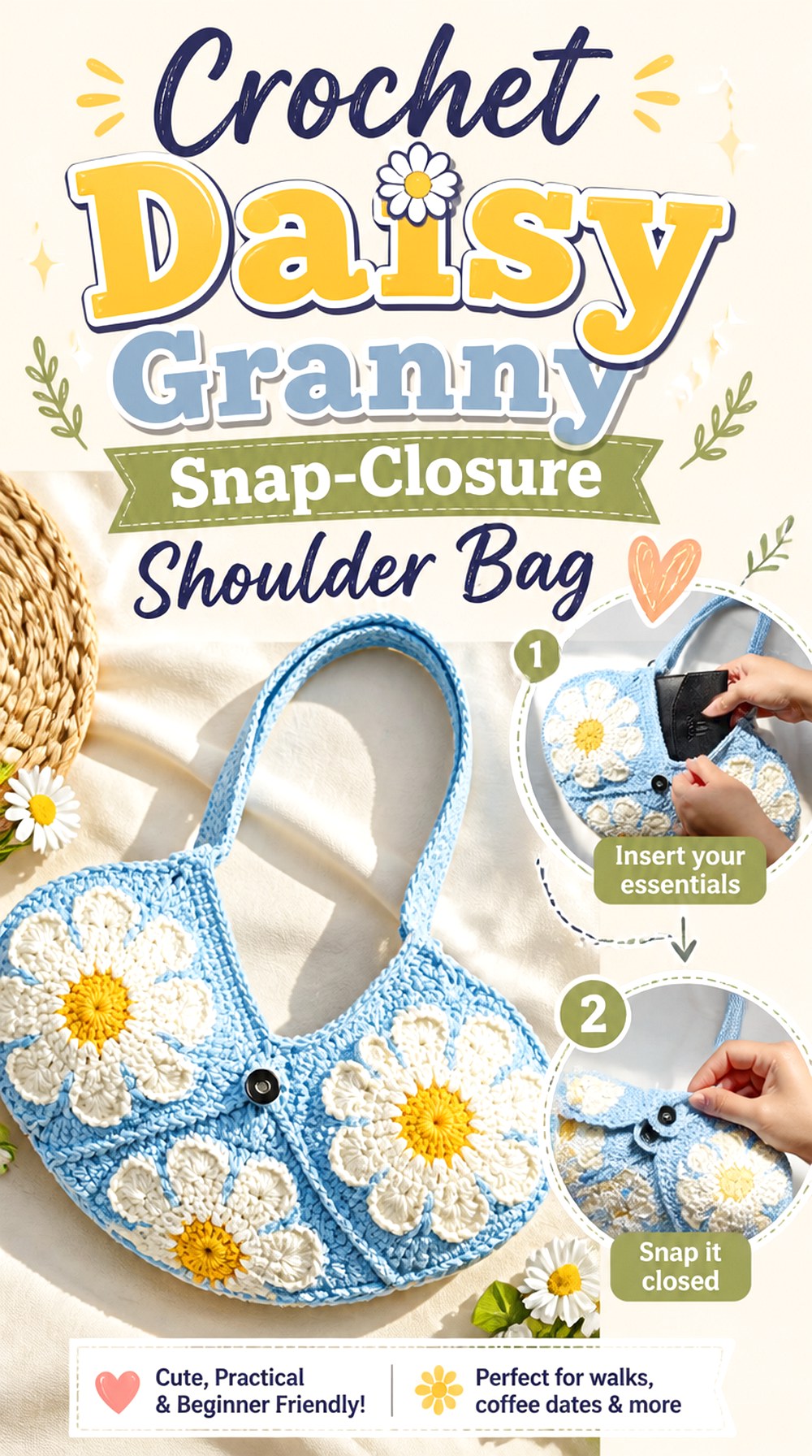
Tinycrochet’s daisy bag combines prominent granny motifs with hardware: the tutorial lists a magnetic snap button and removable round rings along with macramé cord. It also demonstrates the motifs, assembly, top finishing, button strap, and carrying strap.
That makes this option valuable when you want a flower bag that feels more deliberately finished at the opening than a simple open tote. For fall, cream petals on olive, pumpkin, wine, chocolate, or golden backgrounds can preserve the daisy identity while shifting the mood away from spring pastels.
Snap Placement Depends on a Stable Top Edge
A magnetic snap creates a concentrated point of use each time the bag is opened. If you substitute softer yarn or change the top edging, make sure the area surrounding the snap does not distort when pulled. Install or finalize closure positioning only after the top edge is shaped, so the two sides align naturally rather than being forced together by the hardware.
Removable Hardware Makes Strap Changes Easier
The round rings shown in the tutorial create a convenient separation between the crocheted bag and the removable strap. That opens useful styling options: you could make a shorter shoulder strap and a longer crossbody alternative without rebuilding the bag. Whatever hardware you choose, verify that its opening and diameter work with the completed crochet attachment area before sewing everything permanently.
Large Daisy Motifs Need Balanced Orientation
Because the main flowers are visually dominant, orientation matters after the pieces are joined. Lay the motifs in their intended final position and mark the top before assembly. This is particularly useful if your fall palette includes directional color placement—for example, darker petals or leaves intended to sit toward the bottom—because rotating one panel can change the balance of the whole bag.
Original Tutorial and Creator Credit
Creator: tinycrochet
11. Crochet Raffia Flower Lattice Purse
11. Crochet Raffia Flower Lattice Purse
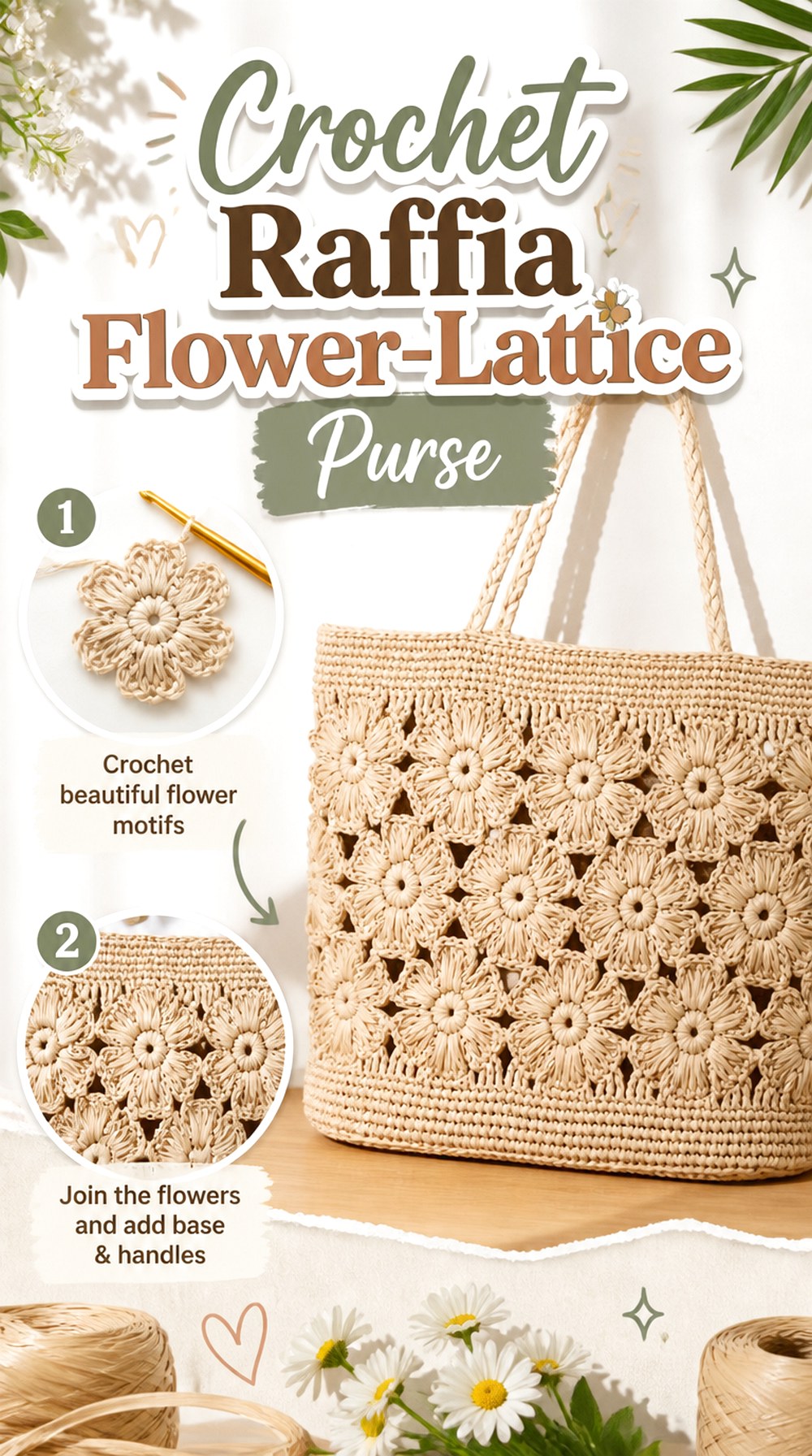
Anxin Crochet builds this bag from more than 30 connected flower motifs using raffia yarn, creating an airy floral surface quite different from a standard granny-square grid. The tutorial covers the flowers and connections along with the bag top, base, strap, and finishing.
For fall, natural raffia tones already pair comfortably with camel, tobacco brown, muted orange, burgundy, and olive. This is a strong choice when you want the flower construction itself to form the fabric rather than sitting on top of a separate bag body.
Raffia Makes the Flower Lattice Read More Sculpturally
Raffia behaves differently from a soft, fuzzy yarn, so the flower outlines remain visually pronounced in the creator’s project. If you replace it, expect the appearance to change. A softer fiber may produce a more relaxed lattice with less crisp flower definition. Make one full motif in the substitute material first and decide whether its texture still matches the look you want before committing to the entire bag.
Joined Flowers Need Consistent Spacing to Avoid Distortion
When the motifs are the fabric, irregular joins can affect the whole silhouette rather than only a decorative panel. Periodically spread the developing section flat and compare the spacing between flowers. If one area begins pulling tighter than the rest, correct it before the base and top are added. Consistent connection tension is more valuable than trying to force the finished bag into shape afterward.
Decide on Lining Before the Bag Is Fully Finished
The open flower lattice naturally creates spaces between motifs. Anxin notes lining as an optional addition in the video description. If you plan to carry small items, decide early whether you want that extra layer. Choosing the lining color also matters visually because it can show through the flowers and effectively become another major color in the bag.
Original Tutorial and Creator Credit
Creator: anxin_crochet
12. Crochet Sculptural Rose T Shirt Yarn Handbag
12. Crochet Sculptural Rose T Shirt Yarn Handbag
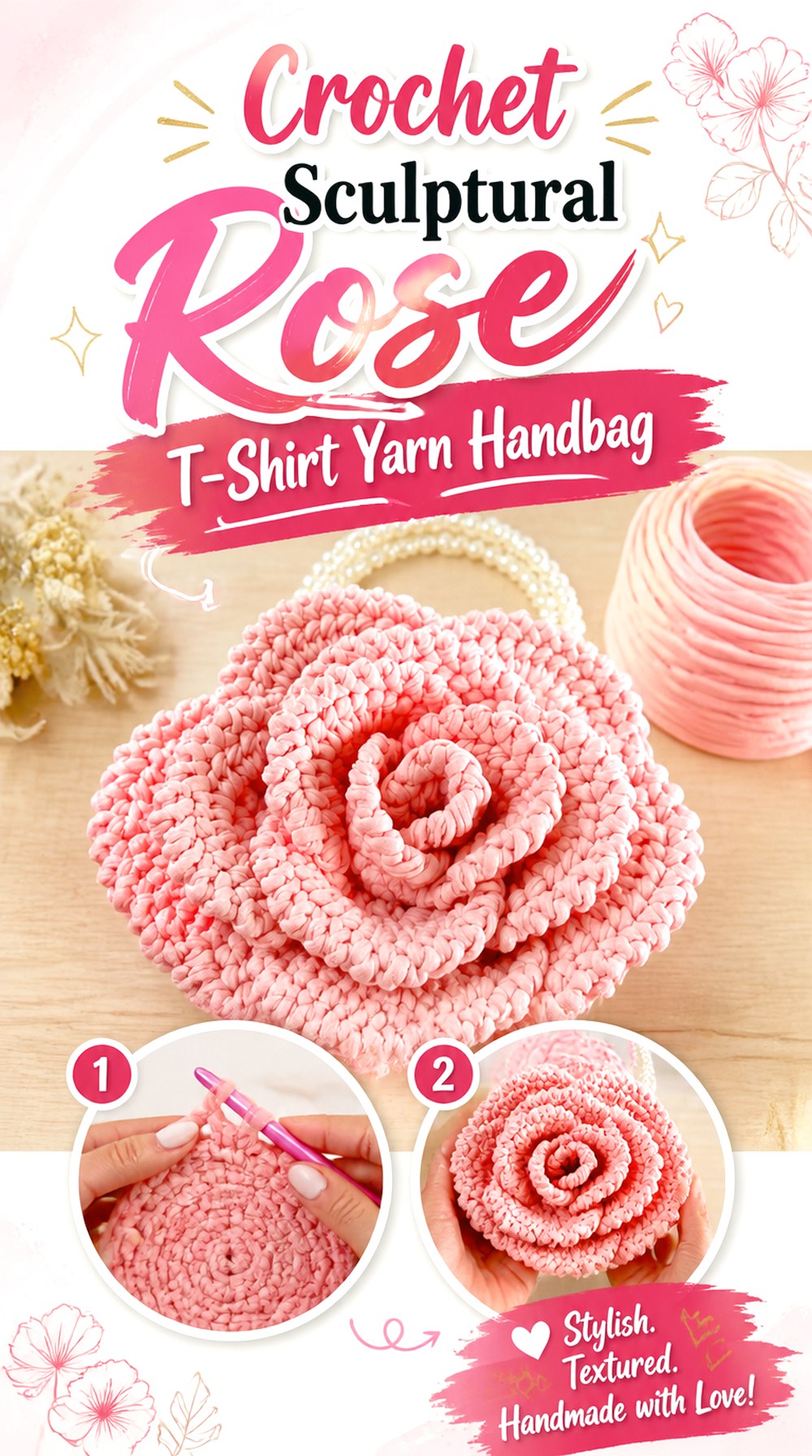
Bobilon’s flower bag moves away from small repeated blossoms and toward a heavier, sculptural rose effect worked with T-shirt yarn. The thicker material makes this feel more like a statement handbag than an airy flower tote, giving the collection a distinctly different final silhouette.
For fall, a single strong shade such as oxblood, burnt orange, dark plum, cocoa, or forest green can emphasize the three-dimensional form. A tonal version can be especially effective because the shadows between raised sections provide much of the visual contrast.
Thick T-Shirt Yarn Makes the Rose the Structure
When working with a thick material, changes in yarn diameter can noticeably affect scale and firmness. If you substitute another T-shirt yarn, compare thickness before assuming the finished handbag will match the tutorial’s proportions. The important checkpoint is whether the developing flower remains shaped rather than becoming either too stiff to manipulate or too loose to hold its sculptural outline.
A Sculptural Flower Bag Benefits From Controlled Stretch
A thick crochet body can still change under the weight of contents, especially around handles and attachment points. Gently load the finished body before finalizing optional lining or hardware so you can see where the structure moves. If an area stretches more than expected, reinforcement is easier to plan before decorative finishing hides the places where support would need to be added.
Keep Hardware and Color Secondary to the Rose Form
The large floral texture already supplies strong visual interest. Too many contrasting handles, trims, charms, and autumn colors can compete with it. Consider one dominant fall shade plus a restrained neutral or metal detail. This is the option in the roundup where simplifying the palette may create a stronger seasonal result than trying to include every traditional autumn color at once.
Original Tutorial and Creator Credit
Creator: Bobilon
Conclusion
Choose your crochet fall flower girl bag by deciding how much floral texture you actually want. The sunflower and vintage granny totes work well when repeated motifs should dominate, while the embroidered and lily-of-the-valley bags keep most of the body calmer. The flower-band and foldaway market bags emphasize function, the tiny five-petal pouch suits a much smaller accessory, and the raffia lattice or T-shirt-yarn rose designs make texture the main event.
Once you have chosen the construction, build the fall mood through contrast, restrained seasonal colors, and practical decisions about lining, straps, openings, and hardware. Use the original tutorials for exact construction details before making project-specific adaptations.
Frequently Asked Questions
What yarn qualities work well for crochet fall flower bags?
Start with the behavior you want rather than choosing fiber by season alone. A smoother, firmer yarn can make granny motifs and graphic flowers look more defined, while a softer yarn generally creates more drape. Raffia and cord-like materials can produce a more structured appearance. If replacing the tutorial yarn, make a motif or fabric sample first because thickness, elasticity, and stitch definition can change both the bag’s scale and its shape.
Do crochet flower bags need a fabric lining?
Not every flower bag needs one, but lining becomes more useful when motifs leave visible openings, embroidery creates loose ends inside, or small belongings could work through the fabric. A lining can also change drape, so it is not purely decorative. Decide what you expect to carry before adding one. For highly open market bags, a separate interior pouch may preserve more of the original stretch than a tightly fitted permanent lining.
How can I turn a spring flower bag tutorial into a fall design?
Keep the creator’s construction and change the color relationship rather than redesigning the pattern. Replace bright spring combinations with rust, olive, mustard, cream, cocoa, plum, cranberry, or muted gold while maintaining enough contrast for the flower to remain visible. You can also reduce the number of colors. A cream daisy with a pumpkin center on an olive square often reads more autumnal than using five dark seasonal shades in the same motif.
How do I stop flower granny squares from looking uneven after joining?
Compare the completed motifs before assembly. Place them flat beside one another and check whether their edges and corners align naturally. Large differences are better corrected before joining than hidden by pulling seams tighter. Consistent yarn, hook choice, tension, and blocking conditions can help. If you deliberately combine different flower-square designs, compare their blocked dimensions rather than assuming that the same number of rounds will create compatible squares.
Are open flower-motif bags practical for small belongings?
They can be, but the spaces between motifs matter. Coins, cosmetics, keys, and other small objects may be awkward in a highly open lattice unless you add a lining or use a separate zippered pouch inside. Examine the finished fabric shown in the tutorial before deciding. A flower bag intended mainly as a market carrier can tolerate more openness than a purse expected to hold several small personal items securely.
How can I reduce stretching in a crochet bag strap?
Begin by testing the actual yarn and strap construction you plan to use. Crochet a short sample, pull it gently, and compare its relaxed and tensioned length. A firmer fiber, denser strap fabric, shorter unsupported span, reinforcement, or a sewn backing can all change stretch, but the right choice depends on the design. Pay particular attention to where the strap meets the bag because a stable strap is less useful if its attachment area distorts.