An autumn wedding can call for more than a decorative shawl. A bridal wrap may need to soften the chill during an outdoor ceremony, sit comfortably over a fitted dress, avoid competing with lace or beadwork, and still look intentional in photographs. The right construction therefore matters just as much as the stitch pattern.
These 20 crochet autumn bridal wrap ideas cover rectangular stoles, triangular shawls, open mesh, vintage-inspired lace, textured wraps, a Möbius construction, Tunisian crochet, and a half-circle option. Some of the original tutorials were designed as everyday shawls rather than specifically as bridal pieces, which makes yarn color, fiber, scale, and finishing important adaptation choices. Use the comparisons below to decide which construction best matches the dress, weather, venue, and amount of shoulder coverage you actually need.
Quick List
Crochet Rectangular Lace Bridal Stole
Crochet Soft Triangle Fringe Bridal Shawl
Crochet Long Narrow Ceremony Wrap
Crochet Vintage Lace Pointed Bridal Shawl
Crochet Cozy Autumn Triangle Bridal Wrap
Crochet Möbius Bridal Shoulder Wrap
Crochet Metallic Romany Bridal Shawl
Crochet Rover-Stitch Draped Bridal Shawl
Crochet Solid Granny Triangle Bridal Wrap
Crochet Tunisian Honeycomb Bridal Wrap
Crochet Full-Coverage Comfort Bridal Shawl
Crochet Lightweight Openwork Bridal Shawl
Crochet Cleopatra Lace Bridal Wrap
Crochet Wandering Granny Bridal Shawl
Crochet Relax-and-Unwind Bridal Wrap
Crochet Airy Mesh Bridal Shawl
Crochet Offset-Shell Mesh Bridal Wrap
Crochet Pineapple-Edged Bridal Shawl
Crochet Textured Grape-Hyacinth Bridal Wrap
Crochet Open-Weave Evening Bridal Shawl
Choose Coverage for the Actual Autumn Wedding Conditions
A wrap for a late-September indoor reception does not need to solve the same problem as one worn during a windy November ceremony. Before choosing a tutorial, decide whether the wrap is primarily decorative, intended to cover bare shoulders between locations, or expected to provide meaningful warmth outdoors.
Open lace and mesh usually create a lighter visual effect over a detailed gown, but the open fabric also allows more airflow. Denser crochet gives greater coverage and may feel more substantial, although the finished weight can become noticeable across the shoulders. Shape matters too. A rectangular stole can be folded or draped evenly, while a triangular shawl concentrates more fabric across the upper back. For a bridal piece, test the planned size while holding a bouquet and moving your arms rather than judging it only while standing still.
Match Drape and Texture to the Wedding Dress
A highly textured wrap can look beautiful over a simple satin or crepe dress because the crochet supplies the surface detail. With heavily beaded, embroidered, or lace-covered gowns, a quieter stitch pattern may create a cleaner balance and reduce the number of surfaces that can catch against each other.
Fiber choice can change the result considerably. A yarn with good drape lets a stole fall closer to the body, while a firmer yarn can make raised stitches or granny-style fabric feel more architectural. Swatch the actual yarn before committing to the full piece, especially when substituting for the tutorial material. Also compare the yarn color against the dress in daylight. White, natural, cream, ivory, and champagne can carry noticeably different undertones even when they appear similar on a screen or under warm indoor lighting.
Plan How the Wrap Will Stay in Place
Bridal wraps tend to be photographed, removed, replaced, carried, and worn while the wearer is moving rather than sitting still. That makes the opening and shoulder behavior worth checking before the wedding day.
A long stole offers styling flexibility but may need frequent repositioning. A triangular shawl usually gives more fabric at the center back. A Möbius construction removes loose ends altogether, while a half-circle shape can curve naturally around the shoulders. If you want a brooch, shawl pin, button, ribbon, or other closure, decide where it will sit before finishing the wrap. Open lace may not provide a sturdy anchoring point everywhere. Any accessory should also be checked against delicate dress fabric so it does not pull threads, crush embellishments, or leave marks.
1. Crochet Rectangular Lace Bridal Stole
1. Crochet Rectangular Lace Bridal Stole
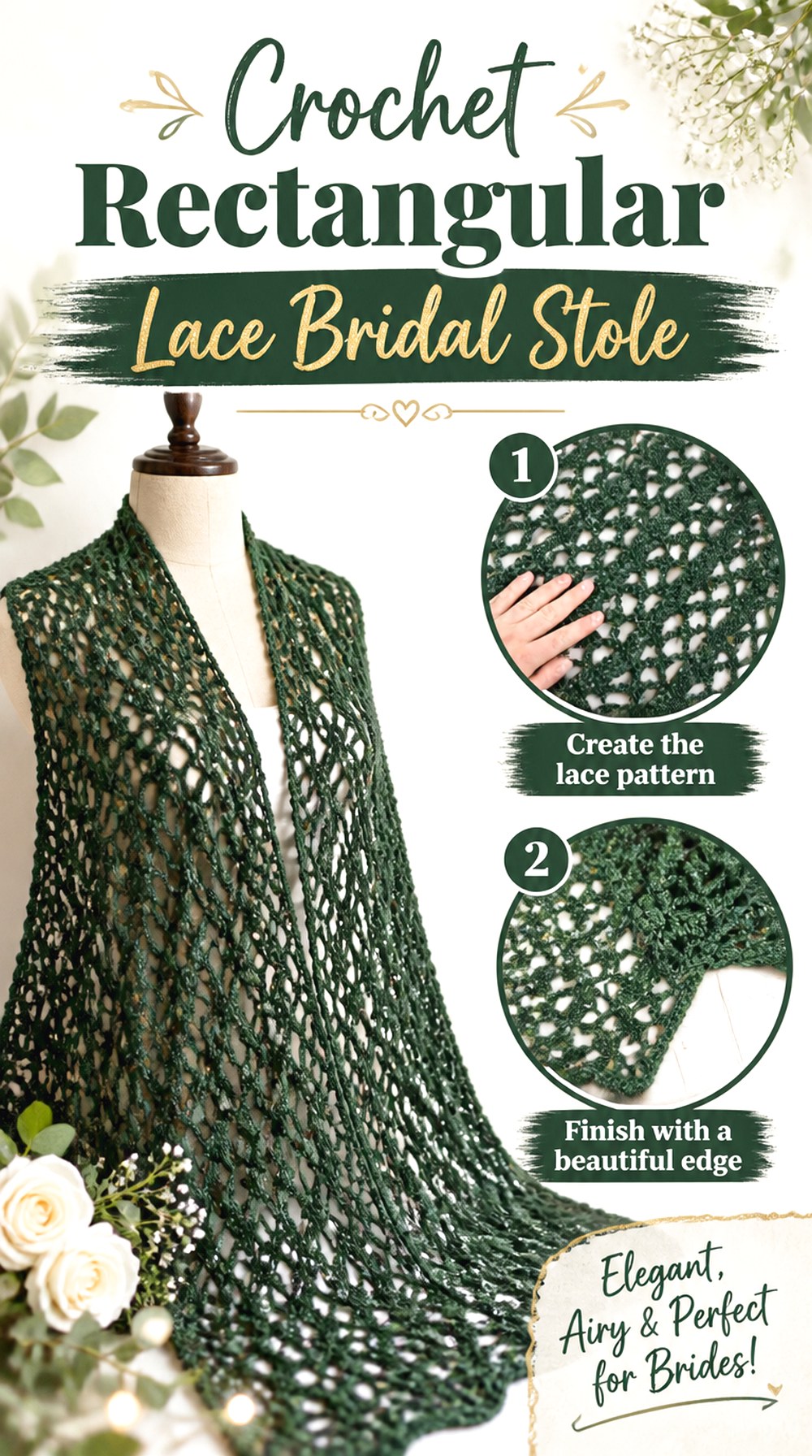
A long rectangular stole is one of the most adaptable choices for an autumn bride because it does not force the fabric into a pointed or fitted shape. This version is based on a lacy one-piece rectangle, giving the finished wrap a clean silhouette that can sit across both shoulders or be gathered more closely around the arms.
That straight construction can work especially well with dresses that already have a dramatic train, low back, or detailed skirt because the wrap adds a horizontal layer rather than another strong point. For bridal adaptation, the main decisions are finished width, drape, and whether the lace should blend quietly with the gown or become a visible textural feature.
A Stole Should Cover the Shoulders Without Hiding the Bodice
Before committing to the full width, place a folded piece of fabric across the intended dress neckline to visualize coverage. A stole that is too deep can conceal an embellished bodice, while one that is too narrow may behave more like a scarf. The useful width depends on the wearer and gown, so treat the tutorial dimensions as a starting reference rather than a universal bridal measurement.
Straight Edges Make Length Easier to Evaluate
Rectangular wraps are convenient to test because the wearer can simply drape the growing piece around the shoulders and compare the ends. Decide whether you want the tips to fall near the elbows, extend toward the hands, or cross in front. Remember that a soft yarn may lengthen under its own weight, so final blocking and the chosen fiber can affect the way the ends hang.
Original Tutorial and Creator Credit
Creator: Desert Blossom Crafts
2. Crochet Soft Triangle Fringe Bridal Shawl
2. Crochet Soft Triangle Fringe Bridal Shawl
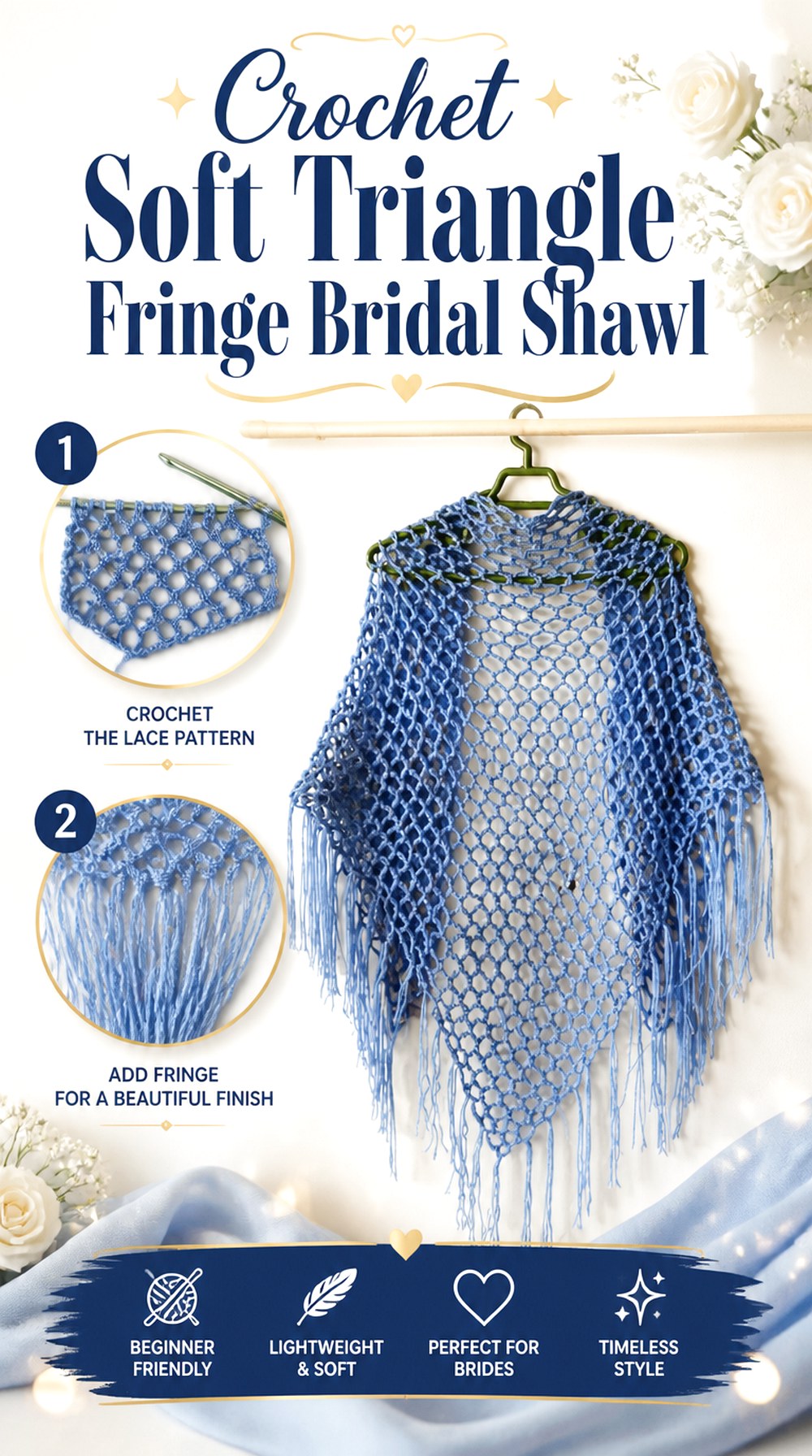
A classic triangular shawl can create an elegant frame around the back of a wedding dress while leaving the front relatively open. This tutorial demonstrates a lace triangle and also includes fringe, offering two noticeably different bridal directions: leave the lower edge clean for a restrained finish, or use decorative fringe when the wedding styling leans romantic or bohemian.
The long upper span of a triangle is useful when you want the shawl to wrap forward around the upper arms. For an autumn ceremony, think about how much of the openwork you want to preserve. A lighter yarn keeps the lace prominent, whereas a denser substitution can make the same general silhouette look more substantial.
Fringe Changes More Than the Decorative Finish
Fringe adds movement, but bridal wear introduces practical considerations. Long strands may brush against bouquets, chair backs, jewelry, or textured skirts. If fringe is part of the look, test the shawl with the complete outfit before deciding on the final length. A clean edge may be the better choice when the gown already has beading, appliqué, or a heavily detailed hem.
The Center Point Draws Attention to the Back of the Dress
A triangular shape naturally directs the eye toward its lower point. That can complement a simple back, but it may compete with buttons, lace panels, bows, or other focal details. Photograph the wrap from behind during the fitting. If the shawl visually overwhelms the gown, reducing its scale or choosing a quieter yarn can preserve the crochet without hiding the dress.
Original Tutorial and Creator Credit
Creator: Ani Tugushi (Turtle Whicky)
3. Crochet Long Narrow Ceremony Wrap
3. Crochet Long Narrow Ceremony Wrap
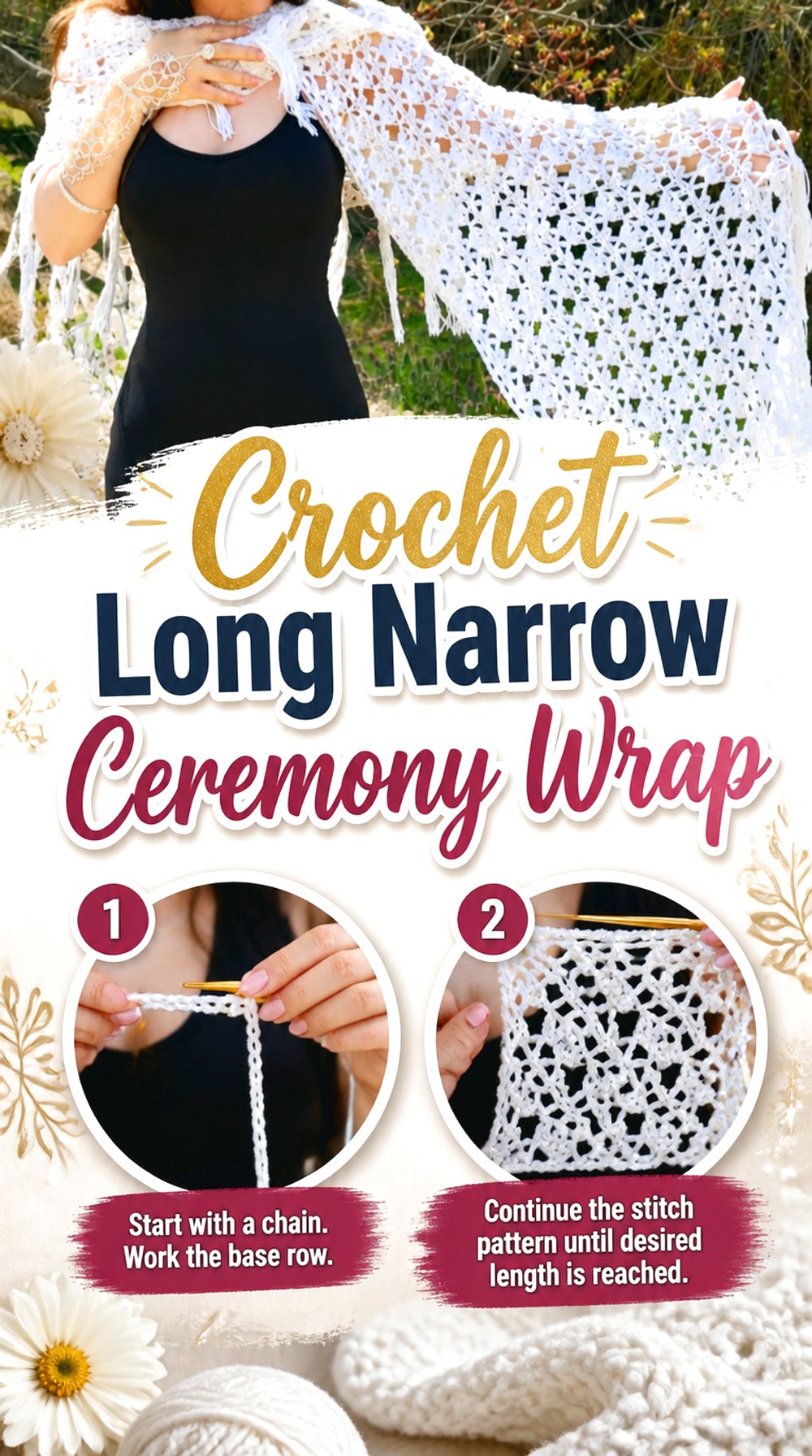
This long crochet wrap offers a slimmer rectangular alternative to a broad stole. The tutorial’s finished example is a lace wrap rather than a wedding-specific garment, but its narrow proportions translate well to bridal styling when the goal is to cover the arms without placing a large panel of crochet over the back of the gown.
A narrow wrap can also be easier to remove between ceremony, portraits, and reception. For an autumn version, concentrate on fiber behavior rather than automatically choosing the thickest yarn. A soft, draping fabric can feel warmer around the arms when wrapped closely while keeping the overall silhouette refined.
Narrower Fabric Leaves More of the Dress Visible
If the gown has an important back feature, a slim wrap can provide a practical compromise between coverage and visibility. Try the planned depth across the upper arms while facing forward and from behind. The wrap should not need constant pulling upward to stay useful. Shoulder width, sleeve style, and dress neckline all influence how much fabric feels comfortable.
Optional Fringe Can Shift the Style Toward Bohemian
The source tutorial includes optional fringe. On a bridal version, that decision should be made with the full wedding aesthetic in mind. Fringe pairs naturally with woodland, rustic, and relaxed outdoor styling, but a plain finished edge often suits minimalist gowns more easily. If you add fringe, check how it behaves when the wrap is carried over one arm or placed on the back of a chair.
Original Tutorial and Creator Credit
Creator: Bag-O-Day Crochet
4. Crochet Vintage Lace Pointed Bridal Shawl
4. Crochet Vintage Lace Pointed Bridal Shawl
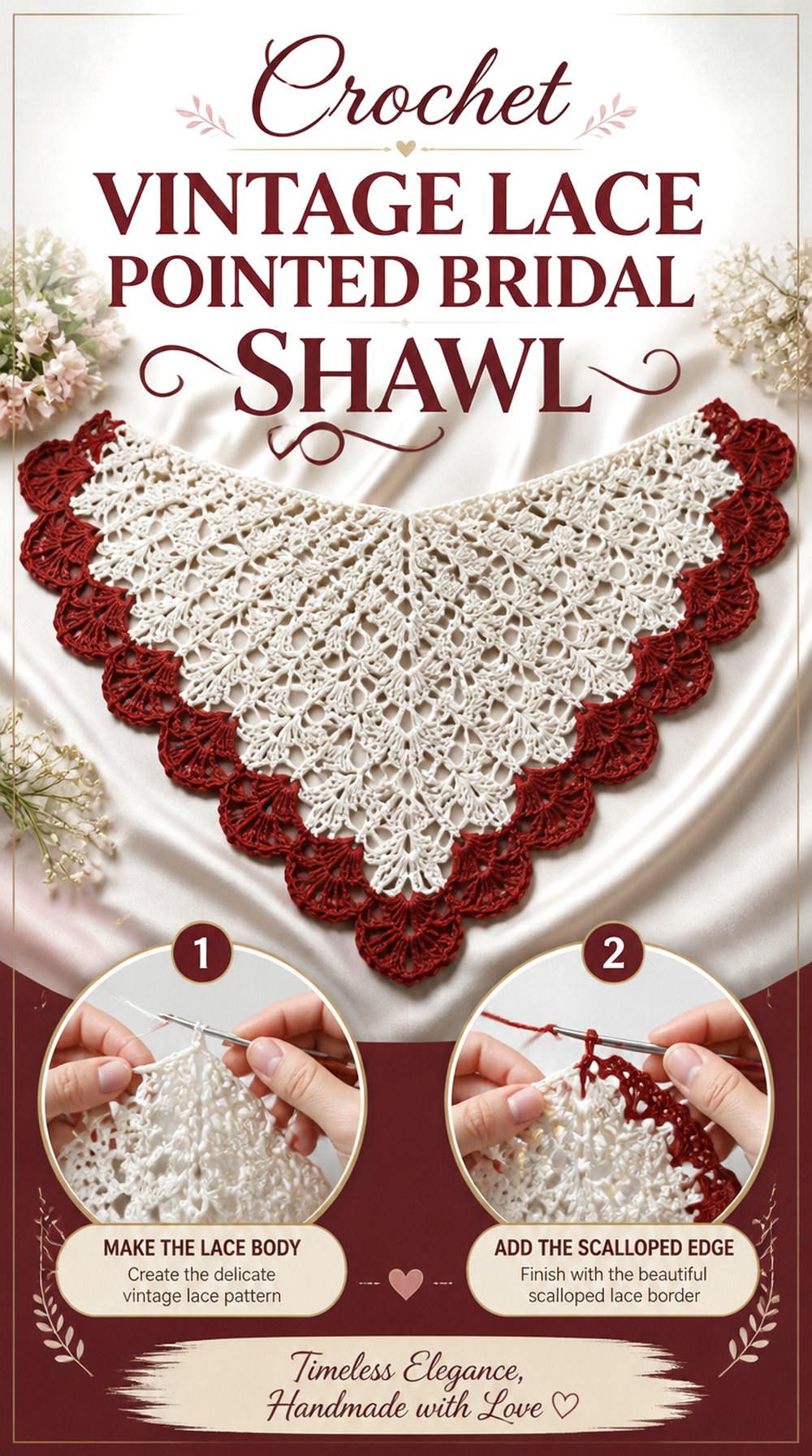
Vintage-inspired lace is a natural match for bridal styling when you want the wrap to feel decorative rather than purely practical. This pointed shawl uses an ornate lace appearance that can sit comfortably beside vintage jewelry, heirloom accessories, or dresses with restrained silhouettes.
Because the crochet itself is visually detailed, yarn selection deserves extra attention. A fuzzy yarn can soften the pattern until the stitch definition becomes less obvious, while a smoother yarn tends to keep openwork easier to see. The shawl is strongest as a bridal option when the texture has enough breathing room to register in photographs without competing with every other element of the outfit.
Let One Surface Carry the Main Detail
If the wedding dress already has dense lace from neckline to hem, adding equally complex crochet can make both surfaces harder to appreciate. Consider using this type of shawl with a cleaner gown or choosing a low-contrast yarn so the wrap reads as a soft layer. Over a plain dress, the lace can take a larger visual role and function almost like an accessory.
Blocking Matters for an Ornate Edge
Detailed lace usually benefits from careful finishing because the pattern needs room to open. Follow the care instructions for the chosen fiber and use an appropriate blocking method rather than assuming every yarn tolerates the same treatment. Finish the shawl early enough to block, dry, inspect, and try it with the dress before the event.
Original Tutorial and Creator Credit
Creator: Jayda InStitches
5. Crochet Cozy Autumn Triangle Bridal Wrap
5. Crochet Cozy Autumn Triangle Bridal Wrap
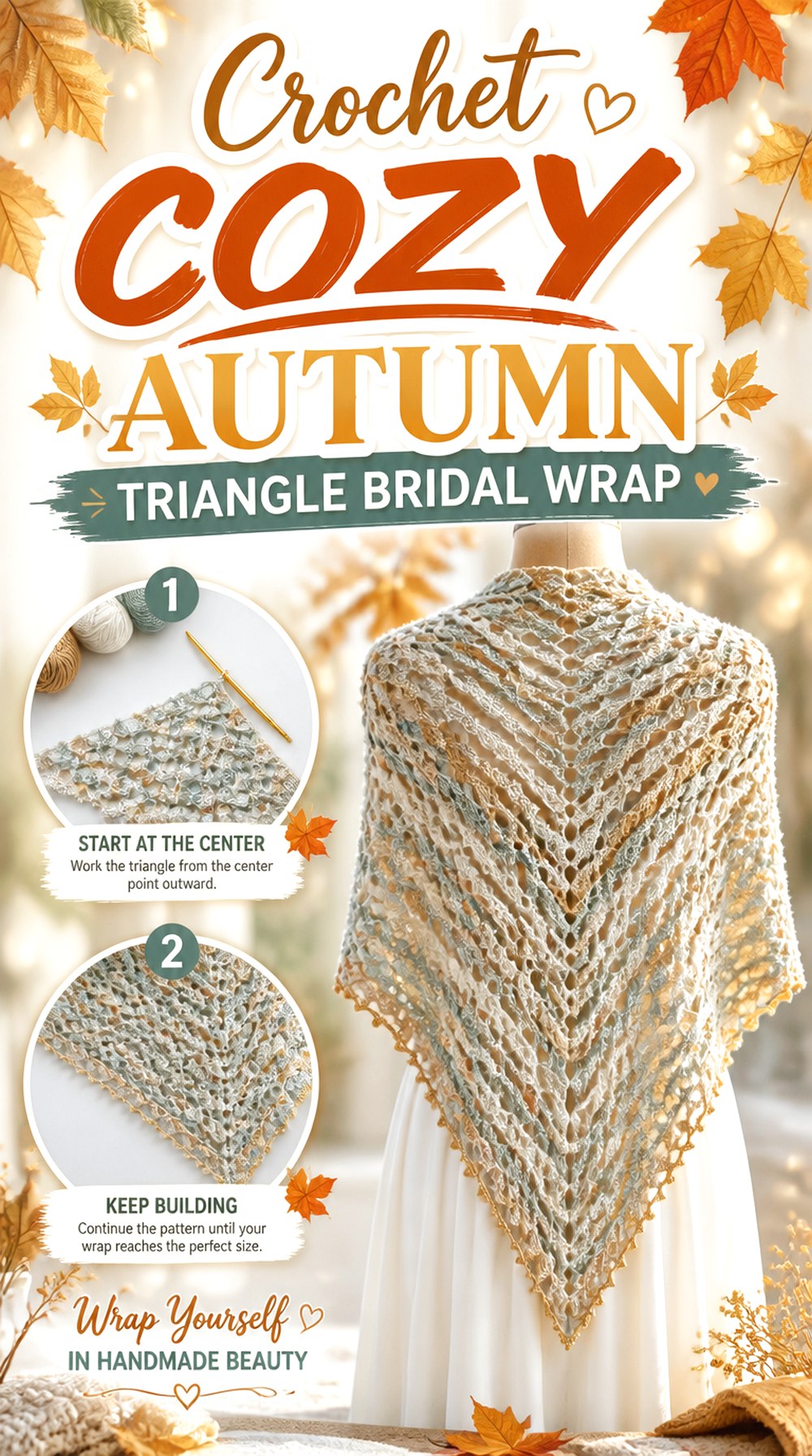
This autumn shawl provides one of the clearest seasonal starting points in the collection. The original tutorial was specifically presented as an autumn design and uses angora yarn in the demonstrated project, giving the fabric a visibly softer, warmer character than crisp cotton lace.
For bridal adaptation, the key question is how much halo you want around the dress. A softly fuzzy yarn can look romantic and photograph beautifully in cool outdoor light, but it may obscure intricate stitch definition and can interact differently with textured gowns. This is a strong direction for an outdoor ceremony, portrait session, or evening reception where visual warmth is part of the desired look.
A Soft Halo Looks Different Beside Satin and Lace
Fuzzy yarn can create a gentle contrast against smooth satin, crepe, or mikado-style surfaces. Against heavily textured lace, however, the two materials may visually merge. Hold a yarn sample directly beside the dress before buying enough for the wrap. Photographs in daylight are particularly useful because subtle ivory and cream undertones often look different once they are placed next to bridal fabric.
The Triangle Gives More Protection Across the Upper Back
A pointed shawl carries extra fabric at the center compared with a narrow stole. That can be helpful when the bride wants noticeable back coverage but relatively free movement at the front. During a fitting, check where the point falls in relation to waist details, buttons, or a bow. Shortening the overall scale may preserve an important dress feature.
Original Tutorial and Creator Credit
Creator: Sirin’s Crochet
6. Crochet Möbius Bridal Shoulder Wrap
6. Crochet Mobius Bridal Shoulder Wrap
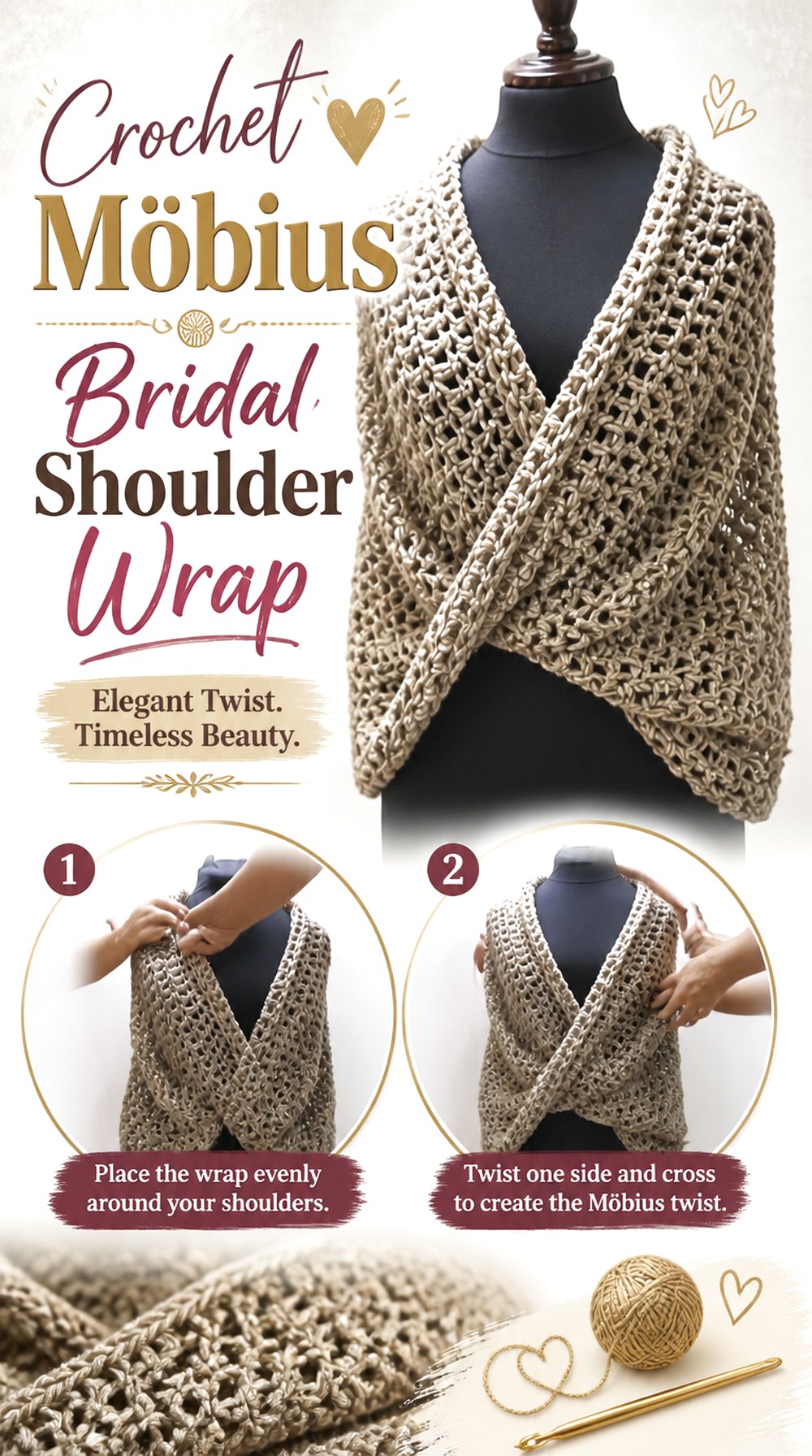
A Möbius wrap solves a common problem with bridal shawls: loose ends. Its continuous twisted loop sits around the shoulders without two long tips hanging at the front, making it appealing for brides who want coverage while carrying flowers, greeting guests, or moving between locations.
Naztazia’s tutorial demonstrates a seamless wrap with a deliberate twist and shows that the construction can also be worn higher as a hooded cowl. For a wedding, the shoulder-wrap configuration is likely the more restrained adaptation. This shape is especially different from the other ideas because styling is built into the construction rather than created by repeatedly rearranging a rectangle or triangle.
The Closed Loop Needs to Be Comfortable Before Finishing
Unlike an open shawl, a Möbius wrap cannot simply be loosened by letting the ends fall. Make sure the loop gives enough room for the shoulders, neckline, hairstyle, and dress details. Try a temporary sample or test the developing circumference where possible. The goal is a wrap that stays positioned without squeezing the upper arms or climbing toward the neck.
A Structured Shape Can Simplify Wedding-Day Styling
Because there are no free ends to cross, knot, or pin, the wrap can be easier to put back on after formal photographs or an indoor reception. That simplicity is useful when someone other than the maker may be helping the bride dress. It also removes the need for a sharp shawl pin near delicate fabric unless a decorative accessory is intentionally added.
Original Tutorial and Creator Credit
Creator: naztazia
7. Crochet Metallic Romany Bridal Shawl
7. Crochet Metallic Romany Bridal Shawl
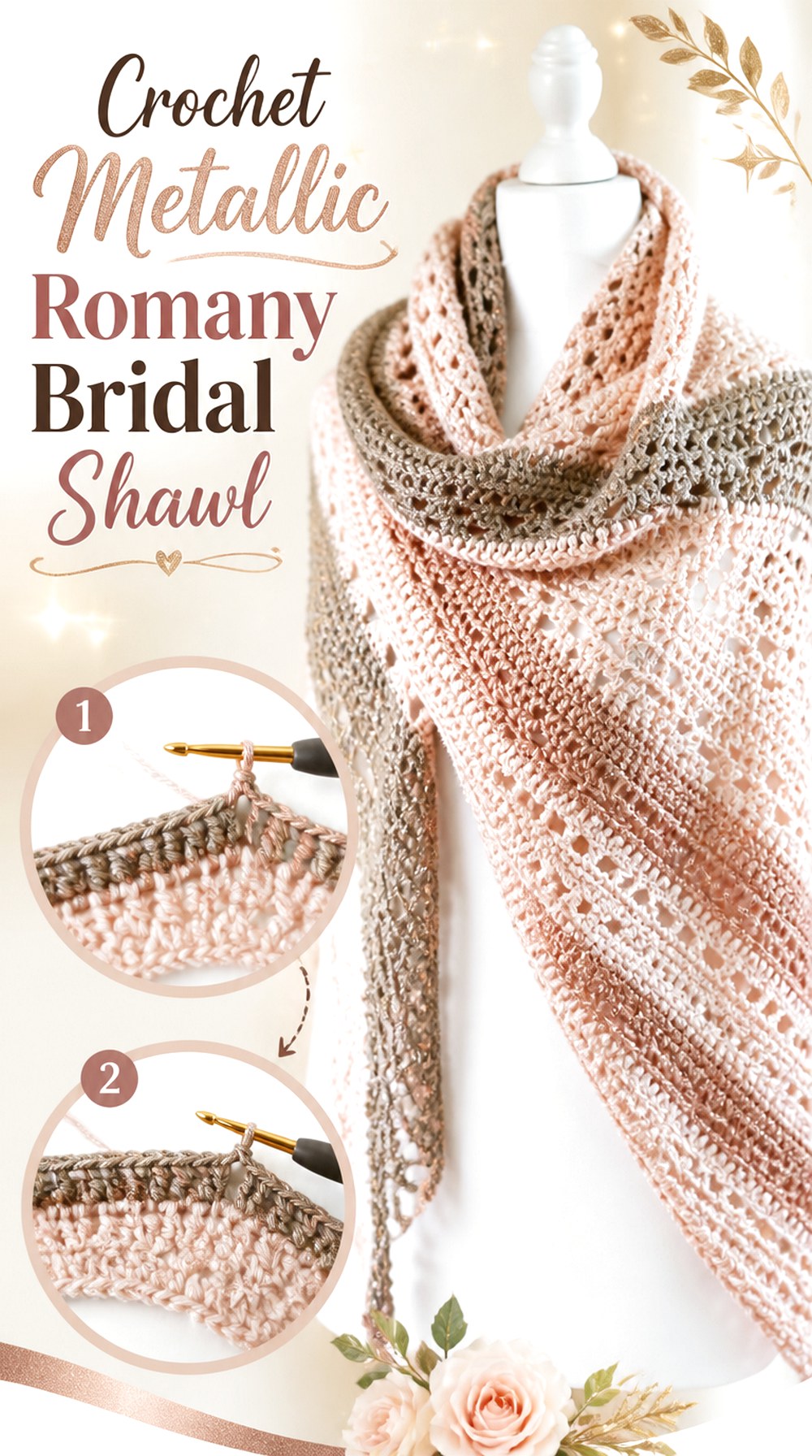
Bella Coco’s Romany shawl offers a triangular construction with a polished, decorative surface. The demonstrated version uses a metallic yarn, which makes this tutorial particularly interesting for brides considering subtle shimmer rather than a completely matte wrap.
Metallic effects need restraint when adapting the idea for a wedding. A slight sheen can pick up evening light and coordinate with crystal or metallic accessories, but a highly reflective yarn may compete with beading or sequins. The triangular form still provides useful shoulder coverage, so the sparkle can be reduced or removed entirely by choosing a different compatible yarn while preserving the overall construction concept.
Check Shine Under the Venue Lighting
Metallic yarn can appear very different in daylight, flash photography, warm reception lighting, and direct spotlights. Make a swatch and photograph it beside the dress in more than one setting. If the yarn becomes the brightest element in every image, a quieter fiber may integrate more naturally. If the gown is simple, however, a restrained glimmer can serve as the main accessory.
Color Changes Are Optional, Not a Bridal Requirement
The tutorial demonstrates changing color, but a bridal interpretation does not need multiple shades. A solid ivory, soft white, champagne, muted gold, dusty rose, or another wedding-palette color can emphasize texture instead. If combining colors, keep the dress undertone in mind so the wrap looks coordinated rather than accidentally mismatched.
Original Tutorial and Creator Credit
Creator: Bella Coco
8. Crochet Rover Stitch Draped Bridal Shawl
8. Crochet Rover Stitch Draped Bridal Shawl
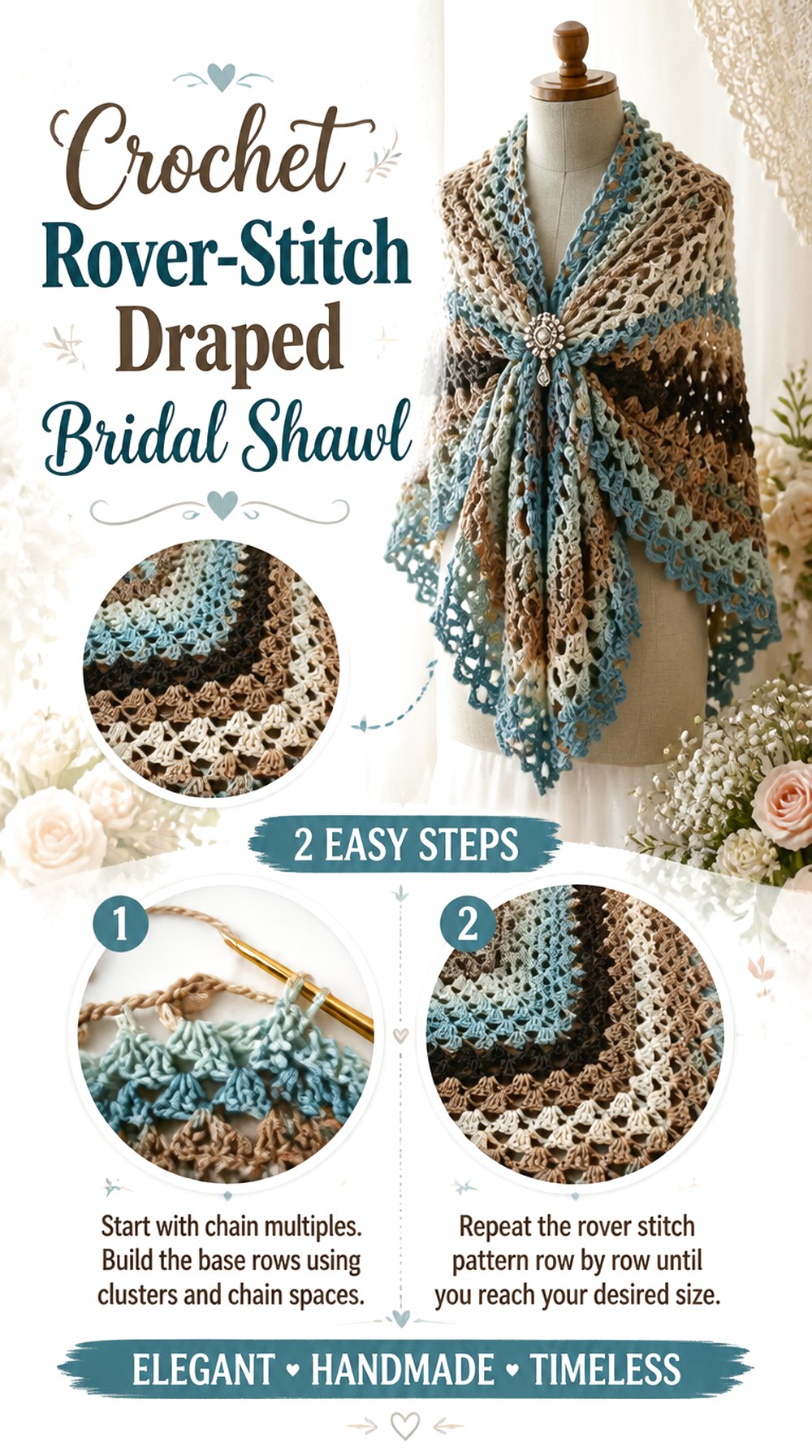
The Rover Stitch shawl offers a repeating-texture direction for a bride who wants the crochet fabric itself to create interest without relying on elaborate edging, fringe, or a complex closure. Its attraction for autumn styling is the balance between visible stitch rhythm and a wearable shawl format.
This type of repeated fabric can be particularly effective in a solid bridal shade because light and shadow provide the variation. Before choosing the yarn, decide whether you want the stitch pattern to appear crisp or softly blended. The wrap should also be tested over the dress after blocking because repeated crochet fabric can change noticeably in drape as its weight increases.
Let Texture Replace Extra Embellishment
A textural repeat can keep a solid-color bridal wrap from looking flat without adding beads, tassels, or contrasting yarn. That is useful when the gown already includes jewelry, appliqué, or decorative buttons. For a very simple dress, the stitch pattern becomes more visible and can add handmade character while keeping the palette understated.
Watch the Fabric as the Shawl Becomes Heavier
A small swatch cannot fully predict how a completed shawl behaves under its own weight. If the chosen fiber stretches readily, the final piece may hang lower than expected after blocking and wearing. Periodically drape the project around the shoulders during construction and make the final size decision based on the fabric you are actually producing.
Original Tutorial and Creator Credit
Creator: Fiber Spider
9. Crochet Solid Granny Triangle Bridal Wrap
9. Crochet Solid Granny Triangle Bridal Wrap
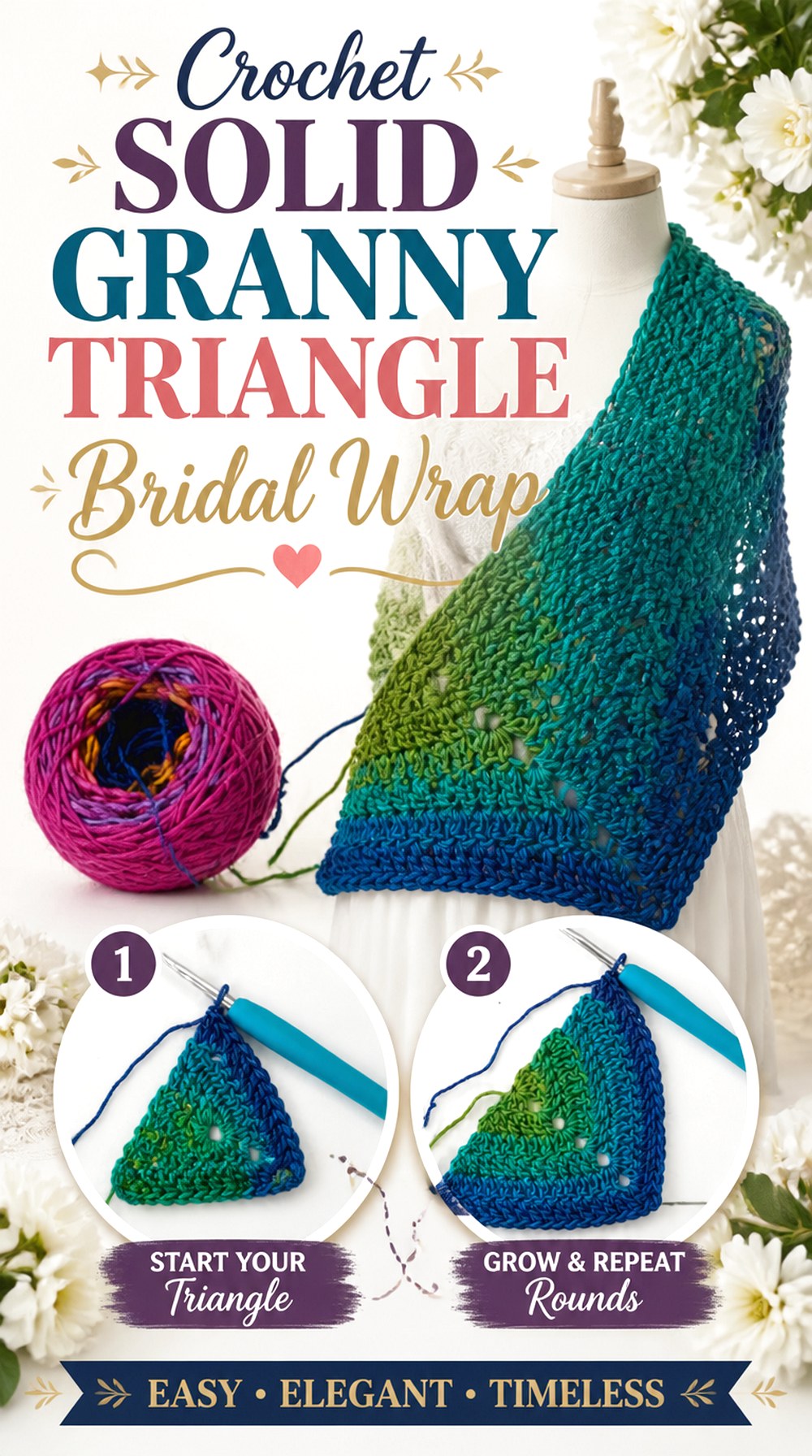
A solid granny-style triangle gives a bridal wrap a more substantial visual surface than a very open mesh shawl. Hooked by Robin’s tutorial focuses on a solid granny triangle, making this an appealing option for brides who like the geometry of granny construction but do not want the extremely open appearance associated with traditional granny clusters.
The simple silhouette also creates room for thoughtful finishing. A monochrome bridal yarn keeps the shape contemporary, while a contrasting edge would make it more casual or graphic. For a wedding, evaluate the upper edge carefully because that is the line that sits nearest the shoulders and neckline.
Solid Fabric Can Suit a Minimalist Gown
When the dress has clean lines and very little embellishment, a solid crochet triangle can contribute visible handmade texture without introducing an elaborate lace motif. It also creates a stronger color field than mesh, so matching or intentionally contrasting the gown becomes more important. Compare a blocked yarn sample with the dress before deciding between white, ivory, cream, or another neutral.
Keep the Upper Edge Comfortable Around Bare Skin
The long edge of a triangle may rest against the neck, shoulders, or upper arms. A yarn that looks attractive in the skein can still feel rough when worn directly against skin for an extended ceremony. Make the swatch large enough to rub gently against the shoulder or inner arm before committing to the entire wrap.
Original Tutorial and Creator Credit
Creator: Hooked by Robin
10. Crochet Tunisian Honeycomb Bridal Wrap
10. Crochet Tunisian Honeycomb Bridal Wrap
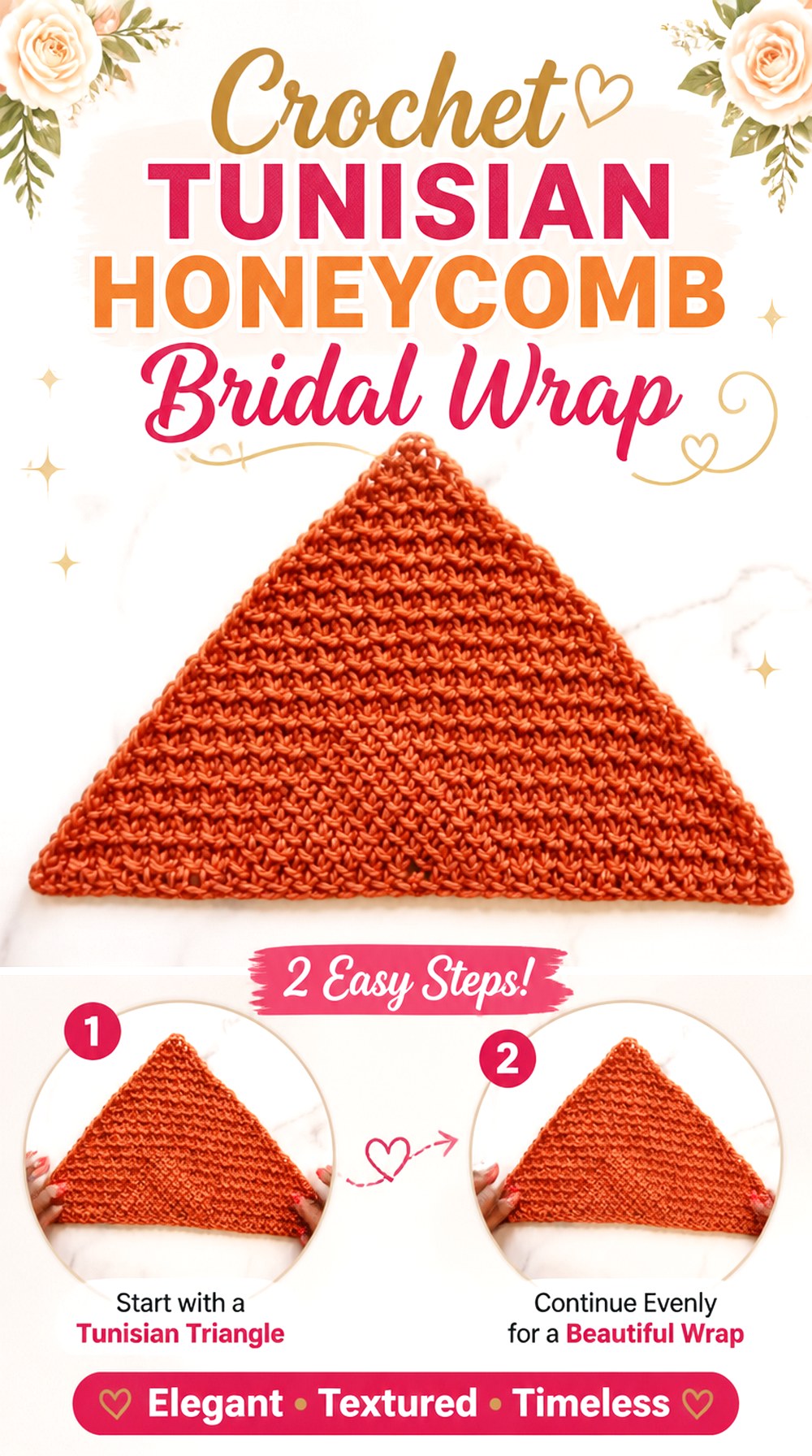
A Tunisian crochet shawl creates a noticeably different fabric from the conventional crochet options in this list. TL Yarn Crafts’ Lamia Wrap combines Tunisian construction with contrasting stitch textures, including honeycomb sections, producing a modern triangular piece with a more fabric-like visual character.
This idea suits a bride who wants the wrap to feel contemporary rather than overtly lacy. The original uses a substantial yarn, but substitutions should be approached through swatching because Tunisian fabric, yarn weight, and hook choice all affect drape. It is also important to confirm that the tutorial’s asymmetrical shaping and final proportions suit how you expect the piece to sit around the wedding dress.
Tunisian Fabric Can Look More Tailored
The denser visual surface can pair especially well with minimalist dresses, autumn suits, bridal separates, or gowns without heavy surface decoration. If you want a softer bridal effect, choose a yarn with enough drape to prevent the shawl from feeling board-like. A large swatch is more informative here than judging fiber softness from the skein alone.
Texture Placement Becomes Part of the Design
Honeycomb and smoother Tunisian sections create deliberate visual zones. In a single-color wrap, those stitch changes can supply enough interest without contrasting yarn. Before adapting the design with multiple bridal colors, consider whether the texture already gives the piece the amount of detail you want.
Original Tutorial and Creator Credit
Creator: TL Yarn Crafts
11. Crochet Full Coverage Comfort Bridal Shawl
11. Crochet Full Coverage Comfort Bridal Shawl
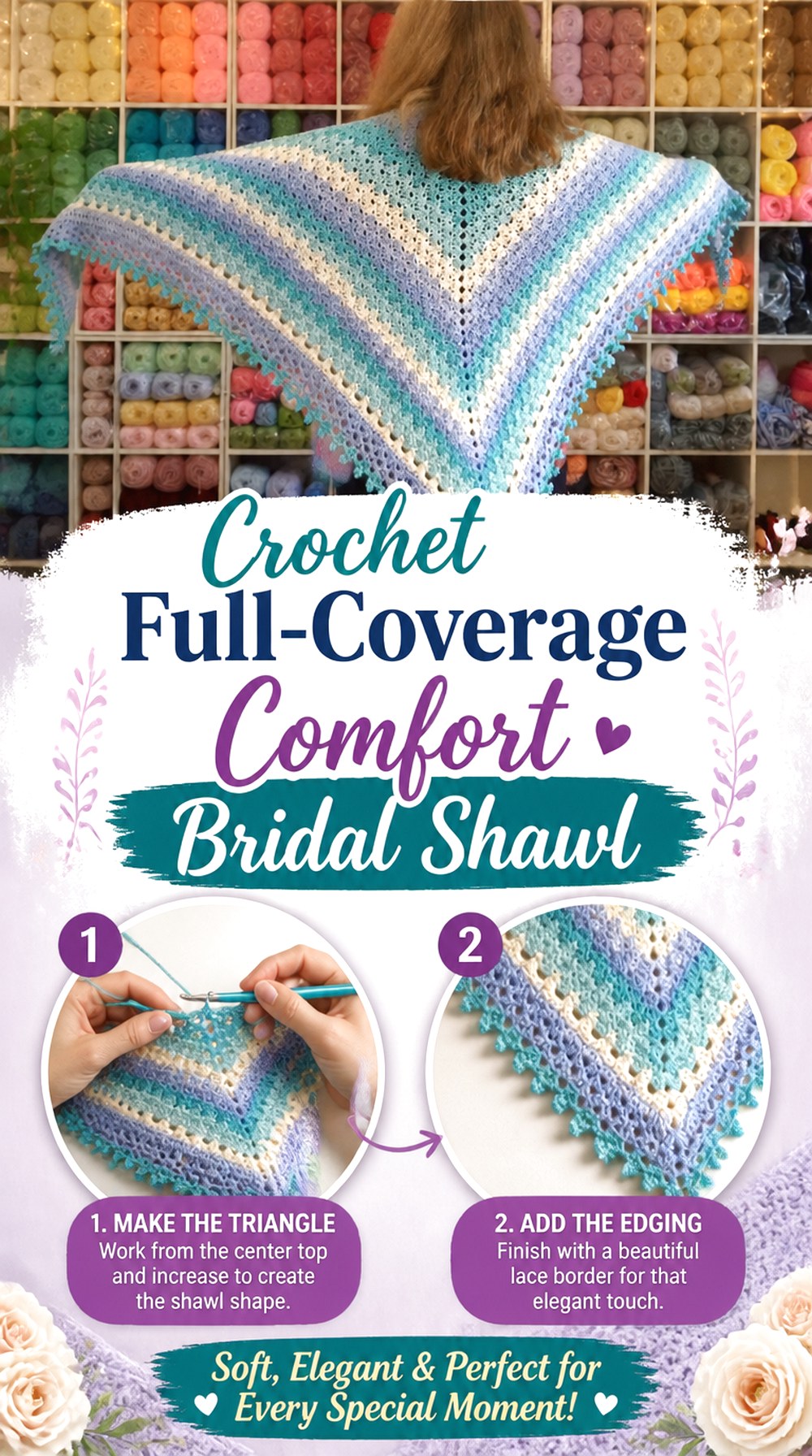
A comfort-style shawl shifts the emphasis from delicate openwork toward coverage. That makes this idea worth considering for later autumn dates, evening ceremonies, drafty historic venues, or couples planning a significant portion of the wedding outdoors.
The bridal challenge is preventing a more substantial shawl from reading as an unrelated winter accessory. A carefully chosen neutral yarn, neat finishing, and proportion that complements the gown can keep the piece connected to the wedding look. Rather than adding every possible embellishment, allow the fuller crochet fabric to provide the visual weight.
More Coverage Should Still Allow Arm Movement
A wrap can look generous while standing still yet feel restrictive when holding flowers, hugging guests, or sitting for dinner. During construction, simulate those movements with the developing piece. Pay particular attention to whether the upper edge slides, bunches behind the elbows, or needs constant gripping at the front.
Keep a Heavier Shawl From Overwhelming the Dress
A fuller wrap works best when its scale is intentional. Over a narrow or delicately detailed gown, excessive bulk can alter the silhouette more than expected. If warmth matters but visual weight does not, consider a softer fiber or more draping yarn rather than simply adding thickness.
Original Tutorial and Creator Credit
Creator: Creative Grandma
12. Crochet Lightweight Openwork Bridal Shawl
12. Crochet Lightweight Openwork Bridal Shawl
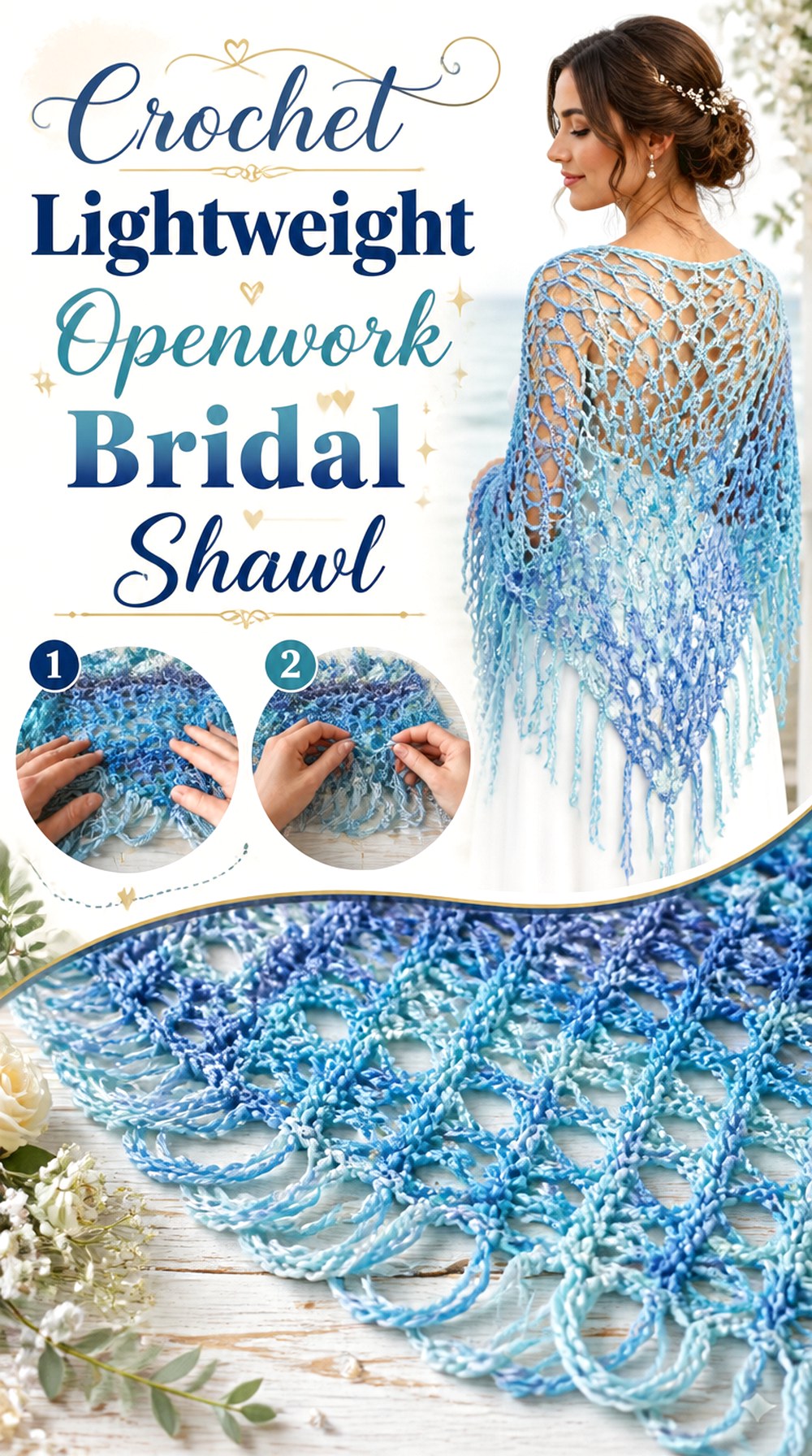
A lightweight shawl is useful for early-autumn weddings when the bride wants a visible crochet accessory but only modest additional warmth. HappyBerry Crochet’s summer shawl provides an airy starting point that can be reinterpreted in autumnal bridal colors without turning the fabric into a heavy layer.
This approach also works well when the dress itself is the main visual statement. Open crochet allows more of the gown to remain visible through the shawl, especially across the back. The trade-off is obvious: increased openness generally means less protection from cool air, so the venue and expected temperature should guide the decision.
Openwork Preserves the Dress Silhouette
When crochet contains generous negative space, the underlying gown remains part of what the eye sees. That can be especially attractive over a clean bodice or interesting back detail. Test the chosen stitch fabric over the actual dress color, because high contrast between skin, gown, and yarn can make the open pattern appear busier than expected.
Early Autumn May Call for Layering Flexibility
A light shawl can be ideal when temperatures fluctuate between ceremony and reception. It can be carried without much bulk and worn only when needed. For a colder wedding, however, treat it as a decorative layer rather than assuming openwork will provide the same comfort as denser crochet.
Original Tutorial and Creator Credit
Creator: HappyBerry Crochet
13. Crochet Cleopatra Lace Bridal Wrap
13. Crochet Cleopatra Lace Bridal Wrap
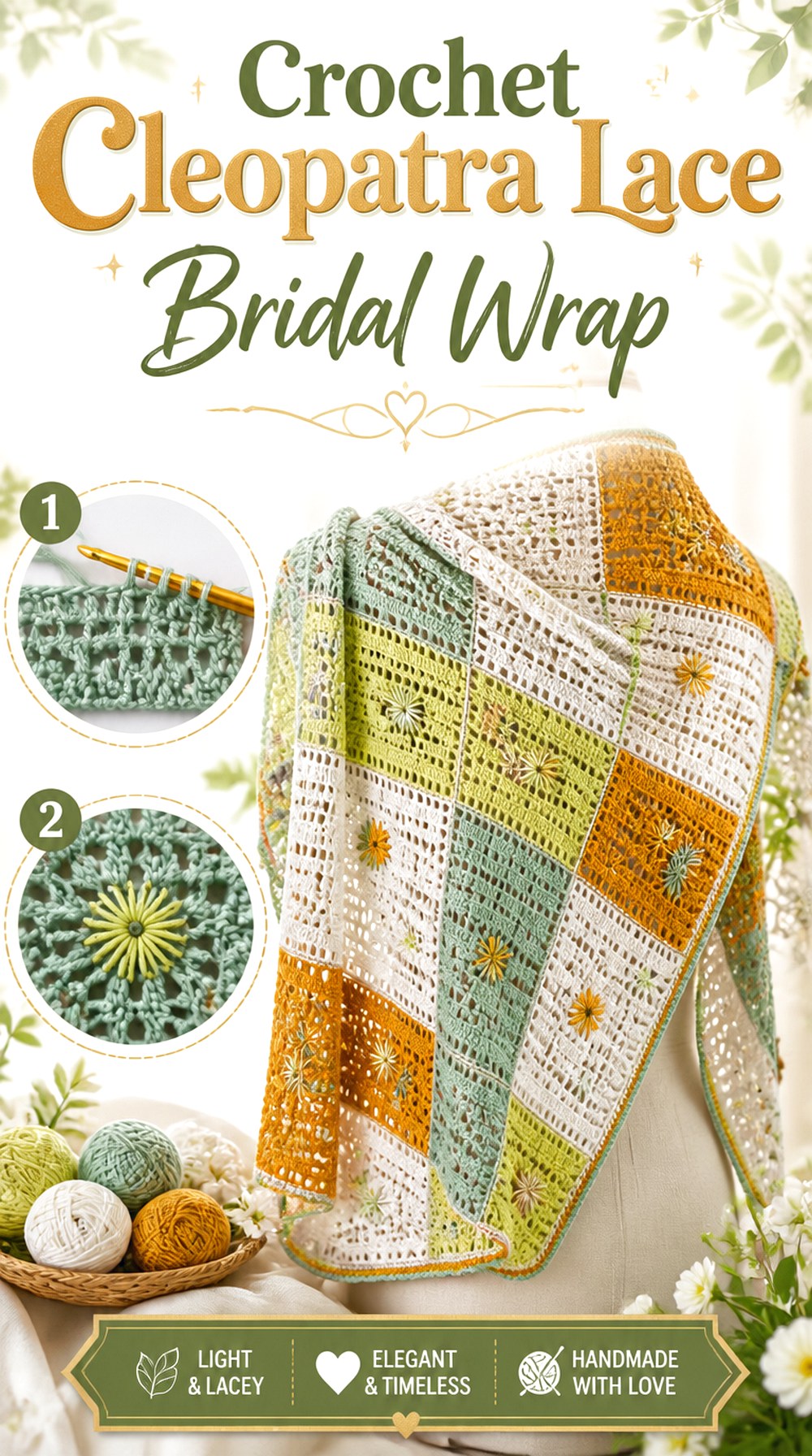
The Cleopatra Shawl centers lace as the main attraction. It is a good option for a bride who wants the wrap to feel deliberately ornamental, almost like an additional piece of bridal lace rather than a simple layer for warmth.
Because this look already carries strong surface detail, it benefits from disciplined styling. A single understated yarn color can allow the stitch work to show without creating extra visual competition. This is also the kind of shawl where careful blocking and finishing can make a major difference, since lace motifs tend to read more clearly when their openings and edges are allowed to settle into shape.
Ornate Lace Needs Space to Be Seen
A lace shawl can disappear visually when placed over equally busy dress fabric. If the gown has large appliqués, dimensional flowers, or all-over beading, compare the two surfaces before committing. The same shawl may look far more intentional over satin, crepe, or a gown with only localized lace.
Inspect Every Edge Before the Wedding
Decorative openwork creates more points where loose ends, uneven loops, or unfinished yarn tails can show. Give the completed wrap a careful inspection after blocking. Also run the fabric gently against a sample of dress lace or similar material if possible to identify any obvious snagging risk before wearing both pieces together.
Original Tutorial and Creator Credit
Creator: Ophelia Talks Crochet
14. Crochet Wandering Granny Bridal Shawl
14. Crochet Wandering Granny Bridal Shawl
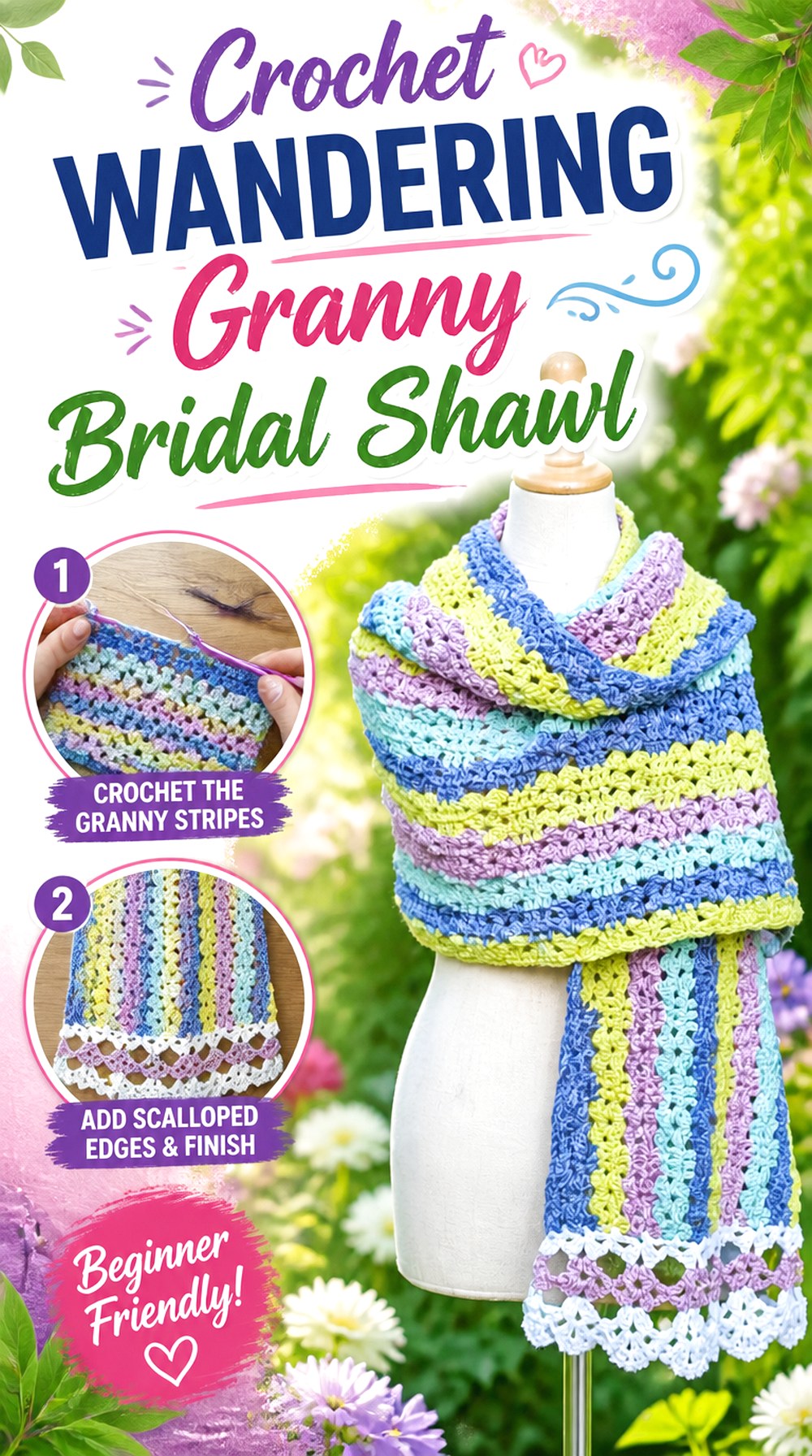
A wandering-granny style shawl brings familiar crochet geometry into a softer, flowing accessory. It is less formal in character than very fine vintage lace, which can make it a good match for barn weddings, woodland ceremonies, elopements, handmade celebrations, or brides who want the crochet to feel visibly handcrafted.
The Secret Yarnery tutorial emphasizes an approachable repeated construction. For bridal use, simplifying the color palette is one of the easiest ways to change the mood. A single tonal shade can make granny-based fabric look considerably more refined while allowing the openings and cluster rhythm to remain visible.
One Color Can Make Granny Texture Feel More Formal
Multicolor granny crochet has a strong casual association, but the construction itself does not require a multicolor palette. Using one bridal neutral or a tightly related tonal range shifts attention from color blocks to texture. This can be particularly effective with warm ivory, muted champagne, or an autumn accent color already present in the wedding palette.
Check the Scale of the Openings Against Jewelry
Cluster-based shawls create regular spaces that can catch on projecting jewelry more readily than a compact fabric. Try the completed or partially completed wrap with earrings, hair accessories, bracelets, and any dress embellishment that could contact it. A small change in accessory choice may be easier than modifying a finished shawl.
Original Tutorial and Creator Credit
Creator: The Secret Yarnery
15. Crochet Relax and Unwind Bridal Wrap
15. Crochet Relax And Unwind Bridal Wrap
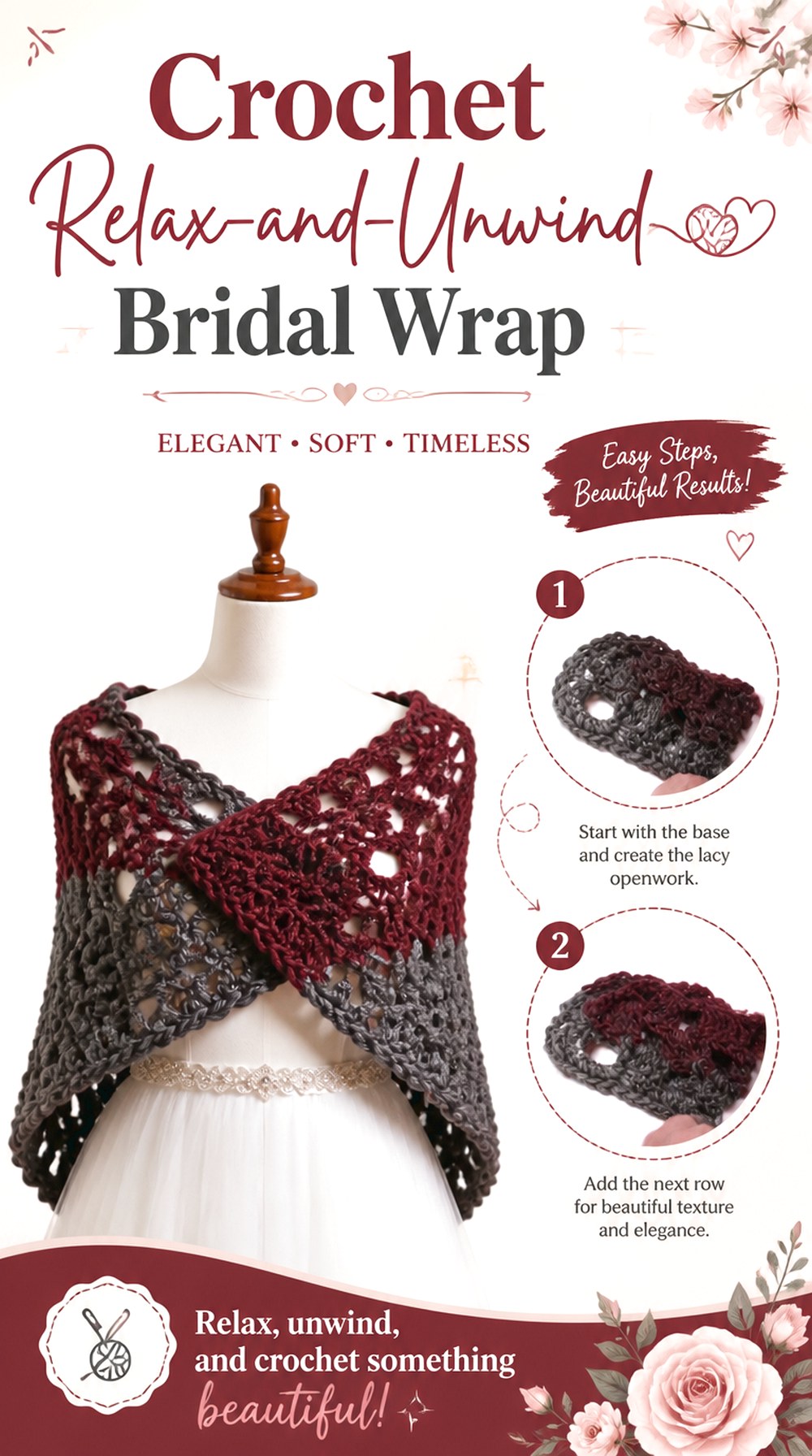
This shawl offers a softer everyday construction that can be adapted into an understated bridal layer. It suits readers who do not want their wrap to look highly ornate and would rather let yarn quality, drape, and a clean finish do most of the work.
That restraint can be valuable when the wedding dress already has a strong focal feature. Instead of adding another elaborate lace motif, a simpler shawl provides coverage while remaining visually secondary. For an autumn version, choose the yarn by the expected conditions and desired hand rather than by color alone.
A Quiet Stitch Pattern Puts More Pressure on Yarn Choice
When the construction is not heavily decorative, uneven texture, excessive fuzz, or a mismatched color can become more noticeable. Swatch first and check how the yarn hangs after washing or blocking according to its care guidance. A simple fabric in a beautiful, compatible fiber often looks more intentional than a complicated stitch pattern made in the wrong material.
Understated Wraps Are Easier to Rewear
A bridal wrap does not have to be limited to the wedding day. A neutral, less ornate shawl can transition more easily into anniversary dinners, formal events, or regular autumn wear. If reusability matters, consider whether the finished size and color will work with clothing beyond the gown before making the final yarn choice.
Original Tutorial and Creator Credit
Creator: Yarnspirations
16. Crochet Airy Mesh Bridal Shawl
16. Crochet Airy Mesh Bridal Shawl
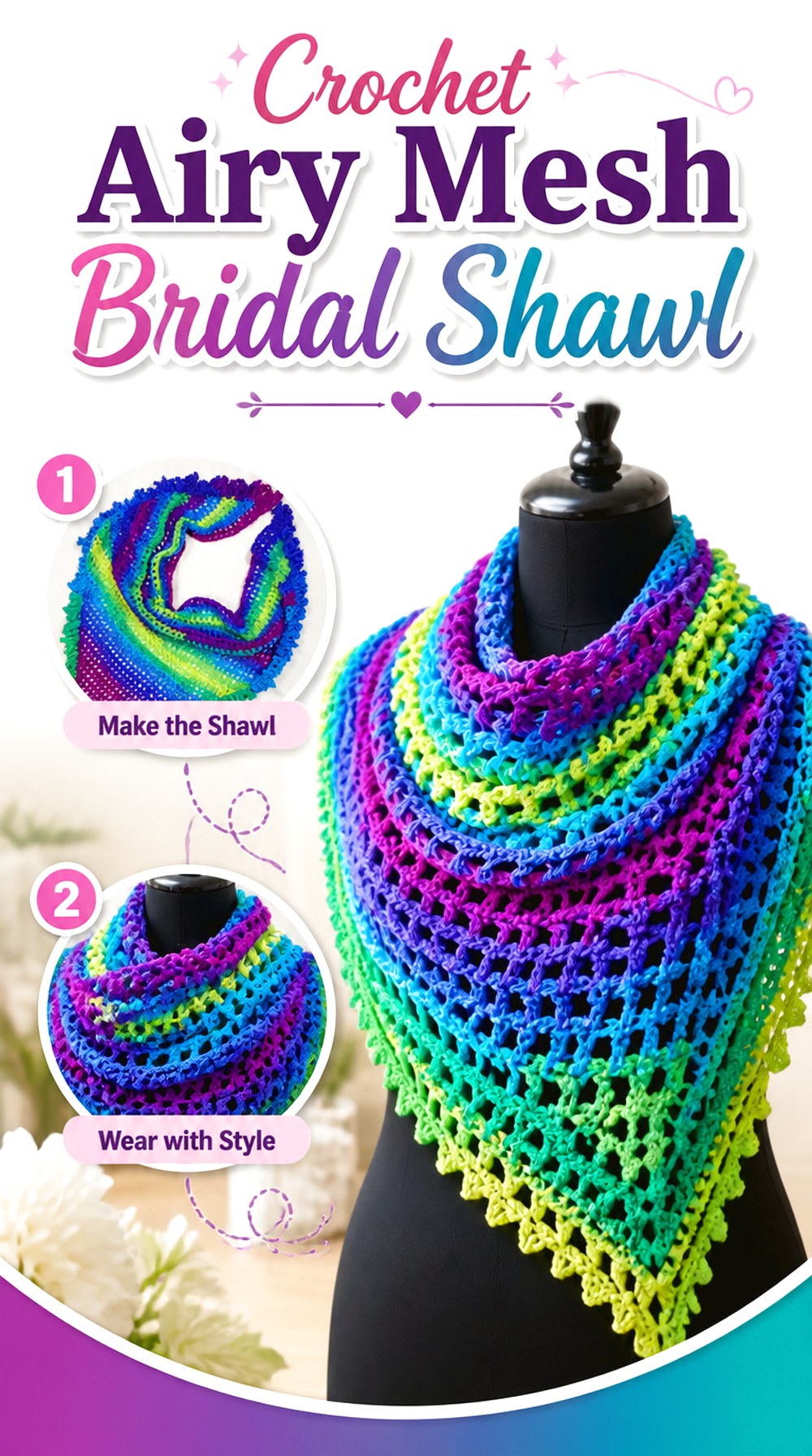
Mesh is one of the strongest choices when the goal is visible crochet with minimal visual weight. Crochet with Clare’s tutorial demonstrates an easy mesh shawl, giving brides an adaptable foundation for early fall, indoor weddings, or situations where the wrap is mainly wanted for styling.
The openness means yarn color will interact closely with the gown and skin beneath it. A matching ivory may nearly disappear from a distance, while a deeper autumn shade creates a much stronger graphic effect. Mesh also calls for extra attention around jewelry and embellishments because large openings are more likely to encounter projecting details.
Mesh Works Best When Warmth Is Not the Only Goal
An open shawl can soften bare shoulders and add texture, but it should not be chosen solely because the wedding is labeled “autumn.” Outdoor temperature, wind, ceremony length, and whether photographs are planned after sunset matter more than the season name. For a genuinely cold date, consider one of the denser options in this list.
Large Openings Need a Snag Check
Before the wedding, wear the finished wrap with the actual necklace, earrings, bracelet, bouquet wrap, and dress if possible. Pay attention to beads, prongs, hooks, and dimensional appliqués. If a particular accessory repeatedly catches the crochet, changing that accessory may be safer than hoping the problem will disappear during the event.
Original Tutorial and Creator Credit
Creator: Crochet with Clare
17. Crochet Offset Shell Mesh Bridal Wrap
17. Crochet Offset Shell Mesh Bridal Wrap
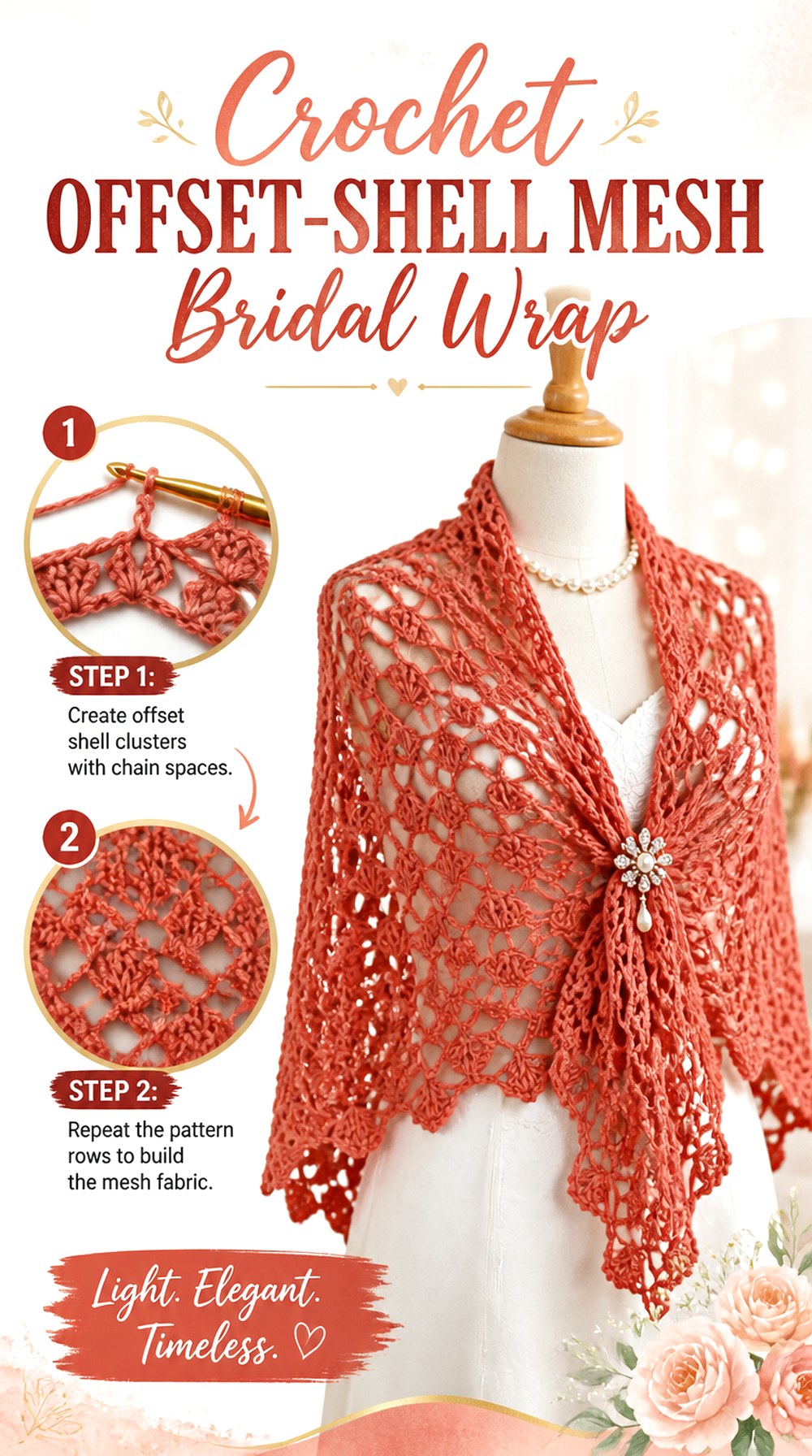
Offset shells give mesh fabric more movement and visual rhythm than a plain grid. This makes the concept useful for brides who like open crochet but want the stitch pattern to register more clearly in photographs.
The shell texture can bridge the gap between minimalist mesh and very ornate lace. In a light neutral color, the finished piece can remain bridal without looking overly decorative. Because the fabric combines open spaces with clustered sections, swatching helps reveal whether the chosen yarn creates crisp shells or causes the texture to blur.
Shell Definition Depends on the Yarn Surface
A smooth yarn generally makes individual shell shapes easier to read, while a strongly fuzzy surface can soften them. Neither effect is inherently wrong, but the choice should support the dress. Crisp stitch definition can provide contrast against plain fabric; a soft halo may integrate more gently with romantic or rustic styling.
Offset Texture Can Disguise Small Visual Irregularities
A shifting pattern distributes attention across the fabric rather than emphasizing perfectly aligned vertical openings. Even so, consistent tension still matters, especially around the outer edges. Lay the shawl flat periodically and check whether one side is pulling more strongly than the other before completing the entire piece.
Original Tutorial and Creator Credit
Creator: Meladora’s Creations for Crochet
18. Crochet Pineapple Edged Bridal Shawl
18. Crochet Pineapple Edged Bridal Shawl
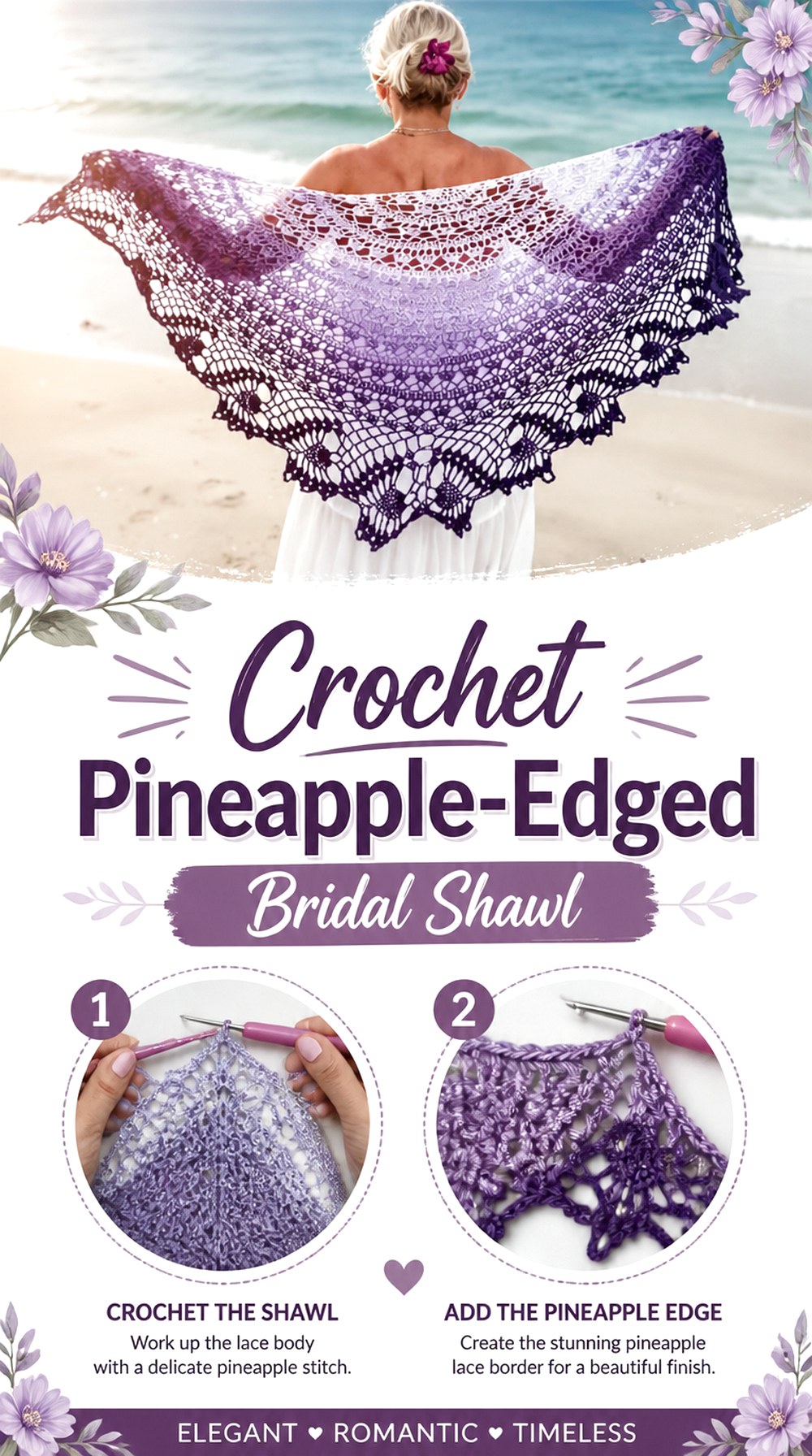
Pineapple lace has a strong traditional-crochet character, making it a natural candidate for heirloom-inspired bridal styling. Kristin Omdahl’s Moonstone Tide shawl uses pineapple lace edging with a half-circle lace body, creating a silhouette that differs clearly from the many triangular options in this collection.
A half-circle can sit gracefully around the shoulders without placing a long pointed section down the center of the back. That makes it especially interesting when the gown has buttons, corset detail, a dramatic back neckline, or another feature you do not want covered by a triangular point.
The Curved Shape Can Follow the Shoulder Line
A half-circle distributes fabric along a curved edge rather than sending most of its visual emphasis toward one central point. During fitting, check where the curved body falls when the arms are relaxed and when they move forward. The best scale is one that stays graceful without bunching heavily behind the elbows.
Pineapple Lace Deserves Careful Blocking
The decorative edge is meant to be seen, so rushed finishing can reduce its impact. Use a blocking method suitable for the selected fiber and shape the lace consistently. Complete this process well before the wedding so there is time to correct an uneven edge or adjust the final styling.
Original Tutorial and Creator Credit
Creator: Kristin Omdahl
19. Crochet Textured Grape Hyacinth Bridal Wrap
19. Crochet Textured Grape Hyacinth Bridal Wrap
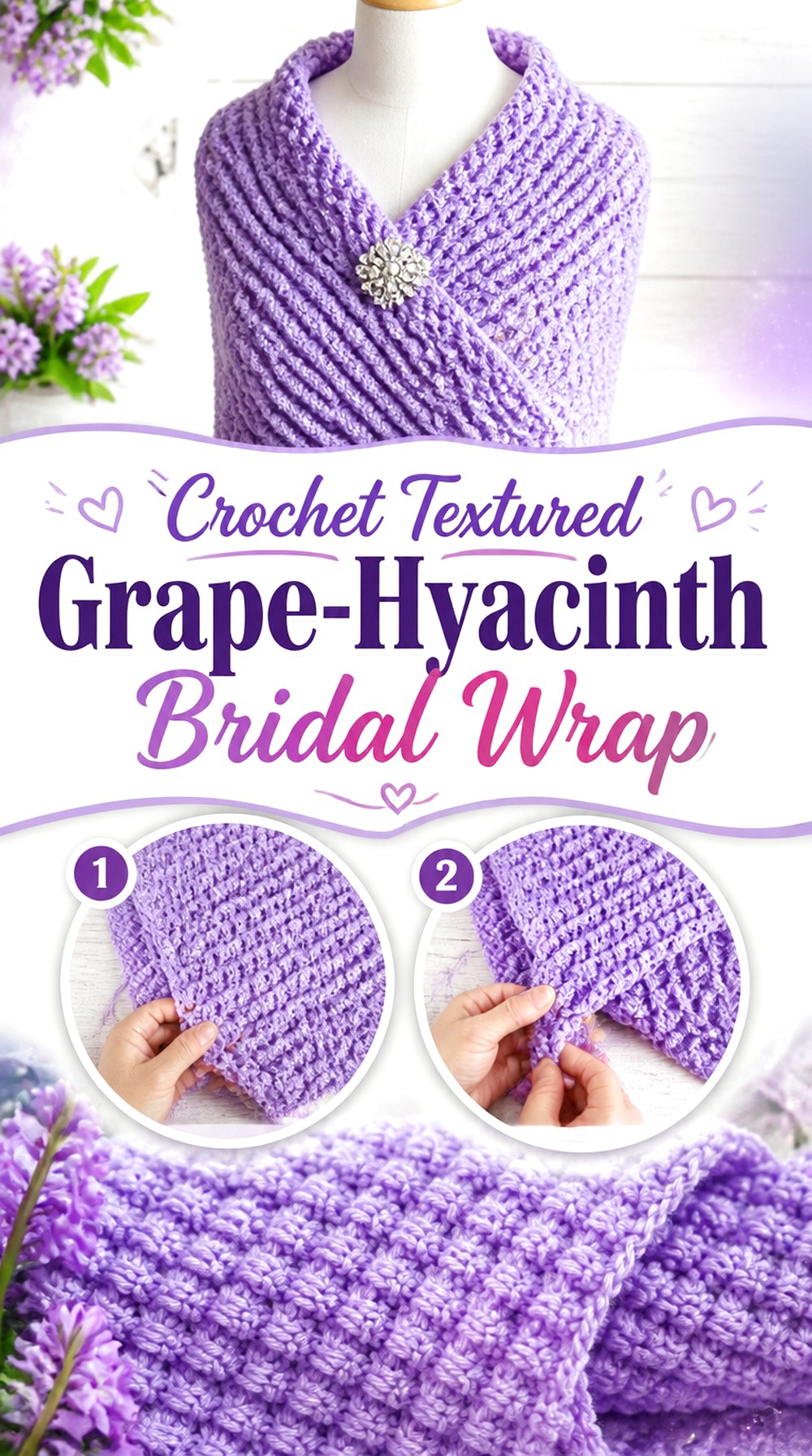
The Grape Hyacinth shawl uses pronounced texture with open areas, creating a balanced option between dense warmth and delicate lace. Fiber Flux describes the design as a textured shawl, and the tutorial provides a clear finished object that can be adapted from its original colorful identity into a bridal neutral or autumn wedding shade.
This idea is particularly effective for a simple dress because the raised crochet gives the wrap its own surface interest. It can also suit a reception look where the bride changes into a less formal outfit and wants a piece that feels special without reading as traditional wedding lace.
Raised Texture Shows Best in a Calm Color
When the stitch pattern already produces strong shadows, a single color can be enough. A soft ivory or cream lets photography capture the texture without adding another visual layer. If the wedding palette includes plum, burgundy, rust, forest green, or another autumn tone, a colored wrap becomes a stronger statement and should be tested beside the gown first.
Texture Adds Visual Weight Before Physical Weight
A wrap can look warm and substantial because of raised stitches even when the actual yarn is not especially heavy. This makes swatching important: choose based on the fabric’s hand, drape, and temperature suitability rather than judging only from photographs. The most bridal result is the one that sits comfortably and moves cleanly with the dress.
Original Tutorial and Creator Credit
Creator: Fiber Flux
20. Crochet Open Weave Evening Bridal Shawl
20. Crochet Open Weave Evening Bridal Shawl
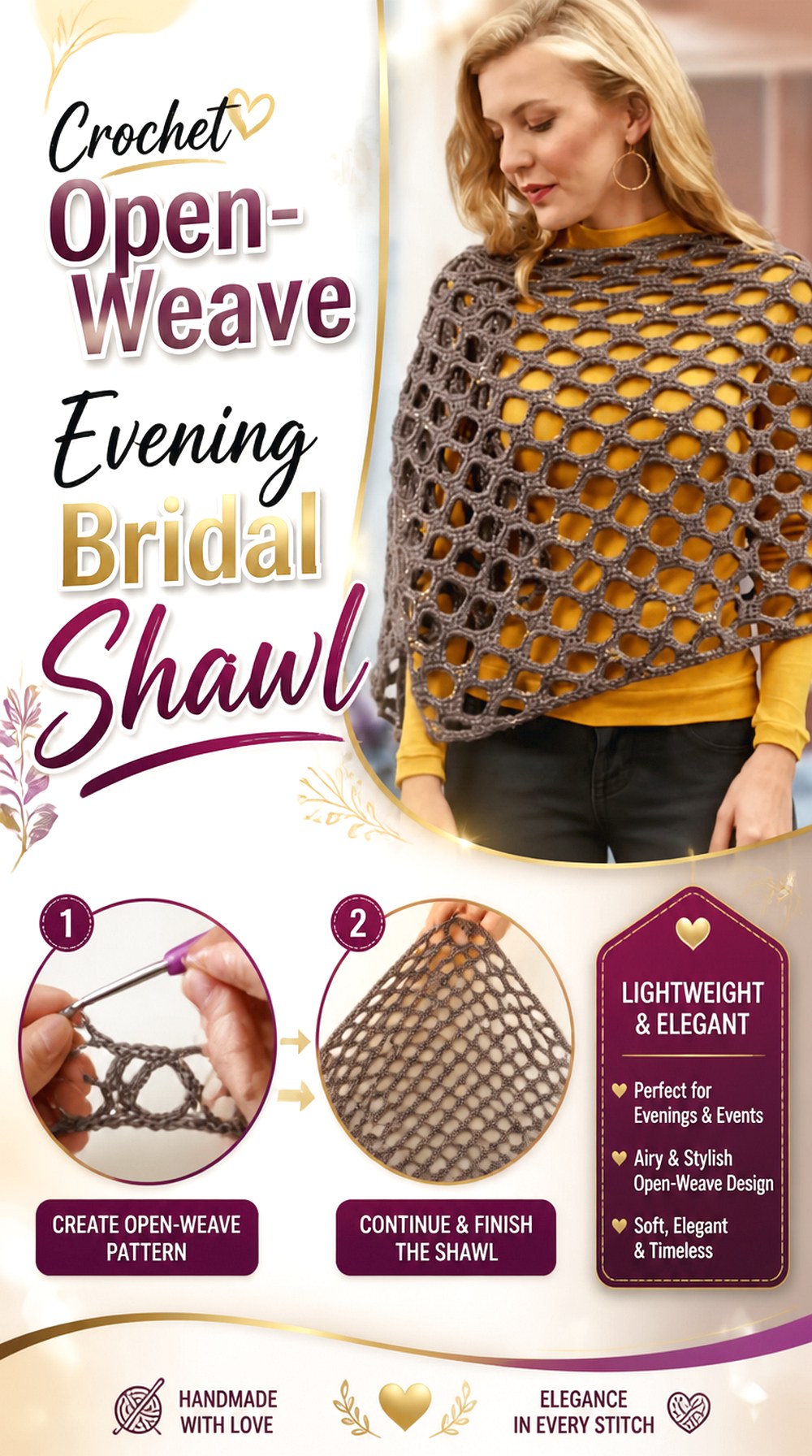
An open-weave shawl makes a graceful final option for brides who mainly need a reception or evening layer rather than a heavy outdoor wrap. Marly Bird’s Simone’s Open Weave Shawl tutorial provides a construction centered on visible negative space, giving the finished piece a lighter look than dense comfort shawls or Tunisian fabric.
For bridal adaptation, this style works particularly well when the gown or reception outfit is simple enough to show through the openings. The fabric can also take on a very different mood depending on yarn choice: soft bridal neutrals keep it traditional, while an autumn accent shade creates a deliberate contrast for evening photographs.
Open Weave Keeps the Underlying Outfit Part of the Look
Unlike an opaque wrap, this construction does not completely replace the visual surface of the dress. That is useful if you want shoulder coverage without concealing lace placement, buttons, or the neckline. Take photographs from several angles during the fitting because the relationship between the openings and dress details changes with movement.
Consider This for the Reception Rather Than the Coldest Moment
Open fabric can be beautiful once guests move indoors or during a mild evening, but it is not automatically the strongest option for a cold outdoor ceremony. If substantial warmth is required, choose a denser project for that part of the day and reserve an open-weave shawl for styling or lighter coverage.
Original Tutorial and Creator Credit
Creator: Marly Bird
Which Crochet Autumn Bridal Wrap Shape Should You Choose?
The most useful comparison is not “which shawl is prettiest?” but what each construction does around the dress.
A rectangular stole is the flexible choice when you want even coverage and several styling options. A triangle shawl gives more fabric across the center back and creates a visible point. Choose mesh or open lace when preserving the dress underneath matters more than substantial warmth. A solid granny, textured, comfort, or Tunisian wrap provides a stronger visual layer and suits cooler conditions better than very open fabric.
The Möbius wrap stands apart because it stays in a closed loop without loose ends. The half-circle pineapple shawl is worth considering when you like decorative lace but do not want a triangle covering the center of the gown’s back. For a minimalist wedding, yarn quality and drape may matter more than an elaborate stitch pattern.
Conclusion
The right crochet autumn bridal wrap starts with the wedding conditions and the dress, not simply the most decorative stitch. For an early-fall indoor celebration, the mesh, open-weave, or lightweight lace ideas keep the outfit visible. Rectangular stoles give flexible coverage, while triangle shawls create a more defined back silhouette. A Möbius wrap removes loose ends, and the Tunisian, textured, or fuller comfort options make more sense when the crochet needs greater visual substance.
Whichever direction you choose, swatch the actual yarn beside the dress, check movement and snag risks, and finish the piece early enough for blocking and a full outfit fitting. Use the original tutorials linked above for each creator’s exact construction details.
Frequently Asked Questions
Should a crochet bridal wrap be white or ivory?
It does not have to match the gown perfectly, but the relationship should look intentional. Bridal whites can carry blue, cream, gray, yellow, or pink undertones that are difficult to judge online. Place the actual yarn or a finished swatch beside the dress in natural daylight before committing. A close but visibly conflicting off-white can look more accidental than a clearly intentional champagne, blush, taupe, or autumn accent shade.
What type of crochet wrap works best for a cold autumn wedding?
For genuinely cool outdoor conditions, begin with fabric density and coverage rather than the word “autumn” in a pattern title. Solid crochet, textured fabric, Tunisian crochet, or a generous comfort-style shawl generally creates more coverage than wide mesh or very open lace. Fiber choice also matters. Swatch the intended yarn and consider wind, ceremony duration, sunset timing, and how long the bride will actually be outside.
How can I decide the right size for a bridal shawl?
There is no universal bridal-wrap measurement because shoulder width, dress silhouette, preferred coverage, and construction all vary. Use the developing project as a fitting tool. Drape it around the wearer and check the front, back, and side views while she holds a bouquet and moves her arms. For a rectangle, evaluate both width and end length; for a triangle, also check where the center point lands on the dress.
Will crochet lace catch on a beaded wedding dress?
It can. Open loops may interact with bead settings, sequins, jewelry prongs, buttons, appliqués, hooks, or other raised surfaces. Before the wedding, gently test the finished shawl against a safe sample of similar fabric or during a supervised dress fitting. Do not repeatedly drag the crochet across delicate embellishments. If snagging is persistent, a denser wrap or different accessory may be a better choice.
Can I add a brooch, button, ribbon, or shawl pin to keep the wrap closed?
Often yes, but the closure needs an appropriate place to bear tension. Very open lace may stretch or distort when a heavy brooch or pin is concentrated in one small area. Sharp accessories can also threaten delicate dress fabric. Test the proposed closure on the finished wrap away from the gown first, then confirm that it remains comfortable while sitting, walking, carrying flowers, and moving the arms.
Should a crochet bridal wrap be blocked before the wedding?
Blocking can improve drape, even edges, and the visibility of lace, but the correct method depends on the yarn. Follow the fiber’s care guidance rather than assuming steam, heat, or soaking is suitable for every material. Block the wrap early enough for it to dry completely and for a second dress fitting afterward. The final blocked dimensions and drape are more useful for styling decisions than the unfinished fabric straight from the hook.