Persimmon sits in an interesting corner of the fall palette. It is warmer and fruitier than brick red, brighter than rust, and often less predictable than the usual pumpkin orange. In crochet, that makes it useful for much more than seasonal decorations. A persimmon-colored cardigan can become the strongest piece in a neutral outfit, while the same shade can turn a small leaf, basket, or mug cozy into a concentrated autumn accent.
These ideas use persimmon in two ways. A few projects interpret the fruit or traditional fall motifs directly, while the rest use existing crochet constructions as a starting point for a persimmon color adaptation. Most of the supporting tutorials were not originally made in persimmon yarn, so do not assume that changing the color automatically makes every yarn substitution suitable. Match yarn weight, gauge, structure, drape, and fiber behavior to the original project before making color the deciding factor.
Quick List
- Crochet Persimmon Fruit Amigurumi
- Crochet Textured Persimmon Beanie
- Crochet Chunky Persimmon Scarf
- Crochet Long Loop Persimmon Cowl
- Crochet Shell Stitch Persimmon Fingerless Gloves
- Crochet Open Front Persimmon Cardigan
- Crochet Ribbed Persimmon Vest
- Crochet Persimmon Granny Square Tote
- Crochet Persimmon Maple Leaf Accent
- Crochet Persimmon Nesting Basket
- Crochet Graphic Persimmon Throw Pillow
- Crochet Persimmon Pumpkin Granny Blanket
- Crochet Persimmon Acorn Decor
- Crochet Sculpted Persimmon Pumpkin
- Crochet Persimmon Bucket Hat
- Crochet Persimmon Mug Cozy
- Crochet Persimmon Lounge Socks
- Crochet Persimmon Lace Shawl
How to Use Persimmon Without Making Every Project Look Like a Pumpkin
Persimmon becomes more versatile when it is treated as a color rather than a theme. Pairing it with cream or oatmeal softens it, while charcoal or deep brown makes the orange-red quality more noticeable. Olive and muted green push it toward a botanical fall palette. Used beside denim blue, the same color can feel less seasonal and more like an everyday accent.
Scale matters too. A full cardigan in saturated persimmon has very different visual weight from a narrow scarf stripe or one leaf appliqué. If you are unsure about wearing a strong orange-red shade, start with a smaller project such as gloves, a cowl, or a hat before committing to a large garment.
Texture changes how the color reads. Dense ribbing tends to create darker shadow lines, while lace and openwork let background colors show through. A highly textured persimmon yarn can therefore look deeper than the same shade worked into a smooth, open fabric.
Match Yarn Behavior to the Project, Not Just the Shade
Finding the right color is only half of a successful substitution. A yarn that produces a beautiful draping shawl may be too relaxed for a storage basket, while the firm yarn that helps a tote keep its shape may feel unnecessarily stiff around the neck.
For fitted projects, make the tutorial’s gauge and sizing system your starting point. A yarn labeled with the same weight can still produce a different fabric because fiber content, twist, hook choice, and personal tension all affect the result.
For bags, baskets, hats with defined brims, and dimensional decor, pay more attention to shape retention. For shawls, scarves, and cardigans, consider how the fabric hangs. When the project includes repeated motifs such as granny squares, block and measure a sample before making the full set; small size differences become much more noticeable after joining.
1. Crochet Persimmon Fruit Amigurumi
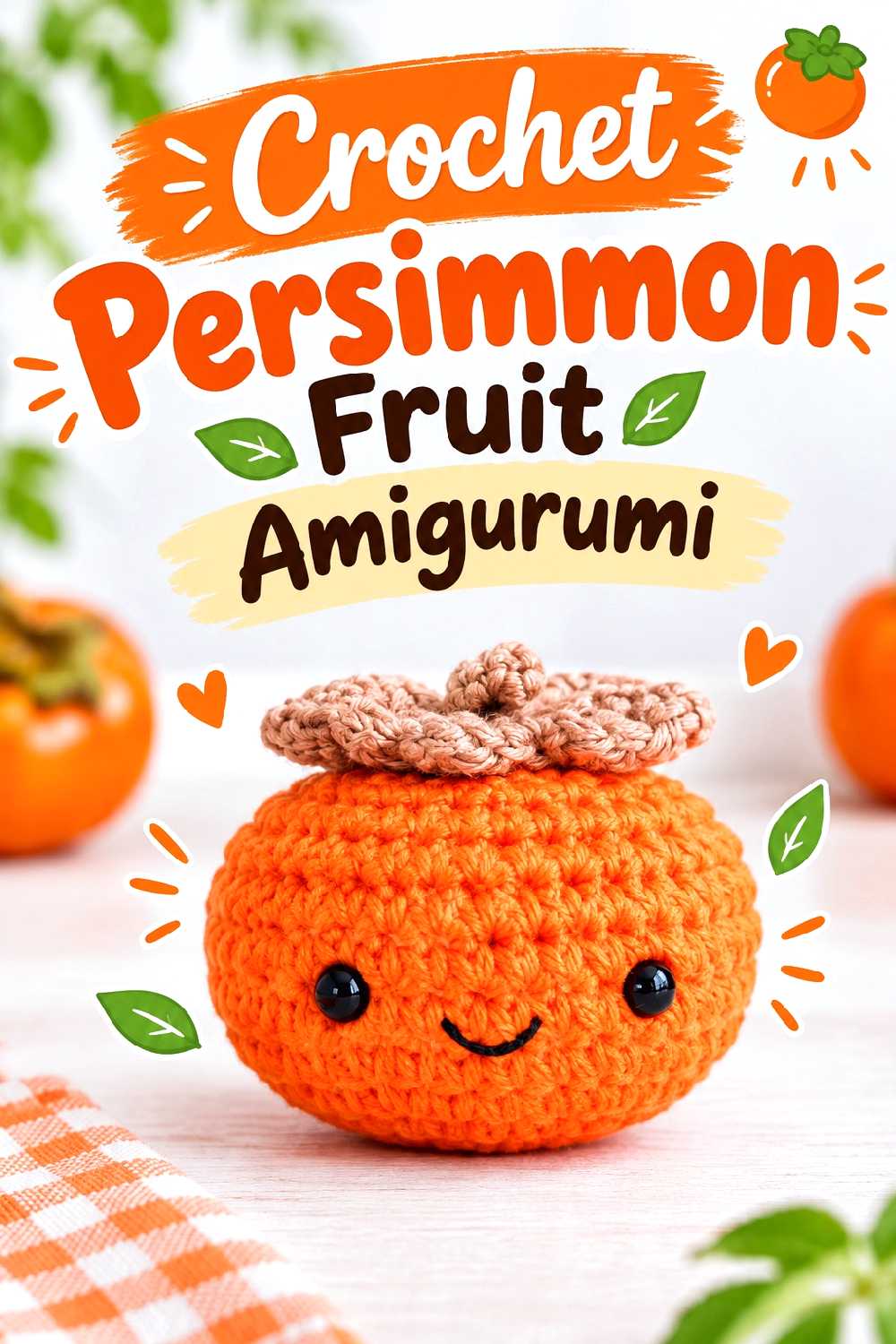
This is the most literal interpretation in the collection: a crocheted persimmon fruit rather than simply a project made in persimmon-colored yarn. One Dog Woof’s tutorial shows a stuffed Fuyu-style persimmon with the recognizable leafy top, giving the project a clear identity even before any optional facial details are considered.
The Leafy Top Does Much of the Visual Work
A round orange shape can easily read as a small pumpkin or generic fruit. The green top is therefore an important design feature when you want the finished object to look specifically like a persimmon.
If you change the yarn colors, keep enough contrast between the fruit and leaves for the silhouette to remain clear. Muted olive can create a softer fall palette, while a cleaner green makes the fruit reference more immediate.
Check the Fabric Before Adding Stuffing
Amigurumi benefits from fabric dense enough that stuffing does not become distracting through the stitches. If your persimmon yarn is thinner, smoother, or stretchier than the tutorial yarn, make a small test area before committing to the whole project.
The final scale can also change when yarn weight or hook size changes, so use the tutorial’s own materials and measurements when an exact finished size matters.
Creator Credit: One Dog Woof
2. Crochet Textured Persimmon Beanie
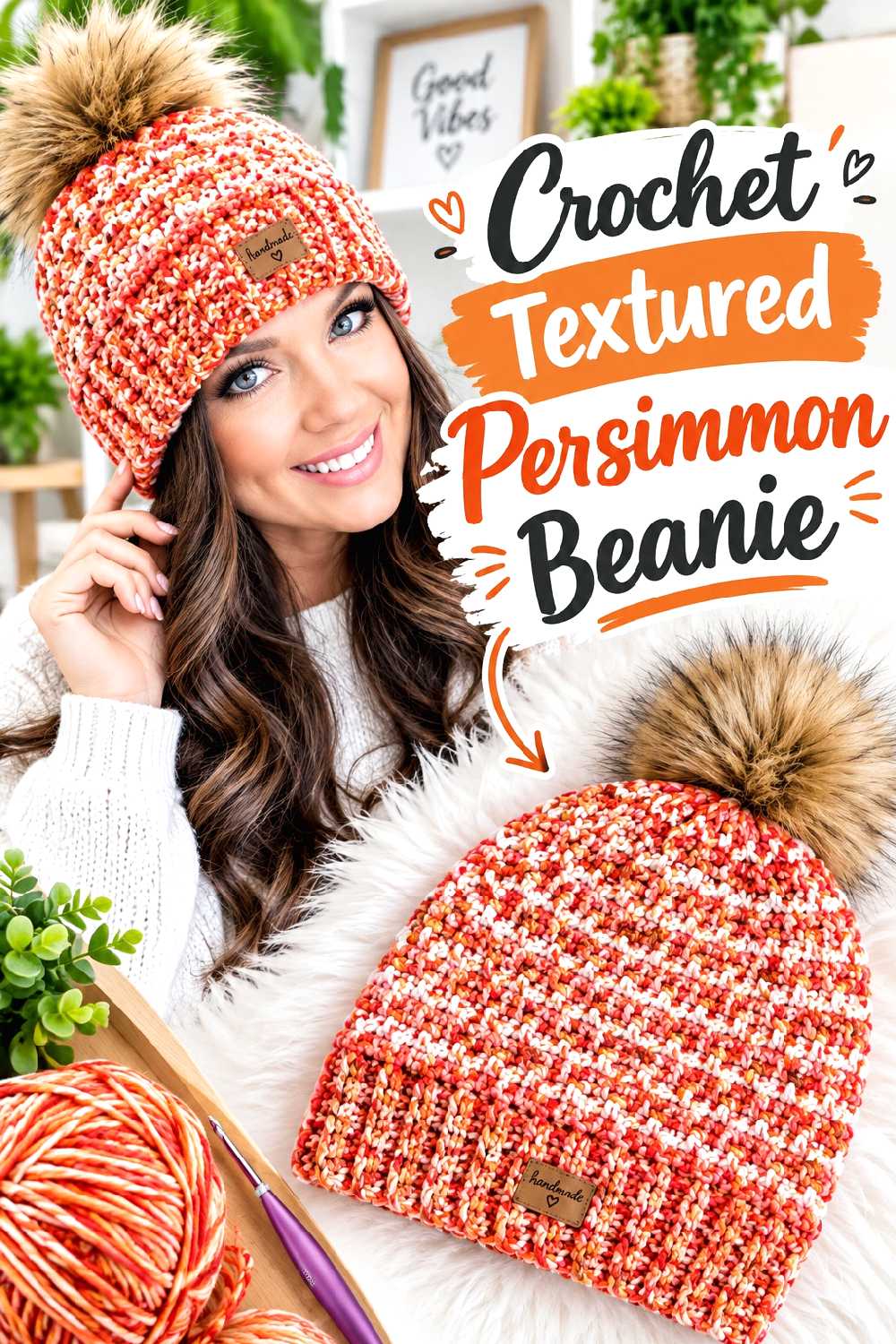
A beanie gives persimmon enough surface area to make an impact without requiring a full garment. MJ’s Off The Hook Designs demonstrates a textured Winterberry-style hat that combines a defined brim with a patterned body, creating plenty of shadow and stitch detail for a rich orange-red shade.
Texture Can Make One Persimmon Yarn Look Like Several Shades
Raised and recessed stitches catch light differently, so a solid-color yarn can develop deeper and lighter areas across the hat. That works especially well when you want more dimension without adding several colors.
If the yarn is heavily heathered or variegated, however, compare it with the stitch texture first. Too much visual movement can hide the structure that makes the hat interesting.
Head Fit Matters More Than the Seasonal Color
Changing only the color is straightforward. Changing yarn thickness is not. A beanie depends on circumference, stretch, and crown shaping, so use the tutorial’s sizing guidance rather than choosing a hook simply because it produces attractive fabric.
A persimmon hat can also be a useful test project before using the same yarn in a larger sweater or cardigan.
Creator Credit: MJ’s Off The Hook Designs
3. Crochet Chunky Persimmon Scarf
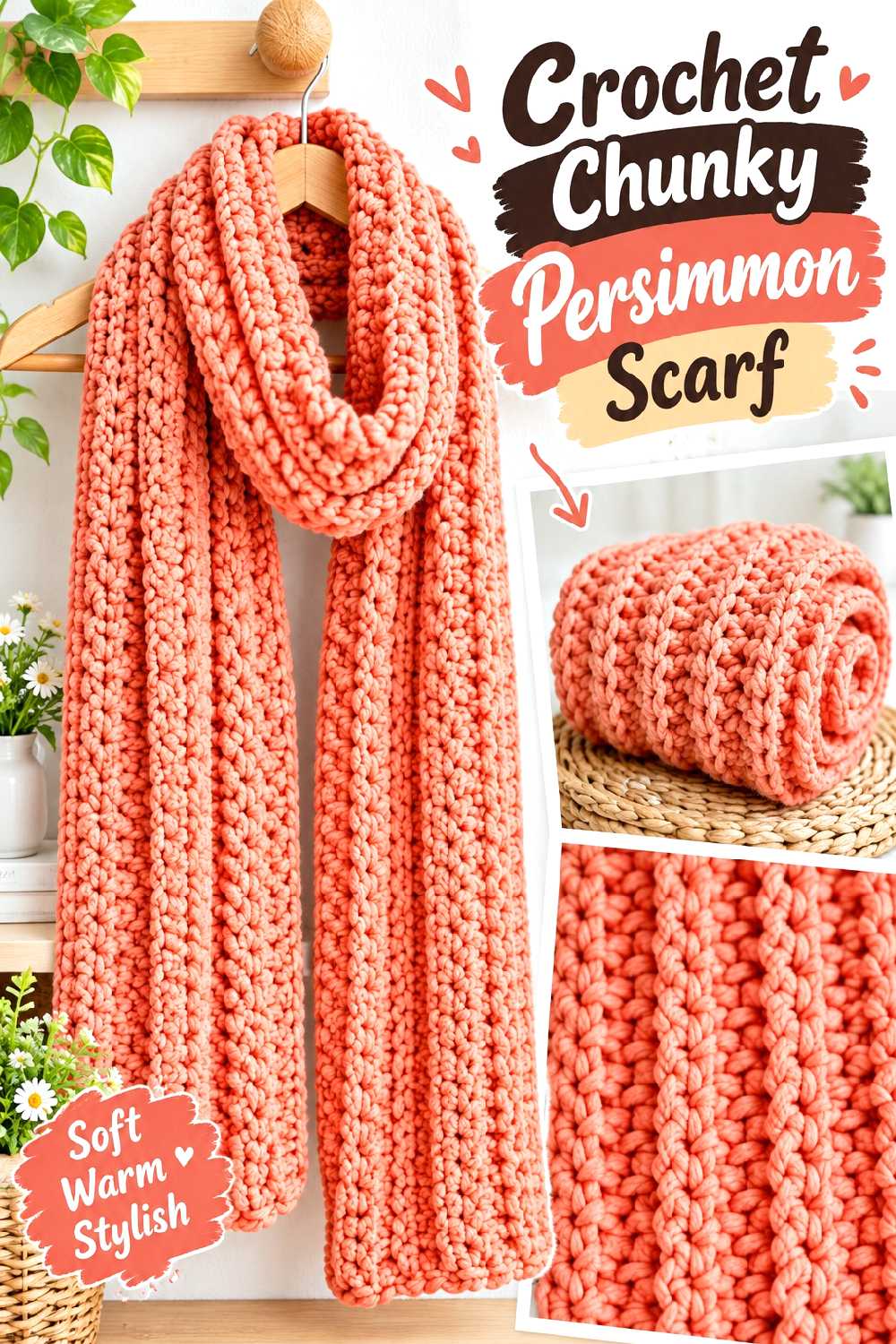
Just Be Crafty’s chunky scarf tutorial offers a simple way to give persimmon a large uninterrupted field of color. The demonstrated project uses bulky yarn, making the fabric itself a major part of the look rather than relying on complicated shaping.
Chunky Yarn Pushes Persimmon Toward a Stronger Statement
A thick orange-red scarf can dominate an outfit more than a fine-gauge one. That is useful if the rest of your fall wardrobe leans toward denim, black, brown, cream, or gray and needs one concentrated color.
For a quieter result, consider a slightly dustier persimmon rather than changing the basic scarf construction.
Test the Neck Feel Before Committing to a Long Scarf
A yarn can look ideal in the skein but feel scratchy, heavy, or overly rigid when wrapped several times around the neck. Work enough fabric to judge softness and drape before buying the full project quantity.
Also remember that changing to a substantially heavier yarn can alter both the dimensions and the finished weight, even when the scarf is otherwise uncomplicated.
Creator Credit: Just Be Crafty
4. Crochet Long Loop Persimmon Cowl
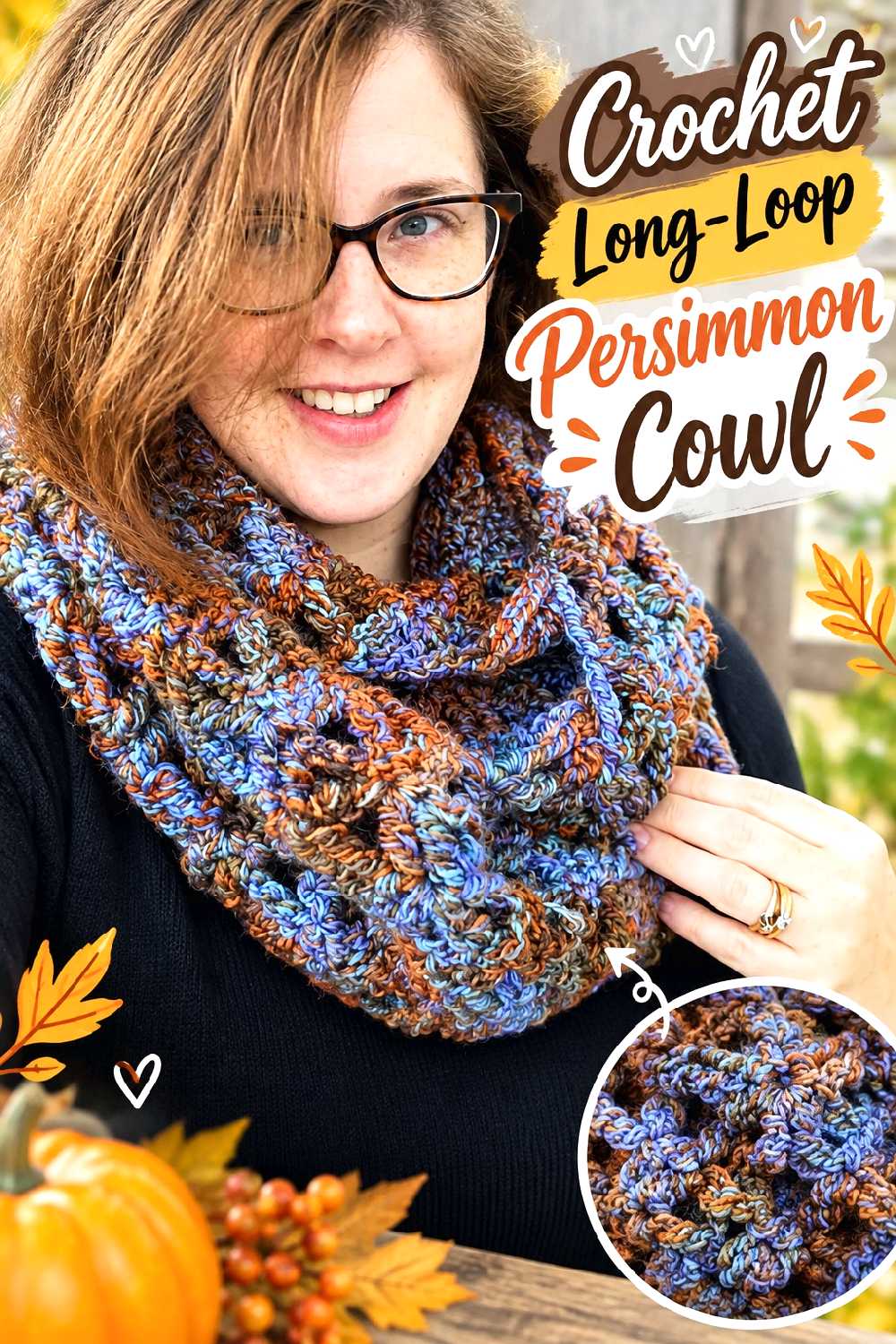
Rich Textures Crochet demonstrates a long cowl that creates a different styling option from the straight scarf above. Instead of loose ends, the fabric forms a loop that can be arranged around the neck, making persimmon read more like a concentrated collar of color.
Loop Length Changes How Much Color Sits Near the Face
A longer cowl can create layered folds, while a shorter circumference holds the color closer to the neckline. That difference matters with a vivid shade because the amount of orange-red visible at once changes dramatically.
Before altering the length, consider how many wraps you want and whether the finished fabric remains comfortable when doubled.
Softness and Bulk Need to Stay in Balance
A plush yarn can make the cowl cozy but may become cumbersome if the fabric is both very thick and very long. A softer-looking persimmon does not automatically require a fluffier yarn.
Compare drape, thickness, and skin comfort together rather than choosing solely from the color swatch.
Creator Credit: Rich Textures Crochet
5. Crochet Shell Stitch Persimmon Fingerless Gloves
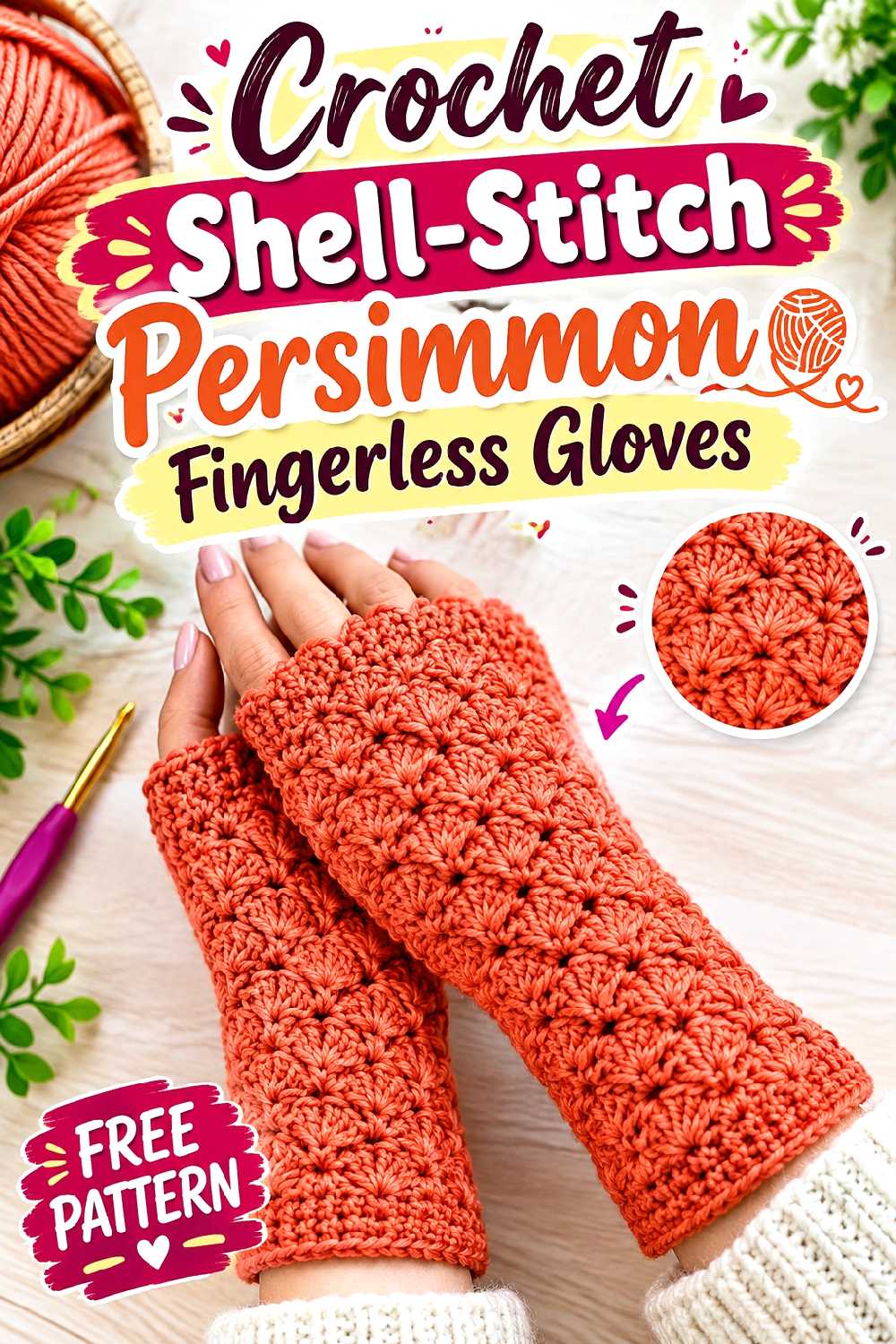
Hooked by Robin’s tutorial uses a fantail shell texture over the hand with a more solid cuff below it. That division gives a persimmon adaptation two different surfaces: compact color around the wrist and more decorative stitchwork above.
Shell Definition Deserves a Clear Yarn
The repeating shell shapes are an important part of this design. A highly fuzzy yarn may blur their edges, while a smooth yarn generally makes the pattern easier to see.
Persimmon already provides strong visual interest, so a solid or gently tonal shade can let the stitch pattern remain the main detail.
Check Wrist and Hand Fit Separately
A glove can fit well at the wrist while feeling restrictive across the hand, particularly when a yarn substitution changes elasticity. Try the work on at the checkpoints shown by the creator instead of assuming that a familiar yarn weight will produce the same fit.
This is especially important if you are adapting the project for someone else’s hands.
Creator Credit: Hooked by Robin
6. Crochet Open Front Persimmon Cardigan
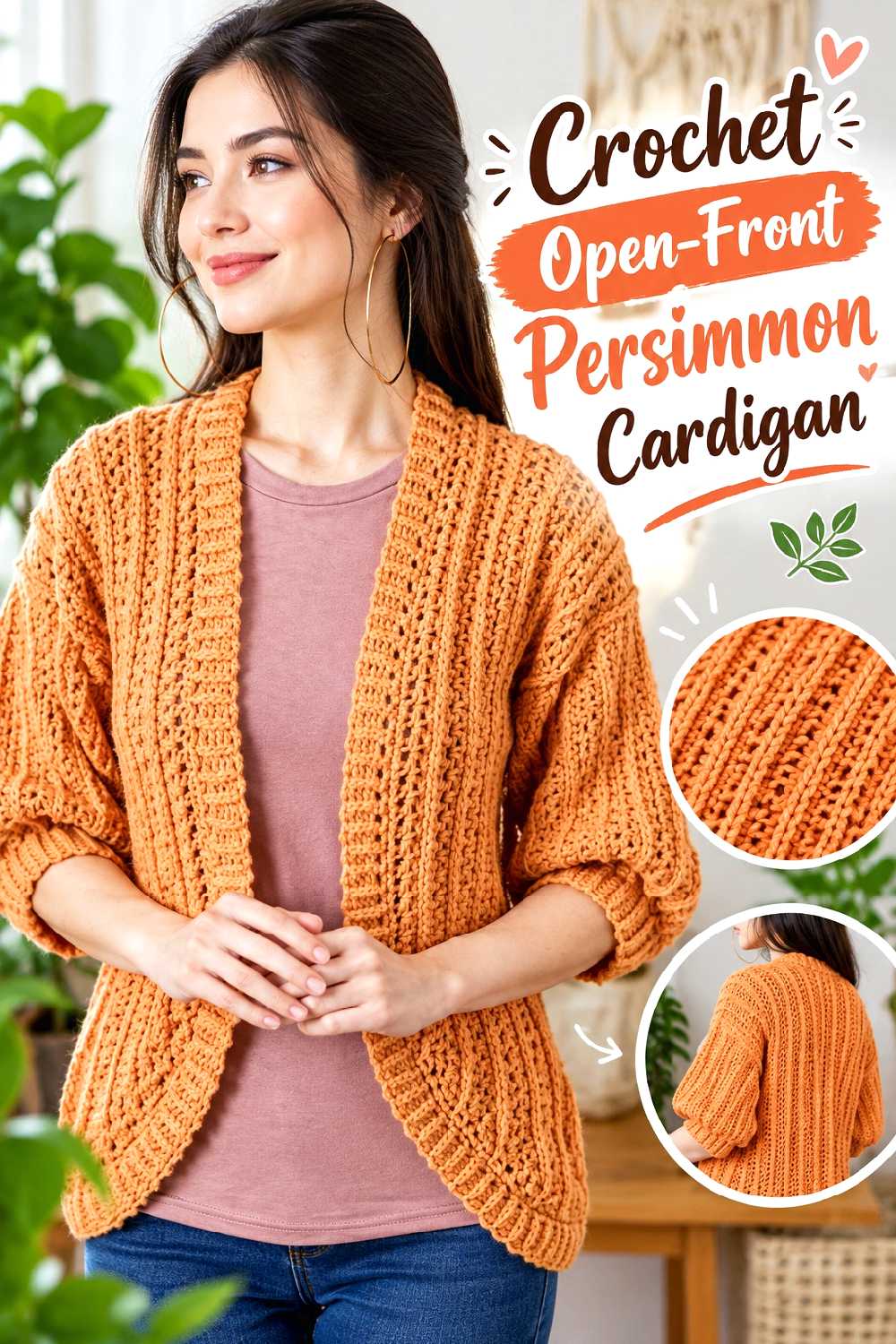
TCDDIY’s cardigan tutorial provides a larger canvas for the color, with separate garment sections that come together into an open-front layer. A single persimmon shade would make the construction feel bold and modern, while a muted version could behave more like an autumn neutral.
Persimmon Changes the Visual Weight of a Large Garment
A saturated cardigan attracts attention across the entire torso and sleeves, so think about what will usually be worn underneath it. Cream, black, denim, and soft brown can leave the cardigan as the dominant color instead of competing with it.
If full-strength persimmon feels too intense, the same construction could use the color only on bands, cuffs, or selected sections.
Panel Measurements Need to Survive the Yarn Substitution
Garments are less forgiving than decorative projects when gauge changes. A small width difference repeated across panels can change overall fit, sleeve placement, and how the front hangs.
Use the creator’s measurement and gauge information for the construction, then test your chosen persimmon yarn before making the main pieces.
Creator Credit: TCDDIY
7. Crochet Ribbed Persimmon Vest
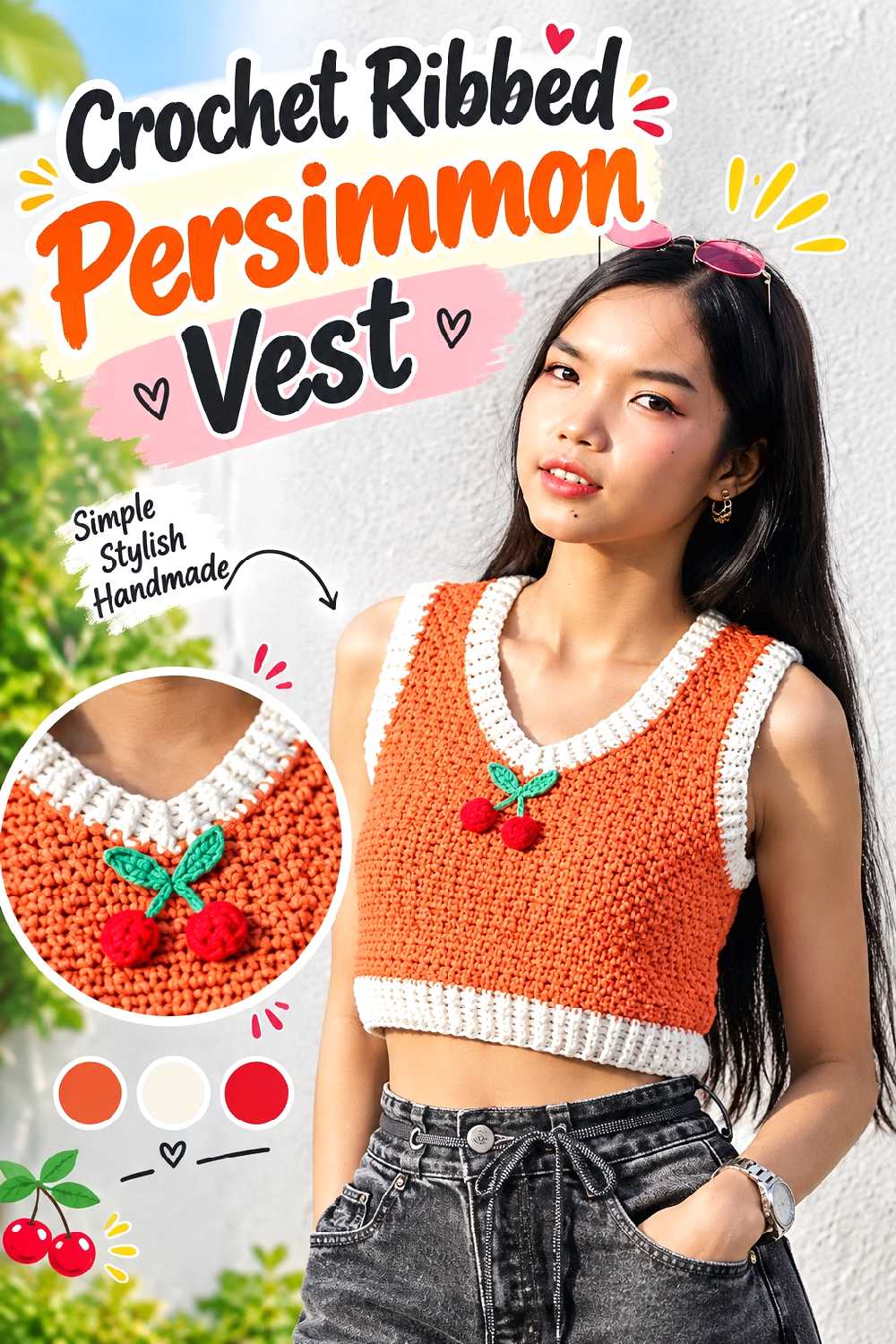
Chenda DIY demonstrates a sleeveless vest with front and back construction plus ribbed finishing. Compared with the cardigan, the missing sleeves make persimmon easier to layer with another fall color underneath.
Ribbing Gives the Color Useful Shadow Lines
Ribbed edges break up an otherwise broad field of orange-red. In a solid persimmon yarn, those shadows can make the neckline, armholes, and lower edge look more defined without requiring a contrasting color.
If you choose a marled yarn, check whether the ribbing still reads clearly before committing to the full garment.
Layering Room Is Part of the Fit
A vest meant to go over shirts or lightweight sweaters may need different ease from something worn directly over a thin top. Decide how you expect to style it before evaluating the tutorial’s sizing.
The armholes deserve particular attention because too little room can make layering uncomfortable, while too much can change the intended silhouette.
Creator Credit: Chenda DIY
8. Crochet Persimmon Granny Square Tote
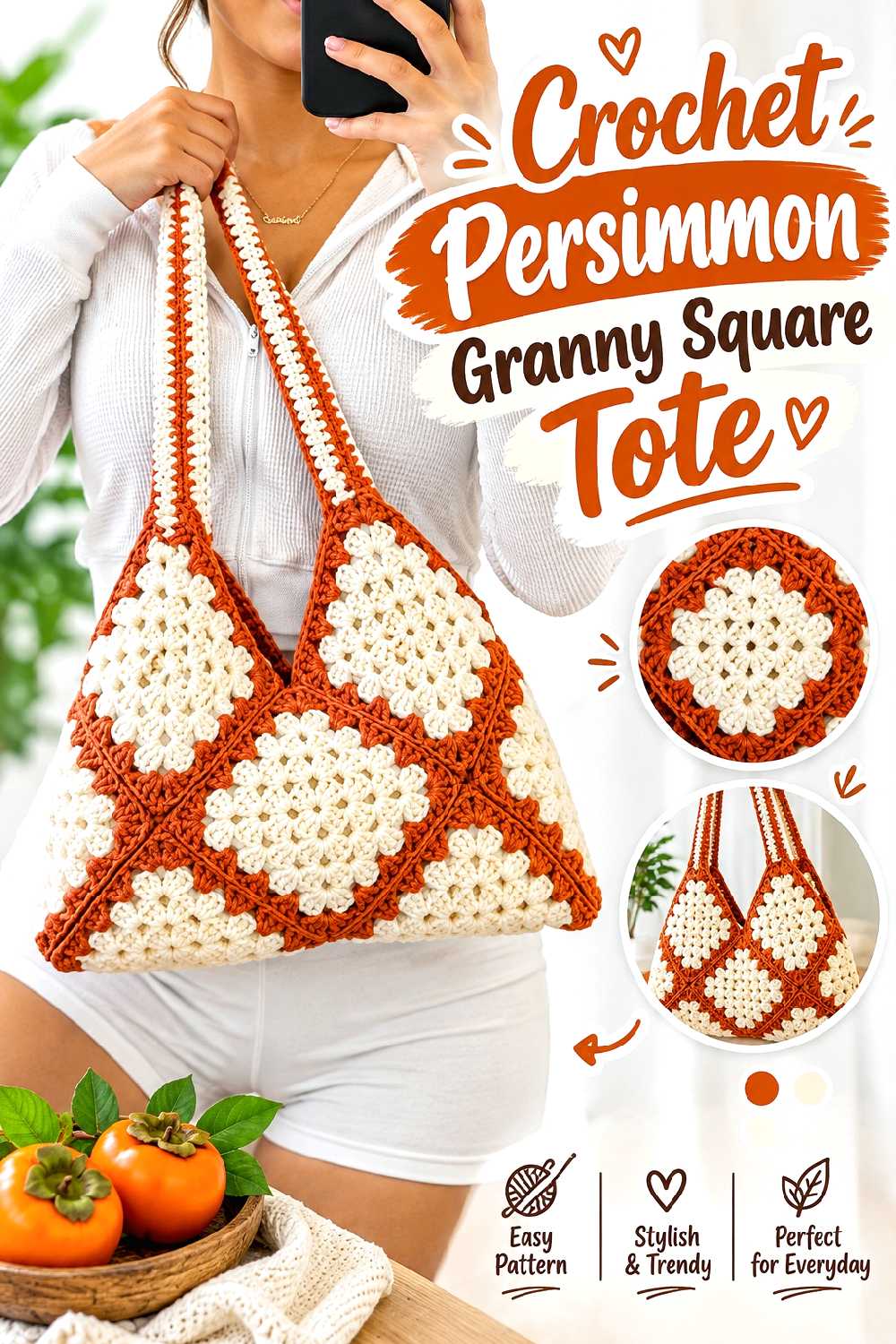
The tutorial from crochet daniela builds a tote from granny squares, which makes this one of the easiest projects in the collection for experimenting with several interpretations of persimmon. You could use one orange-red throughout or combine it with cream, brown, muted rose, or olive in individual motifs.
Match the Squares Before Thinking About the Handles
Motif bags depend on repeated pieces lining up cleanly. Block and compare the squares before joining them, particularly if you are mixing yarn colors or brands.
Even yarns carrying the same nominal weight can produce slightly different blocked dimensions, which becomes obvious across a regular grid.
Decide How Much Stretch Your Tote Can Tolerate
Open granny-square fabric behaves differently from dense bag fabric. Think about what you plan to carry and whether the tutorial’s construction gives you the amount of structure you want.
If lining or reinforcement matters to your intended use, confirm how you will add it before completing all the joining and finishing.
Creator Credit: crochet daniela
9. Crochet Persimmon Maple Leaf Accent
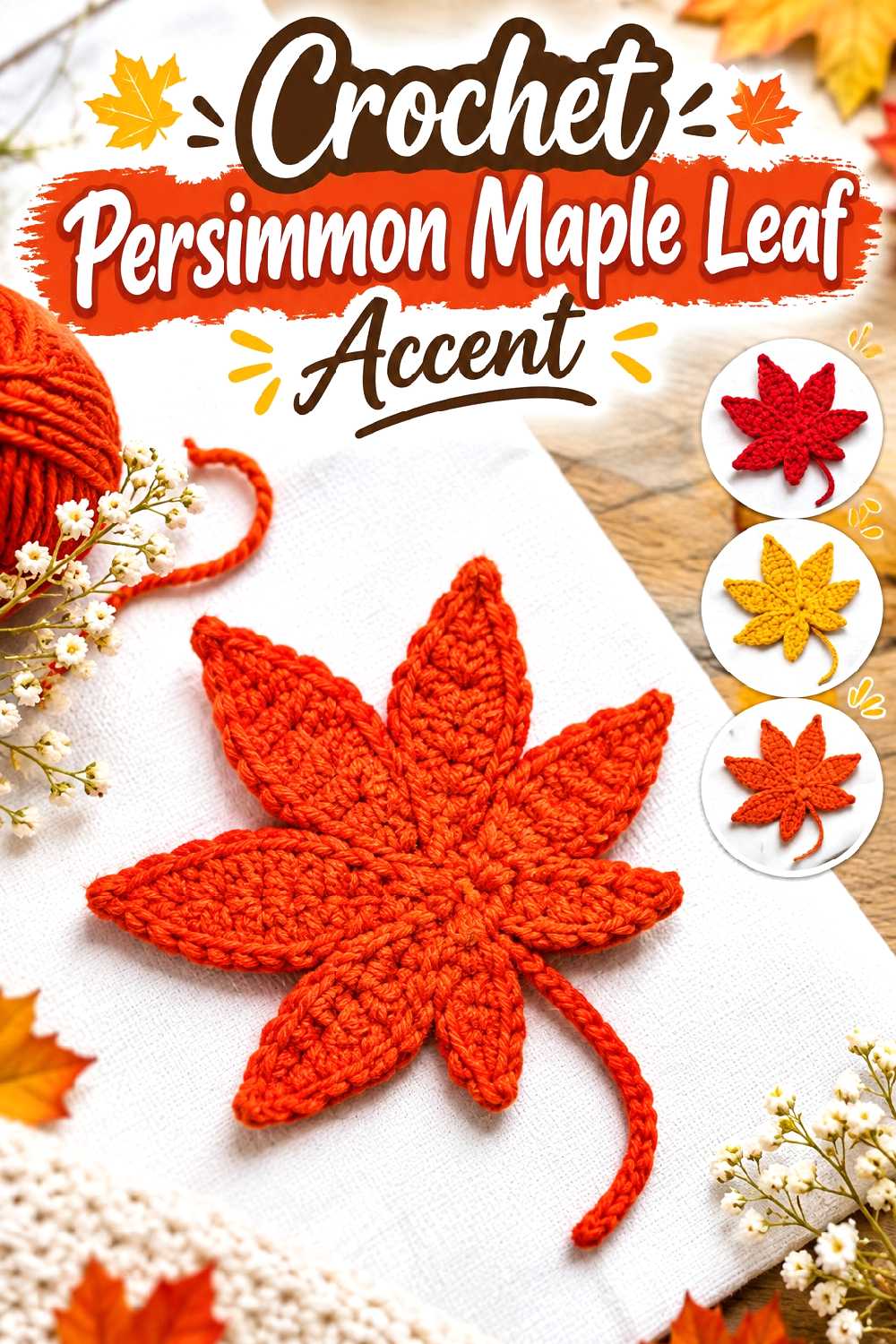
A maple leaf is a much smaller way to introduce the color than a cardigan or blanket. vvw.studio’s tutorial creates a clearly shaped autumn leaf that can function as decor, an appliqué, or part of a larger seasonal arrangement.
Persimmon Works Well Between Yellow and Deep Red
If you are making several leaves, persimmon can bridge brighter golds and darker rust or burgundy shades. That creates a more gradual fall palette than repeating one orange across every motif.
For a single leaf, a slightly tonal yarn can create the suggestion of natural variation without requiring multiple yarn changes.
Flatness Matters if the Leaf Will Be Attached
A leaf used on a bag, garland, or wall piece needs different finishing from one simply scattered on a table. Check the tutorial’s finishing approach and decide whether your use requires the motif to remain flexible, lie flat, or hold a more defined shape.
Avoid assuming that a decorative stiffening method is automatically suitable for something that needs regular washing.
Creator Credit: vvw.studio
10. Crochet Persimmon Nesting Basket
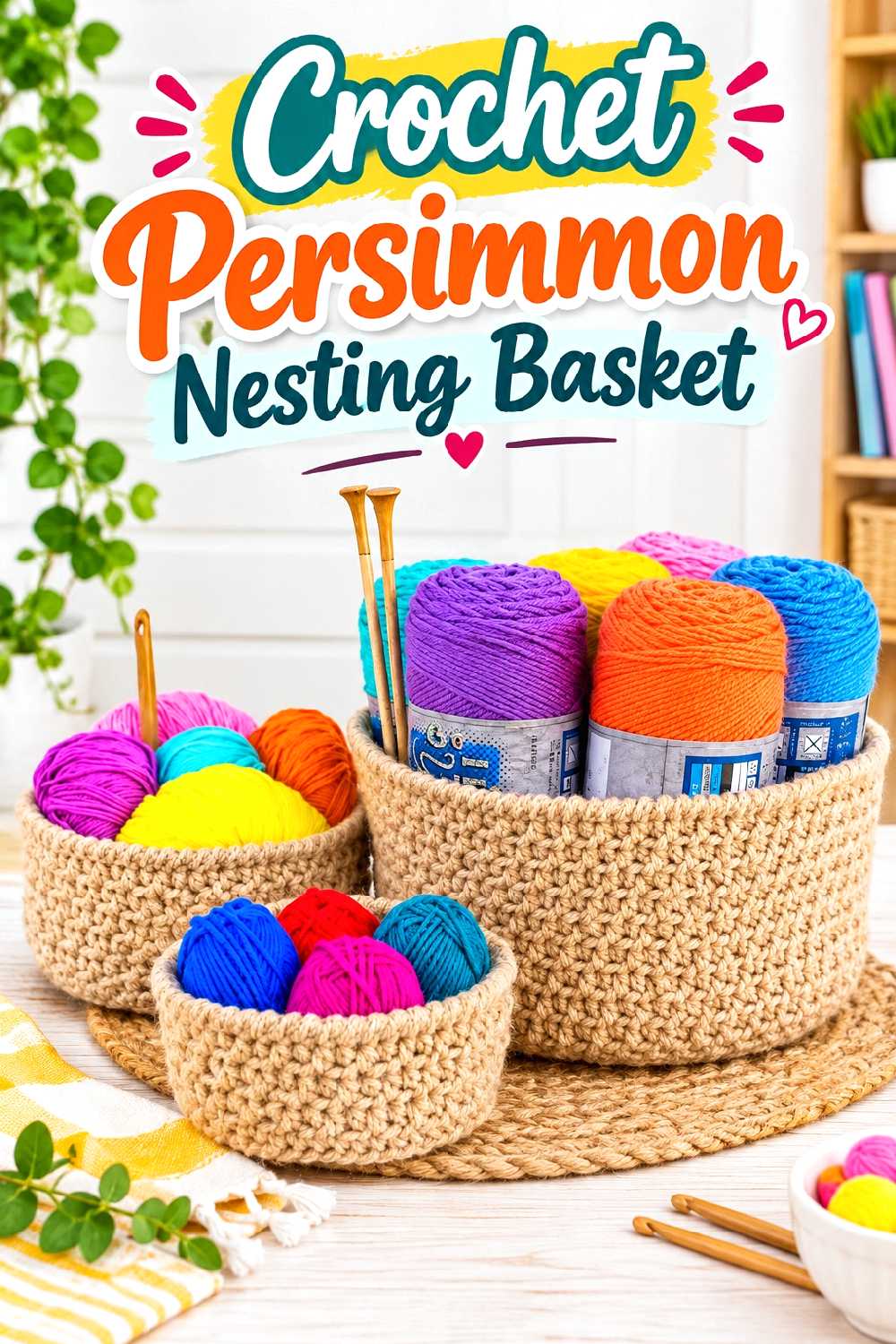
Naztazia’s basket project focuses on storage rather than drape and demonstrates nesting containers designed to hold their shape more effectively than a loose fabric bowl. The accompanying guidance specifically addresses yarn density and ways of improving structure.
Structure Comes Before the Perfect Orange-Red
A soft sweater yarn may be available in the ideal persimmon shade but still produce a basket that collapses more than you want. For this project, evaluate firmness and stitch density along with color.
A darker persimmon can also hide everyday marks more easily than a pale orange while still providing strong seasonal color.
Use Scale to Control the Color Impact
One small basket creates an accent. A whole nesting set makes persimmon part of the room palette.
Before making several, try one size in the intended space and see how the color interacts with wood tones, shelving, textiles, and nearby decor.
Creator Credit: Naztazia
11. Crochet Graphic Persimmon Throw Pillow
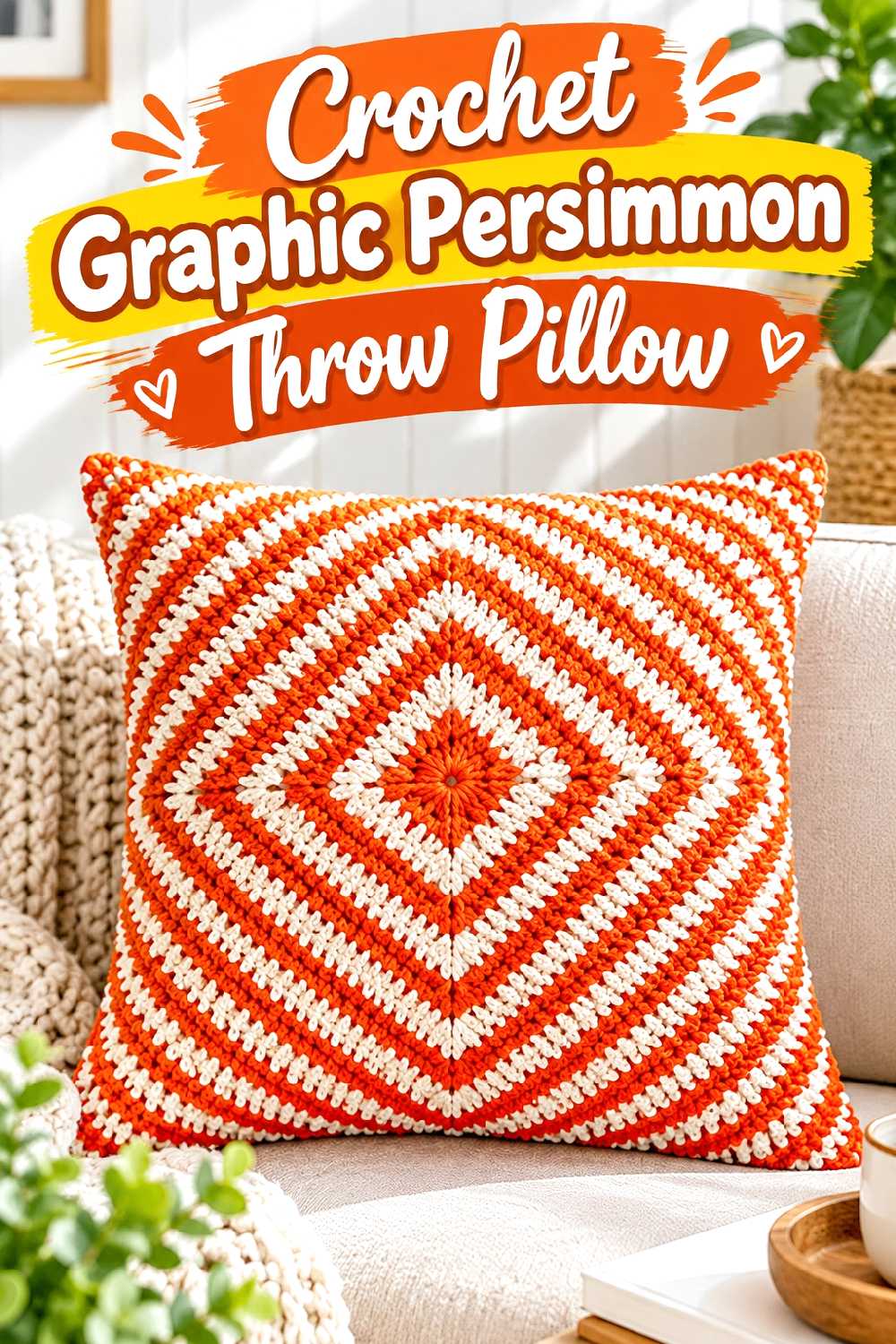
The Crochet Crowd’s pillow tutorial supports a structured home-decor option rather than another wearable. The finished project uses a strong linear design, giving persimmon a chance to work either as the dominant field or as one part of a contrasting color arrangement.
A Pillow Can Test the Color Before a Blanket
Large orange-red textiles can change the mood of a room quickly. A pillow offers enough area to judge the shade against a sofa or chair without committing to a full throw.
If your room already contains several warm woods or brown textiles, compare the yarn in that space under normal lighting before deciding how saturated you want the persimmon to be.
Plan for the Insert and Cleaning Method
The outer dimensions need to work with the pillow form you intend to use. A cover that is much looser or tighter than planned can change both the texture and the finished shape.
Also check the yarn’s care instructions before choosing it for a frequently handled pillow, particularly if the cover cannot be removed easily.
Creator Credit: The Crochet Crowd
12. Crochet Persimmon Pumpkin Granny Blanket
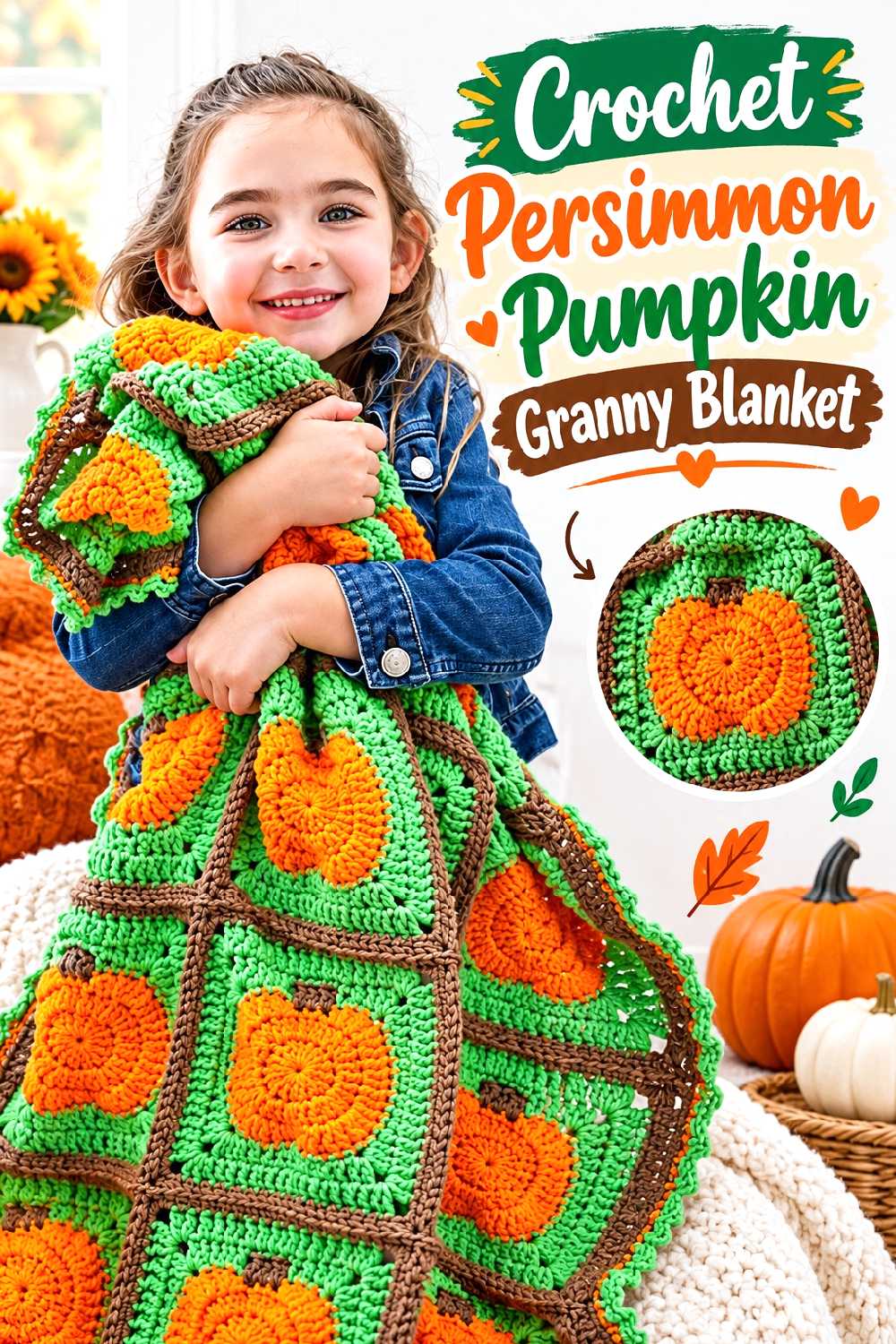
Yarnspirations demonstrates a pumpkin-inspired granny-square afghan, bringing fall imagery into a larger motif project. This is different from simply making a solid orange blanket because the seasonal idea is carried through repeated squares and their arrangement.
Repetition Can Make Persimmon Feel Heavier Than Expected
One pumpkin-colored square is a small accent. Repeating the same strong orange throughout a blanket multiplies its visual weight.
If you want a calmer result, alternate persimmon with cream, muted green, brown, or quieter filler squares rather than reducing the impact only after the blanket is assembled.
Block Motifs Before the Final Layout
Repeated squares expose differences in tension quickly. Check blocked dimensions and overall shape before you commit to a joining plan.
This is particularly important when different colors come from different yarn lines, since small construction differences can become troublesome across a large grid.
Creator Credit: Yarnspirations
13. Crochet Persimmon Acorn Decor
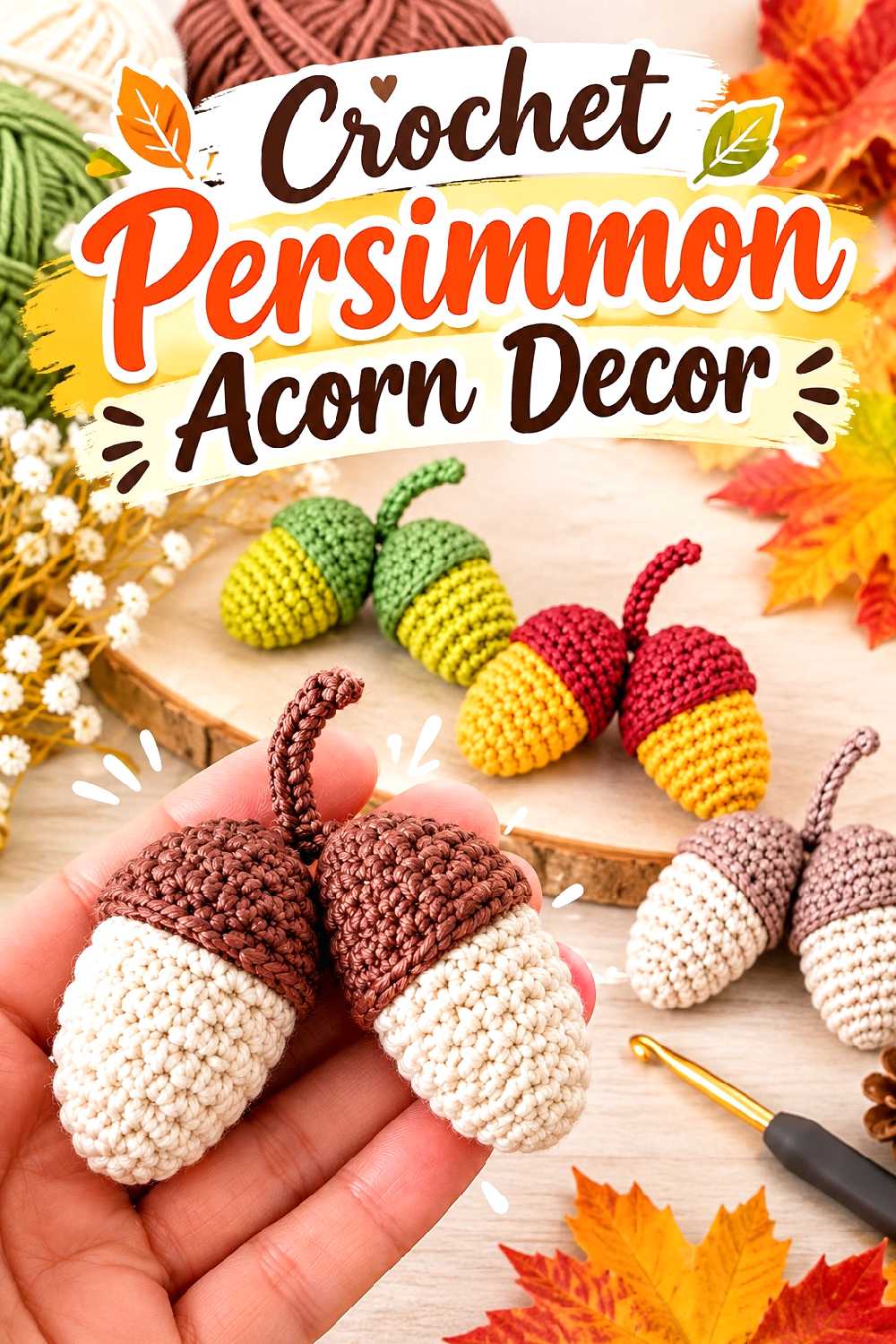
Tuba Crochet’s acorn tutorial creates another small fall object, but the silhouette and contrasting cap make it visually different from both the persimmon fruit and pumpkin projects. It is suited to table decor, small seasonal arrangements, or repeated decorative pieces.
Let the Cap Separate the Acorn From the Body
Using persimmon for the lower portion works especially well when the cap remains visibly darker or more neutral. Brown, taupe, olive-brown, or another earthy shade can keep the acorn form readable.
Making both sections in nearly identical orange tones would reduce that contrast and change the overall effect.
Small Decor Magnifies Finishing Details
On a small object, loose ends, uneven stuffing, and attachment placement are relatively prominent because there is little else competing for attention.
If the acorns will be used around young children or pets, avoid assuming decorative attachments are suitable for unsupervised play. Treat them as decor unless the materials and construction are specifically appropriate for the intended user.
Creator Credit: Tuba Crochet
14. Crochet Sculpted Persimmon Pumpkin
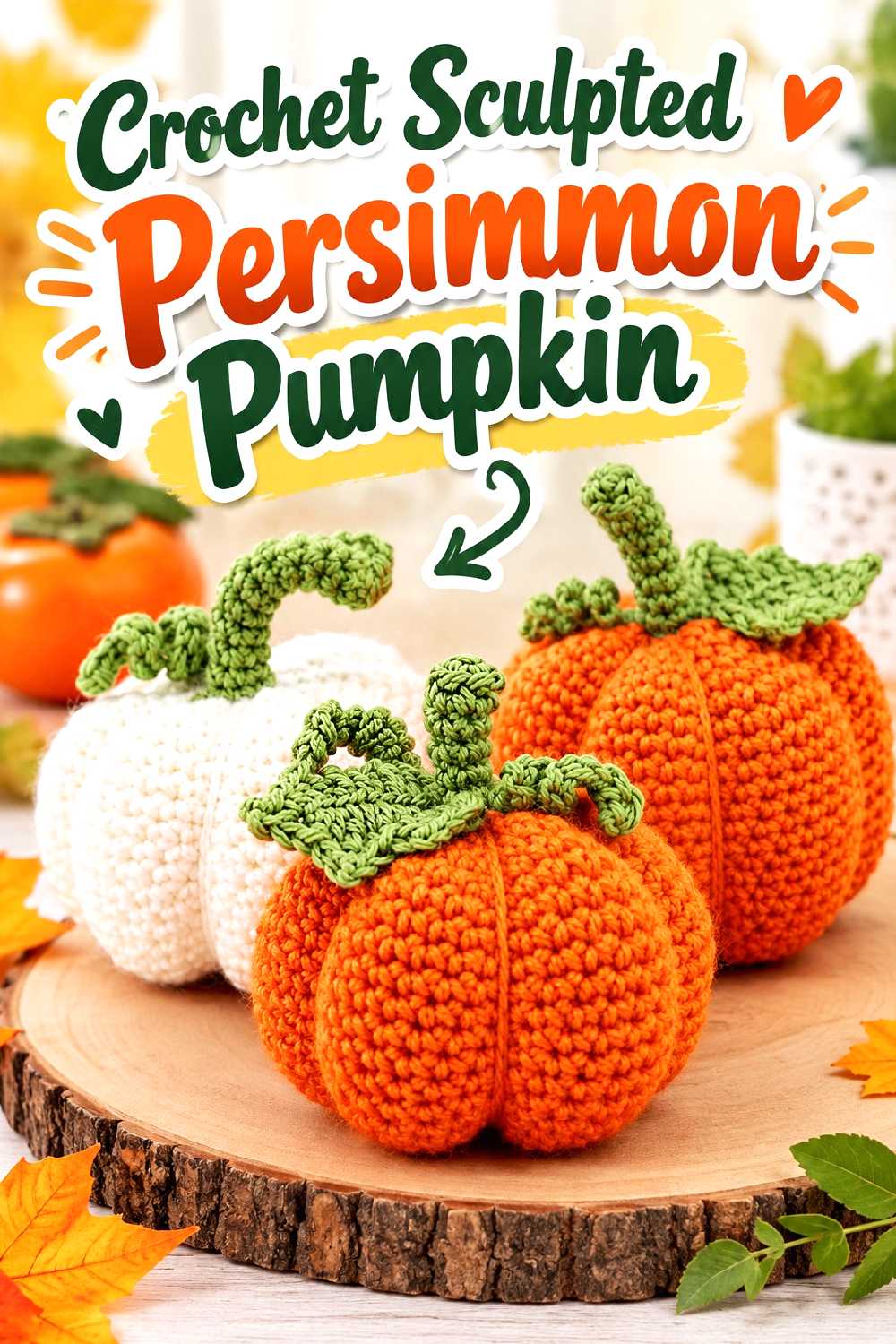
Club Crochet demonstrates a dimensional pumpkin construction with a stem, vine, leaf, stuffing, and shaping. That gives this project a more sculptural presence than the flatter pumpkin motifs used in the granny blanket.
Persimmon Makes the Pumpkin Less Literal
Traditional bright orange immediately signals Halloween or harvest decor. A redder persimmon shifts the object toward a richer autumn palette that can sit more comfortably beside burgundy, plum, olive, dark wood, or cream.
The shape still communicates pumpkin, so you can change the mood without losing the seasonal reference.
Shaping Determines More Than the Yarn Color
Stuffing level and final shaping have a major effect on the silhouette. If you change yarn thickness, the proportions may not behave exactly like the tutorial sample.
Follow the creator’s construction for the pumpkin itself and evaluate your fabric before deciding how firmly the piece should be stuffed.
Creator Credit: Club Crochet
15. Crochet Persimmon Bucket Hat
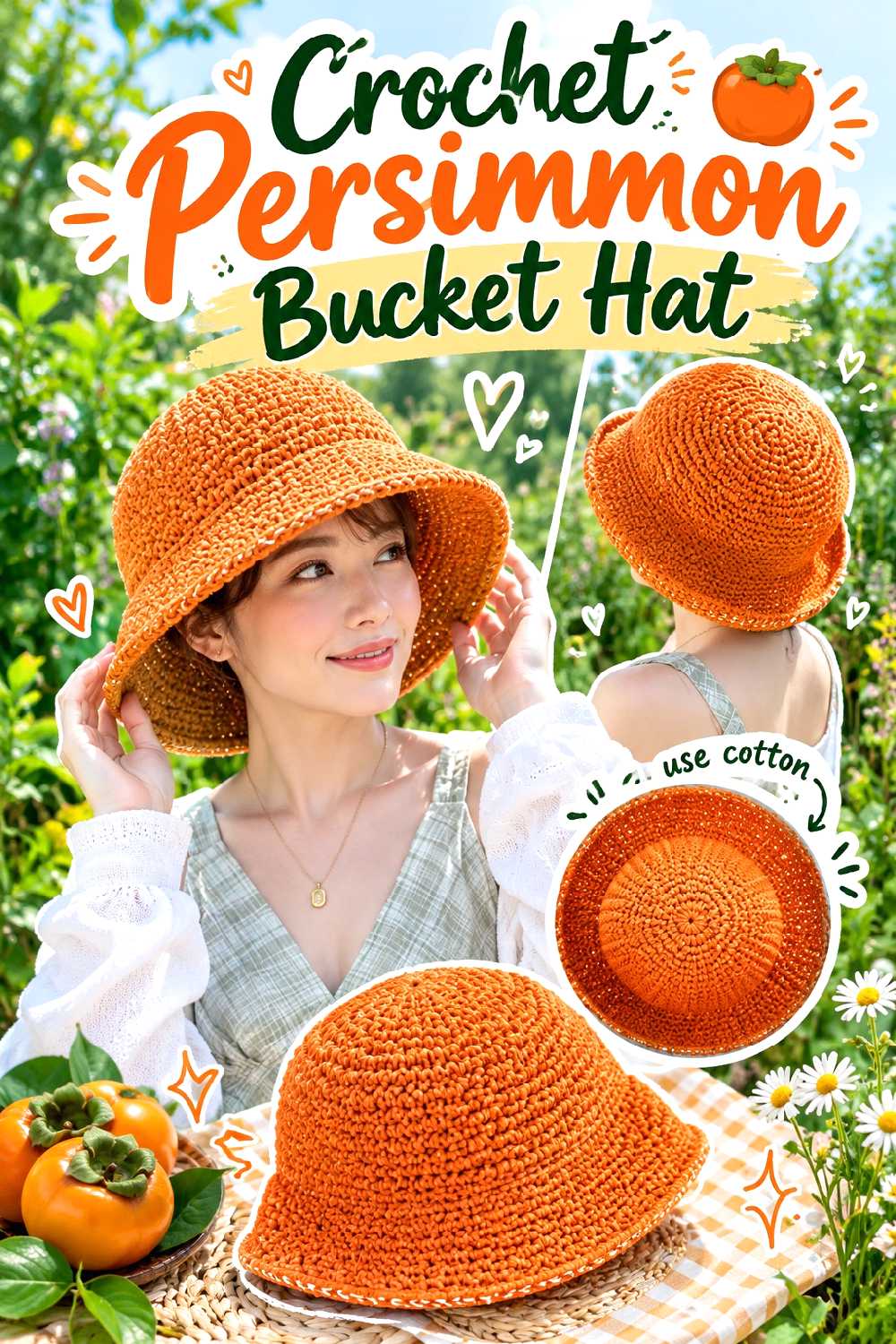
HayHay Crochet’s bucket-hat tutorial introduces a transitional accessory rather than a traditional cold-weather hat. The project includes a defined crown and brim, so persimmon can bring fall color to mild-weather outfits when a heavy beanie would be impractical.
Fiber Choice Can Shift the Hat From Summer to Fall
The tutorial discusses materials suited to its original sun-hat design. If you adapt the idea for autumn, do not replace the yarn purely to make it warmer without considering how that change affects the brim.
A softer or stretchier yarn can make a previously defined shape relax, while a firmer fiber may preserve the bucket silhouette more effectively.
The Brim Makes Gauge Especially Visible
Changes in tension can affect both head fit and the way the brim spreads. Test your persimmon yarn before assuming that a different fiber will produce the same finished proportions.
If you want a color-blocked version, keeping the crown persimmon and using a quieter brim is one way to reduce the overall intensity.
Creator Credit: HayHay Crochet
16. Crochet Persimmon Mug Cozy
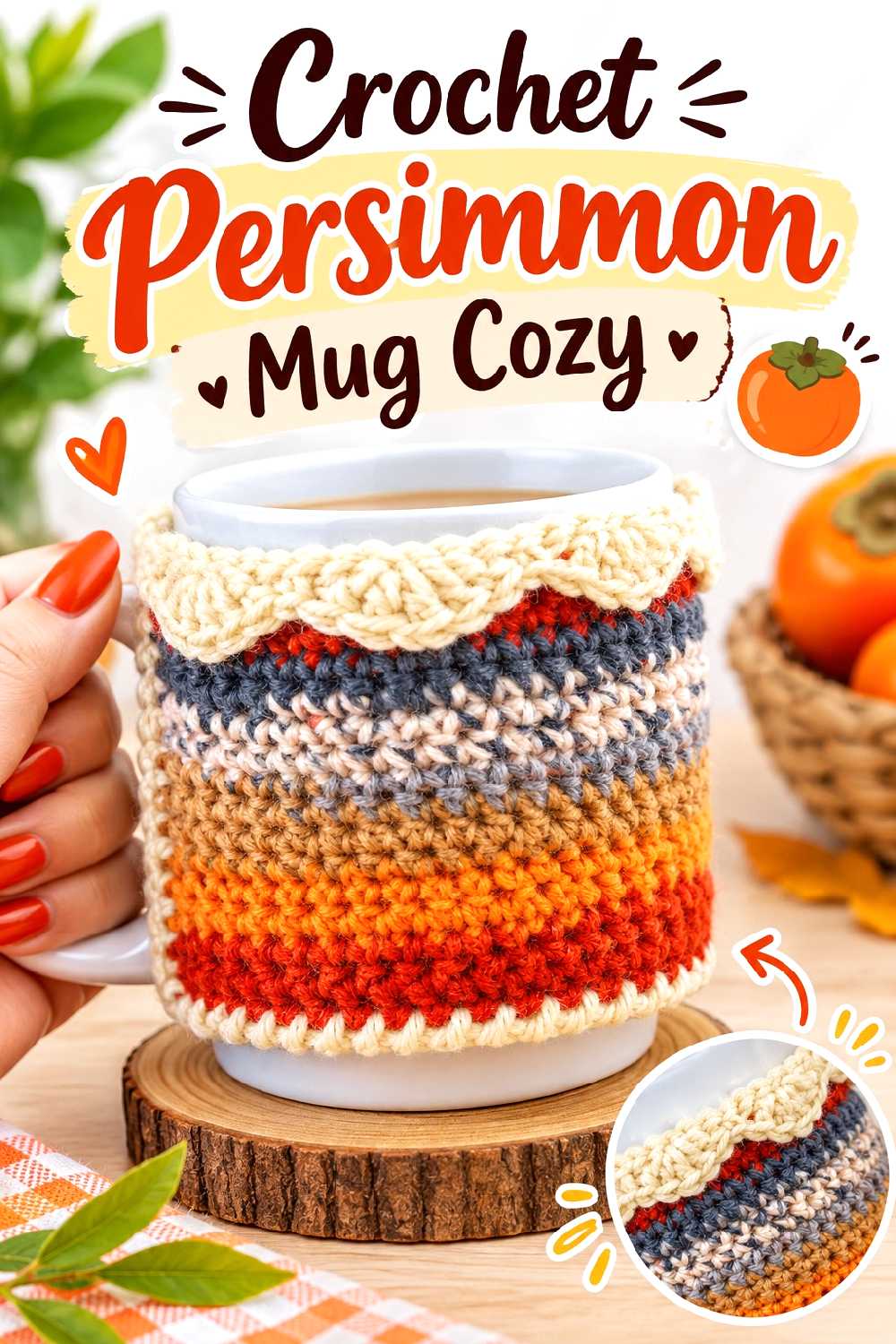
Sirin’s Crochet demonstrates a small mug cozy/cup holder, making this one of the lowest-commitment ways to test an unfamiliar persimmon yarn. It also provides a practical contrast to the larger decor and wearable projects in the collection.
Measure the Actual Mug You Plan to Use
Mugs vary considerably in diameter, height, handle placement, and taper. Do not assume that one finished cozy will fit every cup simply because the project itself is small.
If you are making several as gifts, choose a repeatable mug shape or verify the intended dimensions first.
A Crochet Cozy Is Not a Heat-Safety Guarantee
Fiber choice and crochet fabric should not be treated as proof that a cup is safe to handle at any temperature. Use the project as a decorative or comfort accessory and continue to handle hot beverages carefully.
Check the yarn’s care information as well, since mug accessories are likely to encounter spills.
Creator Credit: Sirin’s Crochet
17. Crochet Persimmon Lounge Socks
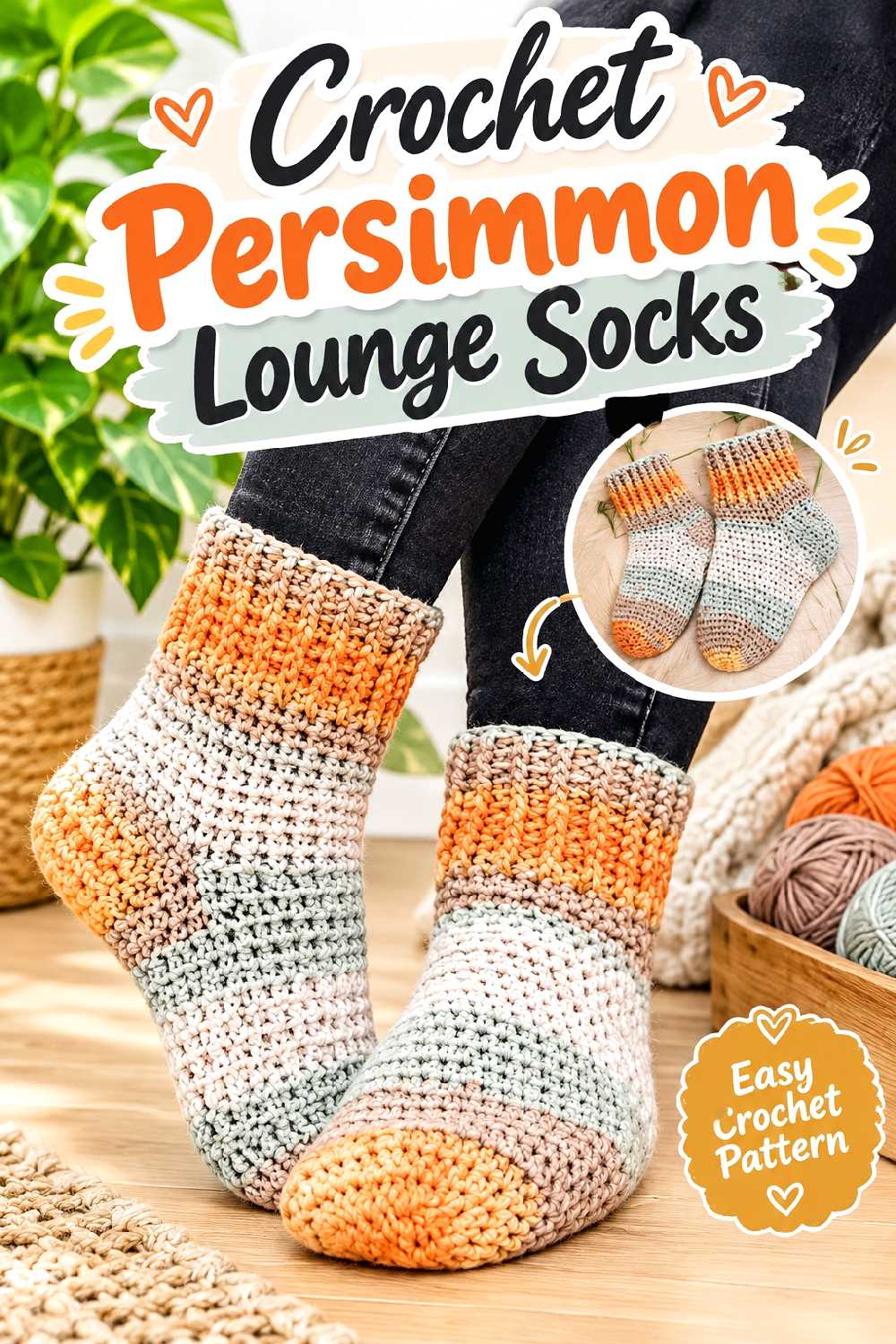
Brunaticality’s sock tutorial covers a fitted foot project with distinct toe, body, heel, ankle, and ribbed areas. That makes persimmon feel very different here than on a scarf or home accessory because fit and stretch become central to whether the finished piece works.
Fit the Foot Before Judging the Color
A gorgeous yarn is not useful if the finished sock is too rigid, loose, or bulky inside the intended footwear. Follow the tutorial’s fitting and measurement guidance and test the fabric’s stretch early.
Changing yarn weight can alter several dimensions at once, so this is not a project where color should justify a large material substitution.
Think About Where the Socks Will Be Worn
Crocheted fabric can behave differently on carpet, rugs, and smooth flooring. If these are intended mainly as lounge socks, consider whether the finished sole gives you appropriate traction in your home.
Persimmon works particularly well here as a concentrated color that can disappear under boots or become visible with cropped pants and indoor wear.
Creator Credit: Brunaticality
18. Crochet Persimmon Lace Shawl
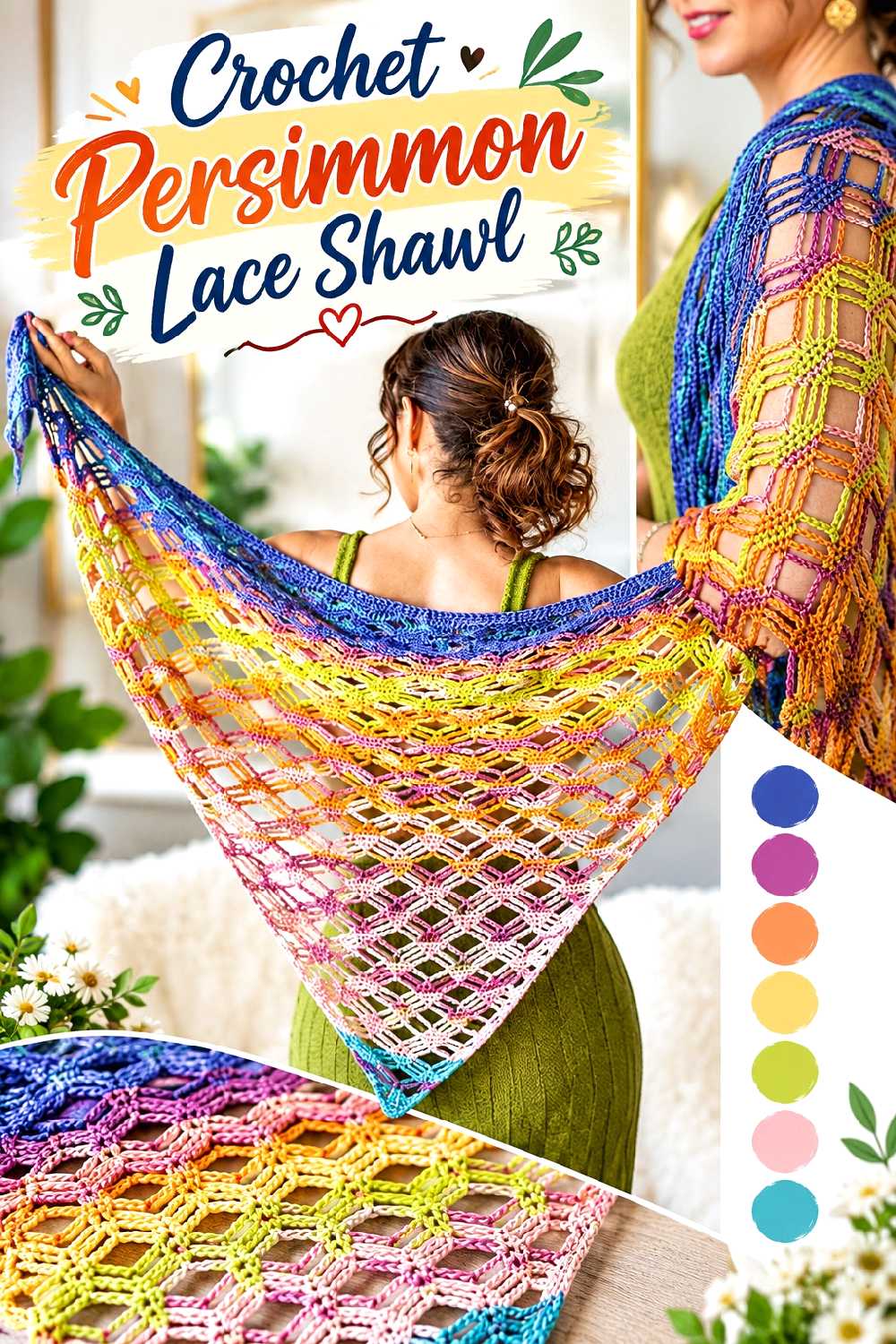
ExpressionFiberArts demonstrates a triangular lace shawl with a floating diamond effect and an airy fabric. Among the projects here, this is one of the clearest examples of how an open stitch pattern can make persimmon look lighter than it does in a dense ball of yarn.
Lace Lets the Background Participate in the Color
Because open spaces remain visible, a persimmon shawl worn over cream will read differently from the same shawl over black, brown, or denim.
That makes the project more flexible than a solid garment if you like the color but do not want an uninterrupted orange-red surface.
Check Saturated Yarn Before Blocking
Deep orange and red dyes can behave differently across yarns. The accompanying pattern information advises checking colorfastness when highly saturated colors will be combined with lighter ones before blocking.
That is especially relevant if you plan a multicolor shawl with persimmon beside cream or another pale shade. Make the color test before investing the work required for the full project.
Creator Credit: ExpressionFiberArts
Which Persimmon Crochet Idea Fits Your Fall Plan?
For a small experiment with the color, the maple leaf, mug cozy, acorn, or fruit amigurumi keeps the commitment manageable. The beanie, cowl, gloves, and socks move the shade into your wardrobe without asking it to dominate an entire outfit.
The vest and cardigan make much stronger statements and deserve more attention to gauge, ease, and what will be layered underneath them. The lace shawl offers a middle ground because the open fabric allows other colors to show through.
For the home, the basket and pillow introduce persimmon in contained areas, while the pumpkin granny blanket turns it into a major part of the room. The two bags also show an important contrast: granny-square construction emphasizes motif placement, whereas other structured accessories depend more heavily on stretch and fabric stability.
Conclusion
Persimmon works for fall because it does not have to behave like standard pumpkin orange. It can be earthy in a basket, bright in a fruit amigurumi, graphic in a pillow, soft in lace, or bold enough to carry an entire cardigan.
The smallest projects are useful for testing an unfamiliar shade before investing in a garment or blanket. For larger pieces, let construction determine the yarn requirements first and color second. Gauge, stretch, drape, motif dimensions, structure, and care requirements still matter even when the visual goal is simply to bring more persimmon into a fall palette.
Use the original tutorials for the exact construction details, then adapt the color only where your chosen yarn remains compatible with the project.
Frequently Asked Questions
Is persimmon crochet yarn just another name for orange?
Not necessarily. Yarn companies do not use color names consistently, and a shade labeled persimmon may lean orange, coral, rust, red-orange, or even muted terracotta. Compare the actual yarn rather than relying on the name printed on the label.
Can I replace the tutorial yarn with any yarn that comes in persimmon?
No. Color does not make two yarns interchangeable. Compare yarn weight, fiber content, gauge, stretch, texture, and the type of fabric the project needs. A substitution suitable for a shawl may perform poorly in a basket or fitted hat.
What colors pair well with persimmon crochet?
Cream, oatmeal, charcoal, brown, muted olive, denim blue, and burgundy can all create useful fall combinations. The effect changes depending on the persimmon itself: a redder shade behaves differently from a clear orange or dusty terracotta version.
How do I keep persimmon crochet from looking too Halloween-specific?
Use less black and bright pumpkin orange around it. Pair persimmon with olive, cream, soft brown, denim, plum, or muted rose, and choose projects that are not inherently Halloween themed. A cardigan or shawl in persimmon reads very differently from an orange-and-black pumpkin display.
Will dark persimmon yarn hide crochet texture?
It can reduce visible stitch definition, especially in low light or with fuzzy fibers. If the project depends on cables, shells, ribbing, or other raised texture, make a swatch and view it in normal lighting before committing to the whole piece.
What should I check before making a large persimmon wearable?
Confirm gauge, blocked measurements, intended ease, yarn quantity, fiber behavior, and care instructions from the original pattern or tutorial. If you are substituting yarn, make and block a sample first. Color can be changed freely only when the replacement yarn still produces fabric appropriate for the construction.