Dark academia works especially well for crochet book sleeves because the mood can come from material, texture, and restrained details rather than novelty decorations. Think oxblood checks, tobacco-brown raised stitches, botanical colorwork, old-paper neutrals, forest green, charcoal, and closures that feel more like vintage stationery than modern tech accessories.
The 13 ideas below range from fitted covers that remain on the book to removable pouch sleeves, a convertible carrying style, an annotation-pocket cover, and heavily textured options. Most of the linked tutorials are not presented by their creators specifically as “dark academia”; they are strong construction bases that can be adapted through color and finishing choices. The planning notes focus on fit, structure, closures, pockets, and practical adaptation rather than reproducing any creator’s crochet pattern.
Quick List
- Old-Library Wraparound Crochet Book Sleeve
- Oxford Check Crochet Book Sleeve
- Botanical Manuscript Tapestry Crochet Book Sleeve
- Sealed-Letter Crochet Book Sleeve
- Carved-Wood Waffle Crochet Book Sleeve
- Heathered Tunisian Crochet Book Sleeve
- Archive Pocket Crochet Book Sleeve Bag
- Annotation-Pocket Crochet Book Cover
- Vintage Composition Crochet Book Cover
- Custom-Fit Espresso Crochet Book Cover
- Oxblood Adjustable Crochet Book Sleeve
- Scholar’s Granny Square Crochet Book Sleeve
- Plum Library Crochet Book Sleeve Case
Make the Sleeve Fit the Book, Not a Standard Size
A book sleeve can fit one paperback beautifully and still be awkward for a thicker hardcover. Before choosing a tutorial, compare the closed book’s height, cover width, and spine thickness with the type of construction being demonstrated. A fitted cover that stays attached to the book needs different planning from a pouch that must let the whole book slide in and out comfortably.
Stretch also matters. A fabric that expands easily may tolerate a closer fit, while dense colorwork or firm textured crochet may need more usable room around the spine and corners. When adapting a Kindle-oriented tutorial for a physical book, start again from the book itself rather than treating device dimensions as interchangeable. The useful checkpoint is simple: the book should enter without forcing the cover or excessively stretching the crochet.
Texture, Yarn, and Lining Change the Result
Dark-academia colors can make very different crochet fabrics look related, but they will not behave alike. A raised waffle texture creates noticeably more surface depth than a flatter sleeve, while Tunisian crochet can produce a substantial, woven-looking fabric. Granny-square openings introduce more negative space, and tapestry colorwork may become firmer where multiple colors are carried.
Choose yarn characteristics according to the sleeve you want, not only the color palette. A smoother yarn can make checks or botanical motifs easier to read; a fuzzy yarn can soften those edges. If a sleeve will share a bag with keys, pens, or other snagging objects, a fabric lining may be worth considering. Check the fit again before adding one, because lining takes up interior space. Crochet can help with everyday scuffs, but it should not be treated as waterproof or crush-proof protection.
Match the Closure to Your Reading Routine
An open pouch gives fast access, which can be convenient for a book that moves between a desk, nightstand, and tote. Ties, wraparound straps, buttons, or flaps add security and visual character, but each also changes how quickly the sleeve opens and how much hardware or cord sits against the book.
For a crowded everyday bag, consider whether a long decorative tie is likely to catch on other items. A low-profile closure may make more sense around a delicate dust jacket than a bulky embellishment pressing into the cover. Pocketed designs require another decision: flat paper tabs or bookmarks are very different from storing pens or rigid accessories beside the book. The more functionality you add, the more important it becomes to check where pressure lands when everything is packed.
1. Old Library Wraparound Crochet Book Sleeve
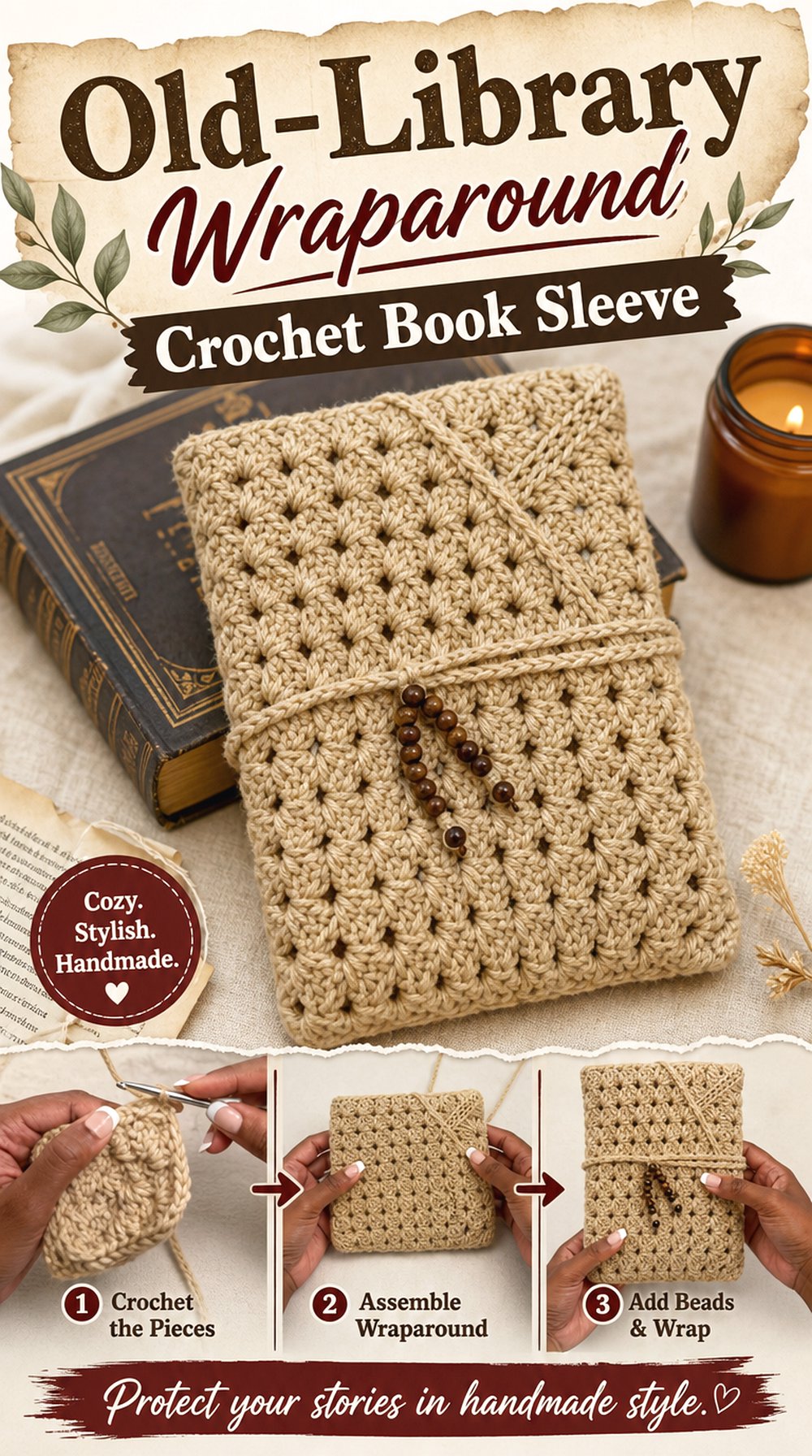
A long wraparound closure gives this sleeve a distinctly archival feel, almost like a bundle of old correspondence tied before being shelved. Kendall Tai’s tutorial centers on a book sleeve with a wrap-around strap and decorative beads, providing a useful construction reference for a dark-academia version in espresso, deep burgundy, moss, or parchment tones.
This option stands apart from a simple slip pouch because the closure becomes part of the finished appearance. It suits readers who enjoy a deliberate opening ritual and want the sleeve to look finished even when it is sitting on a desk. Keep the decorative elements practical if the sleeve will spend most of its time inside another bag.
The Wraparound Tie Becomes Part of the Styling
A wrap closure draws a strong line across the front of the sleeve, so its proportion matters visually as much as its function. For a scholarly look, a restrained cord or matching crocheted strap can feel more convincing than piling on several decorative elements. Before finalizing its length, wrap it around the actual filled sleeve. A strap that looks generous when empty may feel quite different once the book adds thickness.
Keep Beads Away From Vulnerable Book Surfaces
Beads can reinforce the “antique trinket” mood, but placement deserves thought. Hard decorative pieces pressing repeatedly against a dust jacket, foil lettering, or soft cover can become more nuisance than benefit. Position embellishment where it sits mostly outside the main contact area, or omit it for a softer travel sleeve. If the sleeve will live on a shelf as much as in a bag, decorative hardware is easier to accommodate.
Test the Closure With the Book Inside
Do not judge the wraparound action on an empty sleeve. Insert the intended book and check whether tightening the strap compresses or bows the cover. The goal is containment rather than cinching. This checkpoint is especially useful when alternating between books of different thicknesses. If the same sleeve will serve several titles, leave enough adjustment that the closure does not rely on excessive stretch from the crochet fabric.
Creator: Kendall Tai
2. Oxford Check Crochet Book Sleeve
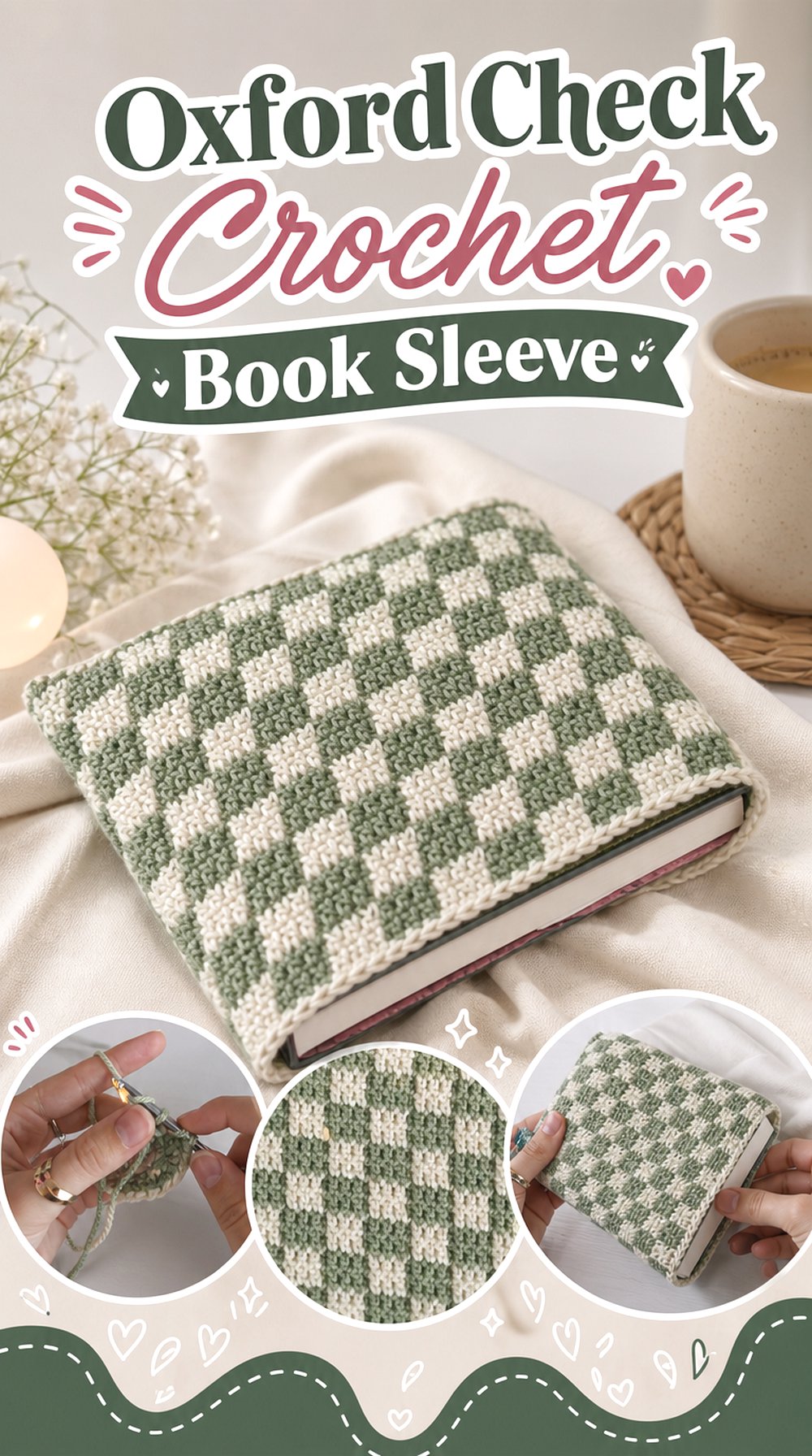
Small-scale checks bring tailored clothing, old reading rooms, and traditional woven textiles to mind, making a checkered sleeve one of the most direct ways to build a dark-academia palette without adding themed appliqués. Savannah Fletcher’s tutorial demonstrates a two-color checkered crochet book cover that works well as the construction reference for this variation.
Try imagining the geometry in black and parchment, bottle green and oatmeal, oxblood and taupe, or chocolate and muted cream. The finished effect depends heavily on contrast: extremely high contrast looks graphic, while closer-value colors can read more like aged upholstery or a subdued wool check. This is a strong choice when you want the book sleeve itself to supply the visual pattern.
Smaller Checks Feel More Tailored Than Large Blocks
Check scale affects the personality of the cover. Repeated smaller areas of color can create a woven, tailored impression, while larger blocks move the design closer to bold color blocking. Before committing to a palette, place the yarn colors together under normal room lighting. Very dark colors that look distinct in daylight may blend into one mass indoors, which can make the check pattern harder to read.
Watch for Extra Firmness in Repeated Color Changes
Multi-color crochet can behave differently from a single-color fabric, especially if unused yarn is being carried or tension changes during color transitions. Compare the width of your developing fabric with the actual book instead of assuming the starting measurement will remain unchanged. If the fabric begins drawing inward, correcting tension early is easier than trying to stretch a finished sleeve around the book.
Let the Geometry Carry the Theme
A checkered sleeve already has a strong visual identity, so it rarely needs several additional dark-academia motifs. A restrained border, plain closure, or simple label-style accent can keep it looking intentional. If you add embroidery or appliqué, test it on only one area first. Too many competing symbols can obscure the clean check pattern that makes this version different from the more decorative botanical and envelope ideas.
Creator: Savannah Fletcher
3. Botanical Manuscript Tapestry Crochet Book Sleeve
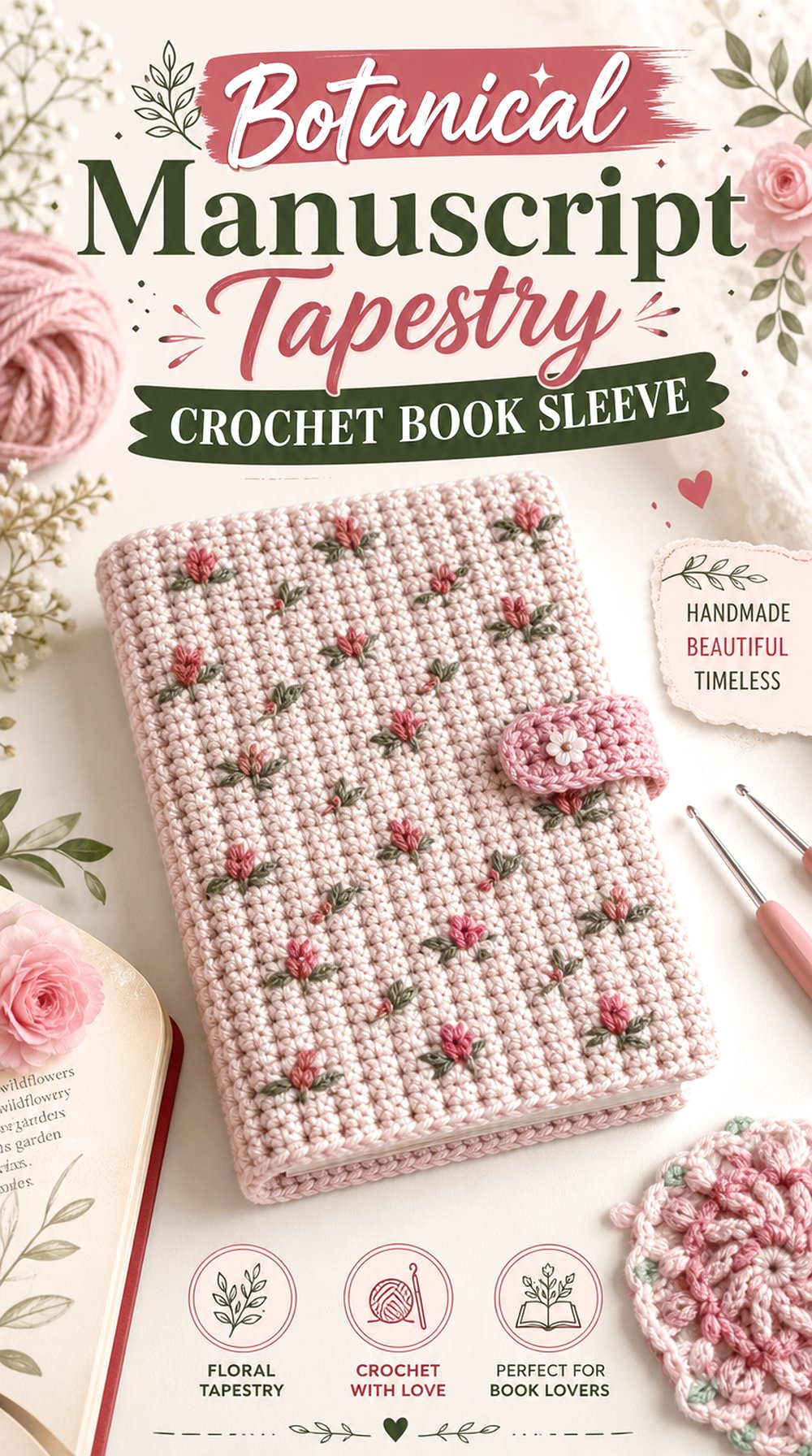
For a more illustrated interpretation of dark academia, a floral tapestry panel can make the sleeve resemble an old botanical plate or pressed-flower notebook. The artist1c_kat tutorial is specifically a floral crochet book sleeve and is presented as adjustable for different book sizes, making it a strong reference for this motif-led direction.
Instead of choosing bright garden colors, translate the idea into herbarium tones: olive, faded gold, rust, cream, and brown against charcoal or deep green. Because the motif itself is the main attraction, this sleeve works best when the rest of the finishing stays quiet. It is also a more deliberate colorwork choice than the simpler solid and textured sleeves later in the list.
Treat the Motif Like an Antique Bookplate
A botanical image has more impact when it occupies a clear focal area rather than competing with several borders, charms, and labels. Think about where the motif lands when the book is inside and the sleeve is viewed flat. A centered or intentionally offset composition can resemble an old printed plate. Before investing in the full color palette, arrange the yarns together to make sure the plant shapes will remain visible against the background.
Colorwork Density Can Alter the Fit
Tapestry-style crochet may feel firmer in areas where colors are carried through the fabric. That can be useful for a sleeve that needs some body, but it also means the final width should be checked against the book during construction. Do not rely on the stretch you would expect from a plain swatch. The spine area deserves particular attention because that is where a thick book requires extra room rather than decorative compression.
Check Motif Scale Against the Finished Cover
A floral design that looks balanced on a narrow paperback sleeve may feel undersized on a tall hardcover. Conversely, enlarging a motif concept without considering the available panel can push important details toward seams or folds. Use the actual book as a visual frame before deciding where your focal colorwork belongs. This planning step is about composition, not recreating the creator’s chart or stitch sequence.
Creator: artist1c_kat
4. Sealed Letter Crochet Book Sleeve
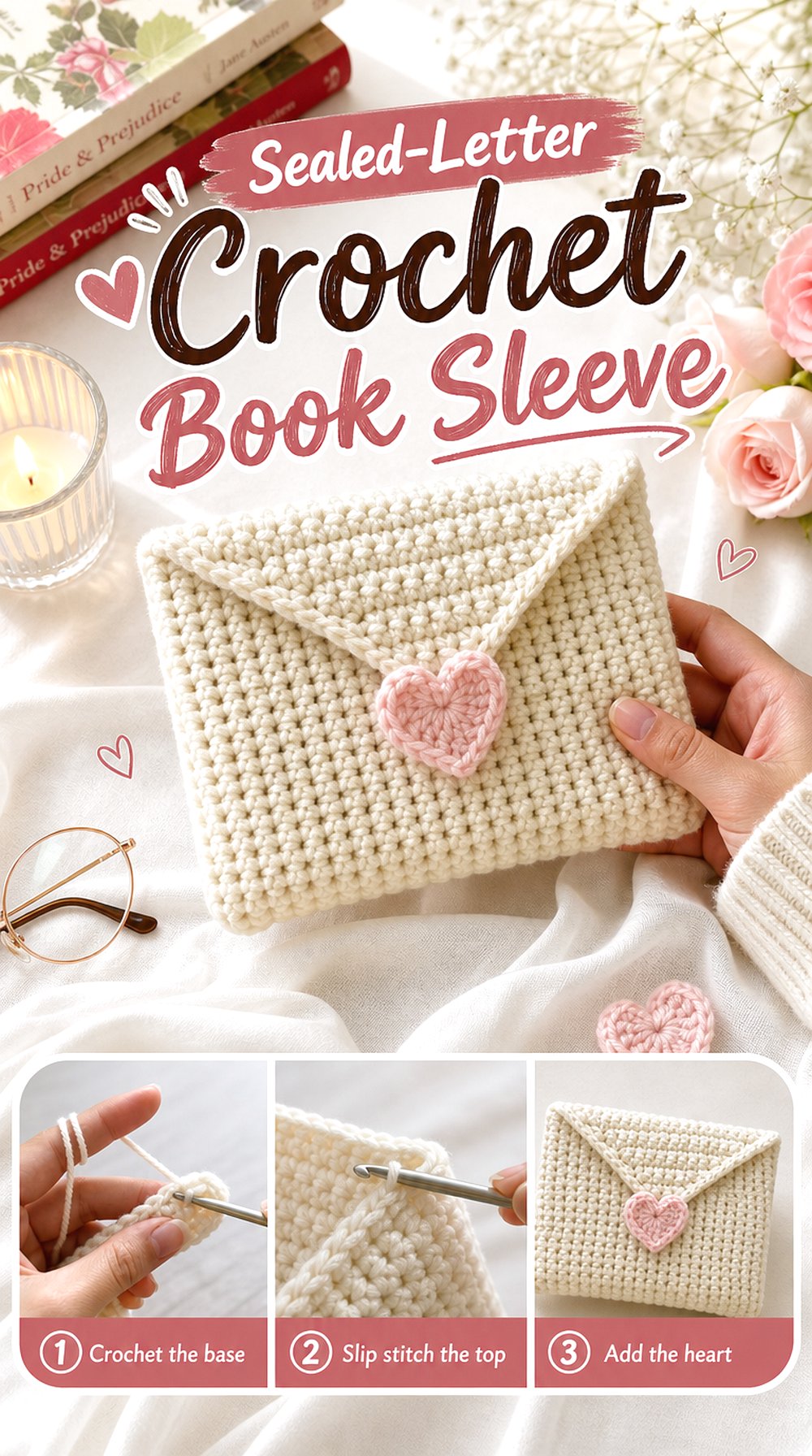
An envelope-shaped sleeve fits the academic theme through form rather than color alone. Mahum’s love-letter book sleeve tutorial uses that recognizable correspondence silhouette and can be adapted into something that feels more like a sealed archival document than a romantic Valentine.
In a dark-academia palette, imagine parchment, tobacco, burgundy, black tea, or moss with a small seal-like accent. The flap gives this project a clear front and back, so it looks intentional even when lying on a table. Compared with an open pouch, it sacrifices a little speed for a more theatrical closure. It is a particularly good option for a gift because the sleeve itself creates an “unwrapping a letter” effect before the recipient reaches the book.
The Envelope Flap Supplies the Theme
Because the triangular or letter-like flap is already visually descriptive, you can keep the rest of the surface comparatively plain. That is useful if you prefer dark academia without obvious ravens, skulls, or oversized appliqués. A solid deep neutral lets the silhouette do the work. Check how the flap falls over the filled sleeve before adding decoration, since its final position may shift once a thicker book is inserted.
Keep the Seal Detail Low-Profile
A heart, button, or seal-inspired embellishment can reinforce the envelope idea, but a thick ornament may create a hard point against the book or another item in your bag. For a travel sleeve, choose a flatter treatment or place the decorative element where it does not press directly into a fragile cover. A shelf or gift presentation can tolerate more dimensional decoration than an everyday commuter sleeve.
This Format Favors Deliberate Access
An envelope closure takes an extra motion to open compared with a plain slip sleeve. That may be appealing if you want the object to feel special, but less convenient if you repeatedly pull a book out during a commute. Decide whether atmosphere or speed matters more for your routine. If frequent access wins, keep the closing mechanism simple even if you retain the dramatic flap shape.
Creator: mahum 🎀
5. Carved Wood Waffle Crochet Book Sleeve
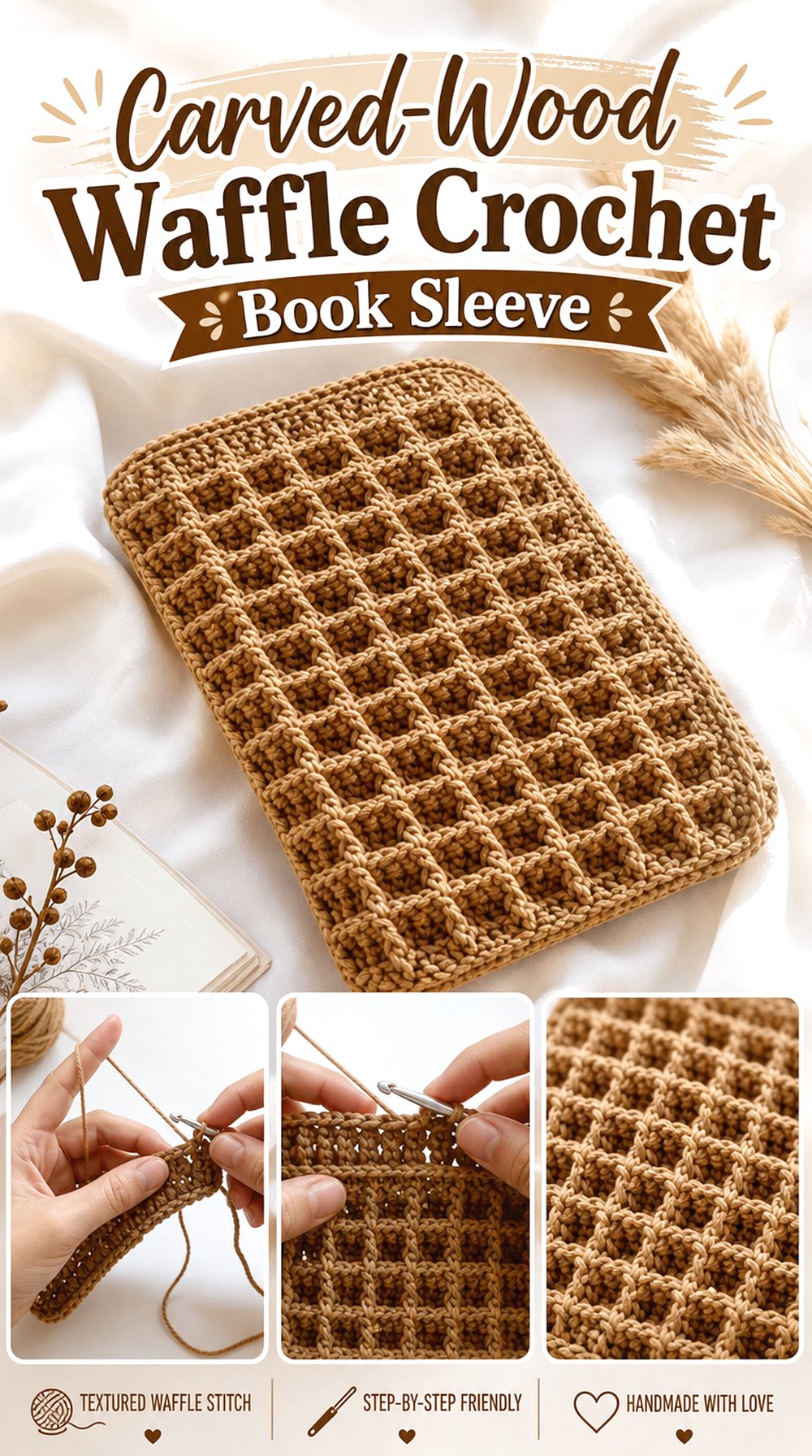
A waffle-textured sleeve brings dark academia into the project through shadow and surface rather than colorwork. The deep recesses can resemble carved wood, coffered library panels, or a heavy woven textile when worked in tobacco, walnut, charcoal, or deep olive. From littlespot’s tutorial centers specifically on a waffle book sleeve, giving this option a clearly different fabric structure from the flatter covers in the collection.
The raised texture makes the finished piece visually substantial even in one color. That simplicity is useful when you have a beautiful dark yarn and do not want multiple color changes. At the same time, three-dimensional texture adds bulk, so the sleeve deserves a fit check before it becomes too snug around a thick spine.
Raised Texture Adds Thickness Quickly
Waffle-style fabric has more relief than a plain flat surface. That can make the sleeve feel cushioned and visually rich, but it also occupies physical space in a bag. If you usually carry several notebooks, a laptop, or a compact purse together, compare the finished thickness you want with the portability you need. A heavily textured sleeve is better chosen intentionally than treated as equivalent to a slim pouch.
Dark Solids Show Texture Through Light and Shadow
Very dark yarn can hide fine stitch detail, yet deep texture can still read because natural light creates highlights across raised areas. If you want the waffle pattern to remain visible in black or espresso, examine the fabric from several angles rather than only under bright task lighting. Slightly lighter dark-academia shades such as walnut, peat, or muted olive can make the relief easier to see without losing the moody palette.
Give the Spine Enough Breathing Room
A thick hardcover places more demand on a textured sleeve than a slim paperback. Test the book in the developing fabric before final finishing and watch the spine corners. If inserting the book flattens the texture dramatically or bends the cover, the fit is too aggressive for the intended use. The goal is a comfortable enclosure, not using the book to stretch the sleeve into its final dimensions.
Creator: from littlespot
6. Heathered Tunisian Crochet Book Sleeve
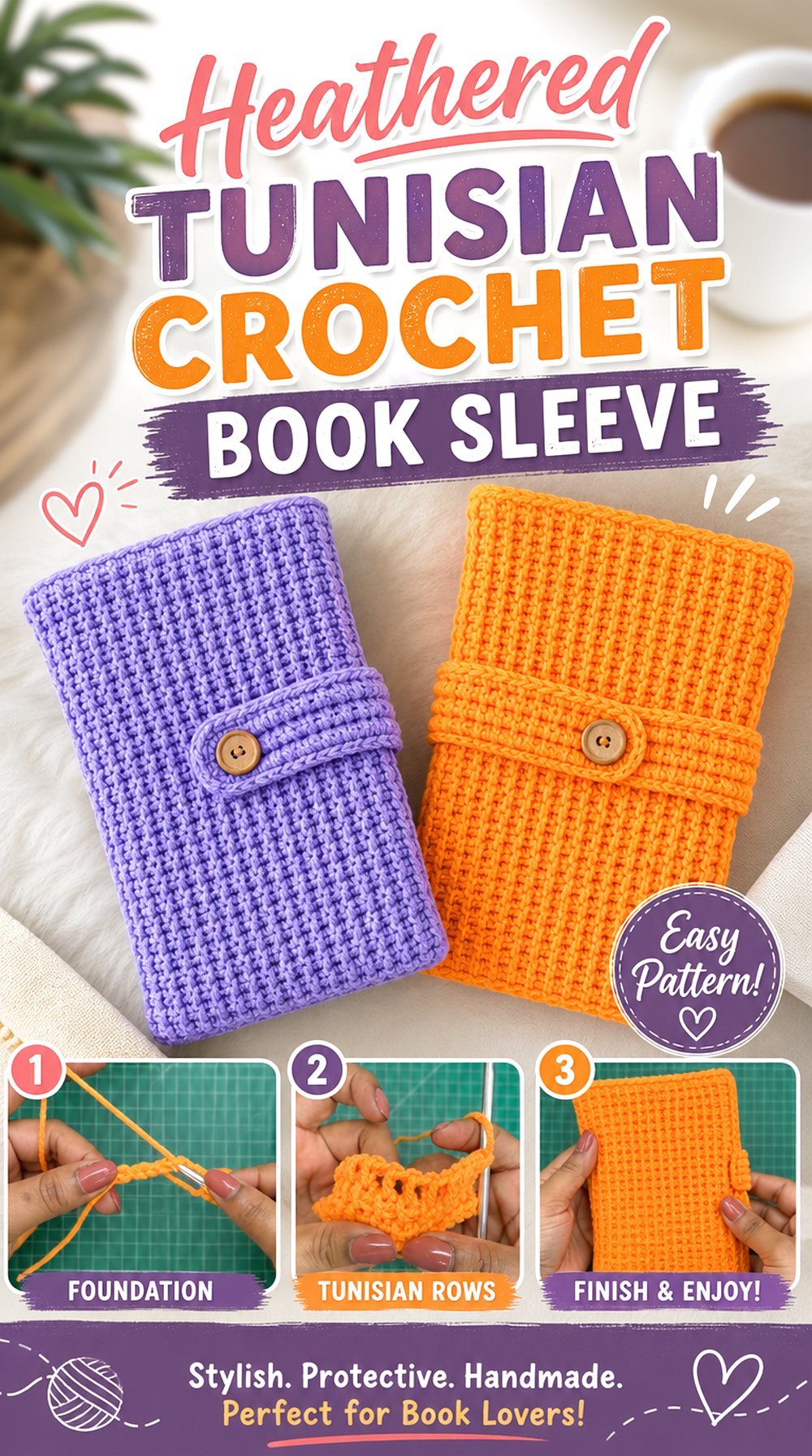
Tunisian crochet can give a book sleeve a denser, woven-looking personality that suits tweed jackets, old library upholstery, and understated academic accessories. Madi Mane’s tutorial demonstrates a Tunisian crochet book sleeve and explicitly discusses adapting the project from one book format to other paperback or hardcover sizes by measuring.
For a dark-academia interpretation, a heathered brown, charcoal, muted green, or burgundy can emphasize that textile quality without requiring a decorative motif. This option makes sense for someone who wants the sleeve to look more like fabric from a traditional satchel or coat than a bright crochet accessory. It also provides a different learning route if you have been looking for a small project in which to explore Tunisian crochet.
The Woven-Looking Surface Suits Quiet Palettes
A restrained palette allows the vertical and horizontal qualities of Tunisian fabric to stay visible without competing with large motifs. Heathered or gently variegated colors can add depth, but inspect how frequently the color changes occur. Very rapid changes may visually interrupt the fabric structure, while a solid or subtle tonal yarn can make the surface look calmer and more tailored.
Denser Fabric Needs Its Own Fit Check
Do not assume a Tunisian sleeve will stretch exactly like a standard crochet pouch you already own. Fabric behavior depends on stitch choice, yarn, tension, and finishing. Measure the actual developing piece against the intended book and verify that the spine can enter without forcing the cover. That practical comparison matters more than trying to transfer another project’s dimensions directly.
Size From the Actual Reading Copy
The tutorial’s adaptability is useful because “paperback” and “hardcover” cover many different proportions. Use your chosen book as the reference object throughout the project. If you switch to a different edition later, compare height and spine depth before assuming it will fit. A dark-academia sleeve designed around a treasured classic is more useful when the construction respects that specific copy.
Creator: Madi Mane
7. Archive Pocket Crochet Book Sleeve Bag
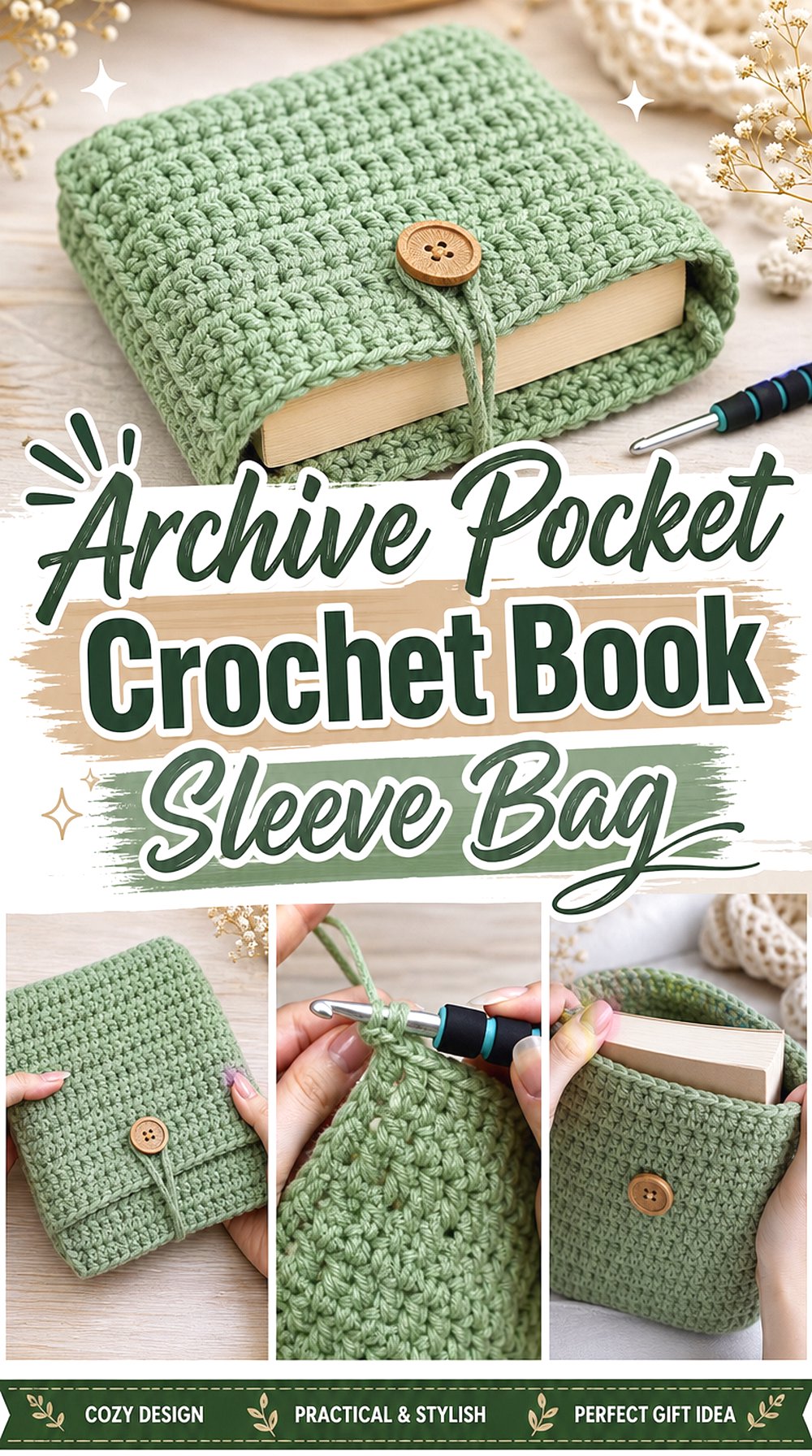
This is the most carry-oriented option in the collection. Biyabimi’s tutorial combines a book sleeve with bag functionality, including pocket choices, two compartments, and convertible strap options. That gives a dark-academia adaptation room to feel like a miniature library satchel rather than simply a cover.
In charcoal, espresso, deep green, or oxblood, the silhouette could pair naturally with a coat or campus outfit while keeping the book as the central item. Because pockets and straps add functional decisions, this project deserves more planning than a single-compartment pouch. Think about what you genuinely carry with a book: a phone, reading glasses, tabs, or a very small notebook may justify a compartment, while unnecessary pockets only add bulk.
A Second Compartment Changes the Whole Use
Once a sleeve holds more than the book, it begins functioning as a small bag. That makes organization more useful, but it also increases the chance that a rigid object will press against the cover. Decide which side of the book each compartment occupies and what belongs there. Flat accessories are easier to accommodate than keys, bulky chargers, or objects with sharp edges.
Only Add Pockets You Will Actually Use
Dark-academia styling often celebrates layered details, but functional crochet benefits from editing. One well-placed reading-tools pocket may be more useful than several small compartments. Before committing to pocket placement, hold the intended item against the loaded sleeve and check whether it interferes with the opening, closure, or strap. This keeps the design looking intentional rather than simply busy.
Convertible Straps Need Thoughtful Attachment Points
A strap changes where the weight of the book is transferred. Check the attachment areas periodically for stretching, especially if the sleeve will carry a substantial hardcover. Reinforcement can be considered where appropriate, but do not assume decorative edging alone provides structural support. Also decide whether you want a removable strap; a sleeve used primarily inside a larger tote may not need one hanging loose.
Creator: Biyabimi
8. Annotation Pocket Crochet Book Cover
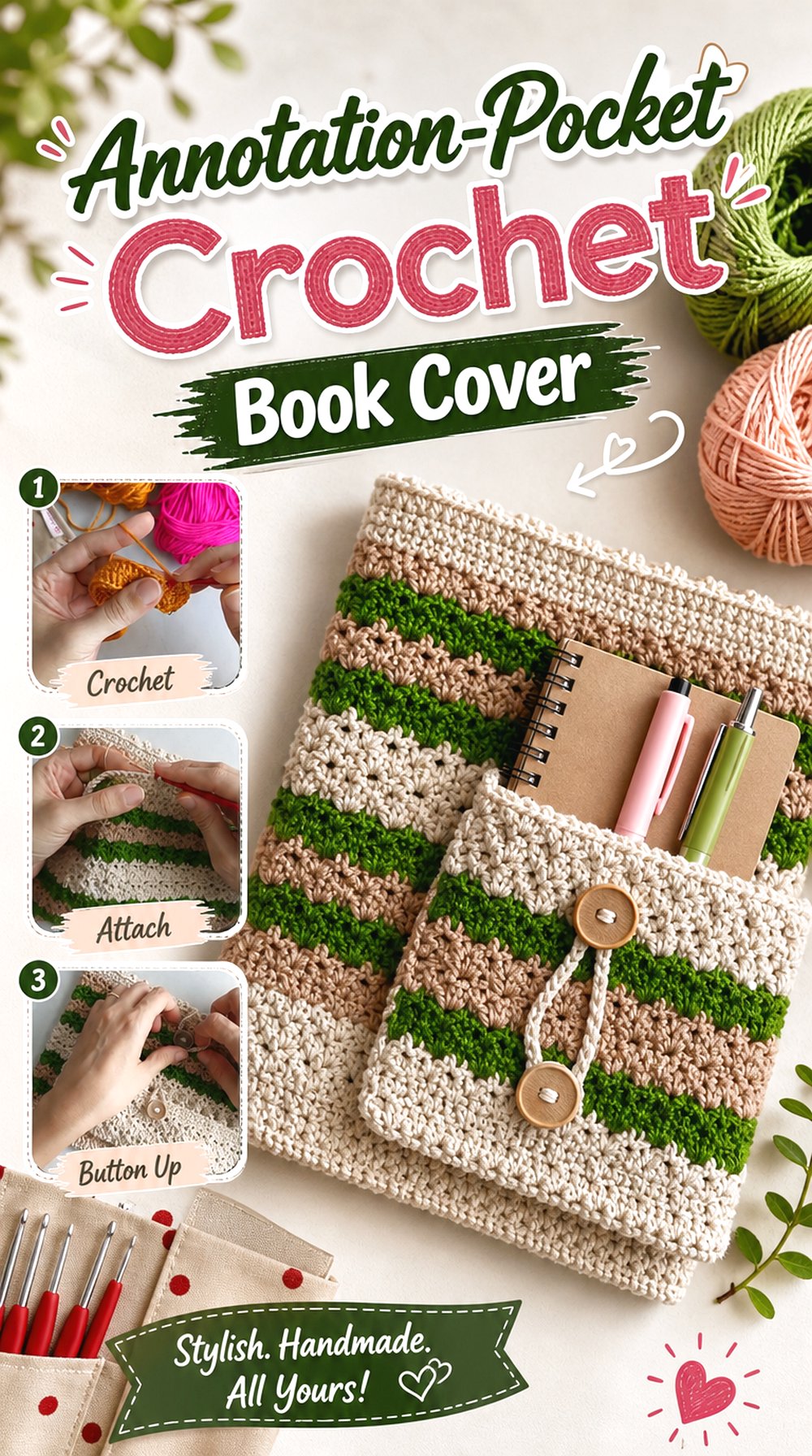
Readers who annotate as they go may prefer a book cover that stores a few reading tools with the book. Miss Padme – Lau’s tutorial includes a larger book area plus a smaller pocket intended for items such as pencils, markers, glasses, or other reading accessories, which gives this concept a clear functional identity.
For the dark-academia version, imagine charcoal with parchment edging, deep plum with brown, or moss with a subtle contrasting pocket. It can evoke a compact scholar’s folio, but the strongest version is one that remains selective about what it carries. A pocket that is visually attractive but permanently overfilled can defeat the purpose of protecting the book’s surface.
A Reading-Tool Pocket Works Best When It Stays Flat
Paper tabs, a slim bookmark, or other flat accessories have very different space requirements from bulky supplies. Before choosing what lives in the pocket, load it and look at the sleeve from the side. If the pocket visibly bulges toward the book, consider reducing what you store there. The extra compartment should support reading, not create a pressure point against the cover.
Keep Pens From Pressing Into the Book
Pens and markers can be useful companions, but their clips and hard barrels deserve careful placement. A pocket positioned outside a substantial crochet layer may help separate them from the book, yet the loaded sleeve should still be checked manually. If you carry a delicate paperback or dust jacket, placing rigid stationery in a separate bag compartment may remain the safer choice.
This Cover Favors Annotators Over Minimalists
If your normal reading routine involves only a book and one bookmark, the added pocket may be unnecessary. The design earns its extra structure when it replaces a loose pencil pouch or keeps essential annotation tools together. That makes it particularly suited to study sessions, literature classes, or commonplace-book habits rather than readers who want the thinnest possible sleeve.
Creator: Miss Padme – Lau
9. Vintage Composition Crochet Book Cover
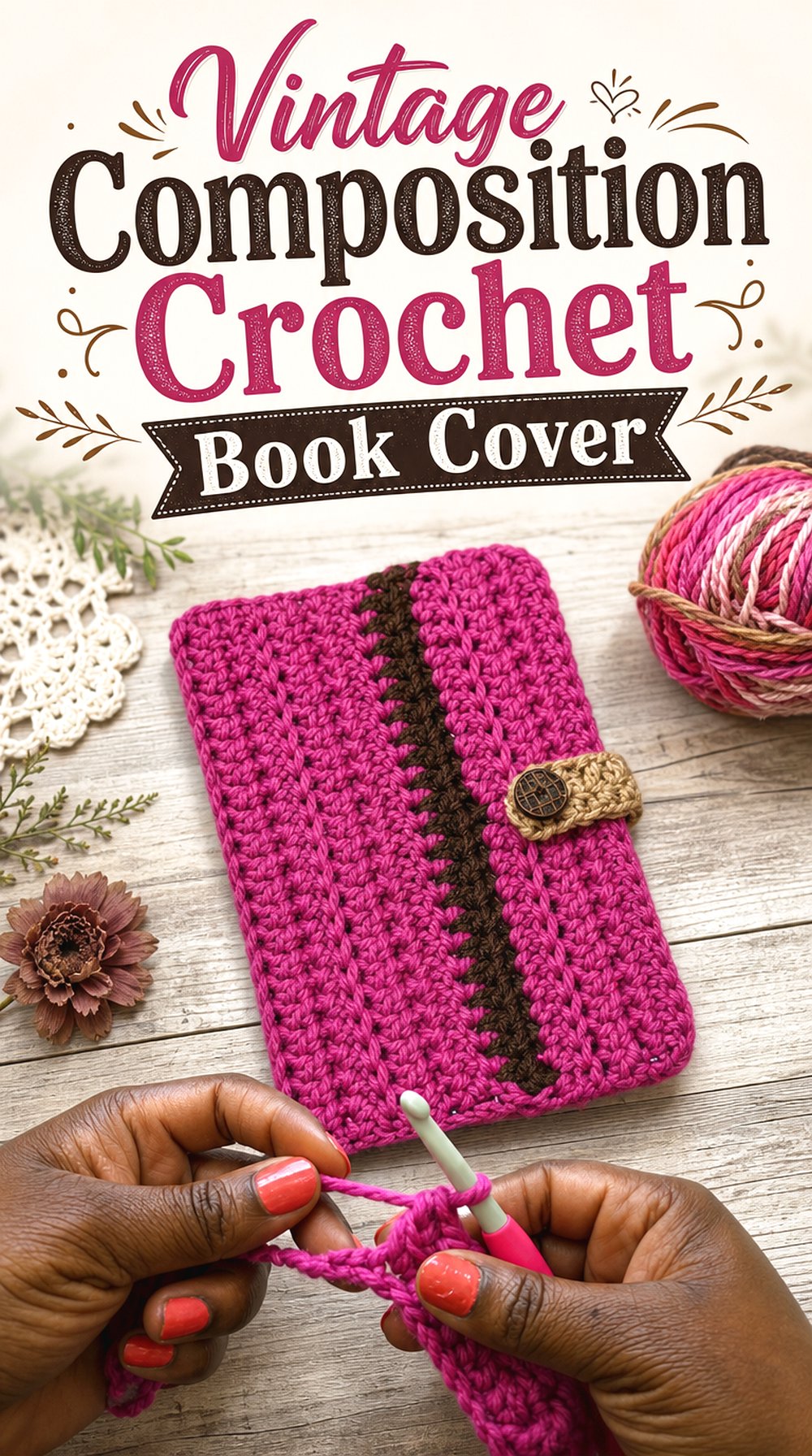
Unlike a pouch that comes off before reading, this concept behaves more like a fitted jacket for a notebook or composition book. Ahsel Anne by Felicia’s tutorial demonstrates a crochet composition-book cover, while the accompanying project information describes an adjustable sizing approach and a closure that helps secure the cover to the notebook.
That attached format suits dark academia particularly well because the crochet becomes part of the book while it is being used. Work it in library brown, ink black, burgundy, or muted olive for the feel of a clothbound journal. It is an especially natural choice for a reading journal, commonplace book, or class notebook rather than a novel that you constantly swap in and out.
A Fitted Jacket Stays With the Book
Because this style is intended to remain on the notebook, fit has to support opening and closing rather than only storage. Test the covered book fully open on a table. If the crochet pulls at the outer cover, the fit may be too restrictive. Conversely, overly loose sections can shift while writing. This makes functional movement a more useful checkpoint than judging the cover only while the book is closed.
The Closure Should Not Bow the Cover
A fitted closure needs enough tension to stay in place without forcing the notebook covers toward each other. Check it after the book is fully seated in the crochet cover. If closing requires pulling hard, revisit the fit rather than expecting the notebook to absorb the tension. For a dark-academia adaptation, a quiet button or cord treatment can preserve the vintage-journal look without overwhelming the surface.
Bookmark Details Should Move Freely
The project information also highlights bookmark functionality, which is useful for a notebook or journal that stays open to a current page. Keep any attached marker long and flexible enough to sit naturally between pages without pulling on the crochet cover. If you add a charm at the end, keep it light so the bookmark remains practical rather than turning into a weight that tugs at the binding.
Creator: Ahsel Anne by Felicia
10. Custom Fit Espresso Crochet Book Cover
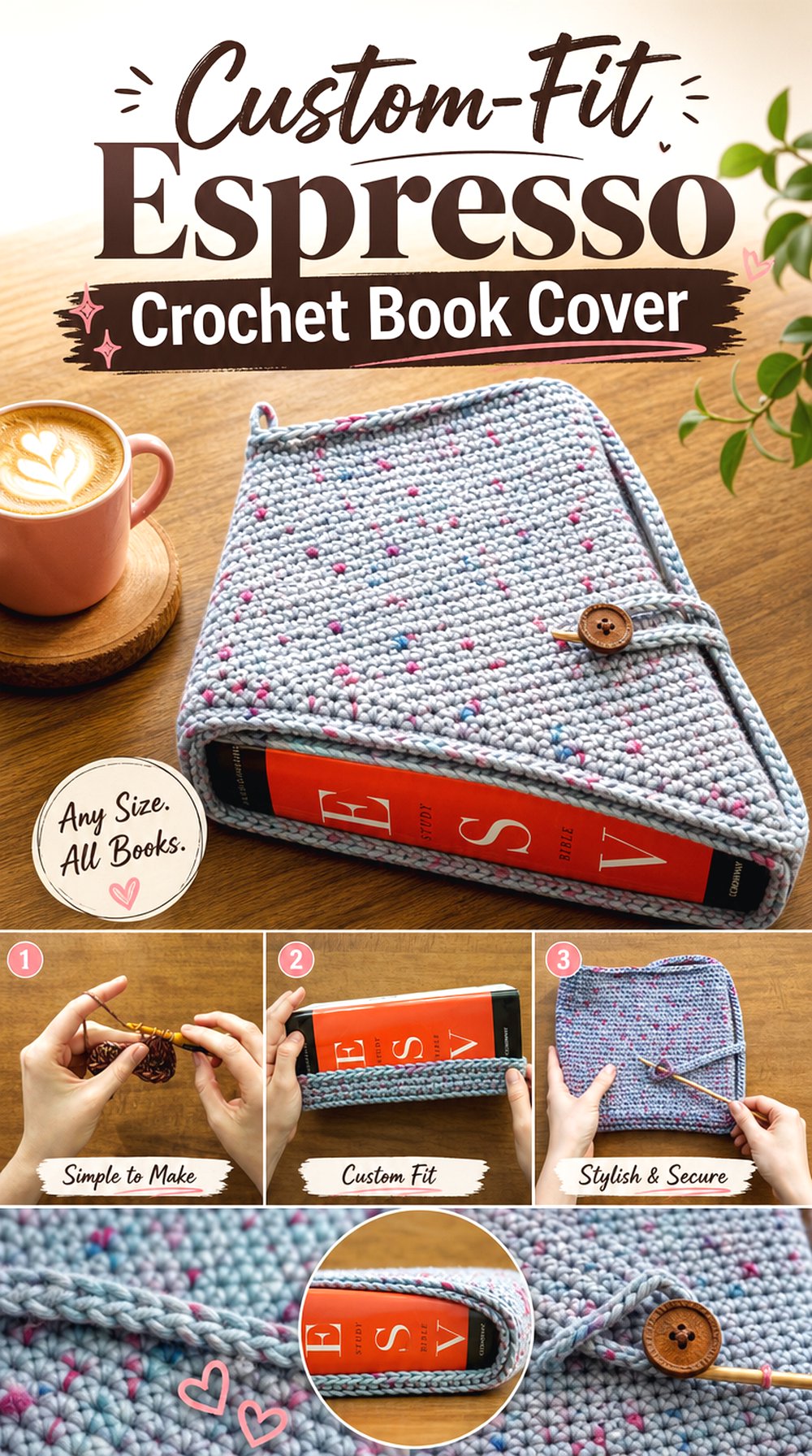
HayHay Crochet’s book-cover tutorial is organized around multiple book sizes and is presented as a design that can be made in different dimensions, with a strap included in the construction. That makes it a useful base for a restrained dark-academia cover intended for a specific favorite volume.
Rather than adding a large motif, let the fit and color do most of the work: espresso, peat, wine, dark navy, or parchment edging can make a plain cover feel like a small clothbound edition. This concept is useful when you want the crochet to conform closely to the book instead of functioning as an oversized pouch. It also makes sense for a special edition or journal that you repeatedly use rather than a sleeve shared among many unrelated sizes.
A Multi-Size Method Helps With Mixed Shelves
Books that are marketed under the same broad format can still differ noticeably in height and thickness. A tutorial that discusses more than one size is therefore a useful starting point, but your actual copy should remain the final reference. Compare the developing cover with the book at several stages rather than choosing a “medium” label and assuming it will translate perfectly.
Check the Cover Fit Before Adding the Strap
A strap can make the finished cover feel secure, but it should solve a closure need rather than compensate for poor sizing. Seat the book properly first and see whether the crochet lies flat without pulling. Only then evaluate how tightly the strap needs to hold. If the cover edges flare or the book bows when fastened, adjust the overall fit before treating the strap as the fix.
Keep the Palette Quiet for a Clothbound Effect
This is one of the stronger options for a nearly monochrome dark-academia look. A single espresso or deep wine shade can resemble a traditional clothbound volume, while a narrow contrast edge can suggest old binding tape. If using a very dark yarn, inspect the work in ordinary indoor lighting so you are comfortable with how much stitch definition remains visible.
Creator: HayHay Crochet
11. Oxblood Adjustable Crochet Book Sleeve
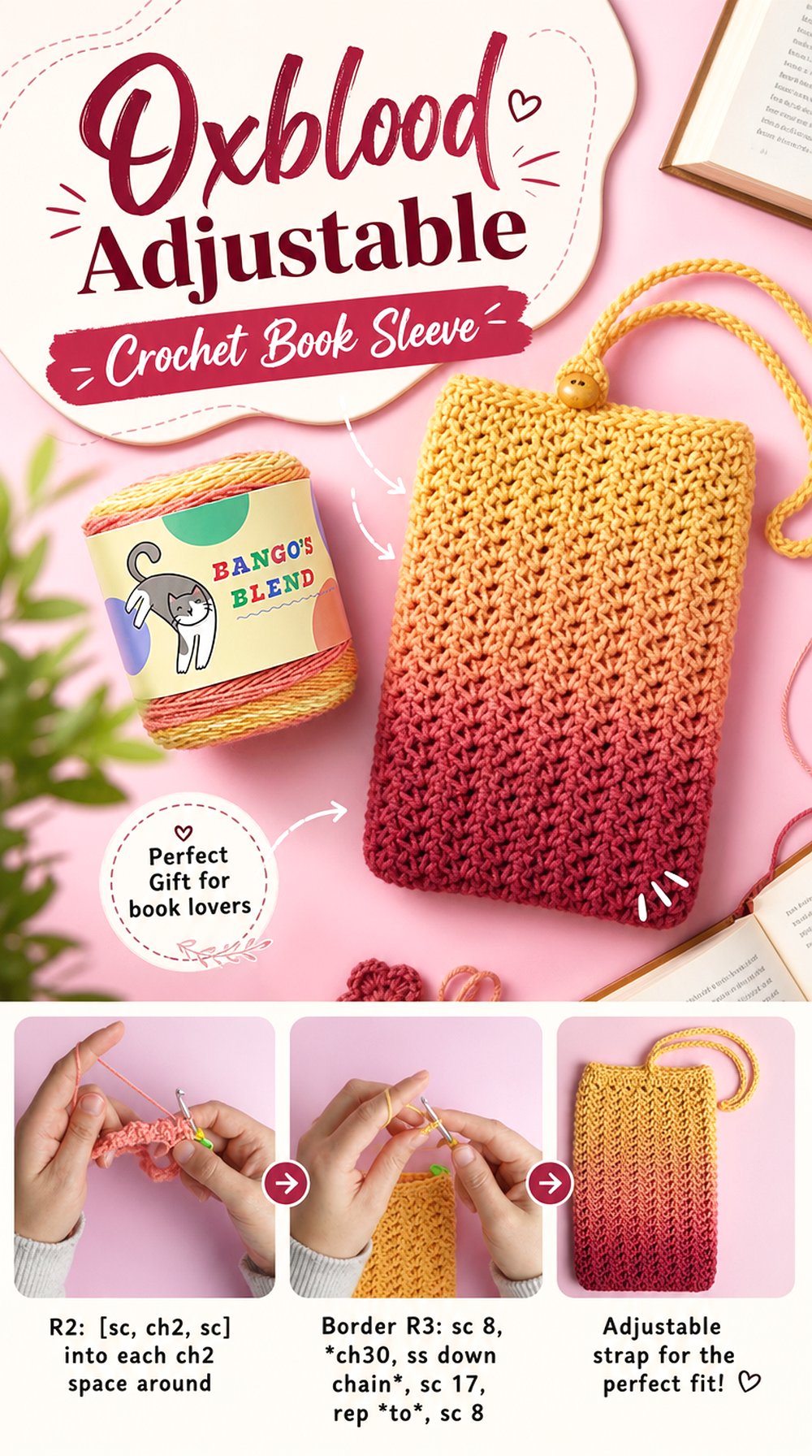
Hey It’s Mel B’s tutorial begins with a Kindle sleeve but explicitly notes that the sizing can be altered to create a crochet book sleeve, making it a useful adaptation choice for readers who want a slim, straightforward case. The dark-academia transformation can be almost entirely visual: oxblood, charcoal, dark green, or tobacco yarn with restrained finishing is enough to move the project away from a tech-accessory appearance.
This idea is deliberately simpler than the tapestry, pocketed, and waffle options. That makes it useful if you want the sleeve to disappear easily into a tote or backpack rather than become a small bag of its own. The most important adaptation is measurement, because a physical book’s spine changes the required depth in a way a flat electronic reader does not.
Recalculate for the Book Rather Than the Device
Do not transfer Kindle dimensions directly to a novel. Measure the closed book and account for its spine when judging whether the sleeve has enough room. Test insertion before final finishing: paperback corners should not curl inward, and hardcover boards should not need to be forced past the opening. The tutorial’s customizable premise is helpful, but the physical book still determines the useful finished fit.
Choose a Closure That Matches the Finished Thickness
The creator’s supporting information discusses customization, including closure options. When adapting the concept to a book, choose any closure only after checking how thick the loaded sleeve becomes. A closure positioned for a slim device may sit differently over a substantial paperback. Keep buttons or other hard components away from areas where they could repeatedly press into a delicate cover.
Slim Construction Keeps the Palette in Focus
Because this concept does not depend on a dramatic texture or illustrated motif, color can become the design statement. Oxblood feels literary and traditional without needing additional themed decoration. Charcoal with a narrow parchment trim can feel more austere, while deep moss reads softer. For a compact everyday sleeve, resist adding layers that undermine the advantage of its relatively simple form.
Creator: Hey It’s Mel B
12. Scholar’s Granny Square Crochet Book Sleeve
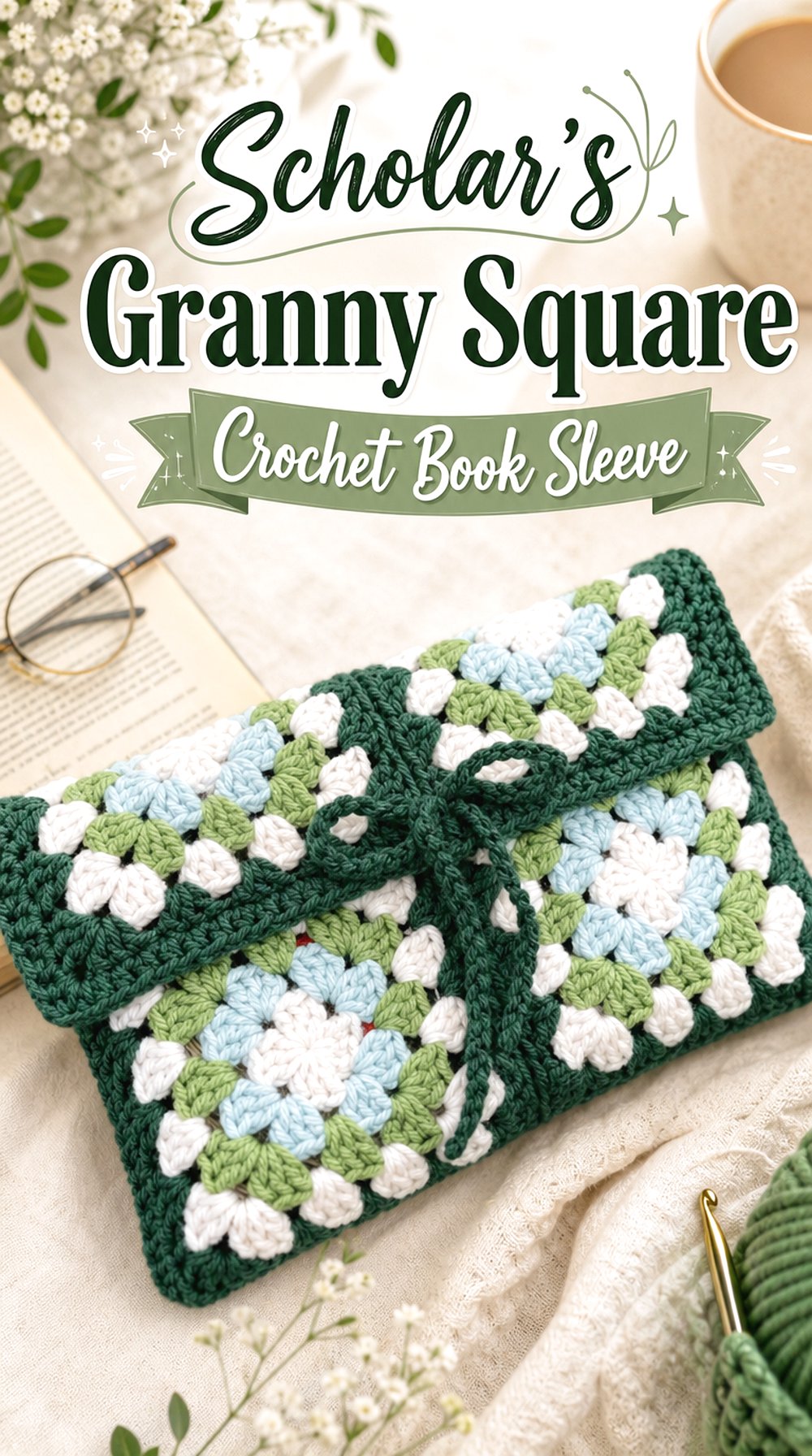
A granny-square sleeve gives the collection a modular option. Ashten Stitches demonstrates a book sleeve built around granny-square construction, which can be reinterpreted in a much more subdued palette than the cheerful combinations often associated with classic granny crochet.
For dark academia, consider adjacent shades rather than a rainbow: charcoal, brown, parchment, dark olive, muted rust, and wine can make individual rounds feel like sections of an old woven rug. The modular look is particularly attractive if you want visible joins and borders to become part of the design. It differs from the tighter tapestry option because the negative space and traditional motif structure remain visible rather than forming a continuous illustrated surface.
Open Motif Areas Deserve a Snag Check
Traditional granny-style fabric may contain more open space than a dense sleeve. Before using it in a bag filled with pens, zipper pulls, or keys, run your hand across both sides and look for areas likely to catch. A lining can be considered if snagging is a concern, but add it only after checking that the book will still slide in comfortably.
Blocking Helps the Motifs Meet More Cleanly
Modular pieces are easier to plan when their finished dimensions are consistent. If one square pulls wider or taller than another, joining can distort the sleeve or make the opening uneven. Bring the motifs to a consistent finished state before deciding whether their combined span suits the book. This is especially important if you change yarn, hook, or motif details from the tutorial’s original presentation.
Muted Color Reframes a Familiar Motif
A classic granny square does not automatically read as dark academia; the transformation depends on restraint. Reducing the number of high-contrast colors can make the geometry feel more like an antique blanket or reading-room textile. Try arranging the finished squares around the book before joining so dark areas are balanced rather than accidentally clustering on one side.
Creator: Ashten Stitches
13. Plum Library Crochet Book Sleeve Case
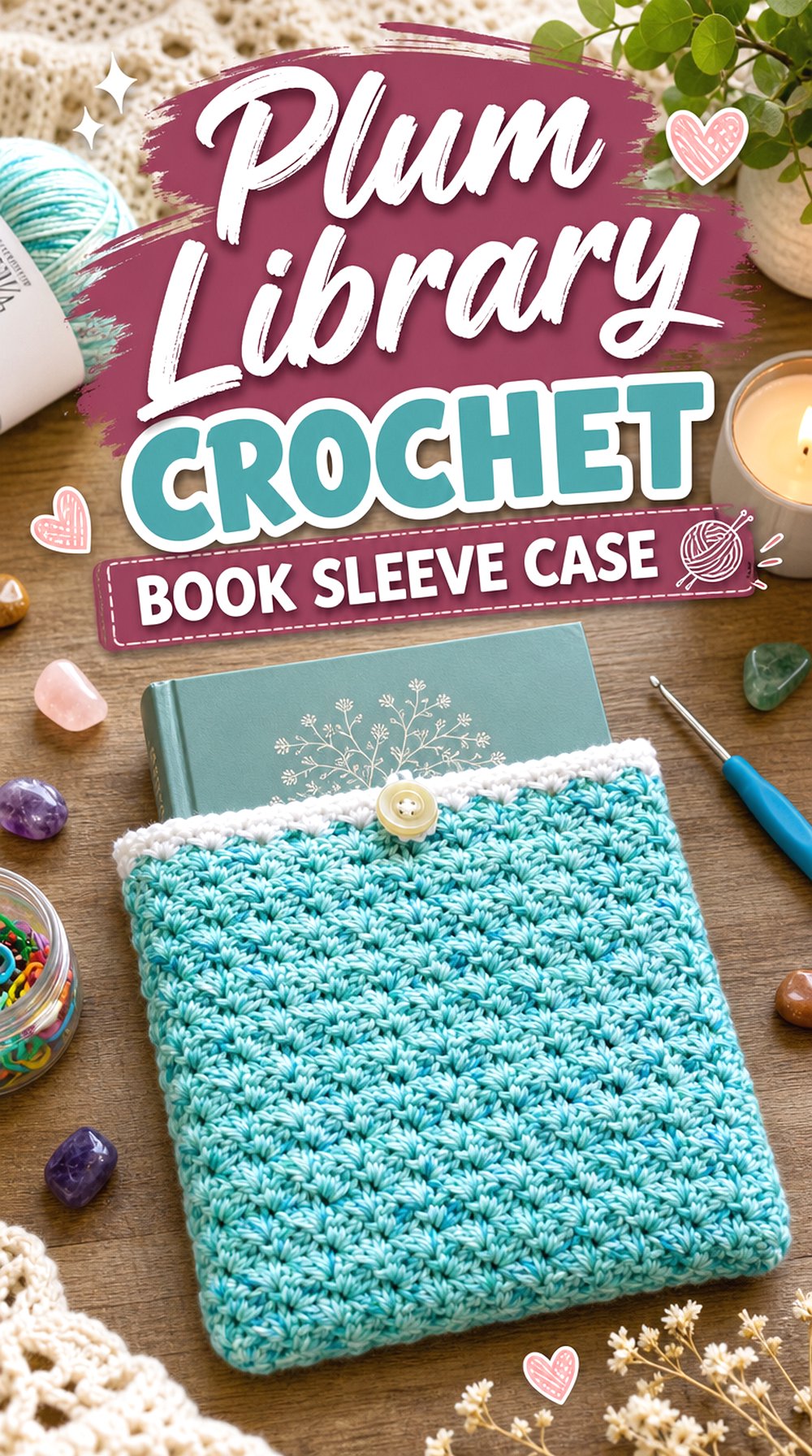
The final idea keeps the construction comparatively straightforward so the styling can be changed easily from book to book. Kayla of Chromatic Creations presents the project as a crochet book cover, sleeve, case, or pouch, providing a flexible reference for a classic removable book protector rather than a fitted jacket or multi-pocket bag.
A dark plum version can look particularly rich beside cream pages and brown leather-look accessories, while charcoal, forest, and espresso offer quieter alternatives. This is a useful choice if you like the dark-academia atmosphere but do not want checks, tapestry imagery, or dimensional waffle texture. Its relative simplicity also leaves room for one carefully chosen detail, such as understated edging or a small monogram-style appliqué.
Let Yarn Texture Do More Than Decoration
A simple case makes the yarn itself more noticeable. Smooth yarn can produce a cleaner, more book-cloth-like surface, while a lightly heathered or fuzzy option can feel softer and more aged. Neither effect is universally better. Choose based on whether you want crisp stitch definition or a quieter textile surface, and remember that extra fuzz can obscure small decorative details.
One Academic Accent Is Usually Enough
A tiny initial, narrow contrast stripe, faux-label shape, or simple embroidered line can reinforce the library theme without turning the case into costume décor. Choose one focal treatment and position it after checking where the book sits inside. Embellishment close to a fold or opening can distort more than decoration placed on a broad, flat panel.
Confirm the Opening Before Final Finishing
The top edge is the point the widest part of the book must repeatedly pass through. Test that motion before completing decorative finishing. Hardcover corners should clear the opening without scraping or stretching it excessively, and a paperback should not crumple at the edges. If the sleeve will be shared by several books, test the thickest realistic candidate rather than only the smallest volume.
Creator: Kayla | Chromatic Creations
Which Dark Academia Book Sleeve Style Fits Your Reading Routine?
For a sleeve that is primarily visual, the Oxford Check, Botanical Manuscript, Sealed-Letter, and Scholar’s Granny Square versions make the strongest statement without requiring extra carrying features. The Waffle and Tunisian options rely more on fabric texture and are good choices when you prefer a nearly monochrome palette.
Readers who annotate or carry their book independently may get more value from the Archive Pocket sleeve-bag or Annotation-Pocket cover. If you want crochet to remain on the book while reading, the Vintage Composition and Custom-Fit Espresso covers make more sense than a removable pouch. For something compact that can move between several books, the Oxblood Adjustable and Plum Library cases keep the concept simpler. The Wraparound sleeve sits between those groups: it remains a pouch, but its closure turns opening the book into part of the experience.
Conclusion
Dark academia does not require covering every book sleeve with obvious literary symbols. The strongest choices here come from matching construction to use first, then building the mood through color, texture, and one or two restrained details. Choose checks or botanical tapestry when you want the sleeve to be decorative, waffle or Tunisian crochet for pronounced textile character, pockets and straps for reading on the move, or a fitted cover for a journal or book that stays inside it.
Before committing, measure the actual book and think about where closures, pockets, and raised decorations will sit. Use the original tutorials linked with each idea for the creators’ exact construction details, then make aesthetic adaptations without sacrificing fit or everyday function.
Frequently Asked Questions
How snug should a crochet dark academia book sleeve be?
It should hold the book without requiring you to force the corners or bend the cover to insert it. A little usable ease is especially important around a thick spine. The correct amount depends on the crochet fabric’s stretch and the book’s shape, so test the actual book before final finishing. Dense tapestry, waffle, or Tunisian fabric may behave differently from a more flexible plain crochet sleeve.
Which yarn qualities work well for a dark academia book sleeve?
Look first at the fabric you want. Smooth yarn can help checks, borders, and botanical colorwork remain crisp, while heathered or slightly fuzzy yarn can create a softer old-textile effect. If structure matters, compare how much the swatch stretches under gentle handling. Also check the yarn manufacturer’s care guidance rather than assuming a finished sleeve is machine washable simply because it is crocheted.
Can I adapt a Kindle sleeve tutorial for a paperback book?
Yes, when the construction is suitable, but remeasure from scratch. A paperback has a spine and two flexible covers, while an electronic reader has a different thickness and edge shape. Check book height, cover width, and spine depth, then test the developing sleeve with the actual book. Hey It’s Mel B’s tutorial specifically notes that its Kindle sleeve concept can be customized into a book sleeve.
Should a crochet book sleeve have a fabric lining?
Not necessarily. A lining can be useful when the crochet fabric has open areas or when you want to reduce snagging against items inside a bag, but it also reduces interior space and changes how the sleeve flexes. Decide before making the outer sleeve extremely snug. For a granny-square design in particular, test the unlined sleeve with your normal bag contents before deciding whether the extra layer would improve its function.
Which closure is least likely to interfere with a book cover?
A soft, low-profile closure generally creates fewer hard contact points than bulky beads or large hardware, but placement matters as much as type. Close the sleeve with the actual book inside and feel where each component rests. Delicate dust jackets deserve extra care. A decorative closure on the outermost face may be harmless on a desk yet inconvenient when packed tightly against other objects.
How can I make a colorful tutorial look more dark academia?
Change the palette before changing the construction. Charcoal, espresso, oxblood, forest green, faded gold, plum, oatmeal, and parchment tones can dramatically alter the same underlying sleeve. Then decide whether the design already has enough visual interest from checks, texture, or motif work. Adding one restrained border, closure, or label-like accent usually preserves the academic mood better than layering several unrelated gothic decorations.