Burgundy can make crochet feel especially polished in fall because the color already has depth; the trick is pairing it with a project whose shape, texture, and finishing let that richness show. A clean V-neck vest creates a completely different effect from a slouchy hexagon cardigan, just as a compact baguette bag reads differently from a large everyday tote.
These 22 ideas cover wearables, accessories, bags, and home accents, with attention to the details that can make handmade work feel more intentional: controlled proportions, neat ribbing, substantial bag fabric, restrained texture, and careful finishing. The tutorials below were selected for their construction and finished form, so not every creator uses burgundy. When adapting one, compare your yarn with the tutorial requirements and confirm gauge, measurements, and material behavior before relying on the original sizing.
Quick List
- Crochet Burgundy Hexagon Cardigan
- Crochet Burgundy V-Neck Vest
- Crochet Burgundy Boxy V-Neck Sweater
- Crochet Burgundy Tie-Front Cardigan
- Crochet Burgundy Draped Poncho
- Crochet Burgundy Textured Triangle Shawl
- Crochet Burgundy Ribbed Tassel Scarf
- Crochet Burgundy Sculpted Beret
- Crochet Burgundy Everyday Beanie
- Crochet Burgundy Cable Ear Warmer
- Crochet Burgundy Fingerless Gloves
- Crochet Burgundy Leg Warmers
- Crochet Burgundy House Slippers
- Crochet Burgundy Structured Handbag
- Crochet Burgundy Paneled Shoulder Bag
- Crochet Burgundy Crossbody Bag
- Crochet Burgundy Baguette Bag
- Crochet Burgundy Diamond-Texture Throw
- Crochet Burgundy Cable Pillow Cover
- Crochet Burgundy Floor Storage Basket
- Crochet Burgundy Fringed Table Runner
- Crochet Burgundy Leaf Garland
What Makes Burgundy Crochet Look More Polished
Deep burgundy does not need much decoration to make an impact. In fact, designs often look more refined when the color is allowed to carry part of the visual weight. Strong silhouettes, even edges, defined ribbing, controlled texture, and thoughtfully proportioned accessories usually do more for the finished effect than adding several decorative elements at once.
Dark yarn can also make subtle stitches harder to see, especially in low light. If texture is the main feature—such as cables, raised ribbing, or a diamond surface—look for a burgundy yarn with enough stitch definition to keep those details visible. Highly fuzzy fibers can soften the texture, while a smoother yarn can make relief stitches and clean edges easier to read. Neither is automatically better; the right choice depends on whether you want softness or definition to dominate.
Match Yarn Behavior to the Finished Shape
A cardigan, shawl, and handbag should not necessarily behave the same way. Wearables generally need enough flexibility to move comfortably, while a compact bag benefits from fabric that does not immediately collapse or stretch under ordinary use. A basket or pillow cover has another requirement again: shape retention becomes more important than flowing drape.
When substituting burgundy into a tutorial, compare more than the printed yarn-weight category. Fiber content, twist, loft, and your own tension can change the final fabric. For garments, make a swatch large enough to evaluate drape as well as gauge. For bags and storage pieces, ask whether the fabric feels substantial enough for the intended contents. For raised textures, check the swatch in daylight before committing to a large quantity of very dark yarn.
Finishing Is Where the “Expensive” Effect Happens
Burgundy attracts attention to silhouette and finish, which means a wavy neckline, stretched strap, uneven fringe, or bulky join can become more noticeable than expected. Before fastening off a wearable, check both sides of the body, sleeve lengths, shoulder balance, and how the neckline sits while worn. Blocking should follow the yarn’s care requirements rather than being treated as a universal fix.
For accessories, make closure placement and strap attachment look deliberate rather than added as an afterthought. On home decor, straighten corners and compare finished dimensions before inserting a pillow form or placing a runner on a table. Small details such as evenly woven-in ends, consistent edging, and restrained hardware can make a simple solid-color project feel much more considered.
1. Crochet Burgundy Hexagon Cardigan
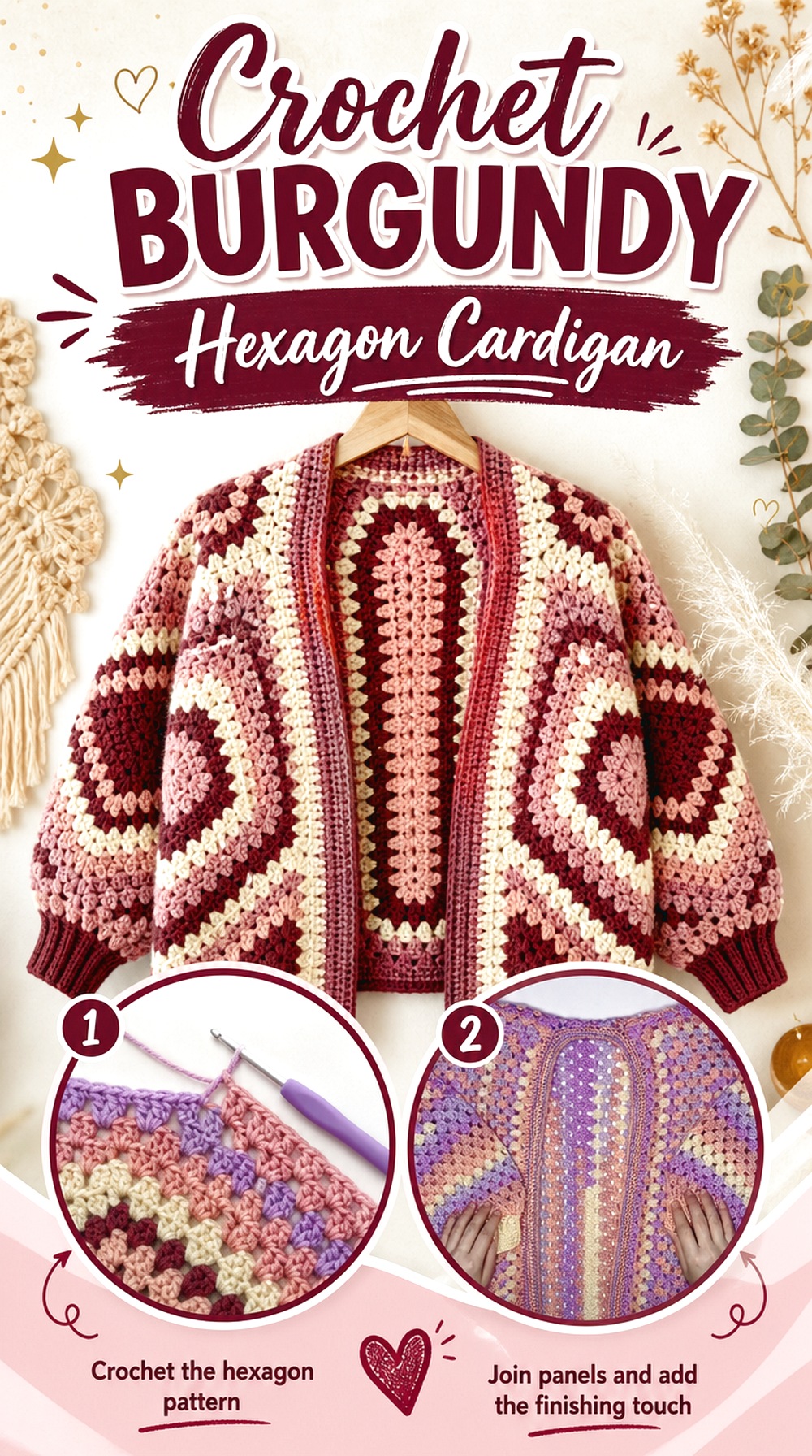
A hexagon cardigan gives burgundy a relaxed, oversized canvas without requiring the tailored appearance of a traditional paneled jacket. The recognizable folded-hexagon construction creates an open granny-style fabric and generous sleeves, making this a good choice when you want the color to feel cozy rather than formal. PassioKnit Kelsie’s tutorial demonstrates the cardigan form using the hexagon approach.
For a more elevated fall version, keep the palette solid or nearly solid and let the repeating openings provide the visual interest. Because this silhouette can grow substantially as the hexagons expand, decide how much ease and sleeve volume you actually want before assuming that bigger automatically means better.
Burgundy Makes the Open Fabric Feel More Tailored
Granny-style openings can look playful in multicolor yarn, while one deep burgundy changes the emphasis to the garment’s overall geometry. If you want a quieter finish, use the same shade through the main body and reserve any contrast for a very controlled border or cuff. That keeps the eye on the silhouette instead of breaking the cardigan into many competing sections.
Check Body and Sleeve Length Separately
A hexagon construction links several dimensions together, so increasing the main pieces can affect more than one part of the cardigan. Try the developing garment against your body before final finishing and pay attention to sleeve reach, back width, and intended overall length separately. If one area already fits, confirm how the tutorial handles further adjustments rather than simply continuing to enlarge everything.
Quiet Edges Balance the Generous Shape
Because the cardigan already has an open texture and roomy form, elaborate edging can make the finished garment busier. A restrained cuff or border gives the burgundy field a cleaner frame. Check that the edging tension does not pull the front opening inward or flare away from the body, especially if you switch hook size or yarn behavior for the finishing section.
Original Tutorial and Creator Credit
Creator: PassioKnit Kelsie
2. Crochet Burgundy V Neck Vest
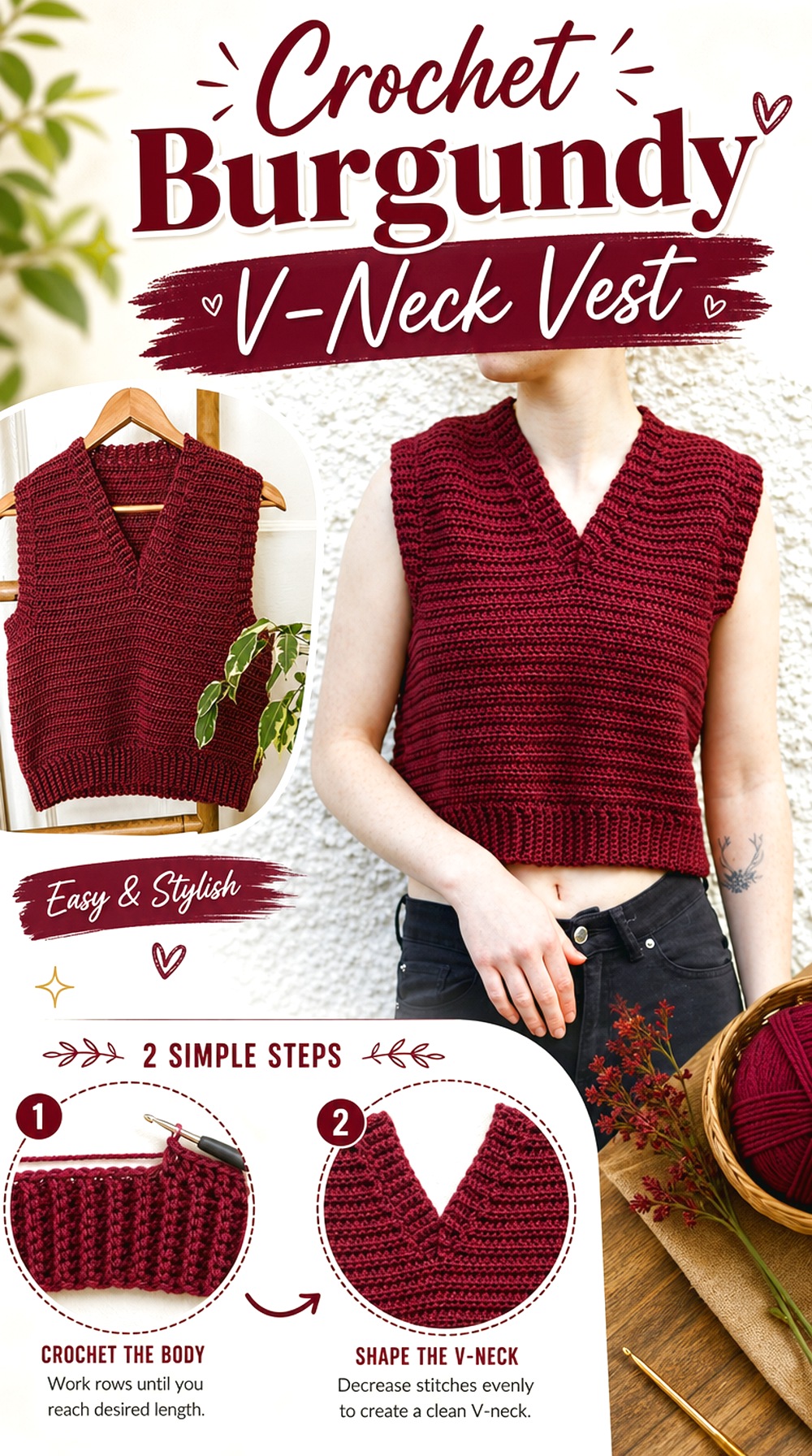
A fitted or lightly relaxed V-neck vest is one of the easiest ways to make deep burgundy feel more tailored. Crochet with Carrie’s design combines a defined V neckline with ribbed finishing and separate garment panels, giving the finished piece clearer structure than a loose openwork vest.
In burgundy, this style works particularly well as a fall layering piece over cream, charcoal, pale blue, or a crisp white shirt. The neckline and armholes are prominent visual features, so their proportions matter as much as the body fit. Before choosing a size, compare your measurements with the creator’s information and think about what you intend to wear underneath.
Let the V Neckline Do the Polishing
The V creates a strong central line, so it does not need additional embellishment to feel finished. In a solid burgundy version, neat neckline ribbing can become the main design detail. When trying on the vest, check whether the neckline sits flat and symmetrically on both sides rather than focusing only on bust width.
Fit the Armholes Before Final Finishing
An attractive body width does not guarantee comfortable armholes. If this will be layered over a long-sleeve shirt, leave room for that extra fabric and normal shoulder movement. Conversely, an overly large opening can make an otherwise tailored vest look unfinished. Use the tutorial’s sizing information and your intended layering piece together when judging fit.
Burgundy Works Best with Deliberate Layering
A deep vest can visually dominate an outfit, so simpler layers tend to keep the look clean. A pale shirt emphasizes the V shape, while a tonal burgundy or dark neutral base creates a quieter column of color. The important choice is intentional contrast: decide whether you want the vest neckline to stand out sharply or blend into the rest of the outfit.
Original Tutorial and Creator Credit
Creator: Crochet with Carrie
3. Crochet Burgundy Boxy V Neck Sweater
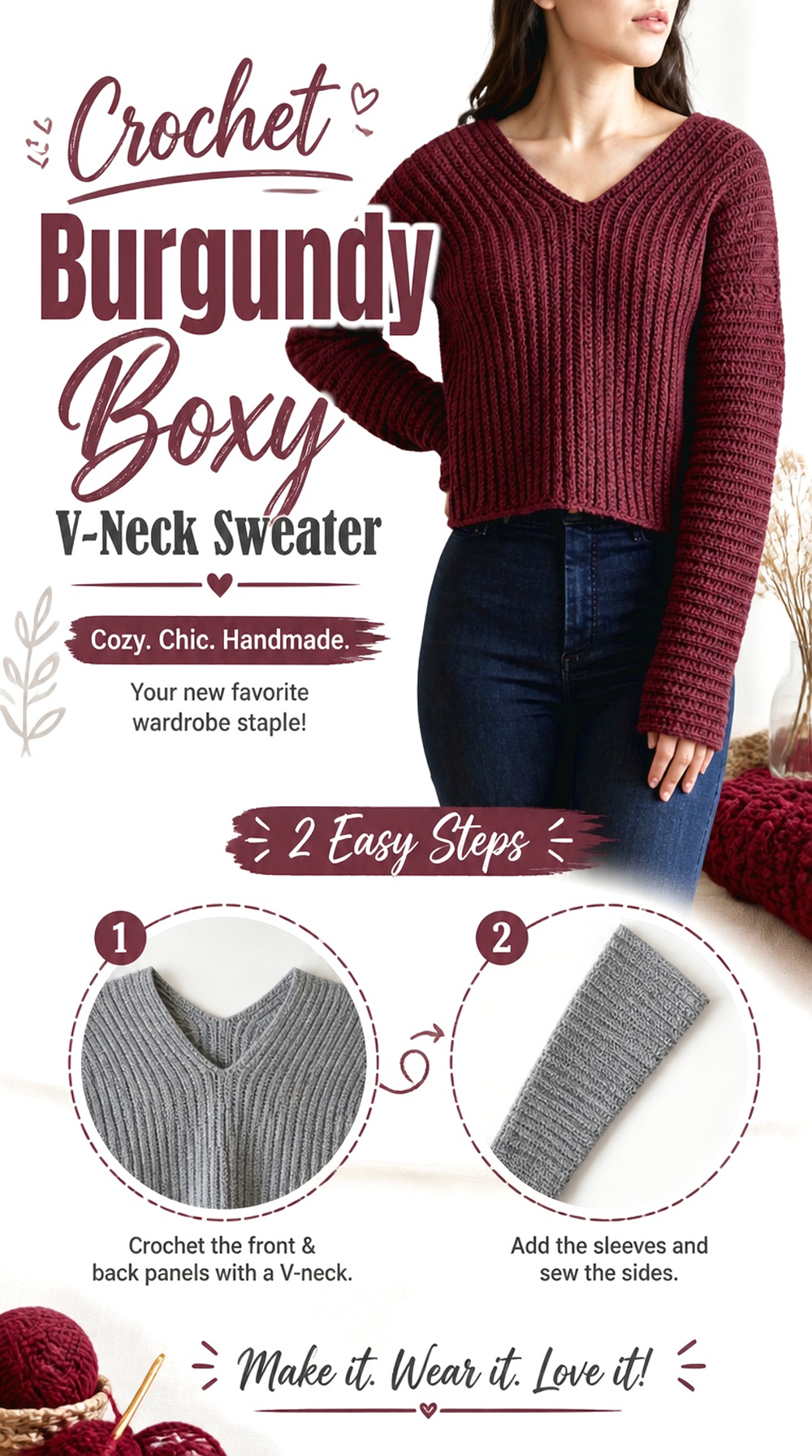
A boxy V-neck sweater gives burgundy more surface area while keeping the neckline open enough that the dark shade does not overwhelm the upper body. The forthefrills tutorial features a V-neck sweater with a relaxed, boxy silhouette and tapered sleeves, making it useful for a fall layer that feels substantial without needing elaborate colorwork.
The expensive-looking version is less about adding details and more about getting the proportions right. Aim for a body that drapes rather than stands away stiffly, sleeves that look intentional at the wrist, and a neckline that keeps its shape. If substituting yarn, judge the swatch for movement as well as stitch size.
A Boxy Shape Needs Drape, Not Just Width
Extra width can look effortless when the fabric falls vertically, but it can become bulky if the yarn is too rigid. Hold a washed or blocked swatch from one edge and see how naturally it bends. If it stays board-like, the finished sweater may feel more architectural than relaxed, regardless of whether the gauge numbers appear close.
The V Keeps Deep Burgundy Visually Lighter
The open neckline breaks up a large field of dark color and creates space around the face. Pay attention to how low and wide the V appears on your own frame rather than treating the sample neckline as universal. A camisole, shirt, or fitted turtleneck underneath can also change how much of the neckline remains visible.
Watch the Weight of Full-Length Sleeves
Crocheted sleeves can lengthen under their own weight depending on yarn and stitch structure. Before judging the final cuff position, consider how the garment hangs when worn rather than relying only on a flat measurement. If your substitute yarn is notably heavier or stretchier, periodic try-ons become especially useful.
Original Tutorial and Creator Credit
Creator: forthefrills
4. Crochet Burgundy Tie Front Cardigan
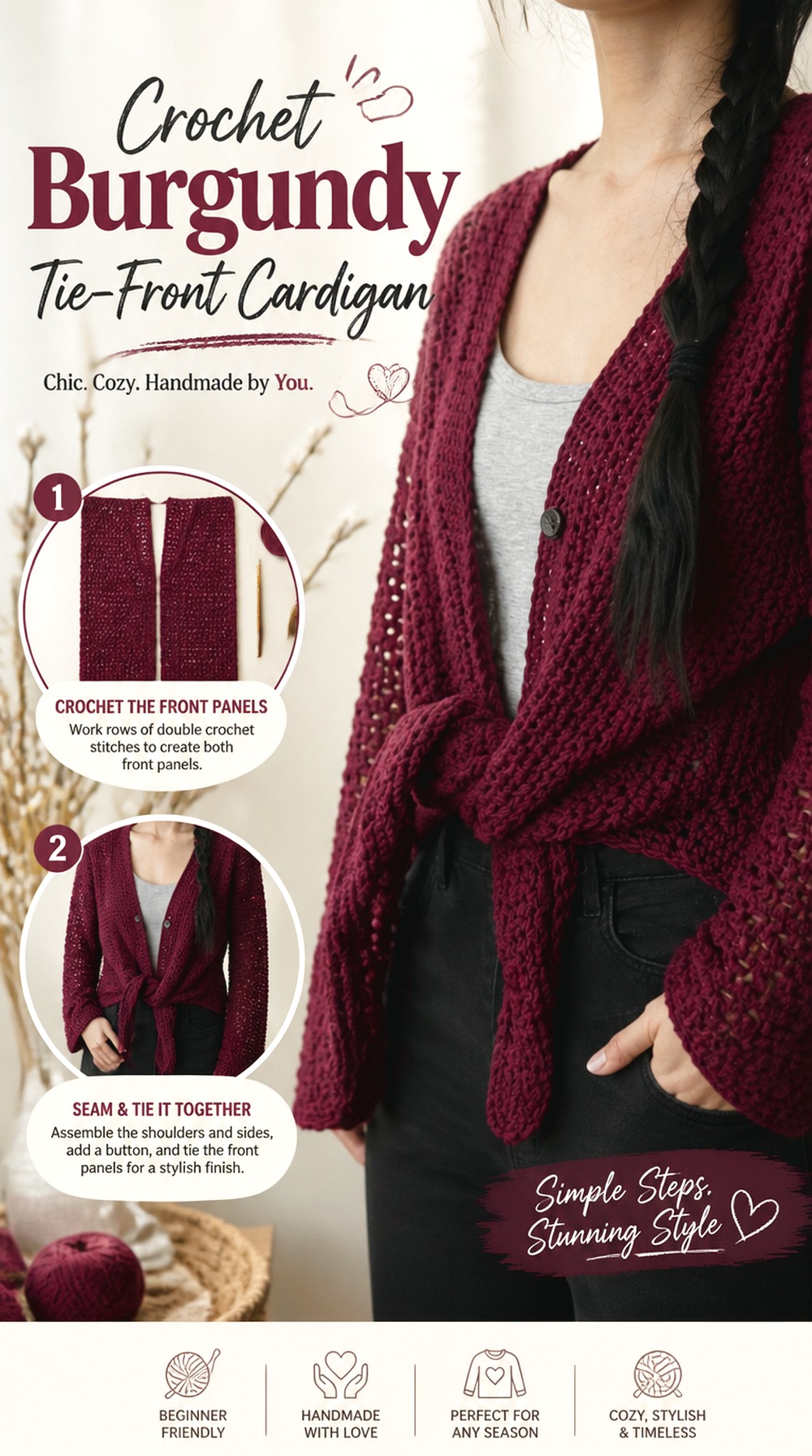
A tie-front cardigan gives burgundy a dressier, more deliberate shape than a loose open-front layer. TCDDIY’s tutorial centers on a front-tie cardigan, so the closure itself becomes part of the silhouette rather than an added fastening hidden at the end.
This is a strong option when you want a crochet piece that can work with high-waisted pants, skirts, or dresses without covering the entire outfit. In a solid wine shade, the front opening and ties create enough interest on their own. Check the body length and tie position against your natural waist before finalizing the garment, since small proportion changes can noticeably alter the styling.
Tie Placement Controls the Proportion
A tie that lands close to the natural waist can visually define the body, while a higher or lower placement changes the whole effect. Try the developing cardigan over the types of clothes you expect to wear underneath. That gives you a more realistic view of where the fastening should sit than evaluating the piece on a flat surface.
A Cropped Shape Benefits from a Crisp Hem
Shorter garments draw attention to their lower edge. If the hem ripples, flips, or pulls upward at one side, the issue can be much more obvious than on a long cardigan. Check the edge after the fabric has relaxed and correct tension inconsistencies before treating decorative additions as the solution.
Let One Burgundy Shade Simplify the Texture
A tie, shaped front, sleeves, and visible stitch texture already give the garment several design elements. Working those features in one burgundy family keeps the result cohesive. If you want contrast, a subtle tonal shift at the ties or edging is less visually disruptive than several high-contrast bands.
Original Tutorial and Creator Credit
Creator: TCDDIY
5. Crochet Burgundy Draped Poncho
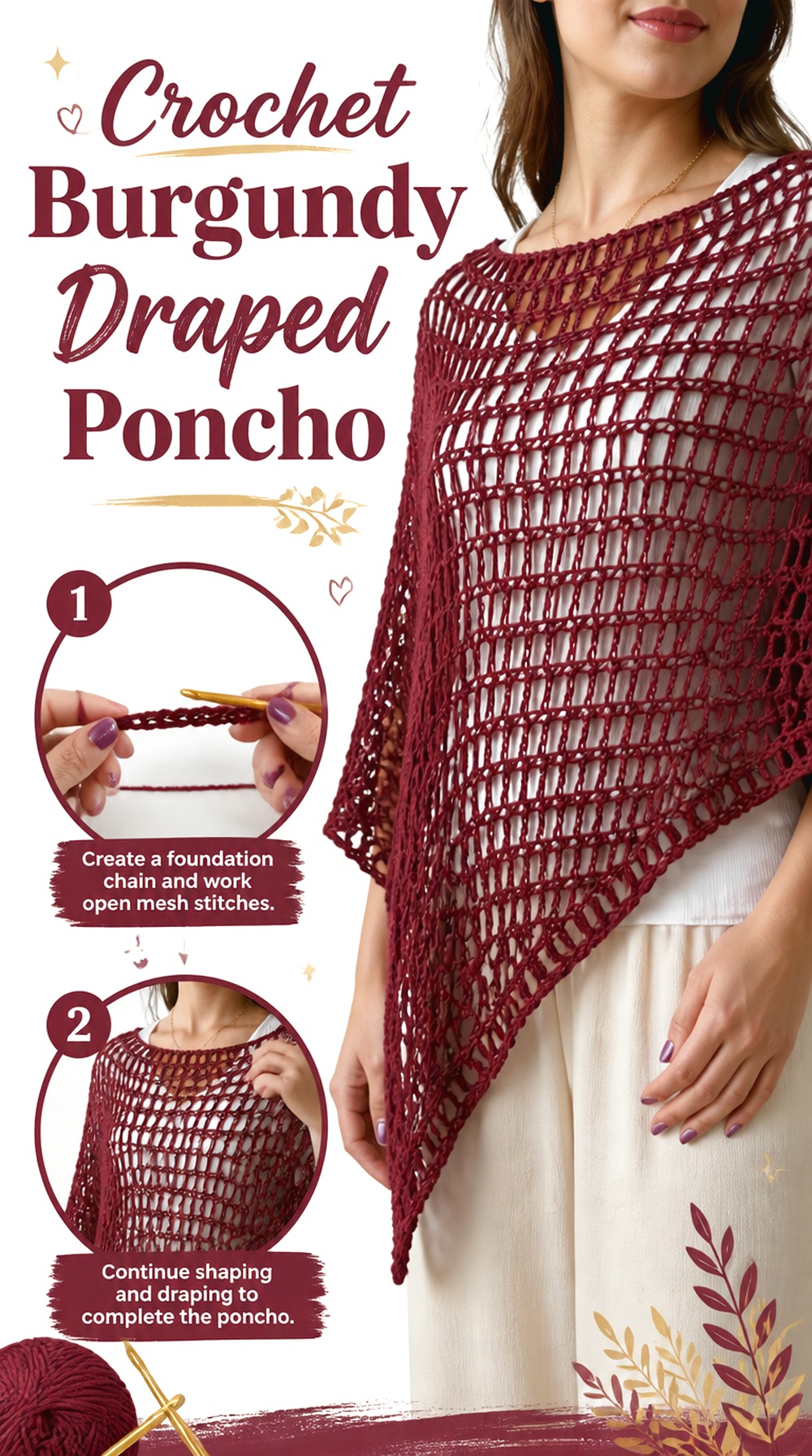
A burgundy poncho provides dramatic fall color with fewer fitted areas than a sweater or vest. Lorena’s tutorial uses a two-panel poncho approach and discusses adapting the piece to the desired dimensions, making it a useful starting point for readers who like broad drape and easy layering.
The large uninterrupted surface can look especially rich in a dark wine shade, but scale matters. Too much stiffness can make the garment stand outward, while excessive stretch can pull it longer than intended. Think about where you want the sides and points to fall when your arms are relaxed, then compare those preferences with the tutorial’s construction before choosing yarn.
Width Changes How the Poncho Moves
More width can create generous folds, but it also changes how much fabric sits around the arms and sides. Instead of planning only from a flat rectangle, consider how that width will behave when the panels are joined and worn. A sample garment or temporary pinning can help you judge whether the coverage feels elegant or simply bulky.
Dark Yarn Needs Enough Surface Definition
A completely flat-looking burgundy fabric may lose detail from a distance. Moderate texture or visible stitch rhythm gives daylight something to catch without turning the poncho into a heavily embellished piece. Before committing, photograph your swatch in both indoor and natural light; that quickly shows whether the stitch pattern is still readable in your chosen shade.
Original Tutorial and Creator Credit
Creator: Lorena
6. Crochet Burgundy Textured Triangle Shawl
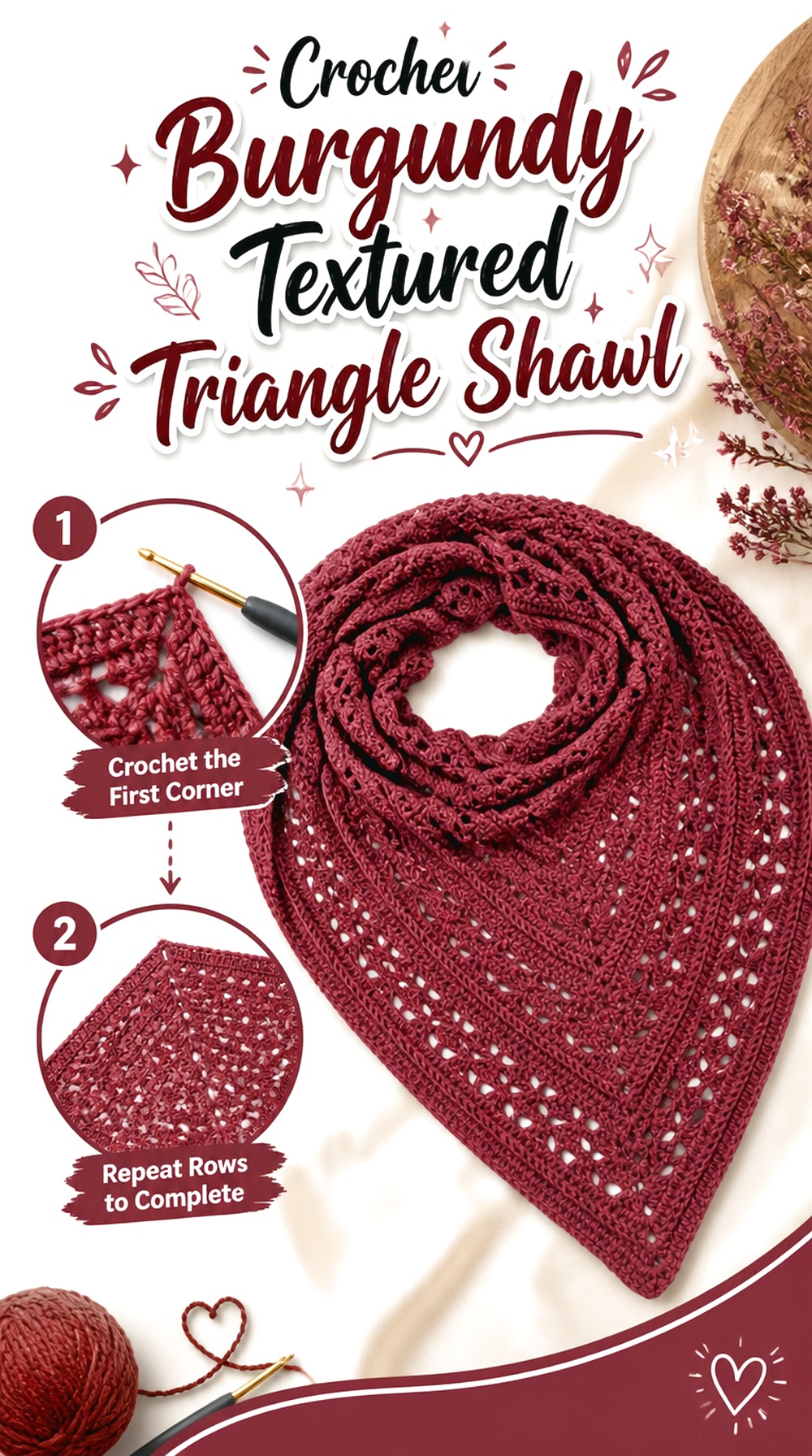
A triangle shawl lets burgundy look dramatic without committing to a fitted garment. The Wonderwall Shawl tutorial from Bag-O-Day Crochet provides a clear shawl project with enough visible surface pattern to keep a single dark color interesting.
This idea works well over a neutral coat, dress, or sweater because the pointed shape naturally creates long visual lines. For a more refined effect, avoid crowding the edge with too many unrelated trims. The main decisions are drape and finished scale: the shawl should be large enough for your preferred styling but still soft enough to wrap without forming stiff folds around the shoulders.
Triangle Drape Should Remain Fluid
A shawl is repeatedly folded, wrapped, and allowed to hang, so judge a yarn by how it moves rather than how substantial the skein feels. A yarn that produces an attractive structured bag may be less comfortable here. Swatch the stitch pattern and bend the fabric in several directions before deciding whether the fiber suits a wearable wrap.
One-Color Shawls Put More Focus on the Edge
Without stripes or color changes, the outline becomes an important finishing feature. Check the long edges for consistent tension as the shawl grows and make sure the center line remains visually balanced. An orderly border can finish the piece beautifully, but it should complement rather than overpower the texture already present.
Original Tutorial and Creator Credit
Creator: Bag-O-Day Crochet
7. Crochet Burgundy Ribbed Tassel Scarf
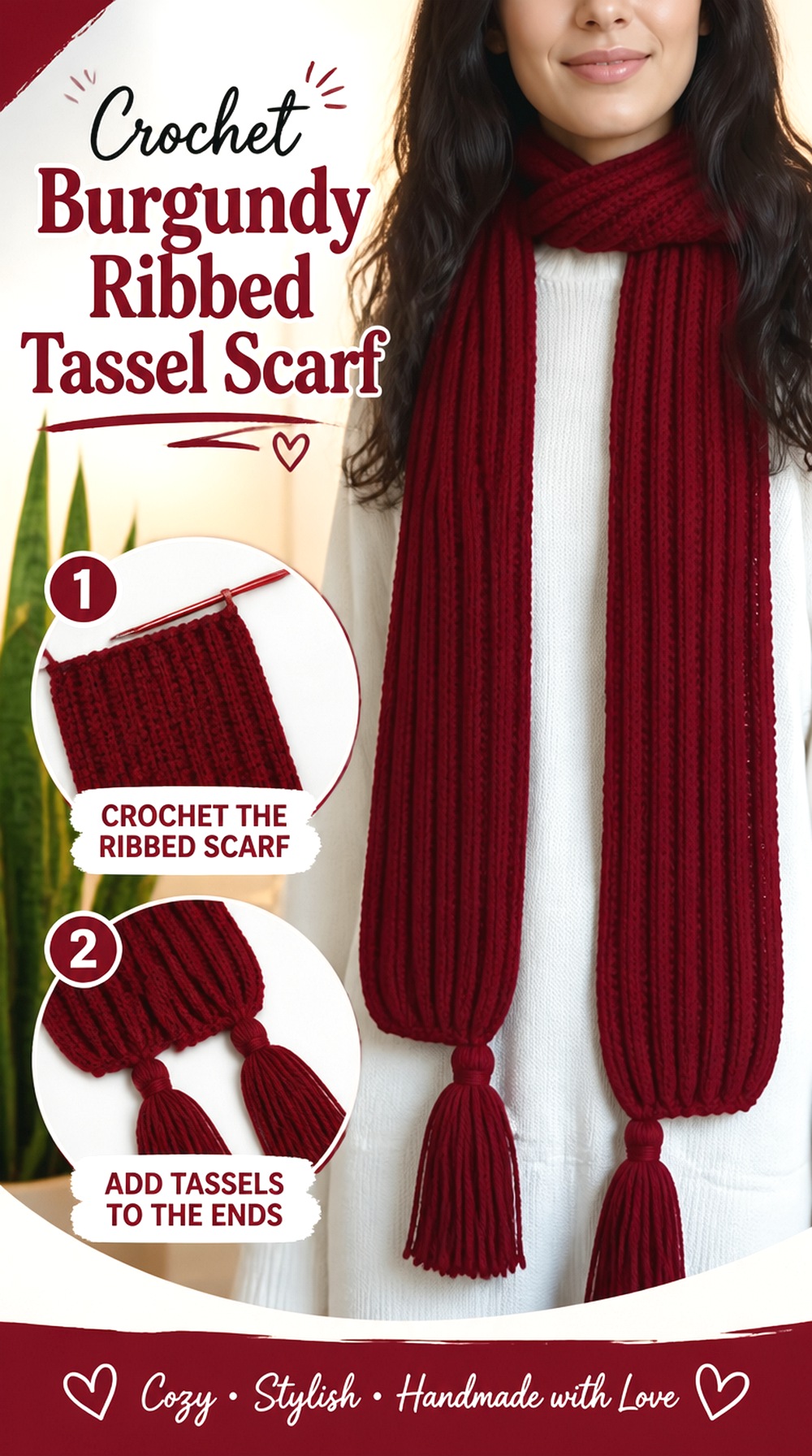
A ribbed scarf is simple enough to make deep burgundy the star. VivCrochets’ tutorial combines a ribbed surface with tassels, offering two strong visual cues—linear texture and a finished fringe—without requiring complicated color changes.
For an elevated fall version, pay close attention to consistency. Straight side edges, an even rib pattern, and tassels that look deliberately matched will matter more than adding decorative extras. The scarf can also be adapted in overall dimensions, but remember that changing width and length changes weight and how many times it can wrap. Plan around how you actually wear scarves rather than copying a proportion automatically.
Ribbing Creates the Main Luxury Cue
Strong vertical or horizontal ribs can resemble the orderly texture associated with classic cold-weather knitwear. Burgundy reinforces that effect, especially when the yarn has enough definition to keep each ridge visible. If the swatch looks fuzzy enough to blur the ribbing, decide whether the added softness is worth giving up some of that crisp visual structure.
Tassels Need Deliberate Scale
Long tassels create more movement and a casual impression; shorter, dense tassels can feel more restrained. Whatever proportion you choose, compare all bundles before attaching them so one end does not appear visually heavier. If you prefer an especially minimal scarf, the ribbing is strong enough that omitting tassels can also be a coherent adaptation.
Original Tutorial and Creator Credit
Creator: VivCrochets
8. Crochet Burgundy Sculpted Beret
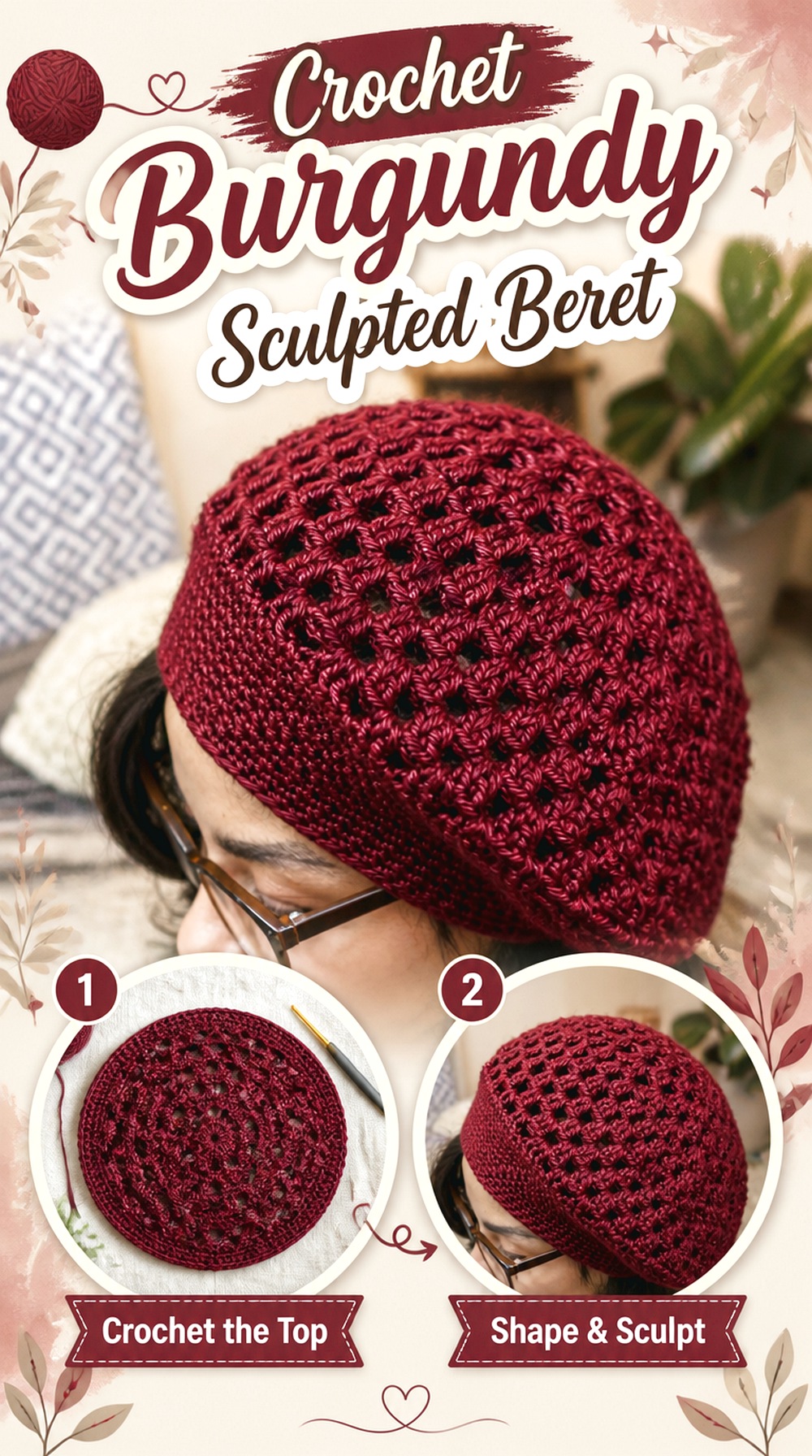
A beret gives burgundy a distinctly fashion-focused use. Littlejohn’s Yarn demonstrates a crochet beret with textured stitch work, creating a project where shape matters as much as color.
Unlike a basic beanie, a beret needs enough volume above the band to create the recognizable soft crown. The expensive-looking result is not necessarily the stiffest or most embellished version; it is one where the crown settles gracefully and the lower band looks intentional. Burgundy works beautifully here because the saturated color emphasizes the silhouette while staying easy to pair with camel, cream, gray, navy, or black outerwear.
The Crown Determines the Beret Character
A fuller crown produces more drape, while a restrained crown sits closer to the head. Neither is universally preferable. Look at the creator’s finished shape and decide whether that amount of volume suits the way you intend to position the hat before modifying yarn or gauge.
Keep the Lower Band Secure, Not Harsh
The band needs to support the crown, but a tight edge can be uncomfortable and distort the intended shape. Check fit where you actually plan to wear the beret—higher on the forehead, tilted, or farther back—because the useful circumference can change with placement.
Original Tutorial and Creator Credit
Creator: Littlejohn’s Yarn
9. Crochet Burgundy Everyday Beanie
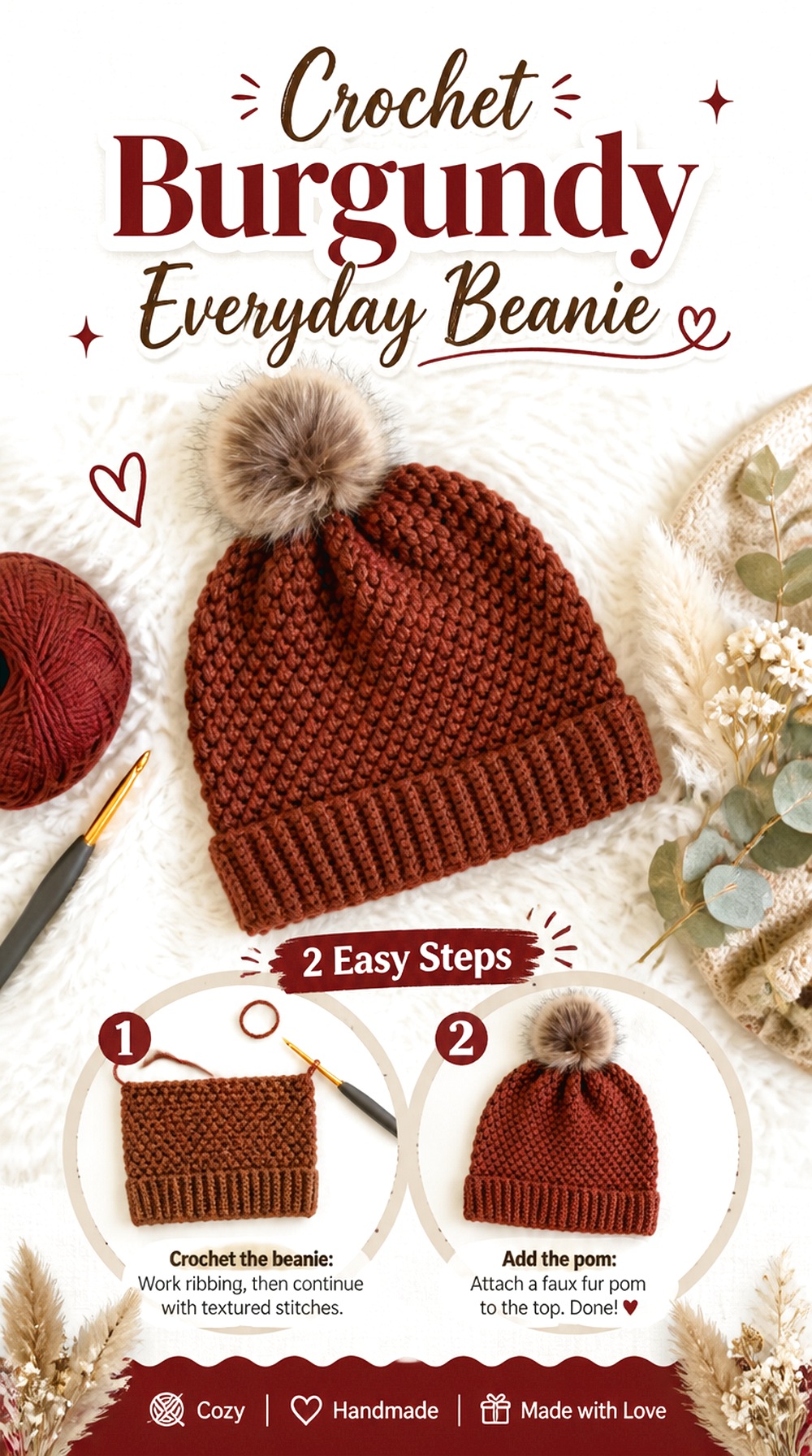
A simple beanie gives you nowhere to hide uneven finishing, which is exactly why it can look so polished when the basics are handled well. The crochetdreamz tutorial demonstrates an easy crochet beanie and includes multiple sizing options, making it a practical reference for a streamlined fall hat.
In burgundy, keep the visual focus on a smooth crown, consistent fabric, and an orderly lower edge. This style works when you want an accessory that supports a fall outfit rather than becoming its most decorative element. Before starting, use the creator’s sizing guidance rather than assuming that head circumference alone tells you how the finished fabric should fit.
A Minimal Beanie Exposes Every Finish
With no large motif or brim to distract the eye, joins, crown shaping, and the lower edge become prominent. Dark yarn can conceal small details at first glance, but good finishing still affects the overall silhouette. Check the hat from several angles before weaving in the final ends.
Decide on Slouch Before Final Length
A close-fitting beanie and a slouchier one use extra length differently. Determine which look you want before extending the body, and remember that the yarn itself may relax after wear or appropriate finishing. Use the tutorial’s construction as your baseline rather than adding length without checking what it does to crown placement.
Original Tutorial and Creator Credit
Creator: crochetdreamz
10. Crochet Burgundy Cable Ear Warmer
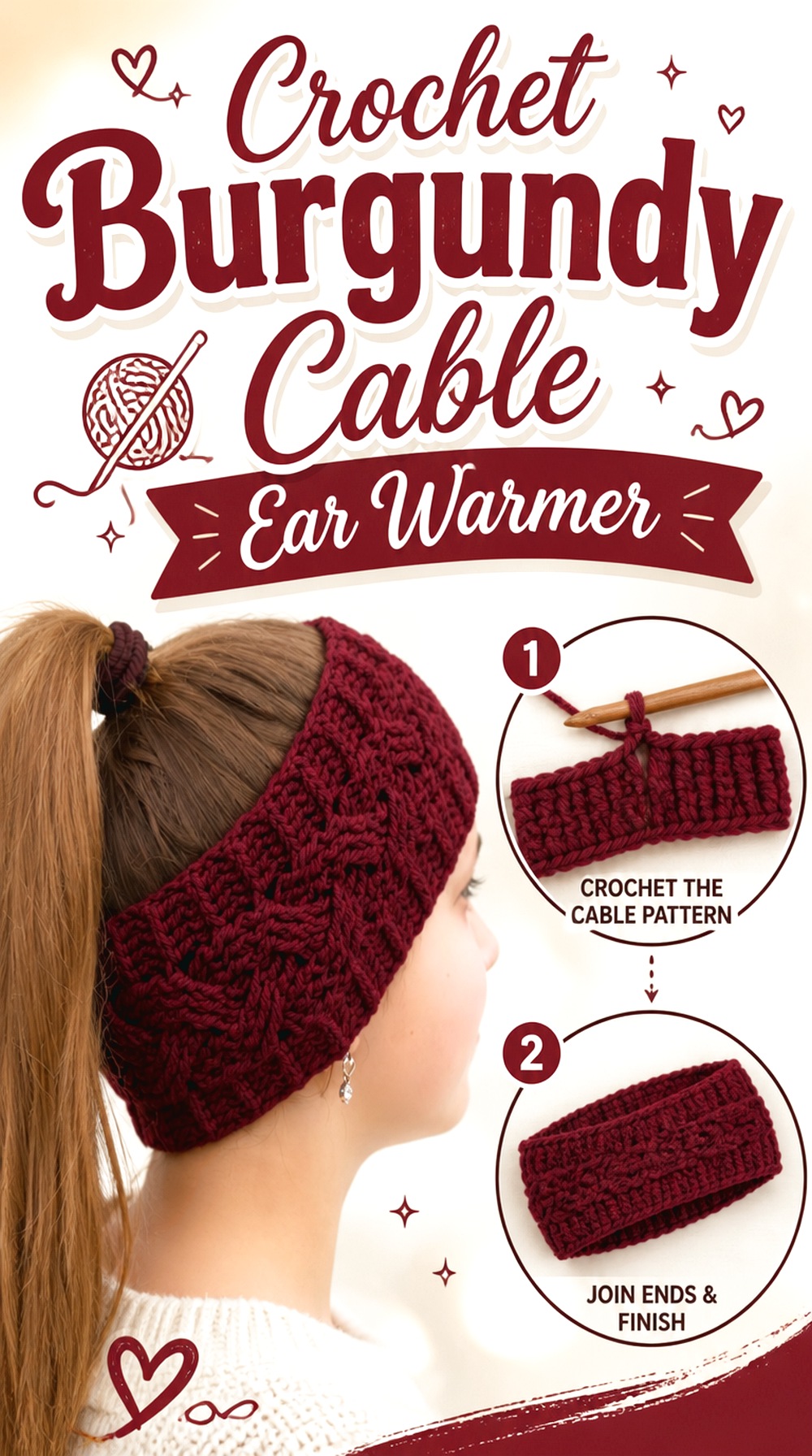
A cable ear warmer gives burgundy enough raised texture to look substantial while keeping the project small and wearable. Kristina Crochet’s tutorial focuses on a crochet cable headband or ear warmer, making this idea distinct from both a hat and a plain ribbed headband.
The cable should remain the focal point. A smooth burgundy yarn with strong definition will usually reveal the crossings more clearly than a halo-heavy fiber. Since the piece sits directly around the head, comfort also matters: the finished band should stay in place without relying on an excessively tight fit.
Cable Relief Needs Light to Read
Deep wine shades absorb visual detail, so examine the swatch in natural daylight. If the cable is difficult to distinguish even under good light, consider a slightly brighter burgundy or a yarn with a cleaner surface. The goal is not maximum contrast; it is enough shadow and highlight for the relief to remain visible.
Ear Coverage Matters More Than Decorative Width
A beautiful central cable does not help if the finished band sits too high or leaves the lower ear exposed when warmth is the purpose. Compare the band height and placement with how you actually wear your hair and outerwear, and check that the edge does not roll away from the head.
Original Tutorial and Creator Credit
Creator: Kristina Crochet
11. Crochet Burgundy Fingerless Gloves
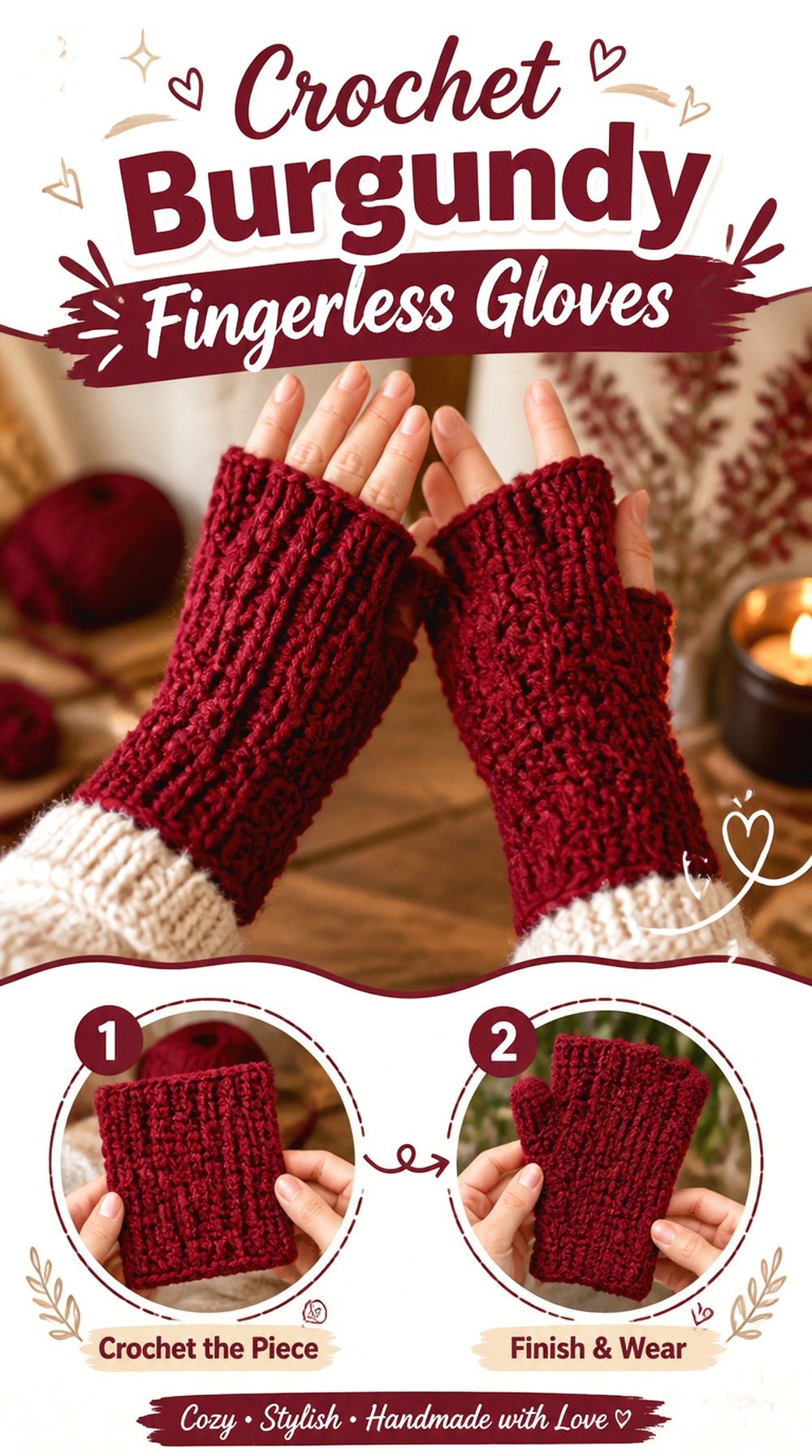
Fingerless gloves offer a smaller way to bring burgundy into a fall wardrobe and work especially well when you want texture without the bulk of a large accessory. sweetloopdreams has a dedicated fingerless-glove tutorial, giving you a clear project reference rather than asking you to adapt a mitten or sleeve pattern.
For a polished pair, consistency between the two gloves is the main challenge. Match not just finished length but also fabric tension, thumb placement, and the position of any seam. Burgundy makes a strong monochrome statement, so there is little need for extra appliqués unless they genuinely suit your style.
Matching Tension Matters Across the Pair
A small difference in tension can make one glove feel noticeably tighter than the other. If you crochet the pieces on different days, periodically lay them together and compare width and length rather than waiting until both are finished. That simple checkpoint is especially useful when the construction is worked flat before joining.
Check Thumb Placement Before Closing the Seam
Hand proportions vary, and a thumb opening that looks correct on a flat rectangle may sit awkwardly once the glove wraps around the hand. Temporarily pin or hold the edges together and test the placement before finishing the seam. Comfort around the thumb base is more important than forcing the sample proportions to fit.
Original Tutorial and Creator Credit
Creator: sweetloopdreams
12. Crochet Burgundy Leg Warmers
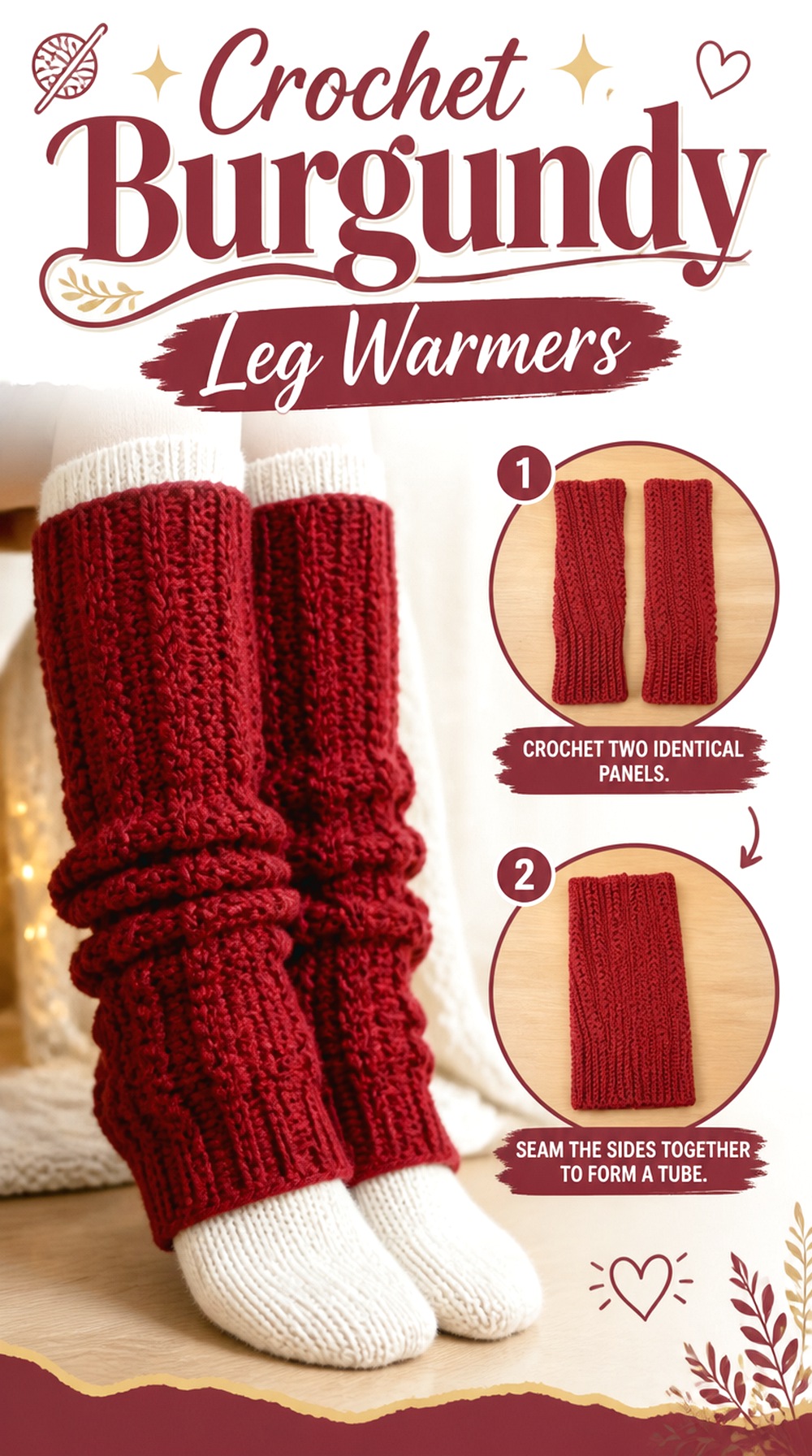
Burgundy leg warmers can make a simple boot-and-skirt or leggings outfit feel much more deliberately styled for fall. Simply Angel Tiah’s tutorial is especially relevant because the demonstrated leg warmers themselves use a burgundy shade, giving a direct visual reference for the color on the finished accessory.
The key is controlled volume. You may want soft folds around the ankle, but the upper portion still needs to stay where you intend it to sit. Rather than copying a length blindly, compare the project with your calf circumference, footwear, and whether you prefer the warmers pulled high or gathered lower.
Aim for Soft Stacking Instead of Sagging
Extra length can create attractive folds, but fabric that is simultaneously too loose and too heavy may slide rather than stack. Test the developing tube vertically on the leg. If the folds collapse immediately toward the ankle, reconsider fit or yarn behavior before adding even more length.
Make the Upper Edge Comfortable
A top edge that grips aggressively can leave the accessory unworn, while an edge with too little recovery may not stay in place. Evaluate the actual fabric around the intended wearing point instead of treating the calf as a uniform cylinder. Your preferred shoes or boots can also affect how the lower portion sits.
Original Tutorial and Creator Credit
Creator: Simply Angel Tiah
13. Crochet Burgundy House Slippers
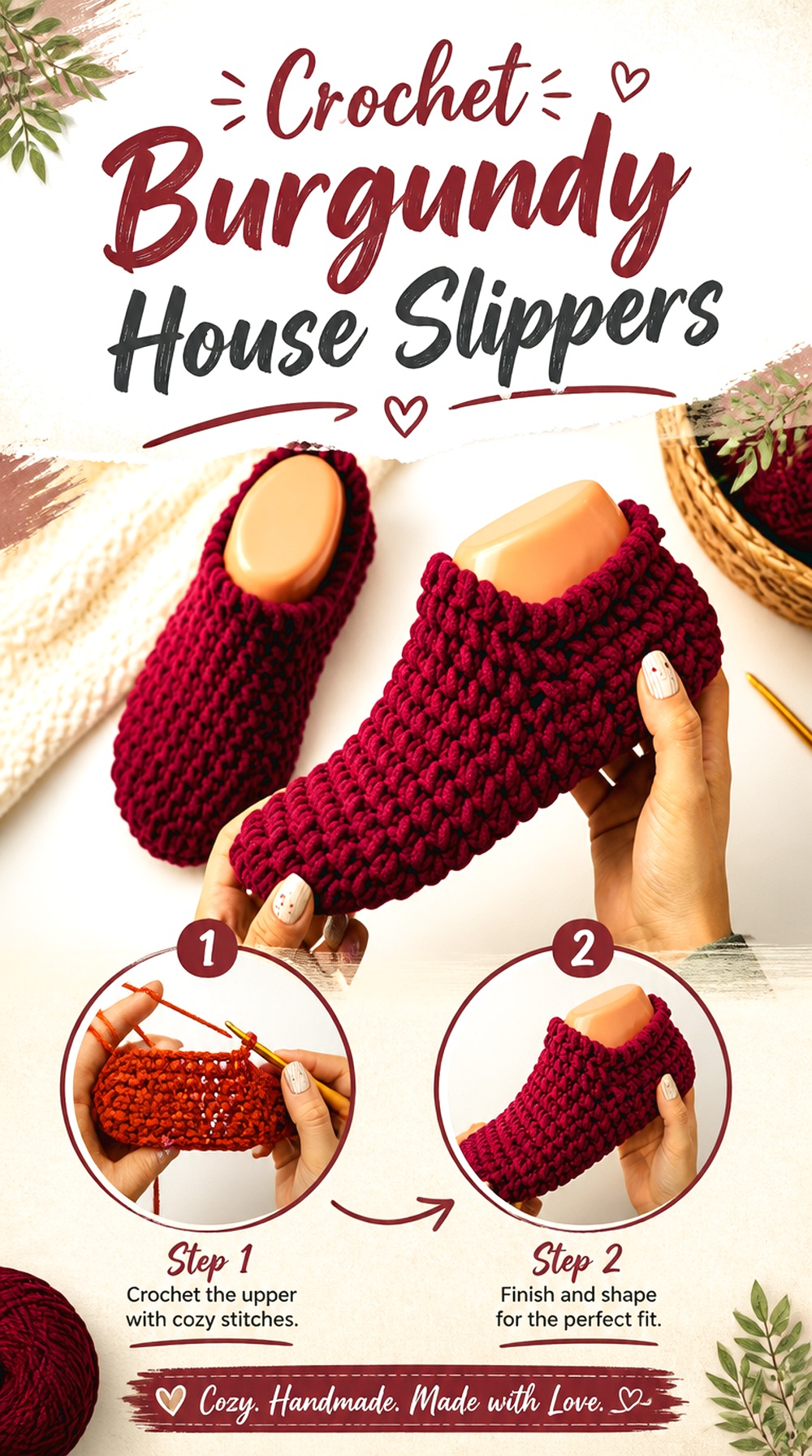
Burgundy slippers bring the color into a practical fall project without committing to an outerwear piece. Sirin’s Crochet demonstrates beginner slippers intended to be adaptable for different sizes, providing a useful construction reference for a simple indoor pair.
Because slippers experience pressure and movement differently from hats or scarves, fit deserves extra attention. The fabric may relax with wear, and an overly loose upper can feel less secure even if it looks fine immediately after finishing. Treat the creator’s sizing method as the starting point and check your own foot length, width, and preferred sock thickness before making assumptions.
Slipper Fit Can Change in Use
Crochet fabric can respond to body heat, movement, and repeated wear. A pair that already feels very loose when first tried on may become less controlled over time. Conversely, an aggressively tight fit can be uncomfortable. Judge both length and width, then follow the tutorial’s sizing guidance for adjustments.
The Sole Benefits from a Denser Feel
An open, highly draped fabric may be comfortable in a shawl but is not necessarily the same experience underfoot. Examine whether your substituted yarn and tension produce a fabric appropriate for an indoor slipper. Also remember that a crocheted sole is not automatically slip-resistant; floor conditions and any added sole treatment require separate consideration.
Original Tutorial and Creator Credit
Creator: Sirin’s Crochet
14. Crochet Burgundy Structured Handbag
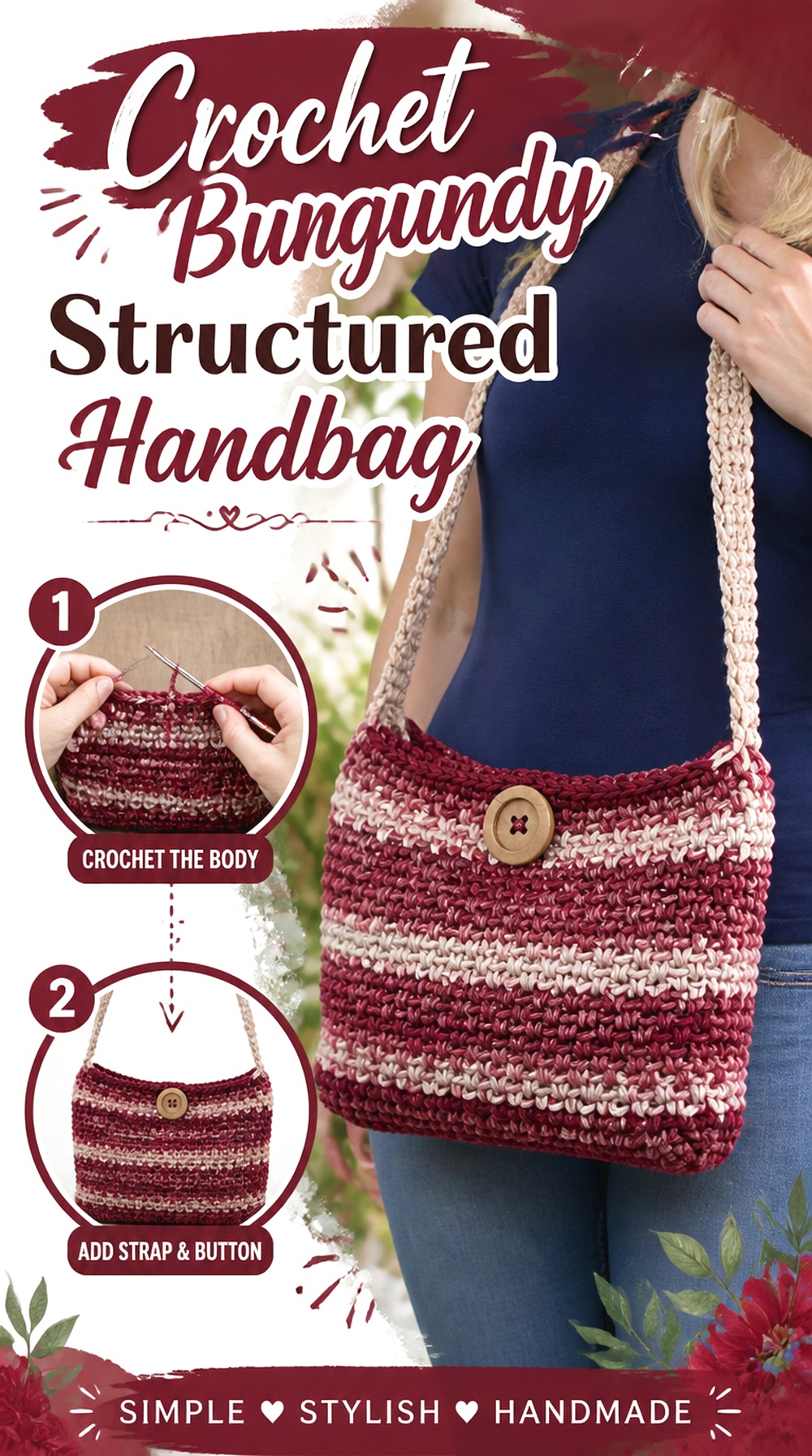
A compact burgundy handbag can look especially refined because the dark red feels close to a neutral while still adding color. Naztazia’s Sweet Simple Handbag is worked as a purse with added straps and uses magnetic snaps for closure, giving this idea a more finished, structured direction than an open market tote.
For an elevated version, keep the silhouette clean and choose any hardware carefully. The bag should feel like one coordinated object rather than crochet fabric with unrelated accessories attached afterward. Think about what you intend to carry before deciding whether you want the tutorial’s unlined approach or an adapted lining.
A Magnetic Closure Creates a Defined Center
A centered closure can make the top edge look more deliberate while providing a practical point of contact. Before installing hardware, confirm that the crochet fabric around it is substantial enough for the chosen component. Placement also matters visually: an off-center snap is much more noticeable on a simple solid-color bag.
Strap Stretch Can Undermine the Structure
Even a firm bag body can lose its polished silhouette if the handles lengthen dramatically in use. Consider how stretchy your chosen stitch and fiber feel before attaching the straps permanently. If your intended contents are heavier than the sample use, explore reinforcement or lining concepts rather than assuming the original handle behavior will remain unchanged.
Choose Lining According to Purpose
The source project is presented without a lining, but your needs may differ. Small objects can work through openings in some crochet fabrics, while a lining can also affect shape and finishing. Decide based on stitch density and intended contents rather than treating lining as automatically necessary—or automatically unnecessary.
Original Tutorial and Creator Credit
Creator: Naztazia
15. Crochet Burgundy Paneled Shoulder Bag
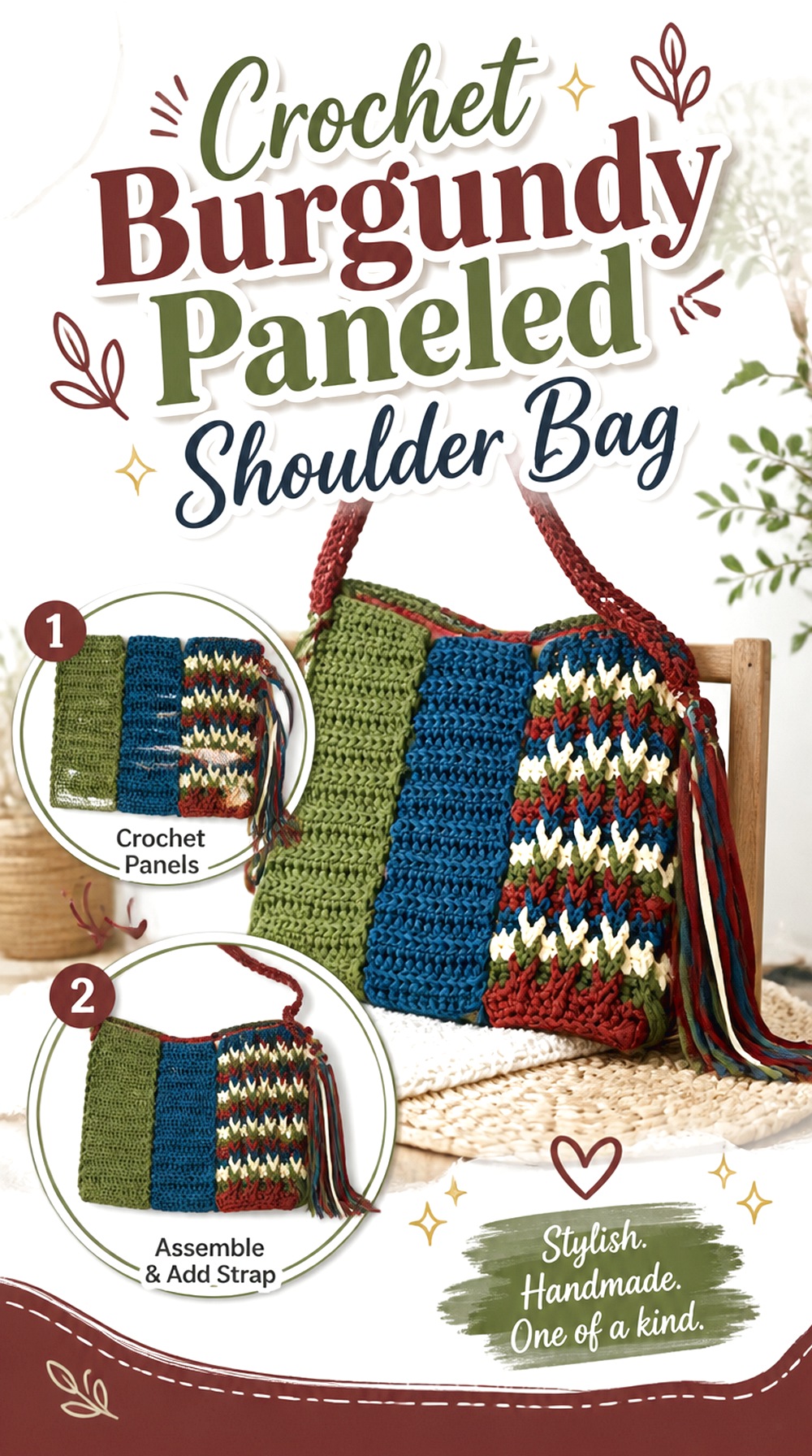
This paneled bag idea uses construction lines as part of the design. Brunaticality’s crochet bag tutorial demonstrates a bag assembled from panels with a separate handle treatment, giving it a visibly different structure from a bag worked continuously in the round.
Burgundy can make those panel joins feel graphic and intentional, provided the edges align neatly. This is a good project if you enjoy checking individual pieces before assembly because you can compare matching dimensions before the final bag takes shape. A smooth yarn can help emphasize the geometry, while a softer yarn will make the silhouette less rigid.
Panel Alignment Is the Main Visual Check
Before joining, place matching pieces together and compare their edges. If one panel has relaxed to a different size, addressing that discrepancy first can produce a cleaner bag than trying to force mismatched edges during assembly. Solid burgundy makes the overall shape more important because there are no color changes to distract from uneven seams.
Handle Attachment Carries Visual Weight Too
The handle is one of the first places the eye goes on a shoulder bag. Center it carefully and make sure both attachment areas look balanced before finishing. Functional stress also concentrates there, so consider the intended contents and whether the crochet fabric needs additional reinforcement rather than judging the handle solely by appearance.
Seams Can Become a Design Feature
Paneled construction does not need to imitate a seamless bag. Neat joins can actually strengthen the tailored effect by outlining the silhouette. What matters is consistency: choose whether seams should recede or remain visually defined, then use the same finishing logic around the entire bag.
Original Tutorial and Creator Credit
Creator: Brunaticality
16. Crochet Burgundy Crossbody Bag
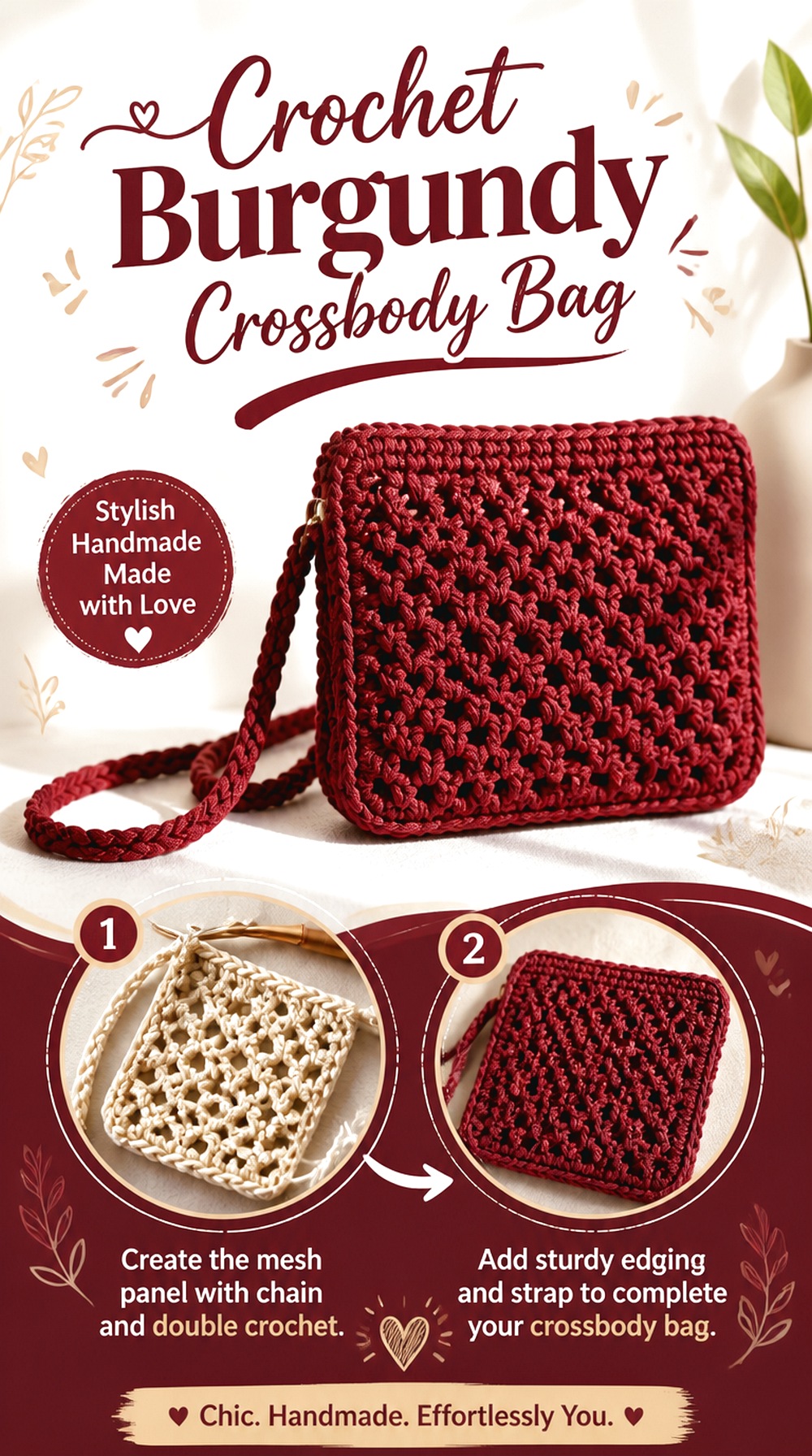
A crossbody bag brings a practical, hands-free shape to the collection. Hobbi CROCHET’s tutorial is specifically for a crossbody or shoulder bag, so the strap length and body proportion are central to the finished item rather than an optional modification.
In burgundy, this can become an everyday fall accessory that works with denim, camel coats, gray knits, and black outerwear. The upscale effect depends largely on proportion: a bag that sits at an intentional point on the body and keeps a reasonably defined shape will generally look more considered than one with an overly long, stretchy strap.
Crossbody Length Changes the Silhouette
A few inches of strap difference can move a bag from the waist area to the hip or below, changing both comfort and appearance. Before permanently finishing the strap, test it over the thickest coat or cardigan you expect to wear. Outerwear adds bulk and can make the same strap length feel noticeably shorter.
Match the Opening to Everyday Use
Think about what happens when you bend, walk, or take the bag off. An open top is convenient, while a closure can offer more containment. If you adapt the tutorial with a button, snap, or zipper, check that the surrounding crochet fabric supports it without puckering.
Dense Fabric Helps Small Items Stay Contained
Crossbody bags often carry keys and other relatively small objects. Before deciding that no lining is necessary, hold the finished fabric up to light and inspect the openings. Your stitch tension and yarn substitution may create a different density from the tutorial sample.
Original Tutorial and Creator Credit
Creator: Hobbi CROCHET
17. Crochet Burgundy Baguette Bag
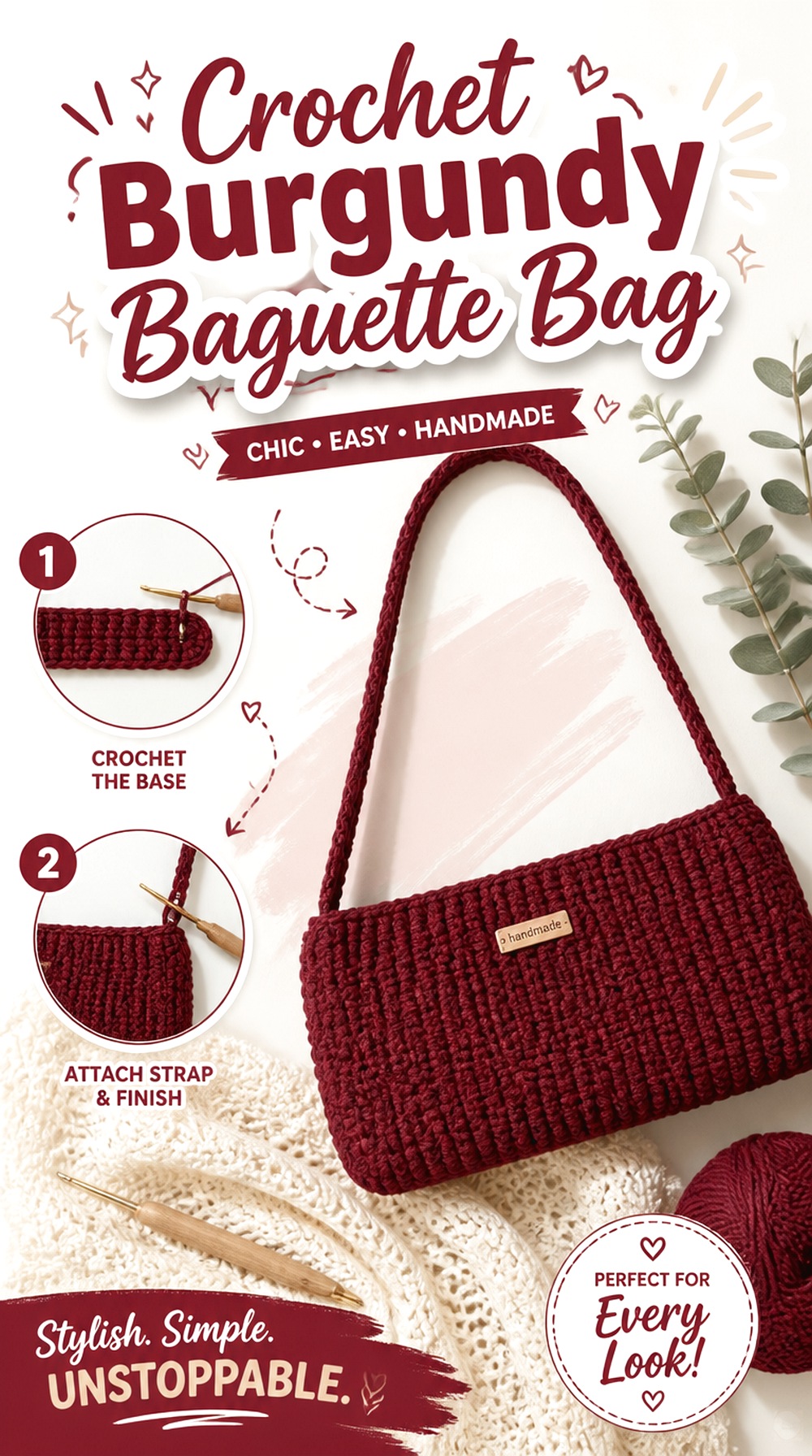
The baguette bag has a short, elongated body that immediately feels more fashion-led than a standard square tote. Cleyoché Crafts’ tutorial demonstrates this recognizable silhouette and includes separate attention to the center, sides, buttons, and strap.
Burgundy suits the shape because it gives a small accessory strong presence without needing prints or contrasting motifs. Keep the proportions compact and the details restrained. This is one of the projects where carefully chosen hardware can make a substantial visual difference, but the crochet body still needs to hold its own shape before the buttons or strap are added.
Compact Proportions Make the Baguette Shape Work
If the body becomes too deep or the strap too long, the bag can start reading more like a general shoulder pouch. When adapting dimensions, keep comparing width, depth, and strap drop as a group rather than enlarging only one area. The recognizable horizontal silhouette is part of what gives this project its distinctive look.
Button Placement Should Look Intentional
Decorative or functional buttons create strong focal points on a plain burgundy surface. Lay them in position before attaching anything and view the bag from normal distance. Check symmetry against the actual finished body, not just against stitch counts, because blocking and assembly can subtly change the visible center.
Side Panels Need Enough Body
The sides determine whether the bag keeps a defined profile or collapses completely when set down. If your burgundy substitute creates much softer fabric than the tutorial, decide whether that slouchier result is acceptable before assembly. Lining or reinforcement can change behavior, but those additions should be planned rather than used to rescue an unsuitable fabric at the end.
Original Tutorial and Creator Credit
Creator: Cleyoché Crafts
18. Crochet Burgundy Diamond Texture Throw
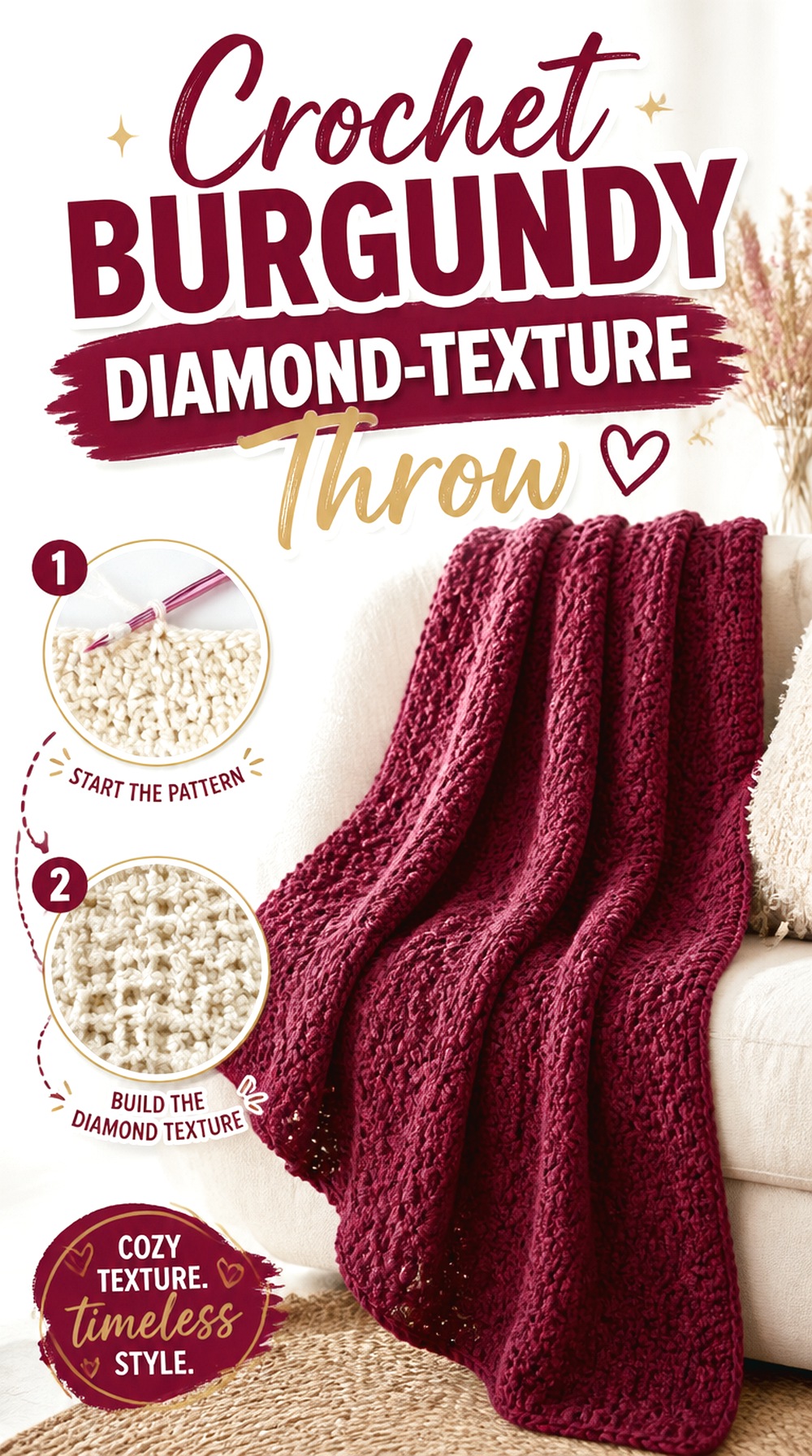
A large burgundy throw creates a completely different kind of luxury effect: instead of small fashion details, the color becomes a broad interior accent. Daisy Farm Crafts’ Diamond Weave Throw tutorial demonstrates a repeating diamond-like surface, giving a solid-color blanket enough structure to remain visually interesting.
This works particularly well when you want one substantial seasonal piece for a sofa or bed. Because a blanket magnifies every tension change, make your yarn and hook decisions early and keep them consistent. Deep burgundy also makes the piece visually strong, so it can stand on its own without additional multicolor borders.
Diamond Texture Rewards Consistency
Repeated geometric texture looks strongest when the spacing remains even across the full width. Periodically lay the work flat and check whether the side edges remain parallel. Correcting a developing tension problem early is much easier than hoping a border will disguise substantial narrowing or widening later.
Burgundy Turns the Throw into a Large Accent
A wine-colored blanket can anchor a room with relatively little additional seasonal decor. If the room already contains several dark colors, test the yarn beside the sofa, bedding, or chair where the throw will live. Burgundy can lean red, purple, brown, or almost black depending on the surrounding light.
Plan Care Before Committing to the Scale
A throw is a much larger washing and drying commitment than a scarf. Check the care information for the actual yarn you plan to use and consider how the finished blanket will be cleaned in your home. Fiber choice should make sense for real use, not just for how the skein looks on the shelf.
Original Tutorial and Creator Credit
Creator: Daisy Farm Crafts
19. Crochet Burgundy Cable Pillow Cover
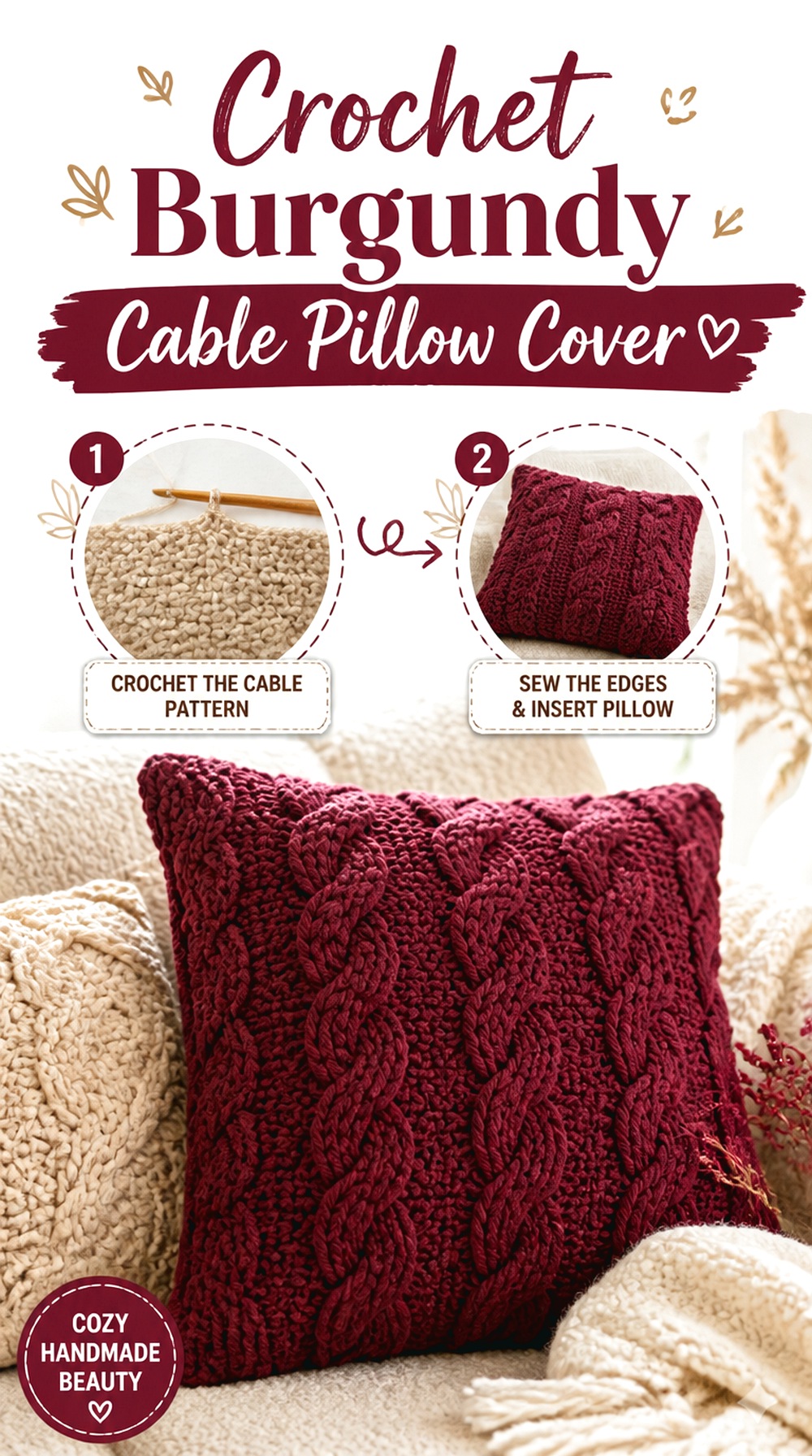
A cabled pillow is one of the strongest home-decor options when the goal is an expensive-looking burgundy finish. MJ’s Off The Hook Designs’ Cozy Cottage pillow uses prominent crochet cables on the front and an overlapping removable back, combining dramatic surface texture with a practical cover construction.
The rich color will deepen the shadows around the cables, so yarn definition matters. This project is more technically demanding than a plain cushion cover, but that extra texture gives a solid burgundy piece enough visual depth to work without stripes or motifs. It also pairs naturally with simpler neutral cushions rather than needing a matching set.
Cables Need Strong Stitch Definition
The raised crossings are the focal point, so a yarn that completely obscures them defeats much of the design. Make a small practice section and look at it from across the room. If the cable still reads clearly at that distance, the yarn is doing its job visually.
A Removable Cover Is a Practical Upgrade
The source design uses overlapping back panels so the cover can be removed. That matters for a home item that may need cleaning or a seasonal insert change. If you alter the dimensions, preserve enough overlap for the back to remain closed rather than gaping around the pillow form.
Insert Fullness Changes the Final Look
A pillow form that barely fills the corners can make even beautiful cables look limp, while an excessively large insert may distort the cover. Follow the designer’s size relationship if making the original project, or carefully recalculate if changing dimensions rather than assuming any similarly labeled insert will behave the same way.
Original Tutorial and Creator Credit
Creator: MJ’s Off The Hook Designs
20. Crochet Burgundy Floor Storage Basket
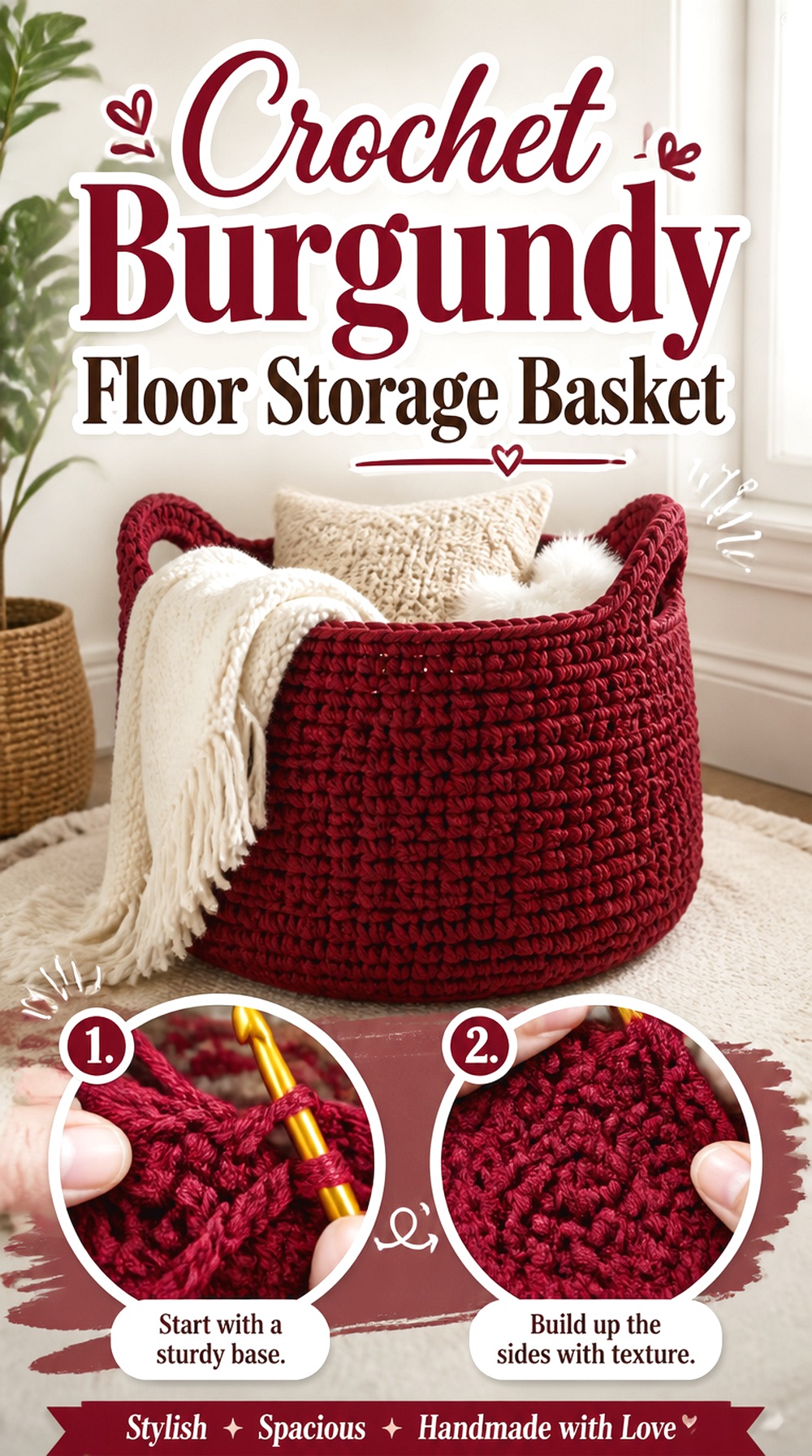
A large burgundy basket adds color in a functional form rather than as purely seasonal decoration. Jayda InStitches’ Big Beautiful Basket is designed as a substantial crochet container for household storage, making it a useful reference when you want enough structure for yarn, blankets, toys, or similar items.
The rich color can make a utilitarian object feel much more deliberate, especially in a room with warm wood or pale neutral textiles. The important concern is structure. A basket that looks firm while empty in a photo may behave differently with your yarn substitution, so evaluate the wall fabric before committing to a large version.
Structure Comes from Fabric, Not Burgundy
Dark color can make a basket look visually substantial, but it cannot prevent soft fabric from collapsing. Test how your swatch stands when held vertically. If it immediately folds under its own weight, consider whether the tutorial’s yarn arrangement or another suitable material choice is important to the intended result.
Handles Deserve Extra Attention
Integrated handles are repeatedly pulled and can become the first area to distort. Check both sides for matching placement and inspect the fabric around the openings before using the basket heavily. If you substantially change yarn or basket scale, do not assume the original handle behavior will remain the same.
Match the Basket to Its Intended Contents
Lightweight yarn storage and heavy household objects place very different demands on crochet fabric. Decide what the basket will realistically hold before choosing size and materials. Avoid treating any handmade storage basket as having a specific weight capacity unless that capacity has actually been established.
Original Tutorial and Creator Credit
Creator: Jayda InStitches
21. Crochet Burgundy Fringed Table Runner
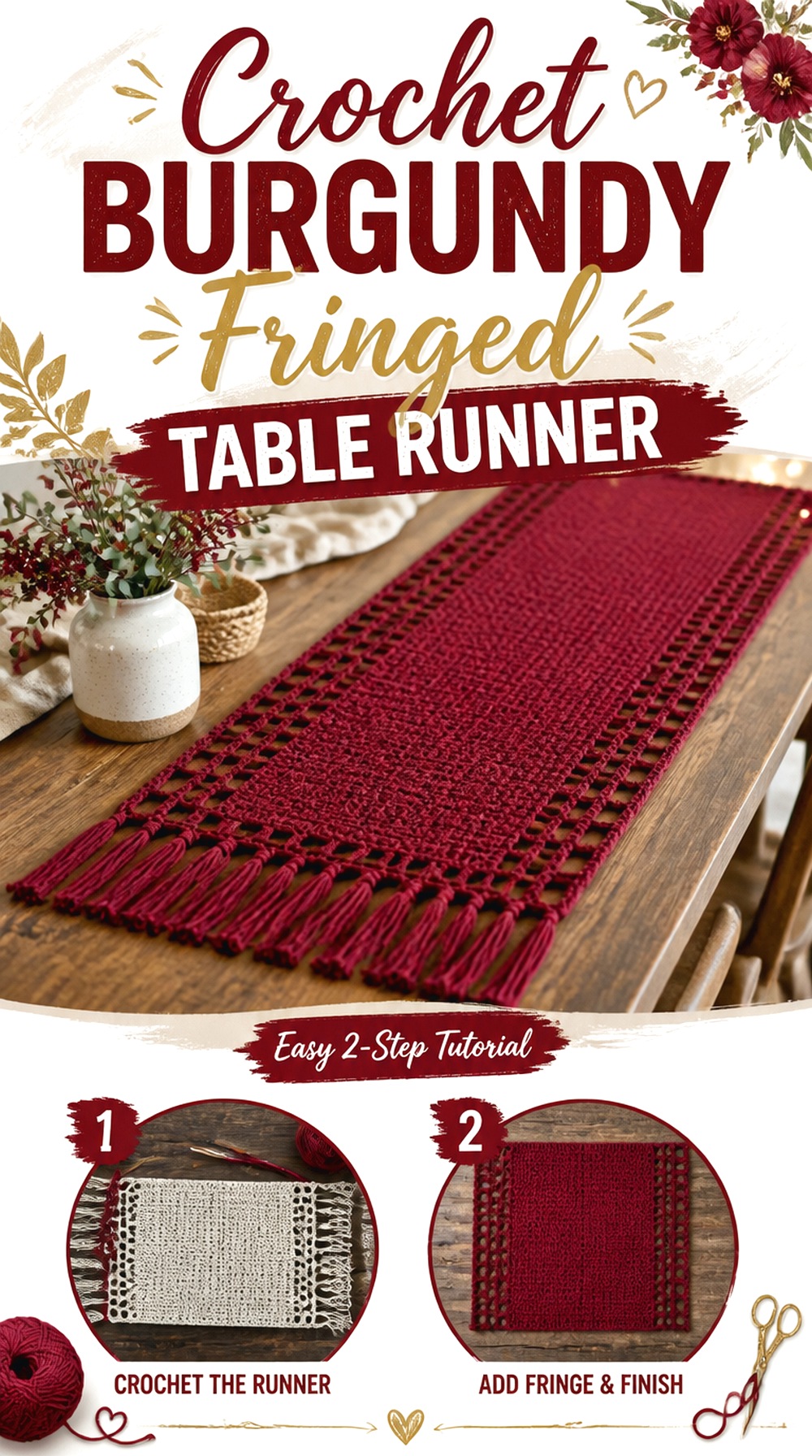
A burgundy table runner gives fall color a long, controlled line instead of covering the entire table. Kristines Crochets demonstrates a crochet table runner or scarf finished with fringe, making this a useful project for a dining table, console, or other long surface.
The color is strong enough that the runner can remain the main textile accent. Before adjusting its dimensions, consider the furniture beneath it. A narrow console and a wide dining table call for different proportions, and fringe adds visible length beyond the crocheted body. Plan that finishing detail from the beginning rather than treating it as an afterthought.
Fringe Should Finish the Runner, Not Overwhelm It
Very long or uneven fringe can make the piece look more casual than intended. Prepare the strands consistently and compare both ends after attachment. Because the runner already has a strong burgundy field, a controlled fringe can provide movement without competing with the central fabric.
Scale the Width to the Surface
A runner should leave enough tabletop visible to read clearly as a runner rather than a narrow tablecloth. Place a folded towel or piece of fabric on the intended table to test the approximate visual width before crocheting a large amount. This simple mockup is more useful than choosing dimensions without reference to the actual furniture.
Original Tutorial and Creator Credit
Creator: Kristines Crochets
22. Crochet Burgundy Leaf Garland
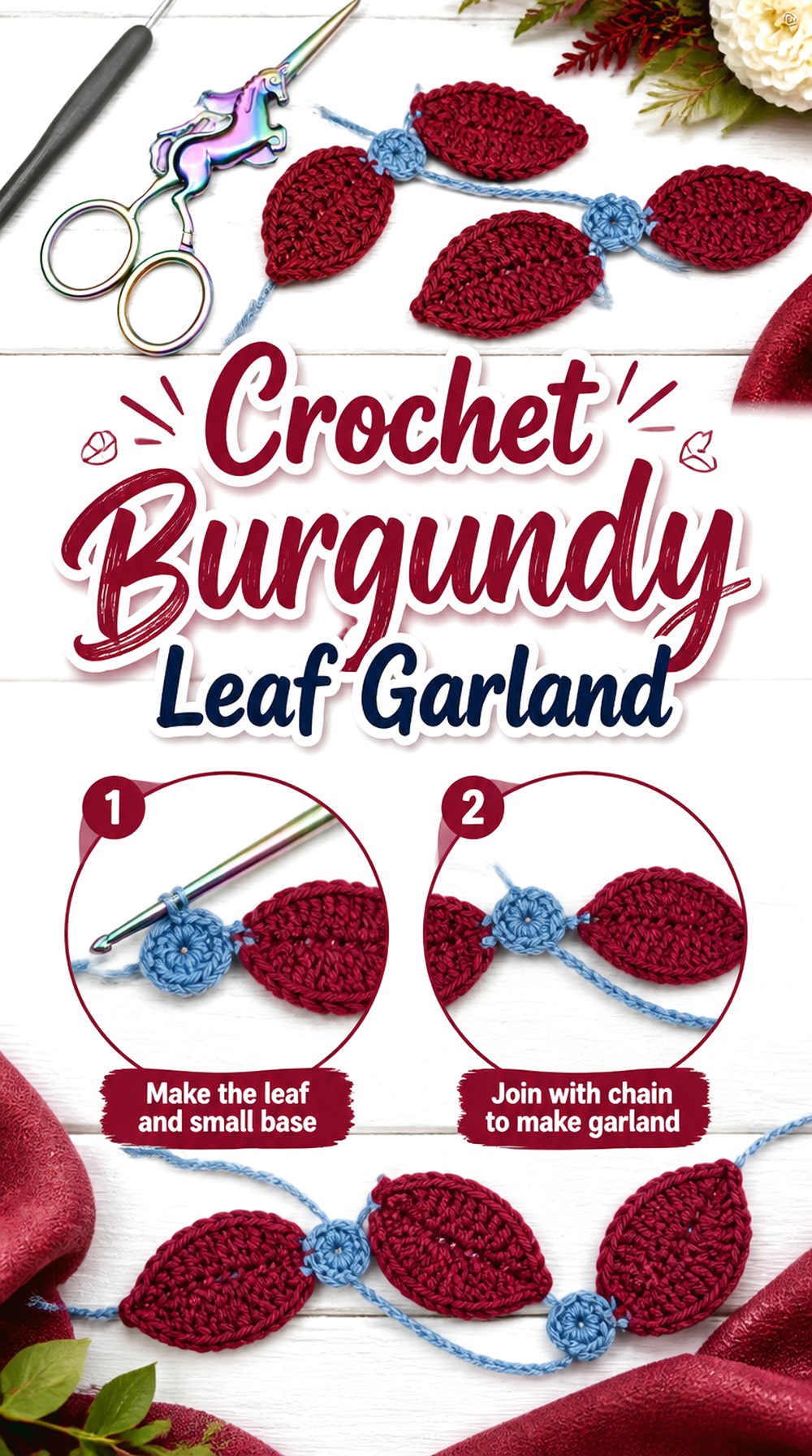
A leaf garland uses burgundy in smaller repeated accents, which is useful if you want seasonal color without a large blanket or garment. Crochet with Yarnhild’s tutorial shows both an individual crochet leaf and a leaf-garland application, so it can support anything from a short mantel accent to a longer decorative strand.
Using one burgundy shade creates a clean botanical silhouette, while closely related wine and rust tones can add variation without turning the garland into a rainbow. The main design decision is spacing. Leaves packed closely together feel full and decorative; wider spacing makes each shape easier to read.
Leaf Spacing Sets the Mood
Before permanently securing motifs, arrange them along the cord at several distances. Photograph each option from across the room. This reveals whether the garland looks sparse, balanced, or crowded more reliably than judging it close to your hands during assembly.
Keep the Hanging Cord Under Control
A soft crochet cord can twist, especially when multiple motifs pull from different points. Let the garland hang before final display and check whether the leaves face roughly where you want them. If the cord continually rotates, adjust motif placement rather than assuming wall mounting will automatically correct it.
Original Tutorial and Creator Credit
Creator: Crochet with Yarnhild
How to Choose Among These Burgundy Crochet Ideas
For the strongest wardrobe statement, start with the V-neck sweater, fitted vest, tie-front cardigan, or draped poncho; each uses burgundy over a large area but creates a noticeably different silhouette. If you want something easier to integrate into an existing fall wardrobe, the beret, ribbed scarf, cowl, cable ear warmer, or baguette bag provides a smaller color accent.
For home decor, choose based on permanence. The diamond throw and cable pillow can remain out for months, while the leaf garland and mini pumpkins read more specifically as seasonal accents. If the “expensive” effect is your priority, favor whichever project lets you execute the cleanest shape and finish rather than automatically choosing the most complicated stitch pattern.
Conclusion
Burgundy works especially well in crochet when the project gives the color a clear job. It can emphasize the tailored neckline of a vest, deepen the shadows in a cable pillow, sharpen the silhouette of a baguette bag, or turn a simple ribbed scarf into a strong fall accessory. Choose a project according to the fabric behavior you need: drape for shawls and garments, controlled stretch for fitted accessories, and more structure for bags and baskets.
Once you have chosen the shape, spend your effort on proportion, even edges, closures, seams, and finishing instead of piling on extra decoration. Use the original tutorials linked with each idea for the creators’ exact construction, sizing, and project-specific instructions.
Frequently Asked Questions
What shade of burgundy works best for fall crochet?
There is no single correct burgundy. Wine-red shades appear richer and warmer, purple-leaning burgundies feel moodier, and brown-leaning oxblood shades can work almost like dark neutrals. Compare the yarn in daylight and beside the clothes or furnishings you intend to pair with it. Very dark burgundy may conceal subtle texture, so projects with cables or relief stitches can benefit from a shade that still shows highlights and shadows.
Can I simply use burgundy yarn in any of these tutorials?
You can change color without changing the construction, but swapping the actual yarn is a separate decision. A burgundy yarn with different fiber content, thickness, loft, or elasticity can alter gauge, drape, size, and structure. For garments, compare gauge and fabric behavior before committing. For bags and baskets, check firmness and stretch. Follow the tutorial’s stated material requirements where sizing or construction depends on them.
How do I keep a burgundy crochet garment from looking too heavy?
Use silhouette and texture to create visual breathing room. V necklines, open fronts, controlled openwork, cropped proportions, and softer drape can break up a large field of dark color. You can also layer burgundy over a lighter neutral. Avoid assuming that a thinner yarn automatically solves the problem; the finished stitch pattern and garment proportions often affect visual weight just as much as yarn thickness.
Which burgundy projects give the most polished look with minimal decoration?
The V-neck vest, boxy sweater, ribbed scarf, beret, structured handbag, baguette bag, and cable pillow all have strong shapes or textures that can carry a single color without much embellishment. The simplest choice is whichever construction you can finish neatly. Straight edges, balanced proportions, secure closures, and consistent tension generally contribute more to a refined result than adding extra buttons, tassels, appliqués, or contrasting borders.
Should I line a burgundy crochet bag?
Not automatically. Lining can help contain small objects, reduce direct strain on some crochet fabrics, and give the interior a more finished appearance, but whether it is useful depends on the bag’s stitch density, construction, closure, and intended contents. Inspect the finished crochet fabric first. If you adapt a tutorial to add lining, account for the bag’s actual finished dimensions rather than cutting fabric from assumed measurements.
How can I make dark burgundy crochet texture show up better?
Start with yarn that gives the stitch pattern enough definition. Smooth or clearly twisted yarns often reveal raised texture more readily than fibers with a large halo, though the desired feel still matters. Make a swatch and view it from several feet away in daylight. For cables and relief patterns, side lighting is particularly revealing because it shows whether the raised areas produce enough shadow to remain visible.